EP2525507A1 - Method and device for generating feedback codebook in network equipment - Google Patents
Method and device for generating feedback codebook in network equipment Download PDFInfo
- Publication number
- EP2525507A1 EP2525507A1 EP10842829A EP10842829A EP2525507A1 EP 2525507 A1 EP2525507 A1 EP 2525507A1 EP 10842829 A EP10842829 A EP 10842829A EP 10842829 A EP10842829 A EP 10842829A EP 2525507 A1 EP2525507 A1 EP 2525507A1
- Authority
- EP
- European Patent Office
- Prior art keywords
- feedback codebook
- data streams
- antenna feedback
- antenna
- codebook
- Prior art date
- Legal status (The legal status is an assumption and is not a legal conclusion. Google has not performed a legal analysis and makes no representation as to the accuracy of the status listed.)
- Withdrawn
Links
Images



Classifications
-
- H—ELECTRICITY
- H04—ELECTRIC COMMUNICATION TECHNIQUE
- H04B—TRANSMISSION
- H04B7/00—Radio transmission systems, i.e. using radiation field
- H04B7/02—Diversity systems; Multi-antenna system, i.e. transmission or reception using multiple antennas
- H04B7/04—Diversity systems; Multi-antenna system, i.e. transmission or reception using multiple antennas using two or more spaced independent antennas
- H04B7/0413—MIMO systems
- H04B7/0456—Selection of precoding matrices or codebooks, e.g. using matrices antenna weighting
- H04B7/0478—Special codebook structures directed to feedback optimisation
-
- H—ELECTRICITY
- H04—ELECTRIC COMMUNICATION TECHNIQUE
- H04B—TRANSMISSION
- H04B7/00—Radio transmission systems, i.e. using radiation field
- H04B7/02—Diversity systems; Multi-antenna system, i.e. transmission or reception using multiple antennas
- H04B7/04—Diversity systems; Multi-antenna system, i.e. transmission or reception using multiple antennas using two or more spaced independent antennas
- H04B7/06—Diversity systems; Multi-antenna system, i.e. transmission or reception using multiple antennas using two or more spaced independent antennas at the transmitting station
- H04B7/0613—Diversity systems; Multi-antenna system, i.e. transmission or reception using multiple antennas using two or more spaced independent antennas at the transmitting station using simultaneous transmission
- H04B7/0615—Diversity systems; Multi-antenna system, i.e. transmission or reception using multiple antennas using two or more spaced independent antennas at the transmitting station using simultaneous transmission of weighted versions of same signal
- H04B7/0619—Diversity systems; Multi-antenna system, i.e. transmission or reception using multiple antennas using two or more spaced independent antennas at the transmitting station using simultaneous transmission of weighted versions of same signal using feedback from receiving side
- H04B7/0636—Feedback format
- H04B7/0639—Using selective indices, e.g. of a codebook, e.g. pre-distortion matrix index [PMI] or for beam selection
-
- H—ELECTRICITY
- H04—ELECTRIC COMMUNICATION TECHNIQUE
- H04B—TRANSMISSION
- H04B7/00—Radio transmission systems, i.e. using radiation field
- H04B7/02—Diversity systems; Multi-antenna system, i.e. transmission or reception using multiple antennas
- H04B7/04—Diversity systems; Multi-antenna system, i.e. transmission or reception using multiple antennas using two or more spaced independent antennas
- H04B7/06—Diversity systems; Multi-antenna system, i.e. transmission or reception using multiple antennas using two or more spaced independent antennas at the transmitting station
- H04B7/0613—Diversity systems; Multi-antenna system, i.e. transmission or reception using multiple antennas using two or more spaced independent antennas at the transmitting station using simultaneous transmission
- H04B7/0615—Diversity systems; Multi-antenna system, i.e. transmission or reception using multiple antennas using two or more spaced independent antennas at the transmitting station using simultaneous transmission of weighted versions of same signal
- H04B7/0619—Diversity systems; Multi-antenna system, i.e. transmission or reception using multiple antennas using two or more spaced independent antennas at the transmitting station using simultaneous transmission of weighted versions of same signal using feedback from receiving side
- H04B7/0658—Feedback reduction
-
- H—ELECTRICITY
- H04—ELECTRIC COMMUNICATION TECHNIQUE
- H04L—TRANSMISSION OF DIGITAL INFORMATION, e.g. TELEGRAPHIC COMMUNICATION
- H04L25/00—Baseband systems
- H04L25/02—Details ; arrangements for supplying electrical power along data transmission lines
- H04L25/03—Shaping networks in transmitter or receiver, e.g. adaptive shaping networks
- H04L25/03891—Spatial equalizers
- H04L25/03898—Spatial equalizers codebook-based design
-
- H—ELECTRICITY
- H04—ELECTRIC COMMUNICATION TECHNIQUE
- H04L—TRANSMISSION OF DIGITAL INFORMATION, e.g. TELEGRAPHIC COMMUNICATION
- H04L25/00—Baseband systems
- H04L25/02—Details ; arrangements for supplying electrical power along data transmission lines
- H04L25/03—Shaping networks in transmitter or receiver, e.g. adaptive shaping networks
- H04L25/03891—Spatial equalizers
- H04L25/03949—Spatial equalizers equalizer selection or adaptation based on feedback
-
- H—ELECTRICITY
- H04—ELECTRIC COMMUNICATION TECHNIQUE
- H04L—TRANSMISSION OF DIGITAL INFORMATION, e.g. TELEGRAPHIC COMMUNICATION
- H04L25/00—Baseband systems
- H04L25/02—Details ; arrangements for supplying electrical power along data transmission lines
- H04L25/03—Shaping networks in transmitter or receiver, e.g. adaptive shaping networks
- H04L25/03891—Spatial equalizers
- H04L25/03898—Spatial equalizers codebook-based design
- H04L25/0391—Spatial equalizers codebook-based design construction details of matrices
-
- H—ELECTRICITY
- H04—ELECTRIC COMMUNICATION TECHNIQUE
- H04L—TRANSMISSION OF DIGITAL INFORMATION, e.g. TELEGRAPHIC COMMUNICATION
- H04L25/00—Baseband systems
- H04L25/02—Details ; arrangements for supplying electrical power along data transmission lines
- H04L25/03—Shaping networks in transmitter or receiver, e.g. adaptive shaping networks
- H04L25/03891—Spatial equalizers
- H04L25/03898—Spatial equalizers codebook-based design
- H04L25/0391—Spatial equalizers codebook-based design construction details of matrices
- H04L25/03917—Spatial equalizers codebook-based design construction details of matrices according to the size of the codebook
Definitions
- the present disclosure relates to a feedback codebook and particularly to a method and apparatus for generating a feedback codebook in a network device
- the acquired 2M-antenna feedback codebook correspondingly includes 2K codewords.
- an eight-antenna feedback codebook is generated from a four-antenna feedback codebook.
- the acquired 2M-antenna feedback codebook correspondingly includes 2K codewords.
- an eight-antenna feedback codebook is generated from a four-antenna feedback codebook.
- the acquired 2M-antenna feedback codebook correspondingly includes 2K codewords.
- the acquired 2M-antenna feedback codebook correspondingly includes 2K codewords.
- an eight-antenna feedback codebook is generated from a four-antenna feedback codebook.
- a 2M-antenna feedback codebook can be generated from an existing M-antenna feedback codebook conveniently at a network device, e.g., a base station, a mobile terminal, etc., thereby achieving good compatibility with the prior art.
- the number of data streams is up to the number of transmission antennas in a network device.
- the situation where there are a plurality of data streams as discussed in respective embodiments of the invention include a situation where a single receiver corresponds to a plurality of data streams and a situation where a plurality of receivers correspond to a plurality of data streams.
- M symbol streams X 1 to X M are transmitted respectively over M transmission antennas, i.e., a transmission antenna 1 to a transmission antenna M, after the pre-coding process and other necessary processes, and a receiver recovers original information bits in a process corresponding to that at a transmitter upon reception of M signals corresponding to the M data streams.
- the number of antennas illustrated in Fig.1 is 2M instead of M, and a feedback codebook can be generated in a manner according to the following embodiments and used in existing and future technical solutions. Particularly since a 2M-antenna feedback codebook generated in the respective embodiments of the invention is generated from an existing M-antenna feedback codebook, they can be substantially compatible with the existing technical solution to the use of the feedback codebook
- this network device is typically an eNodeB (i.e., a base station) or a mobile terminal in LTE-A because they are devices in a mobile communication network for which a feedback codebook is typically used.
- the invention will not preclude the possibility of the network device being other devices than a base station and a mobile terminal.
- the network device of the invention can be a computing device capable of performing a process of generation of a feedback codebook according to the invention and capable of providing a base station, a mobile terminal, etc., with the generated feedback codebook directly or indirectly.
- a corresponding mobile terminal can also generate a feedback codebook or passively receive such a feedback codebook in order to process downlink communication correctly.
- K is typically set as a result of the tradeoff between the integrity and the size of the codebook.
- the base station In the next step S22, the base station generates an eight-antenna feedback codebook for eight data streams based upon the four-antenna feedback codebook W 4,4 for the four data streams, where the (4 i + j ) th codeword is defined in the equation (1) of:
- W 4,4,j in W 4 , 4 , i W 4 , 4 , i W 4 , 4 , j - W 4 , 4 , j is used to make W 8,8,4 i + j be a full-rank matrix.
- the parameter i ( j ) identifies W 4,4, i (W 4,4,j ) as the i ( j ) th codeword in W 4,4 , and 4 i + j further identifies uniquely W 8,8,4 i + j as the (4 i + j ) th codeword in the generated eight-antenna feedback codebook W 8,8 for the eight data streams.
- the number of codewords in W 8,8 is 2K.
- the base station determines a codebook W 8,6 including 2K codewords according to W 8,8 in the step 23, where each codeword W 8,6,4 i + j is composed of the first six columns in W 8,8,4 i + j .
- a matrix resulting from full combination of two 4 ⁇ l matrixes will be a 8 ⁇ l matrix.
- an eight-antenna feedback codebook can be composed of a four-antenna feedback codebook more conveniently by the method according to the second embodiment.
- the difference between the first embodiment and the second embodiment lies in that the solution according to the second embodiment can be adopted directly if a system does not support more than four data streams or it is more advantageous to adopt the solution according to the first embodiment if the system requires the network device to support more than four data streams.
- an eight-antenna feedback codebook for data streams being below or equal to four may be generated in the manner according to the first embodiment only if codewords in W 4,4 are embeddable.
- Being embeddable refers to that for a 4 ⁇ m matrix W 4,m,i and a 4 ⁇ n matrix W 4,n,j, W 4,n,j can be represented as (W 4,m,j , X ) if n is above or equals to m, where the matrix X is a 4 ⁇ ( n - m ) matrix.
- Respective apparatuses according to the invention will be introduced below in connection with block diagrams of the apparatuses, and since these apparatuses have technical features in one-to-one correspondence to the foregoing methods, the respective apparatuses can be understood referring to the introduction of the flows of the methods in the description, and thus the following introduction of the apparatuses will be simplified. However those skilled in the art can appreciate that this simplification will not influence full disclosure of the invention.
- the function of the second unit 42 corresponds to the step S22 and the step S23 in Fig.2 .
- Fig.6a to Fig.6f illustrate a relationship between the block error ratio and the signal to noise ratio in the different simulated schemes, where the vertical axis represents the block error ratio and the horizontal axis represents the signal to noise ratio, and some parameters used in the simulation process are as depicted in Table 2: Table 2: Values of respective parameters in simulation process Parameters Values Transmission scheme Beam shaping with single data stream, two data streams and four data streams Uni-user MIMO Number of base stations and antenna configuration Eight atennas per base station and spaced by half wavelength Number of mobile terminals and antenna configuration Two or four atennas per mobile terminal and spaced by half wavelength Modulation scheme QPSK Channel coding 1/2 Turbo coding CSI feedback delay 0 ms Antenna correlation report peoridicity 0 ms Antenna correlation matrix quantization scheme Ideal Radio resource for transmission 5 LTE PRBs in frequeny domain Channel estimation Ideal Data detection MMSE Velocity of mobile terminal 3 kilometers per hour or 30 kilometers per hour Fast fading channel model ITU channel
- a dotted curve with boxes represents the inventive 8-bit scheme with eight antennas in LTE Release 8; a solid curve with boxes represents the inventive 6-bit scheme with eight antennas in LTE Release 8; a dotted and dashed curve with boxes represents the inventive 4-bit scheme with eight antennas in LTE Release 8; a dotted and dashed curve with triangles represents the existing 4-bit scheme with eight antennas in LTE Release 8; a dotted curve with circles represents ideal eight-antenna SVD; and a dotted curve with diamonds represents ideal four-antenna SVD.
- a simulation environment in Fig.6a involves ITU-UMi, the velocity of a mobile terminal with two receiving antennas being 3km/h, 1/2 Turbo coding, QPSK modulation and the number of data streams being one.
- a simulation environment in Fig.6b involves ITU-UMa, the velocity of a mobile terminal with two receiving antennas being 30km/h, 1/2 Turbo coding, QPSK modulation and the number of data streams being one.
- a simulation environment in Fig.6c involves ITU-UMi, the velocity of a mobile terminal with two receiving antennas being 3km/h, 1/2 Turbo coding, QPSK modulation and the number of data streams being two.
- a simulation environment in Fig.6d involves ITU-UMa, the velocity of a mobile terminal with two receiving antennas being 30km/h, 1/2 Turbo coding, QPSK modulation and the number of data streams being two.
- a simulation environment in Fig.6e involves ITU-UMi, the velocity of a mobile terminal with four receiving antennas being 3km/h, 1/2 Turbo coding, QPSK modulation and the number of data streams being four.
- a simulation environment in Fig.6f involves ITU-UMa, the velocity of a mobile terminal with four receiving antennas being 30km/h, 1/2 Turbo coding, QPSK modulation and the number of data streams being four.
Landscapes
- Engineering & Computer Science (AREA)
- Computer Networks & Wireless Communication (AREA)
- Signal Processing (AREA)
- Physics & Mathematics (AREA)
- Mathematical Physics (AREA)
- Power Engineering (AREA)
- Mobile Radio Communication Systems (AREA)
- Radio Transmission System (AREA)
Abstract
Description
- The present disclosure relates to a feedback codebook and particularly to a method and apparatus for generating a feedback codebook in a network device
- As commonly agreed among the communication industry in the discussion about LTE-Advanced, to realize eight-antenna transmission in the downlink so as to achieve significant downlink spectrum efficiency, an eight-antenna feedback codebook has to be provided for an FDD system. But the only codebook in the existing standard is a four-antenna feedback codebook in
LTE Release 8. Samsung Corp. and other corporations have made some attempts, but their proposed codebooks suffer from poor compatibility with the existing codebook. - Therefore it is particularly desired to provide an eight-antenna codebook that is well compatible with the existing four-antenna feedback codebook.
- According to an embodiment of the invention, there is provided a method of generating a 2M-antenna feedback codebook for l data streams in a network device, wherein l=1,...,2M, and the method includes the steps of: acquiring an M-antenna feedback codebook W M,M for M data streams, wherein the ith codeword is denoted as WM,M,i , wherein i=0,..., K-1, and K is the number of codewords in W M,M ; generating a 2M-antenna feedback codebook for 2M data streams based upon the M-antenna feedback codebook for the M data streams, wherein the (4i+j)th codeword is defined in the equation of:

- Particularly the acquired 2M-antenna feedback codebook correspondingly includes 2K codewords.
- Furthermore the codewords in the M-antenna feedback codebook W M,M are embeddable.
- Furthermore in this embodiment, an eight-antenna feedback codebook is generated from a four-antenna feedback codebook.
- According to another embodiment of the invention, there is provided a method of generating a 2M-antenna feedback codebook for l data streams in a network device, wherein l=1,...,M, and the method includes the steps of: acquiring an M-antenna feedback codebook W M,l for l data streams, wherein the ith codeword is denoted as W M,l,i , wherein i=0,...,K-1, and K is the number of codewords in W M,l ; and generating a 2M-antenna feedback codebook for the l data streams based upon the M-antenna feedback codebook for the l data streams, wherein the (4i+j) th codeword is defined in the equation of:

- Particularly the acquired 2M-antenna feedback codebook correspondingly includes 2K codewords.
- Furthermore in this embodiment, an eight-antenna feedback codebook is generated from a four-antenna feedback codebook.
- According to a further embodiment of the invention, there is provided a first apparatus for generating a 2M-antenna feedback codebook for l data streams in a network device, wherein l=1,...,2M, and the first apparatus includes: a first unit for acquiring an M-antenna feedback codebook W M,M for M data streams, wherein the ith codeword is denoted as W M,M,i , wherein i=0,...,K-1, and K is the number of codewords in W M,M ; and a second unit for generating a 2M-antenna feedback codebook for 2M data streams based upon the M-antenna feedback codebook for the M data streams, wherein the (4i+j)th codeword is defined in the equation of:

- Particularly the acquired 2M-antenna feedback codebook correspondingly includes 2K codewords.
- Furthermore the codewords in the M-antenna feedback codebook W M,M are embeddable.
- Furthermore in this embodiment, an eight-antenna feedback codebook is generated from a four-antenna feedback codebook.
- According to a further embodiment of the invention, there is provided a second apparatus for generating a 2M-antenna feedback codebook of l data streams in a network device, wherein l=1,..., M , and the second apparatus includes the steps of: a third unit for acquiring an M-antenna feedback codebook W M,l for l data streams, wherein the ith codeword is denoted as W M,l,i , wherein i=0,..., K-1, and K is the number of codewords in W M,l ; and a fourth unit for generating a 2M-antenna feedback codebook for the l data streams based upon the M-antenna feedback codebook for the l data streams, wherein the (4i+j) th codeword is defined in the equation of:

- Particularly the acquired 2M-antenna feedback codebook correspondingly includes 2K codewords.
- Furthermore in this embodiment, an eight-antenna feedback codebook is generated from a four-antenna feedback codebook.
- With the method and the apparatus according to the invention, a 2M-antenna feedback codebook can be generated from an existing M-antenna feedback codebook conveniently at a network device, e.g., a base station, a mobile terminal, etc., thereby achieving good compatibility with the prior art.
- Other features, objects and advantages of the invention will become more apparent upon reading the detailed description of non-limiting embodiments taken in conjunction with the drawings in which:
-
Fig.1 is a typical application scenario of a method and an apparatus according to the invention; -
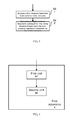
Fig.2 is a flow chart of a method of generating a 2M-antenna feedback codebook for l data streams in a network device according to a first embodiment of the invention, where l=1,..., 2M; -
Fig.3 is a flow chart of a method of generating a 2M-antenna feedback codebook for l data streams in a network device according to a second embodiment of the invention, where l=1,..., M ; -
Fig.4 is a block diagram of a first apparatus for generating a 2M-antenna feedback codebook for l data streams in a network device according to an embodiment of the invention, where l=1,..., 2M ; -
Fig. 5 is a block diagram of a second apparatus for generating a 2M-antenna feedback codebook for l data streams in a network device according to a further embodiment of the invention, where l=1,..., M; and -
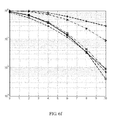
Fig.6a to Fig.6f illustrate simulation results with use of the 2M-antenna feedback codebook according to the invention. - Identical or like reference numerals in the drawings represent identical or like step features or means (modules) features.
- A plurality of non-limiting embodiments of the invention will be described below with reference to the drawings. Those skilled in the art can appreciate that these non-limiting embodiments are merely intended to help understanding of the inventive solution but not to limit in any way the scope of the invention as defined in the appended claims. For example the invention will not be limited to an illustrative example to be introduced later where an eight-antenna feedback codebook is generated from a four-antenna feedback codebook, but in fact, the invention can be applicable to a scenario where a 2M-antenna feedback codebook is generated from any M-antenna feedback codebook, and this wide applicability will be well supported below.
- It shall be appreciated that a method and an apparatus to be introduced later will be applicable not only to a situation where there is a single data stream but also to a situation where there is more than one data stream. Particularly in the following first embodiment, the number of data streams is up to the number of transmission antennas in a network device. Furthermore the situation where there are a plurality of data streams as discussed in respective embodiments of the invention include a situation where a single receiver corresponds to a plurality of data streams and a situation where a plurality of receivers correspond to a plurality of data streams. And since the number of receivers has no substantial influence upon the essence of the invention, the following discussion will not be made respectively for different numbers of receivers but only for the situation where a single receiver corresponds to a plurality of data streams, and this typical application scenario will also be referred to single-user MIMO (Multiple Input Multiple Output) as illustrated in
Fig.1 . - In
Fig.1 , M symbol streams X1 to XM are transmitted respectively over M transmission antennas, i.e., atransmission antenna 1 to a transmission antenna M, after the pre-coding process and other necessary processes, and a receiver recovers original information bits in a process corresponding to that at a transmitter upon reception of M signals corresponding to the M data streams. - The number of antennas illustrated in
Fig.1 is 2M instead of M, and a feedback codebook can be generated in a manner according to the following embodiments and used in existing and future technical solutions. Particularly since a 2M-antenna feedback codebook generated in the respective embodiments of the invention is generated from an existing M-antenna feedback codebook, they can be substantially compatible with the existing technical solution to the use of the feedback codebook - Reference is made to
Fig.2 illustrating a flow chart of a method of generating an eight-antenna feedback codebook for l data streams in a network device, where l=1,..., 8, that is, a situation where there is a single data stream to a full-load situation where eight data streams are borne over eight antennas in the downlink channel have been covered. - For example, this network device is typically an eNodeB (i.e., a base station) or a mobile terminal in LTE-A because they are devices in a mobile communication network for which a feedback codebook is typically used. However the invention will not preclude the possibility of the network device being other devices than a base station and a mobile terminal. For example, if a feedback codebook generated in the embodiment of the invention has a considerable period of lifetime or valid time in practical use, then the network device of the invention can be a computing device capable of performing a process of generation of a feedback codebook according to the invention and capable of providing a base station, a mobile terminal, etc., with the generated feedback codebook directly or indirectly.
- Hereinafter the foregoing network device will be a base station without loss of generality, and those skilled in the art can appreciate that a corresponding mobile terminal can also generate a feedback codebook or passively receive such a feedback codebook in order to process downlink communication correctly.
- The method illustrated in
Fig.2 starts with the step S21 where the foregoing parameter M takes the value of 4, for example, and the base station acquires a four-antenna feedback codebook W4, for four data streams, where thefirst subscript 4 in W4,4 identifies the codebook as a four-antenna feedback codebook, and thesecond subscript 4 identifies the codebook as being used for four data streams. Furthermore the ith codeword in the codebook W4,4 is denoted as W4,4,i, where i=0,..., K-1 and K is the number of codewords in W4,4, typically an integer power of 2 at present, e.g., 32, 64, etc. K is typically set as a result of the tradeoff between the integrity and the size of the codebook. On one hand, more codewords in a codebook, more likely for a specific one to have the best effect of pre-coding; on the other hand, more codewords in a codebook, more bits are required for a mobile terminal to indicate to a base station a specific codeword it selects, and for example, the required number of bits is 5 when K=32. - Unless stated, otherwise in this context, for a codeword in the form of Wa,b,c, "a" represents the number of transmission antennas corresponding to a feedback codebook where the codeword resides, e.g., 4, 8, etc.; "b" represents the number of data streams corresponding to the feedback codebook where the codeword resides; and "c" represents the serial number of the codeword in the feedback codebook.
- The step S21 can be performed by the base station invoking a pre-stored four-antenna feedback codebook W4,4 for four data streams or importing W4,4 from the outside via a communication interface.
- In the next step S22, the base station generates an eight-antenna feedback codebook for eight data streams based upon the four-antenna feedback codebook W4,4 for the four data streams, where the (4i+j) th codeword is defined in the equation (1) of:
-

- Where -W4,4,j in

- As mentioned previously an eight-antenna feedback codebook for one to eight data streams can be generated by the method according to this embodiment, and if an eight-antenna feedback codebook for eight data streams is to be generated dependent upon a specific need in practice, then the purpose has been achieved, and thus the step S23 can be construed as a step of taking the result of operation in the step S22 as a codebook to be generated finally. That is, W8,8 generated in the step S22 is taken as a final result, where each codeword is composed of the first eight columns, i.e., all the columns in W8,8,4i+j .
- In a variation, if an eight-antenna feedback codebook for six data streams is to be generated, then the base station determines a codebook W8,6 including 2K codewords according to W8,8 in the step 23, where each codeword W8,6,4i+j is composed of the first six columns in W8,8,4i+j .
- In a variation, if an eight-antenna feedback codebook for two data streams is to be generated, then the base station determines a codebook W8,2 including 2K codewords according to W8,8 in the step 23, where each codeword W8,2,4i+j is composed of the first two columns in W8,8,4i+j .
- Other examples of the number of data streams represented by the parameter l can be directly determined unambiguously for the foregoing respective situations and will not be enumerated in this context.
- Reference is made to
Fig.3 illustrating a flow chart of a method of generating an eight-antenna feedback codebook for l data streams in a network device according to a second embodiment of the invention, where l=1,..., 4, - This method starts with the step S31 performed similarly to the step 21, for example, where the base station can invoke a pre-stored four-antenna feedback codebook W4, l for l data streams or importing W4,l from the outside via a communication interface.
- In the step S31, the base station generates an eight-antenna feedback codebook for the l data streams according to W4, l in full combination, where the (4i+j) th codeword is defined in the equation (2), and the number of data streams in the second embodiment is l=1,..., 4 ;

- As can be apparent, a matrix resulting from full combination of two 4 × l matrixes will be a 8 × l matrix.
- When the number of data streams required in a system is below or equals to 4, then an eight-antenna feedback codebook can be composed of a four-antenna feedback codebook more conveniently by the method according to the second embodiment.
- The difference between the first embodiment and the second embodiment lies in that the solution according to the second embodiment can be adopted directly if a system does not support more than four data streams or it is more advantageous to adopt the solution according to the first embodiment if the system requires the network device to support more than four data streams.
- Furthermore taking an LTE system as an example, an eight-antenna feedback codebook for data streams being below or equal to four may be generated in the manner according to the first embodiment only if codewords in W4,4 are embeddable. Being embeddable refers to that for a 4 × m matrix W4,m,i and a 4 × n matrix W4,n,j, W4,n,j can be represented as (W4,m,j, X) if n is above or equals to m, where the matrix X is a 4 × (n-m) matrix.
- Respective apparatuses according to the invention will be introduced below in connection with block diagrams of the apparatuses, and since these apparatuses have technical features in one-to-one correspondence to the foregoing methods, the respective apparatuses can be understood referring to the introduction of the flows of the methods in the description, and thus the following introduction of the apparatuses will be simplified. However those skilled in the art can appreciate that this simplification will not influence full disclosure of the invention.
-
Fig.4 is a block diagram of a first apparatus for generating an eight-antenna feedback codebook for l data streams in a network device according to an embodiment of the invention, where l=1,..., 8. - The first apparatus as illustrated in
Fig.4 includes afirst unit 41 for acquiring a four-antenna feedback codebook W4,4 for four data streams, where the ith codeword is denoted as W4,4,i, where i=0,..., K-1. The function of thefirst unit 41 corresponds to the step S21 inFig.2 . - The
first apparatus 4 further includes asecond unit 42 for generating an eight-antenna feedback codebook for eight data streams based upon the four-antenna feedback codebook W4,4 for the four data streams, where the (4i+j) th codeword is defined in the equation (3) of:
- The function of the
second unit 42 corresponds to the step S22 and the step S23 inFig.2 . -
Fig.5 is a block diagram of a second apparatus for generating an eight-antenna feedback codebook for l data streams in a network device according to another embodiment of the invention, where l=1,...,4. - The
second apparatus 5 as illustrated inFig.5 includes athird unit 51 and afourth unit 52, wherein thethird unit 51 corresponds to the step S31 inFig.3 and is used for acquiring a four-antenna feedback codebook W4,l for l data streams, where the ith codeword is denoted as W4,l,i, where i=0,..., K-1 and K represents the number of codewords in W4,l . - The
fourth unit 52 corresponds to the step S32 inFig.3 and is used for generating an eight-antenna feedback codebook W8,l for l data streams based upon the four-antenna feedback codebook W4 ,l for the l data streams, where the (4i+ j )th codeword is defined in the equation (4) of:
- With the methods and the apparatuses described above, good system performance can be achieved in the respective embodiments of the invention, and simulation results are as depicted in Table 1 and
Fig.6a to Fig.6f .

-
Fig.6a to Fig.6f illustrate a relationship between the block error ratio and the signal to noise ratio in the different simulated schemes, where the vertical axis represents the block error ratio and the horizontal axis represents the signal to noise ratio, and some parameters used in the simulation process are as depicted in Table 2:Table 2: Values of respective parameters in simulation process Parameters Values Transmission scheme Beam shaping with single data stream, two data streams and four data streams Uni-user MIMO Number of base stations and antenna configuration Eight atennas per base station and spaced by half wavelength Number of mobile terminals and antenna configuration Two or four atennas per mobile terminal and spaced by half wavelength Modulation scheme QPSK Channel coding 1/2 Turbo coding CSI feedback delay 0 ms Antenna correlation report peoridicity 0 ms Antenna correlation matrix quantization scheme Ideal Radio resource for transmission 5 LTE PRBs in frequeny domain Channel estimation Ideal Data detection MMSE Velocity of mobile terminal 3 kilometers per hour or 30 kilometers per hour Fast fading channel model ITU channel model in UMi or UMa Large scale channel model NLoss Frames simulated 1000 Block size for BLER 584 bits Base codebook Inventive 8, 6 and 4-bit schemes in LTE Release 8 and existing 4-bit scheme inLTE Release 8 - Different curves in
Fig.6a to Fig.6f mean the following: - A dotted curve with boxes represents the inventive 8-bit scheme with eight antennas in
LTE Release 8; a solid curve with boxes represents the inventive 6-bit scheme with eight antennas inLTE Release 8; a dotted and dashed curve with boxes represents the inventive 4-bit scheme with eight antennas inLTE Release 8; a dotted and dashed curve with triangles represents the existing 4-bit scheme with eight antennas inLTE Release 8; a dotted curve with circles represents ideal eight-antenna SVD; and a dotted curve with diamonds represents ideal four-antenna SVD. - A simulation environment in
Fig.6a involves ITU-UMi, the velocity of a mobile terminal with two receiving antennas being 3km/h, 1/2 Turbo coding, QPSK modulation and the number of data streams being one. - A simulation environment in
Fig.6b involves ITU-UMa, the velocity of a mobile terminal with two receiving antennas being 30km/h, 1/2 Turbo coding, QPSK modulation and the number of data streams being one. - A simulation environment in
Fig.6c involves ITU-UMi, the velocity of a mobile terminal with two receiving antennas being 3km/h, 1/2 Turbo coding, QPSK modulation and the number of data streams being two. - A simulation environment in
Fig.6d involves ITU-UMa, the velocity of a mobile terminal with two receiving antennas being 30km/h, 1/2 Turbo coding, QPSK modulation and the number of data streams being two. - A simulation environment in
Fig.6e involves ITU-UMi, the velocity of a mobile terminal with four receiving antennas being 3km/h, 1/2 Turbo coding, QPSK modulation and the number of data streams being four. - A simulation environment in
Fig.6f involves ITU-UMa, the velocity of a mobile terminal with four receiving antennas being 30km/h, 1/2 Turbo coding, QPSK modulation and the number of data streams being four. - The embodiments of the invention have been described above. It shall be appreciated that the invention will not be limited to the foregoing embodiments and those skilled in the art can make various variations or modifications without departing the scope of the appended claims.
Claims (10)
- A method of generating a 2M-antenna feedback codebook for l data streams in a network device, wherein l=1,..., 2M, and the method comprises the steps of:acquiring an M-antenna feedback codebook W M,M for M data streams, wherein the ith codeword is denoted as W M,M,i , wherein i=0,..., K-1, and K is the number of codewords in W M,M ;generating a 2M-antenna feedback codebook for 2M data streams based upon the M-antenna feedback codebook for the M data streams, wherein the (4i+j)th codeword is defined in the equation of:
 determining a 2M-antenna feedback codebook for l data streams according to the generated 2M-antenna feedback codebook for the 2M data streams, wherein the (4i+j)th codeword W2M,1,4i+j is composed of the first l columns of W2M,2M,4i+j.
 - The method according to claim 1, wherein the codewords in the M-antenna feedback codebook W M,M are embeddable.
- The method according to claim 1 or 2, wherein M equals to 4.
- A method of generating a 2M-antenna feedback codebook for l data streams in a network device, wherein l=1,..., M, and the method comprises the steps of:acquiring an M-antenna feedback codebook W M,l for l data streams, wherein the ith codeword is denoted as W M,l,i , wherein i= 0,..., K-1, and K is the number of codewords in W M,l ; andgenerating a 2M-antenna feedback codebook for the l data streams based upon the M-antenna feedback codebook for the l data streams, wherein the (4i+j)th codeword is defined in the equation of:

- The method according to claim 4, wherein M equals to 4.
- A first apparatus for generating a 2M-antenna feedback codebook for l data streams in a network device, wherein l=1,..., 2M, and the first apparatus comprises:a first unit for acquiring an M-antenna feedback codebook W M,M for M data streams, wherein the ith codeword is denoted as W M,M,i, wherein i=0,..., K-1, and K is the number of codewords in W M,M ; anda second unit for generating a 2M-antenna feedback codebook for 2M data streams based upon the M-antenna feedback codebook for the M data streams, wherein the (4i+j)th codeword is defined in the equation of:
 the second unit is further for determining a 2M-antenna feedback codebook for l data streams according to the generated 2M-antenna feedback codebook for the 2M data streams, wherein the (4i+j)th codeword W2M,1,4i+j is composed of the first l columns of W2M,2M,4i+j.
 - The first apparatus according to claim 6, wherein the codewords in the M-antenna feedback codebook W M,M are embeddable.
- The first apparatus according to claim 6 or 7, wherein M equals to 4.
- A second apparatus for generating a 2M-antenna feedback codebook of l data streams in a network device, wherein l=1,..., M, and the second apparatus comprises the steps of:a third unit for acquiring an M-antenna feedback codebook W M,l for l data streams, wherein the ith codeword is denoted as W M,l,i , wherein i=0,..., K-1, and K is the number of codewords in W M,l ; anda fourth unit for generating a 2M-antenna feedback codebook for the l data streams based upon the M-antenna feedback codebook for the l data streams, wherein the (4i+j)th codeword is defined in the equation of:

- The second apparatus according to claim 9, wherein M equals to 4.
Applications Claiming Priority (1)
| Application Number | Priority Date | Filing Date | Title |
|---|---|---|---|
| PCT/CN2010/070151 WO2011085545A1 (en) | 2010-01-13 | 2010-01-13 | Method and device for generating feedback codebook in network equipment |
Publications (1)
| Publication Number | Publication Date |
|---|---|
| EP2525507A1 true EP2525507A1 (en) | 2012-11-21 |
Family
ID=44303801
Family Applications (1)
| Application Number | Title | Priority Date | Filing Date |
|---|---|---|---|
| EP10842829A Withdrawn EP2525507A1 (en) | 2010-01-13 | 2010-01-13 | Method and device for generating feedback codebook in network equipment |
Country Status (4)
| Country | Link |
|---|---|
| US (1) | US20130136201A1 (en) |
| EP (1) | EP2525507A1 (en) |
| CN (1) | CN102474319B (en) |
| WO (1) | WO2011085545A1 (en) |
Families Citing this family (1)
| Publication number | Priority date | Publication date | Assignee | Title |
|---|---|---|---|---|
| US9473332B2 (en) * | 2012-04-27 | 2016-10-18 | The Royal Institution For The Advancement Of Learning / Mcgill University | Methods and devices for communications systems using multiplied rate transmission |
Family Cites Families (10)
| Publication number | Priority date | Publication date | Assignee | Title |
|---|---|---|---|---|
| US7778826B2 (en) * | 2005-01-13 | 2010-08-17 | Intel Corporation | Beamforming codebook generation system and associated methods |
| KR101066151B1 (en) * | 2006-08-17 | 2011-09-20 | 인터디지탈 테크날러지 코포레이션 | Method and apparatus for providing efficient precoding feedback in a MIO wireless communication system |
| CN101207464B (en) * | 2006-12-18 | 2010-12-29 | 中国科学院上海微系统与信息技术研究所 | Generalized grasman code book feedback method |
| CN101330479B (en) * | 2007-06-20 | 2011-04-20 | 中兴通讯股份有限公司 | Method for pre-encoding multi-input multi-output transmission and codebook encoding |
| CN101340219B (en) * | 2007-07-04 | 2012-10-03 | 华为技术有限公司 | Channel status information feeding back method and wireless transmitting/receiving device |
| CN101127582B (en) * | 2007-07-31 | 2010-08-25 | 北京邮电大学 | Self-adapted code book construction method for code book pre-coded system |
| CN101478335B (en) * | 2008-12-31 | 2012-12-19 | 中兴通讯股份有限公司 | Method and apparatus for fast implementing pre-coding |
| KR101673497B1 (en) * | 2009-01-05 | 2016-11-07 | 마벨 월드 트레이드 리미티드 | Precoding codebooks for mimo communication systems |
| US8325843B2 (en) * | 2009-04-08 | 2012-12-04 | Lg Electronics Inc. | MIMO codebook generation |
| CN101599785B (en) * | 2009-06-25 | 2013-01-02 | 北京邮电大学 | Multi-cell joint transmission method |
-
2010
- 2010-01-13 EP EP10842829A patent/EP2525507A1/en not_active Withdrawn
- 2010-01-13 CN CN201080034482.2A patent/CN102474319B/en active Active
- 2010-01-13 US US13/521,935 patent/US20130136201A1/en not_active Abandoned
- 2010-01-13 WO PCT/CN2010/070151 patent/WO2011085545A1/en not_active Ceased
Non-Patent Citations (1)
| Title |
|---|
| See references of WO2011085545A1 * |
Also Published As
| Publication number | Publication date |
|---|---|
| CN102474319B (en) | 2014-03-05 |
| CN102474319A (en) | 2012-05-23 |
| WO2011085545A1 (en) | 2011-07-21 |
| US20130136201A1 (en) | 2013-05-30 |
Similar Documents
| Publication | Publication Date | Title |
|---|---|---|
| US11632158B2 (en) | Preparing CSI using a set of zero amplitude parameters | |
| US11343014B2 (en) | Channel state information reporting method and communications apparatus | |
| EP3963733A1 (en) | Methods and apparatuses for csi reporting in a wireless communication system | |
| CN102255705B (en) | Uplink precoding information indication method and device | |
| US8432988B2 (en) | System and method for quantization of channel state information | |
| US11855727B2 (en) | Transform domain channel state information feedback | |
| EP2901596B1 (en) | Encoding hybrid automatic repeat request acknowledgements in a multi-antenna wireless communications system | |
| US20140233540A1 (en) | Method and Apparatus for Modulation and Coding Scheme Adaption in a MIMO System | |
| CN104396153A (en) | Method and device for channel state information code word construction in cellular wireless communication system | |
| EP2494730A1 (en) | Multi-granular feedback reporting and feedback processing for precoding in telecommunications | |
| CN103716078A (en) | Method and device for channel state information processing | |
| KR20200030631A (en) | Method and apparatus for reporting channel quality indicator (CQI) and channel status information (CSI) | |
| EP2525506A1 (en) | Method and device for feeding back spatial channel state | |
| CN103701571B (en) | The double codebook design method of eight antennas for TD LTE A relay system | |
| EP2557747B1 (en) | Method and apparatus for feeding back and constructing correlation matrix in multi-input multi-output system | |
| CN102474389B (en) | Method and apparatus for channel information feedback and precoding | |
| EP2525507A1 (en) | Method and device for generating feedback codebook in network equipment | |
| US20240275452A1 (en) | Parameter combination for coherent joint transmission | |
| CN102377509B (en) | Control information transmitting method, control information receiving method and control information receiving equipment | |
| EP4734424A1 (en) | Communication method and communication device | |
| US20130083863A1 (en) | Apparatus and method for low complexity feedback in a mimo wireless network | |
| EP3567771A1 (en) | Method for transmitting channel state information, access network device, and terminal device | |
| CN102082634A (en) | Method, device and system for correcting communication information errors |
Legal Events
| Date | Code | Title | Description |
|---|---|---|---|
| PUAI | Public reference made under article 153(3) epc to a published international application that has entered the european phase |
Free format text: ORIGINAL CODE: 0009012 |
|
| 17P | Request for examination filed |
Effective date: 20120813 |
|
| AK | Designated contracting states |
Kind code of ref document: A1 Designated state(s): AT BE BG CH CY CZ DE DK EE ES FI FR GB GR HR HU IE IS IT LI LT LU LV MC MK MT NL NO PL PT RO SE SI SK SM TR |
|
| DAX | Request for extension of the european patent (deleted) | ||
| 111Z | Information provided on other rights and legal means of execution |
Free format text: AT BE BG CH CY CZ DE DK EE ES FI FR GB GR HR HU IE IS IT LI LT LU LV MC MK MT NL NO PL PT RO SE SI SK SM TR Effective date: 20130410 |
|
| RAP1 | Party data changed (applicant data changed or rights of an application transferred) |
Owner name: ALCATEL LUCENT |
|
| STAA | Information on the status of an ep patent application or granted ep patent |
Free format text: STATUS: THE APPLICATION IS DEEMED TO BE WITHDRAWN |
|
| 18D | Application deemed to be withdrawn |
Effective date: 20140801 |