EP2525285A1 - Central processing unit and microcomputer - Google Patents
Central processing unit and microcomputer Download PDFInfo
- Publication number
- EP2525285A1 EP2525285A1 EP11811306A EP11811306A EP2525285A1 EP 2525285 A1 EP2525285 A1 EP 2525285A1 EP 11811306 A EP11811306 A EP 11811306A EP 11811306 A EP11811306 A EP 11811306A EP 2525285 A1 EP2525285 A1 EP 2525285A1
- Authority
- EP
- European Patent Office
- Prior art keywords
- data
- address
- read
- bus
- memory unit
- Prior art date
- Legal status (The legal status is an assumption and is not a legal conclusion. Google has not performed a legal analysis and makes no representation as to the accuracy of the status listed.)
- Withdrawn
Links
Images



Classifications
-
- G—PHYSICS
- G06—COMPUTING OR CALCULATING; COUNTING
- G06F—ELECTRIC DIGITAL DATA PROCESSING
- G06F9/00—Arrangements for program control, e.g. control units
- G06F9/06—Arrangements for program control, e.g. control units using stored programs, i.e. using an internal store of processing equipment to receive or retain programs
- G06F9/30—Arrangements for executing machine instructions, e.g. instruction decode
- G06F9/30145—Instruction analysis, e.g. decoding, instruction word fields
- G06F9/30149—Instruction analysis, e.g. decoding, instruction word fields of variable length instructions
Definitions
- the present invention relates generally to a central processing unit and a microcontroller, and more particularly to a central processing unit incorporating a control circuit that reads a program data constituted by instructions that have instruction information part and complementary information part necessary to execute the instruction corresponding to the instruction information part, and runs the read program data, and to a microcontroller incorporating this central processing unit.
- FIG. 4 illustrates by way of example a known state of the art microcontroller (hereafter referred to as ⁇ COM).
- FIG 4 is an exeplary configuration of a common 8-bit microcontroller.
- the ⁇ COM 1 comprises an external memory unit 2 that stores a program data, and a central processing unit 3 (hereafter referred to as CPU) that reads instructions constituting the program data in a predetermined order and executes the instructions.
- the external memory unit 2 and the CPU 3 are connected to each other via an address bus B A , a data bus B D , and a control signal line L1.
- the program data is constituted by the instructions.
- the instructions may comprise a 1-byte instruction having instruction information part only, a 2-byte instruction having the instruction information part and one operand (i.e., complementary information part in the context of the invention) for execution of the instruction information part, and a 3-byte instruction having the instruction information part and two operands for execution of the instruction information part.
- the instruction information part and the operand are each configured as an 8-bit data.
- the external memory unit 2 comprises a plurality of 8-bit data areas each having an address from 0000H to an FFFFH in this order.
- One instruction information part or one operand is stored in one data area.
- the 1-byte instruction is an instruction for which one read operation (of the instruction information part) is required for executing it such as copying data from the A register 33a to the B register 33b in the CPU 3.
- the 2-byte instruction is an instruction for which two rounds of read operation (of the instruction information part and one operand) is required for executing it such as adding the operand data to data stored in a register of the CPU 3.
- the 3-byte instruction is an instruction for which three rounds of read operation (of the instruction information part, a first operand, and a second operand) are required for executing it such as reading data from addresses in the external memory unit 2 designated by the two operands.
- the CPU 3 comprises a control circuit 31 adapted for instruction analysis and arithmetic processing in accordance with the instruction analysis, an IR register 32, a register set 33, a first LATCHI register 34, a second LATCHI register 35, an address latch 36, and a program counter (hereafter referred to as PC) register 37. These elements are connected to each other via an internal bus Bin.
- the control circuit 31 controls the overall CPU 3 system, analyses the instruction information parts and executes the instructions.
- the IR register 32 is a register in which the instruction information part is stored.
- the register set 33 comprises an A register 33a, a B register 33b, a C register 33c, a D register 33d, an E register 33e, an F register 3 3 f, an H register 33h, and an L register 331. These registers are general registers for use in temporarily storing data in the course of arithmetic processing by the control circuit 31.
- the first LATCHI register 34 is a register used to store the upper 8 bits residing at the address indicated by the operand
- the second LATCHI register 35 is a register used to store the lower 8 bits residing at the address indicated by the operand.
- the address latch 36 is a register used to specify the 16-bit address of the external memory unit 2 to be output on the address bus B A .
- the PC register 37 is a 16-bit register, content of which is output to the address latch 36, and output via the address bus B A to the external memory unit 2.
- the address stored in the PC register 37 is incremented each time the CPU 3 reads the instruction information part or the operand. In other words, the CPU 3 reads the instruction information part and the operand on a per address basis. Since the PC register 7 is reset to 0 upon resetting of the CPU 3, the CPU 3 will always start reading starting from the address 0000H of the external memory unit 2.
- the CPU 3 performs initialization upon being started up.
- the control circuit 31 in the CPU 3 resets the PC register 37 to the address 0000H.
- the control circuit 31 outputs the address (address 0000H) stored in the PC register 37 to the address latch 36.
- the address 0000H is output to the external memory unit 2 via the address bus B A .
- the control circuit 31 outputs a read signal via the control signal line L1.
- the external memory unit 2 When the read signal is input to the external memory unit 2, the external memory unit 2 outputs data via the data bus B D , the data residing at the address 0000H that has been input via the address bus B A . Since the instruction information part resides at the address 0000H, the instruction information part is output via the data bus B D to the CPU 3.
- the control circuit 31 in the CPU 3 stores this instruction information part in the IR register 32, the instruction information part having been output via the data bus B D .
- control circuit 31 increments the PC register 37 so that the counter results in 0001H. Also, the control circuit 31 decodes the instruction information part stored in the IR register 32, and interprets that this instruction information part is an instruction to read data from the address in the external memory unit 2 specified by two operands and store the read data in the A register 3 3 a.
- control circuit 31 outputs the address (address 0001H) stored in the PC register 37 to the address latch 36.
- the address 0001H is output via the address bus B A to the external memory unit 2.
- the control circuit 31 outputs the read signal via the control signal line L1.
- the external memory unit 2 When the read signal is input, the external memory unit 2 outputs via the data bus B D the data stored at the address 0001H input via the address bus B A . Since the operand is stored in the address 0001H, the operand will be output to the CPU 3 via the data bus B D .
- the control circuit 31 stores in the second LATCHI register 35 the lower field at the address indicated by the operand output via the data bus B D .
- the control circuit 31 increments the PC register 37 by 1 so that the counter results in 0002H.
- the control circuit 31 outputs the address (address 0002H) stored in the PC register 37 to the address latch 36.
- the address 0002H is output to the external memory unit 2 via the address bus B A .
- the control circuit 31 outputs the read signal via the control signal line L1.
- the external memory unit 2 When the read signal is input, the external memory unit 2 outputs the data stored at the address 0002H input from the address bus B A via the data bus B D . Since the operand is store at the address 0002H, the operand will be output via the data bus B D to the CPU 3.
- the control circuit 31 in the CPU 3 stores the upper filed in the address indicated by the operand output via data bus B D in the first LATCHI register 34.
- control circuit 31 increments the PC register 37 by 1, so that it results in 0003H as shown in FIG. 9 .
- the control circuit 31 output the address stored at the first and second LATCHI registers 34, 35 to the address latch 36.
- the address specified by the two operands is output via the address bus B A to the external memory unit 2.
- the control circuit 31 outputs the read signal via the control signal line L1.
- the external memory unit 2 When the read signal is input, the external memory unit 2 outputs the data residing at the address input by the address bus B A , outputs it via the data bus B D .
- the control circuit 31 in the CPU 3 stores the data output via the data bus B D , stores it in the A register 33a, and thus the operation for one instruction is completed.
- control circuit 31 outputs the address (0003H address) stored in the PC register 37 to the address latch 36, and reads the next instruction in the IR register 32, decodes it, executes it, and this operation is repeated.
- the CPU 3 Since the CPU 3 is not capable of directly reading the instruction information part and the operand stored in the external memory unit 2, the CPU 3 needs to store the instruction information part and the operand originally stored in the external memory unit 2 in the internal registers 32, 3 3 a to 331, 34, and 35 from which data can be directly read by the CPU 3.
- the CPU 3 of the ⁇ COM 1 needs to perform instruction-read operation one time for 1-byte instruction, twice for 2-byte instruction, and three times for 3-byte instruction, the instruction-read operation including outputting the address via the address bus B A , outputting the read signal via the control signal line L1, storing the instruction information part or the operand via the data bus B D temporarily in the registers 32, 33a to 331, 34, and 35 for reading thereof. This implies that reading of the instructions takes much time.
- reading and writing of the data by the CPU 3 to and from the external memory unit 2 are performed as described below. Specifically, with regard to reading of data from the external memory unit 2, as described in the foregoing, after the CPU 3 has output the address to be read to the address bus B A , the CPU 3 outputs the read signal. When the read signal is input, the external memory unit 2 outputs the data stored at the address input via the address bus B A , outputs it via the data bus B D . Meanwhile, with regard to w2riting of data in the external memory unit 2, the CPU 3 outputs the address for writing via the address bus B A and outputs the data for writing via the data bus B D , and subsequently outputs the write signal. The external memory unit 2, when the write signal is input, stores the data input from the data bus B D at the address input via the address bus B A .
- the ⁇ COM 1 uses a single data bus B D for both outputting of the read data and outputting of the write data, write operation and read operation cannot take place simultaneously. Also, since it is necessary to output the read signal and the write signal from the CPU 3 to the external memory unit 2, the external memory unit 2 has to read these signals and then perform reading and writing. Thus, reading and writing take much time.
- an object of the present invention is to provide a central processing unit and a microcontroller that achieves higher processing speed.
- one aspect of the claimed subject matter provides a central processing unit comprising a control circuit reads and executes a program data that comprises instructions including instruction information part and complementary information part necessary to execute the instruction information part.
- the internal memory unit includes a plurality of data areas each having a predetermined capacity and an address, the internal memory unit being configured to be directly read from by the control circuit.
- the instructions are stored in the data areas on a one-to-one basis and the instruction information parts are stored in same locations at or away by a prescribed degree from beginning of the corresponding data areas.
- the program data is stored in the internal memory prior to start-up of the central processing unit such that the variable-length instructions are in accordance with storage format of the internal memory unit.
- FIG. 3 Another aspect of the claimed subject matter (see FIG. 3 ) provides a microcontroller that comprises (a) the central processing unit of claim 1 and (b) an external memory unit connected to the central processing unit via an address bus and a data bus.
- the address bus includes a read address bus and a write address bus
- the data bus includes a read data bus and a write data bus.
- the central processing unit is configured to output, on the read address bus, an address at which a read data to be read is stored so as to read the read data from the external memory unit.
- the central processing unit is also configured to output, on the write address bus, another address at which a write data is to be written in the external memory, and output the write data on the write data bus so as to write the write data into the external memory unit.
- the external memory unit is configured to output the read data on the read data bus, the read data residing at the address that has been input via the read address bus into the external memory unit.
- the external memory unit is also configured to write the data that has been input via the write data bus into the external memory at the other address that has been input via the write address bus.
- the program data is stored in the internal memory unit that the control circuit can directly read from.
- the program data area comprises the data areas each having the predetermined capacity and the address with one instruction is stored in the corresponding one data area. Since the instruction information parts are stored at the beginning fields of the data area or at a field away from the beginning to a predefined extent from the data areas, the beginning fields can serve as an IR register.
- the IR register do not need to be provided, so that the instruction analysis can be implemented for the instruction information parts without sending the instruction information parts to the IR register.
- reading of the instruction can be performed without placing the instruction information part and the complementary information parts stored in the external memory unit in the IR register that can be directly read from by the control circuit, which contributes to higher processing speed.
- one instruction can be executed upon one round of incrementing of the program counter, which further increases the processing speed.
- the address bus is constituted by the read address bus and the write address bus
- the data bus is constituted by the read data bus and the write data bus. Accordingly, write operation and read operation can be done simultaneously to/from the external memory unit. Moreover, the CPU does not need to output a read signal or a write signal, which ensures higher processing speed.
- the ⁇ COM 1 comprises an external memory unit 2 and a CPU 3 that reads instructions in a predetermined order and executes the instructions, the set of instructions constituting a program data.
- the external memory unit 2 and the CPU 3 are connected to each other via an address bus B A , a data bus B D , and a control signal line L1.
- the external memory unit 2 comprises a plurality of eight-bit data areas indicated by addresses A000H to FFFFH in this order.
- the program data which comprises the instructions, is stored in a program data area 38 incorporated in the CPU 3, the program data area 38 serving as an "internal memory unit" in the context of the invention.
- the instructions have variable lengths including a 1-byte instruction that only contains an operation code (i.e., an "instruction information part" in the context of the invention); a 2-byte instruction comprising (i) the instruction information part and (ii) one operand (i.e., complementary information part in the context of the invention) used to execute the content of the instruction information part; and a 3-byte instruction comprising the instruction information part and two operands used to execute the content of the instruction information part.
- the instruction information part and the operands are each configured as an 8-bit data.
- the CPU 3 comprises a control circuit 31 configured for instruction analysis and arithmetic processing in accordance with the instruction analysis; the program data area 38; a register set 33; an address latch 36; a program counter (PC) register 37; and a decode unit 39, which are connected to each other via an internal bus Bin.
- the control circuit 31 controls the entire CPU 3, analyzes the content of the instruction information parts and executes the instructions.
- the program data area 38 comprises a plurality of 24-bit data areas each indicated by addresses 0000H to XXXXH in this order such that one data area only stores one instruction.
- the instruction information parts are stored in the individual data areas on a one-to-one basis. Specifically, the instruction information parts are stored in the same fields at the beginning of the data areas or away from the beginning thereof to a prescribed extent, respectively.
- the instruction information part is stored in the first 8-bit field of the individual data area, and the following 16 bits are blank bits.
- the first 8-bit field stores the instruction information part
- the next 8-bit field stores the operand
- the remaining 8 bits are blank bits.
- the first 8-bit field of the data area stores the instruction information part
- the next 8-bit field stores the operand
- the remaining 8-bit fields stores another operand.
- the program data area 38 is an "internal memory unit" in the context of the invention which the control circuit 31 can directly read from.
- the register set 33 comprises an A register 33a, a B register 33b, a C register 33c, a D register 33d, an E register 33e, an F register 33f, an H register 33h, and an L register 331, which are general registers configured as 8-bit registers temporarily storing data in the course of arithmetic processing in the control circuit 31.
- the address latch 36 is a register used to specify an address to be output on the address bus B A , the address being a 16-bit address in the external memory unit 2.
- the PC register 37 is also a 16-bit register.
- the control circuit 31 reads the instruction from the program data area 38 where the instruction is stored and executes this instruction, the instruction being specified by the address indicated by the PC register 37.
- the address stored in the PC register 37 is incremented by 1 each time the control circuit 31 reads one instruction.
- the CPU 3 reads the instructions on a per address basis in a sequential manner. Since the PC register 37 is reset to 0 upon resetting of the CPU 3, the CPU 3 will always start read operation starting from the address 0000H.
- the decode unit 39 outputs the beginning 8 bits (i.e., the instruction information part) on the internal bus Bin connected to the control circuit 31, the beginning 8 bits being stored in the location indicated by the specific address in the program data area 38, the specific address being specified by the PC register 37.
- the CPU 3 upon being started up, the CPU 3 performs initialization.
- the control circuit 31 in the CPU 3 resets the PC register 37 to the address 0000H.
- the decode unit 39 outputs the first 8 bits (i.e., the instruction information part) at the address in the program data area 38 (i.e., the address 0000H) specified by the PC register 37, the first 8 bits being output on the internal bus Bin connected to the control circuit 31.
- the control circuit 31 decodes the instruction information part indicated by the 8 bits at the address (address 0000H) that has been output on the internal bus Bin, and judges that this instruction information part pertains to the instruction instructing to read data from locations indicated by the two addresses in the external memory unit 2 specified by the two operands and store the data in the A register 33a.
- control circuit 31 outputs the two operands, which are stored in the remaining 16 bits at the address 0000H, to the address latch 36.
- the addresses designated by the two operands are output via the address bus B A to the external memory unit 2.
- the control circuit 31 outputs a read signal via the control signal line L1.
- the external memory unit 2 When the read signal is input to the external memory unit 2, the external memory unit 2 outputs the data via the data bus B D , the data being stored in the location indicted by the address that has been input via the address bus B A .
- the control circuit in the CPU 3 stores the data output via the data bus B D in the A register 33a, and thus operation for one instruction is completed.
- control circuit 31 increments the PC register 37 by 1, so that the counter results in 0001H.
- control circuit 31 decodes the instruction information part stored in the first 8 bits at the address (address 0001H) stored in the program data area 38, and the above operation will be repeated.
- the program data is stored in the program data area 38, the program data area 38 being the internal memory unit in CPU 3 that can be directly read from by the control circuit 31.
- the program data area 38 comprises the data areas each having the predetermined capacity and the address with one instruction is stored in the corresponding one data area. Since the instruction information parts are stored at the beginning fields of the data areas, the beginning fields can serve as an IR register.
- the IR register do not need to be provided, so that the instruction analysis can be implemented for the instruction information parts without sending the instruction information parts to the IR register.
- reading of the instruction can be performed without placing the instruction information part and the complementary information parts stored in the external memory unit in the IR register that can be directly read from by the control circuit, which leads to higher processing speed.
- one instruction can be executed upon one round of incrementing of the program counter, the processing speed can be further increased.
- program data area 38 of the first embodiment comprises the 24-bit data areas with one instruction stored in one data area on a one-to-one basis
- the invention is not limited to this specific configuration.
- the program data area 38 may comprise 8-bit data areas with one instruction information part or one operand stored in one data area at one address.
- the invention is not limited to the configuration of the above-described first embodiment, where the instruction information part is stored at the beginning field in the data area.
- the instruction information part may be stored at the same field spaced apart from the beginning of the data area.
- the instruction information part may be stored in the last 8 bits in the data area, or may be stored in a field 8 bits away from the beginning of the data area.
- the ⁇ COM 1 comprises an external memory unit 2 and a CPU 3.
- the external memory unit 2 and the CPU 3 are connected to each other via a read address bus B AR , a write address bus B AW , a read data bus B DR , and a write data bus B DW .
- the external memory unit 2 comprises, in the same manner as in the first embodiment, a plurality of 8-bit data areas each having the addresses A000H to FFFFH in this order. Also, the external memory unit 2 includes an address decoder circuit 21 for read operation and an address decoder circuit 22 for write operation. An address output via the read address bus B AR in input to the address decoder circuit 21 for read operation. Also, an address output via the write address bus B AW is input to the address decoder circuit 22 for write operation.
- the address decoder circuit 21 for reading operation is a circuit adapted to connect the data area having the address, which has been input via the read address bus B AR , to the read data bus B DR and output data stored in this data area via the read data bus B DR to the CPU 3.
- the address decoder circuit 22 for write operation is a circuit adapted to connect the data area having the address, which has been input via the write address bus B AW , to the write data bus BRW and write the data output on the write data bus BRW into this data area.
- Detailed description of the CPU 3 is omitted, for it has the same configuration as that in the first embodiment. Next, the read and write operations by the ⁇ COM 1 is described below.
- the CPU 3 when a read data has been created, the read data being a data that needs to be read by the CPU 3, the CPU 3 outputs an address of the read data on the read address bus B AR . In response to outputting of this address, the external memory unit 2 outputs the read data residing at the address that has been specified via the read address bus B AR , the read data being output on the read data bus B DR . The CPU 3 then reads the read data that has been output on the read data bus B DR .
- the CPU 3 when a write data is created, the write data being a data that needs to be written in the external memory, the CPU 3 outputs the write data on the write data bus B DW . Subsequently, the CPU 3 outputs another address at which the write data resides on the write address bus B AW in the form of a one-shot pulse. In response to this one-shot pulse, the address decoder circuit 22 for write operation writes the write data, which has been output on the write data bus B DW , into the location indicated by the other address specified via the write address bus B AW .
- the address bus is constituted by the read address bus B AR and the write address bus B AW
- the data bus is constituted by the read data bus B DR and the write data bus B DW .
- the CPU 3 reads data from the external memory unit 2, the address at which the read resides is output on the read address bus B AR , and when the write data is to be written to the external memory unit 2, the other address at which this data is to be written is output on the write address bus B AW , and the write data as such is output on the write data bus B DW ⁇
- the data residing at the address is output on the read data bus B DR .
- the other address is input via the write address bus B AW
- the data that has been input via the write data bus B DW is written into the location indicated by the address that has been input via the write address bus B AW .
- the CPU 3 may have the state of the art common configuration shown in FIG. 4 .
Landscapes
- Engineering & Computer Science (AREA)
- Software Systems (AREA)
- Theoretical Computer Science (AREA)
- Physics & Mathematics (AREA)
- General Engineering & Computer Science (AREA)
- General Physics & Mathematics (AREA)
- Executing Machine-Instructions (AREA)
Abstract
Description
- The present invention relates generally to a central processing unit and a microcontroller, and more particularly to a central processing unit incorporating a control circuit that reads a program data constituted by instructions that have instruction information part and complementary information part necessary to execute the instruction corresponding to the instruction information part, and runs the read program data, and to a microcontroller incorporating this central processing unit.
-
FIG. 4 illustrates by way of example a known state of the art microcontroller (hereafter referred to as µCOM).FIG 4 is an exeplary configuration of a common 8-bit microcontroller. As shown in this figure, theµCOM 1 comprises anexternal memory unit 2 that stores a program data, and a central processing unit 3 (hereafter referred to as CPU) that reads instructions constituting the program data in a predetermined order and executes the instructions. Theexternal memory unit 2 and theCPU 3 are connected to each other via an address bus BA, a data bus BD, and a control signal line L1. - The program data is constituted by the instructions. As shown in
FIG. 5 , the instructions may comprise a 1-byte instruction having instruction information part only, a 2-byte instruction having the instruction information part and one operand (i.e., complementary information part in the context of the invention) for execution of the instruction information part, and a 3-byte instruction having the instruction information part and two operands for execution of the instruction information part. The instruction information part and the operand are each configured as an 8-bit data. - As shown in
FIG. 4 , theexternal memory unit 2 comprises a plurality of 8-bit data areas each having an address from 0000H to an FFFFH in this order. One instruction information part or one operand is stored in one data area. - The 1-byte instruction is an instruction for which one read operation (of the instruction information part) is required for executing it such as copying data from the
A register 33a to theB register 33b in theCPU 3. The 2-byte instruction is an instruction for which two rounds of read operation (of the instruction information part and one operand) is required for executing it such as adding the operand data to data stored in a register of theCPU 3. The 3-byte instruction is an instruction for which three rounds of read operation (of the instruction information part, a first operand, and a second operand) are required for executing it such as reading data from addresses in theexternal memory unit 2 designated by the two operands. - The
CPU 3 comprises acontrol circuit 31 adapted for instruction analysis and arithmetic processing in accordance with the instruction analysis, anIR register 32, a register set 33, afirst LATCHI register 34, asecond LATCHI register 35, anaddress latch 36, and a program counter (hereafter referred to as PC)register 37. These elements are connected to each other via an internal bus Bin. Thecontrol circuit 31 controls theoverall CPU 3 system, analyses the instruction information parts and executes the instructions. TheIR register 32 is a register in which the instruction information part is stored. - The register set 33 comprises an
A register 33a, aB register 33b, aC register 33c, aD register 33d, anE register 33e, anF register 3 3 f, anH register 33h, and anL register 331. These registers are general registers for use in temporarily storing data in the course of arithmetic processing by thecontrol circuit 31. - The
first LATCHI register 34 is a register used to store the upper 8 bits residing at the address indicated by the operand, and thesecond LATCHI register 35 is a register used to store the lower 8 bits residing at the address indicated by the operand. Theaddress latch 36 is a register used to specify the 16-bit address of theexternal memory unit 2 to be output on the address bus BA. - The
PC register 37 is a 16-bit register, content of which is output to theaddress latch 36, and output via the address bus BA to theexternal memory unit 2. The address stored in thePC register 37 is incremented each time theCPU 3 reads the instruction information part or the operand. In other words, theCPU 3 reads the instruction information part and the operand on a per address basis. Since the PC register 7 is reset to 0 upon resetting of theCPU 3, theCPU 3 will always start reading starting from theaddress 0000H of theexternal memory unit 2. - Next, the operation of the
CPU 3 as shown inFIG. 4 is described with reference toFIGS. 6 to 9 , in an illustrative case where the 3-byte instructions are stored at theaddress 0000H to address 0002H in theexternal memory unit 2. - First, the
CPU 3 performs initialization upon being started up. In this initializing process, thecontrol circuit 31 in theCPU 3 resets thePC register 37 to theaddress 0000H. Next, as shown inFIG. 6 , thecontrol circuit 31 outputs the address (address 0000H) stored in thePC register 37 to theaddress latch 36. Thus, theaddress 0000H is output to theexternal memory unit 2 via the address bus BA. Next, thecontrol circuit 31 outputs a read signal via the control signal line L1. - When the read signal is input to the
external memory unit 2, theexternal memory unit 2 outputs data via the data bus BD, the data residing at theaddress 0000H that has been input via the address bus BA. Since the instruction information part resides at theaddress 0000H, the instruction information part is output via the data bus BD to theCPU 3. Thecontrol circuit 31 in theCPU 3 stores this instruction information part in theIR register 32, the instruction information part having been output via the data bus BD. - Subsequently, as shown in
FIG. 7 , thecontrol circuit 31 increments thePC register 37 so that the counter results in 0001H. Also, thecontrol circuit 31 decodes the instruction information part stored in theIR register 32, and interprets that this instruction information part is an instruction to read data from the address in theexternal memory unit 2 specified by two operands and store the read data in theA register 3 3 a. - It should be noted that there exist several hundreds or more types of instructions, some of which are illustrated by way of example.
- Next, the
control circuit 31 outputs the address (address 0001H) stored in thePC register 37 to theaddress latch 36. Thus, theaddress 0001H is output via the address bus BA to theexternal memory unit 2. Following this, thecontrol circuit 31 outputs the read signal via the control signal line L1. - When the read signal is input, the
external memory unit 2 outputs via the data bus BD the data stored at theaddress 0001H input via the address bus BA. Since the operand is stored in theaddress 0001H, the operand will be output to theCPU 3 via the data bus BD. Thecontrol circuit 31 stores in the second LATCHIregister 35 the lower field at the address indicated by the operand output via the data bus BD. - Subsequently, as shown in
FIG 8 , thecontrol circuit 31 increments thePC register 37 by 1 so that the counter results in 0002H. Next, thecontrol circuit 31 outputs the address (address 0002H) stored in thePC register 37 to theaddress latch 36. Thus, theaddress 0002H is output to theexternal memory unit 2 via the address bus BA. Following this, thecontrol circuit 31 outputs the read signal via the control signal line L1. - When the read signal is input, the
external memory unit 2 outputs the data stored at theaddress 0002H input from the address bus BA via the data bus BD. Since the operand is store at theaddress 0002H, the operand will be output via the data bus BD to theCPU 3. Thecontrol circuit 31 in theCPU 3 stores the upper filed in the address indicated by the operand output via data bus BD in the first LATCHIregister 34. - Subsequently, the
control circuit 31 increments thePC register 37 by 1, so that it results in 0003H as shown inFIG. 9 . Next, thecontrol circuit 31 output the address stored at the first andsecond LATCHI registers address latch 36. Thus, the address specified by the two operands is output via the address bus BA to theexternal memory unit 2. Next, thecontrol circuit 31 outputs the read signal via the control signal line L1. - When the read signal is input, the
external memory unit 2 outputs the data residing at the address input by the address bus BA, outputs it via the data bus BD. Thecontrol circuit 31 in theCPU 3 stores the data output via the data bus BD, stores it in theA register 33a, and thus the operation for one instruction is completed. - After that, the
control circuit 31 outputs the address (0003H address) stored in thePC register 37 to theaddress latch 36, and reads the next instruction in theIR register 32, decodes it, executes it, and this operation is repeated. - Since the
CPU 3 is not capable of directly reading the instruction information part and the operand stored in theexternal memory unit 2, theCPU 3 needs to store the instruction information part and the operand originally stored in theexternal memory unit 2 in theinternal registers CPU 3. - Accordingly, the
CPU 3 of theµCOM 1 needs to perform instruction-read operation one time for 1-byte instruction, twice for 2-byte instruction, and three times for 3-byte instruction, the instruction-read operation including outputting the address via the address bus BA, outputting the read signal via the control signal line L1, storing the instruction information part or the operand via the data bus BD temporarily in theregisters - Also, reading and writing of the data by the
CPU 3 to and from theexternal memory unit 2 are performed as described below. Specifically, with regard to reading of data from theexternal memory unit 2, as described in the foregoing, after theCPU 3 has output the address to be read to the address bus BA, theCPU 3 outputs the read signal. When the read signal is input, theexternal memory unit 2 outputs the data stored at the address input via the address bus BA, outputs it via the data bus BD. Meanwhile, with regard to w2riting of data in theexternal memory unit 2, theCPU 3 outputs the address for writing via the address bus BA and outputs the data for writing via the data bus BD, and subsequently outputs the write signal. Theexternal memory unit 2, when the write signal is input, stores the data input from the data bus BD at the address input via the address bus BA. - However, since the µCOM 1 uses a single data bus BD for both outputting of the read data and outputting of the write data, write operation and read operation cannot take place simultaneously. Also, since it is necessary to output the read signal and the write signal from the
CPU 3 to theexternal memory unit 2, theexternal memory unit 2 has to read these signals and then perform reading and writing. Thus, reading and writing take much time. - In view of the above-identified problem, an object of the present invention is to provide a central processing unit and a microcontroller that achieves higher processing speed.
- As solution to the above-identified problems, one aspect of the claimed subject matter provides a central processing unit comprising a control circuit reads and executes a program data that comprises instructions including instruction information part and complementary information part necessary to execute the instruction information part.
- The internal memory unit includes a plurality of data areas each having a predetermined capacity and an address, the internal memory unit being configured to be directly read from by the control circuit.
- The instructions are stored in the data areas on a one-to-one basis and the instruction information parts are stored in same locations at or away by a prescribed degree from beginning of the corresponding data areas.
- The program data is stored in the internal memory prior to start-up of the central processing unit such that the variable-length instructions are in accordance with storage format of the internal memory unit.
- Another aspect of the claimed subject matter (see
FIG. 3 ) provides a microcontroller that comprises (a) the central processing unit ofclaim 1 and (b) an external memory unit connected to the central processing unit via an address bus and a data bus. - The address bus includes a read address bus and a write address bus, and the data bus includes a read data bus and a write data bus.
- The central processing unit is configured to output, on the read address bus, an address at which a read data to be read is stored so as to read the read data from the external memory unit. The central processing unit is also configured to output, on the write address bus, another address at which a write data is to be written in the external memory, and output the write data on the write data bus so as to write the write data into the external memory unit.
- The external memory unit is configured to output the read data on the read data bus, the read data residing at the address that has been input via the read address bus into the external memory unit. The external memory unit is also configured to write the data that has been input via the write data bus into the external memory at the other address that has been input via the write address bus.
- As has been summarized above, according to the first aspect of the claimed subject matter, the program data is stored in the internal memory unit that the control circuit can directly read from. The program data area comprises the data areas each having the predetermined capacity and the address with one instruction is stored in the corresponding one data area. Since the instruction information parts are stored at the beginning fields of the data area or at a field away from the beginning to a predefined extent from the data areas, the beginning fields can serve as an IR register.
- Accordingly, the IR register do not need to be provided, so that the instruction analysis can be implemented for the instruction information parts without sending the instruction information parts to the IR register. Specifically, reading of the instruction can be performed without placing the instruction information part and the complementary information parts stored in the external memory unit in the IR register that can be directly read from by the control circuit, which contributes to higher processing speed. Also, one instruction can be executed upon one round of incrementing of the program counter, which further increases the processing speed.
- According to the second aspect of the claimed subject matter, the address bus is constituted by the read address bus and the write address bus, and the data bus is constituted by the read data bus and the write data bus. Accordingly, write operation and read operation can be done simultaneously to/from the external memory unit. Moreover, the CPU does not need to output a read signal or a write signal, which ensures higher processing speed.
- In the drawings:
-
FIG. 1 is a block diagram of a µCOM incorporating a CPU according to a first embodiment of the present invention; -
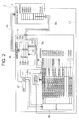
FIG. 2 illustrates the operation of the µCOM shown inFIG. 1 ; -
FIG. 3 is a block diagram of the µCOM according to a second embodiment of the present invention; -
FIG. 4 is a block diagram of an example of a conventional µCOM; -
FIG. 5 illustrates the configuration of the instruction executed by the CPU shown inFIG 4 ; -
FIG. 6 illustrates operation of the µCOM shown inFIG. 4 ; -
FIG. 7 illustrates operation of the µCOM shown inFIG. 4 ; -
FIG. 8 illustrates operation of the µCOM shown inFIG. 4 ; and -
FIG. 9 illustrates operation of the µCOM shown inFIG 4 . - A central processing unit (hereafter referred to as CPU) and a microcontroller (hereafter referred to as µCOM) according to a first embodiment of the present invention are described below with reference to
FIG. 1 . As shown in this figure, theµCOM 1 comprises anexternal memory unit 2 and aCPU 3 that reads instructions in a predetermined order and executes the instructions, the set of instructions constituting a program data. Theexternal memory unit 2 and theCPU 3 are connected to each other via an address bus BA, a data bus BD, and a control signal line L1. - The
external memory unit 2 comprises a plurality of eight-bit data areas indicated by addresses A000H to FFFFH in this order. - The program data, which comprises the instructions, is stored in a
program data area 38 incorporated in theCPU 3, theprogram data area 38 serving as an "internal memory unit" in the context of the invention. - The instructions have variable lengths including a 1-byte instruction that only contains an operation code (i.e., an "instruction information part" in the context of the invention); a 2-byte instruction comprising (i) the instruction information part and (ii) one operand (i.e., complementary information part in the context of the invention) used to execute the content of the instruction information part; and a 3-byte instruction comprising the instruction information part and two operands used to execute the content of the instruction information part. The instruction information part and the operands are each configured as an 8-bit data.
- The
CPU 3 comprises acontrol circuit 31 configured for instruction analysis and arithmetic processing in accordance with the instruction analysis; theprogram data area 38; a register set 33; anaddress latch 36; a program counter (PC)register 37; and adecode unit 39, which are connected to each other via an internal bus Bin. Thecontrol circuit 31 controls theentire CPU 3, analyzes the content of the instruction information parts and executes the instructions. - The
program data area 38 comprises a plurality of 24-bit data areas each indicated byaddresses 0000H to XXXXH in this order such that one data area only stores one instruction. The instruction information parts are stored in the individual data areas on a one-to-one basis. Specifically, the instruction information parts are stored in the same fields at the beginning of the data areas or away from the beginning thereof to a prescribed extent, respectively. - Accordingly, in the case of the 1-byte instruction, the instruction information part is stored in the first 8-bit field of the individual data area, and the following 16 bits are blank bits. Likewise, in the case of the 2-byte instruction, the first 8-bit field stores the instruction information part, the next 8-bit field stores the operand, and the remaining 8 bits are blank bits. Also, in the case of the 3-byte instruction, the first 8-bit field of the data area stores the instruction information part, the next 8-bit field stores the operand, and the remaining 8-bit fields stores another operand. The
program data area 38 is an "internal memory unit" in the context of the invention which thecontrol circuit 31 can directly read from. - The register set 33 comprises an
A register 33a, aB register 33b, aC register 33c, aD register 33d, anE register 33e, anF register 33f, anH register 33h, and anL register 331, which are general registers configured as 8-bit registers temporarily storing data in the course of arithmetic processing in thecontrol circuit 31. - The
address latch 36 is a register used to specify an address to be output on the address bus BA, the address being a 16-bit address in theexternal memory unit 2. - The
PC register 37 is also a 16-bit register. Thecontrol circuit 31 reads the instruction from theprogram data area 38 where the instruction is stored and executes this instruction, the instruction being specified by the address indicated by thePC register 37. The address stored in thePC register 37 is incremented by 1 each time thecontrol circuit 31 reads one instruction. In other words, theCPU 3 reads the instructions on a per address basis in a sequential manner. Since thePC register 37 is reset to 0 upon resetting of theCPU 3, theCPU 3 will always start read operation starting from theaddress 0000H. - The
decode unit 39 outputs the beginning 8 bits (i.e., the instruction information part) on the internal bus Bin connected to thecontrol circuit 31, the beginning 8 bits being stored in the location indicated by the specific address in theprogram data area 38, the specific address being specified by thePC register 37. - Next, operation of the
CPU 3 is described with reference toFIG. 2 in the case where, as shown inFIG. 1 , a 3-byte instructions stored in the location indicated by theaddress 0000H in theprogram data area 38 in theCPU 3. - First, upon being started up, the
CPU 3 performs initialization. In this initializing process, thecontrol circuit 31 in theCPU 3 resets thePC register 37 to theaddress 0000H. Thedecode unit 39 outputs the first 8 bits (i.e., the instruction information part) at the address in the program data area 38 (i.e., theaddress 0000H) specified by thePC register 37, the first 8 bits being output on the internal bus Bin connected to thecontrol circuit 31. - After that, as shown in
FIG 2 , thecontrol circuit 31 decodes the instruction information part indicated by the 8 bits at the address (address 0000H) that has been output on the internal bus Bin, and judges that this instruction information part pertains to the instruction instructing to read data from locations indicated by the two addresses in theexternal memory unit 2 specified by the two operands and store the data in theA register 33a. - Further, the
control circuit 31 outputs the two operands, which are stored in the remaining 16 bits at theaddress 0000H, to theaddress latch 36. Thus, the addresses designated by the two operands are output via the address bus BA to theexternal memory unit 2. Following this, thecontrol circuit 31 outputs a read signal via the control signal line L1. - When the read signal is input to the
external memory unit 2, theexternal memory unit 2 outputs the data via the data bus BD, the data being stored in the location indicted by the address that has been input via the address bus BA. The control circuit in theCPU 3 stores the data output via the data bus BD in theA register 33a, and thus operation for one instruction is completed. - Subsequently, the
control circuit 31 increments thePC register 37 by 1, so that the counter results in 0001H. In response to this, thecontrol circuit 31 decodes the instruction information part stored in the first 8 bits at the address (address 0001H) stored in theprogram data area 38, and the above operation will be repeated. - In accordance with the above-described
CPU 3, the program data is stored in theprogram data area 38, theprogram data area 38 being the internal memory unit inCPU 3 that can be directly read from by thecontrol circuit 31. Theprogram data area 38 comprises the data areas each having the predetermined capacity and the address with one instruction is stored in the corresponding one data area. Since the instruction information parts are stored at the beginning fields of the data areas, the beginning fields can serve as an IR register. - Accordingly, the IR register do not need to be provided, so that the instruction analysis can be implemented for the instruction information parts without sending the instruction information parts to the IR register. Specifically, reading of the instruction can be performed without placing the instruction information part and the complementary information parts stored in the external memory unit in the IR register that can be directly read from by the control circuit, which leads to higher processing speed. Also, one instruction can be executed upon one round of incrementing of the program counter, the processing speed can be further increased.
- Although the
program data area 38 of the first embodiment comprises the 24-bit data areas with one instruction stored in one data area on a one-to-one basis, the invention is not limited to this specific configuration. For example, theprogram data area 38 may comprise 8-bit data areas with one instruction information part or one operand stored in one data area at one address. - Also, the invention is not limited to the configuration of the above-described first embodiment, where the instruction information part is stored at the beginning field in the data area. The instruction information part may be stored at the same field spaced apart from the beginning of the data area. For example, the instruction information part may be stored in the last 8 bits in the data area, or may be stored in a field 8 bits away from the beginning of the data area.
- Next, a second embodiment of the present invention is described with reference to
FIG 3 . InFIG. 3 , the same or like elements are indicated by the same reference signs as used in the context of the first embodiment ofFIG 1 , whose detailed explanation will not be repeated here. As shown in this figure, theµCOM 1 comprises anexternal memory unit 2 and aCPU 3. Theexternal memory unit 2 and theCPU 3 are connected to each other via a read address bus BAR, a write address bus BAW, a read data bus BDR, and a write data bus BDW. - The
external memory unit 2 comprises, in the same manner as in the first embodiment, a plurality of 8-bit data areas each having the addresses A000H to FFFFH in this order. Also, theexternal memory unit 2 includes anaddress decoder circuit 21 for read operation and anaddress decoder circuit 22 for write operation. An address output via the read address bus BAR in input to theaddress decoder circuit 21 for read operation. Also, an address output via the write address bus BAW is input to theaddress decoder circuit 22 for write operation. - The
address decoder circuit 21 for reading operation is a circuit adapted to connect the data area having the address, which has been input via the read address bus BAR, to the read data bus BDR and output data stored in this data area via the read data bus BDR to theCPU 3. Theaddress decoder circuit 22 for write operation is a circuit adapted to connect the data area having the address, which has been input via the write address bus BAW, to the write data bus BRW and write the data output on the write data bus BRW into this data area. Detailed description of theCPU 3 is omitted, for it has the same configuration as that in the first embodiment. Next, the read and write operations by theµCOM 1 is described below. - First, when a read data has been created, the read data being a data that needs to be read by the
CPU 3, theCPU 3 outputs an address of the read data on the read address bus BAR. In response to outputting of this address, theexternal memory unit 2 outputs the read data residing at the address that has been specified via the read address bus BAR, the read data being output on the read data bus BDR. TheCPU 3 then reads the read data that has been output on the read data bus BDR. - On the other hand, when a write data is created, the write data being a data that needs to be written in the external memory, the
CPU 3 outputs the write data on the write data bus BDW. Subsequently, theCPU 3 outputs another address at which the write data resides on the write address bus BAW in the form of a one-shot pulse. In response to this one-shot pulse, theaddress decoder circuit 22 for write operation writes the write data, which has been output on the write data bus BDW, into the location indicated by the other address specified via the write address bus BAW. - In accordance with the above-described second embodiment, the address bus is constituted by the read address bus BAR and the write address bus BAW, and the data bus is constituted by the read data bus BDR and the write data bus BDW.
- Further, when the
CPU 3 reads data from theexternal memory unit 2, the address at which the read resides is output on the read address bus BAR, and when the write data is to be written to theexternal memory unit 2, the other address at which this data is to be written is output on the write address bus BAW, and the write data as such is output on the write data bus BDW· - When the address is input to the
external memory unit 2 via the read address bus BAR, the data residing at the address is output on the read data bus BDR. When the other address is input via the write address bus BAW, the data that has been input via the write data bus BDW is written into the location indicated by the address that has been input via the write address bus BAW. - Accordingly, write operation and read operation to/from the
external memory unit 2 can be done simultaneously. Moreover, since theCPU 3 does not need to output a read signal or a write signal, higher processing speed can be achieved. - Although the same CPU is used in the first and second embodiments, the
CPU 3 may have the state of the art common configuration shown inFIG. 4 . - The illustrated embodiments of the present invention have been described for illustrative purposes only, and not by way of limiting the invention. Accordingly, the present invention can be implemented with various modifications made thereto within the scope of the present invention.
-
- 1
- µCOM (microcontroller)
- 2
- External memory unit
- 3
- CPU (central processing unit)
- 31
- CPU
- BAR
- Read address bus
- BAW
- Write address bus
- BDR
- Read data bus
- BDW
- Write data bus
Claims (2)
- In a central processing unit incorporating a control circuit configured to read a program data from an internal memory and execute the program data, the program data being constituted by variable-length instructions that includes an instruction information part and a complementary information part for execution of the instruction information part, the improvement wherein: (A) the internal memory unit includes a plurality of data areas each having a predetermined capacity and an address, the internal memory unit being configured to be directly read from by the control circuit, (B) the instructions are stored in the data areas on a one-to-one basis and the instruction information parts are stored in same locations at or away to a predefined extent from beginning of the corresponding data areas, and (C) the program data is stored in the internal memory prior to start-up of the central processing unit such that the variable-length instructions are in accordance with storage format of the internal memory unit.
- A microcontroller comprising:(a) the central processing unit of claim 1; and(b) an external memory unit connected to the central processing unit via an address bus and a data bus, the address bus including a read address bus and a write address bus; the data bus including a read data bus and a write data bus; the central processing unit being configured to output, on the read address bus, an address at which a read data to be read is stored so as to read the read data from the external memory unit; the central processing unit being configured to output, on the write address bus, another address at which a write data is to be written in the external memory, and output the write data on the write data bus so as to write the write data into the external memory unit; the external memory unit being configured to output the read data on the read data bus, the read data residing at the address that has been input via the read address bus into the external memory unit; and the external memory unit being configured to write the data that has been input via the write data bus into the external memory at the other address that has been input via the write address bus.
Applications Claiming Priority (2)
| Application Number | Priority Date | Filing Date | Title |
|---|---|---|---|
| JP2011067931A JP4862100B1 (en) | 2011-03-25 | 2011-03-25 | Central processing unit and microcomputer |
| PCT/JP2011/076869 WO2012132104A1 (en) | 2011-03-25 | 2011-11-22 | Central processing unit and microcomputer |
Publications (2)
| Publication Number | Publication Date |
|---|---|
| EP2525285A1 true EP2525285A1 (en) | 2012-11-21 |
| EP2525285A4 EP2525285A4 (en) | 2013-12-25 |
Family
ID=45604575
Family Applications (1)
| Application Number | Title | Priority Date | Filing Date |
|---|---|---|---|
| EP20110811306 Withdrawn EP2525285A4 (en) | 2011-03-25 | 2011-11-22 | Central processing unit and microcomputer |
Country Status (5)
| Country | Link |
|---|---|
| EP (1) | EP2525285A4 (en) |
| JP (1) | JP4862100B1 (en) |
| CN (1) | CN102822795A (en) |
| TW (1) | TWI389027B (en) |
| WO (1) | WO2012132104A1 (en) |
Families Citing this family (1)
| Publication number | Priority date | Publication date | Assignee | Title |
|---|---|---|---|---|
| JP7384374B2 (en) | 2019-02-27 | 2023-11-21 | 株式会社ウーノラボ | central processing unit |
Family Cites Families (11)
| Publication number | Priority date | Publication date | Assignee | Title |
|---|---|---|---|---|
| JPS592058B2 (en) * | 1977-04-28 | 1984-01-17 | 日本電信電話株式会社 | Storage device |
| JPH0440525A (en) * | 1990-06-06 | 1992-02-10 | Seiko Epson Corp | parallel processing microprocessor |
| GB9412434D0 (en) * | 1994-06-21 | 1994-08-10 | Inmos Ltd | Computer instruction compression |
| US5590358A (en) * | 1994-09-16 | 1996-12-31 | Philips Electronics North America Corporation | Processor with word-aligned branch target in a byte-oriented instruction set |
| JP3861452B2 (en) * | 1998-04-28 | 2006-12-20 | 松下電器産業株式会社 | Processor and program generation device |
| US7376814B1 (en) * | 1999-09-07 | 2008-05-20 | Nxp B.V. | Method for forming variable length instructions in a processing system |
| US6804799B2 (en) * | 2001-06-26 | 2004-10-12 | Advanced Micro Devices, Inc. | Using type bits to track storage of ECC and predecode bits in a level two cache |
| US8107492B2 (en) * | 2006-02-24 | 2012-01-31 | Qualcomm Incorporated | Cooperative writes over the address channel of a bus |
| US20080162522A1 (en) * | 2006-12-29 | 2008-07-03 | Guei-Yuan Lueh | Methods and apparatuses for compaction and/or decompaction |
| CN101334766B (en) * | 2008-06-30 | 2011-05-11 | 东软飞利浦医疗设备系统有限责任公司 | Paralleling microprocessor and its realization method |
| CN101620524B (en) * | 2009-07-03 | 2011-08-10 | 中国人民解放军国防科学技术大学 | Matrix register file for supporting whole reading and writing operations of matrix |
-
2011
- 2011-03-25 JP JP2011067931A patent/JP4862100B1/en active Active
- 2011-11-22 WO PCT/JP2011/076869 patent/WO2012132104A1/en not_active Ceased
- 2011-11-22 EP EP20110811306 patent/EP2525285A4/en not_active Withdrawn
- 2011-11-22 CN CN2011800032505A patent/CN102822795A/en active Pending
- 2011-12-15 TW TW100146468A patent/TWI389027B/en active
Also Published As
| Publication number | Publication date |
|---|---|
| TW201229895A (en) | 2012-07-16 |
| TWI389027B (en) | 2013-03-11 |
| JP4862100B1 (en) | 2012-01-25 |
| JP2012203664A (en) | 2012-10-22 |
| EP2525285A4 (en) | 2013-12-25 |
| CN102822795A (en) | 2012-12-12 |
| WO2012132104A1 (en) | 2012-10-04 |
Similar Documents
| Publication | Publication Date | Title |
|---|---|---|
| JPS62197830A (en) | Data processing system | |
| US20140019741A1 (en) | Method and system for booting electronic device from nand flash memory | |
| US20210382721A1 (en) | Central processor-coprocessor synchronization | |
| JPH01119828A (en) | Microprocessor | |
| CN108959180B (en) | Data processing method and system | |
| EP2525285A1 (en) | Central processing unit and microcomputer | |
| CN107844321A (en) | A kind of MCU processing systems | |
| US6981109B2 (en) | Digital signal processor system having programmable random access memory that executes processing during downloading of a program | |
| US8516225B2 (en) | Central processing unit and microcontroller | |
| JP2002342256A (en) | Data processor and data table updating method | |
| KR101178293B1 (en) | Central processing unit and microcontroller | |
| CN110134438B (en) | Instruction sequencing method, device, mobile terminal and storage medium | |
| US20020035679A1 (en) | Processor having internal control instructions | |
| US20050172108A1 (en) | Device and method of switching registers to be accessed by changing operating modes in a processor | |
| TWI337718B (en) | ||
| US6922760B2 (en) | Distributed result system for high-performance wide-issue superscalar processor | |
| US5463747A (en) | Microprogram data processor processing operand address calculation and instruction execution with common hardware | |
| JP3481479B2 (en) | Command controller | |
| JP4507888B2 (en) | Microcomputer | |
| JP4702004B2 (en) | Microcomputer | |
| US20050216704A1 (en) | Device and method for managing a microprocessor instruction set | |
| JPH06149563A (en) | Data processing device | |
| JP2000029686A (en) | Data processing device and instruction format | |
| US20060064572A1 (en) | Automatic initialization | |
| JPS59105148A (en) | Microprogram controlling type central processing unit |
Legal Events
| Date | Code | Title | Description |
|---|---|---|---|
| PUAI | Public reference made under article 153(3) epc to a published international application that has entered the european phase |
Free format text: ORIGINAL CODE: 0009012 |
|
| 17P | Request for examination filed |
Effective date: 20120201 |
|
| AK | Designated contracting states |
Kind code of ref document: A1 Designated state(s): AL AT BE BG CH CY CZ DE DK EE ES FI FR GB GR HR HU IE IS IT LI LT LU LV MC MK MT NL NO PL PT RO RS SE SI SK SM TR |
|
| R17P | Request for examination filed (corrected) |
Effective date: 20120201 |
|
| A4 | Supplementary search report drawn up and despatched |
Effective date: 20131121 |
|
| RIC1 | Information provided on ipc code assigned before grant |
Ipc: G06F 9/30 20060101AFI20131115BHEP |
|
| DAX | Request for extension of the european patent (deleted) | ||
| 17Q | First examination report despatched |
Effective date: 20140722 |
|
| STAA | Information on the status of an ep patent application or granted ep patent |
Free format text: STATUS: THE APPLICATION IS DEEMED TO BE WITHDRAWN |
|
| 18D | Application deemed to be withdrawn |
Effective date: 20150505 |