EP2523411A2 - Method and device for receiving an imbalanced transmission signal - Google Patents
Method and device for receiving an imbalanced transmission signal Download PDFInfo
- Publication number
- EP2523411A2 EP2523411A2 EP20120166381 EP12166381A EP2523411A2 EP 2523411 A2 EP2523411 A2 EP 2523411A2 EP 20120166381 EP20120166381 EP 20120166381 EP 12166381 A EP12166381 A EP 12166381A EP 2523411 A2 EP2523411 A2 EP 2523411A2
- Authority
- EP
- European Patent Office
- Prior art keywords
- estimating
- antenna
- parameter
- power
- mean square
- Prior art date
- Legal status (The legal status is an assumption and is not a legal conclusion. Google has not performed a legal analysis and makes no representation as to the accuracy of the status listed.)
- Granted
Links
Images

Classifications
-
- H—ELECTRICITY
- H04—ELECTRIC COMMUNICATION TECHNIQUE
- H04L—TRANSMISSION OF DIGITAL INFORMATION, e.g. TELEGRAPHIC COMMUNICATION
- H04L25/00—Baseband systems
- H04L25/02—Details ; arrangements for supplying electrical power along data transmission lines
- H04L25/0202—Channel estimation
- H04L25/024—Channel estimation channel estimation algorithms
- H04L25/0242—Channel estimation channel estimation algorithms using matrix methods
-
- H—ELECTRICITY
- H04—ELECTRIC COMMUNICATION TECHNIQUE
- H04L—TRANSMISSION OF DIGITAL INFORMATION, e.g. TELEGRAPHIC COMMUNICATION
- H04L25/00—Baseband systems
- H04L25/02—Details ; arrangements for supplying electrical power along data transmission lines
- H04L25/0202—Channel estimation
- H04L25/0204—Channel estimation of multiple channels
-
- H—ELECTRICITY
- H04—ELECTRIC COMMUNICATION TECHNIQUE
- H04L—TRANSMISSION OF DIGITAL INFORMATION, e.g. TELEGRAPHIC COMMUNICATION
- H04L25/00—Baseband systems
- H04L25/02—Details ; arrangements for supplying electrical power along data transmission lines
- H04L25/03—Shaping networks in transmitter or receiver, e.g. adaptive shaping networks
- H04L25/03891—Spatial equalizers
-
- H—ELECTRICITY
- H04—ELECTRIC COMMUNICATION TECHNIQUE
- H04L—TRANSMISSION OF DIGITAL INFORMATION, e.g. TELEGRAPHIC COMMUNICATION
- H04L25/00—Baseband systems
- H04L25/02—Details ; arrangements for supplying electrical power along data transmission lines
- H04L25/03—Shaping networks in transmitter or receiver, e.g. adaptive shaping networks
- H04L25/03006—Arrangements for removing intersymbol interference
- H04L2025/0335—Arrangements for removing intersymbol interference characterised by the type of transmission
- H04L2025/03426—Arrangements for removing intersymbol interference characterised by the type of transmission transmission using multiple-input and multiple-output channels
Definitions
- Communication systems such as third generation partnership project (3GPP) high speed packet access plus (HSPA+), multiple-input multiple-output (MIMO), imbalanced transmission, and advanced receivers thereof may benefit from an HSPA MIMO receiver configured for receipt of an imbalanced transmit signal.
- 3GPP third generation partnership project
- HSPA+ high speed packet access plus
- MIMO multiple-input multiple-output
- a communications device or modem chip can incorporate such a configuration.
- a conventional linear minimum mean square error (LMMSE)-based chip equalizer may assume that two transmit antennas have equal transmit power. As such, scaling factors may not be used. Additionally, an ad hoc solution may be used for the diagonal loading factor instead of an accurate noise variance estimate ⁇ ⁇ i 2 .
- LMMSE linear minimum mean square error
- w ⁇ LMMSE , 1 H ⁇ 1 ⁇ H ⁇ 1 H + H ⁇ 2 ⁇ H ⁇ 2 H + K ⁇ I 2 ⁇ F - 1 ⁇ H ⁇ 1 ⁇ ⁇ D
- w ⁇ LMMSE , 2 H ⁇ 1 ⁇ H ⁇ 1 H + H ⁇ 2 ⁇ H ⁇ 2 H + K ⁇ I 2 ⁇ F - 1 ⁇ H ⁇ 2 ⁇ ⁇ D
- K is the diagonal loading factor
- ⁇ D ⁇ R F + L 2 - 1 stands for the unit vector whose D + 1 th element is 1, and other elements are all zeros
- R stands for real value.
- a method includes receiving a multiple-input multiple-output system communication signal comprising at least one primary signal at a first power level from a first antenna and a secondary signal at a second power level different from the first power level from a second antenna.
- the method also includes estimating at least one parameter of the communication signal.
- the method further includes applying the at least one parameter as estimated to calculate linear minimum mean square error coefficients.
- the method additionally includes applying the linear minimum mean square error coefficients to process the communication signal.
- An apparatus includes at least one processor and at least one memory including computer program instructions.
- the at least one memory and computer program instructions are configured to, with the at least one processor, cause the apparatus at least to estimate at least one parameter of a received multiple-input multiple-output system communication signal comprising at least one primary signal at a first power level from a first antenna and a secondary signal at a second power level different from the first power level from a second antenna.
- the at least one memory and computer program instructions are also configured to, with the at least one processor, cause the apparatus at least to apply the at least one parameter as estimated to calculate linear minimum mean square error coefficients.
- the at least one memory and computer program instructions are further configured to, with the at least one processor, cause the apparatus at least to apply the linear minimum mean square error coefficients to process the communication signal.
- an apparatus includes receiving means for receiving a multiple-input multiple-output system communication signal comprising at least one primary signal at a first power level from a first antenna and a secondary signal at a second power level different from the first power level from a second antenna.
- the apparatus also includes estimating means for estimating at least one parameter of the communication signal.
- the apparatus further includes calculating means for applying the at least one parameter as estimated to calculate linear minimum mean square error coefficients.
- the apparatus additionally includes processing means for applying the linear minimum mean square error coefficients to process the communication signal.
- a non-transitory computer readable medium is, in certain embodiments, encoded with instructions that, when executed in hardware, perform a process.
- the process includes receiving a multiple-input multiple-output system communication signal comprising at least one primary signal at a first power level from a first antenna and a secondary signal at a second power level different from the first power level from a second antenna.
- the process also includes estimating at least one parameter of the communication signal.
- the process further includes applying the at least one parameter as estimated to calculate linear minimum mean square error coefficients.
- the process additionally includes applying the linear minimum mean square error coefficients to process the communication signal.
- a multiple-input multiple-output communication system may employ at least two transmit antennas (a primary antenna and one or more secondary antennas), as well as multiple receive antennas.
- the secondary common pilot channel S-CPICH
- P-CPICH primary common pilot channel
- the secondary common pilot channel can be used as a reference signal to aid the channel estimation for the secondary transmission (tx) antenna.
- This approach may serve both non-multiple-input-multiple-output (non-MIMO) legacy high speed data packet access (HSDPA) users and multiple-input multiple-output users simultaneously. This approach may also alleviate performance degradation of the non-MIMO users due to space time transmit diversity (STTD).
- STTD space time transmit diversity
- multiple-input multiple-output high speed data packet access channels can be transmitted at both antennas, all the other channels may only be transmitted at the primary transmit antenna, which may be referred to as the first antenna.
- the lower power of the secondary common pilot channel may reduce the interference, similar to inter-cell interference, to the legacy non-MIMO user equipment (UE). Such a method, however, may lead to imbalance of transmit signal power at two virtual transmit antenna ports.
- the imbalanced transmission signal power may affect the performance of a conventional multiple-input multiple-output user equipment receiver that assumes balanced power at two transmit antennas.
- F be defined as the length of the receiver equalizer filter operating at a sampling rate of two times chip rate
- L be defined as the length of the channel impulse response (CIR) at the resolution of half chip.
- the method being described is not limited to a two-time chip rate. However, this mathematical example is for the two-time chip rate, which is used as an example implementation.
- the signal model of a two-by-two multiple-input multiple-output system with imbalanced transmission power can be defined as follows.
- the noise variances on two branches can be different. For the sake of simplicity, however, this example focuses on a case in which two branches have same noise variance. However, modifications to address the case of two difference noise variances are also permitted.
- 2 ) 1.
- s T ,2 [ n ] denotes the secondary common pilot channel chip vector of unit chip power transmitted from the second transmit antenna.
- s D,i [ n ] stands for the combined high-speed downlink shared channel (HS-DSCH) chip vector of unit power transmitted from the i th transmit antenna and s o [ n ] denotes the combined other channel chip vector of unit power transmitted only from the first transmit antenna.
- ⁇ T ,1 denotes the primary common pilot channel power
- ⁇ T ,2 denotes the power of the secondary common pilot channel
- ⁇ D denotes the power of the combined high-speed downlink shared channels
- ⁇ O denotes the power of combined other channels.
- the linear minimum mean square error estimates can rely on information about the channel impulse responses, noise variances with respect to two receive antennas, and the transmit power p of the second transmit antenna.
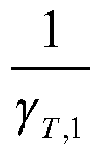
- equations (2.9) and (2.10) can be referred to as scaling factors.
- the linear minimum mean square error multiple-input multiple-output receiver in addition to the channel impulse response estimate ⁇ j,i and the noise variance estimate ⁇ ⁇ 2 , the linear minimum mean square error multiple-input multiple-output receiver also needs the estimates of primary common pilot channel power ⁇ T,1 and transmit power p of the second transmit antenna, and the power ratio ⁇ .
- Certain embodiments of the present invention provide a method to estimate the noise variance ⁇ ⁇ 2 , pilot power ⁇ T,1 , power ratio ⁇ and power value p , and apply these estimated parameters to calculate the proper linear minimum mean square error coefficients.
- RRC radio resource control
- the receive signal covariance matrix can be estimated directly from the receive sample covariance matrix.
- ⁇ r denote the receive sample covariance matrix.
- ⁇ T,1 can be estimated by considering the off-diagonal elements of the difference matrix ⁇ r - C r . Then ⁇ ⁇ 2 can be further estimated based on the known estimate of ⁇ T,1 and the diagonal of the difference matrix ⁇ r - C r .
- the covariance matrices ⁇ r and C r matrices may be highly structured, i.e., Hermitian and block Toeplitz matrices.
- the non-zero block of elements of ⁇ r can be reformulated as a vector x .
- the vector x can then be obtained by removing the diagonal elements of ⁇ r from vector x .
- vectors y 1 and y 2 can be created from matrix ⁇ 1 ⁇ 1 H and ⁇ 2 ⁇ 2 H , respectively.
- y 1 and y 2 can be defined from y 1 and y 2 .
- ⁇ T,1 arg ⁇ min ⁇ T , 1 ⁇ ⁇ x ⁇ - 1 ⁇ T , 1 ⁇ y ⁇ 1 - 1 ⁇ ⁇ y ⁇ 2 ⁇ F 2 .
- H ⁇ ⁇ 1 1 ⁇ T
- H ⁇ H ⁇ 1 H ⁇ ⁇ 2 1 ⁇ ⁇ H ⁇ 2 .
- the linear minimum mean square error coefficients calculated in equations (4.8) and (4.9) can be employed as equalizer filter coefficients.
- the receive signal samples can be filtered by the equalizer filter so that the outputs of the equalizer filter are the estimates of the transmit chip signals.
- the outputs of the equalizer filter with the coefficients of equation (4.8) can serve as the estimates of the transmit chips from the first transmit antenna
- the outputs of the equalizer filter with the coefficients of equation (4.9) can serve as the estimates of the transmit chips from the second transmit antenna.
- the equalizer filter coefficients can be updated periodically in order to capture the change of channels.
- the update period can also be referred to as a processing period. As such, a method according to certain embodiments of the present invention can be performed in every processing period, so that equalizer filter coefficients can be updated accordingly.
- Both estimates of two transmit chip signals can be further processed by a de-spreader to obtain the estimates of the transmit symbol signals.
- the transmit symbol signals of two transmit antenna can then be combined by the multiple-input multiple-output decoder.
- the outputs of the multiple-input multiple-output decoder can serve as soft values of a transmit bit sequence, and can be further fed to a hybrid automatic repeat request (HARQ) processing unit.
- HARQ hybrid automatic repeat request
- the transmit information bits can be recovered by the HARQ processing unit.
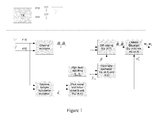
- Figure 1 illustrates pilot power and noise variance estimation used in a linear minimum mean square error receiver for imbalanced transmission signal.
- a signal composed of two signals, S1(t) and S2(t) can be sent from a transmitter (TX) that has a pair of antennas.
- TX transmitter
- a receiver can receive the signal at two receive antennas, as r1(t) and rt(2).
- the receive signals from two receive branches can be processed to obtain the channel impulse response estimates (in the channel estimator) and receive sample covariance estimates (in the receive sample covariance estimator), which can then be used for pilot power and noise variance estimation according to equation (4.4).
- the parameter ⁇ can be further calculated as per equation (4.2).
- the channel impulse response estimates can be scaled as in equations (4.5), (4.6), and (4.7).
- the linear minimum mean square error based chip equalizer filter taps can be obtained according to equations (4.8) and (4.9).
- a method according to certain embodiments of the present invention can employ prescaling for channel impulse responses and postscaling for taps based on the estimated parameters. As such, it may be possible to configure the method for both the balanced and imbalanced case.
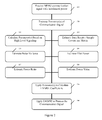
- Figure 2 illustrates a method according to certain embodiments of the present invention.
- a method can include, at 210, receiving a multiple-input multiple-output system communication signal comprising at least one primary signal at a first power level from a first antenna and a secondary signal at a second power level different from the first power level from a second antenna.
- the method can also include, at 220, estimating at least one parameter of the communication signal.
- the estimating can include, at 222, calculating the at least one parameter based on higher layer signaling.
- the estimating can also include, at 224, estimating from a receive sample covariance matrix.
- the estimating can further include, at 225, estimating the noise variance.
- the estimating can additionally include, at 226, estimating pilot power.
- the estimating can also include, at 227, estimating power ratio.
- the estimating can further include, at 228, estimating power value.
- ⁇ D ⁇ R F+L -2 F is the length of the receiver equalizer filter operating at a sampling rate of two times chip rate
- L is the length of the channel impulse response (CIR) at the resolution of half chip
- H j,i is the channel matrix with respect to the channel between i th transmit antenna and j th receive antenna
- p is the transmit power of
- the method can further include, at 230, applying the at least one parameter as estimated to calculate linear minimum mean square error coefficients.
- the method can additionally include, at 240, applying the linear minimum mean square error coefficients to process the communication signal.
- Figure 3 illustrates a system according to certain embodiments of the present invention.
- Figure 3 illustrates a plurality of antennas 310 provided on an apparatus 320, which may be a user equipment, such as a mobile telephone, personal digital assistant, or personal computer.
- the antennas 310 are shown as three antennas, but more or fewer antennas are also permitted.
- the antennas 310 may be formed in a combined way, although they are shown as individual, separate antenna elements.
- the apparatus 320 may be equipped with antennas 310 at all times.
- the apparatus 320 may be a subcomponent of a mobile telephone, and consequently may not itself have any antennas, although it may be equipped to receive signals from the antennas 310.
- the apparatus 320 may include one or more processors 330. Two processors 330 are shown, although more processors or fewer processors can be employed. The processors 330 may be dedicated for use with this apparatus 320 or may be shared between this apparatus 320 and other devices.
- the apparatus 320 may also include one or memory 340. Although one memory 340 is shown, multiple memories are permitted.
- the memory 340 may be any suitable storage medium, such a non-transitory medium.
- the storage medium may be, for example, random access memory (RAM) or read only memory (ROM).
- RAM random access memory
- ROM read only memory
- the storage medium may be on-board with a same chip as the processor(s) 330 or may be separate.
- the memory 340 may be loaded with computer instructions that are configured to be executed in hardware.
- the memory 340 and the computer instructions can be configured to, with the processor(s) 330, cause the apparatus 320 to perform a process.
- the process may be one of the processes discussed above, such as one of the processes shown in Figures 1 and 2 .
- the antennas 310 may be receiving a communication signal from a transmitter 303.
- the transmitter 303 may have multiple antennas, including a primary antenna 305 and a variety of secondary antennas 307.
Landscapes
- Engineering & Computer Science (AREA)
- Power Engineering (AREA)
- Computer Networks & Wireless Communication (AREA)
- Signal Processing (AREA)
- Physics & Mathematics (AREA)
- Mathematical Physics (AREA)
- Radio Transmission System (AREA)
- Mobile Radio Communication Systems (AREA)
Abstract
Description
- Communication systems, such as third generation partnership project (3GPP) high speed packet access plus (HSPA+), multiple-input multiple-output (MIMO), imbalanced transmission, and advanced receivers thereof may benefit from an HSPA MIMO receiver configured for receipt of an imbalanced transmit signal. A communications device or modem chip can incorporate such a configuration.
- A conventional linear minimum mean square error (LMMSE)-based chip equalizer may assume that two transmit antennas have equal transmit power. As such, scaling factors may not be used. Additionally, an ad hoc solution may be used for the diagonal loading factor instead of an accurate noise variance estimate


where w̃ LMMSE,i, i = 1,2 are the LMMSE equalizer filter coefficients, Ĥ i,i = 1,2 are the channel matrixes constructed from the channel impulse response estimates, with the structure defined in equations (2.1) and (2.2), K is the diagonal loading factor,
- According to certain embodiments, a method includes receiving a multiple-input multiple-output system communication signal comprising at least one primary signal at a first power level from a first antenna and a secondary signal at a second power level different from the first power level from a second antenna. The method also includes estimating at least one parameter of the communication signal. The method further includes applying the at least one parameter as estimated to calculate linear minimum mean square error coefficients. The method additionally includes applying the linear minimum mean square error coefficients to process the communication signal.
- An apparatus according to certain embodiments includes at least one processor and at least one memory including computer program instructions. The at least one memory and computer program instructions are configured to, with the at least one processor, cause the apparatus at least to estimate at least one parameter of a received multiple-input multiple-output system communication signal comprising at least one primary signal at a first power level from a first antenna and a secondary signal at a second power level different from the first power level from a second antenna. The at least one memory and computer program instructions are also configured to, with the at least one processor, cause the apparatus at least to apply the at least one parameter as estimated to calculate linear minimum mean square error coefficients. The at least one memory and computer program instructions are further configured to, with the at least one processor, cause the apparatus at least to apply the linear minimum mean square error coefficients to process the communication signal.
- According to certain further embodiments, an apparatus includes receiving means for receiving a multiple-input multiple-output system communication signal comprising at least one primary signal at a first power level from a first antenna and a secondary signal at a second power level different from the first power level from a second antenna. The apparatus also includes estimating means for estimating at least one parameter of the communication signal. The apparatus further includes calculating means for applying the at least one parameter as estimated to calculate linear minimum mean square error coefficients. The apparatus additionally includes processing means for applying the linear minimum mean square error coefficients to process the communication signal.
- A non-transitory computer readable medium is, in certain embodiments, encoded with instructions that, when executed in hardware, perform a process. The process includes receiving a multiple-input multiple-output system communication signal comprising at least one primary signal at a first power level from a first antenna and a secondary signal at a second power level different from the first power level from a second antenna. The process also includes estimating at least one parameter of the communication signal. The process further includes applying the at least one parameter as estimated to calculate linear minimum mean square error coefficients. The process additionally includes applying the linear minimum mean square error coefficients to process the communication signal.
-
- For proper understanding of the invention, reference should be made to the accompanying drawings, wherein:
-
Figure 1 illustrates a system according to certain embodiments of the present invention. -
Figure 2 illustrates a method according to certain embodiments of the present invention. -
Figure 3 illustrates another system according to certain embodiments of the present invention.
-
- A multiple-input multiple-output communication system may employ at least two transmit antennas (a primary antenna and one or more secondary antennas), as well as multiple receive antennas. In communication systems that comply with protocols defined by the third generation partnership project (3GPP), the secondary common pilot channel (S-CPICH) can have lower power than the primary common pilot channel (P-CPICH). The secondary common pilot channel can be used as a reference signal to aid the channel estimation for the secondary transmission (tx) antenna. This approach may serve both non-multiple-input-multiple-output (non-MIMO) legacy high speed data packet access (HSDPA) users and multiple-input multiple-output users simultaneously. This approach may also alleviate performance degradation of the non-MIMO users due to space time transmit diversity (STTD).
- While multiple-input multiple-output high speed data packet access channels can be transmitted at both antennas, all the other channels may only be transmitted at the primary transmit antenna, which may be referred to as the first antenna. The lower power of the secondary common pilot channel may reduce the interference, similar to inter-cell interference, to the legacy non-MIMO user equipment (UE). Such a method, however, may lead to imbalance of transmit signal power at two virtual transmit antenna ports.
- The imbalanced transmission signal power may affect the performance of a conventional multiple-input multiple-output user equipment receiver that assumes balanced power at two transmit antennas.
- In an example model, let F be defined as the length of the receiver equalizer filter operating at a sampling rate of two times chip rate, and let L be defined as the length of the channel impulse response (CIR) at the resolution of half chip. The method being described is not limited to a two-time chip rate. However, this mathematical example is for the two-time chip rate, which is used as an example implementation. The signal model of a two-by-two multiple-input multiple-output system with imbalanced transmission power can be defined as follows.

where


- Additionally, η j [n]=(η j [2n+1],η j [2n],···η j [2n-F+2])T ∈ CF defines the noise signal vector in the received signal at the j th receive antenna and


and
where
- Without loss of generality, the total power transmitted from the first transmit antenna can be assumed to 1, and the total transmitted signal power from the second transmit antenna can be defined as p, that is


- The power offset Δ T between secondary common pilot channel and primary common pilot channel is signaled from the network to the user equipment, it means

- The linear minimum mean square error based estimate for the D th delayed transmitted composite chip s 1[n - D] in s 1[n] can be expressed as


- The estimate for the D th delayed transmitted composite chip s 2[n - D] in s 2[n] can be expressed as


- As shown in equations (2.7) and (2.8), the linear minimum mean square error estimates can rely on information about the channel impulse responses, noise variances with respect to two receive antennas, and the transmit power p of the second transmit antenna.
- The channel estimates assuming pilot signal power of 1 are a scaled version of the true channel impulse responses, i.e.,


where
and
- The expressions,

estimate 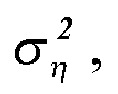
- Certain embodiments of the present invention provide a method to estimate the noise
variance 
- Due to the dependencies of γT,1 , p and β shown in equation (2.9), p can be obtained from γT,1 and β as follows

- It should also be noted that β can be expressed as

- Since high layer radio resource control (RRC) signaling provides the secondary common pilot channel power offset Δ T and HS-PDSCH power offset Δ D relative to the primary common pilot channel power, as such, power ratio β can be calculated based on the high layer signaling information.
- Based on signal model equation (2.1), the receive signal covariance matrix can be constructed as follows

- Alternatively, the receive signal covariance matrix can be estimated directly from the receive sample covariance matrix. Let Ĉ r denote the receive sample covariance matrix. Then γT,1 and


- It is also noted that


- The covariance matrices Ĉ r and C r matrices may be highly structured, i.e., Hermitian and block Toeplitz matrices. The non-zero block of elements of Ĉ r can be reformulated as a vector x . The vector
x can then be obtained by removing the diagonal elements of Ĉ r from vector x . In a similar manner, vectors y 1 and y 2 can be created from matrix Ĥ 1 Ĥ 1 H and Ĥ 2 Ĥ 2 H, respectively. In addition,y 1 andy 2 can be defined from y 1 and y 2. The estimation of parameter γT,1 from equation (4.4) can be simplified in the following expression"
- From equation (4.5), with the knowledge of β based on equation (4.2), γT,1 can be estimated by a least-squared algorithm as follows

- Furthermore, the following expressions can be defined:


- Then the linear minimum mean square error coefficients in equations (2.9) and (2.10) can be expressed as

and
where δ D ∈ R F+L-2. - The linear minimum mean square error coefficients calculated in equations (4.8) and (4.9) can be employed as equalizer filter coefficients. Thus, the receive signal samples can be filtered by the equalizer filter so that the outputs of the equalizer filter are the estimates of the transmit chip signals. In particular, the outputs of the equalizer filter with the coefficients of equation (4.8) can serve as the estimates of the transmit chips from the first transmit antenna, and the outputs of the equalizer filter with the coefficients of equation (4.9) can serve as the estimates of the transmit chips from the second transmit antenna. Due to the variation of the radio channels, the equalizer filter coefficients can be updated periodically in order to capture the change of channels. The update period can also be referred to as a processing period. As such, a method according to certain embodiments of the present invention can be performed in every processing period, so that equalizer filter coefficients can be updated accordingly.
- Both estimates of two transmit chip signals can be further processed by a de-spreader to obtain the estimates of the transmit symbol signals. The transmit symbol signals of two transmit antenna can then be combined by the multiple-input multiple-output decoder. The outputs of the multiple-input multiple-output decoder can serve as soft values of a transmit bit sequence, and can be further fed to a hybrid automatic repeat request (HARQ) processing unit. The transmit information bits can be recovered by the HARQ processing unit.
- A method according to certain embodiments can be implemented in a receiver as shown in
Figure 1 . More particularly,Figure 1 illustrates pilot power and noise variance estimation used in a linear minimum mean square error receiver for imbalanced transmission signal. - As shown in
Figure 1 , a signal composed of two signals, S1(t) and S2(t), can be sent from a transmitter (TX) that has a pair of antennas. After passing through a communication medium (such as air), a receiver can receive the signal at two receive antennas, as r1(t) and rt(2). The receive signals from two receive branches can be processed to obtain the channel impulse response estimates (in the channel estimator) and receive sample covariance estimates (in the receive sample covariance estimator), which can then be used for pilot power and noise variance estimation according to equation (4.4). By virtue of the known power offset parameter signaled from a higher layer, the parameter β can be further calculated as per equation (4.2). Beyond simply being used to provide the estimated parameters, the channel impulse response estimates can be scaled as in equations (4.5), (4.6), and (4.7). Finally, the linear minimum mean square error based chip equalizer filter taps can be obtained according to equations (4.8) and (4.9). - Compared to a conventional linear minimum mean square error solution for a balanced transmission signal, a method according to certain embodiments of the present invention can employ prescaling for channel impulse responses and postscaling for taps based on the estimated parameters. As such, it may be possible to configure the method for both the balanced and imbalanced case.
-
Figure 2 illustrates a method according to certain embodiments of the present invention. As shown inFigure 2 , a method can include, at 210, receiving a multiple-input multiple-output system communication signal comprising at least one primary signal at a first power level from a first antenna and a secondary signal at a second power level different from the first power level from a second antenna. - The method can also include, at 220, estimating at least one parameter of the communication signal. The estimating can include, at 222, calculating the at least one parameter based on higher layer signaling. The estimating can also include, at 224, estimating from a receive sample covariance matrix.
- The estimating can further include, at 225, estimating the noise variance. The estimating can additionally include, at 226, estimating pilot power. The estimating can also include, at 227, estimating power ratio. The estimating can further include, at 228, estimating power value.
- The estimating can additionally include estimating the linear minimum mean square error coefficients as


Figure 2 , although it can be seen inFigure 1 . - As shown in
Figure 2 , the method can further include, at 230, applying the at least one parameter as estimated to calculate linear minimum mean square error coefficients. The method can additionally include, at 240, applying the linear minimum mean square error coefficients to process the communication signal. -
Figure 3 illustrates a system according to certain embodiments of the present invention.Figure 3 illustrates a plurality ofantennas 310 provided on an apparatus 320, which may be a user equipment, such as a mobile telephone, personal digital assistant, or personal computer. Theantennas 310 are shown as three antennas, but more or fewer antennas are also permitted. In certain embodiments, theantennas 310 may be formed in a combined way, although they are shown as individual, separate antenna elements. There is no requirement that the apparatus 320 be equipped withantennas 310 at all times. For example, the apparatus 320 may be a subcomponent of a mobile telephone, and consequently may not itself have any antennas, although it may be equipped to receive signals from theantennas 310. - The apparatus 320 may include one or
more processors 330. Twoprocessors 330 are shown, although more processors or fewer processors can be employed. Theprocessors 330 may be dedicated for use with this apparatus 320 or may be shared between this apparatus 320 and other devices. - The apparatus 320 may also include one or
memory 340. Although onememory 340 is shown, multiple memories are permitted. Thememory 340 may be any suitable storage medium, such a non-transitory medium. The storage medium may be, for example, random access memory (RAM) or read only memory (ROM). The storage medium may be on-board with a same chip as the processor(s) 330 or may be separate. - The
memory 340 may be loaded with computer instructions that are configured to be executed in hardware. Thememory 340 and the computer instructions can be configured to, with the processor(s) 330, cause the apparatus 320 to perform a process. The process may be one of the processes discussed above, such as one of the processes shown inFigures 1 and2 . - The
antennas 310 may be receiving a communication signal from atransmitter 303. Thetransmitter 303 may have multiple antennas, including aprimary antenna 305 and a variety ofsecondary antennas 307. - One having ordinary skill in the art will readily understand that the invention as discussed above may be practiced with steps in a different order, and/or with hardware elements in configurations which are different than those which are disclosed. Therefore, although the invention has been described based upon these preferred embodiments, it would be apparent to those of skill in the art that certain modifications, variations, and alternative constructions would be apparent, while remaining within the spirit and scope of the invention. In order to determine the metes and bounds of the invention, therefore, reference should be made to the appended claims.
Claims (15)
- A method, comprising:receiving a multiple-input multiple-output system communication signal comprising at least one primary signal at a first power level from a first antenna and a secondary signal at a second power level different from the first power level from a second antenna;estimating at least one parameter of the communication signal;applying the at least one parameter as estimated to calculate linear minimum mean square error coefficients; andapplying the linear minimum mean square error coefficients to process the communication signal.
- The method of claim 1, wherein the estimating comprises calculating the at least one parameter based on higher layer signaling.
- The method of any of claims 1 and 2, wherein the estimating comprises estimating from a receive sample covariance matrix.
- The method of any of claims 1 to 3, wherein the estimating the at least one parameter comprises estimating the noise variance.
- The method of any of claims 1 to 4, wherein the estimating the at least one parameter comprises estimating pilot power.
- The method of any of claims 1 to 5, wherein the estimating the at least one parameter comprises estimating power ratio.
- The method of any of claims 1 to 6, wherein the estimating the at least one parameter comprises estimating power value.
- The method of any of claims 1 to 7, wherein the estimating comprises estimating the linear minimum mean square error as

and
where δ D ∈ R F+L-2,
F is the length of the receiver equalizer filter operating at a sampling rate of two times chip rate,
L is the length of the channel impulse response (CIR) at the resolution of half chip, H j,i is the channel matrix with respect to the channel between i th transmit antenna and j th receive antenna,
p is the transmit power of the second transmit antenna,
σ η 2 expresses a noise variance, and
I 2F is an identity matrix. - An apparatus, comprising:at least one processor; andat least one memory including computer program instructions,wherein the at least one memory and computer program instructions are configured to, with the at least one processor, cause the apparatus at least toestimate at least one parameter of a received multiple-input multiple-output system communication signal comprising at least one primary signal at a first power level from a first antenna and a secondary signal at a second power level different from the first power level from a second antenna;apply the at least one parameter as estimated to calculate linear minimum mean square error coefficients; andapply the linear minimum mean square error coefficients to process the communication signal.
- The apparatus of claim 9, wherein the estimating comprises calculating the at least one parameter based on higher layer signaling.
- The apparatus of any of claims 9 and 10, wherein the estimating comprises estimating from a receive sample covariance matrix.
- The apparatus of any of claim 9 to 11, wherein the estimating the at least one parameter comprises at least one of estimating the noise variance, estimating pilot power, estimating power ratio, and estimating power value.
- The apparatus of any of claims 9 to 12, wherein the estimating comprises estimating the linear minimum mean square error as

and
where δ D ∈ R F+L-2,
F is the length of the receiver equalizer filter operating at a sampling rate of two times chip rate,
L is the length of the channel impulse response (CIR) at the resolution of half chip, H j,¡ is the channel matrix with respect to the channel between i th transmit antenna and j th receive antenna,
p is the transmit power of the second transmit antenna,
σ η 2 expresses a variance, and
I 2F is an identity matrix. - A non-transitory computer readable medium encoded with instructions that, when executed in hardware, perform a process, the process comprising:receiving a multiple-input multiple-output system communication signal comprising at least one primary signal at a first power level from a first antenna and a secondary signal at a second power level different from the first power level from a second antenna;estimating at least one parameter of the communication signal;applying the at least one parameter as estimated to calculate linear minimum mean square error coefficients; andapplying the linear minimum mean square error coefficients to process the communication signal.
- The non-transitory computer readable medium of claim 14, wherein the process further comprising performing the method of any of claims 2-8.
Applications Claiming Priority (1)
| Application Number | Priority Date | Filing Date | Title |
|---|---|---|---|
| US13/106,937 US8923377B2 (en) | 2011-05-13 | 2011-05-13 | Methods and devices for receipt of imbalanced transmission signal |
Publications (3)
| Publication Number | Publication Date |
|---|---|
| EP2523411A2 true EP2523411A2 (en) | 2012-11-14 |
| EP2523411A3 EP2523411A3 (en) | 2014-04-30 |
| EP2523411B1 EP2523411B1 (en) | 2016-04-27 |
Family
ID=46062090
Family Applications (1)
| Application Number | Title | Priority Date | Filing Date |
|---|---|---|---|
| EP12166381.9A Not-in-force EP2523411B1 (en) | 2011-05-13 | 2012-05-02 | Method and device for receiving an imbalanced transmission signal |
Country Status (3)
| Country | Link |
|---|---|
| US (1) | US8923377B2 (en) |
| EP (1) | EP2523411B1 (en) |
| CN (1) | CN102780659B (en) |
Families Citing this family (2)
| Publication number | Priority date | Publication date | Assignee | Title |
|---|---|---|---|---|
| CN110519186B (en) * | 2018-05-22 | 2022-03-18 | 北京小米松果电子有限公司 | Method, apparatus and storage medium for parameter estimation and electronic device |
| CN120263310A (en) * | 2023-12-26 | 2025-07-04 | 深圳市中兴微电子技术有限公司 | Signal detection method, device, receiver and computer readable storage medium |
Family Cites Families (12)
| Publication number | Priority date | Publication date | Assignee | Title |
|---|---|---|---|---|
| US7492815B2 (en) | 2004-11-24 | 2009-02-17 | Nokia Corporation | Reduced parallel and pipelined high-order MIMO LMMSE receiver architecture |
| US20060146953A1 (en) * | 2004-12-30 | 2006-07-06 | Balaji Raghothaman | Method and apparatus for estimating transmit weights for multiple antennas |
| CN101112012A (en) * | 2004-12-30 | 2008-01-23 | 诺基亚公司 | Method and apparatus for estimating transmit weights for multiple antennas |
| US8780957B2 (en) | 2005-01-14 | 2014-07-15 | Qualcomm Incorporated | Optimal weights for MMSE space-time equalizer of multicode CDMA system |
| CN101310450B (en) | 2005-11-21 | 2016-03-09 | 高通股份有限公司 | Optimal weights of MMSE space-time equalizer for multi-code CDMA system |
| US7889822B2 (en) * | 2006-09-21 | 2011-02-15 | Broadcom Corporation | Frequency domain equalizer with one dominant interference cancellation for dual antenna radio |
| US7889131B2 (en) * | 2007-03-26 | 2011-02-15 | Cisco Technology, Inc. | Beamformed space time code communication with testing spatial signature generation |
| US8781011B2 (en) * | 2008-02-25 | 2014-07-15 | Telefonaktiebolaget Lm Ericsson (Publ) | Receiver parametric covariance estimation for precoded MIMO transmissions |
| US7983353B2 (en) * | 2008-02-25 | 2011-07-19 | Telefonaktiebolaget Lm Ericsson (Publ) | Code power estimation for MIMO signals |
| JP4770939B2 (en) * | 2009-02-13 | 2011-09-14 | ソニー株式会社 | COMMUNICATION DEVICE, COMMUNICATION CONTROL METHOD, AND COMMUNICATION SYSTEM |
| US8509705B2 (en) * | 2009-11-02 | 2013-08-13 | Motorola Mobility Llc | Differential closed-loop transmission feedback in wireless communication systems |
| US8737339B2 (en) * | 2011-01-14 | 2014-05-27 | Telefonaktiebolaget L M Ericsson (Publ) | Antenna weighting in relation to transmissions from two cells |
-
2011
- 2011-05-13 US US13/106,937 patent/US8923377B2/en active Active
-
2012
- 2012-05-02 EP EP12166381.9A patent/EP2523411B1/en not_active Not-in-force
- 2012-05-11 CN CN201210153858.2A patent/CN102780659B/en not_active Expired - Fee Related
Non-Patent Citations (1)
| Title |
|---|
| None |
Also Published As
| Publication number | Publication date |
|---|---|
| EP2523411B1 (en) | 2016-04-27 |
| CN102780659B (en) | 2016-04-13 |
| EP2523411A3 (en) | 2014-04-30 |
| US8923377B2 (en) | 2014-12-30 |
| CN102780659A (en) | 2012-11-14 |
| US20120288032A1 (en) | 2012-11-15 |
Similar Documents
| Publication | Publication Date | Title |
|---|---|---|
| CN103312389B (en) | A kind of multiuser interference suppression method, terminal and base station | |
| EP2786508B1 (en) | Method and apparatus for decoding in communication systems with correlated signals and interferences. | |
| EP2485414A2 (en) | Apparatus and method for SINR estimation for HSDPA MIMO receiver | |
| CN104243377B (en) | A kind of disturbance restraining method and device | |
| WO2017132984A1 (en) | Method and apparatus of topological pilot decontamination for massive mimo systems | |
| CN103997473B (en) | A kind of filtering method and relevant apparatus of signal interference | |
| CN103391129B (en) | Apparatus and method for decoding received signal | |
| US8976886B2 (en) | Method and apparatus for jointly performing channel estimation and interference estimation in a wireless communication system | |
| US10804945B1 (en) | Apparatus and methods of dynamic interference cancellation for wireless receivers | |
| EP3130085B1 (en) | Sparse ordered iterative group decision feedback interference cancellation | |
| EP3284184B1 (en) | Multi-stream faster-than-nyquist transmission using bandwidth partitioning | |
| EP2523411B1 (en) | Method and device for receiving an imbalanced transmission signal | |
| CN103580705B (en) | Deal with data and receiver circuit in receiver circuit | |
| US9344303B1 (en) | Adaptive signal covariance estimation for MMSE equalization | |
| US10419183B2 (en) | Method and apparatus for sending and receiving signal | |
| CN112383330B (en) | MU-MIMO signal detection method and device, equipment and storage medium | |
| CN104980378B (en) | The method and apparatus that multi-user interference is detected in LTE and LTE A systems | |
| CN103378883A (en) | Method and device for equalizing frequency domain under condition of uplink MU-MIMO | |
| CN109150386B (en) | User terminal, demodulation method for serving cell, storage medium, and electronic device | |
| US9210006B2 (en) | Method for processing a data signal and receiver circuit | |
| WO2018014173A1 (en) | Multi-antenna uplink multi-stream receiving method and device, and base station | |
| JP6151807B1 (en) | Method for estimating interference power and noise power between mobile stations using demodulation reference signal in MU-MIMO | |
| US8718175B2 (en) | Channel quality indicator | |
| KR20160028334A (en) | Blind Detection Method for detecting Presence of Interference Data Transmission and estimating Interference Traffic-to-Pilot Power Ratio | |
| WO2016134783A1 (en) | Precoding for multiple user mimo |
Legal Events
| Date | Code | Title | Description |
|---|---|---|---|
| PUAI | Public reference made under article 153(3) epc to a published international application that has entered the european phase |
Free format text: ORIGINAL CODE: 0009012 |
|
| AK | Designated contracting states |
Kind code of ref document: A2 Designated state(s): AL AT BE BG CH CY CZ DE DK EE ES FI FR GB GR HR HU IE IS IT LI LT LU LV MC MK MT NL NO PL PT RO RS SE SI SK SM TR |
|
| AX | Request for extension of the european patent |
Extension state: BA ME |
|
| PUAL | Search report despatched |
Free format text: ORIGINAL CODE: 0009013 |
|
| AK | Designated contracting states |
Kind code of ref document: A3 Designated state(s): AL AT BE BG CH CY CZ DE DK EE ES FI FR GB GR HR HU IE IS IT LI LT LU LV MC MK MT NL NO PL PT RO RS SE SI SK SM TR |
|
| AX | Request for extension of the european patent |
Extension state: BA ME |
|
| RIC1 | Information provided on ipc code assigned before grant |
Ipc: H04L 25/02 20060101AFI20140321BHEP Ipc: H04L 25/03 20060101ALI20140321BHEP |
|
| RAP1 | Party data changed (applicant data changed or rights of an application transferred) |
Owner name: NOKIA CORPORATION |
|
| 17P | Request for examination filed |
Effective date: 20141030 |
|
| RBV | Designated contracting states (corrected) |
Designated state(s): AL AT BE BG CH CY CZ DE DK EE ES FI FR GB GR HR HU IE IS IT LI LT LU LV MC MK MT NL NO PL PT RO RS SE SI SK SM TR |
|
| 17Q | First examination report despatched |
Effective date: 20150326 |
|
| RAP1 | Party data changed (applicant data changed or rights of an application transferred) |
Owner name: NOKIA TECHNOLOGIES OY |
|
| GRAP | Despatch of communication of intention to grant a patent |
Free format text: ORIGINAL CODE: EPIDOSNIGR1 |
|
| INTG | Intention to grant announced |
Effective date: 20151029 |
|
| GRAR | Information related to intention to grant a patent recorded |
Free format text: ORIGINAL CODE: EPIDOSNIGR71 |
|
| GRAS | Grant fee paid |
Free format text: ORIGINAL CODE: EPIDOSNIGR3 |
|
| GRAA | (expected) grant |
Free format text: ORIGINAL CODE: 0009210 |
|
| INTG | Intention to grant announced |
Effective date: 20160317 |
|
| AK | Designated contracting states |
Kind code of ref document: B1 Designated state(s): AL AT BE BG CH CY CZ DE DK EE ES FI FR GB GR HR HU IE IS IT LI LT LU LV MC MK MT NL NO PL PT RO RS SE SI SK SM TR |
|
| REG | Reference to a national code |
Ref country code: GB Ref legal event code: FG4D |
|
| REG | Reference to a national code |
Ref country code: CH Ref legal event code: EP |
|
| REG | Reference to a national code |
Ref country code: AT Ref legal event code: REF Ref document number: 795857 Country of ref document: AT Kind code of ref document: T Effective date: 20160515 |
|
| REG | Reference to a national code |
Ref country code: IE Ref legal event code: FG4D |
|
| REG | Reference to a national code |
Ref country code: DE Ref legal event code: R096 Ref document number: 602012017538 Country of ref document: DE |
|
| PGFP | Annual fee paid to national office [announced via postgrant information from national office to epo] |
Ref country code: DE Payment date: 20160504 Year of fee payment: 5 |
|
| REG | Reference to a national code |
Ref country code: LT Ref legal event code: MG4D |
|
| PG25 | Lapsed in a contracting state [announced via postgrant information from national office to epo] |
Ref country code: BE Free format text: LAPSE BECAUSE OF NON-PAYMENT OF DUE FEES Effective date: 20160531 |
|
| REG | Reference to a national code |
Ref country code: NL Ref legal event code: MP Effective date: 20160427 |
|
| REG | Reference to a national code |
Ref country code: AT Ref legal event code: MK05 Ref document number: 795857 Country of ref document: AT Kind code of ref document: T Effective date: 20160427 |
|
| PG25 | Lapsed in a contracting state [announced via postgrant information from national office to epo] |
Ref country code: NL Free format text: LAPSE BECAUSE OF FAILURE TO SUBMIT A TRANSLATION OF THE DESCRIPTION OR TO PAY THE FEE WITHIN THE PRESCRIBED TIME-LIMIT Effective date: 20160427 |
|
| PG25 | Lapsed in a contracting state [announced via postgrant information from national office to epo] |
Ref country code: NO Free format text: LAPSE BECAUSE OF FAILURE TO SUBMIT A TRANSLATION OF THE DESCRIPTION OR TO PAY THE FEE WITHIN THE PRESCRIBED TIME-LIMIT Effective date: 20160727 Ref country code: LT Free format text: LAPSE BECAUSE OF FAILURE TO SUBMIT A TRANSLATION OF THE DESCRIPTION OR TO PAY THE FEE WITHIN THE PRESCRIBED TIME-LIMIT Effective date: 20160427 Ref country code: PL Free format text: LAPSE BECAUSE OF FAILURE TO SUBMIT A TRANSLATION OF THE DESCRIPTION OR TO PAY THE FEE WITHIN THE PRESCRIBED TIME-LIMIT Effective date: 20160427 Ref country code: FI Free format text: LAPSE BECAUSE OF FAILURE TO SUBMIT A TRANSLATION OF THE DESCRIPTION OR TO PAY THE FEE WITHIN THE PRESCRIBED TIME-LIMIT Effective date: 20160427 |
|
| PG25 | Lapsed in a contracting state [announced via postgrant information from national office to epo] |
Ref country code: SE Free format text: LAPSE BECAUSE OF FAILURE TO SUBMIT A TRANSLATION OF THE DESCRIPTION OR TO PAY THE FEE WITHIN THE PRESCRIBED TIME-LIMIT Effective date: 20160427 Ref country code: LV Free format text: LAPSE BECAUSE OF FAILURE TO SUBMIT A TRANSLATION OF THE DESCRIPTION OR TO PAY THE FEE WITHIN THE PRESCRIBED TIME-LIMIT Effective date: 20160427 Ref country code: RS Free format text: LAPSE BECAUSE OF FAILURE TO SUBMIT A TRANSLATION OF THE DESCRIPTION OR TO PAY THE FEE WITHIN THE PRESCRIBED TIME-LIMIT Effective date: 20160427 Ref country code: PT Free format text: LAPSE BECAUSE OF FAILURE TO SUBMIT A TRANSLATION OF THE DESCRIPTION OR TO PAY THE FEE WITHIN THE PRESCRIBED TIME-LIMIT Effective date: 20160829 Ref country code: AT Free format text: LAPSE BECAUSE OF FAILURE TO SUBMIT A TRANSLATION OF THE DESCRIPTION OR TO PAY THE FEE WITHIN THE PRESCRIBED TIME-LIMIT Effective date: 20160427 Ref country code: HR Free format text: LAPSE BECAUSE OF FAILURE TO SUBMIT A TRANSLATION OF THE DESCRIPTION OR TO PAY THE FEE WITHIN THE PRESCRIBED TIME-LIMIT Effective date: 20160427 Ref country code: ES Free format text: LAPSE BECAUSE OF FAILURE TO SUBMIT A TRANSLATION OF THE DESCRIPTION OR TO PAY THE FEE WITHIN THE PRESCRIBED TIME-LIMIT Effective date: 20160427 Ref country code: GR Free format text: LAPSE BECAUSE OF FAILURE TO SUBMIT A TRANSLATION OF THE DESCRIPTION OR TO PAY THE FEE WITHIN THE PRESCRIBED TIME-LIMIT Effective date: 20160728 |
|
| PG25 | Lapsed in a contracting state [announced via postgrant information from national office to epo] |
Ref country code: IT Free format text: LAPSE BECAUSE OF FAILURE TO SUBMIT A TRANSLATION OF THE DESCRIPTION OR TO PAY THE FEE WITHIN THE PRESCRIBED TIME-LIMIT Effective date: 20160427 Ref country code: BE Free format text: LAPSE BECAUSE OF FAILURE TO SUBMIT A TRANSLATION OF THE DESCRIPTION OR TO PAY THE FEE WITHIN THE PRESCRIBED TIME-LIMIT Effective date: 20160427 |
|
| REG | Reference to a national code |
Ref country code: CH Ref legal event code: PL |
|
| REG | Reference to a national code |
Ref country code: DE Ref legal event code: R097 Ref document number: 602012017538 Country of ref document: DE |
|
| PG25 | Lapsed in a contracting state [announced via postgrant information from national office to epo] |
Ref country code: RO Free format text: LAPSE BECAUSE OF FAILURE TO SUBMIT A TRANSLATION OF THE DESCRIPTION OR TO PAY THE FEE WITHIN THE PRESCRIBED TIME-LIMIT Effective date: 20160427 Ref country code: DK Free format text: LAPSE BECAUSE OF FAILURE TO SUBMIT A TRANSLATION OF THE DESCRIPTION OR TO PAY THE FEE WITHIN THE PRESCRIBED TIME-LIMIT Effective date: 20160427 Ref country code: SK Free format text: LAPSE BECAUSE OF FAILURE TO SUBMIT A TRANSLATION OF THE DESCRIPTION OR TO PAY THE FEE WITHIN THE PRESCRIBED TIME-LIMIT Effective date: 20160427 Ref country code: LI Free format text: LAPSE BECAUSE OF NON-PAYMENT OF DUE FEES Effective date: 20160531 Ref country code: CZ Free format text: LAPSE BECAUSE OF FAILURE TO SUBMIT A TRANSLATION OF THE DESCRIPTION OR TO PAY THE FEE WITHIN THE PRESCRIBED TIME-LIMIT Effective date: 20160427 Ref country code: EE Free format text: LAPSE BECAUSE OF FAILURE TO SUBMIT A TRANSLATION OF THE DESCRIPTION OR TO PAY THE FEE WITHIN THE PRESCRIBED TIME-LIMIT Effective date: 20160427 Ref country code: CH Free format text: LAPSE BECAUSE OF NON-PAYMENT OF DUE FEES Effective date: 20160531 Ref country code: MC Free format text: LAPSE BECAUSE OF FAILURE TO SUBMIT A TRANSLATION OF THE DESCRIPTION OR TO PAY THE FEE WITHIN THE PRESCRIBED TIME-LIMIT Effective date: 20160427 |
|
| REG | Reference to a national code |
Ref country code: IE Ref legal event code: MM4A |
|
| PG25 | Lapsed in a contracting state [announced via postgrant information from national office to epo] |
Ref country code: SM Free format text: LAPSE BECAUSE OF FAILURE TO SUBMIT A TRANSLATION OF THE DESCRIPTION OR TO PAY THE FEE WITHIN THE PRESCRIBED TIME-LIMIT Effective date: 20160427 |
|
| PLBE | No opposition filed within time limit |
Free format text: ORIGINAL CODE: 0009261 |
|
| STAA | Information on the status of an ep patent application or granted ep patent |
Free format text: STATUS: NO OPPOSITION FILED WITHIN TIME LIMIT |
|
| GBPC | Gb: european patent ceased through non-payment of renewal fee |
Effective date: 20160727 |
|
| REG | Reference to a national code |
Ref country code: FR Ref legal event code: ST Effective date: 20170228 |
|
| 26N | No opposition filed |
Effective date: 20170130 |
|
| PG25 | Lapsed in a contracting state [announced via postgrant information from national office to epo] |
Ref country code: FR Free format text: LAPSE BECAUSE OF NON-PAYMENT OF DUE FEES Effective date: 20160627 |
|
| PG25 | Lapsed in a contracting state [announced via postgrant information from national office to epo] |
Ref country code: IE Free format text: LAPSE BECAUSE OF NON-PAYMENT OF DUE FEES Effective date: 20160502 Ref country code: GB Free format text: LAPSE BECAUSE OF NON-PAYMENT OF DUE FEES Effective date: 20160727 Ref country code: SI Free format text: LAPSE BECAUSE OF FAILURE TO SUBMIT A TRANSLATION OF THE DESCRIPTION OR TO PAY THE FEE WITHIN THE PRESCRIBED TIME-LIMIT Effective date: 20160427 |
|
| REG | Reference to a national code |
Ref country code: DE Ref legal event code: R119 Ref document number: 602012017538 Country of ref document: DE |
|
| PG25 | Lapsed in a contracting state [announced via postgrant information from national office to epo] |
Ref country code: DE Free format text: LAPSE BECAUSE OF NON-PAYMENT OF DUE FEES Effective date: 20171201 |
|
| PG25 | Lapsed in a contracting state [announced via postgrant information from national office to epo] |
Ref country code: CY Free format text: LAPSE BECAUSE OF FAILURE TO SUBMIT A TRANSLATION OF THE DESCRIPTION OR TO PAY THE FEE WITHIN THE PRESCRIBED TIME-LIMIT Effective date: 20160427 Ref country code: HU Free format text: LAPSE BECAUSE OF FAILURE TO SUBMIT A TRANSLATION OF THE DESCRIPTION OR TO PAY THE FEE WITHIN THE PRESCRIBED TIME-LIMIT; INVALID AB INITIO Effective date: 20120502 |
|
| PG25 | Lapsed in a contracting state [announced via postgrant information from national office to epo] |
Ref country code: LU Free format text: LAPSE BECAUSE OF NON-PAYMENT OF DUE FEES Effective date: 20160502 Ref country code: TR Free format text: LAPSE BECAUSE OF FAILURE TO SUBMIT A TRANSLATION OF THE DESCRIPTION OR TO PAY THE FEE WITHIN THE PRESCRIBED TIME-LIMIT Effective date: 20160427 Ref country code: MT Free format text: LAPSE BECAUSE OF NON-PAYMENT OF DUE FEES Effective date: 20160531 Ref country code: MK Free format text: LAPSE BECAUSE OF FAILURE TO SUBMIT A TRANSLATION OF THE DESCRIPTION OR TO PAY THE FEE WITHIN THE PRESCRIBED TIME-LIMIT Effective date: 20160427 Ref country code: IS Free format text: LAPSE BECAUSE OF FAILURE TO SUBMIT A TRANSLATION OF THE DESCRIPTION OR TO PAY THE FEE WITHIN THE PRESCRIBED TIME-LIMIT Effective date: 20160427 |
|
| PG25 | Lapsed in a contracting state [announced via postgrant information from national office to epo] |
Ref country code: BG Free format text: LAPSE BECAUSE OF FAILURE TO SUBMIT A TRANSLATION OF THE DESCRIPTION OR TO PAY THE FEE WITHIN THE PRESCRIBED TIME-LIMIT Effective date: 20160427 |
|
| PG25 | Lapsed in a contracting state [announced via postgrant information from national office to epo] |
Ref country code: AL Free format text: LAPSE BECAUSE OF FAILURE TO SUBMIT A TRANSLATION OF THE DESCRIPTION OR TO PAY THE FEE WITHIN THE PRESCRIBED TIME-LIMIT Effective date: 20160427 |
|
| REG | Reference to a national code |
Ref country code: DE Ref legal event code: R081 Ref document number: 602012017538 Country of ref document: DE Owner name: WSOU INVESTMENTS, LLC, LOS ANGELES, US Free format text: FORMER OWNER: NOKIA TECHNOLOGIES OY, ESPOO, FI |