EP2523165A2 - Image processing method and image processing device - Google Patents
Image processing method and image processing device Download PDFInfo
- Publication number
- EP2523165A2 EP2523165A2 EP20120167366 EP12167366A EP2523165A2 EP 2523165 A2 EP2523165 A2 EP 2523165A2 EP 20120167366 EP20120167366 EP 20120167366 EP 12167366 A EP12167366 A EP 12167366A EP 2523165 A2 EP2523165 A2 EP 2523165A2
- Authority
- EP
- European Patent Office
- Prior art keywords
- region
- image processing
- image
- saliency
- value
- Prior art date
- Legal status (The legal status is an assumption and is not a legal conclusion. Google has not performed a legal analysis and makes no representation as to the accuracy of the status listed.)
- Granted
Links
Images



Classifications
-
- G—PHYSICS
- G06—COMPUTING OR CALCULATING; COUNTING
- G06T—IMAGE DATA PROCESSING OR GENERATION, IN GENERAL
- G06T7/00—Image analysis
- G06T7/10—Segmentation; Edge detection
- G06T7/11—Region-based segmentation
-
- G—PHYSICS
- G06—COMPUTING OR CALCULATING; COUNTING
- G06T—IMAGE DATA PROCESSING OR GENERATION, IN GENERAL
- G06T7/00—Image analysis
- G06T7/60—Analysis of geometric attributes
-
- G—PHYSICS
- G06—COMPUTING OR CALCULATING; COUNTING
- G06T—IMAGE DATA PROCESSING OR GENERATION, IN GENERAL
- G06T7/00—Image analysis
- G06T7/90—Determination of colour characteristics
-
- G—PHYSICS
- G06—COMPUTING OR CALCULATING; COUNTING
- G06V—IMAGE OR VIDEO RECOGNITION OR UNDERSTANDING
- G06V10/00—Arrangements for image or video recognition or understanding
- G06V10/40—Extraction of image or video features
- G06V10/46—Descriptors for shape, contour or point-related descriptors, e.g. scale invariant feature transform [SIFT] or bags of words [BoW]; Salient regional features
- G06V10/462—Salient features, e.g. scale invariant feature transforms [SIFT]
-
- G—PHYSICS
- G06—COMPUTING OR CALCULATING; COUNTING
- G06T—IMAGE DATA PROCESSING OR GENERATION, IN GENERAL
- G06T2207/00—Indexing scheme for image analysis or image enhancement
- G06T2207/10—Image acquisition modality
- G06T2207/10024—Color image
-
- G—PHYSICS
- G06—COMPUTING OR CALCULATING; COUNTING
- G06T—IMAGE DATA PROCESSING OR GENERATION, IN GENERAL
- G06T2207/00—Indexing scheme for image analysis or image enhancement
- G06T2207/20—Special algorithmic details
- G06T2207/20112—Image segmentation details
- G06T2207/20164—Salient point detection; Corner detection
-
- G—PHYSICS
- G06—COMPUTING OR CALCULATING; COUNTING
- G06T—IMAGE DATA PROCESSING OR GENERATION, IN GENERAL
- G06T2207/00—Indexing scheme for image analysis or image enhancement
- G06T2207/30—Subject of image; Context of image processing
- G06T2207/30196—Human being; Person
Definitions
- the present invention belongs to the field of image processing technology, relates to an image processing method and image processing device for detecting visual saliency of an image. More particularly, the present invention relates to an image processing method and image processing device for detecting visual saliency of an image based on regional contrast.
- HVS human visual system
- Capturing a salient region within an image by a computation method is an important research subject in the field of computer vision. It can help an image processing system to appropriately allocate computational resources in the subsequent processing steps.
- Saliency maps have been widely used in various computer vision applications such as object-of-interest image segmentation (see Chinese Patent Application Nos. 200910046276 , 200910081069 ), object recognition, adaptive image compression, content-aware image resizing (see Chinese Patent Application No. 200910092756 ), and image retrieval (see Chinese Patent Application No. 200910081069 ).
- Image visual saliency detection is one of the subjects that have attracted much attention of researchers.
- the visual attention is classified into two types: fast, task independent (pre-attentive), data driven saliency detection; and slower, task dependent, goal driven saliency detection.
- the method according to the present invention relates to the former type.
- human's visual cells respond preferentially to high-contrast stimulus in their receptive fields.
- visual saliency is calculated by computing contrast between image contents and scenes in various forms.
- the researches on visual saliency detection are further classified into two sub-types: a local contrast based method; and a global contrast based method.
- the local contrast based method computes the saliency by the rarity of image regions with respect to relatively small local neighborhoods. Itti et al. proposed "A model of saliency-based visual attention for rapid scene analysis” (IEEE TPAMI, 20(11): 1254-1259, 1998 ) in 1998. This method introduces that the image saliency could be defined using central-surrounded differences across multi-scale image features. Further, Ma and Zhang proposed “Contrast-based image attention analysis by using fuzzy growing” (In ACM Multimedia, pages 374-381, 2003 ) in 2003. This method uses a local contrast analysis to generate saliency maps. Liu et al. proposed "Learning to detect a salient object” (IEEE TPAMI, 33(2): 353-367, 2011 ) in 2007.
- This method finds an optimal combination of weighted values for saliency detection methods of, for example, color space distribution, multi-scale contrast and central-surrounded histogram differences by learning manner.
- Goferman et al. modeled low-level clues, global considerations, organization rules, and high-level features in their work " Context-aware saliency detection” (In CVPR, 2010 ) in 2010. Results of these local contrast based methods generally produce higher saliency values near edges of objects instead of uniformly highlighting entire visual-salient objects.
- the global contrast based method evaluates the saliency of an image region by measuring the difference between this image region and the entire image.
- Zhai and Shah proposed “Visual attention detection in video sequences using spatiotemporal cues” (In ACM Multimedia, pages 815-824, 2006 ) in 2006. This method calculates a saliency value of a pixel using luminance difference between the pixel and all the other pixels. However, in consideration of efficiency, this method used only luminance information of an image, thus ignoring distinctiveness clues in other color channels.
- Achanta et al. proposed “Frequency-tuned salient region detection” (In CVPR, pages 1597-1604, 2009 ) in 2009. This method obtains the saliency of each pixel using the pixel's color difference from the average image color. The simple approach, however, is insufficient to effectively analyze complex and varied natural images.
- the present invention has been attained in view of shortage of the conventional techniques in this art.
- the techincal problem to be solved is how to rapidly and efficiently analyze saliency values of pixels in an image so as to uniformly highlight salient object regions in the image.
- the present invention provids an image processing method and image processing device for detecting (computing) visual saliency of an image based on regional contrast.
- the obtained saliency map could be used in a series of computer vision applications.
- An image processing method is an image processing method for detecting (computing) visual saliency of an image based on regional contrast, the method including:
- the parameter ⁇ s 2 is a value in a range from 0.1 to 1.0 when spatial coordinates of a pixel in the image are normalized (linearly-resized) to values in a range from 0 to 1.
- the number of pixels included in the region r i is deemed as the weighted value w ( r i ) of the region r i .
- the computation is performed with 8 to 128 classes of colors in each color channel.
- the method further includes at least one step of following steps:
- An image processing device for detecting visual saliency of an image based on regional contrast includes:
- the parameter ⁇ s 2 is a value in a range from 0.1 to 1.0 when spatial coordinates of a pixel in the image are normalized to values in a range from 0 to 1.
- the number of pixels included in the region r i is deemed as the weighted value w ( r i ) of the region r i .
- the computation is performed with 8 to 128 classes of colors in each color channel.
- the device further includes at least one unit of following units:
- the image processing method and image processing device for detecting (computing) visual saliency of an image based on regional contrast calculate a saliency value of each one of the regions segmented by automatic segmentation algorithm by using a weighted sum of color differences between the one region and the other regions.
- This makes it possible to rapidly and efficiently analyze saliency values of pixels in the image, so that salient object regions in the image can be uniformly highlighted.
- the image processing method of the present invention is apparently more excellent than the conventional methods.
- the image processing method of the present invention it is possible to efficiently analyze complex and varied natural images and to satisfy the needs for many real-time processing applications.
- it is possible to automatically analyze visual saliency regions in an image and a result of analysis can be used in application areas including significant object segmentation, object recognition, adaptive image compression, content-aware image resizing, and image retrieval.
- the present invention discloses an image processing method and image processing device for computing a visual saliency value of an image region by calculating a weighted sum of color differences between the image region and other image regions.
- saliency values detected by the method and the device it is possible to provide support for a series of image processing applications including: significant object segmentation, content-aware image resizing, and image retrieval.
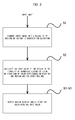
- Figure 1 is a flowchart illustrating an image processing method according to one embodiment of the present invention.
- a segmentation step S1 with regard to any image inputted by the user or the like (for example, an input image shown in Figure 5(a) ), the input image is segmented into a plurality of regions (blocks) by any of automatic image segmentation algorithms.
- the input image may be inputted from outside the device in a wired or wireless manner, or may be a captured image inputted in real-time or afterwards by an imaging device. Alternatively, the input image may be read from an internal or external memory unit of the device.
- a saliency value of each one of the segmented regions is calculated (detected) by computing a weighted sum of color differences between the one region and the other regions. If saliency values of all the regions have been calculated respectively, it is possible to obtain a saliency map as shown in Figure 5(c) .
- the number of pixels included in the region r i may be deemed as the weighted value w ( r i ) of the region r i .
- the computation is performed with 2 to 256 classes of colors in each color channel.
- each color channel does not necessarily adopt full-colors of 256 classes.
- the computation is performed with 8 to 128 classes of colors in each color channel. According to the saliency detection method of the present invention, a simulation with 12 classes of colors in each color channel allows for a great effect. Therefore, it is possible to significantly reduce the computation amount while ensuring the accuracy of detected image saliency.
- Figure 2 is a flowchart illustrating an image processing method according to another embodiment of the present invention.
- the image processing method may include, in addition to the segmentation step S1 and the computation step S2, at least one step of the following steps S3 ⁇ S5.
- An output step S3 outputs the calculated saliency value; a display step S4 displays the calculated saliency value, and a storage step S5 stores the calculated saliency value. That is, with a suitable combination of the output step S3, the display step S4, and the storage step S5, it is possible to apply the obtained saliency detection result to a desired scene.
- the order of the output step, the display step and the storage step is not limited.
- Figure 3 is a block diagram illustrating an image processing device according to one embodiment of the present invention.
- an image processing device 1 detects visual saliency of an image based on regional contrast.
- the image processing device 1 includes: a segmentation unit 10 that segments an input image into a plurality of regions by using an automatic segmentation algorithm; and a computation unit 20 that calculates a saliency value of one region of the plurality of segmented regions by using a weighted sum of color differences between the one region and the other regions.
- the segmentation unit 10 segments the input image into a plurality of regions (blocks) by any of automatic image segmentation algorithms.
- the input image may be inputted from outside the device in a wired or wireless manner, or may be a captured image inputted in real-time or afterwards by an imaging device. Alternatively, the input image may be read from an internal or external memory unit of the device.
- Used as the automatic segmentation algorithm for automatically segmenting input images is, for example, the method of " Efficient graph-based image segmentation" (IJCV, 59(2): 167-181 ), which was proposed in 2004 by Felzenszwalb and Huttenlocher. Alternatively, other existing automatic image segmentation algorithms could also be used.
- a saliency value of each one of the segmented regions is calculated (detected) by computing a weighted sum of color differences between the one region and the other regions. If saliency values of all the regions have been calculated respectively, it is possible to obtain a saliency map as shown in Figure 5(c) .
- image processing device it is possible to rapidly and efficiently analyze saliency values of pixels in the image. According to the present invention, it is possible to efficiently analyze complex and varied natural images and also to satisfy the needs for many real-time processing applications.
- the parameter ⁇ s 2 for controlling the effect of the distance factor can be a value in a range from 0.01 to 10, preferably a value in a range from 0.1 to 1.0.
- the number of pixels included in the region r i may be deemed as the weighted value w ( r i ) of the region r i .
- each color channel does not necessarily adopt full-colors of 256 classes.
- the simulation is performed with 8 to 128 classes of colors in each color channel. According to the saliency detection method of the present invention, a simulation with 12 classes of colors in each color channel allows for a great effect. Therefore, it is possible to significantly reduce the computation amount while ensuring the accuracy of detected image saliency. In addition, it is possible to efficiently analyze complex and varied natural images and also to satisfy the needs for many real-time processing applications.
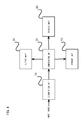
- Figure 4 is a block diagram illustrating an image processing device according to another embodiment of the present invention.
- the image processing device 1 may include, in addition to the segmentation unit 10 and the computation unit 20, at least one unit of the following units 30, 40, and 50.
- An output unit 30 outputs the calculated saliency value
- a display unit 40 displays the calculated saliency value
- a storage unit 50 stores the calculated saliency value. That is, with a suitable combination of the output unit 30, the display unit 40, and the storage unit 50, it is possible to apply the obtained saliency detection result to a desired scene.
Landscapes
- Engineering & Computer Science (AREA)
- Physics & Mathematics (AREA)
- Computer Vision & Pattern Recognition (AREA)
- General Physics & Mathematics (AREA)
- Theoretical Computer Science (AREA)
- Multimedia (AREA)
- Geometry (AREA)
- Image Analysis (AREA)
- Image Processing (AREA)
- Facsimile Image Signal Circuits (AREA)
- Color Image Communication Systems (AREA)
Abstract
Description
- The present invention belongs to the field of image processing technology, relates to an image processing method and image processing device for detecting visual saliency of an image. More particularly, the present invention relates to an image processing method and image processing device for detecting visual saliency of an image based on regional contrast.
- Visual attention is a significant mechanism for facilitating human visual system (HVS) to accurately and efficiently identify a scene. Capturing a salient region within an image by a computation method is an important research subject in the field of computer vision. It can help an image processing system to appropriately allocate computational resources in the subsequent processing steps. Saliency maps have been widely used in various computer vision applications such as object-of-interest image segmentation (see Chinese Patent Application Nos.
200910046276 200910081069 200910092756 200910081069 - Image visual saliency detection is one of the subjects that have attracted much attention of researchers. In theoretical researches on visual attention, the visual attention is classified into two types: fast, task independent (pre-attentive), data driven saliency detection; and slower, task dependent, goal driven saliency detection. The method according to the present invention relates to the former type. As is clear from the physiological researches, human's visual cells respond preferentially to high-contrast stimulus in their receptive fields. In most of the existing researches on data driven visual saliency detection, visual saliency is calculated by computing contrast between image contents and scenes in various forms. For ease of explanation, the researches on visual saliency detection are further classified into two sub-types: a local contrast based method; and a global contrast based method.
- The local contrast based method computes the saliency by the rarity of image regions with respect to relatively small local neighborhoods. Itti et al. proposed "A model of saliency-based visual attention for rapid scene analysis" (IEEE TPAMI, 20(11): 1254-1259, 1998) in 1998. This method introduces that the image saliency could be defined using central-surrounded differences across multi-scale image features. Further, Ma and Zhang proposed "Contrast-based image attention analysis by using fuzzy growing" (In ACM Multimedia, pages 374-381, 2003) in 2003. This method uses a local contrast analysis to generate saliency maps. Liu et al. proposed "Learning to detect a salient object" (IEEE TPAMI, 33(2): 353-367, 2011) in 2007. This method finds an optimal combination of weighted values for saliency detection methods of, for example, color space distribution, multi-scale contrast and central-surrounded histogram differences by learning manner. Goferman et al. modeled low-level clues, global considerations, organization rules, and high-level features in their work "Context-aware saliency detection" (In CVPR, 2010) in 2010. Results of these local contrast based methods generally produce higher saliency values near edges of objects instead of uniformly highlighting entire visual-salient objects.
- On the contrary, the global contrast based method evaluates the saliency of an image region by measuring the difference between this image region and the entire image. Zhai and Shah proposed "Visual attention detection in video sequences using spatiotemporal cues" (In ACM Multimedia, pages 815-824, 2006) in 2006. This method calculates a saliency value of a pixel using luminance difference between the pixel and all the other pixels. However, in consideration of efficiency, this method used only luminance information of an image, thus ignoring distinctiveness clues in other color channels. Achanta et al. proposed "Frequency-tuned salient region detection" (In CVPR, pages 1597-1604, 2009) in 2009. This method obtains the saliency of each pixel using the pixel's color difference from the average image color. The simple approach, however, is insufficient to effectively analyze complex and varied natural images.
- There is an existing Chinese Patent Application in this art, namely "A learning-based automatic detection method for a sequence of salient objects in videos" (Chinese Patent Application No.
200810150324 - The present invention has been attained in view of shortage of the conventional techniques in this art. The techincal problem to be solved is how to rapidly and efficiently analyze saliency values of pixels in an image so as to uniformly highlight salient object regions in the image.
- In order to solve the above-described problem, the present invention provids an image processing method and image processing device for detecting (computing) visual saliency of an image based on regional contrast. The obtained saliency map could be used in a series of computer vision applications.
- An image processing method according to technical solution 1 of the present invention is an image processing method for detecting (computing) visual saliency of an image based on regional contrast, the method including:
- a segmentation step that segments an input image into a plurality of regions by using an automatic segmentation algorithm; and
- a computation step that calculates a saliency value of one region of the plurality of segmented regions by using a weighted sum of color differences between the one region and all other regions.
- According to the image processing method of technical solution 1, in the computation step, a saliency S(rk ) of a region rk of the plurality of segmented regions is defined by the following expression:

wherein Ds (rk,ri ) and Dc (rk,ri ) are respectively a spatial distance and a color difference between the region rk and a region ri , i and k are natural numbers, w(ri ) is a weighted value of the region ri , and
- According to the image processing method of
technical solution 2, theparameter 
- According to the image processing method of
technical solution 2, the number of pixels included in the region ri is deemed as the weighted value w(ri ) of the region ri . - According to the image processing method of
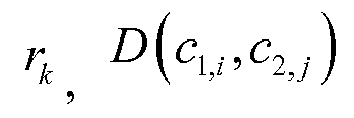
technical solution 2, the color difference Dc (rk,ri ) between the region rk and the region ri is defined by the following expression:
wherein f(ck,i) is an appearance frequency of i-th ck of nk types of colors contained in the region rk , D(c 1,i ,c 2,j ) is an Euclidean distance between two colors c 1,i and c 2,j in a color space, and k={1,2}. - According to the image processing method of technical solution 5, the computation is performed with 8 to 128 classes of colors in each color channel.
- According to the image processing method of any one of technical solutions 1 to 6, the method further includes at least one step of following steps:
- an output step that outputs the calculated saliency value;
- a display step that displays the calculated saliency value; and
- a storage step that stores the calculated saliency value.
- An image processing device for detecting visual saliency of an image based on regional contrast, includes:
- a segmentation unit that segments an input image into a plurality of regions by using an automatic segmentation algorithm; and
- a computation unit that calculates a saliency value of one region of the plurality of segmented regions by using a weighted sum of color differences between the one region and all other regions.
- According to the image processing device of technical solution 8, a saliency S(rk ) of a region rk of the plurality of segmented regions is defined by the following expression:

wherein Ds (rk,ri ) and Dc (rk,ri ) are respectively a spatial distance and a color difference between the region rk and a region ri , i and k are natural numbers, w(ri ) is a weighted value of the region ri , and
- According to the image processing device of technical solution 9, the
parameter 
- According to the image processing device of technical solution 9, the number of pixels included in the region ri is deemed as the weighted value w(ri ) of the region ri .
- According to the image processing device of technical solution 9, the color difference Dc (rk,ri ) between the region rk and the region ri is defined by the following expression:

wherein
- According to the image processing device of technical solution 12, the computation is performed with 8 to 128 classes of colors in each color channel.
- According to the image processing device of any of technical solutions 8 to 13, the device further includes at least one unit of following units:
- an output unit that outputs the calculated saliency value;
- a display unit that displays the calculated saliency value; and
- a storage unit that stores the calculated saliency value.
- According to the above-described technical solutions of the present invention, the image processing method and image processing device for detecting (computing) visual saliency of an image based on regional contrast calculate a saliency value of each one of the regions segmented by automatic segmentation algorithm by using a weighted sum of color differences between the one region and the other regions. This makes it possible to rapidly and efficiently analyze saliency values of pixels in the image, so that salient object regions in the image can be uniformly highlighted. As a result of testing with the internationally large-scale image visual saliency measurement dataset, the image processing method of the present invention is apparently more excellent than the conventional methods. According to the image processing method of the present invention, it is possible to efficiently analyze complex and varied natural images and to satisfy the needs for many real-time processing applications. According to the present invention, it is possible to automatically analyze visual saliency regions in an image, and a result of analysis can be used in application areas including significant object segmentation, object recognition, adaptive image compression, content-aware image resizing, and image retrieval.
-
-
Figure 1 is a flowchart illustrating an image processing method according to one embodiment of the present invention. -
Figure 2 is a flowchart illustrating an image processing method according to another embodiment of the present invention. -
Figure 3 is a block diagram illustrating an image processing device according to one embodiment of the present invention. -
Figure 4 is a block diagram illustrating an image processing device according to another embodiment of the present invention. -
Figure 5 is a diagram showing one example for processing an input image according to the present invention. - Hereinafter, the embodiments of the present invention will be described in more detail with reference to attached drawings. The following embodiments are presented only for the purpose of describing the present invention but not intended to limit the scope of the present invention.
- The present invention discloses an image processing method and image processing device for computing a visual saliency value of an image region by calculating a weighted sum of color differences between the image region and other image regions. With saliency values detected by the method and the device, it is possible to provide support for a series of image processing applications including: significant object segmentation, content-aware image resizing, and image retrieval.
-
Figure 1 is a flowchart illustrating an image processing method according to one embodiment of the present invention. - As shown in
Figure 1 , in a segmentation step S1, with regard to any image inputted by the user or the like (for example, an input image shown inFigure 5(a) ), the input image is segmented into a plurality of regions (blocks) by any of automatic image segmentation algorithms. The input image may be inputted from outside the device in a wired or wireless manner, or may be a captured image inputted in real-time or afterwards by an imaging device. Alternatively, the input image may be read from an internal or external memory unit of the device. Used as the automatic segmentation algorithm for automatically segmenting input images is, for example, the method of "Efficient graph-based image segmentation" (IJCV, 59(2): 167-181), which was proposed in 2004 by Felzenszwalb and Huttenlocher. Alternatively, other existing automatic image segmentation algorithms could also be used. - In a computation step S2, with regard to the input image which has been segmented into a plurality of regions (blocks) by the automatic segmentation algorithm in the segmentation step S1 (for instance, as shown in
Figure 5(b) ), a saliency value of each one of the segmented regions is calculated (detected) by computing a weighted sum of color differences between the one region and the other regions. If saliency values of all the regions have been calculated respectively, it is possible to obtain a saliency map as shown inFigure 5(c) . - According to the above-described image processing method, it is possible to rapidly and efficiently analyze saliency values of pixels in the image. In addition, it is possible to efficiently analyze complex and varied natural images and also to satisfy the needs for many real-time processing applications.
- Additionally, in the image processing method, a saliency S(rk ) of a region rk of the plurality of segmented regions ( 1, 2, ... k ... m) is defined by the following expression:

wherein Ds (rk,ri ) and Dc (rk,ri ) are respectively a spatial distance and a color difference between the region rk and a region ri , i, k, and m are natural numbers, w(ri ) is a weighted value of the region ri , and
- Further, in the image processing method, the larger the value of the
parameter 
parameter 
parameter 

- Further, in the image processing method, the number of pixels included in the region ri may be deemed as the weighted value w(ri ) of the region ri .
- Additionally, in the image processing method, the color difference Dc (rk,ri ) between the region rk and the region ri is defined by the following expression:

wherein f(ck,i) is an appearance frequency of the i-th ck of nk types of colors contained in the region rk , D(c 1,i ,c 2,j ) is an Euclidean distance between two colors c 1,i and c 2,j in a color space, and k={1,2}. - Further, in the image processing method, the computation is performed with 2 to 256 classes of colors in each color channel. The lower the adopted color class (level) is, the smaller the computation amount will be, and the poorer the accuracy will be. On the contrary, the higher the adopted color class is, the larger the computation amount will be, and the better the accuracy will be. For the speeding-up of the computation, each color channel does not necessarily adopt full-colors of 256 classes. For example, it is preferable that the computation is performed with 8 to 128 classes of colors in each color channel. According to the saliency detection method of the present invention, a simulation with 12 classes of colors in each color channel allows for a great effect. Therefore, it is possible to significantly reduce the computation amount while ensuring the accuracy of detected image saliency.
-
Figure 2 is a flowchart illustrating an image processing method according to another embodiment of the present invention. - As shown in
Figure 2 , the image processing method may include, in addition to the segmentation step S1 and the computation step S2, at least one step of the following steps S3∼S5. An output step S3 outputs the calculated saliency value; a display step S4 displays the calculated saliency value, and a storage step S5 stores the calculated saliency value. That is, with a suitable combination of the output step S3, the display step S4, and the storage step S5, it is possible to apply the obtained saliency detection result to a desired scene. The order of the output step, the display step and the storage step is not limited. -
Figure 3 is a block diagram illustrating an image processing device according to one embodiment of the present invention. - As shown in
Figure 3 , an image processing device 1 according to the present embodiment detects visual saliency of an image based on regional contrast. The image processing device 1 includes: asegmentation unit 10 that segments an input image into a plurality of regions by using an automatic segmentation algorithm; and acomputation unit 20 that calculates a saliency value of one region of the plurality of segmented regions by using a weighted sum of color differences between the one region and the other regions. - With regard to any image inputted by the user or the like (for example, an input image shown in
Figure 5(a) ), thesegmentation unit 10 segments the input image into a plurality of regions (blocks) by any of automatic image segmentation algorithms. The input image may be inputted from outside the device in a wired or wireless manner, or may be a captured image inputted in real-time or afterwards by an imaging device. Alternatively, the input image may be read from an internal or external memory unit of the device. Used as the automatic segmentation algorithm for automatically segmenting input images is, for example, the method of "Efficient graph-based image segmentation" (IJCV, 59(2): 167-181), which was proposed in 2004 by Felzenszwalb and Huttenlocher. Alternatively, other existing automatic image segmentation algorithms could also be used. - With regard to the input image which has been segmented into a plurality of regions (blocks) by the automatic segmentation algorithm in the segmentation unit 10 (for instance, as shown in
Figure 5(b) ), a saliency value of each one of the segmented regions is calculated (detected) by computing a weighted sum of color differences between the one region and the other regions. If saliency values of all the regions have been calculated respectively, it is possible to obtain a saliency map as shown inFigure 5(c) . - According to the above-described image processing device, it is possible to rapidly and efficiently analyze saliency values of pixels in the image. According to the present invention, it is possible to efficiently analyze complex and varied natural images and also to satisfy the needs for many real-time processing applications.
- In the image processing device 1, a saliency S(rk) of a region rk of the plurality of segmented regions ( 1, 2, ... k ... m) is defined by the following expression:

wherein Ds (rk,ri ) and Dc (rk,ri ) are respectively a spatial distance and a color difference between the region rk and a region ri , i, k, and m are natural numbers, w(ri ) is a weighted value of the region ri , and
- Further, in the image processing device 1, the larger the value of the
parameter 
parameter 
parameter 

- Further, in the image processing device 1, the number of pixels included in the region ri may be deemed as the weighted value w(ri ) of the region ri .
- Additionally, in the image processing device 1, the color difference Dc (rk,ri ) between the region rk and the region ri is defined by the following expression:

wherein f(ck,i) is an appearance frequency of the i-th ck of nk types of colors contained in the region rk , D(c 1,i ,c 2,j ) is an Euclidean distance between two colors c 1,i and c 2,j in a color space, and k={1,2}. - Further, in the image processing device 1, the computation is performed with 2 to 256 classes of colors in each color channel. The lower the adopted color class (level) is, the smaller the computation amount will be, and the poorer the accuracy will be. On the contrary, the higher the adopted color class is, the larger the computation amount will be, and the better the accuracy will be. For the speeding-up of the computation, each color channel does not necessarily adopt full-colors of 256 classes. For example, it is preferable that the simulation is performed with 8 to 128 classes of colors in each color channel. According to the saliency detection method of the present invention, a simulation with 12 classes of colors in each color channel allows for a great effect. Therefore, it is possible to significantly reduce the computation amount while ensuring the accuracy of detected image saliency. In addition, it is possible to efficiently analyze complex and varied natural images and also to satisfy the needs for many real-time processing applications.
-
Figure 4 is a block diagram illustrating an image processing device according to another embodiment of the present invention. - As shown in
Figure 4 , the image processing device 1 may include, in addition to thesegmentation unit 10 and thecomputation unit 20, at least one unit of the followingunits output unit 30 outputs the calculated saliency value, adisplay unit 40 displays the calculated saliency value, and astorage unit 50 stores the calculated saliency value. That is, with a suitable combination of theoutput unit 30, thedisplay unit 40, and thestorage unit 50, it is possible to apply the obtained saliency detection result to a desired scene. According to the present invention, it is possible to significantly reduce the computation amount while ensuring the accuracy of detected image saliency. In addition, it is possible to efficiently analyze complex and varied natural images and also to satisfy the needs for many real-time processing applications. - Although the present invention has been hereinbefore described with reference to particular embodiments, these are merely examples, and those skilled in the art should understand various changes, modifications, alternatives and replacements. Detailed description has been made using specific values for understanding the present invention; however, these values are merely examples and any other appropriate values can be used unless otherwise specified. With regard to the present invention, the differentiation between embodiments and items is not substantive, but the items recorded in two or more embodiments or items can be combined if necessary. For ease of explanation, the functional block diagrams are used to describe the device according to the embodiments of the present invention, and the device can be implemented by hardware, software, or a combination thereof. The present invention is not limited to the above-mentioned embodiments. Various changes, modifications, alternatives, and replacements still fall into the scope of the present invention without departing from the spirit of the present invention.
Claims (14)
- An image processing method for detecting visual saliency of an image based on regional contrast, the method comprising:a segmentation step that segments an input image into a plurality of regions by using an automatic segmentation algorithm; anda computation step that calculates a saliency value of one region of the plurality of segmented regions by using a weighted sum of color differences between the one region and all other regions.
- The image processing method according to claim 1, wherein
in the computation step, a saliency S(rk ) of a region rk of the plurality of segmented regions is defined by the following expression:
wherein Ds (rk,ri ) and Dc (rk,ri ) are respectively a spatial distance and a color difference between the region rk and a region ri , i and k are natural numbers, w(ri ) is a weighted value of the region ri , and
- The image processing method according to claim 2, wherein
the parameter
- The image processing method according to claim 2, wherein
the number of pixels included in the region ri is deemed as the weighted value w(ri ) of the region ri . - The image processing method according to claim 2, wherein
the color difference Dc (rk,ri ) between the region rk and the region ri is defined by the following expression:
wherein


- The image processing method according to claim 5, wherein
the simmulation is performed with 8 to 128 classes of colors in each color channel. - The image processing method according to any one of claims 1 to 6, further comprising at least one step of following steps:an output step that outputs the calculated saliency value;a display step that displays the calculated saliency value; anda storage step that stores the calculated saliency value.
- An image processing device for detecting visual saliency of an image based on regional contrast, the device comprising:a segmentation unit that segments an input image into a plurality of regions by using an automatic segmentation algorithm; anda computation unit that calculates a saliency value of one region of the plurality of segmented regions by using a weighted sum of color differences between the one region and all other regions.
- The image processing device according to claim 8, wherein
a saliency S(rk ) of a region rk of the plurality of segmented regions is defined by the following expression:
wherein Ds (rk,ri ) and Dc (rk ,ri ) are respectively a spatial distance and a color difference between the region rk and a region ri , i, and k are natural numbers, w(ri ) is a weighted value of the region ri , and
- The image processing device according to claim 9, wherein
the parameter
- The image processing device according to claim 9, wherein
the number of pixels included in the region ri is deemed as the weighted value w(ri ) of the region ri . - The image processing device according to claim 9, wherein
the color difference Dc (rk,ri ) between the region rk and the region ri is defined by the following expression:
wherein

- The image processing device according to claim 12, wherein
the simmulation is performed with 8 to 128 classes of colors in each color channel. - The image processing device according to any one of claims 8 to 13, further comprising at least one unit of following units:an output unit that outputs the calculated saliency value;a display unit that displays the calculated saliency value; anda storage unit that stores the calculated saliency value.
Applications Claiming Priority (1)
| Application Number | Priority Date | Filing Date | Title |
|---|---|---|---|
| CN201110124317.2A CN102779338B (en) | 2011-05-13 | 2011-05-13 | Image processing method and image processing device |
Publications (4)
| Publication Number | Publication Date |
|---|---|
| EP2523165A2 true EP2523165A2 (en) | 2012-11-14 |
| EP2523165A8 EP2523165A8 (en) | 2013-01-02 |
| EP2523165A3 EP2523165A3 (en) | 2014-11-19 |
| EP2523165B1 EP2523165B1 (en) | 2017-09-27 |
Family
ID=46456306
Family Applications (1)
| Application Number | Title | Priority Date | Filing Date |
|---|---|---|---|
| EP12167366.9A Active EP2523165B1 (en) | 2011-05-13 | 2012-05-09 | Image processing method and image processing device |
Country Status (5)
| Country | Link |
|---|---|
| US (1) | US9014467B2 (en) |
| EP (1) | EP2523165B1 (en) |
| JP (1) | JP5422018B2 (en) |
| KR (1) | KR101333347B1 (en) |
| CN (1) | CN102779338B (en) |
Cited By (3)
| Publication number | Priority date | Publication date | Assignee | Title |
|---|---|---|---|---|
| CN103985257A (en) * | 2014-05-14 | 2014-08-13 | 南通大学 | Intelligent traffic video analysis method |
| CN104318514A (en) * | 2014-10-17 | 2015-01-28 | 合肥工业大学 | Three-dimensional significance based image warping method |
| CN105913064A (en) * | 2016-04-12 | 2016-08-31 | 福州大学 | Image visual saliency detection fitting optimization method |
Families Citing this family (38)
| Publication number | Priority date | Publication date | Assignee | Title |
|---|---|---|---|---|
| US8401292B2 (en) * | 2011-04-26 | 2013-03-19 | Eastman Kodak Company | Identifying high saliency regions in digital images |
| CN102779338B (en) * | 2011-05-13 | 2017-05-17 | 欧姆龙株式会社 | Image processing method and image processing device |
| US9100540B1 (en) | 2013-03-14 | 2015-08-04 | Ca, Inc. | Multi-person video conference with focus detection |
| US9041766B1 (en) * | 2013-03-14 | 2015-05-26 | Ca, Inc. | Automated attention detection |
| CN103247051A (en) * | 2013-05-16 | 2013-08-14 | 北京工业大学 | Expected step number-based image saliency detection method |
| KR102109933B1 (en) | 2013-07-01 | 2020-05-12 | 삼성전자주식회사 | Image Processing Method and Apparatus for Curved Display device |
| WO2015028842A1 (en) | 2013-08-28 | 2015-03-05 | Aselsan Elektronik Sanayi Ve Ticaret Anonim Sirketi | A semi automatic target initialization method based on visual saliency |
| US9946795B2 (en) | 2014-01-27 | 2018-04-17 | Fujitsu Limited | User modeling with salience |
| CN103810707B (en) * | 2014-01-28 | 2016-08-17 | 华东理工大学 | A kind of image vision significance detection method based on moving-vision focus |
| JP6338429B2 (en) | 2014-04-15 | 2018-06-06 | キヤノン株式会社 | Subject detection apparatus, subject detection method, and program |
| US9195903B2 (en) * | 2014-04-29 | 2015-11-24 | International Business Machines Corporation | Extracting salient features from video using a neurosynaptic system |
| US10055666B2 (en) | 2014-05-08 | 2018-08-21 | Aselsan Elektronik Sanayi Ve Ticaret Anonim Sirketi | Real-time, semi-automatic method for target tracking window initialization in thermal imagery |
| US9373058B2 (en) | 2014-05-29 | 2016-06-21 | International Business Machines Corporation | Scene understanding using a neurosynaptic system |
| US9798972B2 (en) | 2014-07-02 | 2017-10-24 | International Business Machines Corporation | Feature extraction using a neurosynaptic system for object classification |
| US10115054B2 (en) | 2014-07-02 | 2018-10-30 | International Business Machines Corporation | Classifying features using a neurosynaptic system |
| CN104134217B (en) * | 2014-07-29 | 2017-02-15 | 中国科学院自动化研究所 | Video salient object segmentation method based on super voxel graph cut |
| JP6525537B2 (en) * | 2014-09-30 | 2019-06-05 | キヤノン株式会社 | IMAGE PROCESSING APPARATUS, CONTROL METHOD THEREOF, PROGRAM, AND STORAGE MEDIUM |
| US10531103B2 (en) | 2014-10-16 | 2020-01-07 | Purdue Research Foundation | Video coding using a saliency map |
| CN104574366B (en) * | 2014-12-18 | 2017-08-25 | 华南理工大学 | A kind of extracting method in the vision significance region based on monocular depth figure |
| CN106296638A (en) | 2015-06-04 | 2017-01-04 | 欧姆龙株式会社 | Significance information acquisition device and significance information acquisition method |
| CN105160668B (en) * | 2015-08-26 | 2018-01-09 | 爱威科技股份有限公司 | Image partition method, system and cell image segmentation method, system |
| CN105513042A (en) * | 2015-10-30 | 2016-04-20 | 河海大学 | Significance detection method based on multilayer analysis and layered reasoning |
| CN105405130B (en) * | 2015-11-02 | 2019-03-01 | 北京旷视科技有限公司 | Clustering-based license image highlight detection method and device |
| CN105528757B (en) * | 2015-12-08 | 2019-01-29 | 华南理工大学 | A content-based image aesthetic quality improvement method |
| US10452951B2 (en) | 2016-08-26 | 2019-10-22 | Goodrich Corporation | Active visual attention models for computer vision tasks |
| CN106650744B (en) * | 2016-09-16 | 2019-08-09 | 北京航空航天大学 | Image object co-segmentation method guided by local shape transfer |
| US10719927B2 (en) * | 2017-01-04 | 2020-07-21 | Samsung Electronics Co., Ltd. | Multiframe image processing using semantic saliency |
| CN107392968B (en) * | 2017-07-17 | 2019-07-09 | 杭州电子科技大学 | The image significance detection method of Fusion of Color comparison diagram and Color-spatial distribution figure |
| CN107481248A (en) * | 2017-07-28 | 2017-12-15 | 桂林电子科技大学 | A kind of extracting method of salient region of image |
| CN107545576A (en) * | 2017-07-31 | 2018-01-05 | 华南农业大学 | Image edit method based on composition rule |
| CN107784662B (en) * | 2017-11-14 | 2021-06-11 | 郑州布恩科技有限公司 | Image target significance measurement method |
| CN108510557B (en) * | 2018-04-09 | 2020-09-11 | 湖南国科微电子股份有限公司 | Image tone mapping method and device |
| CN110268442B (en) * | 2019-05-09 | 2023-08-29 | 京东方科技集团股份有限公司 | Computer-implemented method of detecting a foreign object on a background object in an image, device for detecting a foreign object on a background object in an image, and computer program product |
| JP7354686B2 (en) | 2019-08-27 | 2023-10-03 | 株式会社リコー | Output control device, display control system, output control method and program |
| US11373407B2 (en) * | 2019-10-25 | 2022-06-28 | International Business Machines Corporation | Attention generation |
| CN113888086B (en) * | 2021-09-29 | 2024-06-28 | 平安银行股份有限公司 | Article signing method, device, equipment and storage medium based on image recognition |
| US12536698B2 (en) * | 2023-06-23 | 2026-01-27 | Intenseye, Inc. | Intelligent projection point prediction for overhead objects |
| CN118776685B (en) * | 2024-09-12 | 2024-12-10 | 宝鸡市嘉诚稀有金属材料有限公司 | Temperature monitoring method for master alloy turning based on infrared image |
Family Cites Families (23)
| Publication number | Priority date | Publication date | Assignee | Title |
|---|---|---|---|---|
| US6282317B1 (en) * | 1998-12-31 | 2001-08-28 | Eastman Kodak Company | Method for automatic determination of main subjects in photographic images |
| KR100319155B1 (en) * | 1999-02-01 | 2001-12-29 | 구자홍 | Method of representative color mapping using reliability score |
| JP3482923B2 (en) * | 1999-10-28 | 2004-01-06 | セイコーエプソン株式会社 | Automatic composition determination device |
| GB2370438A (en) * | 2000-12-22 | 2002-06-26 | Hewlett Packard Co | Automated image cropping using selected compositional rules. |
| US7130461B2 (en) * | 2002-12-18 | 2006-10-31 | Xerox Corporation | Systems and method for automatically choosing visual characteristics to highlight a target against a background |
| JP2004361987A (en) * | 2003-05-30 | 2004-12-24 | Seiko Epson Corp | Image retrieval system, image classification system, image retrieval program, image classification program, and image retrieval method and image classification method |
| WO2004111931A2 (en) * | 2003-06-10 | 2004-12-23 | California Institute Of Technology | A system and method for attentional selection |
| JP4396430B2 (en) * | 2003-11-25 | 2010-01-13 | セイコーエプソン株式会社 | Gaze guidance information generation system, gaze guidance information generation program, and gaze guidance information generation method |
| EP1544792A1 (en) | 2003-12-18 | 2005-06-22 | Thomson Licensing S.A. | Device and method for creating a saliency map of an image |
| JP4639754B2 (en) * | 2004-11-04 | 2011-02-23 | 富士ゼロックス株式会社 | Image processing device |
| US7760956B2 (en) * | 2005-05-12 | 2010-07-20 | Hewlett-Packard Development Company, L.P. | System and method for producing a page using frames of a video stream |
| JP4821485B2 (en) * | 2006-07-31 | 2011-11-24 | 富士ゼロックス株式会社 | Image processing apparatus and program |
| US7940985B2 (en) * | 2007-06-06 | 2011-05-10 | Microsoft Corporation | Salient object detection |
| CN101329767B (en) | 2008-07-11 | 2011-11-16 | 西安交通大学 | Method for automatically detecting obvious object sequence in video based on learning |
| JP5305768B2 (en) | 2008-07-22 | 2013-10-02 | 株式会社東芝 | Image enhancement apparatus and image enhancement method |
| JP4727720B2 (en) * | 2008-12-31 | 2011-07-20 | 株式会社モルフォ | Image processing method and image processing apparatus |
| CN101520894B (en) * | 2009-02-18 | 2011-03-30 | 上海大学 | Method for extracting significant object based on region significance |
| CN101510299B (en) * | 2009-03-04 | 2011-07-20 | 上海大学 | Image self-adapting method based on vision significance |
| CN101526955B (en) | 2009-04-01 | 2010-09-01 | 清华大学 | A method and system for automatically extracting network primitives based on sketches |
| CN101650824B (en) | 2009-09-23 | 2011-12-28 | 清华大学 | Content erotic image zooming method based on conformal energy |
| JP5556262B2 (en) * | 2010-03-15 | 2014-07-23 | オムロン株式会社 | Image attribute discrimination device, attribute discrimination support device, image attribute discrimination method, control method for attribute discrimination support device, and control program |
| CN102779338B (en) * | 2011-05-13 | 2017-05-17 | 欧姆龙株式会社 | Image processing method and image processing device |
| US9042648B2 (en) * | 2012-02-23 | 2015-05-26 | Microsoft Technology Licensing, Llc | Salient object segmentation |
-
2011
- 2011-05-13 CN CN201110124317.2A patent/CN102779338B/en active Active
-
2012
- 2012-05-09 EP EP12167366.9A patent/EP2523165B1/en active Active
- 2012-05-09 JP JP2012108031A patent/JP5422018B2/en active Active
- 2012-05-09 KR KR20120048891A patent/KR101333347B1/en active Active
- 2012-05-11 US US13/469,578 patent/US9014467B2/en active Active
Non-Patent Citations (7)
| Title |
|---|
| ACHANTA ET AL.: "Frequency-tuned salient region detection", CVPR, 2009, pages 1597 - 1604 |
| FELZENSZWALB; HUTTENLOCHER: "Efficient graph-based image segmentation", IJCV, vol. 59, no. 2, 2004, pages 167 - 181, XP055013351, DOI: doi:10.1023/B:VISI.0000022288.19776.77 |
| GOFERMAN ET AL.: "Context-aware saliency detection", CVPR, 2010 |
| ITTI ET AL.: "A model of saliency-based visual attention for rapid scene analysis", IEEE TPAMI, vol. 20, no. 11, 1998, pages 1254 - 1259, XP001203933, DOI: doi:10.1109/34.730558 |
| LIU ET AL.: "Learning to detect a salient object", IEEE TPAMI, vol. 33, no. 2, 2011, pages 353 - 367, XP011340188, DOI: doi:10.1109/TPAMI.2010.70 |
| MA; ZHANG: "Contrast-based image attention analysis by using fuzzy growing", ACM MULTIMEDIA, 2003, pages 374 - 381, XP058170120, DOI: doi:10.1145/957013.957094 |
| ZHAI; SHAH: "Visual attention detection in video sequences using spatiotemporal cues", ACM MULTIMEDIA, 2006, pages 815 - 824, XP058233393, DOI: doi:10.1145/1180639.1180824 |
Cited By (5)
| Publication number | Priority date | Publication date | Assignee | Title |
|---|---|---|---|---|
| CN103985257A (en) * | 2014-05-14 | 2014-08-13 | 南通大学 | Intelligent traffic video analysis method |
| CN104318514A (en) * | 2014-10-17 | 2015-01-28 | 合肥工业大学 | Three-dimensional significance based image warping method |
| CN104318514B (en) * | 2014-10-17 | 2017-05-17 | 合肥工业大学 | Three-dimensional significance based image warping method |
| CN105913064A (en) * | 2016-04-12 | 2016-08-31 | 福州大学 | Image visual saliency detection fitting optimization method |
| CN105913064B (en) * | 2016-04-12 | 2017-03-08 | 福州大学 | A fitting optimization method for image visual saliency detection |
Also Published As
| Publication number | Publication date |
|---|---|
| JP5422018B2 (en) | 2014-02-19 |
| JP2012243313A (en) | 2012-12-10 |
| US9014467B2 (en) | 2015-04-21 |
| CN102779338A (en) | 2012-11-14 |
| EP2523165A3 (en) | 2014-11-19 |
| CN102779338B (en) | 2017-05-17 |
| EP2523165A8 (en) | 2013-01-02 |
| KR20120127247A (en) | 2012-11-21 |
| KR101333347B1 (en) | 2013-11-28 |
| EP2523165B1 (en) | 2017-09-27 |
| US20120288189A1 (en) | 2012-11-15 |
Similar Documents
| Publication | Publication Date | Title |
|---|---|---|
| EP2523165B1 (en) | Image processing method and image processing device | |
| US11681418B2 (en) | Multi-sample whole slide image processing in digital pathology via multi-resolution registration and machine learning | |
| Kruthiventi et al. | Saliency unified: A deep architecture for simultaneous eye fixation prediction and salient object segmentation | |
| Jia et al. | Category-independent object-level saliency detection | |
| Kim et al. | Spatiotemporal saliency detection and its applications in static and dynamic scenes | |
| CN104572804B (en) | A kind of method and its system of video object retrieval | |
| EP2915333B1 (en) | Depth map generation from a monoscopic image based on combined depth cues | |
| EP2013850B1 (en) | Salience estimation for object-based visual attention model | |
| CN102084397B (en) | Image processing device and method | |
| Ardizzone et al. | Saliency based image cropping | |
| Naseer et al. | Efficient multi-object recognition using GMM segmentation feature fusion approach | |
| CN108647703B (en) | A Type Judgment Method of Saliency-Based Classified Image Library | |
| Huang et al. | Automatic thumbnail generation based on visual representativeness and foreground recognizability | |
| Singh et al. | Learning to Predict Video Saliency using Temporal Superpixels. | |
| Yanulevskaya et al. | Salient object detection: from pixels to segments | |
| Deng et al. | Saliency Detection by Selective Strategy for Salient Object Segmentation. | |
| KR20200005853A (en) | Method and System for People Count based on Deep Learning | |
| CN103489185B (en) | The rapid image target detection of the super-pixel grid of maximum cohesiveness and dividing method | |
| Duan et al. | Bio-inspired visual attention model and saliency guided object segmentation | |
| Condorovici et al. | Saliency map retrieval for artistic paintings inspired from human understanding | |
| Li et al. | Object extraction from image with big size based on bilateral grid | |
| Zhan et al. | Salient object contour detection based on boundary similar region | |
| EP1862966A1 (en) | Salience estimation for object-based visual attention model | |
| Zhang et al. | Salient region detection based on color uniqueness and color spatial distribution | |
| Luo et al. | Saliency detection based on path price and fuzzy reasoning |
Legal Events
| Date | Code | Title | Description |
|---|---|---|---|
| PUAI | Public reference made under article 153(3) epc to a published international application that has entered the european phase |
Free format text: ORIGINAL CODE: 0009012 |
|
| 17P | Request for examination filed |
Effective date: 20120530 |
|
| AK | Designated contracting states |
Kind code of ref document: A2 Designated state(s): AL AT BE BG CH CY CZ DE DK EE ES FI FR GB GR HR HU IE IS IT LI LT LU LV MC MK MT NL NO PL PT RO RS SE SI SK SM TR |
|
| AX | Request for extension of the european patent |
Extension state: BA ME |
|
| RAP1 | Party data changed (applicant data changed or rights of an application transferred) |
Owner name: OMRON CORPORATION Owner name: TSINGHUA UNIVERSITY |
|
| PUAL | Search report despatched |
Free format text: ORIGINAL CODE: 0009013 |
|
| AK | Designated contracting states |
Kind code of ref document: A3 Designated state(s): AL AT BE BG CH CY CZ DE DK EE ES FI FR GB GR HR HU IE IS IT LI LT LU LV MC MK MT NL NO PL PT RO RS SE SI SK SM TR |
|
| AX | Request for extension of the european patent |
Extension state: BA ME |
|
| RIC1 | Information provided on ipc code assigned before grant |
Ipc: G06K 9/46 20060101ALI20141010BHEP Ipc: G06T 7/40 20060101ALI20141010BHEP Ipc: G06T 7/00 20060101AFI20141010BHEP |
|
| RAP1 | Party data changed (applicant data changed or rights of an application transferred) |
Owner name: TSINGHUA UNIVERSITY Owner name: OMRON CORPORATION |
|
| REG | Reference to a national code |
Ref country code: DE Ref legal event code: R079 Ref document number: 602012037718 Country of ref document: DE Free format text: PREVIOUS MAIN CLASS: G06T0007000000 Ipc: G06K0009460000 |
|
| GRAP | Despatch of communication of intention to grant a patent |
Free format text: ORIGINAL CODE: EPIDOSNIGR1 |
|
| STAA | Information on the status of an ep patent application or granted ep patent |
Free format text: STATUS: GRANT OF PATENT IS INTENDED |
|
| RIC1 | Information provided on ipc code assigned before grant |
Ipc: G06T 7/90 20170101ALI20170327BHEP Ipc: G06T 7/11 20170101ALI20170327BHEP Ipc: G06K 9/46 20060101AFI20170327BHEP |
|
| INTG | Intention to grant announced |
Effective date: 20170424 |
|
| GRAS | Grant fee paid |
Free format text: ORIGINAL CODE: EPIDOSNIGR3 |
|
| GRAA | (expected) grant |
Free format text: ORIGINAL CODE: 0009210 |
|
| STAA | Information on the status of an ep patent application or granted ep patent |
Free format text: STATUS: THE PATENT HAS BEEN GRANTED |
|
| AK | Designated contracting states |
Kind code of ref document: B1 Designated state(s): AL AT BE BG CH CY CZ DE DK EE ES FI FR GB GR HR HU IE IS IT LI LT LU LV MC MK MT NL NO PL PT RO RS SE SI SK SM TR |
|
| REG | Reference to a national code |
Ref country code: GB Ref legal event code: FG4D |
|
| REG | Reference to a national code |
Ref country code: CH Ref legal event code: EP |
|
| REG | Reference to a national code |
Ref country code: AT Ref legal event code: REF Ref document number: 932624 Country of ref document: AT Kind code of ref document: T Effective date: 20171015 |
|
| REG | Reference to a national code |
Ref country code: IE Ref legal event code: FG4D |
|
| REG | Reference to a national code |
Ref country code: DE Ref legal event code: R096 Ref document number: 602012037718 Country of ref document: DE |
|
| PG25 | Lapsed in a contracting state [announced via postgrant information from national office to epo] |
Ref country code: LT Free format text: LAPSE BECAUSE OF FAILURE TO SUBMIT A TRANSLATION OF THE DESCRIPTION OR TO PAY THE FEE WITHIN THE PRESCRIBED TIME-LIMIT Effective date: 20170927 Ref country code: HR Free format text: LAPSE BECAUSE OF FAILURE TO SUBMIT A TRANSLATION OF THE DESCRIPTION OR TO PAY THE FEE WITHIN THE PRESCRIBED TIME-LIMIT Effective date: 20170927 Ref country code: NO Free format text: LAPSE BECAUSE OF FAILURE TO SUBMIT A TRANSLATION OF THE DESCRIPTION OR TO PAY THE FEE WITHIN THE PRESCRIBED TIME-LIMIT Effective date: 20171227 Ref country code: SE Free format text: LAPSE BECAUSE OF FAILURE TO SUBMIT A TRANSLATION OF THE DESCRIPTION OR TO PAY THE FEE WITHIN THE PRESCRIBED TIME-LIMIT Effective date: 20170927 Ref country code: FI Free format text: LAPSE BECAUSE OF FAILURE TO SUBMIT A TRANSLATION OF THE DESCRIPTION OR TO PAY THE FEE WITHIN THE PRESCRIBED TIME-LIMIT Effective date: 20170927 |
|
| REG | Reference to a national code |
Ref country code: NL Ref legal event code: MP Effective date: 20170927 |
|
| REG | Reference to a national code |
Ref country code: LT Ref legal event code: MG4D |
|
| REG | Reference to a national code |
Ref country code: AT Ref legal event code: MK05 Ref document number: 932624 Country of ref document: AT Kind code of ref document: T Effective date: 20170927 |
|
| PG25 | Lapsed in a contracting state [announced via postgrant information from national office to epo] |
Ref country code: RS Free format text: LAPSE BECAUSE OF FAILURE TO SUBMIT A TRANSLATION OF THE DESCRIPTION OR TO PAY THE FEE WITHIN THE PRESCRIBED TIME-LIMIT Effective date: 20170927 Ref country code: LV Free format text: LAPSE BECAUSE OF FAILURE TO SUBMIT A TRANSLATION OF THE DESCRIPTION OR TO PAY THE FEE WITHIN THE PRESCRIBED TIME-LIMIT Effective date: 20170927 Ref country code: BG Free format text: LAPSE BECAUSE OF FAILURE TO SUBMIT A TRANSLATION OF THE DESCRIPTION OR TO PAY THE FEE WITHIN THE PRESCRIBED TIME-LIMIT Effective date: 20171227 Ref country code: GR Free format text: LAPSE BECAUSE OF FAILURE TO SUBMIT A TRANSLATION OF THE DESCRIPTION OR TO PAY THE FEE WITHIN THE PRESCRIBED TIME-LIMIT Effective date: 20171228 |
|
| PG25 | Lapsed in a contracting state [announced via postgrant information from national office to epo] |
Ref country code: NL Free format text: LAPSE BECAUSE OF FAILURE TO SUBMIT A TRANSLATION OF THE DESCRIPTION OR TO PAY THE FEE WITHIN THE PRESCRIBED TIME-LIMIT Effective date: 20170927 |
|
| PG25 | Lapsed in a contracting state [announced via postgrant information from national office to epo] |
Ref country code: ES Free format text: LAPSE BECAUSE OF FAILURE TO SUBMIT A TRANSLATION OF THE DESCRIPTION OR TO PAY THE FEE WITHIN THE PRESCRIBED TIME-LIMIT Effective date: 20170927 Ref country code: RO Free format text: LAPSE BECAUSE OF FAILURE TO SUBMIT A TRANSLATION OF THE DESCRIPTION OR TO PAY THE FEE WITHIN THE PRESCRIBED TIME-LIMIT Effective date: 20170927 Ref country code: CZ Free format text: LAPSE BECAUSE OF FAILURE TO SUBMIT A TRANSLATION OF THE DESCRIPTION OR TO PAY THE FEE WITHIN THE PRESCRIBED TIME-LIMIT Effective date: 20170927 |
|
| PG25 | Lapsed in a contracting state [announced via postgrant information from national office to epo] |
Ref country code: AT Free format text: LAPSE BECAUSE OF FAILURE TO SUBMIT A TRANSLATION OF THE DESCRIPTION OR TO PAY THE FEE WITHIN THE PRESCRIBED TIME-LIMIT Effective date: 20170927 Ref country code: SM Free format text: LAPSE BECAUSE OF FAILURE TO SUBMIT A TRANSLATION OF THE DESCRIPTION OR TO PAY THE FEE WITHIN THE PRESCRIBED TIME-LIMIT Effective date: 20170927 Ref country code: EE Free format text: LAPSE BECAUSE OF FAILURE TO SUBMIT A TRANSLATION OF THE DESCRIPTION OR TO PAY THE FEE WITHIN THE PRESCRIBED TIME-LIMIT Effective date: 20170927 Ref country code: SK Free format text: LAPSE BECAUSE OF FAILURE TO SUBMIT A TRANSLATION OF THE DESCRIPTION OR TO PAY THE FEE WITHIN THE PRESCRIBED TIME-LIMIT Effective date: 20170927 Ref country code: IS Free format text: LAPSE BECAUSE OF FAILURE TO SUBMIT A TRANSLATION OF THE DESCRIPTION OR TO PAY THE FEE WITHIN THE PRESCRIBED TIME-LIMIT Effective date: 20180127 Ref country code: IT Free format text: LAPSE BECAUSE OF FAILURE TO SUBMIT A TRANSLATION OF THE DESCRIPTION OR TO PAY THE FEE WITHIN THE PRESCRIBED TIME-LIMIT Effective date: 20170927 |
|
| REG | Reference to a national code |
Ref country code: DE Ref legal event code: R097 Ref document number: 602012037718 Country of ref document: DE |
|
| PG25 | Lapsed in a contracting state [announced via postgrant information from national office to epo] |
Ref country code: DK Free format text: LAPSE BECAUSE OF FAILURE TO SUBMIT A TRANSLATION OF THE DESCRIPTION OR TO PAY THE FEE WITHIN THE PRESCRIBED TIME-LIMIT Effective date: 20170927 |
|
| PLBE | No opposition filed within time limit |
Free format text: ORIGINAL CODE: 0009261 |
|
| STAA | Information on the status of an ep patent application or granted ep patent |
Free format text: STATUS: NO OPPOSITION FILED WITHIN TIME LIMIT |
|
| PG25 | Lapsed in a contracting state [announced via postgrant information from national office to epo] |
Ref country code: PL Free format text: LAPSE BECAUSE OF FAILURE TO SUBMIT A TRANSLATION OF THE DESCRIPTION OR TO PAY THE FEE WITHIN THE PRESCRIBED TIME-LIMIT Effective date: 20170927 |
|
| 26N | No opposition filed |
Effective date: 20180628 |
|
| PG25 | Lapsed in a contracting state [announced via postgrant information from national office to epo] |
Ref country code: SI Free format text: LAPSE BECAUSE OF FAILURE TO SUBMIT A TRANSLATION OF THE DESCRIPTION OR TO PAY THE FEE WITHIN THE PRESCRIBED TIME-LIMIT Effective date: 20170927 |
|
| REG | Reference to a national code |
Ref country code: CH Ref legal event code: PL |
|
| GBPC | Gb: european patent ceased through non-payment of renewal fee |
Effective date: 20180509 |
|
| REG | Reference to a national code |
Ref country code: BE Ref legal event code: MM Effective date: 20180531 |
|
| PG25 | Lapsed in a contracting state [announced via postgrant information from national office to epo] |
Ref country code: MC Free format text: LAPSE BECAUSE OF FAILURE TO SUBMIT A TRANSLATION OF THE DESCRIPTION OR TO PAY THE FEE WITHIN THE PRESCRIBED TIME-LIMIT Effective date: 20170927 |
|
| REG | Reference to a national code |
Ref country code: IE Ref legal event code: MM4A |
|
| PG25 | Lapsed in a contracting state [announced via postgrant information from national office to epo] |
Ref country code: LI Free format text: LAPSE BECAUSE OF NON-PAYMENT OF DUE FEES Effective date: 20180531 Ref country code: CH Free format text: LAPSE BECAUSE OF NON-PAYMENT OF DUE FEES Effective date: 20180531 |
|
| PG25 | Lapsed in a contracting state [announced via postgrant information from national office to epo] |
Ref country code: LU Free format text: LAPSE BECAUSE OF NON-PAYMENT OF DUE FEES Effective date: 20180509 |
|
| PG25 | Lapsed in a contracting state [announced via postgrant information from national office to epo] |
Ref country code: FR Free format text: LAPSE BECAUSE OF NON-PAYMENT OF DUE FEES Effective date: 20180531 Ref country code: GB Free format text: LAPSE BECAUSE OF NON-PAYMENT OF DUE FEES Effective date: 20180509 Ref country code: IE Free format text: LAPSE BECAUSE OF NON-PAYMENT OF DUE FEES Effective date: 20180509 |
|
| PG25 | Lapsed in a contracting state [announced via postgrant information from national office to epo] |
Ref country code: BE Free format text: LAPSE BECAUSE OF NON-PAYMENT OF DUE FEES Effective date: 20180531 |
|
| PG25 | Lapsed in a contracting state [announced via postgrant information from national office to epo] |
Ref country code: MT Free format text: LAPSE BECAUSE OF NON-PAYMENT OF DUE FEES Effective date: 20180509 |
|
| PG25 | Lapsed in a contracting state [announced via postgrant information from national office to epo] |
Ref country code: TR Free format text: LAPSE BECAUSE OF FAILURE TO SUBMIT A TRANSLATION OF THE DESCRIPTION OR TO PAY THE FEE WITHIN THE PRESCRIBED TIME-LIMIT Effective date: 20170927 |
|
| PG25 | Lapsed in a contracting state [announced via postgrant information from national office to epo] |
Ref country code: HU Free format text: LAPSE BECAUSE OF FAILURE TO SUBMIT A TRANSLATION OF THE DESCRIPTION OR TO PAY THE FEE WITHIN THE PRESCRIBED TIME-LIMIT; INVALID AB INITIO Effective date: 20120509 Ref country code: PT Free format text: LAPSE BECAUSE OF FAILURE TO SUBMIT A TRANSLATION OF THE DESCRIPTION OR TO PAY THE FEE WITHIN THE PRESCRIBED TIME-LIMIT Effective date: 20170927 |
|
| PG25 | Lapsed in a contracting state [announced via postgrant information from national office to epo] |
Ref country code: MK Free format text: LAPSE BECAUSE OF NON-PAYMENT OF DUE FEES Effective date: 20170927 Ref country code: CY Free format text: LAPSE BECAUSE OF FAILURE TO SUBMIT A TRANSLATION OF THE DESCRIPTION OR TO PAY THE FEE WITHIN THE PRESCRIBED TIME-LIMIT Effective date: 20170927 |
|
| PG25 | Lapsed in a contracting state [announced via postgrant information from national office to epo] |
Ref country code: AL Free format text: LAPSE BECAUSE OF FAILURE TO SUBMIT A TRANSLATION OF THE DESCRIPTION OR TO PAY THE FEE WITHIN THE PRESCRIBED TIME-LIMIT Effective date: 20170927 |
|
| REG | Reference to a national code |
Ref country code: DE Ref legal event code: R079 Ref document number: 602012037718 Country of ref document: DE Free format text: PREVIOUS MAIN CLASS: G06K0009460000 Ipc: G06V0030180000 |
|
| PGFP | Annual fee paid to national office [announced via postgrant information from national office to epo] |
Ref country code: DE Payment date: 20250402 Year of fee payment: 14 |