EP2522631A1 - Method for the separation of monovalent metals from multivalent metals - Google Patents
Method for the separation of monovalent metals from multivalent metals Download PDFInfo
- Publication number
- EP2522631A1 EP2522631A1 EP12166683A EP12166683A EP2522631A1 EP 2522631 A1 EP2522631 A1 EP 2522631A1 EP 12166683 A EP12166683 A EP 12166683A EP 12166683 A EP12166683 A EP 12166683A EP 2522631 A1 EP2522631 A1 EP 2522631A1
- Authority
- EP
- European Patent Office
- Prior art keywords
- lithium
- separation
- metals
- concentrated solution
- monovalent
- Prior art date
- Legal status (The legal status is an assumption and is not a legal conclusion. Google has not performed a legal analysis and makes no representation as to the accuracy of the status listed.)
- Withdrawn
Links
- 229910052751 metal Inorganic materials 0.000 title claims abstract description 64
- 239000002184 metal Substances 0.000 title claims abstract description 64
- 238000000926 separation method Methods 0.000 title claims abstract description 34
- 238000000034 method Methods 0.000 title claims abstract description 32
- 150000002739 metals Chemical class 0.000 title abstract description 24
- 229920005989 resin Polymers 0.000 claims abstract description 44
- 239000011347 resin Substances 0.000 claims abstract description 44
- WHXSMMKQMYFTQS-UHFFFAOYSA-N Lithium Chemical compound [Li] WHXSMMKQMYFTQS-UHFFFAOYSA-N 0.000 claims description 47
- 229910052744 lithium Inorganic materials 0.000 claims description 47
- FYYHWMGAXLPEAU-UHFFFAOYSA-N Magnesium Chemical compound [Mg] FYYHWMGAXLPEAU-UHFFFAOYSA-N 0.000 claims description 33
- 229910052749 magnesium Inorganic materials 0.000 claims description 33
- 239000011777 magnesium Substances 0.000 claims description 33
- DGAQECJNVWCQMB-PUAWFVPOSA-M Ilexoside XXIX Chemical compound C[C@@H]1CC[C@@]2(CC[C@@]3(C(=CC[C@H]4[C@]3(CC[C@@H]5[C@@]4(CC[C@@H](C5(C)C)OS(=O)(=O)[O-])C)C)[C@@H]2[C@]1(C)O)C)C(=O)O[C@H]6[C@@H]([C@H]([C@@H]([C@H](O6)CO)O)O)O.[Na+] DGAQECJNVWCQMB-PUAWFVPOSA-M 0.000 claims description 10
- ZLMJMSJWJFRBEC-UHFFFAOYSA-N Potassium Chemical compound [K] ZLMJMSJWJFRBEC-UHFFFAOYSA-N 0.000 claims description 7
- 239000011591 potassium Substances 0.000 claims description 7
- 229910052700 potassium Inorganic materials 0.000 claims description 7
- 239000011734 sodium Substances 0.000 claims description 7
- 229910052708 sodium Inorganic materials 0.000 claims description 7
- 239000000243 solution Substances 0.000 description 32
- 239000012501 chromatography medium Substances 0.000 description 10
- 125000002091 cationic group Chemical group 0.000 description 9
- 239000000203 mixture Substances 0.000 description 8
- 238000011084 recovery Methods 0.000 description 8
- 150000003839 salts Chemical class 0.000 description 8
- 241000894007 species Species 0.000 description 8
- PPBRXRYQALVLMV-UHFFFAOYSA-N Styrene Chemical compound C=CC1=CC=CC=C1 PPBRXRYQALVLMV-UHFFFAOYSA-N 0.000 description 7
- -1 magnesium Chemical class 0.000 description 7
- 230000000717 retained effect Effects 0.000 description 7
- FAPWRFPIFSIZLT-UHFFFAOYSA-M Sodium chloride Chemical compound [Na+].[Cl-] FAPWRFPIFSIZLT-UHFFFAOYSA-M 0.000 description 6
- 229920001429 chelating resin Polymers 0.000 description 6
- 239000011159 matrix material Substances 0.000 description 6
- VEXZGXHMUGYJMC-UHFFFAOYSA-M Chloride anion Chemical compound [Cl-] VEXZGXHMUGYJMC-UHFFFAOYSA-M 0.000 description 5
- 239000004971 Cross linker Substances 0.000 description 5
- 238000002474 experimental method Methods 0.000 description 5
- MYRTYDVEIRVNKP-UHFFFAOYSA-N 1,2-Divinylbenzene Chemical compound C=CC1=CC=CC=C1C=C MYRTYDVEIRVNKP-UHFFFAOYSA-N 0.000 description 4
- QAOWNCQODCNURD-UHFFFAOYSA-L Sulfate Chemical compound [O-]S([O-])(=O)=O QAOWNCQODCNURD-UHFFFAOYSA-L 0.000 description 4
- PNEYBMLMFCGWSK-UHFFFAOYSA-N aluminium oxide Inorganic materials [O-2].[O-2].[O-2].[Al+3].[Al+3] PNEYBMLMFCGWSK-UHFFFAOYSA-N 0.000 description 4
- 239000012267 brine Substances 0.000 description 4
- 150000001768 cations Chemical class 0.000 description 4
- 238000009792 diffusion process Methods 0.000 description 4
- 238000005516 engineering process Methods 0.000 description 4
- 230000014759 maintenance of location Effects 0.000 description 4
- 239000000178 monomer Substances 0.000 description 4
- 229920001467 poly(styrenesulfonates) Polymers 0.000 description 4
- 229920000642 polymer Polymers 0.000 description 4
- 238000001556 precipitation Methods 0.000 description 4
- HPALAKNZSZLMCH-UHFFFAOYSA-M sodium;chloride;hydrate Chemical compound O.[Na+].[Cl-] HPALAKNZSZLMCH-UHFFFAOYSA-M 0.000 description 4
- 239000000126 substance Substances 0.000 description 4
- 229920001577 copolymer Polymers 0.000 description 3
- 238000002425 crystallisation Methods 0.000 description 3
- 230000008025 crystallization Effects 0.000 description 3
- 238000010828 elution Methods 0.000 description 3
- 230000007717 exclusion Effects 0.000 description 3
- 125000000524 functional group Chemical group 0.000 description 3
- 230000002452 interceptive effect Effects 0.000 description 3
- 239000000463 material Substances 0.000 description 3
- 239000011780 sodium chloride Substances 0.000 description 3
- OYPRJOBELJOOCE-UHFFFAOYSA-N Calcium Chemical compound [Ca] OYPRJOBELJOOCE-UHFFFAOYSA-N 0.000 description 2
- XEEYBQQBJWHFJM-UHFFFAOYSA-N Iron Chemical compound [Fe] XEEYBQQBJWHFJM-UHFFFAOYSA-N 0.000 description 2
- TWRXJAOTZQYOKJ-UHFFFAOYSA-L Magnesium chloride Chemical compound [Mg+2].[Cl-].[Cl-] TWRXJAOTZQYOKJ-UHFFFAOYSA-L 0.000 description 2
- PXHVJJICTQNCMI-UHFFFAOYSA-N Nickel Chemical compound [Ni] PXHVJJICTQNCMI-UHFFFAOYSA-N 0.000 description 2
- WCUXLLCKKVVCTQ-UHFFFAOYSA-M Potassium chloride Chemical compound [Cl-].[K+] WCUXLLCKKVVCTQ-UHFFFAOYSA-M 0.000 description 2
- CDBYLPFSWZWCQE-UHFFFAOYSA-L Sodium Carbonate Chemical compound [Na+].[Na+].[O-]C([O-])=O CDBYLPFSWZWCQE-UHFFFAOYSA-L 0.000 description 2
- 238000004458 analytical method Methods 0.000 description 2
- 229910052791 calcium Inorganic materials 0.000 description 2
- 239000011575 calcium Substances 0.000 description 2
- 239000012527 feed solution Substances 0.000 description 2
- 239000011521 glass Substances 0.000 description 2
- 230000006698 induction Effects 0.000 description 2
- KWGKDLIKAYFUFQ-UHFFFAOYSA-M lithium chloride Chemical compound [Li+].[Cl-] KWGKDLIKAYFUFQ-UHFFFAOYSA-M 0.000 description 2
- 238000005375 photometry Methods 0.000 description 2
- 239000011148 porous material Substances 0.000 description 2
- 125000000391 vinyl group Chemical group [H]C([*])=C([H])[H] 0.000 description 2
- 229920002554 vinyl polymer Polymers 0.000 description 2
- BVKZGUZCCUSVTD-UHFFFAOYSA-L Carbonate Chemical compound [O-]C([O-])=O BVKZGUZCCUSVTD-UHFFFAOYSA-L 0.000 description 1
- RYGMFSIKBFXOCR-UHFFFAOYSA-N Copper Chemical compound [Cu] RYGMFSIKBFXOCR-UHFFFAOYSA-N 0.000 description 1
- VEXZGXHMUGYJMC-UHFFFAOYSA-N Hydrochloric acid Chemical group Cl VEXZGXHMUGYJMC-UHFFFAOYSA-N 0.000 description 1
- OAICVXFJPJFONN-UHFFFAOYSA-N Phosphorus Chemical compound [P] OAICVXFJPJFONN-UHFFFAOYSA-N 0.000 description 1
- QYKIQEUNHZKYBP-UHFFFAOYSA-N Vinyl ether Chemical class C=COC=C QYKIQEUNHZKYBP-UHFFFAOYSA-N 0.000 description 1
- 239000002253 acid Substances 0.000 description 1
- 150000001252 acrylic acid derivatives Chemical class 0.000 description 1
- 229910052784 alkaline earth metal Inorganic materials 0.000 description 1
- 229910052782 aluminium Inorganic materials 0.000 description 1
- XAGFODPZIPBFFR-UHFFFAOYSA-N aluminium Chemical compound [Al] XAGFODPZIPBFFR-UHFFFAOYSA-N 0.000 description 1
- 229910052788 barium Inorganic materials 0.000 description 1
- DSAJWYNOEDNPEQ-UHFFFAOYSA-N barium atom Chemical compound [Ba] DSAJWYNOEDNPEQ-UHFFFAOYSA-N 0.000 description 1
- 229910021538 borax Inorganic materials 0.000 description 1
- 239000011203 carbon fibre reinforced carbon Substances 0.000 description 1
- 150000001805 chlorine compounds Chemical class 0.000 description 1
- 238000004587 chromatography analysis Methods 0.000 description 1
- 229910017052 cobalt Inorganic materials 0.000 description 1
- 239000010941 cobalt Substances 0.000 description 1
- GUTLYIVDDKVIGB-UHFFFAOYSA-N cobalt atom Chemical compound [Co] GUTLYIVDDKVIGB-UHFFFAOYSA-N 0.000 description 1
- 150000001875 compounds Chemical class 0.000 description 1
- 229910052802 copper Inorganic materials 0.000 description 1
- 239000010949 copper Substances 0.000 description 1
- 238000004132 cross linking Methods 0.000 description 1
- 230000003247 decreasing effect Effects 0.000 description 1
- 230000001627 detrimental effect Effects 0.000 description 1
- 239000003480 eluent Substances 0.000 description 1
- 238000001704 evaporation Methods 0.000 description 1
- 230000008020 evaporation Effects 0.000 description 1
- 238000009472 formulation Methods 0.000 description 1
- 238000005227 gel permeation chromatography Methods 0.000 description 1
- 238000011065 in-situ storage Methods 0.000 description 1
- 238000005342 ion exchange Methods 0.000 description 1
- 150000002500 ions Chemical class 0.000 description 1
- 229910052742 iron Inorganic materials 0.000 description 1
- 229910001629 magnesium chloride Inorganic materials 0.000 description 1
- 229910052759 nickel Inorganic materials 0.000 description 1
- 230000002572 peristaltic effect Effects 0.000 description 1
- 239000011574 phosphorus Substances 0.000 description 1
- 229910052698 phosphorus Inorganic materials 0.000 description 1
- 239000004033 plastic Substances 0.000 description 1
- 229920003023 plastic Polymers 0.000 description 1
- 239000002952 polymeric resin Substances 0.000 description 1
- 239000002244 precipitate Substances 0.000 description 1
- 230000008929 regeneration Effects 0.000 description 1
- 238000011069 regeneration method Methods 0.000 description 1
- 239000012266 salt solution Substances 0.000 description 1
- 238000005204 segregation Methods 0.000 description 1
- 230000035945 sensitivity Effects 0.000 description 1
- 229910000029 sodium carbonate Inorganic materials 0.000 description 1
- VWDWKYIASSYTQR-UHFFFAOYSA-N sodium nitrate Chemical compound [Na+].[O-][N+]([O-])=O VWDWKYIASSYTQR-UHFFFAOYSA-N 0.000 description 1
- 239000004328 sodium tetraborate Substances 0.000 description 1
- 235000010339 sodium tetraborate Nutrition 0.000 description 1
- 150000003467 sulfuric acid derivatives Chemical class 0.000 description 1
- 229910021653 sulphate ion Inorganic materials 0.000 description 1
- 229920003002 synthetic resin Polymers 0.000 description 1
- 230000009466 transformation Effects 0.000 description 1
- 238000000844 transformation Methods 0.000 description 1
Images




Classifications
-
- C—CHEMISTRY; METALLURGY
- C01—INORGANIC CHEMISTRY
- C01D—COMPOUNDS OF ALKALI METALS, i.e. LITHIUM, SODIUM, POTASSIUM, RUBIDIUM, CAESIUM, OR FRANCIUM
- C01D15/00—Lithium compounds
-
- B—PERFORMING OPERATIONS; TRANSPORTING
- B01—PHYSICAL OR CHEMICAL PROCESSES OR APPARATUS IN GENERAL
- B01J—CHEMICAL OR PHYSICAL PROCESSES, e.g. CATALYSIS OR COLLOID CHEMISTRY; THEIR RELEVANT APPARATUS
- B01J39/00—Cation exchange; Use of material as cation exchangers; Treatment of material for improving the cation exchange properties
- B01J39/04—Processes using organic exchangers
-
- B—PERFORMING OPERATIONS; TRANSPORTING
- B01—PHYSICAL OR CHEMICAL PROCESSES OR APPARATUS IN GENERAL
- B01J—CHEMICAL OR PHYSICAL PROCESSES, e.g. CATALYSIS OR COLLOID CHEMISTRY; THEIR RELEVANT APPARATUS
- B01J39/00—Cation exchange; Use of material as cation exchangers; Treatment of material for improving the cation exchange properties
- B01J39/26—Cation exchangers for chromatographic processes
-
- C—CHEMISTRY; METALLURGY
- C01—INORGANIC CHEMISTRY
- C01F—COMPOUNDS OF THE METALS BERYLLIUM, MAGNESIUM, ALUMINIUM, CALCIUM, STRONTIUM, BARIUM, RADIUM, THORIUM, OR OF THE RARE-EARTH METALS
- C01F5/00—Compounds of magnesium
-
- C—CHEMISTRY; METALLURGY
- C01—INORGANIC CHEMISTRY
- C01F—COMPOUNDS OF THE METALS BERYLLIUM, MAGNESIUM, ALUMINIUM, CALCIUM, STRONTIUM, BARIUM, RADIUM, THORIUM, OR OF THE RARE-EARTH METALS
- C01F5/00—Compounds of magnesium
- C01F5/26—Magnesium halides
- C01F5/30—Chlorides
Definitions
- the present invention is directed to a method for the separation and recovery of monovalent metals from multivalent metals present in solutions that comprise high concentration of undesired cations by using a specific functionalized polymer.
- the separation and recovery of lithium has been of particular interest in recent times.
- Salar de Uyuni is part of the Altiplano of Peru in South America.
- the Salar was formed as a result of transformations between several prehistoric lakes. It is covered by a few meters of salt crust, which has an extraordinary flatness with the average altitude variations within one meter over the entire area of the Salar.
- the crust serves as a source of salt and covers a pool of brine, which is exceptionally rich in lithium. It contains 50 to 70% of the world's lithium reserves.
- the plateau includes fresh and saltwater lakes as well as salt flats and is surrounded by mountains with no drainage outlets.
- the Salar contains large amounts of sodium, potassium, lithium and magnesium (all in the chloride forms of NaCl, KCl, LiCl and MgCl 2 , respectively but also sulfates), as well as borax. Of those, lithium is arguably most important as it is a vital component of various end use applications but in particular, electric batteries.
- This technology presents several issues linked to the stability of the polycrystalline alumina material, such as leakage/losses of the material, instability of the process and sensitivity to other elements present in the brine such as magnesium. Furthermore, this technology is not advantageous because it is driven by the concentration of interfering elements such as magnesium. Moreover, the concentration of interfering multivalent metals, like magnesium, is also detrimental to lithium recovery as it impairs the performance of the media. Magnesium generates losses of lithium during the crystallization process (or precipitation) as magnesium combines with lithium to precipitate during the crystallization step. As the concentration of magnesium increases, the loss of lithium increases.
- the present invention solves these problems of the art by separating the monovalent metals from the multivalent metals using a polymer which has a higher physical stability and avoiding the use of polycrystalline alumina.
- the invention aims at the separation of the element that perturbs the recovery of lithium (i.e magnesium). More widely, the invention is directed to the separation of monovalent metals from multivalent metals.
- the present invention provides a method for the separation of monovalent metal from a multivalent metal concentrated solution comprising:
- multivalent includes species having two or more valences.
- sulfonic functionalized resin is meant to include either a sulfonic resin or polysulfonic functionalized resins.
- the present invention has applicability for the separation of all valuable metals from a natural source (such as the salars) and also at the separation of the valuable metals from an artificial source, for example the recovery of lithium from used batteries.
- a natural source such as the salars
- an artificial source for example the recovery of lithium from used batteries.
- lithium is often separated from cobalt and nickel.
- the sulfonic functionalized resin is a styrene polymer resin having a sulfonic functional groups linked to the polymer matrix.
- styrene polymer indicates a copolymer polymerized from a vinyl monomer or mixture of vinyl monomers containing styrene monomer and/or at least one crosslinker, wherein the combined weight of styrene and cross linkers is at least 50 weight percent of the total monomer weight.
- the level of cross linking ranges from 4 to 10%. All percentages herein are weight percentages.
- a crosslinker is a monomer containing at least two polymerizable carbon-carbon double bonds, including, such as for example, divinylaromatic compounds, di- and tri-(meth)acrylate compounds, and divinyl ether compounds.
- the crosslinker(s) is a divinylaromatic crosslinker, such as for example, divinylbenzene.
- the structure of the sulfonic functionalized resin can be either gel or macroporous (macroreticular). Alternatively, the sulfonic functionalized resin is in gel form.
- gel or “gellular” resin applies to a resin which was synthesized from a very low porosity (0 to 0.1 cm 3 /g), small average pore size (0 to 17 ⁇ ) and low B.E.T. surface area (0 to 10 m 2 /g) copolymer.
- the term “macroreticular” (or MR) or “macroporous” resin refers to a resin which is synthesized from a high mesoporous copolymer with higher surface area than the gel resins.
- the total porosity of the MR resins is between 0.1 and 0.7 cm 3 /g, average pore size between 17and 500 ⁇ and B.E.T. surface area between 10 and 200 m 2 /g.
- the sulfonic functionalized resin is it appropriate ionic form.
- the sulfonic resin may optionally be in sodium form.
- the sulfonic functionalized resin is used to treat a relatively concentrated solution.
- concentrated solution may be a brine solution.
- the concentrated solution of the present invention comprises at least on monovalent metal.
- the monovalent metal may be a Group I metal, such as for example lithium.
- the multivalent metal may be a Group II metal, such as for example, magnesium.
- the monovalent metal is primarily present as a monovalent cation.
- the monovalent metal is lithium
- it is present in the form of Li+.
- the term lithium refers to all salt forms.
- Lithium is present in the concentrated solution in an amount from 25 to 20000 mg/L, alternatively from 1000 to 15000 mg/L, further alternatively from 1500 to 15000mg/L, and further alternatively from 3000 to 8000 mg/L.
- the multivalent metal is present in an amount from 5 to 175 g/L, preferably 50 to 175 g/L.
- the concentrated solution of the present invention may optionally contain a variety of other components.
- Such components include but are not limited to: iron, sulfate, chloride, nitrate, sodium, calcium, potassium, copper, phosphorus, and aluminum.
- the pH of the concentrated solution can range from 0 to 11, alternatively from 2 to 11.
- the concentrated solution may be obtained from any method commonly known to those of skill in the art including but not limited to in situ leach, heap, and leach.
- the monovalent metals are separated from the concentrated solution by passing the concentrated solution over the sulfonic functionalized resin.
- Techniques commonly used in the art to separate the lithium from the concentrated solution may be applied. Such techniques include but are not limited to simulated moving bed (SMB), sequenced simulated moving bed (SSMB), carousel co-current or countercurrent compact or fluidized bed.
- SMB simulated moving bed
- SSMB sequenced simulated moving bed
- carousel co-current or countercurrent compact or fluidized bed The process may be discontinuous or continuous.
- the flow rate within the column or packed bed system is from 0.5 to 50BV/h.
- the monovalent metal may be precipitated by conventional crystallization processes known to those of ordinary skill in the art.
- the method of the present invention differs from conventional chromatographic processes and is counterintuitive in that the multivalent metal cations, such as for example, magnesium are excluded and the monovalent metals such lithium are retained by the sulfonic functionalized resin.
- the selectivity for multivalent cationic species is higher than the selectivity for monovalent cationic species. It is known that the selectivity increases when the number of charges increases.
- the phenomenon that is taking place goes against this currently accepted and well established theory in chromatography using a strong acid cationic resin as a chromatographic media. It is demonstrated with the present invention that the affinity for the monovalent metal, such as for example lithium, is higher than the multivalent metal, such as for example, magnesium.
- the affinity for the monovalent metal such as for example lithium
- the multivalent metal such as for example, magnesium.
- the following examples illustrate this phenomenon wherein the lithium is retained by the chromatographic media while magnesium is not retained despite a higher affinity for magnesium and a much higher concentration for magnesium that would favor the media saturation balance.
- the phenomena that is taking place is linked to the diffusion rate of the elements inside the chromatographic media matrix.
- the monovalent cationic specie lithium in the illustration case
- the multivalent cationic specie magnesium in the illustration case.
- the segregation of the monovalent from the multivalent cationic species becomes possible on the basis of their respective diffusion, their size being an inverse factor.
- the present invention may be even used for the separation of cationic metals having the same valence but different diffusion characteristic into the chromatographic media of the present invention.
- the sulfonic functionalized resin retains the monovalent metal from the concentrated solution while the multivalent metal is not retained which allows for the separation and elution.
- An aqueous mobile phase is used to displace the cationic species from the chromatographic media.
- the mobile phase can be a solution of sodium chloride or any solution of salt that does not interfere with the recovery of the desired element.
- the mobile phase composition and concentration should be selected by techniques known to those of ordinary skill in the art.
- the nature of the salt use to make up the mobile phase is driven by the further step of recovery.
- the concentration choice is driven by the physical behavior of the chromatographic media. In fact, the chromatographic media shrinks as a function of the concentration of the salt in solution.
- the monovalent metal is then recovered by elution.
- Methods of elution used by those of ordinary skill in the art are used herein.
- the monovalent metal retained by resin may be treated with a salt solution.
- the resin is eluted with a solution of sodium carbonate.
- the monovalent metal is then recovered from solution by known separations techniques, such as for example precipitation. It is beneficially found that the at least 10% of the monovalent metal found in the original concentrated solution may be recovered, alternatively 25%, further alternatively 90%. Within the pH range of 0 to 4 of the concentrated solution, monovalent metal recovery levels of up to 25% may be achieved.
- the mobile phase or eluent is an aqueous sodium chloride solution.
- the process may be batch or continuous. No other chemicals are required nor is there a need for further regeneration; therefore this process is advantageously more environmentally friendly as compared to the processes of the art.
- Concentrated solutions of the present invention may comprise for example:
- the loading profile is one of the tests used to determine the separation performance.
- the test consists in injecting the solution that contains the metals to separate at a flow rate of 1BV/h and to analyse continuously or fraction after fraction the composition of the outlet solution.
- AMBERLITE TM CR1310 resin is a registered trademark of Rohm and Haas Company, a wholly owned subsidiary of The Dow Chemical Company.
- the resin is in sodium form having a polystyrenic matrix, crosslinked with divinyl benzene and containing sulfonic functional groups.
- the resin was converted in an appropriate ionic form (sodium for the examples) before carrying out the experiments.
- Figure 1 is the loading profile obtained with AMBERLITE CR1310 resin when magnesium was separated from lithium. Magnesium was leaking first while lithium was more retained. As aforementioned, contrary to conventional knowledge, the mechanism involved for the separation is not a simple ion exchange. In fact, because of higher affinity magnesium was expected to be more retained and hence leaking after the lithium.
- the solution A was used for the test.
- the resin used is the DOWEX retardion 11A8, DOWEX is a registered trademark of The Dow Chemical Company.
- the resin is a chromatographic amphoteric resin.
- the loading profile obtained for DOWEX retardion 11A8 is shown in Figure 5 .
- the separation derivative curve obtained from the loading curve of Figure 5 is illustrated in Figure 6 .
- Figure 6 shows that the separation of lithium from magnesium is not as good as the separation obtained during the experiment 1.
- the calculated resolution factor equates 0,2.
- the condensed matrix is then able to exclude bigger cations.
- the chromatographic media matrix shrinks when the concentration of the solution is high enough. Such characteristic plays a role for the separation of cationic metals.
Landscapes
- Chemical & Material Sciences (AREA)
- Organic Chemistry (AREA)
- Inorganic Chemistry (AREA)
- Chemical Kinetics & Catalysis (AREA)
- Engineering & Computer Science (AREA)
- Materials Engineering (AREA)
- Life Sciences & Earth Sciences (AREA)
- Geology (AREA)
- Analytical Chemistry (AREA)
- Manufacture And Refinement Of Metals (AREA)
- Treatment Of Liquids With Adsorbents In General (AREA)
- Addition Polymer Or Copolymer, Post-Treatments, Or Chemical Modifications (AREA)
Abstract
The present invention is directed to a new more environmentally friendly method for the separation of metals from concentrated solution or more specifically to separate monovalent metals from a solutions that comprise high levels of multivalent metals by using a sulfonic functionalized resin.
Description
- The present invention is directed to a method for the separation and recovery of monovalent metals from multivalent metals present in solutions that comprise high concentration of undesired cations by using a specific functionalized polymer.
- The separation and recovery of lithium has been of particular interest in recent times. Salar de Uyuni is part of the Altiplano of Bolivia in South America. The Salar was formed as a result of transformations between several prehistoric lakes. It is covered by a few meters of salt crust, which has an extraordinary flatness with the average altitude variations within one meter over the entire area of the Salar. The crust serves as a source of salt and covers a pool of brine, which is exceptionally rich in lithium. It contains 50 to 70% of the world's lithium reserves. The plateau includes fresh and saltwater lakes as well as salt flats and is surrounded by mountains with no drainage outlets. The Salar contains large amounts of sodium, potassium, lithium and magnesium (all in the chloride forms of NaCl, KCl, LiCl and MgCl2, respectively but also sulfates), as well as borax. Of those, lithium is arguably most important as it is a vital component of various end use applications but in particular, electric batteries.
- There are several known techniques for extracting lithium from lithium-containing materials. One such technique attempts to directly recover lithium from a brine solution with polycrystalline alumina. Pelletized polycrystalline alumina is used to selectively extract the lithium from a mixture that contains monovalent metals such as sodium, potassium and multivalent metals such as calcium, magnesium, barium and other species.
- This technology presents several issues linked to the stability of the polycrystalline alumina material, such as leakage/losses of the material, instability of the process and sensitivity to other elements present in the brine such as magnesium. Furthermore, this technology is not advantageous because it is driven by the concentration of interfering elements such as magnesium. Moreover, the concentration of interfering multivalent metals, like magnesium, is also detrimental to lithium recovery as it impairs the performance of the media. Magnesium generates losses of lithium during the crystallization process (or precipitation) as magnesium combines with lithium to precipitate during the crystallization step. As the concentration of magnesium increases, the loss of lithium increases.
- While the separation of these other interfering multivalent metals can be achieved physically by precipitation (concentration by evaporation) and lithium precipitation by addition of carbonate, the presence of elements such as magnesium perturbs the physical separation. In fact, magnesium co-precipitates with lithium as combined salts.
- Consequently, the separation of other monovalent metals from multivalent metals is fraught with essentially the same problems as the separation of lithium and magnesium. In general, the same techniques for separation of lithium and magnesium can also be utilized to recover such other monovalent metals. Therefore, a discussion of the separation of lithium will be appropriate to illustrate the possibility of applying this technology for all such monovalent metals.
- The present invention solves these problems of the art by separating the monovalent metals from the multivalent metals using a polymer which has a higher physical stability and avoiding the use of polycrystalline alumina. In a particular case, by way of non-limiting example, the invention aims at the separation of the element that perturbs the recovery of lithium (i.e magnesium). More widely, the invention is directed to the separation of monovalent metals from multivalent metals.
- The present invention provides a method for the separation of monovalent metal from a multivalent metal concentrated solution comprising:
- i) providing a sulfonic functionalized resin media
- ii) providing a concentrated solution comprising at least one monovalent metal and at least one multivalent metal;
- iii) passing the concentrated solution over the sulfonic functionalized resin media to separate the monovalent metal from multivalent metal; and
- iv) eluting the monovalent metal
- As used herein the term "multivalent" includes species having two or more valences.
- As used herein the term sulfonic functionalized resin is meant to include either a sulfonic resin or polysulfonic functionalized resins.
- All range values included herein are inclusive and combinable. Furthermore all percentages used herein are by weight percent of total composition unless specified otherwise.
- A more complete understanding of the present invention will be gained by reference to the accompanying Figures.
-
Figure 1 is a graph of the loading profile obtained with AMBERLITE CR1310 resin when magnesium was separated from lithium. -
Figure 2 is a separation derivative curve obtained fromFigure 1 . -
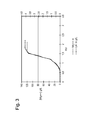
Figure 3 is a graph of the loading profile obtained with AMBERLYST 40 resin when magnesium was separated from lithium. -
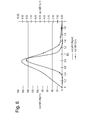
Figure 4 is a separation derivative curve obtained fromFigure 3 . -
Figure 5 is a graph of the loading profile obtained with DOWEX retardion 11A8 resin when magnesium was separated from lithium. -
Figure 6 is a separation derivative curve obtained fromFigure 5 . - The present invention has applicability for the separation of all valuable metals from a natural source (such as the salars) and also at the separation of the valuable metals from an artificial source, for example the recovery of lithium from used batteries. In this case lithium is often separated from cobalt and nickel.
- The sulfonic functionalized resin is a styrene polymer resin having a sulfonic functional groups linked to the polymer matrix. The term "styrene polymer" indicates a copolymer polymerized from a vinyl monomer or mixture of vinyl monomers containing styrene monomer and/or at least one crosslinker, wherein the combined weight of styrene and cross linkers is at least 50 weight percent of the total monomer weight. The level of cross linking ranges from 4 to 10%. All percentages herein are weight percentages.
- A crosslinker is a monomer containing at least two polymerizable carbon-carbon double bonds, including, such as for example, divinylaromatic compounds, di- and tri-(meth)acrylate compounds, and divinyl ether compounds. Preferably, the crosslinker(s) is a divinylaromatic crosslinker, such as for example, divinylbenzene.
- The structure of the sulfonic functionalized resin can be either gel or macroporous (macroreticular). Alternatively, the sulfonic functionalized resin is in gel form. The term "gel" or "gellular" resin applies to a resin which was synthesized from a very low porosity (0 to 0.1 cm3/g), small average pore size (0 to 17 Å) and low B.E.T. surface area (0 to 10 m2/g) copolymer. The term "macroreticular" (or MR) or "macroporous" resin refers to a resin which is synthesized from a high mesoporous copolymer with higher surface area than the gel resins. The total porosity of the MR resins is between 0.1 and 0.7 cm3/g, average pore size between 17and 500 Å and B.E.T. surface area between 10 and 200 m2/g. The sulfonic functionalized resin is it appropriate ionic form. The sulfonic resin may optionally be in sodium form.
- The sulfonic functionalized resin is used to treat a relatively concentrated solution. As used herein concentrated solution may be a brine solution. The concentrated solution of the present invention comprises at least on monovalent metal. The monovalent metal may be a Group I metal, such as for example lithium. The multivalent metal may be a Group II metal, such as for example, magnesium. The monovalent metal is primarily present as a monovalent cation.
- When the monovalent metal is lithium, it is present in the form of Li+. As used herein, the term lithium refers to all salt forms. Lithium is present in the concentrated solution in an amount from 25 to 20000 mg/L, alternatively from 1000 to 15000 mg/L, further alternatively from 1500 to 15000mg/L, and further alternatively from 3000 to 8000 mg/L. Chloride ion and chloride complexes together as "chloride" and is present in the concentrated solution in an amount from 5 to 80 g/L and alternatively form 7 to 70g/L and further alternatively from 15 to 50 g/L. The multivalent metal is present in an amount from 5 to 175 g/L, preferably 50 to 175 g/L.
- The concentrated solution of the present invention may optionally contain a variety of other components. Such components include but are not limited to: iron, sulfate, chloride, nitrate, sodium, calcium, potassium, copper, phosphorus, and aluminum. The pH of the concentrated solution can range from 0 to 11, alternatively from 2 to 11. Furthermore, the concentrated solution may be obtained from any method commonly known to those of skill in the art including but not limited to in situ leach, heap, and leach.
- The monovalent metals are separated from the concentrated solution by passing the concentrated solution over the sulfonic functionalized resin. Techniques commonly used in the art to separate the lithium from the concentrated solution may be applied. Such techniques include but are not limited to simulated moving bed (SMB), sequenced simulated moving bed (SSMB), carousel co-current or countercurrent compact or fluidized bed. The process may be discontinuous or continuous. Typically the flow rate within the column or packed bed system is from 0.5 to 50BV/h.
- Once the separation is complete, the monovalent metal may be precipitated by conventional crystallization processes known to those of ordinary skill in the art.
- The method of the present invention differs from conventional chromatographic processes and is counterintuitive in that the multivalent metal cations, such as for example, magnesium are excluded and the monovalent metals such lithium are retained by the sulfonic functionalized resin. With the sulfonic functionalized resin, it is generally believed that, the selectivity for multivalent cationic species is higher than the selectivity for monovalent cationic species. It is known that the selectivity increases when the number of charges increases.
- In the present invention, the phenomenon that is taking place goes against this currently accepted and well established theory in chromatography using a strong acid cationic resin as a chromatographic media. It is demonstrated with the present invention that the affinity for the monovalent metal, such as for example lithium, is higher than the multivalent metal, such as for example, magnesium. The following examples illustrate this phenomenon wherein the lithium is retained by the chromatographic media while magnesium is not retained despite a higher affinity for magnesium and a much higher concentration for magnesium that would favor the media saturation balance.
- Despite the fact that the ion exclusion as well as the gel permeation chromatographies are known, none of these technologies revealed such behavior for such chromatographic media described in the present invention. The phenomenon that takes place could be seen as similar as gel permeation or size exclusion. But the phenomenon is more complex. If it was only a gel permeation phenomenon that is taking place, the same observation would have been made when the concentration of monovalent cationic specie lithium is decreasing.
- In fact, it can be easily inferred that the phenomena that is taking place is linked to the diffusion rate of the elements inside the chromatographic media matrix. In fact, the monovalent cationic specie, lithium in the illustration case, has a faster diffusion velocity than the multivalent cationic specie, magnesium in the illustration case. Hence, the segregation of the monovalent from the multivalent cationic species becomes possible on the basis of their respective diffusion, their size being an inverse factor. Hence, the present invention may be even used for the separation of cationic metals having the same valence but different diffusion characteristic into the chromatographic media of the present invention.
- The sulfonic functionalized resin retains the monovalent metal from the concentrated solution while the multivalent metal is not retained which allows for the separation and elution. An aqueous mobile phase is used to displace the cationic species from the chromatographic media. The mobile phase can be a solution of sodium chloride or any solution of salt that does not interfere with the recovery of the desired element. The mobile phase composition and concentration should be selected by techniques known to those of ordinary skill in the art. The nature of the salt use to make up the mobile phase is driven by the further step of recovery. The concentration choice is driven by the physical behavior of the chromatographic media. In fact, the chromatographic media shrinks as a function of the concentration of the salt in solution.
- To following the separation, the monovalent metal is then recovered by elution. Methods of elution used by those of ordinary skill in the art are used herein. In one instance, for example, the monovalent metal retained by resin may be treated with a salt solution. Afterwards, the resin is eluted with a solution of sodium carbonate. The monovalent metal is then recovered from solution by known separations techniques, such as for example precipitation. It is beneficially found that the at least 10% of the monovalent metal found in the original concentrated solution may be recovered, alternatively 25%, further alternatively 90%. Within the pH range of 0 to 4 of the concentrated solution, monovalent metal recovery levels of up to 25% may be achieved.
- In the following examples, the mobile phase or eluent is an aqueous sodium chloride solution. The process may be batch or continuous. No other chemicals are required nor is there a need for further regeneration; therefore this process is advantageously more environmentally friendly as compared to the processes of the art.
- Jacketed glass column (height 100cm, Ø 1.5 cm, fitted with sintered glass of porosity 1). Peristaltic pump with flexible tubings. 10, 100 graduated cylinder. 25 mL plastic flasks for samples collections. Stopwatch. Appropriate equipment for Lithium analysis (I.e: ICP). Standard laboratory glassware
- Concentrated solutions of the present invention may comprise for example:
- 50 to 175 g/L of magnesium
- 1 to 15 g/L of Lithium
- 5 to 100 g/L of Sodium
- 5 to 100g/L of potassium
- 0 to 100g/L of sulphate
- 0 to 100g/L of chloride
- pH from 0 to 11
- Composition of the feed solution A in the Examples herein:
- Magnesium = 122g/l
- Lithium =4,1g/l
- Sulfate =50g/l
- Sodium =14g/l
- Potassium= 3 g/l
- Chloride= 2g/L
- pH = 2.4
- Temperature: 23°C
-
- Magnesium = 75g/l
- Lithium =300 mg/l
- Sulfate =50g/l
- Sodium =11g/l
- Potassium= 1g/L
- pH=2.6
- Temperature: 23°C
- The loading profile is one of the tests used to determine the separation performance. The test consists in injecting the solution that contains the metals to separate at a flow rate of 1BV/h and to analyse continuously or fraction after fraction the composition of the outlet solution.
- Resin used: AMBERLITE™ CR1310 resin. AMBERLITE™ CR1310 is a registered trademark of Rohm and Haas Company, a wholly owned subsidiary of The Dow Chemical Company. The resin is in sodium form having a polystyrenic matrix, crosslinked with divinyl benzene and containing sulfonic functional groups.
- The resin was converted in an appropriate ionic form (sodium for the examples) before carrying out the experiments.
- Several fractions of the effluent were collected and analyzed by ICP (induction coupled plasma) photometry.
-
Figure 1 is the loading profile obtained with AMBERLITE CR1310 resin when magnesium was separated from lithium. Magnesium was leaking first while lithium was more retained. As aforementioned, contrary to conventional knowledge, the mechanism involved for the separation is not a simple ion exchange. In fact, because of higher affinity magnesium was expected to be more retained and hence leaking after the lithium. - The separation derivative curve obtained from the loading curve is illustrated in
Figure 2 . - From this curve the peak resolution is calculated using the following formula

- Where "tr" is the retention time of the associated specie and "w" is the peak width of the associated specie. The retention time and peak width are measured in bed volumes.
- The resolution equates 3,3 in the experimental conditions described previously which indicates a very good separation.
- Solution A was used. Analogue experiment (under the same experimental conditions as the experiment 1) was carried out with a different resin type of resin but same functional group (macroporous) AMBERLYST 40 resin, a registered trademark of Rohm and Haas Company, a wholly owned subsidiary of The Dow Chemical Company.
The loading profile of AMBERLYST 40 resin displayed inFigure 3 is different from the previous one and indicates that there is no retention of any specie like was previously observed with the AMBERLITE CR1310 resin.
The separation derivative curve obtained from the loading curve ofFigure 3 is illustrated inFigure 4 . The resolution factor equates zero as there is no separation. - The solution A was used for the test. The resin used is the DOWEX retardion 11A8, DOWEX is a registered trademark of The Dow Chemical Company. The resin is a chromatographic amphoteric resin.
- Several fractions of the effluent were collected and analyzed by ICP (induction coupled plasma) photometry.
- The loading profile obtained for DOWEX retardion 11A8 is shown in
Figure 5 . The separation derivative curve obtained from the loading curve ofFigure 5 is illustrated inFigure 6 . -
Figure 6 shows that the separation of lithium from magnesium is not as good as the separation obtained during theexperiment 1. The calculated resolution factor equates 0,2. The value is by far inferior to the value obtained in experiment 1 (R= 3,3) - It is shown from examples 2 and 3 that the chromatographic media matrix formulation is extremely important as it is the key for the exclusion of multivalent cationic species and hence the retention of lithium.
- The condensed matrix is then able to exclude bigger cations.
- The chromatographic media matrix shrinks when the concentration of the solution is high enough. Such characteristic plays a role for the separation of cationic metals.
Claims (10)
- A method for the separation of monovalent metal from a multivalent metal concentrated solution comprising:i) providing a sulfonic functionalized resin mediaii) providing a concentrated solution comprising at least one monovalent metal and at least one multivalent metal;iii) passing the concentrated solution over the sulfonic functionalized resin media to separate the monovalent metal from multivalent metal; andiv) eluting the monovalent metalwherein the multivalent metal is present in an amount from 5 to 175 g/L.
- The method of claim 1 wherein the monovalent metal is lithium.
- The method of claim 1 wherein the multivalent metal is magnesium.
- The method of claim 1 wherein the concentrated solution comprises sodium.
- The method of claim 1 wherein the concentrated solution comprises potassium.
- The method of claim 1 wherein the functionalized resin media is in sodium form.
- The method of claim 1 further wherein at least 25 % of the amount of monovalent metal from the concentrated solution is eluted.
- The method of claim 1 further wherein at least 90 % of the amount of the monovalent metal from the concentrated solution is eluted.
- The method of claim 1 wherein the concentrated solution has a pH of from 0 to 11.
- The method of claim 2 wherein the concentrated solution comprises from 25 to 20000 mg/L lithium.
Priority Applications (1)
| Application Number | Priority Date | Filing Date | Title |
|---|---|---|---|
| EP12166683A EP2522631A1 (en) | 2011-05-12 | 2012-05-03 | Method for the separation of monovalent metals from multivalent metals |
Applications Claiming Priority (2)
| Application Number | Priority Date | Filing Date | Title |
|---|---|---|---|
| EP11290223 | 2011-05-12 | ||
| EP12166683A EP2522631A1 (en) | 2011-05-12 | 2012-05-03 | Method for the separation of monovalent metals from multivalent metals |
Publications (1)
| Publication Number | Publication Date |
|---|---|
| EP2522631A1 true EP2522631A1 (en) | 2012-11-14 |
Family
ID=45998208
Family Applications (1)
| Application Number | Title | Priority Date | Filing Date |
|---|---|---|---|
| EP12166683A Withdrawn EP2522631A1 (en) | 2011-05-12 | 2012-05-03 | Method for the separation of monovalent metals from multivalent metals |
Country Status (9)
| Country | Link |
|---|---|
| US (1) | US9126843B2 (en) |
| EP (1) | EP2522631A1 (en) |
| CN (1) | CN102776371B (en) |
| AR (1) | AR086355A1 (en) |
| AU (1) | AU2012202760B2 (en) |
| CA (1) | CA2776076A1 (en) |
| CL (1) | CL2012001206A1 (en) |
| RU (1) | RU2500621C1 (en) |
| ZA (1) | ZA201203423B (en) |
Cited By (1)
| Publication number | Priority date | Publication date | Assignee | Title |
|---|---|---|---|---|
| WO2020078928A1 (en) | 2018-10-18 | 2020-04-23 | Geolith | Facility and method for separating at least one ionic species from a solution comprising at least said ionic species and lithium |
Families Citing this family (6)
| Publication number | Priority date | Publication date | Assignee | Title |
|---|---|---|---|---|
| US10252259B2 (en) | 2015-06-02 | 2019-04-09 | TechSource, Inc. | Ion exchange resins selective for the complexation of univalent anions in aqueous solutions |
| WO2018170721A1 (en) * | 2017-03-21 | 2018-09-27 | Dow Global Technologies Llc | Matrices containing lithium aluminates |
| US20210079496A1 (en) * | 2017-06-08 | 2021-03-18 | Nmr 360 Inc | Method for the recovery of lithium |
| CN110950364A (en) * | 2019-12-19 | 2020-04-03 | 南阳阳帆科技有限责任公司 | Process for separating and recovering lithium, nickel, cobalt and manganese from lithium battery anode leachate |
| CN116262946A (en) * | 2021-12-15 | 2023-06-16 | 中国科学院青岛生物能源与过程研究所 | A method for separating and extracting valuable metals from the acidic leaching solution of waste battery ternary materials using a chromatographic separation system |
| WO2026043625A1 (en) | 2024-08-19 | 2026-02-26 | Ddp Specialty Electronic Materials Us, Llc | Method for direct lithium extraction using a discontinuous simulated moving bed |
Citations (1)
| Publication number | Priority date | Publication date | Assignee | Title |
|---|---|---|---|---|
| US4243641A (en) * | 1977-11-07 | 1981-01-06 | Japan Atomic Energy Research Institute | Method for recovering lithium from sea water |
Family Cites Families (12)
| Publication number | Priority date | Publication date | Assignee | Title |
|---|---|---|---|---|
| US2980498A (en) * | 1957-01-29 | 1961-04-18 | Dow Chemical Co | Recovery of lithium from lithium bearing ores |
| US2980497A (en) * | 1957-01-29 | 1961-04-18 | Dow Chemical Co | Recovery of lithium from lithium aluminate complex |
| US4116858A (en) * | 1977-07-05 | 1978-09-26 | The Dow Chemical Company | Recovery of lithium from brines |
| AU748320B2 (en) * | 1997-06-09 | 2002-05-30 | Hw Process Technologies, Inc. | Method for separating and isolating precious metals from non precious metals dissolved in solutions |
| US6921522B2 (en) * | 1998-07-16 | 2005-07-26 | Chemetall Foote Corporation | Production of lithium compounds directly from lithium containing brines |
| EP1030994A1 (en) * | 1998-09-21 | 2000-08-30 | Dong Lim Industrial Co. Ltd | Anti-abrasion pipe fittings for high-speed particle-laden flow |
| US6562327B1 (en) * | 2000-03-01 | 2003-05-13 | L'oreal S.A. | Hair relaxer compositions utilizing complexing agent activators |
| CN1332036A (en) * | 2001-07-09 | 2002-01-23 | 周方伦 | Formed sodium ion soft water processing resin regenerating agent |
| EP1415702A1 (en) * | 2002-10-28 | 2004-05-06 | PURAC Biochem BV | Method of separating multivalent ions and lactate ions from a fermentation broth |
| JP5028826B2 (en) | 2006-03-07 | 2012-09-19 | 三菱化学株式会社 | Purification method of aqueous solution |
| RU2323267C2 (en) * | 2006-05-31 | 2008-04-27 | Олег Николаевич Новиков | Metal extraction method |
| CN101380280A (en) * | 2006-09-04 | 2009-03-11 | 三浦工业株式会社 | Conditioned water for skin |
-
2012
- 2012-05-03 EP EP12166683A patent/EP2522631A1/en not_active Withdrawn
- 2012-05-04 CA CA2776076A patent/CA2776076A1/en not_active Abandoned
- 2012-05-09 CL CL2012001206A patent/CL2012001206A1/en unknown
- 2012-05-10 ZA ZA2012/03423A patent/ZA201203423B/en unknown
- 2012-05-10 AU AU2012202760A patent/AU2012202760B2/en not_active Ceased
- 2012-05-11 RU RU2012119179/05A patent/RU2500621C1/en not_active IP Right Cessation
- 2012-05-11 CN CN201210148469.0A patent/CN102776371B/en active Active
- 2012-05-11 US US13/469,826 patent/US9126843B2/en active Active
- 2012-05-11 AR ARP120101667A patent/AR086355A1/en active IP Right Grant
Patent Citations (1)
| Publication number | Priority date | Publication date | Assignee | Title |
|---|---|---|---|---|
| US4243641A (en) * | 1977-11-07 | 1981-01-06 | Japan Atomic Energy Research Institute | Method for recovering lithium from sea water |
Non-Patent Citations (5)
| Title |
|---|
| "DIAION SK series", 1 June 2008 (2008-06-01), XP055032396, Retrieved from the Internet <URL:http://www.diaion.com/en/products/ion_01_lineup.html#SK> [retrieved on 20120711] * |
| REY M A ET AL: "A new approach to dealing with high-to-low concentration ratios of sodium and ammonium ions in ion chromatography", JOURNAL OF CHROMATOGRAPHY, ELSEVIER SCIENCE PUBLISHERS B.V, NL, vol. 804, no. 1-2, 24 April 1998 (1998-04-24), pages 201 - 209, XP004118565, ISSN: 0021-9673, DOI: 10.1016/S0021-9673(97)01271-5 * |
| RONA M ET AL: "Separation of lithium from dead sea brines by gel permeation chromatography", TALANTA, ELSEVIER, AMSTERDAM, NL, vol. 20, no. 2, 1 February 1973 (1973-02-01), pages 237 - 240, XP026566731, ISSN: 0039-9140, [retrieved on 19730201], DOI: 10.1016/0039-9140(73)80275-9 * |
| ROY D ROCKLIN ET AL: "Ion Chromatography of Monovalent and Divalent Cations", JOURNAL OF CHROMATOGRAPHIC SCIENCE, PRESTON PUBLICATIONS, NILES, IL, US, vol. 27, no. 8, 1 August 1989 (1989-08-01), pages 474 - 479, XP008153454, ISSN: 0021-9665, DOI: 10.1093/CHROMSCI/27.8.474 * |
| WEISS J: "Lösungmittelstabile Ionenaustauscher auf Polymer-Basis", GIT SPEZIAL CHROMATOGRAPHIE, GIT-VERLAG, DARMSTADT, DE, no. 2, 1 January 1992 (1992-01-01), pages 67 - 75, XP008153430, ISSN: 0940-032X * |
Cited By (3)
| Publication number | Priority date | Publication date | Assignee | Title |
|---|---|---|---|---|
| WO2020078928A1 (en) | 2018-10-18 | 2020-04-23 | Geolith | Facility and method for separating at least one ionic species from a solution comprising at least said ionic species and lithium |
| FR3087356A1 (en) * | 2018-10-18 | 2020-04-24 | Geolith | INSTALLATION AND METHOD FOR SEPARATING AT LEAST ONE ION SPECIES FROM A SOLUTION COMPRISING AT LEAST THE SAME ION SPECIES AND LITHIUM |
| US20210371293A1 (en) * | 2018-10-18 | 2021-12-02 | Geolith | Installation and Method for Separating at Least One Ionic Species from a Solution Comprising at Least Said Ionic Species and Lithium |
Also Published As
| Publication number | Publication date |
|---|---|
| ZA201203423B (en) | 2013-01-30 |
| RU2500621C1 (en) | 2013-12-10 |
| AU2012202760B2 (en) | 2014-02-27 |
| RU2012119179A (en) | 2013-11-20 |
| CL2012001206A1 (en) | 2012-10-12 |
| CA2776076A1 (en) | 2012-11-12 |
| AU2012202760A1 (en) | 2012-11-29 |
| US20120288426A1 (en) | 2012-11-15 |
| CN102776371B (en) | 2014-11-12 |
| US9126843B2 (en) | 2015-09-08 |
| AR086355A1 (en) | 2013-12-04 |
| CN102776371A (en) | 2012-11-14 |
Similar Documents
| Publication | Publication Date | Title |
|---|---|---|
| US9126843B2 (en) | Method for separation of monovalent metals from multivalent metals | |
| Zhu et al. | Selective recovery of vanadium and scandium by ion exchange with D201 and solvent extraction using P507 from hydrochloric acid leaching solution of red mud | |
| Virolainen et al. | Recovering rare earth elements from phosphogypsum using a resin-in-leach process: Selection of resin, leaching agent, and eluent | |
| Lucy | Evolution of ion-exchange: from Moses to the Manhattan Project to modern times | |
| Nakajima et al. | Liquid chromatography of alkali and alkaline earth metal salts on poly (benzo-15-crown-5)-and bis (benzo-15-crown-5)-modified silicas | |
| US9869005B2 (en) | Processes for rare earths recovery from wet-process phosphoric acid | |
| Vaughan et al. | Properties of Lewatit® TP272, a commercial solvent impregnated cation exchange resin for cobalt recovery | |
| Okewole et al. | The development of novel nickel selective amine extractants: 2, 2′-Pyridylimidazole functionalised chelating resin | |
| Josefsson | Determination of soluble carbohydrates in sea water by partition chromatography after desalting by ion-exchange membrane electrodialysis | |
| SE429821B (en) | SET AND MATERIAL FOR EXTRACTION OF URANE FROM A SULFURIC ACID SOLUTION | |
| US20240158888A1 (en) | Processes for the removal and recovery of cadmium from wet-process phosphoric acid | |
| Vallès et al. | Sorption strategies for recovering critical raw materials: Extracting trace elements from saltworks brines | |
| Littlejohn et al. | Selective elution of nickel and cobalt from iminodiacetic acid cation exchange resin using ammoniacal solutions | |
| Ochoa et al. | Preparation and characterization of polymeric microspheres for Cr (VI) extraction | |
| AU2011247869B2 (en) | Method for the recovery of uranium from pregnant liquor solutions | |
| Troshkina et al. | Metal sorption by materials with a mobile phase of extractants | |
| WO2021119208A1 (en) | Hybrid thermal - chromatographic system for simultaneous mineral purification and desalination of saline waters | |
| AU2012205253B2 (en) | Method for the recovery of uranium from pregnant liquor solutions | |
| Yang et al. | Polystyrene microcapsules containing Aliquat 336 as a novel packing material for separation of metal ions | |
| Marty et al. | Dialysis of Ni (II) through an ultrafiltration membrane enhanced by polymer complexation | |
| CN115717202B (en) | Method for leaching ionic rare earth ore by bittern | |
| Cicilinski et al. | Mechanisms of interactions and the significance of different colloidal structures in the vertical transport of glyphosate in soils with contrasting mineralogies | |
| US8557201B1 (en) | Method for the recovery of uranium from pregnant liquor solutions | |
| Zharkova et al. | Sorption of cobalt (II) and copper (II) ions by highly cross-linked carboxyl cation exchangers from natural waters with high salt background | |
| Khamizov et al. | Separation of ionic mixtures in sorption columns with two liquid phases |
Legal Events
| Date | Code | Title | Description |
|---|---|---|---|
| PUAI | Public reference made under article 153(3) epc to a published international application that has entered the european phase |
Free format text: ORIGINAL CODE: 0009012 |
|
| 17P | Request for examination filed |
Effective date: 20120503 |
|
| AK | Designated contracting states |
Kind code of ref document: A1 Designated state(s): AL AT BE BG CH CY CZ DE DK EE ES FI FR GB GR HR HU IE IS IT LI LT LU LV MC MK MT NL NO PL PT RO RS SE SI SK SM TR |
|
| AX | Request for extension of the european patent |
Extension state: BA ME |
|
| 17Q | First examination report despatched |
Effective date: 20131220 |
|
| STAA | Information on the status of an ep patent application or granted ep patent |
Free format text: STATUS: THE APPLICATION IS DEEMED TO BE WITHDRAWN |
|
| 18D | Application deemed to be withdrawn |
Effective date: 20170920 |