EP2521321A1 - Method and apparatus for allocating downlink resources and implementing downlink data reception - Google Patents
Method and apparatus for allocating downlink resources and implementing downlink data reception Download PDFInfo
- Publication number
- EP2521321A1 EP2521321A1 EP10840315A EP10840315A EP2521321A1 EP 2521321 A1 EP2521321 A1 EP 2521321A1 EP 10840315 A EP10840315 A EP 10840315A EP 10840315 A EP10840315 A EP 10840315A EP 2521321 A1 EP2521321 A1 EP 2521321A1
- Authority
- EP
- European Patent Office
- Prior art keywords
- frequency
- domain resource
- resource
- transmission bandwidth
- segment
- Prior art date
- Legal status (The legal status is an assumption and is not a legal conclusion. Google has not performed a legal analysis and makes no representation as to the accuracy of the status listed.)
- Withdrawn
Links
Images


Classifications
-
- H—ELECTRICITY
- H04—ELECTRIC COMMUNICATION TECHNIQUE
- H04W—WIRELESS COMMUNICATION NETWORKS
- H04W72/00—Local resource management
- H04W72/04—Wireless resource allocation
- H04W72/044—Wireless resource allocation based on the type of the allocated resource
- H04W72/0453—Resources in frequency domain, e.g. a carrier in FDMA
-
- H—ELECTRICITY
- H04—ELECTRIC COMMUNICATION TECHNIQUE
- H04W—WIRELESS COMMUNICATION NETWORKS
- H04W28/00—Network traffic management; Network resource management
- H04W28/16—Central resource management; Negotiation of resources or communication parameters, e.g. negotiating bandwidth or QoS [Quality of Service]
- H04W28/26—Resource reservation
-
- H—ELECTRICITY
- H04—ELECTRIC COMMUNICATION TECHNIQUE
- H04W—WIRELESS COMMUNICATION NETWORKS
- H04W72/00—Local resource management
- H04W72/12—Wireless traffic scheduling
- H04W72/1263—Mapping of traffic onto schedule, e.g. scheduled allocation or multiplexing of flows
- H04W72/1273—Mapping of traffic onto schedule, e.g. scheduled allocation or multiplexing of flows of downlink data flows
-
- H—ELECTRICITY
- H04—ELECTRIC COMMUNICATION TECHNIQUE
- H04W—WIRELESS COMMUNICATION NETWORKS
- H04W72/00—Local resource management
- H04W72/20—Control channels or signalling for resource management
- H04W72/23—Control channels or signalling for resource management in the downlink direction of a wireless link, i.e. towards a terminal
Definitions
- the present invention relates to the field of communications and particularly to a method and device for allocating a downlink resource and receiving downlink data in a wideband evolution system.
- a channel bandwidth is a total bandwidth occupied for the system
- a transmission bandwidth is an active bandwidth for transmission of a signal and in the unit of a Resource Block (RB) at the physical layer.
- RB Resource Block
- Table 1 Six types of bandwidths as depicted in Table 1 are supported in the LTE Rel-8 standard. Table 1 Channel bandwidth BW Channel [MHz] 1.4 3 5 10 15 20 Configured transmission bandwidth/ N RB 6 15 25 50 75 100
- the direct current sub-carrier is located at the intersection of two central RBs when there are an even number of RBs, e.g., 6 RBs, 50 RBs, 100 RBs, etc., in the channel bandwidth; and the direct current sub-carrier is centered in a central RB when there are an odd number of RBs, e.g., 15 RBs, 25 RBs, 75 RBs, etc., in the channel bandwidth, and since an RB consists of 12 sub-carriers in the LTE system, 6 sub-carriers of the central RB are located respectively on both sides of the direct current sub-carrier.
- a larger channel bandwidth e.g., 100MHz, etc.
- a plurality of consecutive LTE component carriers are aggregated to provide the LTE-A with a larger transmission bandwidth
- a plurality of inconsecutive LTE component carriers are aggregated to provide the LTE-A with a larger transmission bandwidth.
- Fig. 2 is a schematic diagram of aggregated component carriers in an example of aggregated inconsecutive component carriers.
- aggregation of at most 5 component carriers is supported, and a UE supports concurrent reception/transmission of data over at most 5 component carriers.
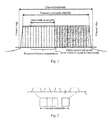
- a method for utilizing discrete frequency-domain resources has been proposed in the industry as illustrated in Fig. 3 , where there is a central bandwidth, i.e., a segment B 0 , which is an Rel-8 compatible frequency-domain resource segment, in a frequency-domain resource section B, and a physical resource of the Rel-8 compatible frequency-domain resource segment can be shared between an LTE Rel-8 UE and an LTE-A UE; and a frequency-domain resource segment on both sides thereof, i.e., a segment B-B 0 , is a non-backward compatible frequency-domain resource segment with a physical resource which can consist of consecutive frequency-domain resources or a plurality of inconsecutive frequency-domain resources.
- the several bandwidth values presented in Table 1 are accommodated by the extended channel bandwidth, i.e., the segment B.
- the Rel-8 compatible frequency-domain resource segment is extended, and there remains an issue to be addressed of how to enable an LTE-A user equipment to normally access and use physical resources of a Rel-8 compatible frequency-domain resource segment and a non-backward compatible frequency-domain resource segment by using the extended resource.
- Embodiments of the invention provide a method and device for receiving downlink data in a wideband evolution system to receive downlink data in the case of an extended carrier resource.
- Embodiments of the invention provide a method and device for allocating a downlink resource in a wideband evolution system to allocate a resource in the case of an extended carrier resource.
- An embodiment of the invention provides a method for receiving downlink data in a wideband evolution system with a transmission bandwidth resource including a Rel-8 compatible frequency-domain resource and a non-backward compatible frequency-domain resource, the method including:
- An embodiment of the invention provides a method for receiving downlink data in a wideband evolution system with a transmission bandwidth resource including a Rel-8 compatible frequency-domain resource and a non-backward compatible frequency-domain resource, the method including:
- An embodiment of the invention provides a method for allocating a downlink resource in a wideband evolution system with a transmission bandwidth resource including a Rel-8 compatible frequency-domain resource and a non-backward compatible frequency-domain resource, the method including:
- An embodiment of the invention provides a method for allocating a downlink resource in a wideband evolution system with a transmission bandwidth resource including a Rel-8 compatible frequency-domain resource and a non-backward compatible frequency-domain resource, the method including:
- An embodiment of the invention provides a device for receiving downlink data in a wideband evolution system with a transmission bandwidth resource including a Rel-8 compatible frequency-domain resource and a non-backward compatible frequency-domain resource, the device including:
- An embodiment of the invention provides a device for receiving downlink data in a wideband evolution system with a transmission bandwidth resource including a Rel-8 compatible frequency-domain resource and a non-backward compatible frequency-domain resource, the device including:
- An embodiment of the invention provides a device for allocating a downlink resource in a wideband evolution system with a transmission bandwidth resource including a Rel-8 compatible frequency-domain resource and a non-backward compatible frequency-domain resource, the device including:
- An embodiment of the invention provides a device for allocating a downlink resource in a wideband evolution system with a transmission bandwidth resource including a Rel-8 compatible frequency-domain resource located in a middle frequency segment of the transmission bandwidth resource and a non-backward compatible frequency-domain resource, the device including:
- the transmission bandwidth resource is divided into a plurality of frequency-domain resource blocks which can be numbered in a numbering scheme in which each frequency-domain resource block corresponds to a Resource Block (RB) number, where the frequency-domain resource blocks corresponding to the Rel-8 compatible frequency-domain resource are numbered in a numbering scheme of an LTE system and the frequency-domain resource blocks corresponding to the non-backward compatible frequency-domain resource are numbered sequentially with reference to the largest one among the numbers corresponding to the Rel-8 compatible frequency-domain resource, or in another numbering scheme in which a resource for an LTE user equipment and a resource for a wideband evolution user equipment are numbered respectively in different numbering schemes for the different user equipments so that the frequency-domain resource blocks of the transmission bandwidth resource are numbered sequentially in an order of ascending frequencies for the wideband evolution user equipment and the original numbering scheme of the LTE system is used for the LTE user equipment.
- RB Resource Block
- the wideband evolution user equipment Upon reception of downlink control signaling, including an RB number, transmitted from the network side, the wideband evolution user equipment obtains the frequency-domain resource block corresponding to the RB number in the downlink control signaling and can receive downlink data over the obtained frequency-domain resource block.
- Fig. 1 is a schematic diagram of a variety of system bandwidths defined in an LTE Rel-8 system
- Fig. 2 is a schematic diagram of aggregated inconsecutive component carriers
- Fig. 3 is a schematic diagram of a method for utilizing discrete frequency-domain resources
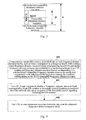
- Fig. 4 is a schematic flow diagram of a method for receiving downlink data in an LTE-A system according to an embodiment of the invention
- Fig. 5 is a schematic flow diagram of another method for receiving downlink data in an LTE-A system according to an embodiment of the invention.
- Fig. 6 is a schematic flow diagram of a method for allocating a downlink resource in an LTE-A system according to an embodiment of the invention
- Fig. 7 is a schematic flow diagram of another method for allocating a downlink resource in an LTE-A system according to an embodiment of the invention.
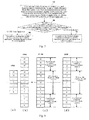
- Fig. 8 is a schematic diagram of a correspondence relationship between RB numbers and frequency-domain resource blocks in a carrier resource extension solution according to an embodiment of the invention.
- Fig. 9 is a schematic diagram of a correspondence relationship between RB numbers and frequency-domain resource blocks in another carrier resource extension solution according to an embodiment of the invention.
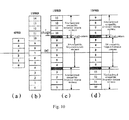
- Fig. 10 is a schematic diagram of a correspondence relationship between RB numbers and frequency-domain resource blocks in a further carrier resource extension solution according to an embodiment of the invention.
- a transmission bandwidth resource of a wideband evolution system includes a Rel-8 compatible frequency-domain resource and a non-backward compatible frequency-domain resource, and in order to receive downlink data in the case of the extended carrier resource, the transmission bandwidth resource can be divided into a plurality of frequency-domain resource blocks in an embodiment of the invention in a numbering scheme in which each frequency-domain resource block corresponds to a Resource Block (RB) number, where the frequency-domain resource blocks corresponding to the Rel-8 compatible frequency-domain resource are numbered in a numbering scheme of an LTE system and the frequency-domain resource blocks corresponding to the non-backward compatible frequency-domain resource are numbered sequentially with reference to the largest one among the numbers corresponding to the Rel-8 compatible frequency-domain resource, or in another numbering scheme in which a resource for an LTE user equipment and a resource for a wideband evolution user equipment are numbered respectively in different numbering schemes for the different user equipments so that the frequency-domain resource blocks of the transmission bandwidth resource are numbered sequentially in an
- the wideband evolution user equipment Upon reception of downlink control signaling, including an RB number, transmitted from the network side, the wideband evolution user equipment obtains the frequency-domain resource block corresponding to the RB number in the downlink control signaling and can receive downlink data over the obtained frequency-domain resource block.
- the wideband evolution system can be an LTE-A system or another wideband system developed based upon the LTE system.
- a technical solution of the invention will be described below taking a wideband evolution system being an LTE-A system as an example.
- a method for receiving downlink data in an LTE-A system includes the following steps.
- Step 400 A transmission bandwidth resource, including a Rel-8 compatible frequency-domain resource and a non-backward compatible frequency-domain resource, of the LTE-A system is divided into a plurality of frequency-domain resource blocks, each of which corresponds to a Resource Block (RB) number, where frequency-domain resource blocks corresponding to the Rel-8 compatible frequency-domain resource are numbered in a numbering scheme of an LTE system and frequency-domain resource blocks corresponding to the non-backward compatible frequency-domain resource are numbered sequentially with reference to the largest one among the numbers corresponding to the Rel-8 compatible frequency-domain resource.
- a correspondence relationship between the RB numbers and the frequency-domain resource blocks can be set in the step 400.
- Step 401 An LTE-A user equipment obtains a frequency-domain resource block corresponding to an RB number in downlink control signaling transmitted from the network side upon reception of the downlink control signaling including the RB number.
- Step 402 The LTE-A user equipment receives downlink data over the obtained frequency-domain resource block.
- the Rel-8 compatible frequency-domain resource is located in a middle frequency segment of the transmission bandwidth resource, and the non-backward compatible frequency-domain resource is located at a low frequency segment and/or a high frequency segment of the transmission bandwidth resource.
- the frequency-domain resource blocks corresponding to the non-backward compatible frequency-domain resource can be numbered sequentially with reference to the largest one among the numbers corresponding to the Rel-8 compatible frequency-domain resource in the step 400 as follows: frequency-domain resource blocks corresponding to a high frequency segment of the non-backward compatible frequency-domain resource are numbered sequentially in an order of ascending frequencies with reference to the largest one among the numbers corresponding to the Rel-8 compatible frequency-domain resource, and then frequency-domain resource blocks corresponding to a low frequency segment of the non-backward compatible frequency-domain resource are numbered sequentially in an order of ascending frequencies with reference to the largest one among the numbers of the frequency-domain resource blocks corresponding to the high frequency segment of the non-backward compatible frequency-domain resource.
- the frequency-domain resource blocks corresponding to the non-backward compatible frequency-domain resource can be numbered sequentially with reference to the largest one among the numbers corresponding to the Rel-8 compatible frequency-domain resource in the step 400 as follows: frequency-domain resource blocks corresponding to a low frequency segment of the non-backward compatible frequency-domain resource are numbered sequentially in an order of ascending frequencies with reference to the largest one among the numbers corresponding to the Rel-8 compatible frequency-domain resource, and then frequency-domain resource blocks corresponding to a high frequency segment of the non-backward compatible frequency-domain resource are numbered sequentially in an order of ascending frequencies with reference to the largest one among the numbers of the frequency-domain resource blocks corresponding to the low frequency segment of the non-backward compatible frequency-domain resource.
- both the transmission bandwidth resource of the LTE-A system and the Rel-8 compatible frequency-domain resource are dividable into an even number of frequency-domain resource blocks or both the transmission bandwidth resource of the LTE-A system and the Rel-8 compatible frequency-domain resource are dividable into an odd number of frequency-domain resource blocks, all the bandwidth resource of the transmission bandwidth resource can be divided into a plurality of frequency-domain resource blocks.
- the transmission bandwidth resource of the LTE-A system is dividable into an even number of frequency-domain resource blocks and the Rel-8 compatible frequency-domain resource is dividable into an odd number of frequency-domain resource blocks, or the transmission bandwidth resource of the LTE-A system is dividable into an odd number of frequency-domain resource blocks and the Rel-8 compatible frequency-domain resource is dividable into an even number of frequency-domain resource blocks, a part of the bandwidth resource of the transmission bandwidth resource can be divided into a plurality of frequency-domain resource blocks.
- a physical resource with the size of half a frequency-domain resource block can be symmetrically reserved respectively in a high frequency segment and a low frequency segment of the non-backward compatible frequency-domain resource, and the high frequency segment and the low frequency segment, reserved the physical resources with the size of half a frequency-domain resource block, of the non-backward compatible frequency-domain resource can be divided respectively into frequency-domain resource blocks while no data is transmitted over the reserved physical resources.
- a physical resource with the size of half a frequency-domain resource block can be reserved starting with the highest frequency in the high frequency segment of the non-backward compatible frequency-domain resource, and a physical resource with the size of half a frequency-domain resource block can be reserved starting with the lowest frequency in the low frequency segment of the non-backward compatible frequency-domain resource.
- a physical resource with the size of half a frequency-domain resource block can be reserved starting with the lowest frequency in the high frequency segment of the non-backward compatible frequency-domain resource, and a physical resource with the size of half a frequency-domain resource block can be reserved starting with the highest frequency in the low frequency segment of the non-backward compatible frequency-domain resource.
- another method for receiving downlink data in an LTE-A system includes the following steps.
- Step 500 A transmission bandwidth resource, including a Rel-8 compatible frequency-domain resource and a non-backward compatible frequency-domain resource, of the LTE-A system is divided into a plurality of frequency-domain resource blocks, each of which corresponds to a Resource Block (RB) number, where the frequency-domain resource blocks are numbered sequentially in an order of ascending frequencies.
- RB Resource Block
- a correspondence relationship between the RB numbers and the frequency-domain resource blocks can be set and stored in the step 500.
- Step 501 An LTE-A user equipment obtains a frequency-domain resource block corresponding to an RB number in downlink control signaling transmitted from the network side upon reception of the downlink control signaling including the RB number.
- Step 502 The LTE-A user equipment receives downlink data over the obtained frequency-domain resource block.
- step 500 if both the transmission bandwidth resource of the LTE-A system and the Rel-8 compatible frequency-domain resource are dividable into an even number of frequency-domain resource blocks or both the transmission bandwidth resource of the LTE-A system and the Rel-8 compatible frequency-domain resource are dividable into an odd number of frequency-domain resource blocks, all the bandwidth resource of the transmission bandwidth resource can be divided into a plurality of frequency-domain resource blocks.
- the transmission bandwidth resource of the LTE-A system is dividable into an even number of frequency-domain resource blocks and the Rel-8 compatible frequency-domain resource is dividable into an odd number of frequency-domain resource blocks, or the transmission bandwidth resource of the LTE-A system is dividable into an odd number of frequency-domain resource blocks and the Rel-8 compatible frequency-domain resource is dividable into an even number of frequency-domain resource blocks, a part of the bandwidth resource of the transmission bandwidth resource can be divided into a plurality of frequency-domain resource blocks.
- a part of the bandwidth resource of the transmission bandwidth resource can be divided into a plurality of frequency-domain resource blocks as follows: a physical resource with the size of half a frequency-domain resource block can be symmetrically reserved respectively in a high frequency segment and a low frequency segment of the non-backward compatible frequency-domain resource, and the high frequency segment and the low frequency segment, reserved physical resources with the size of half a frequency-domain resource block, of the non-backward compatible frequency-domain resource can be divided respectively into frequency-domain resource blocks while no data is transmitted over the reserved physical resources.
- a physical resource with the size of half a frequency-domain resource block can be reserved starting with the highest frequency in the high frequency segment of the non-backward compatible frequency-domain resource, and a physical resource with the size of half a frequency-domain resource block can be reserved starting with the lowest frequency in the low frequency segment of the non-backward compatible frequency-domain resource.
- a physical resource with the size of half a frequency-domain resource block can be reserved starting with the lowest frequency in the high frequency segment of the non-backward compatible frequency-domain resource, and a physical resource with the size of half a frequency-domain resource block can be reserved starting with the highest frequency in the low frequency segment of the non-backward compatible frequency-domain resource.
- a method for allocating a downlink resource in an LTE-A system includes the following steps.
- Step 600 A transmission bandwidth resource, including a Rel-8 compatible frequency-domain resource and a non-backward compatible frequency-domain resource, of the LTE-A system is divided into a plurality of frequency-domain resource blocks, each of which corresponds to a Resource Block (RB) number, where frequency-domain resource blocks corresponding to the Rel-8 compatible frequency-domain resource are numbered in a numbering scheme of an LTE system and frequency-domain resource blocks corresponding to the non-backward compatible frequency-domain resource are numbered sequentially with reference to the largest one among the numbers corresponding to the Rel-8 compatible frequency-domain resource.
- RB Resource Block
- Step 601 An RB number corresponding to a downlink frequency-domain resource block allocated for an LTE-A user equipment is determined at the network side in allocation of the downlink frequency-domain resource block for the LTE-A user equipment, and the determined RB number is transmitted to the LTE-A user equipment.
- the Rel-8 compatible frequency-domain resource is located in a middle frequency segment of the transmission bandwidth resource, and the non-backward compatible frequency-domain resource is located at a low frequency segment and/or a high frequency segment of the transmission bandwidth resource.
- the frequency-domain resource blocks corresponding to the non-backward compatible frequency-domain resource can be numbered sequentially with reference to the largest one among the numbers corresponding to the Rel-8 compatible frequency-domain resource as follows: frequency-domain resource blocks corresponding to a high frequency segment of the non-backward compatible frequency-domain resource are numbered sequentially in an order of ascending frequencies with reference to the largest one among the numbers corresponding to the Rel-8 compatible frequency-domain resource, and then frequency-domain resource blocks corresponding to a low frequency segment of the non-backward compatible frequency-domain resource are numbered sequentially in an order of ascending frequencies with reference to the largest one among the numbers of the frequency-domain resource blocks corresponding to the high frequency segment of the non-backward compatible frequency-domain resource.
- frequency-domain resource blocks corresponding to a low frequency segment of the non-backward compatible frequency-domain resource are numbered sequentially in an order of ascending frequencies with reference to the largest one among the numbers corresponding to the Rel-8 compatible frequency-domain resource, and then frequency-domain resource blocks corresponding to a high frequency segment of the non-backward compatible frequency-domain resource are numbered sequentially in an order of ascending frequencies with reference to the largest one among the numbers of the frequency-domain resource blocks corresponding to the low frequency segment of the non-backward compatible frequency-domain resource.
- both the transmission bandwidth resource of the LTE-A system and the Rel-8 compatible frequency-domain resource are dividable into an even number of frequency-domain resource blocks or both the transmission bandwidth resource of the LTE-A system and the Rel-8 compatible frequency-domain resource are dividable into an odd number of frequency-domain resource blocks, all the bandwidth resource of the transmission bandwidth resource can be divided into a plurality of frequency-domain resource blocks.
- the transmission bandwidth resource of the LTE-A system is dividable into an even number of frequency-domain resource blocks and the Rel-8 compatible frequency-domain resource is dividable into an odd number of frequency-domain resource blocks, or the transmission bandwidth resource of the LTE-A system is dividable into an odd number of frequency-domain resource blocks and the Rel-8 compatible frequency-domain resource is dividable into an even number of frequency-domain resource blocks, a part of the bandwidth resource of the transmission bandwidth resource can be divided into a plurality of frequency-domain resource blocks.
- a physical resource with the size of half a frequency-domain resource block can be symmetrically reserved respectively in a high frequency segment and a low frequency segment of the non-backward compatible frequency-domain resource, and the high frequency segment and the low frequency segment, reserved physical resources with the size of half a frequency-domain resource block, of the non-backward compatible frequency-domain resource can be divided respectively into frequency-domain resource blocks while no data is transmitted over the reserved physical resources.
- a physical resource with the size of half a frequency-domain resource block is reserved starting with the highest frequency in the high frequency segment of the non-backward compatible frequency-domain resource, and a physical resource with the size of half a frequency-domain resource block is reserved starting with the lowest frequency in the low frequency segment of the non-backward compatible frequency-domain resource.
- a physical resource with the size of half a frequency-domain resource block is reserved starting with the lowest frequency in the high frequency segment of the non-backward compatible frequency-domain resource, and a physical resource with the size of half a frequency-domain resource block is reserved starting with the highest frequency in the low frequency segment of the non-backward compatible frequency-domain resource.
- frequency-domain resource blocks are numbered at the network side in the same numbering scheme so that a resource can be allocated at the network side thus enabling correct parsing at the side of a user equipment.
- the different numbering schemes are used for the different user equipments, and the different user equipments parse the resource allocated at the network side by using the corresponding scheme.
- a method for allocating a downlink resource in an LTE-A system is as follows.
- Step 700 A transmission bandwidth resource, including a Rel-8 compatible frequency-domain resource and a non-backward compatible frequency-domain resource, of the LTE-A system is divided into a plurality of frequency-domain resource blocks, for each of which a Resource Block (RB) number is set, where the frequency-domain resource blocks are numbered sequentially starting with the lowest frequency is a numbering scheme for an LTE-A user equipment and the frequency-domain resource blocks are numbered in a numbering scheme of an LTE system for an LTE user equipment.
- RB Resource Block
- Step 701 The type of a user equipment for which a resource is to be allocated is determined at the network side, and a downlink frequency-domain resource block is allocated for the user equipment according to the type of the user equipment, where the flow goes to the step 702 if the user equipment is an LTE-A user equipment or the step 703 if the user equipment is an LTE user equipment.
- Step 702 The number of the allocated downlink frequency-domain resource block is determined in the numbering scheme for an LTE-A user equipment.
- Step 703 The number of the allocated downlink frequency-domain resource block is determined in the numbering scheme for an LTE user equipment.
- step 700 if both the transmission bandwidth resource of the LTE-A system and the Rel-8 compatible frequency-domain resource are dividable into an even number of frequency-domain resource blocks or both the transmission bandwidth resource of the LTE-A system and the Rel-8 compatible frequency-domain resource are dividable into an odd number of frequency-domain resource blocks, all the bandwidth resource of the transmission bandwidth resource can be divided into a plurality of frequency-domain resource blocks.
- the transmission bandwidth resource of the LTE-A system is dividable into an even number of frequency-domain resource blocks and the Rel-8 compatible frequency-domain resource is dividable into an odd number of frequency-domain resource blocks, or the transmission bandwidth resource of the LTE-A system is dividable into an odd number of frequency-domain resource blocks and the Rel-8 compatible frequency-domain resource is dividable into an even number of frequency-domain resource blocks, a part of the bandwidth resource of the transmission bandwidth resource can be divided into a plurality of frequency-domain resource blocks.
- a part of the bandwidth resource of the transmission bandwidth resource can be divided into a plurality of frequency-domain resource blocks as follows: a physical resource with the size of half a frequency-domain resource block is symmetrically reserved respectively in a high frequency segment and a low frequency segment of the non-backward compatible frequency-domain resource, and the high frequency segment and the low frequency segment, reserved physical resources with the size of half a frequency-domain resource block, of the non-backward compatible frequency-domain resource are divided respectively into frequency-domain resource blocks while no data is transmitted over the reserved physical resources.
- a physical resource with the size of half a frequency-domain resource block is reserved starting with the highest frequency in the high frequency segment of the non-backward compatible frequency-domain resource, and a physical resource with the size of half a frequency-domain resource block is reserved starting with the lowest frequency in the low frequency segment of the non-backward compatible frequency-domain resource.
- a physical resource with the size of half a frequency-domain resource block is reserved starting with the lowest frequency in the high frequency segment of the non-backward compatible frequency-domain resource, and a physical resource with the size of half a frequency-domain resource block is reserved starting with the highest frequency in the low frequency segment of the non-backward compatible frequency-domain resource.
- an embodiment of the invention provides a device for receiving downlink data in an LTE-A system with a transmission bandwidth resource including a Rel-8 compatible frequency-domain resource and a non-backward compatible frequency-domain resource, and the device includes a storage unit, a first reception unit, a determination unit and a second reception unit.
- the storage unit is configured to store numbering scheme information indicating that the transmission bandwidth resource is divided into a plurality of frequency-domain resource blocks, each of which corresponds to a Resource Block (RB) number, where frequency-domain resource blocks corresponding to the Rel-8 compatible frequency-domain resource are numbered in a numbering scheme of an LTE system and frequency-domain resource blocks corresponding to the non-backward compatible frequency-domain resource are numbered sequentially with reference to the largest one among the numbers corresponding to the Rel-8 compatible frequency-domain resource; the first reception unit is configured to receive downlink control signaling, including an RB number, transmitted from the network side; the determination unit is configured to obtain a frequency-domain resource block corresponding to the RB number in the downlink control signaling according to the numbering scheme information stored in the storage unit; and the second reception unit is configured to receive downlink data over the obtained frequency-domain resource block.
- RB Resource Block
- an embodiment of the invention provides a device for receiving downlink data in an LTE-A system with a transmission bandwidth resource including a Rel-8 compatible frequency-domain resource and a non-backward compatible frequency-domain resource, and the device includes a storage unit, a first reception unit, a determination unit and a second reception unit.
- the storage unit is configured to store numbering scheme information indicating that the transmission bandwidth resource is divided into a plurality of frequency-domain resource blocks, each of which corresponds to a Resource Block (RB) number, where the frequency-domain resource blocks are numbered sequentially in an order of ascending frequencies;
- the first reception unit is configured to receive downlink control signaling, including an RB number, transmitted from the network side;
- the determination unit is configured to obtain a frequency-domain resource block corresponding to the RB number in the downlink control signaling according to the numbering scheme information stored in the storage unit;
- the second reception unit is configured to receive downlink data over the obtained frequency-domain resource block.
- an embodiment of the invention provides a device for allocating a downlink resource in an LTE-A system with a transmission bandwidth resource including a Rel-8 compatible frequency-domain resource and a non-backward compatible frequency-domain resource, and the device includes a storage unit and an allocation unit.
- the storage unit is configured to store numbering scheme information indicating that the transmission bandwidth resource is divided into a plurality of frequency-domain resource blocks, each of which corresponds to a Resource Block (RB) number, where frequency-domain resource blocks corresponding to the Rel-8 compatible frequency-domain resource are numbered in a numbering scheme of an LTE system and frequency-domain resource blocks corresponding to the non-backward compatible frequency-domain resource are numbered sequentially with reference to the largest one among the numbers corresponding to the Rel-8 compatible frequency-domain resource; and the allocation unit is configured, in allocation of a downlink frequency-domain resource block to an LTE-A user equipment, to determine an RB number corresponding to the downlink frequency-domain resource block allocated for the LTE-A user equipment according to the numbering scheme information stored in the storage unit and to transmit the determined RB number to the LTE-A user equipment.
- RB Resource Block
- an embodiment of the invention provides a device for allocating a downlink resource in an LTE-A system with a transmission bandwidth resource including a Rel-8 compatible frequency-domain resource and a non-backward compatible frequency-domain resource, and the device includes a storage unit and an allocation unit.
- the storage unit is configured to store numbering scheme information indicating that the transmission bandwidth resource is divided into a plurality of frequency-domain resource blocks, for each of which a Resource Block (RB) number is set, where the frequency-domain resource blocks are numbered sequentially starting with the lowest frequency is a numbering scheme for an LTE-A user equipment and the frequency-domain resource blocks are numbered in a numbering scheme of an LTE system for an LTE user equipment; and the allocation unit is configured to determine the type of a user equipment for which a resource is to be allocated, and to allocate a downlink frequency-domain resource block for the user equipment according to the type of the user equipment, where the number of the allocated downlink frequency-domain resource block is determined in the numbering scheme for an LTE-A user equipment if the user equipment is an LTE-A user equipment or the number of the allocated downlink frequency-domain resource block is determined in the numbering scheme for an LTE user equipment if the user equipment is an LTE user equipment.
- RB Resource Block
- the boundaries of the RBs of the non-backward compatible frequency-domain resource segment are aligned with the boundaries of the RBs of the Rel-8 compatible frequency-domain resource segment, and the direct current sub-carrier of the extended carrier remains at the same location as the direct current sub-carrier of the original Rel-8 compatible frequency-domain resource segment, and in this case there are two numbering schemes for all the RBs in the system.
- Fig. 8 illustrates four sections (a), (b), (c) and (d), where the section (a) is schematic of the Rel-8 frequency-domain resource of 15 RBs; the section (b) is schematic of the Rel-8 frequency-domain resource of 15 RBs being extended to 25 RBs with a numbering scheme being a sequential numbering scheme; the section (c) is schematic of the numbering scheme in which sequential numbering is performed for the extended transmission bandwidth, where renumbering is performed in the Rel-8 compatible frequency-domain resource segment and the non-backward compatible frequency-domain resource segment, and such numbering can be adopted for an LTE-A user equipment in an LTE-A system, and the original numbering scheme can be adopted for an LTE user equipment, i.e., as illustrated in the section (a); and in the section (d), the original numbering scheme is adopted in the Rel-8 compatible frequency-domain resource segment and sequential numbering with reference to the largest one among the numbers in the Rel-8 compatible frequency-domain resource segment is performed in the non-backward compatible
- the RBs throughout the transmission bandwidth are numbered sequentially in an order of ascending frequencies in the numbering scheme illustrated in the section (c) for an LTE-A user equipment, and the RBs in the Rel-8 compatible frequency-domain resource segment are numbered in the original scheme, i.e., the numbering scheme illustrated in the section (a), for an LTE user equipment.
- the two numbering schemes will be stored at the network side, and the same RB will appear as being numbered differently to an LTE user equipment and an LTE-A user equipment operating in the Rel-8 compatible frequency-domain resource segment, for example, the RB no.5 appearing to the LTE-A user equipment appears the RB no.0 to the LTE user equipment.
- the numbering scheme illustrated in the section (d) is adopted, that is, firstly the RBs in the Rel-8 compatible frequency-domain resource segment are numbered in an order of ascending frequencies, and then the RBs in the non-backward compatible frequency-domain resource segment are numbered.
- an RB appears as being numbered identically to an LTE user equipment and an LTE-A user equipment operating in the Rel-8 compatible frequency-domain resource segment.
- the boundaries of the RBs of the non-backward compatible frequency-domain resource segment will be translated by 6 sub-carriers (half an RB) to be aligned with the boundaries of the RBs of the Rel-8 compatible frequency-domain resource segment.
- Fig. 9 and Fig. 10 illustrate schematic diagrams of the Rel-8 compatible frequency-domain resource of 6 RBs being extended to the transmission bandwidth of 15 RBs, where the section (a) is schematic of a numbering scheme of the Rel-8 compatible frequency-domain resource, and the section (b) is schematic of the extended transmission bandwidth including all the RBs which are numbered sequentially.
- the direct current sub-carrier of the frequency-domain resource including 6 RBs is located between two central RBs and the direct current sub-carrier of the frequency-domain resource including 15 RBs is centered in a central RB, so the RBs in the extended resource segment will be translated by 6 sub-carriers to keep aligned with the Rel-8 compatible frequency-domain resource segment, thereby ensuring that the location of the physical resource and the location of the direct current sub-carrier appear as they are to an LTE user equipment.
- the boundary of the RBs in the non-backward compatible frequency-domain resource segment at the high frequency side is translated by 6 sub-carriers to the low frequency side with reference to the central Rel-8 compatible frequency-domain resource segment, and no data will be transmitted over these 6 sub-carriers acting as a reserved resource; and also the boundary of the RBs in the non-backward compatible frequency-domain resource segment at the low frequency side is translated by 6 sub-carriers to the high frequency side with reference to the central Rel-8 compatible frequency-domain resource segment, and no data will be transmitted over these 6 sub-carriers acting as a reserved resource.
- the 6 idle sub-carriers reserved on both sides of the extended carrier can be used as a frequency guard band of the system, or some special signals of the LTE-A system can be transmitted thereover.
- the boundary of the RBs in the non-backward compatible frequency-domain resource segment at the high frequency side is translated by 6 sub-carriers to the high frequency side with reference to the central Rel-8 compatible frequency-domain resource segment; and also the boundary of the RBs in the non-backward compatible frequency-domain resource segment at the low frequency side is translated by 6 sub-carriers to the low frequency side with reference to the central Rel-8 compatible frequency-domain resource segment.
- the 6 idle sub-carriers reserved respectively between both sides of the Rel-8 compatible frequency-domain resource segment and the non-backward compatible frequency-domain resource segment of the extended carrier can be used as inactive sub-carriers over which no signal is transmitted, or some special signals of the LTE-A system can be transmitted thereover.
- the RBs throughout the transmission bandwidth are numbered sequentially in an order of ascending frequencies for an LTE-A user equipment as described above. In this case, the same RB will appear as being numbered differently to an LTE user equipment and an LTE-A user equipment operating in the Rel-8 compatible frequency-domain resource segment.
- the RBs in the Rel-8 compatible frequency-domain resource segment are numbered sequentially in an order of ascending frequencies, and then the RBs in the non-backward compatible frequency-domain resource segment are numbered, as described above.
- the same RB will appear as being numbered identically to an LTE user equipment and an LTE-A user equipment operating in the Rel-8 compatible frequency-domain resource segment.
- the support of some signaling is required, for example, in which a base station signals the bandwidth of the Rel-8 compatible frequency-domain resource, a transmission bandwidth, etc., to an LTE-A user equipment, possibly in cell broadcast.
- a resource can be extended while ensuring that the location and the definition of a physical resource of a Rel-8 compatible frequency-domain resource segment keep unchanged and the boundaries of physical resources of a non-backward compatible frequency-domain resource segment keep aligned therewith.
- a carrier with an odd number of RBs is extended to a carrier with an even number of RBs or a carrier with an even number RBs is extended to a carrier with an odd number of RBs
- the boundaries of the RBs of a non-backward compatible frequency-domain resource segment are translated by 6 sub-carriers.
- the solution according to the embodiments of the invention address the problem with usage of physical resources of a Rel-8 compatible frequency-domain resource and a non-backward compatible frequency-domain resource to ensure that an LTE user equipment can normally access and use the physical resources of the Rel-8 compatible frequency-domain resource segment and an LTE-A user equipment can normally access and use the physical resources of the Rel-8 compatible frequency-domain resource segment and the non-backward compatible frequency-domain resource segment.
Landscapes
- Engineering & Computer Science (AREA)
- Computer Networks & Wireless Communication (AREA)
- Signal Processing (AREA)
- Quality & Reliability (AREA)
- Mobile Radio Communication Systems (AREA)
Abstract
A method and apparatus for allocating downlink resources and implementing downlink data reception in a broadband evolution system are disclosed in the present invention, so as to implement the allocation of resources in case of carrier resource expansion and implement the reception of downlink data in case of carrier resource expansion. A method for receiving downlink data includes that: emission bandwidth resources are divided into multiple frequency-domain Resource Blocks (RBs), and every frequency-domain Resource Block (RB) corresponds to an RB serial number, wherein the frequency-domain RBs corresponding to Release-8 (Rel-8) compatible frequency-domain resources are numbered in a numbering mode of a Long Term Evolution (LTE) system, and the frequency-domain RBs corresponding to incompatible frequency-domain resources are orderly numbered based on the largest serial number corresponding to the Rel-8 compatible frequency-domain resources; when receiving a downlink control signaling including RB serial numbers transferred from a network side, a broadband evolution terminal obtains frequency-domain RBs corresponding to the RB serial numbers, and can receive downlink data from the obtained frequency-domain RBs.
Description
- The present invention relates to the field of communications and particularly to a method and device for allocating a downlink resource and receiving downlink data in a wideband evolution system.
- In a Long Term Evolution (LTE) Rel-8 system, a variety of system bandwidths are defined in the specification, as illustrated in
Fig. 1 , where a channel bandwidth is a total bandwidth occupied for the system, and a transmission bandwidth is an active bandwidth for transmission of a signal and in the unit of a Resource Block (RB) at the physical layer. Taking the downlink as an example, a direct current sub-carrier over which no signal is transmitted is centered in the channel bandwidth. - Six types of bandwidths as depicted in Table 1 are supported in the LTE Rel-8 standard.
Table 1 Channel bandwidth BWChannel [MHz] 1.4 3 5 10 15 20 Configured transmission bandwidth/ N RB6 15 25 50 75 100 - For a direct current sub-carrier, the direct current sub-carrier is located at the intersection of two central RBs when there are an even number of RBs, e.g., 6 RBs, 50 RBs, 100 RBs, etc., in the channel bandwidth; and the direct current sub-carrier is centered in a central RB when there are an odd number of RBs, e.g., 15 RBs, 25 RBs, 75 RBs, etc., in the channel bandwidth, and since an RB consists of 12 sub-carriers in the LTE system, 6 sub-carriers of the central RB are located respectively on both sides of the direct current sub-carrier.
- For an LTE-Advanced system, resources of a plurality of LTE component carriers have to be connected for use to support a larger channel bandwidth, e.g., 100MHz, etc., than the LTE system, and in particular there are two schemes thereof in one of which a plurality of consecutive LTE component carriers are aggregated to provide the LTE-A with a larger transmission bandwidth and in the other of which a plurality of inconsecutive LTE component carriers are aggregated to provide the LTE-A with a larger transmission bandwidth.
Fig. 2 is a schematic diagram of aggregated component carriers in an example of aggregated inconsecutive component carriers. - As preferred in an ongoing study of the standardization organization, it is recognized for a design of a system with aggregation of component carriers to keep a design over each component carrier as consistent with the LTE Rel-8 system as possible to thereby ensure that a user equipment of the LTE Rel-8 system can operate normally over each component carrier.
- As established in an ongoing study on a demand of the LTE-A system, aggregation of at most 5 component carriers is supported, and a UE supports concurrent reception/transmission of data over at most 5 component carriers.
- At present a method for utilizing discrete frequency-domain resources has been proposed in the industry as illustrated in
Fig. 3 , where there is a central bandwidth, i.e., a segment B0, which is an Rel-8 compatible frequency-domain resource segment, in a frequency-domain resource section B, and a physical resource of the Rel-8 compatible frequency-domain resource segment can be shared between an LTE Rel-8 UE and an LTE-A UE; and a frequency-domain resource segment on both sides thereof, i.e., a segment B-B0, is a non-backward compatible frequency-domain resource segment with a physical resource which can consist of consecutive frequency-domain resources or a plurality of inconsecutive frequency-domain resources. In this method, the several bandwidth values presented in Table 1 are accommodated by the extended channel bandwidth, i.e., the segment B. - In the foregoing carrier resource extension solution, the Rel-8 compatible frequency-domain resource segment is extended, and there remains an issue to be addressed of how to enable an LTE-A user equipment to normally access and use physical resources of a Rel-8 compatible frequency-domain resource segment and a non-backward compatible frequency-domain resource segment by using the extended resource.
- Embodiments of the invention provide a method and device for receiving downlink data in a wideband evolution system to receive downlink data in the case of an extended carrier resource.
- Embodiments of the invention provide a method and device for allocating a downlink resource in a wideband evolution system to allocate a resource in the case of an extended carrier resource.
- An embodiment of the invention provides a method for receiving downlink data in a wideband evolution system with a transmission bandwidth resource including a Rel-8 compatible frequency-domain resource and a non-backward compatible frequency-domain resource, the method including:
- dividing the transmission bandwidth resource into a plurality of frequency-domain resource blocks, each of which corresponds to a Resource Block (RB) number, wherein frequency-domain resource blocks corresponding to the Rel-8 compatible frequency-domain resource are numbered in a numbering scheme of an LTE system and frequency-domain resource blocks corresponding to the non-backward compatible frequency-domain resource are numbered sequentially with reference to the largest one among the numbers corresponding to the Rel-8 compatible frequency-domain resource, and the method further includes:
- a wideband evolution user equipment, upon reception of downlink control signaling, including an RB number, transmitted from the network side, obtaining a frequency-domain resource block corresponding to the RB number in the downlink control signaling and receiving downlink data over the obtained frequency-domain resource block.
- An embodiment of the invention provides a method for receiving downlink data in a wideband evolution system with a transmission bandwidth resource including a Rel-8 compatible frequency-domain resource and a non-backward compatible frequency-domain resource, the method including:
- dividing the transmission bandwidth resource into a plurality of frequency-domain resource blocks, each of which corresponds to a Resource Block (RB) number, wherein the frequency-domain resource blocks are numbered sequentially in an order of ascending frequencies, and
- the method further includes:
- a wideband evolution user equipment, upon reception of downlink control signaling, including an RB number, transmitted from the network side, obtaining a frequency-domain resource block corresponding to the RB number in the downlink control signaling and receiving downlink data over the obtained frequency-domain resource block.
- An embodiment of the invention provides a method for allocating a downlink resource in a wideband evolution system with a transmission bandwidth resource including a Rel-8 compatible frequency-domain resource and a non-backward compatible frequency-domain resource, the method including:
- dividing the transmission bandwidth resource into a plurality of frequency-domain resource blocks, each of which corresponds to a Resource Block (RB) number, wherein frequency-domain resource blocks corresponding to the Rel-8 compatible frequency-domain resource are numbered in a numbering scheme of an LTE system and frequency-domain resource blocks corresponding to the non-backward compatible frequency-domain resource are numbered sequentially with reference to the largest one among the numbers corresponding to the Rel-8 compatible frequency-domain resource, and the method further includes:
- determining at the network side in allocation of a downlink frequency-domain resource block for a wideband evolution user equipment an RB number corresponding to the downlink frequency-domain resource block allocated for the wideband evolution user equipment, and transmitting the determined RB number to the wideband evolution user equipment.
- An embodiment of the invention provides a method for allocating a downlink resource in a wideband evolution system with a transmission bandwidth resource including a Rel-8 compatible frequency-domain resource and a non-backward compatible frequency-domain resource, the method including:
- dividing the transmission bandwidth resource into a plurality of frequency-domain resource blocks, for each of which a Resource Block (RB) number is set, wherein the frequency-domain resource blocks are numbered sequentially starting with the lowest frequency is a numbering scheme for a wideband evolution user equipment and the frequency-domain resource blocks are numbered in a numbering scheme of an LTE system for an LTE user equipment, and the method further includes:
- determining at the network side the type of a user equipment for which a resource is to be allocated, allocating a downlink frequency-domain resource block for the user equipment according to the type of the user equipment, wherein the number of the allocated downlink frequency-domain resource block is determined in the numbering scheme for a wideband evolution user equipment if the user equipment is a wideband evolution user equipment or the number of the allocated downlink frequency-domain resource block is determined in the numbering scheme for an LTE user equipment if the user equipment is an LTE user equipment.
- An embodiment of the invention provides a device for receiving downlink data in a wideband evolution system with a transmission bandwidth resource including a Rel-8 compatible frequency-domain resource and a non-backward compatible frequency-domain resource, the device including:
- a storage unit configured to store numbering scheme information indicating that the transmission bandwidth resource is divided into a plurality of frequency-domain resource blocks, each of which corresponds to a Resource Block (RB) number, wherein frequency-domain resource blocks corresponding to the Rel-8 compatible frequency-domain resource are numbered in a numbering scheme of an LTE system and frequency-domain resource blocks corresponding to the non-backward compatible frequency-domain resource are numbered sequentially with reference to the largest one among the numbers corresponding to the Rel-8 compatible frequency-domain resource;
- a first reception unit configured to receive downlink control signaling, including an RB number, transmitted from the network side;
- a determination unit configured to obtain a frequency-domain resource block corresponding to the RB number in the downlink control signaling according to the numbering scheme information stored in the storage unit; and
- a second reception unit is configured to receive downlink data over the obtained frequency-domain resource block.
- An embodiment of the invention provides a device for receiving downlink data in a wideband evolution system with a transmission bandwidth resource including a Rel-8 compatible frequency-domain resource and a non-backward compatible frequency-domain resource, the device including:
- a storage unit configured to store numbering scheme information indicating that the transmission bandwidth resource is divided into a plurality of frequency-domain resource blocks, each of which corresponds to a Resource Block (RB) number, wherein the frequency-domain resource blocks are numbered in an order of ascending frequencies;
- a first reception unit configured to receive downlink control signaling, including an RB number, transmitted from the network side;
- a determination unit configured to obtain a frequency-domain resource block corresponding to the RB number in the downlink control signaling according to the numbering scheme information stored in the storage unit; and
- a second reception unit is configured to receive downlink data over the obtained frequency-domain resource block.
- An embodiment of the invention provides a device for allocating a downlink resource in a wideband evolution system with a transmission bandwidth resource including a Rel-8 compatible frequency-domain resource and a non-backward compatible frequency-domain resource, the device including:
- a storage unit configured to store numbering scheme information indicating that the transmission bandwidth resource is divided into a plurality of frequency-domain resource blocks, each of which corresponds to a Resource Block, RB, number, wherein frequency-domain resource blocks corresponding to the Rel-8 compatible frequency-domain resource are numbered in a numbering scheme of an LTE system and frequency-domain resource blocks corresponding to the non-backward compatible frequency-domain resource are numbered sequentially with reference to the largest one among the numbers corresponding to the Rel-8 compatible frequency-domain resource; and
- an allocation unit configured, in allocation of a downlink frequency-domain resource block to a wideband evolution user equipment, to determine an RB number corresponding to the downlink frequency-domain resource block allocated for the wideband evolution user equipment according to the numbering scheme information stored in the storage unit and to transmit the determined RB number to the wideband evolution user equipment.
- An embodiment of the invention provides a device for allocating a downlink resource in a wideband evolution system with a transmission bandwidth resource including a Rel-8 compatible frequency-domain resource located in a middle frequency segment of the transmission bandwidth resource and a non-backward compatible frequency-domain resource, the device including:
- a storage unit configured to store numbering scheme information indicating that the transmission bandwidth resource is divided into a plurality of frequency-domain resource blocks, for each of which a Resource Block (RB) number is set, wherein the frequency-domain resource blocks are numbered sequentially starting with the lowest frequency is a numbering scheme for a wideband evolution user equipment and the frequency-domain resource blocks are numbered in a numbering scheme of an LTE system for an LTE user equipment; and
- an allocation unit configured to determine the type of a user equipment for which a resource is to be allocated, to allocate a downlink frequency-domain resource block for the user equipment according to the type of the user equipment, wherein the number of the allocated downlink frequency-domain resource block is determined in the numbering scheme for a wideband evolution user equipment if the user equipment is a wideband evolution user equipment or the number of the allocated downlink frequency-domain resource block is determined in the numbering scheme for an LTE user equipment if the user equipment is an LTE user equipment.
- In the embodiments of the invention, the transmission bandwidth resource is divided into a plurality of frequency-domain resource blocks which can be numbered in a numbering scheme in which each frequency-domain resource block corresponds to a Resource Block (RB) number, where the frequency-domain resource blocks corresponding to the Rel-8 compatible frequency-domain resource are numbered in a numbering scheme of an LTE system and the frequency-domain resource blocks corresponding to the non-backward compatible frequency-domain resource are numbered sequentially with reference to the largest one among the numbers corresponding to the Rel-8 compatible frequency-domain resource, or in another numbering scheme in which a resource for an LTE user equipment and a resource for a wideband evolution user equipment are numbered respectively in different numbering schemes for the different user equipments so that the frequency-domain resource blocks of the transmission bandwidth resource are numbered sequentially in an order of ascending frequencies for the wideband evolution user equipment and the original numbering scheme of the LTE system is used for the LTE user equipment. Upon reception of downlink control signaling, including an RB number, transmitted from the network side, the wideband evolution user equipment obtains the frequency-domain resource block corresponding to the RB number in the downlink control signaling and can receive downlink data over the obtained frequency-domain resource block.
-
Fig. 1 is a schematic diagram of a variety of system bandwidths defined in an LTE Rel-8 system; -
Fig. 2 is a schematic diagram of aggregated inconsecutive component carriers; -
Fig. 3 is a schematic diagram of a method for utilizing discrete frequency-domain resources; -
Fig. 4 is a schematic flow diagram of a method for receiving downlink data in an LTE-A system according to an embodiment of the invention; -
Fig. 5 is a schematic flow diagram of another method for receiving downlink data in an LTE-A system according to an embodiment of the invention; -
Fig. 6 is a schematic flow diagram of a method for allocating a downlink resource in an LTE-A system according to an embodiment of the invention; -
Fig. 7 is a schematic flow diagram of another method for allocating a downlink resource in an LTE-A system according to an embodiment of the invention; -
Fig. 8 is a schematic diagram of a correspondence relationship between RB numbers and frequency-domain resource blocks in a carrier resource extension solution according to an embodiment of the invention; -
Fig. 9 is a schematic diagram of a correspondence relationship between RB numbers and frequency-domain resource blocks in another carrier resource extension solution according to an embodiment of the invention; and -
Fig. 10 is a schematic diagram of a correspondence relationship between RB numbers and frequency-domain resource blocks in a further carrier resource extension solution according to an embodiment of the invention. - With extension of a carrier resource, a transmission bandwidth resource of a wideband evolution system includes a Rel-8 compatible frequency-domain resource and a non-backward compatible frequency-domain resource, and in order to receive downlink data in the case of the extended carrier resource, the transmission bandwidth resource can be divided into a plurality of frequency-domain resource blocks in an embodiment of the invention in a numbering scheme in which each frequency-domain resource block corresponds to a Resource Block (RB) number, where the frequency-domain resource blocks corresponding to the Rel-8 compatible frequency-domain resource are numbered in a numbering scheme of an LTE system and the frequency-domain resource blocks corresponding to the non-backward compatible frequency-domain resource are numbered sequentially with reference to the largest one among the numbers corresponding to the Rel-8 compatible frequency-domain resource, or in another numbering scheme in which a resource for an LTE user equipment and a resource for a wideband evolution user equipment are numbered respectively in different numbering schemes for the different user equipments so that the frequency-domain resource blocks of the transmission bandwidth resource are numbered sequentially in an order of ascending frequencies for the wideband evolution user equipment and the original numbering scheme of the LTE system is used for the LTE user equipment. Upon reception of downlink control signaling, including an RB number, transmitted from the network side, the wideband evolution user equipment obtains the frequency-domain resource block corresponding to the RB number in the downlink control signaling and can receive downlink data over the obtained frequency-domain resource block.
- The wideband evolution system can be an LTE-A system or another wideband system developed based upon the LTE system. A technical solution of the invention will be described below taking a wideband evolution system being an LTE-A system as an example.
- Referring to
Fig. 4 , a method for receiving downlink data in an LTE-A system according to an embodiment of the invention includes the following steps. - Step 400: A transmission bandwidth resource, including a Rel-8 compatible frequency-domain resource and a non-backward compatible frequency-domain resource, of the LTE-A system is divided into a plurality of frequency-domain resource blocks, each of which corresponds to a Resource Block (RB) number, where frequency-domain resource blocks corresponding to the Rel-8 compatible frequency-domain resource are numbered in a numbering scheme of an LTE system and frequency-domain resource blocks corresponding to the non-backward compatible frequency-domain resource are numbered sequentially with reference to the largest one among the numbers corresponding to the Rel-8 compatible frequency-domain resource. In an implementation, a correspondence relationship between the RB numbers and the frequency-domain resource blocks can be set in the
step 400. - Step 401: An LTE-A user equipment obtains a frequency-domain resource block corresponding to an RB number in downlink control signaling transmitted from the network side upon reception of the downlink control signaling including the RB number.
- Step 402: The LTE-A user equipment receives downlink data over the obtained frequency-domain resource block.
- The Rel-8 compatible frequency-domain resource is located in a middle frequency segment of the transmission bandwidth resource, and the non-backward compatible frequency-domain resource is located at a low frequency segment and/or a high frequency segment of the transmission bandwidth resource.
- If the Rel-8 compatible frequency-domain resource is located in the middle frequency segment of the transmission bandwidth resource and the non-backward compatible frequency-domain resource is located at the low frequency and high frequency segments of the transmission bandwidth resource, the frequency-domain resource blocks corresponding to the non-backward compatible frequency-domain resource can be numbered sequentially with reference to the largest one among the numbers corresponding to the Rel-8 compatible frequency-domain resource in the
step 400 as follows: frequency-domain resource blocks corresponding to a high frequency segment of the non-backward compatible frequency-domain resource are numbered sequentially in an order of ascending frequencies with reference to the largest one among the numbers corresponding to the Rel-8 compatible frequency-domain resource, and then frequency-domain resource blocks corresponding to a low frequency segment of the non-backward compatible frequency-domain resource are numbered sequentially in an order of ascending frequencies with reference to the largest one among the numbers of the frequency-domain resource blocks corresponding to the high frequency segment of the non-backward compatible frequency-domain resource. - If the Rel-8 compatible frequency-domain resource is located in the middle frequency segment of the transmission bandwidth resource and the non-backward compatible frequency-domain resource is located at the low frequency and high frequency segments of the transmission bandwidth resource, the frequency-domain resource blocks corresponding to the non-backward compatible frequency-domain resource can be numbered sequentially with reference to the largest one among the numbers corresponding to the Rel-8 compatible frequency-domain resource in the
step 400 as follows: frequency-domain resource blocks corresponding to a low frequency segment of the non-backward compatible frequency-domain resource are numbered sequentially in an order of ascending frequencies with reference to the largest one among the numbers corresponding to the Rel-8 compatible frequency-domain resource, and then frequency-domain resource blocks corresponding to a high frequency segment of the non-backward compatible frequency-domain resource are numbered sequentially in an order of ascending frequencies with reference to the largest one among the numbers of the frequency-domain resource blocks corresponding to the low frequency segment of the non-backward compatible frequency-domain resource. - If both the transmission bandwidth resource of the LTE-A system and the Rel-8 compatible frequency-domain resource are dividable into an even number of frequency-domain resource blocks or both the transmission bandwidth resource of the LTE-A system and the Rel-8 compatible frequency-domain resource are dividable into an odd number of frequency-domain resource blocks, all the bandwidth resource of the transmission bandwidth resource can be divided into a plurality of frequency-domain resource blocks.
- If the transmission bandwidth resource of the LTE-A system is dividable into an even number of frequency-domain resource blocks and the Rel-8 compatible frequency-domain resource is dividable into an odd number of frequency-domain resource blocks, or the transmission bandwidth resource of the LTE-A system is dividable into an odd number of frequency-domain resource blocks and the Rel-8 compatible frequency-domain resource is dividable into an even number of frequency-domain resource blocks, a part of the bandwidth resource of the transmission bandwidth resource can be divided into a plurality of frequency-domain resource blocks.
- If the Rel-8 compatible frequency-domain resource is located in the middle frequency segment of the transmission bandwidth resource and the non-backward compatible frequency-domain resource is located at the low frequency and high frequency segments of the transmission bandwidth resource, a physical resource with the size of half a frequency-domain resource block can be symmetrically reserved respectively in a high frequency segment and a low frequency segment of the non-backward compatible frequency-domain resource, and the high frequency segment and the low frequency segment, reserved the physical resources with the size of half a frequency-domain resource block, of the non-backward compatible frequency-domain resource can be divided respectively into frequency-domain resource blocks while no data is transmitted over the reserved physical resources.
- If the Rel-8 compatible frequency-domain resource is located in the middle frequency segment of the transmission bandwidth resource and the non-backward compatible frequency-domain resource is located at the low frequency and high frequency segments of the transmission bandwidth resource, a physical resource with the size of half a frequency-domain resource block can be reserved starting with the highest frequency in the high frequency segment of the non-backward compatible frequency-domain resource, and a physical resource with the size of half a frequency-domain resource block can be reserved starting with the lowest frequency in the low frequency segment of the non-backward compatible frequency-domain resource. Alternatively, a physical resource with the size of half a frequency-domain resource block can be reserved starting with the lowest frequency in the high frequency segment of the non-backward compatible frequency-domain resource, and a physical resource with the size of half a frequency-domain resource block can be reserved starting with the highest frequency in the low frequency segment of the non-backward compatible frequency-domain resource.
- Referring to
Fig. 5 , another method for receiving downlink data in an LTE-A system according to an embodiment of the invention includes the following steps. - Step 500: A transmission bandwidth resource, including a Rel-8 compatible frequency-domain resource and a non-backward compatible frequency-domain resource, of the LTE-A system is divided into a plurality of frequency-domain resource blocks, each of which corresponds to a Resource Block (RB) number, where the frequency-domain resource blocks are numbered sequentially in an order of ascending frequencies. In an implementation, a correspondence relationship between the RB numbers and the frequency-domain resource blocks can be set and stored in the
step 500. - Step 501: An LTE-A user equipment obtains a frequency-domain resource block corresponding to an RB number in downlink control signaling transmitted from the network side upon reception of the downlink control signaling including the RB number.
- Step 502: The LTE-A user equipment receives downlink data over the obtained frequency-domain resource block.
- In the
step 500, if both the transmission bandwidth resource of the LTE-A system and the Rel-8 compatible frequency-domain resource are dividable into an even number of frequency-domain resource blocks or both the transmission bandwidth resource of the LTE-A system and the Rel-8 compatible frequency-domain resource are dividable into an odd number of frequency-domain resource blocks, all the bandwidth resource of the transmission bandwidth resource can be divided into a plurality of frequency-domain resource blocks. - In the
step 500, if the transmission bandwidth resource of the LTE-A system is dividable into an even number of frequency-domain resource blocks and the Rel-8 compatible frequency-domain resource is dividable into an odd number of frequency-domain resource blocks, or the transmission bandwidth resource of the LTE-A system is dividable into an odd number of frequency-domain resource blocks and the Rel-8 compatible frequency-domain resource is dividable into an even number of frequency-domain resource blocks, a part of the bandwidth resource of the transmission bandwidth resource can be divided into a plurality of frequency-domain resource blocks. - If the Rel-8 compatible frequency-domain resource is located in a middle frequency segment of the transmission bandwidth resource and the non-backward compatible frequency-domain resource is located at low frequency and high frequency segments of the transmission bandwidth resource, a part of the bandwidth resource of the transmission bandwidth resource can be divided into a plurality of frequency-domain resource blocks as follows: a physical resource with the size of half a frequency-domain resource block can be symmetrically reserved respectively in a high frequency segment and a low frequency segment of the non-backward compatible frequency-domain resource, and the high frequency segment and the low frequency segment, reserved physical resources with the size of half a frequency-domain resource block, of the non-backward compatible frequency-domain resource can be divided respectively into frequency-domain resource blocks while no data is transmitted over the reserved physical resources.
- If the Rel-8 compatible frequency-domain resource is located in the middle frequency segment of the transmission bandwidth resource and the non-backward compatible frequency-domain resource is located at the low frequency and high frequency segments of the transmission bandwidth resource, a physical resource with the size of half a frequency-domain resource block can be reserved starting with the highest frequency in the high frequency segment of the non-backward compatible frequency-domain resource, and a physical resource with the size of half a frequency-domain resource block can be reserved starting with the lowest frequency in the low frequency segment of the non-backward compatible frequency-domain resource. Alternatively, a physical resource with the size of half a frequency-domain resource block can be reserved starting with the lowest frequency in the high frequency segment of the non-backward compatible frequency-domain resource, and a physical resource with the size of half a frequency-domain resource block can be reserved starting with the highest frequency in the low frequency segment of the non-backward compatible frequency-domain resource.
- In connection with the embodiment illustrated in
Fig. 4 , frequency-domain resource blocks are numbered at the network side in the same numbering scheme so that a resource can be allocated at the network side thus enabling correct parsing at the side of a user equipment. Referring toFig. 6 , a method for allocating a downlink resource in an LTE-A system according to an embodiment of the invention includes the following steps. - Step 600: A transmission bandwidth resource, including a Rel-8 compatible frequency-domain resource and a non-backward compatible frequency-domain resource, of the LTE-A system is divided into a plurality of frequency-domain resource blocks, each of which corresponds to a Resource Block (RB) number, where frequency-domain resource blocks corresponding to the Rel-8 compatible frequency-domain resource are numbered in a numbering scheme of an LTE system and frequency-domain resource blocks corresponding to the non-backward compatible frequency-domain resource are numbered sequentially with reference to the largest one among the numbers corresponding to the Rel-8 compatible frequency-domain resource.
- Step 601: An RB number corresponding to a downlink frequency-domain resource block allocated for an LTE-A user equipment is determined at the network side in allocation of the downlink frequency-domain resource block for the LTE-A user equipment, and the determined RB number is transmitted to the LTE-A user equipment.
- The Rel-8 compatible frequency-domain resource is located in a middle frequency segment of the transmission bandwidth resource, and the non-backward compatible frequency-domain resource is located at a low frequency segment and/or a high frequency segment of the transmission bandwidth resource.
- If the Rel-8 compatible frequency-domain resource is located in the middle frequency segment of the transmission bandwidth resource and the non-backward compatible frequency-domain resource is located at the low frequency and high frequency segments of the transmission bandwidth resource, the frequency-domain resource blocks corresponding to the non-backward compatible frequency-domain resource can be numbered sequentially with reference to the largest one among the numbers corresponding to the Rel-8 compatible frequency-domain resource as follows: frequency-domain resource blocks corresponding to a high frequency segment of the non-backward compatible frequency-domain resource are numbered sequentially in an order of ascending frequencies with reference to the largest one among the numbers corresponding to the Rel-8 compatible frequency-domain resource, and then frequency-domain resource blocks corresponding to a low frequency segment of the non-backward compatible frequency-domain resource are numbered sequentially in an order of ascending frequencies with reference to the largest one among the numbers of the frequency-domain resource blocks corresponding to the high frequency segment of the non-backward compatible frequency-domain resource. Alternatively, frequency-domain resource blocks corresponding to a low frequency segment of the non-backward compatible frequency-domain resource are numbered sequentially in an order of ascending frequencies with reference to the largest one among the numbers corresponding to the Rel-8 compatible frequency-domain resource, and then frequency-domain resource blocks corresponding to a high frequency segment of the non-backward compatible frequency-domain resource are numbered sequentially in an order of ascending frequencies with reference to the largest one among the numbers of the frequency-domain resource blocks corresponding to the low frequency segment of the non-backward compatible frequency-domain resource.
- If both the transmission bandwidth resource of the LTE-A system and the Rel-8 compatible frequency-domain resource are dividable into an even number of frequency-domain resource blocks or both the transmission bandwidth resource of the LTE-A system and the Rel-8 compatible frequency-domain resource are dividable into an odd number of frequency-domain resource blocks, all the bandwidth resource of the transmission bandwidth resource can be divided into a plurality of frequency-domain resource blocks.
- If the transmission bandwidth resource of the LTE-A system is dividable into an even number of frequency-domain resource blocks and the Rel-8 compatible frequency-domain resource is dividable into an odd number of frequency-domain resource blocks, or the transmission bandwidth resource of the LTE-A system is dividable into an odd number of frequency-domain resource blocks and the Rel-8 compatible frequency-domain resource is dividable into an even number of frequency-domain resource blocks, a part of the bandwidth resource of the transmission bandwidth resource can be divided into a plurality of frequency-domain resource blocks. In an implementation, a physical resource with the size of half a frequency-domain resource block can be symmetrically reserved respectively in a high frequency segment and a low frequency segment of the non-backward compatible frequency-domain resource, and the high frequency segment and the low frequency segment, reserved physical resources with the size of half a frequency-domain resource block, of the non-backward compatible frequency-domain resource can be divided respectively into frequency-domain resource blocks while no data is transmitted over the reserved physical resources. For example, a physical resource with the size of half a frequency-domain resource block is reserved starting with the highest frequency in the high frequency segment of the non-backward compatible frequency-domain resource, and a physical resource with the size of half a frequency-domain resource block is reserved starting with the lowest frequency in the low frequency segment of the non-backward compatible frequency-domain resource. In another example, a physical resource with the size of half a frequency-domain resource block is reserved starting with the lowest frequency in the high frequency segment of the non-backward compatible frequency-domain resource, and a physical resource with the size of half a frequency-domain resource block is reserved starting with the highest frequency in the low frequency segment of the non-backward compatible frequency-domain resource.
- In connection with the embodiment illustrated in
Fig. 5 , frequency-domain resource blocks are numbered at the network side in the same numbering scheme so that a resource can be allocated at the network side thus enabling correct parsing at the side of a user equipment. At the network side, the different numbering schemes are used for the different user equipments, and the different user equipments parse the resource allocated at the network side by using the corresponding scheme. Referring toFig. 7 , a method for allocating a downlink resource in an LTE-A system according to an embodiment of the invention is as follows. - Step 700: A transmission bandwidth resource, including a Rel-8 compatible frequency-domain resource and a non-backward compatible frequency-domain resource, of the LTE-A system is divided into a plurality of frequency-domain resource blocks, for each of which a Resource Block (RB) number is set, where the frequency-domain resource blocks are numbered sequentially starting with the lowest frequency is a numbering scheme for an LTE-A user equipment and the frequency-domain resource blocks are numbered in a numbering scheme of an LTE system for an LTE user equipment. Reference can be made to 3GPP TS36.211 v900 for the numbering scheme of the LTE system as mentioned herein.
- Step 701: The type of a user equipment for which a resource is to be allocated is determined at the network side, and a downlink frequency-domain resource block is allocated for the user equipment according to the type of the user equipment, where the flow goes to the
step 702 if the user equipment is an LTE-A user equipment or the step 703 if the user equipment is an LTE user equipment. - Step 702: The number of the allocated downlink frequency-domain resource block is determined in the numbering scheme for an LTE-A user equipment.
- Step 703: The number of the allocated downlink frequency-domain resource block is determined in the numbering scheme for an LTE user equipment.
- In the
step 700, if both the transmission bandwidth resource of the LTE-A system and the Rel-8 compatible frequency-domain resource are dividable into an even number of frequency-domain resource blocks or both the transmission bandwidth resource of the LTE-A system and the Rel-8 compatible frequency-domain resource are dividable into an odd number of frequency-domain resource blocks, all the bandwidth resource of the transmission bandwidth resource can be divided into a plurality of frequency-domain resource blocks. - If the transmission bandwidth resource of the LTE-A system is dividable into an even number of frequency-domain resource blocks and the Rel-8 compatible frequency-domain resource is dividable into an odd number of frequency-domain resource blocks, or the transmission bandwidth resource of the LTE-A system is dividable into an odd number of frequency-domain resource blocks and the Rel-8 compatible frequency-domain resource is dividable into an even number of frequency-domain resource blocks, a part of the bandwidth resource of the transmission bandwidth resource can be divided into a plurality of frequency-domain resource blocks.
- If the Rel-8 compatible frequency-domain resource is located in a middle frequency segment of the transmission bandwidth resource and the non-backward compatible frequency-domain resource is located at low frequency and high frequency segments of the transmission bandwidth resource, a part of the bandwidth resource of the transmission bandwidth resource can be divided into a plurality of frequency-domain resource blocks as follows: a physical resource with the size of half a frequency-domain resource block is symmetrically reserved respectively in a high frequency segment and a low frequency segment of the non-backward compatible frequency-domain resource, and the high frequency segment and the low frequency segment, reserved physical resources with the size of half a frequency-domain resource block, of the non-backward compatible frequency-domain resource are divided respectively into frequency-domain resource blocks while no data is transmitted over the reserved physical resources. For example, a physical resource with the size of half a frequency-domain resource block is reserved starting with the highest frequency in the high frequency segment of the non-backward compatible frequency-domain resource, and a physical resource with the size of half a frequency-domain resource block is reserved starting with the lowest frequency in the low frequency segment of the non-backward compatible frequency-domain resource. In another example, a physical resource with the size of half a frequency-domain resource block is reserved starting with the lowest frequency in the high frequency segment of the non-backward compatible frequency-domain resource, and a physical resource with the size of half a frequency-domain resource block is reserved starting with the highest frequency in the low frequency segment of the non-backward compatible frequency-domain resource.
- In correspondence to the embodiment illustrated in
Fig. 4 , an embodiment of the invention provides a device for receiving downlink data in an LTE-A system with a transmission bandwidth resource including a Rel-8 compatible frequency-domain resource and a non-backward compatible frequency-domain resource, and the device includes a storage unit, a first reception unit, a determination unit and a second reception unit. - The storage unit is configured to store numbering scheme information indicating that the transmission bandwidth resource is divided into a plurality of frequency-domain resource blocks, each of which corresponds to a Resource Block (RB) number, where frequency-domain resource blocks corresponding to the Rel-8 compatible frequency-domain resource are numbered in a numbering scheme of an LTE system and frequency-domain resource blocks corresponding to the non-backward compatible frequency-domain resource are numbered sequentially with reference to the largest one among the numbers corresponding to the Rel-8 compatible frequency-domain resource; the first reception unit is configured to receive downlink control signaling, including an RB number, transmitted from the network side; the determination unit is configured to obtain a frequency-domain resource block corresponding to the RB number in the downlink control signaling according to the numbering scheme information stored in the storage unit; and the second reception unit is configured to receive downlink data over the obtained frequency-domain resource block.
- In correspondence to the embodiment illustrated in
Fig. 5 , an embodiment of the invention provides a device for receiving downlink data in an LTE-A system with a transmission bandwidth resource including a Rel-8 compatible frequency-domain resource and a non-backward compatible frequency-domain resource, and the device includes a storage unit, a first reception unit, a determination unit and a second reception unit. - The storage unit is configured to store numbering scheme information indicating that the transmission bandwidth resource is divided into a plurality of frequency-domain resource blocks, each of which corresponds to a Resource Block (RB) number, where the frequency-domain resource blocks are numbered sequentially in an order of ascending frequencies; the first reception unit is configured to receive downlink control signaling, including an RB number, transmitted from the network side; the determination unit is configured to obtain a frequency-domain resource block corresponding to the RB number in the downlink control signaling according to the numbering scheme information stored in the storage unit; and the second reception unit is configured to receive downlink data over the obtained frequency-domain resource block.
- In correspondence to the embodiment illustrated in
Fig. 6 , an embodiment of the invention provides a device for allocating a downlink resource in an LTE-A system with a transmission bandwidth resource including a Rel-8 compatible frequency-domain resource and a non-backward compatible frequency-domain resource, and the device includes a storage unit and an allocation unit. - The storage unit is configured to store numbering scheme information indicating that the transmission bandwidth resource is divided into a plurality of frequency-domain resource blocks, each of which corresponds to a Resource Block (RB) number, where frequency-domain resource blocks corresponding to the Rel-8 compatible frequency-domain resource are numbered in a numbering scheme of an LTE system and frequency-domain resource blocks corresponding to the non-backward compatible frequency-domain resource are numbered sequentially with reference to the largest one among the numbers corresponding to the Rel-8 compatible frequency-domain resource; and the allocation unit is configured, in allocation of a downlink frequency-domain resource block to an LTE-A user equipment, to determine an RB number corresponding to the downlink frequency-domain resource block allocated for the LTE-A user equipment according to the numbering scheme information stored in the storage unit and to transmit the determined RB number to the LTE-A user equipment.
- In correspondence to the embodiment illustrated in
Fig. 7 , an embodiment of the invention provides a device for allocating a downlink resource in an LTE-A system with a transmission bandwidth resource including a Rel-8 compatible frequency-domain resource and a non-backward compatible frequency-domain resource, and the device includes a storage unit and an allocation unit. - The storage unit is configured to store numbering scheme information indicating that the transmission bandwidth resource is divided into a plurality of frequency-domain resource blocks, for each of which a Resource Block (RB) number is set, where the frequency-domain resource blocks are numbered sequentially starting with the lowest frequency is a numbering scheme for an LTE-A user equipment and the frequency-domain resource blocks are numbered in a numbering scheme of an LTE system for an LTE user equipment; and the allocation unit is configured to determine the type of a user equipment for which a resource is to be allocated, and to allocate a downlink frequency-domain resource block for the user equipment according to the type of the user equipment, where the number of the allocated downlink frequency-domain resource block is determined in the numbering scheme for an LTE-A user equipment if the user equipment is an LTE-A user equipment or the number of the allocated downlink frequency-domain resource block is determined in the numbering scheme for an LTE user equipment if the user equipment is an LTE user equipment.
- The numbering schemes in the embodiments of the invention will be exemplified below.
- When the Rel-8 compatible frequency-domain resource has a bandwidth of an even number of RBs and the extended resource also has a transmission bandwidth of an even number of RBs, or when the Rel-8 compatible frequency-domain resource has a bandwidth of an odd number of RBs and the extended resource also has a transmission bandwidth of an odd number of RBs, the boundaries of the RBs of the non-backward compatible frequency-domain resource segment are aligned with the boundaries of the RBs of the Rel-8 compatible frequency-domain resource segment, and the direct current sub-carrier of the extended carrier remains at the same location as the direct current sub-carrier of the original Rel-8 compatible frequency-domain resource segment, and in this case there are two numbering schemes for all the RBs in the system.
-
Fig. 8 illustrates four sections (a), (b), (c) and (d), where the section (a) is schematic of the Rel-8 frequency-domain resource of 15 RBs; the section (b) is schematic of the Rel-8 frequency-domain resource of 15 RBs being extended to 25 RBs with a numbering scheme being a sequential numbering scheme; the section (c) is schematic of the numbering scheme in which sequential numbering is performed for the extended transmission bandwidth, where renumbering is performed in the Rel-8 compatible frequency-domain resource segment and the non-backward compatible frequency-domain resource segment, and such numbering can be adopted for an LTE-A user equipment in an LTE-A system, and the original numbering scheme can be adopted for an LTE user equipment, i.e., as illustrated in the section (a); and in the section (d), the original numbering scheme is adopted in the Rel-8 compatible frequency-domain resource segment and sequential numbering with reference to the largest one among the numbers in the Rel-8 compatible frequency-domain resource segment is performed in the non-backward compatible frequency-domain resource segment of the extended transmission bandwidth, and as illustrated, the largest one among the numbers in the Rel-8 compatible frequency-domain resource segment is 14, so sequential numbering can proceed with reference to 14 in a high frequency segment of the non-backward compatible frequency-domain resource segment, that is, starting with 15, and then in a low frequency segment of the non-backward compatible frequency-domain resource segment. - In a first example, the RBs throughout the transmission bandwidth are numbered sequentially in an order of ascending frequencies in the numbering scheme illustrated in the section (c) for an LTE-A user equipment, and the RBs in the Rel-8 compatible frequency-domain resource segment are numbered in the original scheme, i.e., the numbering scheme illustrated in the section (a), for an LTE user equipment. In this case, the two numbering schemes will be stored at the network side, and the same RB will appear as being numbered differently to an LTE user equipment and an LTE-A user equipment operating in the Rel-8 compatible frequency-domain resource segment, for example, the RB no.5 appearing to the LTE-A user equipment appears the RB no.0 to the LTE user equipment.
- In a second example, the numbering scheme illustrated in the section (d) is adopted, that is, firstly the RBs in the Rel-8 compatible frequency-domain resource segment are numbered in an order of ascending frequencies, and then the RBs in the non-backward compatible frequency-domain resource segment are numbered. In this case, an RB appears as being numbered identically to an LTE user equipment and an LTE-A user equipment operating in the Rel-8 compatible frequency-domain resource segment.
- When the Rel-8 compatible frequency-domain resource has a bandwidth of an even number of RBs and the extended resource has a transmission bandwidth of an odd number of RBs, or when the Rel-8 compatible frequency-domain resource has a bandwidth of an odd number of RBs and the extended resource has a transmission bandwidth of an even number of RBs, the boundaries of the RBs of the non-backward compatible frequency-domain resource segment will be translated by 6 sub-carriers (half an RB) to be aligned with the boundaries of the RBs of the Rel-8 compatible frequency-domain resource segment.
-
Fig. 9 andFig. 10 illustrate schematic diagrams of the Rel-8 compatible frequency-domain resource of 6 RBs being extended to the transmission bandwidth of 15 RBs, where the section (a) is schematic of a numbering scheme of the Rel-8 compatible frequency-domain resource, and the section (b) is schematic of the extended transmission bandwidth including all the RBs which are numbered sequentially. As defined in the Rel-8 specification, the direct current sub-carrier of the frequency-domain resource including 6 RBs is located between two central RBs and the direct current sub-carrier of the frequency-domain resource including 15 RBs is centered in a central RB, so the RBs in the extended resource segment will be translated by 6 sub-carriers to keep aligned with the Rel-8 compatible frequency-domain resource segment, thereby ensuring that the location of the physical resource and the location of the direct current sub-carrier appear as they are to an LTE user equipment. There are two possible different translation schemes as in the section (c) and the section (d) inFig. 9 and in the section (c) and the section (d) inFig. 10 . - As illustrated in
Fig. 9 , the boundary of the RBs in the non-backward compatible frequency-domain resource segment at the high frequency side is translated by 6 sub-carriers to the low frequency side with reference to the central Rel-8 compatible frequency-domain resource segment, and no data will be transmitted over these 6 sub-carriers acting as a reserved resource; and also the boundary of the RBs in the non-backward compatible frequency-domain resource segment at the low frequency side is translated by 6 sub-carriers to the high frequency side with reference to the central Rel-8 compatible frequency-domain resource segment, and no data will be transmitted over these 6 sub-carriers acting as a reserved resource. In this case the 6 idle sub-carriers reserved on both sides of the extended carrier can be used as a frequency guard band of the system, or some special signals of the LTE-A system can be transmitted thereover. - As illustrated in
Fig. 10 , the boundary of the RBs in the non-backward compatible frequency-domain resource segment at the high frequency side is translated by 6 sub-carriers to the high frequency side with reference to the central Rel-8 compatible frequency-domain resource segment; and also the boundary of the RBs in the non-backward compatible frequency-domain resource segment at the low frequency side is translated by 6 sub-carriers to the low frequency side with reference to the central Rel-8 compatible frequency-domain resource segment. In this case the 6 idle sub-carriers reserved respectively between both sides of the Rel-8 compatible frequency-domain resource segment and the non-backward compatible frequency-domain resource segment of the extended carrier can be used as inactive sub-carriers over which no signal is transmitted, or some special signals of the LTE-A system can be transmitted thereover. - In the section (c) of
Fig. 9 andFig. 10 , the RBs throughout the transmission bandwidth are numbered sequentially in an order of ascending frequencies for an LTE-A user equipment as described above. In this case, the same RB will appear as being numbered differently to an LTE user equipment and an LTE-A user equipment operating in the Rel-8 compatible frequency-domain resource segment. - In the section (d) of
Fig. 9 andFig. 10 , firstly the RBs in the Rel-8 compatible frequency-domain resource segment are numbered sequentially in an order of ascending frequencies, and then the RBs in the non-backward compatible frequency-domain resource segment are numbered, as described above. In this case, the same RB will appear as being numbered identically to an LTE user equipment and an LTE-A user equipment operating in the Rel-8 compatible frequency-domain resource segment. - In an implementation, the support of some signaling is required, for example, in which a base station signals the bandwidth of the Rel-8 compatible frequency-domain resource, a transmission bandwidth, etc., to an LTE-A user equipment, possibly in cell broadcast.
- In the embodiments of the invention, a resource can be extended while ensuring that the location and the definition of a physical resource of a Rel-8 compatible frequency-domain resource segment keep unchanged and the boundaries of physical resources of a non-backward compatible frequency-domain resource segment keep aligned therewith. When a carrier with an odd number of RBs is extended to a carrier with an even number of RBs or a carrier with an even number RBs is extended to a carrier with an odd number of RBs, the boundaries of the RBs of a non-backward compatible frequency-domain resource segment are translated by 6 sub-carriers. The solution according to the embodiments of the invention address the problem with usage of physical resources of a Rel-8 compatible frequency-domain resource and a non-backward compatible frequency-domain resource to ensure that an LTE user equipment can normally access and use the physical resources of the Rel-8 compatible frequency-domain resource segment and an LTE-A user equipment can normally access and use the physical resources of the Rel-8 compatible frequency-domain resource segment and the non-backward compatible frequency-domain resource segment.
- It will be appreciated that one skilled in the art may make various modifications and alterations to the present invention without departing from the scope of the present invention. Accordingly, if these modifications and alterations to the present invention fall within the scope of the claims of the present invention and their equivalents, the present invention intends to include all these modifications and alterations.
Claims (34)
1. A method for receiving downlink data in a wideband evolution system with a transmission bandwidth resource comprising a Rel-8 compatible frequency-domain resource and a non-backward compatible frequency-domain resource, the method comprising:
dividing the transmission bandwidth resource into a plurality of frequency-domain resource blocks, each of which corresponds to a Resource Block, RB, number, wherein frequency-domain resource blocks corresponding to the Rel-8 compatible frequency-domain resource are numbered in a numbering scheme of an LTE system and frequency-domain resource blocks corresponding to the non-backward compatible frequency-domain resource are numbered sequentially with reference to the largest one among the numbers corresponding to the Rel-8 compatible frequency-domain resource, and the method further comprises:
a wideband evolution user equipment, upon reception of downlink control signaling, comprising an RB number, transmitted from the network side, obtaining a frequency-domain resource block corresponding to the RB number in the downlink control signaling and receiving downlink data over the obtained frequency-domain resource block.
2. The method according to claim 1, wherein the Rel-8 compatible frequency-domain resource is located in a middle frequency segment of the transmission bandwidth resource, and the non-backward compatible frequency-domain resource is located at a low frequency segment and/or a high frequency segment of the transmission bandwidth resource.
3. The method according to claim 2, wherein if the Rel-8 compatible frequency-domain resource is located in the middle frequency segment of the transmission bandwidth resource and the non-backward compatible frequency-domain resource is located at the low frequency and high frequency segments of the transmission bandwidth resource, numbering sequentially the frequency-domain resource blocks corresponding to the non-backward compatible frequency-domain resource with reference to the largest one among the numbers corresponding to the Rel-8 compatible frequency-domain resource comprises:
numbering sequentially frequency-domain resource blocks corresponding to a high frequency segment of the non-backward compatible frequency-domain resource in an order of ascending frequencies with reference to the largest one among the numbers corresponding to the Rel-8 compatible frequency-domain resource, and then numbering sequentially frequency-domain resource blocks corresponding to a low frequency segment of the non-backward compatible frequency-domain resource in an order of ascending frequencies with reference to the largest one among the numbers of the frequency-domain resource blocks corresponding to the high frequency segment of the non-backward compatible frequency-domain resource.
4. The method according to claim 2, wherein if the Rel-8 compatible frequency-domain resource is located in the middle frequency segment of the transmission bandwidth resource and the non-backward compatible frequency-domain resource is located at the low frequency and high frequency segments of the transmission bandwidth resource, numbering sequentially the frequency-domain resource blocks corresponding to the non-backward compatible frequency-domain resource with reference to the largest one among the numbers corresponding to the Rel-8 compatible frequency-domain resource comprises:
numbering sequentially frequency-domain resource blocks corresponding to a low frequency segment of the non-backward compatible frequency-domain resource in an order of ascending frequencies with reference to the largest one among the numbers corresponding to the Rel-8 compatible frequency-domain resource, and then numbering sequentially frequency-domain resource blocks corresponding to a high frequency segment of the non-backward compatible frequency-domain resource in an order of ascending frequencies with reference to the largest one among the numbers of the frequency-domain resource blocks corresponding to the low frequency segment of the non-backward compatible frequency-domain resource.
4. The method according to claim 1, wherein if both the transmission bandwidth resource of the wideband evolution system and the Rel-8 compatible frequency-domain resource are dividable into an even number of frequency-domain resource blocks or both the transmission bandwidth resource of the wideband evolution system and the Rel-8 compatible frequency-domain resource are dividable into an odd number of frequency-domain resource blocks, all the bandwidth resource of the transmission bandwidth resource is divided into a plurality of frequency-domain resource blocks.
5. The method according to claim 1, wherein if the transmission bandwidth resource of the wideband evolution system is dividable into an even number of frequency-domain resource blocks and the Rel-8 compatible frequency-domain resource is dividable into an odd number of frequency-domain resource blocks, or the transmission bandwidth resource of the wideband evolution system is dividable into an odd number of frequency-domain resource blocks and the Rel-8 compatible frequency-domain resource is dividable into an even number of frequency-domain resource blocks, a part of the bandwidth resource of the transmission bandwidth resource is divided into a plurality of frequency-domain resource blocks.
6. The method according to claim 5, wherein if the Rel-8 compatible frequency-domain resource is located in a middle frequency segment of the transmission bandwidth resource and the non-backward compatible frequency-domain resource is located at low frequency and high frequency segments of the transmission bandwidth resource, dividing a part of the bandwidth resource of the transmission bandwidth resource into a plurality of frequency-domain resource blocks comprises:
reserving symmetrically a physical resource with the size of half a frequency-domain resource block respectively in a high frequency segment and a low frequency segment of the non-backward compatible frequency-domain resource, and dividing the high frequency segment and the low frequency segment, reserved physical resources with the size of half a frequency-domain resource block, of the non-backward compatible frequency-domain resource respectively into frequency-domain resource blocks while no data is transmitted over the reserved physical resources.
7. The method according to claim 6, wherein if the Rel-8 compatible frequency-domain resource is located in the middle frequency segment of the transmission bandwidth resource and the non-backward compatible frequency-domain resource is located at the low frequency and high frequency segments of the transmission bandwidth resource, reserving symmetrically a physical resource with the size of half a frequency-domain resource block respectively in the high frequency segment and the low frequency segment of the non-backward compatible frequency-domain resource comprises:
reserving a physical resource with the size of half a frequency-domain resource block starting with the highest frequency in the high frequency segment of the non-backward compatible frequency-domain resource, and reserving a physical resource with the size of half a frequency-domain resource block starting with the lowest frequency in the low frequency segment of the non-backward compatible frequency-domain resource.
8. The method according to claim 6, wherein if the Rel-8 compatible frequency-domain resource is located in the middle frequency segment of the transmission bandwidth resource and the non-backward compatible frequency-domain resource is located at the low frequency and high frequency segments of the transmission bandwidth resource, reserving symmetrically a physical resource with the size of half a frequency-domain resource block respectively in the high frequency segment and the low frequency segment of the non-backward compatible frequency-domain resource comprises:
reserving a physical resource with the size of half a frequency-domain resource block starting with the lowest frequency in the high frequency segment of the non-backward compatible frequency-domain resource, and reserving a physical resource with the size of half a frequency-domain resource block starting with the highest frequency in the low frequency segment of the non-backward compatible frequency-domain resource.
9. A method for receiving downlink data in a wideband evolution system with a transmission bandwidth resource comprising a Rel-8 compatible frequency-domain resource and a non-backward compatible frequency-domain resource, the method comprising:
dividing the transmission bandwidth resource into a plurality of frequency-domain resource blocks, each of which corresponds to a Resource Block, RB, number, wherein the frequency-domain resource blocks are numbered sequentially in an order of ascending frequencies, and
the method further comprises:
a wideband evolution user equipment, upon reception of downlink control signaling, comprising an RB number, transmitted from the network side, obtaining a frequency-domain resource block corresponding to the RB number in the downlink control signaling and receiving downlink data over the obtained frequency-domain resource block.
10. The method according to claim 9, wherein if both the transmission bandwidth resource of the wideband evolution system and the Rel-8 compatible frequency-domain resource are dividable into an even number of frequency-domain resource blocks or both the transmission bandwidth resource of the wideband evolution system and the Rel-8 compatible frequency-domain resource are dividable into an odd number of frequency-domain resource blocks, all the bandwidth resource of the transmission bandwidth resource is divided into a plurality of frequency-domain resource blocks.
11. The method according to claim 9, wherein if the transmission bandwidth resource of the wideband evolution system is dividable into an even number of frequency-domain resource blocks and the Rel-8 compatible frequency-domain resource is dividable into an odd number of frequency-domain resource blocks, or the transmission bandwidth resource of the wideband evolution system is dividable into an odd number of frequency-domain resource blocks and the Rel-8 compatible frequency-domain resource is dividable into an even number of frequency-domain resource blocks, a part of the bandwidth resource of the transmission bandwidth resource is divided into a plurality of frequency-domain resource blocks.
12. The method according to claim 11, wherein if the Rel-8 compatible frequency-domain resource is located in a middle frequency segment of the transmission bandwidth resource and the non-backward compatible frequency-domain resource is located at low frequency and high frequency segments of the transmission bandwidth resource, dividing a part of the bandwidth resource of the transmission bandwidth resource into a plurality of frequency-domain resource blocks comprises:
reserving symmetrically a physical resource with the size of half a frequency-domain resource block respectively in a high frequency segment and a low frequency segment of the non-backward compatible frequency-domain resource, and dividing the high frequency segment and the low frequency segment, reserved physical resources with the size of half a frequency-domain resource block, of the non-backward compatible frequency-domain resource respectively into frequency-domain resource blocks while no data is transmitted over the reserved physical resources.
13. The method according to claim 12, wherein if the Rel-8 compatible frequency-domain resource is located in the middle frequency segment of the transmission bandwidth resource and the non-backward compatible frequency-domain resource is located at the low frequency and high frequency segments of the transmission bandwidth resource, reserving symmetrically a physical resource with the size of half a frequency-domain resource block respectively in the high frequency segment and the low frequency segment of the non-backward compatible frequency-domain resource comprises:
reserving a physical resource with the size of half a frequency-domain resource block starting with the highest frequency in the high frequency segment of the non-backward compatible frequency-domain resource, and reserving a physical resource with the size of half a frequency-domain resource block starting with the lowest frequency in the low frequency segment of the non-backward compatible frequency-domain resource.
14. The method according to claim 12, wherein if the Rel-8 compatible frequency-domain resource is located in the middle frequency segment of the transmission bandwidth resource and the non-backward compatible frequency-domain resource is located at the low frequency and high frequency segments of the transmission bandwidth resource, reserving symmetrically a physical resource with the size of half a frequency-domain resource block respectively in the high frequency segment and the low frequency segment of the non-backward compatible frequency-domain resource comprises:
reserving a physical resource with the size of half a frequency-domain resource block starting with the lowest frequency in the high frequency segment of the non-backward compatible frequency-domain resource, and reserving a physical resource with the size of half a frequency-domain resource block starting with the highest frequency in the low frequency segment of the non-backward compatible frequency-domain resource.
15. A method for allocating a downlink resource in a wideband evolution system with a transmission bandwidth resource comprising a Rel-8 compatible frequency-domain resource and a non-backward compatible frequency-domain resource, the method comprising:
dividing the transmission bandwidth resource into a plurality of frequency-domain resource blocks, each of which corresponds to a Resource Block, RB, number, wherein frequency-domain resource blocks corresponding to the Rel-8 compatible frequency-domain resource are numbered in a numbering scheme of an LTE system and frequency-domain resource blocks corresponding to the non-backward compatible frequency-domain resource are numbered sequentially with reference to the largest one among the numbers corresponding to the Rel-8 compatible frequency-domain resource, and the method further comprises:
determining at the network side in allocation of a downlink frequency-domain resource block for a wideband evolution user equipment an RB number corresponding to the downlink frequency-domain resource block allocated for the wideband evolution user equipment, and transmitting the determined RB number to the wideband evolution user equipment.
16. The method according to claim 15, wherein the Rel-8 compatible frequency-domain resource is located in a middle frequency segment of the transmission bandwidth resource, and the non-backward compatible frequency-domain resource is located at a low frequency segment and/or a high frequency segment of the transmission bandwidth resource.
17. The method according to claim 16, wherein if the Rel-8 compatible frequency-domain resource is located in the middle frequency segment of the transmission bandwidth resource and the non-backward compatible frequency-domain resource is located at the low frequency and high frequency segments of the transmission bandwidth resource, numbering sequentially the frequency-domain resource blocks corresponding to the non-backward compatible frequency-domain resource with reference to the largest one among the numbers corresponding to the Rel-8 compatible frequency-domain resource comprises:
numbering sequentially frequency-domain resource blocks corresponding to a high frequency segment of the non-backward compatible frequency-domain resource in an order of ascending frequencies with reference to the largest one among the numbers corresponding to the Rel-8 compatible frequency-domain resource, and then numbering sequentially frequency-domain resource blocks corresponding to a low frequency segment of the non-backward compatible frequency-domain resource in an order of ascending frequencies with reference to the largest one among the numbers of the frequency-domain resource blocks corresponding to the high frequency segment of the non-backward compatible frequency-domain resource.
18. The method according to claim 16, wherein if the Rel-8 compatible frequency-domain resource is located in the middle frequency segment of the transmission bandwidth resource and the non-backward compatible frequency-domain resource is located at the low frequency and high frequency segments of the transmission bandwidth resource, numbering sequentially the frequency-domain resource blocks corresponding to the non-backward compatible frequency-domain resource with reference to the largest one among the numbers corresponding to the Rel-8 compatible frequency-domain resource comprises:
numbering sequentially frequency-domain resource blocks corresponding to a low frequency segment of the non-backward compatible frequency-domain resource in an order of ascending frequencies with reference to the largest one among the numbers corresponding to the Rel-8 compatible frequency-domain resource, and then numbering sequentially frequency-domain resource blocks corresponding to a high frequency segment of the non-backward compatible frequency-domain resource in an order of ascending frequencies with reference to the largest one among the numbers of the frequency-domain resource blocks corresponding to the low frequency segment of the non-backward compatible frequency-domain resource.
20. The method according to claim 16, wherein if both the transmission bandwidth resource of the wideband evolution system and the Rel-8 compatible frequency-domain resource are dividable into an even number of frequency-domain resource blocks or both the transmission bandwidth resource of the wideband evolution system and the Rel-8 compatible frequency-domain resource are dividable into an odd number of frequency-domain resource blocks, all the bandwidth resource of the transmission bandwidth resource is divided into a plurality of frequency-domain resource blocks.
21. The method according to claim 16, wherein if the transmission bandwidth resource of the wideband evolution system is dividable into an even number of frequency-domain resource blocks and the Rel-8 compatible frequency-domain resource is dividable into an odd number of frequency-domain resource blocks, or the transmission bandwidth resource of the wideband evolution system is dividable into an odd number of frequency-domain resource blocks and the Rel-8 compatible frequency-domain resource is dividable into an even number of frequency-domain resource blocks, a part of the bandwidth resource of the transmission bandwidth resource is divided into a plurality of frequency-domain resource blocks.
22. The method according to claim 21, wherein if the Rel-8 compatible frequency-domain resource is located in a middle frequency segment of the transmission bandwidth resource and the non-backward compatible frequency-domain resource is located at low frequency and high frequency segments of the transmission bandwidth resource, dividing a part of the bandwidth resource of the transmission bandwidth resource into a plurality of frequency-domain resource blocks comprises:
reserving symmetrically a physical resource with the size of half a frequency-domain resource block respectively in a high frequency segment and a low frequency segment of the non-backward compatible frequency-domain resource, and dividing the high frequency segment and the low frequency segment, reserved physical resources with the size of half a frequency-domain resource block, of the non-backward compatible frequency-domain resource respectively into frequency-domain resource blocks while no data is transmitted over the reserved physical resources.
23. The method according to claim 22, wherein if the Rel-8 compatible frequency-domain resource is located in the middle frequency segment of the transmission bandwidth resource and the non-backward compatible frequency-domain resource is located at the low frequency and high frequency segments of the transmission bandwidth resource, reserving symmetrically a physical resource with the size of half a frequency-domain resource block respectively in the high frequency segment and the low frequency segment of the non-backward compatible frequency-domain resource comprises:
reserving a physical resource with the size of half a frequency-domain resource block starting with the highest frequency in the high frequency segment of the non-backward compatible frequency-domain resource, and reserving a physical resource with the size of half a frequency-domain resource block starting with the lowest frequency in the low frequency segment of the non-backward compatible frequency-domain resource.
24. The method according to claim 22, wherein if the Rel-8 compatible frequency-domain resource is located in the middle frequency segment of the transmission bandwidth resource and the non-backward compatible frequency-domain resource is located at the low frequency and high frequency segments of the transmission bandwidth resource, reserving symmetrically a physical resource with the size of half a frequency-domain resource block respectively in the high frequency segment and the low frequency segment of the non-backward compatible frequency-domain resource comprises:
reserving a physical resource with the size of half a frequency-domain resource block starting with the lowest frequency in the high frequency segment of the non-backward compatible frequency-domain resource, and reserving a physical resource with the size of half a frequency-domain resource block starting with the highest frequency in the low frequency segment of the non-backward compatible frequency-domain resource.
25. A method for allocating a downlink resource in a wideband evolution system with a transmission bandwidth resource comprising a Rel-8 compatible frequency-domain resource and a non-backward compatible frequency-domain resource, the method comprising:
dividing the transmission bandwidth resource into a plurality of frequency-domain resource blocks, for each of which a Resource Block, RB, number is set, wherein the frequency-domain resource blocks are numbered sequentially starting with the lowest frequency is a numbering scheme for a wideband evolution user equipment and the frequency-domain resource blocks are numbered in a numbering scheme of an LTE system for an LTE user equipment, and the method further comprises:
determining at the network side the type of a user equipment for which a resource is to be allocated, allocating a downlink frequency-domain resource block for the user equipment according to the type of the user equipment, wherein the number of the allocated downlink frequency-domain resource block is determined in the numbering scheme for a wideband evolution user equipment if the user equipment is a wideband evolution user equipment or the number of the allocated downlink frequency-domain resource block is determined in the numbering scheme for an LTE user equipment if the user equipment is an LTE user equipment.
26. The method according to claim 25, wherein if both the transmission bandwidth resource of the wideband evolution system and the Rel-8 compatible frequency-domain resource are dividable into an even number of frequency-domain resource blocks or both the transmission bandwidth resource of the wideband evolution system and the Rel-8 compatible frequency-domain resource are dividable into an odd number of frequency-domain resource blocks, all the bandwidth resource of the transmission bandwidth resource is divided into a plurality of frequency-domain resource blocks.
27. The method according to claim 25, wherein if the transmission bandwidth resource of the wideband evolution system is dividable into an even number of frequency-domain resource blocks and the Rel-8 compatible frequency-domain resource is dividable into an odd number of frequency-domain resource blocks, or the transmission bandwidth resource of the wideband evolution system is dividable into an odd number of frequency-domain resource blocks and the Rel-8 compatible frequency-domain resource is dividable into an even number of frequency-domain resource blocks, a part of the bandwidth resource of the transmission bandwidth resource is divided into a plurality of frequency-domain resource blocks.
28. The method according to claim 27, wherein if the Rel-8 compatible frequency-domain resource is located in a middle frequency segment of the transmission bandwidth resource and the non-backward compatible frequency-domain resource is located at low frequency and high frequency segments of the transmission bandwidth resource, dividing a part of the bandwidth resource of the transmission bandwidth resource into a plurality of frequency-domain resource blocks comprises:
reserving symmetrically a physical resource with the size of half a frequency-domain resource block respectively in a high frequency segment and a low frequency segment of the non-backward compatible frequency-domain resource, and dividing the high frequency segment and the low frequency segment, reserved physical resources with the size of half a frequency-domain resource block, of the non-backward compatible frequency-domain resource respectively into frequency-domain resource blocks while no data is transmitted over the reserved physical resources.
29. The method according to claim 28, wherein if the Rel-8 compatible frequency-domain resource is located in the middle frequency segment of the transmission bandwidth resource and the non-backward compatible frequency-domain resource is located at the low frequency and high frequency segments of the transmission bandwidth resource, reserving symmetrically a physical resource with the size of half a frequency-domain resource block respectively in the high frequency segment and the low frequency segment of the non-backward compatible frequency-domain resource comprises:
reserving a physical resource with the size of half a frequency-domain resource block starting with the highest frequency in the high frequency segment of the non-backward compatible frequency-domain resource, and reserving a physical resource with the size of half a frequency-domain resource block starting with the lowest frequency in the low frequency segment of the non-backward compatible frequency-domain resource.
30. The method according to claim 28, wherein if the Rel-8 compatible frequency-domain resource is located in the middle frequency segment of the transmission bandwidth resource and the non-backward compatible frequency-domain resource is located at the low frequency and high frequency segments of the transmission bandwidth resource, reserving symmetrically a physical resource with the size of half a frequency-domain resource block respectively in the high frequency segment and the low frequency segment of the non-backward compatible frequency-domain resource comprises:
reserving a physical resource with the size of half a frequency-domain resource block starting with the lowest frequency in the high frequency segment of the non-backward compatible frequency-domain resource, and reserving a physical resource with the size of half a frequency-domain resource block starting with the highest frequency in the low frequency segment of the non-backward compatible frequency-domain resource.
31. A device for receiving downlink data in a wideband evolution system with a transmission bandwidth resource comprising a Rel-8 compatible frequency-domain resource and a non-backward compatible frequency-domain resource, the device comprising:
a storage unit configured to store numbering scheme information indicating that the transmission bandwidth resource is divided into a plurality of frequency-domain resource blocks, each of which corresponds to a Resource Block, RB, number, wherein frequency-domain resource blocks corresponding to the Rel-8 compatible frequency-domain resource are numbered in a numbering scheme of an LTE system and frequency-domain resource blocks corresponding to the non-backward compatible frequency-domain resource are numbered sequentially with reference to the largest one among the numbers corresponding to the Rel-8 compatible frequency-domain resource;
a first reception unit configured to receive downlink control signaling, comprising an RB number, transmitted from the network side;
a determination unit configured to obtain a frequency-domain resource block corresponding to the RB number in the downlink control signaling according to the numbering scheme information stored in the storage unit; and
a second reception unit is configured to receive downlink data over the obtained frequency-domain resource block.
32. A device for receiving downlink data in a wideband evolution system with a transmission bandwidth resource comprising a Rel-8 compatible frequency-domain resource and a non-backward compatible frequency-domain resource, the device comprising:
a storage unit configured to store numbering scheme information indicating that the transmission bandwidth resource is divided into a plurality of frequency-domain resource blocks, each of which corresponds to a Resource Block, RB, number, wherein the frequency-domain resource blocks are numbered in an order of ascending frequencies;
a first reception unit configured to receive downlink control signaling, comprising an RB number, transmitted from the network side;
a determination unit configured to obtain a frequency-domain resource block corresponding to the RB number in the downlink control signaling according to the numbering scheme information stored in the storage unit; and
a second reception unit is configured to receive downlink data over the obtained frequency-domain resource block.
33. A device for allocating a downlink resource in a wideband evolution system with a transmission bandwidth resource comprising a Rel-8 compatible frequency-domain resource and a non-backward compatible frequency-domain resource, the device comprising:
a storage unit configured to store numbering scheme information indicating that the transmission bandwidth resource is divided into a plurality of frequency-domain resource blocks, each of which corresponds to a Resource Block, RB, number, wherein frequency-domain resource blocks corresponding to the Rel-8 compatible frequency-domain resource are numbered in a numbering scheme of an LTE system and frequency-domain resource blocks corresponding to the non-backward compatible frequency-domain resource are numbered sequentially with reference to the largest one among the numbers corresponding to the Rel-8 compatible frequency-domain resource; and
an allocation unit configured, in allocation of a downlink frequency-domain resource block to a wideband evolution user equipment, to determine an RB number corresponding to the downlink frequency-domain resource block allocated for the wideband evolution user equipment according to the numbering scheme information stored in the storage unit and to transmit the determined RB number to the wideband evolution user equipment.
34. A device for allocating a downlink resource in a wideband evolution system with a transmission bandwidth resource comprising a Rel-8 compatible frequency-domain resource located in a middle frequency segment of the transmission bandwidth resource and a non-backward compatible frequency-domain resource, the device comprising:
a storage unit configured to store numbering scheme information indicating that the transmission bandwidth resource is divided into a plurality of frequency-domain resource blocks, for each of which a Resource Block, RB, number is set, wherein the frequency-domain resource blocks are numbered sequentially starting with the lowest frequency is a numbering scheme for a wideband evolution user equipment and the frequency-domain resource blocks are numbered in a numbering scheme of an LTE system for an LTE user equipment; and
an allocation unit configured to determine the type of a user equipment for which a resource is to be allocated, to allocate a downlink frequency-domain resource block for the user equipment according to the type of the user equipment, wherein the number of the allocated downlink frequency-domain resource block is determined in the numbering scheme for a wideband evolution user equipment if the user equipment is a wideband evolution user equipment or the number of the allocated downlink frequency-domain resource block is determined in the numbering scheme for an LTE user equipment if the user equipment is an LTE user equipment.
Applications Claiming Priority (2)
| Application Number | Priority Date | Filing Date | Title |
|---|---|---|---|
| CN200910217503.3A CN102014444B (en) | 2009-12-31 | 2009-12-31 | Method and device for distributing downstream resources and receiving downstream data |
| PCT/CN2010/002217 WO2011079525A1 (en) | 2009-12-31 | 2010-12-30 | Method and apparatus for allocating downlink resources and implementing downlink data reception |
Publications (2)
| Publication Number | Publication Date |
|---|---|
| EP2521321A1 true EP2521321A1 (en) | 2012-11-07 |
| EP2521321A4 EP2521321A4 (en) | 2013-04-17 |
Family
ID=43844402
Family Applications (1)
| Application Number | Title | Priority Date | Filing Date |
|---|---|---|---|
| EP10840315.5A Withdrawn EP2521321A4 (en) | 2009-12-31 | 2010-12-30 | METHOD AND APPARATUS FOR ALLOCATING RESOURCE RESOURCES DESCENDING AND IMPLEMENTING DATA RECEPTION DESCENDING SENSE |
Country Status (5)
| Country | Link |
|---|---|
| US (1) | US9031015B2 (en) |
| EP (1) | EP2521321A4 (en) |
| KR (1) | KR101495647B1 (en) |
| CN (1) | CN102014444B (en) |
| WO (1) | WO2011079525A1 (en) |
Cited By (1)
| Publication number | Priority date | Publication date | Assignee | Title |
|---|---|---|---|---|
| EP2381640B1 (en) * | 2009-01-06 | 2017-11-08 | Huawei Technologies Co., Ltd. | Resource allocation method, network device and wireless system |
Families Citing this family (13)
| Publication number | Priority date | Publication date | Assignee | Title |
|---|---|---|---|---|
| CN103108394B (en) * | 2011-11-15 | 2015-12-16 | 华为技术有限公司 | A kind of resource allocation method, Apparatus and system expanding carrier wave |
| CN103428859A (en) * | 2012-05-16 | 2013-12-04 | 中兴通讯股份有限公司 | Transmission method, base station and user equipment of downlink information |
| CN103944841B (en) * | 2013-01-17 | 2017-03-08 | 展讯通信(上海)有限公司 | Channel estimation methods and its device in ofdm system |
| JP2014216698A (en) * | 2013-04-23 | 2014-11-17 | ソニー株式会社 | Communication control device, communication control method, radio communication system, and terminal device |
| CN106031230B (en) * | 2015-01-27 | 2020-03-20 | 华为技术有限公司 | Method, device and system for determining resource block |
| CN109417749A (en) * | 2016-07-31 | 2019-03-01 | 宇龙计算机通信科技(深圳)有限公司 | Information transferring method and device |
| US10193727B1 (en) * | 2016-12-12 | 2019-01-29 | Sprint Spectrum L.P. | Selective muting of transmission of reference signals to reduce interference in a wireless network |
| CN108513356B (en) * | 2017-02-27 | 2020-01-07 | 维沃软件技术有限公司 | A resource allocation indication method, base station and terminal |
| EP3606209B1 (en) * | 2017-03-24 | 2022-01-05 | Guangdong Oppo Mobile Telecommunications Corp., Ltd. | Information sending method and apparatus, terminal, access network device and system |
| ES2962255T3 (en) | 2017-06-16 | 2024-03-18 | Electronics & Telecommunications Res Inst | Method for configuring a bandwidth to support a broadband carrier in a communication system |
| CN109769300B (en) | 2017-11-10 | 2025-11-07 | 华为技术有限公司 | Communication method, device and system |
| CN108882376B (en) * | 2017-11-10 | 2020-01-17 | 华为技术有限公司 | A communication method, device and system |
| CN117978331B (en) * | 2024-03-28 | 2024-07-02 | 北京智芯微电子科技有限公司 | Transmission method, transmitter and communication system |
Family Cites Families (15)
| Publication number | Priority date | Publication date | Assignee | Title |
|---|---|---|---|---|
| JP2001036499A (en) * | 1999-07-23 | 2001-02-09 | Fujitsu Ltd | Communication band setting method and communication device |
| DE10034248A1 (en) * | 2000-07-14 | 2002-01-31 | Siemens Ag | Method for quickly assigning radio resources to logical channels in the downlink |
| JP4343926B2 (en) * | 2006-02-08 | 2009-10-14 | 株式会社エヌ・ティ・ティ・ドコモ | Transmitting apparatus and transmitting method |
| CN101155400A (en) * | 2006-09-30 | 2008-04-02 | 北京三星通信技术研究有限公司 | Device and method for transmitting control signaling in wireless communication system |
| CN101155401A (en) | 2006-09-30 | 2008-04-02 | 北京三星通信技术研究有限公司 | Device and method for switching CQI transmission mode |
| JP2010521864A (en) * | 2007-03-12 | 2010-06-24 | 韓國電子通信研究院 | Radio resource allocation method and data transmission method for data transmission in packet-based mobile communication system |
| CN101127719B (en) * | 2007-09-27 | 2013-03-20 | 中兴通讯股份有限公司 | Indication method for wireless resource allocation of LTE system |
| JP5217459B2 (en) * | 2008-01-29 | 2013-06-19 | 富士通株式会社 | Base station apparatus and mobile communication system |
| CN101527961B (en) * | 2008-03-07 | 2012-07-18 | 中兴通讯股份有限公司 | Method for indicating downlink resource allocation |
| US8493835B2 (en) * | 2008-03-26 | 2013-07-23 | Qualcomm, Incorporated | Method and apparatus for mapping virtual resources to physical resources in a wireless communication system |
| EP2286536B1 (en) * | 2008-05-21 | 2013-03-27 | Nokia Siemens Networks Oy | Deployment of lte ul system for arbitrary system bandwidths via pucch configuration |
| CA2724744C (en) * | 2008-06-11 | 2014-02-04 | Nokia Siemens Networks Oy | Local area optimized uplink control channel |
| CN101932098B (en) * | 2009-01-06 | 2013-06-05 | 华为技术有限公司 | Resource allocation method, network equipment and wireless system |
| US9184883B2 (en) * | 2009-03-31 | 2015-11-10 | Lg Electronics Inc. | Method for allocating resource to uplink control signal in wireless communication system and apparatus therefor |
| US8583128B2 (en) * | 2009-07-13 | 2013-11-12 | Intel Mobile Communications GmbH | Apparatus and method for mapping physical control channels |
-
2009
- 2009-12-31 CN CN200910217503.3A patent/CN102014444B/en active Active
-
2010
- 2010-12-30 EP EP10840315.5A patent/EP2521321A4/en not_active Withdrawn
- 2010-12-30 US US13/519,828 patent/US9031015B2/en active Active
- 2010-12-30 WO PCT/CN2010/002217 patent/WO2011079525A1/en not_active Ceased
- 2010-12-30 KR KR1020127020088A patent/KR101495647B1/en active Active
Cited By (1)
| Publication number | Priority date | Publication date | Assignee | Title |
|---|---|---|---|---|
| EP2381640B1 (en) * | 2009-01-06 | 2017-11-08 | Huawei Technologies Co., Ltd. | Resource allocation method, network device and wireless system |
Also Published As
| Publication number | Publication date |
|---|---|
| KR20120110152A (en) | 2012-10-09 |
| US9031015B2 (en) | 2015-05-12 |
| WO2011079525A1 (en) | 2011-07-07 |
| EP2521321A4 (en) | 2013-04-17 |
| CN102014444B (en) | 2013-04-17 |
| CN102014444A (en) | 2011-04-13 |
| KR101495647B1 (en) | 2015-02-25 |
| US20120294250A1 (en) | 2012-11-22 |
Similar Documents
| Publication | Publication Date | Title |
|---|---|---|
| US9031015B2 (en) | Method and device for allocating downlink resource and receiving downlink data | |
| JP7059393B2 (en) | Downlink control information transmission method | |
| CN114745075B (en) | User equipment in a wireless communication system and operation method thereof | |
| CN110999194B (en) | Communication system | |
| EP3654716B1 (en) | Information transmission method and device | |
| KR101752820B1 (en) | Control channel detection method and user equipment | |
| CN102340875B (en) | Method and device for allocating resources | |
| CN109921889B (en) | System and method for common control channel in a communication system | |
| EP2498562B1 (en) | Method and base station for sending uplink scheduling grant control signaling | |
| EP2800432B1 (en) | Mapping method and device for search space of downlink control channel | |
| CN101765208B (en) | Method for distributing resources, network equipment and wireless system | |
| EP2384041A1 (en) | System information transmission method | |
| EP3940987A1 (en) | Distributed virtual resource block allocation for ofdma | |
| JP2020533856A (en) | Resource allocation method in wireless communication system and device using the above method | |
| EP3820218B1 (en) | Signal transmission method, apparatus, terminal device, network device, and system | |
| CN102801504B (en) | The method and apparatus that the method that control channel maps, control channel detect | |
| EP3334228A1 (en) | Resource allocation method and device | |
| EP3488650B1 (en) | Network node and user device for wireless communication system | |
| EP3404862A1 (en) | Narrowband pbch transmission method and device | |
| CN106162889A (en) | A kind of method and apparatus realizing resource distribution | |
| US20150023290A1 (en) | Channel searching method, device, and system | |
| EP3886517B1 (en) | Bandwidth resource configuration method, apparatus, and system | |
| CN107294897A (en) | Downlink information sending, receiving method and device | |
| WO2020025858A1 (en) | Uplink scheduling for nr-u | |
| EP2448158A2 (en) | Uplink transmission method and apparatus in wireless communication system |
Legal Events
| Date | Code | Title | Description |
|---|---|---|---|
| PUAI | Public reference made under article 153(3) epc to a published international application that has entered the european phase |
Free format text: ORIGINAL CODE: 0009012 |
|
| 17P | Request for examination filed |
Effective date: 20120731 |
|
| AK | Designated contracting states |
Kind code of ref document: A1 Designated state(s): AL AT BE BG CH CY CZ DE DK EE ES FI FR GB GR HR HU IE IS IT LI LT LU LV MC MK MT NL NO PL PT RO RS SE SI SK SM TR |
|
| DAX | Request for extension of the european patent (deleted) | ||
| A4 | Supplementary search report drawn up and despatched |
Effective date: 20130320 |
|
| RIC1 | Information provided on ipc code assigned before grant |
Ipc: H04W 72/04 20090101AFI20130314BHEP |
|
| STAA | Information on the status of an ep patent application or granted ep patent |
Free format text: STATUS: THE APPLICATION HAS BEEN WITHDRAWN |
|
| 18W | Application withdrawn |
Effective date: 20131009 |