EP2520308A1 - Composition for improving brain function and method for improving brain function - Google Patents
Composition for improving brain function and method for improving brain function Download PDFInfo
- Publication number
- EP2520308A1 EP2520308A1 EP10840806A EP10840806A EP2520308A1 EP 2520308 A1 EP2520308 A1 EP 2520308A1 EP 10840806 A EP10840806 A EP 10840806A EP 10840806 A EP10840806 A EP 10840806A EP 2520308 A1 EP2520308 A1 EP 2520308A1
- Authority
- EP
- European Patent Office
- Prior art keywords
- pro
- val
- thr
- gln
- leu
- Prior art date
- Legal status (The legal status is an assumption and is not a legal conclusion. Google has not performed a legal analysis and makes no representation as to the accuracy of the status listed.)
- Granted
Links
Images




Classifications
-
- A—HUMAN NECESSITIES
- A61—MEDICAL OR VETERINARY SCIENCE; HYGIENE
- A61K—PREPARATIONS FOR MEDICAL, DENTAL OR TOILETRY PURPOSES
- A61K38/00—Medicinal preparations containing peptides
- A61K38/04—Peptides having up to 20 amino acids in a fully defined sequence; Derivatives thereof
- A61K38/10—Peptides having 12 to 20 amino acids
-
- A—HUMAN NECESSITIES
- A61—MEDICAL OR VETERINARY SCIENCE; HYGIENE
- A61K—PREPARATIONS FOR MEDICAL, DENTAL OR TOILETRY PURPOSES
- A61K38/00—Medicinal preparations containing peptides
- A61K38/04—Peptides having up to 20 amino acids in a fully defined sequence; Derivatives thereof
-
- A—HUMAN NECESSITIES
- A61—MEDICAL OR VETERINARY SCIENCE; HYGIENE
- A61K—PREPARATIONS FOR MEDICAL, DENTAL OR TOILETRY PURPOSES
- A61K38/00—Medicinal preparations containing peptides
- A61K38/16—Peptides having more than 20 amino acids; Gastrins; Somatostatins; Melanotropins; Derivatives thereof
-
- A—HUMAN NECESSITIES
- A61—MEDICAL OR VETERINARY SCIENCE; HYGIENE
- A61P—SPECIFIC THERAPEUTIC ACTIVITY OF CHEMICAL COMPOUNDS OR MEDICINAL PREPARATIONS
- A61P25/00—Drugs for disorders of the nervous system
-
- A—HUMAN NECESSITIES
- A61—MEDICAL OR VETERINARY SCIENCE; HYGIENE
- A61P—SPECIFIC THERAPEUTIC ACTIVITY OF CHEMICAL COMPOUNDS OR MEDICINAL PREPARATIONS
- A61P25/00—Drugs for disorders of the nervous system
- A61P25/18—Antipsychotics, i.e. neuroleptics; Drugs for mania or schizophrenia
-
- A—HUMAN NECESSITIES
- A61—MEDICAL OR VETERINARY SCIENCE; HYGIENE
- A61P—SPECIFIC THERAPEUTIC ACTIVITY OF CHEMICAL COMPOUNDS OR MEDICINAL PREPARATIONS
- A61P25/00—Drugs for disorders of the nervous system
- A61P25/24—Antidepressants
-
- A—HUMAN NECESSITIES
- A61—MEDICAL OR VETERINARY SCIENCE; HYGIENE
- A61P—SPECIFIC THERAPEUTIC ACTIVITY OF CHEMICAL COMPOUNDS OR MEDICINAL PREPARATIONS
- A61P25/00—Drugs for disorders of the nervous system
- A61P25/28—Drugs for disorders of the nervous system for treating neurodegenerative disorders of the central nervous system, e.g. nootropic agents, cognition enhancers, drugs for treating Alzheimer's disease or other forms of dementia
-
- A—HUMAN NECESSITIES
- A61—MEDICAL OR VETERINARY SCIENCE; HYGIENE
- A61P—SPECIFIC THERAPEUTIC ACTIVITY OF CHEMICAL COMPOUNDS OR MEDICINAL PREPARATIONS
- A61P43/00—Drugs for specific purposes, not provided for in groups A61P1/00-A61P41/00
-
- C—CHEMISTRY; METALLURGY
- C07—ORGANIC CHEMISTRY
- C07K—PEPTIDES
- C07K7/00—Peptides having 5 to 20 amino acids in a fully defined sequence; Derivatives thereof
- C07K7/04—Linear peptides containing only normal peptide links
- C07K7/08—Linear peptides containing only normal peptide links having 12 to 20 amino acids
Definitions
- the present invention relates to a composition for improving brain function and a method for improving brain function.
- the symptoms and diseases caused by a deterioration of brain function include depression, schizophrenia, delirium, dementia (cerebrovascular dementia, Alzheimer's disease, and the like), and the like.
- dementia Cerebrovascular dementia, Alzheimer's disease, and the like
- Dementia symptoms vary depending on patients, but symptoms commonly observed include dysmnesia, disorientation, decline in judgment and thinking ability, and the like.
- the forms of dementia having especially a large number of patients are cerebrovascular dementia and Alzheimer's disease.
- cerebrovascular dementia damage to the nerve cells in the cerebral cortex and hippocampus caused by obstruction of the brain blood flow gives a rise to cognitive impairment and dysmnesia.
- acetylcholinesterase inhibitors for example, such as donepezil hydrochloride
- the acetylcholinesterase inhibitors have their drawbacks that they should not be administered for an extended period of time due to their hepatotoxicity and strong side-effects as well as that they are costly.
- XPLPR represents L, I, M, F, or W
- SEQ ID NO: 17 XPLPR
- X represents L, I, M, F, or W
- SEQ ID NO: 17 a release of acetylcholine from the intracerebral C3a receptor has been suggested as one of the mechanisms involved in this effect.
- Scopolamine is believed to function as a muscarinic receptor antagonist that induces the hypofunction of cholinergic neurons.
- scopolamine is used in the production of model animals to be used in the development of therapeutic drugs against Alzheimer's disease.
- prophylactic and/or curative actions against brain dysfunction by the action of scopolamine their effects may be demonstrated in behavioral pharmacological tests, such as a Y-shaped maze test, an eight-arm maze test, a passive avoidance test. Further, the effects of improving and/or strengthening brain function may be demonstrated in the same behavioral pharmacological tests with use of normal animals.
- the present invention provides a composition which is ingestible orally at a low dose for the purpose of improving brain function. Further, the present invention provides a method for improving brain function.
- Several aspects of the present invention are as follows.
- a composition of the present invention includes, as an active ingredient, a peptide X-Pro-Pro-Leu-Thr-Gln-Thr-Pro-Val-Val-Val-Pro-Pro-Phe-Leu-Gln-Pro-Glu-Y (where X is absent or represents either Ile or Asn-Ile, and Y is absent or represents Val-Met) or a peptide X-Val-Val-Val-Pro-Pro-Phe-Leu-Gln-Pro-Glu-Y (where X is absent or represents any of Thr-Gln-Thr-Pro, Pro-Leu-Thr-Gln-Thr-Pro, Leu-Thr-Gln-Thr-Pro, and Pro, and Y is absent or represents Val-Met), particularly a peptide Asn-Ile-Pro-Pro-Leu-Thr-Gln-Thr-Pro-Val-Val-Val-Pro-Pro-Phe-Leu-Gln-Pro-Glu, a peptide Asn-Ile-Pro
- the peptide X-Pro-Pro-Leu-Thr-Gln-Thr-Pro-Val-Val-Val-Pro-Pro-Phe-Leu-Gln-Pro-Glu-Y (where X is absent or represents either Ile or Asn-Ile, and Y is absent or represents Val-Met) and the peptide X-Val-Val-Val-Pro-Pro-Phe-Leu-Gln-Pro-Glu-Y (where X is absent or represents any of Thr-Gln-Thr-Pro, Pro-Leu-Thr-Gln-Thr-Pro, Leu-Thr-Gln-Thr-Pro, and Pro, and Y is absent or represents Val-Met), particularly the peptide Asn-Ile-Pro-Pro-Leu-Thr-Gln-Thr-Pro-Val-Val-Val-Pro-Pro-Phe-Leu-Gln-Pro-Glu, the peptide Asn-Ile-Pro-Pro-Leu-Thr-Thr-Thr-Pro-Val-Val
- these peptides may be synthesized using an automated peptide synthesizer, such as the peptide synthesizer (PSSM-8) available from Shimadzu.
- PSSM-8 automated peptide synthesizer
- a method for the peptide synthesis, appropriate reaction conditions, and the like may be selected based on the common general technical knowledge of a person skilled in the art at the discretion of the person.
- a method for purifying a chemically-synthesized peptide is also well known to those in the art.
- composition of the present invention may include other peptide and a free amino acid or a salt thereof, in addition to the peptide X-Pro-Pro-Leu-Thr-Gln-Thr-Pro-Val-Val-Val-Pro-Pro-Phe-Leu-Gln-Pro-Glu-Y (where X is absent or represents either Ile or Asn-Ile, and Y is absent or represents Val-Met) or the peptide X-Val-Val-Val-Pro-Pro-Phe-Leu-Gln-Pro-Glu-Y (where X is absent or represents any of Thr-Gln-Thr-Pro, Pro-Leu-Thr-Gln-Thr-Pro, Leu-Thr-Gln-Thr-Pro, and Pro, and Y is absent or represents Val-Met), particularly the peptide Asn-Ile-Pro-Pro-Leu-
- the effect in improving brain function of the composition of the present invention or the peptide X-Pro-Pro-Leu-Thr-Gln-Thr-Pro-Val-Val-Val-Pro-Pro-Phe-Leu-Gln-Pro-Glu-Y (where X is absent or represents either Ile or Asn-Ile, and Y is absent or represents Val-Met) or the peptide X-Val-Val-Val-Pro-Pro-Phe-Leu-Gln-Pro-Glu-Y (where X is absent or represents any of Thr-Gln-Thr-Pro, Pro-Leu-Thr-Gln-Thr-Pro, Leu-Thr-Gln-Thr-Pro, and Pro, and Y is absent or represents Val-Met), particularly the peptide Asn-Ile-Pro-Pro-Leu-Thr-Gln-Thr-Pro-Val-Val-Val-Pro-Pro-Phe-Leu-Gln-Pro-Glu, the peptide Asn-Ile-Pro-Pro-
- a muscarinic receptor antagonist such as scopolamine
- a rat or a mouse so as to cause a hypofunction of the cholinergic neurons.
- either the rat or the mouse may be given a drug, which induces amnesia by causing brain dysfunction, by itself, or the composition of the present invention, or X-Pro-Pro-Leu-Thr-Gln-Thr-Pro-Val-Val-Val-Pro-Pro-Phe-Leu-Gln-Pro-Glu-Y (where X is absent or represents either Ile or Asn-Ile, and Y is absent or represents Val-Met) or X-Val-Val-Val-Pro-Pro-Phe-Leu-Gln-Pro-Glu-Y (where X is absent or represents any of Thr-Gln-Thr-Pro, Pro-Leu-Thr-Gln-Thr-Pro, Leu-Thr-Gln-Thr-Pro, and Pro, and Y is absent or represents Val-Met
- the rat or the mouse may be subjected to a test using a Y-shaped maze so that the prophylactic actions against amnesia of the composition of the present invention may be confirmed by using the percentage of spontaneous alternation behavior to different arms and the total number of entries into the maze as indicators.
- the negative control may be, for example, an animal receiving only water.
- X-Pro-Pro-Leu-Thr-Gln-Thr-Pro-Val-Val-Val-Pro-Pro-Phe-Leu-Gln-Pro-Glu-Y where X is absent or represents either Ile or Asn-Ile, and Y is absent or represents Val-Met
- X-Val-Val-Val-Pro-Pro-Phe-Leu-Gln-Pro-Glu-Y where X is absent or represents any of Thr-Gln-Thr-Pro, Pro-Leu-Thr-Gln-Thr-Pro, Leu-Thr-Gln-Thr-Pro, and Pro, and Y is absent or represents Val-Met), particularly Asn-Ile-Pro-Pro-Leu-Thr-Gln-Thr-Pro-Val-Val-Val-Pro-Pro-Phe-Leu-Gln-Pro-Glu, Asn-
- the effect in improving brain function of the composition of the present invention or the peptide X-Pro-Pro-Leu-Thr-Gln-Thr-Pro-Val-Val-Val-Pro-Pro-Phe-Leu-Gln-Pro-Glu-Y (where X is absent or represents either Ile or Asn-Ile, and Y is absent or represents Val-Met) or the peptide X-Val-Val-Val-Pro-Pro-Phe-Leu-Gln-Pro-Glu-Y (where X is absent or represents any of Thr-Gln-Thr-Pro, Pro-Leu-Thr-Gln-Thr-Pro, Leu-Thr-Gln-Thr-Pro, and Pro, and Y is absent or represents Val-Met), particularly the peptide Asn-Ile-Pro-Pro-Leu-Thr-Gln-Thr-Pro-Val-Val-Val-Pro-Pro-Phe-Leu-Gln-Pro-Glu, the peptide Asn-Ile-Pro-Pro-
- either the rat or the mouse may be given the composition of the present invention, or the peptide X-Pro-Pro-Leu-Thr-Gln-Thr-Pro-Val-Val-Val-Pro-Pro-Phe-Leu-Gln-Pro-Glu-Y (where X is absent or represents either Ile or Asn-Ile, and Y is absent or represents Val-Met) or the peptide X-Val-Val-Val-Pro-Pro-Phe-Leu-Gln-Pro-Glu-Y (where X is absent or represents any of Thr-Gln-Thr-Pro, Pro-Leu-Thr-Gln-Thr-Pro, Leu-Thr-Gln-Thr-Pro, and Pro, and Y is absent or represents Val-Met), particularly the peptide Asn-Ile-Pro-Pro-Leu-Thr-Gln-Thr-Pro-Val-Val-Val-Pro-Pro-Phe-Leu-Gln-Pro-Glu, the peptide Asn-Ile-
- the rat or the mouse is subjected to a test using an experimental box.
- a training trial is performed in which the rat or the mouse is allowed to recognize two objects.
- one object of the two objects is replaced with a novel one.
- the memory strengthening action of the composition of the present invention may be confirmed by using an increase in exploration time spent on the novel object as an indicator.
- an animal receiving only water may be included to be used as the negative control.
- composition of the present invention includes, as an active ingredient, the peptide X-Pro-Pro-Leu-Thr-Gln-Thr-Pro-Val-Val-Val-Pro-Pro-Phe-Leu-Gln-Pro-Glu-Y (where X is absent or represents either Ile or Asn-Ile, and Y is absent or represents Val-Met) or the peptide X-Val-Val-Val-Pro-Pro-Phe-Leu-Gln-Pro-Glu-Y (where X is absent or represents any of Thr-Gln-Thr-Pro, Pro-Leu-Thr-Gln-Thr-Pro, Leu-Thr-Gln-Thr-Pro, and Pro, and Y is absent or represents Val-Met), particularly the peptide Asn-Ile-Pro-Pro-Leu-Thr-Gln-Thr-Pro-Val-Val-Val-Pro-Pro-Phe-Leu-Gln-Pro-Glu, the peptide Asn-Ile-Pro-Leu-Thr
- Oral administration or oral ingestion thereof allows achievement of the desired effects described above.
- the period of administration or ingestion of the composition of the present invention may be variously adjusted upon consideration of the age of a target of the administration or ingestion, such as a human or non-human animal, and the health conditions and the like of the target.
- a target of the administration or ingestion such as a human or non-human animal
- the non-human animal include non-human higher vertebrate animals, particularly non-human mammals, including pet animals, such as dogs and cats, and domestic animals, such as cattle, horses, pigs, and sheep; however, the non-human animal is not limited thereto.
- a single administration of the composition of the present invention is enough to demonstrate its effects; however, a continuous effect may be expected by continuous ingestion, which is once or more a day.
- the composition of the present invention when used as medicine may be in the form of drugs for oral administration.
- the form may be a tablet, a pill, a hard capsule, a soft capsule, a microcapsule, a powder, a granule, a liquid, or the like.
- the composition of the present invention may be produced in a unit dose required for commonly-approved drug administration by, for example, including a pharmaceutically approved material, such as a carrier, an excipient, a filler, an antiseptic, a stabilizer, a binder, a pH modifier, a buffer, a thickener, a gellant, a preservative, and an antioxidant, accordingly as needed.
- a pharmaceutically approved material such as a carrier, an excipient, a filler, an antiseptic, a stabilizer, a binder, a pH modifier, a buffer, a thickener, a gellant, a preservative, and an antioxidant, accordingly as needed.
- composition of the present invention may also be used as a material for material for food and beverage or a material for animal feed.
- the composition of the present invention or the peptide X-Pro-Pro-Leu-Thr-Gln-Thr-Pro-Val-Val-Val-Pro-Pro-Phe-Leu-Gln-Pro-Glu-Y (where X is absent or represents either Ile or Asn-Ile, and Y is absent or represents Val-Met) or the peptide X-Val-Val-Val-Pro-Pro-Phe-Leu-Gln-Pro-Glu-Y (where X is absent or represents any of Thr-Gln-Thr-Pro, Pro-Leu-Thr-Gln-Thr-Pro, Leu-Thr-Gln-Thr-Pro, and Pro, and Y is absent or represents Val-Met), particularly the peptide Asn-Ile-Pro-Pro-Leu-Thr-Gln-Thr-Pro-Val-Val-Val-Pro-Pro-Phe-Leu-
- the dose of administration or ingestion of the present composition or the peptide X-Pro-Pro-Leu-Thr-Gln-Thr-Pro-Val-Val-Val-Pro-Pro-Phe-Leu-Gln-Pro-Glu-Y (where X is absent or represents either Ile or Asn-Ile, and Y is absent or represents Val-Met) or the peptide X-Val-Val-Val-Pro-Pro-Phe-Leu-Gln-Pro-Glu-Y (where X is absent or represents any of Thr-Gln-Thr-Pro, Pro-Leu-Thr-Gln-Thr-Pro, Leu-Thr-Gln-Thr-Pro, and Pro, and Y is absent or represents Val-Met), particularly the peptide Asn-Ile-Pro-Pro-Leu-Thr-Gln-Thr-Pro-Val-Val-Val-Pro-Pro-Phe-Leu-Gln-Pro-Glu, the peptide Asn-Ile-Pro-Leu-Thr
- the dose per ingestion in a food which is, for example, a functional food, may also be lowered further than the above-described level, depending on the number of ingestions per day.
- An appropriate dose of ingestion may be further adjusted upon consideration of various factors as described above.
- a food such as a functional food, including the composition of the present invention, or the peptide X-Pro-Pro-Leu-Thr-Gln-Thr-Pro-Val-Val-Val-Pro-Pro-Phe-Leu-Gln-Pro-Glu-Y (where X is absent or represents either Ile or Asn-Ile, and Y is absent or represents Val-Met) or the peptide X-Val-Val-Val-Pro-Pro-Phe-Leu-Gln-Pro-Glu-Y (where X is absent or represents any of Thr-Gln-Thr-Pro, Pro-Leu-Thr-Gln-Thr-Pro, Leu-Thr-Gln-Thr-Pro, and Pro, and Y is absent or represents Val-Met), particularly the peptide Asn-Ile-Pro-Pro-Leu-Thr-Gln-Thr-Pro-Val-Val-Val-Pro-Pro-Phe-Leu-Gln-Pro-Glu
- the above-described functional food may have the form of a solid, a gel, or a liquid, may be in the form of, for example, any one of various processed foods and beverages, dry powder, a tablet, a capsule, a granule, and the like, and, further, may be any of various beverages, yogurt, a liquid food, jelly, a candy, a retort pouch food, a tablet confectionary, a cookie, a sponge cake, bread, a biscuit, a chocolate, and the like.
- the functional food is prepared so that the amount of the peptide X-Pro-Pro-Leu-Thr-Gln-Thr-Pro-Val-Val-Val-Pro-Pro-Phe-Leu-Gln-Pro-Glu-Y (where X is absent or represents either Ile or Asn-Ile, and Y is absent or represents Val-Met) or the peptide X-Val-Val-Val-Pro-Pro-Phe-Leu-Gln-Pro-Glu-Y (where X is absent or represents any of Thr-Gln-Thr-Pro, Pro-Leu-Thr-Gln-Thr-Pro, Leu-Thr-Gln-Thr-Pro, and Pro, and Y is absent or represents Val-Met), particularly the peptide Asn-Ile-Pro-Pro-Leu-Thr-
- composition of the present invention or the peptide X-Pro-Pro-Leu-Thr-Gln-Thr-Pro-Val-Val-Val-Pro-Pro-Phe-Leu-Gln-Pro-Glu-Y (where X is absent or represents either Ile or Asn-Ile, and Y is absent or represents Val-Met) or the peptide X-Val-Val-Val-Pro-Pro-Phe-Leu-Gln-Pro-Glu-Y (where X is absent or represents any of Thr-Gln-Thr-Pro, Pro-Leu-Thr-Gln-Thr-Pro, Leu-Thr-Gln-Thr-Pro, and Pro, and Y is absent or represents Val-Met), particularly the peptide Asn-Ile-Pro-Pro-Leu-Thr-Gln-Thr-Pro-Val-Val-Val-Pro-Pro-Phe-Leu-Gln-Pro-Glu, the peptide Asn-Ile-Pro-Leu-Thr-Gln-Thr
- composition of the present invention or any one of the above-described peptides, which is the active ingredient of the composition may also be used for treatment or prevention of the symptoms and diseases caused by a deterioration of brain function, the symptoms and diseases including depression, schizophrenia, delirium, dementia (cerebrovascular dementia, Alzheimer's disease, and the like), and the like.
- Test substances used were 0.05 nmol/kg weight (0.1 ⁇ g/kg weight), 0.5 nmol/kg weight (1 ⁇ g/kg weight), 1.5 nmol/kg weight (3 ⁇ g/kg weight), 5 nmol/kg weight (10 ⁇ g/kg weight), 50 nmol/kg weight (100 ⁇ g/kg weight), and 500 nmol/kg weight (1000 ⁇ g/kg weight) of Asn-Ile-Pro-Pro-Leu-Thr-Gln-Thr-Pro-Val-Val-Val-Pro-Pro-Phe-Leu-Gln-Pro-Glu.
- test substances were administered to the mice once orally 60 minutes before the execution of a Y-shaped maze test for evaluation of spontaneous alternation behavior. Further, 30 minutes before the execution of the Y-shaped maze test, 1 mg/kg weight of scopolamine was subcutaneously administered on the backs of the mice in order to induce brain dysfunction (dysmnesia and/or cognitive impairment) in the mice.
- a Y-shaped maze was used as an experimental device, in which the length of each arm was 40 cm, the height of the wall was 12 cm, the width of the floor was 3 cm, and the width of the upper part was 10 cm, and three arms were connected to each other at an angle of 120 degrees.
- mice Each of the mice was placed at the tip of any one of the arms of the Y-shaped maze, and then let go to freely explore in the maze for 8 minutes.
- the sequence of the arms each of the mice entered was recorded.
- the number of entries by each of the mice for each of the arms during the measurement time was counted to be the total number of entries.
- the combination in which three different arms were selected in succession (for example, with the three arms respectively called A, B, and C, if the sequence of the arms entered is ABCBACACB, the count is 4 inclusive of overlapping) was investigated, and the number of the count was used as the number of spontaneous alternation behavior.
- the percentage of spontaneous alternation behavior was calculated by dividing the number of spontaneous alternation behavior by a number obtained by subtracting 2 from the total number of entries, and multiplying a resultant number by 100.
- the percentage of spontaneous alternation behavior was used as an indicator. A higher value of the indicator suggested better maintenance of short-term memory.
- the measured values were expressed in the form of mean ⁇ standard error for each group.
- a significant difference between the control group and the scopolamine control group was calculated using Student's t-test. Further, a significant difference between the scopolamine control group and the NIPPLTQTPVVVPPFLQPE-administered groups was calculated using Dunnett's multiple comparison test after one-way analysis of variance. Results are shown in Fig. 1 .
- NIPPLTQTPVVVPPFLQPE had a prophylactic activity against amnesia when administered at a dose ranging from 0.05 nmol/kg weight to 500 nmol/kg weight (0.1 ⁇ g/kg weight to 1000 ⁇ g/kg weight).
- Test substances used were: 50 nmol/kg weight (100 ⁇ g/kg weight) of Asn-Ile-Pro-Pro-Leu-Thr-Gln-Thr-Pro-Val-Val-Val-Pro-Pro-Phe-Leu-Gln-Pro-Glu; 50 nmol/kg weight (120 ⁇ g/kg weight) of Asn-Ile-Pro-Leu-Thr-Gln-Thr-Pro-Val-Val-Val-Pro-Pro-Phe-Leu-Gln-Pro-Glu-Val-Met (NIPPLTQTPVVVPPFLQPEVM); 50 nmol/kg weight (100 ⁇ g/kg weight) of Ile-Pro-Pro-Leu-Thr-Gln-Thr-Pro-Val-Val-Val-Pro-Pro-Phe-Leu-Gln-Pro-Glu (IP
- test substances were administered to the mice once orally 60 minutes before the execution of a Y-shaped maze test for evaluation of spontaneous alternation behavior. Further, 30 minutes before the execution of the Y-shaped maze test, 1 mg/kg weight of scopolamine was subcutaneously administered on the backs of the mice in order to induce brain dysfunction (dysmnesia and/or cognitive impairment) in the mice.
- a Y-shaped maze was used as an experimental device, in which the length of each arm was 40 cm, the height of the wall was 12 cm, the width of the floor was 3 cm, and the width of the upper part was 10 cm, and three arms were connected to each other at an angle of 120 degrees.
- mice Each of the mice was placed at the tip of any one of the arms of the Y-shaped maze, and then let go to freely explore in the maze for 8 minutes.
- the sequence of the arms each of the mice entered was recorded.
- the number of entries by each of the mice for each of the arms during the measurement time was counted to be the total number of entries.
- the combination in which three different arms were selected in succession (for example, with the three arms respectively called A, B, and C, if the sequence of the arms entered is ABCBACACB, the count is 4 inclusive of overlapping) was investigated, and the number of the count was used as the number of spontaneous alternation behavior.
- the percentage of spontaneous alternation behavior was calculated by dividing the number of spontaneous alternation behavior by a number obtained by subtracting 2 from the total number of entries, and multiplying a resultant number by 100.
- the percentage of spontaneous alternation behavior was used as an indicator. A higher value of the indicator suggested better maintenance of short-term memory.
- the measured values were expressed in the form of mean ⁇ standard error for each group.
- a significant difference between the control group and the scopolamine control group was calculated using Student's t-test. Further, a significant difference between the scopolamine control group and the peptide-administered groups was calculated using Dunnett's multiple comparison test after one-way analysis of variance. Results are shown in Fig. 2 .
- nmol/kg weight (100 ⁇ g/kg weight) of NIPPLTQTPVVVPPFLQPE 50 nmol/kg weight (120 ⁇ g/kg weight) of NIPPLTQTPVVVPPFLQPEVM, and 50 nmol/kg weight (100 ⁇ g/kg weight) of IPPLTQTPVVVPPFLQPE had a prophylactic activity against amnesia.
- Test substances used were: 500 nmol/kg weight (1000 ⁇ g/kg weight) of Asn-Ile-Pro-Pro-Leu-Thr-Gln-Thr-Pro-Val-Val-Val-Pro-Pro-Phe-Leu-Gln-Pro-Glu; and 500 nmol/kg weight (1000 ⁇ g/kg weight) of Pro-Pro-Leu-Thr-Gln-Thr-Pro-Val-Val-Val-Pro-Pro-Phe-Leu-Gln-Pro-Glu (PPLTQTPVVVPPFLQPE).
- test substances were administered to the mice once orally 60 minutes before the execution of a Y-shaped maze test for evaluation of spontaneous alternation behavior. Further, 30 minutes before the execution of the Y-shaped maze test, 1 mg/kg weight of scopolamine was subcutaneously administered on the backs of the mice in order to induce brain dysfunction (dysmnesia and/or cognitive impairment) in the mice.
- a Y-shaped maze was used as an experimental device, in which the length of each arm was 40 cm, the height of the wall was 12 cm, the width of the floor was 3 cm, and the width of the upper part was 10 cm, and three arms were connected to each other at an angle of 120 degrees.
- mice Each of the mice was placed at the tip of any one of the arms of the Y-shaped maze, and then let go to freely explore in the maze for 8 minutes.
- the sequence of the arms each of the mice entered was recorded.
- the number of entries by each of the mice for each of the arms during the measurement time was counted to be the total number of entries.
- the combination in which three different arms were selected in succession (for example, with the three arms respectively called A, B, and C, if the sequence of the arms entered is ABCBACACB, the count is 4 inclusive of overlapping) was investigated, and the number of the count was used as the number of spontaneous alternation behavior.
- the percentage of spontaneous alternation behavior was calculated by dividing the number of spontaneous alternation behavior by a number obtained by subtracting 2 from the total number of entries, and multiplying a resultant number by 100.
- the percentage of spontaneous alternation behavior was used as an indicator. A higher value of the indicator suggested better maintenance of short-term memory.
- the measured values were expressed in the form of mean ⁇ standard error for each group.
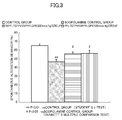
- a significant difference between the control group and the scopolamine control group was calculated using Student's t-test. Further, a significant difference between the scopolamine control group and the peptide-administered groups was calculated using Dunnett's multiple comparison test after one-way analysis of variance. Results are shown in Fig. 3 .
- a test substance used was 500 nmol/kg weight (1000 ⁇ g/kg weight) of Asn-Ile-Pro-Pro-Leu-Thr-Gln-Thr-Pro-Val-Val-Val-Pro-Pro-Phe-Leu-Gln-Pro-Glu.
- the test substance was administered to the mice once orally 60 minutes before the execution of a novel object recognition test for evaluation of memory maintenance.
- a 30 cm ⁇ 30 cm ⁇ 30 cm box was used as an experimental device.
- each of the mice was placed in the experimental device with floor bedding for 5 minutes, and then allo the aminals to go around freely in the device.
- a training trial was performed.
- the objects were arranged along the central line of the floor at positions 8 cm away from the walls on two sides, and the positions were designated as X1 and X2). Note that the objects to be disposed were selected randomly in advance in such a manner as to avoid variations among the animals and between groups.
- test substance or water was orally administered to the mice, and 60 minutes later, each of the mice was placed in the experimental device for 5 minutes to measure the time (seconds) each of the mice spent exploring each object by approaching within 1 cm therefrom.
- a retention trial was performed 48 hours after the training trial.
- NIPPLTQTPVVVPPFLQPE had a memory strengthening activity at 500 nmol/kg weight (1000 ⁇ g/kg weight).
- a test substance used was 50 nmol/kg weight (80 ⁇ g/kg weight) of Thr-Gln-Thr-Pro-Val-Val-Val-Pro-Pro-Phe-Leu-Gln-Pro-Glu (TQTPVVVPPFLQPE).
- the test substance was administered to the mice once orally 60 minutes before the execution of a Y-shaped maze test for evaluation of spontaneous alternation behavior.
- a Y-shaped maze was used as an experimental device, in which the length of each arm was 40 cm, the height of the wall was 12 cm, the width of the floor was 3 cm, and the width of the upper part was 10 cm, and three arms were connected to each other at an angle of 120 degrees.
- Each of the mice was placed at the tip of any one of the arms of the Y-shaped maze, and then let go to freely explore in the maze for 8 minutes.
- the sequence of the arms each of the mice entered was recorded.
- the number of entries by each of the mice for each of the arms during the measurement time was counted to be the total number of entries.
- the combination in which three different arms were selected in succession (for example, with the three arms respectively called A, B, and C, if the sequence of the arms entered is ABCBACACB, the count is 4 inclusive of overlapping) was investigated, and the number of the count was used as the number of spontaneous alternation behavior.
- the percentage of spontaneous alternation behavior was calculated by dividing the number of spontaneous alternation behavior by a number obtained by subtracting 2 from the total number of entries, and multiplying a resultant number by 100. The percentage of spontaneous alternation behavior was used as an indicator. A higher value of the indicator suggested better maintenance of short-term memory.
- the measured values were expressed in the form of mean ⁇ standard error for each group.
- a significant difference between the control group and the scopolamine control group was calculated using Student's t-test.
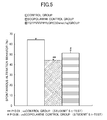
- a significant difference between the scopolamine control group and the TQTPVVVPPFLQPE-administered group was calculated using Student's t-test. Results are shown in Fig. 1 . It was suggested that TQTPVVVPPFLQPE had a prophylactic activity against amnesia at 50 nmol/kg weight (80 ⁇ g/kg weight).
- Test substances used were: 500 nmol/kg weight (900 ⁇ g/kg weight) of Pro-Leu-Thr-Gln-Thr-Pro-Val-Val-Val-Pro-Pro-Phe-Leu-Gln-Pro-Glu (PLTQTPVVVPPFLQPE); 500 nmol/kg weight (850 ⁇ g/kg weight) of Leu-Thr-Gln-Thr-Pro-Val-Val-Val-Pro-Pro-Phe-Leu-Gln-Pro-Glu(LTQTPVVVPPF LQPE); 500 nmol/kg weight (630 ⁇ g/kg weight) of Pro-Val-Val-Val-Pro-Pro-Phe-Leu-Gln-Pro-Glu (PVVVPPFLQPE); and 500 nmol/kg weight (580 ⁇ g/kg weight) of Val-Val-Val-Val-Val-Pro-Pro-Phe-Leu-Gln-Pro-Glu (PVVVPPFLQPE); and 500 nmol/kg weight (5
- test substances were administered to the mice once orally 60 minutes before the execution of a Y-shaped maze test for evaluation of spontaneous alternation behavior. Further, 30 minutes before the execution of the Y-shaped maze test, 1 mg/kg weight of scopolamine was subcutaneously administered on the backs of the mice in order to induce brain dysfunction (dysmnesia and/or cognitive impairment) in the mice.
- a Y-shaped maze was used as an experimental device, in which the length of each arm was 40 cm, the height of the wall was 12 cm, the width of the floor was 3 cm, and the width of the upper part was 10 cm, and three arms were connected to each other at an angle of 120 degrees.
- mice Each of the mice was placed at the tip of any one of the arms of the Y-shaped maze, and then let go to freely explore in the maze for 8 minutes.
- the sequence of the arms each of the mice entered was recorded.
- the number of entries by each of the mice for each of the arms during the measurement time was counted to be the total number of entries.
- the combination in which three different arms were selected in succession (for example, with the three arms respectively called A, B, and C, if the sequence of the arms entered is ABCBACACB, the count is 4 inclusive of overlapping) was investigated, and the number of the count was used as the number of spontaneous alternation behavior.
- the percentage of spontaneous alternation behavior was calculated by dividing the number of spontaneous alternation behavior by a number obtained by subtracting 2 from the total number of entries, and multiplying a resultant number by 100.
- the percentage of spontaneous alternation behavior was used as an indicator. A higher value of the indicator suggested better maintenance of short-term memory.
- the measured values were expressed in the form of mean ⁇ standard error for each group.
- a significant difference between the control group and the scopolamine control group was calculated using Student's t-test. Further, a significant difference between the scopolamine control group and each of the peptide-administered groups was calculated using Student's t-test. Results are shown in Fig. 6 .
Landscapes
- Health & Medical Sciences (AREA)
- Chemical & Material Sciences (AREA)
- Life Sciences & Earth Sciences (AREA)
- Medicinal Chemistry (AREA)
- General Health & Medical Sciences (AREA)
- Engineering & Computer Science (AREA)
- Bioinformatics & Cheminformatics (AREA)
- Organic Chemistry (AREA)
- Veterinary Medicine (AREA)
- Public Health (AREA)
- Pharmacology & Pharmacy (AREA)
- Animal Behavior & Ethology (AREA)
- Proteomics, Peptides & Aminoacids (AREA)
- Nuclear Medicine, Radiotherapy & Molecular Imaging (AREA)
- Immunology (AREA)
- Epidemiology (AREA)
- General Chemical & Material Sciences (AREA)
- Gastroenterology & Hepatology (AREA)
- Neurosurgery (AREA)
- Chemical Kinetics & Catalysis (AREA)
- Neurology (AREA)
- Biomedical Technology (AREA)
- Psychiatry (AREA)
- Molecular Biology (AREA)
- Genetics & Genomics (AREA)
- Biophysics (AREA)
- Biochemistry (AREA)
- Pain & Pain Management (AREA)
- Hospice & Palliative Care (AREA)
- Medicines That Contain Protein Lipid Enzymes And Other Medicines (AREA)
- Peptides Or Proteins (AREA)
Abstract
Description
- The present invention relates to a composition for improving brain function and a method for improving brain function.
- The symptoms and diseases caused by a deterioration of brain function include depression, schizophrenia, delirium, dementia (cerebrovascular dementia, Alzheimer's disease, and the like), and the like. With the aging of the population in modern society, especially the increase in the number of dementia patients is becoming a serious social issue. Dementia symptoms vary depending on patients, but symptoms commonly observed include dysmnesia, disorientation, decline in judgment and thinking ability, and the like. The forms of dementia having especially a large number of patients are cerebrovascular dementia and Alzheimer's disease. For example, in the cerebrovascular dementia, damage to the nerve cells in the cerebral cortex and hippocampus caused by obstruction of the brain blood flow gives a rise to cognitive impairment and dysmnesia. For this reason, in addition to treating pre-existing diseases such as high-blood pressure, diabetes, and hypercholesterolemia, which may trigger cerebrovascular disorders, drugs for improving brain blood flow and/or drugs for protecting brain nerve cells are administered. In the meantime, causes of Alzheimer's disease have not been clearly elucidated; however, since a decrease in the level of acetylcholine, which is a neurotransmitter in the brain, is observed in the patients with this disease, a hypofunction of cholinergic neurons is assumed to be one of the causes (for example, Science, 217, 408-414 (1982)). Therefore, a therapeutic strategy aiming at preventing the hypofunction of cholinergic neurons by increasing the concentration of acetylcholine has been the mainstream for the treatment of Alzheimer's disease.
- Currently, as a therapeutic drug against Alzheimer's disease, acetylcholinesterase inhibitors, for example, such as donepezil hydrochloride, are commercially available. However, the acetylcholinesterase inhibitors, such as donepezil hydrochloride, have their drawbacks that they should not be administered for an extended period of time due to their hepatotoxicity and strong side-effects as well as that they are costly.
- Meantime, as a report on peptides showing anti-amnesic effect, for example, it has been reported that XPLPR (X represents L, I, M, F, or W) (SEQ ID NO: 17) demonstrated curative effects on scopolamine-induced amnesia when administered intracerebroventricularly or orally at 300 mg/kg, and, a release of acetylcholine from the intracerebral C3a receptor has been suggested as one of the mechanisms involved in this effect (Japanese Patent No.
3898389 - Thus, with the progress of the aging of the society, there has been strongly increasing demands for development of pharmaceutical agents, which prevent the symptoms and diseases due to a deterioration of brain function and further demonstrate curative effects on the symptoms and diseases, and for further development of safer compounds excellent in food application.
- The present invention provides a composition which is ingestible orally at a low dose for the purpose of improving brain function. Further, the present invention provides a method for improving brain function. Several aspects of the present invention are as follows.
- (1) An aspect of the present invention is a composition for improving brain function, the composition comprising, as an active ingredient, X-Pro-Pro-Leu-Thr-Gln-Thr-Pro-Val-Val-Val-Pro-Pro-Phe-Leu-Gln-Pro-Glu-Y (wherein X is absent or represents either Ile or Asn-Ile, and Y is absent or represents Val-Met) (SEQ ID NO: 1 to 6) or a salt thereof.
- (2) An aspect of the present invention is a composition for improving brain function, the composition comprising, as an active ingredient, Pro-Pro-Leu-Thr-Gln-Thr-Pro-Val-Val-Val-Pro-Pro-Phe-Leu-Gln-Pro-Glu (SEQ ID NO: 1) or a salt thereof.
- (3) An aspect of the present invention is a composition for improving brain function, the composition comprising, as an active ingredient, Ile-Pro-Pro-Leu-Thr-Gln-Thr-Pro-Val-Val-Val-Pro-Pro-Phe-Leu-Gln-Pro-Glu (SEQ ID NO: 2) or a salt thereof.
- (4) An aspect of the present invention is a composition for improving brain function, the composition comprising, as an active ingredient, Asn-Ile-Pro-Pro-Leu-Thr-Gln-Thr-Pro-Val-Val-Val-Pro-Pro-Phe-Leu-Gln-Pro-Glu (SEQ ID NO: 3) or a salt thereof.
- (5) An aspect of the present invention is a composition for improving brain function, the composition comprising, as an active ingredient, Asn-Ile-Pro-Pro-Leu-Thr-Gln-Thr-Pro-Val-Val-Val-Pro-Pro-Phe-Leu-Gln-Pro-Glu-Val-Met (SEQ ID NO: 6) or a salt thereof.
- (6) An aspect of the present invention is a composition for improving brain function, the composition comprising, as an active ingredient, X-Val-Val-Val-Pro-Pro-Phe-Leu-Gln-Pro-Glu-Y (wherein X is absent or represents any of Thr-Gln-Thr-Pro, Pro-Leu-Thr-Gln-Thr-Pro, Leu-Thr-Gln-Thr-Pro, and Pro, and Y is absent or represents Val-Met) (SEQ ID NO: 7 to 16) or a salt thereof.
- (7) An aspect of the present invention is a composition for improving brain function, the composition comprising, as an active ingredient, Thr-Gln-Thr-Pro-Val-Val-Val-Pro-Pro-Phe-Leu-Gln-Pro-Glu (SEQ ID NO: 7) or a salt thereof.
- (8) An aspect of the present invention is a composition for improving brain function, the composition comprising, as an active ingredient, Pro-Leu-Thr-Gln-Thr-Pro-Val-Val-Val-Pro-Pro-Phe-Leu-Gln-Pro-Glu (SEQ ID NO: 8) or a salt thereof.
- (9) An aspect of the present invention is a composition for improving brain function, the composition comprising, as an active ingredient, Leu-Thr-Gln-Thr-Pro-Val-Val-Val-Pro-Pro-Phe-Leu-Gln-Pro-Glu (SEQ ID NO: 9) or a salt thereof.
- (10) An aspect of the present invention is a composition for improving brain function, the composition comprising, as an active ingredient, Pro-Val-Val-Val-Pro-Pro-Phe-Leu-Gln-Pro-Glu (SEQ ID NO: 10) or a salt thereof.
- (11) An aspect of the present invention is a composition for improving brain function, the composition comprising, as an active ingredient, Val-Val-Val-Pro-Pro-Phe-Leu-Gln-Pro-Glu (SEQ ID NO: 11) or a salt thereof.
- (12) An aspect of the present invention is also the composition described in any one of (1) to (11), in which the composition is for oral ingestion.
- (13) Especially, an aspect of the present invention is the composition described in any one of (1) to (12), in which the improving brain function is preventing amnesia or strengthening memory.
- (14) An aspect of the present invention is also a method for improving brain function, the method comprising administering to a non-human animal X-Pro-Pro-Leu-Thr-Gln-Thr-Pro-Val-Val-Val-Pro-Pro-Phe-Leu-Gln-Pro-Glu-Y (wherein X is absent or represents either Ile or Asn-Ile, and Y is absent or represents Val-Met) or a salt thereof.
- (15) An aspect of the present invention is also a method for improving brain function, the method comprising administering to a non-human animal Pro-Pro-Leu-Thr-Gln-Thr-Pro-Val-Val-Val-Pro-Pro-Phe-Leu-Gln-Pro-Glu or a salt thereof.
- (16) An aspect of the present invention is especially also a method for improving brain function, the method comprising administering to a non-human animal
Ile-Pro-Pro-Leu-Thr-Gln-Thr-Pro-Val-Val-Val-Pro-Pro-Phe-Leu-Gln-Pro-Glu or a salt thereof. - (17) An aspect of the present invention is also a method for improving brain function, the method comprising administering to a non-human animal Asn-Ile-Pro-Pro-Leu-Thr-Gln-Thr-Pro-Val-Val-Val-Pro-Pro-Phe-Leu-Gln-Pro-Glu or a salt thereof.
- (18) An aspect of the present invention is also a method for improving brain function, the method comprising administering to a non-human animal Asn-Ile-Pro-Pro-Leu-Thr-Gln-Thr-Pro-Val-Val-Val-Pro-Pro-Phe-Leu-Gln-Pro-Glu-Val-Met or a salt thereof.
- (19) An aspect of the present invention is also a method for improving brain function, the method comprising administering X-Val-Val-Val-Pro-Pro-Phe-Leu-Gln-Pro-Glu-Y (wherein X is absent or represents any of Thr-Gln-Thr-Pro, Pro-Leu-Thr-Gln-Thr-Pro, Leu-Thr-Gln-Thr-Pro, and Pro, and Y is absent or represents Val-Met) or a salt thereof.
- (20) An aspect of the present invention is also a method for improving brain function, the method comprising administering to a non-human animal Thr-Gln-Thr-Pro-Val-Val-Val-Pro-Pro-Phe-Leu-Gln-Pro-Glu or a salt thereof.
- (21) An aspect of the present invention is also a method for improving brain function, the method comprising administering to a non-human animal Pro-Leu-Thr-Gln-Thr-Pro-Val-Val-Val-Pro-Pro-Phe-Leu-Gln-Pro-Glu or a salt thereof.
- (22) An aspect of the present invention is also a method for improving brain function, the method comprising administering to a non-human animal Leu-Thr-Gln-Thr-Pro-Val-Val-Val-Pro-Pro-Phe-Leu-Gln-Pro-Glu or a salt thereof.
- (23) An aspect of the present invention is also a method for improving brain function, the method comprising administering to a non-human animal Pro-Val-Val-Val-Pro-Pro-Phe-Leu-Gln-Pro-Glu or a salt thereof.
- (24) An aspect of the present invention is also a method for improving brain function, the method comprising administering to a non-human animal Val-Val-Val-Pro-Pro-Phe-Leu-Gln-Pro-Glu or a salt thereof.
- (25) An aspect of the present invention is also the method described in any one of (14) to (24), in which the administering is oral administration.
- (26) Especially, an aspect of the present invention is also the method described in any one of (14) to (25), in which the improving brain function is preventing amnesia or strengthening memory.
-
-
Fig. 1 shows a prophylactic effect of a peptide Asn-Ile-Pro-Pro-Leu-Thr-Gln-Thr-Pro-Val-Val-Val-Pro-Pro-Phe-Leu-Gln-Pro-Glu (NIPPLTQTPVVVPPFLQPE) against scopolamine-induced amnesia. Water (control), scopolamine alone, or 0.05 nmol/kg weight, 0.5 nmol/kg weight, 1.5 nmol/kg weight, 5 nmol/kg weight, 50 nmol/kg weight, or 500 nmol/kg weight of NIPPLTQTPVVVPPFLQPE together with scopolamine was administered to mice, and their respective prophylactic effects against amnesia were evaluated in accordance with a method described in Example 1. The vertical axis inFig. 1 shows the percentage of spontaneous alternation behavior. The percentage of spontaneous alternation behavior shown in the graph is of the control group, the scopolamine control group, and the NIPPLTQTPVVVPPFLQPE-administered groups at 0.05 nmol/kg weight, 0.5 nmol/kg weight, 1.5 nmol/kg weight, 5 nmol/kg weight, 50 nmol/kg weight, and 500 nmol/kg weight in this order from the left. In order to confirm whether amnesia was induced, a significant difference between the scopolamine control group in which scopolamine was administered alone and the water-administered control group was calculated using Student's t-test. ** indicates P<0.01 with respect to the water-administered control group. A significant difference between the NIPPLTQTPVVVPPFLQPE-administered groups and the scopolamine control group was calculated using Dunnett's multiple comparison test. ## indicates P<0.01 with respect to the scopolamine control group. -
Fig. 2 shows a prophylactic effect of each of peptides Asn-Ile-Pro-Pro-Leu-Thr-Gln-Thr-Pro-Val-Val-Val-Pro-Pro-Phe-Leu-Gln-Pro-Glu (NIPPLTQTPVVVPPFLQPE),
Asn-Ile-Pro-Pro-Leu-Thr-Gln-Thr-Pro-Val-Val-Val-Pro-Pro-Phe-Leu-Gln-Pro-Glu-Val-Met (NIPPLTQTPVVVPPFLQPEVM),
Ile-Pro-Pro-Leu-Thr-Gln-Thr-Pro-Val-Val-Val-Pro-Pro-Phe-Leu-Gln-Pro-Glu (IPPLTQTPVVVPPFLQPE),
Asn-Ile-Pro-Pro-Leu-Thr-Gln-Thr-Pro-Val-Val-Val-Pro-Pro-Phe-Leu-Gln-Pro (NIPPLTQTPVVVPPFLQP) against scopolamine-induced amnesia. Water (control), scopolamine alone, or 50 nmol/kg weight of NIPPLTQTPVVVPPFLQPE, 50 nmol/kg weight of NIPPLTQTPVVVPPFLQPEVM, 50 nmol/kg weight of IPPLTQTPVVVPPFLQPE, or 50 nmol/kg weight of NIPPLTQTPVVVPPFLQP together with scopolamine was administered to mice, and their respective prophylactic effects against amnesia were evaluated in accordance with a method described in Example 2. The vertical axis inFig. 2 shows the percentage of spontaneous alternation behavior. In order to confirm whether or not amnesia was induced, a significant difference between the water-administered control group and the scopolamine control group to which scopolamine was administered alone was calculated using Student's t-test. ** indicates P<0.01 with respect to the water-administered control group. A significant difference between the peptide-administered groups and the scopolamine control group was calculated using Dunnett's multiple comparison test. ## indicates P<0.01 with respect to the scopolamine control group. -
Fig. 3 shows a prophylactic effect of each of peptides Asn-Ile-Pro-Pro-Leu-Thr-Gln-Thr-Pro-Val-Val-Val-Pro-Pro-Phe-Leu-Gln-Pro-Glu (NIPPLTQTPVVVPPFLQPE) and Pro-Pro-Leu-Thr-Gln-Thr-Pro-Val-Val-Val-Pro-Pro-Phe-Leu-Gln-Pro-Glu-Val-Met (PPLTQTPVVVPPFLQPE) against scopolamine-induced amnesia. Water (control), scopolamine alone, or 500 nmol/kg weight of NIPPLTQTPVVVPPFLQPE or 500 nmol/kg of PPLTQTPVVVPPFLQPE together with scopolamine was administered to mice, and their respective prophylactic effects against amnesia were evaluated in accordance with a method described in Example 3. The vertical axis inFig. 3 shows the percentage of spontaneous alternation behavior. In order to confirm whether or not amnesia was induced, a significant difference between the water-administered control group and the scopolamine control group to which scopolamine was administered alone was calculated using Student's t-test. ** indicates P<0.01 with respect to the water-administered control group. A significant difference between the peptide-administered groups and the scopolamine control group was calculated using Dunnett's multiple comparison test. # indicates P<0.05 with respect to the scopolamine control group. -
Fig. 4 shows a memory strengthening effect of a peptide Asn-Ile-Pro-Pro-Leu-Thr-Gln-Thr-Pro-Val-Val-Val-Pro-Pro-Phe-Leu-Gln-Pro-Glu (NIPPLTQTPVVVPPFLQPE). Water (control) or 500 nmol/kg of NIPPLTQTPVVVPPFLQPE was administered to mice, and their respective memory strengthening effects were evaluated in accordance with a method described in Example 4. The vertical axis inFig. 4 shows the exploration time ratio. A significant difference between the control group and the peptide group was calculated using Student's t-test, in terms of the exploration time ratio. * indicates P<0.05 with respect to the water-administered control group. -
Fig. 5 shows a prophylactic effect of a peptide Thr-Gln-Thr-Pro-Val-Val-Val-Pro-Pro-Phe-Leu-Gln-Pro-Glu (TQTPVVVPPFLQPE) against scopolamine-induced amnesia. Water (control), scopolamine alone, or 50 nmol/kg weight of TQTPVVVPPFLQPE together with scopolamine was administered to mice, and their respective prophylactic effects against amnesia were evaluated in accordance with a method described in Example 5. The vertical axis inFig. 5 shows the percentage of spontaneous alternation behavior. In order to confirm whether or not amnesia was induced, a significant difference between the water-administered control group and the scopolamine control group to which scopolamine was administered alone was calculated using Student's t-test. ** indicates P<0.01 with respect to the water-administered control group. A significant difference between the TQTPVVVPPFLQPE-administered group and the scopolamine control group was calculated using Student's t-test. # indicates P<0.05 with respect to the scopolamine control group. -
Fig. 6 shows a prophylactic effect of each of peptides Pro-Leu-Thr-Gln-Thr-Pro-Val-Val-Val-Pro-Pro-Phe-Leu-Gln-Pro-Glu (PLTQTPVVVPPFLQPE), Leu-Thr-Gln-Thr-Pro-Val-Val-Val-Pro-Pro-Phe-Leu-Gln-Pro-Glu (LTQTPVVVPPFLQPE), Pro-Val-Val-Val-Pro-Pro-Phe-Leu-Gln-Pro-Glu (PVVVPPFLQPE), and Val-Val-Val-Pro-Pro-Phe-Leu-Gln-Pro-Glu (VVVPPFLQPE) against scopolamine-induced amnesia. Water (control), scopolamine alone, or 500 nmol/kg weight of PLTQTPVVVPPFLQPE, 500 nmol/kg weight of LTQTPVVVPPFLQPE, 500 nmol/kg weight of PVVVPPFLQPE, or 500 nmol/kg weight of VVVPPFLQPE together with scopolamine was administered to mice, and their respective prophylactic effects against amnesia were evaluated in accordance with a method described in Example 6. The vertical axis inFig. 6 shows the percentage of spontaneous alternation behavior. In order to confirm whether or not amnesia was induced, a significant difference between the water-administered control group and the scopolamine control group to which scopolamine was administered alone was calculated using Student's t-test. ** indicates P<0.01 with respect to the water-administered control group. A significant difference between each of the peptide-administered groups and the scopolamine control group was calculated using Student's t-test. # indicates P<0.05 with respect to the scopolamine control group, and t indicates P<0.1 with respect to the scopolamine control group. - A composition of the present invention includes, as an active ingredient, a peptide X-Pro-Pro-Leu-Thr-Gln-Thr-Pro-Val-Val-Val-Pro-Pro-Phe-Leu-Gln-Pro-Glu-Y (where X is absent or represents either Ile or Asn-Ile, and Y is absent or represents Val-Met) or a peptide X-Val-Val-Val-Pro-Pro-Phe-Leu-Gln-Pro-Glu-Y (where X is absent or represents any of Thr-Gln-Thr-Pro, Pro-Leu-Thr-Gln-Thr-Pro, Leu-Thr-Gln-Thr-Pro, and Pro, and Y is absent or represents Val-Met), particularly a peptide Asn-Ile-Pro-Pro-Leu-Thr-Gln-Thr-Pro-Val-Val-Val-Pro-Pro-Phe-Leu-Gln-Pro-Glu, a peptide Asn-Ile-Pro-Pro-Leu-Thr-Gln-Thr-Pro-Val-Val-Val-Pro-Pro-Phe-Leu-Gln-Pro-Glu-Val-Met, a peptide Ile-Pro-Pro-Leu-Thr-Gln-Thr-Pro-Val-Val-Val-Pro-Pro-Phe-Leu-Gln-Pro-Glu, a peptide Pro-Pro-Leu-Thr-Gln-Thr-Pro-Val-Val-Val-Pro-Pro-Phe-Leu-Gln-Pro-Glu, a peptide Thr-Gln-Thr-Pro-Val-Val-Val-Pro-Pro-Phe-Leu-Gln-Pro-Glu, a peptide Pro-Leu-Thr-Gln-Thr-Pro-Val-Val-Val-Pro-Pro-Phe-Leu-Gln-Pro-Glu, a peptide Leu-Thr-Gln-Thr-Pro-Val-Val-Val-Pro-Pro-Phe-Leu-Gln-Pro-Glu, a peptide Pro-Val-Val-Val-Pro-Pro-Phe-Leu-Gln-Pro-Glu, or a peptide Val-Val-Val-Pro-Pro-Phe-Leu-Gln-Pro-Glu. The peptide X-Pro-Pro-Leu-Thr-Gln-Thr-Pro-Val-Val-Val-Pro-Pro-Phe-Leu-Gln-Pro-Glu-Y (where X is absent or represents either Ile or Asn-Ile, and Y is absent or represents Val-Met) and the peptide X-Val-Val-Val-Pro-Pro-Phe-Leu-Gln-Pro-Glu-Y (where X is absent or represents any of Thr-Gln-Thr-Pro, Pro-Leu-Thr-Gln-Thr-Pro, Leu-Thr-Gln-Thr-Pro, and Pro, and Y is absent or represents Val-Met), particularly the peptide Asn-Ile-Pro-Pro-Leu-Thr-Gln-Thr-Pro-Val-Val-Val-Pro-Pro-Phe-Leu-Gln-Pro-Glu, the peptide Asn-Ile-Pro-Pro-Leu-Thr-Gln-Thr-Pro-Val-Val-Val-Pro-Pro-Phe-Leu-Gln-Pro-Glu-Val-Met, the peptide Ile-Pro-Pro-Leu-Thr-Gln-Thr-Pro-Val-Val-Val-Pro-Pro-Phe-Leu-Gln-Pro-Glu, the peptide Pro-Pro-Leu-Thr-Gln-Thr-Pro-Val-Val-Val-Pro-Pro-Phe-Leu-Gln-Pro-Glu, the peptide Thr-Gln-Thr-Pro-Val-Val-Val-Pro-Pro-Phe-Leu-Gln-Pro-Glu, the peptide Pro-Leu-Thr-Gln-Thr-Pro-Val-Val-Val-Pro-Pro-Phe-Leu-Gln-Pro-Glu, the peptide Leu-Thr-Gln-Thr-Pro-Val-Val-Val-Pro-Pro-Phe-Leu-Gln-Pro-Glu, the peptide Pro-Val-Val-Val-Pro-Pro-Phe-Leu-Gln-Pro-Glu, and the peptide Val-Val-Val-Pro-Pro-Phe-Leu-Gln-Pro-Glu, which are active ingredients, may be a chemically-synthesized peptide or a peptide derived from a natural product. For the chemical synthesis of these peptides, a commonly-used method, such as a solid phase synthesis (t-Boc-chemistry or Fmoc-chemistry) and a liquid phase synthesis, may be employed. For example, these peptides may be synthesized using an automated peptide synthesizer, such as the peptide synthesizer (PSSM-8) available from Shimadzu. A method for the peptide synthesis, appropriate reaction conditions, and the like may be selected based on the common general technical knowledge of a person skilled in the art at the discretion of the person. A method for purifying a chemically-synthesized peptide is also well known to those in the art.
- As used in the specification, when referring to the peptide X-Pro-Pro-Leu-Thr-Gln-Thr-Pro-Val-Val-Val-Pro-Pro-Phe-Leu-Gln-Pro-Glu-Y (where X is absent or represents either Ile or Asn-Ile, and Y is absent or represents Val-Met) or the peptide X-Val-Val-Val-Pro-Pro-Phe-Leu-Gln-Pro-Glu-Y (where X is absent or represents any of Thr-Gln-Thr-Pro, Pro-Leu-Thr-Gln-Thr-Pro, Leu-Thr-Gln-Thr-Pro, and Pro, and Y is absent or represents Val-Met), particularly the peptide Asn-Ile-Pro-Pro-Leu-Thr-Gln-Thr-Pro-Val-Val-Val-Pro-Pro-Phe-Leu-Gln-Pro-Glu, the peptide Asn-Ile-Pro-Pro-Leu-Thr-Gln-Thr-Pro-Val-Val-Val-Pro-Pro-Phe-Leu-Gln-Pro-Glu-Val-Met, the peptide Ile-Pro-Pro-Leu-Thr-Gln-Thr-Pro-Val-Val-Val-Pro-Pro-Phe-Leu-Gln-Pro-Glu, the peptide Pro-Pro-Leu-Thr-Gln-Thr-Pro-Val-Val-Val-Pro-Pro-Phe-Leu-Gln-Pro-Glu, the peptide Thr-Gln-Thr-Pro-Val-Val-Val-Pro-Pro-Phe-Leu-Gln-Pro-Glu, the peptide Pro-Leu-Thr-Gln-Thr-Pro-Val-Val-Val-Pro-Pro-Phe-Leu-Gln-Pro-Glu, the peptide Leu-Thr-Gln-Thr-Pro-Val-Val-Val-Pro-Pro-Phe-Leu-Gln-Pro-Glu, the peptide Pro-Val-Val-Val-Pro-Pro-Phe-Leu-Gln-Pro-Glu, or the peptide Val-Val-Val-Pro-Pro- Phe-Leu-Gln-Pro-Glu, "X-Pro-Pro-Leu-Thr-Gln-Thr-Pro-Val-Val-Val-Pro-Pro-Phe-Leu-Gln-Pro-Glu-Y (where X is absent or represents either Ile or Asn-Ile, and Y is absent or represents Val-Met) or X-Val-Val-Val-Pro-Pro-Phe-Leu-Gln-Pro-Glu-Y (where X is absent or represents any of Thr-Gln-Thr-Pro, Pro-Leu-Thr-Gln-Thr-Pro, Leu-Thr-Gln-Thr-Pro, and Pro, and Y is absent or represents Val-Met), particularly Asn-Ile-Pro-Pro-Leu-Thr-Gln-Thr-Pro-Val-Val-Val-Pro-Pro-Phe-Leu-Gln-Pro-Glu, Asn-Ile-Pro-Pro-Leu-Thr-Gln-Thr-Pro-Val-Val-Val-Pro-Pro-Phe-Leu-Gln-Pro-Glu-Val-Met, Ile-Pro-Pro-Leu-Thr-Gln-Thr-Pro-Val-Val-Val-Pro-Pro-Phe-Leu-Gln-Pro-Glu, Pro-Pro-Leu-Thr-Gln-Thr-Pro-Val-Val-Val-Pro-Pro-Phe-Leu-Gln-Pro-Glu, Thr-Gln-Thr-Pro-Val-Val-Val-Pro-Pro-Phe-Leu-Gln-Pro-Glu, Pro-Leu-Thr-Gln-Thr-Pro-Val-Val-Val-Pro-Pro-Phe-Leu-Gln-Pro-Glu, Leu-Thr-Gln-Thr-Pro-Val-Val-Val-Pro-Pro-Phe-Leu-Gln-Pro-Glu, or Pro-Val-Val-Val-Pro-Pro-Phe-Leu-Gln-Pro-Glu, or Val-Val-Val-Pro-Pro-Phe-Leu-Gln-Pro-Glu" and "the peptide X-Pro-Pro-Leu-Thr-Gln-Thr-Pro-Val-Val-Val-Pro-Pro-Phe-Leu-Gln-Pro-Glu-Y (where X is absent or represents either Ile or Asn-Ile, and Y is absent or represents Val-Met) or the peptide X-Val-Val-Val-Pro-Pro-Phe-Leu-Gln-Pro-Glu-Y (where X is absent or represents any of Thr-Gln-Thr-Pro, Pro-Leu-Thr-Gln-Thr-Pro, Leu-Thr-Gln-Thr-Pro, and Pro, and Y is absent or represents Val-Met), particularly the peptide Asn-Ile-Pro-Pro-Leu-Thr-Gln-Thr-Pro-Val-Val-Val-Pro-Pro-Phe-Leu-Gln-Pro-Glu, the peptide Asn-Ile-Pro-Pro-Leu-Thr-Gln-Thr-Pro-Val-Val-Val-Pro-Pro-Phe-Leu-Gln-Pro-Glu-Val-Met, the peptide Ile-Pro-Pro-Leu-Thr-Gln-Thr-Pro-Val-Val-Val-Pro-Pro-Phe-Leu-Gln-Pro-Glu, the peptide Pro-Pro-Leu-Thr-Gln-Thr-Pro-Val-Val-Val-Pro-Pro-Phe-Leu-Gln-Pro-Glu, the peptide Thr-Gln-Thr-Pro-Val-Val-Val-Pro-Pro-Phe-Leu-Gln-Pro-Glu, the peptide Pro-Leu-Thr-Gln-Thr-Pro-Val-Val-Val-Pro-Pro-Phe-Leu-Gln-Pro-Glu, the peptide Leu-Thr-Gln-Thr-Pro-Val-Val-Val-Pro-Pro-Phe-Leu-Gln-Pro-Glu, the peptide Pro-Val-Val-Val-Pro-Pro-Phe-Leu-Gln-Pro-Glu, or the peptide Val-Val-Val-Pro-Pro-Phe-Leu-Gln-Pro-Glu" include salts thereof unless otherwise clearly indicated or otherwise obvious within the context that they should be excluded. Examples of such salts include salts, such as sodium salts, potassium salts, and hydrochloride salts, which may exist under physiological conditions. Meanwhile, the composition of the present invention may include other peptide and a free amino acid or a salt thereof, in addition to the peptide X-Pro-Pro-Leu-Thr-Gln-Thr-Pro-Val-Val-Val-Pro-Pro-Phe-Leu-Gln-Pro-Glu-Y (where X is absent or represents either Ile or Asn-Ile, and Y is absent or represents Val-Met) or the peptide X-Val-Val-Val-Pro-Pro-Phe-Leu-Gln-Pro-Glu-Y (where X is absent or represents any of Thr-Gln-Thr-Pro, Pro-Leu-Thr-Gln-Thr-Pro, Leu-Thr-Gln-Thr-Pro, and Pro, and Y is absent or represents Val-Met), particularly the peptide Asn-Ile-Pro-Pro-Leu-Thr-Gln-Thr-Pro-Val-Val-Val-Pro-Pro-Phe-Leu-Gln-Pro-Glu, the peptide Asn-Ile-Pro-Pro-Leu-Thr-Gln-Thr-Pro-Val-Val-Val-Pro-Pro-Phe-Leu-Gln-Pro-Glu-Val-Met, the peptide Ile-Pro-Pro-Leu-Thr-Gln-Thr-Pro-Val-Val-Val-Pro-Pro-Phe-Leu-Gln-Pro-Glu, the peptide Pro-Pro-Leu-Thr-Gln-Thr-Pro-Val-Val-Val-Pro-Pro-Phe-Leu-Gln-Pro-Glu, the peptide Thr-Gln-Thr-Pro-Val-Val-Val-Pro-Pro-Phe-Leu-Gln-Pro-Glu, the peptide Pro-Leu-Thr-Gln-Thr-Pro-Val-Val-Val-Pro-Pro-Phe-Leu-Gln-Pro-Glu, the peptide Leu-Thr-Gln-Thr-Pro-Val-Val-Val-Pro-Pro-Phe-Leu-Gln-Pro-Glu, the peptide Pro-Val-Val-Val-Pro-Pro-Phe-Leu-Gln-Pro-Glu, or the peptide Val-Val-Val-Pro-Pro-Phe-Leu-Gln-Pro-Glu, which is the active ingredient of the composition of the present invention. In relation to the present invention, three-letter codes, single-letter codes, and peptide notation follow the general rules well known to those in the art.
- The effect in improving brain function of the composition of the present invention, or the peptide X-Pro-Pro-Leu-Thr-Gln-Thr-Pro-Val-Val-Val-Pro-Pro-Phe-Leu-Gln-Pro-Glu-Y (where X is absent or represents either Ile or Asn-Ile, and Y is absent or represents Val-Met) or the peptide X-Val-Val-Val-Pro-Pro-Phe-Leu-Gln-Pro-Glu-Y (where X is absent or represents any of Thr-Gln-Thr-Pro, Pro-Leu-Thr-Gln-Thr-Pro, Leu-Thr-Gln-Thr-Pro, and Pro, and Y is absent or represents Val-Met), particularly the peptide Asn-Ile-Pro-Pro-Leu-Thr-Gln-Thr-Pro-Val-Val-Val-Pro-Pro-Phe-Leu-Gln-Pro-Glu, the peptide Asn-Ile-Pro-Pro-Leu-Thr-Gln-Thr-Pro-Val-Val-Val-Pro-Pro-Phe-Leu-Gln-Pro-Glu-Val-Met, the peptide Ile-Pro-Pro-Leu-Thr-Gln-Thr-Pro-Val-Val-Val-Pro-Pro-Phe-Leu-Gln-Pro-Glu, the peptide Pro-Pro-Leu-Thr-Gln-Thr-Pro-Val-Val-Val-Pro-Pro-Phe-Leu-Gln-Pro-Glu, the peptide Thr-Gln-Thr-Pro-Val-Val-Val-Pro-Pro-Phe-Leu-Gln-Pro-Glu, the peptide Pro-Leu-Thr-Gln-Thr-Pro-Val-Val-Val-Pro-Pro-Phe-Leu-Gln-Pro-Glu, the peptide Leu-Thr-Gln-Thr-Pro-Val-Val-Val-Pro-Pro-Phe-Leu-Gln-Pro-Glu, the peptide Pro-Val-Val-Val-Pro-Pro-Phe-Leu-Gln-Pro-Glu, or the peptide Val-Val-Val-Pro-Pro-Phe-Leu-Gln-Pro-Glu may be confirmed using a system based on an evaluation system for therapeutic drugs against Alzheimer's disease, the system using a Y-shaped maze test, for example. Specifically, a muscarinic receptor antagonist, such as scopolamine, may be used on a rat or a mouse so as to cause a hypofunction of the cholinergic neurons. Then, either the rat or the mouse may be given a drug, which induces amnesia by causing brain dysfunction, by itself, or the composition of the present invention, or X-Pro-Pro-Leu-Thr-Gln-Thr-Pro-Val-Val-Val-Pro-Pro-Phe-Leu-Gln-Pro-Glu-Y (where X is absent or represents either Ile or Asn-Ile, and Y is absent or represents Val-Met) or X-Val-Val-Val-Pro-Pro-Phe-Leu-Gln-Pro-Glu-Y (where X is absent or represents any of Thr-Gln-Thr-Pro, Pro-Leu-Thr-Gln-Thr-Pro, Leu-Thr-Gln-Thr-Pro, and Pro, and Y is absent or represents Val-Met), particularly Asn-Ile-Pro-Pro-Leu-Thr-Gln-Thr-Pro-Val-Val-Val-Pro-Pro-Phe-Leu-Gln-Pro-Glu, Asn-Ile-Pro-Pro-Leu-Thr-Gln-Thr-Pro-Val-Val-Val-Pro-Pro-Phe-Leu-Gln-Pro-Glu-Val-Met, Ile-Pro-Pro-Leu-Thr-Gln-Thr-Pro-Val-Val-Val-Pro-Pro-Phe-Leu-Gln-Pro-Glu, Pro-Pro-Leu-Thr-Gln-Thr-Pro-Val-Val-Val-Pro-Pro-Phe-Leu-Gln-Pro-Glu, Thr-Gln-Thr-Pro-Val-Val-Val-Pro-Pro-Phe-Leu-Gln-Pro-Glu, Pro-Leu-Thr-Gln-Thr-Pro-Val-Val-Val-Pro-Pro-Phe-Leu-Gln-Pro-Glu, Leu-Thr-Gln-Thr-Pro-Val-Val-Val-Pro-Pro-Phe-Leu-Gln-Pro-Glu, Pro-Val-Val-Val-Pro-Pro-Phe-Leu-Gln-Pro-Glu, or Val-Val-Val-Pro-Pro-Phe-Leu-Gln-Pro-Glu together with such a drug; or, the rat or the mouse may be given, prior to the administration of such a drug, the composition of the present invention, or X-Pro-Pro-Leu-Thr-Gln-Thr-Pro-Val-Val-Val-Pro-Pro-Phe-Leu-Gln-Pro-Glu-Y (where X is absent or represents either Ile or Asn-Ile, and Y is absent or represents Val-Met) or X-Val-Val-Val-Pro-Pro-Phe-Leu-Gln-Pro-Glu-Y (where X is absent or represents any of Thr-Gln-Thr-Pro, Pro-Leu-Thr-Gln-Thr-Pro, Leu-Thr-Gln-Thr-Pro, and Pro, and Y is absent or represents Val-Met), particularly Asn-Ile-Pro-Pro-Leu-Thr-Gln-Thr-Pro-Val-Val-Val-Pro-Pro-Phe-Leu-Gln-Pro-Glu, Asn-Ile-Pro-Pro-Leu-Thr-Gln-Thr-Pro-Val-Val-Val-Pro-Pro-Phe-Leu-Gln-Pro-Glu-Val-Met, Ile-Pro-Pro-Leu-Thr-Gln-Thr-Pro-Val-Val-Val-Pro-Pro-Phe-Leu-Gln-Pro-Glu, Pro-Pro-Leu-Thr-Gln-Thr-Pro-Val-Val-Val-Pro-Pro-Phe-Leu-Gln-Pro-Glu, Thr-Gln-Thr-Pro-Val-Val-Val-Pro-Pro-Phe-Leu-Gln-Pro-Glu, Pro-Leu-Thr-Gln-Thr-Pro-Val-Val-Val-Pro-Pro-Phe-Leu-Gln-Pro-Glu, Leu-Thr-Gln-Thr-Pro-Val-Val-Val-Pro-Pro-Phe-Leu-Gln-Pro-Glu, Pro-Val-Val-Val-Pro-Pro-Phe-Leu-Gln-Pro-Glu, or Val-Val-Val-Pro-Pro-Phe-Leu-Gln-Pro-Glu. Then, the rat or the mouse may be subjected to a test using a Y-shaped maze so that the prophylactic actions against amnesia of the composition of the present invention may be confirmed by using the percentage of spontaneous alternation behavior to different arms and the total number of entries into the maze as indicators.
- In the tests, the negative control may be, for example, an animal receiving only water. In an experiment to confirm the prophylactic action against drug-induced amnesia of X-Pro-Pro-Leu-Thr-Gln-Thr-Pro-Val-Val-Val-Pro-Pro-Phe-Leu-Gln-Pro-Glu-Y (where X is absent or represents either Ile or Asn-Ile, and Y is absent or represents Val-Met) or X-Val-Val-Val-Pro-Pro-Phe-Leu-Gln-Pro-Glu-Y (where X is absent or represents any of Thr-Gln-Thr-Pro, Pro-Leu-Thr-Gln-Thr-Pro, Leu-Thr-Gln-Thr-Pro, and Pro, and Y is absent or represents Val-Met), particularly Asn-Ile-Pro-Pro-Leu-Thr-Gln-Thr-Pro-Val-Val-Val-Pro-Pro-Phe-Leu-Gln-Pro-Glu, Asn-Ile-Pro-Pro-Leu-Thr-Gln-Thr-Pro-Val-Val-Val-Pro-Pro-Phe-Leu-Gln-Pro-Glu-Val-Met, Ile-Pro-Pro-Leu-Thr-Gln-Thr-Pro-Val-Val-Val-Pro-Pro-Phe-Leu-Gln-Pro-Glu, Pro-Pro-Leu-Thr-Gln-Thr-Pro-Val-Val-Val-Pro-Pro-Phe-Leu-Gln-Pro-Glu, Thr-Gln-Thr-Pro-Val-Val-Val-Pro-Pro-Phe-Leu-Gln-Pro-Glu, Pro-Leu-Thr-Gln-Thr-Pro-Val-Val-Val-Pro-Pro-Phe-Leu-Gln-Pro-Glu, Leu-Thr-Gln-Thr-Pro-Val-Val-Val-Pro-Pro-Phe-Leu-Gln-Pro-Glu, Pro-Val-Val-Val-Pro-Pro-Phe-Leu-Gln-Pro-Glu, or Val-Val-Val-Pro-Pro-Phe-Leu-Gln-Pro-Glu, an animal receiving only a drug, which induces amnesia by causing brain dysfunction, such as scopolamine, may be included to be used as a control.
- The effect in improving brain function of the composition of the present invention, or the peptide X-Pro-Pro-Leu-Thr-Gln-Thr-Pro-Val-Val-Val-Pro-Pro-Phe-Leu-Gln-Pro-Glu-Y (where X is absent or represents either Ile or Asn-Ile, and Y is absent or represents Val-Met) or the peptide X-Val-Val-Val-Pro-Pro-Phe-Leu-Gln-Pro-Glu-Y (where X is absent or represents any of Thr-Gln-Thr-Pro, Pro-Leu-Thr-Gln-Thr-Pro, Leu-Thr-Gln-Thr-Pro, and Pro, and Y is absent or represents Val-Met), particularly the peptide Asn-Ile-Pro-Pro-Leu-Thr-Gln-Thr-Pro-Val-Val-Val-Pro-Pro-Phe-Leu-Gln-Pro-Glu, the peptide Asn-Ile-Pro-Pro-Leu-Thr-Gln-Thr-Pro-Val-Val-Val-Pro-Pro-Phe-Leu-Gln-Pro-Glu-Val-Met, the peptide Ile-Pro-Pro-Leu-Thr-Gln-Thr-Pro-Val-Val-Val-Pro-Pro-Phe-Leu-Gln-Pro-Glu, the peptide Pro-Pro-Leu-Thr-Gln-Thr-Pro-Val-Val-Val-Pro-Pro-Phe-Leu-Gln-Pro-Glu, the peptide Thr-Gln-Thr-Pro-Val-Val-Val-Pro-Pro-Phe-Leu-Gln-Pro-Glu, the peptide Pro-Leu-Thr-Gln-Thr-Pro-Val-Val-Val-Pro-Pro-Phe-Leu-Gln-Pro-Glu, the peptide Leu-Thr-Gln-Thr-Pro-Val-Val-Val-Pro-Pro-Phe-Leu-Gln-Pro-Glu, the peptide Pro-Val-Val-Val-Pro-Pro-Phe-Leu-Gln-Pro-Glu, or the peptide Val-Val-Val-Pro-Pro-Phe-Leu-Gln-Pro-Glu may be confirmed by a novel object recognition test using a rat or a mouse, for example. Specifically, either the rat or the mouse may be given the composition of the present invention, or the peptide X-Pro-Pro-Leu-Thr-Gln-Thr-Pro-Val-Val-Val-Pro-Pro-Phe-Leu-Gln-Pro-Glu-Y (where X is absent or represents either Ile or Asn-Ile, and Y is absent or represents Val-Met) or the peptide X-Val-Val-Val-Pro-Pro-Phe-Leu-Gln-Pro-Glu-Y (where X is absent or represents any of Thr-Gln-Thr-Pro, Pro-Leu-Thr-Gln-Thr-Pro, Leu-Thr-Gln-Thr-Pro, and Pro, and Y is absent or represents Val-Met), particularly the peptide Asn-Ile-Pro-Pro-Leu-Thr-Gln-Thr-Pro-Val-Val-Val-Pro-Pro-Phe-Leu-Gln-Pro-Glu, the peptide Asn-Ile-Pro-Pro-Leu-Thr-Gln-Thr-Pro-Val-Val-Val-Pro-Pro-Phe-Leu-Gln-Pro-Glu-Val-Met, the peptide Ile-Pro-Pro-Leu-Thr-Gln-Thr-Pro-Val-Val-Val-Pro-Pro-Phe-Leu-Gln-Pro-Glu, the peptide Pro-Pro-Leu-Thr-Gln-Thr-Pro-Val-Val-Val-Pro-Pro-Phe-Leu-Gln-Pro-Glu, the peptide Thr-Gln-Thr-Pro-Val-Val-Val-Pro-Pro-Phe-Leu-Gln-Pro-Glu, the peptide Pro-Leu-Thr-Gln-Thr-Pro-Val-Val-Val-Pro-Pro-Phe-Leu-Gln-Pro-Glu, the peptide Leu-Thr-Gln-Thr-Pro-Val-Val-Val-Pro-Pro-Phe-Leu-Gln-Pro-Glu, the peptide Pro-Val-Val-Val-Pro-Pro-Phe-Leu-Gln-Pro-Glu, or the peptide Val-Val-Val-Pro-Pro-Phe-Leu-Gln-Pro-Glu. Then, the rat or the mouse is subjected to a test using an experimental box. In the test, a training trial is performed in which the rat or the mouse is allowed to recognize two objects. Then, after a lapse of time to clear the memory, one object of the two objects is replaced with a novel one. In this situation, if the rat or the mouse remembers the object that has been replaced, the memory strengthening action of the composition of the present invention may be confirmed by using an increase in exploration time spent on the novel object as an indicator. In the tests, for example, an animal receiving only water may be included to be used as the negative control.
- The composition of the present invention includes, as an active ingredient, the peptide X-Pro-Pro-Leu-Thr-Gln-Thr-Pro-Val-Val-Val-Pro-Pro-Phe-Leu-Gln-Pro-Glu-Y (where X is absent or represents either Ile or Asn-Ile, and Y is absent or represents Val-Met) or the peptide X-Val-Val-Val-Pro-Pro-Phe-Leu-Gln-Pro-Glu-Y (where X is absent or represents any of Thr-Gln-Thr-Pro, Pro-Leu-Thr-Gln-Thr-Pro, Leu-Thr-Gln-Thr-Pro, and Pro, and Y is absent or represents Val-Met), particularly the peptide Asn-Ile-Pro-Pro-Leu-Thr-Gln-Thr-Pro-Val-Val-Val-Pro-Pro-Phe-Leu-Gln-Pro-Glu, the peptide Asn-Ile-Pro-Pro-Leu-Thr-Gln-Thr-Pro-Val-Val-Val-Pro-Pro-Phe-Leu-Gln-Pro-Glu-Val-Met, the peptide Ile-Pro-Pro-Leu-Thr-Gln-Thr-Pro-Val-Val-Val-Pro-Pro-Phe-Leu-Gln-Pro-Glu, the peptide Pro-Pro-Leu-Thr-Gln-Thr-Pro-Val-Val-Val-Pro-Pro-Phe-Leu-Gln-Pro-Glu, the peptide Thr-Gln-Thr-Pro-Val-Val-Val-Pro-Pro-Phe-Leu-Gln-Pro-Glu, the peptide Pro-Leu-Thr-Gln-Thr-Pro-Val-Val-Val-Pro-Pro-Phe-Leu-Gln-Pro-Glu, the peptide Leu-Thr-Gln-Thr-Pro-Val-Val-Val-Pro-Pro-Phe-Leu-Gln-Pro-Glu, the peptide Pro-Val-Val-Val-Pro-Pro-Phe-Leu-Gln-Pro-Glu, or the peptide Val-Val-Val-Pro-Pro-Phe-Leu-Gln-Pro-Glu. Oral administration or oral ingestion thereof allows achievement of the desired effects described above. The period of administration or ingestion of the composition of the present invention may be variously adjusted upon consideration of the age of a target of the administration or ingestion, such as a human or non-human animal, and the health conditions and the like of the target. Examples of the non-human animal include non-human higher vertebrate animals, particularly non-human mammals, including pet animals, such as dogs and cats, and domestic animals, such as cattle, horses, pigs, and sheep; however, the non-human animal is not limited thereto. A single administration of the composition of the present invention is enough to demonstrate its effects; however, a continuous effect may be expected by continuous ingestion, which is once or more a day. The composition of the present invention when used as medicine may be in the form of drugs for oral administration. For example, the form may be a tablet, a pill, a hard capsule, a soft capsule, a microcapsule, a powder, a granule, a liquid, or the like. When produced as medicine, the composition of the present invention may be produced in a unit dose required for commonly-approved drug administration by, for example, including a pharmaceutically approved material, such as a carrier, an excipient, a filler, an antiseptic, a stabilizer, a binder, a pH modifier, a buffer, a thickener, a gellant, a preservative, and an antioxidant, accordingly as needed.
- The composition of the present invention may also be used as a material for material for food and beverage or a material for animal feed. For example, the composition of the present invention, or the peptide X-Pro-Pro-Leu-Thr-Gln-Thr-Pro-Val-Val-Val-Pro-Pro-Phe-Leu-Gln-Pro-Glu-Y (where X is absent or represents either Ile or Asn-Ile, and Y is absent or represents Val-Met) or the peptide X-Val-Val-Val-Pro-Pro-Phe-Leu-Gln-Pro-Glu-Y (where X is absent or represents any of Thr-Gln-Thr-Pro, Pro-Leu-Thr-Gln-Thr-Pro, Leu-Thr-Gln-Thr-Pro, and Pro, and Y is absent or represents Val-Met), particularly the peptide Asn-Ile-Pro-Pro-Leu-Thr-Gln-Thr-Pro-Val-Val-Val-Pro-Pro-Phe-Leu-Gln-Pro-Glu, the peptide Asn-Ile-Pro-Pro-Leu-Thr-Gln-Thr-Pro-Val-Val-Val-Pro-Pro-Phe-Leu-Gln-Pro-Glu-Val-Met, the peptide Ile-Pro-Pro-Leu-Thr-Gln-Thr-Pro-Val-Val-Val-Pro-Pro-Phe-Leu-Gln-Pro-Glu, the peptide Pro-Pro-Leu-Thr-Gln-Thr-Pro-Val-Val-Val-Pro-Pro-Phe-Leu-Gln-Pro-Glu, the peptide Thr-Gln-Thr-Pro-Val-Val-Val-Pro-Pro-Phe-Leu-Gln-Pro-Glu, the peptide Pro-Leu-Thr-Gln-Thr-Pro-Val-Val-Val-Pro-Pro-Phe-Leu-Gln-Pro-Glu, the peptide Leu-Thr-Gln-Thr-Pro-Val-Val-Val-Pro-Pro-Phe-Leu-Gln-Pro-Glu, the peptide Pro-Val-Val-Val-Pro-Pro-Phe-Leu-Gln-Pro-Glu, or the peptide Val-Val-Val-Pro-Pro-Phe-Leu-Gln-Pro-Glu, which is the active ingredient of the composition of the present invention, may be considered a functional food, such as a food for specified health use, which is effective in improving brain function.
- The dose of administration or ingestion of the present composition, or the peptide X-Pro-Pro-Leu-Thr-Gln-Thr-Pro-Val-Val-Val-Pro-Pro-Phe-Leu-Gln-Pro-Glu-Y (where X is absent or represents either Ile or Asn-Ile, and Y is absent or represents Val-Met) or the peptide X-Val-Val-Val-Pro-Pro-Phe-Leu-Gln-Pro-Glu-Y (where X is absent or represents any of Thr-Gln-Thr-Pro, Pro-Leu-Thr-Gln-Thr-Pro, Leu-Thr-Gln-Thr-Pro, and Pro, and Y is absent or represents Val-Met), particularly the peptide Asn-Ile-Pro-Pro-Leu-Thr-Gln-Thr-Pro-Val-Val-Val-Pro-Pro-Phe-Leu-Gln-Pro-Glu, the peptide Asn-Ile-Pro-Pro-Leu-Thr-Gln-Thr-Pro-Val-Val-Val-Pro-Pro-Phe-Leu-Gln-Pro-Glu-Val-Met, the peptide Ile-Pro-Pro-Leu-Thr-Gln-Thr-Pro-Val-Val-Val-Pro-Pro-Phe-Leu-Gln-Pro-Glu, the peptide Pro-Pro-Leu-Thr-Gln-Thr-Pro-Val-Val-Val-Pro-Pro-Phe-Leu-Gln-Pro-Glu, the peptide Thr-Gln-Thr-Pro-Val-Val-Val-Pro-Pro-Phe-Leu-Gln-Pro-Glu, the peptide Pro-Leu-Thr-Gln-Thr-Pro-Val-Val-Val-Pro-Pro-Phe-Leu-Gln-Pro-Glu, the peptide Leu-Thr-Gln-Thr-Pro-Val-Val-Val-Pro-Pro-Phe-Leu-Gln-Pro-Glu, the peptide Pro-Val-Val-Val-Pro-Pro-Phe-Leu-Gln-Pro-Glu, or the peptide Val-Val-Val-Pro-Pro-Phe-Leu-Gln-Pro-Glu in order to obtain desired effects is preferably 0.1 µg/kg weight to 1 mg/kg weight per administration or ingestion in general, in terms of the amount of the peptide X-Pro-Pro-Leu-Thr-Gln-Thr-Pro-Val-Val-Val-Pro-Pro-Phe-Leu-Gln-Pro-Glu-Y (where X is absent or represents either Ile or Asn-Ile, and Y is absent or represents Val-Met) or the peptide X-Val-Val-Val-Pro-Pro-Phe-Leu-Gln-Pro-Glu-Y (where X is absent or represents any of Thr-Gln-Thr-Pro, Pro-Leu-Thr-Gln-Thr-Pro, Leu-Thr-Gln-Thr-Pro, and Pro, and Y is absent or represents Val-Met), particularly the peptide Asn-Ile-Pro-Pro-Leu-Thr-Gln-Thr-Pro-Val-Val-Val-Pro-Pro-Phe-Leu-Gln-Pro-Glu, the peptide Asn-Ile-Pro-Pro-Leu-Thr-Gln-Thr-Pro-Val-Val-Val-Pro-Pro-Phe-Leu-Gln-Pro-Glu-Val-Met, the peptide Ile-Pro-Pro-Leu-Thr-Gln-Thr-Pro-Val-Val-Val-Pro-Pro-Phe-Leu-Gln-Pro-Glu, the peptide Pro-Pro-Leu-Thr-Gln-Thr-Pro-Val-Val-Val-Pro-Pro-Phe-Leu-Gln-Pro-Glu, the peptide Thr-Gln-Thr-Pro-Val-Val-Val-Pro-Pro-Phe-Leu-Gln-Pro-Glu, the peptide Pro-Leu-Thr-Gln-Thr-Pro-Val-Val-Val-Pro-Pro-Phe-Leu-Gln-Pro-Glu, the peptide Leu-Thr-Gln-Thr-Pro-Val-Val-Val-Pro-Pro-Phe-Leu-Gln-Pro-Glu, the peptide Pro-Val-Val-Val-Pro-Pro-Phe-Leu-Gln-Pro-Glu, or the peptide Val-Val-Val-Pro-Pro-Phe-Leu-Gln-Pro-Glu, which is the active ingredient. The dose per ingestion in a food, which is, for example, a functional food, may also be lowered further than the above-described level, depending on the number of ingestions per day. An appropriate dose of ingestion may be further adjusted upon consideration of various factors as described above.
- The nutritional balance, flavors, and the like of a food, such as a functional food, including the composition of the present invention, or the peptide X-Pro-Pro-Leu-Thr-Gln-Thr-Pro-Val-Val-Val-Pro-Pro-Phe-Leu-Gln-Pro-Glu-Y (where X is absent or represents either Ile or Asn-Ile, and Y is absent or represents Val-Met) or the peptide X-Val-Val-Val-Pro-Pro-Phe-Leu-Gln-Pro-Glu-Y (where X is absent or represents any of Thr-Gln-Thr-Pro, Pro-Leu-Thr-Gln-Thr-Pro, Leu-Thr-Gln-Thr-Pro, and Pro, and Y is absent or represents Val-Met), particularly the peptide Asn-Ile-Pro-Pro-Leu-Thr-Gln-Thr-Pro-Val-Val-Val-Pro-Pro-Phe-Leu-Gln-Pro-Glu, the peptide Asn-Ile-Pro-Pro-Leu-Thr-Gln-Thr-Pro-Val-Val-Val-Pro-Pro-Phe-Leu-Gln-Pro-Glu-Val-Met, the peptide Ile-Pro-Pro-Leu-Thr-Gln-Thr-Pro-Val-Val-Val-Pro-Pro-Phe-Leu-Gln-Pro-Glu, the peptide Pro-Pro-Leu-Thr-Gln-Thr-Pro-Val-Val-Val-Pro-Pro-Phe-Leu-Gln-Pro-Glu, the peptide Thr-Gln-Thr-Pro-Val-Val-Val-Pro-Pro-Phe-Leu-Gln-Pro-Glu, the peptide Pro-Leu-Thr-Gln-Thr-Pro-Val-Val-Val-Pro-Pro-Phe-Leu-Gln-Pro-Glu, the peptide Leu-Thr-Gln-Thr-Pro-Val-Val-Val-Pro-Pro-Phe-Leu-Gln-Pro-Glu, the peptide Pro-Val-Val-Val-Pro-Pro-Phe-Leu-Gln-Pro-Glu, or the peptide Val-Val-Val-Pro-Pro-Phe-Leu-Gln-Pro-Glu, which is the active ingredient of the composition, may be improved, as needed, by addition of an additive either: made of other ingredient used in food, such as a saccharide, a protein, a lipid, a vitamin, a mineral, and a flavor, which include various carbohydrates, lipids, vitamins, minerals, sweeteners, flavoring agents, coloring agents, texture enhancers, and the like, for example; or made of a mixture thereof. Animal feed containing the composition of the present invention, or the peptide X-Pro-Pro-Leu-Thr-Gln-Thr-Pro-Val-Val-Val-Pro-Pro-Phe-Leu-Gln-Pro-Glu-Y (where X is absent or represents either Ile or Asn-Ile, and Y is absent or represents Val-Met) or the peptide X-Val-Val-Val-Pro-Pro-Phe-Leu-Gln-Pro-Glu-Y (where X is absent or represents any of Thr-Gln-Thr-Pro, Pro-Leu-Thr-Gln-Thr-Pro, Leu-Thr-Gln-Thr-Pro, and Pro, and Y is absent or represents Val-Met), particularly the peptide Asn-Ile-Pro-Pro-Leu-Thr-Gln-Thr-Pro-Val-Val-Val-Pro-Pro-Phe-Leu-Gln-Pro-Glu, the peptide Asn-Ile-Pro-Pro-Leu-Thr-Gln-Thr-Pro-Val-Val-Val-Pro-Pro-Phe-Leu-Gln-Pro-Glu-Val-Met, the peptide Ile-Pro-Pro-Leu-Thr-Gln-Thr-Pro-Val-Val-Val-Pro-Pro-Phe-Leu-Gln-Pro-Glu, the peptide Pro-Pro-Leu-Thr-Gln-Thr-Pro-Val-Val-Val-Pro-Pro-Phe-Leu-Gln-Pro-Glu, the peptide Thr-Gln-Thr-Pro-Val-Val-Val-Pro-Pro-Phe-Leu-Gln-Pro-Glu, the peptide Pro-Leu-Thr-Gln-Thr-Pro-Val-Val-Val-Pro-Pro-Phe-Leu-Gln-Pro-Glu, the peptide Leu-Thr-Gln-Thr-Pro-Val-Val-Val-Pro-Pro-Phe-Leu-Gln-Pro-Glu, the peptide Pro-Val-Val-Val-Pro-Pro-Phe-Leu-Gln-Pro-Glu, or the peptide Val-Val-Val-Pro-Pro-Phe-Leu-Gln-Pro-Glu, which is the active ingredient of the composition, may be prepared similarly to food for human consumption.
- For example, the above-described functional food may have the form of a solid, a gel, or a liquid, may be in the form of, for example, any one of various processed foods and beverages, dry powder, a tablet, a capsule, a granule, and the like, and, further, may be any of various beverages, yogurt, a liquid food, jelly, a candy, a retort pouch food, a tablet confectionary, a cookie, a sponge cake, bread, a biscuit, a chocolate, and the like.
- When a functional food, such as a food for specified health use, containing the composition of the present invention is manufactured, although depending on how the composition has been added and how the food containing the composition is served as a product, the functional food is prepared so that the amount of the peptide X-Pro-Pro-Leu-Thr-Gln-Thr-Pro-Val-Val-Val-Pro-Pro-Phe-Leu-Gln-Pro-Glu-Y (where X is absent or represents either Ile or Asn-Ile, and Y is absent or represents Val-Met) or the peptide X-Val-Val-Val-Pro-Pro-Phe-Leu-Gln-Pro-Glu-Y (where X is absent or represents any of Thr-Gln-Thr-Pro, Pro-Leu-Thr-Gln-Thr-Pro, Leu-Thr-Gln-Thr-Pro, and Pro, and Y is absent or represents Val-Met), particularly the peptide Asn-Ile-Pro-Pro-Leu-Thr-Gln-Thr-Pro-Val-Val-Val-Pro-Pro-Phe-Leu-Gln-Pro-Glu, the peptide Asn-Ile-Pro-Pro-Leu-Thr-Gln-Thr-Pro-Val-Val-Val-Pro-Pro-Phe-Leu-Gln-Pro-Glu-Val-Met, the peptide Ile-Pro-Pro-Leu-Thr-Gln-Thr-Pro-Val-Val-Val-Pro-Pro-Phe-Leu-Gln-Pro-Glu, the peptide Pro-Pro-Leu-Thr-Gln-Thr-Pro-Val-Val-Val-Pro-Pro-Phe-Leu-Gln-Pro-Glu, the peptide Thr-Gln-Thr-Pro-Val-Val-Val-Pro-Pro-Phe-Leu-Gln-Pro-Glu, the peptide Pro-Leu-Thr-Gln-Thr-Pro-Val-Val-Val-Pro-Pro-Phe-Leu-Gln-Pro-Glu, the peptide Leu-Thr-Gln-Thr-Pro-Val-Val-Val-Pro-Pro-Phe-Leu-Gln-Pro-Glu, the peptide Pro-Val-Val-Val-Pro-Pro-Phe-Leu-Gln-Pro-Glu, or the peptide Val-Val-Val-Pro-Pro-Phe-Leu-Gln-Pro-Glu, which is the active ingredient of the composition, to be contained in 100 g of the final product may be 1 µg to 10 g, preferably 10 µg to 1 g, more preferably 100 µg to 100 mg.
- The composition of the present invention, or the peptide X-Pro-Pro-Leu-Thr-Gln-Thr-Pro-Val-Val-Val-Pro-Pro-Phe-Leu-Gln-Pro-Glu-Y (where X is absent or represents either Ile or Asn-Ile, and Y is absent or represents Val-Met) or the peptide X-Val-Val-Val-Pro-Pro-Phe-Leu-Gln-Pro-Glu-Y (where X is absent or represents any of Thr-Gln-Thr-Pro, Pro-Leu-Thr-Gln-Thr-Pro, Leu-Thr-Gln-Thr-Pro, and Pro, and Y is absent or represents Val-Met), particularly the peptide Asn-Ile-Pro-Pro-Leu-Thr-Gln-Thr-Pro-Val-Val-Val-Pro-Pro-Phe-Leu-Gln-Pro-Glu, the peptide Asn-Ile-Pro-Pro-Leu-Thr-Gln-Thr-Pro-Val-Val-Val-Pro-Pro-Phe-Leu-Gln-Pro-Glu-Val-Met, the peptide Ile-Pro-Pro-Leu-Thr-Gln-Thr-Pro-Val-Val-Val-Pro-Pro-Phe-Leu-Gln-Pro-Glu, the peptide Pro-Pro-Leu-Thr-Gln-Thr-Pro-Val-Val-Val-Pro-Pro-Phe-Leu-Gln-Pro-Glu, the peptide Thr-Gln-Thr-Pro-Val-Val-Val-Pro-Pro-Phe-Leu-Gln-Pro-Glu, the peptide Pro-Leu-Thr-Gln-Thr-Pro-Val-Val-Val-Pro-Pro-Phe-Leu-Gln-Pro-Glu, the peptide Leu-Thr-Gln-Thr-Pro-Val-Val-Val-Pro-Pro-Phe-Leu-Gln-Pro-Glu, the peptide Pro-Val-Val-Val-Pro-Pro-Phe-Leu-Gln-Pro-Glu, or the peptide Val-Val-Val-Pro-Pro-Phe-Leu-Gln-Pro-Glu, which is the active ingredient of the composition, may improve brain function, thereby being capable of preventing amnesia and strengthen memory. Further, the composition of the present invention or any one of the above-described peptides, which is the active ingredient of the composition, may also be used for treatment or prevention of the symptoms and diseases caused by a deterioration of brain function, the symptoms and diseases including depression, schizophrenia, delirium, dementia (cerebrovascular dementia, Alzheimer's disease, and the like), and the like.
- Hereinafter, the present invention will be specifically described by ways of Examples; however, the scope of the invention is not limited to Examples.
- Male mice (n=15 to 75) of the ddY strain (approximately 7-week old) were used, and they recieved food and water ad lib. Test substances used were 0.05 nmol/kg weight (0.1 µg/kg weight), 0.5 nmol/kg weight (1 µg/kg weight), 1.5 nmol/kg weight (3 µg/kg weight), 5 nmol/kg weight (10 µg/kg weight), 50 nmol/kg weight (100 µg/kg weight), and 500 nmol/kg weight (1000 µg/kg weight) of Asn-Ile-Pro-Pro-Leu-Thr-Gln-Thr-Pro-Val-Val-Val-Pro-Pro-Phe-Leu-Gln-Pro-Glu. The test substances were administered to the mice once orally 60 minutes before the execution of a Y-shaped maze test for evaluation of spontaneous alternation behavior. Further, 30 minutes before the execution of the Y-shaped maze test, 1 mg/kg weight of scopolamine was subcutaneously administered on the backs of the mice in order to induce brain dysfunction (dysmnesia and/or cognitive impairment) in the mice. In the Y-shaped maze test, a Y-shaped maze was used as an experimental device, in which the length of each arm was 40 cm, the height of the wall was 12 cm, the width of the floor was 3 cm, and the width of the upper part was 10 cm, and three arms were connected to each other at an angle of 120 degrees. Each of the mice was placed at the tip of any one of the arms of the Y-shaped maze, and then let go to freely explore in the maze for 8 minutes. The sequence of the arms each of the mice entered was recorded. The number of entries by each of the mice for each of the arms during the measurement time was counted to be the total number of entries. In the sequence, the combination in which three different arms were selected in succession (for example, with the three arms respectively called A, B, and C, if the sequence of the arms entered is ABCBACACB, the count is 4 inclusive of overlapping) was investigated, and the number of the count was used as the number of spontaneous alternation behavior. The percentage of spontaneous alternation behavior was calculated by dividing the number of spontaneous alternation behavior by a number obtained by subtracting 2 from the total number of entries, and multiplying a resultant number by 100. The percentage of spontaneous alternation behavior was used as an indicator. A higher value of the indicator suggested better maintenance of short-term memory. The measured values were expressed in the form of mean ± standard error for each group. A significant difference between the control group and the scopolamine control group was calculated using Student's t-test. Further, a significant difference between the scopolamine control group and the NIPPLTQTPVVVPPFLQPE-administered groups was calculated using Dunnett's multiple comparison test after one-way analysis of variance. Results are shown in
Fig. 1 . It was suggested that NIPPLTQTPVVVPPFLQPE had a prophylactic activity against amnesia when administered at a dose ranging from 0.05 nmol/kg weight to 500 nmol/kg weight (0.1 µg/kg weight to 1000 µg/kg weight). - Male mice (n=15 to 45) of the ddY strain (approximately 7-week old) were used, and they received food and water ad lib. Test substances used were: 50 nmol/kg weight (100 µg/kg weight) of Asn-Ile-Pro-Pro-Leu-Thr-Gln-Thr-Pro-Val-Val-Val-Pro-Pro-Phe-Leu-Gln-Pro-Glu; 50 nmol/kg weight (120 µg/kg weight) of Asn-Ile-Pro-Pro-Leu-Thr-Gln-Thr-Pro-Val-Val-Val-Pro-Pro-Phe-Leu-Gln-Pro-Glu-Val-Met (NIPPLTQTPVVVPPFLQPEVM); 50 nmol/kg weight (100 µg/kg weight) of Ile-Pro-Pro-Leu-Thr-Gln-Thr-Pro-Val-Val-Val-Pro-Pro-Phe-Leu-Gln-Pro-Glu (IPPLTQTPVVVPPFLQPE); 50 nmol/kg weight (100 µg/kg weight) of Asn-Ile-Pro-Pro-Leu-Thr-Gln-Thr-Pro-Val-Val-Val-Pro-Pro-Phe-Leu-Gln-Pro (NIPPLTQTPVVVPPFLQP) (SEQ ID NO: 18); and 50 nmol/kg weight (50 µg/kg weight) of Thr-Gln-Thr-Pro-Val-Val-Val-Pro-Pro-Phe (TQTPVVVPPF) (SEQ ID NO: 19). The test substances were administered to the mice once orally 60 minutes before the execution of a Y-shaped maze test for evaluation of spontaneous alternation behavior. Further, 30 minutes before the execution of the Y-shaped maze test, 1 mg/kg weight of scopolamine was subcutaneously administered on the backs of the mice in order to induce brain dysfunction (dysmnesia and/or cognitive impairment) in the mice. In the Y-shaped maze test, a Y-shaped maze was used as an experimental device, in which the length of each arm was 40 cm, the height of the wall was 12 cm, the width of the floor was 3 cm, and the width of the upper part was 10 cm, and three arms were connected to each other at an angle of 120 degrees. Each of the mice was placed at the tip of any one of the arms of the Y-shaped maze, and then let go to freely explore in the maze for 8 minutes. The sequence of the arms each of the mice entered was recorded. The number of entries by each of the mice for each of the arms during the measurement time was counted to be the total number of entries. In the sequence, the combination in which three different arms were selected in succession (for example, with the three arms respectively called A, B, and C, if the sequence of the arms entered is ABCBACACB, the count is 4 inclusive of overlapping) was investigated, and the number of the count was used as the number of spontaneous alternation behavior. The percentage of spontaneous alternation behavior was calculated by dividing the number of spontaneous alternation behavior by a number obtained by subtracting 2 from the total number of entries, and multiplying a resultant number by 100. The percentage of spontaneous alternation behavior was used as an indicator. A higher value of the indicator suggested better maintenance of short-term memory. The measured values were expressed in the form of mean ± standard error for each group. A significant difference between the control group and the scopolamine control group was calculated using Student's t-test. Further, a significant difference between the scopolamine control group and the peptide-administered groups was calculated using Dunnett's multiple comparison test after one-way analysis of variance. Results are shown in
Fig. 2 . It was suggested that 50 nmol/kg weight (100 µg/kg weight) of NIPPLTQTPVVVPPFLQPE, 50 nmol/kg weight (120 µg/kg weight) of NIPPLTQTPVVVPPFLQPEVM, and 50 nmol/kg weight (100 µg/kg weight) of IPPLTQTPVVVPPFLQPE had a prophylactic activity against amnesia. As to 50 nmol/kg weight (100 µg/kg weight) of NIPPLTQTPVVVPPFLQP and 50 nmol/kg weight (50 µg/kg weight) of TQTPVVVPPF, no significant difference was observed in comparison with the scopolamine control group, and did not show any prophylactic activity against amnesia. - Male mice (n=14 to 15) of the ddY strain (approximately 7-week old) were used, and they received food and water ad lib. Test substances used were: 500 nmol/kg weight (1000 µg/kg weight) of Asn-Ile-Pro-Pro-Leu-Thr-Gln-Thr-Pro-Val-Val-Val-Pro-Pro-Phe-Leu-Gln-Pro-Glu; and 500 nmol/kg weight (1000 µg/kg weight) of Pro-Pro-Leu-Thr-Gln-Thr-Pro-Val-Val-Val-Pro-Pro-Phe-Leu-Gln-Pro-Glu (PPLTQTPVVVPPFLQPE). The test substances were administered to the mice once orally 60 minutes before the execution of a Y-shaped maze test for evaluation of spontaneous alternation behavior. Further, 30 minutes before the execution of the Y-shaped maze test, 1 mg/kg weight of scopolamine was subcutaneously administered on the backs of the mice in order to induce brain dysfunction (dysmnesia and/or cognitive impairment) in the mice. In the Y-shaped maze test, a Y-shaped maze was used as an experimental device, in which the length of each arm was 40 cm, the height of the wall was 12 cm, the width of the floor was 3 cm, and the width of the upper part was 10 cm, and three arms were connected to each other at an angle of 120 degrees. Each of the mice was placed at the tip of any one of the arms of the Y-shaped maze, and then let go to freely explore in the maze for 8 minutes. The sequence of the arms each of the mice entered was recorded. The number of entries by each of the mice for each of the arms during the measurement time was counted to be the total number of entries. In the sequence, the combination in which three different arms were selected in succession (for example, with the three arms respectively called A, B, and C, if the sequence of the arms entered is ABCBACACB, the count is 4 inclusive of overlapping) was investigated, and the number of the count was used as the number of spontaneous alternation behavior. The percentage of spontaneous alternation behavior was calculated by dividing the number of spontaneous alternation behavior by a number obtained by subtracting 2 from the total number of entries, and multiplying a resultant number by 100. The percentage of spontaneous alternation behavior was used as an indicator. A higher value of the indicator suggested better maintenance of short-term memory. The measured values were expressed in the form of mean ± standard error for each group. A significant difference between the control group and the scopolamine control group was calculated using Student's t-test. Further, a significant difference between the scopolamine control group and the peptide-administered groups was calculated using Dunnett's multiple comparison test after one-way analysis of variance. Results are shown in
Fig. 3 . It was suggested that 500 nmol/kg weight (1000 µg/kg weight) of NIPPLTQTPVVVPPFLQPE and 500 nmol/kg weight (1000 µg/kg weight) of PPLTQTPVVVPPFLQPE had a prophylactic activity against amnesia. - Male mice (n=14 to 15) of the ddY strain (approximately 7-week old) were used, and they received food and water ad lib. A test substance used was 500 nmol/kg weight (1000 µg/kg weight) of Asn-Ile-Pro-Pro-Leu-Thr-Gln-Thr-Pro-Val-Val-Val-Pro-Pro-Phe-Leu-Gln-Pro-Glu. The test substance was administered to the mice once orally 60 minutes before the execution of a novel object recognition test for evaluation of memory maintenance. In the novel object recognition test, a 30 cm ×30 cm ×30 cm box was used as an experimental device. For acclimation, each of the mice was placed in the experimental device with floor bedding for 5 minutes, and then allo the aminals to go around freely in the device. On the next day of the acclimation treatment, a training trial was performed. In the training trial, two among three kinds of objects were selected and disposed in the experimental device (the objects were arranged along the central line of the floor at positions 8 cm away from the walls on two sides, and the positions were designated as X1 and X2). Note that the objects to be disposed were selected randomly in advance in such a manner as to avoid variations among the animals and between groups. The test substance or water was orally administered to the mice, and 60 minutes later, each of the mice was placed in the experimental device for 5 minutes to measure the time (seconds) each of the mice spent exploring each object by approaching within 1 cm therefrom. A retention trial was performed 48 hours after the training trial. In the retention trial, two objects were disposed in the experimental device as in the training trial, but one of the two objects was replaced with a different object (novel object) from the objects used in the training trial, and the position the novel objcet was designated as Y (for example, in a case where an object A is disposed at X1 and an object B is disposed at X2 in the training trial, an object C is disposed as a novel object in place of the object A in the retention trial, and the position of object C is designated as Y). In the training trial and the retention trial, the time (seconds) the mice spent exploring each object by approaching within 1 cm therefrom was measured (except the time when the mice were riding on the object). For each of the training trial and the retention trial, an exploration time ratio between the two objects was calculated. The search time ratio (%) between the objects was expressed in the form of mean ± standard error for each group. A significant difference between the control group and the peptide group was calculated using Student's t-test, in terms of the exploration time ratio of the novel object (the object disposed at Y) in the retention trial and the exploration time ratio of the object having been disposed at the location where the novel object was disposed (i.e., the object disposed at X1 or X2) in the training trial. Results are shown in
Fig. 4 . It was suggested that NIPPLTQTPVVVPPFLQPE had a memory strengthening activity at 500 nmol/kg weight (1000 µg/kg weight). - Male mice (n=27 to 40) of the ddY strain (approximately 7-week old) were used, and they received food and water ad lib. A test substance used was 50 nmol/kg weight (80 µg/kg weight) of Thr-Gln-Thr-Pro-Val-Val-Val-Pro-Pro-Phe-Leu-Gln-Pro-Glu (TQTPVVVPPFLQPE). The test substance was administered to the mice once orally 60 minutes before the execution of a Y-shaped maze test for evaluation of spontaneous alternation behavior. Further, 30 minutes before the execution of the Y-shaped maze test, 1 mg/kg weight of scopolamine was subcutaneously administered on the backs of the mice in order to induce brain dysfunction (dysmnesia and/or cognitive impairment) in the mice. In the Y-shaped maze test, a Y-shaped maze was used as an experimental device, in which the length of each arm was 40 cm, the height of the wall was 12 cm, the width of the floor was 3 cm, and the width of the upper part was 10 cm, and three arms were connected to each other at an angle of 120 degrees. Each of the mice was placed at the tip of any one of the arms of the Y-shaped maze, and then let go to freely explore in the maze for 8 minutes. The sequence of the arms each of the mice entered was recorded. The number of entries by each of the mice for each of the arms during the measurement time was counted to be the total number of entries. In the sequence, the combination in which three different arms were selected in succession (for example, with the three arms respectively called A, B, and C, if the sequence of the arms entered is ABCBACACB, the count is 4 inclusive of overlapping) was investigated, and the number of the count was used as the number of spontaneous alternation behavior. The percentage of spontaneous alternation behavior was calculated by dividing the number of spontaneous alternation behavior by a number obtained by subtracting 2 from the total number of entries, and multiplying a resultant number by 100. The percentage of spontaneous alternation behavior was used as an indicator. A higher value of the indicator suggested better maintenance of short-term memory. The measured values were expressed in the form of mean ± standard error for each group. A significant difference between the control group and the scopolamine control group was calculated using Student's t-test. Further, a significant difference between the scopolamine control group and the TQTPVVVPPFLQPE-administered group was calculated using Student's t-test. Results are shown in
Fig. 1 . It was suggested that TQTPVVVPPFLQPE had a prophylactic activity against amnesia at 50 nmol/kg weight (80 µg/kg weight). - Male mice (n=11 to 40) of the ddY strain (approximately 7-week old) were used, and they received food and water ad lib. Test substances used were: 500 nmol/kg weight (900 µg/kg weight) of Pro-Leu-Thr-Gln-Thr-Pro-Val-Val-Val-Pro-Pro-Phe-Leu-Gln-Pro-Glu (PLTQTPVVVPPFLQPE); 500 nmol/kg weight (850 µg/kg weight) of Leu-Thr-Gln-Thr-Pro-Val-Val-Val-Pro-Pro-Phe-Leu-Gln-Pro-Glu(LTQTPVVVPPF LQPE); 500 nmol/kg weight (630 µg/kg weight) of Pro-Val-Val-Val-Pro-Pro-Phe-Leu-Gln-Pro-Glu (PVVVPPFLQPE); and 500 nmol/kg weight (580 µg/kg weight) of Val-Val-Val-Pro-Pro-Phe-Leu-Gln-Pro-Glu (VVVPPFLQPE). The test substances were administered to the mice once orally 60 minutes before the execution of a Y-shaped maze test for evaluation of spontaneous alternation behavior. Further, 30 minutes before the execution of the Y-shaped maze test, 1 mg/kg weight of scopolamine was subcutaneously administered on the backs of the mice in order to induce brain dysfunction (dysmnesia and/or cognitive impairment) in the mice. In the Y-shaped maze test, a Y-shaped maze was used as an experimental device, in which the length of each arm was 40 cm, the height of the wall was 12 cm, the width of the floor was 3 cm, and the width of the upper part was 10 cm, and three arms were connected to each other at an angle of 120 degrees. Each of the mice was placed at the tip of any one of the arms of the Y-shaped maze, and then let go to freely explore in the maze for 8 minutes. The sequence of the arms each of the mice entered was recorded. The number of entries by each of the mice for each of the arms during the measurement time was counted to be the total number of entries. In the sequence, the combination in which three different arms were selected in succession (for example, with the three arms respectively called A, B, and C, if the sequence of the arms entered is ABCBACACB, the count is 4 inclusive of overlapping) was investigated, and the number of the count was used as the number of spontaneous alternation behavior. The percentage of spontaneous alternation behavior was calculated by dividing the number of spontaneous alternation behavior by a number obtained by subtracting 2 from the total number of entries, and multiplying a resultant number by 100. The percentage of spontaneous alternation behavior was used as an indicator. A higher value of the indicator suggested better maintenance of short-term memory. The measured values were expressed in the form of mean ± standard error for each group. A significant difference between the control group and the scopolamine control group was calculated using Student's t-test. Further, a significant difference between the scopolamine control group and each of the peptide-administered groups was calculated using Student's t-test. Results are shown in
Fig. 6 . It was suggested that 500 nmol/kg weight (900 µg/kg weight) of PLTQTPVVVPPFLQPE, 500 nmol/kg weight (850 µg/kg) of LTQTPVVVPPFLQPE, 500 nmol/kg weight (630 µg/kg) of PVVVPPFLQPE, and 500 nmol/kg weight (580 µg/kg) of VVVPPFLQPE had a prophylactic activity against amnesia. -
- 1. Japanese Patent No.
3898389 - 2. Science, 217, 408-414 (1982)


Claims (26)
- A composition for improving brain function, comprising, as an active ingredient,
X-Pro-Pro-Leu-Thr-Gln-Thr-Pro-Val-Val-Val-Pro-Pro-Phe-Leu-Gln-Pro-Glu-Y or a salt thereof, whereinX is absent or represents either Ile or Asn-Ile, andY is absent or represents Val-Met. - A composition for improving brain function, comprising, as an active ingredient,
Pro-Pro-Leu-Thr-Gln-Thr-Pro-Val-Val-Val-Pro-Pro-Phe-Leu-Gln-Pro-Glu or a salt thereof. - A composition for improving brain function, comprising, as an active ingredient,
Ile-Pro-Pro-Leu-Thr-Gln-Thr-Pro-Val-Val-Val-Pro-Pro-Phe-Leu-Gln-Pro-Glu or a salt thereof. - A composition for improving brain function, comprising, as an active ingredient,
Asn-Ile-Pro-Pro-Leu-Thr-Gln-Thr-Pro-Val-Val-Val-Pro-Pro-Phe-Leu-Gln-Pro-Glu or a salt thereof. - A composition for improving brain function, comprising, as an active ingredient,
Asn-Ile-Pro-Pro-Leu-Thr-Gln-Thr-Pro-Val-Val-Val-Pro-Pro-Phe-Leu-Gln-Pro-Glu-Val-Met or a salt thereof. - A composition for improving brain function, comprising, as an active ingredient, X-Val-Val-Val-Pro-Pro-Phe-Leu-Gln-Pro-Glu-Y or a salt thereof,
whereinX is absent or represents any of Thr-Gln-Thr-Pro, Pro-Leu-Thr-Gln-Thr-Pro, Leu-Thr-Gln-Thr-Pro, and Pro, andY is absent or represents Val-Met. - A composition for improving brain function, comprising, as an active ingredient, Thr-Gln-Thr-Pro-Val-Val-Val-Pro-Pro-Phe-Leu-Gln-Pro-Glu or a salt thereof.
- A composition for improving brain function, comprising, as an active ingredient, Pro-Leu-Thr-Gln-Thr-Pro-Val-Val-Val-Pro-Pro-Phe-Leu-Gln-Pro-Glu or a salt thereof.
- A composition for improving brain function, comprising, as an active ingredient, Leu-Thr-Gln-Thr-Pro-Val-Val-Val-Pro-Pro-Phe-Leu-Gln-Pro-Glu or a salt thereof.
- A composition for improving brain function, comprising, as an active ingredient, Pro-Val-Val-Val-Pro-Pro-Phe-Leu-Gln-Pro-Glu or a salt thereof.
- A composition for improving brain function, comprising, as an active ingredient, Val-Val-Val-Pro-Pro-Phe-Leu-Gln-Pro-Glu or a salt thereof.
- The composition according to any one of claims 1 to 11, wherein the composition is for oral ingestion.
- The composition according to any one of claims 1 to 12, wherein the improving brain function is preventing amnesia or strengthening memory.
- A method for improving brain function, comprising administering to a non-human animal
X-Pro-Pro-Leu-Thr-Gln-Thr-Pro-Val-Val-Val-Pro-Pro-Phe-Leu-Gln-Pro-Glu-Y or a salt thereof, whereinX is absent or represents either Ile or Asn-Ile, andY is absent or represents Val-Met. - A method for improving brain function, comprising administering to a non-human animal
Pro-Pro-Leu-Thr-Gln-Thr-Pro-Val-Val-Val-Pro-Pro-Phe-Leu-Gln-Pro-Glu or a salt thereof. - A method for improving brain function, comprising administering to a non-human animal
Ile-Pro-Pro-Leu-Thr-Gln-Thr-Pro-Val-Val-Val-Pro-Pro-Phe-Leu-Gln-Pro-Glu or a salt thereof. - A method for improving brain function, comprising administering to a non-human animal
Asn-Ile-Pro-Pro-Leu-Thr-Gln-Thr-Pro-Val-Val-Val-Pro-Pro-Phe-Leu-Gln-Pro-Glu or a salt thereof. - A method for improving brain function, comprising administering to a non-human animal
Asn-Ile-Pro-Pro-Leu-Thr-Gln-Thr-Pro-Val-Val-Val-Pro-Pro-Phe-Leu-Gln-Pro-Glu-Val-Met or a salt thereof. - A method for improving brain function, comprising administering
X-Val-Val-Val-Pro-Pro-Phe-Leu-Gln-Pro-Glu-Y or a salt thereof, whereinX is absent or represents any of Thr-Gln-Thr-Pro,Pro-Leu-Thr-Gln-Thr-Pro, Leu-Thr-Gln-Thr-Pro, and Pro, andY is absent or represents Val-Met. - A method for improving brain function, comprising administering to a non-human animal Thr-Gln-Thr-Pro-Val-Val-Val-Pro-Pro-Phe-Leu-Gln-Pro-Glu or a salt thereof.
- A method for improving brain function, comprising administering to a non-human animal Pro-Leu-Thr-Gln-Thr-Pro-Val-Val-Val-Pro-Pro-Phe-Leu-Gln-Pro-Glu or a salt thereof.
- A method for improving brain function, comprising administering to a non-human animal Leu-Thr-Gln-Thr-Pro-Val-Val-Val-Pro-Pro-Phe-Leu-Gln-Pro-Glu or a salt thereof.
- A method for improving brain function, comprising administering to a non-human animal Pro-Val-Val-Val-Pro-Pro-Phe-Leu-Gln-Pro-Glu or a salt thereof.
- A method for improving brain function, comprising administering to a non-human animal Val-Val-Val-Pro-Pro-Phe-Leu-Gln-Pro-Glu or a salt thereof.
- The method according to any one of claims 14 to 24, wherein the administering is oral administration.
- The method according to any one of claims 14 to 25, wherein the improving brain function is preventing amnesia or strengthening memory.
Applications Claiming Priority (3)
| Application Number | Priority Date | Filing Date | Title |
|---|---|---|---|
| JP2009297022 | 2009-12-28 | ||
| JP2010147156 | 2010-06-29 | ||
| PCT/JP2010/065483 WO2011080947A1 (en) | 2009-12-28 | 2010-09-09 | Composition for improving brain function and method for improving brain function |
Publications (3)
| Publication Number | Publication Date |
|---|---|
| EP2520308A1 true EP2520308A1 (en) | 2012-11-07 |
| EP2520308A4 EP2520308A4 (en) | 2013-07-03 |
| EP2520308B1 EP2520308B1 (en) | 2016-06-22 |
Family
ID=44226368
Family Applications (1)
| Application Number | Title | Priority Date | Filing Date |
|---|---|---|---|
| EP10840806.3A Active EP2520308B1 (en) | 2009-12-28 | 2010-09-09 | Composition for improving brain function and method for improving brain function |
Country Status (19)
| Country | Link |
|---|---|
| US (1) | US8569241B2 (en) |
| EP (1) | EP2520308B1 (en) |
| JP (2) | JP4824841B2 (en) |
| KR (1) | KR20120116453A (en) |
| CN (1) | CN102686234B (en) |
| AU (1) | AU2010337738B2 (en) |
| BR (1) | BR112012015984A2 (en) |
| CA (1) | CA2784132C (en) |
| DK (1) | DK2520308T3 (en) |
| ES (1) | ES2581242T3 (en) |
| MX (1) | MX2012007590A (en) |
| MY (2) | MY160372A (en) |
| NZ (1) | NZ601142A (en) |
| PH (1) | PH12012501340A1 (en) |
| RU (1) | RU2501808C1 (en) |
| SG (1) | SG181982A1 (en) |
| TW (1) | TWI461208B (en) |
| WO (1) | WO2011080947A1 (en) |
| ZA (1) | ZA201204262B (en) |
Cited By (2)
| Publication number | Priority date | Publication date | Assignee | Title |
|---|---|---|---|---|
| EP2725105A4 (en) * | 2011-06-24 | 2015-02-25 | Calpis Co Ltd | ENZYMATIC PRODUCTION METHOD FOR PEPTIDES ENHANCING BRAIN FUNCTION |
| EP3871685A4 (en) * | 2018-10-26 | 2022-07-13 | Asahi Group Holdings, Ltd. | ANTI-OBESITY AGENT, POLLAKIURIA REDUCER AND AUTONOMOUS NERVOUS SYSTEM ACTIVITY REGULATOR |
Families Citing this family (8)
| Publication number | Priority date | Publication date | Assignee | Title |
|---|---|---|---|---|
| WO2012036191A1 (en) * | 2010-09-16 | 2012-03-22 | カルピス株式会社 | Composition for improving brain function and method for improving brain function |
| JP5686680B2 (en) * | 2011-06-24 | 2015-03-18 | カルピス株式会社 | Method for producing casein-derived peptide by lactic acid bacteria fermentation |
| CN104013953A (en) * | 2014-06-24 | 2014-09-03 | 罗浩铭 | 14 peptide compound with new purposes of treating senile dementia and improving learning and memory |
| JPWO2017086303A1 (en) * | 2015-11-16 | 2018-09-20 | キリン株式会社 | Peptide composition and method for producing the same |
| JP7301810B2 (en) | 2018-03-02 | 2023-07-03 | 一般財団法人糧食研究会 | Peptides that improve cognitive function |
| WO2020100421A1 (en) * | 2018-11-16 | 2020-05-22 | アサヒグループホールディングス株式会社 | Composition and method for improving linguistic ability and the like |
| CN116997561A (en) * | 2021-03-24 | 2023-11-03 | 森永乳业株式会社 | Peptides and compositions containing the peptides as active ingredients |
| CN116284252B (en) * | 2023-03-14 | 2026-04-03 | 华南农业大学 | A sleep-promoting oligopeptide derived from sheep milk, its preparation method and application |
Family Cites Families (14)
| Publication number | Priority date | Publication date | Assignee | Title |
|---|---|---|---|---|
| JPH0331298A (en) * | 1989-06-28 | 1991-02-12 | Ajinomoto Co Inc | Prolyl endopeptidase inhibitory peptide |
| JP3488722B2 (en) * | 1992-03-04 | 2004-01-19 | カルピス株式会社 | Calcium absorption promoting activator and method for producing the same |
| RU2104702C1 (en) * | 1996-10-16 | 1998-02-20 | Общество с ограниченной ответственностью "Клиника Института биорегуляции и геронтологии" | Method of preparing the biologically active polypeptide complex normalizing brain functions from animal raw, pharmacological composition and its using |
| GB9912852D0 (en) * | 1999-06-02 | 1999-08-04 | Regen Therapeutics Plc | Peptides |
| JP3898389B2 (en) * | 1999-08-27 | 2007-03-28 | 独立行政法人科学技術振興機構 | Peptide having anti-amnestic effect |
| JP4633876B2 (en) * | 1999-11-11 | 2011-02-16 | カルピス株式会社 | Method for producing tripeptide |
| GB0001825D0 (en) * | 2000-01-26 | 2000-03-22 | Regen Therapeutics Plc | Peptides |
| GB0029777D0 (en) * | 2000-12-06 | 2001-01-17 | Regen Therapeutics Plc | Peptides |
| US8017168B2 (en) * | 2006-11-02 | 2011-09-13 | The Coca-Cola Company | High-potency sweetener composition with rubisco protein, rubiscolin, rubiscolin derivatives, ace inhibitory peptides, and combinations thereof, and compositions sweetened therewith |
| JP5188731B2 (en) * | 2007-03-02 | 2013-04-24 | 雪印メグミルク株式会社 | peptide |
| US20110046015A1 (en) | 2008-01-29 | 2011-02-24 | Hiroyuki Honda | Peptide immobilization solution and use thereof |
| DK2270133T3 (en) * | 2008-04-22 | 2015-09-07 | Corporación Alimentaria Peñasanta Capsa | Method of obtaining a new strain of Bifidobacterium bidifum with effect against infection with Helicobacter pylori |
| CN102316886B (en) | 2008-12-15 | 2014-06-18 | 可尔必思株式会社 | Skin aging-inhibiting peptide |
| EP2258208A1 (en) * | 2009-06-02 | 2010-12-08 | University of Limerick | Protein Product With Modified Antigenicity |
-
2010
- 2010-09-09 AU AU2010337738A patent/AU2010337738B2/en active Active
- 2010-09-09 MX MX2012007590A patent/MX2012007590A/en active IP Right Grant
- 2010-09-09 SG SG2012048245A patent/SG181982A1/en unknown
- 2010-09-09 CN CN201080059886.7A patent/CN102686234B/en active Active
- 2010-09-09 WO PCT/JP2010/065483 patent/WO2011080947A1/en not_active Ceased
- 2010-09-09 DK DK10840806.3T patent/DK2520308T3/en active
- 2010-09-09 JP JP2011520254A patent/JP4824841B2/en active Active
- 2010-09-09 CA CA2784132A patent/CA2784132C/en active Active
- 2010-09-09 KR KR1020127019725A patent/KR20120116453A/en not_active Ceased
- 2010-09-09 MY MYPI2012002927A patent/MY160372A/en unknown
- 2010-09-09 PH PH1/2012/501340A patent/PH12012501340A1/en unknown
- 2010-09-09 EP EP10840806.3A patent/EP2520308B1/en active Active
- 2010-09-09 NZ NZ601142A patent/NZ601142A/en unknown
- 2010-09-09 BR BR112012015984-4A patent/BR112012015984A2/en not_active IP Right Cessation
- 2010-09-09 ES ES10840806.3T patent/ES2581242T3/en active Active
- 2010-09-09 MY MYPI2014000040A patent/MY165041A/en unknown
- 2010-09-09 RU RU2012132469/10A patent/RU2501808C1/en active
- 2010-09-16 TW TW099131410A patent/TWI461208B/en active
-
2011
- 2011-05-30 JP JP2011119960A patent/JP4989775B2/en active Active
-
2012
- 2012-06-11 ZA ZA2012/04262A patent/ZA201204262B/en unknown
- 2012-06-25 US US13/532,394 patent/US8569241B2/en active Active
Cited By (4)
| Publication number | Priority date | Publication date | Assignee | Title |
|---|---|---|---|---|
| EP2725105A4 (en) * | 2011-06-24 | 2015-02-25 | Calpis Co Ltd | ENZYMATIC PRODUCTION METHOD FOR PEPTIDES ENHANCING BRAIN FUNCTION |
| EP3871685A4 (en) * | 2018-10-26 | 2022-07-13 | Asahi Group Holdings, Ltd. | ANTI-OBESITY AGENT, POLLAKIURIA REDUCER AND AUTONOMOUS NERVOUS SYSTEM ACTIVITY REGULATOR |
| US12178839B2 (en) | 2018-10-26 | 2024-12-31 | Asahi Group Holdings, Ltd. | Anti-obesity agent, pollakiuria improving agent, and autonomic nervous activity regulator |
| AU2019366076B2 (en) * | 2018-10-26 | 2026-01-29 | Asahi Group Holdings, Ltd. | Anti-obesity agent, pollakiuria improving agent, and autonomic nervous activity regulator |
Also Published As
| Publication number | Publication date |
|---|---|
| MY160372A (en) | 2017-03-15 |
| BR112012015984A2 (en) | 2018-05-29 |
| HK1171379A1 (en) | 2013-03-28 |
| JP2012031139A (en) | 2012-02-16 |
| ZA201204262B (en) | 2013-08-28 |
| JP4989775B2 (en) | 2012-08-01 |
| NZ601142A (en) | 2013-11-29 |
| AU2010337738A2 (en) | 2012-07-05 |
| SG181982A1 (en) | 2012-08-30 |
| TW201121563A (en) | 2011-07-01 |
| ES2581242T3 (en) | 2016-09-02 |
| WO2011080947A1 (en) | 2011-07-07 |
| US20120277160A1 (en) | 2012-11-01 |
| US8569241B2 (en) | 2013-10-29 |
| EP2520308B1 (en) | 2016-06-22 |
| DK2520308T3 (en) | 2016-09-26 |
| CA2784132C (en) | 2015-05-05 |
| JPWO2011080947A1 (en) | 2013-05-09 |
| JP4824841B2 (en) | 2011-11-30 |
| EP2520308A4 (en) | 2013-07-03 |
| CN102686234B (en) | 2015-06-17 |
| CN102686234A (en) | 2012-09-19 |
| MY165041A (en) | 2018-02-28 |
| MX2012007590A (en) | 2012-07-30 |
| KR20120116453A (en) | 2012-10-22 |
| TWI461208B (en) | 2014-11-21 |
| RU2501808C1 (en) | 2013-12-20 |
| PH12012501340A1 (en) | 2012-12-17 |
| CA2784132A1 (en) | 2011-07-07 |
| AU2010337738B2 (en) | 2013-09-19 |
| AU2010337738A1 (en) | 2012-07-12 |
Similar Documents
| Publication | Publication Date | Title |
|---|---|---|
| AU2010337738B2 (en) | Composition for improving brain function and method for improving brain function | |
| US8343925B2 (en) | Composition for improving brain function and method for improving brain function | |
| US8344101B2 (en) | Composition for improving brain function and method for improving brain function | |
| US8916524B2 (en) | Composition for improving brain function and method for improving brain function | |
| EP2617432B1 (en) | Brain function enhancement composition and method for enhancing brain function | |
| EP2338502B1 (en) | Composition for improving brain function and method for improving brain function | |
| HK1171379B (en) | Composition for improving brain function and method for improving brain function |
Legal Events
| Date | Code | Title | Description |
|---|---|---|---|
| PUAI | Public reference made under article 153(3) epc to a published international application that has entered the european phase |
Free format text: ORIGINAL CODE: 0009012 |
|
| 17P | Request for examination filed |
Effective date: 20120710 |
|
| AK | Designated contracting states |
Kind code of ref document: A1 Designated state(s): AL AT BE BG CH CY CZ DE DK EE ES FI FR GB GR HR HU IE IS IT LI LT LU LV MC MK MT NL NO PL PT RO SE SI SK SM TR |
|
| DAX | Request for extension of the european patent (deleted) | ||
| A4 | Supplementary search report drawn up and despatched |
Effective date: 20130603 |
|
| RIC1 | Information provided on ipc code assigned before grant |
Ipc: A61P 25/28 20060101ALI20130527BHEP Ipc: C07K 7/08 20060101ALI20130527BHEP Ipc: A61K 38/00 20060101AFI20130527BHEP |
|
| 17Q | First examination report despatched |
Effective date: 20140729 |
|
| REG | Reference to a national code |
Ref country code: DE Ref legal event code: R079 Ref document number: 602010034219 Country of ref document: DE Free format text: PREVIOUS MAIN CLASS: A61K0038000000 Ipc: A61K0038040000 |
|
| RIC1 | Information provided on ipc code assigned before grant |
Ipc: A61K 38/04 20060101AFI20151111BHEP Ipc: C07K 7/08 20060101ALI20151111BHEP Ipc: A61P 25/28 20060101ALI20151111BHEP |
|
| GRAP | Despatch of communication of intention to grant a patent |
Free format text: ORIGINAL CODE: EPIDOSNIGR1 |
|
| INTG | Intention to grant announced |
Effective date: 20160107 |
|
| RAP1 | Party data changed (applicant data changed or rights of an application transferred) |
Owner name: ASAHI GROUP HOLDINGS, LTD. |
|
| GRAS | Grant fee paid |
Free format text: ORIGINAL CODE: EPIDOSNIGR3 |
|
| GRAA | (expected) grant |
Free format text: ORIGINAL CODE: 0009210 |
|
| RIN1 | Information on inventor provided before grant (corrected) |
Inventor name: GOTO HIROAKI Inventor name: UCHIDA NAOTO Inventor name: OHKI KOHJI Inventor name: OHSAWA KAZUHITO |
|
| AK | Designated contracting states |
Kind code of ref document: B1 Designated state(s): AL AT BE BG CH CY CZ DE DK EE ES FI FR GB GR HR HU IE IS IT LI LT LU LV MC MK MT NL NO PL PT RO SE SI SK SM TR |
|
| REG | Reference to a national code |
Ref country code: GB Ref legal event code: FG4D |
|
| REG | Reference to a national code |
Ref country code: CH Ref legal event code: NV Representative=s name: MICHELI AND CIE SA, CH Ref country code: CH Ref legal event code: EP |
|
| REG | Reference to a national code |
Ref country code: IE Ref legal event code: FG4D |
|
| REG | Reference to a national code |
Ref country code: AT Ref legal event code: REF Ref document number: 807265 Country of ref document: AT Kind code of ref document: T Effective date: 20160715 |
|
| REG | Reference to a national code |
Ref country code: DE Ref legal event code: R096 Ref document number: 602010034219 Country of ref document: DE Ref country code: FR Ref legal event code: PLFP Year of fee payment: 7 |
|
| REG | Reference to a national code |
Ref country code: ES Ref legal event code: FG2A Ref document number: 2581242 Country of ref document: ES Kind code of ref document: T3 Effective date: 20160902 |
|
| REG | Reference to a national code |
Ref country code: NL Ref legal event code: FP |
|
| REG | Reference to a national code |
Ref country code: DK Ref legal event code: T3 Effective date: 20160922 |
|
| REG | Reference to a national code |
Ref country code: LT Ref legal event code: MG4D |
|
| PG25 | Lapsed in a contracting state [announced via postgrant information from national office to epo] |
Ref country code: NO Free format text: LAPSE BECAUSE OF FAILURE TO SUBMIT A TRANSLATION OF THE DESCRIPTION OR TO PAY THE FEE WITHIN THE PRESCRIBED TIME-LIMIT Effective date: 20160922 Ref country code: LT Free format text: LAPSE BECAUSE OF FAILURE TO SUBMIT A TRANSLATION OF THE DESCRIPTION OR TO PAY THE FEE WITHIN THE PRESCRIBED TIME-LIMIT Effective date: 20160622 Ref country code: FI Free format text: LAPSE BECAUSE OF FAILURE TO SUBMIT A TRANSLATION OF THE DESCRIPTION OR TO PAY THE FEE WITHIN THE PRESCRIBED TIME-LIMIT Effective date: 20160622 |
|
| REG | Reference to a national code |
Ref country code: AT Ref legal event code: MK05 Ref document number: 807265 Country of ref document: AT Kind code of ref document: T Effective date: 20160622 |
|
| PG25 | Lapsed in a contracting state [announced via postgrant information from national office to epo] |
Ref country code: SE Free format text: LAPSE BECAUSE OF FAILURE TO SUBMIT A TRANSLATION OF THE DESCRIPTION OR TO PAY THE FEE WITHIN THE PRESCRIBED TIME-LIMIT Effective date: 20160622 Ref country code: HR Free format text: LAPSE BECAUSE OF FAILURE TO SUBMIT A TRANSLATION OF THE DESCRIPTION OR TO PAY THE FEE WITHIN THE PRESCRIBED TIME-LIMIT Effective date: 20160622 Ref country code: LV Free format text: LAPSE BECAUSE OF FAILURE TO SUBMIT A TRANSLATION OF THE DESCRIPTION OR TO PAY THE FEE WITHIN THE PRESCRIBED TIME-LIMIT Effective date: 20160622 Ref country code: GR Free format text: LAPSE BECAUSE OF FAILURE TO SUBMIT A TRANSLATION OF THE DESCRIPTION OR TO PAY THE FEE WITHIN THE PRESCRIBED TIME-LIMIT Effective date: 20160923 |
|
| PG25 | Lapsed in a contracting state [announced via postgrant information from national office to epo] |
Ref country code: SK Free format text: LAPSE BECAUSE OF FAILURE TO SUBMIT A TRANSLATION OF THE DESCRIPTION OR TO PAY THE FEE WITHIN THE PRESCRIBED TIME-LIMIT Effective date: 20160622 Ref country code: IS Free format text: LAPSE BECAUSE OF FAILURE TO SUBMIT A TRANSLATION OF THE DESCRIPTION OR TO PAY THE FEE WITHIN THE PRESCRIBED TIME-LIMIT Effective date: 20161022 Ref country code: CZ Free format text: LAPSE BECAUSE OF FAILURE TO SUBMIT A TRANSLATION OF THE DESCRIPTION OR TO PAY THE FEE WITHIN THE PRESCRIBED TIME-LIMIT Effective date: 20160622 Ref country code: EE Free format text: LAPSE BECAUSE OF FAILURE TO SUBMIT A TRANSLATION OF THE DESCRIPTION OR TO PAY THE FEE WITHIN THE PRESCRIBED TIME-LIMIT Effective date: 20160622 Ref country code: RO Free format text: LAPSE BECAUSE OF FAILURE TO SUBMIT A TRANSLATION OF THE DESCRIPTION OR TO PAY THE FEE WITHIN THE PRESCRIBED TIME-LIMIT Effective date: 20160622 |
|
| PG25 | Lapsed in a contracting state [announced via postgrant information from national office to epo] |
Ref country code: AT Free format text: LAPSE BECAUSE OF FAILURE TO SUBMIT A TRANSLATION OF THE DESCRIPTION OR TO PAY THE FEE WITHIN THE PRESCRIBED TIME-LIMIT Effective date: 20160622 Ref country code: PL Free format text: LAPSE BECAUSE OF FAILURE TO SUBMIT A TRANSLATION OF THE DESCRIPTION OR TO PAY THE FEE WITHIN THE PRESCRIBED TIME-LIMIT Effective date: 20160622 Ref country code: BE Free format text: LAPSE BECAUSE OF NON-PAYMENT OF DUE FEES Effective date: 20160622 Ref country code: SM Free format text: LAPSE BECAUSE OF FAILURE TO SUBMIT A TRANSLATION OF THE DESCRIPTION OR TO PAY THE FEE WITHIN THE PRESCRIBED TIME-LIMIT Effective date: 20160622 Ref country code: PT Free format text: LAPSE BECAUSE OF FAILURE TO SUBMIT A TRANSLATION OF THE DESCRIPTION OR TO PAY THE FEE WITHIN THE PRESCRIBED TIME-LIMIT Effective date: 20161024 |
|
| REG | Reference to a national code |
Ref country code: DE Ref legal event code: R097 Ref document number: 602010034219 Country of ref document: DE |
|
| PG25 | Lapsed in a contracting state [announced via postgrant information from national office to epo] |
Ref country code: MC Free format text: LAPSE BECAUSE OF FAILURE TO SUBMIT A TRANSLATION OF THE DESCRIPTION OR TO PAY THE FEE WITHIN THE PRESCRIBED TIME-LIMIT Effective date: 20160622 |
|
| PLBE | No opposition filed within time limit |
Free format text: ORIGINAL CODE: 0009261 |
|
| STAA | Information on the status of an ep patent application or granted ep patent |
Free format text: STATUS: NO OPPOSITION FILED WITHIN TIME LIMIT |
|
| 26N | No opposition filed |
Effective date: 20170323 |
|
| REG | Reference to a national code |
Ref country code: IE Ref legal event code: MM4A |
|
| PG25 | Lapsed in a contracting state [announced via postgrant information from national office to epo] |
Ref country code: IE Free format text: LAPSE BECAUSE OF NON-PAYMENT OF DUE FEES Effective date: 20160909 |
|
| REG | Reference to a national code |
Ref country code: FR Ref legal event code: PLFP Year of fee payment: 8 |
|
| PG25 | Lapsed in a contracting state [announced via postgrant information from national office to epo] |
Ref country code: SI Free format text: LAPSE BECAUSE OF FAILURE TO SUBMIT A TRANSLATION OF THE DESCRIPTION OR TO PAY THE FEE WITHIN THE PRESCRIBED TIME-LIMIT Effective date: 20160622 Ref country code: LU Free format text: LAPSE BECAUSE OF NON-PAYMENT OF DUE FEES Effective date: 20160909 |
|
| PG25 | Lapsed in a contracting state [announced via postgrant information from national office to epo] |
Ref country code: CY Free format text: LAPSE BECAUSE OF FAILURE TO SUBMIT A TRANSLATION OF THE DESCRIPTION OR TO PAY THE FEE WITHIN THE PRESCRIBED TIME-LIMIT Effective date: 20160622 Ref country code: HU Free format text: LAPSE BECAUSE OF FAILURE TO SUBMIT A TRANSLATION OF THE DESCRIPTION OR TO PAY THE FEE WITHIN THE PRESCRIBED TIME-LIMIT; INVALID AB INITIO Effective date: 20100909 |
|
| PG25 | Lapsed in a contracting state [announced via postgrant information from national office to epo] |
Ref country code: MT Free format text: LAPSE BECAUSE OF NON-PAYMENT OF DUE FEES Effective date: 20160930 Ref country code: MK Free format text: LAPSE BECAUSE OF FAILURE TO SUBMIT A TRANSLATION OF THE DESCRIPTION OR TO PAY THE FEE WITHIN THE PRESCRIBED TIME-LIMIT Effective date: 20160622 Ref country code: TR Free format text: LAPSE BECAUSE OF FAILURE TO SUBMIT A TRANSLATION OF THE DESCRIPTION OR TO PAY THE FEE WITHIN THE PRESCRIBED TIME-LIMIT Effective date: 20160622 |
|
| PG25 | Lapsed in a contracting state [announced via postgrant information from national office to epo] |
Ref country code: BG Free format text: LAPSE BECAUSE OF FAILURE TO SUBMIT A TRANSLATION OF THE DESCRIPTION OR TO PAY THE FEE WITHIN THE PRESCRIBED TIME-LIMIT Effective date: 20160622 |
|
| REG | Reference to a national code |
Ref country code: FR Ref legal event code: PLFP Year of fee payment: 9 |
|
| PG25 | Lapsed in a contracting state [announced via postgrant information from national office to epo] |
Ref country code: AL Free format text: LAPSE BECAUSE OF FAILURE TO SUBMIT A TRANSLATION OF THE DESCRIPTION OR TO PAY THE FEE WITHIN THE PRESCRIBED TIME-LIMIT Effective date: 20160622 |
|
| PGFP | Annual fee paid to national office [announced via postgrant information from national office to epo] |
Ref country code: NL Payment date: 20250814 Year of fee payment: 16 |
|
| REG | Reference to a national code |
Ref country code: CH Ref legal event code: U11 Free format text: ST27 STATUS EVENT CODE: U-0-0-U10-U11 (AS PROVIDED BY THE NATIONAL OFFICE) Effective date: 20251001 |
|
| PGFP | Annual fee paid to national office [announced via postgrant information from national office to epo] |
Ref country code: DE Payment date: 20250730 Year of fee payment: 16 Ref country code: DK Payment date: 20250911 Year of fee payment: 16 |
|
| PGFP | Annual fee paid to national office [announced via postgrant information from national office to epo] |
Ref country code: IT Payment date: 20250825 Year of fee payment: 16 |
|
| PGFP | Annual fee paid to national office [announced via postgrant information from national office to epo] |
Ref country code: GB Payment date: 20250731 Year of fee payment: 16 |
|
| PGFP | Annual fee paid to national office [announced via postgrant information from national office to epo] |
Ref country code: FR Payment date: 20250808 Year of fee payment: 16 |
|
| PGFP | Annual fee paid to national office [announced via postgrant information from national office to epo] |
Ref country code: CH Payment date: 20251001 Year of fee payment: 16 |
|
| PGFP | Annual fee paid to national office [announced via postgrant information from national office to epo] |
Ref country code: ES Payment date: 20251013 Year of fee payment: 16 |