EP2520297A1 - Rubreserine and its derivates with antiparasitic activity - Google Patents
Rubreserine and its derivates with antiparasitic activity Download PDFInfo
- Publication number
- EP2520297A1 EP2520297A1 EP11290215A EP11290215A EP2520297A1 EP 2520297 A1 EP2520297 A1 EP 2520297A1 EP 11290215 A EP11290215 A EP 11290215A EP 11290215 A EP11290215 A EP 11290215A EP 2520297 A1 EP2520297 A1 EP 2520297A1
- Authority
- EP
- European Patent Office
- Prior art keywords
- rubreserine
- compound
- formula
- parasites
- compound according
- Prior art date
- Legal status (The legal status is an assumption and is not a legal conclusion. Google has not performed a legal analysis and makes no representation as to the accuracy of the status listed.)
- Withdrawn
Links
- HOQNKCYZDSDWJL-OLZOCXBDSA-N (3ar,8bs)-3,4,8b-trimethyl-2,3a-dihydro-1h-pyrrolo[2,3-b]indole-6,7-dione Chemical compound O=C1C(=O)C=C2[C@]3(C)CCN(C)[C@@H]3N(C)C2=C1 HOQNKCYZDSDWJL-OLZOCXBDSA-N 0.000 title claims description 58
- 230000002141 anti-parasite Effects 0.000 title claims description 6
- 244000045947 parasite Species 0.000 claims abstract description 52
- 150000001875 compounds Chemical class 0.000 claims abstract description 50
- 239000003814 drug Substances 0.000 claims abstract description 43
- 238000011282 treatment Methods 0.000 claims abstract description 18
- 239000008194 pharmaceutical composition Substances 0.000 claims abstract description 17
- 241000224482 Apicomplexa Species 0.000 claims abstract description 15
- 239000003619 algicide Substances 0.000 claims abstract description 10
- 239000004009 herbicide Substances 0.000 claims abstract description 10
- 239000000203 mixture Substances 0.000 claims abstract description 10
- 150000003839 salts Chemical class 0.000 claims abstract description 10
- 230000002363 herbicidal effect Effects 0.000 claims abstract description 8
- 230000002265 prevention Effects 0.000 claims abstract description 8
- 208000030852 Parasitic disease Diseases 0.000 claims abstract description 5
- 201000004792 malaria Diseases 0.000 claims description 16
- 201000005485 Toxoplasmosis Diseases 0.000 claims description 15
- 201000008680 babesiosis Diseases 0.000 claims description 13
- WKSAUQYGYAYLPV-UHFFFAOYSA-N pyrimethamine Chemical compound CCC1=NC(N)=NC(N)=C1C1=CC=C(Cl)C=C1 WKSAUQYGYAYLPV-UHFFFAOYSA-N 0.000 claims description 10
- 229960000611 pyrimethamine Drugs 0.000 claims description 10
- 241000224016 Plasmodium Species 0.000 claims description 9
- 239000000546 pharmaceutical excipient Substances 0.000 claims description 8
- BLUAFEHZUWYNDE-NNWCWBAJSA-N artemisinin Chemical compound C([C@](OO1)(C)O2)C[C@H]3[C@H](C)CC[C@@H]4[C@@]31[C@@H]2OC(=O)[C@@H]4C BLUAFEHZUWYNDE-NNWCWBAJSA-N 0.000 claims description 7
- 229960004191 artemisinin Drugs 0.000 claims description 7
- 229930101531 artemisinin Natural products 0.000 claims description 7
- -1 -CH2-OH Chemical group 0.000 claims description 6
- 241000223836 Babesia Species 0.000 claims description 5
- 241000223996 Toxoplasma Species 0.000 claims description 5
- WHTVZRBIWZFKQO-AWEZNQCLSA-N (S)-chloroquine Chemical group ClC1=CC=C2C(N[C@@H](C)CCCN(CC)CC)=CC=NC2=C1 WHTVZRBIWZFKQO-AWEZNQCLSA-N 0.000 claims description 4
- 241000223935 Cryptosporidium Species 0.000 claims description 4
- 241000223924 Eimeria Species 0.000 claims description 4
- 239000003096 antiparasitic agent Substances 0.000 claims description 4
- 125000004432 carbon atom Chemical group C* 0.000 claims description 4
- 229960003677 chloroquine Drugs 0.000 claims description 4
- WHTVZRBIWZFKQO-UHFFFAOYSA-N chloroquine Natural products ClC1=CC=C2C(NC(C)CCCN(CC)CC)=CC=NC2=C1 WHTVZRBIWZFKQO-UHFFFAOYSA-N 0.000 claims description 4
- 241001147660 Neospora Species 0.000 claims description 3
- 241000223777 Theileria Species 0.000 claims description 3
- 241001490754 Gregarina Species 0.000 claims description 2
- 229960003159 atovaquone Drugs 0.000 claims description 2
- KUCQYCKVKVOKAY-CTYIDZIISA-N atovaquone Chemical compound C1([C@H]2CC[C@@H](CC2)C2=C(C(C3=CC=CC=C3C2=O)=O)O)=CC=C(Cl)C=C1 KUCQYCKVKVOKAY-CTYIDZIISA-N 0.000 claims description 2
- 125000004435 hydrogen atom Chemical group [H]* 0.000 claims description 2
- 229960000901 mepacrine Drugs 0.000 claims description 2
- 229910052760 oxygen Inorganic materials 0.000 claims description 2
- 125000004430 oxygen atom Chemical group O* 0.000 claims description 2
- 229960005179 primaquine Drugs 0.000 claims description 2
- INDBQLZJXZLFIT-UHFFFAOYSA-N primaquine Chemical compound N1=CC=CC2=CC(OC)=CC(NC(C)CCCN)=C21 INDBQLZJXZLFIT-UHFFFAOYSA-N 0.000 claims description 2
- GPKJTRJOBQGKQK-UHFFFAOYSA-N quinacrine Chemical compound C1=C(OC)C=C2C(NC(C)CCCN(CC)CC)=C(C=CC(Cl)=C3)C3=NC2=C1 GPKJTRJOBQGKQK-UHFFFAOYSA-N 0.000 claims description 2
- 229910052717 sulfur Inorganic materials 0.000 claims description 2
- 230000000694 effects Effects 0.000 description 37
- 229940079593 drug Drugs 0.000 description 30
- ALYNCZNDIQEVRV-UHFFFAOYSA-M 4-aminobenzoate Chemical compound NC1=CC=C(C([O-])=O)C=C1 ALYNCZNDIQEVRV-UHFFFAOYSA-M 0.000 description 25
- 230000015572 biosynthetic process Effects 0.000 description 16
- 210000004027 cell Anatomy 0.000 description 16
- 230000005764 inhibitory process Effects 0.000 description 16
- HKGWQUVGHPDEBZ-OLZOCXBDSA-N eseroline Chemical compound C1=C(O)C=C2[C@]3(C)CCN(C)[C@@H]3N(C)C2=C1 HKGWQUVGHPDEBZ-OLZOCXBDSA-N 0.000 description 15
- 238000002474 experimental method Methods 0.000 description 13
- 241000223997 Toxoplasma gondii Species 0.000 description 12
- 235000019152 folic acid Nutrition 0.000 description 12
- 239000003112 inhibitor Substances 0.000 description 12
- 230000009545 invasion Effects 0.000 description 12
- 102000004190 Enzymes Human genes 0.000 description 11
- 108090000790 Enzymes Proteins 0.000 description 11
- OVBPIULPVIDEAO-LBPRGKRZSA-N folic acid Chemical compound C=1N=C2NC(N)=NC(=O)C2=NC=1CNC1=CC=C(C(=O)N[C@@H](CCC(O)=O)C(O)=O)C=C1 OVBPIULPVIDEAO-LBPRGKRZSA-N 0.000 description 11
- 230000012010 growth Effects 0.000 description 11
- 238000000034 method Methods 0.000 description 11
- 229960004306 sulfadiazine Drugs 0.000 description 11
- SEEPANYCNGTZFQ-UHFFFAOYSA-N sulfadiazine Chemical compound C1=CC(N)=CC=C1S(=O)(=O)NC1=NC=CC=N1 SEEPANYCNGTZFQ-UHFFFAOYSA-N 0.000 description 11
- 241000124008 Mammalia Species 0.000 description 10
- 239000011724 folic acid Substances 0.000 description 10
- 241000223960 Plasmodium falciparum Species 0.000 description 9
- 239000003795 chemical substances by application Substances 0.000 description 9
- WTFXTQVDAKGDEY-HTQZYQBOSA-N chorismic acid Chemical compound O[C@@H]1C=CC(C(O)=O)=C[C@H]1OC(=C)C(O)=O WTFXTQVDAKGDEY-HTQZYQBOSA-N 0.000 description 9
- 229940014144 folate Drugs 0.000 description 9
- WTFXTQVDAKGDEY-UHFFFAOYSA-N (-)-chorismic acid Natural products OC1C=CC(C(O)=O)=CC1OC(=C)C(O)=O WTFXTQVDAKGDEY-UHFFFAOYSA-N 0.000 description 8
- 108010052434 Aminodeoxychorismate synthase Proteins 0.000 description 8
- 208000015181 infectious disease Diseases 0.000 description 8
- 230000003834 intracellular effect Effects 0.000 description 8
- VVIAGPKUTFNRDU-STQMWFEESA-N (6S)-5-formyltetrahydrofolic acid Chemical compound C([C@H]1CNC=2N=C(NC(=O)C=2N1C=O)N)NC1=CC=C(C(=O)N[C@@H](CCC(O)=O)C(O)=O)C=C1 VVIAGPKUTFNRDU-STQMWFEESA-N 0.000 description 7
- 241000282412 Homo Species 0.000 description 7
- 244000000056 intracellular parasite Species 0.000 description 7
- 241000219195 Arabidopsis thaliana Species 0.000 description 6
- 241000283690 Bos taurus Species 0.000 description 6
- IAZDPXIOMUYVGZ-UHFFFAOYSA-N Dimethylsulphoxide Chemical compound CS(C)=O IAZDPXIOMUYVGZ-UHFFFAOYSA-N 0.000 description 6
- ZDXPYRJPNDTMRX-VKHMYHEASA-N L-glutamine Chemical compound OC(=O)[C@@H](N)CCC(N)=O ZDXPYRJPNDTMRX-VKHMYHEASA-N 0.000 description 6
- 241001465754 Metazoa Species 0.000 description 6
- 108010022394 Threonine synthase Proteins 0.000 description 6
- 102000004419 dihydrofolate reductase Human genes 0.000 description 6
- 231100000676 disease causative agent Toxicity 0.000 description 6
- 210000002950 fibroblast Anatomy 0.000 description 6
- 239000012528 membrane Substances 0.000 description 6
- 230000008569 process Effects 0.000 description 6
- 230000035755 proliferation Effects 0.000 description 6
- 239000000243 solution Substances 0.000 description 6
- 229940124530 sulfonamide Drugs 0.000 description 6
- 238000003786 synthesis reaction Methods 0.000 description 6
- 210000003934 vacuole Anatomy 0.000 description 6
- 229920001817 Agar Polymers 0.000 description 5
- 108010073634 Aminodeoxychorismate lyase Proteins 0.000 description 5
- 241000196324 Embryophyta Species 0.000 description 5
- WHUUTDBJXJRKMK-VKHMYHEASA-N L-glutamic acid Chemical compound OC(=O)[C@@H](N)CCC(O)=O WHUUTDBJXJRKMK-VKHMYHEASA-N 0.000 description 5
- 239000008272 agar Substances 0.000 description 5
- 210000004369 blood Anatomy 0.000 description 5
- 239000008280 blood Substances 0.000 description 5
- 229930195712 glutamate Natural products 0.000 description 5
- ZDXPYRJPNDTMRX-UHFFFAOYSA-N glutamine Natural products OC(=O)C(N)CCC(N)=O ZDXPYRJPNDTMRX-UHFFFAOYSA-N 0.000 description 5
- 230000002401 inhibitory effect Effects 0.000 description 5
- 238000004519 manufacturing process Methods 0.000 description 5
- 238000002560 therapeutic procedure Methods 0.000 description 5
- 208000030507 AIDS Diseases 0.000 description 4
- 102000017722 Glutamine amidotransferases Human genes 0.000 description 4
- 108050005901 Glutamine amidotransferases Proteins 0.000 description 4
- 206010028980 Neoplasm Diseases 0.000 description 4
- LOUPRKONTZGTKE-WZBLMQSHSA-N Quinine Chemical compound C([C@H]([C@H](C1)C=C)C2)C[N@@]1[C@@H]2[C@H](O)C1=CC=NC2=CC=C(OC)C=C21 LOUPRKONTZGTKE-WZBLMQSHSA-N 0.000 description 4
- 239000003242 anti bacterial agent Substances 0.000 description 4
- 230000000078 anti-malarial effect Effects 0.000 description 4
- 239000003430 antimalarial agent Substances 0.000 description 4
- 230000001588 bifunctional effect Effects 0.000 description 4
- 238000006243 chemical reaction Methods 0.000 description 4
- 230000003247 decreasing effect Effects 0.000 description 4
- 238000011161 development Methods 0.000 description 4
- 210000005260 human cell Anatomy 0.000 description 4
- 239000002917 insecticide Substances 0.000 description 4
- 239000002609 medium Substances 0.000 description 4
- 241000894007 species Species 0.000 description 4
- 239000000126 substance Substances 0.000 description 4
- OIUJHGOLFKDBSU-HTQZYQBOSA-N 4-amino-4-deoxychorismic acid Chemical compound N[C@@H]1C=CC(C(O)=O)=C[C@H]1OC(=C)C(O)=O OIUJHGOLFKDBSU-HTQZYQBOSA-N 0.000 description 3
- 241000256186 Anopheles <genus> Species 0.000 description 3
- 241000219194 Arabidopsis Species 0.000 description 3
- 241000271566 Aves Species 0.000 description 3
- 241000282817 Bovidae Species 0.000 description 3
- 208000003495 Coccidiosis Diseases 0.000 description 3
- 241000255925 Diptera Species 0.000 description 3
- WSFSSNUMVMOOMR-UHFFFAOYSA-N Formaldehyde Chemical compound O=C WSFSSNUMVMOOMR-UHFFFAOYSA-N 0.000 description 3
- PEDCQBHIVMGVHV-UHFFFAOYSA-N Glycerine Chemical compound OCC(O)CO PEDCQBHIVMGVHV-UHFFFAOYSA-N 0.000 description 3
- 206010023076 Isosporiasis Diseases 0.000 description 3
- 238000004458 analytical method Methods 0.000 description 3
- 238000003556 assay Methods 0.000 description 3
- 201000011510 cancer Diseases 0.000 description 3
- 238000002512 chemotherapy Methods 0.000 description 3
- 208000031513 cyst Diseases 0.000 description 3
- 231100000673 dose–response relationship Toxicity 0.000 description 3
- 239000004052 folic acid antagonist Substances 0.000 description 3
- 150000002224 folic acids Chemical class 0.000 description 3
- 238000009472 formulation Methods 0.000 description 3
- 230000009036 growth inhibition Effects 0.000 description 3
- 230000003071 parasitic effect Effects 0.000 description 3
- 230000002829 reductive effect Effects 0.000 description 3
- 238000012216 screening Methods 0.000 description 3
- 239000011550 stock solution Substances 0.000 description 3
- 150000003456 sulfonamides Chemical class 0.000 description 3
- 230000001225 therapeutic effect Effects 0.000 description 3
- XLYOFNOQVPJJNP-UHFFFAOYSA-N water Chemical compound O XLYOFNOQVPJJNP-UHFFFAOYSA-N 0.000 description 3
- IZECLMVGGLLYTD-UHFFFAOYSA-N 1-[amino-(3,4-dichloroanilino)methylidene]-2-propan-2-ylguanidine;4-(4-aminophenyl)sulfonylaniline Chemical compound C1=CC(N)=CC=C1S(=O)(=O)C1=CC=C(N)C=C1.CC(C)N=C(N)\N=C(/N)NC1=CC=C(Cl)C(Cl)=C1 IZECLMVGGLLYTD-UHFFFAOYSA-N 0.000 description 2
- IJGRMHOSHXDMSA-UHFFFAOYSA-N Atomic nitrogen Chemical compound N#N IJGRMHOSHXDMSA-UHFFFAOYSA-N 0.000 description 2
- 241001455947 Babesia divergens Species 0.000 description 2
- 241000223848 Babesia microti Species 0.000 description 2
- 241000894006 Bacteria Species 0.000 description 2
- 239000005996 Blood meal Substances 0.000 description 2
- 241000282465 Canis Species 0.000 description 2
- 241000282472 Canis lupus familiaris Species 0.000 description 2
- 235000001258 Cinchona calisaya Nutrition 0.000 description 2
- 206010010356 Congenital anomaly Diseases 0.000 description 2
- MQJKPEGWNLWLTK-UHFFFAOYSA-N Dapsone Chemical compound C1=CC(N)=CC=C1S(=O)(=O)C1=CC=C(N)C=C1 MQJKPEGWNLWLTK-UHFFFAOYSA-N 0.000 description 2
- 108700016256 Dihydropteroate synthases Proteins 0.000 description 2
- 241000223932 Eimeria tenella Species 0.000 description 2
- 241000283073 Equus caballus Species 0.000 description 2
- 241000282326 Felis catus Species 0.000 description 2
- FBOZXECLQNJBKD-ZDUSSCGKSA-N L-methotrexate Chemical compound C=1N=C2N=C(N)N=C(N)C2=NC=1CN(C)C1=CC=C(C(=O)N[C@@H](CCC(O)=O)C(O)=O)C=C1 FBOZXECLQNJBKD-ZDUSSCGKSA-N 0.000 description 2
- TWRXJAOTZQYOKJ-UHFFFAOYSA-L Magnesium chloride Chemical compound [Mg+2].[Cl-].[Cl-] TWRXJAOTZQYOKJ-UHFFFAOYSA-L 0.000 description 2
- 241000418087 Physostigma venenosum Species 0.000 description 2
- PIJVFDBKTWXHHD-UHFFFAOYSA-N Physostigmine Natural products C12=CC(OC(=O)NC)=CC=C2N(C)C2C1(C)CCN2C PIJVFDBKTWXHHD-UHFFFAOYSA-N 0.000 description 2
- 241000223810 Plasmodium vivax Species 0.000 description 2
- SMWDFEZZVXVKRB-UHFFFAOYSA-N Quinoline Chemical compound N1=CC=CC2=CC=CC=C21 SMWDFEZZVXVKRB-UHFFFAOYSA-N 0.000 description 2
- 241000283984 Rodentia Species 0.000 description 2
- 239000007983 Tris buffer Substances 0.000 description 2
- 230000003432 anti-folate effect Effects 0.000 description 2
- 230000001203 anti-plasmodial effect Effects 0.000 description 2
- 229940127074 antifolate Drugs 0.000 description 2
- 238000013459 approach Methods 0.000 description 2
- VXYZBLXGCYNIHP-UHFFFAOYSA-N arterolane Chemical compound C1CC(CC(=O)NCC(C)(N)C)CCC21OC1(C3CC4CC(C3)CC1C4)OO2 VXYZBLXGCYNIHP-UHFFFAOYSA-N 0.000 description 2
- 229960004991 artesunate Drugs 0.000 description 2
- 230000003115 biocidal effect Effects 0.000 description 2
- 230000005540 biological transmission Effects 0.000 description 2
- 125000002915 carbonyl group Chemical group [*:2]C([*:1])=O 0.000 description 2
- 210000000170 cell membrane Anatomy 0.000 description 2
- 239000001913 cellulose Substances 0.000 description 2
- 229920002678 cellulose Polymers 0.000 description 2
- 235000010980 cellulose Nutrition 0.000 description 2
- LOUPRKONTZGTKE-UHFFFAOYSA-N cinchonine Natural products C1C(C(C2)C=C)CCN2C1C(O)C1=CC=NC2=CC=C(OC)C=C21 LOUPRKONTZGTKE-UHFFFAOYSA-N 0.000 description 2
- 229960002227 clindamycin Drugs 0.000 description 2
- KDLRVYVGXIQJDK-AWPVFWJPSA-N clindamycin Chemical compound CN1C[C@H](CCC)C[C@H]1C(=O)N[C@H]([C@H](C)Cl)[C@@H]1[C@H](O)[C@H](O)[C@@H](O)[C@@H](SC)O1 KDLRVYVGXIQJDK-AWPVFWJPSA-N 0.000 description 2
- 229960000860 dapsone Drugs 0.000 description 2
- 230000034994 death Effects 0.000 description 2
- 231100000517 death Toxicity 0.000 description 2
- 230000001419 dependent effect Effects 0.000 description 2
- 238000013461 design Methods 0.000 description 2
- 201000010099 disease Diseases 0.000 description 2
- 208000037265 diseases, disorders, signs and symptoms Diseases 0.000 description 2
- VHJLVAABSRFDPM-QWWZWVQMSA-N dithiothreitol Chemical compound SC[C@@H](O)[C@H](O)CS VHJLVAABSRFDPM-QWWZWVQMSA-N 0.000 description 2
- 239000003995 emulsifying agent Substances 0.000 description 2
- 210000003527 eukaryotic cell Anatomy 0.000 description 2
- 230000005284 excitation Effects 0.000 description 2
- 238000013537 high throughput screening Methods 0.000 description 2
- 238000000338 in vitro Methods 0.000 description 2
- 238000011534 incubation Methods 0.000 description 2
- 231100000518 lethal Toxicity 0.000 description 2
- 230000001665 lethal effect Effects 0.000 description 2
- HQKMJHAJHXVSDF-UHFFFAOYSA-L magnesium stearate Chemical compound [Mg+2].CCCCCCCCCCCCCCCCCC([O-])=O.CCCCCCCCCCCCCCCCCC([O-])=O HQKMJHAJHXVSDF-UHFFFAOYSA-L 0.000 description 2
- 239000000463 material Substances 0.000 description 2
- 239000003068 molecular probe Substances 0.000 description 2
- 230000008520 organization Effects 0.000 description 2
- 230000003647 oxidation Effects 0.000 description 2
- 238000007254 oxidation reaction Methods 0.000 description 2
- PIJVFDBKTWXHHD-HIFRSBDPSA-N physostigmine Chemical compound C12=CC(OC(=O)NC)=CC=C2N(C)[C@@H]2[C@@]1(C)CCN2C PIJVFDBKTWXHHD-HIFRSBDPSA-N 0.000 description 2
- 229960001697 physostigmine Drugs 0.000 description 2
- 238000002360 preparation method Methods 0.000 description 2
- 239000003755 preservative agent Substances 0.000 description 2
- 238000011321 prophylaxis Methods 0.000 description 2
- 102000004169 proteins and genes Human genes 0.000 description 2
- 108090000623 proteins and genes Proteins 0.000 description 2
- 229960000948 quinine Drugs 0.000 description 2
- 230000014639 sexual reproduction Effects 0.000 description 2
- 239000002904 solvent Substances 0.000 description 2
- 210000003046 sporozoite Anatomy 0.000 description 2
- 238000011272 standard treatment Methods 0.000 description 2
- UCSJYZPVAKXKNQ-HZYVHMACSA-N streptomycin Chemical compound CN[C@H]1[C@H](O)[C@@H](O)[C@H](CO)O[C@H]1O[C@@H]1[C@](C=O)(O)[C@H](C)O[C@H]1O[C@@H]1[C@@H](NC(N)=N)[C@H](O)[C@@H](NC(N)=N)[C@H](O)[C@H]1O UCSJYZPVAKXKNQ-HZYVHMACSA-N 0.000 description 2
- FDDDEECHVMSUSB-UHFFFAOYSA-N sulfanilamide Chemical compound NC1=CC=C(S(N)(=O)=O)C=C1 FDDDEECHVMSUSB-UHFFFAOYSA-N 0.000 description 2
- 208000024891 symptom Diseases 0.000 description 2
- 238000012360 testing method Methods 0.000 description 2
- 230000036962 time dependent Effects 0.000 description 2
- 231100000419 toxicity Toxicity 0.000 description 2
- 230000001988 toxicity Effects 0.000 description 2
- LENZDBCJOHFCAS-UHFFFAOYSA-N tris Chemical compound OCC(N)(CO)CO LENZDBCJOHFCAS-UHFFFAOYSA-N 0.000 description 2
- 229960005486 vaccine Drugs 0.000 description 2
- 239000000080 wetting agent Substances 0.000 description 2
- PBZRRADJWNBPNY-XDRMOJKASA-N (3ar,8bs)-3,4,8b-trimethyl-2,3a-dihydro-1h-pyrrolo[2,3-b]indol-7-ol;(e)-but-2-enedioic acid Chemical class OC(=O)\C=C\C(O)=O.C1=C(O)C=C2[C@]3(C)CCN(C)[C@@H]3N(C)C2=C1 PBZRRADJWNBPNY-XDRMOJKASA-N 0.000 description 1
- MSTNYGQPCMXVAQ-RYUDHWBXSA-N (6S)-5,6,7,8-tetrahydrofolic acid Chemical compound C([C@H]1CNC=2N=C(NC(=O)C=2N1)N)NC1=CC=C(C(=O)N[C@@H](CCC(O)=O)C(O)=O)C=C1 MSTNYGQPCMXVAQ-RYUDHWBXSA-N 0.000 description 1
- MWZMHLBLVDPOJE-UHFFFAOYSA-N 1-[4-[[n'-(4,6-dimethylpyrimidin-2-yl)carbamimidoyl]amino]phenyl]sulfonyl-3-phenylurea Chemical compound CC1=CC(C)=NC(N=C(N)NC=2C=CC(=CC=2)S(=O)(=O)NC(=O)NC=2C=CC=CC=2)=N1 MWZMHLBLVDPOJE-UHFFFAOYSA-N 0.000 description 1
- HNXQXTQTPAJEJL-UHFFFAOYSA-N 2-aminopteridin-4-ol Chemical group C1=CN=C2NC(N)=NC(=O)C2=N1 HNXQXTQTPAJEJL-UHFFFAOYSA-N 0.000 description 1
- QGFYFOHMBDMGBZ-UHFFFAOYSA-N 5-[(7-chloroquinolin-4-yl)amino]-2-(diethylaminomethyl)phenol Chemical class C1=C(O)C(CN(CC)CC)=CC=C1NC1=CC=NC2=CC(Cl)=CC=C12 QGFYFOHMBDMGBZ-UHFFFAOYSA-N 0.000 description 1
- CJVMYPHDEMEFEM-UHFFFAOYSA-N 6-fluoro-1h-quinolin-2-one Chemical class C1=C(F)C=CC2=NC(O)=CC=C21 CJVMYPHDEMEFEM-UHFFFAOYSA-N 0.000 description 1
- WBFYVDCHGVNRBH-UHFFFAOYSA-N 7,8-dihydropteroic acid Chemical compound N=1C=2C(=O)NC(N)=NC=2NCC=1CNC1=CC=C(C(O)=O)C=C1 WBFYVDCHGVNRBH-UHFFFAOYSA-N 0.000 description 1
- 206010000234 Abortion spontaneous Diseases 0.000 description 1
- 241000238876 Acari Species 0.000 description 1
- 108010037870 Anthranilate Synthase Proteins 0.000 description 1
- 235000001405 Artemisia annua Nutrition 0.000 description 1
- 240000000011 Artemisia annua Species 0.000 description 1
- 241000223840 Babesia bigemina Species 0.000 description 1
- 241000223838 Babesia bovis Species 0.000 description 1
- 241000223775 Babesia caballi Species 0.000 description 1
- 241000223846 Babesia canis Species 0.000 description 1
- 241001466447 Babesia gibsoni Species 0.000 description 1
- 241000593848 Babesia major Species 0.000 description 1
- BVKZGUZCCUSVTD-UHFFFAOYSA-M Bicarbonate Chemical compound OC([O-])=O BVKZGUZCCUSVTD-UHFFFAOYSA-M 0.000 description 1
- HOQNKCYZDSDWJL-UHFFFAOYSA-N CC(CCN1C)(C1N(C)C1=CC2=O)C1=CC2=O Chemical compound CC(CCN1C)(C1N(C)C1=CC2=O)C1=CC2=O HOQNKCYZDSDWJL-UHFFFAOYSA-N 0.000 description 1
- HKGWQUVGHPDEBZ-UHFFFAOYSA-N CC12c3cc(O)ccc3N(C)C1N(C)CC2 Chemical compound CC12c3cc(O)ccc3N(C)C1N(C)CC2 HKGWQUVGHPDEBZ-UHFFFAOYSA-N 0.000 description 1
- 101100056797 Canis lupus familiaris SAG gene Proteins 0.000 description 1
- 241000283707 Capra Species 0.000 description 1
- 208000035473 Communicable disease Diseases 0.000 description 1
- 208000032170 Congenital Abnormalities Diseases 0.000 description 1
- 201000007045 Congenital toxoplasmosis Diseases 0.000 description 1
- 208000008953 Cryptosporidiosis Diseases 0.000 description 1
- 206010011502 Cryptosporidiosis infection Diseases 0.000 description 1
- 241000673115 Cryptosporidium hominis Species 0.000 description 1
- 241000223936 Cryptosporidium parvum Species 0.000 description 1
- 206010011732 Cyst Diseases 0.000 description 1
- 206010012735 Diarrhoea Diseases 0.000 description 1
- 239000006144 Dulbecco’s modified Eagle's medium Substances 0.000 description 1
- 239000001692 EU approved anti-caking agent Substances 0.000 description 1
- 241000499563 Eimeria necatrix Species 0.000 description 1
- 241000588724 Escherichia coli Species 0.000 description 1
- BDAGIHXWWSANSR-UHFFFAOYSA-N Formic acid Chemical compound OC=O BDAGIHXWWSANSR-UHFFFAOYSA-N 0.000 description 1
- 108700036072 GAT domains Proteins 0.000 description 1
- 102000053717 GAT domains Human genes 0.000 description 1
- 241000287828 Gallus gallus Species 0.000 description 1
- 108010010803 Gelatin Proteins 0.000 description 1
- 241000143507 Gregarina niphandrodes Species 0.000 description 1
- 241000238631 Hexapoda Species 0.000 description 1
- 206010021033 Hypomenorrhoea Diseases 0.000 description 1
- 229930182816 L-glutamine Natural products 0.000 description 1
- GUBGYTABKSRVRQ-QKKXKWKRSA-N Lactose Natural products OC[C@H]1O[C@@H](O[C@H]2[C@H](O)[C@@H](O)C(O)O[C@@H]2CO)[C@H](O)[C@@H](O)[C@H]1O GUBGYTABKSRVRQ-QKKXKWKRSA-N 0.000 description 1
- 102000018697 Membrane Proteins Human genes 0.000 description 1
- 108010052285 Membrane Proteins Proteins 0.000 description 1
- 229920000881 Modified starch Polymers 0.000 description 1
- 241000237852 Mollusca Species 0.000 description 1
- OVBPIULPVIDEAO-UHFFFAOYSA-N N-Pteroyl-L-glutaminsaeure Natural products C=1N=C2NC(N)=NC(=O)C2=NC=1CNC1=CC=C(C(=O)NC(CCC(O)=O)C(O)=O)C=C1 OVBPIULPVIDEAO-UHFFFAOYSA-N 0.000 description 1
- 206010028813 Nausea Diseases 0.000 description 1
- 241001147662 Neospora caninum Species 0.000 description 1
- 208000001388 Opportunistic Infections Diseases 0.000 description 1
- 229930182555 Penicillin Natural products 0.000 description 1
- JGSARLDLIJGVTE-MBNYWOFBSA-N Penicillin G Chemical compound N([C@H]1[C@H]2SC([C@@H](N2C1=O)C(O)=O)(C)C)C(=O)CC1=CC=CC=C1 JGSARLDLIJGVTE-MBNYWOFBSA-N 0.000 description 1
- 206010035148 Plague Diseases 0.000 description 1
- 241000224017 Plasmodium berghei Species 0.000 description 1
- 241000224024 Plasmodium chabaudi Species 0.000 description 1
- 241000223992 Plasmodium gallinaceum Species 0.000 description 1
- 241000223801 Plasmodium knowlesi Species 0.000 description 1
- 241000223821 Plasmodium malariae Species 0.000 description 1
- 241001505293 Plasmodium ovale Species 0.000 description 1
- 241000223808 Plasmodium reichenowi Species 0.000 description 1
- 241000223830 Plasmodium yoelii Species 0.000 description 1
- LCTONWCANYUPML-UHFFFAOYSA-M Pyruvate Chemical compound CC(=O)C([O-])=O LCTONWCANYUPML-UHFFFAOYSA-M 0.000 description 1
- 238000004617 QSAR study Methods 0.000 description 1
- 240000004808 Saccharomyces cerevisiae Species 0.000 description 1
- 101100532512 Saccharomyces cerevisiae (strain ATCC 204508 / S288c) SAG1 gene Proteins 0.000 description 1
- 101710168963 Salicylate synthase Proteins 0.000 description 1
- 241000146987 Sarcocystis neurona Species 0.000 description 1
- 239000005708 Sodium hypochlorite Substances 0.000 description 1
- 229920002125 Sokalan® Polymers 0.000 description 1
- 229920002472 Starch Polymers 0.000 description 1
- 229930006000 Sucrose Natural products 0.000 description 1
- CZMRCDWAGMRECN-UGDNZRGBSA-N Sucrose Chemical compound O[C@H]1[C@H](O)[C@@H](CO)O[C@@]1(CO)O[C@@H]1[C@H](O)[C@@H](O)[C@H](O)[C@@H](CO)O1 CZMRCDWAGMRECN-UGDNZRGBSA-N 0.000 description 1
- 241000282887 Suidae Species 0.000 description 1
- 241000223778 Theileria annulata Species 0.000 description 1
- 241000223776 Theileria equi Species 0.000 description 1
- 241000223779 Theileria parva Species 0.000 description 1
- 208000001117 Theileriasis Diseases 0.000 description 1
- 241000251539 Vertebrata <Metazoa> Species 0.000 description 1
- 229930003761 Vitamin B9 Natural products 0.000 description 1
- 206010047700 Vomiting Diseases 0.000 description 1
- 241000607479 Yersinia pestis Species 0.000 description 1
- 239000003070 absorption delaying agent Substances 0.000 description 1
- 238000010521 absorption reaction Methods 0.000 description 1
- 230000009471 action Effects 0.000 description 1
- 239000002671 adjuvant Substances 0.000 description 1
- 238000013019 agitation Methods 0.000 description 1
- 239000012670 alkaline solution Substances 0.000 description 1
- WYTGDNHDOZPMIW-RCBQFDQVSA-N alstonine Chemical compound C1=CC2=C3C=CC=CC3=NC2=C2N1C[C@H]1[C@H](C)OC=C(C(=O)OC)[C@H]1C2 WYTGDNHDOZPMIW-RCBQFDQVSA-N 0.000 description 1
- 238000005576 amination reaction Methods 0.000 description 1
- 238000010171 animal model Methods 0.000 description 1
- 230000000844 anti-bacterial effect Effects 0.000 description 1
- 229940088710 antibiotic agent Drugs 0.000 description 1
- 239000003429 antifungal agent Substances 0.000 description 1
- 229940121375 antifungal agent Drugs 0.000 description 1
- 239000000739 antihistaminic agent Substances 0.000 description 1
- 229940111121 antirheumatic drug quinolines Drugs 0.000 description 1
- 235000019568 aromas Nutrition 0.000 description 1
- FIHJKUPKCHIPAT-AHIGJZGOSA-N artesunate Chemical compound C([C@](OO1)(C)O2)C[C@H]3[C@H](C)CC[C@@H]4[C@@]31[C@@H]2O[C@@H](OC(=O)CCC(O)=O)[C@@H]4C FIHJKUPKCHIPAT-AHIGJZGOSA-N 0.000 description 1
- GXDALQBWZGODGZ-UHFFFAOYSA-N astemizole Chemical compound C1=CC(OC)=CC=C1CCN1CCC(NC=2N(C3=CC=CC=C3N=2)CC=2C=CC(F)=CC=2)CC1 GXDALQBWZGODGZ-UHFFFAOYSA-N 0.000 description 1
- 239000012298 atmosphere Substances 0.000 description 1
- 238000003339 best practice Methods 0.000 description 1
- 230000004071 biological effect Effects 0.000 description 1
- 230000007698 birth defect Effects 0.000 description 1
- 230000000903 blocking effect Effects 0.000 description 1
- 210000001185 bone marrow Anatomy 0.000 description 1
- 238000009395 breeding Methods 0.000 description 1
- 230000001488 breeding effect Effects 0.000 description 1
- 244000144987 brood Species 0.000 description 1
- 239000000872 buffer Substances 0.000 description 1
- 239000002775 capsule Substances 0.000 description 1
- 238000001460 carbon-13 nuclear magnetic resonance spectrum Methods 0.000 description 1
- 239000000969 carrier Substances 0.000 description 1
- 238000004113 cell culture Methods 0.000 description 1
- 238000001516 cell proliferation assay Methods 0.000 description 1
- 230000001413 cellular effect Effects 0.000 description 1
- 239000003638 chemical reducing agent Substances 0.000 description 1
- 108010025764 chorismate pyruvate lyase Proteins 0.000 description 1
- 239000011248 coating agent Substances 0.000 description 1
- 238000000576 coating method Methods 0.000 description 1
- 230000002860 competitive effect Effects 0.000 description 1
- 239000007891 compressed tablet Substances 0.000 description 1
- 230000002153 concerted effect Effects 0.000 description 1
- 238000009833 condensation Methods 0.000 description 1
- 230000005494 condensation Effects 0.000 description 1
- 239000004148 curcumin Substances 0.000 description 1
- JHAYEQICABJSTP-UHFFFAOYSA-N decoquinate Chemical compound N1C=C(C(=O)OCC)C(=O)C2=C1C=C(OCC)C(OCCCCCCCCCC)=C2 JHAYEQICABJSTP-UHFFFAOYSA-N 0.000 description 1
- 229960001878 decoquinate Drugs 0.000 description 1
- 230000007812 deficiency Effects 0.000 description 1
- 239000007857 degradation product Substances 0.000 description 1
- OZRNSSUDZOLUSN-LBPRGKRZSA-N dihydrofolic acid Chemical compound N=1C=2C(=O)NC(N)=NC=2NCC=1CNC1=CC=C(C(=O)N[C@@H](CCC(O)=O)C(O)=O)C=C1 OZRNSSUDZOLUSN-LBPRGKRZSA-N 0.000 description 1
- 239000003085 diluting agent Substances 0.000 description 1
- 239000002270 dispersing agent Substances 0.000 description 1
- 239000002612 dispersion medium Substances 0.000 description 1
- 239000012153 distilled water Substances 0.000 description 1
- 239000002552 dosage form Substances 0.000 description 1
- 239000003937 drug carrier Substances 0.000 description 1
- 238000009509 drug development Methods 0.000 description 1
- 239000000975 dye Substances 0.000 description 1
- 210000002308 embryonic cell Anatomy 0.000 description 1
- 230000001804 emulsifying effect Effects 0.000 description 1
- 210000002472 endoplasmic reticulum Anatomy 0.000 description 1
- 230000026502 entry into host cell Effects 0.000 description 1
- 230000007613 environmental effect Effects 0.000 description 1
- 238000007824 enzymatic assay Methods 0.000 description 1
- 230000002255 enzymatic effect Effects 0.000 description 1
- 230000001747 exhibiting effect Effects 0.000 description 1
- 239000003925 fat Substances 0.000 description 1
- 239000000945 filler Substances 0.000 description 1
- 238000001914 filtration Methods 0.000 description 1
- 229960000304 folic acid Drugs 0.000 description 1
- 235000013305 food Nutrition 0.000 description 1
- 210000003953 foreskin Anatomy 0.000 description 1
- 239000012737 fresh medium Substances 0.000 description 1
- 210000000973 gametocyte Anatomy 0.000 description 1
- 210000005095 gastrointestinal system Anatomy 0.000 description 1
- 239000008273 gelatin Substances 0.000 description 1
- 229920000159 gelatin Polymers 0.000 description 1
- 239000007903 gelatin capsule Substances 0.000 description 1
- 235000019322 gelatine Nutrition 0.000 description 1
- 235000011852 gelatine desserts Nutrition 0.000 description 1
- 238000009650 gentamicin protection assay Methods 0.000 description 1
- 150000002334 glycols Chemical class 0.000 description 1
- 239000008187 granular material Substances 0.000 description 1
- 238000009499 grossing Methods 0.000 description 1
- 230000036541 health Effects 0.000 description 1
- 231100000304 hepatotoxicity Toxicity 0.000 description 1
- 238000004128 high performance liquid chromatography Methods 0.000 description 1
- 229960004171 hydroxychloroquine Drugs 0.000 description 1
- XXSMGPRMXLTPCZ-UHFFFAOYSA-N hydroxychloroquine Chemical compound ClC1=CC=C2C(NC(C)CCCN(CCO)CC)=CC=NC2=C1 XXSMGPRMXLTPCZ-UHFFFAOYSA-N 0.000 description 1
- 229940113484 imidocarb dipropionate Drugs 0.000 description 1
- 230000001506 immunosuppresive effect Effects 0.000 description 1
- 238000001727 in vivo Methods 0.000 description 1
- 229930005303 indole alkaloid Natural products 0.000 description 1
- 238000007918 intramuscular administration Methods 0.000 description 1
- 238000001990 intravenous administration Methods 0.000 description 1
- 238000011835 investigation Methods 0.000 description 1
- 108020001983 isochorismate synthase Proteins 0.000 description 1
- 239000007951 isotonicity adjuster Substances 0.000 description 1
- 239000008101 lactose Substances 0.000 description 1
- 231100000225 lethality Toxicity 0.000 description 1
- 239000003446 ligand Substances 0.000 description 1
- 238000012417 linear regression Methods 0.000 description 1
- 239000007788 liquid Substances 0.000 description 1
- 210000005229 liver cell Anatomy 0.000 description 1
- 230000007056 liver toxicity Effects 0.000 description 1
- 239000007937 lozenge Substances 0.000 description 1
- 229910001629 magnesium chloride Inorganic materials 0.000 description 1
- 235000019359 magnesium stearate Nutrition 0.000 description 1
- 239000003550 marker Substances 0.000 description 1
- 238000005259 measurement Methods 0.000 description 1
- 230000007246 mechanism Effects 0.000 description 1
- 238000002483 medication Methods 0.000 description 1
- 210000003936 merozoite Anatomy 0.000 description 1
- 239000002207 metabolite Substances 0.000 description 1
- BXBHZLHTTHMUTG-UHFFFAOYSA-N methyl 1h-pyrrolo[3,2-b]pyridine-2-carboxylate Chemical compound C1=CC=C2NC(C(=O)OC)=CC2=N1 BXBHZLHTTHMUTG-UHFFFAOYSA-N 0.000 description 1
- 230000000813 microbial effect Effects 0.000 description 1
- 244000005700 microbiome Species 0.000 description 1
- 210000003470 mitochondria Anatomy 0.000 description 1
- 238000002156 mixing Methods 0.000 description 1
- 235000019426 modified starch Nutrition 0.000 description 1
- 238000003032 molecular docking Methods 0.000 description 1
- 230000008693 nausea Effects 0.000 description 1
- 230000000926 neurological effect Effects 0.000 description 1
- 239000002547 new drug Substances 0.000 description 1
- 229930027945 nicotinamide-adenine dinucleotide Natural products 0.000 description 1
- BOPGDPNILDQYTO-NNYOXOHSSA-N nicotinamide-adenine dinucleotide Chemical compound C1=CCC(C(=O)N)=CN1[C@H]1[C@H](O)[C@H](O)[C@@H](COP(O)(=O)OP(O)(=O)OC[C@@H]2[C@H]([C@@H](O)[C@@H](O2)N2C3=NC=NC(N)=C3N=C2)O)O1 BOPGDPNILDQYTO-NNYOXOHSSA-N 0.000 description 1
- 229910052757 nitrogen Inorganic materials 0.000 description 1
- 230000001937 non-anti-biotic effect Effects 0.000 description 1
- 231100000956 nontoxicity Toxicity 0.000 description 1
- 210000000633 nuclear envelope Anatomy 0.000 description 1
- 210000004940 nucleus Anatomy 0.000 description 1
- 238000005457 optimization Methods 0.000 description 1
- 210000003463 organelle Anatomy 0.000 description 1
- 239000012188 paraffin wax Substances 0.000 description 1
- 244000052769 pathogen Species 0.000 description 1
- 230000037361 pathway Effects 0.000 description 1
- 230000000149 penetrating effect Effects 0.000 description 1
- 229940049954 penicillin Drugs 0.000 description 1
- 230000002093 peripheral effect Effects 0.000 description 1
- 239000008363 phosphate buffer Substances 0.000 description 1
- INAAIJLSXJJHOZ-UHFFFAOYSA-N pibenzimol Chemical compound C1CN(C)CCN1C1=CC=C(N=C(N2)C=3C=C4NC(=NC4=CC=3)C=3C=CC(O)=CC=3)C2=C1 INAAIJLSXJJHOZ-UHFFFAOYSA-N 0.000 description 1
- UCRHFBCYFMIWHC-UHFFFAOYSA-N piperaquine Chemical compound ClC1=CC=C2C(N3CCN(CC3)CCCN3CCN(CC3)C=3C4=CC=C(C=C4N=CC=3)Cl)=CC=NC2=C1 UCRHFBCYFMIWHC-UHFFFAOYSA-N 0.000 description 1
- 229950006717 piperaquine Drugs 0.000 description 1
- 230000036470 plasma concentration Effects 0.000 description 1
- 229940118768 plasmodium malariae Drugs 0.000 description 1
- 229920000515 polycarbonate Polymers 0.000 description 1
- 239000004417 polycarbonate Substances 0.000 description 1
- 229920001223 polyethylene glycol Polymers 0.000 description 1
- 229920000136 polysorbate Polymers 0.000 description 1
- 230000003389 potentiating effect Effects 0.000 description 1
- 244000144977 poultry Species 0.000 description 1
- 230000035935 pregnancy Effects 0.000 description 1
- 230000003449 preventive effect Effects 0.000 description 1
- 238000012545 processing Methods 0.000 description 1
- 239000000047 product Substances 0.000 description 1
- 230000000644 propagated effect Effects 0.000 description 1
- 230000000069 prophylactic effect Effects 0.000 description 1
- 238000000746 purification Methods 0.000 description 1
- MCJGNVYPOGVAJF-UHFFFAOYSA-N quinolin-8-ol Chemical compound C1=CN=C2C(O)=CC=CC2=C1 MCJGNVYPOGVAJF-UHFFFAOYSA-N 0.000 description 1
- 150000003248 quinolines Chemical class 0.000 description 1
- 230000009467 reduction Effects 0.000 description 1
- 230000010076 replication Effects 0.000 description 1
- 238000011160 research Methods 0.000 description 1
- 230000002441 reversible effect Effects 0.000 description 1
- 210000003296 saliva Anatomy 0.000 description 1
- 210000003079 salivary gland Anatomy 0.000 description 1
- 230000001932 seasonal effect Effects 0.000 description 1
- 210000004929 secretory organelle Anatomy 0.000 description 1
- 210000002966 serum Anatomy 0.000 description 1
- 208000026775 severe diarrhea Diseases 0.000 description 1
- 238000002791 soaking Methods 0.000 description 1
- SUKJFIGYRHOWBL-UHFFFAOYSA-N sodium hypochlorite Chemical compound [Na+].Cl[O-] SUKJFIGYRHOWBL-UHFFFAOYSA-N 0.000 description 1
- 238000001228 spectrum Methods 0.000 description 1
- 208000000995 spontaneous abortion Diseases 0.000 description 1
- 239000003381 stabilizer Substances 0.000 description 1
- 238000010186 staining Methods 0.000 description 1
- 238000012289 standard assay Methods 0.000 description 1
- 239000008107 starch Substances 0.000 description 1
- 235000019698 starch Nutrition 0.000 description 1
- 229960005322 streptomycin Drugs 0.000 description 1
- 210000004895 subcellular structure Anatomy 0.000 description 1
- 238000007920 subcutaneous administration Methods 0.000 description 1
- 239000005720 sucrose Substances 0.000 description 1
- 230000001629 suppression Effects 0.000 description 1
- 239000000375 suspending agent Substances 0.000 description 1
- 239000000725 suspension Substances 0.000 description 1
- 238000004114 suspension culture Methods 0.000 description 1
- 230000009897 systematic effect Effects 0.000 description 1
- 210000000059 tachyzoite Anatomy 0.000 description 1
- 239000000454 talc Substances 0.000 description 1
- 229910052623 talc Inorganic materials 0.000 description 1
- 230000008685 targeting Effects 0.000 description 1
- 239000001962 taste-modifying agent Substances 0.000 description 1
- 239000005460 tetrahydrofolate Substances 0.000 description 1
- MPLHNVLQVRSVEE-UHFFFAOYSA-N texas red Chemical compound [O-]S(=O)(=O)C1=CC(S(Cl)(=O)=O)=CC=C1C(C1=CC=2CCCN3CCCC(C=23)=C1O1)=C2C1=C(CCC1)C3=[N+]1CCCC3=C2 MPLHNVLQVRSVEE-UHFFFAOYSA-N 0.000 description 1
- 229940124597 therapeutic agent Drugs 0.000 description 1
- 231100001274 therapeutic index Toxicity 0.000 description 1
- 231100000331 toxic Toxicity 0.000 description 1
- 230000002588 toxic effect Effects 0.000 description 1
- 230000009466 transformation Effects 0.000 description 1
- IEDVJHCEMCRBQM-UHFFFAOYSA-N trimethoprim Chemical compound COC1=C(OC)C(OC)=CC(CC=2C(=NC(N)=NC=2)N)=C1 IEDVJHCEMCRBQM-UHFFFAOYSA-N 0.000 description 1
- 229960001082 trimethoprim Drugs 0.000 description 1
- 244000045561 useful plants Species 0.000 description 1
- 239000013598 vector Substances 0.000 description 1
- 239000003981 vehicle Substances 0.000 description 1
- 229940088594 vitamin Drugs 0.000 description 1
- 235000013343 vitamin Nutrition 0.000 description 1
- 239000011782 vitamin Substances 0.000 description 1
- 229930003231 vitamin Natural products 0.000 description 1
- 235000019156 vitamin B Nutrition 0.000 description 1
- 239000011720 vitamin B Substances 0.000 description 1
- 235000019159 vitamin B9 Nutrition 0.000 description 1
- 239000011727 vitamin B9 Substances 0.000 description 1
- 230000008673 vomiting Effects 0.000 description 1
Images


Classifications
-
- A—HUMAN NECESSITIES
- A01—AGRICULTURE; FORESTRY; ANIMAL HUSBANDRY; HUNTING; TRAPPING; FISHING
- A01N—PRESERVATION OF BODIES OF HUMANS OR ANIMALS OR PLANTS OR PARTS THEREOF; BIOCIDES, e.g. AS DISINFECTANTS, AS PESTICIDES OR AS HERBICIDES; PEST REPELLANTS OR ATTRACTANTS; PLANT GROWTH REGULATORS
- A01N43/00—Biocides, pest repellants or attractants, or plant growth regulators containing heterocyclic compounds
- A01N43/90—Biocides, pest repellants or attractants, or plant growth regulators containing heterocyclic compounds having two or more relevant hetero rings, condensed among themselves or with a common carbocyclic ring system
-
- A—HUMAN NECESSITIES
- A61—MEDICAL OR VETERINARY SCIENCE; HYGIENE
- A61K—PREPARATIONS FOR MEDICAL, DENTAL OR TOILETRY PURPOSES
- A61K31/00—Medicinal preparations containing organic active ingredients
- A61K31/33—Heterocyclic compounds
- A61K31/395—Heterocyclic compounds having nitrogen as a ring hetero atom, e.g. guanethidine or rifamycins
- A61K31/40—Heterocyclic compounds having nitrogen as a ring hetero atom, e.g. guanethidine or rifamycins having five-membered rings with one nitrogen as the only ring hetero atom, e.g. sulpiride, succinimide, tolmetin, buflomedil
- A61K31/407—Heterocyclic compounds having nitrogen as a ring hetero atom, e.g. guanethidine or rifamycins having five-membered rings with one nitrogen as the only ring hetero atom, e.g. sulpiride, succinimide, tolmetin, buflomedil condensed with other heterocyclic ring systems, e.g. ketorolac, physostigmine
-
- A—HUMAN NECESSITIES
- A61—MEDICAL OR VETERINARY SCIENCE; HYGIENE
- A61P—SPECIFIC THERAPEUTIC ACTIVITY OF CHEMICAL COMPOUNDS OR MEDICINAL PREPARATIONS
- A61P33/00—Antiparasitic agents
-
- A—HUMAN NECESSITIES
- A61—MEDICAL OR VETERINARY SCIENCE; HYGIENE
- A61P—SPECIFIC THERAPEUTIC ACTIVITY OF CHEMICAL COMPOUNDS OR MEDICINAL PREPARATIONS
- A61P33/00—Antiparasitic agents
- A61P33/02—Antiprotozoals, e.g. for leishmaniasis, trichomoniasis, toxoplasmosis
- A61P33/06—Antimalarials
-
- Y—GENERAL TAGGING OF NEW TECHNOLOGICAL DEVELOPMENTS; GENERAL TAGGING OF CROSS-SECTIONAL TECHNOLOGIES SPANNING OVER SEVERAL SECTIONS OF THE IPC; TECHNICAL SUBJECTS COVERED BY FORMER USPC CROSS-REFERENCE ART COLLECTIONS [XRACs] AND DIGESTS
- Y02—TECHNOLOGIES OR APPLICATIONS FOR MITIGATION OR ADAPTATION AGAINST CLIMATE CHANGE
- Y02A—TECHNOLOGIES FOR ADAPTATION TO CLIMATE CHANGE
- Y02A50/00—TECHNOLOGIES FOR ADAPTATION TO CLIMATE CHANGE in human health protection, e.g. against extreme weather
- Y02A50/30—Against vector-borne diseases, e.g. mosquito-borne, fly-borne, tick-borne or waterborne diseases whose impact is exacerbated by climate change
Definitions
- the invention relates to novel compounds for use as medicaments, and in particular as medicaments for the prevention and/or the treatment of parasitic diseases caused by apicomplexans parasites.
- the invention also relates to pharmaceutical compositions containing such compounds of formula (I) as active principles.
- the present invention relates to the use of compounds of formula (I) as herbicides and/or algaecides and to herbicide and/or algaecide compositions containing such compounds.
- the Apicomplexa phylum constitutes a particularly diverse group of unicellular protists.
- members of the Colpodellida sub-group, all apicomplexans are obligate intracellular parasites, infecting virtually all animals from mollusks to mammals. They were originally classified as protozoa (> 4000 species).
- protozoa > 4000 species.
- the malaria parasite Plasmodium sporozoa represents one of the most important threats for humankind, with 300 to 500 million estimated clinical cases and 1.5 to 3 million deaths each year, most of them African children.
- Toxoplasma gondii a parasite causing congenital neurological birth defects and, along with Cryptosporidium, being the most reported opportunistic infection associated with immunosuppressive conditions, including AIDS.
- Other parasites in this phylum are of veterinary importance including pathogens of cattle and chicken, Theileria and Eimeria.
- the Apicomplexa phylum contains several thousands of unicellular parasites among which:
- apicomplexans share a polarized cellular organization schema, with a basal pole and an apical pole.
- Membrane compartmentalization exhibits some specific features as compared to other eukaryotic cells such as those of yeasts or mammals.
- the cell is polarized and exhibits a set of subcellular structures called the apical complex that contains a hollow truncated cone, the conoid, and three types of vesicular secretory organelles, namely rhoptries, micronemes and dense granules.
- the apical pole is the first to enter the cell.
- Membrane compartments include those known to be connected through the endomembrane flow in all eukaryotic cells, i . e .
- the Golgi, endoplasmic reticulum, nuclear envelope and plasma membrane A peripheral inner membrane complex is applied to the plasma membrane surface.
- Semi-autonomous organelles include a mitochondria surrounded by two membranes, and the apicoplast (absent in some genera such as Cryptosporidium ) surrounded by four membranes.
- the apicomplexan parasites are transmitted by different vectors in complex life cycles. For instance, and like all other malaria parasites of the Plasmodium genus, Plasmodium falciparum spreads by infecting successively two types of hosts: humans and female Anopheles mosquitoes. In humans, the parasites grow and multiply first in the liver cells and then in the red cells of the blood. In the blood, successive broods of parasites grow inside the red cells and destroy them, releasing daughter parasites ("merozoites”) that continue the cycle by invading other red cells. The blood stage parasites are those that cause the symptoms of malaria.
- Chemotherapies are needed to fight against apicomplexan-caused diseases. These therapies generally differ with the type of parasite responsible of the infection.
- Lapdap ® Chloroproguanil-dapsone
- Lapdap ® -artesunate are based on combinations of chloroproguanil (CPG) and dapsone (DDS) and was launched in 2003 as an effective and cheap antimalarial ( Mutabingwa T. et al., Lancet, 2001, 358, 1218-1223 ).
- Another well known drug is the quinolines family. Work on this old drug eventually succeeded to introduce antiplasmodial compounds such as quinoline and isoquine derivatives ( Madrid, P.B. et al., J. J. Med. Chem. 2007, 50, 889-896 ). Recently astemizole, a known antihistaminic drug was shown to have a similar activity toward Plasmodium than artemisinin and other derivatives ( Chong, C.R., et al., Nat. Chem. Biol., 2006, 2, 415-416 ).
- Toxoplasma gondii has a broad spectrum of hosts and can virtually infect any mammal. It is well established that the final hosts are cats where sexual reproduction occurs. Transmission to humans occurs most often by infected food, or by direct or indirect contacts with cats. Severity of toxoplasmosis is very variable. In healthy human adults, infection is usually not visible besides serum analyses. Most healthy people do not require any treatment. In infected patients, the parasite remains as cysts that can reactivate a toxoplasmosis in case of immune deficiencies. Treatments are critically needed in the case of pregnant women and babies, people with HIV/AIDS and patient treated for cancer by chemotherapies. Most widely used treatments include pyrimethamine and sulfadiazine.
- Pyrimethamine is an anti-malarial medication also used to treat toxoplasmosis, and acts as a folic acid antagonist. It may prevent the body from absorbing the important B vitamin folate (folic acid, vitamin B-9), especially when taking high doses over a long period of time.
- B vitamin folate folic acid, vitamin B-9
- Other potential side effects of pyrimethamine include bone marrow suppression and liver toxicity.
- Sulfadiazine is an antibiotic used in combination with pyrimethamine to treat toxoplasmosis. Possible side effects include nausea, vomiting and diarrhea.
- Pyrimethamine can also be supplied in conjunction with clindamycin, an antibiotic that can sometimes cause severe diarrhea. Patients suffering from AIDS need to take these medications for life, although in some cases, toxoplasmosis therapies can be stopped if Cluster of Differenciation 4 (CD4) count remains very high for at least three to six months. Side effects of most drugs can be more severe in people with HIV/AIDS. Toxoplasmosis is also an important veterinary infection in ovines, bovines, caprines and pigs, and is responsible for spontaneous abortion. Efficient drugs with low side effects, acting on cyst forms and usable both for human therapies and preventions in cattle farms are therefore highly needed.
- DHFR dihydrofolate reductase
- babesiosis infection is similar to malaria. Transmission of Babesia parasites is due to bites by ticks. Wild animals (rodents and bovids) are final or intermediary parasitic reservoirs. Some Babesia, such as Babesia microti and Babesia divergens can infect humans. Babesiosis is reported in various domestic species, including bovids, equids, and dogs with a large spectrum of symptom, from non-severe cases to lethality. Untreated canine babesiosis is always lethal. Besides a partially efficient vaccine, no drug treatment is currently available to fight against all Babesia species.
- Human treatments include the use of quinine combined with clindamycin, or hydroxychloroquine.
- quinine combined with clindamycin, or hydroxychloroquine.
- bovine and equine babesiosis caused by only two species can be mainly treated, using imidocarb dipropionate.
- Neospora is a parasite closely related to Toxoplasma, capable of infecting virtually any mammal. Dog is the final host were sexual reproduction occurs. Cattles can be infected due to proximity with infected wild animals. Drugs used to treat toxoplasmosis are used to treat neosporosis.
- Coccidiosis tens of species of the Eimeria genus can cause infections of the gastro-intestinal system of birds and mammals.
- Coccidiosis is a very frequent plague in bovids, ovids, birds, rodents, etc.
- Massive poultry breeding requires prophylaxis against avian coccidiosis, particularly against Eimeria necatrix or Eimeria tenella that cause severe infections.
- Drug treatments include the prescription of antibiotics or non-antibiotic molecules such as decoquinate, a molecule of the hydroxyquinoline family.
- GAT-ADCS Glutamine amidotransferase/aminodeoxychorismate synthase
- pABA p-aminobenzoate
- the GAT domain releases NH 3 from glutamine and the ADCS domain uses NH 3 to aminate chorismate.
- GAT-ADCS is found in all eukaryotic organisms autonomous for folate synthesis, such as parasites of the Apicomplexa phylum or plants.
- the pABA moiety is synthesized in two steps from chorismate.
- chorismate is aminated to form 4-amino-4-deoxychorismate (ADC), a reaction catalyzed by GAT-ADCS, and then ADC is aromatized with loss of pyruvate to form pABA, a reaction catalyzed by aminodeoxychorismate lyase (ADCL).
- ADC synthase (ADCS) used to catalyse the amination of chorismate is an enzyme that belongs to the group of the chorismate-utilizing enzymes, which also contains salicylate synthase, isochorismate synthase and anthranilate synthase ( K. T.
- ADCS is found either as a monofunctional or bifunctional enzyme, the protein bearing in the latter case a glutamine amidotransferase (GAT) activity.
- GAT glutamine amidotransferase
- the Inventors have now surprisingly found that a novel class of compounds of general formula (I) was able to inhibit the bifunctional enzyme GAT-ADCS with an apparent inhibitory constant ( K i ) of about 10 ⁇ M.
- K i apparent inhibitory constant
- the growth of Arabidopsis seedlings was inhibited by such compounds, and the addition of pABA in the external medium restored growth activity.
- the Inventors also observed that the compounds of formula (I) are efficient to block the invasion and proliferation processes of Toxoplasma gondii in human fibroblasts. Their efficiency was greater than that of a well-known sulfonamide compound, i.e. sulfadiazine, used in standard treatment of toxoplasmosis and targeting dihydropteroate synthase.
- Inhibitors of DHFR are commonly used as therapeutic agents for cancer ( J. R. Bertino, Best Practice & Research Clinical Haematology 22 (2009) 577-582 ) whereas a combination of these two types of inhibitors are most often used in clinical treatments against parasites from the Apicomplexa phylum such as Plasmodium falciparum or Toxoplasma gondii ( A. Nzila, Drug Discov. Today 11 (2006) 939-944 ; P. Wang et al., Mol. Microbiol. 51 (2004) 1425-1438 ).
- the Inventors have developed the subject of the present invention in order to treat some specific infections such as malaria or numerous babesiosis, or some parasitic stages that are currently resistant to drugs, such as toxoplasmic cysts.
- a first subject of the invention is therefore a compound of general formula (I) below: or a pharmaceutically acceptable salt thereof, wherein:
- X and Y are oxygen atoms.
- R 2 , R 5 and R 7 are selected from -CH 3 , -CH 2 -OH, -C 2 H 5 and -C 2 H 4 -OH.
- R 1 , R 3 , R 4 , R 6 and R 8 are hydrogen atoms.
- Rubreserine is an oxidation product of eseroline, eseroline being itself a degradation product of physostigmine (eserine), an indole alkaloid isolated from the Calabar bean ( Physostigma venenosum ).
- Rubreserin according to the invention inhibits the bifunctional GAT-ADCS involved in the biosynthesis of folates ( Ki ⁇ 10 ⁇ M). It was observed that eselorine itself has no or little effect on the enzyme activity, which indicates that the carbonyl functions (o-diquinone structure) resulting from eseroline oxidation are essential to obtain the inhibitory effect. The Inventors also observed that the incubation of rubreserine with a reducing agent such as dithiothreitol (DTT) suppressed the inhibitory effect, which confirms the importance of the quinonoid structure.
- DTT dithiothreitol
- Rubreserine is not commercially available but can be easily and spontaneously obtained from buffered eseroline solutions, eseroline being commercially available. Rubreserine can be prepared as described in S. T. Yang et al., J. Pharm. Biomed. Anal 5 (1987) 383-393 ; B. Robinson, J. Pharm. Pharmacol. 17 (1965) 89-91 ; O. Poobrasert et al., J. Nat. Prod. 59 (1996) 1087-1089 . In specific conditions, eseroline can also be transformed into rubreserine in the human or animal body.
- Another subject matter of the invention is a compound of formula (I) for use as a medicament for the prevention and/or the treatment in human and other mammals of parasitic disease involving apicomplexan parasites, such as Plasmodium, Babesia, Toxoplasma, Neospora, Cryptosporidium, Theileria, Sarcosystis, Eimeria and Gregarina, and more preferably for the prevention and/or the treatment in human and other mammals of malaria or toxoplasmosis.
- apicomplexan parasites such as Plasmodium, Babesia, Toxoplasma, Neospora, Cryptosporidium, Theileria, Sarcosystis, Eimeria and Gregarina
- compositions comprising at least one compound of formula (I) as an active principle, and at least one pharmaceutically acceptable excipient.
- pharmaceutically acceptable excipient refers to any diluents, adjuvants or vehicles, such as preserving agents, fillers, disintegrating agents, wetting agents, emulsifying agents, suspending agents, solvents, dispersion media, coatings, antibacterial and antifungal agents, isotonic and absorption delaying agents and the like.
- the pharmaceutical composition of the present invention may be administered by any suitable route, for example, by oral, buccal, inhalation, sublingual, nasal, percutaneous, i.e. transdermal or parenteral (including intravenous, intramuscular, subcutaneous and intracoronary) administration. Therefore, the pharmaceutical composition of the invention can be provided in various forms, such as in the form of hard gelatin capsules, of capsules, of compressed tablets, of suspensions to be taken orally, of lozenges or of injectable solutions or in any other form appropriate to the method of administration.
- composition according to the invention includes those wherein a compound of formula (I) is administered in an effective amount to achieve its intended purpose. Determination of the effective amounts is well within the capability of those skilled in the art.
- a “therapeutically effective dose” refers to that amount of compound of formula (I) which results in achieving the desired effect.
- Toxicity and therapeutic efficacy of compound of formula (I) can be easily determined by standard pharmaceutical procedures in cell cultures or experimental animals, i.e. for determining the LD 50 (the dose lethal to 50% of the population) and the ED 50 (the dose therapeutically effective in 50% of the population).
- the dose ratio between toxic and therapeutic effects is the therapeutic index, which is expressed as the ratio between LD 50 and ED 50 .
- the data obtained from such data can be used in formulating range of dosage for use in humans.
- the dosage of compound of formula (I) preferably lies within a range of circulating concentrations that include the ED 50 with little or no toxicity. The dosage can vary within this range depending upon the dosage form employed, and the route of administration.
- the exact formulation, route of administration, and dosage can be chosen by the individual physician in view of the patient's conditions. Dosage amount and interval of administration can be adjusted individually to provide plasma levels of compound of formula (I) which are sufficient to maintain the preventive or therapeutic effects.
- the amount of pharmaceutical composition administered will therefore depend on the subject being treated, on the subject's weight, the severity of the affliction and the manner of administration.
- the compounds of formula (I) can be administered alone, but they are preferably administered in admixture with at least one pharmaceutically acceptable carrier, the nature of which will depend on the intended route of administration and the presentation form.
- Pharmaceutical composition for use according to the present invention thus can be formulated in a conventional manner using one or more physiologically acceptable carriers comprising one or more excipient(s) and/or auxiliary(ies) that facilitate processing of the compounds of formula (I) into preparations which can be used pharmaceutically.
- excipients and auxiliaries which can be used in the pharmaceutical composition according to the invention, one can mention anti-agglomerating agents, preservatives agents, dyes, vitamins, inorganic salts, taste-modifying agents, smoothing agents, coating agents, isolating agents, stabilizing agents, wetting agents, anti-caking agents, dispersing agents, emulsifying agents, aromas, penetrating agents, solubilizing agents, etc., mixtures thereof and generally any excipient conventionally used in the pharmaceutical industry.
- the carrier when the pharmaceutical composition is administered orally, may comprise one or several excipients such as talc, lactose, starch or modified starches, cellulose or cellulose derivatives, polyethylene glycols, acrylic acid polymers, gelatin, magnesium stearate, animal or vegetal fats of natural or synthetic origin, paraffin derivatives, glycols, etc.
- excipients such as talc, lactose, starch or modified starches, cellulose or cellulose derivatives, polyethylene glycols, acrylic acid polymers, gelatin, magnesium stearate, animal or vegetal fats of natural or synthetic origin, paraffin derivatives, glycols, etc.
- the pharmaceutical composition may also comprises one or more additional antiparasitic active principles, for example anti-malarial drugs such as for example chloroquine, quinacrine, primaquine, artemisinin, atovaquone and pyrimethamine.
- anti-malarial drugs such as for example chloroquine, quinacrine, primaquine, artemisinin, atovaquone and pyrimethamine.
- compositions can be manufactured in a conventional manner, i.e. by conventional mixing, dissolving, granulating, dragee-making, emulsifying, encapsulating, entrapping or lyophilizing processes. Proper formulation is dependent upon the route of administration chosen.
- the invention also concerns the use of a compound of general formula (I) below: or a plant compliant salt thereof, wherein X, Y, R 1 , R 2 , R 3 , R 4 , R 5 , R 6 , R 7 and R 8 are as defined above, as an herbicide and/or an algaecide, and herbicide and/or algaecide compositions comprising at least one compound of formula (I) suitable for use against harmful plants in crops or useful plants.
- a compound of general formula (I) below or a plant compliant salt thereof, wherein X, Y, R 1 , R 2 , R 3 , R 4 , R 5 , R 6 , R 7 and R 8 are as defined above, as an herbicide and/or an algaecide, and herbicide and/or algaecide compositions comprising at least one compound of formula (I) suitable for use against harmful plants in crops or useful plants.
- the compound of formula (I) used as an herbicide and/or an algaecide, and in herbicide and/or algaecide compositions is the rubreserine responding to the following formula: or one of its plant compliant salt.
- the invention also comprises other provisions which will become clear from the description which follows, which refers to examples illustrating the antiparasitic activity of a compound of formula (I), i.e. the rubreserine, and also to the attached drawings in which:
- Eseroline can be spontaneously transformed into rubreserine in slightly alkalinesolution such as bicarbonate Ringer's solution ( S. Ellis et al., Pharmacol., Exp. Ther. 79 (1943), 309-319 ).
- rubreserine was prepared from commercially available (-) eseroline fumarate salt (Sigma-Aldrich, ref. E100).
- Arabidopsis thaliana (ecotype Columbia) seedlings were grown on plates containing Murashige and Skoog medium, 15% agar, plus the various molecules to be tested. Seeds were first sterilized by soaking for 15 minutes in a solution containing 0,095% Tween ® 20 and 0,57% sodium hypochlorite before to be laid on the agar medium. The plates were conserved in the dark at 4°C for 48 hours, and then transferred in a green house (20°C, 80% humidity, 150 ⁇ E.m -2 .s -1 , 12 hours light period). The number of seedlings at the two leaf stage (rosette stage) was counted after 2 weeks.
- Arabidopsis thaliana (ecotype Columbia) cell suspension cultures were grown under continuous light (40 ⁇ E.m -2 .s -1 ) at 23°C with rotary agitation at 125 rpm in Gamborg's B5 medium supplemented with 1 ⁇ M 2-naphtalene acetic acid and 1.5% (w/v) sucrose. Cells were sub-cultured every 7 days in fresh medium. For measurements of metabolites, cells were collected after 7 days of treatment, rapidly washed with distilled water, weighted, frozen in liquid nitrogen and stored at -80°C for later analyses.
- Toxoplasma gondii tachyzoites (RH-YFP2 strain) were propagated in human foreskin fibroblasts (HFFs). Human cells were grown in DMEM supplemented with 100 U/mL penicillin, 100 mg/mL streptomycin, 2 mM glutamine, and 10% FBS (Gibco). To obtain extracellular parasites, host cells were forced through a 26.5 gauge needle, and then the released parasites were purified by filtration through a 3 ⁇ m polycarbonate membrane before use.
- RH-YFP2 parasites were incubated for 5 hours with the different drugs. Then 10 6 parasites/well were centrifuged for 30 seconds at 1300 rpm on HFF monolayers to synchronize invasion and wells were incubated for 15 minutes in a water bath at 37°C. Wells were washed three times with cold PBS to eliminate extracellular parasites and cells were fixed in 2.5% formaldehyde/PBS for 30 minutes and stored in PBS at 4°C until staining.
- TgSAG1 Toxoplasma surface protein SAG1
- TgSAG1 Toxoplasma surface protein SAG1
- Molecular Probes Texas Red-conjugated goat anti-mouse secondary antibody
- Intracellular parasites exhibit a faint red colour and can easily be distinguished from extracellular parasites which are bright red.
- Nuclei were stained with Hoechst 33258 (Molecular Probes).
- 12 randomly selected fields were counted per well and per experiment with a Zeiss Axioplan 2 microscope equipped for epifluorescence and phase-contrast. Invasion was expressed as % of the number of intracellular parasites recorded in non-treated cells.
- the 3D7 strain of Plasmodium falciparum was maintained in O+ blood.
- GAT-ADCS activity can be determined by measuring the production of either glutamate or pABA.
- Standard assays contained 100 mM Tris/HCl (pH 8.0), 5 mM MgCl 2 , 5% V/V glycerol, 0 to 0.5 mM L-glutamine, 0.1 mM chorismate, 9 yg ml -1 (90 nM) of the recombinant Arabidopsis thaliana GAT-ADCS and either 1 mM NAD and an excess of glutamate deshydrogenase (GDH) for glutamate determination, or an excess of Escherichia coli ADCL (20 ⁇ g ml -1 , 600 nM) for pABA determination.
- GDH glutamate deshydrogenase
- Reactions (final volume 80 ⁇ l) were run in the wells of a 96 well microplate (Greiner) and changes in fluorescence were continuously monitored with a microplate scanning spectrophotometer Safir 2 (Tecan).
- the glutamate production was followed by the fluorescence emission of NADH at 450 nm (excitation 340 nm).
- the pABA production was directly followed by the increase of the fluorescence emission at 340 nm (excitation 290 nm).
- the equipment involved an automated screening station (Tecan Genesis 2000, Lyon, France), including a microplate reader.
- the platform is controlled by software for driving of serial devices and assays scheduling (Tecan Gemini 4.2 and FACTS 4.82 software).
- the library of compounds was purchased from The Prestwick Chemical Library ® . This library contains 1200 molecules, 100% being marketed drugs, supplied at a 5 mM concentration in DMSO. The final concentration used in the enzymatic assay was 100 ⁇ M, and it was verified in separate control experiments that 2% DMSO had no effect on the activity.
- the enzymatic test used to determine GAT-ADCS activity in primary and secondary screenings was based on glutamate determination, as described above. After optimization of the assay, the Z' factor was comprised between 0.68 and 0.84.
- Eseroline was identified by high throughput screening of The Prestwick Chemical Library ® .
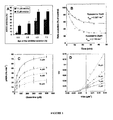
- the rate of inhibition increased with the age of the solution (see Figure 1A ), indicating that inhibition was linked to the pH-dependent transformation of eseroline into rubreserine (see Material and Methods).
- Figure 1A also illustrates that eseroline has to be transformed into rubreserine before becoming an active compound.
- the rate constant inhibition for rubreserine k i was rather low and a 20 minutes period of incubation was required to obtain maximal inhibition (see Figure 1B ).
- Rubreserine decreased the V m for pABA production and increased the K m for glutamine, indicating a mixed-type inhibition (see Figures 1C and 1D ).
- the kinetic constants K i and ⁇ K i calculated from such pattern of curves were estimated to be respectively 4 and 9 ⁇ M. In control experiments it was verified that rubreserine had no effect on ADCL and that inhibition is solely imputable to a decrease of GAT-ADCS activity.
- an IC 50 for rubreserine of about 20 ⁇ M can be calculated, a value lower than the IC 50 for sulfadiazine estimated from this study (> 50 ⁇ M) or generally reported in the literature (> 30 ⁇ M) ( P. Meneceur, Antimicrob. Agents Chemother. 52 (2008) 1269-1277 ).
- the presence of 100 ⁇ M pABA or 100 ⁇ M 5-FTHF significantly reversed the inhibition, indicating that inhibition of pABA biosynthesis (and thus of folate biosynthesis) was involved in the inhibitory process (see Figure 3C ).
- the inhibition was increased compared to rubreserine alone. Such a combination appeared as much efficient as a mixture combining 50 ⁇ M sulfadiazine and 0.4 ⁇ M pyrimethamine (see Figure 3C ).
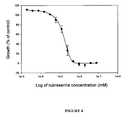
- Rubreserine was also tested on Plasmodium falciparum. As shown on Figure 4 , rubreserine exhibited anti-malarial properties, since the intraerythrocytic growth of the parasite was strongly inhibited by rubreserine, with an IC 50 of around 1.2 ⁇ M.
Landscapes
- Health & Medical Sciences (AREA)
- Life Sciences & Earth Sciences (AREA)
- Veterinary Medicine (AREA)
- General Health & Medical Sciences (AREA)
- Medicinal Chemistry (AREA)
- Public Health (AREA)
- Tropical Medicine & Parasitology (AREA)
- Animal Behavior & Ethology (AREA)
- Chemical & Material Sciences (AREA)
- Pharmacology & Pharmacy (AREA)
- Organic Chemistry (AREA)
- Nuclear Medicine, Radiotherapy & Molecular Imaging (AREA)
- Chemical Kinetics & Catalysis (AREA)
- General Chemical & Material Sciences (AREA)
- Plant Pathology (AREA)
- Pest Control & Pesticides (AREA)
- Agronomy & Crop Science (AREA)
- Engineering & Computer Science (AREA)
- Dentistry (AREA)
- Wood Science & Technology (AREA)
- Zoology (AREA)
- Environmental Sciences (AREA)
- Epidemiology (AREA)
- Pharmaceuticals Containing Other Organic And Inorganic Compounds (AREA)
Abstract

for use as medicaments, and in particular as medicaments for the prevention and/or the treatment of parasitic diseases caused by apicomplexans parasites. The invention also concerns pharmaceutical compositions containing such compounds of formula (I) as active principles. Finally, the present invention relates to the use of compounds of formula (I) as herbicides and/or algaecides and to herbicide and/or algaecide compositions containing such compounds.
Description
- The invention relates to novel compounds for use as medicaments, and in particular as medicaments for the prevention and/or the treatment of parasitic diseases caused by apicomplexans parasites. The invention also relates to pharmaceutical compositions containing such compounds of formula (I) as active principles. Finally, the present invention relates to the use of compounds of formula (I) as herbicides and/or algaecides and to herbicide and/or algaecide compositions containing such compounds.
- The Apicomplexa phylum constitutes a particularly diverse group of unicellular protists. Besides, members of the Colpodellida sub-group, all apicomplexans are obligate intracellular parasites, infecting virtually all animals from mollusks to mammals. They were originally classified as protozoa (> 4000 species). Amongst them, the malaria parasite Plasmodium sporozoa, represents one of the most important threats for humankind, with 300 to 500 million estimated clinical cases and 1.5 to 3 million deaths each year, most of them African children. More benign, but widely spread is Toxoplasma gondii, a parasite causing congenital neurological birth defects and, along with Cryptosporidium, being the most reported opportunistic infection associated with immunosuppressive conditions, including AIDS. Other parasites in this phylum are of veterinary importance including pathogens of cattle and chicken, Theileria and Eimeria.
- The Apicomplexa phylum contains several thousands of unicellular parasites among which:
- Plasmodium falciparum, the major malaria causative agent, as well as other parasites of the same genus (the three other Plasmodium species that cause human malaria: Plasmodium vivax, Plasmodium ovale, Plasmodium malariae; the Plasmodium species known to infect other vertebrates: Plasmodium yoelii, Plasmodium berghei, Plasmodium chabaudi, Plasmodium vivax, Plasmodium gallinaceum, Plasmodium knowlesi, Plasmodium reichenowi, etc.);
- Babesia microti, the causative agent of human babesiosis, as well as all other parasites that cause babiesosis in mammals (i.e. Babesia divergens, Babesia bigemina, Babesia major, Babesia bovis (bovine babesiosis), Babesia canis, Babesia gibsoni (canine babesiosis), Babesia equi, Babesia caballi (equine babesiosis), etc.);
- Toxoplasma gondii, the causative agent of toxoplasmosis in humans and other mammals;
- Neospora caninum, the causative agent of neosporosis;
- Cryptosporidium hominis, the causative agent of human cryptosporidiosis, as well as other parasites of the same genus (Cryptosporidium parvum, etc.);
- Theileria annulata, the causative agent of theileriosis, as well as other parasites of the same genus (Theileria parva, etc.)
- Sarcocystis neurona, Eimeria tenella, Gregarina niphandrodes, as well as any other parasites of the Apicomplexa phylum causing infectious diseases in metazoans.
- All apicomplexans share a polarized cellular organization schema, with a basal pole and an apical pole. Membrane compartmentalization exhibits some specific features as compared to other eukaryotic cells such as those of yeasts or mammals. The cell is polarized and exhibits a set of subcellular structures called the apical complex that contains a hollow truncated cone, the conoid, and three types of vesicular secretory organelles, namely rhoptries, micronemes and dense granules. During host cell invasion, the apical pole is the first to enter the cell. Membrane compartments include those known to be connected through the endomembrane flow in all eukaryotic cells, i.e. the Golgi, endoplasmic reticulum, nuclear envelope and plasma membrane. A peripheral inner membrane complex is applied to the plasma membrane surface. Semi-autonomous organelles include a mitochondria surrounded by two membranes, and the apicoplast (absent in some genera such as Cryptosporidium) surrounded by four membranes.
- The apicomplexan parasites are transmitted by different vectors in complex life cycles. For instance, and like all other malaria parasites of the Plasmodium genus, Plasmodium falciparum spreads by infecting successively two types of hosts: humans and female Anopheles mosquitoes. In humans, the parasites grow and multiply first in the liver cells and then in the red cells of the blood. In the blood, successive broods of parasites grow inside the red cells and destroy them, releasing daughter parasites ("merozoites") that continue the cycle by invading other red cells. The blood stage parasites are those that cause the symptoms of malaria. When certain forms of blood stage parasites ("gametocytes") are picked up by a female Anopheles mosquito during a blood meal, they start another, different cycle of growth and multiplication in the mosquito. After 10-18 days, the parasites are found (as "sporozoites") in the mosquito's salivary glands. When the Anopheles mosquito takes a blood meal on another human, the sporozoites are injected with the insect's saliva and start another human infection.
- Chemotherapies are needed to fight against apicomplexan-caused diseases. These therapies generally differ with the type of parasite responsible of the infection.
- In the case of malaria, this life-threatening disease affects half a billion humans in underdeveloped and developing countries. Its global heartland is Africa, with an appalling death toll of 1 to 2 million people every year (WHO World Malaria Report, Geneva, World Health Organization, WHO/UNICEF; 2005). Endemic malaria ranges from a permanent incidence in sub-Saharan and equatorial Africa, to a seasonal but recently escalating prevalence in Southern Africa Grover-Kopec et al., Malar. J. 2006, 5:38). Malaria was eradicated from temperate regions following concerted preventative sanitary actions and after important insecticide campaigns and systematic treatments with available drugs, i.e. quinine and chloroquine. The prophylactic programs of the 1950's and 1960's, essentially based on insecticide and drug treatments, failed to control malaria in subtropical areas. Resistance to chloroquine spread rapidly. Subsequent attempts to achieve progress in malaria prophylaxis have been characterized by the failure of vaccine development, withdrawal of some insecticides because of toxicity and negative environmental impact, the alarming spread of mosquito resistance to insecticides and of resistance of Plasmodium to the very few drugs that have been developed.
- In an effort to improve the success rate of drug development, several approaches are being investigated. Most of the strategies are based on re-design of existing drugs, for example artemisinin, an antiplasmodial molecule from Artemisia annua comprising an endoperoxide moiety, and derivatives thereof such as Artesunate, which can be produced efficiently and cheaply (Renslo A. R. et al., Nature Chem. Biol., 2006, 2, 701-710).
- Others choose to only keep the endoperoxyde moiety of artemisinin, leading to the discovery of synthetic RBx 11160 (OZ277) which mimics the chemical and biological properties of this molecule and is already in clinical trials as antimalaria drug used with piperaquine (Vennerstrom, J.L. et al., Nature, 2004, 430, 900-904).
- The novel use of combination of older drugs is also under investigation: Lapdap® (Chloroproguanil-dapsone) or Lapdap®-artesunate are based on combinations of chloroproguanil (CPG) and dapsone (DDS) and was launched in 2003 as an effective and cheap antimalarial (Mutabingwa T. et al., Lancet, 2001, 358, 1218-1223).
- Another well known drug is the quinolines family. Work on this old drug eventually succeeded to introduce antiplasmodial compounds such as quinoline and isoquine derivatives (Madrid, P.B. et al., J. J. Med. Chem. 2007, 50, 889-896). Recently astemizole, a known antihistaminic drug was shown to have a similar activity toward Plasmodium than artemisinin and other derivatives (Chong, C.R., et al., Nat. Chem. Biol., 2006, 2, 415-416).
- Current efforts focus therefore on chemotherapy using multiple therapies including artemisinin. However, the scientific community is worried that plans for the extensive use of artemisinin might be ruined by emergence of the parasitic resistance it will almost certainly trigger, sooner or later. Given the small number of available drugs and the resistance they have already induced, discovery of new targets and of new drugs remains a key priority.
- In the case of toxoplasmosis, Toxoplasma gondii has a broad spectrum of hosts and can virtually infect any mammal. It is well established that the final hosts are cats where sexual reproduction occurs. Transmission to humans occurs most often by infected food, or by direct or indirect contacts with cats. Severity of toxoplasmosis is very variable. In healthy human adults, infection is usually not visible besides serum analyses. Most healthy people do not require any treatment. In infected patients, the parasite remains as cysts that can reactivate a toxoplasmosis in case of immune deficiencies. Treatments are critically needed in the case of pregnant women and babies, people with HIV/AIDS and patient treated for cancer by chemotherapies. Most widely used treatments include pyrimethamine and sulfadiazine.
- Because these drugs can have serious side effects for both women and babies, they are normally not used during pregnancy. Drug treatment can lessen the severity of congenital toxoplasmosis, but it will not undo any damage that has already occurred. Pyrimethamine is an anti-malarial medication also used to treat toxoplasmosis, and acts as a folic acid antagonist. It may prevent the body from absorbing the important B vitamin folate (folic acid, vitamin B-9), especially when taking high doses over a long period of time. Other potential side effects of pyrimethamine include bone marrow suppression and liver toxicity. Sulfadiazine is an antibiotic used in combination with pyrimethamine to treat toxoplasmosis. Possible side effects include nausea, vomiting and diarrhea. Pyrimethamine can also be supplied in conjunction with clindamycin, an antibiotic that can sometimes cause severe diarrhea. Patients suffering from AIDS need to take these medications for life, although in some cases, toxoplasmosis therapies can be stopped if Cluster of Differenciation 4 (CD4) count remains very high for at least three to six months. Side effects of most drugs can be more severe in people with HIV/AIDS. Toxoplasmosis is also an important veterinary infection in ovines, bovines, caprines and pigs, and is responsible for spontaneous abortion. Efficient drugs with low side effects, acting on cyst forms and usable both for human therapies and preventions in cattle farms are therefore highly needed.
- The search for effective therapeutics for toxoplasmosis received much less interest and only a few examples are reported. The main target is dihydrofolate reductase (DHFR) and some inhibitors with high ligand efficiency were reported; for example starting from a QSAR analysis some authors obtained the synthesis of new 6-fluoroquinolones as potential active against Toxoplasma gondii (Anquetin G., et al., Eur. J. Med. Chem., 2006, 41, 1478-1493).
- Very recently others reported the SAR studies based on trimethoprim and methotrexate analogues. Starting from this 1960-drug they obtained high in vitro inhibitory activities toward a homology model of DHFR.
- In the case of babesiosis, infection is similar to malaria. Transmission of Babesia parasites is due to bites by ticks. Wild animals (rodents and bovids) are final or intermediary parasitic reservoirs. Some Babesia, such as Babesia microti and Babesia divergens can infect humans. Babesiosis is reported in various domestic species, including bovids, equids, and dogs with a large spectrum of symptom, from non-severe cases to lethality. Untreated canine babesiosis is always lethal. Besides a partially efficient vaccine, no drug treatment is currently available to fight against all Babesia species. Human treatments include the use of quinine combined with clindamycin, or hydroxychloroquine. For veterinary purposes, bovine and equine babesiosis caused by only two species can be mainly treated, using imidocarb dipropionate.
- In the case of neosporosis, data are fragmentary and poor. Neospora is a parasite closely related to Toxoplasma, capable of infecting virtually any mammal. Dog is the final host were sexual reproduction occurs. Cattles can be infected due to proximity with infected wild animals. Drugs used to treat toxoplasmosis are used to treat neosporosis.
- In the case of coccidiosis, tens of species of the Eimeria genus can cause infections of the gastro-intestinal system of birds and mammals. Coccidiosis is a very frequent plague in bovids, ovids, birds, rodents, etc. Massive poultry breeding requires prophylaxis against avian coccidiosis, particularly against Eimeria necatrix or Eimeria tenella that cause severe infections. Drug treatments include the prescription of antibiotics or non-antibiotic molecules such as decoquinate, a molecule of the hydroxyquinoline family.
- Glutamine amidotransferase/aminodeoxychorismate synthase (GAT-ADCS) is known as a bifunctional enzyme of the folate pathway, involved in the synthesis of p-aminobenzoate (pABA). The GAT domain releases NH3 from glutamine and the ADCS domain uses NH3 to aminate chorismate. GAT-ADCS is found in all eukaryotic organisms autonomous for folate synthesis, such as parasites of the Apicomplexa phylum or plants.
- The pABA moiety is synthesized in two steps from chorismate. In a first step, chorismate is aminated to form 4-amino-4-deoxychorismate (ADC), a reaction catalyzed by GAT-ADCS, and then ADC is aromatized with loss of pyruvate to form pABA, a reaction catalyzed by aminodeoxychorismate lyase (ADCL). The ADC synthase (ADCS) used to catalyse the amination of chorismate is an enzyme that belongs to the group of the chorismate-utilizing enzymes, which also contains salicylate synthase, isochorismate synthase and anthranilate synthase (K. T. Ziebart et al., Biochemistry 49 (2010) 2851-2859; O. Kerbarh et al., Biochem. Soc. Trans. 33 (2005) 763-766). ADCS is found either as a monofunctional or bifunctional enzyme, the protein bearing in the latter case a glutamine amidotransferase (GAT) activity. Searches for inhibitors for pABA synthesis were only done with prokaryotic systems and the monofunctional form of the enzyme. They involved docking studies and design of chorismate analogous compounds (E. M. Bulloch et al., J. Am. Chem. Soc. 126 (2004) 9912-9913; M. C. Kozlowski et al., J. Am. Chem. Soc. 117 (1995) 2128-2140; R. J. Payne et al., Org. Biomol. Chem. 7 (2009) 2421-2429; R. J. Payne et al., Org. Biomol. Chem. 8 (2010) 3534-3542), combinatorial chemistry approaches associating potential inhibitors with a chorismate-like moiety that directed the molecule to the active site (K. T. Ziebart et al., J. Med. Chem. 53 (2010) 3718-3729; S. Dixon et al., J. Med. Chem. 49 (2006) 7413-7426), and a specific screening of a microorganism extract collection using growth inhibition of test bacteria as a marker of activity (J. Riedlinger et al., J. Antibiot (Tokyo) 57 (2004) 271-279; S. Keller et al., Angew. Chem. Int. Edit. 46 (2007) 8284-8286). Several compounds were identified by these different methods but appeared to be relatively weak inhibitors of ADCS (E. M. Bulloch et al., J. Am. Chem. Soc. 126 (2004) 9912-9913; M. C. Kozlowski et al., J. Am. Chem. Soc. 117 (1995) 2128-2140; R. J. Payne et al., Org. Biomol. Chem. 7 (2009) 2421-2429; K. T. Ziebart et al., J. Med. Chem. 53 (2010) 3718-3729). The most potent inhibitor of ADCS reported to date is an analogue of chorismate, i.e. the 2-hydroxy-4-amino-4-deoxy chorismate, exhibiting a Ki value of 38 µM with the purified enzyme (M. C. Kozlowski et al., J. Am. Chem. Soc. 117 (1995) 2128-2140). But the in vivo effects of these ADCS inhibitors were not investigated.
- The equation describing pABA synthesis is as follows:

- The Inventors have now surprisingly found that a novel class of compounds of general formula (I) was able to inhibit the bifunctional enzyme GAT-ADCS with an apparent inhibitory constant (Ki ) of about 10 µM. The growth of Arabidopsis seedlings was inhibited by such compounds, and the addition of pABA in the external medium restored growth activity. The Inventors also observed that the compounds of formula (I) are efficient to block the invasion and proliferation processes of Toxoplasma gondii in human fibroblasts. Their efficiency was greater than that of a well-known sulfonamide compound, i.e. sulfadiazine, used in standard treatment of toxoplasmosis and targeting dihydropteroate synthase. These observations validate the use of GAT-ADCS as a target for anti-parasitic medicaments, and indicate that the compounds of the invention as new inhibitors having antifolate activity could be an alternative to sulfonamides in therapies against parasites of the Apicomplexa phylum (toxoplasmosis, malaria).
- Rapidly dividing cells such as embryonic cells, tumors, bacteria and parasites rely heavily on the availability of folates. This mechanism has been exploited for the development of antifolate drugs against cancer cells and microbial or parasitic infections. Biosynthesis of folate is mainly inhibited by two groups of compounds:
- i) sulfonamides which are competitive inhibitors of dihydropteroate synthase (DHPS), an enzyme involved in the condensation of the pABA moiety with the pterin ring to form dihydropteroate, and
- ii) inhibitors of dihydrofolate reductase (DHFR), an enzyme involved in the reduction of dihydrofolate into tetrahydrofolate, the active form of folate.
- Inhibitors of DHFR are commonly used as therapeutic agents for cancer (J. R. Bertino, Best Practice & Research Clinical Haematology 22 (2009) 577-582) whereas a combination of these two types of inhibitors are most often used in clinical treatments against parasites from the Apicomplexa phylum such as Plasmodium falciparum or Toxoplasma gondii (A. Nzila, Drug Discov. Today 11 (2006) 939-944; P. Wang et al., Mol. Microbiol. 51 (2004) 1425-1438).
- The Inventors have developed the subject of the present invention in order to treat some specific infections such as malaria or numerous babesiosis, or some parasitic stages that are currently resistant to drugs, such as toxoplasmic cysts.
- A first subject of the invention is therefore a compound of general formula (I) below:

- X and Y, identical or different, are selected from O, S and NR, wherein R = H or an optionally substituted alkyl radical containing 1 to 12 carbon atoms,
- R1, R2, R3, R4, R5, R6, R7 and R8, identical or different, are selected from -H, -OH, - CH2-OH and an optionally substituted alkyl radical containing 1 to 12 carbon atoms, for use as a medicament.
- According to a preferred embodiment, X and Y are oxygen atoms.
- According to another preferred embodiment, R2, R5 and R7, identical or different, are selected from -CH3, -CH2-OH, -C2H5 and -C2H4-OH.
- According to another preferred embodiment, R1, R3, R4, R6 and R8 are hydrogen atoms.
- As a particular compound of formula (I) above, we can mentioned the rubreserine responding to the following formula:

- Rubreserine is an oxidation product of eseroline, eseroline being itself a degradation product of physostigmine (eserine), an indole alkaloid isolated from the Calabar bean (Physostigma venenosum). Rubreserin according to the invention inhibits the bifunctional GAT-ADCS involved in the biosynthesis of folates (Ki < 10 µM). It was observed that eselorine itself has no or little effect on the enzyme activity, which indicates that the carbonyl functions (o-diquinone structure) resulting from eseroline oxidation are essential to obtain the inhibitory effect. The Inventors also observed that the incubation of rubreserine with a reducing agent such as dithiothreitol (DTT) suppressed the inhibitory effect, which confirms the importance of the quinonoid structure.
- Rubreserine is not commercially available but can be easily and spontaneously obtained from buffered eseroline solutions, eseroline being commercially available. Rubreserine can be prepared as described in S. T. Yang et al., J. Pharm. Biomed. Anal 5 (1987) 383-393; B. Robinson, J. Pharm. Pharmacol. 17 (1965) 89-91; O. Poobrasert et al., J. Nat. Prod. 59 (1996) 1087-1089. In specific conditions, eseroline can also be transformed into rubreserine in the human or animal body.
- Another subject matter of the invention is a compound of formula (I) for use as a medicament for the prevention and/or the treatment in human and other mammals of parasitic disease involving apicomplexan parasites, such as Plasmodium, Babesia, Toxoplasma, Neospora, Cryptosporidium, Theileria, Sarcosystis, Eimeria and Gregarina, and more preferably for the prevention and/or the treatment in human and other mammals of malaria or toxoplasmosis.
- Another subject matter of the invention is a pharmaceutical composition comprising at least one compound of formula (I) as an active principle, and at least one pharmaceutically acceptable excipient.
- The expression "pharmaceutically acceptable excipient" refers to any diluents, adjuvants or vehicles, such as preserving agents, fillers, disintegrating agents, wetting agents, emulsifying agents, suspending agents, solvents, dispersion media, coatings, antibacterial and antifungal agents, isotonic and absorption delaying agents and the like.
- The pharmaceutical composition of the present invention may be administered by any suitable route, for example, by oral, buccal, inhalation, sublingual, nasal, percutaneous, i.e. transdermal or parenteral (including intravenous, intramuscular, subcutaneous and intracoronary) administration. Therefore, the pharmaceutical composition of the invention can be provided in various forms, such as in the form of hard gelatin capsules, of capsules, of compressed tablets, of suspensions to be taken orally, of lozenges or of injectable solutions or in any other form appropriate to the method of administration.
- The pharmaceutical composition according to the invention includes those wherein a compound of formula (I) is administered in an effective amount to achieve its intended purpose. Determination of the effective amounts is well within the capability of those skilled in the art.
- A "therapeutically effective dose" refers to that amount of compound of formula (I) which results in achieving the desired effect. Toxicity and therapeutic efficacy of compound of formula (I) can be easily determined by standard pharmaceutical procedures in cell cultures or experimental animals, i.e. for determining the LD50 (the dose lethal to 50% of the population) and the ED50 (the dose therapeutically effective in 50% of the population). The dose ratio between toxic and therapeutic effects is the therapeutic index, which is expressed as the ratio between LD50 and ED50. The data obtained from such data can be used in formulating range of dosage for use in humans. The dosage of compound of formula (I) preferably lies within a range of circulating concentrations that include the ED50 with little or no toxicity. The dosage can vary within this range depending upon the dosage form employed, and the route of administration.
- In the particular case of rubreserine, it was observed that the intraerythrocytic growth of Apicomplexa Phylum was strongly inhibited by said compound, with an IC50 of around 1.2 µM for Plasmodium falciparum (3D7 strain), showing that rubreserine exhibited anti-malarial properties. It was also observed that the effect of rubreserine was dose-dependent for Toxoplasma gondii (RH-YFP2 strain), the number of growth of intracellular parasites being reduced two times in the presence of 20 µM of rubreserine. The presence of pABA or 5-formyltetrahydrofolate (5-FTHF) significantly reversed the inhibition, indicating that inhibition of pABA biosynthesis, and thus folate biosynthesis, was involved in this inhibitory process.
- The exact formulation, route of administration, and dosage can be chosen by the individual physician in view of the patient's conditions. Dosage amount and interval of administration can be adjusted individually to provide plasma levels of compound of formula (I) which are sufficient to maintain the preventive or therapeutic effects.
- The amount of pharmaceutical composition administered will therefore depend on the subject being treated, on the subject's weight, the severity of the affliction and the manner of administration.
- For human and other mammal use, the compounds of formula (I) can be administered alone, but they are preferably administered in admixture with at least one pharmaceutically acceptable carrier, the nature of which will depend on the intended route of administration and the presentation form. Pharmaceutical composition for use according to the present invention thus can be formulated in a conventional manner using one or more physiologically acceptable carriers comprising one or more excipient(s) and/or auxiliary(ies) that facilitate processing of the compounds of formula (I) into preparations which can be used pharmaceutically. Amongst the excipients and auxiliaries which can be used in the pharmaceutical composition according to the invention, one can mention anti-agglomerating agents, preservatives agents, dyes, vitamins, inorganic salts, taste-modifying agents, smoothing agents, coating agents, isolating agents, stabilizing agents, wetting agents, anti-caking agents, dispersing agents, emulsifying agents, aromas, penetrating agents, solubilizing agents, etc., mixtures thereof and generally any excipient conventionally used in the pharmaceutical industry.
- By way of example, when the pharmaceutical composition is administered orally, the carrier may comprise one or several excipients such as talc, lactose, starch or modified starches, cellulose or cellulose derivatives, polyethylene glycols, acrylic acid polymers, gelatin, magnesium stearate, animal or vegetal fats of natural or synthetic origin, paraffin derivatives, glycols, etc.
- In addition to the at least one compound of formula (I), the pharmaceutical composition may also comprises one or more additional antiparasitic active principles, for example anti-malarial drugs such as for example chloroquine, quinacrine, primaquine, artemisinin, atovaquone and pyrimethamine.
- For general information about the formulation and administration of pharmaceutical compositions, one can obviously refer to the book "Remington's Pharmaceutical Sciences", last edition. Of course, a person skilled in the art will take care on this occasion that the excipient(s) and/or auxiliary(ies) optionally used are compatible with the intrinsic properties attached to the pharmaceutical composition in accordance with the invention.
- These pharmaceutical compositions can be manufactured in a conventional manner, i.e. by conventional mixing, dissolving, granulating, dragee-making, emulsifying, encapsulating, entrapping or lyophilizing processes. Proper formulation is dependent upon the route of administration chosen.
- Finally, the invention also concerns the use of a compound of general formula (I) below:

wherein X, Y, R1, R2, R3, R4, R5, R6, R7 and R8 are as defined above,
as an herbicide and/or an algaecide, and herbicide and/or algaecide compositions comprising at least one compound of formula (I) suitable for use against harmful plants in crops or useful plants. - More preferably, the compound of formula (I) used as an herbicide and/or an algaecide, and in herbicide and/or algaecide compositions, is the rubreserine responding to the following formula:

- In addition to the above provisions, the invention also comprises other provisions which will become clear from the description which follows, which refers to examples illustrating the antiparasitic activity of a compound of formula (I), i.e. the rubreserine, and also to the attached drawings in which:
-
Figure 1 shows the effect of rubreserine on GAT-ADCS kinetics.Figure 1A represents the time-dependent efficiency of the eseroline (triplicate experiment ± Standard Deviation (SD)).Figure 1B represents the time-dependent decrease of the GAT activity following the addition of 10 and 20 µM of rubreserine. Curves were fitted using the KaleidaGraph software (Sinergy Software) and a decreasing exponential equation.Figure 1C shows the effect of varying Glutamine upon pABA production in the presence of 100 µM of chorismate and 0, 4, 8 and 16 µM of rubreserine. GAT-ADCS was first incubated with the various concentrations of rubreserine for 20 minutes, and then the kinetic was started by the addition of Glutamine, chorismate and ADCL (each point is the average of three independent measures ± SD). Curves were fitted using the KaleidaGraph software (Sinergy Software) and the hyperbolic equation of Michaelis-Menten.Figure 1D represents a reverse plot ofFigure 1C . Maximal rates of the recombinant enzyme were 130 ± 30 nmol.min-1.mg-1. Curves were fitted using the KaleidaGraph software (Sinergy Software) and a linear regression, -
Figure 2 shows the effect of rubreserine (Rubre) on the development of Arabidopsis seedlings.Figure 2A are representative experiments showing two weeks old seedlings grown in agar plates without (control) or with 50 or 100 µM of rubreserine and in the presence or absence of 200 µM pABA or 200 µM 5-FTHF.Figure 2B shows histogram representing the estimated number of seedlings at the rosette stage in the various situations shown inFigure 2A . Results represent the average of four independent measures ± SD, -
Figure 3 shows the effect of rubreserine (Rubre) on the invasion and proliferation processes of Toxoplasma gondii, and comparison with sulfanilamide (Sulfa) and sulfadiazine (SDZ).Figure 3A shows the invasion of human fibroblast. The parasites were first incubated with the various drugs for 5 hours, and then put in contact with the human cells for 15 minutes. The number of intracellular parasites is expressed for each experiment as a % of the number recorded in non-treated cells.Figure 3B shows the intracellular growth of the parasites. Intracellular proliferation was estimated 24 hours after the invasion process and expressed as the number of parasites present in the parasitophorous vacuoles. In each experiment, 200 vacuoles were counted for each drug concentration. Invasion and proliferation experiments were made in triplicate ± SD.Figure 3C shows the effect of rubreserine in combination with other compounds on the intracellular proliferation of the parasite. The concentrations used were: 20 µM rubreserine (Rubre), 0.4 µM pyrimethamine (Pyrim), 50 µM sulfadiazine (SDZ), 100 µM pABA and 100 µM 5-FTHF. The reversed effect of pABA and 5-FTHF illustrates that a blocking of folate biosynthesis was part of the inhibitory process, -
Figure 4 shows the effect of rubreserine on the growth of Plasmodium falciparum (duplicate experiments). - Eseroline can be spontaneously transformed into rubreserine in slightly alkalinesolution such as bicarbonate Ringer's solution (S. Ellis et al., Pharmacol., Exp. Ther. 79 (1943), 309-319). In the present study, rubreserine was prepared from commercially available (-) eseroline fumarate salt (Sigma-Aldrich, ref. E100). Stock solutions of eseroline (10 mM) were made in 50 mM phosphate buffer (pH = 8) for Arabidopsis and Toxoplasma experiments, 50 mM Tris buffer (pH = 8) for GAT-ADCS experiments, and 1 × PBS buffer (pH = 7.5) for Plasmodium experiments. Under these conditions, eseroline is spontaneously oxidized into rubreserine. The formation of rubreserine was controlled through the appearance of a characteristic peak of absorption at 473 nm, a process completed in about 6 hours. Rubreserine formation was confirmed by the appearance of two resonance peaks in the carbonyl region of the 13C-NMR spectrum. It was also verified by HPLC analysis that the conversion was > 90% in these conditions. These stock solutions were stored at 4°C for 48 hours or at -20°C for one week. They were serially diluted before use. Chemical structures of eseroline and rubreserine are given below:

- Arabidopsis thaliana (ecotype Columbia) seedlings were grown on plates containing Murashige and Skoog medium, 15% agar, plus the various molecules to be tested. Seeds were first sterilized by soaking for 15 minutes in a solution containing 0,095
% Tween - Arabidopsis thaliana (ecotype Columbia) cell suspension cultures were grown under continuous light (40 µE.m-2.s-1) at 23°C with rotary agitation at 125 rpm in Gamborg's B5 medium supplemented with 1 µM 2-naphtalene acetic acid and 1.5% (w/v) sucrose. Cells were sub-cultured every 7 days in fresh medium. For measurements of metabolites, cells were collected after 7 days of treatment, rapidly washed with distilled water, weighted, frozen in liquid nitrogen and stored at -80°C for later analyses.
- Toxoplasma gondii tachyzoites (RH-YFP2 strain) were propagated in human foreskin fibroblasts (HFFs). Human cells were grown in DMEM supplemented with 100 U/mL penicillin, 100 mg/mL streptomycin, 2 mM glutamine, and 10% FBS (Gibco). To obtain extracellular parasites, host cells were forced through a 26.5 gauge needle, and then the released parasites were purified by filtration through a 3 µm polycarbonate membrane before use.
- For the invasion assay, RH-YFP2 parasites were incubated for 5 hours with the different drugs. Then 106 parasites/well were centrifuged for 30 seconds at 1300 rpm on HFF monolayers to synchronize invasion and wells were incubated for 15 minutes in a water bath at 37°C. Wells were washed three times with cold PBS to eliminate extracellular parasites and cells were fixed in 2.5% formaldehyde/PBS for 30 minutes and stored in PBS at 4°C until staining. To distinguish intracellular from extracellular parasites, cells were incubated with the primary antibody mAb Tg05-54 to detect the major Toxoplasma surface protein SAG1 (TgSAG1), then with Texas Red-conjugated goat anti-mouse secondary antibody (Molecular Probes). Intracellular parasites exhibit a faint red colour and can easily be distinguished from extracellular parasites which are bright red. Nuclei were stained with Hoechst 33258 (Molecular Probes). To determine the number of intracellular parasites, 12 randomly selected fields were counted per well and per experiment with a
Zeiss Axioplan 2 microscope equipped for epifluorescence and phase-contrast. Invasion was expressed as % of the number of intracellular parasites recorded in non-treated cells. - For the proliferation assay, 105 parasites/well were centrifuged on HFF monolayers for 30 seconds at 1300 rpm and incubated for 15 minutes in a water bath at 37°C for invasion. Wells were then washed three times with PBS to eliminate extracellular parasites and drugs were added. After 24 hours at 37°C in a humidified atmosphere containing 5% CO2, cells were fixed as described above. The number of parasites from up to 200 individual vacuoles was counted for each drug concentration.
- The 3D7 strain of Plasmodium falciparum was maintained in O+ blood. A rubreserine 10 mM stock concentration was made up in 1 × PBS pH = 7.5. This stock solution was then diluted serially to obtain the growth curve. Growth inhibition was measured after 96 hours by using an in vitro SYBR Green 1-based fluorescence growth assay, as previously described (T. N. Bennett et al., Antimicrob. Agents Chemoter. (2004) 48 1807-1810; M. Smilkstein et al., Antimicrob. Agents Chemoter. (2004) 18 1803-1806).
- Both proteins were expressed and purified as described in the publication of D. Camara et al., Archives of Biochemistry and Biophysics 505 (2011) 83-90.
- GAT-ADCS activity can be determined by measuring the production of either glutamate or pABA. Standard assays contained 100 mM Tris/HCl (pH 8.0), 5 mM MgCl2, 5% V/V glycerol, 0 to 0.5 mM L-glutamine, 0.1 mM chorismate, 9 yg ml-1 (90 nM) of the recombinant Arabidopsis thaliana GAT-ADCS and either 1 mM NAD and an excess of glutamate deshydrogenase (GDH) for glutamate determination, or an excess of Escherichia coli ADCL (20 µg ml-1, 600 nM) for pABA determination. Reactions (
final volume 80 µl) were run in the wells of a 96 well microplate (Greiner) and changes in fluorescence were continuously monitored with a microplate scanning spectrophotometer Safir 2 (Tecan). The glutamate production was followed by the fluorescence emission of NADH at 450 nm (excitation 340 nm). The pABA production was directly followed by the increase of the fluorescence emission at 340 nm (excitation 290 nm). - The equipment involved an automated screening station (Tecan Genesis 2000, Lyon, France), including a microplate reader. The platform is controlled by software for driving of serial devices and assays scheduling (Tecan Gemini 4.2 and FACTS 4.82 software). The library of compounds was purchased from The Prestwick Chemical Library®. This library contains 1200 molecules, 100% being marketed drugs, supplied at a 5 mM concentration in DMSO. The final concentration used in the enzymatic assay was 100 µM, and it was verified in separate control experiments that 2% DMSO had no effect on the activity. The enzymatic test used to determine GAT-ADCS activity in primary and secondary screenings was based on glutamate determination, as described above. After optimization of the assay, the Z' factor was comprised between 0.68 and 0.84.
- Eseroline was identified by high throughput screening of The Prestwick Chemical Library®. When GAT-ADCS was incubated with a fresh solution of eseroline, the rate of inhibition increased with the age of the solution (see
Figure 1A ), indicating that inhibition was linked to the pH-dependent transformation of eseroline into rubreserine (see Material and Methods).Figure 1A also illustrates that eseroline has to be transformed into rubreserine before becoming an active compound. The rate constant inhibition for rubreserine ki was rather low and a 20 minutes period of incubation was required to obtain maximal inhibition (seeFigure 1B ). Rubreserine decreased the Vm for pABA production and increased the Km for glutamine, indicating a mixed-type inhibition (seeFigures 1C and 1D ). The kinetic constants Ki and αKi calculated from such pattern of curves were estimated to be respectively 4 and 9 µM. In control experiments it was verified that rubreserine had no effect on ADCL and that inhibition is solely imputable to a decrease of GAT-ADCS activity. - When Arabidopsis thaliana seedlings were grown on agar plates in the presence of various concentrations of rubreserine, a dose-dependent growth inhibition was observed (see
Figures 2A and 2B ). When the agar plates were supplemented with 200 µM pABA together with rubreserine, the inhibition was suppressed or largely reduced (seeFigure 2B ). This indicated that growth in the presence of rubreserine was limited by pABA synthesis. Because pABA is required for folate biosynthesis, we also measured the potential impact of 5-formyl tetrahydrofolate on rubreserine-treated plants (seeFigure 2B ). This folate derivative was also able to revert the inhibitory effect of rubreserine, but to a lower extent than pABA. - Firstly, it was verified that rubreserine concentrations up to 50 µM had no effect on confluent human fibroblast cells. The effect of rubreserine on Toxoplasma gondii parasites was then studied in two situations:
- i) in invasion of human fibroblasts, and
- ii) in intracellular development of the parasites.
- As shown in
Figure 3A , invasion of human cells strongly decreased when the parasites have been first incubated for 5 hours with various rubreserine concentrations, and then put in contact with the human cells for 15 minutes. This effect was dose-dependent, the number of intracellular parasites being reduced two times in the presence of 20 µM rubreserine. Likewise, intracellular proliferation was estimated 24 hours after the invasion process and expressed as the number of parasites present in the parasitophorous vacuoles. In each experiment, 200 vacuoles were counted for each drug concentration. When parasited cells were placed in the presence of the inhibitor, the number of parasites in the parasitophorous vacuoles decreased, which is representative of a slowing down of the parasite intracellular division (seeFigure 3B ). This effect was reversed by pABA as shown inFigure 3C . Also shown inFigures 3A and 3B , is the comparison between rubreserine, and two sulfonamide drugs, sulfanilamide and sulfadiazine. Indeed, sulfadiazine is widely used in standard treatment to cure toxoplasmosis. Interestingly, rubreserine appeared more efficient than the two sulfa- drugs on either the invasion of human fibroblasts or the intracellular replication of the parasites. From these curves, an IC50 for rubreserine of about 20 µM can be calculated, a value lower than the IC50 for sulfadiazine estimated from this study (> 50 µM) or generally reported in the literature (> 30 µM) (P. Meneceur, Antimicrob. Agents Chemother. 52 (2008) 1269-1277). The presence of 100 µM pABA or 100 µM 5-FTHF significantly reversed the inhibition, indicating that inhibition of pABA biosynthesis (and thus of folate biosynthesis) was involved in the inhibitory process (seeFigure 3C ). When rubreserine 20 µM was used in combination with pyrimethamine 0.4 µM, the inhibition was increased compared to rubreserine alone. Such a combination appeared as much efficient as a mixture combining 50 µM sulfadiazine and 0.4 µM pyrimethamine (seeFigure 3C ). - Rubreserine was also tested on Plasmodium falciparum. As shown on
Figure 4 , rubreserine exhibited anti-malarial properties, since the intraerythrocytic growth of the parasite was strongly inhibited by rubreserine, with an IC50 of around 1.2 µM.
Claims (15)
- A compound of general formula (I) below:
 • X and Y, identical or different, are selected from O, S and NR, wherein R = H or an optionally substituted alkyl radical containing 1 to 12 carbon atoms,• R1, R2, R3, R4, R5, R6, R7 and R8, identical or different, are selected from -H, -OH, - CH2-OH and an optionally substituted alkyl radical containing 1 to 12 carbon atoms, for use as a medicament.
 - The compound according to Claim 1, wherein X and Y are oxygen atoms.
- The compound according to Claim 1 or Claim 2, wherein R2, R5 and R7, identical or different, are selected from -CH3, -CH2-OH, -C2H5 and -C2H4-OH.
- The compound according to Claims 1 to 3, wherein R1, R3, R4, R6 and R8 are hydrogen atoms.
- The compound according to Claims 1 to 4, wherein said compound of formula (I) is the rubreserine responding to the following formula:

- The compound according to Claims 1 to 5, for use as a medicament for the prevention and/or the treatment of parasitic diseases involving apicomplexan parasites.
- The compound according to Claim 6, wherein said apicomplexan parasites are selected from Plasmodium, Babesia, Toxoplasma, Neospora, Cryptosporidium, Theileria, Sarcosystis, Eimeria and Gregarina.
- The compound according to Claims 1 to 5 for use as a medicament for the prevention and/or the treatment of malaria.
- The compound according to Claims 1 to 5 for use as a medicament for the prevention and/or the treatment of toxoplasmosis.
- A pharmaceutical composition comprising at least one compound of formula (I) as defined according to Claims 1 to 9 as an active principle, and at least one pharmaceutically acceptable excipient.
- The pharmaceutical composition of Claim 10, wherein it further comprises at least one additional antiparasitic active principle.
- The pharmaceutical composition of Claim 11, wherein said additional antiparasitic active principle is selected from chloroquine, quinacrine, primaquine, artemisinin, atovaquone and pyrimethamine.
- Use of a compound of general formula (I) below:

wherein X, Y, R1, R2, R3, R4, R5, R6, R7 and R8 are as defined according to Claims 1 to 4, as an herbicide and/or an algaecide. - Use according to Claim 13, wherein said compound of formula (I) is the rubreserine responding to the following formula:

- An herbicide and/or algaecide composition comprising at least one compound of formula (I) as defined according to Claim 13 or Claim 14.
Priority Applications (2)
| Application Number | Priority Date | Filing Date | Title |
|---|---|---|---|
| EP11290215A EP2520297A1 (en) | 2011-05-04 | 2011-05-04 | Rubreserine and its derivates with antiparasitic activity |
| PCT/IB2012/052246 WO2012150577A1 (en) | 2011-05-04 | 2012-05-04 | Compounds with antiparasitic activity and applications thereof |
Applications Claiming Priority (1)
| Application Number | Priority Date | Filing Date | Title |
|---|---|---|---|
| EP11290215A EP2520297A1 (en) | 2011-05-04 | 2011-05-04 | Rubreserine and its derivates with antiparasitic activity |
Publications (1)
| Publication Number | Publication Date |
|---|---|
| EP2520297A1 true EP2520297A1 (en) | 2012-11-07 |
Family
ID=46147553
Family Applications (1)
| Application Number | Title | Priority Date | Filing Date |
|---|---|---|---|
| EP11290215A Withdrawn EP2520297A1 (en) | 2011-05-04 | 2011-05-04 | Rubreserine and its derivates with antiparasitic activity |
Country Status (2)
| Country | Link |
|---|---|
| EP (1) | EP2520297A1 (en) |
| WO (1) | WO2012150577A1 (en) |
Cited By (2)
| Publication number | Priority date | Publication date | Assignee | Title |
|---|---|---|---|---|
| FR3010903A1 (en) * | 2013-09-26 | 2015-03-27 | Agronomique Inst Nat Rech | PREVENTING AND / OR TREATING PARASITOSES INDUCED BY PARASITES BELONGING TO THE PHYLUM OF APICOMPLEXES |
| CN107821434A (en) * | 2017-11-28 | 2018-03-23 | 河海大学 | A kind of preparation method of modified algicide |
Families Citing this family (1)
| Publication number | Priority date | Publication date | Assignee | Title |
|---|---|---|---|---|
| CN104003995B (en) * | 2014-05-20 | 2016-10-26 | 上海交通大学 | Pyranone also [3,4-b] indole derivatives and synthetic method thereof |
-
2011
- 2011-05-04 EP EP11290215A patent/EP2520297A1/en not_active Withdrawn
-
2012
- 2012-05-04 WO PCT/IB2012/052246 patent/WO2012150577A1/en not_active Ceased
Non-Patent Citations (33)
| Title |
|---|
| A. NZILA, DRUG DISCOV. TODAY, vol. 11, 2006, pages 939 - 944 |
| ANQUETIN G. ET AL., EUR. J. MED. CHEM., vol. 41, 2006, pages 1478 - 1493 |
| B. ROBINSON, J. PHARM. PHARMACOL., vol. 17, 1965, pages 89 - 91 |
| CAMARA ET AL., ARCHIVES OF BIOCHEMISTRY AND BIOPHYSICS, vol. 505, 2011, pages 83 - 90 |
| CHONG, C.R. ET AL., NAT. CHEM. BIOL., vol. 2, 2006, pages 415 - 416 |
| DUQUESNEL H: "Sur la matiere colorante rouge derivee de l'eserine", BULL. GENERAL DE THERAPEUTIQUE,, vol. 83, 1 January 1872 (1872-01-01), pages 72, XP008144977 * |
| E. M. BULLOCH ET AL., J. AM. CHEM. SOC., vol. 126, 2004, pages 9912 - 9913 |
| E. M. BULLOCH, J. AM. CHEM. SOC., vol. 126, 2004, pages 9912 - 9913 |
| J. R. BERTINO, BEST PRACTICE & RESEARCH CLINICAL HAEMATOLOGY, vol. 22, 2009, pages 577 - 582 |
| J. RIEDLINGER ET AL., J. ANTIBIOT (TOKYO, vol. 57, 2004, pages 271 - 279 |
| K. T. ZIEBART ET AL., BIOCHEMISTRY, vol. 49, 2010, pages 2851 - 2859 |
| K. T. ZIEBART ET AL., J. MED. CHEM., vol. 53, 2010, pages 3718 - 3729 |
| KAUR K ET AL: "Antimalarials from nature", BIOORGANIC & MEDICINAL CHEMISTRY, PERGAMON, GB, vol. 17, no. 9, 1 May 2009 (2009-05-01), pages 3229 - 3256, XP026022766, ISSN: 0968-0896, [retrieved on 20090303], DOI: 10.1016/J.BMC.2009.02.050 * |
| M. C. KOZLOWSKI ET AL., J. AM. CHEM. SOC., vol. 117, 1995, pages 2128 - 2140 |
| M. C. KOZLOWSKI, J. AM. CHEM. SOC., vol. 117, 1995, pages 2128 - 2140 |
| M. SMILKSTEIN ET AL., ANTIMICROB. AGENTS CHEMOTER., vol. 18, 2004, pages 1803 - 1806 |
| MADRID, P.B. ET AL., J. J. MED. CHEM., vol. 50, 2007, pages 889 - 896 |
| MUTABINGWA T. ET AL., LANCET, vol. 358, 2001, pages 1218 - 1223 |
| O. KERBARH ET AL., BIOCHEM. SOC. TRANS., vol. 33, 2005, pages 763 - 766 |
| O. POOBRASERT ET AL., J. NAT. PROD., vol. 59, 1996, pages 1087 - 1089 |
| P. MENECEUR, ANTIMICROB. AGENTS CHEMOTHER., vol. 52, 2008, pages 1269 - 1277 |
| P. WANG ET AL., MOL. MICROBIOL., vol. 51, 2004, pages 1425 - 1438 |
| R. J. PAYNE ET AL., ORG. BIOMOL. CHEM., vol. 7, 2009, pages 2421 - 2429 |
| R. J. PAYNE ET AL., ORG. BIOMOL. CHEM., vol. 8, 2010, pages 3534 - 3542 |
| RENSLO A. R. ET AL., NATURE CHEM. BIOL., vol. 2, 2006, pages 701 - 710 |
| S. DIXON ET AL., J. MED. CHEM., vol. 49, 2006, pages 7413 - 7426 |
| S. ELLIS ET AL., PHARMACOL., EXP. THER., vol. 79, 1943, pages 309 - 319 |
| S. KELLER ET AL., ANGEW. CHEM. INT. EDIT., vol. 46, 2007, pages 8284 - 8286 |
| S. T. YANG ET AL., J. PHARM. BIOMED. ANAL, vol. 5, 1987, pages 383 - 393 |
| SOUTHERN AFRICA GROVER-KOPEC ET AL., MALAR. J., vol. 5, 2006, pages 38 |
| T. N. BENNETT ET AL., ANTIMICROB. AGENTS CHEMOTER., vol. 48, 2004, pages 1807 - 1810 |
| VENNERSTROM, J.L. ET AL., NATURE, vol. 430, 2004, pages 900 - 904 |
| YU Q-S ET AL: "SYNTHESES AND ANTICHOLINESTERASE ACTIVITIES OF (3AS)-N1,N8-BISNORPHENSERINE, (3AS)-N1,N8-BISNORPHYSOSTIGMINE, THEIR ANTIPODAL ISOMERS, AND OTHER POTENTIAL METABOLITES OF PHENSERINE", JOURNAL OF MEDICINAL CHEMISTRY, AMERICAN CHEMICAL SOCIETY, US, vol. 41, no. 13, 1 January 1998 (1998-01-01), pages 2371 - 2379, XP001015264, ISSN: 0022-2623, DOI: 10.1021/JM9800494 * |
Cited By (4)
| Publication number | Priority date | Publication date | Assignee | Title |
|---|---|---|---|---|
| FR3010903A1 (en) * | 2013-09-26 | 2015-03-27 | Agronomique Inst Nat Rech | PREVENTING AND / OR TREATING PARASITOSES INDUCED BY PARASITES BELONGING TO THE PHYLUM OF APICOMPLEXES |
| WO2015044348A1 (en) * | 2013-09-26 | 2015-04-02 | Institut National De La Recherche Agronomique | Prevention and/or treatment of parasitoses induced by parasites from the apicomplexa phylum |
| CN107821434A (en) * | 2017-11-28 | 2018-03-23 | 河海大学 | A kind of preparation method of modified algicide |
| CN107821434B (en) * | 2017-11-28 | 2020-11-13 | 河海大学 | A kind of preparation method of modified algicide |
Also Published As
| Publication number | Publication date |
|---|---|
| WO2012150577A1 (en) | 2012-11-08 |
Similar Documents
| Publication | Publication Date | Title |
|---|---|---|
| Rathore et al. | Antimalarial drugs: current status and new developments | |
| Vangapandu et al. | Recent advances in antimalarial drug development | |
| Daily | Antimalarial drug therapy: the role of parasite biology and drug resistance | |
| US9918989B2 (en) | Combination therapies for malaria | |
| Garcia Linares et al. | Current status and progresses made in malaria chemotherapy | |
| Pradel et al. | Antibiotics in malaria therapy and their effect on the parasite apicoplast | |
| Avery et al. | The fight against drug-resistant malaria: novel plasmodial targets and antimalarial drugs | |
| Gryzlo et al. | Quinoline–a promising fragment in the search for new antimalarials | |
| US20220008443A1 (en) | Methods and Compositions for Prevention and Treatment of Apicomplexan Infections | |
| Francesconi et al. | State-of-the-art review on the antiparasitic activity of benzimidazolebased derivatives: facing malaria, leishmaniasis, and trypanosomiasis | |
| Pastrana-Mena et al. | A malaria transmission-blocking (+)-usnic acid derivative prevents Plasmodium zygote-to-ookinete maturation in the mosquito midgut | |
| Armstrong et al. | Advances in malaria pharmacology and the online guide to MALARIA PHARMACOLOGY: IUPHAR review 38 | |
| Domínguez | Chemotherapeutic agents against malaria: what next after chloroquine? | |
| Nandal et al. | Recent advances, challenges and updates on the development of therapeutics for malaria | |
| WO2012150577A1 (en) | Compounds with antiparasitic activity and applications thereof | |
| Anquetin et al. | Quinolone-based drugs against Toxoplasma gondii and Plasmodium spp | |
| CN115487191B (en) | Quisinostat, a new and highly effective antimalarial drug | |
| Haraguchi et al. | Prevalence of Anti-parasitic drug resistance in various areas of the world | |
| Elfawal et al. | Artemisia annua and artemisinins are ineffective against human Babesia microti and six Candida sp | |
| Bilia et al. | Antiplasmodial effects of a few selected natural flavonoids and their modulation of artemisinin activity | |
| Lemke | Antiparasitic agents | |
| Kurup et al. | Chronology of drug development for malaria | |
| US20100292472A1 (en) | Prophylactic and therapeutic medicine for malaria | |
| Moyo et al. | Discovery and development of antimalarial drug resistance reversal agents | |
| US20030109529A1 (en) | Use of s-triazines for treating Apicomplexan parasitic infections |
Legal Events
| Date | Code | Title | Description |
|---|---|---|---|
| PUAI | Public reference made under article 153(3) epc to a published international application that has entered the european phase |
Free format text: ORIGINAL CODE: 0009012 |
|
| AK | Designated contracting states |
Kind code of ref document: A1 Designated state(s): AL AT BE BG CH CY CZ DE DK EE ES FI FR GB GR HR HU IE IS IT LI LT LU LV MC MK MT NL NO PL PT RO RS SE SI SK SM TR |
|
| AX | Request for extension of the european patent |
Extension state: BA ME |
|
| RIN1 | Information on inventor provided before grant (corrected) |
Inventor name: BISANZ, CORDELIA Inventor name: CESBRON-DELAUW, MARIE-FRANCE Inventor name: CAMARA, DJENEB Inventor name: REBEILLE, FABRICE Inventor name: BIRKHOLTZ, MARIE-LYN Inventor name: BARETTE, CAROLINE |
|
| 17P | Request for examination filed |
Effective date: 20130220 |
|
| STAA | Information on the status of an ep patent application or granted ep patent |
Free format text: STATUS: THE APPLICATION IS DEEMED TO BE WITHDRAWN |
|
| 18D | Application deemed to be withdrawn |
Effective date: 20130508 |