EP2519019A1 - Smart illumination for electronic devices - Google Patents
Smart illumination for electronic devices Download PDFInfo
- Publication number
- EP2519019A1 EP2519019A1 EP20120165813 EP12165813A EP2519019A1 EP 2519019 A1 EP2519019 A1 EP 2519019A1 EP 20120165813 EP20120165813 EP 20120165813 EP 12165813 A EP12165813 A EP 12165813A EP 2519019 A1 EP2519019 A1 EP 2519019A1
- Authority
- EP
- European Patent Office
- Prior art keywords
- illumination
- electronic device
- handheld electronic
- held
- handheld
- Prior art date
- Legal status (The legal status is an assumption and is not a legal conclusion. Google has not performed a legal analysis and makes no representation as to the accuracy of the status listed.)
- Ceased
Links
Images



Classifications
-
- H—ELECTRICITY
- H04—ELECTRIC COMMUNICATION TECHNIQUE
- H04N—PICTORIAL COMMUNICATION, e.g. TELEVISION
- H04N21/00—Selective content distribution, e.g. interactive television or video on demand [VOD]
- H04N21/40—Client devices specifically adapted for the reception of or interaction with content, e.g. set-top-box [STB]; Operations thereof
- H04N21/41—Structure of client; Structure of client peripherals
- H04N21/422—Input-only peripherals, i.e. input devices connected to specially adapted client devices, e.g. global positioning system [GPS]
- H04N21/42202—Input-only peripherals, i.e. input devices connected to specially adapted client devices, e.g. global positioning system [GPS] environmental sensors, e.g. for detecting temperature, luminosity, pressure, earthquakes
-
- H—ELECTRICITY
- H04—ELECTRIC COMMUNICATION TECHNIQUE
- H04M—TELEPHONIC COMMUNICATION
- H04M1/00—Substation equipment, e.g. for use by subscribers
- H04M1/02—Constructional features of telephone sets
- H04M1/22—Illumination; Arrangements for improving the visibility of characters on dials
-
- H—ELECTRICITY
- H04—ELECTRIC COMMUNICATION TECHNIQUE
- H04N—PICTORIAL COMMUNICATION, e.g. TELEVISION
- H04N21/00—Selective content distribution, e.g. interactive television or video on demand [VOD]
- H04N21/40—Client devices specifically adapted for the reception of or interaction with content, e.g. set-top-box [STB]; Operations thereof
- H04N21/41—Structure of client; Structure of client peripherals
- H04N21/4104—Peripherals receiving signals from specially adapted client devices
- H04N21/4126—The peripheral being portable, e.g. PDAs or mobile phones
- H04N21/41265—The peripheral being portable, e.g. PDAs or mobile phones having a remote control device for bidirectional communication between the remote control device and client device
-
- H—ELECTRICITY
- H04—ELECTRIC COMMUNICATION TECHNIQUE
- H04N—PICTORIAL COMMUNICATION, e.g. TELEVISION
- H04N21/00—Selective content distribution, e.g. interactive television or video on demand [VOD]
- H04N21/40—Client devices specifically adapted for the reception of or interaction with content, e.g. set-top-box [STB]; Operations thereof
- H04N21/41—Structure of client; Structure of client peripherals
- H04N21/422—Input-only peripherals, i.e. input devices connected to specially adapted client devices, e.g. global positioning system [GPS]
- H04N21/42204—User interfaces specially adapted for controlling a client device through a remote control device; Remote control devices therefor
- H04N21/42206—User interfaces specially adapted for controlling a client device through a remote control device; Remote control devices therefor characterized by hardware details
- H04N21/42222—Additional components integrated in the remote control device, e.g. timer, speaker, sensors for detecting position, direction or movement of the remote control, microphone or battery charging device
-
- H—ELECTRICITY
- H04—ELECTRIC COMMUNICATION TECHNIQUE
- H04N—PICTORIAL COMMUNICATION, e.g. TELEVISION
- H04N5/00—Details of television systems
- H04N5/44—Receiver circuitry for the reception of television signals according to analogue transmission standards
- H04N5/57—Control of contrast or brightness
- H04N5/58—Control of contrast or brightness in dependence upon ambient light
-
- H—ELECTRICITY
- H04—ELECTRIC COMMUNICATION TECHNIQUE
- H04M—TELEPHONIC COMMUNICATION
- H04M2250/00—Details of telephonic subscriber devices
- H04M2250/12—Details of telephonic subscriber devices including a sensor for measuring a physical value, e.g. temperature or motion
-
- H—ELECTRICITY
- H04—ELECTRIC COMMUNICATION TECHNIQUE
- H04W—WIRELESS COMMUNICATION NETWORKS
- H04W52/00—Power management, e.g. Transmission Power Control [TPC] or power classes
- H04W52/02—Power saving arrangements
- H04W52/0209—Power saving arrangements in terminal devices
- H04W52/0251—Power saving arrangements in terminal devices using monitoring of local events, e.g. events related to user activity
- H04W52/0254—Power saving arrangements in terminal devices using monitoring of local events, e.g. events related to user activity detecting a user operation or a tactile contact or a motion of the device
-
- H—ELECTRICITY
- H04—ELECTRIC COMMUNICATION TECHNIQUE
- H04W—WIRELESS COMMUNICATION NETWORKS
- H04W52/00—Power management, e.g. Transmission Power Control [TPC] or power classes
- H04W52/02—Power saving arrangements
- H04W52/0209—Power saving arrangements in terminal devices
- H04W52/0261—Power saving arrangements in terminal devices managing power supply demand, e.g. depending on battery level
- H04W52/0274—Power saving arrangements in terminal devices managing power supply demand, e.g. depending on battery level by switching on or off the equipment or parts thereof
- H04W52/028—Power saving arrangements in terminal devices managing power supply demand, e.g. depending on battery level by switching on or off the equipment or parts thereof switching on or off only a part of the equipment circuit blocks
-
- Y—GENERAL TAGGING OF NEW TECHNOLOGICAL DEVELOPMENTS; GENERAL TAGGING OF CROSS-SECTIONAL TECHNOLOGIES SPANNING OVER SEVERAL SECTIONS OF THE IPC; TECHNICAL SUBJECTS COVERED BY FORMER USPC CROSS-REFERENCE ART COLLECTIONS [XRACs] AND DIGESTS
- Y02—TECHNOLOGIES OR APPLICATIONS FOR MITIGATION OR ADAPTATION AGAINST CLIMATE CHANGE
- Y02D—CLIMATE CHANGE MITIGATION TECHNOLOGIES IN INFORMATION AND COMMUNICATION TECHNOLOGIES [ICT], I.E. INFORMATION AND COMMUNICATION TECHNOLOGIES AIMING AT THE REDUCTION OF THEIR OWN ENERGY USE
- Y02D30/00—Reducing energy consumption in communication networks
- Y02D30/70—Reducing energy consumption in communication networks in wireless communication networks
Definitions
- This disclosure relates generally to illumination for electronic devices, and more specifically to handheld electronic devices that control illumination based on light detection and determination that the handheld device is currently being held.
- a handheld electronic device may include a number of control elements and one or more illumination elements that are operable to illuminate the control elements.
- the handheld electronic device may also include a light sensor that detects an illumination level in an area occupied by the handheld electronic device and one or more sensing units that are operable to detect whether or not the handheld electronic device is being held.
- the handheld electronic device may activate the illumination element and illuminate the control elements.
- the handheld electronic device may deactivate and/or not activate the illumination element.
- the sensing unit may include one or more capacitance touch switches and/or resistance touch switches that are operable to detect contact with a user's skin, one or more gyroscopes and/or accelerometers that are operable to detect movement of the handheld device by a user, one or more pressure sensors that are operable to detect exertion of pressure on the handheld device by a user, one or more additional light sensors that are operable to detect when a portion of the handheld electronic device is covered by a user's hand, and so on.
- control elements may include one or more translucent buttons and/or keys and the illumination element may be configured operate as a backlight for the one or more translucent buttons or keys.
- the illumination element may be configured to point at the control elements from above and/or from a similar direction in order to illuminate the control elements.
- control element may include a touch screen and/or other electronic display based input and/or output component that is darkened unless illuminated by the illumination element.
- Handheld electronic devices may include, but are not limited to, such varied devices as remote controls, cellular telephones, smart phones, mobile computing devices, handheld music players, and so on. These handheld electronic devices may include one or more control elements (such as keys, buttons, touch screens, pointer devices, track pads, and so on) that may be utilized to control the operations of the handheld electronic device and/or other associated electronic devices. As these devices may be portable, users may utilize such handheld electronic devices in a variety of different environments, such as environments that are dark and/or otherwise poorly illuminated.
- Such dark and/or otherwise poorly illuminated conditions may make it difficult for the user to control the operations of the handheld electronic device and/or utilize the handheld electronic device to control the operations of other associated electronic devices utilizing the one or more control elements as the user may not be able to adequately see the control elements.
- Illumination elements may be included with the handheld electronic device in order to illuminate the control elements. As such, users may be able to see and therefore utilize the control elements even when using the handheld electronic device in dark and/or poorly illuminated environments.
- a remote control may include a plurality of buttons and/or keys.
- the buttons and/or keys may be constructed of a translucent material, such as a clear plastic, and may be illuminated by one or more LEDs (light-emitting diodes) and/or OLEDs (organic light emitting diodes) that are positioned underneath one or more of the buttons and/or keys.
- the LEDs and/or OLEDs may function as a backlight for the buttons and/or keys.
- handheld electronic devices may be powered by one or more batteries and/or other such limited resource power components.
- Utilizing illumination elements to illuminate control elements may consume a significant amount of the limited power available to such handheld electronic devices from batteries and/or other such components. Regardless of the amount of power available from a battery and/or other such component, any amount of power consumed by illumination elements reduced the amount of power available for other handheld electronic device operations.
- control elements may not need to be illuminated if the user is using the handheld electronic device in an environment that is sufficient illuminated and/or if the handheld electronic device is located in a dark and/or poorly illuminated environment but is not currently being held (indicating that the device is not currently being utilized). Illuminating control elements when such illumination is not necessary (as the environment is sufficiently illuminated and/or the device is not currently being utilized) may consume unnecessary amounts of power that could otherwise be utilized for handheld electronic device operation.
- the illumination element may be activated when one or more of the control elements are selected, thus illuminating the control elements. After a period of time after such a selection, the illumination element may then be deactivated. In this way, unnecessary consumption of power by the illumination element may be minimized.
- a user may have to select the control element to activate the illumination element without being able to see the control element. This may be difficult for the user and may result in selection of unintended control elements, which may result in the performance of unintended operations.
- a remote control for a television illuminated one or more translucent buttons and/or keys upon selection of one of the buttons and/or keys.
- a user of such a remote control may accidentally power off the television, stop the content they are watching, erase stored content, or accidentally cause other such operations to be performed when the user merely wishes to alter the volume level and accidentally presses the wrong button and/or key when attempting to illuminate the buttons and/or keys.
- a handheld electronic device may include a number of control elements and one or more illumination elements that are operable to illuminate the control elements.
- the handheld electronic device may also include a light sensor that detects an illumination level in an area occupied by the handheld electronic device and one or more sensing units that are operable to detect whether or not the handheld electronic device is being held (such as one or more capacitance touch switches, resistance touch switches, gyroscopes, accelerometers, pressure sensors, additional light sensors, and/or other such sensing units that detect whether or not the handheld electronic device is being held).
- the handheld electronic device When the illumination level detected by the light sensor is below an ambient light threshold and the sensing unit detects that the handheld electronic device is being held, the handheld electronic device may activate the illumination element and illuminate the control elements. However, when either the illumination level detected by the light sensor is equal to or above the ambient light threshold or the sensing unit detects that the handheld electronic device is not being held, the handheld electronic device may deactivate and/or not activate the illumination element. In this way, the handheld electronic device may activate the illumination element when needed and may not activate the illumination element when it is not needed, avoiding unnecessary power consumption.
- FIG. 1 is a block diagram illustrating a system 100 for smart illumination for electronic devices.
- the system 100 includes a handheld electronic device 101 which may be a remote control (such as a remote control operable to control a television, set top box, digital video recorder, digital video disc player, and/or other electronic device), a cellular telephone, a smart phone, a mobile computing device, a handheld music player, and/or other electronic device that is configured for handheld usage.
- a remote control such as a remote control operable to control a television, set top box, digital video recorder, digital video disc player, and/or other electronic device
- a cellular telephone such as a smart phone, a mobile computing device, a handheld music player, and/or other electronic device that is configured for handheld usage.
- the handheld electronic device may include one or more control units 102, one or more control elements 103, one or more illumination elements 104, one or more light sensors 105, one or more sensing units 106, and one or more non-transitory storage media 107 (which may take the form of, but is not limited to, a magnetic storage medium; optical storage medium; magneto-optical storage medium; read only memory; random access memory; erasable programmable memory; flash memory; and so on).
- the control elements 103 may be any kind of selection element operable to receive input for and/or provide output from the handheld electronic device 101. Such control elements may include, but are not limited to, one or more keys, buttons, touch screens, keyboards, virtual keyboards, pointer devices, track pads, and so on.
- the illumination element may be any kind of illumination device (such as one or more incandescent bulbs, fluorescent lamps, compact fluorescent lamps, cold cathode fluorescent lamps, high-intensity discharge lamps, LEDs, OLEDs, and/or any other illumination devices) that is configured to illuminate one or more of the control elements when activated by the control unit 102.
- control elements 103 may include one or more translucent buttons and/or keys and the illumination element 104 may be configured operate as a backlight for the one or more translucent buttons or keys.
- the illumination element may be configured to point at the control elements from above and/or from a similar direction in order to illuminate the control elements.
- control element may include a touch screen and/or other electronic display based input and/or output component that is darkened unless illuminated by the illumination element.
- the light sensor 105 may be any kind of illumination detector that determines an illumination level of an area.
- the light sensor may compare the detected illumination level with an ambient light threshold (at the direction of the control unit 102 in some implementations), which may be stored in the non-transitory storage medium 107.
- the light sensor may communicate the illumination level to the control unit, which may then determine whether the illumination level exceeds the ambient light threshold.
- the sensing unit 106 may be any kind of sensor device that is configured to determine (at the direction of the control unit 102 in some implementations) whether or not the handheld electronic device 101 is being held (though in some implementations the sensing unit may provide detected data to the control unit, which may then determine whether or not the handheld device is being held).
- the sensing unit may be one or more capacitance touch switches, resistance touch switches, gyroscopes, accelerometers, pressure sensors, illumination sensors additional to the light sensor, and/or other such sensor that can be utilized to determine whether or not the handheld electronic device is being held.
- the sensing unit 106 may be one or more capacitance touch switches and/or resistance touch switches. As such, the sensing unit may determine that the handheld electronic device 101 is being held if the capacitance touch switch and/or resistance touch switch is in contact with the skin and/or body part of a user. The sensing unit may also determine that the handheld electronic device is not being held if the capacitance touch switch and/or resistance touch switch is not in contact with the skin and/or body part of the user.
- the sensing unit 106 may be one or more gyroscopes and/or accelerometers. As such, the sensing unit may determine that the handheld electronic device 101 is being held if the gyroscope and/or accelerometer detects movement, indicating that one or more users are moving the handheld electronic device. The sensing unit may also determine that the handheld electronic device is not being held if the gyroscope and/or accelerometer does not detect movement, indicating that one or more users are one moving the handheld electronic device.
- the sensing unit 106 may be one or more pressure sensors. As such, the sensing unit may determine that the handheld electronic device 101 is being held if the pressure sensor detects the exertion of pressure. The sensing unit may also determine that the handheld electronic device is not being held if the pressure sensor does not detect the exertion of pressure.
- the sensing unit 106 may be one or more illumination sensors additional to the light sensor 105. As such, the sensing unit may determine that the handheld electronic device 101 is being held if the illumination sensor does not detect light, indicating that the illumination sensor is obscured by the hand of one or more users who are holding the handheld electronic device. The sensing unit may also determine that the handheld electronic device is not being held if the illumination sensor does detect light, indicating that the illumination sensor is not obscured by the hand of one or more users holding the handheld electronic device.
- the control unit 102 may perform one or more operations to direct activation and/or deactivation of the illumination element 104, such as by executing one or more instructions stored in the non-transitory storage medium 107).
- the control unit may receive one or more indications from the light sensor 105 (such as data indicating whether the illumination level is below the ambient light threshold) and/or the sensing unit 106 (such as data indicating whether the handheld electronic device 101 is being held). If the illumination level is below the ambient light threshold and the handheld electronic device is being held, the control unit may instruct the illumination element to activate, thus illuminating one or more of the control elements 103.
- the control unit may instruct the illumination element to deactivate (if the illumination element is currently activated) and/or not instruct the illumination element to activate (if the illumination element is not currently activated).
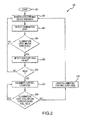
- Figure 2 illustrates a method 200 for smart illumination for electronic devices.
- the method 200 may be performed by the handheld electronic device 101 of Figure 1 .
- the flow begins at block 201 and proceeds to block 202 where the handheld electronic device operates.
- the flow then proceeds to block 203 where the light sensor 105 detects the illumination level of the area occupied by the handheld electronic device.
- the flow proceeds to block 204 where the light sensor and/or the control unit 102 determines whether or not the illumination level is below the ambient light threshold. If not, the flow returns to block 202 where the handheld electronic device continues to operate. Otherwise, the flow continues to block 205.
- the sensing unit 106 detects whether or not the handheld electronic device 101 is being held. The flow then proceeds to block 206 where the sensing unit and/or the control unit determines whether or not the handheld electronic device is detected as being held. If not, the flow returns to block 202 where the handheld electronic device continues to operate. Otherwise, the flow continues to block 207.
- the control unit instructs the illumination element 104 to illuminate one or more of the control elements 103.
- control unit 102 determines whether or not the illumination level is still below the ambient light threshold and the handheld electronic device 101 is still being held. If so, the flow returns to block 207 where the control unit continues instructing the illumination element 104 to illuminate one or more of the control elements 103. Otherwise, the flow proceeds to block 209.
- the control unit 102 determines that either the illumination level is not still below the ambient light threshold or the handheld electronic device 101 is not still being held, the control unit ceases to instruct the illumination element 104 to illuminate one or more of the control elements 103 and/or instructs the illumination element to cease illuminating the one or more of the control elements.
- the flow then returns to block 202 where the handheld electronic device continues to operate.
- the method 200 is illustrated and described above as detecting whether or not to the handheld electronic device 101 is held only after determining that the illumination level is below the ambient illumination threshold, it is understood that this is merely for the purposes of example. In various implementations both whether or not the illumination level is below the ambient illumination threshold and whether or not the handheld electronic device is being held may be simultaneously determined. In various other implementations, determining whether or not the illumination level is below the ambient illumination threshold may be performed only after detecting that handheld electronic device is being held.
- the control unit 102 may instruct the illumination element 104 to activate for a period of time (such as three seconds) when the illumination level is below the ambient illumination threshold and the handheld electronic device 101 is being held.
- the illumination element may continue to illuminate during the period of time even if the illumination level is no longer below the ambient illumination threshold or the handheld electronic device is no longer being held. However, if after the expiration of the period of time the illumination level is no longer below the ambient illumination threshold or the handheld electronic device is no longer being held, the illumination element may cease illuminating.
- the handheld electronic device may ignore input received via one or more of the control elements 103.
- the input may be accidental instead of intentional.
- the handheld electronic device is a remote control, the input may be the result of a user sitting on the remote control.
- the illumination from the illumination element may be accounted for in determining whether or not the illumination level is below the ambient light threshold. Otherwise, in certain situations the illumination element may illuminate because the illumination level is below the ambient light threshold and may then immediately cease illuminating because the additional illumination from the illumination element causes the illumination level to meet and/or exceed the ambient light threshold. By accounting for illumination from the illumination element in determining whether or not the illumination level is below the ambient light threshold, rapid activation and deactivation of the illumination element may be prevented.
- the ambient illumination threshold may be adjusted by one or more users.
- the handheld electronic device 101 may receive input from the user indicating at which illumination level the user can and/or cannot adequately see the control elements 103. This input may be stored in the non-transitory storage medium 107 as the ambient illumination threshold and/or utilized in part to determine the ambient illumination threshold. In this way, as individual users have differing abilities to see the control elements in various lighting conditions, the smart illumination of the control elements may be customized for one or more particular users.
- the light sensor 105 may be positioned on the handheld electronic device 101 such that it is unobstructed when the handheld electronic device is held.
- the handheld electronic device is a remote control
- the light sensor may be positioned such that the light sensor is not located in a portion of the remote control that is designed to be gripped when being held (such as in the same location as a transmitter that the remote control may utilize to communicate with an associated electronic device.
- the sensing unit 106 may be positioned on the handheld electronic device such that it is triggered when the handheld electronic device is handled.
- the sensing unit includes one or more capacitance touch switches and/or resistance touch switches
- the capacitance touch switches and/or resistance touch switches may be located in a portion of the handheld electronic device that is designed to be gripped when the handheld electronic device is held, resulting in the skin of a user's hand contacting the capacitance touch switches and/or resistance touch switches when the user is holding the handheld electronic device.
- the sensing unit includes one or more pressure sensors
- the pressure sensors may be located in a portion of the handheld electronic device that is designed to be gripped when the handheld electronic device is held, resulting in the user exerting pressure on one or more of the pressure sensors when the user is holding the handheld electronic device.
- the sensing unit includes one or more illumination sensors additional to the light sensor
- the illumination sensors may be located in a portion of the handheld electronic device that is designed to be gripped when the handheld electronic device is held, resulting in the user's hand obscuring one or more of the illumination sensors when the user is holding the handheld electronic device.
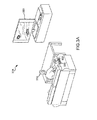
- Figures 3A-3D are diagrams illustrating a user 301A-301D utilizing a system 300A-300D for smart illumination for a remote control 303A-303D that includes a number of buttons 304A-304D while watching a movie on a television 302A-302D.
- the system may be the system of Figure 1 .
- the user 301A is watching a movie on a television 302A.
- a remote control 303A that the user may utilize to control the television is present, but is not held by the user in figure 3A .
- the remote control is configured to illuminate the buttons 304A when the light in the environment in which the remote control is located is below an ambient illumination threshold and when the remote control is held.
- the environment in which the user is watching the movie on the television is illuminated by a light 305A. As shown, as the light is illuminating the environment in which the remote control is located and the remote control is not being held, the buttons of the remote control are not illuminated.
- the user 301D has again turned off the light 305D.
- the illumination level of the environment in which the remote control 303D is located is below the ambient illumination threshold because the light is off and the remote control is held, the buttons 304D of the remote control are illuminated.
- the methods disclosed may be implemented as sets of instructions or software readable by a device. Further, it is understood that the specific order or hierarchy of steps in the methods disclosed are examples of sample approaches. In other embodiments, the specific order or hierarchy of steps in the method can be rearranged while remaining within the disclosed subject matter.
- the accompanying method claims present elements of the various steps in a sample order, and are not necessarily meant to be limited to the specific order or hierarchy presented.
- the described disclosure may be provided as a computer program product, or software, that may include a non-transitory machine-readable medium having stored thereon instructions, which may be used to program a computer system (or other electronic devices) to perform a process according to the present disclosure.
- a non-transitory machine-readable medium includes any mechanism for storing information in a form (e.g., software, processing application) readable by a machine (e.g., a computer).
- the non-transitory machine-readable medium may take the form of, but is not limited to, a magnetic storage medium (e.g., floppy diskette, video cassette, and so on); optical storage medium (e.g., CD-ROM); magneto-optical storage medium; read only memory (ROM); random access memory (RAM); erasable programmable memory (e.g., EPROM and EEPROM); flash memory; and so on.
- a magnetic storage medium e.g., floppy diskette, video cassette, and so on
- optical storage medium e.g., CD-ROM
- magneto-optical storage medium e.g., magneto-optical storage medium
- ROM read only memory
- RAM random access memory
- EPROM and EEPROM erasable programmable memory
- flash memory and so on.
Landscapes
- Engineering & Computer Science (AREA)
- Signal Processing (AREA)
- Multimedia (AREA)
- Ecology (AREA)
- Life Sciences & Earth Sciences (AREA)
- Biodiversity & Conservation Biology (AREA)
- Business, Economics & Management (AREA)
- Emergency Management (AREA)
- Environmental & Geological Engineering (AREA)
- Environmental Sciences (AREA)
- Remote Sensing (AREA)
- Human Computer Interaction (AREA)
- Circuit Arrangement For Electric Light Sources In General (AREA)
Abstract
Description
- This disclosure relates generally to illumination for electronic devices, and more specifically to handheld electronic devices that control illumination based on light detection and determination that the handheld device is currently being held.
- The present disclosure discloses systems and methods for smart illumination for electronic devices. A handheld electronic device may include a number of control elements and one or more illumination elements that are operable to illuminate the control elements. The handheld electronic device may also include a light sensor that detects an illumination level in an area occupied by the handheld electronic device and one or more sensing units that are operable to detect whether or not the handheld electronic device is being held. When the illumination level detected by the light sensor is below an ambient light threshold and the sensing unit detects that the handheld electronic device is being held, the handheld electronic device may activate the illumination element and illuminate the control elements. However, when either the illumination level detected by the light sensor is equal to or above the ambient light threshold or the sensing unit detects that the handheld electronic device is not being held, the handheld electronic device may deactivate and/or not activate the illumination element.
- In one or more implementations, the sensing unit may include one or more capacitance touch switches and/or resistance touch switches that are operable to detect contact with a user's skin, one or more gyroscopes and/or accelerometers that are operable to detect movement of the handheld device by a user, one or more pressure sensors that are operable to detect exertion of pressure on the handheld device by a user, one or more additional light sensors that are operable to detect when a portion of the handheld electronic device is covered by a user's hand, and so on.
- In various implementations, the control elements may include one or more translucent buttons and/or keys and the illumination element may be configured operate as a backlight for the one or more translucent buttons or keys. In various other implementations, the illumination element may be configured to point at the control elements from above and/or from a similar direction in order to illuminate the control elements. In still other implementations, the control element may include a touch screen and/or other electronic display based input and/or output component that is darkened unless illuminated by the illumination element.
- It is to be understood that both the foregoing general description and the following detailed description are for purposes of example and explanation and do not necessarily limit the present disclosure. The accompanying drawings, which are incorporated in and constitute a part of the specification, illustrate subject matter of the disclosure. Together, the descriptions and the drawings serve to explain the principles of the disclosure.
- The invention is defined in the independent claims to which reference should now be made. Advantageous features are set forth in the dependent claims.
-
-
Figure 1 is a block diagram illustrating a system for smart illumination for electronic devices. -
Figure 2 is a flow chart illustrating a method for smart illumination for electronic devices. This method may be performed by the system ofFigure 1 . -
Figures 3A-3D are diagrams illustrating a user utilizing a system for smart illumination for electronic devices. The system may be the system ofFigure 1 . - The description that follows includes sample systems, methods, and computer program products that embody various elements of the present disclosure. However, it should be understood that the described disclosure may be practiced in a variety of forms in addition to those described herein.
- Handheld electronic devices may include, but are not limited to, such varied devices as remote controls, cellular telephones, smart phones, mobile computing devices, handheld music players, and so on. These handheld electronic devices may include one or more control elements (such as keys, buttons, touch screens, pointer devices, track pads, and so on) that may be utilized to control the operations of the handheld electronic device and/or other associated electronic devices. As these devices may be portable, users may utilize such handheld electronic devices in a variety of different environments, such as environments that are dark and/or otherwise poorly illuminated. Such dark and/or otherwise poorly illuminated conditions may make it difficult for the user to control the operations of the handheld electronic device and/or utilize the handheld electronic device to control the operations of other associated electronic devices utilizing the one or more control elements as the user may not be able to adequately see the control elements.
- Illumination elements may be included with the handheld electronic device in order to illuminate the control elements. As such, users may be able to see and therefore utilize the control elements even when using the handheld electronic device in dark and/or poorly illuminated environments. For example, a remote control may include a plurality of buttons and/or keys. The buttons and/or keys may be constructed of a translucent material, such as a clear plastic, and may be illuminated by one or more LEDs (light-emitting diodes) and/or OLEDs (organic light emitting diodes) that are positioned underneath one or more of the buttons and/or keys. Thus, the LEDs and/or OLEDs may function as a backlight for the buttons and/or keys.
- However, handheld electronic devices may be powered by one or more batteries and/or other such limited resource power components. Utilizing illumination elements to illuminate control elements may consume a significant amount of the limited power available to such handheld electronic devices from batteries and/or other such components. Regardless of the amount of power available from a battery and/or other such component, any amount of power consumed by illumination elements reduced the amount of power available for other handheld electronic device operations.
- Further, users may utilize such handheld electronic devices in dark and/or poorly illuminated environments only part of the time. At other times users may utilize handheld electronic devices in environments that are sufficiently illuminated for the users to be able to see the control elements. Control elements may not need to be illuminated if the user is using the handheld electronic device in an environment that is sufficient illuminated and/or if the handheld electronic device is located in a dark and/or poorly illuminated environment but is not currently being held (indicating that the device is not currently being utilized). Illuminating control elements when such illumination is not necessary (as the environment is sufficiently illuminated and/or the device is not currently being utilized) may consume unnecessary amounts of power that could otherwise be utilized for handheld electronic device operation.
- In some implementations, the illumination element may be activated when one or more of the control elements are selected, thus illuminating the control elements. After a period of time after such a selection, the illumination element may then be deactivated. In this way, unnecessary consumption of power by the illumination element may be minimized. However, in such an implementation, a user may have to select the control element to activate the illumination element without being able to see the control element. This may be difficult for the user and may result in selection of unintended control elements, which may result in the performance of unintended operations. For example, a remote control for a television illuminated one or more translucent buttons and/or keys upon selection of one of the buttons and/or keys. A user of such a remote control may accidentally power off the television, stop the content they are watching, erase stored content, or accidentally cause other such operations to be performed when the user merely wishes to alter the volume level and accidentally presses the wrong button and/or key when attempting to illuminate the buttons and/or keys.
- The present disclosure discloses systems and methods for smart illumination for electronic devices. A handheld electronic device may include a number of control elements and one or more illumination elements that are operable to illuminate the control elements. The handheld electronic device may also include a light sensor that detects an illumination level in an area occupied by the handheld electronic device and one or more sensing units that are operable to detect whether or not the handheld electronic device is being held (such as one or more capacitance touch switches, resistance touch switches, gyroscopes, accelerometers, pressure sensors, additional light sensors, and/or other such sensing units that detect whether or not the handheld electronic device is being held). When the illumination level detected by the light sensor is below an ambient light threshold and the sensing unit detects that the handheld electronic device is being held, the handheld electronic device may activate the illumination element and illuminate the control elements. However, when either the illumination level detected by the light sensor is equal to or above the ambient light threshold or the sensing unit detects that the handheld electronic device is not being held, the handheld electronic device may deactivate and/or not activate the illumination element. In this way, the handheld electronic device may activate the illumination element when needed and may not activate the illumination element when it is not needed, avoiding unnecessary power consumption.
-
Figure 1 is a block diagram illustrating asystem 100 for smart illumination for electronic devices. Thesystem 100 includes a handheldelectronic device 101 which may be a remote control (such as a remote control operable to control a television, set top box, digital video recorder, digital video disc player, and/or other electronic device), a cellular telephone, a smart phone, a mobile computing device, a handheld music player, and/or other electronic device that is configured for handheld usage. The handheld electronic device may include one ormore control units 102, one ormore control elements 103, one ormore illumination elements 104, one ormore light sensors 105, one ormore sensing units 106, and one or more non-transitory storage media 107 (which may take the form of, but is not limited to, a magnetic storage medium; optical storage medium; magneto-optical storage medium; read only memory; random access memory; erasable programmable memory; flash memory; and so on). - The
control elements 103 may be any kind of selection element operable to receive input for and/or provide output from the handheldelectronic device 101. Such control elements may include, but are not limited to, one or more keys, buttons, touch screens, keyboards, virtual keyboards, pointer devices, track pads, and so on. The illumination element may be any kind of illumination device (such as one or more incandescent bulbs, fluorescent lamps, compact fluorescent lamps, cold cathode fluorescent lamps, high-intensity discharge lamps, LEDs, OLEDs, and/or any other illumination devices) that is configured to illuminate one or more of the control elements when activated by thecontrol unit 102. - By way of a first example, the
control elements 103 may include one or more translucent buttons and/or keys and theillumination element 104 may be configured operate as a backlight for the one or more translucent buttons or keys. By way of a second example, the illumination element may be configured to point at the control elements from above and/or from a similar direction in order to illuminate the control elements. By way of a third example, the control element may include a touch screen and/or other electronic display based input and/or output component that is darkened unless illuminated by the illumination element. - The
light sensor 105 may be any kind of illumination detector that determines an illumination level of an area. In various implementations, the light sensor may compare the detected illumination level with an ambient light threshold (at the direction of thecontrol unit 102 in some implementations), which may be stored in thenon-transitory storage medium 107. However, in other implementations the light sensor may communicate the illumination level to the control unit, which may then determine whether the illumination level exceeds the ambient light threshold. - The
sensing unit 106 may be any kind of sensor device that is configured to determine (at the direction of thecontrol unit 102 in some implementations) whether or not the handheldelectronic device 101 is being held (though in some implementations the sensing unit may provide detected data to the control unit, which may then determine whether or not the handheld device is being held). In various implementations, the sensing unit may be one or more capacitance touch switches, resistance touch switches, gyroscopes, accelerometers, pressure sensors, illumination sensors additional to the light sensor, and/or other such sensor that can be utilized to determine whether or not the handheld electronic device is being held. - By way of a first example, in some implementations the
sensing unit 106 may be one or more capacitance touch switches and/or resistance touch switches. As such, the sensing unit may determine that the handheldelectronic device 101 is being held if the capacitance touch switch and/or resistance touch switch is in contact with the skin and/or body part of a user. The sensing unit may also determine that the handheld electronic device is not being held if the capacitance touch switch and/or resistance touch switch is not in contact with the skin and/or body part of the user. - By way of a second example, in some implementations the
sensing unit 106 may be one or more gyroscopes and/or accelerometers. As such, the sensing unit may determine that the handheldelectronic device 101 is being held if the gyroscope and/or accelerometer detects movement, indicating that one or more users are moving the handheld electronic device. The sensing unit may also determine that the handheld electronic device is not being held if the gyroscope and/or accelerometer does not detect movement, indicating that one or more users are one moving the handheld electronic device. - By way of a third example, in some implementations the
sensing unit 106 may be one or more pressure sensors. As such, the sensing unit may determine that the handheldelectronic device 101 is being held if the pressure sensor detects the exertion of pressure. The sensing unit may also determine that the handheld electronic device is not being held if the pressure sensor does not detect the exertion of pressure. - By way of a fourth example, in some implementations the
sensing unit 106 may be one or more illumination sensors additional to thelight sensor 105. As such, the sensing unit may determine that the handheldelectronic device 101 is being held if the illumination sensor does not detect light, indicating that the illumination sensor is obscured by the hand of one or more users who are holding the handheld electronic device. The sensing unit may also determine that the handheld electronic device is not being held if the illumination sensor does detect light, indicating that the illumination sensor is not obscured by the hand of one or more users holding the handheld electronic device. - The
control unit 102 may perform one or more operations to direct activation and/or deactivation of theillumination element 104, such as by executing one or more instructions stored in the non-transitory storage medium 107). The control unit may receive one or more indications from the light sensor 105 (such as data indicating whether the illumination level is below the ambient light threshold) and/or the sensing unit 106 (such as data indicating whether the handheldelectronic device 101 is being held). If the illumination level is below the ambient light threshold and the handheld electronic device is being held, the control unit may instruct the illumination element to activate, thus illuminating one or more of thecontrol elements 103. However, if either the illumination level is not below (either equal to and/or above) the ambient light threshold (equal to and/or above) or the handheld electronic device is not being held, the control unit may instruct the illumination element to deactivate (if the illumination element is currently activated) and/or not instruct the illumination element to activate (if the illumination element is not currently activated). -
Figure 2 illustrates amethod 200 for smart illumination for electronic devices. Themethod 200 may be performed by the handheldelectronic device 101 ofFigure 1 . The flow begins atblock 201 and proceeds to block 202 where the handheld electronic device operates. The flow then proceeds to block 203 where thelight sensor 105 detects the illumination level of the area occupied by the handheld electronic device. Next, the flow proceeds to block 204 where the light sensor and/or thecontrol unit 102 determines whether or not the illumination level is below the ambient light threshold. If not, the flow returns to block 202 where the handheld electronic device continues to operate. Otherwise, the flow continues to block 205. - At
block 205, after thelight sensor 105 and/or thecontrol unit 102 determines that the illumination level is below the ambient light threshold, thesensing unit 106 detects whether or not the handheldelectronic device 101 is being held. The flow then proceeds to block 206 where the sensing unit and/or the control unit determines whether or not the handheld electronic device is detected as being held. If not, the flow returns to block 202 where the handheld electronic device continues to operate. Otherwise, the flow continues to block 207. - At
block 207, after thesensing unit 106 and/or the control unit determines that the handheldelectronic device 101 is detected as being held, the control unit instructs theillumination element 104 to illuminate one or more of thecontrol elements 103. - The flow then proceeds to block 208 where the
control unit 102 determines whether or not the illumination level is still below the ambient light threshold and the handheldelectronic device 101 is still being held. If so, the flow returns to block 207 where the control unit continues instructing theillumination element 104 to illuminate one or more of thecontrol elements 103. Otherwise, the flow proceeds to block 209. - At
block 209, after thecontrol unit 102 determines that either the illumination level is not still below the ambient light threshold or the handheldelectronic device 101 is not still being held, the control unit ceases to instruct theillumination element 104 to illuminate one or more of thecontrol elements 103 and/or instructs the illumination element to cease illuminating the one or more of the control elements. The flow then returns to block 202 where the handheld electronic device continues to operate. - Although the
method 200 is illustrated and described above as detecting whether or not to the handheldelectronic device 101 is held only after determining that the illumination level is below the ambient illumination threshold, it is understood that this is merely for the purposes of example. In various implementations both whether or not the illumination level is below the ambient illumination threshold and whether or not the handheld electronic device is being held may be simultaneously determined. In various other implementations, determining whether or not the illumination level is below the ambient illumination threshold may be performed only after detecting that handheld electronic device is being held. - Returning to
Figure 1 , in some implementations, thecontrol unit 102 may instruct theillumination element 104 to activate for a period of time (such as three seconds) when the illumination level is below the ambient illumination threshold and the handheldelectronic device 101 is being held. In such implementations, the illumination element may continue to illuminate during the period of time even if the illumination level is no longer below the ambient illumination threshold or the handheld electronic device is no longer being held. However, if after the expiration of the period of time the illumination level is no longer below the ambient illumination threshold or the handheld electronic device is no longer being held, the illumination element may cease illuminating. - In various implementations, if the
sensing unit 106 detects that the handheldelectronic device 101 is not being held, the handheld electronic device may ignore input received via one or more of thecontrol elements 103. As the handheld electronic device is not being held, the input may be accidental instead of intentional. For example, if the handheld electronic device is a remote control, the input may be the result of a user sitting on the remote control. - In one or more implementations, if the
light sensor 105 is detecting the illumination level while theillumination element 104 is illuminated, the illumination from the illumination element may be accounted for in determining whether or not the illumination level is below the ambient light threshold. Otherwise, in certain situations the illumination element may illuminate because the illumination level is below the ambient light threshold and may then immediately cease illuminating because the additional illumination from the illumination element causes the illumination level to meet and/or exceed the ambient light threshold. By accounting for illumination from the illumination element in determining whether or not the illumination level is below the ambient light threshold, rapid activation and deactivation of the illumination element may be prevented. - In some implementations, the ambient illumination threshold may be adjusted by one or more users. In such implementations, the handheld
electronic device 101 may receive input from the user indicating at which illumination level the user can and/or cannot adequately see thecontrol elements 103. This input may be stored in thenon-transitory storage medium 107 as the ambient illumination threshold and/or utilized in part to determine the ambient illumination threshold. In this way, as individual users have differing abilities to see the control elements in various lighting conditions, the smart illumination of the control elements may be customized for one or more particular users. - In various implementations, the
light sensor 105 may be positioned on the handheldelectronic device 101 such that it is unobstructed when the handheld electronic device is held. For example, if the handheld electronic device is a remote control, the light sensor may be positioned such that the light sensor is not located in a portion of the remote control that is designed to be gripped when being held (such as in the same location as a transmitter that the remote control may utilize to communicate with an associated electronic device. - In one or more implementations, the
sensing unit 106 may be positioned on the handheld electronic device such that it is triggered when the handheld electronic device is handled. By way of a first example, if the sensing unit includes one or more capacitance touch switches and/or resistance touch switches, the capacitance touch switches and/or resistance touch switches may be located in a portion of the handheld electronic device that is designed to be gripped when the handheld electronic device is held, resulting in the skin of a user's hand contacting the capacitance touch switches and/or resistance touch switches when the user is holding the handheld electronic device. By way of a second example, if the sensing unit includes one or more pressure sensors, the pressure sensors may be located in a portion of the handheld electronic device that is designed to be gripped when the handheld electronic device is held, resulting in the user exerting pressure on one or more of the pressure sensors when the user is holding the handheld electronic device. By way of a third example, if the sensing unit includes one or more illumination sensors additional to the light sensor, the illumination sensors may be located in a portion of the handheld electronic device that is designed to be gripped when the handheld electronic device is held, resulting in the user's hand obscuring one or more of the illumination sensors when the user is holding the handheld electronic device. -
Figures 3A-3D are diagrams illustrating auser 301A-301D utilizing asystem 300A-300D for smart illumination for aremote control 303A-303D that includes a number ofbuttons 304A-304D while watching a movie on atelevision 302A-302D. The system may be the system ofFigure 1 . As illustrated infigure 3A , theuser 301A is watching a movie on atelevision 302A. Aremote control 303A that the user may utilize to control the television is present, but is not held by the user infigure 3A . The remote control is configured to illuminate thebuttons 304A when the light in the environment in which the remote control is located is below an ambient illumination threshold and when the remote control is held. The environment in which the user is watching the movie on the television is illuminated by a light 305A. As shown, as the light is illuminating the environment in which the remote control is located and the remote control is not being held, the buttons of the remote control are not illuminated. - In
Figure 3B , theuser 301 B has turned off the light 305B. However, even though the illumination level of the environment in which theremote control 303B is located is below the ambient illumination threshold because the light is off, thebuttons 304B of the remote control are not illuminated because the remote control is not held. - In
Figure 3C , theuser 301C has turned back on the light 305C and has picked up theremote control 303C. However, even though the user is holding the remote control, thebuttons 304C of the remote control are not illuminated because the illumination level of the environment in which the remote control is located is not below the ambient illumination threshold as the light is on. - In
Figure 3D , theuser 301D has again turned off the light 305D. As illustrated, because the illumination level of the environment in which theremote control 303D is located is below the ambient illumination threshold because the light is off and the remote control is held, thebuttons 304D of the remote control are illuminated. - In the present disclosure, the methods disclosed may be implemented as sets of instructions or software readable by a device. Further, it is understood that the specific order or hierarchy of steps in the methods disclosed are examples of sample approaches. In other embodiments, the specific order or hierarchy of steps in the method can be rearranged while remaining within the disclosed subject matter. The accompanying method claims present elements of the various steps in a sample order, and are not necessarily meant to be limited to the specific order or hierarchy presented.
- The described disclosure may be provided as a computer program product, or software, that may include a non-transitory machine-readable medium having stored thereon instructions, which may be used to program a computer system (or other electronic devices) to perform a process according to the present disclosure. A non-transitory machine-readable medium includes any mechanism for storing information in a form (e.g., software, processing application) readable by a machine (e.g., a computer). The non-transitory machine-readable medium may take the form of, but is not limited to, a magnetic storage medium (e.g., floppy diskette, video cassette, and so on); optical storage medium (e.g., CD-ROM); magneto-optical storage medium; read only memory (ROM); random access memory (RAM); erasable programmable memory (e.g., EPROM and EEPROM); flash memory; and so on.
- It is believed that the present disclosure and many of its attendant advantages will be understood by the foregoing description, and it will be apparent that various changes may be made in the form, construction and arrangement of the components without departing from the disclosed subject matter or without sacrificing all of its material advantages. The form described is merely explanatory, and it is the intention of the following claims to encompass and include such changes.
- While the present disclosure has been described with reference to various embodiments, it will be understood that these embodiments are illustrative and that the scope of the disclosure is not limited to them. Many variations, modifications, additions, and improvements are possible. More generally, embodiments in accordance with the present disclosure have been described in the context or particular embodiments. Functionality may be separated or combined in blocks differently in various embodiments of the disclosure or described with different terminology. These and other variations, modifications, additions, and improvements may fall within the scope of the disclosure as defined in the claims that follow.
Claims (15)
- A method for smart illumination for electronic devices, the method comprising:detecting an illumination level in an area occupied by at least one handheld electronic device utilizing at least one light sensor;detecting if the at least one handheld electronic device is being held utilizing at least one sensing device; andilluminating at least one control element of the at least one handheld electronic device utilizing at least one illumination element when the illumination level is below an ambient light threshold and the at least one sensing device detects that the at least one handheld electronic device is being held.
- The method of claim 1, wherein said operation of illuminating at least one control element of the at least one handheld electronic device utilizing at least one illumination element further comprises:illuminating the at least one control element of the at least one handheld electronic device utilizing the at least one illumination element for a period of time after determining that the illumination level is below the ambient light threshold and the at least one handheld electronic device is being held even if the illumination level is below the ambient light threshold during the period of time or the electronic handheld device is not being held during the period of time.
- The method of claim 1 or 2, further comprising ignoring input received via the at least one control element if the at least one sensing device detects that the handheld device is not being held.
- The method of claim 1, 2 or 3, wherein said operation of illuminating at least one control element of the at least one handheld electronic device utilizing at least one illumination element further comprises ceasing to illuminate the at least one control element of the at least one handheld electronic device utilizing the at least one illumination element when either the illumination level is not below the ambient light threshold or the at least one handheld electronic device is not being held.
- The method of claim 4, wherein said operation of ceasing to illuminate the at least one control element of the at least one handheld electronic device utilizing the at least one illumination element when either the illumination level is not below the ambient light threshold or the at least one handheld electronic device is not being held further comprises accounting for illumination from the at least one illumination element when determining that the illumination level is not below the ambient light threshold.
- The method of any of claims 1 to 5, further comprising determining the ambient light threshold based upon input received from at least one user.
- A handheld electronic device, comprising:at least one control element;at least one illumination element that is configured to illuminate the at least one control element;at least one illumination sensor that detects an illumination level;at least one sensing device that detects if the handheld device is being held; andat least one control unit, coupled to the at least one illumination element, the at least one illumination sensor, and the at least one sensing device;wherein the at least one control unit instructs the at least one illumination element to illuminate the at least one control element when the at least one illumination sensor detects that the illumination level is below an ambient light threshold and the at least one sensing device detects that the handheld electronic device is being held.
- The handheld electronic device of claim 7, wherein the handheld electronic device comprises at least one of a remote control device, a phone, or a mobile computer.
- The handheld electronic device of claim 7 or 8, wherein the at least one illumination element comprises a backlight for the at least one control element.
- The handheld electronic device of claim 7, 8 or 9, wherein the at least one sensing device comprises at least one of a capacitance touch switch, a resistance touch switch, a gyroscope, a accelerometer, a pressure sensor, or an additional illumination sensor.
- The handheld electronic device of any of claims 7 to 10, wherein the at least one sensing device is positioned on the handheld electronic device such that the at least one sensing device will be triggered if the handheld electronic device is held.
- The handheld electronic device of any of claims 7 to 11, wherein the at least one illumination sensor is positioned on the handheld electronic device such that the at least one illumination sensor is unobstructed when the handheld electronic device is held.
- The handheld electronic device of any of claims 7 to 12, wherein the at least one illumination sensor accounts for illumination from the at least one illumination element when the at least one illumination element is illuminated and the at least one illumination sensor detects whether the illumination level is below the ambient light threshold or not.
- The handheld electronic device of any of claims 7 to 13, wherein the ambient light threshold is based upon input received from at least one user.
- The handheld electronic device of any of claims 7 to 14, wherein the at least one illumination element comprises at least one incandescent bulb, at least one fluorescent lamp, at least one compact fluorescent lamp, at least one cold cathode fluorescent lamp, at least one high-intensity discharge lamp, at least one light emitting diode, or at least one organic light emitting diode.
Applications Claiming Priority (1)
| Application Number | Priority Date | Filing Date | Title |
|---|---|---|---|
| US13/097,004 US8629623B2 (en) | 2011-04-28 | 2011-04-28 | Smart illumination for electronic devices |
Publications (1)
| Publication Number | Publication Date |
|---|---|
| EP2519019A1 true EP2519019A1 (en) | 2012-10-31 |
Family
ID=46210085
Family Applications (1)
| Application Number | Title | Priority Date | Filing Date |
|---|---|---|---|
| EP20120165813 Ceased EP2519019A1 (en) | 2011-04-28 | 2012-04-26 | Smart illumination for electronic devices |
Country Status (2)
| Country | Link |
|---|---|
| US (1) | US8629623B2 (en) |
| EP (1) | EP2519019A1 (en) |
Cited By (2)
| Publication number | Priority date | Publication date | Assignee | Title |
|---|---|---|---|---|
| CN103747313A (en) * | 2013-12-30 | 2014-04-23 | 镇江市高等专科学校 | Smart television remote control and remote control method |
| CN107071984A (en) * | 2017-05-25 | 2017-08-18 | 上海地铁第运营有限公司 | A kind of hand-held terminal device supply self adaptation dynamic management system and method |
Families Citing this family (14)
| Publication number | Priority date | Publication date | Assignee | Title |
|---|---|---|---|---|
| US9704387B1 (en) * | 2012-10-31 | 2017-07-11 | Robert C. Goodman | Self-illuminating remote controller |
| JP6184776B2 (en) * | 2013-07-04 | 2017-08-23 | ローム株式会社 | Visible light communication system |
| CN103747314A (en) * | 2013-08-02 | 2014-04-23 | 乐视致新电子科技(天津)有限公司 | Touch control type remote controller and touch control method thereof |
| US8796939B1 (en) * | 2014-04-15 | 2014-08-05 | Curtis William Naumann | Accelerometer-based illumination system for mobile dispensing devices |
| CN104184897B (en) * | 2014-08-25 | 2018-07-06 | 联想(北京)有限公司 | A kind of information processing method and electronic equipment |
| US20160154481A1 (en) * | 2014-12-02 | 2016-06-02 | Comcast Cable Communications, Llc | Intelligent illumination of controllers |
| CN104918087B (en) * | 2015-07-03 | 2019-03-26 | 成都怡云科技有限公司 | A remote control for smart hotel set-top box |
| CN104918092B (en) * | 2015-07-03 | 2018-10-19 | 成都怡云科技有限公司 | A kind of intelligent hotel remote controler |
| CN104918089B (en) * | 2015-07-03 | 2018-10-19 | 成都怡云科技有限公司 | The wisdom hotel service system based on Cloud Server with voice control function |
| US9702540B2 (en) * | 2015-08-04 | 2017-07-11 | The Olitus Corporation | Illumination system for mobile dispensing devices |
| JP6578797B2 (en) * | 2015-08-06 | 2019-09-25 | オムロン株式会社 | Operating device and X-ray imaging unit |
| US12169854B2 (en) | 2020-03-16 | 2024-12-17 | Lyft, Inc. | Aligning provider-device axes with transportation-vehicle axes to generate driving-event scores |
| US12133139B2 (en) * | 2020-10-14 | 2024-10-29 | Lyft, Inc. | Detecting handheld device movements utilizing a handheld-movement-detection model |
| KR20250108409A (en) * | 2024-01-08 | 2025-07-15 | 삼성전자주식회사 | An electronic apparatus and a method thereof |
Citations (10)
| Publication number | Priority date | Publication date | Assignee | Title |
|---|---|---|---|---|
| US5705997A (en) * | 1994-05-30 | 1998-01-06 | Daewood Electronics Co., Ltd. | Self illumination circuit of a hand-held remote control device and self illumination method thereof |
| WO2000041378A1 (en) * | 1998-12-31 | 2000-07-13 | Nokia Mobile Phones Limited | Backlight for a portable device |
| JP2001127866A (en) * | 1999-10-27 | 2001-05-11 | Toshiba Corp | Communication terminal |
| US20010044318A1 (en) * | 1999-12-17 | 2001-11-22 | Nokia Mobile Phones Ltd. | Controlling a terminal of a communication system |
| US6664744B2 (en) * | 2002-04-03 | 2003-12-16 | Mitsubishi Electric Research Laboratories, Inc. | Automatic backlight for handheld devices |
| JP2008244743A (en) * | 2007-03-27 | 2008-10-09 | Sanyo Electric Co Ltd | Mobile phone |
| US20080316181A1 (en) * | 2007-06-19 | 2008-12-25 | Nokia Corporation | Moving buttons |
| US20090140863A1 (en) * | 2007-11-30 | 2009-06-04 | Eric Liu | Computing device that detects hand presence in order to automate the transition of states |
| US20090152445A1 (en) * | 2007-12-13 | 2009-06-18 | Apple Inc. | Display device control based on integrated ambient light detection and lighting source characteristics |
| US20100231384A1 (en) * | 2009-03-16 | 2010-09-16 | EchoStar Technologies, L.L.C. | Backlighting remote controls |
Family Cites Families (2)
| Publication number | Priority date | Publication date | Assignee | Title |
|---|---|---|---|---|
| US7653926B2 (en) * | 2000-12-29 | 2010-01-26 | At&T Intellectual Property I, L.P. | Remote control device with event notifier |
| US7852255B2 (en) * | 2007-07-31 | 2010-12-14 | Carmen Rapisarda | Motion activated remote control back-lighting |
-
2011
- 2011-04-28 US US13/097,004 patent/US8629623B2/en active Active
-
2012
- 2012-04-26 EP EP20120165813 patent/EP2519019A1/en not_active Ceased
Patent Citations (10)
| Publication number | Priority date | Publication date | Assignee | Title |
|---|---|---|---|---|
| US5705997A (en) * | 1994-05-30 | 1998-01-06 | Daewood Electronics Co., Ltd. | Self illumination circuit of a hand-held remote control device and self illumination method thereof |
| WO2000041378A1 (en) * | 1998-12-31 | 2000-07-13 | Nokia Mobile Phones Limited | Backlight for a portable device |
| JP2001127866A (en) * | 1999-10-27 | 2001-05-11 | Toshiba Corp | Communication terminal |
| US20010044318A1 (en) * | 1999-12-17 | 2001-11-22 | Nokia Mobile Phones Ltd. | Controlling a terminal of a communication system |
| US6664744B2 (en) * | 2002-04-03 | 2003-12-16 | Mitsubishi Electric Research Laboratories, Inc. | Automatic backlight for handheld devices |
| JP2008244743A (en) * | 2007-03-27 | 2008-10-09 | Sanyo Electric Co Ltd | Mobile phone |
| US20080316181A1 (en) * | 2007-06-19 | 2008-12-25 | Nokia Corporation | Moving buttons |
| US20090140863A1 (en) * | 2007-11-30 | 2009-06-04 | Eric Liu | Computing device that detects hand presence in order to automate the transition of states |
| US20090152445A1 (en) * | 2007-12-13 | 2009-06-18 | Apple Inc. | Display device control based on integrated ambient light detection and lighting source characteristics |
| US20100231384A1 (en) * | 2009-03-16 | 2010-09-16 | EchoStar Technologies, L.L.C. | Backlighting remote controls |
Cited By (2)
| Publication number | Priority date | Publication date | Assignee | Title |
|---|---|---|---|---|
| CN103747313A (en) * | 2013-12-30 | 2014-04-23 | 镇江市高等专科学校 | Smart television remote control and remote control method |
| CN107071984A (en) * | 2017-05-25 | 2017-08-18 | 上海地铁第运营有限公司 | A kind of hand-held terminal device supply self adaptation dynamic management system and method |
Also Published As
| Publication number | Publication date |
|---|---|
| US8629623B2 (en) | 2014-01-14 |
| US20120274218A1 (en) | 2012-11-01 |
Similar Documents
| Publication | Publication Date | Title |
|---|---|---|
| US8629623B2 (en) | Smart illumination for electronic devices | |
| US8373648B2 (en) | Proximity sensor, control method thereof, and electronic apparatus equipped with the same | |
| US20100245277A1 (en) | Input device of portable electronic equipment, and portable electronic equipment | |
| KR101202128B1 (en) | Automated response to and sensing of user activity in portable devices | |
| US8682388B2 (en) | Mobile device and method for proximity detection verification | |
| US7932839B2 (en) | Mobile terminal and method for operating touch keypad thereof | |
| CN107885534B (en) | Screen locking method, terminal and computer readable medium | |
| EP2726963B1 (en) | A portable electronic device having interchangeable user interfaces and method thereof | |
| US20100060611A1 (en) | Touch display with switchable infrared illumination for touch position determination and methods thereof | |
| KR101411809B1 (en) | Method and apparatus for using a portable terminal | |
| KR20120075885A (en) | Terminal and brightness control method thereof | |
| KR20110117979A (en) | Method and device for providing Wi-Fi of mobile terminal | |
| JP7402452B2 (en) | Information processing device, processing method, and program | |
| WO2009071123A1 (en) | Power reduction for touch screens | |
| WO2017197756A1 (en) | Method and terminal for controlling screen display | |
| CA2897131C (en) | Off-center sensor target region | |
| CN104598032A (en) | Screen control method and device | |
| CN114518810A (en) | Screen control method and terminal | |
| JP4325895B2 (en) | Mobile phone | |
| KR101417014B1 (en) | Mobile communication terminal equipped with light for connection terminal and control method thereof | |
| CN111382609B (en) | Fingerprint identification method and terminal |
Legal Events
| Date | Code | Title | Description |
|---|---|---|---|
| PUAI | Public reference made under article 153(3) epc to a published international application that has entered the european phase |
Free format text: ORIGINAL CODE: 0009012 |
|
| AK | Designated contracting states |
Kind code of ref document: A1 Designated state(s): AL AT BE BG CH CY CZ DE DK EE ES FI FR GB GR HR HU IE IS IT LI LT LU LV MC MK MT NL NO PL PT RO RS SE SI SK SM TR |
|
| AX | Request for extension of the european patent |
Extension state: BA ME |
|
| 17P | Request for examination filed |
Effective date: 20130425 |
|
| RAP1 | Party data changed (applicant data changed or rights of an application transferred) |
Owner name: ECHOSTAR UK HOLDINGS LIMITED |
|
| 17Q | First examination report despatched |
Effective date: 20150420 |
|
| RAP1 | Party data changed (applicant data changed or rights of an application transferred) |
Owner name: ECHOSTAR UK HOLDINGS LIMITED |
|
| RAP1 | Party data changed (applicant data changed or rights of an application transferred) |
Owner name: ECHOSTAR TECHNOLOGIES L.L.C. |
|
| STAA | Information on the status of an ep patent application or granted ep patent |
Free format text: STATUS: THE APPLICATION HAS BEEN REFUSED |
|
| 18R | Application refused |
Effective date: 20170714 |