EP2518988A1 - Mobile communication system, network device, and mobile communication method - Google Patents
Mobile communication system, network device, and mobile communication method Download PDFInfo
- Publication number
- EP2518988A1 EP2518988A1 EP10839410A EP10839410A EP2518988A1 EP 2518988 A1 EP2518988 A1 EP 2518988A1 EP 10839410 A EP10839410 A EP 10839410A EP 10839410 A EP10839410 A EP 10839410A EP 2518988 A1 EP2518988 A1 EP 2518988A1
- Authority
- EP
- European Patent Office
- Prior art keywords
- line
- user
- specific cell
- call
- base station
- Prior art date
- Legal status (The legal status is an assumption and is not a legal conclusion. Google has not performed a legal analysis and makes no representation as to the accuracy of the status listed.)
- Withdrawn
Links
Images


Classifications
-
- H—ELECTRICITY
- H04—ELECTRIC COMMUNICATION TECHNIQUE
- H04W—WIRELESS COMMUNICATION NETWORKS
- H04W4/00—Services specially adapted for wireless communication networks; Facilities therefor
- H04W4/24—Accounting or billing
-
- H—ELECTRICITY
- H04—ELECTRIC COMMUNICATION TECHNIQUE
- H04L—TRANSMISSION OF DIGITAL INFORMATION, e.g. TELEGRAPHIC COMMUNICATION
- H04L12/00—Data switching networks
- H04L12/64—Hybrid switching systems
- H04L12/6418—Hybrid transport
-
- H—ELECTRICITY
- H04—ELECTRIC COMMUNICATION TECHNIQUE
- H04M—TELEPHONIC COMMUNICATION
- H04M15/00—Arrangements for metering, time-control or time indication ; Metering, charging or billing arrangements for voice wireline or wireless communications, e.g. VoIP
-
- H—ELECTRICITY
- H04—ELECTRIC COMMUNICATION TECHNIQUE
- H04M—TELEPHONIC COMMUNICATION
- H04M15/00—Arrangements for metering, time-control or time indication ; Metering, charging or billing arrangements for voice wireline or wireless communications, e.g. VoIP
- H04M15/80—Rating or billing plans; Tariff determination aspects
- H04M15/8038—Roaming or handoff
-
- H—ELECTRICITY
- H04—ELECTRIC COMMUNICATION TECHNIQUE
- H04M—TELEPHONIC COMMUNICATION
- H04M15/00—Arrangements for metering, time-control or time indication ; Metering, charging or billing arrangements for voice wireline or wireless communications, e.g. VoIP
- H04M15/80—Rating or billing plans; Tariff determination aspects
- H04M15/8083—Rating or billing plans; Tariff determination aspects involving reduced rates or discounts, e.g. time-of-day reductions or volume discounts
-
- H—ELECTRICITY
- H04—ELECTRIC COMMUNICATION TECHNIQUE
- H04M—TELEPHONIC COMMUNICATION
- H04M15/00—Arrangements for metering, time-control or time indication ; Metering, charging or billing arrangements for voice wireline or wireless communications, e.g. VoIP
- H04M15/83—Notification aspects
-
- H—ELECTRICITY
- H04—ELECTRIC COMMUNICATION TECHNIQUE
- H04M—TELEPHONIC COMMUNICATION
- H04M15/00—Arrangements for metering, time-control or time indication ; Metering, charging or billing arrangements for voice wireline or wireless communications, e.g. VoIP
- H04M15/83—Notification aspects
- H04M15/835—Time or frequency of notifications, e.g. Advice of Charge [AoC]
- H04M15/8355—Time or frequency of notifications, e.g. Advice of Charge [AoC] after the end of the communication
-
- H—ELECTRICITY
- H04—ELECTRIC COMMUNICATION TECHNIQUE
- H04M—TELEPHONIC COMMUNICATION
- H04M15/00—Arrangements for metering, time-control or time indication ; Metering, charging or billing arrangements for voice wireline or wireless communications, e.g. VoIP
- H04M15/83—Notification aspects
- H04M15/84—Types of notifications
-
- H—ELECTRICITY
- H04—ELECTRIC COMMUNICATION TECHNIQUE
- H04W—WIRELESS COMMUNICATION NETWORKS
- H04W48/00—Access restriction; Network selection; Access point selection
- H04W48/18—Selecting a network or a communication service
-
- H—ELECTRICITY
- H04—ELECTRIC COMMUNICATION TECHNIQUE
- H04W—WIRELESS COMMUNICATION NETWORKS
- H04W84/00—Network topologies
- H04W84/02—Hierarchically pre-organised networks, e.g. paging networks, cellular networks, WLAN [Wireless Local Area Network] or WLL [Wireless Local Loop]
- H04W84/10—Small scale networks; Flat hierarchical networks
- H04W84/105—PBS [Private Base Station] network
Definitions
- the present invention relates to a mobile communication system having a specific cell configured to use a user line and also to a network device and a mobile communication method that are used in the mobile communication system.
- a specific cell called a CSG (Closed Subscriber Group) cell, a home cell, or a femtocell is known.
- An access type can be set for the specific cell. The access type is "Closed,” “Hybrid,” or "Open.”
- a “Closed” specific cell is configured to allow only to a specific user (UE; User equipment) to be provided with a service.
- a “Hybrid” specific cell is configured to allow the specific user to perform communications in a higher quality than that performed by other users (non-specific users) .
- An “Open” specific cell is configured to allow all the users to be provided with a service, as in a general macrocell (for example, Patent Document 1).
- a line (user line which belongs to the user) contracted by the user him/herself, for example, is used as the line for using the specific cell.
- the present invention is made to solve the above-described problem, and an objective thereof is to provide a mobile communication system, a network device and a mobile communication method that makes it possible to provide a service to discount at least a part of a usage fee for a communication call using a user line.
- a mobile communication system has a specific cell configured to use a user line.
- the mobile communication system includes a line determination unit configured to determine whether or not a communication call uses the user line, by using a line identifier configured to identify a user installed a radio base station managing the specific cell, a calculation unit configured to calculate a reduction fee to be discounted from a usage fee for the communication call using the user line for the user installed a radio base station managing the specific cell and a call type determination unit configured to determine whether or not a type of the communication call using the user line or a connection method of the communication call using the user line is a reduction target.
- the calculation unit calculates a reduction fee to be discounted from a usage fee for the communication call using the user line for the user installed a radio base station managing the specific cell, if the type of the communication call using the user line or the connection method of the communication call using the user line is a reduction target.
- the mobile communication system further includes a notification unit configured to notify the user installed a radio base station managing the specific cell of the reduction fee to be discounted for the user installed the radio base station managing the specific cell.
- a network device in a mobile communication system having a specific cell configured to use a user line.
- the network device includes a line determination unit configured to determine by using a line identifier whether or not a communication call uses the user line, the line identifier configured to identify a user installed a radio base station managing the specific cell, a calculation unit configured to calculate a reduction fee to be discounted from a usage fee for the communication call using the user line for the user installed a radio base station managing the specific cell, and a call type determination unit configured to determine whether or not a type of the communication call using the user line or a connection method of the communication call using the user line is a reduction target.
- the calculation unit calculates a reduction fee to be discounted from a usage fee for the communication call using the user line for the user installed a radio base station managing the specific cell, if the type of the communication call using the user line or the connection method of the communication call using the user line is a reduction target.
- a mobile communication method is applied to a mobile communication system having a specific cell configured to use a user line.
- the mobile communication method includes the steps of determining whether or not a communication call uses the user line, by using a line identifier configured to identify a user installed a radio base station managing the specific cell, calculating a reduction fee to be discounted from a usage fee for the communication call using the user line for a user installed a radio base station managing the specific cell, and determining whether or not call type of the communication call using the user line or a connection method of the communication call using the user line is a reduction target.
- a reduction fee to be discounted from a usage fee for the communication call using the user line for the user installed a radio base station managing the specific cell is calculated if the type of the communication call using the user line or the connection method of the communication call using the user line is a reduction target.
- drawings are schematic and ratios of dimensions and the like are different from actual ones. Therefore, specific dimensions and the like should be determined in consideration of the following description. Moreover, the drawings also include portions having different dimensional relationships and ratios from each other as a matter of course.
- the mobile communication system has a specific cell configured to use a user line.
- the mobile communication system includes: a line determination unit configured to determine whether or not a communication call uses a user line, by using a line identifier configured to identify a user installed a radio base station managing the specific cell; and a calculation unit configured to calculate a reduction amount to be discounted from a usage fee for the communication call using the user line for the user installed a radio base station managing the specific cell.
- the line identifier is configured to identify a user installed a radio base station managing the specific cell, and the line determination unit determines by using the line identifier whether or not a communication call uses the user line.
- the user installed the radio base station managing the specific cell can be identified by the line identifier. This enables provision of a service to discount at least a part of a usage fee for the communication call using the user line.
- the specific cell is preferably a cell arranged on a small scale and extensively in the embodiment.
- the specific cell is preferably a cell managed by an HNB (Home Node B), an HeNB (Home Evolved Node B), a femto BTS or the like.
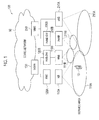
- Fig. 1 is a diagram showing a mobile communication system 100 according to the first embodiment.
- the mobile communication system 100 includes a communication terminal device 10 (hereinafter, UE 10) and a core network 50.
- the mobile communication system 100 includes a first communication system and a second communication system.
- the first communication system is a communication system supporting UMTS (Universal Mobile Telecommunication System), for example.
- the first communication system includes a base station 110A (hereinafter, NB 110A), a home base station 110B (hereinafter, HNB 110B), an RNC 120A, a home base station gateway 120B (hereinafter, HNB-GW 120B) and an SGSN 130.
- NB 110A base station 110A
- HNB 110B home base station 110B
- RNC 120A home base station gateway 120B
- HNB-GW 120B home base station gateway 120B
- SGSN 130 SGSN
- a radio access network (UTRAN; Universal Terrestrial Radio Access Network) corresponding to the first communication system includes the NB 110A, the HNB 110B, the RNC 120A, and the HNB-GW 120B.
- the second communication system is a communication system corresponding to an LTE (Long Term Evolution) for example.
- the second communication system includes a base station 210A (hereinafter, eNB 210A), a home base station 210B (hereinafter, HeNB 210B), a home base station gateway 220B (hereinafter, HeNB-GW 220B), and an MME 230.
- eNB 210A base station 210A
- HeNB 210B home base station gateway 220B
- MME 230 MME
- a radio access network (E-UTRAN; Evolved Universal Terrestrial Radio Access Network) corresponding to the second communication system includes the eNB 210A, the HeNB 210B, and the HeNB-GW 220B.
- the UE 10 is a device (User Equipment) configured to communicate with the first communication system or the second communication system.
- the UE 10 has a function of performing radio communications with the NB 110A and the HNB 110B.
- the UE 10 has a function of performing radio communications with the eNB 210A and the HeNB 210B.
- the NB 110A has a macrocell 111A and is a device (Node B) configured to perform radio communications with a UE 10 present in the macrocell 111A.
- the macrocell 111A is configured to use a carrier line (line which belongs the carrier/operator), for example.
- the carrier line is a line owned by a communication carrier installed the NB 110A, which manages the macrocell 111A, or a line contracted by the communication carrier.
- the HNB 1108 has a specific cell 111B and is a device (Home Node B) configured to perform radio communications with a UE 10 present in the specific cell 111B.
- the specific cell 111B is configured to use a user line, for example.
- the user line is a line contracted by the user, for him/herself, who installed the HNB 110B, which manages the specific cell 111B.
- the user line includes a line between a radio control device (RNC 120A) provided by a carrier and the HNB 110B, a line between a gateway device (HNB-GW 120B) provided by a carrier and the HNB 110B, a line between a core network device (SGSN 130) provided by a carrier and the HNB 110B, or one or some of these lines.
- the user line is an ADSL line, an optical line or the like, for example.
- the RNC 120A is connected to the NB 110A and is a device (Radio Network Controller) that establishes a radio connection (RRC Connection) with the UE 10 in the macrocell 111A.
- a radio connection RRC Connection
- the HNB-GW 120B is connected to the HNB 110B and is a device (Home NodeB Gateway) that establishes a radio connection (RRC Connection) with the UE 10 in the specific cell 111B.
- a radio connection RRC Connection
- the SGSN 130 is a device (Serving GPRS Support Node) that performs packet exchange in a packet exchange domain.
- the SGSN 130 is provided in the core network 50.
- a device MSC; Mobile Switching Center
- MSC Mobile Switching Center
- the eNB 210A has a macrocell 211A and is a device (evolved Node B) configured to perform radio communications with a UE 10 present in the macrocell 211A.
- the macrocell 211A is configured to use a carrier line, for example.
- the carrier line is a line owned by a communication carrier installed the eNB 210A, which manages the macrocell 211A, or a line contracted by the communication carrier.
- the HeNB 210B has a specific cell 211B and is a device (Home evolved Node B) configured to perform radio communications with a UE 10 present in the specific cell 211B.
- a device Home evolved Node B
- the specific cell 211B is configured to use a user line, for example.
- the user line is a line contracted by the user for him/herself, who installed the HeNB 210B, which manages the specific cell 211B.
- the user line includes a line between a radio control device (RNC 120A) provided by a carrier and the HeNB 210B, a line between a gateway device (HeNB-GW 220B) provided by a carrier and the HeNB 210B, a line between a core network device (MME 230) provided by a carrier and the HeNB 210B, and one or some of these lines.
- the user line is an ADSL line, an optical line or the like, for example.
- the HeNB-GW 220B is connected to the HeNB 210B and is a device (Home evolved Node B Gateway) configured to manage the HeNB 210B.
- the MME 230 is connected to the HeNB 210B via the HeNB-GW 220B and is a device (Mobility Management Entity) configured to manage the mobility of a UE 10 that establishes a radio connection with the HeNB 210B.
- a device Mobility Management Entity
- the macrocell and the specific cell should be understood as functions to perform radio communications with the UE 10. However, it should be noted that the macrocell and the specific cell are also used as terms indicating service areas of a cell. Cells such as the macrocell and the specific cell are identified by a frequency, a spread code, a timeslot, or the like used therein.
- the specific cell is referred to as a femtocell, a CSG (Closed Subscriber Group), and a home cell.
- the specific cell is configured such that an access type is settable.
- the access type specifies a UE 10 allowed to access the specific cell, and is set at "Closed,” "Hybrid, " or "Open.”
- a "Closed" specific cell is configured to allow only a specific user managed by the specific cell to be provided with services.
- a "Hybrid" specific cell is configured to allow, for example, the specific user managed by the specific cell to perform communications with a high quality and the non-specific user not managed by the specific cell to perform communications with best effort quality.
- An "Open" specific cell is configured to allow all the UEs 10 to be provided with a service, as in a macrocell.
- communication qualities among the UEs 10 are not differentiated irrespective of whether the UE 10 is managed by the specific cell or not.
- the access type may also be "ACCESS CLASS BARED” that prohibits an access of the UE 10 for each access class, or a "CELL BARRED” that prohibits the access of the UE 10 for each cell.
- Fig. 2 is a diagram showing a network device 20 according to the first embodiment.
- the network device 20 includes a communication unit 21, a line determination unit 22, a call type determination unit 23 and a calculation unit 24.
- the network device 20 may be a device configured to manage the specific cell (the HNB 110B or HeNB 210B, for example).
- the network device 20 may be a device provided at an upper level of the device managing the specific cell (the RNC 120A, HNB-GW 120B, SGSN 130, HeNB-GW 220B or MME 230, for example).
- the network device 20 may be another device (a charging server, for example) provided in the core network 50.
- the communication unit 21 performs communications with the UE 10. Alternatively, the communication unit 21 performs communications with another network device.
- the communication unit 21 notifies a user installed a radio base station managing the specific cell of a reduction fee calculated by the calculation unit 24 to be described later, for example.
- the line determination unit 22 determines whether or not a communication call set in communications performed by the UE 10 uses a user line.
- the communication call is a voice call, a packet call, an originating call, a terminating call or the like, for example.
- the line determination unit 22 acquires a line identifier configured to identify a user installed a radio base station managing the specific cell.
- the line determination unit 22 has a correspondence relation between the identifier of the radio base station managing the specific cell and the user installed the radio base station, the line identifier may be an identifier of the radio base station managing the specific cell.
- the line identifier may be configured to identify a radio base station managing a macrocell and may be configured to identify a communication carrier installed the radio base station managing the macrocell.
- the line determination unit 22 extracts a line identifier from a radio link setting response (Radio Link Response).
- the line identifier has the configuration shown in Fig. 3 , for example. As shown in Fig. 3 , the line identifier is configured of "Access Charge Bit,” "Line Type, " "User Line Rate” and "CSG ID.”
- Access Charge Bit is an information element indicating whether the radio base station uses a user line or a carrier line.
- the length of "Access Charge Bit” is 1 bit, for example.
- Line Type is an information element indicating the type of a user line if the radio base station uses a user line.
- Line Type shows a line type such as "ADSL line” or “optical line.
- the length of "Line Type” is 3 bits, for example.
- User Line Rate is an information element indicating the proportion that a user line occupies in the entire line or with respect to a carrier line if the radio base station uses a user line.
- the length of "User Line Rate” is 7 bits, for example.
- CSG ID is an information element identifying a radio base station managing the specific cell if the radio base station uses a user line. Specifically, “CSG ID” is an information element identifying a user installed the radio base station managing the specific cell. The length of "CSG ID” is 27 bits, for example.
- the network device 20 preferably manages information associating the user installed the radio base station managing the specific cell with "CSG ID.” Alternatively, the network device 20 may acquire the information associating the user installed the radio base station managing the specific cell with "CSG ID" from another device.
- the line determination unit 22 determines on the basis of the line identifier whether or not the communication call uses the user line. Specifically, the line determination unit 22 determines that the communication call uses the user line, if it is identified by the line identifier that the communication call uses the user line.
- the line determination unit 22 may determine on the basis of the line identifier whether or not the communication call uses the carrier line. Specifically, the line determination unit 22 determines that the communication call uses the user line, if it is identified by the line identifier that the communication call uses the carrier line.
- the call type determination unit 23 determines the type of the communication call set in the communications performed by the UE 10. Specifically, the call type determination unit 23 determines whether or not the type of the communication call using the user line or the connection method of the communication call using the user line is a reduction target.
- the type of the reduction target may be any one or more communication calls among a voice call, a packet call and the like.
- the type of the reduction target may be the connection method of a communication call, such as an individual channel connection including an originating call, terminating call, emergency call, normal call, HSPA and the like or a common channel connection including HSPA and the like.
- the reduction target may be optionally determined by the communication carrier or the like.
- the calculation unit 24 calculates a reduction fee to be discounted for the user installed the radio base station managing the specific cell. To put it differently, if the type of the communication call using the user line or the connection method of the communication call using the user line is the reduction target, the calculation unit 24 calculates a reduction fee to be discounted for the user installed the radio base station managing the specific cell. More specifically, the calculation unit 24 calculates a reduction fee to be discounted from a usage fee for the communication call using the user line for the user installed the radio base station managing the specific cell.
- the reduction fee calculated by the calculation unit 24 may be expressed by a ratio between the usage and the reduction fee (reduction rate). Alternatively, the reduction fee calculated by the calculation unit 24 may be an absolute amount of the value to be discounted for the user.
- the calculation unit 24 calculates a reduction fee to be discounted for the user on the basis of the time during which the user line is occupied. Alternatively, the calculation unit 24 calculates a reduction fee to be discounted for the user on the basis of the communication amount (packet amount) used in the user line.
- the calculation unit 24 calculates a reduction fee to be discounted for the user on the basis of the ratio between the time during which the user line is occupied and the time during which the carrier line is occupied. Alternatively, the calculation unit 24 calculates a reduction fee to be discounted for the user on the basis of the ratio between the communication amount (packet amount) used in the user line and the communication amount (packet amount) used in the carrier line.
- the usage fee for the communication call is collected from the subscriber of the UE 10 through the communication carrier in general. If the user installed the radio base station managing the specific cell is the subscriber of the UE 10, the reduction fee calculated by the calculation unit 24 is reduced for the subscriber of the UE 10. Note that, the user installed the radio base station managing the specific cell may be different from the subscriber of the UE 10.
- Fig. 4 is a diagram showing the UE 10 according to the first embodiment.
- the UE 10 includes a communication unit 11 and a display unit 12. Note that, an example of the case where the subscriber of the UE 10 is the user installed the radio base station managing the specific cell will be described. Specifically, an example of the case where the reduction fee is reduced for the subscriber of the UE 10 will be described.
- the communication unit 11 performs radio communications with the NB 110A and the HNB 110B. In addition, the communication unit 11 performs radio communications with the eNB 210A and the HeNB 210B. Moreover, the communication unit 11 performs communications with the network device 20.
- the display unit 12 displays various types of information.
- the display unit 12 displays a reduction fee, for example.
- the display unit 12 may display a history of reduction fees during a certain period or may display an accumulated amount of reduction fees during a certain period.
- the network device 20 preferably notifies the UE 10 of the reduction fee.
- the reduction fee may be notified to the UE 10 at the end of a communication call or may be notified to the UE 10 upon request from the UE 10.
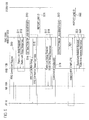
- Fig. 5 is a sequence diagram showing the operation of the mobile communication system 100 according to the first embodiment.
- the UE 10 transmits a radio connection request (RRC Connection Request) between the UE 10 and the HNB-GW 120B to the HNB-GW 120B in step 10.
- RRC Connection Request radio connection request
- the HNB-GW 120B transmits a radio link setup request (Radio Link Setup Request) between the UE 10 and the HNB 110B (specific cell 111B) to the HNB 110B (specific cell 1118).
- a radio link setup request Radio Link Setup Request
- the HNB 110B (specific cell 111B) transmits a radio link setup response (Radio Link Setup Response) between the UE 10 and the HNB 110B (specific cell 111B) to the HNB-GW 120B.
- a radio link setup response Radio Link Setup Response
- the HNB 110B (specific cell 111B) includes in the setup response a line identifier configured to identify the HNB 110B (or the user installed the HNB 110B), which manages the specific cell 111B.
- the HNB-GW 120B extracts the line identifier from the setup response received in step 12. Alternatively, the HNB-GW 120B identifies the user installed the HNB 110B, on the basis of the line identifier.
- step 14 the HNB-GW 120B transmits a radio connection setup instruction (RRC Connection Setup) between the UE 10 and the HNB-GW 120B to the UE 10.
- RRC Connection Setup a radio connection setup instruction
- step 15 the UE 10 transmits a radio link connection setup completion (RRC Connection Setup Complete) between the UE 10 and the HNB-GW 120B to the HNB-GW 120B.
- RRC Connection Setup Complete radio link connection setup completion
- the HNB-GW 120B reports the line identifier extracted in step 13 to the SGSN 130.
- the HNB-GW 120B reports the user identified in step 13 to the SGSN 130.
- the HNB-GW 120B transmits a radio link setup request (Radio Link Setup Request) between the UE 10 and the NB 110A (macrocell 111A) to the NB 110A (macrocell 111A) via the RNC 120A.
- a radio link setup request Radio Link Setup Request
- the NB 110A (macrocell 111A) transmits a radio link setup response (Radio Link Setup Response) between the UE 10 and the NB 110A (macrocell 111A) to the HNB-GW 120B via the RNC 120A.
- a radio link setup response Radio Link Setup Response
- the NB 110A (macrocell 111A) includes in the setup response a line identifier configured to identify the NB 110A (or the communication carrier installed the NB 110A), which manages the macrocell 111A.
- the HNB-GW 120B transmits a command (HANDOVER COMMAND) indicating start of soft handover between the NB 110A (macrocell 111A) and the HNB 110B (specific cell 111B) to the UE 10.
- a command HANDOVER COMMAND
- the HNB-GW 120B extracts the line identifier from the setup response received in step 18.
- the HNB-GW 120B identifies the communication carrier installed the NB 110A, on the basis of the line identifier.
- step 21 the UE 10 transmits a command (HANDOVER COMPLETE) indicating completion of the soft handover between the NB 110A (macrocell 111A) and the HNB 110B (specific cell 111B) to HNB-GW 120B.
- a command HANDOVER COMPLETE
- the HNB-GW 120B reports the line identifier extracted in step 20 to the SGSN 130.
- the HNB-GW 120B reports the communication carrier identified in step 20 to the SGSN 130.
- step 23 the HNB-GW 120B transmits a radio link deletion request (Radio Link Deletion Request) to the HNB 110B (specific cell 111B).
- a radio link deletion request (Radio Link Deletion Request)
- step 24 the HNB 110B (specific cell 111B) transmits a radio link deletion response (Radio Link Deletion Response) to the HNB-GW 120B.
- a radio link deletion response Radio Link Deletion Response
- connection procedure may be a handover procedure or a reconnection procedure or a cell updating procedure such as a common channel transition procedure (CELL UPDATE).
- connection procedure may be an Inter-RAT procedure including as an originating call, a terminating call, CSFB (Circuit Switching Fallback) and the like in the HNB 110B.
- the line identifier is configured to identify the user installed the radio base station managing the specific cell, and the line determination unit 22 determines by using the line identifier whether or not the communication call uses the user line.
- the user installed the radio base station managing the specific cell can be identified by the line identifier. This enables provision of a service to discount at least a part of a usage fee for the communication call using the user line.
- the call type determination unit 23 determines whether or not the type of the Communication call using the user line or the connection method of the communication call using the user line is a reduction target. To put it in another way, it is possible for the communication carrier or the like to set a reduction target. Thus, a variety of services can be provided as a usage fee reduction service.
- the provision of a usage fee reduction service makes it possible to give the user installed the radio base station managing the specific cell an incentive to cause other UEs 10 not managed by the specific cell to use the specific cell .
- an increase in the specific cells for which "Hybrid” or "Open” is set as the access type can be expected.
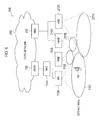
- the upper level node of the HNB 110B is the HNB-GW 120B in the first embodiment. Meanwhile, as shown in Fig. 6 , the upper level node of the HNB 110B is the RNC 120A in Modification Example 1.
- the RNC 120A manages the HNB 110B instead of the HNB-GW 120B. To put it differently, the RNC 120A provides the same functions as those of the HNB-GW 120B to a device that belongs under the RNC 120A.
- the upper level node of the HeNB 210B is the HeNB-GW 220B in the first embodiment. Meanwhile, as shown in Fig. 6 , the upper level node of the HeNB 210B is the MME 230 in Modification Example 1.
- the HeNB 210B provides the same functions as those of the HeNB-GW 220B to a device that belongs under the HeNB 210B, instead of the HeNB-GW 220B.
- the embodiment is not limited to this case.
- the embodiment may be applied to a case where the cell used by the UE 10 is changed in the second communication system, for example.
- the embodiment may be applied to a case where the cell used by the UE 10 is changed between the first communication system and the second communication system.
- the structure (the communication unit 21, the line determination unit 22, the call type determination unit 23, the calculation unit 24) provided in the network device 20 are provided in a single device.
- the embodiment is not limited to this.
- the communication unit 21, the line determination unit 22, the call type determination unit 23 and the calculation unit 24 may be respectively provided in different devices.
- the line determination unit 22 or the call type determination unit 23 may be provided to the NB 110A, the HNB 110B, the eNB 210A, the HeNB 210B, or the like.
- the line determination unit 22 or the call type determination unit 23 may be provided to the RNC 120A, the HNB-GW 120B, the eNB 210A, the HeNB 210B, the HeNB-GW 220B, or the like.
- the line determination unit 22 or the call type determination unit 23 may be provided to the SGSN 130 or the MME 230.
- the calculation unit 24 may be provided to the SGSN 130 or the MME 230 and may be provided to a server (a charging server, for example) provided in the core network 50.
- the calculation unit 24 may be provided to the RNC 120A, the HNB-GW 120B, the eNB 210A, the HeNB 210B or the HeNB-GW 220B.
- the line determination unit 22 and the call type determination unit 23 are provided to a switching device such as the SGSN 130 or the MME 230, the switching device notifies by using an information element such as SPID (Subscriber Profile Identity) the device having the calculation unit 24 that the communication call is a reduction target call.
- SPID Subscriber Profile Identity
- a control signal is used that includes RANAP (Radio Access Network Application Part), NBAP (NodeB Application part), RNSAP (Radio Network Subsystem Application), and HNBAP (Home NodeB Application Part).
- RANAP Radio Access Network Application Part
- NBAP NodeB Application part
- RNSAP Radio Network Subsystem Application
- HNBAP Home NodeB Application Part
- the above-described operations of the UE 10 may be implemented by hardware, a software module executed by a processor, or a combination of both.
- the software module may be provided in any type of storage medium such as a RAM (Random Access Memory), a flash memory, a ROM (Read Only Memory), an EPROM (Erasable Programmable ROM), an EEPROM (Electronically Erasable and Programmable ROM), a register, a hard disk drive, a removable disk, or a CD-ROM.
- RAM Random Access Memory
- flash memory a ROM (Read Only Memory)
- EPROM Erasable Programmable ROM
- EEPROM Electrically Erasable and Programmable ROM
- register a hard disk drive, a removable disk, or a CD-ROM.
- the storage medium is connected to the processor so that the processor can read and write information from and to the storage medium. Also, the storage medium may be integrated into the processor. Additionally, the storage medium and the processor may be provided in an ASIC. The ASIC may be provided in the UE 10. Moreover, the storage medium and the processor may be provided in the UE 10 as a discrete component.
- the present invention it is possible to provide a mobile communication system, a network device and a mobile communication method each of which makes it possible to provide a service to discount at least a part of a usage fee for a communication call using a user line.
- the mobile communication system, the network device and the mobile communication method are useful in radio communications and the like.
Landscapes
- Engineering & Computer Science (AREA)
- Computer Networks & Wireless Communication (AREA)
- Signal Processing (AREA)
- Business, Economics & Management (AREA)
- Accounting & Taxation (AREA)
- Mobile Radio Communication Systems (AREA)
- Meter Arrangements (AREA)
- Telephonic Communication Services (AREA)
Abstract
Description
- The present invention relates to a mobile communication system having a specific cell configured to use a user line and also to a network device and a mobile communication method that are used in the mobile communication system.
- A specific cell called a CSG (Closed Subscriber Group) cell, a home cell, or a femtocell is known. An access type can be set for the specific cell. The access type is "Closed," "Hybrid," or "Open."
- A "Closed" specific cell is configured to allow only to a specific user (UE; User equipment) to be provided with a service. A "Hybrid" specific cell is configured to allow the specific user to perform communications in a higher quality than that performed by other users (non-specific users) . An "Open" specific cell is configured to allow all the users to be provided with a service, as in a general macrocell (for example, Patent Document 1).
-
- Non-Patent Document 1: 3GPP TS36.331 v8.6.0
- Here, a line (user line which belongs to the user) contracted by the user him/herself, for example, is used as the line for using the specific cell.
- In the above described technique, however, there is no framework to identify a user who installed a radio base station managing the specific cell. Thus, a service to discount at least a part of a usage fee for a communication call using the user line cannot be provided.
- Thus, the present invention is made to solve the above-described problem, and an objective thereof is to provide a mobile communication system, a network device and a mobile communication method that makes it possible to provide a service to discount at least a part of a usage fee for a communication call using a user line.
- A mobile communication system according to the first feature has a specific cell configured to use a user line. The mobile communication system includes a line determination unit configured to determine whether or not a communication call uses the user line, by using a line identifier configured to identify a user installed a radio base station managing the specific cell, a calculation unit configured to calculate a reduction fee to be discounted from a usage fee for the communication call using the user line for the user installed a radio base station managing the specific cell and a call type determination unit configured to determine whether or not a type of the communication call using the user line or a connection method of the communication call using the user line is a reduction target. The calculation unit calculates a reduction fee to be discounted from a usage fee for the communication call using the user line for the user installed a radio base station managing the specific cell, if the type of the communication call using the user line or the connection method of the communication call using the user line is a reduction target.
- In the first feature, the mobile communication system further includes a notification unit configured to notify the user installed a radio base station managing the specific cell of the reduction fee to be discounted for the user installed the radio base station managing the specific cell.
- A network device according to the second feature is provided in a mobile communication system having a specific cell configured to use a user line. The network device includes a line determination unit configured to determine by using a line identifier whether or not a communication call uses the user line, the line identifier configured to identify a user installed a radio base station managing the specific cell, a calculation unit configured to calculate a reduction fee to be discounted from a usage fee for the communication call using the user line for the user installed a radio base station managing the specific cell, and a call type determination unit configured to determine whether or not a type of the communication call using the user line or a connection method of the communication call using the user line is a reduction target. The calculation unit calculates a reduction fee to be discounted from a usage fee for the communication call using the user line for the user installed a radio base station managing the specific cell, if the type of the communication call using the user line or the connection method of the communication call using the user line is a reduction target.
- A mobile communication method according the third feature is applied to a mobile communication system having a specific cell configured to use a user line. The mobile communication method includes the steps of determining whether or not a communication call uses the user line, by using a line identifier configured to identify a user installed a radio base station managing the specific cell, calculating a reduction fee to be discounted from a usage fee for the communication call using the user line for a user installed a radio base station managing the specific cell, and determining whether or not call type of the communication call using the user line or a connection method of the communication call using the user line is a reduction target. In the calculation step, a reduction fee to be discounted from a usage fee for the communication call using the user line for the user installed a radio base station managing the specific cell is calculated if the type of the communication call using the user line or the connection method of the communication call using the user line is a reduction target.
-
- [
Fig. 1] Fig. 1 is a diagram showing amobile communication system 100 according to a first embodiment. - [
Fig. 2] Fig. 2 is a diagram showing anetwork device 20 according to the first embodiment. - [
Fig. 3] Fig. 3 is a diagram showing an example of a line identifier according to the first embodiment. - [
Fig. 4] Fig. 4 is a diagram showing aUE 10 according to the first embodiment. - [
Fig. 5] Fig. 5 is a sequence diagram showing operation of themobile communication system 100 according to the first embodiment. - [
Fig. 6] Fig. 6 is a diagram showing amobile communication system 100 according to Modification Example 1. - Hereinafter, a description will be given of a mobile communication system according to an embodiment of the present invention with reference to the drawings. Note that, in the following description of the drawings, same or similar reference signs denote same or similar elements and portions.
- In addition, it should be noted that the drawings are schematic and ratios of dimensions and the like are different from actual ones. Therefore, specific dimensions and the like should be determined in consideration of the following description. Moreover, the drawings also include portions having different dimensional relationships and ratios from each other as a matter of course.
- The mobile communication system according to the embodiment has a specific cell configured to use a user line. The mobile communication system includes: a line determination unit configured to determine whether or not a communication call uses a user line, by using a line identifier configured to identify a user installed a radio base station managing the specific cell; and a calculation unit configured to calculate a reduction amount to be discounted from a usage fee for the communication call using the user line for the user installed a radio base station managing the specific cell.
- In the embodiment, the line identifier is configured to identify a user installed a radio base station managing the specific cell, and the line determination unit determines by using the line identifier whether or not a communication call uses the user line.
- Specifically, the user installed the radio base station managing the specific cell can be identified by the line identifier. This enables provision of a service to discount at least a part of a usage fee for the communication call using the user line.
- Note that, the specific cell is preferably a cell arranged on a small scale and extensively in the embodiment. The specific cell is preferably a cell managed by an HNB (Home Node B), an HeNB (Home Evolved Node B), a femto BTS or the like.
- Hereinafter, a description will be given of a configuration of a mobile communication system according to a first embodiment with reference to the drawing.
Fig. 1 is a diagram showing amobile communication system 100 according to the first embodiment. - As shown in
Fig. 1 , themobile communication system 100 includes a communication terminal device 10 (hereinafter, UE 10) and acore network 50. In addition, themobile communication system 100 includes a first communication system and a second communication system. - The first communication system is a communication system supporting UMTS (Universal Mobile Telecommunication System), for example. The first communication system includes a
base station 110A (hereinafter, NB 110A), ahome base station 110B (hereinafter, HNB 110B), an RNC 120A, a homebase station gateway 120B (hereinafter, HNB-GW 120B) and an SGSN 130. - A radio access network (UTRAN; Universal Terrestrial Radio Access Network) corresponding to the first communication system includes the
NB 110A, the HNB 110B, theRNC 120A, and the HNB-GW 120B. - The second communication system is a communication system corresponding to an LTE (Long Term Evolution) for example. For example, the second communication system includes a
base station 210A (hereinafter, eNB 210A), ahome base station 210B (hereinafter, HeNB 210B), a homebase station gateway 220B (hereinafter, HeNB-GW 220B), and an MME 230. - A radio access network (E-UTRAN; Evolved Universal Terrestrial Radio Access Network) corresponding to the second communication system includes the eNB 210A, the HeNB 210B, and the HeNB-GW 220B.
- The UE 10 is a device (User Equipment) configured to communicate with the first communication system or the second communication system. For example, the UE 10 has a function of performing radio communications with the
NB 110A and the HNB 110B. Alternatively, the UE 10 has a function of performing radio communications with the eNB 210A and the HeNB 210B. - The NB 110A has a
macrocell 111A and is a device (Node B) configured to perform radio communications with a UE 10 present in themacrocell 111A. - The
macrocell 111A is configured to use a carrier line (line which belongs the carrier/operator), for example. The carrier line is a line owned by a communication carrier installed the NB 110A, which manages themacrocell 111A, or a line contracted by the communication carrier. - The HNB 1108 has a
specific cell 111B and is a device (Home Node B) configured to perform radio communications with a UE 10 present in thespecific cell 111B. - The
specific cell 111B is configured to use a user line, for example. The user line is a line contracted by the user, for him/herself, who installed theHNB 110B, which manages thespecific cell 111B. The user line includes a line between a radio control device (RNC 120A) provided by a carrier and theHNB 110B, a line between a gateway device (HNB-GW 120B) provided by a carrier and theHNB 110B, a line between a core network device (SGSN 130) provided by a carrier and theHNB 110B, or one or some of these lines. The user line is an ADSL line, an optical line or the like, for example. - The
RNC 120A is connected to theNB 110A and is a device (Radio Network Controller) that establishes a radio connection (RRC Connection) with theUE 10 in themacrocell 111A. - The HNB-
GW 120B is connected to theHNB 110B and is a device (Home NodeB Gateway) that establishes a radio connection (RRC Connection) with theUE 10 in thespecific cell 111B. - The
SGSN 130 is a device (Serving GPRS Support Node) that performs packet exchange in a packet exchange domain. TheSGSN 130 is provided in thecore network 50. Although not shown inFig. 1 , a device (MSC; Mobile Switching Center) that performs call switching in a call switching domain may be provided in thecore network 50. - The
eNB 210A has amacrocell 211A and is a device (evolved Node B) configured to perform radio communications with aUE 10 present in themacrocell 211A. - The
macrocell 211A is configured to use a carrier line, for example. The carrier line is a line owned by a communication carrier installed theeNB 210A, which manages themacrocell 211A, or a line contracted by the communication carrier. - The
HeNB 210B has aspecific cell 211B and is a device (Home evolved Node B) configured to perform radio communications with aUE 10 present in thespecific cell 211B. - The
specific cell 211B is configured to use a user line, for example. The user line is a line contracted by the user for him/herself, who installed theHeNB 210B, which manages thespecific cell 211B. The user line includes a line between a radio control device (RNC 120A) provided by a carrier and theHeNB 210B, a line between a gateway device (HeNB-GW 220B) provided by a carrier and theHeNB 210B, a line between a core network device (MME 230) provided by a carrier and theHeNB 210B, and one or some of these lines. The user line is an ADSL line, an optical line or the like, for example. - The HeNB-
GW 220B is connected to theHeNB 210B and is a device (Home evolved Node B Gateway) configured to manage theHeNB 210B. - The
MME 230 is connected to theHeNB 210B via the HeNB-GW 220B and is a device (Mobility Management Entity) configured to manage the mobility of aUE 10 that establishes a radio connection with theHeNB 210B. - The macrocell and the specific cell should be understood as functions to perform radio communications with the
UE 10. However, it should be noted that the macrocell and the specific cell are also used as terms indicating service areas of a cell. Cells such as the macrocell and the specific cell are identified by a frequency, a spread code, a timeslot, or the like used therein. - In some cases, the specific cell is referred to as a femtocell, a CSG (Closed Subscriber Group), and a home cell. The specific cell is configured such that an access type is settable. The access type specifies a
UE 10 allowed to access the specific cell, and is set at "Closed," "Hybrid, " or "Open." - A "Closed" specific cell is configured to allow only a specific user managed by the specific cell to be provided with services.
- A "Hybrid" specific cell is configured to allow, for example, the specific user managed by the specific cell to perform communications with a high quality and the non-specific user not managed by the specific cell to perform communications with best effort quality.
- An "Open" specific cell is configured to allow all the UEs 10 to be provided with a service, as in a macrocell. In the "Open" cell, communication qualities among the
UEs 10 are not differentiated irrespective of whether theUE 10 is managed by the specific cell or not. - The access type may also be "ACCESS CLASS BARED" that prohibits an access of the
UE 10 for each access class, or a "CELL BARRED" that prohibits the access of theUE 10 for each cell. - Next, a description will be given of a configuration of a network device according to the first embodiment with reference to the drawings.
Fig. 2 is a diagram showing anetwork device 20 according to the first embodiment. As shown inFig. 2 , thenetwork device 20 includes acommunication unit 21, aline determination unit 22, a calltype determination unit 23 and acalculation unit 24. - Note that, the
network device 20 may be a device configured to manage the specific cell (theHNB 110B orHeNB 210B, for example). Alternatively, thenetwork device 20 may be a device provided at an upper level of the device managing the specific cell (theRNC 120A, HNB-GW 120B,SGSN 130, HeNB-GW 220B orMME 230, for example). Alternatively, thenetwork device 20 may be another device (a charging server, for example) provided in thecore network 50. - The
communication unit 21 performs communications with theUE 10. Alternatively, thecommunication unit 21 performs communications with another network device. - The
communication unit 21 notifies a user installed a radio base station managing the specific cell of a reduction fee calculated by thecalculation unit 24 to be described later, for example. - The
line determination unit 22 determines whether or not a communication call set in communications performed by theUE 10 uses a user line. The communication call is a voice call, a packet call, an originating call, a terminating call or the like, for example. - Specifically, firstly, if the
UE 10 performs communications with the specific cell, theline determination unit 22 acquires a line identifier configured to identify a user installed a radio base station managing the specific cell. Here, if theline determination unit 22 has a correspondence relation between the identifier of the radio base station managing the specific cell and the user installed the radio base station, the line identifier may be an identifier of the radio base station managing the specific cell. - Note that, the line identifier may be configured to identify a radio base station managing a macrocell and may be configured to identify a communication carrier installed the radio base station managing the macrocell.
- If the
network device 20 is a radio control device (the HNB-GW 120B,RNC 120A,HeNB 210B or the like), for example, theline determination unit 22 extracts a line identifier from a radio link setting response (Radio Link Response). - Note that, the line identifier has the configuration shown in
Fig. 3 , for example. As shown inFig. 3 , the line identifier is configured of "Access Charge Bit," "Line Type, " "User Line Rate" and "CSG ID." - "Access Charge Bit" is an information element indicating whether the radio base station uses a user line or a carrier line. The length of "Access Charge Bit" is 1 bit, for example.
- "Line Type" is an information element indicating the type of a user line if the radio base station uses a user line. "Line Type" shows a line type such as "ADSL line" or "optical line. " The length of "Line Type" is 3 bits, for example.
- "User Line Rate" is an information element indicating the proportion that a user line occupies in the entire line or with respect to a carrier line if the radio base station uses a user line. The length of "User Line Rate" is 7 bits, for example.
- "CSG ID" is an information element identifying a radio base station managing the specific cell if the radio base station uses a user line. Specifically, "CSG ID" is an information element identifying a user installed the radio base station managing the specific cell. The length of "CSG ID" is 27 bits, for example.
- Note that, the
network device 20 preferably manages information associating the user installed the radio base station managing the specific cell with "CSG ID." Alternatively, thenetwork device 20 may acquire the information associating the user installed the radio base station managing the specific cell with "CSG ID" from another device. - Secondly, the
line determination unit 22 determines on the basis of the line identifier whether or not the communication call uses the user line. Specifically, theline determination unit 22 determines that the communication call uses the user line, if it is identified by the line identifier that the communication call uses the user line. - Note that, if the line identifier is configured to identify a communication carrier installed a radio base station managing a macrocell, the
line determination unit 22 may determine on the basis of the line identifier whether or not the communication call uses the carrier line. Specifically, theline determination unit 22 determines that the communication call uses the user line, if it is identified by the line identifier that the communication call uses the carrier line. - The call
type determination unit 23 determines the type of the communication call set in the communications performed by theUE 10. Specifically, the calltype determination unit 23 determines whether or not the type of the communication call using the user line or the connection method of the communication call using the user line is a reduction target. The type of the reduction target may be any one or more communication calls among a voice call, a packet call and the like. In addition, the type of the reduction target may be the connection method of a communication call, such as an individual channel connection including an originating call, terminating call, emergency call, normal call, HSPA and the like or a common channel connection including HSPA and the like. The reduction target may be optionally determined by the communication carrier or the like. - If the communication call uses a user line, the
calculation unit 24 calculates a reduction fee to be discounted for the user installed the radio base station managing the specific cell. To put it differently, if the type of the communication call using the user line or the connection method of the communication call using the user line is the reduction target, thecalculation unit 24 calculates a reduction fee to be discounted for the user installed the radio base station managing the specific cell. More specifically, thecalculation unit 24 calculates a reduction fee to be discounted from a usage fee for the communication call using the user line for the user installed the radio base station managing the specific cell. - The reduction fee calculated by the
calculation unit 24 may be expressed by a ratio between the usage and the reduction fee (reduction rate). Alternatively, the reduction fee calculated by thecalculation unit 24 may be an absolute amount of the value to be discounted for the user. - Specifically, in the case where the line identifier is configured to identify only the user line, the
calculation unit 24 calculates a reduction fee to be discounted for the user on the basis of the time during which the user line is occupied. Alternatively, thecalculation unit 24 calculates a reduction fee to be discounted for the user on the basis of the communication amount (packet amount) used in the user line. - Alternatively, in the case where the line identifier is configured to identify both of the user line and the carrier line, the
calculation unit 24 calculates a reduction fee to be discounted for the user on the basis of the ratio between the time during which the user line is occupied and the time during which the carrier line is occupied. Alternatively, thecalculation unit 24 calculates a reduction fee to be discounted for the user on the basis of the ratio between the communication amount (packet amount) used in the user line and the communication amount (packet amount) used in the carrier line. - Here, the usage fee for the communication call is collected from the subscriber of the
UE 10 through the communication carrier in general. If the user installed the radio base station managing the specific cell is the subscriber of theUE 10, the reduction fee calculated by thecalculation unit 24 is reduced for the subscriber of theUE 10. Note that, the user installed the radio base station managing the specific cell may be different from the subscriber of theUE 10. - Hereinafter, a description will be given of a configuration of the communication terminal device according to the first embodiment with reference to the drawing.
Fig. 4 is a diagram showing theUE 10 according to the first embodiment. As shown inFig. 4 , theUE 10 includes acommunication unit 11 and adisplay unit 12. Note that, an example of the case where the subscriber of theUE 10 is the user installed the radio base station managing the specific cell will be described. Specifically, an example of the case where the reduction fee is reduced for the subscriber of theUE 10 will be described. - The
communication unit 11 performs radio communications with theNB 110A and theHNB 110B. In addition, thecommunication unit 11 performs radio communications with theeNB 210A and theHeNB 210B. Moreover, thecommunication unit 11 performs communications with thenetwork device 20. - The
display unit 12 displays various types of information. Thedisplay unit 12 displays a reduction fee, for example. Here, thedisplay unit 12 may display a history of reduction fees during a certain period or may display an accumulated amount of reduction fees during a certain period. - Note that, the
network device 20 preferably notifies theUE 10 of the reduction fee. The reduction fee may be notified to theUE 10 at the end of a communication call or may be notified to theUE 10 upon request from theUE 10. - Hereinafter, a description will be given of operation of the mobile communication system according to the first embodiment with reference to the drawing.
Fig. 5 is a sequence diagram showing the operation of themobile communication system 100 according to the first embodiment. - Here, a description will be given of an example of a case where the
UE 10 starts communications with theHNB 110B (specific cell 111B) and performs communications with theNB 110A (macrocell 111A) after going through a soft handover state between theNB 110A (macrocell 111A) and theHNB 110B (specific cell 111B). - As shown in
Fig. 5 , theUE 10 transmits a radio connection request (RRC Connection Request) between theUE 10 and the HNB-GW 120B to the HNB-GW 120B instep 10. - In
step 11, the HNB-GW 120B transmits a radio link setup request (Radio Link Setup Request) between theUE 10 and theHNB 110B (specific cell 111B) to theHNB 110B (specific cell 1118). - In
step 12, theHNB 110B (specific cell 111B) transmits a radio link setup response (Radio Link Setup Response) between theUE 10 and theHNB 110B (specific cell 111B) to the HNB-GW 120B. - Here, the
HNB 110B (specific cell 111B) includes in the setup response a line identifier configured to identify theHNB 110B (or the user installed theHNB 110B), which manages thespecific cell 111B. - In step 13, the HNB-
GW 120B extracts the line identifier from the setup response received instep 12. Alternatively, the HNB-GW 120B identifies the user installed theHNB 110B, on the basis of the line identifier. - In
step 14, the HNB-GW 120B transmits a radio connection setup instruction (RRC Connection Setup) between theUE 10 and the HNB-GW 120B to theUE 10. - In
step 15, theUE 10 transmits a radio link connection setup completion (RRC Connection Setup Complete) between theUE 10 and the HNB-GW 120B to the HNB-GW 120B. - In
step 16, the HNB-GW 120B reports the line identifier extracted in step 13 to theSGSN 130. Alternatively, the HNB-GW 120B reports the user identified in step 13 to theSGSN 130. - In
step 17, the HNB-GW 120B transmits a radio link setup request (Radio Link Setup Request) between theUE 10 and theNB 110A (macrocell 111A) to theNB 110A (macrocell 111A) via theRNC 120A. - In step 18, the
NB 110A (macrocell 111A) transmits a radio link setup response (Radio Link Setup Response) between theUE 10 and theNB 110A (macrocell 111A) to the HNB-GW 120B via theRNC 120A. - Here, the
NB 110A (macrocell 111A) includes in the setup response a line identifier configured to identify theNB 110A (or the communication carrier installed theNB 110A), which manages themacrocell 111A. - In
step 19, the HNB-GW 120B transmits a command (HANDOVER COMMAND) indicating start of soft handover between theNB 110A (macrocell 111A) and theHNB 110B (specific cell 111B) to theUE 10. - In
step 20, the HNB-GW 120B extracts the line identifier from the setup response received in step 18. Alternatively, the HNB-GW 120B identifies the communication carrier installed theNB 110A, on the basis of the line identifier. - In
step 21, theUE 10 transmits a command (HANDOVER COMPLETE) indicating completion of the soft handover between theNB 110A (macrocell 111A) and theHNB 110B (specific cell 111B) to HNB-GW 120B. - In
step 22, the HNB-GW 120B reports the line identifier extracted instep 20 to theSGSN 130. Alternatively, the HNB-GW 120B reports the communication carrier identified instep 20 to theSGSN 130. - In
step 23, the HNB-GW 120B transmits a radio link deletion request (Radio Link Deletion Request) to theHNB 110B (specific cell 111B). - In
step 24, theHNB 110B (specific cell 111B) transmits a radio link deletion response (Radio Link Deletion Response) to the HNB-GW 120B. - Note that, the connection procedure may be a handover procedure or a reconnection procedure or a cell updating procedure such as a common channel transition procedure (CELL UPDATE). Moreover, the connection procedure may be an Inter-RAT procedure including as an originating call, a terminating call, CSFB (Circuit Switching Fallback) and the like in the
HNB 110B. - In the embodiment, the line identifier is configured to identify the user installed the radio base station managing the specific cell, and the
line determination unit 22 determines by using the line identifier whether or not the communication call uses the user line. - To put it differently, the user installed the radio base station managing the specific cell can be identified by the line identifier. This enables provision of a service to discount at least a part of a usage fee for the communication call using the user line.
- In the embodiment, the call
type determination unit 23 determines whether or not the type of the Communication call using the user line or the connection method of the communication call using the user line is a reduction target. To put it in another way, it is possible for the communication carrier or the like to set a reduction target. Thus, a variety of services can be provided as a usage fee reduction service. - As described above, the provision of a usage fee reduction service makes it possible to give the user installed the radio base station managing the specific cell an incentive to cause
other UEs 10 not managed by the specific cell to use the specific cell . Specifically, an increase in the specific cells for which "Hybrid" or "Open" is set as the access type can be expected. Thus, it is possible to achieve promotion of utilization of the specific cell. - Hereinafter, a description will be given of Modification Example 1 of the first embodiment with reference to the drawing. A difference from the first embodiment will be mainly described below.
- Specifically, the upper level node of the
HNB 110B is the HNB-GW 120B in the first embodiment. Meanwhile, as shown inFig. 6 , the upper level node of theHNB 110B is theRNC 120A in Modification Example 1. - In Modification Example 1, the
RNC 120A manages theHNB 110B instead of the HNB-GW 120B. To put it differently, theRNC 120A provides the same functions as those of the HNB-GW 120B to a device that belongs under theRNC 120A. - Moreover, the upper level node of the
HeNB 210B is the HeNB-GW 220B in the first embodiment. Meanwhile, as shown inFig. 6 , the upper level node of theHeNB 210B is theMME 230 in Modification Example 1. - In Modification Example 1, the
HeNB 210B provides the same functions as those of the HeNB-GW 220B to a device that belongs under theHeNB 210B, instead of the HeNB-GW 220B. - Note that, it is possible to omit only the HNB-
GW 120B, or to omit only the HeNB-GW 220B. - As described above, the details of the present invention have been disclosed by using the embodiment of the present invention. However, it should not be understood that the description and drawings which constitute part of this disclosure limit the present invention. From this disclosure, various alternative embodiments, examples, and operation techniques will be easily found by those skilled in the art.
- In the sequence shown in
Fig. 5 described above, an example of the case where the cell used by theUE 10 is changed in the first communication system is described. However, the embodiment is not limited to this case. The embodiment may be applied to a case where the cell used by theUE 10 is changed in the second communication system, for example. Alternatively, the embodiment may be applied to a case where the cell used by theUE 10 is changed between the first communication system and the second communication system. - In the above-described embodiment, a case is described in which the structure (the
communication unit 21, theline determination unit 22, the calltype determination unit 23, the calculation unit 24) provided in thenetwork device 20 are provided in a single device. The embodiment is not limited to this. Specifically, thecommunication unit 21, theline determination unit 22, the calltype determination unit 23 and thecalculation unit 24 may be respectively provided in different devices. - For example, the
line determination unit 22 or the calltype determination unit 23 may be provided to theNB 110A, theHNB 110B, theeNB 210A, theHeNB 210B, or the like. Theline determination unit 22 or the calltype determination unit 23 may be provided to theRNC 120A, the HNB-GW 120B, theeNB 210A, theHeNB 210B, the HeNB-GW 220B, or the like. Theline determination unit 22 or the calltype determination unit 23 may be provided to theSGSN 130 or theMME 230. Thecalculation unit 24 may be provided to theSGSN 130 or theMME 230 and may be provided to a server (a charging server, for example) provided in thecore network 50. - Alternatively, the
calculation unit 24 may be provided to theRNC 120A, the HNB-GW 120B, theeNB 210A, theHeNB 210B or the HeNB-GW 220B. In this case, if theline determination unit 22 and the calltype determination unit 23 are provided to a switching device such as theSGSN 130 or theMME 230, the switching device notifies by using an information element such as SPID (Subscriber Profile Identity) the device having thecalculation unit 24 that the communication call is a reduction target call. - For communications among the devices, a control signal is used that includes RANAP (Radio Access Network Application Part), NBAP (NodeB Application part), RNSAP (Radio Network Subsystem Application), and HNBAP (Home NodeB Application Part).
- The above-described operations of the
UE 10 may be implemented by hardware, a software module executed by a processor, or a combination of both. - The software module may be provided in any type of storage medium such as a RAM (Random Access Memory), a flash memory, a ROM (Read Only Memory), an EPROM (Erasable Programmable ROM), an EEPROM (Electronically Erasable and Programmable ROM), a register, a hard disk drive, a removable disk, or a CD-ROM.
- The storage medium is connected to the processor so that the processor can read and write information from and to the storage medium. Also, the storage medium may be integrated into the processor. Additionally, the storage medium and the processor may be provided in an ASIC. The ASIC may be provided in the
UE 10. Moreover, the storage medium and the processor may be provided in theUE 10 as a discrete component. - Note that, the entire content of Japanese Patent Application No.
2009-289779 (filed on December 21, 2009 - According to the present invention, it is possible to provide a mobile communication system, a network device and a mobile communication method each of which makes it possible to provide a service to discount at least a part of a usage fee for a communication call using a user line. Thus, the mobile communication system, the network device and the mobile communication method are useful in radio communications and the like.
- 10... communication terminal device, 11... communication unit, 12... display unit, 20... network device, 21... communication unit, 22... line determination unit, 23... call type determination unit, 24... calculation unit, 50... core network, 100... mobile communication system, 110A... NB, 110B... HNB, 111A... macrocell, 111B... specific cell, 120A... RNC, 120B... HNB-GW, 130... SGSN, 210A... eNB, 210B... HeNB, 211A... macrocell, 211B... specific cell, 220B... HeNB-GW, 230... MME
Claims (4)
- A mobile communication system having a specific cell configured to use a user line, the system comprising:a line determination unit configured to determine whether or not a communication call uses the user line, by using a line identifier configured to identify a user installed a radio base station managing the specific cell;a calculation unit configured to calculate a reduction fee to be discounted from a usage fee for the communication call using the user line for the user installed a radio base station managing the specific cell; anda call type determination unit configured to determine whether or not a type of the communication call using the user line or a connection method of the communication call using the user line is a reduction target, whereinthe calculation unit calculates a reduction fee to be discounted from a usage fee for the communication call using the user line for the user installed a radio base station managing the specific cell, if the type of the communication call using the user line or the connection method of the communication call using the user line is a reduction target.
- The mobile communication system according to claim 1, further comprising a notification unit configured to notify the user installed a radio base station managing the specific cell of the reduction fee to be discounted for the user installed the radio base station managing the specific cell.
- A network device provided in a mobile communication system having a specific cell configured to use a user line, the device comprising:a line determination unit configured to determine by using a line identifier whether or not a communication call uses the user line, the line identifier configured to identify a user installed a radio base station managing the specific cell;a calculation unit configured to calculate a reduction fee to be discounted from a usage fee for the communication call using the user line for the user installed a radio base station managing the specific cell; anda call type determination unit configured to determine whether or not a type of the communication call using the user line or a connection method of the communication call using the user line is a reduction target, whereinthe calculation unit calculates a reduction fee to be discounted from a usage fee for the communication call using the user line for the user installed a radio base station managing the specific cell, if the type of the communication call using the user line or the connection method of the communication call using the user line is a reduction target.
- A mobile communication method applied to a mobile communication system having a specific cell configured to use a user line, the method comprising the steps of:determining whether or not a communication call uses the user line, by using a line identifier configured to identify a user installed a radio base station managing the specific cell;calculating a reduction fee to be discounted from a usage fee for the communication call using the user line for a user installed a radio base station managing the specific cell; anddetermining whether or not call type of the communication call using the user line or a connection method of the communication call using the user line is a reduction target, whereinin the calculation step, a reduction fee to be discounted from a usage fee for the communication call using the user line for the user installed a radio base station managing the specific cell is calculated if the type of the communication call using the user line or the connection method of the communication call using the user line is a reduction target.
Applications Claiming Priority (2)
| Application Number | Priority Date | Filing Date | Title |
|---|---|---|---|
| JP2009289779A JP5289298B2 (en) | 2009-12-21 | 2009-12-21 | Mobile communication system, network device, and mobile communication method |
| PCT/JP2010/073027 WO2011078180A1 (en) | 2009-12-21 | 2010-12-21 | Mobile communication system, network device, and mobile communication method |
Publications (2)
| Publication Number | Publication Date |
|---|---|
| EP2518988A1 true EP2518988A1 (en) | 2012-10-31 |
| EP2518988A4 EP2518988A4 (en) | 2013-08-28 |
Family
ID=44195707
Family Applications (1)
| Application Number | Title | Priority Date | Filing Date |
|---|---|---|---|
| EP10839410.7A Withdrawn EP2518988A4 (en) | 2009-12-21 | 2010-12-21 | MOBILE COMMUNICATION SYSTEM, NETWORK DEVICE, AND MOBILE COMMUNICATION METHOD |
Country Status (5)
| Country | Link |
|---|---|
| US (1) | US8447271B2 (en) |
| EP (1) | EP2518988A4 (en) |
| JP (1) | JP5289298B2 (en) |
| CN (1) | CN102687494B (en) |
| WO (1) | WO2011078180A1 (en) |
Families Citing this family (3)
| Publication number | Priority date | Publication date | Assignee | Title |
|---|---|---|---|---|
| JP4937338B2 (en) * | 2009-12-21 | 2012-05-23 | 株式会社エヌ・ティ・ティ・ドコモ | Mobile communication system, network device, and mobile communication method |
| US9042218B2 (en) * | 2013-03-07 | 2015-05-26 | Qualcomm Incorporated | Apparatus, method, and system for incentivizing open access to closed subscriber group low-power base stations |
| WO2022193115A1 (en) * | 2021-03-16 | 2022-09-22 | Qualcomm Incorporated | Puncturing of inter-frequency measurements during evolved packet system fallback call procedure |
Family Cites Families (16)
| Publication number | Priority date | Publication date | Assignee | Title |
|---|---|---|---|---|
| JPH06311099A (en) | 1993-04-26 | 1994-11-04 | Casio Comput Co Ltd | Cordless telephone system |
| MXPA01000893A (en) * | 1998-07-27 | 2002-06-04 | Webtv Networks Inc | Remote computer access. |
| JP2001189950A (en) * | 1999-12-28 | 2001-07-10 | Fujitsu Ltd | Wireless switching system for providing a service for restricting movement of a mobile subscriber, and mobile switching center applied thereto |
| JP3589625B2 (en) * | 2000-08-25 | 2004-11-17 | 日本電信電話株式会社 | Communication billing system |
| JP3958975B2 (en) * | 2002-01-30 | 2007-08-15 | 株式会社エヌ・ティ・ティ・ドコモ | Billing system, mobile terminal and billing method |
| JP2004015103A (en) * | 2002-06-03 | 2004-01-15 | Nec Engineering Ltd | High-speed high-capacity communication system |
| MXPA05001699A (en) * | 2002-08-16 | 2005-07-22 | Togewa Holding Ag | Method and system for gsm authentication during wlan roaming. |
| WO2004045143A1 (en) * | 2002-11-13 | 2004-05-27 | Ktfreetel Co., Ltd. | Apparatus for analyzing the packet data on mobile communication network and method thereof |
| JP2004242176A (en) * | 2003-02-07 | 2004-08-26 | Nec Corp | Mobile communication system and its base station device installation method |
| JP2004357041A (en) | 2003-05-29 | 2004-12-16 | Telefon Ab L M Ericsson | Mobile communication service providing method and mobile communication system |
| US20050174944A1 (en) * | 2004-02-10 | 2005-08-11 | Adc Broadband Access Systems, Inc. | Bandwidth regulation |
| US8010080B1 (en) * | 2005-07-25 | 2011-08-30 | Sprint Spectrum L.P. | Predictive payment suggestion in a telecommunication system |
| TW200847050A (en) * | 2007-05-28 | 2008-12-01 | Trade Van Information Services Co | Method for processing consumption information |
| US8494522B2 (en) * | 2007-08-30 | 2013-07-23 | Cellco Partnership | Pico cell home mode operation |
| JP2009289779A (en) | 2008-05-27 | 2009-12-10 | Sumco Corp | Silicon wafer cleaning method and device |
| US8155670B2 (en) * | 2008-11-04 | 2012-04-10 | 2Wire, Inc. | Cell notification |
-
2009
- 2009-12-21 JP JP2009289779A patent/JP5289298B2/en not_active Expired - Fee Related
-
2010
- 2010-12-21 WO PCT/JP2010/073027 patent/WO2011078180A1/en not_active Ceased
- 2010-12-21 EP EP10839410.7A patent/EP2518988A4/en not_active Withdrawn
- 2010-12-21 US US13/518,132 patent/US8447271B2/en not_active Expired - Fee Related
- 2010-12-21 CN CN201080058556.6A patent/CN102687494B/en not_active Expired - Fee Related
Also Published As
| Publication number | Publication date |
|---|---|
| CN102687494A (en) | 2012-09-19 |
| WO2011078180A1 (en) | 2011-06-30 |
| EP2518988A4 (en) | 2013-08-28 |
| JP5289298B2 (en) | 2013-09-11 |
| JP2011130390A (en) | 2011-06-30 |
| CN102687494B (en) | 2014-01-15 |
| US8447271B2 (en) | 2013-05-21 |
| US20120315870A1 (en) | 2012-12-13 |
Similar Documents
| Publication | Publication Date | Title |
|---|---|---|
| US10271258B2 (en) | Communication units, integrated circuits and methods therefor | |
| CN101873612B (en) | Method and system measuring Home NB cell | |
| JP2009533946A (en) | Differentiated network view | |
| US9357379B2 (en) | Network element, integrated circuit, cellular communication system and method therefor | |
| CN101883347B (en) | Switching control method and device of home network | |
| US8447271B2 (en) | Mobile communication system, network device and mobile communication method | |
| KR20120036994A (en) | Femtocell arrangements | |
| KR101737398B1 (en) | Method and apparatus for handover control and handover blacklist management in a mobile communication system | |
| EP2509354B1 (en) | Mobile communication terminal, network device, mobile communication system, and mobile communication method | |
| US8532708B2 (en) | Access type setting apparatus, mobile communication system, and access type setting method | |
| JP5211083B2 (en) | Mobile communication system, network device, and mobile communication method | |
| EP2395790B1 (en) | A wireless network and a method of handover of a call connection | |
| EP2704475B1 (en) | Method for finding an optimal position of a new pico cell within a macro cell | |
| US20130029610A1 (en) | Determination program, determination device, and determination method | |
| EP2519064B1 (en) | Mobile communication system, network device and mobile communication method | |
| EP2528372A1 (en) | Mobile communication system, radio base station for particular cell, and mobile communication method | |
| KR101680478B1 (en) | Method and apparatus for handover control and handover blacklist management in a mobile communication system | |
| CN101999245B (en) | Method, device and system for measurement control |
Legal Events
| Date | Code | Title | Description |
|---|---|---|---|
| PUAI | Public reference made under article 153(3) epc to a published international application that has entered the european phase |
Free format text: ORIGINAL CODE: 0009012 |
|
| 17P | Request for examination filed |
Effective date: 20120706 |
|
| AK | Designated contracting states |
Kind code of ref document: A1 Designated state(s): AL AT BE BG CH CY CZ DE DK EE ES FI FR GB GR HR HU IE IS IT LI LT LU LV MC MK MT NL NO PL PT RO RS SE SI SK SM TR |
|
| DAX | Request for extension of the european patent (deleted) | ||
| A4 | Supplementary search report drawn up and despatched |
Effective date: 20130726 |
|
| RIC1 | Information provided on ipc code assigned before grant |
Ipc: H04W 4/26 20090101ALI20130722BHEP Ipc: H04W 84/10 20090101ALI20130722BHEP Ipc: H04M 15/00 20060101AFI20130722BHEP Ipc: H04M 3/42 20060101ALI20130722BHEP Ipc: H04M 3/00 20060101ALI20130722BHEP |
|
| 17Q | First examination report despatched |
Effective date: 20140212 |
|
| STAA | Information on the status of an ep patent application or granted ep patent |
Free format text: STATUS: THE APPLICATION IS DEEMED TO BE WITHDRAWN |
|
| 18D | Application deemed to be withdrawn |
Effective date: 20140624 |