EP2515037A1 - Fixed bed chemical looping combustion - Google Patents
Fixed bed chemical looping combustion Download PDFInfo
- Publication number
- EP2515037A1 EP2515037A1 EP11163366A EP11163366A EP2515037A1 EP 2515037 A1 EP2515037 A1 EP 2515037A1 EP 11163366 A EP11163366 A EP 11163366A EP 11163366 A EP11163366 A EP 11163366A EP 2515037 A1 EP2515037 A1 EP 2515037A1
- Authority
- EP
- European Patent Office
- Prior art keywords
- fixed bed
- gas
- oxygen
- process according
- gas stream
- Prior art date
- Legal status (The legal status is an assumption and is not a legal conclusion. Google has not performed a legal analysis and makes no representation as to the accuracy of the status listed.)
- Withdrawn
Links
- 238000002485 combustion reaction Methods 0.000 title claims abstract description 12
- 239000000126 substance Substances 0.000 title claims abstract description 10
- CURLTUGMZLYLDI-UHFFFAOYSA-N Carbon dioxide Chemical compound O=C=O CURLTUGMZLYLDI-UHFFFAOYSA-N 0.000 claims abstract description 52
- 239000007789 gas Substances 0.000 claims abstract description 41
- 229910002092 carbon dioxide Inorganic materials 0.000 claims abstract description 36
- 238000000034 method Methods 0.000 claims abstract description 34
- 230000008569 process Effects 0.000 claims abstract description 30
- 239000002737 fuel gas Substances 0.000 claims abstract description 28
- MYMOFIZGZYHOMD-UHFFFAOYSA-N Dioxygen Chemical compound O=O MYMOFIZGZYHOMD-UHFFFAOYSA-N 0.000 claims abstract description 17
- 229910001882 dioxygen Inorganic materials 0.000 claims abstract description 17
- 239000001569 carbon dioxide Substances 0.000 claims abstract description 16
- 230000001105 regulatory effect Effects 0.000 claims abstract description 6
- QVGXLLKOCUKJST-UHFFFAOYSA-N atomic oxygen Chemical compound [O] QVGXLLKOCUKJST-UHFFFAOYSA-N 0.000 claims description 37
- 239000001301 oxygen Substances 0.000 claims description 37
- 229910052760 oxygen Inorganic materials 0.000 claims description 37
- 239000002245 particle Substances 0.000 claims description 31
- 229910052751 metal Inorganic materials 0.000 claims description 28
- 239000002184 metal Substances 0.000 claims description 28
- 229910044991 metal oxide Inorganic materials 0.000 claims description 22
- 150000004706 metal oxides Chemical class 0.000 claims description 22
- VNWKTOKETHGBQD-UHFFFAOYSA-N methane Chemical compound C VNWKTOKETHGBQD-UHFFFAOYSA-N 0.000 claims description 18
- 238000006722 reduction reaction Methods 0.000 claims description 16
- VYPSYNLAJGMNEJ-UHFFFAOYSA-N Silicium dioxide Chemical compound O=[Si]=O VYPSYNLAJGMNEJ-UHFFFAOYSA-N 0.000 claims description 13
- 239000000463 material Substances 0.000 claims description 12
- 239000003638 chemical reducing agent Substances 0.000 claims description 7
- 239000000377 silicon dioxide Substances 0.000 claims description 6
- XLYOFNOQVPJJNP-UHFFFAOYSA-N water Substances O XLYOFNOQVPJJNP-UHFFFAOYSA-N 0.000 claims description 6
- XEEYBQQBJWHFJM-UHFFFAOYSA-N Iron Chemical compound [Fe] XEEYBQQBJWHFJM-UHFFFAOYSA-N 0.000 claims description 4
- PXHVJJICTQNCMI-UHFFFAOYSA-N Nickel Chemical compound [Ni] PXHVJJICTQNCMI-UHFFFAOYSA-N 0.000 claims description 4
- GWEVSGVZZGPLCZ-UHFFFAOYSA-N Titan oxide Chemical compound O=[Ti]=O GWEVSGVZZGPLCZ-UHFFFAOYSA-N 0.000 claims description 4
- MCMNRKCIXSYSNV-UHFFFAOYSA-N Zirconium dioxide Chemical compound O=[Zr]=O MCMNRKCIXSYSNV-UHFFFAOYSA-N 0.000 claims description 4
- 239000012876 carrier material Substances 0.000 claims description 4
- 239000003345 natural gas Substances 0.000 claims description 4
- 239000011236 particulate material Substances 0.000 claims description 4
- 239000000919 ceramic Substances 0.000 claims description 3
- 239000011521 glass Substances 0.000 claims description 3
- RYGMFSIKBFXOCR-UHFFFAOYSA-N Copper Chemical compound [Cu] RYGMFSIKBFXOCR-UHFFFAOYSA-N 0.000 claims description 2
- PNEYBMLMFCGWSK-UHFFFAOYSA-N aluminium oxide Inorganic materials [O-2].[O-2].[O-2].[Al+3].[Al+3] PNEYBMLMFCGWSK-UHFFFAOYSA-N 0.000 claims description 2
- 229910017052 cobalt Inorganic materials 0.000 claims description 2
- 239000010941 cobalt Substances 0.000 claims description 2
- GUTLYIVDDKVIGB-UHFFFAOYSA-N cobalt atom Chemical compound [Co] GUTLYIVDDKVIGB-UHFFFAOYSA-N 0.000 claims description 2
- 229910052802 copper Inorganic materials 0.000 claims description 2
- 239000010949 copper Substances 0.000 claims description 2
- 235000013305 food Nutrition 0.000 claims description 2
- 229910052742 iron Inorganic materials 0.000 claims description 2
- 229910052759 nickel Inorganic materials 0.000 claims description 2
- 238000004806 packaging method and process Methods 0.000 claims description 2
- ATUOYWHBWRKTHZ-UHFFFAOYSA-N Propane Chemical compound CCC ATUOYWHBWRKTHZ-UHFFFAOYSA-N 0.000 claims 2
- OTMSDBZUPAUEDD-UHFFFAOYSA-N Ethane Chemical compound CC OTMSDBZUPAUEDD-UHFFFAOYSA-N 0.000 claims 1
- 239000001273 butane Substances 0.000 claims 1
- WPBNNNQJVZRUHP-UHFFFAOYSA-L manganese(2+);methyl n-[[2-(methoxycarbonylcarbamothioylamino)phenyl]carbamothioyl]carbamate;n-[2-(sulfidocarbothioylamino)ethyl]carbamodithioate Chemical compound [Mn+2].[S-]C(=S)NCCNC([S-])=S.COC(=O)NC(=S)NC1=CC=CC=C1NC(=S)NC(=O)OC WPBNNNQJVZRUHP-UHFFFAOYSA-L 0.000 claims 1
- IJDNQMDRQITEOD-UHFFFAOYSA-N n-butane Chemical compound CCCC IJDNQMDRQITEOD-UHFFFAOYSA-N 0.000 claims 1
- OFBQJSOFQDEBGM-UHFFFAOYSA-N n-pentane Natural products CCCCC OFBQJSOFQDEBGM-UHFFFAOYSA-N 0.000 claims 1
- 239000001294 propane Substances 0.000 claims 1
- 239000000571 coke Substances 0.000 description 20
- 230000015572 biosynthetic process Effects 0.000 description 18
- 238000007254 oxidation reaction Methods 0.000 description 14
- 238000006243 chemical reaction Methods 0.000 description 12
- 230000003647 oxidation Effects 0.000 description 11
- 238000004519 manufacturing process Methods 0.000 description 7
- 230000009467 reduction Effects 0.000 description 5
- IJGRMHOSHXDMSA-UHFFFAOYSA-N Atomic nitrogen Chemical compound N#N IJGRMHOSHXDMSA-UHFFFAOYSA-N 0.000 description 4
- 239000000446 fuel Substances 0.000 description 3
- 238000005245 sintering Methods 0.000 description 3
- 239000004215 Carbon black (E152) Substances 0.000 description 2
- UGFAIRIUMAVXCW-UHFFFAOYSA-N Carbon monoxide Chemical compound [O+]#[C-] UGFAIRIUMAVXCW-UHFFFAOYSA-N 0.000 description 2
- UFHFLCQGNIYNRP-UHFFFAOYSA-N Hydrogen Chemical compound [H][H] UFHFLCQGNIYNRP-UHFFFAOYSA-N 0.000 description 2
- 239000000872 buffer Substances 0.000 description 2
- 229910002091 carbon monoxide Inorganic materials 0.000 description 2
- 239000000969 carrier Substances 0.000 description 2
- 238000011161 development Methods 0.000 description 2
- 239000008246 gaseous mixture Substances 0.000 description 2
- 238000003898 horticulture Methods 0.000 description 2
- 229930195733 hydrocarbon Natural products 0.000 description 2
- 150000002430 hydrocarbons Chemical class 0.000 description 2
- 239000001257 hydrogen Substances 0.000 description 2
- 229910052739 hydrogen Inorganic materials 0.000 description 2
- 239000002923 metal particle Substances 0.000 description 2
- 239000000203 mixture Substances 0.000 description 2
- 229910052757 nitrogen Inorganic materials 0.000 description 2
- 230000009257 reactivity Effects 0.000 description 2
- 238000011160 research Methods 0.000 description 2
- 238000003860 storage Methods 0.000 description 2
- PWHULOQIROXLJO-UHFFFAOYSA-N Manganese Chemical compound [Mn] PWHULOQIROXLJO-UHFFFAOYSA-N 0.000 description 1
- 241000940835 Pales Species 0.000 description 1
- 206010033546 Pallor Diseases 0.000 description 1
- 230000006978 adaptation Effects 0.000 description 1
- 238000004458 analytical method Methods 0.000 description 1
- 238000003889 chemical engineering Methods 0.000 description 1
- 230000015271 coagulation Effects 0.000 description 1
- 238000005345 coagulation Methods 0.000 description 1
- 238000013461 design Methods 0.000 description 1
- 238000009826 distribution Methods 0.000 description 1
- 230000005611 electricity Effects 0.000 description 1
- 238000005516 engineering process Methods 0.000 description 1
- 238000002474 experimental method Methods 0.000 description 1
- 230000002401 inhibitory effect Effects 0.000 description 1
- 239000012464 large buffer Substances 0.000 description 1
- 229910052748 manganese Inorganic materials 0.000 description 1
- 239000011572 manganese Substances 0.000 description 1
- 238000000691 measurement method Methods 0.000 description 1
- 239000013528 metallic particle Substances 0.000 description 1
- 238000001000 micrograph Methods 0.000 description 1
- 238000000386 microscopy Methods 0.000 description 1
- 238000007558 optical counting method Methods 0.000 description 1
- 238000000399 optical microscopy Methods 0.000 description 1
- 230000035699 permeability Effects 0.000 description 1
- 230000029553 photosynthesis Effects 0.000 description 1
- 238000010672 photosynthesis Methods 0.000 description 1
- 239000004576 sand Substances 0.000 description 1
- 238000007560 sedimentation technique Methods 0.000 description 1
Images
Classifications
-
- F—MECHANICAL ENGINEERING; LIGHTING; HEATING; WEAPONS; BLASTING
- F23—COMBUSTION APPARATUS; COMBUSTION PROCESSES
- F23C—METHODS OR APPARATUS FOR COMBUSTION USING FLUID FUEL OR SOLID FUEL SUSPENDED IN A CARRIER GAS OR AIR
- F23C10/00—Fluidised bed combustion apparatus
-
- F—MECHANICAL ENGINEERING; LIGHTING; HEATING; WEAPONS; BLASTING
- F23—COMBUSTION APPARATUS; COMBUSTION PROCESSES
- F23C—METHODS OR APPARATUS FOR COMBUSTION USING FLUID FUEL OR SOLID FUEL SUSPENDED IN A CARRIER GAS OR AIR
- F23C99/00—Subject-matter not provided for in other groups of this subclass
-
- F—MECHANICAL ENGINEERING; LIGHTING; HEATING; WEAPONS; BLASTING
- F23—COMBUSTION APPARATUS; COMBUSTION PROCESSES
- F23C—METHODS OR APPARATUS FOR COMBUSTION USING FLUID FUEL OR SOLID FUEL SUSPENDED IN A CARRIER GAS OR AIR
- F23C2900/00—Special features of, or arrangements for combustion apparatus using fluid fuels or solid fuels suspended in air; Combustion processes therefor
- F23C2900/99008—Unmixed combustion, i.e. without direct mixing of oxygen gas and fuel, but using the oxygen from a metal oxide, e.g. FeO
-
- Y—GENERAL TAGGING OF NEW TECHNOLOGICAL DEVELOPMENTS; GENERAL TAGGING OF CROSS-SECTIONAL TECHNOLOGIES SPANNING OVER SEVERAL SECTIONS OF THE IPC; TECHNICAL SUBJECTS COVERED BY FORMER USPC CROSS-REFERENCE ART COLLECTIONS [XRACs] AND DIGESTS
- Y02—TECHNOLOGIES OR APPLICATIONS FOR MITIGATION OR ADAPTATION AGAINST CLIMATE CHANGE
- Y02E—REDUCTION OF GREENHOUSE GAS [GHG] EMISSIONS, RELATED TO ENERGY GENERATION, TRANSMISSION OR DISTRIBUTION
- Y02E20/00—Combustion technologies with mitigation potential
- Y02E20/34—Indirect CO2mitigation, i.e. by acting on non CO2directly related matters of the process, e.g. pre-heating or heat recovery
Definitions
- the invention is directed to a process for fixed bed chemical looping combustion, in particular applied to a process for regulating the heat and the carbon dioxide concentration of the air in an enclosed space within which plants and/or crops are grown.
- CLC chemical looping combustion
- a small scale CLC setup for the use in greenhouses is described in WO-A-2006/123925 .
- heat is required in greenhouses to keep the temperature at a desired level.
- CO 2 is required to increase the plant production rate.
- natural gas is burned for greenhouses to produce CO 2 during the day and during warm periods.
- the produced heat is stored in the form of hot water using a buffer. The heat stored in the water buffers is then used at night or during cold periods. In this way, by combining the production of CO 2 with the storage of heat, energy losses are reduced.
- the oxygen carrier plays a vital role in optimising the performance of the process. It is important that the capacity of the oxygen carrier is high, because a large buffer capacity is desired. For a packed bed configuration the reactivity of the oxygen carrier is less important, because in a packed bed the fuel has a much longer contact time with the oxygen carrier, as compared to the situation of a fluidised bed. Another factor that plays a critical role is the price of the oxygen carrier. In order to store a large amount of heat in the packed bed, a large amount of oxygen carrier is required.
- a further drawback of convention CLC processes is the formation of cokes within the fixed bed. Cokes will reduce the available surface of the oxygen carrier and decrease permeability of the bed, thereby increasing the pressure drop.
- the usual way of reducing cokes formation is by adding steam. Although the addition of steam is a very easy option in a power plant (because it is readily available on site), it is not always readily available for small scale applications.
- Objective of the invention is therefore to provide a process for fixed bed chemical looping combustion having a minimal level of cokes formation.
- the invention is directed to a process for fixed bed chemical looping combustion, comprising passing a gas stream over a fixed bed, wherein said gas stream comprises a fuel gas and oxygen gas, wherein the oxygen gas is added to said fuel gas prior to passing the gas stream over the fixed bed.
- the addition of oxygen gas to the fuel gas results in a reduction of pressure drop formation.
- the oxygen gas is added to the fuel gas in the form of air (which is advantageous in view of abundance)
- slightly less pure carbon dioxide will be produced, because the carbon dioxide will be contaminated with a small amount of nitrogen.
- the production of slightly less pure carbon dioxide is not very important, and pales into insignificance beside the advantageous reduction in cokes formation.
- the inventors believe that when oxygen is unavailable in a part of the reactor, the temperature in the reactor will result in a formation of cokes (C (s) ).
- the conversion of the equilibrium reaction can be influenced by adding CO 2 , O 2 , or H 2 O to the carbon monoxide stream. This means that the conversion in backward reaction will increase and more CO will be produced. Overall, this will advantageously result in less cokes being formed.
- the gas stream which passes the fixed bed preferably comprises an amount of 1-10 vol.% of oxygen gas relative to the volume of the fuel gas, preferably 2-8 vol.%, more preferably 3-6 vol.%.
- the inventors experimentally found that at a concentration of about 4 vol.%, the formation of cokes is optimally reduced.
- the oxygen gas is added to the fuel gas in the form of air.
- air is readily available and can usually be added to the fuel gas in a simple manner.
- the gas stream passing the fixed bed consists of fuel gas and air.
- the amount of added air can then, for instance, be 5-48 vol.% relative to the volume of the fuel gas, such as 10-38 vol.%, or 14-29 vol.%.
- the fixed bed normally comprises a metal and/or metal oxide, which typically functions as an oxygen carrier.
- the metal and/or metal oxide is present in the form of particles.
- the fixed bed can comprise a carrier material.
- the carrier material may be comprised together with the metal and/or metal oxide in a particle.
- the metal can, for instance, be selected from the group consisting of copper, iron, nickel, cobalt and manganese.
- the metal may be present in reduced metal form or oxidised derivative state.
- the carrier material is preferably selected from the group consisting of alumina, silica, zirconia, and titania.
- the fixed bed comprises particles having an average particle size in the range of 1-500 ⁇ m, preferably in the range of 5-250 ⁇ m.
- average particle size as used in this application is meant to refer to the mean average diameter of the particles (also referred to in the art as “effective diameter", viz. the mean volume diameter, which is equivalent to the diameter of a sphere of equal volume to the particle being measured).
- the average particle size may be determined by measuring the diameter of a representative number of particles (such as 100) from a micrograph and calculate the average. Further details concerning techniques for measuring the average particle size of the metallic particles are known to those skilled in the art.
- the chemically reactive particles can have a mean particle size D50 as specified by the supplier in the range of 1-500 ⁇ m, such as in the range of 2-400 ⁇ m.
- the chemically reactive particles preferably have a mean particle size D90 as measured by microscopy in the range of 5-200 ⁇ m, such as in the range of 7-150 ⁇ m.
- the particle size distribution can for this purpose be determined by various measurement methods well-known to the person skilled in the art, including sieve analyses, optical microscopy, optical counting methods, electric counting methods, and sedimentation techniques.
- the fixed bed may be multiple fixed beds placed in sequence.
- the gas stream may be passed over two or more fixed beds consisting of different fixed bed materials. If the gas stream is passed over multiple fixed bed materials, these fixed bed materials may be contained in a single reactor or in two or more subsequent reactors.
- the fixed bed may further comprise inert particulate material, preferably selected from the group consisting of silica, silica carbide, ceramics, and glass.
- the inert particulate material is divided in a first part having an average particle size larger than the average particle size of the metal or metal oxide, and a second part having an average particle size smaller than the metal or metal oxide. This embodiment is advantageous, since the larger inert particles lower the pressure drop over the fixed bed, while the smaller inert particles prevent, or at least reduce, sintering of the metal or metal oxide particles.
- the fuel gas preferably comprises one or more selected from the group consisting of methane, natural gas, biogas and synthetic gas (also known as "syngas", a gas mixture containing carbon monoxide and hydrogen).
- methane natural gas
- biogas synthetic gas
- the fuel gas comprises methane.
- natural gas natural gas.
- the invention is directed to a process for regulating heat and carbon dioxide release, for instance in greenhouses.
- the invention is directed to a process for regulating the heat and the carbon dioxide concentration of the air in an enclosed space within which plants and/or crops are grown, comprising subsequently
- the addition of the oxygen gas to the fuel gas advantageously results in a pressure drop while maintaining high conversion of fuel gas.
- the oxidation and chemical reduction of metal or metal oxide are preferably carried out in a single reactor, whereby the second gas stream comprising oxygen are alternately passed over the same fixed bed.
- the oxidation and chemical reduction of metal or metal oxide are carried out in separate reactors which each contain a fixed bed, and the second gas stream and the first gas stream are periodically switched for establishing oxidation and chemical reduction of metal or metal oxide in each of the fixed beds in the respective reactors.
- porous ceramic or metal pipes are used to distribute the first and second gas stream over the fixed bed(s) at a low-pressure drop.
- the oxidation of metal or metal oxide takes place at a temperature in the range of 100-1500 °C and a pressure in the range of 1-100 bar.
- the oxidation of metal or metal oxide takes place at a temperature in the range of 700-1100 °C and a pressure in the range of 1-2 bar.
- the chemical reduction of metal or metal oxide takes place at a temperature in the range of 300-1500 °C and a pressure in the range of 1-100 bar.
- the chemical reduction of metal or metal oxide takes place at a temperature in the range of 600-1100 °C and a pressure in the range of 1-40 bar.
- the carbon dioxide production occurs when photosynthesis takes place in the enclosed space. Generally, this will be during the day or in the evening when assimilation lighting is used.
- the enclosed space is preferably a greenhouse as used, for instance, in horticulture under glass.
- the first gas stream comprises at most 10 vol.% of oxygen, preferably at most 5 vol.% of oxygen.
- the second gas stream preferably comprises at least 10 vol.% of oxygen, more preferably at least 20 vol.%.
- Part of the carbon dioxide formed during the chemical reduction of metal or metal oxide can advantageously be used for carbonating or debugging food products or packaging products under oxygen-free conditions.
- the formation of cokes is illustrated by a build-up of pressure in the reactor that becomes less permeable. Hence, upon the formation of cokes the pressure of the reactor increases. During oxidation, a CO 2 peak is characteristic for cokes formation.
- the average particle size of the particulate materials used in the Examples was as received:
- the experiments were conducted using a fixed bed configuration with: copper particles (55 wt.%) and sand (45 wt.%).
- the composition of the sand in the experiments was 25 wt.% of Sand I and 75 wt.% of Sand II.
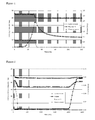
- Example 2 the oxygen carrier particles of Example 1 were oxidised. Air was passed over the fixed bed at oxidation conditions and at a flow rate of 100 ml/min and 700°C. In the case that during the reduction reaction coke is formed this is observed by the formation of CO 2 during the oxidation reaction. In Figure 2 it is seen that there is a peak in the CO 2 concentration at around 20 minutes. In Figure 2 the oxygen concentration, the CO 2 concentration, the flow out of the reactor, (the flow depicted in Figure 2 is the actual flow divided by a factor of 5), and the pressure (right y-axis) are depicted as function of the time.
- Example 3 the oxygen carrier particles of Example 3 were oxidised. Air was passed over the fixed bed at oxidation conditions and at a flow rate of 400 ml/min and 700 °C. From the fact that during the oxidation reaction no CO 2 is formed it can be concluded that no coke was formed during the previous reduction reaction.
Landscapes
- Engineering & Computer Science (AREA)
- Chemical & Material Sciences (AREA)
- Combustion & Propulsion (AREA)
- Mechanical Engineering (AREA)
- General Engineering & Computer Science (AREA)
- Carbon And Carbon Compounds (AREA)
Abstract
The invention is directed to a process for fixed bed chemical looping combustion, in particular applied to a process for regulating the heat and the carbon dioxide concentration of the air in an enclosed space within which plants and/or crops are grown.
The fixed bed chemical looping combustion process of the invention comprises passing a gas stream over a fixed bed, wherein said gas stream comprises a fuel gas and oxygen gas, wherein the oxygen gas is added to said fuel gas prior to passing the gas stream over the fixed bed.
Description
- The invention is directed to a process for fixed bed chemical looping combustion, in particular applied to a process for regulating the heat and the carbon dioxide concentration of the air in an enclosed space within which plants and/or crops are grown.
- The process called chemical looping combustion (CLC) is based on combustion with the use of an intermediate oxygen carrier that is generally cycled between two reactors, i.e. an oxidising reactor and a reducing reactor. In the oxidising reactor, metal particles are brought into contact with air to produce metal oxides and heat, which can subsequently be transformed into electricity. The reducing reactor contacts the fuel, in general methane, with the metal oxides to create metal once again and also CO2 and water, while chemically storing the energy of the methane. In the reducing reaction, no heat is produced (Hossain et al., Chemical engineering science 2008, 63, 4433-4451).
- Most research is focussed on an application of CLC using fluidised beds. Generally fluidised bed technology is proven in industry in combustion processes. The inventors, however, focus on a fixed bed application of CLC. In fluidised beds, cycle times, attrition and fuel conversion are key factors. Most research is therefore based on finding the ideal oxygen carrier that has a long lifetime and high reactivity. These oxygen carriers will therefore be expensive, custom made materials. When a fixed bed is used, the main challenges are to avoiding cokes formation and sintering. Cokes formation makes oxygen carriers unavailable and blocks the bed. Sintering means coagulation of the metal particles, which limits available oxygen carrier surface. Besides this, the use of inexpensive materials is key to the development of CLC, since it is important to make the whole system financially feasible, because the cycle times in fixed beds are much longer and therefore more oxygen carrier is required for a system.
- A small scale CLC setup for the use in greenhouses is described in
WO-A-2006/123925 . This describes a method for regulating the heat and the CO2 concentration of the air in greenhouses. At night and during cold periods heat is required in greenhouses to keep the temperature at a desired level. During the day and during warm periods, CO2 is required to increase the plant production rate. Conventionally, natural gas is burned for greenhouses to produce CO2 during the day and during warm periods. At the same time, the produced heat is stored in the form of hot water using a buffer. The heat stored in the water buffers is then used at night or during cold periods. In this way, by combining the production of CO2 with the storage of heat, energy losses are reduced. However, a more optimal solution is possible when the heat and the CO2 are available when needed. This requires that the production of heat and CO2 are decoupled, which is possible using CLC. In accordance with the method described inWO-A-2006/123925 an oxygen-containing gas and a hydrocarbon-containing gas are alternately passed over particles that are capable of binding oxygen. The oxygen-containing gas oxidises the particles while releasing heat, while the hydrocarbon-containing gas reduces the oxidised particles under formation of water and CO2. In accordance with this process, the CO2 production and the heat production are separated, while losses are minimised. - In the process of
WO-A-2006/123925 a number packed-bed CLC reactors are placed in parallel, such that the oxidation and reduction step can be performed independently. As a result, a system is obtained with a large flexibility in the amount of CO2 and/or heat that can be produced at a specific moment. This allows an optimal adaptation of greenhouses to the varying weather conditions. Storage of heat in a CLC packed-bed reactor can be achieved without any significant losses. - As in all CLC processes, the oxygen carrier plays a vital role in optimising the performance of the process. It is important that the capacity of the oxygen carrier is high, because a large buffer capacity is desired. For a packed bed configuration the reactivity of the oxygen carrier is less important, because in a packed bed the fuel has a much longer contact time with the oxygen carrier, as compared to the situation of a fluidised bed. Another factor that plays a critical role is the price of the oxygen carrier. In order to store a large amount of heat in the packed bed, a large amount of oxygen carrier is required.
- A further drawback of convention CLC processes is the formation of cokes within the fixed bed. Cokes will reduce the available surface of the oxygen carrier and decrease permeability of the bed, thereby increasing the pressure drop. The usual way of reducing cokes formation is by adding steam. Although the addition of steam is a very easy option in a power plant (because it is readily available on site), it is not always readily available for small scale applications.
- Objective of the invention is therefore to provide a process for fixed bed chemical looping combustion having a minimal level of cokes formation.
- The inventors surprisingly found that this objective can be met by including an amount of oxygen in the fuel gas.
- Accordingly, in a first aspect the invention is directed to a process for fixed bed chemical looping combustion, comprising passing a gas stream over a fixed bed, wherein said gas stream comprises a fuel gas and oxygen gas, wherein the oxygen gas is added to said fuel gas prior to passing the gas stream over the fixed bed.
- It was found that the addition of oxygen to the fuel gas aids in inhibiting cokes formation. Reducing the amount of cokes formation is highly desirable in the development and design of fixed bed chemical looping combustion systems. The formation of cokes is far more critical in fixed beds than in fluidised beds, because in fluidised beds cokes will be brunt off the oxygen carrier in the oxidation reactor and will result in some carbon dioxide losses to the atmosphere but not affect the performance of the chemical looping combustion system much.
- Advantageously, the addition of oxygen gas to the fuel gas results in a reduction of pressure drop formation. When the oxygen gas is added to the fuel gas in the form of air (which is advantageous in view of abundance), then slightly less pure carbon dioxide will be produced, because the carbon dioxide will be contaminated with a small amount of nitrogen. However, for many applications (such as in horticulture), the production of slightly less pure carbon dioxide is not very important, and pales into insignificance beside the advantageous reduction in cokes formation.
- The equilibrium reaction that is important in this process is the Bouduard reaction shown in equation (1).
2 CO ↔ CO 2 +C (s) (1)
- This reaction takes place in the overall reaction shown in equation (2).
CO + 3 H 2 + 4 MeO → CO 2 + 3 H2O + 4 Me (2)
- Without wishing to be bound by any theory, the inventors believe that when oxygen is unavailable in a part of the reactor, the temperature in the reactor will result in a formation of cokes (C(s)). The conversion of the equilibrium reaction can be influenced by adding CO2, O2, or H2O to the carbon monoxide stream. This means that the conversion in backward reaction will increase and more CO will be produced. Overall, this will advantageously result in less cokes being formed.
- The gas stream which passes the fixed bed preferably comprises an amount of 1-10 vol.% of oxygen gas relative to the volume of the fuel gas, preferably 2-8 vol.%, more preferably 3-6 vol.%. The inventors experimentally found that at a concentration of about 4 vol.%, the formation of cokes is optimally reduced.
- Preferably, the oxygen gas is added to the fuel gas in the form of air. This is advantageous since air is readily available and can usually be added to the fuel gas in a simple manner. In a preferred embodiment, the gas stream passing the fixed bed consists of fuel gas and air. The amount of added air can then, for instance, be 5-48 vol.% relative to the volume of the fuel gas, such as 10-38 vol.%, or 14-29 vol.%.
- The fixed bed normally comprises a metal and/or metal oxide, which typically functions as an oxygen carrier. Preferably, the metal and/or metal oxide is present in the form of particles. Optionally, the fixed bed can comprise a carrier material. The carrier material may be comprised together with the metal and/or metal oxide in a particle. The metal can, for instance, be selected from the group consisting of copper, iron, nickel, cobalt and manganese. The metal may be present in reduced metal form or oxidised derivative state. The carrier material is preferably selected from the group consisting of alumina, silica, zirconia, and titania.
- Suitably, the fixed bed comprises particles having an average particle size in the range of 1-500 µm, preferably in the range of 5-250 µm. The term "average particle size" as used in this application is meant to refer to the mean average diameter of the particles (also referred to in the art as "effective diameter", viz. the mean volume diameter, which is equivalent to the diameter of a sphere of equal volume to the particle being measured). The average particle size may be determined by measuring the diameter of a representative number of particles (such as 100) from a micrograph and calculate the average. Further details concerning techniques for measuring the average particle size of the metallic particles are known to those skilled in the art.
- The chemically reactive particles can have a mean particle size D50 as specified by the supplier in the range of 1-500 µm, such as in the range of 2-400 µm. The chemically reactive particles preferably have a mean particle size D90 as measured by microscopy in the range of 5-200 µm, such as in the range of 7-150 µm. Depending on the particle size, the particle size distribution can for this purpose be determined by various measurement methods well-known to the person skilled in the art, including sieve analyses, optical microscopy, optical counting methods, electric counting methods, and sedimentation techniques.
- In accordance with the process of the invention the fixed bed may be multiple fixed beds placed in sequence. For instance, the gas stream may be passed over two or more fixed beds consisting of different fixed bed materials. If the gas stream is passed over multiple fixed bed materials, these fixed bed materials may be contained in a single reactor or in two or more subsequent reactors.
- The fixed bed may further comprise inert particulate material, preferably selected from the group consisting of silica, silica carbide, ceramics, and glass. In a preferred embodiment, the inert particulate material is divided in a first part having an average particle size larger than the average particle size of the metal or metal oxide, and a second part having an average particle size smaller than the metal or metal oxide. This embodiment is advantageous, since the larger inert particles lower the pressure drop over the fixed bed, while the smaller inert particles prevent, or at least reduce, sintering of the metal or metal oxide particles.
- The fuel gas preferably comprises one or more selected from the group consisting of methane, natural gas, biogas and synthetic gas (also known as "syngas", a gas mixture containing carbon monoxide and hydrogen). In order to achieve optimal conversion, it is preferred that the fuel gas comprises methane. In an embodiment, the fuel gas comprises natural gas.
- In a further aspect, the invention is directed to a process for regulating heat and carbon dioxide release, for instance in greenhouses.
- Accordingly, in a preferred embodiment, the invention is directed to a process for regulating the heat and the carbon dioxide concentration of the air in an enclosed space within which plants and/or crops are grown, comprising subsequently
- i) passing a first gas stream over a fixed bed, wherein said gas stream comprises a fuel gas and oxygen gas, wherein the oxygen gas is added to said fuel gas prior to passing the gas stream over the fixed bed;
- ii) passing a second gas stream comprising oxygen over the first fixed bed material;
- iii) alternately repeat steps i) and ii) for at least two times,
- The addition of the oxygen gas to the fuel gas advantageously results in a pressure drop while maintaining high conversion of fuel gas.
- The oxidation and chemical reduction of metal or metal oxide are preferably carried out in a single reactor, whereby the second gas stream comprising oxygen are alternately passed over the same fixed bed. However, it is also possible that the oxidation and chemical reduction of metal or metal oxide are carried out in separate reactors which each contain a fixed bed, and the second gas stream and the first gas stream are periodically switched for establishing oxidation and chemical reduction of metal or metal oxide in each of the fixed beds in the respective reactors.
- In a preferred embodiment, porous ceramic or metal pipes are used to distribute the first and second gas stream over the fixed bed(s) at a low-pressure drop.
- Suitably, in accordance with this embodiment, the oxidation of metal or metal oxide takes place at a temperature in the range of 100-1500 °C and a pressure in the range of 1-100 bar. Preferably, the oxidation of metal or metal oxide takes place at a temperature in the range of 700-1100 °C and a pressure in the range of 1-2 bar.
- Suitably, in accordance with this embodiment, the chemical reduction of metal or metal oxide takes place at a temperature in the range of 300-1500 °C and a pressure in the range of 1-100 bar. Preferably, the chemical reduction of metal or metal oxide takes place at a temperature in the range of 600-1100 °C and a pressure in the range of 1-40 bar.
- Preferably, the carbon dioxide production occurs when photosynthesis takes place in the enclosed space. Generally, this will be during the day or in the evening when assimilation lighting is used. The enclosed space is preferably a greenhouse as used, for instance, in horticulture under glass.
- Suitably, the first gas stream comprises at most 10 vol.% of oxygen, preferably at most 5 vol.% of oxygen. The second gas stream preferably comprises at least 10 vol.% of oxygen, more preferably at least 20 vol.%.
- Part of the carbon dioxide formed during the chemical reduction of metal or metal oxide can advantageously be used for carbonating or debugging food products or packaging products under oxygen-free conditions.
- Next, the invention will be illustrated in more detail by the following Examples.
- In the following Examples, the formation of cokes is illustrated by a build-up of pressure in the reactor that becomes less permeable. Hence, upon the formation of cokes the pressure of the reactor increases. During oxidation, a CO2 peak is characteristic for cokes formation.
- The average particle size of the particulate materials used in the Examples was as received:
- Sand I (SiO2): average particle size 201-297 µm (50-70 mesh)
- Sand II (SiO2): average particle size > 63 µm (< 230 mesh)
- Copper particles: average particle size < 75 µm (> 200 mesh)
- The experiments were conducted using a fixed bed configuration with: copper particles (55 wt.%) and sand (45 wt.%). The composition of the sand in the experiments was 25 wt.% of Sand I and 75 wt.% of Sand II.
- In this Example, no oxygen was present in the feed gas stream. In the case that no oxygen (air) is added to the gaseous feed during the reduction reaction coke formation will take place. A gaseous mixture of N2 (66.7 vol.%) and syngas, that is CO (8.3 vol.%) and H2 (25 vol.%), was passed over a fixed bed at reduction conditions and at a flow rate of 300 ml/min at 700 °C. As a consequence the pressure in the fixed bed increased significantly. As can be seen in
Figure 1 after about 50 minutes the pressure started to increase to about 2.5 barg, and somewhat later the flow out of the reactor dropped. InFigure 1 the CO2 concentration, the flow out of the reactor (the flow depicted inFigure 1 is the actual flow divided by a factor of 5), and the pressure (right y-axis) are depicted as function of the time. - In this Example, the oxygen carrier particles of Example 1 were oxidised. Air was passed over the fixed bed at oxidation conditions and at a flow rate of 100 ml/min and 700°C. In the case that during the reduction reaction coke is formed this is observed by the formation of CO2 during the oxidation reaction. In
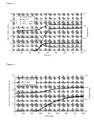
Figure 2 it is seen that there is a peak in the CO2 concentration at around 20 minutes. InFigure 2 the oxygen concentration, the CO2 concentration, the flow out of the reactor, (the flow depicted inFigure 2 is the actual flow divided by a factor of 5), and the pressure (right y-axis) are depicted as function of the time. - In this Example, oxygen in the form of air (15 vol.%) was added, with a total oxygen concentration of 3 vol.%. In total a gaseous mixture of CO (12.5 vol.%), H2 (37.5 vol.%), O2 (3 vol.%) balanced by nitrogen (35 vol.%) was passed over a fixed bed at reduction conditions and at a flow rate of 500 ml/min and 700°C. It is seen in
Figure 3 that during the reduction reaction the pressure in the reactor remained almost constant. InFigure 3 the hydrogen concentration, the CO concentration, the CO2 concentration, and the pressure (right y-axis) are depicted as function of the time. - In this Example, the oxygen carrier particles of Example 3 were oxidised. Air was passed over the fixed bed at oxidation conditions and at a flow rate of 400 ml/min and 700 °C. From the fact that during the oxidation reaction no CO2 is formed it can be concluded that no coke was formed during the previous reduction reaction.
- In
Figure 4 it is seen that the pressure remained constant during the oxidation and that no CO2 was present during the whole oxidation reaction. InFigure 4 the oxygen, the CO2 concentration, and the pressure (right y-axis) are depicted as function of the time.
Claims (14)
- Process for fixed bed chemical looping combustion, comprising passing a gas stream over a fixed bed, wherein said gas stream comprises a fuel gas and oxygen gas, wherein the oxygen gas is added to said fuel gas prior to passing the gas stream over the fixed bed.
- Process according to claim 1, wherein said gas stream comprises 1-10 vol.% of oxygen gas relative to the volume of the fuel gas, preferably 2-8 vol.%, more preferably 3-6 vol.%.
- Process according to claim 1 or 2, wherein said oxygen gas is added to said fuel gas in the form of air.
- Process according to any one of claims 1-3, wherein the fixed bed comprises a metal and/or metal oxide, preferably in the form of particles.
- Process according to any one of claims 4, wherein said particles have an average particle size in the range of 1-500 µm, preferably in the range of 2-500 µm.
- Process according to any one of claims 1-5, wherein said fuel gas comprises one or more selected from the group consisting of methane, ethane, propane, and butane, preferably the fuel gas comprises natural gas.
- Process according to any one of claims 4-6, wherein said metal is selected from the group consisting of copper, iron, nickel, cobalt, and manganese, which metal is present in reduced metal form or oxidised derivate state.
- Process according to any one of claims 1-7, wherein said fixed bed comprises a carrier material, preferably selected from the group consisting of alumina, silica, zirconia, and titania.
- Process according to any one of claims 1-8, wherein said fixed bed comprises multiple beds consisting of different fixed bed materials.
- Process according to claim 9, wherein said multiple beds are contained in a single reactor or two reactors.
- Process according to any one of claims 1-10, wherein said fixed bed comprises an inert particulate material, preferably selected from the group consisting of silica, silica carbide, ceramics, and glass.
- Process according to any one of claims 1-8 for regulating the heat and the carbon dioxide concentration of the air in an enclosed space within which plants and/or crops are grown, comprising subsequentlyi) passing a first gas stream over a fixed bed, wherein said gas stream comprises a fuel gas and oxygen gas, wherein the oxygen gas is added to said fuel gas prior to passing the gas stream over the fixed bed;ii) passing a second gas stream comprising oxygen over the first fixed bed material;iii) alternately repeat steps i) and ii) for at least two times,
wherein the second gas stream is passed over the fixed bed materials under conditions whereby metal or metal oxide are oxidised and heat is released, after which part of the heat is provided to the enclosed space, and
wherein the first gas stream is passed over the fixed bed materials under conditions whereby metal or metal oxide is chemically reduced and water and carbon dioxide are formed, after which at least part of the formed carbon dioxide is provided to the enclosed space. - Process according to claim 12, wherein the first gas stream comprises at most 5 vol.% of oxygen, and wherein the second gas stream comprises at least 20 vol.% of oxygen.
- Process according to claim 12 or 13, wherein at least part of the carbon dioxide formed during the chemical reduction of metal or metal oxide is used for carbonating or debugging food products or packaging products under oxygen-free conditions.
Priority Applications (2)
| Application Number | Priority Date | Filing Date | Title |
|---|---|---|---|
| EP11163366A EP2515037A1 (en) | 2011-04-21 | 2011-04-21 | Fixed bed chemical looping combustion |
| PCT/NL2012/050259 WO2012144896A1 (en) | 2011-04-21 | 2012-04-19 | Fixed bed chemical looping combustion |
Applications Claiming Priority (1)
| Application Number | Priority Date | Filing Date | Title |
|---|---|---|---|
| EP11163366A EP2515037A1 (en) | 2011-04-21 | 2011-04-21 | Fixed bed chemical looping combustion |
Publications (1)
| Publication Number | Publication Date |
|---|---|
| EP2515037A1 true EP2515037A1 (en) | 2012-10-24 |
Family
ID=46025856
Family Applications (1)
| Application Number | Title | Priority Date | Filing Date |
|---|---|---|---|
| EP11163366A Withdrawn EP2515037A1 (en) | 2011-04-21 | 2011-04-21 | Fixed bed chemical looping combustion |
Country Status (2)
| Country | Link |
|---|---|
| EP (1) | EP2515037A1 (en) |
| WO (1) | WO2012144896A1 (en) |
Cited By (2)
| Publication number | Priority date | Publication date | Assignee | Title |
|---|---|---|---|---|
| NO338230B1 (en) * | 2014-04-03 | 2016-08-08 | Sinvent As | Fully integrated redox-assisted gasification (RAG) for productive conversion of carbonaceous material |
| US11738307B2 (en) | 2017-03-09 | 2023-08-29 | Hot Lime Labs Limited | Method and apparatus for carbon dioxide capture and release |
Families Citing this family (3)
| Publication number | Priority date | Publication date | Assignee | Title |
|---|---|---|---|---|
| EP3453997A1 (en) | 2017-09-06 | 2019-03-13 | Nederlandse Organisatie voor toegepast- natuurwetenschappelijk onderzoek TNO | System for energy storage including a heat transfer fluid tank |
| EP3453998A1 (en) | 2017-09-06 | 2019-03-13 | Nederlandse Organisatie voor toegepast- natuurwetenschappelijk onderzoek TNO | System for energy storage including heat exchangers |
| EP3882554A1 (en) | 2020-03-19 | 2021-09-22 | Nederlandse Organisatie voor toegepast- natuurwetenschappelijk Onderzoek TNO | Internal configuration for redox-based heat storage systems |
Citations (4)
| Publication number | Priority date | Publication date | Assignee | Title |
|---|---|---|---|---|
| US20050175533A1 (en) * | 2003-12-11 | 2005-08-11 | Thomas Theodore J. | Combustion looping using composite oxygen carriers |
| WO2006123925A1 (en) | 2005-05-18 | 2006-11-23 | Nederlandse Organisatie Voor Toegepast-Natuurwetenschappelijk Onderzoek Tno | Method for regulating the heat and the co2 concentration of the air in an enclosed space |
| EP2123978A1 (en) * | 2008-05-23 | 2009-11-25 | Alstom Technology Ltd | Process for using a facility for combusting carbonaceous materials and relating facility |
| FR2936301A1 (en) * | 2008-09-23 | 2010-03-26 | Inst Francais Du Petrole | OPTIMIZED CHEMICAL LOOP COMBUSTION METHOD AND DEVICE ON LIQUID HYDROCARBON LOADS |
-
2011
- 2011-04-21 EP EP11163366A patent/EP2515037A1/en not_active Withdrawn
-
2012
- 2012-04-19 WO PCT/NL2012/050259 patent/WO2012144896A1/en not_active Ceased
Patent Citations (4)
| Publication number | Priority date | Publication date | Assignee | Title |
|---|---|---|---|---|
| US20050175533A1 (en) * | 2003-12-11 | 2005-08-11 | Thomas Theodore J. | Combustion looping using composite oxygen carriers |
| WO2006123925A1 (en) | 2005-05-18 | 2006-11-23 | Nederlandse Organisatie Voor Toegepast-Natuurwetenschappelijk Onderzoek Tno | Method for regulating the heat and the co2 concentration of the air in an enclosed space |
| EP2123978A1 (en) * | 2008-05-23 | 2009-11-25 | Alstom Technology Ltd | Process for using a facility for combusting carbonaceous materials and relating facility |
| FR2936301A1 (en) * | 2008-09-23 | 2010-03-26 | Inst Francais Du Petrole | OPTIMIZED CHEMICAL LOOP COMBUSTION METHOD AND DEVICE ON LIQUID HYDROCARBON LOADS |
Non-Patent Citations (1)
| Title |
|---|
| HOSSAIN ET AL., CHEMICAL ENGINEERING SCIENCE, vol. 63, 2008, pages 4433 - 4451 |
Cited By (2)
| Publication number | Priority date | Publication date | Assignee | Title |
|---|---|---|---|---|
| NO338230B1 (en) * | 2014-04-03 | 2016-08-08 | Sinvent As | Fully integrated redox-assisted gasification (RAG) for productive conversion of carbonaceous material |
| US11738307B2 (en) | 2017-03-09 | 2023-08-29 | Hot Lime Labs Limited | Method and apparatus for carbon dioxide capture and release |
Also Published As
| Publication number | Publication date |
|---|---|
| WO2012144896A1 (en) | 2012-10-26 |
Similar Documents
| Publication | Publication Date | Title |
|---|---|---|
| EP2514516A1 (en) | Fixed bed filling composition | |
| WO2012144897A1 (en) | Fixed bed chemical looping combustion | |
| Ma et al. | Effects of supports on hydrogen production and carbon deposition of Fe-based oxygen carriers in chemical looping hydrogen generation | |
| Voitic et al. | Recent advancements in chemical looping water splitting for the production of hydrogen | |
| Ma et al. | Enhanced performance of hematite oxygen carrier by CeO2 for chemical looping hydrogen generation | |
| Shafiefarhood et al. | Iron-containing mixed-oxide composites as oxygen carriers for Chemical Looping with Oxygen Uncoupling (CLOU) | |
| Kwak et al. | Improved reversible redox cycles on MTiOx (M= Fe, Co, Ni, and Cu) particles afforded by rapid and stable oxygen carrier capacity for use in chemical looping combustion of methane | |
| WO2012144896A1 (en) | Fixed bed chemical looping combustion | |
| Shi et al. | Ni-phyllosilicate nanotubes coated by CeO2 for ultra-efficiency of 36.9% and near-limit CO2 conversion in solar-driven conversion of CO2-to-fuel | |
| CN109539284B (en) | A kind of oxygen carrier for inert gas purification and its preparation and application | |
| CN114829294B (en) | Method for producing synthesis gas | |
| Cheng et al. | Structural stability and oxygen permeability of BaCo0. 7Fe0. 2M0. 1O3− δ (M= Ta, Nb, Zr) ceramic membranes for producing hydrogen from coke oven gas | |
| Liu et al. | CuO‐CeO2/ZSM‐5 composites for reactive adsorption of hydrogen sulphide at high temperature | |
| Kim et al. | Surface enrichment of lanthanum on Co3O4 for stable chemical looping combustion | |
| Zeng et al. | A mixed spinel oxygen carrier with both high reduction degree and redox stability for chemical looping H2 production | |
| Sultan et al. | Capture of CO2 using sorbents of calcium magnesium acetate (CMA) | |
| Roux et al. | Study and improvement of the regeneration of metallic oxides used as oxygen carriers for a new combustion process | |
| EP1887852B1 (en) | Method for regulating the heat and the co2 concentration of the air in an enclosed space | |
| WO2022229541A1 (en) | Method for converting co2 into methane | |
| Rydén et al. | Two novel approaches for hydrogen production; chemical-looping reforming and steam reforming with carbon dioxide capture by chemical-looping combustion | |
| US11008524B2 (en) | Catalytic membrane system for converting biomass to hydrogen | |
| JPWO2007032494A1 (en) | Carbon dioxide absorbing material, carbon dioxide absorbing material manufacturing method, carbon dioxide absorbing method, and carbon dioxide absorbing device | |
| Xu et al. | Experimental study of Cu-modified manganese ore for O2 production in the CLC+ CLOU scheme | |
| CN115650167B (en) | Oxygen carrier for preparing synthetic gas by methane chemical chain reforming and preparation method and application thereof | |
| Wang et al. | Efficient capture, catalytic reduction, and energy utilization of CO2 via Mg0. 50Mn1. 75Fe0. 75O4 nanoparticles |
Legal Events
| Date | Code | Title | Description |
|---|---|---|---|
| PUAI | Public reference made under article 153(3) epc to a published international application that has entered the european phase |
Free format text: ORIGINAL CODE: 0009012 |
|
| AK | Designated contracting states |
Kind code of ref document: A1 Designated state(s): AL AT BE BG CH CY CZ DE DK EE ES FI FR GB GR HR HU IE IS IT LI LT LU LV MC MK MT NL NO PL PT RO RS SE SI SK SM TR |
|
| AX | Request for extension of the european patent |
Extension state: BA ME |
|
| STAA | Information on the status of an ep patent application or granted ep patent |
Free format text: STATUS: THE APPLICATION IS DEEMED TO BE WITHDRAWN |
|
| 18D | Application deemed to be withdrawn |
Effective date: 20130425 |