EP2514737A1 - Process and apparatus for coupling separation and purification of ethyl tert-butyl ether - Google Patents
Process and apparatus for coupling separation and purification of ethyl tert-butyl ether Download PDFInfo
- Publication number
- EP2514737A1 EP2514737A1 EP10837007A EP10837007A EP2514737A1 EP 2514737 A1 EP2514737 A1 EP 2514737A1 EP 10837007 A EP10837007 A EP 10837007A EP 10837007 A EP10837007 A EP 10837007A EP 2514737 A1 EP2514737 A1 EP 2514737A1
- Authority
- EP
- European Patent Office
- Prior art keywords
- ethanol
- etbe
- extraction
- distillation
- column
- Prior art date
- Legal status (The legal status is an assumption and is not a legal conclusion. Google has not performed a legal analysis and makes no representation as to the accuracy of the status listed.)
- Withdrawn
Links
Images

Classifications
-
- C—CHEMISTRY; METALLURGY
- C07—ORGANIC CHEMISTRY
- C07C—ACYCLIC OR CARBOCYCLIC COMPOUNDS
- C07C41/00—Preparation of ethers; Preparation of compounds having groups, groups or groups
- C07C41/01—Preparation of ethers
- C07C41/34—Separation; Purification; Stabilisation; Use of additives
-
- B—PERFORMING OPERATIONS; TRANSPORTING
- B01—PHYSICAL OR CHEMICAL PROCESSES OR APPARATUS IN GENERAL
- B01D—SEPARATION
- B01D3/00—Distillation or related exchange processes in which liquids are contacted with gaseous media, e.g. stripping
- B01D3/14—Fractional distillation or use of a fractionation or rectification column
- B01D3/143—Fractional distillation or use of a fractionation or rectification column by two or more of a fractionation, separation or rectification step
-
- B—PERFORMING OPERATIONS; TRANSPORTING
- B01—PHYSICAL OR CHEMICAL PROCESSES OR APPARATUS IN GENERAL
- B01D—SEPARATION
- B01D11/00—Solvent extraction
- B01D11/04—Solvent extraction of solutions which are liquid
-
- C—CHEMISTRY; METALLURGY
- C07—ORGANIC CHEMISTRY
- C07C—ACYCLIC OR CARBOCYCLIC COMPOUNDS
- C07C31/00—Saturated compounds having hydroxy or O-metal groups bound to acyclic carbon atoms
- C07C31/02—Monohydroxylic acyclic alcohols
- C07C31/125—Monohydroxylic acyclic alcohols containing five to twenty-two carbon atoms
-
- C—CHEMISTRY; METALLURGY
- C07—ORGANIC CHEMISTRY
- C07C—ACYCLIC OR CARBOCYCLIC COMPOUNDS
- C07C41/00—Preparation of ethers; Preparation of compounds having groups, groups or groups
- C07C41/01—Preparation of ethers
- C07C41/05—Preparation of ethers by addition of compounds to unsaturated compounds
- C07C41/06—Preparation of ethers by addition of compounds to unsaturated compounds by addition of organic compounds only
-
- C—CHEMISTRY; METALLURGY
- C07—ORGANIC CHEMISTRY
- C07C—ACYCLIC OR CARBOCYCLIC COMPOUNDS
- C07C41/00—Preparation of ethers; Preparation of compounds having groups, groups or groups
- C07C41/01—Preparation of ethers
- C07C41/34—Separation; Purification; Stabilisation; Use of additives
- C07C41/38—Separation; Purification; Stabilisation; Use of additives by liquid-liquid treatment
-
- C—CHEMISTRY; METALLURGY
- C07—ORGANIC CHEMISTRY
- C07C—ACYCLIC OR CARBOCYCLIC COMPOUNDS
- C07C41/00—Preparation of ethers; Preparation of compounds having groups, groups or groups
- C07C41/01—Preparation of ethers
- C07C41/34—Separation; Purification; Stabilisation; Use of additives
- C07C41/40—Separation; Purification; Stabilisation; Use of additives by change of physical state, e.g. by crystallisation
- C07C41/42—Separation; Purification; Stabilisation; Use of additives by change of physical state, e.g. by crystallisation by distillation
-
- C—CHEMISTRY; METALLURGY
- C07—ORGANIC CHEMISTRY
- C07C—ACYCLIC OR CARBOCYCLIC COMPOUNDS
- C07C43/00—Ethers; Compounds having groups, groups or groups
- C07C43/02—Ethers
- C07C43/03—Ethers having all ether-oxygen atoms bound to acyclic carbon atoms
- C07C43/04—Saturated ethers
Definitions
- the present invention relates to a process and device to produce ethyl tert-butyl ether (ETBE), more particularly to a process and device of purification to produce ETBE.
- the purification process to produce ETBE is carried out by coupling separation.
- ETBE can be used as gasoline additive.
- ETBE used as a gasoline additive
- the ethanol content entering into the debutanizer is strictly controlled, including the process to control ethanol to olefine ratio below a certain stoichiometric ratio and to conduct pretreatment (such as removing part of ethanol with water and adding a certain amount of hydrocarbons) before ethanol enters into the debutanizer (see US 7141705A , US 5447607A and US 5536886A ). In such a way, the rest of ethanol can almost completely be removed with relevant hydrocarbons from the top of the debutanizer by azeotropy.
- the purification process to produce ETBE is carried out by coupling separation.
- Said ETBE comes from a mixture of ETBE and ethanol, specifically, it is from the mixture of ETBE and ethanol obtained through the reaction of ethanol and mixed C 4 -hydrocarbons (e.g. from steam cracking or catalytic cracking) containing isobutylene.
- the ETBE obtained by means of purification may contain no more than 1 wt% of ethanol. In other words, the obtained ETBE products have high capabilities as a gasoline additive.
- Another objective of the invention is to provide a process and device of purification to produce ETBE with commercial value (i.e. functions/costs), using ethanol containing at least higher than 1 wt% up to 15 wt% of water, as the feedstock.
- Said purification process to produce ETBE is carried out by coupling separation.
- Said ethanol obtained by means of purification to produce ETBE may contain no more than 1 wt% of water, or even no more than 0.5 wt% of water. It can be used as the feed for etherification and/or used as a gasoline additive as required.
- the obtained ethyl tert-alkyl ether (ETAE) products can pocess high capabilities when they are used as gasoline additives, and meanwhile the costs are significantly reduced and the co-produced ethanol almost contains no azeotropic water.
- Said ETBE is obtained by separation and purification of a mixture mainly containing ETBE and ethanol, specifically, it is obtained by separation and purification of a mixture mainly containing ETBE and ethanol obtained through etherification of ethanol and mixed C 4 -hydrocarbons (e.g. originated from steam cracking or catalytic cracking) containing isobutylene, referring to US 5248836A , CN 1990443A , CN1772848A and CN101195560A for detailed information.
- the mixture mainly containing ETBE and ethanol obtained at the bottom or side of the debutanizer behind the reaction zone contains 5%-50 wt% of ethanol or more commonly 10%-40 wt% of ethanol, including the circumstance using the total weight of ETBE and ethanol obtained from the side of the debutanizer as the reference (see CN1127243A and US 5,607,557A for details).
- the mixture mainly containing ETBE and ethanol may further contains a small amount of other substances such as tertiary butyl alcohol (TBA), diisobutylene, ethyl sec-butyl ether (E2BE), diethyl ether and C 5 -hydrocarbons, during the separation and purification of ETBE and ethanol, those substances can be seen identical with ETBE without subdivision (except that tertiary butyl alcohol is left in the ethanol after separation and purification since they have the similar boiling point).
- TSA tertiary butyl alcohol
- E2BE ethyl sec-butyl ether
- C 5 -hydrocarbons diethyl ether
- the process of purification to produce ETBE mainly includes the following steps: feeding the mixture (obtained at the bottom or side of the debutanizer behind the reaction zone used to produce ETBE) mainly containing ETBE and ethanol as well as the ethanol containing higher than 1 wt% up to 15 wt% of water into a distillation-extraction coupling zone for coupling separation and purification, wherein the distillation-extraction coupling zone is composed of a distillation column and an extraction column.
- a process of coupling separation and purification to produce ETBE comprises the following steps:
- the ethanol containing higher than 1 wt% up to 15 wt% of water preferably, the make-up ethanol containing higher than 1 wt% up to 15 wt% of water and/or the recovered ethanol or the mixture thereof as well as the mixture mainly containing ETBE and ethanol into a distillation-extraction coupling zone, wherein the distillation-extraction coupling zone is composed of a distillation column and an extraction column.
- the fraction containing ethanol is collected at the bottom of the distillation column, the material collected at the top of the distillation column is fed into the extraction column and extracted by water as the extraction agent, the extract liquor containing ethanol is collected at the bottom of the extraction column and reused (e.g. reintroduced into the distillation-extraction coupling zone) after the ethanol is recovered, while the extraction raffinate containing ETBE is collected at the top of the extraction column.
- a preferred technical solution of the present invention wherein said ETBE comes from the mixture (obtained at the bottom or side of the debutanizer behind the reaction zone used to produce ETBE) mainly containing ETBE and ethanol, comprises the following steps:
- the make-up ethanol containing higher than 1 wt% up to 15 wt% of water preferably, the make-up ethanol containing 1.5%-15 wt% of water, more preferably, the make-up ethanol containing 2%-10 wt% of water, most preferably, the make-up ethanol containing 3%-10 wt% of water and/or the recovered ethanol or the mixture thereof as well as the mixture mainly containing ETBE and ethanol into a distillation-extraction coupling zone, wherein the distillation-extraction coupling zone is composed of a distillation column and an extraction column.
- the fraction containing ethanol is collected at the bottom of the distillation column, the material collected at the top of the distillation column is fed into the extraction column and extracted by water as the extraction agent, the extract liquor containing ethanol is collected at the bottom of the extraction column and reused (e.g. reintroduced into the distillation-extraction coupling zone) after the ethanol is recovered, while the extraction raffinate containing ETBE is collected at the top of the extraction column.
- a device of coupling separation and purification to produce ETBE comprises a distillation column C1 and an extraction column C2.
- the distillation column C1 is disposed with a connecting pipeline 3 to introduce distillation feed.
- the bottom of the distillation column is disposed with a heater E3 and a pipeline 4 to collect the fraction containing ethanol.
- the top of the distillation column is disposed with a condenser E2 and a condensate tank B1 to collect fractions containing ETBE, ethanol and water.
- the top of the distillation column is also disposed with a pipeline 5 to feed the material obtained from the top of the distillation column C1 to the extraction column C2.
- the distillation column further comprises a pipeline 6 used to feed extraction agent into the extraction column C2, a pipeline 7 used to collect the extract liquor containing ethanol at the bottom of the extraction column C2 and a pipeline 8 used to collect the extraction raffinate containing ETBE at the top of the extraction column C2.
- the purification process to produce ETBE is carried out by coupling separation.
- the ETBE obtained by means of purification may contain no more than 1 wt% of ethanol and the obtained ethanol may contain no more than 1 wt% of water.
- no strict restriction, such as ethanol content and/or water content and/tertiary alcohols content is posed to the mixture (obtained at the bottom or side of the debutanizer behind the reaction zone) mainly containing ETBE and ethanol.
- the renewable ethanol containing at least higher than 1 wt% up to 15 wt% of water and the mixture to be separated mainly containing ETBE and ethanol that are hard to be directly separated can be coupled together for coupling separation in the distillation-extraction coupling zone to achieve multiple coupling such as cogeneration coupling of ETBE and ethanol products.
- ethanol feed can be provided for etherification and/or ethanol products can be provided as gasoline additive as required.
- the ethanol/olefine ratio can be appropriately increased or loosen for the etherification so as to increase the conversion of isobutene and/or the selectivity of etherification within a certain range. Therefore, the commercial value (i.e. functions/costs) of the invention is very high.
- a process of coupling separation and purification to produce ETBE comprises the following steps:
- the make-up ethanol containing higher than 1 wt% up to 15 wt% of water and/or the recovered ethanol or the mixture thereof as well as the mixture mainly containing ETBE and ethanol are mixed via pipeline 2 and 1 respectively, and then introduced into the distillation column C1 via pipeline 3 and the heat exchanger E1 to undergo heat exchange.
- the top of the distillation column C1 is disposed with the condenser E2 and the condensate tank B1, and the bottom of the distillation column C1 is disposed with the heater E3.
- Pipeline 4 is used to collect the fraction containing ethanol at the bottom of the distillation column C1, and the material obtained at the top of the distillation column C1 is fed into the extraction column C2 via pipeline 5 and the heat exchanger E4 to conduct heat exchange.
- Water as the extraction agent, is introduced via pipeline 6 into the extraction column C2 to conduct extraction, the extract liquor containing ethanol is collected via pipeline 7 at the bottom of the extraction column C2, and the extract liquor can be recycled after the recovery of ethanol ( many existing methods to recover ethanol are available, such as the enrichment recovery in a recovery tower which is not shown in the drawing, the recovered ethanol can be reintroduced to the distillation column C1, and the recovered, water with ethanol having been removed can be recycled into the extraction column C2 and excessive water can be discharged), and the extraction raffinate containing ETBE is collected via pipeline 8 at the top of the extraction column C2.
- the content of ETBE, ethanol and water in the feeding material of the distillation column C1 can be allocated to some extent so as to allow almost all water, under the operating conditions of the distillation column C1, to be taken out of the top of the distillation column C1 in the form of a ternary azeotropy. Even a small amount of remaining ETBE can be removed from the top of the distillation column through a binary azeotropy of ETBE/water and/or ETBE/ethanol. For example, under 1 Pa of the operating pressure, the referential composition of the ternary azeotropy contains approximately 82.9 wt% of ETBE, 11.6 wt% of ethanol and 5.5 wt% of water.
- the binary azeotropy of ETBE/water contains 6 wt% of water and the binary azeotropy of ETBE/ethanol contains 21 wt% of ethanol (refer to Lee H. Horsley: Azeotropic Data—III. American Chemical Society /Washington, D.C. 1973 , US 5250156A , Pure Appl. Chem., Vol. 71, No. 6, pp. 939-949, 1999 for the azeotrope data).
- ethanol is often excessive, it is common to control the intake of ethanol according to its water content so as to obtain the ethanol containing acceptable amount of water at the bottom of the distillation column C1.
- the preferred weight ratio (i.e. water/ETEB weight ratio) between the total water content of said make-up ethanol and/or the recovered ethanol or the mixture thereof, respectively or collectively introduced to the distillation column C1, and the amount of ETBE in the mixture mainly containing ETBE and ethanol, respectively or collectively introduced to the distillation column C1, is 0.008-0.18:1, preferably 0.014-0.12:1 and most preferably 0.02-0.09:1.
- the preferred weight ratio i.e.
- water/ETEB weight ratio between the total water content of the said make-up ethanol and/or the recovered ethanol or the mixture thereof and the mixture mainly containing ETBE and ethanol, respectively or collectively introduced to the distillation column C1, and the amount of ETBE in the mixture mainly containing ETBE and ethanol, respectively or collectively introduced to the distillation column C1, is 0.008-0.18:1, more preferably 0.014-0.12:1 and most preferably 0.02-0.09:1.
- the operating pressure of the distillation column C1 is 0.5-2 Pa (preferably 1-2 Pa).
- the temperature at the top of the distillation column C1 is 45-80°C, and the temperature at the bottom of the distillation column C1 is 60-95°C.
- the preferred feed temperature is 10-80°C, more preferably 50-80°C and most preferably at the temperature close to the ternary azeotropic point of ETBE/ethanol/water under the operating pressure of the distillation column C1.
- the operating pressure of the extraction column C2 is 1-15 Pa (preferably 1-10 Pa).
- the operating temperature of the extraction column C2 is 5-70°C (preferably 10-60°C).
- the preferred weight ratio between the consumption of the water, as the extraction agent, and the extraction feed is normally no more than 1.2:1, more preferably 0.2-1.0:1 and most preferably 0.3-0.8:1.
- the ethanol content in the extraction raffinate containing ETBE collected at the top of the extraction column C2 is related to the operating conditions and generally it is less than 1 wt%.
- the extraction raffinate containing ETBE collected at the top of the extraction column C2 is ETBE containing saturated water. Only a small amount of water is left after ethanol is removed under normal temperature.
- the saturated water content of ETBE under the temperature of 20°C is 0.5 g/100 g of ETBE and generally it is not necessary to further remove the water.
- appropriate water removal methods can be applied, for example, using absorbents such as molecular sieve or silica gel to remove the water.
- the material is obtained from the side of the debutanizer for coupling separation and purification, it can be fed into the debutanizer again, and the ETBE containing almost totally no water can be obtained at the bottom of the debutanizer.
- the water content of the fraction containing ethanol collected at the bottom of the distillation column C1 is related to the operating conditions and generally it is less than 1 wt%., or even less than 0.5 wt%.
- the ethanol content of the fraction containing ethanol collected at the bottom of the distillation column C1 is related to the operating conditions and preferably it is more than 99 wt% and more preferably even more than 99 mol%.
- the ratio of molar flow rate or mole number of the ethanol in the said make-up ethanol, respectively or collectively introduced into the distillation column C1, to the ETBE in the mixture mainly containing ETBE and ethanol, respectively or collectively introduced into the distillation column C1, is 1-25.9:1, appropriately 1-12.8:1, more appropriately 1-6.3:1 and the most appropriately 1-5:1.
- the condensate and/or reflux condensed at the top of the distillation column C1 may generally contain a small amount of aqueous phase according to different operating conditions. All or part of the aqueous phase (aqueous solution containing ethanol) therein can be removed by allowing at least part of the condensate and/or reflux to undergo oil-water separation. After that, at least part of the condensate and/or reflux can be used as the reflux for the distillation column C1 and/or the recycled feed for the distillation column C1. It is preferred to carry out the oil-water separation of at least the part of the condensate and/or reflux at the temperature of 10-60°C and more preferably at the temperature of 10-40°C.
- aqueous phase (aqueous solution containing ethanol) separated out of oil-water separation can be further treated (not shown in the drawing) and recycled after the ethanol has been recoverd, or sent to extraction treatment along with the rest of the condensate containing at least part of oil phase and/or aqueous phase.
- the process of coupling separation and purification to produce ETBE provided by the invention to the make-up ethanol containing at least higher than 1 wt% up to 15 wt% of water (preferably the make-up ethanol contains 1.5-15 wt% of water and more preferably 2-10 wt% of water, and the most preferably 3-10 wt% of water) to produce ethanol, that means, the process can be used to remove water from the ethanol by means of coupling separation and purification.
- the ethanol content of thus obtained fraction containing ethanol is related to the operating conditions, wherein the preferred ethanol content is more than 99 wt% and more preferably even more than 99 mol%.
- a process of coupling separation and purification to produce ETBE comprises the following step:
- Allow ethanol and mixed C 4 -hydrocarbons containing isobutene e.g. from steam cracking or catalytic cracking
- Allow ethanol and mixed C 4 -hydrocarbons containing isobutene e.g. from steam cracking or catalytic cracking
- Allow ethanol and mixed C 4 -hydrocarbons containing isobutene e.g. from steam cracking or catalytic cracking
- Allow ethanol and mixed C 4 -hydrocarbons containing isobutene e.g. from steam cracking or catalytic cracking
- the reaction products obtained from the reaction zone R mainly comprise ETBE, ethanol and unreacted C 4 -hydrocarbons.
- a debutanizer area T i.e. normally so-called debutanizer
- a reactive distillation zone T1 can be used instead. As shown in FIG. 2 (dotted line), the make-up ethanol can be added from the top of the reactive distillation zone T1.
- the mixture mainly containing ETBE and ethanol collected at the bottom of the debutanizer area T or the reactive distillation zone T1, the ethanol containing higher than 1 wt% up to 15 wt% of water or preferably further the make-up ethanol containing higher than 1 wt% up to 15 wt% of water and/or the recovered ethanol or the mixture thereof are respectively or collectively introduced to a distillation-extraction coupling zone C (it is composed of the distillation column C1 and the extraction column C2) and then the process of coupling separation and purification to produce ETBE provided by the invention is used to operate (as shown in FIG. 1 ).
- the extraction raffinate containing ETBE can be collected at the top of the extraction column C2
- the extraction liquor containing ethanol can be collected at the bottom of the extraction column C2
- the fraction containing ethanol can be collected at the bottom of the distillation column C1.
- the hydrocarbons collected at the top of the debutanizer area T or the reactive distillation zone T1 further contain a small amount of azeotropic ethanol. Therefore, the ethanol must be removed by water scrubbing for the conventional process to produce tert-alkyl ether and a recovery column has to be arranged to recover the ethanol (see US 5447607A for detail).
- the recovery column can be used to recover the ethanol from the extract liquor containing ethanol collected from the distillation-extraction coupling zone C in the same way, and followed by recycling the extract liquor into the distillation-extraction coupling zone C (not shown in the drawing).
- a probably more useful process is that firstly, the said mixture mainly containing ETBE and ethanol, the said make-up ethanol, the said recovered ethanol or the mixture thereof are fed into the distillation-extraction coupling zone C for coupling separation and purification, and then the fraction containing ethanol is collected at the bottom of the distillation column C1, after that at least part of the fraction is used as the feeding material for the reaction zone R or/and the reactive distillation zone T1.
- the device when the device is started it probably needs or only needs to firstly provide the reaction zone R with the start-up ethanol from which azeotropic water has been substantially removed.
- a possible preferred process is that all ethanol feed for the reaction zone R and/or the reactive distillation zone T1 is from the ethanol in which azeotropic water has been substantially removed obtained from the distillation-extraction coupling zone C (i.e. the fraction containing ethanol collected at the bottom of the distillation column C1).
- a process of coupling separation and purification to produce ETBE comprises the following step:
- the reaction products obtained from the reaction zone R mainly include ETBE, ethanol and unreacted C 4 -hydrocarbons.
- the reaction products are separated in the debutanizer area T (i.e. normally so-called debutanizer), the fraction containing hydrocarbons is collected at the top of the debutanizer and the fraction containing ETBE is collected at the bottom of the debutanizer.
- a reactive distillation zone T1 can be used instead. At this time, as shown in FIG. 3 (dotted line), make-up ethanol can be added from the top of the reactive distillation zone T1.
- the mixture mainly containing ETBE and ethanol taken off the side of the debutanizer area T or the reactive distillation zone T1 said side take-off means that the take-off point is located at the side position below the feed inlet point of the reaction products obtained from the reaction zone R, more preferably at the side position in which the tray shows substantially the highest ethanol concentration or the side position below the tray, and most preferably at the side position in which the tray shows substantially the highest ethanol concentration or the side position in which the tray is located between the 1st-15th theoretical plates below the tray with substantially the highest ethanol concentration (including the first and the fifteenth theoretical plates); the mixture mainly containing ETBE and ethanol is taken off in vapor phase and/or liquid phase at the side of the debutanizer area T or the reactive distillation zone T1.
- the ethanol containing higher than 1 wt% up to 15 wt% of water or preferably the make-up ethanol containing higher than 1 wt% up to 15 wt% of water and/or the recovered ethanol or the mixture thereof are further respectively or collectively introduced to a distillation-extraction coupling zone C (said distillation-extraction coupling zone is composed of the distillation column C1 and the extraction column C2) and then apply the process of coupling separation and purification to produce ETBE provided by the invention (as shown in FIG. 1 ).
- the extraction raffinate containing ETBE can be collected at the top of the extraction column C2
- the extraction liquor containing ethanol can be collected at the bottom of the extraction column C2
- the fraction containing ethanol can be collected at the bottom of the distillation column C1 as well.
- the hydrocarbons collected at the top of the debutanizer area T or the reactive distillation zone T1 further contain a small amount of azeotropic ethanol, therefore, the ethanol must be removed by water scrubbing for the conventional process to produce tert-alkyl ether and a recovery column has to be arranged to recover the ethanol (see US 5447607A for detail).
- the recovery column can be used to recover the ethanol from the extract liquor containing ethanol collected from the distillation-extraction coupling zone C in the same way, and followed by recycling it into the distillation-extraction coupling zone C (not shown in the drawing).
- a possibly useful process is that firstly, said mixture mainly containing ETBE and ethanol, then said make-up ethanol and the recovered ethanol or the mixture thereof are fed into the distillation-extraction coupling zone C for coupling separation and purification, and then the fraction containing ethanol is collected at the bottom of the distillation column C1, after that at least part of the fraction can be used as the feeding material for the reaction zone R or/and the reactive distillation zone T1.
- the device when the device is started up it probably needs or needs only to firstly provide the reaction zone R with the start-up ethanol from which azeotropic water has been substantially removed.
- a possible preferred process is that all the ethanol feed into the reaction zone R and/or the reactive distillation zone T1 comes from the ethanol in which azeotropic water has been substantially removed obtained from the distillation-extraction coupling zone C (i.e. the fraction containing ethanol collected at the bottom of the distillation column C1).
- the mixture of ETBE and ethanol to be separated contains 80 wt% of ETBE and 20 wt% of ethanol and ethanol feed containing azeotropic water contains 94.6 wt% of ethanol and 5.4 wt% of water.
- Distillation column (C1) is a glass tower composed of 70 pieces of perforated tray with tray weir, with the tray spacing of 50mm and the inner diameter of 50mm.
- the operating pressure of the distillation column C1 is 0.5-2 Pa (preferably 1-2 Pa).
- the temperature at the top of the distillation column C1 is 45-80°C and the temperature at the bottom of the distillation column C1 is 60-95°C.
- the preferred feeding temperature is 10-80°C, more preferably 50-80°C, and most preferably close to the temperature at the ternary azeotropic point of ETBE/ethanol/water under the operating pressure of the distillation column C1.
- Extraction column (C2) is a stainless tower composed of 24 pieces of perforated tray with the tray spacing of 100mm and the inner diameter of 30mm.
- the operating pressure of the extraction column C2 is 1-15 Pa (preferably 1-10 Pa).
- the operating temperature of the extraction column C2 is 5-70°C (preferably 10-60°C).
- the preferred weight ratio between the water (as the extraction agent) consumption and the extraction feed is no more than 1.2:1, more preferably 0.2-1.0:1 and most preferably 0.3-0.8:1.
- the distillation column C1 is thermally insulated to prevent heat loss.
- the trays of both towers e.g. distillation column C1 and the extraction column C2 are numbered from top to bottom.
- the mixture of ETBE and ethanol to be separated passes through pipeline 1 and ethanol containing azeotropic water passes through pipeline 2, after they are mixed via pipeline 3 and heat exchanged to 65°C via heat exchanger E1, they are fed into the distillation column C1 on the 20th tray.
- the operating pressure of the distillation column C1 is 1 Pa
- the temperature at the top of the distillation column C1 is 64°C
- the temperature at the bottom thereof is 79°C.
- the reflux ratio is set to 4:1 (the temperature is approximately 30°C for the condensate, which contains nearly 2 wt% of aqueous phase).
- the fraction containing ethanol, whose water content is even less than 0.3 wt%, is collected via pipeline 4 at the bottom of the column.
- the effluent from the top of the column is fed into the extraction column C2 on the 24th tray after passing through pipeline 5 and heat exchanging to 30°C by heat exchanger E1.
- Feed water of 20°C into the extraction column C2 on the first tray via pipeline 6, and the operating pressure of the extraction column C2 is 1 Pa. Consequently, the extraction raffinate containing ETBE is collected at the top of the extraction column C2 via pipeline 8, and the extract liquor containing ethanol is collected at the bottom of the extraction column C2 via pipeline 7 while the ethanol can be further recovered to be recycled.
- Table 1 shows the material balance for each material streams passing through each pipeline, including the mixture of ETBE and ethanol to be separated and ethanol containing azeotropic water.
- the mixture of ETBE and ethanol to be separated contains 80 wt% of ETBE and 20 wt% of ethanol.
- the mixture feed of the make-up ethanol containing azeotropic water and the recovered ethanol contains 93.4 wt% of ethanol, 5.3 wt% of water and 1.3 wt% of ETBE.
- Table 2 shows the material balance for each material streams passing through each pipeline, including the mixture of ETBE and ethanol to be separated and the mixture of the make-up ethanol containing azeotropic water and the recovered ethanol.
- Table 2 Material Balance Table of Example 2 Composition ⁇ wt% ⁇ pipeline 1 2 3 4 5 6 7 8 H 2 O 5.3 2.3 0.2 4.0 100 78.2 0.8 EtOH 20 93.4 51.7 99.8 13.0 20.1 0.1 ETBE 80 1.3 46.0 ⁇ 100ppm 83.0 1.7 99.1 Flow rate, kg/h 1.20 0.91 2.11 0.94 1.17 0.54 0.74 0.97
- the purification process to produce ETBE is carried out by coupling separation.
- the ETBE obtained by means of purification may contain no more than 1 wt% of ethanol and the obtained ethanol may contain less than 1 wt% of water.
- the renewable ethanol containing at least higher than 1 wt% up to 15 wt% of water and the mixture to be separated mainly containing ETBE and ethanol that are hard to be directly separated can be coupled together for coupling separation in the distillation-extraction coupling zone to achieve multiple coupling such as cogeneration coupling of ETBE and ethanol products.
- ethanol feed can be provided for etherification and/or ethanol products provided as gasoline additive as required.
- the ethanol/olefine ratio can be appropriately increased or widened for the etherification so as to increase the conversion of isobutene and/or selectivity of the etherification within a certain range. Therefore, the invention is possessed of high commercial values (i.e. functions/costs).
Landscapes
- Chemical & Material Sciences (AREA)
- Organic Chemistry (AREA)
- Chemical Kinetics & Catalysis (AREA)
- Crystallography & Structural Chemistry (AREA)
- Organic Low-Molecular-Weight Compounds And Preparation Thereof (AREA)
- Extraction Or Liquid Replacement (AREA)
Abstract
Description
- The present invention relates to a process and device to produce ethyl tert-butyl ether (ETBE), more particularly to a process and device of purification to produce ETBE. The purification process to produce ETBE is carried out by coupling separation.
- The growth of biofuel of using ethanol (EtOH) and the like produced by fermentation as the base has attracted more and more attention in many countries.
- However, one of the key issues that constrains the energy consumption and cost to produce fuel alcohol which is currently the most important bio-based alcohol ether fuel is that, if it is intended to reduce approximately 5wt% of azeotropic water to below 1 wt%, special separation methods have to be adopted such as azeotropic distillation, extractive distillation, adsorption and pervaporation membrane separation. Meanwhile, a small amount of denaturants (e.g. fusel alcohol, ethers, etc.) enhancing cosolubilization or solubilization has to be added to offset to some extent the disadvantage of phase separation that alcogas is likely to occur. In spite of the above fact, the price of ethanol fuel is relatively lower than gasoline because of its own inadequate capacities, and in some countries, such as China, its production cost is even higher than gasoline, in other words, the value (i.e. functions/costs) of ethanol fuel is on the low side; therefore it is necessary to find a solution.
- It is already known that ETBE can be used as gasoline additive.
- Generally, ETBE, used as a gasoline additive, is produced by means of etherification of isobutene contained in the fraction of ethanol and mixed C4-hydrocarbons (e.g. from steam cracking or catalytic cracking) (see
US 5248836A ,CN 1990443A ,CN1772848A andCN101195560A ). It is easy to make ETBE, but many problems need to be solved when ETBE has to be separated and purified before being used as the gasoline additive. - In order to improve product functions and convenience of use, especially when ETBE can be directly added to the gasoline during blending without having to change the existing transport and distribution system, it is essential to control the ethanol content during the preparation of ETBE, when necessary, the ethanol content can be controlled below 1 wt%.
- Until now, with respect to the process of separation and purification to produce ETBE, in some processes, the ethanol content entering into the debutanizer is strictly controlled, including the process to control ethanol to olefine ratio below a certain stoichiometric ratio and to conduct pretreatment (such as removing part of ethanol with water and adding a certain amount of hydrocarbons) before ethanol enters into the debutanizer (see
US 7141705A ,US 5447607A andUS 5536886A ). In such a way, the rest of ethanol can almost completely be removed with relevant hydrocarbons from the top of the debutanizer by azeotropy. But it will become difficult to further increase the conversion of isoolefme under some circumstances, including reactive distillation which is often desired to practise; therefore it may be required to add a certain amount of ethanol at the top of the debutanizer. Consequently, it may be difficult or restricted to increase the conversion of isoolefine when the ethanol content entering into the debutanizer is strictly controlled. - On the contrary, it is difficult to control the unreacted ethanol content entering into the debutanizer if it is intended to increase the conversion of isoolefine. There are two main categories of process according to different locations of the debutanizer to take off materials:
- One is that the material is taken off the bottom of the debutanizer followed by further separation (see
US 5,158,652A ,US 5250156A ,US 5,348,624A andUS 5569787A ); and - The other one is that the material is taken off at the side of the debutanizer followed by further separation (see
CN1127243 AandUS 5,607,557A ). - Though each process above-mentioned has its merits, they share the common deficiency: strict requirements on the content of some components entering into the debutanizer are posed, for example, the water content of the material stream entering into the debutanizer is required to be 1 wt% maximal, the tert-butyl alcohol content is at the most 1 wt% (see
CN1127243A andUS 5,607,557A ), and/or special separation methods have to be taken such as adsorptive separation, pervaporation membrane separation and azeotropic separation. Accordingly, the commercial value of the process of separation and purification to produce ETBE is decreased due to the strict operating conditions and/or the separation methods with higher energy consumption. - In view of the above-described problems, it is one intention of the present invention to provide a process and device of purification to produce ETBE with commercial value (i.e. functions/costs). The purification process to produce ETBE is carried out by coupling separation. Said ETBE comes from a mixture of ETBE and ethanol, specifically, it is from the mixture of ETBE and ethanol obtained through the reaction of ethanol and mixed C4-hydrocarbons (e.g. from steam cracking or catalytic cracking) containing isobutylene. The ETBE obtained by means of purification may contain no more than 1 wt% of ethanol. In other words, the obtained ETBE products have high capabilities as a gasoline additive.
- Another objective of the invention is to provide a process and device of purification to produce ETBE with commercial value (i.e. functions/costs), using ethanol containing at least higher than 1 wt% up to 15 wt% of water, as the feedstock. Said purification process to produce ETBE is carried out by coupling separation. Said ethanol obtained by means of purification to produce ETBE may contain no more than 1 wt% of water, or even no more than 0.5 wt% of water. It can be used as the feed for etherification and/or used as a gasoline additive as required. In other words, the obtained ethyl tert-alkyl ether (ETAE) products can pocess high capabilities when they are used as gasoline additives, and meanwhile the costs are significantly reduced and the co-produced ethanol almost contains no azeotropic water.
- Said ETBE is obtained by separation and purification of a mixture mainly containing ETBE and ethanol, specifically, it is obtained by separation and purification of a mixture mainly containing ETBE and ethanol obtained through etherification of ethanol and mixed C4-hydrocarbons (e.g. originated from steam cracking or catalytic cracking) containing isobutylene, referring to
US 5248836A ,CN 1990443A ,CN1772848A andCN101195560A for detailed information. Generally, the mixture mainly containing ETBE and ethanol obtained at the bottom or side of the debutanizer behind the reaction zone contains 5%-50 wt% of ethanol or more commonly 10%-40 wt% of ethanol, including the circumstance using the total weight of ETBE and ethanol obtained from the side of the debutanizer as the reference (seeCN1127243A andUS 5,607,557A for details). Apart from that, the mixture mainly containing ETBE and ethanol may further contains a small amount of other substances such as tertiary butyl alcohol (TBA), diisobutylene, ethyl sec-butyl ether (E2BE), diethyl ether and C5-hydrocarbons, during the separation and purification of ETBE and ethanol, those substances can be seen identical with ETBE without subdivision (except that tertiary butyl alcohol is left in the ethanol after separation and purification since they have the similar boiling point). - The process of purification to produce ETBE mainly includes the following steps: feeding the mixture (obtained at the bottom or side of the debutanizer behind the reaction zone used to produce ETBE) mainly containing ETBE and ethanol as well as the ethanol containing higher than 1 wt% up to 15 wt% of water into a distillation-extraction coupling zone for coupling separation and purification, wherein the distillation-extraction coupling zone is composed of a distillation column and an extraction column. As a result, not only the in spec ETBE products can be obtained from the top of the extraction column but the ethanol almost having no azeotropic water can also be co-produced at the bottom of the distillation column.
- The technical solution of the present invention is as follows:
- A process of coupling separation and purification to produce ETBE comprises the following steps:
- Introduce the ethanol containing higher than 1 wt% up to 15 wt% of water, preferably, the make-up ethanol containing higher than 1 wt% up to 15 wt% of water and/or the recovered ethanol or the mixture thereof as well as the mixture mainly containing ETBE and ethanol into a distillation-extraction coupling zone, wherein the distillation-extraction coupling zone is composed of a distillation column and an extraction column.
- In said distillation-extraction coupling zone, the fraction containing ethanol is collected at the bottom of the distillation column, the material collected at the top of the distillation column is fed into the extraction column and extracted by water as the extraction agent, the extract liquor containing ethanol is collected at the bottom of the extraction column and reused (e.g. reintroduced into the distillation-extraction coupling zone) after the ethanol is recovered, while the extraction raffinate containing ETBE is collected at the top of the extraction column.
- A preferred technical solution of the present invention, wherein said ETBE comes from the mixture (obtained at the bottom or side of the debutanizer behind the reaction zone used to produce ETBE) mainly containing ETBE and ethanol, comprises the following steps:
- Introduce the ethanol containing higher than 1 wt% up to 15 wt% of water, preferably, the make-up ethanol containing 1.5%-15 wt% of water, more preferably, the make-up ethanol containing 2%-10 wt% of water, most preferably, the make-up ethanol containing 3%-10 wt% of water and/or the recovered ethanol or the mixture thereof as well as the mixture mainly containing ETBE and ethanol into a distillation-extraction coupling zone, wherein the distillation-extraction coupling zone is composed of a distillation column and an extraction column.
- In said distillation-extraction coupling zone, the fraction containing ethanol is collected at the bottom of the distillation column, the material collected at the top of the distillation column is fed into the extraction column and extracted by water as the extraction agent, the extract liquor containing ethanol is collected at the bottom of the extraction column and reused (e.g. reintroduced into the distillation-extraction coupling zone) after the ethanol is recovered, while the extraction raffinate containing ETBE is collected at the top of the extraction column.
- The technical solution of the device provided by the invention is as follows:
- A device of coupling separation and purification to produce ETBE comprises a distillation column C1 and an extraction column C2.
- The distillation column C1 is disposed with a connecting pipeline 3 to introduce distillation feed. The bottom of the distillation column is disposed with a heater E3 and a
pipeline 4 to collect the fraction containing ethanol. The top of the distillation column is disposed with a condenser E2 and a condensate tank B1 to collect fractions containing ETBE, ethanol and water. The top of the distillation column is also disposed with a pipeline 5 to feed the material obtained from the top of the distillation column C1 to the extraction column C2. The distillation column further comprises apipeline 6 used to feed extraction agent into the extraction column C2, a pipeline 7 used to collect the extract liquor containing ethanol at the bottom of the extraction column C2 and a pipeline 8 used to collect the extraction raffinate containing ETBE at the top of the extraction column C2. - In accordance with the process and device of purification to produce ETBE of the invention, the purification process to produce ETBE is carried out by coupling separation. The ETBE obtained by means of purification may contain no more than 1 wt% of ethanol and the obtained ethanol may contain no more than 1 wt% of water. According to the process and device provided by the invention, no strict restriction, such as ethanol content and/or water content and/tertiary alcohols content is posed to the mixture (obtained at the bottom or side of the debutanizer behind the reaction zone) mainly containing ETBE and ethanol. The renewable ethanol containing at least higher than 1 wt% up to 15 wt% of water and the mixture to be separated mainly containing ETBE and ethanol that are hard to be directly separated can be coupled together for coupling separation in the distillation-extraction coupling zone to achieve multiple coupling such as cogeneration coupling of ETBE and ethanol products. Meanwhile, ethanol feed can be provided for etherification and/or ethanol products can be provided as gasoline additive as required. The ethanol/olefine ratio can be appropriately increased or loosen for the etherification so as to increase the conversion of isobutene and/or the selectivity of etherification within a certain range. Therefore, the commercial value (i.e. functions/costs) of the invention is very high.
-
-
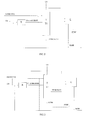
FIG. 1 shows a flow diagram of a process and device of coupling separation and purification to produce ETBE of the invention; -
FIG. 2 shows a flow diagram of the process (including the process to remove the material from the bottom of debutanizer area) of coupling separation and purification to produce ETBE of the invention; and -
FIG. 3 shows a flow diagram of the process (including the process to remove the material from the side of debutanizer area) of coupling separation and purification to produce ETBE of the invention; - Wherein,
- C1: distillation column;
- C2: extraction column;
- B1: condensate tank;
- E1-E4: heat exchanger;
- 1-8: pipeline No. or material stream No.;
- R: reaction zone;
- T: debutanizer area;
- T1: reactive distillation zone;
- C: distillation-extraction coupling zone.
- The present invention is explained in further detail below with reference to the attached drawing 1 and embodiment. A process of coupling separation and purification to produce ETBE, in accordance with the invention, comprises the following steps:
- The make-up ethanol containing higher than 1 wt% up to 15 wt% of water and/or the recovered ethanol or the mixture thereof as well as the mixture mainly containing ETBE and ethanol are mixed via pipeline 2 and 1 respectively, and then introduced into the distillation column C1 via pipeline 3 and the heat exchanger E1 to undergo heat exchange. The top of the distillation column C1 is disposed with the condenser E2 and the condensate tank B1, and the bottom of the distillation column C1 is disposed with the heater E3.
Pipeline 4 is used to collect the fraction containing ethanol at the bottom of the distillation column C1, and the material obtained at the top of the distillation column C1 is fed into the extraction column C2 via pipeline 5 and the heat exchanger E4 to conduct heat exchange. - Water, as the extraction agent, is introduced via
pipeline 6 into the extraction column C2 to conduct extraction, the extract liquor containing ethanol is collected via pipeline 7 at the bottom of the extraction column C2, and the extract liquor can be recycled after the recovery of ethanol ( many existing methods to recover ethanol are available, such as the enrichment recovery in a recovery tower which is not shown in the drawing, the recovered ethanol can be reintroduced to the distillation column C1, and the recovered, water with ethanol having been removed can be recycled into the extraction column C2 and excessive water can be discharged), and the extraction raffinate containing ETBE is collected via pipeline 8 at the top of the extraction column C2. - The content of ETBE, ethanol and water in the feeding material of the distillation column C1 can be allocated to some extent so as to allow almost all water, under the operating conditions of the distillation column C1, to be taken out of the top of the distillation column C1 in the form of a ternary azeotropy. Even a small amount of remaining ETBE can be removed from the top of the distillation column through a binary azeotropy of ETBE/water and/or ETBE/ethanol. For example, under 1 Pa of the operating pressure, the referential composition of the ternary azeotropy contains approximately 82.9 wt% of ETBE, 11.6 wt% of ethanol and 5.5 wt% of water. The binary azeotropy of ETBE/water contains 6 wt% of water and the binary azeotropy of ETBE/ethanol contains 21 wt% of ethanol (refer to Lee H. Horsley: Azeotropic Data—III. American Chemical Society /Washington, D.C. 1973,
US 5250156A , Pure Appl. Chem., Vol. 71, No. 6, pp. 939-949, 1999 for the azeotrope data). In fact, as ethanol is often excessive, it is common to control the intake of ethanol according to its water content so as to obtain the ethanol containing acceptable amount of water at the bottom of the distillation column C1. - The preferred weight ratio (i.e. water/ETEB weight ratio) between the total water content of said make-up ethanol and/or the recovered ethanol or the mixture thereof, respectively or collectively introduced to the distillation column C1, and the amount of ETBE in the mixture mainly containing ETBE and ethanol, respectively or collectively introduced to the distillation column C1, is 0.008-0.18:1, preferably 0.014-0.12:1 and most preferably 0.02-0.09:1. Or, the preferred weight ratio (i.e. water/ETEB weight ratio) between the total water content of the said make-up ethanol and/or the recovered ethanol or the mixture thereof and the mixture mainly containing ETBE and ethanol, respectively or collectively introduced to the distillation column C1, and the amount of ETBE in the mixture mainly containing ETBE and ethanol, respectively or collectively introduced to the distillation column C1, is 0.008-0.18:1, more preferably 0.014-0.12:1 and most preferably 0.02-0.09:1.
- The operating pressure of the distillation column C1 is 0.5-2 Pa (preferably 1-2 Pa). The temperature at the top of the distillation column C1 is 45-80°C, and the temperature at the bottom of the distillation column C1 is 60-95°C. The preferred feed temperature is 10-80°C, more preferably 50-80°C and most preferably at the temperature close to the ternary azeotropic point of ETBE/ethanol/water under the operating pressure of the distillation column C1.
- The operating pressure of the extraction column C2 is 1-15 Pa (preferably 1-10 Pa). The operating temperature of the extraction column C2 is 5-70°C (preferably 10-60°C). The preferred weight ratio between the consumption of the water, as the extraction agent, and the extraction feed is normally no more than 1.2:1, more preferably 0.2-1.0:1 and most preferably 0.3-0.8:1.
- The ethanol content in the extraction raffinate containing ETBE collected at the top of the extraction column C2 is related to the operating conditions and generally it is less than 1 wt%.
- The extraction raffinate containing ETBE collected at the top of the extraction column C2 is ETBE containing saturated water. Only a small amount of water is left after ethanol is removed under normal temperature. For example, the saturated water content of ETBE under the temperature of 20°C is 0.5 g/100 g of ETBE and generally it is not necessary to further remove the water. However, if it is necessary, appropriate water removal methods can be applied, for example, using absorbents such as molecular sieve or silica gel to remove the water. Alternatively, if the material is obtained from the side of the debutanizer for coupling separation and purification, it can be fed into the debutanizer again, and the ETBE containing almost totally no water can be obtained at the bottom of the debutanizer.
- The water content of the fraction containing ethanol collected at the bottom of the distillation column C1 is related to the operating conditions and generally it is less than 1 wt%., or even less than 0.5 wt%. The ethanol content of the fraction containing ethanol collected at the bottom of the distillation column C1 is related to the operating conditions and preferably it is more than 99 wt% and more preferably even more than 99 mol%.
- It can be useful that the ratio of molar flow rate or mole number of the ethanol in the said make-up ethanol, respectively or collectively introduced into the distillation column C1, to the ETBE in the mixture mainly containing ETBE and ethanol, respectively or collectively introduced into the distillation column C1, is 1-25.9:1, appropriately 1-12.8:1, more appropriately 1-6.3:1 and the most appropriately 1-5:1.
- The condensate and/or reflux condensed at the top of the distillation column C1 may generally contain a small amount of aqueous phase according to different operating conditions. All or part of the aqueous phase (aqueous solution containing ethanol) therein can be removed by allowing at least part of the condensate and/or reflux to undergo oil-water separation. After that, at least part of the condensate and/or reflux can be used as the reflux for the distillation column C1 and/or the recycled feed for the distillation column C1. It is preferred to carry out the oil-water separation of at least the part of the condensate and/or reflux at the temperature of 10-60°C and more preferably at the temperature of 10-40°C. The aqueous phase (aqueous solution containing ethanol) separated out of oil-water separation can be further treated (not shown in the drawing) and recycled after the ethanol has been recoverd, or sent to extraction treatment along with the rest of the condensate containing at least part of oil phase and/or aqueous phase.
- In such a way, it is also possible to apply the process of coupling separation and purification to produce ETBE provided by the invention to the make-up ethanol containing at least higher than 1 wt% up to 15 wt% of water (preferably the make-up ethanol contains 1.5-15 wt% of water and more preferably 2-10 wt% of water, and the most preferably 3-10 wt% of water) to produce ethanol, that means, the process can be used to remove water from the ethanol by means of coupling separation and purification. The ethanol content of thus obtained fraction containing ethanol is related to the operating conditions, wherein the preferred ethanol content is more than 99 wt% and more preferably even more than 99 mol%.
- As shown in
FIG. 2 , a process of coupling separation and purification to produce ETBE (including the process to take off the material from the bottom of the debutanizer area), in accordance with the invention, comprises the following step: - Allow ethanol and mixed C4-hydrocarbons containing isobutene (e.g. from steam cracking or catalytic cracking) to undertake etherification at the reaction zone R (may includes one or more reactors), referring to
US 5248836A ,CN 1990443A ,CN1772848A andCN101195560A for reaction conditions. - The reaction products obtained from the reaction zone R mainly comprise ETBE, ethanol and unreacted C4-hydrocarbons. Separate the reaction products in a debutanizer area T (i.e. normally so-called debutanizer), collect the fraction containing hydrocarbons at the top of the debutanizer and collect the mixture mainly containing ETBE and ethanol at the bottom of the debutanizer. If it is necessary to further increase the conversion of isobutene, a reactive distillation zone T1 can be used instead. As shown in
FIG. 2 (dotted line), the make-up ethanol can be added from the top of the reactive distillation zone T1. - The mixture mainly containing ETBE and ethanol collected at the bottom of the debutanizer area T or the reactive distillation zone T1, the ethanol containing higher than 1 wt% up to 15 wt% of water or preferably further the make-up ethanol containing higher than 1 wt% up to 15 wt% of water and/or the recovered ethanol or the mixture thereof are respectively or collectively introduced to a distillation-extraction coupling zone C (it is composed of the distillation column C1 and the extraction column C2) and then the process of coupling separation and purification to produce ETBE provided by the invention is used to operate (as shown in
FIG. 1 ). Thus, the extraction raffinate containing ETBE can be collected at the top of the extraction column C2, the extraction liquor containing ethanol can be collected at the bottom of the extraction column C2, and the fraction containing ethanol can be collected at the bottom of the distillation column C1. - Generally, the hydrocarbons collected at the top of the debutanizer area T or the reactive distillation zone T1 further contain a small amount of azeotropic ethanol. Therefore, the ethanol must be removed by water scrubbing for the conventional process to produce tert-alkyl ether and a recovery column has to be arranged to recover the ethanol (see
US 5447607A for detail). As a result, the recovery column can be used to recover the ethanol from the extract liquor containing ethanol collected from the distillation-extraction coupling zone C in the same way, and followed by recycling the extract liquor into the distillation-extraction coupling zone C (not shown in the drawing). - A probably more useful process is that firstly, the said mixture mainly containing ETBE and ethanol, the said make-up ethanol, the said recovered ethanol or the mixture thereof are fed into the distillation-extraction coupling zone C for coupling separation and purification, and then the fraction containing ethanol is collected at the bottom of the distillation column C1, after that at least part of the fraction is used as the feeding material for the reaction zone R or/and the reactive distillation zone T1. In this way, when the device is started it probably needs or only needs to firstly provide the reaction zone R with the start-up ethanol from which azeotropic water has been substantially removed.
- A possible preferred process is that all ethanol feed for the reaction zone R and/or the reactive distillation zone T1 is from the ethanol in which azeotropic water has been substantially removed obtained from the distillation-extraction coupling zone C (i.e. the fraction containing ethanol collected at the bottom of the distillation column C1).
- As shown in
FIG. 3 , a process of coupling separation and purification to produce ETBE (including the process to take off materials from the side of the debutanizer area), in accordance with the invention, comprises the following step: - Allow ethanol and mixed C4-hydrocarbons containing isobutene (e.g. from steam cracking or catalytic cracking) to undertake etherification at the reaction zone R (may includes one or more reactors), referring to
US 5248836A ,CN 1990443A ,CN 1772848A andCN101195560A for reaction conditions. - The reaction products obtained from the reaction zone R mainly include ETBE, ethanol and unreacted C4-hydrocarbons. The reaction products are separated in the debutanizer area T (i.e. normally so-called debutanizer), the fraction containing hydrocarbons is collected at the top of the debutanizer and the fraction containing ETBE is collected at the bottom of the debutanizer. If it is necessary to further increase the conversion of isobutene, a reactive distillation zone T1 can be used instead. At this time, as shown in
FIG. 3 (dotted line), make-up ethanol can be added from the top of the reactive distillation zone T1. - The mixture mainly containing ETBE and ethanol taken off the side of the debutanizer area T or the reactive distillation zone T1, said side take-off means that the take-off point is located at the side position below the feed inlet point of the reaction products obtained from the reaction zone R, more preferably at the side position in which the tray shows substantially the highest ethanol concentration or the side position below the tray, and most preferably at the side position in which the tray shows substantially the highest ethanol concentration or the side position in which the tray is located between the 1st-15th theoretical plates below the tray with substantially the highest ethanol concentration (including the first and the fifteenth theoretical plates); the mixture mainly containing ETBE and ethanol is taken off in vapor phase and/or liquid phase at the side of the debutanizer area T or the reactive distillation zone T1.
- Or referring to
CN1127243A andUS 5,607,557A for the side take-off method, the ethanol containing higher than 1 wt% up to 15 wt% of water or preferably the make-up ethanol containing higher than 1 wt% up to 15 wt% of water and/or the recovered ethanol or the mixture thereof are further respectively or collectively introduced to a distillation-extraction coupling zone C (said distillation-extraction coupling zone is composed of the distillation column C1 and the extraction column C2) and then apply the process of coupling separation and purification to produce ETBE provided by the invention (as shown inFIG. 1 ). Consequently, the extraction raffinate containing ETBE can be collected at the top of the extraction column C2, the extraction liquor containing ethanol can be collected at the bottom of the extraction column C2 and the fraction containing ethanol can be collected at the bottom of the distillation column C1 as well. - It is probably more useful that 0-100% of the collected extraction raffinate containing ETBE is circulated to the debutanizer area T or the reactive distillation zone T1, as shown in
FIG. 3 (dotted line), in such a way, the fraction containing ETBE collected at the bottom of the debutanizer area T or the reactive distillation zone T1 not only contains less than 1 wt% of ethanol but almost no water. - Generally, the hydrocarbons collected at the top of the debutanizer area T or the reactive distillation zone T1 further contain a small amount of azeotropic ethanol, therefore, the ethanol must be removed by water scrubbing for the conventional process to produce tert-alkyl ether and a recovery column has to be arranged to recover the ethanol (see
US 5447607A for detail). As a result, the recovery column can be used to recover the ethanol from the extract liquor containing ethanol collected from the distillation-extraction coupling zone C in the same way, and followed by recycling it into the distillation-extraction coupling zone C (not shown in the drawing). - A possibly useful process is that firstly, said mixture mainly containing ETBE and ethanol, then said make-up ethanol and the recovered ethanol or the mixture thereof are fed into the distillation-extraction coupling zone C for coupling separation and purification, and then the fraction containing ethanol is collected at the bottom of the distillation column C1, after that at least part of the fraction can be used as the feeding material for the reaction zone R or/and the reactive distillation zone T1. In this way, when the device is started up it probably needs or needs only to firstly provide the reaction zone R with the start-up ethanol from which azeotropic water has been substantially removed.
- A possible preferred process is that all the ethanol feed into the reaction zone R and/or the reactive distillation zone T1 comes from the ethanol in which azeotropic water has been substantially removed obtained from the distillation-extraction coupling zone C (i.e. the fraction containing ethanol collected at the bottom of the distillation column C1).
- The present invention is explained in further detail below with reference to the examples.
- Conduct coupling separation and purification to the mixture mainly containing ETBE and ethanol (the mixture is obtained from the side or at the bottom of the debutanizer behind the reaction zone R used to produce said ETBE), the ethanol containing higher than 1 wt% up to 15 wt% of water or the make-up ethanol containing higher than 1 wt% up to 15 wt% of water and/or the recovered ethanol or the mixture thereof so as to obtain the qualified ETBE product (the ethanol content is less than 1 wt%) at the top of the extraction column C2 and the ethanol in which azeotropic water has been substantially removed (water content is less than 1 wt% or even less than 0.5 wt%) obtained at the bottom of the distillation column C1.
- The mixture of ETBE and ethanol to be separated contains 80 wt% of ETBE and 20 wt% of ethanol and ethanol feed containing azeotropic water contains 94.6 wt% of ethanol and 5.4 wt% of water.
- Distillation column (C1) is a glass tower composed of 70 pieces of perforated tray with tray weir, with the tray spacing of 50mm and the inner diameter of 50mm. The operating pressure of the distillation column C1 is 0.5-2 Pa (preferably 1-2 Pa). The temperature at the top of the distillation column C1 is 45-80°C and the temperature at the bottom of the distillation column C1 is 60-95°C. The preferred feeding temperature is 10-80°C, more preferably 50-80°C, and most preferably close to the temperature at the ternary azeotropic point of ETBE/ethanol/water under the operating pressure of the distillation column C1.
- Extraction column (C2) is a stainless tower composed of 24 pieces of perforated tray with the tray spacing of 100mm and the inner diameter of 30mm. The operating pressure of the extraction column C2 is 1-15 Pa (preferably 1-10 Pa). The operating temperature of the extraction column C2 is 5-70°C (preferably 10-60°C). The preferred weight ratio between the water (as the extraction agent) consumption and the extraction feed is no more than 1.2:1, more preferably 0.2-1.0:1 and most preferably 0.3-0.8:1.
- The distillation column C1 is thermally insulated to prevent heat loss. The trays of both towers (e.g. distillation column C1 and the extraction column C2) are numbered from top to bottom.
- The mixture of ETBE and ethanol to be separated passes through pipeline 1 and ethanol containing azeotropic water passes through pipeline 2, after they are mixed via pipeline 3 and heat exchanged to 65°C via heat exchanger E1, they are fed into the distillation column C1 on the 20th tray. The operating pressure of the distillation column C1 is 1 Pa, the temperature at the top of the distillation column C1 is 64°C and the temperature at the bottom thereof is 79°C. The reflux ratio is set to 4:1 (the temperature is approximately 30°C for the condensate, which contains nearly 2 wt% of aqueous phase). The fraction containing ethanol, whose water content is even less than 0.3 wt%, is collected via
pipeline 4 at the bottom of the column. The effluent from the top of the column is fed into the extraction column C2 on the 24th tray after passing through pipeline 5 and heat exchanging to 30°C by heat exchanger E1. Feed water of 20°C into the extraction column C2 on the first tray viapipeline 6, and the operating pressure of the extraction column C2 is 1 Pa. Consequently, the extraction raffinate containing ETBE is collected at the top of the extraction column C2 via pipeline 8, and the extract liquor containing ethanol is collected at the bottom of the extraction column C2 via pipeline 7 while the ethanol can be further recovered to be recycled. Table 1 shows the material balance for each material streams passing through each pipeline, including the mixture of ETBE and ethanol to be separated and ethanol containing azeotropic water.Table 1 Material Balance Table of Example 1 Composition\wt%\pipelines 1 2 3 4 5 6 7 8 H2O 5.4 2.3 0.2 4.0 100 78.2 0.8 EtOH 20 94.6 52.0 99.8 12.9 20.1 0.1 ETBE 80 45.7 <100ppm 83.1 1.7 99.1 Flow rate, kg/h 1.20 0.90 2.10 0.95 1.16 0.54 0.74 0.96 - The mixture of ETBE and ethanol to be separated contains 80 wt% of ETBE and 20 wt% of ethanol. The mixture feed of the make-up ethanol containing azeotropic water and the recovered ethanol contains 93.4 wt% of ethanol, 5.3 wt% of water and 1.3 wt% of ETBE.
- The devices, operating process and conditions in example 2 are the same as those described in example 1. Table 2 shows the material balance for each material streams passing through each pipeline, including the mixture of ETBE and ethanol to be separated and the mixture of the make-up ethanol containing azeotropic water and the recovered ethanol.
Table 2 Material Balance Table of Example 2 Composition\wt%\pipeline 1 2 3 4 5 6 7 8 H2O 5.3 2.3 0.2 4.0 100 78.2 0.8 EtOH 20 93.4 51.7 99.8 13.0 20.1 0.1 ETBE 80 1.3 46.0 <100ppm 83.0 1.7 99.1 Flow rate, kg/h 1.20 0.91 2.11 0.94 1.17 0.54 0.74 0.97 - In accordance with the process and device of purification to produce ETBE of the invention, the purification process to produce ETBE is carried out by coupling separation. The ETBE obtained by means of purification may contain no more than 1 wt% of ethanol and the obtained ethanol may contain less than 1 wt% of water. According to the process and device provided by the invention, there are no strict requirements (including ethanol content and/or water content and/or tertiary alcohol content) on the mixture (obtained at the bottom or side of the debutanizer behind the reaction zone) mainly containing ETBE and ethanol. The renewable ethanol containing at least higher than 1 wt% up to 15 wt% of water and the mixture to be separated mainly containing ETBE and ethanol that are hard to be directly separated can be coupled together for coupling separation in the distillation-extraction coupling zone to achieve multiple coupling such as cogeneration coupling of ETBE and ethanol products. Meanwhile, ethanol feed can be provided for etherification and/or ethanol products provided as gasoline additive as required. The ethanol/olefine ratio can be appropriately increased or widened for the etherification so as to increase the conversion of isobutene and/or selectivity of the etherification within a certain range. Therefore, the invention is possessed of high commercial values (i.e. functions/costs).
Claims (15)
- A process of coupling separation and purification to produce ETBE, comprising:Feeding ethanol which contains higher than 1 wt% but up to 15 wt% of water and a mixture containing ETBE and ethanol into a distillation-extraction coupling zone for the coupling separation and purification, wherein said distillation-extraction coupling zone is composed of a distillation column and an extraction column, and the fraction containing ETBE, ethanol and water is collected at the top of the distillation column while the fraction containing ethanol is collected at the bottom of the distillation column; thenfeeding the fraction containing ETBE, ethanol and water collected at the top of the distillation column into the extraction column therein said fraction being extracted by water as the extraction agent, and collecting the extract liquor containing ethanol at the bottom of the extraction column and the extraction raffinate containing ETBE at the top of the extraction column.
- The process of claim 1, wherein the make-up ethanol containing higher than 1 wt% up to 15 wt% of water and/or the recovered ethanol or the mixture thereof as well as the mixture containing ETBE and ethanol are fed into the distillation-extraction coupling zone for coupling separation and purification.
- The process of claim 1 or 2, wherein said mixture containing ETBE and ethanol contains 5-50 wt% of ethanol based on the total weight of ETBE and ethanol contained in said mixture thereof.
- The process of claim 2, wherein the make-up ethanol contains 1.5-15 wt% of water; or the weight ratio between the total water content of the make-up ethanol and/or the recovered ethanol or the mixture thereof and the ETBE in the mixture containing ETBE and ethanol is 0.008-0.18:1; or the weight ratio between the total water content of the make-up ethanol and/or the recovered ethanol or the mixture thereof as well as the mixture containing ETBE and ethanol, and the ETBE in the mixture containing ETBE and ethanol is 0.008-0.18:1; or the ratio of molar flow rate or mole number between the ethanol in the make-up ethanol and the ETBE in the mixture containing ETBE and ethanol, respectively or collectively fed into the distillation column, is 1-25.9:1.
- The process of claim 2, wherein the make-up ethanol contains 3-10 wt% of water; or the weight ratio between the total water content of the make-up ethanol and/or the recovered ethanol or the mixture thereof and the ETBE in the mixture containing ETBE and ethanol is 0.02-0.09:1; or the weight ratio between the total water content of the make-up ethanol and/or the recovered ethanol or the mixture thereof as well as the mixture containing ETBE and ethanol, and the ETBE in the mixture containing ETBE and ethanol is 0.02-0.09:1; or the ratio of molar flow rate or mole number between the ethanol in the make-up ethanol and the ETBE in the mixture containing ETBE and ethanol, respectively or collectively fed into the distillation column, is 1-6.3:1.
- The process of any of claims 1, 2, 4 and 5, wherein the extraction raffinate containing ETBE collected at the top of the extraction column contains less than 1 wt% of ethanol and/or the fraction containing ethanol collected at the bottom of the distillation column contains less than 1 wt% of water.
- A process of coupling separation and purification to produce ETBE, comprising:the make-up ethanol and/or the recovered ethanol or the mixture thereof ethanol containing higher than 1 wt% up to 15 wt% of water, and a mixture containing ETBE and ethanol are fed into a distillation-extraction coupling zone for separation and purification, wherein said distillation-extraction coupling zone is composed of a distillation column and an extraction column, the fraction containing ETBE, ethanol and water is collected at the top of the distillation column while the fraction containing ethanol is collected at the bottom of the distillation column; andat least part of the condensate and/or the reflux flowing out of the top of the distillation column can be used as the reflux for the distillation column and/or recycled as the feed for the distillation column after aqueous phase therein is removed by means of oil-water separation; the rest of the fraction containing ETBE, ethanol and water is then fed to the extraction column and extracted by water as the extraction agent; the extract liquor containing ethanol is collected at the bottom of the extraction column while the extraction raffinate containing ETBE is collected at the top of the extraction column.
- The process of claim 7, wherein the operating temperature for oil-water separation of at least part of the condensate and/or reflux flowing out of the top of the distillation column is 10-40°C.
- The process of any of claims 1, 2, 4, 5, 7 and 8, wherein the ethanol contained in the extract liquor collected at the bottom of the extraction column is recovered to be recycled as the feed of the distillation column.
- A process of coupling separation and purification to produce ETBE, comprising:a. feeding ethanol and mixed C4-hydrocarbons containing isobutylene into a reaction zone (R) for etherification ;b. feeding the material containing ETBE, ethanol and C4-hydrocarbons flowing out of the reaction zone (R) into a debutanizer area (T) or a reactive distillation zone (T1) for debutanizer distillation or reactive distillation, and then collecting fraction containing C4-hydrocarbons at the top of the reactive distillation zone (T1) and taking off the mixture containing ETBE and ethanol from the bottom or side thereof;c. feeding the mixture containing ETBE and ethanol taken off the bottom or side of the debutanizer area (T) or the reactive distillation zone (T1) and the ethanol containing higher than 1 wt% up to 15 wt% of water into the distillation-extraction coupling zone (C) for coupling separation and purification in accordance with the process described in any of claims 1-9, and then collecting the fraction containing ethanol at the bottom of the distillation column (C1), collecting the extraction raffmate containing ETBE at the top of the extraction column (C2) and collecting the extract liquor containing ethanol at the bottom of the extraction column (C2) in the distillation-extraction coupling zone (C).
- The process of claim 10, wherein when the mixture containing ETBE and ethanol is taken off the side of the debutanizer area (T) or the reactive distillation zone (T1), 0-100% of the extraction raffinate containing ETBE collected at the top of the extraction column (C2) in the distillation-extraction coupling zone (C) is recycled into the debutanizer area (T) or the reactive distillation zone (T1) so as to collect the fraction containing ETBE at the bottom of the debutanizer area (T) or the reactive distillation zone (T1).
- The process of claim 11, wherein the position to take off the mixture containing ETBE and ethanol from the side of the debutanizer area (T) or the reactive distillation zone (T1) is located at the side position in which the tray shows substantially the highest ethanol concentration or the side position below the tray, said mixture containing ETBE and ethanol is taken off the vapor phase and/or liquid phase at the side of the debutanizer area (T) or the reactive distillation zone (T1).
- The process of claim 12, wherein the position to take off the mixture containing ETBE and ethanol from the side of the debutanizer area (T) or the reactive distillation zone (T1) is located at the side position in which the tray shows substantially highest ethanol concentration or located between the 1st-15th theoretical tray below the tray with substantially the highest ethanol concentration.
- The process of any of claims 10-13, wherein the ethanol feed for the reaction zone (R) and/or the reactive distillation zone (T1) comes from the fraction containing ethanol collected at the bottom of the distillation column (C1) in the distillation-extraction coupling zone (C).
- A device of coupling separation and purification to produce ETBE, comprising a distillation column (C1) and an extraction column (C2), wherein
the distillation column (C1) is disposed with pipeline (3) for introducing distillation feed, the bottom of the column is disposed with a heater (E3) and pipeline (4) to collect the fraction containing ethanol, and the top of the column is disposed with a condenser (E2) and a condensate tank (B1) to collect the fraction containing ETBE, ethanol and water as well as pipeline (5) to feed the material obtained at the top of the distillation column (C1) into the extraction column (C2); it further comprises:the distillation column is also disposed with pipeline (6) to feed the extraction agent into the extraction column (C2), pipeline (7) to collect the extract liquor containing ethanol at the bottom of the extraction column (C2), and pipeline (8) to collect the extraction raffinate containing ETBE at the top of the extraction column (C2).
Applications Claiming Priority (2)
| Application Number | Priority Date | Filing Date | Title |
|---|---|---|---|
| CN2009102012159A CN101955418B (en) | 2009-12-16 | 2009-12-16 | Method for preparing ETBE by coupling separation purification |
| PCT/CN2010/079214 WO2011072570A1 (en) | 2009-12-16 | 2010-11-29 | Process and apparatus for coupling separation and purification of ethyl tert-butyl ether |
Publications (2)
| Publication Number | Publication Date |
|---|---|
| EP2514737A1 true EP2514737A1 (en) | 2012-10-24 |
| EP2514737A4 EP2514737A4 (en) | 2014-06-18 |
Family
ID=43483039
Family Applications (1)
| Application Number | Title | Priority Date | Filing Date |
|---|---|---|---|
| EP10837007.3A Withdrawn EP2514737A4 (en) | 2009-12-16 | 2010-11-29 | METHOD AND DEVICE COMBINING THE SEPARATION AND PURIFICATION OF TERTIOBUTYL ETHYL ETHER |
Country Status (6)
| Country | Link |
|---|---|
| US (1) | US20120289750A1 (en) |
| EP (1) | EP2514737A4 (en) |
| JP (1) | JP2013514282A (en) |
| KR (1) | KR101499846B1 (en) |
| CN (1) | CN101955418B (en) |
| WO (1) | WO2011072570A1 (en) |
Cited By (1)
| Publication number | Priority date | Publication date | Assignee | Title |
|---|---|---|---|---|
| CN112041042A (en) * | 2018-02-22 | 2020-12-04 | Ifp 新能源公司 | Process for selectively separating impurities present in a water-alcohol fraction by recycling through a liquid-liquid extraction column |
Families Citing this family (7)
| Publication number | Priority date | Publication date | Assignee | Title |
|---|---|---|---|---|
| CN101955418B (en) * | 2009-12-16 | 2013-10-16 | 华东理工大学 | Method for preparing ETBE by coupling separation purification |
| KR102229444B1 (en) * | 2017-01-02 | 2021-03-17 | 주식회사 엘지화학 | Apparatus and method for purifying solvent |
| JP6440882B1 (en) * | 2018-03-30 | 2018-12-19 | 住友化学株式会社 | MTBE manufacturing apparatus, isobutylene manufacturing apparatus, MTBE manufacturing method, and isobutylene manufacturing method |
| FR3090393B1 (en) * | 2018-12-20 | 2021-04-23 | Ifp Energies Now | Process for treating an alcohol feed for the production of olefins |
| CN115672249B (en) * | 2022-11-18 | 2024-06-25 | 天津大学 | System, method and application for preparing isopropyl ether through isopropanol etherification reaction rectification |
| CN116999883B (en) * | 2023-08-07 | 2024-04-19 | 江苏诺恩作物科学股份有限公司 | System and method for producing dichlormid |
| CN117379829A (en) * | 2023-11-09 | 2024-01-12 | 金陵药业股份有限公司 | A supercritical fluid extraction system for Chinese herbal medicine extraction |
Family Cites Families (23)
| Publication number | Priority date | Publication date | Assignee | Title |
|---|---|---|---|---|
| US4144138A (en) * | 1978-01-18 | 1979-03-13 | Texaco Inc. | Recovery of ethers |
| US4761504A (en) * | 1986-12-29 | 1988-08-02 | Uop Inc. | Integrated process for high octane alkylation and etherification |
| EP0302336B1 (en) * | 1987-08-04 | 1992-03-04 | Ec Erdölchemie Gmbh | Process for splitting alkyl-tert.-alkyl ethers |
| US4906787A (en) * | 1987-12-30 | 1990-03-06 | Mobil Oil Corporation | Process for the production of ethers |
| FR2672048B1 (en) * | 1991-01-30 | 1993-05-28 | Inst Francais Du Petrole | PROCESS FOR SEPARATING ETHYL TERTIOBUTYL ETHER FROM MIXTURES. |
| FR2673624B1 (en) * | 1991-03-07 | 1993-06-11 | Inst Francais Du Petrole | PROCESS FOR SEPARATING ETHYL TERTIOBUTYL ETHER FROM MIXTURES WITH ETHANOL. |
| FR2683523B1 (en) * | 1991-11-12 | 1994-02-11 | Institut Francais Petrole | PROCESS FOR SEPARATING ETHYL TERTIOBUTYL ETHER AND ETHANOL. |
| FI92319C (en) | 1992-03-18 | 1994-10-25 | Neste Oy | Process for the preparation of methyl ethers |
| US5248836A (en) | 1992-10-16 | 1993-09-28 | Chemical Research & Licensing Company | Process for the preparation of ETBE |
| US5329051A (en) | 1992-12-30 | 1994-07-12 | Phillips Petroleum Company | Ether recovery |
| US5401887A (en) * | 1994-02-25 | 1995-03-28 | Uop | Process for the production of ethyl tert.-alkyl ethers |
| US5569787A (en) | 1994-02-25 | 1996-10-29 | Uop | Process for the production of ethyl tert.-alkyl ethers |
| FR2717798B1 (en) | 1994-03-28 | 1996-05-10 | Inst Francais Du Petrole | Process for the purification of ethyl tertiary butyl ether combining a membrane process and a distillation. |
| FR2719581B1 (en) | 1994-05-05 | 1996-06-21 | Inst Francais Du Petrole | Ether purification process comprising two distillation steps. |
| US5600024A (en) * | 1995-07-26 | 1997-02-04 | Phillips Petroleum Company | Enhanced recovery of alcohol from an ether containing stream |
| FR2761683B1 (en) * | 1997-04-02 | 1999-05-28 | Inst Francais Du Petrole | PROCESS FOR THE PRODUCTION OF ETHER AND OLEFIN FROM HYDROCARBON CUT CONTAINING AT LEAST ONE TERTIARY OLEFIN BY SYNTHESIS THEN DECOMPOSITION OF ETHER COMPRISING A FIRST STAGE OF OLEFIN PURIFICATION BY FRACTIONATION |
| US7141705B2 (en) | 2004-08-05 | 2006-11-28 | Catalytic Distillation Technologies | Etherification process |
| JP4634777B2 (en) | 2004-11-11 | 2011-02-16 | 繁雄 後藤 | ETBE mixture manufacturing apparatus and ETBE mixture manufacturing method using the same |
| DE102005062722A1 (en) | 2005-12-28 | 2007-07-12 | Oxeno Olefinchemie Gmbh | Preparing ethyl tertiary butylether from hydrocarbon mixture, useful as fuel additive, comprises reacting isobutene with ethanol, separating the hydrocarbon, reacting separated isobutene with ethanol and separating unconverted hydrocarbon |
| DE102006003492A1 (en) * | 2006-01-25 | 2007-07-26 | Oxeno Olefinchemie Gmbh | Process for dehydrating ethanol |
| CN100519498C (en) * | 2006-11-08 | 2009-07-29 | 褚雅志 | Phrcess of coproducing methyl tert-butyl ether and tert-butyl alcohol |
| DE102006057856A1 (en) | 2006-12-08 | 2008-06-19 | Evonik Oxeno Gmbh | Production of alkyl tertiary butyl ether and a hydrocarbon stream containing 1-butene and a small amount of isobutene comprises using a catalyst volume in a side reactor corresponding a catalyst volume in a reactive distillation column |
| CN101955418B (en) * | 2009-12-16 | 2013-10-16 | 华东理工大学 | Method for preparing ETBE by coupling separation purification |
-
2009
- 2009-12-16 CN CN2009102012159A patent/CN101955418B/en not_active Expired - Fee Related
-
2010
- 2010-11-29 JP JP2012543455A patent/JP2013514282A/en active Pending
- 2010-11-29 KR KR1020127017338A patent/KR101499846B1/en not_active Expired - Fee Related
- 2010-11-29 WO PCT/CN2010/079214 patent/WO2011072570A1/en not_active Ceased
- 2010-11-29 US US13/515,497 patent/US20120289750A1/en not_active Abandoned
- 2010-11-29 EP EP10837007.3A patent/EP2514737A4/en not_active Withdrawn
Cited By (2)
| Publication number | Priority date | Publication date | Assignee | Title |
|---|---|---|---|---|
| CN112041042A (en) * | 2018-02-22 | 2020-12-04 | Ifp 新能源公司 | Process for selectively separating impurities present in a water-alcohol fraction by recycling through a liquid-liquid extraction column |
| CN112041042B (en) * | 2018-02-22 | 2022-04-19 | Ifp 新能源公司 | Process for selectively separating impurities present in a water-alcohol fraction by recycling through a liquid-liquid extraction column |
Also Published As
| Publication number | Publication date |
|---|---|
| KR101499846B1 (en) | 2015-03-06 |
| WO2011072570A1 (en) | 2011-06-23 |
| US20120289750A1 (en) | 2012-11-15 |
| CN101955418B (en) | 2013-10-16 |
| KR20120089768A (en) | 2012-08-13 |
| EP2514737A4 (en) | 2014-06-18 |
| JP2013514282A (en) | 2013-04-25 |
| CN101955418A (en) | 2011-01-26 |
Similar Documents
| Publication | Publication Date | Title |
|---|---|---|
| US20120289750A1 (en) | Process and Apparatus for Coupling Separation and Purification of Ethyl Tert-Butyl Ether | |
| JP4072634B2 (en) | Method for separating oxygen-containing compounds from hydrocarbons, combining distillation and permeation, and method for using the method in etherification | |
| CN101033170A (en) | Process for dewatering of ethanol | |
| EP0643680B1 (en) | Process for preparing methyl and ethyl ethers | |
| US8269050B2 (en) | Process for preparing ethyl tert-butyl ether from technical mixtures of C4 hydrocarbons | |
| JP2005008618A (en) | Method for producing isobutene and reactor for performing equilibrium reaction isothermally | |
| KR101376185B1 (en) | Process for fine purification of 1-butenic streams | |
| KR20160039215A (en) | Alkylene oxide separation systems, methods, and apparatuses | |
| RU2159223C2 (en) | Method of producing three separate streams of methanol and ethanol, propanol, and isobutanol | |
| CN103153928A (en) | Method for purifying methyl-tertiary butyl ether (mtbe)-containing mixtures and for producing isobutene by cleavage of mtbe-containing mixtures | |
| CN111100004A (en) | Method and integrated device for refining dimethyl carbonate | |
| CN101195560B (en) | Method for preparing alkyl-tert-butyl ether and high purity residual liquid extraction II | |
| CN1062548C (en) | Method for purification ether containing two distilation steps | |
| JPH04312545A (en) | Method of separating ethyl tert-butyl ether from ethanol | |
| JPH04225094A (en) | How to etherify gasoline | |
| CN101747161B (en) | Method and device for preparing ethyl tert-alkyl ether by distillation - extraction coupling separation and purification | |
| WO2011072568A1 (en) | Process and apparatus for separating and purifying tert-alkyl (alcohol) ether by combinational distillation-extraction | |
| CN106520187B (en) | Catalytic distillation process and device for reforming etherification of light gasoline hydrocarbons | |
| KR101291651B1 (en) | Method for preparing isobutene and 1 butene and Device therefor | |
| CN116585736A (en) | A kind of method adopting three-tower flow process to purify dimethyl carbonate | |
| CN109851583A (en) | Epoxyalkane purification process | |
| CN102211982B (en) | A kind of coupling integration separation joint-product prepares method and the device of ETBE and ethanol | |
| CN108794310B (en) | A kind of method for separating and purifying two kinds of acetals and raw material alcohol by pressure swing distillation | |
| CN100364942C (en) | Liquid hydrocarbon absorption-distillation impurity removal method | |
| RU2746482C1 (en) | Method and system for producing epoxyalkane |
Legal Events
| Date | Code | Title | Description |
|---|---|---|---|
| PUAI | Public reference made under article 153(3) epc to a published international application that has entered the european phase |
Free format text: ORIGINAL CODE: 0009012 |
|
| 17P | Request for examination filed |
Effective date: 20120613 |
|
| AK | Designated contracting states |
Kind code of ref document: A1 Designated state(s): AL AT BE BG CH CY CZ DE DK EE ES FI FR GB GR HR HU IE IS IT LI LT LU LV MC MK MT NL NO PL PT RO RS SE SI SK SM TR |
|
| DAX | Request for extension of the european patent (deleted) | ||
| A4 | Supplementary search report drawn up and despatched |
Effective date: 20140515 |
|
| RIC1 | Information provided on ipc code assigned before grant |
Ipc: C07C 41/42 20060101ALI20140509BHEP Ipc: C07C 41/34 20060101AFI20140509BHEP Ipc: C07C 31/125 20060101ALI20140509BHEP Ipc: B01D 3/00 20060101ALI20140509BHEP Ipc: C07C 41/06 20060101ALI20140509BHEP Ipc: C07C 29/76 20060101ALI20140509BHEP Ipc: C07C 41/38 20060101ALI20140509BHEP Ipc: B01D 3/40 20060101ALI20140509BHEP Ipc: B01D 3/14 20060101ALI20140509BHEP Ipc: B01D 19/00 20060101ALI20140509BHEP Ipc: B01D 3/10 20060101ALI20140509BHEP Ipc: C07C 7/04 20060101ALI20140509BHEP Ipc: C07C 29/80 20060101ALI20140509BHEP Ipc: B01D 3/36 20060101ALI20140509BHEP Ipc: B01D 11/04 20060101ALI20140509BHEP Ipc: C07C 43/04 20060101ALI20140509BHEP |
|
| GRAP | Despatch of communication of intention to grant a patent |
Free format text: ORIGINAL CODE: EPIDOSNIGR1 |
|
| INTG | Intention to grant announced |
Effective date: 20161010 |
|
| RIN1 | Information on inventor provided before grant (corrected) |
Inventor name: GU, JINGJUN Inventor name: ZHANG, HANLU Inventor name: ZHANG, WUPING Inventor name: TIAN, HENGSHUI Inventor name: ZHOU, SHANHUA Inventor name: ZHU, FUGENG Inventor name: ZHANG, WENLI |
|
| STAA | Information on the status of an ep patent application or granted ep patent |
Free format text: STATUS: THE APPLICATION IS DEEMED TO BE WITHDRAWN |
|
| 18D | Application deemed to be withdrawn |
Effective date: 20170221 |