EP2514308B1 - Rapid cooling to and maintaining of whole blood at 20 to 24°C for processing - Google Patents
Rapid cooling to and maintaining of whole blood at 20 to 24°C for processing Download PDFInfo
- Publication number
- EP2514308B1 EP2514308B1 EP12165031.1A EP12165031A EP2514308B1 EP 2514308 B1 EP2514308 B1 EP 2514308B1 EP 12165031 A EP12165031 A EP 12165031A EP 2514308 B1 EP2514308 B1 EP 2514308B1
- Authority
- EP
- European Patent Office
- Prior art keywords
- blood
- phase change
- change material
- hours
- contained
- Prior art date
- Legal status (The legal status is an assumption and is not a legal conclusion. Google has not performed a legal analysis and makes no representation as to the accuracy of the status listed.)
- Not-in-force
Links
Images






Classifications
-
- B—PERFORMING OPERATIONS; TRANSPORTING
- B65—CONVEYING; PACKING; STORING; HANDLING THIN OR FILAMENTARY MATERIAL
- B65B—MACHINES, APPARATUS OR DEVICES FOR, OR METHODS OF, PACKAGING ARTICLES OR MATERIALS; UNPACKING
- B65B3/00—Packaging plastic material, semiliquids, liquids or mixed solids and liquids, in individual containers or receptacles, e.g. bags, sacks, boxes, cartons, cans, or jars
- B65B3/04—Methods of, or means for, filling the material into the containers or receptacles
-
- A—HUMAN NECESSITIES
- A01—AGRICULTURE; FORESTRY; ANIMAL HUSBANDRY; HUNTING; TRAPPING; FISHING
- A01N—PRESERVATION OF BODIES OF HUMANS OR ANIMALS OR PLANTS OR PARTS THEREOF; BIOCIDES, e.g. AS DISINFECTANTS, AS PESTICIDES OR AS HERBICIDES; PEST REPELLANTS OR ATTRACTANTS; PLANT GROWTH REGULATORS
- A01N1/00—Preservation of bodies of humans or animals, or parts thereof
- A01N1/10—Preservation of living parts
- A01N1/14—Mechanical aspects of preservation; Apparatus or containers therefor
- A01N1/142—Apparatus
- A01N1/144—Apparatus for temperature control, e.g. refrigerators or freeze-drying apparatus
-
- A—HUMAN NECESSITIES
- A01—AGRICULTURE; FORESTRY; ANIMAL HUSBANDRY; HUNTING; TRAPPING; FISHING
- A01N—PRESERVATION OF BODIES OF HUMANS OR ANIMALS OR PLANTS OR PARTS THEREOF; BIOCIDES, e.g. AS DISINFECTANTS, AS PESTICIDES OR AS HERBICIDES; PEST REPELLANTS OR ATTRACTANTS; PLANT GROWTH REGULATORS
- A01N1/00—Preservation of bodies of humans or animals, or parts thereof
- A01N1/10—Preservation of living parts
- A01N1/16—Physical preservation processes
- A01N1/162—Temperature processes, e.g. following predefined temperature changes over time
-
- B—PERFORMING OPERATIONS; TRANSPORTING
- B29—WORKING OF PLASTICS; WORKING OF SUBSTANCES IN A PLASTIC STATE IN GENERAL
- B29D—PRODUCING PARTICULAR ARTICLES FROM PLASTICS OR FROM SUBSTANCES IN A PLASTIC STATE
- B29D22/00—Producing hollow articles
- B29D22/003—Containers for packaging, storing or transporting, e.g. bottles, jars, cans, barrels, tanks
-
- F—MECHANICAL ENGINEERING; LIGHTING; HEATING; WEAPONS; BLASTING
- F28—HEAT EXCHANGE IN GENERAL
- F28D—HEAT-EXCHANGE APPARATUS, NOT PROVIDED FOR IN ANOTHER SUBCLASS, IN WHICH THE HEAT-EXCHANGE MEDIA DO NOT COME INTO DIRECT CONTACT
- F28D20/00—Heat storage plants or apparatus in general; Regenerative heat-exchange apparatus not covered by groups F28D17/00 or F28D19/00
- F28D20/02—Heat storage plants or apparatus in general; Regenerative heat-exchange apparatus not covered by groups F28D17/00 or F28D19/00 using latent heat
-
- B—PERFORMING OPERATIONS; TRANSPORTING
- B29—WORKING OF PLASTICS; WORKING OF SUBSTANCES IN A PLASTIC STATE IN GENERAL
- B29C—SHAPING OR JOINING OF PLASTICS; SHAPING OF MATERIAL IN A PLASTIC STATE, NOT OTHERWISE PROVIDED FOR; AFTER-TREATMENT OF THE SHAPED PRODUCTS, e.g. REPAIRING
- B29C65/00—Joining or sealing of preformed parts, e.g. welding of plastics materials; Apparatus therefor
- B29C65/82—Testing the joint
- B29C65/8207—Testing the joint by mechanical methods
- B29C65/8238—Impact tests
-
- B—PERFORMING OPERATIONS; TRANSPORTING
- B29—WORKING OF PLASTICS; WORKING OF SUBSTANCES IN A PLASTIC STATE IN GENERAL
- B29C—SHAPING OR JOINING OF PLASTICS; SHAPING OF MATERIAL IN A PLASTIC STATE, NOT OTHERWISE PROVIDED FOR; AFTER-TREATMENT OF THE SHAPED PRODUCTS, e.g. REPAIRING
- B29C66/00—General aspects of processes or apparatus for joining preformed parts
- B29C66/01—General aspects dealing with the joint area or with the area to be joined
- B29C66/05—Particular design of joint configurations
- B29C66/10—Particular design of joint configurations particular design of the joint cross-sections
- B29C66/11—Joint cross-sections comprising a single joint-segment, i.e. one of the parts to be joined comprising a single joint-segment in the joint cross-section
- B29C66/112—Single lapped joints
- B29C66/1122—Single lap to lap joints, i.e. overlap joints
-
- B—PERFORMING OPERATIONS; TRANSPORTING
- B29—WORKING OF PLASTICS; WORKING OF SUBSTANCES IN A PLASTIC STATE IN GENERAL
- B29C—SHAPING OR JOINING OF PLASTICS; SHAPING OF MATERIAL IN A PLASTIC STATE, NOT OTHERWISE PROVIDED FOR; AFTER-TREATMENT OF THE SHAPED PRODUCTS, e.g. REPAIRING
- B29C66/00—General aspects of processes or apparatus for joining preformed parts
- B29C66/01—General aspects dealing with the joint area or with the area to be joined
- B29C66/05—Particular design of joint configurations
- B29C66/20—Particular design of joint configurations particular design of the joint lines, e.g. of the weld lines
- B29C66/24—Particular design of joint configurations particular design of the joint lines, e.g. of the weld lines said joint lines being closed or non-straight
- B29C66/242—Particular design of joint configurations particular design of the joint lines, e.g. of the weld lines said joint lines being closed or non-straight said joint lines being closed, i.e. forming closed contours
-
- B—PERFORMING OPERATIONS; TRANSPORTING
- B29—WORKING OF PLASTICS; WORKING OF SUBSTANCES IN A PLASTIC STATE IN GENERAL
- B29C—SHAPING OR JOINING OF PLASTICS; SHAPING OF MATERIAL IN A PLASTIC STATE, NOT OTHERWISE PROVIDED FOR; AFTER-TREATMENT OF THE SHAPED PRODUCTS, e.g. REPAIRING
- B29C66/00—General aspects of processes or apparatus for joining preformed parts
- B29C66/40—General aspects of joining substantially flat articles, e.g. plates, sheets or web-like materials; Making flat seams in tubular or hollow articles; Joining single elements to substantially flat surfaces
- B29C66/41—Joining substantially flat articles ; Making flat seams in tubular or hollow articles
- B29C66/43—Joining a relatively small portion of the surface of said articles
-
- B—PERFORMING OPERATIONS; TRANSPORTING
- B29—WORKING OF PLASTICS; WORKING OF SUBSTANCES IN A PLASTIC STATE IN GENERAL
- B29C—SHAPING OR JOINING OF PLASTICS; SHAPING OF MATERIAL IN A PLASTIC STATE, NOT OTHERWISE PROVIDED FOR; AFTER-TREATMENT OF THE SHAPED PRODUCTS, e.g. REPAIRING
- B29C66/00—General aspects of processes or apparatus for joining preformed parts
- B29C66/70—General aspects of processes or apparatus for joining preformed parts characterised by the composition, physical properties or the structure of the material of the parts to be joined; Joining with non-plastics material
- B29C66/71—General aspects of processes or apparatus for joining preformed parts characterised by the composition, physical properties or the structure of the material of the parts to be joined; Joining with non-plastics material characterised by the composition of the plastics material of the parts to be joined
-
- B—PERFORMING OPERATIONS; TRANSPORTING
- B29—WORKING OF PLASTICS; WORKING OF SUBSTANCES IN A PLASTIC STATE IN GENERAL
- B29L—INDEXING SCHEME ASSOCIATED WITH SUBCLASS B29C, RELATING TO PARTICULAR ARTICLES
- B29L2031/00—Other particular articles
- B29L2031/712—Containers; Packaging elements or accessories, Packages
- B29L2031/7148—Blood bags, medical bags
-
- F—MECHANICAL ENGINEERING; LIGHTING; HEATING; WEAPONS; BLASTING
- F28—HEAT EXCHANGE IN GENERAL
- F28D—HEAT-EXCHANGE APPARATUS, NOT PROVIDED FOR IN ANOTHER SUBCLASS, IN WHICH THE HEAT-EXCHANGE MEDIA DO NOT COME INTO DIRECT CONTACT
- F28D20/00—Heat storage plants or apparatus in general; Regenerative heat-exchange apparatus not covered by groups F28D17/00 or F28D19/00
- F28D2020/0004—Particular heat storage apparatus
- F28D2020/0008—Particular heat storage apparatus the heat storage material being enclosed in plate-like or laminated elements, e.g. in plates having internal compartments
-
- Y—GENERAL TAGGING OF NEW TECHNOLOGICAL DEVELOPMENTS; GENERAL TAGGING OF CROSS-SECTIONAL TECHNOLOGIES SPANNING OVER SEVERAL SECTIONS OF THE IPC; TECHNICAL SUBJECTS COVERED BY FORMER USPC CROSS-REFERENCE ART COLLECTIONS [XRACs] AND DIGESTS
- Y02—TECHNOLOGIES OR APPLICATIONS FOR MITIGATION OR ADAPTATION AGAINST CLIMATE CHANGE
- Y02E—REDUCTION OF GREENHOUSE GAS [GHG] EMISSIONS, RELATED TO ENERGY GENERATION, TRANSMISSION OR DISTRIBUTION
- Y02E60/00—Enabling technologies; Technologies with a potential or indirect contribution to GHG emissions mitigation
- Y02E60/14—Thermal energy storage
-
- Y—GENERAL TAGGING OF NEW TECHNOLOGICAL DEVELOPMENTS; GENERAL TAGGING OF CROSS-SECTIONAL TECHNOLOGIES SPANNING OVER SEVERAL SECTIONS OF THE IPC; TECHNICAL SUBJECTS COVERED BY FORMER USPC CROSS-REFERENCE ART COLLECTIONS [XRACs] AND DIGESTS
- Y10—TECHNICAL SUBJECTS COVERED BY FORMER USPC
- Y10T—TECHNICAL SUBJECTS COVERED BY FORMER US CLASSIFICATION
- Y10T156/00—Adhesive bonding and miscellaneous chemical manufacture
- Y10T156/10—Methods of surface bonding and/or assembly therefor
-
- Y—GENERAL TAGGING OF NEW TECHNOLOGICAL DEVELOPMENTS; GENERAL TAGGING OF CROSS-SECTIONAL TECHNOLOGIES SPANNING OVER SEVERAL SECTIONS OF THE IPC; TECHNICAL SUBJECTS COVERED BY FORMER USPC CROSS-REFERENCE ART COLLECTIONS [XRACs] AND DIGESTS
- Y10—TECHNICAL SUBJECTS COVERED BY FORMER USPC
- Y10T—TECHNICAL SUBJECTS COVERED BY FORMER US CLASSIFICATION
- Y10T428/00—Stock material or miscellaneous articles
- Y10T428/13—Hollow or container type article [e.g., tube, vase, etc.]
-
- Y—GENERAL TAGGING OF NEW TECHNOLOGICAL DEVELOPMENTS; GENERAL TAGGING OF CROSS-SECTIONAL TECHNOLOGIES SPANNING OVER SEVERAL SECTIONS OF THE IPC; TECHNICAL SUBJECTS COVERED BY FORMER USPC CROSS-REFERENCE ART COLLECTIONS [XRACs] AND DIGESTS
- Y10—TECHNICAL SUBJECTS COVERED BY FORMER USPC
- Y10T—TECHNICAL SUBJECTS COVERED BY FORMER US CLASSIFICATION
- Y10T428/00—Stock material or miscellaneous articles
- Y10T428/13—Hollow or container type article [e.g., tube, vase, etc.]
- Y10T428/1352—Polymer or resin containing [i.e., natural or synthetic]
-
- Y—GENERAL TAGGING OF NEW TECHNOLOGICAL DEVELOPMENTS; GENERAL TAGGING OF CROSS-SECTIONAL TECHNOLOGIES SPANNING OVER SEVERAL SECTIONS OF THE IPC; TECHNICAL SUBJECTS COVERED BY FORMER USPC CROSS-REFERENCE ART COLLECTIONS [XRACs] AND DIGESTS
- Y10—TECHNICAL SUBJECTS COVERED BY FORMER USPC
- Y10T—TECHNICAL SUBJECTS COVERED BY FORMER US CLASSIFICATION
- Y10T428/00—Stock material or miscellaneous articles
- Y10T428/13—Hollow or container type article [e.g., tube, vase, etc.]
- Y10T428/1352—Polymer or resin containing [i.e., natural or synthetic]
- Y10T428/139—Open-ended, self-supporting conduit, cylinder, or tube-type article
- Y10T428/1393—Multilayer [continuous layer]
-
- Y—GENERAL TAGGING OF NEW TECHNOLOGICAL DEVELOPMENTS; GENERAL TAGGING OF CROSS-SECTIONAL TECHNOLOGIES SPANNING OVER SEVERAL SECTIONS OF THE IPC; TECHNICAL SUBJECTS COVERED BY FORMER USPC CROSS-REFERENCE ART COLLECTIONS [XRACs] AND DIGESTS
- Y10—TECHNICAL SUBJECTS COVERED BY FORMER USPC
- Y10T—TECHNICAL SUBJECTS COVERED BY FORMER US CLASSIFICATION
- Y10T428/00—Stock material or miscellaneous articles
- Y10T428/23—Sheet including cover or casing
- Y10T428/231—Filled with gas other than air; or under vacuum
-
- Y—GENERAL TAGGING OF NEW TECHNOLOGICAL DEVELOPMENTS; GENERAL TAGGING OF CROSS-SECTIONAL TECHNOLOGIES SPANNING OVER SEVERAL SECTIONS OF THE IPC; TECHNICAL SUBJECTS COVERED BY FORMER USPC CROSS-REFERENCE ART COLLECTIONS [XRACs] AND DIGESTS
- Y10—TECHNICAL SUBJECTS COVERED BY FORMER USPC
- Y10T—TECHNICAL SUBJECTS COVERED BY FORMER US CLASSIFICATION
- Y10T428/00—Stock material or miscellaneous articles
- Y10T428/23—Sheet including cover or casing
- Y10T428/234—Sheet including cover or casing including elements cooperating to form cells
-
- Y—GENERAL TAGGING OF NEW TECHNOLOGICAL DEVELOPMENTS; GENERAL TAGGING OF CROSS-SECTIONAL TECHNOLOGIES SPANNING OVER SEVERAL SECTIONS OF THE IPC; TECHNICAL SUBJECTS COVERED BY FORMER USPC CROSS-REFERENCE ART COLLECTIONS [XRACs] AND DIGESTS
- Y10—TECHNICAL SUBJECTS COVERED BY FORMER USPC
- Y10T—TECHNICAL SUBJECTS COVERED BY FORMER US CLASSIFICATION
- Y10T428/00—Stock material or miscellaneous articles
- Y10T428/23—Sheet including cover or casing
- Y10T428/239—Complete cover or casing
Definitions
- the invention relates to the field of blood cooling and storage for transport and processing.
- butane-1,4-diol By absorbing heat from blood, butane-1,4-diol allows rapid cooling (within 2 hours) of blood bags from 37°C to 22 ⁇ 2°C and maintenance of a constant temperature afterwards. Rapid cooling of blood bags ensures adequate blood product quality before component preparation.
- Butane-1,4-diol cooling plates were commercially introduced by NPBI in the early 1990's, following the work of Pietersz et al., "Storage of whole blood for up to 24 hours at ambient temperature prior to component preparation.” Vox Sang 1989; 56(3): 145-50 .
- cooling plates containing butane-1,4-diol presents logistics issues for blood collection at remote sites. These cooling plates must be conditioned for at least 9 hours at a temperature of 4 ⁇ 2°C before transport to the collection site. After conditioning, plates must be brought to 14-16°C to prevent deleterious effects on the blood; this pre-warming step can take up to 60 minutes. Furthermore, since the heat-absorbing capacity of butane-1,4-diol declines in ambient temperatures that exceed 18°C, the performance of the plates gradually decreases in parallel with time of storage at ambient temperature. Additionally, ambient temperatures for the plates (i.e., during transport to the blood processing site) should ideally be in the 10-30°C range.
- butane-1,4-diol has to be periodically replaced, because it absorbs humidity over time, which alters its melting temperature and heat-absorbing characteristics.
- US 2008/0057574 A1 discloses maintaining blood platelets bags between 20°C and 24°C using contained 1-Dodecanol, and maintaining temperature sensitive pharmaceutical products between 2°C to 8°C using contained 1-Decanol.
- the items to be thermally protected e.g. blood platelet bags
- the second container is then placed in an insulated container.
- a blood-unit cooling system was designed to cool blood rapidly to about 22°C and maintain it at about that temperature, even in ambient temperature extremes, for several hours.
- the system employs a eutectic solution including 98% 1-dodecanol, 1.5% myristyl alcohol and 0.5% 1-decanol (melting point of 23°C) contained in a sealed flexible polymer layer, to cool whole blood-filled bags.
- the preferred design used double-layered transparent polyethylene, with two sealed compartments filled with the solution, separated by a flattened and sealed portion between them. One of the two sealed compartments contacts one side of the blood bag and the other compartment is folded over to contact the other side of the blood bag.
- the transparent compartments allows an operator to verify at any time whether the solution is in a solid state, and the flexibility of the compartments eases the proper positioning of them around a blood bag. If the gel becomes deformed during use, it can be melted at about room temperature (e.g., 24°C) and re-shaped.
- the compartments are preferably relatively flat and thin, even when filled with the eutectic solution. This compact design reduces transportation costs and allows one to fit several of them, folded around blood bags, into one insulated transport box for shipment.
- Each compartment is preferably about the same length and width dimension as a blood bag, so that both sides of the major surfaces of a blood bag are covered when the compartments are folded over a sandwiched blood bag.
- the compartments are preferably formed from double-layered polyethylene, and the connection between the two compartments can be of the same material, flattened and sealed to prevent leakage from one compartment to the other. Other connections which are sufficiently flexible to allow the compartments to fold over each other are also suitable.
- the cooling system allows conditioning of the compartments at room temperature (22° C or less) for about 12 hours, and can reduce the temperature of blood in bags to 22 ⁇ 2°C in about 2 hours.
- the temperature of the blood in the bags can be maintained for several hours, when the system with blood bags is placed in an insulated transport box, even in extremes of temperature.
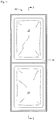
- Fig. 1 shows a preferred embodiment 10 of the transparent, dual-compartment containment of the preferred eutectic solution, wherein the outer compartment has a first compartment 12 separated from a second compartment 14 by a flexible intermediate portion 16 (which is preferably a flattened, sealed section of double-layered polyethylene).
- Each of the outer compartments 12 and 14 includes within it an inner compartment, 12A and 14A, respectively, as shown in Fig. 2 .
- Inner compartments 12A and 14A contain the eutectic solution, and are contained in the outer compartments for an additional barrier against leakage.
- compartments 12 and 14 Other designs and layering of compartments are readily apparent and within the scope of the invention, including additional outer compartments layered over the inner compartment, or elimination of the inner compartments and loading of the eutectic solution directly into the outer compartments 12 and 14.
- Different methods of flexibly joining the outer compartments are also possible, including attaching outer compartments with flexible fasteners made of rubber or a material which can be bent to hold the compartment in a desired configuration and then hold the compartments in that position, e.g., wire.
- a blood bag is placed on first compartment 12 and second compartment 14 is folded over the blood bag.
- Several blood bags can be placed, side-by-side to conserve space, into an insulated transport box 20 (VIPTM made by TCP Reliable, Inc., Edison NJ) shown in Fig. 3 .
- VIPTM made by TCP Reliable, Inc., Edison NJ
- the preferred embodiment 10 (with inner and outer compartments each made of polyethylene) was tested for durability by dropping from a height of 120 cm, which is typical of the height of a counter. No leaks or breaks of the wrapping were observed in this test.
- a number of other containers for the eutectic solution can be used in place of preferred embodiment 10, provided they can maintain the eutectic solution in contact with a blood bag and provide sufficient heat transfer to rapidly cool the blood to about 22°C, and then maintain it at that temperature for a sufficient period to allow transport and processing of blood products.
- a number of other polymers or materials other than polyethylene would be suitable for forming the containers.
- Suitable containers for the preferred eutectic solution which can effectively cool the blood bag to 22 ⁇ 2°C and maintain that temperature for a sufficient period to allow blood processing include containers formed like bags to cover the entire surface of a blood bag, or separated layers of containers, such that blood bags can be placed between them.
- Variations of the preferred eutectic solution,- including 1-dodecanol and other ingredients or proportions than those shown above, which do not change the essential characteristics of the eutectic solution are possible but do not form part of the present invention.
- the only limitation on such variations of the eutectic solution is that it must allow rapid cooling of blood to about 22°C -- should also have the other desirable characteristics of the preferred eutectic solution, such as maintenance of blood temperature in temperature extremes.
- Insulated transport box 20 has a corrugated outer layer, an expanded polystyrene layer 24 inside the corrugated outer layer 22, and an innermost layer of vacuum panels 26.
- Box 20 allows several of the preferred embodiments 10 covering blood bags to be arranged side-by-side, thus conserving space and also enhancing temperature maintenance from the effect of having several of the preferred embodiments (with phase change material for each) in each box.
- Other stacking arrangements for preferred embodiment 10 and blood bags can be used, including stacking one on top of another.
- One can also have only one preferred embodiment 10 per box, or more, as desired.
- the preferred embodiment is re-usable.
- preferred embodiments were subjected to cycles of 24-hour storage at 4 ⁇ 2°C (solid gel) and 37 ⁇ 2°C (liquid).
- preferred embodiments were conditioned and used for cooling 4 bags filled with an aqueous solution of 25% glycerol. The temperature of bags was recorded to determine the time required to bring the temperature of the 25% glycerol solution from 37 ⁇ 2°C to 24°C. Afterwards, preferred embodiments were successively incubated at 4 ⁇ 2°C and 37 ⁇ 2°C.
- preferred embodiments were conditioned at 20 ⁇ 2°C and used for cooling 25% glycerol bags.
- the time required to bring the temperature of the 25% glycerol solution to 24°C was measured as a function of the gelling/melting cycle.
- the eutectic solution is 98% 1-dodecanol, 1.5% myristyl alcohol and 0.5% 1-decanol.
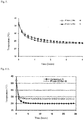
- Figures 4A and 4B compare the kinetics of melting and gelling of butane-1,4-diol and the eutectic solution according to the invention. These two phase change materials have slightly different gelling kinetics. Butane-1,4-diol gels at a temperature of 19-20°C after a super-cooling step ( Fig. 4A ). Super-cooling corresponds to a phase during which the liquid state is maintained while butane-1,4-diol temperature is below its gelling temperature. Gelling of the eutectic solution according to the invention occurs at 22-23°C.
- Phase change materials are generally conditioned at a temperature that is at least 5°C to 10°C lower than their melting temperature.
- Figure 7 compares temperature profiles of 18 bags filled with 25% glycerol during cooling to 22 ⁇ 2°C using the preferred embodiment pre-conditioned at 16°C, 18°C, 20°C, 22°C and 24°C.
- the eutectic solution according to the invention is in the liquid state, and is unable to cool glycerol solution to 22 ⁇ 2°C.
- the preferred embodiment was able to reduce the temperature of glycerol bags to 22 ⁇ 2°C in 1.7 ⁇ 0.2 hours.
- the preferred embodiment conditioned at 16°C, 18°C and 20°C was slightly more efficient, with cooling times of 1.2 ⁇ 0.1 hours, 1.4 ⁇ 0.1 hours, and 1.3 ⁇ 0.2 hours, respectively (p ⁇ 0.05). It appears that the preferred embodiment can be conditioned between 18°C and 22°C (near room temperature) and still provide optimal performance.
- Table II below shows a comparison of blood products from blood cooled with the preferred embodiment and with Compocool IITM.
- blood bags were inserted between the two compartments (12 and 14 of Fig. 1 ) to ensure adequate contact with the contents of the bag, then inserted in a protective polymer bag, then placed vertically and side-by-side in an insulated VIP TM box. This arrangement allows simultaneous cooling and transport of up to 6 blood bags.
- Compocool IITM The Compocool IITM system was used according to the manufacturer's instructions. Before use, the butane-1,4-diol cooling unit was conditioned at a temperature of 4 ⁇ 2°C for at least 9 hours. Immediately before use, preconditioned cooling units were left at room temperature until their temperature reach 14°C to 16°C. One Compocool II case can hold up to 6 blood bags.
- the blood products were prepared, following cooling and storage, using the Atreus Whole Blood Processing System for whole blood, and the OrbiSac System for preparing platelet concentrates from buffy coats (where the whole blood used in preparing the buffy coats was cooled with either the preferred embodiment or with Compocool IITM). Briefly, 450 mL of blood was collected in Atreus collection sets containing 63 mL CPD with Sebra 1040 shakers (Sebra, Arlington, AZ, USA). For these trials, shakers were used in volume mode, and the entire Atreus collection set was laid onto the tray. Within 30 minutes after phlebotomy, blood bags were cooled to 22 ⁇ 2°C using either preferred embodiment or Compocool II. Each experimental arm included 24 blood donors. Blood was stored for 14 to 24 hours before processing into blood products with the Atreus system (2C+overnight protocol and Orbisac). After processing, blood products were stored under conventional storage conditions.
- Red cell concentrate samples were aseptically collected on storage days 2, 14, 28, 35, and 42 for in vitro assays.
- in vitro parameters were measured on days 2, 5 and 7.
- the analysis of plasma units were done after at least 30 days of storage. Buffy coats were analyzed on day 2.
- the temperature of blood bags during storage was higher, on average by 2.7°C, with the preferred embodiment compared to Compocool IITM (p ⁇ 0,05). There were no differences in blood bag volume nor in storage time before processing between the two arms of the study. Similarly, there were no differences in red cell concentrates prepared from blood cooled with Compocool IITM and the preferred embodiment in terms of filtration time, percent recovery post-filtration, residual leukocyte counts, residual plasma, and hemoglobin (Table II). However, the fact that blood bags cooled with the preferred embodiment were stored at a temperature that was on average 2.7°C higher than bags cooled with Compocool IITM might have caused slight, yet statistically significant, differences in terms of hemolysis (day 42), ATP and 2,3-DPG content ( Figs.
- ATP Fig. 10E
- 2,3-DPG Fig. 10D
- Platelet recovery with OrbiSac was slightly higher with buffy coats prepared from whole blood cooled with the preferred embodiment. Although not statistically significant, platelet yields were higher when prepared from blood cooled with the preferred embodiment. This difference was paralleled with slightly lower pH values in platelet pools prepared from blood cooled with the preferred embodiment ( Fig. 11C ).
- cooling blood with the preferred embodiment and storage for a time period simulating using it in next day processing indicates the resulting blood products produced are fully comparable to those produced following cooling with the existing commercial Compocool IITM system.
- Blood component volumes were determined using a density of 1.06 g/mL for whole blood and buffy coats, 1.07 g/mL for red cell concentrates, and 1.03 g/mL for platelet pools and plasma units.
- Sterility testing was performed on platelet concentrates immediately after component preparation, A second sterility test was done on platelet and red cell concentrates at the expiration date. No bacterial contamination was detected at the expiration date.
- platelet activation was done by flow cytometry according to a conventional procedure. Briefly, platelet concentrates were diluted to a concentration of approximately 200 ⁇ 10 6 platelets/mL with autologous plasma. Platelets were fixed by adding an equal volume of 2% paraformaldehyde. After a 10-minute incubation, the suspension was diluted with 10 mM phosphate, pH 7.4, supplemented with 150 mM NaCl. Labeling was done by incubating an aliquot of 25 ⁇ l of the fixed suspension with 10 ⁇ L anti-CD62p (Immunotech Inc., Vaudreuil-Dorion, QC, Canada) and 10 ⁇ l anti-CD41 (Becton Dickinson).
- the suspension was diluted in 0.5 mL FACSFlow solution (Becton Dickinson). The analysis was performed on a FACScalibur flow cytometer with the Cell Quest software (BD Biosciences). Platelet functional capacity was evaluated by incubating 25 ⁇ L of the suspension with the GPAP peptide (Sigma) and human alpha-thrombin (Sigma) for 10 minutes at 37°C. Afterwards, platelets were fixed and immunologically labeled according to the procedure described above for CD62p activation.
- HSR Hypotonic shock response
- ESC extent of shape change assays were done by aggregometry with the Aggrolink software (Whole Blood Lumi-Aggregometer, model #540VS, Chrono-Log Corporation, Havertown, PA, USA), according to the protocol described by S. Holme et al ( Holme S. Moroff G. Murphy S: A multi-laboratory evaluation of in vitro platelet assays: the tests for extent of shape change and response to hypotonic shock. Biomedical Excellence for Safer Transfusion Working Party of the International Society of Blood Transfusion. Transfusion 1998; 38(1): 31-40 ). Platelet count in samples was adjusted to 200 ⁇ 10 6 platelets/mL with plasma depleted of autologous platelets. Reaction pH was adjusted to 7.0 with 1 M HEPES buffer.
- a thermal probe coupled to a temperature recorder was inserted in the center of each bag.
- collection bags were equilibrated at 37 ⁇ 2°C to simulate blood collection.
- Complete collection sets (collection bag, filters and satellite bags) were inserted in a protective polyethylene bag, then cooled and stored for up to 24 hours using the preferred embodiment (or another embodiment - labeled "Rev-C") or Compocool II.
- Rev-C a temperature recorder
- Figure 6 compares the temperature profiles of bags filled with 450 mL of an aqueous solution of 25% glycerol, cooled with the preferred embodiment and Compocool IITM.
- room temperature 24°C
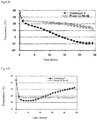
- all glycerol bags reached a temperature of less than 24°C in 1.7 ⁇ 0.2 hours with the preferred embodiment, compared to 0.9 ⁇ 0.2 hours with Compocool IITM (p ⁇ 0.05) ( Fig. 6A ).
- the temperature of bags was maintained at 23.4 ⁇ 0.1°C and at 20.0 ⁇ 0.1°C with the preferred embodiment and Compocool IITM, respectively (p ⁇ 0.05).
- Extreme outdoor temperature conditions affected the temperature of the glycerol bags placed in insulated containers, simulating transport conditions. At -35°C, the temperature of the glycerol bags was maintained at 22 ⁇ 2°C for 15.4 ⁇ 2.7 hours with the preferred embodiment, but only for 2.3 ⁇ 0.3 hours with Compocool II (p ⁇ 0.05) ( Fig. 6B ). In an external temperature of +39°C, the temperature of glycerol bags stored in Compocool II gradually increased to exceed 24°C after 11.0 ⁇ 0.9 hours, whereas the temperature of bags stored with the preferred embodiment was maintained at 22 ⁇ 2°C for at least 24 hours ( Fig. 6C ). Thus, the preferred embodiment is able to maintain the temperature of blood solutions for a longer time in extreme temperature conditions, particularly in summer-season temperatures, compared to Compocool IITM.
- Figure 9 compares the temperature of the preferred embodiment packaged in an insulated box (VIPTM, made by TCP Reliable, Inc., Edison NJ) when subjected to extreme temperature conditions during transport.
- the insulated box adequately maintains preferred embodiment conditioning when the outside temperature is 39°C.
- R value thermal resistance
- the insulated box was able to maintain an adequate preferred embodiment temperature for only 4 hours when exposed to extreme winter temperatures (-35°C).
- the maximum allowable time in these conditions could be shortened depending on the number of the preferred embodiments inside an insulated box - more blood units in a box, each packaged with a preferred embodiment, may tend to slow heat loss.
Landscapes
- Engineering & Computer Science (AREA)
- Life Sciences & Earth Sciences (AREA)
- Mechanical Engineering (AREA)
- Zoology (AREA)
- General Health & Medical Sciences (AREA)
- Wood Science & Technology (AREA)
- Health & Medical Sciences (AREA)
- Environmental Sciences (AREA)
- Dentistry (AREA)
- Physics & Mathematics (AREA)
- Thermal Sciences (AREA)
- General Engineering & Computer Science (AREA)
- Medical Preparation Storing Or Oral Administration Devices (AREA)
Description
- The invention relates to the field of blood cooling and storage for transport and processing.
- Under existing standards, one can store whole blood for processing (to produce platelets and other blood products) for up to 24 hours at room temperature, provided the blood is rapidly cooled to 22 ± 2°C. After collecting blood in blood bags, this rapid cooling is conventionally performed using cooling plates filled with butane-1,4-diol, a gel that melts at a temperature of 20°C. In gel phase, butane-1,4-diol absorbs heat from freshly collected blood. When the gel temperature reaches its phase change (melting) temperature, butane-1,4-diol can then absorb a lot of heat while maintaining a constant temperature of 18°C. This phase change material accumulates heat until it turns into a liquid. Afterwards, when brought back to a cooler ambient temperature, butane-1,4-diol returns to a solid gel state and releases stored heat.
- By absorbing heat from blood, butane-1,4-diol allows rapid cooling (within 2 hours) of blood bags from 37°C to 22 ± 2°C and maintenance of a constant temperature afterwards. Rapid cooling of blood bags ensures adequate blood product quality before component preparation. Butane-1,4-diol cooling plates were commercially introduced by NPBI in the early 1990's, following the work of Pietersz et al., "Storage of whole blood for up to 24 hours at ambient temperature prior to component preparation." Vox Sang 1989; 56(3): 145-50. Currently, Fresenius HemoCare (Redmond, WA, USA) offers two cooling and transport systems for blood bags: Compocool, and a more recent version, Compocool II™/Compocool WB™, in which the butane-1,4-diol cooling unit is placed in an insulated crate. Additionally, Sebra/Haemonetics (Tucson, AZ, USA) offers butane-1,4-diol-filled transparent pouches (ThermaSure), developed for the transport of platelet concentrates and blood units at 22 ± 2°C.
- The use of cooling plates containing butane-1,4-diol presents logistics issues for blood collection at remote sites. These cooling plates must be conditioned for at least 9 hours at a temperature of 4 ± 2°C before transport to the collection site. After conditioning, plates must be brought to 14-16°C to prevent deleterious effects on the blood; this pre-warming step can take up to 60 minutes. Furthermore, since the heat-absorbing capacity of butane-1,4-diol declines in ambient temperatures that exceed 18°C, the performance of the plates gradually decreases in parallel with time of storage at ambient temperature. Additionally, ambient temperatures for the plates (i.e., during transport to the blood processing site) should ideally be in the 10-30°C range. At an ambient temperature of -35°C, it has been shown that the Compocool II system is unable to maintain the desired temperature of blood bags for more than 2 hours. Thus, at such temperature extremes, blood bags must be transported in temperature-controlled units, as temperatures less than 20°C, are deleterious to platelet yield and quality - where platelets are produced from the blood.
- Finally, butane-1,4-diol has to be periodically replaced, because it absorbs humidity over time, which alters its melting temperature and heat-absorbing characteristics.
- Thus, a new system for rapid cooling and maintenance of freshly donated blood which avoids the disadvantages of butane-1,4-diol systems, is needed.
-
US 2008/0057574 A1 discloses maintaining blood platelets bags between 20°C and 24°C using contained 1-Dodecanol, and maintaining temperature sensitive pharmaceutical products between 2°C to 8°C using contained 1-Decanol. The items to be thermally protected (e.g. blood platelet bags) are packaged in a first container, which is packaged together with the contained phase change material in a second container. The second container is then placed in an insulated container. - The invention is defined in the claims.
- A blood-unit cooling system was designed to cool blood rapidly to about 22°C and maintain it at about that temperature, even in ambient temperature extremes, for several hours. The system employs a eutectic solution including 98% 1-dodecanol, 1.5% myristyl alcohol and 0.5% 1-decanol (melting point of 23°C) contained in a sealed flexible polymer layer, to cool whole blood-filled bags. The preferred design used double-layered transparent polyethylene, with two sealed compartments filled with the solution, separated by a flattened and sealed portion between them. One of the two sealed compartments contacts one side of the blood bag and the other compartment is folded over to contact the other side of the blood bag. The transparent compartments allows an operator to verify at any time whether the solution is in a solid state, and the flexibility of the compartments eases the proper positioning of them around a blood bag. If the gel becomes deformed during use, it can be melted at about room temperature (e.g., 24°C) and re-shaped.
- The compartments are preferably relatively flat and thin, even when filled with the eutectic solution. This compact design reduces transportation costs and allows one to fit several of them, folded around blood bags, into one insulated transport box for shipment.
- Each compartment is preferably about the same length and width dimension as a blood bag, so that both sides of the major surfaces of a blood bag are covered when the compartments are folded over a sandwiched blood bag. The compartments are preferably formed from double-layered polyethylene, and the connection between the two compartments can be of the same material, flattened and sealed to prevent leakage from one compartment to the other. Other connections which are sufficiently flexible to allow the compartments to fold over each other are also suitable.
- The cooling system allows conditioning of the compartments at room temperature (22° C or less) for about 12 hours, and can reduce the temperature of blood in bags to 22 ± 2°C in about 2 hours. The temperature of the blood in the bags can be maintained for several hours, when the system with blood bags is placed in an insulated transport box, even in extremes of temperature.
-
-
Fig. 1 shows a plan view of the preferred dual-compartment containment of the eutectic solution. -
Fig. 2 shows a sectional view of the preferred dual-compartment device ofFig. 1 , showing the inner and outer compartments. -
Fig. 3 shows a preferred insulated transport box VIP™ (made by TCP Reliable, Inc., Edison NJ) for the dual-compartment device ofFig. 1 while sandwiching a blood bag. -
Fig. 4 compares the gelling (Fig. 4A ) and melting (Fig. 4B ) kinetics of butane-1,4-diol and the eutectic solution according to the present invention (Solution Phase 22). -
Fig. 4A compares the gelling kinetics of butane-1,4-diol with a preferred embodiment according to the present invention. -
Fig. 4B compares the melting kinetics of butane-1,4-diol with a preferred embodiment according to the present invention. Gelling thermal profiles inFigs. 4A and 4B were measured at 4 ± 2°C after equilibrating phase change materials at 37 ± 2°C. Melting thermal profiles were measured at 37 ± 2°C after equilibrating phase change materials at 4 ± 2°C. Means ± standard deviations from 3 experiments. -
Fig. 5 shows the kinetics of cooling to 22 ± 2°C of 25% glycerol bags pre-equilibrated at 37 ± 2°C using a preferred embodiment according to the present invention (Phase 22 Rev -B), compared with another differently designed embodiment with the same eutectic solution (Phase 22 Rev -C). Six pouches filled with 25% glycerol equilibrated at a temperature of 37 ± 2°C were treated and packaged with the preferred embodiment or the other invention embodiment (Phase 22 Rev -C) using the same eutectic solution. Boxes containing packaged materials were stored at room temperature. Means ± standard deviations from 3 boxes of 6 pouches each (n = 18 pouches). -
Fig. 6 shows the temperature profiles of 25% glycerol pouches initially equilibrated at 37°C before packaging with preconditioned preferred embodiment (Phase 22 Rev-B) or existing marketed product (Compocool II™), n=18 pouches. -
Fig. 6A shows temperature profiles of 25% glycerol bags initially equilibrated at 37°C before cooling with: (i) preconditioned preferred embodiment or (ii) preconditioned Compocool II™, when insulated boxes containing packaged materials are stored at 24°C. -
Fig. 6B shows temperature profiles of 25% glycerol bags initially equilibrated at 37°C before cooling with: (i) preconditioned preferred embodiment or (ii) preconditioned Compocool II™, when insulated boxes containing packaged materials are stored at -35°C. -
Fig. 6C shows temperature profiles of 25% glycerol bags initially equilibrated at 37°C before cooling with: (i) preconditioned preferred embodiment or (ii) preconditioned Compocool II™, when insulated boxes containing packaged materials are stored at 39°C. -
Fig. 7 shows temperature profiles of 25% glycerol bags pre-equilibrated at 37°C and packaged with the preferred embodiment that has been pre-conditioned at 16°C, 18°C, 20°C, 22°C, or 24°C. -
Fig. 8 shows the influence of the number of gelling/melting cycles undergone by the preferred embodiment on the capacity (as measured by cooling time to the desired temperature) to cool 25% glycerol bags to 22 ± 2°C (n = 4). -
Fig. 9 shows temperature profiles of the preferred embodiment stored in commercial insulated (VIP™) boxes without any blood collection set, and exposed to extremes of temperature (n=3). This experiment was performed to model transport of the preferred embodiment from a blood processing center to a remote collection site where a blood drive is to be held. Insulated boxes were loaded with 16 Preferred Embodiments pre-conditioned at 20 ± 2°C. After closing, boxes were stored in extreme conditions (24°C, +39°C, or -35°C). Five thermal probes strategically positioned within each box were used for temperature recording for 18 hours. Temperatures indicated are means ± standard deviations from 3 independent experiments. -
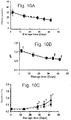
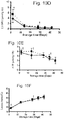
Figs. 10A, 10B, 10C ,10D, 10E and 10F respectively show a comparison of hemolysis (10C), pH (10B), ATP (10E), 2,3-DPG (10D), glucose (10A) and lactate levels (10F) in red cell concentrates prepared from blood cooled to 22 ± 2°C using either Compocool II™ or the preferred embodiment (n = 24). Dashed lines (- - -) represent means ± standard deviations of measurements on blood products prepared from whole blood cooled to 22 ± 2°C with Compocool II; full lines (-) are measurements from blood cooled with the Preferred Embodiment. SAG-M red cell concentrates were prepared with the Atreus system (CaridianBCT).
†indicates a statistically significant difference (p < 0.05) between the 2 cooling systems. -
Figs. 11A, 11B ,11C and 11D respectively show a comparison of ESC (11A), HSR (11B), pH (11C) and functional capacity assays (11D) of platelets, from platelet concentrates prepared from blood cooled to 22 ± 2°C using either Compocool II™ or the preferred embodiment (n = 3). Dashed lines (- - -) represent means ± standard deviations of measurements on blood products prepared from whole blood cooled to 22 ± 2°C with Compocool II; full lines (-) are measurements from blood cooled with the Preferred Embodiment. ††Indicates a statistically significant difference (p < 0.05) between the two cooling systems. -
Fig. 1 shows apreferred embodiment 10 of the transparent, dual-compartment containment of the preferred eutectic solution, wherein the outer compartment has afirst compartment 12 separated from asecond compartment 14 by a flexible intermediate portion 16 (which is preferably a flattened, sealed section of double-layered polyethylene). Each of theouter compartments Fig. 2 .Inner compartments 12A and 14A contain the eutectic solution, and are contained in the outer compartments for an additional barrier against leakage. Other designs and layering of compartments are readily apparent and within the scope of the invention, including additional outer compartments layered over the inner compartment, or elimination of the inner compartments and loading of the eutectic solution directly into theouter compartments - In operation, a blood bag is placed on
first compartment 12 andsecond compartment 14 is folded over the blood bag. Several blood bags can be placed, side-by-side to conserve space, into an insulated transport box 20 (VIP™ made by TCP Reliable, Inc., Edison NJ) shown inFig. 3 . - The preferred embodiment 10 (with inner and outer compartments each made of polyethylene) was tested for durability by dropping from a height of 120 cm, which is typical of the height of a counter. No leaks or breaks of the wrapping were observed in this test.
- A number of other containers for the eutectic solution can be used in place of
preferred embodiment 10, provided they can maintain the eutectic solution in contact with a blood bag and provide sufficient heat transfer to rapidly cool the blood to about 22°C, and then maintain it at that temperature for a sufficient period to allow transport and processing of blood products. A number of other polymers or materials other than polyethylene would be suitable for forming the containers. Suitable containers for the preferred eutectic solution which can effectively cool the blood bag to 22 ± 2°C and maintain that temperature for a sufficient period to allow blood processing, include containers formed like bags to cover the entire surface of a blood bag, or separated layers of containers, such that blood bags can be placed between them. - Several embodiments for containers were designed and compared, as shown in Table I below.
Table I - Comparison of Phase 22 Prototypes Rev-A, Rev-B and Rev-C with Compocool II Prototype Phase 22 Rev-A Prototype Phase 22 Rev-B Prototype Phase 22 Rev-C Compocool II Cooling Unit Unitary pouch design of dimensions below Design as shown in Fig. 1 Unitary pouch design of dimensions below Unitary cassette design Dimensions / Cooling Unit (cm) 16.5 × 11.5 × 2.0 16.5 × 11.5 × 2.0 23.5 × 16.5 × 2.0 30.6 × 16.5 × 4.5 Eutectic Solution Mixture: 98% 1-dodecanol, 1.5% myristyl alcohol, 0.5% 1-decanol Butane-1,4-diol Melting Point 23°C 20°C Weight / Cooling Unit (kq) 0.4 0.4 0.7 2.5 Conditioning > 12 hours at 20 ± 2°C > 12 hours at 20 ± 2°C > 12 hours at 20 ± 2°C > 9 hours at 4 ± 2°C Insulated Box As shown in Fig. 2 Insulated EPS box External Dimensions (cm) 40 × 40 × 40 39 × 32 × 30 Thermal Insulation 2.5-cm thick vacuum panels (R-30*) 4-cm thick expanded polystyrene (R-4*) 2.5 cm expanded polystyrene (R-3.8*) Containment capacity (of 450 to 500mL blood bags) 1 to 6 1 to 6 * "R" is a measure of thermal resistance. - Variations of the preferred eutectic solution,- including 1-dodecanol and other ingredients or proportions than those shown above, which do not change the essential characteristics of the eutectic solution are possible but do not form part of the present invention. The only limitation on such variations of the eutectic solution is that it must allow rapid cooling of blood to about 22°C -- should also have the other desirable characteristics of the preferred eutectic solution, such as maintenance of blood temperature in temperature extremes.
-
Insulated transport box 20 has a corrugated outer layer, an expandedpolystyrene layer 24 inside the corrugatedouter layer 22, and an innermost layer ofvacuum panels 26. Other insulated boxes using different designs can be substituted fortransport box 20, and are within the scope of the invention.Box 20 allows several of thepreferred embodiments 10 covering blood bags to be arranged side-by-side, thus conserving space and also enhancing temperature maintenance from the effect of having several of the preferred embodiments (with phase change material for each) in each box. Other stacking arrangements forpreferred embodiment 10 and blood bags can be used, including stacking one on top of another. One can also have only one preferredembodiment 10 per box, or more, as desired. - In embodiments not forming part of the invention, where storage is for short periods, or for storage at near 22°C, it may not be necessary to use an insulated transport box.
- The preferred embodiment is re-usable. To test the efficacy of the preferred eutectic solution to cool blood bags to 22 ± 2°C after several conditioning cycles, preferred embodiments were subjected to cycles of 24-hour storage at 4 ± 2°C (solid gel) and 37 ± 2°C (liquid). Before assays, preferred embodiments were conditioned and used for cooling 4 bags filled with an aqueous solution of 25% glycerol. The temperature of bags was recorded to determine the time required to bring the temperature of the 25% glycerol solution from 37 ± 2°C to 24°C. Afterwards, preferred embodiments were successively incubated at 4 ± 2°C and 37 ± 2°C. After 0, 12, 25, 50 and 75 such cycles, preferred embodiments were conditioned at 20 ± 2°C and used for cooling 25% glycerol bags. The time required to bring the temperature of the 25% glycerol solution to 24°C was measured as a function of the gelling/melting cycle.
- Even after applying 75 cycles of gelling/melting, no significant differences in the performance of the preferred embodiment were observed (
Fig. 8 ). No leaks or wear of the polyethylene wrapping were noted. - To avoid contacting blood bags with a damaged, leaking package, the impact of adding a supplementary protection bag on the performance of the preferred embodiment was evaluated. The time required to cool 25% glycerol bags pre-warmed to 37°C was the same, whether the preferred embodiment was wrapped in a polyethylene protection bag (1.7 ± 0.2 hours) or not (1.8 ± 0.2 hours) (p > 0.05). Accordingly, addition of one or more additional layers for protection of the preferred embodiment is within the scope of the invention.
- In accordance with the invention, the eutectic solution is 98% 1-dodecanol, 1.5% myristyl alcohol and 0.5% 1-decanol.
-
Figures 4A and 4B compare the kinetics of melting and gelling of butane-1,4-diol and the eutectic solution according to the invention. These two phase change materials have slightly different gelling kinetics. Butane-1,4-diol gels at a temperature of 19-20°C after a super-cooling step (Fig. 4A ). Super-cooling corresponds to a phase during which the liquid state is maintained while butane-1,4-diol temperature is below its gelling temperature. Gelling of the eutectic solution according to the invention occurs at 22-23°C. The kinetics is faster than with butane-1,4-diol and super-cooling is much less pronounced, owing to the composition of the solution (Fig. 4A ). However, the kinetics of melting of the two compositions are comparable (Fig. 4B ). - Phase change materials are generally conditioned at a temperature that is at least 5°C to 10°C lower than their melting temperature.
Figure 7 compares temperature profiles of 18 bags filled with 25% glycerol during cooling to 22 ± 2°C using the preferred embodiment pre-conditioned at 16°C, 18°C, 20°C, 22°C and 24°C. At 24°C, the eutectic solution according to the invention is in the liquid state, and is unable to cool glycerol solution to 22 ± 2°C. When conditioned at 22°C, the preferred embodiment was able to reduce the temperature of glycerol bags to 22 ± 2°C in 1.7 ± 0.2 hours. The preferred embodiment conditioned at 16°C, 18°C and 20°C was slightly more efficient, with cooling times of 1.2 ± 0.1 hours, 1.4 ± 0.1 hours, and 1.3 ± 0.2 hours, respectively (p < 0.05). It appears that the preferred embodiment can be conditioned between 18°C and 22°C (near room temperature) and still provide optimal performance. - Table II below shows a comparison of blood products from blood cooled with the preferred embodiment and with Compocool II™. When using the preferred embodiment, blood bags were inserted between the two compartments (12 and 14 of
Fig. 1 ) to ensure adequate contact with the contents of the bag, then inserted in a protective polymer bag, then placed vertically and side-by-side in an insulated VIPTM box. This arrangement allows simultaneous cooling and transport of up to 6 blood bags. - The Compocool II™ system was used according to the manufacturer's instructions. Before use, the butane-1,4-diol cooling unit was conditioned at a temperature of 4 ± 2°C for at least 9 hours. Immediately before use, preconditioned cooling units were left at room temperature until their temperature reach 14°C to 16°C. One Compocool II case can hold up to 6 blood bags.
- The blood products were prepared, following cooling and storage, using the Atreus Whole Blood Processing System for whole blood, and the OrbiSac System for preparing platelet concentrates from buffy coats (where the whole blood used in preparing the buffy coats was cooled with either the preferred embodiment or with Compocool II™). Briefly, 450 mL of blood was collected in Atreus collection sets containing 63 mL CPD with Sebra 1040 shakers (Sebra, Tucson, AZ, USA). For these trials, shakers were used in volume mode, and the entire Atreus collection set was laid onto the tray. Within 30 minutes after phlebotomy, blood bags were cooled to 22 ± 2°C using either preferred embodiment or Compocool II. Each experimental arm included 24 blood donors. Blood was stored for 14 to 24 hours before processing into blood products with the Atreus system (2C+overnight protocol and Orbisac). After processing, blood products were stored under conventional storage conditions.
- Red cell concentrate samples were aseptically collected on
storage days days day 2.Table II - Comparison of the In Vitro Parameters of Blood Products Prepared with Atreus and OrbiSac from Whole Blood Cooled to 22 ± 2°C with Compocool II™ and the Preferred Embodiment Blood Products Cooling System Compocool II™ Preferred Embodiment Whole Blood Number of units 24 24 Storage time, hours 17.7 ± 1.8 18.1 ± 2.7 Temperature before processing, °C 20.3 ± 0.3 23.0 ± 0.2* Volume, mL 456 ± 9 458 ± 11 Red Cell Concentrates Number of units 24 24 Filtration time, minutes 0:26 ± 0:05 0:29 ± 0:06 Percent recovery after filtration 97 ± 1 97 ± 0 Volume, mL 260 ± 18 264 ± 20 Hematocrit, l/l 0.57 ± 0.03 0.56 ± 0.03 Residual volume of plasma, mL 14.3 ± 4.8 13.9 ± 3.6 Hemoglobin, g/unit 49.9 ± 5.3 50.1 ± 6.6 Residual leukocytes, × 106/unit 0.41 ± 0.32 0.45 ± 0.44 No. units > 1 × 10⁶/unit 1 2 No. units > 5 × 10⁶/unit 0 0 Percent hemolysis (Day 2) 0.07± 0.01 0.07 ± 0.01 Percent hemolysis (Day 42) 0.21± 0.06 0.33 ± 0.15* Buffy Coats Number 9 9 Volume, mL 52 ± 2 52 ± 4 Hematocrit, L/L 0.38 ± 0.08 0.40 ± 0.06 Hemoglobin, g/unit 6.3 ± 1.4 6.8 ± 0.7 Platelet count, x 1011 / /unit 0.86 ± 0.26 1.06 ± 0.29 Platelet Concentrates (pool of 5 buffy coats) Number 3 3 Volume, mL 356 ± 21 338 ± 6 Platelet count, × 1011/unit 3.69 ± 0.56 4.18 ± 0.13 Percent platelet recovery† 76 ± 3 88 ± 3* Residual leukocytes, × 106/unit 0.34 ± 0.00 0.46 ± 0.20 pH (Day 5) 7.48 ± 0.07 7.33 ± 0.05* Plasma Units Number 24 24 Volume, mL 266 ± 16 265 ± 19 Residual leukocytes, × 106/unit 0.27 ± 0.03 0.26 ± 0.02 Fibrinogen (mg/dl) 366 ± 145 355 ± 81 Factor VIII (IU/mL) 1.43 ± 1.98 0.89 ± 0.37 Factor V (IU/mL) 0.98 ± 0.12 0.94 ± 0.13 vWF factor (IU/mL) 1.10 ± 0.40 1.02 ± 0.35 Sodium (mmol/L) 171 ± 2 172 ± 2 Potassium (mmol/L) 3.72 ± 0.31 3.67 ± 0.34 *Indicates a statistically significant difference (p < 0.05) with Compocool II. Mean ± standard deviation.
†Percent of platelet count measured in the Buffy coat pool before final preparation of the platelet concentrate. - The temperature of blood bags during storage was higher, on average by 2.7°C, with the preferred embodiment compared to Compocool II™ (p < 0,05). There were no differences in blood bag volume nor in storage time before processing between the two arms of the study. Similarly, there were no differences in red cell concentrates prepared from blood cooled with Compocool II™ and the preferred embodiment in terms of filtration time, percent recovery post-filtration, residual leukocyte counts, residual plasma, and hemoglobin (Table II). However, the fact that blood bags cooled with the preferred embodiment were stored at a temperature that was on average 2.7°C higher than bags cooled with Compocool II™ might have caused slight, yet statistically significant, differences in terms of hemolysis (day 42), ATP and 2,3-DPG content (
Figs. 10C ,10E, 10D ). Although percent hemolysis at the beginning of storage were comparable, this parameter increased more rapidly after 4 weeks of storage in products prepared from blood cooled with the preferred embodiment. The percentage of hemolysis was still below 0.8% in all red cell concentrates. This parameter varied between 0.14% and 0.63% in red cell concentrates prepared from blood cooled with the preferred embodiment, and between 0.11 and 0.31% in red cell concentrates prepared from blood cooled with Compocool II™. - Furthermore, during storage, ATP (
Fig. 10E ) and 2,3-DPG (Fig. 10D ) content of red cell concentrates prepared from blood processed with Compocool II™ were slightly higher than values in concentrates prepared from blood processed with the preferred embodiment. - Nine buffy coats were analyzed in the course of this study. The majority of these buffy coats were processed into platelet concentrates. Independently of the whole blood cooling system used, the in vitro parameters measured in buffy coats were comparable for both arms of the study (Table II).
- Platelet recovery with OrbiSac was slightly higher with buffy coats prepared from whole blood cooled with the preferred embodiment. Although not statistically significant, platelet yields were higher when prepared from blood cooled with the preferred embodiment. This difference was paralleled with slightly lower pH values in platelet pools prepared from blood cooled with the preferred embodiment (
Fig. 11C ). - Comparison of coagulation factor, fibrinogen and electrolyte (sodium and potassium) concentrations in plasma did not indicate any significant differences in units prepared from whole blood cooled with Compocool II™ vs. whole blood cooled with the preferred embodiment (Table II).
- In conclusion, cooling blood with the preferred embodiment and storage for a time period simulating using it in next day processing, indicates the resulting blood products produced are fully comparable to those produced following cooling with the existing commercial Compocool II™ system.
- The protocol for determining the characteristics reported in Table I and
Figs. 10A-10F ;11A-11D is set forth immediately below. - Blood component volumes were determined using a density of 1.06 g/mL for whole blood and buffy coats, 1.07 g/mL for red cell concentrates, and 1.03 g/mL for platelet pools and plasma units.
- Complete blood counts were determined with a Coulter AcT™ 5diff AL hematology analyzer (Beckman Coulter Canada, Mississauga, ON, Canada). Residual leukocyte counts were determined using the LeucoCOUNT kit (Beckman Coulter Canada, Mississauga, ON, Canada) run on a flow cytometer (FACS Calibur, Becton Dickinson). All analyses had to be completed on the day of sampling. For red cell concentrates, the 24-hour delay after leukoreduction by filtration also had to be complied with.
- Sterility testing was performed on platelet concentrates immediately after component preparation, A second sterility test was done on platelet and red cell concentrates at the expiration date. No bacterial contamination was detected at the expiration date.
- The pH measurements (at 22°C) were done with a pH-meter (Beckman Coulter) immediately after sampling. Plasma hemoglobin was measured with a HemoCue Plasma/Low HB photometer (HemoCue, Angelholm, Sweden) on samples that had been frozen at -80°C. Percent hemolysis was calculated according to the following equation: ([Free Hb] / [Total Hb] X (100 - HCT). ATP, glucose, lactate and 2,3-DPG levels were determined using the following commercial kits: ATP determination kit (Perkin Elmer, cat. #6016947) for ATP; Method no 735 (Sigma-Aldrich, cat. #735-10, St. Louis, MO) for lactate; Ampex®Red Glucose/Glucose Oxidase Assay Kit (Molecular Probes, cat. #A-22189) for glucose; and the 2,3-DPG (2,3-diphosphoglycerate) kit (ROCHE Diagnostics, cat. #148334) for 2,3-DPG.
- The evaluation of platelet activation was done by flow cytometry according to a conventional procedure. Briefly, platelet concentrates were diluted to a concentration of approximately 200 × 106 platelets/mL with autologous plasma. Platelets were fixed by adding an equal volume of 2% paraformaldehyde. After a 10-minute incubation, the suspension was diluted with 10 mM phosphate, pH 7.4, supplemented with 150 mM NaCl. Labeling was done by incubating an aliquot of 25 µl of the fixed suspension with 10 µL anti-CD62p (Immunotech Inc., Vaudreuil-Dorion, QC, Canada) and 10 µl anti-CD41 (Becton Dickinson). After 30 minutes of incubation, the suspension was diluted in 0.5 mL FACSFlow solution (Becton Dickinson). The analysis was performed on a FACScalibur flow cytometer with the Cell Quest software (BD Biosciences). Platelet functional capacity was evaluated by incubating 25 µL of the suspension with the GPAP peptide (Sigma) and human alpha-thrombin (Sigma) for 10 minutes at 37°C. Afterwards, platelets were fixed and immunologically labeled according to the procedure described above for CD62p activation. Hypotonic shock response (HSR) and extent of shape change (ESC) assays were done by aggregometry with the Aggrolink software (Whole Blood Lumi-Aggregometer, model #540VS, Chrono-Log Corporation, Havertown, PA, USA), according to the protocol described by S. Holme et al (Holme S. Moroff G. Murphy S: A multi-laboratory evaluation of in vitro platelet assays: the tests for extent of shape change and response to hypotonic shock. Biomedical Excellence for Safer Transfusion Working Party of the International Society of Blood Transfusion. Transfusion 1998; 38(1): 31-40). Platelet count in samples was adjusted to 200 × 106 platelets/mL with plasma depleted of autologous platelets. Reaction pH was adjusted to 7.0 with 1 M HEPES buffer.
- For the trials depicted in
Figs. 5-9 , collection bags from Atreus collection sets (CaridianBCT, Zaventem, Belgium) were filled with 450mL 25% glycerol. This solution has a specific gravity of 1.060 g/mL, which is comparable to that of whole blood with a hematocrit of 45%. - A thermal probe coupled to a temperature recorder (Hobo, Onset, USA) was inserted in the center of each bag. Before testing, collection bags were equilibrated at 37 ± 2°C to simulate blood collection. Complete collection sets (collection bag, filters and satellite bags) were inserted in a protective polyethylene bag, then cooled and stored for up to 24 hours using the preferred embodiment (or another embodiment - labeled "Rev-C") or Compocool II. To simulate extreme temperature conditions, packages were stored in external environments conditioned at either 24°C, -35°C, or 39°C.
-
Figure 6 compares the temperature profiles of bags filled with 450 mL of an aqueous solution of 25% glycerol, cooled with the preferred embodiment and Compocool II™. At room temperature (24°C), all glycerol bags reached a temperature of less than 24°C in 1.7 ± 0.2 hours with the preferred embodiment, compared to 0.9 ± 0.2 hours with Compocool II™ (p < 0.05) (Fig. 6A ). The temperature of bags was maintained at 23.4 ± 0.1°C and at 20.0 ± 0.1°C with the preferred embodiment and Compocool II™, respectively (p < 0.05). - Extreme outdoor temperature conditions affected the temperature of the glycerol bags placed in insulated containers, simulating transport conditions. At -35°C, the temperature of the glycerol bags was maintained at 22 ± 2°C for 15.4 ± 2.7 hours with the preferred embodiment, but only for 2.3 ± 0.3 hours with Compocool II (p < 0.05) (
Fig. 6B ). In an external temperature of +39°C, the temperature of glycerol bags stored in Compocool II gradually increased to exceed 24°C after 11.0 ± 0.9 hours, whereas the temperature of bags stored with the preferred embodiment was maintained at 22 ± 2°C for at least 24 hours (Fig. 6C ). Thus, the preferred embodiment is able to maintain the temperature of blood solutions for a longer time in extreme temperature conditions, particularly in summer-season temperatures, compared to Compocool II™. -
Figure 9 compares the temperature of the preferred embodiment packaged in an insulated box (VIP™, made by TCP Reliable, Inc., Edison NJ) when subjected to extreme temperature conditions during transport. The insulated box adequately maintains preferred embodiment conditioning when the outside temperature is 39°C. However, despite its very high thermal resistance (R value), the insulated box was able to maintain an adequate preferred embodiment temperature for only 4 hours when exposed to extreme winter temperatures (-35°C). However, the maximum allowable time in these conditions could be shortened depending on the number of the preferred embodiments inside an insulated box - more blood units in a box, each packaged with a preferred embodiment, may tend to slow heat loss. - The specific methods described herein are representative of preferred embodiments and are exemplary and not intended as limitations on the scope of the invention as defined the appended claims.
- It is recognized that various modifications are possible within the scope of the invention as claimed. Thus, it will be understood that although the present invention has been specifically disclosed by preferred embodiments and optional features, modifications and variations may be resorted to that are within the scope of this invention as defined by the appended claims.
Claims (19)
- A process for maintaining blood in an insulated vessel (20) at 22 °C ± 2 °C for at least 15 hours where the ambient temperature outside the insulated vessel is between 39 °C and -35 °C, comprising:a.) cooling blood contained in a flexible polymer pouch to about 22 °C using a contained phase change material which consists essentially of 98 % 1-dodecanol, 1.5 % myristyl alcohol and 0.5 % 1-decanol, and wherein the container (10) for the phase change material covers a major portion of each of the two largest surfaces of the flexible polymer pouch, wherein:(i) the contained phase change material was pre-conditioned at 22 °C or less for about 12 hours or more; and(ii) the contained phase change material is positioned to cover said major portions for about 2 hours or until the temperature of the blood drops to 22 °C ± 2 °C;b.) the contained phase change material covering said major portions is placed into said insulated vessel (20) and the insulated vessel is subjected to temperatures between 39 °C and -35 °C for up to 15 hours, wherein the contained phase change material maintains the blood in the flexible polymer pouch at 22 °C ± 2 °C; andc.) blood is withdrawn from the flexible polymer pouch for use in a process to produce blood products.
- The process of claim 1, wherein the time of contact between the contained phase change material and the contained blood in step (ii) is less than 2 hours.
- The process of claim 1, wherein the temperature of the blood is maintained at 22 °C ± 2 °C for at least 24 hours where the ambient temperature outside the insulated vessel is continuously about 24 °C.
- The process of claim 1, wherein the container for the phase change material is at least one layer of polyethylene.
- The process of claim 1, wherein the container for the phase change material is two layers of polyethylene.
- The process of claim 4, wherein the phase change material is housed in two separated compartments (12, 14) each formed from at least one layer of polyethylene, wherein the two compartments are joined with a flexible joint (16).
- The process of claim 6, wherein the flexible joint is made of layers of polyethylene sealed together.
- The process of claim 4, wherein the container is transparent.
- The process of claim 1, wherein the blood is contained in a 450 ml blood bag.
- The process of claim 6, wherein one side of one of the compartments is positioned over one side of the blood bag and one side of the other compartment is folded around the joint over the other side of the blood bag.
- The process of claim 3, wherein several of the contained phase change material, each in position covering a respective flexible polymer pouch, are placed into the insulated vessel.
- The process of claim 11, wherein the insulated vessel includes a polystyrene layer and a vacuum layer, separating the contained phase change material and the blood from the area outside the vessel.
- The process of claim 1, further including extracting platelets from the contained blood.
- The process of claim 1, wherein in step b.) the temperature of the blood is maintained at 22 °C ± 2 °C for 15 hours or more where the ambient temperature outside the insulated vessel is about -35 °C.
- The process of claim 1, wherein in step b.) the temperature of the blood is maintained at 22 °C ± 2 °C for 24 hours or more where the ambient temperature outside the insulated vessel is about 39 °C.
- The process of claim 1, wherein the said blood products are platelets, plasma, buffy coat or red cell concentrates.
- The process of claim 1, wherein in step b.) the contained phase change material covering said major portions is subjected to temperatures between 39 °C and - 35 °C for up to 24 hours.
- The process of claim 17, wherein the said blood products are platelets, plasma, buffy coat or red cell concentrates.
- A process for rapid cooling of blood contained in a flexible polymer pouch to about 22 °C using a contained phase change material which comprises 98 % 1-dodecanol, 1.5 % myristyl alcohol and 0.5 % 1-decanol, and wherein the container for the phase change material covers a major portion of each of the two largest surfaces of the flexible polymer pouch, comprising:(i) pre-conditioning the contained phase change material at 22 °C or less for about 12 hours or more; and(ii) positioning the contained phase change material to cover said major portions for about 2 hours or until the temperature of the blood drops to 22 °C ± 2 °C.
Applications Claiming Priority (1)
| Application Number | Priority Date | Filing Date | Title |
|---|---|---|---|
| US201161477796P | 2011-04-21 | 2011-04-21 |
Publications (3)
| Publication Number | Publication Date |
|---|---|
| EP2514308A2 EP2514308A2 (en) | 2012-10-24 |
| EP2514308A3 EP2514308A3 (en) | 2012-11-21 |
| EP2514308B1 true EP2514308B1 (en) | 2021-01-27 |
Family
ID=46000978
Family Applications (1)
| Application Number | Title | Priority Date | Filing Date |
|---|---|---|---|
| EP12165031.1A Not-in-force EP2514308B1 (en) | 2011-04-21 | 2012-04-20 | Rapid cooling to and maintaining of whole blood at 20 to 24°C for processing |
Country Status (3)
| Country | Link |
|---|---|
| US (3) | US8192924B1 (en) |
| EP (1) | EP2514308B1 (en) |
| CA (1) | CA2770657C (en) |
Families Citing this family (28)
| Publication number | Priority date | Publication date | Assignee | Title |
|---|---|---|---|---|
| US9340720B2 (en) * | 2009-07-02 | 2016-05-17 | Uchicago Argonne, Llc | Heat transfer fluids containing nanoparticles |
| US12279610B2 (en) | 2011-03-15 | 2025-04-22 | Paragonix Technonogies, Inc. | System for hypothermic transport of samples |
| US8935934B2 (en) | 2013-03-12 | 2015-01-20 | Tcp Reliable, Inc. | Monitoring temperature-sensitive cargo with automated generation of regulatory qualification |
| US8696151B1 (en) * | 2013-03-12 | 2014-04-15 | Tcp Reliable, Inc. | Monitoring shipment of biological products to determine remaining refrigerant quantity |
| US8881540B1 (en) | 2014-01-27 | 2014-11-11 | Tcp Reliable, Inc. | Monitoring temperature-sensitive cargo with automated generation of regulatory qualification |
| CA3001048C (en) | 2015-10-06 | 2020-11-24 | Cold Chain Technologies, Inc. | Pallet cover comprising one or more temperature-control members and kit for use in making the pallet cover |
| US11591133B2 (en) | 2015-10-06 | 2023-02-28 | Cold Chain Technologies, Llc | Pallet cover comprising one or more temperature-control members and kit for use in making the pallet cover |
| US11964795B2 (en) | 2015-10-06 | 2024-04-23 | Cold Chain Technologies, Llc | Device comprising one or more temperature-control members and kit for use in making the device |
| US10583978B2 (en) | 2015-10-06 | 2020-03-10 | Cold Chain Technologies, Llc | Pallet cover compromising one or more temperature-control members and kit for use in making the pallet cover |
| US20200329702A1 (en) * | 2016-04-27 | 2020-10-22 | David PENSAK | Thermal Consistency Systems and Methods for the Application of Thermal Support to a Human or Animal Body or to an Organ for Transplantation |
| EP3585601B1 (en) | 2017-02-21 | 2023-08-30 | The Procter & Gamble Company | Methods of making vented flexible containers |
| EP3585687A1 (en) * | 2017-02-22 | 2020-01-01 | The Procter and Gamble Company | Methods of making flexible containers with structural support frames |
| US11511928B2 (en) | 2017-05-09 | 2022-11-29 | Cold Chain Technologies, Llc | Shipping system for storing and/or transporting temperature-sensitive materials |
| US11499770B2 (en) | 2017-05-09 | 2022-11-15 | Cold Chain Technologies, Llc | Shipping system for storing and/or transporting temperature-sensitive materials |
| US20210400952A1 (en) | 2017-06-07 | 2021-12-30 | Paragonix Technologies, Inc. | Apparatus for tissue transport and preservation |
| US11338975B2 (en) | 2018-05-16 | 2022-05-24 | The Procter & Gamble Company | Container blanks for flexible packages and methods of making flexible packages |
| WO2019241720A1 (en) | 2018-06-15 | 2019-12-19 | Cold Chain Technologies, Inc. | Shipping system for storing and/or transporting temperature-sensitive materials |
| US11999559B2 (en) | 2018-08-10 | 2024-06-04 | Cold Chain Technologies, Llc | Apparatus and method for protectively covering temperature sensitive products |
| US11634266B2 (en) | 2019-01-17 | 2023-04-25 | Cold Chain Technologies, Llc | Thermally insulated shipping system for parcel-sized payload |
| CN110003863A (en) * | 2019-03-29 | 2019-07-12 | 上海海事大学 | A kind of phase change cold storage material for micro-frozen refrigerated food preservation and preparation method |
| US11632951B2 (en) | 2020-01-31 | 2023-04-25 | Paragonix Technologies, Inc. | Apparatus for tissue transport and preservation |
| US11786901B2 (en) | 2020-06-09 | 2023-10-17 | Maxq Research Llc | On-demand thermoregulation element or system for storage and transport of temperature sensitive materials |
| US12378057B2 (en) | 2020-07-02 | 2025-08-05 | Cold Chain Technologies, Llc | Shipping system for storing and/or transporting temperature-sensitive materials |
| CN112167242B (en) * | 2020-09-24 | 2022-03-25 | 清华大学 | No active cooling low temperature storage and transportation device based on multilayer phase change material |
| WO2022187699A1 (en) | 2021-03-04 | 2022-09-09 | Cold Chain Technologies, Llc | Shipping system for storing and/or transporting temperature-sensitive materials |
| WO2025049335A1 (en) | 2023-08-25 | 2025-03-06 | Paragonix Technologies, Inc. | Systems and methods for maintaining organ pressure |
| US12410408B2 (en) | 2024-02-02 | 2025-09-09 | Paragonix Technologies, Inc. | Method for hypothermic transport of biological samples |
| USD1087382S1 (en) | 2025-01-30 | 2025-08-05 | Paragonix Technologies, Inc. | Device for transporting a biological sample |
Family Cites Families (17)
| Publication number | Priority date | Publication date | Assignee | Title |
|---|---|---|---|---|
| US3480015A (en) | 1967-05-12 | 1969-11-25 | Medical Electroscience Inc | Apparatus for collecting and cooling blood |
| AU7281487A (en) * | 1986-04-07 | 1987-11-09 | Habib Al-Sioufi | Anti-pathogenic blood collection system and method |
| US5899088A (en) | 1998-05-14 | 1999-05-04 | Throwleigh Technologies, L.L.C. | Phase change system for temperature control |
| CA2300618C (en) | 1999-03-12 | 2009-10-20 | Ted J. Malach | Constant temperature packaging system and phase change formulation |
| GB9911588D0 (en) | 1999-05-19 | 1999-07-21 | 3M Innovative Properties Co | Thermal pack incorporating a temperature indicator |
| DE10045434B4 (en) | 2000-09-14 | 2005-07-14 | Fresenius Hemocare Gmbh | Adsorbent with differently modified surface areas, process for its preparation and use thereof |
| FR2830077B1 (en) * | 2001-09-27 | 2004-04-02 | Sofrigam | THERMAL REGULATOR CONTAINING A PHASE CHANGE MATERIAL |
| US6645598B2 (en) * | 2002-01-04 | 2003-11-11 | Robert J. Alderman | Cell insulation blanket with phase change material, and method of making |
| DE10216263B4 (en) * | 2002-04-12 | 2005-03-31 | delta T Gesellschaft für Medizintechnik mbH | Containers of plastic for transporting and storing goods at a constant temperature and process for producing the containers |
| GB2425166B (en) | 2003-01-21 | 2007-01-31 | Ebac Ltd | Coolers for use with bag-in-box containers |
| DE10303334A1 (en) * | 2003-01-29 | 2004-08-12 | Cognis Deutschland Gmbh & Co. Kg | Composition for controlled temperature control through phase change, its production and use |
| US7294374B2 (en) | 2003-08-07 | 2007-11-13 | Tcp Reliable, Inc. | Thermal packaging system |
| US7955677B2 (en) | 2005-12-07 | 2011-06-07 | Mylan Technologies, Inc. | Two-sided non-stick release film |
| US20090297810A1 (en) | 2008-05-30 | 2009-12-03 | Fiscus David M | Polyethylene Films and Process for Production Thereof |
| CN102105119A (en) * | 2008-05-12 | 2011-06-22 | 婴贝舒 | A system and method to regulate temperature |
| IT1395210B1 (en) | 2009-07-28 | 2012-09-05 | Wild Parma S R L | ENVELOPE TO KEEP AT LEAST ONE SUBSTANCE, BAG FOR PACKAGING INCLUDING THIS ENVELOPE AND METHODS OF MANUFACTURING THESE |
| DE202010007130U1 (en) * | 2010-05-17 | 2010-08-26 | Hw Verwaltungs Gmbh | Heat storage element for use in insulated storage and transport containers for temperature-stable storage |
-
2011
- 2011-10-17 US US13/274,593 patent/US8192924B1/en not_active Expired - Fee Related
-
2012
- 2012-03-07 CA CA2770657A patent/CA2770657C/en active Active
- 2012-03-27 US US13/431,383 patent/US8349552B2/en active Active
- 2012-04-20 EP EP12165031.1A patent/EP2514308B1/en not_active Not-in-force
- 2012-12-07 US US13/707,637 patent/US8802364B2/en active Active
Non-Patent Citations (1)
| Title |
|---|
| None * |
Also Published As
| Publication number | Publication date |
|---|---|
| US20120266564A1 (en) | 2012-10-25 |
| US8802364B2 (en) | 2014-08-12 |
| US8349552B2 (en) | 2013-01-08 |
| US8192924B1 (en) | 2012-06-05 |
| EP2514308A2 (en) | 2012-10-24 |
| US20130255847A1 (en) | 2013-10-03 |
| CA2770657C (en) | 2014-09-16 |
| CA2770657A1 (en) | 2012-10-21 |
| EP2514308A3 (en) | 2012-11-21 |
Similar Documents
| Publication | Publication Date | Title |
|---|---|---|
| US8192924B1 (en) | Rapid cooling to and maintaining of whole blood at 20 to 24C for processing | |
| US9561184B2 (en) | Methods and systems for multi-stage drying of plasma | |
| EP3303176B1 (en) | Device and method for transporting temperature-sensitive material | |
| US7935478B2 (en) | Biological material and methods and solutions for preservation thereof | |
| US4131200A (en) | Thermoplastic blood bag | |
| Moroff et al. | Concepts about current conditions for the preparation and storage of platelets | |
| US20200316498A1 (en) | Materials and methods for processing blood samples | |
| EP2172188A1 (en) | Red blood cell storage medium for extended storage | |
| US20230180741A1 (en) | DEHP-Free Blood Storage and Methods of Use Thereof | |
| Pierre et al. | The impact of environmental factors on external and internal specimen transport | |
| US20130056480A1 (en) | Biopharmaceutical product storage system | |
| Seghatchian et al. | Advances in transfusion science for shock-trauma: Optimising the clinical management of acute haemorrhage | |
| US20160338346A1 (en) | Precise temperature controlled transport system for blood and other biological materials | |
| JP2018515214A (en) | Cryopreservation bag | |
| JP4882494B2 (en) | Cryopreservation vial package, cryopreservation kit and cryopreservation method | |
| JP4848755B2 (en) | Cryopreservation container, its production method and biological sample cryopreservation method | |
| Mansell et al. | Blood component processing and storage | |
| US20150024487A1 (en) | Cryopreservation storage device for cell collection bag, and using method thereof | |
| Otani et al. | Effects of helicopter transport on red blood cell components | |
| Thomas | Ambient overnight hold of whole blood prior to the manufacture of blood components | |
| Thibault et al. | Overnight storage of whole blood: cooling and transporting blood at room temperature under extreme temperature conditions | |
| Ajmani | Storage of blood | |
| EP1541342A2 (en) | Medical freezer bag | |
| Van der Meer et al. | Active cooling of whole blood to room temperature improves blood component quality | |
| WO2024229577A1 (en) | Phase change material thermoregulated container system |
Legal Events
| Date | Code | Title | Description |
|---|---|---|---|
| PUAL | Search report despatched |
Free format text: ORIGINAL CODE: 0009013 |
|
| PUAI | Public reference made under article 153(3) epc to a published international application that has entered the european phase |
Free format text: ORIGINAL CODE: 0009012 |
|
| AK | Designated contracting states |
Kind code of ref document: A2 Designated state(s): AL AT BE BG CH CY CZ DE DK EE ES FI FR GB GR HR HU IE IS IT LI LT LU LV MC MK MT NL NO PL PT RO RS SE SI SK SM TR |
|
| AX | Request for extension of the european patent |
Extension state: BA ME |
|
| AK | Designated contracting states |
Kind code of ref document: A3 Designated state(s): AL AT BE BG CH CY CZ DE DK EE ES FI FR GB GR HR HU IE IS IT LI LT LU LV MC MK MT NL NO PL PT RO RS SE SI SK SM TR |
|
| AX | Request for extension of the european patent |
Extension state: BA ME |
|
| RIC1 | Information provided on ipc code assigned before grant |
Ipc: A01N 1/02 20060101AFI20121016BHEP |
|
| 17P | Request for examination filed |
Effective date: 20130521 |
|
| STAA | Information on the status of an ep patent application or granted ep patent |
Free format text: STATUS: EXAMINATION IS IN PROGRESS |
|
| 17Q | First examination report despatched |
Effective date: 20170724 |
|
| GRAP | Despatch of communication of intention to grant a patent |
Free format text: ORIGINAL CODE: EPIDOSNIGR1 |
|
| STAA | Information on the status of an ep patent application or granted ep patent |
Free format text: STATUS: GRANT OF PATENT IS INTENDED |
|
| RIC1 | Information provided on ipc code assigned before grant |
Ipc: A01N 1/02 20060101AFI20200227BHEP Ipc: B29L 31/00 20060101ALN20200227BHEP Ipc: B29C 65/82 20060101ALN20200227BHEP Ipc: F28D 20/02 20060101ALI20200227BHEP |
|
| INTG | Intention to grant announced |
Effective date: 20200312 |
|
| GRAJ | Information related to disapproval of communication of intention to grant by the applicant or resumption of examination proceedings by the epo deleted |
Free format text: ORIGINAL CODE: EPIDOSDIGR1 |
|
| STAA | Information on the status of an ep patent application or granted ep patent |
Free format text: STATUS: EXAMINATION IS IN PROGRESS |
|
| INTC | Intention to grant announced (deleted) | ||
| RIC1 | Information provided on ipc code assigned before grant |
Ipc: F28D 20/02 20060101ALI20200716BHEP Ipc: B29L 31/00 20060101ALN20200716BHEP Ipc: B29C 65/82 20060101ALN20200716BHEP Ipc: A01N 1/02 20060101AFI20200716BHEP |
|
| GRAP | Despatch of communication of intention to grant a patent |
Free format text: ORIGINAL CODE: EPIDOSNIGR1 |
|
| STAA | Information on the status of an ep patent application or granted ep patent |
Free format text: STATUS: GRANT OF PATENT IS INTENDED |
|
| INTG | Intention to grant announced |
Effective date: 20200904 |
|
| RIN1 | Information on inventor provided before grant (corrected) |
Inventor name: TREMBLAY, MARIO Inventor name: ALLEVA, ANTHONY Inventor name: BARAKAT, MAURICE Inventor name: HAARMANN, KLAUS H. Inventor name: LAPOINTE, SERGHE Inventor name: THIBAULT, LOUIS Inventor name: BEAUSEJOUR, ANNIE |
|
| GRAS | Grant fee paid |
Free format text: ORIGINAL CODE: EPIDOSNIGR3 |
|
| GRAA | (expected) grant |
Free format text: ORIGINAL CODE: 0009210 |
|
| STAA | Information on the status of an ep patent application or granted ep patent |
Free format text: STATUS: THE PATENT HAS BEEN GRANTED |
|
| AK | Designated contracting states |
Kind code of ref document: B1 Designated state(s): AL AT BE BG CH CY CZ DE DK EE ES FI FR GB GR HR HU IE IS IT LI LT LU LV MC MK MT NL NO PL PT RO RS SE SI SK SM TR |
|
| REG | Reference to a national code |
Ref country code: GB Ref legal event code: FG4D |
|
| REG | Reference to a national code |
Ref country code: CH Ref legal event code: EP |
|
| REG | Reference to a national code |
Ref country code: AT Ref legal event code: REF Ref document number: 1357511 Country of ref document: AT Kind code of ref document: T Effective date: 20210215 |
|
| REG | Reference to a national code |
Ref country code: IE Ref legal event code: FG4D |
|
| REG | Reference to a national code |
Ref country code: DE Ref legal event code: R096 Ref document number: 602012074263 Country of ref document: DE |
|
| REG | Reference to a national code |
Ref country code: NL Ref legal event code: MP Effective date: 20210127 |
|
| REG | Reference to a national code |
Ref country code: LT Ref legal event code: MG9D |
|
| REG | Reference to a national code |
Ref country code: AT Ref legal event code: MK05 Ref document number: 1357511 Country of ref document: AT Kind code of ref document: T Effective date: 20210127 |
|
| PG25 | Lapsed in a contracting state [announced via postgrant information from national office to epo] |
Ref country code: LT Free format text: LAPSE BECAUSE OF FAILURE TO SUBMIT A TRANSLATION OF THE DESCRIPTION OR TO PAY THE FEE WITHIN THE PRESCRIBED TIME-LIMIT Effective date: 20210127 Ref country code: PT Free format text: LAPSE BECAUSE OF FAILURE TO SUBMIT A TRANSLATION OF THE DESCRIPTION OR TO PAY THE FEE WITHIN THE PRESCRIBED TIME-LIMIT Effective date: 20210527 Ref country code: HR Free format text: LAPSE BECAUSE OF FAILURE TO SUBMIT A TRANSLATION OF THE DESCRIPTION OR TO PAY THE FEE WITHIN THE PRESCRIBED TIME-LIMIT Effective date: 20210127 Ref country code: FI Free format text: LAPSE BECAUSE OF FAILURE TO SUBMIT A TRANSLATION OF THE DESCRIPTION OR TO PAY THE FEE WITHIN THE PRESCRIBED TIME-LIMIT Effective date: 20210127 Ref country code: NO Free format text: LAPSE BECAUSE OF FAILURE TO SUBMIT A TRANSLATION OF THE DESCRIPTION OR TO PAY THE FEE WITHIN THE PRESCRIBED TIME-LIMIT Effective date: 20210427 Ref country code: NL Free format text: LAPSE BECAUSE OF FAILURE TO SUBMIT A TRANSLATION OF THE DESCRIPTION OR TO PAY THE FEE WITHIN THE PRESCRIBED TIME-LIMIT Effective date: 20210127 Ref country code: BG Free format text: LAPSE BECAUSE OF FAILURE TO SUBMIT A TRANSLATION OF THE DESCRIPTION OR TO PAY THE FEE WITHIN THE PRESCRIBED TIME-LIMIT Effective date: 20210427 |
|
| PG25 | Lapsed in a contracting state [announced via postgrant information from national office to epo] |
Ref country code: SE Free format text: LAPSE BECAUSE OF FAILURE TO SUBMIT A TRANSLATION OF THE DESCRIPTION OR TO PAY THE FEE WITHIN THE PRESCRIBED TIME-LIMIT Effective date: 20210127 Ref country code: AT Free format text: LAPSE BECAUSE OF FAILURE TO SUBMIT A TRANSLATION OF THE DESCRIPTION OR TO PAY THE FEE WITHIN THE PRESCRIBED TIME-LIMIT Effective date: 20210127 Ref country code: RS Free format text: LAPSE BECAUSE OF FAILURE TO SUBMIT A TRANSLATION OF THE DESCRIPTION OR TO PAY THE FEE WITHIN THE PRESCRIBED TIME-LIMIT Effective date: 20210127 Ref country code: LV Free format text: LAPSE BECAUSE OF FAILURE TO SUBMIT A TRANSLATION OF THE DESCRIPTION OR TO PAY THE FEE WITHIN THE PRESCRIBED TIME-LIMIT Effective date: 20210127 Ref country code: PL Free format text: LAPSE BECAUSE OF FAILURE TO SUBMIT A TRANSLATION OF THE DESCRIPTION OR TO PAY THE FEE WITHIN THE PRESCRIBED TIME-LIMIT Effective date: 20210127 |
|
| PG25 | Lapsed in a contracting state [announced via postgrant information from national office to epo] |
Ref country code: IS Free format text: LAPSE BECAUSE OF FAILURE TO SUBMIT A TRANSLATION OF THE DESCRIPTION OR TO PAY THE FEE WITHIN THE PRESCRIBED TIME-LIMIT Effective date: 20210527 |
|
| REG | Reference to a national code |
Ref country code: DE Ref legal event code: R097 Ref document number: 602012074263 Country of ref document: DE |
|
| PG25 | Lapsed in a contracting state [announced via postgrant information from national office to epo] |
Ref country code: EE Free format text: LAPSE BECAUSE OF FAILURE TO SUBMIT A TRANSLATION OF THE DESCRIPTION OR TO PAY THE FEE WITHIN THE PRESCRIBED TIME-LIMIT Effective date: 20210127 Ref country code: CZ Free format text: LAPSE BECAUSE OF FAILURE TO SUBMIT A TRANSLATION OF THE DESCRIPTION OR TO PAY THE FEE WITHIN THE PRESCRIBED TIME-LIMIT Effective date: 20210127 Ref country code: SM Free format text: LAPSE BECAUSE OF FAILURE TO SUBMIT A TRANSLATION OF THE DESCRIPTION OR TO PAY THE FEE WITHIN THE PRESCRIBED TIME-LIMIT Effective date: 20210127 |
|
| PG25 | Lapsed in a contracting state [announced via postgrant information from national office to epo] |
Ref country code: RO Free format text: LAPSE BECAUSE OF FAILURE TO SUBMIT A TRANSLATION OF THE DESCRIPTION OR TO PAY THE FEE WITHIN THE PRESCRIBED TIME-LIMIT Effective date: 20210127 Ref country code: DK Free format text: LAPSE BECAUSE OF FAILURE TO SUBMIT A TRANSLATION OF THE DESCRIPTION OR TO PAY THE FEE WITHIN THE PRESCRIBED TIME-LIMIT Effective date: 20210127 Ref country code: ES Free format text: LAPSE BECAUSE OF FAILURE TO SUBMIT A TRANSLATION OF THE DESCRIPTION OR TO PAY THE FEE WITHIN THE PRESCRIBED TIME-LIMIT Effective date: 20210127 Ref country code: MC Free format text: LAPSE BECAUSE OF FAILURE TO SUBMIT A TRANSLATION OF THE DESCRIPTION OR TO PAY THE FEE WITHIN THE PRESCRIBED TIME-LIMIT Effective date: 20210127 Ref country code: SK Free format text: LAPSE BECAUSE OF FAILURE TO SUBMIT A TRANSLATION OF THE DESCRIPTION OR TO PAY THE FEE WITHIN THE PRESCRIBED TIME-LIMIT Effective date: 20210127 |
|
| PLBE | No opposition filed within time limit |
Free format text: ORIGINAL CODE: 0009261 |
|
| STAA | Information on the status of an ep patent application or granted ep patent |
Free format text: STATUS: NO OPPOSITION FILED WITHIN TIME LIMIT |
|
| PG25 | Lapsed in a contracting state [announced via postgrant information from national office to epo] |
Ref country code: LU Free format text: LAPSE BECAUSE OF NON-PAYMENT OF DUE FEES Effective date: 20210420 |
|
| 26N | No opposition filed |
Effective date: 20211028 |
|
| REG | Reference to a national code |
Ref country code: BE Ref legal event code: MM Effective date: 20210430 |
|
| PG25 | Lapsed in a contracting state [announced via postgrant information from national office to epo] |
Ref country code: LI Free format text: LAPSE BECAUSE OF NON-PAYMENT OF DUE FEES Effective date: 20210430 Ref country code: CH Free format text: LAPSE BECAUSE OF NON-PAYMENT OF DUE FEES Effective date: 20210430 Ref country code: AL Free format text: LAPSE BECAUSE OF FAILURE TO SUBMIT A TRANSLATION OF THE DESCRIPTION OR TO PAY THE FEE WITHIN THE PRESCRIBED TIME-LIMIT Effective date: 20210127 |
|
| PG25 | Lapsed in a contracting state [announced via postgrant information from national office to epo] |
Ref country code: SI Free format text: LAPSE BECAUSE OF FAILURE TO SUBMIT A TRANSLATION OF THE DESCRIPTION OR TO PAY THE FEE WITHIN THE PRESCRIBED TIME-LIMIT Effective date: 20210127 |
|
| PG25 | Lapsed in a contracting state [announced via postgrant information from national office to epo] |
Ref country code: IE Free format text: LAPSE BECAUSE OF NON-PAYMENT OF DUE FEES Effective date: 20210420 |
|
| PG25 | Lapsed in a contracting state [announced via postgrant information from national office to epo] |
Ref country code: IS Free format text: LAPSE BECAUSE OF FAILURE TO SUBMIT A TRANSLATION OF THE DESCRIPTION OR TO PAY THE FEE WITHIN THE PRESCRIBED TIME-LIMIT Effective date: 20210527 |
|
| PG25 | Lapsed in a contracting state [announced via postgrant information from national office to epo] |
Ref country code: BE Free format text: LAPSE BECAUSE OF NON-PAYMENT OF DUE FEES Effective date: 20210430 |
|
| PGFP | Annual fee paid to national office [announced via postgrant information from national office to epo] |
Ref country code: FR Payment date: 20230328 Year of fee payment: 12 |
|
| PG25 | Lapsed in a contracting state [announced via postgrant information from national office to epo] |
Ref country code: HU Free format text: LAPSE BECAUSE OF FAILURE TO SUBMIT A TRANSLATION OF THE DESCRIPTION OR TO PAY THE FEE WITHIN THE PRESCRIBED TIME-LIMIT; INVALID AB INITIO Effective date: 20120420 Ref country code: CY Free format text: LAPSE BECAUSE OF FAILURE TO SUBMIT A TRANSLATION OF THE DESCRIPTION OR TO PAY THE FEE WITHIN THE PRESCRIBED TIME-LIMIT Effective date: 20210127 |
|
| PGFP | Annual fee paid to national office [announced via postgrant information from national office to epo] |
Ref country code: GB Payment date: 20230316 Year of fee payment: 12 |
|
| PG25 | Lapsed in a contracting state [announced via postgrant information from national office to epo] |
Ref country code: GR Free format text: LAPSE BECAUSE OF FAILURE TO SUBMIT A TRANSLATION OF THE DESCRIPTION OR TO PAY THE FEE WITHIN THE PRESCRIBED TIME-LIMIT Effective date: 20210127 |
|
| PGFP | Annual fee paid to national office [announced via postgrant information from national office to epo] |
Ref country code: IT Payment date: 20230328 Year of fee payment: 12 Ref country code: DE Payment date: 20230428 Year of fee payment: 12 |
|
| PG25 | Lapsed in a contracting state [announced via postgrant information from national office to epo] |
Ref country code: MK Free format text: LAPSE BECAUSE OF FAILURE TO SUBMIT A TRANSLATION OF THE DESCRIPTION OR TO PAY THE FEE WITHIN THE PRESCRIBED TIME-LIMIT Effective date: 20210127 |
|
| PG25 | Lapsed in a contracting state [announced via postgrant information from national office to epo] |
Ref country code: MT Free format text: LAPSE BECAUSE OF FAILURE TO SUBMIT A TRANSLATION OF THE DESCRIPTION OR TO PAY THE FEE WITHIN THE PRESCRIBED TIME-LIMIT Effective date: 20210127 |
|
| REG | Reference to a national code |
Ref country code: DE Ref legal event code: R119 Ref document number: 602012074263 Country of ref document: DE |
|
| REG | Reference to a national code |
Ref country code: DE Ref legal event code: R079 Ref document number: 602012074263 Country of ref document: DE Free format text: PREVIOUS MAIN CLASS: A01N0001020000 Ipc: A01N0001100000 |
|
| GBPC | Gb: european patent ceased through non-payment of renewal fee |
Effective date: 20240420 |
|
| PG25 | Lapsed in a contracting state [announced via postgrant information from national office to epo] |
Ref country code: DE Free format text: LAPSE BECAUSE OF NON-PAYMENT OF DUE FEES Effective date: 20241105 |
|
| PG25 | Lapsed in a contracting state [announced via postgrant information from national office to epo] |
Ref country code: GB Free format text: LAPSE BECAUSE OF NON-PAYMENT OF DUE FEES Effective date: 20240420 |
|
| PG25 | Lapsed in a contracting state [announced via postgrant information from national office to epo] |
Ref country code: FR Free format text: LAPSE BECAUSE OF NON-PAYMENT OF DUE FEES Effective date: 20240430 |
|
| PG25 | Lapsed in a contracting state [announced via postgrant information from national office to epo] |
Ref country code: GB Free format text: LAPSE BECAUSE OF NON-PAYMENT OF DUE FEES Effective date: 20240420 Ref country code: FR Free format text: LAPSE BECAUSE OF NON-PAYMENT OF DUE FEES Effective date: 20240430 Ref country code: DE Free format text: LAPSE BECAUSE OF NON-PAYMENT OF DUE FEES Effective date: 20241105 |
|
| PG25 | Lapsed in a contracting state [announced via postgrant information from national office to epo] |
Ref country code: IT Free format text: LAPSE BECAUSE OF NON-PAYMENT OF DUE FEES Effective date: 20240420 |
|
| PG25 | Lapsed in a contracting state [announced via postgrant information from national office to epo] |
Ref country code: TR Free format text: LAPSE BECAUSE OF FAILURE TO SUBMIT A TRANSLATION OF THE DESCRIPTION OR TO PAY THE FEE WITHIN THE PRESCRIBED TIME-LIMIT Effective date: 20210127 |