EP2512159A1 - User information administration system and user information administration method - Google Patents
User information administration system and user information administration method Download PDFInfo
- Publication number
- EP2512159A1 EP2512159A1 EP10836035A EP10836035A EP2512159A1 EP 2512159 A1 EP2512159 A1 EP 2512159A1 EP 10836035 A EP10836035 A EP 10836035A EP 10836035 A EP10836035 A EP 10836035A EP 2512159 A1 EP2512159 A1 EP 2512159A1
- Authority
- EP
- European Patent Office
- Prior art keywords
- information
- base station
- annunciation
- mobile station
- response information
- Prior art date
- Legal status (The legal status is an assumption and is not a legal conclusion. Google has not performed a legal analysis and makes no representation as to the accuracy of the status listed.)
- Granted
Links
Images


Classifications
-
- H—ELECTRICITY
- H04—ELECTRIC COMMUNICATION TECHNIQUE
- H04W—WIRELESS COMMUNICATION NETWORKS
- H04W60/00—Affiliation to network, e.g. registration; Terminating affiliation with the network, e.g. de-registration
Definitions
- the present invention relates to a user information administration system and a user information administration method for mobile stations.
- a plurality of frequencies are used in order to increase the capacity to accommodate mobile stations in the communication system as a whole.
- a mobile station is located in a cell to which one of the frequencies is assigned, and performs communication through the frequency of the cell.
- Such a communication system using a plurality of frequencies is disclosed in Patent Literature 1, for example.
- an object of the present invention is to provide a user information administration system and a user information administration method capable of finding a mobile station located within a given target region among mobile stations located in individual cells in the environment where a plurality of different cells to which different frequencies are assigned are established geographically overlapping with one another.
- a user information administration system is a user information administration system including a first base station for controlling communication of mobile stations located in a first region with a plurality of frequencies assigned, a second base station having a communication range of a second region within the first region and smaller than the first region, and an information administration device connected for communication with the second base station, in which the second base station includes an annunciation information output module that outputs annunciation information different from annunciation information output from the first base station to the second region, a response information receiving module that receives response information output by a mobile station upon detecting a change of the annunciation information from the mobile station, and a response information transmitting module that transmits the response information received by the response information receiving module to the information administration device, and the information administration device includes a response information acquisition module that acquires the response information transmitted from the response information transmitting module, a mobile station finding module that finds the mobile station within the second region based on the acquired response information, and an output module that outputs a finding result
- a user information administration method is a user information administration method that is executed in a user information administration system including a first base station for controlling communication of mobile stations located in a first region with a plurality of frequencies assigned, a second base station having a communication range of a second region within the first region and smaller than the first region, and an information administration device connected for communication with the second base station, the method including an annunciation information output step of outputting annunciation information different from annunciation information output from the first base station to the second region by the second base station, a response information receiving step of receiving response information output by a mobile station upon detecting a change of the annunciation information from the mobile station by the second base station, a response information transmitting step of transmitting the response information received in the response information receiving step to the information administration device by the second base station, a response information acquisition step of acquiring the response information transmitted in the response information transmitting step by the information administration device, a mobile station finding step of finding the mobile station within the second region based on the acquired
- the second base station outputs the annunciation information different from annunciation information output from the first base station to the second region, and receives the response information transmitted from the mobile station within the second region.
- the information administration device can find the mobile station based on the response information. In this manner, it is possible to find the mobile station even in the environment where a plurality of different cells to which different frequencies are assigned are established geographically overlapping with one another.
- the annunciation information output module sequentially outputs annunciation information corresponding to each frequency in a specified order for each of a plurality of frequencies set by the first base station. This eliminates the need to implement a wireless communication device that outputs the annunciation information corresponding to each frequency and receives the response information for each of the frequencies, thus allowing a simple configuration.
- At least one of Routing Area information different from Routing Area information set by the first base station and Location Area information different from Location Area information set by the first base station is set for each of the plurality of frequencies, and the annunciation information output module outputs the annunciation information based on the set information. It is thereby possible to easily set the annunciation information different from annunciation information of other radio cells with use of the information provided for all mobile stations.
- the mobile station finding module further calculates dynamic state information of the mobile station based on the finding result of the mobile station, including a finding result of the mobile station obtained from another base station, and the output module further outputs the dynamic state information calculated by the mobile station finding module. In this manner, the dynamic state information of the mobile stations can be acquired in an exhaustive manner from the finding result of the mobile station.
- the present invention it is possible to find a mobile station even in the environment where a plurality of different radio cells to which different frequencies are assigned are established geographically overlapping with one another.
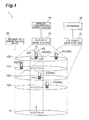
- Fig. 1 is a diagram showing a system configuration of a user information administration system according to an embodiment.
- Fig. 1 is a diagram showing a system configuration of a user information administration system 1 according to an embodiment.
- the user information administration system 1 includes a 3 G public base station 1 (first base station in CLAIMS) and a wireless communication control station 10 that form a 3G (3rd Generation) wireless communication system, an LTE public base station 21 (first base station in CLAIMS) and a exchange 20 that form an LTE (Long Term Evolution) wireless communication system, a base station 40 (second base station in CLAIMS) that forms a radio cell in the region within radio cells formed by the 3 G public base station 11 and the LTE public base station 21, and an information administration device 30 connected for communication with the base station 40.
- the 3G wireless communication system and the LTE wireless communication system may coexist.
- the 3G public base station 11 forms radio cells 100 and 101 (first region in CLAIMS) with different frequencies. Further, the LTE public base station 21 forms radio cells 102 and 103 (first region in CLAIMS) with different frequencies. Note that the radio cells formed by the 3G public base station 11 and the radio cells formed by the LTE public base station 21 have different frequencies. Further, it is assumed that the radio cells 100, 101, 102 and 103 are formed to overlap at least on a given region A. Furthermore, although the 3G public base station 11 and the LTE public base station 21 respectively form two radio cells in this example, the number of radio cells to be established are not limited thereto. In Fig. 1 , the radio cells 100, 101, 102 and 103 formed to include the region A are illustrated separately in a hierarchical manner.
- a plurality of mobile stations 50, 51, 52, 53 and 54 are located in the radio cells 100, 101, 102 and 103.
- the mobile stations 50 and 51 are located in the radio cell 100 formed by the 3G public base station 11, and the mobile station 52 is located in the radio cell 101 formed by the 3G public base station.
- the mobile station 53 is located in the radio cell 102 formed by the LTE public base station 21, and the mobile station 54 is located in the radio cell 103 formed by the LTE public base station 21.
- the base station 40 is configured so that a radio cell 200 (second region in CLAIMS) formed by the base station 40 is identical to a target region X in which it is desired to find the mobile stations 500 using the user information administration system 1.
- a femto base station (Home NodeB/Home eNodeB) that is equipped with automatic configuration for facilitating installation and installed in a small area such as home may be used.
- each of the information administration device 30, the base station 40 and the mobile stations 500 has a basic configuration of a typical information processing device (specifically, CPU, RAM, ROM, an input device for inputting information, commands and the like, a communication device that performs communication with the outside, a storage device that stores information, an output device such as display and the like) as a matter of course, though not shown.
- a typical information processing device specifically, CPU, RAM, ROM, an input device for inputting information, commands and the like, a communication device that performs communication with the outside, a storage device that stores information, an output device such as display and the like
- Fig. 2 is a diagram showing the detailed configurations of the information administration device 30 and the base station 40.
- the base station 40 includes an annunciation information output module 401 that outputs annunciation information, a response information receiving module 402 that receives response information transmitted from the mobile stations 500, and a response information transmitting module 403 that transmits the received response information to the information administration device 30.
- Routing Area information (which is hereinafter referred to simply as "RA") and Location Area information (which is hereinafter referred to simply as “LA”) to be used for communication with the mobile stations 500 are set so that at least one of them is different from RA and LA of the radio cells 100, 101, 102 and 103. Further, the base station 40 forms the radio cell 200 for each of the frequencies corresponding to the radio cells 100, 101, 102 and 103.
- Fig. 3 shows examples of RA and LA that are set to the base station 40.
- RA and LA are set to the base station 40 so that, when RA of the radio cell 100 formed by the 3G public base station 11 is "AAAAAA” and LA of the same is "111111", RA of the radio cell 200 formed for the frequency corresponding to the radio cell 100 is "BBBBBB” and LA of the same is "222222".
- RA of the radio cell 100 formed by the 3G public base station 11 is "AAAAAAAA” and LA of the same is "111111”
- RA of the radio cell 200 formed for the frequency corresponding to the radio cell 100 is "BBBBBB”
- LA of the same is "222222222".
- RA and LA are set to the base station 40 so that, when RA of the radio cell 102 formed by the LTE public base station 21 is "XXXXXX" and LA of the same is "333333”, RA of the radio cell 200 formed for the frequency corresponding to the radio cell 102 is "YYYYYY" and LA of the same is "444444".
- the 3G public base station 11 and the LTE public base station 21 output annunciation information to each of the radio cells. Therefore, at the time of setting the base station 40, RA and LA may be extracted from the annunciation information of the radio cells 100, 101, 102 and 103, and RA and LA different from the extracted RA and LA may be automatically set as RA and LA of the base station 40.
- the annunciation information output module 401 forms the radio cell 200 with a frequency corresponding to each of the radio cells 100, 101, 102 and 103 and outputs annunciation information to the target region X based on the set RA and LA.
- the annunciation information is to announce in which radio cell the mobile station 500 is located to the mobile station 500.
- the mobile station 500 transmits response information for announcing the position of the mobile stations 500 to the base station 40 upon detecting a change of the received annunciation information (LA or RA) due to movement or the like of the mobile stations 500. Specifically, the mobile station 500 detects a change of the annunciation information when it enters or leaves the radio cell 200, and transmits the response information.
- the response information receiving module 402 of the base station 40 receives the response information transmitted from the mobile station 500 that has entered or left the radio cell 200.
- the response information transmitting module 403 transmits the received response information to the information administration device 30.
- a response information acquisition module 301 of the information administration device 30 acquires the response information transmitted from the response information transmitting module 403 of the base station 40.
- a mobile station finding module 302 finds the number of mobile stations 500 located in the radio cell 200 formed by the base station 40 based on the acquired response information, and performs various statistical work or the like based on the number of mobile stations 500. Further, the mobile station finding module 302 calculates dynamic state information of the mobile stations in an exhaustive manner, including a result of finding the mobile stations obtained from another base station.
- the statistical work includes extracting information of users of the mobile stations 500 located within the target region X from an external database that stores attribute information of users of the mobile stations 500 and performing statistical work, for example.
- An output module 303 outputs a processing result of the mobile station finding module 302.
- the term "output" broadly includes display output and print output as a matter of course. Specifically, the processing result may be displayed on a display or the like, printed from a printer or the like, or both displayed and printed.
- a process that the base station 40 sequentially forms the radio cell 200 for each of the frequencies corresponding to the radio cells 100, 101, 102 and 103 and finds the mobile stations 500 is described hereinbelow.
- This is a process of finding the mobile stations 500 located within the target region X by the information administration device 30, that is, making the mobile stations 500 recognize that they are within the radio cell 200 formed by the base station 40 and notify that to the information administration device 30 side.
- Fig. 4 is a flowchart showing the flow of the mobile station finding process
- Fig. 5 is a diagram showing the way the base station 40 sequentially forms the radio cell 200 for each of the frequencies corresponding to the radio cells 100, 101, 102 and 103. Note that, in this embodiment, the base station 40 sequentially forms the radio cell 200 in the radio cells 100, 101, 102 and 103 by switching the frequency of the radio cell 200 to be formed every specified time (for example, one minute), and repeats this processing.
- the annunciation information output module 401 of the base station 40 decides the frequency of the radio cell 200 to be formed first and forms the radio cell 200 according to predetermined conditions, and outputs annunciation information into the radio cell 200 (Step S1 (annunciation information output step in CLAIMS)). Specifically, as shown in Fig. 5(a) , the radio cell 200 with the frequency corresponding to the radio cell 100 is formed in the radio cell 100 according to predetermined conditions, and annunciation information is transmitted into the radio cell 200.
- the mobile station 50 detects that the received annunciation information has changed from the annunciation information transmitted from the 3G public base station 11 to the annunciation information transmitted from the base station 40 and thereby transmits response information.
- the response information receiving module 402 receives the response information transmitted from the mobile station 50 (Step S2 (response information receiving step in CLAIMS)), and the response information transmitting module 403 transmits the received response information to the information administration device 30 (Step S3 (response information transmitting step in CLAIMS)).
- the leaving from the radio cell 200 can be detected by transmitting the response information that has been transmitted from the leaving mobile station to the 3G public base station 11 or the LTE public base station 21 to the information administration device 30.
- the response information transmitted from the response information transmitting module 403 may be information obtained by processing the response information received by the response information receiving module 402 as long as it contains information indicating whether the mobile station 50 is located within the radio cell 200 or not.
- the annunciation information output module 401 determines whether a specified time has elapsed from the formation of the radio cell 200 (Step S4). When the specified time has not elapsed (NO in Step S4), the process returns to Step S1 to repeat the process of continuously outputting the annunciation information into the radio cell 200 and receiving the response information transmitted from the mobile station 500 that has entered or left the radio cell 200.
- the annunciation information output module 401 selects the frequency to form another radio cell 200, changes the settings of each module (Step S5), and returns to Step S1 to perform the above-described processing.
- the radio cell 200 is formed in the radio cell 101 formed by the 3G public base station 11, and the annunciation information is output from the annunciation information output module 401 into the radio cell 200, and thereby the response information can be acquired from the mobile station in the same way as above.
- the base station 40 can sequentially acquire the response information from the mobile stations 500 located in each of the radio cells by switching the radio cell 200 in the radio cells 100, 101, 102 and 103 every specified time as shown in Figs. 5(a), 5(b), 5(c) and 5(d) .
- the response information acquisition module 301 of the information administration device 30 acquires the transmitted response information (Step S6 (response information acquisition step in CLAIMS)).
- the mobile station finding module 302 finds the number of mobile stations located within the target region X based on the acquired response information, and performs various statistical work or the like based on the number of mobile stations (Step S7 (mobile station finding step in CLAIMS)). Further, the mobile station finding module 302 calculates dynamic state information of the mobile stations in an exhaustive manner, including a result of finding the mobile stations obtained from another base station (Step S7 (mobile station finding step in CLAIMS)).
- the output module 303 outputs a processing result of the mobile station finding module 302 (Step S8 (output step in CLAIMS)).
- the radio cell 200 is sequentially formed by the base station 40 for all the frequencies located in the target region X (the frequencies at which the radio cells are formed by the 3G public base station 11 and the LTE public base station 21).
- the radio cell 200 formed by the base station 40 serves not as a radio cell to provide communication but as a sensor function to find the mobile stations located in this region.
- the radio cell 200 may provide communication like the normal base station. Note that, when there is a mobile station that is performing communication at the timing of switching the radio cell 200 for each frequency, handover may be made to the radio cell 100, 101, 102 or 103 that includes the radio cell 200 formed by the base station 40.
- the target region X (the radio cell 200 formed by the base station 40) on the information administration device 30 side
- a method of using a nationally unique ID which is capable of identifying the radio cell such as Cell Identity there is a method of using a nationally unique ID which is capable of identifying the radio cell such as Cell Identity, and, in this case, the nationally unique ID is notified to the information administration device 30 side in the mobile station position registration process using the annunciation information and the response information, and therefore the target region X can be uniquely identified from the ID on the information administration device 30 side.
- the RA/LS can be used as a nationally unique ID which is capable of uniquely identifying the target region X on the information administration device 30 side.
- the base station 40 outputs the annunciation information which corresponds to a plurality of radio cells established by the 3G public base station 11 and the LTE public base station 21 and which is different from the annunciation information output from the 3 G public base station 11 and the LTE public base station 21 into the target region X and forms the radio cell 200.
- the mobile station 500 that enters the radio cell 200 receives the annunciation information of the radio cell 200 and executes the position registration process.
- the information administration device 30 can thereby find the mobile stations 500 based on the position registration process even in the environment where a plurality of different radio cells to which different frequencies are assigned are established geographically overlapping with one another.
- the base station 40 outputs the annunciation information different from the annunciation information of the other radio cells into the radio cell 200, thereby allowing finding of the mobile stations 500.
- the base station 40 so as to cover the given target region X such as a store, booth or venue and finding the mobile stations 500 located within the target region X, it is possible to obtain the number of visitors, statistical data of attribute information of visitors and the like. Further, because the mobile stations 500 located within the target region X can be found, it is possible to deliver information such as a coupon only to visitors based on the information of the mobile stations 500 within the target region X.
- the base station 40 sequentially forms the radio cell 200 in the region within the radio cells formed by the 3G public base station 11 and the LTE public base station 21, there is no need to implement a wireless communication device that outputs the annunciation information corresponding to each frequency and receives the response information for each of frequencies, thus allowing the base station 40 to have a simple configuration.
- the annunciation information output module 401 can easily generate the annunciation information different from the annunciation information of the other radio cells.
- the radio cell 200 is sequentially formed in the radio cells 100, 101, 102 and 103 by switching the frequency of the radio cell 200 formed by the base station 40 every specified time (for example, one minute) in the above-described embodiment
- the timing and the cycle may be set as appropriate, such as forming the radio cell 200 in the radio cell 100 for 30 seconds, halting the formation of the radio cell 200 for two minutes and then forming the radio cell 200 in the radio cell 141 for 30 seconds, for example.
- the annunciation information output module 401 outputs the annunciation information based on the set RA and LA, it may output the annunciation information using information of either RA or LA. In this case also, the annunciation information of the radio cells 100, 101, 102 and 103 and the annunciation information of the radio cell 200 are different, allowing finding of the mobile stations 500.
- 1...User information administration system 10...Wireless communication control station, 11...3G public base station, 20...Exchange, 21...LTE public base station, 30...Information administration device, 40...Base station, 50 to 54, 500...Mobile station, 100 to 103, 200...Radio cell, 301...Response information acquisition module, 302...Mobile station finding module, 303...Output module, 401...Annunciation information output module, 402...Response information receiving module, 403...Response information transmitting module, X...Target region
Landscapes
- Engineering & Computer Science (AREA)
- Computer Networks & Wireless Communication (AREA)
- Signal Processing (AREA)
- Mobile Radio Communication Systems (AREA)
Abstract
Description
- The present invention relates to a user information administration system and a user information administration method for mobile stations.
- In a communication system of mobile stations, a plurality of frequencies (bands, carriers) are used in order to increase the capacity to accommodate mobile stations in the communication system as a whole. A mobile station is located in a cell to which one of the frequencies is assigned, and performs communication through the frequency of the cell. Such a communication system using a plurality of frequencies is disclosed in
Patent Literature 1, for example. - PTL 1: Japanese Unexamined Patent Publication No.
2003-18649 - There is a demand for finding only the mobile station located within a given target region among the mobile stations spread over a plurality of cells. In this case, one possible approach is to cause all mobile stations in a plurality of cells including the target region to perform positioning using GPS (Global Positioning System) function from the network side and then specify the mobile station located within the target area based on the positioning results. However, the mobile station not having the GPS function cannot perform positioning, and it is thus not exhaustive. Further, because the target range is all the cells including the target region, the mobile stations outside the target region of which positions need not be specified are also made to perform positioning by the GPS function, which is not efficient. Further, in the case where positioning using the GPS function is performed indoors, measurement error is likely to be large, which is not accurate.
- In light of the above problem, an object of the present invention is to provide a user information administration system and a user information administration method capable of finding a mobile station located within a given target region among mobile stations located in individual cells in the environment where a plurality of different cells to which different frequencies are assigned are established geographically overlapping with one another.
- To solve the above problem, a user information administration system according to the present invention is a user information administration system including a first base station for controlling communication of mobile stations located in a first region with a plurality of frequencies assigned, a second base station having a communication range of a second region within the first region and smaller than the first region, and an information administration device connected for communication with the second base station, in which the second base station includes an annunciation information output module that outputs annunciation information different from annunciation information output from the first base station to the second region, a response information receiving module that receives response information output by a mobile station upon detecting a change of the annunciation information from the mobile station, and a response information transmitting module that transmits the response information received by the response information receiving module to the information administration device, and the information administration device includes a response information acquisition module that acquires the response information transmitted from the response information transmitting module, a mobile station finding module that finds the mobile station within the second region based on the acquired response information, and an output module that outputs a finding result by the mobile station finding module.
- Further, a user information administration method according to the present invention is a user information administration method that is executed in a user information administration system including a first base station for controlling communication of mobile stations located in a first region with a plurality of frequencies assigned, a second base station having a communication range of a second region within the first region and smaller than the first region, and an information administration device connected for communication with the second base station, the method including an annunciation information output step of outputting annunciation information different from annunciation information output from the first base station to the second region by the second base station, a response information receiving step of receiving response information output by a mobile station upon detecting a change of the annunciation information from the mobile station by the second base station, a response information transmitting step of transmitting the response information received in the response information receiving step to the information administration device by the second base station, a response information acquisition step of acquiring the response information transmitted in the response information transmitting step by the information administration device, a mobile station finding step of finding the mobile station within the second region based on the acquired response information by the information administration device, and an output step of outputting a finding result in the mobile station finding step by the information administration device.
- According to this invention, the second base station outputs the annunciation information different from annunciation information output from the first base station to the second region, and receives the response information transmitted from the mobile station within the second region. The information administration device can find the mobile station based on the response information. In this manner, it is possible to find the mobile station even in the environment where a plurality of different cells to which different frequencies are assigned are established geographically overlapping with one another.
- Further, it is preferred that the annunciation information output module sequentially outputs annunciation information corresponding to each frequency in a specified order for each of a plurality of frequencies set by the first base station. This eliminates the need to implement a wireless communication device that outputs the annunciation information corresponding to each frequency and receives the response information for each of the frequencies, thus allowing a simple configuration.
- Further, it is preferred that, in the second base station, at least one of Routing Area information different from Routing Area information set by the first base station and Location Area information different from Location Area information set by the first base station is set for each of the plurality of frequencies, and the annunciation information output module outputs the annunciation information based on the set information. It is thereby possible to easily set the annunciation information different from annunciation information of other radio cells with use of the information provided for all mobile stations.
- Further, it is preferred that the mobile station finding module further calculates dynamic state information of the mobile station based on the finding result of the mobile station, including a finding result of the mobile station obtained from another base station, and the output module further outputs the dynamic state information calculated by the mobile station finding module. In this manner, the dynamic state information of the mobile stations can be acquired in an exhaustive manner from the finding result of the mobile station.
- According to the present invention, it is possible to find a mobile station even in the environment where a plurality of different radio cells to which different frequencies are assigned are established geographically overlapping with one another.
-
Fig. 1 is a diagram showing a system configuration of a user information administration system according to an embodiment. -
Fig. 2 is a diagram showing a user information administration device and a base station. -
Fig. 3 is a diagram showing RA/LA set to each radio cell. -
Fig. 4 is a flowchart showing the flow of a mobile station finding process. -
Fig. 5 is a diagram showing the way a base station sequentially forms a radio cell. - An embodiment of the present invention is described hereinafter with reference to the appended drawings. The same elements are denoted by the same reference numerals where possible, and repeated explanation thereof is omitted.
-
Fig. 1 is a diagram showing a system configuration of a userinformation administration system 1 according to an embodiment. As shown inFig. 1 , the userinformation administration system 1 includes a 3 G public base station 1 (first base station in CLAIMS) and a wirelesscommunication control station 10 that form a 3G (3rd Generation) wireless communication system, an LTE public base station 21 (first base station in CLAIMS) and aexchange 20 that form an LTE (Long Term Evolution) wireless communication system, a base station 40 (second base station in CLAIMS) that forms a radio cell in the region within radio cells formed by the 3 Gpublic base station 11 and the LTEpublic base station 21, and aninformation administration device 30 connected for communication with thebase station 40. In the userinformation administration system 1, the 3G wireless communication system and the LTE wireless communication system may coexist. - The 3G
public base station 11 formsradio cells 100 and 101 (first region in CLAIMS) with different frequencies. Further, the LTEpublic base station 21 formsradio cells 102 and 103 (first region in CLAIMS) with different frequencies. Note that the radio cells formed by the 3Gpublic base station 11 and the radio cells formed by the LTEpublic base station 21 have different frequencies. Further, it is assumed that theradio cells public base station 11 and the LTEpublic base station 21 respectively form two radio cells in this example, the number of radio cells to be established are not limited thereto. InFig. 1 , theradio cells - Further, a plurality of
mobile stations radio cells mobile stations radio cell 100 formed by the 3Gpublic base station 11, and themobile station 52 is located in theradio cell 101 formed by the 3G public base station. Further, themobile station 53 is located in theradio cell 102 formed by the LTEpublic base station 21, and themobile station 54 is located in theradio cell 103 formed by the LTEpublic base station 21. - The
base station 40 is configured so that a radio cell 200 (second region in CLAIMS) formed by thebase station 40 is identical to a target region X in which it is desired to find themobile stations 500 using the userinformation administration system 1. Note that, as thebase station 40, a femto base station (Home NodeB/Home eNodeB) that is equipped with automatic configuration for facilitating installation and installed in a small area such as home may be used. - It should be noted that each of the
information administration device 30, thebase station 40 and themobile stations 500 has a basic configuration of a typical information processing device (specifically, CPU, RAM, ROM, an input device for inputting information, commands and the like, a communication device that performs communication with the outside, a storage device that stores information, an output device such as display and the like) as a matter of course, though not shown. - The configurations of the
information administration device 30 and thebase station 40 are described hereinafter in detail.Fig. 2 is a diagram showing the detailed configurations of theinformation administration device 30 and thebase station 40. As shown inFig. 2 , thebase station 40 includes an annunciationinformation output module 401 that outputs annunciation information, a responseinformation receiving module 402 that receives response information transmitted from themobile stations 500, and a responseinformation transmitting module 403 that transmits the received response information to theinformation administration device 30. - In the
base station 40, Routing Area information (which is hereinafter referred to simply as "RA") and Location Area information (which is hereinafter referred to simply as "LA") to be used for communication with themobile stations 500 are set so that at least one of them is different from RA and LA of theradio cells base station 40 forms theradio cell 200 for each of the frequencies corresponding to theradio cells -
Fig. 3 shows examples of RA and LA that are set to thebase station 40. As shown inFig. 3(a) , RA and LA are set to thebase station 40 so that, when RA of theradio cell 100 formed by the 3Gpublic base station 11 is "AAAAAA" and LA of the same is "111111", RA of theradio cell 200 formed for the frequency corresponding to theradio cell 100 is "BBBBBB" and LA of the same is "222222". Likewise, as shown inFig. 3(b) , RA and LA are set to thebase station 40 so that, when RA of theradio cell 102 formed by the LTEpublic base station 21 is "XXXXXX" and LA of the same is "333333", RA of theradio cell 200 formed for the frequency corresponding to theradio cell 102 is "YYYYYY" and LA of the same is "444444". - Note that the 3G
public base station 11 and the LTEpublic base station 21 output annunciation information to each of the radio cells. Therefore, at the time of setting thebase station 40, RA and LA may be extracted from the annunciation information of theradio cells base station 40. - Referring back to
Fig. 2 , the annunciationinformation output module 401 forms theradio cell 200 with a frequency corresponding to each of theradio cells mobile station 500 is located to themobile station 500. - The
mobile station 500 transmits response information for announcing the position of themobile stations 500 to thebase station 40 upon detecting a change of the received annunciation information (LA or RA) due to movement or the like of themobile stations 500. Specifically, themobile station 500 detects a change of the annunciation information when it enters or leaves theradio cell 200, and transmits the response information. The responseinformation receiving module 402 of thebase station 40 receives the response information transmitted from themobile station 500 that has entered or left theradio cell 200. The responseinformation transmitting module 403 transmits the received response information to theinformation administration device 30. - A response
information acquisition module 301 of theinformation administration device 30 acquires the response information transmitted from the responseinformation transmitting module 403 of thebase station 40. A mobilestation finding module 302 finds the number ofmobile stations 500 located in theradio cell 200 formed by thebase station 40 based on the acquired response information, and performs various statistical work or the like based on the number ofmobile stations 500. Further, the mobilestation finding module 302 calculates dynamic state information of the mobile stations in an exhaustive manner, including a result of finding the mobile stations obtained from another base station. The statistical work includes extracting information of users of themobile stations 500 located within the target region X from an external database that stores attribute information of users of themobile stations 500 and performing statistical work, for example. Anoutput module 303 outputs a processing result of the mobilestation finding module 302. The term "output" broadly includes display output and print output as a matter of course. Specifically, the processing result may be displayed on a display or the like, printed from a printer or the like, or both displayed and printed. - A process that the
base station 40 sequentially forms theradio cell 200 for each of the frequencies corresponding to theradio cells mobile stations 500 is described hereinbelow. This is a process of finding themobile stations 500 located within the target region X by theinformation administration device 30, that is, making themobile stations 500 recognize that they are within theradio cell 200 formed by thebase station 40 and notify that to theinformation administration device 30 side.Fig. 4 is a flowchart showing the flow of the mobile station finding process, andFig. 5 is a diagram showing the way thebase station 40 sequentially forms theradio cell 200 for each of the frequencies corresponding to theradio cells base station 40 sequentially forms theradio cell 200 in theradio cells radio cell 200 to be formed every specified time (for example, one minute), and repeats this processing. - First, the annunciation
information output module 401 of thebase station 40 decides the frequency of theradio cell 200 to be formed first and forms theradio cell 200 according to predetermined conditions, and outputs annunciation information into the radio cell 200 (Step S1 (annunciation information output step in CLAIMS)). Specifically, as shown inFig. 5(a) , theradio cell 200 with the frequency corresponding to theradio cell 100 is formed in theradio cell 100 according to predetermined conditions, and annunciation information is transmitted into theradio cell 200. - In the case where the
mobile station 50 enters theradio cell 200 when the annunciationinformation output module 401 is outputting the annunciation information as shown inFig. 5(a) , themobile station 50 detects that the received annunciation information has changed from the annunciation information transmitted from the 3Gpublic base station 11 to the annunciation information transmitted from thebase station 40 and thereby transmits response information. The responseinformation receiving module 402 receives the response information transmitted from the mobile station 50 (Step S2 (response information receiving step in CLAIMS)), and the responseinformation transmitting module 403 transmits the received response information to the information administration device 30 (Step S3 (response information transmitting step in CLAIMS)). Although the case where the mobile station enters theradio cell 200 is described in this example, in the case where the mobile station leaves theradio cell 200 also, the leaving from theradio cell 200 can be detected by transmitting the response information that has been transmitted from the leaving mobile station to the 3Gpublic base station 11 or the LTEpublic base station 21 to theinformation administration device 30. Note that the response information transmitted from the responseinformation transmitting module 403 may be information obtained by processing the response information received by the responseinformation receiving module 402 as long as it contains information indicating whether themobile station 50 is located within theradio cell 200 or not. - The annunciation
information output module 401 determines whether a specified time has elapsed from the formation of the radio cell 200 (Step S4). When the specified time has not elapsed (NO in Step S4), the process returns to Step S1 to repeat the process of continuously outputting the annunciation information into theradio cell 200 and receiving the response information transmitted from themobile station 500 that has entered or left theradio cell 200. - On the other hand, when the specified time has elapsed (YES in Step S4), the annunciation
information output module 401 selects the frequency to form anotherradio cell 200, changes the settings of each module (Step S5), and returns to Step S1 to perform the above-described processing. As a result, as shown inFig. 5(b) , theradio cell 200 is formed in theradio cell 101 formed by the 3Gpublic base station 11, and the annunciation information is output from the annunciationinformation output module 401 into theradio cell 200, and thereby the response information can be acquired from the mobile station in the same way as above. In this manner, thebase station 40 can sequentially acquire the response information from themobile stations 500 located in each of the radio cells by switching theradio cell 200 in theradio cells Figs. 5(a), 5(b), 5(c) and 5(d) . - Referring back to
Fig. 4 , when the response information is transmitted from the responseinformation transmitting module 403 of thebase station 40, the responseinformation acquisition module 301 of theinformation administration device 30 acquires the transmitted response information (Step S6 (response information acquisition step in CLAIMS)). The mobilestation finding module 302 finds the number of mobile stations located within the target region X based on the acquired response information, and performs various statistical work or the like based on the number of mobile stations (Step S7 (mobile station finding step in CLAIMS)). Further, the mobilestation finding module 302 calculates dynamic state information of the mobile stations in an exhaustive manner, including a result of finding the mobile stations obtained from another base station (Step S7 (mobile station finding step in CLAIMS)). Theoutput module 303 outputs a processing result of the mobile station finding module 302 (Step S8 (output step in CLAIMS)). - As described above, the
radio cell 200 is sequentially formed by thebase station 40 for all the frequencies located in the target region X (the frequencies at which the radio cells are formed by the 3Gpublic base station 11 and the LTE public base station 21). By sequentially forming theradio cell 200 for each of the frequencies, it is possible to find the mobile stations located within the target region X (the radio cell 200) in an exhaustive manner for all the frequencies, and there is no need to place radio transmitter-receivers corresponding to all frequencies in thebase station 40. Thus, theradio cell 200 formed by thebase station 40 serves not as a radio cell to provide communication but as a sensor function to find the mobile stations located in this region. Further, theradio cell 200 may provide communication like the normal base station. Note that, when there is a mobile station that is performing communication at the timing of switching theradio cell 200 for each frequency, handover may be made to theradio cell radio cell 200 formed by thebase station 40. - Further, as a method to uniquely identify the target region X (the
radio cell 200 formed by the base station 40) on theinformation administration device 30 side, there is a method of using a nationally unique ID which is capable of identifying the radio cell such as Cell Identity, and, in this case, the nationally unique ID is notified to theinformation administration device 30 side in the mobile station position registration process using the annunciation information and the response information, and therefore the target region X can be uniquely identified from the ID on theinformation administration device 30 side. As another method, by setting nationally unique RA/LA to theradio cell 200 formed by thebase station 40, the RA/LS can be used as a nationally unique ID which is capable of uniquely identifying the target region X on theinformation administration device 30 side. - The operation and effect of the user
information administration system 1 according to the embodiment are described hereinbelow. - According to the embodiment described above, the
base station 40 outputs the annunciation information which corresponds to a plurality of radio cells established by the 3Gpublic base station 11 and the LTEpublic base station 21 and which is different from the annunciation information output from the 3 Gpublic base station 11 and the LTEpublic base station 21 into the target region X and forms theradio cell 200. Themobile station 500 that enters theradio cell 200 receives the annunciation information of theradio cell 200 and executes the position registration process. Theinformation administration device 30 can thereby find themobile stations 500 based on the position registration process even in the environment where a plurality of different radio cells to which different frequencies are assigned are established geographically overlapping with one another. - Further, in the communication system where the 3G system (the wireless
communication control station 10, the 3G public base station 11) or the LTE system (theexchange 20, the LTE public base station 21), or both of them exist in 3GPP (3rd Generation Partnership Project) also, thebase station 40 outputs the annunciation information different from the annunciation information of the other radio cells into theradio cell 200, thereby allowing finding of themobile stations 500. - Further, by installing the
base station 40 so as to cover the given target region X such as a store, booth or venue and finding themobile stations 500 located within the target region X, it is possible to obtain the number of visitors, statistical data of attribute information of visitors and the like. Further, because themobile stations 500 located within the target region X can be found, it is possible to deliver information such as a coupon only to visitors based on the information of themobile stations 500 within the target region X. - Further, according to the embodiment, because the
base station 40 sequentially forms theradio cell 200 in the region within the radio cells formed by the 3Gpublic base station 11 and the LTEpublic base station 21, there is no need to implement a wireless communication device that outputs the annunciation information corresponding to each frequency and receives the response information for each of frequencies, thus allowing thebase station 40 to have a simple configuration. - Further, according to the present invention, because the annunciation information is set based on RA and LA which are provided for all the
mobile stations 50, the annunciationinformation output module 401 can easily generate the annunciation information different from the annunciation information of the other radio cells. - It should be noted that the present invention is not limited to the embodiment described above.
- For example, although the
radio cell 200 is sequentially formed in theradio cells radio cell 200 formed by thebase station 40 every specified time (for example, one minute) in the above-described embodiment, the timing and the cycle may be set as appropriate, such as forming theradio cell 200 in theradio cell 100 for 30 seconds, halting the formation of theradio cell 200 for two minutes and then forming theradio cell 200 in the radio cell 141 for 30 seconds, for example. - Further, although the annunciation
information output module 401 outputs the annunciation information based on the set RA and LA, it may output the annunciation information using information of either RA or LA. In this case also, the annunciation information of theradio cells radio cell 200 are different, allowing finding of themobile stations 500. - 1...User information administration system, 10...Wireless communication control station, 11...3G public base station, 20...Exchange, 21...LTE public base station, 30...Information administration device, 40...Base station, 50 to 54, 500...Mobile station, 100 to 103, 200...Radio cell, 301...Response information acquisition module, 302...Mobile station finding module, 303...Output module, 401...Annunciation information output module, 402...Response information receiving module, 403...Response information transmitting module, X...Target region
Claims (5)
- A user information administration system including a first base station for controlling communication of mobile stations located in a first region with a plurality of frequencies assigned, a second base station having a communication range of a second region within the first region and smaller than the first region, and an information administration device connected for communication with the second base station,
the second base station comprising:an annunciation information output module that outputs annunciation information different from annunciation information output from the first base station to the second region;a response information receiving module that receives response information output by a mobile station upon detecting a change of the annunciation information from the mobile station; anda response information transmitting module that transmits the response information received by the response information receiving module to the information administration device, andthe information administration device comprising:a response information acquisition module that acquires the response information transmitted from the response information transmitting module;a mobile station finding module that finds the mobile station within the second region based on the acquired response information; andan output module that outputs a finding result by the mobile station finding module. - The user information administration system according to Claim 1, wherein
the annunciation information output module sequentially outputs annunciation information corresponding to each frequency in a specified order for each of a plurality of frequencies set by the first base station. - The user information administration system according to Claim 1 or 2, wherein
in the second base station, at least one of Routing Area information different from Routing Area information set by the first base station and Location Area information different from Location Area information set by the first base station is set for each of the plurality of frequencies, and
the annunciation information output module outputs the annunciation information based on the set information. - The user information administration system according to any one of Claims 1 to 3, wherein
the mobile station finding module further calculates dynamic state information of the mobile station based on the finding result of the mobile station, including a finding result of the mobile station obtained from another base station, and
the output module further outputs the dynamic state information calculated by the mobile station finding module. - A user information administration method executed in a user information administration system including a first base station for controlling communication of mobile stations located in a first region with a plurality of frequencies assigned, a second base station having a communication range of a second region within the first region and smaller than the first region, and an information administration device connected for communication with the second base station, the method comprising:an annunciation information output step of outputting annunciation information different from annunciation information output from the first base station to the second region by the second base station;a response information receiving step of receiving response information output by a mobile station upon detecting a change of the annunciation information from the mobile station by the second base station;a response information transmitting step of transmitting the response information received in the response information receiving step to the information administration device by the second base station;a response information acquisition step of acquiring the response information transmitted in the response information transmitting step by the information administration device;a mobile station finding step of finding the mobile station within the second region based on the acquired response information by the information administration device; andan output step of outputting a finding result in the mobile station finding step by the information administration device.
Applications Claiming Priority (2)
| Application Number | Priority Date | Filing Date | Title |
|---|---|---|---|
| JP2009281661A JP5222834B2 (en) | 2009-12-11 | 2009-12-11 | User information management system and user information management method |
| PCT/JP2010/072138 WO2011071115A1 (en) | 2009-12-11 | 2010-12-09 | User information administration system and user information administration method |
Publications (3)
| Publication Number | Publication Date |
|---|---|
| EP2512159A1 true EP2512159A1 (en) | 2012-10-17 |
| EP2512159A4 EP2512159A4 (en) | 2015-08-05 |
| EP2512159B1 EP2512159B1 (en) | 2019-02-13 |
Family
ID=44145660
Family Applications (1)
| Application Number | Title | Priority Date | Filing Date |
|---|---|---|---|
| EP10836035.5A Not-in-force EP2512159B1 (en) | 2009-12-11 | 2010-12-09 | User information administration system and user information administration method |
Country Status (5)
| Country | Link |
|---|---|
| US (1) | US8831673B2 (en) |
| EP (1) | EP2512159B1 (en) |
| JP (1) | JP5222834B2 (en) |
| CN (1) | CN102668604A (en) |
| WO (1) | WO2011071115A1 (en) |
Family Cites Families (17)
| Publication number | Priority date | Publication date | Assignee | Title |
|---|---|---|---|---|
| FI97932C (en) * | 1993-10-20 | 1997-03-10 | Nokia Telecommunications Oy | Cellular radio network, a subscriber device for a cellular radio network and a method for location updating in a cellular radio network |
| CN1448039A (en) * | 2001-06-21 | 2003-10-08 | 三菱电机株式会社 | Wireless communication base station system, method, program and recording medium |
| JP3621688B2 (en) | 2002-04-01 | 2005-02-16 | 富士通株式会社 | Mobile communication terminal and call channel control method |
| JP4135144B2 (en) * | 2003-05-08 | 2008-08-20 | 日本電気株式会社 | Handover method for CDMA mobile communication system |
| JP5080481B2 (en) * | 2005-10-04 | 2012-11-21 | テレフオンアクチーボラゲット エル エム エリクソン(パブル) | Selection of radio network control station for IP-connected radio base station |
| US8521186B2 (en) * | 2006-01-18 | 2013-08-27 | Rockstar Consortium Us Lp | Method and device for determining location-enhanced presence information for entities subscribed to a communications system |
| US7586865B2 (en) * | 2006-06-22 | 2009-09-08 | Telefonaktiebolaget Lm Ericsson (Publ) | Allocating power when simultaneously sending multiple messages |
| US8412176B2 (en) * | 2006-11-13 | 2013-04-02 | Alcatel Lucent | Method for configuring mobile units |
| GB2445001A (en) * | 2006-12-21 | 2008-06-25 | Siemens Ag | Determining mobile terminal location from responses to messages transmitted into different coverage areas |
| US20080304451A1 (en) * | 2007-06-05 | 2008-12-11 | Lucent Technologies, Inc. | Method to allow hand-off of a cdma mobile from ims femtocell to circuit msc |
| JP2008306362A (en) * | 2007-06-06 | 2008-12-18 | Nec Corp | Mobile communication system and method, and device for registering position thereof |
| JP2009159355A (en) * | 2007-12-27 | 2009-07-16 | Softbank Bb Corp | Wireless communication system, base station, and control method for base station |
| US20110070886A1 (en) * | 2008-02-18 | 2011-03-24 | Ntt Docomo, Inc. | Mobile communication system, location registration method, handover method, exchange, mobile station, and radio control station |
| WO2009123235A1 (en) * | 2008-03-31 | 2009-10-08 | 株式会社エヌ・ティ・ティ・ドコモ | Mobile communication method, mobile communication system, program, exchange station and specific radio base station |
| US8725083B2 (en) * | 2008-05-13 | 2014-05-13 | Qualcomm Incorporated | Self calibration of downlink transmit power |
| WO2009146740A1 (en) * | 2008-06-04 | 2009-12-10 | Telefonaktiebolaget Lm Ericsson (Publ) | Method for distribution of information of networks or entities using ue as gateway |
| CN101600150A (en) * | 2009-06-01 | 2009-12-09 | 中兴通讯股份有限公司 | A positioning method for a mobile terminal and a mobile positioning center |
-
2009
- 2009-12-11 JP JP2009281661A patent/JP5222834B2/en not_active Expired - Fee Related
-
2010
- 2010-12-09 US US13/515,107 patent/US8831673B2/en not_active Expired - Fee Related
- 2010-12-09 CN CN201080055325XA patent/CN102668604A/en active Pending
- 2010-12-09 EP EP10836035.5A patent/EP2512159B1/en not_active Not-in-force
- 2010-12-09 WO PCT/JP2010/072138 patent/WO2011071115A1/en not_active Ceased
Non-Patent Citations (1)
| Title |
|---|
| See references of WO2011071115A1 * |
Also Published As
| Publication number | Publication date |
|---|---|
| CN102668604A (en) | 2012-09-12 |
| EP2512159A4 (en) | 2015-08-05 |
| WO2011071115A1 (en) | 2011-06-16 |
| US20120258765A1 (en) | 2012-10-11 |
| EP2512159B1 (en) | 2019-02-13 |
| US8831673B2 (en) | 2014-09-09 |
| JP2011124856A (en) | 2011-06-23 |
| JP5222834B2 (en) | 2013-06-26 |
Similar Documents
| Publication | Publication Date | Title |
|---|---|---|
| US9668197B2 (en) | System and method for wireless network access MAP and applications | |
| JP6652138B2 (en) | Electronic device and wireless communication method in wireless communication system | |
| CN113383581B (en) | Method for updating system information and wireless transmitting/receiving unit using the method | |
| EP3337253B1 (en) | User device and signal synchronization method | |
| EP3815409B1 (en) | User equipment capability indication for cell identification | |
| EP2662703B1 (en) | Improving positioning accuracy of location tracking system | |
| EP3297337B1 (en) | Access point, wireless terminal, storage medium and method utilizing pointer signal to communicate in available channel | |
| US20130070751A1 (en) | Synchronization of time in a mobile ad-hoc network | |
| KR100944993B1 (en) | Method and apparatus for estimating geographical location of terminal in wireless communication system | |
| US20080207209A1 (en) | Cellular mobile radio communication system | |
| CN102573059B (en) | Method and system for realizing precise positioning of user equipment (UE) | |
| EP2632214A1 (en) | Wireless communication system, base station device, move control node, and method of wireless communication | |
| WO2016192553A1 (en) | Electronic device in wireless communication system and wireless communication method | |
| JP6843895B2 (en) | Communication method and communication device | |
| EP3154282B1 (en) | Small cell discovery method and system, base station, and user equipment | |
| US20210223354A1 (en) | Method for positioning of a user equipment operating in a cellular network | |
| EP2456274A1 (en) | Method for adjusting channels in cognitive wireless communication, and cognitive wireless communication system capable of implementing the method | |
| US8831673B2 (en) | User information administration system and user information administration method | |
| US20110263259A1 (en) | Mobile station and mobile communication method | |
| US20250287348A1 (en) | Method by which first terminal measures position on basis of sound wave signals in wireless communication system, and apparatus therefor | |
| KR102741036B1 (en) | Method and apparatus for providing user interface for position measurement system for mobile terminal | |
| EP2822316A1 (en) | Mobile terminal device, wireless communication system, communication method in mobile terminal device, and program | |
| JP2010109513A (en) | Mobile communication system, base station device, center device, and frame synchronization method | |
| JP6873943B2 (en) | Terminal equipment, base station equipment, control methods, and programs that enable location registration processing during sleep mode. | |
| EP4527127A1 (en) | Determining ue orientation to support next generation application |
Legal Events
| Date | Code | Title | Description |
|---|---|---|---|
| PUAI | Public reference made under article 153(3) epc to a published international application that has entered the european phase |
Free format text: ORIGINAL CODE: 0009012 |
|
| 17P | Request for examination filed |
Effective date: 20120516 |
|
| AK | Designated contracting states |
Kind code of ref document: A1 Designated state(s): AL AT BE BG CH CY CZ DE DK EE ES FI FR GB GR HR HU IE IS IT LI LT LU LV MC MK MT NL NO PL PT RO RS SE SI SK SM TR |
|
| DAX | Request for extension of the european patent (deleted) | ||
| RA4 | Supplementary search report drawn up and despatched (corrected) |
Effective date: 20150707 |
|
| RIC1 | Information provided on ipc code assigned before grant |
Ipc: H04W 60/00 20090101AFI20150701BHEP |
|
| GRAP | Despatch of communication of intention to grant a patent |
Free format text: ORIGINAL CODE: EPIDOSNIGR1 |
|
| STAA | Information on the status of an ep patent application or granted ep patent |
Free format text: STATUS: GRANT OF PATENT IS INTENDED |
|
| INTG | Intention to grant announced |
Effective date: 20180904 |
|
| GRAS | Grant fee paid |
Free format text: ORIGINAL CODE: EPIDOSNIGR3 |
|
| GRAA | (expected) grant |
Free format text: ORIGINAL CODE: 0009210 |
|
| STAA | Information on the status of an ep patent application or granted ep patent |
Free format text: STATUS: THE PATENT HAS BEEN GRANTED |
|
| AK | Designated contracting states |
Kind code of ref document: B1 Designated state(s): AL AT BE BG CH CY CZ DE DK EE ES FI FR GB GR HR HU IE IS IT LI LT LU LV MC MK MT NL NO PL PT RO RS SE SI SK SM TR |
|
| REG | Reference to a national code |
Ref country code: GB Ref legal event code: FG4D |
|
| REG | Reference to a national code |
Ref country code: CH Ref legal event code: EP Ref country code: AT Ref legal event code: REF Ref document number: 1096960 Country of ref document: AT Kind code of ref document: T Effective date: 20190215 |
|
| REG | Reference to a national code |
Ref country code: IE Ref legal event code: FG4D |
|
| REG | Reference to a national code |
Ref country code: DE Ref legal event code: R096 Ref document number: 602010056989 Country of ref document: DE |
|
| REG | Reference to a national code |
Ref country code: LT Ref legal event code: MG4D |
|
| REG | Reference to a national code |
Ref country code: NL Ref legal event code: MP Effective date: 20190213 |
|
| PG25 | Lapsed in a contracting state [announced via postgrant information from national office to epo] |
Ref country code: FI Free format text: LAPSE BECAUSE OF FAILURE TO SUBMIT A TRANSLATION OF THE DESCRIPTION OR TO PAY THE FEE WITHIN THE PRESCRIBED TIME-LIMIT Effective date: 20190213 Ref country code: NO Free format text: LAPSE BECAUSE OF FAILURE TO SUBMIT A TRANSLATION OF THE DESCRIPTION OR TO PAY THE FEE WITHIN THE PRESCRIBED TIME-LIMIT Effective date: 20190513 Ref country code: NL Free format text: LAPSE BECAUSE OF FAILURE TO SUBMIT A TRANSLATION OF THE DESCRIPTION OR TO PAY THE FEE WITHIN THE PRESCRIBED TIME-LIMIT Effective date: 20190213 Ref country code: SE Free format text: LAPSE BECAUSE OF FAILURE TO SUBMIT A TRANSLATION OF THE DESCRIPTION OR TO PAY THE FEE WITHIN THE PRESCRIBED TIME-LIMIT Effective date: 20190213 Ref country code: PT Free format text: LAPSE BECAUSE OF FAILURE TO SUBMIT A TRANSLATION OF THE DESCRIPTION OR TO PAY THE FEE WITHIN THE PRESCRIBED TIME-LIMIT Effective date: 20190613 Ref country code: LT Free format text: LAPSE BECAUSE OF FAILURE TO SUBMIT A TRANSLATION OF THE DESCRIPTION OR TO PAY THE FEE WITHIN THE PRESCRIBED TIME-LIMIT Effective date: 20190213 |
|
| PG25 | Lapsed in a contracting state [announced via postgrant information from national office to epo] |
Ref country code: LV Free format text: LAPSE BECAUSE OF FAILURE TO SUBMIT A TRANSLATION OF THE DESCRIPTION OR TO PAY THE FEE WITHIN THE PRESCRIBED TIME-LIMIT Effective date: 20190213 Ref country code: GR Free format text: LAPSE BECAUSE OF FAILURE TO SUBMIT A TRANSLATION OF THE DESCRIPTION OR TO PAY THE FEE WITHIN THE PRESCRIBED TIME-LIMIT Effective date: 20190514 Ref country code: HR Free format text: LAPSE BECAUSE OF FAILURE TO SUBMIT A TRANSLATION OF THE DESCRIPTION OR TO PAY THE FEE WITHIN THE PRESCRIBED TIME-LIMIT Effective date: 20190213 Ref country code: IS Free format text: LAPSE BECAUSE OF FAILURE TO SUBMIT A TRANSLATION OF THE DESCRIPTION OR TO PAY THE FEE WITHIN THE PRESCRIBED TIME-LIMIT Effective date: 20190613 Ref country code: RS Free format text: LAPSE BECAUSE OF FAILURE TO SUBMIT A TRANSLATION OF THE DESCRIPTION OR TO PAY THE FEE WITHIN THE PRESCRIBED TIME-LIMIT Effective date: 20190213 Ref country code: BG Free format text: LAPSE BECAUSE OF FAILURE TO SUBMIT A TRANSLATION OF THE DESCRIPTION OR TO PAY THE FEE WITHIN THE PRESCRIBED TIME-LIMIT Effective date: 20190513 |
|
| REG | Reference to a national code |
Ref country code: AT Ref legal event code: MK05 Ref document number: 1096960 Country of ref document: AT Kind code of ref document: T Effective date: 20190213 |
|
| PG25 | Lapsed in a contracting state [announced via postgrant information from national office to epo] |
Ref country code: DK Free format text: LAPSE BECAUSE OF FAILURE TO SUBMIT A TRANSLATION OF THE DESCRIPTION OR TO PAY THE FEE WITHIN THE PRESCRIBED TIME-LIMIT Effective date: 20190213 Ref country code: EE Free format text: LAPSE BECAUSE OF FAILURE TO SUBMIT A TRANSLATION OF THE DESCRIPTION OR TO PAY THE FEE WITHIN THE PRESCRIBED TIME-LIMIT Effective date: 20190213 Ref country code: ES Free format text: LAPSE BECAUSE OF FAILURE TO SUBMIT A TRANSLATION OF THE DESCRIPTION OR TO PAY THE FEE WITHIN THE PRESCRIBED TIME-LIMIT Effective date: 20190213 Ref country code: RO Free format text: LAPSE BECAUSE OF FAILURE TO SUBMIT A TRANSLATION OF THE DESCRIPTION OR TO PAY THE FEE WITHIN THE PRESCRIBED TIME-LIMIT Effective date: 20190213 Ref country code: CZ Free format text: LAPSE BECAUSE OF FAILURE TO SUBMIT A TRANSLATION OF THE DESCRIPTION OR TO PAY THE FEE WITHIN THE PRESCRIBED TIME-LIMIT Effective date: 20190213 Ref country code: IT Free format text: LAPSE BECAUSE OF FAILURE TO SUBMIT A TRANSLATION OF THE DESCRIPTION OR TO PAY THE FEE WITHIN THE PRESCRIBED TIME-LIMIT Effective date: 20190213 Ref country code: AL Free format text: LAPSE BECAUSE OF FAILURE TO SUBMIT A TRANSLATION OF THE DESCRIPTION OR TO PAY THE FEE WITHIN THE PRESCRIBED TIME-LIMIT Effective date: 20190213 Ref country code: SK Free format text: LAPSE BECAUSE OF FAILURE TO SUBMIT A TRANSLATION OF THE DESCRIPTION OR TO PAY THE FEE WITHIN THE PRESCRIBED TIME-LIMIT Effective date: 20190213 |
|
| REG | Reference to a national code |
Ref country code: DE Ref legal event code: R097 Ref document number: 602010056989 Country of ref document: DE |
|
| PG25 | Lapsed in a contracting state [announced via postgrant information from national office to epo] |
Ref country code: PL Free format text: LAPSE BECAUSE OF FAILURE TO SUBMIT A TRANSLATION OF THE DESCRIPTION OR TO PAY THE FEE WITHIN THE PRESCRIBED TIME-LIMIT Effective date: 20190213 Ref country code: SM Free format text: LAPSE BECAUSE OF FAILURE TO SUBMIT A TRANSLATION OF THE DESCRIPTION OR TO PAY THE FEE WITHIN THE PRESCRIBED TIME-LIMIT Effective date: 20190213 |
|
| PLBE | No opposition filed within time limit |
Free format text: ORIGINAL CODE: 0009261 |
|
| STAA | Information on the status of an ep patent application or granted ep patent |
Free format text: STATUS: NO OPPOSITION FILED WITHIN TIME LIMIT |
|
| PG25 | Lapsed in a contracting state [announced via postgrant information from national office to epo] |
Ref country code: AT Free format text: LAPSE BECAUSE OF FAILURE TO SUBMIT A TRANSLATION OF THE DESCRIPTION OR TO PAY THE FEE WITHIN THE PRESCRIBED TIME-LIMIT Effective date: 20190213 |
|
| 26N | No opposition filed |
Effective date: 20191114 |
|
| PG25 | Lapsed in a contracting state [announced via postgrant information from national office to epo] |
Ref country code: SI Free format text: LAPSE BECAUSE OF FAILURE TO SUBMIT A TRANSLATION OF THE DESCRIPTION OR TO PAY THE FEE WITHIN THE PRESCRIBED TIME-LIMIT Effective date: 20190213 |
|
| PG25 | Lapsed in a contracting state [announced via postgrant information from national office to epo] |
Ref country code: TR Free format text: LAPSE BECAUSE OF FAILURE TO SUBMIT A TRANSLATION OF THE DESCRIPTION OR TO PAY THE FEE WITHIN THE PRESCRIBED TIME-LIMIT Effective date: 20190213 |
|
| REG | Reference to a national code |
Ref country code: DE Ref legal event code: R119 Ref document number: 602010056989 Country of ref document: DE |
|
| REG | Reference to a national code |
Ref country code: CH Ref legal event code: PL |
|
| REG | Reference to a national code |
Ref country code: BE Ref legal event code: MM Effective date: 20191231 |
|
| PG25 | Lapsed in a contracting state [announced via postgrant information from national office to epo] |
Ref country code: MC Free format text: LAPSE BECAUSE OF FAILURE TO SUBMIT A TRANSLATION OF THE DESCRIPTION OR TO PAY THE FEE WITHIN THE PRESCRIBED TIME-LIMIT Effective date: 20190213 |
|
| GBPC | Gb: european patent ceased through non-payment of renewal fee |
Effective date: 20191209 |
|
| PG25 | Lapsed in a contracting state [announced via postgrant information from national office to epo] |
Ref country code: DE Free format text: LAPSE BECAUSE OF NON-PAYMENT OF DUE FEES Effective date: 20200701 Ref country code: GB Free format text: LAPSE BECAUSE OF NON-PAYMENT OF DUE FEES Effective date: 20191209 Ref country code: IE Free format text: LAPSE BECAUSE OF NON-PAYMENT OF DUE FEES Effective date: 20191209 Ref country code: LU Free format text: LAPSE BECAUSE OF NON-PAYMENT OF DUE FEES Effective date: 20191209 Ref country code: FR Free format text: LAPSE BECAUSE OF NON-PAYMENT OF DUE FEES Effective date: 20191231 |
|
| PG25 | Lapsed in a contracting state [announced via postgrant information from national office to epo] |
Ref country code: CH Free format text: LAPSE BECAUSE OF NON-PAYMENT OF DUE FEES Effective date: 20191231 Ref country code: LI Free format text: LAPSE BECAUSE OF NON-PAYMENT OF DUE FEES Effective date: 20191231 Ref country code: BE Free format text: LAPSE BECAUSE OF NON-PAYMENT OF DUE FEES Effective date: 20191231 |
|
| PG25 | Lapsed in a contracting state [announced via postgrant information from national office to epo] |
Ref country code: CY Free format text: LAPSE BECAUSE OF FAILURE TO SUBMIT A TRANSLATION OF THE DESCRIPTION OR TO PAY THE FEE WITHIN THE PRESCRIBED TIME-LIMIT Effective date: 20190213 |
|
| PG25 | Lapsed in a contracting state [announced via postgrant information from national office to epo] |
Ref country code: HU Free format text: LAPSE BECAUSE OF FAILURE TO SUBMIT A TRANSLATION OF THE DESCRIPTION OR TO PAY THE FEE WITHIN THE PRESCRIBED TIME-LIMIT; INVALID AB INITIO Effective date: 20101209 Ref country code: MT Free format text: LAPSE BECAUSE OF FAILURE TO SUBMIT A TRANSLATION OF THE DESCRIPTION OR TO PAY THE FEE WITHIN THE PRESCRIBED TIME-LIMIT Effective date: 20190213 |
|
| PG25 | Lapsed in a contracting state [announced via postgrant information from national office to epo] |
Ref country code: MK Free format text: LAPSE BECAUSE OF FAILURE TO SUBMIT A TRANSLATION OF THE DESCRIPTION OR TO PAY THE FEE WITHIN THE PRESCRIBED TIME-LIMIT Effective date: 20190213 |