EP2511115A1 - Method pertaining to an air conditioning system, and a regulating system for such an air conditioning system - Google Patents
Method pertaining to an air conditioning system, and a regulating system for such an air conditioning system Download PDFInfo
- Publication number
- EP2511115A1 EP2511115A1 EP12163744A EP12163744A EP2511115A1 EP 2511115 A1 EP2511115 A1 EP 2511115A1 EP 12163744 A EP12163744 A EP 12163744A EP 12163744 A EP12163744 A EP 12163744A EP 2511115 A1 EP2511115 A1 EP 2511115A1
- Authority
- EP
- European Patent Office
- Prior art keywords
- air conditioning
- conditioning system
- vehicle
- predetermined
- activation
- Prior art date
- Legal status (The legal status is an assumption and is not a legal conclusion. Google has not performed a legal analysis and makes no representation as to the accuracy of the status listed.)
- Granted
Links
Images

Classifications
-
- B—PERFORMING OPERATIONS; TRANSPORTING
- B60—VEHICLES IN GENERAL
- B60H—ARRANGEMENTS OF HEATING, COOLING, VENTILATING OR OTHER AIR-TREATING DEVICES SPECIALLY ADAPTED FOR PASSENGER OR GOODS SPACES OF VEHICLES
- B60H1/00—Heating, cooling or ventilating devices
- B60H1/32—Cooling devices
- B60H1/3204—Cooling devices using compression
- B60H1/3205—Control means therefor
- B60H1/3214—Control means therefor for improving the lubrication of a refrigerant compressor in a vehicle
-
- B—PERFORMING OPERATIONS; TRANSPORTING
- B60—VEHICLES IN GENERAL
- B60H—ARRANGEMENTS OF HEATING, COOLING, VENTILATING OR OTHER AIR-TREATING DEVICES SPECIALLY ADAPTED FOR PASSENGER OR GOODS SPACES OF VEHICLES
- B60H1/00—Heating, cooling or ventilating devices
- B60H1/32—Cooling devices
- B60H1/3204—Cooling devices using compression
- B60H1/3225—Cooling devices using compression characterised by safety arrangements, e.g. compressor anti-seizure means or by signalling devices
-
- F—MECHANICAL ENGINEERING; LIGHTING; HEATING; WEAPONS; BLASTING
- F25—REFRIGERATION OR COOLING; COMBINED HEATING AND REFRIGERATION SYSTEMS; HEAT PUMP SYSTEMS; MANUFACTURE OR STORAGE OF ICE; LIQUEFACTION SOLIDIFICATION OF GASES
- F25B—REFRIGERATION MACHINES, PLANTS OR SYSTEMS; COMBINED HEATING AND REFRIGERATION SYSTEMS; HEAT PUMP SYSTEMS
- F25B49/00—Arrangement or mounting of control or safety devices
- F25B49/02—Arrangement or mounting of control or safety devices for compression type machines, plants or systems
- F25B49/022—Compressor control arrangements
-
- B—PERFORMING OPERATIONS; TRANSPORTING
- B60—VEHICLES IN GENERAL
- B60H—ARRANGEMENTS OF HEATING, COOLING, VENTILATING OR OTHER AIR-TREATING DEVICES SPECIALLY ADAPTED FOR PASSENGER OR GOODS SPACES OF VEHICLES
- B60H1/00—Heating, cooling or ventilating devices
- B60H1/32—Cooling devices
- B60H2001/3236—Cooling devices information from a variable is obtained
- B60H2001/3238—Cooling devices information from a variable is obtained related to the operation of the compressor
-
- B—PERFORMING OPERATIONS; TRANSPORTING
- B60—VEHICLES IN GENERAL
- B60H—ARRANGEMENTS OF HEATING, COOLING, VENTILATING OR OTHER AIR-TREATING DEVICES SPECIALLY ADAPTED FOR PASSENGER OR GOODS SPACES OF VEHICLES
- B60H1/00—Heating, cooling or ventilating devices
- B60H1/32—Cooling devices
- B60H2001/3236—Cooling devices information from a variable is obtained
- B60H2001/3266—Cooling devices information from a variable is obtained related to the operation of the vehicle
-
- B—PERFORMING OPERATIONS; TRANSPORTING
- B60—VEHICLES IN GENERAL
- B60H—ARRANGEMENTS OF HEATING, COOLING, VENTILATING OR OTHER AIR-TREATING DEVICES SPECIALLY ADAPTED FOR PASSENGER OR GOODS SPACES OF VEHICLES
- B60H1/00—Heating, cooling or ventilating devices
- B60H1/32—Cooling devices
- B60H2001/3269—Cooling devices output of a control signal
- B60H2001/327—Cooling devices output of a control signal related to a compressing unit
Definitions
- the present invention relates to a method and a system according to the preambles of the independent claims.
- a conventional air conditioning (AC) system for a vehicle comprises usually a compressor, a condenser, pipelines, an evaporator and an accumulator tank.
- the outlet of the compressor is connected to the inlet of the condenser, the outlet of the condenser is connected via the pipelines to the inlet of the evaporator, and the outlet of the evaporator is connected via the tank to the inlet of the compressor.
- the compressor is driven by the vehicle's engine and is connected for example by an electromagnetic clutch. Connection and disconnection are controlled inter alia according to desired temperature in the vehicle.
- compressors need to be run (activated) at regular intervals so that seals etc. are lubricated even when no cooling is needed. This is well known and is presumably catered for in most vehicle manufacturers' systems.
- the whole system needs to be started up and run for at least a number of minutes. How long the compressor needs to be run depends on make and model.
- the general object of the present invention is to propose an improved form of activation of air conditioning systems for vehicles which eliminates the problems described.
- the method according to the present invention is preferably implemented in software in one or more of the vehicle's control units and may be briefly described as follows:
- the regulating system according to the invention is intended to regulate an air conditioning system which is appropriate for fitting in a vehicle which may be a bus, truck, car or some other vehicle.
- Figure 1 illustrates a method according to the invention intended to be implemented in relation to an air conditioning system for a vehicle.
- the method comprises:
- the first interval t 1 is preferably within the range 4-10 days, denoting the interval between approved activations.
- the method comprises:
- Activation is thus effected if a predetermined time has passed since the last approved activation (condition c) above) and if the temperature exceeds the predetermined limit T t , which may for example be within the range 3-7 °C, e.g. 5 °C, and has been above that limit for at least a predetermined second interval t 2 which is within the range 1-4 hours, e.g. 3 hours.
- activation of the air conditioning system is effected if condition c) and, if applicable, condition f), i.e. if temperature measurement is done, are fulfilled, and if
- a vehicle is deemed to be in operation if its current speed v exceeds a predetermined level v t within the range 5-15 km/h, e.g. 10 km/h. It is of course also a requirement that the vehicle's engine is running.
- Ongoing activation is preferably halted if the vehicle's current speed falls below the predetermined level v t . In certain contexts it is not appropriate to halt any ongoing activation, e.g. when driving in urban traffic with frequent stops at red traffic signals.
- An approved period of operation of the air conditioning system means operation for longer than a predetermined operating time t m when condition f) is fulfilled, i.e. temperature higher than the specified threshold for at least the second time-interval.
- the predetermined operating time is for example within the range 3-10 minutes but does of course vary depending on the model and make of the air conditioning system.
- the air conditioning system Upon activation, the air conditioning system is connected for this predetermined operating time t m .
- the method described above may be implemented both by logic circuits and by software and by a combination of hardware and software.
- the invention thus comprises also a computer programme product which is appropriate for running on a predetermined processor device for a vehicle and which comprises computer programme steps for effecting the method according to at least some of the steps described.
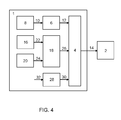
- a regulating system 1 according to the present invention for an air conditioning system 2 in a vehicle will now be described with reference to the schematic block diagram in Figure 4 .
- the regulating system 1 comprises a control unit 4, a first comparison unit 6 and a first time measurement unit 8.
- the first time measurement unit 8 is arranged to measure the time t since an approved period of operation of the air conditioning system and to deliver to the first comparison unit 6 a first time signal 10 containing information about the time t.
- the comparison unit is arranged to compare the measured time t with a predetermined first interval t 1 and, if the measured time exceeds said predetermined interval t 1 , to deliver a first control signal 12 to the control unit, which is arranged to initiate activation of the vehicle's air conditioning system if said first control signal 12 is received. This is done by generating an initiating signal 14 which is conveyed to the air conditioning system.
- Said first interval t 1 is within the range 4-10 days.
- the regulating system comprises also a temperature measurement unit 16, a second comparison unit 18 and a second time measurement unit 20, and the temperature measurement unit 16 is arranged to measure current ambient temperature T and to deliver to the second comparison unit 18 a temperature signal 22 containing information about the temperature T.
- Current temperatures may for example be available via the vehicle's CAN system.
- the second comparison unit 18 compares the measured ambient temperature T with the predetermined limit T t which may for example be within the range 3-7°C, e.g. 5°C.
- the second comparison circuit 18 delivers a second control signal 26 to the control unit 4, which is arranged to initiate activation of the vehicle's air conditioning system 2 if said first control signal 12 and second control signal 26 are received.
- the second interval t 2 is within the range 1-4 hours, e.g. 3 hours.
- the system comprises also a third comparison unit 28 arranged to generate a third control signal 30 indicating that the vehicle is in operation, and the control unit 4 is arranged to initiate activation of the vehicle's air conditioning system 2 if the first control signal 12 and the third control signal 30 are received and if preferably also, in cases where temperature measurement is done, the second control signal 26 is also received.
- the third comparison unit 28 is arranged to receive a speed signal 32 which indicates the vehicle's current speed. The speed signal is for example received from the vehicle's CAN bus.
- the vehicle is deemed to be in operation if its current speed v is above a predetermined level v t which is for example within the range 5-15 km/h, e.g. 10 km/h.
- Ongoing activation is halted if the vehicle's current speed v is below this predetermined level v t . This is achieved by the third control signal no longer being received by the control unit 4, which thereupon halts the activation.
- activation of the air conditioning system may be effected if at least the first control signal is received by the control unit and one or more further operating conditions are fulfilled, e.g. an indication that apertures of the vehicle are not closed.
- Approved period of operation of the air conditioning system means operation for longer than a predetermined operating time t m and temperature above the specified threshold for at least the second interval.
- the predetermined operating time is for example within the range 3-10 minutes but does of course vary depending of the model and make of the air conditioning system.
- the air conditioning system Upon activation, the air conditioning system is connected for this predetermined operating time t m .
- Certain vehicles may have a number of different air conditioning systems installed. This is particularly common in buses, in which for example the driver's space may have a separate system and the remainder of the bus be catered for by one or more other systems in order for example to have different climate zones in the bus.
- the regulating system according to the invention may of course be adapted and implemented for such a vehicle.
Landscapes
- Engineering & Computer Science (AREA)
- Physics & Mathematics (AREA)
- Thermal Sciences (AREA)
- Mechanical Engineering (AREA)
- General Engineering & Computer Science (AREA)
- Air-Conditioning For Vehicles (AREA)
Abstract
a) measuring the time t since an approved period of operation of the air conditioning system,
b) comparing the measured time t with a predetermined first interval t1,
c) activating the air conditioning system if the measured time exceeds said predetermined interval t1.
d) measuring current ambient temperature T,
e) comparing the measured ambient temperature with a predetermined temperature limit Tt,
and activation of the air conditioning system is effected if condition c) is fulfilled and if
f) the current ambient temperature exceeds, and has exceeded, the predetermined temperature limit Tt for at least a predetermined second interval t2.
Description
- The present invention relates to a method and a system according to the preambles of the independent claims.
- A conventional air conditioning (AC) system for a vehicle comprises usually a compressor, a condenser, pipelines, an evaporator and an accumulator tank. The outlet of the compressor is connected to the inlet of the condenser, the outlet of the condenser is connected via the pipelines to the inlet of the evaporator, and the outlet of the evaporator is connected via the tank to the inlet of the compressor. The compressor is driven by the vehicle's engine and is connected for example by an electromagnetic clutch. Connection and disconnection are controlled inter alia according to desired temperature in the vehicle.
- To ensure reliable and durable operation of the AC system, compressors need to be run (activated) at regular intervals so that seals etc. are lubricated even when no cooling is needed. This is well known and is presumably catered for in most vehicle manufacturers' systems.
- To achieve due activation of the AC system, the whole system needs to be started up and run for at least a number of minutes. How long the compressor needs to be run depends on make and model.
- The following problems have been identified with regard to activation of an AC compressor:
- Activating it "unnecessarily often" may cause wear on many parts of the system, e.g. compressor clutch, the compressor itself, fans etc.
- Activating it when the vehicle is idling and there is consequently less charging of the batteries puts them under heavy load in that condenser fans which consume a great deal of current have to be started up when the AC is activated.
- Activating it in an "uncontrolled" way despite the climate control having been switched off entails risk of harm to persons if for example cracks occur during servicing of the vehicle.
- Starting the AC system at too low a temperature entails risk of ice formation which might damage components.
- The following patent specifications have been identified within the technical field:
-
US 3738118 A refers to a control system for an air conditioning system in a vehicle. The control system is equipped with a relay which connects the compressor for a predetermined period each time the vehicle is used, and the period of connection is long enough to achieve lubrication of the compressor's seals. -
US 3844684 A refers to a device which automatically activates the compressor for an air conditioning system in a vehicle in order to effect lubrication of the compressor's movable parts. The compressor is activated when the engine speed drops below a certain level and the temperature is higher than 10 °C. -
US 4424682 A refers to a control system for the compressor in an air conditioning system for a vehicle. Irrespective of whether cooling is needed, the control system connects the compressor for a predetermined period when the vehicle is travelling below a certain speed and the ambient temperature is above a chosen level. - In the light of the above problems pertaining to activation as currently conducted, and against the background of how it is conducted according to the specifications described above, the general object of the present invention is to propose an improved form of activation of air conditioning systems for vehicles which eliminates the problems described.
- The above objects are achieved with the invention defined by the independent claims.
- Preferred embodiments are defined by the dependent claims.
- The method according to the present invention is preferably implemented in software in one or more of the vehicle's control units and may be briefly described as follows:
- Activation takes place for a certain period (e.g. 3 minutes) and thereafter when a certain time (e.g. a week) has passed since the AC system was last activated, irrespective of whether by activation or in normal operation. For activation to register as approved, it must proceed for the period indicated (e.g. 3 minutes).
- Activation preferably only takes place when the outside temperature has been above a certain level (e.g. +5 °C) for a certain period (e.g. 2 hours).
- Activation preferably only takes place when the vehicle (e.g. a bus) is in motion, there is good battery charging and no ongoing servicing is likely.
- The invention affords inter alia following advantages:
- Not running the AC more than necessary reduces wear and energy consumption.
- Not running the AC unnecessarily when the vehicle is idling results in more even load on the batteries (less risk of their "running out").
- Less risk of damage during servicing and repairs.
- Activation within a more favourable engine speed range.
- Possibility of individual activation of various AC systems in the same vehicle.
-
-
Figure 1 is a flowchart illustrating the present invention. -
Figure 2 is a flowchart illustrating a first embodiment of the present invention. -
Figure 2 is a flowchart illustrating a second embodiment of the present invention. -
Figure 4 is a block diagram illustrating the present invention. - The invention will now be described in detail with reference to the attached drawings.
- The regulating system according to the invention is intended to regulate an air conditioning system which is appropriate for fitting in a vehicle which may be a bus, truck, car or some other vehicle.
-
Figure 1 illustrates a method according to the invention intended to be implemented in relation to an air conditioning system for a vehicle. The method comprises: - a) measuring the time t since an approved period of operation of the air conditioning system,
- b) comparing the measured time t with a predetermined first interval t1,
- c) activating the air conditioning system if the measured time exceeds said predetermined interval t1.
- The first interval t1 is preferably within the range 4-10 days, denoting the interval between approved activations.
- According to an embodiment of the present invention illustrated by the flowchart in
Figure 2 , the method comprises: - d) measuring current ambient temperature T,
- e) comparing the measured ambient temperature with a predetermined temperature limit Tt,
and activation of the air conditioning system is effected if condition c) is fulfilled and if - f) the current ambient temperature exceeds, and has exceeded, the predetermined temperature limit Tt for at least a predetermined second interval t2.
- Activation is thus effected if a predetermined time has passed since the last approved activation (condition c) above) and if the temperature exceeds the predetermined limit Tt, which may for example be within the range 3-7 °C, e.g. 5 °C, and has been above that limit for at least a predetermined second interval t2 which is within the range 1-4 hours, e.g. 3 hours.
- According to a further embodiment of the invention illustrated by the flowchart in
Figure 3 , activation of the air conditioning system is effected if condition c) and, if applicable, condition f), i.e. if temperature measurement is done, are fulfilled, and if - g) the vehicle is in operation.
- In this context a vehicle is deemed to be in operation if its current speed v exceeds a predetermined level vt within the range 5-15 km/h, e.g. 10 km/h. It is of course also a requirement that the vehicle's engine is running.
- Ongoing activation is preferably halted if the vehicle's current speed falls below the predetermined level vt. In certain contexts it is not appropriate to halt any ongoing activation, e.g. when driving in urban traffic with frequent stops at red traffic signals.
- It is possible to set further requirements or operating conditions, generally referred to as
- h), which have to be fulfilled for activation of the air conditioning system to be possible. An example of such a requirement is that none of the vehicle's apertures are open when activation is effected.
- An approved period of operation of the air conditioning system means operation for longer than a predetermined operating time tm when condition f) is fulfilled, i.e. temperature higher than the specified threshold for at least the second time-interval. The predetermined operating time is for example within the range 3-10 minutes but does of course vary depending on the model and make of the air conditioning system. Upon activation, the air conditioning system is connected for this predetermined operating time tm.
- The method described above may be implemented both by logic circuits and by software and by a combination of hardware and software. The invention thus comprises also a computer programme product which is appropriate for running on a predetermined processor device for a vehicle and which comprises computer programme steps for effecting the method according to at least some of the steps described.
- A regulating
system 1 according to the present invention for anair conditioning system 2 in a vehicle will now be described with reference to the schematic block diagram inFigure 4 . - The regulating
system 1 comprises acontrol unit 4, afirst comparison unit 6 and a firsttime measurement unit 8. - The first
time measurement unit 8 is arranged to measure the time t since an approved period of operation of the air conditioning system and to deliver to the first comparison unit 6 afirst time signal 10 containing information about the time t. The comparison unit is arranged to compare the measured time t with a predetermined first interval t1 and, if the measured time exceeds said predetermined interval t1, to deliver afirst control signal 12 to the control unit, which is arranged to initiate activation of the vehicle's air conditioning system if saidfirst control signal 12 is received. This is done by generating an initiatingsignal 14 which is conveyed to the air conditioning system. Said first interval t1 is within the range 4-10 days. - According to another embodiment, the regulating system comprises also a
temperature measurement unit 16, asecond comparison unit 18 and a secondtime measurement unit 20, and thetemperature measurement unit 16 is arranged to measure current ambient temperature T and to deliver to the second comparison unit 18 atemperature signal 22 containing information about the temperature T. Current temperatures may for example be available via the vehicle's CAN system. - The
second comparison unit 18 compares the measured ambient temperature T with the predetermined limit Tt which may for example be within the range 3-7°C, e.g. 5°C. - If the measured current ambient temperature exceeds, and has exceeded, the predetermined limit Tt for at least a predetermined second interval t2, the
second comparison circuit 18 delivers asecond control signal 26 to thecontrol unit 4, which is arranged to initiate activation of the vehicle'sair conditioning system 2 if saidfirst control signal 12 andsecond control signal 26 are received. The second interval t2 is within the range 1-4 hours, e.g. 3 hours. - According to another embodiment, the system comprises also a
third comparison unit 28 arranged to generate athird control signal 30 indicating that the vehicle is in operation, and thecontrol unit 4 is arranged to initiate activation of the vehicle'sair conditioning system 2 if thefirst control signal 12 and thethird control signal 30 are received and if preferably also, in cases where temperature measurement is done, thesecond control signal 26 is also received. Thethird comparison unit 28 is arranged to receive aspeed signal 32 which indicates the vehicle's current speed. The speed signal is for example received from the vehicle's CAN bus. - The vehicle is deemed to be in operation if its current speed v is above a predetermined level vt which is for example within the range 5-15 km/h, e.g. 10 km/h.
- Ongoing activation is halted if the vehicle's current speed v is below this predetermined level vt. This is achieved by the third control signal no longer being received by the
control unit 4, which thereupon halts the activation. - According to a further embodiment of the invention, activation of the air conditioning system may be effected if at least the first control signal is received by the control unit and one or more further operating conditions are fulfilled, e.g. an indication that apertures of the vehicle are not closed.
- Approved period of operation of the air conditioning system means operation for longer than a predetermined operating time tm and temperature above the specified threshold for at least the second interval. The predetermined operating time is for example within the range 3-10 minutes but does of course vary depending of the model and make of the air conditioning system. Upon activation, the air conditioning system is connected for this predetermined operating time tm.
- Certain vehicles may have a number of different air conditioning systems installed. This is particularly common in buses, in which for example the driver's space may have a separate system and the remainder of the bus be catered for by one or more other systems in order for example to have different climate zones in the bus. The regulating system according to the invention may of course be adapted and implemented for such a vehicle.
- The present invention is not restricted to the preferred embodiments described above. Sundry alternatives, modifications and equivalents may be used. The above embodiments are therefore not to be regarded as limiting the invention's protective scope which is defined by the attached claims.
Claims (20)
- A method pertaining to an air conditioning system for a vehicle, comprising:a) measuring the time t since an approved period of operation of the air conditioning system,b) comparing the measured time t with a predetermined first interval t1,c) activating the air conditioning system if the measured time exceeds said predetermined interval t1,
and activation of the air conditioning system is effected if condition c) and, if applicable, condition f) are fulfilled, and ifg) the vehicle is in operation,
the vehicle being in operation if its current speed v is above a predetermined level vt. - A method according to claim 1, comprising:d) measuring current ambient temperature T,e) comparing the measured ambient temperature with a predetermined temperature limit Tt,
and activation of the air conditioning system is effected if condition c) is fulfilled and iff) the current ambient temperature exceeds, and has exceeded, the predetermined temperature limit Tt for at least a predetermined second interval t2. - A method according to claim 1, in which vt is within the range 5-15 km/h.
- A method according to claim 3, in which ongoing activation is halted if the vehicle's current speed goes below said predetermined level vt.
- A method according to any one of the foregoing claims, in which said first interval t1 is within the range 4-10 days.
- A method according to either of claims 2 and 3, in which said second interval t2 is within the range 1-4 hours.
- A method according to any one of the foregoing claims, in which activation of the air conditioning system is effected if at least condition c) is fulfilled and ifh) one or more further operating conditions are fulfilled.
- A method according to any one of the foregoing claims and depending on claim 2, in which an approved period of operation of the air conditioning system means operation for longer than a predetermined operating time tom when f) is fulfilled.
- A method according to any one of claims 1-8, in which upon activation the air conditioning system is connected for a predetermined operating time tm.
- A regulating system (1) for an air conditioning system (2) in a vehicle, comprising a control unit (4), a first comparison unit (6) and a first time measurement unit (8),
characterised in that the first time measurement unit (8) is arranged to measure the time t since an approved period of operation of the air conditioning system and to deliver to the first comparison unit (6) a first time signal (10) containing information about the time t. The comparison unit is arranged to compare the measured time t with a predetermined first interval t1 and, if the measured time exceeds said predetermined interval t1, to deliver a first control signal (12) to the control unit, which is arranged to initiate activation of the vehicle's air conditioning system if said first control signal (12) is received, the system further comprises a third comparison unit (28) arranged to generate a third control signal (30) indicating that the vehicle is in operation, and the control unit (4) is arranged to initiate activation of the vehicle's air conditioning system (2) if said first control signal (12) and, if applicable, a second control signal (26) and a third control signal (30) are received, the vehicle being in operation if its current speed v is above a predetermined level vt. - The regulating system according to claim 10, comprising a temperature measurement unit (16), a second comparison unit (18) and a second time measurement unit (20), such that the temperature measurement unit is adapted to measuring current ambient temperature T and to delivering to the second comparison unit (18) a temperature signal (22) containing information about the temperature T, the second comparison unit (18) is adapted to comparing the measured ambient temperature T with a predetermined limit Tt and, if the measured current ambient temperature exceeds, and has exceeded, the predetermined limit Tt for at least a predetermined second interval t2, to delivering a second control signal (26) to the control unit, which is arranged to initiate activation of the vehicle's air conditioning system (2) if said first and second control signals (12, 26) are received.
- The regulating system according to claim 10, in which vt is within the range 5-15 km/h.
- The regulating system according to claim 10 or 12, in which any ongoing activation is halted if the vehicle's current speed goes below said predetermined level vt.
- The regulating system according to any one of claims 10-13, in which said first interval t1 is within the range 4-10 days.
- The regulating system according to any one of claims 11-14 and depending on claim 11, in which said second interval t2 is within the range 1-4 hours.
- The regulating system according to any one of claims 10-15, in which activation of the air conditioning system is effected if at least said first control signal is received by the control unit and if one or more further operating conditions are fulfilled.
- The regulating system according to any one of claims 10-16, in which an approved period of operation of the air conditioning system means operation for longer than a predetermined operating time tm when the vehicle is in operation.
- The regulating system according to any one of claims 10-17, in which upon activation the air conditioning system is connected for a predetermined operating time tm.
- A vehicle provided with one or more regulating systems according to claims 10-18.
- A computer programme product which is adapted to being run on a computer programme processor device for a vehicle and which comprises computer programme steps for effecting the method according to any one of claims 1-9.
Applications Claiming Priority (1)
| Application Number | Priority Date | Filing Date | Title |
|---|---|---|---|
| SE1150319A SE1150319A1 (en) | 2011-04-12 | 2011-04-12 | Method in connection with an air conditioning system, and a control system for such an air conditioning system. |
Publications (2)
| Publication Number | Publication Date |
|---|---|
| EP2511115A1 true EP2511115A1 (en) | 2012-10-17 |
| EP2511115B1 EP2511115B1 (en) | 2014-07-02 |
Family
ID=46022067
Family Applications (1)
| Application Number | Title | Priority Date | Filing Date |
|---|---|---|---|
| EP12163744.1A Not-in-force EP2511115B1 (en) | 2011-04-12 | 2012-04-11 | Method pertaining to an air conditioning system, and a regulating system for such an air conditioning system |
Country Status (3)
| Country | Link |
|---|---|
| EP (1) | EP2511115B1 (en) |
| ES (1) | ES2511219T3 (en) |
| SE (1) | SE1150319A1 (en) |
Cited By (1)
| Publication number | Priority date | Publication date | Assignee | Title |
|---|---|---|---|---|
| FR3092276A1 (en) * | 2019-01-31 | 2020-08-07 | Psa Automobiles Sa | Preventive maintenance process for an air conditioning loop of a motor vehicle air management system |
Citations (7)
| Publication number | Priority date | Publication date | Assignee | Title |
|---|---|---|---|---|
| US3738118A (en) | 1972-01-31 | 1973-06-12 | Gen Motors Corp | Means for lubricating vehicle air conditioning compressor shaft seals |
| US3844684A (en) | 1972-08-07 | 1974-10-29 | Hitachi Ltd | Preliminary compressor lubricating device |
| US4424682A (en) | 1982-02-16 | 1984-01-10 | General Motors Corporation | Vehicle air conditioning compressor control system |
| US6145325A (en) * | 1998-03-19 | 2000-11-14 | Daimlerchrysler Ag | Method for operating a motor vehicle air conditioner with a compressor with lubricant circulation |
| EP1077146A1 (en) * | 1999-08-17 | 2001-02-21 | Deere & Company | Control device for an automotive air conditioner |
| DE102004008974A1 (en) * | 2004-02-24 | 2005-09-08 | Daimlerchrysler Ag | Process for reducing the tendency to leakage of an air conditioner in a vehicle comprises switching on a compressor for a predetermined time |
| DE102008047294A1 (en) * | 2008-09-16 | 2009-05-14 | Daimler Ag | Compression cooling device for motor vehicle, has compressor, by which actuating device is used by operator in operation and apart from operation, where drive shaft of compressor is displaced in motion by initiation |
-
2011
- 2011-04-12 SE SE1150319A patent/SE1150319A1/en not_active Application Discontinuation
-
2012
- 2012-04-11 ES ES12163744.1T patent/ES2511219T3/en active Active
- 2012-04-11 EP EP12163744.1A patent/EP2511115B1/en not_active Not-in-force
Patent Citations (7)
| Publication number | Priority date | Publication date | Assignee | Title |
|---|---|---|---|---|
| US3738118A (en) | 1972-01-31 | 1973-06-12 | Gen Motors Corp | Means for lubricating vehicle air conditioning compressor shaft seals |
| US3844684A (en) | 1972-08-07 | 1974-10-29 | Hitachi Ltd | Preliminary compressor lubricating device |
| US4424682A (en) | 1982-02-16 | 1984-01-10 | General Motors Corporation | Vehicle air conditioning compressor control system |
| US6145325A (en) * | 1998-03-19 | 2000-11-14 | Daimlerchrysler Ag | Method for operating a motor vehicle air conditioner with a compressor with lubricant circulation |
| EP1077146A1 (en) * | 1999-08-17 | 2001-02-21 | Deere & Company | Control device for an automotive air conditioner |
| DE102004008974A1 (en) * | 2004-02-24 | 2005-09-08 | Daimlerchrysler Ag | Process for reducing the tendency to leakage of an air conditioner in a vehicle comprises switching on a compressor for a predetermined time |
| DE102008047294A1 (en) * | 2008-09-16 | 2009-05-14 | Daimler Ag | Compression cooling device for motor vehicle, has compressor, by which actuating device is used by operator in operation and apart from operation, where drive shaft of compressor is displaced in motion by initiation |
Cited By (1)
| Publication number | Priority date | Publication date | Assignee | Title |
|---|---|---|---|---|
| FR3092276A1 (en) * | 2019-01-31 | 2020-08-07 | Psa Automobiles Sa | Preventive maintenance process for an air conditioning loop of a motor vehicle air management system |
Also Published As
| Publication number | Publication date |
|---|---|
| EP2511115B1 (en) | 2014-07-02 |
| SE1150319A1 (en) | 2012-10-13 |
| ES2511219T3 (en) | 2014-10-22 |
Similar Documents
| Publication | Publication Date | Title |
|---|---|---|
| CN101787972B (en) | Transmission auxiliary pump diagnosis method and hybrid power electric vehicle | |
| EP2708429B1 (en) | Compressed air system for a motor vehicle | |
| US8487458B2 (en) | Two speed control for mobile refrigeration generators | |
| CN110341426B (en) | Control method of parking air conditioner | |
| EP2903858B1 (en) | Methods and systems for starting an electrically controlled engine of a transport refrigeration system | |
| US7893658B2 (en) | Methods and systems for battery charging management | |
| US11993131B2 (en) | Methods and systems for providing feedback for a transport climate control system | |
| US12576688B2 (en) | Climate controlled vehicle, transport climate control equipment, method of retrofitting a vehicle and method of operation | |
| US9139205B2 (en) | System and method for determining when engine has abnormally stopped in a hybrid electric vehicle | |
| CN112554990B (en) | Engine lubrication control method and device and oil-electricity hybrid vehicle | |
| US8527145B2 (en) | ISG display apparatus and method of ISG automobile | |
| EP3166832A1 (en) | Control of an internal combustion engine in a vehicle | |
| CN106240573B (en) | Oxygen sensor diagnostic control system for hybrid electric vehicle | |
| CN102482981B (en) | Device and method for improving performance of a motor vehicle | |
| EP2511115B1 (en) | Method pertaining to an air conditioning system, and a regulating system for such an air conditioning system | |
| WO2021012474A1 (en) | Vehicle control system and control method for electric airline catering truck | |
| CN104816607A (en) | Automobile air conditioning compressor monitoring method and device | |
| CN114675604A (en) | Cold chain logistics control device, cold chain logistics monitoring system and method thereof | |
| KR101993434B1 (en) | Control of preparatory measures in a vehicle | |
| CN103231687B (en) | The ECU control system of vehicle | |
| CN118439002A (en) | Control method and control device for hybrid vehicle, hybrid vehicle and storage medium | |
| EP3570426A1 (en) | Power control system | |
| EP4400718A1 (en) | Electric air compressor control | |
| CN117141525B (en) | Rail vehicle traction control method and device and rail vehicle | |
| CN116494714A (en) | Vehicle air conditioner control method and air conditioner |
Legal Events
| Date | Code | Title | Description |
|---|---|---|---|
| PUAI | Public reference made under article 153(3) epc to a published international application that has entered the european phase |
Free format text: ORIGINAL CODE: 0009012 |
|
| AK | Designated contracting states |
Kind code of ref document: A1 Designated state(s): AL AT BE BG CH CY CZ DE DK EE ES FI FR GB GR HR HU IE IS IT LI LT LU LV MC MK MT NL NO PL PT RO RS SE SI SK SM TR |
|
| AX | Request for extension of the european patent |
Extension state: BA ME |
|
| 17P | Request for examination filed |
Effective date: 20130417 |
|
| GRAP | Despatch of communication of intention to grant a patent |
Free format text: ORIGINAL CODE: EPIDOSNIGR1 |
|
| INTG | Intention to grant announced |
Effective date: 20140224 |
|
| RIN1 | Information on inventor provided before grant (corrected) |
Inventor name: OESTERLUND, HENRIK Inventor name: BERGSTRAND, JAN-AKE |
|
| GRAS | Grant fee paid |
Free format text: ORIGINAL CODE: EPIDOSNIGR3 |
|
| GRAA | (expected) grant |
Free format text: ORIGINAL CODE: 0009210 |
|
| AK | Designated contracting states |
Kind code of ref document: B1 Designated state(s): AL AT BE BG CH CY CZ DE DK EE ES FI FR GB GR HR HU IE IS IT LI LT LU LV MC MK MT NL NO PL PT RO RS SE SI SK SM TR |
|
| REG | Reference to a national code |
Ref country code: GB Ref legal event code: FG4D |
|
| REG | Reference to a national code |
Ref country code: CH Ref legal event code: EP Ref country code: AT Ref legal event code: REF Ref document number: 675711 Country of ref document: AT Kind code of ref document: T Effective date: 20140715 |
|
| REG | Reference to a national code |
Ref country code: IE Ref legal event code: FG4D |
|
| REG | Reference to a national code |
Ref country code: DE Ref legal event code: R096 Ref document number: 602012002273 Country of ref document: DE Effective date: 20140814 |
|
| REG | Reference to a national code |
Ref country code: ES Ref legal event code: FG2A Ref document number: 2511219 Country of ref document: ES Kind code of ref document: T3 Effective date: 20141022 |
|
| REG | Reference to a national code |
Ref country code: AT Ref legal event code: MK05 Ref document number: 675711 Country of ref document: AT Kind code of ref document: T Effective date: 20140702 |
|
| REG | Reference to a national code |
Ref country code: NL Ref legal event code: VDEP Effective date: 20140702 |
|
| REG | Reference to a national code |
Ref country code: LT Ref legal event code: MG4D |
|
| PG25 | Lapsed in a contracting state [announced via postgrant information from national office to epo] |
Ref country code: BG Free format text: LAPSE BECAUSE OF FAILURE TO SUBMIT A TRANSLATION OF THE DESCRIPTION OR TO PAY THE FEE WITHIN THE PRESCRIBED TIME-LIMIT Effective date: 20141002 Ref country code: FI Free format text: LAPSE BECAUSE OF FAILURE TO SUBMIT A TRANSLATION OF THE DESCRIPTION OR TO PAY THE FEE WITHIN THE PRESCRIBED TIME-LIMIT Effective date: 20140702 Ref country code: CZ Free format text: LAPSE BECAUSE OF FAILURE TO SUBMIT A TRANSLATION OF THE DESCRIPTION OR TO PAY THE FEE WITHIN THE PRESCRIBED TIME-LIMIT Effective date: 20140702 Ref country code: PT Free format text: LAPSE BECAUSE OF FAILURE TO SUBMIT A TRANSLATION OF THE DESCRIPTION OR TO PAY THE FEE WITHIN THE PRESCRIBED TIME-LIMIT Effective date: 20141103 Ref country code: LT Free format text: LAPSE BECAUSE OF FAILURE TO SUBMIT A TRANSLATION OF THE DESCRIPTION OR TO PAY THE FEE WITHIN THE PRESCRIBED TIME-LIMIT Effective date: 20140702 Ref country code: SE Free format text: LAPSE BECAUSE OF FAILURE TO SUBMIT A TRANSLATION OF THE DESCRIPTION OR TO PAY THE FEE WITHIN THE PRESCRIBED TIME-LIMIT Effective date: 20140702 Ref country code: GR Free format text: LAPSE BECAUSE OF FAILURE TO SUBMIT A TRANSLATION OF THE DESCRIPTION OR TO PAY THE FEE WITHIN THE PRESCRIBED TIME-LIMIT Effective date: 20141003 Ref country code: NO Free format text: LAPSE BECAUSE OF FAILURE TO SUBMIT A TRANSLATION OF THE DESCRIPTION OR TO PAY THE FEE WITHIN THE PRESCRIBED TIME-LIMIT Effective date: 20141002 |
|
| PG25 | Lapsed in a contracting state [announced via postgrant information from national office to epo] |
Ref country code: NL Free format text: LAPSE BECAUSE OF FAILURE TO SUBMIT A TRANSLATION OF THE DESCRIPTION OR TO PAY THE FEE WITHIN THE PRESCRIBED TIME-LIMIT Effective date: 20140702 Ref country code: IS Free format text: LAPSE BECAUSE OF FAILURE TO SUBMIT A TRANSLATION OF THE DESCRIPTION OR TO PAY THE FEE WITHIN THE PRESCRIBED TIME-LIMIT Effective date: 20141102 Ref country code: HR Free format text: LAPSE BECAUSE OF FAILURE TO SUBMIT A TRANSLATION OF THE DESCRIPTION OR TO PAY THE FEE WITHIN THE PRESCRIBED TIME-LIMIT Effective date: 20140702 Ref country code: AT Free format text: LAPSE BECAUSE OF FAILURE TO SUBMIT A TRANSLATION OF THE DESCRIPTION OR TO PAY THE FEE WITHIN THE PRESCRIBED TIME-LIMIT Effective date: 20140702 Ref country code: CY Free format text: LAPSE BECAUSE OF FAILURE TO SUBMIT A TRANSLATION OF THE DESCRIPTION OR TO PAY THE FEE WITHIN THE PRESCRIBED TIME-LIMIT Effective date: 20140702 Ref country code: PL Free format text: LAPSE BECAUSE OF FAILURE TO SUBMIT A TRANSLATION OF THE DESCRIPTION OR TO PAY THE FEE WITHIN THE PRESCRIBED TIME-LIMIT Effective date: 20140702 Ref country code: LV Free format text: LAPSE BECAUSE OF FAILURE TO SUBMIT A TRANSLATION OF THE DESCRIPTION OR TO PAY THE FEE WITHIN THE PRESCRIBED TIME-LIMIT Effective date: 20140702 Ref country code: RS Free format text: LAPSE BECAUSE OF FAILURE TO SUBMIT A TRANSLATION OF THE DESCRIPTION OR TO PAY THE FEE WITHIN THE PRESCRIBED TIME-LIMIT Effective date: 20140702 |
|
| REG | Reference to a national code |
Ref country code: DE Ref legal event code: R097 Ref document number: 602012002273 Country of ref document: DE |
|
| PG25 | Lapsed in a contracting state [announced via postgrant information from national office to epo] |
Ref country code: DK Free format text: LAPSE BECAUSE OF FAILURE TO SUBMIT A TRANSLATION OF THE DESCRIPTION OR TO PAY THE FEE WITHIN THE PRESCRIBED TIME-LIMIT Effective date: 20140702 Ref country code: SK Free format text: LAPSE BECAUSE OF FAILURE TO SUBMIT A TRANSLATION OF THE DESCRIPTION OR TO PAY THE FEE WITHIN THE PRESCRIBED TIME-LIMIT Effective date: 20140702 Ref country code: RO Free format text: LAPSE BECAUSE OF FAILURE TO SUBMIT A TRANSLATION OF THE DESCRIPTION OR TO PAY THE FEE WITHIN THE PRESCRIBED TIME-LIMIT Effective date: 20140702 Ref country code: EE Free format text: LAPSE BECAUSE OF FAILURE TO SUBMIT A TRANSLATION OF THE DESCRIPTION OR TO PAY THE FEE WITHIN THE PRESCRIBED TIME-LIMIT Effective date: 20140702 |
|
| PGFP | Annual fee paid to national office [announced via postgrant information from national office to epo] |
Ref country code: ES Payment date: 20150310 Year of fee payment: 4 |
|
| PLBE | No opposition filed within time limit |
Free format text: ORIGINAL CODE: 0009261 |
|
| STAA | Information on the status of an ep patent application or granted ep patent |
Free format text: STATUS: NO OPPOSITION FILED WITHIN TIME LIMIT |
|
| 26N | No opposition filed |
Effective date: 20150407 |
|
| PGFP | Annual fee paid to national office [announced via postgrant information from national office to epo] |
Ref country code: IT Payment date: 20150430 Year of fee payment: 4 |
|
| PG25 | Lapsed in a contracting state [announced via postgrant information from national office to epo] |
Ref country code: SI Free format text: LAPSE BECAUSE OF FAILURE TO SUBMIT A TRANSLATION OF THE DESCRIPTION OR TO PAY THE FEE WITHIN THE PRESCRIBED TIME-LIMIT Effective date: 20140702 Ref country code: LU Free format text: LAPSE BECAUSE OF FAILURE TO SUBMIT A TRANSLATION OF THE DESCRIPTION OR TO PAY THE FEE WITHIN THE PRESCRIBED TIME-LIMIT Effective date: 20150411 Ref country code: MC Free format text: LAPSE BECAUSE OF FAILURE TO SUBMIT A TRANSLATION OF THE DESCRIPTION OR TO PAY THE FEE WITHIN THE PRESCRIBED TIME-LIMIT Effective date: 20140702 |
|
| REG | Reference to a national code |
Ref country code: CH Ref legal event code: PL |
|
| REG | Reference to a national code |
Ref country code: IE Ref legal event code: MM4A |
|
| PG25 | Lapsed in a contracting state [announced via postgrant information from national office to epo] |
Ref country code: LI Free format text: LAPSE BECAUSE OF NON-PAYMENT OF DUE FEES Effective date: 20150430 Ref country code: CH Free format text: LAPSE BECAUSE OF NON-PAYMENT OF DUE FEES Effective date: 20150430 |
|
| REG | Reference to a national code |
Ref country code: FR Ref legal event code: ST Effective date: 20151231 |
|
| PG25 | Lapsed in a contracting state [announced via postgrant information from national office to epo] |
Ref country code: FR Free format text: LAPSE BECAUSE OF NON-PAYMENT OF DUE FEES Effective date: 20150430 |
|
| PG25 | Lapsed in a contracting state [announced via postgrant information from national office to epo] |
Ref country code: IE Free format text: LAPSE BECAUSE OF NON-PAYMENT OF DUE FEES Effective date: 20150411 |
|
| PG25 | Lapsed in a contracting state [announced via postgrant information from national office to epo] |
Ref country code: BE Free format text: LAPSE BECAUSE OF FAILURE TO SUBMIT A TRANSLATION OF THE DESCRIPTION OR TO PAY THE FEE WITHIN THE PRESCRIBED TIME-LIMIT Effective date: 20140702 |
|
| GBPC | Gb: european patent ceased through non-payment of renewal fee |
Effective date: 20160411 |
|
| PG25 | Lapsed in a contracting state [announced via postgrant information from national office to epo] |
Ref country code: MT Free format text: LAPSE BECAUSE OF FAILURE TO SUBMIT A TRANSLATION OF THE DESCRIPTION OR TO PAY THE FEE WITHIN THE PRESCRIBED TIME-LIMIT Effective date: 20140702 |
|
| PG25 | Lapsed in a contracting state [announced via postgrant information from national office to epo] |
Ref country code: GB Free format text: LAPSE BECAUSE OF NON-PAYMENT OF DUE FEES Effective date: 20160411 |
|
| PG25 | Lapsed in a contracting state [announced via postgrant information from national office to epo] |
Ref country code: IT Free format text: LAPSE BECAUSE OF NON-PAYMENT OF DUE FEES Effective date: 20160411 |
|
| PG25 | Lapsed in a contracting state [announced via postgrant information from national office to epo] |
Ref country code: HU Free format text: LAPSE BECAUSE OF FAILURE TO SUBMIT A TRANSLATION OF THE DESCRIPTION OR TO PAY THE FEE WITHIN THE PRESCRIBED TIME-LIMIT; INVALID AB INITIO Effective date: 20120411 Ref country code: SM Free format text: LAPSE BECAUSE OF FAILURE TO SUBMIT A TRANSLATION OF THE DESCRIPTION OR TO PAY THE FEE WITHIN THE PRESCRIBED TIME-LIMIT Effective date: 20140702 |
|
| PG25 | Lapsed in a contracting state [announced via postgrant information from national office to epo] |
Ref country code: TR Free format text: LAPSE BECAUSE OF FAILURE TO SUBMIT A TRANSLATION OF THE DESCRIPTION OR TO PAY THE FEE WITHIN THE PRESCRIBED TIME-LIMIT Effective date: 20140702 |
|
| PG25 | Lapsed in a contracting state [announced via postgrant information from national office to epo] |
Ref country code: ES Free format text: LAPSE BECAUSE OF NON-PAYMENT OF DUE FEES Effective date: 20160412 |
|
| REG | Reference to a national code |
Ref country code: ES Ref legal event code: FD2A Effective date: 20180626 |
|
| PG25 | Lapsed in a contracting state [announced via postgrant information from national office to epo] |
Ref country code: MK Free format text: LAPSE BECAUSE OF FAILURE TO SUBMIT A TRANSLATION OF THE DESCRIPTION OR TO PAY THE FEE WITHIN THE PRESCRIBED TIME-LIMIT Effective date: 20140702 |
|
| PG25 | Lapsed in a contracting state [announced via postgrant information from national office to epo] |
Ref country code: AL Free format text: LAPSE BECAUSE OF FAILURE TO SUBMIT A TRANSLATION OF THE DESCRIPTION OR TO PAY THE FEE WITHIN THE PRESCRIBED TIME-LIMIT Effective date: 20140702 |
|
| PGFP | Annual fee paid to national office [announced via postgrant information from national office to epo] |
Ref country code: DE Payment date: 20210316 Year of fee payment: 10 |
|
| REG | Reference to a national code |
Ref country code: DE Ref legal event code: R119 Ref document number: 602012002273 Country of ref document: DE |
|
| PG25 | Lapsed in a contracting state [announced via postgrant information from national office to epo] |
Ref country code: DE Free format text: LAPSE BECAUSE OF NON-PAYMENT OF DUE FEES Effective date: 20221103 |