EP2508201A1 - Method for the identification of animals vaccinated against brucella - Google Patents
Method for the identification of animals vaccinated against brucella Download PDFInfo
- Publication number
- EP2508201A1 EP2508201A1 EP10834263A EP10834263A EP2508201A1 EP 2508201 A1 EP2508201 A1 EP 2508201A1 EP 10834263 A EP10834263 A EP 10834263A EP 10834263 A EP10834263 A EP 10834263A EP 2508201 A1 EP2508201 A1 EP 2508201A1
- Authority
- EP
- European Patent Office
- Prior art keywords
- strain
- gfp
- identification
- brucella
- composition according
- Prior art date
- Legal status (The legal status is an assumption and is not a legal conclusion. Google has not performed a legal analysis and makes no representation as to the accuracy of the status listed.)
- Withdrawn
Links
Images



Classifications
-
- C—CHEMISTRY; METALLURGY
- C07—ORGANIC CHEMISTRY
- C07K—PEPTIDES
- C07K14/00—Peptides having more than 20 amino acids; Gastrins; Somatostatins; Melanotropins; Derivatives thereof
- C07K14/435—Peptides having more than 20 amino acids; Gastrins; Somatostatins; Melanotropins; Derivatives thereof from animals; from humans
- C07K14/43504—Peptides having more than 20 amino acids; Gastrins; Somatostatins; Melanotropins; Derivatives thereof from animals; from humans from invertebrates
- C07K14/43595—Peptides having more than 20 amino acids; Gastrins; Somatostatins; Melanotropins; Derivatives thereof from animals; from humans from invertebrates from coelenteratae, e.g. medusae
-
- A—HUMAN NECESSITIES
- A61—MEDICAL OR VETERINARY SCIENCE; HYGIENE
- A61K—PREPARATIONS FOR MEDICAL, DENTAL OR TOILETRY PURPOSES
- A61K39/00—Medicinal preparations containing antigens or antibodies
- A61K39/02—Bacterial antigens
- A61K39/098—Brucella
-
- A—HUMAN NECESSITIES
- A61—MEDICAL OR VETERINARY SCIENCE; HYGIENE
- A61K—PREPARATIONS FOR MEDICAL, DENTAL OR TOILETRY PURPOSES
- A61K39/00—Medicinal preparations containing antigens or antibodies
- A61K2039/545—Medicinal preparations containing antigens or antibodies characterised by the dose, timing or administration schedule
-
- A—HUMAN NECESSITIES
- A61—MEDICAL OR VETERINARY SCIENCE; HYGIENE
- A61K—PREPARATIONS FOR MEDICAL, DENTAL OR TOILETRY PURPOSES
- A61K39/00—Medicinal preparations containing antigens or antibodies
- A61K2039/55—Medicinal preparations containing antigens or antibodies characterised by the host/recipient, e.g. newborn with maternal antibodies
- A61K2039/552—Veterinary vaccine
-
- G—PHYSICS
- G01—MEASURING; TESTING
- G01N—INVESTIGATING OR ANALYSING MATERIALS BY DETERMINING THEIR CHEMICAL OR PHYSICAL PROPERTIES
- G01N2333/00—Assays involving biological materials from specific organisms or of a specific nature
- G01N2333/195—Assays involving biological materials from specific organisms or of a specific nature from bacteria
- G01N2333/23—Assays involving biological materials from specific organisms or of a specific nature from bacteria from Brucella (G)
-
- G—PHYSICS
- G01—MEASURING; TESTING
- G01N—INVESTIGATING OR ANALYSING MATERIALS BY DETERMINING THEIR CHEMICAL OR PHYSICAL PROPERTIES
- G01N2333/00—Assays involving biological materials from specific organisms or of a specific nature
- G01N2333/435—Assays involving biological materials from specific organisms or of a specific nature from animals; from humans
- G01N2333/43504—Assays involving biological materials from specific organisms or of a specific nature from animals; from humans from invertebrates
- G01N2333/43595—Assays involving biological materials from specific organisms or of a specific nature from animals; from humans from invertebrates from coelenteratae, e.g. medusae
Definitions
- Brucellosis is a disease transmitted from animals to humans.
- Brucella infection causes abortions, infertility, decreased production and limitations of the trading of animals and animal products, which is a problem for Animal Health with economic impact.
- the bacteria are transmitted from infected animals to humans, thereby inflicting a debilitating and often disabling disease, against which there is no vaccine and whose treatment requires high doses of antibiotics for prolonged periods with frequent relapses.
- brucellosis is a significant public health problem. It has been shown that the prevalence of human brucellosis is directly related to the prevalence of animal brucellosis. Therefore, and in the absence of vaccines for use in humans, prevention of the disease necessarily requires the control of the infection in animals. In most socio-economic contexts, the only feasible way to control brucellosis is through programmes based on the vaccination of farm animals, either through mass vaccination programmes or through programmes for the vaccination, diagnosis and slaughter of infected animals ( Blasco 1997. Preventive Veterinary Medicine 31: 275 - 283 ).
- the reference vaccines against animal brucellosis are B. abortus S19 (smooth strain) for cattle and B . melitensis Rev1 (smooth strain) for sheep and goats ( OIE Terrestrial Manual, 2009 - chapters 2.4.3. and 2.7.2 . -). Both are live attenuated vaccines, adjuvant-free, with a low cost of production and acquisition, and highly effective against infection by field strains in ruminants (main source of infection for humans).
- the technical drawback is that they generate an immune response after vaccination, indistinguishable from that induced after virulent infection by field strains. To solve this problem, numerous scientific efforts have been made.
- GFP Green Fluorescent Protein
- GFP proteins have been widely used in Molecular and Cellular Biology for genetic marking and detection of microorganisms (including Brucella, Celli et al., 2003. Journal of Experimental Medicine, 198 (4): 545 - 556 ), cells, plasmids, recombinant proteins and other elements for strictly scientific purposes. Immunoblotting-type immunological tests have also been developed ( Rajasekaran et al., 2008.
- the authors of the present invention describe how a derivative strain of B. abortus S19 (the prototype vaccine S19-GFPp) is capable of expressing GFP in a stable manner, without altering the microbiological or biological characteristics (attenuation and efficacy against infection in experimental animals) of the reference strain S19 and is also able to induce anti-GFP antibody response detectable by specific serological tests that can differentiate the hosts which have been vaccinated and those infected with virulent strains of Brucella spp. They also describe an indirect ELISA method of serodiagnosis capable of specifically identifying animals that have been immunized with the new vaccine that expresses the GFP protein.
- a first aspect of the invention relates to the use of a Brucella spp. strain stably expressing the Green Fluorescent Protein (GFP) and being capable of eliciting an immune response in the host comparable to that induced by the reference vaccine strains and which also generates anti-GFP antibodies detectable by specific serological methods in the production of a medicament; or, alternatively, a Brucella sp. strain stably expressing the Green Fluorescent Protein (GFP) and being capable of eliciting an immune response in the host comparable to that induced by the reference vaccine strains and which also generates anti-GFP antibodies detectable by specific serological methods for its use as a medicament.
- the medicament is a vaccine.
- Another aspect of the invention relates to the use of a Brucella spp. strain stably expressing the Green Fluorescent Protein (GFP) and which is capable of eliciting an immune response in the host comparable to that induced by the reference vaccine strains and which also generates anti-GFP antibodies detectable by specific serological methods, in the production of a medicament for the prevention or treatment of brucellosis in a mammal; or, alternatively, a Brucella spp.
- GFP Green Fluorescent Protein
- GFP Green Fluorescent Protein
- Brucella spp. refers to any cellular organism that can be defined as taxonomically belonging to the domain: Bacteria, phylum: Proteobacteria, class: Alphaproteobacteria, order: Rhizobiales, family: Brucellaceae and genus: Brucella.
- the term "mammal” means any organism of the domain: Eukaryota, kingdom: Metazoa, phylum: Chordata, subphylum: Craniata, superclass: Gnathostomata and class: Mammalia. Ruminant means any mammal belonging to the superorder: Laurasiatheria, suborder: Ruminantia.
- bovine, ovine and caprine refer to any mammal that can be classified as belonging to the family: Bovidae.
- the green fluorescent protein GFP produced by the jellyfish Aequorea sp. is a protein that emits bioluminescence in the green area of the visible spectrum.
- GFP is also defined by a nucleotide or polynucleotide sequence, which is the sequence encoding the GFP protein, and which would comprise several variants originating from:
- Brucella abortus S19 or “Brucella abortus bv. 1 str. S19” is a spontaneously attenuated strain discovered by Dr. John Buck in 1923, which has been used worldwide since early 1930's, as an effective vaccine to prevent brucellosis in animals and is internationally considered the reference vaccine for the control of bovine brucellosis ( OIE Terrestrial Manual, 2009 - chapter 2.4.3 . - ). The original seed lot is available at the U.S.
- Brucella melitensis Rev 1 "Brucella melitensis bv. 1 str. Rev. 1” is a strain known as NCCB V4a (http: / / www.broadinstitute.org / annotation / genome / brucella_group / GenomeDescriptions.html) spontaneously attenuated and obtained from the virulent strain B. melitensis 6056, through successive spontaneous mutations associated with streptomycin dependence and the subsequent reversal of that dependency ( Herzberg and Elberg 1953. Journal of Bacteriology 66: 585 - 599 ; Herzberg and Elberg 1953. Journal of Bacteriology 66: 600 - 605 .).
- Rev 1 strain has been used worldwide since the 50's as the only effective vaccine to prevent brucellosis in small ruminants, and is internationally considered the reference vaccine to control ovine and caprine brucellosis ( OIE Terrestrial Manual, 2009 - chapter 2.7.2 . -).
- the original seed lots of Rev1 are available at the Brucellosis Reference Laboratory of the OIE of AFSSA (94706 Maisons-Alfort, France) or at the European Pharmacopoeia (BP 907, 67029 France Cedex 1, France).
- the mammal is a ruminant.
- the mammal is bovine, and even more preferably belongs to the subfamily Bovinae or Caprinae.
- composition of the invention comprising a Brucella spp. strain expressing the GFP protein, and preferably a pharmaceutically acceptable carrier.
- the Brucella strain belongs to the species B . abortus.
- the Brucella strain is a strain derived from B . abortus S19.
- Brucella strain belongs to the species B. melitensis.
- Brucella strain is a strain derived from B. melitensis Rev 1.
- the composition is a vaccine.
- the composition of the invention further comprises an adjuvant.
- the composition of the invention comprising a Brucella spp. strain expressing the GFP protein further comprises another active ingredient.
- composition of the invention may be formulated for administration to an animal, and more preferably a mammal, including ruminants, in a variety of ways known in the prior art for use as an immunogen. These immunogens can also be used as vaccines in animals, and more particularly in mammals, or to produce a response in antibody production therein.
- an immunologically effective amount of the strain of Brucella spp. is mixed with a physiologically acceptable carrier suitable for administration to mammals including humans.
- the composition of the invention may be found, but is not limited thereto, in a sterile aqueous solution or in biological fluids such as serum.
- the aqueous solutions may be buffered or unbuffered and have additional active or inactive components.
- Additional components include salts for modulating the ionic strength, preservatives including but not limited to, antimicrobial agents, antioxidants, chelators and the like, and nutrients including, but not limited to, glucose, dextrose, vitamins and minerals.
- the active ingredient can be prepared for administration in solid form.
- the active ingredient may be combined with various inert carriers or excipients, including but not limited to, binders such as microcrystalline cellulose, gum tragacanth or gelatin; excipients such as starch or lactose; dispersing agents such as alginic acid or corn starch; lubricants such as magnesium stearate, glidants such as colloidal silicon dioxide; sweetening agents such as sucrose or saccharin; or flavouring agents such as peppermint or methyl salicylate.
- binders such as microcrystalline cellulose, gum tragacanth or gelatin
- excipients such as starch or lactose
- dispersing agents such as alginic acid or corn starch
- lubricants such as magnesium stearate, glidants such as colloidal silicon dioxide
- sweetening agents such as sucrose or saccharin
- flavouring agents such as peppermint or methyl salicylate.
- composition of the invention can be administered to an animal, including a mammal, preferably a ruminant, and even more preferably belonging to subfamilies Bovinae or Caprinae, in a variety of forms, including but not limited to, intraperitoneal, intravenous, intramuscular, subcutaneous, conjunctival, intrathecal, intraventricular, oral, enteral, parenteral, intranasal or dermal administration.
- the dosage to obtain a therapeutically effective amount depends on a variety of factors (e.g., age, weight, sex, physiological state -such as pregnant or lactating states- tolerance condition of the immune system) of the animal, preferably a mammal.
- the term "therapeutically effective amount” refers to the amount of Brucella spp. stably expressing the GFP protein, producing the desired effect (the generation of immunity and anti-GFP antibodies).
- the "adjuvants” and “pharmaceutically acceptable carriers” which can be used in such compositions are known to those skilled in the art.
- the term “medicament” means any substance used for the prevention, diagnosis, mitigation, treatment or cure of diseases in humans and animals.
- it relates to the composition comprising Brucella spp. strains stably expressing the GFP protein, and which are capable of generating immunity against brucellosis and anti-GFP antibodies, or to the composition comprising Brucella spp. stably expressing the GFP protein and which is able to generate immunity against Brucellosis and anti-GFP antibodies and a pharmaceutically acceptable carrier and / or additionally, an adjuvant.
- the term medicament therefore includes vaccines.
- vaccine refers to an antigenic composition or preparation used to establish the response of the immune system to a disease. It refers to antigen preparations that once inside the body cause the response of the immune system by antibody production, and immunological memory is generated producing permanent or transient immunity.
- adjuvant refers to an agent which, while not possessing in itself an antigenic effect, can stimulate the immune system by increasing its response to the vaccine.
- aluminium salts aluminium phosphate
- aluminium hydroxide are the two most commonly used adjuvants in vaccines.
- active principle means any component which provides a potential pharmacological activity or another different effect in the diagnosis, cure, mitigation, treatment, or prevention of a disease, or which affects the structure or function of the human body or other animals.
- the term includes those components that promote a chemical change in the preparation of the drug and are present therein in a foreseen modified form that provides the specific activity or effect.
- the mammal is a ruminant.
- the mammal is bovine, ovine or caprine, and even more preferably belonging to the subfamilies Bovinae and Caprinae.
- an "isolated biological sample” includes, without being limited to, cells, tissues and / or biological fluids of a mammal, obtained by any method known to one skilled in the art.
- the isolated biological sample is a biological fluid, such as, but not limited to, milk, semen, seminal fluid, vaginal discharge, conjunctival discharges, blood, plasma or blood serum. More preferably, the biological fluid is blood serum.
- the isolated biological sample is cells found in blood, milk, semen, vaginal discharges or conjunctival secretions of the mammal. In another preferred embodiment, it includes cells or tissues.
- expression products of the gfp gene include, but are not limited to, both the GFP protein, such as anti-GFP antibodies generated by the immune system of mammals against said protein or antigen.
- detection of the presence of the gfp gene or its expression products in the isolated mammalian biological sample is performed by detecting the antibodies against the GFP protein (anti-GFP antibodies).
- Detection of anti-GFP antibodies may be performed by any method known in the prior art for example, but not limited to, by immunoassay or immunohistochemistry.
- the immunoassay is an enzyme-linked immunosorbent assay or ELISA.
- an antigen or immunogen is a substance capable of producing an adaptive immune response by activating lymphocytes.
- Antigens are usually proteins or polysaccharides. Lipids and nucleic acids are antigenic only when combined with proteins and polysaccharides.
- the term "antibody” as used herein refers to immunoglobulin molecules and immunologically active portions of immunoglobulin molecules, i.e., molecules that contain an antigen binding site which specifically binds (immunoreacts) with the GFP protein (antigen).
- IgM immunoglobulin molecules and immunologically active portions of immunoglobulin molecules, i.e., molecules that contain an antigen binding site which specifically binds (immunoreacts) with the GFP protein (antigen).
- IgM immunoglobulin molecules and immunologically active portions of immunoglobulin molecules, i.e., molecules that contain an antigen binding site which specifically binds (immunoreacts) with the GFP protein (antigen).
- anti-GFP antibody refers to an antibody capable of reacting with the GFP protein, with a GFP protein variant or a fragment thereof, provided that said variant or fragment is functionally equivalent.
- anti-GFP antibody refers to an immunoglobulin G (IgG).
- immunoassay refers to any analytical technique that is based on the reaction of the conjugation of an antibody with an antigen.
- immunoassays known in the prior art are, but not limited to: immunoblotting, enzyme-linked immunosorbent assay (ELISA), line immunoassay (LIA), radioimmunoassay (RIA), immunofluorescence, x-map or protein or lipopolysaccharide chips (LPS).
- ELISA enzyme-linked immunosorbent assay
- LIA line immunoassay
- RIA radioimmunoassay
- the immunoassay is an enzyme-linked immunosorbent assay or ELISA (Enzyme-Linked ImmunoSorbent Assay).
- ELISA is based on the assumption that an immunoreagent (antigen or antibody) can be immobilized on a solid support, then putting this system in contact with a fluid phase containing the complementary reagent that can bind to a marker compound.
- immunoreagent antigen or antibody
- the authors of the present invention describe a method for serological diagnosis capable of identifying animals that have been vaccinated with the new vaccine prototype S19-GFPp and differentiate them from those infected with virulent strains of Brucella spp.
- the ELISA is an indirect ELISA, and even more preferably it comprises the following steps:
- marker compound refers to a compound capable of giving rise to a chromogenic, fluorogenic, radioactive and / or chemiluminescent signal allowing detection of the anti-GFP antibody.
- the marker compound is selected from the list comprising radioisotopes, enzymes, fluorophores or any molecule capable of being combined with another molecule or detected and / or quantified directly.
- the marker compound can bind directly or indirectly to the antibody by means of another compound.
- detection of the presence of the gfp gene or its expression products in the isolated mammalian biological sample is performed by ultraviolet illumination of said sample. In another more preferred embodiment, detection of the presence of the gfp gene or its expression products in the isolated mammalian biological sample is performed by fluorescence microscopy.
- detection of the presence of the gfp gene or its expression products in the isolated mammalian biological sample is performed by polymerase chain reaction (PCR).
- kits for identifying mammals vaccinated with the strain or the composition of the invention, comprising suitable means for carrying out the method of the invention.
- Said kit may contain all those reagents necessary to analyze the presence of the gfp gene or its expression products in the isolated mammalian biological sample using any of the methods described hereinabove, for example, but not limited to, specific antibodies of the GFP protein, or secondary antibodies or positive and / or negative controls.
- the kit may also include, but is not limited to, buffers, protein extraction solutions, agents to prevent contamination, protein degradation inhibitors, etc.
- the kit may contain, but is not limited to, primers, probes and all reagents necessary to determine the presence of the gfp gene or its expression products.
- the kit may also include, but is not limited to, the use of buffers, polymerase, cofactors to obtain an optimal activity thereof, agents to prevent contamination, etc...
- the kit may include all support means and containers required for its putting into practice and optimization.
- the kit further comprises instructions for carrying out the methods of the invention.
- the reference vaccine B . abortus S19 (obtained from the Brucellosis Reference Laboratory of the OIE of AFSSA, France) was genetically modified by electroporation with a plasmid encoding the GFP.
- the plasmid used was pBBR-2-gfp, derived from the plasmid pBBRIMCS-2, which contains a kanamycin resistance insert ( Kovach et al., 1995. Gene. Vol 166: 175 - 176 ) and an insert with the gene encoding the GFP under the control of the lac promoter. It is known that this plasmid constitutively produces GFP, without being integrated into the Brucella chromosome ( Celli et al., 2003. Journal of Experimental Medicine, 198 (4): 545 - 556 ).
Landscapes
- Health & Medical Sciences (AREA)
- Life Sciences & Earth Sciences (AREA)
- Chemical & Material Sciences (AREA)
- General Health & Medical Sciences (AREA)
- Organic Chemistry (AREA)
- Medicinal Chemistry (AREA)
- Veterinary Medicine (AREA)
- Biochemistry (AREA)
- Epidemiology (AREA)
- Animal Behavior & Ethology (AREA)
- Mycology (AREA)
- Public Health (AREA)
- Microbiology (AREA)
- Tropical Medicine & Parasitology (AREA)
- Toxicology (AREA)
- Zoology (AREA)
- Gastroenterology & Hepatology (AREA)
- Pharmacology & Pharmacy (AREA)
- Biophysics (AREA)
- Genetics & Genomics (AREA)
- Molecular Biology (AREA)
- Proteomics, Peptides & Aminoacids (AREA)
- Immunology (AREA)
- Medicines Containing Antibodies Or Antigens For Use As Internal Diagnostic Agents (AREA)
- Peptides Or Proteins (AREA)
- Measuring Or Testing Involving Enzymes Or Micro-Organisms (AREA)
- Investigating Or Analysing Biological Materials (AREA)
Abstract
Description
- The present invention is within the field of Preventive Medicine and Public Health, and relates both to the development and use of genetically modified live vaccines of Brucella spp., as well as the development and use of direct and indirect diagnostic techniques that allow identification of animals that have been vaccinated and those which are infected by virulent strains of Brucella spp.
- Brucellosis is a disease transmitted from animals to humans. In animals, Brucella infection causes abortions, infertility, decreased production and limitations of the trading of animals and animal products, which is a problem for Animal Health with economic impact. In addition, the bacteria are transmitted from infected animals to humans, thereby inflicting a debilitating and often disabling disease, against which there is no vaccine and whose treatment requires high doses of antibiotics for prolonged periods with frequent relapses.
- Therefore, brucellosis is a significant public health problem. It has been shown that the prevalence of human brucellosis is directly related to the prevalence of animal brucellosis. Therefore, and in the absence of vaccines for use in humans, prevention of the disease necessarily requires the control of the infection in animals. In most socio-economic contexts, the only feasible way to control brucellosis is through programmes based on the vaccination of farm animals, either through mass vaccination programmes or through programmes for the vaccination, diagnosis and slaughter of infected animals (Blasco 1997. Preventive Veterinary Medicine 31: 275 - 283).
- The reference vaccines against animal brucellosis are B. abortus S19 (smooth strain) for cattle and B. melitensis Rev1 (smooth strain) for sheep and goats (OIE Terrestrial Manual, 2009 - chapters 2.4.3. and 2.7.2. -). Both are live attenuated vaccines, adjuvant-free, with a low cost of production and acquisition, and highly effective against infection by field strains in ruminants (main source of infection for humans). However, the technical drawback is that they generate an immune response after vaccination, indistinguishable from that induced after virulent infection by field strains. To solve this problem, numerous scientific efforts have been made. One strategy has consisted in the development of rough strains (R) of Brucella, which, due to the absence of the O chain of lipopolysaccharide (LPS) - a known virulence factor of Brucella and the main antigen used in tests for serological diagnosis of infection- has led to attenuated strains usable as live vaccines, which do not significantly interfere in the serological diagnostic tests. In this context, in the 90's, the spontaneous mutant with an R phenotype known as B. abortus RB51 was developed (by subculturing) (Schurig et al., 1991. Veterinary Microbiology, 28: 171 - 188). Strain RB51 is currently being used in some countries against bovine brucellosis, with controversial results. Both RB51 and a collection of R mutants derived from B. melitensis genetically well characterized in the different lipopolysaccharide synthesis pathways (Gonzalez et al., 2008. PLoS One, 3 (7): e2760), reduce interference problems in the serological diagnosis of virulent infection, due to the absence of "O" antigen. However, it has been shown that R vaccines do not solve the problem, because the protection they confer against field infections is well below that of the reference vaccines B. abortus S19 and B. melitensis Rev1 (Moriyón et al., 2005. Veterinary Research, 35: 1 - 38, Barrio et al., 2009. Vaccine, 27: 1741 - 1749). Therefore, it is essential to have genetically modified derived vaccines B. abortus S19 and B melitensis Rev1 and associated diagnostic tests to distinguish, through direct and indirect diagnosis (serology), between animals that have been vaccinated and those suffering from the virulent infection.
- There is a wide variety of fluorescent proteins GFP (Green Fluorescent Protein), which are generated in variable fluorescence quantity and intensity depending on the expression system used. GFP proteins have been widely used in Molecular and Cellular Biology for genetic marking and detection of microorganisms (including Brucella, Celli et al., 2003. Journal of Experimental Medicine, 198 (4): 545 - 556), cells, plasmids, recombinant proteins and other elements for strictly scientific purposes. Immunoblotting-type immunological tests have also been developed (Rajasekaran et al., 2008. Applied and Environmental Microbiology, 74 (22): 7051 - 7055) as well as the sandwich ELISA for the detection and quantification of various GFP proteins expressed in microorganisms, cells and tissues (Cell Biolabs, Inc.; Cell Signaling Technology, Inc.). There are also PCR-type molecular diagnostic assays to identify specific variants of the gene encoding the GFP protein in bacteria such as E. coli (Clontech Laboratories) or Staphylococcus epidermidis (Franke et al., 2007. Journal of Microbiological Methods 71: 123 - 132).
- Walsh and colleagues (Walsh et al., 2000. Journal of General Virology, 81, 709 - 718) proposed the possible use of a GFP as a veterinary vaccine marker. However, they failed to adequately express it in the Rinderpest virus.
- The authors of the present invention describe how a derivative strain of B. abortus S19 (the prototype vaccine S19-GFPp) is capable of expressing GFP in a stable manner, without altering the microbiological or biological characteristics (attenuation and efficacy against infection in experimental animals) of the reference strain S19 and is also able to induce anti-GFP antibody response detectable by specific serological tests that can differentiate the hosts which have been vaccinated and those infected with virulent strains of Brucella spp. They also describe an indirect ELISA method of serodiagnosis capable of specifically identifying animals that have been immunized with the new vaccine that expresses the GFP protein.
- Therefore, a first aspect of the invention relates to the use of a Brucella spp. strain stably expressing the Green Fluorescent Protein (GFP) and being capable of eliciting an immune response in the host comparable to that induced by the reference vaccine strains and which also generates anti-GFP antibodies detectable by specific serological methods in the production of a medicament; or, alternatively, a Brucella sp. strain stably expressing the Green Fluorescent Protein (GFP) and being capable of eliciting an immune response in the host comparable to that induced by the reference vaccine strains and which also generates anti-GFP antibodies detectable by specific serological methods for its use as a medicament. In a preferred embodiment of this aspect of the invention, the medicament is a vaccine.
- Another aspect of the invention relates to the use of a Brucella spp. strain stably expressing the Green Fluorescent Protein (GFP) and which is capable of eliciting an immune response in the host comparable to that induced by the reference vaccine strains and which also generates anti-GFP antibodies detectable by specific serological methods, in the production of a medicament for the prevention or treatment of brucellosis in a mammal; or, alternatively, a Brucella spp. strain stably expressing the Green Fluorescent Protein (GFP) and which is capable of eliciting an immune response in the host comparable to that induced by the reference vaccine strains and which also generates anti-GFP antibodies detectable by specific serological methods for use in the prevention or treatment of brucellosis in a mammal.
- Herein, Brucella spp. refers to any cellular organism that can be defined as taxonomically belonging to the domain: Bacteria, phylum: Proteobacteria, class: Alphaproteobacteria, order: Rhizobiales, family: Brucellaceae and genus: Brucella. The term "mammal" means any organism of the domain: Eukaryota, kingdom: Metazoa, phylum: Chordata, subphylum: Craniata, superclass: Gnathostomata and class: Mammalia. Ruminant means any mammal belonging to the superorder: Laurasiatheria, suborder: Ruminantia. And bovine, ovine and caprine refer to any mammal that can be classified as belonging to the family: Bovidae.
- The green fluorescent protein GFP produced by the jellyfish Aequorea sp. (A victoria, A. Aequorea, A. forskalea) is a protein that emits bioluminescence in the green area of the visible spectrum. In the context of the present invention, GFP is also defined by a nucleotide or polynucleotide sequence, which is the sequence encoding the GFP protein, and which would comprise several variants originating from:
- a) nucleic acid molecules encoding a polypeptide comprising the amino acid sequence of the SEQ ID NO: 1,
- b) nucleic acid molecules whose complementary strand hybridizes to the polynucleotide sequence of a),
- c) nucleic acid molecules whose sequence differs from a) and / or b) due to the degeneracy of the genetic code,
- d) nucleic acid molecules encoding a polypeptide comprising the amino acid sequence identical in at least 80 %, 90 %, 95 %, 98 % or 99 % to SEQ ID NO: 1, wherein the polypeptide encoded by said nucleic acids has the activity and the structural characteristics of the GFP protein.
- In another preferred embodiment of the invention, the Brucella spp. strain belongs to the species B. abortus. In an even more preferred embodiment of this aspect of the invention, the Brucella strain is a strain derived from the reference strain B. abortus S19 (OIE Terrestrial Manual, 2009 - Chapter 2.4.3. - ). In another preferred embodiment, the Brucella strain belongs to the species B. melitensis. In an even more preferred embodiment of this aspect of the invention, the Brucella strain is a strain derived from the reference strain B. melitensis Rev 1 (OIE Terrestrial Manual, 2009 - Chapter 2.7.2. -).
- "Brucella abortus S19" or "Brucella abortus bv. 1 str. S19" is a spontaneously attenuated strain discovered by Dr. John Buck in 1923, which has been used worldwide since early 1930's, as an effective vaccine to prevent brucellosis in animals and is internationally considered the reference vaccine for the control of bovine brucellosis (OIE Terrestrial Manual, 2009 - chapter 2.4.3. - ). The original seed lot is available at the U.S. Department of Agriculture (USDA, National Veterinary Services Laboratories, NVSL-, 1800 Dayton Road, Ames, Iowa 50010, United States of America) and at the Reference Laboratory for brucellosis of the OIE of the Veterinary Laboratories Agency (VLA, Weybridge, New Haw, Addlestone, Surrey KT15 3NB, United Kingdom). The strain is also known as NCTC 8038 (http: / / www.broadinstitute.org / annotation / genome / brucella_group / GenomeDescriptions.html).
- "
Brucella melitensis Rev 1", "Brucella melitensis bv. 1 str. Rev. 1" is a strain known as NCCB V4a (http: / / www.broadinstitute.org / annotation / genome / brucella_group / GenomeDescriptions.html) spontaneously attenuated and obtained from the virulent strain B. melitensis 6056, through successive spontaneous mutations associated with streptomycin dependence and the subsequent reversal of that dependency (Herzberg and Elberg 1953. Journal of Bacteriology 66: 585 - 599; Herzberg and Elberg 1953. Journal of Bacteriology 66: 600 - 605.).Rev 1 strain has been used worldwide since the 50's as the only effective vaccine to prevent brucellosis in small ruminants, and is internationally considered the reference vaccine to control ovine and caprine brucellosis (OIE Terrestrial Manual, 2009 - chapter 2.7.2. -). The original seed lots of Rev1 are available at the Brucellosis Reference Laboratory of the OIE of AFSSA (94706 Maisons-Alfort, France) or at the European Pharmacopoeia (BP 907, 67029Strasbourg Cedex 1, France). - In a preferred embodiment of the invention, the mammal is a ruminant. In another preferred embodiment of the invention, the mammal is bovine, and even more preferably belongs to the subfamily Bovinae or Caprinae.
- Another aspect of the invention relates to a composition, hereinafter "composition of the invention", comprising a Brucella spp. strain expressing the GFP protein, and preferably a pharmaceutically acceptable carrier. In a preferred embodiment, the Brucella strain belongs to the species B. abortus. In an even more preferred embodiment of this aspect of the invention, the Brucella strain is a strain derived from B. abortus S19. In another preferred embodiment, Brucella strain belongs to the species B. melitensis. In a more preferred embodiment of this aspect of the invention, Brucella strain is a strain derived from B. melitensis
Rev 1. In another preferred embodiment, the composition is a vaccine. In another more preferred embodiment, the composition of the invention further comprises an adjuvant. In another more preferred embodiment, the composition of the invention comprising a Brucella spp. strain expressing the GFP protein, further comprises another active ingredient. - The composition of the invention may be formulated for administration to an animal, and more preferably a mammal, including ruminants, in a variety of ways known in the prior art for use as an immunogen. These immunogens can also be used as vaccines in animals, and more particularly in mammals, or to produce a response in antibody production therein. For the formulation of such compositions, an immunologically effective amount of the strain of Brucella spp. is mixed with a physiologically acceptable carrier suitable for administration to mammals including humans. Thus, the composition of the invention may be found, but is not limited thereto, in a sterile aqueous solution or in biological fluids such as serum. The aqueous solutions may be buffered or unbuffered and have additional active or inactive components. Additional components include salts for modulating the ionic strength, preservatives including but not limited to, antimicrobial agents, antioxidants, chelators and the like, and nutrients including, but not limited to, glucose, dextrose, vitamins and minerals. Alternatively, the active ingredient can be prepared for administration in solid form. The active ingredient may be combined with various inert carriers or excipients, including but not limited to, binders such as microcrystalline cellulose, gum tragacanth or gelatin; excipients such as starch or lactose; dispersing agents such as alginic acid or corn starch; lubricants such as magnesium stearate, glidants such as colloidal silicon dioxide; sweetening agents such as sucrose or saccharin; or flavouring agents such as peppermint or methyl salicylate.
- The composition of the invention can be administered to an animal, including a mammal, preferably a ruminant, and even more preferably belonging to subfamilies Bovinae or Caprinae, in a variety of forms, including but not limited to, intraperitoneal, intravenous, intramuscular, subcutaneous, conjunctival, intrathecal, intraventricular, oral, enteral, parenteral, intranasal or dermal administration.
- The dosage to obtain a therapeutically effective amount depends on a variety of factors (e.g., age, weight, sex, physiological state -such as pregnant or lactating states- tolerance condition of the immune system) of the animal, preferably a mammal. As used herein, the term "therapeutically effective amount" refers to the amount of Brucella spp. stably expressing the GFP protein, producing the desired effect (the generation of immunity and anti-GFP antibodies). The "adjuvants" and "pharmaceutically acceptable carriers" which can be used in such compositions are known to those skilled in the art.
- Herein, the term "medicament" means any substance used for the prevention, diagnosis, mitigation, treatment or cure of diseases in humans and animals. In the context of the present invention it relates to the composition comprising Brucella spp. strains stably expressing the GFP protein, and which are capable of generating immunity against brucellosis and anti-GFP antibodies, or to the composition comprising Brucella spp. stably expressing the GFP protein and which is able to generate immunity against Brucellosis and anti-GFP antibodies and a pharmaceutically acceptable carrier and / or additionally, an adjuvant. The term medicament therefore includes vaccines.
- In the context of the present invention the term "vaccine" refers to an antigenic composition or preparation used to establish the response of the immune system to a disease. It refers to antigen preparations that once inside the body cause the response of the immune system by antibody production, and immunological memory is generated producing permanent or transient immunity.
- In this specification, the term "adjuvant" refers to an agent which, while not possessing in itself an antigenic effect, can stimulate the immune system by increasing its response to the vaccine. Although without being limited to the following, the aluminium salts "aluminium phosphate" and "aluminium hydroxide" are the two most commonly used adjuvants in vaccines. Other substances, such as squalene, can also be used as adjuvants.
- As used herein, the term "active principle", "active substance", "pharmaceutically active substance", "active ingredient" or "pharmaceutically active ingredient" means any component which provides a potential pharmacological activity or another different effect in the diagnosis, cure, mitigation, treatment, or prevention of a disease, or which affects the structure or function of the human body or other animals. The term includes those components that promote a chemical change in the preparation of the drug and are present therein in a foreseen modified form that provides the specific activity or effect.
- Another aspect of the invention relates to a method for the identification of mammals vaccinated with the strain or the composition of the invention, hereinafter "method of the invention", comprising:
- a) obtaining an isolated biological sample from the mammal,
- b) detecting the presence of the gfp gene encoding the GFP protein, or their expression products, in an isolated mammalian biological sample.
- In a preferred embodiment of this aspect of the invention, the mammal is a ruminant. In another preferred embodiment of the invention, the mammal is bovine, ovine or caprine, and even more preferably belonging to the subfamilies Bovinae and Caprinae.
- An "isolated biological sample" includes, without being limited to, cells, tissues and / or biological fluids of a mammal, obtained by any method known to one skilled in the art. In a preferred embodiment, the isolated biological sample is a biological fluid, such as, but not limited to, milk, semen, seminal fluid, vaginal discharge, conjunctival discharges, blood, plasma or blood serum. More preferably, the biological fluid is blood serum. In another preferred embodiment, the isolated biological sample is cells found in blood, milk, semen, vaginal discharges or conjunctival secretions of the mammal. In another preferred embodiment, it includes cells or tissues.
- Numerous methods for detecting the presence of the gfp gene or its expression products in the isolated biological sample are known in the state of the art. Herein "expression products of the gfp gene" include, but are not limited to, both the GFP protein, such as anti-GFP antibodies generated by the immune system of mammals against said protein or antigen. Thus, in another preferred embodiment of this aspect of the invention, detection of the presence of the gfp gene or its expression products in the isolated mammalian biological sample is performed by detecting the antibodies against the GFP protein (anti-GFP antibodies). Detection of anti-GFP antibodies may be performed by any method known in the prior art for example, but not limited to, by immunoassay or immunohistochemistry. In a more preferred embodiment, the immunoassay is an enzyme-linked immunosorbent assay or ELISA.
- An antigen or immunogen is a substance capable of producing an adaptive immune response by activating lymphocytes. Antigens are usually proteins or polysaccharides. Lipids and nucleic acids are antigenic only when combined with proteins and polysaccharides. The term "antibody" as used herein refers to immunoglobulin molecules and immunologically active portions of immunoglobulin molecules, i.e., molecules that contain an antigen binding site which specifically binds (immunoreacts) with the GFP protein (antigen). There are five major isotypes or classes of immunoglobulins: IgM, IgD, IgG, IgA and IgE.
- The term "anti-GFP antibody" refers to an antibody capable of reacting with the GFP protein, with a GFP protein variant or a fragment thereof, provided that said variant or fragment is functionally equivalent. Preferably, the term anti-GFP antibody refers to an immunoglobulin G (IgG).
- The term "immunoassay", as used in the present description, refers to any analytical technique that is based on the reaction of the conjugation of an antibody with an antigen. Examples of immunoassays known in the prior art are, but not limited to: immunoblotting, enzyme-linked immunosorbent assay (ELISA), line immunoassay (LIA), radioimmunoassay (RIA), immunofluorescence, x-map or protein or lipopolysaccharide chips (LPS). As said, in a preferred embodiment of this aspect of the invention, the immunoassay is an enzyme-linked immunosorbent assay or ELISA (Enzyme-Linked ImmunoSorbent Assay). ELISA is based on the assumption that an immunoreagent (antigen or antibody) can be immobilized on a solid support, then putting this system in contact with a fluid phase containing the complementary reagent that can bind to a marker compound. There are different types of ELISA: direct ELISA, indirect ELISA and sandwich ELISA.
- The authors of the present invention describe a method for serological diagnosis capable of identifying animals that have been vaccinated with the new vaccine prototype S19-GFPp and differentiate them from those infected with virulent strains of Brucella spp.
- In a more preferred embodiment, the ELISA is an indirect ELISA, and even more preferably it comprises the following steps:
- (a) coating a solid support with at least the GFP protein, a variant of said protein, or a fragment thereof;
- (b) incubating the impregnated support from the preceding step with a biological sample obtained from the mammal under conditions allowing the formation of an immunocomplex of the antibodies at least against the GFP antigen, with variants or fragments thereof; and
- (c) incubating with a secondary antibody, which recognizes the antibodies against the GFP antigen, conjugated or linked to a marker compound.
- The term "marker compound" as used herein, refers to a compound capable of giving rise to a chromogenic, fluorogenic, radioactive and / or chemiluminescent signal allowing detection of the anti-GFP antibody. The marker compound is selected from the list comprising radioisotopes, enzymes, fluorophores or any molecule capable of being combined with another molecule or detected and / or quantified directly. The marker compound can bind directly or indirectly to the antibody by means of another compound. Examples of marker compounds that directly bind are, but not limited to, enzymes such as alkaline phosphatase or peroxidase, radioisotopes such as 32P or 35S, fluorochromes such as fluorescein, rhodamine or derivatives thereof, or metal particles, for direct detection by colorimetry, autoradiography, fluorimetry, or metallography respectively.
- In another preferred embodiment, detection of the presence of the gfp gene or its expression products in the isolated mammalian biological sample is performed by ultraviolet illumination of said sample. In another more preferred embodiment, detection of the presence of the gfp gene or its expression products in the isolated mammalian biological sample is performed by fluorescence microscopy.
- In another preferred embodiment, detection of the presence of the gfp gene or its expression products in the isolated mammalian biological sample is performed by polymerase chain reaction (PCR).
- Another aspect of the invention relates to a "kit" for identifying mammals vaccinated with the strain or the composition of the invention, comprising suitable means for carrying out the method of the invention. Said kit may contain all those reagents necessary to analyze the presence of the gfp gene or its expression products in the isolated mammalian biological sample using any of the methods described hereinabove, for example, but not limited to, specific antibodies of the GFP protein, or secondary antibodies or positive and / or negative controls. The kit may also include, but is not limited to, buffers, protein extraction solutions, agents to prevent contamination, protein degradation inhibitors, etc. In the case of detection by techniques which involve the polymerase chain reaction (PCR) it may contain, but is not limited to, primers, probes and all reagents necessary to determine the presence of the gfp gene or its expression products. The kit may also include, but is not limited to, the use of buffers, polymerase, cofactors to obtain an optimal activity thereof, agents to prevent contamination, etc... On the other hand, the kit may include all support means and containers required for its putting into practice and optimization. Preferably, the kit further comprises instructions for carrying out the methods of the invention.
- The terms "polynucleotide" and "nucleic acid" are used herein interchangeably, referring to polymeric forms of nucleotides of any length, both ribonucleotides (RNA) and deoxyribonucleotides (DNA).
- The terms "amino acid sequence", "peptide", "oligopeptide", "polypeptide" and "protein" are used herein interchangeably, and refer to a polymeric form of amino acids of any length chemically or biochemically modified.
- Throughout the description and claims the word "comprise" and its variations are not intended to exclude other technical characteristics, additives, components or steps. For those skilled in the art, other objects, advantages and characteristics of the invention will become apparent partly from the specification and partly from the practice of the invention. The following examples and drawings are provided by way of illustration and are not intended to limit the scope of the present invention.
-
-
Figure 1 . Growth of the new vaccine-GFPp S19 and of the parental strain S19 in trypticase soy agar plates illuminated with ultraviolet light in a "Gel Doc" device by Bio Rad and visualized with the appropriate filter (520DF30 nm, Bio Rad) (A) or in a fluorescence microscope (B). -
Figure 2 . PCR amplification of the ery region in the new vaccine S19-GFPp (low molecular weight) compared with that of the virulentstrain B. abortus 2308. -
Figure 3 . Ratio of intracellular and extracellular bacteria in HeLa cells infected with the new vaccine S19-GFPp or with the parental strain S19, one hour after infection. HeLa cells were infected with 200 CFU / cell and 1 hour later, were fixed and labelled by double immunofluorescence with rhodamine and FITC, following the protocols previously described (Chaves-Olarte et al., 2002. Cellular Microbiology 4 (10): 663 - 675). -
Figure 4 . Replication of the new vaccine S19-GFPp and of the parental strain S19 in HeLa cells and RAW 264.7 macrophages at 48 hours post-infection. Cells were infected with 200 CFU / cell and the number of CFU / mL was determined, following the protocols previously described (Chaves-Olarte et al., 2002. Cellular Microbiology 4 (10): 663 - 675; Celli et al., 2003. Journal of Experimental Medicine, 198 (4): 545 - 556). -
Figure 5 . Splenic kinetics of the new vaccine S19-GFPp and of a parental strain S19 in the murine model. Groups of 30 mice were inoculated intraperitoneally with 1x10⁵ CFU of the new vaccine S19-GFPp or the parental strain S19. At 7, 14, 25, 40 and 60 days after infection, six mice from each group were sacrificed to determine the number of CFU / spleen of each vaccine strain and construct the corresponding curves of splenic multiplication, following the protocols previously described (Sangari et al., 1998. Vaccine, 16 (17): 1640 - 1645). -
Figure 6 . Protection assay in BALB / c mice immunized with the new vaccine S19-GFPp. Groups of 6 mice were immunized subcutaneously with 1x10⁵ CFU of the new vaccine S19-GFPp or the parental strain S19. As a control, a group of mice was inoculated with sterile PBS. After 60 days, all mice were experimentally infected intraperitoneally with 5x10⁴ CFU of the reference virulentstrain B. abortus -
Figure 7 . Antibody response against Brucella LPS in mice immunized with the new vaccine S19-GFPp and the parental strain S19. Serum samples were obtained in non-immunized mice (controls) and in mice immunized intraperitoneally with 1x10⁵ CFU of the new vaccine S19-GFPp or the parental strain S19, at 7, 14, 25 and 60 days after the immunization. These sera were diluted 1 / 200 in PBS and their Optical Density (OD) was measured at 405 nm in an indirect ELISA against LPS customarily used for diagnosis of animal brucellosis. Each point on the graph represents the average based on 5 sera from different mice. All animals developed antibodies against Brucella LPS. -
Figure 8 . Determination of the degree of purity and immunogenicity in mice of the recombinant protein GST-GFP obtained. A) The recombinant protein GST-GFP purified by affinity, showed a single band in SDS-PAGE. B) The GST-GFP protein used as immunogen in mice induced anti-GFP antibodies. The immunodiffusion reaction was performed with serial dilutions (wells 2 to 32) of monospecific serum against 10 µg / 30 µL of GFP (well G) and, as a control, PBS alone was used (well -). The precipitation bands show that the anti-GFP immune serum obtained in mice showed a titre of 1 / 16. -
Figure 9 . Standard curves in the ELISA-GFP developed, using sera from mice (a) or sheep (b) previously immunized with the recombinant protein GST-GFP). -
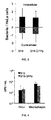
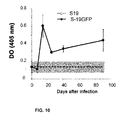
Figure 10 . Intensity of the antibody response against GFP in sera from mice inoculated with the new S19-GFPp vaccine or the reference vaccine S19. The intensity of the reaction of each individual serum was calculated according to the percentage of positivity of the sample as regards to the control (OD of positive serum / OD of the serum sample X 100). Each point represents the average based on 10 sera from different mice. - The invention will be illustrated hereunder by means of assays performed by the inventors.
- The reference vaccine B. abortus S19 (obtained from the Brucellosis Reference Laboratory of the OIE of AFSSA, France) was genetically modified by electroporation with a plasmid encoding the GFP. The plasmid used was pBBR-2-gfp, derived from the plasmid pBBRIMCS-2, which contains a kanamycin resistance insert (Kovach et al., 1995. Gene. Vol 166: 175 - 176) and an insert with the gene encoding the GFP under the control of the lac promoter. It is known that this plasmid constitutively produces GFP, without being integrated into the Brucella chromosome (Celli et al., 2003. Journal of Experimental Medicine, 198 (4): 545 - 556).
-
- 2.1. It was found that the bacteria S19-GFPp emit fluorescence detectable by direct illumination of the cultures with ultraviolet light and subsequent visualization thereof with a suitable filter (
Fig. 1A ) or by observation of infected tissues or exudates under a fluorescence microscope (Fig. 1 B) . Therefore, the plasmid pBBR-2-gfp allows expression of GFP in Brucella in suitable proportions so that the new vaccine S19-GFPp can be visually identified after isolation. - 2.2. It was found that the expression of GFP protein in Brucella does not alter the colonial size and phase of S19 in bacterial cultures, or its classical bacteriological characteristics. To this end, the colony size was determined by measuring the diameter of the colonies obtained on agar plates after 3 days of incubation. In parallel, the colonial phase was determined by observation of bacterial growth in an oblique illumination lens and staining using the flooding technique with a solution of crystal violet-oxalate (Alton et al. 1988. Techniques for the brucellosis laboratories. In. INRA (Ed.), Paris, France, 1988, 190 pp).
In addition, the new strain obtained was microbiologically analyzed using standard techniques for the identification and typing of Brucella spp. Briefly, the genus level identification was performed by testing for catalase, oxidase, urease and acriflavine agglutination. For species-level identification, the test on sensitivity to bacteriophages Tb, Wb, Iz and R / C was used. Finally, for biovariety-level typing agglutination tests were used with monospecific sera anti-A and anti-M and growth tests on agar plates and with agar supplemented with 10 % sterile bovine serum (agar-S; Seromed, Biochrom) containing standard concentrations of dyes (20 µg / mL of thionine, 20 µg / mL of fuchsin and 100 µg / mL of safranine; Panreac), antibiotics (5 UI / mL of penicillin; Sigma) and erythritol (1 mg / mL; Merck). The plates containing agar and agar-S (control plates), with or without the different concentrations of all these products, were incubated for 2 - 4 days at 37 °C in an aerobic atmosphere, and in parallel, in an atmosphere with 10 % CO2 (Alton et al. 1988. Techniques for the brucellosis laboratories. In. INRA (Ed.), Paris, France, 1988, 190 pp). - 2.3. It was found that both the incorporation and activity of the plasmid carrying the gfp gene in strain S19-GFPp is stable after its activity in vitro and in vivo. In this regard, serial subculturing of the strain S19-GFPp on agar plates was performed and after several serial passages, bacterial counts were performed in agar plates and agar supplemented with kanamycin (antibiotic used as a plasmid marker). As a result, it was observed that the number of CFU in both culture media was similar and that all of S19-GFPp CFU maintained the fluorescence, indicating that incorporation and activity of the GFP plasmid in B. abortus S19 is stable after twelve subcultures in vitro. The same test was carried out after isolating the bacteria from four successive passages in cell cultures and three successive passages in tissue of mice previously inoculated with S19-GFPp (see biological characterization studies shown below), indicating that the incorporation and activity of the GFP plasmid in B. abortus S19 is stable even after the bacterial activity in vivo, in cell cultures and experimental animals (mice). The plasmids encoding the GFP protein remained stable in B. abortus S19, after freezing in 50 % glycerol at -80 °C or -20 °C, showing that all recovered colonies emitted fluorescence after thawing.
- 2.4. It was found that the strain S19-GFPp maintains the classic genotype of B. abortus S19, retaining the characteristic deletion of 702 bp (base pairs) in the gene ery (low molecular weight band,
Fig 2 ) and makes it possible to differentiate the vaccine strain S19 from the virulent strains of B. abortus (higher molecular weight band,Fig 2 ). -
- 3.1. In cellular models it was found that:
- 3.1.1 - the new vaccine S19-GFPp has a capacity of adhesion and internalization in human epithelial HeLa cells which is virtually identical to that of the reference vaccine (
Fig. 3 ). - 3.1.2 - the replication capacity of the new vaccine S19-GFPp in HeLa cells and in macrophages is virtually identical to the parental strain S19 (
Fig. 4 ).
- 3.1.1 - the new vaccine S19-GFPp has a capacity of adhesion and internalization in human epithelial HeLa cells which is virtually identical to that of the reference vaccine (
- 3.2. In animal models it was found that:
- 3.2.1 - the new vaccine S19-GFPp possesses an attenuation in mice which is virtually identical to that of the classical vaccine S19 (
Fig. 5 ), indicating that the gfp gene expression used does not alter the splenic kinetics (multiplication and persistence capacity) of the classical parental vaccine. - 3.2.2 - the new vaccine S19-GFPp confers protection which is virtually identical to that conferred by the classic parental vaccine in the mouse model (
Fig. 6 ), indicating that GFP expression does not diminish the effectiveness of the classical parental vaccine S19. - 3.2.3 - the antibody response against the LPS antigen of B. abortus induced by the new vaccine S19-GFPp, measured by conventional indirect ELISA against LPS (Marin et al., 1999. Clinical & Diagnostic Laboratory Immunology 6 (2): 269 - 272), is similar to that generated by the classical vaccine S19 (
Fig. 7 ). This shows that the new vaccine S19-GFPp retains its immunogenic properties intact. - 3.2.4 - GFP expressed in the Brucella S19-GFPp vaccine strain is highly immunogenic in animals. All mice immunized with S19-GFPp develop specific antibodies against GFP for at least 90 days after vaccination, with a positivity of approximately 40 % (statistically greater than that shown by the positive control) in the ELISA-GFP prototype described herein.
- 3.2.1 - the new vaccine S19-GFPp possesses an attenuation in mice which is virtually identical to that of the classical vaccine S19 (
-
- 4.1. First, the recombinant GFP protein (GST-GFP) was expressed and purified according to the protocols described previously (Harlow and Lane 1988. Antibodies: a laboratory manual. 1 st. Ed. Cold Spring Harbor Laboratory, NY p. 179 - 179). Briefly, the fusion protein GST-GFP was expressed in the system E. coli XL1-Blue with the plasmid pGEX-GFP, it was purified by affinity chromatography and its purity was determined by acrylamide gel electrophoresis (
Fig. 8A ). - 4.2. Subsequently, control sera against GFP in mice were obtained, following the conventional immunization protocols. To this end, an injection of 100 µg of GST-GFP protein with Freund's complete adjuvant was administered, followed by 2 consecutive immunizations, with a one-week interval, with GST-GFP protein with Freund's incomplete adjuvant. Immunizations were performed for several weeks until verifying that the sera of animals immunized with GST-GFP showed precipitation bands in gel immunodiffusion against the purified GFP protein (
Fig. 8B ). These control antibodies showed no cross reactions with any Brucella antigen (results not shown).
In addition, control sera against GFP in sheep were obtained, following the conventional immunization protocols. To this end, an injection of 100 µg of GST-GFP protein with Freund's complete adjuvant, followed by 5 consecutive immunizations, at two-week intervals, with GST-GFP protein with Freund's incomplete adjuvant. Immunizations were performed for two months until verifying that the sera of animals immunized with GST-GFP showed precipitation bands in gel immunodiffusion against the purified GFP protein (results not shown). These control antibodies showed no cross reactions with any Brucella antigen (results not shown). - 4.3. For the standardization of indirect ELISA capable of specifically detecting antibodies against the GFP protein (ELISA-GFP) in sheep sera and in serum of mice vaccinated with the new vaccine S19-GFPp, the procedure was as follows:
- 4.3.1. Coating the plates of 96 well plates Immunolon II (Nunc Co.) with 1 µg of GST-GFP per well, contained in a volume of 100 µL / well of a buffer solution of 0.01 % of
Tween 20 in PBS (PBST, Sigma .) The plates were covered with adhesive plastic (Sigma) and incubated at 37 °C for 2 hours while stirring, followed by another incubation at 4 °C for 15 hours without stirring. Finally, 30 % glycerol was added to each well, the plates were covered with adhesive plastic and frozen at -20 °C until use. - 4.3.2. To establish the calibration curve with mice sera, the plates described in section 4.3.1. were allowed to thaw at room temperature and washed 4 times with a solution containing 0.01 % of Tween and 0.1 % of delipidated bovine albumin in PBS (PBST-BSA). Then, 100 µL per well of dilutions between 1 / 300 and 1 / 60000 of anti-GFP immune serum from mice described in section 4.2. were added in triplicate. As negative controls, conventional sera from Brucella-free mice were used and PBS as blank. The plates were incubated for 1 hour at 25 °C while stirring, were washed 4 times with PBST-BSA; a conjugate (obtained from rabbits) coupled to peroxidase (HRP) against the IgG (H+L) of mice was added; they were incubated (1 hour at 25 °C, while stirring) and washed (4 times) as described previously a second time, and, finally, ABTS peroxidase substrate (Sigma) was added. The reading of the OD generated in each well was performed at 405 nm wavelength in an ELISA reader and the standard curve was established as shown in
Fig 9.a . - 4.3.3. To establish the calibration curve with sheep sera, the plates described in section 4.3.1. were allowed to thaw at room temperature and washed 4 times with a solution containing 0.01 % of Tween and 0.1 % of delipidated bovine albumin in PBS (PBST-BSA). Then, 100 µL per well of dilutions between 1 / 59 and 1 / 128000 of the anti-GFP immune serum from sheep described in point 4.X were added in triplicate. As negative controls, conventional sera from Brucella-free sheep were used, and PBS as blank. The plates were incubated for 1 hour at 37 °C while stirring, were washed 4 times with PBST; Protein G-peroxidase (Sigma) was added in dilution 1: 2000 in PBS pH 7.2; they were incubated (1 hour, at 25 °C while stirring) and washed (4 times) as described above a second time; and finally ABTS peroxidase substrate (Sigma) was added The reading of the OD generated in each well was performed at 405 nm wavelength in an ELISA reader and the standard curve was established as shown in
Fig 9.b . - 4.3.4. To determine the intensity of antibody response against GFP induced in mice inoculated with the new vaccine, "problem" sera from mice inoculated (1x10⁵ CFU / mouse, intraperitoneally) with the new vaccine S19-GFPp or one from the unmarked parental strain S19 were used, and the animals were bled periodically, between 3 and 14 weeks post-immunization (
Fig. 10 ). As positive controls sera were used as described in section 4.2., and as negative controls, those described in section 4.3.2. All these sera were diluted in a proportion of 1 / 200 in PBST and the ELISA-GFP was carried out as follows: the plates described in section 4.3.1. were washed as described in section 4.3.2.; then 100 µl per well of the sera described above (diluted 1 / 200) were added or 100 µl per well of PBS, as blank of the reaction, and; finally, the plates were processed as described in 4.3.2. The percentage of positivity for each individual serum was calculated with respect to the optical density (OD405 = 0.9) of the positive control serum (100 % positive) and of the blank (0 % positive). All animals inoculated with S19-GFPp showed an intense serological reaction against GFP (about 40 % positivity;Fig. 10 ) while animals inoculated with strain S19 behaved like those without Brucella (negative controls) not reacting against the GFP protein (Fig. 10 ).
- 4.3.1. Coating the plates of 96 well plates Immunolon II (Nunc Co.) with 1 µg of GST-GFP per well, contained in a volume of 100 µL / well of a buffer solution of 0.01 % of
- In conclusion, the work shows that the GFP protein can be expressed in Brucella vaccine strains without altering the biological properties of the parental strain, while inducing in animals a serological response clearly distinguishable from that induced by other Brucella strains. Antibodies generated against the GFP protein can be identified by indirect ELISA against GFP developed in this patent. Furthermore, the incorporation of the gfp gene in Brucella provides both visual identification (by ultraviolet light or fluorescence microscopy) and molecular identification (by a PCR amplifying the gfp gene; PCR-GFP) of Brucella vaccine strains developed from both bacterial cultures and tissue samples, exudates or animal fluids.

Claims (27)
- Use of a Brucella spp. strain expressing the Green Fluorescent Protein (GFP) in the manufacture of a medicament.
- Use of a Brucella spp. strain according to claim 1, in the development manufacture of a medicament for the prevention of brucellosis in mammals.
- Use of a Brucella spp. strain according to any of claims 1 - 2, wherein the Brucella strain belongs to the species B. Abortus.
- Use of a Brucella spp. strain according to claim 3, wherein the Brucella strain is a strain derived from the reference strain B. abortus S19.
- Use of a Brucella spp. strain according to any of claims 1 - 2, wherein the Brucella strain belongs to the species B. melitensis.
- Use of a Brucella spp. strain according to claim 5, wherein the Brucella strain is a strain derived from the reference strain B. melitensis Rev 1.
- Use of a Brucella spp. strain according to any of claims 2 - 6, wherein the mammal is a ruminant.
Use of a Brucella spp. strain according to claim 5, wherein the ruminant belongs to the subfamily Bovinae. - Composition comprising a Brucella spp. strain expressing the Green Fluorescent Protein (GFP) according to any of claims 1 - 9.
- Composition according to the preceding claim further comprising a pharmaceutically acceptable carrier.
- Composition according to any of claims 10 - 11, which is a vaccine.
- Composition according to any of claims 10 - 12, further comprising an adjuvant.
-
- Composition according to any of claims 10 - 12, further comprising another active ingredient.
- Method for the identification of mammals treated with the composition according to any of claims 10 - 14, comprising:a. obtaining an isolated biological sample from the mammal,b. detecting the presence of the gfp gene or its expression products in the isolated biological sample from the mammal.
- Method for the identification of mammals treated according to the preceding claim, wherein the isolated biological sample from the mammal is a biological fluid.
- Method for the identification of mammals treated according to claim 15, wherein the isolated biological sample from the mammal is cells or tissues.
- Method for the identification of mammals treated according to any of claims 15 - 17, wherein the detection of the expression products of the gfp gene in the isolated biological sample from the mammal is performed by the detection of anti-GFP antibodies.
- Method for the identification of mammals treated according to claim 18, wherein the detection of the anti-GFP antibodies is performed by immunoassay.
- Method for the identification of mammals treated with the strain or composition according to claim 19, wherein the immunoassay is an enzyme-linked immunosorbent assay (ELISA).
- Method for the identification of mammals treated with the strain or composition according to claim 20, wherein the ELISA assay is an indirect ELISA.
- Method for the identification of mammals treated with the strain or the composition according to any of claims 15 - 17, wherein the detection of the gfp gene or its expression products is performed by ultraviolet light.
- Method for the identification of mammals treated with the strain or the composition according to any of claims 15 - 17 and 22, wherein the detection of the gfp gene or its expression products is performed by fluorescence microscopy.
- Method for the identification of mammals treated with the strain or the composition according to any of claims 15 - 17, wherein the detection of the gfp gene or its expression products, is carried out by means of the polymerase chain reaction.
- Kit for the identification of mammals treated with the strain or the composition according to any of claims 1 - 14, comprising suitable means for carrying out a method of identification according to any of claims 15 - 24.
-
- Identification kit according to the preceding claim, comprising suitable means for detecting the anti-GFP antibodies.
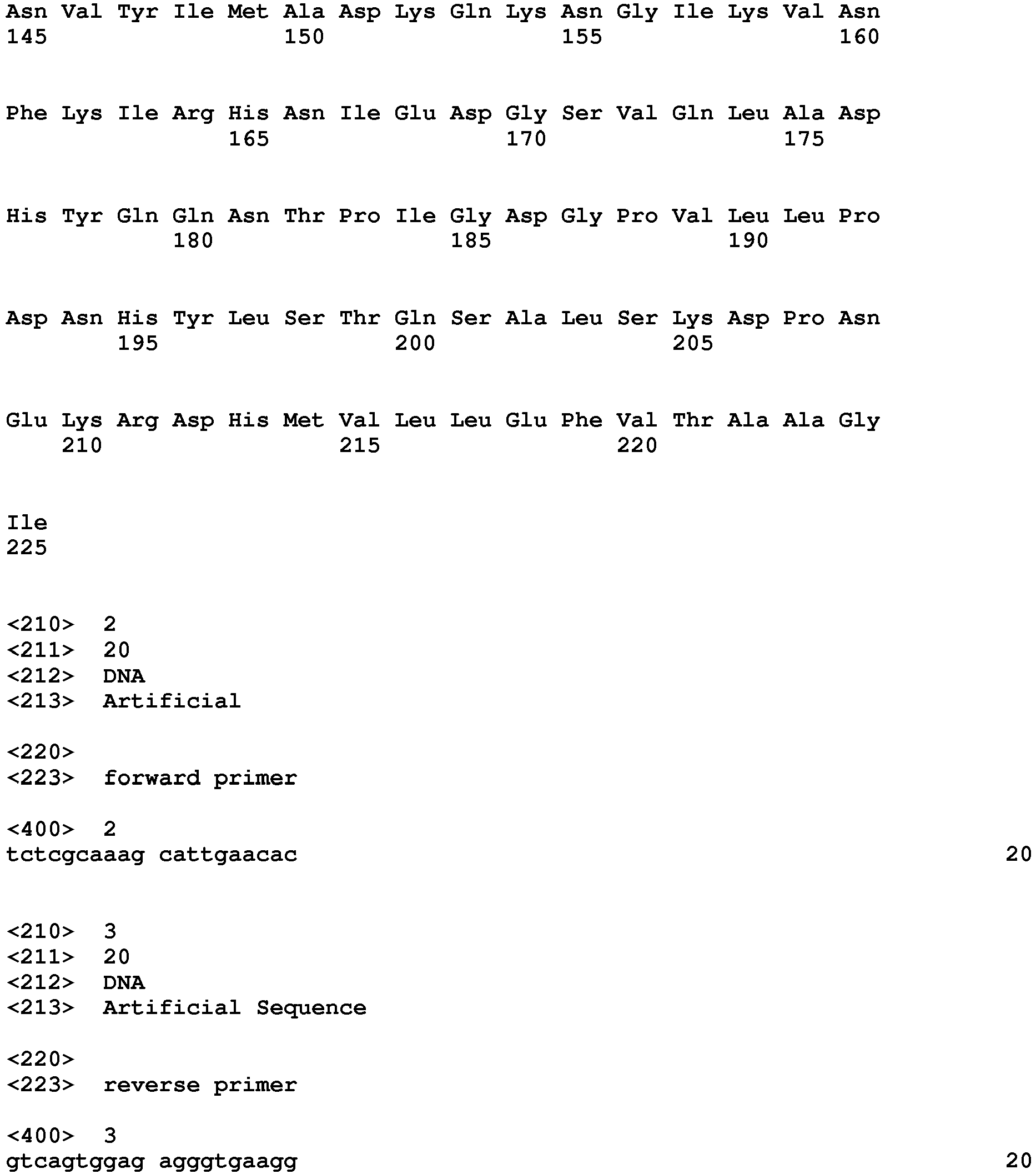
- Identification kit according to any of claims 25 - 26, comprising the primers with sequences SEQ ID NO: 2 and SEQ ID NO: 3.
Applications Claiming Priority (2)
| Application Number | Priority Date | Filing Date | Title |
|---|---|---|---|
| ES200931101A ES2372187B8 (en) | 2009-12-03 | 2009-12-03 | IDENTIFICATION PROCEDURE FOR VACCINATED ANIMALS AGAINST BRUCELLA. |
| PCT/ES2010/070784 WO2011067446A1 (en) | 2009-12-03 | 2010-11-29 | Method for the identification of animals vaccinated against brucella |
Publications (2)
| Publication Number | Publication Date |
|---|---|
| EP2508201A1 true EP2508201A1 (en) | 2012-10-10 |
| EP2508201A4 EP2508201A4 (en) | 2013-08-07 |
Family
ID=44114638
Family Applications (1)
| Application Number | Title | Priority Date | Filing Date |
|---|---|---|---|
| EP10834263.5A Withdrawn EP2508201A4 (en) | 2009-12-03 | 2010-11-29 | METHOD FOR IDENTIFYING ANIMALS VACCINATED AGAINST BRUCELLA |
Country Status (7)
| Country | Link |
|---|---|
| EP (1) | EP2508201A4 (en) |
| CN (1) | CN102781468A (en) |
| CR (1) | CR20120301A (en) |
| ES (1) | ES2372187B8 (en) |
| MX (1) | MX2012006303A (en) |
| PE (1) | PE20121648A1 (en) |
| WO (1) | WO2011067446A1 (en) |
Cited By (2)
| Publication number | Priority date | Publication date | Assignee | Title |
|---|---|---|---|---|
| WO2019101993A1 (en) | 2017-11-24 | 2019-05-31 | Consejo Superior De Investigaciones Científicas (Csic) | A modified brucella vaccine strain for the treatment of brucellosis |
| WO2022271201A3 (en) * | 2021-01-07 | 2023-03-23 | International Advantage, Inc. | Ace2 and tmprss2 gene expression as predictive markers of covid-19 severity |
Families Citing this family (2)
| Publication number | Priority date | Publication date | Assignee | Title |
|---|---|---|---|---|
| CN110863031A (en) * | 2019-09-29 | 2020-03-06 | 安徽医科大学第一附属医院 | A marker for detecting the therapeutic effect of brucellosis and its application |
| CN111796091B (en) * | 2020-07-20 | 2023-09-08 | 天康生物制药有限公司 | Kit for distinguishing brucella or brucella ghost vaccine infected by animals |
Family Cites Families (4)
| Publication number | Priority date | Publication date | Assignee | Title |
|---|---|---|---|---|
| AU2003300858A1 (en) * | 2002-12-12 | 2004-07-09 | Walter Reed Army Institute Of Research Department Of The Army | Immunogenic compositions including rough phenotype brucella host strains and complementation dna fragments |
| CN101240290B (en) * | 2008-02-29 | 2011-06-15 | 杭州师范大学 | Plant transgene expression vector containing green fluorescence protein gene and its construction method and application |
| US20100226942A1 (en) * | 2008-10-30 | 2010-09-09 | Schurig Gerhardt G | Producing an immune response for reducing the risk of developing brucellosis |
| CN101586120B (en) * | 2009-07-15 | 2011-06-15 | 中国农业科学院哈尔滨兽医研究所 | Rabies virus Flury-LEP vaccine strain reverse genetic operating system and LEP green fluorescent protein recombination viral vector |
-
2009
- 2009-12-03 ES ES200931101A patent/ES2372187B8/en not_active Expired - Fee Related
-
2010
- 2010-11-29 EP EP10834263.5A patent/EP2508201A4/en not_active Withdrawn
- 2010-11-29 CN CN2010800630275A patent/CN102781468A/en active Pending
- 2010-11-29 PE PE2012000760A patent/PE20121648A1/en not_active Application Discontinuation
- 2010-11-29 WO PCT/ES2010/070784 patent/WO2011067446A1/en not_active Ceased
- 2010-11-29 MX MX2012006303A patent/MX2012006303A/en not_active Application Discontinuation
-
2012
- 2012-06-01 CR CR20120301A patent/CR20120301A/en unknown
Cited By (4)
| Publication number | Priority date | Publication date | Assignee | Title |
|---|---|---|---|---|
| WO2019101993A1 (en) | 2017-11-24 | 2019-05-31 | Consejo Superior De Investigaciones Científicas (Csic) | A modified brucella vaccine strain for the treatment of brucellosis |
| US11298416B2 (en) | 2017-11-24 | 2022-04-12 | Consejo Superior De Investigaciones Científicas (Csic) | Modified Brucella vaccine strain for the treatment of brucellosis |
| US11707515B2 (en) | 2017-11-24 | 2023-07-25 | Consejo Superior De Investigaciones Científicas (Csic) | Modified Brucella vaccine strain for the treatment of brucellosis |
| WO2022271201A3 (en) * | 2021-01-07 | 2023-03-23 | International Advantage, Inc. | Ace2 and tmprss2 gene expression as predictive markers of covid-19 severity |
Also Published As
| Publication number | Publication date |
|---|---|
| ES2372187A1 (en) | 2012-01-17 |
| EP2508201A4 (en) | 2013-08-07 |
| PE20121648A1 (en) | 2012-12-24 |
| MX2012006303A (en) | 2012-09-07 |
| WO2011067446A1 (en) | 2011-06-09 |
| ES2372187B1 (en) | 2012-11-26 |
| CR20120301A (en) | 2013-02-27 |
| ES2372187B8 (en) | 2013-04-29 |
| CN102781468A (en) | 2012-11-14 |
Similar Documents
| Publication | Publication Date | Title |
|---|---|---|
| US10736951B2 (en) | OmpA and Asp14 in vaccine compositions and as diagnostic targets | |
| EP1091756A2 (en) | Haemophilus parasuis vaccine and diagnostic | |
| CA2846385C (en) | Improved vaccine diagnostics | |
| US8440208B2 (en) | Chlamydial antigens as reagents for diagnosis and treatment of chlamydial infection and disease | |
| US10261092B2 (en) | Cross-reactive determinants and methods for their identification | |
| MX2012006303A (en) | Method for the identification of animals vaccinated against brucella. | |
| Gamble et al. | Use of recombinant antigens for detection of Toxoplasma gondii infection in swine | |
| JPH08502720A (en) | Methods and compositions for the diagnosis of cat scratch disease and bacterial hemangiomatosis | |
| Bölske et al. | Contagious bovine pleuropneumonia in northern Tanzania, culture confirmation and serological studies | |
| AU732317B2 (en) | Detection, prevention and treatment of papillomatous digital dermatitis | |
| MX2010009516A (en) | Novel sequences of brachyspira, immunogenic compositions, methods for preparation and use thereof. | |
| Bulun et al. | Interferon-gamma producing CD4+ T cells quantified by flow cytometry as early markers for Mycobacterium avium ssp. paratuberculosis infection in cattle | |
| US20240192209A1 (en) | Diagnosis of bartonella using recombinant proteins | |
| WO2015154783A1 (en) | Glycosylated polypeptides originating from enterotoxigenic escherichia coli (etec) | |
| Kalleshamurthy et al. | ccep | |
| Sales et al. | Comparing the Mucosal and Systemic Immune Response after APP Vaccination with Natural Challenge | |
| MXPA00012809A (en) | Haemophilus parasuis |
Legal Events
| Date | Code | Title | Description |
|---|---|---|---|
| PUAI | Public reference made under article 153(3) epc to a published international application that has entered the european phase |
Free format text: ORIGINAL CODE: 0009012 |
|
| 17P | Request for examination filed |
Effective date: 20120629 |
|
| AK | Designated contracting states |
Kind code of ref document: A1 Designated state(s): AL AT BE BG CH CY CZ DE DK EE ES FI FR GB GR HR HU IE IS IT LI LT LU LV MC MK MT NL NO PL PT RO RS SE SI SK SM TR |
|
| DAX | Request for extension of the european patent (deleted) | ||
| A4 | Supplementary search report drawn up and despatched |
Effective date: 20130705 |
|
| RIC1 | Information provided on ipc code assigned before grant |
Ipc: A61K 39/10 20060101AFI20130701BHEP |
|
| RAP1 | Party data changed (applicant data changed or rights of an application transferred) |
Owner name: UNIVERSIDAD DE COSTA RICA (UCR) Owner name: UNIVERSIDAD NACIONALDE COSTA RICA (UNA) Owner name: CONSEJO SUPERIOR DE INVESTIGACIONES CIENTIFICAS (C |
|
| 17Q | First examination report despatched |
Effective date: 20150217 |
|
| STAA | Information on the status of an ep patent application or granted ep patent |
Free format text: STATUS: EXAMINATION IS IN PROGRESS |
|
| STAA | Information on the status of an ep patent application or granted ep patent |
Free format text: STATUS: THE APPLICATION IS DEEMED TO BE WITHDRAWN |
|
| 18D | Application deemed to be withdrawn |
Effective date: 20171114 |