EP2506535A1 - Procédé de gestion de session applicative - Google Patents
Procédé de gestion de session applicative Download PDFInfo
- Publication number
- EP2506535A1 EP2506535A1 EP12161273A EP12161273A EP2506535A1 EP 2506535 A1 EP2506535 A1 EP 2506535A1 EP 12161273 A EP12161273 A EP 12161273A EP 12161273 A EP12161273 A EP 12161273A EP 2506535 A1 EP2506535 A1 EP 2506535A1
- Authority
- EP
- European Patent Office
- Prior art keywords
- session
- application session
- application
- group
- communication
- Prior art date
- Legal status (The legal status is an assumption and is not a legal conclusion. Google has not performed a legal analysis and makes no representation as to the accuracy of the status listed.)
- Granted
Links
Images

Classifications
-
- H—ELECTRICITY
- H04—ELECTRIC COMMUNICATION TECHNIQUE
- H04L—TRANSMISSION OF DIGITAL INFORMATION, e.g. TELEGRAPHIC COMMUNICATION
- H04L67/00—Network arrangements or protocols for supporting network services or applications
- H04L67/14—Session management
- H04L67/141—Setup of application sessions
-
- H—ELECTRICITY
- H04—ELECTRIC COMMUNICATION TECHNIQUE
- H04L—TRANSMISSION OF DIGITAL INFORMATION, e.g. TELEGRAPHIC COMMUNICATION
- H04L12/00—Data switching networks
- H04L12/02—Details
- H04L12/16—Arrangements for providing special services to substations
- H04L12/18—Arrangements for providing special services to substations for broadcast or conference, e.g. multicast
- H04L12/1813—Arrangements for providing special services to substations for broadcast or conference, e.g. multicast for computer conferences, e.g. chat rooms
- H04L12/1818—Conference organisation arrangements, e.g. handling schedules, setting up parameters needed by nodes to attend a conference, booking network resources, notifying involved parties
-
- H—ELECTRICITY
- H04—ELECTRIC COMMUNICATION TECHNIQUE
- H04L—TRANSMISSION OF DIGITAL INFORMATION, e.g. TELEGRAPHIC COMMUNICATION
- H04L63/00—Network architectures or network communication protocols for network security
- H04L63/10—Network architectures or network communication protocols for network security for controlling access to devices or network resources
- H04L63/104—Grouping of entities
-
- H—ELECTRICITY
- H04—ELECTRIC COMMUNICATION TECHNIQUE
- H04L—TRANSMISSION OF DIGITAL INFORMATION, e.g. TELEGRAPHIC COMMUNICATION
- H04L65/00—Network arrangements, protocols or services for supporting real-time applications in data packet communication
- H04L65/1066—Session management
- H04L65/1083—In-session procedures
- H04L65/1093—In-session procedures by adding participants; by removing participants
-
- H—ELECTRICITY
- H04—ELECTRIC COMMUNICATION TECHNIQUE
- H04L—TRANSMISSION OF DIGITAL INFORMATION, e.g. TELEGRAPHIC COMMUNICATION
- H04L65/00—Network arrangements, protocols or services for supporting real-time applications in data packet communication
- H04L65/1066—Session management
- H04L65/1083—In-session procedures
- H04L65/1094—Inter-user-equipment sessions transfer or sharing
-
- H—ELECTRICITY
- H04—ELECTRIC COMMUNICATION TECHNIQUE
- H04L—TRANSMISSION OF DIGITAL INFORMATION, e.g. TELEGRAPHIC COMMUNICATION
- H04L67/00—Network arrangements or protocols for supporting network services or applications
- H04L67/01—Protocols
- H04L67/02—Protocols based on web technology, e.g. hypertext transfer protocol [HTTP]
-
- H—ELECTRICITY
- H04—ELECTRIC COMMUNICATION TECHNIQUE
- H04L—TRANSMISSION OF DIGITAL INFORMATION, e.g. TELEGRAPHIC COMMUNICATION
- H04L67/00—Network arrangements or protocols for supporting network services or applications
- H04L67/14—Session management
-
- H—ELECTRICITY
- H04—ELECTRIC COMMUNICATION TECHNIQUE
- H04L—TRANSMISSION OF DIGITAL INFORMATION, e.g. TELEGRAPHIC COMMUNICATION
- H04L67/00—Network arrangements or protocols for supporting network services or applications
- H04L67/14—Session management
- H04L67/146—Markers for unambiguous identification of a particular session, e.g. session cookie or URL-encoding
-
- H—ELECTRICITY
- H04—ELECTRIC COMMUNICATION TECHNIQUE
- H04L—TRANSMISSION OF DIGITAL INFORMATION, e.g. TELEGRAPHIC COMMUNICATION
- H04L67/00—Network arrangements or protocols for supporting network services or applications
- H04L67/14—Session management
- H04L67/148—Migration or transfer of sessions
-
- H—ELECTRICITY
- H04—ELECTRIC COMMUNICATION TECHNIQUE
- H04L—TRANSMISSION OF DIGITAL INFORMATION, e.g. TELEGRAPHIC COMMUNICATION
- H04L63/00—Network architectures or network communication protocols for network security
- H04L63/08—Network architectures or network communication protocols for network security for authentication of entities
Definitions
- the present invention relates to the management of an application session accessible by several communication terminals, for example an application session according to the HTTP protocol ("Hypertext Transfer Protocol") implemented on an internet application server (or “server of WEB application “also called” WEB server ").
- HTTP protocol Hypertext Transfer Protocol
- server of WEB application also called” WEB server
- Service provision companies currently offer services over Internet-type communication networks using the HTTP protocol and WEB application servers, the implementation of an application by a WEB server enabling the provision of a service to communication terminals through an Internet communication network.
- the PHP application servers (acronym of "Hypertext Preprocessor"), and the HTTP "servlet" engines are technologies used to implement these services offered by a WEB server, also called WEB service.
- a WEB server can manage one or more application sessions connected simultaneously. These application sessions are also called “client application sessions" when each application session is associated with an access interface of a communication terminal, commonly called a client, having requested access to this web service.
- client application sessions When managing a plurality of simultaneous application sessions, the application server implementing the web service provides a seal of the execution contexts of the application implementing the service for each client, and therefore for each client application session.
- session objects specific to each client are used, for example the "HTTPSession" object in the case of HTTP servlets to establish and manage an application session specific to each client.
- this WEB service authenticates the user of the HTTP client using, for example, an authentication server and accesses a user database to retrieve data specific to the user and necessary for the proper functioning of the service.
- the present invention falls within this framework.
- the present invention relates, according to a first aspect, to an application session management method implemented by means of an application server, said application session being accessible by a plurality of communication terminals of a group of terminals. communication method, the management method comprising providing access for a first communication terminal to a current application session, if the first communication terminal belongs to a first group of communication terminals associated with the current application session.
- a user having initiated an application session on a terminal can access the same application session from another terminal while ensuring a consistency of user data.
- the application server implementing the service does not have to recreate context of use each time the user connects to the same service but with a different terminal.
- the invention can find an application in the WEB application sharing by several terminals belonging to the same user, for example in online commerce applications ("e-commerce"), in which it is possible, for the same user , to share the basket of objects selected for purchase between several terminals of the user (desktop computer, laptop, "Smartphone", PDA or other).
- e-commerce online commerce applications
- the provision of access to the current application session is performed using a session identifier of the current application session according to a first client identifier included in a request for access to the application session from the first terminal. Communication.
- the session ID transmission allows terminals belonging to the same group to access the current application session, without the need for the application server to execute the session setup again. application.
- the customer identifier may for example be a terminal identifier.
- the group identifier associated with the current session is determined.
- the customer ID can also be a group ID
- the method may further comprise a step of determining whether the first communication terminal belongs to the first group of communication terminals associated with the current application session.
- the association is made by associating a third client identifier function of a second client identifier with an identifier of session of the application session, the access request comprising the second client identifier.
- the terminal group associated with the current application session may be formed by communication terminals associated with a user or group of users.
- the method may further comprise a step of receiving an access request to the application server to access the current application session from the first terminal, said access request comprising the second identifier for accessing said session. current application.
- the application session can be accessed simultaneously by the plurality of communication terminals.
- the terminal group associated with the current application session is formed by communication terminals associated with a user or group of users.
- the first identifier comprises at least one of the following identifiers: a telephone number, a symbolic name, a subscriber number, an address on a communication network, said identifiers being associated with a user or a group of users. users.
- provision may furthermore be made for a step of receiving an access request to the application server to access the current application session coming from the first terminal, this access request comprising the second identifier enabling access to the application server. to access the current application session.
- the application session is accessible simultaneously by the plurality of communication terminals.
- the application session is an HTTP application session.
- a third aspect of the invention relates to a computer program as well as a computer program product and a storage medium for such program and product, allowing the implementation of a method according to the first or second aspect.
- the program is stored in a memory of an application server and executed by a processor of such an application server.
- a fourth aspect of the invention relates to an application server configured to implement a method according to the first or second aspect of the invention.
- a fifth aspect of the invention relates to a communication system comprising an application server according to the fourth aspect of the invention and a communication terminal using the application session implemented by the application server.
- an application session is a session during which an application server implements an application in particular to provide a service to a communication terminal (the application server is then also a communication device with which the terminal of communication established a communication session allowing exchanges between the communication terminal and the application server as part of the application session).
- a communication session is established between two communication devices possibly via a communication server to allow exchanges via this communication session between the two communication devices, exchanges can be voice, image , video, data including data exchanged to initiate an application session and data exchanged in the context of such an application session.
- the figure 1 illustrates a context of implementation of embodiments of the invention.
- An application server 10 belonging to a communication network 11 provides a communication service (for example an online game, an online discussion forum ("chat"), a commercial online or otherwise) to a plurality of communication terminals 12, 13 (for example mobile telephones, portable or fixed computers, personal digital assistant PDA or other).
- the terminals 12, 13 belong to a group of terminals 14.
- the terminals 12, 13 belong to the group of communication terminals belonging to a user 15 subscribing to the communication service offered by the application server 10 via the network 11.
- Other types of groups may be considered depending on the service (online team of players, members of a user network or other).
- terminals 18, 19, 20 belonging to another group of terminals 21 can also access the services offered by the application server 10.
- the terminals 18, 19 and 20 belong to another user 22.
- the application server 10 can access a database 16 and an authentication application server 17.
- the database contains for example the profile of the user of the terminals. This profile makes it possible to choose parameters for the application session such as the type of service to be provided, the tariff to be used, the bandwidth to use, the data rate to be used or other.
- the authentication application server makes it possible to verify that a terminal requesting a connection actually has the right to access the service offered by the application server.
- the authentication can be done by various means such as password.
- the application server When an application session is created for the user from a first terminal of the group, the application server provides access to the same application session from another terminal of the group as explained below.
- the figure 2 illustrates steps of data exchange between the application server and the terminals according to a feasible embodiment.
- the terminal 12 sends an access request 200 to the application server 10
- This access request is for example an access request "HTTP GET” followed by the URL ("Uniform Resource Locator") of the service offered by the application server 10.
- the access request is accompanied by an identifier of the group to which the terminal belongs.
- the identifier is a telephone number, an e-mail address, a network address (such as an IP address ("Internet protocol”)), a symbolic name, a subscriber number or other.
- the application server 10 verifies that there is no current application session for the group of terminals to which the terminal 12 belongs and creates an application session during a step 201 , for example an HTTP application session.
- This application session is associated with a session identifier.
- the session identifier is then associated with the group identifier transmitted with the access request 200 during a step 202.
- the association is made in a correspondence table (not shown), stored for example with the application server 10, which allows the application server to know, when it receives an access request to a server. application session, if a current application session is already in progress for the group of terminals to which the terminal requesting the connection belongs.
- the application server sends the session identifier to the terminal 12 in a message 203.
- the reception of the message allows the terminal to add a header (or "cookie") to its future messages to indicate that they refer to the application session created by the application server.
- the terminal 12 In order to access the application session, the terminal 12 sends an access request 204 with as header, or cookie, the session identifier previously received from the application server.
- the application server returns an acknowledgment message 205, and the application session 206 proceeds.
- the terminal 13 sends an access request 207 to the application server with the identifier of the group to which the terminal belongs (here, it is recalled that the terminals 12 and 13 belong to the same group of terminals 14 and therefore they share the same group ID).
- the application server then implements a check 208 in which it consults the correspondence table to determine if an application session is open for the group of terminals designated by the identifier transmitted by the terminal 13.
- the application server transmits the identifier of the concerned session (that is to say that opened by the terminal 12) to the terminal 13 in a message 209.
- Messages 210 and 211 are then exchanged between the terminal 13 and the application server and the terminal 13 accesses the current application session 206.
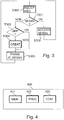
- the figure 3 is a summary flowchart of steps implemented with an application server according to one embodiment.
- the application server receives from a communication terminal an access request to access an application session.
- the application server determines in a step T301 if the terminal wishes to access a particular application session. For example, it determines whether the access request is accompanied by a session identifier.
- step S302 the method proceeds to step S302 during which this application session is accessed.
- the method then returns to step S300 to receive a next access request.
- step T303 If, on the other hand, no application session is identified, for example because the terminal does not transmit a session identifier, the method proceeds to step T303.
- this step it is determined whether the terminal belongs to a group of terminals with which a current application session is associated. This is for example implemented by means of a group identifier transmitted by the terminal and a correspondence table stored with the application server as already mentioned above.
- step S304 If the terminal does not belong to a group for which an application session is in progress, the method proceeds to step S304.
- step S304 an application session is created, then an identifier of this application session is then transmitted to the terminal during the next step S305.
- the terminal belongs to a group for which an application session is in progress, it proceeds directly to step S305 in which it is transmitted to the terminal the identifier of the current application session.
- step S305 the method goes back to step S300, during which the terminal can access the created application session or the current application session by accompanying its access request with the identifier received during the step S305.
- a computer program for carrying out a method according to an embodiment of the invention can be made from the general flowchart of the figure 3 and the present detailed description.
- the application server 400 of the figure 4 comprises a memory unit 401.
- This memory unit comprises a random access memory for storing in an unsustainable manner calculation data used in the implementation of a method according to embodiments.
- the memory unit also comprises a non-volatile memory (for example of the EEPROM type) for storing, for example, a computer program according to an embodiment for its execution by a processor (not represented) of a control unit 402. the application server.
- the memory unit stores a mapping table between the group identifiers and the current application session identifiers.
- the application server also comprises a communication unit 403 for implementing communications, in particular with communication terminals for implementing a method according to one embodiment.
- the application server may also include a module providing access to a current application session (not shown) connected to an association module of a group of communication terminals to an application session (not shown).
- modules can be part of the control unit or constitute independent modules of the control unit.
Landscapes
- Engineering & Computer Science (AREA)
- Computer Networks & Wireless Communication (AREA)
- Signal Processing (AREA)
- Multimedia (AREA)
- Business, Economics & Management (AREA)
- General Business, Economics & Management (AREA)
- General Engineering & Computer Science (AREA)
- Computer Hardware Design (AREA)
- Computer Security & Cryptography (AREA)
- Computing Systems (AREA)
- Computer And Data Communications (AREA)
Abstract
Description
- La présente invention concerne la gestion d'une session applicative accessible par plusieurs terminaux de communication, par exemple une session applicative selon le protocole HTTP (« Hypertext Transfert Protocol ») mise en oeuvre sur un serveur d'application internet (ou « serveur d'application WEB » aussi nommé « serveur WEB »).
- Des sociétés de fourniture de services offrent actuellement des services sur des réseaux de communication de type Internet en utilisant le protocole HTTP et des serveurs d'application WEB, la mise en oeuvre d'une application par un serveur WEB permettant la fourniture d'un service à des terminaux de communication à travers un réseau de communication Internet. Les serveurs d'applications PHP (sigle de « Hypertext Preprocessor »), et les moteurs de « servlets » HTTP sont des technologies utilisées pour mettre en oeuvre ces services offerts par un serveur WEB, aussi nommé service WEB.
- Lors de la mise en oeuvre d'un même service WEB, un serveur WEB peut gérer une ou plusieurs sessions applicatives connectées simultanément. Ces sessions applicatives sont aussi nommées « sessions applicatives clients » lorsque chaque session applicative est associée à une interface d'accès d'un terminal de communication, communément appelé un client, ayant requis l'accès à ce service WEB. Lors de la gestion d'une pluralité de sessions applicatives simultanées, le serveur d'application mettant en oeuvre le service Web assure une étanchéité des contextes d'exécution de l'application mettant en oeuvre le service pour chaque client, et par conséquent, pour chaque session applicative client. A cet effet, des objets de session propres à chaque client sont utilisés, par exemple l'objet « HTTPSession » dans le cas des servlets HTTP pour établir et gérer une session applicative propre à chaque client.
- Lorsqu'un client HTTP, tel qu'un navigateur WEB, une application sur PDA ou autre, utilise un service WEB, ce service WEB authentifie l'utilisateur du client HTTP en utilisant, par exemple, un serveur d'authentification et accède à une base de données utilisateur pour récupérer des données propres à l'utilisateur et nécessaires au bon fonctionnement du service.
- Avec la multiplication des services offerts en ligne aux utilisateurs (commerce en ligne, réseaux sociaux ou autre) et la multiplication des terminaux de communication utilisés par les utilisateurs (ordinateurs personnels, ordinateurs professionnels, téléphones mobiles ou autre), il peut être avantageux d'offrir aux utilisateurs une continuité de service sur une même session applicative selon qu'ils utilisent l'un ou l'autre de leurs terminaux de communication.
- Ainsi, la présente invention concerne, selon un premier aspect, un procédé de gestion de session applicative mise en oeuvre au moyen d'un serveur d'application, ladite session applicative étant accessible par une pluralité de terminaux de communication d'un groupe de terminaux de communication, le procédé de gestion comportant une fourniture d'un accès pour un premier terminal de communication à une session applicative courante, si le premier terminal de communication appartient à un premier groupe de terminaux de communication associé à la session applicative courante.
- Ainsi, un utilisateur ayant initié une session applicative sur un terminal peut accéder à cette même session applicative à partir d'un autre terminal tout en lui assurant une cohérence des données utilisateurs.
- Par ailleurs, le serveur d'application mettant en oeuvre le service n'a pas à recréer de contexte d'utilisation à chaque fois que l'utilisateur se connecte au même service mais avec un terminal différent.
- On obtient ainsi une réduction du trafic de communication nécessaire à un serveur d'application pour mettre en oeuvre une session applicative.
- En outre, il est possible d'éviter les conflits entre les différents accès au même service par plusieurs terminaux, alors que d'autres accès sont encore en cours par d'autres terminaux. En effet, vu que les terminaux accèdent à la même session applicative, les paramètres de cette session applicative évoluent de manière unique pour tous les terminaux. Le risque de voir une divergence apparaître est réduit.
- L'invention peut trouver une application dans le partage d'application WEB par plusieurs terminaux appartenant à un même utilisateur, par exemple dans les applications de commerce en ligne (« e-commerce »), dans lesquelles il est possible, pour un même utilisateur, de partager le panier des objets sélectionnés pour l'achat entre plusieurs terminaux de l'utilisateur (ordinateur fixe, ordinateur portable, « Smartphone », PDA ou autre).
- Par exemple, la fourniture d'accès à la session applicative courante est réalisée en utilisant un identifiant de session de la session applicative courante en fonction d'un premier identifiant client compris dans une requête d'accès à la session applicative en provenance du premier terminal de communication.
- La transmission de l'identifiant de session permet aux terminaux appartenant au même groupe d'accéder à la session applicative en cours, sans qu'il soit nécessaire pour le serveur d'application d'exécuter une nouvelle fois la mise en place de la session applicative.
- L'identifiant de client peut par exemple être un identifiant de terminal. Dans ce cas, l'identifiant de groupe associé à la session courante est déterminé. L'identifiant de client peut aussi être un identifiant de groupe
- Le procédé peut en outre comporter une étape consistant à déterminer si le premier terminal de communication appartient au premier groupe de terminaux de communication associé à la session applicative courante.
- On peut aussi prévoir que lors d'un établissement d'une session applicative suite à la réception d'une requête d'accès à une session applicative d'un deuxième terminal de communication appartenant à un deuxième groupe de terminaux de communication, une association du deuxième groupe de terminaux de communication à la session applicative, la session applicative ainsi établie constituant une session applicative courante.
- Par exemple, l'association est réalisée en associant un troisième identifiant client fonction d'un deuxième identifiant client à un identifiant de session de la session applicative, la requête d'accès comportant le deuxième identifiant client.
- Le groupe de terminaux associé à la session applicative courante peut être formé par des terminaux de communication associés à un utilisateur ou à un groupe d'utilisateurs.
- Le procédé peut en outre comporter une étape de réception d'une requête d'accès au serveur d'application pour accéder à la session applicative courante provenant du premier terminal, ladite requête d'accès comportant le deuxième identifiant permettant d'accéder à ladite session applicative courante.
- La session applicative peut être accessible simultanément par la pluralité de terminaux de communication.
- Selon un deuxième aspect, l'invention concerne un procédé de gestion de session applicative mise en oeuvre au moyen d'un serveur d'application, cette session applicative étant accessible par une pluralité de terminaux de communication d'un groupe de terminaux de communication. Le procédé comporte les étapes suivantes, mises en oeuvre par le serveur d'application :
- recevoir de la part d'un premier terminal de communication, un premier identifiant permettant de déterminer un groupe de terminaux auquel le premier terminal appartient,
- déterminer, au moyen du premier identifiant, si le premier terminal appartient à un groupe de terminaux de communication associé à une session applicative courante, et
- si le premier terminal appartient audit groupe de terminaux de communication associé à ladite session applicative courante, transmettre au premier terminal un deuxième identifiant de la session applicative courante, le deuxième identifiant permettant au premier terminal d'accéder à la session applicative courante.
- On peut en outre prévoir les étapes suivantes mises en oeuvre par le serveur d'application préalablement à la réception du premier identifiant :
- recevoir de la part d'un deuxième terminal de communication appartenant à un deuxième groupe de terminaux de communication, un troisième identifiant permettant de déterminer le deuxième groupe de terminaux de communication auquel le deuxième terminal appartient, et
- associer le troisième identifiant à une session applicative, la session applicative constituant la session applicative courante.
- Dans des exemples de réalisation, le groupe de terminaux associé à la session applicative courante est formé par des terminaux de communication associés à un utilisateur ou à un groupe d'utilisateurs.
- Par exemple, le premier identifiant comporte au moins l'un des identifiants suivants: un numéro de téléphone, un nom symbolique, un numéro d'abonné, une adresse sur un réseau de communication, lesdits identifiants étant associés à un utilisateur ou un groupe d'utilisateurs.
- Dans des modes de réalisation, on peut prévoir en outre une étape de réception d'une requête d'accès au serveur d'application pour accéder à la session applicative courante provenant du premier terminal, cette requête d'accès comportant le deuxième identifiant permettant d'accéder à la session applicative courante.
- Par exemple, la session applicative est accessible simultanément par la pluralité de terminaux de communication.
- Par exemple encore, la session applicative est une session applicative HTTP.
- Un troisième aspect de l'invention concerne un programme d'ordinateur ainsi qu'un produit programme d'ordinateur et un support de stockage pour de tels programme et produit, permettant la mise en oeuvre d'un procédé selon le premier ou le deuxième aspect lorsque le programme est stocké dans une mémoire d'un serveur d'application et exécuté par un processeur d'un tel serveur d'application.
- Un quatrième aspect de l'invention concerne un serveur d'application configuré pour la mise en oeuvre d'un procédé selon le premier ou le deuxième aspect de l'invention.
- Un cinquième aspect de l'invention concerne un système de communication comportant un serveur d'application selon le quatrième aspect de l'invention et un terminal de communication utilisant la session applicative mise en oeuvre par le serveur d'application.
- Les objets selon les deuxième, troisième, quatrième et cinquième aspects de l'invention procurent au moins les mêmes avantages que ceux procurés par le procédé selon le premier aspect.
- D'autres caractéristiques et avantages de l'invention apparaîtront à la lecture de la présente description détaillée qui suit, à titre d'exemple non limitatif, et des figures annexées parmi lesquelles :
- la
figure 1 illustre un contexte de mise en oeuvre de modes de réalisation ; - la
figure 2 illustre des étapes d'échange de données entre le serveur d'application et les terminaux selon un mode de réalisation ; - la
figure 3 est un organigramme récapitulatif d'étapes mises en oeuvre auprès d'un serveur d'application selon un mode de réalisation ; et, - la
figure 4 illustre un serveur d'application selon un mode de réalisation. - Dans la suite, une session applicative est une session durant laquelle un serveur d'application met en oeuvre une application notamment pour fournir un service à un terminal de communication (le serveur d'application est alors aussi un dispositif de communication avec lequel le terminal de communication a établi une session de communication permettant des échanges entre le terminal de communication et le serveur d'application dans le cadre de la session applicative).
- Une session de communication est établie entre deux dispositifs de communication éventuellement par l'intermédiaire d'un serveur de communication pour permettre des échanges via cette session de communication entre les deux dispositifs de communication, les échanges peuvent être de la voix, de l'image, de la vidéo, des données y compris les données échangées pour initier une session applicative et les données échangées dans le cadre d'une telle session applicative.
- La
figure 1 illustre un contexte de mise en oeuvre de modes de réalisation de l'invention. - Un serveur d'application 10 appartenant à un réseau de communication 11 (par exemple un serveur d'application internet) fournit un service de communication (par exemple un jeu en ligne, un forum de discussion en ligne (« chat »), un commerce en ligne ou autre) à une pluralité de terminaux de communication 12, 13 (par exemple des téléphones mobiles, des ordinateurs portables ou fixes, des assistants personnels PDA (« personal digital assistant ») ou autre). Les terminaux 12, 13 appartiennent à un groupe de terminaux 14. Par exemple, les terminaux 12, 13 font partie du groupe des terminaux de communication appartenant à un utilisateur 15 abonné au service de communication offert par le serveur d'application 10 via le réseau 11. On peut envisager d'autres types de groupes selon le service (équipe de joueurs en ligne, membres d'un réseau d'utilisateurs ou autre).
- D'autres terminaux 18, 19, 20 appartenant à un autre groupe de terminaux 21 peuvent aussi accéder aux services offerts par le serveur d'application 10. Par exemple, les terminaux 18, 19 et 20 appartiennent à un autre utilisateur 22.
- Lors de l'établissement d'une session applicative, le serveur d'application 10 peut accéder à une base de données 16 et à un serveur d'application d'authentification 17.
- La base de données contient par exemple le profil de l'utilisateur des terminaux. Ce profil permet de choisir des paramètres pour la session applicative comme par exemple le type de service à fournir, la tarification à utiliser, la bande passante à utiliser, le débit de données à utiliser ou autre.
- Le serveur d'application d'authentification permet par exemple de vérifier qu'un terminal qui sollicite une connexion a effectivement le droit d'accéder au service offert par le serveur d'application. L'authentification peut se faire par différents moyens comme par exemple par mot de passe.
- Lorsqu'une session applicative est crée pour l'utilisateur à partir d'un premier terminal du groupe, le serveur d'application permet d'accéder à la même session applicative à partir d'un autre terminal du groupe comme expliqué dans la suite.
- La
figure 2 illustre des étapes d'échange de données entre le serveur d'application et les terminaux selon un mode de réalisation envisageable. - Le terminal 12 envoie une requête d'accès 200 au serveur d'application 10 Cette requête d'accès est par exemple une requête d'accès « HTTP GET » suivie de l'adresse URL (« Uniform Ressource Locator ») du service offert par le serveur d'application 10. La requête d'accès est accompagnée d'un identifiant du groupe auquel appartient le terminal. Par exemple, l'identifiant est un numéro de téléphone, une adresse de messagerie électronique, une adresse réseau (telle qu'une adresse IP (« internet protocol »)), un nom symbolique, un numéro d'abonné ou autre.
- Une fois la requête d'accès 200 reçue, le serveur d'application 10 vérifie qu'il n'existe pas de session applicative en cours pour le groupe de terminaux auquel appartient le terminal 12 et crée une session applicative lors d'une étape 201, par exemple une session applicative HTTP. Cette session applicative est associée à un identifiant de session.
- L'identifiant de session est ensuite associé à l'identifiant de groupe transmis avec la requête d'accès 200 lors d'une étape 202.
- Par exemple, l'association est faite dans une table de correspondance (non représentée), stockée par exemple auprès du serveur d'application 10, qui permet au serveur d'application de savoir, lorsqu'il reçoit une requête d'accès à une session applicative, si une session applicative courante est déjà en cours pour le groupe de terminaux auquel appartient le terminal qui sollicite la connexion.
- Ensuite, le serveur d'application envoie l'identifiant de session au terminal 12 dans un message 203. La réception du message permet au terminal d'adjoindre un en-tête (ou « cookie ») à ses futurs messages pour indiquer qu'ils se rapportent à la session applicative crée par le serveur d'application. Par exemple, le message 203 est un message « http 200 OK», accompagné de l'instruction « Set Cookie : Jsession ID = xxxx », où xxxxx représente l'identifiant de session.
- Afin d'accéder à la session applicative, le terminal 12 envoie une requête d'accès 204 avec comme en-tête, ou cookie, l'identifiant de session préalablement reçu du serveur d'application.
- Le serveur d'application renvoie un message d'acquittement 205, et la session applicative 206 se déroule.
- Maintenant, on suppose que l'utilisateur laisse la session applicative ouverte, mais change de terminal. Il n'utilise plus le terminal 12 mais utilise maintenant le terminal 13. Il souhaite toutefois continuer la même session applicative 206.
- Le terminal 13 envoie une requête d'accès 207 vers le serveur d'application avec l'identifiant du groupe auquel appartient le terminal (ici, on rappelle que les terminaux 12 et 13 appartiennent au même groupe de terminaux 14 et donc qu'ils partagent le même identifiant de groupe).
- Le serveur d'application met alors en oeuvre une vérification 208 lors de laquelle il consulte la table de correspondance pour déterminer si une session applicative est ouverte pour le groupe de terminaux désigné par l'identifiant transmis par le terminal 13.
- Comme dans le présent exemple c'est le cas, le serveur d'application transmet l'identifiant de la session concernée (c'est-à-dire celle ouverte par le terminal 12) au terminal 13 dans un message 209.
- Des messages 210 et 211, respectivement similaires aux messages 204 et 205 sont alors échangés entre le terminal 13 et le serveur d'application et le terminal 13 accède à la session applicative courante 206.
- La
figure 3 est un organigramme récapitulatif d'étapes mises en oeuvre auprès d'un serveur d'application selon un mode de réalisation. - Dans une première étape S300, le serveur d'application reçoit de la part d'un terminal de communication une requête d'accès pour accéder à une session applicative.
- Le serveur d'application détermine ensuite lors d'une étape T301 si le terminal souhaite accéder à une session applicative particulière. Par exemple, il détermine si la requête d'accès est accompagnée d'un identifiant de session.
- Si la session applicative à laquelle le terminal souhaite accéder est identifiée, le procédé passe à l'étape S302 lors de laquelle il est donné accès à cette session applicative. Le procédé repasse alors à l'étape S300 pour recevoir une prochaine requête d'accès.
- Si au contraire aucune session applicative n'est identifiée, par exemple parce que le terminal ne transmet pas d'identifiant de session, le procédé passe à l'étape T303.
- Lors de cette étape, il est déterminé si le terminal appartient à un groupe de terminaux auquel est associé une session applicative courante. Cela est par exemple mis en oeuvre au moyen d'un identifiant de groupe transmis par le terminal et une table de correspondance stockée auprès du serveur d'application comme déjà évoqué ci-dessus.
- Si le terminal n'appartient pas à un groupe pour lequel une session applicative est en cours, le procédé passe à l'étape S304.
- Lors de cette étape S304 une session applicative est crée, puis un identifiant de cette session applicative est alors transmis au terminal lors de l'étape suivante S305.
- Si au contraire le terminal appartient bien à un groupe pour lequel une session applicative est en cours, on passe directement à l'étape S305 lors de laquelle il est transmis au terminal l'identifiant de la session applicative en cours.
- Après l'étape S305, le procédé repasse à l'étape S300, lors de laquelle le terminal peut accéder à la session applicative créée ou la session applicative en cours en accompagnant sa requête d'accès de l'identifiant reçu lors de l'étape S305.
- Un programme d'ordinateur pour la mise en oeuvre d'un procédé selon un mode de réalisation de l'invention peut-être réalisé à partir de l'organigramme général de la
figure 3 et de la présente description détaillée. - Un serveur d'application selon un mode de réalisation est décrit en référence à la
figure 4 . - Le serveur d'application 400 de la
figure 4 comporte une unité de mémoire 401. Cette unité de mémoire comporte une mémoire vive pour stocker de manière non durable des données de calcul utilisées lors de la mise en oeuvre d'un procédé selon des modes de réalisation. L'unité de mémoire comporte par ailleurs une mémoire non volatile (par exemple du type EEPROM) pour stocker par exemple un programme d'ordinateur selon un mode de réalisation pour son exécution par un processeur (non représenté) d'une unité de contrôle 402 du serveur d'application. Par exemple, l'unité de mémoire stocke une table de correspondance entre les identifiants de groupe et les identifiants de session applicative en cours. Le serveur d'application comporte par ailleurs une unité de communication 403 pour mettre en oeuvre des communications, notamment avec des terminaux de communication pour mettre en oeuvre un procédé selon un mode de réalisation. - Le serveur d'application peut par ailleurs comporter un module de fourniture d'accès à une session applicative courante (non représentée) connectée à un module d'association d'un groupe de terminaux de communication à une session applicative (non représenté). Ces modules peuvent faire partie de l'unité de contrôle ou constituer des modules indépendants de l'unité de contrôle.
- Bien entendu, la présente invention ne se limite pas aux formes de réalisation décrites, d'autres variantes et combinaisons de caractéristiques sont possibles.
Claims (13)
- Procédé de gestion de session applicative (206) mise en oeuvre au moyen d'un serveur d'application (10), ladite session applicative (206) étant accessible par une pluralité de terminaux de communication (12, 13) d'un groupe de terminaux de communication (14), le procédé de gestion comportant une fourniture d'un accès pour un premier terminal de communication (13) à une session applicative courante (206), si ledit premier terminal de communication (13) appartient à un premier groupe de terminaux de communication (14) associé à ladite session applicative courante (206).
- Procédé de gestion selon la revendication 1, dans lequel la fourniture d'accès à la session applicative courante est réalisée en utilisant un identifiant de session de ladite session applicative courante (206) en fonction d'un premier identifiant client compris dans une requête d'accès (207) à ladite session applicative en provenance du premier terminal de communication (13).
- Procédé de gestion selon la revendication 1, comportant en outre une étape consistant à déterminer (T303) si le premier terminal de communication (13) appartient audit premier groupe de terminaux de communication (14) associé à ladite session applicative courante (206).
- Procédé selon l'une des revendications 1 à 3, comportant en outre, lors d'un établissement d'une session applicative suite à la réception (S300) d'une requête d'accès à une session applicative d'un deuxième terminal de communication (12) appartenant à un deuxième groupe de terminaux de communication (14, 21), une association (S304, 202) dudit deuxième groupe de terminaux de communication (14, 21) à ladite session applicative, ladite session applicative ainsi établie constituant une session applicative courante.
- Procédé de gestion selon la revendication 4, dans lequel l'association (S304, 202) est réalisée en associant un troisième identifiant client fonction d'un deuxième identifiant client à un identifiant de session de ladite session applicative (206), ladite requête d'accès comportant ledit deuxième identifiant client.
- Procédé selon la revendication 1, dans lequel ledit groupe de terminaux (14) associé à la session applicative courante (206) est formé par des terminaux de communication (12, 13) associés à un utilisateur (15) ou à un groupe d'utilisateurs.
- Procédé selon la revendication 1, comportant en outre une étape de réception (S300) d'une requête d'accès (207) au serveur d'application (10) pour accéder à la session applicative courante (206) provenant du premier terminal (13), ladite requête d'accès (207) comportant le deuxième identifiant permettant d'accéder à ladite session applicative courante.
- Procédé selon la revendication 1, dans lequel la session applicative est accessible simultanément par la pluralité de terminaux de communication (12, 13).
- Programme d'ordinateur comportant des instructions pour la mise en oeuvre d'un procédé selon la revendication 1 lorsqu'il est chargé et exécuté par un processeur d'un serveur d'application.
- Serveur d'application (10, 400) configuré pour mettre en oeuvre une session applicative (206), ladite session applicative (206) étant accessible par une pluralité de terminaux de communication (12, 13) d'un groupe de terminaux de communication (14), le serveur d'application comportant une unité de contrôle (402) configurée pour fournir un accès pour un premier terminal de communication (13) à une session applicative courante (206), si ledit premier terminal de communication (13) appartient à un premier groupe de terminaux de communication (14) associé à ladite session applicative courante (206).
- Serveur selon la revendication 10, comportant en outre un module de fourniture d'accès à une session applicative courante.
- Serveur selon l'une des revendications 10 et 11, comportant en outre un module d'association d'un groupe de terminaux à une session de communication courante.
- Système de communication comportant un serveur d'application (10, 400) selon la revendication 9 et au moins un terminal de communication pour communiquer avec le serveur d'application.
Applications Claiming Priority (1)
| Application Number | Priority Date | Filing Date | Title |
|---|---|---|---|
| FR1152736A FR2973620A1 (fr) | 2011-03-31 | 2011-03-31 | Procede de gestion de session applicative |
Publications (3)
| Publication Number | Publication Date |
|---|---|
| EP2506535A1 true EP2506535A1 (fr) | 2012-10-03 |
| EP2506535B1 EP2506535B1 (fr) | 2020-06-17 |
| EP2506535B8 EP2506535B8 (fr) | 2020-08-05 |
Family
ID=45851444
Family Applications (1)
| Application Number | Title | Priority Date | Filing Date |
|---|---|---|---|
| EP12161273.3A Active EP2506535B8 (fr) | 2011-03-31 | 2012-03-26 | Procédé de gestion de session applicative |
Country Status (2)
| Country | Link |
|---|---|
| EP (1) | EP2506535B8 (fr) |
| FR (1) | FR2973620A1 (fr) |
Cited By (1)
| Publication number | Priority date | Publication date | Assignee | Title |
|---|---|---|---|---|
| WO2014197608A1 (fr) * | 2013-06-04 | 2014-12-11 | Google Inc. | Maintien de la continuité d'une session de visioconférence lors d'un transfert de session vers un autre dispositif |
Citations (6)
| Publication number | Priority date | Publication date | Assignee | Title |
|---|---|---|---|---|
| US20070106670A1 (en) * | 2005-11-08 | 2007-05-10 | Nortel Networks Limited | Interactive communication session cookies |
| EP2061212A1 (fr) * | 2007-11-13 | 2009-05-20 | Nokia Siemens Networks Oy | Procédé, appareil et produit de programme informatique pour combiner des sessions de communication dans un IMS |
| EP2093968A1 (fr) * | 2008-02-20 | 2009-08-26 | Research in Motion Limited | Procédés et systèmes pour faciliter le transfert de sessions entre dispositifs utilisateurs |
| WO2010081146A2 (fr) * | 2009-01-12 | 2010-07-15 | Starent Networks, Corp | Sessions de transfert dans un réseau de communication |
| WO2010139898A1 (fr) * | 2009-06-03 | 2010-12-09 | France Telecom | Systeme de notification de sessions dans un reseau de telecommunications |
| JP2010282460A (ja) * | 2009-06-05 | 2010-12-16 | Nec Corp | ユーザ認証システム、認証セッション共有装置およびユーザ認証方法 |
Family Cites Families (6)
| Publication number | Priority date | Publication date | Assignee | Title |
|---|---|---|---|---|
| GB2368930B (en) * | 2000-10-17 | 2005-04-06 | Hewlett Packard Co | Establishment of a deferred network communication session |
| US7366780B2 (en) * | 2002-12-31 | 2008-04-29 | Motorola, Inc. | System and method for controlling and managing sessions between endpoints in a communications system |
| EP1478134B1 (fr) * | 2003-05-16 | 2007-02-14 | Hitachi, Ltd. | Procédé et dispositif pour faire fonctionner services collectifs dans des réseaux de communication |
| JP4738183B2 (ja) * | 2006-01-26 | 2011-08-03 | 三菱電機株式会社 | アクセス制御装置及びアクセス制御方法及びプログラム |
| US8046826B2 (en) * | 2008-03-17 | 2011-10-25 | International Business Machines Corporation | Resource server proxy method and system |
| GB2460897A (en) * | 2008-06-18 | 2009-12-23 | Skype Ltd | Authorising and adding a user to a conference event by determining if a set up request received from the user is associated with the conference event |
-
2011
- 2011-03-31 FR FR1152736A patent/FR2973620A1/fr not_active Withdrawn
-
2012
- 2012-03-26 EP EP12161273.3A patent/EP2506535B8/fr active Active
Patent Citations (6)
| Publication number | Priority date | Publication date | Assignee | Title |
|---|---|---|---|---|
| US20070106670A1 (en) * | 2005-11-08 | 2007-05-10 | Nortel Networks Limited | Interactive communication session cookies |
| EP2061212A1 (fr) * | 2007-11-13 | 2009-05-20 | Nokia Siemens Networks Oy | Procédé, appareil et produit de programme informatique pour combiner des sessions de communication dans un IMS |
| EP2093968A1 (fr) * | 2008-02-20 | 2009-08-26 | Research in Motion Limited | Procédés et systèmes pour faciliter le transfert de sessions entre dispositifs utilisateurs |
| WO2010081146A2 (fr) * | 2009-01-12 | 2010-07-15 | Starent Networks, Corp | Sessions de transfert dans un réseau de communication |
| WO2010139898A1 (fr) * | 2009-06-03 | 2010-12-09 | France Telecom | Systeme de notification de sessions dans un reseau de telecommunications |
| JP2010282460A (ja) * | 2009-06-05 | 2010-12-16 | Nec Corp | ユーザ認証システム、認証セッション共有装置およびユーザ認証方法 |
Non-Patent Citations (3)
| Title |
|---|
| "3rd Generation Partnership Project;Technical Specification Group Services and System Aspects;IP Multimedia Subsystem (IMS) Service Continuity;Inter-UE Transfer enhancements; Stage 2(Release 10)", 3GPP DRAFT; 23831-100, 3RD GENERATION PARTNERSHIP PROJECT (3GPP), MOBILE COMPETENCE CENTRE ; 650, ROUTE DES LUCIOLES ; F-06921 SOPHIA-ANTIPOLIS CEDEX ; FRANCE, vol. SA WG2, no. Brunstad; 20100903, 24 August 2010 (2010-08-24), XP050458394 * |
| 3GPP ET AL: "IP Multimedia Subsystem (IMS) service continuity enhancements; Service, policy and interaction; Stage 2 (3GPP TR 23.838 version 9.0.0 Release 9)", 1 June 2009 (2009-06-01), pages 1 - 51, XP002583089, Retrieved from the Internet <URL:http://www.3gp.org/ftp/Specs/archive/23_series/23.838/23838-900.zip> [retrieved on 20100519] * |
| INTERDIGITAL COMMUNICATIONS: "MIP based Inter-UE-Transfer mechanism", 3GPP DRAFT; S2-103543_S2_80_MIP_IUT, 3RD GENERATION PARTNERSHIP PROJECT (3GPP), MOBILE COMPETENCE CENTRE ; 650, ROUTE DES LUCIOLES ; F-06921 SOPHIA-ANTIPOLIS CEDEX ; FRANCE, vol. SA WG2, no. Brunstad; 20100903, 23 August 2010 (2010-08-23), XP050458385 * |
Cited By (2)
| Publication number | Priority date | Publication date | Assignee | Title |
|---|---|---|---|---|
| WO2014197608A1 (fr) * | 2013-06-04 | 2014-12-11 | Google Inc. | Maintien de la continuité d'une session de visioconférence lors d'un transfert de session vers un autre dispositif |
| US9294455B2 (en) | 2013-06-04 | 2016-03-22 | Google Inc. | Maintaining video conference session continuity during transfer of session to alternative device |
Also Published As
| Publication number | Publication date |
|---|---|
| FR2973620A1 (fr) | 2012-10-05 |
| EP2506535B1 (fr) | 2020-06-17 |
| EP2506535B8 (fr) | 2020-08-05 |
Similar Documents
| Publication | Publication Date | Title |
|---|---|---|
| US11533190B2 (en) | System and method for providing network support services and premises gateway support infrastructure | |
| US12095850B2 (en) | Method and system for transmitting data in a computer network | |
| US9247008B2 (en) | Unified web service discovery | |
| US8423650B2 (en) | Transferring session data between network applications | |
| WO2009086134A1 (fr) | Procédé et appareil de routage de session rapide | |
| EP3456031A1 (fr) | Procédé d'accès à un contenu hébergé sur un serveur selectionné en fonction de la localisation du terminal utilisateur | |
| FR3093207A1 (fr) | Procédé d’évaluation des dispositifs d’une infrastructure de réseau en vue du déploiement d’une fonction virtualisée | |
| CN103825923A (zh) | 一种资源下载方法、业务服务器及手机客户端 | |
| CN102301678B (zh) | 在电信网络中为越顶服务提供身份相关的系统和方法 | |
| EP2801179A1 (fr) | Transmission securisee de donnees | |
| EP2506535B1 (fr) | Procédé de gestion de session applicative | |
| WO2017185632A1 (fr) | Procédé de transmission de données et dispositif électronique | |
| EP2979435B1 (fr) | Procédé de traitement de donnés d'utilisateur d'un réseau social | |
| EP4430814A1 (fr) | Procédés de contrôle et de transmission, et entités configurées pour mettre en ?uvre ces procédés | |
| Caviglione | Enabling cooperation of consumer devices through peer-to-peer overlays | |
| WO2020135684A1 (fr) | Procédé de transmission de fichier entre des systèmes rcs, passerelle d'interfonctionnement rcs, support de stockage, et dispositif électronique | |
| EP3050275B1 (fr) | Conversion de protocole enrichie dans un réseau de télécommunications pour la fourniture de services à qualité de service améliorée | |
| Paul et al. | Performance challenges of decentralised services | |
| US9615256B2 (en) | Method and apparatus for providing an access to a tethering service via an endpoint device | |
| EP3149902A1 (fr) | Technique d'obtention d'une politique de routage de requêtes émises par un module logiciel s'exécutant sur un dispositif client | |
| FR2952262A1 (fr) | Autorisation d'etablissement d'appels simultanes | |
| Adeyeye et al. | CAS: A SIP-based Proxy for the Provisioning of HTTP Session Mobility | |
| Wen et al. | A Mobile Internet Service Consistency Framework | |
| Kawazoe et al. | Design and evaluation of large-scale and real-time remote control architectures for home appliances | |
| FR2961993A1 (fr) | Traitement de donnees de telecommunication pour l'ajout d'un en-tete dans une requete de signalisation |
Legal Events
| Date | Code | Title | Description |
|---|---|---|---|
| PUAI | Public reference made under article 153(3) epc to a published international application that has entered the european phase |
Free format text: ORIGINAL CODE: 0009012 |
|
| AK | Designated contracting states |
Kind code of ref document: A1 Designated state(s): AL AT BE BG CH CY CZ DE DK EE ES FI FR GB GR HR HU IE IS IT LI LT LU LV MC MK MT NL NO PL PT RO RS SE SI SK SM TR |
|
| AX | Request for extension of the european patent |
Extension state: BA ME |
|
| 17P | Request for examination filed |
Effective date: 20130325 |
|
| RAP1 | Party data changed (applicant data changed or rights of an application transferred) |
Owner name: ORANGE |
|
| STAA | Information on the status of an ep patent application or granted ep patent |
Free format text: STATUS: EXAMINATION IS IN PROGRESS |
|
| 17Q | First examination report despatched |
Effective date: 20170619 |
|
| GRAP | Despatch of communication of intention to grant a patent |
Free format text: ORIGINAL CODE: EPIDOSNIGR1 |
|
| STAA | Information on the status of an ep patent application or granted ep patent |
Free format text: STATUS: GRANT OF PATENT IS INTENDED |
|
| RIC1 | Information provided on ipc code assigned before grant |
Ipc: H04L 12/18 20060101ALI20191210BHEP Ipc: H04L 29/06 20060101ALI20191210BHEP Ipc: H04L 12/58 20060101ALN20191210BHEP Ipc: H04L 29/08 20060101AFI20191210BHEP |
|
| INTG | Intention to grant announced |
Effective date: 20200107 |
|
| RIC1 | Information provided on ipc code assigned before grant |
Ipc: H04L 29/06 20060101ALI20191213BHEP Ipc: H04L 29/08 20060101AFI20191213BHEP Ipc: H04L 12/18 20060101ALI20191213BHEP Ipc: H04L 12/58 20060101ALN20191213BHEP |
|
| RIN1 | Information on inventor provided before grant (corrected) |
Inventor name: LEVEE, FRANCOIS-JOSEPH Inventor name: TRONET, SARAH |
|
| GRAS | Grant fee paid |
Free format text: ORIGINAL CODE: EPIDOSNIGR3 |
|
| GRAA | (expected) grant |
Free format text: ORIGINAL CODE: 0009210 |
|
| STAA | Information on the status of an ep patent application or granted ep patent |
Free format text: STATUS: THE PATENT HAS BEEN GRANTED |
|
| AK | Designated contracting states |
Kind code of ref document: B1 Designated state(s): AL AT BE BG CH CY CZ DE DK EE ES FI FR GB GR HR HU IE IS IT LI LT LU LV MC MK MT NL NO PL PT RO RS SE SI SK SM TR |
|
| REG | Reference to a national code |
Ref country code: GB Ref legal event code: FG4D Free format text: NOT ENGLISH |
|
| REG | Reference to a national code |
Ref country code: CH Ref legal event code: EP |
|
| RAP2 | Party data changed (patent owner data changed or rights of a patent transferred) |
Owner name: ORANGE |
|
| REG | Reference to a national code |
Ref country code: DE Ref legal event code: R096 Ref document number: 602012070689 Country of ref document: DE |
|
| REG | Reference to a national code |
Ref country code: IE Ref legal event code: FG4D Free format text: LANGUAGE OF EP DOCUMENT: FRENCH |
|
| REG | Reference to a national code |
Ref country code: CH Ref legal event code: PK Free format text: RECTIFICATION B8 Ref country code: AT Ref legal event code: REF Ref document number: 1282725 Country of ref document: AT Kind code of ref document: T Effective date: 20200715 |
|
| PG25 | Lapsed in a contracting state [announced via postgrant information from national office to epo] |
Ref country code: FI Free format text: LAPSE BECAUSE OF FAILURE TO SUBMIT A TRANSLATION OF THE DESCRIPTION OR TO PAY THE FEE WITHIN THE PRESCRIBED TIME-LIMIT Effective date: 20200617 Ref country code: NO Free format text: LAPSE BECAUSE OF FAILURE TO SUBMIT A TRANSLATION OF THE DESCRIPTION OR TO PAY THE FEE WITHIN THE PRESCRIBED TIME-LIMIT Effective date: 20200917 Ref country code: SE Free format text: LAPSE BECAUSE OF FAILURE TO SUBMIT A TRANSLATION OF THE DESCRIPTION OR TO PAY THE FEE WITHIN THE PRESCRIBED TIME-LIMIT Effective date: 20200617 Ref country code: GR Free format text: LAPSE BECAUSE OF FAILURE TO SUBMIT A TRANSLATION OF THE DESCRIPTION OR TO PAY THE FEE WITHIN THE PRESCRIBED TIME-LIMIT Effective date: 20200918 Ref country code: LT Free format text: LAPSE BECAUSE OF FAILURE TO SUBMIT A TRANSLATION OF THE DESCRIPTION OR TO PAY THE FEE WITHIN THE PRESCRIBED TIME-LIMIT Effective date: 20200617 |
|
| REG | Reference to a national code |
Ref country code: LT Ref legal event code: MG4D |
|
| REG | Reference to a national code |
Ref country code: NL Ref legal event code: MP Effective date: 20200617 |
|
| PG25 | Lapsed in a contracting state [announced via postgrant information from national office to epo] |
Ref country code: BG Free format text: LAPSE BECAUSE OF FAILURE TO SUBMIT A TRANSLATION OF THE DESCRIPTION OR TO PAY THE FEE WITHIN THE PRESCRIBED TIME-LIMIT Effective date: 20200917 Ref country code: RS Free format text: LAPSE BECAUSE OF FAILURE TO SUBMIT A TRANSLATION OF THE DESCRIPTION OR TO PAY THE FEE WITHIN THE PRESCRIBED TIME-LIMIT Effective date: 20200617 Ref country code: LV Free format text: LAPSE BECAUSE OF FAILURE TO SUBMIT A TRANSLATION OF THE DESCRIPTION OR TO PAY THE FEE WITHIN THE PRESCRIBED TIME-LIMIT Effective date: 20200617 Ref country code: HR Free format text: LAPSE BECAUSE OF FAILURE TO SUBMIT A TRANSLATION OF THE DESCRIPTION OR TO PAY THE FEE WITHIN THE PRESCRIBED TIME-LIMIT Effective date: 20200617 |
|
| REG | Reference to a national code |
Ref country code: AT Ref legal event code: MK05 Ref document number: 1282725 Country of ref document: AT Kind code of ref document: T Effective date: 20200617 |
|
| PG25 | Lapsed in a contracting state [announced via postgrant information from national office to epo] |
Ref country code: AL Free format text: LAPSE BECAUSE OF FAILURE TO SUBMIT A TRANSLATION OF THE DESCRIPTION OR TO PAY THE FEE WITHIN THE PRESCRIBED TIME-LIMIT Effective date: 20200617 Ref country code: NL Free format text: LAPSE BECAUSE OF FAILURE TO SUBMIT A TRANSLATION OF THE DESCRIPTION OR TO PAY THE FEE WITHIN THE PRESCRIBED TIME-LIMIT Effective date: 20200617 |
|
| PG25 | Lapsed in a contracting state [announced via postgrant information from national office to epo] |
Ref country code: EE Free format text: LAPSE BECAUSE OF FAILURE TO SUBMIT A TRANSLATION OF THE DESCRIPTION OR TO PAY THE FEE WITHIN THE PRESCRIBED TIME-LIMIT Effective date: 20200617 Ref country code: SM Free format text: LAPSE BECAUSE OF FAILURE TO SUBMIT A TRANSLATION OF THE DESCRIPTION OR TO PAY THE FEE WITHIN THE PRESCRIBED TIME-LIMIT Effective date: 20200617 Ref country code: AT Free format text: LAPSE BECAUSE OF FAILURE TO SUBMIT A TRANSLATION OF THE DESCRIPTION OR TO PAY THE FEE WITHIN THE PRESCRIBED TIME-LIMIT Effective date: 20200617 Ref country code: IT Free format text: LAPSE BECAUSE OF FAILURE TO SUBMIT A TRANSLATION OF THE DESCRIPTION OR TO PAY THE FEE WITHIN THE PRESCRIBED TIME-LIMIT Effective date: 20200617 Ref country code: CZ Free format text: LAPSE BECAUSE OF FAILURE TO SUBMIT A TRANSLATION OF THE DESCRIPTION OR TO PAY THE FEE WITHIN THE PRESCRIBED TIME-LIMIT Effective date: 20200617 Ref country code: RO Free format text: LAPSE BECAUSE OF FAILURE TO SUBMIT A TRANSLATION OF THE DESCRIPTION OR TO PAY THE FEE WITHIN THE PRESCRIBED TIME-LIMIT Effective date: 20200617 Ref country code: ES Free format text: LAPSE BECAUSE OF FAILURE TO SUBMIT A TRANSLATION OF THE DESCRIPTION OR TO PAY THE FEE WITHIN THE PRESCRIBED TIME-LIMIT Effective date: 20200617 Ref country code: PT Free format text: LAPSE BECAUSE OF FAILURE TO SUBMIT A TRANSLATION OF THE DESCRIPTION OR TO PAY THE FEE WITHIN THE PRESCRIBED TIME-LIMIT Effective date: 20201019 |
|
| PG25 | Lapsed in a contracting state [announced via postgrant information from national office to epo] |
Ref country code: PL Free format text: LAPSE BECAUSE OF FAILURE TO SUBMIT A TRANSLATION OF THE DESCRIPTION OR TO PAY THE FEE WITHIN THE PRESCRIBED TIME-LIMIT Effective date: 20200617 Ref country code: SK Free format text: LAPSE BECAUSE OF FAILURE TO SUBMIT A TRANSLATION OF THE DESCRIPTION OR TO PAY THE FEE WITHIN THE PRESCRIBED TIME-LIMIT Effective date: 20200617 Ref country code: IS Free format text: LAPSE BECAUSE OF FAILURE TO SUBMIT A TRANSLATION OF THE DESCRIPTION OR TO PAY THE FEE WITHIN THE PRESCRIBED TIME-LIMIT Effective date: 20201017 |
|
| REG | Reference to a national code |
Ref country code: DE Ref legal event code: R097 Ref document number: 602012070689 Country of ref document: DE |
|
| PLBE | No opposition filed within time limit |
Free format text: ORIGINAL CODE: 0009261 |
|
| STAA | Information on the status of an ep patent application or granted ep patent |
Free format text: STATUS: NO OPPOSITION FILED WITHIN TIME LIMIT |
|
| PG25 | Lapsed in a contracting state [announced via postgrant information from national office to epo] |
Ref country code: DK Free format text: LAPSE BECAUSE OF FAILURE TO SUBMIT A TRANSLATION OF THE DESCRIPTION OR TO PAY THE FEE WITHIN THE PRESCRIBED TIME-LIMIT Effective date: 20200617 |
|
| 26N | No opposition filed |
Effective date: 20210318 |
|
| PG25 | Lapsed in a contracting state [announced via postgrant information from national office to epo] |
Ref country code: SI Free format text: LAPSE BECAUSE OF FAILURE TO SUBMIT A TRANSLATION OF THE DESCRIPTION OR TO PAY THE FEE WITHIN THE PRESCRIBED TIME-LIMIT Effective date: 20200617 |
|
| PG25 | Lapsed in a contracting state [announced via postgrant information from national office to epo] |
Ref country code: MC Free format text: LAPSE BECAUSE OF FAILURE TO SUBMIT A TRANSLATION OF THE DESCRIPTION OR TO PAY THE FEE WITHIN THE PRESCRIBED TIME-LIMIT Effective date: 20200617 |
|
| REG | Reference to a national code |
Ref country code: CH Ref legal event code: PL |
|
| REG | Reference to a national code |
Ref country code: DE Ref legal event code: R079 Ref document number: 602012070689 Country of ref document: DE Free format text: PREVIOUS MAIN CLASS: H04L0029080000 Ipc: H04L0065000000 |
|
| REG | Reference to a national code |
Ref country code: BE Ref legal event code: MM Effective date: 20210331 |
|
| PG25 | Lapsed in a contracting state [announced via postgrant information from national office to epo] |
Ref country code: CH Free format text: LAPSE BECAUSE OF NON-PAYMENT OF DUE FEES Effective date: 20210331 Ref country code: LU Free format text: LAPSE BECAUSE OF NON-PAYMENT OF DUE FEES Effective date: 20210326 Ref country code: LI Free format text: LAPSE BECAUSE OF NON-PAYMENT OF DUE FEES Effective date: 20210331 Ref country code: IE Free format text: LAPSE BECAUSE OF NON-PAYMENT OF DUE FEES Effective date: 20210326 |
|
| PG25 | Lapsed in a contracting state [announced via postgrant information from national office to epo] |
Ref country code: BE Free format text: LAPSE BECAUSE OF NON-PAYMENT OF DUE FEES Effective date: 20210331 |
|
| PG25 | Lapsed in a contracting state [announced via postgrant information from national office to epo] |
Ref country code: HU Free format text: LAPSE BECAUSE OF FAILURE TO SUBMIT A TRANSLATION OF THE DESCRIPTION OR TO PAY THE FEE WITHIN THE PRESCRIBED TIME-LIMIT; INVALID AB INITIO Effective date: 20120326 Ref country code: CY Free format text: LAPSE BECAUSE OF FAILURE TO SUBMIT A TRANSLATION OF THE DESCRIPTION OR TO PAY THE FEE WITHIN THE PRESCRIBED TIME-LIMIT Effective date: 20200617 |
|
| PG25 | Lapsed in a contracting state [announced via postgrant information from national office to epo] |
Ref country code: MK Free format text: LAPSE BECAUSE OF FAILURE TO SUBMIT A TRANSLATION OF THE DESCRIPTION OR TO PAY THE FEE WITHIN THE PRESCRIBED TIME-LIMIT Effective date: 20200617 |
|
| PG25 | Lapsed in a contracting state [announced via postgrant information from national office to epo] |
Ref country code: TR Free format text: LAPSE BECAUSE OF FAILURE TO SUBMIT A TRANSLATION OF THE DESCRIPTION OR TO PAY THE FEE WITHIN THE PRESCRIBED TIME-LIMIT Effective date: 20200617 |
|
| PG25 | Lapsed in a contracting state [announced via postgrant information from national office to epo] |
Ref country code: MT Free format text: LAPSE BECAUSE OF FAILURE TO SUBMIT A TRANSLATION OF THE DESCRIPTION OR TO PAY THE FEE WITHIN THE PRESCRIBED TIME-LIMIT Effective date: 20200617 |
|
| PGFP | Annual fee paid to national office [announced via postgrant information from national office to epo] |
Ref country code: GB Payment date: 20260220 Year of fee payment: 15 |
|
| PGFP | Annual fee paid to national office [announced via postgrant information from national office to epo] |
Ref country code: DE Payment date: 20260219 Year of fee payment: 15 |
|
| PGFP | Annual fee paid to national office [announced via postgrant information from national office to epo] |
Ref country code: FR Payment date: 20260220 Year of fee payment: 15 |