EP2505207B1 - Modified exendins and uses thereof - Google Patents
Modified exendins and uses thereof Download PDFInfo
- Publication number
- EP2505207B1 EP2505207B1 EP20120157967 EP12157967A EP2505207B1 EP 2505207 B1 EP2505207 B1 EP 2505207B1 EP 20120157967 EP20120157967 EP 20120157967 EP 12157967 A EP12157967 A EP 12157967A EP 2505207 B1 EP2505207 B1 EP 2505207B1
- Authority
- EP
- European Patent Office
- Prior art keywords
- prt
- artificial sequence
- hdaegtftsdl
- skqnleeeeavr
- skqmeeeavr
- Prior art date
- Legal status (The legal status is an assumption and is not a legal conclusion. Google has not performed a legal analysis and makes no representation as to the accuracy of the status listed.)
- Expired - Lifetime
Links
Classifications
-
- C—CHEMISTRY; METALLURGY
- C07—ORGANIC CHEMISTRY
- C07K—PEPTIDES
- C07K14/00—Peptides having more than 20 amino acids; Gastrins; Somatostatins; Melanotropins; Derivatives thereof
- C07K14/435—Peptides having more than 20 amino acids; Gastrins; Somatostatins; Melanotropins; Derivatives thereof from animals; from humans
- C07K14/575—Hormones
- C07K14/57563—Vasoactive intestinal peptide [VIP]; Related peptides
-
- A—HUMAN NECESSITIES
- A61—MEDICAL OR VETERINARY SCIENCE; HYGIENE
- A61K—PREPARATIONS FOR MEDICAL, DENTAL OR TOILETRY PURPOSES
- A61K47/00—Medicinal preparations characterised by the non-active ingredients used, e.g. carriers or inert additives; Targeting or modifying agents chemically bound to the active ingredient
- A61K47/50—Medicinal preparations characterised by the non-active ingredients used, e.g. carriers or inert additives; Targeting or modifying agents chemically bound to the active ingredient the non-active ingredient being chemically bound to the active ingredient, e.g. polymer-drug conjugates
- A61K47/51—Medicinal preparations characterised by the non-active ingredients used, e.g. carriers or inert additives; Targeting or modifying agents chemically bound to the active ingredient the non-active ingredient being chemically bound to the active ingredient, e.g. polymer-drug conjugates the non-active ingredient being a modifying agent
- A61K47/56—Medicinal preparations characterised by the non-active ingredients used, e.g. carriers or inert additives; Targeting or modifying agents chemically bound to the active ingredient the non-active ingredient being chemically bound to the active ingredient, e.g. polymer-drug conjugates the non-active ingredient being a modifying agent the modifying agent being an organic macromolecular compound, e.g. an oligomeric, polymeric or dendrimeric molecule
- A61K47/59—Medicinal preparations characterised by the non-active ingredients used, e.g. carriers or inert additives; Targeting or modifying agents chemically bound to the active ingredient the non-active ingredient being chemically bound to the active ingredient, e.g. polymer-drug conjugates the non-active ingredient being a modifying agent the modifying agent being an organic macromolecular compound, e.g. an oligomeric, polymeric or dendrimeric molecule obtained otherwise than by reactions only involving carbon-to-carbon unsaturated bonds, e.g. polyureas or polyurethanes
- A61K47/60—Medicinal preparations characterised by the non-active ingredients used, e.g. carriers or inert additives; Targeting or modifying agents chemically bound to the active ingredient the non-active ingredient being chemically bound to the active ingredient, e.g. polymer-drug conjugates the non-active ingredient being a modifying agent the modifying agent being an organic macromolecular compound, e.g. an oligomeric, polymeric or dendrimeric molecule obtained otherwise than by reactions only involving carbon-to-carbon unsaturated bonds, e.g. polyureas or polyurethanes the organic macromolecular compound being a polyoxyalkylene oligomer, polymer or dendrimer, e.g. PEG, PPG, PEO or polyglycerol
-
- A—HUMAN NECESSITIES
- A61—MEDICAL OR VETERINARY SCIENCE; HYGIENE
- A61P—SPECIFIC THERAPEUTIC ACTIVITY OF CHEMICAL COMPOUNDS OR MEDICINAL PREPARATIONS
- A61P3/00—Drugs for disorders of the metabolism
- A61P3/08—Drugs for disorders of the metabolism for glucose homeostasis
- A61P3/10—Drugs for disorders of the metabolism for glucose homeostasis for hyperglycaemia, e.g. antidiabetics
-
- A—HUMAN NECESSITIES
- A61—MEDICAL OR VETERINARY SCIENCE; HYGIENE
- A61P—SPECIFIC THERAPEUTIC ACTIVITY OF CHEMICAL COMPOUNDS OR MEDICINAL PREPARATIONS
- A61P43/00—Drugs for specific purposes, not provided for in groups A61P1/00-A61P41/00
-
- A—HUMAN NECESSITIES
- A61—MEDICAL OR VETERINARY SCIENCE; HYGIENE
- A61P—SPECIFIC THERAPEUTIC ACTIVITY OF CHEMICAL COMPOUNDS OR MEDICINAL PREPARATIONS
- A61P5/00—Drugs for disorders of the endocrine system
- A61P5/48—Drugs for disorders of the endocrine system of the pancreatic hormones
- A61P5/50—Drugs for disorders of the endocrine system of the pancreatic hormones for increasing or potentiating the activity of insulin
-
- A—HUMAN NECESSITIES
- A61—MEDICAL OR VETERINARY SCIENCE; HYGIENE
- A61K—PREPARATIONS FOR MEDICAL, DENTAL OR TOILETRY PURPOSES
- A61K38/00—Medicinal preparations containing peptides
Definitions
- the present invention relates to long-lasting exendins and pharmaceutical acceptable salts thereof.
- the present invention relates to pegylated exendins and pharmaceutical acceptable salts thereof, and preparation method thereof as well as their uses in preventing and treating type 2 diabetes by regulating the blood glucose level due to the stimulation of the secretion of insulin from ⁇ -cell induced by the Glucagon-like peptide 1 (GLP-1) receptor acting with said compounds.
- GLP-1 Glucagon-like peptide 1
- Diabetes has become the third major chronic non-communicable disease next to malignant tumors, cardio-cerebrovascular diseases, and constituted the major causes to death and disability.
- WHO report of 1997 that by that time there are 135 millions of people suffering from diabetes and 175 millions are expected to be reached by 2000.
- a recent report shows that incidence of diabetes in the population of age over 20 is 3.21%.
- a preliminary estimation shows that there are at least 20 millions of diabetes patients in China nowadays, in which over 95% of them are type 2 diabetes patients.
- Type 2 diabetes can be controlled by moderation of dietary intake, exercise and regulation of the blood-glucose level with medication.
- Commonly employed medication includes insulin, sulphonylurea, biguanide as well as Glitazone compounds. These compounds help only in promoting the blood-glucose level back to the normal level while unable to recover the impairments, especially to kidney, cardiovascular system, optical or nervous system caused by diabetes complications. These complications are closely associated with the increased mortality caused by diabetes.
- the major side effects inherent in the first generation of diabetic medications include low in blood-glucose level, increase in body-weight and dropsy.
- Glucagon-like peptide-1 (GLP-1) receptor agonist is a likely topic. Investigation and development in this field may open a new chapter in the treatment of type 2 diabetes. Glucagon-like peptide-1 was firstly discovered in 1984, which is a kind of intestinal secretion hormones. If type 2 diabetics were injected with this hormone, their blood glucose level can be adjusted to a normal level ( Nathan, DM, et al. Diabetes Care 1992; 15:270-6 ; Zander, M, et al. Lancet 2002; 359:824-30 ).
- this type of agonist stimulates the proliferation of pancreas ⁇ -cell of rodent (rat) and also enhances the action of ⁇ -cell tissue.
- the function that allows the recovery of the pancreas ⁇ -cell opens up prospects for the treatment of type 2 diabetes by at least delaying the onset of type 1 diabetes from type 2 diabetes.
- the Glucagon-like peptide and receptor agonist thereof is able to inhibit the secretion of glucagon, and thereby make it possible to reduce the output of blood glucose from liver. More importantly, this type of agonist reduces the dietary intake by inhibiting the gastrointestinal peristalsis and gastric emptying, thereby reduces the body weight and also helps in controlling the body weight of type 2 diabetics.
- the objective of the present invention is to provide long-lasting pegylated exendins and pharmaceutical acceptable salts thereof. They can induce the secretion of insulin and decrease the blood glucose level by activating Glucagon-like peptide 1 (GLP-1) receptor and thereby useful in treating and preventing type 2 diabetes.
- GLP-1 Glucagon-like peptide 1
- This type of compounds have a long retention time in vivo and exhibits a prolonged action therein. The prolonged retention is not only due to the delay of renal excretion caused by pegylation, but also due to the improved in vivo enzymatic and chemical stability of the peptide backbone resulted from the pegylation. Pegylation ensures the long-lasting effect of these compounds and thereby reduces the injection times to patients, and patients may get the benefits of improved quality and effectiveness of such therapy.
- Still another objective of the present invention is to provide the use of the long-lasting exendins and/or pharmaceutical acceptable salts thereof as a Glucagon-like peptide 1 (GLP-1) receptor agonist in treating and preventing type 2 diabetes.
- GLP-1 Glucagon-like peptide 1
- the present invention relates to a modified exendin , wherein the amino acid sequence of the modified exendin is selected from :
- the present invention further provides the use of the exendins or pegylated exendins according to the invention and pharmaceutical acceptable salts thereof in treating and/or preventing type 2 diabetes.
- Glucagon-like peptide 1 can restore the glucose-response function of ⁇ -cell in those patients having functional imperfection of glucose tolerance ( Byrne, et al., Diabetes 47:1259-1265, 1998 ). Since Glucagon-like peptide 1 (GLP-1) is readily inactivated by dipeptidyl peptidase (DPP IV) in vivo and many cleavage-points for other endopeptidase (NEP24.11) are present in the Glucagon-like peptide 1 (GLP-1), the in vivo lasting time of Glucagon-like peptide 1 (GLP-1) is short.
- DPP IV dipeptidyl peptidase
- NEP24.11 cleavage-points for other endopeptidase
- GLP-1 Glucagon-like peptide 1
- GLP-1 Glucagon-like peptide 1
- Eng et al. isolated Exendin-4 from the saliva secretion organs of the Gila monster (Heloderma Sespectrum) in southwestern America ( Eng, J. et al., J. Biol. Chem., 265:20259-62, 1990 , Eng, J., et al. J. Biol. Chem., 267:7402-05, 1992 ).
- Exendin-4 is a polypeptide having 39 amino acids, which shows 53% homology with Glucagon-like peptide 1 (GLP-1). Exendin-4 shows affinity to GLP-1 receptor, and it possesses stronger ability than GLP-1. Its ability in adjusting glucose metabolism is better than GLP-1; its minimum concentration for the stimulation of insulin secretion is lower than GLP-1; and more importantly, the in vivo half-life of Exendin-4 is longer than that of GLP-1 ( Kudsen, L. B. J. Med. Chem. 47:4128-4134, 2004 ). These are mainly due to the unique enzymatic stability of Exendin-4, which is originated from the elimination of the cleavage-sites of endopeptidase (such as NEP24.11).
- GLP-1(7-36), GLP-1(7-37), Exendin-4 and other derivatives of GLP-1 and Exendin-4 have been widely reported in many publications, which include WO98/43658 , WO00/15224 , WO00/66629 , WO/089280 , WO01/9833 WO01/04156 , US patent No. 5,545,618 , US patent No. 5,118 , WO03/058203 , US patent Application Serial No. 60/395,738 , WO04/022004 , Exenatide ( Drugs R&D, 2004, 5(1) 35-40 ) and their references cited therein.
- GLP-1 receptor agonists are provided in the following table: Peptide Sequence SEQ ID NO GLP-1 (7-36) HAEGTFTSDV SSYLEGQAAK EFIAWLVKGR-NH2 1 GLP-1 (7-37) HAEGTFTSDV SSYLEGQAAK EFIAWLVKGRG 2 Exendin-4 HGEGTFTSDL SKQNIEEEAVR LFIEWLKNGG PSSGAPPPS-NH2 3
- GLP-1 receptor agonists Although more stable GLP-1 receptor agonists have been developed in many laboratories, their in vivo lasting time is still short, and thereby development of long-lasting derivatives of exendins acting as GLP-1 receptor agonists is in great demand. Since the window for the therapeutic effect and side effect (vomit and nausea) is relatively narrower, the use of sustained release formulation affords only a small chance of success. The only possible way to obtain a long-lasting GLP-1 receptor agonist is to prepare a stable compound having sufficiently long in vivo retention time.
- PCT WO2004/022004 discloses the pegylated GLP-1 receptor agonist, and proposes that when polyethylene glycol with molecular weight more than 30,000 daltons is employed, side effects, such as nausea and vomit, caused by the activation of the intracephalic GLP-1 receptor, are unlikely to occur with the resulting derivatives. It indicates that pegylated GLP-1 receptor agonist does not only prolong the in vivo acting time, but also minimize its side effects. However, this type of compounds show no improvement in the in vivo enzymatic and chemical stability of their polypeptide backbone in addition to the limitation in their in vivo or in vitro activity, which limits this type of compound acting as desired long-lasting therapeutic agent.
- Exendin-4 backbone as the precursor in pegylation may afford a greater chance of success in preparing long-lasting therapeutic agent, in which the polypeptide backbone possesses better enzymatic stability.
- PCT WO00/66629 discloses the resulting compounds and methods involving Exendin-4 as the precursor in pegylation, there is still a long way to go for a successful preparation of a long-lasting therapeutic agent with low production cost.
- the long-lasting pegylated GLP-1 receptor agonist should have good chemical stability, especially at the in vivo temperature, i.e., 37°C, which is highly required for Exdendin-4, of which the methionine residue at position 14 of Exendin-4 backbone is readily undergone oxidation giving rise to the mutation of its biological activity, by which preparation of therapeutic agent is made troublesome; and furthermore, hydrolysis of the asparagine residue at position 28 is the major cause for the inactivation of therapeutic agent as well as the preparation problem, the mechanism of hydrolysis is shown as below:
- PCT WO00/66629 emphasizes on the preparation of polyethylene glycol conjugate via acylation with the amino group of the lysine side chain incorporated during pegylation of Exendin-4. Since Exendin-4 itself possesses lysine, selectivity of the acylation reaction is only achievable with suitable use of protecting groups, and thus renders the production cost higher. By locating the connection point of the polyethylene glycol for modification and the regiospecific group at the carboxyl terminal (C-terminal) of the polypeptide, action between the polypeptide and the receptor would not be affected by the polyethylene glycol, whereas a regiospecific reaction can be achieved, and thereby lowers the production cost.
- the present description discloses a series of derivatives of Exendin-4 pegylated at position 2, 14, 27, or 28, as well as the exendins obtained from pegylation conducted with these polypeptide backbones. These pegylated exendins exhibit long-lasting effect in vivo, which can be formulated as long-lasting therapeutic agent for injection use.
- exendins of the present invention allows the in vivo and in vitro activation of the GLP-1 receptor which locates on the surface of ⁇ -cell, which further allows the secretion of insulin and thereby lowers the blood glucose level.
- exendins include, but not limited to, the polypeptide sequences in table 1 as well as those pegylated compounds. Serine at position 39, where pegylation takes place, can be substituted with cysteine or other mercapto-containing synthetic amino acid.
- multiple pegylations can be achieved in the following way, in which two or more mercapto-containing amino acids (such as cysteine) are added to the carboxyl terminal, and the resulting elongated polypeptides derivatives may serve as the pegylation precursor.
- polypeptides can be prepared by chemical synthetic methods, which include liquid-phase synthesis of fragment, solid-phase synthesis (see Merrifield, J. Am. Chem. Soc. 1963, 85:2149-2154 ), or combined method of solid-phase and liquid-phase; polypeptide synthesis can be conducted manually or automatically.
- Applied Biosystems 431A polypeptide synthesizer, Csbio polypeptide synthesizer and the like can be employed in automatic synthesis; and also combinatorial synthesis can be used in polypeptide synthesis.
- Polyethylene glycol can be purchased from a variety of suppliers or synthesized by common methods. Molecular weight of polyethylene glycol is usually within the range of 5,000-80,000 daltons, preferably 20,000-60,000 daltons and more preferably about 40,000 daltons.
- bonding via mercapto group can be achieved by way of the following:
- covalent bond between polyethylene glycol and polypeptide of the present invention is achieved by the formation of a thioether bond in between.
- thioether bond it is not the only way to link polyethyelene glycol with the polypeptide sequence disclosed in the present invention.
- Other connection methods such as acylation, reductive amination and oxime formation, are also included in the present invention.
- polypeptide derivatives listed in table 1 are suitable precursors for pegylation. However, they are included in the present invention by way of illustration only and the present invention is not limited to these sequences. In the sequence table, preferred sequences are selected from SEQ ID NO 80 to SEQ ID NO 141.
- pegylated exendins and polypeptide precursors thereof are amphoteric compounds, which can react with acids or bases to form salts.
- acids for salt formation are selected from hydrochloric acid, hydrobromic acid, hydriodic acid, sulfuric acid, phosphoric acid, p-toluenesulfonic acid, methanesulfonic acid, oxalic acid, p-bromobenzene sulfonic acid, carbonic acid, succinic acid, citric acid, benzoic acid, acetic acid, trifluoroacetic acid and the like.
- salts include sulfate, pyrosulfate, hydrosulfate, sulfite, bisulphite, phosphate, hydrophosphate, dihydric phosphate, metaphosphate, pyrophosphate, hydrochloride, hydrobromide, hydriodate, acetate, propionate, caprate, caprylate, acrylate, formiate, isobutyrate, caproate, heptylate, propiolate, oxalate, malonate, succinate, suberate, sebacate, fumarate, maleate, butyne-1,4-dioate, hexyne-1,6-dioate, benzoate, chlorobenzoate, p-methylbenzoate, dinitrobenzoate, hydroxybenzoate, methoxybenzoate, phenylacetate, phenylpropionate, phenylbutyrate, citrate, lactate, r-hydroxybutyrate, glycer
- exendins of the present invention can be used in preventing and treating type 2 diabetes, especially to those patients who present abnormal secretion caused by overweight or even obesity, due to their potential in recovering ⁇ -cell.
- the present invention also relates a method for the treatment and prevention of type 2 diabetes, wherein effective dosage of the exendins of the present invention is administered to patients who in need thereof.
- exendins of the present invention can be used alone, and more suitably used in combination with other anti-diabetic medicaments (such as PPAR agonist, sulphonylurea, non-sulphonylurea (Secretagogues), ⁇ -glucosidase inhibitor, insulin sensitizer, insulin Secretagogues, glycogen-releasing inhibitor, insulin and other anti-obesity medicaments) in the treatment of diabetes.
- anti-diabetic medicaments such as PPAR agonist, sulphonylurea, non-sulphonylurea (Secretagogues), ⁇ -glucosidase inhibitor, insulin sensitizer, insulin Secretagogues, glycogen-releasing inhibitor, insulin and other anti-obesity medicaments
- Clinical dosage should be determined according to the actual therapeutic effectiveness of the various compounds, which is in the range of 0.0001 mg/kg to about 200mg/kg body weight, preferably from 0.001mg/kg to 20mg/kg body weight, most preferably from 0.01mg to 1mg/kg body weight.
- Routes of administration include injection methods (including intravenous, intramuscular and subcutaneous injection) or other continuous injection methods. These compounds can be formulated in a variety of preparations, and administered by conventional routes of administration, such as oral and transdermal administration, pulmonary, nasal, buccal spray, suppository administration and the like,.
- Pegylation of exendins can be conducted with conventional method. Pegylation of peptides is achieved by modifying mercapto group in the formation of a thioether bond between polyethylene glycol and peptide. To be more particular, one or more cysteines were added to the carboxyl-terminal of the optimized Exendin-4 derivatives, followed by pegylation conducted by using polyethylene glycol which contains the Maleimide functional group. Thioether bond was formed after Michael addition reaction, and thereby polypeptide was covalently bonded with the polyethylene glycol. In general, the desired polypeptide was dissolved in 0.1M phosphate buffer solution, followed by addition of polyethylene glycol under anaerobic environment.
- the molar ratio of polyethylene glycol to polypeptide was 1:1 and the pH of the reaction was 6 to 7.5. Oxidation of the mercapto group may be reduced by addition of EDTA to the reaction solution. After two hours, the reaction solution was purified with reverse-phase HPLC system. Excess or unreacted polyethylene glycol was removed by ion-exchange chromatography. The molecular weight of the resulting product was analyzed and confirmed by mass spectrum. The purity of the product was analyzed with RP-HPLC and Gel-chromatography. Taking the modification of SEQ ID NO 95 as an example, when 43KD PEG was employed in modification, the yield was 70-90% (based on polyethylene glycol).
- Exendin-4 derivatives of the present invention possess the optimized enzymatic and chemical stability. The following method was used to determine the chemical stability of some polypeptides in the present invention.
- sample 1 is a polypeptide sequence that can be isolated from nature. His-Gly residue at the N-terminal is an ideal substrate for dipeptidase and Met that contained in sample 1 readily undergoes oxidization, and also Asn undergoes self-reaction readily, which render sample 1 unstable. Substitution at position 2, or 14, or 28 greatly improve the stability of the peptides; in addition, substitution at all the 3 positions allows a greater improvement in the stability of the peptides than substitution of His-Gly with His-dAla alone. Although sample 2 is not very stable, it become very stable after bonding with PEG40K (i.e. sample 4), which shows that PEG is useful in enhancing the stability of polypeptide.
- PEG40K i.e. sample 4
- Polypeptide of SEQ ID NO 25 was modified with polyethylene glycol of molecular weight of about 40000 (sample 5).
- Oral glucose tolerance test was then conducted with normal mice and the results were presented in the following tables: Table 1.
- Subcutaneous injections of sample 5 with various dosages were administered to normal mice. The influences on the oral glucose tolerance and the area under the curve of the blood glucose level on the first day and the third day after subcutaneous injections were given.
- testing animals species, strains: db/db mice, source: Model Animal Center of Nanjing University, body weights of mice: 35g-50g, male and female in half. Numbers of animal: 45, 5-6 mice in each group. Rearing conditions: rearing in SPF grade animal housing, temperature: 22°C -24°C, humidity: 45%-80%, illumination: 150 Lx-300 Lx, under the 12 h-light and 12 h-dark cycle condition.
- Dosage setting up 5 administration groups: 0.03, 0.1, 0.3, 1 and 3mg/kg; and a blank control group as well; route of administration: subcutaneous injection; volume of administration: 0.05ml/kg body weight.
- mice According to the non-fasting blood glucose level and body weight of mice, db/db mice were divided into blank control group and another 5 groups to be administered with PEG-EX-4 analogue, 6 mice in each group, and male and female in half. Animals in each group were administered with the testing drug and physiological saline, respectively, by a single subcutaneous injection. Blood glucose level was detected before administration and also 1, 2, 4, 8, 24 hours after administration. Thereafter, the non-fasting blood glucose level was detected every 24 hours. The lasting time for the reduction of blood glucose level of the testing drugs as well as the variation in food intake and body weights after administration were observed.
- mice According to the non-fasting, fasting blood glucose level and body weight of mice, db/db mice were divided into blank control group and another 5 groups to be administered with PEG-EX-4 analogue, 6 mice in each group, and male and female in half. After fasting for 5 hours, animals in each group were administered with the testing drug and physiological saline, respectively, by a single subcutaneous injection. Blood glucose level was detected before administration and also 1, 2 hours after administration. Thereafter, the non-fasting and fasting blood glucose level was detected every 24 hours. The lasting time for the reduction of blood glucose level of the testing drug as well as the variation in food intake and body weights after administration were observed.
- db/db mice were divided into blank control group and another 5 groups to be administered with PEG-EX-4 analogue, and 5 mice in each group. After fasting for 5 hours, animals in each group were administered with the testing drug and physiological saline, respectively, by a single subcutaneous injection. 2.5g/kg of glucose was taken orally 15 minutes after the above administration. After that, blood glucose level was detected immediately after taking glucose (0 min) and also 30, 60 and 120 minutes after taking glucose. Oral glucose tolerance test was conducted on the third day, sixth day and ninth day, respectively, after the drug administration. The influences of the testing drug on the glucose tolerance of db/db as well as its lasting time and the variation in food intake and body weights after administration were observed.
- Test results the results for the influences of PEG-EX-4 analogue on blood glucose level of db/db mice were presented and summarized in figures 2-5 and tables 1-6.
- C, hC, K* are the modification sites for pegylation.
- C is cysteine
- hC is homocysteine
- K* is lysine with a modified side-chain, such as the mercaptopropionic acid on the amino group of the side chain of lysine.
- CC, hChC or K*K* in the sequence represent two modification sites for pegylation.
- Nle is norleucine
- dAlea is D-alanine
- -NH 2 is an amide at the C-terminal.
Landscapes
- Health & Medical Sciences (AREA)
- Chemical & Material Sciences (AREA)
- Life Sciences & Earth Sciences (AREA)
- Medicinal Chemistry (AREA)
- General Health & Medical Sciences (AREA)
- Organic Chemistry (AREA)
- Veterinary Medicine (AREA)
- Pharmacology & Pharmacy (AREA)
- Bioinformatics & Cheminformatics (AREA)
- Animal Behavior & Ethology (AREA)
- Engineering & Computer Science (AREA)
- Public Health (AREA)
- Diabetes (AREA)
- Endocrinology (AREA)
- General Chemical & Material Sciences (AREA)
- Chemical Kinetics & Catalysis (AREA)
- Nuclear Medicine, Radiotherapy & Molecular Imaging (AREA)
- Zoology (AREA)
- Molecular Biology (AREA)
- Vascular Medicine (AREA)
- Gastroenterology & Hepatology (AREA)
- Biochemistry (AREA)
- Biophysics (AREA)
- Genetics & Genomics (AREA)
- Toxicology (AREA)
- Proteomics, Peptides & Aminoacids (AREA)
- Epidemiology (AREA)
- Hematology (AREA)
- Obesity (AREA)
- Emergency Medicine (AREA)
- Medicines That Contain Protein Lipid Enzymes And Other Medicines (AREA)
- Peptides Or Proteins (AREA)
- Medicinal Preparation (AREA)
Description
- The present invention relates to long-lasting exendins and pharmaceutical acceptable salts thereof. To be more particular, the present invention relates to pegylated exendins and pharmaceutical acceptable salts thereof, and preparation method thereof as well as their uses in preventing and treating type 2 diabetes by regulating the blood glucose level due to the stimulation of the secretion of insulin from β-cell induced by the Glucagon-like peptide 1 (GLP-1) receptor acting with said compounds.
- Recently, accompanying with the increased living standard, modernization of living style and aging of society, incidence of diabetes is also kept increasing on a yearly basic all over the world, of which the situation is especially obvious in developing countries. Diabetes has become the third major chronic non-communicable disease next to malignant tumors, cardio-cerebrovascular diseases, and constituted the major causes to death and disability. As reported in WHO report of 1997 that by that time there are 135 millions of people suffering from diabetes and 175 millions are expected to be reached by 2000. In China, a recent report shows that incidence of diabetes in the population of age over 20 is 3.21%. A preliminary estimation shows that there are at least 20 millions of diabetes patients in China nowadays, in which over 95% of them are type 2 diabetes patients. From 1987 to 1992, the annual outlay for direct or indirect uses in diabetes in United State increased from 1 billion to 92 billion US Dollars. In China, the outlay for treatment of diabetes is also increasing at an incredible speed. According to a related statistical analysis reported in 1993 that up to 2.2 billions dollars were spend on the treatment of diabetes at that time, in which neither the cost for the treatment of diabetes complications, outlay for out-hospital treatments and health care nor indirect loss in social economy were included.
- Type 2 diabetes can be controlled by moderation of dietary intake, exercise and regulation of the blood-glucose level with medication. Commonly employed medication includes insulin, sulphonylurea, biguanide as well as Glitazone compounds. These compounds help only in promoting the blood-glucose level back to the normal level while unable to recover the impairments, especially to kidney, cardiovascular system, optical or nervous system caused by diabetes complications. These complications are closely associated with the increased mortality caused by diabetes. The major side effects inherent in the first generation of diabetic medications include low in blood-glucose level, increase in body-weight and dropsy. The acting mechanisms of these medications maybe different, however, none of them is able to protect the insulin-secreting β-cell, thereby, the in vivo blood glucose metabolism and incretion regulation cannot be maintained in normal condition. In most cases, consecutive use of a single medicine renders it no longer effective, which gives rise to the application of combined drug treatment. Since diabetes patients take blood pressure-lowering and cholesterol reducing drugs simultaneously during treatment, the long-term effect of this treatment is not stable. Therefore, development of new medications to cooperate with current medications for the regulation of blood glucose level, and to achieve the objects in protecting and recovering the functionality of β-cell as well as adjusting incretion in response to food intake would result in a great improvement in diabetic treatment.
- Investigation of Glucagon-like peptide-1 (GLP-1) receptor agonist is a likely topic. Investigation and development in this field may open a new chapter in the treatment of type 2 diabetes. Glucagon-like peptide-1 was firstly discovered in 1984, which is a kind of intestinal secretion hormones. If type 2 diabetics were injected with this hormone, their blood glucose level can be adjusted to a normal level (Nathan, DM, et al. Diabetes Care 1992; 15:270-6; Zander, M, et al. Lancet 2002; 359:824-30). It was reported that action of Glucagon-like peptide and receptor agonist thereof is mainly caused by insulin secretion induced by activating the Glucagon-like peptide 1 receptor on the surface of the pancreas β-cell. Since this effect depends on the in vivo blood glucose level, fatal hypoglycemic shock caused by the extremely low blood glucose level even in the presence of Glucagon-like peptide and receptor agonist thereof would not occur like the traditional medication does. More particularly, when the in vivo blood glucose level is higher than 6 mmol/L, GLP-1 remarkably stimulates secretion of insulin, whereas when the in vivo blood glucose level reaches the normal level, the stimulation discontinue. Also, this type of agonist stimulates the proliferation of pancreas β-cell of rodent (rat) and also enhances the action of β-cell tissue. The function that allows the recovery of the pancreas β-cell opens up prospects for the treatment of type 2 diabetes by at least delaying the onset of type 1 diabetes from type 2 diabetes. Meanwhile the Glucagon-like peptide and receptor agonist thereof is able to inhibit the secretion of glucagon, and thereby make it possible to reduce the output of blood glucose from liver. More importantly, this type of agonist reduces the dietary intake by inhibiting the gastrointestinal peristalsis and gastric emptying, thereby reduces the body weight and also helps in controlling the body weight of type 2 diabetics.
- The objective of the present invention is to provide long-lasting pegylated exendins and pharmaceutical acceptable salts thereof. They can induce the secretion of insulin and decrease the blood glucose level by activating Glucagon-like peptide 1 (GLP-1) receptor and thereby useful in treating and preventing type 2 diabetes. This type of compounds have a long retention time in vivo and exhibits a prolonged action therein. The prolonged retention is not only due to the delay of renal excretion caused by pegylation, but also due to the improved in vivo enzymatic and chemical stability of the peptide backbone resulted from the pegylation. Pegylation ensures the long-lasting effect of these compounds and thereby reduces the injection times to patients, and patients may get the benefits of improved quality and effectiveness of such therapy.
- Still another objective of the present invention is to provide the use of the long-lasting exendins and/or pharmaceutical acceptable salts thereof as a Glucagon-like peptide 1 (GLP-1) receptor agonist in treating and preventing type 2 diabetes. The following technical solutions achieve the objectives of the present invention. The present invention relates to a modified exendin , wherein the amino acid sequence of the modified exendin is selected from :
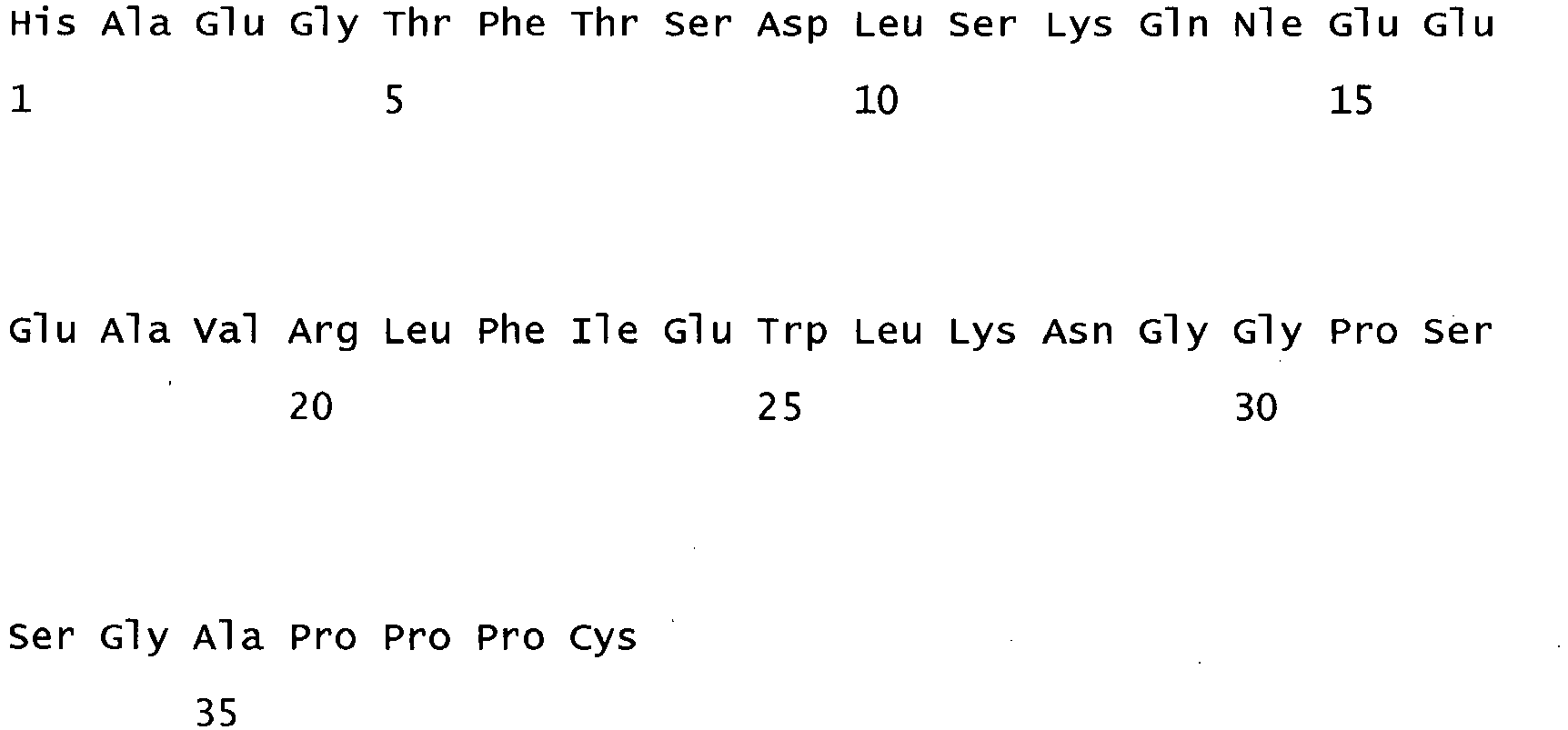
- SEQ ID N° 95 : HdAEGTFTSDL SKQNleEEEAVR LFIEWLKQGG PSSGAPPPC-NH2,
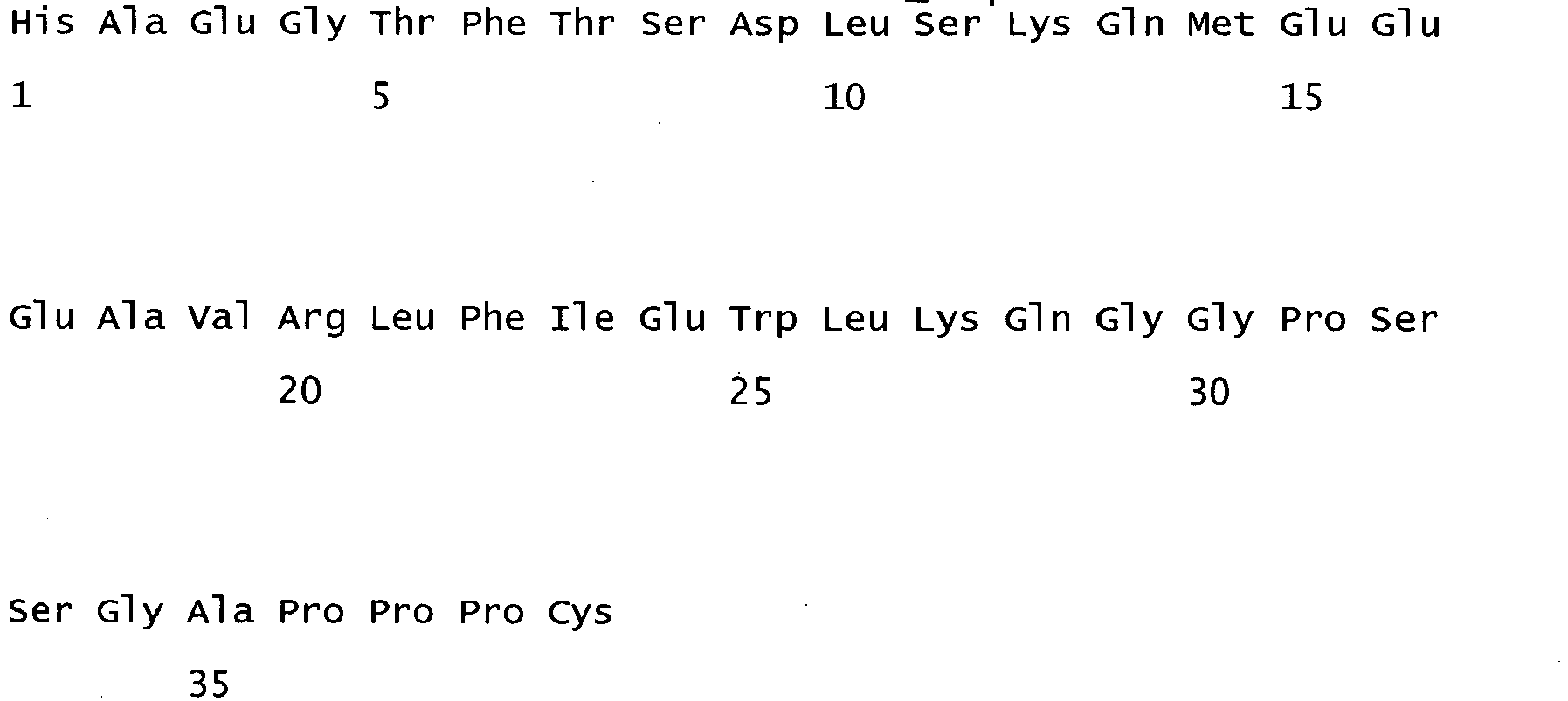
- SEQ ID N°88 : HdAEGTFTSDL SKQNleEEEAVR LFIEWLKQGG PSSGAPPPC,
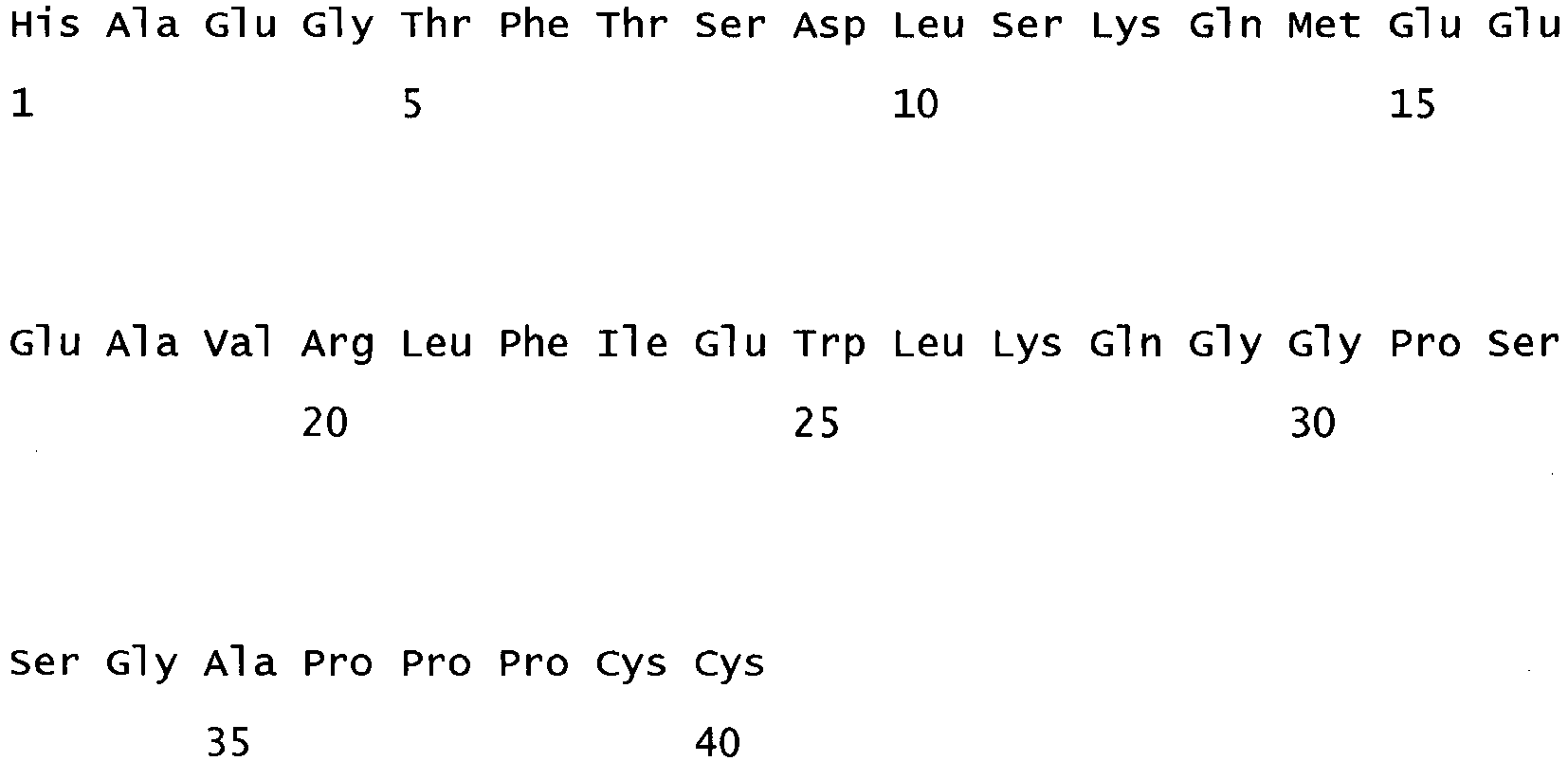
- SEQ ID N°89 : HdAEGTFTSDL SKQNleEEEAVR LFIEWLKQGG PSSGAPPPCC and
- SEQ ID N°96 HdAEGTFTSDL SKQNleEEEAVR LFIEWLKQGG PSSGAPPPCC-NH2
- The present invention further provides the use of the exendins or pegylated exendins according to the invention and pharmaceutical acceptable salts thereof in treating and/or preventing type 2 diabetes.
- Clinic trails show that when type 2 diabetics, whose blood glucose level was poorly controlled, were subjected to Glucagon-like peptide 1 (GLP-1) treatment, their fasting blood glucose level become normal (Gutniak, et al., New Eng. J. Med. 326:1316-1322, 1992). Long term aministration of Glucagon-like peptide 1 (GLP-1) can restore the functions of β-cell to normal level (Rachman,et al., Diabetes 45:1524-1530, 1996). Glucagon-like peptide 1 (GLP-1) can restore the glucose-response function of β-cell in those patients having functional imperfection of glucose tolerance (Byrne, et al., Diabetes 47:1259-1265, 1998). Since Glucagon-like peptide 1 (GLP-1) is readily inactivated by dipeptidyl peptidase (DPP IV) in vivo and many cleavage-points for other endopeptidase (NEP24.11) are present in the Glucagon-like peptide 1 (GLP-1), the in vivo lasting time of Glucagon-like peptide 1 (GLP-1) is short. Promising therapeutic effects of Glucagon-like peptide 1 can be achieved only by means of continuous administration. In this regard, researchers focus on the development of a more stable Glucagon-like peptide 1 (GLP-1) receptor agonist, mainly formed as modified Glucagon-like peptide 1 (GLP-1). More importantly, in the late 1980s and the early 1990s, Eng et al. isolated Exendin-4 from the saliva secretion organs of the Gila monster (Heloderma Sespectrum) in southwestern America (Eng, J. et al., J. Biol. Chem., 265:20259-62, 1990, Eng, J., et al. J. Biol. Chem., 267:7402-05, 1992). Exendin-4 is a polypeptide having 39 amino acids, which shows 53% homology with Glucagon-like peptide 1 (GLP-1). Exendin-4 shows affinity to GLP-1 receptor, and it possesses stronger ability than GLP-1. Its ability in adjusting glucose metabolism is better than GLP-1; its minimum concentration for the stimulation of insulin secretion is lower than GLP-1; and more importantly, the in vivo half-life of Exendin-4 is longer than that of GLP-1 (Kudsen, L. B. J. Med. Chem. 47:4128-4134, 2004). These are mainly due to the unique enzymatic stability of Exendin-4, which is originated from the elimination of the cleavage-sites of endopeptidase (such as NEP24.11).
- Compounds which possess the function of Glucagon-like peptide 1 (GLP-1) receptor agonist, such as GLP-1(7-36), GLP-1(7-37), Exendin-4 and other derivatives of GLP-1 and Exendin-4, have been widely reported in many publications, which include
WO98/43658 WO00/15224 WO00/66629 WO/089280 WO01/9833 WO01/04156 US patent No. 5,545,618 ,US patent No. 5,118 ,WO03/058203 US patent Application Serial No. 60/395,738 ,WO04/022004 - Naturally existing GLP-1 receptor agonists are provided in the following table:
Peptide Sequence SEQ ID NO GLP-1 (7-36) HAEGTFTSDV SSYLEGQAAK EFIAWLVKGR-NH2 1 GLP-1 (7-37) HAEGTFTSDV SSYLEGQAAK EFIAWLVKGRG 2 Exendin-4 HGEGTFTSDL SKQNIEEEAVR LFIEWLKNGG PSSGAPPPS-NH2 3 - Abbreviation in the above sequences: H (His) histidine, A (Ala) alanine, E (Glu) glutamic acid, G (Gly) glycin, T (Thr) threonine, F (Phe) phenylalanine, S (Ser) serine, D (Asp) aspartic acid, V (Val) valine, Y (Tyr) tyrosine, L (Leu) leucine, Q (Gln) glutamine, K (Lys) lysine, I (Ile) isoleucine, R (Arg) arginine, M (Met) methionine, N (Asn) asparagine, P (Pro) proline.
- Although more stable GLP-1 receptor agonists have been developed in many laboratories, their in vivo lasting time is still short, and thereby development of long-lasting derivatives of exendins acting as GLP-1 receptor agonists is in great demand. Since the window for the therapeutic effect and side effect (vomit and nausea) is relatively narrower, the use of sustained release formulation affords only a small chance of success. The only possible way to obtain a long-lasting GLP-1 receptor agonist is to prepare a stable compound having sufficiently long in vivo retention time.
- Incorporation of polyethylene glycol into active protein or polypeptide increases the retention time of active protein and polypeptide (Milton Harris et al., Nature reviews Drug Discovery, Vol. 2, N°. 3, 214-221). This technology has been successfully applied in many protein-based biological drugs, such as PEG-Intron, PEGASYS, Neulasta and Somavert and the like. The methods and chemistry for the incorporation of polyethylene glycol into protein and peptide backbone are provided in relevant references, such as the review by Veronese (Veronese, FM, Biomaterial 2001 22:405-417). In view of the fact that both GLP-1 and Exendin-4 belong to GLP-1 receptor,
US patent USP05424286 andPCT WO98/05351 WO2004/022004 discloses the pegylated GLP-1 receptor agonist, and proposes that when polyethylene glycol with molecular weight more than 30,000 daltons is employed, side effects, such as nausea and vomit, caused by the activation of the intracephalic GLP-1 receptor, are unlikely to occur with the resulting derivatives. It indicates that pegylated GLP-1 receptor agonist does not only prolong the in vivo acting time, but also minimize its side effects. However, this type of compounds show no improvement in the in vivo enzymatic and chemical stability of their polypeptide backbone in addition to the limitation in their in vivo or in vitro activity, which limits this type of compound acting as desired long-lasting therapeutic agent. The reduced in vivo and in vitro activity may increase the production cost of long-lasting therapeutic agent. In view of the above reasons, using Exendin-4 backbone as the precursor in pegylation may afford a greater chance of success in preparing long-lasting therapeutic agent, in which the polypeptide backbone possesses better enzymatic stability. AlthoughPCT WO00/66629 
- From the mechanism, it shows that hydrolysis of the five-membered ring derived from asparagine does not only decrease the activity of GLP-1 receptor agonist, but also cause to the separation of polyethylene glycol from the polypeptide backbone, and thereby adversely effect the in vivo retention time of the long-lasting compound. Accordingly, modification on glycine at position 2 enhances the enzymatic and chemical stability of the Exendin-4 polypeptide backbone; and modifications on methionine at position 14 and on asparagine at position 28 enhance the chemical stability of Exendin-4 polypeptide backbone as well.
PCT WO00/66629 - The present description discloses a series of derivatives of Exendin-4 pegylated at position 2, 14, 27, or 28, as well as the exendins obtained from pegylation conducted with these polypeptide backbones. These pegylated exendins exhibit long-lasting effect in vivo, which can be formulated as long-lasting therapeutic agent for injection use.
- The exendins of the present invention allows the in vivo and in vitro activation of the GLP-1 receptor which locates on the surface of β-cell, which further allows the secretion of insulin and thereby lowers the blood glucose level. Examples of the exendins include, but not limited to, the polypeptide sequences in table 1 as well as those pegylated compounds. Serine at position 39, where pegylation takes place, can be substituted with cysteine or other mercapto-containing synthetic amino acid. Similarly, multiple pegylations can be achieved in the following way, in which two or more mercapto-containing amino acids (such as cysteine) are added to the carboxyl terminal, and the resulting elongated polypeptides derivatives may serve as the pegylation precursor. The general formula for the precursor of two-site modification is Cys(39)-(Xaa)n-1-Cys(n+39), wherein n=0-10, Xaa is any one of the amino acids.
- The above-mentioned polypeptides can be prepared by chemical synthetic methods, which include liquid-phase synthesis of fragment, solid-phase synthesis (see Merrifield, J. Am. Chem. Soc. 1963, 85:2149-2154), or combined method of solid-phase and liquid-phase; polypeptide synthesis can be conducted manually or automatically. Applied Biosystems 431A polypeptide synthesizer, Csbio polypeptide synthesizer and the like can be employed in automatic synthesis; and also combinatorial synthesis can be used in polypeptide synthesis.
- Purification by preparative HPLC is required for the polypeptides prepared by chemical synthetic method, reveres phase materials are commonly used as the column packing materials (such as C4, or C8, or C18). In vivo and in vitro studies of the therapeutic effectiveness are only allowed after characterizations with analytical identifications (such as high performance liquid chromatography (HPLC), mass spectroscopy (MS), amino acids analysis (AAA)). After purification by preparative HPLC, products can be afford after lyophilization
- Polyethylene glycol can be purchased from a variety of suppliers or synthesized by common methods. Molecular weight of polyethylene glycol is usually within the range of 5,000-80,000 daltons, preferably 20,000-60,000 daltons and more preferably about 40,000 daltons.
- Polyethylene glycol should be connected with polypeptide at the C-terminal of the polypeptide, so as to minimize the interferences caused by the polyethylene glycol to the action between polypeptide and the receptor. That is to say, polyethylene glycol may connect to any residues locating between positions 29 to 39, which involves substitutions of any one or any few of the amino acids with mercapto-containing amino acid (such as cysteine). In the case of single pegylation, it is better to substitute serine locating at position 39, carboxyl terminal with cysteine; similarly, in the case of two-site modification, the best way is to substitute serine at position 39 with cysteine and add another cysteine at position 40 or 39 +n (n=1-10).
- The method for bonding to polyethylene glycol via cysteine or mercapto are widely described in many publications (see Veronese, Biomaterials 2001, 22:405-417). People skilled in the art can link polyethylene glycol with mercapto-containing exendins.
- Particularly, bonding via mercapto group can be achieved by way of the following:
- 1) Mercapto group originates from polypeptide chain. Achieved by incorporating the undermentioned amino acid:

- 2) Mercapto group originates from the side chain of the amino acid of a modified polypeptide, for example, mercapto group connects with the amino group of the lysine side chain. The amino acid with its side chain modified in the form of the following formula:

- 3) Mercapto group originates from polyethylene glycol. By this time, the connection point in the polypeptide should contain Michael addition acceptor, such as the double bond in maleimide, halogen and sulfonate substituted groups. Bonding is achieved by forming a thioether bond between polypeptide and polyethylene glycol.
- 4) If both polyethylene glycol and polypeptide contain Mercapto groups, bonding can be achieved via the formation of asymmetric disulfide bond.
- Preferably, covalent bond between polyethylene glycol and polypeptide of the present invention is achieved by the formation of a thioether bond in between. However, it is not the only way to link polyethyelene glycol with the polypeptide sequence disclosed in the present invention. Other connection methods, such as acylation, reductive amination and oxime formation, are also included in the present invention.
- The polypeptide derivatives listed in table 1 are suitable precursors for pegylation. However, they are included in the present invention by way of illustration only and the present invention is not limited to these sequences. In the sequence table, preferred sequences are selected from SEQ ID NO 80 to SEQ ID NO 141.
- These pegylated exendins and polypeptide precursors thereof are amphoteric compounds, which can react with acids or bases to form salts. Commonly employed acids for salt formation are selected from hydrochloric acid, hydrobromic acid, hydriodic acid, sulfuric acid, phosphoric acid, p-toluenesulfonic acid, methanesulfonic acid, oxalic acid, p-bromobenzene sulfonic acid, carbonic acid, succinic acid, citric acid, benzoic acid, acetic acid, trifluoroacetic acid and the like. Examples of these salts include sulfate, pyrosulfate, hydrosulfate, sulfite, bisulphite, phosphate, hydrophosphate, dihydric phosphate, metaphosphate, pyrophosphate, hydrochloride, hydrobromide, hydriodate, acetate, propionate, caprate, caprylate, acrylate, formiate, isobutyrate, caproate, heptylate, propiolate, oxalate, malonate, succinate, suberate, sebacate, fumarate, maleate, butyne-1,4-dioate, hexyne-1,6-dioate, benzoate, chlorobenzoate, p-methylbenzoate, dinitrobenzoate, hydroxybenzoate, methoxybenzoate, phenylacetate, phenylpropionate, phenylbutyrate, citrate, lactate, r-hydroxybutyrate, glycerate, tartarate, methanesulfonate, propanesulfonate, naphthalene-1-sulfonate, naphthalene-2-sulfonate, mandelate and the like. Preferred acid addition salt is selected from hydrochloride, sulfate, acetate, trifluoroacetate; commonly employed bases for salt formation are selected from sodium hydroxide, potassium hydroxide, ammonia, potassium carbonate and the like.
- The exendins of the present invention, particularly the pegylated exendins, can be used in preventing and treating type 2 diabetes, especially to those patients who present abnormal secretion caused by overweight or even obesity, due to their potential in recovering β-cell.
- Accordingly, the present invention also relates a method for the treatment and prevention of type 2 diabetes, wherein effective dosage of the exendins of the present invention is administered to patients who in need thereof.
- The exendins of the present invention can be used alone, and more suitably used in combination with other anti-diabetic medicaments (such as PPAR agonist, sulphonylurea, non-sulphonylurea (Secretagogues), α-glucosidase inhibitor, insulin sensitizer, insulin Secretagogues, glycogen-releasing inhibitor, insulin and other anti-obesity medicaments) in the treatment of diabetes.
- Clinical dosage should be determined according to the actual therapeutic effectiveness of the various compounds, which is in the range of 0.0001 mg/kg to about 200mg/kg body weight, preferably from 0.001mg/kg to 20mg/kg body weight, most preferably from 0.01mg to 1mg/kg body weight. Routes of administration include injection methods (including intravenous, intramuscular and subcutaneous injection) or other continuous injection methods. These compounds can be formulated in a variety of preparations, and administered by conventional routes of administration, such as oral and transdermal administration, pulmonary, nasal, buccal spray, suppository administration and the like,.
-
- Figure 1 shows the LC-MS spectrum of SEQ ID No 95.
- Figure 2 shows the influence of PEG-EX-4 analogue on Glucose Tolerance of db/db mice on the first day of subcutaneous injection.
- Figure 3 shows the influence of PEG-EX-4 analogue on Glucose Tolerance of db/db mice on the third day after subcutaneous injection.
- Figure 4 shows the influence of PEG-EX-4 analogue on Glucose Tolerance of db/db mice on the sixth day after subcutaneous injection.
- Figure 5 shows the influence of PEG-EX-4 analogue on Glucose Tolerance of db/db mice on the ninth day after subcutaneous injection.
- Figure 6 shows the reduction effect on blood glucose level of mice after subcutaneous injection of PEG-EX-4 analogue (1100µg/kg).
- Figure 7 shows the reduction effect on blood glucose level of mice after subcutaneous injection of PEG-EX-4 analogue (3300µg/kg).
- The examples provided hereinafter assist in better understanding the present invention, which are not intended to limit the present invention.
-
(1) Amino acid monomers used in the synthesis
Fmoc-His(Trt)-OH, Fmoc-dAla-OH, Fmoc-Gly-OH, Fmoc-Glu(OtBu)-OH, Fmoc-Thr(tBu)-OH, Fmoc-Phe-OH, Fmoc-Ser(tBu)-OH, Fmoc-Asp(OtBu)-OH, Fmoc-Leu-OH, Fmoc-Lys(Boc)-OH, Fmoc-Gln(Trt)-OH, Fmoc-Nle-OH, Fmoc-Ala-OH, Fmoc-Val-OH, Fmoc-Arg (pbf) -OH, Fmoc-Ile-OH, Fmoc-Trp(Boc)-OH, Fmoc-Asn(Trt)-OH, Fmoc-Pro-OH, Fmoc-Cys(Trt)-OH
Abbreviation of the above: Fmoc: 9-fluorenylmethoxycarbonyl; Boc: tert-butoxycarbonyl; Trt: trityl; OtBu: t-butoxy; tBu: t-butyl.
(2) The Reagents used: N, N-diisopropylethylamine, diisopropylcarbodiimide (DIC), N,N-dimethylformamide (DMF), dichloromethane, hexahydropyridine, 1-hydroxybenzotriazole, Rink amide resin, ninhydrin, methanol, anisole, triisopropylsilane, trifluoroacetic acid.
(3) Experimental procedure
A. Synthesis: To 0.5 g (0.25 mmole) Rink amide resin in a reactor vessel, 1mmol amino acid was added, activation was conducted with DIC/HOBT method, and the synthesis was conducted starting from C-terminal to N-terminal according to the polypeptide sequence. The reaction was conducted at 25 °C (room temperature) following the operating procedure below: - 1. Fmoc group was deprotected by treating with 20% hexahydropyridine in DMF, 10 min for each time.
- 2. The resins were washed with 10 mL DMF for three times, and then dried with pump.
- 3. The protected amino acid (1 mmol) and HOBT (1 mmol) were weighed out and then dissolved in 10 ml DMF followed by addition of DIC (1 mmol), and then activated for 10minutes.
- 4. The activated amino acid solution was added to the reactor vessel and then shaked for 1 hour.
- 5. The resins were washed with DMF for three times, and then dried with pump.
- 6. Steps 1-5 were repeated for the next cycle in the case of negative result for the ninhydrin test, whereas steps 3-5 were repeated in the case of positive result for the ninhydrin test.
- Pegylation of exendins can be conducted with conventional method. Pegylation of peptides is achieved by modifying mercapto group in the formation of a thioether bond between polyethylene glycol and peptide. To be more particular, one or more cysteines were added to the carboxyl-terminal of the optimized Exendin-4 derivatives, followed by pegylation conducted by using polyethylene glycol which contains the Maleimide functional group. Thioether bond was formed after Michael addition reaction, and thereby polypeptide was covalently bonded with the polyethylene glycol. In general, the desired polypeptide was dissolved in 0.1M phosphate buffer solution, followed by addition of polyethylene glycol under anaerobic environment. The molar ratio of polyethylene glycol to polypeptide was 1:1 and the pH of the reaction was 6 to 7.5. Oxidation of the mercapto group may be reduced by addition of EDTA to the reaction solution. After two hours, the reaction solution was purified with reverse-phase HPLC system. Excess or unreacted polyethylene glycol was removed by ion-exchange chromatography. The molecular weight of the resulting product was analyzed and confirmed by mass spectrum. The purity of the product was analyzed with RP-HPLC and Gel-chromatography. Taking the modification of SEQ ID NO 95 as an example, when 43KD PEG was employed in modification, the yield was 70-90% (based on polyethylene glycol).
- The Exendin-4 derivatives of the present invention possess the optimized enzymatic and chemical stability. The following method was used to determine the chemical stability of some polypeptides in the present invention.
- 1 mg of each sample was dissolved in a buffer solution, which contains 150mM sodium chloride and 20mM phosphate, from which a solution of concentration of 4mg/ml was prepared and its pH is 8.0. The testing sample solutions were placed in a thermostat of 40°C. LC-MS was used to determine the purity of polypeptide. Correlation between the reduction ratio of the main peak area and time reflects the chemical stability of the polypeptide.
Table 2: Determination of the stability of Exendin-4 based compounds Purity (%) 0day 5th day 10th day 15th day Sample 1 98.2 88.0 81.6 76.2 Sample 2 98 93.1 90.4 88.2 Sample 3 98.9 98.8 98.8 98.8 Sample 4 99.7 99.4 99.0 99.3 - wherein, sample 1 is Exendin-4 as control, and the sequence is:
- His-Gly2-Glu-Gly-Thr-Phe-Thr-Ser-Asp-Leu-Ser-Lys-Gln-Met14 -Glu-Glu-Glu-Ala-Val-Arg-Leu-Phe-Ile-Glu-Trp-Leu-Lys-Asn28 -Gly-Gly-Pro-Ser-Ser-Gly-Ala-Pro-Pro-Pro-Ser39 .
- Sample 2: 2#Gly in sample 1 was substituted with d-Ala, and 39# was substituted with Cys.
- Sample 3: 2#Gly in sample 1 was substituted with d-Ala, and 14# Met was substituted with Nle, 28#Asn was substituted with Gln.
- Sample 4: sample 2 is covalently bonded with PEG40K via Cys at the C-terminal of sample 2; wherein all the C-terminal of samples 1-4 are amide.
- The sequence of sample 1 is a polypeptide sequence that can be isolated from nature. His-Gly residue at the N-terminal is an ideal substrate for dipeptidase and Met that contained in sample 1 readily undergoes oxidization, and also Asn undergoes self-reaction readily, which render sample 1 unstable. Substitution at position 2, or 14, or 28 greatly improve the stability of the peptides; in addition, substitution at all the 3 positions allows a greater improvement in the stability of the peptides than substitution of His-Gly with His-dAla alone. Although sample 2 is not very stable, it become very stable after bonding with PEG40K (i.e. sample 4), which shows that PEG is useful in enhancing the stability of polypeptide.
-
Formulation: PEG-EX-4 analogue 5 g m-Cresol 0.04 g Iced acetic acid Appropriate amount Iced sodium acetate Appropriate amount Injection water Appropriate amount 100 ml/100 bottles - Polypeptide of SEQ ID NO 25 was modified with polyethylene glycol of molecular weight of about 40000 (sample 5). Oral glucose tolerance test was then conducted with normal mice and the results were presented in the following tables:
Table 1. Subcutaneous injections of sample 5 with various dosages were administered to normal mice. The influences on the oral glucose tolerance and the area under the curve of the blood glucose level on the first day and the third day after subcutaneous injections were given. (The first day) Group Blood Glucose level (mg/dl) AUC (mg.h/dl) 0 min 30 min 60 min 120 min physiological saline 129.7±8.1 223.2±33.4 167.7±34.5 98.1±t2.1 318.8±42.9 Sample 5(20) 116.6±10.8 95.7±9.9*** 88.9±28.6*** 65.4±5.1*** 176.4±22.0*** Sample 5 (80) 122.2±9.1 92.1±12.4*** 76.7±8.7*** 64.9±7.5*** 166.6±16.7*** v.s Con *** P<0.001; n=10 (The third day) Group Blood glucose level (mg/dl) AUC (mg.h/dl) 0 min 30 min 60 min 120 min physiological saline 97.3 ± 19.8 193.6±35.3 171.0 ± 46.7 91.8 ± 18.8 295.3 ± 54.0 Sample 5(20) 96.2±8.6 172.8±33.2 132.1 ± 12.4* 88.3±7.8 253.6±24.4* Sample 5 (80) 89.5±9.3 1493±32.4** 108.6±8.8*** 77.1±8.4* 217.0±21.9*** v.s Con, *P<0.05, ** P<0.01, *** P<0.001; n=10 - 1. Testing animals: species, strains: db/db mice, source: Model Animal Center of Nanjing University, body weights of mice: 35g-50g, male and female in half. Numbers of animal: 45, 5-6 mice in each group. Rearing conditions: rearing in SPF grade animal housing, temperature: 22°C -24°C, humidity: 45%-80%, illumination: 150 Lx-300 Lx, under the 12 h-light and 12 h-dark cycle condition.
- Dosage setting up: 5 administration groups: 0.03, 0.1, 0.3, 1 and 3mg/kg; and a blank control group as well; route of administration: subcutaneous injection; volume of administration: 0.05ml/kg body weight.
- According to the non-fasting blood glucose level and body weight of mice, db/db mice were divided into blank control group and another 5 groups to be administered with PEG-EX-4 analogue, 6 mice in each group, and male and female in half. Animals in each group were administered with the testing drug and physiological saline, respectively, by a single subcutaneous injection. Blood glucose level was detected before administration and also 1, 2, 4, 8, 24 hours after administration. Thereafter, the non-fasting blood glucose level was detected every 24 hours. The lasting time for the reduction of blood glucose level of the testing drugs as well as the variation in food intake and body weights after administration were observed.
- According to the non-fasting, fasting blood glucose level and body weight of mice, db/db mice were divided into blank control group and another 5 groups to be administered with PEG-EX-4 analogue, 6 mice in each group, and male and female in half. After fasting for 5 hours, animals in each group were administered with the testing drug and physiological saline, respectively, by a single subcutaneous injection. Blood glucose level was detected before administration and also 1, 2 hours after administration. Thereafter, the non-fasting and fasting blood glucose level was detected every 24 hours. The lasting time for the reduction of blood glucose level of the testing drug as well as the variation in food intake and body weights after administration were observed.
- According to the fasting blood glucose level and body weight of mice, db/db mice were divided into blank control group and another 5 groups to be administered with PEG-EX-4 analogue, and 5 mice in each group. After fasting for 5 hours, animals in each group were administered with the testing drug and physiological saline, respectively, by a single subcutaneous injection. 2.5g/kg of glucose was taken orally 15 minutes after the above administration. After that, blood glucose level was detected immediately after taking glucose (0 min) and also 30, 60 and 120 minutes after taking glucose. Oral glucose tolerance test was conducted on the third day, sixth day and ninth day, respectively, after the drug administration. The influences of the testing drug on the glucose tolerance of db/db as well as its lasting time and the variation in food intake and body weights after administration were observed.
- 3. Test results: the results for the influences of PEG-EX-4 analogue on blood glucose level of db/db mice were presented and summarized in figures 2-5 and tables 1-6.
-
Table 1: Influence of subcutaneous injection of PEG-EX-4 analogue on fasting blood glucose level of db/db mice (mean value±SD, n=6) Group Dosage µg/kg Before administration After administration (hrs) 0 1 2 24 48 Blank control - 11.533±5.73 11.77±6.69 10.27±7.16 11.07±4.46 10.07±4.66 PEG-EX-4 analogue 0.03 11.28±2.68 8.40±.2.02 6.75±2.02 8.58±2.17 10.97±4.09 0.1 11.08±5.65 6.70±4.35 5.85±4.60 9.12±4.84 11.23±5.89 0.3 11.15±3.33 5.13±1.83* 3.78±0.73 5.80±2.63* 6.77±2.18 1 11.42±3.74 4.73±1.91* 3.78±0.83 3.93±0.95** 5.03±136* 3 11.00±3.66 3.62±1.07* 3.05±0.67* 4.03±1.20** 3.65±0.76** Group Dosage µg/kg After administration (hrs) 72 96 120 144 168 192 Blank control - 11.53±6.33 14.90±6.81 14.32±6.61 14.38±5.10 13.53±7.04 13.20±6.27 PEG-EX-4 analogue 0.03 - - - - - - 0.1 - - - - - - 0.3 8.27±2.59 10.60±3.04 11.15±4.98 11.70±3.76 12.60±3.84 - 1 7.15±3.10 8.07±2.29* 8.13±1.21* 10.75±1.87 11.07±2.65 12.12±1.31 3 5.80±2.19 6.03±1.09* 5.70±2.23 * 7.70±2.64* 9.17±2.32 11.43±2.26 Table 2: Influence of subcutaneous injections of PEG-EX-4 analogue on daily non-fasting blood glucose level of db/db mice (mean value±SD, n=6) Group Dosage µg/kg Before administration After administration (hrs) 0 24 48 72 96 120 144 168 Blank control - 14.70±6.87 17.18±4.47 15.22±5,16 15.45±6.02 16.13±6.96 15.12±8.05 15.45±5.91 15.25±6.17 PEG-EX-4 analogue 0.03 14.73±5.00 13.42±4.19 12.88±4.50 1.5.92±5.39 - - - - 0.1 14.52±6.01 15.32±6.62 16.22±3.61 - - - - - 0.3 14.08±2.66 11.35±5.96 11.57±3.07 15.78±3.56 15.17±2.60 14.17±4.48 13.53±4.50 13.72±3.89 1 14.30±3.79 7.02±2.49*** 9.17±4.45 13.73±7.09 13.63±5.48 12.28±4.30 12.50±5.06 12.68±2.73 3 14.10±.86 5.65±1.73*** 7.48±.15* 9.87±4.74 13.42±4.89 11.92±5.10 12.93±3.72 15.27±2.58 -
Table 3: Influences of PEG-EX-4 analogue on the glucose tolerance of db/db mice on the first day after subcutaneous injection (mean value±SD, n=5). Group Dosage µg/kg Before administration After glucose administration (mmol/l) AUC 0 30 60 120 Blank control - 11.66±4.74 22.36±5.76 14.84±7.40 12.74±5.10 31.60±11.67 PEG-EX-4 analogue 0.03 11.64±4.51 22.28±6.34 13.44±7.47 9.62±8.27 28.94±13.98 0.1 11.54±1.80 20.92±2.99 10.66±1.86 6.02±1.25* 24.35±3.51 0.3 11.18±4.62 18.10±1.67 9.06±2.23 5.34±1.34* 21.31±4.01 1 11.54±2.50 16.82±2.38 9.12±4.60 5.26±2.54* 20.77±6.28 3 11.18±4.37 16.54±4.40 9.10±3.21 4.44±1.74* 20.11±5.98 Table 4: Influence of PEG-EX-4 analogue on glucose tolerance of db/db mice on the third day after subcutaneous injection (mean value±SD, n=5) Group Dosage µg/kg Before administration After glucose administration (mmol/l) AUC 0 30 60 120 Blank control - 13.34±6.85 22.28±5.59 18.16±6.55 14.06±4.94 35.13±11.22 PEG-EX-4 analogue 0.03 11.50±4.75 21.40±4.06 18.64±5.97 13.94±6.10 34.53±10.64 0.1 10.38±3.65 19.66±7.27 18.06±2.45 11.72±4.58 31.83±8.03 0.3 7.72±2.77 19.52±2.40 16.24±5.68 12.16±5.76 29.95±8.80 1 5.88±0.92* 20.18±2.82 8.50±2.88* 7.04±1.71 * 21.46±4.02* 3 5.50±2.29* 18.24±5.05 9.74±5.57 7.72±4.98 21.66±9.51 Table 5: Influence of PEG-EX-4 analogue on glucose tolerance of db/db mice on the sixth day after subcutaneous injection (mean value±SD, n=5) Group Dosage µg/kg Before administration After glucose administration (mmol/l) AUC 0 30 60 120 Blank control - 14.20±6.56 22.96±2.86 18.70±7.15 13.70±7.12 35.91±11.33 PEG-EX-4 analogue 0.03 12.62±738 22.28±4.45 17.62±5.40 11.50±6.38 33.26±10.59 0.1 14.60±3.49 25.62±2.45 19.76±2.56 14.12±2.05 38.34±4.32 0.3 11.50±4.55 23.58±1.89 18.94±3.86 12.42±4.99 35.08±7.04 1 8.12±1.22 26.34±2.09 16.54±3.65 9.68±2.63 32.45±4.92 3 5.80±.48* 23.66±4.50 11.66±4.37 7.28±2.40 25.67±6.94 Table 6: Influence of PEG-EX-4 analogue on glucose tolerance of db/db mice on the ninth day after subcutaneous injection (mean value±SD, n=5) Group Dosage µg/kg Before administration After glucose administration (mmol/l) AUC 0 30 60 120 Blank control - 12.04±8.47 25.90±4.16 18.52±8.29 14.04±7.91 36.87±14.14 PEG-EX-4 analogue 1 9.60±1.16 24.86±1.67 17.90±2.92 12.28±4.08 34.40±4.89 3 9.36±3.66 23.46±2.41 15.60±.02 11.84±4.35 31.69±6.64 *, P<0.05;
**. P<0.01;
***, P<0.001, in comparison with blank control group - Single subcutaneous injections of PEG-EX-4 analogue at various dosages were administered to normal mice. Variation in blood glucose level at different times after injection was detected.
-
- (1) See figure 6, the reduced blood glucose level of KKay mice lasts for 3-4 days after subcutaneous injection of PEG-EX-4 analogue (1100 g/kg).
- (2) See figure 7, the reduced blood glucose level of KKay mice lasts for 3-4 days after subcutaneous injection of PEG-EX-4 analogue (3300 g/kg).
- In table 7, C, hC, K* are the modification sites for pegylation. C is cysteine, hC is homocysteine and K* is lysine with a modified side-chain, such as the mercaptopropionic acid on the amino group of the side chain of lysine. CC, hChC or K*K* in the sequence represent two modification sites for pegylation. Nle is norleucine, dAlea is D-alanine,-NH2 is an amide at the C-terminal.
- <110> wuxi Grandchamp pharmaceutical Co., LTD.
- <120> Modified Exendins and uses thereof
- <160> 141
- <170> PatentIn version 3.3
- <210> 1
<211> 30
<212> PRT
<213> Artificial sequence - <400> 1

- <210> 2
<211> 31
<212> PRT
<213> Artificial sequence - <400> 2


- <210> 3
<211> 39
<212> PRT
<213> Artificial sequence - <400> 3

- <210> 4
<211> 39
<212> PRT
<213> Artificial sequence - <400> 4


- <210> 5
<211> 39
<212> PRT
<213> Artificial sequence - <400> 5
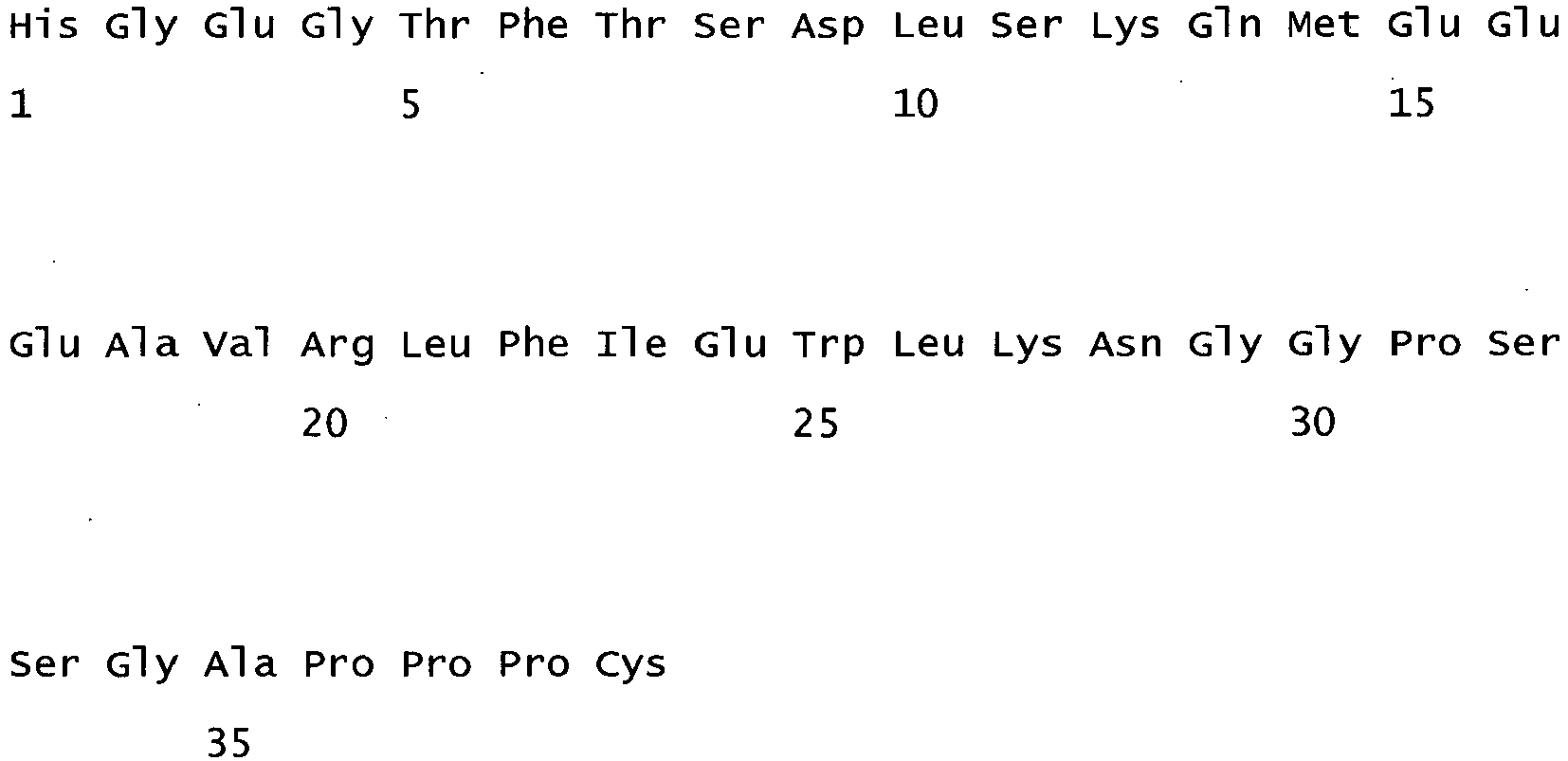
- <210> 6
<211> 40
<212> PRT
<213> Artificial sequence - <400> 6

- <210> 7
<211> 39
<212> PRT
<213> Artificial sequence - <400> 7
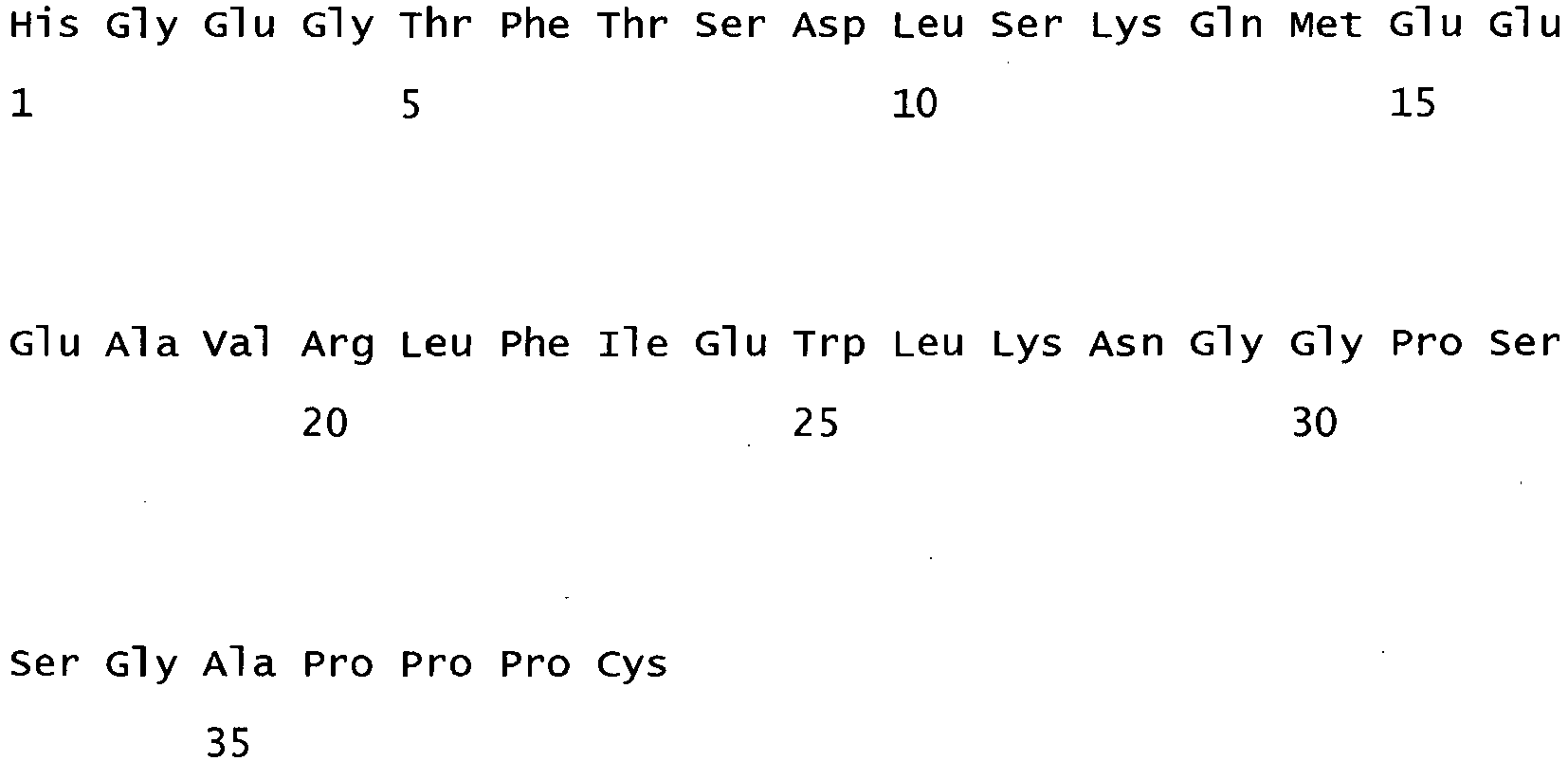
- <210> 8
<211> 40
<212> PRT
<213> Artificial sequence - <400> 8

- <210> 9
<211> 39
<212> PRT
<213> Artificial sequence - <400> 9


- <210> 10
<211> 40
<212> PRT
<213> Artificial sequence - <400> 10

- <210> 11
<211> 39
<212> PRT
<213> Artificial sequence - <400> 11


- <210> 12
<211> 40
<212> PRT
<213> Artificial sequence - <400> 12

- <210> 13
<211> 39
<212> PRT
<213> Artificial sequence - <400> 13

- <210> 14
<211> 40
<212> PRT
<213> Artificial sequence - <400> 14

- <210> 15
<211> 39
<212> PRT
<213> Artificial sequence - <400> 15

- <210> 16
<211> 40
<212> PRT
<213> Artificial sequence - <400> 16

- <210> 17
<211> 39
<212> PRT
<213> Artificial sequence - <400> 17

- <210> 18
<211> 39
<212> PRT
<213> Artificial sequence - <400> 18


- <210> 19
<211> 40
<212> PRT
<213> Artificial sequence - <400> 19

- <210> 20
<211> 39
<212> PRT
<213> Artificial sequence - <400> 20


- <210> 21
<211> 40
<212> PRT
<213> Artificial sequence - <400> 21

- <210> 22
<211> 39
<212> PRT
<213> Artificial sequence - <400> 22

- <210> 23
<211> 40
<212> PRT
<213> Artificial sequence - <400> 23

- <210> 24
<211> 39
<212> PRT
<213> Artificial sequence - <400> 24

- <210> 25
<211> 39
<212> PRT
<213> Artificial sequence - <400> 25

- <210> 26
<211> 40
<212> PRT
<213> Artificial sequence - <400> 26

- <210> 27
<211> 39
<212> PRT
<213> Artificial sequence - <400> 27


- <210> 28
<211> 40
<212> PRT
<213> Artificial sequence - <400> 28

- <210> 29
<211> 39
<212> PRT
<213> Artificial sequence - <400> 29

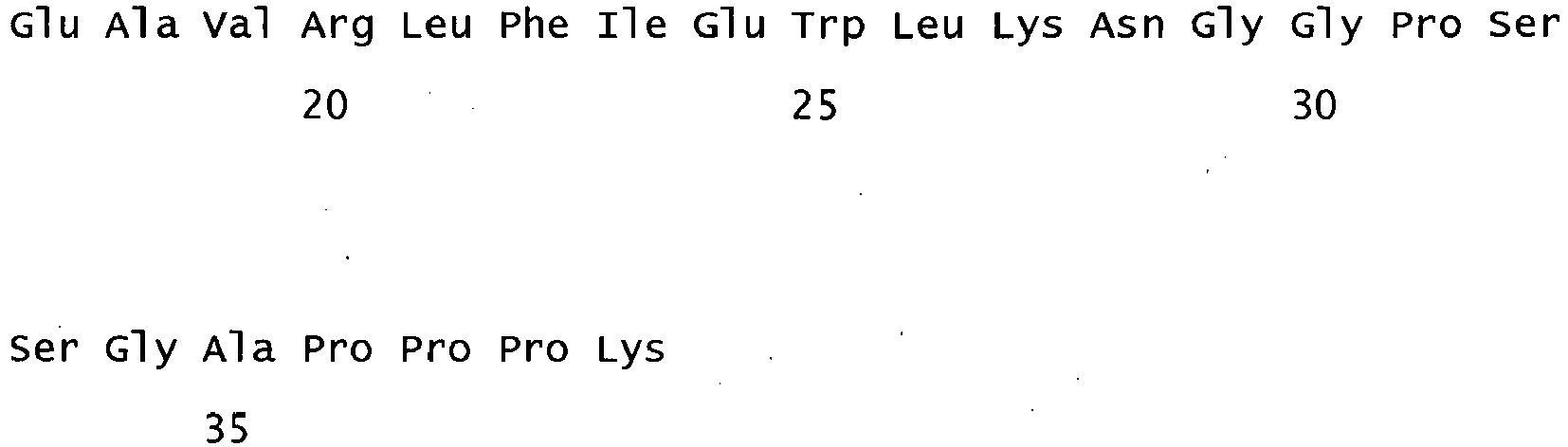
- <210> 30
<211> 40
<212> PRT
<213> Artificial sequence - <400> 30

- <210> 31
<211> 39
<212> PRT
<213> Artificial sequence - <400> 31

- <210> 32
<211> 39
<212> PRT
<213> Artificial sequence - <400> 32

- <210> 33
<211> 40
<212> PRT
<213> Artificial sequence - <400> 33

- <210> 34
<211> 39
<212> PRT
<213> Artificial sequence - <400> 34


- <210> 35
<211> 40
<212> PRT
<213> Artificial sequence - <400> 35

- <210> 36
<211> 39
<212> PRT
<213> Artificial sequence - <400> 36


- <210> 37
<211> 40
<212> PRT
<213> Artificial sequence - <400> 37

- <210> 38
<211> 39
<212> PRT
<213> Artificial sequence - <400> 38


- <210> 39
<211> 39
<212> PRT
<213> Artificial sequence - <400> 39

- <210> 40
<211> 40
<212> PRT
<213> Artificial sequence - <400> 40

- <210> 41
<211> 39
<212> PRT
<213> Artificial sequence - <400> 41
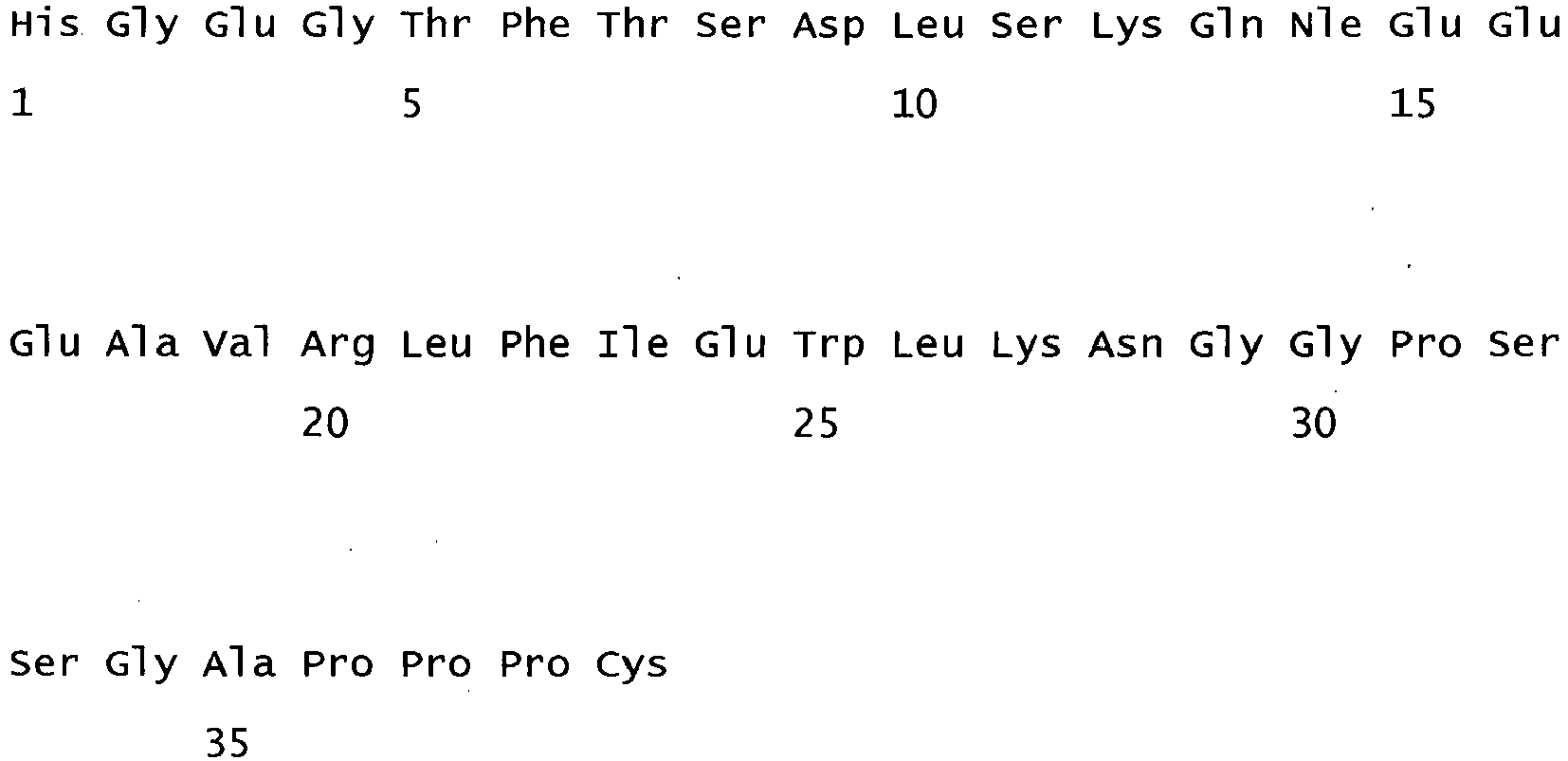
- <210> 42
<211> 40
<212> PRT
<213> Artificial sequence - <400> 42

- <210> 43
<211> 39
<212> PRT
<213> Artificial sequence - <400> 43


- <210> 44
<211> 40
<212> PRT
<213> Artificial sequence - <400> 44

- <210> 45
<211> 39
<212> PRT
<213> Artificial sequence - <400> 45


- <210> 46
<211> 39
<212> PRT
<213> Artificial sequence - <400> 46

- <210> 47
<211> 40
<212> PRT
<213> Artificial sequence - <400> 47

- <210> 48
<211> 39
<212> PRT
<213> Artificial sequence - <400> 48

- <210> 49
<211> 39
<212> PRT
<213> Artificial sequence - <400> 49

- <210> 50
<211> 39
<212> PRT
<213> Artificial sequence - <400> 50

- <210> 51
<211> 40
<212> PRT
<213> Artificial sequence - <400> 51

- <210> 52
<211> 39
<212> PRT
<213> Artificial sequence - <400> 52


- <210> 53
<211> 39
<212> PRT
<213> Artificial sequence - <400> 53

- <210> 54
<211> 40
<212> PRT
<213> Artificial sequence - <400> 54


- <210> 55
<211> 39
<212> PRT
<213> Artificial sequence - <400> 55

- <210> 56
<211> 40
<212> PRT
<213> Artificial sequence - <400> 56

- <210> 57
<211> 39
<212> PRT
<213> Artificial sequence - <400> 57

- <210> 58
<211> 40
<212> PRT
<213> Artificial sequence - <400> 58

- <210> 59
<211> 39
<212> PRT
<213> Artificial sequence - <400> 59

- <210> 60
<211> 39
<212> PRT
<213> Artificial sequence - <400> 60

- <210> 61
<211> 40
<212> PRT
<213> Artificial sequence - <400> 61


- <210> 62
<211> 39
<212> PRT
<213> Artificial sequence - <400> 62

- <210> 63
<211> 40
<212> PRT
<213> Artificial sequence - <400> 63


- <210> 64
<211> 39
<212> PRT
<213> Artificial sequence - <400> 64

- <210> 65
<211> 40
<212> PRT
<213> Artificial sequence - <400> 65

- <210> 66
<211> 39
<212> PRT
<213> Artificial sequence - <400> 66

- <210> 67
<211> 39
<212> PRT
<213> Artificial sequence - <400> 67

- <210> 68
<211> 40
<212> PRT
<213> Artificial sequence - <400> 68


- <210> 69
<211> 39
<212> PRT
<213> Artificial sequence - <400> 69
- <210> 70
<211> 40
<212> PRT
<213> Artificial sequence - <400> 70


- <210> 71
<211> 39
<212> PRT
<213> Artificial sequence - <400> 71

- <210> 72
<211> 40
<212> PRT
<213> Artificial sequence - <400> 72


- <210> 73
<211> 39
<212> PRT
<213> Artificial sequence - <400> 73

- <210> 74
<211> 39
<212> PRT
<213> Artificial sequence - <400> 74

- <210> 75
<211> 40
<212> PRT
<213> Artificial sequence - <400> 75

- <210> 76
<211> 39
<212> PRT
<213> Artificial sequence - <400> 76

- <210> 77
<211> 40
<212> PRT
<213> Artificial sequence - <400> 77


- <210> 78
<211> 39
<212> PRT
<213> Artificial sequence - <400> 78

- <210> 79
<211> 40
<212> PRT
<213> Artificial sequence - <400> 79

- <210> 80
<211> 39
<212> PRT
<213> Artificial sequence - <400> 80

- <210> 81
<211> 39
<212> PRT
<213> Artificial sequence - <400> 81
- <210> 82
<211> 40
<212> PRT
<213> Artificial sequence - <400> 82

- <210> 83
<211> 39
<212> PRT
<213> Artificial sequence - <400> 83

- <210> 84
<211> 40
<212> PRT
<213> Artificial sequence - <400> 84
- <210> 85
<211> 39
<212> PRT
<213> Artificial sequence - <400> 85

- <210> 86
<211> 40
<212> PRT
<213> Artificial sequence - <400> 86


- <210> 87
<211> 39
<212> PRT
<213> Artificial sequence - <400> 87

- <210> 88
<211> 39
<212> PRT
<213> Artificial sequence - <400> 88


- <210> 89
<211> 40
<212> PRT
<213> Artificial sequence - <400> 89

- <210> 90
<211> 39
<212> PRT
<213> Artificial sequence - <400> 90

- <210> 91
<211> 40
<212> PRT
<213> Artificial sequence - <400> 91

- <210> 92
<211> 39
<212> PRT
<213> Artificial sequence - <400> 92

- <210> 93
<211> 40
<212> PRT
<213> Artificial sequence - <400> 93
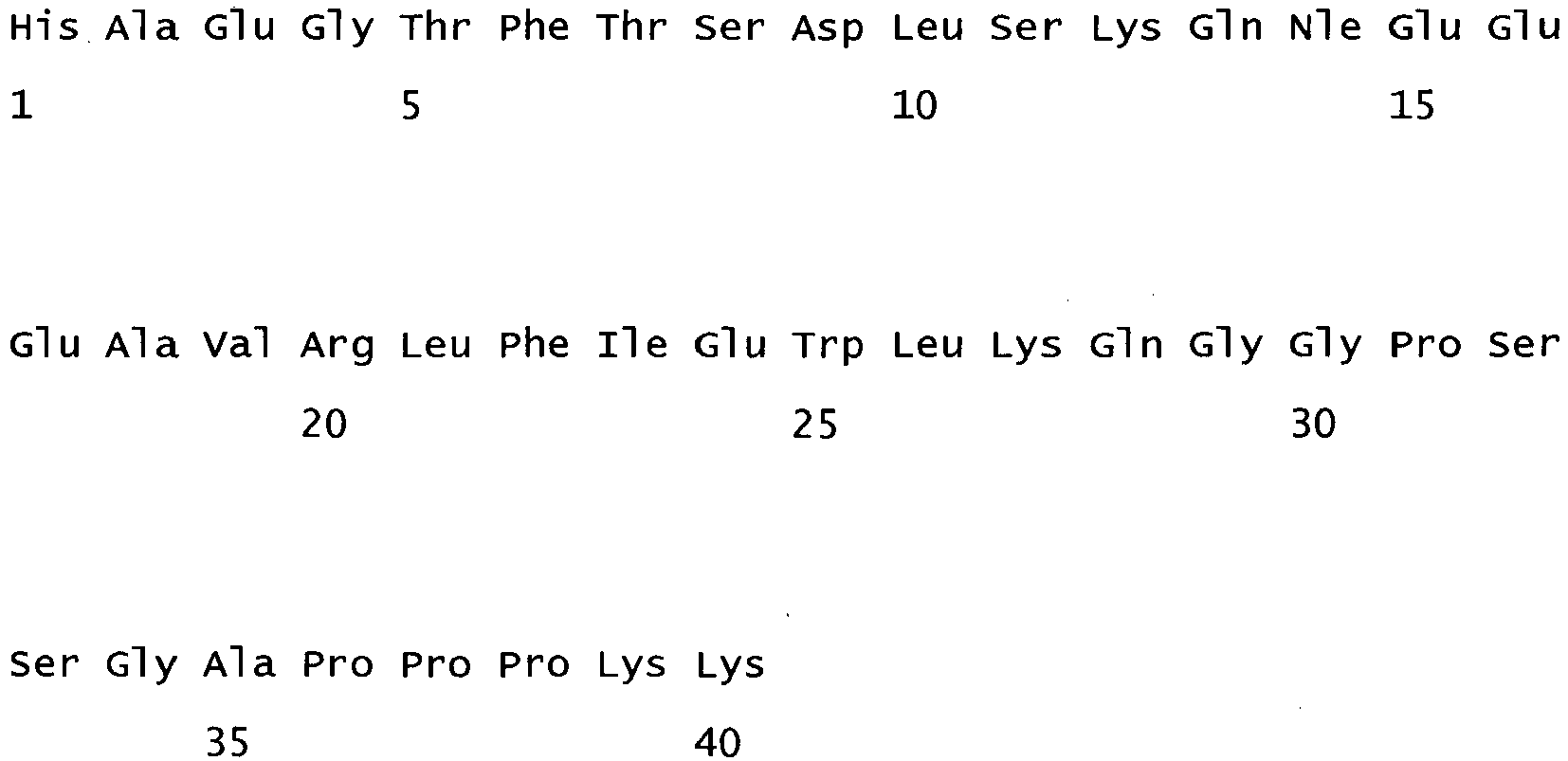
- <210> 94
<211> 39
<212> PRT
<213> Artificial sequence - <400> 94

- <210> 95
<211> 39
<212> PRT
<213> Artificial sequence - <400> 95


- <210> 96
<211> 40
<212> PRT
<213> Artificial sequence - <400> 96

- <210> 97
<211> 40
<212> PRT
<213> Artificial sequence - <400> 97


- <210> 98
<211> 39
<212> PRT
<213> Artificial sequence - <400> 98

- <210> 99
<211> 40
<212> PRT
<213> Artificial sequence - <400> 99

- <210> 100
<211> 39
<212> PRT
<213> Artificial sequence - <400> 100

- <210> 101
<211> 39
<212> PRT
<213> Artificial sequence - <400> 101

- <210> 102
<211> 40
<212> PRT
<213> Artificial sequence - <400> 102


- <210> 103
<211> 39
<212> PRT
<213> Artificial sequence - <400> 103

- <210> 104
<211> 40
<212> PRT
<213> Artificial sequence - <400> 104
 Ser Gly Ala Pro Pro Pro Cys Cys 35 40
- <210> 105
<211> 39
<212> PRT
<213> Artificial sequence - <400> 105

- <210> 106
<211> 40
<212> PRT
<213> Artificial sequence - <400> 106

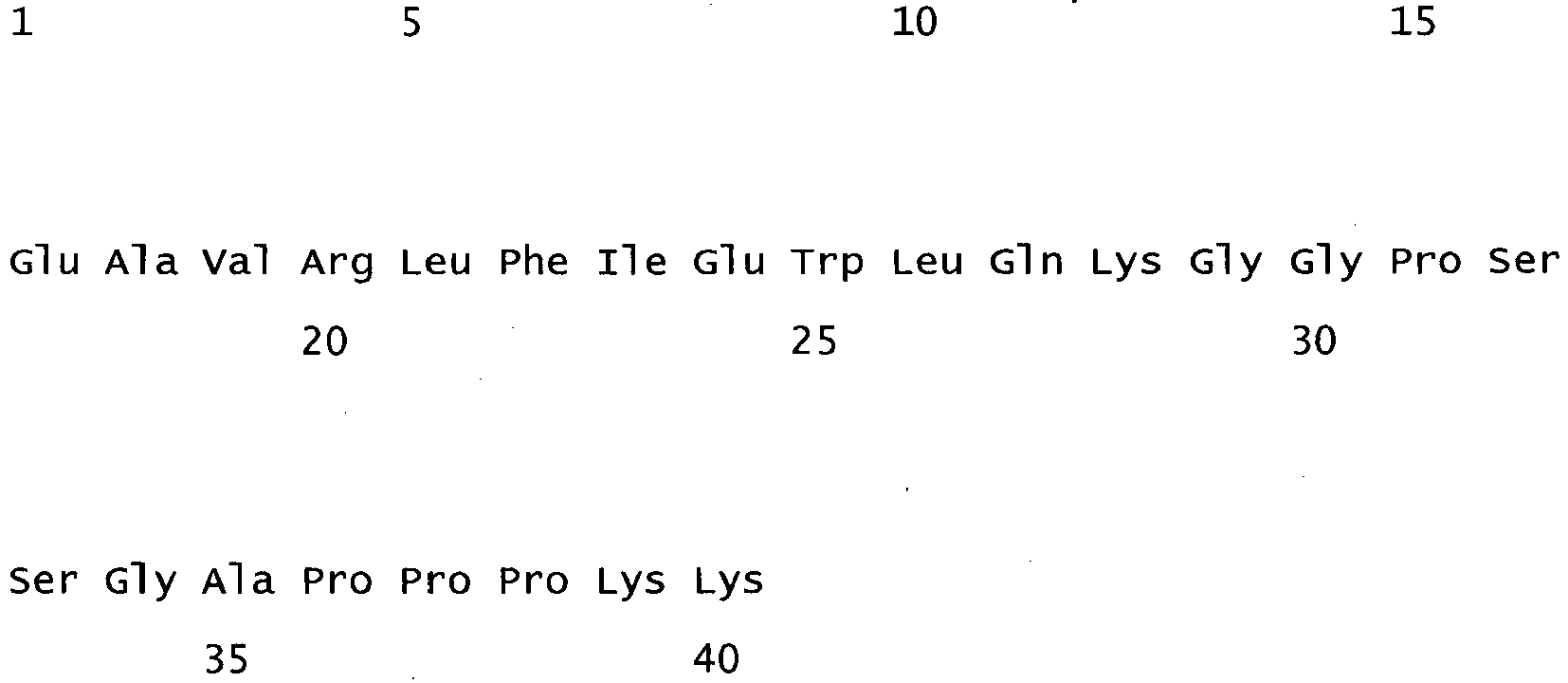
- <210> 107
<211> 39
<212> PRT
<213> Artificial sequence - <400> 107

- <210> 108
<211> 39
<212> PRT
<213> Artificial sequence - <400> 108

- <210> 109
<211> 40
<212> PRT
<213> Artificial sequence - <400> 109

- <210> 110
<211> 39
<212> PRT
<213> Artificial sequence - <400> 110

- <210> 111
<211> 40
<212> PRT
<213> Artificial sequence - <400> 111


- <210> 112
<211> 39
<212> PRT
<213> Artificial sequence - <400> 112

- <210> 113
<211> 40
<212> PRT
<213> Artificial sequence - <400> 113


- <210> 114
<211> 39
<212> PRT
<213> Artificial sequence - <400> 114

- <210> 115
<211> 39
<212> PRT
<213> Artificial sequence - <400> 115

- <210> 116
<211> 40
<212> PRT
<213> Artificial sequence - <400> 116
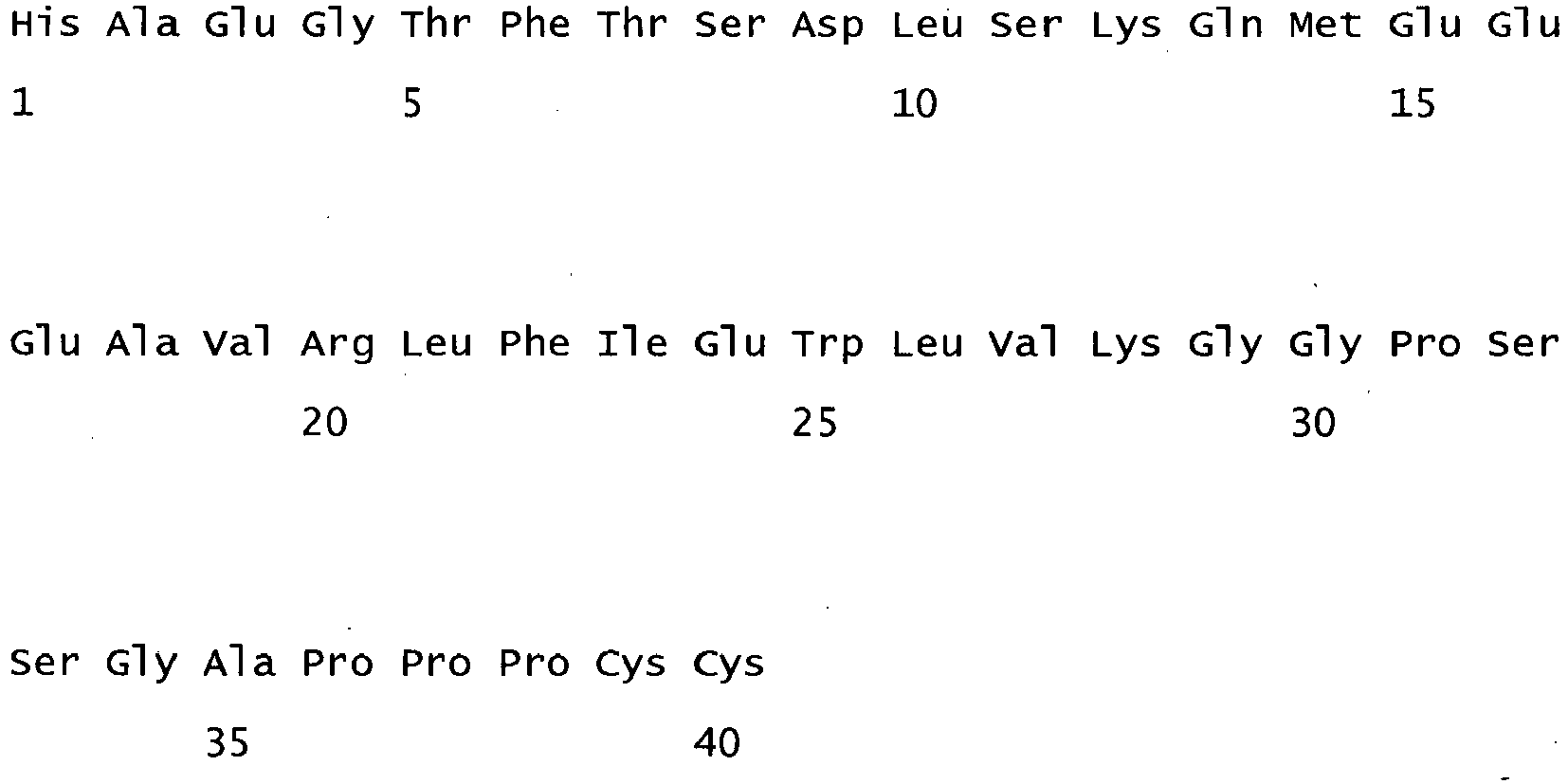
- <210> 117
<211> 39
<212> PRT
<213> Artificial sequence - <400> 117

- <210> 118
<211> 40
<212> PRT
<213> Artificial sequence - <400> 118

- <210> 119
<211> 39
<212> PRT
<213> Artificial sequence - <400> 119

- <210> 120
<211> 40
<212> PRT
<213> Artificial sequence - <400> 120


- <210> 121
<211> 39
<212> PRT
<213> Artificial sequence - <400> 121

- <210> 122
<211> 39
<212> PRT
<213> Artificial sequence - <400> 122


- <210> 123
<211> 40
<212> PRT
<213> Artificial sequence - <400> 123

- <210> 124
<211> 39
<212> PRT
<213> Artificial sequence - <400> 124

- <210> 125
<211> 40
<212> PRT
<213> Artificial sequence - <400> 125

- <210> 126
<211> 39
<212> PRT
<213> Artificial sequence - <400> 126

- <210> 127
<211> 40
<212> PRT
<213> Artificial sequence - <400> 127

- <210> 128
<211> 39
<212> PRT
<213> Artificial sequence - <400> 128

- <210> 129
<211> 39
<212> PRT
<213> Artificial sequence - <400> 129


- <210> 130
<211> 40
<212> PRT
<213> Artificial sequence - <400> 130
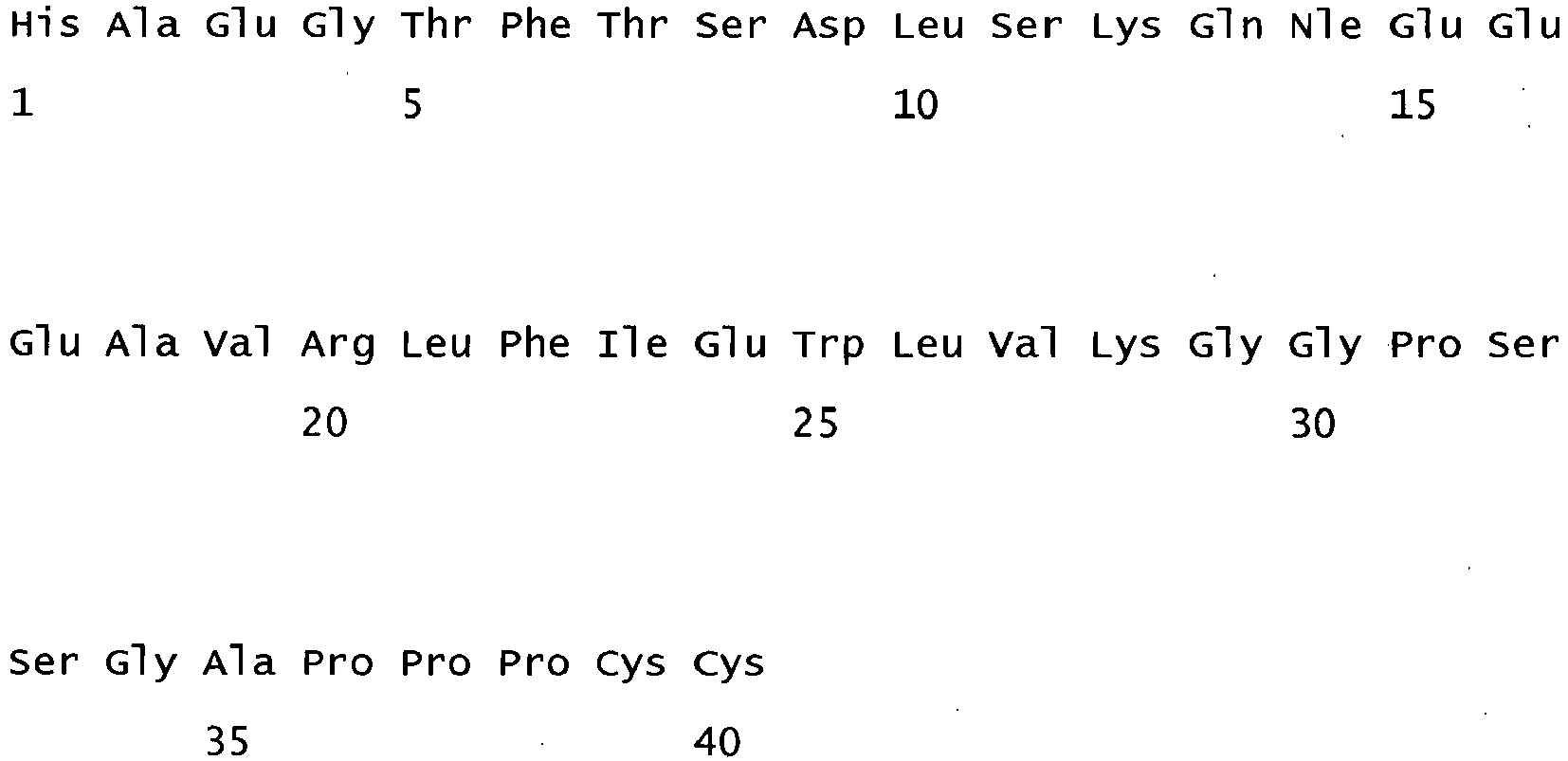
- <210> 131
<211> 39
<212> PRT
<213> Artificial sequence - <400> 131


- <210> 132
<211> 40
<212> PRT
<213> Artificial sequence - <400> 132

- <210> 133
<211> 39
<212> PRT
<213> Artificial sequence - <400> 133

- <210> 134
<211> 40
<212> PRT
<213> Artificial sequence - <400> 134

- <210> 135
<211> 39
<212> PRT
<213> Artificial sequence - <400> 135

- <210> 136
<211> 39
<212> PRT
<213> Artificial sequence - <400> 136


- <210> 137
<211> 40
<212> PRT
<213> Artificial sequence - <400> 137

- <210> 138
<211> 39
<212> PRT
<213> Artificial sequence - <400> 138


- <210> 139
<211> 40
<212> PRT
<213> Artificial sequence - <400> 139

- <210> 140
<211> 39
<212> PRT
<213> Artificial sequence - <400> 140


- <210> 141
<211> 40
<212> PRT
<213> Artificial sequence - <400> 141

B. Deprotection of the protecting groups and cleavage of polypeptides
To 1g resin having the polypeptide in the reactor vessel was added the cleavage solution in the following proportion.
| Solvents | Amount (mL) |
| Anisole | 2 |
| Methanol | 2 |
| Triisopropylsilane | 2 |
| Trifluoroacetic Acid | 6 |
C. Purification with high performance liquid chromatography and lyophilization
The resulting crude product was dissolved in 10% acetic acid solution, the solution was injected into the HPLC system for purification, followed by lyophilization to afford the product. The resulting polypeptide was analyzed and confirmed as the desired compound using Chromatography-Mass Spectrometry.
Column: luna C18 (2), 5 µ, 100Å
Detective wavelength: λ=220nm, Waters preparative system
| T (minute) | A: (0.05%TFA) CH3CN | B: (0.05TFA) H2O |
| 0 | 10% | 90% |
| 20 | 45% | 55% |
| 30 | 45% | 55% |
| 30.1 | 10% | 90% |
FIG. 1: LC-MS spectrum of SEQ ID No 95
| Series Number | Sequences | SEQ ID NO |
| HR1 | HGEGTFTSDL SKQMEEEAVR LFIEWLKNGG PSSGAPPPS | 4 |
| HR2 | HGEGTFTSDL SKQMEEEAVR LFIEWLKNGG PSSGAPPPC | 5 |
| HR3 | HGEGTFTSDL SKQMEEEAVR LFIEWLKNGG PSSGAPPPCC | 6 |
| HR4 | HGEGTFTSDL SKQMEEEAVR LFIEWLKNGG PSSGAPPPhC | 7 |
| HR5 | HGEGTFTSDL SKQMEEEAVR LFIEWLKNGG PSSGAPPPhChC | 8 |
| HR6 | HGEGTFTSDL SKQMEEEAVR LFIEWLKNGG PSSGAPPPK* | 9 |
| HR7 | HGEGTFTSDL SKQMEEEAVR LFIEWLKNGG PSSGAPPPK*K* | 10 |
| HR8 | HGEGTFTSDL SKQMEEEAVR LFIEWLKNGG PSSGAPPPC-NH2 | 11 |
| HR9 | HGEGTFTSDL SKQMEEEAVR LFIEWLKNGG PSSGAPPPCC-NH2 | 12 |
| HR10 | HGEGTFTSDL SKQMEEEAVR LFIEWLKNGG PSSGAPPPhC-NH2 | 13 |
| HR11 | HGEGTFTSDL SKQMEEEAVR LFIEWLKNGG PSSGAPPPhChC-NH2 | 14 |
| HR12 | HGEGTFTSDL SKQMEEEAVR LFIEWLKNGG PSSGAPPPK*-NH2 | 15 |
| HR13 | HGEGTFTSDL SKQMEEEAVR LFIEWLKNGG PSSGAPPPK*K*-NH2 | 16 |
| HR14 | HdAEGTFTSDL SKQMEEEAVR LFIEWLKNGG PSSGAPPPS | 17 |
| HR15 | HdAEGTFTSDL SKQMEEEAVR LFIEWLKNGG PSSGAPPPC | 18 |
| HR16 | HdAEGTFTSDL SKQMEEEAVR LFIEWLKNGG PSSGAPPPCC | 19 |
| HR17 | HdAEGTFTSDL SKQMEEEAVR LFIEWLKNGG PSSGAPPPhC | 20 |
| HR18 | HdAEGTFTSDL SKQMEEEAVR LFIEWLKNGG PSSGAPPPhChC | 21 |
| HR19 | HdAEGTFTSDL SKQMEEEAVR LFIEWLKNGG PSSGAPPPK* | 22 |
| HR20 | HdAEGTFTSDL SKQMEEEAVR LFIEWLKNGG PSSGAPPPK*K* | 23 |
| HR21 | HdAEGTFTSDL SKQMEEEAVR LFIEWLKNGG PSSGAPPPS-NH2 | 24 |
| HR22 | HdAEGTFTSDL SKQMEEEAVR LFIEWLKNGG PSSGAPPPC-NH2 | 25 |
| HR23 | HdAEGTFTSDL SKQMEEEAVR LFIEWLKNGG PSSGAPPPCC-NH2 | 26 |
| HR24 | HdAEGTFTSDL SKQMEEEAVR LFIEWLKNGG PSSGAPPPhC-NH2 | 27 |
| HR25 | HdAEGTFTSDL SKQMEEEAVR LFIEWLKNGG PSSGAPPPhChC-NH2 | 28 |
| HR26 | HdAEGTFTSDL SKQMEEEAVR LFIEWLKNGG PSSGAPPPK*-NH2 | 29 |
| HR27 | HdAEGTFTSDL SKQMEEEAVR LFIEWLKNGG PSSGAPPPK*K*-NH2 | 30 |
| HR28 | HGEGTFTSDL SKQNIeEEEAVR LFIEWLKNGG PSSGAPPPS | 31 |
| HR29 | HGEGTFTSDL SKQNIeEEEAVR LFIEWLKNGG PSSGAPPPC | 32 |
| HR30 | HGEGTFTSDL SKQNleEEEAVR LFIEWLKNGG PSSGAPPPCC | 33 |
| HR31 | HGEGTFTSDL SKQNleEEEAVR LFIEWLKNGG PSSGAPPPhC | 34 |
| HR32 | HGEGTFTSDL SKQNleEEEAVR LFIEWLKNGG PSSGAPPPhChC | 35 |
| HR33 | HGEGTFTSDL SKQNleEEEAVR LFIEWLKNGG PSSGAPPPK* | 36 |
| HR34 | HGEGTFTSDL SKQNleEEEAVR LFIEWLKNGG PSSGAPPPK*K* | 37 |
| HR35 | HGEGTFTSDL SKQNleEEEAVR LFIEWLKNGG PSSGAPPPS-NH2 | 38 |
| HR36 | HGEGTFTSDL SKQNleEEEAVR LFIEWLKNGG PSSGAPPPC-NH2 | 39 |
| HR37 | HGEGTFTSDL SKQNleEEEAVR LFIEWLKNGG PSSGAPPPCC-NH2 | 40 |
| HR38 | HGEGTFTSDL SKQNleEEEAVR LFIEWLKNGG PSSGAPPPhC-NH2 | 41 |
| HR39 | HGEGTFTSDL SKQNleEEEAVR LFIEWLKNGG PSSGAPPPhChC-NH2 | 42 |
| HR40 | HGEGTFTSDL SKQNleEEEAVR LFIEWLKNGG PSSGAPPPK*-NH2 | 43 |
| HR41 | HGEGTFTSDL SKQNleEEEAVR LFIEWLKNGG PSSGAPPPK*K*-NH2 | 44 |
| HR42 | HGEGTFTSDL SKQMEEEAVR LFIEWLKQGG PSSGAPPPS | 45 |
| HR43 | HGEGTFTSDL SKQMEEEAVR LFIEWLKQGG PSSGAPPPC | 46 |
| HR44 | HGEGTFTSDL SKQMEEEAVR LFIEWLKQGG PSSGAPPPCC | 47 |
| HR45 | HGEGTFTSDL SKQMEEEAVR LFIEWLKQGG PSSGAPPPhC | 48 |
| HR46 | HGEGTFTSDL SKQMEEEAVR LFIEWLKQGG PSSGAPPhChC | 49 |
| HR47 | HGEGTFTSDL SKQMEEEAVR LFIEWLKQGG PSSGAPPPK* | 50 |
| HR48 | HGEGTFTSDL SKQMEEEAVR LFIEWLKQGG PSSGAPPPK*K* | 51 |
| HR49 | HGEGTFTSDL SKQMEEEAVR LFIEWLKQGG PSSGAPPPS-NH2 | 52 |
| HR50 | HGEGTFTSDL SKQMEEEAVR LFIEWLKQGG PSSGAPPPC-NH2 | 53 |
| HR51 | HGEGTFTSDL SKQMEEEAVR LFIEWLKQGG PSSGAPPPCC-NH2 | 54 |
| HR52 | HGEGTFTSDL SKQMEEEAVR LFIEWLKQGG PSSGAPPPhC-NH2 | 55 |
| HR53 | HGEGTFTSDL SKQMEEEAVR LFIEWLKQGG PSSGAPPPhChC-NH2 | 56 |
| HR54 | HGEGTFTSDL SKQMEEEAVR LFIEWLKQGG PSSGAPPPK*-NH2 | 57 |
| HR55 | HGEGTFTSDL SKQMEEEAVR LFIEWLKQGG PSSGAPPPK*K*-NH2 | 58 |
| HR56 | HdAEGTFTSDL SKQNleEEEAVR LFIEWLKNGG PSSGAPPPS | 59 |
| HR57 | HdAEGTFTSDL SKQNleEEEAVR LFIEWLKNGG PSSGAPPPC | 60 |
| HR58 | HdAEGTFTSDL SKQNleEEEAVR LFIEWLKNGG PSSGAPPPCC | 61 |
| HR59 | HdAEGTFTSDL SKQMEEEAVR LFIEWLKNGG PSSGAPPPhC | 62 |
| HR60 | HdAEGTFTSDL SKQNleEEEAVR LFIEWLKNGG PSSGAPPPhChC | 63 |
| HR61 | HdAEGTFTSDL SKQNleEEEAVR LFIEWLKNGG PSSGAPPPK* | 64 |
| HR62 | HdAEGTFTSDL SKQNleEEEAVR LFIEWLKNGG PSSGAPPPK*K* | 65 |
| HR63 | HdAEGTFTSDL SKQNleEEEAVR LFIEWLKNGG PSSGAPPPS-NH2 | 66 |
| HR64 | HdAEGTFTSDL SKQNleEEEAVR LFIEWLKNGG PSSGAPPPC-NH2 | 67 |
| HR65 | HdAEGTFTSDL SKQNleEEEAVR LFIEWLKNGG PSSGAPPPCC-NH2 | 68 |
| HR66 | HdAEGTFTSDL SKQNleEEEAVR LFIEWLKNGG PSSGAPPPhC-NH2 | 69 |
| HR67 | HdAEGTFTSDL SKQNleEEEAVR LFIEWLKNGG PSSGAPPPhChC-NH2 | 70 |
| HR68 | HdAEGTFTSDL SKQNleEEEAVR LFIEWLKNGG PSSGAPPPK*-NH2 | 71 |
| HR69 | HdAEGTFTSDL SKQNleEEEAVR LFIEWLKNGG PSSGAPPPK*K*-NH2 | 72 |
| HR70 | HdAEGTFTSDL SKQMEEEAVR LFIEWLKQGG PSSGAPPPS | 73 |
| HR71 | HdAEGTFTSDL SKQMEEEAVR LFIEWLKQGG PSSGAPPPC | 74 |
| HR72 | HdAEGTFTSDL SKQMEEEAVR LFIEWLKQGG PSSGAPPPCC | 75 |
| HR73 | HdAEGTFTSDL SKQMEEEAVR LFIEWLKQGG PSSGAPPPhC | 76 |
| HR74 | HdAEGTFTSDL SKQMEEEAVR LFIEWLKQGG PSSGAPPPhChC | 77 |
| HR75 | HdAEGTFTSDL SKQMEEEAVR LFIEWLKQGG PSSGAPPPK* | 78 |
| HR76 | HdAEGTFTSDL SKQMEEEAVR LFIEWLKQGG PSSGAPPPK*K* | 79 |
| HR77 | HdAEGTFTSDL SKQMEEEAVR LFIEWLKQGG PSSGAPPPS-NH2 | 80 |
| HR78 | HdAEGTFTSDL SKQMEEEAVR LFIEWLKQGG PSSGAPPPC-NH2 | 81 |
| HR79 | HdAEGTFTSDL SKQMEEEAVR LFIEWLKQGG PSSGAPPPCC-NH2 | 82 |
| HR80 | HdAEGTFTSDL SKQMEEEAVR LFIEWLKQGG PSSGAPPPhC-NH2 | 83 |
| HR81 | HdAEGTFTSDL SKQMEEEAVR LFIEWLKQGG PSSGAPPPhChC-NH2 | 84 |
| HR82 | HdAEGTFTSDL SKQMEEEAVR LFIEWLKQGG PSSGAPPPK*-NH2 | 85 |
| HR83 | HdAEGTFTSDL SKQMEEEAVR LFIEWLKQGG PSSGAPPPK*K*-NH2 | 86 |
| HR84 | HdAEGTFTSDL SKQNleEEEAVR LFIEWLKQGG PSSGAPPPS | 87 |
| HR85 | HdAEGTFTSDL SKQNleEEEAVR LFIEWLKQGG PSSGAPPPC | 88 |
| HR86 | HdAEGTFTSDL SKQNleEEEAVR LFIEWLKQGG PSSGAPPPCC | 89 |
| HR87 | HdAEGTFTSDL SKQNleEEEAVR LFIEWLKQGG PSSGAPPPhC | 90 |
| HR88 | HdAEGTFTSDL SKQNleEEEAVR LFIEWLKQGG PSSGAPPPhChC | 91 |
| HR89 | HdAEGTFTSDL SKQNleEEEAVR LFIEWLKQGG PSSGAPPPK* | 92 |
| HR90 | HdAEGTFTSDL SKQNleEEEAVR LFIEWLKQGG PSSGAPPPK*K* | 93 |
| HR91 | HdAEGTFTSDL SKQMEEEAVR LFIEWLKQGG PSSGAPPPS-NH2 | 94 |
| HR92 | HdAEGTFTSDL SKQNleEEEAVR LFIEWLKQGG PSSGAPPPC-NH2 | 95 |
| HR93 | HdAEGTFTSDL SKQNleEEEAVR LFIEWLKQGG PSSGAPPPCC-NH2 | 96 |
| HR94 | HdAEGTFTSDL SKQNleEEEAVR LFIEWLKQGG PSSGAPPPhChC-NH2 | 97 |
| HR95 | HdAEGTFTSDL SKQNleEEEAVR LFIEWLKQGG PSSGAPPPK*-NH2 | 98 |
| HR96 | HdAEGTFTSDL SKQNleEEEAVR LFIEWLKQGG PSSGAPPPK*K*-NH2 | 99 |
| HR97 | HdAEGTFTSDL SKQNleEEEAVR LFIEWLQKGG PSSGAPPPS | 100 |
| HR98 | HdAEGTFTSDL SKQNleEEEAVR LFIEWLQKGG PSSGAPPPC | 101 |
| HR99 | HdAEGTFTSDL SKQNleEEEAVR LFIEWLQKGG PSSGAPPPCC | 102 |
| HR100 | HdAEGTFTSDL SKQNleEEEAVR LFIEWLQKGG PSSGAPPPhC | 103 |
| HR101 | HdAEGTFTSDL SKQNleEEEAVR LFIEWLQKGG PSSGAPPPhChC | 104 |
| HR102 | HdAEGTFTSDL SKQNleEEEAVR LFIEWLQKGG PSSGAPPPK* | 105 |
| HR103 | HdAEGTFTSDL SKQNleEEEAVR LFIEWLQKGG PSSGAPPPK*K* | 106 |
| HR104 | HdAEGTFTSDL SKQNleEEEAVR LFIEWLQKGG PSSGAPPPS-NH2 | 107 |
| HR105 | HdAEGTFTSDL SKQNleEEEAVR LFIEWLQKGG PSSGAPPPC-NH2 | 108 |
| HR106 | HdAEGTFTSDL SKQNleEEEAVR LFIEWLQKGG PSSGAPPPCC-NH2 | 109 |
| HR107 | HdAEGTFTSDL SKQNleEEEAVR LFIEWLQKGG PSSGAPPPhC-NH2 | 110 |
| HR108 | HdAEGTFTSDL SKQNleEEEAVR LFIEWLQKGG PSSGAPPPhChC-NH2 | 111 |
| HR109 | HdAEGTFTSDL SKQNleEEEAVR LFIEWLQKGG PSSGAPPPK*-NH2 | 112 |
| HR110 | HdAEGTFTSDL SKQNleEEEAVR LFIEWLQKGG PSSGAPPPK*K*-NH2 | 113 |
| HR111 | HdAEGTFTSDL SKQMEEEAVR LFIEWLVKGG PSSGAPPPS | 114 |
| HR112 | HdAEGTFTSDL SKQMEEEAVR LFIEWLVKGG PSSGAPPPC | 115 |
| HR113 | HdAEGTFTSDL SKQMEEEAVR LFIEWLVKGG PSSGAPPPCC | 116 |
| HR114 | HdAEGTFTSDL SKQMEEEAVR LFIEWLVKGG PSSGAPPPhC | 117 |
| HR115 | HdAEGTFTSDL SKQMEEEAVR LFIEWLVKGG PSSGAPPPhChC | 118 |
| HR116 | HdAEGTFTSDL SKQMEEEAVR LFIEWLVKGG PSSGAPPPK* | 119 |
| HR117 | HdAEGTFTSDL SKQMEEEAVR LFIEWLVKGG PSSGAPPPK*K* | 120 |
| HR118 | HdAEGTFTSDL SKQMEEEAVR LFIEWLVKGG PSSGAPPPS-NH2 | 121 |
| HR119 | HdAEGTFTSDL SKQMEEEAVR LFIEWLVKGG PSSGAPPPC-NH2 | 122 |
| HR120 | HdAEGTFTSDL SKQMEEEAVR LFIEWLVKGG PSSGAPPPCC-NH2 | 123 |
| HR121 | HdAEGTFTSDL SKQMEEEAVR LFIEWLVKGG PSSGAPPPhC-NH2 | 124 |
| HR122 | HdAEGTFTSDL SKQMEEEAVR LFIEWLVKGG PSSGAPPPhChC-NH2 | 125 |
| HR123 | HdAEGTFTSDL SKQMEEEAVR LFIEWLVKGG PSSGAPPPK*-NH2 | 126 |
| HR124 | HdAEGTFTSDL SKQMEEEAVR LFIEWLVKGG PSSGAPPPK*K*-NH2 | 127 |
| HR125 | HdAEGTFTSDL SKQNleEEEAVR LFIEWLVKGG PSSGAPPPS | 128 |
| HR126 | HdAEGTFTSDL SKQNleEEEAVR LFIEWLVKGG PSSGAPPPC | 129 |
| HR127 | HdAEGTFTSDL SKQNleEEEAVR LFIEWLVKGG PSSGAPPPCC | 130 |
| HR128 | HdAEGTFTSDL SKQNleEEEAVR LFIEWLVKGG PSSGAPPPhC | 131 |
| HR129 | HdAEGTFTSDL SKQNleEEEAVR LFIEWLVKGG PSSGAPPPhChC | 132 |
| HR130 | HdAEGTFTSDL SKQNleEEEAVR LFIEWLVKGG PSSGAPPPK* | 133 |
| HR131 | HdAEGTFTSDL SKQNleEEEAVR LFIEWLVKGG PSSGAPPPK*K* | 134 |
| HR132 | HdAEGTFTSDL SKQNleEEEAVR LFIEWLVKGG PSSGAPPPS-NH2 | 135 |
| HR133 | HdAEGTFTSDL SKQNleEEEAVR LFIEWLVKGG PSSGAPPPC-NH2 | 136 |
| HR134 | HdAEGTFTSDL SKQNleEEEAVR LFIEWLVKGG PSSGAPPPCC-NH2 | 137 |
| HR135 | HdAEGTFTSDL SKQNleEEEAVR LFIEWLVKGG PSSGAPPPhC-NH2 | 138 |
| HR136 | HdAEGTFTSDL SKQNleEEEAVR LFIEWLVKGG PSSGAPPPhChC-NH2 | 139 |
| HR137 | HdAEGTFTSDL SKQNleEEEAVR LFIEWLVKGG PSSGAPPPK*-NH2 | 140 |
| HR138 | HdAEGTFTSDL SKQNleEEEAVR LFIEWLVKGG PSSGAPPPK*K*-NH2 | 141 |
Claims (4)
- A modified exendin, wherein the amino acid sequence of the modified exendin is selected from :SEQ ID N° 95 : HdAEGTFTSDL SKQNleEEEAVR LFIEWLKQGG PSSGAPPPC-NH2,SEQ ID N°88 : HdAEGTFTSDL SKQNleEEEAVR LFIEWLKQGG PSSGAPPPC,SEQ ID N°89 : HdAEGTFTSDL SKQNleEEEAVR LFIEWLKQGG PSSGAPPPCC andSEO ID N°96 HdAEGTFTSDL SKQNleEEEAVR LFIEWLKQGG PSSGAPPPCC-NH2
- The modified exendin of claim 1 further comprising polyethylene glycol with a molecular weight of 20,000 to 60,000 daltons for modification.
- The modified exendin of claim 2, wherein the polyethylene glycol is connected to a regiospecific group at the carboxyl terminal end of the amino acid sequence of the modified exendin.
- A modified exendin or pharmaceutically acceptable salts thereof of any one of Claims 1 to 3 for use in treatment of type 2 diabetes of a patient.
Applications Claiming Priority (2)
| Application Number | Priority Date | Filing Date | Title |
|---|---|---|---|
| CN200510038102 | 2005-01-14 | ||
| EP06705452A EP1845105A4 (en) | 2005-01-14 | 2006-01-10 | Modified exendins and uses thereof |
Related Parent Applications (2)
| Application Number | Title | Priority Date | Filing Date |
|---|---|---|---|
| EP06705452.8 Division | 2006-01-10 | ||
| EP06705452A Division EP1845105A4 (en) | 2005-01-14 | 2006-01-10 | Modified exendins and uses thereof |
Publications (3)
| Publication Number | Publication Date |
|---|---|
| EP2505207A2 EP2505207A2 (en) | 2012-10-03 |
| EP2505207A3 EP2505207A3 (en) | 2012-11-14 |
| EP2505207B1 true EP2505207B1 (en) | 2015-04-22 |
Family
ID=36677361
Family Applications (2)
| Application Number | Title | Priority Date | Filing Date |
|---|---|---|---|
| EP06705452A Withdrawn EP1845105A4 (en) | 2005-01-14 | 2006-01-10 | Modified exendins and uses thereof |
| EP20120157967 Expired - Lifetime EP2505207B1 (en) | 2005-01-14 | 2006-01-10 | Modified exendins and uses thereof |
Family Applications Before (1)
| Application Number | Title | Priority Date | Filing Date |
|---|---|---|---|
| EP06705452A Withdrawn EP1845105A4 (en) | 2005-01-14 | 2006-01-10 | Modified exendins and uses thereof |
Country Status (7)
| Country | Link |
|---|---|
| US (1) | US8097586B2 (en) |
| EP (2) | EP1845105A4 (en) |
| JP (2) | JP4785206B2 (en) |
| CN (1) | CN100540565C (en) |
| CA (1) | CA2603630C (en) |
| ES (1) | ES2541633T3 (en) |
| WO (1) | WO2006074600A1 (en) |
Families Citing this family (36)
| Publication number | Priority date | Publication date | Assignee | Title |
|---|---|---|---|---|
| US20090318353A1 (en) * | 2006-08-25 | 2009-12-24 | Novo Nordisk A/S | Acylated Exendin-4 Compounds |
| WO2008116294A1 (en) * | 2007-03-23 | 2008-10-02 | Matregen Corp. | Exendin analogs |
| US8420598B2 (en) | 2007-04-20 | 2013-04-16 | B & L Delipharm Corp. | Mono modified exendin with polyethylene glycol or its derivatives and uses thereof |
| WO2008148839A2 (en) | 2007-06-08 | 2008-12-11 | Ascendis Pharma As | Long-acting polymeric prodrugs of exendin |
| US20100256056A1 (en) * | 2007-09-07 | 2010-10-07 | Zheng Xin Dong | Analogues of exendin-4 and exendin-3 |
| RU2461564C2 (en) * | 2008-02-06 | 2012-09-20 | Байокон Лимитид | Method of purifying cyclic or acyclic peptide |
| TWI451876B (en) | 2008-06-13 | 2014-09-11 | Lilly Co Eli | Pegylated insulin lispro compounds |
| CN101870728A (en) * | 2009-04-23 | 2010-10-27 | 派格生物医药(苏州)有限公司 | Novel exendin variants and conjugates thereof |
| JP5832439B2 (en) * | 2009-11-13 | 2015-12-16 | サノフィ−アベンティス・ドイチュラント・ゲゼルシャフト・ミット・ベシュレンクテル・ハフツング | Pharmaceutical composition comprising a GLP-1 agonist, insulin and methionine |
| RU2422461C1 (en) * | 2010-02-09 | 2011-06-27 | Федеральное государственное образовательное учреждение высшего профессионального образования Санкт-Петербургский государственный университет | Exenatid analogues |
| CN102397558B (en) * | 2010-09-09 | 2013-08-14 | 中国人民解放军军事医学科学院毒物药物研究所 | Positioning pegylation modified compound of Exendin-4 analog and application thereof |
| CN102786590A (en) * | 2011-05-19 | 2012-11-21 | 江苏豪森药业股份有限公司 | Branching-type PEG-modified GLP-1 analogs and pharmaceutically acceptable salts thereof |
| WO2013003449A2 (en) * | 2011-06-27 | 2013-01-03 | Phasebio Pharmaceuticals, Inc. | Methods of treatment with glp-1 receptor agonists |
| CN102617728B (en) * | 2012-04-13 | 2013-07-03 | 上海交通大学医学院附属瑞金医院 | A kind of preparation method of 18F labeled product of Exendin-4 |
| UA116217C2 (en) | 2012-10-09 | 2018-02-26 | Санофі | Exendin-4 derivatives as dual glp1/glucagon agonists |
| HUE035803T2 (en) | 2012-12-21 | 2018-05-28 | Sanofi Sa | Dual glp1/gip or trigonal glp1/gip/glucagon agonists |
| US10450343B2 (en) | 2013-03-21 | 2019-10-22 | Sanofi-Aventis Deutschland Gmbh | Synthesis of cyclic imide containing peptide products |
| HUE034308T2 (en) | 2013-03-21 | 2018-02-28 | Sanofi Aventis Deutschland | Synthesis of hydantoin containing peptide products |
| WO2015086728A1 (en) | 2013-12-13 | 2015-06-18 | Sanofi | Exendin-4 peptide analogues as dual glp-1/gip receptor agonists |
| EP3080154B1 (en) | 2013-12-13 | 2018-02-07 | Sanofi | Dual glp-1/gip receptor agonists |
| WO2015086730A1 (en) | 2013-12-13 | 2015-06-18 | Sanofi | Non-acylated exendin-4 peptide analogues |
| TW201609797A (en) | 2013-12-13 | 2016-03-16 | 賽諾菲公司 | Dual GLP-1/glucagon receptor agonists |
| BR112016017402A2 (en) * | 2014-02-21 | 2017-10-17 | Medimmune Ltd | anti-pcsk9 ~ glp-1 fusions and methods for use |
| TW201625668A (en) | 2014-04-07 | 2016-07-16 | 賽諾菲公司 | Exendin-4 derivatives as peptidic dual GLP-1/glucagon receptor agonists |
| TW201625670A (en) | 2014-04-07 | 2016-07-16 | 賽諾菲公司 | Dual GLP-1/glucagon receptor agonists derived from EXENDIN-4 |
| TW201625669A (en) | 2014-04-07 | 2016-07-16 | 賽諾菲公司 | Peptidic dual GLP-1/glucagon receptor agonists derived from Exendin-4 |
| US9932381B2 (en) | 2014-06-18 | 2018-04-03 | Sanofi | Exendin-4 derivatives as selective glucagon receptor agonists |
| AR105319A1 (en) | 2015-06-05 | 2017-09-27 | Sanofi Sa | PROPHARMS THAT INCLUDE A DUAL AGONIST GLU-1 / GLUCAGON CONJUGATE HIALURONIC ACID CONNECTOR |
| TW201706291A (en) | 2015-07-10 | 2017-02-16 | 賽諾菲公司 | New EXENDIN-4 derivatives as selective peptidic dual GLP-1/glucagon receptor agonists |
| CA3016814A1 (en) * | 2016-03-16 | 2017-09-21 | Prolynx Llc | Extended release conjugates of exenatide analogs |
| CN107778361B (en) * | 2016-08-30 | 2021-07-09 | 上海交通大学 | Polypeptide HL-39 and its preparation and application |
| CN107952064B (en) * | 2016-10-14 | 2023-10-20 | 江苏豪森药业集团有限公司 | Pharmaceutical preparations containing polyethylene glycol loxenatide and preparation methods thereof |
| CN109929025A (en) * | 2017-12-18 | 2019-06-25 | 江苏豪森药业集团有限公司 | A kind of preparation method of the polyethylene glycol Luo Saina peptide based on kinetics |
| GB201816639D0 (en) * | 2018-10-12 | 2018-11-28 | Heptares Therapeutics Ltd | GLP-1 Receptor Antagonist |
| BR112021008180A2 (en) | 2018-10-30 | 2021-08-03 | Jianning Liu | glp-1 polypeptide having glp-1 receptor agonist activity and use thereof |
| MX2021011997A (en) | 2019-04-05 | 2021-11-04 | Prolynx Llc | Improved conjugation linkers. |
Family Cites Families (15)
| Publication number | Priority date | Publication date | Assignee | Title |
|---|---|---|---|---|
| US5118A (en) | 1847-05-15 | hickok | ||
| US5545618A (en) | 1990-01-24 | 1996-08-13 | Buckley; Douglas I. | GLP-1 analogs useful for diabetes treatment |
| US5424286A (en) | 1993-05-24 | 1995-06-13 | Eng; John | Exendin-3 and exendin-4 polypeptides, and pharmaceutical compositions comprising same |
| AU723694B2 (en) * | 1996-06-05 | 2000-08-31 | Roche Diagnostics Gmbh | Exendin analogues, processes for their preparation and medicaments containing them |
| DE69740096D1 (en) | 1996-08-08 | 2011-02-17 | Amylin Pharmaceuticals Inc | Pharmaceutical composition with an exendin-4-peptide |
| WO1998043658A1 (en) | 1997-03-31 | 1998-10-08 | Eli Lilly And Company | Glucagon-like peptide-1 analogs |
| WO2000015224A1 (en) | 1998-09-17 | 2000-03-23 | Eli Lilly And Company | Protein formulations |
| BR0010705A (en) * | 1999-04-30 | 2002-02-05 | Amylin Pharmaceuticals Inc | Modified exendins and exendin agonists |
| EP1076066A1 (en) | 1999-07-12 | 2001-02-14 | Zealand Pharmaceuticals A/S | Peptides for lowering blood glucose levels |
| DE60137876D1 (en) | 2000-06-16 | 2009-04-16 | Lilly Co Eli | Glucagon-like peptide-1 analogs |
| AR038102A1 (en) | 2002-01-08 | 2004-12-29 | Lilly Co Eli | GLUCAGON TYPE 1 PEPTIDE EXTENDED ANALOGS |
| US7105489B2 (en) * | 2002-01-22 | 2006-09-12 | Amylin Pharmaceuticals, Inc. | Methods and compositions for treating polycystic ovary syndrome |
| CA2497794A1 (en) | 2002-09-06 | 2004-03-18 | Bayer Pharmaceuticals Corporation | Modified glp-1 receptor agonists and their pharmacological methods of use |
| US6969702B2 (en) * | 2002-11-20 | 2005-11-29 | Neuronova Ab | Compounds and methods for increasing neurogenesis |
| WO2004089280A2 (en) * | 2003-04-08 | 2004-10-21 | Yeda Research And Development Co. Ltd. | Reversible pegylated drugs |
-
2006
- 2006-01-10 US US11/813,917 patent/US8097586B2/en active Active
- 2006-01-10 ES ES12157967.6T patent/ES2541633T3/en not_active Expired - Lifetime
- 2006-01-10 EP EP06705452A patent/EP1845105A4/en not_active Withdrawn
- 2006-01-10 WO PCT/CN2006/000029 patent/WO2006074600A1/en not_active Ceased
- 2006-01-10 EP EP20120157967 patent/EP2505207B1/en not_active Expired - Lifetime
- 2006-01-10 CA CA2603630A patent/CA2603630C/en not_active Expired - Lifetime
- 2006-01-10 CN CNB2006800004114A patent/CN100540565C/en not_active Expired - Lifetime
- 2006-01-10 JP JP2007550660A patent/JP4785206B2/en not_active Expired - Fee Related
-
2011
- 2011-03-16 JP JP2011057388A patent/JP5528380B2/en not_active Expired - Fee Related
Also Published As
| Publication number | Publication date |
|---|---|
| US20100009904A1 (en) | 2010-01-14 |
| EP2505207A3 (en) | 2012-11-14 |
| CN1976948A (en) | 2007-06-06 |
| CA2603630A1 (en) | 2006-07-20 |
| JP5528380B2 (en) | 2014-06-25 |
| CA2603630C (en) | 2015-06-09 |
| ES2541633T3 (en) | 2015-07-22 |
| EP1845105A4 (en) | 2009-02-18 |
| US8097586B2 (en) | 2012-01-17 |
| EP2505207A2 (en) | 2012-10-03 |
| CN100540565C (en) | 2009-09-16 |
| WO2006074600A1 (en) | 2006-07-20 |
| JP2011173886A (en) | 2011-09-08 |
| EP1845105A1 (en) | 2007-10-17 |
| HK1095045A1 (en) | 2007-04-20 |
| JP2008526899A (en) | 2008-07-24 |
| JP4785206B2 (en) | 2011-10-05 |
Similar Documents
| Publication | Publication Date | Title |
|---|---|---|
| US8097586B2 (en) | Modified exedins and uses thereof | |
| US8716221B2 (en) | Modified exendins and uses thereof | |
| EP1143989B1 (en) | Exendins for glucagon suppression | |
| JP4716641B2 (en) | Glucagon-like peptide-1 analog | |
| JP2006520818A (en) | Polyethylene glycol-linked GLP-1 compound | |
| JP2006520818A5 (en) | ||
| WO1999025727A2 (en) | Novel exendin agonist compounds | |
| EP1032587A1 (en) | Novel exendin agonist compounds | |
| CN102397558A (en) | Positioning pegylation modifier of Exendin-4 analogue and application thereof | |
| JP2023525260A (en) | Polypeptide derivative having dual receptor agonist activity and use thereof | |
| CN112898404A (en) | Long-acting modified glucagon peptide analogue or salt thereof and application thereof | |
| WO2024213022A1 (en) | Incretin analogues and preparation method therefor, and application | |
| AU782977B2 (en) | Methods for regulating gastrointestinal motility | |
| CN119488582A (en) | A GLP-1 and PYY twin drug and its preparation method and application | |
| HK1095045B (en) | Modified exendins and uses thereof |
Legal Events
| Date | Code | Title | Description |
|---|---|---|---|
| PUAI | Public reference made under article 153(3) epc to a published international application that has entered the european phase |
Free format text: ORIGINAL CODE: 0009012 |
|
| 17P | Request for examination filed |
Effective date: 20120330 |
|
| AC | Divisional application: reference to earlier application |
Ref document number: 1845105 Country of ref document: EP Kind code of ref document: P |
|
| AK | Designated contracting states |
Kind code of ref document: A2 Designated state(s): AT BE BG CH CY CZ DE DK EE ES FI FR GB GR HU IE IS IT LI LT LU LV MC NL PL PT RO SE SI SK TR |
|
| PUAL | Search report despatched |
Free format text: ORIGINAL CODE: 0009013 |
|
| RIC1 | Information provided on ipc code assigned before grant |
Ipc: A61K 38/22 20060101AFI20121001BHEP Ipc: A61K 47/48 20060101ALI20121001BHEP Ipc: C07K 14/575 20060101ALI20121001BHEP |
|
| AK | Designated contracting states |
Kind code of ref document: A3 Designated state(s): AT BE BG CH CY CZ DE DK EE ES FI FR GB GR HU IE IS IT LI LT LU LV MC NL PL PT RO SE SI SK TR |
|
| 17Q | First examination report despatched |
Effective date: 20130917 |
|
| GRAP | Despatch of communication of intention to grant a patent |
Free format text: ORIGINAL CODE: EPIDOSNIGR1 |
|
| INTG | Intention to grant announced |
Effective date: 20141113 |
|
| GRAS | Grant fee paid |
Free format text: ORIGINAL CODE: EPIDOSNIGR3 |
|
| GRAA | (expected) grant |
Free format text: ORIGINAL CODE: 0009210 |
|
| AC | Divisional application: reference to earlier application |
Ref document number: 1845105 Country of ref document: EP Kind code of ref document: P |
|
| AK | Designated contracting states |
Kind code of ref document: B1 Designated state(s): AT BE BG CH CY CZ DE DK EE ES FI FR GB GR HU IE IS IT LI LT LU LV MC NL PL PT RO SE SI SK TR |
|
| REG | Reference to a national code |
Ref country code: GB Ref legal event code: FG4D |
|
| REG | Reference to a national code |
Ref country code: CH Ref legal event code: EP |
|
| REG | Reference to a national code |
Ref country code: AT Ref legal event code: REF Ref document number: 722793 Country of ref document: AT Kind code of ref document: T Effective date: 20150515 |
|
| REG | Reference to a national code |
Ref country code: IE Ref legal event code: FG4D |
|
| REG | Reference to a national code |
Ref country code: DE Ref legal event code: R096 Ref document number: 602006045258 Country of ref document: DE Effective date: 20150603 |
|
| REG | Reference to a national code |
Ref country code: ES Ref legal event code: FG2A Ref document number: 2541633 Country of ref document: ES Kind code of ref document: T3 Effective date: 20150722 Ref country code: NL Ref legal event code: T3 |
|
| REG | Reference to a national code |
Ref country code: NL Ref legal event code: T3 |
|
| REG | Reference to a national code |
Ref country code: SE Ref legal event code: TRGR |
|
| REG | Reference to a national code |
Ref country code: AT Ref legal event code: MK05 Ref document number: 722793 Country of ref document: AT Kind code of ref document: T Effective date: 20150422 |
|
| REG | Reference to a national code |
Ref country code: LT Ref legal event code: MG4D |
|
| PG25 | Lapsed in a contracting state [announced via postgrant information from national office to epo] |
Ref country code: FI Free format text: LAPSE BECAUSE OF FAILURE TO SUBMIT A TRANSLATION OF THE DESCRIPTION OR TO PAY THE FEE WITHIN THE PRESCRIBED TIME-LIMIT Effective date: 20150422 Ref country code: PT Free format text: LAPSE BECAUSE OF FAILURE TO SUBMIT A TRANSLATION OF THE DESCRIPTION OR TO PAY THE FEE WITHIN THE PRESCRIBED TIME-LIMIT Effective date: 20150824 Ref country code: LT Free format text: LAPSE BECAUSE OF FAILURE TO SUBMIT A TRANSLATION OF THE DESCRIPTION OR TO PAY THE FEE WITHIN THE PRESCRIBED TIME-LIMIT Effective date: 20150422 |
|
| PG25 | Lapsed in a contracting state [announced via postgrant information from national office to epo] |
Ref country code: GR Free format text: LAPSE BECAUSE OF FAILURE TO SUBMIT A TRANSLATION OF THE DESCRIPTION OR TO PAY THE FEE WITHIN THE PRESCRIBED TIME-LIMIT Effective date: 20150723 Ref country code: IS Free format text: LAPSE BECAUSE OF FAILURE TO SUBMIT A TRANSLATION OF THE DESCRIPTION OR TO PAY THE FEE WITHIN THE PRESCRIBED TIME-LIMIT Effective date: 20150822 Ref country code: LV Free format text: LAPSE BECAUSE OF FAILURE TO SUBMIT A TRANSLATION OF THE DESCRIPTION OR TO PAY THE FEE WITHIN THE PRESCRIBED TIME-LIMIT Effective date: 20150422 Ref country code: AT Free format text: LAPSE BECAUSE OF FAILURE TO SUBMIT A TRANSLATION OF THE DESCRIPTION OR TO PAY THE FEE WITHIN THE PRESCRIBED TIME-LIMIT Effective date: 20150422 |
|
| REG | Reference to a national code |
Ref country code: FR Ref legal event code: PLFP Year of fee payment: 11 |
|
| REG | Reference to a national code |
Ref country code: DE Ref legal event code: R097 Ref document number: 602006045258 Country of ref document: DE |
|
| PG25 | Lapsed in a contracting state [announced via postgrant information from national office to epo] |
Ref country code: EE Free format text: LAPSE BECAUSE OF FAILURE TO SUBMIT A TRANSLATION OF THE DESCRIPTION OR TO PAY THE FEE WITHIN THE PRESCRIBED TIME-LIMIT Effective date: 20150422 Ref country code: DK Free format text: LAPSE BECAUSE OF FAILURE TO SUBMIT A TRANSLATION OF THE DESCRIPTION OR TO PAY THE FEE WITHIN THE PRESCRIBED TIME-LIMIT Effective date: 20150422 |
|
| PLBE | No opposition filed within time limit |
Free format text: ORIGINAL CODE: 0009261 |
|
| STAA | Information on the status of an ep patent application or granted ep patent |
Free format text: STATUS: NO OPPOSITION FILED WITHIN TIME LIMIT |
|
| PG25 | Lapsed in a contracting state [announced via postgrant information from national office to epo] |
Ref country code: RO Free format text: LAPSE BECAUSE OF NON-PAYMENT OF DUE FEES Effective date: 20150422 Ref country code: PL Free format text: LAPSE BECAUSE OF FAILURE TO SUBMIT A TRANSLATION OF THE DESCRIPTION OR TO PAY THE FEE WITHIN THE PRESCRIBED TIME-LIMIT Effective date: 20150422 Ref country code: CZ Free format text: LAPSE BECAUSE OF FAILURE TO SUBMIT A TRANSLATION OF THE DESCRIPTION OR TO PAY THE FEE WITHIN THE PRESCRIBED TIME-LIMIT Effective date: 20150422 Ref country code: SK Free format text: LAPSE BECAUSE OF FAILURE TO SUBMIT A TRANSLATION OF THE DESCRIPTION OR TO PAY THE FEE WITHIN THE PRESCRIBED TIME-LIMIT Effective date: 20150422 |
|
| 26N | No opposition filed |
Effective date: 20160125 |
|
| PG25 | Lapsed in a contracting state [announced via postgrant information from national office to epo] |
Ref country code: SI Free format text: LAPSE BECAUSE OF FAILURE TO SUBMIT A TRANSLATION OF THE DESCRIPTION OR TO PAY THE FEE WITHIN THE PRESCRIBED TIME-LIMIT Effective date: 20150422 Ref country code: BE Free format text: LAPSE BECAUSE OF NON-PAYMENT OF DUE FEES Effective date: 20160131 |
|
| PG25 | Lapsed in a contracting state [announced via postgrant information from national office to epo] |
Ref country code: BE Free format text: LAPSE BECAUSE OF FAILURE TO SUBMIT A TRANSLATION OF THE DESCRIPTION OR TO PAY THE FEE WITHIN THE PRESCRIBED TIME-LIMIT Effective date: 20150422 Ref country code: LU Free format text: LAPSE BECAUSE OF FAILURE TO SUBMIT A TRANSLATION OF THE DESCRIPTION OR TO PAY THE FEE WITHIN THE PRESCRIBED TIME-LIMIT Effective date: 20160110 |
|
| PG25 | Lapsed in a contracting state [announced via postgrant information from national office to epo] |
Ref country code: MC Free format text: LAPSE BECAUSE OF FAILURE TO SUBMIT A TRANSLATION OF THE DESCRIPTION OR TO PAY THE FEE WITHIN THE PRESCRIBED TIME-LIMIT Effective date: 20150422 |
|
| REG | Reference to a national code |
Ref country code: IE Ref legal event code: MM4A |
|
| REG | Reference to a national code |
Ref country code: FR Ref legal event code: PLFP Year of fee payment: 12 |
|
| PG25 | Lapsed in a contracting state [announced via postgrant information from national office to epo] |
Ref country code: IE Free format text: LAPSE BECAUSE OF NON-PAYMENT OF DUE FEES Effective date: 20160110 |
|
| REG | Reference to a national code |
Ref country code: FR Ref legal event code: PLFP Year of fee payment: 13 |
|
| PG25 | Lapsed in a contracting state [announced via postgrant information from national office to epo] |
Ref country code: CY Free format text: LAPSE BECAUSE OF FAILURE TO SUBMIT A TRANSLATION OF THE DESCRIPTION OR TO PAY THE FEE WITHIN THE PRESCRIBED TIME-LIMIT Effective date: 20150422 Ref country code: HU Free format text: LAPSE BECAUSE OF FAILURE TO SUBMIT A TRANSLATION OF THE DESCRIPTION OR TO PAY THE FEE WITHIN THE PRESCRIBED TIME-LIMIT; INVALID AB INITIO Effective date: 20060110 |
|
| PG25 | Lapsed in a contracting state [announced via postgrant information from national office to epo] |
Ref country code: TR Free format text: LAPSE BECAUSE OF FAILURE TO SUBMIT A TRANSLATION OF THE DESCRIPTION OR TO PAY THE FEE WITHIN THE PRESCRIBED TIME-LIMIT Effective date: 20150422 |
|
| REG | Reference to a national code |
Ref country code: DE Ref legal event code: R082 Ref document number: 602006045258 Country of ref document: DE Representative=s name: SCHMID, MICHAEL, DIPL.-ING. UNIV., DE Ref country code: DE Ref legal event code: R081 Ref document number: 602006045258 Country of ref document: DE Owner name: JIANGSU HANSOH PHARMACEUTICAL GROUP CO., LTD.,, CN Free format text: FORMER OWNER: WUXI GRANDCHAMP PHARMACEUTICAL TECHNOLOGY CO., LTD., WUXI, JIANGSU, CN |
|
| PG25 | Lapsed in a contracting state [announced via postgrant information from national office to epo] |
Ref country code: BG Free format text: LAPSE BECAUSE OF FAILURE TO SUBMIT A TRANSLATION OF THE DESCRIPTION OR TO PAY THE FEE WITHIN THE PRESCRIBED TIME-LIMIT Effective date: 20150422 |
|
| REG | Reference to a national code |
Ref country code: ES Ref legal event code: PC2A Owner name: JIANGSU HANSOH PHARMACEUTICAL GROUP CO., LTD Effective date: 20180730 Ref country code: ES Ref legal event code: PC2A Effective date: 20180730 |
|
| REG | Reference to a national code |
Ref country code: CH Ref legal event code: NV Representative=s name: PROI WORLD INTELLECTUAL PROPERTY GMBH, CH |
|
| REG | Reference to a national code |
Ref country code: GB Ref legal event code: 732E Free format text: REGISTERED BETWEEN 20180726 AND 20180801 |
|
| REG | Reference to a national code |
Ref country code: CH Ref legal event code: PUE Owner name: JIANGSU HANSOH PHARMACEUTICAL GROUP CO., LTD., CN Free format text: FORMER OWNER: WUXI GRANDCHAMP PHARMACEUTICAL TECHNOLOGY CO., LTD., CN |
|
| REG | Reference to a national code |
Ref country code: FR Ref legal event code: TP Owner name: JIANGSU HANSOH PHARMACEUTICAL GROUP CO. LTD., CN Effective date: 20180921 |
|
| REG | Reference to a national code |
Ref country code: NL Ref legal event code: PD Owner name: JIANGSU HANSOH PHARMACEUTICAL GROUP CO., LTD.; CN Free format text: DETAILS ASSIGNMENT: CHANGE OF OWNER(S), ASSIGNMENT; FORMER OWNER NAME: WUXI GRANDCHAMP PHARMACEUTICAL TECHNOLOGY CO., LTD. Effective date: 20181109 |
|
| PGFP | Annual fee paid to national office [announced via postgrant information from national office to epo] |
Ref country code: NL Payment date: 20221222 Year of fee payment: 18 |
|
| PGFP | Annual fee paid to national office [announced via postgrant information from national office to epo] |
Ref country code: FR Payment date: 20230125 Year of fee payment: 18 Ref country code: ES Payment date: 20230206 Year of fee payment: 18 Ref country code: CH Payment date: 20230130 Year of fee payment: 18 |
|
| PGFP | Annual fee paid to national office [announced via postgrant information from national office to epo] |
Ref country code: SE Payment date: 20230117 Year of fee payment: 18 Ref country code: IT Payment date: 20230110 Year of fee payment: 18 Ref country code: GB Payment date: 20230123 Year of fee payment: 18 Ref country code: DE Payment date: 20230112 Year of fee payment: 18 |
|
| P01 | Opt-out of the competence of the unified patent court (upc) registered |
Effective date: 20230623 |
|
| REG | Reference to a national code |
Ref country code: DE Ref legal event code: R119 Ref document number: 602006045258 Country of ref document: DE |
|
| REG | Reference to a national code |
Ref country code: CH Ref legal event code: PL |
|
| REG | Reference to a national code |
Ref country code: SE Ref legal event code: EUG |
|
| REG | Reference to a national code |
Ref country code: NL Ref legal event code: MM Effective date: 20240201 |
|
| GBPC | Gb: european patent ceased through non-payment of renewal fee |
Effective date: 20240110 |
|
| PG25 | Lapsed in a contracting state [announced via postgrant information from national office to epo] |
Ref country code: DE Free format text: LAPSE BECAUSE OF NON-PAYMENT OF DUE FEES Effective date: 20240801 |
|
| PG25 | Lapsed in a contracting state [announced via postgrant information from national office to epo] |
Ref country code: GB Free format text: LAPSE BECAUSE OF NON-PAYMENT OF DUE FEES Effective date: 20240110 |
|
| PG25 | Lapsed in a contracting state [announced via postgrant information from national office to epo] |
Ref country code: FR Free format text: LAPSE BECAUSE OF NON-PAYMENT OF DUE FEES Effective date: 20240131 |
|
| PG25 | Lapsed in a contracting state [announced via postgrant information from national office to epo] |
Ref country code: NL Free format text: LAPSE BECAUSE OF NON-PAYMENT OF DUE FEES Effective date: 20240201 |
|
| PG25 | Lapsed in a contracting state [announced via postgrant information from national office to epo] |
Ref country code: CH Free format text: LAPSE BECAUSE OF NON-PAYMENT OF DUE FEES Effective date: 20240131 |
|
| PG25 | Lapsed in a contracting state [announced via postgrant information from national office to epo] |
Ref country code: NL Free format text: LAPSE BECAUSE OF NON-PAYMENT OF DUE FEES Effective date: 20240201 Ref country code: GB Free format text: LAPSE BECAUSE OF NON-PAYMENT OF DUE FEES Effective date: 20240110 Ref country code: FR Free format text: LAPSE BECAUSE OF NON-PAYMENT OF DUE FEES Effective date: 20240131 Ref country code: DE Free format text: LAPSE BECAUSE OF NON-PAYMENT OF DUE FEES Effective date: 20240801 Ref country code: CH Free format text: LAPSE BECAUSE OF NON-PAYMENT OF DUE FEES Effective date: 20240131 |
|
| PG25 | Lapsed in a contracting state [announced via postgrant information from national office to epo] |
Ref country code: IT Free format text: LAPSE BECAUSE OF NON-PAYMENT OF DUE FEES Effective date: 20240110 |
|
| REG | Reference to a national code |
Ref country code: ES Ref legal event code: FD2A Effective date: 20250227 |
|
| PG25 | Lapsed in a contracting state [announced via postgrant information from national office to epo] |
Ref country code: ES Free format text: LAPSE BECAUSE OF NON-PAYMENT OF DUE FEES Effective date: 20240111 |
|
| PG25 | Lapsed in a contracting state [announced via postgrant information from national office to epo] |
Ref country code: SE Free format text: LAPSE BECAUSE OF NON-PAYMENT OF DUE FEES Effective date: 20240111 |