EP2503358A1 - Apparatus for decoding global navigation satellite systems navigation data and associated method - Google Patents
Apparatus for decoding global navigation satellite systems navigation data and associated method Download PDFInfo
- Publication number
- EP2503358A1 EP2503358A1 EP11003073A EP11003073A EP2503358A1 EP 2503358 A1 EP2503358 A1 EP 2503358A1 EP 11003073 A EP11003073 A EP 11003073A EP 11003073 A EP11003073 A EP 11003073A EP 2503358 A1 EP2503358 A1 EP 2503358A1
- Authority
- EP
- European Patent Office
- Prior art keywords
- strings
- subframes
- subframe
- string
- bits
- Prior art date
- Legal status (The legal status is an assumption and is not a legal conclusion. Google has not performed a legal analysis and makes no representation as to the accuracy of the status listed.)
- Granted
Links
Images





Classifications
-
- H—ELECTRICITY
- H04—ELECTRIC COMMUNICATION TECHNIQUE
- H04L—TRANSMISSION OF DIGITAL INFORMATION, e.g. TELEGRAPHIC COMMUNICATION
- H04L27/00—Modulated-carrier systems
- H04L27/02—Amplitude-modulated carrier systems, e.g. using on-off keying; Single sideband or vestigial sideband modulation
- H04L27/06—Demodulator circuits; Receiver circuits
-
- G—PHYSICS
- G01—MEASURING; TESTING
- G01S—RADIO DIRECTION-FINDING; RADIO NAVIGATION; DETERMINING DISTANCE OR VELOCITY BY USE OF RADIO WAVES; LOCATING OR PRESENCE-DETECTING BY USE OF THE REFLECTION OR RERADIATION OF RADIO WAVES; ANALOGOUS ARRANGEMENTS USING OTHER WAVES
- G01S19/00—Satellite radio beacon positioning systems; Determining position, velocity or attitude using signals transmitted by such systems
- G01S19/01—Satellite radio beacon positioning systems transmitting time-stamped messages, e.g. GPS [Global Positioning System], GLONASS [Global Orbiting Navigation Satellite System] or GALILEO
- G01S19/13—Receivers
- G01S19/21—Interference related issues ; Issues related to cross-correlation, spoofing or other methods of denial of service
-
- G—PHYSICS
- G01—MEASURING; TESTING
- G01S—RADIO DIRECTION-FINDING; RADIO NAVIGATION; DETERMINING DISTANCE OR VELOCITY BY USE OF RADIO WAVES; LOCATING OR PRESENCE-DETECTING BY USE OF THE REFLECTION OR RERADIATION OF RADIO WAVES; ANALOGOUS ARRANGEMENTS USING OTHER WAVES
- G01S19/00—Satellite radio beacon positioning systems; Determining position, velocity or attitude using signals transmitted by such systems
- G01S19/01—Satellite radio beacon positioning systems transmitting time-stamped messages, e.g. GPS [Global Positioning System], GLONASS [Global Orbiting Navigation Satellite System] or GALILEO
- G01S19/13—Receivers
- G01S19/24—Acquisition or tracking or demodulation of signals transmitted by the system
- G01S19/243—Demodulation of navigation message
-
- G—PHYSICS
- G01—MEASURING; TESTING
- G01S—RADIO DIRECTION-FINDING; RADIO NAVIGATION; DETERMINING DISTANCE OR VELOCITY BY USE OF RADIO WAVES; LOCATING OR PRESENCE-DETECTING BY USE OF THE REFLECTION OR RERADIATION OF RADIO WAVES; ANALOGOUS ARRANGEMENTS USING OTHER WAVES
- G01S19/00—Satellite radio beacon positioning systems; Determining position, velocity or attitude using signals transmitted by such systems
- G01S19/01—Satellite radio beacon positioning systems transmitting time-stamped messages, e.g. GPS [Global Positioning System], GLONASS [Global Orbiting Navigation Satellite System] or GALILEO
- G01S19/13—Receivers
- G01S19/24—Acquisition or tracking or demodulation of signals transmitted by the system
- G01S19/246—Acquisition or tracking or demodulation of signals transmitted by the system involving long acquisition integration times, extended snapshots of signals or methods specifically directed towards weak signal acquisition
Definitions
- the present invention relates to an apparatus for decoding Global Navigation Satellite Systems (GNSS) navigation data and associated method according to the pre-characterizing clause of claim 1.
- GNSS Global Navigation Satellite Systems
- GPS Global Positioning System
- GLONASS GLObal NAvigation Satellite System
- data decoding sensitivity is an important issue.
- a higher sensitivity represents a better Time-to-First-Fix (TTFF) performance. Therefore, how to improve navigation data decoding sensitivity, e.g. to reduce the bit error rate, is an important topic for modern GNSS receiver designs.
- the present invention aims at providing an apparatus for decoding GNSS navigation data and associated method that have improved data decoding sensitivity.
- an apparatus for decoding GNSS navigation data to generate at least a target string or subframe comprises a demodulator and a processing unit.
- the demodulator is utilized for demodulating a received signal to generate at least a plurality of strings or subframes having a same string index or subframe index.
- the processing unit is coupled to the demodulator, and is utilized for determining the target string or subframe according to the plurality of strings or subframes.
- a method for decoding GNSS navigation data to generate at least a target string or subframe comprises: demodulating a received signal to generate at least a plurality of strings or subframes having a same string index or subframe index; and determining the target string or subframe according to the plurality of strings or subframes.
- an apparatus for decoding GNSS navigation data to generate at least a target string or subframe comprises a demodulator, a first decision unit and a processing unit.
- the demodulator is utilized for demodulating a received signal to generate at least a plurality of strings or subframes having a same string content or subframe content.
- the first decision unit is utilized for determining a status of at least one of the plurality of strings or subframes according to the received signal.
- the processing unit is coupled to the demodulator and the first decision unit, where when at least one of the plurality of strings or subframes is determined as a first status, the processing unit determines the target string or subframe according to the plurality of strings or subframes.
- a method for decoding GNSS navigation data to generate at least a target string or subframe comprises: demodulating a received signal to generate at least a plurality of strings or subframes having a same string content or subframe content; determining a status of at least one of the plurality of strings or subframes according to the received signal; and when at least one of the plurality of strings or subframes is determined as a first status, determining the target string or subframe according to the plurality of strings or subframes.
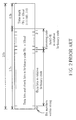
- FIG. 1 is a diagram illustrating strings of the GLONASS navigation data
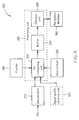
- FIG. 3 is a diagram illustrating an apparatus 300 for decoding GNSS navigation data according to one embodiment of the present invention.
- the apparatus 300 comprises a demodulator 310, a signal quality checking unit 320, a processing unit 330, a counter 340, a synchronizer 350 and a navigation database 360, where the processing unit 330 includes a bit computing unit 332, a buffer 334 and a decision unit 336.
- the signal quality checking unit 320 is an optional device, and can be removed from the apparatus 300 without influencing the process of the apparatus 300.
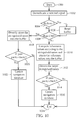
- FIG. 4 is a flowchart of a method for decoding GNSS navigation data according to one embodiment of the present invention. Please note that, provided the results are substantially the same, the steps are not limited to be executed according to the exact order shown in FIG. 4 . Referring to FIG. 4 , the flow is described as follows:
- the present invention provides a decoding mechanism for GNSS navigation data that can increase data decoding sensitivity. Following takes GLONASS system as an example to illustrate the decoding flow. However, please be noted the present invention is not limited thereto.
- each satellite sends modulated strings #1-#15 continuously and repeatedly during thirty minutes. As shown in FIG. 1 , after the satellite sends modulated strings #1-#15, the satellite will immediately send the same modulated strings #1-#15 again.
- FIG. 2 is a string structure of each string shown in FIG. 1 . Referring to FIG. 2 , each string has eighty-five bits having indexes 1-85 respectively. Because contents in FIG. 1 and FIG. 2 should be understood by a person skilled in this art, further descriptions are omitted here.
- the output of the demodulator 310 includes a plurality of strings.
- the bit computing unit 332 computes a plurality of reference values according to values of the bits of the strings having the same string index, wherein each reference value is computed according to values of bits having a same bit index.
- the bit computing unit 332 computes each reference value by accumulating or averaging the values of the bits having the same index of the plurality of strings.
- FIG. 5 is a diagram illustrating how the bit computing unit 332 computes a plurality of reference values and stores the reference values to the buffer 334 according to one embodiment of the present invention.
- values of bits B85-B83 of the first string #1 are "0", “0", “1 "
- values of bit B85-B83 of the second string #1 are "0", “1", “1”
- values of bit B85-B83 of the third string #1 are "0", "0", “0”, “0”
- the reference value RB85 is calculated by accumulating the values of bits B85 of the three strings #1
- the reference value RB84 is calculated by accumulating the values of bits B84 of the three strings #1
- the reference value RB83 is calculated by accumulating the values of bits B83 of the three strings #1. Then, the remaining reference values in the buffer 334 can be computed according to the above-mentioned method.
- the signal quality checking unit 320 determines signal qualities of the strings according to the received signal D in , for example, the signal qualities can be obtained by tracking the satellite signals.
- the bit computing unit 332 computes weighting factors of the values of the bits having the same bit index of the plurality of strings according to the signal qualities of the plurality of strings, and computes each reference value by accumulating the values of the bits having the same bit index of the plurality of strings respectively multiplied with the weighting factors.
- FIG. 6 is a diagram illustrating how the bit computing unit 332 computes a plurality of reference values and stores the reference values to the buffer 334 according to another embodiment of the present invention. Referring to FIG.
- each reference value can be calculated by accumulating more than three bit values, and the method is not limited to use the term (-1) to represent the bit "0" and the term (+1) to represent the bit "1".
- a person with ordinary skill in the art should understand there might be other average algorithms or accumulation algorithms that can obtain substantially the same results.
- each reference value is computed according to values of bits having a same bit index of the strings having the same string index, these alternative designs should fall within the scope of the present invention.
- the synchronizer 350 provides information to make the bit computing unit 332 identify boundaries of each string
- the counter 340 provides information to make the bit computing unit 332 identify bit/string indexes received by the bit computing unit 332.
- the decision unit 336 determines target strings according to the plurality of reference values stored in the buffer 334. Taking the embodiment shown in FIG. 5 as an example, because the reference values RB85-RB83 stored in the string #1 buffer are "-3", "-1" and "1", respectively, the decision unit 336 can determine that the values of bits B85-B83 of a target string #1 are "0", "0" and "1", respectively, because a negative reference value means there is a higher probability the bit value is "0" while a positive reference value means there is a higher probability the bit value is "1". Then, the remaining bit values of the target strings #1-#15 5 can be determined according to the above-mentioned method.
- Step 408 it is determined if the target strings #1-#15 pass parity check. If yes, the flow enters Step 410; if not, the flow enters Step 412 to finish the process. In Step 410, the target strings #1-#15 are transmitted to a navigation database 360 to update the information stored therein. Then, in Step 412, the process is finished.
- the method of the present invention can improve decoding sensitivity by about 5dB as shown in FIG. 7 .
- FIG. 8 is a flowchart of a method for decoding GNSS navigation data according to another embodiment of the present invention. Please note that, provided the results are substantially the same, the steps are not limited to be executed according to the exact order shown in FIG. 8 . Referring to FIG. 8 , the flow is described as follows:
- the synchronizer 350 may provide information to make the bit computing unit 332 identify boundaries of each string, and the counter 340 provides information to make the bit computing unit 332 identify bit/string indexes received by the bit computing unit 332.
- the decision unit 336 determines target strings according to the plurality of reference values stored in the buffer 334. Taking the embodiment shown in FIG. 5 as an example, because the reference values RB85-RB83 stored in the string #1 buffer are "-3", “-1 " and “1", respectively, the decision unit 336 can determine that the values of bits B85-B83 of a target string #1 are "0", "0" and “1", respectively because a negative reference value means there is a higher probability the bit value is "0" while a positive reference value means there is a higher probability the bit value is "1". Then, the remaining bit values of the target strings #1 -#15 can be determined according to the above-mentioned method.
- Step 81 2 it is determined if the target strings #1-#15 pass parity check. If yes, the flow enters Step 814; if not, the flow enters Step 816 to finish the process. In Step 814, the target strings #1-#15 are transmitted to a navigation database 360 to update the information stored therein. Then, in Step 816, the process is finished.
- FIG. 9 is a diagram illustrating an apparatus 900 for decoding GNSS navigation data according to another embodiment of the present invention.
- the apparatus 900 comprises a demodulator 910, a signal quality checking unit 920, a first decision unit 922, a processing unit 930, a counter 940, a synchronizer 950 and a navigation database 960, where the processing unit 930 includes a bit computing unit 932, a buffer 934 and a second decision unit 936.
- FIG. 10 is a flowchart of a method for decoding GNSS navigation data according to another embodiment of the present invention. Please note that, provided the results are substantially the same, the steps are not limited to be executed according to the exact order shown in FIG. 10 . Referring to FIG. 10 , the flow is described as follows:
- Step 1000 the apparatus 900 receives a signal D in containing navigation data.
- the demodulator 910 demodulates the received signal D in to generate a plurality of strings or subframes.
- a plurality of strings may be generated;
- the GNSS navigation data includes GPS navigation data or Galileo navigation data, a plurality of subframes may be generated; or when the GNSS navigation data includes data of other navigation systems, other format data corresponding to the strings/subframes may be generated.
- Step 1004 it is determined if the received signal D in is rollover (i.e., the satellite transmits new information, making the strings/subframes having the same index in current broadcast round and previous broadcast round not present the same contents). If yes, the flow enters Step 1006 to reset the buffer 934 and then goes to Step 1008; if not, the flow directly enters Step 1008. Then, in Step 1008, the signal quality checking unit 920 determines a signal quality indicator such as carrier-to-noise ratio (CNR) of the received signal D in , and the first decision unit 922 determines a status of the strings or subframes according to the signal quality indicator such as CNR of the received signal D in .
- CNR carrier-to-noise ratio
- the strings/subframes are determined as a first status, and the flow enters Step 1010; and if it is determined the signal quality indicator such as CNR of the receive signal is higher than a threshold value, the strings/subframes are determined as a second status, and the flow enters Step 1018.
- Step 1010 for the strings or subframes having/representing the same string content or the subframes having/representing the same subframe content (for example, if string/subframe #1 and string/subframe #2 have/represent the same data, the string/subframe #1 and the string/subframe #2 are regarded as the same string/subframe content; in another example, the time information bits of each satellite signals are regarded as the same string/subframe content), the bit computing unit 932 computes a plurality of reference values according to values of the bits of the strings/subframes having the same string/subframe content, wherein each reference value is computed according to values of bits having a same bit content of the strings/subframes, and the bit computing unit 932 stores the reference values to the buffer 934.
- the bit computing unit 932 computes a plurality of reference values according to values of the bits of the strings/subframes having the same string/subframe content, wherein each reference value is computed according to values of bits having a same bit content of the strings/subframes, and
- the synchronizer 950 may provide information to make the bit computing unit 932 identify boundaries of each string or subframe, and the counter 940 may provide information to make the bit computing unit 932 identify bit indexes received by the bit computing unit 932.
- the second decision unit 936 determines target strings or target subframes according to the plurality of reference values stored in the buffer 934.
- Step 1014 it is determined if the target strings or the target subframes pass parity check. If yes, the flow enters Step 1016; if not, the flow enters Step 1024 to finish the process.
- the target strings/subframes are transmitted to a navigation database 960 to update the information stored therein.
- Step 1018 the strings or subframes are directly stored into the buffer 934, and the second decision unit 936 directly uses the strings or subframes stored in the buffer 934 as target strings.
- Step 1020 it is determined if the target strings or the target subframes pass parity check. If yes, the flow enters Step 1022 and the target strings/subframes are transmitted to a navigation database 960 to update the information stored therein; if not, the flow enters Step 1024 to finish the process.
- the present invention provides a decoding mechanism for GNSS navigation data that can increase data decoding sensitivity. Following takes GLONASS system as an example to illustrate the decoding flow. However, please be noted the present invention is not limited thereto.
- each satellite sends modulated strings #1-#15 continuously and repeatedly during thirty minutes. As shown in FIG. 1 , after the satellite sends modulated strings #1-#15, the satellite will immediately send the same modulated strings #1-#15 again.
- FIG. 2 is a string structure of each string shown in FIG. 1 . Referring to FIG. 2 , each string has eighty-five bits having indexes 1-85 respectively.
- the output of the demodulator 910 includes a plurality of strings. If the strings have lower CNR, for the strings having the same string content, the flow enters Steps 1010-1016 to determine the target string according to the plurality of strings having the same string content, and the target string is transmitted to a navigation database 960 to update the information stored therein. Steps 1010-1016 are similar to Steps 404-410 shown in FIG. 4 . A person skilled in this art should understand Steps 1010-1016 after reading the above disclosure. Therefore, further descriptions are omitted here.
- Step 1018 the strings #1-#15 are directly stored into the buffer 934, and the second decision unit 936 directly uses the strings #1-#15 stored in the buffer 934 as target strings.
- Step 1 020 it is determined if the target strings #1-#15 pass parity check. If yes, the flow enters Step 1022; if not, the flow enters Step 1024 to finish the process.
- Step 1022 the target strings #1-#15 are transmitted to a navigation database 960 to update the information stored therein. Then, in Step 1024, the process is finished. That is, the embodiment shown in FIG. 10 provides a mechanism to avoid mistaken accumulation during satellite rollover, and further provides a mechanism to fasten the flow when the satellite signal strength is high (e.g. high CNR).
- the apparatus and method of the present invention can decode other GNSS navigation data such as GPS data, Galileo data and BeiDou (Compass) data.
- GPS data GPS data
- Galileo data Galileo data
- BeiDou (Compass) data each satellite sends modulated subframes #1-#3 continuously and repeatedly during two hours, and a subframe structure of GPS data is shown in FIG. 11 .
- the apparatus such as 300 and 900 can demodulate a received signal D in to generate a plurality of subframes, and determine the target subframe according to the plurality of subframes by a method similar to the above descriptions in Steps 404, 406, 808, 810, 1010 and 101 2.
- the bit computing unit may directly stores bit value of WORD2 of GPS navigation data into the buffer without computing reference values for WORD2.
- FIG. 12 shows the WORD2 of the subframe shown in FIG. 11 , whose data is not always the same.
- the WORD2 of the target subframe is not determined according to the plurality of subframes having the same subframe index, and is determined by directly using the WORD2 of one of the subframes which is similar to Step 806.
- each target string or subframe for updating navigation data is determined according to a plurality of strings or subframes having the same string/subframe index or same content. Therefore, the decoding sensitivity can be increased.
Landscapes
- Engineering & Computer Science (AREA)
- Radar, Positioning & Navigation (AREA)
- Remote Sensing (AREA)
- Computer Networks & Wireless Communication (AREA)
- Physics & Mathematics (AREA)
- General Physics & Mathematics (AREA)
- Signal Processing (AREA)
- Position Fixing By Use Of Radio Waves (AREA)
Abstract
Description
- The present invention relates to an apparatus for decoding Global Navigation Satellite Systems (GNSS) navigation data and associated method according to the pre-characterizing clause of
claim 1. - In a navigation system, such as Global Positioning System (GPS) or GLObal NAvigation Satellite System (GLONASS), data decoding sensitivity is an important issue. A higher sensitivity represents a better Time-to-First-Fix (TTFF) performance. Therefore, how to improve navigation data decoding sensitivity, e.g. to reduce the bit error rate, is an important topic for modern GNSS receiver designs.
- This in mind, the present invention aims at providing an apparatus for decoding GNSS navigation data and associated method that have improved data decoding sensitivity.
- This is achieved by an apparatus for decoding GNSS navigation data according to
claims claims - As will be seen more clearly from the detailed description following below, an apparatus for decoding GNSS navigation data to generate at least a target string or subframe comprises a demodulator and a processing unit. The demodulator is utilized for demodulating a received signal to generate at least a plurality of strings or subframes having a same string index or subframe index. The processing unit is coupled to the demodulator, and is utilized for determining the target string or subframe according to the plurality of strings or subframes.
- As will be seen more clearly from the detailed description following below, a method for decoding GNSS navigation data to generate at least a target string or subframe comprises: demodulating a received signal to generate at least a plurality of strings or subframes having a same string index or subframe index; and determining the target string or subframe according to the plurality of strings or subframes.
- As will be seen more clearly from the detailed description following below, an apparatus for decoding GNSS navigation data to generate at least a target string or subframe comprises a demodulator, a first decision unit and a processing unit. The demodulator is utilized for demodulating a received signal to generate at least a plurality of strings or subframes having a same string content or subframe content. The first decision unit is utilized for determining a status of at least one of the plurality of strings or subframes according to the received signal. The processing unit is coupled to the demodulator and the first decision unit, where when at least one of the plurality of strings or subframes is determined as a first status, the processing unit determines the target string or subframe according to the plurality of strings or subframes.
- As will be seen more clearly from the detailed description following below, a method for decoding GNSS navigation data to generate at least a target string or subframe comprises: demodulating a received signal to generate at least a plurality of strings or subframes having a same string content or subframe content; determining a status of at least one of the plurality of strings or subframes according to the received signal; and when at least one of the plurality of strings or subframes is determined as a first status, determining the target string or subframe according to the plurality of strings or subframes.
- In the following, the invention is further illustrated by way of example, taking reference to the accompanying drawings. Thereof
FIG. 1 is a diagram illustrating strings of the GLONASS navigation data, -
FIG. 2 is a string structure of each string shown inFIG. 1 , -
FIG. 3 is a diagram illustrating an apparatus for decoding GNSS navigation data according to one embodiment of the present invention, -
FIG. 4 is a flowchart of a method for decoding GNSS navigation data according to one embodiment of the present invention, -
FIG. 5 is a diagram illustrating how the bit computing unit computes a plurality of reference values and stores the reference values to the buffer according to one embodiment of the present invention, -
FIG. 6 is a diagram illustrating how the bit computing unit computes a plurality of reference values and stores the reference values to the buffer according to another embodiment of the present invention, -
FIG. 7 is a diagram showing a comparison of bit-error rates of the prior art technique and the present invention, -
FIG. 8 is a flowchart of a method for decoding GNSS navigation data according to another embodiment of the present invention, -
FIG. 9 is a diagram illustrating an apparatus for decoding GNSS navigation data according to another embodiment of the present invention, -
FIG. 10 is a flowchart of a method for decoding GNSS navigation data according to another embodiment of the present invention, -
FIG. 11 is a subframe structure of each subframe of GPS data, and -
FIG. 12 is data structure of WORD2 of a subframe of the GPS data. - Certain terms are used throughout the following description and claims to refer to particular system components. As one skilled in the art will appreciate, manufacturers may refer to a component by different names. This document does not intend to distinguish between components that differ in name but not function. In the following discussion and in the claims, the terms "including" and "comprising" are used in an open-ended fashion, and thus should be interpreted to mean "including, but not limited to ..." The terms "couple" and "couples" are intended to mean either an indirect or a direct electrical connection. Thus, if a first device couples to a second device, that connection may be through a direct electrical connection, or through an indirect electrical connection via other devices and connections.
- Please refer to
FIG. 3. FIG. 3 is a diagram illustrating anapparatus 300 for decoding GNSS navigation data according to one embodiment of the present invention. As shown inFIG. 3 , theapparatus 300 comprises ademodulator 310, a signalquality checking unit 320, aprocessing unit 330, acounter 340, asynchronizer 350 and anavigation database 360, where theprocessing unit 330 includes abit computing unit 332, abuffer 334 and adecision unit 336. In addition, the signalquality checking unit 320 is an optional device, and can be removed from theapparatus 300 without influencing the process of theapparatus 300. - Please refer to
FIG. 3 andFIG. 4 together.FIG. 4 is a flowchart of a method for decoding GNSS navigation data according to one embodiment of the present invention. Please note that, provided the results are substantially the same, the steps are not limited to be executed according to the exact order shown inFIG. 4 . Referring toFIG. 4 , the flow is described as follows: - In
Step 400, theapparatus 300 receives a signal Din containing GNSS navigation data. Then, inStep 402, thedemodulator 310 demodulates the received signal Din to generate a plurality of strings or subframes (for example, a plurality of strings may be generated when the GNSS navigation data includes GLONASS navigation data, a plurality of subframes may be generated when the GNSS navigation data includes GPS or Galileo navigation data, and other format data corresponding to the strings/subframes may be generated when the GNSS navigation data includes other navigation data). Then, inStep 404, for the strings having the same string index or the subframes having the same subframe index, thebit computing unit 332 computes a plurality of reference values according to values of the bits of the strings/subframes having the same string/subframe index, wherein each reference value is computed according to values of bits having a same bit index of the strings/subframes, and thebit computing unit 332 stores the reference values to thebuffer 334. For thebit computing unit 332 computing the reference values inStep 404, thesynchronizer 350 may provide information to make thebit computing unit 332 identify boundaries of each string or subframe, and thecounter 340 may provide information to make thebit computing unit 332 identify bit indexes received by thebit computing unit 332. Then, inStep 406, thedecision unit 336 determines target strings or target subframes according to the plurality of reference values stored in thebuffer 334. InStep 408, it is determined if the target strings or the target subframes pass parity check. If yes, the flow enters Step 41 0; if not, the flow entersStep 412 to finish the process. InStep 410, the target strings/subframes are transmitted to anavigation database 360 to update the information stored therein. Then, inStep 412, the process is finished. - The present invention provides a decoding mechanism for GNSS navigation data that can increase data decoding sensitivity. Following takes GLONASS system as an example to illustrate the decoding flow. However, please be noted the present invention is not limited thereto.
- In the GLONASS system, each satellite sends modulated strings #1-#15 continuously and repeatedly during thirty minutes. As shown in
FIG. 1 , after the satellite sends modulated strings #1-#15, the satellite will immediately send the same modulated strings #1-#15 again. In addition,FIG. 2 is a string structure of each string shown inFIG. 1 . Referring toFIG. 2 , each string has eighty-five bits having indexes 1-85 respectively. Because contents inFIG. 1 andFIG. 2 should be understood by a person skilled in this art, further descriptions are omitted here. - When the received signal Din containing GLONASS navigation data, the output of the
demodulator 310 includes a plurality of strings. For the strings having the same string index, thebit computing unit 332 computes a plurality of reference values according to values of the bits of the strings having the same string index, wherein each reference value is computed according to values of bits having a same bit index. In one embodiment of the present invention, thebit computing unit 332 computes each reference value by accumulating or averaging the values of the bits having the same index of the plurality of strings. For an example to describe theabove Step 404 in detail, please refer toFIG. 5. FIG. 5 is a diagram illustrating how thebit computing unit 332 computes a plurality of reference values and stores the reference values to thebuffer 334 according to one embodiment of the present invention. Referring toFIG. 5 , assuming that values of bits B85-B83 of the first string #1 (the string having index one in the first broadcast round of the satellite) are "0", "0", "1 ", values of bit B85-B83 of the second string #1 (the string having index one in the second broadcast round of the satellite) are "0", "1", "1", and values of bit B85-B83 of the third string #1 (the string having index one in the third broadcast round of the satellite) are "0", "0", "0", then the references values RB85, RB84 and RB83 of astring # 1 buffer in thebuffer 334 can be calculated as follows:


where the term (-1) above means the bit value is "0", while the term (+1) above means the bit value is "1". - The reference value RB85 is calculated by accumulating the values of bits B85 of the three
strings # 1, the reference value RB84 is calculated by accumulating the values of bits B84 of the threestrings # 1, and the reference value RB83 is calculated by accumulating the values of bits B83 of the threestrings # 1. Then, the remaining reference values in thebuffer 334 can be computed according to the above-mentioned method. - In addition, taking another example to computing the reference values, the signal
quality checking unit 320 determines signal qualities of the strings according to the received signal Din, for example, the signal qualities can be obtained by tracking the satellite signals. Thebit computing unit 332 computes weighting factors of the values of the bits having the same bit index of the plurality of strings according to the signal qualities of the plurality of strings, and computes each reference value by accumulating the values of the bits having the same bit index of the plurality of strings respectively multiplied with the weighting factors. Please refer toFIG. 6. FIG. 6 is a diagram illustrating how thebit computing unit 332 computes a plurality of reference values and stores the reference values to thebuffer 334 according to another embodiment of the present invention. Referring toFIG. 6 , assuming that values of bits B85-B83 of thefirst string # 1 are "0", "0", "1", values of bit B85-B83 of thesecond string # 1 are "0", "1", "1", values of bit B85-B83 of thethird string # 1 are "0", "0", "0", thefirst string # 1 has better signal quality and corresponds to a weighting factor "3" and thesecond string # 1 and thethird string # 1 has poor signal quality and corresponds to a weighting factor "1", then the references values RB85, RB84 and RB83 of astring # 1 buffer in thebuffer 334 can be calculated as follows:


where the term (-1) above means the bit value is "0", while the term (+1) above means the bit value is "1". Then, the remaining reference values in thebuffer 334 can be computed according to the above-mentioned method. - It is noted that the above-mentioned methods in
FIG. 5 andFIG. 6 are merely an embodiment of the present invention. In other embodiments, each reference value can be calculated by accumulating more than three bit values, and the method is not limited to use the term (-1) to represent the bit "0" and the term (+1) to represent the bit "1". A person with ordinary skill in the art should understand there might be other average algorithms or accumulation algorithms that can obtain substantially the same results. As long as each reference value is computed according to values of bits having a same bit index of the strings having the same string index, these alternative designs should fall within the scope of the present invention. - In addition, during the
bit computing unit 332 computing the reference values inStep 404, thesynchronizer 350 provides information to make thebit computing unit 332 identify boundaries of each string, and thecounter 340 provides information to make thebit computing unit 332 identify bit/string indexes received by thebit computing unit 332. - Then, in
Step 406, thedecision unit 336 determines target strings according to the plurality of reference values stored in thebuffer 334. Taking the embodiment shown inFIG. 5 as an example, because the reference values RB85-RB83 stored in thestring # 1 buffer are "-3", "-1" and "1", respectively, thedecision unit 336 can determine that the values of bits B85-B83 of atarget string # 1 are "0", "0" and "1", respectively, because a negative reference value means there is a higher probability the bit value is "0" while a positive reference value means there is a higher probability the bit value is "1". Then, the remaining bit values of the target strings #1-#15 5 can be determined according to the above-mentioned method. - In
Step 408, it is determined if the target strings #1-#15 pass parity check. If yes, the flow entersStep 410; if not, the flow entersStep 412 to finish the process. InStep 410, the target strings #1-#15 are transmitted to anavigation database 360 to update the information stored therein. Then, inStep 412, the process is finished. - Compared with the prior art method for decoding the navigation data, the method of the present invention can improve decoding sensitivity by about 5dB as shown in
FIG. 7 . -
FIG. 8 is a flowchart of a method for decoding GNSS navigation data according to another embodiment of the present invention. Please note that, provided the results are substantially the same, the steps are not limited to be executed according to the exact order shown inFIG. 8 . Referring toFIG. 8 , the flow is described as follows: - In
Step 800, theapparatus 300 receives a signal Din containing GNSS navigation data such as GLONASS navigation data. Then, inStep 802, thedemodulator 310 demodulates the received signal Din to generate a plurality of strings having string indexes 1-15 respectively as shown inFIG. 1 . Then, inStep 804, it is determined if thebit computing unit 332 is processing Tk bits or parity check bits ofstring # 1. If yes, the flow entersStep 806; if not, the flow entersStep 808. InStep 806, if thebit computing unit 332 is processing bits having indexes 65-76, then thebit computing unit 332 directly stores values of the bits B65-B76 to thestring # 1 buffer of thebuffer 334 and the values of the bits B65-B76 serve as reference values RB65-RB76, respectively (the meaning of thestring # 1 buffer and reference values can refer toFIG. 5 orFIG. 6 ). For example, if the values of the bits B65-B67 are "0", "0", "1", respectively, then the reference values RB65-RB67 are "-1", "-1", "1", respectively. This is because the timing information (Tk bits) and parity check bits of each string are different. Accumulation of those data bits does not help decoding sensitivity improvement. In other words,Step 804 is substantially equal to determine if the demodulated bits are in special cases, e.g. the contents represented by the demodulated bits are different for each string and therefore there is no need to compute the reference values for those bits. - In
Step 808, thebit computing unit 332 computes a plurality of reference values according to values of the bits of the strings having the same string index, wherein each reference value is computed according to values of bits having a same bit index of the strings, and thebit computing unit 332 stores the reference values to thebuffer 334. Step 808 is similar to Step 404 shown inFIG. 4 . Therefore, inStep 808, in one embodiment, thebit computing unit 332 computes each reference value by accumulating the values of the bits having the same index of the plurality of strings having the same string index; and in another embodiment, the signalquality checking unit 320 determines signal qualities of the strings according to the received signal Din, and thebit computing unit 332 computes weighting factors of the values of the bits having the same bit index of the plurality of strings according to the signal qualities of the plurality of strings, and computes each reference value by accumulating the values of the bits having the same bit index of the plurality of strings respectively multiplied with the weighting factors. Because detailed descriptions have been illustrated inStep 404, further descriptions are omitted here. - In addition, during the
bit computing unit 332 computing the reference values inSteps synchronizer 350 may provide information to make thebit computing unit 332 identify boundaries of each string, and thecounter 340 provides information to make thebit computing unit 332 identify bit/string indexes received by thebit computing unit 332. - Then, in
Step 810, thedecision unit 336 determines target strings according to the plurality of reference values stored in thebuffer 334. Taking the embodiment shown inFIG. 5 as an example, because the reference values RB85-RB83 stored in thestring # 1 buffer are "-3", "-1 " and "1", respectively, thedecision unit 336 can determine that the values of bits B85-B83 of atarget string # 1 are "0", "0" and "1", respectively because a negative reference value means there is a higher probability the bit value is "0" while a positive reference value means there is a higher probability the bit value is "1". Then, the remaining bit values of the target strings #1 -#15 can be determined according to the above-mentioned method. - In Step 81 2, it is determined if the target strings #1-#15 pass parity check. If yes, the flow enters
Step 814; if not, the flow entersStep 816 to finish the process. InStep 814, the target strings #1-#15 are transmitted to anavigation database 360 to update the information stored therein. Then, inStep 816, the process is finished. - Please refer to
FIG. 9. FIG. 9 is a diagram illustrating anapparatus 900 for decoding GNSS navigation data according to another embodiment of the present invention. As shown inFIG. 9 , theapparatus 900 comprises ademodulator 910, a signalquality checking unit 920, afirst decision unit 922, aprocessing unit 930, acounter 940, asynchronizer 950 and anavigation database 960, where theprocessing unit 930 includes abit computing unit 932, abuffer 934 and asecond decision unit 936. - Please refer to
FIG. 9 andFIG. 10 together.FIG. 10 is a flowchart of a method for decoding GNSS navigation data according to another embodiment of the present invention. Please note that, provided the results are substantially the same, the steps are not limited to be executed according to the exact order shown inFIG. 10 . Referring toFIG. 10 , the flow is described as follows: - In
Step 1000, theapparatus 900 receives a signal Din containing navigation data. Then, inStep 1002, thedemodulator 910 demodulates the received signal Din to generate a plurality of strings or subframes. For example, when the GNSS navigation data includes GLONASS navigation data, a plurality of strings may be generated; when the GNSS navigation data includes GPS navigation data or Galileo navigation data, a plurality of subframes may be generated; or when the GNSS navigation data includes data of other navigation systems, other format data corresponding to the strings/subframes may be generated. However, Then, inStep 1004, it is determined if the received signal Din is rollover (i.e., the satellite transmits new information, making the strings/subframes having the same index in current broadcast round and previous broadcast round not present the same contents). If yes, the flow entersStep 1006 to reset thebuffer 934 and then goes toStep 1008; if not, the flow directly entersStep 1008. Then, inStep 1008, the signalquality checking unit 920 determines a signal quality indicator such as carrier-to-noise ratio (CNR) of the received signal Din, and thefirst decision unit 922 determines a status of the strings or subframes according to the signal quality indicator such as CNR of the received signal Din. In one embodiment, if it is determined the signal quality indicator such as CNR of the receive signal is lower than a threshold value, the strings/subframes are determined as a first status, and the flow entersStep 1010; and if it is determined the signal quality indicator such as CNR of the receive signal is higher than a threshold value, the strings/subframes are determined as a second status, and the flow entersStep 1018. - In
Step 1010, for the strings or subframes having/representing the same string content or the subframes having/representing the same subframe content (for example, if string/subframe # 1 and string/subframe # 2 have/represent the same data, the string/subframe # 1 and the string/subframe # 2 are regarded as the same string/subframe content; in another example, the time information bits of each satellite signals are regarded as the same string/subframe content), thebit computing unit 932 computes a plurality of reference values according to values of the bits of the strings/subframes having the same string/subframe content, wherein each reference value is computed according to values of bits having a same bit content of the strings/subframes, and thebit computing unit 932 stores the reference values to thebuffer 934. For thebit computing unit 932 computing the reference values inStep 1010, thesynchronizer 950 may provide information to make thebit computing unit 932 identify boundaries of each string or subframe, and thecounter 940 may provide information to make thebit computing unit 932 identify bit indexes received by thebit computing unit 932. Then, inStep 1012, thesecond decision unit 936 determines target strings or target subframes according to the plurality of reference values stored in thebuffer 934. InStep 1014, it is determined if the target strings or the target subframes pass parity check. If yes, the flow entersStep 1016; if not, the flow entersStep 1024 to finish the process. InStep 1016, the target strings/subframes are transmitted to anavigation database 960 to update the information stored therein. - On the other hand, in
Step 1018, the strings or subframes are directly stored into thebuffer 934, and thesecond decision unit 936 directly uses the strings or subframes stored in thebuffer 934 as target strings. Then, inStep 1020, it is determined if the target strings or the target subframes pass parity check. If yes, the flow entersStep 1022 and the target strings/subframes are transmitted to anavigation database 960 to update the information stored therein; if not, the flow entersStep 1024 to finish the process. - The present invention provides a decoding mechanism for GNSS navigation data that can increase data decoding sensitivity. Following takes GLONASS system as an example to illustrate the decoding flow. However, please be noted the present invention is not limited thereto.
- In the GLONASS system, each satellite sends modulated strings #1-#15 continuously and repeatedly during thirty minutes. As shown in
FIG. 1 , after the satellite sends modulated strings #1-#15, the satellite will immediately send the same modulated strings #1-#15 again. In addition,FIG. 2 is a string structure of each string shown inFIG. 1 . Referring toFIG. 2 , each string has eighty-five bits having indexes 1-85 respectively. - When the received signal Din containing GLONASS navigation data, the output of the
demodulator 910 includes a plurality of strings. If the strings have lower CNR, for the strings having the same string content, the flow enters Steps 1010-1016 to determine the target string according to the plurality of strings having the same string content, and the target string is transmitted to anavigation database 960 to update the information stored therein. Steps 1010-1016 are similar to Steps 404-410 shown inFIG. 4 . A person skilled in this art should understand Steps 1010-1016 after reading the above disclosure. Therefore, further descriptions are omitted here. - On the other hand, if the strings have higher CNR, in
Step 1018, the strings #1-#15 are directly stored into thebuffer 934, and thesecond decision unit 936 directly uses the strings #1-#15 stored in thebuffer 934 as target strings. - Then, in
Step 1 020, it is determined if the target strings #1-#15 pass parity check. If yes, the flow entersStep 1022; if not, the flow entersStep 1024 to finish the process. InStep 1022, the target strings #1-#15 are transmitted to anavigation database 960 to update the information stored therein. Then, inStep 1024, the process is finished. That is, the embodiment shown inFIG. 10 provides a mechanism to avoid mistaken accumulation during satellite rollover, and further provides a mechanism to fasten the flow when the satellite signal strength is high (e.g. high CNR). - Please note that, although the above-mentioned embodiments are for decoding GLONASS navigation data, in other embodiments, the apparatus and method of the present invention can decode other GNSS navigation data such as GPS data, Galileo data and BeiDou (Compass) data. In detail, in the GPS system, each satellite sends modulated subframes #1-#3 continuously and repeatedly during two hours, and a subframe structure of GPS data is shown in
FIG. 11 . The apparatus such as 300 and 900 can demodulate a received signal Din to generate a plurality of subframes, and determine the target subframe according to the plurality of subframes by a method similar to the above descriptions inSteps step 804 ofFIG.8 , the bit computing unit may directly stores bit value of WORD2 of GPS navigation data into the buffer without computing reference values for WORD2.FIG. 12 shows the WORD2 of the subframe shown inFIG. 11 , whose data is not always the same. The WORD2 of the target subframe is not determined according to the plurality of subframes having the same subframe index, and is determined by directly using the WORD2 of one of the subframes which is similar toStep 806. - Briefly summarized, in the apparatus for decoding GNSS navigation data and associate method of the present invention, each target string or subframe for updating navigation data is determined according to a plurality of strings or subframes having the same string/subframe index or same content. Therefore, the decoding sensitivity can be increased.
- All combinations and sub-combinations of above-described features also belong to the invention.
Claims (15)
- An apparatus (300, 900) for decoding Global Navigation Satellite Systems (GNSS) navigation data to generate at least a target string or subframe, comprising:a demodulator (310, 910), for demodulating a received signal to generate at least a plurality of strings or subframes having a same string index or same subframe index; anda processing unit (330, 930), coupled to the demodulator, for determining the target string or subframe according to the plurality of strings or subframes.
- The apparatus (300, 900) of claim 1, wherein each of the plurality of strings or subframes includes a plurality of bits, and the processing unit comprises:a bit computing unit (332, 932), for computing a plurality of reference values according to values of the bits of the plurality of strings or subframes, wherein each reference value is computed according to values of bits having a same bit index of the plurality of strings or subframes; anda decision unit (336, 936), coupled to the bit computing unit (332, 932), for determining the target string or subframe according to the plurality of reference values.
- The apparatus of claim 2, wherein a number of the reference values is equal to a length of each of the strings or subframes.
- The apparatus (300, 900) of claim 2, further comprising:a signal quality checking unit (320, 920), coupled to the bit computing unit (332, 932), for determining signal qualities of the plurality of strings or subframes according to the received signal;wherein the bit computing unit (332, 932) computes the plurality of reference values according to the values of the bits of the plurality of strings or subframes and the signal qualities of the plurality of strings or subframes.
- A method for decoding Global Navigation Satellite Systems (GNSS) navigation data to generate at least a target string or subframe, comprising:demodulating a received signal to generate at least a plurality of strings or subframes having a same string index or a same subframe index; anddetermining the target string or subframe according to the plurality of strings or subframes.
- The method of claim 5, wherein each of the plurality of strings or subframes includes a plurality of bits, and the step of determining the target string or subframe according to the plurality of strings or subframes comprises:computing a plurality of reference values according to values of the bits of the plurality of strings or subframes, wherein each reference value is computed according to values of bits having a same bit index of the plurality of strings or subframes; anddetermining the target string or subframe according to the plurality of reference values.
- The method of claim 6, further comprising:determining signal qualities of the plurality of strings or subframes according to the received signal; andthe step of computing the plurality of reference values comprises:computing the plurality of reference values according to the values of the bits of the plurality of strings or subframes and the signal qualities of the plurality of strings or subframes.
- An apparatus (900) for decoding Global Navigation Satellite Systems (GNSS) navigation data to generate at least a target string or subframe , comprising:a demodulator (910), for demodulating a received signal to generate at least a plurality of strings or subframes representing a same string content or a same subframe content;a first decision unit (922), for determining a status of at least one of the plurality of strings or subframes according to the received signal; anda processing unit (930), coupled to the demodulator (910) and the first decision unit (922), wherein when at least one of the plurality of strings or subframes is determined as a first status, the processing unit determines the target string or subframe according to the plurality of strings or subframes.
- The apparatus (900) of claim 8, wherein each of the plurality of strings or subframes includes a plurality of bits, and the processing unit (930) comprises:a bit computing unit (932), wherein when at least one of the plurality of strings or subframes is determined as the first status, the bit computing unit (932) computes a plurality of reference values according to the plurality of strings or subframes; anda second decision unit (936), coupled to the bit computing unit, wherein when at least one of the plurality of strings or subframes is determined as the first status, the second decision unit (936) determines the target string or subframe according to the plurality of reference values.
- The apparatus (900) of claim 8, wherein when at least one of the plurality of strings or subframes is determined as a second status, the second decision unit (936) utilizes one of the plurality of strings or subframes as the target string.
- The apparatus (900) of claim 8, wherein the first decision unit (922) determining the status of at least one of the plurality of strings or subframes according to a signal quality indicator of the received signal.
- A method for decoding Global Navigation Satellite Systems (GNSS) navigation data to generate at least a target string or subframe, comprising:demodulating a received signal to generate at least a plurality of strings or subframes representing a same string content or subframe content;determining a status of at least one of the plurality of strings or subframes according to the received signal; andwhen at least one of the plurality of strings or subframes is determined as a first status, determining the target string or subframe according to the plurality of strings or subframes.
- The method of claim 12, wherein each of the plurality of strings or subframes includes a plurality of bits, and the step of determining the target string or subframe according to the plurality of strings or subframes comprises:when at least one of the plurality of strings or subframes is determined as the first status, computing a plurality of reference values according to the plurality of strings or subframes; andwhen at least one of the plurality of strings or subframes is determined as the first status, determining the target string or subframe according to the plurality of reference values.
- The method of claim 12, further comprising:when at least one of the plurality of strings or subframes is determined as a second status, utilizing one of the plurality of strings or subframes as the target string or subframe.
- The method of claim 12, wherein the step of determining the status of at least one of the plurality of strings or subframes according to the received signal comprises:determining the status of at least one of the plurality of strings according to a signal quality indicator of the received signal.
Applications Claiming Priority (1)
| Application Number | Priority Date | Filing Date | Title |
|---|---|---|---|
| US13/053,213 US8855241B2 (en) | 2011-03-22 | 2011-03-22 | Apparatus for decoding global navigation satellite systems navigation data and associated method |
Publications (2)
| Publication Number | Publication Date |
|---|---|
| EP2503358A1 true EP2503358A1 (en) | 2012-09-26 |
| EP2503358B1 EP2503358B1 (en) | 2013-11-27 |
Family
ID=44314977
Family Applications (1)
| Application Number | Title | Priority Date | Filing Date |
|---|---|---|---|
| EP11003073.1A Active EP2503358B1 (en) | 2011-03-22 | 2011-04-12 | Apparatus for decoding global navigation satellite systems navigation data and associated method |
Country Status (4)
| Country | Link |
|---|---|
| US (2) | US8855241B2 (en) |
| EP (1) | EP2503358B1 (en) |
| CN (1) | CN102692634B (en) |
| TW (1) | TWI437250B (en) |
Cited By (1)
| Publication number | Priority date | Publication date | Assignee | Title |
|---|---|---|---|---|
| JP2014190937A (en) * | 2013-03-28 | 2014-10-06 | Seiko Epson Corp | Positioning signal receiving method and positioning signal receiving device |
Families Citing this family (5)
| Publication number | Priority date | Publication date | Assignee | Title |
|---|---|---|---|---|
| US20130069824A1 (en) * | 2011-09-21 | 2013-03-21 | Broadcom Corporation | Global Navigation System Signal Tracking and Decoding |
| FR2996647B1 (en) * | 2012-10-05 | 2014-12-12 | Sagem Defense Securite | INTER-CENTRAL PLATFORM IMPLEMENTING INTEGRATED LACHE HYBRID NAVIGATION |
| CN111323791B (en) * | 2020-04-10 | 2022-04-05 | 航天恒星科技有限公司 | Method and apparatus for quality assessment of navigation-enhanced products |
| CN113114346B (en) * | 2021-06-11 | 2021-08-31 | 飞天诚信科技股份有限公司 | Method and device for synchronizing time by analyzing satellite navigation data |
| EP4109138A1 (en) * | 2021-06-21 | 2022-12-28 | Electronics and Telecommunications Research Institute | Method and apparatus for transmitting and receiving characteristic information of gnss subframe |
Citations (4)
| Publication number | Priority date | Publication date | Assignee | Title |
|---|---|---|---|---|
| US5768319A (en) * | 1997-02-18 | 1998-06-16 | Motorola, Inc. | GPS data collection in high noise-to-signal ratio environments |
| US20060126762A1 (en) * | 2004-02-06 | 2006-06-15 | Emre Tapucu | Method and apparatus for decoding satellite navigation data from a satellite positioning system |
| US20080143594A1 (en) * | 2006-12-18 | 2008-06-19 | Chi-Shin Wang | Ephemeris Download From Weak Signals |
| US20080165057A1 (en) * | 2007-01-05 | 2008-07-10 | Media Tek Inc. | Method and apparatus for collecting subframes of satellite navigation data |
Family Cites Families (6)
| Publication number | Priority date | Publication date | Assignee | Title |
|---|---|---|---|---|
| US6816710B2 (en) * | 1998-05-06 | 2004-11-09 | Snaptrack, Inc. | Method and apparatus for signal processing in a satellite positioning system |
| US7365681B2 (en) * | 2005-09-19 | 2008-04-29 | Trimble Navigation Limited | GPS receiver having a prescribed time-of-entry into an operation mode |
| ES2364669T3 (en) * | 2006-02-28 | 2011-09-12 | Nokia Corporation | PROCEDURES AND APPLIANCES FOR ASSISTED NAVIGATION SYSTEMS. |
| US8331422B2 (en) * | 2008-02-28 | 2012-12-11 | Magellan Systems Japan, Inc. | Method and apparatus for acquisition, tracking, and transfer using sub-microsecond time transfer using weak GPS/GNSS signals |
| US8611468B2 (en) * | 2010-12-29 | 2013-12-17 | Stmicroelectronics S.R.L. | Demodulator of digital modulated signal, receiver apparatus employing the demodulator, and demodulation method |
| US8615056B2 (en) | 2010-12-29 | 2013-12-24 | Stmicroelectronics S.R.L. | Differential phase shift keying demodulator, receiver apparatus employing the demodulator, and demodulation method |
-
2011
- 2011-03-22 US US13/053,213 patent/US8855241B2/en active Active
- 2011-04-12 EP EP11003073.1A patent/EP2503358B1/en active Active
- 2011-11-08 TW TW100140787A patent/TWI437250B/en not_active IP Right Cessation
- 2011-11-23 CN CN201110375358.9A patent/CN102692634B/en active Active
-
2014
- 2014-02-12 US US14/179,542 patent/US8903026B2/en active Active
Patent Citations (4)
| Publication number | Priority date | Publication date | Assignee | Title |
|---|---|---|---|---|
| US5768319A (en) * | 1997-02-18 | 1998-06-16 | Motorola, Inc. | GPS data collection in high noise-to-signal ratio environments |
| US20060126762A1 (en) * | 2004-02-06 | 2006-06-15 | Emre Tapucu | Method and apparatus for decoding satellite navigation data from a satellite positioning system |
| US20080143594A1 (en) * | 2006-12-18 | 2008-06-19 | Chi-Shin Wang | Ephemeris Download From Weak Signals |
| US20080165057A1 (en) * | 2007-01-05 | 2008-07-10 | Media Tek Inc. | Method and apparatus for collecting subframes of satellite navigation data |
Cited By (1)
| Publication number | Priority date | Publication date | Assignee | Title |
|---|---|---|---|---|
| JP2014190937A (en) * | 2013-03-28 | 2014-10-06 | Seiko Epson Corp | Positioning signal receiving method and positioning signal receiving device |
Also Published As
| Publication number | Publication date |
|---|---|
| CN102692634B (en) | 2014-04-16 |
| TWI437250B (en) | 2014-05-11 |
| US20120243642A1 (en) | 2012-09-27 |
| EP2503358B1 (en) | 2013-11-27 |
| US8903026B2 (en) | 2014-12-02 |
| US20140161212A1 (en) | 2014-06-12 |
| TW201239385A (en) | 2012-10-01 |
| CN102692634A (en) | 2012-09-26 |
| US8855241B2 (en) | 2014-10-07 |
Similar Documents
| Publication | Publication Date | Title |
|---|---|---|
| US8903026B2 (en) | Apparatus for decoding global navigation satellite systems navigation data and associated method | |
| CN102520421B (en) | Method and device for collecting subframes of satellite navigation data | |
| US20020168985A1 (en) | GPS assistance messages in cellular communications networks and methods therefor | |
| CN106571862B (en) | A kind of rapid frame synchronization method of GPS receiver | |
| JP2012016022A (en) | Improvement of dpsk demodulation of sps data by using soft bit decisions | |
| CN103168251A (en) | Satellite-based augmentation system and satellite-based augmentation method | |
| CN117857671B (en) | Multi-source AIS data perfection processing method based on ship message | |
| US20140347216A1 (en) | Ephemeris collection device and method | |
| CN111988115A (en) | ADS-B distributed processing system based on parallel computing on general platform | |
| JPH11223669A (en) | GPS receiver and Z count extracting method therefor | |
| US12386077B2 (en) | Method and apparatus for transmitting and receiving characteristic information of GNSS subframe | |
| CN117706593A (en) | Multi-parameter fusion cycle slip detection method, system, equipment and storage medium | |
| CN108627863B (en) | DFT-based GNSS navigation message data demodulation method, device and GNSS receiving terminal | |
| US20120274511A1 (en) | Satellite Based Augmentation System | |
| EP3511741B1 (en) | Positioning receiver | |
| CN111208538B (en) | Method and device for demodulating text | |
| JPH1183978A (en) | GPS receiver | |
| EP1146706A3 (en) | Determination and storage of a decision threshold | |
| CN106453180A (en) | Circuit and method for improving phase detection | |
| JP2001228233A (en) | GPS receiver | |
| US20150063342A1 (en) | Retrospective Ephemeris Collection | |
| KR102922621B1 (en) | Signal suitability judgment device through real-time satellite navigation signal analysis | |
| JP5362407B2 (en) | Satellite signal receiver | |
| CN117540261A (en) | Data analysis and system time service method for multimode satellite | |
| CN120301566A (en) | A method, device, equipment and medium for evaluating packet loss retransmission strategy |
Legal Events
| Date | Code | Title | Description |
|---|---|---|---|
| PUAI | Public reference made under article 153(3) epc to a published international application that has entered the european phase |
Free format text: ORIGINAL CODE: 0009012 |
|
| AK | Designated contracting states |
Kind code of ref document: A1 Designated state(s): AL AT BE BG CH CY CZ DE DK EE ES FI FR GB GR HR HU IE IS IT LI LT LU LV MC MK MT NL NO PL PT RO RS SE SI SK SM TR |
|
| AX | Request for extension of the european patent |
Extension state: BA ME |
|
| 17P | Request for examination filed |
Effective date: 20121128 |
|
| 17Q | First examination report despatched |
Effective date: 20130212 |
|
| GRAP | Despatch of communication of intention to grant a patent |
Free format text: ORIGINAL CODE: EPIDOSNIGR1 |
|
| INTG | Intention to grant announced |
Effective date: 20130807 |
|
| GRAS | Grant fee paid |
Free format text: ORIGINAL CODE: EPIDOSNIGR3 |
|
| GRAA | (expected) grant |
Free format text: ORIGINAL CODE: 0009210 |
|
| AK | Designated contracting states |
Kind code of ref document: B1 Designated state(s): AL AT BE BG CH CY CZ DE DK EE ES FI FR GB GR HR HU IE IS IT LI LT LU LV MC MK MT NL NO PL PT RO RS SE SI SK SM TR |
|
| REG | Reference to a national code |
Ref country code: GB Ref legal event code: FG4D |
|
| REG | Reference to a national code |
Ref country code: CH Ref legal event code: EP |
|
| REG | Reference to a national code |
Ref country code: AT Ref legal event code: REF Ref document number: 642937 Country of ref document: AT Kind code of ref document: T Effective date: 20131215 |
|
| REG | Reference to a national code |
Ref country code: IE Ref legal event code: FG4D |
|
| REG | Reference to a national code |
Ref country code: DE Ref legal event code: R096 Ref document number: 602011003906 Country of ref document: DE Effective date: 20140123 |
|
| REG | Reference to a national code |
Ref country code: NL Ref legal event code: VDEP Effective date: 20131127 |
|
| REG | Reference to a national code |
Ref country code: AT Ref legal event code: MK05 Ref document number: 642937 Country of ref document: AT Kind code of ref document: T Effective date: 20131127 |
|
| REG | Reference to a national code |
Ref country code: LT Ref legal event code: MG4D |
|
| PG25 | Lapsed in a contracting state [announced via postgrant information from national office to epo] |
Ref country code: HR Free format text: LAPSE BECAUSE OF FAILURE TO SUBMIT A TRANSLATION OF THE DESCRIPTION OR TO PAY THE FEE WITHIN THE PRESCRIBED TIME-LIMIT Effective date: 20131127 Ref country code: NO Free format text: LAPSE BECAUSE OF FAILURE TO SUBMIT A TRANSLATION OF THE DESCRIPTION OR TO PAY THE FEE WITHIN THE PRESCRIBED TIME-LIMIT Effective date: 20140227 Ref country code: IS Free format text: LAPSE BECAUSE OF FAILURE TO SUBMIT A TRANSLATION OF THE DESCRIPTION OR TO PAY THE FEE WITHIN THE PRESCRIBED TIME-LIMIT Effective date: 20140327 Ref country code: SE Free format text: LAPSE BECAUSE OF FAILURE TO SUBMIT A TRANSLATION OF THE DESCRIPTION OR TO PAY THE FEE WITHIN THE PRESCRIBED TIME-LIMIT Effective date: 20131127 Ref country code: FI Free format text: LAPSE BECAUSE OF FAILURE TO SUBMIT A TRANSLATION OF THE DESCRIPTION OR TO PAY THE FEE WITHIN THE PRESCRIBED TIME-LIMIT Effective date: 20131127 Ref country code: NL Free format text: LAPSE BECAUSE OF FAILURE TO SUBMIT A TRANSLATION OF THE DESCRIPTION OR TO PAY THE FEE WITHIN THE PRESCRIBED TIME-LIMIT Effective date: 20131127 Ref country code: LT Free format text: LAPSE BECAUSE OF FAILURE TO SUBMIT A TRANSLATION OF THE DESCRIPTION OR TO PAY THE FEE WITHIN THE PRESCRIBED TIME-LIMIT Effective date: 20131127 |
|
| PG25 | Lapsed in a contracting state [announced via postgrant information from national office to epo] |
Ref country code: LV Free format text: LAPSE BECAUSE OF FAILURE TO SUBMIT A TRANSLATION OF THE DESCRIPTION OR TO PAY THE FEE WITHIN THE PRESCRIBED TIME-LIMIT Effective date: 20131127 Ref country code: ES Free format text: LAPSE BECAUSE OF FAILURE TO SUBMIT A TRANSLATION OF THE DESCRIPTION OR TO PAY THE FEE WITHIN THE PRESCRIBED TIME-LIMIT Effective date: 20131127 Ref country code: AT Free format text: LAPSE BECAUSE OF FAILURE TO SUBMIT A TRANSLATION OF THE DESCRIPTION OR TO PAY THE FEE WITHIN THE PRESCRIBED TIME-LIMIT Effective date: 20131127 Ref country code: CY Free format text: LAPSE BECAUSE OF FAILURE TO SUBMIT A TRANSLATION OF THE DESCRIPTION OR TO PAY THE FEE WITHIN THE PRESCRIBED TIME-LIMIT Effective date: 20131127 Ref country code: BE Free format text: LAPSE BECAUSE OF FAILURE TO SUBMIT A TRANSLATION OF THE DESCRIPTION OR TO PAY THE FEE WITHIN THE PRESCRIBED TIME-LIMIT Effective date: 20131127 Ref country code: RS Free format text: LAPSE BECAUSE OF FAILURE TO SUBMIT A TRANSLATION OF THE DESCRIPTION OR TO PAY THE FEE WITHIN THE PRESCRIBED TIME-LIMIT Effective date: 20131127 |
|
| PG25 | Lapsed in a contracting state [announced via postgrant information from national office to epo] |
Ref country code: PT Free format text: LAPSE BECAUSE OF FAILURE TO SUBMIT A TRANSLATION OF THE DESCRIPTION OR TO PAY THE FEE WITHIN THE PRESCRIBED TIME-LIMIT Effective date: 20140327 |
|
| PG25 | Lapsed in a contracting state [announced via postgrant information from national office to epo] |
Ref country code: EE Free format text: LAPSE BECAUSE OF FAILURE TO SUBMIT A TRANSLATION OF THE DESCRIPTION OR TO PAY THE FEE WITHIN THE PRESCRIBED TIME-LIMIT Effective date: 20131127 |
|
| REG | Reference to a national code |
Ref country code: DE Ref legal event code: R097 Ref document number: 602011003906 Country of ref document: DE |
|
| PG25 | Lapsed in a contracting state [announced via postgrant information from national office to epo] |
Ref country code: CZ Free format text: LAPSE BECAUSE OF FAILURE TO SUBMIT A TRANSLATION OF THE DESCRIPTION OR TO PAY THE FEE WITHIN THE PRESCRIBED TIME-LIMIT Effective date: 20131127 Ref country code: SK Free format text: LAPSE BECAUSE OF FAILURE TO SUBMIT A TRANSLATION OF THE DESCRIPTION OR TO PAY THE FEE WITHIN THE PRESCRIBED TIME-LIMIT Effective date: 20131127 Ref country code: PL Free format text: LAPSE BECAUSE OF FAILURE TO SUBMIT A TRANSLATION OF THE DESCRIPTION OR TO PAY THE FEE WITHIN THE PRESCRIBED TIME-LIMIT Effective date: 20131127 Ref country code: RO Free format text: LAPSE BECAUSE OF FAILURE TO SUBMIT A TRANSLATION OF THE DESCRIPTION OR TO PAY THE FEE WITHIN THE PRESCRIBED TIME-LIMIT Effective date: 20131127 |
|
| PG25 | Lapsed in a contracting state [announced via postgrant information from national office to epo] |
Ref country code: DK Free format text: LAPSE BECAUSE OF FAILURE TO SUBMIT A TRANSLATION OF THE DESCRIPTION OR TO PAY THE FEE WITHIN THE PRESCRIBED TIME-LIMIT Effective date: 20131127 |
|
| PLBE | No opposition filed within time limit |
Free format text: ORIGINAL CODE: 0009261 |
|
| STAA | Information on the status of an ep patent application or granted ep patent |
Free format text: STATUS: NO OPPOSITION FILED WITHIN TIME LIMIT |
|
| 26N | No opposition filed |
Effective date: 20140828 |
|
| PG25 | Lapsed in a contracting state [announced via postgrant information from national office to epo] |
Ref country code: LU Free format text: LAPSE BECAUSE OF FAILURE TO SUBMIT A TRANSLATION OF THE DESCRIPTION OR TO PAY THE FEE WITHIN THE PRESCRIBED TIME-LIMIT Effective date: 20140412 Ref country code: MC Free format text: LAPSE BECAUSE OF FAILURE TO SUBMIT A TRANSLATION OF THE DESCRIPTION OR TO PAY THE FEE WITHIN THE PRESCRIBED TIME-LIMIT Effective date: 20131127 |
|
| REG | Reference to a national code |
Ref country code: CH Ref legal event code: PL |
|
| REG | Reference to a national code |
Ref country code: DE Ref legal event code: R097 Ref document number: 602011003906 Country of ref document: DE Effective date: 20140828 |
|
| REG | Reference to a national code |
Ref country code: IE Ref legal event code: MM4A |
|
| PG25 | Lapsed in a contracting state [announced via postgrant information from national office to epo] |
Ref country code: CH Free format text: LAPSE BECAUSE OF NON-PAYMENT OF DUE FEES Effective date: 20140430 Ref country code: LI Free format text: LAPSE BECAUSE OF NON-PAYMENT OF DUE FEES Effective date: 20140430 |
|
| PG25 | Lapsed in a contracting state [announced via postgrant information from national office to epo] |
Ref country code: SI Free format text: LAPSE BECAUSE OF FAILURE TO SUBMIT A TRANSLATION OF THE DESCRIPTION OR TO PAY THE FEE WITHIN THE PRESCRIBED TIME-LIMIT Effective date: 20131127 |
|
| PG25 | Lapsed in a contracting state [announced via postgrant information from national office to epo] |
Ref country code: IT Free format text: LAPSE BECAUSE OF FAILURE TO SUBMIT A TRANSLATION OF THE DESCRIPTION OR TO PAY THE FEE WITHIN THE PRESCRIBED TIME-LIMIT Effective date: 20131127 |
|
| PG25 | Lapsed in a contracting state [announced via postgrant information from national office to epo] |
Ref country code: IE Free format text: LAPSE BECAUSE OF NON-PAYMENT OF DUE FEES Effective date: 20140412 |
|
| PG25 | Lapsed in a contracting state [announced via postgrant information from national office to epo] |
Ref country code: MT Free format text: LAPSE BECAUSE OF FAILURE TO SUBMIT A TRANSLATION OF THE DESCRIPTION OR TO PAY THE FEE WITHIN THE PRESCRIBED TIME-LIMIT Effective date: 20131127 |
|
| REG | Reference to a national code |
Ref country code: FR Ref legal event code: PLFP Year of fee payment: 6 |
|
| PG25 | Lapsed in a contracting state [announced via postgrant information from national office to epo] |
Ref country code: SM Free format text: LAPSE BECAUSE OF FAILURE TO SUBMIT A TRANSLATION OF THE DESCRIPTION OR TO PAY THE FEE WITHIN THE PRESCRIBED TIME-LIMIT Effective date: 20131127 |
|
| PG25 | Lapsed in a contracting state [announced via postgrant information from national office to epo] |
Ref country code: GR Free format text: LAPSE BECAUSE OF FAILURE TO SUBMIT A TRANSLATION OF THE DESCRIPTION OR TO PAY THE FEE WITHIN THE PRESCRIBED TIME-LIMIT Effective date: 20140228 Ref country code: BG Free format text: LAPSE BECAUSE OF FAILURE TO SUBMIT A TRANSLATION OF THE DESCRIPTION OR TO PAY THE FEE WITHIN THE PRESCRIBED TIME-LIMIT Effective date: 20131127 |
|
| PG25 | Lapsed in a contracting state [announced via postgrant information from national office to epo] |
Ref country code: HU Free format text: LAPSE BECAUSE OF FAILURE TO SUBMIT A TRANSLATION OF THE DESCRIPTION OR TO PAY THE FEE WITHIN THE PRESCRIBED TIME-LIMIT; INVALID AB INITIO Effective date: 20110412 Ref country code: TR Free format text: LAPSE BECAUSE OF FAILURE TO SUBMIT A TRANSLATION OF THE DESCRIPTION OR TO PAY THE FEE WITHIN THE PRESCRIBED TIME-LIMIT Effective date: 20131127 |
|
| REG | Reference to a national code |
Ref country code: FR Ref legal event code: PLFP Year of fee payment: 7 |
|
| REG | Reference to a national code |
Ref country code: FR Ref legal event code: PLFP Year of fee payment: 8 |
|
| PG25 | Lapsed in a contracting state [announced via postgrant information from national office to epo] |
Ref country code: MK Free format text: LAPSE BECAUSE OF FAILURE TO SUBMIT A TRANSLATION OF THE DESCRIPTION OR TO PAY THE FEE WITHIN THE PRESCRIBED TIME-LIMIT Effective date: 20131127 |
|
| PG25 | Lapsed in a contracting state [announced via postgrant information from national office to epo] |
Ref country code: AL Free format text: LAPSE BECAUSE OF FAILURE TO SUBMIT A TRANSLATION OF THE DESCRIPTION OR TO PAY THE FEE WITHIN THE PRESCRIBED TIME-LIMIT Effective date: 20131127 |
|
| P01 | Opt-out of the competence of the unified patent court (upc) registered |
Effective date: 20230607 |
|
| PGFP | Annual fee paid to national office [announced via postgrant information from national office to epo] |
Ref country code: FR Payment date: 20250310 Year of fee payment: 15 |
|
| PGFP | Annual fee paid to national office [announced via postgrant information from national office to epo] |
Ref country code: GB Payment date: 20250306 Year of fee payment: 15 |
|
| PGFP | Annual fee paid to national office [announced via postgrant information from national office to epo] |
Ref country code: DE Payment date: 20250311 Year of fee payment: 15 |