EP2502978A1 - High performance fragrance formulation - Google Patents
High performance fragrance formulation Download PDFInfo
- Publication number
- EP2502978A1 EP2502978A1 EP12161085A EP12161085A EP2502978A1 EP 2502978 A1 EP2502978 A1 EP 2502978A1 EP 12161085 A EP12161085 A EP 12161085A EP 12161085 A EP12161085 A EP 12161085A EP 2502978 A1 EP2502978 A1 EP 2502978A1
- Authority
- EP
- European Patent Office
- Prior art keywords
- fragrance
- range
- high performance
- constant
- acetate
- Prior art date
- Legal status (The legal status is an assumption and is not a legal conclusion. Google has not performed a legal analysis and makes no representation as to the accuracy of the status listed.)
- Withdrawn
Links
Images

Classifications
-
- C—CHEMISTRY; METALLURGY
- C11—ANIMAL OR VEGETABLE OILS, FATS, FATTY SUBSTANCES OR WAXES; FATTY ACIDS THEREFROM; DETERGENTS; CANDLES
- C11B—PRODUCING, e.g. BY PRESSING RAW MATERIALS OR BY EXTRACTION FROM WASTE MATERIALS, REFINING OR PRESERVING FATS, FATTY SUBSTANCES, e.g. LANOLIN, FATTY OILS OR WAXES; ESSENTIAL OILS; PERFUMES
- C11B9/00—Essential oils; Perfumes
- C11B9/0007—Aliphatic compounds
- C11B9/0015—Aliphatic compounds containing oxygen as the only heteroatom
-
- A—HUMAN NECESSITIES
- A61—MEDICAL OR VETERINARY SCIENCE; HYGIENE
- A61Q—SPECIFIC USE OF COSMETICS OR SIMILAR TOILETRY PREPARATIONS
- A61Q13/00—Formulations or additives for perfume preparations
-
- A—HUMAN NECESSITIES
- A61—MEDICAL OR VETERINARY SCIENCE; HYGIENE
- A61K—PREPARATIONS FOR MEDICAL, DENTAL OR TOILETRY PURPOSES
- A61K8/00—Cosmetics or similar toiletry preparations
- A61K8/18—Cosmetics or similar toiletry preparations characterised by the composition
- A61K8/30—Cosmetics or similar toiletry preparations characterised by the composition containing organic compounds
- A61K8/33—Cosmetics or similar toiletry preparations characterised by the composition containing organic compounds containing oxygen
- A61K8/34—Alcohols
-
- A—HUMAN NECESSITIES
- A61—MEDICAL OR VETERINARY SCIENCE; HYGIENE
- A61K—PREPARATIONS FOR MEDICAL, DENTAL OR TOILETRY PURPOSES
- A61K8/00—Cosmetics or similar toiletry preparations
- A61K8/18—Cosmetics or similar toiletry preparations characterised by the composition
- A61K8/30—Cosmetics or similar toiletry preparations characterised by the composition containing organic compounds
- A61K8/33—Cosmetics or similar toiletry preparations characterised by the composition containing organic compounds containing oxygen
- A61K8/35—Ketones, e.g. benzophenone
-
- A—HUMAN NECESSITIES
- A61—MEDICAL OR VETERINARY SCIENCE; HYGIENE
- A61K—PREPARATIONS FOR MEDICAL, DENTAL OR TOILETRY PURPOSES
- A61K8/00—Cosmetics or similar toiletry preparations
- A61K8/18—Cosmetics or similar toiletry preparations characterised by the composition
- A61K8/30—Cosmetics or similar toiletry preparations characterised by the composition containing organic compounds
- A61K8/49—Cosmetics or similar toiletry preparations characterised by the composition containing organic compounds containing heterocyclic compounds
- A61K8/4973—Cosmetics or similar toiletry preparations characterised by the composition containing organic compounds containing heterocyclic compounds with oxygen as the only hetero atom
- A61K8/498—Cosmetics or similar toiletry preparations characterised by the composition containing organic compounds containing heterocyclic compounds with oxygen as the only hetero atom having 6-membered rings or their condensed derivatives, e.g. coumarin
-
- C—CHEMISTRY; METALLURGY
- C11—ANIMAL OR VEGETABLE OILS, FATS, FATTY SUBSTANCES OR WAXES; FATTY ACIDS THEREFROM; DETERGENTS; CANDLES
- C11B—PRODUCING, e.g. BY PRESSING RAW MATERIALS OR BY EXTRACTION FROM WASTE MATERIALS, REFINING OR PRESERVING FATS, FATTY SUBSTANCES, e.g. LANOLIN, FATTY OILS OR WAXES; ESSENTIAL OILS; PERFUMES
- C11B9/00—Essential oils; Perfumes
-
- C—CHEMISTRY; METALLURGY
- C11—ANIMAL OR VEGETABLE OILS, FATS, FATTY SUBSTANCES OR WAXES; FATTY ACIDS THEREFROM; DETERGENTS; CANDLES
- C11D—DETERGENT COMPOSITIONS; USE OF SINGLE SUBSTANCES AS DETERGENTS; SOAP OR SOAP-MAKING; RESIN SOAPS; RECOVERY OF GLYCEROL
- C11D3/00—Other compounding ingredients of detergent compositions covered in group C11D1/00
- C11D3/50—Perfumes
Definitions
- the following invention is directed to creating a high performance fragrance formulation.
- fragrance diffusivity One important performance parameter for fine fragrances is their ability to be noticed and appreciated in the "air" around the fragrance user. This parameter is typically referred to as fragrance diffusivity.
- An added benefit for most fine fragrances is their ability to be diffusive over time and therefore continue to provide performance during a typical use cycle for the fragrance. A high performing fine fragrance will combine this continued diffusivity benefit along with being designed to meet different olfactive and hedonic characteristics.
- fragrance additives such as fixatives, pro-fragrances and delivery systems have been disclosed in U.S. Patent No. 7,196,052 , European Patent No. 0977548B2 , and U.S. Patent No. 7,119,057 . While these additives have been reported to offer fragrance performance benefits, they also can have issues depending on the fragrances product application. These issues can include negative interactions with the product and/or fragrance, inefficient mode of activation on skin, negative product sensory aspects and others.
- ⁇ is a constant falling within the range ⁇ .0025-.0055 ⁇ and ⁇ is a constant falling in the range of ⁇ -0.55 to -1.0 ⁇ and the pair result in the above equality.
- Compounds with a favorable push factor possess vapor pressures from about 0.1 to about 100 pa.
- a method to formulate a high performance fragrance formulation wherein at least 40 weight percent % of the formula by weight is comprised of fragrance ingredients where two constants ( ⁇ and ⁇ ) can be found which are solutions to the equation and at least 5 weight percent % of formula by weight is comprised of compounds with a favorable push factor
- a method to formulate a high performance fragrance formulation wherein about 50 weight percent % to about 90 weight percent % of all fragrance ingredients has constants ( ⁇ and ⁇ ) which are a solution and about 5 to about 20weight percent % of the fragrance ingredients have a favorable push factor.
- a method to formulate a high performance fragrance formulation wherein the weighted average of the constant ⁇ is above -0.5, more preferably the weighted average of the constant ⁇ is above -0.6.
- the effective diffusivity index was determined by correlating the long term effective performance of a compound applied on skin with the global molecular properties, specifically, molecular surface area, molecular volume, and polarizability/molar volume.
- the highly effective long lasting diffusive compounds are generally larger in size, with a relatively low surface area and high polarizability.
- molecular volume is defined as the molecular mass/molecular density. It is a measure of the volume occupied by a molecule (or scaled by moles, the volume occupied by a mole of molecules) condensed phase at room temperature and atmospheric pressure.
- Molecular surface area is defined as the area of the Van der Waals surface area of a molecule. This is the area of an imaginary surface surrounding the molecule calculated where overlap between molecular orbitals of separate molecules in the condensed phase is of the lowest free energy.
- Polarizability is defined as the capacity of a molecule to polarize in an electric field due to a displacement of mobile charges within the molecule. For a mole of molecules, these individual polarizabilities (p) sum to a molar polarizability (Np) value. Molecules with high polarizability tend to be unsaturated and sometimes aromatic and have functional groups which allow strong delocalization of electrons across pi systems between electron donor and acceptor pairs. These types of molecules tend to absorb strongly in the near UV and visible ranges.
- Diffusivity is a time-space description of the transport of a property through a medium such as air.
- a highly desirable fragrance composition is one which can produce an experience not just at a point in time after application but over an extended period of several hours. This performance can be measured using purge and trap sampling techniques with subsequent GC and/or GC/MS analysis of the sample. This sampling technique allows fragrance concentrations to be quantified over the fragrance performance time-space continuum desired by consumers
- the effective odor produced by the concert of compounds within a fragrance composition is described from a physical mode, and from a phenomenological mode.
- the structure of a compound has a profound effect on physical properties of the compound such as vapor pressure and water solubility, and on the neurobiological properties like odor character and odor threshold.
- the correlations of the global molecular and electronic properties with fragrance performance were explicitly established without appealing to secondary thermodynamic properties such as vapor pressure, water solubility, logP, Henry's law constant or boiling point.
- ⁇ is a constant falling within the range ⁇ .0025-.0055 ⁇ and ⁇ is a constant falling in the range of ⁇ -0.55 to -1.0 ⁇ and the pair result in the above equality.
- Compounds with a favorable push factor possess vapor pressures from about 0.1 to about 100 pa.
- the mass or weight fractions of the compounds in the fragrance formula is designated by the algorithms to provide, in aggregate, those properties of a successful, highly performing benchmark fragrance that would be described as pleasantly diffusive.
- fragrance diffusivity One important performance parameter for fine fragrances is there ability to be noticed and appreciated in the "air" around the fragrance user. This parameter is typically referred to as fragrance diffusivity.
- An added benefit for most fine fragrances is their ability to be diffusive over time and therefore continue to provide performance during a typical use cycle for the fragrance. A high performing fine fragrance will combine this continued diffusivity benefit along with being designed to meet different olfactive/hedonic characteristics.
- Fragrances for applied applications like body wash, shampoo, detergent, fabric conditioners, fabric refreshers, household cleaning products and the like are also contemplated by the present invention.
- materials with a high performance be used.
- the substrates include but are not limited to skin, hair, textiles such as cloth and hard surfaces. This property must be balanced with the volatility as described above.
- a method to formulate a high performance fragrance formulation wherein at least 40% of the formula by weight is comprised of fragrance ingredients where two constants ( ⁇ and ⁇ ) can be found which are solutions to the equation and at least 5 weight percent % of formula by weight is comprised of compounds with a favorable push factor.
- a method to formulate a high performance fragrance formulation wherein about 50 weight percent to about 90 weight percent % of all fragrance ingredients have constants ( ⁇ and ⁇ ) which are a solution and about 5 weight percent to about 20 weight percent % of the fragrance ingredients have a favorable push factor.
- a method to formulate a high performance fragrance formulation wherein the weighted average of the constant ⁇ is above -0.5, more preferably the weighted average of the constant ⁇ is above -0.6.
- fragrance formulas were prepared and tested for their performance. Analytical measurements were used to identify the fragrance ingredients present in higher performing fragrance formulas. The effectiveness of individual fragrance ingredients was determined by combining the analytical and olfactive assessments.
- fragrance ingredients can be ranked in their effectiveness as long-lasting and diffusive. By combining these long-lasting diffusive ingredients with "push” ingredients, the performance of the fragrance can be optimized over the entire use cycle.
- Push is defined by the ability of particular compounds to appear in the vapor around the wearer at a significantly higher level than the mean ingredient (from among approximately 1000 tested). These compounds are characterized by a high level in the vapor directly after application and a very gradual decline over a few hours.
- Some preferred high performing diffusive fragrance ingredients include but are not limited by the following: galaxolide, iso gamma super, tonalid, hedione, cedrol, ambroxan, benzyl salicylate, eugenol, vertofix, ethylene brassylate, helional, hexyl cinnamaldehyde, amyl salicylate, polysantol, damascene delta and methyl ionone alpha.
- This example demonstrates two fragrances with very different performance.
- One fragrance was created to provide a weighted favorable long lasting, diffusive performance by providing a mixture containing >60 wt % diffusive ingredients (Fragrance 2) and the other fragrance will have poor long lasting performance as this mixture only contains ⁇ 22 wt % diffusive ingredients. Measurements were made with TSAR Version 3 commercially available from Accelrys located in San Diego.
- Fragrance 1 Fragrance 2 Ingredient Wt % ⁇ ⁇ Ingredient Wt % ⁇ ⁇ Ingredient Wt % ⁇ ⁇ Ald AA Triplal 0.5 -0.4 0.003 Ald AA Triplal 1.5 -0.4 0.003 Ald C-10 3.0 -0.4 0.002 Ald C-10 1.5 -0.4 0.002 Amber Core 3.0 -0.8 0.004 Benzyl Salicylate 7.0 -0.8 0.003 Amyl Acet 3.0 -0.4 0.004 Cedrol 4.0 -0.8 0.0035 Amyl Caproate 3.0 -0.4 0.003 Eucalytol 4.0 -0.5 0.0035 Amyl 10.0 -0.6 0.0035 Eugenol -0.5 0.003 Salicylate 1.6 Benzyl Acetate 10.0 -0.4 0.0035 Iso Gamma Super 10 -0.8 0.003 But Cinnamald 5.0 -0.6 0.003 Galaxolide 9.0 -0.8 0.003 Carvone D 5.0 -0.4 0.003 Hexyl
- a sensory test was performed to show the difference in long, lasting diffusive performance of these two fragrances.
- a total of four sprays (total ca. 0.42-0.43g) is applied to four different areas of the wearer: one spray on each wrist and one on each side of the neck.
- Diffusivity evaluations were made at three time points: Initial impact, 4 hr & 8 hrs after product application.
- Each fragrance was applied to eight fragrance wearers and evaluated by eight judges trained in rating intensity of fragrances on labeled magnitude scale. The sensory judges evaluate the intensity of each fragrance from a distance of three feet while the fragrance wearers make ten passes walking briskly. Within each fragrance condition, the order in which the fragrance wearers walked past the judges is counterbalanced.
- Data analysis is performed by applying ANOVA to intensities of fragrances. Significance of the data is established at p ⁇ 0.05.
- This example demonstrates two fragrances with very different performance.
- One fragrance was created to provide a weighted favorable ⁇ x 1 * ⁇ 1 ⁇ -0.6, average delta value (WAD f ) (Fragrance 2) which will provide good long lasting, diffusive properties and one fragrance with weight averaged delta which will have limited performance ⁇ x 1 * ⁇ 1 >.-0.6.
- Measurements were made using TSAR Version 3 commercially available from Accelrys located in San Diego.
- Fragrance 1 Fragrance 2 Ingredient wt % D wt%*delta/100 Ingredient wt % D wt%*delta/100 Ald AA Triplal 0.5 -0.4 -0.002 Ald AA Triplal 1.5 -0.4 -0.006 Ald C-10 3.0 -0.4 -0.012 Ald C-10 1.5 -0.4 -0.006 Amber Core 3.0 -0.8 -0.024 Benzyl Salicylate 7.0 -0.6 -0.042 Amyl Acet 3.0 -0.4 -0.012 Cedrol 4.0 -0.8 -0.032 Amyl Caproate 3.0 -0.4 -0.012 Eucalytol 4.0 -0.5 -0.02 Amyl 10.0 -0.6 -0.06 Salicylate Eugenol 1.6 -0.5 -0.008 Benzyl Acetate 10.0 -0.4 -0.04 Iso Gamma Super 10.0 -0.8 -0.08 But Cinnamald 5.0 -0.6 -0.03 Galaxolide 9.0
- Fragrance 1 premature poor performer
- Fragrance 2 premature long lasting performer
- the cloths were left in an open environment for twenty four (24) hours and then evaluated by a sensory panel of 14 judges trained in rating intensity of fragrances on a labeled magnitude scale. The judges were asked to evaluate the intensity of each fragrance, in duplication, at a distance of three feet from the cloth with a small fan blowing over it (to represent the diffusion of a fragrance from a person wearing clothing).
Landscapes
- Life Sciences & Earth Sciences (AREA)
- Health & Medical Sciences (AREA)
- Chemical & Material Sciences (AREA)
- Animal Behavior & Ethology (AREA)
- General Health & Medical Sciences (AREA)
- Public Health (AREA)
- Veterinary Medicine (AREA)
- Birds (AREA)
- Epidemiology (AREA)
- Chemical Kinetics & Catalysis (AREA)
- Wood Science & Technology (AREA)
- Organic Chemistry (AREA)
- Oil, Petroleum & Natural Gas (AREA)
- Engineering & Computer Science (AREA)
- Emergency Medicine (AREA)
- Fats And Perfumes (AREA)
- Cosmetics (AREA)
Abstract
A method of formulating a high performance fragrance formulation by selecting an effective amount of fragrance ingredients selected from the group consisting of aroma chemicals and essential oils defined according to the following algorithm 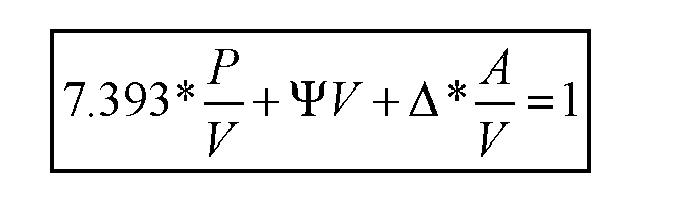
wherein P is equal to molecular polarizability, V is equal to molecular volume, A is equal to the molecular surface area. Ψ is a constant falling within the range {.0025-.0055} and Δ is a constant falling in the range of {-0.55 to -1.0} and the pair result in the above equality.
wherein P is equal to molecular polarizability, V is equal to molecular volume, A is equal to the molecular surface area. Ψ is a constant falling within the range {.0025-.0055} and Δ is a constant falling in the range of {-0.55 to -1.0} and the pair result in the above equality.
Description
- This patent application claims the benefit of priority from
U.S. Patent Application Serial Number 13/071,244 filed March 24, 2011 , the content of which is incorporated herein by reference in its entirety. - The following invention is directed to creating a high performance fragrance formulation.
- In the early 1960's, Jean Carles developed a method to create fine fragrances by defining a fragrance as being made up of with ingredients designated as top, middle and base notes and with the fragrance formulation containing 25% top, 20% middle and 55% base notes (Series of publications in Researches, 1961,1962, 1963). Top notes are defined as volatile ingredients that lack tenacity on blotters or smelling strips and that provide strong performance at initial product application. Middle notes or "modifiers" have intermediate volatility and tenacity on blotters while the heavier base notes provide the long lasting component expected in every fragrance.
- In practice, it is usually the case that many of the compounds considered "top" notes are fleeting, and disappear from the vapor around the wearer within the first five minutes of application. While these notes contribute a pleasurable moment for the user, they contribute little to the aroma that another observer would recognize as the signature consumers identify with of a particular fine fragrance. Therefore the aura the wearer projects over the first few hours is composed of compounds which are diffusive over time, and compounds which gradually decline in the vapor as the fragrance evolves. These compounds are distinguished in the present invention from the top and middle dichotomy, to simply one class known as 'push'.
- One important performance parameter for fine fragrances is their ability to be noticed and appreciated in the "air" around the fragrance user. This parameter is typically referred to as fragrance diffusivity. An added benefit for most fine fragrances is their ability to be diffusive over time and therefore continue to provide performance during a typical use cycle for the fragrance. A high performing fine fragrance will combine this continued diffusivity benefit along with being designed to meet different olfactive and hedonic characteristics.
- In efforts to increase the long-lasting, diffusive performance of fragrance additives such as fixatives, pro-fragrances and delivery systems have been disclosed in
U.S. Patent No. 7,196,052 , European Patent No.0977548B2 , andU.S. Patent No. 7,119,057 . While these additives have been reported to offer fragrance performance benefits, they also can have issues depending on the fragrances product application. These issues can include negative interactions with the product and/or fragrance, inefficient mode of activation on skin, negative product sensory aspects and others. - We have surprisingly found that we can create long-lasting, high performing fragrances by designing these fragrances with a specific range of and combination of "diffusive" ingredients as defined by a diffusivity index without the addition of fixatives, profragrances or delivery vehicles.
- By systematically using appropriate amounts of high performing diffusive and push ingredients and using the remainder of the formula to provide further olfactive and hedonic characteristics, one can create a high performing, long lasting diffusive fragrance that is hedonically pleasing to the consumer.
-
-
Figure 1 : The data as graphed clearly indicates thatFragrance 2 is perceived significantly higher in intensity thanFragrance 1 at all three evaluations -
Figure 2 : The data in the graph inFigure 2 illustrates predicted performance of fragrance on additional substrates and indicates thatFragrance 2 is perceived significantly higher in intensity thanFragrance 1 in this test. - In one embodiment of the invention, a method of formulating a high performance fragrance formulation by selecting an effective amount of long-lasting, diffusive fragrance ingredients selected from the group consisting of aroma chemicals and essential oils defined according to the following algorithm

wherein P is equal to molecular polarizability, V is equal to molecular volume, A is equal to the molecular surface area. Ψ is a constant falling within the range {.0025-.0055} and Δ is a constant falling in the range of{ -0.55 to -1.0} and the pair result in the above equality. Compounds with a favorable push factor possess vapor pressures from about 0.1 to about 100 pa. - In another embodiment of the invention a method to formulate a high performance fragrance formulation is provided wherein at least 40 weight percent % of the formula by weight is comprised of fragrance ingredients where two constants (Ψ and Δ) can be found which are solutions to the equation and at least 5 weight percent % of formula by weight is comprised of compounds with a favorable push factor
- In a further embodiment of the invention a method to formulate a high performance fragrance formulation is provided wherein about 50 weight percent % to about 90 weight percent % of all fragrance ingredients has constants (Ψ and Δ) which are a solution and about 5 to about 20weight percent % of the fragrance ingredients have a favorable push factor.
- In yet a further embodiment of the invention, a method to formulate a high performance fragrance formulation is provided wherein the weighted average of the constant Δ is above -0.5, more preferably the weighted average of the constant Δ is above -0.6.
- According to the present invention, the effective diffusivity index was determined by correlating the long term effective performance of a compound applied on skin with the global molecular properties, specifically, molecular surface area, molecular volume, and polarizability/molar volume. The highly effective long lasting diffusive compounds are generally larger in size, with a relatively low surface area and high polarizability.
- According to the present invention, molecular volume is defined as the molecular mass/molecular density. It is a measure of the volume occupied by a molecule (or scaled by moles, the volume occupied by a mole of molecules) condensed phase at room temperature and atmospheric pressure.
- Molecular surface area is defined as the area of the Van der Waals surface area of a molecule. This is the area of an imaginary surface surrounding the molecule calculated where overlap between molecular orbitals of separate molecules in the condensed phase is of the lowest free energy.
- Polarizability is defined as the capacity of a molecule to polarize in an electric field due to a displacement of mobile charges within the molecule. For a mole of molecules, these individual polarizabilities (p) sum to a molar polarizability (Np) value. Molecules with high polarizability tend to be unsaturated and sometimes aromatic and have functional groups which allow strong delocalization of electrons across pi systems between electron donor and acceptor pairs. These types of molecules tend to absorb strongly in the near UV and visible ranges.
- Diffusivity is a time-space description of the transport of a property through a medium such as air. A highly desirable fragrance composition is one which can produce an experience not just at a point in time after application but over an extended period of several hours. This performance can be measured using purge and trap sampling techniques with subsequent GC and/or GC/MS analysis of the sample. This sampling technique allows fragrance concentrations to be quantified over the fragrance performance time-space continuum desired by consumers
- The effective odor produced by the concert of compounds within a fragrance composition is described from a physical mode, and from a phenomenological mode.
- As with any means to use physical or molecular properties of the fragrance composition, there are quantifiable uncertainties.
- The structure of a compound has a profound effect on physical properties of the compound such as vapor pressure and water solubility, and on the neurobiological properties like odor character and odor threshold.
- In one embodiment, the correlations of the global molecular and electronic properties with fragrance performance were explicitly established without appealing to secondary thermodynamic properties such as vapor pressure, water solubility, logP, Henry's law constant or boiling point.
- Accordingly, the following algorithm has been developed to determine the proper combination of fragrance ingredients to create a high performance fragrance.
- In one embodiment of the invention, a method of formulating a high performance fragrance formulation by selecting an effective amount of long-lasting, diffusive fragrance ingredients selected from the group consisting of aroma chemicals and essential oils defined according to the following algorithm:

wherein P is equal to molecular polarizability, V is equal to molecular volume; A is equal to the molecular surface area. Ψ is a constant falling within the range {.0025-.0055} and Δ is a constant falling in the range of {-0.55 to -1.0} and the pair result in the above equality. Compounds with a favorable push factor possess vapor pressures from about 0.1 to about 100 pa. - The mass or weight fractions of the compounds in the fragrance formula is designated by the algorithms to provide, in aggregate, those properties of a successful, highly performing benchmark fragrance that would be described as pleasantly diffusive.
- One important performance parameter for fine fragrances is there ability to be noticed and appreciated in the "air" around the fragrance user. This parameter is typically referred to as fragrance diffusivity. An added benefit for most fine fragrances is their ability to be diffusive over time and therefore continue to provide performance during a typical use cycle for the fragrance. A high performing fine fragrance will combine this continued diffusivity benefit along with being designed to meet different olfactive/hedonic characteristics.
- Fragrances for applied applications like body wash, shampoo, detergent, fabric conditioners, fabric refreshers, household cleaning products and the like are also contemplated by the present invention. In order to provide the highest fragrance impact from the fragrance deposited on the various substrates it is preferred that materials with a high performance be used. The substrates include but are not limited to skin, hair, textiles such as cloth and hard surfaces. This property must be balanced with the volatility as described above. Some of the principles mentioned above are disclosed in
U.S. Patent No. 5,112,688 . - In another embodiment of the invention, a method to formulate a high performance fragrance formulation is provided wherein at least 40% of the formula by weight is comprised of fragrance ingredients where two constants (Ψ and Δ) can be found which are solutions to the equation and at least 5 weight percent % of formula by weight is comprised of compounds with a favorable push factor.
- In a further embodiment of the invention a method to formulate a high performance fragrance formulation is provided wherein about 50 weight percent to about 90 weight percent % of all fragrance ingredients have constants (Ψ and Δ) which are a solution and about 5 weight percent to about 20 weight percent % of the fragrance ingredients have a favorable push factor.
- In yet a further embodiment of the invention, a method to formulate a high performance fragrance formulation is provided wherein the weighted average of the constant Δ is above -0.5, more preferably the weighted average of the constant Δ is above -0.6.
- To determine high performing diffusive ingredients, different fragrance formulas were prepared and tested for their performance. Analytical measurements were used to identify the fragrance ingredients present in higher performing fragrance formulas. The effectiveness of individual fragrance ingredients was determined by combining the analytical and olfactive assessments.
- Understanding the chemical and physical properties of fragrance ingredients that contribute to the desired long-lasting and diffusive properties of a final fragrance creation provides insight into the design of hedonically pleasing and high performing perfumes.
- Others have defined "enduring" fragrances as containing very high percentages of ingredients with high boiling points and high partition coefficients, but it has been found that by using more complex ingredient parameters, fragrance ingredients can be ranked in their effectiveness as long-lasting and diffusive. By combining these long-lasting diffusive ingredients with "push" ingredients, the performance of the fragrance can be optimized over the entire use cycle.
- "Push" is defined by the ability of particular compounds to appear in the vapor around the wearer at a significantly higher level than the mean ingredient (from among approximately 1000 tested). These compounds are characterized by a high level in the vapor directly after application and a very gradual decline over a few hours.
- Some preferred high performing diffusive fragrance ingredients include but are not limited by the following: galaxolide, iso gamma super, tonalid, hedione, cedrol, ambroxan, benzyl salicylate, eugenol, vertofix, ethylene brassylate, helional, hexyl cinnamaldehyde, amyl salicylate, polysantol, damascene delta and methyl ionone alpha.
- These analytical and olfactive assessments also defined the "push" ingredients and they include, but are not limited by the following ingredients: aldehyde AA, aldehyde C10, fenchyl acetate, terpineol, styryl acetate, methyl nonyl ketone, linalool, dihydromyrcenol, menthol, linalyl acetate, benzyl acetate, allyl heptanoate, citronellol, citronellyl nitrile, isobutyl benzoate and citronellal.
- Understanding fine fragrance performance over time is critical and as previously described, a perfume must be designed to provide benefits over the entire use cycle of the product. To that end, analytical measurements were obtained at different time points and an understanding of which ingredients contributed most to the fragrances performance at different time points was gleaned from these measurements.
- All U.S. patents and patent applications cited herein are incorporated by reference as if set forth herein in their entirety.
- The following are provided as specific embodiments of the present invention. Other modifications of this invention will be readily apparent to those skilled in the art. Such modifications are understood to be within the scope of this invention. As used herein all percentages are weight percent unless otherwise noted, ppm is understood to stand for parts per million, L is understood to be liter, mL is understood to be milliliter, pa is understood to be pascal, g is understood to be gram, mol is understood to be mole, and mmHg be millimeters (mm) of mercury (Hg). IFF as used in the examples is understood to mean International Flavors & Fragrances Inc., New York, NY, USA.
- Below are examples of three compounds with a favorable diffusivity index (Df<-0.9), including calculations, and three compounds with unfavorable diffusivity indexes (Df>-0.9):


- This example demonstrates two fragrances with very different performance. One fragrance was created to provide a weighted favorable long lasting, diffusive performance by providing a mixture containing >60 wt % diffusive ingredients (Fragrance 2) and the other fragrance will have poor long lasting performance as this mixture only contains ~22 wt % diffusive ingredients. Measurements were made with TSAR Version 3 commercially available from Accelrys located in San Diego.
Fragrance 1Fragrance 2Ingredient Wt % Δ Ψ Ingredient Wt % Δ Ψ Ald AA Triplal 0.5 -0.4 0.003 Ald AA Triplal 1.5 -0.4 0.003 Ald C-10 3.0 -0.4 0.002 Ald C-10 1.5 -0.4 0.002 Amber Core 3.0 -0.8 0.004 Benzyl Salicylate 7.0 -0.8 0.003 Amyl Acet 3.0 -0.4 0.004 Cedrol 4.0 -0.8 0.0035 Amyl Caproate 3.0 -0.4 0.003 Eucalytol 4.0 -0.5 0.0035 Amyl 10.0 -0.6 0.0035 Eugenol -0.5 0.003 Salicylate 1.6 Benzyl Acetate 10.0 -0.4 0.0035 Iso Gamma Super 10 -0.8 0.003 But Cinnamald 5.0 -0.6 0.003 Galaxolide 9.0 -0.8 0.003 Carvone D 5.0 -0.4 0.003 Hexyl Cinnamald 10 -0.8 0.003 Citronellyl 15.0 -0.5 0.0035 Limonene -0.5 0.003 Acet 6.0 Damascone 1.0 -0.6 0.003 Menthol -0.5 0.0037 Delta 1.8 Dihydro 11.5 -0.4 0.003 Menthone -0.4 0.003 Myrcenol 2.6 Eugenol 1.0 -0.5 0.0035 Meth Ionone G 3.0 -0.6 0.0032 Linalyl Acet 10.0 -0.5 0.003 Patchoulol 9.0 -0.8 0.003 Rosalva 3.0 -0.4 0.003 Pinene Alpha 4.0 -0.5 0.0035 T-hydro 13.0 -0.4 0.003 Polysantol -0.8 0.0035 Myrcenol 9.0 Vertofix 3.0 -0.8 0.003 Terpinene -0.5 0.003 Gamma 2.0 Terpinyl Acet 4.0 -0.5 0.0025 Tonalid 10 -0.8 0.0035 Wt % of diffusive compounds Wt % of diffusive compounds 22.0 61.0 - A sensory test was performed to show the difference in long, lasting diffusive performance of these two fragrances. In this test a total of four sprays (total ca. 0.42-0.43g) is applied to four different areas of the wearer: one spray on each wrist and one on each side of the neck. Diffusivity evaluations were made at three time points: Initial impact, 4 hr & 8 hrs after product application. Each fragrance was applied to eight fragrance wearers and evaluated by eight judges trained in rating intensity of fragrances on labeled magnitude scale. The sensory judges evaluate the intensity of each fragrance from a distance of three feet while the fragrance wearers make ten passes walking briskly. Within each fragrance condition, the order in which the fragrance wearers walked past the judges is counterbalanced. Data analysis is performed by applying ANOVA to intensities of fragrances. Significance of the data is established at p≤ 0.05.
- The data as graphed clearly indicates that
Fragrance 2 is perceived significantly higher in intensity thanFragrance 1 at all three evaluations. - This example demonstrates two fragrances with very different performance. One fragrance was created to provide a weighted favorable Σx1*Δ1 <-0.6, average delta value (WADf) (Fragrance 2) which will provide good long lasting, diffusive properties and one fragrance with weight averaged delta which will have limited performance Σx1*Δ1 >.-0.6. Measurements were made using TSAR Version 3 commercially available from Accelrys located in San Diego.
Fragrance 1 Fragrance 2 Ingredient wt % D wt%*delta/100 Ingredient wt % D wt%*delta/100 Ald AA Triplal 0.5 -0.4 -0.002 Ald AA Triplal 1.5 -0.4 -0.006 Ald C-10 3.0 -0.4 -0.012 Ald C-10 1.5 -0.4 -0.006 Amber Core 3.0 -0.8 -0.024 Benzyl Salicylate 7.0 -0.6 -0.042 Amyl Acet 3.0 -0.4 -0.012 Cedrol 4.0 -0.8 -0.032 Amyl Caproate 3.0 -0.4 -0.012 Eucalytol 4.0 -0.5 -0.02 Amyl 10.0 -0.6 -0.06 Salicylate Eugenol 1.6 -0.5 -0.008 Benzyl Acetate 10.0 -0.4 -0.04 Iso Gamma Super 10.0 -0.8 -0.08 But Cinnamald 5.0 -0.6 -0.03 Galaxolide 9.0 -0.8 -0.072 Carvone D 5.0 -0.4 -0.02 Hexyl Cinnamald 10.0 -0.8 -0.08 Citronellyl 15.0 -0.5 -0.075 Acet Limonene 6.0 -0.5 -0.03 Damascone 1.0 -0.6 -0.006 Delta Menthol 1.8 -0.5 -0.009 Dihydro 11.5 -0.4 -0.046 Myrcenol Menthone 2.6 -0.4 -0.0104 Eugenol 1.0 -0.5 -0.005 Meth Ionone G 3.0 -0.6 -0.018 Linalyl Acet 10.0 -0.5 -0.05 Patchoulol 9.0 -0.8 -0.072 Rosalva 3.0 -0.4 -0.012 Pinene Alpha 4.0 -0.5 -0.02 T-hydro 13.0 -0.4 -0.052 Myrcenol Polysantol 9.0 -0.8 -0.072 Vertofix 3.0 -0.8 -0.024 Terpinene Gamma 2.0 -0.5 -0.01 Terpinyl Acet 4.0 -0.5 -0.02 Sum 100.0 -0.482 Tonalid 10.0 -0.8 -0.08 Sum 100.0 -0.6874 - This example demonstrates that the predicted performance of the two fragrances from Example II is also replicated on additional substrates.
- In this test, Fragrance 1 (predicted poor performer) and Fragrance 2 (predicted long lasting performer) were sprayed on cotton terry cloths and evaluated in a sensory test for their long-lasting diffusivity performance.
- In this test, two cloths were sprayed with
Fragrance 1 and two cloths were sprayed with Fragrance 2 (2 sprays on each cloth of ca. 0.21-0.22g). - The cloths were left in an open environment for twenty four (24) hours and then evaluated by a sensory panel of 14 judges trained in rating intensity of fragrances on a labeled magnitude scale. The judges were asked to evaluate the intensity of each fragrance, in duplication, at a distance of three feet from the cloth with a small fan blowing over it (to represent the diffusion of a fragrance from a person wearing clothing).
- Within each fragrance condition, the order in which the fragrance wearers evaluated the four cloths was randomized. Data analysis is performed by applying ANOVA to the intensities of the fragrance. Significance of the data is established by p≤0.05.
- The data in the graph in
Figure 2 clearly indicates thatFragrance 2 is perceived significantly higher in intensity thanFragrance 1 in this test.
Claims (14)
- A method of formulating a high performance fragrance formulation by selecting an effective amount of fragrance ingredients selected from the group consisting of aroma chemicals and essential oils defined according to the following algorithm:

wherein P is equal to molecular polarizability; V is equal to molecular volume; A is equal to the molecular surface area; Ψ is a constant in the range {.0025-.0055} and Δ is a constant in the range of{-0.55 to -1.0}. - The method of claim 1 wherein at least 40% of the formula by weight is comprised of fragrance ingredients where Ψ is a constant in the range {.0025-.0055} and Δ is a constant in the range of{ -0.55 to -1.0}.
- The method of claim 2 wherein at least 5% of the formula is comprised of compounds with a favorable push factor.
- The method of claim 1 or of claim 2 or of claim 3 wherein from about 50 to about 90% of the selected fragrance ingredients have Ψ falling within the range {.0025-.0055} and Δ falling in the range of{ -0.55 to -1.0}.
- The method of claim 4 wherein about 5% to about 20% of the fragrance ingredients have a favorable push factor.
- The method of claim 4 or claim 5 wherein the fragrance ingredients with a favorable push factor are selected from the group consisting aldehyde AA, aldehyde C10, fenchyl acetate, terpineol, styryl acetate, methyl nonyl ketone, linalool, dihydromyrcenol, menthol, linalyl acetate, benzyl acetate, allyl heptanoate, citronellol, citronellyl nitrile, isobutyl benzoate and citronellal.
- The method of claim 1 or of any preceding claim, wherein the weighted average of the constant Δ is greater than -0.6.
- A high performance fragrance formulation prepared according to the method of claim 1 or of any of claims 2 to 7.
- A high performance fragrance formulation prepared according to the method of claim 1 wherein at least 40% of the formula by weight is comprised of fragrance ingredients where Ψ is a constant within the range {.0025-.0055} and Δ is a constant in the range of{ -0.55 to -1.0}.
- The high performance fragrance formulation of Claim 8 or of claim 9 wherein at least 5% of the formula is comprised of compounds with a favorable push factor.
- The high performance fragrance formulation 10 wherein the fragrance ingredients with a favorable push factor are selected from the group consisting aldehyde AA, aldehyde C 10, fenchyl acetate, terpineol, styryl acetate, methyl nonyl ketone, linalool, dihydromyrcenol, menthol, linalyl acetate, benzyl acetate, allyl heptanoate, citronellol, citronellyl nitrile, isobutyl benzoate and citronellal.
- A high performance fragrance formulation prepared according to the method of claim 1 wherein at least 50 to about 90% of the formula by weight is comprised of fragrance ingredients where Ψ is a constant within the range {.0025-.0055} and Δ is a constant in the range of{ -0.55 to -1.0}.
- The high performance fragrance formulation of Claim 12 wherein about 5% to about 20% of the fragrance ingredients have a favorable push factor.
- The high performance fragrance formulation of claim 12 or of claim 13 wherein the fragrance ingredients with a favorable push factor are selected from the group consisting aldehyde AA, aldehyde C10, fenchyl acetate, terpineol, styryl acetate, methyl nonyl ketone, linalool, dihydromyrcenol, menthol, linalyl acetate, benzyl acetate, allyl heptanoate, citronellol, citronellyl nitrile, isobutyl benzoate and citronellal.
Applications Claiming Priority (1)
| Application Number | Priority Date | Filing Date | Title |
|---|---|---|---|
| US13/071,244 US20120245075A1 (en) | 2011-03-24 | 2011-03-24 | High Performance Fragrance Formulation |
Publications (1)
| Publication Number | Publication Date |
|---|---|
| EP2502978A1 true EP2502978A1 (en) | 2012-09-26 |
Family
ID=45878004
Family Applications (1)
| Application Number | Title | Priority Date | Filing Date |
|---|---|---|---|
| EP12161085A Withdrawn EP2502978A1 (en) | 2011-03-24 | 2012-03-23 | High performance fragrance formulation |
Country Status (5)
| Country | Link |
|---|---|
| US (2) | US20120245075A1 (en) |
| EP (1) | EP2502978A1 (en) |
| CN (1) | CN102703220A (en) |
| BR (2) | BR102012006712A2 (en) |
| MX (1) | MX2012003554A (en) |
Cited By (1)
| Publication number | Priority date | Publication date | Assignee | Title |
|---|---|---|---|---|
| US20230253075A1 (en) * | 2020-09-30 | 2023-08-10 | Firmenich Sa | Fragrance ingredient spatial recognisability prediction methods and fragrance composition spatial recognisability prediction methods |
Families Citing this family (4)
| Publication number | Priority date | Publication date | Assignee | Title |
|---|---|---|---|---|
| MX372550B (en) * | 2011-05-26 | 2020-03-23 | Procter & Gamble | COMPOSITIONS INCLUDING AN EFFICIENT PERFUME AROMA. |
| US9567286B2 (en) * | 2012-10-08 | 2017-02-14 | Dsm Ip Assets B.V. | Flavor and fragrance formulation (III) |
| BR112017016520B8 (en) * | 2016-01-28 | 2022-07-26 | Currahee Holding Company Inc | METHODS FOR PREPARING A FRAGRANCE COMPOSITION THAT INCLUDES A CANDIDATE ACTIVE COMPONENT AND DETERMINING THE RESILIENT ACTIVITY LEVEL OF A CANDIDATE ACTIVE COMPONENT |
| KR20240117000A (en) * | 2021-12-03 | 2024-07-30 | 인터내셔널 플레이버즈 앤 프래그런스즈 아이엔씨. | Aqueous Fabric Conditioner Compositions with High-Performance Fragrances |
Citations (11)
| Publication number | Priority date | Publication date | Assignee | Title |
|---|---|---|---|---|
| GB1253678A (en) * | 1967-11-21 | 1971-11-17 | Rudolf Randebrock | Method of formulating perfume compositions |
| US4139650A (en) * | 1974-07-03 | 1979-02-13 | International Flavors & Fragrances Inc. | Flavoring with a tricyclic alcohol |
| EP0409089A2 (en) * | 1989-07-20 | 1991-01-23 | Kao Corporation | Fragrant patchouli oil and a perfume composition comprising said patchouli oil |
| US5112688A (en) | 1989-02-27 | 1992-05-12 | The Procter & Gamble Company | Microcapsules containing hydrophobic liquid core |
| EP0977548B1 (en) | 1997-04-24 | 2004-08-18 | The Procter & Gamble Company | Fragrance pro-accords |
| US7119057B2 (en) | 2002-10-10 | 2006-10-10 | International Flavors & Fragrances Inc. | Encapsulated fragrance chemicals |
| US7196052B2 (en) | 2002-02-22 | 2007-03-27 | Takasago International Corporation | Fragrance composition |
| US20070099804A1 (en) * | 2005-04-07 | 2007-05-03 | Addi Fadel | Perfumes for rinse-off systems |
| EP1820842A1 (en) * | 2004-11-12 | 2007-08-22 | Takasago International Corporation | Optically active muscone composition and perfume product containing the same |
| WO2010058382A1 (en) * | 2008-11-24 | 2010-05-27 | L'oreal | Method for manufacturing perfume within a system comprising a server and at least two interactive terminals for formulating perfumes |
| US20100168253A1 (en) * | 2005-08-04 | 2010-07-01 | Shiseido Co., Ltd. | Method For Selecting Perfume Ingredient, Method For Formulating Fragrance, And Preference-Enhancing Agent |
Family Cites Families (6)
| Publication number | Priority date | Publication date | Assignee | Title |
|---|---|---|---|---|
| EP1622576B1 (en) * | 2003-05-07 | 2007-04-25 | Firmenich Sa | Sprayable perfume with an improved tenacity |
| CN1958762A (en) * | 2005-11-01 | 2007-05-09 | 卢伯奇 | Flavoring rose essence |
| US20070298995A1 (en) * | 2006-06-21 | 2007-12-27 | Symrise Gmbh & Co. Kg | Fragrance-containing compositions comprising deliquescent substances |
| US20090253612A1 (en) * | 2008-04-02 | 2009-10-08 | Symrise Gmbh & Co Kg | Particles having a high load of fragrance or flavor oil |
| EP2226063B1 (en) * | 2009-03-04 | 2013-04-10 | Takasago International Corporation | High intensity fragrances |
| CN101899362A (en) * | 2009-06-01 | 2010-12-01 | 满瑞芳 | Honeysuckle essence |
-
2011
- 2011-03-24 US US13/071,244 patent/US20120245075A1/en not_active Abandoned
-
2012
- 2012-03-23 MX MX2012003554A patent/MX2012003554A/en not_active Application Discontinuation
- 2012-03-23 EP EP12161085A patent/EP2502978A1/en not_active Withdrawn
- 2012-03-26 BR BRBR102012006712-9A patent/BR102012006712A2/en not_active IP Right Cessation
- 2012-03-26 CN CN201210153998XA patent/CN102703220A/en active Pending
-
2013
- 2013-05-31 US US13/906,685 patent/US20130303434A1/en not_active Abandoned
-
2014
- 2014-06-02 BR BR132014013329A patent/BR132014013329E2/en not_active IP Right Cessation
Patent Citations (11)
| Publication number | Priority date | Publication date | Assignee | Title |
|---|---|---|---|---|
| GB1253678A (en) * | 1967-11-21 | 1971-11-17 | Rudolf Randebrock | Method of formulating perfume compositions |
| US4139650A (en) * | 1974-07-03 | 1979-02-13 | International Flavors & Fragrances Inc. | Flavoring with a tricyclic alcohol |
| US5112688A (en) | 1989-02-27 | 1992-05-12 | The Procter & Gamble Company | Microcapsules containing hydrophobic liquid core |
| EP0409089A2 (en) * | 1989-07-20 | 1991-01-23 | Kao Corporation | Fragrant patchouli oil and a perfume composition comprising said patchouli oil |
| EP0977548B1 (en) | 1997-04-24 | 2004-08-18 | The Procter & Gamble Company | Fragrance pro-accords |
| US7196052B2 (en) | 2002-02-22 | 2007-03-27 | Takasago International Corporation | Fragrance composition |
| US7119057B2 (en) | 2002-10-10 | 2006-10-10 | International Flavors & Fragrances Inc. | Encapsulated fragrance chemicals |
| EP1820842A1 (en) * | 2004-11-12 | 2007-08-22 | Takasago International Corporation | Optically active muscone composition and perfume product containing the same |
| US20070099804A1 (en) * | 2005-04-07 | 2007-05-03 | Addi Fadel | Perfumes for rinse-off systems |
| US20100168253A1 (en) * | 2005-08-04 | 2010-07-01 | Shiseido Co., Ltd. | Method For Selecting Perfume Ingredient, Method For Formulating Fragrance, And Preference-Enhancing Agent |
| WO2010058382A1 (en) * | 2008-11-24 | 2010-05-27 | L'oreal | Method for manufacturing perfume within a system comprising a server and at least two interactive terminals for formulating perfumes |
Cited By (1)
| Publication number | Priority date | Publication date | Assignee | Title |
|---|---|---|---|---|
| US20230253075A1 (en) * | 2020-09-30 | 2023-08-10 | Firmenich Sa | Fragrance ingredient spatial recognisability prediction methods and fragrance composition spatial recognisability prediction methods |
Also Published As
| Publication number | Publication date |
|---|---|
| US20120245075A1 (en) | 2012-09-27 |
| MX2012003554A (en) | 2014-03-05 |
| BR132014013329E2 (en) | 2016-02-02 |
| BR102012006712A2 (en) | 2013-07-23 |
| US20130303434A1 (en) | 2013-11-14 |
| CN102703220A (en) | 2012-10-03 |
Similar Documents
| Publication | Publication Date | Title |
|---|---|---|
| JP5911480B2 (en) | Perfume compositions and their use | |
| JP6223986B2 (en) | Perfume compositions and their use | |
| CN106061459B (en) | Fragrance compositions | |
| ES2706288T3 (en) | Compositions that neutralize odors and procedure for their use | |
| US20130303434A1 (en) | High performance fragrance formulation | |
| EP2121884A1 (en) | Perfumes for linear citrus release in rinse-off systems | |
| CN102149664B (en) | Divinyl ether derivatives capable of releasing reactive aldehydes and reactive ketones and methods for perfuming surfaces | |
| CN104114147A (en) | Perfuming compositions and uses thereof | |
| Homem et al. | Scented traces–Dermal exposure of synthetic musk fragrances in personal care products and environmental input assessment | |
| CN107771072A (en) | Fragrance fixatives and compositions comprising fragrance fixatives | |
| US20100048441A1 (en) | Multisensory Fragrance Compositions | |
| RU2472850C2 (en) | Aromatic composition with jasmine zambak aroma | |
| JP2004502833A (en) | Use of (1-ethoxyethoxy) cyclododecane in a perfume composition as a perfume retention agent and / or perfume enhancer | |
| EP2143782B1 (en) | Use of Allyl Caproate | |
| US7446079B2 (en) | Perfumes for rinse-off systems | |
| WO2014072519A1 (en) | Improvements in or relating to organic compounds | |
| EP2106256A1 (en) | Optimized perfumery for rinse-off products | |
| JP2016175915A (en) | Improvement of organic compounds or improvement related to organic compounds | |
| US7517840B2 (en) | Optimized perfumery for rinse-off products | |
| EP2635665A1 (en) | A method to improve skin and hair fragrance retention from personal care compositions | |
| EP2134317A1 (en) | Multisensory fragrance compositions | |
| US9944585B2 (en) | Flavor and fragrance formulation (V) | |
| EP2904081B1 (en) | Flavor and fragrance formulation (ii) | |
| EP1093358A1 (en) | Perfume compositions | |
| WO2008090396A1 (en) | Perfumes for rinse-off systems |
Legal Events
| Date | Code | Title | Description |
|---|---|---|---|
| PUAI | Public reference made under article 153(3) epc to a published international application that has entered the european phase |
Free format text: ORIGINAL CODE: 0009012 |
|
| AK | Designated contracting states |
Kind code of ref document: A1 Designated state(s): AL AT BE BG CH CY CZ DE DK EE ES FI FR GB GR HR HU IE IS IT LI LT LU LV MC MK MT NL NO PL PT RO RS SE SI SK SM TR |
|
| AX | Request for extension of the european patent |
Extension state: BA ME |
|
| 17P | Request for examination filed |
Effective date: 20130326 |
|
| STAA | Information on the status of an ep patent application or granted ep patent |
Free format text: STATUS: THE APPLICATION IS DEEMED TO BE WITHDRAWN |
|
| 18D | Application deemed to be withdrawn |
Effective date: 20171003 |