EP2501045A1 - A/d conversion device, damping device, and vehicle mounted with these - Google Patents
A/d conversion device, damping device, and vehicle mounted with these Download PDFInfo
- Publication number
- EP2501045A1 EP2501045A1 EP10829993A EP10829993A EP2501045A1 EP 2501045 A1 EP2501045 A1 EP 2501045A1 EP 10829993 A EP10829993 A EP 10829993A EP 10829993 A EP10829993 A EP 10829993A EP 2501045 A1 EP2501045 A1 EP 2501045A1
- Authority
- EP
- European Patent Office
- Prior art keywords
- digital value
- input
- conversion unit
- vibration
- signal
- Prior art date
- Legal status (The legal status is an assumption and is not a legal conclusion. Google has not performed a legal analysis and makes no representation as to the accuracy of the status listed.)
- Withdrawn
Links
- 238000006243 chemical reaction Methods 0.000 title claims abstract description 118
- 238000013016 damping Methods 0.000 title claims description 26
- 230000008859 change Effects 0.000 claims description 7
- 230000005284 excitation Effects 0.000 description 11
- 238000010586 diagram Methods 0.000 description 6
- 230000001133 acceleration Effects 0.000 description 4
- 230000003044 adaptive effect Effects 0.000 description 4
- 230000033001 locomotion Effects 0.000 description 3
- 239000006096 absorbing agent Substances 0.000 description 2
- 230000003321 amplification Effects 0.000 description 2
- 230000004907 flux Effects 0.000 description 2
- 230000005484 gravity Effects 0.000 description 2
- 238000004519 manufacturing process Methods 0.000 description 2
- 238000003199 nucleic acid amplification method Methods 0.000 description 2
- 230000001360 synchronised effect Effects 0.000 description 2
- 230000009471 action Effects 0.000 description 1
- 230000001276 controlling effect Effects 0.000 description 1
- 230000007423 decrease Effects 0.000 description 1
- 230000000694 effects Effects 0.000 description 1
- 238000012544 monitoring process Methods 0.000 description 1
- 238000013139 quantization Methods 0.000 description 1
- 230000001105 regulatory effect Effects 0.000 description 1
- 230000004044 response Effects 0.000 description 1
Images



Classifications
-
- H—ELECTRICITY
- H03—ELECTRONIC CIRCUITRY
- H03M—CODING; DECODING; CODE CONVERSION IN GENERAL
- H03M1/00—Analogue/digital conversion; Digital/analogue conversion
- H03M1/12—Analogue/digital converters
- H03M1/18—Automatic control for modifying the range of signals the converter can handle, e.g. gain ranging
- H03M1/188—Multi-path, i.e. having a separate analogue/digital converter for each possible range
-
- H—ELECTRICITY
- H03—ELECTRONIC CIRCUITRY
- H03M—CODING; DECODING; CODE CONVERSION IN GENERAL
- H03M1/00—Analogue/digital conversion; Digital/analogue conversion
- H03M1/12—Analogue/digital converters
- H03M1/18—Automatic control for modifying the range of signals the converter can handle, e.g. gain ranging
-
- B—PERFORMING OPERATIONS; TRANSPORTING
- B60—VEHICLES IN GENERAL
- B60K—ARRANGEMENT OR MOUNTING OF PROPULSION UNITS OR OF TRANSMISSIONS IN VEHICLES; ARRANGEMENT OR MOUNTING OF PLURAL DIVERSE PRIME-MOVERS IN VEHICLES; AUXILIARY DRIVES FOR VEHICLES; INSTRUMENTATION OR DASHBOARDS FOR VEHICLES; ARRANGEMENTS IN CONNECTION WITH COOLING, AIR INTAKE, GAS EXHAUST OR FUEL SUPPLY OF PROPULSION UNITS IN VEHICLES
- B60K5/00—Arrangement or mounting of internal-combustion or jet-propulsion units
- B60K5/12—Arrangement of engine supports
-
- F—MECHANICAL ENGINEERING; LIGHTING; HEATING; WEAPONS; BLASTING
- F16—ENGINEERING ELEMENTS AND UNITS; GENERAL MEASURES FOR PRODUCING AND MAINTAINING EFFECTIVE FUNCTIONING OF MACHINES OR INSTALLATIONS; THERMAL INSULATION IN GENERAL
- F16F—SPRINGS; SHOCK-ABSORBERS; MEANS FOR DAMPING VIBRATION
- F16F15/00—Suppression of vibrations in systems; Means or arrangements for avoiding or reducing out-of-balance forces, e.g. due to motion
- F16F15/002—Suppression of vibrations in systems; Means or arrangements for avoiding or reducing out-of-balance forces, e.g. due to motion characterised by the control method or circuitry
-
- F—MECHANICAL ENGINEERING; LIGHTING; HEATING; WEAPONS; BLASTING
- F16—ENGINEERING ELEMENTS AND UNITS; GENERAL MEASURES FOR PRODUCING AND MAINTAINING EFFECTIVE FUNCTIONING OF MACHINES OR INSTALLATIONS; THERMAL INSULATION IN GENERAL
- F16F—SPRINGS; SHOCK-ABSORBERS; MEANS FOR DAMPING VIBRATION
- F16F15/00—Suppression of vibrations in systems; Means or arrangements for avoiding or reducing out-of-balance forces, e.g. due to motion
- F16F15/02—Suppression of vibrations of non-rotating, e.g. reciprocating systems; Suppression of vibrations of rotating systems by use of members not moving with the rotating systems
-
- F—MECHANICAL ENGINEERING; LIGHTING; HEATING; WEAPONS; BLASTING
- F16—ENGINEERING ELEMENTS AND UNITS; GENERAL MEASURES FOR PRODUCING AND MAINTAINING EFFECTIVE FUNCTIONING OF MACHINES OR INSTALLATIONS; THERMAL INSULATION IN GENERAL
- F16F—SPRINGS; SHOCK-ABSORBERS; MEANS FOR DAMPING VIBRATION
- F16F7/00—Vibration-dampers; Shock-absorbers
- F16F7/10—Vibration-dampers; Shock-absorbers using inertia effect
- F16F7/1005—Vibration-dampers; Shock-absorbers using inertia effect characterised by active control of the mass
- F16F7/1011—Vibration-dampers; Shock-absorbers using inertia effect characterised by active control of the mass by electromagnetic means
-
- G—PHYSICS
- G05—CONTROLLING; REGULATING
- G05D—SYSTEMS FOR CONTROLLING OR REGULATING NON-ELECTRIC VARIABLES
- G05D19/00—Control of mechanical oscillations, e.g. of amplitude, of frequency, of phase
- G05D19/02—Control of mechanical oscillations, e.g. of amplitude, of frequency, of phase characterised by the use of electric means
Definitions
- the present invention relates to an A/D conversion device that appropriately applies an analog-to-digital conversion to a signal from a vibration sensor, or a damping device to which the same is applied, and a vehicle mounted with these devices.
- Patent Document 1 discloses a damping device including: a control unit configured to generate an excitation command signal so as to offset vibration that is transmitted from a vibration generating source to a location to be damped; an excitation means operated by the input of an excitation command signal generated at the control unit so as to generate the offsetting vibration at the location to be damped; and a vibration detecting sensor, such as an acceleration sensor, configured to detect, at the location to be damped, the vibration remaining as an offsetting error between the vibration generated at the vibration generating source and the offsetting vibration, wherein the control unit corrects the excitation command signal so as to reduce the size of vibration remaining as an offsetting error based on the vibration detected by the vibration detecting sensor.
- a control unit configured to generate an excitation command signal so as to offset vibration that is transmitted from a vibration generating source to a location to be damped
- an excitation means operated by the input of an excitation command signal generated at the control unit so as to generate the offsetting vibration at the location to be damped
- a vibration detecting sensor such
- the damping device converts, with an A/D conversion device, an analog vibration signal output from the vibration detecting sensor into a digital value, and controls to dampen it by using the digital value.
- the A/D conversion device installed on the above-described damping device is required to have high resolution for certainly detecting a change in minute vibrations near the zero level so as to determine whether or not vibrations are damped, and is also required to have a convertible amplitude range that is wide enough to respond to vibrations of various magnitudes.
- an A/D conversion unit may be considered that combines a wide convertible amplitude range and high resolution.
- this A/D conversion unit is expensive and increases manufacturing costs, and thus is not preferable.
- a configuration may be considered in which an analog vibration signal amplified through an amplitude amplifier is input to an inexpensive and low resolution A/D conversion unit.
- the A/D convertible amplitude range becomes narrow while high resolution is obtained, causing input saturation state due to the input of large amplitude vibrations without allowing an accurate digital value conversion, which is troublesome.
- the present invention has been achieved taking the aforementioned circumstances into consideration; and an object thereof is to provide an A/D conversion device that has high resolution and a wide convertible amplitude range without increasing manufacturing costs, and also to provide a damping device having improved damping properties, and also to provide a vehicle mounted with these devices.
- the present invention took the following measures.
- the A/D conversion device of the present invention is a device that is input with a signal from a vibration detecting sensor for detecting vibrations, and converts it into a digital value and then externally outputs the converted digital value
- the device comprising: a first A/D conversion unit configured to convert an analog vibration signal that is input from the vibration detecting sensor, corresponding to a signal input, into a digital value; a second A/D conversion unit configured to convert the input amplified signal corresponding to an amplified analog vibration signal input to the first A/D conversion unit, into a digital value; a determination unit configured to determine whether or not an input saturation state, where the amplitude value of the amplified signal input to the second A/D conversion unit exceeds an amplitude range convertible at the second A/D conversion unit, is occurring; and a selection unit configured to output the digital value converted by the first A/D conversion unit when the determination unit determines that the input saturation state is occurring, and also output the digital value converted by the second A/D conversion unit when the determination unit determines
- the input saturation state that is, when the vibration to be detected exceeds the minute range, it becomes possible to digitalize an analog vibration signal, and to appropriately digitalize the amplitude value of the vibration in the minute range, which requires higher resolution, and by specifying, with ordinary resolution, the amplitude value of a vibration in a wide range outside of the minute range, and then accurately capturing the amplitude value of the vibration in the wide range.
- the determination unit determine that the input saturation state is occurring when the digital value obtained either at the first A/D conversion unit or the second A/D conversion unit exceeds a predetermined threshold, and determine that the input saturation state is not occurring when the digital value does not exceed the predetermined threshold.
- the digital value obtained at the first A/D conversion unit and externally output, and the digital value obtained at the second A/D conversion unit and externally output have a matching change rate and zero point with respect to a fluctuation in amplitude values of the signals input from the vibration detecting sensor.
- the A/ D conversion device of the present invention be applied to a damping device which is required to detect minute vibrations near the zero level.
- This damping device can be particularly preferably used, mounted in a vehicle, when damping the vibration from its engine.
- the present invention determines whether or not the input saturation state, where the amplitude value of an amplified signal input to the second A/D conversion unit exceeds the amplitude range convertible at the second A/D conversion unit, is occurring, thus outputting a digital value obtained by converting an analog vibration signal when the input saturation state is determined, and outputting a digital value obtained by converting an amplified signal corresponding to an amplified analog vibration signal when the input saturation state is not determined. Accordingly, high resolution will be provided when the input saturation state is not occurring; the A/D conversion of a wide convertible amplitude range will be achieved at the input saturation state; furthermore, damping properties will improve.
- a damping device of the embodiment, as shown in Fig. 1 is mounted on a vehicle such as an automobile.
- the device includes: a vibration detecting sensor 1, such as an acceleration sensor, arranged at a location pos, such as a seat st, where the vibration should be damped; an excitation means 2 using a linear actuator 20 so as to generate an offsetting vibration Vi4 at the location pos to be damped by vibrating an auxiliary mass 2a having a predetermined mass; a reference wave generating means 3 configured to generate a reference wave e j ⁇ from a fundamental frequency f taken from the ignition pulse of an engine that is a vibration generating source gn; an A/D conversion device 7 configured to convert an analog vibration signal sg from the vibration detecting sensor 1 into a digital value digi; and a control unit 4 configured to control so that the excitation means 2 generates the offsetting vibration Vi4 at the location pos to be damped by inputting the digital value digi from the A/ D conversion device 7 and the reference wave e j ⁇
- the device offsets the vibration Vi3 generated at the vibration generating source gn, such as an engine, mounted on a vehicle body frame frm through a mounter gnm, with the offsetting vibration Vi4 generated through the excitation means 2 at the location pos to be damped, thereby reducing vibration at the location pos to be damped.
- the vibration generating source gn such as an engine
- the vibration detecting sensor 1 detects main vibration in the same direction as that of the main vibration of an engine by using an acceleration sensor or the like, and outputs an analog vibration signal sg that shows the amplitude value of vibration in voltage.
- the linear actuator 20, as illustrated in Fig. 2 is of reciprocating type in which a stator 22 having a permanent magnet is fixed to the vehicle body frame frm so as to allow a mover 23 to move in a reciprocal movement (vertical in Fig. 2 ) direction, the same as the direction of vibration to be controlled.
- the stator 22 is fixed to the vehicle body frame frm so as to match the direction of the vibration of the vehicle body frame frm needing to be controlled, to the reciprocal movement (thrust) direction of the mover 23.
- the mover 23 is attached to a shaft 25 together with an auxiliary mass 21.
- the shaft 25 is supported by the stator 22 through a flat spring 24, allowing the mover 23 and the auxiliary mass 21 to shift in the thrust direction.
- the linear actuator 20 and the auxiliary mass 21 constitute a dynamic vibration absorber.
- the auxiliary mass 21 adjoined to the shaft 25 vibrates in a vertical direction. Since more specific structure and operation of the linear actuator 20 are conventionally known, the detailed explanation thereof is omitted herein.
- the mover 23 has its range of action regulated by a stopper not shown in the figure.
- the dynamic vibration absorber including the linear actuator 20 and the auxiliary mass 21, controls damping force by controlling the acceleration of the auxiliary mass 21 based on a current control signal ss output from an amplifier 6, thereby offsetting the vibration generated at the vehicle body frame frm and thus reducing vibration.
- the reference wave generating means 3 as illustrated in Fig. 3 , generates, from a fundamental frequency f [Hz], a reference sine wave (sin ⁇ ) and a reference cosine wave (cos ⁇ ) as reference waves e j ⁇ in a fundamental degree.
- the reference sine wave (sin ⁇ ) and reference cosine wave (cos ⁇ ) to be generated may or may not be synchronized to any synchronous signal.
- the A/D conversion device 7 converts the analog vibration signal sg input from the vibration detecting sensor 1 into a digital value digi as a digital signal. The detail thereof will be described below.
- the control unit 4 controls vibrations by adaptive control, calculates an adaptive filter coefficient (Re, Im) from the digital value digi converted by the A/D conversion device 7 and the reference wave e j ⁇ , then generates an excitation command signal I 41 based on the adaptive filter coefficient (Re, Im), and inputs a current control signal ss to the linear actuator 20 through the amplifier 6 described below based on the command signal I 41 , thereby generating, at the location pos to be damped, the offsetting vibration Vi4 having a phase reverse that of the vibration from the vibration generating source gn, through the excitation means 2.
- the adaptive filter coefficient (Re, Im) is repeatedly calculated, the amplitude value and phase of the offsetting vibration Vi4 converge with those of the vibration Vi3 that must be damped.
- the vibration is offset as the value and phase converge; however, as basic frequencies f and the amplitude values and phases of the vibration Vi3 change constantly, the control unit 4 performs control by constantly tracking the changes.
- the A/D conversion device 7 is required to have high resolution for appropriately converting the change of minute vibration near the zero level into a digital value so as to determine a damped or non-damped state, and is also required to have a wide amplitude range that is digitally convertible so as to respond to vibrations of various magnitudes.
- the A/D conversion device 7 is configured by using an inexpensive generic A/D conversion unit having a digital processing unit such as a CPU and a plurality of A/D conversion units.
- the conversion device 7 includes analog amplitude amplifiers 71 and 72, a first A/D conversion unit 73, a second A/D conversion unit 74, a determination unit 81, and a selection unit 82.
- the analog amplitude amplifier 71 is input with an analog vibration signal sg from the vibration detecting sensor 1 where the amplitude value of vibration is expressed in volts, and then outputs an analog vibration signal sg1 after the amplitude (voltage) of the analog vibration signal sg is amplified one time.
- the analog amplitude amplifier 72 is input with the analog vibration signal sg1 output from the analog amplitude amplifier 71, and then outputs an analog vibration signal sg2 as an amplified signal after the amplitude (voltage) of the analog vibration signal sg1 is amplified four times.
- the voltage fluctuation range of the analog vibration signal sg is 2.5 V ⁇ 2.0 V.
- the first A/D conversion unit 73 is input with the analog vibration signal sg1 corresponding to the analog vibration signal sg input from the vibration detecting sensor 1, and converts the signal into a digital value digi1 and then outputs it.
- the analog vibration signal sg1 input to the first A/D conversion unit 73 is a signal having the amplification factor of 1 with respect to the analog vibration signal sg, and the voltage range that can be input to the first A/D conversion unit 73 is 2.5 V ⁇ 2.5 V.
- the convertible amplitude range (voltage range) is 2.5 V ⁇ 2.5 V with the analog vibration signal sg as a reference; effective resolution is about 820 [lsb]/v; and the minimum analog quantity to be quantized is about 0.0012195 V/[lsb].
- the second A/D conversion unit 74 is input with the analog vibration signal sg2 as an amplified signal corresponding to an amplified analog vibration signal sg1 input to the first A/D conversion unit 73, and converts the signal into a digital value digi2 and then outputs it.
- the analog vibration signal sg2 input to the second A/D conversion unit 74 is a signal that is the analog vibration signal sg amplified at the amplification factor of 4, and the input voltage range is 2.5 V ⁇ 2.5 V.
- the convertible amplitude range (voltage range) is 2.5 V ⁇ 0.625 V with the analog vibration signal sg as a reference; effective resolution is about 3280 [lsb]/v; and the minimum analog quantity to be quantized is about 0.0003048 V/[lsb]. While the second A/D conversion unit 74 has the effective resolution four times as great as that of the first A/D conversion unit 73, its convertible amplitude range decreases to 1/4 times.
- An offset value 2048 [lsb] is subtracted from the digital value digi1 and the digital value digi2 output from the first A/D conversion unit 73 and the second A/D conversion unit 74, at each one of adders 75 and 76, providing zero reference points (zero points) and then inputting the digital values individually to the selection unit 82.
- the digital value digi1 output from the adder 75 is amplified four times by a software gain at a multiplier 79 so as to match a change rate with respect to a fluctuation in amplitude values of the analog vibration signal sg, with that of the digital value digi2, and is then input to the selection unit 82.
- the determination unit 81 determines whether or not the input saturation state, where the amplitude value of the analog vibration signal sg2 as an amplified signal input to the second A/D conversion unit 74 exceeds the amplitude range convertible at the second A/D conversion unit 74 (2.5 V ⁇ 0.625 V), is occurring.
- the determination unit 81 detects the digital value digi1 input from the multiplier 79 to the selection unit 82; determines the input saturation state when the absolute value of the digital value digi1 exceeds the predetermined threshold 2048 [lsb], and also determines that the input saturation state is not occurring when the absolute value of the digital value digi1 does not exceed the predetermined threshold 2048 [lsb]; and inputs a determination signal SEL to a selection unit 82 as a determination result.
- the selection unit 82 When the input saturation state is determined by the determination unit 81, the selection unit 82 inputs the digital value digi1 converted by the first A/D conversion unit 73 to the external control unit 4. Additionally, when the input saturation state is not determined by the determination unit 81, the selection unit 82 inputs the digital value digi2 converted by the second A/D conversion unit 74 to the external control unit 4.
- Fig. 4 is referred to in order to explain the operation of the configuration described above when the voltage of the analog vibration signal sg is 2.5 V ⁇ 0.1 V: in other words, when the vibration amplitude value to be detected is in a minute range (within the range of 2.5 V ⁇ 0.625 V).
- the vibration detecting sensor 1 outputs the analog vibration signal sg which fluctuates within the range of 2.5 V ⁇ 0.1 V, and the analog vibration signal sg1 having the same fluctuation is input to the first A/D conversion unit 73 through the analog amplitude amplifier 71, converting the signal into the digital value digi1 having the range of 2048 ⁇ 82 [lsb].
- the offset value 2048 [lsb] is subtracted from the digital value digi1 so as to set the reference point of 2.5 V to 0 V at the adder 75, so that the range of the digital value digi1 is ⁇ 82 [lsb].
- the digital value digi1 is amplified four times by a software gain at the multiplier 79, so that the range is ⁇ 328 [lsb]. The digital value is then input to the selection unit 82.
- the analog vibration signal sg is amplified through the analog amplitude amplifiers 71 and 72, and becomes the analog vibration signal sg2 which fluctuates within the range of 2.5 V ⁇ 0.4 V.
- This analog vibration signal sg2 is input to the second A/D conversion unit 74, and is converted into the digital value digi2 having the range of 2048 ⁇ 328 [lsb].
- the offset value 2048 [lsb] is subtracted from the digital value digi2 so as to set the reference point of 2.5 V to 0 V at the adder 76, so that the range of the digital value digi2 would be ⁇ 328 [lsb].
- the digital value is then input to the selection unit 82.
- the determination unit 81 determines that the input saturation state is not occurring since the range of the digital value digi1 is ⁇ 328 [lsb].
- the selection unit 82 outputs the digital value digi2 digitalized, with high resolution, at the second A/D conversion unit 74, to the external control unit 4.
- the range of ⁇ 0.625 V as the minute range is expressed as 4096 [lsb], enabling reproduction of vibration that is digitalized with high resolution.
- Fig. 5 is referred to in order to explain the operation thereof when the voltage of the analog vibration signal sg is 2.5 V ⁇ 2.0 V, in other words, when the vibration amplitude value to be detected is not in the minute range (outside the range of 2.5 V ⁇ 0.625 V).
- the vibration detecting sensor 1 outputs the analog vibration signal sg that fluctuates within the range of 2.5 V ⁇ 2.0 V, and the analog vibration signal sg1 having identical fluctuations is input to the first A/D conversion unit 73 through the analog amplitude amplifier 71, converting the signal into the digital value digi1 having the range of 2048 ⁇ 1638 [lsb].
- the offset value 2048 [lsb] is subtracted from the digital value digi1 so as to make the reference point of 2.5 V to 0 V at the adder 75, so that the range of the digital value digi1 would be ⁇ 1638 [lsb].
- the digital value digi1 is amplified four times by a software gain at the multiplier 79, providing the range of ⁇ 6552 [lsb].
- the digital value is input to the selection unit 82.
- the analog vibration signal sg is amplified through the analog amplitude amplifiers 71 and 72, and becomes the analog vibration signal sg2 that varies within the range of 2.5 V ⁇ 8.0 V.
- This analog vibration signal sg2 is input to the second A/D conversion unit 74, and is converted into the digital value digi2 having the range of 2048 ⁇ 2048 [lsb], providing the input saturation state.
- the offset value 2048 [lsb] is subtracted from the digital value digi2 so as to make the reference point of 2.5 V to the 0 V at the adder 76, thus providing the digital value digi2 at the range of ⁇ 2048 [lsb].
- This digital value is input to the selection unit 82.
- the determination unit 81 determines the input saturation state since the range of the digital value digi1 is ⁇ 6552 [lsb].
- the selection unit 82 inputs the digital value digi1 that is digitalized at the first A/D conversion unit 73, to the control unit 4 that is a utilization unit.
- the range of ⁇ 0.625 V as the minute range is expressed as 4096 [lsb], enabling reproduction of vibration that is digitalized with high resolution of about 3280 [lsb]/V.
- the resolution becomes rougher than the resolution in the minute range, at about 820 [lsb]/V in the wide range that is the outside of the minute range of ⁇ 0.625 V.
- the input saturation state exceeding the amplitude range for digitalization is prevented, thus allowing the signal to convert into an accurate digital value.
- the A/D conversion device of the embodiment inputs the analog vibration signal sg from the vibration detecting sensor 1 configured to detect vibrations, and converts it into digital values digi (digi1, digi2) and then outputs the converted digital values digi (digi1, digi2) to the external control unit 4.
- the conversion device has the first A/D conversion unit 73 configured to input the analog vibration signal sg1 corresponding to the analog vibration signal sg input from the vibration detecting sensor 1 and convert it into the digital value digi1; the second A/D conversion unit 74 configured to input the analog vibration signal sg2 as an amplified signal corresponding to an amplified analog vibration signal sg1 input to the first A/D conversion unit 73, and convert it into the digital value digi2; the determination unit 81 configured to determine whether or not the input saturation state, where the amplitude value of the analog vibration signal sg2 as an amplified signal input to the second A/D conversion unit 74 exceeds the amplitude range convertible at the second A/D conversion unit 74, is occurring; and the selection unit 82 configured to output only the digital value digi1 converted by the first A/D conversion unit 73 when the determination unit 81 determines the input saturation state, and output only the digital value digi2 converted by the second A/D conversion unit 74 when the determination unit 81 determines
- the analog vibration signal sg1 is digitalized; the amplitude value of the vibration in the wide range outside of the minute range is digitalized with ordinary resolution, thus externally outputting only the digital value digi1.
- the amplitude value of the vibration in the wide range can be accurately detected, and at the same time, the amplitude value of vibration in the minute range, which requires high resolution, can be appropriately digitalized.
- the determination unit 81 determines the input saturation state when the digital value digi1 obtained by the first A/D conversion unit 73 exceeds a predetermined threshold, and determines that the input saturation state is not occurring when the digital value digi1 does not exceed the predetermined threshold. Therefore, it becomes possible to effectively determine whether or not the input saturation state is occurring based on where the predetermined threshold is set.
- the digital value digi1 provided by the first A/D conversion unit 73 and output to the external control unit 4 and the digital value digi2 provided by the second A/D conversion unit and output to the external control unit 4, have a matching change rate and zero point with respect to a fluctuation in amplitude values of the analog vibration signals sg input from the vibration detecting sensor 1.
- the digital values digi output to the external control unit 4 switch, continuity of the digital values digi showing the amplitude value of vibrations is maintained, preventing data omission.
- damping performances improve. Furthermore, by mounting the damping device having the A/D conversion device on a vehicle, the reliability and endurance of the vehicle's damping functions will effectively improve, providing superior cruising function.
- any amplifying circuit may be used as long as the signal input to the second A/D conversion unit is equivalent to an amplified signal input to the first A/D conversion unit in the present invention.
- Examples include a configuration in which the signal input to the first A/D conversion unit 73 is inverted and amplified to provide a signal An2 and the signal An2 is further inverted and amplified to provide An3, and a signal obtained by a difference between An2 and An3 is input to the second A/D conversion unit.
- the A/D conversion device 107 may further include an analog amplitude amplifier 171, a third A/D conversion unit 172, and adders 173 and 174.
- the analog amplitude amplifier 171 is input with the analog vibration signal sg2 output from the analog amplitude amplifier 72, and outputs the analog vibration signal sg3 that is provided by inverting the amplitude (voltage) of the analog vibration signal sg2.
- the third A/D conversion unit 172 is input with the analog vibration signal sg3, and converts the signal into the digital value digi3 and then outputs it.
- the offset value 2048 [lsb] is subtracted from the digital value digi3 output from the A/D conversion unit 172, at the adder 173, providing a zero reference point (zero point).
- the digital value digi3 and the digital value digi2 output from the adder 76 are added at the adder 174 and then input to the selection unit 82.
- the determination unit 81 determines whether or not the input saturation state is occurring by monitoring the digital value digi1 in the embodiment, the configuration may be such that the digital value digi2 or others may be monitored instead.
- the invention may be applied to mobile apparatuses and devices, other than a vehicle, in which the generation of vibration is a problem, and may be modified within the scope of the present invention.
- the present invention described in detail as above determines whether or not the input saturation state, where the amplitude value of the amplified signal input to a second A/D conversion unit exceeds the amplitude range convertible at the second A/D conversion unit, is occurring.
- a digital value obtained by converting an analog vibration signal is output.
- a digital value obtained by converting an amplified signal corresponding to an amplified analog vibration signal is output.
Landscapes
- Engineering & Computer Science (AREA)
- General Engineering & Computer Science (AREA)
- Physics & Mathematics (AREA)
- Mechanical Engineering (AREA)
- Theoretical Computer Science (AREA)
- Acoustics & Sound (AREA)
- Aviation & Aerospace Engineering (AREA)
- Electromagnetism (AREA)
- General Physics & Mathematics (AREA)
- Automation & Control Theory (AREA)
- Transportation (AREA)
- Chemical & Material Sciences (AREA)
- Combustion & Propulsion (AREA)
- Vibration Prevention Devices (AREA)
- Analogue/Digital Conversion (AREA)
Abstract
Description
- The present invention relates to an A/D conversion device that appropriately applies an analog-to-digital conversion to a signal from a vibration sensor, or a damping device to which the same is applied, and a vehicle mounted with these devices.
- Damping devices are conventionally known that offset vibration generated at a vibration generating source such as a vehicle engine, with offsetting vibration generated through an excitation means, at a location where the vibration should be damped. As such a conventional damping device,
Patent Document 1 discloses a damping device including: a control unit configured to generate an excitation command signal so as to offset vibration that is transmitted from a vibration generating source to a location to be damped; an excitation means operated by the input of an excitation command signal generated at the control unit so as to generate the offsetting vibration at the location to be damped; and a vibration detecting sensor, such as an acceleration sensor, configured to detect, at the location to be damped, the vibration remaining as an offsetting error between the vibration generated at the vibration generating source and the offsetting vibration, wherein the control unit corrects the excitation command signal so as to reduce the size of vibration remaining as an offsetting error based on the vibration detected by the vibration detecting sensor. - The damping device converts, with an A/D conversion device, an analog vibration signal output from the vibration detecting sensor into a digital value, and controls to dampen it by using the digital value.
-
- Patent Document 1: Japanese Unexamined Patent Application Publication No.
2000-27931 - The A/D conversion device installed on the above-described damping device is required to have high resolution for certainly detecting a change in minute vibrations near the zero level so as to determine whether or not vibrations are damped, and is also required to have a convertible amplitude range that is wide enough to respond to vibrations of various magnitudes.
- In response to the both requirements, the use of an A/D conversion unit may be considered that combines a wide convertible amplitude range and high resolution. However, this A/D conversion unit is expensive and increases manufacturing costs, and thus is not preferable.
- As one way of obtaining high resolution without an expensive A/ D conversion unit, a configuration may be considered in which an analog vibration signal amplified through an amplitude amplifier is input to an inexpensive and low resolution A/D conversion unit. However, in this configuration, the A/D convertible amplitude range becomes narrow while high resolution is obtained, causing input saturation state due to the input of large amplitude vibrations without allowing an accurate digital value conversion, which is troublesome.
- The present invention has been achieved taking the aforementioned circumstances into consideration; and an object thereof is to provide an A/D conversion device that has high resolution and a wide convertible amplitude range without increasing manufacturing costs, and also to provide a damping device having improved damping properties, and also to provide a vehicle mounted with these devices.
- In order to achieve this object, the present invention took the following measures.
- Specifically, the A/D conversion device of the present invention is a device that is input with a signal from a vibration detecting sensor for detecting vibrations, and converts it into a digital value and then externally outputs the converted digital value, the device comprising: a first A/D conversion unit configured to convert an analog vibration signal that is input from the vibration detecting sensor, corresponding to a signal input, into a digital value; a second A/D conversion unit configured to convert the input amplified signal corresponding to an amplified analog vibration signal input to the first A/D conversion unit, into a digital value; a determination unit configured to determine whether or not an input saturation state, where the amplitude value of the amplified signal input to the second A/D conversion unit exceeds an amplitude range convertible at the second A/D conversion unit, is occurring; and a selection unit configured to output the digital value converted by the first A/D conversion unit when the determination unit determines that the input saturation state is occurring, and also output the digital value converted by the second A/D conversion unit when the determination unit determines that the input saturation state is not occurring.
- In this configuration, when the input saturation state, where the amplitude value of the amplified signal input to the second A/ D conversion unit exceeds the amplitude range convertible at the second A/D conversion unit, is not occurring; that is, when the vibration to be detected is in the minute range, it becomes possible to digitalize an amplified signal and digitalize, with high resolution, the amplitude value of the vibration in a minute range. Additionally, at the input saturation state, that is, when the vibration to be detected exceeds the minute range, it becomes possible to digitalize an analog vibration signal, and to appropriately digitalize the amplitude value of the vibration in the minute range, which requires higher resolution, and by specifying, with ordinary resolution, the amplitude value of a vibration in a wide range outside of the minute range, and then accurately capturing the amplitude value of the vibration in the wide range.
- In order to effectively determine either an input saturation state or not, it is particularly preferable that the determination unit determine that the input saturation state is occurring when the digital value obtained either at the first A/D conversion unit or the second A/D conversion unit exceeds a predetermined threshold, and determine that the input saturation state is not occurring when the digital value does not exceed the predetermined threshold.
- In order to prevent data omission by maintaining the continuity of digital values which show the amplitude values of vibrations, it is desirable that the digital value obtained at the first A/D conversion unit and externally output, and the digital value obtained at the second A/D conversion unit and externally output, have a matching change rate and zero point with respect to a fluctuation in amplitude values of the signals input from the vibration detecting sensor.
- It is preferable that the A/ D conversion device of the present invention be applied to a damping device which is required to detect minute vibrations near the zero level.
- This damping device can be particularly preferably used, mounted in a vehicle, when damping the vibration from its engine.
- The present invention, as described above, determines whether or not the input saturation state, where the amplitude value of an amplified signal input to the second A/D conversion unit exceeds the amplitude range convertible at the second A/D conversion unit, is occurring, thus outputting a digital value obtained by converting an analog vibration signal when the input saturation state is determined, and outputting a digital value obtained by converting an amplified signal corresponding to an amplified analog vibration signal when the input saturation state is not determined. Accordingly, high resolution will be provided when the input saturation state is not occurring; the A/D conversion of a wide convertible amplitude range will be achieved at the input saturation state; furthermore, damping properties will improve.
-
- [
Fig. 1] Fig. 1 is a schematic configuration diagram illustrating a damping device applied to a vehicle according to an embodiment of the present invention. - [
Fig. 2] Fig. 2 is a schematic configuration diagram illustrating an excitation means equipped with a linear actuator configuring the damping device. - [
Fig. 3] Fig. 3 is a block diagram illustrating the configuration of a control unit and an A/D conversion device of the damping device. - [
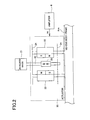
Fig. 4] Fig. 4 is a block diagram illustrating the configuration of the A/D conversion device and its operation when vibration amplitude values are in a minute range. - [
Fig. 5] Fig. 5 is a block diagram illustrating the configuration of the A/D conversion device and its operation when vibration amplitude values are not in a minute range. - [
Fig. 6] Fig. 6 is a block diagram illustrating the configuration of an A/D conversion device according to another embodiment of the present invention. - An embodiment of the present invention will be explained below by referring to the figures.
- A damping device of the embodiment, as shown in
Fig. 1 , is mounted on a vehicle such as an automobile. The device includes: avibration detecting sensor 1, such as an acceleration sensor, arranged at a location pos, such as a seat st, where the vibration should be damped; an excitation means 2 using alinear actuator 20 so as to generate an offsetting vibration Vi4 at the location pos to be damped by vibrating anauxiliary mass 2a having a predetermined mass; a reference wave generating means 3 configured to generate a reference wave ejθ from a fundamental frequency f taken from the ignition pulse of an engine that is a vibration generating source gn; an A/D conversion device 7 configured to convert an analog vibration signal sg from thevibration detecting sensor 1 into a digital value digi; and acontrol unit 4 configured to control so that the excitation means 2 generates the offsetting vibration Vi4 at the location pos to be damped by inputting the digital value digi from the A/D conversion device 7 and the reference wave ejθ. The device offsets the vibration Vi3 generated at the vibration generating source gn, such as an engine, mounted on a vehicle body frame frm through a mounter gnm, with the offsetting vibration Vi4 generated through the excitation means 2 at the location pos to be damped, thereby reducing vibration at the location pos to be damped. - The
vibration detecting sensor 1 detects main vibration in the same direction as that of the main vibration of an engine by using an acceleration sensor or the like, and outputs an analog vibration signal sg that shows the amplitude value of vibration in voltage. - The
linear actuator 20, as illustrated inFig. 2 , is of reciprocating type in which astator 22 having a permanent magnet is fixed to the vehicle body frame frm so as to allow amover 23 to move in a reciprocal movement (vertical inFig. 2 ) direction, the same as the direction of vibration to be controlled. Here, thestator 22 is fixed to the vehicle body frame frm so as to match the direction of the vibration of the vehicle body frame frm needing to be controlled, to the reciprocal movement (thrust) direction of themover 23. Themover 23 is attached to ashaft 25 together with anauxiliary mass 21. Theshaft 25 is supported by thestator 22 through aflat spring 24, allowing themover 23 and theauxiliary mass 21 to shift in the thrust direction. Thelinear actuator 20 and theauxiliary mass 21 constitute a dynamic vibration absorber. - In case of applying an alternating current (sine wave current, rectangular wave current) to a coil (not shown in the figure) of the
linear actuator 20, a magnetic flux is led from the south pole to the north pole by the permanent magnet when an electric current flows through the coil in a predetermined direction, and a magnetic flux loop is thereby formed. Accordingly, themover 23 shifts in the direction against the gravity (upward direction). Additionally, themover 23 shifts in the gravity direction (downward direction) when the electric current is applied to the coil in the direction reverse to the predetermined direction. Themover 23 repeats the above-described motions by alternating the direction of an electric current flowing to the coil with the application of an alternating current, and reciprocates, with respect to thestator 22, in the direction of theshaft 25. Thus, theauxiliary mass 21 adjoined to theshaft 25 vibrates in a vertical direction. Since more specific structure and operation of thelinear actuator 20 are conventionally known, the detailed explanation thereof is omitted herein. Themover 23 has its range of action regulated by a stopper not shown in the figure. The dynamic vibration absorber, including thelinear actuator 20 and theauxiliary mass 21, controls damping force by controlling the acceleration of theauxiliary mass 21 based on a current control signal ss output from anamplifier 6, thereby offsetting the vibration generated at the vehicle body frame frm and thus reducing vibration. - The reference wave generating means 3, as illustrated in
Fig. 3 , generates, from a fundamental frequency f [Hz], a reference sine wave (sinθ) and a reference cosine wave (cosθ) as reference waves ejθ in a fundamental degree. The reference sine wave (sinθ) and reference cosine wave (cosθ) to be generated may or may not be synchronized to any synchronous signal. θ = ωt = 2πft. - The A/
D conversion device 7 converts the analog vibration signal sg input from thevibration detecting sensor 1 into a digital value digi as a digital signal. The detail thereof will be described below. - The
control unit 4 controls vibrations by adaptive control, calculates an adaptive filter coefficient (Re, Im) from the digital value digi converted by the A/D conversion device 7 and the reference wave ejθ, then generates an excitation command signal I41 based on the adaptive filter coefficient (Re, Im), and inputs a current control signal ss to thelinear actuator 20 through theamplifier 6 described below based on the command signal I41, thereby generating, at the location pos to be damped, the offsetting vibration Vi4 having a phase reverse that of the vibration from the vibration generating source gn, through the excitation means 2. As the adaptive filter coefficient (Re, Im) is repeatedly calculated, the amplitude value and phase of the offsetting vibration Vi4 converge with those of the vibration Vi3 that must be damped. The vibration is offset as the value and phase converge; however, as basic frequencies f and the amplitude values and phases of the vibration Vi3 change constantly, thecontrol unit 4 performs control by constantly tracking the changes. - For such damping control, the A/
D conversion device 7 is required to have high resolution for appropriately converting the change of minute vibration near the zero level into a digital value so as to determine a damped or non-damped state, and is also required to have a wide amplitude range that is digitally convertible so as to respond to vibrations of various magnitudes. - Thus, in the embodiment, as illustrated in
Fig. 4 , the A/D conversion device 7 is configured by using an inexpensive generic A/D conversion unit having a digital processing unit such as a CPU and a plurality of A/D conversion units. Theconversion device 7 includesanalog amplitude amplifiers D conversion unit 73, a second A/D conversion unit 74, adetermination unit 81, and aselection unit 82. - The
analog amplitude amplifier 71 is input with an analog vibration signal sg from thevibration detecting sensor 1 where the amplitude value of vibration is expressed in volts, and then outputs an analog vibration signal sg1 after the amplitude (voltage) of the analog vibration signal sg is amplified one time. Theanalog amplitude amplifier 72 is input with the analog vibration signal sg1 output from theanalog amplitude amplifier 71, and then outputs an analog vibration signal sg2 as an amplified signal after the amplitude (voltage) of the analog vibration signal sg1 is amplified four times. The voltage fluctuation range of the analog vibration signal sg is 2.5 V ± 2.0 V. - The first A/
D conversion unit 73 and the second A/D conversion unit 74 have the input voltage range of 2.5 V ± 2.5 V and the resolution of 12 bit = 4096 [lsb] (lsb as a quantization unit), and both have the same properties. The first A/D conversion unit 73 is input with the analog vibration signal sg1 corresponding to the analog vibration signal sg input from thevibration detecting sensor 1, and converts the signal into a digital value digi1 and then outputs it. In this case, the analog vibration signal sg1 input to the first A/D conversion unit 73 is a signal having the amplification factor of 1 with respect to the analog vibration signal sg, and the voltage range that can be input to the first A/D conversion unit 73 is 2.5 V ± 2.5 V. Thus, the convertible amplitude range (voltage range) is 2.5 V ± 2.5 V with the analog vibration signal sg as a reference; effective resolution is about 820 [lsb]/v; and the minimum analog quantity to be quantized is about 0.0012195 V/[lsb]. - The second A/
D conversion unit 74 is input with the analog vibration signal sg2 as an amplified signal corresponding to an amplified analog vibration signal sg1 input to the first A/D conversion unit 73, and converts the signal into a digital value digi2 and then outputs it. In this case, the analog vibration signal sg2 input to the second A/D conversion unit 74 is a signal that is the analog vibration signal sg amplified at the amplification factor of 4, and the input voltage range is 2.5 V ± 2.5 V. Therefore, the convertible amplitude range (voltage range) is 2.5 V ± 0.625 V with the analog vibration signal sg as a reference; effective resolution is about 3280 [lsb]/v; and the minimum analog quantity to be quantized is about 0.0003048 V/[lsb]. While the second A/D conversion unit 74 has the effective resolution four times as great as that of the first A/D conversion unit 73, its convertible amplitude range decreases to 1/4 times. - An offset value 2048 [lsb] is subtracted from the digital value digi1 and the digital value digi2 output from the first A/
D conversion unit 73 and the second A/D conversion unit 74, at each one ofadders selection unit 82. The digital value digi1 output from theadder 75 is amplified four times by a software gain at amultiplier 79 so as to match a change rate with respect to a fluctuation in amplitude values of the analog vibration signal sg, with that of the digital value digi2, and is then input to theselection unit 82. - The
determination unit 81 determines whether or not the input saturation state, where the amplitude value of the analog vibration signal sg2 as an amplified signal input to the second A/D conversion unit 74 exceeds the amplitude range convertible at the second A/D conversion unit 74 (2.5 V ± 0.625 V), is occurring. Specifically, thedetermination unit 81 detects the digital value digi1 input from themultiplier 79 to theselection unit 82; determines the input saturation state when the absolute value of the digital value digi1 exceeds the predetermined threshold 2048 [lsb], and also determines that the input saturation state is not occurring when the absolute value of the digital value digi1 does not exceed the predetermined threshold 2048 [lsb]; and inputs a determination signal SEL to aselection unit 82 as a determination result. - When the input saturation state is determined by the
determination unit 81, theselection unit 82 inputs the digital value digi1 converted by the first A/D conversion unit 73 to theexternal control unit 4. Additionally, when the input saturation state is not determined by thedetermination unit 81, theselection unit 82 inputs the digital value digi2 converted by the second A/D conversion unit 74 to theexternal control unit 4. -
Fig. 4 is referred to in order to explain the operation of the configuration described above when the voltage of the analog vibration signal sg is 2.5 V ± 0.1 V: in other words, when the vibration amplitude value to be detected is in a minute range (within the range of 2.5 V ± 0.625 V). - First, the
vibration detecting sensor 1 outputs the analog vibration signal sg which fluctuates within the range of 2.5 V ± 0.1 V, and the analog vibration signal sg1 having the same fluctuation is input to the first A/D conversion unit 73 through theanalog amplitude amplifier 71, converting the signal into the digital value digi1 having the range of 2048 ± 82 [lsb]. Subsequently, the offset value 2048 [lsb] is subtracted from the digital value digi1 so as to set the reference point of 2.5 V to 0 V at theadder 75, so that the range of the digital value digi1 is ± 82 [lsb]. Finally, the digital value digi1 is amplified four times by a software gain at themultiplier 79, so that the range is ± 328 [lsb]. The digital value is then input to theselection unit 82. - On the other hand, the analog vibration signal sg is amplified through the
analog amplitude amplifiers D conversion unit 74, and is converted into the digital value digi2 having the range of 2048 ± 328 [lsb]. Subsequently, the offset value 2048 [lsb] is subtracted from the digital value digi2 so as to set the reference point of 2.5 V to 0 V at theadder 76, so that the range of the digital value digi2 would be ±328 [lsb]. The digital value is then input to theselection unit 82. - In this case, the
determination unit 81 determines that the input saturation state is not occurring since the range of the digital value digi1 is ± 328 [lsb]. As a result, theselection unit 82 outputs the digital value digi2 digitalized, with high resolution, at the second A/D conversion unit 74, to theexternal control unit 4. As shown inFig. 4 , the range of ± 0.625 V as the minute range is expressed as 4096 [lsb], enabling reproduction of vibration that is digitalized with high resolution. - Similarly,
Fig. 5 is referred to in order to explain the operation thereof when the voltage of the analog vibration signal sg is 2.5 V ± 2.0 V, in other words, when the vibration amplitude value to be detected is not in the minute range (outside the range of 2.5 V ± 0.625 V). - First, the
vibration detecting sensor 1 outputs the analog vibration signal sg that fluctuates within the range of 2.5 V ± 2.0 V, and the analog vibration signal sg1 having identical fluctuations is input to the first A/D conversion unit 73 through theanalog amplitude amplifier 71, converting the signal into the digital value digi1 having the range of 2048 ± 1638 [lsb]. Subsequently, the offset value 2048 [lsb] is subtracted from the digital value digi1 so as to make the reference point of 2.5 V to 0 V at theadder 75, so that the range of the digital value digi1 would be ± 1638 [lsb]. Finally, the digital value digi1 is amplified four times by a software gain at themultiplier 79, providing the range of ± 6552 [lsb]. The digital value is input to theselection unit 82. - On the other hand, the analog vibration signal sg is amplified through the
analog amplitude amplifiers D conversion unit 74, and is converted into the digital value digi2 having the range of 2048 ± 2048 [lsb], providing the input saturation state. Subsequently, the offset value 2048 [lsb] is subtracted from the digital value digi2 so as to make the reference point of 2.5 V to the 0 V at theadder 76, thus providing the digital value digi2 at the range of ± 2048 [lsb]. This digital value is input to theselection unit 82. - In this case, the
determination unit 81 determines the input saturation state since the range of the digital value digi1 is ± 6552 [lsb]. As a result, theselection unit 82 inputs the digital value digi1 that is digitalized at the first A/D conversion unit 73, to thecontrol unit 4 that is a utilization unit. As shown inFig. 5 , the range of ± 0.625 V as the minute range is expressed as 4096 [lsb], enabling reproduction of vibration that is digitalized with high resolution of about 3280 [lsb]/V. Additionally, the resolution becomes rougher than the resolution in the minute range, at about 820 [lsb]/V in the wide range that is the outside of the minute range of ± 0.625 V. However, the input saturation state exceeding the amplitude range for digitalization is prevented, thus allowing the signal to convert into an accurate digital value. - As described above, the A/D conversion device of the embodiment inputs the analog vibration signal sg from the
vibration detecting sensor 1 configured to detect vibrations, and converts it into digital values digi (digi1, digi2) and then outputs the converted digital values digi (digi1, digi2) to theexternal control unit 4. The conversion device has the first A/D conversion unit 73 configured to input the analog vibration signal sg1 corresponding to the analog vibration signal sg input from thevibration detecting sensor 1 and convert it into the digital value digi1; the second A/D conversion unit 74 configured to input the analog vibration signal sg2 as an amplified signal corresponding to an amplified analog vibration signal sg1 input to the first A/D conversion unit 73, and convert it into the digital value digi2; thedetermination unit 81 configured to determine whether or not the input saturation state, where the amplitude value of the analog vibration signal sg2 as an amplified signal input to the second A/D conversion unit 74 exceeds the amplitude range convertible at the second A/D conversion unit 74, is occurring; and theselection unit 82 configured to output only the digital value digi1 converted by the first A/D conversion unit 73 when thedetermination unit 81 determines the input saturation state, and output only the digital value digi2 converted by the second A/D conversion unit 74 when thedetermination unit 81 determines that the input saturation state is not occurring. - In this configuration, when not at the input saturation state where the amplitude value of the analog vibration signal sg2 as an amplified signal input to the second A/
D conversion unit 74 exceeds the amplitude range convertible at the second A/D conversion unit 74; that is, when the vibration to be detected is in the minute range, the analog vibration signal sg2 as an amplified signal is digitalized, and the amplitude value of the vibration in the minute range is digitalized with high resolution, thus externally outputting only the digitalized value digi2. Additionally, at the input saturation state, that is, when the vibration to be detected exceeds the minute range, the analog vibration signal sg1 is digitalized; the amplitude value of the vibration in the wide range outside of the minute range is digitalized with ordinary resolution, thus externally outputting only the digital value digi1. The amplitude value of the vibration in the wide range can be accurately detected, and at the same time, the amplitude value of vibration in the minute range, which requires high resolution, can be appropriately digitalized. - Moreover, in the embodiment, the
determination unit 81 determines the input saturation state when the digital value digi1 obtained by the first A/D conversion unit 73 exceeds a predetermined threshold, and determines that the input saturation state is not occurring when the digital value digi1 does not exceed the predetermined threshold. Therefore, it becomes possible to effectively determine whether or not the input saturation state is occurring based on where the predetermined threshold is set. - Furthermore, in the embodiment, the digital value digi1 provided by the first A/
D conversion unit 73 and output to theexternal control unit 4, and the digital value digi2 provided by the second A/D conversion unit and output to theexternal control unit 4, have a matching change rate and zero point with respect to a fluctuation in amplitude values of the analog vibration signals sg input from thevibration detecting sensor 1. Thus, even if the digital values digi output to theexternal control unit 4 switch, continuity of the digital values digi showing the amplitude value of vibrations is maintained, preventing data omission. - Therefore, when such an A/D conversion device is applied to a damping device, damping performances improve. Furthermore, by mounting the damping device having the A/D conversion device on a vehicle, the reliability and endurance of the vehicle's damping functions will effectively improve, providing superior cruising function.
- Although an embodiment of the present invention was explained above, the specific configuration of each unit is not limited only to those in the embodiment described above.
- For instance, although the analog vibration signal sg1 is input to the first A/
D conversion unit 73 through theanalog amplitude amplifier 71 and the analog vibration signal sg2 is input to the second A/D conversion unit 74 through theanalog amplitude amplifier 72 in the embodiment, any amplifying circuit may be used as long as the signal input to the second A/D conversion unit is equivalent to an amplified signal input to the first A/D conversion unit in the present invention. For example, it is possible to use a standard configuration which amplifies signals at an analog circuit. Examples include a configuration in which the signal input to the first A/D conversion unit 73 is inverted and amplified to provide a signal An2 and the signal An2 is further inverted and amplified to provide An3, and a signal obtained by a difference between An2 and An3 is input to the second A/D conversion unit. - In order to provide higher resolution, as shown in
Fig. 6 , the software gain for multiplying at themultiplier 79 of the embodiment is increased eight times. The A/D conversion device 107 may further include ananalog amplitude amplifier 171, a third A/D conversion unit 172, andadders analog amplitude amplifier 171 is input with the analog vibration signal sg2 output from theanalog amplitude amplifier 72, and outputs the analog vibration signal sg3 that is provided by inverting the amplitude (voltage) of the analog vibration signal sg2. The third A/D conversion unit 172 is input with the analog vibration signal sg3, and converts the signal into the digital value digi3 and then outputs it. The offset value 2048 [lsb] is subtracted from the digital value digi3 output from the A/D conversion unit 172, at theadder 173, providing a zero reference point (zero point). The digital value digi3 and the digital value digi2 output from theadder 76 are added at theadder 174 and then input to theselection unit 82. - Furthermore, although the
determination unit 81 determines whether or not the input saturation state is occurring by monitoring the digital value digi1 in the embodiment, the configuration may be such that the digital value digi2 or others may be monitored instead. - Additionally, the invention may be applied to mobile apparatuses and devices, other than a vehicle, in which the generation of vibration is a problem, and may be modified within the scope of the present invention.
- The present invention described in detail as above determines whether or not the input saturation state, where the amplitude value of the amplified signal input to a second A/D conversion unit exceeds the amplitude range convertible at the second A/D conversion unit, is occurring. When the input saturation state is determined, a digital value obtained by converting an analog vibration signal is output. When the input saturation state is not determined, a digital value obtained by converting an amplified signal corresponding to an amplified analog vibration signal is output. Thus, an A/D conversion device will be provided inexpensively that has high resolution when not at the input saturation state and has a wide convertible amplitude range at the input saturation state. Furthermore, this A/D conversion device can be applied to a damping device and other signal processors.
Claims (5)
- An A/D conversion device for converting a signal input from a vibration detecting sensor that detects vibration into a digital value and then externally outputting the converted digital value; the A/D conversion device comprising:a first A/D conversion unit configured to convert an input analog vibration signal corresponding to a signal input from the vibration detecting sensor, into a digital value;a second A/D conversion unit configured to convert an input amplified signal corresponding to an amplified analog vibration signal input to the first A/D conversion unit, into a digital value;a determination unit configured to determine whether or not an input saturation state, where an amplitude value of an amplified signal input to the second A/D conversion unit exceeds an amplitude range convertible at the second A/D conversion unit, is occurring; anda selection unit configured to output a digital value converted by the first A/D conversion unit when the determination unit determines that an input saturation state is occurring, and output a digital value converted by the second A/D conversion unit when the determination unit determines that an input saturation state is not occurring.
- The A/D conversion device according to claim 1, wherein the determination unit determines that an input saturation state is occurring when a digital value obtained either at the first A/D conversion unit or the second A/D conversion unit exceeds a predetermined threshold, and determines that an input saturation state is not occurring when the digital value does not exceed the predetermined threshold.
- The A/D conversion device according to claim 2, wherein a digital value obtained at the first A/D conversion unit and externally output, and a digital value obtained at the second A/D conversion unit and externally output, have a matching change rate and zero point with respect to fluctuation in amplitude values of signals input from the vibration detecting sensor.
- A damping device comprising the A/D conversion device according to any one of claims 1 to 3.
- A vehicle comprising the damping device according to claim 4.
Applications Claiming Priority (2)
| Application Number | Priority Date | Filing Date | Title |
|---|---|---|---|
| JP2009259685A JP2011109222A (en) | 2009-11-13 | 2009-11-13 | A/d conversion device, damping device, and vehicle with the same mounted thereon |
| PCT/JP2010/070126 WO2011059034A1 (en) | 2009-11-13 | 2010-11-11 | A/d conversion device, damping device, and vehicle mounted with these |
Publications (2)
| Publication Number | Publication Date |
|---|---|
| EP2501045A1 true EP2501045A1 (en) | 2012-09-19 |
| EP2501045A4 EP2501045A4 (en) | 2013-06-05 |
Family
ID=43991691
Family Applications (1)
| Application Number | Title | Priority Date | Filing Date |
|---|---|---|---|
| EP10829993.4A Withdrawn EP2501045A4 (en) | 2009-11-13 | 2010-11-11 | A/d conversion device, damping device, and vehicle mounted with these |
Country Status (6)
| Country | Link |
|---|---|
| US (1) | US8538630B2 (en) |
| EP (1) | EP2501045A4 (en) |
| JP (1) | JP2011109222A (en) |
| KR (1) | KR20120101346A (en) |
| CN (1) | CN102598512A (en) |
| WO (1) | WO2011059034A1 (en) |
Families Citing this family (7)
| Publication number | Priority date | Publication date | Assignee | Title |
|---|---|---|---|---|
| US8639430B2 (en) | 2008-07-03 | 2014-01-28 | Fuel Saving Technologies, Llc | Energy conservation systems and methods |
| EP2315929A4 (en) | 2008-07-03 | 2013-06-26 | Fuel Saving Technologies Llc | Fuel conservation systems and methods |
| EP2769071B1 (en) * | 2011-10-19 | 2018-08-15 | Fuel Saving Technologies, Inc. | Energy conservation systems and methods |
| JP5926158B2 (en) * | 2012-09-25 | 2016-05-25 | 住友理工株式会社 | Active silencer |
| US9347388B2 (en) * | 2014-03-21 | 2016-05-24 | GM Global Technology Operations LLC | Autostop customer alert feature |
| US9276599B2 (en) * | 2014-07-29 | 2016-03-01 | The Boeing Company | Method and apparatus for non-uniform analog-to-digital conversion |
| JP7444726B2 (en) * | 2020-07-30 | 2024-03-06 | ニデックインスツルメンツ株式会社 | Magnetic recording information processing method and device |
Family Cites Families (33)
| Publication number | Priority date | Publication date | Assignee | Title |
|---|---|---|---|---|
| JPS55166022A (en) * | 1979-06-13 | 1980-12-24 | Matsushita Electric Ind Co Ltd | Digital type dynamic balance measurement device |
| JPS5753145A (en) * | 1980-09-16 | 1982-03-30 | Sony Tektronix Corp | Calibrator for analogue-digital converter |
| SE463540B (en) * | 1988-09-19 | 1990-12-03 | Ericsson Telefon Ab L M | SEAT TO DIGITALIZE ANY RADIO SIGNALS IN A RADIO COMMUNICATION SYSTEM AND DEVICE TO EXERCISE THE SET |
| US4933676A (en) * | 1989-06-12 | 1990-06-12 | Technology 80, Inc. | Programmable multi-input A/D converter |
| JPH0332226A (en) * | 1989-06-29 | 1991-02-12 | Yamaha Corp | A/d converter |
| DE69029628T2 (en) * | 1989-09-11 | 1997-05-22 | Nippon Denso Co | Suspension control system |
| JP3312626B2 (en) * | 1989-12-01 | 2002-08-12 | 株式会社石田衡器製作所 | Load cell type weight measuring device |
| JP2748626B2 (en) * | 1989-12-29 | 1998-05-13 | 日産自動車株式会社 | Active noise control device |
| JPH04314965A (en) * | 1991-02-20 | 1992-11-06 | Nippondenso Co Ltd | Ignition timing controller |
| US5164726A (en) * | 1991-06-12 | 1992-11-17 | Eastman Kodak Company | Self calibrating dual range a/d converter |
| JP3276214B2 (en) * | 1992-08-31 | 2002-04-22 | マツダ株式会社 | Vehicle vibration reduction device |
| US5332061A (en) * | 1993-03-12 | 1994-07-26 | General Motors Corporation | Active vibration control system for attenuating engine generated vibrations in a vehicle |
| GB2297443B (en) * | 1995-01-26 | 1999-09-08 | Sony Uk Ltd | Amplifier |
| US5847658A (en) * | 1995-08-15 | 1998-12-08 | Omron Corporation | Vibration monitor and monitoring method |
| US5809090A (en) * | 1996-03-04 | 1998-09-15 | Glenayre Electronics, Inc. | Digital diversity receiver system |
| US5845236A (en) * | 1996-10-16 | 1998-12-01 | Lord Corporation | Hybrid active-passive noise and vibration control system for aircraft |
| US6098022A (en) * | 1997-10-17 | 2000-08-01 | Test Devices, Inc. | Detecting anomalies in rotating components |
| JPH11340831A (en) * | 1998-05-29 | 1999-12-10 | Toa Corp | High precision a/d converter |
| JP2000027931A (en) * | 1998-07-15 | 2000-01-25 | Nissan Motor Co Ltd | Active engine mounting device |
| US6580383B1 (en) * | 2000-11-01 | 2003-06-17 | Telasic Communications, Inc. | High resolution ADC based on an oversampled subranging ADC |
| JP2003083763A (en) * | 2001-09-10 | 2003-03-19 | Rion Co Ltd | Correcting method for self noise and device using the same |
| DE60321215D1 (en) * | 2002-12-04 | 2008-07-03 | Nxp Bv | A / D FLASH TYPE TRANSMITTERS |
| KR100541081B1 (en) * | 2003-06-24 | 2006-01-11 | 삼성전기주식회사 | Signal Processor for Electronic Compass |
| US7323876B2 (en) * | 2003-09-10 | 2008-01-29 | Koninklijke Philips Electronics N.V. | Magnetic resonance imaging receive chain with dynamic gain and wireless receiver coil |
| US7043376B2 (en) * | 2003-09-19 | 2006-05-09 | Seagate Technology Llc | Vibration measurement apparatus and method |
| US6937176B2 (en) * | 2003-09-30 | 2005-08-30 | Koninklijke Philips Electronics, N.V. | Ultrasonic signal acquisition in the digital beamformer |
| US7525050B1 (en) * | 2004-04-23 | 2009-04-28 | Luidia, Inc. | Interference removal in pointing device locating systems |
| JP4213640B2 (en) * | 2004-07-28 | 2009-01-21 | パナソニック株式会社 | Active noise reduction device |
| JP4174062B2 (en) * | 2006-03-27 | 2008-10-29 | 本田技研工業株式会社 | Sound effect generator for vehicles |
| KR20090050402A (en) * | 2007-11-15 | 2009-05-20 | 한국과학기술원 | Signal level conversion circuit for increasing the allowable input range of the analog to digital converter |
| TW200929860A (en) * | 2007-12-27 | 2009-07-01 | Airoha Tech Corp | A gain control circuit for an amplifier in a wireless transceiver |
| JP4469008B1 (en) * | 2008-11-18 | 2010-05-26 | 株式会社オーバル | Coriolis flow meter |
| EP2207264B1 (en) * | 2009-01-09 | 2013-10-30 | AKG Acoustics GmbH | Analogue to digital converting |
-
2009
- 2009-11-13 JP JP2009259685A patent/JP2011109222A/en active Pending
-
2010
- 2010-11-11 CN CN2010800512048A patent/CN102598512A/en active Pending
- 2010-11-11 WO PCT/JP2010/070126 patent/WO2011059034A1/en not_active Ceased
- 2010-11-11 KR KR1020127009574A patent/KR20120101346A/en not_active Withdrawn
- 2010-11-11 EP EP10829993.4A patent/EP2501045A4/en not_active Withdrawn
-
2012
- 2012-04-27 US US13/457,793 patent/US8538630B2/en not_active Expired - Fee Related
Also Published As
| Publication number | Publication date |
|---|---|
| EP2501045A4 (en) | 2013-06-05 |
| CN102598512A (en) | 2012-07-18 |
| US8538630B2 (en) | 2013-09-17 |
| US20120215405A1 (en) | 2012-08-23 |
| JP2011109222A (en) | 2011-06-02 |
| KR20120101346A (en) | 2012-09-13 |
| WO2011059034A1 (en) | 2011-05-19 |
Similar Documents
| Publication | Publication Date | Title |
|---|---|---|
| EP2501045A1 (en) | A/d conversion device, damping device, and vehicle mounted with these | |
| JP4973373B2 (en) | Absolute displacement detection method and absolute displacement sensor using the method | |
| JP5522038B2 (en) | Vibration control device and vehicle | |
| US8401735B2 (en) | Damping apparatus for reducing vibration of automobile body | |
| JP5500957B2 (en) | Magnetic force sensor | |
| JP5522037B2 (en) | Vibration control device and vehicle | |
| JP6144527B2 (en) | Magnetic bearing device and vacuum pump equipped with the magnetic bearing device | |
| US9208774B2 (en) | Adaptive vibration damping mechanism to eliminate acoustic noise in electronic systems | |
| JP2002079178A (en) | Active vibration damping electromagnetic exciter and active vibration damping control method | |
| US10938286B1 (en) | Linear resonant actuator, control system and brake control method | |
| JP5508684B2 (en) | Linear vibration actuator, linear compressor and linear vibration generator using the same | |
| JP5146747B2 (en) | Damping device and method for manufacturing vibration command table | |
| JP4983720B2 (en) | Vibration control device and vehicle | |
| HK1169754A (en) | A/d conversion device, damping device, and vehicle mounted with these | |
| TW201944721A (en) | Linear resonant actuator, control system and brake control method | |
| JP2021081248A (en) | Sensor system and vibration isolator equipped with sensor system | |
| JP7352281B2 (en) | dynamic vibration reducer | |
| RU2261520C1 (en) | Piezoelectric displacement motor incorporating control circuit to compensate for piezoid noise | |
| HK1154643B (en) | Vibration control device and vehicle | |
| JP2004215030A (en) | Speaker controller and speaker system | |
| HK1154642B (en) | Vibration control device and vehicle | |
| JP2014112083A (en) | Resolver angular position detector | |
| JPH1041654A (en) | Vibration isolator |
Legal Events
| Date | Code | Title | Description |
|---|---|---|---|
| PUAI | Public reference made under article 153(3) epc to a published international application that has entered the european phase |
Free format text: ORIGINAL CODE: 0009012 |
|
| 17P | Request for examination filed |
Effective date: 20120508 |
|
| AK | Designated contracting states |
Kind code of ref document: A1 Designated state(s): AL AT BE BG CH CY CZ DE DK EE ES FI FR GB GR HR HU IE IS IT LI LT LU LV MC MK MT NL NO PL PT RO RS SE SI SK SM TR |
|
| DAX | Request for extension of the european patent (deleted) | ||
| A4 | Supplementary search report drawn up and despatched |
Effective date: 20130508 |
|
| RIC1 | Information provided on ipc code assigned before grant |
Ipc: H03M 1/18 20060101AFI20130502BHEP Ipc: B60K 5/12 20060101ALI20130502BHEP Ipc: F16F 15/00 20060101ALI20130502BHEP Ipc: F16F 7/10 20060101ALI20130502BHEP Ipc: G05D 19/02 20060101ALN20130502BHEP |
|
| STAA | Information on the status of an ep patent application or granted ep patent |
Free format text: STATUS: THE APPLICATION IS DEEMED TO BE WITHDRAWN |
|
| 18D | Application deemed to be withdrawn |
Effective date: 20131207 |