EP2500825A2 - IC card - Google Patents
IC card Download PDFInfo
- Publication number
- EP2500825A2 EP2500825A2 EP11180870A EP11180870A EP2500825A2 EP 2500825 A2 EP2500825 A2 EP 2500825A2 EP 11180870 A EP11180870 A EP 11180870A EP 11180870 A EP11180870 A EP 11180870A EP 2500825 A2 EP2500825 A2 EP 2500825A2
- Authority
- EP
- European Patent Office
- Prior art keywords
- command
- uim
- external device
- request command
- proactive
- Prior art date
- Legal status (The legal status is an assumption and is not a legal conclusion. Google has not performed a legal analysis and makes no representation as to the accuracy of the status listed.)
- Granted
Links
Images


Classifications
-
- G—PHYSICS
- G06—COMPUTING OR CALCULATING; COUNTING
- G06F—ELECTRIC DIGITAL DATA PROCESSING
- G06F13/00—Interconnection of, or transfer of information or other signals between, memories, input/output devices or central processing units
- G06F13/38—Information transfer, e.g. on bus
- G06F13/42—Bus transfer protocol, e.g. handshake; Synchronisation
- G06F13/4282—Bus transfer protocol, e.g. handshake; Synchronisation on a serial bus, e.g. I2C bus, SPI bus
-
- G—PHYSICS
- G06—COMPUTING OR CALCULATING; COUNTING
- G06F—ELECTRIC DIGITAL DATA PROCESSING
- G06F13/00—Interconnection of, or transfer of information or other signals between, memories, input/output devices or central processing units
- G06F13/10—Program control for peripheral devices
Definitions
- Embodiments described herein relate generally to an IC card.
- GSM Global System for Mobile communications
- SIM Subscriber Identity Module
- a mobile phone system which adopts a 3GPP (3rd Generation Partnership Project) standard in place of the GSM®, has been launched.
- 3GPP 3rd Generation Partnership Project
- a USIM (Universal Subscriber Identity Module) card as an IC card similar to the SIM card is indispensable.
- the SIM and USIM cards used in the GSM® and 3GPP are inserted in mobile phone terminals.
- the SIM and USIM cards record key information, encryption algorithms, and various network parameters required to establish connections to communication networks of telecommunications carriers.
- Each mobile phone terminal sends these pieces of information to an OTA (Over The Air) server, authentication/management server, and the like of the telecommunications carrier, and executes authentication with these servers.
- OTA Over The Air
- the mobile phone terminal can receive communication services of that telecommunications carrier.
- ETSI TS 102 223, ETSI TS 102 241 specifications called CAT (Card Application Toolkit) are specified.
- the CAT is installed in a card (to be referred to as a UIM hereinafter) represented by the SIM, USIM, and UIM cards of IC cards, which are required to identify subscriber information of, for example, mobile phones.
- a function called a Proactive command which is required to send various operation requests and information from the UIM to a mobile phone (to be referred to as an ME hereinafter) or network server, is specified.
- a Proactive command send request is often generated in the UIM.
- the UIM sends a Proactive command as response data to a Fetch command sent from the ME.
- the UIM cannot output the Proactive command before the ME sends the Fetch command.
- another Proactive command send request may be generated by an operation of the Applet independently of this state. For this reason, when a state in which the UIM does not receive any Fetch command (the ME does not send any Fetch command) is continued, unsent Proactive commands are accumulated in the UIM.
- an IC card which interprets and executes a command instruction from an external device, and returns the execution result as a response, comprises: a command generation unit configured to generate a request command which requests the external device to execute a specific operation in response to a specific command instruction from the external device; a storage unit configured to store the generated request command in a memory; a notification unit configured to notify the external device of generation of the request command when a response to the specific command instruction is sent, and notify the external device of the request command when the external device instructs to fetch the request command; and a discard unit configured to discard the request command in the memory when the external device instructs to discard the request command.
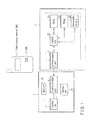
- FIG. 1 is a block diagram showing the connection and arrangements of a mobile phone terminal (ME) 1 and UIM 2 according to the first embodiment.
- the UIM 2 is a portable electronic device, and is attached to the ME 1 to handle data when a mobile phone application is used.
- the ME 1 includes a control unit 11, display unit 12, communication unit 14, and input unit 15.
- the control unit 11 systematically controls the operations of the respective units in the ME 1.
- the display unit 12 displays information for the user.
- the communication unit 14 executes data communications with the UIM 2.
- the input unit 15 inputs instructions from the user.
- the UIM 2 includes a communication interface (I/F) unit 21, control unit 22, RAM 23, ROM 24, and nonvolatile memory 25.
- I/F communication interface
- the communication I/F unit 21 receives data sent from the ME 1, and outputs the received data to the control unit 22.
- the control unit 22 executes arithmetic operations and control, and systematically controls the UIM 2.
- the ROM 24 is a read-only memory.
- the ROM 24 stores basic software such as an operating system (OS), applications, and data.
- the RAM 23 is used as a work area in the processing of the control unit 22.
- the nonvolatile memory 25 is a rewritable nonvolatile memory such as an EEPROM and flash memory, and is normally used as a work area and program area of the user. An Applet to be described later is stored in the nonvolatile memory 25.
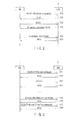
- FIG. 2 is a chart showing normal command exchange procedures between the ME 1 and UIM 2 according to the first embodiment.
- step S01 the ME 1 sends an Envelope command to the UIM 2.
- a plurality of types of formats are specified in the Envelope command by the aforementioned standards.
- Eventdownload is one of these formats, and has contents which notify the UIM 2 of generation of a predetermined event in the ME 1.
- an Applet corresponding to the received Envelope command is launched, and a program described in the Applet is executed.
- the UIM 2 causes the ME 1 to take an arbitrary action, for example, when the UIM 2 causes the ME 1 to execute processing for displaying a screen on the display unit 12 of the ME 1, a Proactive command which designates screen display processing has to be sent to the ME 1.
- the UIM 2 sends a status word "91XX" to the ME 1.
- This status word "91XX" represents a Proactive command send request. That is, this status word represents that there is a Proactive command to be sent in the UIM 2.
- the ME 1 Upon reception of the status word "91XX", the ME 1 outputs a Fetch command to the UIM 2 in step S03. Upon reception of the Fetch command, the UIM 2 sends a Proactive command and status word "9000" to the ME 1 in step S04. Upon reception of the Proactive command, the ME 1 executes processing corresponding to that Proactive command. For example, the ME 1 executes an operation for outputting sound, displaying a screen, originating a phone call, or the like.
- step S05 the ME 1 outputs an execution result to the UIM 2 as a Terminal Response.
- the ME 1 returns a response indicating that execution of the processing is complete, the processing cannot be executed since a user's operation is in progress, execution of the processing is interrupted due to occurrence of an error, or the like.
- step S06 the UIM 2 executes subsequent processing according to the program of the Applet. When there is no subsequent Proactive command to be processed by the Applet, the UIM 2 sends a status word "9000".
- FIG. 3 is a chart showing communication procedures required to discard accumulated Proactive commands between the ME 1 and UIM 2 according to the first embodiment.
- step S11 the ME 1 sends an Envelope (Event Download) command.
- the UIM 2 launches the Applet using reception of this command as a trigger.
- SW status word
- the ME 1 sends a Fetch command to the UIM 2.
- the ME 1 sends a Select command.
- the UIM 2 receives the Select command, and normally executes processing.
- the ME 1 does not send a Fetch command, and sends another Envelope (Menu Selection) command different from that in step S11 to the UIM 2 in step S15.
- the UIM 2 launches the Applet using this Envelope command as a trigger. Then, the Applet issues a Proactive command send request to the UIM 2.
- the two Proactive commands that is, the Proactive command generated upon launching the Applet for the first time and that generated upon launching the Applet for the second time are accumulated in the UIM 2.
- the Proactive command generated upon launching the Applet for the first time and that generated upon launching the Applet for the second time are accumulated in the UIM 2.
- step S17 the ME 1 sends a Select command which indicates discarding of the Proactive commands to the UIM 2.
- the UIM 2 discards the currently accumulated Proactive commands.
- a method of discarding the Proactive commands can be designated by the Select command.
- the Select command can designate to discard the oldest Proactive command or to discard all the accumulated Proactive commands.
- the UIM 2 discards the Proactive commands, and sends a status word in step S18.
- a command is sent as an I-block of a T-1 protocol, and its PCB field can indicate discarding of the Proactive commands.
- FIG. 4 shows the T-1 protocol format according to the first embodiment.
- a command is configured by NAD, PCB, LEN, INF, and EDC fields.
- the NAD field represents an address.
- the PCB field represents a control code indicating a mode.
- the LEN field represents a length of the command.
- the INF field represents a type (Select, Proactive, etc.) of the command.
- the EDC field represents an error detection check code.
- the PCB field is configured by 8 bytes, and right five bytes are unused. Hence, data indicating discarding of a command can be described in this unused data field.
- FIG. 5 is a chart showing communication procedures required to re-send accumulated Proactive commands between the ME 1 and UIM 2 according to the first embodiment.
- steps S21 to S26 are the same as those in steps S11 to S16 shown in FIG. 3 , a detailed description thereof will not be repeated.
- the ME 1 When the ME 1 restarts reception of a Proactive command, it sends a Reset command to the UIM 2 in step S31.
- This Reset command is sent to initialize the UIM 2 when, for example, the power supply of the ME 1 is switched from OFF to ON. Therefore, the UIM 2 which received the Reset command clears the RAM 23. Conventionally, since a Proactive command is accumulated in the RAM 23, it is discarded. However, in this embodiment, since a Proactive command is accumulated in the nonvolatile memory 25, it is not discarded.
- the UIM 2 returns ATR (answer to reset) as a response to the Reset command.
- step S33 the ME 1 sends a Select command.
- the UIM 2 receives the Select command, and normally executes processing.
- the ME 1 which received the status word "91XX” outputs a Fetch command to the UIM 2 in step S35.
- the UIM 2 Upon reception of the Fetch command, the UIM 2 sends a Proactive command and status word "9000" to the ME 1 in step S36.
- the ME 1 which received the Proactive command executes processing corresponding to that Proactive command. For example, the ME 1 executes an operation for outputting sound, displaying a screen, originating a phone call, or the like.
- step S37 the ME 1 outputs an execution result to the UIM 2 as a Terminal Response.
- the ME 1 returns a response indicating that execution of the processing is complete, the processing cannot be executed since a user's operation is in progress, execution of the processing is interrupted due to occurrence of an error, or the like.
- the UIM 2 repetitively executes the processes in steps S35 to S38 as many as the number of remaining Proactive commands.
- step S41 the ME 1 which received the status word "91XX” outputs a Fetch command to the UIM 2.
- the UIM 2 Upon reception of the Fetch command, the UIM 2 sends a Proactive command and status word "9000" to the ME 1 in step S42.
- the ME 1 which received the Proactive command executes processing corresponding to that Proactive command.
- step S43 the ME 1 outputs an execution result to the UIM 2 as a Terminal Response.
- the Proactive commands can be discarded at a desired timing, and can be restarted after the reset operation.
- UIM-control unit indicates the control unit 22
- UIM - Applet unit indicates the Applet stored in the nonvolatile memory 25.
- step S50 the ME 1 sends a command.
- the UIM-control unit receives the command in step T01, and interprets the command in step T02.
- the UIM-control unit judges in step T03 whether or not the received command instructs to discard a Proactive command.
- the UIM-control unit discards the Proactive command accumulated in the nonvolatile memory 25 in step T04. Then, the process advances to step T05. If the received command does not instruct to discard a Proactive command, the UIM-control unit interprets the command in step T05. The UIM-control unit judges in step T06 whether or not execution of the Applet is required.
- the UIM-control unit judges that execution of the Applet is required; if the command is a Terminal Response, it judges that execution of the Applet is not required.
- step T06 If the UIM-control unit judges in step T06 that execution of the Applet is not required, it executes the command in step T10.
- the UIM-control unit checks in step T11 whether or not Proactive commands are accumulated in the nonvolatile memory 25.
- step T14 the UIM-control unit sends a response.
- step S51 the ME 1 receives the response.
- step T06 If the UIM-control unit judges in step T06 that execution of the Applet is required, it executes the Applet in step P01, and interprets the command in step P02.
- the UIM-control unit checks in step P03 if the command is a Fetch command.
- the UIM-control unit executes the Applet in step P04.
- the UIM-control unit judges in step P05 whether or not a Proactive command is required to be sent.
- the UIM-control unit deletes the Proactive command to be sent from the nonvolatile memory 25.
- the UIM-control unit sends a response.
- step T03 if it is determined in step T03 that the received command instructs to discard a Proactive command, the Proactive command accumulated in the nonvolatile memory 25 is discarded in step T04. In this case, the oldest Proactive command may be discarded in place of all Proactive commands in the nonvolatile memory 25.
- the aforementioned UIM 2 is configured to be built in an IC card and to exchange data with a card reader/writer.
- FIG. 7 is a block diagram for explaining an example of the arrangement of an IC card 100 which incorporates the UIM of the first embodiment.
- the IC card 100 includes a card-like main body 101 formed of, for example, plastic, and an IC module 102 incorporated in the main body 101.
- the IC module 102 includes one or a plurality of IC chips 103 and a communication I/F unit 21. Each IC chip 103 and communication I/F unit 21 are embedded and formed in the IC module 102 while being connected to each other.
- the UIM of this embodiment can be configured as the IC module 102.
- the functions described in the aforementioned embodiment is configured using hardware.
- the functions can also be implemented by loading programs which describe the respective functions using software into a computer.
- the respective functions can be configured by selecting software or hardware as needed.
Landscapes
- Engineering & Computer Science (AREA)
- Theoretical Computer Science (AREA)
- Physics & Mathematics (AREA)
- General Engineering & Computer Science (AREA)
- General Physics & Mathematics (AREA)
- Telephone Function (AREA)
- Stored Programmes (AREA)
- Credit Cards Or The Like (AREA)
- Storage Device Security (AREA)
Abstract
Description
- Embodiments described herein relate generally to an IC card.
- Many foreign countries adopt a GSM® (Global System for Mobile communications) system as a mobile phone system. In the GSMⓇ system, a SIM (Subscriber Identity Module) card as one kind of IC cards is indispensable in a mobile phone.
- In Japan, a mobile phone system, which adopts a 3GPP (3rd Generation Partnership Project) standard in place of the GSM®, has been launched. In the 3GPP standard as well, a USIM (Universal Subscriber Identity Module) card as an IC card similar to the SIM card is indispensable.
- The SIM and USIM cards used in the GSM® and 3GPP are inserted in mobile phone terminals. The SIM and USIM cards record key information, encryption algorithms, and various network parameters required to establish connections to communication networks of telecommunications carriers. Each mobile phone terminal sends these pieces of information to an OTA (Over The Air) server, authentication/management server, and the like of the telecommunications carrier, and executes authentication with these servers. When the authentication result is correct, the mobile phone terminal can receive communication services of that telecommunications carrier.
- In standards (ETSI
TS 102 223, ETSITS 102 241), specifications called CAT (Card Application Toolkit) are specified. The CAT is installed in a card (to be referred to as a UIM hereinafter) represented by the SIM, USIM, and UIM cards of IC cards, which are required to identify subscriber information of, for example, mobile phones. As one of the CAT specifications, a function called a Proactive command, which is required to send various operation requests and information from the UIM to a mobile phone (to be referred to as an ME hereinafter) or network server, is specified. - According to the standards, when an Applet called a ToolKit Applet or embedded software is executed in the UIM, a Proactive command send request is often generated in the UIM. At this time, the UIM sends a Proactive command as response data to a Fetch command sent from the ME. However, the UIM cannot output the Proactive command before the ME sends the Fetch command.
- On the other hand, in the UIM, another Proactive command send request may be generated by an operation of the Applet independently of this state. For this reason, when a state in which the UIM does not receive any Fetch command (the ME does not send any Fetch command) is continued, unsent Proactive commands are accumulated in the UIM.
- When the ME supplies a reset signal to the UIM, information of unsent Proactive commands is also reset. Hence, a Proactive command to be sent cannot often be sent.
- Therefore, there is a need for preventing data to be sent to the ME, which is generated by a specific command in the UIM, from being accumulated while being kept unsent, or preventing data to be sent to the ME, which is generated by a specific command, from being erased involuntarily.
-
-
FIG. 1 is an exemplary block diagram showing the connection and arrangements of an ME and UIM according to the first embodiment; -
FIG. 2 is an exemplary chart showing normal command exchange procedures between the ME and UIM according to the first embodiment; -
FIG. 3 is an exemplary chart showing communication procedures required to discard accumulated Proactive commands between the ME and UIM according to the first embodiment; -
FIG. 4 is an exemplary view showing a T-1 protocol format according to the first embodiment; -
FIG. 5 is an exemplary chart showing communication procedures required to re-send accumulated Proactive commands between the ME and UIM according to the first embodiment; -
FIG. 6 is an exemplary flowchart showing the processing sequence of the UIM according to the first embodiment; and -
FIG. 7 is an exemplary block diagram for explaining an example of the arrangement of an IC card which incorporates the UIM according to the first embodiment. - In general, according to one embodiment, an IC card, which interprets and executes a command instruction from an external device, and returns the execution result as a response, comprises: a command generation unit configured to generate a request command which requests the external device to execute a specific operation in response to a specific command instruction from the external device; a storage unit configured to store the generated request command in a memory; a notification unit configured to notify the external device of generation of the request command when a response to the specific command instruction is sent, and notify the external device of the request command when the external device instructs to fetch the request command; and a discard unit configured to discard the request command in the memory when the external device instructs to discard the request command.
-
FIG. 1 is a block diagram showing the connection and arrangements of a mobile phone terminal (ME) 1 andUIM 2 according to the first embodiment. The UIM 2 is a portable electronic device, and is attached to theME 1 to handle data when a mobile phone application is used. - The
ME 1 includes acontrol unit 11,display unit 12,communication unit 14, andinput unit 15. Thecontrol unit 11 systematically controls the operations of the respective units in theME 1. Thedisplay unit 12 displays information for the user. Thecommunication unit 14 executes data communications with theUIM 2. Theinput unit 15 inputs instructions from the user. - The UIM 2 includes a communication interface (I/F)
unit 21,control unit 22,RAM 23,ROM 24, andnonvolatile memory 25. - The communication I/
F unit 21 receives data sent from theME 1, and outputs the received data to thecontrol unit 22. Thecontrol unit 22 executes arithmetic operations and control, and systematically controls theUIM 2. TheROM 24 is a read-only memory. TheROM 24 stores basic software such as an operating system (OS), applications, and data. TheRAM 23 is used as a work area in the processing of thecontrol unit 22. Thenonvolatile memory 25 is a rewritable nonvolatile memory such as an EEPROM and flash memory, and is normally used as a work area and program area of the user. An Applet to be described later is stored in thenonvolatile memory 25. -
FIG. 2 is a chart showing normal command exchange procedures between theME 1 and UIM 2 according to the first embodiment. - In step S01, the ME 1 sends an Envelope command to the UIM 2. In this case, a plurality of types of formats are specified in the Envelope command by the aforementioned standards. "Eventdownload" is one of these formats, and has contents which notify the
UIM 2 of generation of a predetermined event in theME 1. - In the UIM 2, an Applet corresponding to the received Envelope command is launched, and a program described in the Applet is executed. In this case, when the UIM 2 causes the
ME 1 to take an arbitrary action, for example, when the UIM 2 causes theME 1 to execute processing for displaying a screen on thedisplay unit 12 of theME 1, a Proactive command which designates screen display processing has to be sent to theME 1. Hence, in step S02, the UIM 2 sends a status word "91XX" to theME 1. This status word "91XX" represents a Proactive command send request. That is, this status word represents that there is a Proactive command to be sent in the UIM 2. - Upon reception of the status word "91XX", the
ME 1 outputs a Fetch command to the UIM 2 in step S03. Upon reception of the Fetch command, the UIM 2 sends a Proactive command and status word "9000" to theME 1 in step S04. Upon reception of the Proactive command, theME 1 executes processing corresponding to that Proactive command. For example, theME 1 executes an operation for outputting sound, displaying a screen, originating a phone call, or the like. - In step S05, the
ME 1 outputs an execution result to theUIM 2 as a Terminal Response. For example, theME 1 returns a response indicating that execution of the processing is complete, the processing cannot be executed since a user's operation is in progress, execution of the processing is interrupted due to occurrence of an error, or the like. In step S06, the UIM 2 executes subsequent processing according to the program of the Applet. When there is no subsequent Proactive command to be processed by the Applet, the UIM 2 sends a status word "9000". - Next, procedures executed when a Proactive command cannot be normally sent and is accumulated will be described below.
-
FIG. 3 is a chart showing communication procedures required to discard accumulated Proactive commands between theME 1 andUIM 2 according to the first embodiment. - In step S11, the
ME 1 sends an Envelope (Event Download) command. TheUIM 2 launches the Applet using reception of this command as a trigger. Then, theUIM 2 sends a status word (SW) = 91XX indicating that there is a Proactive command to be sent in step S12. The processes executed so far are the same as those in the procedures described usingFIG. 2 . - Normally, the
ME 1 sends a Fetch command to theUIM 2. However, when the ME executes processing which cannot send any Fetch command, the Fetch command is not sent to theUIM 2, and another command associated with the processing in execution is sent. In step S13, theME 1 sends a Select command. TheUIM 2 receives the Select command, and normally executes processing. Next, theUIM 2 checks whether or not there is a Proactive command to be sent every time a command is sent. Since there is an unsent Proactive command, theUIM 2 sends SW = 91XX in step S14. - After that, the
ME 1 does not send a Fetch command, and sends another Envelope (Menu Selection) command different from that in step S11 to theUIM 2 in step S15. TheUIM 2 launches the Applet using this Envelope command as a trigger. Then, the Applet issues a Proactive command send request to theUIM 2. In step S16, theUIM 2 sends SW = 91XX to theME 1. - In the aforementioned case, the two Proactive commands, that is, the Proactive command generated upon launching the Applet for the first time and that generated upon launching the Applet for the second time are accumulated in the
UIM 2. In this way, after the Proactive command is received, when theME 1 does not send any Fetch command for the reason on theME 1 side, a state in which the Proactive commands are accumulated occurs in theUIM 2. - Next, a correspondence on the
ME 1 side will be described below. For example, a case will be examined below wherein the user is executing an operation for inputting mail text in theME 1. At this time, when a Proactive command is received, and a screen corresponding to that command is displayed, a function currently used by the user is temporarily interrupted, resulting in a quite inconvenient situation. Therefore, theME 1 inhibits reception of the Proactive command at that time. That is, when theME 1 is not ready to receive and process the Proactive command, theME 1, which received SW = 91XX from theUIM 2, can request theUIM 2 to discard the Proactive commands. - In step S17, the
ME 1 sends a Select command which indicates discarding of the Proactive commands to theUIM 2. This Select command is sent in response to reception of SM = 91XX in step S16 during execution of a predetermined job in theME 1. When the command data indicates discarding of the Proactive commands, theUIM 2 discards the currently accumulated Proactive commands. Note that a method of discarding the Proactive commands can be designated by the Select command. For example, the Select command can designate to discard the oldest Proactive command or to discard all the accumulated Proactive commands. TheUIM 2 discards the Proactive commands, and sends a status word in step S18. When there is no Proactive command, theUIM 2 sends SW = 9000; when the Proactive command is left, it returns SW = 91XX. - When the Proactive command discard instruction is issued, a command is sent as an I-block of a T-1 protocol, and its PCB field can indicate discarding of the Proactive commands.
-
FIG. 4 shows the T-1 protocol format according to the first embodiment. - In the T-1 protocol format (IS007816), a command is configured by NAD, PCB, LEN, INF, and EDC fields. The NAD field represents an address. The PCB field represents a control code indicating a mode. The LEN field represents a length of the command. The INF field represents a type (Select, Proactive, etc.) of the command. The EDC field represents an error detection check code.
- When the mode is "I-block", the PCB field is configured by 8 bytes, and right five bytes are unused. Hence, data indicating discarding of a command can be described in this unused data field.
-
FIG. 5 is a chart showing communication procedures required to re-send accumulated Proactive commands between theME 1 andUIM 2 according to the first embodiment. - Since the procedures in steps S21 to S26 are the same as those in steps S11 to S16 shown in
FIG. 3 , a detailed description thereof will not be repeated. - When the
ME 1 restarts reception of a Proactive command, it sends a Reset command to theUIM 2 in step S31. This Reset command is sent to initialize theUIM 2 when, for example, the power supply of theME 1 is switched from OFF to ON. Therefore, theUIM 2 which received the Reset command clears theRAM 23. Conventionally, since a Proactive command is accumulated in theRAM 23, it is discarded. However, in this embodiment, since a Proactive command is accumulated in thenonvolatile memory 25, it is not discarded. In step S32, theUIM 2 returns ATR (answer to reset) as a response to the Reset command. - In step S33, the
ME 1 sends a Select command. TheUIM 2 receives the Select command, and normally executes processing. Next, theUIM 2 checks whether or not there is a Proactive command to be sent. Since thenonvolatile memory 25 accumulates the Proactive command to be sent, theUIM 2 sends SW = 91XX to theME 1 in step S34. - The ME 1 which received the status word "91XX" outputs a Fetch command to the
UIM 2 in step S35. Upon reception of the Fetch command, theUIM 2 sends a Proactive command and status word "9000" to theME 1 in step S36. The ME 1 which received the Proactive command executes processing corresponding to that Proactive command. For example, theME 1 executes an operation for outputting sound, displaying a screen, originating a phone call, or the like. - In step S37, the
ME 1 outputs an execution result to theUIM 2 as a Terminal Response. For example, theME 1 returns a response indicating that execution of the processing is complete, the processing cannot be executed since a user's operation is in progress, execution of the processing is interrupted due to occurrence of an error, or the like. TheUIM 2 which received the Terminal Response checks whether or not there is another Proactive command to be sent. If there is a Proactive command to be sent, theUIM 2 sends SW = 91XX to theME 1 in step S38. - After that, the
UIM 2 repetitively executes the processes in steps S35 to S38 as many as the number of remaining Proactive commands. - In step S41, the
ME 1 which received the status word "91XX" outputs a Fetch command to theUIM 2. Upon reception of the Fetch command, theUIM 2 sends a Proactive command and status word "9000" to theME 1 in step S42. The ME 1 which received the Proactive command executes processing corresponding to that Proactive command. In step S43, theME 1 outputs an execution result to theUIM 2 as a Terminal Response. Upon reception of the Terminal Response, theUIM 2 sends SW = 9000 indicating that there is no Proactive command to be sent to theME 1 in step S44. - According to the procedures described using
FIGS. 3 ,4 , and5 , the Proactive commands can be discarded at a desired timing, and can be restarted after the reset operation. - The processing sequence of the
UIM 2 required to implement the a forementioned communication procedures will be described below with reference toFIG. 6 . Note that "UIM-control unit" shown inFIG. 6 indicates thecontrol unit 22, and "UIM - Applet unit" indicates the Applet stored in thenonvolatile memory 25. - In step S50, the
ME 1 sends a command. The UIM-control unit receives the command in step T01, and interprets the command in step T02. The UIM-control unit judges in step T03 whether or not the received command instructs to discard a Proactive command. - If the received command instructs to discard a Proactive command, the UIM-control unit discards the Proactive command accumulated in the
nonvolatile memory 25 in step T04. Then, the process advances to step T05. If the received command does not instruct to discard a Proactive command, the UIM-control unit interprets the command in step T05. The UIM-control unit judges in step T06 whether or not execution of the Applet is required. - For example, in the aforementioned example, if the command is an Envelope or Fetch command, the UIM-control unit judges that execution of the Applet is required; if the command is a Terminal Response, it judges that execution of the Applet is not required.
- If the UIM-control unit judges in step T06 that execution of the Applet is not required, it executes the command in step T10. The UIM-control unit checks in step T11 whether or not Proactive commands are accumulated in the
nonvolatile memory 25. - If no Proactive command is accumulated in the
nonvolatile memory 25, the UIM-control unit sets SW = 9000 in step T12. If Proactive commands are accumulated in thenonvolatile memory 25, the UIM-control unit sets SW = 91XX in step T13. - In step T14, the UIM-control unit sends a response. In step S51, the
ME 1 receives the response. - If the UIM-control unit judges in step T06 that execution of the Applet is required, it executes the Applet in step P01, and interprets the command in step P02. The UIM-control unit checks in step P03 if the command is a Fetch command.
- If the command is not a Fetch command, the UIM-control unit executes the Applet in step P04. The UIM-control unit judges in step P05 whether or not a Proactive command is required to be sent.
- If a Proactive command is not required to be sent, the UIM-control unit sets SW = 9000 in step T12. In step T14, the UIM-control unit sends a response.
- If a Proactive command is required to be sent, the UIM-control unit stores the Proactive command in the
nonvolatile memory 25 in step P06. In step T13, the UIM-control unit sets SW = 91XX. In step T14, the UIM-control unit sends a response. - If the UIM-control unit determines in step P03 that the command is a Fetch command, it sets a Proactive command and SW = 91XX in data to be sent in step P07. In step P08, the UIM-control unit deletes the Proactive command to be sent from the
nonvolatile memory 25. In step T14, the UIM-control unit sends a response. - Note that in the flowchart shown in
FIG. 6 , if it is determined in step T03 that the received command instructs to discard a Proactive command, the Proactive command accumulated in thenonvolatile memory 25 is discarded in step T04. In this case, the oldest Proactive command may be discarded in place of all Proactive commands in thenonvolatile memory 25. - Note that the
aforementioned UIM 2 is configured to be built in an IC card and to exchange data with a card reader/writer. -
FIG. 7 is a block diagram for explaining an example of the arrangement of anIC card 100 which incorporates the UIM of the first embodiment. - As shown in
FIG. 7 , theIC card 100 includes a card-likemain body 101 formed of, for example, plastic, and anIC module 102 incorporated in themain body 101. TheIC module 102 includes one or a plurality ofIC chips 103 and a communication I/F unit 21. EachIC chip 103 and communication I/F unit 21 are embedded and formed in theIC module 102 while being connected to each other. The UIM of this embodiment can be configured as theIC module 102. - Note that the functions described in the aforementioned embodiment is configured using hardware. The functions can also be implemented by loading programs which describe the respective functions using software into a computer. The respective functions can be configured by selecting software or hardware as needed.
- Note that the present invention is not limited to the aforementioned embodiment intact, and can be embodied by modifying components without departing from its scope and spirit when it is practiced.
- While certain embodiments have been described, these embodiments have been presented by way of example only, and are not intended to limit the scope of the inventions. Indeed, the novel embodiments described herein may be embodied in a variety of other forms; furthermore, various omissions, substitutions and changes in the form of the embodiments described herein may be made without departing from the spirit of the inventions. The accompanying claims and their equivalents are intended to cover such forms or modifications as would fall within the scope and spirit of the inventions.
Claims (7)
- An IC card (100), which interprets and executes a command instruction from an external device (1), and returns the execution result as a response, characterized by comprising:a command generation unit (22) configured to generate a request command which requests the external device (1) to execute a specific operation in response to a specific command instruction from the external device (1);a storage unit (22) configured to store the generated request command in a memory (25);a notification unit (22) configured to notify the external device (1) of generation of the request command when a response to the specific command instruction is sent, and notify the external device (1) of the request command when the external device (1) instructs to fetch the request command; anda discard unit (22) configured to discard the request command in the memory (25) when the external device (1) instructs to discard the request command.
- The IC card (100) according to claim 1, characterized in that the notification unit (22) notifies the external device (1) of generation of the request command when a command instruction other than the command instruction which instructs to discard the request command is received and when the request command is stored in the memory (25).
- The IC card (100) according to claim 2, characterized in that the discard unit (22) discards all request commands in the memory (25).
- The IC card (100) according to claim 2, characterized in that the discard unit (22) discards an oldest request command in the memory (25).
- The IC card (100) according to claim 2, characterized by further comprising:a reset unit (22) configured to initialize the IC card (100) when a command instruction which instructs to initialize is received from the external device (1),wherein the reset unit (22) does not discard any request command in the memory (25).
- The IC card (100) according to claim 5, characterized in that the storage unit (22) stores the generated request command in a nonvolatile memory (25).
- An IC card (100) characterized by comprising:an IC module (102) having units according to any one of claims 1 to 6; andan IC card main body (101) which houses the IC module (102).
Applications Claiming Priority (1)
| Application Number | Priority Date | Filing Date | Title |
|---|---|---|---|
| JP2011059914A JP5472935B2 (en) | 2011-03-17 | 2011-03-17 | Portable electronic devices and IC cards |
Publications (3)
| Publication Number | Publication Date |
|---|---|
| EP2500825A2 true EP2500825A2 (en) | 2012-09-19 |
| EP2500825A3 EP2500825A3 (en) | 2014-06-11 |
| EP2500825B1 EP2500825B1 (en) | 2017-06-28 |
Family
ID=44719356
Family Applications (1)
| Application Number | Title | Priority Date | Filing Date |
|---|---|---|---|
| EP11180870.5A Active EP2500825B1 (en) | 2011-03-17 | 2011-09-12 | IC card |
Country Status (5)
| Country | Link |
|---|---|
| US (1) | US8473007B2 (en) |
| EP (1) | EP2500825B1 (en) |
| JP (1) | JP5472935B2 (en) |
| CN (1) | CN102685722B (en) |
| SG (1) | SG184612A1 (en) |
Cited By (1)
| Publication number | Priority date | Publication date | Assignee | Title |
|---|---|---|---|---|
| WO2024136879A1 (en) * | 2022-12-23 | 2024-06-27 | Google Llc | Fast subscriber identity module (sim) device activation using status queries |
Families Citing this family (2)
| Publication number | Priority date | Publication date | Assignee | Title |
|---|---|---|---|---|
| JP6863032B2 (en) * | 2017-04-18 | 2021-04-21 | 大日本印刷株式会社 | Electronic information storage medium, IC card, activation control method, and program |
| CN108011697B (en) * | 2017-11-30 | 2020-09-18 | 艾体威尔电子技术(北京)有限公司 | Data exchange communication method between non-contact card and terminal |
Family Cites Families (12)
| Publication number | Priority date | Publication date | Assignee | Title |
|---|---|---|---|---|
| GB2317246B (en) * | 1996-09-13 | 2001-08-08 | Orange Personal Comm Serv Ltd | Data store |
| FR2767012B1 (en) * | 1997-08-04 | 1999-10-15 | Alsthom Cge Alcatel | METHOD FOR GRAPHIC DISPLAY BY A MOBILE RADIO COMMUNICATION TERMINAL DRIVEN BY A SUBSCRIBER IDENTIFICATION MODULE, CORRESPONDING SUBSCRIBER IDENTIFICATION MODULE AND MOBILE TERMINAL |
| JP2004192017A (en) | 2001-02-06 | 2004-07-08 | Dainippon Printing Co Ltd | Remote control system of information home appliance using mobile communication terminal equipped with IC card, mobile communication terminal and IC card used therefor |
| CN1402508A (en) * | 2002-09-19 | 2003-03-12 | 无敌科技(西安)有限公司 | Electronic device capable of direct access of SIM card data, and operation method thereof |
| EP1424860A3 (en) * | 2002-11-05 | 2006-01-25 | Siemens Aktiengesellschaft | Method for controlling a multimedia messaging service between a telecommunication device and a telecommunication network, respective smart card and telecommunication device |
| BRPI0608418A2 (en) * | 2005-03-15 | 2009-12-29 | Onepin Inc | wireless data exchange |
| US8271948B2 (en) * | 2006-03-03 | 2012-09-18 | Telefonaktiebolaget L M Ericsson (Publ) | Subscriber identity module (SIM) application toolkit test method and system |
| CN101227671B (en) * | 2007-12-28 | 2010-08-18 | 北京握奇数据系统有限公司 | Method for interactive managing data base with mobile terminal and smart card thereof |
| JP2009181332A (en) * | 2008-01-30 | 2009-08-13 | Sony Corp | Storage medium and contention control method |
| CN101820467A (en) * | 2009-02-26 | 2010-09-01 | 陈鹰 | Methods for displaying information and starting subscriber identification module toolkit service |
| CN101820613B (en) | 2009-02-27 | 2014-03-19 | 中兴通讯股份有限公司 | Application downloading system and method |
| CN101557580B (en) * | 2009-05-15 | 2011-10-26 | 中兴通讯股份有限公司 | A data processing method and system |
-
2011
- 2011-03-17 JP JP2011059914A patent/JP5472935B2/en active Active
- 2011-08-31 CN CN201110254135.7A patent/CN102685722B/en active Active
- 2011-09-08 US US13/227,644 patent/US8473007B2/en active Active
- 2011-09-09 SG SG2011065950A patent/SG184612A1/en unknown
- 2011-09-12 EP EP11180870.5A patent/EP2500825B1/en active Active
Non-Patent Citations (1)
| Title |
|---|
| None |
Cited By (1)
| Publication number | Priority date | Publication date | Assignee | Title |
|---|---|---|---|---|
| WO2024136879A1 (en) * | 2022-12-23 | 2024-06-27 | Google Llc | Fast subscriber identity module (sim) device activation using status queries |
Also Published As
| Publication number | Publication date |
|---|---|
| CN102685722B (en) | 2015-06-24 |
| JP5472935B2 (en) | 2014-04-16 |
| CN102685722A (en) | 2012-09-19 |
| US8473007B2 (en) | 2013-06-25 |
| JP2012194926A (en) | 2012-10-11 |
| EP2500825B1 (en) | 2017-06-28 |
| SG184612A1 (en) | 2012-10-30 |
| EP2500825A3 (en) | 2014-06-11 |
| US20120238322A1 (en) | 2012-09-20 |
Similar Documents
| Publication | Publication Date | Title |
|---|---|---|
| US7634261B2 (en) | Mobile communications terminal and software updating method for mobile communications terminal | |
| CN102939773B (en) | For managing the non-volatile project of the communicator with multiple service account and the method and system of preliminary act | |
| EP2381361A1 (en) | Apparatus and method for firmware update in a portable terminal | |
| EP3179790A1 (en) | Method and apparatus for determining location of target portable device | |
| US8554193B2 (en) | Apparatus for reporting an exception and method thereof | |
| JP3689242B2 (en) | Method for adapting the functionality of a subscriber identification module to one or more interfaces of a mobile terminal for wireless communication, and corresponding subscriber identification module and mobile terminal | |
| CN107750059B (en) | Frequency band searching method and related equipment | |
| EP2500825B1 (en) | IC card | |
| EP2770768A2 (en) | Method and system for replacing an se key of a mobile terminal | |
| CN102667806B (en) | Chip card, electronic system and method performed by chip card and computer program product | |
| KR100974662B1 (en) | Mobile terminal and firmware update method thereof | |
| EP2086283A1 (en) | Dual mode terminal and method for processing data service thereof | |
| CN102088694A (en) | Mobile terminal and method for downloading subscriber identity module (SIM) application | |
| US9037192B2 (en) | Apparatus and method for recognizing external memory card in mobile terminal | |
| CN104704507A (en) | Content Management for Mobile Base Stations with Runtime Environments | |
| US20170034691A1 (en) | Subscriber identity module (sim) access profile (sap) | |
| KR101206639B1 (en) | Server and Method for updating firmware in Mobile communication terminal | |
| CN111246447A (en) | eUICC signed data management method, eUICC signed data management module, eUICC signed data management terminal and eUICC signed data management storage medium | |
| WO2008104601A2 (en) | Method of managing command execution in an electronic token | |
| JP5677249B2 (en) | IC card | |
| CN115269212A (en) | Message reminding method and terminal equipment | |
| EP4564162A1 (en) | Adaptive eos | |
| CN115589571B (en) | Device retrieving method, user equipment, ground satellite equipment and storage medium | |
| KR20070094167A (en) | Multi-operating system driving device and method using memory in mobile terminal | |
| CN114520970B (en) | Selective switching method of SWP card simulation application based on SIM card |
Legal Events
| Date | Code | Title | Description |
|---|---|---|---|
| PUAI | Public reference made under article 153(3) epc to a published international application that has entered the european phase |
Free format text: ORIGINAL CODE: 0009012 |
|
| 17P | Request for examination filed |
Effective date: 20110912 |
|
| AK | Designated contracting states |
Kind code of ref document: A2 Designated state(s): AL AT BE BG CH CY CZ DE DK EE ES FI FR GB GR HR HU IE IS IT LI LT LU LV MC MK MT NL NO PL PT RO RS SE SI SK SM TR |
|
| AX | Request for extension of the european patent |
Extension state: BA ME |
|
| PUAL | Search report despatched |
Free format text: ORIGINAL CODE: 0009013 |
|
| AK | Designated contracting states |
Kind code of ref document: A3 Designated state(s): AL AT BE BG CH CY CZ DE DK EE ES FI FR GB GR HR HU IE IS IT LI LT LU LV MC MK MT NL NO PL PT RO RS SE SI SK SM TR |
|
| AX | Request for extension of the european patent |
Extension state: BA ME |
|
| RIC1 | Information provided on ipc code assigned before grant |
Ipc: G06F 13/42 20060101ALI20140506BHEP Ipc: G06F 13/10 20060101AFI20140506BHEP |
|
| 17Q | First examination report despatched |
Effective date: 20160531 |
|
| GRAP | Despatch of communication of intention to grant a patent |
Free format text: ORIGINAL CODE: EPIDOSNIGR1 |
|
| STAA | Information on the status of an ep patent application or granted ep patent |
Free format text: STATUS: GRANT OF PATENT IS INTENDED |
|
| INTG | Intention to grant announced |
Effective date: 20170125 |
|
| GRAS | Grant fee paid |
Free format text: ORIGINAL CODE: EPIDOSNIGR3 |
|
| GRAA | (expected) grant |
Free format text: ORIGINAL CODE: 0009210 |
|
| STAA | Information on the status of an ep patent application or granted ep patent |
Free format text: STATUS: THE PATENT HAS BEEN GRANTED |
|
| AK | Designated contracting states |
Kind code of ref document: B1 Designated state(s): AL AT BE BG CH CY CZ DE DK EE ES FI FR GB GR HR HU IE IS IT LI LT LU LV MC MK MT NL NO PL PT RO RS SE SI SK SM TR |
|
| REG | Reference to a national code |
Ref country code: GB Ref legal event code: FG4D |
|
| REG | Reference to a national code |
Ref country code: CH Ref legal event code: EP |
|
| REG | Reference to a national code |
Ref country code: AT Ref legal event code: REF Ref document number: 905433 Country of ref document: AT Kind code of ref document: T Effective date: 20170715 |
|
| REG | Reference to a national code |
Ref country code: IE Ref legal event code: FG4D |
|
| REG | Reference to a national code |
Ref country code: FR Ref legal event code: PLFP Year of fee payment: 7 |
|
| REG | Reference to a national code |
Ref country code: DE Ref legal event code: R096 Ref document number: 602011039072 Country of ref document: DE |
|
| PG25 | Lapsed in a contracting state [announced via postgrant information from national office to epo] |
Ref country code: FI Free format text: LAPSE BECAUSE OF FAILURE TO SUBMIT A TRANSLATION OF THE DESCRIPTION OR TO PAY THE FEE WITHIN THE PRESCRIBED TIME-LIMIT Effective date: 20170628 Ref country code: HR Free format text: LAPSE BECAUSE OF FAILURE TO SUBMIT A TRANSLATION OF THE DESCRIPTION OR TO PAY THE FEE WITHIN THE PRESCRIBED TIME-LIMIT Effective date: 20170628 Ref country code: NO Free format text: LAPSE BECAUSE OF FAILURE TO SUBMIT A TRANSLATION OF THE DESCRIPTION OR TO PAY THE FEE WITHIN THE PRESCRIBED TIME-LIMIT Effective date: 20170928 Ref country code: LT Free format text: LAPSE BECAUSE OF FAILURE TO SUBMIT A TRANSLATION OF THE DESCRIPTION OR TO PAY THE FEE WITHIN THE PRESCRIBED TIME-LIMIT Effective date: 20170628 Ref country code: GR Free format text: LAPSE BECAUSE OF FAILURE TO SUBMIT A TRANSLATION OF THE DESCRIPTION OR TO PAY THE FEE WITHIN THE PRESCRIBED TIME-LIMIT Effective date: 20170929 |
|
| REG | Reference to a national code |
Ref country code: NL Ref legal event code: MP Effective date: 20170628 |
|
| REG | Reference to a national code |
Ref country code: LT Ref legal event code: MG4D |
|
| REG | Reference to a national code |
Ref country code: AT Ref legal event code: MK05 Ref document number: 905433 Country of ref document: AT Kind code of ref document: T Effective date: 20170628 |
|
| PG25 | Lapsed in a contracting state [announced via postgrant information from national office to epo] |
Ref country code: BG Free format text: LAPSE BECAUSE OF FAILURE TO SUBMIT A TRANSLATION OF THE DESCRIPTION OR TO PAY THE FEE WITHIN THE PRESCRIBED TIME-LIMIT Effective date: 20170928 Ref country code: SE Free format text: LAPSE BECAUSE OF FAILURE TO SUBMIT A TRANSLATION OF THE DESCRIPTION OR TO PAY THE FEE WITHIN THE PRESCRIBED TIME-LIMIT Effective date: 20170628 Ref country code: RS Free format text: LAPSE BECAUSE OF FAILURE TO SUBMIT A TRANSLATION OF THE DESCRIPTION OR TO PAY THE FEE WITHIN THE PRESCRIBED TIME-LIMIT Effective date: 20170628 Ref country code: NL Free format text: LAPSE BECAUSE OF FAILURE TO SUBMIT A TRANSLATION OF THE DESCRIPTION OR TO PAY THE FEE WITHIN THE PRESCRIBED TIME-LIMIT Effective date: 20170628 Ref country code: LV Free format text: LAPSE BECAUSE OF FAILURE TO SUBMIT A TRANSLATION OF THE DESCRIPTION OR TO PAY THE FEE WITHIN THE PRESCRIBED TIME-LIMIT Effective date: 20170628 |
|
| PG25 | Lapsed in a contracting state [announced via postgrant information from national office to epo] |
Ref country code: RO Free format text: LAPSE BECAUSE OF FAILURE TO SUBMIT A TRANSLATION OF THE DESCRIPTION OR TO PAY THE FEE WITHIN THE PRESCRIBED TIME-LIMIT Effective date: 20170628 Ref country code: SK Free format text: LAPSE BECAUSE OF FAILURE TO SUBMIT A TRANSLATION OF THE DESCRIPTION OR TO PAY THE FEE WITHIN THE PRESCRIBED TIME-LIMIT Effective date: 20170628 Ref country code: AT Free format text: LAPSE BECAUSE OF FAILURE TO SUBMIT A TRANSLATION OF THE DESCRIPTION OR TO PAY THE FEE WITHIN THE PRESCRIBED TIME-LIMIT Effective date: 20170628 Ref country code: EE Free format text: LAPSE BECAUSE OF FAILURE TO SUBMIT A TRANSLATION OF THE DESCRIPTION OR TO PAY THE FEE WITHIN THE PRESCRIBED TIME-LIMIT Effective date: 20170628 Ref country code: CZ Free format text: LAPSE BECAUSE OF FAILURE TO SUBMIT A TRANSLATION OF THE DESCRIPTION OR TO PAY THE FEE WITHIN THE PRESCRIBED TIME-LIMIT Effective date: 20170628 |
|
| PG25 | Lapsed in a contracting state [announced via postgrant information from national office to epo] |
Ref country code: IT Free format text: LAPSE BECAUSE OF FAILURE TO SUBMIT A TRANSLATION OF THE DESCRIPTION OR TO PAY THE FEE WITHIN THE PRESCRIBED TIME-LIMIT Effective date: 20170628 Ref country code: IS Free format text: LAPSE BECAUSE OF FAILURE TO SUBMIT A TRANSLATION OF THE DESCRIPTION OR TO PAY THE FEE WITHIN THE PRESCRIBED TIME-LIMIT Effective date: 20171028 Ref country code: ES Free format text: LAPSE BECAUSE OF FAILURE TO SUBMIT A TRANSLATION OF THE DESCRIPTION OR TO PAY THE FEE WITHIN THE PRESCRIBED TIME-LIMIT Effective date: 20170628 Ref country code: PL Free format text: LAPSE BECAUSE OF FAILURE TO SUBMIT A TRANSLATION OF THE DESCRIPTION OR TO PAY THE FEE WITHIN THE PRESCRIBED TIME-LIMIT Effective date: 20170628 Ref country code: SM Free format text: LAPSE BECAUSE OF FAILURE TO SUBMIT A TRANSLATION OF THE DESCRIPTION OR TO PAY THE FEE WITHIN THE PRESCRIBED TIME-LIMIT Effective date: 20170628 |
|
| REG | Reference to a national code |
Ref country code: DE Ref legal event code: R097 Ref document number: 602011039072 Country of ref document: DE |
|
| REG | Reference to a national code |
Ref country code: DE Ref legal event code: R119 Ref document number: 602011039072 Country of ref document: DE |
|
| PG25 | Lapsed in a contracting state [announced via postgrant information from national office to epo] |
Ref country code: DK Free format text: LAPSE BECAUSE OF FAILURE TO SUBMIT A TRANSLATION OF THE DESCRIPTION OR TO PAY THE FEE WITHIN THE PRESCRIBED TIME-LIMIT Effective date: 20170628 |
|
| REG | Reference to a national code |
Ref country code: CH Ref legal event code: PL |
|
| PLBE | No opposition filed within time limit |
Free format text: ORIGINAL CODE: 0009261 |
|
| STAA | Information on the status of an ep patent application or granted ep patent |
Free format text: STATUS: NO OPPOSITION FILED WITHIN TIME LIMIT |
|
| GBPC | Gb: european patent ceased through non-payment of renewal fee |
Effective date: 20170928 |
|
| PG25 | Lapsed in a contracting state [announced via postgrant information from national office to epo] |
Ref country code: MC Free format text: LAPSE BECAUSE OF FAILURE TO SUBMIT A TRANSLATION OF THE DESCRIPTION OR TO PAY THE FEE WITHIN THE PRESCRIBED TIME-LIMIT Effective date: 20170628 |
|
| 26N | No opposition filed |
Effective date: 20180329 |
|
| REG | Reference to a national code |
Ref country code: IE Ref legal event code: MM4A |
|
| REG | Reference to a national code |
Ref country code: BE Ref legal event code: MM Effective date: 20170930 |
|
| PG25 | Lapsed in a contracting state [announced via postgrant information from national office to epo] |
Ref country code: LU Free format text: LAPSE BECAUSE OF NON-PAYMENT OF DUE FEES Effective date: 20170912 |
|
| PG25 | Lapsed in a contracting state [announced via postgrant information from national office to epo] |
Ref country code: LI Free format text: LAPSE BECAUSE OF NON-PAYMENT OF DUE FEES Effective date: 20170930 Ref country code: IE Free format text: LAPSE BECAUSE OF NON-PAYMENT OF DUE FEES Effective date: 20170912 Ref country code: GB Free format text: LAPSE BECAUSE OF NON-PAYMENT OF DUE FEES Effective date: 20170928 Ref country code: DE Free format text: LAPSE BECAUSE OF NON-PAYMENT OF DUE FEES Effective date: 20180404 Ref country code: CH Free format text: LAPSE BECAUSE OF NON-PAYMENT OF DUE FEES Effective date: 20170930 |
|
| REG | Reference to a national code |
Ref country code: FR Ref legal event code: PLFP Year of fee payment: 8 |
|
| PG25 | Lapsed in a contracting state [announced via postgrant information from national office to epo] |
Ref country code: BE Free format text: LAPSE BECAUSE OF NON-PAYMENT OF DUE FEES Effective date: 20170930 Ref country code: SI Free format text: LAPSE BECAUSE OF FAILURE TO SUBMIT A TRANSLATION OF THE DESCRIPTION OR TO PAY THE FEE WITHIN THE PRESCRIBED TIME-LIMIT Effective date: 20170628 |
|
| PG25 | Lapsed in a contracting state [announced via postgrant information from national office to epo] |
Ref country code: MT Free format text: LAPSE BECAUSE OF NON-PAYMENT OF DUE FEES Effective date: 20170912 |
|
| PG25 | Lapsed in a contracting state [announced via postgrant information from national office to epo] |
Ref country code: HU Free format text: LAPSE BECAUSE OF FAILURE TO SUBMIT A TRANSLATION OF THE DESCRIPTION OR TO PAY THE FEE WITHIN THE PRESCRIBED TIME-LIMIT; INVALID AB INITIO Effective date: 20110912 |
|
| PG25 | Lapsed in a contracting state [announced via postgrant information from national office to epo] |
Ref country code: CY Free format text: LAPSE BECAUSE OF NON-PAYMENT OF DUE FEES Effective date: 20170628 |
|
| PG25 | Lapsed in a contracting state [announced via postgrant information from national office to epo] |
Ref country code: MK Free format text: LAPSE BECAUSE OF FAILURE TO SUBMIT A TRANSLATION OF THE DESCRIPTION OR TO PAY THE FEE WITHIN THE PRESCRIBED TIME-LIMIT Effective date: 20170628 |
|
| PG25 | Lapsed in a contracting state [announced via postgrant information from national office to epo] |
Ref country code: TR Free format text: LAPSE BECAUSE OF FAILURE TO SUBMIT A TRANSLATION OF THE DESCRIPTION OR TO PAY THE FEE WITHIN THE PRESCRIBED TIME-LIMIT Effective date: 20170628 |
|
| PG25 | Lapsed in a contracting state [announced via postgrant information from national office to epo] |
Ref country code: PT Free format text: LAPSE BECAUSE OF FAILURE TO SUBMIT A TRANSLATION OF THE DESCRIPTION OR TO PAY THE FEE WITHIN THE PRESCRIBED TIME-LIMIT Effective date: 20170628 |
|
| PG25 | Lapsed in a contracting state [announced via postgrant information from national office to epo] |
Ref country code: AL Free format text: LAPSE BECAUSE OF FAILURE TO SUBMIT A TRANSLATION OF THE DESCRIPTION OR TO PAY THE FEE WITHIN THE PRESCRIBED TIME-LIMIT Effective date: 20170628 |
|
| PGFP | Annual fee paid to national office [announced via postgrant information from national office to epo] |
Ref country code: FR Payment date: 20250703 Year of fee payment: 15 |