EP2498092B1 - A vehicle interlocking method based on detection of analytes in exhaled breath - Google Patents
A vehicle interlocking method based on detection of analytes in exhaled breath Download PDFInfo
- Publication number
- EP2498092B1 EP2498092B1 EP12158910.5A EP12158910A EP2498092B1 EP 2498092 B1 EP2498092 B1 EP 2498092B1 EP 12158910 A EP12158910 A EP 12158910A EP 2498092 B1 EP2498092 B1 EP 2498092B1
- Authority
- EP
- European Patent Office
- Prior art keywords
- sers
- exhaled breath
- sensor
- vehicle
- analyte
- Prior art date
- Legal status (The legal status is an assumption and is not a legal conclusion. Google has not performed a legal analysis and makes no representation as to the accuracy of the status listed.)
- Not-in-force
Links
- 238000000034 method Methods 0.000 title claims description 38
- 238000001514 detection method Methods 0.000 title description 16
- 229940079593 drug Drugs 0.000 claims description 44
- 239000003814 drug Substances 0.000 claims description 44
- 239000012491 analyte Substances 0.000 claims description 27
- 238000001228 spectrum Methods 0.000 claims description 21
- 238000005259 measurement Methods 0.000 claims description 17
- LFQSCWFLJHTTHZ-UHFFFAOYSA-N Ethanol Chemical compound CCO LFQSCWFLJHTTHZ-UHFFFAOYSA-N 0.000 claims description 13
- 239000000758 substrate Substances 0.000 claims description 11
- 238000005253 cladding Methods 0.000 claims description 10
- 230000003287 optical effect Effects 0.000 claims description 9
- 238000001069 Raman spectroscopy Methods 0.000 claims description 7
- 238000005070 sampling Methods 0.000 claims description 7
- 238000001237 Raman spectrum Methods 0.000 claims description 6
- 230000003993 interaction Effects 0.000 claims description 5
- 238000004416 surface enhanced Raman spectroscopy Methods 0.000 claims description 5
- 238000004458 analytical method Methods 0.000 claims description 4
- 238000013499 data model Methods 0.000 claims description 2
- 230000002708 enhancing effect Effects 0.000 claims description 2
- 238000013507 mapping Methods 0.000 claims description 2
- 230000003595 spectral effect Effects 0.000 claims description 2
- 238000004611 spectroscopical analysis Methods 0.000 claims 3
- 239000010410 layer Substances 0.000 description 63
- 238000000479 surface-enhanced Raman spectrum Methods 0.000 description 35
- 229940088679 drug related substance Drugs 0.000 description 28
- 239000000835 fiber Substances 0.000 description 19
- VYPSYNLAJGMNEJ-UHFFFAOYSA-N Silicium dioxide Chemical compound O=[Si]=O VYPSYNLAJGMNEJ-UHFFFAOYSA-N 0.000 description 18
- 239000008186 active pharmaceutical agent Substances 0.000 description 18
- KWTSXDURSIMDCE-QMMMGPOBSA-N (S)-amphetamine Chemical compound C[C@H](N)CC1=CC=CC=C1 KWTSXDURSIMDCE-QMMMGPOBSA-N 0.000 description 17
- 229940025084 amphetamine Drugs 0.000 description 17
- 150000001875 compounds Chemical class 0.000 description 14
- 238000012360 testing method Methods 0.000 description 12
- 239000000126 substance Substances 0.000 description 10
- 239000000463 material Substances 0.000 description 9
- 239000002105 nanoparticle Substances 0.000 description 8
- 239000002245 particle Substances 0.000 description 8
- 239000008280 blood Substances 0.000 description 7
- 210000004369 blood Anatomy 0.000 description 7
- 210000002700 urine Anatomy 0.000 description 7
- 239000011149 active material Substances 0.000 description 6
- 239000002117 illicit drug Substances 0.000 description 6
- 239000000203 mixture Substances 0.000 description 6
- 239000000523 sample Substances 0.000 description 6
- 239000000377 silicon dioxide Substances 0.000 description 6
- 229910052737 gold Inorganic materials 0.000 description 5
- 239000010931 gold Substances 0.000 description 5
- 229910052709 silver Inorganic materials 0.000 description 5
- 238000005516 engineering process Methods 0.000 description 4
- PCHJSUWPFVWCPO-UHFFFAOYSA-N gold Chemical compound [Au] PCHJSUWPFVWCPO-UHFFFAOYSA-N 0.000 description 4
- 239000012528 membrane Substances 0.000 description 4
- 239000013307 optical fiber Substances 0.000 description 4
- 239000000741 silica gel Substances 0.000 description 4
- 229910002027 silica gel Inorganic materials 0.000 description 4
- 229960001866 silicon dioxide Drugs 0.000 description 4
- 229920002379 silicone rubber Polymers 0.000 description 4
- 239000004332 silver Substances 0.000 description 4
- 239000002002 slurry Substances 0.000 description 4
- USSIQXCVUWKGNF-UHFFFAOYSA-N 6-(dimethylamino)-4,4-diphenylheptan-3-one Chemical compound C=1C=CC=CC=1C(CC(C)N(C)C)(C(=O)CC)C1=CC=CC=C1 USSIQXCVUWKGNF-UHFFFAOYSA-N 0.000 description 3
- RYGMFSIKBFXOCR-UHFFFAOYSA-N Copper Chemical compound [Cu] RYGMFSIKBFXOCR-UHFFFAOYSA-N 0.000 description 3
- 229910052681 coesite Inorganic materials 0.000 description 3
- 238000004590 computer program Methods 0.000 description 3
- 238000009833 condensation Methods 0.000 description 3
- 230000005494 condensation Effects 0.000 description 3
- 229910052802 copper Inorganic materials 0.000 description 3
- 239000010949 copper Substances 0.000 description 3
- 229910052906 cristobalite Inorganic materials 0.000 description 3
- 230000005284 excitation Effects 0.000 description 3
- 208000014674 injury Diseases 0.000 description 3
- 229960001797 methadone Drugs 0.000 description 3
- 229920005573 silicon-containing polymer Polymers 0.000 description 3
- 229910052682 stishovite Inorganic materials 0.000 description 3
- 229910052905 tridymite Inorganic materials 0.000 description 3
- KDLHZDBZIXYQEI-UHFFFAOYSA-N Palladium Chemical compound [Pd] KDLHZDBZIXYQEI-UHFFFAOYSA-N 0.000 description 2
- 239000000443 aerosol Substances 0.000 description 2
- 230000001580 bacterial effect Effects 0.000 description 2
- 239000011248 coating agent Substances 0.000 description 2
- 238000000576 coating method Methods 0.000 description 2
- ZPUCINDJVBIVPJ-LJISPDSOSA-N cocaine Chemical compound O([C@H]1C[C@@H]2CC[C@@H](N2C)[C@H]1C(=O)OC)C(=O)C1=CC=CC=C1 ZPUCINDJVBIVPJ-LJISPDSOSA-N 0.000 description 2
- 230000008021 deposition Effects 0.000 description 2
- 238000009792 diffusion process Methods 0.000 description 2
- 238000001312 dry etching Methods 0.000 description 2
- 238000011835 investigation Methods 0.000 description 2
- 229910052751 metal Inorganic materials 0.000 description 2
- 239000002184 metal Substances 0.000 description 2
- BQJCRHHNABKAKU-KBQPJGBKSA-N morphine Chemical compound O([C@H]1[C@H](C=C[C@H]23)O)C4=C5[C@@]12CCN(C)[C@@H]3CC5=CC=C4O BQJCRHHNABKAKU-KBQPJGBKSA-N 0.000 description 2
- 238000000491 multivariate analysis Methods 0.000 description 2
- BASFCYQUMIYNBI-UHFFFAOYSA-N platinum Chemical compound [Pt] BASFCYQUMIYNBI-UHFFFAOYSA-N 0.000 description 2
- -1 polypropylene Polymers 0.000 description 2
- 239000003361 porogen Substances 0.000 description 2
- 239000011148 porous material Substances 0.000 description 2
- 235000012239 silicon dioxide Nutrition 0.000 description 2
- 230000008733 trauma Effects 0.000 description 2
- 238000001039 wet etching Methods 0.000 description 2
- TVYLLZQTGLZFBW-ZBFHGGJFSA-N (R,R)-tramadol Chemical compound COC1=CC=CC([C@]2(O)[C@H](CCCC2)CN(C)C)=C1 TVYLLZQTGLZFBW-ZBFHGGJFSA-N 0.000 description 1
- SHXWCVYOXRDMCX-UHFFFAOYSA-N 3,4-methylenedioxymethamphetamine Chemical compound CNC(C)CC1=CC=C2OCOC2=C1 SHXWCVYOXRDMCX-UHFFFAOYSA-N 0.000 description 1
- 229920002972 Acrylic fiber Polymers 0.000 description 1
- 241000218236 Cannabis Species 0.000 description 1
- YZCKVEUIGOORGS-OUBTZVSYSA-N Deuterium Chemical compound [2H] YZCKVEUIGOORGS-OUBTZVSYSA-N 0.000 description 1
- GVGLGOZIDCSQPN-PVHGPHFFSA-N Heroin Chemical compound O([C@H]1[C@H](C=C[C@H]23)OC(C)=O)C4=C5[C@@]12CCN(C)[C@@H]3CC5=CC=C4OC(C)=O GVGLGOZIDCSQPN-PVHGPHFFSA-N 0.000 description 1
- 238000004566 IR spectroscopy Methods 0.000 description 1
- YQEZLKZALYSWHR-UHFFFAOYSA-N Ketamine Chemical compound C=1C=CC=C(Cl)C=1C1(NC)CCCCC1=O YQEZLKZALYSWHR-UHFFFAOYSA-N 0.000 description 1
- VAYOSLLFUXYJDT-RDTXWAMCSA-N Lysergic acid diethylamide Chemical compound C1=CC(C=2[C@H](N(C)C[C@@H](C=2)C(=O)N(CC)CC)C2)=C3C2=CNC3=C1 VAYOSLLFUXYJDT-RDTXWAMCSA-N 0.000 description 1
- NPPQSCRMBWNHMW-UHFFFAOYSA-N Meprobamate Chemical compound NC(=O)OCC(C)(CCC)COC(N)=O NPPQSCRMBWNHMW-UHFFFAOYSA-N 0.000 description 1
- 239000004743 Polypropylene Substances 0.000 description 1
- BQCADISMDOOEFD-UHFFFAOYSA-N Silver Chemical compound [Ag] BQCADISMDOOEFD-UHFFFAOYSA-N 0.000 description 1
- 208000027418 Wounds and injury Diseases 0.000 description 1
- 238000010521 absorption reaction Methods 0.000 description 1
- 239000003263 anabolic agent Substances 0.000 description 1
- 229940070021 anabolic steroids Drugs 0.000 description 1
- 230000004888 barrier function Effects 0.000 description 1
- 239000011324 bead Substances 0.000 description 1
- 229940049706 benzodiazepine Drugs 0.000 description 1
- 150000001557 benzodiazepines Chemical class 0.000 description 1
- 239000012620 biological material Substances 0.000 description 1
- 239000000090 biomarker Substances 0.000 description 1
- 230000015572 biosynthetic process Effects 0.000 description 1
- 238000010241 blood sampling Methods 0.000 description 1
- RMRJXGBAOAMLHD-IHFGGWKQSA-N buprenorphine Chemical compound C([C@]12[C@H]3OC=4C(O)=CC=C(C2=4)C[C@@H]2[C@]11CC[C@]3([C@H](C1)[C@](C)(O)C(C)(C)C)OC)CN2CC1CC1 RMRJXGBAOAMLHD-IHFGGWKQSA-N 0.000 description 1
- 229960001736 buprenorphine Drugs 0.000 description 1
- 229930003827 cannabinoid Natural products 0.000 description 1
- 239000003557 cannabinoid Substances 0.000 description 1
- 229940065144 cannabinoids Drugs 0.000 description 1
- 229960003920 cocaine Drugs 0.000 description 1
- 239000000084 colloidal system Substances 0.000 description 1
- 238000004891 communication Methods 0.000 description 1
- 230000006378 damage Effects 0.000 description 1
- 239000008367 deionised water Substances 0.000 description 1
- 229910021641 deionized water Inorganic materials 0.000 description 1
- 230000001419 dependent effect Effects 0.000 description 1
- 229910052805 deuterium Inorganic materials 0.000 description 1
- XLMALTXPSGQGBX-GCJKJVERSA-N dextropropoxyphene Chemical compound C([C@](OC(=O)CC)([C@H](C)CN(C)C)C=1C=CC=CC=1)C1=CC=CC=C1 XLMALTXPSGQGBX-GCJKJVERSA-N 0.000 description 1
- 229960004193 dextropropoxyphene Drugs 0.000 description 1
- 229960002069 diamorphine Drugs 0.000 description 1
- 201000010099 disease Diseases 0.000 description 1
- 208000037265 diseases, disorders, signs and symptoms Diseases 0.000 description 1
- 238000007877 drug screening Methods 0.000 description 1
- 238000003255 drug test Methods 0.000 description 1
- 230000000694 effects Effects 0.000 description 1
- 238000002474 experimental method Methods 0.000 description 1
- 230000004424 eye movement Effects 0.000 description 1
- 239000012530 fluid Substances 0.000 description 1
- 239000000499 gel Substances 0.000 description 1
- 238000010438 heat treatment Methods 0.000 description 1
- 238000005286 illumination Methods 0.000 description 1
- 239000012535 impurity Substances 0.000 description 1
- 238000012625 in-situ measurement Methods 0.000 description 1
- 230000002452 interceptive effect Effects 0.000 description 1
- 229960003299 ketamine Drugs 0.000 description 1
- 239000007788 liquid Substances 0.000 description 1
- 238000001459 lithography Methods 0.000 description 1
- 210000004072 lung Anatomy 0.000 description 1
- 229950002454 lysergide Drugs 0.000 description 1
- 229960004815 meprobamate Drugs 0.000 description 1
- 229910001507 metal halide Inorganic materials 0.000 description 1
- 150000005309 metal halides Chemical class 0.000 description 1
- 239000007769 metal material Substances 0.000 description 1
- 239000002082 metal nanoparticle Substances 0.000 description 1
- 238000002156 mixing Methods 0.000 description 1
- 229960005181 morphine Drugs 0.000 description 1
- 229940127240 opiate Drugs 0.000 description 1
- 239000003960 organic solvent Substances 0.000 description 1
- 229910052763 palladium Inorganic materials 0.000 description 1
- 238000003909 pattern recognition Methods 0.000 description 1
- 229910052697 platinum Inorganic materials 0.000 description 1
- 229920000642 polymer Polymers 0.000 description 1
- 239000002861 polymer material Substances 0.000 description 1
- 239000013047 polymeric layer Substances 0.000 description 1
- 229920001155 polypropylene Polymers 0.000 description 1
- 239000000843 powder Substances 0.000 description 1
- 230000002265 prevention Effects 0.000 description 1
- 230000029058 respiratory gaseous exchange Effects 0.000 description 1
- 238000009666 routine test Methods 0.000 description 1
- 238000012216 screening Methods 0.000 description 1
- 230000035945 sensitivity Effects 0.000 description 1
- 230000001953 sensory effect Effects 0.000 description 1
- 239000002356 single layer Substances 0.000 description 1
- 239000002904 solvent Substances 0.000 description 1
- 238000000935 solvent evaporation Methods 0.000 description 1
- 241000894007 species Species 0.000 description 1
- 210000004243 sweat Anatomy 0.000 description 1
- 238000003786 synthesis reaction Methods 0.000 description 1
- 229920002994 synthetic fiber Polymers 0.000 description 1
- 239000012209 synthetic fiber Substances 0.000 description 1
- 238000012549 training Methods 0.000 description 1
- 229960004380 tramadol Drugs 0.000 description 1
- TVYLLZQTGLZFBW-GOEBONIOSA-N tramadol Natural products COC1=CC=CC([C@@]2(O)[C@@H](CCCC2)CN(C)C)=C1 TVYLLZQTGLZFBW-GOEBONIOSA-N 0.000 description 1
- XLYOFNOQVPJJNP-UHFFFAOYSA-N water Chemical compound O XLYOFNOQVPJJNP-UHFFFAOYSA-N 0.000 description 1
- 229910052724 xenon Inorganic materials 0.000 description 1
- FHNFHKCVQCLJFQ-UHFFFAOYSA-N xenon atom Chemical compound [Xe] FHNFHKCVQCLJFQ-UHFFFAOYSA-N 0.000 description 1
Images



Classifications
-
- G—PHYSICS
- G01—MEASURING; TESTING
- G01N—INVESTIGATING OR ANALYSING MATERIALS BY DETERMINING THEIR CHEMICAL OR PHYSICAL PROPERTIES
- G01N33/00—Investigating or analysing materials by specific methods not covered by groups G01N1/00 - G01N31/00
- G01N33/48—Biological material, e.g. blood, urine; Haemocytometers
- G01N33/483—Physical analysis of biological material
- G01N33/497—Physical analysis of biological material of gaseous biological material, e.g. breath
-
- G—PHYSICS
- G01—MEASURING; TESTING
- G01N—INVESTIGATING OR ANALYSING MATERIALS BY DETERMINING THEIR CHEMICAL OR PHYSICAL PROPERTIES
- G01N21/00—Investigating or analysing materials by the use of optical means, i.e. using sub-millimetre waves, infrared, visible or ultraviolet light
- G01N21/62—Systems in which the material investigated is excited whereby it emits light or causes a change in wavelength of the incident light
- G01N21/63—Systems in which the material investigated is excited whereby it emits light or causes a change in wavelength of the incident light optically excited
- G01N21/65—Raman scattering
- G01N21/658—Raman scattering enhancement Raman, e.g. surface plasmons
-
- G—PHYSICS
- G01—MEASURING; TESTING
- G01N—INVESTIGATING OR ANALYSING MATERIALS BY DETERMINING THEIR CHEMICAL OR PHYSICAL PROPERTIES
- G01N21/00—Investigating or analysing materials by the use of optical means, i.e. using sub-millimetre waves, infrared, visible or ultraviolet light
- G01N21/75—Systems in which material is subjected to a chemical reaction, the progress or the result of the reaction being investigated
- G01N21/77—Systems in which material is subjected to a chemical reaction, the progress or the result of the reaction being investigated by observing the effect on a chemical indicator
- G01N21/7703—Systems in which material is subjected to a chemical reaction, the progress or the result of the reaction being investigated by observing the effect on a chemical indicator using reagent-clad optical fibres or optical waveguides
Definitions
- This invention pertains in general to the field of interlocking vehicles for preventing drivers under drug influence to operate the vehicle.
- the method is based on collecting a sample from exhaled breath of a subject, and for detecting the presence or determining the quantitative amount of analytes in the breath sample.
- the analytes are for instance drug substances in the exhaled breath.
- the invention relates to using Surface Enhanced Raman spectroscopy in a sensor for detecting the analytes from the exhaled breath.
- exhaled breath is commonly used in alcohol testing and today's technology makes it possible to perform on-site breath testing with legally defensible results using electrochemical sensory.
- An emerging technology is using infrared spectroscopy.
- testing for other illicit drugs of abuse still requires blood or urine samples.
- specimens comprising hair, sweat or oral fluid could be used.
- Blood sampling is invasive and requires medically trained personnel, why test subject often have to be transported to a hospital for sampling. This is time and effort consuming. With long lead times the test result will be too old.
- Urine sampling is considered intruding on personal integrity and must be done under supervision of a nurse or a doctor.
- Even other issues related to samples and specimen taken from a subject to be tested arise. For instance for blood samples, and especially for urine samples are at risk of the subject exchanging the samples or using clean samples from another subject to avoid being discovered with traces of illicit drugs.
- WO 03/057521 discloses a breathanalyzer connected to a vehicle interlock system.
- biomarker compounds indicative of various kinds of diseases would be desirable to being able to detect.
- an improved method for on-site sampling of a subject for analytes, in particular drug substances is desired.
- Such a method for sampling the subject for illicit drugs of abuse and/or medical drugs would be desired.
- the method should be efficient, non-bulky, user friendly both for operators and the subject. It should further be not intruding and not invasive. It should preferably be able to discern between various analytes.
- an SERS-active substrate or layer is provided as a drug interlock for vehicles based on exhaled breath directed onto said SERS-active substrate.
- a detected drug substance in exhaled breath of a subject provides a signal for a control unit of said vehicle to lock said vehicle from use. Locking may be provided for at least a pre-determined time after drug detection. Alternatively, or in addition, repeated exhaled breath test where no drugs are detected may also unlock the vehicle.
- the drug interlock is a combined drug and alcohol interlock.
- Embodiments provide for in-situ measurements providing measurement results directly from exhaled breath.
- Identification of molecules is thus detectable based on exhaled breath samples. Some embodiments allow for quantitative determination of the chemical compounds found in exhaled breath.
- Some embodiments provide for sufficient sensitivity to discern between different analytes in exhaled breath samples. Measurements systems and methods that are selectively providing Raman spectra for pre-defined chemical compounds or analytes in exhaled breath are provided.
- a vehicle interlock method for preventing a subject under drug influence to operate a vehicle, said unit including at least one sensor, and a unit for analyzing if at least one analyte is present in exhaled breath of a subject based on measurement of said exhaled breath by means of said sensor, wherein said sensor is a SERS-sensor for providing a SERS-emitted signal from said analyte; a unit for analyzing said analyte is present in said exhaled breath of said subject based on said SERS-emitted signal of said SERS-sensor; and a unit for interlocking said vehicle if said analyte is detected in said exhaled breath.
- the SERS-sensor has a light source, a light detector, at least one optical filter, and at least one planar multimode waveguide having a slot, and a collecting surface having at least one Surface Enhanced Raman Spectroscopy (SERS)-active cladding layer being refractive index matched with said planar waveguide, wherein said collecting surface is arranged as an outer surface in said slot for contact with said exhaled breath, such that at least traces of said analyte in said exhaled breath can come in close contact said SERS-active layer, and wherein said at least one planar waveguide is coupled to said light source and said detector for providing an optic field from said light source and an evanescent mode to interact when said analyte is in contact with said SERS-layer.
- SERS Surface Enhanced Raman Spectroscopy
- the waveguide and said slot are arranged to enhance both said optic field and said evanescent mode interaction and detection of a SERS-emitted signal from said analytes by total internal reflection for detecting a Raman shift spectrum in the presence of said analyte and/or determining a quantitative amount of said analyte, such as at least one drug substance, from said exhaled breath.
- the system has a gas conduit arranged to convey said exhaled breath to a SERS-active layer of said SERS-sensor.
- the waveguide may be made of SiO 2 .
- the collecting surface is preferably arranged for collecting a breath condensate or aerosol with said analyte.
- the SERS-sensor has a SERS-active layer, and a second layer covering said SERS-active layer wherein said second layer is enhanced permeable for said analyte, such as by said second layer being made of an analyte permeable material selected from the group comprising silicone polymers and silica and silicone elastomers.
- At least one SERS-active layer of said SERS-sensor may be provided as a mixture comprising at least one SERS-active material and at least one material selected from a polymer material group, such as including silicone elastomers.
- the system may include a vehicle having a coupé and at least a seat and the subject is a driver or passenger in said coupé.
- the system may comprise a mouthpiece for said subject providing said exhaled breath to said SERS-sensor, wherein said mouthpiece preferably is disposable and/or comprises bacterial killing substances, such as silver or copper particles.
- the system may comprise a plurality of said SERS-sensors for arranging at different locations in said vehicle, wherein each of said SERS-sensors includes a light source and detector, or wherein said system comprises a light source and detector shared by a plurality of SERS-sensors, wherein said light source is coupled to optical transmitting means for transmitting light to an a SERS-active layer and the emitted SERS signal from said layer to said detector.
- the optical means may comprise optical fibres arranged in an infrastructure for cables already present in the vehicle.
- the SERS-sensor may comprise at least one Klarite substrate, wherein said Klarite substrates preferably is arranged to be replaced after having indicated the presence of an analyte for a specific number of times or when a predetermined time of use has expired.
- the system may include a magazine with unused waveguides having at least one SERS-layer for said SERS-sensor, wherein said magazine is arranged to replace a used waveguide after the presence of an analyte has been detected by said used waveguide a specific number of times or when a predetermined time of use of said used waveguide has expired.
- a part of a SERS-sensor 10 is shown.
- the sensor 10 is based on obtaining at least one Surface Enhanced Raman Spectrum (SERS) from exhaled breath.
- SERS is a surface technology, described in more detail below, enhancing Raman detection technology.
- embodiments of the SERS sensor allow for detection of one o more substances, even when present in very low amounts or concentrations.
- the senor 10 is provided in form of a waveguide 12 having at least one SERS-active layer 14.
- the waveguide 12 may be an optical fiber.
- the SERS-active layer 14 is arranged outside of the waveguide at the circumference of the waveguide 12 and is extending longitudinally along a portion of the outer surface thereof.
- Each SERS-layer 14 comprises at least one SERS-active material.
- a different SERS-active material may be provided.
- the SERS-active material should be of a metal material.
- the metal is preferably comprised in the group of gold or silver or copper or Platinum or palladium or any mixtures thereof.
- the SERS-active layer 14 could either be made of colloids or being a substrate similar to Klarite®
- the SERS-active material is provided as nanoparticles or nanoparticle aggregates, thus providing the SERS-active layer 14 with a nanoscale roughness.
- a drug substance 15 found in exhaled breath needs to come into contact with the metal with a nanoscale roughness on the SERS-layer 14 surface, or with similar arrangements of the SERS active nanoparticles.
- the substance determines the Raman spectrum registered by a light detector 17, which spectrum is emitted from the SERS-layer upon excitation from light of the light source 11.
- the SERS-active layer 14 could optionally be at least over a surface portion thereof be covered, coated or encapsulated by an outer, encapsulating layer 13.
- the outer layer 13 may be made of either silicone polymers and/or silica and/or silicone elastomers or similar.
- the material that the encapsulating layer 13 is made of is chosen to be permeable for certain pre-defined analytes 15.
- the encapsulating layer 13 could therefore act as a barrier for unwanted analytes that shows a lower diffusion through the layer, thus work as a pre-selecting filter to select only the drug substances 15 of interest. Hence a clearer spectrum without unwanted peaks that could be an obstruction could be obtained.
- the coating 13 may reduce noise in the SERS-measurement.
- a SERS-sensor is configured for measurement of specific pre-defined drugs in exhaled breath, whereby the measurement is provided with an advantageous signal to noise ratio.
- SERS-sensor 20 is illustrated in Fig. 2 .
- the SERS-sensor has been produced by another method for applying the SERS-material onto the waveguide-surface 22, which result can be seen in Fig. 2 .
- a slurry or a mixture of the SERS-material and a selectively permeable material are provided instead of a separate SERS-active layer and a pre-selecting filter material coating.
- the slurry or mixture may e.g. comprise the SERS-active nanoparticles and silicone polymers and/or silica and/or silicone elastomers and are provided for use as a single layer 23 on the waveguide 22 circumference.
- the waveguide 22 preferably is a fiber, as mentioned above. More preferably the fiber is a mono-mode fiber.
- the waveguide 22, 12 is arranged to have an inlet connected to a light source 11.
- the light source 11 could here be selected from a list comprising: lasers, laser diodes, light emitting diodes, hollow cathode lamps, Xenon arc lamps, deuterium lamps, metal halide, and plasma lamps.
- a fiber When a fiber is used, it could have a cladding or the SERS-active layer 14, 23 could be used as a cladding.
- a criterion when providing the fiber 12, 22 with a cladding layer is that light can be transmitted or coupled from the core of the fiber 12, 22 to the surrounding SERS-active layer 14, 23. The light thus diverted out of the fiber core is then provided to excite the SERS-active layer 14, 23 of the outer cladding. The emitted light from the SERS-active layer 14, 23 is then transmitted or coupled back into the same fiber 12, 22 and spectrally analyzable to provide the drug measurement result.
- a Multi-mode or graded-index fiber 12, 22 this can be done my allowing a part of the intensity of the reflected light between the core and the cladding to transmit to the SERS-active layer 14, 23.
- the evanescent field could be transmitted and used to excite to the SERS-active layer 14, 23. This could for example be done by modifying the cladding either by matching the refractive index of the cladding closer to the core or by making it thinner. For some embodiments it would even be an advantage to use the SERS-active layer 14, 23 as a cladding.
- the light source 11 emits preferably light in the wavelength range between 0.3 and 1.5 ⁇ m but preferably in the range 0,5-1.2 ⁇ m, and even more preferably in the range 0.75-1.1 ⁇ m.
- an outlet arranged in connection to an optical filter 16 and the light is then further directed onto a detector 17.
- the filter 16 is used to remove the wavelength of the light source 11.
- the filter 16 may in addition or alternatively be used to limit the wavelength range to include only a wavelength range with peaks known to be strong for a specific drug substance or drug substances.
- the detector 17 may be selected from the list comprising: photocells, photodiodes, phototransistors, CCD, CMOS, photoelectric tubes and photomultipliers.
- a further embodiment is illustrated in Fig.3 in form of a backscattering arrangement.
- a SERS sensor 30 is provided having one or more SERS-active layers 35.
- the SERS-layers 35, and if desired the drug substance permeable layers, are applied to the waveguide 32 and provided as described above.
- the detector 17, the at least one optical filter 16 and the light source 11 are located at the same side of the fiber 32 where light is both coupled in and out of the fiber 32.
- one end of the waveguide 32 is both the excitation light inlet and the SERS layer reflected light outlet.
- a mirror 36 or other highly reflective material can be placed to reflect the light back into the fiber 32. This will enhance the signal further since the SERS-layer 35 will be exposed to the excitation light twice.
- the at least one waveguide is at least one optical fiber.
- the optical fiber is for instance made of silica glass or a suitable polymer.
- the fiber may be bent.
- the fiber may be coiled. Such embodiments provide for compact sensor arrangements with large available collecting surfaces.
- the sensor device may comprise a plurality of fibers.
- the collecting surface is arranged for collecting a breath condensate or aerosol with said drug.
- the sensor device may comprise a temperature control element that is arranged to keep said collecting surface at a temperature lower than 37 deg C to provide condensation of vapor in said exhaled breath.
- Other surface parts of the sensor device may be heated to a temperature higher than 37 deg C to avoid condensation of vapor in said exhaled breath. This allows for a controlled condensation at the collecting surface.
- Fig. 4a a spectrum from a test on Klarite® is shown, see the curve 42.
- Klarite® substrates are commercially available from Renishaw Diagnostics, see http://www.renishawdiagnostics.com/en/12409.aspx.
- the graph 40 illustrates a SERS spectrum obtained from detection of amphetamine by Raman spectroscopy utilizing irradiation light 785 nm. Normal (not enhanced) Raman spectrum of pure amphetamine powder 41 shows many peaks that can be used for identification, for example those positioned at 621, 1004, 1030 and 1207 cm -1 .
- SERS spectra are also obtained for diluted amphetamine solutions; one 42 corresponds to amphetamine adsorbed on gold nanostructured Klarite surface and one 43 corresponds to 1 ⁇ M amphetamine solution containing SERS active gold nanoparticles.
- a droplet of 2 ⁇ L amphetamine solution of 1 M was added to Klarite surface and after solvent evaporation a laser beam was focused on a micrometer sized spot to generate a characteristic spectrum 42.
- the amount of the drug that gives rise to spectrum 42 is estimated to be 0.3 pg.
- the SERS spectra 40 of the drug substances of Fig. 4a shows a series of unique, high intensity peaks which give a fingerprint of the molecular structure of the tested drug substance. This feature of SERS allows the identification of unknown compounds in addition to their detection at low concentrations. Furthermore, the band positions and relative intensities of the SERS-spectra match closely to the bulk Raman signal.
- SERS Surface enhanced Raman spectroscopy
- a multivariate data analysis was used, where the first derivates of unprocessed spectra were used.
- the same samples and four more samples spiked with 100 pg amphetamine were used to calculate a Partial least square (PLS) model.
- PLS Partial least square
- Fig. 4b some further SERS-spectra from a test on Klarite ® are shown.
- the spectra shows two spectrum one of exhaled breath without amphetamine and one spiked with 20 pg.
- the spiked spectra has a clearly visible peaks related to amphetamine.
- SERS spectra are shown of exhaled air adsorbed on a filter. Both filters where eluted with organic solvents and one of the samples where spiked with 20 pg amphetamine (red spectrum). In conjunction with SERS measurement the samples where dissolved in pure deionized water and a droplet of 2 ⁇ L was added to a naked SERS active surface (Klarite). Before laser illumination of 785 nm (3 mW) the liquid droplet was evaporated and exhaled substances were adsorbed on the SERS active surface in dry condition. The spectra were performed on a HORIBA LabRam HR800 Raman spectrometer. It is obvious the Raman signatures are of complex nature where many peaks originating from different species are overlapping.
- figure 4b is indicative that in principle one could distinguish between drug containing and not containing exhaled air.
- One way is to build up a multivariate data model where a relevant training set is crucial. Most important spectral region in such pattern recognition working model depends on the target molecules but mostly it is lying in range of 600 - 1800 cm -1 . Sometimes high frequency region is of importance around 2300 and 3000 cm -1 .
- Figure 4b also says that it if the selectivity of the SERS surface is increased towards certain drug it should be much easier to judge any presence of target molecules. For example this could be achieved by mixing a polymeric layer with SERS active surfaces (or nanoparticles) possessing suitable physicochemical properties for diffusion certain class of analytes of interest.
- Fig. 4 supports clearly the selectivity of SERS active surfaces for detecting certain chemical compounds from exhaled breath. This applies even though only very small amounts or traces of the specific compound are present in the exhaled breath.
- detection of traces of certain specific chemical compounds in exhaled breath is provided although many other chemical compounds are present in the exhaled breath and it would have been expected that measurement results were influenced.
- measurement results for the desired specific compound under investigation are reliable and not disturbed by other compounds present in the in exhaled breath.
- Multiple SERS surfaces that are prepared to be selective for different chemical compounds may be combined to provide a multi parameter system in a single compact system.
- Fig. 5 is a schematic chart illustrating a vehicle 50 based on the invented sensor 53.
- a subject to be tested exhales into a mouth-piece or a mask 51, that is in communication with a collection chamber 52 via at least one inlet 57.
- the bold arrows in Fig. 5 illustrate a flow of the exhaled breath.
- the inlet could be provided with a flow sensor 58 be arranged for measuring the flow of the exhaled breath and send the information to the control unit 54.
- a flow sensor 58 be arranged for measuring the flow of the exhaled breath and send the information to the control unit 54.
- the flow over time and thus the volume of exhaled breath may be determined based on an output signal of the flow sensor 58.
- concentrations of substances in the exhaled breath may be determined.
- the collection chamber is at least one sensor 53 arranged for recording at least on SERS-spectrum.
- the exhaled breath exits the chamber through the collection chamber's 52 at least one outlet 56.
- the at least one recorded spectrum is sent to the control unit 54 to be analyzed.
- the obtained result is prompted to the operator to subject via a user interface 55.
- the user-interface 55 could also be used to tell the subject when the system is ready to be used or if any error has appeared, e.g. during the measurements or during the system's initialization phase.
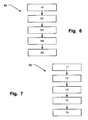
- Fig, 6 is a flow-chart illustrating the method 60 for using the SERS-sensor 61.
- the SERS-sensor 61 is provided.
- an exhaled breath sample is collected from a subject 62. This is done by exhaling breath onto the sensor 61. This maybe done directly or via a mouthpiece or a breathing mask.
- the next step is to make sure that the drug substances appears close enough 63 to the SERS-active layer so that the enhancement of the Raman spectra can occur.
- the exhaled breath can be in a high concentration since that will increase the concentrations of drug substance particles close to the at least one SER-active layer.
- This can be done by arranging the sensor 61 in a collecting chamber.
- the at least one drug substance to be determined is in close proximity 63 to a SERS-active layer at least one spectrum can be recorded 64 using the sensor 61.
- the at least one spectrum is in use analyzed and during this analysis it can be determined if a drug substance is present and/or what drug substance is present and/or the concentration (quantitative amount) of the drug substance is determined.
- Fig. 7 shows a flow-chart illustrating a method 70 for detecting at least one drug substances in exhaled breath using a system comprising the aforementioned SERS-sensor.
- the first step is an optional step of recording at least on background spectrum using the SERS-sensor 71.
- the next step is to collect an exhaled breath sample in a collection chamber 72.
- the collection chamber can have any shape or size but is preferable a small tube with a small volume having the sensor arranged inside the tube. Hence there will be a high flow of exhaled breath through the tube leading to a concentration of drug particles around the sensor.
- the next step is recording at least one SERS-spectrum 73 during a certain period of time. This period is determined so that a high signal-to-noise is achieved related to the time it takes for a subject to empty his/her lungs.
- the recorded spectrum is analyzed 74 using a software that is run on or part of a control unit 54.
- the Control unit is then prompting the subject with the results 75 via a user-interface.
- the user-interface could here be a red and a green lamp, a small display or the built in TFT screen of a car or a computer screen.
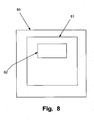
- Fig. 8 is a flow-chart illustrating the code segments of the computer-program.
- 80 is a computer-readable medium with a computer program 81 having a plurality of code segments for analyzing spectral-data 82 and determining if a drug substance is presence in the exhaled breath.
- Fig. 9a top view and b (side view) illustrates a SERS-probe 90 based on a continuing and/or planar waveguide 901, preferably made of SiO2.
- the waveguide 901 has a slot 902 with a SERS-layer 903 on the surfaces of the walls of the slot 902.
- index matching the cladding-layer being the SERS-layer 903, in the slot 902 in combination with the chosen physical dimensions of the waveguide 901
- optimum properties for the interaction between the light field 904, 905 (including the evanescent mode) and analytes in close contact with the SERS-layer 903 can be reached.
- the slot 902 will split the optical field 905 which combined with internal reflection in the waveguide 901 will even further enhance the interaction between the light field and the analytes interacting with the SERS-layer 903.
- the use of the waveguide 901 with a slot 902 will increase the emitted SERS-signal and thereby increase detectability of traces of a drug substance.
- the SERS-layer could be Silica-gel including SERS-active particles, such as gold or silver.
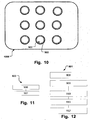
- Fig. 11 is a flowchart illustrating an example for a method 91 of producing a slot for a SERS-sensor including the following steps:
- Fig. 12 is a flowchart illustrating another example for a method 92 of producing a slot for a SERS-sensor including the following steps:.
- silica-gel could be porous to further enhance the interaction between the drug compounds and the SERS-active surfaces.
- a filter membrane preferably an electrostatic non-woven filter membrane made of a blend of synthetic fibers such as acrylic fibers and polypropylene, could be used to collect the drug compounds from exhaled breath.
- the filter membrane could directly after being used be heated and the content in the filter membrane be evaporated onto a SERS-active surface.
- the filter is disposable and need to be changed after a certain amount of time used such as 10, 5 or 1.
- the detectable drug substance may be including in the non-exhaustive list comprising Amphetamines, ecstasy, Cannabis (THC and cannabinoids), Opiates heroin/morphine, 6-AM), Cocaine, Benzodiazepines, Propoxyphene, Methadone, Buprenorphine, Tramadol, LSD, Designer/Internet drugs, Kathinon, GHB, Meprobamat, Z-drugs, Tryptamines, Anabolic steroids, Alcohol/markers but are not limited to these.
- Other illicit drugs not included in the list could also be detectable due to similar interchanges with the human body as the above mentioned illicit drug substances.
- Fig. 10 shows a schematic illustration of an embodiment of a plate 1000 of porous material, such as AIN, Al2N3 or Al203 with multiple channels, here holes 902.
- Active SERS particles such as Au or Ag nano-sized beads are attached to the walls of the holes 902 to obtain an active SERS surface 903.
- a light source e.g a diode laser.
- the disclosed SERS-probe is used in a drug interlock method for cars.
- the interlock method could work in different ways:
- the subject does not need to exhale into a mouthpiece.
- sensors be placed to detecting the presence and/or the amount of drug compounds at different locations around the coupé.
- the sensors are located close to the seat of the driver to detect if the driver is under the influence of a substance.
- the driver than has to exhale in the direction of the sensors.
- the measurements could be enhanced by removing the background of the coupé to take into account if any of the passengers are under influence of a drug.
- the Background could be obtained using at least one senor located somewhere else in the coupé.
- the detection is performed by using the sensors to map the coupé to determining where a person under influence is seated.
- the mapping is further enhanced by using information from other sensors available in the car, such as sensors detecting if a seat is occupied, detection of eye movement etc.
- Other sensors that can be used are sensors to detecting the heartbeats and comparing them to the exhaling.
- the sensors could all have thereon detector and light source, preferably the detector and light source are shared by all sensors. This could be done by having optic fibers transmitting the emitted SERS signal to a central detector. When installing a sensor system the optical fibers could be laid in the infrastructure for cables already available in the car.
- the sensors have to be replaced at some point. Either after the system has indicated the presence of a drug substance for a specific number of times or when the sensors have reached their "best before date”. When changing the sensor only the waveguide with the SERS-layer is replaced.
- in some embodiments are used for the detection of drug substances in a coupé of a car. If hubite substrates being used, than the substrate needs to be replaced.
- the whole magazine may than be replaced when all have been used.
Landscapes
- Health & Medical Sciences (AREA)
- Life Sciences & Earth Sciences (AREA)
- Engineering & Computer Science (AREA)
- Physics & Mathematics (AREA)
- Chemical & Material Sciences (AREA)
- Pathology (AREA)
- Biomedical Technology (AREA)
- General Health & Medical Sciences (AREA)
- General Physics & Mathematics (AREA)
- Immunology (AREA)
- Analytical Chemistry (AREA)
- Molecular Biology (AREA)
- Biochemistry (AREA)
- Nuclear Medicine, Radiotherapy & Molecular Imaging (AREA)
- Biophysics (AREA)
- Hematology (AREA)
- Urology & Nephrology (AREA)
- Food Science & Technology (AREA)
- Medicinal Chemistry (AREA)
- Investigating, Analyzing Materials By Fluorescence Or Luminescence (AREA)
Description
- This invention pertains in general to the field of interlocking vehicles for preventing drivers under drug influence to operate the vehicle. The method is based on collecting a sample from exhaled breath of a subject, and for detecting the presence or determining the quantitative amount of analytes in the breath sample. The analytes are for instance drug substances in the exhaled breath. More particularly, the invention relates to using Surface Enhanced Raman spectroscopy in a sensor for detecting the analytes from the exhaled breath.
- It is known that exhaled breath is commonly used in alcohol testing and today's technology makes it possible to perform on-site breath testing with legally defensible results using electrochemical sensory. An emerging technology is using infrared spectroscopy.
- However, testing for other illicit drugs of abuse still requires blood or urine samples. Alternatively specimens comprising hair, sweat or oral fluid could be used. Blood sampling is invasive and requires medically trained personnel, why test subject often have to be transported to a hospital for sampling. This is time and effort consuming. With long lead times the test result will be too old. Urine sampling is considered intruding on personal integrity and must be done under supervision of a nurse or a doctor. Even other issues related to samples and specimen taken from a subject to be tested arise. For instance for blood samples, and especially for urine samples are at risk of the subject exchanging the samples or using clean samples from another subject to avoid being discovered with traces of illicit drugs.
- Result from a study related to this topic and performed on Ireland can be found in: Results and conclusions from Injury Prevention 2006;12:404-408. doi: 10.1136/ip.2006.013177. 33.1 % of the drivers under the legal limit for alcohol tested positive for one or more of the relevant drugs, and the corresponding figures of drivers over the limit was 14.2. Among drivers who had minimal blood alcohol levels, 67.9% were taking at least one type of drug. The prevalence of taking drugs reduced steadily as alcohol concentrations increased, but still remained as high as 11.1 % for drivers with blood alcohol concentrations .200 mg/100 ml. Being under the limit for alcohol, stopped in a city area, stopped between 6 am and 4 pm, or 4 pm and 9 pm, and being of a younger age were each independently associated with drug positivity.
- Conclusions of the study point out the serious need for a readily available drug test in addition to today's alcohol tests. There are immediate implications for the evidential breath alcohol program and for checkpoints; in the event of a nil or low alcohol reading being obtained, a separate blood or urine specimen should be sought for analysis, which is currently non-routine. However, obtaining blood or urine specimen as a routine test for all drivers in regular traffic controls is not a feasible alternative due to the issues pointed out above.
- Another investigation related to this topic is described in: Investigate of the prevalence and characteristics of abusive drug exposure among non-fatal motor vehicle driver casualties in Hong Kong. (Hong Kong Med J 2010; 16:246-51). The Setting for this study was a Designated trauma centre/regional accident and emergency department in Hong Kong. Investigated subjects were Non-fatal motor vehicle driver casualties who presented to the trauma centre from 1 January 2007 to 31 December 2007.
- Results from drug screening that was performed in 395 injured drivers show 10% of whom tested positive for the drugs of interest. Ketamine was the most commonly detected abusive substance (found in 45% of the subjects). A significantly higher proportion of young drivers (aged <25 years) screened positive (odds ratio=2.3; 95% confidence interval, 1.0-5.2; P=0.04), with the rate being 21%.
- The presence of these drugs in urine was related to the time of occurrence of the crash; those occurring between midnight and dawn revealed a trend towards a higher proportion of casualties testing drug-positive (odds ratio=2.2; 95% confidence interval, 0.9-5.3; P=0.07). There were no significant differences in the frequency of persons testing positive for the screened drugs with respect to gender, class of motor vehicle driven, or the day of the week on which the crash occurred
- This study further supports the urgent need for a convenient, reliable and quick detection of drugs in subjects. An apparatus, system and/or method would be advantageous which allows at least for a pre-screening of subjects to identify subjects under the influence of drugs. These subjects may then further investigated, e.g. by obtaining blood or urine specimens for analysis.
-
WO 03/057521 - Intermediate document
WO 2011/029888 discloses the detection of a drug substance in exhaled breath, using a sensor having a SERS-active layer. - In addition, there is a need for being able to detect other molecules from exhaled breath as well. For instance biomarker compounds indicative of various kinds of diseases would be desirable to being able to detect.
- However, as there are a multitude of different analytes in exhaled breath, most in very low amounts or only as traces, it is a challenge to have a measurement system or method that is sufficiently sensitive to discern between all these different analytes.
- Thus, there is a need to provide a non-invasive, not-specimen based method for detecting the presence or determining the quantitative amount of analytes, in particular at least one drug substance in a subject.
- Hence, an improved method for on-site sampling of a subject for analytes, in particular drug substances is desired. Such a method for sampling the subject for illicit drugs of abuse and/or medical drugs would be desired. The method should be efficient, non-bulky, user friendly both for operators and the subject. It should further be not intruding and not invasive. It should preferably be able to discern between various analytes.
- In accordance with the present invention, the use of an SERS-active substrate or layeris provided as a drug interlock for vehicles based on exhaled breath directed onto said SERS-active substrate. A detected drug substance in exhaled breath of a subject provides a signal for a control unit of said vehicle to lock said vehicle from use. Locking may be provided for at least a pre-determined time after drug detection. Alternatively, or in addition, repeated exhaled breath test where no drugs are detected may also unlock the vehicle. The drug interlock is a combined drug and alcohol interlock.
- Further embodiments of the invention are defined in the dependent claims.
- Embodiments provide for in-situ measurements providing measurement results directly from exhaled breath.
- Identification of molecules is thus detectable based on exhaled breath samples. Some embodiments allow for quantitative determination of the chemical compounds found in exhaled breath.
- Some embodiments provide for sufficient sensitivity to discern between different analytes in exhaled breath samples. Measurements systems and methods that are selectively providing Raman spectra for pre-defined chemical compounds or analytes in exhaled breath are provided.
- It should be emphasized that the term "comprises/comprising" when used in this specification is taken to specify the presence of stated features, integers, steps or components but does not preclude the presence or addition of one or more other features, integers, steps, components or groups thereof.
-
-
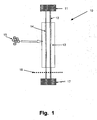
Fig. 1 is a schematic illustration that shows an embodiment of the SERS-sensor with a first SERS-active layer and an optional analyte permeable or analyte selectively permeable layer; -
Fig. 2 is a schematic illustration that shows another embodiment of the SERS-sensor similar to the previous but with a SERS-active layer being a slurry or a mixture of at least one SERS-active material and at least on analyte permeable material; -
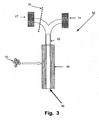
Fig. 3 is a schematic illustration that shows an alternative arrangement of the SERS-sensor; -
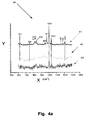
Fig. 4a is a graph that shows three Raman spectra; -
Fig. 4b is a graph that shows two SERS spectra of spiked exhaled breath, whereof one is spiked with amphetamine; -
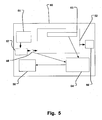
Fig. 5 is a schematic illustration illustrating an embodiment of a system based on a SERS-sensor; -
Fig, 6 is a flow-chart illustrating a first method for using a SERS-sensor; -
Fig. 7 is a flow-chart illustrating a second method for using a SERS-sensor system; -
Fig. 8 is a flow-chart illustrating the code segments of a computer-program; -
Fig. 9a and b are schematic illustrations of an SiO2 planar multimode waveguide with a slot. The SERS-layer comprising SERS-particles are located in the slot; -
Fig. 10 shows a schematic illustration of a plate of porous material.; -
Fig. 11 is a flowchart illustrating an example for a method of producing a slot for a SERS-sensor; and -
Fig. 12 is a flowchart illustrating another example for a method of producing a slot for a SERS-sensor. - A vehicle interlock method is disclosed for preventing a subject under drug influence to operate a vehicle, said unit including at least one sensor, and a unit for analyzing if at least one analyte is present in exhaled breath of a subject based on measurement of said exhaled breath by means of said sensor, wherein said sensor is a SERS-sensor for providing a SERS-emitted signal from said analyte; a unit for analyzing said analyte is present in said exhaled breath of said subject based on said SERS-emitted signal of said SERS-sensor; and a unit for interlocking said vehicle if said analyte is detected in said exhaled breath.
- The SERS-sensor has a light source, a light detector, at least one optical filter, and at least one planar multimode waveguide having a slot, and a collecting surface having at least one Surface Enhanced Raman Spectroscopy (SERS)-active cladding layer being refractive index matched with said planar waveguide, wherein said collecting surface is arranged as an outer surface in said slot for contact with said exhaled breath, such that at least traces of said analyte in said exhaled breath can come in close contact said SERS-active layer, and wherein said at least one planar waveguide is coupled to said light source and said detector for providing an optic field from said light source and an evanescent mode to interact when said analyte is in contact with said SERS-layer.
- The waveguide and said slot are arranged to enhance both said optic field and said evanescent mode interaction and detection of a SERS-emitted signal from said analytes by total internal reflection for detecting a Raman shift spectrum in the presence of said analyte and/or determining a quantitative amount of said analyte, such as at least one drug substance, from said exhaled breath.
- The system has a gas conduit arranged to convey said exhaled breath to a SERS-active layer of said SERS-sensor. The waveguide may be made of SiO2.
- The collecting surface is preferably arranged for collecting a breath condensate or aerosol with said analyte.
- The SERS-sensor has a SERS-active layer, and a second layer covering said SERS-active layer wherein said second layer is enhanced permeable for said analyte, such as by said second layer being made of an analyte permeable material selected from the group comprising silicone polymers and silica and silicone elastomers.
- At least one SERS-active layer of said SERS-sensor may be provided as a mixture comprising at least one SERS-active material and at least one material selected from a polymer material group, such as including silicone elastomers.
- The system may include a vehicle having a coupé and at least a seat and the subject is a driver or passenger in said coupé.
- The system may comprise a mouthpiece for said subject providing said exhaled breath to said SERS-sensor, wherein said mouthpiece preferably is disposable and/or comprises bacterial killing substances, such as silver or copper particles.
- The system may comprise a plurality of said SERS-sensors for arranging at different locations in said vehicle, wherein each of said SERS-sensors includes a light source and detector, or wherein said system comprises a light source and detector shared by a plurality of SERS-sensors, wherein said light source is coupled to optical transmitting means for transmitting light to an a SERS-active layer and the emitted SERS signal from said layer to said detector.
- The optical means may comprise optical fibres arranged in an infrastructure for cables already present in the vehicle.
- The SERS-sensor may comprise at least one Klarite substrate, wherein said Klarite substrates preferably is arranged to be replaced after having indicated the presence of an analyte for a specific number of times or when a predetermined time of use has expired.
- The system may include a magazine with unused waveguides having at least one SERS-layer for said SERS-sensor, wherein said magazine is arranged to replace a used waveguide after the presence of an analyte has been detected by said used waveguide a specific number of times or when a predetermined time of use of said used waveguide has expired.
- In
Fig. 1 a part of a SERS-sensor 10 is shown. Thesensor 10 is based on obtaining at least one Surface Enhanced Raman Spectrum (SERS) from exhaled breath. SERS is a surface technology, described in more detail below, enhancing Raman detection technology. - Thus embodiments of the SERS sensor allow for detection of one o more substances, even when present in very low amounts or concentrations.
- Returning to
Fig. 1 , thesensor 10 is provided in form of awaveguide 12 having at least one SERS-active layer 14. Thewaveguide 12 may be an optical fiber. - The SERS-
active layer 14 is arranged outside of the waveguide at the circumference of thewaveguide 12 and is extending longitudinally along a portion of the outer surface thereof. - Each SERS-
layer 14 comprises at least one SERS-active material. For each SERS-layer a different SERS-active material may be provided. - The SERS-active material should be of a metal material. The metal is preferably comprised in the group of gold or silver or copper or Platinum or palladium or any mixtures thereof. The SERS-
active layer 14 could either be made of colloids or being a substrate similar to Klarite® The SERS-active material is provided as nanoparticles or nanoparticle aggregates, thus providing the SERS-active layer 14 with a nanoscale roughness. - To achieve a measurable effect by a SERS-based measurement system, as described below, a
drug substance 15 found in exhaled breath needs to come into contact with the metal with a nanoscale roughness on the SERS-layer 14 surface, or with similar arrangements of the SERS active nanoparticles. The substance then determines the Raman spectrum registered by alight detector 17, which spectrum is emitted from the SERS-layer upon excitation from light of thelight source 11. - The shape and size of the metal nanoparticles or nanoparticles aggregates or the roughness of the surface strongly affects the strength of the enhancement because these factors influence the ratio of absorption and scattering events.
- The SERS-
active layer 14 could optionally be at least over a surface portion thereof be covered, coated or encapsulated by an outer, encapsulatinglayer 13. Theouter layer 13 may be made of either silicone polymers and/or silica and/or silicone elastomers or similar. The material that theencapsulating layer 13 is made of is chosen to be permeable for certainpre-defined analytes 15. The encapsulatinglayer 13 could therefore act as a barrier for unwanted analytes that shows a lower diffusion through the layer, thus work as a pre-selecting filter to select only thedrug substances 15 of interest. Hence a clearer spectrum without unwanted peaks that could be an obstruction could be obtained. Thecoating 13 may reduce noise in the SERS-measurement. - Thus a SERS-sensor is configured for measurement of specific pre-defined drugs in exhaled breath, whereby the measurement is provided with an advantageous signal to noise ratio.
- An alternative SERS-
sensor 20 is illustrated inFig. 2 . The SERS-sensor has been produced by another method for applying the SERS-material onto the waveguide-surface 22, which result can be seen inFig. 2 . Here a slurry or a mixture of the SERS-material and a selectively permeable material are provided instead of a separate SERS-active layer and a pre-selecting filter material coating. The slurry or mixture may e.g. comprise the SERS-active nanoparticles and silicone polymers and/or silica and/or silicone elastomers and are provided for use as asingle layer 23 on thewaveguide 22 circumference. - The
waveguide 22, preferably is a fiber, as mentioned above. More preferably the fiber is a mono-mode fiber. - The
waveguide light source 11. Thelight source 11 could here be selected from a list comprising: lasers, laser diodes, light emitting diodes, hollow cathode lamps, Xenon arc lamps, deuterium lamps, metal halide, and plasma lamps. - When a fiber is used, it could have a cladding or the SERS-
active layer fiber fiber active layer active layer active layer same fiber index fiber active layer mode fiber active layer active layer - The
light source 11 emits preferably light in the wavelength range between 0.3 and 1.5 µm but preferably in the range 0,5-1.2 µm, and even more preferably in the range 0.75-1.1 µm. - At the opposite end of the
fiber optical filter 16 and the light is then further directed onto adetector 17. - The
filter 16 is used to remove the wavelength of thelight source 11. Thefilter 16 may in addition or alternatively be used to limit the wavelength range to include only a wavelength range with peaks known to be strong for a specific drug substance or drug substances. By puttingdifferent filters 16 between thefiber detector 17 in a sequence after each other, different parts of the wavelength range can be obtained and recorded. Wherein each wavelength range, obtained using theoptical filters 16, comprises information in the form of peaks, for at least onedrug substance 15. In this manner, background noise is reduced and the measurement made robust and reliable. - The
detector 17 may be selected from the list comprising: photocells, photodiodes, phototransistors, CCD, CMOS, photoelectric tubes and photomultipliers. - A further embodiment is illustrated in
Fig.3 in form of a backscattering arrangement. ASERS sensor 30 is provided having one or more SERS-active layers 35. The SERS-layers 35, and if desired the drug substance permeable layers, are applied to thewaveguide 32 and provided as described above. Here thedetector 17, the at least oneoptical filter 16 and thelight source 11 are located at the same side of thefiber 32 where light is both coupled in and out of thefiber 32. Thus one end of thewaveguide 32 is both the excitation light inlet and the SERS layer reflected light outlet. At the distal end of the waveguide amirror 36 or other highly reflective material can be placed to reflect the light back into thefiber 32. This will enhance the signal further since the SERS-layer 35 will be exposed to the excitation light twice. - The at least one waveguide is at least one optical fiber. The optical fiber is for instance made of silica glass or a suitable polymer. The fiber may be bent. In addition, the fiber may be coiled. Such embodiments provide for compact sensor arrangements with large available collecting surfaces.
- The sensor device may comprise a plurality of fibers.
- In some embodiments the collecting surface is arranged for collecting a breath condensate or aerosol with said drug. The sensor device may comprise a temperature control element that is arranged to keep said collecting surface at a temperature lower than 37 deg C to provide condensation of vapor in said exhaled breath. Other surface parts of the sensor device may be heated to a temperature higher than 37 deg C to avoid condensation of vapor in said exhaled breath. This allows for a controlled condensation at the collecting surface.
- In
Fig. 4a , a spectrum from a test on Klarite® is shown, see thecurve 42. Klarite® substrates are commercially available from Renishaw Diagnostics, see http://www.renishawdiagnostics.com/en/12409.aspx. In more detail, thegraph 40 illustrates a SERS spectrum obtained from detection of amphetamine by Raman spectroscopy utilizing irradiation light 785 nm. Normal (not enhanced) Raman spectrum ofpure amphetamine powder 41 shows many peaks that can be used for identification, for example those positioned at 621, 1004, 1030 and 1207 cm-1. SERS spectra are also obtained for diluted amphetamine solutions; one 42 corresponds to amphetamine adsorbed on gold nanostructured Klarite surface and one 43 corresponds to 1 µM amphetamine solution containing SERS active gold nanoparticles. A droplet of 2 µL amphetamine solution of 1 M was added to Klarite surface and after solvent evaporation a laser beam was focused on a micrometer sized spot to generate acharacteristic spectrum 42. The amount of the drug that gives rise tospectrum 42 is estimated to be 0.3 pg. - The
SERS spectra 40 of the drug substances ofFig. 4a shows a series of unique, high intensity peaks which give a fingerprint of the molecular structure of the tested drug substance. This feature of SERS allows the identification of unknown compounds in addition to their detection at low concentrations. Furthermore, the band positions and relative intensities of the SERS-spectra match closely to the bulk Raman signal. - Surface enhanced Raman spectroscopy (SERS), is used to identify amphetamine in exhaled breath. Using the SERS surface Klarite®, measurements of very low amounts, down to a few pg, of amphetamine have successfully shown that it is possible to measure the low concentration of amphetamine expected to be found in exhaled breath. Detection of amphetamine in exhaled breath is difficult because of interfering background signals from bio molecules in breath samples and impurities in solvents. The data indicates that it is possible to measure amphetamine in exhaled air, using SERS, from drug users if it is possible to reduce the background noise.
- A multivariate data analysis was used, where the first derivates of unprocessed spectra were used. Ten breath samples without amphetamine, four breath samples spiked with 20-25 pg and 2 breath samples from drug users where used to build the model. The same samples and four more samples spiked with 100 pg amphetamine were used to calculate a Partial least square (PLS) model. Results indicated clearly that multivariate data analysis is suitable for separating persons under the influence of drugs from persons not having consumed drugs.
- In
Fig. 4b , some further SERS-spectra from a test on Klarite® are shown. The spectra shows two spectrum one of exhaled breath without amphetamine and one spiked with 20 pg. The spiked spectra has a clearly visible peaks related to amphetamine. - In
figure 4b SERS spectra are shown of exhaled air adsorbed on a filter. Both filters where eluted with organic solvents and one of the samples where spiked with 20 pg amphetamine (red spectrum). In conjunction with SERS measurement the samples where dissolved in pure deionized water and a droplet of 2 µL was added to a naked SERS active surface (Klarite). Before laser illumination of 785 nm (3 mW) the liquid droplet was evaporated and exhaled substances were adsorbed on the SERS active surface in dry condition. The spectra were performed on a HORIBA LabRam HR800 Raman spectrometer. It is obvious the Raman signatures are of complex nature where many peaks originating from different species are overlapping. However,figure 4b is indicative that in principle one could distinguish between drug containing and not containing exhaled air. One way is to build up a multivariate data model where a relevant training set is crucial. Most important spectral region in such pattern recognition working model depends on the target molecules but mostly it is lying in range of 600 - 1800 cm-1. Sometimes high frequency region is of importance around 2300 and 3000 cm-1.Figure 4b also says that it if the selectivity of the SERS surface is increased towards certain drug it should be much easier to judge any presence of target molecules. For example this could be achieved by mixing a polymeric layer with SERS active surfaces (or nanoparticles) possessing suitable physicochemical properties for diffusion certain class of analytes of interest. -
Fig. 4 supports clearly the selectivity of SERS active surfaces for detecting certain chemical compounds from exhaled breath. This applies even though only very small amounts or traces of the specific compound are present in the exhaled breath. In addition, it has been shown that detection of traces of certain specific chemical compounds in exhaled breath is provided although many other chemical compounds are present in the exhaled breath and it would have been expected that measurement results were influenced. However, it was shown that measurement results for the desired specific compound under investigation are reliable and not disturbed by other compounds present in the in exhaled breath. Multiple SERS surfaces that are prepared to be selective for different chemical compounds may be combined to provide a multi parameter system in a single compact system. -
Fig. 5 is a schematic chart illustrating avehicle 50 based on the inventedsensor 53. A subject to be tested exhales into a mouth-piece or amask 51, that is in communication with acollection chamber 52 via at least oneinlet 57. The bold arrows inFig. 5 illustrate a flow of the exhaled breath. - Optionally the inlet could be provided with a
flow sensor 58 be arranged for measuring the flow of the exhaled breath and send the information to thecontrol unit 54. Thus the flow over time and thus the volume of exhaled breath may be determined based on an output signal of theflow sensor 58. Hence, concentrations of substances in the exhaled breath may be determined. - In the collection chamber is at least one
sensor 53 arranged for recording at least on SERS-spectrum. In use, the exhaled breath exits the chamber through the collection chamber's 52 at least oneoutlet 56. The at least one recorded spectrum is sent to thecontrol unit 54 to be analyzed. The obtained result is prompted to the operator to subject via auser interface 55. - The user-
interface 55 could also be used to tell the subject when the system is ready to be used or if any error has appeared, e.g. during the measurements or during the system's initialization phase. -
Fig, 6 is a flow-chart illustrating themethod 60 for using the SERS-sensor 61. First, the SERS-sensor 61 is provided. In the next step an exhaled breath sample is collected from a subject 62. This is done by exhaling breath onto thesensor 61. This maybe done directly or via a mouthpiece or a breathing mask. The next step is to make sure that the drug substances appears close enough 63 to the SERS-active layer so that the enhancement of the Raman spectra can occur. - It is also preferable if the exhaled breath can be in a high concentration since that will increase the concentrations of drug substance particles close to the at least one SER-active layer. This can be done by arranging the
sensor 61 in a collecting chamber. When the at least one drug substance to be determined is inclose proximity 63 to a SERS-active layer at least one spectrum can be recorded 64 using thesensor 61. The at least one spectrum is in use analyzed and during this analysis it can be determined if a drug substance is present and/or what drug substance is present and/or the concentration (quantitative amount) of the drug substance is determined. -
Fig. 7 shows a flow-chart illustrating amethod 70 for detecting at least one drug substances in exhaled breath using a system comprising the aforementioned SERS-sensor. - The first step is an optional step of recording at least on background spectrum using the SERS-
sensor 71. - The next step is to collect an exhaled breath sample in a
collection chamber 72. The collection chamber can have any shape or size but is preferable a small tube with a small volume having the sensor arranged inside the tube. Hence there will be a high flow of exhaled breath through the tube leading to a concentration of drug particles around the sensor. - The next step is recording at least one SERS-
spectrum 73 during a certain period of time. This period is determined so that a high signal-to-noise is achieved related to the time it takes for a subject to empty his/her lungs. The recorded spectrum is analyzed 74 using a software that is run on or part of acontrol unit 54. The Control unit is then prompting the subject with theresults 75 via a user-interface. The user-interface could here be a red and a green lamp, a small display or the built in TFT screen of a car or a computer screen. -
Fig. 8 is a flow-chart illustrating the code segments of the computer-program. 80 is a computer-readable medium with acomputer program 81 having a plurality of code segments for analyzing spectral-data 82 and determining if a drug substance is presence in the exhaled breath. -
Fig. 9a (top view) and b (side view) illustrates a SERS-probe 90 based on a continuing and/orplanar waveguide 901, preferably made of SiO2. Thewaveguide 901 has aslot 902 with a SERS-layer 903 on the surfaces of the walls of theslot 902. By index matching the cladding-layer, being the SERS-layer 903, in theslot 902 in combination with the chosen physical dimensions of thewaveguide 901, optimum properties for the interaction between thelight field 904, 905 (including the evanescent mode) and analytes in close contact with the SERS-layer 903 can be reached. Theslot 902 will split theoptical field 905 which combined with internal reflection in thewaveguide 901 will even further enhance the interaction between the light field and the analytes interacting with the SERS-layer 903. The use of thewaveguide 901 with aslot 902 will increase the emitted SERS-signal and thereby increase detectability of traces of a drug substance. - The SERS-layer could be Silica-gel including SERS-active particles, such as gold or silver.
-
Fig. 11 is a flowchart illustrating an example for a method 91 of producing a slot for a SERS-sensor including the following steps: - 906 Synthesis of amorphous silica with porogen.
- 907 Removal of porogen by heat treatment or chemical means.
-
Fig. 12 is a flowchart illustrating another example for a method 92 of producing a slot for a SERS-sensor including the following steps:. - 908 Deposition of a first layer.
- 909 Deposition of a second layer.
- 910 Making holes by lithography in second layer.
- 911 Wet or dry-etching of first layer.
- 912 Wet or dry-etching of second layer.
- Alternatively and/or additionally to the gels and slurries disclosed the silica-gel could be porous to further enhance the interaction between the drug compounds and the SERS-active surfaces.
- Alternatively and/or additionally, in some embodiments a filter membrane, preferably an electrostatic non-woven filter membrane made of a blend of synthetic fibers such as acrylic fibers and polypropylene, could be used to collect the drug compounds from exhaled breath. The filter membrane could directly after being used be heated and the content in the filter membrane be evaporated onto a SERS-active surface. The filter is disposable and need to be changed after a certain amount of time used such as 10, 5 or 1.
- The table below shows a test using a silica gel filter for sampling of methadone in exhaled breath from thee subjects. Showing that silica-gel with SERS-particles can be used.
Experiment no Methadone pg/min mean±SD Range n 1 204±246 57-488 3 - The detectable drug substance may be including in the non-exhaustive list comprising Amphetamines, ecstasy, Cannabis (THC and cannabinoids), Opiates heroin/morphine, 6-AM), Cocaine, Benzodiazepines, Propoxyphene, Methadone, Buprenorphine, Tramadol, LSD, Designer/Internet drugs, Kathinon, GHB, Meprobamat, Z-drugs, Tryptamines, Anabolic steroids, Alcohol/markers but are not limited to these. Other illicit drugs not included in the list could also be detectable due to similar interchanges with the human body as the above mentioned illicit drug substances.
-
Fig. 10 shows a schematic illustration of an embodiment of aplate 1000 of porous material, such as AIN, Al2N3 or Al203 with multiple channels, here holes 902. Active SERS particles such as Au or Ag nano-sized beads are attached to the walls of theholes 902 to obtain anactive SERS surface 903. When breath is exhaled through the channels in the plate, over the SERS surface, illicit drug substances adhered to the walls and an emitted SERS signal can be detected. The SERS-signal occurs when these areas are illuminated by a light source e.g a diode laser. - In accordance with the present invention the disclosed SERS-probe is used in a drug interlock method for cars. The interlock method could work in different ways:
- In one embodiment a mouthpiece is used into which the subject (in this case the driver) has to exhale. After exhaling into the mouthpiece the system may use any of the different SERS-devices disclosed within the context of this application or any other suitable detection system. After exhaling the system will determine if the driver can use the car or if the driver is not capable of handling the car, for example the driver is under the influence of a non-suitable substance such a drug or alcohol. The mouthpiece is preferably disposable and/or comprises bacterial killing substances such as silver or copper particles.
- Alternatively and/or additionally, in some embodiments of the drug interlock the subject does not need to exhale into a mouthpiece. Around the coupé of the car may sensors be placed to detecting the presence and/or the amount of drug compounds at different locations around the coupé. In some embodiments the sensors are located close to the seat of the driver to detect if the driver is under the influence of a substance. In some embodiments the driver than has to exhale in the direction of the sensors.
- The measurements could be enhanced by removing the background of the coupé to take into account if any of the passengers are under influence of a drug. The Background could be obtained using at least one senor located somewhere else in the coupé.
- Additionally and or alternatively, in some embodiments the detection is performed by using the sensors to map the coupé to determining where a person under influence is seated. Alternatively and/or additionally, in some embodiments the mapping is further enhanced by using information from other sensors available in the car, such as sensors detecting if a seat is occupied, detection of eye movement etc. Other sensors that can be used are sensors to detecting the heartbeats and comparing them to the exhaling.
- Alternatively and/or additionally the sensors could all have thereon detector and light source, preferably the detector and light source are shared by all sensors. This could be done by having optic fibers transmitting the emitted SERS signal to a central detector. When installing a sensor system the optical fibers could be laid in the infrastructure for cables already available in the car.
- Alternatively and/or additionally, in some embodiments the sensors have to be replaced at some point. Either after the system has indicated the presence of a drug substance for a specific number of times or when the sensors have reached their "best before date". When changing the sensor only the waveguide with the SERS-layer is replaced.
- Alternatively and/or additionally, in some embodiments klarite substrates are used for the detection of drug substances in a coupé of a car. If klarite substrates being used, than the substrate needs to be replaced.
- In some embodiments, are the sensors automatically replaced by using a magazine comprising unused sensors i.e. waveguides with SERS-layer. The whole magazine may than be replaced when all have been used. An advantage using a non-mouthpiece based drug detection system is that the driver cannot ask someone else to exhale in his place, such as a passenger not under influence.
- The present invention has been described above with reference to specific embodiments. However, other embodiments than the above described are equally possible within the scope of the invention. Different method steps than those described above, performing the method by hardware or software, may be provided within the scope of the invention. SERS-layer described as present on the outside of waveguides may likewise be present on an interior surface of a hollow waveguide, etc. The different features and steps of the invention may be combined in other combinations than those described. The scope of the invention is only limited by the appended patent claims.
Claims (14)
- A method of interlocking a vehicle for preventing a subject under drug influence to operate said vehicle, characterized in that said method comprising:providing at least one SERS-sensor in a vehicle interlock system,exposing a SERS-active layer (903) of said SERS-sensor to exhaled breath,analyzing if at least one analyte is present in exhaled breath of a subject based on measurement of said exhaled breath by means of said SERS-sensor,and interlocking said vehicle if said analyte is detected in said exhaled breath.
- Method of claim 1, wherein the vehicle is a motor vehicle comprising a coupé and at least a seat and the subject is a driver or passenger providing said exhaled breath.
- Method of claim 1 or 2, wherein said analyte is a drug, and said analyzing comprises analyzing if said drug is present.
- Method of claim 3, further comprising detecting if alcohol is present in said exhaled breath and said interlocking comprising interlocking said vehicle if alcohol and/or said drug is detected.
- Method of any of claims 1 or 2, wherein sampling of said exhaled breath is made at multiple locations in said vehicle.
- Method of claim 5, wherein said locations are located close to a seat of a driver of said vehicle for detecting if said driver is under the influence of said at least one analyte.
- Method of claim 5, comprising determining where said subject under influence is seated in said vehicle based on mapping of analyzed analytes to said sampling locations.
- Method of claim 7, comprising detecting if a driver and/or other passengers of said vehicle are under influence of said analyte, and interlocking said vehicle only if at least said driver is under influence of said analyte.
- Method of claim 1, wherein emitted SERS signals are transmitted from multiple-SERS surface to a single detector.
- Method of claim 1, comprising storing the number of times an analyte is detected by said SERS-sensor, and interlocking said vehicle when a predefined number is reached, or when said SERS-sensor has reached a predefined time of use, until at least a portion of said SERS-sensor is replaced, such as by changing a waveguide with a SERS-layer of said SERS-sensor, or a Klarite substrate thereof is replaced with an unused Klarite substrate.
- A method of any of claim 1 to 10, further comprising:- collecting an exhaled breath sample from said subject in said vehicle;- making contact between said exhaled breath sample and a SERS-active layer of said SERS-sensor;- recording at least one SERS-enhanced Raman spectrum obtained from said SERS-sensor.
- Method of claim 11, comprising:- recording at least one background spectrum using the SERS-sensor;- collecting said exhaled breath sample in a chamber;- recording a spectrum of the exhaled breath sample using said SERS-sensor;- analyzing said spectrum; and- based on said analysis giving an indication if said analyte is present in said exhaled breath via a user interface.
- Method of claim 1, said SERS-sensor comprising a light source, a light detector, at least one optical filter, and at least one planar multimode waveguide having a slot, and a collecting surface having at least one Surface Enhanced Raman Spectroscopy (SERS)-active cladding layer being refractive index matched with said planar waveguide, said collecting surface is arranged as an outer surface in said slot for contact with said exhaled breath, for bringing said exhaled breath in close contact said SERS-active layer, and
said at least one planar waveguide is coupled to said light source and said detector, such that an optic field from said light source and an evanescent mode are interacting with said analyte in close contact with said SERS-layer;
and enhancing, by total internal reflection in said waveguide and said slot, both said optic field and said evanescent mode interaction for detecting a SERS-emitted signal from said analytes; and detecting a Raman shift spectrum by a presence of said analyte, and/or determining the quantitative amount thereof, from said exhaled breath. - Method of claim 1, comprising build up of a multivariate data model for recognition of a spectral pattern related to target molecules of said analyte, preferably in the wavenumber range of 600 - 3000 cm-1, such as 600 - 1800 cm-1 or around 2300 or around 3000 cm-1.
Priority Applications (1)
| Application Number | Priority Date | Filing Date | Title |
|---|---|---|---|
| EP12158910.5A EP2498092B1 (en) | 2011-03-09 | 2012-03-09 | A vehicle interlocking method based on detection of analytes in exhaled breath |
Applications Claiming Priority (3)
| Application Number | Priority Date | Filing Date | Title |
|---|---|---|---|
| US201161451001P | 2011-03-09 | 2011-03-09 | |
| EP11157565A EP2498091A1 (en) | 2011-03-09 | 2011-03-09 | A vehicle interlocking system and method based on detection of analytes in exhaled breath |
| EP12158910.5A EP2498092B1 (en) | 2011-03-09 | 2012-03-09 | A vehicle interlocking method based on detection of analytes in exhaled breath |
Publications (2)
| Publication Number | Publication Date |
|---|---|
| EP2498092A1 EP2498092A1 (en) | 2012-09-12 |
| EP2498092B1 true EP2498092B1 (en) | 2015-07-22 |
Family
ID=43877292
Family Applications (3)
| Application Number | Title | Priority Date | Filing Date |
|---|---|---|---|
| EP11157565A Withdrawn EP2498091A1 (en) | 2011-03-09 | 2011-03-09 | A vehicle interlocking system and method based on detection of analytes in exhaled breath |
| EP12158910.5A Not-in-force EP2498092B1 (en) | 2011-03-09 | 2012-03-09 | A vehicle interlocking method based on detection of analytes in exhaled breath |
| EP20120158911 Not-in-force EP2498093B1 (en) | 2011-03-09 | 2012-03-09 | A vehicle interlocking system based on detection of drugs in exhaled breath |
Family Applications Before (1)
| Application Number | Title | Priority Date | Filing Date |
|---|---|---|---|
| EP11157565A Withdrawn EP2498091A1 (en) | 2011-03-09 | 2011-03-09 | A vehicle interlocking system and method based on detection of analytes in exhaled breath |
Family Applications After (1)
| Application Number | Title | Priority Date | Filing Date |
|---|---|---|---|
| EP20120158911 Not-in-force EP2498093B1 (en) | 2011-03-09 | 2012-03-09 | A vehicle interlocking system based on detection of drugs in exhaled breath |
Country Status (2)
| Country | Link |
|---|---|
| US (1) | US20130066223A1 (en) |
| EP (3) | EP2498091A1 (en) |
Cited By (1)
| Publication number | Priority date | Publication date | Assignee | Title |
|---|---|---|---|---|
| GB2632096A (en) * | 2023-07-14 | 2025-01-29 | Rsp Systems As | A method and a device for testing a model |
Families Citing this family (26)
| Publication number | Priority date | Publication date | Assignee | Title |
|---|---|---|---|---|
| CA2771830C (en) | 2009-09-09 | 2019-02-26 | Sensa Bues Ab | Drug detection in exhaled breath |
| EP2518499B1 (en) | 2011-03-09 | 2015-06-10 | Sensa Bues AB | A portable sampling device and method for drug detection from exhaled breath |
| US10359417B2 (en) | 2012-03-08 | 2019-07-23 | Sensa Bues Ab | Portable sampling device and method for detection of biomarkers in exhaled breath |
| US10328800B2 (en) * | 2012-06-18 | 2019-06-25 | Alcohol Countermeasure Systems (International) Inc. | Vehicle interlock with location detection |
| EP2706355A1 (en) | 2012-09-11 | 2014-03-12 | Sensa Bues AB | System and method for eluting and testing substance from exhaled aerosol sample |
| US9227512B2 (en) | 2012-12-07 | 2016-01-05 | Felix J. E. Comeau | Data extraction method |
| WO2014153099A2 (en) * | 2013-03-14 | 2014-09-25 | Pulmonary Analytics | Method for using exhaled breath to determine the presence of drug |
| DE102013103954A1 (en) * | 2013-04-18 | 2014-10-23 | Airsense Analytics Gmbh | Method and device for the detection and identification of hazardous substances with at least one optical system |
| JP6229836B2 (en) * | 2013-12-13 | 2017-11-15 | 株式会社タニタ | Gas concentration measuring device |
| CA2850998A1 (en) | 2014-04-18 | 2015-10-18 | Thc Breathalyzer, Inc. | Cannabis drug detection device |
| CN104614361B (en) * | 2015-01-21 | 2018-01-26 | 中国科学院合肥物质科学研究院 | The SERS detection methods of drugs in a kind of urine sample |
| CN105606585B (en) * | 2015-12-21 | 2019-02-22 | 上海交通大学 | A kind of exhalation sensor and preparation method thereof |
| US9933445B1 (en) | 2016-05-16 | 2018-04-03 | Hound Labs, Inc. | System and method for target substance identification |
| CN107995237B (en) * | 2016-10-27 | 2021-12-10 | 上海迪亚凯特生物医药科技有限公司 | Spectrum data compatibility method and system |
| EP3329991A1 (en) * | 2016-12-02 | 2018-06-06 | Securetec Detektions-Systeme AG | Drug detection via surface enhanced raman spectroscopy |
| US11506610B2 (en) * | 2017-05-05 | 2022-11-22 | University Of Massachusetts | Dual functional substrates and methods of making the same |
| CN107748157B (en) * | 2017-10-20 | 2020-08-04 | 中国科学院微电子研究所 | Respiration detection system based on chemically modified surface enhanced Raman scattering chip |
| US20200245899A1 (en) | 2019-01-31 | 2020-08-06 | Hound Labs, Inc. | Mechanical Breath Collection Device |
| US11977086B2 (en) | 2019-03-21 | 2024-05-07 | Hound Labs, Inc. | Biomarker detection from breath samples |
| CN110261964B (en) * | 2019-07-01 | 2021-06-04 | 国检中心深圳珠宝检验实验室有限公司 | Optical fiber head for optical fiber spectrometer |
| KR102727129B1 (en) * | 2019-10-08 | 2024-11-06 | 현대자동차주식회사 | Apparatus and method for controlling alcohol interlock |
| US11933731B1 (en) * | 2020-05-13 | 2024-03-19 | Hound Labs, Inc. | Systems and methods using Surface-Enhanced Raman Spectroscopy for detecting tetrahydrocannabinol |
| US12392769B1 (en) | 2021-01-12 | 2025-08-19 | Hound Labs, Inc. | Ambient contamination in breath analyte detection and measurement |
| US11967193B2 (en) | 2021-10-08 | 2024-04-23 | Keologic, LLC | Multi-factor safe lock |
| US20230273129A1 (en) * | 2022-02-28 | 2023-08-31 | QuikSudor Diagnostics LLC | Gold nanoparticles for bio-molecule detection in body fluid and systems therefor |
| DE102022212468A1 (en) * | 2022-11-23 | 2024-05-23 | Zf Friedrichshafen Ag | Vehicle control element |
Family Cites Families (9)
| Publication number | Priority date | Publication date | Assignee | Title |
|---|---|---|---|---|
| US6097480A (en) * | 1998-01-27 | 2000-08-01 | Kaplan; Milton | Vehicle interlock system |
| US20050233459A1 (en) * | 2003-11-26 | 2005-10-20 | Melker Richard J | Marker detection method and apparatus to monitor drug compliance |
| US6553241B2 (en) * | 2000-08-31 | 2003-04-22 | Mallinckrodt Inc. | Oximeter sensor with digital memory encoding sensor expiration data |
| US20070258894A1 (en) * | 2000-11-08 | 2007-11-08 | Melker Richard J | System and Method for Real-Time Diagnosis, Treatment, and Therapeutic Drug Monitoring |
| WO2003057521A1 (en) * | 2001-12-21 | 2003-07-17 | Crespo Pierre M | Substance testing devices with photo identification |
| GB2419940B (en) * | 2004-11-04 | 2007-03-07 | Mesophotonics Ltd | Metal nano-void photonic crystal for enhanced raman spectroscopy |
| US7279132B2 (en) * | 2005-01-12 | 2007-10-09 | Delphi Technologies, Inc. | Chemical vapor sensor having an active and a passive measurement mode |
| US8078334B2 (en) * | 2007-01-23 | 2011-12-13 | Alan Goodrich | Unobtrusive system and method for monitoring the physiological condition of a target user of a vehicle |
| CA2771830C (en) * | 2009-09-09 | 2019-02-26 | Sensa Bues Ab | Drug detection in exhaled breath |
-
2011
- 2011-03-09 EP EP11157565A patent/EP2498091A1/en not_active Withdrawn
-
2012
- 2012-03-09 EP EP12158910.5A patent/EP2498092B1/en not_active Not-in-force
- 2012-03-09 EP EP20120158911 patent/EP2498093B1/en not_active Not-in-force
- 2012-03-09 US US13/416,956 patent/US20130066223A1/en not_active Abandoned
Cited By (1)
| Publication number | Priority date | Publication date | Assignee | Title |
|---|---|---|---|---|
| GB2632096A (en) * | 2023-07-14 | 2025-01-29 | Rsp Systems As | A method and a device for testing a model |
Also Published As
| Publication number | Publication date |
|---|---|
| US20130066223A1 (en) | 2013-03-14 |
| EP2498093A1 (en) | 2012-09-12 |
| EP2498093B1 (en) | 2015-05-13 |
| EP2498092A1 (en) | 2012-09-12 |
| EP2498091A1 (en) | 2012-09-12 |
Similar Documents
| Publication | Publication Date | Title |
|---|---|---|
| EP2498093B1 (en) | A vehicle interlocking system based on detection of drugs in exhaled breath | |
| EP2475977B1 (en) | Surface-enhanced raman scattering for drug detection in exhaled breath | |
| US7651851B2 (en) | Handheld Raman body fluid analyzer | |
| US7330746B2 (en) | Non-invasive biochemical analysis | |
| US7524671B2 (en) | Handheld raman blood analyzer | |
| US6479019B1 (en) | Sensor and sensor assembly for detecting a target gas in a breath sample | |
| US20170238854A1 (en) | Wearable sweat sensor for health event detection | |
| US7688440B2 (en) | Raman spectroscopic test strip systems | |
| EP3324320A1 (en) | Biomedical sensing methods and apparatus for the detection and prevention of lung cancer states | |
| JP2015525877A (en) | Infrared light measuring apparatus, method, and system for portable smart device for analyzing substances | |
| CN102046073B (en) | A system for determining a concentration of a substance in a body fluid | |
| JP2012515630A (en) | Non-invasive measurement system for alcohol in tissues | |
| CN102316801A (en) | Breath analysis | |
| CN107110774A (en) | Method and instrument for measure spectrum sample response | |
| Maryam et al. | Mobile multi-configuration clinical translational Raman system for oral cancer application | |
| KR20210011853A (en) | Diabetic measuring urinal and system | |
| JP2009281807A (en) | Component analyzer and biological information measuring device | |
| US20030068274A1 (en) | Method and device for detection of substances in vital tissue | |
| Barnett et al. | Detecting Drugs in Saliva: Surface enhanced Raman spectroscopy enables rapid detection with non‐invasive testing method | |
| EP3062703A1 (en) | Medical monitoring optical computing device | |
| WO2024110423A1 (en) | Vehicle operating element comprising a sensor system | |
| HK1253818A1 (en) | Biomedical sensing methods and apparatus for the detection and prevention of lung cancer states |
Legal Events
| Date | Code | Title | Description |
|---|---|---|---|
| PUAI | Public reference made under article 153(3) epc to a published international application that has entered the european phase |
Free format text: ORIGINAL CODE: 0009012 |
|
| AK | Designated contracting states |
Kind code of ref document: A1 Designated state(s): AL AT BE BG CH CY CZ DE DK EE ES FI FR GB GR HR HU IE IS IT LI LT LU LV MC MK MT NL NO PL PT RO RS SE SI SK SM TR |
|
| AX | Request for extension of the european patent |
Extension state: BA ME |
|
| 17P | Request for examination filed |
Effective date: 20130311 |
|
| 17Q | First examination report despatched |
Effective date: 20130402 |
|
| GRAP | Despatch of communication of intention to grant a patent |
Free format text: ORIGINAL CODE: EPIDOSNIGR1 |
|
| INTG | Intention to grant announced |
Effective date: 20131008 |
|
| RAP1 | Party data changed (applicant data changed or rights of an application transferred) |
Owner name: SENSA BUES AB |
|
| GRAP | Despatch of communication of intention to grant a patent |
Free format text: ORIGINAL CODE: EPIDOSNIGR1 |
|
| INTG | Intention to grant announced |
Effective date: 20150210 |
|
| GRAS | Grant fee paid |
Free format text: ORIGINAL CODE: EPIDOSNIGR3 |
|
| GRAA | (expected) grant |
Free format text: ORIGINAL CODE: 0009210 |
|
| AK | Designated contracting states |
Kind code of ref document: B1 Designated state(s): AL AT BE BG CH CY CZ DE DK EE ES FI FR GB GR HR HU IE IS IT LI LT LU LV MC MK MT NL NO PL PT RO RS SE SI SK SM TR |
|
| REG | Reference to a national code |
Ref country code: GB Ref legal event code: FG4D |
|
| REG | Reference to a national code |
Ref country code: CH Ref legal event code: EP |
|
| REG | Reference to a national code |
Ref country code: IE Ref legal event code: FG4D |
|
| REG | Reference to a national code |
Ref country code: AT Ref legal event code: REF Ref document number: 738193 Country of ref document: AT Kind code of ref document: T Effective date: 20150815 |
|
| REG | Reference to a national code |
Ref country code: DE Ref legal event code: R096 Ref document number: 602012008859 Country of ref document: DE |
|
| REG | Reference to a national code |
Ref country code: AT Ref legal event code: MK05 Ref document number: 738193 Country of ref document: AT Kind code of ref document: T Effective date: 20150722 |
|
| REG | Reference to a national code |
Ref country code: LT Ref legal event code: MG4D |
|
| REG | Reference to a national code |
Ref country code: NL Ref legal event code: MP Effective date: 20150722 |
|
| PG25 | Lapsed in a contracting state [announced via postgrant information from national office to epo] |
Ref country code: NO Free format text: LAPSE BECAUSE OF FAILURE TO SUBMIT A TRANSLATION OF THE DESCRIPTION OR TO PAY THE FEE WITHIN THE PRESCRIBED TIME-LIMIT Effective date: 20151022 Ref country code: LT Free format text: LAPSE BECAUSE OF FAILURE TO SUBMIT A TRANSLATION OF THE DESCRIPTION OR TO PAY THE FEE WITHIN THE PRESCRIBED TIME-LIMIT Effective date: 20150722 Ref country code: LV Free format text: LAPSE BECAUSE OF FAILURE TO SUBMIT A TRANSLATION OF THE DESCRIPTION OR TO PAY THE FEE WITHIN THE PRESCRIBED TIME-LIMIT Effective date: 20150722 Ref country code: GR Free format text: LAPSE BECAUSE OF FAILURE TO SUBMIT A TRANSLATION OF THE DESCRIPTION OR TO PAY THE FEE WITHIN THE PRESCRIBED TIME-LIMIT Effective date: 20151023 Ref country code: FI Free format text: LAPSE BECAUSE OF FAILURE TO SUBMIT A TRANSLATION OF THE DESCRIPTION OR TO PAY THE FEE WITHIN THE PRESCRIBED TIME-LIMIT Effective date: 20150722 |
|
| PG25 | Lapsed in a contracting state [announced via postgrant information from national office to epo] |
Ref country code: PT Free format text: LAPSE BECAUSE OF FAILURE TO SUBMIT A TRANSLATION OF THE DESCRIPTION OR TO PAY THE FEE WITHIN THE PRESCRIBED TIME-LIMIT Effective date: 20151123 Ref country code: AT Free format text: LAPSE BECAUSE OF FAILURE TO SUBMIT A TRANSLATION OF THE DESCRIPTION OR TO PAY THE FEE WITHIN THE PRESCRIBED TIME-LIMIT Effective date: 20150722 Ref country code: IS Free format text: LAPSE BECAUSE OF FAILURE TO SUBMIT A TRANSLATION OF THE DESCRIPTION OR TO PAY THE FEE WITHIN THE PRESCRIBED TIME-LIMIT Effective date: 20151122 Ref country code: SE Free format text: LAPSE BECAUSE OF FAILURE TO SUBMIT A TRANSLATION OF THE DESCRIPTION OR TO PAY THE FEE WITHIN THE PRESCRIBED TIME-LIMIT Effective date: 20150722 Ref country code: ES Free format text: LAPSE BECAUSE OF FAILURE TO SUBMIT A TRANSLATION OF THE DESCRIPTION OR TO PAY THE FEE WITHIN THE PRESCRIBED TIME-LIMIT Effective date: 20150722 Ref country code: PL Free format text: LAPSE BECAUSE OF FAILURE TO SUBMIT A TRANSLATION OF THE DESCRIPTION OR TO PAY THE FEE WITHIN THE PRESCRIBED TIME-LIMIT Effective date: 20150722 Ref country code: RS Free format text: LAPSE BECAUSE OF FAILURE TO SUBMIT A TRANSLATION OF THE DESCRIPTION OR TO PAY THE FEE WITHIN THE PRESCRIBED TIME-LIMIT Effective date: 20150722 Ref country code: HR Free format text: LAPSE BECAUSE OF FAILURE TO SUBMIT A TRANSLATION OF THE DESCRIPTION OR TO PAY THE FEE WITHIN THE PRESCRIBED TIME-LIMIT Effective date: 20150722 |
|
| REG | Reference to a national code |
Ref country code: FR Ref legal event code: PLFP Year of fee payment: 5 |
|
| REG | Reference to a national code |
Ref country code: DE Ref legal event code: R097 Ref document number: 602012008859 Country of ref document: DE |
|
| PG25 | Lapsed in a contracting state [announced via postgrant information from national office to epo] |
Ref country code: IT Free format text: LAPSE BECAUSE OF FAILURE TO SUBMIT A TRANSLATION OF THE DESCRIPTION OR TO PAY THE FEE WITHIN THE PRESCRIBED TIME-LIMIT Effective date: 20150722 Ref country code: EE Free format text: LAPSE BECAUSE OF FAILURE TO SUBMIT A TRANSLATION OF THE DESCRIPTION OR TO PAY THE FEE WITHIN THE PRESCRIBED TIME-LIMIT Effective date: 20150722 Ref country code: DK Free format text: LAPSE BECAUSE OF FAILURE TO SUBMIT A TRANSLATION OF THE DESCRIPTION OR TO PAY THE FEE WITHIN THE PRESCRIBED TIME-LIMIT Effective date: 20150722 Ref country code: SK Free format text: LAPSE BECAUSE OF FAILURE TO SUBMIT A TRANSLATION OF THE DESCRIPTION OR TO PAY THE FEE WITHIN THE PRESCRIBED TIME-LIMIT Effective date: 20150722 Ref country code: CZ Free format text: LAPSE BECAUSE OF FAILURE TO SUBMIT A TRANSLATION OF THE DESCRIPTION OR TO PAY THE FEE WITHIN THE PRESCRIBED TIME-LIMIT Effective date: 20150722 |
|
| PLBE | No opposition filed within time limit |
Free format text: ORIGINAL CODE: 0009261 |
|
| STAA | Information on the status of an ep patent application or granted ep patent |
Free format text: STATUS: NO OPPOSITION FILED WITHIN TIME LIMIT |
|
| PG25 | Lapsed in a contracting state [announced via postgrant information from national office to epo] |
Ref country code: RO Free format text: LAPSE BECAUSE OF FAILURE TO SUBMIT A TRANSLATION OF THE DESCRIPTION OR TO PAY THE FEE WITHIN THE PRESCRIBED TIME-LIMIT Effective date: 20150722 |
|
| 26N | No opposition filed |
Effective date: 20160425 |
|
| PG25 | Lapsed in a contracting state [announced via postgrant information from national office to epo] |
Ref country code: SI Free format text: LAPSE BECAUSE OF FAILURE TO SUBMIT A TRANSLATION OF THE DESCRIPTION OR TO PAY THE FEE WITHIN THE PRESCRIBED TIME-LIMIT Effective date: 20150722 Ref country code: BE Free format text: LAPSE BECAUSE OF NON-PAYMENT OF DUE FEES Effective date: 20160331 |
|
| PG25 | Lapsed in a contracting state [announced via postgrant information from national office to epo] |
Ref country code: MC Free format text: LAPSE BECAUSE OF FAILURE TO SUBMIT A TRANSLATION OF THE DESCRIPTION OR TO PAY THE FEE WITHIN THE PRESCRIBED TIME-LIMIT Effective date: 20150722 Ref country code: LU Free format text: LAPSE BECAUSE OF FAILURE TO SUBMIT A TRANSLATION OF THE DESCRIPTION OR TO PAY THE FEE WITHIN THE PRESCRIBED TIME-LIMIT Effective date: 20160309 |
|
| REG | Reference to a national code |
Ref country code: CH Ref legal event code: PL |
|
| REG | Reference to a national code |
Ref country code: IE Ref legal event code: MM4A |
|
| PG25 | Lapsed in a contracting state [announced via postgrant information from national office to epo] |
Ref country code: BE Free format text: LAPSE BECAUSE OF FAILURE TO SUBMIT A TRANSLATION OF THE DESCRIPTION OR TO PAY THE FEE WITHIN THE PRESCRIBED TIME-LIMIT Effective date: 20150722 |
|
| PG25 | Lapsed in a contracting state [announced via postgrant information from national office to epo] |
Ref country code: CH Free format text: LAPSE BECAUSE OF NON-PAYMENT OF DUE FEES Effective date: 20160331 Ref country code: IE Free format text: LAPSE BECAUSE OF NON-PAYMENT OF DUE FEES Effective date: 20160309 Ref country code: LI Free format text: LAPSE BECAUSE OF NON-PAYMENT OF DUE FEES Effective date: 20160331 |
|
| PG25 | Lapsed in a contracting state [announced via postgrant information from national office to epo] |
Ref country code: NL Free format text: LAPSE BECAUSE OF FAILURE TO SUBMIT A TRANSLATION OF THE DESCRIPTION OR TO PAY THE FEE WITHIN THE PRESCRIBED TIME-LIMIT Effective date: 20150722 |
|
| PG25 | Lapsed in a contracting state [announced via postgrant information from national office to epo] |
Ref country code: MT Free format text: LAPSE BECAUSE OF FAILURE TO SUBMIT A TRANSLATION OF THE DESCRIPTION OR TO PAY THE FEE WITHIN THE PRESCRIBED TIME-LIMIT Effective date: 20150722 |
|
| REG | Reference to a national code |
Ref country code: FR Ref legal event code: PLFP Year of fee payment: 6 |
|
| PG25 | Lapsed in a contracting state [announced via postgrant information from national office to epo] |
Ref country code: SM Free format text: LAPSE BECAUSE OF FAILURE TO SUBMIT A TRANSLATION OF THE DESCRIPTION OR TO PAY THE FEE WITHIN THE PRESCRIBED TIME-LIMIT Effective date: 20150722 Ref country code: CY Free format text: LAPSE BECAUSE OF FAILURE TO SUBMIT A TRANSLATION OF THE DESCRIPTION OR TO PAY THE FEE WITHIN THE PRESCRIBED TIME-LIMIT Effective date: 20150722 Ref country code: HU Free format text: LAPSE BECAUSE OF FAILURE TO SUBMIT A TRANSLATION OF THE DESCRIPTION OR TO PAY THE FEE WITHIN THE PRESCRIBED TIME-LIMIT; INVALID AB INITIO Effective date: 20120309 |
|
| PG25 | Lapsed in a contracting state [announced via postgrant information from national office to epo] |
Ref country code: TR Free format text: LAPSE BECAUSE OF FAILURE TO SUBMIT A TRANSLATION OF THE DESCRIPTION OR TO PAY THE FEE WITHIN THE PRESCRIBED TIME-LIMIT Effective date: 20150722 Ref country code: MK Free format text: LAPSE BECAUSE OF FAILURE TO SUBMIT A TRANSLATION OF THE DESCRIPTION OR TO PAY THE FEE WITHIN THE PRESCRIBED TIME-LIMIT Effective date: 20150722 Ref country code: MT Free format text: LAPSE BECAUSE OF FAILURE TO SUBMIT A TRANSLATION OF THE DESCRIPTION OR TO PAY THE FEE WITHIN THE PRESCRIBED TIME-LIMIT Effective date: 20160331 |
|
| PG25 | Lapsed in a contracting state [announced via postgrant information from national office to epo] |
Ref country code: BG Free format text: LAPSE BECAUSE OF FAILURE TO SUBMIT A TRANSLATION OF THE DESCRIPTION OR TO PAY THE FEE WITHIN THE PRESCRIBED TIME-LIMIT Effective date: 20150722 |
|
| REG | Reference to a national code |
Ref country code: FR Ref legal event code: PLFP Year of fee payment: 7 |
|
| PG25 | Lapsed in a contracting state [announced via postgrant information from national office to epo] |
Ref country code: AL Free format text: LAPSE BECAUSE OF FAILURE TO SUBMIT A TRANSLATION OF THE DESCRIPTION OR TO PAY THE FEE WITHIN THE PRESCRIBED TIME-LIMIT Effective date: 20150722 |
|
| PGFP | Annual fee paid to national office [announced via postgrant information from national office to epo] |
Ref country code: DE Payment date: 20200923 Year of fee payment: 9 Ref country code: FR Payment date: 20200922 Year of fee payment: 9 |
|
| PGFP | Annual fee paid to national office [announced via postgrant information from national office to epo] |
Ref country code: GB Payment date: 20201012 Year of fee payment: 9 |
|
| REG | Reference to a national code |
Ref country code: DE Ref legal event code: R119 Ref document number: 602012008859 Country of ref document: DE |
|
| GBPC | Gb: european patent ceased through non-payment of renewal fee |
Effective date: 20210309 |
|
| PG25 | Lapsed in a contracting state [announced via postgrant information from national office to epo] |
Ref country code: DE Free format text: LAPSE BECAUSE OF NON-PAYMENT OF DUE FEES Effective date: 20211001 Ref country code: FR Free format text: LAPSE BECAUSE OF NON-PAYMENT OF DUE FEES Effective date: 20210331 Ref country code: GB Free format text: LAPSE BECAUSE OF NON-PAYMENT OF DUE FEES Effective date: 20210309 |