EP2497942A1 - Winglet for a blade of a wind turbine - Google Patents
Winglet for a blade of a wind turbine Download PDFInfo
- Publication number
- EP2497942A1 EP2497942A1 EP11157315A EP11157315A EP2497942A1 EP 2497942 A1 EP2497942 A1 EP 2497942A1 EP 11157315 A EP11157315 A EP 11157315A EP 11157315 A EP11157315 A EP 11157315A EP 2497942 A1 EP2497942 A1 EP 2497942A1
- Authority
- EP
- European Patent Office
- Prior art keywords
- winglet
- blade
- core
- wind turbine
- water
- Prior art date
- Legal status (The legal status is an assumption and is not a legal conclusion. Google has not performed a legal analysis and makes no representation as to the accuracy of the status listed.)
- Withdrawn
Links
Images
Classifications
-
- F—MECHANICAL ENGINEERING; LIGHTING; HEATING; WEAPONS; BLASTING
- F03—MACHINES OR ENGINES FOR LIQUIDS; WIND, SPRING, OR WEIGHT MOTORS; PRODUCING MECHANICAL POWER OR A REACTIVE PROPULSIVE THRUST, NOT OTHERWISE PROVIDED FOR
- F03D—WIND MOTORS
- F03D1/00—Wind motors with rotation axis substantially parallel to the air flow entering the rotor
- F03D1/06—Rotors
- F03D1/065—Rotors characterised by their construction elements
-
- F—MECHANICAL ENGINEERING; LIGHTING; HEATING; WEAPONS; BLASTING
- F03—MACHINES OR ENGINES FOR LIQUIDS; WIND, SPRING, OR WEIGHT MOTORS; PRODUCING MECHANICAL POWER OR A REACTIVE PROPULSIVE THRUST, NOT OTHERWISE PROVIDED FOR
- F03D—WIND MOTORS
- F03D80/00—Details, components or accessories not provided for in groups F03D1/00 - F03D17/00
- F03D80/30—Lightning protection
-
- F—MECHANICAL ENGINEERING; LIGHTING; HEATING; WEAPONS; BLASTING
- F05—INDEXING SCHEMES RELATING TO ENGINES OR PUMPS IN VARIOUS SUBCLASSES OF CLASSES F01-F04
- F05B—INDEXING SCHEME RELATING TO WIND, SPRING, WEIGHT, INERTIA OR LIKE MOTORS, TO MACHINES OR ENGINES FOR LIQUIDS COVERED BY SUBCLASSES F03B, F03D AND F03G
- F05B2240/00—Components
- F05B2240/20—Rotors
- F05B2240/30—Characteristics of rotor blades, i.e. of any element transforming dynamic fluid energy to or from rotational energy and being attached to a rotor
- F05B2240/307—Blade tip, e.g. winglets
-
- F—MECHANICAL ENGINEERING; LIGHTING; HEATING; WEAPONS; BLASTING
- F05—INDEXING SCHEMES RELATING TO ENGINES OR PUMPS IN VARIOUS SUBCLASSES OF CLASSES F01-F04
- F05C—INDEXING SCHEME RELATING TO MATERIALS, MATERIAL PROPERTIES OR MATERIAL CHARACTERISTICS FOR MACHINES, ENGINES OR PUMPS OTHER THAN NON-POSITIVE-DISPLACEMENT MACHINES OR ENGINES
- F05C2203/00—Non-metallic inorganic materials
- F05C2203/02—Glass
-
- F—MECHANICAL ENGINEERING; LIGHTING; HEATING; WEAPONS; BLASTING
- F05—INDEXING SCHEMES RELATING TO ENGINES OR PUMPS IN VARIOUS SUBCLASSES OF CLASSES F01-F04
- F05C—INDEXING SCHEME RELATING TO MATERIALS, MATERIAL PROPERTIES OR MATERIAL CHARACTERISTICS FOR MACHINES, ENGINES OR PUMPS OTHER THAN NON-POSITIVE-DISPLACEMENT MACHINES OR ENGINES
- F05C2225/00—Synthetic polymers, e.g. plastics; Rubber
-
- F—MECHANICAL ENGINEERING; LIGHTING; HEATING; WEAPONS; BLASTING
- F05—INDEXING SCHEMES RELATING TO ENGINES OR PUMPS IN VARIOUS SUBCLASSES OF CLASSES F01-F04
- F05C—INDEXING SCHEME RELATING TO MATERIALS, MATERIAL PROPERTIES OR MATERIAL CHARACTERISTICS FOR MACHINES, ENGINES OR PUMPS OTHER THAN NON-POSITIVE-DISPLACEMENT MACHINES OR ENGINES
- F05C2253/00—Other material characteristics; Treatment of material
- F05C2253/14—Foam
-
- F—MECHANICAL ENGINEERING; LIGHTING; HEATING; WEAPONS; BLASTING
- F05—INDEXING SCHEMES RELATING TO ENGINES OR PUMPS IN VARIOUS SUBCLASSES OF CLASSES F01-F04
- F05C—INDEXING SCHEME RELATING TO MATERIALS, MATERIAL PROPERTIES OR MATERIAL CHARACTERISTICS FOR MACHINES, ENGINES OR PUMPS OTHER THAN NON-POSITIVE-DISPLACEMENT MACHINES OR ENGINES
- F05C2253/00—Other material characteristics; Treatment of material
- F05C2253/16—Fibres
-
- Y—GENERAL TAGGING OF NEW TECHNOLOGICAL DEVELOPMENTS; GENERAL TAGGING OF CROSS-SECTIONAL TECHNOLOGIES SPANNING OVER SEVERAL SECTIONS OF THE IPC; TECHNICAL SUBJECTS COVERED BY FORMER USPC CROSS-REFERENCE ART COLLECTIONS [XRACs] AND DIGESTS
- Y02—TECHNOLOGIES OR APPLICATIONS FOR MITIGATION OR ADAPTATION AGAINST CLIMATE CHANGE
- Y02E—REDUCTION OF GREENHOUSE GAS [GHG] EMISSIONS, RELATED TO ENERGY GENERATION, TRANSMISSION OR DISTRIBUTION
- Y02E10/00—Energy generation through renewable energy sources
- Y02E10/70—Wind energy
- Y02E10/72—Wind turbines with rotation axis in wind direction
Definitions
- the invention relates to a winglet for a blade of a wind turbine.
- a blade of a wind turbine is equipped with a winglet to improve the aerodynamic characteristics of the blade.
- the winglet may be connected to the blade asides the final site of the wind turbine to simplify the transportation of the blade.
- Lightning strikes are especially problematic if the winglet contains a water-absorbing-material.
- the lightning strike evaporates the absorbed water into steam in only a split-second.
- the winglet seems to explode due to the evaporated water.
- the winglet for a wind turbine blade contains a core with a very low water absorption-rate.
- the core does not or does nearly not absorb water.
- the winglet is preferably made of epoxy foam. This foam prevents that water is absorbed by the core of the winglet.
- a so called “lightweight epoxy foam” is used.
- the well known “Sicomin Epoxy Foam PB 250” is used. Further information about this foam might be found in the internet: http://www.mcmc-uk.com/products-epoxy-foams.html.
- the PB 250 is a two part epoxy formulation which produce closed cell low density foams.
- the densities obtained are respectively about 250 kg / m3 (open mould expansion).
- a hardener might modify curing time and reachable thickness.
- the exterior surface of the core is covered by glass fiber.
- the glass fiber covers the core like a skin.
- the skin shows a thickness between 1 mm and 5 mm.
- the winglet Due to the materials being used for the core and for its skin the winglet is quite strong in view to mechanical forces that are acting on the winglet and on the tip end of the blade.
- the winglet-construction is capable to withstand forces acting on the tip-end-region of modern wind turbine blades.
- the winglet is casted by help of the well known "Vacuum Assisted Resin Transfer Mould, VARTM"-process.
- This process ensures that voids, cavities, air inclusions, gaps or other weaknesses are reduced, which might result in an amount of absorbed water in the winglet.
- the winglet is connected with the blade by glue or by an adhesive, which is applied between the blade and the winglet.
- the glue or adhesive is applied in a way that no voids, cavities, air inclusions, gaps or other weaknesses remain within the zone of connection. Thus no water may gather in this zone.
- the winglet is optimized in view to the absorbed water.
- the whole winglet is as dry as possible. Thus even the risk that the winglet is hit by lightning strikes is reduced.
- the winglet is strong and extremely light weight, thus it is best suited to retrofit an existing blade.
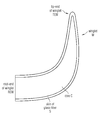
- FIG 1 The invention is shown in more detail by help of figure FIG 1 .
- FIG 1 shows a preferred configuration in a cross sectional view and does not limit the scope of the invention.
- the winglet W shows a tip-end TEW and a root-end REW.
- the root-end REW is prepared to be connected with the tip-end of a blade (not shown here).
- the core C of the winglet W shows a very low water absorption-rate, thus the absorption of water in the core is reduced as best as possible or is even avoided.
- the core C is preferably made of a light weight epoxy foam as described above.
- the core C is covered by a skin, which contains glass fibers S preferably.
Landscapes
- Engineering & Computer Science (AREA)
- Life Sciences & Earth Sciences (AREA)
- Sustainable Development (AREA)
- Sustainable Energy (AREA)
- Chemical & Material Sciences (AREA)
- Combustion & Propulsion (AREA)
- Mechanical Engineering (AREA)
- General Engineering & Computer Science (AREA)
- Wind Motors (AREA)
Abstract
Description
- The invention relates to a winglet for a blade of a wind turbine.
- Sometimes a blade of a wind turbine is equipped with a winglet to improve the aerodynamic characteristics of the blade.
- The winglet may be connected to the blade asides the final site of the wind turbine to simplify the transportation of the blade.
- It is also possible to retrofit an already mounted blade with a winglet if there is the need due to specific conditions at the wind turbine site.
- The mounting of blades towards a hub of a wind turbine has to be done very carefully due to the weight and due to the dimensions of the blade. This work becomes more difficult if the blade shows an additional winglet on its end.
- This kind of work is quite expensive as special designed vessels with huge cranes are needed. Additionally there is the need for calm weather conditions to mount the huge blade to the hub.
- It is known that lightning preferably strikes the wind turbine blades. Even the winglet may be harmed by lightning strikes.
- Lightning strikes are especially problematic if the winglet contains a water-absorbing-material. The lightning strike evaporates the absorbed water into steam in only a split-second. Thus the winglet seems to explode due to the evaporated water.
- It is therefore the aim of the invention to provide an improved winglet for a wind turbine, which is more resistant to the effects of lightning strikes as described above.
- This aim is reached by the features of claim 1. Preferred configurations of the invention are object of the dependent claims.
- According to the invention the winglet for a wind turbine blade contains a core with a very low water absorption-rate. Thus the core does not or does nearly not absorb water.
- The winglet is preferably made of epoxy foam. This foam prevents that water is absorbed by the core of the winglet.
- Preferably a so called "lightweight epoxy foam" is used. Preferably the well known "Sicomin Epoxy Foam PB 250" is used. Further information about this foam might be found in the internet: http://www.mcmc-uk.com/products-epoxy-foams.html.
- The PB 250 is a two part epoxy formulation which produce closed cell low density foams. The densities obtained are respectively about 250 kg / m3 (open mould expansion). A hardener might modify curing time and reachable thickness.
- Preferably the exterior surface of the core is covered by glass fiber. The glass fiber covers the core like a skin.
- Preferably the skin shows a thickness between 1 mm and 5 mm.
- Due to the materials being used for the core and for its skin the winglet is quite strong in view to mechanical forces that are acting on the winglet and on the tip end of the blade.
- The winglet-construction is capable to withstand forces acting on the tip-end-region of modern wind turbine blades. Preferably the winglet is casted by help of the well known "Vacuum Assisted Resin Transfer Mould, VARTM"-process.
- This process ensures that voids, cavities, air inclusions, gaps or other weaknesses are reduced, which might result in an amount of absorbed water in the winglet.
- Preferably the winglet is connected with the blade by glue or by an adhesive, which is applied between the blade and the winglet. The glue or adhesive is applied in a way that no voids, cavities, air inclusions, gaps or other weaknesses remain within the zone of connection. Thus no water may gather in this zone.
- Due to the chosen winglet-materials the damaging effects of evaporated water are avoided or even reduced when lightning strikes the winglet.
- As described above the winglet is optimized in view to the absorbed water. The whole winglet is as dry as possible. Thus even the risk that the winglet is hit by lightning strikes is reduced.
- The winglet is strong and extremely light weight, thus it is best suited to retrofit an existing blade.
- Due to the light weight of the winglet it is even possible to cope with centrifugal forces, which are quite strong at the tip-end region of the blade.
- The invention is shown in more detail by help of figure
FIG 1 . - The figure
FIG 1 shows a preferred configuration in a cross sectional view and does not limit the scope of the invention. - The winglet W shows a tip-end TEW and a root-end REW. The root-end REW is prepared to be connected with the tip-end of a blade (not shown here).
- The core C of the winglet W shows a very low water absorption-rate, thus the absorption of water in the core is reduced as best as possible or is even avoided.
- The core C is preferably made of a light weight epoxy foam as described above.
- The core C is covered by a skin, which contains glass fibers S preferably.
Claims (7)
- Winglet for a blade of a wind turbine,- where the winglet contains a core with a predetermined water absorption-rate to reduce or even avoid the absorption of water in the core.
- Winglet according to claim 1, where the core of the winglet is made of epoxy foam.
- Winglet according to claim 1 or claim 2, where the core of the winglet is made of a lightweight epoxy foam.
- Winglet according to claim 3, where the lightweight epoxy foam show a density of 250 kg/m3.
- Winglet according to one of the claims 1 to 4, where the exterior surface of the core is covered by a sheet of glass fiber.
- Winglet according to claim 5, where the glass fiber covers the core like a skin and show a thickness between 1 mm and 5 mm.
- Winglet according to one of the claims 1 to 6, where the winglet is prepared for a connection with a blade of a wind turbine.
Priority Applications (4)
| Application Number | Priority Date | Filing Date | Title |
|---|---|---|---|
| EP11157315A EP2497942A1 (en) | 2011-03-08 | 2011-03-08 | Winglet for a blade of a wind turbine |
| US13/406,834 US8459947B2 (en) | 2011-03-08 | 2012-02-28 | Winglet for a blade of a wind turbine |
| CA2770711A CA2770711C (en) | 2011-03-08 | 2012-03-06 | Winglet for a blade of a wind turbine |
| CN201210059289.5A CN102678475B (en) | 2011-03-08 | 2012-03-08 | Winglet for a blade of a wind turbine |
Applications Claiming Priority (1)
| Application Number | Priority Date | Filing Date | Title |
|---|---|---|---|
| EP11157315A EP2497942A1 (en) | 2011-03-08 | 2011-03-08 | Winglet for a blade of a wind turbine |
Publications (1)
| Publication Number | Publication Date |
|---|---|
| EP2497942A1 true EP2497942A1 (en) | 2012-09-12 |
Family
ID=44280977
Family Applications (1)
| Application Number | Title | Priority Date | Filing Date |
|---|---|---|---|
| EP11157315A Withdrawn EP2497942A1 (en) | 2011-03-08 | 2011-03-08 | Winglet for a blade of a wind turbine |
Country Status (4)
| Country | Link |
|---|---|
| US (1) | US8459947B2 (en) |
| EP (1) | EP2497942A1 (en) |
| CN (1) | CN102678475B (en) |
| CA (1) | CA2770711C (en) |
Cited By (2)
| Publication number | Priority date | Publication date | Assignee | Title |
|---|---|---|---|---|
| EP2735731A1 (en) * | 2012-11-21 | 2014-05-28 | Siemens Aktiengesellschaft | Wind turbine blade with a blade attachment |
| US9581134B2 (en) | 2013-02-18 | 2017-02-28 | Mitsubishi Heavy Industries, Ltd. | Wind turbine blade and manufacturing method thereof |
Families Citing this family (4)
| Publication number | Priority date | Publication date | Assignee | Title |
|---|---|---|---|---|
| USD723678S1 (en) * | 2013-06-17 | 2015-03-03 | Delta T Corporation | Winglet for a ceiling fan |
| USD717936S1 (en) * | 2014-02-27 | 2014-11-18 | Delta T Corporation | Blade tip |
| USD732657S1 (en) * | 2014-02-27 | 2015-06-23 | Delta T Corporation | Winglet |
| PL3884156T3 (en) * | 2018-11-20 | 2024-07-29 | Lm Wind Power A/S | Wind turbine blade with lightning protection system |
Citations (4)
| Publication number | Priority date | Publication date | Assignee | Title |
|---|---|---|---|---|
| GB2254382A (en) * | 1991-02-07 | 1992-10-07 | Lawson Tancred Sir Henry Bert | Wind turbine blades |
| WO2005031158A2 (en) * | 2003-09-29 | 2005-04-07 | Vestas Wind Systems A/S | Lightning protection system for wind turbine blade |
| EP1779997A2 (en) * | 2005-10-28 | 2007-05-02 | General Electric Company | Methods of making wind turbine rotor blades |
| DE102008002849A1 (en) * | 2007-05-14 | 2008-11-20 | General Electric Co. | Rotor blades and method for reducing the noise of wind turbines |
Family Cites Families (1)
| Publication number | Priority date | Publication date | Assignee | Title |
|---|---|---|---|---|
| WO2011130391A1 (en) * | 2010-04-14 | 2011-10-20 | Arcjet Holdings Llc | Turbines |
-
2011
- 2011-03-08 EP EP11157315A patent/EP2497942A1/en not_active Withdrawn
-
2012
- 2012-02-28 US US13/406,834 patent/US8459947B2/en not_active Expired - Fee Related
- 2012-03-06 CA CA2770711A patent/CA2770711C/en not_active Expired - Fee Related
- 2012-03-08 CN CN201210059289.5A patent/CN102678475B/en not_active Expired - Fee Related
Patent Citations (4)
| Publication number | Priority date | Publication date | Assignee | Title |
|---|---|---|---|---|
| GB2254382A (en) * | 1991-02-07 | 1992-10-07 | Lawson Tancred Sir Henry Bert | Wind turbine blades |
| WO2005031158A2 (en) * | 2003-09-29 | 2005-04-07 | Vestas Wind Systems A/S | Lightning protection system for wind turbine blade |
| EP1779997A2 (en) * | 2005-10-28 | 2007-05-02 | General Electric Company | Methods of making wind turbine rotor blades |
| DE102008002849A1 (en) * | 2007-05-14 | 2008-11-20 | General Electric Co. | Rotor blades and method for reducing the noise of wind turbines |
Cited By (5)
| Publication number | Priority date | Publication date | Assignee | Title |
|---|---|---|---|---|
| EP2735731A1 (en) * | 2012-11-21 | 2014-05-28 | Siemens Aktiengesellschaft | Wind turbine blade with a blade attachment |
| CN103835874A (en) * | 2012-11-21 | 2014-06-04 | 西门子公司 | Wind turbine blade with a blade attachmen |
| US9494135B2 (en) | 2012-11-21 | 2016-11-15 | Siemens Aktiengesellschaft | Wind turbine blade with a blade attachment |
| CN103835874B (en) * | 2012-11-21 | 2018-08-24 | 西门子公司 | Wind turbine blade with blade attachment |
| US9581134B2 (en) | 2013-02-18 | 2017-02-28 | Mitsubishi Heavy Industries, Ltd. | Wind turbine blade and manufacturing method thereof |
Also Published As
| Publication number | Publication date |
|---|---|
| CA2770711C (en) | 2019-03-19 |
| US20120230832A1 (en) | 2012-09-13 |
| CN102678475B (en) | 2017-01-18 |
| CN102678475A (en) | 2012-09-19 |
| CA2770711A1 (en) | 2012-09-08 |
| US8459947B2 (en) | 2013-06-11 |
Similar Documents
| Publication | Publication Date | Title |
|---|---|---|
| US8459947B2 (en) | Winglet for a blade of a wind turbine | |
| EP2636897B1 (en) | Wind turbine blade | |
| US7988416B2 (en) | Wind turbine blade with damping element | |
| CN101936251B (en) | Retrofit sleeve for wind turbine blade | |
| CN101260861B (en) | Integrated shear webs for wind turbine blades | |
| US8896980B2 (en) | Wind turbine blade with an integrated lightning conductor | |
| US8622709B2 (en) | Wind turbine blade and wind power generator using the same | |
| EP2275673B1 (en) | Manufacturing WTG blade having a spar | |
| DK179147B1 (en) | Wind turbine rotor blade assembly with root extension panel and mounting method | |
| KR20120035194A (en) | Rotary blade of windmill and method of manufacturing rotary blade of windmill | |
| EP2518311A1 (en) | Windmill rotary vane | |
| US9494135B2 (en) | Wind turbine blade with a blade attachment | |
| WO2012001147A1 (en) | Wind turbine blade for a rotor of a wind turbine | |
| BR102015029380A2 (en) | method for manufacturing a wind turbine rotor blade component and a wind turbine rotor blade component | |
| NZ545162A (en) | Bearing structure | |
| US9574544B2 (en) | Methods of manufacturing rotor blade components for a wind turbine | |
| EP3596337A1 (en) | Lightning protection system for a wind turbine blade | |
| DK178599B1 (en) | Wind turbine rotor blades with reduced radar cross sections | |
| US20150167633A1 (en) | Methods of manufacturing rotor blade components for a wind turbine | |
| CN201165932Y (en) | Double beam structure of large wind rotor blades | |
| US9033671B2 (en) | Wind turbines and wind turbine rotor blades with reduced radar cross sections | |
| WO2015158346A1 (en) | Asymmetric blade damper | |
| US20150147180A1 (en) | Aerodynamic root adapters for wind turbine rotor blades | |
| JP2005147080A (en) | Horizontal axis windmill blade | |
| EP2962828B1 (en) | Rotor blade for a wind turbine and method of manufacturing a rotor blade component |
Legal Events
| Date | Code | Title | Description |
|---|---|---|---|
| PUAI | Public reference made under article 153(3) epc to a published international application that has entered the european phase |
Free format text: ORIGINAL CODE: 0009012 |
|
| AK | Designated contracting states |
Kind code of ref document: A1 Designated state(s): AL AT BE BG CH CY CZ DE DK EE ES FI FR GB GR HR HU IE IS IT LI LT LU LV MC MK MT NL NO PL PT RO RS SE SI SK SM TR |
|
| AX | Request for extension of the european patent |
Extension state: BA ME |
|
| 17P | Request for examination filed |
Effective date: 20130118 |
|
| RAP1 | Party data changed (applicant data changed or rights of an application transferred) |
Owner name: SIEMENS AKTIENGESELLSCHAFT |
|
| RIC1 | Information provided on ipc code assigned before grant |
Ipc: F03D 1/06 20060101ALI20130311BHEP Ipc: F03D 11/00 20060101AFI20130311BHEP |
|
| 17Q | First examination report despatched |
Effective date: 20130909 |
|
| RAP1 | Party data changed (applicant data changed or rights of an application transferred) |
Owner name: SIEMENS AKTIENGESELLSCHAFT |
|
| RAP1 | Party data changed (applicant data changed or rights of an application transferred) |
Owner name: SIEMENS GAMESA RENEWABLE ENERGY A/S |
|
| RIC1 | Information provided on ipc code assigned before grant |
Ipc: F03D 80/30 20160101AFI20200619BHEP |
|
| GRAP | Despatch of communication of intention to grant a patent |
Free format text: ORIGINAL CODE: EPIDOSNIGR1 |
|
| STAA | Information on the status of an ep patent application or granted ep patent |
Free format text: STATUS: GRANT OF PATENT IS INTENDED |
|
| INTG | Intention to grant announced |
Effective date: 20200827 |
|
| STAA | Information on the status of an ep patent application or granted ep patent |
Free format text: STATUS: THE APPLICATION IS DEEMED TO BE WITHDRAWN |
|
| 18D | Application deemed to be withdrawn |
Effective date: 20201001 |