EP2497934A1 - Flow evacuation system for an aircraft engine - Google Patents
Flow evacuation system for an aircraft engine Download PDFInfo
- Publication number
- EP2497934A1 EP2497934A1 EP11382059A EP11382059A EP2497934A1 EP 2497934 A1 EP2497934 A1 EP 2497934A1 EP 11382059 A EP11382059 A EP 11382059A EP 11382059 A EP11382059 A EP 11382059A EP 2497934 A1 EP2497934 A1 EP 2497934A1
- Authority
- EP
- European Patent Office
- Prior art keywords
- flow
- engine
- evacuation system
- fins
- nozzle
- Prior art date
- Legal status (The legal status is an assumption and is not a legal conclusion. Google has not performed a legal analysis and makes no representation as to the accuracy of the status listed.)
- Granted
Links
Images


Classifications
-
- F—MECHANICAL ENGINEERING; LIGHTING; HEATING; WEAPONS; BLASTING
- F02—COMBUSTION ENGINES; HOT-GAS OR COMBUSTION-PRODUCT ENGINE PLANTS
- F02K—JET-PROPULSION PLANTS
- F02K1/00—Plants characterised by the form or arrangement of the jet pipe or nozzle; Jet pipes or nozzles peculiar thereto
- F02K1/46—Nozzles having means for adding air to the jet or for augmenting the mixing region between the jet and the ambient air, e.g. for silencing
-
- F—MECHANICAL ENGINEERING; LIGHTING; HEATING; WEAPONS; BLASTING
- F02—COMBUSTION ENGINES; HOT-GAS OR COMBUSTION-PRODUCT ENGINE PLANTS
- F02K—JET-PROPULSION PLANTS
- F02K1/00—Plants characterised by the form or arrangement of the jet pipe or nozzle; Jet pipes or nozzles peculiar thereto
- F02K1/38—Introducing air inside the jet
- F02K1/386—Introducing air inside the jet mixing devices in the jet pipe, e.g. for mixing primary and secondary flow
-
- F—MECHANICAL ENGINEERING; LIGHTING; HEATING; WEAPONS; BLASTING
- F05—INDEXING SCHEMES RELATING TO ENGINES OR PUMPS IN VARIOUS SUBCLASSES OF CLASSES F01-F04
- F05D—INDEXING SCHEME FOR ASPECTS RELATING TO NON-POSITIVE-DISPLACEMENT MACHINES OR ENGINES, GAS-TURBINES OR JET-PROPULSION PLANTS
- F05D2260/00—Function
- F05D2260/20—Heat transfer, e.g. cooling
- F05D2260/221—Improvement of heat transfer
- F05D2260/2212—Improvement of heat transfer by creating turbulence
-
- Y—GENERAL TAGGING OF NEW TECHNOLOGICAL DEVELOPMENTS; GENERAL TAGGING OF CROSS-SECTIONAL TECHNOLOGIES SPANNING OVER SEVERAL SECTIONS OF THE IPC; TECHNICAL SUBJECTS COVERED BY FORMER USPC CROSS-REFERENCE ART COLLECTIONS [XRACs] AND DIGESTS
- Y02—TECHNOLOGIES OR APPLICATIONS FOR MITIGATION OR ADAPTATION AGAINST CLIMATE CHANGE
- Y02T—CLIMATE CHANGE MITIGATION TECHNOLOGIES RELATED TO TRANSPORTATION
- Y02T50/00—Aeronautics or air transport
- Y02T50/60—Efficient propulsion technologies, e.g. for aircraft
Definitions
- the present invention relates to the flow evacuation system of an aircraft gas turbine engine and, more in particular, of a turboprop or a turboshaft engine.
- a typical turboprop engine comprises a core engine that includes a compressor section, a combustor and a first turbine in serial flow relationship, and a power turbine located aft the first turbine. Pressurized air from the compressor section is mixed with fuel and burned in the combustor to produce a high energy gas stream. The power turbine extracts energy from the gas stream to power the propeller.
- the engine also includes a nozzle which drives this flow outwards the engine.
- US 2007/0089398 disclose a flow evacuation system with an eductor having a plurality of flow straighteners configured to reduce swirl motion of the gas that flows therethrough in order to avoid that a portion of exhaust gases may swirl within the eductor but may not flow out the eductor outlet.
- the present invention is intended to the solution of this problem.
- An object of the present invention is to provide an efficient flow evacuation system for an aircraft engine, particularly for a turboprop or a turboshaft engine, in a variety of operating conditions.
- Another object of the present invention is to provide a flow evacuation system for an aircraft engine, particularly for a turboprop or a turboshaft engine, with a high ventilation capacity.
- a flow evacuation system for an aircraft engine comprising an engine nozzle that conveys the engine exhaust flow and an eductor receiving said engine exhaust flow and the engine ventilation flow, the engine nozzle having a final section in contact by its outer surface with said ventilation flow, the engine exhaust flow having a low swirl when the engine operates under design conditions and a high swirl when the engine operates out of design conditions, the engine nozzle comprising a plurality of local flow conditioners placed in its inner surface in said final section for reducing the swirl of the engine exhaust flow at the exit of the engine nozzle, for producing further depression to improve the suction effects over the ventilation flow and for facilitating the mixture of the engine exhaust flow and the ventilation flow, enhancing its evacuation along the eductor.
- said local flow conditioners are fins oriented radially, fins oriented with predetermined angular deviation with respect to a radial orientation or fins oriented with a variable angular deviation with respect to a radial orientation. Therefore some fins orientation choices are provided for a better accommodation to the flow evacuation needs of each engine.
- said local flow conditioners are fins distributed along the full final section of the engine nozzle or fins distributed along a sector of the final section of the engine nozzle, preferably, in both cases, in an equally spaced distribution. Therefore some fin distribution choices are provided for a better accommodation to the flow evacuation needs of each engine.
- said fins are flat plates, curved plates or airfoil-shaped bodies. Therefore some fin configuration choices are provided for a better accommodation to the flow evacuation needs of each engine.
- said flat plates have a rectangular or a trapezoidal shape, being the inclined side its leading edge with respect to the engine exhaust flow.
- an aircraft engine comprising a flow evacuation system having the abovementioned features, being said engine a turboshaft engine or a turboprop engine.
- An aircraft engine housed in a nacelle, requires a cooling and ventilation system to reduce the high temperatures generated within the engine bay under acceptable limits.
- this flow evacuation system is based on the fact that the higher energy or primary flow (the engine exhaust flow 11) suctions the lower energy or secondary flow (the ventilation flow 13) to help ventilation through the engine bay 19.
- the parameters which define the engine exhaust flow 11 must lie between certain limits.
- An ideal condition for the engine exhaust flow 11 along the engine nozzle 31 is, as shown in Figure 2 , zero swirl.
- the velocity of the engine exhaust flow 11 in the exit of the engine nozzle 31 has then only an axial component V axial .
- the engine exhaust flow 11 has usually a certain swirl as shown in Figures 3 and 4 for straight and curved engine nozzles 31. Therefore the velocity of the engine exhaust flow 11 in the exit of the engine nozzle 31 has an axial component V axial and a tangential component V t , which involves, for a high swirl, the flow pressure distribution shown in Figure 5 with high total pressure areas 38 near the engine nozzle wall.
- an excessive swirl of the engine exhaust flow 11 at the engine nozzle exit can prevent the correct suction of the ventilation flow 13 by the engine exhaust flow 11, blocking the nacelle ventilation flow 13 and possibly causing the reingestion of exhaust engine gases 11 towards the ventilation bay of the aircraft engine as shown in Figure 6 .
- a design objective of an aircraft engine is the avoidance of said swirl in those engine operating conditions which imply greater fuel consumption.
- Typical aircraft engine configuration restrictions for example a propeller/power turbine group rotating at a constant speed
- the swirl of the engine exhaust flow 11 through the engine nozzle 31 increases, the performance of the engine decreases in terms of residual thrust, ventilation capacity and/or increase in fuel consumption.
- said mitigation is achieved as shown in Figure 7 by means of a plurality of local flow conditioners 41 installed in the wetted surface of the engine nozzle 31 in its final section 32 to condition the engine exhaust flow 11 leaving the engine nozzle 31 in the area 35 in which the ventilation flow 13 is discharged into the eductor 33.
- said local flow conditioners are, as shown in Figures 8-10 a plurality of small fins 41 fixed to the wetted surface of the exhaust nozzle 31, oriented according to the pattern of an engine exhaust flow 11 without swirl, i.e. a radial orientation.
- said small fins 41 do not interfere with the engine exhaust flow 11 so energy losses in said flow are minimized.
- the effect of said fins 41 is the local conditioning of the engine exhaust flow 11 leaving the engine nozzle 31 in the area 35 enhancing the ventilation flow 13 due to:
- said small fins 41 have an orientation deviated with respect to the radial orientation of Figure 10 , whether a predetermined angular deviation as shown in Figure 11 or a variable angular deviation as shown in Figure 12 , for a better accommodation to the operating conditions expected for each engine.
- Said fins 41 are normally distributed along the full final section of the nozzle 31 as shown in Figures 10-12 , preferably in an equally spaced distribution, but they can be distributed only in one sector of the nozzle 31, as shown in Figure 13 , if the ventilation needs in the area not covered by said fins 41 do not require a mitigation of the effects of an engine exhaust flow 11 with a high swirl.
- said fins 41 are configured as flat plates as shown in Figure 14 , as curved plates as shown in Figure 15 or as airfoil-shaped bodies as shown in Figure 16 .
- a suitable election of the fins shape for a particular engine may achieve an optimization of the evacuation of the engine exhaust flow 11 and/or of the ventilation of the engine nacelle.
- said fins 41 are flat plates of a rectangular or a trapezoidal shape (see Figures 17 and 18 ) with a height H comprised between D/20 and D/10, being D the diameter of the engine nozzle 31 in said final section 32, and a length L comprised between 2H and 4H, that are placed a distance S to the engine nozzle outlet comprised between H and 3H.
- An advantage of the present invention is that it provides passive means that enable a significant reduction in the swirl of the engine exhaust flow in operating conditions outside the design conditions, thus increasing the flow evacuation system capacity to boost the ventilation flow.
- Another advantage of the present invention is that said local flow conditioners also contribute to an efficient mixing of the engine exhaust flow and the ventilation flow due to the local vorticity and local suction effects produced in the engine exhaust flow by said local flow conditioners.
Landscapes
- Engineering & Computer Science (AREA)
- Chemical & Material Sciences (AREA)
- Combustion & Propulsion (AREA)
- Mechanical Engineering (AREA)
- General Engineering & Computer Science (AREA)
- Jet Pumps And Other Pumps (AREA)
- Exhaust Gas After Treatment (AREA)
Abstract
Description
- The present invention relates to the flow evacuation system of an aircraft gas turbine engine and, more in particular, of a turboprop or a turboshaft engine.
- A typical turboprop engine comprises a core engine that includes a compressor section, a combustor and a first turbine in serial flow relationship, and a power turbine located aft the first turbine. Pressurized air from the compressor section is mixed with fuel and burned in the combustor to produce a high energy gas stream. The power turbine extracts energy from the gas stream to power the propeller. The engine also includes a nozzle which drives this flow outwards the engine.
- In the prior art are known aircraft engine flow evacuation systems for evacuating the engine exhaust gases flow and the ventilation flow that ventilates the engine nacelle, including an eductor where both flows are mixed and channeled to the eductor outlet.
-
US 2007/0089398 disclose a flow evacuation system with an eductor having a plurality of flow straighteners configured to reduce swirl motion of the gas that flows therethrough in order to avoid that a portion of exhaust gases may swirl within the eductor but may not flow out the eductor outlet. - One problem of these known flow evacuation systems is that the ventilation capacity decrease in certain operating conditions causing an overheating of the engine nacelle.
- The present invention is intended to the solution of this problem.
- An object of the present invention is to provide an efficient flow evacuation system for an aircraft engine, particularly for a turboprop or a turboshaft engine, in a variety of operating conditions.
- Another object of the present invention is to provide a flow evacuation system for an aircraft engine, particularly for a turboprop or a turboshaft engine, with a high ventilation capacity.
- In one aspect, these and other objects are met by a flow evacuation system for an aircraft engine comprising an engine nozzle that conveys the engine exhaust flow and an eductor receiving said engine exhaust flow and the engine ventilation flow, the engine nozzle having a final section in contact by its outer surface with said ventilation flow, the engine exhaust flow having a low swirl when the engine operates under design conditions and a high swirl when the engine operates out of design conditions, the engine nozzle comprising a plurality of local flow conditioners placed in its inner surface in said final section for reducing the swirl of the engine exhaust flow at the exit of the engine nozzle, for producing further depression to improve the suction effects over the ventilation flow and for facilitating the mixture of the engine exhaust flow and the ventilation flow, enhancing its evacuation along the eductor.
- In embodiments of the present invention said local flow conditioners are fins oriented radially, fins oriented with predetermined angular deviation with respect to a radial orientation or fins oriented with a variable angular deviation with respect to a radial orientation. Therefore some fins orientation choices are provided for a better accommodation to the flow evacuation needs of each engine.
- In embodiments of the present invention said local flow conditioners are fins distributed along the full final section of the engine nozzle or fins distributed along a sector of the final section of the engine nozzle, preferably, in both cases, in an equally spaced distribution. Therefore some fin distribution choices are provided for a better accommodation to the flow evacuation needs of each engine.
- In embodiments of the present invention said fins are flat plates, curved plates or airfoil-shaped bodies. Therefore some fin configuration choices are provided for a better accommodation to the flow evacuation needs of each engine.
- In embodiments of the present invention, said flat plates have a rectangular or a trapezoidal shape, being the inclined side its leading edge with respect to the engine exhaust flow. These specific shapes are suitable shapes for a great number of aircraft engines.
- In embodiments of the present invention the relevant dimensions of said flat pates for obtaining good results are the following:
- the height H of said fins is comprised between D/20 and D/10, being D the diameter of the engine nozzle in said final section;
- the length L of said fins is comprised between 2H and 4H;
- the distance S of said fins to the engine nozzle outlet is comprised between H and 3H.
- In another aspect the above mentioned objects are met by an aircraft engine comprising a flow evacuation system having the abovementioned features, being said engine a turboshaft engine or a turboprop engine.
- Other features and advantages of the present invention will be understood from the following detailed description in relation with the enclosed drawings.
-
-
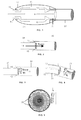
Figures 1 and 2 show schematically the flow evacuation system of an aircraft engine. -
Figure 3 shows schematically a flow evacuation system where the engine exhaust flow has a significant swirl at the exit of an engine straight nozzle. -
Figure 4 shows schematically a flow evacuation system where the engine exhaust flow has a significant swirl at the exit of an engine curved nozzle. -
Figure 5 shows the total pressure distribution of an engine exhaust flow in the engine nozzle final section. -
Figure 6 shows schematically a case of failure of a flow evacuation system due to an excessive swirl of the engine exhaust flow in the engine nozzle. -
Figure 7 shows schematically a flow evacuation system with local flow conditioners according to the present invention. -
Figure 8 shows schematically the operation of a flow evacuation system with local flow conditioners according to the present invention in a typical case of engine exhaust flow with low swirl. -
Figure 9 shows schematically the operation of a flow evacuation system with local flow conditioners according to the present invention in a typical case of engine exhaust flow with high swirl. -
Figure 10 is a transversal section of a nozzle with local flow conditioners distributed radially. -
Figures 11 and 12 are transversal sections of a nozzle with local flow conditioners distributed, respectively, with a predetermined angular deviation and with a variable angular deviation with respect to the radial orientation ofFigure 10 . -
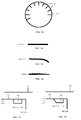
Figure 13 is a transversal section of the final section of a nozzle with local flow conditioners distributed along a sector of the nozzle. -
Figures 14, 15 and 16 show schematically local flow conditioners configured respectively as a flat plate, as a curved plate and as an airfoil-shaped body. -
Figures 17 and 18 are partial schematic lateral views of a nozzle with two embodiments of local flow conditioners configured as flat plates according to the present invention. - For a better understanding of the present invention, a definition of several terms or expressions used in this application follows:
- Design condition: Operating condition in which the engine exhaust flow presents a low swirl angle, i.e. a swirl angle sufficiently small in the exit of the engine nozzle so that it does not significantly deteriorate the engine performance in terms of fuel consumption, residual thrust or ventilation. It is typically comprised between -15° and +15°.
- Eductor. Duct where the mixture between the engine exhaust flow and the ventilation flow takes place. A part of the energy of the engine exhaust flow is transmitted to the ventilation flow allowing a better ventilation of the engine nacelle.
- Swirl (α): Measurement in degrees (°) of the angular rate of rotation of the engine exhaust flow in the exit cross section of the engine nozzle. α=atan (Vt/Vaxial).
- Turboprop: Type of turboengine which has a propeller moved by a power turbine.
- Turboshaft: Type of turboengine which has a shaft moved by a power turbine.
- An aircraft engine, housed in a nacelle, requires a cooling and ventilation system to reduce the high temperatures generated within the engine bay under acceptable limits.
- One of the procedures used nowadays to ensure ventilation in aircraft engines is the use of an eductor that mixes (see
Figure 1 ) theengine exhaust flow 11 with theventilation flow 13. The cooling air is supplied throughinlets 15 in thenacelle 17 into the engine ventilation bay 19 around theengine 21, and theengine exhaust flow 11 conveyed by theengine nozzle 31 induces theventilation flow 13 from theengine bay 19 and mixes it with theengine exhaust flow 11 in theeductor 33. - The operation of this flow evacuation system is based on the fact that the higher energy or primary flow (the engine exhaust flow 11) suctions the lower energy or secondary flow (the ventilation flow 13) to help ventilation through the
engine bay 19. - To ensure an effective suction of said
ventilation flow 13, the parameters which define theengine exhaust flow 11 must lie between certain limits. - An ideal condition for the
engine exhaust flow 11 along theengine nozzle 31 is, as shown inFigure 2 , zero swirl. The velocity of theengine exhaust flow 11 in the exit of theengine nozzle 31 has then only an axial component Vaxial. - However the
engine exhaust flow 11 has usually a certain swirl as shown inFigures 3 and 4 for straight andcurved engine nozzles 31. Therefore the velocity of theengine exhaust flow 11 in the exit of theengine nozzle 31 has an axial component Vaxial and a tangential component Vt, which involves, for a high swirl, the flow pressure distribution shown inFigure 5 with hightotal pressure areas 38 near the engine nozzle wall. - In particular, an excessive swirl of the
engine exhaust flow 11 at the engine nozzle exit can prevent the correct suction of theventilation flow 13 by theengine exhaust flow 11, blocking thenacelle ventilation flow 13 and possibly causing the reingestion ofexhaust engine gases 11 towards the ventilation bay of the aircraft engine as shown inFigure 6 . - A design objective of an aircraft engine is the avoidance of said swirl in those engine operating conditions which imply greater fuel consumption. Typical aircraft engine configuration restrictions (for example a propeller/power turbine group rotating at a constant speed) can lead to significant swirl values lying outside design conditions, especially when the design conditions are cruise points or high performance points in terms of power. When the swirl of the
engine exhaust flow 11 through theengine nozzle 31 increases, the performance of the engine decreases in terms of residual thrust, ventilation capacity and/or increase in fuel consumption. - It is therefore desirable to mitigate the effects of an
engine exhaust flow 11 with a high swirl over theventilation flow 13, permitting the correct ventilation of the nacelle with a minimum cost in terms of consumption and residual thrust. - According to this invention, said mitigation is achieved as shown in
Figure 7 by means of a plurality oflocal flow conditioners 41 installed in the wetted surface of theengine nozzle 31 in itsfinal section 32 to condition theengine exhaust flow 11 leaving theengine nozzle 31 in thearea 35 in which theventilation flow 13 is discharged into theeductor 33. - In embodiments of the present invention said local flow conditioners are, as shown in
Figures 8-10 a plurality ofsmall fins 41 fixed to the wetted surface of theexhaust nozzle 31, oriented according to the pattern of anengine exhaust flow 11 without swirl, i.e. a radial orientation. - In design conditions as shown in
Figure 8 , saidsmall fins 41 do not interfere with theengine exhaust flow 11 so energy losses in said flow are minimized. - In operating conditions out of design conditions, as shown in
Figure 12 , the effect of saidfins 41 is the local conditioning of theengine exhaust flow 11 leaving theengine nozzle 31 in thearea 35 enhancing theventilation flow 13 due to: - The
local vortices 27 induced by the viscous effects of the engine swirlingexhaust flow 11 over the wet walls of thefins 41 help the mixture between theengine exhaust flow 11 and theventilation flow 13 and produces a further depression to improve the suction effects over this last flow. - The local reduction of swirl due to the effect of solidity in the space between
fins 41. - In embodiments of the invention said
small fins 41 have an orientation deviated with respect to the radial orientation ofFigure 10 , whether a predetermined angular deviation as shown inFigure 11 or a variable angular deviation as shown inFigure 12 , for a better accommodation to the operating conditions expected for each engine. - Said
fins 41 are normally distributed along the full final section of thenozzle 31 as shown inFigures 10-12 , preferably in an equally spaced distribution, but they can be distributed only in one sector of thenozzle 31, as shown inFigure 13 , if the ventilation needs in the area not covered by saidfins 41 do not require a mitigation of the effects of anengine exhaust flow 11 with a high swirl. - In embodiments of the invention said
fins 41 are configured as flat plates as shown inFigure 14 , as curved plates as shown inFigure 15 or as airfoil-shaped bodies as shown inFigure 16 . A suitable election of the fins shape for a particular engine may achieve an optimization of the evacuation of theengine exhaust flow 11 and/or of the ventilation of the engine nacelle. - In a preferred embodiment said
fins 41 are flat plates of a rectangular or a trapezoidal shape (seeFigures 17 and 18 ) with a height H comprised between D/20 and D/10, being D the diameter of theengine nozzle 31 in saidfinal section 32, and a length L comprised between 2H and 4H, that are placed a distance S to the engine nozzle outlet comprised between H and 3H. - An advantage of the present invention is that it provides passive means that enable a significant reduction in the swirl of the engine exhaust flow in operating conditions outside the design conditions, thus increasing the flow evacuation system capacity to boost the ventilation flow.
- Another advantage of the present invention is that said local flow conditioners also contribute to an efficient mixing of the engine exhaust flow and the ventilation flow due to the local vorticity and local suction effects produced in the engine exhaust flow by said local flow conditioners.
- Further advantages of the present invention are:
- The small height H of said local flow conditioners relative to the nozzle diameter D, thereby exposing a small surface to the engine exhaust flow, results in very low pressure losses, compared to other known systems using fins as flow straighteners.
- The positioning of said local flow conditioners inside the engine nozzle prevents pressure losses on the ventilation flow.
- Location of said local flow conditioners in the engine nozzle reduces its structural impact.
- The weight increase due to said local flow conditioners is very low given its small dimensions relative to other elements of the engine.
- Although the present invention has been fully described in connection with preferred embodiments, it is evident that modifications may be introduced within the scope thereof, not considering this as limited by these embodiments, but by the contents of the following claims.
Claims (15)
- Flow evacuation system for an aircraft engine comprising an engine nozzle (31) that conveys the engine exhaust flow (11) and an eductor (33) receiving said engine exhaust flow (11) and the engine ventilation flow (13), the engine nozzle (31) having a final section (32) in contact by its outer surface with said ventilation flow (13), the engine exhaust flow (11) having a low swirl when the engine operates under design conditions and a high swirl when the engine operates out of design conditions, characterized in that said engine nozzle (31) comprises a plurality of local flow conditioners (41) placed in its inner surface in said final section (32) for reducing the swirl of the engine exhaust flow (11) at the exit of the engine nozzle (31), for producing a further depression to improve the suction effects over the ventilation flow (13) and for facilitating the mixture of the engine exhaust flow (11) and the ventilation flow (13), enhancing its evacuation along the eductor (33).
- Flow evacuation system according to claim 1, wherein said local flow conditioners (41) are fins oriented radially.
- Flow evacuation system according to claim 1, wherein said local flow conditioners (41) are fins oriented with a predetermined angular deviation with respect to a radial orientation.
- Flow evacuation system according to claim 1, wherein said local flow conditioners (41) are fins oriented with a variable angular deviation with respect to a radial orientation.
- Flow evacuation system according to any of claims 1-4, wherein said local flow conditioners (41) are fins distributed along the full final section (32) of the engine nozzle (31).
- Flow evacuation system according to any of claims 1-4, wherein said local flow conditioners (41) are fins distributed along a sector of the final section (32) of the engine nozzle (31).
- Flow evacuation system according to any of claims 5-6, wherein the distribution of said local flow conditioners (41) is an equally spaced distribution.
- Flow evacuation system according to any of claims 2-7, wherein said fins (41) are flat plates.
- Flow evacuation system according to claim 8, wherein said fins (41) have a rectangular shape.
- Flow evacuation system according to claim 8, wherein said fins (41) have a trapezoidal shape, being the inclined side its leading edge with respect to the engine exhaust flow (11).
- Flow evacuation system according to any of claims 9-10, wherein:- the height H of said fins (41) is comprised between D/20 and D/10, being D the diameter of the engine nozzle (31) in said final section (32);- the length L of said fins (41) is comprised between 2H and 4H;- the distance S of said fins (41) to the engine nozzle outlet is comprised between H and 3H.
- Flow evacuation system according to any of claims 2-7, wherein said fins (41) are curved plates.
- Flow evacuation system according to any of claims 2-7, wherein said fins (41) are airfoil-shaped bodies.
- Aircraft engine comprising a flow evacuation system according to any of claims 1-13, wherein said engine is a turboshaft engine.
- Aircraft engine comprising a flow evacuation system according to any of claims 1-13, wherein said engine is a turboprop engine.
Priority Applications (3)
| Application Number | Priority Date | Filing Date | Title |
|---|---|---|---|
| ES11382059.1T ES2488404T3 (en) | 2011-03-07 | 2011-03-07 | Flow evacuation system for an aircraft engine |
| EP11382059.1A EP2497934B1 (en) | 2011-03-07 | 2011-03-07 | Flow evacuation system for an aircraft engine |
| US13/413,324 US20120279225A1 (en) | 2011-03-07 | 2012-03-06 | Flow evacuation system for an aircraft engine |
Applications Claiming Priority (1)
| Application Number | Priority Date | Filing Date | Title |
|---|---|---|---|
| EP11382059.1A EP2497934B1 (en) | 2011-03-07 | 2011-03-07 | Flow evacuation system for an aircraft engine |
Publications (2)
| Publication Number | Publication Date |
|---|---|
| EP2497934A1 true EP2497934A1 (en) | 2012-09-12 |
| EP2497934B1 EP2497934B1 (en) | 2014-04-30 |
Family
ID=44343143
Family Applications (1)
| Application Number | Title | Priority Date | Filing Date |
|---|---|---|---|
| EP11382059.1A Active EP2497934B1 (en) | 2011-03-07 | 2011-03-07 | Flow evacuation system for an aircraft engine |
Country Status (3)
| Country | Link |
|---|---|
| US (1) | US20120279225A1 (en) |
| EP (1) | EP2497934B1 (en) |
| ES (1) | ES2488404T3 (en) |
Cited By (1)
| Publication number | Priority date | Publication date | Assignee | Title |
|---|---|---|---|---|
| US20130087632A1 (en) * | 2011-10-11 | 2013-04-11 | Patrick Germain | Gas turbine engine exhaust ejector nozzle with de-swirl cascade |
Families Citing this family (2)
| Publication number | Priority date | Publication date | Assignee | Title |
|---|---|---|---|---|
| US11268390B2 (en) * | 2018-07-19 | 2022-03-08 | Sikorsky Aircraft Corporation | Vortex generators for turbine engine exhaust |
| US20250382066A1 (en) * | 2024-06-18 | 2025-12-18 | Pratt & Whitney Canada Corp. | Gas turbine engine exhaust nozzle |
Citations (8)
| Publication number | Priority date | Publication date | Assignee | Title |
|---|---|---|---|---|
| US2648192A (en) * | 1949-09-27 | 1953-08-11 | United Aircraft Corp | Variable capacity jet exhaust augmenter |
| GB1045295A (en) * | 1964-03-25 | 1966-10-12 | Peter Bradshaw | Improvements in or relating to a jet noise suppression device |
| FR2112339A1 (en) * | 1970-10-26 | 1972-06-16 | United Aircraft Corp | |
| US4215536A (en) * | 1978-12-26 | 1980-08-05 | The Boeing Company | Gas turbine mixer apparatus |
| US4298089A (en) * | 1976-12-23 | 1981-11-03 | The Boeing Company | Vortex generators for internal mixing in a turbofan engine |
| EP0119732A1 (en) * | 1983-02-15 | 1984-09-26 | The Commonwealth Of Australia | Thrust augmentor |
| JP2003314368A (en) * | 2002-04-25 | 2003-11-06 | Ishikawajima Harima Heavy Ind Co Ltd | Lobe mixer for gas turbine |
| US20070089398A1 (en) | 2005-10-21 | 2007-04-26 | Toyota Jidosha Kabushiki Kaisha | Method and device for detecting deterioration of catalyst |
Family Cites Families (6)
| Publication number | Priority date | Publication date | Assignee | Title |
|---|---|---|---|---|
| US3161257A (en) * | 1959-05-01 | 1964-12-15 | Young Alec David | Jet pipe nozzle silencers |
| US6314721B1 (en) * | 1998-09-04 | 2001-11-13 | United Technologies Corporation | Tabbed nozzle for jet noise suppression |
| US6487848B2 (en) * | 1998-11-06 | 2002-12-03 | United Technologies Corporation | Gas turbine engine jet noise suppressor |
| JP4743465B2 (en) * | 2001-04-19 | 2011-08-10 | 株式会社Ihi | Lobe mixer for jet engines |
| US7500353B2 (en) * | 2005-10-25 | 2009-03-10 | Honeywell International Inc. | Eductor swirl buster |
| US7966825B2 (en) * | 2006-10-31 | 2011-06-28 | Honeywell International Inc. | Exhaust eductor system with a recirculation baffle |
-
2011
- 2011-03-07 ES ES11382059.1T patent/ES2488404T3/en active Active
- 2011-03-07 EP EP11382059.1A patent/EP2497934B1/en active Active
-
2012
- 2012-03-06 US US13/413,324 patent/US20120279225A1/en not_active Abandoned
Patent Citations (8)
| Publication number | Priority date | Publication date | Assignee | Title |
|---|---|---|---|---|
| US2648192A (en) * | 1949-09-27 | 1953-08-11 | United Aircraft Corp | Variable capacity jet exhaust augmenter |
| GB1045295A (en) * | 1964-03-25 | 1966-10-12 | Peter Bradshaw | Improvements in or relating to a jet noise suppression device |
| FR2112339A1 (en) * | 1970-10-26 | 1972-06-16 | United Aircraft Corp | |
| US4298089A (en) * | 1976-12-23 | 1981-11-03 | The Boeing Company | Vortex generators for internal mixing in a turbofan engine |
| US4215536A (en) * | 1978-12-26 | 1980-08-05 | The Boeing Company | Gas turbine mixer apparatus |
| EP0119732A1 (en) * | 1983-02-15 | 1984-09-26 | The Commonwealth Of Australia | Thrust augmentor |
| JP2003314368A (en) * | 2002-04-25 | 2003-11-06 | Ishikawajima Harima Heavy Ind Co Ltd | Lobe mixer for gas turbine |
| US20070089398A1 (en) | 2005-10-21 | 2007-04-26 | Toyota Jidosha Kabushiki Kaisha | Method and device for detecting deterioration of catalyst |
Cited By (1)
| Publication number | Priority date | Publication date | Assignee | Title |
|---|---|---|---|---|
| US20130087632A1 (en) * | 2011-10-11 | 2013-04-11 | Patrick Germain | Gas turbine engine exhaust ejector nozzle with de-swirl cascade |
Also Published As
| Publication number | Publication date |
|---|---|
| US20120279225A1 (en) | 2012-11-08 |
| EP2497934B1 (en) | 2014-04-30 |
| ES2488404T3 (en) | 2014-08-27 |
Similar Documents
| Publication | Publication Date | Title |
|---|---|---|
| EP2660424B1 (en) | Inter-turbine ducts with variable area ratios | |
| US7559747B2 (en) | Turbine exhaust strut airfoil profile | |
| US7402026B2 (en) | Turbine exhaust strut airfoil profile | |
| US7857594B2 (en) | Turbine exhaust strut airfoil profile | |
| US8109720B2 (en) | Exhaust plenum for a turbine engine | |
| EP2662528B1 (en) | Gas turbine engine component with cooling holes having a multi-lobe configuration | |
| US10502132B2 (en) | Gas turbine engine with an offtake | |
| EP2568119B1 (en) | Airfoil for a gas turbine engine with an improved trailing edge cooling arrangement | |
| JP2017106449A (en) | Method and system for improving turbine blade performance | |
| US10815789B2 (en) | Impingement holes for a turbine engine component | |
| US8845286B2 (en) | Inter-turbine ducts with guide vanes | |
| EP3418507B1 (en) | Exhaust assembly with vortex generator | |
| JP2019095184A (en) | Tangential bulk swirl air in trapped vortex combustor for gas turbine engine | |
| US11131205B2 (en) | Inter-turbine ducts with flow control mechanisms | |
| EP3181816A1 (en) | Airfoil for a gas turbine engine, corresponding forming method and component | |
| US10830060B2 (en) | Engine component with flow enhancer | |
| US20180274370A1 (en) | Engine component for a gas turbine engine | |
| US20220106884A1 (en) | Turbine engine component with deflector | |
| EP2497934A1 (en) | Flow evacuation system for an aircraft engine | |
| EP3354848B1 (en) | Inter-turbine ducts with multiple splitter blades | |
| EP3265662B1 (en) | Gas turbine exhaust assembly |
Legal Events
| Date | Code | Title | Description |
|---|---|---|---|
| PUAI | Public reference made under article 153(3) epc to a published international application that has entered the european phase |
Free format text: ORIGINAL CODE: 0009012 |
|
| AK | Designated contracting states |
Kind code of ref document: A1 Designated state(s): AL AT BE BG CH CY CZ DE DK EE ES FI FR GB GR HR HU IE IS IT LI LT LU LV MC MK MT NL NO PL PT RO RS SE SI SK SM TR |
|
| AX | Request for extension of the european patent |
Extension state: BA ME |
|
| 17P | Request for examination filed |
Effective date: 20130312 |
|
| RIC1 | Information provided on ipc code assigned before grant |
Ipc: F02K 1/46 20060101ALI20130930BHEP Ipc: F02K 1/38 20060101AFI20130930BHEP |
|
| GRAP | Despatch of communication of intention to grant a patent |
Free format text: ORIGINAL CODE: EPIDOSNIGR1 |
|
| INTG | Intention to grant announced |
Effective date: 20131125 |
|
| RIN1 | Information on inventor provided before grant (corrected) |
Inventor name: MARISCAL SANCHEZ, FRANCISCO JAVIER Inventor name: IBANEZ COLAS, VICENTE Inventor name: ANGEL BLASCO, EMILIO JAVIER Inventor name: PERDONES DIAZ, DAVID Inventor name: GONZALEZ BIEDMA, CARLOS |
|
| GRAS | Grant fee paid |
Free format text: ORIGINAL CODE: EPIDOSNIGR3 |
|
| GRAA | (expected) grant |
Free format text: ORIGINAL CODE: 0009210 |
|
| AK | Designated contracting states |
Kind code of ref document: B1 Designated state(s): AL AT BE BG CH CY CZ DE DK EE ES FI FR GB GR HR HU IE IS IT LI LT LU LV MC MK MT NL NO PL PT RO RS SE SI SK SM TR |
|
| REG | Reference to a national code |
Ref country code: GB Ref legal event code: FG4D Ref country code: CH Ref legal event code: EP |
|
| REG | Reference to a national code |
Ref country code: AT Ref legal event code: REF Ref document number: 665321 Country of ref document: AT Kind code of ref document: T Effective date: 20140515 |
|
| REG | Reference to a national code |
Ref country code: IE Ref legal event code: FG4D |
|
| REG | Reference to a national code |
Ref country code: DE Ref legal event code: R096 Ref document number: 602011006532 Country of ref document: DE Effective date: 20140612 |
|
| REG | Reference to a national code |
Ref country code: ES Ref legal event code: FG2A Ref document number: 2488404 Country of ref document: ES Kind code of ref document: T3 Effective date: 20140827 |
|
| REG | Reference to a national code |
Ref country code: AT Ref legal event code: MK05 Ref document number: 665321 Country of ref document: AT Kind code of ref document: T Effective date: 20140430 |
|
| REG | Reference to a national code |
Ref country code: LT Ref legal event code: MG4D |
|
| REG | Reference to a national code |
Ref country code: NL Ref legal event code: VDEP Effective date: 20140430 |
|
| PG25 | Lapsed in a contracting state [announced via postgrant information from national office to epo] |
Ref country code: BG Free format text: LAPSE BECAUSE OF FAILURE TO SUBMIT A TRANSLATION OF THE DESCRIPTION OR TO PAY THE FEE WITHIN THE PRESCRIBED TIME-LIMIT Effective date: 20140730 Ref country code: IS Free format text: LAPSE BECAUSE OF FAILURE TO SUBMIT A TRANSLATION OF THE DESCRIPTION OR TO PAY THE FEE WITHIN THE PRESCRIBED TIME-LIMIT Effective date: 20140830 Ref country code: GR Free format text: LAPSE BECAUSE OF FAILURE TO SUBMIT A TRANSLATION OF THE DESCRIPTION OR TO PAY THE FEE WITHIN THE PRESCRIBED TIME-LIMIT Effective date: 20140731 Ref country code: NO Free format text: LAPSE BECAUSE OF FAILURE TO SUBMIT A TRANSLATION OF THE DESCRIPTION OR TO PAY THE FEE WITHIN THE PRESCRIBED TIME-LIMIT Effective date: 20140730 Ref country code: LT Free format text: LAPSE BECAUSE OF FAILURE TO SUBMIT A TRANSLATION OF THE DESCRIPTION OR TO PAY THE FEE WITHIN THE PRESCRIBED TIME-LIMIT Effective date: 20140430 Ref country code: CY Free format text: LAPSE BECAUSE OF FAILURE TO SUBMIT A TRANSLATION OF THE DESCRIPTION OR TO PAY THE FEE WITHIN THE PRESCRIBED TIME-LIMIT Effective date: 20140430 Ref country code: FI Free format text: LAPSE BECAUSE OF FAILURE TO SUBMIT A TRANSLATION OF THE DESCRIPTION OR TO PAY THE FEE WITHIN THE PRESCRIBED TIME-LIMIT Effective date: 20140430 Ref country code: NL Free format text: LAPSE BECAUSE OF FAILURE TO SUBMIT A TRANSLATION OF THE DESCRIPTION OR TO PAY THE FEE WITHIN THE PRESCRIBED TIME-LIMIT Effective date: 20140430 |
|
| PG25 | Lapsed in a contracting state [announced via postgrant information from national office to epo] |
Ref country code: SE Free format text: LAPSE BECAUSE OF FAILURE TO SUBMIT A TRANSLATION OF THE DESCRIPTION OR TO PAY THE FEE WITHIN THE PRESCRIBED TIME-LIMIT Effective date: 20140430 Ref country code: HR Free format text: LAPSE BECAUSE OF FAILURE TO SUBMIT A TRANSLATION OF THE DESCRIPTION OR TO PAY THE FEE WITHIN THE PRESCRIBED TIME-LIMIT Effective date: 20140430 Ref country code: LV Free format text: LAPSE BECAUSE OF FAILURE TO SUBMIT A TRANSLATION OF THE DESCRIPTION OR TO PAY THE FEE WITHIN THE PRESCRIBED TIME-LIMIT Effective date: 20140430 Ref country code: PL Free format text: LAPSE BECAUSE OF FAILURE TO SUBMIT A TRANSLATION OF THE DESCRIPTION OR TO PAY THE FEE WITHIN THE PRESCRIBED TIME-LIMIT Effective date: 20140430 Ref country code: AT Free format text: LAPSE BECAUSE OF FAILURE TO SUBMIT A TRANSLATION OF THE DESCRIPTION OR TO PAY THE FEE WITHIN THE PRESCRIBED TIME-LIMIT Effective date: 20140430 Ref country code: RS Free format text: LAPSE BECAUSE OF FAILURE TO SUBMIT A TRANSLATION OF THE DESCRIPTION OR TO PAY THE FEE WITHIN THE PRESCRIBED TIME-LIMIT Effective date: 20140430 |
|
| PG25 | Lapsed in a contracting state [announced via postgrant information from national office to epo] |
Ref country code: PT Free format text: LAPSE BECAUSE OF FAILURE TO SUBMIT A TRANSLATION OF THE DESCRIPTION OR TO PAY THE FEE WITHIN THE PRESCRIBED TIME-LIMIT Effective date: 20140901 |
|
| PG25 | Lapsed in a contracting state [announced via postgrant information from national office to epo] |
Ref country code: BE Free format text: LAPSE BECAUSE OF FAILURE TO SUBMIT A TRANSLATION OF THE DESCRIPTION OR TO PAY THE FEE WITHIN THE PRESCRIBED TIME-LIMIT Effective date: 20140430 Ref country code: DK Free format text: LAPSE BECAUSE OF FAILURE TO SUBMIT A TRANSLATION OF THE DESCRIPTION OR TO PAY THE FEE WITHIN THE PRESCRIBED TIME-LIMIT Effective date: 20140430 Ref country code: EE Free format text: LAPSE BECAUSE OF FAILURE TO SUBMIT A TRANSLATION OF THE DESCRIPTION OR TO PAY THE FEE WITHIN THE PRESCRIBED TIME-LIMIT Effective date: 20140430 Ref country code: CZ Free format text: LAPSE BECAUSE OF FAILURE TO SUBMIT A TRANSLATION OF THE DESCRIPTION OR TO PAY THE FEE WITHIN THE PRESCRIBED TIME-LIMIT Effective date: 20140430 Ref country code: RO Free format text: LAPSE BECAUSE OF FAILURE TO SUBMIT A TRANSLATION OF THE DESCRIPTION OR TO PAY THE FEE WITHIN THE PRESCRIBED TIME-LIMIT Effective date: 20140430 Ref country code: SK Free format text: LAPSE BECAUSE OF FAILURE TO SUBMIT A TRANSLATION OF THE DESCRIPTION OR TO PAY THE FEE WITHIN THE PRESCRIBED TIME-LIMIT Effective date: 20140430 |
|
| REG | Reference to a national code |
Ref country code: DE Ref legal event code: R097 Ref document number: 602011006532 Country of ref document: DE |
|
| PLBE | No opposition filed within time limit |
Free format text: ORIGINAL CODE: 0009261 |
|
| STAA | Information on the status of an ep patent application or granted ep patent |
Free format text: STATUS: NO OPPOSITION FILED WITHIN TIME LIMIT |
|
| REG | Reference to a national code |
Ref country code: FR Ref legal event code: PLFP Year of fee payment: 5 |
|
| 26N | No opposition filed |
Effective date: 20150202 |
|
| REG | Reference to a national code |
Ref country code: DE Ref legal event code: R097 Ref document number: 602011006532 Country of ref document: DE Effective date: 20150202 |
|
| PG25 | Lapsed in a contracting state [announced via postgrant information from national office to epo] |
Ref country code: SI Free format text: LAPSE BECAUSE OF FAILURE TO SUBMIT A TRANSLATION OF THE DESCRIPTION OR TO PAY THE FEE WITHIN THE PRESCRIBED TIME-LIMIT Effective date: 20140430 |
|
| REG | Reference to a national code |
Ref country code: DE Ref legal event code: R081 Ref document number: 602011006532 Country of ref document: DE Owner name: AIRBUS DEFENCE AND SPACE SA, GETAFE, ES Free format text: FORMER OWNER: EADS CONSTRUCCIONES AERONAUTICAS, S.A., MADRID, ES |
|
| PG25 | Lapsed in a contracting state [announced via postgrant information from national office to epo] |
Ref country code: MC Free format text: LAPSE BECAUSE OF FAILURE TO SUBMIT A TRANSLATION OF THE DESCRIPTION OR TO PAY THE FEE WITHIN THE PRESCRIBED TIME-LIMIT Effective date: 20140430 Ref country code: LU Free format text: LAPSE BECAUSE OF FAILURE TO SUBMIT A TRANSLATION OF THE DESCRIPTION OR TO PAY THE FEE WITHIN THE PRESCRIBED TIME-LIMIT Effective date: 20150307 |
|
| REG | Reference to a national code |
Ref country code: CH Ref legal event code: PL |
|
| REG | Reference to a national code |
Ref country code: FR Ref legal event code: CA Effective date: 20151118 Ref country code: FR Ref legal event code: CD Owner name: AIRBUS DEFENCE AND SPACE SA, ES Effective date: 20151118 |
|
| REG | Reference to a national code |
Ref country code: IE Ref legal event code: MM4A |
|
| REG | Reference to a national code |
Ref country code: ES Ref legal event code: PC2A Owner name: AIRBUS DEFENCE AND SPACE S.A. Effective date: 20160113 |
|
| PG25 | Lapsed in a contracting state [announced via postgrant information from national office to epo] |
Ref country code: CH Free format text: LAPSE BECAUSE OF NON-PAYMENT OF DUE FEES Effective date: 20150331 Ref country code: IE Free format text: LAPSE BECAUSE OF NON-PAYMENT OF DUE FEES Effective date: 20150307 Ref country code: LI Free format text: LAPSE BECAUSE OF NON-PAYMENT OF DUE FEES Effective date: 20150331 |
|
| REG | Reference to a national code |
Ref country code: FR Ref legal event code: PLFP Year of fee payment: 6 |
|
| PG25 | Lapsed in a contracting state [announced via postgrant information from national office to epo] |
Ref country code: MT Free format text: LAPSE BECAUSE OF FAILURE TO SUBMIT A TRANSLATION OF THE DESCRIPTION OR TO PAY THE FEE WITHIN THE PRESCRIBED TIME-LIMIT Effective date: 20140430 |
|
| REG | Reference to a national code |
Ref country code: FR Ref legal event code: PLFP Year of fee payment: 7 |
|
| PG25 | Lapsed in a contracting state [announced via postgrant information from national office to epo] |
Ref country code: HU Free format text: LAPSE BECAUSE OF FAILURE TO SUBMIT A TRANSLATION OF THE DESCRIPTION OR TO PAY THE FEE WITHIN THE PRESCRIBED TIME-LIMIT; INVALID AB INITIO Effective date: 20110307 Ref country code: SM Free format text: LAPSE BECAUSE OF FAILURE TO SUBMIT A TRANSLATION OF THE DESCRIPTION OR TO PAY THE FEE WITHIN THE PRESCRIBED TIME-LIMIT Effective date: 20140430 |
|
| PG25 | Lapsed in a contracting state [announced via postgrant information from national office to epo] |
Ref country code: TR Free format text: LAPSE BECAUSE OF FAILURE TO SUBMIT A TRANSLATION OF THE DESCRIPTION OR TO PAY THE FEE WITHIN THE PRESCRIBED TIME-LIMIT Effective date: 20140430 |
|
| REG | Reference to a national code |
Ref country code: FR Ref legal event code: PLFP Year of fee payment: 8 |
|
| PG25 | Lapsed in a contracting state [announced via postgrant information from national office to epo] |
Ref country code: MK Free format text: LAPSE BECAUSE OF FAILURE TO SUBMIT A TRANSLATION OF THE DESCRIPTION OR TO PAY THE FEE WITHIN THE PRESCRIBED TIME-LIMIT Effective date: 20140430 |
|
| PGFP | Annual fee paid to national office [announced via postgrant information from national office to epo] |
Ref country code: IT Payment date: 20180327 Year of fee payment: 8 |
|
| PG25 | Lapsed in a contracting state [announced via postgrant information from national office to epo] |
Ref country code: AL Free format text: LAPSE BECAUSE OF FAILURE TO SUBMIT A TRANSLATION OF THE DESCRIPTION OR TO PAY THE FEE WITHIN THE PRESCRIBED TIME-LIMIT Effective date: 20140430 |
|
| PG25 | Lapsed in a contracting state [announced via postgrant information from national office to epo] |
Ref country code: IT Free format text: LAPSE BECAUSE OF NON-PAYMENT OF DUE FEES Effective date: 20190307 |
|
| REG | Reference to a national code |
Ref country code: DE Ref legal event code: R082 Ref document number: 602011006532 Country of ref document: DE Representative=s name: DENNEMEYER & ASSOCIATES RECHTSANWALTSGESELLSCH, DE |
|
| PGFP | Annual fee paid to national office [announced via postgrant information from national office to epo] |
Ref country code: ES Payment date: 20250425 Year of fee payment: 15 |
|
| PGFP | Annual fee paid to national office [announced via postgrant information from national office to epo] |
Ref country code: GB Payment date: 20260324 Year of fee payment: 16 |
|
| PGFP | Annual fee paid to national office [announced via postgrant information from national office to epo] |
Ref country code: DE Payment date: 20260319 Year of fee payment: 16 |
|
| PGFP | Annual fee paid to national office [announced via postgrant information from national office to epo] |
Ref country code: FR Payment date: 20260320 Year of fee payment: 16 |