EP2495111A1 - Pneumatic tire, in particular low aspect ratio super single truck tire - Google Patents
Pneumatic tire, in particular low aspect ratio super single truck tire Download PDFInfo
- Publication number
- EP2495111A1 EP2495111A1 EP12157793A EP12157793A EP2495111A1 EP 2495111 A1 EP2495111 A1 EP 2495111A1 EP 12157793 A EP12157793 A EP 12157793A EP 12157793 A EP12157793 A EP 12157793A EP 2495111 A1 EP2495111 A1 EP 2495111A1
- Authority
- EP
- European Patent Office
- Prior art keywords
- breaker
- tire
- tread
- width
- axial
- Prior art date
- Legal status (The legal status is an assumption and is not a legal conclusion. Google has not performed a legal analysis and makes no representation as to the accuracy of the status listed.)
- Granted
Links
- 230000003014 reinforcing effect Effects 0.000 claims abstract description 14
- 239000011324 bead Substances 0.000 claims abstract description 12
- 229910000831 Steel Inorganic materials 0.000 description 7
- 239000010959 steel Substances 0.000 description 7
- 230000009977 dual effect Effects 0.000 description 4
- 230000002787 reinforcement Effects 0.000 description 4
- 238000005336 cracking Methods 0.000 description 3
- 238000000926 separation method Methods 0.000 description 3
- 239000004677 Nylon Substances 0.000 description 2
- 230000003247 decreasing effect Effects 0.000 description 2
- 229920001778 nylon Polymers 0.000 description 2
- 230000004323 axial length Effects 0.000 description 1
- 238000010276 construction Methods 0.000 description 1
- 230000001419 dependent effect Effects 0.000 description 1
- 230000012447 hatching Effects 0.000 description 1
- 238000011835 investigation Methods 0.000 description 1
Images

Classifications
-
- B—PERFORMING OPERATIONS; TRANSPORTING
- B60—VEHICLES IN GENERAL
- B60C—VEHICLE TYRES; TYRE INFLATION; TYRE CHANGING; CONNECTING VALVES TO INFLATABLE ELASTIC BODIES IN GENERAL; DEVICES OR ARRANGEMENTS RELATED TO TYRES
- B60C9/00—Reinforcements or ply arrangement of pneumatic tyres
- B60C9/18—Structure or arrangement of belts or breakers, crown-reinforcing or cushioning layers
- B60C9/28—Structure or arrangement of belts or breakers, crown-reinforcing or cushioning layers characterised by the belt or breaker dimensions or curvature relative to carcass
-
- B—PERFORMING OPERATIONS; TRANSPORTING
- B60—VEHICLES IN GENERAL
- B60C—VEHICLE TYRES; TYRE INFLATION; TYRE CHANGING; CONNECTING VALVES TO INFLATABLE ELASTIC BODIES IN GENERAL; DEVICES OR ARRANGEMENTS RELATED TO TYRES
- B60C9/00—Reinforcements or ply arrangement of pneumatic tyres
- B60C9/18—Structure or arrangement of belts or breakers, crown-reinforcing or cushioning layers
- B60C9/20—Structure or arrangement of belts or breakers, crown-reinforcing or cushioning layers built-up from rubberised plies each having all cords arranged substantially parallel
- B60C2009/2038—Structure or arrangement of belts or breakers, crown-reinforcing or cushioning layers built-up from rubberised plies each having all cords arranged substantially parallel using lateral belt strips at belt edges, e.g. edge bands
-
- B—PERFORMING OPERATIONS; TRANSPORTING
- B60—VEHICLES IN GENERAL
- B60C—VEHICLE TYRES; TYRE INFLATION; TYRE CHANGING; CONNECTING VALVES TO INFLATABLE ELASTIC BODIES IN GENERAL; DEVICES OR ARRANGEMENTS RELATED TO TYRES
- B60C9/00—Reinforcements or ply arrangement of pneumatic tyres
- B60C9/18—Structure or arrangement of belts or breakers, crown-reinforcing or cushioning layers
- B60C9/20—Structure or arrangement of belts or breakers, crown-reinforcing or cushioning layers built-up from rubberised plies each having all cords arranged substantially parallel
- B60C2009/2041—Structure or arrangement of belts or breakers, crown-reinforcing or cushioning layers built-up from rubberised plies each having all cords arranged substantially parallel with an interrupted belt ply, e.g. using two or more portions of the same ply
-
- B—PERFORMING OPERATIONS; TRANSPORTING
- B60—VEHICLES IN GENERAL
- B60C—VEHICLE TYRES; TYRE INFLATION; TYRE CHANGING; CONNECTING VALVES TO INFLATABLE ELASTIC BODIES IN GENERAL; DEVICES OR ARRANGEMENTS RELATED TO TYRES
- B60C9/00—Reinforcements or ply arrangement of pneumatic tyres
- B60C9/18—Structure or arrangement of belts or breakers, crown-reinforcing or cushioning layers
- B60C9/20—Structure or arrangement of belts or breakers, crown-reinforcing or cushioning layers built-up from rubberised plies each having all cords arranged substantially parallel
- B60C9/22—Structure or arrangement of belts or breakers, crown-reinforcing or cushioning layers built-up from rubberised plies each having all cords arranged substantially parallel the plies being arranged with all cords disposed along the circumference of the tyre
- B60C2009/2223—Structure or arrangement of belts or breakers, crown-reinforcing or cushioning layers built-up from rubberised plies each having all cords arranged substantially parallel the plies being arranged with all cords disposed along the circumference of the tyre with an interrupted zero degree ply, e.g. using two or more portions for the same ply
-
- B—PERFORMING OPERATIONS; TRANSPORTING
- B60—VEHICLES IN GENERAL
- B60C—VEHICLE TYRES; TYRE INFLATION; TYRE CHANGING; CONNECTING VALVES TO INFLATABLE ELASTIC BODIES IN GENERAL; DEVICES OR ARRANGEMENTS RELATED TO TYRES
- B60C2200/00—Tyres specially adapted for particular applications
- B60C2200/06—Tyres specially adapted for particular applications for heavy duty vehicles
-
- Y—GENERAL TAGGING OF NEW TECHNOLOGICAL DEVELOPMENTS; GENERAL TAGGING OF CROSS-SECTIONAL TECHNOLOGIES SPANNING OVER SEVERAL SECTIONS OF THE IPC; TECHNICAL SUBJECTS COVERED BY FORMER USPC CROSS-REFERENCE ART COLLECTIONS [XRACs] AND DIGESTS
- Y10—TECHNICAL SUBJECTS COVERED BY FORMER USPC
- Y10T—TECHNICAL SUBJECTS COVERED BY FORMER US CLASSIFICATION
- Y10T152/00—Resilient tires and wheels
- Y10T152/10—Tires, resilient
- Y10T152/10495—Pneumatic tire or inner tube
- Y10T152/10765—Characterized by belt or breaker structure
-
- Y—GENERAL TAGGING OF NEW TECHNOLOGICAL DEVELOPMENTS; GENERAL TAGGING OF CROSS-SECTIONAL TECHNOLOGIES SPANNING OVER SEVERAL SECTIONS OF THE IPC; TECHNICAL SUBJECTS COVERED BY FORMER USPC CROSS-REFERENCE ART COLLECTIONS [XRACs] AND DIGESTS
- Y10—TECHNICAL SUBJECTS COVERED BY FORMER USPC
- Y10T—TECHNICAL SUBJECTS COVERED BY FORMER US CLASSIFICATION
- Y10T152/00—Resilient tires and wheels
- Y10T152/10—Tires, resilient
- Y10T152/10495—Pneumatic tire or inner tube
- Y10T152/10765—Characterized by belt or breaker structure
- Y10T152/10801—Structure made up of two or more sets of plies wherein the reinforcing cords in one set lie in a different angular position relative to those in other sets
Definitions
- the present patent application is directed to a tire, in particular a pneumatic wide base low aspect ratio tire for trucks.
- Super single tires which are wide base low aspect ratio truck tires replacing two small base tires, so-called dual mounted tires, have been used for years on trailers.
- Such tires are usually of size 385/65R22.5 or 385/55R22.5 and have a maximum load-carrying capacity of 4.5 metric tons.
- Tires in the drive position have to bear a part of the trailer load and must have an increased load capacity.
- Tire standards define a load capacity of 5.8 metric tons and a maximum speed of 110 km/h. These tires have very low aspect ratios and are usually of size 495/45R22.5. Drive tires are exposed to harsh service conditions and conventional constructions show crown area durability problems. Furthermore, the pressure distribution through the elastomeric blocks in the footprint lacks the required uniformity.
- US 6,401,778 B1 discloses a pneumatic truck tire having a radial carcass reinforcement and two working crown plies of inextensible reinforcing elements.
- An additional ply essentially parallel to the circumferential direction of the tire is positioned between the two working plies. Both working plies extend axially beyond the axial width of the additional ply and are coupled with each other over an axial length of at least 16 % of the maximum axial width of the carcass reinforcement.
- This tire design may constitute an improvement with regard to earlier truck tires. However, durability and footprint shape leave still room for improvements.
- US 2005/0126674 A1 discloses another pneumatic truck tire, in particular a super single radial truck tire.
- the tire comprises a crown reinforcing structure including a single helically wound belt ply reinforced with high elongation steel cords.
- the tire comprises four belts on top of two steel strips. The strips are located between the carcass ply and the radially inner helically wound ply.
- said tire may show groove cracking at the intermediate shoulder groove resulting in an unsatisfactory durability.
- breaker edge separation between the radially outer breakers may occur under heavy duty resulting as well in an unfavorable durability and/or stability.
- the footprint shape of said tire may still be improved.
- the described tire may show an increased shoulder wear decreasing the performance of the tire.
- Still another object of the invention is to avoid groove cracking at the intermediate shoulder groove and/or to reduce shoulder wear.
- the invention relates to a tire in accordance with claim 1.
- the tire in accordance with the invention comprises circumferentially arranged ribs, whereas the axial width of the shoulder rib is between 10% and 30% larger than the axial width of a center rib, and/or wherein the width of an intermediate rib is up to 15% larger than the axial width of a center rib.
- the tire in accordance with the invention is a truck tire, more preferably a truck drive tire, having an aspect ratio of less than 50 or less, such as 45.
- it is a super single truck tire such as a super single truck drive tire such as a tire of the size 495/45R22.5.
- a pneumatic tire comprises at least one pair of parallel annular beads, at least one carcass ply wrapped around said beads, a tread, first and second sidewalls disposed between said tread and one of said at least one pair of beads, and a crown reinforcing structure disposed between said at least one carcass ply and said tread in a crown area of said tire.
- said crown reinforcing structure comprises a first breaker between the tread and the at least one carcass ply, a second breaker between the tread and the first breaker, a third breaker between the tread and the second breaker, a fourth breaker between the tread and the third breaker, and a fifth breaker between the tread and the fourth breaker, wherein two of the third, fourth, and fifth breakers constitute a pair of working breakers, and wherein the first breaker is a split breaker comprising two circumferential strips essentially adjacent to the shoulders of the tire, each strip having an axial width comprised between 50% and 70% of the half tread width.
- wedges are provided between axial edges (or ends) of the first and the second breakers and/or between the axial edges the fourth and the fifth breakers. This feature may further improve the durability of the tire, e.g. by reducing possible breaker edge separation. Furthermore, the applicants discovered that the application of these wedges results in a substantial improvement in connection with the features of the above mentioned embodiment or of claim 1.
- each strip may have an axial width comprised between 55% and 65% of the half tread width. This preferred range may result in a significant improvement of the durability of the tire and a good footprint shape during the tire's operation.
- the axially outer edge of at least one of the strips of the first breaker is spaced an axial distance from the equatorial plane of between 80 % and 105 %, preferably between 80 % and 95 %, of the half tread width.
- This arrangement of the split breaker has also the advantage of an improved stability and an improved durability.
- the distance of the axially outer ends of the first breaker from the equatorial plane is larger than the distance of the axially outer ends of the second breaker from the equatorial plane.
- the axial width of the second breaker can be larger than the axial width of the third breaker
- the axial width of the third breaker can be larger than the axial width of the fourth breaker
- the axial width of the fourth breaker can be larger than the axial width of the fifth breaker.
- the fourth breaker has an axial width comprised between 55 % and 75 % of the tread width. This range provides a better durability of the tire. In particular, this feature improves the durability of the shoulder groove region. [0001] In still another aspect of the invention, the axially outer edges of the strips of the first breaker extend axially beyond the second, third, fourth, and fifth breakers.
- the tread of the tire comprises circumferentially arranged ribs, wherein the axial width of the shoulder rib is between 10 % and 30 % larger than the width of a center rib, and/or the width of an intermediate rib is up to 15 % larger than the width of a center rib.
- This feature helps in substantially improving the lateral stiffness of the shoulder and thus also in improving durability.
- the second and the third breakers have essentially the same axial width
- the fourth breaker has essentially the same axial outer edge position as the strip of the first split breaker.
- the axially outer ends of the fourth breaker and the axially inner ends of the strips overlap by between 25 % and 35 % of the half tread width, and optionally, the axially outer ends of the fifth breaker and the axially inner ends of the strips overlap by between 5 % and 15 % of the half tread width.
- the first breaker has a right orientation
- the fourth breaker has a right orientation
- the fifth breaker has a left orientation with respect to the equatorial plane of the tire, or vice versa.
- the R-R-L orientation is replaced by an L-L-R orientation of the breakers with respect to the equatorial plane of the tire.
- the fourth and the fifth breakers form the pair of working breakers.
- the first breaker has an angle comprised between 40° and 80° with respect to the equatorial plane of the tire
- the second breaker has an angle comprised between 0°and 4° with respect to the equatorial plane of the tire
- the third breaker has an angle comprised between 0°and 4°with respect to the equatorial plane of the tire
- the fourth and the fifth breakers have essentially opposite angles comprised between 30° and 75° with respect to the equatorial plane of the tire.
- this arrangement of breakers has proved to be advantageous in investigations of the applicants.
- the second and the third breakers are made of one (integral) ply which is folded and placed radially above the first breaker.
- Ring and radially refer to directions that are perpendicular to the axis of rotation of a tire
- “Breaker” refers to an annular layer or ply of parallel cords, woven or unwoven, underlying the tread, not anchored to the bead;
- Carcass refers to the tire structure apart from the belt structure, tread, undertread, and sidewall rubber but including the beads, (carcass plies are wrapped around the beads);
- “Circumferential” refers to lines or directions extending along the perimeter of the surface of the annular tread perpendicular to the axial direction;
- “Crown” refers to substantially the outer circumference of a tire where the tread is disposed
- Equatorial plane refers to a plane that is perpendicular to the axis of rotation of a tire and passes through the center of the tire's tread;
- “Footprint” refers to the contact patch or area of contact of the tire tread with a flat surface at zero speed and under normal load and pressure or under specified load, pressure and speed conditions;
- Super single tire refers to a tire which replaces dual mounted tires on a specific axle; they are low aspect ratio tires and have a section width exceeding the section width of one of the previously dual mounted tires but inferior to the dual assembly width; and
- TW tread width
- Figure 1 depicts a preferred embodiment of the invention showing one (axial) half of the crown area of a tire 1.
- the tire 1 comprises a tread 5 including tread ribs 23, 25, 21.
- the tire 1 comprises one or more center ribs 23, a shoulder rib 21, as well as an intermediate rib 25 axially between the shoulder rib 21 and the center ribs 23 of the tread 5.
- the tire 1 could also comprise tread blocks instead of at least some of the tread ribs 23, 25, 21
- the first breaker 9 is a split breaker.
- the split breaker 9 comprises two circumferential strips, essentially in the shoulder area of the tire 1.
- the width of each strip is about 60% of the half tire width TW/2.
- this width is of particular advantage, other widths are possible, as for example between 50 % and 70 % of the half tread width TW/2.
- the distance of the inner edge of a strip from the equatorial plane EP of the tire 1 is at least 25 % of half the tread width TW/2.
- the first breaker 9 has preferably a right orientation and an angle comprised between 40 ° and 80° with respect to the equatorial plane EP of the tire 1.
- This breaker 9 may be reinforced with steel wire 4 + 3 x 0.41 having an EPI of 10 to 12, or preferably of 11. However, other reinforcing elements could be used as well.
- the second breaker 11 may comprise a high elongation steel wire 3 x 7 x 0.22 with an EPI between 11 and 14.
- other reinforcing elements or wires could be used.
- a third breaker 13 is arranged radially above the second breaker 11, the third breaker 13 having an angle of between 4° Left or 4° Right with respect to the equatorial plane of the tire 1. Preferably, the angle is about 0°.
- the second breaker 11 may comprise a high elongation steel wire 3 x 7 x 0.22 with an EPI between 11 and 14. As for the second breaker 11, other reinforcing elements could be used for the third breaker 13.
- the second and the third breakers 11, 13 may be generally made up of one belt ply being folded and placed radially upon the first breaker 9, or between the first breaker 9 and the fourth breaker 15.
- a fourth breaker 15 and a fifth breaker 17 are arranged on top of the third breaker 13.
- the fourth and the fifth breakers 15, 17 are crossed with essentially opposite angles having essentially equal absolute values.
- the angles may be comprised between 30° and 75°.
- both breakers 15, 17 may be reinforced with steel wire 4 + 3 x 0.41.
- the EPI of the wire may be between 10 to 12, and preferably about 11. Nevertheless, other reinforcement wires could be used.
- Figure 1 shows (rubber) wedges 18, 19 between the fourth and the fifth breakers 15, 17 and between the third and the fourth breakers 13, 15. These wedges 18, 19 have mainly the purpose of avoiding a separation of the breakers during operation of the tire 1.
- the axial width of the fifth breaker 17 is preferably about 50 % of the tread width TW (two times TW/2), or comprised between 45 % and 50 % of the tread width TW.
- the axial width of the fourth breaker 15 is preferably about 65 %, and even more preferable, comprised between 55 % and 75 % of the tread width TW.
- the axial width of the third and the second breakers 13, 11 is preferably comprised between 88 % and 98 % of the tread width TW, and preferably between 90 % and 95 % of the tread width TW.
- the crown reinforcement As well known in the state of the art of truck tires, it is of course possible to provide the crown reinforcement with a radially outer belt ply reinforced with nylon cords, such as nylon monofilament cords.
- the outer belt ply has as prime objective to protect the steel cords from humidity and to protect the crown reinforcing structure during the different steps of a retreading operation such as tread buffing.
- FIG 2 shows another preferred embodiment in accordance with the invention. Since many aspects of this embodiment are similar to the aspects shown in Figure 1 , the same reference numerals have been used.
- the depicted embodiment comprises 5 breakers 9, 11, 13, 15, 17 between the tread 5 and the carcass ply 3 of the tire 1.
- the second and the third breakers 11, 13 have an equal axial width, comprised between 85% and 95 % of the tread width TW, and more preferably between 88 % and 93 % of the tread width TW.
- the second and the third breakers 11, 13 are made up of one single ply folded about a circumferential axis.
- the axially outer edges of the first and the fourth breakers 9, 15 have essentially the same axial distance from the equatorial plane EP of the tire 1, whereas the distance is preferably comprised between 88 % and 98 % of the half tread width TW/2.
- the fifth breaker 17 has an axial width comprised between 45 % and 55 % of the tread width TW.
- the first split breaker 9 (as already described with regard to Figure 1 ) may overlap with the fifth breaker 17 in an axial direction of the tire 1.
- the width of this overlap is comprised between 5 % and 15 % of the half tread width TW/2, or even more preferably between 10 % and 12 %.
- the embodiment in accordance with Figure 2 results in a good footprint shape and in an enhanced durability.
- Figure 3 schematically illustrates a plan view of a portion of the crown reinforcing structure according to the embodiments shown in FIG. 1 or FIG. 2 .
- a part of the tread 5 has been removed showing portions of each breaker 9, 11, 13, 15, 17 as well as of the carcass ply 3.
- the depicted hatching must not be understood as limiting.
Landscapes
- Engineering & Computer Science (AREA)
- Mechanical Engineering (AREA)
- Tires In General (AREA)
Abstract
Description
- The present patent application is directed to a tire, in particular a pneumatic wide base low aspect ratio tire for trucks.
- Super single tires, which are wide base low aspect ratio truck tires replacing two small base tires, so-called dual mounted tires, have been used for years on trailers. Such tires are usually of size 385/65R22.5 or 385/55R22.5 and have a maximum load-carrying capacity of 4.5 metric tons.
- Over the years these wide base tires appeared more and more on trucks in the steering position because they had an expected higher mileage.
- It has become of interest to use also super single tires in the drive positions.
- Tires in the drive position have to bear a part of the trailer load and must have an increased load capacity. Tire standards define a load capacity of 5.8 metric tons and a maximum speed of 110 km/h. These tires have very low aspect ratios and are usually of size 495/45R22.5. Drive tires are exposed to harsh service conditions and conventional constructions show crown area durability problems. Furthermore, the pressure distribution through the elastomeric blocks in the footprint lacks the required uniformity.
-
US 6,401,778 B1 discloses a pneumatic truck tire having a radial carcass reinforcement and two working crown plies of inextensible reinforcing elements. An additional ply essentially parallel to the circumferential direction of the tire is positioned between the two working plies. Both working plies extend axially beyond the axial width of the additional ply and are coupled with each other over an axial length of at least 16 % of the maximum axial width of the carcass reinforcement. This tire design may constitute an improvement with regard to earlier truck tires. However, durability and footprint shape leave still room for improvements. -
US 2005/0126674 A1 discloses another pneumatic truck tire, in particular a super single radial truck tire. The tire comprises a crown reinforcing structure including a single helically wound belt ply reinforced with high elongation steel cords. In one embodiment of this publication, the tire comprises four belts on top of two steel strips. The strips are located between the carcass ply and the radially inner helically wound ply. In practice, said tire may show groove cracking at the intermediate shoulder groove resulting in an unsatisfactory durability. Furthermore, breaker edge separation between the radially outer breakers may occur under heavy duty resulting as well in an unfavorable durability and/or stability. Moreover, the footprint shape of said tire may still be improved. At last, the described tire may show an increased shoulder wear decreasing the performance of the tire. - In view of the above mentioned prior art, it is an object of the invention to improve the durability of a preferably wide base low aspect ratio tire, in particular to improve the crown area durability.
- It is another object of the invention to improve the footprint shape and/or footprint pressure distribution of preferably wide base low aspect ratio tires.
- Still another object of the invention is to avoid groove cracking at the intermediate shoulder groove and/or to reduce shoulder wear.
- The invention relates to a tire in accordance with claim 1.
- Dependent claims refer to preferred embodiments of the invention.
- Preferably, the tire in accordance with the invention comprises circumferentially arranged ribs, whereas the axial width of the shoulder rib is between 10% and 30% larger than the axial width of a center rib, and/or wherein the width of an intermediate rib is up to 15% larger than the axial width of a center rib.
- Preferably, the tire in accordance with the invention is a truck tire, more preferably a truck drive tire, having an aspect ratio of less than 50 or less, such as 45. Preferably, it is a super single truck tire such as a super single truck drive tire such as a tire of the size 495/45R22.5.
- In a preferred embodiment according to the invention a pneumatic tire comprises at least one pair of parallel annular beads, at least one carcass ply wrapped around said beads, a tread, first and second sidewalls disposed between said tread and one of said at least one pair of beads, and a crown reinforcing structure disposed between said at least one carcass ply and said tread in a crown area of said tire. Still in accordance with the first embodiment said crown reinforcing structure comprises a first breaker between the tread and the at least one carcass ply, a second breaker between the tread and the first breaker, a third breaker between the tread and the second breaker, a fourth breaker between the tread and the third breaker, and a fifth breaker between the tread and the fourth breaker, wherein two of the third, fourth, and fifth breakers constitute a pair of working breakers, and wherein the first breaker is a split breaker comprising two circumferential strips essentially adjacent to the shoulders of the tire, each strip having an axial width comprised between 50% and 70% of the half tread width.
- The features according to this embodiment of the invention turned out to be of particular advantage. At first, groove cracking at the intermediate shoulder groove under heavy duty can be avoided. Second, durability of the tire has been improved in general. The strips can have equal axial distances with respect to the equatorial plane of the tire.
- In a preferred aspect of the invention, wedges are provided between axial edges (or ends) of the first and the second breakers and/or between the axial edges the fourth and the fifth breakers. This feature may further improve the durability of the tire, e.g. by reducing possible breaker edge separation. Furthermore, the applicants discovered that the application of these wedges results in a substantial improvement in connection with the features of the above mentioned embodiment or of claim 1.
- In another preferred aspect of the invention, each strip may have an axial width comprised between 55% and 65% of the half tread width. This preferred range may result in a significant improvement of the durability of the tire and a good footprint shape during the tire's operation.
- In still another preferred aspect of the invention, the axially outer edge of at least one of the strips of the first breaker is spaced an axial distance from the equatorial plane of between 80 % and 105 %, preferably between 80 % and 95 %, of the half tread width. This arrangement of the split breaker has also the advantage of an improved stability and an improved durability.
- In yet another preferred aspect of the invention, the distance of the axially outer ends of the first breaker from the equatorial plane is larger than the distance of the axially outer ends of the second breaker from the equatorial plane. Moreover, the axial width of the second breaker can be larger than the axial width of the third breaker, the axial width of the third breaker can be larger than the axial width of the fourth breaker, and the axial width of the fourth breaker can be larger than the axial width of the fifth breaker. This design of breakers of decreasing axial width results in an improved stability of the tire.
- In still another preferred aspect of the invention, the fourth breaker has an axial width comprised between 55 % and 75 % of the tread width. This range provides a better durability of the tire. In particular, this feature improves the durability of the shoulder groove region.
[0001] In still another aspect of the invention, the axially outer edges of the strips of the first breaker extend axially beyond the second, third, fourth, and fifth breakers. - In still another preferred aspect of the invention, the tread of the tire comprises circumferentially arranged ribs, wherein the axial width of the shoulder rib is between 10 % and 30 % larger than the width of a center rib, and/or the width of an intermediate rib is up to 15 % larger than the width of a center rib. This feature helps in substantially improving the lateral stiffness of the shoulder and thus also in improving durability.
- In still another preferred aspect of the invention, the second and the third breakers have essentially the same axial width, and the fourth breaker has essentially the same axial outer edge position as the strip of the first split breaker.
- In yet another preferred aspect of the invention, the axially outer ends of the fourth breaker and the axially inner ends of the strips overlap by between 25 % and 35 % of the half tread width, and optionally, the axially outer ends of the fifth breaker and the axially inner ends of the strips overlap by between 5 % and 15 % of the half tread width.
- In yet another preferred aspect of the invention the first breaker has a right orientation, the fourth breaker has a right orientation, and the fifth breaker has a left orientation with respect to the equatorial plane of the tire, or vice versa. Vice versa means that the R-R-L orientation is replaced by an L-L-R orientation of the breakers with respect to the equatorial plane of the tire. In this aspect, the fourth and the fifth breakers form the pair of working breakers.
- In another aspect of the invention the first breaker has an angle comprised between 40° and 80° with respect to the equatorial plane of the tire, the second breaker has an angle comprised between 0°and 4° with respect to the equatorial plane of the tire, the third breaker has an angle comprised between 0°and 4°with respect to the equatorial plane of the tire, and the fourth and the fifth breakers have essentially opposite angles comprised between 30° and 75° with respect to the equatorial plane of the tire. In particular, this arrangement of breakers has proved to be advantageous in investigations of the applicants. In general, it is possible that the second and the third breakers are made of one (integral) ply which is folded and placed radially above the first breaker.
- It is remarked that the above mentioned aspects or features can also be combined with each other and are in the scope of the invention as well.
- As used herein and in the claims,
- "Aspect ratio" refers to the ratio of the tire's section height to its section width;
- "Axial" and "axially" refer to directions which are parallel to the axis of rotation of a tire;
- "Radial" and "radially" refer to directions that are perpendicular to the axis of rotation of a tire;
- "Breaker" refers to an annular layer or ply of parallel cords, woven or unwoven, underlying the tread, not anchored to the bead;
- "Carcass" refers to the tire structure apart from the belt structure, tread, undertread, and sidewall rubber but including the beads, (carcass plies are wrapped around the beads);
- "Circumferential" refers to lines or directions extending along the perimeter of the surface of the annular tread perpendicular to the axial direction;
- "Crown" refers to substantially the outer circumference of a tire where the tread is disposed;
- "Equatorial plane (EP)" refers to a plane that is perpendicular to the axis of rotation of a tire and passes through the center of the tire's tread;
- "Footprint" refers to the contact patch or area of contact of the tire tread with a flat surface at zero speed and under normal load and pressure or under specified load, pressure and speed conditions;
- "Ply" refers to a continuous layer of rubber coated parallel cords;
- "Super single tire" refers to a tire which replaces dual mounted tires on a specific axle; they are low aspect ratio tires and have a section width exceeding the section width of one of the previously dual mounted tires but inferior to the dual assembly width; and
- "Tread width (TW)" refers to the arc length of the tread surface in the axial direction, that is, in a plane passing through the axis of rotation of the tire.
- The accompanying drawings, which are incorporated in and constitute a part of this specification, illustrate embodiments of the invention and, together with a general description of the invention given above, and the detailed description given below, serve to explain the invention.
-
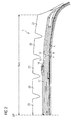
FIG. 1 is a cross-sectional view of a tire's crown according to an embodiment of the invention. -
FIG. 2 is a cross-sectional view of a tire's crown according to another embodiment of the invention. -
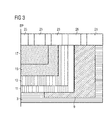
FIG. 3 schematically illustrates a plan view of a portion of the crown reinforcing structure according to the embodiments shown inFIG. 1 orFIG. 2 . - The following language is of the best presently contemplated mode or modes of carrying out the invention. This description is made for the purpose of illustrating the general principles of the invention. The scope of the invention is best determined by reference to the appended claims. The reference numerals as depicted in the drawings are the same as those referred to in the specification.
-
Figure 1 depicts a preferred embodiment of the invention showing one (axial) half of the crown area of a tire 1. In accordance with this embodiment, the tire 1 comprises atread 5 includingtread ribs more center ribs 23, ashoulder rib 21, as well as anintermediate rib 25 axially between theshoulder rib 21 and thecenter ribs 23 of thetread 5. Alternatively, the tire 1 could also comprise tread blocks instead of at least some of thetread ribs - Five
breakers tread 5 and acarcass ply 3 of the tire 1. In particular, thefirst breaker 9 is a split breaker. Thesplit breaker 9 comprises two circumferential strips, essentially in the shoulder area of the tire 1. In accordance with the depicted embodiment, the width of each strip is about 60% of the half tire width TW/2. Although this width is of particular advantage, other widths are possible, as for example between 50 % and 70 % of the half tread width TW/2. Preferably, the distance of the inner edge of a strip from the equatorial plane EP of the tire 1 is at least 25 % of half the tread width TW/2. Thefirst breaker 9 has preferably a right orientation and an angle comprised between 40 ° and 80° with respect to the equatorial plane EP of the tire 1. Thisbreaker 9 may be reinforced with steel wire 4 + 3 x 0.41 having an EPI of 10 to 12, or preferably of 11. However, other reinforcing elements could be used as well. - A
second breaker 11 having an angle of between 4° Left (4L) or 4° Right (4R), preferably of essentially 0 ° with respect to the equatorial plane EP of the tire 1, is arranged radially above the first (split)breaker 9. Thesecond breaker 11 may comprise a high elongation steel wire 3 x 7 x 0.22 with an EPI between 11 and 14. However, other reinforcing elements or wires could be used. - A
third breaker 13 is arranged radially above thesecond breaker 11, thethird breaker 13 having an angle of between 4° Left or 4° Right with respect to the equatorial plane of the tire 1. Preferably, the angle is about 0°. Thesecond breaker 11 may comprise a high elongation steel wire 3 x 7 x 0.22 with an EPI between 11 and 14. As for thesecond breaker 11, other reinforcing elements could be used for thethird breaker 13. - As already mentioned above, the second and the
third breakers first breaker 9, or between thefirst breaker 9 and thefourth breaker 15. - A
fourth breaker 15 and afifth breaker 17 are arranged on top of thethird breaker 13. The fourth and thefifth breakers breakers - Furthermore,
Figure 1 shows (rubber)wedges fifth breakers fourth breakers wedges - The axial width of the
fifth breaker 17 is preferably about 50 % of the tread width TW (two times TW/2), or comprised between 45 % and 50 % of the tread width TW. - The axial width of the
fourth breaker 15 is preferably about 65 %, and even more preferable, comprised between 55 % and 75 % of the tread width TW. - The axial width of the third and the
second breakers - As well known in the state of the art of truck tires, it is of course possible to provide the crown reinforcement with a radially outer belt ply reinforced with nylon cords, such as nylon monofilament cords. The outer belt ply has as prime objective to protect the steel cords from humidity and to protect the crown reinforcing structure during the different steps of a retreading operation such as tread buffing.
-
Figure 2 shows another preferred embodiment in accordance with the invention. Since many aspects of this embodiment are similar to the aspects shown inFigure 1 , the same reference numerals have been used. The depicted embodiment comprises 5breakers tread 5 and the carcass ply 3 of the tire 1. However, the second and thethird breakers third breakers fourth breakers fifth breaker 17 has an axial width comprised between 45 % and 55 % of the tread width TW. As also shown inFigure 2 , the first split breaker 9 (as already described with regard toFigure 1 ) may overlap with thefifth breaker 17 in an axial direction of the tire 1. Preferably, the width of this overlap is comprised between 5 % and 15 % of the half tread width TW/2, or even more preferably between 10 % and 12 %. The embodiment in accordance withFigure 2 results in a good footprint shape and in an enhanced durability. -
Figure 3 schematically illustrates a plan view of a portion of the crown reinforcing structure according to the embodiments shown inFIG. 1 orFIG. 2 . For the sake of a better comprehensibility a part of thetread 5 has been removed showing portions of eachbreaker carcass ply 3. The depicted hatching must not be understood as limiting. - In particular, the described embodiments could be used for a 495/45R22.5 low aspect ratio truck tire.
Claims (15)
- A pneumatic tire comprising at least one pair of parallel annular beads, at least one carcass ply (3) wherein the at least one carcass ply is preferably wrapped around the beads, a tread (5), first and second sidewalls disposed between the tread (5) and a respective one of the at least one pair of beads, and a crown reinforcing structure disposed between the at least one carcass ply (3) and the tread (5) in a crown area of the tire (1), the crown reinforcing structure comprising a first breaker (9) between the at least one carcass ply (3) and the tread (5), a second breaker (11) between the tread (5) and the first breaker (9), a third breaker (13) between the tread (5) and the second breaker (11), a fourth breaker (15) between the tread (5) and the third breaker (11) and a fifth breaker (17) between the tread (5) and the fourth breaker (15), wherein two of the third, fourth and fifth breakers (13, 14, 15) form a pair of working breakers, and wherein the first or second breaker (9, 11) is a split breaker comprising two or more circumferential strips, each strip having an axial width in a range of from 50% to 70% of the half tread width (TW/2).
- The tire of claim 1 wherein the first breaker (9) is the split breaker.
- The tire of claim 1 or 2 wherein the split breaker consists of two circumferential strips with each strip having an axial width in a range of from 50% to 70% of the half tread width (TW/2).
- The tire of claim 1, 2 or 3 wherein the circumferential strips are at least essentially adjacent to the shoulders of the tire (1).
- The tire in accordance with at least one of the previous claims wherein wedges (18, 19) are provided between the axial edges of the first and the second breakers (9, 11) and/or between the axial edges of the fourth and the fifth breakers (15, 17).
- The tire in accordance with at least one of the previous claims wherein each strip has an axial width in a range of from 55 % to 65 % of the half tread width (TW/2).
- The tire in accordance with at least one of the previous claims wherein the axially outer ends of the strips of the first breaker (9) or of the second breaker (11) are spaced an axial distance from the equatorial plane (EP) of the tire (1) of between 80 % and 105 %, preferably between 80 % and 95 %, of the half tread width (TW/2).
- The tire in accordance with at least one of the previous claims wherein the distance of the axially outer ends of the first breaker (9) from the equatorial plane (EP) is larger than the distance of the axially outer ends of the second breaker (11) from the equatorial plane (EP).
- The tire in accordance with at least one of the previous claims wherein the tire has at least one of the following features:(i) the axial width of the second breaker (11) is larger than the axial width of the third breaker (13);(ii) the axial width of the third breaker (13) is larger than the axial width of the fourth breaker (15);(iii) the axial width of the fourth breaker (15) is larger than the axial width of the fifth breaker (17);(iv) the second and the third breakers (11, 13) have the same or essentially the same axial width.
- The tire in accordance with at least one of the previous claims wherein the fourth breaker (15) has an axial width in a range of between 55 % and 75 % of the tread width (TW).
- The tire in accordance with at least one of the previous claims wherein relative to the equatorial plane of the tire, the axially outer ends of the fourth breaker (15) and the axially inner ends of the strips overlap by between 25 % and 35 % of the half tread width (TW/2), and/or wherein the axially outer ends of the fifth breaker (17) and the axially inner ends of the strips overlap by between 5 % and 15 % of the half tread width (TW/2).
- The tire in accordance with at least one of the previous claims wherein the axial outer ends of the fourth breaker (15) have essentially the same axial distance from the equatorial plane (EP) as the axial outer ends of the strips of the split breaker.
- The tire in accordance with at least one of the previous claims wherein wherein the first and the third breakers (9, 13) have a right orientation with respect to the equatorial plane (EP) and the fifth breaker (17) has a left orientation with respect to the equatorial plane (EP) of the tire (1), or vice versa.
- The tire in accordance with at least one of the previous claims wherein the first breaker (9) has an angle in a range of between 15° and 80°, alternatively 15° and 80°, with respect to the equatorial plane (EP) of the tire, and the second and the third breakers (11, 13) have angles in a range of from 0° and 4° with respect to the equatorial plane (EP) of the tire (1), and wherein the fourth and the fifth breakers (15, 17) have essentially opposite angles preferably in a range of from 15° and 75°, alternatively from 15° and 75° or from 15° and 30°, with respect to the equatorial plane (EP) of the tire (1).
- The tire in accordance with at least one of the previous claims wherein the tire is a truck tire, preferably a truck drive tire, having an aspect ratio of less than 50 or less, such as 45.
Applications Claiming Priority (1)
| Application Number | Priority Date | Filing Date | Title |
|---|---|---|---|
| US13/038,551 US8550134B2 (en) | 2011-03-02 | 2011-03-02 | Low aspect ratio super single truck tire with a split breaker |
Publications (2)
| Publication Number | Publication Date |
|---|---|
| EP2495111A1 true EP2495111A1 (en) | 2012-09-05 |
| EP2495111B1 EP2495111B1 (en) | 2014-01-22 |
Family
ID=45808226
Family Applications (1)
| Application Number | Title | Priority Date | Filing Date |
|---|---|---|---|
| EP12157793.6A Not-in-force EP2495111B1 (en) | 2011-03-02 | 2012-03-01 | Pneumatic tire, in particular low aspect ratio super single truck tire |
Country Status (2)
| Country | Link |
|---|---|
| US (1) | US8550134B2 (en) |
| EP (1) | EP2495111B1 (en) |
Cited By (1)
| Publication number | Priority date | Publication date | Assignee | Title |
|---|---|---|---|---|
| EP3895913A1 (en) * | 2020-04-17 | 2021-10-20 | Bridgestone Europe NV/SA | Improved tyre |
Families Citing this family (4)
| Publication number | Priority date | Publication date | Assignee | Title |
|---|---|---|---|---|
| CA2866233A1 (en) * | 2012-03-06 | 2013-09-12 | Smitiparna SATPATHY | Multi-chambered tubeless tyre and tube with/without sealant and manufacturing process for the same |
| FR3038259B1 (en) * | 2015-07-03 | 2017-07-21 | Michelin & Cie | PNEUMATIC COMPRISING THREE WORKING LAYERS |
| AU2017228601B2 (en) * | 2016-09-25 | 2023-03-23 | The Yokohama Rubber Co., Ltd. | Heavy duty tyre |
| EP3732064B1 (en) * | 2017-12-28 | 2022-02-02 | Compagnie Generale Des Etablissements Michelin | Hooping reinforcement for a tyre of a heavy duty civil engineering vehicle |
Citations (3)
| Publication number | Priority date | Publication date | Assignee | Title |
|---|---|---|---|---|
| US4696335A (en) * | 1984-08-07 | 1987-09-29 | Bridgestone Corporation | Pneumatic radial tire |
| US6401778B1 (en) | 1997-11-05 | 2002-06-11 | Compagnie Generale Des Establissements Michelin-Michelin & Cie | Crown reinforcement for heavy duty tires |
| US20050126674A1 (en) | 2002-04-24 | 2005-06-16 | The Goodyear Tire & Rubber Company | Belt package for super single truck tires |
Family Cites Families (6)
| Publication number | Priority date | Publication date | Assignee | Title |
|---|---|---|---|---|
| BE754927A (en) * | 1969-08-19 | 1971-02-17 | Uniroyal Englebert France | BELTS TIRES |
| JPS53119502A (en) * | 1977-03-29 | 1978-10-19 | Yokohama Rubber Co Ltd:The | Pneumatic tire |
| CH629142A5 (en) * | 1978-03-28 | 1982-04-15 | Semperit Ag | BELT TIRES. |
| JPS6154305A (en) * | 1984-08-24 | 1986-03-18 | Bridgestone Corp | Pneumatic radial tire for heavy load |
| DE60334119D1 (en) * | 2002-06-28 | 2010-10-21 | Bridgestone Corp | TIRE |
| DE602006013825D1 (en) * | 2005-06-23 | 2010-06-02 | Yokohama Rubber Co Ltd | FLAT HIGH-PERFORMANCE RADIUM VEHICLES AND MANUFACTURING METHOD THEREFOR |
-
2011
- 2011-03-02 US US13/038,551 patent/US8550134B2/en not_active Expired - Fee Related
-
2012
- 2012-03-01 EP EP12157793.6A patent/EP2495111B1/en not_active Not-in-force
Patent Citations (3)
| Publication number | Priority date | Publication date | Assignee | Title |
|---|---|---|---|---|
| US4696335A (en) * | 1984-08-07 | 1987-09-29 | Bridgestone Corporation | Pneumatic radial tire |
| US6401778B1 (en) | 1997-11-05 | 2002-06-11 | Compagnie Generale Des Establissements Michelin-Michelin & Cie | Crown reinforcement for heavy duty tires |
| US20050126674A1 (en) | 2002-04-24 | 2005-06-16 | The Goodyear Tire & Rubber Company | Belt package for super single truck tires |
Cited By (3)
| Publication number | Priority date | Publication date | Assignee | Title |
|---|---|---|---|---|
| EP3895913A1 (en) * | 2020-04-17 | 2021-10-20 | Bridgestone Europe NV/SA | Improved tyre |
| WO2021209598A1 (en) * | 2020-04-17 | 2021-10-21 | Bridgestone Europe Nv/Sa | Improved tyre |
| US12285981B2 (en) | 2020-04-17 | 2025-04-29 | Bridgestone Europe Nv/Sa | Tire |
Also Published As
| Publication number | Publication date |
|---|---|
| US20120222791A1 (en) | 2012-09-06 |
| US8550134B2 (en) | 2013-10-08 |
| EP2495111B1 (en) | 2014-01-22 |
Similar Documents
| Publication | Publication Date | Title |
|---|---|---|
| US6619357B1 (en) | Belt package for super single truck tires | |
| US9174495B2 (en) | Pneumatic tire with tread having sipes | |
| WO2014010093A1 (en) | Pneumatic tire | |
| WO2014175276A1 (en) | Pneumatic tire | |
| US20160052345A1 (en) | Heavy load vehicle tire | |
| US20080295945A1 (en) | Belt package for super single truck tires | |
| EP2495111B1 (en) | Pneumatic tire, in particular low aspect ratio super single truck tire | |
| US20080295943A1 (en) | Belt package for super single truck tires | |
| CN1167557C (en) | Tires with radial carcass reinforcement | |
| EP2231423B1 (en) | Heavy load vehicle tire having an improved belt structure | |
| JP2000225810A (en) | Pneumatic radial tire for heavy load | |
| JP5283694B2 (en) | Heavy duty vehicle tires | |
| EP2495112B1 (en) | Pneumatic tire, in particular low aspect ratio super single truck tire | |
| CN104884271A (en) | Pneumatic tire | |
| JPH11348509A (en) | Heavy load resistant pneumatic radial tire | |
| CN112739557A (en) | Tire with reduced weight bead area | |
| EP1072443A2 (en) | Motor-cycle radial tyre | |
| EP0820883A1 (en) | Motor-cycle radial tyre |
Legal Events
| Date | Code | Title | Description |
|---|---|---|---|
| PUAI | Public reference made under article 153(3) epc to a published international application that has entered the european phase |
Free format text: ORIGINAL CODE: 0009012 |
|
| AK | Designated contracting states |
Kind code of ref document: A1 Designated state(s): AL AT BE BG CH CY CZ DE DK EE ES FI FR GB GR HR HU IE IS IT LI LT LU LV MC MK MT NL NO PL PT RO RS SE SI SK SM TR |
|
| AX | Request for extension of the european patent |
Extension state: BA ME |
|
| 17P | Request for examination filed |
Effective date: 20130305 |
|
| RIC1 | Information provided on ipc code assigned before grant |
Ipc: B60C 9/20 20060101AFI20130611BHEP Ipc: B60C 9/28 20060101ALI20130611BHEP |
|
| GRAP | Despatch of communication of intention to grant a patent |
Free format text: ORIGINAL CODE: EPIDOSNIGR1 |
|
| INTG | Intention to grant announced |
Effective date: 20130819 |
|
| GRAS | Grant fee paid |
Free format text: ORIGINAL CODE: EPIDOSNIGR3 |
|
| GRAA | (expected) grant |
Free format text: ORIGINAL CODE: 0009210 |
|
| AK | Designated contracting states |
Kind code of ref document: B1 Designated state(s): AL AT BE BG CH CY CZ DE DK EE ES FI FR GB GR HR HU IE IS IT LI LT LU LV MC MK MT NL NO PL PT RO RS SE SI SK SM TR |
|
| REG | Reference to a national code |
Ref country code: GB Ref legal event code: FG4D |
|
| REG | Reference to a national code |
Ref country code: CH Ref legal event code: EP |
|
| REG | Reference to a national code |
Ref country code: AT Ref legal event code: REF Ref document number: 650604 Country of ref document: AT Kind code of ref document: T Effective date: 20140215 |
|
| REG | Reference to a national code |
Ref country code: IE Ref legal event code: FG4D |
|
| REG | Reference to a national code |
Ref country code: DE Ref legal event code: R096 Ref document number: 602012000836 Country of ref document: DE Effective date: 20140306 |
|
| REG | Reference to a national code |
Ref country code: NL Ref legal event code: VDEP Effective date: 20140122 |
|
| REG | Reference to a national code |
Ref country code: AT Ref legal event code: MK05 Ref document number: 650604 Country of ref document: AT Kind code of ref document: T Effective date: 20140122 |
|
| REG | Reference to a national code |
Ref country code: LT Ref legal event code: MG4D |
|
| PG25 | Lapsed in a contracting state [announced via postgrant information from national office to epo] |
Ref country code: NO Free format text: LAPSE BECAUSE OF FAILURE TO SUBMIT A TRANSLATION OF THE DESCRIPTION OR TO PAY THE FEE WITHIN THE PRESCRIBED TIME-LIMIT Effective date: 20140422 Ref country code: LT Free format text: LAPSE BECAUSE OF FAILURE TO SUBMIT A TRANSLATION OF THE DESCRIPTION OR TO PAY THE FEE WITHIN THE PRESCRIBED TIME-LIMIT Effective date: 20140122 Ref country code: IS Free format text: LAPSE BECAUSE OF FAILURE TO SUBMIT A TRANSLATION OF THE DESCRIPTION OR TO PAY THE FEE WITHIN THE PRESCRIBED TIME-LIMIT Effective date: 20140522 |
|
| PG25 | Lapsed in a contracting state [announced via postgrant information from national office to epo] |
Ref country code: AT Free format text: LAPSE BECAUSE OF FAILURE TO SUBMIT A TRANSLATION OF THE DESCRIPTION OR TO PAY THE FEE WITHIN THE PRESCRIBED TIME-LIMIT Effective date: 20140122 Ref country code: PT Free format text: LAPSE BECAUSE OF FAILURE TO SUBMIT A TRANSLATION OF THE DESCRIPTION OR TO PAY THE FEE WITHIN THE PRESCRIBED TIME-LIMIT Effective date: 20140522 Ref country code: NL Free format text: LAPSE BECAUSE OF FAILURE TO SUBMIT A TRANSLATION OF THE DESCRIPTION OR TO PAY THE FEE WITHIN THE PRESCRIBED TIME-LIMIT Effective date: 20140122 Ref country code: ES Free format text: LAPSE BECAUSE OF FAILURE TO SUBMIT A TRANSLATION OF THE DESCRIPTION OR TO PAY THE FEE WITHIN THE PRESCRIBED TIME-LIMIT Effective date: 20140122 Ref country code: CY Free format text: LAPSE BECAUSE OF FAILURE TO SUBMIT A TRANSLATION OF THE DESCRIPTION OR TO PAY THE FEE WITHIN THE PRESCRIBED TIME-LIMIT Effective date: 20140122 Ref country code: SE Free format text: LAPSE BECAUSE OF FAILURE TO SUBMIT A TRANSLATION OF THE DESCRIPTION OR TO PAY THE FEE WITHIN THE PRESCRIBED TIME-LIMIT Effective date: 20140122 Ref country code: FI Free format text: LAPSE BECAUSE OF FAILURE TO SUBMIT A TRANSLATION OF THE DESCRIPTION OR TO PAY THE FEE WITHIN THE PRESCRIBED TIME-LIMIT Effective date: 20140122 |
|
| PG25 | Lapsed in a contracting state [announced via postgrant information from national office to epo] |
Ref country code: RS Free format text: LAPSE BECAUSE OF FAILURE TO SUBMIT A TRANSLATION OF THE DESCRIPTION OR TO PAY THE FEE WITHIN THE PRESCRIBED TIME-LIMIT Effective date: 20140122 Ref country code: BE Free format text: LAPSE BECAUSE OF FAILURE TO SUBMIT A TRANSLATION OF THE DESCRIPTION OR TO PAY THE FEE WITHIN THE PRESCRIBED TIME-LIMIT Effective date: 20140122 Ref country code: LV Free format text: LAPSE BECAUSE OF FAILURE TO SUBMIT A TRANSLATION OF THE DESCRIPTION OR TO PAY THE FEE WITHIN THE PRESCRIBED TIME-LIMIT Effective date: 20140122 Ref country code: HR Free format text: LAPSE BECAUSE OF FAILURE TO SUBMIT A TRANSLATION OF THE DESCRIPTION OR TO PAY THE FEE WITHIN THE PRESCRIBED TIME-LIMIT Effective date: 20140122 |
|
| REG | Reference to a national code |
Ref country code: DE Ref legal event code: R097 Ref document number: 602012000836 Country of ref document: DE |
|
| PG25 | Lapsed in a contracting state [announced via postgrant information from national office to epo] |
Ref country code: LU Free format text: LAPSE BECAUSE OF FAILURE TO SUBMIT A TRANSLATION OF THE DESCRIPTION OR TO PAY THE FEE WITHIN THE PRESCRIBED TIME-LIMIT Effective date: 20140301 Ref country code: CZ Free format text: LAPSE BECAUSE OF FAILURE TO SUBMIT A TRANSLATION OF THE DESCRIPTION OR TO PAY THE FEE WITHIN THE PRESCRIBED TIME-LIMIT Effective date: 20140122 Ref country code: EE Free format text: LAPSE BECAUSE OF FAILURE TO SUBMIT A TRANSLATION OF THE DESCRIPTION OR TO PAY THE FEE WITHIN THE PRESCRIBED TIME-LIMIT Effective date: 20140122 Ref country code: RO Free format text: LAPSE BECAUSE OF FAILURE TO SUBMIT A TRANSLATION OF THE DESCRIPTION OR TO PAY THE FEE WITHIN THE PRESCRIBED TIME-LIMIT Effective date: 20140122 Ref country code: DK Free format text: LAPSE BECAUSE OF FAILURE TO SUBMIT A TRANSLATION OF THE DESCRIPTION OR TO PAY THE FEE WITHIN THE PRESCRIBED TIME-LIMIT Effective date: 20140122 |
|
| PG25 | Lapsed in a contracting state [announced via postgrant information from national office to epo] |
Ref country code: PL Free format text: LAPSE BECAUSE OF FAILURE TO SUBMIT A TRANSLATION OF THE DESCRIPTION OR TO PAY THE FEE WITHIN THE PRESCRIBED TIME-LIMIT Effective date: 20140122 Ref country code: SK Free format text: LAPSE BECAUSE OF FAILURE TO SUBMIT A TRANSLATION OF THE DESCRIPTION OR TO PAY THE FEE WITHIN THE PRESCRIBED TIME-LIMIT Effective date: 20140122 |
|
| PLBE | No opposition filed within time limit |
Free format text: ORIGINAL CODE: 0009261 |
|
| STAA | Information on the status of an ep patent application or granted ep patent |
Free format text: STATUS: NO OPPOSITION FILED WITHIN TIME LIMIT |
|
| 26N | No opposition filed |
Effective date: 20141023 |
|
| REG | Reference to a national code |
Ref country code: IE Ref legal event code: MM4A |
|
| PG25 | Lapsed in a contracting state [announced via postgrant information from national office to epo] |
Ref country code: IE Free format text: LAPSE BECAUSE OF NON-PAYMENT OF DUE FEES Effective date: 20140301 |
|
| REG | Reference to a national code |
Ref country code: DE Ref legal event code: R097 Ref document number: 602012000836 Country of ref document: DE Effective date: 20141023 |
|
| PG25 | Lapsed in a contracting state [announced via postgrant information from national office to epo] |
Ref country code: SI Free format text: LAPSE BECAUSE OF FAILURE TO SUBMIT A TRANSLATION OF THE DESCRIPTION OR TO PAY THE FEE WITHIN THE PRESCRIBED TIME-LIMIT Effective date: 20140122 |
|
| REG | Reference to a national code |
Ref country code: CH Ref legal event code: PL |
|
| PG25 | Lapsed in a contracting state [announced via postgrant information from national office to epo] |
Ref country code: CH Free format text: LAPSE BECAUSE OF NON-PAYMENT OF DUE FEES Effective date: 20150331 Ref country code: LI Free format text: LAPSE BECAUSE OF NON-PAYMENT OF DUE FEES Effective date: 20150331 |
|
| REG | Reference to a national code |
Ref country code: FR Ref legal event code: PLFP Year of fee payment: 5 |
|
| PG25 | Lapsed in a contracting state [announced via postgrant information from national office to epo] |
Ref country code: MT Free format text: LAPSE BECAUSE OF FAILURE TO SUBMIT A TRANSLATION OF THE DESCRIPTION OR TO PAY THE FEE WITHIN THE PRESCRIBED TIME-LIMIT Effective date: 20140122 |
|
| PG25 | Lapsed in a contracting state [announced via postgrant information from national office to epo] |
Ref country code: SM Free format text: LAPSE BECAUSE OF FAILURE TO SUBMIT A TRANSLATION OF THE DESCRIPTION OR TO PAY THE FEE WITHIN THE PRESCRIBED TIME-LIMIT Effective date: 20140122 |
|
| PG25 | Lapsed in a contracting state [announced via postgrant information from national office to epo] |
Ref country code: MC Free format text: LAPSE BECAUSE OF FAILURE TO SUBMIT A TRANSLATION OF THE DESCRIPTION OR TO PAY THE FEE WITHIN THE PRESCRIBED TIME-LIMIT Effective date: 20140122 |
|
| PG25 | Lapsed in a contracting state [announced via postgrant information from national office to epo] |
Ref country code: GR Free format text: LAPSE BECAUSE OF FAILURE TO SUBMIT A TRANSLATION OF THE DESCRIPTION OR TO PAY THE FEE WITHIN THE PRESCRIBED TIME-LIMIT Effective date: 20140423 Ref country code: BG Free format text: LAPSE BECAUSE OF FAILURE TO SUBMIT A TRANSLATION OF THE DESCRIPTION OR TO PAY THE FEE WITHIN THE PRESCRIBED TIME-LIMIT Effective date: 20140122 |
|
| PG25 | Lapsed in a contracting state [announced via postgrant information from national office to epo] |
Ref country code: HU Free format text: LAPSE BECAUSE OF FAILURE TO SUBMIT A TRANSLATION OF THE DESCRIPTION OR TO PAY THE FEE WITHIN THE PRESCRIBED TIME-LIMIT; INVALID AB INITIO Effective date: 20120301 Ref country code: TR Free format text: LAPSE BECAUSE OF FAILURE TO SUBMIT A TRANSLATION OF THE DESCRIPTION OR TO PAY THE FEE WITHIN THE PRESCRIBED TIME-LIMIT Effective date: 20140122 |
|
| GBPC | Gb: european patent ceased through non-payment of renewal fee |
Effective date: 20160301 |
|
| PG25 | Lapsed in a contracting state [announced via postgrant information from national office to epo] |
Ref country code: GB Free format text: LAPSE BECAUSE OF NON-PAYMENT OF DUE FEES Effective date: 20160301 |
|
| REG | Reference to a national code |
Ref country code: FR Ref legal event code: PLFP Year of fee payment: 6 |
|
| REG | Reference to a national code |
Ref country code: FR Ref legal event code: PLFP Year of fee payment: 7 |
|
| PG25 | Lapsed in a contracting state [announced via postgrant information from national office to epo] |
Ref country code: MK Free format text: LAPSE BECAUSE OF FAILURE TO SUBMIT A TRANSLATION OF THE DESCRIPTION OR TO PAY THE FEE WITHIN THE PRESCRIBED TIME-LIMIT Effective date: 20140122 |
|
| PG25 | Lapsed in a contracting state [announced via postgrant information from national office to epo] |
Ref country code: AL Free format text: LAPSE BECAUSE OF FAILURE TO SUBMIT A TRANSLATION OF THE DESCRIPTION OR TO PAY THE FEE WITHIN THE PRESCRIBED TIME-LIMIT Effective date: 20140122 |
|
| PGFP | Annual fee paid to national office [announced via postgrant information from national office to epo] |
Ref country code: DE Payment date: 20220105 Year of fee payment: 11 |
|
| PGFP | Annual fee paid to national office [announced via postgrant information from national office to epo] |
Ref country code: IT Payment date: 20220210 Year of fee payment: 11 Ref country code: FR Payment date: 20220118 Year of fee payment: 11 |
|
| REG | Reference to a national code |
Ref country code: DE Ref legal event code: R119 Ref document number: 602012000836 Country of ref document: DE |
|
| PG25 | Lapsed in a contracting state [announced via postgrant information from national office to epo] |
Ref country code: FR Free format text: LAPSE BECAUSE OF NON-PAYMENT OF DUE FEES Effective date: 20230331 Ref country code: DE Free format text: LAPSE BECAUSE OF NON-PAYMENT OF DUE FEES Effective date: 20231003 |
|
| PG25 | Lapsed in a contracting state [announced via postgrant information from national office to epo] |
Ref country code: IT Free format text: LAPSE BECAUSE OF NON-PAYMENT OF DUE FEES Effective date: 20230301 |