EP2491267B2 - Friction material for brakes - Google Patents
Friction material for brakes Download PDFInfo
- Publication number
- EP2491267B2 EP2491267B2 EP09850674.4A EP09850674A EP2491267B2 EP 2491267 B2 EP2491267 B2 EP 2491267B2 EP 09850674 A EP09850674 A EP 09850674A EP 2491267 B2 EP2491267 B2 EP 2491267B2
- Authority
- EP
- European Patent Office
- Prior art keywords
- volume
- friction
- friction material
- forming
- binder
- Prior art date
- Legal status (The legal status is an assumption and is not a legal conclusion. Google has not performed a legal analysis and makes no representation as to the accuracy of the status listed.)
- Active
Links
Images
Classifications
-
- F—MECHANICAL ENGINEERING; LIGHTING; HEATING; WEAPONS; BLASTING
- F16—ENGINEERING ELEMENTS AND UNITS; GENERAL MEASURES FOR PRODUCING AND MAINTAINING EFFECTIVE FUNCTIONING OF MACHINES OR INSTALLATIONS; THERMAL INSULATION IN GENERAL
- F16D—COUPLINGS FOR TRANSMITTING ROTATION; CLUTCHES; BRAKES
- F16D69/00—Friction linings; Attachment thereof; Selection of coacting friction substances or surfaces
- F16D69/02—Composition of linings ; Methods of manufacturing
- F16D69/025—Compositions based on an organic binder
- F16D69/026—Compositions based on an organic binder containing fibres
-
- F—MECHANICAL ENGINEERING; LIGHTING; HEATING; WEAPONS; BLASTING
- F16—ENGINEERING ELEMENTS AND UNITS; GENERAL MEASURES FOR PRODUCING AND MAINTAINING EFFECTIVE FUNCTIONING OF MACHINES OR INSTALLATIONS; THERMAL INSULATION IN GENERAL
- F16D—COUPLINGS FOR TRANSMITTING ROTATION; CLUTCHES; BRAKES
- F16D2200/00—Materials; Production methods therefor
- F16D2200/006—Materials; Production methods therefor containing fibres or particles
- F16D2200/0073—Materials; Production methods therefor containing fibres or particles having lubricating properties
-
- F—MECHANICAL ENGINEERING; LIGHTING; HEATING; WEAPONS; BLASTING
- F16—ENGINEERING ELEMENTS AND UNITS; GENERAL MEASURES FOR PRODUCING AND MAINTAINING EFFECTIVE FUNCTIONING OF MACHINES OR INSTALLATIONS; THERMAL INSULATION IN GENERAL
- F16D—COUPLINGS FOR TRANSMITTING ROTATION; CLUTCHES; BRAKES
- F16D2200/00—Materials; Production methods therefor
- F16D2200/0082—Production methods therefor
- F16D2200/0086—Moulding materials together by application of heat and pressure
Definitions
- the present invention relates to a non-asbestos friction material and in particular to a friction material for a brake pad to be used for brakes of vehicles or industrial machines.
- Copper in non-asbestos-based friction materials provides many useful properties and performance characteristics including excellent reinforcing strength, increased friction coefficient at high temperatures and excellent heat transfer properties.
- copper provides many other qualities that which increases the longevity of the friction material and the components the friction material engages as well as reduces brake dust.
- Steel fibers are sometimes used in place of some of the copper, but do not have many of the positive attributes of copper and are more frictionally aggressive, thereby increasing the amount of wear on the rotor against which the friction material engages. Steel fibers also generate dust that can quickly and permanently stain the surface finish of the rims of a vehicle.
- the present invention is directed to a non-asbestos friction material that is free of copper and copper alloys.
- inventive compositions are unique in that they provide the same level of friction, pad life, noise and other performance characteristics of a typical non- asbestos NAO or that uses copper based materials, while employing neither of copper nor copper-containing materials.
- the compositions provide a family of outstanding friction materials that possess the desirable performance attributes of a copper-containing friction material, but without the use of copper or copper alloys.
- a friction material for a brake consisting of:
- the binder may comprise a mixture of one or more straight or modified phenolic resin systems, including an unmodified phenolic resin.
- the at least one fiber is selected from a group of aramid, polyacrylonitrile (PAN) and cellulose fibers.
- the fiber may be of the aramid fiber family only.
- the lubricant is selected from the group consisting essentially of tin sulfides, atimony trisulfide, antimony trioxide, zinc sulfide, iron sulfides, phthalocyanine, tin powder, and zinc powder.
- the lubricant may be a combination of lubricants, such as a metal sulfide and antimony trisulfide.
- the friction material includes other materials forming the balance of the material.
- the other materials may include at least one material selected from the group consisting of lime, calcium oxide, talc, calcium carbonate, calcium silicate, wollastonite, barites, carbons such as graphite and petroleum coke, rubber such as rubber powder or recycled rubber crumbs and various types of friction dusts.
- a combination of the materials listed above may be used, such as a mixture of lime, barium sulfate, graphite, wollastonite and friction dusts.
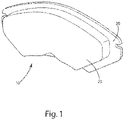
- FIG. 1 is a perspective view of an exemplary friction material incorporated into an exemplary brake pad.
- non-asbestos friction material for brake pads and other brake materials that includes at least one binder, at least one fiber, at least one lubricant, at least one abrasive, at least one titanate and which is substantially free of copper including brass and bronze, in accordance with Claim 1.
- the friction material 20 may be used in the exemplary brake pad 10 illustrated in FIG. 1 .
- the brake pad 10 illustrated in FIG. 1 is only an exemplary brake pad and may take on any size, shape or configuration.
- the friction material 20 when used in a brake pad 10 is typically bonded or otherwise secured to a backing plate 30.
- the non-asbestos friction material of the invention includes the at least one binder which comprises a phenolic resin of either straight or modified phenolic resin form.
- modified binders include silicone, acrylic, epoxy, and nitrile.
- the binder makes up 15-20% by volume of the total composition.
- the binder serves as a matrix that holds the other ingredients together in the friction material.
- the binder system may also comprise a mixture of two or more types of binders, at least one of which is a phenolic type binder if desired for a particular application to achieve a desired performance characteristic.
- the at least one fiber makes up 3-8% by volume of the total friction material composition.
- the fibers are chosen from aramid fibers, poly acrylonitrile (PAN) fibers, and cellulose fibers.
- Aramid fibers preferably have an average length of 1.09 mm with an approximate range of 0.92 mm to 1.26 mm.
- PAN fibers have a length range of about 5.0 to 7.5 mm.
- Cellulose fibers have a length less than 1 mm.
- the fibers provide integrity and structural strength to the friction material. Fibers also help with stability of pre-cured preforms during the manufacturing process. Various fibers and fiber lengths can thus be used to control manufacturing and performance characteristics of the friction material.
- the fibers can be synthetic or natural in origin, and pure or recycled in form.
- the at least one lubricant is included in the friction material to reduce pad and disc wear during service.
- the at least one lubricant makes up less than 0.5-3% by volume of the total friction material composition.
- the at least one abrasive makes up 17-25% by volume of the total friction material composition.
- Abrasives are typically classified by their Mohs hardness.
- Candidate abrasives are chosen from a group consisting of mineral fibers, zirconia, zircon, zirconium silicate, mica, alumina, ceramic fibers, calcium magnesium silicate, calcium magnesium zirconium silicate, calcium magnesium aluminum silicate, magnesium aluminum silicate, synthetic mineral fibers such as hardwool, slag wool and rockwool, silica, silicon dioxide, sand, silicon carbide, iron oxide and magnesium oxide.
- the iron oxide may be of different chemistries..
- the hard abrasives - those with higher values on the Mohs hardness scale - should be used in low concentrations while the mild abrasives- those with lower values on the Mohs hardness scale - may be used in higher concentrations to achieve the same desired friction level.
- Titanates provide high temperature stability that is comparable to asbestos-type materials. Titanate materials, available in hexatitanate and octatitanate forms, coat the rotor surface with a uniform and consistent transfer layer. Titanates may include compounds such as potassium titanate, magnesium potassium titanate, lithium potassium titanate, calcium potassium titanate, and other hexa and octa- titanates. Of the two categories of titanates, hexatitanates are preferred.
- the friction material may also be formed with a limited amount of magnesium oxide (MgO), forming part of the abrasive, typically less than 10% by volume, preferably less than 5% by volume and more preferably is substantially free of magnesium oxide.
- MgO magnesium oxide
- the friction material is also preferably substantially free of steel fibers.
- the other ingredients included in the friction material form the balance of the composition and are classified generally as fillers and/or modifiers.
- the other ingredients make up 7-61% of the total composition of the friction material.
- the other ingredients generally provide bulk to the formulation, reduce cost, provide noise reduction and help with coating the rotor surface with a uniform transfer layer.
- Suitable fillers are lime, calcium oxide, talc, calcium carbonate, wollastonite, barites, including barium sulfate, carbons such as graphite, petroleum coke, calcium silicate, and friction dust including brown, black, straight, modified or other grades of friction dust.
- Each of the examples is evaluated for certain manufacturing characteristics including mixing, preforming, pressing, physical hardness, physical compression, bonding to back plate at room temperature, bonding to back plate at 300°C; as well as certain performance characteristics including friction pad life, pad wear, rotor wear characteristics and costs. All compositions described below are expressed in volume % and have been rounded off to the nearest whole number for simplicity.
- the friction materials of the Examples were processed and formed by mixing, pressing and curing operations typically used in the industry to make brake pad friction materials. This involves dry tumble mixing the ingredients with optional use of plows and choppers to blend the ingredients into a homogeneous mixture. The mix is pressed into performs or pucks using a room temperature press operation. The pucks are then placed into a hot mold with a metal backplate on one side and hot press cured to bond the cured friction material to the backing plate to form the final brake pad. Samples for testing pads bound for market would further undergo a post bake operation as well as one or more finishing operations before being packaged for commercial sale. The samples of Examples 1-13 were post baked. Variations in the process may include loose filling the mix into the pressing mold directly or by use of a liquid binder system. The friction material may be attached directly to the backplate or with use of an underlayer material, as is well known in the industry. Examples 2-13 fall outside the scope of claim 1.
- Example 1 The ingredients of Example 1 were blended in a standard tumble mixer for approximately 7 minutes and then preforms were made and hot press cured to a metal backing as described above.
- the friction material of Example 1 was found to have good all-around manufacturing and performance characteristics described above comparable to friction formulations containing copper or copper alloys in them.
- the remaining examples were made by the same process as Example 1.
- Example 2 The final friction composition of Example 2 showed some undesirable negative characteristics.
- the pads were extremely soft, with high compressibility numbers.
- the press pressure required to achieve acceptable material densities were almost twice as high as the second worst material in this study.
- the bond retention of the material to the back plate was subpar at 300° C testing.
- the pads also showed tendency for end lifting of the material off the backing during the post bake operation, showing that the binder level was too low to provide sufficient pad integrity. It is believed that a binder level below 12% by volume significantly impairs the compressibility and bonding characteristics of the friction material and thus should be kept at or above 12%.
- Example 3 includes extremely low void volumes in the pad.
- a very desirable characteristics for brake pads is that the noise levels be low since the noise from braking is a common cause of customer complaints related to braking systems.
- Low level voids also correlate to very stiff pads with very low compressibility values. This material showed the lowest compressibility properties of all the examples tested, demonstrating that the high resin binder level affects this property.
- the bonding to the back plate both at room temperature and at 300°C was excellent, and very low press pressures were required to get acceptable pad integrities, but due to the low compressibility and in particular the low voids potentially causing noise, a binder level above 24% by volume of the friction material would be undesirable. Therefore, it is believed that 24% of binder by volume is the maximum level of binder that may be used in a volume percent of the final friction composition.
- Example 4 reduces the fiber content to 2% by volume.
- the pad was difficult to preform and had low physical compression as well and was somewhat difficult to bind to the back plate at 300°C.
- the cured friction material was unacceptably brittle. Therefore, the pads should include more than 2% and preferably 3% or more by volume fiber to provide acceptable performance characteristics.
- Example 5 employed a high level of fiber which produced good performance characteristics but some process difficulties. During processing, the high level of fiber made this material difficult to mix, but dividing the mix into smaller batches helped. However, smaller batches would significantly increase the cost of manufacturing of the material and thus would be undesirable. Therefore, the friction material should have less than 10% by volume of fibers in the total composition and more particularly, approximately 3-8% by volume of the total composition.
- Example 6 the level of lubricants was reduced to zero. Even without the lubricants, it was found that the preforming and pressing operations were smooth. Final brake pad also showed acceptable levels of friction and other performance characteristics.
- Example 7 the amount of lubricant was increased to 5% by volume. These pads showed the second lowest compressibility among all examples tested, demonstrating that high levels of lubricants negatively affect compressibility.
- the friction material should thus have less than 5% by volume of the lubricant in the final composition, and preferably under 4% by volume of the total friction material composition.
- the friction material of Example 8 had relatively lower levels of abrasive material. This material processed very easily both during performing and press curing stages. The friction performance characteristic was marginally acceptable in this case, suggesting lowering of the abrasive level further would negatively impact the friction performance of the formulation.
- This material had the second lowest level of friction coefficient measured among all tested examples, better only than the friction material of Example 3.
- abrasives can be selected from those having higher Mohs hardness levels to improve friction to acceptable levels, but the hardest of the abrasives might cause scoring of the rotor surface during application. Therefore, it is believed that the total amount of abrasives should at least be greater than 15 % by volume of the final composition.
- the friction material of Example 9 increased the level of abrasive materials to 30%.
- the preforming and process characteristics were good.
- Both pad wear and rotor wear were the second highest in the examples tested. It is possible to use milder abrasives at these higher levels to help offset some of these negative influences, however there still remains the downside of the high cost of using a high volume fraction of the friction material. Accordingly, a friction material having approximately 30% or less abrasives is preferred to minimize wear performance and cost, even though the friction material may have otherwise acceptable performance and processing characteristics.
- the friction material of Example 10 had the lowest level of titanate materials of all Examples. This material processed and performed very well in all aspects. However, the friction level variation within a single test was the highest for this material. The difference between the highest and lowest friction coefficients under the numerous conditions of the test for this formulation was 0.22, while the best candidate (Example 11) showed a range in coefficient of friction of only 0.08. It is thus shown that the titanate materials fail to work as friction stabilizers at levels of 10% by volume or less.
- Example 11 had the highest level of titanate materials of all Examples. This material processed and performed very well in all aspects. The friction level variation within a single test was the lowest for this material, at 0.08. The negative aspect of using high levels of titanates is cost. Thus, it is advantageous to use titanates at a level of 24% by volume or less for achieving the performance targets outlined in this invention on a commercial basis.
- the friction material of Example 12 is unique in that the material used high levels of all constituents.
- the binder was at 24%, fibers at 10%, lubricants at 5%, abrasives at 30%, and titanates at 24%. This resulted in the filler materials - the rest of the chemicals in the formulation - being dropped to 7%. This material was the worst of all materials tested for both processing and performance.
- the bulk of the material was higher than Example 5, and the mixing volume had to be cut down to process the material successfully.
- the material had very low compressibility and almost no retention to backplate at 300 C bond testing.
- the pad wear and rotor wear was extremely high, with total weight loss of the pads and the rotors adding up to well more than 3 times the best candidate tested. The material also showed end lift after the performance testing. It is believed to be virtually impossible to make a good friction material at these low levels of other ingredients.
- the binder was at 24%, fibers at 10%, lubricants at 5%, abrasives at 30%, and
- the friction material Example 13 is the inverse of Example 12 and had the lowest level of all ingredients studied in previous examples and the highest of the other materials. This material had the lowest cost of all formulations, which is to be expected as the filler materials typically are cheaper than the other ingredients in the formulation. The material processed fairly well, and had average friction characteristics. However, the brake pads were very soft with high compressibility values. Further, the bond strength of the friction material to the backplate was poor. The range of friction coefficient was the second highest, as this formulation also had the lowest level of titanates among the examples described here. It is believed to be virtually impossible to overcome all these negatives by choosing the correct abrasive, correct titanate, best fiber and the correct binder system, all while keeping the high level of filler materials. Thus, the other ingredients in the friction formulation has to be well below the 61%, and preferably below 45%.
Landscapes
- Engineering & Computer Science (AREA)
- General Engineering & Computer Science (AREA)
- Mechanical Engineering (AREA)
- Braking Arrangements (AREA)
Description
- The present invention relates to a non-asbestos friction material and in particular to a friction material for a brake pad to be used for brakes of vehicles or industrial machines.
- Copper in non-asbestos-based friction materials provides many useful properties and performance characteristics including excellent reinforcing strength, increased friction coefficient at high temperatures and excellent heat transfer properties. In addition, copper provides many other qualities that which increases the longevity of the friction material and the components the friction material engages as well as reduces brake dust. Steel fibers are sometimes used in place of some of the copper, but do not have many of the positive attributes of copper and are more frictionally aggressive, thereby increasing the amount of wear on the rotor against which the friction material engages. Steel fibers also generate dust that can quickly and permanently stain the surface finish of the rims of a vehicle.
- The present invention is directed to a non-asbestos friction material that is free of copper and copper alloys. The inventive compositions are unique in that they provide the same level of friction, pad life, noise and other performance characteristics of a typical non- asbestos NAO or that uses copper based materials, while employing neither of copper nor copper-containing materials. The compositions provide a family of outstanding friction materials that possess the desirable performance attributes of a copper-containing friction material, but without the use of copper or copper alloys.
- According to a first aspect of the invention there is provided a friction material for a brake consisting of:
- at least one binder forming 15-20% by volume, said binder is at least one of the group consisting of a straight phenolic resin system and a modified phenolic resin system, wherein the modified phenolic resin system is optionally modified with silicone, acrylic, epoxy or nitrile; at least one fiber forming 3-8% by volume, said fiber is chosen from a group consisting of aramid, polyacrylonitrile (PAN) and cellulose fibers;
- at least one lubricant forming less than 0.5-3% by volume, said lubricant is selected from the group consisting essentially of tin sulfides, antimony trisulfide, antimony trioxide, zinc sulfide, iron sulfides, phthalocyanine, tin powder, and zinc powder;
- at least one abrasives forming 17-25% by volume, said abrasives is chosen from a group consisting of mineral fibers, zirconia, zircon, zirconium silicate, mica, alumina, ceramic fibers, calcium magnesium silicate, calcium magnesium zirconium silicate, calcium magnesium aluminum silicate, magnesium aluminum silicate, synthetic mineral fibers such as hardwool, slag wool and rockwool, silica, silicon dioxide, sand, silicon carbide, iron oxide and magnesium oxide;
- at least one titanate forming at least 13-20% by volume, said titanate is selected from at least one of hexatitanate and octatitanate;
- other materials forming 7-61% by volume, said other materials comprising at least one of lime, calcium oxide, talc, calcium carbonate, wollastonite, barites, calcium silicate, carbons, such as graphite and petroleum coke, friction dusts; and wherein the friction material is free of asbestos, copper and steel fibers.
- The binder may comprise a mixture of one or more straight or modified phenolic resin systems, including an unmodified phenolic resin.
- The at least one fiber is selected from a group of aramid, polyacrylonitrile (PAN) and cellulose fibers. The fiber may be of the aramid fiber family only.
- The lubricant is selected from the group consisting essentially of tin sulfides, atimony trisulfide, antimony trioxide, zinc sulfide, iron sulfides, phthalocyanine, tin powder, and zinc powder. The lubricant may be a combination of lubricants, such as a metal sulfide and antimony trisulfide.
- The friction material includes other materials forming the balance of the material. The other materials may include at least one material selected from the group consisting of lime, calcium oxide, talc, calcium carbonate, calcium silicate, wollastonite, barites, carbons such as graphite and petroleum coke, rubber such as rubber powder or recycled rubber crumbs and various types of friction dusts. A combination of the materials listed above may be used, such as a mixture of lime, barium sulfate, graphite, wollastonite and friction dusts.
- The present invention will become more fully understood from the accompanying detailed description, claims, and the drawing in which:
FIG. 1 is a perspective view of an exemplary friction material incorporated into an exemplary brake pad. - Disclosed is a non-asbestos friction material for brake pads and other brake materials that includes at least one binder, at least one fiber, at least one lubricant, at least one abrasive, at least one titanate and which is substantially free of copper including brass and bronze, in accordance with Claim 1.
- The
friction material 20 may be used in theexemplary brake pad 10 illustrated inFIG. 1 . Thebrake pad 10 illustrated inFIG. 1 is only an exemplary brake pad and may take on any size, shape or configuration. Thefriction material 20 when used in abrake pad 10 is typically bonded or otherwise secured to abacking plate 30. - While some prior efforts have been made to try at least partially remove copper or copper alloys from friction pad compositions, it has not known to have been successful without sacrificing desirable performance.
- The non-asbestos friction material of the invention includes the at least one binder which comprises a phenolic resin of either straight or modified phenolic resin form. Examples of modified binders include silicone, acrylic, epoxy, and nitrile. The binder makes up 15-20% by volume of the total composition. The binder serves as a matrix that holds the other ingredients together in the friction material. The binder system may also comprise a mixture of two or more types of binders, at least one of which is a phenolic type binder if desired for a particular application to achieve a desired performance characteristic.
- The at least one fiber makes up 3-8% by volume of the total friction material composition. The fibers are chosen from aramid fibers, poly acrylonitrile (PAN) fibers, and cellulose fibers. Aramid fibers preferably have an average length of 1.09 mm with an approximate range of 0.92 mm to 1.26 mm. PAN fibers have a length range of about 5.0 to 7.5 mm. Cellulose fibers have a length less than 1 mm. The fibers provide integrity and structural strength to the friction material. Fibers also help with stability of pre-cured preforms during the manufacturing process. Various fibers and fiber lengths can thus be used to control manufacturing and performance characteristics of the friction material. The fibers can be synthetic or natural in origin, and pure or recycled in form.
- The at least one lubricant is included in the friction material to reduce pad and disc wear during service. The at least one lubricant makes up less than 0.5-3% by volume of the total friction material composition.
- The at least one abrasive makes up 17-25% by volume of the total friction material composition. Abrasives are typically classified by their Mohs hardness. Candidate abrasives are chosen from a group consisting of mineral fibers, zirconia, zircon, zirconium silicate, mica, alumina, ceramic fibers, calcium magnesium silicate, calcium magnesium zirconium silicate, calcium magnesium aluminum silicate, magnesium aluminum silicate, synthetic mineral fibers such as hardwool, slag wool and rockwool, silica, silicon dioxide, sand, silicon carbide, iron oxide and magnesium oxide. The iron oxide may be of different chemistries.. The hard abrasives - those with higher values on the Mohs hardness scale - should be used in low concentrations while the mild abrasives- those with lower values on the Mohs hardness scale - may be used in higher concentrations to achieve the same desired friction level.
- The at least one titanate makes up 13-20% by volume of the total friction material composition. Titanates provide high temperature stability that is comparable to asbestos-type materials. Titanate materials, available in hexatitanate and octatitanate forms, coat the rotor surface with a uniform and consistent transfer layer. Titanates may include compounds such as potassium titanate, magnesium potassium titanate, lithium potassium titanate, calcium potassium titanate, and other hexa and octa- titanates. Of the two categories of titanates, hexatitanates are preferred.
- The friction material may also be formed with a limited amount of magnesium oxide (MgO), forming part of the abrasive, typically less than 10% by volume, preferably less than 5% by volume and more preferably is substantially free of magnesium oxide. The friction material is also preferably substantially free of steel fibers.
- The other ingredients included in the friction material form the balance of the composition and are classified generally as fillers and/or modifiers. The other ingredients make up 7-61% of the total composition of the friction material. The other ingredients generally provide bulk to the formulation, reduce cost, provide noise reduction and help with coating the rotor surface with a uniform transfer layer. Suitable fillers are lime, calcium oxide, talc, calcium carbonate, wollastonite, barites, including barium sulfate, carbons such as graphite, petroleum coke, calcium silicate, and friction dust including brown, black, straight, modified or other grades of friction dust.
- Each of the examples is evaluated for certain manufacturing characteristics including mixing, preforming, pressing, physical hardness, physical compression, bonding to back plate at room temperature, bonding to back plate at 300°C; as well as certain performance characteristics including friction pad life, pad wear, rotor wear characteristics and costs. All compositions described below are expressed in volume % and have been rounded off to the nearest whole number for simplicity.
- The friction materials of the Examples were processed and formed by mixing, pressing and curing operations typically used in the industry to make brake pad friction materials. This involves dry tumble mixing the ingredients with optional use of plows and choppers to blend the ingredients into a homogeneous mixture. The mix is pressed into performs or pucks using a room temperature press operation. The pucks are then placed into a hot mold with a metal backplate on one side and hot press cured to bond the cured friction material to the backing plate to form the final brake pad. Samples for testing pads bound for market would further undergo a post bake operation as well as one or more finishing operations before being packaged for commercial sale. The samples of Examples 1-13 were post baked. Variations in the process may include loose filling the mix into the pressing mold directly or by use of a liquid binder system. The friction material may be attached directly to the backplate or with use of an underlayer material, as is well known in the industry. Examples 2-13 fall outside the scope of claim 1.
-
Binder 18 Fiber 5 Lubricant 1 Total Abrasives 23 Titanates 16 Fillers 37 Copper and Copper alloys 0 Total 100 - The ingredients of Example 1 were blended in a standard tumble mixer for approximately 7 minutes and then preforms were made and hot press cured to a metal backing as described above. The friction material of Example 1 was found to have good all-around manufacturing and performance characteristics described above comparable to friction formulations containing copper or copper alloys in them. The remaining examples were made by the same process as Example 1.
-
Binder 12 Fiber 5 Lubricant 1 Total Abrasives 23 Titanates 16 Fillers 43 Copper and Copper alloys 0 Total 100 - The final friction composition of Example 2 showed some undesirable negative characteristics. The pads were extremely soft, with high compressibility numbers. The press pressure required to achieve acceptable material densities were almost twice as high as the second worst material in this study. The bond retention of the material to the back plate was subpar at 300° C testing. The pads also showed tendency for end lifting of the material off the backing during the post bake operation, showing that the binder level was too low to provide sufficient pad integrity. It is believed that a binder level below 12% by volume significantly impairs the compressibility and bonding characteristics of the friction material and thus should be kept at or above 12%.
-
Binder 24 Fiber 5 Lubricant 1 Total Abrasives 23 Titanates 16 Fillers 31 Copper and Copper alloys 0 Total 100 - Some variations in Example 3 as compared to Example 1 include extremely low void volumes in the pad. Generally a very desirable characteristics for brake pads is that the noise levels be low since the noise from braking is a common cause of customer complaints related to braking systems. Low level voids also correlate to very stiff pads with very low compressibility values. This material showed the lowest compressibility properties of all the examples tested, demonstrating that the high resin binder level affects this property. As opposed to Example 2, the bonding to the back plate both at room temperature and at 300°C was excellent, and very low press pressures were required to get acceptable pad integrities, but due to the low compressibility and in particular the low voids potentially causing noise, a binder level above 24% by volume of the friction material would be undesirable. Therefore, it is believed that 24% of binder by volume is the maximum level of binder that may be used in a volume percent of the final friction composition.
-
Binder 18 Fiber 2 Lubricant 1 Total Abrasives 23 Titanates 16 Fillers 40 Copper and Copper alloys 0 Total 100 - Example 4 reduces the fiber content to 2% by volume. In comparison to the friction material of Example 1, the pad was difficult to preform and had low physical compression as well and was somewhat difficult to bind to the back plate at 300°C. The cured friction material was unacceptably brittle. Therefore, the pads should include more than 2% and preferably 3% or more by volume fiber to provide acceptable performance characteristics.
-
Binder 18 Fiber 10 Lubricant 1 Total Abrasives 23 Titanates 16 Fillers 32 Copper and Copper alloys 0 Total 100 - The material of Example 5 employed a high level of fiber which produced good performance characteristics but some process difficulties. During processing, the high level of fiber made this material difficult to mix, but dividing the mix into smaller batches helped. However, smaller batches would significantly increase the cost of manufacturing of the material and thus would be undesirable. Therefore, the friction material should have less than 10% by volume of fibers in the total composition and more particularly, approximately 3-8% by volume of the total composition.
-
Binder 18 Fiber 5 Lubricant 0 Total Abrasives 23 Titanates 16 Fillers 38 Copper and Copper alloys 0 Total 100 - In Example 6, the level of lubricants was reduced to zero. Even without the lubricants, it was found that the preforming and pressing operations were smooth. Final brake pad also showed acceptable levels of friction and other performance characteristics.
-
Binder 18 Fiber 5 Lubricant 5 Total Abrasives 23 Titanates 16 Fillers 33 Copper and Copper alloys 0 Total 100 - In Example 7, the amount of lubricant was increased to 5% by volume. These pads showed the second lowest compressibility among all examples tested, demonstrating that high levels of lubricants negatively affect compressibility. The friction material should thus have less than 5% by volume of the lubricant in the final composition, and preferably under 4% by volume of the total friction material composition.
-
Binder 18 Fiber 5 Lubricant 1 Total Abrasives 15 Titanates 16 Fillers 45 Copper and Copper alloys 0 Total 100 - The friction material of Example 8 had relatively lower levels of abrasive material. This material processed very easily both during performing and press curing stages. The friction performance characteristic was marginally acceptable in this case, suggesting lowering of the abrasive level further would negatively impact the friction performance of the formulation. This material had the second lowest level of friction coefficient measured among all tested examples, better only than the friction material of Example 3. However, at this lower level, it is believed that abrasives can be selected from those having higher Mohs hardness levels to improve friction to acceptable levels, but the hardest of the abrasives might cause scoring of the rotor surface during application. Therefore, it is believed that the total amount of abrasives should at least be greater than 15 % by volume of the final composition.
-
Binder 18 Fiber 5 Lubricant 1 Total Abrasives 30 Titanates 16 Fillers 30 Copper and Copper alloys 0 Total 100 - The friction material of Example 9 increased the level of abrasive materials to 30%. The preforming and process characteristics were good. Both pad wear and rotor wear were the second highest in the examples tested. It is possible to use milder abrasives at these higher levels to help offset some of these negative influences, however there still remains the downside of the high cost of using a high volume fraction of the friction material. Accordingly, a friction material having approximately 30% or less abrasives is preferred to minimize wear performance and cost, even though the friction material may have otherwise acceptable performance and processing characteristics.
-
Binder 18 Fiber 5 Lubricant 1 Total Abrasives 23 Titanates 10 Fillers 43 Copper and Copper alloys 0 Total 100 - The friction material of Example 10 had the lowest level of titanate materials of all Examples. This material processed and performed very well in all aspects. However, the friction level variation within a single test was the highest for this material. The difference between the highest and lowest friction coefficients under the numerous conditions of the test for this formulation was 0.22, while the best candidate (Example 11) showed a range in coefficient of friction of only 0.08. It is thus shown that the titanate materials fail to work as friction stabilizers at levels of 10% by volume or less.
-
Binder 18 Fiber 5 Lubricant 1 Total Abrasives 23 Titanates 24 Fillers 29 Copper and Copper alloys 0 Total 100 - The friction material in Example 11 had the highest level of titanate materials of all Examples. This material processed and performed very well in all aspects. The friction level variation within a single test was the lowest for this material, at 0.08. The negative aspect of using high levels of titanates is cost. Thus, it is advantageous to use titanates at a level of 24% by volume or less for achieving the performance targets outlined in this invention on a commercial basis.
-
Binder 24 Fiber 10 Lubricant 5 Total Abrasives 30 Titanates 24 Fillers 7 Copper and Copper alloys 0 Total 100 - The friction material of Example 12 is unique in that the material used high levels of all constituents. The binder was at 24%, fibers at 10%, lubricants at 5%, abrasives at 30%, and titanates at 24%. This resulted in the filler materials - the rest of the chemicals in the formulation - being dropped to 7%. This material was the worst of all materials tested for both processing and performance. The bulk of the material was higher than Example 5, and the mixing volume had to be cut down to process the material successfully. The material had very low compressibility and almost no retention to backplate at 300 C bond testing. The pad wear and rotor wear was extremely high, with total weight loss of the pads and the rotors adding up to well more than 3 times the best candidate tested. The material also showed end lift after the performance testing. It is believed to be virtually impossible to make a good friction material at these low levels of other ingredients. The
-
Binder 12 Fiber 2 Lubricant 0 Total Abrasives 15 Titanate 10 Fillers 61 Copper and Copper alloys 0 Total 100 - The friction material Example 13 is the inverse of Example 12 and had the lowest level of all ingredients studied in previous examples and the highest of the other materials. This material had the lowest cost of all formulations, which is to be expected as the filler materials typically are cheaper than the other ingredients in the formulation. The material processed fairly well, and had average friction characteristics. However, the brake pads were very soft with high compressibility values. Further, the bond strength of the friction material to the backplate was poor. The range of friction coefficient was the second highest, as this formulation also had the lowest level of titanates among the examples described here. It is believed to be virtually impossible to overcome all these negatives by choosing the correct abrasive, correct titanate, best fiber and the correct binder system, all while keeping the high level of filler materials. Thus, the other ingredients in the friction formulation has to be well below the 61%, and preferably below 45%.
- The foregoing description discloses exemplary embodiments of the present invention. One skilled in the art will readily recognize from this description, and from the accompanying drawings and claims that various changes, modifications and variations can be made without departing from the scope of the invention as defined by the claims.
Claims (3)
- A friction material for a brake consisting of:at least one binder forming 15-20% by volume, said binder is at least one of the group consisting of a straight phenolic resin system and a modified phenolic resin system, wherein the modified phenolic resin system is optionally modified with silicone, acrylic, epoxy or nitrile;at least one fiber forming 3-8% by volume, said fiber is chosen from a group consisting of aramid, polyacrylonitrile (PAN) and cellulose fibers;at least one lubricant forming less than 0.5-3% by volume, said lubricant is selected from the group consisting essentially of tin sulfides, antimony trisulfide, antimony trioxide, zinc sulfide, iron sulfides, phthalocyanine, tin powder, and zinc powder;at least one abrasives forming 17-25% by volume, said abrasives is chosen from a group consisting of mineral fibers, zirconia, zircon, zirconium silicate, mica, alumina, ceramic fibers, calcium magnesium silicate, calcium magnesium zirconium silicate, calcium magnesium aluminum silicate, magnesium aluminum silicate, synthetic mineral fibers such as hardwool, slag wool and rockwool, silica, silicon dioxide, sand, silicon carbide, iron oxide and magnesium oxide;at least one titanate forming at least 13-20% by volume, said titanate is selected from at least one of hexatitanate and octatitanate;other materials forming 7-61% by volume, said other materials comprising at least one of lime, calcium oxide, talc, calcium carbonate, wollastonite, barites, calcium silicate, carbons, such as graphite and petroleum coke, friction dusts;
andwherein the friction material is free of asbestos, copper and steel fibers. - A friction material according to claim 1 further including other materials forming 29-45% by volume of the material.
- A brake pad comprising a backing plate and a friction pad fixed to the backing plate, said friction pad being fabricated of a friction material as defined in any one of the preceding claims.
Applications Claiming Priority (1)
| Application Number | Priority Date | Filing Date | Title |
|---|---|---|---|
| PCT/US2009/061814 WO2011049575A1 (en) | 2009-10-23 | 2009-10-23 | Friction material for brakes |
Publications (4)
| Publication Number | Publication Date |
|---|---|
| EP2491267A1 EP2491267A1 (en) | 2012-08-29 |
| EP2491267A4 EP2491267A4 (en) | 2014-08-27 |
| EP2491267B1 EP2491267B1 (en) | 2018-07-25 |
| EP2491267B2 true EP2491267B2 (en) | 2022-04-13 |
Family
ID=43900586
Family Applications (1)
| Application Number | Title | Priority Date | Filing Date |
|---|---|---|---|
| EP09850674.4A Active EP2491267B2 (en) | 2009-10-23 | 2009-10-23 | Friction material for brakes |
Country Status (4)
| Country | Link |
|---|---|
| EP (1) | EP2491267B2 (en) |
| CN (1) | CN102713334B (en) |
| BR (1) | BR112012009470B1 (en) |
| WO (1) | WO2011049575A1 (en) |
Families Citing this family (16)
| Publication number | Priority date | Publication date | Assignee | Title |
|---|---|---|---|---|
| US9441693B2 (en) * | 2010-11-19 | 2016-09-13 | Hitachi Chemical Company, Ltd. | Non-asbestos friction material composition, and friction material and friction member using same |
| JP6311610B2 (en) * | 2012-10-26 | 2018-04-18 | 住友ベークライト株式会社 | Composition for back plate, back plate, brake pad and caliper device |
| JP5981839B2 (en) * | 2012-12-21 | 2016-08-31 | 曙ブレーキ工業株式会社 | Friction material |
| EP2937397B1 (en) * | 2012-12-21 | 2020-05-06 | Akebono Brake Industry Co., Ltd. | Friction material |
| JP6247079B2 (en) | 2013-11-12 | 2017-12-13 | 曙ブレーキ工業株式会社 | Friction material |
| CN104315044B (en) * | 2014-08-18 | 2017-01-11 | 安徽惠明机械制造有限公司 | Shell of brake disc for car |
| US10233988B2 (en) | 2015-09-23 | 2019-03-19 | Akebono Brake Industry Co., Ltd | Friction material |
| CN105545999A (en) * | 2015-12-23 | 2016-05-04 | 佛山早稻田科技服务有限公司 | Frictional material |
| CN105546001B (en) * | 2016-01-22 | 2017-11-14 | 中车石家庄车辆有限公司 | Composite friction material of recovery friction material preparation and preparation method thereof is pyrolyzed with brake shoe |
| CN106438792A (en) * | 2016-12-07 | 2017-02-22 | 重庆红宇摩擦制品有限公司 | Automobile friction lining with flame-retardant function and production method of automobile friction lining |
| US20180291974A1 (en) * | 2017-04-06 | 2018-10-11 | Akebono Brake Industry Co., Ltd | Ferrous based friction material |
| CN107142084A (en) * | 2017-06-28 | 2017-09-08 | 滁州市三和纤维制造有限公司 | A kind of preparation method of compound friction particle for friction material |
| JP7169981B2 (en) * | 2017-10-11 | 2022-11-11 | 昭和電工マテリアルズ株式会社 | Friction material composition, friction material and friction member using friction material composition |
| CN108084961A (en) * | 2017-12-07 | 2018-05-29 | 浙江宝晟铁路新材料科技有限公司 | A kind of friction control agent containing second bonding agents and preparation method thereof |
| CN108300413A (en) * | 2018-02-05 | 2018-07-20 | 合肥欧仕嘉机电设备有限公司 | A kind of mechanical equipment grinding agent and preparation method thereof |
| CN110282907B (en) * | 2019-06-24 | 2021-01-29 | 上海壬丰新材料科技有限公司 | Method capable of improving wet braking performance of microporous friction material |
Citations (14)
| Publication number | Priority date | Publication date | Assignee | Title |
|---|---|---|---|---|
| US5336931A (en) † | 1993-09-03 | 1994-08-09 | Motorola, Inc. | Anchoring method for flow formed integrated circuit covers |
| JPH06303185A (en) † | 1994-05-13 | 1994-10-28 | Sanyo Electric Co Ltd | Cordless telephone system |
| US20010025064A1 (en) † | 2000-03-03 | 2001-09-27 | Mitsuru Kobayashi | Non-asbestos friction materials |
| US20010027073A1 (en) † | 2000-03-03 | 2001-10-04 | Mitsuru Kobayashi | Non-asbestos friction materials |
| JP2001311071A (en) † | 2000-04-26 | 2001-11-09 | Nisshinbo Ind Inc | Non-asbestos friction material |
| US20020033315A1 (en) † | 2000-08-01 | 2002-03-21 | Takeshi Yamane | Friction member and method of manufacture |
| JP2002241737A (en) † | 2001-02-20 | 2002-08-28 | Nisshinbo Ind Inc | Non-asbestos friction material |
| US20020169231A1 (en) † | 2000-03-31 | 2002-11-14 | Sumitomo Electric Industries, Ltd. | Friction material |
| EP1273819A2 (en) † | 2001-07-02 | 2003-01-08 | Nisshinbo Industries, Inc. | Non-asbestos friction material |
| JP2004204904A (en) † | 2002-12-24 | 2004-07-22 | Hitachi Chem Co Ltd | Brake lining |
| JP2005009620A (en) † | 2003-06-20 | 2005-01-13 | Hitachi Chem Co Ltd | Brake lining |
| US20060151268A1 (en) † | 2005-01-12 | 2006-07-13 | Sunil Kesavan | Copper-free non-asbestos organic friction material |
| US20080156226A1 (en) † | 2006-12-27 | 2008-07-03 | Kitami Takuya | Non-asbestos friction material |
| US20200014862A1 (en) † | 2018-07-05 | 2020-01-09 | Olympus Corporation | Imaging apparatus and display method |
Family Cites Families (13)
| Publication number | Priority date | Publication date | Assignee | Title |
|---|---|---|---|---|
| JP2745686B2 (en) * | 1989-06-12 | 1998-04-28 | トヨタ自動車株式会社 | Resin mold clutch facing |
| US5339931A (en) | 1993-05-07 | 1994-08-23 | Allied-Signal Inc. | Porous copper powder modified friction material |
| KR0149747B1 (en) * | 1995-05-10 | 1998-10-01 | 석진양 | Friction material for automobile brake pads |
| CN2365453Y (en) * | 1998-09-29 | 2000-02-23 | 王纪元 | Gauze reinforced non-asbestos braking block |
| JP4055326B2 (en) * | 1999-04-02 | 2008-03-05 | 住友電気工業株式会社 | Friction material |
| US6451872B1 (en) * | 1999-07-30 | 2002-09-17 | Nisshinbo Industries, Inc. | Non-asbestos friction materials |
| JP3998879B2 (en) * | 1999-12-20 | 2007-10-31 | 曙ブレーキ工業株式会社 | Friction material |
| US6534565B1 (en) * | 2001-08-28 | 2003-03-18 | Delphi Technologies, Inc. | Friction facing composition and method of manufacture |
| US20040140167A1 (en) * | 2003-01-16 | 2004-07-22 | Xinming Shao | Brake friction material including titanium dioxide particles |
| US20040164438A1 (en) * | 2003-02-26 | 2004-08-26 | Delphi Technologies, Inc. | Slurry composition and method for forming friction material therefrom |
| JP4040552B2 (en) | 2003-07-18 | 2008-01-30 | 曙ブレーキ工業株式会社 | Friction material |
| CN1982399A (en) * | 2005-12-14 | 2007-06-20 | 北京北摩高科摩擦材料有限责任公司 | Wetting heavy-loading metallurgical friction material of copper-based powder |
| KR20080002748U (en) * | 2007-01-16 | 2008-07-21 | 이진하 | Friction material for automobile brake pads |
-
2009
- 2009-10-23 BR BR112012009470A patent/BR112012009470B1/en active IP Right Grant
- 2009-10-23 EP EP09850674.4A patent/EP2491267B2/en active Active
- 2009-10-23 CN CN200980162762.9A patent/CN102713334B/en active Active
- 2009-10-23 WO PCT/US2009/061814 patent/WO2011049575A1/en not_active Ceased
Patent Citations (14)
| Publication number | Priority date | Publication date | Assignee | Title |
|---|---|---|---|---|
| US5336931A (en) † | 1993-09-03 | 1994-08-09 | Motorola, Inc. | Anchoring method for flow formed integrated circuit covers |
| JPH06303185A (en) † | 1994-05-13 | 1994-10-28 | Sanyo Electric Co Ltd | Cordless telephone system |
| US20010025064A1 (en) † | 2000-03-03 | 2001-09-27 | Mitsuru Kobayashi | Non-asbestos friction materials |
| US20010027073A1 (en) † | 2000-03-03 | 2001-10-04 | Mitsuru Kobayashi | Non-asbestos friction materials |
| US20020169231A1 (en) † | 2000-03-31 | 2002-11-14 | Sumitomo Electric Industries, Ltd. | Friction material |
| JP2001311071A (en) † | 2000-04-26 | 2001-11-09 | Nisshinbo Ind Inc | Non-asbestos friction material |
| US20020033315A1 (en) † | 2000-08-01 | 2002-03-21 | Takeshi Yamane | Friction member and method of manufacture |
| JP2002241737A (en) † | 2001-02-20 | 2002-08-28 | Nisshinbo Ind Inc | Non-asbestos friction material |
| EP1273819A2 (en) † | 2001-07-02 | 2003-01-08 | Nisshinbo Industries, Inc. | Non-asbestos friction material |
| JP2004204904A (en) † | 2002-12-24 | 2004-07-22 | Hitachi Chem Co Ltd | Brake lining |
| JP2005009620A (en) † | 2003-06-20 | 2005-01-13 | Hitachi Chem Co Ltd | Brake lining |
| US20060151268A1 (en) † | 2005-01-12 | 2006-07-13 | Sunil Kesavan | Copper-free non-asbestos organic friction material |
| US20080156226A1 (en) † | 2006-12-27 | 2008-07-03 | Kitami Takuya | Non-asbestos friction material |
| US20200014862A1 (en) † | 2018-07-05 | 2020-01-09 | Olympus Corporation | Imaging apparatus and display method |
Non-Patent Citations (1)
| Title |
|---|
| FEMFM and VRI joint meetings † |
Also Published As
| Publication number | Publication date |
|---|---|
| BR112012009470A2 (en) | 2016-04-26 |
| CN102713334B (en) | 2015-05-20 |
| EP2491267A1 (en) | 2012-08-29 |
| BR112012009470B1 (en) | 2020-04-28 |
| EP2491267A4 (en) | 2014-08-27 |
| CN102713334A (en) | 2012-10-03 |
| EP2491267B1 (en) | 2018-07-25 |
| WO2011049575A1 (en) | 2011-04-28 |
Similar Documents
| Publication | Publication Date | Title |
|---|---|---|
| EP2491267B2 (en) | Friction material for brakes | |
| US8172051B2 (en) | Friction material for brakes | |
| EP2491089B2 (en) | Friction material for brakes | |
| US20100084232A1 (en) | Friction material for brakes | |
| US8863917B2 (en) | Friction material for brakes | |
| KR102116768B1 (en) | Friction material for brakes | |
| EP3085985B1 (en) | Composition for friction material | |
| JP6066739B2 (en) | Friction material and manufacturing method thereof | |
| US20170254378A1 (en) | Friction material | |
| WO2010098470A1 (en) | Friction material | |
| CN104946201A (en) | Friction material, brake pad made of friction material, preparation method of brake pad, and vehicle | |
| EP1388684A1 (en) | Non-asbestos friction material | |
| JP3810684B2 (en) | Brake friction material | |
| KR101035240B1 (en) | Lost steel friction material and vehicle brake including the same | |
| JP4029026B2 (en) | Non-asbestos friction material | |
| CN114341308B (en) | Friction material and friction material composition | |
| JP2004331861A (en) | Friction material | |
| WO2025263256A1 (en) | Friction pair | |
| JP5809840B2 (en) | Brake friction material | |
| JP2000309641A (en) | Non-asbestos friction material | |
| KR20260000856A (en) | Brake friction material composition and fricktion material compatible with aluminium discs using the same | |
| JP2002069433A (en) | Brake friction material |
Legal Events
| Date | Code | Title | Description |
|---|---|---|---|
| PUAI | Public reference made under article 153(3) epc to a published international application that has entered the european phase |
Free format text: ORIGINAL CODE: 0009012 |
|
| 17P | Request for examination filed |
Effective date: 20120508 |
|
| AK | Designated contracting states |
Kind code of ref document: A1 Designated state(s): AT BE BG CH CY CZ DE DK EE ES FI FR GB GR HR HU IE IS IT LI LT LU LV MC MK MT NL NO PL PT RO SE SI SK SM TR |
|
| DAX | Request for extension of the european patent (deleted) | ||
| A4 | Supplementary search report drawn up and despatched |
Effective date: 20140725 |
|
| RIC1 | Information provided on ipc code assigned before grant |
Ipc: F16D 69/02 20060101AFI20140721BHEP |
|
| STAA | Information on the status of an ep patent application or granted ep patent |
Free format text: STATUS: EXAMINATION IS IN PROGRESS |
|
| 17Q | First examination report despatched |
Effective date: 20161128 |
|
| GRAP | Despatch of communication of intention to grant a patent |
Free format text: ORIGINAL CODE: EPIDOSNIGR1 |
|
| STAA | Information on the status of an ep patent application or granted ep patent |
Free format text: STATUS: GRANT OF PATENT IS INTENDED |
|
| INTG | Intention to grant announced |
Effective date: 20180502 |
|
| GRAS | Grant fee paid |
Free format text: ORIGINAL CODE: EPIDOSNIGR3 |
|
| GRAA | (expected) grant |
Free format text: ORIGINAL CODE: 0009210 |
|
| STAA | Information on the status of an ep patent application or granted ep patent |
Free format text: STATUS: THE PATENT HAS BEEN GRANTED |
|
| AK | Designated contracting states |
Kind code of ref document: B1 Designated state(s): AT BE BG CH CY CZ DE DK EE ES FI FR GB GR HR HU IE IS IT LI LT LU LV MC MK MT NL NO PL PT RO SE SI SK SM TR |
|
| REG | Reference to a national code |
Ref country code: GB Ref legal event code: FG4D |
|
| REG | Reference to a national code |
Ref country code: CH Ref legal event code: EP |
|
| REG | Reference to a national code |
Ref country code: AT Ref legal event code: REF Ref document number: 1022109 Country of ref document: AT Kind code of ref document: T Effective date: 20180815 |
|
| REG | Reference to a national code |
Ref country code: DE Ref legal event code: R096 Ref document number: 602009053519 Country of ref document: DE |
|
| REG | Reference to a national code |
Ref country code: IE Ref legal event code: FG4D |
|
| REG | Reference to a national code |
Ref country code: FR Ref legal event code: PLFP Year of fee payment: 10 |
|
| RAP2 | Party data changed (patent owner data changed or rights of a patent transferred) |
Owner name: FEDERAL-MOGUL PRODUCTS, INC. |
|
| REG | Reference to a national code |
Ref country code: NL Ref legal event code: MP Effective date: 20180725 |
|
| REG | Reference to a national code |
Ref country code: LT Ref legal event code: MG4D |
|
| PG25 | Lapsed in a contracting state [announced via postgrant information from national office to epo] |
Ref country code: NL Free format text: LAPSE BECAUSE OF FAILURE TO SUBMIT A TRANSLATION OF THE DESCRIPTION OR TO PAY THE FEE WITHIN THE PRESCRIBED TIME-LIMIT Effective date: 20180725 |
|
| REG | Reference to a national code |
Ref country code: AT Ref legal event code: MK05 Ref document number: 1022109 Country of ref document: AT Kind code of ref document: T Effective date: 20180725 |
|
| PG25 | Lapsed in a contracting state [announced via postgrant information from national office to epo] |
Ref country code: GR Free format text: LAPSE BECAUSE OF FAILURE TO SUBMIT A TRANSLATION OF THE DESCRIPTION OR TO PAY THE FEE WITHIN THE PRESCRIBED TIME-LIMIT Effective date: 20181026 Ref country code: NO Free format text: LAPSE BECAUSE OF FAILURE TO SUBMIT A TRANSLATION OF THE DESCRIPTION OR TO PAY THE FEE WITHIN THE PRESCRIBED TIME-LIMIT Effective date: 20181025 Ref country code: SE Free format text: LAPSE BECAUSE OF FAILURE TO SUBMIT A TRANSLATION OF THE DESCRIPTION OR TO PAY THE FEE WITHIN THE PRESCRIBED TIME-LIMIT Effective date: 20180725 Ref country code: FI Free format text: LAPSE BECAUSE OF FAILURE TO SUBMIT A TRANSLATION OF THE DESCRIPTION OR TO PAY THE FEE WITHIN THE PRESCRIBED TIME-LIMIT Effective date: 20180725 Ref country code: LT Free format text: LAPSE BECAUSE OF FAILURE TO SUBMIT A TRANSLATION OF THE DESCRIPTION OR TO PAY THE FEE WITHIN THE PRESCRIBED TIME-LIMIT Effective date: 20180725 Ref country code: IS Free format text: LAPSE BECAUSE OF FAILURE TO SUBMIT A TRANSLATION OF THE DESCRIPTION OR TO PAY THE FEE WITHIN THE PRESCRIBED TIME-LIMIT Effective date: 20181125 Ref country code: PL Free format text: LAPSE BECAUSE OF FAILURE TO SUBMIT A TRANSLATION OF THE DESCRIPTION OR TO PAY THE FEE WITHIN THE PRESCRIBED TIME-LIMIT Effective date: 20180725 Ref country code: AT Free format text: LAPSE BECAUSE OF FAILURE TO SUBMIT A TRANSLATION OF THE DESCRIPTION OR TO PAY THE FEE WITHIN THE PRESCRIBED TIME-LIMIT Effective date: 20180725 Ref country code: BG Free format text: LAPSE BECAUSE OF FAILURE TO SUBMIT A TRANSLATION OF THE DESCRIPTION OR TO PAY THE FEE WITHIN THE PRESCRIBED TIME-LIMIT Effective date: 20181025 |
|
| RAP2 | Party data changed (patent owner data changed or rights of a patent transferred) |
Owner name: FEDERAL-MOGUL PRODUCTS US LLC |
|
| PG25 | Lapsed in a contracting state [announced via postgrant information from national office to epo] |
Ref country code: LV Free format text: LAPSE BECAUSE OF FAILURE TO SUBMIT A TRANSLATION OF THE DESCRIPTION OR TO PAY THE FEE WITHIN THE PRESCRIBED TIME-LIMIT Effective date: 20180725 Ref country code: HR Free format text: LAPSE BECAUSE OF FAILURE TO SUBMIT A TRANSLATION OF THE DESCRIPTION OR TO PAY THE FEE WITHIN THE PRESCRIBED TIME-LIMIT Effective date: 20180725 |
|
| REG | Reference to a national code |
Ref country code: DE Ref legal event code: R026 Ref document number: 602009053519 Country of ref document: DE |
|
| PLBI | Opposition filed |
Free format text: ORIGINAL CODE: 0009260 |
|
| PG25 | Lapsed in a contracting state [announced via postgrant information from national office to epo] |
Ref country code: EE Free format text: LAPSE BECAUSE OF FAILURE TO SUBMIT A TRANSLATION OF THE DESCRIPTION OR TO PAY THE FEE WITHIN THE PRESCRIBED TIME-LIMIT Effective date: 20180725 Ref country code: ES Free format text: LAPSE BECAUSE OF FAILURE TO SUBMIT A TRANSLATION OF THE DESCRIPTION OR TO PAY THE FEE WITHIN THE PRESCRIBED TIME-LIMIT Effective date: 20180725 Ref country code: RO Free format text: LAPSE BECAUSE OF FAILURE TO SUBMIT A TRANSLATION OF THE DESCRIPTION OR TO PAY THE FEE WITHIN THE PRESCRIBED TIME-LIMIT Effective date: 20180725 Ref country code: CZ Free format text: LAPSE BECAUSE OF FAILURE TO SUBMIT A TRANSLATION OF THE DESCRIPTION OR TO PAY THE FEE WITHIN THE PRESCRIBED TIME-LIMIT Effective date: 20180725 |
|
| PLAX | Notice of opposition and request to file observation + time limit sent |
Free format text: ORIGINAL CODE: EPIDOSNOBS2 |
|
| REG | Reference to a national code |
Ref country code: DE Ref legal event code: R082 Ref document number: 602009053519 Country of ref document: DE Representative=s name: HERNANDEZ, YORCK, DIPL.-ING., DE Ref country code: DE Ref legal event code: R081 Ref document number: 602009053519 Country of ref document: DE Owner name: FEDERAL-MOGUL PRODUCTS US LLC, SOUTHFIELD, US Free format text: FORMER OWNER: FEDERAL-MOGUL PRODUCTS, INC., SOUTHFIELD, MICH., US |
|
| 26 | Opposition filed |
Opponent name: VRI-VERBAND DER REIBBELAGINDUSTRIE E.V. Effective date: 20190425 Opponent name: HARGUTH, ALEXANDER Effective date: 20190418 |
|
| PG25 | Lapsed in a contracting state [announced via postgrant information from national office to epo] |
Ref country code: SK Free format text: LAPSE BECAUSE OF FAILURE TO SUBMIT A TRANSLATION OF THE DESCRIPTION OR TO PAY THE FEE WITHIN THE PRESCRIBED TIME-LIMIT Effective date: 20180725 Ref country code: SM Free format text: LAPSE BECAUSE OF FAILURE TO SUBMIT A TRANSLATION OF THE DESCRIPTION OR TO PAY THE FEE WITHIN THE PRESCRIBED TIME-LIMIT Effective date: 20180725 Ref country code: DK Free format text: LAPSE BECAUSE OF FAILURE TO SUBMIT A TRANSLATION OF THE DESCRIPTION OR TO PAY THE FEE WITHIN THE PRESCRIBED TIME-LIMIT Effective date: 20180725 |
|
| REG | Reference to a national code |
Ref country code: CH Ref legal event code: PL |
|
| GBPC | Gb: european patent ceased through non-payment of renewal fee |
Effective date: 20181025 |
|
| REG | Reference to a national code |
Ref country code: BE Ref legal event code: MM Effective date: 20181031 |
|
| PG25 | Lapsed in a contracting state [announced via postgrant information from national office to epo] |
Ref country code: MC Free format text: LAPSE BECAUSE OF FAILURE TO SUBMIT A TRANSLATION OF THE DESCRIPTION OR TO PAY THE FEE WITHIN THE PRESCRIBED TIME-LIMIT Effective date: 20180725 Ref country code: LU Free format text: LAPSE BECAUSE OF NON-PAYMENT OF DUE FEES Effective date: 20181023 |
|
| REG | Reference to a national code |
Ref country code: IE Ref legal event code: MM4A |
|
| PG25 | Lapsed in a contracting state [announced via postgrant information from national office to epo] |
Ref country code: SI Free format text: LAPSE BECAUSE OF FAILURE TO SUBMIT A TRANSLATION OF THE DESCRIPTION OR TO PAY THE FEE WITHIN THE PRESCRIBED TIME-LIMIT Effective date: 20180725 Ref country code: BE Free format text: LAPSE BECAUSE OF NON-PAYMENT OF DUE FEES Effective date: 20181031 Ref country code: CH Free format text: LAPSE BECAUSE OF NON-PAYMENT OF DUE FEES Effective date: 20181031 Ref country code: LI Free format text: LAPSE BECAUSE OF NON-PAYMENT OF DUE FEES Effective date: 20181031 |
|
| PLBB | Reply of patent proprietor to notice(s) of opposition received |
Free format text: ORIGINAL CODE: EPIDOSNOBS3 |
|
| PG25 | Lapsed in a contracting state [announced via postgrant information from national office to epo] |
Ref country code: GB Free format text: LAPSE BECAUSE OF NON-PAYMENT OF DUE FEES Effective date: 20181025 Ref country code: IE Free format text: LAPSE BECAUSE OF NON-PAYMENT OF DUE FEES Effective date: 20181023 |
|
| PG25 | Lapsed in a contracting state [announced via postgrant information from national office to epo] |
Ref country code: MT Free format text: LAPSE BECAUSE OF NON-PAYMENT OF DUE FEES Effective date: 20181023 |
|
| PG25 | Lapsed in a contracting state [announced via postgrant information from national office to epo] |
Ref country code: TR Free format text: LAPSE BECAUSE OF FAILURE TO SUBMIT A TRANSLATION OF THE DESCRIPTION OR TO PAY THE FEE WITHIN THE PRESCRIBED TIME-LIMIT Effective date: 20180725 |
|
| PG25 | Lapsed in a contracting state [announced via postgrant information from national office to epo] |
Ref country code: PT Free format text: LAPSE BECAUSE OF FAILURE TO SUBMIT A TRANSLATION OF THE DESCRIPTION OR TO PAY THE FEE WITHIN THE PRESCRIBED TIME-LIMIT Effective date: 20180725 |
|
| PG25 | Lapsed in a contracting state [announced via postgrant information from national office to epo] |
Ref country code: CY Free format text: LAPSE BECAUSE OF FAILURE TO SUBMIT A TRANSLATION OF THE DESCRIPTION OR TO PAY THE FEE WITHIN THE PRESCRIBED TIME-LIMIT Effective date: 20180725 Ref country code: MK Free format text: LAPSE BECAUSE OF NON-PAYMENT OF DUE FEES Effective date: 20180725 Ref country code: HU Free format text: LAPSE BECAUSE OF FAILURE TO SUBMIT A TRANSLATION OF THE DESCRIPTION OR TO PAY THE FEE WITHIN THE PRESCRIBED TIME-LIMIT; INVALID AB INITIO Effective date: 20091023 |
|
| APAH | Appeal reference modified |
Free format text: ORIGINAL CODE: EPIDOSCREFNO |
|
| APBM | Appeal reference recorded |
Free format text: ORIGINAL CODE: EPIDOSNREFNO |
|
| APBP | Date of receipt of notice of appeal recorded |
Free format text: ORIGINAL CODE: EPIDOSNNOA2O |
|
| APBU | Appeal procedure closed |
Free format text: ORIGINAL CODE: EPIDOSNNOA9O |
|
| PUAH | Patent maintained in amended form |
Free format text: ORIGINAL CODE: 0009272 |
|
| STAA | Information on the status of an ep patent application or granted ep patent |
Free format text: STATUS: PATENT MAINTAINED AS AMENDED |
|
| 27A | Patent maintained in amended form |
Effective date: 20220413 |
|
| AK | Designated contracting states |
Kind code of ref document: B2 Designated state(s): AT BE BG CH CY CZ DE DK EE ES FI FR GB GR HR HU IE IS IT LI LT LU LV MC MK MT NL NO PL PT RO SE SI SK SM TR |
|
| REG | Reference to a national code |
Ref country code: DE Ref legal event code: R102 Ref document number: 602009053519 Country of ref document: DE |
|
| REG | Reference to a national code |
Ref country code: DE Ref legal event code: R081 Ref document number: 602009053519 Country of ref document: DE Owner name: FEDERAL-MOGUL PRODUCTS US LLC, NORTHVILLE, US Free format text: FORMER OWNER: FEDERAL-MOGUL PRODUCTS US LLC, SOUTHFIELD, MI, US Ref country code: DE Ref legal event code: R081 Ref document number: 602009053519 Country of ref document: DE Owner name: BRAKING PRODUCTS GROUP US LLC (N.D.GES.D. STAA, US Free format text: FORMER OWNER: FEDERAL-MOGUL PRODUCTS US LLC, SOUTHFIELD, MI, US |
|
| PGFP | Annual fee paid to national office [announced via postgrant information from national office to epo] |
Ref country code: IT Payment date: 20250923 Year of fee payment: 17 |
|
| PGFP | Annual fee paid to national office [announced via postgrant information from national office to epo] |
Ref country code: FR Payment date: 20250923 Year of fee payment: 17 |
|
| PGFP | Annual fee paid to national office [announced via postgrant information from national office to epo] |
Ref country code: DE Payment date: 20250923 Year of fee payment: 17 |
|
| REG | Reference to a national code |
Ref country code: DE Ref legal event code: R081 Ref document number: 602009053519 Country of ref document: DE Owner name: BRAKING PRODUCTS GROUP US LLC (N.D.GES.D. STAA, US Free format text: FORMER OWNER: FEDERAL-MOGUL PRODUCTS US LLC, NORTHVILLE, MI, US |