EP2490727B1 - Composition for the treatment of a bone fracture - Google Patents
Composition for the treatment of a bone fracture Download PDFInfo
- Publication number
- EP2490727B1 EP2490727B1 EP10765807.2A EP10765807A EP2490727B1 EP 2490727 B1 EP2490727 B1 EP 2490727B1 EP 10765807 A EP10765807 A EP 10765807A EP 2490727 B1 EP2490727 B1 EP 2490727B1
- Authority
- EP
- European Patent Office
- Prior art keywords
- component
- bone
- poly
- fibre
- bis
- Prior art date
- Legal status (The legal status is an assumption and is not a legal conclusion. Google has not performed a legal analysis and makes no representation as to the accuracy of the status listed.)
- Active
Links
- 0 CCC(CC(*)c(cc1)ccc1O*(N(C(C=C1)=O)C1=O)=O)c(cc1)ccc1O Chemical compound CCC(CC(*)c(cc1)ccc1O*(N(C(C=C1)=O)C1=O)=O)c(cc1)ccc1O 0.000 description 3
- YBUHBWACTXMYTH-UHFFFAOYSA-O CCC(CC(C(CC(C)[NH3+])N=O)N)O Chemical compound CCC(CC(C(CC(C)[NH3+])N=O)N)O YBUHBWACTXMYTH-UHFFFAOYSA-O 0.000 description 1
- CFKONAWMNQERAG-UHFFFAOYSA-N O=C(CCS)OCCN(C(N(CCOC(CCS)=O)C(N1CCOC(CCS)=O)=O)=O)C1=O Chemical compound O=C(CCS)OCCN(C(N(CCOC(CCS)=O)C(N1CCOC(CCS)=O)=O)=O)C1=O CFKONAWMNQERAG-UHFFFAOYSA-N 0.000 description 1
Images


Classifications
-
- A—HUMAN NECESSITIES
- A61—MEDICAL OR VETERINARY SCIENCE; HYGIENE
- A61B—DIAGNOSIS; SURGERY; IDENTIFICATION
- A61B17/00—Surgical instruments, devices or methods
- A61B17/56—Surgical instruments or methods for treatment of bones or joints; Devices specially adapted therefor
- A61B17/58—Surgical instruments or methods for treatment of bones or joints; Devices specially adapted therefor for osteosynthesis, e.g. bone plates, screws or setting implements
- A61B17/68—Internal fixation devices, including fasteners and spinal fixators, even if a part thereof projects from the skin
- A61B17/80—Cortical plates, i.e. bone plates; Instruments for holding or positioning cortical plates, or for compressing bones attached to cortical plates
- A61B17/8033—Cortical plates, i.e. bone plates; Instruments for holding or positioning cortical plates, or for compressing bones attached to cortical plates having indirect contact with screw heads, or having contact with screw heads maintained with the aid of additional components, e.g. nuts, wedges or head covers
-
- A—HUMAN NECESSITIES
- A61—MEDICAL OR VETERINARY SCIENCE; HYGIENE
- A61L—METHODS OR APPARATUS FOR STERILISING MATERIALS OR OBJECTS IN GENERAL; DISINFECTION, STERILISATION OR DEODORISATION OF AIR; CHEMICAL ASPECTS OF BANDAGES, DRESSINGS, ABSORBENT PADS OR SURGICAL ARTICLES; MATERIALS FOR BANDAGES, DRESSINGS, ABSORBENT PADS OR SURGICAL ARTICLES
- A61L27/00—Materials for grafts or prostheses or for coating grafts or prostheses
- A61L27/14—Macromolecular materials
- A61L27/26—Mixtures of macromolecular compounds
-
- A—HUMAN NECESSITIES
- A61—MEDICAL OR VETERINARY SCIENCE; HYGIENE
- A61L—METHODS OR APPARATUS FOR STERILISING MATERIALS OR OBJECTS IN GENERAL; DISINFECTION, STERILISATION OR DEODORISATION OF AIR; CHEMICAL ASPECTS OF BANDAGES, DRESSINGS, ABSORBENT PADS OR SURGICAL ARTICLES; MATERIALS FOR BANDAGES, DRESSINGS, ABSORBENT PADS OR SURGICAL ARTICLES
- A61L27/00—Materials for grafts or prostheses or for coating grafts or prostheses
- A61L27/50—Materials characterised by their function or physical properties, e.g. injectable or lubricating compositions, shape-memory materials, surface modified materials
- A61L27/54—Biologically active materials, e.g. therapeutic substances
-
- A—HUMAN NECESSITIES
- A61—MEDICAL OR VETERINARY SCIENCE; HYGIENE
- A61P—SPECIFIC THERAPEUTIC ACTIVITY OF CHEMICAL COMPOUNDS OR MEDICINAL PREPARATIONS
- A61P19/00—Drugs for skeletal disorders
- A61P19/08—Drugs for skeletal disorders for bone diseases, e.g. rachitism, Paget's disease
-
- A—HUMAN NECESSITIES
- A61—MEDICAL OR VETERINARY SCIENCE; HYGIENE
- A61L—METHODS OR APPARATUS FOR STERILISING MATERIALS OR OBJECTS IN GENERAL; DISINFECTION, STERILISATION OR DEODORISATION OF AIR; CHEMICAL ASPECTS OF BANDAGES, DRESSINGS, ABSORBENT PADS OR SURGICAL ARTICLES; MATERIALS FOR BANDAGES, DRESSINGS, ABSORBENT PADS OR SURGICAL ARTICLES
- A61L2300/00—Biologically active materials used in bandages, wound dressings, absorbent pads or medical devices
- A61L2300/40—Biologically active materials used in bandages, wound dressings, absorbent pads or medical devices characterised by a specific therapeutic activity or mode of action
- A61L2300/412—Tissue-regenerating or healing or proliferative agents
-
- A—HUMAN NECESSITIES
- A61—MEDICAL OR VETERINARY SCIENCE; HYGIENE
- A61L—METHODS OR APPARATUS FOR STERILISING MATERIALS OR OBJECTS IN GENERAL; DISINFECTION, STERILISATION OR DEODORISATION OF AIR; CHEMICAL ASPECTS OF BANDAGES, DRESSINGS, ABSORBENT PADS OR SURGICAL ARTICLES; MATERIALS FOR BANDAGES, DRESSINGS, ABSORBENT PADS OR SURGICAL ARTICLES
- A61L2300/00—Biologically active materials used in bandages, wound dressings, absorbent pads or medical devices
- A61L2300/40—Biologically active materials used in bandages, wound dressings, absorbent pads or medical devices characterised by a specific therapeutic activity or mode of action
- A61L2300/412—Tissue-regenerating or healing or proliferative agents
- A61L2300/414—Growth factors
-
- A—HUMAN NECESSITIES
- A61—MEDICAL OR VETERINARY SCIENCE; HYGIENE
- A61L—METHODS OR APPARATUS FOR STERILISING MATERIALS OR OBJECTS IN GENERAL; DISINFECTION, STERILISATION OR DEODORISATION OF AIR; CHEMICAL ASPECTS OF BANDAGES, DRESSINGS, ABSORBENT PADS OR SURGICAL ARTICLES; MATERIALS FOR BANDAGES, DRESSINGS, ABSORBENT PADS OR SURGICAL ARTICLES
- A61L2300/00—Biologically active materials used in bandages, wound dressings, absorbent pads or medical devices
- A61L2300/40—Biologically active materials used in bandages, wound dressings, absorbent pads or medical devices characterised by a specific therapeutic activity or mode of action
- A61L2300/43—Hormones, e.g. dexamethasone
-
- A—HUMAN NECESSITIES
- A61—MEDICAL OR VETERINARY SCIENCE; HYGIENE
- A61L—METHODS OR APPARATUS FOR STERILISING MATERIALS OR OBJECTS IN GENERAL; DISINFECTION, STERILISATION OR DEODORISATION OF AIR; CHEMICAL ASPECTS OF BANDAGES, DRESSINGS, ABSORBENT PADS OR SURGICAL ARTICLES; MATERIALS FOR BANDAGES, DRESSINGS, ABSORBENT PADS OR SURGICAL ARTICLES
- A61L2300/00—Biologically active materials used in bandages, wound dressings, absorbent pads or medical devices
- A61L2300/60—Biologically active materials used in bandages, wound dressings, absorbent pads or medical devices characterised by a special physical form
- A61L2300/64—Animal cells
-
- A—HUMAN NECESSITIES
- A61—MEDICAL OR VETERINARY SCIENCE; HYGIENE
- A61L—METHODS OR APPARATUS FOR STERILISING MATERIALS OR OBJECTS IN GENERAL; DISINFECTION, STERILISATION OR DEODORISATION OF AIR; CHEMICAL ASPECTS OF BANDAGES, DRESSINGS, ABSORBENT PADS OR SURGICAL ARTICLES; MATERIALS FOR BANDAGES, DRESSINGS, ABSORBENT PADS OR SURGICAL ARTICLES
- A61L2430/00—Materials or treatment for tissue regeneration
- A61L2430/02—Materials or treatment for tissue regeneration for reconstruction of bones; weight-bearing implants
Definitions
- the present invention relates to compositions and their use for the treatment and stabilisation of bone fractures.
- Bone fractures are often stabilized using conventional screws and plates such as described in Miller D, L Goswami T in Clinical Biomechanics 2007;22:1049-1062 .
- these implants pose a number of drawbacks due to their inflexible forms. Insertion of screws and plates requires open surgery, thus limiting the accessibility to proximate fractures. For fractures that cannot be reached during open surgery, stabilization with screws and plates cannot be performed. An important drawback is also that plates demand drilling and screws to be fixated.
- a Halo vest is often used such as described in ( Vieweg U, Schulteiss R in Archives of Orthopaedic and trauma surgery 2001;121:50-55 ). Although conventional methods are effective, problems with small fracture areas, dislocations and patient discomfort are still persistent.
- vertebroplasty or kyphoplasty is often used.
- bone filler e.g. bone cement or a balloon
- the technique is widely used and can be performed with minimally invasive surgery.
- the need for minimally invasive surgery for vertebral fractures is constantly increasing as they can curb complications such as excessive blood loss, extended recovery period and post-operative trauma caused by conventional screw and plate methods.
- Bone fillers have been developed and manufactured by a number of companies, among them Doxa AB and Bone Support AB, both of Sweden. Contrary to positive reports regarding their mechanical stability and flexibility, concerns about infection or cement leakage into the spinal canal or into the perivertebral venous system have surfaced ( M.E. Jensen, A.J. Evans, J.M. Mathis, D.F. Kallmes, H.J. Cloft and J.E. Dion in Am. J. Neuroradiol. 18 (1997), pp. 1897-1904 ). Furthermore, grave complications, such as fatal pulmonary failure in the immediate postoperative period, have been reported on.
- ChronOS® is a non synthetic, biocompatible bone void filler, and is ideal for many bone void filler applications.
- the material is a radiopaque ⁇ -tricalcium phosphate which contains two of the main mineral constituents of bone, calcium and phosphorus.
- ChronOS® is resorbed and replaced by bone in 6-18 months during the healing process.
- Cryolife's BioGlue® is a surgical adhesive and is composed of purified bovine serum albumin (BSA) and glutaraldehyde.
- BSA bovine serum albumin
- the two glue components are dispensed by a controlled delivery system comprising a double-chambered syringe, applicator tips, and optional extender applicator tips. Once dispensed, the adhesive components are mixed within the applicator tip where the crosslinking begins.
- Glutaraldehyde molecules bond with the BSA molecules and, upon application to the tissue proteins at the repair site, create a flexible mechanical seal. It begins to polymerize within 20 to 30 seconds and reaches its bonding strength within two minutes. It also adheres to synthetic graft materials through mechanical bonding within the interstices of the graft material.
- Cohera Medical is developing a small bone adhesive that chemically bonds with adjacent bone and resorbs in a timely fashion to allow normal bone healing.
- Testing of the strength of glued lap joints in porcine bones revealed that the adhesive under development exhibits significant strength and adherence to bone, suggesting that it could be quite useful for fixation of small bones where mechanical fixation is problematic or impossible.
- PCT publication "WO 03/080144 A1” describes a polymeric cement for augmentation of bone fractures.
- the cement is either applied in a fracture or as filler, in e.g. in a vertebra.
- this method is limited to fractures with even/smooth surfaces, or to voids, such as an osteoporotic vertebra.
- PCT publication “WO 2005/027988 A2” describes a calcium salt composition alternatively demineralised bone reinforced with discrete fibres as a bone cement.
- this innovation increases the mechanical properties of calcium salt cements the method is limited to be used as filler of voids e.g. osteoporotic vertebrae and mainly for compressive loads.
- PCT publication WO 2009/029734 A2 describes a polymeric bone cement with a several alternative compositions including thiol-ene chemistry.
- the invention includes a filler that can be chosen to promote bone formation.
- the bone cement and its related method of application is limited to be injected in bone voids e.g. vertebrae and dental applications.
- PCT publication WO2005/086911 A2 describes dental restorative mixtures wherein the mixture comprises polythiol compounds and one or more polyvinyl compounds.
- a composition formed by a reaction of at least one component A and at least one component B, wherein component A is selected from the group consisting of a compound comprising at least two thiol-groups and a disulfide derivative of a compound comprising at least two thiol groups, and wherein component B is a compound comprising at least two vinyl groups,for the manufacture of an implant for the treatment of a bone fracture.
- component A is selected from the group consisting of a compound comprising at least two thiol-groups and a disulfide derivative of a compound comprising at least two thiol groups
- component B is a compound comprising at least two vinyl groups
- an implant comprising a fibre and the composition as described above for the treatment of a bone fracture.
- a kit for the treatment of at least one selected from a bone fracture and a bone cavity comprising the composition above and a primer.
- the adhesive patch formed by the composition will be solid in body fluid upon curing and will exhibit excellent mechanical strength. Another advantage is that the material can be applied in small and inaccessible areas. It is an advantage that minimal invasive surgery can be used. Yet another advantage is that the process is comparable to the application of regular bone fillers and thus requires less surgeon retraining.
- Complete fracture is used herein to denote a fracture in which bone fragments separate completely.
- Compression fracture is used herein to denote a fracture in which bone is compressed.
- Fibre is used herein to denote a class of material which comprises continuous filaments and/or discrete elongated pieces.
- Linear fracture is used herein to denote a fracture that is parallel to the bone's long axis.
- Oblique fracture is used herein to denote a fracture that is diagonal to a bone's long axis.
- Spiral fracture is used herein to denote a fracture where at least one part of the bone has been twisted.
- Transverse fracture is used herein to denote a fracture that is at a right angle to the bone's long axis.
- composition formed by a reaction of at least one component A and at least one component B, wherein component A is selected from the group consisting of a compound comprising at least two thiol-groups and a disulfide derivative of a compound comprising at least two thiol groups, and wherein component B is a compound comprising at least two vinyl groups, for the manufacture of an implant for the treatment of a bone fracture.
- Component A and B can be used in varying molar ratios for optimization purposes, such as adhesion, mechanical strength and crosslinking efficiency.
- a skilled person can in the light of this description perform routine experiments to optimize the ratio of A and B to obtain the properties.
- Preferably the ratio of A and B are optimised starting with an equimolar ratio with respect to functionality.
- the composition becomes cross-linked after curing.
- the composition is cured via various methods. These methods include but are not limited to, spontaneous curing, heat induced curing and ultra-violet light induced curing.
- any number of different components A and components B can be used together, such as A1+A2+A3+B1+B2, to form the composition.
- component A and component B are mixed without the addition of any solvents.
- component A and component B are mixed with at least one solvent.
- solvents include but are not limited to water and ethanol.
- the compound in component A further comprises at least one group selected from the group consisting of a hydroxyl group, a carboxyl group, a dopamine group, and a phenol group.
- the component A is a polymer.
- the polymer molecular weight is from 1 to 100 kDa.
- the substitution degree of thiol groups or disulfide groups on the polymer is from 1% to 100% of all possible substitution sites.
- Component A is described further with reference to Fig 1a showing an embodiment of component A with two thiol groups R1 and one other substituent R2, wherein R2 is selected from the group consisting of a hydroxyl, a carboxyl, a dopamine and a phenol group.
- component A is a polymer with several thiol groups and/or disulfide groups R1, and optionally at least one group R2 which is selected from the group consisting of a hydroxyl, a carboxyl, a dopamine and a phenol group.
- component A is selected from Pentaerythritol tetrakis(3-mercaptopropionate), trimethylolpropane tris(3-mercaptopropionate), tris[2-mercaptopropionyloxy)ethyl]isocyanurate, Mercaptopropyl methylsiloxane-dimethylsiloxane copolymer, poly(mercaptopropyl)methylsiloxane, 2,2'-(Ethylenedioxy)diethanethiol, Ditiotreitol, tetraethyleneglycol-bis(3-mercaptopropionate), Ethyleneglycol-bis(3-mercaptopropionate), trimethylolpropane diallylether, Dipentaerytritolhexakis(3-merkaptopropionate),tetradecane-1,14-dithiol, (+/-)-trans-1,2-bis(2-mercaptoacetamido
- component A is synthesized from compounds, including linear and dendritic polymers, with a minimum functionality of two or more.
- compounds include but are not limited to compounds with reactive groups of isocyanates, alcohols, amines, epoxides, methacrylates, acrylates, carboxylic acids, anhydrides, and allyls.
- component A is obtained by reacting hydrophilic linear polymers, such as PVA1, PHEMA, dendritic materials and maleic anhydride substituted polymers with thiol-groups, or a disulfide derivative thereof, components to give thiol substituted polymers.
- hydrophilic linear polymers such as PVA1, PHEMA, dendritic materials and maleic anhydride substituted polymers with thiol-groups, or a disulfide derivative thereof
- Component B is described referring to Fig 2b which shows an embodiment where component B is a molecule comprising two vinylic functional groups R3 and one group R4 selected from a hydroxyl, a carboxyl, a dopamine, and a phenol group.
- component B is a polymer comprising at least two vinylic functional groups R3 and optionally at least one group R4 selected from a hydroxyl, a carboxyl, a dopamine, and a phenol group.
- component B is a triazine.
- component B comprises vinyl reactive groups selected from vinyl, acrylates, methacrylates, allyls and unstaturated cyclic vinyls including norbornenes and N-maleinimides.
- component B is selected from the group consisting of trimethylolpropane diallyl ether, 1,3,5-triallyl-1,3,5-triazine-2,4,6(1 H ,3 H ,5 H )-trione, trimethylolpropane diallyl ether, poly(ethylene glycol) diacrylate, poly(ethylene glycol) dimethacrylate and poly(ethylene glycol) dimaleinimide.
- component B is synthesized from compounds, with a minimum functionality of two or more, such as compounds with reactive groups of isocyanates, alcohols, amines, epoxides, carboxylic acids and anhydrides.
- linear or dendritic polymers are used for functionalization with vinyl-groups of component B.
- examples include but are not limited to polycaprolactone with di-,tri, and tetra hydroxyl functionality and 2,2-bis(hydroxymethyl)propanoic acid based dendritic materials.
- component B is obtained by reacting hydrophilic linear polymers, examples include but are not limited to PVA1, PHEMA, dendritic materials and maleic anhydride substituted polymers with vinyl components to give vinyl substituted polymers including acrylate, methacrylate, allyl and maleinimide functionalities.
- the obtained component B based on polyfunctional polymer is defined between 1-100kDa. The substitution degree is 1-100% of available functionality.
- Obtained linear polymers include poly (PVAl-co-Allyl)Alyllic functionalized, poly (PVAl-co-acrylate) Acrylic functionalized, poly (PVAl-co-methacrylate) Methacrylic functionalized, poly (PVAl-co- 4-Maleimidobutyric) Maleinimido functionalized, poly (HEMA-co-Allyl) Allyl functionalized and poly (HEMA-co-Maleimido) Maleimido functionalized.
- the side group R3 in figure 2 is a vinyl substituent including, acrylates, methaacrylate, vinyl, allyl, unsaturated cyclic compounds, N-substituted maleimide and combinations thereof.
- the side group R4 in Figure 2 is selected from aliphatic hydroxyl, aliphatic carboxyl and aromatic hydroxyl substituents including dopamine and p-hydroxy derivatives.
- the molecular weight is from 1k to 100kDa.
- the substitution degree ranges between 1-100% of available functionality.
- the composition further comprises fibres. Fibres are added to the composition to enhance the mechanical properties.
- the composition including fibres forms a fibre-reinforced adhesive patch.
- Figure 4 shows an exploded view of one embodiment with fibres in the shape of a mesh 1, surrounded on both sides by the composition 2, and applied to a fracture 3.
- a primer 4 is applied to the bone.
- the fibre is a commercially available fibre, examples include but are not limited to E-glass-, S-glass-, Carbon-, UHMWPE-, Cellulose based-, collagen-, and polypropylene fibres.
- the fibres comprise wood derived cellulose or bacterial cellulose.
- the fibre is formed as unidirectional-, random-oriented-, 90/0 degree woven-, 45/45 degree woven-fibres.
- the fibres are chosen to be compliable/thin enough to follow the topology of the substrate. Number of fibres are chosen according to fracture load and surgical circumstances.
- the fibre is used neat or grafted with at least one vinylic group, examples include but are not limited to acrylates, methacryaltes, allyls and unsaturated cyclic substituents including norbornenes and N-maleinimides.
- composition for the manufacture of an implant for the treatment of at least one selected from a bone fracture and a bone cavity is further provided.
- the bone fracture to be cured is a bone fracture selected from the group consisting of a compression fracture, a complete fracture, an incomplete fracture, a linear fracture, a transverse fracture, an oblique fracture, a spiral fracture, and a compacted fracture.
- a method of treating a bone fracture comprising the steps applying the composition described above at the site of the fracture in the body.
- compositions according to the present invention are used for the treatment of a bone fracture of type I-III as detailed below.
- the stabilization of bone defects with the present crosslinked system through minimal invasive treatments.
- the cross linked system gives support to the defected bones, acting as artificial compact bones, and allowing for bone regeneration and degradation within a set timeframe. Fractures of the vertebrate bone systems are examples of Type I treatment.
- compositions according to the present invention are used together with a fibre reinforcement, examples include but are not limited to polymethylmethacrylate mesh, polypropylene mesh, fibre mesh, carbon fibre, glass fibre, biological fibres including cellulose fibres and collagen fibres.
- Plastic meshes examples include but are not limited to polypropylene, ethylene tetrafluoroethylene and polymethamethacylate have been used in vascular, cardiac tissue repair and cranioplasty. These meshes have been available for conventional surgical procedures.
- fibres impregnated with the composition are applied to the fracture. This pre-impregnation of the reinforcement fibre makes the handling and application easier.
- a pre-impregnated fibre is abbreviated a prepreg fibre.
- a reinforcement fibre and the composition are applied to the bone where it is desired to stabilize a fracture.
- the composition comprising component A and B is applied, where after the composition is cured.
- accelerators such as photoactivators are added. It is assumed that these additives shorten the time frame needed for the fibre reinforced patch adhesive to cure.
- a pre-impregnated reinforcement fibre is applied through an in-vivo delivery device such as a surgical endoscope, insertable catheter or a novel applicator device as is presently available (Method and apparatus for preparing a self-curing two component powder/liquid cement, United States Patent 4808184 ).
- component A and B premix is injected and cured in-vivo followed by the addition of impregnated fibre mesh using the above said insertable devices.
- component A and B premix is injected and impregnated with fibre mesh followed by curing, upon which each step is repeated to form multiple fibre reinforced adhesive layers.
- the crosslinked system, the cured composition, according to the present invention and/or the reinforcement fibre is resorbed by the body.
- the fibre composite thus will undergo dissolution over time naturally.
- the composite will eventually be replaced by growing bone without adverse effects. The patient will recover without an implant in the body after the bone fracture heals.
- the component A and B are pre-mixed in the applicator.
- the premixed substance is injected into the cavity via the in-vivo applicator.
- the fibres are added with the applicator.
- the impregnated fibres are applied with a device selected from the group consisting of a surgical endoscope, an insertable catheter, and an applicator device.
- this premix will cure on demand upon injection to form the cured composition and exhibit a porous nature that is bio-resorbable.
- this premix may contain bone growth stimulants such as osteoblasts, bone morphogenic proteins, growth hormones, cell attractants etc. This will encourage bone growth even before complete dissolution of the filler.
- bone growth stimulants such as osteoblasts, bone morphogenic proteins, growth hormones, cell attractants etc. This will encourage bone growth even before complete dissolution of the filler.
- the filled cavity will be shaped and held in place with the fibre mesh mentioned in previous embodiments, fibre.
- the fibre mesh will be biocompatible and resorbable.
- the invention is further used in various applications, not limited to bone fracture stabilization. These applications include dental fillings, maxillofacial bone fragment fixation, hip and knee replacement substitutes, small bone fracture repair, veterinary bone adhesives, post osteosarcoma repair,etc.
- the components A and B are applied with an applicator and wherein the components A and B are mixed in the applicator upon injection.
- a primer is applied before the components A and B are applied.
- the primer act as an adhesion-enhancing component, to increase the adhesion between the surface and the composition.
- Such a primer is in one embodiment added to the bone surface followed by a mixture of component A + B, reinforced with fibres.
- the primer is described referring to Figure 3a showing an embodiment where the primer is a molecule comprising one phenolic derivative R5 and one group R6 selected from an acrylate, a methacrylate, an allyl, a vinyl, and an unsaturated cyclic ring including N-maleinimide and norbornene.
- Figure 3b shows an embodiment where the primer is a polymer comprising at least one group R5, wherein R5 is a phenolic derivative, and at least one group R6 wherein R6 is selected from an acrylate, a methacrylate, an allyl, a vinyl, and an unsaturated cyclic ring including N-maleinimide and norbornene.
- R5 is a phenolic derivative.
- R5 is selected from p-hydroxy phenyl and 3,5-dihydroxyphenyl.
- R5 is selected from 2-hydroxyphenyl, 3-hydroxyphenyl, 4-hydroxyphenyl, 2,4-dihydroxyphenyl, 2,5-dihydroxyphenyl, 3,4-dihydroxyphenyl, 3,5-dihydroxyphenyl, and 3,4,5-trihydroxyphenyl.
- the primer is selected from aromatic and phenolic derivatives including 4-Hydroxy-3methoxybenzaldehyde, 3,4-dihydroxyphenethylamine, para ethyl phenol, para vinyl phenol, para methacrylate phenol, Bicyclo[2.2.1]hept-2-enoic acid and poly(2- hydroxy styrene), poly(3-hydroxy styrene), poly(4-hydroxy styrene), poly(2,4-dihydroxy styrene), poly(2,5-dihydroxy styrene), poly(3,4-dihydroxy styrene), poly(3,4,5-trihydroxy styrene) and poly (3,4-dihydroxyphenethyl) acrylamide.
- aromatic and phenolic derivatives including 4-Hydroxy-3methoxybenzaldehyde, 3,4-dihydroxyphenethylamine, para ethyl phenol, para vinyl phenol, para methacrylate
- the primer is synthesized by reacting hydrophilic linear polymers, examples include but are not limited to PVA1, PHEMA, Maleic anhydride substituted polymers with vinyl components to give vinyl substituted polymers including acrylate, methacrylat, allyl, maleinimide and norbornene functionalities.
- the obtained the primer based on linear polymer is defined between 1k-100kDa. The substitution degree is 1-99% of available functionality. Examples of synthesis routes to obtain the polymer are depicted in Fig 2 .
- Obtained linear polymers include poly (PVAl-co-Allyl)Alyllic functionalized, poly (PVAl-co-acrylate) Acrylic functionalized, poly (PVAl-co-methacrylate) Methacrylic functionalized, poly (PVAl-co- 4-Maleimidobutyric) Maleimido functionalized, poly (HEMA-co-Allyl) Allyl functionalized and poly (HEMA-co-Maleinimido) Maleinimido functionalized.
- side group R5 in figure 3 is an aromatic phenol group.
- the side group R6 is selected from vinyl subtitutens including, acrylates, methaacrylate, allyl, vinyl and unsaturated cyclic compounds including N-substituted maleinimide and combinations thereof.
- the primer is synthesized from commercially available compounds examples include but are not limited to partly thiol or vinyl functionalized poly(para hydroxy styrene).
- the primer is a dendritic polymer structure.
- an implant comprising a fibre and the composition as described above for the treatment of at least one selected from a bone fracture and a bone cavity.
- component A component A
- component B component B
- primer Table 3
- components A and B are premixed and injected/applied to the desirable designation in the body.
- components A and B are injected/applied as separate compounds and mixed at the site in the body
- an applicator is used to inject/apply components A and B.
- the components will then mix upon in-vivo injection and will be cured on demand at site
- the applicator will add a primer layer, the primer, followed by the premixture of components A and B. In another embodiment, the applicator will add a primer layer, the primer, followed by the premixture of component A and B together with fibres. In another embodiment, the applicator will add fibres, separately from the other components.
- the composition comprising components A and B is additionally fixed in the bone by at least one screw. In this way there is provided a further way to fixate the composition in addition to adhesion.
- the composition to be fixed with screws comprises fibres.
- a primer is used. A skilled person realizes that also well-known alternatives to screws can be used such as but not limited to nails and plates.
- the composition is fixed in the bone by at least one selected from a screw and a plate.
- the implant further comprises at least one screw.
- the composition comprises radio-opaque components, compounds detectable in the human body by x-rays, or other components to enable detection through medical imaging devices. Examples of such detection techniques include but are not limited to X-ray, and visual light.
- the composition comprises drug molecules to further improve the healing process.
- said primer comprises at least one phenolic derivative and at least one another group selected from an acrylate, a methacrylate, an allyl, a vinyl, an unsaturated cyclic ring.
- the primer comprises a polymer.
- the kit further comprises at least one selected from a screw and a plate.
- Example 8 Structure Mole s Gram s component A tetraethylene glycol bis (3-mercaptopropionat e) component B poly(Maleic anhydride-methyl vinyl ether) Substituted with 50% 2-allyloxy ethanol Solvent Ethanol/water 70/30 Initiator Camphorquinone
- Example 9 Moles Grams component A poly(Maleic anhydride-methyl vinyl ether) Substituted with 50% Cysteamine component B poly(Maleic anhydride-methyl vinyl ether) Substituted with 50% 2-allyloxy ethanol Solvent Ethanol/water 70/30 Initiator Camphorquinone
- Example 10 Moles Grams component A tris[2-mercaptopropionyloxy)ethyl] isocyanurate component B1,3,5-triallyl-1,3,5-triazine-2,4,6(1 H ,3 H ,5 H )-trione
- Example 11 Mole s Gram s component A tris[2-mercaptopropionyloxy)eth yl]isocyanurate component B1 1,3,5-triallyl-1,3,5-triazine-2,4,6(1 H ,3 H ,5 H )-trione component B2 poly(Maleic anhydride-methyl vinyl ether) Substituted with 10% 2-allyloxy ethanol Initiator Camphorquinone
- Example 12 Mole s Gram s component A tris[2-mercaptopropionyloxy)ethy l] isocyanurate component B tetra(ethylene glycol) diacrylate
- Example 13 Moles Grams component A tris[2-mercaptopropionyloxy)ethyl] isocyanurate component B 1,3,5-triallyl-1,3,5-triazine-2,4,6(1 H ,3 H ,5 H )-trione
- the primer poly(para hydroxy styrene) Initiator Camphorquinone Solvent Ethanol/water 70/30
- Example 14 structure Moles Grams component A tris[2-mercaptopropionyloxy)ethyl] isocyanurate component B 1,3,5-triallyl-1,3,5-triazine-2,4,6(1H,3H,5H)-trione the primer Dopamine Methacrylamide Reagent NaOH Initiator Camphorquinone Solvent Ethanol/water
- CGM complete growth medium
- MG63 osteoblast-like cells ATCC
- DMEM Dulbecco Modified Eagle's Medium
- FBS Heat inactivated Fetal Bovine Serum
- Penicillin/Streptomycin Sigma Aldrich
- Cells were released at confluence with trypsin/EDTA and seeded on five individual 96-well plates with approximately 20000 cells/well and 200 ⁇ l CGM in each well. Five replicates were performed for each type of material- CGM. The cells were allowed to attach for 12h before the CGM was replaced with 200 ⁇ l of material-CGM and incubated for 0h, 12h, 24h, 48h and 72h. At each time interval each well on one plate was stained with 0.5mg/ml MTT and incubated for another 3h. After incubation the supernatant was replaced with 200 ⁇ l of DMSO and the coloured solution in the wells was transferred to a new plate where absorbance was measured at 570nm in an ELISA plate reader.
- Figure 7 shows a comparison between [1,3,5-triallyl-1,3,5-triazine-2,4,6(1 H ,3 H ,5 H )-trione (allyl-triazine) + tris[2-mercaptopropionyloxy)ethyl]isocyanurate(thiol-triazine)], denoted as TT and the commercially available Histoacryl. It is visible that TT is more biocompatible than Histoacryl.
- Bovine femur bones were obtained from an abattoir and split into rectangular blocks with dimensions of approximately 10x5x50 mm. Each block was then wet sanded with grain size 80 sandpaper until a smooth and even surface was achieved.
- a generic fracture was created by sawing each rod into two halves. The bone surface of the two halves were then prepared with a thin layer of primer and a thereafter a layer of adhesive at an approximately 8x8 mm square adjacent to the fracture.
- the primer-adhesive layer was then cured by exposure to UV-irradiation at a total dose of 1.66 J/cm 2 , divided by 4 passes under a Fusion Corporation instrument with a Hg-lamp prior to the application of the fibre reinforced adhesive patch (FRAP).
- FRAP fibre reinforced adhesive patch
- the FRAP bond was performed with an initial layer of adhesive followed by 6 lamina of fibres and a final top coat of adhesive. The patch was then further cured. After bonding the bone specimen were submerged in saline for 24h to mimic in vivo conditions. All mechanical tests were performed in an Instron 5568 with a 30kN load cell and with a cross head speed of 5mm/min. The tensile tests were performed by inserting two parallel metal pins through the distal ends of the specimen with wire connection to the load cell. All specimens were tested until either cohesive or adhesive failure was observed. Depending on the failure mode, either cohesive failure area or patch/bone adherent area was measured and maximum tensile strength or maximum shear strength was calculated.
Landscapes
- Health & Medical Sciences (AREA)
- Life Sciences & Earth Sciences (AREA)
- Chemical & Material Sciences (AREA)
- Medicinal Chemistry (AREA)
- General Health & Medical Sciences (AREA)
- Animal Behavior & Ethology (AREA)
- Public Health (AREA)
- Veterinary Medicine (AREA)
- Orthopedic Medicine & Surgery (AREA)
- Transplantation (AREA)
- Epidemiology (AREA)
- Oral & Maxillofacial Surgery (AREA)
- Dermatology (AREA)
- Engineering & Computer Science (AREA)
- Molecular Biology (AREA)
- Biomedical Technology (AREA)
- Surgery (AREA)
- Nuclear Medicine, Radiotherapy & Molecular Imaging (AREA)
- Physical Education & Sports Medicine (AREA)
- Heart & Thoracic Surgery (AREA)
- Medical Informatics (AREA)
- Neurology (AREA)
- Rheumatology (AREA)
- Bioinformatics & Cheminformatics (AREA)
- Chemical Kinetics & Catalysis (AREA)
- General Chemical & Material Sciences (AREA)
- Organic Chemistry (AREA)
- Pharmacology & Pharmacy (AREA)
- Materials For Medical Uses (AREA)
Description
- The present invention relates to compositions and their use for the treatment and stabilisation of bone fractures.
- Orthopaedic healthcare costs are increasing worldwide. With a growing elderly population and an increasing demand for advanced healthcare globally, new efficient treatments are needed. Bone fractures are often stabilized using conventional screws and plates such as described in Miller D, L Goswami T in Clinical Biomechanics 2007;22:1049-1062.
However, these implants pose a number of drawbacks due to their inflexible forms. Insertion of screws and plates requires open surgery, thus limiting the accessibility to proximate fractures. For fractures that cannot be reached during open surgery, stabilization with screws and plates cannot be performed. An important drawback is also that plates demand drilling and screws to be fixated. Since it may be unsuitable to screw into thin and sensitive bone structures, for example found in cervical spine-, cranio-maxillofacial- and hand-surgery, it may be difficult to place plate implants in-vivo. It is also not always possible to fit a small number of predefined plates on a large number of different fractures. For those fractures located in the cervical spine that cannot be treated with conventional implants, a Halo vest is often used such as described in (Vieweg U, Schulteiss R in Archives of Orthopaedic and trauma surgery 2001;121:50-55). Although conventional methods are effective, problems with small fracture areas, dislocations and patient discomfort are still persistent. - For compression fractures on vertebral bodies, vertebroplasty or kyphoplasty is often used. By inflating the vertebrae with bone filler, e.g. bone cement or a balloon, the fracture is stabilized. The technique is widely used and can be performed with minimally invasive surgery. The need for minimally invasive surgery for vertebral fractures is constantly increasing as they can curb complications such as excessive blood loss, extended recovery period and post-operative trauma caused by conventional screw and plate methods.
- Bone fillers have been developed and manufactured by a number of companies, among them Doxa AB and Bone Support AB, both of Sweden. Contrary to positive reports regarding their mechanical stability and flexibility, concerns about infection or cement leakage into the spinal canal or into the perivertebral venous system have surfaced (M.E. Jensen, A.J. Evans, J.M. Mathis, D.F. Kallmes, H.J. Cloft and J.E. Dion in Am. J. Neuroradiol. 18 (1997), pp. 1897-1904). Furthermore, grave complications, such as fatal pulmonary failure in the immediate postoperative period, have been reported on. They were commonly due to thrombotic tissue embolism while embolism caused by the cement itself remained asymptomatic (F. Monticelli, H.J. Meyer, E. Tutsch-Bauer in Forensic Science International, ). Reports have also suggested adjacent vertebra fracture caused by imbalance of load distribution after vertebroplasty procedures.
- In dental applications various glues have been used as fissure sealants, tissue adhesives, dentine seals and as denture reparative agents(Peter A. LEGGAT, Ureporn KEDJARUNE and Derek Richard SMITH Industrial Health 2004, 42, 207-211). For these purposes, traditionally, acrylic adhesives have been used with acceptable strength for its purpose but with regular reports on toxic response both on cell culture and in-vivo studies. Many experimental adhesives found in literature either possess good biocompatibility or good strength. (Ciapetti G, Stea S, Cenni E, Sudanese A, Marraro D, Toni A, Pizzoferrato A Biomaterials. 1994 Jan;15(1):63-7).
- Other commercially available adhesives/fillers for similar bone fracture problems have been described such as chronOS® for Spine fractures by Synthes North America. ChronOS® is a non synthetic, biocompatible bone void filler, and is ideal for many bone void filler applications. The material is a radiopaque β-tricalcium phosphate which contains two of the main mineral constituents of bone, calcium and phosphorus. ChronOS® is resorbed and replaced by bone in 6-18 months during the healing process.
- Cryolife's BioGlue® is a surgical adhesive and is composed of purified bovine serum albumin (BSA) and glutaraldehyde. The two glue components are dispensed by a controlled delivery system comprising a double-chambered syringe, applicator tips, and optional extender applicator tips. Once dispensed, the adhesive components are mixed within the applicator tip where the crosslinking begins.
- Glutaraldehyde molecules bond with the BSA molecules and, upon application to the tissue proteins at the repair site, create a flexible mechanical seal. It begins to polymerize within 20 to 30 seconds and reaches its bonding strength within two minutes. It also adheres to synthetic graft materials through mechanical bonding within the interstices of the graft material.
- Cohera Medical is developing a small bone adhesive that chemically bonds with adjacent bone and resorbs in a timely fashion to allow normal bone healing. Testing of the strength of glued lap joints in porcine bones revealed that the adhesive under development exhibits significant strength and adherence to bone, suggesting that it could be quite useful for fixation of small bones where mechanical fixation is problematic or impossible.
- Maurer P, Bekes K, Gernhardt CR, Schaller H-G, Schubert J in International Journal of Oral & Maxillofacial Surgery 2004; 33:377-381 Compares a number of dental adhesives to cortical bone with various results.
- Szep S, Kunkel A, Ronge K, Heidemann D in Journal od Biomedical Materials Research: Applied Materials 2002: 53-60 finds a high rate of cell apoptosis in a number of dental adhesives.
- Previous studies have showed that reinforcing adhesives with fibres increases mechanical strength on bonded bone fractures. They have shown better fracture stability when compared to using only conventional biomaterial adhesive fillers.
- Nordberg A, von Holst H, Brolin K, Beckman A in BioMedical Materials and Engineering 2007;17 (5) :299-308 discloses fibre reinforced adhesives for fixating vertebral fractures.
-
PCT publication "WO 03/080144 A1"
PCT publication "WO 2005/027988 A2 -
PCT publication WO 2009/029734 A2 PCT publication WO2005/086911 A2 - Problems with the presently available adhesives include too low strength, too low adhesion and too high toxicity. It would be thus desirable to use a biocompatible and mechanical robust adhesive when stabilizing bone fractures. Since adhesives do not demand drilling and can be distributed via minimally invasive surgery it also possesses long term advantages. It is also possible with adhesive fixation to use degradable substances that are naturally resorbed during the natural bone healing process.
- It is an object of the present invention to obviate at least some of the disadvantages in the prior art and provide an adhesive patch and a kit for the treatment of at least one selected from a bone fracture and a bone cavity, as defined in
claims - In a first aspect there is provided a composition formed by a reaction of at least one component A and at least one component B, wherein component A is selected from the group consisting of a compound comprising at least two thiol-groups and a disulfide derivative of a compound comprising at least two thiol groups, and wherein component B is a compound comprising at least two vinyl groups,for the manufacture of an implant for the treatment of a bone fracture.
In a second aspect there is provided use of the composition for the manufacture of an implant for the treatment of at least one selected from a bone fracture and a bone cavity.
In a third aspect there is provided a method of treating at least one selected from a bone fracture and a bone cavity, said method comprising the steps applying the composition at the site of the fracture in the body. - In a fourth aspect there is provided an implant comprising a fibre and the composition as described above for the treatment of a bone fracture.
In a fifth aspect there is provided a kit for the treatment of at least one selected from a bone fracture and a bone cavity, said kit comprising the composition above and a primer. - Advantages include that the adhesive patch formed by the composition will be solid in body fluid upon curing and will exhibit excellent mechanical strength.
Another advantage is that the material can be applied in small and inaccessible areas. It is an advantage that minimal invasive surgery can be used.
Yet another advantage is that the process is comparable to the application of regular bone fillers and thus requires less surgeon retraining. - Since there is provided the possibility of a minimal invasive surgical procedure, it will further solve drawbacks with open surgery involving drilling and screwing. This would reduce operational time, post operational trauma and recovery and hospitalization costs.
Yet another advantage is that it is possible to use cost effective materials and methods in the process. - Further objects and advantages of the invention will be apparent from the figures and descriptions that follow.
- The invention is defined by the claims. Any subject-matter falling outside the scope of the claims is provided for information purposes only. Any references in the description to methods of treatment or surgery refer to the compounds, pharmaceutical compositions and medicaments of the present invention for use in a method for treatment or surgery of the human (or animal) body by therapy.
- It must be noted that, as used in this specification and the appended claims, the singular forms "a", "an" and "the" include plural referents unless the context clearly dictates otherwise.
- If nothing else is defined, any terms and scientific terminology used herein are intended to have the meanings commonly understood by those of skill in the art to which this invention pertains.
The term "about" as used in connection with a numerical value throughout the description and the claims denotes an interval of accuracy, familiar and acceptable to a person skilled in the art. Said interval is ± 10 %.
"Compacted fracture" is used herein to denote a fracture caused when bone fragments are driven into each other. - "Complete fracture" is used herein to denote a fracture in which bone fragments separate completely.
- "Compression fracture" is used herein to denote a fracture in which bone is compressed.
- "Fibre" is used herein to denote a class of material which comprises continuous filaments and/or discrete elongated pieces.
- "Incomplete fracture" is used herein to denote a fracture in which the bone fragments are still partially joined.
- "Linear fracture" is used herein to denote a fracture that is parallel to the bone's long axis.
- "Oblique fracture" is used herein to denote a fracture that is diagonal to a bone's long axis.
- "Spiral fracture" is used herein to denote a fracture where at least one part of the bone has been twisted.
- "Transverse fracture" is used herein to denote a fracture that is at a right angle to the bone's long axis.
- The invention is described in greater detail with reference to the drawings in which:
-
Fig 1a and 1b show embodiments of component A. -
Fig 2a and 2b show embodiments of component B. -
Fig 3a and 3b show embodiments of a primer. -
Fig 4 shows an exploded view of a bone fracture which is repaired according to the present invention. -
Fig 5 shows NMR characterization of the compounds poly(maleic anhydride alt methyl vinyl ether)and allyl functionalized hydrophilic poly(maleic anhydride alt methyl vinyl ether) -
Fig 6 shows Raman spectroscopy of component A, tris[2-mercaptopropionyloxy)ethyl]isocyanurate, component B, 1,3,5-triallyl-1,3,5-triazine-2,4,6(1H,3H,5H)-trione and cured composition from component A and component B -
Fig 7 shows the cytotoxicity of bone adhesives and primers. -
Fig 8 shows shear strength of adhesives. - There is provided a composition formed by a reaction of at least one component A and at least one component B, wherein component A is selected from the group consisting of a compound comprising at least two thiol-groups and a disulfide derivative of a compound comprising at least two thiol groups, and wherein component B is a compound comprising at least two vinyl groups, for the manufacture of an implant for the treatment of a bone fracture.
- Component A and B can be used in varying molar ratios for optimization purposes, such as adhesion, mechanical strength and crosslinking efficiency. A skilled person can in the light of this description perform routine experiments to optimize the ratio of A and B to obtain the properties. Preferably the ratio of A and B are optimised starting with an equimolar ratio with respect to functionality.
- The composition becomes cross-linked after curing. The composition is cured via various methods. These methods include but are not limited to, spontaneous curing, heat induced curing and ultra-violet light induced curing.
- Any number of different components A and components B can be used together, such as A1+A2+A3+B1+B2, to form the composition.
- In one embodiment component A and component B are mixed without the addition of any solvents. In an alternative embodiment component A and component B are mixed with at least one solvent. Examples of solvents include but are not limited to water and ethanol.
- In one embodiment the compound in component A further comprises at least one group selected from the group consisting of a hydroxyl group, a carboxyl group, a dopamine group, and a phenol group.
- In one embodiment the component A is a polymer. In such cases the polymer molecular weight is from 1 to 100 kDa. In case of a polymer the substitution degree of thiol groups or disulfide groups on the polymer is from 1% to 100% of all possible substitution sites.
- Component A is described further with reference to
Fig 1a showing an embodiment of component A with two thiol groups R1 and one other substituent R2, wherein R2 is selected from the group consisting of a hydroxyl, a carboxyl, a dopamine and a phenol group. In an alternative embodiment illustrated inFig 1b component A is a polymer with several thiol groups and/or disulfide groups R1, and optionally at least one group R2 which is selected from the group consisting of a hydroxyl, a carboxyl, a dopamine and a phenol group. - In one embodiment component A is selected from Pentaerythritol tetrakis(3-mercaptopropionate), trimethylolpropane tris(3-mercaptopropionate), tris[2-mercaptopropionyloxy)ethyl]isocyanurate, Mercaptopropyl methylsiloxane-dimethylsiloxane copolymer, poly(mercaptopropyl)methylsiloxane, 2,2'-(Ethylenedioxy)diethanethiol, Ditiotreitol, tetraethyleneglycol-bis(3-mercaptopropionate), Ethyleneglycol-bis(3-mercaptopropionate), trimethylolpropane diallylether, Dipentaerytritolhexakis(3-merkaptopropionate),tetradecane-1,14-dithiol, (+/-)-trans-1,2-bis(2-mercaptoacetamido)cyclohexane, (E)-S,S'-bis(10-mercaptodecyl)-4,4'-(diazene-1,2-diyl)bis(4-cyanopentanethioate), bis(2-mercaptoethyl)sulfone, 2,5-dimercaptomethyl-1,4-dithiane, 1,4-butanediol-bis(3-mercaptopropionate), 1,16-hexadecanedithiol, undecane-1,11-dithiol, heptane-1,7-dithiol, 1,12-dimercaptododecane, octadecane-1,18-dithiol, (5-mercaptomethyl-2,4-dimethyl-phenyl)-methanethiol, (3-mercaptomethyl-5-methyl-phenyl)-methanethiol, 1,2-benzenedimethanethiol, (4R,5R)-4,5-bis(mercaptomethyl)-2,2-dimethyl-1,3-dioxolane, 3-bis(2-mercaptoethylthio)propane, ethanethiol, aceticacid-mercapto-1,2,6-hexanetriyl ester, L-1,4-dithiothretol, glycerylthioglycolate, 3,6-dioxa-1,8-octanedithiol, trimethylolpropane-tris(mercaptoacetate), 2,3-butanediol-1,4-dimercapto- pentaerythritol-tetrakis(3-mercaptopropionate), ethanethiol-2,2',2"-nitrilotris, 2,2'-thiodiethanethiol, 1,9-nonanedithiol, 2,2'-oxydiethanethiol, and 10-decanedithiol.
- In another embodiment component A is synthesized from compounds, including linear and dendritic polymers, with a minimum functionality of two or more. Such as compounds include but are not limited to compounds with reactive groups of isocyanates, alcohols, amines, epoxides, methacrylates, acrylates, carboxylic acids, anhydrides, and allyls.
- In another embodiment, component A is obtained by reacting hydrophilic linear polymers, such as PVA1, PHEMA, dendritic materials and maleic anhydride substituted polymers with thiol-groups, or a disulfide derivative thereof, components to give thiol substituted polymers.
- In one embodiment component A is selected from the group consisting of
- poly(maleic anhydride - methyl vinyl ether) substituted with 50% cysteamin,
- tris(2-mercaptopropionlyloxy)ethyl isocyanurate, and
- tetraethyleneglycol bis (3-mercaptopropionate).
- Component B is described referring to
Fig 2b which shows an embodiment where component B is a molecule comprising two vinylic functional groups R3 and one group R4 selected from a hydroxyl, a carboxyl, a dopamine, and a phenol group. In an alternative embodiment depicted inFig 2b component B is a polymer comprising at least two vinylic functional groups R3 and optionally at least one group R4 selected from a hydroxyl, a carboxyl, a dopamine, and a phenol group. - In one embodiment component B is a triazine.
- In one embodiment component B comprises vinyl reactive groups selected from vinyl, acrylates, methacrylates, allyls and unstaturated cyclic vinyls including norbornenes and N-maleinimides.
- In yet one embodiment component B is selected from the group consisting of trimethylolpropane diallyl ether, 1,3,5-triallyl-1,3,5-triazine-2,4,6(1H,3H,5H)-trione, trimethylolpropane diallyl ether, poly(ethylene glycol) diacrylate, poly(ethylene glycol) dimethacrylate and poly(ethylene glycol) dimaleinimide.
- In another embodiment component B is synthesized from compounds, with a minimum functionality of two or more, such as compounds with reactive groups of isocyanates, alcohols, amines, epoxides, carboxylic acids and anhydrides.
- In another embodiment other linear or dendritic polymers are used for functionalization with vinyl-groups of component B. Examples include but are not limited to polycaprolactone with di-,tri, and tetra hydroxyl functionality and 2,2-bis(hydroxymethyl)propanoic acid based dendritic materials.
- In yet one embodiment, component B is obtained by reacting hydrophilic linear polymers, examples include but are not limited to PVA1, PHEMA, dendritic materials and maleic anhydride substituted polymers with vinyl components to give vinyl substituted polymers including acrylate, methacrylate, allyl and maleinimide functionalities. The obtained component B based on polyfunctional polymer is defined between 1-100kDa. The substitution degree is 1-100% of available functionality. Obtained linear polymers include poly (PVAl-co-Allyl)Alyllic functionalized, poly (PVAl-co-acrylate) Acrylic functionalized, poly (PVAl-co-methacrylate) Methacrylic functionalized, poly (PVAl-co- 4-Maleimidobutyric) Maleinimido functionalized, poly (HEMA-co-Allyl) Allyl functionalized and poly (HEMA-co-Maleimido) Maleimido functionalized.
- In one embodiment component B is selected from the group consisting of
- 1,3,5-triallyl-1,3,5-triazine-2,4,6(1H,3H,5H)-trione,
- tetra(ethylene glycol)diacrylate,
- poly(maleic anhydride - methyl vinyl ether) substituted with 10% 2-allyloxy ethanol, and
- poly(maleic anhydride - methyl vinyl ether) substituted with 50% 2-allyloxy ethanol.
- In another embodiment the side group R3 in
figure 2 is a vinyl substituent including, acrylates, methaacrylate, vinyl, allyl, unsaturated cyclic compounds, N-substituted maleimide and combinations thereof. - In another embodiment the side group R4 in
Figure 2 is selected from aliphatic hydroxyl, aliphatic carboxyl and aromatic hydroxyl substituents including dopamine and p-hydroxy derivatives. - If the component B is based on a polymer the molecular weight is from 1k to 100kDa. The substitution degree ranges between 1-100% of available functionality.
- The composition further comprises fibres. Fibres are added to the composition to enhance the mechanical properties. The composition including fibres forms a fibre-reinforced adhesive patch.
Figure 4 shows an exploded view of one embodiment with fibres in the shape of amesh 1, surrounded on both sides by thecomposition 2, and applied to afracture 3. Aprimer 4 is applied to the bone.
In one embodiment the fibre is a commercially available fibre, examples include but are not limited to E-glass-, S-glass-, Carbon-, UHMWPE-, Cellulose based-, collagen-, and polypropylene fibres.
In another embodiment the fibres comprise wood derived cellulose or bacterial cellulose. - In another embodiment the fibre is formed as unidirectional-, random-oriented-, 90/0 degree woven-, 45/45 degree woven-fibres. Preferably the fibres are chosen to be compliable/thin enough to follow the topology of the substrate. Number of fibres are chosen according to fracture load and surgical circumstances.
In yet one embodiment the fibre is used neat or grafted with at least one vinylic group, examples include but are not limited to acrylates, methacryaltes, allyls and unsaturated cyclic substituents including norbornenes and N-maleinimides. - There is further provided use of the composition for the manufacture of an implant for the treatment of at least one selected from a bone fracture and a bone cavity.
- Many different types of bone fractures can be cured using the present invention. In one embodiment the bone fracture to be cured is a bone fracture selected from the group consisting of a compression fracture, a complete fracture, an incomplete fracture, a linear fracture, a transverse fracture, an oblique fracture, a spiral fracture, and a compacted fracture.
- There is provided a method of treating a bone fracture comprising the steps applying the composition described above at the site of the fracture in the body.
- The compositions according to the present invention are used for the treatment of a bone fracture of type I-III as detailed below.
- The stabilization of bone defects with the present crosslinked system through minimal invasive treatments. The cross linked system gives support to the defected bones, acting as artificial compact bones, and allowing for bone regeneration and degradation within a set timeframe. Fractures of the vertebrate bone systems are examples of Type I treatment.
- The compositions according to the present invention are used together with a fibre reinforcement, examples include but are not limited to polymethylmethacrylate mesh, polypropylene mesh, fibre mesh, carbon fibre, glass fibre, biological fibres including cellulose fibres and collagen fibres. Plastic meshes examples include but are not limited to polypropylene, ethylene tetrafluoroethylene and polymethamethacylate have been used in vascular, cardiac tissue repair and cranioplasty. These meshes have been available for conventional surgical procedures.
In one embodiment fibres impregnated with the composition are applied to the fracture. This pre-impregnation of the reinforcement fibre makes the handling and application easier. A pre-impregnated fibre is abbreviated a prepreg fibre.
When using the compositions according to the present invention, a reinforcement fibre and the composition are applied to the bone where it is desired to stabilize a fracture. The composition comprising component A and B is applied, where after the composition is cured. In one embodiment, during UV curing, accelerators such as photoactivators are added. It is assumed that these additives shorten the time frame needed for the fibre reinforced patch adhesive to cure.
In one embodiment a pre-impregnated reinforcement fibre, is applied through an in-vivo delivery device such as a surgical endoscope, insertable catheter or a novel applicator device as is presently available (Method and apparatus for preparing a self-curing two component powder/liquid cement, United States Patent4808184 ). - In another embodiment, component A and B premix is injected and cured in-vivo followed by the addition of impregnated fibre mesh using the above said insertable devices.
- In yet another embodiment, component A and B premix is injected and impregnated with fibre mesh followed by curing, upon which each step is repeated to form multiple fibre reinforced adhesive layers.
- In one embodiment the crosslinked system, the cured composition, according to the present invention and/or the reinforcement fibre, is resorbed by the body. In this embodiment the fibre composite thus will undergo dissolution over time naturally. In this embodiment the composite will eventually be replaced by growing bone without adverse effects. The patient will recover without an implant in the body after the bone fracture heals.
- The treatment of large defects of trabecular bone with highly adhesive crosslinked system, mimicking extracellular matrices, and permitting osteoblast stimulation and growth and therefore bone repair. A fracture of collum is an example of Type II treatment.
- For this treatment, the component A and B are pre-mixed in the applicator. The premixed substance is injected into the cavity via the in-vivo applicator.
- In one embodiment the fibres are added with the applicator.
- In one embodiment the impregnated fibres are applied with a device selected from the group consisting of a surgical endoscope, an insertable catheter, and an applicator device.
- In a preferred embodiment, this premix will cure on demand upon injection to form the cured composition and exhibit a porous nature that is bio-resorbable.
- In yet another embodiment, this premix may contain bone growth stimulants such as osteoblasts, bone morphogenic proteins, growth hormones, cell attractants etc. This will encourage bone growth even before complete dissolution of the filler.
- In a preferred embodiment, the filled cavity will be shaped and held in place with the fibre mesh mentioned in previous embodiments, fibre. The fibre mesh will be biocompatible and resorbable.
- The treatment of large bone defects that require both trabecular and compact bone repair.
- The invention is further used in various applications, not limited to bone fracture stabilization. These applications include dental fillings, maxillofacial bone fragment fixation, hip and knee replacement substitutes, small bone fracture repair, veterinary bone adhesives, post osteosarcoma repair,etc.
- In one embodiment the components A and B are applied with an applicator and wherein the components A and B are mixed in the applicator upon injection.
- In one embodiment a primer is applied before the components A and B are applied. The primer act as an adhesion-enhancing component, to increase the adhesion between the surface and the composition. Such a primer, is in one embodiment added to the bone surface followed by a mixture of component A + B, reinforced with fibres.
The primer is described referring toFigure 3a showing an embodiment where the primer is a molecule comprising one phenolic derivative R5 and one group R6 selected from an acrylate, a methacrylate, an allyl, a vinyl, and an unsaturated cyclic ring including N-maleinimide and norbornene.Figure 3b shows an embodiment where the primer is a polymer comprising at least one group R5, wherein R5 is a phenolic derivative, and at least one group R6 wherein R6 is selected from an acrylate, a methacrylate, an allyl, a vinyl, and an unsaturated cyclic ring including N-maleinimide and norbornene.
In one embodiment R5 is a phenolic derivative.
In one embodiment R5 is selected from p-hydroxy phenyl and 3,5-dihydroxyphenyl.
In one embodiment R5 is selected from 2-hydroxyphenyl, 3-hydroxyphenyl, 4-hydroxyphenyl, 2,4-dihydroxyphenyl, 2,5-dihydroxyphenyl, 3,4-dihydroxyphenyl, 3,5-dihydroxyphenyl, and 3,4,5-trihydroxyphenyl.
In one embodiment the primer is selected from aromatic and phenolic derivatives including 4-Hydroxy-3methoxybenzaldehyde, 3,4-dihydroxyphenethylamine, para ethyl phenol, para vinyl phenol, para methacrylate phenol, Bicyclo[2.2.1]hept-2-enoic acid and poly(2- hydroxy styrene), poly(3-hydroxy styrene), poly(4-hydroxy styrene), poly(2,4-dihydroxy styrene), poly(2,5-dihydroxy styrene), poly(3,4-dihydroxy styrene), poly(3,4,5-trihydroxy styrene) and poly (3,4-dihydroxyphenethyl) acrylamide. - In yet one embodiment, the primer is synthesized by reacting hydrophilic linear polymers, examples include but are not limited to PVA1, PHEMA, Maleic anhydride substituted polymers with vinyl components to give vinyl substituted polymers including acrylate, methacrylat, allyl, maleinimide and norbornene functionalities. The obtained the primer based on linear polymer is defined between 1k-100kDa. The substitution degree is 1-99% of available functionality. Examples of synthesis routes to obtain the polymer are depicted in
Fig 2 . Obtained linear polymers include poly (PVAl-co-Allyl)Alyllic functionalized, poly (PVAl-co-acrylate) Acrylic functionalized, poly (PVAl-co-methacrylate) Methacrylic functionalized, poly (PVAl-co- 4-Maleimidobutyric) Maleimido functionalized, poly (HEMA-co-Allyl) Allyl functionalized and poly (HEMA-co-Maleinimido) Maleinimido functionalized. - In another embodiment the side group R5 in
figure 3 is an aromatic phenol group. - In another embodiment the side group R6 is selected from vinyl subtitutens including, acrylates, methaacrylate, allyl, vinyl and unsaturated cyclic compounds including N-substituted maleinimide and combinations thereof.
- In another embodiment the primer is synthesized from commercially available compounds examples include but are not limited to partly thiol or vinyl functionalized poly(para hydroxy styrene).
- The primer is a dendritic polymer structure.
There is further provided an implant comprising a fibre and the composition as described above for the treatment of at least one selected from a bone fracture and a bone cavity.
In the following tables there are provided further non limiting examples of compounds which can be used as component A (Table 1), component B (Table 2), and the primer (Table 3). The abbreviations in the following table are used to denote substances used according to the present invention.Table 1 Compontent A, Abbreviation and name of compound 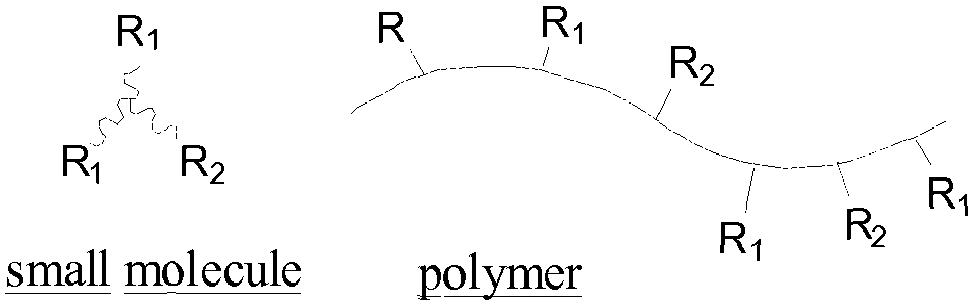
SH4 Pentaerythritol tetrakis(3-mercaptopropionate) 
SH3 trimethylolpropane tris(3-mercaptopropionate) 
SHT3 tris[2-mercaptopropionyloxy) et hyl]isocyanurate 
PDMS-SH (4-6% Mercaptopropyl) methylsiloxane) - dimethylsiloxane copolymer; 
(PDMS-SH100) poly (mercaptopropyl) methylsiloxane 
2,2'-(Ethylenedioxy)diethane thiol 
Ditiotreitol 
tetraethyleneglycol-bis (3-mercaptopropionate) 
Ethyleneglycol-bis(3-mercaptopropionate) 
Dipentaerytritolhexakis (3-merkaptopropionate) 
poly (maleic acid-methyl vinyl ether) functionalized with Cysteaminee, Mn: 2k-100k, Substitution degree (0 to 99%) 
Table 2 component B, Abbreviation and name of compound 
TMPDE trimethylolpropane diallyl ether 
1,3,5-triallyl-1,3,5-triazine-2,4,6(1H,3H,5H)-trione 
TMPDE-COOH trimethylolpropane diallyl ether 
diacrylate-3 tetra(ethylene glycol) diacrylate 
diacrylate-7 poly(ethylene glycol) diacrylate 
Dimethacrylate-PEG 3.4k poly(ethylene glycol) dimethacrylate 
Mn:3400 Allylfunctional polycaprolactone. From PCL diol, triol and tetraol Mn: 1000-100000 Da 
poly (PVAl-co-Allyl) Alyllic functionalized poly (vinyl alcohol): Mn: 1000-500000 m= (0 to 99%) Substitution degree (SD) n(SD)= (1 to 100%) 
poly (PVAl-co-acrylate) Acrylic functionalized poly (vinyl alcohol): Mn: 1000-500000 m= (0 to 99%) Substitution degree (SD) n(SD)= (1 to 100%) 
poly (PVAl-co-methacrylate) Methacrylic functionalized poly (vinyl alcohol): Mn: 1000-500000 m= (0 to 99%) Substitution degree (SD) n(SD)= (1 to 100%) 
poly (PVAl-co- 4-Maleimidobutyric) Maleimido functionalized poly (vinyl alcohol): Mn: 1000-500000 m= (0 to 99%) Substitution degree (SD) n(SD)= (1 to 100%) 
poly (HEMA-co-Allyl) Allyl functionalized poly (HEMA): Mn: 1000-100000 m= (0 to 99%) Substitution degree (SD) n(SD)= (1 to 100%) 
poly (HEMA-co-Maleimido) Maleimido functionalized poly (HEMA) : Mn: 1000-100000 m= (0 to 99%) Substitution degree (SD) n(SD)= (1 to 100%) 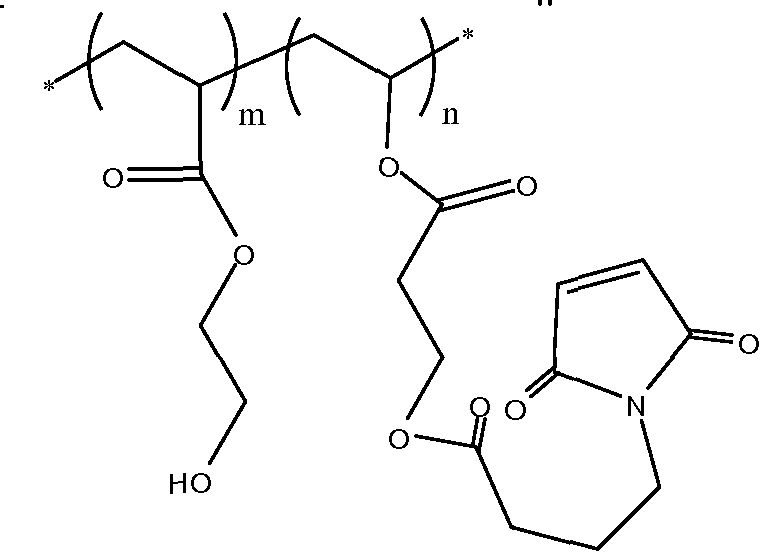
tetraallyl PEO 100-1000k poly (ethylene oxid)-Allyl Mn:1000 - 10000 
Diallyl PEO 100-1000k poly(ethylene oxide) - diallyl Mn:500 - 10000 
poly (Maleic acid alt Methyl Vinyl Ether) functionalized with 2-allyloxyethanol Mn: 2k-100k, Substitution degree (0 to 99%) 
poly (Maleic acid alt Methyl Vinyl Ether) functionalized with allylamine Mn: 2k-100k, Substitution degree (0 to 99%) 
Table 3 The primer, Abbreviation and name of compound 
poly (para-hydroxy styrene) Mn: 1-50 kDa 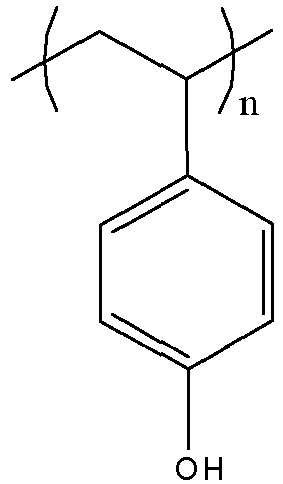
poly (Para-hydroxy styrene-co-acrylate), acrylic functionalized poly (p-hydroxy styrene) : Mn: 1-50 kDa Substitution degree (SD) = (1 to 99%) 
poly (Para-hydroxy styrene-co-allyl), allyl functionalized poly (p-hydroxy styrene) : Mn: 1-50 kDa Substitution degree (SD) = (1 to 99%) 
poly (Para-hydroxy styrene-co-N-maleinmide), maleinimido functionalized poly (p-hydroxy styrene): Mn: 1-50 kDa Substitution degree (SD) = (1 to 99%) 
poly Dopamine (poly (3,4-dihydroxy styrene)), Mn: 1-50 kDa 
Dopamine 
Dopamine methacrylamide 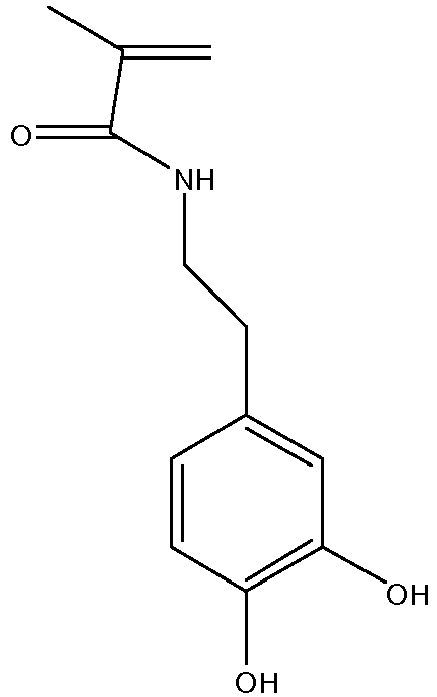
Dopamine allylamide 
- In one embodiment components A and B are premixed and injected/applied to the desirable designation in the body.
- In another embodiment components A and B are injected/applied as separate compounds and mixed at the site in the body
- In another embodiment an applicator is used to inject/apply components A and B. The components will then mix upon in-vivo injection and will be cured on demand at site
- In another embodiment, the applicator will add a primer layer, the primer, followed by the premixture of components A and B.
In another embodiment, the applicator will add a primer layer, the primer, followed by the premixture of component A and B together with fibres.
In another embodiment, the applicator will add fibres, separately from the other components.
In one embodiment the composition comprising components A and B is additionally fixed in the bone by at least one screw. In this way there is provided a further way to fixate the composition in addition to adhesion. The composition to be fixed with screws comprises fibres. A primer is used. A skilled person realizes that also well-known alternatives to screws can be used such as but not limited to nails and plates. In one embodiment the composition is fixed in the bone by at least one selected from a screw and a plate. In one embodiment the implant further comprises at least one screw.
In one embodiment the composition comprises radio-opaque components, compounds detectable in the human body by x-rays, or other components to enable detection through medical imaging devices. Examples of such detection techniques include but are not limited to X-ray, and visual light.
In one embodiment the composition comprises drug molecules to further improve the healing process.
There is provided a kit for the treatment of a bone fracture comprising the composition as described above, and a primer. - In one embodiment said primer comprises at least one phenolic derivative and at least one another group selected from an acrylate, a methacrylate, an allyl, a vinyl, an unsaturated cyclic ring. The primer comprises a polymer. In one embodiment the kit further comprises at least one selected from a screw and a plate.
-
- Examples 1-7 describe synthesis methods for producing component A and B as well as the primer.
- Examples 8-14 describe methods for applying and curing the patch.
- Examples 15-16 describe cytotoxicity as well as shear strength of compositions according to the invention.
- Synthesis of a 3 functional thiol (component A) from an allyl triazine (component B)
Example 1 Moles Grams Allyl comp. 1,3,5-triallyl-1,3,5-triazine-2,4,6(1H,3H,5H)-trione 0.040117 10 Thiol comp. Thioacetic acid 0.36105 27.5 Reagent AIBN 0.0040117 0.659 - 1) The vinyl component, Thioacetic acid and AIBN was added to a round flask
- 2) Reaction was stirred for 48h in 60 C under Nitrogen atmosphere
- 3) Excess of Thioacetic acid was evaporated
- 4) Hydrolysis was conducted in 70 C in presence of THF and HCL
- 5) Product was purified in a column using Heptane and Ethylacetate
- Synthesis of allyl functionalized hydrophilic poly(maleic acid alt methyl vinyl ether). This reaction yields a component B.
Example 2 Moles Grams polymer poly(maleic anhydride alt methyl vinyl ether), Mn=20000 0.000125 2.5 Allyl comp. 2-allyloxy ethanol 0.01925 1. 97 Reagent DMAP 0.001925 0.235 Solvent DMSO - 30mL - 1) The polymer and DMSO was added to a round flask and stirred until dissolved
- 2) DMAP was dissolved in DMSO and added to the round flask
- 3) The allyl component was diluted with DMSO and added to the round flask
- 4) The reaction was stirred for 24h and then quenched with water
- 5) The product was purified with dialysis tubes (Pore size Mw=8000) in distilled water. The dialysis water was renewed three times with neutral water followed by two times with acidic water (pH 4) and three times with neutral water
- 6) The products was then freeze-dried
13C NMR characterization of the compounds reveals:-
Fig 5a : 13C NMR of poly(maleic anhydride alt methyl vinyl ether) -
Fig 5b : 13C NMR of allyl functionalized hydrophilic poly(maleic anhydride alt methyl vinyl ether)
-
- Synthesis of a poly(para hydroxy styrene) 20% functionalized with allyl moieties. This reaction makes a compound that can be used as component B or The primer.
Example 3 Moles Grams polymer poly(para hydroxy styrene), Mw approx. 5000 0.0333 4 Allyl 4-pentenoic acid anhydride 0.00666 1.215 Reagent DMAP 0.000666 0.0815 Solvent Pyridine - 30ml - 1) The polymer was added to a round flask and dissolved in pyridine
- 2) DMAP was added and let to dissolve
- 3) The allyl was added slowly
- 4) The reaction was stirred over night
- 5) The reaction was quenched with water
- 6) Solvents were evaporated in vacuum
- 7) The product was dissolved in Ethanol and precipitated in cold diethyl ether
- 8) Product was filtered and dried
- Synthesis of a Dopamine Methacrylamide. This reaction gives compound that can be used as The primer.
Example 4 Moles Grams Reactant 1 Dopamine 0.021 4 Reactant 2Methacrylic anhydride 0.019 2.92 Reagent TEA 0.023 2.32 Solvent Pyridine - 30ml - 1) Dopamine was added to a round flask and dissolved in pyridine
- 2) TEA was added and mixed well
- 3) Methacrylic anhydride was added slowly under stirring
- 4) The reaction was stirred over night
- 5) Solvents were evaporated in vacuum
- 6) Product was extracted and dried with Magnesium sulphate
- Synthesis of a polyHEMA 25% functionalized with methacryates. This reaction gives a compound that can be used for component B or The primer.
Example 5 Moles Grams Reactant 1 polyHEMA 0.0077 1 Reactant 2Methacrylic anhydride 0.00192 0.296 Reagent DMAP 0.000196 0.024 Solvent Pyridine - 30ml - 1) polyHEMA was added to a round flask and dissolved in pyridine
- 2) DMAP was added and mixed well
- 3) Methacrylic anhydride was added slowly under stirring
- 4) The reaction was stirred over night
- 5) Solvents were evaporated in vacuum
- 6) Product was precipitated in cold ether
- Synthesis of a polycaprolactone diol functionalized with allyl moieties. This reaction makes a compound that can be used as component B.
Example 6 Moles Grams polymer polycaprolactone diol, 3000 Da 0.033 100 Allyl 4-(allyloxy)-4-oxobutanoic anhydride 0.133 51.5 Reagent DMAP 0.00666 0.815 Reagent Pyridine - 10ml Solvent Dichloromethane - 200ml Solvent Methanol - 41 - 1) Dissolve the polymer and DMAP in Pyridine and DCM
- 2) The allyl was added slowly
- 3) The reaction was stirred over night at RT
- 4) The reaction was precipitated in methanol
- 5) The precipitant was filtered and dried overnight under vacuum
- Synthesis of a polycaprolactone diol functionalized with allyl moieties. This reaction makes a compound that can be used as component B.
Example 7 Moles Grams polymer polycaprolactone diol, 50000 Da 0.002 100 Allyl 4-(allyloxy)-4-oxobutanoic anhydride 0.008 3.09 Reagent DMAP 0.016 1. 95 Reagent Pyridine - 10ml Solvent Dichloromethane - 200ml Solvent Methanol - 41 - 1) Dissolve the polymer and DMAP in Pyridine and DCM
- 2) The allyl was added slowly
- 3) The reaction was stirred over night at RT
- 4) The reaction was precipitated in methanol
- 5) The precipitant was filtered and dried overnight under vacuum
- Distribution of the cured composition, with component A and component B.
Example 8 Structure Mole s Gram s component A tetraethylene glycol bis (3-mercaptopropionat e) 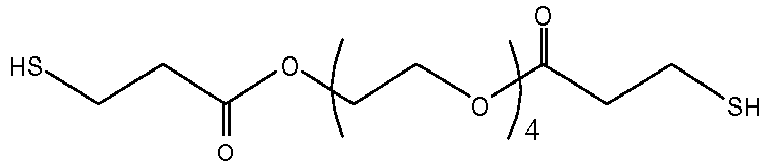
component B poly(Maleic anhydride-methyl vinyl ether) Substituted with 50% 2-allyloxy ethanol 
Solvent Ethanol/ water 70/30Initiator Camphorquinone - 1) component B was added to an empty beaker.
- 2) Solvent was added
- 3) component A was added
- 4) Initiator was added
- 5) The components and the initiator were mixed carefully in a dark environment.
- 6) The mixture was applied on a bone substrate
- 7) The mixture was allowed to cure under a UV-source at 1.66 J/cm2
- 8) The cured composition was allowed to reach ambient temperature before use.
- Distribution of the cured composition, with component A and component B.
Example 9 Moles Grams component A poly(Maleic anhydride-methyl vinyl ether) Substituted with 50% Cysteamine 
component B poly(Maleic anhydride-methyl vinyl ether) Substituted with 50% 2-allyloxy ethanol 
Solvent Ethanol/ water 70/30Initiator Camphorquinone - 1) component B was added to an empty beaker.
- 2) Solvent was added
- 3) component A was added
- 4) Initiator was added
- 5) The components and the initiator were mixed carefully in a dark environment.
- 6) The mixture was applied on a bone substrate
- 7) The mixture was allowed to cure under a UV-source at 1.66 J/cm2
- 8) The cured composition was allowed to reach ambient temperature before use.
- Distribution of a cured composition, with component A and component B, to bone.
Example 10 Moles Grams component A tris[2-mercaptopropionyloxy)ethyl] isocyanurate 
component B1,3,5-triallyl-1,3,5-triazine-2,4,6(1H,3H,5H)-trione 
- 1) The vinyl component was added to an empty beaker.
- 2) The thiol component was added to the vinyl in a dark environment.
- 3) The components were mixed carefully in a dark environment.
- 4) The mixture was applied on a bone substrate
- 5) The mixture was allowed to cure under a UV-source at 1.66 J/cm2
- 6) The formed cured composition was allowed to reach ambient temperature before use.
- Raman spectroscopy of the cured composition as above mentioned reveals following:
-
Fig 6a : component A, tris[2-mercaptopropionyloxy)ethyl] isocyanurate -
Fig 6b : component B, 1,3,5-triallyl-1,3,5-triazine-2,4,6(1H,3H,5H)-trione -
Fig 6c : Cured composition from component A and component B - Distribution of a cured composition, with component A component B1 and component B2, to a substrate.
Example 11 Mole s Gram s component A tris[2-mercaptopropionyloxy)eth yl] isocyanurate 
component B1 1,3,5-triallyl-1,3,5-triazine-2,4,6(1H,3H,5H)-trione 
component B2 poly(Maleic anhydride-methyl vinyl ether) Substituted with 10% 2-allyloxy ethanol 
Initiator Camphorquinone - 1) The vinyl component B1 was added to an empty beaker.
- 2) The thiol component A was added to the vinyl in a dark environment.
- 3) The hydrophilic vinyl polymer, component B2 was added.
- 4) The components were mixed carefully in a dark environment.
- 5) The initiator was added and mixed well.
- 6) The mixture was applied on a bone substrate
- 7) The mixture was allowed to cure under a UV-source at 1.66 J/cm2
- 8) The formed cured composition was allowed to reach ambient temperature before use.
- Distribution of a cured composition, with component A and component B, to bone.
Example 12 Mole s Gram s component A tris[2-mercaptopropionyloxy)ethy l] isocyanurate 
component B tetra(ethylene glycol) diacrylate 
- 1) The component A was added to an empty beaker.
- 2) The component B was added to the vinyl in a dark environment.
- 3) The components were mixed carefully in a dark environment.
- 4) The mixture was applied on a bone substrate
- 5) The mixture was allowed to cure under a UV-source at 1.66 J/cm2
- 6) The formed cured composition was allowed to reach ambient temperature before use.
- Distribution and composition of a primer, The primer, followed by a mixture of component A and component B, reinforced with the fibre.
Example 13 Moles Grams component A tris[2-mercaptopropionyloxy)ethyl] isocyanurate 
component B 1,3,5-triallyl-1,3,5-triazine-2,4,6(1H,3H,5H)-trione 
The primer poly(para hydroxy styrene) 
Initiator Camphorquinone Solvent Ethanol/ water 70/30 - 1) poly(para hydroxy styrene), The primer, was dissolved in Ethanol/
water 70/30 to a concentration of 25mg/ml - 2) After mixing well the thin primer layer was applied around a fracture
- 3) the primer layer was then let to dry in approx. 1 min
- 4) Thereafter the vinyl, component B, was added to an empty vial.
- 5) The initiator was added to the vial in a dark environment and mixed carefully.
- 6) The thiol, component A, was then added to the vinyl and the initiator in a dark environment and mixed carefully.
- 7) The mixture was applied to the primer coated bone tissue as a thin layer.
- 8) Fibre, 4 layers of a 25g/m2 E-glass fibre veil, were then placed to on the thin mixture layer to "patch" the fracture.
- 9) The fibre layers were then coated with a new layer of mixture to fully wet the fibres
- 10) The composite patch was then cured under a UV-source at 1.66 J/cm2 to form a fibre reinforced cured composition.
- 11) The patch was allowed to reach ambient temperature before use.
- Distribution and composition of a primer, The primer, followed by a mixture of component A and component B, reinforced with the fibre.
Example 14 structure Moles Grams component A tris[2-mercaptopropionyloxy)ethyl] isocyanurate 
component B 1,3,5-triallyl-1,3,5-triazine-2,4,6(1H,3H,5H)-trione 
the primer Dopamine Methacrylamide 
Reagent NaOH Initiator Camphorquinone Solvent Ethanol/water - 1) Dopamine Methacrylamide (AMD), the primer, was dissolved in Ethanol/
water 50/50 to a concentration of 25mg/ml - 2) After mixing well the thin primer layer was applied around a fracture
- 3) NaOH was then added to the primer to increase pH.
- 4) the primer layer was then let to dry in approx. 1 min
- 5) Thereafter the vinyl, component B, was added to an empty vial.
- 6) The initiator was added to the vial in a dark environment and mixed carefully.
- 7) The thiol, component A, was then added to the vinyl and the initiator in a dark environment and mixed carefully.
- 8) The mixture was applied to the primer coated bone tissue as a thin layer.
- 9) Fibre, 4 layers of a 25g/m2 E-glass fibre veil, were then placed to on the thin mixture layer to "patch" the fracture.
- 10) The fibre layers were then coated with a new layer of mixture to fully wet the fibres
- 11) The composite patch was then cured under a UV-source at 1.66 J/cm2 to form a fibre reinforced cured composition.
- 12) The patch was allowed to reach ambient temperature before use.
- The materials to be tested were coated on glass slides (76mm x 26mm) and incubated with complete growth medium (CGM) for 24h, at a concentration of 2.5cm/ml to achieve material-CGM. MG63 osteoblast-like cells, ATCC, were cultured in Dulbecco Modified Eagle's Medium (DMEM), ATCC, containing 10% Heat inactivated Fetal Bovine Serum (FBS) and 0.5% Penicillin/Streptomycin, Sigma Aldrich, herein called as CGM. Incubation was performed at 37°C in an atmosphere of 5% CO2 and 99% humidity. CGM renewal or cell splitting was carried out once every three days. Cells were released at confluence with trypsin/EDTA and seeded on five individual 96-well plates with approximately 20000 cells/well and 200µl CGM in each well. Five replicates were performed for each type of material- CGM. The cells were allowed to attach for 12h before the CGM was replaced with 200µl of material-CGM and incubated for 0h, 12h, 24h, 48h and 72h. At each time interval each well on one plate was stained with 0.5mg/ml MTT and incubated for another 3h. After incubation the supernatant was replaced with 200µl of DMSO and the coloured solution in the wells was transferred to a new plate where absorbance was measured at 570nm in an ELISA plate reader. No toxicity could be seen for any of the tested adhesives or primers.
Figure 7 shows a comparison between [1,3,5-triallyl-1,3,5-triazine-2,4,6(1H,3H,5H)-trione (allyl-triazine) + tris[2-mercaptopropionyloxy)ethyl]isocyanurate(thiol-triazine)], denoted as TT and the commercially available Histoacryl. It is visible that TT is more biocompatible than Histoacryl. - Bovine femur bones were obtained from an abattoir and split into rectangular blocks with dimensions of approximately 10x5x50 mm. Each block was then wet sanded with
grain size 80 sandpaper until a smooth and even surface was achieved. A generic fracture was created by sawing each rod into two halves. The bone surface of the two halves were then prepared with a thin layer of primer and a thereafter a layer of adhesive at an approximately 8x8 mm square adjacent to the fracture. The primer-adhesive layer was then cured by exposure to UV-irradiation at a total dose of 1.66 J/cm2, divided by 4 passes under a Fusion Corporation instrument with a Hg-lamp prior to the application of the fibre reinforced adhesive patch (FRAP). The FRAP bond was performed with an initial layer of adhesive followed by 6 lamina of fibres and a final top coat of adhesive. The patch was then further cured. After bonding the bone specimen were submerged in saline for 24h to mimic in vivo conditions. All mechanical tests were performed in an Instron 5568 with a 30kN load cell and with a cross head speed of 5mm/min. The tensile tests were performed by inserting two parallel metal pins through the distal ends of the specimen with wire connection to the load cell. All specimens were tested until either cohesive or adhesive failure was observed. Depending on the failure mode, either cohesive failure area or patch/bone adherent area was measured and maximum tensile strength or maximum shear strength was calculated. Testing the FRAP made from E-glass fibre reinforced [1,3,5-triallyl-1,3,5-triazine-2,4,6(1H,3H,5H)-trione(allyl-triazine) + tris[2-mercaptopropionyloxy)ethyl]isocyanurate(thiol-triazine)] revealed a maximum patch strength above 85MPa and a maximum shear strength when used together with a PHS primer of 3.42 MPa, compared as "TT" to the commercially available butyl-cyanoacrylate "Histoacryl" and an Industrial Epoxy infigure 8 .
Claims (9)
- An adhesive patch comprising
a layer comprising a primer; and
a composition provided on said primer layer, comprising the reaction product of at least one component A and at least one component B,
wherein component A comprises a compound comprising at least two thiol groups or a disulfide derivative of a compound comprising at least two thiol groups, and
wherein component B comprises vinyl reactive groups chosen from vinyl, acrylates, methacrylates, allyl and unsaturated cyclic vinyls;
wherein the primer is a dendritic polymer structure wherein the composition further comprises fibres. - The patch according to claim 1, wherein the fibres are in the shape of a mesh surrounded on both sides by the composition comprising at least one component A and at least one component B.
- The patch according to any one of claims
1-2, wherein component A and B is a polymer having a molecular weight of 1 to 100 kDa. - The patch according to claim 1, wherein
component A is selected from the group consisting of pentaerythritol tetrakis(3-mercaptopropionate), trimethylolpropane tris(3-mercaptopropionate), tris[2-mercaptopropionyloxy)ethyl]isocyanurate, mercaptopropyl methylsiloxane-dimethylsiloxane copolymer,poly (mercaptopropyl) methylsiloxane, 2,2' (ethylenedioxy)diethanethiol, ditiotreitol, Tetraethyleneglycol-bis(3-mercaptopropionate), ethyleneglycol-bis(3-mercaptopropionate), trimethylolpropane diallylether, dipentaerytritolhexakis(3-merkaptopropionate), tetradecane-1,14-dithiol, (+ / -) -trans-1,2-bis (2-mercaptoacetamido) cyclohexane, (E) -S, S '-bis (lomercaptodecyl)-4,4'-(diazene-1,2-diyl)bis(4-cyanopentanethioate), bis(2-mercaptoethyl)sulfone, 2,5-dimercaptomethyl-1,4-dithiane, 1,4-butanediol-bis(3-mercaptopropionate), 1,16-hexadecanedithiol, undecane-1,11-dithiol, heptane-1,7-dithiol, 1,12-dimercaptododecane, octadecane-1,18-dithiol, (5-mercaptomethyl-2,4-dimethylphenyl)-methanethiol, (3-mercaptomethyl-5-methyl-phenyl)-methanetho, 1,2-benzenedimethanethiol, (4R,5R)-4,5-bis (mercaptomethyl)-2,2-dimethyl-1,3-dioxolane, 3-bis(2-mercaptoethylthio)propane, ethanethiol, aceticacidmercapto-1,2,6-hexanetriyl ester, L-1,4-dithiothretol, glycerylthioglycolate, 3,6-dioxa-1,8-octanedithiol, trimethylolpropane-tris(mercaptoacetate) 2,3-butanediol-1,4-dimercapto- pentaerythritol-tetrakis(3-mercaptopropionate), ethanethiol - 2,2',2"-nitrilotris, 2,2'-thiodiethanethiol, 1,9-nonanedithiol, 2,2'- oxydiethanethiol, and 10-decanedithiol. - The patch according to any one of claims
1-4, wherein component B is selected from the group consisting of trimethylolpropane diallyl ether, 1,3,5-triallyl-1,3,5-triazine-2,4,6 (1H,3H,5H) -trione, trimethylolpropane diallyl ether, poly(ethylene glycol) diacrylate, poly(ethylene glycol) dimethacrylate and poly(ethylene glycol) dimaleinimide. - The patch according to any one of claims
1-5, wherein the composition further comprises at least one compound selected from the group consisting of a bone growth stimulant, an osteoblast, a bone morphogenic protein, a growth hormone, a cell attractant, and a drug molecule. - The patch according to claim 1, wherein the fibre comprises at least one fibre selected from the group consisting of an E-glass fibre, an S-glass fibre, a carbon fibre, an UHMWPE fibre, a cellulose based fibre, a collagen fibre, and a polypropylene fibre.
- A kit for the treatment of at least one selected from a bone fracture and a bone cavity, said kit
comprising a composition comprising the reaction product of at least one component A and at least one component B,
wherein component A comprises a compound comprising at least two thiol-groups or a disulfide derivative of a compound comprising at least two thiol groups, and
wherein component B comprises vinyl reactive groups chosen from vinyl, acrylates, methacrylates, allyl and unsaturated cyclic vinyls;
and a primer comprising a dendritic polymer structure and wherein the kit further comprises fibres. - The kit according to claim 8 wherein the kit further comprises at least one selected from a screw and a plate.
Applications Claiming Priority (3)
| Application Number | Priority Date | Filing Date | Title |
|---|---|---|---|
| US25460909P | 2009-10-23 | 2009-10-23 | |
| SE0950783 | 2009-10-23 | ||
| PCT/EP2010/065689 WO2011048077A2 (en) | 2009-10-23 | 2010-10-19 | Composition for the treatment of a bone fracture |
Publications (2)
| Publication Number | Publication Date |
|---|---|
| EP2490727A2 EP2490727A2 (en) | 2012-08-29 |
| EP2490727B1 true EP2490727B1 (en) | 2020-09-23 |
Family
ID=43624938
Family Applications (1)
| Application Number | Title | Priority Date | Filing Date |
|---|---|---|---|
| EP10765807.2A Active EP2490727B1 (en) | 2009-10-23 | 2010-10-19 | Composition for the treatment of a bone fracture |
Country Status (4)
| Country | Link |
|---|---|
| US (3) | US20120308532A1 (en) |
| EP (1) | EP2490727B1 (en) |
| CA (1) | CA2777668C (en) |
| WO (1) | WO2011048077A2 (en) |
Families Citing this family (11)
| Publication number | Priority date | Publication date | Assignee | Title |
|---|---|---|---|---|
| US20160200044A1 (en) * | 2013-04-24 | 2016-07-14 | The Board Of Regents Of The University Of Texas System | Cartridge-based 3d printing system |
| EP2910236B1 (en) * | 2014-02-24 | 2020-02-12 | Ivoclar Vivadent AG | Dental materials based on low-odour thiols |
| JP6740615B2 (en) * | 2016-01-14 | 2020-08-19 | Jsr株式会社 | Resin composition, photosensitive resin composition, method for producing resist pattern, and touch panel member |
| WO2019081641A1 (en) | 2017-10-25 | 2019-05-02 | Biomedical Bonding Ab | A composition comprising thiol, alkene and phosphonic acid containing compounds for use as a primer for adhesion improvement |
| ES2861649T3 (en) | 2016-10-27 | 2021-10-06 | Biomedical Bonding Ab | A composition comprising compounds containing thiol, alkene and phosphonic acid for use as a primer to improve adhesion |
| US11130886B2 (en) * | 2017-12-31 | 2021-09-28 | Purdue Research Foundation | Adhesives |
| CN109971163B (en) * | 2019-04-04 | 2021-02-02 | 陕西科技大学 | Waterborne polyurethane/Fe3+Preparation method of gel material |
| EP4076236A1 (en) | 2019-12-17 | 2022-10-26 | Biomedical Bonding AB | A composition for fast-cured thermosets containing amines, thiols and unsaturated molecules |
| CN111269427B (en) * | 2020-04-08 | 2021-09-07 | 江南大学 | A kind of preparation method of medical adhesive |
| EP4091599A1 (en) | 2021-05-18 | 2022-11-23 | Karl Leibinger Medizintechnik Gmbh & Co. Kg | Polymerizable thiol-ene based composition |
| US11643574B2 (en) | 2021-05-28 | 2023-05-09 | Cohesys Inc. | Adhesive devices and uses thereof |
Family Cites Families (14)
| Publication number | Priority date | Publication date | Assignee | Title |
|---|---|---|---|---|
| US4348183A (en) * | 1981-01-21 | 1982-09-07 | Ipco Corporation | Dental post provided with a restorative material retainer |
| DE3577393D1 (en) | 1985-05-14 | 1990-06-07 | Schweiz Lab Exper Chirurgie | METHOD AND APPARATUS FOR PREPARING A SELF-HARDENING TWO-COMPONENT POWDER LIQUID CEMENT. |
| US5733122A (en) * | 1995-05-31 | 1998-03-31 | Gordon; Basil | Dental implant attachment assembly including device and method for resisting loosening of attachment |
| US6326417B1 (en) * | 1999-10-21 | 2001-12-04 | Jeneric/Pentron Incorporated | Anti-microbial dental compositions and method |
| JP2004536934A (en) * | 2001-07-25 | 2004-12-09 | ピーピージー インダストリーズ オハイオ, インコーポレイテッド | High refractive index optical resin composition |
| AU2002321808A1 (en) * | 2001-08-08 | 2003-02-24 | B.J.M. Laboratories Ltd. | Dental compositions |
| ATE541595T1 (en) | 2002-03-22 | 2012-02-15 | Kuros Biosurgery Ag | COMPOSITION FOR REINFORCEMENT OF HARD TISSUE |
| US20040224285A1 (en) * | 2003-05-09 | 2004-11-11 | Bisco, Inc. | Reinforced composites for use in dental restorations |
| KR101226811B1 (en) * | 2003-09-05 | 2013-01-28 | 신세스 게엠바하 | Bone cement compositions having fiber-reinforcement and/or increased flowability |
| EP1677699A4 (en) * | 2003-10-22 | 2009-05-20 | Univ Colorado | NEW PHOTOPOLYMERS AND USE IN DENTAL RESTORATION MATERIALS |
| WO2005086911A2 (en) * | 2004-03-09 | 2005-09-22 | The Regents Of The University Of Colorado | Reactive oligomeric thiol and ene materials as dental restorative mixtures |
| EP1802268A1 (en) * | 2004-10-20 | 2007-07-04 | Pentron Clinical Technologies, LLC | Dental self-etching composition and method of use |
| WO2009029734A2 (en) | 2007-08-28 | 2009-03-05 | Pioneer Surgical Technology, Inc. | Cement products and methods of making and using the same |
| WO2009058079A1 (en) * | 2007-11-01 | 2009-05-07 | Bactiguard Ab | A lubricious coating, a method for coating and a coated article |
-
2010
- 2010-10-19 US US13/503,386 patent/US20120308532A1/en not_active Abandoned
- 2010-10-19 WO PCT/EP2010/065689 patent/WO2011048077A2/en not_active Ceased
- 2010-10-19 CA CA2777668A patent/CA2777668C/en active Active
- 2010-10-19 EP EP10765807.2A patent/EP2490727B1/en active Active
-
2015
- 2015-07-01 US US14/788,860 patent/US20160000484A1/en not_active Abandoned
-
2017
- 2017-10-30 US US15/797,385 patent/US20180116699A1/en not_active Abandoned
Non-Patent Citations (1)
| Title |
|---|
| None * |
Also Published As
| Publication number | Publication date |
|---|---|
| WO2011048077A2 (en) | 2011-04-28 |
| US20160000484A1 (en) | 2016-01-07 |
| WO2011048077A3 (en) | 2011-09-22 |
| EP2490727A2 (en) | 2012-08-29 |
| US20120308532A1 (en) | 2012-12-06 |
| US20180116699A1 (en) | 2018-05-03 |
| CA2777668A1 (en) | 2011-04-28 |
| CA2777668C (en) | 2019-02-12 |
Similar Documents
| Publication | Publication Date | Title |
|---|---|---|
| CA2777668C (en) | Composition for the treatment of a bone fracture | |
| Zhang et al. | Functional macromolecular adhesives for bone fracture healing | |
| Zaokari et al. | Biomaterials for adhesion in orthopedic applications: a review | |
| Yaszemski et al. | The ingrowth of new bone tissue and initial mechanical properties of a degrading polymeric composite scaffold | |
| Yang et al. | Degradable nanohydroxyapatite-reinforced superglue for rapid bone fixation and promoted osteogenesis | |
| Lei et al. | In vitro and in vivo characterization of a foam-like polyurethane bone adhesive for promoting bone tissue growth | |
| AU2003226688B2 (en) | Composition for hard tissue augmentation | |
| Yang et al. | Synthesis and characterization of an injectable and hydrophilous expandable bone cement based on poly (methyl methacrylate) | |
| Mishra et al. | Bioceramics for adhesive applications | |
| KR20200112254A (en) | Polymethylmethacrylate bone cement with hyaluronic acid-polyethylene glycol improved physicochemical and biocompatibility and a method for preparing thereof | |
| Zhang et al. | Effect of antibacterial enoxacin on the properties of injectable nano-hydroxyapatite/polyurethane cement for bone repairing | |
| Bao et al. | Degradable polymer bone adhesives | |
| Krtička et al. | Ex-vivo biomechanical testing of pig femur diaphysis B type fracture fixed by novel biodegradable bone glue | |
| KR101176793B1 (en) | Bone cement composition containing silk fibroin hydrolysates and polymethylmetacrylate | |
| CN116688213B (en) | Injectable dual-bionic bone adhesive for promoting fracture healing and preparation method thereof | |
| Lee et al. | Catechol-and thiol-containing binder that aggregates granular xenografts in reconstructed bone defects by mimicking mussel wet adhesion | |
| CN117919482A (en) | Bone tissue implant adhesive and preparation method and application thereof | |
| KR20230095828A (en) | Composition for manufacturing bone cement and bone cement prepared therfrom | |
| Heiss et al. | Development of a bioresorbable self‐hardening bone adhesive based on a composite consisting of polylactide methacrylates and β‐tricalcium phosphate | |
| RU2202297C2 (en) | Method for applying bone cement with biologically active agents | |
| Huddleston | Body Heat-Activated Polymer-Mineral Composites for Vertebral Body Fractures | |
| Sánchez Fernández | Development of Poly (2-oxazoline)-Based Bone-Adhesive Biomaterials | |
| Arshad | Modified Dental Composites for Bone Repair | |
| LORENC | Reologické vlastnosti termosenzitivních kostních cementů obohacených o bioaktivní látky | |
| Wu | Improving the Bioactivity of Polymeric Bone Regenerative Scaffolds Through Physically and Chemically Incorporated Molecules |
Legal Events
| Date | Code | Title | Description |
|---|---|---|---|
| PUAI | Public reference made under article 153(3) epc to a published international application that has entered the european phase |
Free format text: ORIGINAL CODE: 0009012 |
|
| 17P | Request for examination filed |
Effective date: 20120416 |
|
| AK | Designated contracting states |
Kind code of ref document: A2 Designated state(s): AL AT BE BG CH CY CZ DE DK EE ES FI FR GB GR HR HU IE IS IT LI LT LU LV MC MK MT NL NO PL PT RO RS SE SI SK SM TR |
|
| DAX | Request for extension of the european patent (deleted) | ||
| 17Q | First examination report despatched |
Effective date: 20160317 |
|
| RAP1 | Party data changed (applicant data changed or rights of an application transferred) |
Owner name: BIOMEDICAL BONDING AB |
|
| STAA | Information on the status of an ep patent application or granted ep patent |
Free format text: STATUS: EXAMINATION IS IN PROGRESS |
|
| GRAP | Despatch of communication of intention to grant a patent |
Free format text: ORIGINAL CODE: EPIDOSNIGR1 |
|
| STAA | Information on the status of an ep patent application or granted ep patent |
Free format text: STATUS: GRANT OF PATENT IS INTENDED |
|
| INTG | Intention to grant announced |
Effective date: 20200218 |
|
| RIN1 | Information on inventor provided before grant (corrected) |
Inventor name: MALKOCH, MICHAEL Inventor name: HULT, ANDERS Inventor name: VON HOLST, HANS Inventor name: NORDBERG, AXEL |
|
| GRAJ | Information related to disapproval of communication of intention to grant by the applicant or resumption of examination proceedings by the epo deleted |
Free format text: ORIGINAL CODE: EPIDOSDIGR1 |
|
| STAA | Information on the status of an ep patent application or granted ep patent |
Free format text: STATUS: EXAMINATION IS IN PROGRESS |
|
| GRAP | Despatch of communication of intention to grant a patent |
Free format text: ORIGINAL CODE: EPIDOSNIGR1 |
|
| STAA | Information on the status of an ep patent application or granted ep patent |
Free format text: STATUS: GRANT OF PATENT IS INTENDED |
|
| INTC | Intention to grant announced (deleted) | ||
| INTG | Intention to grant announced |
Effective date: 20200424 |
|
| GRAS | Grant fee paid |
Free format text: ORIGINAL CODE: EPIDOSNIGR3 |
|
| GRAA | (expected) grant |
Free format text: ORIGINAL CODE: 0009210 |
|
| STAA | Information on the status of an ep patent application or granted ep patent |
Free format text: STATUS: THE PATENT HAS BEEN GRANTED |
|
| AK | Designated contracting states |
Kind code of ref document: B1 Designated state(s): AL AT BE BG CH CY CZ DE DK EE ES FI FR GB GR HR HU IE IS IT LI LT LU LV MC MK MT NL NO PL PT RO RS SE SI SK SM TR |
|
| REG | Reference to a national code |
Ref country code: GB Ref legal event code: FG4D |
|
| REG | Reference to a national code |
Ref country code: CH Ref legal event code: EP |
|
| REG | Reference to a national code |
Ref country code: DE Ref legal event code: R096 Ref document number: 602010065511 Country of ref document: DE |
|
| REG | Reference to a national code |
Ref country code: IE Ref legal event code: FG4D |
|
| REG | Reference to a national code |
Ref country code: AT Ref legal event code: REF Ref document number: 1315731 Country of ref document: AT Kind code of ref document: T Effective date: 20201015 |
|
| REG | Reference to a national code |
Ref country code: CH Ref legal event code: NV Representative=s name: VALIPAT S.A. C/O BOVARD SA NEUCHATEL, CH |
|
| REG | Reference to a national code |
Ref country code: SE Ref legal event code: TRGR |
|
| RAP2 | Party data changed (patent owner data changed or rights of a patent transferred) |
Owner name: BIOMEDICAL BONDING AB |
|
| PG25 | Lapsed in a contracting state [announced via postgrant information from national office to epo] |
Ref country code: FI Free format text: LAPSE BECAUSE OF FAILURE TO SUBMIT A TRANSLATION OF THE DESCRIPTION OR TO PAY THE FEE WITHIN THE PRESCRIBED TIME-LIMIT Effective date: 20200923 Ref country code: HR Free format text: LAPSE BECAUSE OF FAILURE TO SUBMIT A TRANSLATION OF THE DESCRIPTION OR TO PAY THE FEE WITHIN THE PRESCRIBED TIME-LIMIT Effective date: 20200923 Ref country code: GR Free format text: LAPSE BECAUSE OF FAILURE TO SUBMIT A TRANSLATION OF THE DESCRIPTION OR TO PAY THE FEE WITHIN THE PRESCRIBED TIME-LIMIT Effective date: 20201224 Ref country code: NO Free format text: LAPSE BECAUSE OF FAILURE TO SUBMIT A TRANSLATION OF THE DESCRIPTION OR TO PAY THE FEE WITHIN THE PRESCRIBED TIME-LIMIT Effective date: 20201223 Ref country code: BG Free format text: LAPSE BECAUSE OF FAILURE TO SUBMIT A TRANSLATION OF THE DESCRIPTION OR TO PAY THE FEE WITHIN THE PRESCRIBED TIME-LIMIT Effective date: 20201223 |
|
| REG | Reference to a national code |
Ref country code: AT Ref legal event code: MK05 Ref document number: 1315731 Country of ref document: AT Kind code of ref document: T Effective date: 20200923 |
|
| PG25 | Lapsed in a contracting state [announced via postgrant information from national office to epo] |
Ref country code: LV Free format text: LAPSE BECAUSE OF FAILURE TO SUBMIT A TRANSLATION OF THE DESCRIPTION OR TO PAY THE FEE WITHIN THE PRESCRIBED TIME-LIMIT Effective date: 20200923 Ref country code: RS Free format text: LAPSE BECAUSE OF FAILURE TO SUBMIT A TRANSLATION OF THE DESCRIPTION OR TO PAY THE FEE WITHIN THE PRESCRIBED TIME-LIMIT Effective date: 20200923 |
|
| REG | Reference to a national code |
Ref country code: NL Ref legal event code: MP Effective date: 20200923 |
|
| REG | Reference to a national code |
Ref country code: DE Ref legal event code: R081 Ref document number: 602010065511 Country of ref document: DE Owner name: BIOMEDICAL BONDING AB, SE Free format text: FORMER OWNER: BIOMEDICAL BONDING AB, TAEBY, SE |
|
| REG | Reference to a national code |
Ref country code: LT Ref legal event code: MG4D |
|
| PG25 | Lapsed in a contracting state [announced via postgrant information from national office to epo] |
Ref country code: PT Free format text: LAPSE BECAUSE OF FAILURE TO SUBMIT A TRANSLATION OF THE DESCRIPTION OR TO PAY THE FEE WITHIN THE PRESCRIBED TIME-LIMIT Effective date: 20210125 Ref country code: LT Free format text: LAPSE BECAUSE OF FAILURE TO SUBMIT A TRANSLATION OF THE DESCRIPTION OR TO PAY THE FEE WITHIN THE PRESCRIBED TIME-LIMIT Effective date: 20200923 Ref country code: NL Free format text: LAPSE BECAUSE OF FAILURE TO SUBMIT A TRANSLATION OF THE DESCRIPTION OR TO PAY THE FEE WITHIN THE PRESCRIBED TIME-LIMIT Effective date: 20200923 Ref country code: RO Free format text: LAPSE BECAUSE OF FAILURE TO SUBMIT A TRANSLATION OF THE DESCRIPTION OR TO PAY THE FEE WITHIN THE PRESCRIBED TIME-LIMIT Effective date: 20200923 Ref country code: SM Free format text: LAPSE BECAUSE OF FAILURE TO SUBMIT A TRANSLATION OF THE DESCRIPTION OR TO PAY THE FEE WITHIN THE PRESCRIBED TIME-LIMIT Effective date: 20200923 Ref country code: CZ Free format text: LAPSE BECAUSE OF FAILURE TO SUBMIT A TRANSLATION OF THE DESCRIPTION OR TO PAY THE FEE WITHIN THE PRESCRIBED TIME-LIMIT Effective date: 20200923 Ref country code: EE Free format text: LAPSE BECAUSE OF FAILURE TO SUBMIT A TRANSLATION OF THE DESCRIPTION OR TO PAY THE FEE WITHIN THE PRESCRIBED TIME-LIMIT Effective date: 20200923 |
|
| PG25 | Lapsed in a contracting state [announced via postgrant information from national office to epo] |
Ref country code: ES Free format text: LAPSE BECAUSE OF FAILURE TO SUBMIT A TRANSLATION OF THE DESCRIPTION OR TO PAY THE FEE WITHIN THE PRESCRIBED TIME-LIMIT Effective date: 20200923 Ref country code: IS Free format text: LAPSE BECAUSE OF FAILURE TO SUBMIT A TRANSLATION OF THE DESCRIPTION OR TO PAY THE FEE WITHIN THE PRESCRIBED TIME-LIMIT Effective date: 20210123 Ref country code: AT Free format text: LAPSE BECAUSE OF FAILURE TO SUBMIT A TRANSLATION OF THE DESCRIPTION OR TO PAY THE FEE WITHIN THE PRESCRIBED TIME-LIMIT Effective date: 20200923 Ref country code: AL Free format text: LAPSE BECAUSE OF FAILURE TO SUBMIT A TRANSLATION OF THE DESCRIPTION OR TO PAY THE FEE WITHIN THE PRESCRIBED TIME-LIMIT Effective date: 20200923 Ref country code: PL Free format text: LAPSE BECAUSE OF FAILURE TO SUBMIT A TRANSLATION OF THE DESCRIPTION OR TO PAY THE FEE WITHIN THE PRESCRIBED TIME-LIMIT Effective date: 20200923 |
|
| REG | Reference to a national code |
Ref country code: DE Ref legal event code: R097 Ref document number: 602010065511 Country of ref document: DE |
|
| PG25 | Lapsed in a contracting state [announced via postgrant information from national office to epo] |
Ref country code: LU Free format text: LAPSE BECAUSE OF NON-PAYMENT OF DUE FEES Effective date: 20201019 Ref country code: SK Free format text: LAPSE BECAUSE OF FAILURE TO SUBMIT A TRANSLATION OF THE DESCRIPTION OR TO PAY THE FEE WITHIN THE PRESCRIBED TIME-LIMIT Effective date: 20200923 Ref country code: MC Free format text: LAPSE BECAUSE OF FAILURE TO SUBMIT A TRANSLATION OF THE DESCRIPTION OR TO PAY THE FEE WITHIN THE PRESCRIBED TIME-LIMIT Effective date: 20200923 |
|
| REG | Reference to a national code |
Ref country code: BE Ref legal event code: MM Effective date: 20201031 |
|
| PLBE | No opposition filed within time limit |
Free format text: ORIGINAL CODE: 0009261 |
|
| STAA | Information on the status of an ep patent application or granted ep patent |
Free format text: STATUS: NO OPPOSITION FILED WITHIN TIME LIMIT |
|
| PG25 | Lapsed in a contracting state [announced via postgrant information from national office to epo] |
Ref country code: BE Free format text: LAPSE BECAUSE OF NON-PAYMENT OF DUE FEES Effective date: 20201031 Ref country code: DK Free format text: LAPSE BECAUSE OF FAILURE TO SUBMIT A TRANSLATION OF THE DESCRIPTION OR TO PAY THE FEE WITHIN THE PRESCRIBED TIME-LIMIT Effective date: 20200923 Ref country code: SI Free format text: LAPSE BECAUSE OF FAILURE TO SUBMIT A TRANSLATION OF THE DESCRIPTION OR TO PAY THE FEE WITHIN THE PRESCRIBED TIME-LIMIT Effective date: 20200923 |
|
| 26N | No opposition filed |
Effective date: 20210624 |
|
| PG25 | Lapsed in a contracting state [announced via postgrant information from national office to epo] |
Ref country code: IE Free format text: LAPSE BECAUSE OF NON-PAYMENT OF DUE FEES Effective date: 20201019 Ref country code: IT Free format text: LAPSE BECAUSE OF FAILURE TO SUBMIT A TRANSLATION OF THE DESCRIPTION OR TO PAY THE FEE WITHIN THE PRESCRIBED TIME-LIMIT Effective date: 20200923 |
|
| PG25 | Lapsed in a contracting state [announced via postgrant information from national office to epo] |
Ref country code: TR Free format text: LAPSE BECAUSE OF FAILURE TO SUBMIT A TRANSLATION OF THE DESCRIPTION OR TO PAY THE FEE WITHIN THE PRESCRIBED TIME-LIMIT Effective date: 20200923 Ref country code: MT Free format text: LAPSE BECAUSE OF FAILURE TO SUBMIT A TRANSLATION OF THE DESCRIPTION OR TO PAY THE FEE WITHIN THE PRESCRIBED TIME-LIMIT Effective date: 20200923 Ref country code: CY Free format text: LAPSE BECAUSE OF FAILURE TO SUBMIT A TRANSLATION OF THE DESCRIPTION OR TO PAY THE FEE WITHIN THE PRESCRIBED TIME-LIMIT Effective date: 20200923 |
|
| PG25 | Lapsed in a contracting state [announced via postgrant information from national office to epo] |
Ref country code: MK Free format text: LAPSE BECAUSE OF FAILURE TO SUBMIT A TRANSLATION OF THE DESCRIPTION OR TO PAY THE FEE WITHIN THE PRESCRIBED TIME-LIMIT Effective date: 20200923 |
|
| PGFP | Annual fee paid to national office [announced via postgrant information from national office to epo] |
Ref country code: GB Payment date: 20231128 Year of fee payment: 14 |
|
| PGFP | Annual fee paid to national office [announced via postgrant information from national office to epo] |
Ref country code: SE Payment date: 20231130 Year of fee payment: 14 Ref country code: FR Payment date: 20231127 Year of fee payment: 14 Ref country code: DE Payment date: 20231128 Year of fee payment: 14 Ref country code: CH Payment date: 20231201 Year of fee payment: 14 |
|
| REG | Reference to a national code |
Ref country code: DE Ref legal event code: R119 Ref document number: 602010065511 Country of ref document: DE |
|
| REG | Reference to a national code |
Ref country code: CH Ref legal event code: PL |
|
| REG | Reference to a national code |
Ref country code: SE Ref legal event code: EUG |
|
| GBPC | Gb: european patent ceased through non-payment of renewal fee |
Effective date: 20241019 |
|
| PG25 | Lapsed in a contracting state [announced via postgrant information from national office to epo] |
Ref country code: DE Free format text: LAPSE BECAUSE OF NON-PAYMENT OF DUE FEES Effective date: 20250501 |
|
| PG25 | Lapsed in a contracting state [announced via postgrant information from national office to epo] |
Ref country code: GB Free format text: LAPSE BECAUSE OF NON-PAYMENT OF DUE FEES Effective date: 20241019 |
|
| PG25 | Lapsed in a contracting state [announced via postgrant information from national office to epo] |
Ref country code: FR Free format text: LAPSE BECAUSE OF NON-PAYMENT OF DUE FEES Effective date: 20241031 |
|
| PG25 | Lapsed in a contracting state [announced via postgrant information from national office to epo] |
Ref country code: CH Free format text: LAPSE BECAUSE OF NON-PAYMENT OF DUE FEES Effective date: 20241031 |
|
| PG25 | Lapsed in a contracting state [announced via postgrant information from national office to epo] |
Ref country code: SE Free format text: LAPSE BECAUSE OF NON-PAYMENT OF DUE FEES Effective date: 20241020 |