EP2489705A1 - Production method for polymer paint with non-flammable property - Google Patents
Production method for polymer paint with non-flammable property Download PDFInfo
- Publication number
- EP2489705A1 EP2489705A1 EP12156116A EP12156116A EP2489705A1 EP 2489705 A1 EP2489705 A1 EP 2489705A1 EP 12156116 A EP12156116 A EP 12156116A EP 12156116 A EP12156116 A EP 12156116A EP 2489705 A1 EP2489705 A1 EP 2489705A1
- Authority
- EP
- European Patent Office
- Prior art keywords
- polymer
- flammable
- mixture
- paint
- huntite
- Prior art date
- Legal status (The legal status is an assumption and is not a legal conclusion. Google has not performed a legal analysis and makes no representation as to the accuracy of the status listed.)
- Withdrawn
Links
- 239000003973 paint Substances 0.000 title claims abstract description 44
- 229920000642 polymer Polymers 0.000 title claims abstract description 43
- 238000004519 manufacturing process Methods 0.000 title claims abstract description 24
- 239000000463 material Substances 0.000 claims abstract description 42
- 239000000203 mixture Substances 0.000 claims abstract description 27
- CXUJOBCFZQGUGO-UHFFFAOYSA-F calcium trimagnesium tetracarbonate Chemical compound [Mg++].[Mg++].[Mg++].[Ca++].[O-]C([O-])=O.[O-]C([O-])=O.[O-]C([O-])=O.[O-]C([O-])=O CXUJOBCFZQGUGO-UHFFFAOYSA-F 0.000 claims abstract description 16
- 229910000515 huntite Inorganic materials 0.000 claims abstract description 16
- KGBXLFKZBHKPEV-UHFFFAOYSA-N boric acid Chemical compound OB(O)O KGBXLFKZBHKPEV-UHFFFAOYSA-N 0.000 claims abstract description 15
- ZLNQQNXFFQJAID-UHFFFAOYSA-L magnesium carbonate Chemical compound [Mg+2].[O-]C([O-])=O ZLNQQNXFFQJAID-UHFFFAOYSA-L 0.000 claims abstract description 15
- 239000004327 boric acid Substances 0.000 claims abstract description 13
- 238000002156 mixing Methods 0.000 claims abstract description 10
- 229910000410 antimony oxide Inorganic materials 0.000 claims abstract description 9
- 238000000227 grinding Methods 0.000 claims abstract description 9
- VTRUBDSFZJNXHI-UHFFFAOYSA-N oxoantimony Chemical compound [Sb]=O VTRUBDSFZJNXHI-UHFFFAOYSA-N 0.000 claims abstract description 9
- 238000010907 mechanical stirring Methods 0.000 claims abstract description 4
- 238000000034 method Methods 0.000 claims description 15
- 239000002245 particle Substances 0.000 claims description 3
- 239000002861 polymer material Substances 0.000 abstract description 15
- 238000002485 combustion reaction Methods 0.000 description 15
- 239000004033 plastic Substances 0.000 description 7
- 229920003023 plastic Polymers 0.000 description 7
- 239000000126 substance Substances 0.000 description 6
- CURLTUGMZLYLDI-UHFFFAOYSA-N Carbon dioxide Chemical compound O=C=O CURLTUGMZLYLDI-UHFFFAOYSA-N 0.000 description 5
- 239000007789 gas Substances 0.000 description 5
- 238000004455 differential thermal analysis Methods 0.000 description 4
- 238000002411 thermogravimetry Methods 0.000 description 4
- XLYOFNOQVPJJNP-UHFFFAOYSA-N water Chemical compound O XLYOFNOQVPJJNP-UHFFFAOYSA-N 0.000 description 4
- 229910052787 antimony Inorganic materials 0.000 description 3
- WATWJIUSRGPENY-UHFFFAOYSA-N antimony atom Chemical compound [Sb] WATWJIUSRGPENY-UHFFFAOYSA-N 0.000 description 3
- 229910002092 carbon dioxide Inorganic materials 0.000 description 3
- 230000000694 effects Effects 0.000 description 3
- 150000002367 halogens Chemical class 0.000 description 3
- 238000004626 scanning electron microscopy Methods 0.000 description 3
- 239000002341 toxic gas Substances 0.000 description 3
- OKTJSMMVPCPJKN-UHFFFAOYSA-N Carbon Chemical compound [C] OKTJSMMVPCPJKN-UHFFFAOYSA-N 0.000 description 2
- 239000004743 Polypropylene Substances 0.000 description 2
- ATUOYWHBWRKTHZ-UHFFFAOYSA-N Propane Chemical compound CCC ATUOYWHBWRKTHZ-UHFFFAOYSA-N 0.000 description 2
- ADCOVFLJGNWWNZ-UHFFFAOYSA-N antimony trioxide Chemical compound O=[Sb]O[Sb]=O ADCOVFLJGNWWNZ-UHFFFAOYSA-N 0.000 description 2
- QVGXLLKOCUKJST-UHFFFAOYSA-N atomic oxygen Chemical compound [O] QVGXLLKOCUKJST-UHFFFAOYSA-N 0.000 description 2
- 229910052799 carbon Inorganic materials 0.000 description 2
- 239000001569 carbon dioxide Substances 0.000 description 2
- 229920002678 cellulose Polymers 0.000 description 2
- 239000001913 cellulose Substances 0.000 description 2
- 238000006243 chemical reaction Methods 0.000 description 2
- 239000011248 coating agent Substances 0.000 description 2
- 238000000576 coating method Methods 0.000 description 2
- 238000000354 decomposition reaction Methods 0.000 description 2
- JKWMSGQKBLHBQQ-UHFFFAOYSA-N diboron trioxide Chemical compound O=BOB=O JKWMSGQKBLHBQQ-UHFFFAOYSA-N 0.000 description 2
- 229910052736 halogen Inorganic materials 0.000 description 2
- 238000002844 melting Methods 0.000 description 2
- 230000008018 melting Effects 0.000 description 2
- 239000002184 metal Substances 0.000 description 2
- 229910052751 metal Inorganic materials 0.000 description 2
- 239000001301 oxygen Substances 0.000 description 2
- 229910052760 oxygen Inorganic materials 0.000 description 2
- -1 polypropylene Polymers 0.000 description 2
- 229920001155 polypropylene Polymers 0.000 description 2
- XDVOLDOITVSJGL-UHFFFAOYSA-N 3,7-dihydroxy-2,4,6,8,9-pentaoxa-1,3,5,7-tetraborabicyclo[3.3.1]nonane Chemical compound O1B(O)OB2OB(O)OB1O2 XDVOLDOITVSJGL-UHFFFAOYSA-N 0.000 description 1
- UGFAIRIUMAVXCW-UHFFFAOYSA-N Carbon monoxide Chemical compound [O+]#[C-] UGFAIRIUMAVXCW-UHFFFAOYSA-N 0.000 description 1
- VEXZGXHMUGYJMC-UHFFFAOYSA-N Hydrochloric acid Chemical compound Cl VEXZGXHMUGYJMC-UHFFFAOYSA-N 0.000 description 1
- UFHFLCQGNIYNRP-UHFFFAOYSA-N Hydrogen Chemical compound [H][H] UFHFLCQGNIYNRP-UHFFFAOYSA-N 0.000 description 1
- 239000000654 additive Substances 0.000 description 1
- 239000003570 air Substances 0.000 description 1
- 239000000956 alloy Substances 0.000 description 1
- 229910045601 alloy Inorganic materials 0.000 description 1
- 239000012080 ambient air Substances 0.000 description 1
- 230000000844 anti-bacterial effect Effects 0.000 description 1
- 230000000843 anti-fungal effect Effects 0.000 description 1
- GHPGOEFPKIHBNM-UHFFFAOYSA-N antimony(3+);oxygen(2-) Chemical compound [O-2].[O-2].[O-2].[Sb+3].[Sb+3] GHPGOEFPKIHBNM-UHFFFAOYSA-N 0.000 description 1
- 230000015572 biosynthetic process Effects 0.000 description 1
- 238000009835 boiling Methods 0.000 description 1
- 239000005388 borosilicate glass Substances 0.000 description 1
- 150000001722 carbon compounds Chemical class 0.000 description 1
- 229910002091 carbon monoxide Inorganic materials 0.000 description 1
- 238000003763 carbonization Methods 0.000 description 1
- 239000000919 ceramic Substances 0.000 description 1
- 239000003245 coal Substances 0.000 description 1
- 150000001875 compounds Chemical class 0.000 description 1
- 238000001816 cooling Methods 0.000 description 1
- 239000013078 crystal Substances 0.000 description 1
- 230000034994 death Effects 0.000 description 1
- 231100000517 death Toxicity 0.000 description 1
- 230000003247 decreasing effect Effects 0.000 description 1
- 210000003298 dental enamel Anatomy 0.000 description 1
- 239000004744 fabric Substances 0.000 description 1
- 239000003365 glass fiber Substances 0.000 description 1
- 239000001257 hydrogen Substances 0.000 description 1
- 229910052739 hydrogen Inorganic materials 0.000 description 1
- XLYOFNOQVPJJNP-UHFFFAOYSA-M hydroxide Chemical compound [OH-] XLYOFNOQVPJJNP-UHFFFAOYSA-M 0.000 description 1
- 239000011261 inert gas Substances 0.000 description 1
- 230000035987 intoxication Effects 0.000 description 1
- 231100000566 intoxication Toxicity 0.000 description 1
- RYZCLUQMCYZBJQ-UHFFFAOYSA-H lead(2+);dicarbonate;dihydroxide Chemical compound [OH-].[OH-].[Pb+2].[Pb+2].[Pb+2].[O-]C([O-])=O.[O-]C([O-])=O RYZCLUQMCYZBJQ-UHFFFAOYSA-H 0.000 description 1
- 150000002739 metals Chemical class 0.000 description 1
- VGTPKLINSHNZRD-UHFFFAOYSA-N oxoborinic acid Chemical compound OB=O VGTPKLINSHNZRD-UHFFFAOYSA-N 0.000 description 1
- 238000010422 painting Methods 0.000 description 1
- 239000001294 propane Substances 0.000 description 1
- 239000007787 solid Substances 0.000 description 1
- 230000009967 tasteless effect Effects 0.000 description 1
- NRJSPYLREXHRNJ-UHFFFAOYSA-F tetramagnesium;tricarbonate;dihydroxide;trihydrate Chemical compound O.O.O.[OH-].[OH-].[Mg+2].[Mg+2].[Mg+2].[Mg+2].[O-]C([O-])=O.[O-]C([O-])=O.[O-]C([O-])=O NRJSPYLREXHRNJ-UHFFFAOYSA-F 0.000 description 1
- 239000004753 textile Substances 0.000 description 1
- 231100000331 toxic Toxicity 0.000 description 1
- 230000002588 toxic effect Effects 0.000 description 1
- 238000009736 wetting Methods 0.000 description 1
- 239000002023 wood Substances 0.000 description 1
Images


Classifications
-
- C—CHEMISTRY; METALLURGY
- C08—ORGANIC MACROMOLECULAR COMPOUNDS; THEIR PREPARATION OR CHEMICAL WORKING-UP; COMPOSITIONS BASED THEREON
- C08K—Use of inorganic or non-macromolecular organic substances as compounding ingredients
- C08K3/00—Use of inorganic substances as compounding ingredients
- C08K3/18—Oxygen-containing compounds, e.g. metal carbonyls
- C08K3/20—Oxides; Hydroxides
- C08K3/22—Oxides; Hydroxides of metals
- C08K3/2279—Oxides; Hydroxides of metals of antimony
-
- C—CHEMISTRY; METALLURGY
- C08—ORGANIC MACROMOLECULAR COMPOUNDS; THEIR PREPARATION OR CHEMICAL WORKING-UP; COMPOSITIONS BASED THEREON
- C08K—Use of inorganic or non-macromolecular organic substances as compounding ingredients
- C08K3/00—Use of inorganic substances as compounding ingredients
- C08K3/38—Boron-containing compounds
-
- C—CHEMISTRY; METALLURGY
- C09—DYES; PAINTS; POLISHES; NATURAL RESINS; ADHESIVES; COMPOSITIONS NOT OTHERWISE PROVIDED FOR; APPLICATIONS OF MATERIALS NOT OTHERWISE PROVIDED FOR
- C09D—COATING COMPOSITIONS, e.g. PAINTS, VARNISHES OR LACQUERS; FILLING PASTES; CHEMICAL PAINT OR INK REMOVERS; INKS; CORRECTING FLUIDS; WOODSTAINS; PASTES OR SOLIDS FOR COLOURING OR PRINTING; USE OF MATERIALS THEREFOR
- C09D5/00—Coating compositions, e.g. paints, varnishes or lacquers, characterised by their physical nature or the effects produced; Filling pastes
- C09D5/18—Fireproof paints including high temperature resistant paints
-
- C—CHEMISTRY; METALLURGY
- C08—ORGANIC MACROMOLECULAR COMPOUNDS; THEIR PREPARATION OR CHEMICAL WORKING-UP; COMPOSITIONS BASED THEREON
- C08K—Use of inorganic or non-macromolecular organic substances as compounding ingredients
- C08K3/00—Use of inorganic substances as compounding ingredients
- C08K3/18—Oxygen-containing compounds, e.g. metal carbonyls
- C08K3/20—Oxides; Hydroxides
- C08K3/22—Oxides; Hydroxides of metals
- C08K2003/2217—Oxides; Hydroxides of metals of magnesium
- C08K2003/2224—Magnesium hydroxide
-
- C—CHEMISTRY; METALLURGY
- C08—ORGANIC MACROMOLECULAR COMPOUNDS; THEIR PREPARATION OR CHEMICAL WORKING-UP; COMPOSITIONS BASED THEREON
- C08K—Use of inorganic or non-macromolecular organic substances as compounding ingredients
- C08K2201/00—Specific properties of additives
- C08K2201/011—Nanostructured additives
-
- C—CHEMISTRY; METALLURGY
- C08—ORGANIC MACROMOLECULAR COMPOUNDS; THEIR PREPARATION OR CHEMICAL WORKING-UP; COMPOSITIONS BASED THEREON
- C08K—Use of inorganic or non-macromolecular organic substances as compounding ingredients
- C08K3/00—Use of inorganic substances as compounding ingredients
- C08K3/01—Use of inorganic substances as compounding ingredients characterized by their specific function
- C08K3/016—Flame-proofing or flame-retarding additives
Definitions
- the present invention is related to the production of a paint having non-flammable property.
- polymer-based materials are preferred for reasons such as cost, strength, ease of productions.
- Polymer-based materials which are also known as plastics, are carbon compounds and can easily be processed because of their plastic properties.
- the structural strength of such materials can be adjusted at the desired levels.
- combustion resistance of these polymer-based materials is very limited. Since polymers are compounds that contain high levels of carbon, hydrogen and oxygen, they burn easily and rapidly. Combustion of polymers progress 4 times more rapidly than that of wood. During the combustion of polymers toxic and combustible gases are released together with heat. Moreover, the medium becomes more combustible when polymer chains break into smaller parts or molecules through the impact of heat. For example, during the combustion of polypropylene the propane gas, which is more combustible than polypropylene, is released. The spread of combustion depends on the severity of the combustion and the response of the polymer to this.
- the polymer has a natural combustion resistance, it is necessary that there is high level of carbonization at lower temperatures, that is has heat stability above 400 °C (high melting temperature), and that the decomposition products formed below 400 °C are non-combustible gases (CO 2 , HCl, H 2 O etc.)
- the polymer materials Upon the rise of the ambient temperature above the normal level, the polymer materials first lose their form, and in the next stage they easily burst into flames as their chemical structures are affected.
- the polymers which are rich in carbon, rapidly burn once they catch fire and cause the fire that has formed grow rapidly.
- toxic gases such as carbon monoxide and carbon dioxide are released into the atmosphere at high levels. Even if the combustion of the material is prevented, release of such toxic gases may effect the composition of the ambient air critically, causing intoxication and deaths.
- these materials must be given fire-proof or non-flammable properties. Such properties can be provided by mixing the materials with non-flammable materials. However, the content of the materials may affect the mechanical and basic chemical properties of the material. Thus, to maintain or to restore the desired mechanical and chemical properties in the material, additional processes and additional materials must be used.
- halogens are used as additives to retard combustion.
- Halogens form heavy gases during combustion, which gases prevent combustion by preventing contact of the material with oxygen.
- use of halogens is not preferred due to their damage to the environment.
- a fireproof material mixed with huntite/hydromagnesite is disclosed.
- the huntite/hydromagnesite mixture is a material which can mix with polymer materials, which is not easily flammable unlike known polymers, which on the contrary in virtue of its structure that changes when the ambient temperature increases can retard the combustion of the material into which it has been mixed. Thus, the material's time to ignition is extended and a non-flammable property is rendered.
- JP 9048899 A a rubber material manufactured by adding boric acid and antimony oxide into it is disclosed. With the mentioned mixing process, the rubber is rendered fireproof. Furthermore, the mentioned mixing gives the material antibacterial and antifungal properties.
- the production method for non-flammable polymer paint involves the steps of grinding a huntite and hydromagnesite mixture to nanometric sizes; obtaining a non-flammable material by mixing the ground huntite ve hydromagnesite mixture with the ground boric acid and/or antimony oxide mixture; and addition of the non-flammable material to the polymer paint by continuous mechanical stirring.
- the polymer paint manufactured with the developed method may be used in painting polymer materials and may extend the time to ignition of the polymer materials up to 60%. Hence, the risk of polymer materials and articles produced from these materials to catch flame is decreased.
- the object of the present invention is to provide a polymer paint production method.
- a further object of the present invention is to provide a non-flammable polymer paint production method.
- Another object of the present invention is to provide a production method for a polymer paint with good surface adhesion property.
- Another object of the present invention is to provide a production method for a polymer paint that allows the formation of a smooth surface.
- Polymer materials (plastics) used frequently in daily articles enhance the severity of the fire in a probable fire event since they easily burn and catch fire, and also pose a danger because of the toxic gases that are released during combustion. Thus, it is important to render such materials fireproof.
- boric acid is H 3 BO 3 . It is a odourless, tasteless, air-stable substance in the form of white crystals. Its molecular weight is 61.83, melting point is 169°C and boiling point is 300°C. iit has a specific weight of 1.46 g/cm 3 . Is heated up to 175°C, it loses water and becomes metaboric acid (HBO 2 ). If heated more, it is converted to tetraboric acid (H 2 B 4 O 7 ), and if heated even more it is converted to glassy boron trioxide. Boric acid is used in manufacture of heat resistant borosilicate glass and also in production of glass fibres. It may be used in protecting wooden material against air and to render fabrics flame resistant. Boric acid provides resistance to flame to cellulose materials. It removes the water molecules in cellulose before reaching the flash point an the coal formed covers the surface, preventing further burning.
- Antimony is a silver-white, fragile, solid crystalline element with weak electric and heat conductance. Due to its advantages, metallic antimony is extensively used to make alloys with lead and other metals. Antimony trioxide is used as a white paint in plastics, metal coating, ceramics and enamels, and in the paint industry, and as a non-flammable in the textile, plastics and chemical industries.
- Polymer paint manufacture is provided using the paint production method developed by the present invention. This method provides fireproof properties to the mentioned polymer paint, hence, providing fireproof or non-flammable property to the painted material.
- the method developed includes the following stages:
- the non-flammable material prepared is mixed with the polymer paint. During mixing, the paint and non-flammable material mixture is continuously agitated by mechanical means. Thus, the paint is rendered a homogenous structure.
- the ratio of the non-flammable material is %30 by volume.
- Figure 1 and figure 2 give the scanning electron microscopy image of a paint produced with the developed production method. It is observed that the polymer paint produced with the developed method has good wetting properties and a rough structure. Therefore, fire retardancy is provided to the paint, while preserving the desired properties.
- the non-flammable polymer paint produced with the abovementioned method may be applied to polymer materials by conventional means known in the art.
- This polymer paint obtained retards the burning of the material in virtue of the fireproof coating formed on the surface of the material.
- Application of the paint produced may extend the time to ignition of the polymer material up to 60%. Hence the dangers that polymer materials pose when temperature is raised are reduced.
Landscapes
- Chemical & Material Sciences (AREA)
- Organic Chemistry (AREA)
- Health & Medical Sciences (AREA)
- Chemical Kinetics & Catalysis (AREA)
- Medicinal Chemistry (AREA)
- Polymers & Plastics (AREA)
- Life Sciences & Earth Sciences (AREA)
- Engineering & Computer Science (AREA)
- Materials Engineering (AREA)
- Wood Science & Technology (AREA)
- Paints Or Removers (AREA)
- Processes Of Treating Macromolecular Substances (AREA)
Abstract
The production method for non-flammable polymer paint, developed by the present invention, involves the steps of grinding a huntite and hydromagnesite mixture to nanometric sizes; obtaining a non-flammable material by mixing the ground huntite ve hydromagnesite mixture with the ground boric acid and/or antimony oxide mixture; and addition of the non-flammable material to the polymer paint by continuous mechanical stirring. Application of the paint produced may extend the time to ignition of the polymer material up to 60%. Hence the dangers that polymer materials pose when temperature is raised are reduced.
Description
- The present invention is related to the production of a paint having non-flammable property.
- In many of the articles used in daily life, polymer-based materials are preferred for reasons such as cost, strength, ease of productions. Polymer-based materials, which are also known as plastics, are carbon compounds and can easily be processed because of their plastic properties. In addition, the structural strength of such materials can be adjusted at the desired levels.
- However, combustion resistance of these polymer-based materials is very limited. Since polymers are compounds that contain high levels of carbon, hydrogen and oxygen, they burn easily and rapidly. Combustion of polymers progress 4 times more rapidly than that of wood. During the combustion of polymers toxic and combustible gases are released together with heat. Moreover, the medium becomes more combustible when polymer chains break into smaller parts or molecules through the impact of heat. For example, during the combustion of polypropylene the propane gas, which is more combustible than polypropylene, is released. The spread of combustion depends on the severity of the combustion and the response of the polymer to this. In order that the polymer has a natural combustion resistance, it is necessary that there is high level of carbonization at lower temperatures, that is has heat stability above 400 °C (high melting temperature), and that the decomposition products formed below 400 °C are non-combustible gases (CO2, HCl, H2O etc.)
- Upon the rise of the ambient temperature above the normal level, the polymer materials first lose their form, and in the next stage they easily burst into flames as their chemical structures are affected. The polymers, which are rich in carbon, rapidly burn once they catch fire and cause the fire that has formed grow rapidly. Also, upon the start of the combustion of the carbonaceous structure of the polymer, toxic gases such as carbon monoxide and carbon dioxide are released into the atmosphere at high levels. Even if the combustion of the material is prevented, release of such toxic gases may effect the composition of the ambient air critically, causing intoxication and deaths.
- To prevent the mentioned dangers, these materials must be given fire-proof or non-flammable properties. Such properties can be provided by mixing the materials with non-flammable materials. However, the content of the materials may affect the mechanical and basic chemical properties of the material. Thus, to maintain or to restore the desired mechanical and chemical properties in the material, additional processes and additional materials must be used.
- In the prior art, often halogens are used as additives to retard combustion. Halogens form heavy gases during combustion, which gases prevent combustion by preventing contact of the material with oxygen. However, use of halogens is not preferred due to their damage to the environment.
- In the patent document no.
KR 20090097284 A - In the patent document no.
JP 9048899 A - The production method for non-flammable polymer paint, developed by the present invention, involves the steps of grinding a huntite and hydromagnesite mixture to nanometric sizes; obtaining a non-flammable material by mixing the ground huntite ve hydromagnesite mixture with the ground boric acid and/or antimony oxide mixture; and addition of the non-flammable material to the polymer paint by continuous mechanical stirring.
- The polymer paint manufactured with the developed method may be used in painting polymer materials and may extend the time to ignition of the polymer materials up to 60%. Hence, the risk of polymer materials and articles produced from these materials to catch flame is decreased.
- The object of the present invention is to provide a polymer paint production method.
- A further object of the present invention is to provide a non-flammable polymer paint production method.
- Another object of the present invention is to provide a production method for a polymer paint with good surface adhesion property.
- Another object of the present invention is to provide a production method for a polymer paint that allows the formation of a smooth surface.
- Application examples of the polymer paint production method developed with the present invention are illustrated in the attached figures:
-
Figure 1 ; is the scanning electron microscopy image of a polymer paint manufactured by the developed method. -
Figure 2 ; is the scanning electron microscopy image of another polymer paint manufactured by the developed method. -
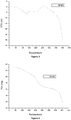
Figure 3 ; is the differential thermal analysis graph of pure plastic. -
Figure 4 ; is the thermogravimetry graph of pure plastic. -
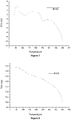
Figure 5 ; is the differential thermal analysis graph of polymer based paint known in the art. -
Figure 6 ; is the thermogravimetry graph of polymer based paint known in the art. -
Figure 7 ; is the differential thermal analysis graph of a polymer based paint produced by the production method developed by the present invention. -
Figure 8 ; is the thermogravimetry graph of a polymer based paint produced by the production method developed by the present invention. - Polymer materials (plastics) used frequently in daily articles enhance the severity of the fire in a probable fire event since they easily burn and catch fire, and also pose a danger because of the toxic gases that are released during combustion. Thus, it is important to render such materials fireproof.
- It is known from the prior art that mixing polymer materials with materials such as boric acid (H3BO3), antimony oxide (Sb2O3), huntite (Mg3Ca(CO3)4) and hydromagnesite (Mg4(CO3)3(OH)2.3H2O) provides non-flammable properties. These substances include hydroxide and the endothermic decomposition between 200 °C and 400 °C, releasing water vapour and carbon dioxide. The cooling effect of the reaction and the effect of the inert gases formed establish a ceramic-like layer on the burning surface. This layer protects the combustible surface against a future combustion and heat. However, since the mentioned mixture affects also the mechanical properties of the polymer material, it is not preferred.
- The formula for boric acid is H3BO3. It is a odourless, tasteless, air-stable substance in the form of white crystals. Its molecular weight is 61.83, melting point is 169°C and boiling point is 300°C. iit has a specific weight of 1.46 g/cm3. Is heated up to 175°C, it loses water and becomes metaboric acid (HBO2). If heated more, it is converted to tetraboric acid (H2B4O7), and if heated even more it is converted to glassy boron trioxide. Boric acid is used in manufacture of heat resistant borosilicate glass and also in production of glass fibres. It may be used in protecting wooden material against air and to render fabrics flame resistant. Boric acid provides resistance to flame to cellulose materials. It removes the water molecules in cellulose before reaching the flash point an the coal formed covers the surface, preventing further burning.
- Antimony is a silver-white, fragile, solid crystalline element with weak electric and heat conductance. Due to its advantages, metallic antimony is extensively used to make alloys with lead and other metals. Antimony trioxide is used as a white paint in plastics, metal coating, ceramics and enamels, and in the paint industry, and as a non-flammable in the textile, plastics and chemical industries.
- Polymer paint manufacture is provided using the paint production method developed by the present invention. This method provides fireproof properties to the mentioned polymer paint, hence, providing fireproof or non-flammable property to the painted material.
- The method developed includes the following stages:
- Firstly, the huntite and hydromagnesite mixture is ground to particles preferably of 100 nanometre or less. Such grinding process provides homogenous and uniform blending of the non-flammable material and the paint. Reducing the material to nanometric sizes emphasizes the non-flammable property and inhibits the undesired properties (heterogeneity, reaction inefficiency). Then, the ground huntite and hydromagnesite mixture is preferably mixed with the boric acid and/or antimony oxide mixture that has been ground in the same way. In this mixture, the huntite and hydromagnesite mixture is preferably used between 1% to 50% by volume. Thus, a non-flammable material that contains huntite, hydromagnesite, boric acid and/or antimony is obtained.
- The non-flammable material prepared is mixed with the polymer paint. During mixing, the paint and non-flammable material mixture is continuously agitated by mechanical means. Thus, the paint is rendered a homogenous structure. Preferably the ratio of the non-flammable material is %30 by volume.
-
Figure 1 and figure 2 give the scanning electron microscopy image of a paint produced with the developed production method. It is observed that the polymer paint produced with the developed method has good wetting properties and a rough structure. Therefore, fire retardancy is provided to the paint, while preserving the desired properties. - When the paint produced with the developed production method and pure polymer materials are subjected to differential thermal analysis and thermogravimetry tests, the results of which are given in
Figure 3 - 8 , it is observed that the paint produced by the developed production method catches fire much more later with respect to polymer based materials known in the art and with respect to pure polymer materials, and thus, that the paint confers non-flammable property to the material. - The non-flammable polymer paint produced with the abovementioned method may be applied to polymer materials by conventional means known in the art. This polymer paint obtained retards the burning of the material in virtue of the fireproof coating formed on the surface of the material. Application of the paint produced may extend the time to ignition of the polymer material up to 60%. Hence the dangers that polymer materials pose when temperature is raised are reduced.
Claims (5)
- A method of non-flammable polymer paint production, characterised in that it comprises the steps of;- grinding a huntite and hydromagnesite mixture to nanometric sizes;- grinding boric acid and/or antimony oxide mixture to nanometric sizes;- obtaining a non-flammable material by mixing the ground huntite ve hydromagnesite mixture with the ground boric acid and/or antimony oxide mixture;- addition of the non-flammable material to the polymer paint by continuous mechanical stirring.
- A method of non-flammable polymer paint production according to claim 1, characterised by involving the step of grinding the mixture to particles of 100 nanometre or less at the stage of grinding the huntite and hydromagnesite mixture.
- A method of non-flammable polymer paint production according to claim 1, characterised by involving the step of grinding the boric acid and/or antimony oxide mixture to particles of 100 nanometre or less at the stage of grinding the boric acid and/or antimony oxide mixture to nanometric sizes.
- A method of non-flammable polymer paint production according to claim 1, characterised by using the huntite and hydromagnesite mixture between 1% to 50% by volume at the step of mixing the huntite and hydromagnesite mixture with the ground boric acid and/or antimony oxide mixture.
- A method of non-flammable polymer paint production according to claim 1, characterised by using the non-flammable material at a ratio of %30 by volume at the step of addition of the non-flammable material to the polymer paint by continuous mechanical stirring.
Applications Claiming Priority (1)
| Application Number | Priority Date | Filing Date | Title |
|---|---|---|---|
| TR2011/01673A TR201101673A2 (en) | 2011-02-21 | 2011-02-21 | Non-flammable polymer paint production method. |
Publications (1)
| Publication Number | Publication Date |
|---|---|
| EP2489705A1 true EP2489705A1 (en) | 2012-08-22 |
Family
ID=45656143
Family Applications (1)
| Application Number | Title | Priority Date | Filing Date |
|---|---|---|---|
| EP12156116A Withdrawn EP2489705A1 (en) | 2011-02-21 | 2012-02-20 | Production method for polymer paint with non-flammable property |
Country Status (2)
| Country | Link |
|---|---|
| EP (1) | EP2489705A1 (en) |
| TR (1) | TR201101673A2 (en) |
Citations (9)
| Publication number | Priority date | Publication date | Assignee | Title |
|---|---|---|---|---|
| JPH0245545A (en) * | 1988-08-08 | 1990-02-15 | Furukawa Electric Co Ltd:The | Flame-retardant resin composition |
| JPH05170984A (en) * | 1991-12-24 | 1993-07-09 | Sekisui Jushi Co Ltd | Low smoking flame retardant resin composition |
| JPH0948899A (en) | 1995-08-02 | 1997-02-18 | Japan Synthetic Rubber Co Ltd | Flame retardant antibacterial and antifungal resin composition |
| CN1146472A (en) * | 1995-09-27 | 1997-04-02 | 山东省烟台市人造革厂 | Flame retardant paint for plastic flooring |
| WO1999019395A1 (en) * | 1997-10-16 | 1999-04-22 | Great Lakes Chemical Corporation | Polyvinyl chloride based plenum cable compositions |
| US20070131916A1 (en) * | 2003-08-22 | 2007-06-14 | Horley Susan M | Fire retardant coating composition |
| KR20090097284A (en) | 2008-03-11 | 2009-09-16 | 제이에스전선 주식회사 | Composition for flame retardant expansion member and flame retardant bushing system formed using the same |
| EP2322581A1 (en) * | 2009-11-03 | 2011-05-18 | Omya Development AG | Precipitated magnesium carbonate |
| EP2355111A2 (en) * | 2010-01-27 | 2011-08-10 | King Abdulaziz City for Science and Technology | Cross-linked clean flame retardant wire and cable insulation compositions for enhancing mechanical properties and flame retardancy |
-
2011
- 2011-02-21 TR TR2011/01673A patent/TR201101673A2/en unknown
-
2012
- 2012-02-20 EP EP12156116A patent/EP2489705A1/en not_active Withdrawn
Patent Citations (9)
| Publication number | Priority date | Publication date | Assignee | Title |
|---|---|---|---|---|
| JPH0245545A (en) * | 1988-08-08 | 1990-02-15 | Furukawa Electric Co Ltd:The | Flame-retardant resin composition |
| JPH05170984A (en) * | 1991-12-24 | 1993-07-09 | Sekisui Jushi Co Ltd | Low smoking flame retardant resin composition |
| JPH0948899A (en) | 1995-08-02 | 1997-02-18 | Japan Synthetic Rubber Co Ltd | Flame retardant antibacterial and antifungal resin composition |
| CN1146472A (en) * | 1995-09-27 | 1997-04-02 | 山东省烟台市人造革厂 | Flame retardant paint for plastic flooring |
| WO1999019395A1 (en) * | 1997-10-16 | 1999-04-22 | Great Lakes Chemical Corporation | Polyvinyl chloride based plenum cable compositions |
| US20070131916A1 (en) * | 2003-08-22 | 2007-06-14 | Horley Susan M | Fire retardant coating composition |
| KR20090097284A (en) | 2008-03-11 | 2009-09-16 | 제이에스전선 주식회사 | Composition for flame retardant expansion member and flame retardant bushing system formed using the same |
| EP2322581A1 (en) * | 2009-11-03 | 2011-05-18 | Omya Development AG | Precipitated magnesium carbonate |
| EP2355111A2 (en) * | 2010-01-27 | 2011-08-10 | King Abdulaziz City for Science and Technology | Cross-linked clean flame retardant wire and cable insulation compositions for enhancing mechanical properties and flame retardancy |
Non-Patent Citations (7)
| Title |
|---|
| BIRANE TOME ET AL: "Fire resistance and mechanical properties of a huntitelhydromagnesitelantimony trioxide/decabromodiphenyl oxide filled PP-PE copolymer", POLYMER DEGRADATION AND STABILITY, vol. 53, 1 January 1996 (1996-01-01), pages 371 - 379, XP055026328 * |
| DATABASE WPI Week 199013, Derwent World Patents Index; AN 1990-094616, XP002675457 * |
| DATABASE WPI Week 199332, Derwent World Patents Index; AN 1993-252898, XP002675456 * |
| DATABASE WPI Week 200113, Derwent World Patents Index; AN 2001-113074, XP002675474 * |
| HOLLINGBERY L A ET AL: "The fire retardant behaviour of huntite and hydromagnesite - A review", POLYMER DEGRADATION AND STABILITY, BARKING, GB, vol. 95, no. 12, 1 December 2010 (2010-12-01), pages 2213 - 2225, XP027527376, ISSN: 0141-3910, [retrieved on 20100826] * |
| HÜSNÜGÜL ATAY ET AL: "Turkish huntite/hydromagnesite mineral as a flame retardant in plastics", SOCIETY OF PLASTICS ENGINEERS PLASTICS RESEARCH ONLINE 10.1002/SPEPRO.002595, 1 January 2010 (2010-01-01), XP055026359, Retrieved from the Internet <URL:http://www.4spepro.org/pdf/002595/002595.pdf> [retrieved on 20120507], DOI: 10.1002/spepro.002595 * |
| HÜSNÜGÜL YILMAZ ATAY ET AL: "Use of Turkish huntite/hydromagnesite mineral in plastic materials as a flame retardant", POLYMER COMPOSITES, vol. 31, no. 10, 16 February 2010 (2010-02-16), pages 1692 - 1700, XP055026451, ISSN: 0272-8397, DOI: 10.1002/pc.20959 * |
Also Published As
| Publication number | Publication date |
|---|---|
| TR201101673A2 (en) | 2012-09-21 |
Similar Documents
| Publication | Publication Date | Title |
|---|---|---|
| Hull et al. | An investigation into the decomposition and burning behaviour of Ethylene-vinyl acetate copolymer nanocomposite materials | |
| Zhang et al. | Temperature-responsive resistance sensitivity controlled by L-ascorbic acid and silane co-functionalization in flame-retardant GO network for efficient fire early-warning response | |
| Yew et al. | Influences of flame-retardant fillers on fire protection and mechanical properties of intumescent coatings | |
| Jiao et al. | Flame retardation of ethylene-vinyl acetate copolymer using nano magnesium hydroxide and nano hydrotalcite | |
| Chen et al. | Smoke suppression properties of ferrite yellow on flame retardant thermoplastic polyurethane based on ammonium polyphosphate | |
| Costa et al. | LDPE/Mg–Al layered double hydroxide nanocomposite: thermal and flammability properties | |
| Fukushima et al. | Effect of expanded graphite/layered-silicate clay on thermal, mechanical and fire retardant properties of poly (lactic acid) | |
| Song et al. | C60 reduces the flammability of polypropylene nanocomposites by in situ forming a gelled-ball network | |
| Tian et al. | Flame retardant flexible poly (vinyl chloride) compound for cable application | |
| Sun et al. | Effects of kaolinite on thermal, mechanical, fire behavior and their mechanisms of intumescent flame-retardant polyurea | |
| Yu et al. | Organic–inorganic hybrid flame retardant: preparation, characterization and application in EVA | |
| Losic et al. | New insights on energetic properties of graphene oxide (GO) materials and their safety and environmental risks | |
| US11174433B2 (en) | Graphene-based composite flame retardants | |
| Chen et al. | Synergistic effects between iron–graphene and melamine salt of pentaerythritol phosphate on flame retardant thermoplastic polyurethane | |
| JP6263307B1 (en) | Thermally expandable resin composition and thermally expandable resin material | |
| Gong et al. | Simultaneously improving the thermal stability, flame retardancy and mechanical properties of polyethylene by the combination of graphene with carbon black | |
| Nie et al. | Study of the thermal stability and flame retardant properties of graphene oxide-decorated zirconium organophosphate based on polypropylene nanocomposites | |
| Hull et al. | Polymers and fire | |
| Piao et al. | A bio-inspired, cross-scale, hierarchical MXene flame retardant nanocoating for reliable, ultrafast, ultralong fire warning | |
| Liu et al. | Preparation and characterization of expandable graphite/silicone resin co-modified polyurethane-based intumescent flame retardant thermal insulation coatings | |
| Liu et al. | Preparation of aluminum hydroxide/aluminum phosphinate flame‐retardant poly (vinyl alcohol) foam through thermal processing | |
| Tian et al. | Metal chelates as flame retardants and smoke suppressants for flexible poly (vinyl chloride) | |
| Realinho et al. | Enhanced fire behavior of Casico-based foams | |
| Yasir et al. | Effect of basalt fibres reinforcement and aluminum trihydrate on the thermal properties of intumescent fire retardant coatings | |
| Mustapa et al. | Performance of palm oil clinker as a bio-filler with hybrid fillers in intumescent fire protective coatings for steel |
Legal Events
| Date | Code | Title | Description |
|---|---|---|---|
| PUAI | Public reference made under article 153(3) epc to a published international application that has entered the european phase |
Free format text: ORIGINAL CODE: 0009012 |
|
| AK | Designated contracting states |
Kind code of ref document: A1 Designated state(s): AL AT BE BG CH CY CZ DE DK EE ES FI FR GB GR HR HU IE IS IT LI LT LU LV MC MK MT NL NO PL PT RO RS SE SI SK SM TR |
|
| AX | Request for extension of the european patent |
Extension state: BA ME |
|
| STAA | Information on the status of an ep patent application or granted ep patent |
Free format text: STATUS: THE APPLICATION IS DEEMED TO BE WITHDRAWN |
|
| 18D | Application deemed to be withdrawn |
Effective date: 20130223 |