EP2489342A1 - Method and assistive device for navigation - Google Patents
Method and assistive device for navigation Download PDFInfo
- Publication number
- EP2489342A1 EP2489342A1 EP11290088A EP11290088A EP2489342A1 EP 2489342 A1 EP2489342 A1 EP 2489342A1 EP 11290088 A EP11290088 A EP 11290088A EP 11290088 A EP11290088 A EP 11290088A EP 2489342 A1 EP2489342 A1 EP 2489342A1
- Authority
- EP
- European Patent Office
- Prior art keywords
- navigational goal
- navigational
- personal navigation
- goal
- navigating
- Prior art date
- Legal status (The legal status is an assumption and is not a legal conclusion. Google has not performed a legal analysis and makes no representation as to the accuracy of the status listed.)
- Withdrawn
Links
Images
Classifications
-
- G—PHYSICS
- G01—MEASURING; TESTING
- G01C—MEASURING DISTANCES, LEVELS OR BEARINGS; SURVEYING; NAVIGATION; GYROSCOPIC INSTRUMENTS; PHOTOGRAMMETRY OR VIDEOGRAMMETRY
- G01C21/00—Navigation; Navigational instruments not provided for in groups G01C1/00 - G01C19/00
- G01C21/20—Instruments for performing navigational calculations
-
- A—HUMAN NECESSITIES
- A61—MEDICAL OR VETERINARY SCIENCE; HYGIENE
- A61H—PHYSICAL THERAPY APPARATUS, e.g. DEVICES FOR LOCATING OR STIMULATING REFLEX POINTS IN THE BODY; ARTIFICIAL RESPIRATION; MASSAGE; BATHING DEVICES FOR SPECIAL THERAPEUTIC OR HYGIENIC PURPOSES OR SPECIFIC PARTS OF THE BODY
- A61H3/00—Appliances for aiding patients or disabled persons to walk about
- A61H3/06—Walking aids for blind persons
- A61H3/061—Walking aids for blind persons with electronic detecting or guiding means
Definitions
- the invention relates to an assistive device for navigation.
- PNA personal navigation assistant
- PND portable navigation device
- navigation means the process of monitoring and controlling the location and movement of any pedestrian, craft, or vehicle.
- a conventional PNA receives global navigation satellite signals for the purpose of determining the device's current location on Earth. Such devices typically provide latitude and longitude information and may also calculate altitude. An advanced model may further contain human-readable maps to be presented textually or graphically, or even provide suggested directions to the operator of a vehicle or vessel via text or speech.
- an approach to navigation is disclosed which may allow for improved accuracy.
- a method is disclosed that may be applied to support visually impaired or otherwise handicapped users in performing everyday tasks such as purchasing food supplies.
- a method of navigation comprises the initial step of establishing a navigational goal.
- navigational goal means a projected endpoint of the navigator's position.
- a first phase of the method then comprises the step of navigating toward the navigational goal by means of a geospatial approximation of the same.
- navigation toward the navigational goal continues based on a relative position to the navigational goal.
- PNA personal navigation assistant
- PDA personal digital assistant
- the PNA receives from a repository 23 a replenishment order for a consumer item 30.
- a repository 23 may take the form of a refrigerator, supply cabinet, or pantry.
- anappliance may be equipped with home automation capabilities.
- Home automation sometimes called domotics within the field of building engineering, is automation of any home, housework, or household activity for improved convenience, comfort, energy efficiency, or security.
- appliances may be connected to the PNA through a local computer network or allow access through the Internet.
- Suitable device interconnection technologies include, but are not limited to, Bluetooth, IEEE 1394 (FireWire), IrDA, ZigBee, or Universal Serial Bus (USB).
- the PNA based on the physical location of a supply of the consumer item 30, establishes a navigational goal.
- the PNA may maintain a catalog of suppliers for various item categories, such as a local food store for grocery.
- Such catalog may have been preconfigured by the end user, downloaded from the Internet, or dynamically generated based on the user's buying behavior, for example.
- the physical location of the selected supply may define the navigational goal and would typically be expressed in a specific coordinate system such as latitude and longitude, using, for example, the World Geodetic System or a country-specific alternative.
- the World Geodetic System comprises a standard coordinate frame for the Earth, a standard spheroidal reference surface for raw altitude data, and a gravitational equipotential surface that defines the nominal sea level.
- WGS is commonly employed in cartography, geodesy, and navigation.
- the catalog may store a street address or other means of physically locating the supply, and the corresponding coordinates may be obtained by querying an additional map database stored locally on the PNA or accessible through the Internet.
- a map database is typically based on some model of a road network, such as described by Geographic Data Files (GDF), an interchange file format for geographic data.
- GDF Geographic Data Files
- the database may comprise further information on the supply, such as connection data for accessing a local wireless network near the supply.
- the PNA may query the associated supplier for the availability of the desired item 30, such as by means of the Internet, for example.
- a third step 13 the PNA navigates toward the item 30 by means of a geospatial approximation of the latter.
- this navigational phase is effected using a global navigation satellite system (GNSS), that is, a satellite navigation system that provides autonomous geospatial positioning with global coverage.
- GNSS global navigation satellite system
- the PNA is equipped with a small electronic receiver 22 to determine its location in terms of longitude, latitude, and altitude at least to within a few meters.
- the receiver 22 uses time signals transmitted along a line-of-sight by radio from a plurality of satellites 21.
- global coverage is achieved by a constellation of 20 to 30 Medium Earth Orbit (MEO) satellites 21 spread between several orbital planes.
- NAVSTAR Global Positioning System (GPS), GLONASS, Galileo, Compass, and IRNSS are some examples of GNSS that may be advantageously employed by the PNA to converge toward its navigational goal in this step.
- a fourth step 14 upon approaching the item 30, the PNA further navigates toward the item based on its relative position to the latter.
- This phase may be entered, inter alia, in response to the PNA's distance to the target falling below a predetermined value, on demand by the end user, or upon detecting a terrestrial signal associated with the item 30.
- the PNA is further equipped with a terrestrial receiver 28 adapted to interact with a terrestrial transmitter 29 positioned near item 30.
- RTLS real-time locating system
- real-time location system-that a system that provides the location of assets on a constant and recurrent basis.
- the receiver 28 and transmitter 29 may jointly form what is commonly referred to as a sensory network.
- the RTLS at hand would use a simple,node, commonly called badge or tag, attached to or embedded in the item 30 and comprising the transmitter 29.
- the supported RTLS may conform to the widely accepted ISO/IEC 24730 standard.
- the term "RTLS" is meant to include passive RFID indexing, Cellnet base station segment locators, and beacon systems.
- RFID radio-frequency identification
- the receiver 28 may commonly be called an RFID interrogator or reader, while the transmitter 29 would be part of a so-called RFID tag or label.
- This tag may take the form of a passive RFID tag, which may have no power source and requires an external electromagnetic field, typically generated by the receiver 28 or other component of the PNA 24, to initiate a signal transmission.
- An alternative active RFID tag would contain a battery and transmit its signal once the receiver 28 has been successfully identified. In this scenario, to eliminate the risk of battery depletion, the tag may make use of piezoelectric energy harvesting, that is, the conversion of mechanical strain into electric current or voltage.
- the RFID tag may be battery-assisted passive (BAP), requiring the external source provided by the receiver 28 to wake up but having significantly higher forward link capability allowing for a greater range in this navigational phase.
- BAP battery-assisted passive
- the RTLS employed may be based on Bluetooth or ZigBee, that is, open wireless technology standards for exchanging data over small distances using short wavelength radio transmission.
- the receiver 28 would take the form of a Bluetooth client, while the transmitter 29 would form the complementary Bluetooth server.
- Bluetooth would allow to create a secure personal area network (PAN) comprising the item 30 and PNA 24, thus enabling the exchange of data beyond those needed for locating the item 30 by the PNA 24.
- PAN personal area network
- the resulting network connection may be employed to transmit a textual or other description of the item's location from the item 30 to the PNA 24 that could be rendered by the PNA 24 to support the end user during this final phase of navigation.
- an alternative embodiment may make use of a transmitter 29 that is positioned in the mere vicinity of item 30 instead of directly attached to or embedded into the latter.
- the transmitter 29 may be attached to or embedded into the shelf rather than the article itself.
- the fourth step 14 may be accomplished merely by ranging, that is, by metering the spatial distance between the receiver 28 and transmitter 29.
- a suitable metric may be based on a measurement of the power present in the radio signal reaching the receiver 28.
- RSSI received signal strength indicator
- RCPI received channel power indicator
- the PNA 24 would typically indicate the metered distance and leave it to the end user to fix the item's position, such as by taking repetitive measurements in varying reading points.
- the PNA 24 may place the replenishment order with the supplier once the latter has been determined. This would allow the supplier to stock up on the respective item 30 in due time. Moreover, such replenishment order may enable the supplier to commission the item 30 just in time for pickup.
- the PNA 24 may employ the same or similar technology as is used for connecting to the appliance in the first step 11.
- a refreshable Braille display 25 sometimes called a Braille terminal.
- refreshable Braille display any electromechanical device for displaying Braille characters, usually by means of raising dots through holes in a flat surface.
- the PNA 24 may be outfitted with a speech synthesizer, allowing the user to switch between the two systems or use both at the same time depending on the circumstances.
- An optional Braille keyboard may be attached to allow the user to manually enter an order list.
- the PNA 24 may comprise a voice user interface 26.
- voice user interface VUI
- a VUI-enabled PNA 24 may provide non-speech output, often referred to as nonverbal audio (NVA).
- NVA nonverbal audio
- Such output could include earcons, that is, auditory icons, or sounds designed to communicate a specific meaning, for example, to indicate the remaining spatial distance to the navigational goal.
Landscapes
- Radar, Positioning & Navigation (AREA)
- Remote Sensing (AREA)
- Engineering & Computer Science (AREA)
- Health & Medical Sciences (AREA)
- Pain & Pain Management (AREA)
- General Physics & Mathematics (AREA)
- Physics & Mathematics (AREA)
- Epidemiology (AREA)
- Automation & Control Theory (AREA)
- Physical Education & Sports Medicine (AREA)
- Rehabilitation Therapy (AREA)
- Life Sciences & Earth Sciences (AREA)
- Animal Behavior & Ethology (AREA)
- General Health & Medical Sciences (AREA)
- Public Health (AREA)
- Veterinary Medicine (AREA)
- Position Fixing By Use Of Radio Waves (AREA)
Abstract
Method of navigation, the method comprising the steps of establishing (12) a navigational goal, navigating (13) toward the navigational goal by means of a geospatial approximation of the navigational goal, and, upon approaching the navigational goal, further navigating (14) toward the navigational goal based on a relative position to the navigational goal. Corresponding program storage device, computer program product, data stream, and personal navigation assistant.
Description
- The invention relates to an assistive device for navigation.
- This section introduces aspects that may be helpful in facilitating a better understanding of the invention. Accordingly, the statements of this section are to be read in this light and are not to be understood as admissions about what is in the prior art or what is not in the prior art.
- Within the field of consumer electronics, a personal navigation assistant (PNA), also known as personal navigation device or portable navigation device (PND), is a portable electronic product which combines a positioning capability and navigation functions. In this context, navigation means the process of monitoring and controlling the location and movement of any pedestrian, craft, or vehicle.
- A conventional PNA receives global navigation satellite signals for the purpose of determining the device's current location on Earth. Such devices typically provide latitude and longitude information and may also calculate altitude. An advanced model may further contain human-readable maps to be presented textually or graphically, or even provide suggested directions to the operator of a vehicle or vessel via text or speech.
- In one embodiment of the present invention, an approach to navigation is disclosed which may allow for improved accuracy. In another embodiment of the present invention, a method is disclosed that may be applied to support visually impaired or otherwise handicapped users in performing everyday tasks such as purchasing food supplies.
- A method of navigation according to an embodiment of the invention comprises the initial step of establishing a navigational goal. Here, navigational goal means a projected endpoint of the navigator's position. A first phase of the method then comprises the step of navigating toward the navigational goal by means of a geospatial approximation of the same. In a subsequent phase, navigation toward the navigational goal continues based on a relative position to the navigational goal.
- Further embodiments of the invention can be gathered from the following entirety of the herein application.
- Some embodiments of apparatus and/or methods in accordance with embodiments of the present invention are now described, by way of example only, and with reference to the accompanying drawings, in which:
-
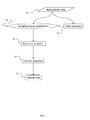
Figure 1 is a flowchart of a method according to an embodiment of the present invention; and -
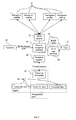
Figure 2 is a block diagram of a personal navigation assistant according to another embodiment of the present invention. - In an embodiment of the present invention, a method is disclosed and performed by a personal navigation assistant (PNA). In the following, PNA means a fixed or portable electronic product which combines a positioning capability and navigation functions. Herein, the term is meant to include any suitably equipped and configured personal digital assistant (PDA), smartphone, or similar fixed or portable device.
- In an optional
first step 11, the PNA receives from a repository 23 a replenishment order for aconsumer item 30. As examples,such repository 23 may take the form of a refrigerator, supply cabinet, or pantry. To automate this activity, anappliance may be equipped with home automation capabilities. Home automation, sometimes called domotics within the field of building engineering, is automation of any home, housework, or household activity for improved convenience, comfort, energy efficiency, or security. For instance, such appliances may be connected to the PNA through a local computer network or allow access through the Internet. Suitable device interconnection technologies include, but are not limited to, Bluetooth, IEEE 1394 (FireWire), IrDA, ZigBee, or Universal Serial Bus (USB). - In a
second step 12, the PNA, based on the physical location of a supply of theconsumer item 30, establishes a navigational goal. For instance, the PNA may maintain a catalog of suppliers for various item categories, such as a local food store for grocery. Such catalog may have been preconfigured by the end user, downloaded from the Internet, or dynamically generated based on the user's buying behavior, for example. The physical location of the selected supply may define the navigational goal and would typically be expressed in a specific coordinate system such as latitude and longitude, using, for example, the World Geodetic System or a country-specific alternative. The World Geodetic System (WGS) comprises a standard coordinate frame for the Earth, a standard spheroidal reference surface for raw altitude data, and a gravitational equipotential surface that defines the nominal sea level. WGS is commonly employed in cartography, geodesy, and navigation. - In an alternative embodiment, the catalog may store a street address or other means of physically locating the supply, and the corresponding coordinates may be obtained by querying an additional map database stored locally on the PNA or accessible through the Internet. A map database is typically based on some model of a road network, such as described by Geographic Data Files (GDF), an interchange file format for geographic data.
- Beyond its physical location or address, the database may comprise further information on the supply, such as connection data for accessing a local wireless network near the supply. Optionally, the PNA may query the associated supplier for the availability of the desired
item 30, such as by means of the Internet, for example. - In a
third step 13, the PNA navigates toward theitem 30 by means of a geospatial approximation of the latter. Typically, this navigational phase is effected using a global navigation satellite system (GNSS), that is, a satellite navigation system that provides autonomous geospatial positioning with global coverage. In this case, the PNA is equipped with a smallelectronic receiver 22 to determine its location in terms of longitude, latitude, and altitude at least to within a few meters. To this end, thereceiver 22 uses time signals transmitted along a line-of-sight by radio from a plurality ofsatellites 21. Preferably, global coverage is achieved by a constellation of 20 to 30 Medium Earth Orbit (MEO)satellites 21 spread between several orbital planes. NAVSTAR Global Positioning System (GPS), GLONASS, Galileo, Compass, and IRNSS are some examples of GNSS that may be advantageously employed by the PNA to converge toward its navigational goal in this step. - In a
fourth step 14, upon approaching theitem 30, the PNA further navigates toward the item based on its relative position to the latter. This phase may be entered, inter alia, in response to the PNA's distance to the target falling below a predetermined value, on demand by the end user, or upon detecting a terrestrial signal associated with theitem 30. To be able to track and identify the location ofitem 30 in this manner, the PNA is further equipped with aterrestrial receiver 28 adapted to interact with aterrestrial transmitter 29 positioned nearitem 30. Such system commonly referred to as a real-time locating system (RTLS), sometimes called real-time location system-that is, a system that provides the location of assets on a constant and recurrent basis. In this scenario, thereceiver 28 andtransmitter 29 may jointly form what is commonly referred to as a sensory network. Typically, the RTLS at hand would use a simple,node, commonly called badge or tag, attached to or embedded in theitem 30 and comprising thetransmitter 29. For improved interoperability, the supported RTLS may conform to the widely accepted ISO/IEC 24730 standard. In this context, the term "RTLS" is meant to include passive RFID indexing, Cellnet base station segment locators, and beacon systems. - An exemplary RTLS to be used for this purpose is radio-frequency identification (RFID), where the
receiver 28 may commonly be called an RFID interrogator or reader, while thetransmitter 29 would be part of a so-called RFID tag or label. This tag may take the form of a passive RFID tag, which may have no power source and requires an external electromagnetic field, typically generated by thereceiver 28 or other component of thePNA 24, to initiate a signal transmission. An alternative active RFID tag would contain a battery and transmit its signal once thereceiver 28 has been successfully identified. In this scenario, to eliminate the risk of battery depletion, the tag may make use of piezoelectric energy harvesting, that is, the conversion of mechanical strain into electric current or voltage. As a third option, the RFID tag may be battery-assisted passive (BAP), requiring the external source provided by thereceiver 28 to wake up but having significantly higher forward link capability allowing for a greater range in this navigational phase. - As an alternative to the use of RFID, the RTLS employed may be based on Bluetooth or ZigBee, that is, open wireless technology standards for exchanging data over small distances using short wavelength radio transmission. In the former case, the
receiver 28 would take the form of a Bluetooth client, while thetransmitter 29 would form the complementary Bluetooth server. Apart from its function as an RTLS, use of Bluetooth would allow to create a secure personal area network (PAN) comprising theitem 30 and PNA 24, thus enabling the exchange of data beyond those needed for locating theitem 30 by the PNA 24. For instance, the resulting network connection may be employed to transmit a textual or other description of the item's location from theitem 30 to thePNA 24 that could be rendered by thePNA 24 to support the end user during this final phase of navigation. - In the case of an RTLS based on cost-intensive technology such as Bluetooth or ZigBee, an alternative embodiment may make use of a
transmitter 29 that is positioned in the mere vicinity ofitem 30 instead of directly attached to or embedded into the latter. For instance, in the case of a bulk article stored on a goods shelf, thetransmitter 29 may be attached to or embedded into the shelf rather than the article itself. - To provide an alternative to the use of a full-featured RTLS, the
fourth step 14 may be accomplished merely by ranging, that is, by metering the spatial distance between thereceiver 28 andtransmitter 29. As an example, a suitable metric may be based on a measurement of the power present in the radio signal reaching thereceiver 28. One such measurement is known within the field of telecommunication as received signal strength indicator (RSSI). Another is received channel power indicator (RCPI), a term associated with wireless networking according to the IEEE 802.11 protocol family. In both cases, rather than providing straight directions toward theitem 30, thePNA 24 would typically indicate the metered distance and leave it to the end user to fix the item's position, such as by taking repetitive measurements in varying reading points. - In an
optional step 16, beyond physically navigating toward theitem 30, thePNA 24 may place the replenishment order with the supplier once the latter has been determined. This would allow the supplier to stock up on therespective item 30 in due time. Moreover, such replenishment order may enable the supplier to commission theitem 30 just in time for pickup. In order to connect to the supplier, thePNA 24 may employ the same or similar technology as is used for connecting to the appliance in thefirst step 11. - To allow visually impaired users to operate the
PNA 24, the latter is equipped with a refreshableBraille display 25, sometimes called a Braille terminal. In the field of computer accessibility, by refreshable Braille display is meant any electromechanical device for displaying Braille characters, usually by means of raising dots through holes in a flat surface. In addition or as an alternative to such display, thePNA 24 may be outfitted with a speech synthesizer, allowing the user to switch between the two systems or use both at the same time depending on the circumstances. An optional Braille keyboard may be attached to allow the user to manually enter an order list. - To allow for even improved accessibility, the
PNA 24 may comprise avoice user interface 26. Within the field of user interface techniques, by voice user interface (VUI) is meant a user interface where the modality is auditory and the interaction is through spoken language. In addition to speech output, a VUI-enabledPNA 24 may provide non-speech output, often referred to as nonverbal audio (NVA). Such output could include earcons, that is, auditory icons, or sounds designed to communicate a specific meaning, for example, to indicate the remaining spatial distance to the navigational goal. - The description merely illustrates the principles of the invention. It will thus be appreciated that those skilled in the art will be able to devise various arrangements that, although not explicitly described or shown herein, embody the principles of the invention and are included within its spirit and scope. Furthermore, all examples recited herein are principally intended expressly to be only for pedagogical purposes to aid the reader in understanding the principles of the invention and the concepts contributed by the inventor(s) to furthering the art, and are to be construed as being without limitation to such specifically recited examples and conditions. Moreover, all statements herein reciting principles, aspects, and embodiments of the invention, as well as specific examples thereof, are intended to encompass equivalents thereof.
Claims (15)
- A personal navigation assistant (24) comprising means (25, 26) for establishing a navigational goal (30), means (22) for navigating toward the navigational goal (30) using a geospatial approximation of the navigational goal (30), and means (28) for further navigating toward the navigational goal (30) based on a relative position to the navigational goal (30).
- A personal navigation assistant (24) as in claim 1, the personal navigation assistant (24) comprising a refreshable Braille display (25).
- A personal navigation assistant (24) as in claim 1 or2, the personal navigation assistant (24) comprising a voice user interface (26).
- Method of navigation, the method comprising the steps of establishing (12) a navigational goal (30), navigating (13) toward the navigational goal (30) using a geospatial approximation of the navigational goal (30), and, upon approaching the navigational goal (30), further navigating (14) toward the navigational goal (30) based on a relative position to the navigational goal (30).
- Method as in claim 4 wherein the step of navigating (13) toward the navigational goal (30) using the geospatial approximation is effected using a global navigation satellite system (21, 22).
- Method as in claim 4 or 5 wherein the relative position to the navigational goal (30) is established using a terrestrial real-time locating system (28, 29).
- Method as in claim 6 when performed by a personal navigation assistant (24), wherein the navigational goal (30) is defined as the position of an object (30) comprising a transmitter (29) and the personal navigation assistant (24) comprises a receiver (28).
- Method as in claim 7 wherein the step of further navigating (14) toward the navigational goal (30) based on the relative position comprises metering a spatial distance between the transmitter (29) and the receiver (28) using a signal strength measured by the receiver (28).
- Method as in claim 7 or 8 wherein the personal navigation assistant (24) comprises a radio-frequency identification interrogator and the object comprises a radio-frequency identification tag.
- Method as in claim7, 8, or 9 wherein the personal navigation assistant (24) comprises a Bluetooth master and the object comprises a Bluetooth slave.
- Method as in any of claims 4 to 10 comprising the preliminary step of receiving (11) from a repository (23) a replenishment order for a consumer item (30), wherein the navigational goal (30) is established (12) based on the physical location of a supply of the consumer item (30).
- Method as in claim 11 comprising the additional step of placing (16) the replenishment order with a supplier.
- A program storage device readable by a machine, tangibly embodying a program of instructions executable by the machine to perform a method according to any of claims 4 to 12.
- A computer program product comprising computer-executable instructions for performing a method according to any of claims 4 to 12 when the program is run on a computer.
- A data stream representative of a computer program according to claim 14.
Priority Applications (1)
| Application Number | Priority Date | Filing Date | Title |
|---|---|---|---|
| EP11290088A EP2489342A1 (en) | 2011-02-15 | 2011-02-15 | Method and assistive device for navigation |
Applications Claiming Priority (1)
| Application Number | Priority Date | Filing Date | Title |
|---|---|---|---|
| EP11290088A EP2489342A1 (en) | 2011-02-15 | 2011-02-15 | Method and assistive device for navigation |
Publications (1)
| Publication Number | Publication Date |
|---|---|
| EP2489342A1 true EP2489342A1 (en) | 2012-08-22 |
Family
ID=44118399
Family Applications (1)
| Application Number | Title | Priority Date | Filing Date |
|---|---|---|---|
| EP11290088A Withdrawn EP2489342A1 (en) | 2011-02-15 | 2011-02-15 | Method and assistive device for navigation |
Country Status (1)
| Country | Link |
|---|---|
| EP (1) | EP2489342A1 (en) |
Citations (5)
| Publication number | Priority date | Publication date | Assignee | Title |
|---|---|---|---|---|
| DE10121260A1 (en) * | 2001-04-30 | 2002-11-21 | Siemens Ag | Navigation system as expansion for satellite navigation devices in indoor range, e.g. for determining the location of a vehicle has at least one portable receiver of position information signals that are not satellite signals |
| EP1313079A2 (en) * | 2001-10-25 | 2003-05-21 | Koninklijke Philips Electronics N.V. | RFID navigation system |
| US20060129308A1 (en) * | 2004-12-10 | 2006-06-15 | Lawrence Kates | Management and navigation system for the blind |
| EP1705459A2 (en) * | 2005-03-24 | 2006-09-27 | Deutsches Zentrum für Luft- und Raumfahrt e.V. | System for providing navigation information for persons inside and outside buildings |
| US20100241350A1 (en) * | 2009-03-18 | 2010-09-23 | Joseph Cioffi | Systems, methods, and software for providing wayfinding orientation and wayfinding data to blind travelers |
-
2011
- 2011-02-15 EP EP11290088A patent/EP2489342A1/en not_active Withdrawn
Patent Citations (5)
| Publication number | Priority date | Publication date | Assignee | Title |
|---|---|---|---|---|
| DE10121260A1 (en) * | 2001-04-30 | 2002-11-21 | Siemens Ag | Navigation system as expansion for satellite navigation devices in indoor range, e.g. for determining the location of a vehicle has at least one portable receiver of position information signals that are not satellite signals |
| EP1313079A2 (en) * | 2001-10-25 | 2003-05-21 | Koninklijke Philips Electronics N.V. | RFID navigation system |
| US20060129308A1 (en) * | 2004-12-10 | 2006-06-15 | Lawrence Kates | Management and navigation system for the blind |
| EP1705459A2 (en) * | 2005-03-24 | 2006-09-27 | Deutsches Zentrum für Luft- und Raumfahrt e.V. | System for providing navigation information for persons inside and outside buildings |
| US20100241350A1 (en) * | 2009-03-18 | 2010-09-23 | Joseph Cioffi | Systems, methods, and software for providing wayfinding orientation and wayfinding data to blind travelers |
Similar Documents
| Publication | Publication Date | Title |
|---|---|---|
| KR101369548B1 (en) | Apparatus and method for constructing and utilizing a beacon location database | |
| KR100913881B1 (en) | System and method for providing location information of a portable communication terminal | |
| KR20080044110A (en) | Dynamic Multi-Location Integration System, Method and Wireless Terminal Supporting the Same | |
| US10732598B2 (en) | Method for the transformation of position information into a local coordinates system | |
| US20150302622A1 (en) | Weather information display system, human navigation device, and method of displaying weather information | |
| US11041727B2 (en) | Mobile mapping and navigation | |
| KR20190059120A (en) | Facility Inspection System using Augmented Reality based on IoT | |
| EP1280030A1 (en) | Method and system for converting positioning signals of different coordinate systems to prescribed coordinate systems | |
| JP2023036658A (en) | Information processing device, information processing method and information processing program | |
| CN105138569B (en) | A kind of generation, application method and the geography of bubble data spit slot information system | |
| JP2010044256A (en) | Map creating device for creating equal time line, and method for distributing created map | |
| JP2012107977A (en) | Position estimation device, system, position estimation method and position estimation program | |
| Verma et al. | Design of real-time GPS tracker using esp-8266 with blynk application | |
| JP2005195429A (en) | Position data output system | |
| KR20060086271A (en) | A computer-readable recording medium recording a positioning system, a terminal apparatus, a method of controlling the terminal apparatus, and a control program of the terminal apparatus | |
| EP2489342A1 (en) | Method and assistive device for navigation | |
| EP2569958B1 (en) | Method, computer program and apparatus for determining an object in sight | |
| US8335523B2 (en) | Electronic entity and microcircuit card for electronic entity | |
| KR101788797B1 (en) | Navigation system for providing item according with the event achieved by path to user client | |
| JP2022132673A (en) | Information processing device, information processing method and information processing program | |
| JP2002062158A (en) | Position information exchange system, position information generation device, position display device, and information processing device | |
| JP2012194161A (en) | Current position display device | |
| CN104180802A (en) | Mobile electronic equipment, and navigation system and method for looking for Halal food in going out of Muslims | |
| JPH10104331A (en) | Relative position detection device | |
| KR20180076649A (en) | The system and the method that provide the location information of map positioning location and the move from a position to another by using the location information from the device or the end node which access to Low Power Wide Area network service |
Legal Events
| Date | Code | Title | Description |
|---|---|---|---|
| PUAI | Public reference made under article 153(3) epc to a published international application that has entered the european phase |
Free format text: ORIGINAL CODE: 0009012 |
|
| AK | Designated contracting states |
Kind code of ref document: A1 Designated state(s): AL AT BE BG CH CY CZ DE DK EE ES FI FR GB GR HR HU IE IS IT LI LT LU LV MC MK MT NL NO PL PT RO RS SE SI SK SM TR |
|
| AX | Request for extension of the european patent |
Extension state: BA ME |
|
| STAA | Information on the status of an ep patent application or granted ep patent |
Free format text: STATUS: THE APPLICATION IS DEEMED TO BE WITHDRAWN |
|
| 18D | Application deemed to be withdrawn |
Effective date: 20130223 |