EP2487175A1 - Pharmaceutical product containing aromatic heterocyclic compound - Google Patents
Pharmaceutical product containing aromatic heterocyclic compound Download PDFInfo
- Publication number
- EP2487175A1 EP2487175A1 EP10822029A EP10822029A EP2487175A1 EP 2487175 A1 EP2487175 A1 EP 2487175A1 EP 10822029 A EP10822029 A EP 10822029A EP 10822029 A EP10822029 A EP 10822029A EP 2487175 A1 EP2487175 A1 EP 2487175A1
- Authority
- EP
- European Patent Office
- Prior art keywords
- optionally substituted
- aromatic heterocyclic
- compound
- substituted lower
- heterocyclic group
- Prior art date
- Legal status (The legal status is an assumption and is not a legal conclusion. Google has not performed a legal analysis and makes no representation as to the accuracy of the status listed.)
- Withdrawn
Links
- 125000006615 aromatic heterocyclic group Chemical group 0.000 title claims abstract description 196
- 239000000825 pharmaceutical preparation Substances 0.000 title description 6
- 229940127557 pharmaceutical product Drugs 0.000 title 1
- 229910052757 nitrogen Inorganic materials 0.000 claims abstract description 93
- 125000004433 nitrogen atom Chemical group N* 0.000 claims abstract description 86
- 125000004435 hydrogen atom Chemical group [H]* 0.000 claims abstract description 83
- 125000005346 substituted cycloalkyl group Chemical group 0.000 claims abstract description 64
- 125000001424 substituent group Chemical group 0.000 claims abstract description 41
- 239000004480 active ingredient Substances 0.000 claims abstract description 23
- 239000008194 pharmaceutical composition Substances 0.000 claims abstract description 23
- 150000003839 salts Chemical class 0.000 claims description 126
- 208000037265 diseases, disorders, signs and symptoms Diseases 0.000 claims description 94
- 125000000623 heterocyclic group Chemical group 0.000 claims description 94
- 201000010099 disease Diseases 0.000 claims description 93
- -1 4-dimethylaminophenyl Chemical group 0.000 claims description 91
- 125000003178 carboxy group Chemical group [H]OC(*)=O 0.000 claims description 90
- 125000000217 alkyl group Chemical group 0.000 claims description 87
- 238000004519 manufacturing process Methods 0.000 claims description 82
- 125000003107 substituted aryl group Chemical group 0.000 claims description 80
- 125000001931 aliphatic group Chemical group 0.000 claims description 70
- 125000003435 aroyl group Chemical group 0.000 claims description 67
- 125000001589 carboacyl group Chemical group 0.000 claims description 63
- 239000003795 chemical substances by application Substances 0.000 claims description 54
- 125000005115 alkyl carbamoyl group Chemical group 0.000 claims description 47
- 125000004390 alkyl sulfonyl group Chemical group 0.000 claims description 46
- 230000003449 preventive effect Effects 0.000 claims description 41
- 230000001225 therapeutic effect Effects 0.000 claims description 41
- 208000006673 asthma Diseases 0.000 claims description 38
- 208000006545 Chronic Obstructive Pulmonary Disease Diseases 0.000 claims description 37
- 238000000034 method Methods 0.000 claims description 35
- 201000006938 muscular dystrophy Diseases 0.000 claims description 34
- 206010039085 Rhinitis allergic Diseases 0.000 claims description 32
- 201000010105 allergic rhinitis Diseases 0.000 claims description 32
- 125000004453 alkoxycarbonyl group Chemical group 0.000 claims description 31
- 230000009285 allergic inflammation Effects 0.000 claims description 30
- 208000005987 polymyositis Diseases 0.000 claims description 30
- BHMBVRSPMRCCGG-OUTUXVNYSA-N prostaglandin D2 Chemical compound CCCCC[C@H](O)\C=C\[C@@H]1[C@@H](C\C=C/CCCC(O)=O)[C@@H](O)CC1=O BHMBVRSPMRCCGG-OUTUXVNYSA-N 0.000 claims description 30
- 206010012438 Dermatitis atopic Diseases 0.000 claims description 29
- 201000008937 atopic dermatitis Diseases 0.000 claims description 29
- 125000004391 aryl sulfonyl group Chemical group 0.000 claims description 27
- 230000002401 inhibitory effect Effects 0.000 claims description 26
- 125000004414 alkyl thio group Chemical group 0.000 claims description 25
- 229910052736 halogen Inorganic materials 0.000 claims description 25
- 150000002367 halogens Chemical group 0.000 claims description 24
- 125000000304 alkynyl group Chemical group 0.000 claims description 23
- QJGQUHMNIGDVPM-UHFFFAOYSA-N nitrogen group Chemical group [N] QJGQUHMNIGDVPM-UHFFFAOYSA-N 0.000 claims description 22
- 125000003342 alkenyl group Chemical group 0.000 claims description 21
- 125000001997 phenyl group Chemical group [H]C1=C([H])C([H])=C(*)C([H])=C1[H] 0.000 claims description 19
- 125000004644 alkyl sulfinyl group Chemical group 0.000 claims description 18
- 125000004430 oxygen atom Chemical group O* 0.000 claims description 18
- 125000004093 cyano group Chemical group *C#N 0.000 claims description 17
- 239000003112 inhibitor Substances 0.000 claims description 17
- 125000004432 carbon atom Chemical group C* 0.000 claims description 16
- 229910052717 sulfur Inorganic materials 0.000 claims description 15
- 125000004434 sulfur atom Chemical group 0.000 claims description 15
- 229910052799 carbon Inorganic materials 0.000 claims description 11
- 125000003831 tetrazolyl group Chemical group 0.000 claims description 5
- 230000003394 haemopoietic effect Effects 0.000 claims description 3
- 125000002941 2-furyl group Chemical group O1C([*])=C([H])C([H])=C1[H] 0.000 claims description 2
- 125000004203 4-hydroxyphenyl group Chemical group [H]OC1=C([H])C([H])=C(*)C([H])=C1[H] 0.000 claims description 2
- 125000004172 4-methoxyphenyl group Chemical group [H]C1=C([H])C(OC([H])([H])[H])=C([H])C([H])=C1* 0.000 claims description 2
- 125000000636 p-nitrophenyl group Chemical group [H]C1=C([H])C(=C([H])C([H])=C1*)[N+]([O-])=O 0.000 claims description 2
- 125000005843 halogen group Chemical group 0.000 claims 1
- 150000001875 compounds Chemical class 0.000 description 485
- IAZDPXIOMUYVGZ-WFGJKAKNSA-N Dimethyl sulfoxide Chemical compound [2H]C([2H])([2H])S(=O)C([2H])([2H])[2H] IAZDPXIOMUYVGZ-WFGJKAKNSA-N 0.000 description 191
- 239000002904 solvent Substances 0.000 description 183
- 238000005160 1H NMR spectroscopy Methods 0.000 description 141
- 238000002330 electrospray ionisation mass spectrometry Methods 0.000 description 121
- LFQSCWFLJHTTHZ-UHFFFAOYSA-N Ethanol Chemical compound CCO LFQSCWFLJHTTHZ-UHFFFAOYSA-N 0.000 description 114
- 239000000203 mixture Substances 0.000 description 107
- XEKOWRVHYACXOJ-UHFFFAOYSA-N Ethyl acetate Chemical compound CCOC(C)=O XEKOWRVHYACXOJ-UHFFFAOYSA-N 0.000 description 102
- OKKJLVBELUTLKV-UHFFFAOYSA-N Methanol Chemical compound OC OKKJLVBELUTLKV-UHFFFAOYSA-N 0.000 description 102
- WEVYAHXRMPXWCK-UHFFFAOYSA-N Acetonitrile Chemical compound CC#N WEVYAHXRMPXWCK-UHFFFAOYSA-N 0.000 description 96
- HEDRZPFGACZZDS-MICDWDOJSA-N Trichloro(2H)methane Chemical compound [2H]C(Cl)(Cl)Cl HEDRZPFGACZZDS-MICDWDOJSA-N 0.000 description 88
- HEDRZPFGACZZDS-UHFFFAOYSA-N Chloroform Chemical compound ClC(Cl)Cl HEDRZPFGACZZDS-UHFFFAOYSA-N 0.000 description 82
- YMWUJEATGCHHMB-UHFFFAOYSA-N Dichloromethane Chemical compound ClCCl YMWUJEATGCHHMB-UHFFFAOYSA-N 0.000 description 81
- HEMHJVSKTPXQMS-UHFFFAOYSA-M Sodium hydroxide Chemical compound [OH-].[Na+] HEMHJVSKTPXQMS-UHFFFAOYSA-M 0.000 description 78
- YXFVVABEGXRONW-UHFFFAOYSA-N Toluene Chemical compound CC1=CC=CC=C1 YXFVVABEGXRONW-UHFFFAOYSA-N 0.000 description 78
- VLKZOEOYAKHREP-UHFFFAOYSA-N n-Hexane Chemical compound CCCCCC VLKZOEOYAKHREP-UHFFFAOYSA-N 0.000 description 78
- RTZKZFJDLAIYFH-UHFFFAOYSA-N Diethyl ether Chemical compound CCOCC RTZKZFJDLAIYFH-UHFFFAOYSA-N 0.000 description 75
- ZMXDDKWLCZADIW-UHFFFAOYSA-N N,N-Dimethylformamide Chemical compound CN(C)C=O ZMXDDKWLCZADIW-UHFFFAOYSA-N 0.000 description 75
- WYURNTSHIVDZCO-UHFFFAOYSA-N Tetrahydrofuran Chemical compound C1CCOC1 WYURNTSHIVDZCO-UHFFFAOYSA-N 0.000 description 70
- XLYOFNOQVPJJNP-UHFFFAOYSA-N water Substances O XLYOFNOQVPJJNP-UHFFFAOYSA-N 0.000 description 55
- 239000000126 substance Substances 0.000 description 54
- VEXZGXHMUGYJMC-UHFFFAOYSA-N Hydrochloric acid Chemical compound Cl VEXZGXHMUGYJMC-UHFFFAOYSA-N 0.000 description 52
- 125000001160 methoxycarbonyl group Chemical group [H]C([H])([H])OC(*)=O 0.000 description 49
- UHOVQNZJYSORNB-UHFFFAOYSA-N Benzene Chemical compound C1=CC=CC=C1 UHOVQNZJYSORNB-UHFFFAOYSA-N 0.000 description 45
- KFZMGEQAYNKOFK-UHFFFAOYSA-N Isopropanol Chemical compound CC(C)O KFZMGEQAYNKOFK-UHFFFAOYSA-N 0.000 description 45
- ZMANZCXQSJIPKH-UHFFFAOYSA-N Triethylamine Chemical compound CCN(CC)CC ZMANZCXQSJIPKH-UHFFFAOYSA-N 0.000 description 39
- IAZDPXIOMUYVGZ-UHFFFAOYSA-N Dimethylsulphoxide Chemical compound CS(C)=O IAZDPXIOMUYVGZ-UHFFFAOYSA-N 0.000 description 36
- 238000009835 boiling Methods 0.000 description 36
- YLQBMQCUIZJEEH-UHFFFAOYSA-N tetrahydrofuran Natural products C=1C=COC=1 YLQBMQCUIZJEEH-UHFFFAOYSA-N 0.000 description 35
- 125000000008 (C1-C10) alkyl group Chemical group 0.000 description 34
- ZWEHNKRNPOVVGH-UHFFFAOYSA-N 2-Butanone Chemical compound CCC(C)=O ZWEHNKRNPOVVGH-UHFFFAOYSA-N 0.000 description 33
- QTBSBXVTEAMEQO-UHFFFAOYSA-N Acetic acid Chemical compound CC(O)=O QTBSBXVTEAMEQO-UHFFFAOYSA-N 0.000 description 33
- XTHFKEDIFFGKHM-UHFFFAOYSA-N Dimethoxyethane Chemical compound COCCOC XTHFKEDIFFGKHM-UHFFFAOYSA-N 0.000 description 33
- 239000002585 base Substances 0.000 description 31
- 239000007787 solid Substances 0.000 description 31
- 239000000243 solution Substances 0.000 description 31
- FKLKXLLCEUEDKF-UHFFFAOYSA-N 7-chloro-2-(3-fluorophenyl)triazolo[4,5-f]quinoline-9-carboxylic acid Chemical compound N1=C2C=3C(C(=O)O)=CC(Cl)=NC=3C=CC2=NN1C1=CC=CC(F)=C1 FKLKXLLCEUEDKF-UHFFFAOYSA-N 0.000 description 27
- FXHOOIRPVKKKFG-UHFFFAOYSA-N N,N-Dimethylacetamide Chemical compound CN(C)C(C)=O FXHOOIRPVKKKFG-UHFFFAOYSA-N 0.000 description 27
- KWYUFKZDYYNOTN-UHFFFAOYSA-M Potassium hydroxide Chemical compound [OH-].[K+] KWYUFKZDYYNOTN-UHFFFAOYSA-M 0.000 description 27
- 235000011121 sodium hydroxide Nutrition 0.000 description 26
- 229960004132 diethyl ether Drugs 0.000 description 25
- RYHBNJHYFVUHQT-UHFFFAOYSA-N 1,4-Dioxane Chemical compound C1COCCO1 RYHBNJHYFVUHQT-UHFFFAOYSA-N 0.000 description 24
- WMFOQBRAJBCJND-UHFFFAOYSA-M Lithium hydroxide Chemical compound [Li+].[OH-] WMFOQBRAJBCJND-UHFFFAOYSA-M 0.000 description 24
- LRHPLDYGYMQRHN-UHFFFAOYSA-N N-Butanol Chemical compound CCCCO LRHPLDYGYMQRHN-UHFFFAOYSA-N 0.000 description 24
- JUJWROOIHBZHMG-UHFFFAOYSA-N Pyridine Chemical compound C1=CC=NC=C1 JUJWROOIHBZHMG-UHFFFAOYSA-N 0.000 description 22
- UIIMBOGNXHQVGW-UHFFFAOYSA-M Sodium bicarbonate Chemical compound [Na+].OC([O-])=O UIIMBOGNXHQVGW-UHFFFAOYSA-M 0.000 description 22
- 239000000654 additive Substances 0.000 description 22
- 230000000996 additive effect Effects 0.000 description 22
- 238000006243 chemical reaction Methods 0.000 description 22
- BWHMMNNQKKPAPP-UHFFFAOYSA-L potassium carbonate Chemical compound [K+].[K+].[O-]C([O-])=O BWHMMNNQKKPAPP-UHFFFAOYSA-L 0.000 description 22
- 239000000706 filtrate Substances 0.000 description 21
- 239000002244 precipitate Substances 0.000 description 21
- 125000005915 C6-C14 aryl group Chemical group 0.000 description 20
- CDBYLPFSWZWCQE-UHFFFAOYSA-L Sodium Carbonate Chemical compound [Na+].[Na+].[O-]C([O-])=O CDBYLPFSWZWCQE-UHFFFAOYSA-L 0.000 description 20
- VZGDMQKNWNREIO-UHFFFAOYSA-N tetrachloromethane Chemical compound ClC(Cl)(Cl)Cl VZGDMQKNWNREIO-UHFFFAOYSA-N 0.000 description 20
- JQUCWIWWWKZNCS-LESHARBVSA-N C(C1=CC=CC=C1)(=O)NC=1SC[C@H]2[C@@](N1)(CO[C@H](C2)C)C=2SC=C(N2)NC(=O)C2=NC=C(C=C2)OC(F)F Chemical compound C(C1=CC=CC=C1)(=O)NC=1SC[C@H]2[C@@](N1)(CO[C@H](C2)C)C=2SC=C(N2)NC(=O)C2=NC=C(C=C2)OC(F)F JQUCWIWWWKZNCS-LESHARBVSA-N 0.000 description 19
- CTQNGGLPUBDAKN-UHFFFAOYSA-N O-Xylene Chemical compound CC1=CC=CC=C1C CTQNGGLPUBDAKN-UHFFFAOYSA-N 0.000 description 19
- 210000003205 muscle Anatomy 0.000 description 19
- 239000008096 xylene Substances 0.000 description 19
- 239000007864 aqueous solution Substances 0.000 description 18
- 238000012360 testing method Methods 0.000 description 17
- WSLDOOZREJYCGB-UHFFFAOYSA-N 1,2-Dichloroethane Chemical compound ClCCCl WSLDOOZREJYCGB-UHFFFAOYSA-N 0.000 description 16
- IJGRMHOSHXDMSA-UHFFFAOYSA-N Atomic nitrogen Chemical compound N#N IJGRMHOSHXDMSA-UHFFFAOYSA-N 0.000 description 16
- GSNUFIFRDBKVIE-UHFFFAOYSA-N DMF Natural products CC1=CC=C(C)O1 GSNUFIFRDBKVIE-UHFFFAOYSA-N 0.000 description 16
- SPEUIVXLLWOEMJ-UHFFFAOYSA-N acetaldehyde dimethyl acetal Natural products COC(C)OC SPEUIVXLLWOEMJ-UHFFFAOYSA-N 0.000 description 16
- 239000013065 commercial product Substances 0.000 description 16
- 239000007924 injection Substances 0.000 description 15
- 238000002347 injection Methods 0.000 description 15
- 238000010898 silica gel chromatography Methods 0.000 description 15
- CSNNHWWHGAXBCP-UHFFFAOYSA-L Magnesium sulfate Chemical compound [Mg+2].[O-][S+2]([O-])([O-])[O-] CSNNHWWHGAXBCP-UHFFFAOYSA-L 0.000 description 14
- 238000001914 filtration Methods 0.000 description 14
- 239000012530 fluid Substances 0.000 description 14
- 239000002504 physiological saline solution Substances 0.000 description 14
- 125000000027 (C1-C10) alkoxy group Chemical group 0.000 description 13
- 125000006552 (C3-C8) cycloalkyl group Chemical group 0.000 description 13
- QCZOVDYSDNFRMK-UHFFFAOYSA-N 7-(furan-2-yl)-2-phenyltriazolo[4,5-f]quinoline-9-carboxylic acid Chemical compound N1=C2C=3C(C(=O)O)=CC(C=4OC=CC=4)=NC=3C=CC2=NN1C1=CC=CC=C1 QCZOVDYSDNFRMK-UHFFFAOYSA-N 0.000 description 13
- 241000699666 Mus <mouse, genus> Species 0.000 description 13
- XBDQKXXYIPTUBI-UHFFFAOYSA-M Propionate Chemical compound CCC([O-])=O XBDQKXXYIPTUBI-UHFFFAOYSA-M 0.000 description 13
- KXKVLQRXCPHEJC-UHFFFAOYSA-N acetic acid trimethyl ester Natural products COC(C)=O KXKVLQRXCPHEJC-UHFFFAOYSA-N 0.000 description 13
- 230000001338 necrotic effect Effects 0.000 description 13
- OISVCGZHLKNMSJ-UHFFFAOYSA-N 2,6-dimethylpyridine Chemical compound CC1=CC=CC(C)=N1 OISVCGZHLKNMSJ-UHFFFAOYSA-N 0.000 description 12
- VHYFNPMBLIVWCW-UHFFFAOYSA-N 4-dimethylaminopyridine Substances CN(C)C1=CC=NC=C1 VHYFNPMBLIVWCW-UHFFFAOYSA-N 0.000 description 12
- CSCPPACGZOOCGX-UHFFFAOYSA-N Acetone Chemical compound CC(C)=O CSCPPACGZOOCGX-UHFFFAOYSA-N 0.000 description 12
- JGFZNNIVVJXRND-UHFFFAOYSA-N N,N-Diisopropylethylamine (DIPEA) Chemical compound CCN(C(C)C)C(C)C JGFZNNIVVJXRND-UHFFFAOYSA-N 0.000 description 12
- 239000002253 acid Substances 0.000 description 12
- 239000000460 chlorine Substances 0.000 description 12
- PIBWKRNGBLPSSY-UHFFFAOYSA-L palladium(II) chloride Chemical compound Cl[Pd]Cl PIBWKRNGBLPSSY-UHFFFAOYSA-L 0.000 description 12
- NFHFRUOZVGFOOS-UHFFFAOYSA-N palladium;triphenylphosphane Chemical compound [Pd].C1=CC=CC=C1P(C=1C=CC=CC=1)C1=CC=CC=C1.C1=CC=CC=C1P(C=1C=CC=CC=1)C1=CC=CC=C1.C1=CC=CC=C1P(C=1C=CC=CC=1)C1=CC=CC=C1.C1=CC=CC=C1P(C=1C=CC=CC=1)C1=CC=CC=C1 NFHFRUOZVGFOOS-UHFFFAOYSA-N 0.000 description 12
- BDERNNFJNOPAEC-UHFFFAOYSA-N propan-1-ol Chemical compound CCCO BDERNNFJNOPAEC-UHFFFAOYSA-N 0.000 description 12
- ABJSOROVZZKJGI-OCYUSGCXSA-N (1r,2r,4r)-2-(4-bromophenyl)-n-[(4-chlorophenyl)-(2-fluoropyridin-4-yl)methyl]-4-morpholin-4-ylcyclohexane-1-carboxamide Chemical compound C1=NC(F)=CC(C(NC(=O)[C@H]2[C@@H](C[C@@H](CC2)N2CCOCC2)C=2C=CC(Br)=CC=2)C=2C=CC(Cl)=CC=2)=C1 ABJSOROVZZKJGI-OCYUSGCXSA-N 0.000 description 11
- SECXISVLQFMRJM-UHFFFAOYSA-N N-Methylpyrrolidone Chemical compound CN1CCCC1=O SECXISVLQFMRJM-UHFFFAOYSA-N 0.000 description 11
- 241000700159 Rattus Species 0.000 description 11
- 125000003917 carbamoyl group Chemical group [H]N([H])C(*)=O 0.000 description 11
- 238000005259 measurement Methods 0.000 description 11
- 229910000027 potassium carbonate Inorganic materials 0.000 description 11
- UMJSCPRVCHMLSP-UHFFFAOYSA-N pyridine Natural products COC1=CC=CN=C1 UMJSCPRVCHMLSP-UHFFFAOYSA-N 0.000 description 11
- QAOWNCQODCNURD-UHFFFAOYSA-N sulfuric acid Substances OS(O)(=O)=O QAOWNCQODCNURD-UHFFFAOYSA-N 0.000 description 11
- GQHTUMJGOHRCHB-UHFFFAOYSA-N 2,3,4,6,7,8,9,10-octahydropyrimido[1,2-a]azepine Chemical compound C1CCCCN2CCCN=C21 GQHTUMJGOHRCHB-UHFFFAOYSA-N 0.000 description 10
- WKBOTKDWSSQWDR-UHFFFAOYSA-N Bromine atom Chemical group [Br] WKBOTKDWSSQWDR-UHFFFAOYSA-N 0.000 description 10
- WQDUMFSSJAZKTM-UHFFFAOYSA-N Sodium methoxide Chemical compound [Na+].[O-]C WQDUMFSSJAZKTM-UHFFFAOYSA-N 0.000 description 10
- DTQVDTLACAAQTR-UHFFFAOYSA-N Trifluoroacetic acid Chemical compound OC(=O)C(F)(F)F DTQVDTLACAAQTR-UHFFFAOYSA-N 0.000 description 10
- 125000003118 aryl group Chemical group 0.000 description 10
- FJDQFPXHSGXQBY-UHFFFAOYSA-L caesium carbonate Chemical compound [Cs+].[Cs+].[O-]C([O-])=O FJDQFPXHSGXQBY-UHFFFAOYSA-L 0.000 description 10
- 229910000024 caesium carbonate Inorganic materials 0.000 description 10
- 230000000694 effects Effects 0.000 description 10
- HQKMJHAJHXVSDF-UHFFFAOYSA-L magnesium stearate Chemical compound [Mg+2].CCCCCCCCCCCCCCCCCC([O-])=O.CCCCCCCCCCCCCCCCCC([O-])=O HQKMJHAJHXVSDF-UHFFFAOYSA-L 0.000 description 10
- BDAGIHXWWSANSR-UHFFFAOYSA-N methanoic acid Natural products OC=O BDAGIHXWWSANSR-UHFFFAOYSA-N 0.000 description 10
- 150000002941 palladium compounds Chemical class 0.000 description 10
- 229910000029 sodium carbonate Inorganic materials 0.000 description 10
- 235000017550 sodium carbonate Nutrition 0.000 description 10
- LWIHDJKSTIGBAC-UHFFFAOYSA-K tripotassium phosphate Chemical compound [K+].[K+].[K+].[O-]P([O-])([O-])=O LWIHDJKSTIGBAC-UHFFFAOYSA-K 0.000 description 10
- KZPYGQFFRCFCPP-UHFFFAOYSA-N 1,1'-bis(diphenylphosphino)ferrocene Chemical compound [Fe+2].C1=CC=C[C-]1P(C=1C=CC=CC=1)C1=CC=CC=C1.C1=CC=C[C-]1P(C=1C=CC=CC=1)C1=CC=CC=C1 KZPYGQFFRCFCPP-UHFFFAOYSA-N 0.000 description 9
- GDWSOUQSGHNBMT-UHFFFAOYSA-N 7-[4-(methanesulfonamido)phenyl]-2-phenyltriazolo[4,5-f]quinoline-9-carboxylic acid Chemical compound C1=CC(NS(=O)(=O)C)=CC=C1C1=CC(C(O)=O)=C(C=2C(=NN(N=2)C=2C=CC=CC=2)C=C2)C2=N1 GDWSOUQSGHNBMT-UHFFFAOYSA-N 0.000 description 9
- QPLDLSVMHZLSFG-UHFFFAOYSA-N Copper oxide Chemical compound [Cu]=O QPLDLSVMHZLSFG-UHFFFAOYSA-N 0.000 description 9
- 241001465754 Metazoa Species 0.000 description 9
- 206010070834 Sensitisation Diseases 0.000 description 9
- KEAYESYHFKHZAL-UHFFFAOYSA-N Sodium Chemical compound [Na] KEAYESYHFKHZAL-UHFFFAOYSA-N 0.000 description 9
- 125000005098 aryl alkoxy carbonyl group Chemical group 0.000 description 9
- 125000003710 aryl alkyl group Chemical group 0.000 description 9
- CQWQOVUDQCQAQA-UHFFFAOYSA-N methyl 6-amino-2-chloroquinoline-4-carboxylate Chemical compound C1=C(N)C=C2C(C(=O)OC)=CC(Cl)=NC2=C1 CQWQOVUDQCQAQA-UHFFFAOYSA-N 0.000 description 9
- VPSUKFUDKFFQNG-UHFFFAOYSA-N methyl 6-amino-5-bromo-2-chloroquinoline-4-carboxylate Chemical compound C1=C(N)C(Br)=C2C(C(=O)OC)=CC(Cl)=NC2=C1 VPSUKFUDKFFQNG-UHFFFAOYSA-N 0.000 description 9
- 230000008313 sensitization Effects 0.000 description 9
- 235000017557 sodium bicarbonate Nutrition 0.000 description 9
- 229910000030 sodium bicarbonate Inorganic materials 0.000 description 9
- 239000012312 sodium hydride Substances 0.000 description 9
- 229910000104 sodium hydride Inorganic materials 0.000 description 9
- 206010020751 Hypersensitivity Diseases 0.000 description 8
- XEEYBQQBJWHFJM-UHFFFAOYSA-N Iron Chemical compound [Fe] XEEYBQQBJWHFJM-UHFFFAOYSA-N 0.000 description 8
- 241000699670 Mus sp. Species 0.000 description 8
- 240000001307 Myosotis scorpioides Species 0.000 description 8
- 239000000427 antigen Substances 0.000 description 8
- 102000036639 antigens Human genes 0.000 description 8
- 108091007433 antigens Proteins 0.000 description 8
- 229910052801 chlorine Inorganic materials 0.000 description 8
- 125000001309 chloro group Chemical group Cl* 0.000 description 8
- BERDEBHAJNAUOM-UHFFFAOYSA-N copper(i) oxide Chemical compound [Cu]O[Cu] BERDEBHAJNAUOM-UHFFFAOYSA-N 0.000 description 8
- 238000002156 mixing Methods 0.000 description 8
- LMDZBCPBFSXMTL-UHFFFAOYSA-N 1-Ethyl-3-(3-dimethylaminopropyl)carbodiimide Substances CCN=C=NCCCN(C)C LMDZBCPBFSXMTL-UHFFFAOYSA-N 0.000 description 7
- DXXRIMGUCXYOBK-UHFFFAOYSA-N 7-[4-(methylsulfonylmethylamino)phenyl]-2-phenyltriazolo[4,5-f]quinoline-9-carboxylic acid Chemical compound C1=CC(NCS(=O)(=O)C)=CC=C1C1=CC(C(O)=O)=C(C=2C(=NN(N=2)C=2C=CC=CC=2)C=C2)C2=N1 DXXRIMGUCXYOBK-UHFFFAOYSA-N 0.000 description 7
- ZCYVEMRRCGMTRW-UHFFFAOYSA-N 7553-56-2 Chemical group [I] ZCYVEMRRCGMTRW-UHFFFAOYSA-N 0.000 description 7
- QGZKDVFQNNGYKY-UHFFFAOYSA-N Ammonia Chemical compound N QGZKDVFQNNGYKY-UHFFFAOYSA-N 0.000 description 7
- 101100132433 Arabidopsis thaliana VIII-1 gene Proteins 0.000 description 7
- 206010028735 Nasal congestion Diseases 0.000 description 7
- KDLHZDBZIXYQEI-UHFFFAOYSA-N Palladium Chemical compound [Pd] KDLHZDBZIXYQEI-UHFFFAOYSA-N 0.000 description 7
- 210000004027 cell Anatomy 0.000 description 7
- 229910052740 iodine Inorganic materials 0.000 description 7
- SHXKTANSRYQKQN-UHFFFAOYSA-N methyl 7-[4-(methylsulfonylmethylamino)phenyl]-2-phenyltriazolo[4,5-f]quinoline-9-carboxylate Chemical compound N1=C2C=3C(C(=O)OC)=CC(C=4C=CC(NCS(C)(=O)=O)=CC=4)=NC=3C=CC2=NN1C1=CC=CC=C1 SHXKTANSRYQKQN-UHFFFAOYSA-N 0.000 description 7
- 229920000609 methyl cellulose Polymers 0.000 description 7
- 239000001923 methylcellulose Substances 0.000 description 7
- 235000010981 methylcellulose Nutrition 0.000 description 7
- 125000000168 pyrrolyl group Chemical group 0.000 description 7
- 210000001519 tissue Anatomy 0.000 description 7
- SANWDQJIWZEKOD-UHFFFAOYSA-N tributyl(furan-2-yl)stannane Chemical compound CCCC[Sn](CCCC)(CCCC)C1=CC=CO1 SANWDQJIWZEKOD-UHFFFAOYSA-N 0.000 description 7
- STBLNCCBQMHSRC-BATDWUPUSA-N (2s)-n-[(3s,4s)-5-acetyl-7-cyano-4-methyl-1-[(2-methylnaphthalen-1-yl)methyl]-2-oxo-3,4-dihydro-1,5-benzodiazepin-3-yl]-2-(methylamino)propanamide Chemical compound O=C1[C@@H](NC(=O)[C@H](C)NC)[C@H](C)N(C(C)=O)C2=CC(C#N)=CC=C2N1CC1=C(C)C=CC2=CC=CC=C12 STBLNCCBQMHSRC-BATDWUPUSA-N 0.000 description 6
- IWZSHWBGHQBIML-ZGGLMWTQSA-N (3S,8S,10R,13S,14S,17S)-17-isoquinolin-7-yl-N,N,10,13-tetramethyl-2,3,4,7,8,9,11,12,14,15,16,17-dodecahydro-1H-cyclopenta[a]phenanthren-3-amine Chemical compound CN(C)[C@H]1CC[C@]2(C)C3CC[C@@]4(C)[C@@H](CC[C@@H]4c4ccc5ccncc5c4)[C@@H]3CC=C2C1 IWZSHWBGHQBIML-ZGGLMWTQSA-N 0.000 description 6
- 0 *c1cc(C(O)=O)c(c2n[n](-c3ccccc3)nc2cc2)c2n1 Chemical compound *c1cc(C(O)=O)c(c2n[n](-c3ccccc3)nc2cc2)c2n1 0.000 description 6
- CWYIZBBPUPIRAT-UHFFFAOYSA-N 7-chloro-2-(2-fluorophenyl)-[1,3]oxazolo[5,4-f]quinoline-9-carboxylic acid Chemical compound O1C2=C3C(C(=O)O)=CC(Cl)=NC3=CC=C2N=C1C1=CC=CC=C1F CWYIZBBPUPIRAT-UHFFFAOYSA-N 0.000 description 6
- 239000005749 Copper compound Substances 0.000 description 6
- 229910021595 Copper(I) iodide Inorganic materials 0.000 description 6
- 102000004190 Enzymes Human genes 0.000 description 6
- 108090000790 Enzymes Proteins 0.000 description 6
- UFHFLCQGNIYNRP-UHFFFAOYSA-N Hydrogen Chemical compound [H][H] UFHFLCQGNIYNRP-UHFFFAOYSA-N 0.000 description 6
- MZRVEZGGRBJDDB-UHFFFAOYSA-N N-Butyllithium Chemical compound [Li]CCCC MZRVEZGGRBJDDB-UHFFFAOYSA-N 0.000 description 6
- WCUXLLCKKVVCTQ-UHFFFAOYSA-M Potassium chloride Chemical compound [Cl-].[K+] WCUXLLCKKVVCTQ-UHFFFAOYSA-M 0.000 description 6
- 208000002200 Respiratory Hypersensitivity Diseases 0.000 description 6
- VYPSYNLAJGMNEJ-UHFFFAOYSA-N Silicium dioxide Chemical compound O=[Si]=O VYPSYNLAJGMNEJ-UHFFFAOYSA-N 0.000 description 6
- VMHLLURERBWHNL-UHFFFAOYSA-M Sodium acetate Chemical compound [Na+].CC([O-])=O VMHLLURERBWHNL-UHFFFAOYSA-M 0.000 description 6
- FAPWRFPIFSIZLT-UHFFFAOYSA-M Sodium chloride Chemical compound [Na+].[Cl-] FAPWRFPIFSIZLT-UHFFFAOYSA-M 0.000 description 6
- 238000002835 absorbance Methods 0.000 description 6
- 230000010085 airway hyperresponsiveness Effects 0.000 description 6
- 208000030961 allergic reaction Diseases 0.000 description 6
- 239000008346 aqueous phase Substances 0.000 description 6
- 239000007853 buffer solution Substances 0.000 description 6
- 239000003054 catalyst Substances 0.000 description 6
- 239000003153 chemical reaction reagent Substances 0.000 description 6
- 229940125878 compound 36 Drugs 0.000 description 6
- 238000001816 cooling Methods 0.000 description 6
- 150000001880 copper compounds Chemical class 0.000 description 6
- LSXDOTMGLUJQCM-UHFFFAOYSA-M copper(i) iodide Chemical compound I[Cu] LSXDOTMGLUJQCM-UHFFFAOYSA-M 0.000 description 6
- 239000012043 crude product Substances 0.000 description 6
- 239000012153 distilled water Substances 0.000 description 6
- 238000006911 enzymatic reaction Methods 0.000 description 6
- 229910052739 hydrogen Inorganic materials 0.000 description 6
- 239000001257 hydrogen Substances 0.000 description 6
- KWGKDLIKAYFUFQ-UHFFFAOYSA-M lithium chloride Chemical compound [Li+].[Cl-] KWGKDLIKAYFUFQ-UHFFFAOYSA-M 0.000 description 6
- XBWHEPNPCBMYHZ-UHFFFAOYSA-N methyl 2-(3-fluorophenyl)-7-(2-methylpyrazol-3-yl)triazolo[4,5-f]quinoline-9-carboxylate Chemical compound N1=C2C=3C(C(=O)OC)=CC(C=4N(N=CC=4)C)=NC=3C=CC2=NN1C1=CC=CC(F)=C1 XBWHEPNPCBMYHZ-UHFFFAOYSA-N 0.000 description 6
- JJPSXWVEOGUSRP-UHFFFAOYSA-N methyl 2-(3-fluorophenyl)-7-(2-trimethylsilylethynyl)triazolo[4,5-f]quinoline-9-carboxylate Chemical compound N1=C2C=3C(C(=O)OC)=CC(C#C[Si](C)(C)C)=NC=3C=CC2=NN1C1=CC=CC(F)=C1 JJPSXWVEOGUSRP-UHFFFAOYSA-N 0.000 description 6
- INDDABYLPISHGC-UHFFFAOYSA-N methyl 2-(3-fluorophenyl)-7-pyridin-2-yltriazolo[4,5-f]quinoline-9-carboxylate Chemical compound N1=C2C=3C(C(=O)OC)=CC(C=4N=CC=CC=4)=NC=3C=CC2=NN1C1=CC=CC(F)=C1 INDDABYLPISHGC-UHFFFAOYSA-N 0.000 description 6
- CLAJLQNFKJHPOP-UHFFFAOYSA-N methyl 2-(3-fluorophenyl)-7-pyridin-3-yltriazolo[4,5-f]quinoline-9-carboxylate Chemical compound N1=C2C=3C(C(=O)OC)=CC(C=4C=NC=CC=4)=NC=3C=CC2=NN1C1=CC=CC(F)=C1 CLAJLQNFKJHPOP-UHFFFAOYSA-N 0.000 description 6
- SCMLXBHRSGMPRF-UHFFFAOYSA-N methyl 2-(3-fluorophenyl)-7-pyridin-4-yltriazolo[4,5-f]quinoline-9-carboxylate Chemical compound N1=C2C=3C(C(=O)OC)=CC(C=4C=CN=CC=4)=NC=3C=CC2=NN1C1=CC=CC(F)=C1 SCMLXBHRSGMPRF-UHFFFAOYSA-N 0.000 description 6
- CXPLCQRCFDDYPF-UHFFFAOYSA-N methyl 2-(3-fluorophenyl)-7-thiophen-3-yltriazolo[4,5-f]quinoline-9-carboxylate Chemical compound N1=C2C=3C(C(=O)OC)=CC(C4=CSC=C4)=NC=3C=CC2=NN1C1=CC=CC(F)=C1 CXPLCQRCFDDYPF-UHFFFAOYSA-N 0.000 description 6
- WJMGZKYRFXNNTQ-UHFFFAOYSA-N methyl 6-amino-2-(furan-2-yl)quinoline-4-carboxylate Chemical compound N=1C2=CC=C(N)C=C2C(C(=O)OC)=CC=1C1=CC=CO1 WJMGZKYRFXNNTQ-UHFFFAOYSA-N 0.000 description 6
- XZSOLQMBIWGRBT-UHFFFAOYSA-N methyl 7-(1,5-dimethylpyrazol-4-yl)-2-(3-fluorophenyl)triazolo[4,5-f]quinoline-9-carboxylate Chemical compound N1=C2C=3C(C(=O)OC)=CC(C4=C(N(C)N=C4)C)=NC=3C=CC2=NN1C1=CC=CC(F)=C1 XZSOLQMBIWGRBT-UHFFFAOYSA-N 0.000 description 6
- XCRWIFKIEWISEF-UHFFFAOYSA-N methyl 7-chloro-2-(3-methylphenyl)triazolo[4,5-f]quinoline-9-carboxylate Chemical compound N1=C2C=3C(C(=O)OC)=CC(Cl)=NC=3C=CC2=NN1C1=CC=CC(C)=C1 XCRWIFKIEWISEF-UHFFFAOYSA-N 0.000 description 6
- OUSRNZZQWOZVEH-UHFFFAOYSA-N methyl 7-chloro-2-[3-(trifluoromethyl)phenyl]triazolo[4,5-f]quinoline-9-carboxylate Chemical compound N1=C2C=3C(C(=O)OC)=CC(Cl)=NC=3C=CC2=NN1C1=CC=CC(C(F)(F)F)=C1 OUSRNZZQWOZVEH-UHFFFAOYSA-N 0.000 description 6
- 238000010172 mouse model Methods 0.000 description 6
- HXITXNWTGFUOAU-UHFFFAOYSA-N phenylboronic acid Chemical compound OB(O)C1=CC=CC=C1 HXITXNWTGFUOAU-UHFFFAOYSA-N 0.000 description 6
- YIBNHAJFJUQSRA-YNNPMVKQSA-N prostaglandin H2 Chemical compound C1[C@@H]2OO[C@H]1[C@H](/C=C/[C@@H](O)CCCCC)[C@H]2C\C=C/CCCC(O)=O YIBNHAJFJUQSRA-YNNPMVKQSA-N 0.000 description 6
- 238000000746 purification Methods 0.000 description 6
- NDVLTYZPCACLMA-UHFFFAOYSA-N silver oxide Chemical compound [O-2].[Ag+].[Ag+] NDVLTYZPCACLMA-UHFFFAOYSA-N 0.000 description 6
- SQGYOTSLMSWVJD-UHFFFAOYSA-N silver(1+) nitrate Chemical compound [Ag+].[O-]N(=O)=O SQGYOTSLMSWVJD-UHFFFAOYSA-N 0.000 description 6
- 239000001632 sodium acetate Substances 0.000 description 6
- 235000017281 sodium acetate Nutrition 0.000 description 6
- LPXPTNMVRIOKMN-UHFFFAOYSA-M sodium nitrite Chemical compound [Na+].[O-]N=O LPXPTNMVRIOKMN-UHFFFAOYSA-M 0.000 description 6
- QFMZQPDHXULLKC-UHFFFAOYSA-N 1,2-bis(diphenylphosphino)ethane Chemical compound C=1C=CC=CC=1P(C=1C=CC=CC=1)CCP(C=1C=CC=CC=1)C1=CC=CC=C1 QFMZQPDHXULLKC-UHFFFAOYSA-N 0.000 description 5
- HXLBWCGUJSYNTD-UHFFFAOYSA-N 2-(3-fluorophenyl)-7-(2-methylfuran-3-yl)triazolo[4,5-f]quinoline-9-carboxylic acid Chemical compound O1C=CC(C=2N=C3C=CC4=NN(N=C4C3=C(C(O)=O)C=2)C=2C=C(F)C=CC=2)=C1C HXLBWCGUJSYNTD-UHFFFAOYSA-N 0.000 description 5
- APGJHAQFIVGAJU-UHFFFAOYSA-N 2-(3-fluorophenyl)-7-(2-methylpyrazol-3-yl)triazolo[4,5-f]quinoline-9-carboxylic acid Chemical compound CN1N=CC=C1C1=CC(C(O)=O)=C(C=2C(=NN(N=2)C=2C=C(F)C=CC=2)C=C2)C2=N1 APGJHAQFIVGAJU-UHFFFAOYSA-N 0.000 description 5
- ZJKZXFFZZHZPNT-ZDUSSCGKSA-N 2-(3-fluorophenyl)-7-[(3s)-3-hydroxypyrrolidin-1-yl]triazolo[4,5-f]quinoline-9-carboxylic acid Chemical compound C1[C@@H](O)CCN1C1=CC(C(O)=O)=C(C=2C(=NN(N=2)C=2C=C(F)C=CC=2)C=C2)C2=N1 ZJKZXFFZZHZPNT-ZDUSSCGKSA-N 0.000 description 5
- ILYKWCPDFDOJDM-UHFFFAOYSA-N 2-(3-fluorophenyl)-7-[1-(2-methoxyethyl)pyrrol-3-yl]triazolo[4,5-f]quinoline-9-carboxylic acid Chemical compound COCCN1C=CC(C=2N=C3C=CC4=NN(N=C4C3=C(C(O)=O)C=2)C=2C=C(F)C=CC=2)=C1 ILYKWCPDFDOJDM-UHFFFAOYSA-N 0.000 description 5
- PVZKCRGLSGRYEJ-UHFFFAOYSA-N 2-(3-fluorophenyl)-7-[4-(2-hydroxyethyl)piperidin-1-yl]triazolo[4,5-f]quinoline-9-carboxylic acid Chemical compound C1CC(CCO)CCN1C1=CC(C(O)=O)=C(C=2C(=NN(N=2)C=2C=C(F)C=CC=2)C=C2)C2=N1 PVZKCRGLSGRYEJ-UHFFFAOYSA-N 0.000 description 5
- SFYMNVIXQQXWID-UHFFFAOYSA-N 2-(3-fluorophenyl)-7-[4-(hydroxymethyl)piperidin-1-yl]triazolo[4,5-f]quinoline-9-carboxylic acid Chemical compound C1CC(CO)CCN1C1=CC(C(O)=O)=C(C=2C(=NN(N=2)C=2C=C(F)C=CC=2)C=C2)C2=N1 SFYMNVIXQQXWID-UHFFFAOYSA-N 0.000 description 5
- JXNRISXUYPVRFR-UHFFFAOYSA-N 2-(3-fluorophenyl)-7-piperidin-1-yltriazolo[4,5-f]quinoline-9-carboxylic acid Chemical compound N1=C2C=3C(C(=O)O)=CC(N4CCCCC4)=NC=3C=CC2=NN1C1=CC=CC(F)=C1 JXNRISXUYPVRFR-UHFFFAOYSA-N 0.000 description 5
- OSWFIVFLDKOXQC-UHFFFAOYSA-N 4-(3-methoxyphenyl)aniline Chemical compound COC1=CC=CC(C=2C=CC(N)=CC=2)=C1 OSWFIVFLDKOXQC-UHFFFAOYSA-N 0.000 description 5
- UOVJZIAYDQHVLF-UHFFFAOYSA-N 7-(1,3-dimethylpyrazol-4-yl)-2-(3-fluorophenyl)triazolo[4,5-f]quinoline-9-carboxylic acid Chemical compound CC1=NN(C)C=C1C1=CC(C(O)=O)=C(C=2C(=NN(N=2)C=2C=C(F)C=CC=2)C=C2)C2=N1 UOVJZIAYDQHVLF-UHFFFAOYSA-N 0.000 description 5
- WCWXVCNUBVLNAZ-UHFFFAOYSA-N 7-(1,5-dimethylpyrazol-4-yl)-2-(3-fluorophenyl)triazolo[4,5-f]quinoline-9-carboxylic acid Chemical compound C1=NN(C)C(C)=C1C1=CC(C(O)=O)=C(C=2C(=NN(N=2)C=2C=C(F)C=CC=2)C=C2)C2=N1 WCWXVCNUBVLNAZ-UHFFFAOYSA-N 0.000 description 5
- JIJWDWDIKMWBFL-UHFFFAOYSA-N 7-(3-carboxyphenyl)-2-phenyl-[1,3]oxazolo[5,4-f]quinoline-9-carboxylic acid Chemical compound OC(=O)C1=CC=CC(C=2N=C3C=CC=4N=C(OC=4C3=C(C(O)=O)C=2)C=2C=CC=CC=2)=C1 JIJWDWDIKMWBFL-UHFFFAOYSA-N 0.000 description 5
- BZISRFPWWNNXMK-UHFFFAOYSA-N 7-(4-acetylpiperazin-1-yl)-2-(3-fluorophenyl)triazolo[4,5-f]quinoline-9-carboxylic acid Chemical compound C1CN(C(=O)C)CCN1C1=CC(C(O)=O)=C(C=2C(=NN(N=2)C=2C=C(F)C=CC=2)C=C2)C2=N1 BZISRFPWWNNXMK-UHFFFAOYSA-N 0.000 description 5
- JKGVVTKEUBVZKM-UHFFFAOYSA-N 7-(4-benzoylpiperazin-1-yl)-2-(3-fluorophenyl)triazolo[4,5-f]quinoline-9-carboxylic acid Chemical compound N1=C2C=3C(C(=O)O)=CC(N4CCN(CC4)C(=O)C=4C=CC=CC=4)=NC=3C=CC2=NN1C1=CC=CC(F)=C1 JKGVVTKEUBVZKM-UHFFFAOYSA-N 0.000 description 5
- VEBMPOZHXJPPDH-UHFFFAOYSA-N 7-(4-ethoxycarbonylpiperidin-1-yl)-2-(3-fluorophenyl)triazolo[4,5-f]quinoline-9-carboxylic acid Chemical compound C1CC(C(=O)OCC)CCN1C1=CC(C(O)=O)=C(C=2C(=NN(N=2)C=2C=C(F)C=CC=2)C=C2)C2=N1 VEBMPOZHXJPPDH-UHFFFAOYSA-N 0.000 description 5
- MMRURCZHCSZFHL-UHFFFAOYSA-N 7-(furan-2-yl)-2-(3-methylphenyl)triazolo[4,5-f]quinoline-9-carboxylic acid Chemical compound CC1=CC=CC(N2N=C3C4=C(C(O)=O)C=C(N=C4C=CC3=N2)C=2OC=CC=2)=C1 MMRURCZHCSZFHL-UHFFFAOYSA-N 0.000 description 5
- VGBWMCYLCRZWQR-UHFFFAOYSA-N 7-[4-(4-ethoxycarbonylphenyl)piperazin-1-yl]-2-(3-fluorophenyl)triazolo[4,5-f]quinoline-9-carboxylic acid Chemical compound C1=CC(C(=O)OCC)=CC=C1N1CCN(C=2N=C3C=CC4=NN(N=C4C3=C(C(O)=O)C=2)C=2C=C(F)C=CC=2)CC1 VGBWMCYLCRZWQR-UHFFFAOYSA-N 0.000 description 5
- NKACIKPADVMMLQ-UHFFFAOYSA-N 7-[4-(methanesulfonamido)phenyl]-n-methylsulfonyl-2-phenyltriazolo[4,5-f]quinoline-9-carboxamide Chemical compound N1=C2C=3C(C(=O)NS(=O)(=O)C)=CC(C=4C=CC(NS(C)(=O)=O)=CC=4)=NC=3C=CC2=NN1C1=CC=CC=C1 NKACIKPADVMMLQ-UHFFFAOYSA-N 0.000 description 5
- NLXLAEXVIDQMFP-UHFFFAOYSA-N Ammonia chloride Chemical compound [NH4+].[Cl-] NLXLAEXVIDQMFP-UHFFFAOYSA-N 0.000 description 5
- 125000005914 C6-C14 aryloxy group Chemical group 0.000 description 5
- 229920002153 Hydroxypropyl cellulose Polymers 0.000 description 5
- GUBGYTABKSRVRQ-QKKXKWKRSA-N Lactose Natural products OC[C@H]1O[C@@H](O[C@H]2[C@H](O)[C@@H](O)C(O)O[C@@H]2CO)[C@H](O)[C@@H](O)[C@H]1O GUBGYTABKSRVRQ-QKKXKWKRSA-N 0.000 description 5
- 125000004423 acyloxy group Chemical group 0.000 description 5
- 125000005333 aroyloxy group Chemical group 0.000 description 5
- 125000002102 aryl alkyloxo group Chemical group 0.000 description 5
- 125000005161 aryl oxy carbonyl group Chemical group 0.000 description 5
- 125000004429 atom Chemical group 0.000 description 5
- YNHIGQDRGKUECZ-UHFFFAOYSA-L bis(triphenylphosphine)palladium(ii) dichloride Chemical compound [Cl-].[Cl-].[Pd+2].C1=CC=CC=C1P(C=1C=CC=CC=1)C1=CC=CC=C1.C1=CC=CC=C1P(C=1C=CC=CC=1)C1=CC=CC=C1 YNHIGQDRGKUECZ-UHFFFAOYSA-L 0.000 description 5
- 125000000000 cycloalkoxy group Chemical group 0.000 description 5
- NXQGGXCHGDYOHB-UHFFFAOYSA-L cyclopenta-1,4-dien-1-yl(diphenyl)phosphane;dichloropalladium;iron(2+) Chemical compound [Fe+2].Cl[Pd]Cl.[CH-]1C=CC(P(C=2C=CC=CC=2)C=2C=CC=CC=2)=C1.[CH-]1C=CC(P(C=2C=CC=CC=2)C=2C=CC=CC=2)=C1 NXQGGXCHGDYOHB-UHFFFAOYSA-L 0.000 description 5
- 210000003979 eosinophil Anatomy 0.000 description 5
- 235000019253 formic acid Nutrition 0.000 description 5
- 239000001863 hydroxypropyl cellulose Substances 0.000 description 5
- 235000010977 hydroxypropyl cellulose Nutrition 0.000 description 5
- 239000008101 lactose Substances 0.000 description 5
- 235000019359 magnesium stearate Nutrition 0.000 description 5
- NZWOPGCLSHLLPA-UHFFFAOYSA-N methacholine Chemical compound C[N+](C)(C)CC(C)OC(C)=O NZWOPGCLSHLLPA-UHFFFAOYSA-N 0.000 description 5
- LAKCKVHAUPWNRJ-UHFFFAOYSA-N methyl 2-(3-fluorophenyl)-7-[1-(2-morpholin-4-ylethyl)pyrazol-4-yl]triazolo[4,5-f]quinoline-9-carboxylate Chemical compound N1=C2C=3C(C(=O)OC)=CC(C4=CN(CCN5CCOCC5)N=C4)=NC=3C=CC2=NN1C1=CC=CC(F)=C1 LAKCKVHAUPWNRJ-UHFFFAOYSA-N 0.000 description 5
- TZDJFTZRAGTNHZ-UHFFFAOYSA-N methyl 6-benzamido-5-bromo-2-chloroquinoline-4-carboxylate Chemical compound BrC1=C2C(C(=O)OC)=CC(Cl)=NC2=CC=C1NC(=O)C1=CC=CC=C1 TZDJFTZRAGTNHZ-UHFFFAOYSA-N 0.000 description 5
- OTSCJXKHSZNAHR-UHFFFAOYSA-N methyl 7-(furan-2-yl)-2-[3-(trifluoromethyl)phenyl]triazolo[4,5-f]quinoline-9-carboxylate Chemical compound N1=C2C=3C(C(=O)OC)=CC(C=4OC=CC=4)=NC=3C=CC2=NN1C1=CC=CC(C(F)(F)F)=C1 OTSCJXKHSZNAHR-UHFFFAOYSA-N 0.000 description 5
- TVKZGQZVEYOUMR-UHFFFAOYSA-N methyl 7-chloro-2-(3-chlorophenyl)triazolo[4,5-f]quinoline-9-carboxylate Chemical compound N1=C2C=3C(C(=O)OC)=CC(Cl)=NC=3C=CC2=NN1C1=CC=CC(Cl)=C1 TVKZGQZVEYOUMR-UHFFFAOYSA-N 0.000 description 5
- APXSRBOXOPEHPR-UHFFFAOYSA-N methyl 7-cyano-2-(3-fluorophenyl)triazolo[4,5-f]quinoline-9-carboxylate Chemical compound N1=C2C=3C(C(=O)OC)=CC(C#N)=NC=3C=CC2=NN1C1=CC=CC(F)=C1 APXSRBOXOPEHPR-UHFFFAOYSA-N 0.000 description 5
- 125000002496 methyl group Chemical group [H]C([H])([H])* 0.000 description 5
- YJVFFLUZDVXJQI-UHFFFAOYSA-L palladium(ii) acetate Chemical compound [Pd+2].CC([O-])=O.CC([O-])=O YJVFFLUZDVXJQI-UHFFFAOYSA-L 0.000 description 5
- 229910000160 potassium phosphate Inorganic materials 0.000 description 5
- 235000011009 potassium phosphates Nutrition 0.000 description 5
- LPNYRYFBWFDTMA-UHFFFAOYSA-N potassium tert-butoxide Chemical compound [K+].CC(C)(C)[O-] LPNYRYFBWFDTMA-UHFFFAOYSA-N 0.000 description 5
- 230000009257 reactivity Effects 0.000 description 5
- 230000001235 sensitizing effect Effects 0.000 description 5
- QDRKDTQENPPHOJ-UHFFFAOYSA-N sodium ethoxide Chemical compound [Na+].CC[O-] QDRKDTQENPPHOJ-UHFFFAOYSA-N 0.000 description 5
- 239000006228 supernatant Substances 0.000 description 5
- 239000000725 suspension Substances 0.000 description 5
- 210000003437 trachea Anatomy 0.000 description 5
- 125000001425 triazolyl group Chemical group 0.000 description 5
- DEVSOMFAQLZNKR-RJRFIUFISA-N (z)-3-[3-[3,5-bis(trifluoromethyl)phenyl]-1,2,4-triazol-1-yl]-n'-pyrazin-2-ylprop-2-enehydrazide Chemical compound FC(F)(F)C1=CC(C(F)(F)F)=CC(C2=NN(\C=C/C(=O)NNC=3N=CC=NC=3)C=N2)=C1 DEVSOMFAQLZNKR-RJRFIUFISA-N 0.000 description 4
- KQZLRWGGWXJPOS-NLFPWZOASA-N 1-[(1R)-1-(2,4-dichlorophenyl)ethyl]-6-[(4S,5R)-4-[(2S)-2-(hydroxymethyl)pyrrolidin-1-yl]-5-methylcyclohexen-1-yl]pyrazolo[3,4-b]pyrazine-3-carbonitrile Chemical compound ClC1=C(C=CC(=C1)Cl)[C@@H](C)N1N=C(C=2C1=NC(=CN=2)C1=CC[C@@H]([C@@H](C1)C)N1[C@@H](CCC1)CO)C#N KQZLRWGGWXJPOS-NLFPWZOASA-N 0.000 description 4
- VCUXVXLUOHDHKK-UHFFFAOYSA-N 2-(2-aminopyrimidin-4-yl)-4-(2-chloro-4-methoxyphenyl)-1,3-thiazole-5-carboxamide Chemical compound ClC1=CC(OC)=CC=C1C1=C(C(N)=O)SC(C=2N=C(N)N=CC=2)=N1 VCUXVXLUOHDHKK-UHFFFAOYSA-N 0.000 description 4
- QGHHEDDTTUZLCX-UHFFFAOYSA-N 2-(3-fluorophenyl)-7-(4-hydroxypiperidin-1-yl)triazolo[4,5-f]quinoline-9-carboxylic acid Chemical compound C1CC(O)CCN1C1=CC(C(O)=O)=C(C=2C(=NN(N=2)C=2C=C(F)C=CC=2)C=C2)C2=N1 QGHHEDDTTUZLCX-UHFFFAOYSA-N 0.000 description 4
- VZBBFZKXGABUSP-UHFFFAOYSA-N 2-(3-fluorophenyl)-7-[1-(2-morpholin-4-ylethyl)pyrazol-4-yl]triazolo[4,5-f]quinoline-9-carboxylic acid Chemical compound N1=C2C=3C(C(=O)O)=CC(C4=CN(CCN5CCOCC5)N=C4)=NC=3C=CC2=NN1C1=CC=CC(F)=C1 VZBBFZKXGABUSP-UHFFFAOYSA-N 0.000 description 4
- JFYLENLVURUVQO-UHFFFAOYSA-N 2-(3-fluorophenyl)-7-pyridin-4-yltriazolo[4,5-f]quinoline-9-carboxylic acid Chemical compound N1=C2C=3C(C(=O)O)=CC(C=4C=CN=CC=4)=NC=3C=CC2=NN1C1=CC=CC(F)=C1 JFYLENLVURUVQO-UHFFFAOYSA-N 0.000 description 4
- PUCAKKLMXIGMTO-UHFFFAOYSA-N 2-(3-fluorophenyl)-7-thiophen-3-yltriazolo[4,5-f]quinoline-9-carboxylic acid Chemical compound N1=C2C=3C(C(=O)O)=CC(C4=CSC=C4)=NC=3C=CC2=NN1C1=CC=CC(F)=C1 PUCAKKLMXIGMTO-UHFFFAOYSA-N 0.000 description 4
- XWKFPIODWVPXLX-UHFFFAOYSA-N 2-methyl-5-methylpyridine Natural products CC1=CC=C(C)N=C1 XWKFPIODWVPXLX-UHFFFAOYSA-N 0.000 description 4
- FPQQSJJWHUJYPU-UHFFFAOYSA-N 3-(dimethylamino)propyliminomethylidene-ethylazanium;chloride Chemical compound Cl.CCN=C=NCCCN(C)C FPQQSJJWHUJYPU-UHFFFAOYSA-N 0.000 description 4
- QFENXNMUGCQSSK-UHFFFAOYSA-N 7-(4-ethoxycarbonylpiperazin-1-yl)-2-(3-fluorophenyl)triazolo[4,5-f]quinoline-9-carboxylic acid Chemical compound C1CN(C(=O)OCC)CCN1C1=CC(C(O)=O)=C(C=2C(=NN(N=2)C=2C=C(F)C=CC=2)C=C2)C2=N1 QFENXNMUGCQSSK-UHFFFAOYSA-N 0.000 description 4
- KPKGNNFFTWEIAB-UHFFFAOYSA-N 7-(4-ethylsulfonylpiperazin-1-yl)-2-(3-fluorophenyl)triazolo[4,5-f]quinoline-9-carboxylic acid Chemical compound C1CN(S(=O)(=O)CC)CCN1C1=CC(C(O)=O)=C(C=2C(=NN(N=2)C=2C=C(F)C=CC=2)C=C2)C2=N1 KPKGNNFFTWEIAB-UHFFFAOYSA-N 0.000 description 4
- WTKYYGYKOPGFRU-HNNXBMFYSA-N 7-[(3s)-3-(dimethylamino)pyrrolidin-1-yl]-2-(3-fluorophenyl)triazolo[4,5-f]quinoline-9-carboxylic acid Chemical compound C1[C@@H](N(C)C)CCN1C1=CC(C(O)=O)=C(C=2C(=NN(N=2)C=2C=C(F)C=CC=2)C=C2)C2=N1 WTKYYGYKOPGFRU-HNNXBMFYSA-N 0.000 description 4
- OQGSVCBNHSQOHB-UHFFFAOYSA-N 7-[4-(2-ethoxy-2-oxoethyl)piperidin-1-yl]-2-(3-fluorophenyl)triazolo[4,5-f]quinoline-9-carboxylic acid Chemical compound C1CC(CC(=O)OCC)CCN1C1=CC(C(O)=O)=C(C=2C(=NN(N=2)C=2C=C(F)C=CC=2)C=C2)C2=N1 OQGSVCBNHSQOHB-UHFFFAOYSA-N 0.000 description 4
- WBPNPFAYKBXDIK-UHFFFAOYSA-N 7-cyano-2-(3-fluorophenyl)triazolo[4,5-f]quinoline-9-carboxylic acid Chemical compound N1=C2C=3C(C(=O)O)=CC(C#N)=NC=3C=CC2=NN1C1=CC=CC(F)=C1 WBPNPFAYKBXDIK-UHFFFAOYSA-N 0.000 description 4
- PAYRUJLWNCNPSJ-UHFFFAOYSA-N Aniline Chemical compound NC1=CC=CC=C1 PAYRUJLWNCNPSJ-UHFFFAOYSA-N 0.000 description 4
- 101100459319 Arabidopsis thaliana VIII-2 gene Proteins 0.000 description 4
- 229910021589 Copper(I) bromide Inorganic materials 0.000 description 4
- 229910021591 Copper(I) chloride Inorganic materials 0.000 description 4
- 206010013801 Duchenne Muscular Dystrophy Diseases 0.000 description 4
- PCLIMKBDDGJMGD-UHFFFAOYSA-N N-bromosuccinimide Chemical compound BrN1C(=O)CCC1=O PCLIMKBDDGJMGD-UHFFFAOYSA-N 0.000 description 4
- NQRYJNQNLNOLGT-UHFFFAOYSA-N Piperidine Chemical class C1CCNCC1 NQRYJNQNLNOLGT-UHFFFAOYSA-N 0.000 description 4
- 102100033279 Prostaglandin-H2 D-isomerase Human genes 0.000 description 4
- 101710145576 Prostaglandin-H2 D-isomerase Proteins 0.000 description 4
- HCHKCACWOHOZIP-UHFFFAOYSA-N Zinc Chemical compound [Zn] HCHKCACWOHOZIP-UHFFFAOYSA-N 0.000 description 4
- 210000003567 ascitic fluid Anatomy 0.000 description 4
- 239000012131 assay buffer Substances 0.000 description 4
- 238000001574 biopsy Methods 0.000 description 4
- 230000003197 catalytic effect Effects 0.000 description 4
- 239000003638 chemical reducing agent Substances 0.000 description 4
- 229940125877 compound 31 Drugs 0.000 description 4
- 229940125898 compound 5 Drugs 0.000 description 4
- 210000002808 connective tissue Anatomy 0.000 description 4
- RFKZUAOAYVHBOY-UHFFFAOYSA-M copper(1+);acetate Chemical compound [Cu+].CC([O-])=O RFKZUAOAYVHBOY-UHFFFAOYSA-M 0.000 description 4
- OXBLHERUFWYNTN-UHFFFAOYSA-M copper(I) chloride Chemical compound [Cu]Cl OXBLHERUFWYNTN-UHFFFAOYSA-M 0.000 description 4
- NKNDPYCGAZPOFS-UHFFFAOYSA-M copper(i) bromide Chemical compound Br[Cu] NKNDPYCGAZPOFS-UHFFFAOYSA-M 0.000 description 4
- OPQARKPSCNTWTJ-UHFFFAOYSA-L copper(ii) acetate Chemical compound [Cu+2].CC([O-])=O.CC([O-])=O OPQARKPSCNTWTJ-UHFFFAOYSA-L 0.000 description 4
- 125000000753 cycloalkyl group Chemical group 0.000 description 4
- 210000005069 ears Anatomy 0.000 description 4
- 238000001952 enzyme assay Methods 0.000 description 4
- 125000001495 ethyl group Chemical group [H]C([H])([H])C([H])([H])* 0.000 description 4
- 238000011156 evaluation Methods 0.000 description 4
- 238000002073 fluorescence micrograph Methods 0.000 description 4
- 238000003018 immunoassay Methods 0.000 description 4
- CGIGDMFJXJATDK-UHFFFAOYSA-N indomethacin Chemical compound CC1=C(CC(O)=O)C2=CC(OC)=CC=C2N1C(=O)C1=CC=C(Cl)C=C1 CGIGDMFJXJATDK-UHFFFAOYSA-N 0.000 description 4
- 230000008595 infiltration Effects 0.000 description 4
- 238000001764 infiltration Methods 0.000 description 4
- 229910052742 iron Inorganic materials 0.000 description 4
- 239000003446 ligand Substances 0.000 description 4
- 239000002184 metal Chemical class 0.000 description 4
- 229910052751 metal Inorganic materials 0.000 description 4
- HUMNUJIGOGYPTM-UHFFFAOYSA-N methyl 5-bromo-2-chloro-6-[(2-fluorobenzoyl)amino]quinoline-4-carboxylate Chemical compound BrC1=C2C(C(=O)OC)=CC(Cl)=NC2=CC=C1NC(=O)C1=CC=CC=C1F HUMNUJIGOGYPTM-UHFFFAOYSA-N 0.000 description 4
- OVAAOGVVZIZMRB-UHFFFAOYSA-N methyl 5-bromo-2-chloro-6-[(3-chlorobenzoyl)amino]quinoline-4-carboxylate Chemical compound BrC1=C2C(C(=O)OC)=CC(Cl)=NC2=CC=C1NC(=O)C1=CC=CC(Cl)=C1 OVAAOGVVZIZMRB-UHFFFAOYSA-N 0.000 description 4
- WWTZMXHHJSHOCU-UHFFFAOYSA-N methyl 5-bromo-2-chloro-6-[(3-fluorobenzoyl)amino]quinoline-4-carboxylate Chemical compound BrC1=C2C(C(=O)OC)=CC(Cl)=NC2=CC=C1NC(=O)C1=CC=CC(F)=C1 WWTZMXHHJSHOCU-UHFFFAOYSA-N 0.000 description 4
- LQAUDYQWNPOFIR-UHFFFAOYSA-N methyl 5-bromo-2-chloro-6-[(3-methoxybenzoyl)amino]quinoline-4-carboxylate Chemical compound BrC1=C2C(C(=O)OC)=CC(Cl)=NC2=CC=C1NC(=O)C1=CC=CC(OC)=C1 LQAUDYQWNPOFIR-UHFFFAOYSA-N 0.000 description 4
- HFUQREMDDPAHRJ-UHFFFAOYSA-N methyl 5-bromo-2-chloro-6-[(4-fluorobenzoyl)amino]quinoline-4-carboxylate Chemical compound BrC1=C2C(C(=O)OC)=CC(Cl)=NC2=CC=C1NC(=O)C1=CC=C(F)C=C1 HFUQREMDDPAHRJ-UHFFFAOYSA-N 0.000 description 4
- 239000012046 mixed solvent Substances 0.000 description 4
- 239000004570 mortar (masonry) Substances 0.000 description 4
- RGUJJINDBXNBSY-UHFFFAOYSA-N n-[4-(4,4,5,5-tetramethyl-1,3,2-dioxaborolan-2-yl)phenyl]benzenesulfonamide Chemical compound O1C(C)(C)C(C)(C)OB1C(C=C1)=CC=C1NS(=O)(=O)C1=CC=CC=C1 RGUJJINDBXNBSY-UHFFFAOYSA-N 0.000 description 4
- HNCGZBIUJZXANT-UHFFFAOYSA-N n-methylsulfonyl-3-(4,4,5,5-tetramethyl-1,3,2-dioxaborolan-2-yl)benzamide Chemical compound O1C(C)(C)C(C)(C)OB1C1=CC=CC(C(=O)NS(C)(=O)=O)=C1 HNCGZBIUJZXANT-UHFFFAOYSA-N 0.000 description 4
- CPALWYRWESNDDT-UHFFFAOYSA-N n-methylsulfonyl-4-(4,4,5,5-tetramethyl-1,3,2-dioxaborolan-2-yl)benzamide Chemical compound O1C(C)(C)C(C)(C)OB1C1=CC=C(C(=O)NS(C)(=O)=O)C=C1 CPALWYRWESNDDT-UHFFFAOYSA-N 0.000 description 4
- 210000003928 nasal cavity Anatomy 0.000 description 4
- 150000002894 organic compounds Chemical class 0.000 description 4
- 239000012044 organic layer Substances 0.000 description 4
- XHXFXVLFKHQFAL-UHFFFAOYSA-N phosphoryl trichloride Chemical compound ClP(Cl)(Cl)=O XHXFXVLFKHQFAL-UHFFFAOYSA-N 0.000 description 4
- 229920001592 potato starch Polymers 0.000 description 4
- 239000000047 product Substances 0.000 description 4
- 239000012521 purified sample Substances 0.000 description 4
- 239000008213 purified water Substances 0.000 description 4
- 125000003226 pyrazolyl group Chemical group 0.000 description 4
- 239000011780 sodium chloride Substances 0.000 description 4
- WJKHJLXJJJATHN-UHFFFAOYSA-N triflic anhydride Chemical compound FC(F)(F)S(=O)(=O)OS(=O)(=O)C(F)(F)F WJKHJLXJJJATHN-UHFFFAOYSA-N 0.000 description 4
- 229910052725 zinc Inorganic materials 0.000 description 4
- 239000011701 zinc Substances 0.000 description 4
- JIAARYAFYJHUJI-UHFFFAOYSA-L zinc dichloride Chemical compound [Cl-].[Cl-].[Zn+2] JIAARYAFYJHUJI-UHFFFAOYSA-L 0.000 description 4
- ASGMFNBUXDJWJJ-JLCFBVMHSA-N (1R,3R)-3-[[3-bromo-1-[4-(5-methyl-1,3,4-thiadiazol-2-yl)phenyl]pyrazolo[3,4-d]pyrimidin-6-yl]amino]-N,1-dimethylcyclopentane-1-carboxamide Chemical compound BrC1=NN(C2=NC(=NC=C21)N[C@H]1C[C@@](CC1)(C(=O)NC)C)C1=CC=C(C=C1)C=1SC(=NN=1)C ASGMFNBUXDJWJJ-JLCFBVMHSA-N 0.000 description 3
- CYPYTURSJDMMMP-WVCUSYJESA-N (1e,4e)-1,5-diphenylpenta-1,4-dien-3-one;palladium Chemical compound [Pd].[Pd].C=1C=CC=CC=1\C=C\C(=O)\C=C\C1=CC=CC=C1.C=1C=CC=CC=1\C=C\C(=O)\C=C\C1=CC=CC=C1.C=1C=CC=CC=1\C=C\C(=O)\C=C\C1=CC=CC=C1 CYPYTURSJDMMMP-WVCUSYJESA-N 0.000 description 3
- SZUVGFMDDVSKSI-WIFOCOSTSA-N (1s,2s,3s,5r)-1-(carboxymethyl)-3,5-bis[(4-phenoxyphenyl)methyl-propylcarbamoyl]cyclopentane-1,2-dicarboxylic acid Chemical compound O=C([C@@H]1[C@@H]([C@](CC(O)=O)([C@H](C(=O)N(CCC)CC=2C=CC(OC=3C=CC=CC=3)=CC=2)C1)C(O)=O)C(O)=O)N(CCC)CC(C=C1)=CC=C1OC1=CC=CC=C1 SZUVGFMDDVSKSI-WIFOCOSTSA-N 0.000 description 3
- GHYOCDFICYLMRF-UTIIJYGPSA-N (2S,3R)-N-[(2S)-3-(cyclopenten-1-yl)-1-[(2R)-2-methyloxiran-2-yl]-1-oxopropan-2-yl]-3-hydroxy-3-(4-methoxyphenyl)-2-[[(2S)-2-[(2-morpholin-4-ylacetyl)amino]propanoyl]amino]propanamide Chemical compound C1(=CCCC1)C[C@@H](C(=O)[C@@]1(OC1)C)NC([C@H]([C@@H](C1=CC=C(C=C1)OC)O)NC([C@H](C)NC(CN1CCOCC1)=O)=O)=O GHYOCDFICYLMRF-UTIIJYGPSA-N 0.000 description 3
- IUSARDYWEPUTPN-OZBXUNDUSA-N (2r)-n-[(2s,3r)-4-[[(4s)-6-(2,2-dimethylpropyl)spiro[3,4-dihydropyrano[2,3-b]pyridine-2,1'-cyclobutane]-4-yl]amino]-3-hydroxy-1-[3-(1,3-thiazol-2-yl)phenyl]butan-2-yl]-2-methoxypropanamide Chemical compound C([C@H](NC(=O)[C@@H](C)OC)[C@H](O)CN[C@@H]1C2=CC(CC(C)(C)C)=CN=C2OC2(CCC2)C1)C(C=1)=CC=CC=1C1=NC=CS1 IUSARDYWEPUTPN-OZBXUNDUSA-N 0.000 description 3
- OOKAZRDERJMRCJ-KOUAFAAESA-N (3r)-7-[(1s,2s,4ar,6s,8s)-2,6-dimethyl-8-[(2s)-2-methylbutanoyl]oxy-1,2,4a,5,6,7,8,8a-octahydronaphthalen-1-yl]-3-hydroxy-5-oxoheptanoic acid Chemical compound C1=C[C@H](C)[C@H](CCC(=O)C[C@@H](O)CC(O)=O)C2[C@@H](OC(=O)[C@@H](C)CC)C[C@@H](C)C[C@@H]21 OOKAZRDERJMRCJ-KOUAFAAESA-N 0.000 description 3
- DJMOXMNDXFFONV-UHFFFAOYSA-N 1,3-dimethyl-7-[2-(n-methylanilino)ethyl]purine-2,6-dione Chemical compound C1=NC=2N(C)C(=O)N(C)C(=O)C=2N1CCN(C)C1=CC=CC=C1 DJMOXMNDXFFONV-UHFFFAOYSA-N 0.000 description 3
- ASOKPJOREAFHNY-UHFFFAOYSA-N 1-Hydroxybenzotriazole Chemical compound C1=CC=C2N(O)N=NC2=C1 ASOKPJOREAFHNY-UHFFFAOYSA-N 0.000 description 3
- WZZBNLYBHUDSHF-DHLKQENFSA-N 1-[(3s,4s)-4-[8-(2-chloro-4-pyrimidin-2-yloxyphenyl)-7-fluoro-2-methylimidazo[4,5-c]quinolin-1-yl]-3-fluoropiperidin-1-yl]-2-hydroxyethanone Chemical compound CC1=NC2=CN=C3C=C(F)C(C=4C(=CC(OC=5N=CC=CN=5)=CC=4)Cl)=CC3=C2N1[C@H]1CCN(C(=O)CO)C[C@@H]1F WZZBNLYBHUDSHF-DHLKQENFSA-N 0.000 description 3
- ONBQEOIKXPHGMB-VBSBHUPXSA-N 1-[2-[(2s,3r,4s,5r)-3,4-dihydroxy-5-(hydroxymethyl)oxolan-2-yl]oxy-4,6-dihydroxyphenyl]-3-(4-hydroxyphenyl)propan-1-one Chemical compound O[C@@H]1[C@H](O)[C@@H](CO)O[C@H]1OC1=CC(O)=CC(O)=C1C(=O)CCC1=CC=C(O)C=C1 ONBQEOIKXPHGMB-VBSBHUPXSA-N 0.000 description 3
- RTJZPBJUFFIBTR-UHFFFAOYSA-N 2-(3-fluorophenyl)-7-[3-(hydroxymethyl)piperidin-1-yl]triazolo[4,5-f]quinoline-9-carboxylic acid Chemical compound C1C(CO)CCCN1C1=CC(C(O)=O)=C(C=2C(=NN(N=2)C=2C=C(F)C=CC=2)C=C2)C2=N1 RTJZPBJUFFIBTR-UHFFFAOYSA-N 0.000 description 3
- PYRKKGOKRMZEIT-UHFFFAOYSA-N 2-[6-(2-cyclopropylethoxy)-9-(2-hydroxy-2-methylpropyl)-1h-phenanthro[9,10-d]imidazol-2-yl]-5-fluorobenzene-1,3-dicarbonitrile Chemical compound C1=C2C3=CC(CC(C)(O)C)=CC=C3C=3NC(C=4C(=CC(F)=CC=4C#N)C#N)=NC=3C2=CC=C1OCCC1CC1 PYRKKGOKRMZEIT-UHFFFAOYSA-N 0.000 description 3
- VVCMGAUPZIKYTH-VGHSCWAPSA-N 2-acetyloxybenzoic acid;[(2s,3r)-4-(dimethylamino)-3-methyl-1,2-diphenylbutan-2-yl] propanoate;1,3,7-trimethylpurine-2,6-dione Chemical compound CC(=O)OC1=CC=CC=C1C(O)=O.CN1C(=O)N(C)C(=O)C2=C1N=CN2C.C([C@](OC(=O)CC)([C@H](C)CN(C)C)C=1C=CC=CC=1)C1=CC=CC=C1 VVCMGAUPZIKYTH-VGHSCWAPSA-N 0.000 description 3
- TVTJUIAKQFIXCE-HUKYDQBMSA-N 2-amino-9-[(2R,3S,4S,5R)-4-fluoro-3-hydroxy-5-(hydroxymethyl)oxolan-2-yl]-7-prop-2-ynyl-1H-purine-6,8-dione Chemical compound NC=1NC(C=2N(C(N(C=2N=1)[C@@H]1O[C@@H]([C@H]([C@H]1O)F)CO)=O)CC#C)=O TVTJUIAKQFIXCE-HUKYDQBMSA-N 0.000 description 3
- LFOIDLOIBZFWDO-UHFFFAOYSA-N 2-methoxy-6-[6-methoxy-4-[(3-phenylmethoxyphenyl)methoxy]-1-benzofuran-2-yl]imidazo[2,1-b][1,3,4]thiadiazole Chemical compound N1=C2SC(OC)=NN2C=C1C(OC1=CC(OC)=C2)=CC1=C2OCC(C=1)=CC=CC=1OCC1=CC=CC=C1 LFOIDLOIBZFWDO-UHFFFAOYSA-N 0.000 description 3
- QBWKPGNFQQJGFY-QLFBSQMISA-N 3-[(1r)-1-[(2r,6s)-2,6-dimethylmorpholin-4-yl]ethyl]-n-[6-methyl-3-(1h-pyrazol-4-yl)imidazo[1,2-a]pyrazin-8-yl]-1,2-thiazol-5-amine Chemical compound N1([C@H](C)C2=NSC(NC=3C4=NC=C(N4C=C(C)N=3)C3=CNN=C3)=C2)C[C@H](C)O[C@H](C)C1 QBWKPGNFQQJGFY-QLFBSQMISA-N 0.000 description 3
- WFOVEDJTASPCIR-UHFFFAOYSA-N 3-[(4-methyl-5-pyridin-4-yl-1,2,4-triazol-3-yl)methylamino]-n-[[2-(trifluoromethyl)phenyl]methyl]benzamide Chemical compound N=1N=C(C=2C=CN=CC=2)N(C)C=1CNC(C=1)=CC=CC=1C(=O)NCC1=CC=CC=C1C(F)(F)F WFOVEDJTASPCIR-UHFFFAOYSA-N 0.000 description 3
- VKLKXFOZNHEBSW-UHFFFAOYSA-N 5-[[3-[(4-morpholin-4-ylbenzoyl)amino]phenyl]methoxy]pyridine-3-carboxamide Chemical compound O1CCN(CC1)C1=CC=C(C(=O)NC=2C=C(COC=3C=NC=C(C(=O)N)C=3)C=CC=2)C=C1 VKLKXFOZNHEBSW-UHFFFAOYSA-N 0.000 description 3
- XFJBGINZIMNZBW-CRAIPNDOSA-N 5-chloro-2-[4-[(1r,2s)-2-[2-(5-methylsulfonylpyridin-2-yl)oxyethyl]cyclopropyl]piperidin-1-yl]pyrimidine Chemical compound N1=CC(S(=O)(=O)C)=CC=C1OCC[C@H]1[C@@H](C2CCN(CC2)C=2N=CC(Cl)=CN=2)C1 XFJBGINZIMNZBW-CRAIPNDOSA-N 0.000 description 3
- RSIWALKZYXPAGW-NSHDSACASA-N 6-(3-fluorophenyl)-3-methyl-7-[(1s)-1-(7h-purin-6-ylamino)ethyl]-[1,3]thiazolo[3,2-a]pyrimidin-5-one Chemical compound C=1([C@@H](NC=2C=3N=CNC=3N=CN=2)C)N=C2SC=C(C)N2C(=O)C=1C1=CC=CC(F)=C1 RSIWALKZYXPAGW-NSHDSACASA-N 0.000 description 3
- 238000011725 BALB/c mouse Methods 0.000 description 3
- IYHHRZBKXXKDDY-UHFFFAOYSA-N BI-605906 Chemical compound N=1C=2SC(C(N)=O)=C(N)C=2C(C(F)(F)CC)=CC=1N1CCC(S(C)(=O)=O)CC1 IYHHRZBKXXKDDY-UHFFFAOYSA-N 0.000 description 3
- PKMUHQIDVVOXHQ-HXUWFJFHSA-N C[C@H](C1=CC(C2=CC=C(CNC3CCCC3)S2)=CC=C1)NC(C1=C(C)C=CC(NC2CNC2)=C1)=O Chemical compound C[C@H](C1=CC(C2=CC=C(CNC3CCCC3)S2)=CC=C1)NC(C1=C(C)C=CC(NC2CNC2)=C1)=O PKMUHQIDVVOXHQ-HXUWFJFHSA-N 0.000 description 3
- 229940126639 Compound 33 Drugs 0.000 description 3
- 229940127007 Compound 39 Drugs 0.000 description 3
- XFXPMWWXUTWYJX-UHFFFAOYSA-N Cyanide Chemical compound N#[C-] XFXPMWWXUTWYJX-UHFFFAOYSA-N 0.000 description 3
- QOSSAOTZNIDXMA-UHFFFAOYSA-N Dicylcohexylcarbodiimide Chemical compound C1CCCCC1N=C=NC1CCCCC1 QOSSAOTZNIDXMA-UHFFFAOYSA-N 0.000 description 3
- NQTADLQHYWFPDB-UHFFFAOYSA-N N-Hydroxysuccinimide Chemical compound ON1C(=O)CCC1=O NQTADLQHYWFPDB-UHFFFAOYSA-N 0.000 description 3
- SJRJJKPEHAURKC-UHFFFAOYSA-N N-Methylmorpholine Chemical compound CN1CCOCC1 SJRJJKPEHAURKC-UHFFFAOYSA-N 0.000 description 3
- LVDRREOUMKACNJ-BKMJKUGQSA-N N-[(2R,3S)-2-(4-chlorophenyl)-1-(1,4-dimethyl-2-oxoquinolin-7-yl)-6-oxopiperidin-3-yl]-2-methylpropane-1-sulfonamide Chemical compound CC(C)CS(=O)(=O)N[C@H]1CCC(=O)N([C@@H]1c1ccc(Cl)cc1)c1ccc2c(C)cc(=O)n(C)c2c1 LVDRREOUMKACNJ-BKMJKUGQSA-N 0.000 description 3
- AVYVHIKSFXVDBG-UHFFFAOYSA-N N-benzyl-N-hydroxy-2,2-dimethylbutanamide Chemical compound C(C1=CC=CC=C1)N(C(C(CC)(C)C)=O)O AVYVHIKSFXVDBG-UHFFFAOYSA-N 0.000 description 3
- OPFJDXRVMFKJJO-ZHHKINOHSA-N N-{[3-(2-benzamido-4-methyl-1,3-thiazol-5-yl)-pyrazol-5-yl]carbonyl}-G-dR-G-dD-dD-dD-NH2 Chemical compound S1C(C=2NN=C(C=2)C(=O)NCC(=O)N[C@H](CCCN=C(N)N)C(=O)NCC(=O)N[C@H](CC(O)=O)C(=O)N[C@H](CC(O)=O)C(=O)N[C@H](CC(O)=O)C(N)=O)=C(C)N=C1NC(=O)C1=CC=CC=C1 OPFJDXRVMFKJJO-ZHHKINOHSA-N 0.000 description 3
- 108010058846 Ovalbumin Proteins 0.000 description 3
- QGMRQYFBGABWDR-UHFFFAOYSA-M Pentobarbital sodium Chemical compound [Na+].CCCC(C)C1(CC)C(=O)NC(=O)[N-]C1=O QGMRQYFBGABWDR-UHFFFAOYSA-M 0.000 description 3
- 102100024218 Prostaglandin D2 receptor 2 Human genes 0.000 description 3
- 101710201263 Prostaglandin D2 receptor 2 Proteins 0.000 description 3
- RWRDLPDLKQPQOW-UHFFFAOYSA-N Pyrrolidine Chemical compound C1CCNC1 RWRDLPDLKQPQOW-UHFFFAOYSA-N 0.000 description 3
- PNUZDKCDAWUEGK-CYZMBNFOSA-N Sitafloxacin Chemical compound C([C@H]1N)N(C=2C(=C3C(C(C(C(O)=O)=CN3[C@H]3[C@H](C3)F)=O)=CC=2F)Cl)CC11CC1 PNUZDKCDAWUEGK-CYZMBNFOSA-N 0.000 description 3
- 239000004280 Sodium formate Substances 0.000 description 3
- ATJFFYVFTNAWJD-UHFFFAOYSA-N Tin Chemical compound [Sn] ATJFFYVFTNAWJD-UHFFFAOYSA-N 0.000 description 3
- ZEEBGORNQSEQBE-UHFFFAOYSA-N [2-(3-phenylphenoxy)-6-(trifluoromethyl)pyridin-4-yl]methanamine Chemical compound C1(=CC(=CC=C1)OC1=NC(=CC(=C1)CN)C(F)(F)F)C1=CC=CC=C1 ZEEBGORNQSEQBE-UHFFFAOYSA-N 0.000 description 3
- ABRVLXLNVJHDRQ-UHFFFAOYSA-N [2-pyridin-3-yl-6-(trifluoromethyl)pyridin-4-yl]methanamine Chemical compound FC(C1=CC(=CC(=N1)C=1C=NC=CC=1)CN)(F)F ABRVLXLNVJHDRQ-UHFFFAOYSA-N 0.000 description 3
- 229910021529 ammonia Inorganic materials 0.000 description 3
- 150000001540 azides Chemical class 0.000 description 3
- 125000001797 benzyl group Chemical group [H]C1=C([H])C([H])=C(C([H])=C1[H])C([H])([H])* 0.000 description 3
- 125000002619 bicyclic group Chemical group 0.000 description 3
- PFKFTWBEEFSNDU-UHFFFAOYSA-N carbonyldiimidazole Chemical compound C1=CN=CN1C(=O)N1C=CN=C1 PFKFTWBEEFSNDU-UHFFFAOYSA-N 0.000 description 3
- 229940125904 compound 1 Drugs 0.000 description 3
- 229940125773 compound 10 Drugs 0.000 description 3
- 229940125797 compound 12 Drugs 0.000 description 3
- 229940126543 compound 14 Drugs 0.000 description 3
- 229940126142 compound 16 Drugs 0.000 description 3
- 229940126086 compound 21 Drugs 0.000 description 3
- 229940125846 compound 25 Drugs 0.000 description 3
- 229940125851 compound 27 Drugs 0.000 description 3
- 229940125807 compound 37 Drugs 0.000 description 3
- 229940126540 compound 41 Drugs 0.000 description 3
- 229940126179 compound 72 Drugs 0.000 description 3
- ARUVKPQLZAKDPS-UHFFFAOYSA-L copper(II) sulfate Chemical compound [Cu+2].[O-][S+2]([O-])([O-])[O-] ARUVKPQLZAKDPS-UHFFFAOYSA-L 0.000 description 3
- 229940079593 drug Drugs 0.000 description 3
- 239000003814 drug Substances 0.000 description 3
- BJXYHBKEQFQVES-NWDGAFQWSA-N enpatoran Chemical compound N[C@H]1CN(C[C@H](C1)C(F)(F)F)C1=C2C=CC=NC2=C(C=C1)C#N BJXYHBKEQFQVES-NWDGAFQWSA-N 0.000 description 3
- 150000002148 esters Chemical class 0.000 description 3
- 125000002541 furyl group Chemical group 0.000 description 3
- 239000011521 glass Substances 0.000 description 3
- 230000001965 increasing effect Effects 0.000 description 3
- 208000030603 inherited susceptibility to asthma Diseases 0.000 description 3
- 238000001990 intravenous administration Methods 0.000 description 3
- INQOMBQAUSQDDS-UHFFFAOYSA-N iodomethane Chemical compound IC INQOMBQAUSQDDS-UHFFFAOYSA-N 0.000 description 3
- ZLVXBBHTMQJRSX-VMGNSXQWSA-N jdtic Chemical compound C1([C@]2(C)CCN(C[C@@H]2C)C[C@H](C(C)C)NC(=O)[C@@H]2NCC3=CC(O)=CC=C3C2)=CC=CC(O)=C1 ZLVXBBHTMQJRSX-VMGNSXQWSA-N 0.000 description 3
- RENRQMCACQEWFC-UGKGYDQZSA-N lnp023 Chemical compound C1([C@H]2N(CC=3C=4C=CNC=4C(C)=CC=3OC)CC[C@@H](C2)OCC)=CC=C(C(O)=O)C=C1 RENRQMCACQEWFC-UGKGYDQZSA-N 0.000 description 3
- QSHDDOUJBYECFT-UHFFFAOYSA-N mercury Chemical compound [Hg] QSHDDOUJBYECFT-UHFFFAOYSA-N 0.000 description 3
- 229910052753 mercury Inorganic materials 0.000 description 3
- NMWXXWHVIXPGEI-UHFFFAOYSA-N methyl 2-(furan-2-yl)-6-nitroquinoline-4-carboxylate Chemical compound N=1C2=CC=C([N+]([O-])=O)C=C2C(C(=O)OC)=CC=1C1=CC=CO1 NMWXXWHVIXPGEI-UHFFFAOYSA-N 0.000 description 3
- IXSUTDQEVDOOPI-UHFFFAOYSA-N methyl 6-amino-2-(furan-2-yl)-5-phenyldiazenylquinoline-4-carboxylate Chemical compound C=12C(C(=O)OC)=CC(C=3OC=CC=3)=NC2=CC=C(N)C=1N=NC1=CC=CC=C1 IXSUTDQEVDOOPI-UHFFFAOYSA-N 0.000 description 3
- JPVZLMKZNNNRAC-UHFFFAOYSA-N methyl 7-(furan-2-yl)-2-phenyltriazolo[4,5-f]quinoline-9-carboxylate Chemical compound N1=C2C=3C(C(=O)OC)=CC(C=4OC=CC=4)=NC=3C=CC2=NN1C1=CC=CC=C1 JPVZLMKZNNNRAC-UHFFFAOYSA-N 0.000 description 3
- NPSPNWPZDXQYAC-UHFFFAOYSA-N n-[4-(4,4,5,5-tetramethyl-1,3,2-dioxaborolan-2-yl)phenyl]methanesulfonamide Chemical compound O1C(C)(C)C(C)(C)OB1C1=CC=C(NS(C)(=O)=O)C=C1 NPSPNWPZDXQYAC-UHFFFAOYSA-N 0.000 description 3
- YGBMCLDVRUGXOV-UHFFFAOYSA-N n-[6-[6-chloro-5-[(4-fluorophenyl)sulfonylamino]pyridin-3-yl]-1,3-benzothiazol-2-yl]acetamide Chemical compound C1=C2SC(NC(=O)C)=NC2=CC=C1C(C=1)=CN=C(Cl)C=1NS(=O)(=O)C1=CC=C(F)C=C1 YGBMCLDVRUGXOV-UHFFFAOYSA-N 0.000 description 3
- 239000012299 nitrogen atmosphere Substances 0.000 description 3
- 125000001181 organosilyl group Chemical group [SiH3]* 0.000 description 3
- 229940092253 ovalbumin Drugs 0.000 description 3
- 238000007911 parenteral administration Methods 0.000 description 3
- FAIAAWCVCHQXDN-UHFFFAOYSA-N phosphorus trichloride Chemical compound ClP(Cl)Cl FAIAAWCVCHQXDN-UHFFFAOYSA-N 0.000 description 3
- 125000004193 piperazinyl group Chemical group 0.000 description 3
- 229920000642 polymer Polymers 0.000 description 3
- 239000001103 potassium chloride Substances 0.000 description 3
- 235000011164 potassium chloride Nutrition 0.000 description 3
- NTTOTNSKUYCDAV-UHFFFAOYSA-N potassium hydride Chemical compound [KH] NTTOTNSKUYCDAV-UHFFFAOYSA-N 0.000 description 3
- 229910000105 potassium hydride Inorganic materials 0.000 description 3
- 125000000719 pyrrolidinyl group Chemical group 0.000 description 3
- 108020003175 receptors Proteins 0.000 description 3
- 102000005962 receptors Human genes 0.000 description 3
- CQLFBEKRDQMJLZ-UHFFFAOYSA-M silver acetate Chemical compound [Ag+].CC([O-])=O CQLFBEKRDQMJLZ-UHFFFAOYSA-M 0.000 description 3
- 229940071536 silver acetate Drugs 0.000 description 3
- 229910001961 silver nitrate Inorganic materials 0.000 description 3
- 229910001923 silver oxide Inorganic materials 0.000 description 3
- HLBBKKJFGFRGMU-UHFFFAOYSA-M sodium formate Chemical compound [Na+].[O-]C=O HLBBKKJFGFRGMU-UHFFFAOYSA-M 0.000 description 3
- 235000019254 sodium formate Nutrition 0.000 description 3
- 235000010288 sodium nitrite Nutrition 0.000 description 3
- 229910052718 tin Inorganic materials 0.000 description 3
- UAOUIVVJBYDFKD-XKCDOFEDSA-N (1R,9R,10S,11R,12R,15S,18S,21R)-10,11,21-trihydroxy-8,8-dimethyl-14-methylidene-4-(prop-2-enylamino)-20-oxa-5-thia-3-azahexacyclo[9.7.2.112,15.01,9.02,6.012,18]henicosa-2(6),3-dien-13-one Chemical compound C([C@@H]1[C@@H](O)[C@@]23C(C1=C)=O)C[C@H]2[C@]12C(N=C(NCC=C)S4)=C4CC(C)(C)[C@H]1[C@H](O)[C@]3(O)OC2 UAOUIVVJBYDFKD-XKCDOFEDSA-N 0.000 description 2
- AOSZTAHDEDLTLQ-AZKQZHLXSA-N (1S,2S,4R,8S,9S,11S,12R,13S,19S)-6-[(3-chlorophenyl)methyl]-12,19-difluoro-11-hydroxy-8-(2-hydroxyacetyl)-9,13-dimethyl-6-azapentacyclo[10.8.0.02,9.04,8.013,18]icosa-14,17-dien-16-one Chemical compound C([C@@H]1C[C@H]2[C@H]3[C@]([C@]4(C=CC(=O)C=C4[C@@H](F)C3)C)(F)[C@@H](O)C[C@@]2([C@@]1(C1)C(=O)CO)C)N1CC1=CC=CC(Cl)=C1 AOSZTAHDEDLTLQ-AZKQZHLXSA-N 0.000 description 2
- GCTFTMWXZFLTRR-GFCCVEGCSA-N (2r)-2-amino-n-[3-(difluoromethoxy)-4-(1,3-oxazol-5-yl)phenyl]-4-methylpentanamide Chemical compound FC(F)OC1=CC(NC(=O)[C@H](N)CC(C)C)=CC=C1C1=CN=CO1 GCTFTMWXZFLTRR-GFCCVEGCSA-N 0.000 description 2
- YJLIKUSWRSEPSM-WGQQHEPDSA-N (2r,3r,4s,5r)-2-[6-amino-8-[(4-phenylphenyl)methylamino]purin-9-yl]-5-(hydroxymethyl)oxolane-3,4-diol Chemical compound C=1C=C(C=2C=CC=CC=2)C=CC=1CNC1=NC=2C(N)=NC=NC=2N1[C@@H]1O[C@H](CO)[C@@H](O)[C@H]1O YJLIKUSWRSEPSM-WGQQHEPDSA-N 0.000 description 2
- VIJSPAIQWVPKQZ-BLECARSGSA-N (2s)-2-[[(2s)-2-[[(2s)-2-[[(2s)-2-[[(2s)-2-[[(2s)-2-acetamido-5-(diaminomethylideneamino)pentanoyl]amino]-4-methylpentanoyl]amino]-4,4-dimethylpentanoyl]amino]-4-methylpentanoyl]amino]propanoyl]amino]-5-(diaminomethylideneamino)pentanoic acid Chemical compound NC(=N)NCCC[C@@H](C(O)=O)NC(=O)[C@H](C)NC(=O)[C@H](CC(C)C)NC(=O)[C@H](CC(C)(C)C)NC(=O)[C@H](CC(C)C)NC(=O)[C@H](CCCNC(N)=N)NC(C)=O VIJSPAIQWVPKQZ-BLECARSGSA-N 0.000 description 2
- WWTBZEKOSBFBEM-SPWPXUSOSA-N (2s)-2-[[2-benzyl-3-[hydroxy-[(1r)-2-phenyl-1-(phenylmethoxycarbonylamino)ethyl]phosphoryl]propanoyl]amino]-3-(1h-indol-3-yl)propanoic acid Chemical compound N([C@@H](CC=1C2=CC=CC=C2NC=1)C(=O)O)C(=O)C(CP(O)(=O)[C@H](CC=1C=CC=CC=1)NC(=O)OCC=1C=CC=CC=1)CC1=CC=CC=C1 WWTBZEKOSBFBEM-SPWPXUSOSA-N 0.000 description 2
- QFLWZFQWSBQYPS-AWRAUJHKSA-N (3S)-3-[[(2S)-2-[[(2S)-2-[5-[(3aS,6aR)-2-oxo-1,3,3a,4,6,6a-hexahydrothieno[3,4-d]imidazol-4-yl]pentanoylamino]-3-methylbutanoyl]amino]-3-(4-hydroxyphenyl)propanoyl]amino]-4-[1-bis(4-chlorophenoxy)phosphorylbutylamino]-4-oxobutanoic acid Chemical compound CCCC(NC(=O)[C@H](CC(O)=O)NC(=O)[C@H](Cc1ccc(O)cc1)NC(=O)[C@@H](NC(=O)CCCCC1SC[C@@H]2NC(=O)N[C@H]12)C(C)C)P(=O)(Oc1ccc(Cl)cc1)Oc1ccc(Cl)cc1 QFLWZFQWSBQYPS-AWRAUJHKSA-N 0.000 description 2
- UDQTXCHQKHIQMH-KYGLGHNPSA-N (3ar,5s,6s,7r,7ar)-5-(difluoromethyl)-2-(ethylamino)-5,6,7,7a-tetrahydro-3ah-pyrano[3,2-d][1,3]thiazole-6,7-diol Chemical compound S1C(NCC)=N[C@H]2[C@@H]1O[C@H](C(F)F)[C@@H](O)[C@@H]2O UDQTXCHQKHIQMH-KYGLGHNPSA-N 0.000 description 2
- HUWSZNZAROKDRZ-RRLWZMAJSA-N (3r,4r)-3-azaniumyl-5-[[(2s,3r)-1-[(2s)-2,3-dicarboxypyrrolidin-1-yl]-3-methyl-1-oxopentan-2-yl]amino]-5-oxo-4-sulfanylpentane-1-sulfonate Chemical compound OS(=O)(=O)CC[C@@H](N)[C@@H](S)C(=O)N[C@@H]([C@H](C)CC)C(=O)N1CCC(C(O)=O)[C@H]1C(O)=O HUWSZNZAROKDRZ-RRLWZMAJSA-N 0.000 description 2
- MPDDTAJMJCESGV-CTUHWIOQSA-M (3r,5r)-7-[2-(4-fluorophenyl)-5-[methyl-[(1r)-1-phenylethyl]carbamoyl]-4-propan-2-ylpyrazol-3-yl]-3,5-dihydroxyheptanoate Chemical compound C1([C@@H](C)N(C)C(=O)C2=NN(C(CC[C@@H](O)C[C@@H](O)CC([O-])=O)=C2C(C)C)C=2C=CC(F)=CC=2)=CC=CC=C1 MPDDTAJMJCESGV-CTUHWIOQSA-M 0.000 description 2
- YQOLEILXOBUDMU-KRWDZBQOSA-N (4R)-5-[(6-bromo-3-methyl-2-pyrrolidin-1-ylquinoline-4-carbonyl)amino]-4-(2-chlorophenyl)pentanoic acid Chemical compound CC1=C(C2=C(C=CC(=C2)Br)N=C1N3CCCC3)C(=O)NC[C@H](CCC(=O)O)C4=CC=CC=C4Cl YQOLEILXOBUDMU-KRWDZBQOSA-N 0.000 description 2
- STPKWKPURVSAJF-LJEWAXOPSA-N (4r,5r)-5-[4-[[4-(1-aza-4-azoniabicyclo[2.2.2]octan-4-ylmethyl)phenyl]methoxy]phenyl]-3,3-dibutyl-7-(dimethylamino)-1,1-dioxo-4,5-dihydro-2h-1$l^{6}-benzothiepin-4-ol Chemical compound O[C@H]1C(CCCC)(CCCC)CS(=O)(=O)C2=CC=C(N(C)C)C=C2[C@H]1C(C=C1)=CC=C1OCC(C=C1)=CC=C1C[N+]1(CC2)CCN2CC1 STPKWKPURVSAJF-LJEWAXOPSA-N 0.000 description 2
- VUEGYUOUAAVYAS-JGGQBBKZSA-N (6ar,9s,10ar)-9-(dimethylsulfamoylamino)-7-methyl-6,6a,8,9,10,10a-hexahydro-4h-indolo[4,3-fg]quinoline Chemical compound C1=CC([C@H]2C[C@@H](CN(C)[C@@H]2C2)NS(=O)(=O)N(C)C)=C3C2=CNC3=C1 VUEGYUOUAAVYAS-JGGQBBKZSA-N 0.000 description 2
- KKHFRAFPESRGGD-UHFFFAOYSA-N 1,3-dimethyl-7-[3-(n-methylanilino)propyl]purine-2,6-dione Chemical compound C1=NC=2N(C)C(=O)N(C)C(=O)C=2N1CCCN(C)C1=CC=CC=C1 KKHFRAFPESRGGD-UHFFFAOYSA-N 0.000 description 2
- 125000001894 2,4,6-trinitrophenyl group Chemical group [H]C1=C(C(*)=C(C([H])=C1[N+]([O-])=O)[N+]([O-])=O)[N+]([O-])=O 0.000 description 2
- WGFNXGPBPIJYLI-UHFFFAOYSA-N 2,6-difluoro-3-[(3-fluorophenyl)sulfonylamino]-n-(3-methoxy-1h-pyrazolo[3,4-b]pyridin-5-yl)benzamide Chemical compound C1=C2C(OC)=NNC2=NC=C1NC(=O)C(C=1F)=C(F)C=CC=1NS(=O)(=O)C1=CC=CC(F)=C1 WGFNXGPBPIJYLI-UHFFFAOYSA-N 0.000 description 2
- FQMZXMVHHKXGTM-UHFFFAOYSA-N 2-(1-adamantyl)-n-[2-[2-(2-hydroxyethylamino)ethylamino]quinolin-5-yl]acetamide Chemical compound C1C(C2)CC(C3)CC2CC13CC(=O)NC1=CC=CC2=NC(NCCNCCO)=CC=C21 FQMZXMVHHKXGTM-UHFFFAOYSA-N 0.000 description 2
- QEBYEVQKHRUYPE-UHFFFAOYSA-N 2-(2-chlorophenyl)-5-[(1-methylpyrazol-3-yl)methyl]-4-[[methyl(pyridin-3-ylmethyl)amino]methyl]-1h-pyrazolo[4,3-c]pyridine-3,6-dione Chemical compound C1=CN(C)N=C1CN1C(=O)C=C2NN(C=3C(=CC=CC=3)Cl)C(=O)C2=C1CN(C)CC1=CC=CN=C1 QEBYEVQKHRUYPE-UHFFFAOYSA-N 0.000 description 2
- FMKGJQHNYMWDFJ-CVEARBPZSA-N 2-[[4-(2,2-difluoropropoxy)pyrimidin-5-yl]methylamino]-4-[[(1R,4S)-4-hydroxy-3,3-dimethylcyclohexyl]amino]pyrimidine-5-carbonitrile Chemical compound FC(COC1=NC=NC=C1CNC1=NC=C(C(=N1)N[C@H]1CC([C@H](CC1)O)(C)C)C#N)(C)F FMKGJQHNYMWDFJ-CVEARBPZSA-N 0.000 description 2
- PAYROHWFGZADBR-UHFFFAOYSA-N 2-[[4-amino-5-(5-iodo-4-methoxy-2-propan-2-ylphenoxy)pyrimidin-2-yl]amino]propane-1,3-diol Chemical compound C1=C(I)C(OC)=CC(C(C)C)=C1OC1=CN=C(NC(CO)CO)N=C1N PAYROHWFGZADBR-UHFFFAOYSA-N 0.000 description 2
- QKNYBSVHEMOAJP-UHFFFAOYSA-N 2-amino-2-(hydroxymethyl)propane-1,3-diol;hydron;chloride Chemical compound Cl.OCC(N)(CO)CO QKNYBSVHEMOAJP-UHFFFAOYSA-N 0.000 description 2
- YSUIQYOGTINQIN-UZFYAQMZSA-N 2-amino-9-[(1S,6R,8R,9S,10R,15R,17R,18R)-8-(6-aminopurin-9-yl)-9,18-difluoro-3,12-dihydroxy-3,12-bis(sulfanylidene)-2,4,7,11,13,16-hexaoxa-3lambda5,12lambda5-diphosphatricyclo[13.2.1.06,10]octadecan-17-yl]-1H-purin-6-one Chemical compound NC1=NC2=C(N=CN2[C@@H]2O[C@@H]3COP(S)(=O)O[C@@H]4[C@@H](COP(S)(=O)O[C@@H]2[C@@H]3F)O[C@H]([C@H]4F)N2C=NC3=C2N=CN=C3N)C(=O)N1 YSUIQYOGTINQIN-UZFYAQMZSA-N 0.000 description 2
- NPRYCHLHHVWLQZ-TURQNECASA-N 2-amino-9-[(2R,3S,4S,5R)-4-fluoro-3-hydroxy-5-(hydroxymethyl)oxolan-2-yl]-7-prop-2-ynylpurin-8-one Chemical compound NC1=NC=C2N(C(N(C2=N1)[C@@H]1O[C@@H]([C@H]([C@H]1O)F)CO)=O)CC#C NPRYCHLHHVWLQZ-TURQNECASA-N 0.000 description 2
- DFRAKBCRUYUFNT-UHFFFAOYSA-N 3,8-dicyclohexyl-2,4,7,9-tetrahydro-[1,3]oxazino[5,6-h][1,3]benzoxazine Chemical compound C1CCCCC1N1CC(C=CC2=C3OCN(C2)C2CCCCC2)=C3OC1 DFRAKBCRUYUFNT-UHFFFAOYSA-N 0.000 description 2
- OPWAPCOSDAFWFB-UHFFFAOYSA-N 3-(4,4,5,5-tetramethyl-1,3,2-dioxaborolan-2-yl)benzoic acid Chemical compound O1C(C)(C)C(C)(C)OB1C1=CC=CC(C(O)=O)=C1 OPWAPCOSDAFWFB-UHFFFAOYSA-N 0.000 description 2
- 125000004180 3-fluorophenyl group Chemical group [H]C1=C([H])C(*)=C([H])C(F)=C1[H] 0.000 description 2
- IYDKBQIEOBXLTP-UHFFFAOYSA-N 4-(4,4,5,5-tetramethyl-1,3,2-dioxaborolan-2-yl)benzoic acid Chemical compound O1C(C)(C)C(C)(C)OB1C1=CC=C(C(O)=O)C=C1 IYDKBQIEOBXLTP-UHFFFAOYSA-N 0.000 description 2
- WYFCZWSWFGJODV-MIANJLSGSA-N 4-[[(1s)-2-[(e)-3-[3-chloro-2-fluoro-6-(tetrazol-1-yl)phenyl]prop-2-enoyl]-5-(4-methyl-2-oxopiperazin-1-yl)-3,4-dihydro-1h-isoquinoline-1-carbonyl]amino]benzoic acid Chemical compound O=C1CN(C)CCN1C1=CC=CC2=C1CCN(C(=O)\C=C\C=1C(=CC=C(Cl)C=1F)N1N=NN=C1)[C@@H]2C(=O)NC1=CC=C(C(O)=O)C=C1 WYFCZWSWFGJODV-MIANJLSGSA-N 0.000 description 2
- MPMKMQHJHDHPBE-RUZDIDTESA-N 4-[[(2r)-1-(1-benzothiophene-3-carbonyl)-2-methylazetidine-2-carbonyl]-[(3-chlorophenyl)methyl]amino]butanoic acid Chemical compound O=C([C@@]1(N(CC1)C(=O)C=1C2=CC=CC=C2SC=1)C)N(CCCC(O)=O)CC1=CC=CC(Cl)=C1 MPMKMQHJHDHPBE-RUZDIDTESA-N 0.000 description 2
- GSDQYSSLIKJJOG-UHFFFAOYSA-N 4-chloro-2-(3-chloroanilino)benzoic acid Chemical compound OC(=O)C1=CC=C(Cl)C=C1NC1=CC=CC(Cl)=C1 GSDQYSSLIKJJOG-UHFFFAOYSA-N 0.000 description 2
- GDUANFXPOZTYKS-UHFFFAOYSA-N 6-bromo-8-[(2,6-difluoro-4-methoxybenzoyl)amino]-4-oxochromene-2-carboxylic acid Chemical compound FC1=CC(OC)=CC(F)=C1C(=O)NC1=CC(Br)=CC2=C1OC(C(O)=O)=CC2=O GDUANFXPOZTYKS-UHFFFAOYSA-N 0.000 description 2
- HCCNBKFJYUWLEX-UHFFFAOYSA-N 7-(6-methoxypyridin-3-yl)-1-(2-propoxyethyl)-3-(pyrazin-2-ylmethylamino)pyrido[3,4-b]pyrazin-2-one Chemical compound O=C1N(CCOCCC)C2=CC(C=3C=NC(OC)=CC=3)=NC=C2N=C1NCC1=CN=CC=N1 HCCNBKFJYUWLEX-UHFFFAOYSA-N 0.000 description 2
- UNQYAAAWKOOBFQ-UHFFFAOYSA-N 7-[(4-chlorophenyl)methyl]-8-[4-chloro-3-(trifluoromethoxy)phenoxy]-1-(3-hydroxypropyl)-3-methylpurine-2,6-dione Chemical compound C=1C=C(Cl)C=CC=1CN1C=2C(=O)N(CCCO)C(=O)N(C)C=2N=C1OC1=CC=C(Cl)C(OC(F)(F)F)=C1 UNQYAAAWKOOBFQ-UHFFFAOYSA-N 0.000 description 2
- XASOHFCUIQARJT-UHFFFAOYSA-N 8-methoxy-6-[7-(2-morpholin-4-ylethoxy)imidazo[1,2-a]pyridin-3-yl]-2-(2,2,2-trifluoroethyl)-3,4-dihydroisoquinolin-1-one Chemical compound C(N1C(=O)C2=C(OC)C=C(C=3N4C(=NC=3)C=C(C=C4)OCCN3CCOCC3)C=C2CC1)C(F)(F)F XASOHFCUIQARJT-UHFFFAOYSA-N 0.000 description 2
- IRBAWVGZNJIROV-SFHVURJKSA-N 9-(2-cyclopropylethynyl)-2-[[(2s)-1,4-dioxan-2-yl]methoxy]-6,7-dihydropyrimido[6,1-a]isoquinolin-4-one Chemical compound C1=C2C3=CC=C(C#CC4CC4)C=C3CCN2C(=O)N=C1OC[C@@H]1COCCO1 IRBAWVGZNJIROV-SFHVURJKSA-N 0.000 description 2
- 206010002198 Anaphylactic reaction Diseases 0.000 description 2
- ROFVEXUMMXZLPA-UHFFFAOYSA-N Bipyridyl Chemical group N1=CC=CC=C1C1=CC=CC=N1 ROFVEXUMMXZLPA-UHFFFAOYSA-N 0.000 description 2
- ZOXJGFHDIHLPTG-UHFFFAOYSA-N Boron Chemical group [B] ZOXJGFHDIHLPTG-UHFFFAOYSA-N 0.000 description 2
- 108091003079 Bovine Serum Albumin Proteins 0.000 description 2
- COXVTLYNGOIATD-HVMBLDELSA-N CC1=C(C=CC(=C1)C1=CC(C)=C(C=C1)\N=N\C1=C(O)C2=C(N)C(=CC(=C2C=C1)S(O)(=O)=O)S(O)(=O)=O)\N=N\C1=CC=C2C(=CC(=C(N)C2=C1O)S(O)(=O)=O)S(O)(=O)=O Chemical compound CC1=C(C=CC(=C1)C1=CC(C)=C(C=C1)\N=N\C1=C(O)C2=C(N)C(=CC(=C2C=C1)S(O)(=O)=O)S(O)(=O)=O)\N=N\C1=CC=C2C(=CC(=C(N)C2=C1O)S(O)(=O)=O)S(O)(=O)=O COXVTLYNGOIATD-HVMBLDELSA-N 0.000 description 2
- KCBAMQOKOLXLOX-BSZYMOERSA-N CC1=C(SC=N1)C2=CC=C(C=C2)[C@H](C)NC(=O)[C@@H]3C[C@H](CN3C(=O)[C@H](C(C)(C)C)NC(=O)CCCCCCCCCCNCCCONC(=O)C4=C(C(=C(C=C4)F)F)NC5=C(C=C(C=C5)I)F)O Chemical compound CC1=C(SC=N1)C2=CC=C(C=C2)[C@H](C)NC(=O)[C@@H]3C[C@H](CN3C(=O)[C@H](C(C)(C)C)NC(=O)CCCCCCCCCCNCCCONC(=O)C4=C(C(=C(C=C4)F)F)NC5=C(C=C(C=C5)I)F)O KCBAMQOKOLXLOX-BSZYMOERSA-N 0.000 description 2
- UHNRLQRZRNKOKU-UHFFFAOYSA-N CCN(CC1=NC2=C(N1)C1=CC=C(C=C1N=C2N)C1=NNC=C1)C(C)=O Chemical compound CCN(CC1=NC2=C(N1)C1=CC=C(C=C1N=C2N)C1=NNC=C1)C(C)=O UHNRLQRZRNKOKU-UHFFFAOYSA-N 0.000 description 2
- 229940126657 Compound 17 Drugs 0.000 description 2
- 108010037464 Cyclooxygenase 1 Proteins 0.000 description 2
- 108010037462 Cyclooxygenase 2 Proteins 0.000 description 2
- 101150049660 DRD2 gene Proteins 0.000 description 2
- ZAFNJMIOTHYJRJ-UHFFFAOYSA-N Diisopropyl ether Chemical compound CC(C)OC(C)C ZAFNJMIOTHYJRJ-UHFFFAOYSA-N 0.000 description 2
- 238000011891 EIA kit Methods 0.000 description 2
- RRSNDVCODIMOFX-MPKOGUQCSA-N Fc1c(Cl)cccc1[C@H]1[C@@H](NC2(CCCCC2)[C@@]11C(=O)Nc2cc(Cl)ccc12)C(=O)Nc1ccc(cc1)C(=O)NCCCCCc1cccc2C(=O)N(Cc12)C1CCC(=O)NC1=O Chemical compound Fc1c(Cl)cccc1[C@H]1[C@@H](NC2(CCCCC2)[C@@]11C(=O)Nc2cc(Cl)ccc12)C(=O)Nc1ccc(cc1)C(=O)NCCCCCc1cccc2C(=O)N(Cc12)C1CCC(=O)NC1=O RRSNDVCODIMOFX-MPKOGUQCSA-N 0.000 description 2
- WQZGKKKJIJFFOK-GASJEMHNSA-N Glucose Natural products OC[C@H]1OC(O)[C@H](O)[C@@H](O)[C@@H]1O WQZGKKKJIJFFOK-GASJEMHNSA-N 0.000 description 2
- 108010024636 Glutathione Proteins 0.000 description 2
- DHMQDGOQFOQNFH-UHFFFAOYSA-N Glycine Chemical class NCC(O)=O DHMQDGOQFOQNFH-UHFFFAOYSA-N 0.000 description 2
- 101000988802 Homo sapiens Hematopoietic prostaglandin D synthase Proteins 0.000 description 2
- 206010061218 Inflammation Diseases 0.000 description 2
- 229910021577 Iron(II) chloride Inorganic materials 0.000 description 2
- PIWKPBJCKXDKJR-UHFFFAOYSA-N Isoflurane Chemical compound FC(F)OC(Cl)C(F)(F)F PIWKPBJCKXDKJR-UHFFFAOYSA-N 0.000 description 2
- 239000002841 Lewis acid Substances 0.000 description 2
- YNAVUWVOSKDBBP-UHFFFAOYSA-N Morpholine Chemical class C1COCCN1 YNAVUWVOSKDBBP-UHFFFAOYSA-N 0.000 description 2
- JRNVZBWKYDBUCA-UHFFFAOYSA-N N-chlorosuccinimide Chemical compound ClN1C(=O)CCC1=O JRNVZBWKYDBUCA-UHFFFAOYSA-N 0.000 description 2
- POFVJRKJJBFPII-UHFFFAOYSA-N N-cyclopentyl-5-[2-[[5-[(4-ethylpiperazin-1-yl)methyl]pyridin-2-yl]amino]-5-fluoropyrimidin-4-yl]-4-methyl-1,3-thiazol-2-amine Chemical compound C1(CCCC1)NC=1SC(=C(N=1)C)C1=NC(=NC=C1F)NC1=NC=C(C=C1)CN1CCN(CC1)CC POFVJRKJJBFPII-UHFFFAOYSA-N 0.000 description 2
- LQZMLBORDGWNPD-UHFFFAOYSA-N N-iodosuccinimide Chemical compound IN1C(=O)CCC1=O LQZMLBORDGWNPD-UHFFFAOYSA-N 0.000 description 2
- QOVYHDHLFPKQQG-NDEPHWFRSA-N N[C@@H](CCC(=O)N1CCC(CC1)NC1=C2C=CC=CC2=NC(NCC2=CN(CCCNCCCNC3CCCCC3)N=N2)=N1)C(O)=O Chemical compound N[C@@H](CCC(=O)N1CCC(CC1)NC1=C2C=CC=CC2=NC(NCC2=CN(CCCNCCCNC3CCCCC3)N=N2)=N1)C(O)=O QOVYHDHLFPKQQG-NDEPHWFRSA-N 0.000 description 2
- GRYLNZFGIOXLOG-UHFFFAOYSA-N Nitric acid Chemical compound O[N+]([O-])=O GRYLNZFGIOXLOG-UHFFFAOYSA-N 0.000 description 2
- XYFCBTPGUUZFHI-UHFFFAOYSA-N Phosphine Natural products P XYFCBTPGUUZFHI-UHFFFAOYSA-N 0.000 description 2
- 229940121812 Prostaglandin D synthase inhibitor Drugs 0.000 description 2
- 102100038277 Prostaglandin G/H synthase 1 Human genes 0.000 description 2
- 102100038280 Prostaglandin G/H synthase 2 Human genes 0.000 description 2
- 102000004005 Prostaglandin-endoperoxide synthases Human genes 0.000 description 2
- 108090000459 Prostaglandin-endoperoxide synthases Proteins 0.000 description 2
- 241000283984 Rodentia Species 0.000 description 2
- PXIPVTKHYLBLMZ-UHFFFAOYSA-N Sodium azide Chemical compound [Na+].[N-]=[N+]=[N-] PXIPVTKHYLBLMZ-UHFFFAOYSA-N 0.000 description 2
- DKGAVHZHDRPRBM-UHFFFAOYSA-N Tert-Butanol Chemical compound CC(C)(C)O DKGAVHZHDRPRBM-UHFFFAOYSA-N 0.000 description 2
- XSQUKJJJFZCRTK-UHFFFAOYSA-N Urea Chemical compound NC(N)=O XSQUKJJJFZCRTK-UHFFFAOYSA-N 0.000 description 2
- LJOOWESTVASNOG-UFJKPHDISA-N [(1s,3r,4ar,7s,8s,8as)-3-hydroxy-8-[2-[(4r)-4-hydroxy-6-oxooxan-2-yl]ethyl]-7-methyl-1,2,3,4,4a,7,8,8a-octahydronaphthalen-1-yl] (2s)-2-methylbutanoate Chemical compound C([C@H]1[C@@H](C)C=C[C@H]2C[C@@H](O)C[C@@H]([C@H]12)OC(=O)[C@@H](C)CC)CC1C[C@@H](O)CC(=O)O1 LJOOWESTVASNOG-UFJKPHDISA-N 0.000 description 2
- SPXSEZMVRJLHQG-XMMPIXPASA-N [(2R)-1-[[4-[(3-phenylmethoxyphenoxy)methyl]phenyl]methyl]pyrrolidin-2-yl]methanol Chemical compound C(C1=CC=CC=C1)OC=1C=C(OCC2=CC=C(CN3[C@H](CCC3)CO)C=C2)C=CC=1 SPXSEZMVRJLHQG-XMMPIXPASA-N 0.000 description 2
- LNUFLCYMSVYYNW-ZPJMAFJPSA-N [(2r,3r,4s,5r,6r)-2-[(2r,3r,4s,5r,6r)-6-[(2r,3r,4s,5r,6r)-6-[(2r,3r,4s,5r,6r)-6-[[(3s,5s,8r,9s,10s,13r,14s,17r)-10,13-dimethyl-17-[(2r)-6-methylheptan-2-yl]-2,3,4,5,6,7,8,9,11,12,14,15,16,17-tetradecahydro-1h-cyclopenta[a]phenanthren-3-yl]oxy]-4,5-disulfo Chemical compound O([C@@H]1[C@@H](COS(O)(=O)=O)O[C@@H]([C@@H]([C@H]1OS(O)(=O)=O)OS(O)(=O)=O)O[C@@H]1[C@@H](COS(O)(=O)=O)O[C@@H]([C@@H]([C@H]1OS(O)(=O)=O)OS(O)(=O)=O)O[C@@H]1[C@@H](COS(O)(=O)=O)O[C@H]([C@@H]([C@H]1OS(O)(=O)=O)OS(O)(=O)=O)O[C@@H]1C[C@@H]2CC[C@H]3[C@@H]4CC[C@@H]([C@]4(CC[C@@H]3[C@@]2(C)CC1)C)[C@H](C)CCCC(C)C)[C@H]1O[C@H](COS(O)(=O)=O)[C@@H](OS(O)(=O)=O)[C@H](OS(O)(=O)=O)[C@H]1OS(O)(=O)=O LNUFLCYMSVYYNW-ZPJMAFJPSA-N 0.000 description 2
- PSLUFJFHTBIXMW-WYEYVKMPSA-N [(3r,4ar,5s,6s,6as,10s,10ar,10bs)-3-ethenyl-10,10b-dihydroxy-3,4a,7,7,10a-pentamethyl-1-oxo-6-(2-pyridin-2-ylethylcarbamoyloxy)-5,6,6a,8,9,10-hexahydro-2h-benzo[f]chromen-5-yl] acetate Chemical compound O([C@@H]1[C@@H]([C@]2(O[C@](C)(CC(=O)[C@]2(O)[C@@]2(C)[C@@H](O)CCC(C)(C)[C@@H]21)C=C)C)OC(=O)C)C(=O)NCCC1=CC=CC=N1 PSLUFJFHTBIXMW-WYEYVKMPSA-N 0.000 description 2
- ZWGMJLNXIVRFRJ-UHFFFAOYSA-N [1-[(2-methylpropan-2-yl)oxycarbonyl]pyrrol-2-yl]boronic acid Chemical compound CC(C)(C)OC(=O)N1C=CC=C1B(O)O ZWGMJLNXIVRFRJ-UHFFFAOYSA-N 0.000 description 2
- SAHIZENKTPRYSN-UHFFFAOYSA-N [2-[3-(phenoxymethyl)phenoxy]-6-(trifluoromethyl)pyridin-4-yl]methanamine Chemical compound O(C1=CC=CC=C1)CC=1C=C(OC2=NC(=CC(=C2)CN)C(F)(F)F)C=CC=1 SAHIZENKTPRYSN-UHFFFAOYSA-N 0.000 description 2
- SMNRFWMNPDABKZ-WVALLCKVSA-N [[(2R,3S,4R,5S)-5-(2,6-dioxo-3H-pyridin-3-yl)-3,4-dihydroxyoxolan-2-yl]methoxy-hydroxyphosphoryl] [[[(2R,3S,4S,5R,6R)-4-fluoro-3,5-dihydroxy-6-(hydroxymethyl)oxan-2-yl]oxy-hydroxyphosphoryl]oxy-hydroxyphosphoryl] hydrogen phosphate Chemical compound OC[C@H]1O[C@H](OP(O)(=O)OP(O)(=O)OP(O)(=O)OP(O)(=O)OC[C@H]2O[C@H]([C@H](O)[C@@H]2O)C2C=CC(=O)NC2=O)[C@H](O)[C@@H](F)[C@@H]1O SMNRFWMNPDABKZ-WVALLCKVSA-N 0.000 description 2
- WREOTYWODABZMH-DTZQCDIJSA-N [[(2r,3s,4r,5r)-3,4-dihydroxy-5-[2-oxo-4-(2-phenylethoxyamino)pyrimidin-1-yl]oxolan-2-yl]methoxy-hydroxyphosphoryl] phosphono hydrogen phosphate Chemical compound O[C@@H]1[C@H](O)[C@@H](COP(O)(=O)OP(O)(=O)OP(O)(O)=O)O[C@H]1N(C=C\1)C(=O)NC/1=N\OCCC1=CC=CC=C1 WREOTYWODABZMH-DTZQCDIJSA-N 0.000 description 2
- 238000010521 absorption reaction Methods 0.000 description 2
- 125000002777 acetyl group Chemical group [H]C([H])([H])C(*)=O 0.000 description 2
- QBYJBZPUGVGKQQ-SJJAEHHWSA-N aldrin Chemical compound C1[C@H]2C=C[C@@H]1[C@H]1[C@@](C3(Cl)Cl)(Cl)C(Cl)=C(Cl)[C@@]3(Cl)[C@H]12 QBYJBZPUGVGKQQ-SJJAEHHWSA-N 0.000 description 2
- 125000002947 alkylene group Chemical group 0.000 description 2
- 208000026935 allergic disease Diseases 0.000 description 2
- 230000007815 allergy Effects 0.000 description 2
- 230000004075 alteration Effects 0.000 description 2
- WNROFYMDJYEPJX-UHFFFAOYSA-K aluminium hydroxide Chemical compound [OH-].[OH-].[OH-].[Al+3] WNROFYMDJYEPJX-UHFFFAOYSA-K 0.000 description 2
- 150000001412 amines Chemical class 0.000 description 2
- 230000006229 amino acid addition Effects 0.000 description 2
- 235000019270 ammonium chloride Nutrition 0.000 description 2
- LDDQLRUQCUTJBB-UHFFFAOYSA-N ammonium fluoride Chemical class [NH4+].[F-] LDDQLRUQCUTJBB-UHFFFAOYSA-N 0.000 description 2
- VZTDIZULWFCMLS-UHFFFAOYSA-N ammonium formate Chemical compound [NH4+].[O-]C=O VZTDIZULWFCMLS-UHFFFAOYSA-N 0.000 description 2
- 150000003863 ammonium salts Chemical class 0.000 description 2
- 230000036783 anaphylactic response Effects 0.000 description 2
- 208000003455 anaphylaxis Diseases 0.000 description 2
- 210000000628 antibody-producing cell Anatomy 0.000 description 2
- XRWSZZJLZRKHHD-WVWIJVSJSA-N asunaprevir Chemical compound O=C([C@@H]1C[C@H](CN1C(=O)[C@@H](NC(=O)OC(C)(C)C)C(C)(C)C)OC1=NC=C(C2=CC=C(Cl)C=C21)OC)N[C@]1(C(=O)NS(=O)(=O)C2CC2)C[C@H]1C=C XRWSZZJLZRKHHD-WVWIJVSJSA-N 0.000 description 2
- 239000012298 atmosphere Substances 0.000 description 2
- 125000002393 azetidinyl group Chemical group 0.000 description 2
- 125000004069 aziridinyl group Chemical group 0.000 description 2
- SRSXLGNVWSONIS-UHFFFAOYSA-N benzenesulfonic acid Chemical compound OS(=O)(=O)C1=CC=CC=C1 SRSXLGNVWSONIS-UHFFFAOYSA-N 0.000 description 2
- 229940092714 benzenesulfonic acid Drugs 0.000 description 2
- 125000003785 benzimidazolyl group Chemical group N1=C(NC2=C1C=CC=C2)* 0.000 description 2
- 125000003354 benzotriazolyl group Chemical group N1N=NC2=C1C=CC=C2* 0.000 description 2
- 125000003236 benzoyl group Chemical group [H]C1=C([H])C([H])=C(C([H])=C1[H])C(*)=O 0.000 description 2
- 229910052796 boron Inorganic materials 0.000 description 2
- 229940098773 bovine serum albumin Drugs 0.000 description 2
- GDTBXPJZTBHREO-UHFFFAOYSA-N bromine Substances BrBr GDTBXPJZTBHREO-UHFFFAOYSA-N 0.000 description 2
- 229910052794 bromium Inorganic materials 0.000 description 2
- 238000005119 centrifugation Methods 0.000 description 2
- 229940125758 compound 15 Drugs 0.000 description 2
- 229940125782 compound 2 Drugs 0.000 description 2
- 229940125810 compound 20 Drugs 0.000 description 2
- 229940126208 compound 22 Drugs 0.000 description 2
- 229940125833 compound 23 Drugs 0.000 description 2
- 229940125961 compound 24 Drugs 0.000 description 2
- 229940127204 compound 29 Drugs 0.000 description 2
- 229940126214 compound 3 Drugs 0.000 description 2
- 229940127573 compound 38 Drugs 0.000 description 2
- 229940125936 compound 42 Drugs 0.000 description 2
- 229940125844 compound 46 Drugs 0.000 description 2
- 229940127271 compound 49 Drugs 0.000 description 2
- 229940126545 compound 53 Drugs 0.000 description 2
- 229940127113 compound 57 Drugs 0.000 description 2
- 229940125900 compound 59 Drugs 0.000 description 2
- 229910000365 copper sulfate Inorganic materials 0.000 description 2
- 229910000336 copper(I) sulfate Inorganic materials 0.000 description 2
- WIVXEZIMDUGYRW-UHFFFAOYSA-L copper(i) sulfate Chemical compound [Cu+].[Cu+].[O-]S([O-])(=O)=O WIVXEZIMDUGYRW-UHFFFAOYSA-L 0.000 description 2
- 238000012258 culturing Methods 0.000 description 2
- 230000007850 degeneration Effects 0.000 description 2
- RAFNCPHFRHZCPS-UHFFFAOYSA-N di(imidazol-1-yl)methanethione Chemical compound C1=CN=CN1C(=S)N1C=CN=C1 RAFNCPHFRHZCPS-UHFFFAOYSA-N 0.000 description 2
- 238000006193 diazotization reaction Methods 0.000 description 2
- 125000005435 dihydrobenzoxazolyl group Chemical group O1C(NC2=C1C=CC=C2)* 0.000 description 2
- 125000001070 dihydroindolyl group Chemical group N1(CCC2=CC=CC=C12)* 0.000 description 2
- 125000004611 dihydroisoindolyl group Chemical group C1(NCC2=CC=CC=C12)* 0.000 description 2
- 239000003085 diluting agent Substances 0.000 description 2
- 238000002224 dissection Methods 0.000 description 2
- 239000002552 dosage form Substances 0.000 description 2
- GWNFQAKCJYEJEW-UHFFFAOYSA-N ethyl 3-[8-[[4-methyl-5-[(3-methyl-4-oxophthalazin-1-yl)methyl]-1,2,4-triazol-3-yl]sulfanyl]octanoylamino]benzoate Chemical compound CCOC(=O)C1=CC(NC(=O)CCCCCCCSC2=NN=C(CC3=NN(C)C(=O)C4=CC=CC=C34)N2C)=CC=C1 GWNFQAKCJYEJEW-UHFFFAOYSA-N 0.000 description 2
- 229960003699 evans blue Drugs 0.000 description 2
- 230000005284 excitation Effects 0.000 description 2
- 229910052731 fluorine Inorganic materials 0.000 description 2
- 125000001153 fluoro group Chemical group F* 0.000 description 2
- 230000006870 function Effects 0.000 description 2
- 239000008103 glucose Substances 0.000 description 2
- RWSXRVCMGQZWBV-WDSKDSINSA-N glutathione Chemical compound OC(=O)[C@@H](N)CCC(=O)N[C@@H](CS)C(=O)NCC(O)=O RWSXRVCMGQZWBV-WDSKDSINSA-N 0.000 description 2
- 239000008187 granular material Substances 0.000 description 2
- JAXFJECJQZDFJS-XHEPKHHKSA-N gtpl8555 Chemical compound OC(=O)C[C@H](N)C(=O)N[C@@H](CCC(O)=O)C(=O)N[C@@H](C(C)C)C(=O)N[C@@H](C(C)C)C(=O)N1CCC[C@@H]1C(=O)N[C@H](B1O[C@@]2(C)[C@H]3C[C@H](C3(C)C)C[C@H]2O1)CCC1=CC=C(F)C=C1 JAXFJECJQZDFJS-XHEPKHHKSA-N 0.000 description 2
- 230000002140 halogenating effect Effects 0.000 description 2
- 102000048912 human HPGDS Human genes 0.000 description 2
- XNXVOSBNFZWHBV-UHFFFAOYSA-N hydron;o-methylhydroxylamine;chloride Chemical compound Cl.CON XNXVOSBNFZWHBV-UHFFFAOYSA-N 0.000 description 2
- 125000004356 hydroxy functional group Chemical group O* 0.000 description 2
- 125000002632 imidazolidinyl group Chemical group 0.000 description 2
- 125000002883 imidazolyl group Chemical group 0.000 description 2
- 125000004857 imidazopyridinyl group Chemical group N1C(=NC2=C1C=CC=N2)* 0.000 description 2
- 125000003453 indazolyl group Chemical group N1N=C(C2=C1C=CC=C2)* 0.000 description 2
- 125000001041 indolyl group Chemical group 0.000 description 2
- 229960000905 indomethacin Drugs 0.000 description 2
- 230000006698 induction Effects 0.000 description 2
- 230000001939 inductive effect Effects 0.000 description 2
- 230000004054 inflammatory process Effects 0.000 description 2
- NMCUIPGRVMDVDB-UHFFFAOYSA-L iron dichloride Chemical compound Cl[Fe]Cl NMCUIPGRVMDVDB-UHFFFAOYSA-L 0.000 description 2
- RBTARNINKXHZNM-UHFFFAOYSA-K iron trichloride Chemical compound Cl[Fe](Cl)Cl RBTARNINKXHZNM-UHFFFAOYSA-K 0.000 description 2
- 229960002725 isoflurane Drugs 0.000 description 2
- 125000000904 isoindolyl group Chemical group C=1(NC=C2C=CC=CC12)* 0.000 description 2
- 150000007517 lewis acids Chemical class 0.000 description 2
- 239000007788 liquid Substances 0.000 description 2
- 125000000040 m-tolyl group Chemical group [H]C1=C([H])C(*)=C([H])C(=C1[H])C([H])([H])[H] 0.000 description 2
- JHPHVAVFUYTVCL-UHFFFAOYSA-M methacholine chloride Chemical compound [Cl-].C[N+](C)(C)CC(C)OC(C)=O JHPHVAVFUYTVCL-UHFFFAOYSA-M 0.000 description 2
- UKVIEHSSVKSQBA-UHFFFAOYSA-N methane;palladium Chemical compound C.[Pd] UKVIEHSSVKSQBA-UHFFFAOYSA-N 0.000 description 2
- DNEYGZCKYOTCLI-UHFFFAOYSA-N methyl 2-chloro-6-nitroquinoline-4-carboxylate Chemical compound C1=C([N+]([O-])=O)C=C2C(C(=O)OC)=CC(Cl)=NC2=C1 DNEYGZCKYOTCLI-UHFFFAOYSA-N 0.000 description 2
- ZBELDPMWYXDLNY-UHFFFAOYSA-N methyl 9-(4-bromo-2-fluoroanilino)-[1,3]thiazolo[5,4-f]quinazoline-2-carboximidate Chemical compound C12=C3SC(C(=N)OC)=NC3=CC=C2N=CN=C1NC1=CC=C(Br)C=C1F ZBELDPMWYXDLNY-UHFFFAOYSA-N 0.000 description 2
- 239000011259 mixed solution Substances 0.000 description 2
- 125000002911 monocyclic heterocycle group Chemical group 0.000 description 2
- 206010028320 muscle necrosis Diseases 0.000 description 2
- IOMMMLWIABWRKL-WUTDNEBXSA-N nazartinib Chemical compound C1N(C(=O)/C=C/CN(C)C)CCCC[C@H]1N1C2=C(Cl)C=CC=C2N=C1NC(=O)C1=CC=NC(C)=C1 IOMMMLWIABWRKL-WUTDNEBXSA-N 0.000 description 2
- 230000017074 necrotic cell death Effects 0.000 description 2
- 230000000802 nitrating effect Effects 0.000 description 2
- 229910017604 nitric acid Inorganic materials 0.000 description 2
- PIDFDZJZLOTZTM-KHVQSSSXSA-N ombitasvir Chemical compound COC(=O)N[C@@H](C(C)C)C(=O)N1CCC[C@H]1C(=O)NC1=CC=C([C@H]2N([C@@H](CC2)C=2C=CC(NC(=O)[C@H]3N(CCC3)C(=O)[C@@H](NC(=O)OC)C(C)C)=CC=2)C=2C=CC(=CC=2)C(C)(C)C)C=C1 PIDFDZJZLOTZTM-KHVQSSSXSA-N 0.000 description 2
- CTSLXHKWHWQRSH-UHFFFAOYSA-N oxalyl chloride Chemical compound ClC(=O)C(Cl)=O CTSLXHKWHWQRSH-UHFFFAOYSA-N 0.000 description 2
- 125000000160 oxazolidinyl group Chemical group 0.000 description 2
- 125000002971 oxazolyl group Chemical group 0.000 description 2
- 239000007800 oxidant agent Substances 0.000 description 2
- 230000001590 oxidative effect Effects 0.000 description 2
- 229910052763 palladium Inorganic materials 0.000 description 2
- NXJCBFBQEVOTOW-UHFFFAOYSA-L palladium(2+);dihydroxide Chemical compound O[Pd]O NXJCBFBQEVOTOW-UHFFFAOYSA-L 0.000 description 2
- LXNAVEXFUKBNMK-UHFFFAOYSA-N palladium(II) acetate Substances [Pd].CC(O)=O.CC(O)=O LXNAVEXFUKBNMK-UHFFFAOYSA-N 0.000 description 2
- 239000000546 pharmaceutical excipient Substances 0.000 description 2
- 239000008055 phosphate buffer solution Substances 0.000 description 2
- 229910000073 phosphorus hydride Inorganic materials 0.000 description 2
- BASFCYQUMIYNBI-UHFFFAOYSA-N platinum Chemical compound [Pt] BASFCYQUMIYNBI-UHFFFAOYSA-N 0.000 description 2
- SCVFZCLFOSHCOH-UHFFFAOYSA-M potassium acetate Chemical compound [K+].CC([O-])=O SCVFZCLFOSHCOH-UHFFFAOYSA-M 0.000 description 2
- 235000011181 potassium carbonates Nutrition 0.000 description 2
- FGIUAXJPYTZDNR-UHFFFAOYSA-N potassium nitrate Chemical compound [K+].[O-][N+]([O-])=O FGIUAXJPYTZDNR-UHFFFAOYSA-N 0.000 description 2
- 238000002360 preparation method Methods 0.000 description 2
- 230000000750 progressive effect Effects 0.000 description 2
- 150000003180 prostaglandins Chemical class 0.000 description 2
- 229940127293 prostanoid Drugs 0.000 description 2
- 150000003814 prostanoids Chemical class 0.000 description 2
- 125000006239 protecting group Chemical group 0.000 description 2
- 235000018102 proteins Nutrition 0.000 description 2
- 102000004169 proteins and genes Human genes 0.000 description 2
- 108090000623 proteins and genes Proteins 0.000 description 2
- 125000000561 purinyl group Chemical group N1=C(N=C2N=CNC2=C1)* 0.000 description 2
- 125000003072 pyrazolidinyl group Chemical group 0.000 description 2
- 125000002755 pyrazolinyl group Chemical group 0.000 description 2
- 230000000241 respiratory effect Effects 0.000 description 2
- 230000004202 respiratory function Effects 0.000 description 2
- 230000029058 respiratory gaseous exchange Effects 0.000 description 2
- 239000012266 salt solution Substances 0.000 description 2
- 239000000523 sample Substances 0.000 description 2
- 239000012488 sample solution Substances 0.000 description 2
- 238000007423 screening assay Methods 0.000 description 2
- 210000002027 skeletal muscle Anatomy 0.000 description 2
- 235000010378 sodium ascorbate Nutrition 0.000 description 2
- PPASLZSBLFJQEF-RKJRWTFHSA-M sodium ascorbate Substances [Na+].OC[C@@H](O)[C@H]1OC(=O)C(O)=C1[O-] PPASLZSBLFJQEF-RKJRWTFHSA-M 0.000 description 2
- 229960005055 sodium ascorbate Drugs 0.000 description 2
- KSAVQLQVUXSOCR-UHFFFAOYSA-M sodium lauroyl sarcosinate Chemical compound [Na+].CCCCCCCCCCCC(=O)N(C)CC([O-])=O KSAVQLQVUXSOCR-UHFFFAOYSA-M 0.000 description 2
- VWDWKYIASSYTQR-UHFFFAOYSA-N sodium nitrate Chemical compound [Na+].[O-][N+]([O-])=O VWDWKYIASSYTQR-UHFFFAOYSA-N 0.000 description 2
- PPASLZSBLFJQEF-RXSVEWSESA-M sodium-L-ascorbate Chemical compound [Na+].OC[C@H](O)[C@H]1OC(=O)C(O)=C1[O-] PPASLZSBLFJQEF-RXSVEWSESA-M 0.000 description 2
- 230000002269 spontaneous effect Effects 0.000 description 2
- 208000024891 symptom Diseases 0.000 description 2
- 239000008399 tap water Substances 0.000 description 2
- 235000020679 tap water Nutrition 0.000 description 2
- 125000005931 tert-butyloxycarbonyl group Chemical group [H]C([H])([H])C(OC(*)=O)(C([H])([H])[H])C([H])([H])[H] 0.000 description 2
- JRMUNVKIHCOMHV-UHFFFAOYSA-M tetrabutylammonium bromide Chemical compound [Br-].CCCC[N+](CCCC)(CCCC)CCCC JRMUNVKIHCOMHV-UHFFFAOYSA-M 0.000 description 2
- FPGGTKZVZWFYPV-UHFFFAOYSA-M tetrabutylammonium fluoride Chemical compound [F-].CCCC[N+](CCCC)(CCCC)CCCC FPGGTKZVZWFYPV-UHFFFAOYSA-M 0.000 description 2
- AWDBHOZBRXWRKS-UHFFFAOYSA-N tetrapotassium;iron(6+);hexacyanide Chemical compound [K+].[K+].[K+].[K+].[Fe+6].N#[C-].N#[C-].N#[C-].N#[C-].N#[C-].N#[C-] AWDBHOZBRXWRKS-UHFFFAOYSA-N 0.000 description 2
- 238000002560 therapeutic procedure Methods 0.000 description 2
- 125000001544 thienyl group Chemical group 0.000 description 2
- FYSNRJHAOHDILO-UHFFFAOYSA-N thionyl chloride Chemical compound ClS(Cl)=O FYSNRJHAOHDILO-UHFFFAOYSA-N 0.000 description 2
- 239000011135 tin Substances 0.000 description 2
- JOXIMZWYDAKGHI-UHFFFAOYSA-N toluene-4-sulfonic acid Chemical compound CC1=CC=C(S(O)(=O)=O)C=C1 JOXIMZWYDAKGHI-UHFFFAOYSA-N 0.000 description 2
- 230000009466 transformation Effects 0.000 description 2
- TUQOTMZNTHZOKS-UHFFFAOYSA-N tributylphosphine Chemical compound CCCCP(CCCC)CCCC TUQOTMZNTHZOKS-UHFFFAOYSA-N 0.000 description 2
- 108010055746 trinitrophenyl-bovine serum albumin Proteins 0.000 description 2
- FIQMHBFVRAXMOP-UHFFFAOYSA-N triphenylphosphane oxide Chemical compound C=1C=CC=CC=1P(C=1C=CC=CC=1)(=O)C1=CC=CC=C1 FIQMHBFVRAXMOP-UHFFFAOYSA-N 0.000 description 2
- RIOQSEWOXXDEQQ-UHFFFAOYSA-N triphenylphosphine Chemical compound C1=CC=CC=C1P(C=1C=CC=CC=1)C1=CC=CC=C1 RIOQSEWOXXDEQQ-UHFFFAOYSA-N 0.000 description 2
- 210000003462 vein Anatomy 0.000 description 2
- 239000003643 water by type Substances 0.000 description 2
- CXNIUSPIQKWYAI-UHFFFAOYSA-N xantphos Chemical compound C=12OC3=C(P(C=4C=CC=CC=4)C=4C=CC=CC=4)C=CC=C3C(C)(C)C2=CC=CC=1P(C=1C=CC=CC=1)C1=CC=CC=C1 CXNIUSPIQKWYAI-UHFFFAOYSA-N 0.000 description 2
- VNDYJBBGRKZCSX-UHFFFAOYSA-L zinc bromide Chemical compound Br[Zn]Br VNDYJBBGRKZCSX-UHFFFAOYSA-L 0.000 description 2
- 239000011592 zinc chloride Substances 0.000 description 2
- 235000005074 zinc chloride Nutrition 0.000 description 2
- GTLDTDOJJJZVBW-UHFFFAOYSA-N zinc cyanide Chemical compound [Zn+2].N#[C-].N#[C-] GTLDTDOJJJZVBW-UHFFFAOYSA-N 0.000 description 2
- UAYWVJHJZHQCIE-UHFFFAOYSA-L zinc iodide Chemical compound I[Zn]I UAYWVJHJZHQCIE-UHFFFAOYSA-L 0.000 description 2
- VCGRFBXVSFAGGA-UHFFFAOYSA-N (1,1-dioxo-1,4-thiazinan-4-yl)-[6-[[3-(4-fluorophenyl)-5-methyl-1,2-oxazol-4-yl]methoxy]pyridin-3-yl]methanone Chemical compound CC=1ON=C(C=2C=CC(F)=CC=2)C=1COC(N=C1)=CC=C1C(=O)N1CCS(=O)(=O)CC1 VCGRFBXVSFAGGA-UHFFFAOYSA-N 0.000 description 1
- TXUICONDJPYNPY-UHFFFAOYSA-N (1,10,13-trimethyl-3-oxo-4,5,6,7,8,9,11,12,14,15,16,17-dodecahydrocyclopenta[a]phenanthren-17-yl) heptanoate Chemical compound C1CC2CC(=O)C=C(C)C2(C)C2C1C1CCC(OC(=O)CCCCCC)C1(C)CC2 TXUICONDJPYNPY-UHFFFAOYSA-N 0.000 description 1
- OHDHPJDCSNRECG-UHFFFAOYSA-N (2,3-ditert-butylphenyl)-phenylphosphane Chemical compound C(C)(C)(C)C=1C(=C(C=CC=1)PC1=CC=CC=C1)C(C)(C)C OHDHPJDCSNRECG-UHFFFAOYSA-N 0.000 description 1
- UFDULEKOJAEIRI-UHFFFAOYSA-N (2-acetyloxy-3-iodophenyl) acetate Chemical compound CC(=O)OC1=CC=CC(I)=C1OC(C)=O UFDULEKOJAEIRI-UHFFFAOYSA-N 0.000 description 1
- KYLUAQBYONVMCP-UHFFFAOYSA-N (2-methylphenyl)phosphane Chemical compound CC1=CC=CC=C1P KYLUAQBYONVMCP-UHFFFAOYSA-N 0.000 description 1
- AVAWMINJNRAQFS-ZCFIWIBFSA-N (3r)-n,n-dimethylpyrrolidin-3-amine Chemical compound CN(C)[C@@H]1CCNC1 AVAWMINJNRAQFS-ZCFIWIBFSA-N 0.000 description 1
- AVAWMINJNRAQFS-LURJTMIESA-N (3s)-n,n-dimethylpyrrolidin-3-amine Chemical compound CN(C)[C@H]1CCNC1 AVAWMINJNRAQFS-LURJTMIESA-N 0.000 description 1
- JHHZLHWJQPUNKB-BYPYZUCNSA-N (3s)-pyrrolidin-3-ol Chemical compound O[C@H]1CCNC1 JHHZLHWJQPUNKB-BYPYZUCNSA-N 0.000 description 1
- 125000004191 (C1-C6) alkoxy group Chemical group 0.000 description 1
- 125000004169 (C1-C6) alkyl group Chemical group 0.000 description 1
- 239000001211 (E)-4-phenylbut-3-en-2-one Substances 0.000 description 1
- MOWXJLUYGFNTAL-DEOSSOPVSA-N (s)-[2-chloro-4-fluoro-5-(7-morpholin-4-ylquinazolin-4-yl)phenyl]-(6-methoxypyridazin-3-yl)methanol Chemical compound N1=NC(OC)=CC=C1[C@@H](O)C1=CC(C=2C3=CC=C(C=C3N=CN=2)N2CCOCC2)=C(F)C=C1Cl MOWXJLUYGFNTAL-DEOSSOPVSA-N 0.000 description 1
- ZLIQCQOFVHSHPX-UHFFFAOYSA-N 1,5-dimethyl-4-(4,4,5,5-tetramethyl-1,3,2-dioxaborolan-2-yl)pyrazole Chemical compound C1=NN(C)C(C)=C1B1OC(C)(C)C(C)(C)O1 ZLIQCQOFVHSHPX-UHFFFAOYSA-N 0.000 description 1
- GJFNRSDCSTVPCJ-UHFFFAOYSA-N 1,8-bis(dimethylamino)naphthalene Chemical compound C1=CC(N(C)C)=C2C(N(C)C)=CC=CC2=C1 GJFNRSDCSTVPCJ-UHFFFAOYSA-N 0.000 description 1
- ABDDQTDRAHXHOC-QMMMGPOBSA-N 1-[(7s)-5,7-dihydro-4h-thieno[2,3-c]pyran-7-yl]-n-methylmethanamine Chemical compound CNC[C@@H]1OCCC2=C1SC=C2 ABDDQTDRAHXHOC-QMMMGPOBSA-N 0.000 description 1
- ZVPORPUUZXIPEF-UHFFFAOYSA-N 1-benzyl-4-(4,4,5,5-tetramethyl-1,3,2-dioxaborolan-2-yl)pyrazole Chemical compound O1C(C)(C)C(C)(C)OB1C1=CN(CC=2C=CC=CC=2)N=C1 ZVPORPUUZXIPEF-UHFFFAOYSA-N 0.000 description 1
- XTIGGAHUZJWQMD-UHFFFAOYSA-N 1-chloro-2-methoxyethane Chemical compound COCCCl XTIGGAHUZJWQMD-UHFFFAOYSA-N 0.000 description 1
- BIYGAOBOLDXNHM-UHFFFAOYSA-N 1-ethylsulfonylpiperazine Chemical compound CCS(=O)(=O)N1CCNCC1 BIYGAOBOLDXNHM-UHFFFAOYSA-N 0.000 description 1
- PJUPKRYGDFTMTM-UHFFFAOYSA-N 1-hydroxybenzotriazole;hydrate Chemical compound O.C1=CC=C2N(O)N=NC2=C1 PJUPKRYGDFTMTM-UHFFFAOYSA-N 0.000 description 1
- HLXOVAMYQUFLPE-UHFFFAOYSA-N 1-methyl-5-(4,4,5,5-tetramethyl-1,3,2-dioxaborolan-2-yl)pyrazole Chemical compound CN1N=CC=C1B1OC(C)(C)C(C)(C)O1 HLXOVAMYQUFLPE-UHFFFAOYSA-N 0.000 description 1
- IKRSLFIYLPMLIF-UHFFFAOYSA-N 1-o-tert-butyl 2-o-methyl 4-(4,4,5,5-tetramethyl-1,3,2-dioxaborolan-2-yl)pyrrole-1,2-dicarboxylate Chemical compound CC(C)(C)OC(=O)N1C(C(=O)OC)=CC(B2OC(C)(C)C(C)(C)O2)=C1 IKRSLFIYLPMLIF-UHFFFAOYSA-N 0.000 description 1
- PKDPUENCROCRCH-UHFFFAOYSA-N 1-piperazin-1-ylethanone Chemical compound CC(=O)N1CCNCC1 PKDPUENCROCRCH-UHFFFAOYSA-N 0.000 description 1
- 125000006017 1-propenyl group Chemical group 0.000 description 1
- YRAJNWYBUCUFBD-UHFFFAOYSA-N 2,2,6,6-tetramethylheptane-3,5-dione Chemical compound CC(C)(C)C(=O)CC(=O)C(C)(C)C YRAJNWYBUCUFBD-UHFFFAOYSA-N 0.000 description 1
- HYTCWVRJUKOGQK-UHFFFAOYSA-N 2,7-diphenyl-[1,3]oxazolo[5,4-f]quinoline-9-carboxylic acid Chemical compound O1C2=C3C(C(=O)O)=CC(C=4C=CC=CC=4)=NC3=CC=C2N=C1C1=CC=CC=C1 HYTCWVRJUKOGQK-UHFFFAOYSA-N 0.000 description 1
- YZHQGXAICPVEKR-UHFFFAOYSA-N 2-(3-chlorophenyl)-7-(furan-2-yl)triazolo[4,5-f]quinoline-9-carboxylic acid Chemical compound N1=C2C=3C(C(=O)O)=CC(C=4OC=CC=4)=NC=3C=CC2=NN1C1=CC=CC(Cl)=C1 YZHQGXAICPVEKR-UHFFFAOYSA-N 0.000 description 1
- NTXOZYIXAIASNW-UHFFFAOYSA-N 2-(3-fluorophenyl)-7-(1h-pyrrol-2-yl)triazolo[4,5-f]quinoline-9-carboxylic acid Chemical compound N1=C2C=3C(C(=O)O)=CC(C=4NC=CC=4)=NC=3C=CC2=NN1C1=CC=CC(F)=C1 NTXOZYIXAIASNW-UHFFFAOYSA-N 0.000 description 1
- UEKRBPRFXBFJOS-UHFFFAOYSA-N 2-(3-fluorophenyl)-7-(1h-pyrrol-3-yl)triazolo[4,5-f]quinoline-9-carboxylic acid Chemical compound N1=C2C=3C(C(=O)O)=CC(C4=CNC=C4)=NC=3C=CC2=NN1C1=CC=CC(F)=C1 UEKRBPRFXBFJOS-UHFFFAOYSA-N 0.000 description 1
- JFEAACXGEVPDQN-UHFFFAOYSA-N 2-(3-fluorophenyl)-7-(5-methoxycarbonyl-1h-pyrrol-3-yl)triazolo[4,5-f]quinoline-9-carboxylic acid Chemical compound N1C(C(=O)OC)=CC(C=2N=C3C=CC4=NN(N=C4C3=C(C(O)=O)C=2)C=2C=C(F)C=CC=2)=C1 JFEAACXGEVPDQN-UHFFFAOYSA-N 0.000 description 1
- HVVHEDIVFOTLQG-UHFFFAOYSA-N 2-(3-fluorophenyl)-7-(furan-2-yl)triazolo[4,5-f]quinoline-9-carboxylic acid Chemical compound N1=C2C=3C(C(=O)O)=CC(C=4OC=CC=4)=NC=3C=CC2=NN1C1=CC=CC(F)=C1 HVVHEDIVFOTLQG-UHFFFAOYSA-N 0.000 description 1
- PFUXTIULSCBCSG-UHFFFAOYSA-N 2-(3-fluorophenyl)-7-(furan-3-yl)triazolo[4,5-f]quinoline-9-carboxylic acid Chemical compound N1=C2C=3C(C(=O)O)=CC(C4=COC=C4)=NC=3C=CC2=NN1C1=CC=CC(F)=C1 PFUXTIULSCBCSG-UHFFFAOYSA-N 0.000 description 1
- OAGAJDQFBTXVHL-UHFFFAOYSA-N 2-(3-fluorophenyl)-7-[4-(3-hydroxyphenyl)piperidin-1-yl]triazolo[4,5-f]quinoline-9-carboxylic acid Chemical compound N1=C2C=3C(C(=O)O)=CC(N4CCC(CC4)C=4C=C(O)C=CC=4)=NC=3C=CC2=NN1C1=CC=CC(F)=C1 OAGAJDQFBTXVHL-UHFFFAOYSA-N 0.000 description 1
- AWUXUXQANWIOOA-UHFFFAOYSA-N 2-(3-fluorophenyl)-7-pyridin-2-yltriazolo[4,5-f]quinoline-9-carboxylic acid Chemical compound N1=C2C=3C(C(=O)O)=CC(C=4N=CC=CC=4)=NC=3C=CC2=NN1C1=CC=CC(F)=C1 AWUXUXQANWIOOA-UHFFFAOYSA-N 0.000 description 1
- PADLXXLYPFHVMN-UHFFFAOYSA-N 2-(3-fluorophenyl)-7-pyridin-3-yltriazolo[4,5-f]quinoline-9-carboxylic acid Chemical compound N1=C2C=3C(C(=O)O)=CC(C=4C=NC=CC=4)=NC=3C=CC2=NN1C1=CC=CC(F)=C1 PADLXXLYPFHVMN-UHFFFAOYSA-N 0.000 description 1
- IZMSSJQISQGWTQ-UHFFFAOYSA-N 2-(3-fluorophenyl)-7-pyrrolidin-1-yltriazolo[4,5-f]quinoline-9-carboxylic acid Chemical compound N1=C2C=3C(C(=O)O)=CC(N4CCCC4)=NC=3C=CC2=NN1C1=CC=CC(F)=C1 IZMSSJQISQGWTQ-UHFFFAOYSA-N 0.000 description 1
- FOSFCZBEJOXPGJ-UHFFFAOYSA-N 2-azidoethyl acetate Chemical compound CC(=O)OCCN=[N+]=[N-] FOSFCZBEJOXPGJ-UHFFFAOYSA-N 0.000 description 1
- RAAGZOYMEQDCTD-UHFFFAOYSA-N 2-fluorobenzoyl chloride Chemical compound FC1=CC=CC=C1C(Cl)=O RAAGZOYMEQDCTD-UHFFFAOYSA-N 0.000 description 1
- 125000004198 2-fluorophenyl group Chemical group [H]C1=C([H])C(F)=C(*)C([H])=C1[H] 0.000 description 1
- MWFMGBPGAXYFAR-UHFFFAOYSA-N 2-hydroxy-2-methylpropanenitrile Chemical compound CC(C)(O)C#N MWFMGBPGAXYFAR-UHFFFAOYSA-N 0.000 description 1
- BMIBJCFFZPYJHF-UHFFFAOYSA-N 2-methoxy-5-methyl-3-(4,4,5,5-tetramethyl-1,3,2-dioxaborolan-2-yl)pyridine Chemical compound COC1=NC=C(C)C=C1B1OC(C)(C)C(C)(C)O1 BMIBJCFFZPYJHF-UHFFFAOYSA-N 0.000 description 1
- 125000004200 2-methoxyethyl group Chemical group [H]C([H])([H])OC([H])([H])C([H])([H])* 0.000 description 1
- RFHHPJBTHJFEPB-UHFFFAOYSA-N 2-phenyl-7-(1h-pyrrol-2-yl)triazolo[4,5-f]quinoline-9-carboxylic acid Chemical compound N1=C2C=3C(C(=O)O)=CC(C=4NC=CC=4)=NC=3C=CC2=NN1C1=CC=CC=C1 RFHHPJBTHJFEPB-UHFFFAOYSA-N 0.000 description 1
- GCAKJMHOQSAPHU-UHFFFAOYSA-N 2-phenyl-7-thiophen-2-yl-[1,3]oxazolo[5,4-f]quinoline-9-carboxylic acid Chemical compound O1C2=C3C(C(=O)O)=CC(C=4SC=CC=4)=NC3=CC=C2N=C1C1=CC=CC=C1 GCAKJMHOQSAPHU-UHFFFAOYSA-N 0.000 description 1
- HADGJMXODCDUBH-UHFFFAOYSA-N 2-phenyltriazolo[4,5-f]quinoline-9-carboxylic acid Chemical class N1=C2C=3C(C(=O)O)=CC=NC=3C=CC2=NN1C1=CC=CC=C1 HADGJMXODCDUBH-UHFFFAOYSA-N 0.000 description 1
- LDSQQXKSEFZAPE-UHFFFAOYSA-N 2-piperidin-4-ylethanol Chemical compound OCCC1CCNCC1 LDSQQXKSEFZAPE-UHFFFAOYSA-N 0.000 description 1
- 125000003903 2-propenyl group Chemical group [H]C([*])([H])C([H])=C([H])[H] 0.000 description 1
- HCDMJFOHIXMBOV-UHFFFAOYSA-N 3-(2,6-difluoro-3,5-dimethoxyphenyl)-1-ethyl-8-(morpholin-4-ylmethyl)-4,7-dihydropyrrolo[4,5]pyrido[1,2-d]pyrimidin-2-one Chemical compound C=1C2=C3N(CC)C(=O)N(C=4C(=C(OC)C=C(OC)C=4F)F)CC3=CN=C2NC=1CN1CCOCC1 HCDMJFOHIXMBOV-UHFFFAOYSA-N 0.000 description 1
- VIUDTWATMPPKEL-UHFFFAOYSA-N 3-(trifluoromethyl)aniline Chemical compound NC1=CC=CC(C(F)(F)F)=C1 VIUDTWATMPPKEL-UHFFFAOYSA-N 0.000 description 1
- WNEODWDFDXWOLU-QHCPKHFHSA-N 3-[3-(hydroxymethyl)-4-[1-methyl-5-[[5-[(2s)-2-methyl-4-(oxetan-3-yl)piperazin-1-yl]pyridin-2-yl]amino]-6-oxopyridin-3-yl]pyridin-2-yl]-7,7-dimethyl-1,2,6,8-tetrahydrocyclopenta[3,4]pyrrolo[3,5-b]pyrazin-4-one Chemical compound C([C@@H](N(CC1)C=2C=NC(NC=3C(N(C)C=C(C=3)C=3C(=C(N4C(C5=CC=6CC(C)(C)CC=6N5CC4)=O)N=CC=3)CO)=O)=CC=2)C)N1C1COC1 WNEODWDFDXWOLU-QHCPKHFHSA-N 0.000 description 1
- BMYNFMYTOJXKLE-UHFFFAOYSA-N 3-azaniumyl-2-hydroxypropanoate Chemical compound NCC(O)C(O)=O BMYNFMYTOJXKLE-UHFFFAOYSA-N 0.000 description 1
- PNPCRKVUWYDDST-UHFFFAOYSA-N 3-chloroaniline Chemical compound NC1=CC=CC(Cl)=C1 PNPCRKVUWYDDST-UHFFFAOYSA-N 0.000 description 1
- WHIHIKVIWVIIER-UHFFFAOYSA-N 3-chlorobenzoyl chloride Chemical compound ClC(=O)C1=CC=CC(Cl)=C1 WHIHIKVIWVIIER-UHFFFAOYSA-N 0.000 description 1
- 125000004179 3-chlorophenyl group Chemical group [H]C1=C([H])C(*)=C([H])C(Cl)=C1[H] 0.000 description 1
- QZVQQUVWFIZUBQ-UHFFFAOYSA-N 3-fluoroaniline Chemical compound NC1=CC=CC(F)=C1 QZVQQUVWFIZUBQ-UHFFFAOYSA-N 0.000 description 1
- SYVNVEGIRVXRQH-UHFFFAOYSA-N 3-fluorobenzoyl chloride Chemical compound FC1=CC=CC(C(Cl)=O)=C1 SYVNVEGIRVXRQH-UHFFFAOYSA-N 0.000 description 1
- 125000004208 3-hydroxyphenyl group Chemical group [H]OC1=C([H])C([H])=C([H])C(*)=C1[H] 0.000 description 1
- RUQIUASLAXJZIE-UHFFFAOYSA-N 3-methoxybenzoyl chloride Chemical compound COC1=CC=CC(C(Cl)=O)=C1 RUQIUASLAXJZIE-UHFFFAOYSA-N 0.000 description 1
- 125000004207 3-methoxyphenyl group Chemical group [H]C1=C([H])C(*)=C([H])C(OC([H])([H])[H])=C1[H] 0.000 description 1
- FINLIMGQGJZNRN-UHFFFAOYSA-N 3-piperidin-4-ylphenol Chemical compound OC1=CC=CC(C2CCNCC2)=C1 FINLIMGQGJZNRN-UHFFFAOYSA-N 0.000 description 1
- JMLBPHNESOKSEV-UHFFFAOYSA-N 4,4,5,5-tetramethyl-2-(2-methylfuran-3-yl)-1,3,2-dioxaborolane Chemical compound O1C=CC(B2OC(C)(C)C(C)(C)O2)=C1C JMLBPHNESOKSEV-UHFFFAOYSA-N 0.000 description 1
- MGWGWNFMUOTEHG-UHFFFAOYSA-N 4-(3,5-dimethylphenyl)-1,3-thiazol-2-amine Chemical compound CC1=CC(C)=CC(C=2N=C(N)SC=2)=C1 MGWGWNFMUOTEHG-UHFFFAOYSA-N 0.000 description 1
- ZANPJXNYBVVNSD-UHFFFAOYSA-N 4-(4,4,5,5-tetramethyl-1,3,2-dioxaborolan-2-yl)aniline Chemical compound O1C(C)(C)C(C)(C)OB1C1=CC=C(N)C=C1 ZANPJXNYBVVNSD-UHFFFAOYSA-N 0.000 description 1
- TZQGXAHOROZEKN-UHFFFAOYSA-N 4-(benzhydryloxy)-1-[3-(1h-tetraazol-5-yl)propyl]piperidine Chemical compound N=1N=NNC=1CCCN(CC1)CCC1OC(C=1C=CC=CC=1)C1=CC=CC=C1 TZQGXAHOROZEKN-UHFFFAOYSA-N 0.000 description 1
- FBAPTUAEBQMVEY-UHFFFAOYSA-N 4-[2-[4-(4,4,5,5-tetramethyl-1,3,2-dioxaborolan-2-yl)pyrazol-1-yl]ethyl]morpholine Chemical compound O1C(C)(C)C(C)(C)OB1C1=CN(CCN2CCOCC2)N=C1 FBAPTUAEBQMVEY-UHFFFAOYSA-N 0.000 description 1
- KVCQTKNUUQOELD-UHFFFAOYSA-N 4-amino-n-[1-(3-chloro-2-fluoroanilino)-6-methylisoquinolin-5-yl]thieno[3,2-d]pyrimidine-7-carboxamide Chemical compound N=1C=CC2=C(NC(=O)C=3C4=NC=NC(N)=C4SC=3)C(C)=CC=C2C=1NC1=CC=CC(Cl)=C1F KVCQTKNUUQOELD-UHFFFAOYSA-N 0.000 description 1
- CZKLEJHVLCMVQR-UHFFFAOYSA-N 4-fluorobenzoyl chloride Chemical compound FC1=CC=C(C(Cl)=O)C=C1 CZKLEJHVLCMVQR-UHFFFAOYSA-N 0.000 description 1
- 125000001255 4-fluorophenyl group Chemical group [H]C1=C([H])C(*)=C([H])C([H])=C1F 0.000 description 1
- OTARVNWVWNOTKH-UHFFFAOYSA-N 7-(1,3-oxazol-2-yl)-2-phenyl-[1,3]oxazolo[5,4-f]quinoline-9-carboxylic acid Chemical compound O1C2=C3C(C(=O)O)=CC(C=4OC=CN=4)=NC3=CC=C2N=C1C1=CC=CC=C1 OTARVNWVWNOTKH-UHFFFAOYSA-N 0.000 description 1
- DICTXPFRYZFLQU-UHFFFAOYSA-N 7-(1-benzylpyrazol-4-yl)-2-(3-fluorophenyl)triazolo[4,5-f]quinoline-9-carboxylic acid Chemical compound N1=C2C=3C(C(=O)O)=CC(C4=CN(CC=5C=CC=CC=5)N=C4)=NC=3C=CC2=NN1C1=CC=CC(F)=C1 DICTXPFRYZFLQU-UHFFFAOYSA-N 0.000 description 1
- IKRKOAQXPDNMTG-UHFFFAOYSA-N 7-(1-methylpyrrol-2-yl)-2-phenyltriazolo[4,5-f]quinoline-9-carboxylic acid Chemical compound CN1C=CC=C1C1=CC(C(O)=O)=C(C=2C(=NN(N=2)C=2C=CC=CC=2)C=C2)C2=N1 IKRKOAQXPDNMTG-UHFFFAOYSA-N 0.000 description 1
- RGOSJGDMTFJWPP-UHFFFAOYSA-N 7-(4-carboxyphenyl)-2-phenyl-[1,3]oxazolo[5,4-f]quinoline-9-carboxylic acid Chemical compound C1=CC(C(=O)O)=CC=C1C1=CC(C(O)=O)=C(C2=C(N=C(O2)C=2C=CC=CC=2)C=C2)C2=N1 RGOSJGDMTFJWPP-UHFFFAOYSA-N 0.000 description 1
- CIGPUUABGWBMCI-UHFFFAOYSA-N 7-(5-carboxy-1h-pyrrol-3-yl)-2-(3-fluorophenyl)triazolo[4,5-f]quinoline-9-carboxylic acid Chemical compound N1C(C(=O)O)=CC(C=2N=C3C=CC4=NN(N=C4C3=C(C(O)=O)C=2)C=2C=C(F)C=CC=2)=C1 CIGPUUABGWBMCI-UHFFFAOYSA-N 0.000 description 1
- SWMRUTYTWWYVPH-UHFFFAOYSA-N 7-(furan-2-yl)-2-[3-(trifluoromethyl)phenyl]triazolo[4,5-f]quinoline-9-carboxylic acid Chemical compound N1=C2C=3C(C(=O)O)=CC(C=4OC=CC=4)=NC=3C=CC2=NN1C1=CC=CC(C(F)(F)F)=C1 SWMRUTYTWWYVPH-UHFFFAOYSA-N 0.000 description 1
- ZKRWOBNSTDYZNL-UHFFFAOYSA-N 7-(furan-2-yl)-2-phenyl-[1,3]oxazolo[5,4-f]quinoline-9-carboxylic acid Chemical compound O1C2=C3C(C(=O)O)=CC(C=4OC=CC=4)=NC3=CC=C2N=C1C1=CC=CC=C1 ZKRWOBNSTDYZNL-UHFFFAOYSA-N 0.000 description 1
- ZDOAUIBVXXHKDN-UHFFFAOYSA-N 7-(furan-2-yl)-n,n-dimethyl-2-phenyltriazolo[4,5-f]quinoline-9-carboxamide Chemical compound N1=C2C=3C(C(=O)N(C)C)=CC(C=4OC=CC=4)=NC=3C=CC2=NN1C1=CC=CC=C1 ZDOAUIBVXXHKDN-UHFFFAOYSA-N 0.000 description 1
- GUNGKXFKBUONTO-UHFFFAOYSA-N 7-(furan-2-yl)-n-methyl-2-phenyltriazolo[4,5-f]quinoline-9-carboxamide Chemical compound N1=C2C=3C(C(=O)NC)=CC(C=4OC=CC=4)=NC=3C=CC2=NN1C1=CC=CC=C1 GUNGKXFKBUONTO-UHFFFAOYSA-N 0.000 description 1
- WTKYYGYKOPGFRU-OAHLLOKOSA-N 7-[(3r)-3-(dimethylamino)pyrrolidin-1-yl]-2-(3-fluorophenyl)triazolo[4,5-f]quinoline-9-carboxylic acid Chemical compound C1[C@H](N(C)C)CCN1C1=CC(C(O)=O)=C(C=2C(=NN(N=2)C=2C=C(F)C=CC=2)C=C2)C2=N1 WTKYYGYKOPGFRU-OAHLLOKOSA-N 0.000 description 1
- DDPGDEXZWPLXJD-UHFFFAOYSA-N 7-[2-(ethylcarbamoylamino)phenyl]-2-phenyl-[1,3]oxazolo[5,4-f]quinoline-9-carboxylic acid Chemical compound CCNC(=O)NC1=CC=CC=C1C1=CC(C(O)=O)=C(C2=C(N=C(O2)C=2C=CC=CC=2)C=C2)C2=N1 DDPGDEXZWPLXJD-UHFFFAOYSA-N 0.000 description 1
- BZFGZAQOUATBHH-UHFFFAOYSA-N 7-[2-(methanesulfonamido)phenyl]-2-phenyl-[1,3]oxazolo[5,4-f]quinoline-9-carboxylic acid Chemical compound CS(=O)(=O)NC1=CC=CC=C1C1=CC(C(O)=O)=C(C2=C(N=C(O2)C=2C=CC=CC=2)C=C2)C2=N1 BZFGZAQOUATBHH-UHFFFAOYSA-N 0.000 description 1
- HRSXCPLOTUHFSQ-UHFFFAOYSA-N 7-[2-(methylsulfonylmethylamino)phenyl]-2-phenyltriazolo[4,5-f]quinoline-9-carboxylic acid Chemical compound CS(=O)(=O)CNC1=CC=CC=C1C1=CC(C(O)=O)=C(C=2C(=NN(N=2)C=2C=CC=CC=2)C=C2)C2=N1 HRSXCPLOTUHFSQ-UHFFFAOYSA-N 0.000 description 1
- ZWPKRPBYHLEIEU-UHFFFAOYSA-N 7-[3-(benzenesulfonylcarbamoyl)phenyl]-2-phenyltriazolo[4,5-f]quinoline-9-carboxylic acid Chemical compound N1=C2C=3C(C(=O)O)=CC(C=4C=C(C=CC=4)C(=O)NS(=O)(=O)C=4C=CC=CC=4)=NC=3C=CC2=NN1C1=CC=CC=C1 ZWPKRPBYHLEIEU-UHFFFAOYSA-N 0.000 description 1
- XPDCACHKLFYLQY-UHFFFAOYSA-N 7-[3-(benzenesulfonylmethylcarbamoyl)phenyl]-2-phenyltriazolo[4,5-f]quinoline-9-carboxylic acid Chemical compound N1=C2C=3C(C(=O)O)=CC(C=4C=C(C=CC=4)C(=O)NCS(=O)(=O)C=4C=CC=CC=4)=NC=3C=CC2=NN1C1=CC=CC=C1 XPDCACHKLFYLQY-UHFFFAOYSA-N 0.000 description 1
- ORBRTZMOXMMIPH-UHFFFAOYSA-N 7-[3-(methanesulfonamido)phenyl]-2-phenyl-[1,3]oxazolo[5,4-f]quinoline-9-carboxylic acid Chemical compound CS(=O)(=O)NC1=CC=CC(C=2N=C3C=CC=4N=C(OC=4C3=C(C(O)=O)C=2)C=2C=CC=CC=2)=C1 ORBRTZMOXMMIPH-UHFFFAOYSA-N 0.000 description 1
- KCEXRTRFYNXCJX-UHFFFAOYSA-N 7-[3-(methylsulfonylcarbamoyl)phenyl]-2-phenyltriazolo[4,5-f]quinoline-9-carboxylic acid Chemical compound CS(=O)(=O)NC(=O)C1=CC=CC(C=2N=C3C=CC4=NN(N=C4C3=C(C(O)=O)C=2)C=2C=CC=CC=2)=C1 KCEXRTRFYNXCJX-UHFFFAOYSA-N 0.000 description 1
- NADBKLXNXLSEGS-UHFFFAOYSA-N 7-[3-(methylsulfonylmethylcarbamoyl)phenyl]-2-phenyltriazolo[4,5-f]quinoline-9-carboxylic acid Chemical compound CS(=O)(=O)CNC(=O)C1=CC=CC(C=2N=C3C=CC4=NN(N=C4C3=C(C(O)=O)C=2)C=2C=CC=CC=2)=C1 NADBKLXNXLSEGS-UHFFFAOYSA-N 0.000 description 1
- BTTFZFYDVYOIDL-UHFFFAOYSA-N 7-[3-[methoxy(methyl)carbamoyl]phenyl]-2-phenyl-[1,3]oxazolo[5,4-f]quinoline-9-carboxylic acid Chemical compound CON(C)C(=O)C1=CC=CC(C=2N=C3C=CC=4N=C(OC=4C3=C(C(O)=O)C=2)C=2C=CC=CC=2)=C1 BTTFZFYDVYOIDL-UHFFFAOYSA-N 0.000 description 1
- JMIKYMFWRWQIRR-UHFFFAOYSA-N 7-[4-(benzenesulfonamido)phenyl]-2-phenyl-[1,3]oxazolo[5,4-f]quinoline-9-carboxylic acid Chemical compound O1C2=C3C(C(=O)O)=CC(C=4C=CC(NS(=O)(=O)C=5C=CC=CC=5)=CC=4)=NC3=CC=C2N=C1C1=CC=CC=C1 JMIKYMFWRWQIRR-UHFFFAOYSA-N 0.000 description 1
- KMJLHAZWMXICNZ-UHFFFAOYSA-N 7-[4-(benzenesulfonamido)phenyl]-2-phenyltriazolo[4,5-f]quinoline-9-carboxylic acid Chemical compound N1=C2C=3C(C(=O)O)=CC(C=4C=CC(NS(=O)(=O)C=5C=CC=CC=5)=CC=4)=NC=3C=CC2=NN1C1=CC=CC=C1 KMJLHAZWMXICNZ-UHFFFAOYSA-N 0.000 description 1
- TYSPFYDZZMHTGN-UHFFFAOYSA-N 7-[4-(benzenesulfonylcarbamoyl)phenyl]-2-phenyltriazolo[4,5-f]quinoline-9-carboxylic acid Chemical compound N1=C2C=3C(C(=O)O)=CC(C=4C=CC(=CC=4)C(=O)NS(=O)(=O)C=4C=CC=CC=4)=NC=3C=CC2=NN1C1=CC=CC=C1 TYSPFYDZZMHTGN-UHFFFAOYSA-N 0.000 description 1
- URVJGAXWMQZHAL-UHFFFAOYSA-N 7-[4-(benzenesulfonylmethylamino)phenyl]-2-phenyltriazolo[4,5-f]quinoline-9-carboxylic acid Chemical compound N1=C2C=3C(C(=O)O)=CC(C=4C=CC(NCS(=O)(=O)C=5C=CC=CC=5)=CC=4)=NC=3C=CC2=NN1C1=CC=CC=C1 URVJGAXWMQZHAL-UHFFFAOYSA-N 0.000 description 1
- XIVZDPCDVDWIQQ-UHFFFAOYSA-N 7-[4-(benzenesulfonylmethylcarbamoyl)phenyl]-2-phenyltriazolo[4,5-f]quinoline-9-carboxylic acid Chemical compound N1=C2C=3C(C(=O)O)=CC(C=4C=CC(=CC=4)C(=O)NCS(=O)(=O)C=4C=CC=CC=4)=NC=3C=CC2=NN1C1=CC=CC=C1 XIVZDPCDVDWIQQ-UHFFFAOYSA-N 0.000 description 1
- JYMWJWKTAXJNGG-UHFFFAOYSA-N 7-[4-(methanesulfonamido)phenyl]-2-phenyl-[1,3]oxazolo[5,4-f]quinoline-9-carboxylic acid Chemical compound C1=CC(NS(=O)(=O)C)=CC=C1C1=CC(C(O)=O)=C(C2=C(N=C(O2)C=2C=CC=CC=2)C=C2)C2=N1 JYMWJWKTAXJNGG-UHFFFAOYSA-N 0.000 description 1
- YXNQOJCQQDUUAD-UHFFFAOYSA-N 7-[4-(methylsulfonylcarbamoyl)phenyl]-2-phenyltriazolo[4,5-f]quinoline-9-carboxylic acid Chemical compound C1=CC(C(=O)NS(=O)(=O)C)=CC=C1C1=CC(C(O)=O)=C(C=2C(=NN(N=2)C=2C=CC=CC=2)C=C2)C2=N1 YXNQOJCQQDUUAD-UHFFFAOYSA-N 0.000 description 1
- YAZGUIWUVPDWTH-UHFFFAOYSA-N 7-[4-(methylsulfonylmethylcarbamoyl)phenyl]-2-phenyltriazolo[4,5-f]quinoline-9-carboxylic acid Chemical compound C1=CC(C(=O)NCS(=O)(=O)C)=CC=C1C1=CC(C(O)=O)=C(C=2C(=NN(N=2)C=2C=CC=CC=2)C=C2)C2=N1 YAZGUIWUVPDWTH-UHFFFAOYSA-N 0.000 description 1
- JGRDILYKEUOWCT-UHFFFAOYSA-N 7-[4-[methoxy(methyl)carbamoyl]phenyl]-2-phenyl-[1,3]oxazolo[5,4-f]quinoline-9-carboxylic acid Chemical compound C1=CC(C(=O)N(C)OC)=CC=C1C1=CC(C(O)=O)=C(C2=C(N=C(O2)C=2C=CC=CC=2)C=C2)C2=N1 JGRDILYKEUOWCT-UHFFFAOYSA-N 0.000 description 1
- UXDGIJIOABKJIB-UHFFFAOYSA-N 7-chloro-2-(3-chlorophenyl)-[1,3]oxazolo[5,4-f]quinoline-9-carboxylic acid Chemical compound O1C2=C3C(C(=O)O)=CC(Cl)=NC3=CC=C2N=C1C1=CC=CC(Cl)=C1 UXDGIJIOABKJIB-UHFFFAOYSA-N 0.000 description 1
- PSGHIIXRIIMYRK-UHFFFAOYSA-N 7-chloro-2-(3-fluorophenyl)-[1,3]oxazolo[5,4-f]quinoline-9-carboxylic acid Chemical compound O1C2=C3C(C(=O)O)=CC(Cl)=NC3=CC=C2N=C1C1=CC=CC(F)=C1 PSGHIIXRIIMYRK-UHFFFAOYSA-N 0.000 description 1
- CRQJMYMTSCZKBD-UHFFFAOYSA-N 7-chloro-2-(4-fluorophenyl)-[1,3]oxazolo[5,4-f]quinoline-9-carboxylic acid Chemical compound O1C2=C3C(C(=O)O)=CC(Cl)=NC3=CC=C2N=C1C1=CC=C(F)C=C1 CRQJMYMTSCZKBD-UHFFFAOYSA-N 0.000 description 1
- XBPGHDLRNBUMMD-UHFFFAOYSA-N 7-chloro-2-phenyl-[1,3]oxazolo[5,4-f]quinoline-9-carboxylic acid Chemical compound O1C2=C3C(C(=O)O)=CC(Cl)=NC3=CC=C2N=C1C1=CC=CC=C1 XBPGHDLRNBUMMD-UHFFFAOYSA-N 0.000 description 1
- WQPYECSHRYWKAQ-UHFFFAOYSA-N 7-chloro-2-phenyltriazolo[4,5-f]quinoline-9-carboxylic acid Chemical compound N1=C2C=3C(C(=O)O)=CC(Cl)=NC=3C=CC2=NN1C1=CC=CC=C1 WQPYECSHRYWKAQ-UHFFFAOYSA-N 0.000 description 1
- CFZICUBPHHLYTN-UHFFFAOYSA-N 7-ethoxy-2-phenyltriazolo[4,5-f]quinoline-9-carboxylic acid Chemical compound N1=C2C=CC3=NC(OCC)=CC(C(O)=O)=C3C2=NN1C1=CC=CC=C1 CFZICUBPHHLYTN-UHFFFAOYSA-N 0.000 description 1
- CYJRNFFLTBEQSQ-UHFFFAOYSA-N 8-(3-methyl-1-benzothiophen-5-yl)-N-(4-methylsulfonylpyridin-3-yl)quinoxalin-6-amine Chemical compound CS(=O)(=O)C1=C(C=NC=C1)NC=1C=C2N=CC=NC2=C(C=1)C=1C=CC2=C(C(=CS2)C)C=1 CYJRNFFLTBEQSQ-UHFFFAOYSA-N 0.000 description 1
- QGZKDVFQNNGYKY-UHFFFAOYSA-O Ammonium Chemical class [NH4+] QGZKDVFQNNGYKY-UHFFFAOYSA-O 0.000 description 1
- ATRRKUHOCOJYRX-UHFFFAOYSA-N Ammonium bicarbonate Chemical compound [NH4+].OC([O-])=O ATRRKUHOCOJYRX-UHFFFAOYSA-N 0.000 description 1
- VHUUQVKOLVNVRT-UHFFFAOYSA-N Ammonium hydroxide Chemical compound [NH4+].[OH-] VHUUQVKOLVNVRT-UHFFFAOYSA-N 0.000 description 1
- 206010002091 Anaesthesia Diseases 0.000 description 1
- YZXBAPSDXZZRGB-DOFZRALJSA-M Arachidonate Chemical compound CCCCC\C=C/C\C=C/C\C=C/C\C=C/CCCC([O-])=O YZXBAPSDXZZRGB-DOFZRALJSA-M 0.000 description 1
- 241000894006 Bacteria Species 0.000 description 1
- KHBQMWCZKVMBLN-UHFFFAOYSA-N Benzenesulfonamide Chemical compound NS(=O)(=O)C1=CC=CC=C1 KHBQMWCZKVMBLN-UHFFFAOYSA-N 0.000 description 1
- KZMGYPLQYOPHEL-UHFFFAOYSA-N Boron trifluoride etherate Chemical compound FB(F)F.CCOCC KZMGYPLQYOPHEL-UHFFFAOYSA-N 0.000 description 1
- CPELXLSAUQHCOX-UHFFFAOYSA-M Bromide Chemical compound [Br-] CPELXLSAUQHCOX-UHFFFAOYSA-M 0.000 description 1
- JQJPBYFTQAANLE-UHFFFAOYSA-N Butyl nitrite Chemical compound CCCCON=O JQJPBYFTQAANLE-UHFFFAOYSA-N 0.000 description 1
- 229940124003 CRTH2 antagonist Drugs 0.000 description 1
- YXYAHRAFINYJPL-UHFFFAOYSA-N Cc1c[nH]c(C(O)=O)c1 Chemical compound Cc1c[nH]c(C(O)=O)c1 YXYAHRAFINYJPL-UHFFFAOYSA-N 0.000 description 1
- GHGZGDGWFWIAQM-UHFFFAOYSA-N Cc1c[n](C)nc1C Chemical compound Cc1c[n](C)nc1C GHGZGDGWFWIAQM-UHFFFAOYSA-N 0.000 description 1
- UOFZQEYJVJMXKE-UHFFFAOYSA-N Cc1cc(C(N(C)S(C)(=O)=O)=O)ccc1 Chemical compound Cc1cc(C(N(C)S(C)(=O)=O)=O)ccc1 UOFZQEYJVJMXKE-UHFFFAOYSA-N 0.000 description 1
- RYGMFSIKBFXOCR-UHFFFAOYSA-N Copper Chemical compound [Cu] RYGMFSIKBFXOCR-UHFFFAOYSA-N 0.000 description 1
- QQZWEECEMNQSTG-UHFFFAOYSA-N Ethyl nitrite Chemical compound CCON=O QQZWEECEMNQSTG-UHFFFAOYSA-N 0.000 description 1
- 208000035126 Facies Diseases 0.000 description 1
- WHUUTDBJXJRKMK-UHFFFAOYSA-N Glutamic acid Chemical class OC(=O)C(N)CCC(O)=O WHUUTDBJXJRKMK-UHFFFAOYSA-N 0.000 description 1
- 239000004471 Glycine Chemical class 0.000 description 1
- 241000282412 Homo Species 0.000 description 1
- CPELXLSAUQHCOX-UHFFFAOYSA-N Hydrogen bromide Chemical class Br CPELXLSAUQHCOX-UHFFFAOYSA-N 0.000 description 1
- AVXURJPOCDRRFD-UHFFFAOYSA-N Hydroxylamine Chemical compound ON AVXURJPOCDRRFD-UHFFFAOYSA-N 0.000 description 1
- 208000001718 Immediate Hypersensitivity Diseases 0.000 description 1
- 229910021576 Iron(III) bromide Inorganic materials 0.000 description 1
- 229910021578 Iron(III) chloride Inorganic materials 0.000 description 1
- CKLJMWTZIZZHCS-REOHCLBHSA-N L-aspartic acid Chemical class OC(=O)[C@@H](N)CC(O)=O CKLJMWTZIZZHCS-REOHCLBHSA-N 0.000 description 1
- WHUUTDBJXJRKMK-VKHMYHEASA-N L-glutamic acid Chemical class OC(=O)[C@@H](N)CCC(O)=O WHUUTDBJXJRKMK-VKHMYHEASA-N 0.000 description 1
- KDXKERNSBIXSRK-YFKPBYRVSA-N L-lysine Chemical class NCCCC[C@H](N)C(O)=O KDXKERNSBIXSRK-YFKPBYRVSA-N 0.000 description 1
- COLNVLDHVKWLRT-QMMMGPOBSA-N L-phenylalanine Chemical class OC(=O)[C@@H](N)CC1=CC=CC=C1 COLNVLDHVKWLRT-QMMMGPOBSA-N 0.000 description 1
- KDXKERNSBIXSRK-UHFFFAOYSA-N Lysine Natural products NCCCCC(N)C(O)=O KDXKERNSBIXSRK-UHFFFAOYSA-N 0.000 description 1
- 239000004472 Lysine Substances 0.000 description 1
- KWYHDKDOAIKMQN-UHFFFAOYSA-N N,N,N',N'-tetramethylethylenediamine Chemical compound CN(C)CCN(C)C KWYHDKDOAIKMQN-UHFFFAOYSA-N 0.000 description 1
- AYCPARAPKDAOEN-LJQANCHMSA-N N-[(1S)-2-(dimethylamino)-1-phenylethyl]-6,6-dimethyl-3-[(2-methyl-4-thieno[3,2-d]pyrimidinyl)amino]-1,4-dihydropyrrolo[3,4-c]pyrazole-5-carboxamide Chemical compound C1([C@H](NC(=O)N2C(C=3NN=C(NC=4C=5SC=CC=5N=C(C)N=4)C=3C2)(C)C)CN(C)C)=CC=CC=C1 AYCPARAPKDAOEN-LJQANCHMSA-N 0.000 description 1
- 229910019142 PO4 Inorganic materials 0.000 description 1
- 201000005702 Pertussis Diseases 0.000 description 1
- 208000036071 Rhinorrhea Diseases 0.000 description 1
- 206010039101 Rhinorrhoea Diseases 0.000 description 1
- XUIMIQQOPSSXEZ-UHFFFAOYSA-N Silicon Chemical group [Si] XUIMIQQOPSSXEZ-UHFFFAOYSA-N 0.000 description 1
- 229920002472 Starch Polymers 0.000 description 1
- 210000004241 Th2 cell Anatomy 0.000 description 1
- 229910021626 Tin(II) chloride Inorganic materials 0.000 description 1
- GCTFWCDSFPMHHS-UHFFFAOYSA-M Tributyltin chloride Chemical compound CCCC[Sn](Cl)(CCCC)CCCC GCTFWCDSFPMHHS-UHFFFAOYSA-M 0.000 description 1
- 206010045240 Type I hypersensitivity Diseases 0.000 description 1
- LXRZVMYMQHNYJB-UNXOBOICSA-N [(1R,2S,4R)-4-[[5-[4-[(1R)-7-chloro-1,2,3,4-tetrahydroisoquinolin-1-yl]-5-methylthiophene-2-carbonyl]pyrimidin-4-yl]amino]-2-hydroxycyclopentyl]methyl sulfamate Chemical compound CC1=C(C=C(S1)C(=O)C1=C(N[C@H]2C[C@H](O)[C@@H](COS(N)(=O)=O)C2)N=CN=C1)[C@@H]1NCCC2=C1C=C(Cl)C=C2 LXRZVMYMQHNYJB-UNXOBOICSA-N 0.000 description 1
- AZFNGPAYDKGCRB-XCPIVNJJSA-M [(1s,2s)-2-amino-1,2-diphenylethyl]-(4-methylphenyl)sulfonylazanide;chlororuthenium(1+);1-methyl-4-propan-2-ylbenzene Chemical compound [Ru+]Cl.CC(C)C1=CC=C(C)C=C1.C1=CC(C)=CC=C1S(=O)(=O)[N-][C@@H](C=1C=CC=CC=1)[C@@H](N)C1=CC=CC=C1 AZFNGPAYDKGCRB-XCPIVNJJSA-M 0.000 description 1
- DGEZNRSVGBDHLK-UHFFFAOYSA-N [1,10]phenanthroline Chemical compound C1=CN=C2C3=NC=CC=C3C=CC2=C1 DGEZNRSVGBDHLK-UHFFFAOYSA-N 0.000 description 1
- 210000001015 abdomen Anatomy 0.000 description 1
- 210000000683 abdominal cavity Anatomy 0.000 description 1
- 150000001242 acetic acid derivatives Chemical class 0.000 description 1
- 229910052783 alkali metal Inorganic materials 0.000 description 1
- 229910052784 alkaline earth metal Inorganic materials 0.000 description 1
- HSFWRNGVRCDJHI-UHFFFAOYSA-N alpha-acetylene Natural products C#C HSFWRNGVRCDJHI-UHFFFAOYSA-N 0.000 description 1
- 229940037003 alum Drugs 0.000 description 1
- AZDRQVAHHNSJOQ-UHFFFAOYSA-N alumane Chemical class [AlH3] AZDRQVAHHNSJOQ-UHFFFAOYSA-N 0.000 description 1
- 239000001099 ammonium carbonate Substances 0.000 description 1
- 235000012501 ammonium carbonate Nutrition 0.000 description 1
- 230000037005 anaesthesia Effects 0.000 description 1
- 238000010171 animal model Methods 0.000 description 1
- 125000005428 anthryl group Chemical group [H]C1=C([H])C([H])=C2C([H])=C3C(*)=C([H])C([H])=C([H])C3=C([H])C2=C1[H] 0.000 description 1
- 239000003125 aqueous solvent Substances 0.000 description 1
- 229940114078 arachidonate Drugs 0.000 description 1
- 125000004104 aryloxy group Chemical group 0.000 description 1
- 235000003704 aspartic acid Nutrition 0.000 description 1
- 208000010216 atopic IgE responsiveness Diseases 0.000 description 1
- 125000003725 azepanyl group Chemical group 0.000 description 1
- 125000003828 azulenyl group Chemical group 0.000 description 1
- 230000001580 bacterial effect Effects 0.000 description 1
- 125000000499 benzofuranyl group Chemical group O1C(=CC2=C1C=CC=C2)* 0.000 description 1
- 150000001558 benzoic acid derivatives Chemical class 0.000 description 1
- 125000001164 benzothiazolyl group Chemical group S1C(=NC2=C1C=CC=C2)* 0.000 description 1
- 125000004196 benzothienyl group Chemical group S1C(=CC2=C1C=CC=C2)* 0.000 description 1
- 125000004541 benzoxazolyl group Chemical group O1C(=NC2=C1C=CC=C2)* 0.000 description 1
- PASDCCFISLVPSO-UHFFFAOYSA-N benzoyl chloride Chemical compound ClC(=O)C1=CC=CC=C1 PASDCCFISLVPSO-UHFFFAOYSA-N 0.000 description 1
- 229930008407 benzylideneacetone Natural products 0.000 description 1
- OQFSQFPPLPISGP-UHFFFAOYSA-N beta-carboxyaspartic acid Chemical class OC(=O)C(N)C(C(O)=O)C(O)=O OQFSQFPPLPISGP-UHFFFAOYSA-N 0.000 description 1
- MUALRAIOVNYAIW-UHFFFAOYSA-N binap Chemical group C1=CC=CC=C1P(C=1C(=C2C=CC=CC2=CC=1)C=1C2=CC=CC=C2C=CC=1P(C=1C=CC=CC=1)C=1C=CC=CC=1)C1=CC=CC=C1 MUALRAIOVNYAIW-UHFFFAOYSA-N 0.000 description 1
- 239000011230 binding agent Substances 0.000 description 1
- 230000037396 body weight Effects 0.000 description 1
- 239000012267 brine Substances 0.000 description 1
- 125000004369 butenyl group Chemical group C(=CCC)* 0.000 description 1
- 125000000484 butyl group Chemical group [H]C([*])([H])C([H])([H])C([H])([H])C([H])([H])[H] 0.000 description 1
- 125000000480 butynyl group Chemical group [*]C#CC([H])([H])C([H])([H])[H] 0.000 description 1
- 159000000007 calcium salts Chemical class 0.000 description 1
- 239000004202 carbamide Substances 0.000 description 1
- 125000002057 carboxymethyl group Chemical group [H]OC(=O)C([H])([H])[*] 0.000 description 1
- 230000001413 cellular effect Effects 0.000 description 1
- KXZJHVJKXJLBKO-UHFFFAOYSA-N chembl1408157 Chemical compound N=1C2=CC=CC=C2C(C(=O)O)=CC=1C1=CC=C(O)C=C1 KXZJHVJKXJLBKO-UHFFFAOYSA-N 0.000 description 1
- KWTSZCJMWHGPOS-UHFFFAOYSA-M chloro(trimethyl)stannane Chemical compound C[Sn](C)(C)Cl KWTSZCJMWHGPOS-UHFFFAOYSA-M 0.000 description 1
- 238000004587 chromatography analysis Methods 0.000 description 1
- KRVSOGSZCMJSLX-UHFFFAOYSA-L chromic acid Substances O[Cr](O)(=O)=O KRVSOGSZCMJSLX-UHFFFAOYSA-L 0.000 description 1
- 125000000259 cinnolinyl group Chemical group N1=NC(=CC2=CC=CC=C12)* 0.000 description 1
- 150000001860 citric acid derivatives Chemical class 0.000 description 1
- 239000002131 composite material Substances 0.000 description 1
- 229910052802 copper Inorganic materials 0.000 description 1
- LEBJWEKXSNLCBQ-UHFFFAOYSA-M copper(1+);2,2,2-trifluoroacetate Chemical compound [Cu+].[O-]C(=O)C(F)(F)F LEBJWEKXSNLCBQ-UHFFFAOYSA-M 0.000 description 1
- 229910000366 copper(II) sulfate Inorganic materials 0.000 description 1
- JIDMEYQIXXJQCC-UHFFFAOYSA-L copper;2,2,2-trifluoroacetate Chemical compound [Cu+2].[O-]C(=O)C(F)(F)F.[O-]C(=O)C(F)(F)F JIDMEYQIXXJQCC-UHFFFAOYSA-L 0.000 description 1
- 238000012937 correction Methods 0.000 description 1
- 239000006059 cover glass Substances 0.000 description 1
- 125000001995 cyclobutyl group Chemical group [H]C1([H])C([H])([H])C([H])(*)C1([H])[H] 0.000 description 1
- 125000000582 cycloheptyl group Chemical group [H]C1([H])C([H])([H])C([H])([H])C([H])([H])C([H])(*)C([H])([H])C1([H])[H] 0.000 description 1
- 125000000113 cyclohexyl group Chemical group [H]C1([H])C([H])([H])C([H])([H])C([H])(*)C([H])([H])C1([H])[H] 0.000 description 1
- 125000000640 cyclooctyl group Chemical group [H]C1([H])C([H])([H])C([H])([H])C([H])([H])C([H])(*)C([H])([H])C([H])([H])C1([H])[H] 0.000 description 1
- 125000001511 cyclopentyl group Chemical group [H]C1([H])C([H])([H])C([H])([H])C([H])(*)C1([H])[H] 0.000 description 1
- 125000001559 cyclopropyl group Chemical group [H]C1([H])C([H])([H])C1([H])* 0.000 description 1
- 125000003493 decenyl group Chemical group [H]C([*])=C([H])C([H])([H])C([H])([H])C([H])([H])C([H])([H])C([H])([H])C([H])([H])C([H])([H])C([H])([H])[H] 0.000 description 1
- 125000002704 decyl group Chemical group [H]C([H])([H])C([H])([H])C([H])([H])C([H])([H])C([H])([H])C([H])([H])C([H])([H])C([H])([H])C([H])([H])C([H])([H])* 0.000 description 1
- 125000005070 decynyl group Chemical group [H]C([H])([H])C([H])([H])C([H])([H])C([H])([H])C([H])([H])C([H])([H])C([H])([H])C([H])([H])C#C* 0.000 description 1
- JGFBRKRYDCGYKD-UHFFFAOYSA-N dibutyl(oxo)tin Chemical compound CCCC[Sn](=O)CCCC JGFBRKRYDCGYKD-UHFFFAOYSA-N 0.000 description 1
- LCSNDSFWVKMJCT-UHFFFAOYSA-N dicyclohexyl-(2-phenylphenyl)phosphane Chemical group C1CCCCC1P(C=1C(=CC=CC=1)C=1C=CC=CC=1)C1CCCCC1 LCSNDSFWVKMJCT-UHFFFAOYSA-N 0.000 description 1
- HQWPLXHWEZZGKY-UHFFFAOYSA-N diethylzinc Chemical compound CC[Zn]CC HQWPLXHWEZZGKY-UHFFFAOYSA-N 0.000 description 1
- SBZXBUIDTXKZTM-UHFFFAOYSA-N diglyme Chemical compound COCCOCCOC SBZXBUIDTXKZTM-UHFFFAOYSA-N 0.000 description 1
- 125000000723 dihydrobenzofuranyl group Chemical group O1C(CC2=C1C=CC=C2)* 0.000 description 1
- CSIDKPCNPQNCPC-UHFFFAOYSA-N diphenylphosphorylbenzene;trifluoromethylsulfonyl trifluoromethanesulfonate Chemical compound FC(F)(F)S(=O)(=O)OS(=O)(=O)C(F)(F)F.C=1C=CC=CC=1P(C=1C=CC=CC=1)(=O)C1=CC=CC=C1 CSIDKPCNPQNCPC-UHFFFAOYSA-N 0.000 description 1
- 208000035475 disorder Diseases 0.000 description 1
- 238000009826 distribution Methods 0.000 description 1
- CNXMDTWQWLGCPE-UHFFFAOYSA-N ditert-butyl-(2-phenylphenyl)phosphane Chemical group CC(C)(C)P(C(C)(C)C)C1=CC=CC=C1C1=CC=CC=C1 CNXMDTWQWLGCPE-UHFFFAOYSA-N 0.000 description 1
- 239000003937 drug carrier Substances 0.000 description 1
- 238000001035 drying Methods 0.000 description 1
- 230000002255 enzymatic effect Effects 0.000 description 1
- 125000003754 ethoxycarbonyl group Chemical group C(=O)(OCC)* 0.000 description 1
- IHSUFLCKRIHFGY-UHFFFAOYSA-N ethyl 2-piperidin-4-ylacetate Chemical compound CCOC(=O)CC1CCNCC1 IHSUFLCKRIHFGY-UHFFFAOYSA-N 0.000 description 1
- OQEHTFFLOHTFSB-UHFFFAOYSA-N ethyl 4-piperazin-1-ylbenzoate Chemical compound C1=CC(C(=O)OCC)=CC=C1N1CCNCC1 OQEHTFFLOHTFSB-UHFFFAOYSA-N 0.000 description 1
- RIFGWPKJUGCATF-UHFFFAOYSA-N ethyl chloroformate Chemical compound CCOC(Cl)=O RIFGWPKJUGCATF-UHFFFAOYSA-N 0.000 description 1
- LNOQURRKNJKKBU-UHFFFAOYSA-N ethyl piperazine-1-carboxylate Chemical compound CCOC(=O)N1CCNCC1 LNOQURRKNJKKBU-UHFFFAOYSA-N 0.000 description 1
- RUJPPJYDHHAEEK-UHFFFAOYSA-N ethyl piperidine-4-carboxylate Chemical compound CCOC(=O)C1CCNCC1 RUJPPJYDHHAEEK-UHFFFAOYSA-N 0.000 description 1
- 125000006125 ethylsulfonyl group Chemical group 0.000 description 1
- 125000002534 ethynyl group Chemical group [H]C#C* 0.000 description 1
- 230000005713 exacerbation Effects 0.000 description 1
- 238000002474 experimental method Methods 0.000 description 1
- 238000000605 extraction Methods 0.000 description 1
- VZCYOOQTPOCHFL-OWOJBTEDSA-L fumarate(2-) Chemical class [O-]C(=O)\C=C\C([O-])=O VZCYOOQTPOCHFL-OWOJBTEDSA-L 0.000 description 1
- 125000000524 functional group Chemical group 0.000 description 1
- CYEFKCRAAGLNHW-UHFFFAOYSA-N furan-3-ylboronic acid Chemical compound OB(O)C=1C=COC=1 CYEFKCRAAGLNHW-UHFFFAOYSA-N 0.000 description 1
- AWJWCTOOIBYHON-UHFFFAOYSA-N furo[3,4-b]pyrazine-5,7-dione Chemical compound C1=CN=C2C(=O)OC(=O)C2=N1 AWJWCTOOIBYHON-UHFFFAOYSA-N 0.000 description 1
- 238000002695 general anesthesia Methods 0.000 description 1
- 235000013922 glutamic acid Nutrition 0.000 description 1
- 239000004220 glutamic acid Chemical class 0.000 description 1
- 210000003128 head Anatomy 0.000 description 1
- 125000003187 heptyl group Chemical group [H]C([*])([H])C([H])([H])C([H])([H])C([H])([H])C([H])([H])C([H])([H])C([H])([H])[H] 0.000 description 1
- 125000006038 hexenyl group Chemical group 0.000 description 1
- 125000004051 hexyl group Chemical group [H]C([H])([H])C([H])([H])C([H])([H])C([H])([H])C([H])([H])C([H])([H])* 0.000 description 1
- 125000005980 hexynyl group Chemical group 0.000 description 1
- 210000000548 hind-foot Anatomy 0.000 description 1
- 210000003630 histaminocyte Anatomy 0.000 description 1
- 150000003840 hydrochlorides Chemical class 0.000 description 1
- XMBWDFGMSWQBCA-UHFFFAOYSA-N hydrogen iodide Chemical compound I XMBWDFGMSWQBCA-UHFFFAOYSA-N 0.000 description 1
- 229940071870 hydroiodic acid Drugs 0.000 description 1
- 125000004029 hydroxymethyl group Chemical group [H]OC([H])([H])* 0.000 description 1
- 238000010191 image analysis Methods 0.000 description 1
- 239000004615 ingredient Substances 0.000 description 1
- 238000007912 intraperitoneal administration Methods 0.000 description 1
- PNDPGZBMCMUPRI-UHFFFAOYSA-N iodine Chemical compound II PNDPGZBMCMUPRI-UHFFFAOYSA-N 0.000 description 1
- HEJPGFRXUXOTGM-UHFFFAOYSA-K iron(3+);triiodide Chemical compound [Fe+3].[I-].[I-].[I-] HEJPGFRXUXOTGM-UHFFFAOYSA-K 0.000 description 1
- OWFXIOWLTKNBAP-UHFFFAOYSA-N isoamyl nitrite Chemical compound CC(C)CCON=O OWFXIOWLTKNBAP-UHFFFAOYSA-N 0.000 description 1
- 125000000959 isobutyl group Chemical group [H]C([H])([H])C([H])(C([H])([H])[H])C([H])([H])* 0.000 description 1
- 125000001972 isopentyl group Chemical group [H]C([H])([H])C([H])(C([H])([H])[H])C([H])([H])C([H])([H])* 0.000 description 1
- 125000001449 isopropyl group Chemical group [H]C([H])([H])C([H])(*)C([H])([H])[H] 0.000 description 1
- 125000002183 isoquinolinyl group Chemical group C1(=NC=CC2=CC=CC=C12)* 0.000 description 1
- 125000001786 isothiazolyl group Chemical group 0.000 description 1
- 125000000842 isoxazolyl group Chemical group 0.000 description 1
- 210000004731 jugular vein Anatomy 0.000 description 1
- SIAPCJWMELPYOE-UHFFFAOYSA-N lithium hydride Chemical compound [LiH] SIAPCJWMELPYOE-UHFFFAOYSA-N 0.000 description 1
- 229910000103 lithium hydride Inorganic materials 0.000 description 1
- MHCFAGZWMAWTNR-UHFFFAOYSA-M lithium perchlorate Chemical compound [Li+].[O-]Cl(=O)(=O)=O MHCFAGZWMAWTNR-UHFFFAOYSA-M 0.000 description 1
- 229910001486 lithium perchlorate Inorganic materials 0.000 description 1
- WGOPGODQLGJZGL-UHFFFAOYSA-N lithium;butane Chemical compound [Li+].CC[CH-]C WGOPGODQLGJZGL-UHFFFAOYSA-N 0.000 description 1
- 239000000314 lubricant Substances 0.000 description 1
- 210000004072 lung Anatomy 0.000 description 1
- 210000004698 lymphocyte Anatomy 0.000 description 1
- 210000002540 macrophage Anatomy 0.000 description 1
- 159000000003 magnesium salts Chemical class 0.000 description 1
- 150000002688 maleic acid derivatives Chemical class 0.000 description 1
- 229940099596 manganese sulfate Drugs 0.000 description 1
- 239000011702 manganese sulphate Substances 0.000 description 1
- 235000007079 manganese sulphate Nutrition 0.000 description 1
- SQQMAOCOWKFBNP-UHFFFAOYSA-L manganese(II) sulfate Chemical compound [Mn+2].[O-]S([O-])(=O)=O SQQMAOCOWKFBNP-UHFFFAOYSA-L 0.000 description 1
- 230000001404 mediated effect Effects 0.000 description 1
- 230000004060 metabolic process Effects 0.000 description 1
- 229960002329 methacholine Drugs 0.000 description 1
- JHHMSRLTZAUMOJ-UHFFFAOYSA-N methanamine;oxolane Chemical compound NC.C1CCOC1 JHHMSRLTZAUMOJ-UHFFFAOYSA-N 0.000 description 1
- AFVFQIVMOAPDHO-UHFFFAOYSA-M methanesulfonate group Chemical class CS(=O)(=O)[O-] AFVFQIVMOAPDHO-UHFFFAOYSA-M 0.000 description 1
- HNQIVZYLYMDVSB-UHFFFAOYSA-N methanesulfonimidic acid Chemical compound CS(N)(=O)=O HNQIVZYLYMDVSB-UHFFFAOYSA-N 0.000 description 1
- UJNFIXVNXUZVIV-UHFFFAOYSA-N methyl 2,7-diphenyl-[1,3]oxazolo[5,4-f]quinoline-9-carboxylate Chemical compound O1C2=C3C(C(=O)OC)=CC(C=4C=CC=CC=4)=NC3=CC=C2N=C1C1=CC=CC=C1 UJNFIXVNXUZVIV-UHFFFAOYSA-N 0.000 description 1
- QZFWOFVFHGZRPW-UHFFFAOYSA-N methyl 2-(3-chlorophenyl)-7-(furan-2-yl)triazolo[4,5-f]quinoline-9-carboxylate Chemical compound N1=C2C=3C(C(=O)OC)=CC(C=4OC=CC=4)=NC=3C=CC2=NN1C1=CC=CC(Cl)=C1 QZFWOFVFHGZRPW-UHFFFAOYSA-N 0.000 description 1
- UORWPXDJCMCUGS-UHFFFAOYSA-N methyl 2-(3-fluorophenyl)-7-(1h-pyrrol-2-yl)triazolo[4,5-f]quinoline-9-carboxylate Chemical compound N1=C2C=3C(C(=O)OC)=CC(C=4NC=CC=4)=NC=3C=CC2=NN1C1=CC=CC(F)=C1 UORWPXDJCMCUGS-UHFFFAOYSA-N 0.000 description 1
- SUVGYBUAGJDAJP-UHFFFAOYSA-N methyl 2-(3-fluorophenyl)-7-(1h-pyrrol-3-yl)triazolo[4,5-f]quinoline-9-carboxylate Chemical compound N1=C2C=3C(C(=O)OC)=CC(C4=CNC=C4)=NC=3C=CC2=NN1C1=CC=CC(F)=C1 SUVGYBUAGJDAJP-UHFFFAOYSA-N 0.000 description 1
- LNEVUAKFSIFFQL-UHFFFAOYSA-N methyl 2-(3-fluorophenyl)-7-(2-methylfuran-3-yl)triazolo[4,5-f]quinoline-9-carboxylate Chemical compound N1=C2C=3C(C(=O)OC)=CC(C4=C(OC=C4)C)=NC=3C=CC2=NN1C1=CC=CC(F)=C1 LNEVUAKFSIFFQL-UHFFFAOYSA-N 0.000 description 1
- JXJTXVZSINCNAF-UHFFFAOYSA-N methyl 2-(3-fluorophenyl)-7-(furan-2-yl)triazolo[4,5-f]quinoline-9-carboxylate Chemical compound N1=C2C=3C(C(=O)OC)=CC(C=4OC=CC=4)=NC=3C=CC2=NN1C1=CC=CC(F)=C1 JXJTXVZSINCNAF-UHFFFAOYSA-N 0.000 description 1
- BPGKPEWWYGKBJG-UHFFFAOYSA-N methyl 2-(3-fluorophenyl)-7-(furan-3-yl)triazolo[4,5-f]quinoline-9-carboxylate Chemical compound N1=C2C=3C(C(=O)OC)=CC(C4=COC=C4)=NC=3C=CC2=NN1C1=CC=CC(F)=C1 BPGKPEWWYGKBJG-UHFFFAOYSA-N 0.000 description 1
- GGRIHPXJLLMIDX-UHFFFAOYSA-N methyl 2-(3-fluorophenyl)-7-[1-[(2-methylpropan-2-yl)oxycarbonyl]pyrrol-2-yl]triazolo[4,5-f]quinoline-9-carboxylate Chemical compound N1=C2C=3C(C(=O)OC)=CC(C=4N(C=CC=4)C(=O)OC(C)(C)C)=NC=3C=CC2=NN1C1=CC=CC(F)=C1 GGRIHPXJLLMIDX-UHFFFAOYSA-N 0.000 description 1
- AKPFTYLFPZFGGQ-UHFFFAOYSA-N methyl 2-(3-fluorophenyl)-7-[1-[(2-methylpropan-2-yl)oxycarbonyl]pyrrol-3-yl]triazolo[4,5-f]quinoline-9-carboxylate Chemical compound N1=C2C=3C(C(=O)OC)=CC(C4=CN(C=C4)C(=O)OC(C)(C)C)=NC=3C=CC2=NN1C1=CC=CC(F)=C1 AKPFTYLFPZFGGQ-UHFFFAOYSA-N 0.000 description 1
- XDEFJHQDMNPGPH-UHFFFAOYSA-N methyl 2-chloro-5-nitroquinoline-4-carboxylate Chemical compound C1=CC([N+]([O-])=O)=C2C(C(=O)OC)=CC(Cl)=NC2=C1 XDEFJHQDMNPGPH-UHFFFAOYSA-N 0.000 description 1
- WPCNSSYUJYXULY-UHFFFAOYSA-N methyl 2-phenyl-7-(1h-pyrrol-2-yl)triazolo[4,5-f]quinoline-9-carboxylate Chemical compound N1=C2C=3C(C(=O)OC)=CC(C=4NC=CC=4)=NC=3C=CC2=NN1C1=CC=CC=C1 WPCNSSYUJYXULY-UHFFFAOYSA-N 0.000 description 1
- VUJSXLIFBJMJHW-UHFFFAOYSA-N methyl 2-phenyl-7-thiophen-2-yl-[1,3]oxazolo[5,4-f]quinoline-9-carboxylate Chemical compound O1C2=C3C(C(=O)OC)=CC(C=4SC=CC=4)=NC3=CC=C2N=C1C1=CC=CC=C1 VUJSXLIFBJMJHW-UHFFFAOYSA-N 0.000 description 1
- CEFVXWOVQVZYLP-UHFFFAOYSA-N methyl 7-(1,3-dimethylpyrazol-4-yl)-2-(3-fluorophenyl)triazolo[4,5-f]quinoline-9-carboxylate Chemical compound N1=C2C=3C(C(=O)OC)=CC(C=4C(=NN(C)C=4)C)=NC=3C=CC2=NN1C1=CC=CC(F)=C1 CEFVXWOVQVZYLP-UHFFFAOYSA-N 0.000 description 1
- VVSRYGBCBHATEA-UHFFFAOYSA-N methyl 7-(1,3-oxazol-2-yl)-2-phenyl-[1,3]oxazolo[5,4-f]quinoline-9-carboxylate Chemical compound O1C2=C3C(C(=O)OC)=CC(C=4OC=CN=4)=NC3=CC=C2N=C1C1=CC=CC=C1 VVSRYGBCBHATEA-UHFFFAOYSA-N 0.000 description 1
- PFJLHJQVCUIPAC-UHFFFAOYSA-N methyl 7-(1-benzylpyrazol-4-yl)-2-(3-fluorophenyl)triazolo[4,5-f]quinoline-9-carboxylate Chemical compound N1=C2C=3C(C(=O)OC)=CC(C4=CN(CC=5C=CC=CC=5)N=C4)=NC=3C=CC2=NN1C1=CC=CC(F)=C1 PFJLHJQVCUIPAC-UHFFFAOYSA-N 0.000 description 1
- POSHNBKYOVRPLS-UHFFFAOYSA-N methyl 7-(1-methylpyrrol-2-yl)-2-phenyltriazolo[4,5-f]quinoline-9-carboxylate Chemical compound N1=C2C=3C(C(=O)OC)=CC(C=4N(C=CC=4)C)=NC=3C=CC2=NN1C1=CC=CC=C1 POSHNBKYOVRPLS-UHFFFAOYSA-N 0.000 description 1
- FJZIMAVNURSUET-UHFFFAOYSA-N methyl 7-(furan-2-yl)-2-(3-methylphenyl)triazolo[4,5-f]quinoline-9-carboxylate Chemical compound N1=C2C=3C(C(=O)OC)=CC(C=4OC=CC=4)=NC=3C=CC2=NN1C1=CC=CC(C)=C1 FJZIMAVNURSUET-UHFFFAOYSA-N 0.000 description 1
- UULXBIWWDJGLKO-UHFFFAOYSA-N methyl 7-(furan-2-yl)-2-phenyl-[1,3]oxazolo[5,4-f]quinoline-9-carboxylate Chemical compound O1C2=C3C(C(=O)OC)=CC(C=4OC=CC=4)=NC3=CC=C2N=C1C1=CC=CC=C1 UULXBIWWDJGLKO-UHFFFAOYSA-N 0.000 description 1
- PTVRXGABTHRKBG-UHFFFAOYSA-N methyl 7-[1-(2-ethoxy-2-oxoethyl)triazol-4-yl]-2-(3-fluorophenyl)triazolo[4,5-f]quinoline-9-carboxylate Chemical compound N1=NN(CC(=O)OCC)C=C1C1=CC(C(=O)OC)=C(C=2C(=NN(N=2)C=2C=C(F)C=CC=2)C=C2)C2=N1 PTVRXGABTHRKBG-UHFFFAOYSA-N 0.000 description 1
- QWBNGBQWGXEATF-UHFFFAOYSA-N methyl 7-[1-[(2-methylpropan-2-yl)oxycarbonyl]pyrrol-2-yl]-2-phenyltriazolo[4,5-f]quinoline-9-carboxylate Chemical compound N1=C2C=3C(C(=O)OC)=CC(C=4N(C=CC=4)C(=O)OC(C)(C)C)=NC=3C=CC2=NN1C1=CC=CC=C1 QWBNGBQWGXEATF-UHFFFAOYSA-N 0.000 description 1
- FSPOBEMCZHYLJN-UHFFFAOYSA-N methyl 7-[2-(methylsulfonylmethylamino)phenyl]-2-phenyltriazolo[4,5-f]quinoline-9-carboxylate Chemical compound N1=C2C=3C(C(=O)OC)=CC(C=4C(=CC=CC=4)NCS(C)(=O)=O)=NC=3C=CC2=NN1C1=CC=CC=C1 FSPOBEMCZHYLJN-UHFFFAOYSA-N 0.000 description 1
- LSEGLISODUYSSX-UHFFFAOYSA-N methyl 7-[3-(benzenesulfonylcarbamoyl)phenyl]-2-phenyltriazolo[4,5-f]quinoline-9-carboxylate Chemical compound N1=C2C=3C(C(=O)OC)=CC(C=4C=C(C=CC=4)C(=O)NS(=O)(=O)C=4C=CC=CC=4)=NC=3C=CC2=NN1C1=CC=CC=C1 LSEGLISODUYSSX-UHFFFAOYSA-N 0.000 description 1
- UZZXETDRSYWCDR-UHFFFAOYSA-N methyl 7-[3-(methylsulfonylcarbamoyl)phenyl]-2-phenyltriazolo[4,5-f]quinoline-9-carboxylate Chemical compound N1=C2C=3C(C(=O)OC)=CC(C=4C=C(C=CC=4)C(=O)NS(C)(=O)=O)=NC=3C=CC2=NN1C1=CC=CC=C1 UZZXETDRSYWCDR-UHFFFAOYSA-N 0.000 description 1
- VNLLFIDWUCOJIZ-UHFFFAOYSA-N methyl 7-[4-(benzenesulfonamido)phenyl]-2-phenyltriazolo[4,5-f]quinoline-9-carboxylate Chemical compound N1=C2C=3C(C(=O)OC)=CC(C=4C=CC(NS(=O)(=O)C=5C=CC=CC=5)=CC=4)=NC=3C=CC2=NN1C1=CC=CC=C1 VNLLFIDWUCOJIZ-UHFFFAOYSA-N 0.000 description 1
- CHMLCNUPZBBAEE-UHFFFAOYSA-N methyl 7-[4-(benzenesulfonylcarbamoyl)phenyl]-2-phenyltriazolo[4,5-f]quinoline-9-carboxylate Chemical compound N1=C2C=3C(C(=O)OC)=CC(C=4C=CC(=CC=4)C(=O)NS(=O)(=O)C=4C=CC=CC=4)=NC=3C=CC2=NN1C1=CC=CC=C1 CHMLCNUPZBBAEE-UHFFFAOYSA-N 0.000 description 1
- UUAXYEZKKCXMKI-UHFFFAOYSA-N methyl 7-[4-(benzenesulfonylmethylamino)phenyl]-2-phenyltriazolo[4,5-f]quinoline-9-carboxylate Chemical compound N1=C2C=3C(C(=O)OC)=CC(C=4C=CC(NCS(=O)(=O)C=5C=CC=CC=5)=CC=4)=NC=3C=CC2=NN1C1=CC=CC=C1 UUAXYEZKKCXMKI-UHFFFAOYSA-N 0.000 description 1
- BDGVGFCDQRGIRD-UHFFFAOYSA-N methyl 7-[4-(methanesulfonamido)phenyl]-2-phenyltriazolo[4,5-f]quinoline-9-carboxylate Chemical compound N1=C2C=3C(C(=O)OC)=CC(C=4C=CC(NS(C)(=O)=O)=CC=4)=NC=3C=CC2=NN1C1=CC=CC=C1 BDGVGFCDQRGIRD-UHFFFAOYSA-N 0.000 description 1
- RMXOGMDYEVEPIZ-UHFFFAOYSA-N methyl 7-[4-(methylsulfonylcarbamoyl)phenyl]-2-phenyltriazolo[4,5-f]quinoline-9-carboxylate Chemical compound N1=C2C=3C(C(=O)OC)=CC(C=4C=CC(=CC=4)C(=O)NS(C)(=O)=O)=NC=3C=CC2=NN1C1=CC=CC=C1 RMXOGMDYEVEPIZ-UHFFFAOYSA-N 0.000 description 1
- ZCRRPXHACWCWCA-UHFFFAOYSA-N methyl 7-chloro-2-(3-fluorophenyl)triazolo[4,5-f]quinoline-9-carboxylate Chemical compound N1=C2C=3C(C(=O)OC)=CC(Cl)=NC=3C=CC2=NN1C1=CC=CC(F)=C1 ZCRRPXHACWCWCA-UHFFFAOYSA-N 0.000 description 1
- MAVVDNWZKBDERU-UHFFFAOYSA-N methyl 7-chloro-2-(3-methoxyphenyl)-[1,3]oxazolo[5,4-f]quinoline-9-carboxylate Chemical compound O1C2=C3C(C(=O)OC)=CC(Cl)=NC3=CC=C2N=C1C1=CC=CC(OC)=C1 MAVVDNWZKBDERU-UHFFFAOYSA-N 0.000 description 1
- YZWFMLXWMREAQN-UHFFFAOYSA-N methyl 7-chloro-2-phenyl-[1,3]oxazolo[5,4-f]quinoline-9-carboxylate Chemical compound O1C2=C3C(C(=O)OC)=CC(Cl)=NC3=CC=C2N=C1C1=CC=CC=C1 YZWFMLXWMREAQN-UHFFFAOYSA-N 0.000 description 1
- GATBYRBDWYKFDO-UHFFFAOYSA-N methyl 7-ethynyl-2-(3-fluorophenyl)triazolo[4,5-f]quinoline-9-carboxylate Chemical compound N1=C2C=3C(C(=O)OC)=CC(C#C)=NC=3C=CC2=NN1C1=CC=CC(F)=C1 GATBYRBDWYKFDO-UHFFFAOYSA-N 0.000 description 1
- XMJHPCRAQCTCFT-UHFFFAOYSA-N methyl chloroformate Chemical compound COC(Cl)=O XMJHPCRAQCTCFT-UHFFFAOYSA-N 0.000 description 1
- BLLFVUPNHCTMSV-UHFFFAOYSA-N methyl nitrite Chemical compound CON=O BLLFVUPNHCTMSV-UHFFFAOYSA-N 0.000 description 1
- 125000004458 methylaminocarbonyl group Chemical group [H]N(C(*)=O)C([H])([H])[H] 0.000 description 1
- 150000007522 mineralic acids Chemical class 0.000 description 1
- 239000003595 mist Substances 0.000 description 1
- 125000002950 monocyclic group Chemical group 0.000 description 1
- 230000000877 morphologic effect Effects 0.000 description 1
- YYCYTKQJXUMCIN-UHFFFAOYSA-N n-(benzenesulfonyl)-3-(4,4,5,5-tetramethyl-1,3,2-dioxaborolan-2-yl)benzamide Chemical compound O1C(C)(C)C(C)(C)OB1C1=CC=CC(C(=O)NS(=O)(=O)C=2C=CC=CC=2)=C1 YYCYTKQJXUMCIN-UHFFFAOYSA-N 0.000 description 1
- VGFCZYRIBJHRAG-UHFFFAOYSA-N n-(benzenesulfonyl)-4-(4,4,5,5-tetramethyl-1,3,2-dioxaborolan-2-yl)benzamide Chemical compound O1C(C)(C)C(C)(C)OB1C1=CC=C(C(=O)NS(=O)(=O)C=2C=CC=CC=2)C=C1 VGFCZYRIBJHRAG-UHFFFAOYSA-N 0.000 description 1
- MODNNQRRJUMMBL-UHFFFAOYSA-N n-(benzenesulfonyl)-n-methyl-3-(4,4,5,5-tetramethyl-1,3,2-dioxaborolan-2-yl)benzamide Chemical compound C=1C=CC=CC=1S(=O)(=O)N(C)C(=O)C(C=1)=CC=CC=1B1OC(C)(C)C(C)(C)O1 MODNNQRRJUMMBL-UHFFFAOYSA-N 0.000 description 1
- KDVMEJAFZSJKPE-UHFFFAOYSA-N n-(benzenesulfonyl)-n-methyl-4-(4,4,5,5-tetramethyl-1,3,2-dioxaborolan-2-yl)benzamide Chemical compound C=1C=CC=CC=1S(=O)(=O)N(C)C(=O)C(C=C1)=CC=C1B1OC(C)(C)C(C)(C)O1 KDVMEJAFZSJKPE-UHFFFAOYSA-N 0.000 description 1
- HDCCJUCOIKLZNM-ZCFIWIBFSA-N n-[(3r)-pyrrolidin-3-yl]acetamide Chemical compound CC(=O)N[C@@H]1CCNC1 HDCCJUCOIKLZNM-ZCFIWIBFSA-N 0.000 description 1
- HDCCJUCOIKLZNM-LURJTMIESA-N n-[(3s)-pyrrolidin-3-yl]acetamide Chemical compound CC(=O)N[C@H]1CCNC1 HDCCJUCOIKLZNM-LURJTMIESA-N 0.000 description 1
- ADAOINPTCZWNBZ-UHFFFAOYSA-N n-[2-(4,4,5,5-tetramethyl-1,3,2-dioxaborolan-2-yl)phenyl]methanesulfonamide Chemical compound O1C(C)(C)C(C)(C)OB1C1=CC=CC=C1NS(C)(=O)=O ADAOINPTCZWNBZ-UHFFFAOYSA-N 0.000 description 1
- YGZIPWRRGWCAOA-UHFFFAOYSA-N n-[3-(4,4,5,5-tetramethyl-1,3,2-dioxaborolan-2-yl)phenyl]benzenesulfonamide Chemical compound O1C(C)(C)C(C)(C)OB1C1=CC=CC(NS(=O)(=O)C=2C=CC=CC=2)=C1 YGZIPWRRGWCAOA-UHFFFAOYSA-N 0.000 description 1
- ATIMPABZLDHDMN-UHFFFAOYSA-N n-methoxy-n-methyl-3-(4,4,5,5-tetramethyl-1,3,2-dioxaborolan-2-yl)benzamide Chemical compound CON(C)C(=O)C1=CC=CC(B2OC(C)(C)C(C)(C)O2)=C1 ATIMPABZLDHDMN-UHFFFAOYSA-N 0.000 description 1
- BILGGOPMWGNRQQ-UHFFFAOYSA-N n-methoxy-n-methyl-4-(4,4,5,5-tetramethyl-1,3,2-dioxaborolan-2-yl)benzamide Chemical compound C1=CC(C(=O)N(C)OC)=CC=C1B1OC(C)(C)C(C)(C)O1 BILGGOPMWGNRQQ-UHFFFAOYSA-N 0.000 description 1
- AUUVSEQWQFEHBZ-UHFFFAOYSA-N n-methyl-n-[2-(4,4,5,5-tetramethyl-1,3,2-dioxaborolan-2-yl)phenyl]methanesulfonamide Chemical compound CS(=O)(=O)N(C)C1=CC=CC=C1B1OC(C)(C)C(C)(C)O1 AUUVSEQWQFEHBZ-UHFFFAOYSA-N 0.000 description 1
- LEHRIAUUTJYBFR-UHFFFAOYSA-N n-methyl-n-[4-(4,4,5,5-tetramethyl-1,3,2-dioxaborolan-2-yl)phenyl]benzenesulfonamide Chemical compound C=1C=CC=CC=1S(=O)(=O)N(C)C(C=C1)=CC=C1B1OC(C)(C)C(C)(C)O1 LEHRIAUUTJYBFR-UHFFFAOYSA-N 0.000 description 1
- KFXVBOQFSNVASQ-UHFFFAOYSA-N n-methyl-n-methylsulfonyl-3-(4,4,5,5-tetramethyl-1,3,2-dioxaborolan-2-yl)benzamide Chemical compound CS(=O)(=O)N(C)C(=O)C1=CC=CC(B2OC(C)(C)C(C)(C)O2)=C1 KFXVBOQFSNVASQ-UHFFFAOYSA-N 0.000 description 1
- WWTSZXJFUAPFAY-UHFFFAOYSA-N n-methyl-n-methylsulfonyl-4-(4,4,5,5-tetramethyl-1,3,2-dioxaborolan-2-yl)benzamide Chemical compound C1=CC(C(=O)N(C)S(C)(=O)=O)=CC=C1B1OC(C)(C)C(C)(C)O1 WWTSZXJFUAPFAY-UHFFFAOYSA-N 0.000 description 1
- GSJRUEBQWPLHSN-UHFFFAOYSA-N n-methylmethanamine;oxolane Chemical compound CNC.C1CCOC1 GSJRUEBQWPLHSN-UHFFFAOYSA-N 0.000 description 1
- 125000001624 naphthyl group Chemical group 0.000 description 1
- 125000004593 naphthyridinyl group Chemical group N1=C(C=CC2=CC=CN=C12)* 0.000 description 1
- 210000002850 nasal mucosa Anatomy 0.000 description 1
- 239000006199 nebulizer Substances 0.000 description 1
- 239000013642 negative control Substances 0.000 description 1
- 125000001971 neopentyl group Chemical group [H]C([*])([H])C(C([H])([H])[H])(C([H])([H])[H])C([H])([H])[H] 0.000 description 1
- 210000000440 neutrophil Anatomy 0.000 description 1
- 150000002823 nitrates Chemical class 0.000 description 1
- JCXJVPUVTGWSNB-UHFFFAOYSA-N nitrogen dioxide Inorganic materials O=[N]=O JCXJVPUVTGWSNB-UHFFFAOYSA-N 0.000 description 1
- 125000005187 nonenyl group Chemical group C(=CCCCCCCC)* 0.000 description 1
- 125000001400 nonyl group Chemical group [H]C([*])([H])C([H])([H])C([H])([H])C([H])([H])C([H])([H])C([H])([H])C([H])([H])C([H])([H])C([H])([H])[H] 0.000 description 1
- 125000005071 nonynyl group Chemical group C(#CCCCCCCC)* 0.000 description 1
- 125000004365 octenyl group Chemical group C(=CCCCCCC)* 0.000 description 1
- 125000002347 octyl group Chemical group [H]C([*])([H])C([H])([H])C([H])([H])C([H])([H])C([H])([H])C([H])([H])C([H])([H])C([H])([H])[H] 0.000 description 1
- 125000005069 octynyl group Chemical group [H]C([H])([H])C([H])([H])C([H])([H])C([H])([H])C([H])([H])C([H])([H])C#C* 0.000 description 1
- 230000003287 optical effect Effects 0.000 description 1
- 150000007524 organic acids Chemical class 0.000 description 1
- 235000005985 organic acids Nutrition 0.000 description 1
- 125000001715 oxadiazolyl group Chemical group 0.000 description 1
- 150000003891 oxalate salts Chemical class 0.000 description 1
- 125000000466 oxiranyl group Chemical group 0.000 description 1
- 125000004043 oxo group Chemical group O=* 0.000 description 1
- YWWARDMVSMPOLR-UHFFFAOYSA-M oxolane;tetrabutylazanium;fluoride Chemical compound [F-].C1CCOC1.CCCC[N+](CCCC)(CCCC)CCCC YWWARDMVSMPOLR-UHFFFAOYSA-M 0.000 description 1
- PBDBXAQKXCXZCJ-UHFFFAOYSA-L palladium(2+);2,2,2-trifluoroacetate Chemical compound [Pd+2].[O-]C(=O)C(F)(F)F.[O-]C(=O)C(F)(F)F PBDBXAQKXCXZCJ-UHFFFAOYSA-L 0.000 description 1
- NPIJXCQZLFKBMV-YTGGZNJNSA-L pancuronium bromide Chemical compound [Br-].[Br-].C[N+]1([C@@H]2[C@@H](OC(C)=O)C[C@@H]3CC[C@H]4[C@@H]5C[C@@H]([C@@H]([C@]5(CC[C@@H]4[C@@]3(C)C2)C)OC(=O)C)[N+]2(C)CCCCC2)CCCCC1 NPIJXCQZLFKBMV-YTGGZNJNSA-L 0.000 description 1
- 229960003379 pancuronium bromide Drugs 0.000 description 1
- 125000002255 pentenyl group Chemical group C(=CCCC)* 0.000 description 1
- 229960001412 pentobarbital Drugs 0.000 description 1
- 125000001147 pentyl group Chemical group C(CCCC)* 0.000 description 1
- 125000005981 pentynyl group Chemical group 0.000 description 1
- 230000002093 peripheral effect Effects 0.000 description 1
- 230000000144 pharmacologic effect Effects 0.000 description 1
- AHWALFGBDFAJAI-UHFFFAOYSA-N phenyl carbonochloridate Chemical compound ClC(=O)OC1=CC=CC=C1 AHWALFGBDFAJAI-UHFFFAOYSA-N 0.000 description 1
- VUNXBQRNMNVUMV-UHFFFAOYSA-N phenyl(piperazin-1-yl)methanone Chemical compound C=1C=CC=CC=1C(=O)N1CCNCC1 VUNXBQRNMNVUMV-UHFFFAOYSA-N 0.000 description 1
- COLNVLDHVKWLRT-UHFFFAOYSA-N phenylalanine Chemical class OC(=O)C(N)CC1=CC=CC=C1 COLNVLDHVKWLRT-UHFFFAOYSA-N 0.000 description 1
- 235000008729 phenylalanine Nutrition 0.000 description 1
- 235000021317 phosphate Nutrition 0.000 description 1
- 150000003013 phosphoric acid derivatives Chemical class 0.000 description 1
- UHZYTMXLRWXGPK-UHFFFAOYSA-N phosphorus pentachloride Chemical compound ClP(Cl)(Cl)(Cl)Cl UHZYTMXLRWXGPK-UHFFFAOYSA-N 0.000 description 1
- 125000004592 phthalazinyl group Chemical group C1(=NN=CC2=CC=CC=C12)* 0.000 description 1
- 125000000587 piperidin-1-yl group Chemical group [H]C1([H])N(*)C([H])([H])C([H])([H])C([H])([H])C1([H])[H] 0.000 description 1
- VUNPWIPIOOMCPT-UHFFFAOYSA-N piperidin-3-ylmethanol Chemical compound OCC1CCCNC1 VUNPWIPIOOMCPT-UHFFFAOYSA-N 0.000 description 1
- HDOWRFHMPULYOA-UHFFFAOYSA-N piperidin-4-ol Chemical compound OC1CCNCC1 HDOWRFHMPULYOA-UHFFFAOYSA-N 0.000 description 1
- XBXHCBLBYQEYTI-UHFFFAOYSA-N piperidin-4-ylmethanol Chemical compound OCC1CCNCC1 XBXHCBLBYQEYTI-UHFFFAOYSA-N 0.000 description 1
- 229920003023 plastic Polymers 0.000 description 1
- 239000004033 plastic Substances 0.000 description 1
- 235000011056 potassium acetate Nutrition 0.000 description 1
- TZLVRPLSVNESQC-UHFFFAOYSA-N potassium azide Chemical compound [K+].[N-]=[N+]=[N-] TZLVRPLSVNESQC-UHFFFAOYSA-N 0.000 description 1
- NNFCIKHAZHQZJG-UHFFFAOYSA-N potassium cyanide Chemical compound [K+].N#[C-] NNFCIKHAZHQZJG-UHFFFAOYSA-N 0.000 description 1
- 239000004323 potassium nitrate Substances 0.000 description 1
- 235000010333 potassium nitrate Nutrition 0.000 description 1
- 239000004304 potassium nitrite Substances 0.000 description 1
- 235000010289 potassium nitrite Nutrition 0.000 description 1
- 159000000001 potassium salts Chemical class 0.000 description 1
- 238000012746 preparative thin layer chromatography Methods 0.000 description 1
- 238000004321 preservation Methods 0.000 description 1
- QQKDTTWZXHEGAQ-UHFFFAOYSA-N propyl carbonochloridate Chemical compound CCCOC(Cl)=O QQKDTTWZXHEGAQ-UHFFFAOYSA-N 0.000 description 1
- 125000001436 propyl group Chemical group [H]C([*])([H])C([H])([H])C([H])([H])[H] 0.000 description 1
- KAOQVXHBVNKNHA-UHFFFAOYSA-N propyl nitrite Chemical compound CCCON=O KAOQVXHBVNKNHA-UHFFFAOYSA-N 0.000 description 1
- 125000002568 propynyl group Chemical group [*]C#CC([H])([H])[H] 0.000 description 1
- 238000000425 proton nuclear magnetic resonance spectrum Methods 0.000 description 1
- 125000003373 pyrazinyl group Chemical group 0.000 description 1
- 125000002098 pyridazinyl group Chemical group 0.000 description 1
- 125000004076 pyridyl group Chemical group 0.000 description 1
- 125000000714 pyrimidinyl group Chemical group 0.000 description 1
- 125000002294 quinazolinyl group Chemical group N1=C(N=CC2=CC=CC=C12)* 0.000 description 1
- 150000003248 quinolines Chemical class 0.000 description 1
- 125000002943 quinolinyl group Chemical group N1=C(C=CC2=CC=CC=C12)* 0.000 description 1
- 125000001567 quinoxalinyl group Chemical group N1=C(C=NC2=CC=CC=C12)* 0.000 description 1
- 239000011541 reaction mixture Substances 0.000 description 1
- 238000001953 recrystallisation Methods 0.000 description 1
- 230000004044 response Effects 0.000 description 1
- 125000002914 sec-butyl group Chemical group [H]C([H])([H])C([H])([H])C([H])(*)C([H])([H])[H] 0.000 description 1
- 238000000926 separation method Methods 0.000 description 1
- 239000000741 silica gel Substances 0.000 description 1
- 229910002027 silica gel Inorganic materials 0.000 description 1
- 229910052710 silicon Inorganic materials 0.000 description 1
- YPNVIBVEFVRZPJ-UHFFFAOYSA-L silver sulfate Chemical compound [Ag+].[Ag+].[O-]S([O-])(=O)=O YPNVIBVEFVRZPJ-UHFFFAOYSA-L 0.000 description 1
- 229910000367 silver sulfate Inorganic materials 0.000 description 1
- XGVXKJKTISMIOW-ZDUSSCGKSA-N simurosertib Chemical compound N1N=CC(C=2SC=3C(=O)NC(=NC=3C=2)[C@H]2N3CCC(CC3)C2)=C1C XGVXKJKTISMIOW-ZDUSSCGKSA-N 0.000 description 1
- WBHQBSYUUJJSRZ-UHFFFAOYSA-M sodium bisulfate Chemical compound [Na+].OS([O-])(=O)=O WBHQBSYUUJJSRZ-UHFFFAOYSA-M 0.000 description 1
- 229910000342 sodium bisulfate Inorganic materials 0.000 description 1
- GTSHREYGKSITGK-UHFFFAOYSA-N sodium ferrocyanide Chemical compound [Na+].[Na+].[Na+].[Na+].[Fe+2].N#[C-].N#[C-].N#[C-].N#[C-].N#[C-].N#[C-] GTSHREYGKSITGK-UHFFFAOYSA-N 0.000 description 1
- 235000012247 sodium ferrocyanide Nutrition 0.000 description 1
- 235000010344 sodium nitrate Nutrition 0.000 description 1
- 239000004317 sodium nitrate Substances 0.000 description 1
- 159000000000 sodium salts Chemical class 0.000 description 1
- HPALAKNZSZLMCH-UHFFFAOYSA-M sodium;chloride;hydrate Chemical compound O.[Na+].[Cl-] HPALAKNZSZLMCH-UHFFFAOYSA-M 0.000 description 1
- 239000001119 stannous chloride Substances 0.000 description 1
- 235000011150 stannous chloride Nutrition 0.000 description 1
- 239000008107 starch Substances 0.000 description 1
- 235000019698 starch Nutrition 0.000 description 1
- NVBFHJWHLNUMCV-UHFFFAOYSA-N sulfamide Chemical compound NS(N)(=O)=O NVBFHJWHLNUMCV-UHFFFAOYSA-N 0.000 description 1
- 150000003467 sulfuric acid derivatives Chemical class 0.000 description 1
- 238000003786 synthesis reaction Methods 0.000 description 1
- STSRFVDSYZQVNM-UHFFFAOYSA-N tert-butyl 3-(4,4,5,5-tetramethyl-1,3,2-dioxaborolan-2-yl)pyrrole-1-carboxylate Chemical compound CC(C)(C)OC(=O)N1C=CC(B2OC(C)(C)C(C)(C)O2)=C1 STSRFVDSYZQVNM-UHFFFAOYSA-N 0.000 description 1
- 125000000999 tert-butyl group Chemical group [H]C([H])([H])C(*)(C([H])([H])[H])C([H])([H])[H] 0.000 description 1
- XXSLZJZUSYNITM-UHFFFAOYSA-N tetrabutylammonium tribromide Chemical compound Br[Br-]Br.CCCC[N+](CCCC)(CCCC)CCCC XXSLZJZUSYNITM-UHFFFAOYSA-N 0.000 description 1
- 125000003718 tetrahydrofuranyl group Chemical group 0.000 description 1
- QEMXHQIAXOOASZ-UHFFFAOYSA-N tetramethylammonium Chemical class C[N+](C)(C)C QEMXHQIAXOOASZ-UHFFFAOYSA-N 0.000 description 1
- 125000001113 thiadiazolyl group Chemical group 0.000 description 1
- 125000000335 thiazolyl group Chemical group 0.000 description 1
- 125000004568 thiomorpholinyl group Chemical group 0.000 description 1
- QNMBSXGYAQZCTN-UHFFFAOYSA-N thiophen-3-ylboronic acid Chemical compound OB(O)C=1C=CSC=1 QNMBSXGYAQZCTN-UHFFFAOYSA-N 0.000 description 1
- QQJLHRRUATVHED-UHFFFAOYSA-N tramazoline Chemical compound N1CCN=C1NC1=CC=CC2=C1CCCC2 QQJLHRRUATVHED-UHFFFAOYSA-N 0.000 description 1
- 229960001262 tramazoline Drugs 0.000 description 1
- BWHOZHOGCMHOBV-BQYQJAHWSA-N trans-benzylideneacetone Chemical compound CC(=O)\C=C\C1=CC=CC=C1 BWHOZHOGCMHOBV-BQYQJAHWSA-N 0.000 description 1
- 238000000844 transformation Methods 0.000 description 1
- 125000004306 triazinyl group Chemical group 0.000 description 1
- FEONEKOZSGPOFN-UHFFFAOYSA-K tribromoiron Chemical compound Br[Fe](Br)Br FEONEKOZSGPOFN-UHFFFAOYSA-K 0.000 description 1
- YOWGRWHKDCHINP-UHFFFAOYSA-N tributyl(1,3-oxazol-2-yl)stannane Chemical compound CCCC[Sn](CCCC)(CCCC)C1=NC=CO1 YOWGRWHKDCHINP-UHFFFAOYSA-N 0.000 description 1
- GYUURHMITDQTRU-UHFFFAOYSA-N tributyl(pyridin-2-yl)stannane Chemical compound CCCC[Sn](CCCC)(CCCC)C1=CC=CC=N1 GYUURHMITDQTRU-UHFFFAOYSA-N 0.000 description 1
- CFQJBWKKHCMCGJ-UHFFFAOYSA-N tributyl(pyridin-3-yl)stannane Chemical compound CCCC[Sn](CCCC)(CCCC)C1=CC=CN=C1 CFQJBWKKHCMCGJ-UHFFFAOYSA-N 0.000 description 1
- UNEPXPMBVGDXGH-UHFFFAOYSA-N tributyl(pyridin-4-yl)stannane Chemical compound CCCC[Sn](CCCC)(CCCC)C1=CC=NC=C1 UNEPXPMBVGDXGH-UHFFFAOYSA-N 0.000 description 1
- UKTDFYOZPFNQOQ-UHFFFAOYSA-N tributyl(thiophen-2-yl)stannane Chemical compound CCCC[Sn](CCCC)(CCCC)C1=CC=CS1 UKTDFYOZPFNQOQ-UHFFFAOYSA-N 0.000 description 1
- ILWRPSCZWQJDMK-UHFFFAOYSA-N triethylazanium;chloride Chemical compound Cl.CCN(CC)CC ILWRPSCZWQJDMK-UHFFFAOYSA-N 0.000 description 1
- 125000002023 trifluoromethyl group Chemical group FC(F)(F)* 0.000 description 1
- LEIMLDGFXIOXMT-UHFFFAOYSA-N trimethylsilyl cyanide Chemical compound C[Si](C)(C)C#N LEIMLDGFXIOXMT-UHFFFAOYSA-N 0.000 description 1
- CWMFRHBXRUITQE-UHFFFAOYSA-N trimethylsilylacetylene Chemical group C[Si](C)(C)C#C CWMFRHBXRUITQE-UHFFFAOYSA-N 0.000 description 1
- 230000009959 type I hypersensitivity Effects 0.000 description 1
- 238000011144 upstream manufacturing Methods 0.000 description 1
- 239000003981 vehicle Substances 0.000 description 1
- 238000009423 ventilation Methods 0.000 description 1
- 125000000391 vinyl group Chemical group [H]C([*])=C([H])[H] 0.000 description 1
- 229920002554 vinyl polymer Polymers 0.000 description 1
- 238000005406 washing Methods 0.000 description 1
- 150000003751 zinc Chemical class 0.000 description 1
- 229940102001 zinc bromide Drugs 0.000 description 1
Classifications
-
- A—HUMAN NECESSITIES
- A61—MEDICAL OR VETERINARY SCIENCE; HYGIENE
- A61K—PREPARATIONS FOR MEDICAL, DENTAL OR TOILETRY PURPOSES
- A61K31/00—Medicinal preparations containing organic active ingredients
- A61K31/33—Heterocyclic compounds
- A61K31/395—Heterocyclic compounds having nitrogen as a ring hetero atom, e.g. guanethidine or rifamycins
- A61K31/435—Heterocyclic compounds having nitrogen as a ring hetero atom, e.g. guanethidine or rifamycins having six-membered rings with one nitrogen as the only ring hetero atom
- A61K31/47—Quinolines; Isoquinolines
- A61K31/4738—Quinolines; Isoquinolines ortho- or peri-condensed with heterocyclic ring systems
- A61K31/4745—Quinolines; Isoquinolines ortho- or peri-condensed with heterocyclic ring systems condensed with ring systems having nitrogen as a ring hetero atom, e.g. phenantrolines
-
- A—HUMAN NECESSITIES
- A61—MEDICAL OR VETERINARY SCIENCE; HYGIENE
- A61P—SPECIFIC THERAPEUTIC ACTIVITY OF CHEMICAL COMPOUNDS OR MEDICINAL PREPARATIONS
- A61P11/00—Drugs for disorders of the respiratory system
-
- A—HUMAN NECESSITIES
- A61—MEDICAL OR VETERINARY SCIENCE; HYGIENE
- A61P—SPECIFIC THERAPEUTIC ACTIVITY OF CHEMICAL COMPOUNDS OR MEDICINAL PREPARATIONS
- A61P11/00—Drugs for disorders of the respiratory system
- A61P11/02—Nasal agents, e.g. decongestants
-
- A—HUMAN NECESSITIES
- A61—MEDICAL OR VETERINARY SCIENCE; HYGIENE
- A61P—SPECIFIC THERAPEUTIC ACTIVITY OF CHEMICAL COMPOUNDS OR MEDICINAL PREPARATIONS
- A61P11/00—Drugs for disorders of the respiratory system
- A61P11/06—Antiasthmatics
-
- A—HUMAN NECESSITIES
- A61—MEDICAL OR VETERINARY SCIENCE; HYGIENE
- A61P—SPECIFIC THERAPEUTIC ACTIVITY OF CHEMICAL COMPOUNDS OR MEDICINAL PREPARATIONS
- A61P17/00—Drugs for dermatological disorders
-
- A—HUMAN NECESSITIES
- A61—MEDICAL OR VETERINARY SCIENCE; HYGIENE
- A61P—SPECIFIC THERAPEUTIC ACTIVITY OF CHEMICAL COMPOUNDS OR MEDICINAL PREPARATIONS
- A61P17/00—Drugs for dermatological disorders
- A61P17/04—Antipruritics
-
- A—HUMAN NECESSITIES
- A61—MEDICAL OR VETERINARY SCIENCE; HYGIENE
- A61P—SPECIFIC THERAPEUTIC ACTIVITY OF CHEMICAL COMPOUNDS OR MEDICINAL PREPARATIONS
- A61P21/00—Drugs for disorders of the muscular or neuromuscular system
-
- A—HUMAN NECESSITIES
- A61—MEDICAL OR VETERINARY SCIENCE; HYGIENE
- A61P—SPECIFIC THERAPEUTIC ACTIVITY OF CHEMICAL COMPOUNDS OR MEDICINAL PREPARATIONS
- A61P29/00—Non-central analgesic, antipyretic or antiinflammatory agents, e.g. antirheumatic agents; Non-steroidal antiinflammatory drugs [NSAID]
-
- A—HUMAN NECESSITIES
- A61—MEDICAL OR VETERINARY SCIENCE; HYGIENE
- A61P—SPECIFIC THERAPEUTIC ACTIVITY OF CHEMICAL COMPOUNDS OR MEDICINAL PREPARATIONS
- A61P37/00—Drugs for immunological or allergic disorders
- A61P37/08—Antiallergic agents
-
- A—HUMAN NECESSITIES
- A61—MEDICAL OR VETERINARY SCIENCE; HYGIENE
- A61P—SPECIFIC THERAPEUTIC ACTIVITY OF CHEMICAL COMPOUNDS OR MEDICINAL PREPARATIONS
- A61P43/00—Drugs for specific purposes, not provided for in groups A61P1/00-A61P41/00
-
- C—CHEMISTRY; METALLURGY
- C07—ORGANIC CHEMISTRY
- C07D—HETEROCYCLIC COMPOUNDS
- C07D471/00—Heterocyclic compounds containing nitrogen atoms as the only ring hetero atoms in the condensed system, at least one ring being a six-membered ring with one nitrogen atom, not provided for by groups C07D451/00 - C07D463/00
- C07D471/02—Heterocyclic compounds containing nitrogen atoms as the only ring hetero atoms in the condensed system, at least one ring being a six-membered ring with one nitrogen atom, not provided for by groups C07D451/00 - C07D463/00 in which the condensed system contains two hetero rings
- C07D471/04—Ortho-condensed systems
-
- C—CHEMISTRY; METALLURGY
- C07—ORGANIC CHEMISTRY
- C07D—HETEROCYCLIC COMPOUNDS
- C07D498/00—Heterocyclic compounds containing in the condensed system at least one hetero ring having nitrogen and oxygen atoms as the only ring hetero atoms
- C07D498/02—Heterocyclic compounds containing in the condensed system at least one hetero ring having nitrogen and oxygen atoms as the only ring hetero atoms in which the condensed system contains two hetero rings
- C07D498/04—Ortho-condensed systems
Definitions
- the present invention relates to a pharmaceutical composition, such as an inhibitor of hematopoietic prostaglandin D 2 synthase (H-PGDS) comprising an aromatic heterocyclic compound, or the like.
- H-PGDS hematopoietic prostaglandin D 2 synthase
- H-PGDS is mainly expressed in a mast cell and Th2 cell and functions as an enzyme which catalyzes prostaglandin D 2 (PGD 2 ) production in a peripheral tissue ( The Japanese Journal of Pharmacology, 2004, 123, 5-13 ).
- PGD 2 is considered to be involved in the onset and progress of allergic inflammation, and there have been reported that PGD 2 is detected at high concentration in bronchoalveolar lavage fluid in asthmatic patients ( N. Eng. J. Med., 1986, 315, 800-804 ); that H-PGDS, which is a PGD 2 synthase, is highly expressed in nasal mucosa in allergic rhinitis patients ( Am. J.
- Rhinol. 2006, 20, 342-348 ); that the rate of PGD 2 receptor positive cells correlates with the severity of atopic dermatitis ( J. Invest. Dermatol., 2002, 119, 609-616 ); and the like.
- PGD 2 exerts physiological actions via two different receptors, that is, prostaglandin D 2 receptor (DP1) and chemoattractant receptor-homologous molecule expressed on Th2 cells (CRTH2).
- DP1 prostaglandin D 2 receptor
- CRTH2 chemoattractant receptor-homologous molecule expressed on Th2 cells
- H-PGDS is expressed in necrotic muscle of polymyositis patients and Duchenne muscular dystrophy (DMD) known as the most frequent muscular dystrophy ( Acta Neuropathol., 2002, 104, 377-384 ), and it is reported that a H-PGDS inhibitor inhibits progressive muscle necrosis in mdx mice which is a model mice of muscular dystrophy ( Am. J. Pathol., 2009, 174, 1735-1744 ).
- a compound which inhibits H-PGDS is expected to inhibit PGD 2 production, to inhibit the functions of DP1 and CRTH2 at the same time, and to be a therapeutic and/or preventive agent for, for example, a disease involving allergic inflammation (such as asthma, allergic rhinitis, or atopic dermatitis); COPD; a myodegenerative disease (such as muscular dystrophy or polymyositis); and the like.
- HQL-79 and the like are known ( J. Biol. Chem., 2006, 281, 15277-15286 ) and are reported to inhibit airway inflammatory reaction in animal models ( Jpn. J. Pharmacol., 1998, 78, 1-10 and Jpn. J. Pharmacol., 1998, 78, 11-22 ).
- 2-phenyl-2H[1,2,3]triazolo[4,5-f]quinoline-9-carboxylic acid derivatives are registered in CAS REGISTRY database as a chemical library (Registry Number: 663947-48-6, 575496-29-6, 508226-84-4, 491858-20-9, 303100-54-1, 303100-53-0, 303100-52-9, and 959290-53-0) (Non Patent Literature 1).
- 7-(furan-2-yl)-2-phenyl-2H-[1,2,3]triazolo [4,5-f]quinoline-9-carboxylic acid can be purchased from ASINEX (JSU code: JSU-0025748).
- Table 1 Table 1 Registry No. R 3 Registry No. R 3 663947-48-6 303100-54-1 575496-29-6 303100-53-0 508226-84-4 303100-52-9 491858-20-9 959290-53-0 7-(furan-2-yl)-2-phenyl-2H-[1,2,3]triazolo[4,5-f]quinoline-99-carboxylic acid JSU code:JSU-0025748
- An object of the present invention is to provide a pharmaceutical composition
- a pharmaceutical composition comprising an aromatic heterocyclic compound or a pharmaceutically acceptable salt thereof [for example, a H-PGDS inhibitor, a therapeutic and/or preventive agent or the like for, for example, a disease involving allergic inflammation (such as asthma, allergic rhinitis, or atopic dermatitis); COPD; a myodegenerative disease (such as muscular dystrophy or polymyositis); and the like]; and an aromatic heterocyclic compound, a pharmaceutically acceptable salt thereof, or the like, having H-PGDS inhibitory activity and, for example, being useful as a therapeutic and/or preventive agent or the like for, for example, a disease involving allergic inflammation (such as asthma, allergic rhinitis, or atopic dermatitis); COPD; a myodegenerative disease (such as muscular dystrophy or polymyositis); and the like.
- an aromatic heterocyclic compound or a pharmaceutically acceptable salt thereof for example, a H
- the present invention relates to the following (1) to (49).
- Q 1 represents CR 2 [wherein R 2 represents a hydrogen atom, halogen, cyano, optionally substituted lower alkyl, optionally substituted lower alkenyl, optionally substituted lower alkynyl, optionally substituted lower alkylsulfanyl, optionally substituted lower alkylsulfinyl, optionally substituted lower alkylsulfonyl, optionally substituted arylsulfonyl, optionally substituted aryl, an optionally substituted aromatic heterocyclic group, optionally substituted cycloalkyl, an optionally substituted aliphatic heterocyclic group, optionally substituted lower alkylcarbamoyl, optionally substituted di-lower alkylcarbamoyl, optionally substituted lower alkoxycarbonyl, optionally substituted lower alkanoyl, optionally substituted aroyl, optionally substituted aromatic heterocyclic carbonyl, -OR 7 (wherein R 7 represents a hydrogen atom,
- R 5 represents a hydrogen atom, halogen, cyano, optionally substituted lower alkyl, optionally substituted lower alkenyl, optionally substituted lower alkynyl, optionally substituted lower alkylsulfanyl, optionally substituted lower alkylsulfinyl, optionally substituted lower alkylsulfonyl, optionally substituted arylsulfonyl, optionally substituted aryl, an optionally substituted aromatic heterocyclic group, optionally substituted cycloalkyl, an optionally substituted aliphatic heterocyclic group, optionally substituted lower alkylcarbamoyl, optionally substituted di-lower alkylcarbamoyl, optionally substituted lower alkoxycarbonyl, optionally substituted lower alkanoyl, optionally substituted aroyl, optionally substituted aromatic heterocyclic carbonyl,
- Q 1A represents CR 2A
- R 2A represents a hydrogen atom, halogen, cyano, optionally substituted lower alkyl, optionally substituted lower alkenyl, optionally substituted lower alkynyl, optionally substituted lower alkylsulfanyl, optionally substituted lower alkylsulfinyl, optionally substituted lower alkylsulfonyl, optionally substituted arylsulfonyl, optionally substituted aryl, an optionally substituted aromatic heterocyclic group, optionally substituted cycloalkyl, an optionally substituted aliphatic heterocyclic group, optionally substituted lower alkylcarbamoyl, optionally substituted di-lower alkylcarbamoyl, optionally substituted lower alkoxycarbonyl, optionally substituted lower alkanoyl, optionally substituted aroyl, optionally substituted aromatic heterocyclic carbonyl, -OR 7A (wherein R 7A represents a hydrogen atom
- R 5A represents a hydrogen atom, halogen, cyano, optionally substituted lower alkyl, optionally substituted lower alkenyl, optionally substituted lower alkynyl, optionally substituted lower alkylsulfanyl, optionally substituted lower alkylsulfinyl, optionally substituted lower alkylsulfonyl, optionally substituted arylsulfonyl, optionally substituted aryl, an optionally substituted aromatic heterocyclic group, optionally substituted cycloalkyl, an optionally substituted aliphatic heterocyclic group, optionally substituted lower alkylcarbamoyl, optionally substituted di-lower alkylcarbamoyl, optionally substituted lower alkoxycarbonyl, optionally substituted lower alkanoyl, optionally substituted aroyl, optionally substituted aromatic heterocyclic carbony
- the present invention provides a pharmaceutical composition
- an aromatic heterocyclic compound or a pharmaceutically acceptable salt thereof for example, a H-PGDS inhibitor; a therapeutic and/or preventive agent or the like for, for example, a disease involving allergic inflammation (such as asthma, allergic rhinitis, or atopic dermatitis); COPD; a myodegenerative disease (such as muscular dystrophy or polymyositis); and the like] and an aromatic heterocyclic compound, a pharmaceutically acceptable salt thereof, or the like, having H-PGDS inhibitory effect and, for example, being useful as a therapeutic and/or preventive agent or the like for, for example, a disease involving allergic inflammation (such as asthma, allergic rhinitis, or atopic dermatitis); COPD; a myodegenerative disease (such as muscular dystrophy or polymyositis); and the like.
- an aromatic heterocyclic compound or a pharmaceutically acceptable salt thereof for example, a H-PGDS inhibitor; a therapeutic and/or preventive
- Examples of the lower alkyl and the lower alkyl moiety of the lower alkoxycarbonyl, the lower alkanoyl, the lower alkylsulfanyl, the lower alkylsulfinyl, the lower alkylsulfonyl, the lower alkylcarbamoyl, and the di-lower alkylcarbamoyl include linear or branched alkyl having 1 to 10 carbon atoms, and more specific examples thereof include methyl, ethyl, propyl, isopropyl, butyl, isobutyl, sec-butyl, tert-butyl, pentyl, isopentyl, neopentyl, hexyl, heptyl, octyl, nonyl, dec
- the two lower alkyl moieties of the di-lower alkylcarbamoyl may be the same or different.
- the lower alkenyl include linear or branched alkenyl having 2 to 10 carbon atoms, and more specific examples thereof include vinyl, allyl, 1-propenyl, butenyl, pentenyl, hexenyl, heptenyl, octenyl, nonenyl, decenyl, and the like.
- Examples of the lower alkynyl include linear or branched alkynyl having 2 to 10 carbon atoms, and more specific examples thereof include ethynyl, propynyl, butynyl, pentynyl, hexynyl, heptynyl, octynyl, nonynyl, decynyl, and the like.
- Examples of the cycloalkyl include cycloalkyl having 3 to 8 carbon atoms, and more specific examples thereof include cyclopropyl, cyclobutyl, cyclopentyl, cyclohexyl, cycloheptyl, cyclooctyl, and the like.
- Examples of the aryl and the aryl moiety of the arylsulfonyl and the aroyl include aryl having 6 to 14 carbon atoms, and more specific examples thereof include phenyl, naphthyl, azulenyl, anthryl, and the like.
- aliphatic heterocyclic group examples include a 5- or 6-membered monocyclic aliphatic heterocyclic group which contains at least one atom selected from a nitrogen atom, an oxygen atom, and a sulfur atom, a bicyclic or tricyclic condensed aliphatic heterocyclic group in which 3- to 8-membered rings are fused and at least one atom selected from a nitrogen atom, an oxygen atom and a sulfur atom is contained, and the like, and more specific examples thereof include aziridinyl, azetidinyl, pyrrolidinyl, piperidino, piperidinyl, azepanyl, 1,2,5,6-tetrahydropyridyl, imidazolidinyl, pyrazolidinyl, piperazinyl, homopiperazinyl, pyrazolinyl, oxiranyl, tetrahydrofuranyl, tetrahydro-2H-pyranyl, 5,6-d
- aromatic heterocyclic group and the aromatic heterocyclic moiety of the aromatic heterocyclic carbonyl include a 5- or 6-membered monocyclic aromatic heterocyclic group which contains at least one atom selected from a nitrogen atom, an oxygen atom and a sulfur atom, a bicyclic or tricyclic condensed aromatic heterocyclic group in which 3-to 8-membered rings are fused and at least one atom selected from a nitrogen atom, an oxygen atom and a sulfur atom is contained, and the like, and more specific examples thereof include furyl, thienyl, pyrrolyl, imidazolyl, pyrazolyl, oxazolyl, isoxazolyl, oxadiazolyl, thiazolyl, isothiazolyl, thiadiazolyl, triazolyl, tetrazolyl, pyridyl, pyridazinyl, pyrimidinyl, pyrazinyl, triazinyl, benzo
- Examples of the nitrogen-containing heterocyclic group formed together with the adjacent nitrogen atom include a 5-or 6-membered monocyclic heterocyclic group which contains at least one nitrogen atom (the monocyclic heterocyclic group may further contain another nitrogen atom, an oxygen atom or a sulfur atom), a bicyclic or tricyclic condensed heterocyclic group in which 3- to 8-membered rings are fused and at least one nitrogen atom is contained (the condensed heterocyclic group may further contain another nitrogen atom, an oxygen atom or a sulfur atom), and the like, and more specific examples thereof include aziridinyl, azetidinyl, pyrrolidinyl, piperidino, azepanyl, pyrrolyl, imidazolidinyl, imidazolyl, pyrazolidinyl, pyrazolinyl, pyrazolyl, piperazinyl, homopiperazinyl, oxazolidinyl, 2H-oxazolyl,
- the halogen means each atom of a fluorine atom, a chlorine atom, a bromine atom, and an iodine atom.
- Examples of the C 1-10 alkyl and the C 1-10 alkyl moiety of the C 1-10 alkoxy, the C 1-10 alkoxycarbonyl, the C 2-11 alkanoyl, the C 2-11 alkanoyloxy, the tri(C 1-10 alkyl)silyl, the C 1-10 alkylsulfanyl, the C 1-10 alkylsulfonyl, the C 1-10 alkylcarbamoyl and the di(C 1-10 alkyl)carbamoyl described above include the groups illustrated as examples of the lower alkyl.
- Each of the three C 1-10 alkyl moieties of the tri(C 1-10 alkyl) silyl may be the same or different, and each of the two C 1-10 alkyl moieties of the di(C 1-10 alkyl)carbamoyl may be the same or different.
- Examples of the C 3-8 cycloalkyl and the cycloalkyl moiety of the C 3-8 cycloalkoxy include the groups illustrated in the examples of the cycloalkyl.
- Examples of the C 6-14 aryl and the aryl moiety of the C 6-14 aryloxy, the C 6-14 aryloxycarbonyl, the C 7-15 aroyl, the C 7-15 aroyloxy and the C 6-14 arylsulfonyl include the groups illustrated in the examples of the aryl.
- Examples of the aryl moiety of the C 7-16 aralkyl, the C 7-16 aralkyloxy, and the C 7-16 aralkyloxycarbonyl include the groups illustrated in the examples of the aryl, and examples of the alkylene moiety thereof include C 1-10 alkylene, more specifically, groups obtainable by removing a hydrogen atom from the groups illustrated in the above lower alkyl.
- Examples of the aliphatic heterocyclic group, the aromatic heterocyclic group, and the halogen include the groups illustrated in the above aliphatic heterocyclic group, the above aromatic heterocyclic group, and the above halogen, respectively.
- Examples of the pharmaceutical composition of the present invention include pharmaceutical compositions comprising, as an active ingredient, Compound (I) or a pharmaceutically acceptable salt thereof, and being used for treating and/or preventing a disease, but are not particularly limited thereto.
- examples thereof include the pharmaceutical preparation described later, more specifically, a H-PGDS inhibitor; a therapeutic and/or preventive agent for a disease involving H-PGDS; a therapeutic and/or preventive agent for a disease involving allergic inflammation, COPD, or a myodegenerative disease; a therapeutic and/or preventive agent for a disease selected from the group consisting of asthma, allergic rhinitis, atopic dermatitis, COPD, muscular dystrophy, and polymyositis; or the like, comprising, as an active ingredient, Compound (I) or a pharmaceutically acceptable salt thereof.
- Q 1 and Q 1A of Compound (I) and Compound (I-A) are preferably CH, Q 2 and Q 2A thereof are preferably CR 2B [wherein R 2B is preferably optionally substituted aryl, an optionally substituted aromatic heterocyclic group, or an optionally substituted aliphatic heterocyclic group, more preferably optionally substituted aryl or an optionally substituted aromatic heterocyclic group; the aryl of the above optionally substituted aryl is preferably phenyl; the substituent of the above optionally substituted aryl is preferably methanesulfonylamino, methanesulfonylmethylamino, methanesulfonylaminocarbonyl, methanesulfonylmethylaminocarbonyl, benzenesulfonylamino, benzenesulfonylaminocarbonyl,
- Examples of the pharmaceutically acceptable salt of Compound (I) include pharmaceutically acceptable acid addition salts, metal salts, ammonium salts, organic amine addition salts, amino acid addition salts, and the like.
- Examples of the pharmaceutically acceptable acid addition salts of Compound (I) include inorganic acid salts such as hydrochlorides, hydrobromides, nitrates, sulfates, and phosphates, organic acid salts such as acetates, oxalates, maleates, fumarates, citrates, benzoates, and methanesulfonates, and the like.
- Examples of the pharmaceutically acceptable metal salts include alkali metal salts such as sodium salts and potassium salts; alkaline earth metal salts such as magnesium salts and calcium salts; aluminum salts; zinc salts; and the like.
- Examples of the pharmaceutically acceptable ammonium salts include salts of ammonium, tetramethylammonium, and the like.
- Examples of the pharmaceutically acceptable organic amine addition salts include addition salts of morpholine, piperidine, and the like.
- Examples of the pharmaceutically acceptable amino acid addition salts include addition salts of lysine, glycine, phenylalanine, aspartic acid, glutamic acid, and the like.
- Compound (I-A) in which X, Y, and Z are nitrogen atoms, can be produced according to the following production method.
- Compound (III-1) can be produced by treating Compound (II) with 1 to 100 equivalents, preferably 1 to 10 equivalents of a reducing agent, in a solvent, in the presence of 1 equivalent to a large excess amount of an acid, at a temperature between -78°C and the boiling point of the solvent used for 5 minutes to 72 hours.
- Examples of the acid include concentrated hydrochloric acid, concentrated sulfuric acid, acetic acid, and the like.
- Examples of the reducing agent include tin, iron, zinc, and the like.
- Examples of the solvent include methanol, ethanol, isopropyl alcohol, water, and the like. These solvents may be used alone or as a mixture thereof.
- Compound (III-1) can also be produced by the following method.
- Compound (III-1) can be produced by treating Compound (II) without a solvent or in a solvent, in the presence of preferably 0. 01 to 50% by weight of a suitable catalyst relative to Compound (II), at a temperature between -78°C and the boiling point of the solvent used for 5 minutes to 72 hours, under hydrogen atmosphere at ordinary or increased pressure, or in the presence of 1 equivalent to a large excess amount, preferably 2 equivalents to a large excess amount of a suitable hydrogen source.
- Examples of the catalyst include palladium carbon, palladium, palladium hydroxide, palladium acetate, palladium black, platinum black, and the like.
- Examples of the hydrogen source include formic acid, ammonium formate, sodium formate, and the like.
- Examples of the solvent include methanol, ethanol, toluene, ethyl acetate, acetonitrile, diethyl ether, tetrahydrofuran (THF), 1,2-dimethoxyethane (DME), dioxane, N,N-dimethylformamide (DMF), N,N-dimethylacetamide (DMA), N-methylpyrrolidone (NMP), hexane, water, and the like. These solvents may be used alone or as a mixture thereof.
- Compound (II) can be obtained as a commercial product, or produced according to the step of Production Method 1, or similar methods described in, for example, WO2007/002313 , WO2001/056607 , WO2001/047891 , J. Med. Chem., 1970, 13, 1117-1124 , Bioorg. Med. Chem. Lett., 2007, 17, 1403-1407 , WO2005/035526 , WO2003/045313 , or the like.
- Compound (V) can be produced by reacting preferably 1 to 100 equivalents of Compound (IV) relative to Compound (III-1) without a solvent or in a solvent, in the presence of 1 to 100 equivalents of an acid relative to Compound (III-1) as necessary, with 1 to 100 equivalents, preferably 1 to 2 equivalents of a diazotization agent (IV-1) relative to Compound (III-1), at a temperature between -78°C and the boiling point of the solvent used for 5 minutes to 72 hours, adding Compound (III-1) to the reaction mixture, and reacting in the presence of 1 to 100 equivalents of a base as necessary, at a temperature between -78°C and the boiling point of the solvent used for 5 minutes to 72 hours.
- Examples of the diazotization agent (IV-1) include sodium nitrite, potassium nitrite, methyl nitrite, ethyl nitrite, propyl nitrite, butyl nitrite, isoamyl nitrite, and the like.
- Examples of the acid include inorganic acids, such as hydrochloric acid, hydrobromic acid, hydroiodic acid, sulfuric acid, and nitric acid; organic acids, such as acetic acid, trifluoroacetic acid, and formic acid; and the like.
- Examples of the base include sodium acetate, sodium carbonate, sodium hydroxide, sodium formate, sulfamide, sodium hydrogensulfate, and the like.
- solvent examples include water, methanol, ethanol, acetonitrile, diethyl ether, THF, DME, dioxane, DMF, DMA, NMP, and the like. These solvents may be used alone or as a mixture thereof.
- Compound (IV) can be obtained, for example, as a commercial product.
- Compound (I-A) can be produced by reacting Compound (V) with preferably 1 to 100 equivalents of an oxidant, without a solvent or in a solvent, at a temperature between -78°C and the boiling point of the solvent used for 5 minutes to 72 hours.
- oxidant examples include copper (I) sulfate, copper (II) acetate, copper(II) oxide, chromic acid, manganese sulfate, lithium perchlorate, bis(acetoxy)iodobenzene, bromine, and the like.
- solvent examples include water, diethyl ether, DME, THF, 1,4-dioxane, DMF, DMA, dimethyl sulfoxide (DMSO), benzene, toluene, xylene, pyridine, dichloromethane, chloroform, carbon tetrachloride, 1,2-dichloroethane, acetonitrile, acetic acid, ethyl acetate, methyl acetate, methylethylketone, methanol, ethanol, propanol, isopropyl alcohol, butanol, hexane, and the like.
- DMSO dimethyl sulfoxide
- both of Compound (I-B), in which X, Y, and Z are an oxygen atom, a nitrogen atom, and a carbon atom, respectively, and Compound (I-C), in which X, Y, and Z are a nitrogen atom, an oxygen atom, and a carbon atom, respectively, can be produced according to the following production method.
- R 1 , R 5 , R 6 , Q 1 , Q 2 , and Q 3 have the same meanings as defined above, respectively; V represents a chlorine atom, a bromine atom, or hydroxy; and W represents a chlorine atom, a bromine atom, or an iodine atom)
- Compound (VI-1) can be produced by reacting Compound (III-1) with 1 to 10 equivalents, preferably 1 equivalent of a halogenating agent, in the presence of preferably 0.1 to 10 equivalents of a suitable additive as necessary, in a solvent at a temperature between -78°C and the boiling point of the solvent used for 5 minutes to 72 hours.
- halogenating agent examples include N-chlorosuccinimide, N-bromosuccinimide, N-iodosuccinimide, bromine, pyrimidium bromide perbromide, tetra-N-butylammonium tribromide, iodine, and the like.
- solvent examples include, methanol, ethanol, acetonitrile, dichloromethane, chloroform, 1,2-dichloroethane, toluene, ethyl acetate, diethyl ether, THF, DME, DMF, NMP, and the like. These solvents may be used alone or as a mixture thereof.
- Compound (VI-2) can be produced from Compound (III-2) in a similar manner to that described above.
- Compound (III-1) and Compound (III-2) can be obtained as a commercial product, or produced according to Step 1 of Production Method 1 or a similar method.
- the compounds can be produced according to, for example, WO2007/002313 , WO2001/056607 , W02001/047891 , J. Med. Chem., 1970, 13, 1117-1124 , Bioorg. Med. Chem. Lett., 2007, 17, 1403-1407 , WO2005/035526 , WO2003/045313 , EP581500 , or the like.
- Compound (VIII-1) can be produced by reacting Compound (VI-1) with preferably 1 to 100 equivalents of Compound (VII-1), without a solvent or in a solvent, in the presence of preferably 1 to 100 equivalents of a suitable base, at a temperature between -78°C and the boiling point of the solvent used for 5 minutes to 72 hours.
- Examples of the base include triethylamine, diisopropylethylamine, N,N-4-dimethylaminopyridine, pyridine, 2,6-lutidine, and the like.
- Examples of the solvent include water, methanol, ethanol, acetonitrile, dichloromethane, chloroform, 1,2-dichloroethane, toluene, ethyl acetate, diethyl ether, THF, DME, DMF, NMP, and the like. These solvents may be used alone or as a mixture thereof.
- Compound (VII-1) can be obtained, for example, as a commercial product.
- Compound (VIII-1) can also be produced by the following method.
- Compound (VIII-1) can be produced by reacting Compound (VI-1) with preferably 1 to 100 equivalents of Compound (VII-2), without a solvent or in a solvent, in the presence of preferably 1 to 100 equivalents of a condensing agent, and preferably 0.1 to 2 equivalents of a suitable additive as necessary, at a temperature between -78°C and the boiling point of the solvent used for 5 minutes to 72 hours.
- Examples of the condensing agent include dicyclohexylcarbodiimide, 1-ethyl-3-(3-dimethylaminopropyl)carbodiimide hydrochloride, polymer-bound-1-ethyl-3-(3-dimethylaminopropyl)carbodiimide, triphenylphosphine oxide ⁇ trifluoromethanesulfonic anhydride, and the like.
- the additive include 1-hydroxybenzotriazole, N-hydroxysuccinimide, and the like.
- solvent examples include water, diethyl ether, DME, THF, 1,4-dioxane, DMF, DMA, DMSO, benzene, toluene, xylene, dichloromethane, chloroform, carbon tetrachloride, 1,2-dichloroethane, acetonitrile, ethyl acetate, methyl acetate, methylethylketone, methanol, ethanol, propanol, isopropyl alcohol, butanol, hexane, and the like. These solvents may be used alone or as a mixture thereof.
- Compound (VII-2) can be obtained, for example, as a commercial product.
- Compound (VIII-2) can be produced using Compound (VI-2) in a similar manner to that described above.
- Compound (I-B) can be produced by treating Compound (VIII-1) in a solvent, in the presence of preferably 1 to 100 equivalents of a base, at a temperature between -78°C and the boiling point of the solvent used, with light irradiation using a mercury lamp for 5 minutes to 72 hours.
- Examples of the base include lithium hydroxide, sodium hydroxide, potassium hydroxide, sodium carbonate, potassium carbonate, sodium hydrogencarbonate, and the like.
- Examples of the solvent include, methanol, ethanol, acetonitrile, dichloromethane, chloroform, 1,2-dichloroethane, toluene, ethyl acetate, diethyl ether, THF, DME, DMF, DMA, water, and the like. These solvents may be used alone or as a mixture thereof.
- Compound (I-B) can also be produced by the following method.
- Compound (I-B) can be produced by reacting Compound (VIII-1) without a solvent or in a solvent, in the presence of preferably 0.01 to 10 equivalents of a catalyst and preferably 0.01 to 10 equivalents of a ligand, and in the presence of preferably 1 to 100 equivalents of a base as necessary, at a temperature between -78°C and the boiling point of the solvent used for 5 minutes to 72 hours.
- Examples of the catalyst include copper(I) chloride, copper(I) bromide, copper(I) iodide, copper(I) acetate, copper(I) oxide, iron(III) chloride, iron(III) bromide, iron(III) iodide, and the like.
- Examples of the ligand include 1,10-phenanthroline, 2,2,6,6-tetramethyl-3,5-heptanedione, bipyridyl, 4-dimethylaminopyridine, N,N,N',N'-tetramethylethylenediamine, and the like.
- Examples of the base include lithium hydroxide, sodium hydroxide, potassium hydroxide, sodium carbonate, potassium carbonate, cesium carbonate, sodium hydrogencarbonate, sodium acetate, potassium acetate, potassium phosphate, and the like.
- Examples of the solvent include water, diethyl ether, DME, THF, 1,4-dioxane, diglyme, DMF, DMA, DMSO, benzene, toluene, xylene, dichloromethane, chloroform, carbon tetrachloride, 1,2-dichloroethane, acetonitrile, ethyl acetate, methyl acetate, methylethylketone, methanol, ethanol, propanol, isopropyl alcohol, butanol, hexane, and the like. These solvents may be used alone or as a mixture thereof.
- Compound (I-C) can be produced using Compound (VIII-2) in a similar manner to that described above.
- Compound (I-D) in which X and Y are different from each other and either a nitrogen atom or NH, and Z is a carbon atom, can be produced according to the following production method.
- Compound (IX-1) can be produced by reacting Compound (III-1) in a solvent, with preferably 1 to 100 equivalents of a nitrating agent, at a temperature between -78°C and the boiling point used of the solvent for 5 minutes to 72 hours.
- nitrating agent examples include nitric acid, sodium nitrate, potassium nitrate, nitrogen dioxide, and the like.
- solvent include sulfuric acid, acetic acid, trifluoroacetic acid, dichloromethane, hexane, ethyl acetate, acetonitrile, and the like. These solvents may be used alone or as a mixture thereof.
- Compound (IX-2) can be produced using Compound (III-2) in a similar manner to that described above.
- Compound (III-1) and Compound (III-2) can be obtained as a commercial product, or produced according to Step 1 of Production Method 1 or a similar method.
- the compounds can be produced according to, for example, WO2007/002313 , WO2002/056507 , WO2001/047891 , J. Med. Chem., 1970, 13, 1117-1124 , Bioorg. Med. Chem. Lett., 2007, 17, 1403-1407 , W02005/035526 , WO2003/045313 , EP581500 , or the like.
- Compound (X) can be produced by treating Compound (IX-1) or Compound (IX-2) with 1 to 100 equivalents, preferably 1 to 10 equivalents of a reducing agent, without a solvent or in a solvent, in the presence of preferably 1 equivalent to a large excess amount of an acid, at a temperature between -78°C and the boiling point of the solvent used for 5 minutes to 72 hours.
- Examples of the acid include hydrochloric acid, sulfuric acid, acetic acid, and the like.
- Examples of the reducing agent include tin, iron, zinc, and the like.
- Examples of the solvent include methanol, ethanol, isopropyl alcohol, water, and the like. These solvents may be used alone or as a mixture thereof.
- Compound (X) can also be produced by the following method.
- Compound (X) can be produced by treating Compound (IX-1) or Compound (IX-2) without a solvent or in a solvent, in the presence of preferably 0.01 to 50% by weight of a suitable catalyst relative to Compound (IX-1) or Compound (IX-2), at a temperature between -78°C and the boiling point of the solvent used for 5 minutes to 72 hours, under hydrogen atmosphere at ordinary or increased pressure, or in the presence of 1 equivalent to a large excess amount, preferably 2 equivalents to a large excess amount of a suitable hydrogen source.
- Examples of the catalyst include palladium carbon, palladium, palladium hydroxide, palladium acetate, palladium black, platinum black, and the like.
- Examples of the hydrogen source include formic acid, ammonium formate, sodium formate, and the like.
- Examples of the solvent include methanol, ethanol, toluene, ethyl acetate, acetonitrile, diethyl ether, THF, DME, dioxane, DMF, NMP, hexane, water, and the like. These solvents may be used alone or as a mixture thereof.
- Compound (XI-1) and/or Compound (XI-2) can be produced by reacting Compound (X) with preferably 1 to 100 equivalents of Compound (VII-1), without a solvent or in a solvent, in the presence of preferably 1 to 100 equivalents of a base, at a temperature between -78°C and the boiling point of the solvent used for 5 minutes to 72 hours.
- Examples of the base include triethylamine, diisopropylethylamine, N,N-4-dimethylaminopyridine, pyridine, 2,6-lutidine, and the like.
- Examples of the solvent include water, methanol, ethanol, acetonitrile, dichloromethane, chloroform, 1,2-dichloroethane, toluene, ethyl acetate, diethyl ether, THF, DME, DMF, NMP, and the like. These solvents may be used alone or as a mixture thereof.
- Examples of the condensing agent include dicyclohexylcarbodiimide, 1-ethyl-3-(3-dimethylaminopropyl)carbodiimide hydrochloride, polymer-bound-1-ethyl-3-(3-dimethylaminopropyl)carbodiimide, triphenylphosphine oxide-trifluoromethanesulfonic anhydride, and the like.
- the additive include 1-hydroxybenzotriazole, N-hydroxysuccinimide, and the like.
- solvent examples include water, diethyl ether, DME, THF, 1,4-dioxane, DMF, DMA, DMSO, benzene, toluene, xylene, dichloromethane, chloroform, carbon tetrachloride, 1,2-dichloroethane, acetonitrile, ethyl acetate, methyl acetate, methylethylketone, methanol, ethanol, propanol, isopropyl alcohol, butanol, hexane, and the like. These solvents may be used alone or as a mixture thereof.
- Compound (VII-2) can be obtained, for example, as a commercial product.
- Compound (I-D) can be produced by treating Compound (XI-1) and/or Compound (XI-2) without a solvent or in a solvent, in the presence of preferably 1 to 100 equivalents of a suitable additive, at a temperature between -78°C and the boiling point of the solvent used for 5 minutes to 72 hours.
- Examples of the additive include acetic acid, trifluoroacetic acid, formic acid, hydrochloric acid, sulfuric acid, tosic acid, benzenesulfonic acid, phosphorus trichloride, phosphorus oxychloride, lithium hydroxide, sodium hydroxide, potassium hydroxide, and the like.
- solvent examples include water, diethyl ether, DME, THF, 1,4-dioxane, DMF, DMA, DMSO, benzene, toluene, xylene, dichloromethane, chloroform, carbon tetrachloride, 1,2-dichloroethane, acetonitrile, ethyl acetate, methyl acetate, methanol, ethanol, propanol, isopropyl alcohol, butanol, hexane, and the like. These solvents may be used alone or as a mixture thereof.
- Steps 1 to 4 can also be successively performed, without isolating each product, by successively adding the reagents to the reaction solution.
- both Compound (I-E-1) and Compound (I-E-2), in which X and Y are different from each other and either CH or NH, and Z is a carbon atom, can be produced according to the following production method.
- Compound (XIII-1) can be produced by reacting Compound (VI-1) with preferably 1 to 100 equivalents of Compound (XII), without a solvent or in a solvent, in the presence of preferably 0.1 to 10 equivalents of a palladium compound, preferably 0.1 to 10 equivalents of a copper compound, and preferably 0.1 to 10 equivalents of an additive as necessary, at a temperature between room temperature and the boiling point of the solvent used for 5 minutes to 72 hours.
- Examples of the palladium compound include [1,1'-bis(diphenylphosphino)ferrocene]palladium(II) chloride, bis(triphenylphosphine)palladium(II) chloride, tetrakis(triphenylphosphine)palladium(0), [1,2-bis(diphenylphosphino)ethane]palladium(II) chloride, and the like.
- Examples of the copper compound include copper (I) iodide, copper(I) chloride, copper (I) bromide, copper (I) acetate, copper(I) oxide, copper(II) oxide, and the like.
- Examples of the additive include cesium carbonate, potassium phosphate, sodium carbonate, potassium carbonate, sodium hydrogencarbonate, sodium hydroxide, lithium chloride, potassium chloride, silver oxide, silver nitrate, silver acetate, sodium ethoxide, triethylamine, and the like.
- solvent examples include water, diethyl ether, DME, THF, 1,4-dioxane, DMF, DMA, DMSO, benzene, toluene, xylene, dichloromethane, chloroform, carbon tetrachloride, 1,2-dichloroethane, acetonitrile, ethyl acetate, methyl acetate, methylethylketone, methanol, ethanol, propanol, isopropyl alcohol, butanol, hexane, and the like. These solvents may be used alone or as a mixture thereof.
- Compound (I-E-1) can be produced by reacting Compound (XIII-1) without a solvent or in a solvent, in the presence of preferably 0.1 to 100 equivalents of a base or a metal reagent, at a temperature between room temperature and the boiling point of the solvent used for 5 minutes to 72 hours.
- Examples of the base include lithium hydroxide, sodium hydroxide, potassium hydroxide, potassium tert-butoxide, sodium ethoxide, sodium methoxide, potassium carbonate, cesium carbonate, sodium carbonate, sodium hydride, potassium hydride, butyllithium, tetrabutylammonium fluoride, and the like.
- the metal reagent examples include copper(I) iodide, copper(II) acetate, copper(II) trifluoroacetate, diethylzinc, zinc bromide, zinc chloride, zinc iodide, palladium(II) chloride, palladium(II) acetate, [1,1'-bis(diphenylphosphino)ferrocene]palladium(II) chloride, bis(triphenylphosphine)palladium(II) chloride, tetrakis(triphenylphosphine)palladium(0), [1,2-bis(diphenylphosphino)ethane]palladium(II) chloride, and the like.
- solvent examples include water, diethyl ether, DME, THF, 1,4-dioxane, DMF, DMA, DMSO, benzene, toluene, xylene, dichloromethane, chloroform, carbon tetrachloride, 1,2-dichloroethane, acetonitrile, ethyl acetate, methyl acetate, methanol, ethanol, propanol, isopropyl alcohol, butanol, hexane, and the like. These solvents may be used alone or as a mixture thereof.
- Compound (I-E-2) can be produced using Compound (XTTI-2) in a similar manner to that described above.
- the above Steps 1 and 2 can also be successively performed, without isolating the product, by successively adding the reagents to the reaction solution.
- both of Compound (I-F-1) and Compound (I-F-2), in which X and Y are different from each other and either a sulfur atom or a nitrogen atom, and Z is a carbon atom, can be produced according to the following production method.
- R 1 , R 5 , R 6 , Q 1 , Q 2 , Q 3 , and W have the same meanings as defined above, respectively; and R z represents C 1-10 alkyl, such as methyl and ethyl, or C 6-14 aryl, such as phenyl)
- Compound (XV-1) can be produced by reacting Compound (VIII-1) with preferably 1 to 100 equivalents of Compound (XIV), in a solvent, in the presence of preferably 0.01 to 10 equivalents of a palladium compound, preferably 1 to 100 equivalents of a base, and preferably 0.01 to 20 equivalents of a ligand as necessary, at a temperature between -20°C and the boiling point of the solvent used for 5 minutes to 72 hours.
- Examples of the palladium compound include palladium(II) chloride, palladium(II) acetate, [1,1'-bis(diphenylphosphino)ferrocene]palladium(II) chloride, bis(triphenylphosphine)palladium(II) chloride, tetrakis(triphenylphosphine)palladium(0), di(benzylideneacetone)palladium(0), [1,2-bis(diphenylphosphino)ethane]palladium(II) chloride, and the like.
- Examples of the ligand include triphenylphosphine, tributylphosphine, xantphos, 1,1'-bis(diphenylphosphino)ferrocene, and the like.
- Examples of the base include potassium carbonate, cesium carbonate, potassium phosphate, potassium hydroxide, sodium hydroxide, potassium tert-butoxide, triethylamine, diisopropylethylamine, N-methylmorpholine, pyridine, 1,8-diazabicyclo[5.4.0]undec-7-ene(DBU), and the like.
- solvent examples include, methanol, ethanol, dichloromethane, chloroform, 1,2-dichloroethane, toluene, acetonitrile, diethyl ether, THF, DME, dioxane, DMF, DMA, NMP, water, and the like. These solvents may be used alone or as a mixture thereof.
- Compound (XV-2) can be produced using Compound (VIII-2) in a similar manner to that described above. Both of Compound (VIII-1) and Compound (VIII-2) can be produced according to Step 2 of Production Method 2.
- Compound (XIV) can be obtained, for example, as a commercial product.
- Compound (I-F-1) can be produced by treating Compound (XV-1) without a solvent or in a solvent, with preferably 1 equivalent to a large excess amount of a base, at a temperature between -20°C and the boiling point of the solvent used, and then reacting with preferably 1 equivalent to a large excess amount of an additive at a temperature between -20°C and the boiling point of the solvent used for 5 minutes to 72 hours.
- Examples of the base include lithium hydroxide, sodium hydroxide, potassium hydroxide, potassium tert-butoxide, sodium ethoxide, sodium methoxide, potassium carbonate, cesium carbonate, sodium carbonate, sodium hydride, potassium hydride, butyllithium, and the like.
- Examples of the additive include acetic acid, trifluoroacetic acid, formic acid, hydrochloric acid, sulfuric acid, tosic acid, benzenesulfonic acid, phosphorus trichloride, phosphorus oxychloride, and the like.
- solvent examples include water, diethyl ether, DME, THF, 1,4-dioxane, DMF, DMA, DMSO, benzene, toluene, xylene, dichloromethane, acetonitrile, methanol, ethanol, propanol, isopropyl alcohol, butanol, hexane, and the like. These solvents may be used alone or as a mixture thereof.
- Compound (I-F-2) can be produced using Compound (XV-2) in a similar manner to that described above.
- Steps 1 and 2 can also be successively performed, without isolating the product, by successively adding the reagents to the reaction solution.
- Compound (I-H-1), in which one or more of R 2 , R 3 , R 4 , and R 5 are optionally substituted lower alkenyl, optionally substituted lower alkynyl, optionally substituted aryl, or an optionally substituted aromatic heterocyclic group, can be produced according to the following production method.
- Compound (I-H-1) can be produced by reacting, among Compounds (I), Compound (I-G-1), in which one or more of R 2 , R 3 , R 4 , and R 5 are a chlorine atom, a bromine atom, an iodine atom, trifluoromethanesulfonyloxy, methanesulfonyloxy, or p-toluenesulfonyloxy, with preferably 1 to 10 equivalents of Compound (XVI-1) represented by the following formula:
- R A represents a fluorine atom, a chlorine atom, a bromine atom, an iodine atom, hydroxy, C 1-6 alkyl, C 1-6 alkoxy, aryl, or aryloxy;
- p represents an integer of 2 or 3;
- R 26 represents, among the definitions of R 2 , R 3 , and R 4 , optionally substituted lower alkenyl, optionally substituted lower alkynyl, optionally substituted aryl, or an optionally substituted aromatic heterocyclic group;
- M 1 represents, a tin atom, a boron atom, or a silicon atom (when M 1 is a boron atom, (R A ) p M 1 may represent 4,4,5,5-tetramethyl-1,3,2-dioxaborolan-2-yl)], without a solvent or in a solvent, in the presence of a catalytic amount of a palladium compound, and preferably 0.1 to 10 equivalents of an
- Examples of the additive include cesium carbonate, potassium phosphate, sodium carbonate, potassium carbonate, sodium hydrogencarbonate, sodium hydroxide, lithium chloride, potassium chloride, sodium ethoxide, triethylamine, silver oxide, silver nitrate, silver acetate, and the like.
- solvent examples include water, diethyl ether, DME, THF, 1,4-dioxane, DMF, DMA, DMSO, benzene, toluene, xylene, acetonitrile, ethyl acetate, methyl acetate, methylethylketone, methanol, ethanol, propanol, isopropyl alcohol, butanol, hexane, and the like. These solvents may be used alone or as a mixture thereof.
- Examples of the palladium compound include [1,1'-bis(diphenylphosphino)ferrocene]palladium(II) chloride, bis(triphenylphosphine)palladium(II) chloride, tetrakis(triphenylphosphine)palladium(0), [1,2-bis(diphenylphosphino)ethane]palladium(II) chloride, and the like.
- Compounds (I) Compound (I-H-2), in which one or more of R 2 , R 3 , R 4 , and R 5 are optionally substituted lower alkynyl, can also be produced, according to the following production method.
- Compound (I-H-2) can be produced by reacting Compound (I-G-1) with preferably 1 to 100 equivalents of an alkynyl compound (XVI-2), without a solvent or in a solvent, in the presence of a catalytic amount of a palladium compound, a catalytic amount of a copper compound, and preferably 0.1 to 20 equivalents of an additive as necessary, at a temperature between 0°C and the boiling point of the solvent used for 5 minutes to 72 hours.
- alkynyl compound (XVI-2) include the compound represented by the following formula (XVI-2):
- R 2 , R 3 , and R 4 represents, among the definitions of R 2 , R 3 , and R 4 , optionally substituted lower alkynyl), and the like, and this compound can be obtained, for example, as a commercial product.
- the additive include cesium carbonate, potassium phosphate, sodium carbonate, potassium carbonate, sodium hydrogencarbonate, sodium hydroxide, sodium ethoxide, triethylamine, lithium chloride, potassium chloride, silver oxide, silver nitrate, silver acetate, and the like.
- solvent examples include water, diethyl ether, DME, THF, 1,4-dioxane, DMF, DMA, DMSO, benzene, toluene, xylene, acetonitrile, ethyl acetate, methyl acetate, methylethylketone, methanol, ethanol, propanol, isopropyl alcohol, butanol, hexane, and the like. These solvents may be used alone or as a mixture thereof.
- Examples of the palladium compound include [1,1'-bis(diphenylphosphino)ferrocene]palladium(II) chloride, bis(triphenylphosphine)palladium(II) chloride, tetrakis(triphenylphosphine)palladium(0), [1,2-bis(diphenylphosphino)ethane]palladium(II) chloride, and the like.
- Examples of the copper compound include copper (I) iodide, copper(I) chloride, copper(I) bromide, copper(I) acetate, copper(I) oxide, copper(II) oxide, and the like.
- Compound (I-G-1) can be produced according to one of Production Methods 1 to 5.
- Compound (I - I) in which one or more of R 2 , R 3 , and R 4 are optionally substituted lower alkylsulfanyl, -OR 33 (wherein R 33 represents optionally substituted lower alkyl, optionally substituted cycloalkyl, optionally substituted aryl, an optionally substituted aromatic heterocyclic group, or an optionally substituted aliphatic heterocyclic group), or -NR 34 R 35 (wherein R 34 and R 35 may be the same or different and each represent a hydrogen atom, optionally substituted lower alkyl, optionally substituted cycloalkyl, optionally substituted aryl, an optionally substituted aromatic heterocyclic group, or an optionally substituted aliphatic heterocyclic group, or R 8 and R 9 are combined together with the adjacent nitrogen atom to form an optionally substituted nitrogen-containing heterocyclic group), can also be produced, according to the following production method.
- Compound (I-I) can be produced by reacting Compound (I-G-2), in which one or more of R 2 , R 3 , and R 4 are a chlorine atom, a bromine atom, an iodine atom, trifluoromethanesulfonyloxy, methanesulfonyloxy, or p-toluenesulfonyloxy, with preferably 1 to 100 equivalents of Compound (XVII) represented by the following formula:
- R 28 represents, among the definitions of R 2 , R 3 , and R 4 , optionally substituted lower alkylsulfanyl, -OR 33 (wherein R 33 has the same meaning as defined above), or -NR 34 R 35 (wherein R 34 and R 35 have the same meanings as defined above)]
- R 33 has the same meaning as defined above
- -NR 34 R 35 wherein R 34 and R 35 have the same meanings as defined above
- Examples of the base include sodium hydride, lithium hydride, lithium hydroxide, sodium hydroxide, potassium hydroxide, sodium carbonate, potassium carbonate, cesium carbonate, sodium hydrogencarbonate, n-butyllithium, sec-butyllithium, and the like.
- solvent examples include water, diethyl ether, diisopropyl ether, DME, THF, 1,4-dioxane, DMF, DMA, DMSO, benzene, toluene, xylene, acetonitrile, ethyl acetate, methyl acetate, methylethylketone, methanol, ethanol, propanol, isopropyl alcohol, butanol, hexane, and the like. These solvents may be used alone or as a mixture thereof.
- Compound (XVII) can be obtained, for example, as a commercial product.
- Compound (I-G-2) can be produced according to one of Production Methods 1 to 6.
- Compound (I-K), in which R 1 is carboxy can also be produced according to the following production method.
- Compound (I-K) can be produced by treating Compound (I-J) with preferably 1 equivalent to a large excess amount of a base, in a solvent at a temperature between 0°C and the boiling point of the solvent used for 5 minutes to 72 hours.
- a base include potassium carbonate, lithium hydroxide, potassium hydroxide, sodium hydroxide, sodium methoxide, and the like.
- the solvent examples include an aqueous solvent.
- a solvent examples include methanol, ethanol, dichloromethane, chloroform, 1,2-dichloroethane, toluene, ethyl acetate, acetonitrile, diethyl ether, THF, DME, dioxane, DMF, DMA, NMP, pyridine, and the like. These solvents are used as a mixture with water. Alternatively, these solvents may be mixed with each other and then used as a mixture with water.
- Compound (I-J) can be produced according to one of Production Methods 1 to 7.
- Compound (I-L) can be produced by reacting Compound (I-K), which can be obtained according to Production Method 8 or the like, with preferably 1 to 100 equivalents of Compound (XVIII), without a solvent or in a solvent, in the presence of preferably 0.1 to 10 equivalents of a condensing agent, and preferably 0.1 to 2 equivalents of an additive as necessary, at a temperature between -78°C and the boiling point of the solvent used for 5 minutes to 72 hours.
- Examples of the condensing agent include carbonyldiimidazole, dicyclohexylcarbodiimide, 1-ethyl-3-(3-dimethylaminopropyl)carbodiimide hydrochloride, polymer-bound-1-ethyl-3-(3-dimethylaminopropyl)carbodiimide, triphenylphosphine oxide ⁇ trifluoromethanesulfonic anhydride, and the like.
- Examples of the additive include DBU, N,N-4-dimethylaminopyridine, 1-hydroxybenzotriazole, N-hydroxysuccinimide, and the like.
- solvent examples include water, diethyl ether, DME, THF, 1,4-dioxane, DMF, DMA, DMSO, benzene, toluene, xylene, dichloromethane, chloroform, carbon tetrachloride, 1,2-dichloroethane, acetonitrile, ethyl acetate, methyl acetate, methylethylketone, methanol, ethanol, propanol, isopropyl alcohol, butanol, hexane, and the like. These solvents may be used alone or as a mixture thereof.
- Compound (XVIII) can be obtained, for example, as a commercial product.
- Compound (I-M) can be produced by reacting, among Compounds (I), Compound (I-H-1), in which one or more of R 2 , R 3 , and R 4 are pyrrolyl of which the nitrogen atom is unsubstituted, with preferably 1 to 100 equivalents of Compound (XIX) represented by the following formula:
- R 29 represents the optionally substituted C 1-10 . alkyl moiety of the above-mentioned pyrrolyl of which the nitrogen atom has an optionally substituted C 1-10 alkyl; and X 1 represents a chlorine atom, a bromine atom, an iodine atom, trifluoromethanesulfonyloxy, methanesulfonyloxy, or p-toluenesulfonyloxy), without a solvent or in a solvent, in the presence of preferably 1 to 100 equivalents of a base, at a temperature between -78°C and the boiling point of the solvent used for 5 minutes to 72 hours.
- Examples of the base include triethylamine, diisopropylethylamine, pyridine, N,N-4-dimethylaminopyridine, 2,6-lutidine, 1,8-bis(dimethylamino)naphthalene, sodium hydride, potassium hydride, and the like.
- solvent examples include diethyl ether, DME, THF, 1,4-dioxane, DMF, DMA, DMSO, benzene, toluene, xylene, dichloromethane, chloroform, carbon tetrachloride, 1,2-dichloroethane, acetonitrile, ethyl acetate, methyl acetate, methylethylketone, hexane, and the like. These solvents may be used alone or as a mixture thereof.
- Compound (I-N) in which one or more of R 2 , R 3 , R 4 , and R 5 are substituted triazolyl (the substituent of the substituted triazolyl is one of the groups illustrated in the above (ii) as examples of the substituents of the optionally substituted aromatic heterocyclic group), can also be produced according to the following production method.
- Compound (I-N) can be produced by reacting Compound (I-H-2), which can be obtained according to Production Method 6, with preferably 1 to 100 equivalents of Compound (XX) represented by the following formula:
- R 30 represents the substituent of the above-mentioned substituted triazolyl
- a copper compound preferably 1 to 100 equivalents of a base, at a temperature between -78°C and the boiling point of the solvent used for 5 minutes to 72 hours.
- the copper compound include copper (I) chloride, copper(I) bromide, copper(I) iodide, copper(I) acetate, copper(I) trifluoroacetate, copper(I) oxide, copper(0), copper(I) sulfate, and the like.
- Examples of the base include triethylamine, diisopropylethylamine, 2,6-lutidine, pyridine, 2,2'-bipyridyl, sodium carbonate, potassium carbonate, sodium hydrogencarbonate, sodium hydroxide, lithium hydroxide, potassium hydroxide, sodium ascorbate, and the like.
- solvent examples include benzene, toluene, xylene, THF, diethyl ether, diisopropyl ether, DME, 1,4-dioxane, dichloromethane, methanol, ethanol, isopropyl alcohol, tert-butanol, acetonitrile, acetone, water, DMF, DMA, DMSO, and the like. These solvents may be used alone or as a mixture thereof.
- Compound (I-H-2) can be produced according to Production Method 6.
- Compound (XX) can be obtained as a commercial product, or produced according to, for example, the method described in Jikken Kagaku Kouza, 5th edition, No. 14, Chapter 7, 480-495 .
- Compound (I-P) in which one or more of R 2 , R 3 , R 4 , and R 5 are cyano, can also be produced, according to the following production method.
- Compound (I-P) can be produced by reacting, among Compounds (I), Compound (I-G-1), in which one or more of R 2 , R 3 , R 4 , and R 5 are a chlorine atom, a bromine atom, an iodine atom, trifluoromethanesulfonyloxy, methanesulfonyloxy, or p-toluenesulfonyloxy, with preferably 1 to 100 equivalents of a cyanide (XXI), in a solvent, in the presence of preferably 0.1 to 10 equivalents of a palladium compound, preferably 0.1 to 20 equivalents of a phosphine compound, and preferably 1 to 100 equivalents of zinc, at a temperature between 0°C and the boiling point of the solvent used for 5 minutes to 72 hours.
- a cyanide XXI
- Examples of the cyanide (XXI) include zinc cyanide, potassium cyanide, sodium cyanide, trimethylsilyl cyanide, acetone cyanohydrin, potassium hexacyanoferrate(II), sodium hexacyanoferrate(II), potassium hexacyanoferrate(III), and the like.
- the palladium compound examples include palladium acetate, palladium trifluoroacetate, tris(dibenzylidene acetone)dipalladium or a chloroform adduct thereof, tetrakis(triphenylphosphine)palladium, [1,1,'-bis(diphenylphosphino)ferrocene]palladium(II) chloride dichloromethane adduct, and the like.
- Examples of the phosphine compound include 2,2'-bis(diphenylphosphino)-1,1'-binaphthyl, o-tolylphosphine, tributylphosphine, di-tert-butyldiphenylphosphine, 2--(di-tert-butylphosphino)biphenyl, 2-(dicyclohexylphosphino)biphenyl, 1,1'-bis(diphenylphosphino)ferrocene, and the like.
- solvent examples include toluene, xylene, ethyl acetate, acetonitrile, diethyl ether, THF, DME, dioxane, DMF, NMP, and the like. These, solvents may be used alone or as a mixture thereof.
- Compound (I-Q), in which R 1 is 1H-tetrazol-5-yl can also be produced according to the following production method.
- Compound (XXII) can be produced by reacting Compound (I-K), which can be obtained according to Production Method 8, with preferably 1 to 100 equivalents of an ammonia source, in a solvent, in the presence of preferably 1 to 100 equivalents of an additive, at a temperature between 0°C and the boiling point used for 5 minutes to 72 hours.
- ammonia source examples include ammonia, ammonium chloride, ammonium carbonate, and the like.
- additive examples include thionyl chloride, phosphorus trichloride, phosphorus pentachloride, oxalyl chloride, and the like.
- solvent examples include diethyl ether, DME, THF, 1,4-dioxane, DMF, DMA, DMSO, benzene, toluene, xylene, dichloromethane, chloroform, carbon tetrachloride, 1,2-dichloroethane, acetonitrile, ethyl acetate, methyl acetate, methylethylketone, hexane, and the like. These solvents may be used alone or as a mixture thereof.
- the compound (I-Q) can be produced by reacting Compound (XXII) with preferably 1 to 10 equivalents of an azide (XXIII) in a solvent, in the presence of preferably 1 equivalent to a large excess amount of a weak acid or preferably 0.01 to 10 equivalents of an additive, at a temperature between -20°C and the boiling point of the solvent used for 5 minutes to 120 hours.
- Examples of the azide (XXIII) include sodium azide, potassium azide, and the like.
- Examples of the weak acid include ammonium chloride, triethylamine hydrochloride, and the like.
- Examples of the additive include tributyltin chloride, trimethyltin chloride, dibutyltin oxide, and the like.
- solvent examples include DMF, DMA, NMP, DMSO, and the like. These solvents may be used alone or as a mixture thereof.
- Compound (I-R), in which R 1 is 1,2,4-oxadiazol-5 (4H) -on-3-yl, can also be produced according to the following production method.
- R 5 , R 6 , Q 1 , Q 2 , Q 3 , X, Y, and Z have the same meanings as defined above, respectively; and R X represents C 1-10 alkyl, such as methyl and ethyl, or C 6-14 aryl, such as phenyl)
- Compound (XXIV) can be produced by reacting Compound (XXII), which can be obtained according to Step 1 of Production Method 13 or the like, with preferably 1 equivalent to a large excess amount of hydroxylamine, without a solvent or in a solvent, at a temperature between -20°C and the boiling point of the solvent used for 5 minutes to 120 hours.
- solvent examples include methanol, ethanol, DMF, DMA, DMSO, and the like. These solvents may be used alone or as a mixture thereof.
- the compound (XXVI) can be produced by reacting Compound (XXIV) with preferably 1 equivalent to a large excess amount of chlorocarbonic ester (XXV) in a solvent, in the presence of preferably 1 equivalent to a large excess amount of a base, at a temperature between -20°C and the boiling point of the solvent used for 5 minutes to 72 hours.
- chlorocarbonic ester examples include methyl chlorocarbonate, ethyl chlorocarbonate, propyl chlorocarbonate, phenyl chlorocarbonate, and the like.
- Examples of the base include triethylamine, pyridine, 4-dimethylaminopyridine, sodium hydroxide, sodium hydride, potassium tert-butoxide, sodium methoxide, and the like.
- solvent examples include THF, DMF, DMA, toluene, xylene, and the like. These solvents may be used alone or as a mixture thereof.
- Compound (I-R) can be produced by reacting Compound (XXVI) in the presence of preferably a catalytic amount to 10 equivalents of a base as necessary, in a solvent, at a temperature between -20°C and the boiling point of the solvent used for 5 minutes to 72 hours.
- Steps 1 to 3 can also be successively performed, without isolating each product, by successively adding the reagents to the reaction solution.
- Compound (I-S), in which R 1 is 1,2,4-oxadiazole-5(4H)-thion-3-yl, can also be produced according to the following production method.
- the compound (I-S) can be produced by reacting Compound (XXIV), which can be obtained according to Step 1 of Production Method 14, with preferably 1 equivalent to a large excess amount of N,N'-thiocarbonyldiimidazole, in a solvent, in the presence of preferably 1 equivalent to a large excess amount of a base, at a temperature between -20°C and the boiling point of the solvent used for 5 minutes to 72 hours.
- Examples of the base include triethylamine, pyridine, 4-dimethylaminopyridine, DBU, and the like.
- Examples of the solvent include THF, 1,4-dioxane, dichloromethane, chloroform, acetonitrile, acetone, and the like. These solvents may be used alone or as a mixture thereof.
- Compound (I-T) in which R 1 is 1,2,4-thiadiazol-5(4H)-on-3-yl can also be produced according to the following production method.
- the compound (I-T) can be produced by reacting Compound (XXIV), which can be obtained according to Step 1 of Production Method 14, with preferably 1 equivalent to a large excess amount of N,N'-thiocarbonyldiimidazole, in a solvent, in the presence of preferably 1 equivalent to a large excess amount of a Lewis acid, at a temperature between -20°C and the boiling point of the solvent used for 5 minutes to 72 hours.
- Lewis acid examples include a boron trifluoride diethylether complex, stannous chloride, zinc chloride, silica gel, and the like.
- solvent examples include THF, 1,4-dioxane, dichloromethane, chloroform, methanol, ethanol, and the like. These solvents may be used alone or as a mixture thereof. Transformation of a functional group contained in R 1 to R 22 of Compound (I) and R 1A to R 22A of Compound (I-A) can also be carried out by a known method [for example, a method described in Comprehensive Organic Transformations 2nd edition, R. C. Larock, Vch Verlagsgesellschaft Mbh (1999 ), or the like] or a similar manner to that.
- Compound (I) can also be obtained as a commercial product.
- Compound 133 can be purchased from AsInEx (JSU code: JSU-0025748).
- the intermediate and the desired compound in the above-mentioned respective Production Methods can be isolated and purified by a separation and purification method commonly used in organic synthetic chemistry, for example, filtration, extraction, washing, drying, concentration, recrystallization, various types of chromatography, and the like. Further, the intermediate can be subjected to the subsequent reaction without any particular purification.
- Compounds (I) and pharmaceutically acceptable salts thereof may exist in the form of adducts with water or one of various solvents, and these adducts can also be used or are included in the present invention.
- Specific examples of Compounds (I) obtained by the present invention are shown in Tables 2 to 12. However, the compounds of the invention are not limited to these. In the tables, Ph represents phenyl, Me represents methyl, Et represents ethyl, BOC represents tert-butoxycarbonyl, Ac represents acetyl, Bn represents benzyl, and Bz represents benzoyl.
- H-PGDS inhibitory activity of Compound (I) was calculated according to the following protocol attached to Prostaglandin D Synthase Inhibitor Screening Assay Kit (Cat. No.10006595, Cayman Chemical, Ann Arbor, MI, USA).
- the plate was allowed to stand at room temperature for 10 minutes, and then 10 ⁇ L/well of prostaglandin H 2 (PGH 2 ) (Cat. No. 17020, Cayman Chemical) at a final concentration of 50 ⁇ mol/L was added thereto to start enzyme reaction.
- PGH 2 prostaglandin H 2
- the reaction was allowed to proceed with mixing by a plate mixer for 1 minute.
- 10 ⁇ L/well of a 4 mg/mL FeCl 2 -HCl solution prepared by dissolving FeCl 2 in 1 mol/L hydrochloric acid was added to stop the reaction and reduce PGH 2 simultaneously.
- the enzyme reaction solution 100 ⁇ L/well was transferred to a 96-well UV-Star half area plate (Cat. No. 675801, Greiner, Frickenhausen, Germany), and measured for absorbance at 232 nm using a microplate reader Power Wave (BioTek Instrument Inc., Winooski, VT, USA).
- the H-PGDS inhibitory activity (inhibitory rate) of Compound (I) was calculated by the following formula.
- Inhibitory rate % absorbance in the presence of Compound I and H - PGDS - absorbance in the absence of Compound I and in the presence of H - PGDS absorbance in the absence of Compound I and H - PGDS - absorbance in the absence of Compound I and in the presence of H - PGDS ⁇ 100
- H-PGDS inhibitory activity of Compound 133 was calculated according to the following protocol attached to Prostaglandin D Synthase Inhibitor Screening Assay Kit (Cat. No.10006595, Cayman Chemical, Ann Arbor, MI, USA).
- the plate was allowed to stand at room temperature for 10 minutes, and then 10 ⁇ L/well of prostaglandin H 2 (PGH 2 ) (Cat. No. 17020, Cayman Chemical) at a final concentration of 50 ⁇ mol/L was added thereto to start enzyme reaction.
- PGH 2 prostaglandin H 2
- the reaction was allowed to proceed with mixing by a plate mixer for 1 minute.
- 10 ⁇ L/well of a 4 mg/mL FeCl 2 -HCl solution prepared by dissolving FeCl 2 in 1 mol/L hydrochloric acid was added to stop the reaction and reduce PGH 2 simultaneously.
- the enzyme reaction solution 100 ⁇ L/well was transferred to a 96-well UV-Star half area plate (Cat. No. 675801, Greiner, Frickenhausen, Germany), and measured for absorbance at 232 nm using a microplate reader Power Wave (BioTek Instrument Inc., Winooski, VT, USA).
- the H-PGDS inhibitory activity (inhibitory rate) of Compound 133 was calculated according to the method in Test Example 1. As a result, Compound 133 inhibited enzymatic activity of H-PGDS with an inhibitory rate of 73% at a concentration of 1 ⁇ mol/L. In contrast, Compound 133 inhibited the activity of enzymes, such as human lipocalin-prostaglandin D 2 synthase (human lipocalin-PGDS), cyclooxygenase-1 (COX-1), and cyclooxygenase-2 (COX-2) with a inhibitory rate of only 20% or less at a concentration of 10 ⁇ mol/L.
- enzymes such as human lipocalin-prostaglandin D 2 synthase (human lipocalin-PGDS), cyclooxygenase-1 (COX-1), and cyclooxygenase-2 (COX-2) with a inhibitory rate of only 20% or less at a concentration of 10 ⁇ mol/L.
- Compound 133 has a selective inhibitory effect on H-PGDS.
- Compounds (I) such as Compound 133, or a pharmaceutically acceptable salt thereof is considered to inhibit H-PGDS and is useful as a therapeutic and/or preventive agent for a disease involving H-PGDS, for example, a disease involving allergic inflammation (such as asthma, allergic rhinitis, or atopic dermatitis); COPD; a myodegenerative disease (such as muscular dystrophy or polymyositis); or the like.
- a test of PGD 2 production in the mouse ear caused by allergic reaction was conducted according to the evaluation method of passive cutaneous anaphylaxis in the mouse ear by Inagaki et al. (Int. Arch. Allergy Appl. Immunol., 1988, 86 (3), 325-30 ) with some alteration. That is, 8-week-old male BALB/c mice (Charles River Japan, Atsugi, Kanagawa) were anesthetized using an isoflurane small animal anesthetizer (MK-A110, Muromachi Kikai, Tokyo), and then anti-TNP mouse monoclonal IgE antibody diluted to 10 ⁇ g/mL with a phosphate buffer solution (PBS: Cat. No.
- PBS phosphate buffer solution
- TNP-BSA 2,4,6-trinitrophenyl bovine serum albumin
- Compound 102 was pounded in an agate mortar, suspended in a 0.5% methyl cellulose aqueous solution containing 0.6% sodium hydrogencarbonate (solvent; methyl cellulose 400: Cat. No. 132-05055, Wako Pure Chemical Industries, Osaka), and orally administered at a dose of 3 mg/kg 1 hour before inducing antigen-antibody reaction.
- solvent methyl cellulose 400: Cat. No. 132-05055, Wako Pure Chemical Industries, Osaka
- the mice were killed by cervical dislocation and the ears were cut off with scissors. Then, the ear tissue centering around the EB leakage site was punched out with a trephine biopsy having a diameter of 8 mm (Biopsy Punch, Cat. No. BP-80F, Kai Industries, Gifu). The harvested pieces of ear tissue were immediately frozen in liquid nitrogen, and preserved at -80°C until measurement of the quantity of PGD 2 .
- the quantity of PGD 2 was determined in the following manner. First, to a tube in which a frozen ear piece had been placed, 500 ⁇ L of acetone containing 10 ⁇ mol/L of indomethacin was added, and then the ear piece was completely crushed with a tissue lyser (TissueLyser: QIAGEN, Retsch GmbH, Haan, Germany). Centrifugation was performed under cooling (15000 rpm, 10 minutes, 4°C; an inverter micro refrigerated centrifuge, KUBOTA1720, Kubota Corporation, Tokyo), and 400 ⁇ L of the supernatant was collected into a new tube.
- tissue lyser TissueLyser: QIAGEN, Retsch GmbH, Haan, Germany
- the collected fluid was evaporated to dryness in a nitrogen stream, and the dried substance was dissolved in 100 ⁇ L of a buffer solution for enzyme immunoassay (Cat. No. 400060, Cayman Chemical). To this, 400 ⁇ L of ethanol was added with mixing, and the mixture was allowed to stand for 5 minutes. The mixture was centrifuged again, and 400 ⁇ L of the supernatant was collected, which was then evaporated to dryness in a nitrogen stream. To the dried substance was added 300 ⁇ L of a 1 mol/L acetic acid buffer solution (pH 4.0), and the mixture was dissolved. The sample solution was passed through a purification column [Sep-Pak (registered trademark) Light C18, Cat. No.
- Equal amounts of the obtained purified sample and a pre-prepared reaction solution for O-methyloximation [prepared by dissolving 100 mg of methoxylamine hydrochloride (Cat. No. A19188, Alfa Aesar, Ward Hill, MA, USA) in 5 mL of a 10% aqueous ethanol solution, dissolving 820 mg of sodium acetate in 5 mL of a 10% aqueous ethanol solution, and then mixing the two solutions] were mixed, and allowed to react at 60°C for 30 minutes to obtain a sample containing O-methyloximation PGD 2 , which is a stable form.
- the quantity of the O-methyloximation PGD 2 was determined according to the protocol of Prostaglandin D2-MOX Express EIA Kit (Cat. No. 500151, Cayman Chemical).
- Compound 102 at a dose of 3 mg/kg inhibited 84% of the PGD 2 production in mouse ear caused by allergic reaction.
- a test of PGD 2 production in the mouse ear mediated by allergic reaction was conducted according to the evaluation method of passive cutaneous anaphylaxis in the mouse ear by Inagaki et al. (Int. Arch. Allergy Appl. Immunol., 1988, 86 (3), 325-30 ) with some alteration. That is, 10-week-old male BALB/c mice (Charles River Japan, Atsugi, Kanagawa) were given general anesthesia using an isoflurane small animal anesthetizer (MK-A110, Muromachi Kikai, Tokyo), 10 ⁇ L each of anti-TNP mouse monoclonal IgE antibody diluted to 10 ⁇ g/mL with a phosphate buffer solution (PBS: Cat. No.
- PBS phosphate buffer solution
- TNP-BSA 2,4,6-trinitrophenyl bovine serum albumin
- Compound 133 was pounded in an agate mortar, suspended in a 0.5% methyl cellulose aqueous solution (solvent; methyl cellulose 400: Cat. No. 132-05055, Wako Pure Chemical Industries, Osaka), and orally administered at a dose of 10 mg/kg 1 hour before inducing antigen-antibody reaction.
- solvent methyl cellulose 400: Cat. No. 132-05055, Wako Pure Chemical Industries, Osaka
- the mice were killed by cervical dislocation and the ears were cut off with scissors.
- the ear tissue centering around the EB leakage site was punched out with a trephine biopsy having a diameter of 8 mm (Biopsy Punch, Cat. No. BP-80F, Lot 07K33, Kai Industries, Gifu).
- the harvested pieces of ear tissue were immediately frozen in liquid nitrogen, and preserved at -80°C until measurement of the quantity of PGD 2 .
- the quantity of PGD 2 was determined in the following manner. First, to a tube in which a frozen ear piece had been placed, 500 ⁇ L of acetone containing 10 ⁇ mol/L of indomethacin was added, and then the ear piece was completely crushed with a tissue lyser (TissueLyser: QIAGEN, Retsch GmbH, Haan, Germany). Centrifugation was performed under cooling (15000 rpm, 10 minutes, 4°C; an inverter micro refrigerated centrifuge, KUBOTA1720, Kubota Corporation, Tokyo), and 400 ⁇ L of the supernatant was collected into a new tube.
- tissue lyser TissueLyser: QIAGEN, Retsch GmbH, Haan, Germany
- the collected fluid was evaporated to dryness in a nitrogen stream, and the dried substance was dissolved in 100 ⁇ L of a buffer solution for enzyme immunoassay (Cat. No. 400060, Cayman Chemical). To this, 400 ⁇ L of 100% ethanol was added with mixing, and the mixture was allowed to stand for 5 minutes. The mixture was centrifuged again, and 400 ⁇ L of the supernatant was collected, which was then evaporated to dryness in a nitrogen stream. To the dried substance was added 300 ⁇ L of a 1 mol/L acetic acid buffer solution (pH 4.0), and the mixture was dissolved. The sample solution was passed through a purification column [Sep-Pak. (registered trademark) Light C18, Cat. No.
- Equal amounts of the obtained purified sample and a pre-prepared reaction solution for O-methyloximation [prepared by dissolving 100 mg of methoxylamine hydrochloride (Cat. No. A19188, Alfa Aesar, Ward Hill, MA, USA) in 5 mL of a 10% aqueous ethanol solution, dissolving 820 mg of sodium acetate in 5 mL of a 10% aqueous ethanol, solution, and then mixing the two solutions] were mixed, and allowed to react at 60°C for 30 minutes to obtain a sample containing O-methyloximation PGD 2 , which is a stable form.
- the quantity of the O-methyloximation PGD 2 was determined according to the protocol of Prostaglandin D2-MOX Express EIA Kit (Cat. No. 500151, Cayman Chemical).
- Compound 133 at a dose of 10 mg/kg inhibited 88% of the PGD 2 production in mouse ear caused by allergic reaction. Therefore, it was shown that Compound (I) or a pharmaceutically acceptable salt thereof inhibits PGD 2 production and is useful as a therapeutic and/or preventive agent for, for example, a disease involving allergic inflammation (such as asthma, allergic rhinitis, or atopic dermatitis).
- a disease involving allergic inflammation such as asthma, allergic rhinitis, or atopic dermatitis.
- Allergic rhinitis is a type I hypersensitivity disorder whose three main symptoms are sneeze, watery rhinorrhea, and nasal congestion. Among them, nasal congestion, on which existing drugs are thought to have little effect, is a factor which greatly reduces the QOL of the patients ( Laryngoscope, 2003, 113, 1118-1122 ). Therefore, the effect of Compound 133 on antigen-induced nasal congestion in rats was examined.
- BN/Crlj Crlj SPF/VAF rats Six-week-old male BN/Crlj Crlj SPF/VAF rats were purchased from Charles River Japan (Hino, Kanagawa) and used for experiments. Equal amounts of a 0.4 mg/mL ovalbumin/saline solution (OVA: Grade III, Cat. No. A-5378, Sigma-Aldrich, St. Louis, MO, USA) and a 20 mg/mL suspension of aluminum hydroxide (alum: Cat. No. 014-01925, Wako Pure Chemical Industries) in saline were mixed to give a sensitizing fluid. First, a suspension of inactivated killed pertussis bacteria (Cat. No. 15330-91, Nacalai Tesque, Tokyo) was doubly diluted with saline.
- OVAF ovalbumin/saline solution
- alum Cat. No. 014-01925, Wako Pure Chemical Industries
- the diluted suspension was subcutaneously administered on the back of each rat at a dose of 0.1 mL (containing 10 billion bacterial cells) per rat, and immediately after that, the sensitizing fluid was intraperitoneally administered at a dose of 1 mL per rat. About one week later, the sensitizing fluid administration was repeated in a similar manner, and the rats were actively sensitized. About two weeks after the last administration of the sensitizing fluid, a 10 w/v% of OVA/saline solution in physiological saline was administered to both nostrils at a dose of 2 5 ⁇ L per nostril to induce nasal congestion.
- Compound 133 was pounded in an agate mortar, suspended in a 0.5% methyl cellulose aqueous solution (solvent; methyl cellulose 400: Cat. No. 132-05055, Wako Pure Chemical Industries, Osaka), and orally administered at a dose of 10 mg/kg 1 hour before nasal administration of the antigen.
- solvent methyl cellulose 400: Cat. No. 132-05055, Wako Pure Chemical Industries, Osaka
- the nasal congestion was evaluated based on the elevation of the intranasal pressure determined in the following manner.
- the rats were anesthetized by intraperitoneal administration of sodium pentobarbital [Somnopentyl (registered trademark), Kyoritsu Seiyaku, Tokyo] at a dose of 50 mg/kg.
- sodium pentobarbital [Somnopentyl (registered trademark), Kyoritsu Seiyaku, Tokyo] at a dose of 50 mg/kg.
- each rat was restrained in a supine position, and the area around the trachea was cut open, and the trachea was exposed.
- a tracheal cannula was inserted into the lung side of the trachea for securing respiration.
- the trachea of the nasal side was cut open, and a cannula for measurement (JMS cutdown tube, JMS, Hiroshima) was inserted in the direction of the nasal cavity.
- a cannula for measurement JMS cutdown tube, JMS, Hiroshima
- JMS cutdown tube JMS, Hiroshima
- a hot plate FHP-4505, OMRON, Kyoto
- each rat was connected to an artificial ventilator for small animals (RODENT VENTILATOR MODEL683, HARVARD APPARATUS, Holliston, MA, USA), and 2.5 mL of air was injected into the nasal cavity 65 times per minute.
- the pressure inside the nasal cavity was detected using a pressure transducer branched from the end of the cannula for measurement, and analyzed using Win-PULMOS-III (M. I.P.S. Inc., Osaka).
- the pressure inside the nasal cavity was measured for 3 minutes immediately after the connection to the cannula for measurement and the artificial ventilator
- Compound 133 at a dose of 10 mg/kg inhibited 55% of the antigen-induced nasal congestion in rats. That is, it was shown that Compound (I) or a pharmaceutically acceptable salt thereof is useful as a therapeutic and/or preventive agent for allergic rhinitis.
- a cyclooxygenase (COX) inhibitor which inhibits upstream of arachidonate metabolism, widely inhibits the production of various prostanoids including PGD 2 but is not effective on bronchial asthma.
- COX cyclooxygenase
- the inhibitor also inhibit prostanoids which affect respiratory inflammation defensively ( Nat. Immunol., 2005, 6 (5), 524-531 ). Therefore, it is expected that the drug which selectively inhibit PGD 2 production may be useful for bronchial asthma. Therefore, the effect of Compound 133 on expression of airway hyperresponsiveness and eosinophil infiltration in the airway in a mouse model of asthma was examined.
- the mouse model of asthma was prepared as follows.
- 6-week-old male BALB/c mice were purchased from Charles River Japan (Atsugi, Kanagawa). Equal amounts of a 0.5 mg/mL solution of ovalbumin in physiological saline and a 10 mg/mL suspension of aluminum hydroxide in physiological saline were mixed to give a sensitizing fluid. With well mixing of the sensitization fluid, 0.2 mL of the fluid was intraperitoneally administered to each mouse for sensitization. About 1 week after the initial sensitization, the same procedure was performed for additional sensitization.
- antigen exposure was performed every 4 days, 3 times in total, to induce asthmatic response (expression of airway hyperresponsiveness and eosinophil infiltration in the airway).
- each mouse was placed in a plastic cage (26 ⁇ 42 ⁇ 15 cm; about 16 L) and forced to inhale a mist of a 10 mg/mL solution of ovalbumin in physiological saline produced using an ultrasonic nebulizer (Model NE-U17, OMRON, Kyoto) for 30 minutes each time.
- the negative control group was forced to inhale a physiological saline solution instead of the OVA solution.
- Compound 133 was pounded in an agate mortar, suspended in a 0.5% methyl cellulose aqueous solution, and orally administered at a dose of 3 mg/kg once daily from the first day to the last day of the antigen exposure.
- airway hyperresponsiveness (increase of airway reactivity) was evaluated by measuring, under anesthesia, airway reactivity to methacholine (MCh: acetyl- ⁇ -methylcholine chloride, Cat. No. A-2251, Sigma-Aldrich) using a respiratory function analyzer [BioSystem XA; version 2.0.2.21 for Windows (registered trademark), preamplifier: MAX2215, body plethysmography box: PLY3011, pressure transducer: Validyne DP45-28, flaw transducer: Validyne DP45-14, Buxco Electronics, Troy, NY, USA].
- mice on the next day after the last antigen exposure, each of the above mice was anesthetized with Somnopentyl, and after the introduction of a tracheal cannula into the trachea and a venous cannula into the jugular vein, the mouse was placed still in the supine position in a body plethysmography box.
- the tracheal cannula was connected to an artificial ventilator for small animals (RODENT VENTILATOR MODEL683, HARVARD APPARATUS).
- Mandatory ventilation was performed by injecting 0.25 mL of air 120 times per minute, and immediately pancuronium bromide (Cat. No.
- the rate to the RL at the administration of a physiological saline solution was calculated to draw a RL-MCh concentration curve.
- the expression of airway hyperresponsiveness was evaluated by comparing the airway reactivities in each concentration of MCh.
- BAL bronchoalveolar lavage
- Morphological cell classification (macrophage, neutrophil, eosinophile, and lymphocyte) was carried out under the microscope, and the number of infiltrated eosinophil in the airway was calculated by multiplying the total cell concentration by the percent of eosinophile obtained by the cell classification.
- Compound 133 at a dose of 3 mg/kg inhibited 98% of the expression of airway hyperresponsiveness and 55% of the eosinophil infiltration in the airway. That is, it was shown that Compound (I) or a pharmaceutically acceptable salt thereof is useful as a therapeutic and/or preventive agent for asthma (such as bronchial asthma). In addition, Compound 133 or a pharmaceutically acceptable salt thereof exhibited the effect when orally administered.
- H-PGDS is expressed in necrotic muscle of polymyositis patients and Duchenne muscular dystrophy (DMD) known as the most common muscular dystrophy ( Acta Neuropathol. , 2002, 104, 377-384 ), and it is reported that a H-PGDS inhibitor inhibits progressive muscle necrosis in mdx mice as model mice of muscular dystrophy ( Am. J. Pathol., 2009, 174, 1735-1744 ). Therefore, the effect of Compound 133 on myodegeneration in mdx mice was examined.
- DMD Duchenne muscular dystrophy
- mdx Mice (C57BL/10scSn-Dmd mdx ) were purchased in male and female pairs from Jackson Laboratories, and bred in-house for use. After weaned at 3 weeks old, male mdx mice were selected, which were subjected to the test from 4 weeks old.
- Compound 133 was dissolved in MEYLON 84 (registered trademark, 8.4% sodium bicarbonate injection, Otsuka) to prepare 12 mL of a 3 mg/mL solution thereof. This was added to and mixed with 188 mL of sterile tap water (final concentration of the compound: 180 ⁇ g/mL), and the mixture was administered by unrestricted intake (actual dose of the compound was about 30 mg/kg).
- MEYLON 84 (12 mL) added to 188 mL of sterile tap water was used.
- a physiological saline solution containing 1% EB dye was intraperitoneally injected in a volume of 0.2 mL per mouse.
- dissection was performed. In the dissection, the diaphragm was harvested first, and preserved in a physiological saline solution at room temperature until the measurement of EB-stained areas. Further, the left hind foot was decorticated, and muscle of the facies posterior cruris was harvested and frozen for preservation (-80°C).
- the degenerated and/or necrotic muscle area ratio of the diaphragm was determined. That is, in the physiological saline solution, unnecessary portions, such as connective tissue, were removed, and the diaphragm was cut into two or three pieces for distortion correction. The diaphragm piece was spread onto a glass slide with its abdominal cavity side up, a drop of physiological saline solution was put thereon, and a cover glass was placed thereon. The thus prepared specimen was digitally shot at 20-fold magnification using a digital microscope (VHX-1000, KEYENCE, Osaka) and the images were recorded in TIFF format. Using the nature that degenerated and/or necrotic muscle absorbs EB and turns blue ( J.
- the area of the diaphragm piece and the area of blue region showing the distribution of degenerated and/or necrotic muscle were determined with an image analyzer (LUZEX AP, Nireco, Tokyo).
- the degenerated and/or necrotic muscle area ratio is expressed as a percent by dividing the sum of the degenerated and/or necrotic area of each diaphragm piece divided by the sum of the area of each diaphragm piece.
- the degenerated and/or necrotic muscle area ratio of the gastrocnemius muscle was determined. That is, three frozen 10 ⁇ m-thick sections of the left posterior crural muscle were prepared by cross-sectionally slicing the central part of the muscle at intervals of about 100 ⁇ m. The sections were air-dried, penetrated with xylene, and encapsulated using a non-aqueous mounting agent (DPX, Merck, Tokyo).
- DPX non-aqueous mounting agent
- a fluorescence microscope BZ-8100, KEYENCE, Osaka
- a green fluorescence image OP-66836 BZ filter set, excitation wavelength: 470 plus/minus 20 nm, dichroic mirror wavelength: 495 nm, absorption wavelength: 535 plus/minus 25 nm, KEYENCE, Osaka
- a red fluorescence image OP-66836 BZ filter set, excitation wavelength: 470 plus/minus 20 nm, dichroic mirror wavelength: 495 nm, absorption wavelength: 535 plus/minus 25 nm, KEYENCE, Osaka
- Compound 133 inhibited 40% of the degeneration and/or the necrosis of the diaphragm and 49% of the degeneration and/or the necrosis of the gastrocnemius muscle. That is, it was shown that Compound (I) or a pharmaceutically acceptable salt thereof is useful as a therapeutic and/or preventive agent for a myodegenerative disease (such as muscular dystrophy or polymyositis); and the like.
- a myodegenerative disease such as muscular dystrophy or polymyositis
- Compound (I) or a pharmaceutically acceptable salt thereof is considered to be useful as a therapeutic and/or preventive agent for a disease involving H-PGDS, for example, a disease involving allergic inflammation (such as asthma, allergic rhinitis, or atopic dermatitis); COPD; a myodegenerative disease (such as muscular dystrophy or polymyositis); and the like.
- the compound or a pharmaceutically acceptable salt thereof is considered to be useful as a therapeutic and/or preventive agent for a disease involving allergic inflammation, such as asthma, allergic rhinitis, or atopic dermatitis (especially asthma or allergic rhinitis); COPD; a myodegenerative disease, such as muscular dystrophy or polymyositis (especially muscular dystrophy); and the like.
- a disease involving allergic inflammation such as asthma, allergic rhinitis, or atopic dermatitis (especially asthma or allergic rhinitis); COPD; a myodegenerative disease, such as muscular dystrophy or polymyositis (especially muscular dystrophy); and the like.
- Compound (I) or a pharmaceutically acceptable salt thereof can be administered alone.
- Compound (I) or a pharmaceutically acceptable salt thereof is usually preferably provided as various pharmaceutical preparations. Further, such pharmaceutical preparations are to be used in animals or humans.
- the pharmaceutical preparations according to the present invention may contain Compound (I) or a pharmaceutically acceptable salt thereof alone as an effective ingredient or a mixture thereof with an optional active ingredient for any other therapy. Further, these pharmaceutical preparations are prepared by mixing the active ingredient with one or more pharmaceutically acceptable carriers (such as a diluent, a solvent and an excipient) and then subjecting the mixture to any method well known in the technical field of pharmaceutics.
- pharmaceutically acceptable carriers such as a diluent, a solvent and an excipient
- the most effective route is selected for therapy.
- the administration route include oral administration and parenteral administration, such as intravenous administration.
- the dosage form include tablets, injections, and the like.
- tablets and the like suitable for oral administration may be prepared by use of excipients such as lactose, disintegrators such as starch, lubricants such as magnesium stearate, binders such as hydroxypropyl cellulose, and the like.
- the injection and the like suitable for parenteral administration can be produced with a diluent or a solvent such as a salt solution, a glucose solution, or a mixture of a salt solution and a glucose solution, or the like.
- a diluent or a solvent such as a salt solution, a glucose solution, or a mixture of a salt solution and a glucose solution, or the like.
- the doses and the frequencies of administration of Compound (I) or a pharmaceutically acceptable salt thereof may vary depending on the dosage form, age and body weight of a patient, nature or seriousness of the symptom to be treated, and the like.
- a dose of 0.01 to 1000 mg, preferably, 0.05 to 100 mg is administered to an adult patient once to several times a day.
- parenteral administration such as intravenous administration
- a dose of 0.001 to 1000 mg, preferably, 0.01 to 100 mg is administered to an adult patient once to several times a day.
- these doses and frequencies of administration vary depending on the various conditions described above.
- 6-amino-2-(furan-2-yl)quinoline-4-carboxylic acid methyl ester (1.2 g, 4.46 mmol) obtained according to Step 3 and suspended in ethanol (24 mL) was added thereto. The mixture was stirred at 0°C for 2 hours, and the precipitate was filtered and collected, and thus a crude product of 6-amino-2-(furan-2-yl)-5-phenylazoquinoline-4-carboxylic acid methyl ester was obtained.
- Example 5 Compound 5 (48 mg, 0.10 mmol) obtained in Example 5 was dissolved in acetonitrile (1 mL) and a 5 mol/L sodium hydroxide aqueous solution (0.2 mL, 1.0 mmol) was added thereto at room temperature. After refluxed for 3.5 hours, the mixture was cooled to room temperature, and 1 mol/L hydrochloric acid was added thereto. The precipitate was filtered and collected, and thus the title Compound 6 (46 mg, quantitative yield) was obtained as an orange solid substance.
- Example 6 Compound 6 (20 mg, 0.044 mmol) obtained in Example 6 was dissolved in DME (0.45 mL). To this, 1,1'-carbonyldiimidazole (28 mg, 0.174 mmol) was added, and then the mixture was stirred at room temperature for 1 hour. To the mixture, DBU (0.032 mL, 0.22 mmol) and methanesulfonamide (21 mg, 0.22 mmol) were added, and the mixture was further stirred at 60°C for 1 hour. Then, the mixture was cooled to room temperature, and water was added thereto. The precipitate was filtered, collected and dried, and thus the title Compound 9 (22 mg, 94%) was obtained as a yellow solid substance.
- DBU 0.032 mL, 0.22 mmol
- methanesulfonamide 21 mg, 0.22 mmol
- N-[2-(4,4,5,5-tetramethyl-1,3,2-dioxaborolan-2-yl)-phenyl] methanesulfonamide (215 mg, 1.0 mmol) and methyl iodide (0.31 mL, 5.0 mmol) were dissolved in DMF (3.3 mL).
- 60% by weight sodium hydride 60 mg, 1.5 mmol was added under ice-cooling.
- the mixture was stirred at room temperature for 2 hours, and water was added thereto.
- the aqueous phase was extracted with ethyl acetate, dried over anhydrous magnesium sulfate. After filtration, the solvent in the filtrate was removed in vacuo.
- Example 30 Compound 30 (56 mg, 0.012 mmol) obtained in Example 30 was dissolved in dichloromethane (1.0 mL), and then trifluoroacetic acid (0.1 mL) was added thereto at room temperature. After the mixture was stirred for 4.5 hours, the solvent was removed in vacuo. The residue was purified by silica gel column chromatography (chloroform), and thus the title Compound 31 (34 mg, 77%) was obtained.
- Example 75 Compound 75 (51 mg, 0.15 mmol) obtained in Example 75 was dissolved in pyrrolidine (0.25 mL, 3.0 mmol), and the mixture was stirred at 90°C for 2 hours. After the mixture was cooled to room temperature, hydrochloric acid was added thereto. The precipitate was filtered and collected, and thus the title Compound 84 (55 mg, 98%) was obtained.
- Example 85 Compound 85 (117 mg, 0.28 mmol) obtained in Example 85 was dissolved in THF (5.6 mL). To this, a tetrabutylammoniumfluoride-THF solution (1 mol/L, 0.42 mL, 0.42 mmol) was added, and the mixture was stirred for 1.5 hours. A saturated ammonium chloride aqueous solution was added thereto, and the aqueous phase was extracted with chloroform, dried over anhydrous magnesium sulfate. After filtration, the solvent in the filtrate was removed in vacuo. The residue was purified by silica gel column chromatography (chloroform), and thus the title Compound 86 (77 mg, 80%) was obtained.
- Example 106 In a similar manner to Example 106, from Compound 75 (52 mg, 0.15 mmol) obtained in Example 75 and 1-(ethylsulfonyl)piperazine (270 mg, 1.52 mmol), the title Compound 110 (74 mg, quantitative yield) was obtained.
- Example 129 In a similar manner to Example 106, from Compound 75 (40 mg, 0.12 mmol) obtained in Example 75 and ethyl 2-(piperidin-4-yl) acetate (400 mg, 2.3 mmol), the title Compound 129 (54 mg, 97%) was obtained.
- a tablet having the following composition is prepared.
- Compound 6 40 g
- 286.8 g of lactose, and 60 g of potato starch are mixed, and to this mixture, 120 g of a 10% hydroxypropylcellulose aqueous solution is added.
- the obtained mixture is kneaded, granulated, dried, and fine-granulated in a usual manner to prepare granules for tableting.
- Magnesium stearate 1.2 g is added to and mixed with this, and tableting is performed with use of a tableting machine (Model RT-15, made by KIKUSUI) having a pestle 8 mm in diameter to give tablets (containing 20 mg of the active ingredient per tablet).
- a tableting machine Model RT-15, made by KIKUSUI
- an injection having the following composition is prepared.
- Compound 8 (1 g) is added to and mixed with distilled water for injection, then hydrochloric acid and an aqueous sodium hydroxide solution is added thereto for adjusting the pH to 7, and then distilled water for injection is further added until the total volume reaches 1000 mL.
- the obtained mixed solution is aseptically introduced into glass vials (2 mL each) to give an injection (containing 2 mg of active ingredient per vial).
- Table 14 Formula Compound 8 2 mg Hydrochloric acid q.s. Aqueous sodium hydroxide sol. q.s. distilled water for injection q.s. 2.00 mL
- a tablet having the following composition is prepared.
- Compound 133 (40 g), 286.8 g of lactose, and 60 g of potato starch are mixed, and to this mixture, 120 g of a 10% hydroxypropylcellulose aqueous solution is added.
- the obtained mixture is kneaded, granulated, dried, and fine-granulated in a usual manner to prepare granules for tableting.
- Magnesium stearate 1.2 g is added to and mixed with this, and tableting is performed with use of a tableting machine (Model RT-15, made by KIKUSUI) having a pestle 8 mm in diameter to give tablets (containing 20 mg of the active ingredient per tablet).
- Table 15 Formula Compound 133 20 mg Lactose 143.4 mg
- Potato starch 30 mg Hydroxypropylcellulose 6 mg
- an injection having the following composition is prepared.
- Compound 133 (1 g) is added to and mixed with distilled water for injection, then hydrochloric acid and an aqueous sodium hydroxide solution is added thereto for adjusting the pH to 7, and then distilled water for injection is further added until the total volume reaches 1000 mL.
- the obtained mixed solution is aseptically introduced into glass vials (2 mL each) to give an injection (containing 2 mg of active ingredient per vial).
- the present invention provides a pharmaceutical composition
- an aromatic heterocyclic compound or a pharmaceutically acceptable salt thereof for example, a H-PGDS inhibitor; a therapeutic and/or preventive agent or the like for, for example, a disease involving allergic inflammation (such as asthma, allergic rhinitis, or atopic dermatitis); COPD; a myodegenerative disease (such as muscular dystrophy or polymyositis); and the like]; and an aromatic heterocyclic compound, a pharmaceutically acceptable salt thereof, or the like, having H-PGDS inhibitory effect, and, for example, being useful as a therapeutic and/or preventive agent or the like for, for example, a disease involving allergic inflammation (such as asthma, allergic rhinitis, or atopic dermatitis); COPD; a myodegenerative disease (such as muscular dystrophy or polymyositis); and the like.
- an aromatic heterocyclic compound or a pharmaceutically acceptable salt thereof for example, a H-PGDS inhibitor; a therapeutic and/or
Landscapes
- Health & Medical Sciences (AREA)
- Chemical & Material Sciences (AREA)
- Organic Chemistry (AREA)
- Veterinary Medicine (AREA)
- Public Health (AREA)
- General Health & Medical Sciences (AREA)
- Animal Behavior & Ethology (AREA)
- Life Sciences & Earth Sciences (AREA)
- Medicinal Chemistry (AREA)
- Pharmacology & Pharmacy (AREA)
- General Chemical & Material Sciences (AREA)
- Chemical Kinetics & Catalysis (AREA)
- Nuclear Medicine, Radiotherapy & Molecular Imaging (AREA)
- Bioinformatics & Cheminformatics (AREA)
- Engineering & Computer Science (AREA)
- Pulmonology (AREA)
- Epidemiology (AREA)
- Dermatology (AREA)
- Pain & Pain Management (AREA)
- Rheumatology (AREA)
- Immunology (AREA)
- Otolaryngology (AREA)
- Neurology (AREA)
- Orthopedic Medicine & Surgery (AREA)
- Physical Education & Sports Medicine (AREA)
- Pharmaceuticals Containing Other Organic And Inorganic Compounds (AREA)
- Nitrogen Condensed Heterocyclic Rings (AREA)
- Nitrogen And Oxygen Or Sulfur-Condensed Heterocyclic Ring Systems (AREA)
Abstract

Description
- The present invention relates to a pharmaceutical composition, such as an inhibitor of hematopoietic prostaglandin D2 synthase (H-PGDS) comprising an aromatic heterocyclic compound, or the like.
- H-PGDS is mainly expressed in a mast cell and Th2 cell and functions as an enzyme which catalyzes prostaglandin D2 (PGD2) production in a peripheral tissue (The Japanese Journal of Pharmacology, 2004, 123, 5-13). PGD2 is considered to be involved in the onset and progress of allergic inflammation, and there have been reported that PGD2 is detected at high concentration in bronchoalveolar lavage fluid in asthmatic patients (N. Eng. J. Med., 1986, 315, 800-804); that H-PGDS, which is a PGD2 synthase, is highly expressed in nasal mucosa in allergic rhinitis patients (Am. J. Rhinol., 2006, 20, 342-348); that the rate of PGD2 receptor positive cells correlates with the severity of atopic dermatitis (J. Invest. Dermatol., 2002, 119, 609-616); and the like.
- Also, PGD2 exerts physiological actions via two different receptors, that is, prostaglandin D2 receptor (DP1) and chemoattractant receptor-homologous molecule expressed on Th2 cells (CRTH2). In both cases, PGD2 acts in the direction of exacerbation of allergic inflammation (The Japanese Journal of Pharmacology, 2004, 123, 15-22; Nat. Rev. Drug Discov., 2007, 6, 313-325). Further, a CRTH2 antagonist is reported to correlate with chronic obstructive pulmonary disease (COPD) (Mol Cell Pharmacol, 2010, 2 (3), 89-96).
- Meanwhile, it is known that H-PGDS is expressed in necrotic muscle of polymyositis patients and Duchenne muscular dystrophy (DMD) known as the most frequent muscular dystrophy (Acta Neuropathol., 2002, 104, 377-384), and it is reported that a H-PGDS inhibitor inhibits progressive muscle necrosis in mdx mice which is a model mice of muscular dystrophy (Am. J. Pathol., 2009, 174, 1735-1744).
- Therefore, a compound which inhibits H-PGDS is expected to inhibit PGD2 production, to inhibit the functions of DP1 and CRTH2 at the same time, and to be a therapeutic and/or preventive agent for, for example, a disease involving allergic inflammation (such as asthma, allergic rhinitis, or atopic dermatitis); COPD; a myodegenerative disease (such as muscular dystrophy or polymyositis); and the like.
As examples of a compound which inhibits H-PGDS, HQL-79 and the like are known (J. Biol. Chem., 2006, 281, 15277-15286) and are reported to inhibit airway inflammatory reaction in animal models (Jpn. J. Pharmacol., 1998, 78, 1-10 and Jpn. J. Pharmacol., 1998, 78, 11-22). - Meanwhile, as a 5,6-azole-fused quinoline derivative, 2-phenyl-2H[1,2,3]triazolo[4,5-f]quinoline-9-carboxylic acid derivatives are registered in CAS REGISTRY database as a chemical library (Registry Number: 663947-48-6, 575496-29-6, 508226-84-4, 491858-20-9, 303100-54-1, 303100-53-0, 303100-52-9, and 959290-53-0) (Non Patent Literature 1).
Also, 7-(furan-2-yl)-2-phenyl-2H-[1,2,3]triazolo [4,5-f]quinoline-9-carboxylic acid can be purchased from ASINEX (JSU code: JSU-0025748). -
Table 1 Table 1 
Registry No. R3 Registry No. R3 663947-48-6 
303100-54-1 
575496-29-6 
303100-53-0 
508226-84-4 
303100-52-9 
491858-20-9 
959290-53-0 
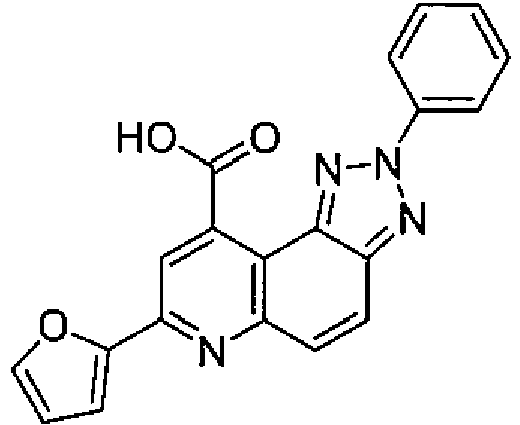
7-(furan-2-yl)-2-phenyl-2H-[1,2,3]triazolo[4,5-f]quinoline-99-carboxylic acid JSU code:JSU-0025748 - [Non Patent Literature]
- CAS REGISTRY Database Registry Number: 663947-48-6, 575496-29-6, 508226-84-4, 491858-20-9, 303100-54-1, 303100-53-0, 303100-52-9, and 959290-53-0
- An object of the present invention is to provide a pharmaceutical composition comprising an aromatic heterocyclic compound or a pharmaceutically acceptable salt thereof [for example, a H-PGDS inhibitor, a therapeutic and/or preventive agent or the like for, for example, a disease involving allergic inflammation (such as asthma, allergic rhinitis, or atopic dermatitis); COPD; a myodegenerative disease (such as muscular dystrophy or polymyositis); and the like]; and an aromatic heterocyclic compound, a pharmaceutically acceptable salt thereof, or the like, having H-PGDS inhibitory activity and, for example, being useful as a therapeutic and/or preventive agent or the like for, for example, a disease involving allergic inflammation (such as asthma, allergic rhinitis, or atopic dermatitis); COPD; a myodegenerative disease (such as muscular dystrophy or polymyositis); and the like.
- The present invention relates to the following (1) to (49).
- (1) A pharmaceutical composition comprising, as an active ingredient, an aromatic heterocyclic compound represented by the formula (I):
-

- {wherein Q1 represents CR2 [wherein R2 represents a hydrogen atom, halogen, cyano, optionally substituted lower alkyl, optionally substituted lower alkenyl, optionally substituted lower alkynyl, optionally substituted lower alkylsulfanyl, optionally substituted lower alkylsulfinyl, optionally substituted lower alkylsulfonyl, optionally substituted arylsulfonyl, optionally substituted aryl, an optionally substituted aromatic heterocyclic group, optionally substituted cycloalkyl, an optionally substituted aliphatic heterocyclic group, optionally substituted lower alkylcarbamoyl, optionally substituted di-lower alkylcarbamoyl, optionally substituted lower alkoxycarbonyl, optionally substituted lower alkanoyl, optionally substituted aroyl, optionally substituted aromatic heterocyclic carbonyl, -OR7 (wherein R7 represents a hydrogen atom, optionally substituted lower alkyl, optionally substituted cycloalkyl, optionally substituted aryl, an optionally substituted aromatic heterocyclic group, an optionally substituted aliphatic heterocyclic group, optionally substituted aroyl, or optionally substituted lower alkanoyl), or -NR8R9 (wherein R8 and R9 may be the same or different and each represent a hydrogen atom, optionally substituted lower alkyl, optionally substituted lower alkylsulfonyl, optionally substituted cycloalkyl, optionally substituted aryl, an optionally substituted aromatic heterocyclic group, an optionally substituted aliphatic heterocyclic group, optionally substituted aroyl, or optionally substituted lower alkanoyl, or R8 and R9 are combined together with the adjacent nitrogen atom to form an optionally substituted nitrogen-containing heterocyclic group)], or a nitrogen atom;
when Q1 is CR2 (wherein R2 has the same meaning as defined above),
Q2 represents CR3 [wherein R3 represents a hydrogen atom, halogen, cyano, optionally substituted lower alkyl, optionally substituted lower alkenyl, optionally substituted lower alkynyl, optionally substituted lower alkylsulfanyl, optionally substituted lower alkylsulfinyl, optionally substituted lower alkylsulfonyl, optionally substituted arylsulfonyl, optionally substituted aryl, an optionally substituted aromatic heterocyclic group, optionally substituted cycloalkyl, an optionally substituted aliphatic heterocyclic group, optionally substituted lower alkylcarbamoyl, optionally substituted di-lower alkylcarbamoyl, optionally substituted lower alkoxycarbonyl, optionally substituted lower alkanoyl, optionally substituted aroyl, optionally substituted aromatic heterocyclic carbonyl, -OR10 (wherein R10 represents a hydrogen atom, optionally substituted lower alkyl, optionally substituted cycloalkyl, optionally substituted aryl, an optionally substituted aromatic heterocyclic group, an optionally substituted aliphatic heterocyclic group, optionally substituted aroyl, or optionally substituted lower alkanoyl), or -NR11R12 (wherein R11 and R12 maybe the same or different and each represent a hydrogen atom, optionally substituted lower alkyl, optionally substituted lower alkylsulfonyl, optionally substituted cycloalkyl, optionally substituted aryl, an optionally substituted aromatic heterocyclic group, an optionally substituted aliphatic heterocyclic group, optionally substituted aroyl, or optionally substituted lower alkanoyl, or R11 and R12 are combined together with the adjacent nitrogen atom to form an optionally substituted nitrogen-containing heterocyclic group)], or a nitrogen atom;
when Q2 is CR3 (wherein R3 has the same meaning as defined above), Q3 represents a nitrogen atom;
when Q2 is a nitrogen atom, Q3 represents CR4 [wherein R4 represents a hydrogen atom, halogen, cyano, optionally substituted lower alkyl, optionally substituted lower alkenyl, optionally substituted lower alkynyl, optionally substituted lower alkylsulfanyl, optionally substituted lower alkylsulfinyl, optionally substituted lower alkylsulfonyl, optionally substituted arylsulfonyl, optionally substituted aryl, an optionally substituted aromatic heterocyclic group, optionally substituted cycloalkyl, an optionally substituted aliphatic heterocyclic group, optionally substituted lower alkylcarbamoyl, optionally substituted di-lower alkylcarbamoyl, optionally substituted lower alkoxycarbonyl, optionally substituted lower alkanoyl, optionally substituted aroyl, optionally substituted aromatic heterocyclic carbonyl, -OR13 (wherein R13 represents a hydrogen atom, optionally substituted lower alkyl, optionally substituted cycloalkyl, optionally substituted aryl, an optionally substituted aromatic heterocyclic group, an optionally substituted aliphatic heterocyclic group, optionally substituted aroyl, or optionally substituted lower alkanoyl), or -NR14R15 (wherein R14 and R15 may be the same or different and each represent a hydrogen atom, optionally substituted lower alkyl, optionally substituted lower alkylsulfonyl, optionally substituted cycloalkyl, optionally substituted aryl, an optionally substituted aromatic heterocyclic group, an optionally substituted aliphatic heterocyclic group, optionally substituted aroyl, or optionally substituted lower alkanoyl, or R14 and R15 are combined together with the adjacent nitrogen atom to form an optionally substituted nitrogen-containing heterocyclic group)];
when Q1 is a nitrogen atom, Q2 represents CR3 (wherein R3 has the same meaning as defined above) and Q3 represents CR4 (wherein R4 has the same meaning as defined above) or a nitrogen atom;
R1 represents -C (=O) OR16 (wherein R16 represents a hydrogen atom, optionally substituted lower alkyl, optionally substituted cycloalkyl, optionally substituted aryl, optionally substituted aroyl, an optionally substituted aliphatic heterocyclic group, or an optionally substituted aromatic heterocyclic group), -C(=O)NR17R18
[wherein R17 and R18 may be the same or different and each represent a hydrogen atom, optionally substituted lower alkyl, optionally substituted cycloalkyl, optionally substituted aryl, an optionally substituted aromatic heterocyclic group, or -SO2R19 (wherein R19 represents optionally substituted lower alkyl, optionally substituted aryl, or an optionally substituted aromatic heterocyclic group), or R17 and R18 are combined together with the adjacent nitrogen atom to form an optionally substituted nitrogen-containing heterocyclic group], tetrazolyl, or the formula (III): -

- (wherein Q4 and Q5 may be the same or different and each represent an oxygen atom or a sulfur atom);
R5 represents a hydrogen atom, halogen, cyano, optionally substituted lower alkyl, optionally substituted lower alkenyl, optionally substituted lower alkynyl, optionally substituted lower alkylsulfanyl, optionally substituted lower alkylsulfinyl, optionally substituted lower alkylsulfonyl, optionally substituted arylsulfonyl, optionally substituted aryl, an optionally substituted aromatic heterocyclic group, optionally substituted cycloalkyl, an optionally substituted aliphatic heterocyclic group, optionally substituted lower alkylcarbamoyl, optionally substituted di-lower alkylcarbamoyl, optionally substituted lower alkoxycarbonyl, optionally substituted lower alkanoyl, optionally substituted aroyl, optionally substituted aromatic heterocyclic carbonyl, -OR20 (wherein R20 represents a hydrogen atom, optionally substituted lower alkyl, optionally substituted cycloalkyl, optionally substituted aryl, an optionally substituted aromatic heterocyclic group, an optionally substituted aliphatic heterocyclic group, optionally substituted aroyl, or optionally substituted lower alkanoyl), or -NR21R22 (wherein R21 and R22 may be the same or different and each represent a hydrogen atom, optionally substituted lower alkyl, optionally substituted lower alkylsulfonyl, optionally substituted cycloalkyl, optionally substituted aryl, an optionally substituted aromatic heterocyclic group, an optionally substituted aliphatic heterocyclic group, optionally substituted aroyl, or optionally substituted lower alkanoyl, or R21 and R22 are combined together with the adjacent nitrogen atom to form an optionally substituted nitrogen-containing heterocyclic group);
R6 represents optionally substituted cycloalkyl, optionally substituted aryl, or an optionally substituted aromatic heterocyclic group;
X and Y may be the same or different and each represent CH in which H may be substituted with a substituent, NH in which H may be substituted with a substituent, a nitrogen atom, an oxygen atom, or a sulfur atom; and Z represents a nitrogen atom or a carbon atom), or a pharmaceutically acceptable salt thereof. - (2) The pharmaceutical composition according to (1), wherein Q1, Q2, and Q3 are CR2 (wherein R2 has the same meaning as defined above), CR3 (wherein R3 has the same meaning as defined above), and a nitrogen atom, respectively.
- (3) The pharmaceutical composition according to (1), which comprises, as an active ingredient, an aromatic heterocyclic compound represented by the formula (I-1):
-

-
- (4) The pharmaceutical composition according to any one of (1) to (3), which is an inhibitor of hematopoietic prostaglandin D2 synthase (H-PGDS).
- (5) The pharmaceutical composition according to any one of (1) to (3), which is a therapeutic and/or preventive agent for a disease involving H-PGDS.
- (6) The pharmaceutical composition according to any one of (1) to (3), which is a therapeutic and/or preventive agent for a disease involving allergic inflammation, COPD, or a myodegenerative disease.
- (7) The pharmaceutical composition according to any one of (1) to (3), which is a therapeutic and/or preventive agent for a disease selected from the group consisting of asthma, allergic rhinitis, atopic dermatitis, COPD, muscular dystrophy, and polymyositis.
- (8) A method for inhibiting H-PGDS, comprising a step of administering an effective amount of the aromatic heterocyclic compound or a pharmaceutically acceptable salt thereof described in any one of (1) to (3).
- (9) A method for treating and/or preventing a disease involving H-PGDS, comprising a step of administering an effective amount of the aromatic heterocyclic compound or a pharmaceutically acceptable salt thereof described in any one of (1) to (3).
- (10) A method for treating and/or preventing a disease involving allergic inflammation, COPD, or a myodegenerative disease, comprising a step of administering an effective amount of the aromatic heterocyclic compound or a pharmaceutically acceptable salt thereof described in any one of (1) to (3).
- (11) A method for treating and/or preventing a disease selected from the group consisting of asthma, allergic rhinitis, atopic dermatitis, COPD, muscular dystrophy, and polymyositis, comprising a step of administering an effective amount of the aromatic heterocyclic compound or a pharmaceutically acceptable salt thereof described in any one of (1) to (3).
- (12) The aromatic heterocyclic compound or a pharmaceutically acceptable salt thereof described in any one of (1) to (3) for use in inhibiting H-PGDS.
- (13) The aromatic heterocyclic compound or a pharmaceutically acceptable salt thereof described in any one of (1) to (3) for use in treating and/or preventing a disease involving H-PGDS.
- (14) The aromatic heterocyclic compound or a pharmaceutically acceptable salt thereof described in any one of (1) to (3) for use in treating and/or preventing a disease involving allergic inflammation, COPD, or a myodegenerative disease.
- (15) The aromatic heterocyclic compound or a pharmaceutically acceptable salt thereof described in any one of (1) to (3) for use in treating and/or preventing a disease selected from the group consisting of asthma, allergic rhinitis, atopic dermatitis, COPD, muscular dystrophy, and polymyositis.
- (16) Use of the aromatic heterocyclic compound or a pharmaceutically acceptable salt thereof described in any one of (1) to (3) for the manufacture of a H-PGDS inhibitor.
- (17) Use of the aromatic heterocyclic compound or a pharmaceutically acceptable salt thereof described in any one of (1) to (3) for the manufacture of a therapeutic and/or preventive agent for a disease involving H-PGDS.
- (18) Use of the aromatic heterocyclic compound or a pharmaceutically acceptable salt thereof described in any one of (1) to (3) for the manufacture of a therapeutic and/or preventive agent for a disease involving allergic inflammation, COPD, or a myodegenerative disease.
- (19) Use of the aromatic heterocyclic compound or a pharmaceutically acceptable salt thereof described in any one of (1) to (3) for the manufacture of a therapeutic and/or preventive agent for a disease selected from the group consisting of asthma, allergic rhinitis, atopic dermatitis, COPD, muscular dystrophy, and polymyositis.
- (20) An aromatic heterocyclic compound represented by the formula (I-A):
-

- {wherein Q1A represents CR2A [wherein R2A represents a hydrogen atom, halogen, cyano, optionally substituted lower alkyl, optionally substituted lower alkenyl, optionally substituted lower alkynyl, optionally substituted lower alkylsulfanyl, optionally substituted lower alkylsulfinyl, optionally substituted lower alkylsulfonyl, optionally substituted arylsulfonyl, optionally substituted aryl, an optionally substituted aromatic heterocyclic group, optionally substituted cycloalkyl, an optionally substituted aliphatic heterocyclic group, optionally substituted lower alkylcarbamoyl, optionally substituted di-lower alkylcarbamoyl, optionally substituted lower alkoxycarbonyl, optionally substituted lower alkanoyl, optionally substituted aroyl, optionally substituted aromatic heterocyclic carbonyl, -OR7A (wherein R7A represents a hydrogen atom, optionally substituted lower alkyl, optionally substituted cycloalkyl, optionally substituted aryl, an optionally substituted aromatic heterocyclic group, an optionally substituted aliphatic heterocyclic group, optionally substituted aroyl, or optionally substituted lower alkanoyl), or -NR8AR9A (wherein R8A and R9A may be the same or different and each represent a hydrogen atom, optionally substituted lower alkyl, optionally substituted lower alkylsulfonyl, optionally substituted cycloalkyl, optionally substituted aryl, an optionally substituted aromatic heterocyclic group, an optionally substituted aliphatic heterocyclic' group, optionally substituted aroyl, or optionally substituted lower alkanoyl, or R8A and R9A are combined together with the adjacent nitrogen atom to form an optionally substituted nitrogen-containing heterocyclic group)], or a nitrogen atom;
when Q1A is CR2A (wherein R2A has the same meaning as defined above),
Q2A represents CR3A [wherein R3A represents a hydrogen atom, halogen, cyano, optionally substituted lower alkyl, optionally substituted lower alkenyl, optionally substituted lower alkynyl, optionally substituted lower alkylsulfanyl, optionally substituted lower alkylsulfinyl, optionally substituted lower alkylsulfonyl, optionally substituted arylsulfonyl, optionally substituted aryl, an optionally substituted aromatic heterocyclic group, optionally substituted cycloalkyl, an optionally substituted aliphatic heterocyclic group, optionally substituted lower alkylcarbamoyl, optionally substituted di-lower alkylcarbamoyl, optionally substituted lower alkoxycarbonyl, optionally substituted lower alkanoyl, optionally substituted aroyl, optionally substituted aromatic heterocyclic carbonyl, -OR10A (wherein R10A represents a hydrogen atom, optionally substituted lower alkyl, optionally substituted cycloalkyl, optionally substituted aryl, an optionally substituted aromatic heterocyclic group, an optionally substituted aliphatic heterocyclic group, optionally substituted aroyl, or optionally substituted lower alkanoyl), or -NR11AR12A (wherein R11A and R12A may be the same or different and each represent a hydrogen atom, optionally substituted lower alkyl, optionally substituted lower alkylsulfonyl, optionally substituted cycloalkyl, optionally substituted aryl, an optionally substituted aromatic heterocyclic group, an optionally substituted aliphatic heterocyclic group, optionally substituted aroyl, or optionally substituted lower alkanoyl, or R11A and R12A are combined together with the adjacent nitrogen atom to form an optionally substituted nitrogen-containing heterocyclic group)], or a nitrogen atom;
when Q2A is CR3A (wherein R3A has the same meaning as defined above), Q3A represents a nitrogen atom;
when Q2A is a nitrogen atom, Q3A represents CR4A [wherein R4A represents a hydrogen atom, halogen, cyano, optionally substituted lower alkyl, optionally substituted lower alkenyl, optionally substituted lower alkynyl, optionally substituted lower alkylsulfanyl, optionally substituted lower alkylsulfinyl, optionally substituted lower alkylsulfonyl, optionally substituted arylsulfonyl, optionally substituted aryl, an optionally substituted aromatic heterocyclic group, optionally substituted cycloalkyl, an optionally substituted aliphatic heterocyclic group, optionally substituted lower alkylcarbamoyl, optionally substituted di-lower alkylcarbamoyl, optionally substituted lower alkoxycarbonyl, optionally substituted lower alkanoyl, optionally substituted aroyl, optionally substituted aromatic heterocyclic carbonyl, -OR13A (wherein R13A represents a hydrogen atom, optionally substituted lower alkyl, optionally substituted cycloalkyl, optionally substituted aryl, an optionally substituted aromatic heterocyclic group, an optionally substituted aliphatic heterocyclic group, optionally substituted aroyl, or optionally substituted lower alkanoyl), or -NR14AR15A (wherein R14A and R15A may be the same or different and each represent a hydrogen atom, optionally substituted lower alkyl, optionally substituted lower alkylsulfonyl, optionally substituted cycloalkyl, optionally substituted aryl, an optionally substituted aromatic heterocyclic group, an optionally substituted aliphatic heterocyclic group, optionally substituted aroyl, or optionally substituted lower alkanoyl, or R14A and R15A are combined together with the adjacent nitrogen atom to form an optionally substituted nitrogen-containing heterocyclic group)];
when Q1A is a nitrogen atom, Q2A represents CR3A (wherein R3A has the same meaning as defined above) and Q3A represents CR4A (wherein R4A has the same meaning as defined above) or a nitrogen atom;
R1A represents -C(=O)OR16A (wherein R16A represents a hydrogen atom, optionally substituted lower alkyl, optionally substituted cycloalkyl, optionally substituted aryl, optionally substituted aroyl, an optionally substituted aliphatic heterocyclic group, or an optionally substituted aromatic heterocyclic group), -C(=O)NR17AR18A [wherein R17A and R18A may be the same or different and each represent a hydrogen atom, optionally substituted lower alkyl, optionally substituted cycloalkyl, optionally substituted aryl, an optionally substituted aromatic heterocyclic group, or -SO2R19A (wherein R19A represents optionally substituted lower alkyl, optionally substituted aryl, or an optionally substituted aromatic heterocyclic group), or R17A and R18A are combined together with the adjacent nitrogen atom to form an optionally substituted nitrogen-containing heterocyclic group], tetrazolyl, or the formula (III-A): -

- (wherein Q4A and Q5A may be the same or different and each represent an oxygen atom or a sulfur atom);
R5A represents a hydrogen atom, halogen, cyano, optionally substituted lower alkyl, optionally substituted lower alkenyl, optionally substituted lower alkynyl, optionally substituted lower alkylsulfanyl, optionally substituted lower alkylsulfinyl, optionally substituted lower alkylsulfonyl, optionally substituted arylsulfonyl, optionally substituted aryl, an optionally substituted aromatic heterocyclic group, optionally substituted cycloalkyl, an optionally substituted aliphatic heterocyclic group, optionally substituted lower alkylcarbamoyl, optionally substituted di-lower alkylcarbamoyl, optionally substituted lower alkoxycarbonyl, optionally substituted lower alkanoyl, optionally substituted aroyl, optionally substituted aromatic heterocyclic carbonyl, -OR20A (wherein R20A represents a hydrogen atom, optionally substituted lower alkyl, optionally substituted cycloalkyl, optionally substituted aryl, an optionally substituted aromatic heterocyclic group, an optionally substituted aliphatic heterocyclic group, optionally substituted aroyl, or optionally substituted lower alkanoyl), or -NR21AR22A (wherein R21A and R22A may be the same or different and each represent a hydrogen atom, optionally substituted lower alkyl, optionally substituted lower alkylsulfonyl, optionally substituted cycloalkyl, optionally substituted aryl, an optionally substituted aromatic heterocyclic group, an optionally substituted aliphatic heterocyclic group, optionally substituted aroyl, or optionally substituted lower alkanoyl, or R21A and R22A are combined together with the adjacent nitrogen atom to form an optionally substituted nitrogen-containing heterocyclic group);
R6A represents optionally substituted cycloalkyl, optionally substituted aryl, or an optionally substituted aromatic heterocyclic group;
XA and YA may be the same or different and each represent CH in which H may be substituted with a substituent, NH in which H may be substituted with a substituent, a nitrogen atom, an oxygen atom, or a sulfur atom; and ZA represents a nitrogen atom or a carbon atom
(excluding the case where Q1A, Q2A, and Q3A are CH, CR3A, and, a nitrogen atom, respectively; R3A is phenyl, 4-nitrophenyl, 4-dimethylaminophenyl, 3-hydroxy-2-methoxyphenyl, 4-methoxycarbonylphenyl, 4-hydroxyphenyl, 3-hydroxynaphthalen-2-yl, 4-methoxyphenyl, or furan-2-yl; R1A is carboxy; R5A is a hydrogen atom; XA, YA, and ZA are each a nitrogen atom; and R6A is phenyl)},
or a pharmaceutically acceptable salt thereof. - (21) The aromatic heterocyclic compound or a pharmaceutically acceptable salt thereof according to (20), wherein Q1A, Q2A, and Q3A are CR2A (wherein R2A has the same meaning as defined above), CR3A (wherein R3A has the same meaning as defined above), and a nitrogen atom, respectively.
- (22) The aromatic heterocyclic compound or a pharmaceutically acceptable salt thereof according to (20) or (21), wherein Q1A is CH.
- (23) The aromatic heterocyclic compound or a pharmaceutically acceptable salt thereof according to any one of (20) to (22), wherein R1A is -C(=O)OR16B (wherein R16B represents a hydrogen atom or optionally substituted lower alkyl) or -C(=O)NR17BR18B [wherein R17B and R18B may be the same or different and each represent a hydrogen atom, optionally substituted lower alkyl, or -SO2R19B (wherein R19B represents optionally substituted lower alkyl)].
- (24) The aromatic heterocyclic compound or a pharmaceutically acceptable salt thereof according to any one of (20) to (22), wherein R1A is -C(=O)OR16C (wherein R16C represents a hydrogen atom or lower alkyl) or -C(=O)NR17CR18C [wherein R17C and R18C may be the same or different and each represent a hydrogen atom, lower alkyl, or -SO2R19C (wherein R19C represents lower alkyl.
- (25) The aromatic heterocyclic compound or a pharmaceutically acceptable salt thereof according to any one of (20) to (22), wherein R1A is carboxy.
- (26) The aromatic heterocyclic compound or a pharmaceutically acceptable salt thereof according to any one of (20) to (25), wherein Q2A represents CR3B (wherein R3B represents halogen, optionally substituted aryl, an optionally substituted aromatic heterocyclic group, or an optionally substituted aliphatic heterocyclic group).
- (27) The aromatic heterocyclic compound or a pharmaceutically acceptable salt thereof according to any one of (20) to (25), wherein Q2A represents CR3C (wherein R3C represents an optionally substituted aromatic heterocyclic group).
- (28) The aromatic heterocyclic compound or a pharmaceutically acceptable salt thereof according to any one of (20) to (27), wherein R5A is a hydrogen atom.
- (29) The aromatic heterocyclic compound or a pharmaceutically acceptable salt thereof according to any one of (20) to (28), wherein XA, YA, and ZA are each a nitrogen atom.
- (30) The aromatic heterocyclic compound or a pharmaceutically acceptable salt thereof according to any one of (20) to (28), wherein XA is an oxygen atom, YA is a nitrogen atom, and ZA is a carbon atom.
- (31) The aromatic heterocyclic compound or a pharmaceutically acceptable salt thereof according to any one of (20) to (30), wherein R6A is optionally substituted aryl, or an optionally substituted aromatic heterocyclic group.
- (32) The aromatic heterocyclic compound or a pharmaceutically acceptable salt thereof according to any one of (20) to (30), wherein R6A is optionally substituted aryl.
- (33) A pharmaceutical composition comprising, as an active ingredient, the aromatic heterocyclic compound or a pharmaceutically acceptable salt thereof described in any one of (20) to (32).
- (34) A H-PGDS inhibitor comprising, as an active ingredient, the aromatic heterocyclic compound or a pharmaceutically acceptable salt thereof described in any one of (20) to (32).
- (35) A therapeutic and/or preventive agent for a disease involving H-PGDS comprising, as an active ingredient, the aromatic heterocyclic compound or a pharmaceutically acceptable salt thereof described in any one of (20) to (32).
- (36) A therapeutic and/or preventive agent for a disease involving allergic inflammation, COPD, or a myodegenerative disease comprising, as an active ingredient, the aromatic heterocyclic compound or a pharmaceutically acceptable salt thereof described in any one of (20) to (32).
- (37) A therapeutic and/or preventive agent for a disease selected from the group consisting of asthma, allergic rhinitis, atopic dermatitis, COPD, muscular dystrophy, and polymyositis comprising, as an active ingredient, the aromatic heterocyclic compound or a pharmaceutically acceptable salt thereof described in any one of (20) to (32).
- (38) A method for inhibiting H-PGDS, comprising a step of administering an effective amount of the aromatic heterocyclic compound or a pharmaceutically acceptable salt thereof described in any one of (20) to (32).
- (39) A method for treating and/or preventing a disease involving H-PGDS, comprising a step of administering an effective amount of the aromatic heterocyclic compound or a pharmaceutically acceptable salt thereof described in any one of (20) to (32).
- (40) A method for treating and/or preventing a disease involving allergic inflammation, COPD, or a myodegenerative disease, comprising a step of administering an effective amount of the aromatic heterocyclic compound or a pharmaceutically acceptable salt thereof described in any one of (20) to (32).
- (41) A method for treating and/or preventing a disease selected from the group consisting of asthma, allergic rhinitis, atopic dermatitis, COPD, muscular dystrophy, and polymyositis, comprising a step of administering an effective amount of the aromatic heterocyclic compound or a pharmaceutically acceptable salt thereof described in any one of (20) to (32).
- (42) The aromatic heterocyclic compound or a pharmaceutically acceptable salt thereof described in any one of (20) to (32) for use in inhibiting H-PGDS.
- (43) The aromatic heterocyclic compound or a pharmaceutically acceptable salt thereof described in any one of (20) to (32) for use in treating and/or preventing a disease involving H-PGDS.
- (44) The aromatic heterocyclic compound or a pharmaceutically acceptable salt thereof described in any one of (20) to (32) for use in treating and/or preventing a disease involving allergic inflammation, COPD, or a myodegenerative disease.
- (45) The aromatic heterocyclic compound or a pharmaceutically acceptable salt thereof described in any one of (20) to (32) for use in treating and/or preventing a disease selected from the group consisting of asthma, allergic rhinitis, atopic dermatitis, COPD, muscular dystrophy, and polymyositis.
- (46) Use of the aromatic heterocyclic compound or a pharmaceutically acceptable salt thereof described in any one of (20) to (32) for the manufacture of a H-PGDS inhibitor.
- (47) Use of the aromatic heterocyclic compound or a pharmaceutically acceptable salt thereof described in any one of (20) to (32) for the manufacture of a therapeutic and/or preventive agent for a disease involving H-PGDS.
- (48) Use of the aromatic heterocyclic compound or a pharmaceutically acceptable salt thereof described in any one of (20) to (32) for the manufacture of a therapeutic and/or preventive agent for a disease involving allergic inflammation, COPD, or a myodegenerative disease.
- (49) Use of the aromatic heterocyclic compound or a pharmaceutically acceptable salt thereof described in any one of (20) to (32) for the manufacture of a therapeutic and/or preventive agent for a disease selected from the group consisting of asthma; allergic rhinitis, atopic dermatitis, COPD, muscular dystrophy, and polymyositis.
- The present invention provides a pharmaceutical composition comprising an aromatic heterocyclic compound or a pharmaceutically acceptable salt thereof [for example, a H-PGDS inhibitor; a therapeutic and/or preventive agent or the like for, for example, a disease involving allergic inflammation (such as asthma, allergic rhinitis, or atopic dermatitis); COPD; a myodegenerative disease (such as muscular dystrophy or polymyositis); and the like] and an aromatic heterocyclic compound, a pharmaceutically acceptable salt thereof, or the like, having H-PGDS inhibitory effect and, for example, being useful as a therapeutic and/or preventive agent or the like for, for example, a disease involving allergic inflammation (such as asthma, allergic rhinitis, or atopic dermatitis); COPD; a myodegenerative disease (such as muscular dystrophy or polymyositis); and the like.
- Hereinafter, the compound represented by the formula (I) is referred to as Compound (I). The same applies to the other compounds having different formula numbers.
In the definitions of the respective groups in the formula (I),
examples of the lower alkyl and the lower alkyl moiety of the lower alkoxycarbonyl, the lower alkanoyl, the lower alkylsulfanyl, the lower alkylsulfinyl, the lower alkylsulfonyl, the lower alkylcarbamoyl, and the di-lower alkylcarbamoyl include linear or branched alkyl having 1 to 10 carbon atoms, and more specific examples thereof include methyl, ethyl, propyl, isopropyl, butyl, isobutyl, sec-butyl, tert-butyl, pentyl, isopentyl, neopentyl, hexyl, heptyl, octyl, nonyl, decyl, and the like. - The two lower alkyl moieties of the di-lower alkylcarbamoyl may be the same or different.
Examples of the lower alkenyl include linear or branched alkenyl having 2 to 10 carbon atoms, and more specific examples thereof include vinyl, allyl, 1-propenyl, butenyl, pentenyl, hexenyl, heptenyl, octenyl, nonenyl, decenyl, and the like. - Examples of the lower alkynyl include linear or branched alkynyl having 2 to 10 carbon atoms, and more specific examples thereof include ethynyl, propynyl, butynyl, pentynyl, hexynyl, heptynyl, octynyl, nonynyl, decynyl, and the like.
Examples of the cycloalkyl include cycloalkyl having 3 to 8 carbon atoms, and more specific examples thereof include cyclopropyl, cyclobutyl, cyclopentyl, cyclohexyl, cycloheptyl, cyclooctyl, and the like. - Examples of the aryl and the aryl moiety of the arylsulfonyl and the aroyl include aryl having 6 to 14 carbon atoms, and more specific examples thereof include phenyl, naphthyl, azulenyl, anthryl, and the like.
Examples of the aliphatic heterocyclic group include a 5- or 6-membered monocyclic aliphatic heterocyclic group which contains at least one atom selected from a nitrogen atom, an oxygen atom, and a sulfur atom, a bicyclic or tricyclic condensed aliphatic heterocyclic group in which 3- to 8-membered rings are fused and at least one atom selected from a nitrogen atom, an oxygen atom and a sulfur atom is contained, and the like, and more specific examples thereof include aziridinyl, azetidinyl, pyrrolidinyl, piperidino, piperidinyl, azepanyl, 1,2,5,6-tetrahydropyridyl, imidazolidinyl, pyrazolidinyl, piperazinyl, homopiperazinyl, pyrazolinyl, oxiranyl, tetrahydrofuranyl, tetrahydro-2H-pyranyl, 5,6-dihydro-2H-pyranyl, oxazolidinyl, morpholino, morpholinyl, thioxazolidinyl, thiomorpholinyl, 2H-oxazolyl, 2H-thioxazolyl, dihydroindolyl, dihydroisoindolyl, dihydrobenzofuranyl, benzimidazolidinyl, dihydrobenzoxazolyl, dihydrobenzothioxazolyl, benzodioxolinyl, tetrahydroquinolyl, tetrahydroisoquinolyl, dihydro-2H-chromanyl, dihydro-1H-chromanyl, dihydro-2H-thiochromanyl, dihydro-1H-thiochromanyl, tetrahydroquinoxalinyl, tetrahydroquinazolinyl, dihydrobenzodioxanyl, and the like. - Examples of the aromatic heterocyclic group and the aromatic heterocyclic moiety of the aromatic heterocyclic carbonyl include a 5- or 6-membered monocyclic aromatic heterocyclic group which contains at least one atom selected from a nitrogen atom, an oxygen atom and a sulfur atom, a bicyclic or tricyclic condensed aromatic heterocyclic group in which 3-to 8-membered rings are fused and at least one atom selected from a nitrogen atom, an oxygen atom and a sulfur atom is contained, and the like, and more specific examples thereof include furyl, thienyl, pyrrolyl, imidazolyl, pyrazolyl, oxazolyl, isoxazolyl, oxadiazolyl, thiazolyl, isothiazolyl, thiadiazolyl, triazolyl, tetrazolyl, pyridyl, pyridazinyl, pyrimidinyl, pyrazinyl, triazinyl, benzofuranyl, benzothiophenyl, benzoxazolyl, benzothiazolyl, isoindolyl, indolyl, indazolyl, benzimidazolyl, benzotriazolyl, oxazolopyrimidinyl, thiazolopyrimidinyl, pyrrolopyridinyl, pyrrolopyrimidinyl, imidazopyridinyl, purinyl, quinolinyl, isoquinolinyl, cinnolinyl, phthalazinyl, quinazolinyl, quinoxalinyl, naphthyridinyl, and the like.
- Examples of the nitrogen-containing heterocyclic group formed together with the adjacent nitrogen atom include a 5-or 6-membered monocyclic heterocyclic group which contains at least one nitrogen atom (the monocyclic heterocyclic group may further contain another nitrogen atom, an oxygen atom or a sulfur atom), a bicyclic or tricyclic condensed heterocyclic group in which 3- to 8-membered rings are fused and at least one nitrogen atom is contained (the condensed heterocyclic group may further contain another nitrogen atom, an oxygen atom or a sulfur atom), and the like, and more specific examples thereof include aziridinyl, azetidinyl, pyrrolidinyl, piperidino, azepanyl, pyrrolyl, imidazolidinyl, imidazolyl, pyrazolidinyl, pyrazolinyl, pyrazolyl, piperazinyl, homopiperazinyl, oxazolidinyl, 2H-oxazolyl, thioxazolidinyl, 2H-thioxazolyl, morpholino, thiomorpholinyl, dihydroindolyl, dihydroisoindolyl, indolyl, isoindolyl, tetrahydroquinolyl, tetrahydroisoquinolyl, dihydrobenzoxazolyl, dihydrobenzothioxazolyl, benzimidazolidinyl, benzimidazolyl, dihydroindazolyl, indazolyl, benzotriazolyl, pyrrolopyridinyl pyrrolopyrimidinyl, imidazopyridinyl, purinyl, and the like.
- The halogen means each atom of a fluorine atom, a chlorine atom, a bromine atom, and an iodine atom.
- (i) The substituents of the optionally substituted lower alkyl, the optionally substituted lower alkenyl, the optionally substituted lower alkynyl, the optionally substituted lower alkoxycarbonyl, the optionally substituted lower alkanoyl, the optionally substituted lower alkylsulfanyl, the optionally substituted lower alkylsulfinyl, the optionally substituted lower alkylsulfonyl, the optionally substituted lower alkylcarbamoyl, and the optionally substituted di-lower alkylcarbamoyl may be the same or different and, for example, 1 to 3 in number, and specific examples thereof include
halogen, hydroxy, sulfanyl, nitro, cyano, carboxy, carbamoyl, C3-8 cycloalkyl, C6-14 aryl, an aliphatic heterocyclic group, an aromatic heterocyclic group,
C1-10 alkoxy, C3-8 cycloalkoxy, C6-14 aryloxy, C7-16 aralkyloxy, C2-11 alkanoyloxy, C7-15 aroyloxy,
C1-10 alkylsulfanyl,
tri(C1-10 alkyl) silyl,
-NR20AR21A (wherein R20A and R21A may be the same or different and each represent a hydrogen atom, C1-10 alkyl, C3-8 cycloalkyl, C6-14 aryl, an aromatic heterocyclic group, C7-16 aralkyl, C2-11 alkanoyl, C7-15 aroyl, C1-10 alkoxycarbonyl, C7-16 aralkyloxycarbonyl, C1-10 alkoxy, C1-10 alkylcarbamoyl, di(C1-10 alkyl) carbamoyl, C1-10 alkylsulfonyl, C6-14 arylsulfonyl, or the like),
C2-11 alkanoyl, C7-15 aroyl, C1-10 alkoxycarbonyl, C6-14 aryloxycarbonyl,
-C(=O)NR20BR21B (wherein R20B and R21B may be the same or different and each represent a hydrogen atom, C1-10 alkyl, C3-8 cycloalkyl, C6-14 aryl, an aromatic heterocyclic group, C7-16 aralkyl, C2-11 alkanoyl, C7-15 aroyl, C2-10 alkoxycarbonyl, C7-16 aralkyloxycarbonyl, C1-10 alkoxy, C1-10 alkylcarbamoyl, di(C1-10 alkyl) carbamoyl, C1-10 alkylsulfonyl, C6-14 arylsulfonyl, or the like), and the like. - (ii) The substituents of the optionally substituted aryl, the optionally substituted arylsulfonyl, the optionally substituted aroyl, the optionally substituted aromatic heterocyclic group, and the optionally substituted aromatic heterocyclic carbonyl may be the same or different and, for example, 1 to 3 in number, and specific examples thereof include
halogen, hydroxy, sulfanyl, nitro, cyano, carboxy, carbamoyl,
optionally substituted C1-10 alkyl [examples of the substituents of the optionally substituted C1-10 alkyl include the groups illustrated in (i) as examples of the substituents of the optionally substituted lower alkyl, and the like],
C3-8 cycloalkyl,
optionally substituted C6-14 aryl [examples of the substituents (a) of the optionally substituted C6-14 aryl include C1-10 alkyl, trifluoromethyl, and the like, in addition to the groups illustrated in (i) as examples of the substituents of the optionally substituted lower alkyl, and the like],
an optionally substituted aliphatic heterocyclic group (examples of the substituents of the optionally substituted aliphatic heterocyclic group include the substituents (a) of the above optionally substituted C6-14 aryl, and the like),
an aromatic heterocyclic group,
C1-10 alkoxy, C3-8 cycloalkoxy, C6-14 aryloxy, C7-16 aralkyloxy, C2-11 alkanoyloxy, C7-15 aroyloxy,
C1-10 alkylsulfanyl, C1-10 alkylsulfonyl,
-NR22AR23A (wherein R22A and R23A may be the same or different and each represent a hydrogen atom, C1-10 alkyl, C3-8 cycloalkyl, C6-14 aryl, an aromatic heterocyclic group, C7-16 aralkyl, C2-11 alkanoyl, C7-15 aroyl, C1-10 alkoxycarbonyl, C7-16 aralkyloxycarbonyl, C1-10 alkoxy, C1-10 alkylcarbamoyl, di(C1-10 alkyl) carbamoyl, C1-10 alkylsulfonyl, C6-14 arylsulfonyl, or the like),
C2-11 alkanoyl, C7-15 aroyl, C1-10 alkoxycarbonyl, C6-14 aryloxycarbonyl,
-C(=O)NR22BR23B (wherein R22B and R23B may be the same or different and each represent a hydrogen atom, C1-10 alkyl, C3-8 cycloalkyl, C6-14 aryl, an aromatic heterocyclic group, C7-16 aralkyl, C2-11 alkanoyl, C7-15 aroyl, C1-10 alkoxycarbonyl, C7-16 aralkyloxycarbonyl, C1-10 alkoxy, C1-10 alkylcarbamoyl, di(C1-10 alkyl) carbamoyl, C1-10 alkylsulfonyl, C6-14 arylsulfonyl, or the like), and the like. - (iii) The substituents of the optionally substituted cycloalkyl, the optionally substituted aliphatic heterocyclic group, and the nitrogen-containing heterocyclic group formed together with the adjacent nitrogen atom may be the same or different and, for example, 1 to 3 in number, and specific examples thereof include
oxo, halogen, hydroxy, sulfanyl, nitro, cyano, carboxy, carbamoyl,
optionally substituted C1-10 alkyl [examples of the substituents of the optionally substituted C1-10 alkyl include the groups illustrated in the above (i) as examples of the substituents of the optionally substituted lower alkyl, and the like],
C3-8 cycloalkyl,
optionally substituted C6-11 aryl [examples of the substituents of the optionally substituted C6-14 aryl include the groups illustrated in the above (ii) as examples of the substituents of the optionally substituted aryl, and the like],
an aliphatic heterocyclic group, an aromatic heterocyclic group,
C1-10 alkoxy, C3-8 cycloalkoxy, C6-14 aryloxy, C7-16 aralkyloxy, C2-11 alkanoyloxy, C7-15 aroyloxy,
C1-10 alkylsulfanyl, C1-10 alkylsulfonyl, -NR24AR25A (wherein R24A and R25A may be the same or different and each represent a hydrogen atom, C1-10 alkyl, C3-8 cycloalkyl, C6-14 aryl, an aromatic heterocyclic group, C7-16 aralkyl, C2-11 alkanoyl, C7-15 aroyl, C1-10 alkoxycarbonyl, C7-16 aralkyloxycarbonyl, C1-10 alkoxy, C1-10 alkylcarbamoyl, di(C1-10 alkyl) carbamoyl, C1-10 alkylsulfonyl, C6-14 arylsulfonyl, or the like), C2-11 alkanoyl, C7-15 aroyl, C1-10 alkoxycarbonyl, C6-14 aryloxycarbonyl, C1-10 alkylcarbamoyl, and di(C1-10 alkyl)carbamoyl,
-C(=O)NR24BR25B (wherein R24B and R25B may be the same or different and each represent a hydrogen atom, C1-10 alkyl, C3-8 cycloalkyl, C6-14 aryl, an aromatic heterocyclic group, C7-16 aralkyl, C2-11 alkanoyl, C7-15 aroyl, C1-10 alkoxycarbonyl, C7-16 aralkyloxycarbonyl, C1-10 alkoxy, C1-10 alkylcarbamoyl, di(C1-10 alkyl) carbamoyl, C1-10 alkylsulfonyl, C6-14 arylsulfonyl, or the like), and the like. - (iv) The substituent of the CH in which H may be substituted with a substituent, and NH in which H may be substituted with a substituent is 1 in number, and
examples thereof include halogen, hydroxy, sulfanyl, nitro, cyano, carboxy, carbamoyl,
optionally substituted C1-10 alkyl [examples of the substituents of the optionally substituted C1-10 alkyl include the groups illustrated in the above (i) as examples of the substituents of the optionally substituted lower alkyl, and the like],
C3-8 cycloalkyl,
optionally substituted C6-14 aryl [examples of the substituents of the optionally substituted C6-14 aryl include the substituents (a) of the optionally substituted C6-14 aryl, and the like],
an optionally substituted aliphatic heterocyclic group (examples of the substituents of the optionally substituted aliphatic heterocyclic group include the substituents (a) of the optionally substituted C6-14 aryl, and the like),
an aromatic heterocyclic group,
C1-10 alkoxy, C3-8 cycloalkoxy, C6-14 aryloxy, C7-16 aralkyloxy, C2-11 alkanoyloxy, C7-15 aroyloxy,
C1-10 alkylsulfanyl, C1-10 alkylsulfonyl,
-NR26AR27A (wherein R26A and R27A may be the same or different and each represent a hydrogen atom, C1-10 alkyl, C3-8 cycloalkyl, C6-14 aryl, an aromatic heterocyclic group, C7-16 aralkyl, C2-11 alkanoyl, C7-15 aroyl, C1-10 alkoxycarbonyl, C7-16 aralkyloxycarbonyl, C1-10 alkoxy, C1-10 alkylcarbamoyl, di(C1-10 alkyl) carbamoyl, C1-10 alkylsulfonyl, C6-14 arylsulfonyl, or the like),
C2-11 alkanoyl, C7-15 aroyl, C1-10 alkoxycarbonyl, C6-14 aryloxycarbonyl,
-C(=O)NR26BR27B (wherein R26B and R27B may be the same or different and each represent a hydrogen atom, C1-10 alkyl, C3-8 cycloalkyl, C6-14 aryl, an aromatic heterocyclic group, C7-16 aralkyl, C2-11 alkanoyl, C7-15 aroyl, C1-10 alkoxycarbonyl, C7-16 aralkyloxycarbonyl, C1-10 alkoxy, C1-10 alkylcarbamoyl, di(C1-10 alkyl) carbamoyl, C1-10 alkylsulfonyl, C6-14 arylsulfonyl, or the like), and the like. - Examples of the C1-10 alkyl and the C1-10 alkyl moiety of the C1-10 alkoxy, the C1-10 alkoxycarbonyl, the C2-11 alkanoyl, the C2-11 alkanoyloxy, the tri(C1-10 alkyl)silyl, the C1-10 alkylsulfanyl, the C1-10 alkylsulfonyl, the C1-10 alkylcarbamoyl and the di(C1-10 alkyl)carbamoyl described above include the groups illustrated as examples of the lower alkyl. Each of the three C1-10 alkyl moieties of the tri(C1-10 alkyl) silyl may be the same or different, and each of the two C1-10 alkyl moieties of the di(C1-10 alkyl)carbamoyl may be the same or different.
- Examples of the C3-8 cycloalkyl and the cycloalkyl moiety of the C3-8 cycloalkoxy include the groups illustrated in the examples of the cycloalkyl.
Examples of the C6-14 aryl and the aryl moiety of the C6-14 aryloxy, the C6-14 aryloxycarbonyl, the C7-15 aroyl, the C7-15 aroyloxy and the C6-14 arylsulfonyl include the groups illustrated in the examples of the aryl. - Examples of the aryl moiety of the C7-16 aralkyl, the C7-16 aralkyloxy, and the C7-16 aralkyloxycarbonyl include the groups illustrated in the examples of the aryl, and examples of the alkylene moiety thereof include C1-10 alkylene, more specifically, groups obtainable by removing a hydrogen atom from the groups illustrated in the above lower alkyl.
Examples of the aliphatic heterocyclic group, the aromatic heterocyclic group, and the halogen include the groups illustrated in the above aliphatic heterocyclic group, the above aromatic heterocyclic group, and the above halogen, respectively. - Examples of the pharmaceutical composition of the present invention include pharmaceutical compositions comprising, as an active ingredient, Compound (I) or a pharmaceutically acceptable salt thereof, and being used for treating and/or preventing a disease, but are not particularly limited thereto.
Examples thereof include the pharmaceutical preparation described later, more specifically, a H-PGDS inhibitor; a therapeutic and/or preventive agent for a disease involving H-PGDS; a therapeutic and/or preventive agent for a disease involving allergic inflammation, COPD, or a myodegenerative disease; a therapeutic and/or preventive agent for a disease selected from the group consisting of asthma, allergic rhinitis, atopic dermatitis, COPD, muscular dystrophy, and polymyositis; or the like, comprising, as an active ingredient, Compound (I) or a pharmaceutically acceptable salt thereof. - In the definitions of the groups of Compound (I) and the like, besides the above (1) to (46), Q1 and Q1A of Compound (I) and Compound (I-A) are preferably CH, Q2 and Q2A thereof are preferably CR2B [wherein R2B is preferably
optionally substituted aryl, an optionally substituted aromatic heterocyclic group, or an optionally substituted aliphatic heterocyclic group, more preferably optionally substituted aryl or an optionally substituted aromatic heterocyclic group;
the aryl of the above optionally substituted aryl is preferably phenyl; the substituent of the above optionally substituted aryl is preferably methanesulfonylamino, methanesulfonylmethylamino, methanesulfonylaminocarbonyl, methanesulfonylmethylaminocarbonyl, benzenesulfonylamino, benzenesulfonylaminocarbonyl, benzenesulfonylmethylamino, benzenesulfonylmethylaminocarbonyl, methoxy(methyl)carbamoyl, carboxy, or 3-ethylureido, more preferably methanesulfonylamino, methanesulfonylmethylamino, methanesulfonylaminocarbonyl, methanesulfonylmethylaminocarbonyl, benzenesulfonylamino, benzenesulfonylaminocarbonyl, benzenesulfonylmethylamino, or benzenesulfonylmethylaminocarbonyl;
the aromatic heterocyclic group of the above optionally substituted aromatic heterocyclic group is preferably furyl, pyrrolyl, pyrazolyl, thienyl, oxazolyl, triazolyl, orpyridyl, more preferably furyl, pyrrolyl, or pyrazolyl; the substituent of the above optionally substituted aromatic heterocyclic group is preferably tert-butoxycarbonyl, methyl, carboxy, 2-ethoxy-2-oxoethyl, carboxymethyl, 2-methoxyethyl, 2-morpholinoethyl, benzyl, or methoxycarbonyl, more preferably carboxy or benzyl;
the aliphatic heterocyclic group of the above optionally substituted aliphatic heterocyclic group is preferably pyrrolidinyl, piperazinyl, or piperidino; and the substituent of the above optionally substituted aliphatic heterocyclic group is preferably acetyl, ethoxycarbonyl, ethylsulfonyl, benzoyl, hydroxy, dimethylamino, acetamido, 2-hydroxyethyl, hydroxymethyl, 2-ethoxy-2-oxyethyl, 3-hydroxyphenyl, or 4-ethoxycarbonylphenyl],
Q3 and Q3A thereof are preferably a nitrogen atom, R1 and R1A thereof are preferably carboxy, R5 and R5A thereof are preferably a hydrogen atom, and R6 and R6A thereof are preferably phenyl, 3-methylphenyl, 2-fluorophenyl, 3-fluorophenyl, 4-fluorophenyl, 3-methoxyphenyl, 3-chlorophenyl, or 3-trifluoromethylphenyl, more preferably phenyl, 3-methylphenyl, or 3-fluorophenyl. - Examples of the pharmaceutically acceptable salt of Compound (I) include pharmaceutically acceptable acid addition salts, metal salts, ammonium salts, organic amine addition salts, amino acid addition salts, and the like. Examples of the pharmaceutically acceptable acid addition salts of Compound (I) include inorganic acid salts such as hydrochlorides, hydrobromides, nitrates, sulfates, and phosphates, organic acid salts such as acetates, oxalates, maleates, fumarates, citrates, benzoates, and methanesulfonates, and the like. Examples of the pharmaceutically acceptable metal salts include alkali metal salts such as sodium salts and potassium salts; alkaline earth metal salts such as magnesium salts and calcium salts; aluminum salts; zinc salts; and the like. Examples of the pharmaceutically acceptable ammonium salts include salts of ammonium, tetramethylammonium, and the like. Examples of the pharmaceutically acceptable organic amine addition salts include addition salts of morpholine, piperidine, and the like. Examples of the pharmaceutically acceptable amino acid addition salts include addition salts of lysine, glycine, phenylalanine, aspartic acid, glutamic acid, and the like.
- Hereinafter, production methods of Compound (I) will be described.
In the production methods described below, in a case where a defined group changes under the conditions of the production methods or is not suitable for carrying out the production methods, it is possible to produce a desired compound with use of a method commonly used in synthetic organic chemistry for introducing and removing a protecting group (for example, the method described in T. W. Greene, Protective Groups in Organic Synthesis, 3rd edition, John Wiley & Sons Inc. (1999), or the like). Further, the order of reaction steps, such as introduction of substituents, may be changed as necessary. - Among Compounds (I), Compound (I-A), in which X, Y, and Z are nitrogen atoms, can be produced according to the following production method.
-

- (wherein R1, R5, R6, Q1, Q2, and Q3 have the same meanings as defined above, respectively)
- Compound (III-1) can be produced by treating Compound (II) with 1 to 100 equivalents, preferably 1 to 10 equivalents of a reducing agent, in a solvent, in the presence of 1 equivalent to a large excess amount of an acid, at a temperature between -78°C and the boiling point of the solvent used for 5 minutes to 72 hours.
- Examples of the acid include concentrated hydrochloric acid, concentrated sulfuric acid, acetic acid, and the like.
Examples of the reducing agent include tin, iron, zinc, and the like.
Examples of the solvent include methanol, ethanol, isopropyl alcohol, water, and the like. These solvents may be used alone or as a mixture thereof.
Compound (III-1) can also be produced by the following method. - Compound (III-1) can be produced by treating Compound (II) without a solvent or in a solvent, in the presence of preferably 0. 01 to 50% by weight of a suitable catalyst relative to Compound (II), at a temperature between -78°C and the boiling point of the solvent used for 5 minutes to 72 hours, under hydrogen atmosphere at ordinary or increased pressure, or in the presence of 1 equivalent to a large excess amount, preferably 2 equivalents to a large excess amount of a suitable hydrogen source.
- Examples of the catalyst include palladium carbon, palladium, palladium hydroxide, palladium acetate, palladium black, platinum black, and the like.
Examples of the hydrogen source include formic acid, ammonium formate, sodium formate, and the like.
Examples of the solvent include methanol, ethanol, toluene, ethyl acetate, acetonitrile, diethyl ether, tetrahydrofuran (THF), 1,2-dimethoxyethane (DME), dioxane, N,N-dimethylformamide (DMF), N,N-dimethylacetamide (DMA), N-methylpyrrolidone (NMP), hexane, water, and the like. These solvents may be used alone or as a mixture thereof. - Compound (II) can be obtained as a commercial product, or produced according to the step of Production Method 1, or similar methods described in, for example,
WO2007/002313 ,WO2001/056607 ,WO2001/047891 , J. Med. Chem., 1970, 13, 1117-1124, Bioorg. Med. Chem. Lett., 2007, 17, 1403-1407,WO2005/035526 ,WO2003/045313 , or the like. - Compound (V) can be produced by reacting preferably 1 to 100 equivalents of Compound (IV) relative to Compound (III-1) without a solvent or in a solvent, in the presence of 1 to 100 equivalents of an acid relative to Compound (III-1) as necessary, with 1 to 100 equivalents, preferably 1 to 2 equivalents of a diazotization agent (IV-1) relative to Compound (III-1), at a temperature between -78°C and the boiling point of the solvent used for 5 minutes to 72 hours, adding Compound (III-1) to the reaction mixture, and reacting in the presence of 1 to 100 equivalents of a base as necessary, at a temperature between -78°C and the boiling point of the solvent used for 5 minutes to 72 hours.
- Examples of the diazotization agent (IV-1) include sodium nitrite, potassium nitrite, methyl nitrite, ethyl nitrite, propyl nitrite, butyl nitrite, isoamyl nitrite, and the like.
Examples of the acid include inorganic acids, such as hydrochloric acid, hydrobromic acid, hydroiodic acid, sulfuric acid, and nitric acid; organic acids, such as acetic acid, trifluoroacetic acid, and formic acid; and the like.
Examples of the base include sodium acetate, sodium carbonate, sodium hydroxide, sodium formate, sulfamide, sodium hydrogensulfate, and the like. - Examples of the solvent include water, methanol, ethanol, acetonitrile, diethyl ether, THF, DME, dioxane, DMF, DMA, NMP, and the like. These solvents may be used alone or as a mixture thereof.
Compound (IV) can be obtained, for example, as a commercial product. - Compound (I-A) can be produced by reacting Compound (V) with preferably 1 to 100 equivalents of an oxidant, without a solvent or in a solvent, at a temperature between -78°C and the boiling point of the solvent used for 5 minutes to 72 hours.
- Examples of the oxidant include copper (I) sulfate, copper (II) acetate, copper(II) oxide, chromic acid, manganese sulfate, lithium perchlorate, bis(acetoxy)iodobenzene, bromine, and the like.
Examples of the solvent include water, diethyl ether, DME, THF, 1,4-dioxane, DMF, DMA, dimethyl sulfoxide (DMSO), benzene, toluene, xylene, pyridine, dichloromethane, chloroform, carbon tetrachloride, 1,2-dichloroethane, acetonitrile, acetic acid, ethyl acetate, methyl acetate, methylethylketone, methanol, ethanol, propanol, isopropyl alcohol, butanol, hexane, and the like. - Among Compounds (I), both of Compound (I-B), in which X, Y, and Z are an oxygen atom, a nitrogen atom, and a carbon atom, respectively, and Compound (I-C), in which X, Y, and Z are a nitrogen atom, an oxygen atom, and a carbon atom, respectively, can be produced according to the following production method.
-


- (wherein R1, R5, R6, Q1, Q2, and Q3 have the same meanings as defined above, respectively; V represents a chlorine atom, a bromine atom, or hydroxy; and W represents a chlorine atom, a bromine atom, or an iodine atom)
- Compound (VI-1) can be produced by reacting Compound (III-1) with 1 to 10 equivalents, preferably 1 equivalent of a halogenating agent, in the presence of preferably 0.1 to 10 equivalents of a suitable additive as necessary, in a solvent at a temperature between -78°C and the boiling point of the solvent used for 5 minutes to 72 hours.
- Examples of the halogenating agent include N-chlorosuccinimide, N-bromosuccinimide, N-iodosuccinimide, bromine, pyrimidium bromide perbromide, tetra-N-butylammonium tribromide, iodine, and the like.
Examples of the solvent include, methanol, ethanol, acetonitrile, dichloromethane, chloroform, 1,2-dichloroethane, toluene, ethyl acetate, diethyl ether, THF, DME, DMF, NMP, and the like. These solvents may be used alone or as a mixture thereof. - Examples of the additive include tetra-N-butylammonium bromide, silver sulfate, and the like.
Compound (VI-2) can be produced from Compound (III-2) in a similar manner to that described above.
Compound (III-1) and Compound (III-2) can be obtained as a commercial product, or produced according to Step 1 of Production Method 1 or a similar method. Alternatively, the compounds can be produced according to, for example,WO2007/002313 ,WO2001/056607 ,W02001/047891 , J. Med. Chem., 1970, 13, 1117-1124, Bioorg. Med. Chem. Lett., 2007, 17, 1403-1407,WO2005/035526 ,WO2003/045313 ,EP581500 - Compound (VIII-1) can be produced by reacting Compound (VI-1) with preferably 1 to 100 equivalents of Compound (VII-1), without a solvent or in a solvent, in the presence of preferably 1 to 100 equivalents of a suitable base, at a temperature between -78°C and the boiling point of the solvent used for 5 minutes to 72 hours.
- Examples of the base include triethylamine, diisopropylethylamine, N,N-4-dimethylaminopyridine, pyridine, 2,6-lutidine, and the like.
Examples of the solvent include water, methanol, ethanol, acetonitrile, dichloromethane, chloroform, 1,2-dichloroethane, toluene, ethyl acetate, diethyl ether, THF, DME, DMF, NMP, and the like. These solvents may be used alone or as a mixture thereof. - Compound (VII-1) can be obtained, for example, as a commercial product.
Compound (VIII-1) can also be produced by the following method.
Compound (VIII-1) can be produced by reacting Compound (VI-1) with preferably 1 to 100 equivalents of Compound (VII-2), without a solvent or in a solvent, in the presence of preferably 1 to 100 equivalents of a condensing agent, and preferably 0.1 to 2 equivalents of a suitable additive as necessary, at a temperature between -78°C and the boiling point of the solvent used for 5 minutes to 72 hours. - Examples of the condensing agent include dicyclohexylcarbodiimide, 1-ethyl-3-(3-dimethylaminopropyl)carbodiimide hydrochloride, polymer-bound-1-ethyl-3-(3-dimethylaminopropyl)carbodiimide, triphenylphosphine oxide·trifluoromethanesulfonic anhydride, and the like.
Examples of the additive include 1-hydroxybenzotriazole, N-hydroxysuccinimide, and the like. - Examples of the solvent include water, diethyl ether, DME, THF, 1,4-dioxane, DMF, DMA, DMSO, benzene, toluene, xylene, dichloromethane, chloroform, carbon tetrachloride, 1,2-dichloroethane, acetonitrile, ethyl acetate, methyl acetate, methylethylketone, methanol, ethanol, propanol, isopropyl alcohol, butanol, hexane, and the like. These solvents may be used alone or as a mixture thereof.
- Compound (VII-2) can be obtained, for example, as a commercial product.
Compound (VIII-2) can be produced using Compound (VI-2) in a similar manner to that described above. - Compound (I-B) can be produced by treating Compound (VIII-1) in a solvent, in the presence of preferably 1 to 100 equivalents of a base, at a temperature between -78°C and the boiling point of the solvent used, with light irradiation using a mercury lamp for 5 minutes to 72 hours.
- Examples of the base include lithium hydroxide, sodium hydroxide, potassium hydroxide, sodium carbonate, potassium carbonate, sodium hydrogencarbonate, and the like.
Examples of the solvent include, methanol, ethanol, acetonitrile, dichloromethane, chloroform, 1,2-dichloroethane, toluene, ethyl acetate, diethyl ether, THF, DME, DMF, DMA, water, and the like. These solvents may be used alone or as a mixture thereof. - Compound (I-B) can also be produced by the following method.
Compound (I-B) can be produced by reacting Compound (VIII-1) without a solvent or in a solvent, in the presence of preferably 0.01 to 10 equivalents of a catalyst and preferably 0.01 to 10 equivalents of a ligand, and in the presence of preferably 1 to 100 equivalents of a base as necessary, at a temperature between -78°C and the boiling point of the solvent used for 5 minutes to 72 hours. - Examples of the catalyst include copper(I) chloride, copper(I) bromide, copper(I) iodide, copper(I) acetate, copper(I) oxide, iron(III) chloride, iron(III) bromide, iron(III) iodide, and the like.
Examples of the ligand include 1,10-phenanthroline, 2,2,6,6-tetramethyl-3,5-heptanedione, bipyridyl, 4-dimethylaminopyridine, N,N,N',N'-tetramethylethylenediamine, and the like. - Examples of the base include lithium hydroxide, sodium hydroxide, potassium hydroxide, sodium carbonate, potassium carbonate, cesium carbonate, sodium hydrogencarbonate, sodium acetate, potassium acetate, potassium phosphate, and the like.
Examples of the solvent include water, diethyl ether, DME, THF, 1,4-dioxane, diglyme, DMF, DMA, DMSO, benzene, toluene, xylene, dichloromethane, chloroform, carbon tetrachloride, 1,2-dichloroethane, acetonitrile, ethyl acetate, methyl acetate, methylethylketone, methanol, ethanol, propanol, isopropyl alcohol, butanol, hexane, and the like. These solvents may be used alone or as a mixture thereof. - Compound (I-C) can be produced using Compound (VIII-2) in a similar manner to that described above.
- Among Compounds (I), Compound (I-D), in which X and Y are different from each other and either a nitrogen atom or NH, and Z is a carbon atom, can be produced according to the following production method.
-

- (wherein R1, R5, R6, V, Q1, Q2 and Q3 have the same meanings as defined above, respectively)
- Compound (IX-1) can be produced by reacting Compound (III-1) in a solvent, with preferably 1 to 100 equivalents of a nitrating agent, at a temperature between -78°C and the boiling point used of the solvent for 5 minutes to 72 hours.
- Examples of the nitrating agent include nitric acid, sodium nitrate, potassium nitrate, nitrogen dioxide, and the like.
Examples of the solvent include sulfuric acid, acetic acid, trifluoroacetic acid, dichloromethane, hexane, ethyl acetate, acetonitrile, and the like. These solvents may be used alone or as a mixture thereof.
Compound (IX-2) can be produced using Compound (III-2) in a similar manner to that described above. - Compound (III-1) and Compound (III-2) can be obtained as a commercial product, or produced according to Step 1 of Production Method 1 or a similar method. Alternatively, the compounds can be produced according to, for example,
WO2007/002313 ,WO2002/056507 ,WO2001/047891 , J. Med. Chem., 1970, 13, 1117-1124, Bioorg. Med. Chem. Lett., 2007, 17, 1403-1407,W02005/035526 ,WO2003/045313 ,EP581500 - Compound (X) can be produced by treating Compound (IX-1) or Compound (IX-2) with 1 to 100 equivalents, preferably 1 to 10 equivalents of a reducing agent, without a solvent or in a solvent, in the presence of preferably 1 equivalent to a large excess amount of an acid, at a temperature between -78°C and the boiling point of the solvent used for 5 minutes to 72 hours.
- Examples of the acid include hydrochloric acid, sulfuric acid, acetic acid, and the like.
Examples of the reducing agent include tin, iron, zinc, and the like.
Examples of the solvent include methanol, ethanol, isopropyl alcohol, water, and the like. These solvents may be used alone or as a mixture thereof.
Compound (X) can also be produced by the following method. - Compound (X) can be produced by treating Compound (IX-1) or Compound (IX-2) without a solvent or in a solvent, in the presence of preferably 0.01 to 50% by weight of a suitable catalyst relative to Compound (IX-1) or Compound (IX-2), at a temperature between -78°C and the boiling point of the solvent used for 5 minutes to 72 hours, under hydrogen atmosphere at ordinary or increased pressure, or in the presence of 1 equivalent to a large excess amount, preferably 2 equivalents to a large excess amount of a suitable hydrogen source.
- Examples of the catalyst include palladium carbon, palladium, palladium hydroxide, palladium acetate, palladium black, platinum black, and the like.
Examples of the hydrogen source include formic acid, ammonium formate, sodium formate, and the like.
Examples of the solvent include methanol, ethanol, toluene, ethyl acetate, acetonitrile, diethyl ether, THF, DME, dioxane, DMF, NMP, hexane, water, and the like. These solvents may be used alone or as a mixture thereof. - Compound (XI-1) and/or Compound (XI-2) can be produced by reacting Compound (X) with preferably 1 to 100 equivalents of Compound (VII-1), without a solvent or in a solvent, in the presence of preferably 1 to 100 equivalents of a base, at a temperature between -78°C and the boiling point of the solvent used for 5 minutes to 72 hours.
- Examples of the base include triethylamine, diisopropylethylamine, N,N-4-dimethylaminopyridine, pyridine, 2,6-lutidine, and the like.
Examples of the solvent include water, methanol, ethanol, acetonitrile, dichloromethane, chloroform, 1,2-dichloroethane, toluene, ethyl acetate, diethyl ether, THF, DME, DMF, NMP, and the like. These solvents may be used alone or as a mixture thereof. -
- Compound (VII-1) can be obtained, for example, as a commercial product.
- Compound (XI-1) and/or Compound (XI-2) can also be produced by the following method.
- Compound (XI-1) and/or Compound (XI-2) can be produced by reacting Compound (X) with preferably 1 to 100 equivalents of Compound (VII-2), without a solvent or in a solvent, in the presence of preferably 1 to 100 equivalents of a condensing agent, and preferably 0.1 to 2 equivalents of a suitable additive as necessary, at a temperature between -78°C and the boiling point of the solvent used for 5 minutes to 72 hours.
- Examples of the condensing agent include dicyclohexylcarbodiimide,
1-ethyl-3-(3-dimethylaminopropyl)carbodiimide hydrochloride, polymer-bound-1-ethyl-3-(3-dimethylaminopropyl)carbodiimide, triphenylphosphine oxide-trifluoromethanesulfonic anhydride, and the like.
Examples of the additive include 1-hydroxybenzotriazole, N-hydroxysuccinimide, and the like. - Examples of the solvent include water, diethyl ether, DME, THF, 1,4-dioxane, DMF, DMA, DMSO, benzene, toluene, xylene, dichloromethane, chloroform, carbon tetrachloride, 1,2-dichloroethane, acetonitrile, ethyl acetate, methyl acetate, methylethylketone, methanol, ethanol, propanol, isopropyl alcohol, butanol, hexane, and the like. These solvents may be used alone or as a mixture thereof.
- Compound (VII-2) can be obtained, for example, as a commercial product.
- Compound (I-D) can be produced by treating Compound (XI-1) and/or Compound (XI-2) without a solvent or in a solvent, in the presence of preferably 1 to 100 equivalents of a suitable additive, at a temperature between -78°C and the boiling point of the solvent used for 5 minutes to 72 hours.
- Examples of the additive include acetic acid, trifluoroacetic acid, formic acid, hydrochloric acid, sulfuric acid, tosic acid, benzenesulfonic acid, phosphorus trichloride, phosphorus oxychloride, lithium hydroxide, sodium hydroxide, potassium hydroxide, and the like.
Examples of the solvent include water, diethyl ether, DME, THF, 1,4-dioxane, DMF, DMA, DMSO, benzene, toluene, xylene, dichloromethane, chloroform, carbon tetrachloride, 1,2-dichloroethane, acetonitrile, ethyl acetate, methyl acetate, methanol, ethanol, propanol, isopropyl alcohol, butanol, hexane, and the like. These solvents may be used alone or as a mixture thereof. - The above Steps 1 to 4 can also be successively performed, without isolating each product, by successively adding the reagents to the reaction solution.
- Among Compounds (I), both Compound (I-E-1) and Compound (I-E-2), in which X and Y are different from each other and either CH or NH, and Z is a carbon atom, can be produced according to the following production method.
-


- (wherein R1, R5, R6, Q1, Q2, Q3, and W have the same meanings as defined above, respectively)
- Compound (XIII-1) can be produced by reacting Compound (VI-1) with preferably 1 to 100 equivalents of Compound (XII), without a solvent or in a solvent, in the presence of preferably 0.1 to 10 equivalents of a palladium compound, preferably 0.1 to 10 equivalents of a copper compound, and preferably 0.1 to 10 equivalents of an additive as necessary, at a temperature between room temperature and the boiling point of the solvent used for 5 minutes to 72 hours.
- Examples of the palladium compound include
[1,1'-bis(diphenylphosphino)ferrocene]palladium(II) chloride, bis(triphenylphosphine)palladium(II) chloride, tetrakis(triphenylphosphine)palladium(0),
[1,2-bis(diphenylphosphino)ethane]palladium(II) chloride, and the like.
Examples of the copper compound include copper (I) iodide, copper(I) chloride, copper (I) bromide, copper (I) acetate, copper(I) oxide, copper(II) oxide, and the like. - Examples of the additive include cesium carbonate, potassium phosphate, sodium carbonate, potassium carbonate, sodium hydrogencarbonate, sodium hydroxide, lithium chloride, potassium chloride, silver oxide, silver nitrate, silver acetate, sodium ethoxide, triethylamine, and the like.
Examples of the solvent include water, diethyl ether, DME, THF, 1,4-dioxane, DMF, DMA, DMSO, benzene, toluene, xylene, dichloromethane, chloroform, carbon tetrachloride, 1,2-dichloroethane, acetonitrile, ethyl acetate, methyl acetate, methylethylketone, methanol, ethanol, propanol, isopropyl alcohol, butanol, hexane, and the like. These solvents may be used alone or as a mixture thereof. -
- Compound (XIII-2) can be produced using Compound (VI-2) in a similar manner to that described above.
- Both of Compound (VI-1) and Compound (VI-2) can be produced according to Step 1 of Production Method 2.
- Compound (XII) can be obtained, for example, as a commercial product.
- Compound (I-E-1) can be produced by reacting Compound (XIII-1) without a solvent or in a solvent, in the presence of preferably 0.1 to 100 equivalents of a base or a metal reagent, at a temperature between room temperature and the boiling point of the solvent used for 5 minutes to 72 hours.
- Examples of the base include lithium hydroxide, sodium hydroxide, potassium hydroxide, potassium tert-butoxide, sodium ethoxide, sodium methoxide, potassium carbonate, cesium carbonate, sodium carbonate, sodium hydride, potassium hydride, butyllithium, tetrabutylammonium fluoride, and the like.
Examples of the metal reagent include copper(I) iodide, copper(II) acetate, copper(II) trifluoroacetate, diethylzinc, zinc bromide, zinc chloride, zinc iodide, palladium(II) chloride, palladium(II) acetate,
[1,1'-bis(diphenylphosphino)ferrocene]palladium(II) chloride, bis(triphenylphosphine)palladium(II) chloride, tetrakis(triphenylphosphine)palladium(0),
[1,2-bis(diphenylphosphino)ethane]palladium(II) chloride, and the like. - Examples of the solvent include water, diethyl ether, DME, THF, 1,4-dioxane, DMF, DMA, DMSO, benzene, toluene, xylene, dichloromethane, chloroform, carbon tetrachloride, 1,2-dichloroethane, acetonitrile, ethyl acetate, methyl acetate, methanol, ethanol, propanol, isopropyl alcohol, butanol, hexane, and the like. These solvents may be used alone or as a mixture thereof.
- Compound (I-E-2) can be produced using Compound (XTTI-2) in a similar manner to that described above.
The above Steps 1 and 2 can also be successively performed, without isolating the product, by successively adding the reagents to the reaction solution. - Among Compounds (1), both of Compound (I-F-1) and Compound (I-F-2), in which X and Y are different from each other and either a sulfur atom or a nitrogen atom, and Z is a carbon atom, can be produced according to the following production method.
-

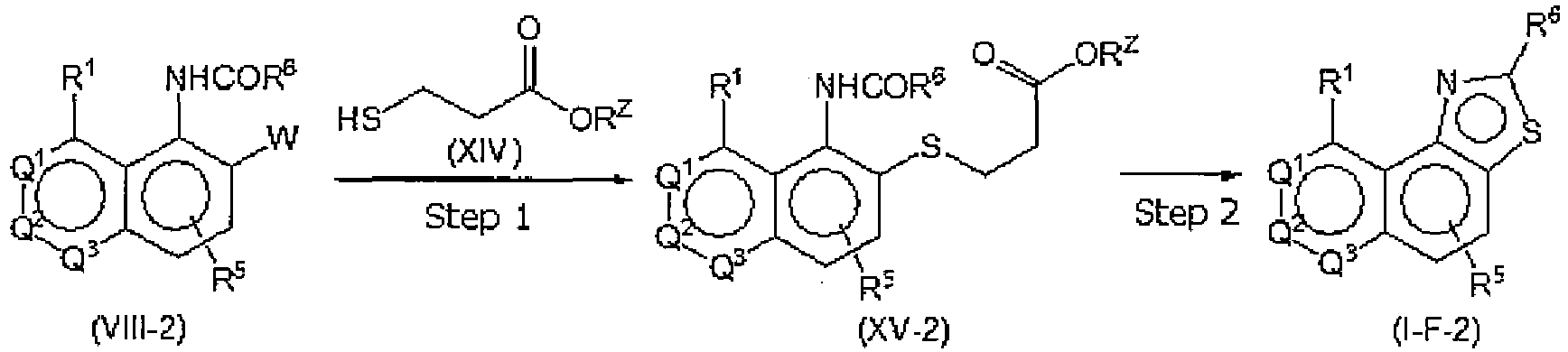
- (wherein R1, R5, R6, Q1, Q2, Q3, and W have the same meanings as defined above, respectively; and Rz represents C1-10 alkyl, such as methyl and ethyl, or C6-14 aryl, such as phenyl)
- Compound (XV-1) can be produced by reacting Compound (VIII-1) with preferably 1 to 100 equivalents of Compound (XIV), in a solvent, in the presence of preferably 0.01 to 10 equivalents of a palladium compound, preferably 1 to 100 equivalents of a base, and preferably 0.01 to 20 equivalents of a ligand as necessary, at a temperature between -20°C and the boiling point of the solvent used for 5 minutes to 72 hours.
- Examples of the palladium compound include palladium(II) chloride, palladium(II) acetate,
[1,1'-bis(diphenylphosphino)ferrocene]palladium(II) chloride, bis(triphenylphosphine)palladium(II) chloride, tetrakis(triphenylphosphine)palladium(0),
di(benzylideneacetone)palladium(0),
[1,2-bis(diphenylphosphino)ethane]palladium(II) chloride, and the like. - Examples of the ligand include triphenylphosphine, tributylphosphine, xantphos,
1,1'-bis(diphenylphosphino)ferrocene, and the like.
Examples of the base include potassium carbonate, cesium carbonate, potassium phosphate, potassium hydroxide, sodium hydroxide, potassium tert-butoxide, triethylamine, diisopropylethylamine, N-methylmorpholine, pyridine, 1,8-diazabicyclo[5.4.0]undec-7-ene(DBU), and the like. - Examples of the solvent include, methanol, ethanol, dichloromethane, chloroform, 1,2-dichloroethane, toluene, acetonitrile, diethyl ether, THF, DME, dioxane, DMF, DMA, NMP, water, and the like. These solvents may be used alone or as a mixture thereof.
Compound (XV-2) can be produced using Compound (VIII-2) in a similar manner to that described above.
Both of Compound (VIII-1) and Compound (VIII-2) can be produced according to Step 2 of Production Method 2. - Compound (XIV) can be obtained, for example, as a commercial product.
- Compound (I-F-1) can be produced by treating Compound (XV-1) without a solvent or in a solvent, with preferably 1 equivalent to a large excess amount of a base, at a temperature between -20°C and the boiling point of the solvent used, and then reacting with preferably 1 equivalent to a large excess amount of an additive at a temperature between -20°C and the boiling point of the solvent used for 5 minutes to 72 hours.
- Examples of the base include lithium hydroxide, sodium hydroxide, potassium hydroxide, potassium tert-butoxide, sodium ethoxide, sodium methoxide, potassium carbonate, cesium carbonate, sodium carbonate, sodium hydride, potassium hydride, butyllithium, and the like.
Examples of the additive include acetic acid, trifluoroacetic acid, formic acid, hydrochloric acid, sulfuric acid, tosic acid, benzenesulfonic acid, phosphorus trichloride, phosphorus oxychloride, and the like. - Examples of the solvent include water, diethyl ether, DME, THF, 1,4-dioxane, DMF, DMA, DMSO, benzene, toluene, xylene, dichloromethane, acetonitrile, methanol, ethanol, propanol, isopropyl alcohol, butanol, hexane, and the like. These solvents may be used alone or as a mixture thereof.
Compound (I-F-2) can be produced using Compound (XV-2) in a similar manner to that described above. - The above Steps 1 and 2 can also be successively performed, without isolating the product, by successively adding the reagents to the reaction solution.
- Among Compounds (I), Compound (I-H-1), in which one or more of R2, R3, R4, and R5 are optionally substituted lower alkenyl, optionally substituted lower alkynyl, optionally substituted aryl, or an optionally substituted aromatic heterocyclic group, can be produced according to the following production method.
- Compound (I-H-1) can be produced by reacting, among Compounds (I), Compound (I-G-1), in which one or more of R2, R3, R4, and R5 are a chlorine atom, a bromine atom, an iodine atom, trifluoromethanesulfonyloxy, methanesulfonyloxy, or p-toluenesulfonyloxy, with preferably 1 to 10 equivalents of Compound (XVI-1) represented by the following formula:
-
(RA)pM1—R26 (XVI-1)
- [wherein RA represents a fluorine atom, a chlorine atom, a bromine atom, an iodine atom, hydroxy, C1-6 alkyl, C1-6 alkoxy, aryl, or aryloxy; p represents an integer of 2 or 3; R26 represents, among the definitions of R2, R3, and R4, optionally substituted lower alkenyl, optionally substituted lower alkynyl, optionally substituted aryl, or an optionally substituted aromatic heterocyclic group; and M1 represents, a tin atom, a boron atom, or a silicon atom (when M1 is a boron atom, (RA) pM1 may represent
4,4,5,5-tetramethyl-1,3,2-dioxaborolan-2-yl)],
without a solvent or in a solvent, in the presence of a catalytic amount of a palladium compound, and preferably 0.1 to 10 equivalents of an additive as necessary, at a temperature between 0°C and the boiling point of the solvent used for 5 minutes to 72 hours. - Examples of the additive include cesium carbonate, potassium phosphate, sodium carbonate, potassium carbonate, sodium hydrogencarbonate, sodium hydroxide, lithium chloride, potassium chloride, sodium ethoxide, triethylamine, silver oxide, silver nitrate, silver acetate, and the like.
Examples of the solvent include water, diethyl ether, DME, THF, 1,4-dioxane, DMF, DMA, DMSO, benzene, toluene, xylene, acetonitrile, ethyl acetate, methyl acetate, methylethylketone, methanol, ethanol, propanol, isopropyl alcohol, butanol, hexane, and the like. These solvents may be used alone or as a mixture thereof. - Examples of the palladium compound include
[1,1'-bis(diphenylphosphino)ferrocene]palladium(II) chloride, bis(triphenylphosphine)palladium(II) chloride, tetrakis(triphenylphosphine)palladium(0),
[1,2-bis(diphenylphosphino)ethane]palladium(II) chloride, and the like.
Among Compounds (I), Compound (I-H-2), in which one or more of R2, R3, R4, and R5 are optionally substituted lower alkynyl, can also be produced, according to the following production method. - Compound (I-H-2) can be produced by reacting Compound (I-G-1) with preferably 1 to 100 equivalents of an alkynyl compound (XVI-2), without a solvent or in a solvent, in the presence of a catalytic amount of a palladium compound, a catalytic amount of a copper compound, and preferably 0.1 to 20 equivalents of an additive as necessary, at a temperature between 0°C and the boiling point of the solvent used for 5 minutes to 72 hours.
Examples of the alkynyl compound (XVI-2) include the compound represented by the following formula (XVI-2): -

- (wherein the moiety of
-

- represents, among the definitions of R2, R3, and R4, optionally substituted lower alkynyl), and the like, and this compound can be obtained, for example, as a commercial product.
Examples of the additive include cesium carbonate, potassium phosphate, sodium carbonate, potassium carbonate, sodium hydrogencarbonate, sodium hydroxide, sodium ethoxide, triethylamine, lithium chloride, potassium chloride, silver oxide, silver nitrate, silver acetate, and the like. - Examples of the solvent include water, diethyl ether, DME, THF, 1,4-dioxane, DMF, DMA, DMSO, benzene, toluene, xylene, acetonitrile, ethyl acetate, methyl acetate, methylethylketone, methanol, ethanol, propanol, isopropyl alcohol, butanol, hexane, and the like. These solvents may be used alone or as a mixture thereof.
Examples of the palladium compound include
[1,1'-bis(diphenylphosphino)ferrocene]palladium(II) chloride, bis(triphenylphosphine)palladium(II) chloride, tetrakis(triphenylphosphine)palladium(0),
[1,2-bis(diphenylphosphino)ethane]palladium(II) chloride, and the like. - Examples of the copper compound include copper (I) iodide, copper(I) chloride, copper(I) bromide, copper(I) acetate, copper(I) oxide, copper(II) oxide, and the like.
Compound (I-G-1) can be produced according to one of Production Methods 1 to 5. - Among Compounds (I), Compound (I - I), in which one or more of R2, R3, and R4 are optionally substituted lower alkylsulfanyl, -OR33 (wherein R33 represents optionally substituted lower alkyl, optionally substituted cycloalkyl, optionally substituted aryl, an optionally substituted aromatic heterocyclic group, or an optionally substituted aliphatic heterocyclic group), or -NR34R35 (wherein R34 and R35 may be the same or different and each represent a hydrogen atom, optionally substituted lower alkyl, optionally substituted cycloalkyl, optionally substituted aryl, an optionally substituted aromatic heterocyclic group, or an optionally substituted aliphatic heterocyclic group, or R8 and R9 are combined together with the adjacent nitrogen atom to form an optionally substituted nitrogen-containing heterocyclic group), can also be produced, according to the following production method.
- Compound (I-I) can be produced by reacting Compound (I-G-2), in which one or more of R2, R3, and R4 are a chlorine atom, a bromine atom, an iodine atom, trifluoromethanesulfonyloxy, methanesulfonyloxy, or p-toluenesulfonyloxy, with preferably 1 to 100 equivalents of Compound (XVII) represented by the following formula:
-
H—R28 (XVII)
- [wherein R28 represents, among the definitions of R2, R3, and R4, optionally substituted lower alkylsulfanyl, -OR33 (wherein R33 has the same meaning as defined above), or -NR34R35
(wherein R34 and R35 have the same meanings as defined above)], without a solvent or in a solvent, in the presence of 1 to 100 equivalents, preferably 1 to 10 equivalents of a base, at a temperature between -78°C and the boiling point of the solvent used for 5 minutes to 96 hours.
Examples of the base include sodium hydride, lithium hydride, lithium hydroxide, sodium hydroxide, potassium hydroxide, sodium carbonate, potassium carbonate, cesium carbonate, sodium hydrogencarbonate, n-butyllithium, sec-butyllithium, and the like. - Examples of the solvent include water, diethyl ether, diisopropyl ether, DME, THF, 1,4-dioxane, DMF, DMA, DMSO, benzene, toluene, xylene, acetonitrile, ethyl acetate, methyl acetate, methylethylketone, methanol, ethanol, propanol, isopropyl alcohol, butanol, hexane, and the like. These solvents may be used alone or as a mixture thereof.
- Compound (XVII) can be obtained, for example, as a commercial product.
Compound (I-G-2) can be produced according to one of Production Methods 1 to 6. - Among Compounds (1), Compound (I-K), in which R1 is carboxy, can also be produced according to the following production method.
-

- (wherein R5, R6, R16, Q1, Q2, Q3, X, Y, and Z have the same meanings as defined above, respectively)
Compound (I-K) can be produced by treating Compound (I-J) with preferably 1 equivalent to a large excess amount of a base, in a solvent at a temperature between 0°C and the boiling point of the solvent used for 5 minutes to 72 hours.
Examples of the base include potassium carbonate, lithium hydroxide, potassium hydroxide, sodium hydroxide, sodium methoxide, and the like. - Examples of the solvent include an aqueous solvent. Examples of such a solvent include methanol, ethanol, dichloromethane, chloroform, 1,2-dichloroethane, toluene, ethyl acetate, acetonitrile, diethyl ether, THF, DME, dioxane, DMF, DMA, NMP, pyridine, and the like. These solvents are used as a mixture with water. Alternatively, these solvents may be mixed with each other and then used as a mixture with water.
- Compound (I-J) can be produced according to one of Production Methods 1 to 7.
- Among Compounds (I), Compound (I-L), in which R1 is represented by -C(=O)NR17R18 (wherein R17 and R18 have the same meanings as defined above, respectively), can also be produced according to the following production method.
-

- (wherein R5, R6, R17, R18, Q1, Q2, Q3, X, Y, and Z have the same meanings as defined above, respectively)
Compound (I-L) can be produced by reacting Compound (I-K), which can be obtained according to Production Method 8 or the like, with preferably 1 to 100 equivalents of Compound (XVIII), without a solvent or in a solvent, in the presence of preferably 0.1 to 10 equivalents of a condensing agent, and preferably 0.1 to 2 equivalents of an additive as necessary, at a temperature between -78°C and the boiling point of the solvent used for 5 minutes to 72 hours. - Examples of the condensing agent include carbonyldiimidazole, dicyclohexylcarbodiimide, 1-ethyl-3-(3-dimethylaminopropyl)carbodiimide hydrochloride, polymer-bound-1-ethyl-3-(3-dimethylaminopropyl)carbodiimide, triphenylphosphine oxide·trifluoromethanesulfonic anhydride, and the like.
Examples of the additive include DBU, N,N-4-dimethylaminopyridine, 1-hydroxybenzotriazole, N-hydroxysuccinimide, and the like. - Examples of the solvent include water, diethyl ether, DME, THF, 1,4-dioxane, DMF, DMA, DMSO, benzene, toluene, xylene, dichloromethane, chloroform, carbon tetrachloride, 1,2-dichloroethane, acetonitrile, ethyl acetate, methyl acetate, methylethylketone, methanol, ethanol, propanol, isopropyl alcohol, butanol, hexane, and the like. These solvents may be used alone or as a mixture thereof.
- Compound (XVIII) can be obtained, for example, as a commercial product.
- Among Compounds (I), Compound (I-M), in which one or more of R2, R3, R4, and R5 are pyrrolyl of which the nitrogen atom has an optionally substituted C1-10 alkyl (examples of the substituents of the optionally substituted C1-10 alkyl include the groups illustrated in the above (i) as examples of the substituents of the optionally substituted lower alkyl) as a substituent, can also be produced according to the following production method.
- Compound (I-M) can be produced by reacting, among Compounds (I), Compound (I-H-1), in which one or more of R2, R3, and R4 are pyrrolyl of which the nitrogen atom is unsubstituted, with preferably 1 to 100 equivalents of Compound (XIX) represented by the following formula:
-
X1—R29 (XIX)
- (wherein R29 represents the optionally substituted C1-10. alkyl moiety of the above-mentioned pyrrolyl of which the nitrogen atom has an optionally substituted C1-10 alkyl; and X1 represents a chlorine atom, a bromine atom, an iodine atom, trifluoromethanesulfonyloxy, methanesulfonyloxy, or p-toluenesulfonyloxy),
without a solvent or in a solvent, in the presence of preferably 1 to 100 equivalents of a base, at a temperature between -78°C and the boiling point of the solvent used for 5 minutes to 72 hours. - Examples of the base include triethylamine, diisopropylethylamine, pyridine, N,N-4-dimethylaminopyridine, 2,6-lutidine, 1,8-bis(dimethylamino)naphthalene, sodium hydride, potassium hydride, and the like.
Examples of the solvent include diethyl ether, DME, THF, 1,4-dioxane, DMF, DMA, DMSO, benzene, toluene, xylene, dichloromethane, chloroform, carbon tetrachloride, 1,2-dichloroethane, acetonitrile, ethyl acetate, methyl acetate, methylethylketone, hexane, and the like. These solvents may be used alone or as a mixture thereof. -
- Compound (XIX) can be obtained, for example, as a commercial product.
- Compound (I-H-1) can be produced according to Production Method 6, or the like.
- Among Compounds (I), Compound (I-N), in which one or more of R2, R3, R4, and R5 are substituted triazolyl (the substituent of the substituted triazolyl is one of the groups illustrated in the above (ii) as examples of the substituents of the optionally substituted aromatic heterocyclic group), can also be produced according to the following production method.
- Compound (I-N) can be produced by reacting Compound (I-H-2), which can be obtained according to Production Method 6, with preferably 1 to 100 equivalents of Compound (XX) represented by the following formula:
- R30—N3 (XX)
- (wherein R30 represents the substituent of the above-mentioned substituted triazolyl),
without a solvent or in a solvent, in the presence of preferably 0.1 to 20 equivalents of a copper compound and preferably 1 to 100 equivalents of a base, at a temperature between -78°C and the boiling point of the solvent used for 5 minutes to 72 hours.
Examples of the copper compound include copper (I) chloride, copper(I) bromide, copper(I) iodide, copper(I) acetate, copper(I) trifluoroacetate, copper(I) oxide, copper(0), copper(I) sulfate, and the like.
Examples of the base include triethylamine, diisopropylethylamine, 2,6-lutidine, pyridine, 2,2'-bipyridyl, sodium carbonate, potassium carbonate, sodium hydrogencarbonate, sodium hydroxide, lithium hydroxide, potassium hydroxide, sodium ascorbate, and the like. - Examples of the solvent include benzene, toluene, xylene, THF, diethyl ether, diisopropyl ether, DME, 1,4-dioxane, dichloromethane, methanol, ethanol, isopropyl alcohol, tert-butanol, acetonitrile, acetone, water, DMF, DMA, DMSO, and the like. These solvents may be used alone or as a mixture thereof.
Compound (I-H-2) can be produced according to Production Method 6. - Compound (XX) can be obtained as a commercial product, or produced according to, for example, the method described in Jikken Kagaku Kouza, 5th edition, No. 14, Chapter 7, 480-495.
- Among Compounds (I), Compound (I-P), in which one or more of R2, R3, R4, and R5 are cyano, can also be produced, according to the following production method.
- Compound (I-P) can be produced by reacting, among Compounds (I), Compound (I-G-1), in which one or more of R2, R3, R4, and R5 are a chlorine atom, a bromine atom, an iodine atom, trifluoromethanesulfonyloxy, methanesulfonyloxy, or p-toluenesulfonyloxy, with preferably 1 to 100 equivalents of a cyanide (XXI), in a solvent, in the presence of preferably 0.1 to 10 equivalents of a palladium compound, preferably 0.1 to 20 equivalents of a phosphine compound, and preferably 1 to 100 equivalents of zinc, at a temperature between 0°C and the boiling point of the solvent used for 5 minutes to 72 hours.
- Examples of the cyanide (XXI) include zinc cyanide, potassium cyanide, sodium cyanide, trimethylsilyl cyanide, acetone cyanohydrin, potassium hexacyanoferrate(II), sodium hexacyanoferrate(II), potassium hexacyanoferrate(III), and the like.
Examples of the palladium compound include palladium acetate, palladium trifluoroacetate, tris(dibenzylidene acetone)dipalladium or a chloroform adduct thereof, tetrakis(triphenylphosphine)palladium,
[1,1,'-bis(diphenylphosphino)ferrocene]palladium(II) chloride dichloromethane adduct, and the like. - Examples of the phosphine compound include
2,2'-bis(diphenylphosphino)-1,1'-binaphthyl,
o-tolylphosphine, tributylphosphine,
di-tert-butyldiphenylphosphine,
2--(di-tert-butylphosphino)biphenyl,
2-(dicyclohexylphosphino)biphenyl,
1,1'-bis(diphenylphosphino)ferrocene, and the like.
Examples of the solvent include toluene, xylene, ethyl acetate, acetonitrile, diethyl ether, THF, DME, dioxane, DMF, NMP, and the like. These, solvents may be used alone or as a mixture thereof. - Among Compounds (I), Compound (I-Q), in which R1 is 1H-tetrazol-5-yl, can also be produced according to the following production method.
-

- (wherein R5, R6, Q1, Q2, Q3, X, Y, and Z have the same meanings as defined above, respectively)
- Compound (XXII) can be produced by reacting Compound (I-K), which can be obtained according to Production Method 8, with preferably 1 to 100 equivalents of an ammonia source, in a solvent, in the presence of preferably 1 to 100 equivalents of an additive, at a temperature between 0°C and the boiling point used for 5 minutes to 72 hours.
- Examples of the ammonia source include ammonia, ammonium chloride, ammonium carbonate, and the like.
Examples of the additive include thionyl chloride, phosphorus trichloride, phosphorus pentachloride, oxalyl chloride, and the like.
Examples of the solvent include diethyl ether, DME, THF, 1,4-dioxane, DMF, DMA, DMSO, benzene, toluene, xylene, dichloromethane, chloroform, carbon tetrachloride, 1,2-dichloroethane, acetonitrile, ethyl acetate, methyl acetate, methylethylketone, hexane, and the like. These solvents may be used alone or as a mixture thereof. - The compound (I-Q) can be produced by reacting Compound (XXII) with preferably 1 to 10 equivalents of an azide (XXIII) in a solvent, in the presence of preferably 1 equivalent to a large excess amount of a weak acid or preferably 0.01 to 10 equivalents of an additive, at a temperature between -20°C and the boiling point of the solvent used for 5 minutes to 120 hours.
- Examples of the azide (XXIII) include sodium azide, potassium azide, and the like.
Examples of the weak acid include ammonium chloride, triethylamine hydrochloride, and the like.
Examples of the additive include tributyltin chloride, trimethyltin chloride, dibutyltin oxide, and the like. - Examples of the solvent include DMF, DMA, NMP, DMSO, and the like. These solvents may be used alone or as a mixture thereof.
- Among Compounds (I), Compound (I-R), in which R1 is 1,2,4-oxadiazol-5 (4H) -on-3-yl, can also be produced according to the following production method.
-
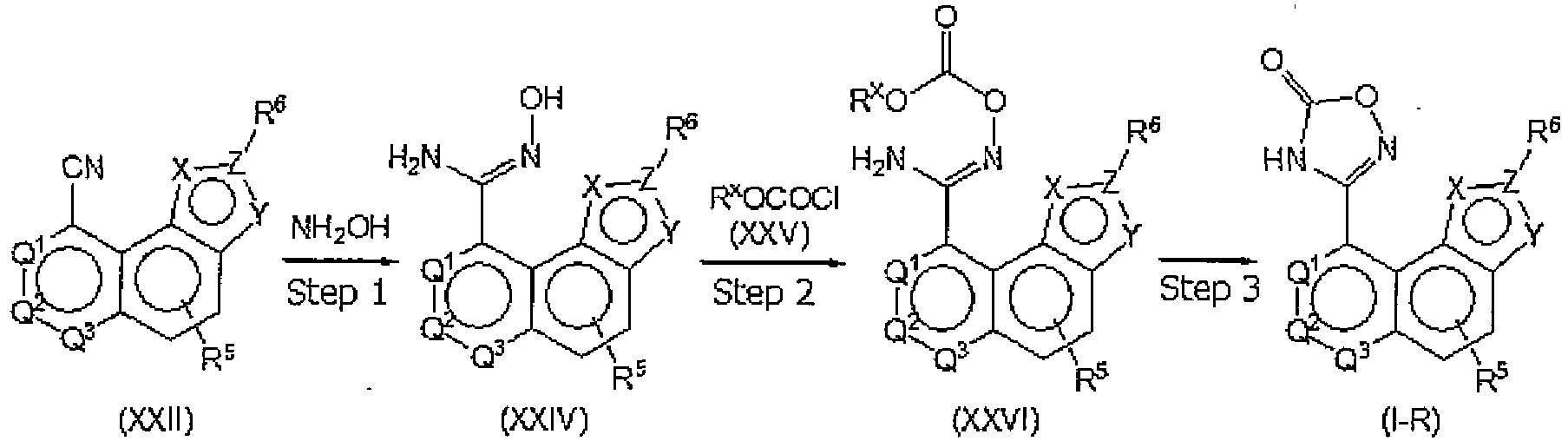
- (wherein R5, R6, Q1, Q2, Q3, X, Y, and Z have the same meanings as defined above, respectively; and RX represents C1-10 alkyl, such as methyl and ethyl, or C6-14 aryl, such as phenyl)
- Compound (XXIV) can be produced by reacting Compound (XXII), which can be obtained according to Step 1 of Production Method 13 or the like, with preferably 1 equivalent to a large excess amount of hydroxylamine, without a solvent or in a solvent, at a temperature between -20°C and the boiling point of the solvent used for 5 minutes to 120 hours.
- Examples of the solvent include methanol, ethanol, DMF, DMA, DMSO, and the like. These solvents may be used alone or as a mixture thereof.
- The compound (XXVI) can be produced by reacting Compound (XXIV) with preferably 1 equivalent to a large excess amount of chlorocarbonic ester (XXV) in a solvent, in the presence of preferably 1 equivalent to a large excess amount of a base, at a temperature between -20°C and the boiling point of the solvent used for 5 minutes to 72 hours.
- Examples of the chlorocarbonic ester (XXV) include methyl chlorocarbonate, ethyl chlorocarbonate, propyl chlorocarbonate, phenyl chlorocarbonate, and the like.
Examples of the base include triethylamine, pyridine, 4-dimethylaminopyridine, sodium hydroxide, sodium hydride, potassium tert-butoxide, sodium methoxide, and the like. - Examples of the solvent include THF, DMF, DMA, toluene, xylene, and the like. These solvents may be used alone or as a mixture thereof.
- Compound (I-R) can be produced by reacting Compound (XXVI) in the presence of preferably a catalytic amount to 10 equivalents of a base as necessary, in a solvent, at a temperature between -20°C and the boiling point of the solvent used for 5 minutes to 72 hours.
- Examples of the base include sodium hydroxide, sodium hydride, potassium tert-butoxide, sodium methoxide, and the like.
Examples of the solvent include THF, DMF, DMA, toluene, xylene, and the like. These solvents may be used alone or as a mixture thereof.
The above Steps 1 to 3 can also be successively performed, without isolating each product, by successively adding the reagents to the reaction solution. - Among Compounds (I), Compound (I-S), in which R1 is 1,2,4-oxadiazole-5(4H)-thion-3-yl, can also be produced according to the following production method.
-

- (wherein R5, R6, Q1, Q2, Q3, X, Y, and Z have the same meanings as defined above, respectively)
The compound (I-S) can be produced by reacting Compound (XXIV), which can be obtained according to Step 1 of Production Method 14, with preferably 1 equivalent to a large excess amount of N,N'-thiocarbonyldiimidazole, in a solvent, in the presence of preferably 1 equivalent to a large excess amount of a base, at a temperature between -20°C and the boiling point of the solvent used for 5 minutes to 72 hours. - Examples of the base include triethylamine, pyridine, 4-dimethylaminopyridine, DBU, and the like.
Examples of the solvent include THF, 1,4-dioxane, dichloromethane, chloroform, acetonitrile, acetone, and the like. These solvents may be used alone or as a mixture thereof. - Among Compounds (I), Compound (I-T), in which R1 is 1,2,4-thiadiazol-5(4H)-on-3-yl, can also be produced according to the following production method.
-
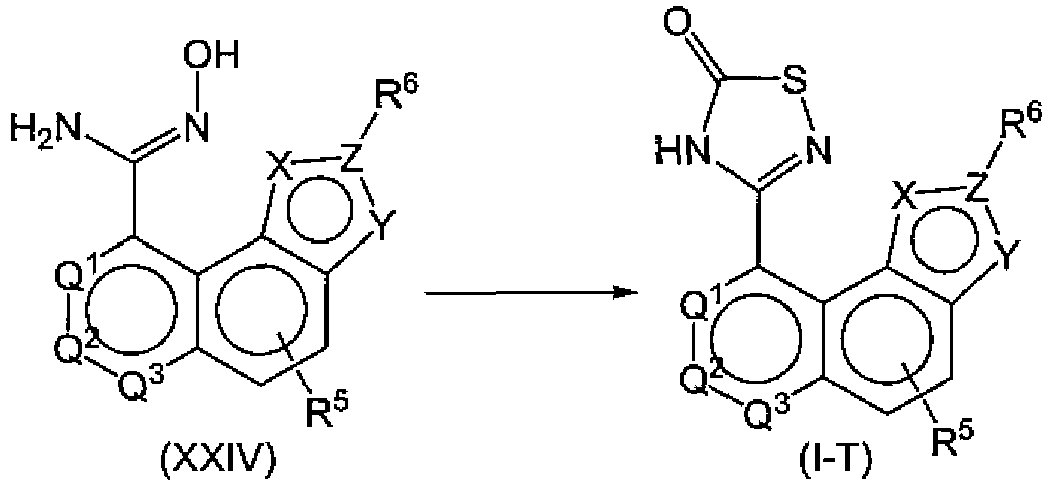
- (wherein R5, R6, Q1, Q2, Q3, X, Y, and Z have the same meanings as defined above, respectively.)
The compound (I-T) can be produced by reacting Compound (XXIV), which can be obtained according to Step 1 of Production Method 14, with preferably 1 equivalent to a large excess amount of N,N'-thiocarbonyldiimidazole, in a solvent, in the presence of preferably 1 equivalent to a large excess amount of a Lewis acid, at a temperature between -20°C and the boiling point of the solvent used for 5 minutes to 72 hours. - Examples of the Lewis acid include a boron trifluoride diethylether complex, stannous chloride, zinc chloride, silica gel, and the like.
Examples of the solvent include THF, 1,4-dioxane, dichloromethane, chloroform, methanol, ethanol, and the like. These solvents may be used alone or as a mixture thereof.
Transformation of a functional group contained in R1 to R22 of Compound (I) and R1A to R22A of Compound (I-A) can also be carried out by a known method [for example, a method described in Comprehensive Organic Transformations 2nd edition, R. C. Larock, Vch Verlagsgesellschaft Mbh (1999), or the like] or a similar manner to that. - Compound (I) can also be obtained as a commercial product. For example, Compound 133 can be purchased from AsInEx (JSU code: JSU-0025748).
The intermediate and the desired compound in the above-mentioned respective Production Methods can be isolated and purified by a separation and purification method commonly used in organic synthetic chemistry, for example, filtration, extraction, washing, drying, concentration, recrystallization, various types of chromatography, and the like. Further, the intermediate can be subjected to the subsequent reaction without any particular purification. - In Compound (I), geometric isomer, stereoisomer such as optical isomer, tautomer, and the like may be present. All possible isomers including these and mixtures thereof can be used or are included in the present invention.
In the case where a salt of Compound (I) is desired, and when Compound (I) is obtained in the form of a salt, the salt may be simply purified as it is or when Compound (I) is obtained in a free form, the compound, after dissolved or suspended in a suitable solvent, may be allowed to form a salt by addition of an acid or a base, and then, the resulting salt may be isolated and purified. - Compounds (I) and pharmaceutically acceptable salts thereof may exist in the form of adducts with water or one of various solvents, and these adducts can also be used or are included in the present invention.
Specific examples of Compounds (I) obtained by the present invention are shown in Tables 2 to 12. However, the compounds of the invention are not limited to these. In the tables, Ph represents phenyl, Me represents methyl, Et represents ethyl, BOC represents tert-butoxycarbonyl, Ac represents acetyl, Bn represents benzyl, and Bz represents benzoyl. -
Table 2 
Compound No. R1 R2 Compound No. R1 R2 1 CO2Me 
11 CO2H 
2 CONHMe 
3 CONMe2 
12 CO2Me 
4 CO2Me 
13 CO2H 
5 CO2Me 
14 CO2Me 
6 CO2H 
15 CO2H 
7 CO2Me 
16 CO2Me 
8 CO2H 
17 CO2H 
9 

18 CO2H EtO 19 CO2H Cl 10 CO2Me 
20 CO2H 
-
Table 3 
Compound No. R1 R2 Compound No. R1 R2 21 CO2Me 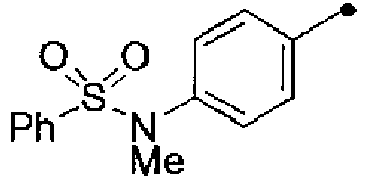
28 CO2H 
22 CO2H 
29 CO2H 

23 CO2H 30 CO2Me 

24 CO2H 31 CO2Me 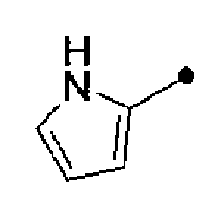
25 CO2Me 
32 CO2H 
26 CO2H 
33 CO2Me 
27 CO2Me 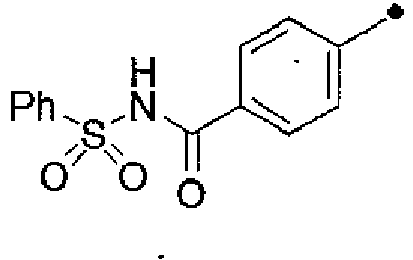
34 CO2H 
-
Tablet 4 
Compound No. R1 R2 Compound No. R1 R2 35 CO2H Cl 46 CO2H 
36 CO2Me Cl 47 CO2H 
37 CO2Me 
38 CO2H 
48 CO2H 
39 CO2Me Ph 49 CO2H 
40 CO2H Ph 41 CO2Me 
50 CO2H 
42 CO2H 
51 CO2H 
43 CO2H 
44 CO2Me 
52 CO2H 
45 CO2H 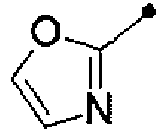
53 CO2H 
-
Table 5 
Compound No. R1 R2 R5 54 CO2H Cl 
55 CO2H 

56 CO2H Cl 
57 CO2H 

58 CO2H Cl 
59 CO2H 

60 CO2Me Cl 
61 CO2Me 

62 CO2H 
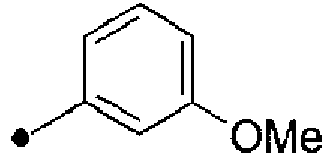
63 CO2H Cl 
-
Table 6 
Compound No. R1 R2 64 CO2Me Cl 65 CO2Me 
66 CO2H 
67 CO2Me 
68 CO2H 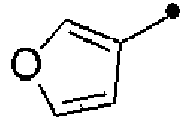
69 CO2Me 
70 CO2Me 
71 CO2H 
72 CO2Me 
73 CO2Me 
74 CO2H 
75 CO2H Cl -
Table 7 
Compound No. R1 R2 R5 76 CO2H 

77 CO2Me 

78 CO2H 

79 CO2Me CN 
80 CO2H CN 
81 CO2Me CI 
82 CO2Me 

83 CO2H 

84 CO2H 

85 CO2Me 

86 CO2Me 

-
Table 8 
Compound No. R1 R2 87 CO2Me 
88 CO2H 
89 CO2H 
90 CO2Me 
91 CO2H 
92 CO2Me 
93 CO2H 
94 CO2Me 
95 CO2H 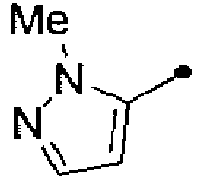
96 CO2Me 
-
Table 9 
Compound No. R1 R2 R5 97 CO2H 

98 CO2Me 

99 CO2H 

100 CO2Me Cl 
101 CO2Me 
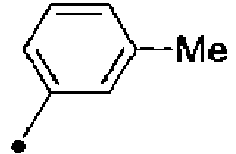
102 CO2H 

103 CO2Me Cl 
104 CO2Me 

105 CO2H 

106 CO2H 

107 CO2Me 

108 CO2H 

-
Table 10 
Compound No. R1 R2 109 CO2H 
110 CO2H 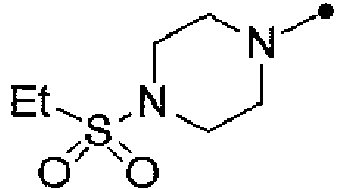
111 CO2Me 
112 CO2H 
113 CO2Me 
114 CO2H 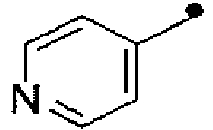
115 CO2Me 
116 CO2H 
117 CO2H 
118 CO2H 
119 CO2H 
120 CO2H 
-
Table 11 
Compound No. R1 R2 121 CO2H 
122 CO2H 
123 CO2H 
124 CO2H 
125 CO2H 
126 CO2H 
127 CO2H 
128 CO2H 
129 CO2H 
-
Table 12 
Compound No. R1 R2 R5 130 CO2H 

131 CO2H 

132 CO2H 

133 CO2H 

- Next, pharmacological effects of some typical Compounds (I) will be specifically described with reference to Test Examples.
- The H-PGDS inhibitory activity of Compound (I) was calculated according to the following protocol attached to Prostaglandin D Synthase Inhibitor Screening Assay Kit (Cat. No.10006595, Cayman Chemical, Ann Arbor, MI, USA).
- First, to a 96-well round-bottomplate (Cat. No. 3882-096, Asahi Techno Glass, Chiba), 60 µL/well of an enzyme assay buffer (0.1 mol/L Tris-HCl, pH 8.0), 10 µL/well of a human H-PGDS [Cat. No. 10006593 (human), Cayman Chemical, Ann Arbor, MI, USA] at a final concentration of 0.125 µg/mL, 10 µL/well of reduced glutathione at a final concentration of 1 mmol/L, and 10 µL/well of Compound (I) diluted with the enzyme assay buffer were added and lightly mixed. The plate was allowed to stand at room temperature for 10 minutes, and then 10 µL/well of prostaglandin H2(PGH2) (Cat. No. 17020, Cayman Chemical) at a final concentration of 50 µmol/L was added thereto to start enzyme reaction. The reaction was allowed to proceed with mixing by a plate mixer for 1 minute. After the enzyme reaction, 10 µL/well of a 4 mg/mL FeCl2-HCl solution prepared by dissolving FeCl2 in 1 mol/L hydrochloric acid was added to stop the reaction and reduce PGH2 simultaneously. The enzyme reaction solution (100 µL/well) was transferred to a 96-well UV-Star half area plate (Cat. No. 675801, Greiner, Frickenhausen, Germany), and measured for absorbance at 232 nm using a microplate reader Power Wave (BioTek Instrument Inc., Winooski, VT, USA).
- The H-PGDS inhibitory activity (inhibitory rate) of Compound (I) was calculated by the following formula.
-

- As a result, Compounds 6, 8, 13, 15, 17, 20, 22, 26, 28, 29, 53, 76, 102 and 116 exhibited an inhibitory rate of 80% or more at a concentration of 1 µmol/L.
- The H-PGDS inhibitory activity of Compound 133 was calculated according to the following protocol attached to Prostaglandin D Synthase Inhibitor Screening Assay Kit (Cat. No.10006595, Cayman Chemical, Ann Arbor, MI, USA).
- First, to a 96-well round-bottomplate (Cat. No. 3882-096, Asahi Techno Glass, Chiba), 60 µL/well of an enzyme assay buffer (0.1 mol/L Tris-HCl, pH 8.0), 10 µL/well of a human H-PGDS [Cat. No. 10006593 (human), Cayman Chemical, Ann Arbor, MI, USA] at a final concentration of 0.125 µg/mL, 10 µL/well of reduced glutathione at a final concentration of 1 mmol/L, and 10 µL/well of Compound 133 diluted with the enzyme assay buffer were added and lightly mixed. The plate was allowed to stand at room temperature for 10 minutes, and then 10 µL/well of prostaglandin H2(PGH2) (Cat. No. 17020, Cayman Chemical) at a final concentration of 50 µmol/L was added thereto to start enzyme reaction. The reaction was allowed to proceed with mixing by a plate mixer for 1 minute. After the enzyme reaction, 10 µL/well of a 4 mg/mL FeCl2-HCl solution prepared by dissolving FeCl2 in 1 mol/L hydrochloric acid was added to stop the reaction and reduce PGH2 simultaneously. The enzyme reaction solution (100 µL/well) was transferred to a 96-well UV-Star half area plate (Cat. No. 675801, Greiner, Frickenhausen, Germany), and measured for absorbance at 232 nm using a microplate reader Power Wave (BioTek Instrument Inc., Winooski, VT, USA).
- The H-PGDS inhibitory activity (inhibitory rate) of Compound 133 was calculated according to the method in Test Example 1.
As a result, Compound 133 inhibited enzymatic activity of H-PGDS with an inhibitory rate of 73% at a concentration of 1 µmol/L. In contrast, Compound 133 inhibited the activity of enzymes, such as human lipocalin-prostaglandin D2 synthase (human lipocalin-PGDS), cyclooxygenase-1 (COX-1), and cyclooxygenase-2 (COX-2) with a inhibitory rate of only 20% or less at a concentration of 10 µmol/L. - This test showed that Compound 133 has a selective inhibitory effect on H-PGDS.
From the above Test Examples 1 and 2, Compounds (I), such as Compound 133, or a pharmaceutically acceptable salt thereof is considered to inhibit H-PGDS and is useful as a therapeutic and/or preventive agent for a disease involving H-PGDS, for example, a disease involving allergic inflammation (such as asthma, allergic rhinitis, or atopic dermatitis); COPD; a myodegenerative disease (such as muscular dystrophy or polymyositis); or the like. - A test of PGD2 production in the mouse ear caused by allergic reaction was conducted according to the evaluation method of passive cutaneous anaphylaxis in the mouse ear by Inagaki et al. (Int. Arch. Allergy Appl. Immunol., 1988, 86 (3), 325-30) with some alteration. That is, 8-week-old male BALB/c mice (Charles River Japan, Atsugi, Kanagawa) were anesthetized using an isoflurane small animal anesthetizer (MK-A110, Muromachi Kikai, Tokyo), and then anti-TNP mouse monoclonal IgE antibody diluted to 10 µg/mL with a phosphate buffer solution (PBS: Cat. No. 2810305, MP Biomedicals, Solon, OH, USA) [prepared by culturing anti-TNP mouse monoclonal IgE antibody-producing cells (IGEL-b4, ATCC, Manassas, VA, USA) in ascitic fluid, collecting the ascitic fluid containing anti-TNP mouse monoclonal IgE antibody followed by purification thereof, measuring the protein concentration, and then adjusting the final stock concentration to 6 mg/mL] was intradermally injected in an amount of 10 µL each into the center of the right and left ears for passive sensitization. The day after the sensitization, a 1% solution of evans blue (Evans Blue: Cat. No. 20633-4, Aldrich Chemical Company, Milwaukee, WI, USA) in saline containing 10 µg/mL of 2,4,6-trinitrophenyl bovine serum albumin (TNP-BSA: Cat. No. LG-1117, LSL, Tokyo) was injected with an amount of 0.2 mL per animal into the tail vein to induce antigen-antibody reaction.
- Compound 102 was pounded in an agate mortar, suspended in a 0.5% methyl cellulose aqueous solution containing 0.6% sodium hydrogencarbonate (solvent; methyl cellulose 400: Cat. No. 132-05055, Wako Pure Chemical Industries, Osaka), and orally administered at a dose of 3 mg/kg 1 hour before inducing antigen-antibody reaction.
One hour after the induction of antigen-antibody reaction, the mice were killed by cervical dislocation and the ears were cut off with scissors. Then, the ear tissue centering around the EB leakage site was punched out with a trephine biopsy having a diameter of 8 mm (Biopsy Punch, Cat. No. BP-80F, Kai Industries, Gifu). The harvested pieces of ear tissue were immediately frozen in liquid nitrogen, and preserved at -80°C until measurement of the quantity of PGD2. - The quantity of PGD2 was determined in the following manner. First, to a tube in which a frozen ear piece had been placed, 500 µL of acetone containing 10 µmol/L of indomethacin was added, and then the ear piece was completely crushed with a tissue lyser (TissueLyser: QIAGEN, Retsch GmbH, Haan, Germany). Centrifugation was performed under cooling (15000 rpm, 10 minutes, 4°C; an inverter micro refrigerated centrifuge, KUBOTA1720, Kubota Corporation, Tokyo), and 400 µL of the supernatant was collected into a new tube. The collected fluid was evaporated to dryness in a nitrogen stream, and the dried substance was dissolved in 100 µL of a buffer solution for enzyme immunoassay (Cat. No. 400060, Cayman Chemical). To this, 400 µL of ethanol was added with mixing, and the mixture was allowed to stand for 5 minutes. The mixture was centrifuged again, and 400 µL of the supernatant was collected, which was then evaporated to dryness in a nitrogen stream. To the dried substance was added 300 µL of a 1 mol/L acetic acid buffer solution (pH 4.0), and the mixture was dissolved. The sample solution was passed through a purification column [Sep-Pak (registered trademark) Light C18, Cat. No. WAT023501, Waters, Milford, MA, USA], which had been activated with 3 mL of methanol and then washed with 3 mL of purified water beforehand. Then, the column was washed again with 3 mL of purified water. Next, 3 mL of hexane was passed through the column, and finally 2 mL of ethyl acetate containing 1% of methanol was applied to elute PGD2. The collected fluid was evaporated to complete dryness in a nitrogen stream and the dried substance was dissolved in a buffer solution for enzyme immunoassay to give a purified sample.
- Equal amounts of the obtained purified sample and a pre-prepared reaction solution for O-methyloximation [prepared by dissolving 100 mg of methoxylamine hydrochloride (Cat. No. A19188, Alfa Aesar, Ward Hill, MA, USA) in 5 mL of a 10% aqueous ethanol solution, dissolving 820 mg of sodium acetate in 5 mL of a 10% aqueous ethanol solution, and then mixing the two solutions] were mixed, and allowed to react at 60°C for 30 minutes to obtain a sample containing O-methyloximation PGD2, which is a stable form. The quantity of the O-methyloximation PGD2 was determined according to the protocol of Prostaglandin D2-MOX Express EIA Kit (Cat. No. 500151, Cayman Chemical).
- As a result, Compound 102 at a dose of 3 mg/kg inhibited 84% of the PGD2 production in mouse ear caused by allergic reaction.
- A test of PGD2 production in the mouse ear mediated by allergic reaction was conducted according to the evaluation method of passive cutaneous anaphylaxis in the mouse ear by Inagaki et al. (Int. Arch. Allergy Appl. Immunol., 1988, 86 (3), 325-30) with some alteration. That is, 10-week-old male BALB/c mice (Charles River Japan, Atsugi, Kanagawa) were given general anesthesia using an isoflurane small animal anesthetizer (MK-A110, Muromachi Kikai, Tokyo), 10 µL each of anti-TNP mouse monoclonal IgE antibody diluted to 10 µg/mL with a phosphate buffer solution (PBS: Cat. No. 2810305, Lot 8313J, MP Biomedicals, Solon, OH, USA) [prepared by culturing anti-TNP mouse monoclonal IgE antibody-producing cells (IGEL-b4, ATCC, Manassas, VA, USA) in ascitic fluid, collecting the ascitic fluid containing anti-TNP mouse monoclonal IgE antibody followed by purification thereof, measuring the protein concentration, and then adjusting the final stock concentration to 6 mg/mL] was intradermally injected into the center of the right and left ears for passive sensitization. The day after the sensitization, a 1% solution of evans blue [Evans Blue (EB) : Cat. No. 20633-4, Aldrich Chemical Company, Milwaukee, WI, USA] in saline containing 10 µg/mL of 2,4,6-trinitrophenyl bovine serum albumin (TNP-BSA: Cat. No. LG-1117, LSL, Tokyo) was injected with an amount of 0.2 mL per animal into the tail vein to induce antigen-antibody reaction.
- Compound 133 was pounded in an agate mortar, suspended in a 0.5% methyl cellulose aqueous solution (solvent; methyl cellulose 400: Cat. No. 132-05055, Wako Pure Chemical Industries, Osaka), and orally administered at a dose of 10 mg/kg 1 hour before inducing antigen-antibody reaction.
One hour after the induction of antigen-antibody reaction, the mice were killed by cervical dislocation and the ears were cut off with scissors. Then, the ear tissue centering around the EB leakage site was punched out with a trephine biopsy having a diameter of 8 mm (Biopsy Punch, Cat. No. BP-80F, Lot 07K33, Kai Industries, Gifu). The harvested pieces of ear tissue were immediately frozen in liquid nitrogen, and preserved at -80°C until measurement of the quantity of PGD2. - The quantity of PGD2 was determined in the following manner. First, to a tube in which a frozen ear piece had been placed, 500 µL of acetone containing 10 µmol/L of indomethacin was added, and then the ear piece was completely crushed with a tissue lyser (TissueLyser: QIAGEN, Retsch GmbH, Haan, Germany). Centrifugation was performed under cooling (15000 rpm, 10 minutes, 4°C; an inverter micro refrigerated centrifuge, KUBOTA1720, Kubota Corporation, Tokyo), and 400 µL of the supernatant was collected into a new tube. The collected fluid was evaporated to dryness in a nitrogen stream, and the dried substance was dissolved in 100 µL of a buffer solution for enzyme immunoassay (Cat. No. 400060, Cayman Chemical). To this, 400 µL of 100% ethanol was added with mixing, and the mixture was allowed to stand for 5 minutes. The mixture was centrifuged again, and 400 µL of the supernatant was collected, which was then evaporated to dryness in a nitrogen stream. To the dried substance was added 300 µL of a 1 mol/L acetic acid buffer solution (pH 4.0), and the mixture was dissolved. The sample solution was passed through a purification column [Sep-Pak. (registered trademark) Light C18, Cat. No. WAT023501, Waters, Milford, MA, USA], which had been activated with 3 mL of ethanol and then washed with 3 mL of purified water beforehand. Then, the column was washed again with 3 mL of purified water. Next, 3 mL of hexane was passed through the column, and finally 2 mL of ethyl acetate containing 1% of methanol was applied to elute PGD2. The collected fluid was evaporated to complete dryness in a nitrogen stream and the dried substance was dissolved in a buffer solution for enzyme immunoassay to give a purified sample.
- Equal amounts of the obtained purified sample and a pre-prepared reaction solution for O-methyloximation [prepared by dissolving 100 mg of methoxylamine hydrochloride (Cat. No. A19188, Alfa Aesar, Ward Hill, MA, USA) in 5 mL of a 10% aqueous ethanol solution, dissolving 820 mg of sodium acetate in 5 mL of a 10% aqueous ethanol, solution, and then mixing the two solutions] were mixed, and allowed to react at 60°C for 30 minutes to obtain a sample containing O-methyloximation PGD2, which is a stable form. The quantity of the O-methyloximation PGD2 was determined according to the protocol of Prostaglandin D2-MOX Express EIA Kit (Cat. No. 500151, Cayman Chemical).
- As a result, Compound 133 at a dose of 10 mg/kg inhibited 88% of the PGD2 production in mouse ear caused by allergic reaction.
Therefore, it was shown that Compound (I) or a pharmaceutically acceptable salt thereof inhibits PGD2 production and is useful as a therapeutic and/or preventive agent for, for example, a disease involving allergic inflammation (such as asthma, allergic rhinitis, or atopic dermatitis). - Allergic rhinitis is a type I hypersensitivity disorder whose three main symptoms are sneeze, watery rhinorrhea, and nasal congestion. Among them, nasal congestion, on which existing drugs are thought to have little effect, is a factor which greatly reduces the QOL of the patients (Laryngoscope, 2003, 113, 1118-1122). Therefore, the effect of Compound 133 on antigen-induced nasal congestion in rats was examined.
- Six-week-old male BN/Crlj Crlj SPF/VAF rats were purchased from Charles River Japan (Hino, Kanagawa) and used for experiments. Equal amounts of a 0.4 mg/mL ovalbumin/saline solution (OVA: Grade III, Cat. No. A-5378, Sigma-Aldrich, St. Louis, MO, USA) and a 20 mg/mL suspension of aluminum hydroxide (alum: Cat. No. 014-01925, Wako Pure Chemical Industries) in saline were mixed to give a sensitizing fluid. First, a suspension of inactivated killed pertussis bacteria (Cat. No. 15330-91, Nacalai Tesque, Tokyo) was doubly diluted with saline. The diluted suspension was subcutaneously administered on the back of each rat at a dose of 0.1 mL (containing 10 billion bacterial cells) per rat, and immediately after that, the sensitizing fluid was intraperitoneally administered at a dose of 1 mL per rat. About one week later, the sensitizing fluid administration was repeated in a similar manner, and the rats were actively sensitized. About two weeks after the last administration of the sensitizing fluid, a 10 w/v% of OVA/saline solution in physiological saline was administered to both nostrils at a dose of 2 5 µL per nostril to induce nasal congestion. Compound 133 was pounded in an agate mortar, suspended in a 0.5% methyl cellulose aqueous solution (solvent; methyl cellulose 400: Cat. No. 132-05055, Wako Pure Chemical Industries, Osaka), and orally administered at a dose of 10 mg/kg 1 hour before nasal administration of the antigen.
- . The nasal congestion was evaluated based on the elevation of the intranasal pressure determined in the following manner. First, the rats were anesthetized by intraperitoneal administration of sodium pentobarbital [Somnopentyl (registered trademark), Kyoritsu Seiyaku, Tokyo] at a dose of 50 mg/kg. Next, each rat was restrained in a supine position, and the area around the trachea was cut open, and the trachea was exposed. A tracheal cannula was inserted into the lung side of the trachea for securing respiration. Apart from this cannula, the trachea of the nasal side was cut open, and a cannula for measurement (JMS cutdown tube, JMS, Hiroshima) was inserted in the direction of the nasal cavity. On a hot plate (FHP-4505, OMRON, Kyoto) set at 37°C, each rat was connected to an artificial ventilator for small animals (RODENT VENTILATOR MODEL683, HARVARD APPARATUS, Holliston, MA, USA), and 2.5 mL of air was injected into the nasal cavity 65 times per minute. The pressure inside the nasal cavity was detected using a pressure transducer branched from the end of the cannula for measurement, and analyzed using Win-PULMOS-III (M. I.P.S. Inc., Osaka). The pressure inside the nasal cavity was measured for 3 minutes immediately after the connection to the cannula for measurement and the artificial ventilator, and the data was calculated for a 3-minute average.
- As a result, Compound 133 at a dose of 10 mg/kg inhibited 55% of the antigen-induced nasal congestion in rats.
That is, it was shown that Compound (I) or a pharmaceutically acceptable salt thereof is useful as a therapeutic and/or preventive agent for allergic rhinitis. - It is clinically known that a cyclooxygenase (COX) inhibitor, which inhibits upstream of arachidonate metabolism, widely inhibits the production of various prostanoids including PGD2 but is not effective on bronchial asthma. The reason for this is thought to be that the inhibitor also inhibit prostanoids which affect respiratory inflammation defensively (Nat. Immunol., 2005, 6 (5), 524-531). Therefore, it is expected that the drug which selectively inhibit PGD2 production may be useful for bronchial asthma. Therefore, the effect of Compound 133 on expression of airway hyperresponsiveness and eosinophil infiltration in the airway in a mouse model of asthma was examined.
- The mouse model of asthma was prepared as follows. For experimental use, 6-week-old male BALB/c mice were purchased from Charles River Japan (Atsugi, Kanagawa). Equal amounts of a 0.5 mg/mL solution of ovalbumin in physiological saline and a 10 mg/mL suspension of aluminum hydroxide in physiological saline were mixed to give a sensitizing fluid. With well mixing of the sensitization fluid, 0.2 mL of the fluid was intraperitoneally administered to each mouse for sensitization. About 1 week after the initial sensitization, the same procedure was performed for additional sensitization. From about 2 weeks after the additional sensitization, antigen exposure was performed every 4 days, 3 times in total, to induce asthmatic response (expression of airway hyperresponsiveness and eosinophil infiltration in the airway). For the antigen exposure, each mouse was placed in a plastic cage (26×42×15 cm; about 16 L) and forced to inhale a mist of a 10 mg/mL solution of ovalbumin in physiological saline produced using an ultrasonic nebulizer (Model NE-U17, OMRON, Kyoto) for 30 minutes each time. The negative control group was forced to inhale a physiological saline solution instead of the OVA solution. Compound 133 was pounded in an agate mortar, suspended in a 0.5% methyl cellulose aqueous solution, and orally administered at a dose of 3 mg/kg once daily from the first day to the last day of the antigen exposure.
- The expression of airway hyperresponsiveness (increase of airway reactivity) was evaluated by measuring, under anesthesia, airway reactivity to methacholine (MCh: acetyl-β-methylcholine chloride, Cat. No. A-2251, Sigma-Aldrich) using a respiratory function analyzer [BioSystem XA; version 2.0.2.21 for Windows (registered trademark), preamplifier: MAX2215, body plethysmography box: PLY3011, pressure transducer: Validyne DP45-28, flaw transducer: Validyne DP45-14, Buxco Electronics, Troy, NY, USA]. That is, on the next day after the last antigen exposure, each of the above mice was anesthetized with Somnopentyl, and after the introduction of a tracheal cannula into the trachea and a venous cannula into the jugular vein, the mouse was placed still in the supine position in a body plethysmography box. The tracheal cannula was connected to an artificial ventilator for small animals (RODENT VENTILATOR MODEL683, HARVARD APPARATUS). Mandatory ventilation was performed by injecting 0.25 mL of air 120 times per minute, and immediately pancuronium bromide (Cat. No. P1918, Sigma-Aldrich) was intravenously administered at a dose of 0.2 mg/kg and 50 μL/head to stop spontaneous respiration. As an indicator of airway reactivity, respiratory resistance (RL) values recorded every 5 seconds by the respiratory function analyzer were used. After fixing a mouse to the device and confirming the RL stability, the value after intravenous administration of a physiological saline solution was recorded first. Then, 50 μL each of solutions of different concentrations of MCh (corresponding to 0.01 to 0.64 mg/kg) in physiological saline were intravenously administered in the order of increasing concentration, and the reaction was recorded. Using the peak value of each reaction as the RL value at the corresponding MCh concentration, the rate to the RL at the administration of a physiological saline solution was calculated to draw a RL-MCh concentration curve. The expression of airway hyperresponsiveness was evaluated by comparing the airway reactivities in each concentration of MCh.
- Immediately after the airway reactivity measurement, bronchoalveolar lavage (BAL) was performed. That is, after taking out a mouse from the body plethysmography box, the abdomen of the mouse was opened, an incision was made in the diaphragm, and a cannula for BAL was introduced. Through the cannula, 0.75 mL of a physiological saline solution was injected, and BAL fluid was collected. This procedure was repeated twice. The BAL fluids collected from the same individual were combined and centrifuged at 1500 rpm at 4°C for 10 minutes using a refrigerated centrifuge (model: CF7D2, rotor model: RT-3S3, Hitachi, Tokyo). The supernatant was removed by suction, and the residue was suspended in 200 μL of a physiological saline solution added thereto. This suspension was measured for total cell concentration with a fully automatic hematology analyzer for animals (Celltac α, MEK-6358, Nihon Kohden, Tokyo). Then, using a cellular specimen preparation machine (Cytospin 4, Thermo Fisher Scientific, Waltham, MA, USA), smear preparations were prepared. Morphological cell classification (macrophage, neutrophil, eosinophile, and lymphocyte) was carried out under the microscope, and the number of infiltrated eosinophil in the airway was calculated by multiplying the total cell concentration by the percent of eosinophile obtained by the cell classification.
- As a result of the above test, Compound 133 at a dose of 3 mg/kg inhibited 98% of the expression of airway hyperresponsiveness and 55% of the eosinophil infiltration in the airway.
That is, it was shown that Compound (I) or a pharmaceutically acceptable salt thereof is useful as a therapeutic and/or preventive agent for asthma (such as bronchial asthma).
In addition, Compound 133 or a pharmaceutically acceptable salt thereof exhibited the effect when orally administered. - It is known that H-PGDS is expressed in necrotic muscle of polymyositis patients and Duchenne muscular dystrophy (DMD) known as the most common muscular dystrophy (Acta Neuropathol. , 2002, 104, 377-384), and it is reported that a H-PGDS inhibitor inhibits progressive muscle necrosis in mdx mice as model mice of muscular dystrophy (Am. J. Pathol., 2009, 174, 1735-1744). Therefore, the effect of Compound 133 on myodegeneration in mdx mice was examined.
- mdx Mice (C57BL/10scSn-Dmdmdx) were purchased in male and female pairs from Jackson Laboratories, and bred in-house for use. After weaned at 3 weeks old, male mdx mice were selected, which were subjected to the test from 4 weeks old. Compound 133 was dissolved in MEYLON 84 (registered trademark, 8.4% sodium bicarbonate injection, Otsuka) to prepare 12 mL of a 3 mg/mL solution thereof. This was added to and mixed with 188 mL of sterile tap water (final concentration of the compound: 180 μg/mL), and the mixture was administered by unrestricted intake (actual dose of the compound was about 30 mg/kg). For the vehicle administration group, MEYLON 84 (12 mL) added to 188 mL of sterile tap water was used. Six days after the start of administration, a physiological saline solution containing 1% EB dye was intraperitoneally injected in a volume of 0.2 mL per mouse. Twenty four hours after the EB dye administration, dissection was performed. In the dissection, the diaphragm was harvested first, and preserved in a physiological saline solution at room temperature until the measurement of EB-stained areas. Further, the left hind foot was decorticated, and muscle of the facies posterior cruris was harvested and frozen for preservation (-80°C).
- As evaluation of the diaphragm muscle, the degenerated and/or necrotic muscle area ratio of the diaphragm was determined. That is, in the physiological saline solution, unnecessary portions, such as connective tissue, were removed, and the diaphragm was cut into two or three pieces for distortion correction. The diaphragm piece was spread onto a glass slide with its abdominal cavity side up, a drop of physiological saline solution was put thereon, and a cover glass was placed thereon. The thus prepared specimen was digitally shot at 20-fold magnification using a digital microscope (VHX-1000, KEYENCE, Osaka) and the images were recorded in TIFF format. Using the nature that degenerated and/or necrotic muscle absorbs EB and turns blue (J. Anat., 2002, 200, 69-79), the area of the diaphragm piece and the area of blue region showing the distribution of degenerated and/or necrotic muscle were determined with an image analyzer (LUZEX AP, Nireco, Tokyo). The degenerated and/or necrotic muscle area ratio is expressed as a percent by dividing the sum of the degenerated and/or necrotic area of each diaphragm piece divided by the sum of the area of each diaphragm piece.
- For evaluation of the.posterior crural muscle, the degenerated and/or necrotic muscle area ratio of the gastrocnemius muscle was determined. That is, three frozen 10 μm-thick sections of the left posterior crural muscle were prepared by cross-sectionally slicing the central part of the muscle at intervals of about 100 μm. The sections were air-dried, penetrated with xylene, and encapsulated using a non-aqueous mounting agent (DPX, Merck, Tokyo). Then, using a fluorescence microscope (BZ-8100, KEYENCE, Osaka), a green fluorescence image (OP-66836 BZ filter set, excitation wavelength: 470 plus/minus 20 nm, dichroic mirror wavelength: 495 nm, absorption wavelength: 535 plus/minus 25 nm, KEYENCE, Osaka) and a red fluorescence image (OP-66836 BZ filter set, excitation wavelength: 470 plus/minus 20 nm, dichroic mirror wavelength: 495 nm, absorption wavelength: 535 plus/minus 25 nm, KEYENCE, Osaka) were taken for each specimen. The above-obtained green fluorescence image and the red fluorescence image were merged to give a composite image, which was further processed, using image processing software in the fluorescence microscope, into a sharpened digital image in bit map format. Using thus obtained images, the following image analysis was performed.
- Normal muscle emits green autofluorescence, and degenerated and/or necrotic muscle, into which EB is absorbed, emits red fluorescence. Connective tissue emits red fluorescence similar to that of degenerated and/or necrotic muscle due to EB penetrated and remaining therein. Using the fluorescence characteristics (J. Anat., 2002, 200, 69-79), each area of the muscles was determined by the procedure shown below.
- A1 A binary image of a gastrocnemius section was obtained by extracting black background portions (black) and reversing the image (Image A).
- A2 Red portions were extracted and divided into two, connective tissue portions and degenerated and/or necrotic muscle portions, based on the size, shape factor, and the like of each extracted portion. The two were each binarized (connective tissue: Image B, degenerated and/or necrotic muscle: Image C).
- A3 An image obtained by subtracting Image B from Image A was set as the measurement field, and then the area of the measurement field and the area of Image C in the field were determined.
- A4 The above A1 to A3 were performed for each of the three specimens of each animal. The degenerated and/or necrotic muscle area ratio is expressed as a percent by dividing the sum of the Image C areas of the three specimens divided by the sum of the measurement field areas of the three.
- As a result of the above test, Compound 133 inhibited 40% of the degeneration and/or the necrosis of the diaphragm and 49% of the degeneration and/or the necrosis of the gastrocnemius muscle.
That is, it was shown that Compound (I) or a pharmaceutically acceptable salt thereof is useful as a therapeutic and/or preventive agent for a myodegenerative disease (such as muscular dystrophy or polymyositis); and the like. - From the above tests, Compound (I) or a pharmaceutically acceptable salt thereof is considered to be useful as a therapeutic and/or preventive agent for a disease involving H-PGDS, for example, a disease involving allergic inflammation (such as asthma, allergic rhinitis, or atopic dermatitis); COPD; a myodegenerative disease (such as muscular dystrophy or polymyositis); and the like. More specifically, the compound or a pharmaceutically acceptable salt thereof is considered to be useful as a therapeutic and/or preventive agent for a disease involving allergic inflammation, such as asthma, allergic rhinitis, or atopic dermatitis (especially asthma or allergic rhinitis); COPD; a myodegenerative disease, such as muscular dystrophy or polymyositis (especially muscular dystrophy); and the like.
- Compound (I) or a pharmaceutically acceptable salt thereof can be administered alone. However, Compound (I) or a pharmaceutically acceptable salt thereof is usually preferably provided as various pharmaceutical preparations. Further, such pharmaceutical preparations are to be used in animals or humans.
The pharmaceutical preparations according to the present invention may contain Compound (I) or a pharmaceutically acceptable salt thereof alone as an effective ingredient or a mixture thereof with an optional active ingredient for any other therapy. Further, these pharmaceutical preparations are prepared by mixing the active ingredient with one or more pharmaceutically acceptable carriers (such as a diluent, a solvent and an excipient) and then subjecting the mixture to any method well known in the technical field of pharmaceutics. - Regarding the administration route, it is preferable that the most effective route is selected for therapy. Examples of the administration route include oral administration and parenteral administration, such as intravenous administration.
Examples of the dosage form include tablets, injections, and the like.
For example, tablets and the like suitable for oral administration may be prepared by use of excipients such as lactose, disintegrators such as starch, lubricants such as magnesium stearate, binders such as hydroxypropyl cellulose, and the like. - For example, the injection and the like suitable for parenteral administration can be produced with a diluent or a solvent such as a salt solution, a glucose solution, or a mixture of a salt solution and a glucose solution, or the like.
The doses and the frequencies of administration of Compound (I) or a pharmaceutically acceptable salt thereof may vary depending on the dosage form, age and body weight of a patient, nature or seriousness of the symptom to be treated, and the like. However, in oral administration, in general, a dose of 0.01 to 1000 mg, preferably, 0.05 to 100 mg is administered to an adult patient once to several times a day. In parenteral administration, such as intravenous administration, a dose of 0.001 to 1000 mg, preferably, 0.01 to 100 mg is administered to an adult patient once to several times a day. However, these doses and frequencies of administration vary depending on the various conditions described above. - Hereinafter, the present invention will be described more specifically with reference to Examples and Reference Examples. However, the scope of the present invention is not limited to the Examples.
A proton nuclear magnetic resonance spectrum (1H-NMR) used in Examples and Reference Examples was determined at 270 MHz or 300 MHz, and exchangeable proton is not clearly observed in some cases depending on the compounds and measurement conditions. Further, for the descriptions of the multiplicity of signals, those generally applied are used, and the symbol "br" represents an apparent broad signal. - Each compound was named using ChemBioDraw Ver. 11.0 (CambridgeSoft Corporation).
- The title compound was synthesized according to Step A and Step B of Example 319 of
WO 2003/45313 - Under nitrogen atmosphere, the 2-chloro-6--nitroquinoline-4-carboxylic acid methyl ester obtained in Step 1 (1.5g, 5.64 mmol), 2-tributylstannylfuran (2.13 mL, 6.77 mmol), and a 1,1'-[bis(diphenylphosphino)ferrocene]-dichloropalladium(II) dichloromethane adduct (230 mg, 0.28 mmol) were dissolved in 1,2-dimethoxyethane, and the mixture was refluxed for 2 hours. After the mixture was cooled to room temperature, a saturated ammonium fluoride aqueous solution was added thereto. The precipitate was filtered and removed. Organic compounds were extracted with chloroform, and the organic layer was dried over anhydrous magnesium sulfate. After filtration, the solvent in the filtrate was removed in vacuo. The residue was purified by silica gel column chromatography (methanol/chloroform = 0/100 to 1/99), and thus the title compound (883 mg, 53%) was obtained as a yellow solid substance.
1H-NMR (DMSO-d6) δ: 4.06 (3H, s), 6.83 (1H, dd, J =3.3, 1.8 Hz), 7.64 (1H, d, J =3.3 Hz), 8.08 (1H, d, J = 1.8 Hz), 8.26 (1H, d, J = 9.2 Hz), 8.49 (1H, s), 8.53 (1H, dd, J = 9.2, 2.6 Hz), 9.57 (1H, d, J = 2.6 Hz).
ESI-MS (m/z); 299 [M+H]+. - The 2-(furan-2-yl)-6-nitroquinoline-4-carboxylic acid methyl ester (880 mg, 3.0 mmol) obtained in Step 2 was dissolved in ethanol (15 mL) and acetic acid (15 mL), and iron (660 mg, 12 mmol) was added thereto at room temperature. The mixture was refluxed for 3 hours, and a saturated sodium hydrogencarbonate aqueous solution was added thereto. Insoluble compounds were filtered and removed, and organic compounds were extracted with chloroform. Then the organic layer was dried over anhydrous magnesium sulfate. After filtration, the solvent in the filtrate was removed in vacuo. The residue was purified by silica gel column chromatography (methanol/chloroform = 0/100 to 1/99), and thus the title compound (468 mg, 59%) was obtained as a yellow solid substance. 1H-NMR (DMSO-d6) δ: 3.96 (3H, s), 6.03 (2H, s), 6.68 (1H, dd, J = 3.3, 2.1 Hz), 7.17 (1H, d, J = 3.3 Hz), 7.24 (1H, dd, J = 8.8, 2.0 Hz), 7.58 (1H, d, J = 2.1 Hz), 7.77 (1H, d, J = 8.8 Hz), 7.86 (1H, d, J = 2.0 Hz), 8.12 (1H, s).
ESI-MS (m/z); 269 [M+H]+.
Step 4 - Aniline (0.49 mL, 5.36 mmol) was dissolved in 3 mol/L hydrochloric acid (5 mL). To this, sodium nitrite (339 mg, 4.91 mmol) dissolved in water (5 mL) was added dropwise with ice cooling. After the mixture was stirred at 0°C for 1 hour, sodium acetate (1.1 g, 13.4 mmol) dissolved in water (10 mL) was added thereto dropwise, and the mixture was stirred at 0°C for 10 minutes. Further, the 6-amino-2-(furan-2-yl)quinoline-4-carboxylic acid methyl ester (1.2 g, 4.46 mmol) obtained according to Step 3 and suspended in ethanol (24 mL) was added thereto. The mixture was stirred at 0°C for 2 hours, and the precipitate was filtered and collected, and thus a crude product of 6-amino-2-(furan-2-yl)-5-phenylazoquinoline-4-carboxylic acid methyl ester was obtained.
- The crude product of 6-amino-2-(furan-2-yl)-5-phenylazoquinoline-4-carboxylic acid methyl ester obtained above was dissolved in pyridine (25 mL) and water (25 mL), and copper sulfate (2.85 g, 17.8 mmol) was added thereto at room temperature. After refluxed for 4 hours, the mixture was cooled to room temperature, and 1 mol/L hydrochloric acid was added thereto. Organic compounds were extracted with chloroform, and the organic layer was dried over anhydrous magnesium sulfate. After filtration, the solvent in the filtrate was removed in vacuo. The residue was purified by silica gel column chromatography (ethyl acetate/hexane = 1/9 to 3/7), and thus the title compound (567 mg, 34%) was obtained as a red-orange solid substance.
1H-NMR (CDCl3) δ: 4.20 (3H, s), 6.63 (1H, dd, J = 3.7, 1.8 Hz), 7.30 (1H, dd, J = 3.7, 0.7 Hz), 7.46 (1H, tt, J = 6.8, 1.3 Hz), 7.57 (2H, td, J = 8.6, 6.8 Hz), 7.65 (1H, dd, J = 1.8, 0.7 Hz), 8.01 (1H, s), 8.03 (1H, d, J = 9.2 Hz), 8.11 (1H, d, J = 9.5 Hz), 8.32 (2H, dd, J = 8.6, 1.3 Hz).
ESI-MS (m/z); 371 [M+H]+. - 7-(furan-2-yl)-2-phenyl-2H-[1,2,3]triazolo[4,5-f]quinoline-9-carboxylic acid methyl ester obtained according to Step 4 (790 mg, 2.14 mmol) was dissolved in tetrahydrofuran (21 mL), and a 5 mol/L sodium hydroxide aqueous solution (4.3 mL) was added thereto at room temperature. After refluxed for 12 hours, the mixture was cooled to room temperature, and 1 mol/L hydrochloric acid (25 mL) was added thereto. Organic compounds were extracted with ethyl acetate, and the organic layer was dried over anhydrous magnesium sulfate. After filtration, the solvent in the filtrate was removed in vacuo. The residue was reslurriedwith ethyl acetate/hexane (1/1), the precipitate was filtered and collected, and thus the title compound (610 mg, 80%) was obtained as a red-orange solid substance.
1H-NMR (300 MHz, DMSO-d6) δ: 6.77 (1H, dd, J = 3.3, 1.8 Hz), 7 .48 (1H, d, J = 3.3 Hz), 7.58 (1H, t, J = 7.5 Hz), 7.71 (2H, dd, J = 7.8, 7.5 Hz), 7.99 (1H, d, J = 1.8 Hz), 7.99 (1H, d, J = 9.6 Hz), 8.10 (1H, s), 8.28 (1H, d, J = 9.6 Hz), 8.30 (2H, d, J = 7.8 Hz).
ESI-MS (m/z); 357 [M+H]+. - The title compound was synthesized according to
WO 2003/45313 - Under nitrogen atmosphere, Compound 1-1 (1.5 g, 5.64 mmol) obtained in Step 1, 2-tributylstannylfuran (2.13 mL, 6.77 mmol), and a 1,1'-[bis(diphenylphosphino)ferrocene]palladium(II) chloride dichloromethane adduct (230 mg, 0.28 mmol) were dissolved in 1,2-dimethoxyethane, and the mixture was refluxed for 2 hours. After the mixture was cooled to room temperature, a saturated ammonium fluoride aqueous solution was added thereto. The precipitate was filtered and removed, and the filtrate was extracted with chloroform, dried over anhydrous magnesium sulfate. After filtration, the solvent in the filtrate was removed in vacuo. The residue was purified by silica gel column chromatography (methanol/chloroform = 0/100 to 1/99), and thus the title Compound 1-2 (883 mg, 53%) was obtained as a yellow solid substance.
1H-NMR (DMSO-d6) δ: 9.57 (1H, d, J = 2.6 Hz), 8.53 (1H, dd, J = 9.2, 2.6 Hz), 8.49 (1H, s), 8.26 (1H, d, J = 9.2 Hz), 8.08 (1H, d, J = 1.8 Hz), 7.64 (1H, d, J = 3.3 Hz), 6.83 (1H, dd, J = 3.3, 1.8 Hz), 4.06 (3H, s).
ESI-MS (m/z) 299 [M+H]+. - Compound 1-2 (880 mg, 3.0 mmol) obtained in Step 2 was dissolved in ethanol (15 mL) and acetic acid (15 mL), and iron (660 mg, 12 mmol) was added thereto at room temperature. The mixture was refluxed for 3 hours, and a saturated sodium hydrogencarbonate aqueous solution was added thereto. Insoluble compounds were filtered and removed, and the filtrate was extracted with chloroform, dried over anhydrous magnesium sulfate. After filtration, the solvent in the filtrate was removed in vacuo. The residue was purified by silica gel column chromatography (methanol/chloroform = 0/100 to 1/99), and thus the title Compound 1-3 (468 mg, 59%) was obtained as a yellow solid substance.
1H-NMR (DMSO-d6) δ: 8.12 (1H, s), 7.86 (1H, d, J = 2.0 Hz), 7.77 (1H, d, J = 8.8 Hz), 7.58 (1H, d, J = 2.1 Hz), 7.24 (1H, dd, J = 8.8, 2.0 Hz), 7.17 (1H, d, J = 3.3 Hz), 6.68 (1H, dd, J = 3.3, 2.1 Hz), 6.03 (2H, s), 3.96 (3H, s).
ESI-MS (m/z) 269 [M+H]+. - Aniline (0.49 mL, 5.36 mmol) was dissolved in 3 mol/L hydrochloric acid (5 mL). To this, sodium nitrite (339 mg, 4.91 mmol) dissolved in water (5 mL) was added dropwise with ice cooling. After the mixture was stirred at 0°C for 1 hour, sodium acetate (1.1 g, 13.4 mmol) dissolved in water (10 mL) was added thereto dropwise, and the mixture was stirred at 0°C for 10 minutes. To the mixture, Compound 1-3 (1.2 g, 4.46 mmol) obtained in Step 3 suspended in ethanol (24 mL) was added, and the mixture was stirred at 0°C for 2 hours. The precipitate was filtered and collected, and thus a crude product of 6-amino-2-(furan-2-yl)-5-phenylazoquinoline-4-carboxylic acid methyl ester (Compound 1-4) was obtained.
- The crude product of Compound 1-4 obtained above was dissolved in pyridine (25 mL) and water (25 mL), and copper sulfate (2.85 g, 17.8 mmol) was added thereto at room temperature. After the mixture was refluxed for 4 hours and cooled to room temperature, 1 mol/L hydrochloric acid was added thereto. Then the aqueous phase was extracted with chloroform, dried over anhydrous magnesium sulfate, and filtered, and the solvent in the filtrate was removed in vacuo. The residue was purified by silica gel column chromatography (ethyl acetate/hexane = 1/9 to 3/7), and thus the title Compound 1 (567 mg, 2 steps: 34%) was obtained as a red-orange solid substance.
1H-NMR (CDCl3) δ: 8.32 (2H, dd, J = 8.6, 1.3 Hz), 8.11 (1H, d, J = 9.5 Hz), 8.03 (1H, d, J = 9.2 Hz), 8.01 (1H, s), 7.65 (1H, dd, J = 1.8, 0.7 Hz), 7.57 (2H, td, J = 8.5, 6.8 Hz), 7.46 (1H, tt, J = 6.8, 1.3 Hz), 7.30 (1H, dd, J = 3.7, 0.7 Hz), 6.63 (1H, dd, J = 3.7, 1.8 Hz), 4.20 (3H, s).
ESI-MS (m/z) 371 [M+H]+. - Compound 1 (790 mg, 2.14 mmol) obtained in Step 4 of Example 1 was dissolved in THF (21 mL) and a 5 mol/L sodium hydroxide aqueous solution (4.3 mL, 21.4 mmol) was added thereto at room temperature. The mixture was refluxed for 12 hours and then cooled to room temperature. To the mixture, 1 mol/L hydrochloric acid (25 mL) was added, and the aqueous phase was extracted with ethyl acetate and dried over anhydrous magnesium sulfate. After filtration, the solvent in the filtrate was removed in vacuo. The residue was reslurried with a mixed solvent of ethyl acetate and hexane (volume ratio 1:1), the precipitate was filtered and collected, and thus the title Compound 133 (610 mg, 80%) was obtained as a red-orange solid substance.
1H-NMR (300 MHz, DMSO-d6) δ: 6.77 (1H, dd, J = 3.3, 1.8 Hz), 7.48 (1H, d, J = 3.3 Hz), 7.58 (1H, t, J = 7.5 Hz), 7.71 (2H, dd, J = 7.8, 7.5 Hz), 7.99 (1H, d, J = 1.8 Hz), 7.99 (1H, d, J = 9.6 Hz), 8.10 (1H, s), 8.28 (1H, d, J = 9.6 Hz), 8.30 (2H, d, J = 7.8 Hz).
ESI-MS (m/z) 357 [M+H]+. - Compound 133 (45 mg, 0.13 mmol) obtained in Step 1 was dissolved in DMF (0.63 mL). To this were added a 2.0 mol/L methylamine-THF solution (0.095 mL, 0.19 mmol), 1-ethyl-3-(3-dimethylaminopropyl)carbodiimide hydrochloride (29 mg, 0.15 mmol) and 1-hydroxybenzotriazole monohydrate (5.0 mg, 0.038 mmol) at room temperature. Then, the mixture was stirred at room temperature for 3 hours. After addition of water, the precipitate was filtered and collected, and thus the title Compound 2 (19 mg, 41%) was obtained as a white solid substance.
1H-NMR (DMSO-d6) δ: 8.73 (1H, d, J = 4.8 Hz), 8.31-8.26 (2H, m), 8.02-7.99 (2H, m), 7.71 (2H, d, J = 7.9 Hz), 7.58 (1H, t, J = 7.3 Hz), 7.50 (1H, d, J = 3.3 Hz), 6.77 (1H, dd, J = 3.3, 1.8 Hz), 3.02 (3H, d, J = 4.8 Hz).
ESI-MS (m/z) 370 [M+H]+. - In a similar manner to Step 2 of Example 2, from Compound 133 (45 mg, 0.13 mmol) obtained in Step 1 of Example 2 and a 50% dimethylamine-THF solution (17 mg, 0.19 mmol), the title Compound 3 (25 mg, 51%) was obtained as a white solid substance.
1H-NMR (DMSO-d6) δ: 8.32-8.24 (3H, m), 8.04-7.97 (3H, m), 7.71 (2H, t, J = 7.7 Hz), 7.59 (1H, d, J = 7.7 Hz), 7.50 (1H, d, J = 3.7 Hz), 6.77 (1H, dd, J = 3.7, 1.8 Hz), 3.28 (3H, s), 2.78 (3H, s).
ESI-MS (m/z)- 384 [M+H]+. - In a similar manner to Step 3 of Example 1, from Compound 1-1 (10 g, 37 mmol) obtained in Step 1 of Example 1, the title Compound 4-1 (6.9 g, 78%) was obtained as an orange solid substance.
1H-NMR (DMSO-d6) δ: 7. 71 (1H, d, J = 9.0 Hz), 7. 71 (1H, s), 7.53 (1H, d, J = 2.5 Hz), 7.27 (1H, dd, J = 9.0, 2.5 Hz), 6.09 (2H, s), 3.94 (3H, s).
ESI-MS (m/z) 237 [M+H]+. - In a similar manner to Step 4 of Example 1, from Compound 4-1 (434 mg, 1.84 mmol) obtained in Step 1, the title Compound 4 (75 mg, 12%) was obtained as a white solid substance.
1H-NMR (CDCl3) δ: 8.31 (2H, dd, J = 7.9, 1.6 Hz), 8.17 (1H, d, J = 9.2 Hz), 7.95 (1H, d, J = 9.2 Hz), 7.60-7.48 (4H, m), 4.19 (3H, s).
ESI-MS (m/z) 339 [M+H]+. - Compound 4 (70 mg, 0.21 mmol) obtained in Step 2 of Example 4 was dissolved in 1,4-dioxane (1.6 mL) and water (0.4 mL). To the mixture, under nitrogen atmosphere, N-[4-(4,4,5,5-tetramethyl-1,3,2-dioxaborolan-2-yl)phenyl]-methanesulfonamide (74 mg, 0.25 mmol), cesium carbonate (202 mg, 0.62 mmol), and a 1,1'- [bis (diphenylphosphino) ferrocene] - palladium(II) chloride dichloromethane adduct (8.5 mg, 0.010 mmol) were added at room temperature. The mixture was then refluxed for 4 hours. The mixture was cooled to room temperature and filtered through a Celite pad. Water was added thereto, and the precipitate was filtered and collected. Thus the title Compound 5 (91 mg, 93%) was obtained as a white solid substance.
1H-NMR (DMSO-d6) δ: 10.14 (1H, s), 8.45 (1H, s), 8.35-8.26 (5H, m), 8.08 (1H, d, J = 9.2 Hz), 7.72 (2H, t, J = 7.9 Hz), 7.59 (1H, t, J = 7.9 Hz), 7.40 (2H, d, J = 8.8 Hz), 4.16 (3H, s), 3.11 (3H, s).
ESI-MS (m/z) 474 [M+H]+. - Compound 5 (48 mg, 0.10 mmol) obtained in Example 5 was dissolved in acetonitrile (1 mL) and a 5 mol/L sodium hydroxide aqueous solution (0.2 mL, 1.0 mmol) was added thereto at room temperature. After refluxed for 3.5 hours, the mixture was cooled to room temperature, and 1 mol/L hydrochloric acid was added thereto. The precipitate was filtered and collected, and thus the title Compound 6 (46 mg, quantitative yield) was obtained as an orange solid substance.
1H-NMR (DMSO-d6) δ: 10.13 (1H, s), 8.36-8.30 (6H, m), 8.06 (1H, d, J = 9.2 Hz), 7.72 (2H, t, J = 7.5 Hz), 7.59 (1H, t, J = 7.5 Hz), 7.39 (2H, d, J = 8.6 Hz), 3.11 (3H, s).
ESI-MS (m/z) 460 [M+H]+. - Compound 5 (90 mg, 0.19 mmol) obtained in Example 5 and methyl iodide (0.060 mL, 0.95 mmol) were dissolved in DMF (1.9 mL). To this, 60% by weight sodium hydride (11 mg, 0.76 mmol) was added under ice-cooling. Then, the mixture was stirred at room temperature for 45 minutes. After addition of water, the precipitate was filtered and collected, and thus the title Compound 7 (90 mg, 98%) was obtained as a white solid substance.
ESI-MS (m/z) 488 [M+H]+. - In a similar manner to Example 6, from Compound 7 (90 mg, 0.19 mmol) obtained in Example 7, the title Compound 8 (82 mg, 94%) was obtained as a white solid substance.
1H-NMR (DMSO-d6) δ: 8.43 (1H, s), 8.40 (2H, d, J = 8.8 Hz), 8.33-8.29 (3H, m), 8.07 (1H, d, J = 9.5 Hz), 7.71 (2H, t, J = 7.9 Hz), 7.62-7.56 (3H, m), 3.32 (3H, s), 3.02 (3H, s).
ESI-MS (m/z) 474 [M+H]+. - Compound 6 (20 mg, 0.044 mmol) obtained in Example 6 was dissolved in DME (0.45 mL). To this, 1,1'-carbonyldiimidazole (28 mg, 0.174 mmol) was added, and then the mixture was stirred at room temperature for 1 hour. To the mixture, DBU (0.032 mL, 0.22 mmol) and methanesulfonamide (21 mg, 0.22 mmol) were added, and the mixture was further stirred at 60°C for 1 hour. Then, the mixture was cooled to room temperature, and water was added thereto. The precipitate was filtered, collected and dried, and thus the title Compound 9 (22 mg, 94%) was obtained as a yellow solid substance.
1H-NMR (DMSO-d6) δ: 12.66 (1H, s), 10.13 (1H, s), 8.39-8.34 (6H, m), 8.08 (1H, d, J = 9.5 Hz), 7.67 (2H, t, J = 7.7 Hz), 7.57 (1H, t, J = 7.1 Hz), 7.41 (2H, d, J = 8.4 Hz), 3.59 (3H, s), 3.11 (3H, s).
ESI-MS (m/z) 537 [M+H]+. - N-[2-(4,4,5,5-tetramethyl-1,3,2-dioxaborolan-2-yl)-phenyl] methanesulfonamide (215 mg, 1.0 mmol) and methyl iodide (0.31 mL, 5.0 mmol) were dissolved in DMF (3.3 mL). To this, 60% by weight sodium hydride (60 mg, 1.5 mmol) was added under ice-cooling. The mixture was stirred at room temperature for 2 hours, and water was added thereto. The aqueous phase was extracted with ethyl acetate, dried over anhydrous magnesium sulfate. After filtration, the solvent in the filtrate was removed in vacuo. The residue was purified by silica gel column chromatography (ethyl acetate/hexane = 1/9 to 7/3), and thus the title Compound 10-1 (147 mg, 64%) was obtained.
ESI-MS (m/z) 228 [M-H-C6H10]-. - In a similar manner to Example 5, from Compound 4 (17 mg, 0.049 mmol) obtained in Step 2 of Example 4 and Compound 10-1 (20 mg, 0.087 mmol) obtained in Step 1, the title Compound 10 (19 mg, 80%) was obtained.
1H-NMR (CDCl3) δ: 8.33 (2H, d, J = 7.7 Hz), 8.14 (1H, d, J = 9.2 Hz), 8:04 (1H, d, J = 9.2 Hz), 7.92 (1H, s), 7.78-7.75 (1H, m), 7.63-7.43 (7H, m), 4.20 (3H, s), 3.24 (3H, s), 2.79 (3H, s).
ESI-MS (m/z) 488 [M+H]+. - In a similar manner to Example 6, from Compound 10 (19 mg, 0.039 mmol) obtained in Step 2 of Example 10, the title Compound 11 (17 mg, 64%) was obtained.
1H-NMR (DMSO-d6) δ: 8.33-8.27 (3H, m), 8.06 (1H, d, J = 9.5 Hz), 7.99 (1H, s), 7.84 (1H, dd, J = 7.0, 2.2 Hz), 7.77-7.52 (6H, m), 3.26 (3H, s), 2.93 (3H, s).
ESI-MS (m/z) 472 [M-H]-. - In a similar manner to Example 9, from 4-(4,4,5,5-tetramethyl-1,3,2-dioxaborolan-2-yl)benzoic acid (200 mg, 0. 81 mmol), the title Compound 12-1 (121 mg, 46%) was obtained.
1H-NMR (CDCl3) δ: 8.54 (1H, s), 7.93 (2H, d, J = 8.3 Hz), 7.81 (2H, d, J = 8.3 Hz), 3.44 (3H, s), 1.36 (12H, s).
ESI-MS (m/z) 326 [M+H]+. - In a similar manner to Example 4, from Compound 4 (16 mg, 0.047 mmol) obtained in Step 2 of Example 4 and Compound 12-1 (18 mg, 0.057 mmol) obtained in Step 1, the title Compound 12 (9.0 mg, 39%) was obtained.
1H-NMR (DMSO-d6) δ: 8.85-8.89 (1H, m), 8.66 (1H, d, J = 7.9 Hz), 8.59 (1H, s), 8.37 (1H, d, J = 9.6 Hz), 8.29 (2H, d, J = 7.9 Hz), 8.15 (1H, d, J = 9.6 Hz), 8.10 (1H, d, J=8.6Hz), 7.67-7.81 (3H, m), 7.61 (1H, d, J = 7.3 Hz), 5.32 (1H, s), 3.43 (3H, s), 3.31 (3H, s). - In a similar manner to Example 6, from Compound 12 (9.0 mg, 0.018 mmol) obtained in Step 2 of Example 12, the title Compound 13 (6.8 mg, 78%) was obtained.
1H-NMR (DMSO-d6) δ: 8.57-8.50 (3H, m), 8.38-8.28 (3H, m), 8.20-8.09 (3H, m), 7.73 (2H, t, J = 7.5 Hz), 7.60 (1H, t, J = 7.5 Hz), 3.42 (3H, s).
ESI-MS (m/z) 486 [M-H]-. - 4-(4,4,5,5-tetramethyl-1,3,2-dioxaborolan-2-yl)-aniline (440 mg, 2.0 mmol) and triethylamine (0.42 mL, 3.0 mmol) were dissolved in DMF (4.0 mL). To this, benzenesulfonamide (0.31 mL, 2.4 mmol) was added at room temperature. Then, the mixture was stirred for 1 hour. After addition of water, the precipitate was filtered and collected, and thus the title Compound 14-1 (520 mg, 72%) was obtained as a white solid substance.
1H-NMR (DMSO-d6) δ: 10.54 (1H, s), 7.78 (2H, dd, J = 6.8, 1.5 Hz), 7.48-7.63 (5H, m), 7.12 (2H, d, J = 8.6 Hz), 1.24 (12H, s) . - In a similar manner to Example 5, from Compound 4 (24 mg, 0.071 mmol) obtained in Step 2 of Example 4 and Compound 14-1 (31 mg, 0.086 mmol) obtained in Step 1, the title Compound 14 (30 mg, 79%) was obtained.
ESI-MS (m/z) 536 [M+H]+. - In a similar manner to Example 6, from Compound 14 (30 mg, 0.056 mmol) obtained in Step 2 of Example 14, the title Compound 15 (34 mg, quantitative yield) was obtained.
1H-NMR (DMSO-d6) δ: 10.67 (1H, s), 8.20-8.34 (5H, m), 8.02 (1H, d, J = 9.2 Hz), 7.85 (2H, dd, J = 8.1, 1.5 Hz), 7.71 (2H, dd, J = 7.7, 7.7 Hz), 7.54-7.65 (5H, m), 7.30 (2H, d, J = 8.8 Hz).
ESI-MS (m/z) 522 [M+H]+. - In a similar manner to Example 9, from 3-(4,4,5,5-tetramethyl-1,3,2-dioxaborolan-2-yl)benzoic acid (200 mg, 0.81 mmol), the title Compound 16-1 (129 mg, 50%) was obtained. 1H-NMR (DMSO-d6) δ: 8.56 (1H, s), 8.15 (1H, s), 7.99-8.08 (2H, m), 7.53 (1H, dd, J = 7.7 Hz), 3.44 (3H, s), 1.37 (12H, s).
- In a similar manner to Example 5, from Compound 4 (33 mg, 0.098 mmol) obtained in Step 2 of Example 4 and Compound 16-1 (38 mg, 0.12 mmol) obtained in Step 1, the title Compound 16 (36 mg, 71%) was obtained.
1H-NMR (CDCl3) δ: 8.33 (2H, d, J = 8.6 Hz), 8.02-8.19 (5H, m), 7.54-7.64 (5H, m), 7.43-7.52 (3H, m), 7.31 (2H, d, J = 8.6 Hz), 4.22 (3H, s), 3.26 (3H, s). - In a similar manner to Example 6, from Compound 16 (16 mg, 0.031 mmol) obtained in Step 2 of Example 16, the title Compound 17 (15 mg, quantitative yield) was obtained.
1H-NMR (DMSO-d6) δ: 8.86 (1H, s), 8.66 (1H, d, J = 7.7 Hz), 8.54 (1H, s), 8.29-8.37 (3H, m), 8.13 (1H, d, J = 9.5 Hz), 8.09 (1H, d, J = 7.3 Hz), 7.76 (1H, t, J = 7.9 Hz), 7.73 (2H, dd, J = 7.7, 7.7 Hz), 7.60 (1H, t, J = 7.1 Hz), 3.44 (3H, s).
ESI-MS (m/z) 488 [M+H]+. - Compound 4 (52 mg, 0.015 mmol) obtained in Step 2 of Example 4 was dissolved in ethanol (1.5 mL) and a 5 mol/L sodium hydroxide aqueous solution (0.30 mL, 1.5 mmol) was added thereto at room temperature. After refluxed for 4 hours, the mixture was cooled to room temperature, 1 mol/L hydrochloric acid was added thereto, and the precipitate was filtered and collected. The obtained solid substance was purified by preparative thin-layer chromatography (methanol/chloroform = 1/4), and thus the title Compound 18 (15 mg, 29%) was obtained.
1H-NMR (DMSO-d6) δ: 14.02 (1H, s), 8.29 (1H, d, J = 7.7 Hz), 8.23 (1H, d, J = 9.2 Hz), 7.82 (1H, d, J = 9.2 Hz), 7.70 (2H, dd, J = 7.7, 7.7 Hz), 7.57 (1H, t, J = 7.7 Hz), 7.23 (1H, s), 4.54 (2H, q, J = 7.0 Hz), 1.42 (3H, t, J = 7.0 Hz).
ESI-MS (m/z) 335 [M+H]+. - Compound 4 (16 mg, 0.047 mmol) obtained in Step 2 of Example 4 was dissolved in acetonitrile (0.34 mL) and a 5.0 mol/L sodium hydroxide aqueous solution (0.34 mL, 1. 7 mmol) was added thereto at room temperature. After refluxed for 6.5 hours, the mixture was cooled to room temperature, and 1 mol/L hydrochloric acid was added thereto. The precipitate was filtered and collected, and thus the title Compound 19 (11 mg, 73%) was obtained.
1H-NMR (DMSO-d6) δ: 10.54 (1H, s), 7.74-7.84 (2H, m), 7.48-7.63 (4H, m), 7.12 (2H, d, J = 8.6 Hz). - In a similar manner to Example 5, from Compound 19 (11 mg, 0.034 mmol) obtained in Example 19 and N-methyl-N-methanesulfonyl-4-(4,4,5,5-tetramethyl-1,3,2-dioxaborolan-2-yl)benzamide (14 mg, 0.041 mmol), the title Compound 20 (21 mg, 90%) was obtained.
1H-NMR (DMSO-d6) δ: 8.52 (1H, s), 8.51 (2H, d, J = 8.3 Hz), 8.27-8.40 (3H, m), 8.11 (1H, d, J = 9.3 Hz), 7.86 (2H, d, J = 8.6 Hz), 7.73 (2H, dd, J = 8.6, 7.4 Hz), 7.60 (1H, t, J = 7.4 Hz), 3.49 (3H, s), 3.25 (3H, s).
ESI-MS (m/z) 502 [M+H]+. - In a similar manner to Example 5, from Compound 4 (30 mg, 0.088 mmol) obtained in Step 2 of Example 4 and N-methyl-N-[4-(4,4,5,5-tetramethyl-1,3,2-dioxaborolan-2-yl) phenyl]benzenesulfonamide (63 mg, 0.11 mmol), a crude product of the title Compound 21 (80 mg) was obtained.
ESI-MS (m/z) 384 [M+H]+. - In a similar manner to Example 6, from a crude product of Compound 21 (80 mg) obtained in Example 21, the title Compound 22 (41 mg, 2 steps: 86%) was obtained.
1H-NMR (DMSO-d6) δ: 8.25-8.44 (6H, m), 8.07 (1H, d, J = 9.5 Hz), 7.67-7.78 (3H, m), 7.54-7.66 (5H, m), 7.34 (2H, d, J = 8.8 Hz), 3.23 (3H, s).
ESI-MS (m/z) 536 [M+H]+. - In a similar manner to Example 5, from Compound 19 (30 mg, 0.092 mmol) obtained in Example 19 and N-methyl-N-methanesulfonyl-3-(4,4,5,5-tetramethyl-1,3,2-dioxaborolan -2-yl)benzamide (63 mg, 0.11 mmol), the title Compound 23 (28 mg, 61%) was obtained.
1H-NMR (DMSO-d6) δ: 8.55-8.65 (3H, m), 8.34 (1H, d, J = 9.5 Hz), 8.32 (2H, d, J = 7.7 Hz), 8.12 (1H, d, J = 9.5 Hz), 7.68-7.83 (4H, m), 7.60 (1H, t, J = 7.1 Hz), 3.51 (3H, s), 3.27 (3H, s).
ESI-MS (m/z) 502 [M+H]+. - In a similar manner to Example 5, from Compound 19 (30 mg, 0.092 mmol) obtained in Example 19 and N-methyl-N-benzenesulfonyl-3-(4,4,5,5-tetramethyl-1,3,2-dioxaborolan -2-yl)benzamide (111 mg, 0.11 mmol), the title Compound 24 (18 mg, 35%) was obtained.
1H-NMR (DMSO-d6) δ: 8.55-8.63 (1H, m), 8.46-8.52 (2H, m), 8.33 (1H, d, J = 9.3 Hz), 8.32 (2H, d, J = 7.6 Hz), 8.10 (1H, d, J = 9.3 Hz), 7.99-8.06 (2H, m), 7.63-7.80 (7H, m), 7.60 (1H, t, J = 7.3 Hz), 3.37 (3H, s).
ESI-MS (m/z) 564 [M+H]+. - In a similar manner to Example 5, from Compound 4 (50 mg, 0.15 mmol) obtained in Step 2 of Example 4 and N-benzenesulfonyl-3-(4,4,5,5-tetramethyl-1,3,2-dioxaborolan -2-yl)benzamide (69 mg, 0.18 mmol), the title Compound 25 (62 mg, 74%) was obtained.
1H-NMR (CDCl3) δ: 12.38 (1H, s), 8.82 (1H, s), 8.58 (1H, s), 8.33 (2H, d, J = 7.3 Hz), 8.32 (1H, s), 8.12-8.19 (3H, m), 8.06-8.11 (2H, m), 7.20-7.70 (7H, m), 4.23 (3H, s). - In a similar manner to Example 6, from Compound 25 (60 mg, 0.11 mmol) obtained in Example 25, the title Compound 26 (58 mg, quantitative yield) was obtained.
1H-NMR (DMSO-d6) δ: 8.82 (1H, s), 8.63 (1H, d, J = 7.7 Hz), 8.54 (1H, s), 8.34 (1H, d, J = 9.2 Hz), 8.32 (2H, d, J = 8.4 Hz), 8.12 (1H, d, J = 9.2 Hz), 8.07 (2H, d, J = 8.1 Hz), 8.00 (1H, d, J = 7.3 Hz), 7.55-7.79 (8H, m).
ESI-MS (m/z) 550 [M+H]+. - In a similar manner to Example 5, from Compound 4 (50 mg, 0.15 mmol) obtained in Step 2 of Example 4 and N-benzenesulfonyl-4-(4,4,5,5-tetramethyl-1,3,2-dioxaborolan -2-yl)benzamide (69 mg, 0.18 mmol), the title Compound 27 (56 mg, 67%) was obtained.
1H-NMR (DMSO-d6) δ: 12.27 (1H, s), 8.28-8.38 (4H, m), 8.10-8.19 (6H, m), 8.08 (1H, d, J = 9.5 Hz), 7.43-7.70 (6H, m), 4.21 (3H, s). - In a similar manner to Example 6, from Compound 27 (55 mg, 0.098 mmol) obtained in Example 27, the title Compound 28 (55 mg, quantitative yield) was obtained.
1H-NMR (DMSO-d6) δ: 8.52 (1H, s), 8.50 (2H, d, J = 8.4 Hz), 8.34 (1H, d, J = 9.2 Hz), 8.31 (2H, d, J = 7.7 Hz), 8.22 (1H, d, J = 9.2 Hz), 8.08 (2H, d, J = 8.4 Hz), 8.05 (2H, d, J = 7.7 Hz), 7.56-7.77 (6H, m). - In a similar manner to Example 5, from Compound 19 (29 mg, 0.089 mmol) obtained in Example 19 and N-methyl-N-benzenesulfonyl-4-(4,4,5,5-tetramethyl-1,3,2-dioxaborolan-2-yl)benzamide (72 mg, 0.18 mmol), the title Compound 29 (13 mg, 26%) was obtained.
1H-NMR (DMSO-d6) δ: 8.52 (1H, s), 8.48 (2H, d, J = 8.2 Hz), 8.35 (1H, d, J = 9.5 Hz), 8.32 (2H, d, J = 7.9 Hz), 8.11 (1H, d, J = 9.5 Hz), 8.03 (2H, d, J = 8.2 Hz), 7.70-7.84 (7H, m), 7.60 (1H, t, J = 7.2 Hz), 3.35 (3H, s). - In a similar manner to Example 5, from Compound 4 (40 mg, 0.12 mmol) obtained in Step 2 of Example 4 and 1-(tert-butoxycarbonyl)-1H-pyrrol-2-ylboronic acid (30 mg, 0.14 mmol), the title Compound 30 (55 mg, quantitative yield) was obtained.
1H-NMR (CDCl3) δ: 8.33 (2H, d, J = 8.6 Hz), 8.11 (1H, d, J = 9.5 Hz), 8.00 (1H, d, J = 9.5 Hz), 7.72 (1H, s), 7.57 (2H, dd, J = 8.6, 7.5 Hz), 7.45-7.50 (2H, m), 6.65 (1H, dd, J = 3.5, 1.6 Hz), 6.33 (1H, d, J = 3.5 Hz), 4.19 (3H, s), 1.31 (9H, s). - Compound 30 (56 mg, 0.012 mmol) obtained in Example 30 was dissolved in dichloromethane (1.0 mL), and then trifluoroacetic acid (0.1 mL) was added thereto at room temperature. After the mixture was stirred for 4.5 hours, the solvent was removed in vacuo. The residue was purified by silica gel column chromatography (chloroform), and thus the title Compound 31 (34 mg, 77%) was obtained.
1H-NMR (CDCl3) δ: 9.81 (1H, s), 8.30 (2H, dd, J = 7.9, 1.5 Hz), 8.30 (1H, d, J = 9.3.Hz), 8.06 (1H, d, J = 9.3 Hz), 7.83 (1H, s), 7.56 (1H, dd, J = 7.9, 7.3 Hz), 7.45 (1H, tt; J = 7.3, 1.5 Hz), 7.00-7.03 (1H, m), 6.88-6.93 (1H, m), 6.36 (1H, dd, J = 6.2, 2.7 Hz), 4.19 (3H, s). - In a similar manner to Example 6, from Compound 31 (34 mg, 0.091 mmol) obtained in Example 31, the title Compound 32 (30 mg, 92%) was obtained.
1H-NMR (DMSO-d6) δ: 11.74 (1H, s), 8.29 (2H, d, J = 7.7 Hz), 8.25 (1H, d, J = 9.5 Hz), 8.10 (1H, s), 7. 95 (1H, d, J = 9.5 Hz), 7.71 (2H, dd, J = 7.7, 7.3 Hz), 7.58 (1H, t, J = 7.3 Hz), 7.10-7.16 (1H, m), 7.01-7.07 (1H, m), 6.22-6.28 (1H, m). - Compound 31 (26 mg, 0.070 mmol) obtained in Example 31 and methyl iodide (0.022 mL, 0.35 mmol) were dissolved in DMF (0.35 mL), and sodium hydride (60% by weight, 5.6 mg, 0.14 mmol) was added thereto. The mixture was stirred at room temperature for 3 hours, and water was added thereto. The aqueous phase was extracted with chloroform, dried over anhydrous magnesium sulfate. After filtration, the solvent in the filtrate was removed in vacuo. The residue was purified by silica gel column chromatography (chloroform), and thus the title Compound 33 (19 mg, 69%) was obtained as a white solid substance.
1H-NMR (DMSO-d6) δ: 8.20-8.33 (3H, m), 8.08 (1H, s), 7.97 (1H, d, J = 9.6 Hz), 7.71 (2H, dd, J = 7.8 Hz), 7.58 (1H, t, J = 7.8 Hz), 7.04-7.10 (2H, m), 6.18 (1H, dd, J = 4.0, 2.6 Hz), 4.18 (3H, s). - In a similar manner to Example 6, from Compound 33 (18 mg, 0.047 mmol) obtained in Example 33, the title Compound 34 (17 mg, 96%) was obtained.
1H-NMR (DMSO-d6) δ: 8.30 (2H, d, J = 8.6 Hz), 8.25 (1H, d, J = 9.3 Hz), 8.08 (1H, s), 7.97 (1H, d, J = 9.3 Hz), 7.71 (2H, dd, J = 8.6, 7.3 Hz), 7.57 (1H, t, J = 7.3 Hz), 7.04-7.10 (2H, m), 6.18 (1H, dd, J = 4.0, 2.6 Hz), 4.18 (3H, s). - Compound 4-1 (6.93 g, 29.3 mmol) obtained in Step 1 of Example 4 and tetrabutylammonium bromide (5.66 g, 17.6 mmol) were dissolved in DMF (300 mL), and N-bromosuccinimide (5.47 g, 30.8 mmol) was added thereto at room temperature. The mixture was stirred for 6 hours, and insoluble compounds were filtered and removed. The filtrate was extracted with chloroform, dried over anhydrous magnesium sulfate. After filtration, the solvent in the filtrate was removed in vacuo. The residue was purified by silica gel column chromatography (ethyl acetate/hexane = 1/9 to 9/1), and thus the title Compound 35-1 (5.29 g, 57%) was obtained as a brown solid substance.
1H-NMR (CDCl3) δ: 7.77 (1H, d, J = 8.9 Hz), 7.61 (1H, s), 7.47 (1H, d, J = 8.9 Hz), 6.33 (2H, s), 3.92 (3H, s). - Compound 35-1 (400 mg, 1.27 mmol) obtained in Step 1, triethylamine (0.71 mL, 5.09 mmol), and 4-dimethylaminopyridine (12 mg, 0.098 mmol) were dissolved in dichloromethane (6.4 mL), and benzoyl chloride (0.37 mL, 3.19 mmol) was added thereto. The mixture was stirred for 15 hours, and aqueous ammonia was added thereto. The aqueous phase was extracted with chloroform, dried over anhydrous magnesium sulfate. After filtration, the solvent in the filtrate was removed in vacuo. The residue was purified by silica gel column chromatography (ethyl acetate/hexane = 1/9 to 1/1), and thus the title Compound 35-2 (541 mg, quantitative yield) was obtained.
1H-NMR (CDCl3) δ: 9.03 (1H, d, J = 9.3 Hz), 8.75 (1H, s), 8.13 (1H, d, J = 9.3 Hz), 7.98 (2H, dd, J = 8.3, 1.3 Hz), 7.36-7.68 (4H, m), 4.03 (3H, s). - Compound 35-2 (400 mg, 0.95 mmol) obtained in Step 2 was dissolved in acetonitrile (200 mL), a sodium hydroxide aqueous solution (2.0 mol/L, 14 mL, 28 mmol) was added thereto, and the mixture was irradiated by a high pressure mercury lamp (435 W) for 3.5 hours. After the completion of the reaction, hydrochloric acid was added to the mixture for adjusting the pH to 1, and the solvent was removed. The precipitate was filtered and collected, and thus the title Compound 35 (187 mg, 61%) was obtained as a white solid substance.
1H-NMR (DMSO-d6) δ: 8.33 (1H, d, J = 9.2 Hz), 8.22-8.29 (2H, m), 8.07 (1H, d, J = 9.2 Hz), 7.99 (1H, s), 7.67-7.73 (3H, s). ESI-MS (m/z) 325 [M+H]+. - 7-chloro-2-phenyloxazolo[5,4-f]quinoline-9-carboxylic acid methyl ester (Compound 36)
- Compound 35-2 (85 mg, 0.20 mmol) obtained in Step 2 of Example 35 was dissolved in acetonitrile (40 mL), a sodium hydroxide aqueous solution (2.0 mol/L, 0.40 mL, 0.80 mmol) was added thereto, and the mixture was irradiated by a high pressure mercury lamp (435 W) for 4.5 hours. Hydrochloric acid was added to the mixture for adjusting the pH to 1, and the solvent was removed. The precipitate was filtered and collected, and thus the title Compound 36 (50 mg, 74%) was obtained as a white solid substance.
1H-NMR (CDCl3) δ: 8.23-8.29 (2H, m), 8.18 (1H, d, J = 8.8 Hz), 8.08 (1H, d, J = 8.8 Hz), 7.73 (1H, s), 7.55-7.61 (3H, m), 4.20 (3H, s). - In a similar manner to Step 2 of Example 1, from Compound 36 (20 mg, 0.059 mmol) obtained in Example 36 and 2-tributylstannylfuran (0.023 mL, 0.071 mmol), the title Compound 37 (19 mg, 89%) was obtained.
1H-NMR (CDCl3) δ: 8.20-8.31 (2H, m), 8.07-8.20 (3H, m), 7.65 (1H, s), 7.51-7.61 (3H, m), 7.29 (1H, d, J = 3.3 Hz), 6.61 (1H, dd, J = 3.3, 1.5 Hz), 4.20 (3H, s). - In a similar manner to Example 6, from Compound 37 (19 mg, 0.051 mmol) obtained in Example 37, the title Compound 38 (17 mg, 91%) was obtained.
1H-NMR (CDCl3) δ: 8.51 (1H, d, J = 9.2 Hz), 8.30-8.38 (2H, m), 8.25 (1H, s), 8.18 (1H, d, J = 9.2 Hz), 7.81 (1H, s), 7.73 (1H, d, J = 1.8 Hz), 7.40-7.52 (3H, m), 6.69 (1H, dd, J = 3.7, 1.8 Hz).
ESI-MS (m/z) 357 [M+H]+. - In a similar manner to Example 5, from Compound 36 (23 mg, 0.068 mmol) obtained in Example 36 and phenylboronic acid (10 mg, 0.082 mmol), the title Compound 39 (19 mg, 75%) was obtained.
1H-NMR (CDCl3) δ: 8.18-8.30 (6H, m), 8.14 (1H, d, J = 9.2 Hz), 7.47-7.61 (3H, m), 7.44 (2H, dd, J = 7.7, 7.3 Hz), 7.34 (1H, tt, J = 7.3, 1.6 Hz), 4.22 (3H, s). - In a similar manner to Example 6, from Compound 39 (19 mg, 0.051 mmol) obtained in Example 39, the title Compound 40 (13 mg, '69%) was obtained.
1H-NMR (DMSO-d6) δ: 8.47 (1H, s), 8.38 (2H, d, J = 8.1 Hz), 8.23-8.31 (3H, m), 8.19 (1H, d, J = 8.8 Hz), 7.65-7.73 (3H, m), 7.52-7.63 (3H, m).
ESI-MS (m/z) 367 [M+H]+. - In a similar manner to Step 2 of Example 1, from Compound 36 (25 mg, 0.074 mmol) obtained in Example 36 and 2- (tributylstannyl) thiophene (0.030 mL, 0. 096 mmol), the title Compound 41 (29 mg, quantitative yield) was obtained.
ESI-MS (m/z) 387 [M+H]+. - In a similar manner to Example 6, from Compound 41 (29 mg, 0.075 mmol) obtained in Example 41, the title Compound 42 (16 mg, 57%) was obtained.
1H-NMR (DMSO-d6) δ: 8.16-8.28 (3H, m), 8.03 (2H, d, J = 9.2 Hz), 7.79 (1H, d, J = 5.1 Hz), 7.59-7.72 (4H, m), 7.26 (1H, dd, J = 5.1, 3.7 Hz).
ESI-MS (m/z) 373 [M+H]+. - In a similar manner to Example 5, from Compound 35 (28 mg, 0.086 mmol) obtained in Step 3 of Example 35 and 3-(methanesulfonamide)phenylboronic acid (22 mg, 0.10 mmol), the title Compound 43 (37 mg, 93%) was obtained.
1H-NMR (DMSO-d6) δ: 9.95 (1H, s), 8.39 (1H, s), 8.12-8.37 (5H, m), 8.08 (1H, d, J = 7.9 Hz), 7.66-7.73 (3H, m), 7.56 (1H, t, J = 7.8 Hz), 7.42 (1H, d, J = 7.6 Hz), 3.08 (3H, s).
ESI-MS (m/z) 460 [M+H]+. - In a similar manner to Step 2 of Example 1, from Compound 36 (7.1 mg, 0.021 mmol) obtained in Example 36 and 2-(tributylstannyl)oxazole (0.005 mL, 0.025 mmol), the title Compound 44 (3.6 mg, 46%) was obtained.
1H-NMR (CDCl3) δ: 8.61 (1H, s), 8.33 (1H, d, J = 9.2Hz), 8.25-8.32 (2H, m), 8.21 (1H, d, J = 9.2Hz), 7.93 (1H, s), 7.55-7.62 (3H, m), 7.42 (1H, s), 4.22 (3H, s). - In a similar manner to Example 6, from Compound 44 (3.6 mg, 0.0097 mmol) obtained in Example 44, the title Compound 45 (1.9 mg, 32%) was obtained.
1H-NMR (DMSO-d6) δ: 8.43-8.50 (2H, m), 8.31-8.38 (1H, m), 8.20-8.31 (3H, m), 7.64-7.75 (3H, m), 7.58-7.63 (1H, m).
ESI-MS (m/z) 358 [M+H]+. - In a similar manner to Example 5, from Compound 35 (30 mg, 0.092 mmol) obtained in Step 3 of Example 35 and N-[4-(4,4,5,5-tetramethyl-1,3,2-dioxaborolan-2-yl)phenyl]-methanesulfonamide (33 mg, 0.11 mmol), the title Compound 46 (38 mg, 89%) was obtained as an orange solid substance.
1H-NMR (DMSO-d6) δ: 10.13 (1H, s), 8.42 (1H, s), 8.36 (2H, d, J=8.8Hz), 8.21-8.30 (3H, m), 8.15 (1H, d, J=9.2Hz), 7.65-7.74 (3H, m), 7.40 (2H, d, J = 8.8 Hz), 3.11 (3H, s).
ESI-MS (m/z) 460 [M+H]+. - In a similar manner to Example 5, from Compound 35 (30 mg, 0.092 mmol) obtained in Step 3 of Example 35 and 2-(methanesulfonamide)phenylboronic acid (24 mg, 0.11 mmol), the title Compound 47 (21 mg, 50%) was obtained as a pale yellow solid substance.
1H-NMR (DMSO-d6) δ: 12.13 (1H, s), 8.49 (1H, s), 8.37 (1H, d, J = 9.2 Hz), 8.22-8.31 (2H, m), 8.21 (1H, d, J = 7.3 Hz), 8.10 (1H, d, J = 9.2 Hz), 7. 63-7.75 (4H, m), 7. 57 (1H, dd, J = 8.1, 7.0 Hz), 7.36 (1H, dd, J = 8.1, 7.3 Hz), 3.11 (3H, s).
ESI-MS (m/z) 458 [M-H]-. - In a similar manner to Example 5, from Compound 35 (18 mg, 0.055 mmol) obtained in Step 3 of Example 35 and N-methoxy-N-methyl-3-(4,4,5,5-tetramethyl-1,3,2-dioxaborola n-2-yl)benzamide (19 mg, 0.066 mmol), the title Compound 48 (15 mg, 60%) was obtained as an ocher solid substance.
1H-NMR (DMSO-d6) δ: 8.51-8.62 (2H, m), 8.48 (1H, dd, J = 7.7, 1.1 Hz), 8.23-8.32 (3H, m), 8.21 (1H, d, J = 8.8 Hz), 7.63-7.77 (4H, m), 7.44-7.62 (1H, m), 3.62 (3H, s), 3.34 (3H, s).
ESI-MS (m/z) 452 [M-H]-. - In a similar manner to Example 5, from Compound 35 (30 mg, 0.092 mmol) obtained in Step 3 of Example 35 and N-methoxy-N-methyl-4-(4,4,5,5-tetramethyl-1,3,2--dioxaborolan-2-yl)benzamide (32 mg, 0.11 mmol), the title Compound 49 (35 mg, 72%) was obtained as an ocher solid substance.
1H-NMR (DMSO-d6) δ: 8.52 (1H, s), 8.44 (2H, d, J = 8.1 Hz), 8.23-8.34 (3H, m), 8.21 (1H, d, J = 8.8 Hz), 7.80 (2H, d, J = 8.4 Hz), 7.63-7.74 (3H, m), 3.61 (3H, s), 3.32 (3H, s).
ESI-MS (m/z) 454 [M+H]+. - In a similar manner to Example 5, from Compound 35 obtained in Step 3 of Example 35 and 4-(4,4,5,5--tetramethyl-1,3,2-dioxaborolan-2-yl)benzoic acid (18 mg, 0.074 mmol), the title Compound 50 (12 mg, 49%) was obtained.
1H-NMR (DMSO-d6) δ: 8.55 (1H, s), 8.50 (2H, d, J = 8.4 Hz), 8.31 (1H, d, J = 9.2 Hz), 8.23-8.30 (2H, m), 8.22 (1H, d, J = 9.2 Hz), 8.14 (2H, d, J = 8.4 Hz), 7.66-7.73 (3H, m). - In a similar manner to Example 5, from Compound 35 (40 mg, 0.12 mmol) obtained in Step 3 of Example 35 and 1-ethyl-3-[2-(4,4,5,5-tetramethyl-1,3,2-dioxaborolan-2-yl)p henyl]urea (43 mg, 0.15 mmol), the title Compound 51 (26 mg, 47%) was obtained as a brown solid substance.
1H-NMR (DMSO-d6) δ: 10.47 (1H, s), 8.44 (1H, d, J = 9.2 Hz), 8.34 (1H, d, J = 9.2 Hz), 8.24-8.31 (3H, m), 8.18 (1H, dd, J = 8.4, 0.7 Hz), 7. 92 (1H, dd, J = 8. 1, 1.5 Hz), 7.65-7.74 (3H, m), 7.45-7.60 (1H, m), 7.43 (1H, ddd, J = 8.4, 7.5, 1.5 Hz), 7.14 (1H, ddd, J = 8.1, 7.5, 0.7 Hz), 3.12 (2H, q, J = 7.1 Hz), 1.06 (3H, t, J = 7.1 Hz).
ESI-MS (m/z) 453 [M+H]+. - In a similar manner to Example 5, from Compound 35 (40 mg, 0.12 mmol) obtained in Step 3 of Example 35 and 3-(4,4,5,5-tetramethyl-1,3,2-dioxaborolan-2-yl)benzoic acid (36 mg, 0.15 mmol), the title Compound 52 (23 mg, 46%) was obtained as a brown solid substance.
ESI-MS (m/z) 411 [M+H]+. - In a similar manner to Example 5, from Compound 35 (40 mg, 0.12 mmol) obtained in Step 3 of Example 35 and N-[3-(4,4,5,5-tetramethyl-1,3,2-dioxaborolan-2-yl)phenyl]-benzenesulfonamide (53 mg, 0.15 mmol), the title Compound 53 (50 mg, 78%) was obtained as an ocher solid substance.
1H-NMR (DMSO-d6) δ: 10.58 (1H, s), 8.19-8.24 (2H, m), 8.15 (2H, d, J = 8.8 Hz), 8.07 (1H, d, J = 8.8 Hz), 7.96 (1H, d, J = 8.8 Hz), 7.79-7.87 (3H, m), 7.53-7.67 (6H, m), 7.27 (2H, d, J = 8.8 Hz).
ESI-MS (m/z) 520 [M-H]-. - In a similar manner to Step 2 of Example 35, from Compound 35-1 (100 mg, 0.32 mmol) obtained in Step 1 of Example 35 and 4-fluorobenzoyl chloride (0.10 mL, 0.79 mmol), the title Compound 54-1 (102 mg, 73%) was obtained.
1H-NMR (DMSO-d6) δ: 10.48 (1H, s), 8.10-8.18 (3H, m), 8.08 (1H, d, J = 9.2 Hz), 7.93 (1H, s), 7.43 (2H, dd, J = 8.8, 8.8 Hz), 4.00 (3H, s).
ESI-MS (m/z) 437 [M+H]+. - In a similar manner to Step 3 of Example 35, from Compound 54-1 (100 mg, 0.23 mmol) obtained in Step 1, the title Compound 54 (50 mg, 64%) was obtained.
1H-NMR (DMSO-d6) δ: 8.18-8.34 (3H, m), 8.05 (1H, d, J = 8.9 Hz), 7.98 (1H, s), 7.48-7.58 (2H, dd, J = 8.6, 8.6 Hz).
ESI-MS (m/z) 341 [M-H]-. - In a similar manner to Example 5, from Compound 54 (48 mg, 0.14 mmol) obtained in Step 2 of Example 54 and N-[4-(4,4,5,5-tetramethyl-1,3,2-dioxaborolan-2-yl)phenyl]-methanesulfonamide (42 mg, 0.17 mmol), the title Compound 55 (62 mg, 93%) was obtained.
1H-NMR (DMSO-d6) δ: 10.12 (1H, s), 8.42 (1H, s), 8.35 (2H, d, J = 8.8 Hz), 8.22-8.33 (3H, m), 8.15 (1H, d, J = 8.8 Hz), 7.56 (2H, dd, J = 9.2, 9.0 Hz), 7.40 (2H, d, J = 8.8 Hz), 3.11 (3H, s).
ESI-MS (m/z) 478 [M+H]+. - In a similar manner to Step 2 of Example 35, from Compound 35-1 (100 mg, 0.32 mmol) obtained in Step 1 of Example 35 and 2-fluorobenzoyl chloride (0.10 mL, 0.79 mmol), the title Compound 56-1 (140 mg, quantitative yield) was obtained.
1H-NMR (DMSO-d6) δ: 10.38 (1H, s), 8.22 (1H, d, J = 9.3 Hz), 8.13 (1H, d, J = 9.3 Hz), 7.93 (1H, s), 7.85 (1H, td, J = 7.7, 1.8 Hz), 7.49-7.61 (1H, m), 7.47-7.55 (1H, m), 7.35-7.44 (1H, m), 3.98 (3H, s). - In a similar manner to Step 3 of Example 35, from Compound 56-1 (140 mg, 0.32 mmol) obtained in Step 1, the title Compound 56 (38 mg, 35%) was obtained.
1H-NMR (DMSO-d6) δ: 8.36 (1H, d, J = 9.2 Hz), 8.24 (1H, td, J = 7.5, 1.3 Hz), 8.08 (1H, d, J = 9.2 Hz), 7.99 (1H, s), 7.69-7.79 (1H, m), 7.47-7.58 (2H, m).
ESI-MS (m/z) 343 [M+H]+. - In a similar manner to Example 5, from Compound 56 (37 mg, 0.11 mmol) obtained in Step 2 of Example 56 and N-[4-(4,4,5,5-tetramethyl-1,3,2-dioxaborolan-2-yl)phenyl]me thanesulfonamide (32 mg, 0.13 mmol), the title Compound 57 (46 mg, 89%) was obtained.
1H-NMR (DMSO-d6) δ: 10.12 (1H, s), 8.42 (1H, s), 8.36 (2H, d, J = 8.8 Hz), 8.30 (1H, d, J = 9.2 Hz), 8.26 (1H, td, J = 7.5, 1.8 Hz), 8.17 (1H, d, J = 9.2 Hz), 7.69-7.78 (1H, m), 7.45-7.64 (2H, m), 7.40 (2H, d, J = 8.8 Hz), 3.11 (3H, s).
ESI-MS (m/z) 478 [M+H]+. - In a similar manner to Step 2 of Example 35, from Compound 35-1 (100 mg, 0.32 mmol) obtained in Step 1 of Example 35 and 3-fluorobenzoyl chloride (0.10 mL, 0.79 mmol), the title Compound 58-1 (140 mg, quantitative yield) was obtained.
ESI-MS (m/z) 437 [M+H]+. - In a similar manner to Step 3 of Example 35, from Compound 58-1 (140 mg, 0.32 mmol) obtained in Step 1, the title Compound 58 (65 mg, 59%) was obtained.
ESI-MS (m/z) 343 [M+H]+. - In a similar manner to Example 5, from Compound 58 (62 mg, 0.18 mmol) obtained in Step 2 of Example 58 and N-[4-(4,4,5,5-tetramethyl-1,3,2-dioxaborolan-2-yl)phenyl]me thanesulfonamide (65 mg, 0.22 mmol), the title Compound 59 (84 mg, 98%) was obtained.
1H-NMR (DMSO-d6) δ: 10.13 (1H, s), 8.42 (1H, s), 8.35 (2H, d, J = 8.8 Hz), 8.25 (1H, d, J = 9.2 Hz), 8.14 (1H, d, J = 9.2 Hz), 8.09 (1H, d, J = 7.7 Hz), 7.92-7.98 (1H, m), 7.73 (1H, ddd, J = 8.1, 7.7, 5.7 Hz), 7.54 (1H, ddd, J = 8.1, 7.7, 2.0 Hz), 7.40 (2H, d, J = 8.8 Hz), 3.11 (3H, s).
ESI-MS (m/z) 478 [M+H]+. - In a similar manner to Step 2 of Example 35, from Compound 35-1 (100 mg, 0.32 mmol) obtained in Step 1 of Example 35 and 3-methoxybenzoyl chloride (0.11 mL, 0.79 mmol), the title Compound 60-1 (51 mg, 36%) was obtained.
1H-NMR (CDCl3) δ: 9.02 (1H, d, J = 9.2 Hz), 8.74 (1H, s), 8.13 (1H, d, J = 9.2 Hz), 7.29-7.56 (4H, m), 7.03-7.18 (1H, m), 4.03 (3H, s), 3.91 (3H, s). - In a similar manner to Step 3 of Example 35, from Compound 60-1 (50 mg, 0.11 mmol) obtained in Step 1, the title Compound 60 (19 mg, 49%) was obtained.
ESI-MS (m/z) 369 [M+H]+. - In a similar manner to Example 5, from Compound 60 (18 mg, 0.051 mmol) obtained in Step 2 of Example 60 and N-[4-(4,4,5,5-tetramethyl-1,3,2-dioxaborolan-2-yl)phenyl]me thanesulfonamide (18 mg, 0.061 mmol), the title Compound 61 (8 mg, 32%) was obtained.
ESI-MS (m/z) 504 [M+H]+. - In a similar manner to Step 1 of Example 2, from Compound 61 (8 mg, 0.016 mmol) obtained in Example 61, the title Compound 62 (4 mg, 53%) was obtained.
1H-NMR (DMSO-d6) δ: 10.05 (1H, s), 8.27 (2H, d, J = 8.4 Hz), 8.10 (1H, d, J = 9.2 Hz), 8.01 (1H, d, J = 9.2 Hz), 7.95 (1H, s), 7.81 (1H, d, J = 7.7 Hz), 7.72-7.76 (1H, m), 7.55 (1H, dd, J = 8.1, 7.7 Hz), 7.37 (2H, d, J = 8.4 Hz), 7.22 (1H, dd, J = 8.1, 2.6 Hz), 3.89 (3H, s), 3.09 (3H, s).
ESI-MS (m/z) 490 [M+H]+. - In a similar manner to Step 2 of Example 35, from 6-amino-2-chloro-5-bromoquinoline-4-carboxylic acid methyl ester (130 mg, 0.41 mmol) and 3-chlorobenzoyl chloride (180 mg, 1.03 mmol), the title Compound 63-1 (180 mg, 96%) was obtained.
1H-NMR (CDCl3) δ: 8.96 (1H, d, J = 9.2 Hz), 8.66 (1H, s), 8.14 (1H, d, J = 9.2 Hz), 7.99-7.95 (1H, m), 7.87-7.81 (1H, m), 7.64-7.58 (1H, m), 7.50 (1H, t, J = 7.7 Hz), 7.48 (1H, s), 4.04 (3H, s). - In a similar manner to Step 3 of Example 35, from Compound 63-1 (180 mg, 0.40 mmol) obtained in Step 1, the title Compound 63 (93 mg, 65%) was obtained.
1H-NMR (DMSO-D6) δ: 8.34 (1H, d, J = 9.2 Hz), 8.24-8.17 (2H, m), 8.09 (1H, d, J = 8.8 Hz), 8.01 (1H, s), 7.82-7.67 (2H, m).
ESI-MS (m/z) 357 [M-H]-. - In a similar manner to Step 4 of Example 1, from 3-fluoroaniline (0.244 mL, 2.54 mmol) and Compound 4-1 (500 mg, 2.11 mmol) obtained in Step 1 of Example 4, the title Compound 64 (123 mg, 16%) was obtained.
1H-NMR (CDCl3) δ: 8.17-8.09 (2H, m), 8.04 (1H, ddd, J = 9.5, 2.2, 2.2 Hz), 7.96 (1H, d, J = 9.5 Hz), 7.63 (1H, s), 7.55 (1H, ddd, J = 8.2, 8.2, 5.9 Hz), 7.19 (1H, ddd, J = 8.2, 2.2, 0.9 Hz), 4.19 (3H, s).
ESI-MS (m/z) 357 [M+H]+. - In a similar manner to Step 2 of Example 1, from Compound 64 (120 mg, 0.34 mmol) obtained in Example 64 and 2-tributylstannylfuran (0.13 mL, 0.40 mmol), the title Compound 65 (55 mg, 42%) was obtained.
1H-NMR (CDCl3) δ: 8.15-8.00 (5H, m), 7.65 (1H, dd, J = 1.8, 0.7 Hz), 7.53 (1H, ddd, J = 8.2, 8.2, 5.9 Hz), 7.30 (1H, dd, J = 3.3, 0.7 Hz), 7.16 (1H, ddd, J = 8.2, 2.5, 0.7 Hz), 6.63 (1H, dd, J = 3.3, 1.8 Hz), 4.20 (3H, s). - In a similar manner to Example 6, from Compound 65 (55 mg, 0.14 mmol) obtained in Example 65, the title Compound 66 (52 mg, 98%) was obtained.
1H-NMR (DMSO-d6) δ: 14.18 (1H, s), 8.29 (1H, d, J = 9.3 Hz), 8.20-8.12 (2H, m), 8.09 (1H, ddd, J=9.8, 2.3, 2.3 Hz), 7.98-8.05 (2H, m), 7.77 (1H, ddd, J = 8.3, 8.3, 6.3 Hz), 7.54-7.40 (2H, m), 6.78 (1H, dd, J = 3.5, 1.8 Hz).
ESI-MS (m/z) 375 [M+H]+. - In a similar manner to Example 5, from Compound 64 (37 mg, 0.10 mmol) obtained in Example 64 and (furan-3-yl)boronic acid (14 mg, 0.12 mmol), the title Compound 67 (36 mg, 90%) was obtained.
1H-NMR (CDCl3) δ: 8.21 (1H, dd, J = 1.5, 0.7 Hz), 8.16-7.97 (4H, m), 7.77 (1H, s), 7.59-7.49 (2H, m), 7.21-7.12 (1H, m), 7.10 (1H, dd, J = 2.0, 0.7 Hz), 4.20 (3H, s).
ESI-MS (m/z) 389 [M+H]+. - In a similar manner to Example 6, from Compound 67 (36 mg, 0.093 mmol) obtained in Example 67, the title Compound 68 (33 mg, 94%) was obtained.
1H-NMR (DMSO-d6) δ: 8.67 (1H, s), 8.27 (1H, d, J = 9.5 Hz), 8.21 (1H, s), 8.16 (1H, dd, J = 8.2, 1.5 Hz), 8.09 (1H, ddd, J = 9.8, 2.2, 2.2 Hz), 8.00 (1H, d, J = 9.5 Hz), 7.88 (1H, dd, J = 1.5, 1.5 Hz), 7.77 (1H, ddd, J = 8.2, 8.2, 6.1 Hz), 7.45 (1H, ddd, J = 8.2, 8.2, 2.2 Hz), 7.29 (1H, d, J = 1.5 Hz).
ESI-MS (m/z) 375 [M+H]+. - In a similar manner to Example 6, from Compound 64 (65 mg, 0.18 mmol) obtained in Example 64 and N-(tert-butoxycarbonyl)-3-(4,4,5,5-tetramethyl-1,3,2--dioxaborolan-2-yl)-1H-pyrrole (64 mg, 0.22 mmol), the title Compound 69 (52 mg, 59%) was obtained.
1H-NMR (CDCl3) δ: 8.17-7.98 (4H, m), 7.82 (1H, s), 7.53 (1H, ddd, J = 8.3, 8.3, 5.9 Hz), 7.38 (1H, dd, J = 3.3, 2.5 Hz), 7.16 (1H, ddd, J = 8.3, 2.5, 0.9 Hz), 6.95 (1H, dd, J = 3.3, 2.0 Hz), 4.20 (3H, s), 1.66 (10H, s).
ESI-MS (m/z) 488 [M+H]+. - In a similar manner to Example 31, from Compound 69 (51 mg, 0.11 mmol) obtained in Example 69, the title Compound 70 (33 mg, 82%) was obtained.
1H-NMR (DMSO-d6) δ: 11.35 (1H, s), 8.22 (1H, d, J = 9.2 Hz), 8.16-8.09 (2H, m), 8.02 (1H, dt, J = 9.9, 2.3, 2.3 Hz), 7.96 (1H, d, J = 9.2 Hz), 7.81-7.71 (2H, m), 7.44 (1H, ddd, J = 8.3, 8.3, 2.3 Hz), 6.94-6.86 (2H, m), 4.12 (3H, s).
ESI-MS (m/z) 388 [M+H]+. - In a similar manner to Example 6, from Compound 70 (33 mg, 0.085 mmol) obtained in Example 70, the title Compound 71 (21 mg, 67%) was obtained.
1H-NMR (DMSO-d6) δ: 11.36 (1H, s), 8.22 (1H, d, J = 9.5 Hz), 8.15 (1H, dd, J = 7.9, 1.6 Hz), 8.11-8.05 (2H, m), 7.97 (1H, d, J = 9.5 Hz), 7.84-7.80 (1H, m), 7.76 (1H, ddd, J = 8.2, 8.2, 6.2 Hz), 7.44 (1H, ddd, J = 8.2, 8.2, 2.7 Hz), 6.94-6.88 (2H, m).
ESI-MS (m/z) 374 [M+H]+. - In a similar manner to Example 5, from Compound 64 (62 mg, 0.17 mmol) obtained in Example 64 and 1-(tert--butoxycarbonyl)-1H-pyrrol-2-ylboronic acid (44 mg, 0.21 mmol), the title Compound 72 (57 mg, 67%) was obtained.
1H-NMR (CDCl3) δ: 8.17-7.98 (4H, m), 7.72 (1H, s), 7.54 (1H, ddd, J = 8.3, 8.3, 5.9 Hz), 7.47 (1H, dd, J = 3.1, 1.5 Hz), 7. 17 (1H, ddd, J = 8.0, 8.0, 2.3 Hz), 6.65 (1H, dd, J = 3.1, 1.5 Hz), 6.33 (1H, dd, J = 3.1, 3.1 Hz), 4.19 (3H, s), 1.32 (9H, s).
ESI-MS (m/z) 488 [M+H]+. - In a similar manner to Example 31, from Compound 72 (56 mg, 0.12 mmol) obtained in Example 72, the title Compound 73 (41 mg, 93%) was obtained.
1H-NMR (CDCl3) δ: 9.79 (1H, s), 8.12 (1H, dd, J = 8.2, 1.3 Hz), 8.07-8.00 (2H, m), 7.91 (1H, d, J = 9.5 Hz), 7.83 (1H, s), 7.53 (1H, ddd, J = 8.3, 8.3, 6.0 Hz), 7.20-7.11 (1H, m), 7.06-7.01 (1H, m), 6.93-6.89 (1H, m), 6.40-6.34 (1H, m), 4.20 (3H, s).
ESI-MS (m/z) 388 [M+H]+. - In a similar manner to Example 6, from Compound 73 (41 mg, 0.11 mmol) obtained in Example 73, the title Compound 74 (39 mg, 99%) was obtained.
1H-NMR (DMSO-d6) δ: 14.05 (1H, s), 11.74 (1H, s), 8.24 (1H, d, J = 9.5 Hz), 8.15 (1H, dd, J = 8.2, 1.3 Hz), 8.12-8.04 (2H, m), 7.95 (1H, d, J = 9.5 Hz), 7.76 (1H, ddd, J = 8.2, 8.2, 6.1 Hz), 7.44 (1H, ddd, J = 8.2, 8.2, 2.4 Hz), 7.16-7.11 (1H, m), 7.05-7.02 (1H, m), 6.28-6.22 (1H, m).
ESI-MS (m/z) 374 [M+H]+. - In a similar manner to Example 19, from Compound 64 obtained in Example 64, the title Compound 75 (68 mg, quantitative yield) was obtained.
1H-NMR (DMSO-d6) δ: 8.37 (1H, d, J = 9.5 Hz), 8.16 (1H, dd, J = 8.2, 1.6 Hz), 8.09 (1H, ddd, J = 9.5, 2.4, 1.6 Hz), 8.01 (1H, s), 7.98 (1H, d, J = 9.5 Hz), 7.77 (1H, ddd, J = 8.2, 8.2, 6.2 Hz), 7.48 (1H, ddd, J = 8.4, 2.4, 9.5 Hz).
ESI-MS (m/z) 343 [M+H]+. - Compound 75 (60 mg, 0.18 mmol) obtained in Example 75, 1-(tert-butoxycarbonyl)-2-(methoxycarbonyl)pyrrole-4-boroni c acid pinacol ester (92 mg, 0.26 mmol), and cesium carbonate (171 mg, 0.53 mmol) were dissolved in a mixed solvent of DME and water (4:1, 1.75 mL). To this, a 1,1'-[bis(diphenylphosphino)ferrocene]palladium(II) chloride dichloromethane adduct (13 mg, 0.018 mmol) was added, and the mixture was refluxed for 16 hours. After the mixture was cooled to room temperature, insoluble compounds were filtered and removed, and 4 mol/L hydrochloric acid was added to the filtrate. The precipitate was filtered and collected, and thus the title Compound 76 (35 mg, 48%) was obtained.
1H-NMR (DMSO-d6) δ: 12.27 (1H, s), 8.28-8.21 (2H, m), 8.16 (1H, dd, J = 8.2, 1.6 Hz), 8.08 (1H, ddd, J = 9.9, 2.2, 2.2 Hz), 8.06-7.98 (2H, m), 7.77 (1H, ddd, J = 8.2, 8.2, 3.2 Hz), 7.58 (1H, dd, J = 2.2, 1.6 Hz), 7.45 (1H, ddd, J = 8.2, 8.2, 2.7 Hz).
ESI-MS (m/z) 418 [M+H]+. - In a similar manner to Example 5, from Compound 64 (49 mg, 0.14 mmol) obtained in Example 64 and 4,4,5,5-tetramethyl-2-(2-methylfuran-3-yl)-1,3,2--dioxaborolane (34 mg, 0.17 mmol), the title Compound 77 (53 mg, 97%) was obtained.
1H-NMR (CDCl3) δ: 8.16-7.97 (4H, m), 7.73 (1H, s), 7.54 (1H, ddd, J = 8.3, 8.3, 5.9 Hz), 7.40 (1H, d, J = 2.0 Hz), 7.16 (1H, ddd, J = 8.3, 8.3, 2.5 Hz), 6.88 (1H, d, J = 2.0 Hz), 4.20 (3H, s), 2.82 (3H, s).
ESI-MS (m/z) 403 [M+H]+. - In a similar manner to Example 6, from Compound 77 (51 mg, 0.13 mmol) obtained in Example 77, the title Compound 78 (40 mg, 81%) was obtained.
1H-NMR (DMSO-d6) δ: 14.10 (1H, s), 8.26 (1H, d, J = 9.5 Hz), 8.16 (1H, dd, J = 8.2, 1.8 Hz), 8.09 (1H, ddd, J = 9.9, 2.3, 2.3 Hz), 8.06 (1H, s), 8.00 (1H, d, J = 9.5 Hz), 7.77 (1H, ddd, J = 8.2, 8.2, 6.4 Hz), 7.69 (1H, d, J = 2.2 Hz), 7.45 (1H, ddd, J = 8.2, 8.2, 2.2 Hz), 7.25 (1H, d, J = 2.2 Hz), 2.83 (3H, s).
ESI-MS (m/z) 389 [M+H]+. - Compound 64 (52 mg, 0.15 mmol) obtained in Example 64, zinc (2.4 mg, 0.036 mmol), zinc cyanide (26 mg, 0.22 mmol), bis(diphenylphosphino)ferrocene (12 mg, 0.022 mmol), and tris(dibenzylidene acetone)dipalladium(0) (13 mg, 0.015 mmol) were suspended in N,N-dimethylacetamide (1.5 mL), and the mixture was stirred at 100°C for 15 hours. The mixture was cooled to room temperature, and insoluble compounds were filtered and removed. Water was added to the filtrate, and the precipitate was filtered and collected. The obtained solid substance was purified by silica gel column chromatography (chloroform), and thus the title Compound 79 (18 mg, 35%) was obtained.
1H-NMR (CDCl3) δ: 8.22 (1H, d, J = 9.5 Hz), 8.15-8.01 (3H, m), 7.93 (1H, s), 7.60-7.52 (1H, m), 7.21 (1H, ddd, J = 8.2, 8.2, 2.6 Hz), 4.20 (3H, s).
ESI-MS (m/z) 348 [M+H]+. - In a similar manner to Example 79, from Compound 75 (51 mg, 0.15 mmol) obtained in Example 75, the title Compound 80 (15 mg, 31%) was obtained.
1H-NMR (DMSO-d6) δ: 8.28 (1H, d, J = 9.2 Hz), 8.19-8.12 (1H, m), 8.08-8.02 (1H, m), 7.94 (1H, d, J = 9.2 Hz), 7.82 (1H, s), 7.75 (1H, ddd, J = 8.2, 8.2, 6.7 Hz), 7.44 (1H, ddd, J = 8.2, 8.2, 2.3 Hz).
ESI-MS (m/z) 332 [M-H]-. - In a similar manner to Step 4 of Example 1, from 3-chloroaniline (0.54 mL, 5.07 mmol) and Compound 4-1 (500 mg, 2.11 mmol) obtained in Step 1 of Example 4 , the title Compound 81 (259 mg, 33%) was obtained.
1H-NMR (CDCl3) δ: 8.34 (1H, dd, J = 1.8, 1.8 Hz), 8.21 (1H, ddd, J = 8.2, 1.8, 1.2 Hz), 8.14 (1H, d, J = 9.2 Hz), 7.96 (1H, d, J = 9.2 Hz), 7.63 (1H, s), 7.51 (1H, dd, J = 8.2, 8.2 Hz), 7.45 (1H, ddd, J = 8.2, 1.8, 1.2 Hz), 4.19 (3H, s).
ESI-MS (m/z) 373 [M+H]+. - In a similar manner to Step 2 of Example 1, from Compound 81 (100 mg, 0.27 mmol) obtained in Example 81 and 2-tributylstannylfuran (0.10 mL, 0.32 mmol), the title Compound 82 (77 mg, 71%) was obtained.
1H-NMR (CDCl3) δ: 8.34 (1H, dd, J = 2.0, 1.0 Hz), 8.21 (1H, ddd, J = 7.9, 1.6, 1.0 Hz), 8.08 (1H, d, J = 9.5 Hz), 8.02 (1H, d, J = 9.5 Hz), 8.01 (1H, s), 7.65 (1H, dd, J = 1.8, 0.7 Hz), 7.50 (1H, dd, J = 7.9, 7.9 Hz), 7.43 (1H, ddd, J = 7.9, 1.6, 1.0 Hz), 7.30 (1H, dd, J = 3.7, 0.7 Hz), 6.62 (1H, dd, J = 3.7, 1.8 Hz), 4.20 (3H, s).
ESI-MS (m/z) 405 [M+H]+. - In a similar manner to Example 6, from Compound 82 (77 mg, 0.19 mmol) obtained in Example 82, the title Compound 83 (74 mg, quantitative yield) was obtained.
1H-NMR (DMSO-d6) δ: 8.32-8.20 (2H, m), 8.12 (1H, d, J = 9.3 Hz), 7.96-7.85 (2H, m), 7.76-7.56 (3H, m), 7.34 (1H, d, J = 3.3 Hz), 6.72 (1H, m).
ESI-MS (m/z) 391 [M+H]+. - Compound 75 (51 mg, 0.15 mmol) obtained in Example 75 was dissolved in pyrrolidine (0.25 mL, 3.0 mmol), and the mixture was stirred at 90°C for 2 hours. After the mixture was cooled to room temperature, hydrochloric acid was added thereto. The precipitate was filtered and collected, and thus the title Compound 84 (55 mg, 98%) was obtained.
1H-NMR (DMSO-d6) δ: 8.15-8.07 (2H, m), 8.04 (1H, ddd, J = 10.1, 2.2, 2.2 Hz), 7.78-7.68 (2H, m), 7.41 (1H, ddd, J = 8.3, 8.3, 1.2 Hz), 7.04 (1H, m), 3.66-3.58 (4H, m), 2.06-1.98 (4H, m).
ESI-MS (m/z) 378 [M+H]+. - Compound 64 (100 mg, 0.28 mmol) obtained in Example 64, trimethylsilyl acetylene (0.12 mL, 0.84 mmol), copper (I) iodide (21 mg, 0.11 mmol), triethylamine (0.16 mL, 1.1 mmol) and a 1,1'-[bis(diphenylphosphino)ferrocene]palladium(II) chloride dichloromethane adduct (82 mg, 0.11 mmol) were suspended in THF (5.6 mL), and the mixture was stirred at room temperature for 2 hours. Insoluble compounds were filtered and removed, the filtrate was purified by silica gel column chromatography (chloroform), and thus the title Compound 85 (120 mg, quantitative yield) was obtained.
1H-NMR (CDCl3) δ: 8.14-7.98 (4H, m), 7.76 (1H, s), 7.53 (1H, ddd, J = 8.2, 8.2, 6.0 Hz), 7.17 (1H, ddd, J = 8.2, 8.2, 2.6 Hz), 4.17 (3H, s), 0.32 (9H, s).
ESI-MS (m/z) 419 [M+H]+. - Compound 85 (117 mg, 0.28 mmol) obtained in Example 85 was dissolved in THF (5.6 mL). To this, a tetrabutylammoniumfluoride-THF solution (1 mol/L, 0.42 mL, 0.42 mmol) was added, and the mixture was stirred for 1.5 hours. A saturated ammonium chloride aqueous solution was added thereto, and the aqueous phase was extracted with chloroform, dried over anhydrous magnesium sulfate. After filtration, the solvent in the filtrate was removed in vacuo. The residue was purified by silica gel column chromatography (chloroform), and thus the title Compound 86 (77 mg, 80%) was obtained.
1H-NMR (CDCl3) δ: 8.15-8.10 (2H, m), 8.07-7.99 (2H, m), 7.77 (1H, s), 7.54 (1H, ddd, J = 8.3, 8.3, 6.0 Hz), 7.18 (1H, m), 4.19 (3H, s), 3.36 (1H, s).
ESI-MS (m/z) 347 [M+H]+. - Compound 86 (77 mg, 0.22 mmol) obtained in Example 86, azidoethyl acetate (29 mg, 0.22 mmol), sodium ascorbate (88 mg, 0.44 mmol), and copper(II) sulfate (35 mg, 0.22 mmol) were dissolved in a mixed solvent of THF and water (2:1, 45 mL), and the mixture was stirred for 13.5 hours. After the completion of the reaction, the mixture was extracted with chloroform, washed with brine, and dried over anhydrous magnesium sulfate. After filtration, the solvent in the filtrate was removed in vacuo. The residue was purified by silica gel column chromatography (chloroform), and thus the title Compound 87 (67 mg, 63%) was obtained.
1H-NMR (CDCl3) δ: 8.53 (1H, s), 8.50 (1H, s), 8.16-8.02 (3H, m), 7.98 (1H, d, J = 9.3 Hz), 7.54 (1H, ddd, J = 8.3, 8.3, 5.9 Hz), 7.17 (1H, ddd, J = 8.3, 8.3, 2.3 Hz), 5.28 (2H, s), 4.33 (2H, q, J = 7.2 Hz), 4.20 (3H, s), 1.34 (3H, t, J = 7.2 Hz).
ESI-MS (m/z) 476 [M+H]+. - In a similar manner to Example 6, from Compound 77 (66 mg, 0.14 mmol) obtained in Example 77, the title Compound 88 (58 mg, 96%) was obtained.
1H-NMR (DMSO-d6) δ: 14.22 (1H, s), 13.54 (1H, s), 8.90 (1H, s), 8.36 (1H, s), 8.33 (1H, d, J= 9.3 Hz), 8.18 (1H, m), 8.11 (1H, m), 8.03 (1H, d, J = 9.3 Hz), 7.78 (1H, m), 7.47 (1H, ddd, J = 8.5, 8.5, 2.4 Hz), 5.44 (2H, s).
ESI-MS (m/z) 434 [M+H]+. - In a similar manner to Example 33, from Compound 70 (47 mg, 0.12 mmol) obtained in Example 70 and 2-chloroethylmethylether (0.044 mL, 0.49 mmol), the title Compound 89 (32 mg, 62%) was obtained.
1H-NMR (DMSO-d6) δ: 8.22 (1H, d, J = 9.5 Hz), 8.15 (1H, dd, J = 8.1, 1.1 Hz), 8.08 (1H, ddd, J = 9.7, 2.3, 2.3 Hz), 8.01 (1H, s), 7.95 (1H, d, J = 9.5 Hz), 7.83-7.71 (2H, m), 7.44 (1H, ddd, J = 8.5, 8.5, 2.3 Hz), 6.93 (1H, dd, J = 2.6, 2.6 Hz), 6.87 (1H, m), 4.14 (2H, t, J = 5.3 Hz), 3.67 (2H, t, J = 5.3 Hz), 3.28 (3H, s).
ESI-MS (m/z) 432 [M+H]+. - In a similar manner to Example 5, from Compound 64 (40 mg, 0.11 mmol) obtained in Example 64 and (1,5-dimethyl--1H-pyrazol-4-yl)boronic acid pinacol ester (30 mg, 0.14 mmol), the title Compound 90 (35 mg, 75%) was obtained.
1H-NMR (CDCl3) δ: 8.17-7.95 (5H, m), 7.77 (1H, s), 7.548 (1H, m), 7.16 (1H, m), 4.20 (3H, s), 3.90 (3H, s), 2.81 (3H, s).
ESI-MS (m/z) 417 [M+H]+. - In a similar manner to Example 6, from Compound 90 (34 mg, 0.082 mmol) obtained in Example 90, the title Compound 91 (28 mg, 84%) was obtained.
1H-NMR (DMSO-d6) δ: 8.26-8.20 (2H, m), 8.15 (1H, dd, J = 8.2, 1.6 Hz), 8.12-8.04 (2H, m), 7.97 (1H, d, J = 9.2 Hz), 7.76 (1H, ddd, J = 8.2, 8.2, 6.1 Hz), 7.45 (1H, ddd, J = 8.2, 8.2, 2.0 Hz), 3.84 (3H, s), 2.81 (3H, s).
ESI-MS (m/z) 403 [M+H]+. - In a similar manner to Example 5, from Compound 64 (40 mg, 0.11 mmol) obtained in Example 64 and (1,3-dimethyl--1H-pyrazol-4-yl) boronic acid pinacol ester (30 mg, 0.14 mmol), the title Compound 92 (38 mg, 82%) was obtained.
1H-NMR (CDCl3) δ: 8.13 (1H, m), 8.09-8.01 (2H, m), 8.00-7.95 (2H, m), 7.72 (1H, s), 7.53 (1H, ddd, J = 8.2, 8.2, 6.1 Hz), 7.16 (1H, ddd, J = 8.2, 8.2, 1.7 Hz), 4.20 (3H, s), 3.94 (3H, s), 2.69 (3H, s).
ESI-MS (m/z) 417 [M+H]+. - In a similar manner to Example 6, from Compound 92 (37 mg, 0.092 mmol) obtained in Example 92, the title Compound 93 (33 mg, 93%) was obtained.
1H-NMR (DMSO-d6) δ: 8.53 (1H, s), 8.23 (1H, d, J = 9.2 Hz), 8.15 (1H, d, J = 8.4 Hz), 8.08 (1H, m), 8.00-7.92 (2H, m), 7.76 (1H, m), 7.44 (1H, ddd, J = 8.4, 8.4, 2.1 Hz), 3.85 (3H, s), 2.62 (3H, s).
ESI-MS (m/z) 403 [M+H]+. - In a similar manner to Example 5, from Compound 64 (40 mg, 0.11 mmol) obtained in Example 64 and (1-methyl--1H-pyrazol-5-yl)boronic acid pinacol ester (28 mg, 0.14 mmol), the title Compound 94 (37 mg, 81%) was obtained.
1H-NMR (CDCl3) δ: 8.19-7.99 (4H, m), 7.90 (1H, s), 7.60-7.50 (2H, m), 7.19 (1H, ddd, J = 8.3, 8.3, 2.4 Hz), 6.81 (1H, d, J = 2.3 Hz), 4.43 (3H, s), 4.21 (3H, s).
ESI-MS (m/z) 403 [M+H]+. - In a similar manner to Example 6, from Compound 94 (36 mg, 0.089 mmol) obtained in Example 94, the title Compound 95 (32 mg, 93%) was obtained.
1H-NMR (DMSO-d6) δ: 8.32 (1H, d, J = 9.5 Hz), 8.27 (1H, s), 8.21-8.05 (3H, m), 7.77 (1H, ddd, J = 8.2, 8.2, 6.4 Hz), 7.59 (1H, d, J = 2.2 Hz), 7.46 (1H, ddd, J = 8.3, 2.0, 1.0 Hz), 7.21 (1H, d, J = 2.2 Hz), 4.37 (3H, s).
ESI-MS (m/z) 389 [M+H]+. - In a similar manner to Example 5, from Compound 64 (40 mg, 0.11 mmol) obtained in Example 64 and (thiophen-3--yl)boronic acid (17 mg, 0.14 mmol), the title Compound 96 (41 mg, 91%) was obtained.
1H-NMR (CDCl3) δ: 8.16-8.10 (2H, m), 8.09-8.01 (3H, m), 7.95 (1H, s), 7.88 (1H, dd, J = 4.9, 1.0 Hz), 7.58-7.46 (2H, m), 7.16 (1H, ddd, J = 8.2, 8.2, 2.3 Hz), 4.21 (3H, s). - In a similar manner to Example 6, from Compound 96 (40 mg, 0.099 mmol) obtained in Example 96, the title Compound 97 (33 mg, 85%) was obtained.
1H-NMR (DMSO-d6) δ: 14.16 (1H, s), 8.58 (1H, dd, J = 2.9, 1.1 Hz), 8.36 (1H, s), 8.28 (1H, d, J = 9.2 Hz), 8.17 (1H, dd, J = 7.9, 1.6 Hz), 8.10 (1H, ddd, J = 9.9, 2.2, 2.2 Hz), 8.06-8.00 (2H, m), 7.82-7.72 (2H, m), 7.46 (1H, ddd, J = 8.5, 8.5, 2.2 Hz).
ESI-MS (m/z) 391 [M+H]+. - In a similar manner to Step 2 of Example 1, from Compound 64 (41 mg, 0.12 mmol) obtained in Example 64 and 2-tributylstannylpyridine (0.45 mL, 0.14 mmol), the title Compound 98 (16 mg, 34%) was obtained.
1H-NMR (CDCl3) δ: 8.81 (1H, s), 8.75 (1H, dd, J = 4.6, 0.9 Hz), 8.67 (1H, m), 8.15-8.01 (4H, m), 7.90 (1H, m), 7.53 (1H, ddd, J = 8.2, 8.2, 6.0 Hz), 7.39 (1H, m), 7.16 (1H, ddd, J = 8.2, 8.2, 2.6 Hz), 4.20 (3H, s).
ESI-MS (m/z) 400 [M+H]+. - In a similar manner to Example 6, from Compound 98 (15 mg, 0.038 mmol) obtained in Example 98, the title Compound 99 (11 mg, 76%) was obtained.
1H-NMR (DMSO-d6) δ: 8.80 (1H, d, J = 3.7 Hz), 8.70 (1H, s), 8.65 (1H, d, J = 8.8 Hz), 8.35 (1H, d, J = 9.9 Hz), 8.21-8.05 (3H, m), 7.78 (1H, m), 7.59 (1H, m), 7.47 (1H, m), 7.18 (1H, m).
ESI-MS (m/z) 386 [M+H]+. - In a similar manner to Step 4 of Example 1, fromm-toluidine (0.54 mL, 5.07 mmol) and Compound 4-1 (500 mg, 2.11 mmol) obtained in Step 1 of Example 4 , the title Compound 100 (138 mg, 19%) was obtained.
1H-NMR (CDCl3) δ: 8.19-8.07 (3H, m), 7.94 (1H, d, J = 9.5 Hz), 7.62 (1H, s), 7.45 (1H, t, J = 7.7 Hz), 7.29 (1H, d, J = 7.7 Hz), 4.19 (3H, s), 2.51 (3H, s). - In a similar manner to Step 2 of Example 1, from Compound 100 (66 mg, 0.19 mmol) obtained in Example 100 and 2-tributylstannylfuran (0.070 mL, 0.23 mmol), the title Compound 101 (61 mg, 85%) was obtained.
1H-NMR (CDCl3) δ: 8.17-8.00 (5H, m), 7.65 (1H, m), 7.44 (1H, dd, J = 7.9, 7.9 Hz), 7.29-7.27 (2H, m), 6.62 (1H, dd, J = 3.5, 1.8 Hz), 4.20 (3H, s), 2.50 (3H, s). - In a similar manner to Example 6, from Compound 101 (60 mg, 0.16 mmol) obtained in Example 101, the title Compound 102 (54 mg, 93%) was obtained.
1H-NMR (DMSO-d6) δ: 14.17 (1H, s), 8.29 (1H, d, J = 9.5 Hz), 8.16-8.07 (3H, m), 8.03-7.98 (2H, m), 7.59 (1H, dd, J = 7.9, 7.9 Hz), 7.50 (1H, d, J = 3.3 Hz), 7.40 (1H, d, J = 8.1 Hz), 6.77 (1H, dd, J = 3.3, 1.8 Hz), 2.50 (3H, s).
ESI-MS (m/z) 371 [M+H]+. - In a similar manner to Step 4 of Example 1, from 3-trifluoromethylaniline (0.63 mL, 5.07 mmol) and Compound 4-1 (500 mg, 2.11 mmol) obtained in Step 1 of Example 4 , the title Compound 103 (246 mg, 29%) was obtained.
1H-NMR (CDCl3) δ: 8.64-8.60 (1H, m), 8.52 (1H, m), 8.16 (1H, d, J = 9.2 Hz), 7.97 (1H, d, J = 9.5 Hz), 7.76-7.71 (2H, m), 7.64 (1H, s), 4.19 (3H, s). - In a similar manner to Step 2 of Example 1, from Compound 103 (61 mg, 0.15 mmol) obtained in Example 103 and 2-tributylstannylfuran (0.057 mL, 0.18 mmol), the title Compound 104 (61 mg, 92%) was obtained.
1H-NMR (CDCl3) δ: 8.64-8.60 (1H, m), 8.51 (1H, m), 8.12-8.01 (3H, m), 7.74-7.69 (2H, m), 7.65 (1H, d, J = 1.0 Hz), 7.31 (1H, d, J = 2.6 Hz), 6.63 (1H, dd, J = 3.5, 1.8 Hz), 4.20 (3H, s). - In a similar manner to Example 6, from Compound 104 (60 mg, 0.14 mmol) obtained in Example 104, the title Compound 105 (56 mg, 97%) was obtained..
1H-NMR (DMSO-d6) δ: 8.60 (1H, m), 8.54 (1H, m), 8.32 (1H, d, J = 9.3 Hz), 8.18 (1H, s), 8.04 (1H, d, J = 9.3 Hz), 8.01-7.95 (3H, m), 7.52 (1H, d, J = 3.6 Hz), 6.78 (1H, dd, J = 3.6, 1.7 Hz).
ESI-MS (m/z) 425 [M+H]+. - Compound 75 (40 mg, 0.12 mmol) obtained in Example 75 and 1-acetylpiperazine (148 mg, 1.17 mmol) were dissolved in N,N-dimethylacetamide (0.47 mL), and the mixture was stirred at 80°C for 24 hours. After the mixture was cooled to room temperature, hydrochloric acid was added thereto. The precipitate was filtered and collected, and thus the title Compound 106 (41 mg, 82%) was obtained.
1H-NMR (DMSO-d6) δ: 8.19-7.96 (3H, m), 7.82-7.67 (2H, m), 7.51-7.36 (2H, m), 3.88-3.72 (4H, m), 3.69-3.53 (4H, m), 2.08 (3H, s).
ESI-MS (m/z) 435 [M+H]+. - In a similar manner to Example 5, from Compound 64 (105 mg, 0.29 mmol) obtained in Example 64 and 1-(2-morpholinoethyl)-1H-pyrazol-4-ylboronic acid pinacol ester (109 mg, 0.35 mmol), the title Compound 144 (92 mg, 62%) was obtained.
1H-NMR (CDCl3) δ: 8.21 (1H, s), 8.20-8.00 (3H, m), 7.96 (1H, d, J = 9.6 Hz), 7.76 (1H, s), 7.62-7.36 (2H, m), 7.16 (1H, ddd, J = 8.2, 8.2, 2.5 Hz), 4.34 (2H, t, J = 6. 6 Hz), 4.20 (3H, s), 3.78-3.67 (4H, m), 2.90 (2H, t, J = 6.6 Hz), 2.58-2.50 (4H, m).
ESI-MS (m/z) 502 [M+H]+. - In a similar manner to Example 6, from Compound 107 (91 mg, 0.18 mmol) obtained in Example 107, the title Compound 108 (74 mg, 84%) was obtained.
1H-NMR (DMSO-d6) δ: 8.56 (1H, s), 8.21 (1H, s), 8.16-8.09 (2H, m), 8.04 (1H, m), 7.87 (1H, d, J = 9.3 Hz), 7.70 (1H, ddd, J = 8.2, 8.2, 6.1 Hz), 7.53 (1H, m), 7.39 (1H, ddd, J = 8.2, 8.2, 2.3 Hz), 4.32 (2H, t, J = 6.3 Hz), 3.60-3.52 (4H, m), 2.79 (2H, t, J = 6.3 Hz), 2.48-2.41 (4H, m).
ESI-MS (m/z) 488 [M+H]+. - In a similar manner to Example 106, from Compound 75 (55 mg, 0.16 mmol) obtained in Example 75 and 1- (ethoxycarbonyl) - piperazine (0.24 mL, 1. 61 mmol), the title Compound 109 (61 mg, 81%) was obtained.
1H-NMR (DMSO-d6) δ: 8.14-8.00 (3H, m), 7.79-7.65 (2H, m), 7.46-7.35 (2H, m), 4.09 (2H, q, J = 7.0 Hz), 3.83-3.75 (4H, m), 3.59-3.40 (4H, m), 1.22 (3H, t, J = 6.9 Hz).
ESI-MS (m/z) 465 [M+H]+. - In a similar manner to Example 106, from Compound 75 (52 mg, 0.15 mmol) obtained in Example 75 and 1-(ethylsulfonyl)piperazine (270 mg, 1.52 mmol), the title Compound 110 (74 mg, quantitative yield) was obtained.
1H-NMR (DMSO-d6) δ: 8.14-8.07 (2H, m), 8.04 (1H, ddd, J = 9.9, 2.1, 2.1 Hz), 7.78-7.67 (2H, m), 7.45-7.37 (2H, m), 3.95-3.83 (4H, m), 3.37-3.29 (4H, m), 3.11 (2H, q, J = 7.4 Hz), 1.24 (3H, t, J = 7.3 Hz).
ESI-MS (m/z) 485 [M+H]+. - In a similar manner to Step 2 of Example 1, from Compound 64 (70 mg, 0.20 mmol) obtained in Example 64 and 3-tributylstannylpyridine (0.13 mL, 0.39 mmol), the title Compound 111 (25 mg, 32%) was obtained.
1H-NMR (CDCl3) δ: 9.42 (1H, d, J = 2.2 Hz), 8.75 (1H, dd, J = 4.9, 1.8 Hz), 8.54 (1H, ddd, J = 8.3, 2.2, 1.8 Hz), 8.19-8.02 (5H, m), 7.62-7.47 (2H, m), 7.18 (1H, ddd, J = 8.3, 8.2, 2.4 Hz), 4.23 (3H, s).
ESI-MS (m/z) 400 [M+H]+. - In a similar manner to Example 6, from Compound 111 (23 mg, 0.058 mmol) obtained in Example 111, the title Compound 112 (20 mg, 88%) was obtained.
1H-NMR (DMSO-d6) δ: 9.56-9.48 (1H, m), 8.76-8.67 (2H, m), 8.51 (1H, m), 8.32 (1H, d, J = 9.5 Hz), 8.20-8.06 (3H, m), 7.77 (1H, m), 7.62 (1H, dd, J = 7.9, 4.9 Hz), 7.46 (1H, ddd, J = 8.2, 8.2, 2.1 Hz).
ESI-MS (m/z) 386 [M+H]+. - In a similar manner to Step 2 of Example 1, from Compound 64 (70 mg, 0.20 mmol) obtained in Example 64 and 4-tributylstannylpyridine (144 mg, 0.39 mmol), the title Compound 113 (21 mg, 27%) was obtained.
1H-NMR (CDCl3) δ: 8.83 (2H, d, J = 6.2 Hz), 8.20-8.02 (7H, m), 7.56 (1H, ddd, J = 8.2, 8.2, 5.9 Hz), 7.19 (1H, ddd, J = 8.2, 8.2, 2.3 Hz), 4.23 (3H, s).
ESI-MS (m/z) 400 [M+H]+. - In a similar manner to Example 6, from Compound 113 (21 mg, 0.053 mmol) obtained in Example 113, the title Compound 114 (15 mg, 75%) was obtained.
1H-NMR (DMSO-d6) δ: 8.90 (2H, d, J = 6.2 Hz), 8.67 (1H, s), 8.51 (2H, d, J = 6.2 Hz), 8.38 (1H, d, J = 9.5 Hz), 8.21-8.08 (3H, m), 7.78 (1H, ddd, J = 8.2, 8.2, 6.4 Hz), 7.48 (1H, ddd, J = 8.2, 8.2, 2.1 Hz).
ESI-MS (m/z) 386 [M+H]+. - In a similar manner to Example 5, from Compound 64 (63 mg, 0.18 mmol) obtained in Example 64 and 1-benzyl-1H--pyrazol-4-ylboronic acid pinacol ester (60 mg, 0.21 mmol), the title Compound 115 (84 mg, 99%) was obtained.
1H-NMR (CDCl3) δ: 8.19 (1H, s), 8.14-8.00 (3H, m), 7.95 (1H, d, J = 9.3 Hz), 7.74 (1H, s), 7.55 (1H, m), 7.43-7.12 (6H, m), 5.40 (2H, s), 4.19 (3H, s).
ESI-MS (m/z) 479 [M+H]+. - In a similar manner to Example 6, from Compound 115 (84 mg, 0.18 mmol) obtained in Example 115, the title Compound 116 (69 mg, 85%) was obtained.
1H-NMR (DMSO-d6) δ: 8.71 (1H, s), 8.33 (1H, s), 8.24 (1H, d, J = 9.5 Hz), 8.19-8.12 (2H, m), 8.08 (1H, ddd, J = 9.8, 2.2, 2.2 Hz), 7.96 (1H, d, J = 9.5 Hz), 7.76 (1H, ddd, J = 8.2, 8.2, 6.2 Hz), 7.49-7.29 (6H, m), 5.44 (2H, s).
ESI-MS (m/z) 465 [M+H]+. - In a similar manner to Example 106, from Compound 75 (63 mg, 0.18 mmol) obtained in Example 75 and 1-benzoylpiperazine (270 mg, 1.52 mmol), the title Compound 117 (47 mg, 51%) was obtained.
1H-NMR (DMSO-d6) δ: 8.32 (1H, s), 8.06 (2H, dd, J = 8.4, 1.2 Hz), 8.00-7.92 (3H, m), 7.66-7.55 (2H, m), 7.51-7.42 (3H, m), 7.31 (1H, td, J = 8.4, 2.2 Hz), 3.67-3.46 (8H, m).
ESI-MS (m/z) 497 [M+H]+. - Compound 75 (120 mg, 0.35 mmol) obtained in Example 75, 1-(tert-butoxycarbonyl)-2-(methoxycarbonyl)pyrrole-4--boronic acid pinacol ester (148 mg, 0.42 mmol), diisopropylethylamine (0.27 mL, 2.1 mmol), and a 1,1'-[bis(diphenylphosphino)ferrocene]palladium(II) chloride dichloromethane adduct (29 mg, 0.035 mmol) were suspended in a mixed solvent of acetonitrile and water (6:1, 3.5 mL), and the mixture was refluxed for 23 hours. After the mixture was cooled to room temperature, DMF was added thereto. Insoluble compounds were filtered and removed, and hydrochloric acid was added to the filtrate. The precipitate was filtered and collected, and thus the title Compound 118 (138 mg, 91%) was obtained.
1H-NMR (DMSO-d6) δ: 12.45 (1H, s), 8.28-8.22 (2H, m), 8.18-7.94 (4H, m), 7.76 (1H, ddd, J = 8.3, 8.3, 6.3 Hz), 7.65 (1H, dd, J = 2.1, 2.1 Hz), 7.45 (1H, ddd, J = 8.8, 8.8, 2.5 Hz), 3.83 (3H, s).
ESI-MS (m/z) 430 [M+H]+. - In a similar manner to Example 106, from Compound 75 (49 mg, 0.14 mmol) obtained in Example 75 and piperidine (0.86 mL, 2.86 mmol), the title Compound 119 (53 mg, 95%) was obtained.
1H-NMR (DMSO-d6) δ: 8.10 (2H, d, J = 9.3 Hz), 8.04 (1H, dt, J = 9.9, 2.1 Hz), 7.79-7.68 (2H, m), 7.45-7.36 (2H, m), 4.00-3.55 (4H, m), 1.75-1.55 (6H, m).
ESI-MS (m/z) 392 [M+H]+. - In a similar manner to Example 106, from Compound 75 (50 mg, 0.15 mmol) obtained in Example 75 and (S)-(-)-3--hydroxypyrrolidine (0.24 mL, 2.92 mmol), the title Compound 120 (51 mg, 89%) was obtained. -
1H-NMR (DMSO-d6) δ: 8.22 (1H, d, J = 9.3 Hz), 8.12 (1H, dd, J = 7.9, 2.2 Hz), 8.09-7.92 (2H, m), 7.74 (1H, ddd, J = 8.2, 8.2, 6.4 Hz), 7.43 (1H, ddd, J = 8.2, 8.2, 2.2 Hz), 7.22 (1H, s), 4.50 (1H, m), 4.00-3.50 (4H, m), 2.19-1.94 (2H, m).
ESI-MS (m/z) 394 [M+H]+. - In a similar manner to Example 106, from Compound 75 (52 mg, 0.15 mmol) obtained in Example 75 and (S)-(-)-3-dimethylaminopyrrolidine (0.39 mL, 3.03 mmol), the title Compound 121 (34 mg, 54%) was obtained.
1H-NMR (DMSO-d6) δ: 11.07 (1H, s), 8.12 (2H, d, J = 9.5 Hz), 8.04 (1H, ddd, J = 9.9, 2.2, 2.2 Hz), 7.79-7.69 (2H, m), 7.41 (1H, ddd, J = 8.6, 8.6, 2.2 Hz), 7.09 (1H, s), 4.12-3.79 (5H, m), 2.94 (3H, s), 2.78 (3H, s), 2.42-2.15 (2H, m).
ESI-MS (m/z) 421 [M+H]+. - In a similar manner to Example 106, from Compound 75 (53 mg, 0.16 mmol) obtained in Example 75 and (S)-(-)-3--acetamidopyrrolidine (396 mL, 3.09 mmol), the title Compound 122 (13 mg, 19%) was obtained.
1H-NMR (DMSO-d6) δ: 8.23-8.00 (3H, m), 7.79-7.69 (2H, m), 7.41 (1H, m), 7.03 (1H, s), 4.47 (1H, m), 3.87-3.62 (4H, m), 2.04-1.90 (2H, m), 1.83 (3H, s).
ESI-MS (m/z) 435 [M+H]+. - In a similar manner to Example 106, from Compound 75 (47 mg, 0.14 mmol) obtained in Example 75 and ethyl isonipecotate (0.42 mL, 2.7 mmol), the title Compound 123 (56 mg, 87%) was obtained.
ESI-MS (m/z) 464 [M+H]+. - In a similar manner to Example 106, from Compound 75 (49 mg, 0.14 mmol) obtained in Example 75 and 4-(2-hydroxyethyl)-piperidine (369 mg, 2.86 mmol), the title Compound 124 (55 mg, 89%) was obtained.
1H-NMR (DMSO-d6) δ: 8.14-8.07 (2H, m), 8.03 (1H, ddd, J = 9.9, 2.2, 2.2 Hz), 7.78-7.68 (2H, m), 7.45-7.36 (2H, m), 4.60 (2H, d, J = 12.8 Hz), 3.72-3.18 (2H, m), 3.00 (2H, t, J = 12.1 Hz), 1.85-1.74 (3H, m), 1.40 (2H, q, J = 6.6 Hz), 1.28-1.12 (2H, m).
ESI-MS (m/z) 422 [M+H]+. - In a similar manner to Example 106, from Compound 75 (40 mg, 0.12 mmol) obtained in Example 75 and 4-(hydroxymethyl)piperidine (269 mg, 2.33 mmol), the title Compound 125 (47 mg, 95%) was obtained.
1H-NMR (DMSO-d6) δ: 8.17-8.08 (2H, m), 8.04 (1H, ddd, J = 10.0, 2.2, 2.2 Hz), 7.86 (1H, d, J = 8.8 Hz), 7.74 (1H, ddd, J = 8.2, 8.2, 6.2 Hz), 7.49-7.37 (2H, m), 4.63 (2H, d, J= 13.2 Hz), 3.28 (1H, m), 3.09-3.05 (4H, m), 1.86-1.68 (4H, m).
ESI-MS (m/z) 422 [M+H]+. - In a similar manner to Example 106, from Compound 75 (40 mg, 0.12 mmol) obtained in Example 75 and 4-hydroxypiperidine (236 mg, 2.33 mmol), the title Compound 126 (43 mg, 90%) was obtained.
1H-NMR (DMSO-d6) δ: 8.14-8.06 (2H, m), 8.03 (1H, ddd, J = 10.1, 2.2, 2.2 Hz), 7.78-7.68 (2H, m), 7.45-7.35 (2H, m), 4.30-4.18 (2H, m), 3.79 (1H, m), 3.47-3.32 (2H, m), 1.91-1.78 (2H, m), 1.51-1.36 (2H, m).
ESI-MS (m/z) 408 [M+H]+. - In a similar manner to Example 106, from Compound 75 (43 mg, 0.13 mmol) obtained in Example 75 and (R)-(-)-3--acetamidopyrrolidine (322 mg, 2.51 mmol), the title Compound 127 (29 mg, 53%) was obtained.
1H-NMR (DMSO-d6) δ: 8.23-8.00 (3H, m), 7.79-7.69 (2H, m), 7.41 (1H, m), 7.03 (1H, s), 4.47 (1H, m), 3.87-3.62 (4H, m), 2.04-1.90 (2H, m), 1.83 (3H, s).
ESI-MS (m/z) 435 [M+H]+. - In a similar manner to Example 106, from Compound 75 (41 mg, 0.12 mmol) obtained in Example 75 and (R)-(-)-3--dimethylaminopyrrolidine (0.27 mL, 2.39 mmol), the title Compound 128 (21 mg, 42%) was obtained.
1H-NMR (DMSO-d6) δ: 11.07 (1H, s), 8.12 (2H, d, J = 9.5 Hz), 8.04 (1H, ddd, J = 9.9, 2.2, 2.2 Hz), 7.79-7.69 (2H, m), 7.41 (1H, ddd, J = 8.6, 8.6, 2.2 Hz), 7.09 (1H, s), 4.12-3.79 (5H, m), 2.94 (3H, s), 2.78 (3H, s), 2.42-2.15 (2H, m).
ESI-MS (m/z) 421 [M+H]+. - In a similar manner to Example 106, from Compound 75 (40 mg, 0.12 mmol) obtained in Example 75 and ethyl 2-(piperidin-4-yl) acetate (400 mg, 2.3 mmol), the title Compound 129 (54 mg, 97%) was obtained.
1H-NMR (DMSO-d6) δ: 8.14-8.07 (2H, m), 8.03 (1H, ddd, J = 9.8, 2.4, 2.4 Hz), 7.78-7.68 (2H, m), 7.45-7.37 (2H, m), 4.64-4.56 (2H, m), 4.08 (2H, q, J = 7.1 Hz), 3.10-2.97 (2H, m), 2.29 (2H, d, J = 6.6 Hz), 1.84-1.75 (2H, m), 1.31-1.15 (6H, m).
ESI-MS (m/z) 478 [M+H]+. - In a similar manner to Example 106, from Compound 75 (40 mg, 0.12 mmol) obtained in Example 75 and 3-(hydroxymethyl)piperidine (268 mg, 2.3 mmol), the title Compound 130 (37 mg, 75%) was obtained.
1H-NMR (DMSO-d6) δ: 8.19-8.08 (2H, m), 8.04 (1H, ddd, J = 9.8, 2.2, 2.2 Hz), 7.89 (1H, d, J = 9.2 Hz), 7.74 (1H, ddd, J = 8.2, 8.2, 6.2 Hz), 7.47-7.37 (2H, m), 4.57-4.44 (2H, m), 3.42-3.36 (2H, m), 3.15 (1H, m), 2.95 (1H, m), 1.88-1.64 (3H, m), 1.54 (1H, m), 1.30 (1H, m).
ESI-MS (m/z) 422 [M+H]+. - In a similar manner to Example 106, from Compound 75 (40 mg, 0.12 mmol) obtained in Example 75 and 4-(3--hydroxyphenyl)piperidine (413 mg, 2.3 mmol), the title Compound 131 (47 mg, 83%) was obtained.
1H-NMR (DMSO-d6) δ: 8.14-8.00 (3H, m), 7.78-7.68 (2H, m), 7.45-7.36 (2H, m), 7.08 (1H, dd, J = 7.7, 7.7 Hz), 6.71-6.53 (4H, m), 4.82-4.70 (2H, m), 3.16-3.00 (2H, m), 1.95-1.52 (5H, m).
ESI-MS (m/z) 484 [M+H]+. - In a similar manner to Example 106, from Compound 75 (40 mg, 0.12 mmol) obtained in Example 75 and 1-(4-ethoxycarbonylphenyl)piperazine (545 mg, 2.3 mmol), the title Compound 132 (42 mg, 66%) was obtained.
1H-NMR (DMSO-d6) δ: 8.16-8.02 (3H, m), 7.87-7.69 (4H, m), 7.46-7.37 (2H, m), 7.05 (2H, d, J = 9.2 Hz), 4.25 (2H, q, J = 7.1 Hz), 3.99-3.92 (4H, m), 3.57-3.50 (4H, m), 1.30 (3H, t, J = 7.0 Hz).
ESI-MS (m/z) 541 [M+H]+. - In a usual manner, a tablet having the following composition is prepared. Compound 6 (40 g), 286.8 g of lactose, and 60 g of potato starch are mixed, and to this mixture, 120 g of a 10% hydroxypropylcellulose aqueous solution is added. The obtained mixture is kneaded, granulated, dried, and fine-granulated in a usual manner to prepare granules for tableting. Magnesium stearate 1.2 g is added to and mixed with this, and tableting is performed with use of a tableting machine (Model RT-15, made by KIKUSUI) having a pestle 8 mm in diameter to give tablets (containing 20 mg of the active ingredient per tablet).
-
Table 13 Formula Compound 6 20 mg Lactose 143.4 mg Potato starch 30 mg Hydroxypropylcellulose 6 mg Magnesium stearate 0.6 mg 200 mg - In a usual manner, an injection having the following composition is prepared. Compound 8 (1 g) is added to and mixed with distilled water for injection, then hydrochloric acid and an aqueous sodium hydroxide solution is added thereto for adjusting the pH to 7, and then distilled water for injection is further added until the total volume reaches 1000 mL. The obtained mixed solution is aseptically introduced into glass vials (2 mL each) to give an injection (containing 2 mg of active ingredient per vial).
Table 14 Formula Compound 8 2 mg Hydrochloric acid q.s. Aqueous sodium hydroxide sol. q.s. distilled water for injection q.s. 2.00 mL - In a usual manner, a tablet having the following composition is prepared. Compound 133 (40 g), 286.8 g of lactose, and 60 g of potato starch are mixed, and to this mixture, 120 g of a 10% hydroxypropylcellulose aqueous solution is added. The obtained mixture is kneaded, granulated, dried, and fine-granulated in a usual manner to prepare granules for tableting. Magnesium stearate 1.2 g is added to and mixed with this, and tableting is performed with use of a tableting machine (Model RT-15, made by KIKUSUI) having a pestle 8 mm in diameter to give tablets (containing 20 mg of the active ingredient per tablet).
Table 15 Formula Compound 133 20 mg Lactose 143.4 mg Potato starch 30 mg Hydroxypropylcellulose 6 mg Magnesium stearate 0.6 mg 200 mg - In a usual manner, an injection having the following composition is prepared. Compound 133 (1 g) is added to and mixed with distilled water for injection, then hydrochloric acid and an aqueous sodium hydroxide solution is added thereto for adjusting the pH to 7, and then distilled water for injection is further added until the total volume reaches 1000 mL. The obtained mixed solution is aseptically introduced into glass vials (2 mL each) to give an injection (containing 2 mg of active ingredient per vial).
-
Table 16 Formula Compound 133 2 mg Hydrochloric acid q.s. Aqueous sodium hydroxide sol. q.s. distilled water for injection q.s. 2.00 mL - The present invention provides a pharmaceutical composition comprising an aromatic heterocyclic compound or a pharmaceutically acceptable salt thereof [for example, a H-PGDS inhibitor; a therapeutic and/or preventive agent or the like for, for example, a disease involving allergic inflammation (such as asthma, allergic rhinitis, or atopic dermatitis); COPD; a myodegenerative disease (such as muscular dystrophy or polymyositis); and the like]; and an aromatic heterocyclic compound, a pharmaceutically acceptable salt thereof, or the like, having H-PGDS inhibitory effect, and, for example, being useful as a therapeutic and/or preventive agent or the like for, for example, a disease involving allergic inflammation (such as asthma, allergic rhinitis, or atopic dermatitis); COPD; a myodegenerative disease (such as muscular dystrophy or polymyositis); and the like.
Claims (49)
- A pharmaceutical composition comprising as an active ingredient, an aromatic heterocyclic compound represented by the formula (I):
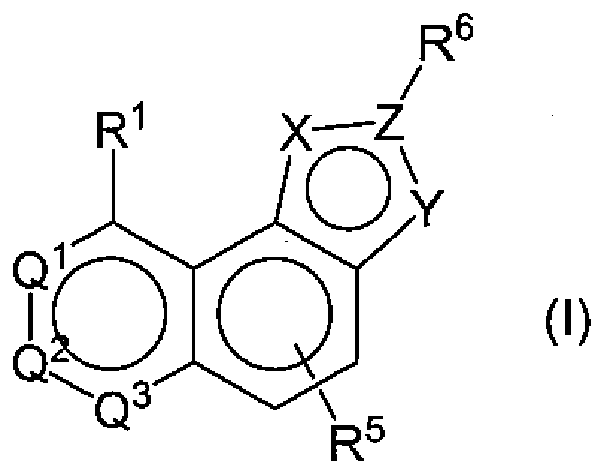
when Q1 is CR2 (wherein R2 has the same meaning as defined above),
Q2 represents CR3 [wherein R3 represents a hydrogen atom, halogen, cyano, optionally substituted lower alkyl, optionally substituted lower alkenyl, optionally substituted lower alkynyl, optionally substituted lower alkylsulfanyl, optionally substituted lower alkylsulfinyl, optionally substituted lower alkylsulfonyl, optionally substituted arylsulfonyl, optionally substituted aryl, an optionally substituted aromatic heterocyclic group, optionally substituted cycloalkyl, an optionally substituted aliphatic heterocyclic group, optionally substituted lower alkylcarbamoyl, optionally substituted di-lower alkylcarbamoyl, optionally substituted lower alkoxycarbonyl, optionally substituted lower alkanoyl, optionally substituted aroyl, optionally substituted aromatic heterocyclic carbonyl, -OR10 (wherein R10 represents a hydrogen atom, optionally substituted lower alkyl, optionally substituted cycloalkyl, optionally substituted aryl, an optionally substituted aromatic heterocyclic group, an optionally substituted aliphatic heterocyclic group, optionally substituted aroyl, or optionally substituted lower alkanoyl), or -NR11R12 (wherein R11 and R12 may be the same or different and each represent a hydrogen atom, optionally substituted lower alkyl, optionally substituted lower alkylsulfonyl, optionally substituted cycloalkyl, optionally substituted aryl, an optionally substituted aromatic heterocyclic group, an optionally substituted aliphatic heterocyclic group, optionally substituted aroyl, or optionally substituted lower alkanoyl, or R11 and R12 are combined together with the adjacent nitrogen atom to form an optionally substituted nitrogen-containing heterocyclic group)], or a nitrogen atom;
when Q2 is CR3 (wherein R3 has the same meaning as defined above), Q3 represents a nitrogen atom;
when Q2 is a nitrogen atom, Q3 represents CR4 [wherein R4 represents a hydrogen atom, halogen, cyano, optionally substituted lower alkyl, optionally substituted lower alkenyl, optionally substituted lower alkynyl, optionally substituted lower alkylsulfanyl, optionally substituted lower alkylsulfinyl, optionally substituted lower alkylsulfonyl, optionally substituted arylsulfonyl, optionally substituted aryl, an optionally substituted aromatic heterocyclic group, optionally substituted cycloalkyl, an optionally substituted aliphatic heterocyclic group, optionally substituted lower alkylcarbamoyl, optionally substituted di-lower alkylcarbamoyl, optionally substituted lower alkoxycarbonyl, optionally substituted lower alkanoyl, optionally substituted aroyl, optionally substituted aromatic heterocyclic carbonyl, -OR13 (wherein R13 represents a hydrogen atom, optionally substituted lower alkyl, optionally substituted cycloalkyl, optionally substituted aryl, an optionally substituted aromatic heterocyclic group, an optionally substituted aliphatic heterocyclic group, optionally substituted aroyl, or optionally substituted lower alkanoyl), or -NR14R15 (wherein R14 and R15 may be the same or different and each represent a hydrogen atom, optionally substituted lower alkyl, optionally substituted lower alkylsulfonyl, optionally substituted cycloalkyl, optionally substituted aryl, an optionally substituted aromatic heterocyclic group, an optionally substituted aliphatic heterocyclic group, optionally substituted aroyl, or optionally substituted lower alkanoyl, or R14 and R15 are combined together with the adjacent nitrogen atom to form an optionally substituted nitrogen-containing heterocyclic group)];
when Q1 is a nitrogen atom, Q2 represents CR3 (wherein R3 has the same meaning as defined above) and Q3 represents CR4 (wherein R4 has the same meaning as defined above) or a nitrogen atom;
R1 represents -C (=O) OR16 (wherein R16 represents a hydrogen atom, optionally substituted lower alkyl, optionally substituted cycloalkyl, optionally substituted aryl, optionally substituted aroyl, an optionally substituted aliphatic heterocyclic group, or an optionally substituted aromatic heterocyclic group), -C(=O)NR17R18 [wherein R17 and R18 may be the same or different and each represent a hydrogen atom, optionally substituted lower alkyl, optionally substituted cycloalkyl, optionally substituted aryl, an optionally substituted aromatic heterocyclic group, or -SO2R19 (wherein R19 represents optionally substituted lower alkyl, optionally substituted aryl, or an optionally substituted aromatic heterocyclic group), or R17 and R18 are combined together with the adjacent nitrogen atom to form an optionally substituted nitrogen-containing heterocyclic group], tetrazolyl, or the formula (III) :
R5 represents a hydrogen atom, halogen, cyano, optionally substituted lower alkyl, optionally substituted lower alkenyl, optionally substituted lower alkynyl, optionally substituted lower alkylsulfanyl, optionally substituted lower alkylsulfinyl, optionally substituted lower alkylsulfonyl, optionally substituted arylsulfonyl, optionally substituted aryl, an optionally substituted aromatic heterocyclic group, optionally substituted cycloalkyl, an optionally substituted aliphatic heterocyclic group, optionally substituted lower alkylcarbamoyl, optionally substituted di-lower alkylcarbamoyl, optionally substituted lower alkoxycarbonyl, optionally substituted lower alkanoyl, optionally substituted aroyl, optionally substituted aromatic heterocyclic carbonyl, -OR20 (wherein R20 represents a hydrogen atom, optionally substituted lower alkyl, optionally substituted cycloalkyl, optionally substituted aryl, an optionally substituted aromatic heterocyclic group, an optionally substituted aliphatic heterocyclic group, optionally substituted aroyl, or optionally substituted lower alkanoyl), or -NR21R22 (wherein R21 and R22 may be the same or different and each represent a hydrogen atom, optionally substituted lower alkyl, optionally substituted lower alkylsulfonyl, optionally substituted cycloalkyl, optionally substituted aryl, an optionally substituted aromatic heterocyclic group, an optionally substituted aliphatic heterocyclic group, optionally substituted aroyl, or optionally substituted lower alkanoyl, or R21 and R22 are combined together with the adjacent nitrogen atom to form an optionally substituted nitrogen-containing heterocyclic group);
R6 represents optionally substituted cycloalkyl, optionally substituted aryl, or an optionally substituted aromatic heterocyclic group;
X and Y may be the same or different and each represent CH in which H may be substituted with a substituent, NH in which H may be substituted with a substituent, a nitrogen atom, an oxygen atom, or a sulfur atom; and Z represents a nitrogen atom or a carbon atom}, or a pharmaceutically acceptable salt thereof. - The pharmaceutical composition according to claim 1, wherein Q1, Q2, and Q3 are CR2 (wherein R2 has the same meaning as defined above), CR3 (wherein R3 has the same meaning as defined above), and a nitrogen atom, respectively.
- The pharmaceutical composition according to claim 1, which comprises, as an active ingredient, an aromatic heterocyclic compound represented by the formula (I-1) :
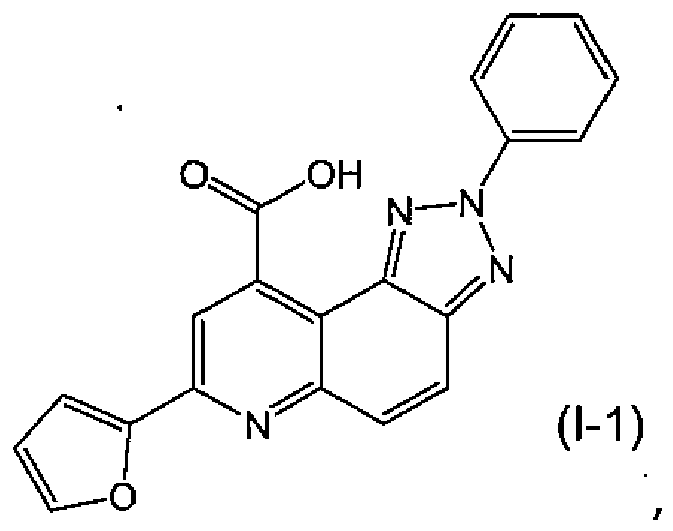
- The pharmaceutical composition according to any one of claims 1 to 3, which is an inhibitor of hematopoietic prostaglandin D2 synthase (H-PGDS).
- The pharmaceutical composition according to any one of claims 1 to 3, which is a therapeutic and/or preventive agent for a disease involving H-PGDS.
- The pharmaceutical composition according to any one of claims 1 to 3, which is a therapeutic and/or preventive agent for a disease involving allergic inflammation, COPD, or a myodegenerative disease.
- The pharmaceutical composition according to any one of claims 1 to 3, which is a therapeutic and/or preventive agent for a disease selected from the group consisting of asthma, allergic rhinitis, atopic dermatitis, COPD, muscular dystrophy, and polymyositis.
- A method for inhibiting H-PGDS, comprising a step of administering an effective amount of the aromatic heterocyclic compound or a pharmaceutically acceptable salt thereof described in any one of claims 1 to 3.
- A method for treating and/or preventing a disease involving H-PGDS, comprising a step of administering an effective amount of the aromatic heterocyclic compound or a pharmaceutically acceptable salt thereof described in any one of claims 1 to 3.
- A method for treating and/or preventing a disease involving allergic inflammation, COPD, or a myodegenerative disease, comprising a step of administering an effective amount of the aromatic heterocyclic compound or a pharmaceutically acceptable salt thereof described in any one of claims 1 to 3.
- A method for treating and/or preventing a disease selected from the group consisting of asthma, allergic rhinitis, atopic dermatitis, COPD, muscular dystrophy, and polymyositis, comprising a step of administering an effective amount of the aromatic heterocyclic compound or a pharmaceutically acceptable salt thereof described in any one of claims 1 to 3.
- The aromatic heterocyclic compound or a pharmaceutically acceptable salt thereof described in any one of claims 1 to 3 for use in inhibiting H-PGDS.
- The aromatic heterocyclic compound or a pharmaceutically acceptable salt thereof described in any one of claims 1 to 3 for use in treating and/or preventing a disease involving H-PGDS.
- The aromatic heterocyclic compound or a pharmaceutically acceptable salt thereof described in any one of claims 1 to 3 for use in treating and/or preventing a disease involving allergic inflammation, COPD, or a myodegenerative disease.
- The aromatic heterocyclic compound or a pharmaceutically acceptable salt thereof described in any one of claims 1 to 3 for use in treating and/or preventing a disease selected from the group consisting of asthma, allergic rhinitis, atopic dermatitis, COPD, muscular dystrophy, and polymyositis.
- Use of the aromatic heterocyclic compound or a pharmaceutically acceptable salt thereof described in any one of claims 1 to 3 for the manufacture of a H-PGDS inhibitor.
- Use of the aromatic heterocyclic compound or a pharmaceutically acceptable salt thereof described in any one of claims 1 to 3 for the manufacture of a therapeutic and/or preventive agent for a disease involving H-PGDS.
- Use of the aromatic heterocyclic compound or a pharmaceutically acceptable salt thereof described in any one of claims 1 to 3 for the manufacture of a therapeutic and/or preventive agent for a disease involving allergic inflammation, COPD, or a myodegenerative disease.
- Use of the aromatic heterocyclic compound or a pharmaceutically acceptable salt thereof described in any one of claims 1 to 3 for the manufacture of a therapeutic and/or preventive agent for a disease selected from the group consisting of asthma, allergic rhinitis, atopic dermatitis, COPD, muscular dystrophy, and polymyositis.
- An aromatic heterocyclic compound represented by the formula (I-A):

when Q1A is CR2A (wherein R2A has the same meaning as defined above),
Q2A represents CR3A [wherein R3A represents a hydrogen atom, halogen, cyano, optionally substituted lower alkyl, optionally substituted lower alkenyl, optionally substituted lower alkynyl, optionally substituted lower alkylsulfanyl, optionally substituted lower alkylsulfinyl, optionally substituted lower alkylsulfonyl, optionally substituted arylsulfonyl, optionally substituted aryl, an optionally substituted aromatic heterocyclic group, optionally substituted cycloalkyl, an optionally substituted aliphatic heterocyclic group, optionally substituted lower alkylcarbamoyl, optionally substituted di-lower alkylcarbamoyl, optionally substituted lower alkoxycarbonyl, optionally substituted lower alkanoyl, optionally substituted aroyl, optionally substituted aromatic heterocyclic carbonyl, -OR10A (wherein R10A represents a hydrogen atom, optionally substituted lower alkyl, optionally substituted cycloalkyl, optionally substituted aryl, an optionally substituted aromatic heterocyclic group, an optionally substituted aliphatic heterocyclic group, optionally substituted aroyl, or optionally substituted lower alkanoyl), or -NR11AR12A (wherein R11A and R12A may be the same or different and each represent a hydrogen atom, optionally substituted lower alkyl, optionally substituted lower alkylsulfonyl, optionally substituted cycloalkyl, optionally substituted aryl, an optionally substituted aromatic heterocyclic group, an optionally substituted aliphatic heterocyclic group, optionally substituted aroyl, or optionally substituted lower alkanoyl, or R11A and R12A are combined together with the adjacent nitrogen atom to form an optionally substituted nitrogen-containing heterocyclic group)], or a nitrogen atom;
when Q2A is CR3A (wherein R3A has the same meaning as defined above), Q3A represents a nitrogen atom;
when Q2A is a nitrogen atom, Q3A represents CR4A [wherein R4A represents a hydrogen atom, halogen, cyano, optionally substituted lower alkyl, optionally substituted lower alkenyl, optionally substituted lower alkynyl, optionally substituted lower alkylsulfanyl, optionally substituted lower alkylsulfinyl, optionally substituted lower alkylsulfonyl, optionally substituted arylsulfonyl, optionally substituted aryl, an optionally substituted aromatic heterocyclic group, optionally substituted cycloalkyl, an optionally substituted aliphatic heterocyclic group, optionally substituted lower alkylcarbamoyl, optionally substituted di-lower alkylcarbamoyl, optionally substituted lower alkoxycarbonyl, optionally substituted lower alkanoyl, optionally substituted aroyl, optionally substituted aromatic heterocyclic carbonyl, -OR13A (wherein R13A represents a hydrogen atom, optionally substituted lower alkyl, optionally substituted cycloalkyl, optionally substituted aryl, an optionally substituted aromatic heterocyclic group, an optionally substituted aliphatic heterocyclic group, optionally substituted aroyl, or optionally substituted lower alkanoyl), or -NR14AR15A (wherein R14A and R15A may be the same or different and each represent a hydrogen atom, optionally substituted lower alkyl, optionally substituted lower alkylsulfonyl, optionally substituted cycloalkyl, optionally substituted aryl, an optionally substituted aromatic heterocyclic group, an optionally substituted aliphatic heterocyclic group, optionally substituted aroyl, or optionally substituted lower alkanoyl, or R14A and R15A are combined together with the adjacent nitrogen atom to form an optionally substituted nitrogen-containing heterocyclic group)];
when Q1A is a nitrogen atom, Q2A represents CR3A (wherein R3A has the same meaning as defined above) and Q3A represents CR4A (wherein R4A has the same meaning as defined above) or a nitrogen atom;
R1A represents -C(=O)OR16A (wherein R16A represents a hydrogen atom, optionally substituted lower alkyl, optionally substituted cycloalkyl, optionally substituted aryl, optionally substituted aroyl, an optionally substituted aliphatic heterocyclic group, or an optionally substituted aromatic heterocyclic group), -C(=O)NR17AR18A [wherein R17A and R18A may be the same or different and each represent a hydrogen atom, optionally substituted lower alkyl, optionally substituted cycloalkyl, optionally substituted aryl, an optionally substituted aromatic heterocyclic group, or -SO2R19A (wherein R19A represents optionally substituted lower alkyl, optionally substituted aryl, or an optionally substituted aromatic heterocyclic group), or R17A and R18A are combined together with the adjacent nitrogen atom to form an optionally substituted nitrogen-containing heterocyclic group], tetrazolyl, or the formula (III-A):
R5A represents a hydrogen atom, halogen, cyano, optionally substituted lower alkyl, optionally substituted lower alkenyl, optionally substituted lower alkynyl, optionally substituted lower alkylsulfanyl, optionally substituted lower alkylsulfinyl, optionally substituted lower alkylsulfonyl, optionally substituted arylsulfonyl, optionally substituted aryl, an optionally substituted aromatic heterocyclic group, optionally substituted cycloalkyl, an optionally substituted aliphatic heterocyclic group, optionally substituted lower alkylcarbamoyl, optionally substituted di-lower alkylcarbamoyl, optionally substituted lower alkoxycarbonyl, optionally substituted lower alkanoyl, optionally substituted aroyl, optionally substituted aromatic heterocyclic carbonyl, -OR20A (wherein R20A represents a hydrogen atom, optionally substituted lower alkyl, optionally substituted cycloalkyl, optionally substituted aryl, an optionally substituted aromatic heterocyclic group, an optionally substituted aliphatic heterocyclic group, optionally substituted aroyl, or optionally substituted lower alkanoyl), or -NR21AR22A (wherein R21A and R22A may be the same or different and each represent a hydrogen atom, optionally substituted lower alkyl, optionally substituted lower alkylsulfonyl, optionally substituted cycloalkyl, optionally substituted aryl, an optionally substituted aromatic heterocyclic group, an optionally substituted aliphatic heterocyclic group, optionally substituted aroyl, or optionally substituted lower alkanoyl, or R21A and R22A are combined together with the adjacent nitrogen atom to form an optionally substituted nitrogen-containing heterocyclic group);
R6A represents optionally substituted cycloalkyl, optionally substituted aryl, or an optionally substituted aromatic heterocyclic group;
XA and YA may be the same or different and each represent CH in which H may be substituted with a substituent, NH in which H may be substituted with a substituent, a nitrogen atom, an oxygen atom, or a sulfur atom; and ZA represents a nitrogen atom or a carbon atom
(excluding the case where Q1A, Q2A, and Q3A are CH, CR3A, and, a nitrogen atom, respectively; R3A is phenyl, 4-nitrophenyl, 4-dimethylaminophenyl, 3-hydroxy-2-methoxyphenyl, 4-methoxycarbonylphenyl, 4-hydroxyphenyl, 3-hydroxynaphthalen-2-yl, 4-methoxyphenyl, or furan-2-yl; R1A is carboxy; R5A is a hydrogen atom; XA, YA, and ZA are each a nitrogen atom; and R6A is phenyl)},
or a pharmaceutically acceptable salt thereof. - The aromatic heterocyclic compound or a pharmaceutically acceptable salt thereof according to claim 20, wherein Q1A, Q2A, and Q3A are CR2A (wherein R2A has the same meaning as defined above), CR3A (wherein R3A has the same meaning as defined above), and a nitrogen atom, respectively.
- The aromatic heterocyclic compound or a pharmaceutically acceptable salt thereof according to claim 20 or 21, wherein Q1A is CH.
- The aromatic heterocyclic compound or a pharmaceutically acceptable salt thereof according to any one of claims 20 to 22, wherein R1A is -C(=O)OR16B (wherein R16B represents a hydrogen atom or optionally substituted lower alkyl) or -C(=O)NR17BR18B [wherein R17B and R18B may be the same or different and each represent a hydrogen atom, optionally substituted lower alkyl, or -SO2R19B (wherein R19B represents optionally substituted lower alkyl)].
- The aromatic heterocyclic compound or a pharmaceutically acceptable salt thereof according to any one of claims 20 to 22, wherein R1A is -C(=O)OR16C (wherein R16C represents a hydrogen atom or lower alkyl) or -C(=O)NR17CR18C [wherein R17C and R18C may be the same or different and each represent a hydrogen atom, lower alkyl, or -SO2R19C (wherein R19C represents lower alkyl)].
- The aromatic heterocyclic compound or a pharmaceutically acceptable salt thereof according to any one of claims 20 to 22, wherein R1A is carboxy.
- The aromatic heterocyclic compound or a pharmaceutically acceptable salt thereof according to any one of claims 20 to 25, wherein Q2A represents CR3B (wherein R3B represents halogen, optionally substituted aryl, an optionally substituted aromatic heterocyclic group, or an optionally substituted aliphatic heterocyclic group).
- The aromatic heterocyclic compound or a pharmaceutically acceptable salt thereof according to any one of claims 20 to 25, wherein Q2A represents CR3C (wherein R3C represents an optionally substituted aromatic heterocyclic group).
- The aromatic heterocyclic compound or a pharmaceutically acceptable salt thereof according to any one of claims 20 to 27, wherein R5A is a hydrogen atom.
- The aromatic heterocyclic compound or a pharmaceutically acceptable salt thereof according to any one of claims 20 to 28, wherein XA, YA, and ZA are each a nitrogen atom.
- The aromatic heterocyclic compound or a pharmaceutically acceptable salt thereof according to any one of claims 20 to 28, wherein XA is an oxygen atom, YA is a nitrogen atom, and ZA is a carbon atom.
- The aromatic heterocyclic compound or a pharmaceutically acceptable salt thereof according to any one of claims 20 to 30, wherein R6A is optionally substituted aryl, or an optionally substituted aromatic heterocyclic group.
- The aromatic heterocyclic compound or a pharmaceutically acceptable salt thereof according to any one of claims 20 to 30, wherein R6A is optionally substituted aryl.
- A pharmaceutical composition comprising, as an active ingredient, the aromatic heterocyclic compound or a pharmaceutically acceptable salt thereof described in any one of claims 20 to 32.
- A H-PGDS inhibitor comprising, as an active ingredient, the aromatic heterocyclic compound or a pharmaceutically acceptable salt thereof described in any one of claims 20 to 32.
- A therapeutic and/or preventive agent for a disease involving H-PGDS comprising, as an active ingredient, the aromatic heterocyclic compound or a pharmaceutically acceptable salt thereof described in any one of claims 20 to 32.
- A therapeutic and/or preventive agent for a disease involving allergic inflammation, COPD, or a myodegenerative disease comprising, as an active ingredient, the aromatic heterocyclic compound or a pharmaceutically acceptable salt thereof described in any one of claims 20 to 32.
- A therapeutic and/or preventive agent for a disease selected from the group consisting of asthma, allergic rhinitis, atopic dermatitis, COPD, muscular dystrophy, and polymyositis comprising, as an active ingredient, the aromatic heterocyclic compound or a pharmaceutically acceptable salt thereof described in any one of claims 20 to 32.
- A method for inhibiting H-PGDS, comprising a step of administering an effective amount of the aromatic heterocyclic compound or a pharmaceutically acceptable salt thereof described in any one of claims 20 to 32.
- A method for treating and/or preventing a disease involving H-PGDS, comprising a step of administering an effective amount of the aromatic heterocyclic compound or a pharmaceutically acceptable salt thereof described in any one of claims 20 to 32.
- A method for treating and/or preventing a disease involving allergic inflammation, COPD, or a myodegenerative disease, comprising a step of administering an effective amount of the aromatic heterocyclic compound or a pharmaceutically acceptable salt thereof described in any one of claims 20 to 32.
- A method for treating and/or preventing a disease selected from the group consisting of asthma, allergic rhinitis, atopic dermatitis, COPD, muscular dystrophy, and polymyositis, comprising a step of administering an effective amount of the aromatic heterocyclic compound or a pharmaceutically acceptable salt thereof described in any one of claims 20 to 32.
- The aromatic heterocyclic compound or a pharmaceutically acceptable salt thereof described in any one of claims 20 to 32 for use in inhibiting H-PGDS.
- The aromatic heterocyclic compound or a pharmaceutically acceptable salt thereof described in any one of claims 20 to 32 for use in treating and/or preventing a disease involving H-PGDS.
- The aromatic heterocyclic compound or a pharmaceutically acceptable salt thereof described in any one of claims 20 to 32 for use in treating and/or preventing a disease involving allergic inflammation, COPD, or a myodegenerative disease.
- The aromatic heterocyclic compound or a pharmaceutically acceptable salt thereof described in any one of claims 20 to 32 for use in treating and/or preventing a disease selected from the group consisting of asthma, allergic rhinitis, atopic dermatitis, COPD, muscular dystrophy, and polymyositis.
- Use of the aromatic heterocyclic compound or a pharmaceutically acceptable salt thereof described in any one of claims 20 to 32 for the manufacture of a H-PGDS inhibitor.
- Use of the aromatic heterocyclic compound or a pharmaceutically acceptable salt thereof described in any one of claims 20 to 32 for the manufacture of a therapeutic and/or preventive agent for a disease involving H-PGDS.
- Use of the aromatic heterocyclic compound or a pharmaceutically acceptable salt thereof described in any one of claims 20 to 32 for the manufacture of a therapeutic and/or preventive agent for a disease involving allergic inflammation, COPD, or a myodegenerative disease.
- Use of the aromatic heterocyclic compound or a pharmaceutically acceptable salt thereof described in any one of claims 20 to 32 for the manufacture of a therapeutic and/or preventive agent for a disease selected from the group consisting of asthma, allergic rhinitis, atopic dermatitis, COPD, muscular dystrophy, and polymyositis.
Applications Claiming Priority (3)
| Application Number | Priority Date | Filing Date | Title |
|---|---|---|---|
| JP2009232201 | 2009-10-06 | ||
| JP2010118474 | 2010-05-24 | ||
| PCT/JP2010/067511 WO2011043359A1 (en) | 2009-10-06 | 2010-10-06 | Pharmaceutical product containing aromatic heterocyclic compound |
Publications (1)
| Publication Number | Publication Date |
|---|---|
| EP2487175A1 true EP2487175A1 (en) | 2012-08-15 |
Family
ID=43856812
Family Applications (1)
| Application Number | Title | Priority Date | Filing Date |
|---|---|---|---|
| EP10822029A Withdrawn EP2487175A1 (en) | 2009-10-06 | 2010-10-06 | Pharmaceutical product containing aromatic heterocyclic compound |
Country Status (4)
| Country | Link |
|---|---|
| US (1) | US20120196854A1 (en) |
| EP (1) | EP2487175A1 (en) |
| JP (1) | JPWO2011043359A1 (en) |
| WO (1) | WO2011043359A1 (en) |
Cited By (1)
| Publication number | Priority date | Publication date | Assignee | Title |
|---|---|---|---|---|
| CN110753692A (en) * | 2017-06-13 | 2020-02-04 | 葛兰素史密斯克莱知识产权发展有限公司 | Chemical compounds as H-PGDS inhibitors |
Families Citing this family (16)
| Publication number | Priority date | Publication date | Assignee | Title |
|---|---|---|---|---|
| CN108430992A (en) | 2015-12-17 | 2018-08-21 | 阿斯特克斯医疗公司 | Quinoline-3-carboxamides as H-PGDS inhibitors |
| JOP20190072A1 (en) | 2016-10-13 | 2019-04-07 | Glaxosmithkline Ip Dev Ltd | 1,3 di-substituted cyclobutane or azetidine derivatives as hematopoietic prostaglandin d synthase inhibitors |
| JP7788208B2 (en) * | 2017-03-29 | 2025-12-18 | パデュー リサーチ ファウンデイション | Kinase network inhibitors and uses thereof |
| EP3724197A1 (en) | 2017-12-13 | 2020-10-21 | GlaxoSmithKline Intellectual Property Development Ltd | Fused pyridines which act as inhibitors of h-pgds |
| US11066404B2 (en) | 2018-10-11 | 2021-07-20 | Incyte Corporation | Dihydropyrido[2,3-d]pyrimidinone compounds as CDK2 inhibitors |
| JP2022506850A (en) | 2018-11-08 | 2022-01-17 | グラクソスミスクライン、インテレクチュアル、プロパティー、ディベロップメント、リミテッド | Chemical compound |
| US11384083B2 (en) | 2019-02-15 | 2022-07-12 | Incyte Corporation | Substituted spiro[cyclopropane-1,5′-pyrrolo[2,3-d]pyrimidin]-6′(7′h)-ones as CDK2 inhibitors |
| TW202100520A (en) | 2019-03-05 | 2021-01-01 | 美商英塞特公司 | Pyrazolyl pyrimidinylamine compounds as cdk2 inhibitors |
| WO2020205560A1 (en) | 2019-03-29 | 2020-10-08 | Incyte Corporation | Sulfonylamide compounds as cdk2 inhibitors |
| US11447494B2 (en) | 2019-05-01 | 2022-09-20 | Incyte Corporation | Tricyclic amine compounds as CDK2 inhibitors |
| US11440914B2 (en) | 2019-05-01 | 2022-09-13 | Incyte Corporation | Tricyclic amine compounds as CDK2 inhibitors |
| CN116348458A (en) | 2019-08-14 | 2023-06-27 | 因赛特公司 | Imidazolylpyrimidinylamine compounds as CDK2 inhibitors |
| CN119930611A (en) | 2019-10-11 | 2025-05-06 | 因赛特公司 | Dicyclomine as a CDK2 inhibitor |
| US11981671B2 (en) | 2021-06-21 | 2024-05-14 | Incyte Corporation | Bicyclic pyrazolyl amines as CDK2 inhibitors |
| US20240360107A1 (en) * | 2021-08-30 | 2024-10-31 | Arizona Board Of Regents On Behalf Of The University Of Arizona | An eif4a inhibitor with a novel mechanism of action |
| US11976073B2 (en) | 2021-12-10 | 2024-05-07 | Incyte Corporation | Bicyclic amines as CDK2 inhibitors |
Family Cites Families (8)
| Publication number | Priority date | Publication date | Assignee | Title |
|---|---|---|---|---|
| JPS5088099A (en) * | 1973-12-12 | 1975-07-15 | ||
| CA1246578A (en) * | 1982-03-29 | 1988-12-13 | John H. Musser | 2-oxo-1,3-oxazolo[4,5]quinolines useful as anti-allergy agents |
| CA2099818A1 (en) | 1992-07-21 | 1994-01-22 | Frederic H. Jung | Antibiotic compounds |
| MXPA02006474A (en) | 1999-12-28 | 2002-11-29 | Eisai Co Ltd | Heterocyclic compounds having sulfonamide groups. |
| KR100767000B1 (en) | 2000-02-03 | 2007-10-15 | 에자이 알앤드디 매니지먼트 가부시키가이샤 | Integrin Expression Inhibitors |
| CA2468015A1 (en) | 2001-11-27 | 2003-06-05 | Merck & Co., Inc. | 2-aminoquinoline compounds |
| WO2005035526A1 (en) | 2003-10-09 | 2005-04-21 | Argenta Discovery Ltd. | Bicyclic compounds and their therapeutic use |
| US7456195B2 (en) | 2005-06-24 | 2008-11-25 | Bristol-Myers Squibb Company | Phenylglycinamide and pyridylglycinamide derivatives useful as anticoagulants |
-
2010
- 2010-10-06 EP EP10822029A patent/EP2487175A1/en not_active Withdrawn
- 2010-10-06 WO PCT/JP2010/067511 patent/WO2011043359A1/en not_active Ceased
- 2010-10-06 JP JP2011535411A patent/JPWO2011043359A1/en not_active Withdrawn
- 2010-10-06 US US13/500,193 patent/US20120196854A1/en not_active Abandoned
Non-Patent Citations (1)
| Title |
|---|
| See references of WO2011043359A1 * |
Cited By (1)
| Publication number | Priority date | Publication date | Assignee | Title |
|---|---|---|---|---|
| CN110753692A (en) * | 2017-06-13 | 2020-02-04 | 葛兰素史密斯克莱知识产权发展有限公司 | Chemical compounds as H-PGDS inhibitors |
Also Published As
| Publication number | Publication date |
|---|---|
| WO2011043359A1 (en) | 2011-04-14 |
| US20120196854A1 (en) | 2012-08-02 |
| JPWO2011043359A1 (en) | 2013-03-04 |
Similar Documents
| Publication | Publication Date | Title |
|---|---|---|
| US20120196854A1 (en) | Pharmaceutical composition comprising aromatic heterocyclic compound | |
| CN110003204B (en) | A kind of BET protein inhibitor, its preparation method and use | |
| WO2023062575A1 (en) | Cyclic vinyl sulfone compounds as wrn inhibitors | |
| CN104703964B (en) | Substituted aminoindane- and aminotetralincarboxylic acids and use thereof | |
| US20230119547A1 (en) | Di-substituted pyrazole compounds for the treatment of diseases | |
| US20110224204A1 (en) | Di-substituted phenyl compounds | |
| US20090233955A1 (en) | 1H-Pyrrolo[2,3-B]Pyridnes | |
| US11345678B2 (en) | Benzopyrazole compound used as RHO kinase inhibitor | |
| CN114375193B (en) | Thyroid hormone receptor beta agonist compounds | |
| US9199976B2 (en) | Haematopoietic-prostaglandin D2 synthase inhibitors | |
| CN113563319B (en) | Indazole heterocyclic compounds with phosphodiesterase 4B inhibitory activity | |
| EA028918B1 (en) | 5-aminotetrahydroquinoline-2-carboxylic acid derivatives and use thereof as soluble guanylate cyclase activator | |
| CN101686979A (en) | Heteroaryl-substituted urea modulators of fatty acid amide hydrolase | |
| CN115768761B (en) | Novel benzimidazole derivatives | |
| AU2016368257B2 (en) | Five-membered heterocyclic amides wnt pathway inhibitor | |
| CA2736441A1 (en) | Pyrazolylthiazole compounds as .delta.f508-cystic fibrosis transmembrane conductance regulator correctors | |
| EP3162801A1 (en) | Salt of halogen-substituted heterocyclic compound | |
| WO2013075596A1 (en) | Pentabasic dihydrogen heterocyclic ketone derivative as dhodh inhibitor and use thereof | |
| CN106967004A (en) | IDO1 and IDO2 double inhibitors, its preparation method and its medical usage containing urea groups | |
| CN113754580A (en) | A kind of pyridylmorpholine compound, its preparation method and application | |
| US8772304B2 (en) | Benzimidazole inhibitors of leukotriene production | |
| JP2018087173A (en) | Malignant brain tumor drug | |
| KR102959367B1 (en) | EP4 antagonist compounds, their salts, polymorphs, and uses | |
| WO2025162127A1 (en) | Dihydrofuroindole compound or derivative thereof and use thereof | |
| TWI648264B (en) | Pioneer drug |
Legal Events
| Date | Code | Title | Description |
|---|---|---|---|
| PUAI | Public reference made under article 153(3) epc to a published international application that has entered the european phase |
Free format text: ORIGINAL CODE: 0009012 |
|
| 17P | Request for examination filed |
Effective date: 20120502 |
|
| AK | Designated contracting states |
Kind code of ref document: A1 Designated state(s): AL AT BE BG CH CY CZ DE DK EE ES FI FR GB GR HR HU IE IS IT LI LT LU LV MC MK MT NL NO PL PT RO RS SE SI SK SM TR |
|
| RIN1 | Information on inventor provided before grant (corrected) |
Inventor name: TAKADA, CHIE Inventor name: KAWASAKI, HIROKAZU Inventor name: KOMAI, MASATO Inventor name: YAMAGUCHI, SHINPEI Inventor name: TAGAYA, MIHO Inventor name: IKEMURA, TOSHIHIDE Inventor name: IIDA, KYOICHIRO Inventor name: SAEKI, KOJI |
|
| DAX | Request for extension of the european patent (deleted) | ||
| STAA | Information on the status of an ep patent application or granted ep patent |
Free format text: STATUS: THE APPLICATION HAS BEEN WITHDRAWN |
|
| 18W | Application withdrawn |
Effective date: 20130123 |