EP2487036A2 - Multilayered optical film, and preparation method thereof - Google Patents
Multilayered optical film, and preparation method thereof Download PDFInfo
- Publication number
- EP2487036A2 EP2487036A2 EP10822268A EP10822268A EP2487036A2 EP 2487036 A2 EP2487036 A2 EP 2487036A2 EP 10822268 A EP10822268 A EP 10822268A EP 10822268 A EP10822268 A EP 10822268A EP 2487036 A2 EP2487036 A2 EP 2487036A2
- Authority
- EP
- European Patent Office
- Prior art keywords
- resin
- optical film
- multilayered optical
- diol
- resin layer
- Prior art date
- Legal status (The legal status is an assumption and is not a legal conclusion. Google has not performed a legal analysis and makes no representation as to the accuracy of the status listed.)
- Granted
Links
Images

Classifications
-
- B—PERFORMING OPERATIONS; TRANSPORTING
- B32—LAYERED PRODUCTS
- B32B—LAYERED PRODUCTS, i.e. PRODUCTS BUILT-UP OF STRATA OF FLAT OR NON-FLAT, e.g. CELLULAR OR HONEYCOMB, FORM
- B32B27/00—Layered products comprising a layer of synthetic resin
- B32B27/06—Layered products comprising a layer of synthetic resin as the main or only constituent of a layer, which is next to another layer of the same or of a different material
- B32B27/08—Layered products comprising a layer of synthetic resin as the main or only constituent of a layer, which is next to another layer of the same or of a different material of synthetic resin
-
- B—PERFORMING OPERATIONS; TRANSPORTING
- B32—LAYERED PRODUCTS
- B32B—LAYERED PRODUCTS, i.e. PRODUCTS BUILT-UP OF STRATA OF FLAT OR NON-FLAT, e.g. CELLULAR OR HONEYCOMB, FORM
- B32B7/00—Layered products characterised by the relation between layers; Layered products characterised by the relative orientation of features between layers, or by the relative values of a measurable parameter between layers, i.e. products comprising layers having different physical, chemical or physicochemical properties; Layered products characterised by the interconnection of layers
- B32B7/02—Physical, chemical or physicochemical properties
- B32B7/023—Optical properties
-
- B—PERFORMING OPERATIONS; TRANSPORTING
- B32—LAYERED PRODUCTS
- B32B—LAYERED PRODUCTS, i.e. PRODUCTS BUILT-UP OF STRATA OF FLAT OR NON-FLAT, e.g. CELLULAR OR HONEYCOMB, FORM
- B32B27/00—Layered products comprising a layer of synthetic resin
- B32B27/36—Layered products comprising a layer of synthetic resin comprising polyesters
-
- G—PHYSICS
- G02—OPTICS
- G02B—OPTICAL ELEMENTS, SYSTEMS OR APPARATUS
- G02B5/00—Optical elements other than lenses
- G02B5/30—Polarising elements
- G02B5/3025—Polarisers, i.e. arrangements capable of producing a definite output polarisation state from an unpolarised input state
- G02B5/3033—Polarisers, i.e. arrangements capable of producing a definite output polarisation state from an unpolarised input state in the form of a thin sheet or foil, e.g. Polaroid
- G02B5/3041—Polarisers, i.e. arrangements capable of producing a definite output polarisation state from an unpolarised input state in the form of a thin sheet or foil, e.g. Polaroid comprising multiple thin layers, e.g. multilayer stacks
- G02B5/305—Polarisers, i.e. arrangements capable of producing a definite output polarisation state from an unpolarised input state in the form of a thin sheet or foil, e.g. Polaroid comprising multiple thin layers, e.g. multilayer stacks including organic materials, e.g. polymeric layers
-
- G—PHYSICS
- G02—OPTICS
- G02B—OPTICAL ELEMENTS, SYSTEMS OR APPARATUS
- G02B5/00—Optical elements other than lenses
- G02B5/30—Polarising elements
- G02B5/3083—Birefringent or phase retarding elements
-
- B—PERFORMING OPERATIONS; TRANSPORTING
- B32—LAYERED PRODUCTS
- B32B—LAYERED PRODUCTS, i.e. PRODUCTS BUILT-UP OF STRATA OF FLAT OR NON-FLAT, e.g. CELLULAR OR HONEYCOMB, FORM
- B32B2250/00—Layers arrangement
- B32B2250/24—All layers being polymeric
-
- B—PERFORMING OPERATIONS; TRANSPORTING
- B32—LAYERED PRODUCTS
- B32B—LAYERED PRODUCTS, i.e. PRODUCTS BUILT-UP OF STRATA OF FLAT OR NON-FLAT, e.g. CELLULAR OR HONEYCOMB, FORM
- B32B2250/00—Layers arrangement
- B32B2250/42—Alternating layers, e.g. ABAB(C), AABBAABB(C)
-
- B—PERFORMING OPERATIONS; TRANSPORTING
- B32—LAYERED PRODUCTS
- B32B—LAYERED PRODUCTS, i.e. PRODUCTS BUILT-UP OF STRATA OF FLAT OR NON-FLAT, e.g. CELLULAR OR HONEYCOMB, FORM
- B32B2307/00—Properties of the layers or laminate
- B32B2307/30—Properties of the layers or laminate having particular thermal properties
- B32B2307/306—Resistant to heat
-
- B—PERFORMING OPERATIONS; TRANSPORTING
- B32—LAYERED PRODUCTS
- B32B—LAYERED PRODUCTS, i.e. PRODUCTS BUILT-UP OF STRATA OF FLAT OR NON-FLAT, e.g. CELLULAR OR HONEYCOMB, FORM
- B32B2307/00—Properties of the layers or laminate
- B32B2307/40—Properties of the layers or laminate having particular optical properties
-
- B—PERFORMING OPERATIONS; TRANSPORTING
- B32—LAYERED PRODUCTS
- B32B—LAYERED PRODUCTS, i.e. PRODUCTS BUILT-UP OF STRATA OF FLAT OR NON-FLAT, e.g. CELLULAR OR HONEYCOMB, FORM
- B32B2307/00—Properties of the layers or laminate
- B32B2307/40—Properties of the layers or laminate having particular optical properties
- B32B2307/42—Polarizing, birefringent, filtering
-
- B—PERFORMING OPERATIONS; TRANSPORTING
- B32—LAYERED PRODUCTS
- B32B—LAYERED PRODUCTS, i.e. PRODUCTS BUILT-UP OF STRATA OF FLAT OR NON-FLAT, e.g. CELLULAR OR HONEYCOMB, FORM
- B32B2307/00—Properties of the layers or laminate
- B32B2307/50—Properties of the layers or laminate having particular mechanical properties
-
- B—PERFORMING OPERATIONS; TRANSPORTING
- B32—LAYERED PRODUCTS
- B32B—LAYERED PRODUCTS, i.e. PRODUCTS BUILT-UP OF STRATA OF FLAT OR NON-FLAT, e.g. CELLULAR OR HONEYCOMB, FORM
- B32B2307/00—Properties of the layers or laminate
- B32B2307/50—Properties of the layers or laminate having particular mechanical properties
- B32B2307/514—Oriented
- B32B2307/516—Oriented mono-axially
-
- B—PERFORMING OPERATIONS; TRANSPORTING
- B32—LAYERED PRODUCTS
- B32B—LAYERED PRODUCTS, i.e. PRODUCTS BUILT-UP OF STRATA OF FLAT OR NON-FLAT, e.g. CELLULAR OR HONEYCOMB, FORM
- B32B2307/00—Properties of the layers or laminate
- B32B2307/50—Properties of the layers or laminate having particular mechanical properties
- B32B2307/514—Oriented
- B32B2307/518—Oriented bi-axially
-
- B—PERFORMING OPERATIONS; TRANSPORTING
- B32—LAYERED PRODUCTS
- B32B—LAYERED PRODUCTS, i.e. PRODUCTS BUILT-UP OF STRATA OF FLAT OR NON-FLAT, e.g. CELLULAR OR HONEYCOMB, FORM
- B32B2307/00—Properties of the layers or laminate
- B32B2307/70—Other properties
- B32B2307/702—Amorphous
-
- B—PERFORMING OPERATIONS; TRANSPORTING
- B32—LAYERED PRODUCTS
- B32B—LAYERED PRODUCTS, i.e. PRODUCTS BUILT-UP OF STRATA OF FLAT OR NON-FLAT, e.g. CELLULAR OR HONEYCOMB, FORM
- B32B2307/00—Properties of the layers or laminate
- B32B2307/70—Other properties
- B32B2307/704—Crystalline
-
- B—PERFORMING OPERATIONS; TRANSPORTING
- B32—LAYERED PRODUCTS
- B32B—LAYERED PRODUCTS, i.e. PRODUCTS BUILT-UP OF STRATA OF FLAT OR NON-FLAT, e.g. CELLULAR OR HONEYCOMB, FORM
- B32B2457/00—Electrical equipment
- B32B2457/20—Displays, e.g. liquid crystal displays, plasma displays
-
- G—PHYSICS
- G02—OPTICS
- G02B—OPTICAL ELEMENTS, SYSTEMS OR APPARATUS
- G02B5/00—Optical elements other than lenses
- G02B5/08—Mirrors
- G02B5/0816—Multilayer mirrors, i.e. having two or more reflecting layers
- G02B5/0825—Multilayer mirrors, i.e. having two or more reflecting layers the reflecting layers comprising dielectric materials only
- G02B5/0841—Multilayer mirrors, i.e. having two or more reflecting layers the reflecting layers comprising dielectric materials only comprising organic materials, e.g. polymers
-
- G—PHYSICS
- G02—OPTICS
- G02B—OPTICAL ELEMENTS, SYSTEMS OR APPARATUS
- G02B5/00—Optical elements other than lenses
- G02B5/20—Filters
- G02B5/28—Interference filters
- G02B5/285—Interference filters comprising deposited thin solid films
- G02B5/287—Interference filters comprising deposited thin solid films comprising at least one layer of organic material
-
- Y—GENERAL TAGGING OF NEW TECHNOLOGICAL DEVELOPMENTS; GENERAL TAGGING OF CROSS-SECTIONAL TECHNOLOGIES SPANNING OVER SEVERAL SECTIONS OF THE IPC; TECHNICAL SUBJECTS COVERED BY FORMER USPC CROSS-REFERENCE ART COLLECTIONS [XRACs] AND DIGESTS
- Y10—TECHNICAL SUBJECTS COVERED BY FORMER USPC
- Y10T—TECHNICAL SUBJECTS COVERED BY FORMER US CLASSIFICATION
- Y10T428/00—Stock material or miscellaneous articles
- Y10T428/24—Structurally defined web or sheet [e.g., overall dimension, etc.]
- Y10T428/24942—Structurally defined web or sheet [e.g., overall dimension, etc.] including components having same physical characteristic in differing degree
-
- Y—GENERAL TAGGING OF NEW TECHNOLOGICAL DEVELOPMENTS; GENERAL TAGGING OF CROSS-SECTIONAL TECHNOLOGIES SPANNING OVER SEVERAL SECTIONS OF THE IPC; TECHNICAL SUBJECTS COVERED BY FORMER USPC CROSS-REFERENCE ART COLLECTIONS [XRACs] AND DIGESTS
- Y10—TECHNICAL SUBJECTS COVERED BY FORMER USPC
- Y10T—TECHNICAL SUBJECTS COVERED BY FORMER US CLASSIFICATION
- Y10T428/00—Stock material or miscellaneous articles
- Y10T428/24—Structurally defined web or sheet [e.g., overall dimension, etc.]
- Y10T428/24942—Structurally defined web or sheet [e.g., overall dimension, etc.] including components having same physical characteristic in differing degree
- Y10T428/2495—Thickness [relative or absolute]
- Y10T428/24967—Absolute thicknesses specified
- Y10T428/24975—No layer or component greater than 5 mils thick
-
- Y—GENERAL TAGGING OF NEW TECHNOLOGICAL DEVELOPMENTS; GENERAL TAGGING OF CROSS-SECTIONAL TECHNOLOGIES SPANNING OVER SEVERAL SECTIONS OF THE IPC; TECHNICAL SUBJECTS COVERED BY FORMER USPC CROSS-REFERENCE ART COLLECTIONS [XRACs] AND DIGESTS
- Y10—TECHNICAL SUBJECTS COVERED BY FORMER USPC
- Y10T—TECHNICAL SUBJECTS COVERED BY FORMER US CLASSIFICATION
- Y10T428/00—Stock material or miscellaneous articles
- Y10T428/31504—Composite [nonstructural laminate]
- Y10T428/31855—Of addition polymer from unsaturated monomers
- Y10T428/31909—Next to second addition polymer from unsaturated monomers
- Y10T428/31913—Monoolefin polymer
- Y10T428/31917—Next to polyene polymer
Definitions
- the present invention relates to a multilayered optical film which can be use for color filters, packaging materials, and the like.
- Polyester-based materials are most frequently used due to their high birefringence.
- PET polyethylene terephthalate
- PEN polyethylene naphthalate
- PET polyethylene terephthalate
- PEN polyethylene naphthalate
- thermal resistance thermal resistance
- PEN shows high birefringence and good applicability, yet it is fairly expensive.
- a multilayered optical film comprising alternating layers of a first resin layer and a second resin layer, wherein the first resin layer comprises polyethylene naphthalate (PEN), and the second resin layer comprises polyethylene terephthalate (PET) copolymerized with a heterocyclic polyalcohol.
- first resin layer comprises polyethylene naphthalate (PEN)
- second resin layer comprises polyethylene terephthalate (PET) copolymerized with a heterocyclic polyalcohol.
- a method for preparing the multilayered optical film comprising the steps of (a) melt-extruding a first resin comprising polyethylene naphthalate (PEN) and a second resin comprising polyethylene terephthalate (PET) copolymerized with a heterocyclic polyalcohol, followed by alternatingly laminating the extrudates; and (b) drawing the laminated layers from step (a) in at least one of the longitudinal and the transversal directions, followed by heat treatment.
- PEN polyethylene naphthalate
- PET polyethylene terephthalate
- the multilayered optical film of the present invention comprises a heterocyclic polyalcohol in the PET resin layer, which allows improved thermal resistance and prevents crystallization during high-temperature processing so that it is effective in reducing haze and improving compatibility with the PEN resin layer. Also, the film prepared has excellent optical properties because the PET resin layer maintains a low refractive index as well as a low birefringence after the drawing step, resulting in a high difference between the refractive indices of the PEN resin layer and the PET resin layer.
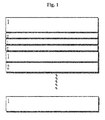
- the multilayered optical film of the present invention comprises alternating layers of two different resin layers having different refractive indices to reflect light of specific wavelengths ( see Fig. 1 ).
- the two resin layers should comprise different materials from each other, which can assure the maintenance of the separate layers and prevention of intermixing thereof.
- the first and the second resin layers of the multilayered optical film according to the present invention preferably have a difference in refractive index of 0.2 or higher at 632.8 nm, more preferably between 0.25 and 0.35.
- the first resin layer is preferably positioned as the outermost layers on both sides of the film, wherein the sum of the thicknesses of both outermost layers is preferably 10% to 40% of the total thickness of the multilayered optical film.
- heterocyclic polyalcohol means a polyalcohol with a heterocyclic ring containing one or more heteroatoms such as O, N, S, and P, wherein the heteroatom is preferably oxygen, nitrogen or sulfur.
- the heterocyclic ring is preferably a 5- to 14-membered ring, because the heterocyclic polyalcohol is more stable and more readily produced with such a heterocyclic ring.
- the number of OH groups in the heterocyclic polyalcohol is preferably 2 or 3. As the heterocyclic polyalcohol has more OH groups, cross-linking is more likely to take place, which would cause troubles in the process for preparing the film, although the thermal resistance of the film prepared would be enhanced.
- heterocyclic polyalcohol examples include a diol comprising a single heterocyclic ring (formulae 3, 5, 6, 7, and 8), a diol with a spiro structure of two heterocyclic rings (formula 2), a diol with a bridged structure of two or more rings comprising at least one heterocyclic ring (formulae 1, 4, 9, 10, and 11), and a triol comprising one or more heterocyclic rings (formulae 12 and 13).
- heterocyclic polyalcohol may include isosorbide (formula 1), spiroglycol (formula 2), tetrahydrofuran diol (formula 3), Corey lactone diol (formula 4), pyrimidine-2,4-diol (formula 5), 1,2-dithiane-3,6-diol (formula 6), p-dithiane-2,5-diol (formula 7), 2-methylpyridine-3,5-diol (formula 8), furo[3,2-D]pyrimidine-2,4-diol (formula 9), 7H-pyrrolo[2,3-d]pyrimidine-2,4-diol (formula 10), 1,2,3,9-tetrahydropyrrolo[2,1-b]quinazoline-3,7-diol (formula 11), tetrahydro-2H-pyran-2,3,5-triol (formula 12),
- a ray of light incident on a laminated film produces reflected light having wavelengths of 1/2 ⁇ , 1/3 ⁇ , and so on, depending on the optical properties of the film.
- the wavelength of the reflected light can be adjusted to various ranges including UV light (200-400 nm), visible light (400-700 nm) and infrared light (700 mm-) by way of changing the thicknesses of the layers or the difference between the refractive indices of the layers.
- the reflection at the second order wavelength can be controlled with the lamination ratio.
- the lamination ratio represented by Equation 1 below is preferably between 0.01 and 0.99, more preferably between 0.50 and 0.54.
- Lamination ratio d ⁇ 1 / d ⁇ 1 + d ⁇ 2 , wherein d1 and d2 represent average thicknesses of the first and the second resin layers, respectively.
- the lamination ratio stands for the ratio of the thickness of the first resin layer relative to the sum of the thicknesses of the first and the second layers.
- the reflection at the second order wavelength would be reduced to about 10%, whereas the reflection at the second order wavelength would increase if the lamination ratio falls outside said range.
- the reflection at the second order wavelength is minimized, there may still be issues with respect to the reflections at the n-th order wavelengths. In any event, it is impractical to control all reflections at the n-t order wavelengths.
- the average thickness of each layer contained in the multilayered optical film of the present invention is preferably between 30 nm and 300 nm for improved optical properties of the film.
- the number of layers laminated to produce the multilayered optical film of the present invention is preferably between 50 and 1000, but is not limited thereto.
- the first resin layer comprises, as a main component, crystalline polyester PEN.
- PEN may be copolymerized with a heterocyclic polyalcohol in a small amount, if desired, to improve its thermal resistance.
- PEN copolymerized with a heterocyclic polyalcohol in an amount of 0.1 mol% to 20.0 mol% can be used, which hardly reduces its birefringence so that it can enhance the optical properties of the film due to constructive interference throughout the laminated layers.
- the first resin layer preferably has a refractive index of 1.80 to 1.88 at 632.8 nm and a birefringence of 0.15 to 3.0.
- the second resin layer comprises, as a main component, amorphous PET copolymerized with a heterocyclic polyalcohol.
- the amount of the heterocyclic polyalcohol in the PET copolymer of the second resin layer is preferably between 10 mol% and 60 mol%.
- the difference between the refractive indices of the first and the second layers can be maximized, thereby improving the optical properties and thermal resistance of the film. It can also prevent any flowing during lamination, resulting in good appearance of the film.
- the second resin layer preferably has a refractive index of 1.55 to 1.65 at 632.8 nm and a birefringence of 0.1 or less.
- the haze of the second resin layer is preferably 1.0 or less.
- the first resin comprises, as a main component, crystalline polyester PEN, which can be prepared by polycondensation of naphthalate dicarboxylate and ethylene glycol.
- the difference between the viscosities of the first and the second resins is preferably controlled as small as possible. More preferably, the first resin has a viscosity not exceeding twice of the viscosity of the second resin.
- the intrinsic or the first and the second resins are preferably between 0.6 dl/g and 0.8 dl/g.
- the first and the second resins may further comprise such additives as polycondensation catalysts, dispersants, antistatic agents, antiblocking agents, inorganic lubricants, and the like to the extent they do not adversely affect the properties of the film.
- the first resin preferably has a refractive index of 1.80 to 1.88 at 632.8 nm and a birefringence of 0.15 to 3.0.
- the second resin preferably has a refractive index of 1.55 to 1.65 and a birefringence of 0.1 or less.
- the second resin preferably comprises amorphous and isotropic polymers, which can maintain a low refractive index even after the extrusion and drawing steps.
- the main component of the second resin, PET is preferably copolymerized with a heterocyclic polyalcohol in an amount of 10 mol% to 60 mol%.
- the second resin may have a viscosity and a Tg similar to those of the first resin, which makes it possible to carry out the drawing step at temperatures where the birefringence of the first resin layer can be maximized.
- the first and the second resins are melt-extruded simultaneously in extruders.
- the melt-extrusion is preferably carried out at temperatures of 280°C or higher, more preferably between 280°C and 300°C.
- the melt-extrudates of the first and the second resins are then laminated through a multilayer feedblock apparatus. It is preferable to keep the feedblock apparatus at temperatures close to those of the melt-extrusion step, more preferably at temperatures of 280°C or higher.
- the number of layers laminated may vary depending on the wavelength range, the reflectance, or the thickness of the desired film. It may range from 50 to 1000, or even more. As the number of layers laminated increases, the reflectance of light with a specific wavelength would increase. In case the layers have a thickness gradient, the wavelength range of the reflected light would be broadened. The wavelength range of the deflected light can also be changed by altering the thickness of each layer. The thicknesses of the outermost layers may also be controlled for this purpose.
- the laminated multilayer sheet prepared through the multilayer feedblock apparatus will then undergo a drawing step in at least one of the longitudinal and the transversal directions, which gives rise to a greater difference between the refractive indices of the layers.
- the optical filter finally prepared may have a dual refractive index, which partly transmits and partly reflects incident light.
- the laminated multilayer sheet When the laminated multilayer sheet is cast, it is preferable to cool it rapidly with an air knife and the like so that the first and the second resin layers do not intermix with each other and maintain their original refractive indices.
- the drawing step is preferably conducted at temperatures up to the glass transition temperature (Tg) of PEN + 30°C, more preferably up to Tg + 10°C.
- Tg glass transition temperature
- the drawing step may be performed at temperatures of 120°C to 130°C.
- the difference between the refractive indices of the first and the second resin layers would increase to 0.2 or higher, which can prevent troubles that may otherwise occur due to crystallization of the resins during the drawing step as well as increase in the haze of the film.
- the multilayered optical film of the present invention can be used for various purposes in preparing mirror films, color filters, packaging films, optical windows, etc.
- a color filter the film can reflect light with a specific wavelength so that a desired color is presented semi-permanently.
- Such a color filter may be used for the purpose of interior decoration.
- the second with various compositions were prepared as described below.
- PET copolymers (isosorbide contents: 20, 30, 45 and 60 mol%)
- a mixture of EG and isosorbide (isosorbide content: 20, 30, 45 or 60 mol%) as a polyalcohol was added in an amount of 2 to 4 moles to 1 mole of DMT as a dicarboxylic acid.
- a catalyst was added to the mixture, which was then subjected to a polycondensation reaction at elevated temperatures of 160-220°C at atmospheric pressure. Methanol formed as a by-product was continuously removed during the reaction, and the reaction was completed in 4 to 6 hours. The pressure was then reduced to 1 mmHg or less, while the temperature was gradually raised to 265-290 °C, in order to remove the reactants remaining unreacted from the transesterification product. After stirring was discontinued, the product was discharged from the bottom of the reactor. It was then cooled and cut to produce the copolymer product.
- PET copolymers SPG-PET; Mitsubishi Gas Chemical Company Inc.
- spiroglycol in amounts of 20, 30, 45 and 60 mol% were employed.
- Comparative Preparation example 2 PEN copolymers (NDC contents: 20, 30, 45 and 60 mol%)
- PET copolymers PCTG, SkyGreenTM; SK Chemicals Co. Ltd.
- CHDM 1,4-cyclohexanedimethanol
- Tests 1 to 3 Evaluation of properties of the second resins with various contents of comonomers
- Table 1 Resin Comonomer Glass transition temperature in accordance with the comonomer content (unit: °C) 0% 20% 30% 45% 60% PET copolymer Isosorbide 80 130 135 145 160 PET copolymer Spiroglycol 80 94 100 110 120 PEN copolymer NDC 80 87 95 100.5 110 PET copolymer CHDM 80 87 88 89.5 91 PET copolymer PDO 80 79 76 71.5 65
- the glass transition temperatures is increased as the content of comonomer increases except for PET copolymerized with PDO.
- PET resins copolymerized with isosorbide or spiroglycol show rapid increases, which indicate that these resins have good thermal resistance.
- copolymers comprising heterocyclic rings are superior to polymers comprising only hydrocarbon rings in terms of thermal resistance.
- Each resin sample was melt-extruded at 280°C, and the extrudate was cast on a cooling roll at 20°C.
- the sheet prepared was drawn 4 times in both the longitudinal and the transversal directions at 120°C by a biaxial drawing machine (Toyo Seiki Co., Japan) and then heat fixed at 230 °C to prepare a film having a thickness of 20 ⁇ m.
- the refractive index of the film was measured in both the longitudinal and the transversal directions at 632.8 nm by an Abbe refractometer. An average value of the two measurements was calculated. The results are shown in Table 2 and FIG. 3 .
- Table 2 Resin Comonomer Refractive indices in accordance with the comonomer content 0% 20% 30% 45% 60% PET copolymer Isosorbide 1.64 1.55 1.55 1.55 1.62 PET copolymer Spiroglycol 1.64 1.62 1.55 1.55 1.62 PEN copolymer NDC 1.64 1.64 1.63 1.62 1.75 PET copolymer CHDM 1.64 1.62 1.60 1.59 1.62 PET copolymer PDO 1.64 1.62 1.60 1.59 1.61
- the PET resin samples copolymerized with isosorbide or spiroglycol show rapid increases in their viscosity as the comonomer content increases. Accordingly, these resins are suitable for coextrusion with a resin having a high viscosity.
- the PET resin samples copolymerized with CHDM or PDO show slight changes in their viscosity, which means that they are not suitable for coextrusion with a resin having a high viscosity such as PEN.
- PEN (SKC Co. Ltd.) was used for the first resin, and PET copolymerized with 10 mol% of isosorbide (SK Chemicals Co. Ltd.) was used for the second resin.
- the first and the second resins were separately melt-extruded in two extruders at 280°C and then fed to a multilayer feedblock apparatus to laminate the resin layers alternatingly, followed by casting the laminated layers on a cooling roll at 20°C to obtain an unoriented multilayer sheet.
- the lamination step was adjusted such that the thicknesses of the entire internal layers were increased in a gradient increment of 1%, the lamination ratio according to Equation 1 was between 0.01 and 0.99, and the first resin layer was disposed as the outermost layers of the laminate sheet.
- the unoriented multilayer sheet was drawn 4 times in both the longitudinal and the transversal directions at 120°C by a biaxial drawing machine (Toyo Seiki Co., Japan) and then heat-set at 230°C to produce a biaxially oriented optical film with 131 layers and a total thickness of 18.7 ⁇ m.
- Example 2 The procedures of Example 1 were repeated except that a PET resin copolymerized with 40 mol% of spiroglycol (Mitsubishi Gas Chemical Company Inc.) was employed as the second resin to produce a biaxially oriented optical film with 131 layers and a total thickness of 18.7 ⁇ m.
- a PET resin copolymerized with 40 mol% of spiroglycol Mitsubishi Gas Chemical Company Inc.
- Example 1 The procedures of Example 1 were repeated except that a homo-PET resin (SKC Co. Ltd.) was employed as the second resin to produce a biaxially oriented optical film with 131 layers and a total thickness of 18.7 ⁇ m.
- a homo-PET resin SMC Co. Ltd.
- Example 1 The procedures of Example 1 were repeated except that a PEN copolymer having a molar ratio DMT to NDC of 55:45 (coPEN5545; SKC Co. Ltd.) was employed as the second resin to produce a biaxially oriented optical film with 131 layers and a total thickness of 18.7 ⁇ m.
- a PEN copolymer having a molar ratio DMT to NDC of 55:45 coPEN5545; SKC Co. Ltd.
- Example 2 The procedures of Example 1 were repeated except that a PET resin (PCTG; SK Chemicals Co. Ltd.) copolymerized with 1,4-cyclohexanedimethanol (CHDM) in an amount of 60 mol% was employed as the second resin to produce a biaxially oriented optical film with 131 layers and a total thickness of 18.7 ⁇ m.
- a PET resin PCTG; SK Chemicals Co. Ltd.
- CHDM 1,4-cyclohexanedimethanol
- Example 1 The procedures of Example 1 were repeated except that a PET resin (SKC Co. Ltd.) copolymerized with propanediol in an amount of 40 mol% was employed as the second resin to produce a biaxially oriented optical film with 131 layers and a total thickness of 18.7 ⁇ m.
- a PET resin (SKC Co. Ltd.) copolymerized with propanediol in an amount of 40 mol% was employed as the second resin to produce a biaxially oriented optical film with 131 layers and a total thickness of 18.7 ⁇ m.
- Example 1 The procedures of Example 1 were repeated except that an alloy (Xylex 7200; SABIC Innovative Plastics Co.) of polycarbonate (PC) and polyester (PCTG) was employed as the second resin to produce a biaxially oriented optical film with 131 layers and a total thickness of 18.7 ⁇ m.
- an alloy Xylex 7200; SABIC Innovative Plastics Co.
- PC polycarbonate
- PCTG polyester
- Example 1 As shown in FIGS. 5 to 7 , a broader range of spectra is observed in Example 1 as compared with Comparative Examples 1 and 2. This is attributed to a large difference in the refractive index, which increases the intensity as well as the breadth of the reflected wavelengths. It is possible to produce a reflective film having good optically properties even with fewer layers.
- Example 1 The procedures of Example 1 were repeated with the same resins as those employed as the first or the second resins in Examples 1 and 2 and Comparative Examples 1 to 5, except that they were separately melt-extruded and drawn to produce respective monolayer films of the first resin and the second resin having a thickness of 20 ⁇ m.
- the refractive indices of the first and the second resin monolayer films prepared above were measured in both the longitudinal and the transversal directions at 632.8 nm by an Abbe refractometer. An average value of the two measurements was calculated, the results of which are shown in Table 4.
- the second resin monolayer film prepared above was exposed at 85 °C for 500 hours and then examined for fine wrinkles under 200-time magnification with a microscope. The results are shown in Table 4.
- the second resin layers of Examples 1 and 2 do not have any poor appearance problems such as fine wrinkles even after exposure to elevated temperatures for a long period of time owing to its improved thermal resistance ascribable to the copolymerization with a heterocyclic polyalcohol.
- the second resin monolayer film prepared above was examined during the drawing step with respect to its processability according to the following criteria.
- the results are shown in Table 4: O: no crystallization occurs, indicating good drawability; and X: crystallization partly occurs, resulting in poor drawability.
- the multilayered optical films of Examples 1 and 2 show improved thermal resistance, drawability, and optical properties as compared with the films of Comparative Examples 1 to 4.
- the multilayered optical film of Comparative Example 5 show improved thermal resistance, yet it is not suitable for optical purposes due to poor drawability and high haze.
Landscapes
- Physics & Mathematics (AREA)
- General Physics & Mathematics (AREA)
- Optics & Photonics (AREA)
- Laminated Bodies (AREA)
- Optical Filters (AREA)
- Polyesters Or Polycarbonates (AREA)
Abstract
Description
- The present invention relates to a multilayered optical film which can be use for color filters, packaging materials, and the like.
- Conventional multilayer films, as disclosed in
US Patent No. 5,122,905 issue to Wheatley et al. , are topically prepared by coextrusion of two or more polymers through a multilayer feedblock apparatus, followed by a drawing step. Recently, this multilayer technology has been widely practiced in various fields to prepare reflective polarizer films for enhancing brightness of a display and to prepare mirror films, color shifting films, color filters, etc. - Polyester-based materials are most frequently used due to their high birefringence. For instance, polyethylene terephthalate (PET) and polyethylene naphthalate (PEN) are widely used since they have good chemical and physical properties such as thermal resistance. Especially, PEN shows high birefringence and good applicability, yet it is fairly expensive.
- Also recently, light sources for a display have been shifted from cold cathode fluorescent lamp (CCFL) to light emitting diode (LED), which requires films with good thermal resistance and lower costs. In order to meet this demand, an alloy of polycarbonate (PC) and polyester is being used. However, the presence of additives in the alloy often impairs the transparency of the film prepared.
- Accordingly, it is an object of the present invention to provide a novel multilayered optical film with good thermal resistance, processability, transparency, and optical properties, and a method for preparing same.
- In accordance with one aspect of the present invention, there is provided a multilayered optical film comprising alternating layers of a first resin layer and a second resin layer, wherein the first resin layer comprises polyethylene naphthalate (PEN), and the second resin layer comprises polyethylene terephthalate (PET) copolymerized with a heterocyclic polyalcohol.
- In accordance with another aspect of the present invention, there is provided a method for preparing the multilayered optical film, comprising the steps of (a) melt-extruding a first resin comprising polyethylene naphthalate (PEN) and a second resin comprising polyethylene terephthalate (PET) copolymerized with a heterocyclic polyalcohol, followed by alternatingly laminating the extrudates; and (b) drawing the laminated layers from step (a) in at least one of the longitudinal and the transversal directions, followed by heat treatment.
- The multilayered optical film of the present invention comprises a heterocyclic polyalcohol in the PET resin layer, which allows improved thermal resistance and prevents crystallization during high-temperature processing so that it is effective in reducing haze and improving compatibility with the PEN resin layer. Also, the film prepared has excellent optical properties because the PET resin layer maintains a low refractive index as well as a low birefringence after the drawing step, resulting in a high difference between the refractive indices of the PEN resin layer and the PET resin layer.
-
-
Fig. 1 shows a schematic view of the layer structure of the multilayered optical film according to the present invention (1: first resin layer, and 2: second resin layer). -
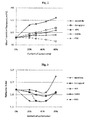
Fig. 2 shows the changes in glass transition temperature of copolymers in accordance with the comonomer contents. -
Fig. 3 shows the changes in refractive indices of copolymers in accordance with the comonomer contents. -
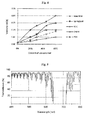
Fig. 4 shows the changes in viscosity of copolymers in accordance with the comonomer contents. -
Fig. 5 shows the transmission spectrum of the multilayered optical film obtained in Example 1. -
Fig. 6 shows the transmission spectrum of the multilayered optical film obtained in Comparative Example 1. -
Fig. 7 shows the transmission spectrum of the multilayered optical film obtained in Comparative Example 2. - Hereinafter the features of the present invention are described in detail.
- The multilayered optical film of the present invention comprises alternating layers of two different resin layers having different refractive indices to reflect light of specific wavelengths (see
Fig. 1 ). In order to maintain their specific refractive indices, the two resin layers should comprise different materials from each other, which can assure the maintenance of the separate layers and prevention of intermixing thereof. - The first and the second resin layers of the multilayered optical film according to the present invention preferably have a difference in refractive index of 0.2 or higher at 632.8 nm, more preferably between 0.25 and 0.35.
- In the multilayered optical film of the present invention, the first resin layer is preferably positioned as the outermost layers on both sides of the film, wherein the sum of the thicknesses of both outermost layers is preferably 10% to 40% of the total thickness of the multilayered optical film.
- The term "heterocyclic polyalcohol" as used in the present invention, means a polyalcohol with a heterocyclic ring containing one or more heteroatoms such as O, N, S, and P, wherein the heteroatom is preferably oxygen, nitrogen or sulfur. Further, the heterocyclic ring is preferably a 5- to 14-membered ring, because the heterocyclic polyalcohol is more stable and more readily produced with such a heterocyclic ring. Furthermore, the number of OH groups in the heterocyclic polyalcohol is preferably 2 or 3. As the heterocyclic polyalcohol has more OH groups, cross-linking is more likely to take place, which would cause troubles in the process for preparing the film, although the thermal resistance of the film prepared would be enhanced.
- Examples of the heterocyclic polyalcohol are a diol comprising a single heterocyclic ring (formulae 3, 5, 6, 7, and 8), a diol with a spiro structure of two heterocyclic rings (formula 2), a diol with a bridged structure of two or more rings comprising at least one heterocyclic ring (
formulae 1, 4, 9, 10, and 11), and a triol comprising one or more heterocyclic rings (formulae 12 and 13). - Specific examples of the heterocyclic polyalcohol may include isosorbide (formula 1), spiroglycol (formula 2), tetrahydrofuran diol (formula 3), Corey lactone diol (formula 4), pyrimidine-2,4-diol (formula 5), 1,2-dithiane-3,6-diol (formula 6), p-dithiane-2,5-diol (formula 7), 2-methylpyridine-3,5-diol (formula 8), furo[3,2-D]pyrimidine-2,4-diol (formula 9), 7H-pyrrolo[2,3-d]pyrimidine-2,4-diol (formula 10), 1,2,3,9-tetrahydropyrrolo[2,1-b]quinazoline-3,7-diol (formula 11), tetrahydro-2H-pyran-2,3,5-triol (formula 12), and tris(2-hydroxyethyl)isocyanurate (formula 13).


- A ray of light incident on a laminated film produces reflected light having wavelengths of 1/2λ, 1/3λ, and so on, depending on the optical properties of the film. The wavelength of the reflected light can be adjusted to various ranges including UV light (200-400 nm), visible light (400-700 nm) and infrared light (700 mm-) by way of changing the thicknesses of the layers or the difference between the refractive indices of the layers. Further, the reflection at the second order wavelength can be controlled with the lamination ratio. In order to improve the film appearance, the lamination ratio represented by
Equation 1 below is preferably between 0.01 and 0.99, more preferably between 0.50 and 0.54.
wherein d1 and d2 represent average thicknesses of the first and the second resin layers, respectively. - The lamination ratio stands for the ratio of the thickness of the first resin layer relative to the sum of the thicknesses of the first and the second layers. When the thicknesses of the first and the second resin layers are similar to each other with a lamination ratio of 0.50 to 0.54, the reflection at the second order wavelength would be reduced to about 10%, whereas the reflection at the second order wavelength would increase if the lamination ratio falls outside said range. Thus, it is desirable to control the process such that the film prepared has a lamination ratio between 0.01 to 0.99, preferably between 0.5 and 0.54, for maximizing the desired effects of the subject invention. Although the reflection at the second order wavelength is minimized, there may still be issues with respect to the reflections at the n-th order wavelengths. In any event, it is impractical to control all reflections at the n-t order wavelengths.
- The average thickness of each layer contained in the multilayered optical film of the present invention is preferably between 30 nm and 300 nm for improved optical properties of the film.
- The number of layers laminated to produce the multilayered optical film of the present invention is preferably between 50 and 1000, but is not limited thereto.
- The first resin layer comprises, as a main component, crystalline polyester PEN. PEN may be copolymerized with a heterocyclic polyalcohol in a small amount, if desired, to improve its thermal resistance. For example, PEN copolymerized with a heterocyclic polyalcohol in an amount of 0.1 mol% to 20.0 mol% can be used, which hardly reduces its birefringence so that it can enhance the optical properties of the film due to constructive interference throughout the laminated layers.
- The first resin layer preferably has a refractive index of 1.80 to 1.88 at 632.8 nm and a birefringence of 0.15 to 3.0.
- The second resin layer comprises, as a main component, amorphous PET copolymerized with a heterocyclic polyalcohol. The amount of the heterocyclic polyalcohol in the PET copolymer of the second resin layer is preferably between 10 mol% and 60 mol%. When the amount of the heterocyclic polyalcohol falls within said range, the difference between the refractive indices of the first and the second layers can be maximized, thereby improving the optical properties and thermal resistance of the film. It can also prevent any flowing during lamination, resulting in good appearance of the film.
- The second resin layer preferably has a refractive index of 1.55 to 1.65 at 632.8 nm and a birefringence of 0.1 or less.
- Further, the haze of the second resin layer is preferably 1.0 or less.
- Hereinafter, a method of the multilayered optical film of the present invention is described.
- The first resin comprises, as a main component, crystalline polyester PEN, which can be prepared by polycondensation of naphthalate dicarboxylate and ethylene glycol.
- In order to minimize such as poor appearance, line formation, and resin flowing during lamination of layers to produce the multilayer film, the difference between the viscosities of the first and the second resins is preferably controlled as small as possible. More preferably, the first resin has a viscosity not exceeding twice of the viscosity of the second resin. The intrinsic or the first and the second resins are preferably between 0.6 dl/g and 0.8 dl/g.
- The first and the second resins may further comprise such additives as polycondensation catalysts, dispersants, antistatic agents, antiblocking agents, inorganic lubricants, and the like to the extent they do not adversely affect the properties of the film.
- The first resin preferably has a refractive index of 1.80 to 1.88 at 632.8 nm and a birefringence of 0.15 to 3.0. The second resin preferably has a refractive index of 1.55 to 1.65 and a birefringence of 0.1 or less.
- The second resin preferably comprises amorphous and isotropic polymers, which can maintain a low refractive index even after the extrusion and drawing steps.
- The main component of the second resin, PET, is preferably copolymerized with a heterocyclic polyalcohol in an amount of 10 mol% to 60 mol%. When the amount of the heterocyclic polyalcohol falls within said range, the second resin may have a viscosity and a Tg similar to those of the first resin, which makes it possible to carry out the drawing step at temperatures where the birefringence of the first resin layer can be maximized.
- The first and the second resins are melt-extruded simultaneously in extruders. The melt-extrusion is preferably carried out at temperatures of 280°C or higher, more preferably between 280°C and 300°C.
- The melt-extrudates of the first and the second resins are then laminated through a multilayer feedblock apparatus. It is preferable to keep the feedblock apparatus at temperatures close to those of the melt-extrusion step, more preferably at temperatures of 280°C or higher.
- The number of layers laminated may vary depending on the wavelength range, the reflectance, or the thickness of the desired film. It may range from 50 to 1000, or even more. As the number of layers laminated increases, the reflectance of light with a specific wavelength would increase. In case the layers have a thickness gradient, the wavelength range of the reflected light would be broadened. The wavelength range of the deflected light can also be changed by altering the thickness of each layer. The thicknesses of the outermost layers may also be controlled for this purpose.
- Particularly, it is inevitable to adjust the ratio of flow rates by controlling the ratio of extrusion rates so as to prevent poor appearance of the film.
- The laminated multilayer sheet prepared through the multilayer feedblock apparatus will then undergo a drawing step in at least one of the longitudinal and the transversal directions, which gives rise to a greater difference between the refractive indices of the layers. When the laminated multilayer sheet is subjected to uniaxial drawing in either the longitudinal or the transversal direction, the optical filter finally prepared may have a dual refractive index, which partly transmits and partly reflects incident light.
- When the laminated multilayer sheet is cast, it is preferable to cool it rapidly with an air knife and the like so that the first and the second resin layers do not intermix with each other and maintain their original refractive indices.
- In order to optimize the optical/physical properties of PEN, it is preferable to carry out the drawing step at a temperature as low as possible. The drawing step is preferably conducted at temperatures up to the glass transition temperature (Tg) of PEN + 30°C, more preferably up to Tg + 10°C. For example, the drawing step may be performed at temperatures of 120°C to 130°C.
- When the laminated multilayer sheet undergoes the drawing step, the difference between the refractive indices of the first and the second resin layers would increase to 0.2 or higher, which can prevent troubles that may otherwise occur due to crystallization of the resins during the drawing step as well as increase in the haze of the film.
- The multilayered optical film of the present invention can be used for various purposes in preparing mirror films, color filters, packaging films, optical windows, etc. In particularly, as a color filter, the film can reflect light with a specific wavelength so that a desired color is presented semi-permanently. Such a color filter may be used for the purpose of interior decoration.
- Hereinafter, the present invention is described more specifically by the following examples, but these are provided only for illustration purposes, and the present invention is not limited whereto.
- Hereinafter, the abbreviated terms of compounds used in the present invention are defined as follows:
- PET: polyethylene terephthalate;
- PEN: polyethylene naphthalate;
- DMT: dimethyl terephthalate;
- EG: ethylene glycol;
- NDC: dimethyl-2,6-naphthalene dicarboxylate;
- CHDM: 1,4-cyclohexanedimethanol; and
- PDO: propanediol.
- The second with various compositions were prepared as described below.
- A mixture of EG and isosorbide (isosorbide content: 20, 30, 45 or 60 mol%) as a polyalcohol was added in an amount of 2 to 4 moles to 1 mole of DMT as a dicarboxylic acid. A catalyst was added to the mixture, which was then subjected to a polycondensation reaction at elevated temperatures of 160-220°C at atmospheric pressure. Methanol formed as a by-product was continuously removed during the reaction, and the reaction was completed in 4 to 6 hours. The pressure was then reduced to 1 mmHg or less, while the temperature was gradually raised to 265-290 °C, in order to remove the reactants remaining unreacted from the transesterification product. After stirring was discontinued, the product was discharged from the bottom of the reactor. It was then cooled and cut to produce the copolymer product.
- PET copolymers (SPG-PET; Mitsubishi Gas Chemical Company Inc.) with spiroglycol in amounts of 20, 30, 45 and 60 mol% were employed.
- The procedures of Preparation Example 1 were repeated except that only EG without isosorbide was employed as a polyalcohol to prepare homo-PET.
- The procedures of Preparation Example 1 were repeated except that a mixture of DMT and NDC (NDC content: 20, 30, 45 or 60 mol%) as a dicarboxylic acid was employed to prepare PEN copolymers.
- PET copolymers (PCTG, SkyGreen™; SK Chemicals Co. Ltd.) with 1,4-cyclohexanedimethanol (CHDM) in amounts of 20, 30, 45 and 60 mol% were employed.
- The procedures of Preparation Example 1 were repeated except that a mixture of EG and PDO (PDO contents: 20, 30, 45 or 60 mol%) as a polyalcohol was employed to prepare PET copolymers.
- The properties of the second resins with various contents of comonomers were evaluated as below.
- The glass transition temperature of each resin sample was measured by a differential scanning calorimeter (DSC-Q100, TA Instrument) wherein the samples were heated at a rate of temperature elevation of 10°C/min. Data obtained from the reheated samples were adopted, which are shown in Table 1 and
FIG. 2 .Table 1 Resin Comonomer Glass transition temperature in accordance with the comonomer content (unit: °C) 0% 20% 30% 45% 60% PET copolymer Isosorbide 80 130 135 145 160 PET copolymer Spiroglycol 80 94 100 110 120 PEN copolymer NDC 80 87 95 100.5 110 PET copolymer CHDM 80 87 88 89.5 91 PET copolymer PDO 80 79 76 71.5 65 - As shown in Table 1 and
FIG. 2 , the glass transition temperatures is increased as the content of comonomer increases except for PET copolymerized with PDO. Particularly, the PET resins copolymerized with isosorbide or spiroglycol show rapid increases, which indicate that these resins have good thermal resistance. Further, in view of the results for the PET resins copolymerized with CHDM, it is noted that copolymers comprising heterocyclic rings are superior to polymers comprising only hydrocarbon rings in terms of thermal resistance. - Each resin sample was melt-extruded at 280°C, and the extrudate was cast on a cooling roll at 20°C. The sheet prepared was drawn 4 times in both the longitudinal and the transversal directions at 120°C by a biaxial drawing machine (Toyo Seiki Co., Japan) and then heat fixed at 230 °C to prepare a film having a thickness of 20 µm.
- The refractive index of the film was measured in both the longitudinal and the transversal directions at 632.8 nm by an Abbe refractometer. An average value of the two measurements was calculated. The results are shown in Table 2 and
FIG. 3 .Table 2 Resin Comonomer Refractive indices in accordance with the comonomer content 0% 20% 30% 45% 60% PET copolymer Isosorbide 1.64 1.55 1.55 1.55 1.62 PET copolymer Spiroglycol 1.64 1.62 1.55 1.55 1.62 PEN copolymer NDC 1.64 1.64 1.63 1.62 1.75 PET copolymer CHDM 1.64 1.62 1.60 1.59 1.62 PET copolymer PDO 1.64 1.62 1.60 1.59 1.61 - As shown in Table 2 and
FIG. 3 , most of the resin samples show minimum values of refractive indices in comonomer contents ranging from 10 to 60 mol%. Especially, the PET resins copolymerized with isosorbide or spiroglycol have relatively lower refractive indices than those of the other resin samples. Accordingly, the difference between the refractive indices of these resins and the first resin layer (PEN) will be greater, which can assure excellent optical properties of the film. It is also noted that in the resin samples comprising heterocyclic rings, crystallization is diminished around a comonomer content of 20 mol%, which means that amorphization begins to occur. - Each resin sample was dissolved in ortho-chlorophenol (OCP), and the intrinsic viscosity of the solution was measured at 30 °C with an Ubbelohde viscometer. The results are shown in Table 3 and
FIG. 4 .Table 3 Resin Comonomer Viscosity in accordance with the comonomer content (unit: dl/g) 0% 20% 30% 45% 60% PET copolymer Isosorbide 0.61 0.70 0.73 0.76 0.80 PET copolymer Spiroglycol 0.61 0.65 0.67 0.70 0.70 PEN copolymer NDC 0.61 0.65 0.67 0.73 0.75 PET copolymer CHDM 0.61 0.62 0.63 0.64 0.65 PET copolymer PDO 0.61 0.63 0.65 0.67 0.69 - As shown in Table 3 and
FIG. 4 , the PET resin samples copolymerized with isosorbide or spiroglycol show rapid increases in their viscosity as the comonomer content increases. Accordingly, these resins are suitable for coextrusion with a resin having a high viscosity. In contrast, the PET resin samples copolymerized with CHDM or PDO show slight changes in their viscosity, which means that they are not suitable for coextrusion with a resin having a high viscosity such as PEN. - Hereinafter, various examples of the inventive multilayer reflective films of the present invention as well as conventional multilayer reflective films are described below.
- PEN (SKC Co. Ltd.) was used for the first resin, and PET copolymerized with 10 mol% of isosorbide (SK Chemicals Co. Ltd.) was used for the second resin.
- The first and the second resins were separately melt-extruded in two extruders at 280°C and then fed to a multilayer feedblock apparatus to laminate the resin layers alternatingly, followed by casting the laminated layers on a cooling roll at 20°C to obtain an unoriented multilayer sheet. The lamination step was adjusted such that the thicknesses of the entire internal layers were increased in a gradient increment of 1%, the lamination ratio according to
Equation 1 was between 0.01 and 0.99, and the first resin layer was disposed as the outermost layers of the laminate sheet. - The unoriented multilayer sheet was drawn 4 times in both the longitudinal and the transversal directions at 120°C by a biaxial drawing machine (Toyo Seiki Co., Japan) and then heat-set at 230°C to produce a biaxially oriented optical film with 131 layers and a total thickness of 18.7µm.
- The procedures of Example 1 were repeated except that a PET resin copolymerized with 40 mol% of spiroglycol (Mitsubishi Gas Chemical Company Inc.) was employed as the second resin to produce a biaxially oriented optical film with 131 layers and a total thickness of 18.7µm.
- The procedures of Example 1 were repeated except that a homo-PET resin (SKC Co. Ltd.) was employed as the second resin to produce a biaxially oriented optical film with 131 layers and a total thickness of 18.7µm.
- The procedures of Example 1 were repeated except that a PEN copolymer having a molar ratio DMT to NDC of 55:45 (coPEN5545; SKC Co. Ltd.) was employed as the second resin to produce a biaxially oriented optical film with 131 layers and a total thickness of 18.7µm.
- The procedures of Example 1 were repeated except that a PET resin (PCTG; SK Chemicals Co. Ltd.) copolymerized with 1,4-cyclohexanedimethanol (CHDM) in an amount of 60 mol% was employed as the second resin to produce a biaxially oriented optical film with 131 layers and a total thickness of 18.7µm.
- The procedures of Example 1 were repeated except that a PET resin (SKC Co. Ltd.) copolymerized with propanediol in an amount of 40 mol% was employed as the second resin to produce a biaxially oriented optical film with 131 layers and a total thickness of 18.7µm.
- The procedures of Example 1 were repeated except that an alloy (Xylex 7200; SABIC Innovative Plastics Co.) of polycarbonate (PC) and polyester (PCTG) was employed as the second resin to produce a biaxially oriented optical film with 131 layers and a total thickness of 18.7µm.
- Spectrum analyses of the multilayered optical films obtained from Example 1 and Comparative Examples 1 and 2 were performed by a spectrum analyzer (Ultrascan™ Pro, Hunter Lab Inc.), and the results are shown in
FIGS. 5 to 7 . - As shown in
FIGS. 5 to 7 , a broader range of spectra is observed in Example 1 as compared with Comparative Examples 1 and 2. This is attributed to a large difference in the refractive index, which increases the intensity as well as the breadth of the reflected wavelengths. It is possible to produce a reflective film having good optically properties even with fewer layers. - The procedures of Example 1 were repeated with the same resins as those employed as the first or the second resins in Examples 1 and 2 and Comparative Examples 1 to 5, except that they were separately melt-extruded and drawn to produce respective monolayer films of the first resin and the second resin having a thickness of 20 µm.
- The refractive indices of the first and the second resin monolayer films prepared above were measured in both the longitudinal and the transversal directions at 632.8 nm by an Abbe refractometer. An average value of the two measurements was calculated, the results of which are shown in Table 4.
- As shown in Table 4, it is noted that in the multilayered optical films obtained in Examples 1 and 2, the difference between the refractive indices of the first and the second resin layers has become greater through the drawing step. As a result, the optical properties of the film such as reflectance have been enhanced due to constructive interference, which is attributable to the greater difference between the refractive indices of the layers.
- The second resin monolayer film prepared above was exposed at 85 °C for 500 hours and then examined for fine wrinkles under 200-time magnification with a microscope. The results are shown in Table 4.
- As shown in Table 4, the second resin layers of Examples 1 and 2 do not have any poor appearance problems such as fine wrinkles even after exposure to elevated temperatures for a long period of time owing to its improved thermal resistance ascribable to the copolymerization with a heterocyclic polyalcohol.
- The second resin monolayer film prepared above was examined during the drawing step with respect to its processability according to the following criteria. The results are shown in Table 4:
O: no crystallization occurs, indicating good drawability; and
X: crystallization partly occurs, resulting in poor drawability. - As shown in Table 4, in the second resin layers of Examples 1 and 2, crystallization did not take place during the drawing step, showing good drawability.

- As shown in above, it is noted that the multilayered optical films of Examples 1 and 2 show improved thermal resistance, drawability, and optical properties as compared with the films of Comparative Examples 1 to 4. The multilayered optical film of Comparative Example 5 show improved thermal resistance, yet it is not suitable for optical purposes due to poor drawability and high haze.
- While the invention has been described with respect to the above specific embodiments, it should be recognized that various modifications and changes may be made to the invention by those skilled in the art which also fall within the scope of the invention as defined by the appended claims.
Claims (13)
- A multilayered optical film comprising alternating layers of a first resin layer and a second resin layer, wherein the first resin layer comprises polyethylene naphthalate (PEN), and the second resin layer comprises polyethylene terephthalate (PET) copolymerized with a heterocyclic polyalcohol.
- The multilayered optical film of claim 1, wherein the difference between the refractive indices of the first and the second resin layers is 0.2 or higher at 632.8 nm.
- The multilayered optical film of claim 1, wherein the heterocyclic polyalcohol comprises a heteroatom selected from oxygen, nitrogen and sulfur.
- The multilayered optical film of claim 1, wherein the heterocyclic polyalcohol is selected from the group consisting of isosorbide, spiroglycol, tetrahydrofuran diol, Corey lactone diol, pyrimidine-2,4-diol, 1,2-dithiane-3,6-diol, p-dithiane-2,5-diol, 2-methylpyridine-3,5-diol, furo[3,2-D]pyrimidine-2,4-diol, 7H-pyrrolo[2,3-d]pyrimidine-2,4-diol, 1,2,3,9-tetrahydropyrrolo[2,1-b]quinazoline-3,7-diol, tetrahydro-2H-pyran-2,3,5-triol, and tris(2-hydroxyethyl)isocyanurate.
- The multilayered optical film of claim 1, wherein the PEN of the first resin layer is copolymerized with a heterocyclic polyalcohol in an amount of 0.1 mol% to 20.0 mol%.
- The multilayered optical film of claim 1, wherein the PET of the second resin layer is copolymerized with the heterocyclic polyalcohol in an amount of 10 mol% to 60 mol%.
- The multilayered optical film of claim 1, wherein the first resin layer is positioned as the outermost layers.
- The multilayered optical film of claim 1, wherein each of the first and the second resin layers has an average thickness of 30 nm to 300 nm, and the lamination ratio represented by Equation 1 is between 0.01 and 0.99:

wherein d1 and d2 represent average thicknesses of the first and the second resin layers, respectively. - The multilayered optical film of claim 1, wherein the second resin layer has a haze of 1.0 or less.
- The multilayered optical film of claim 1 used for mirror films, color filters, packaging films or optical windows.
- A method for preparing the multilayered optical film of claim 1, comprising the steps of:(a) melt-extruding a first resin comprising polyethylene naphthalate (PEN) and a second resin comprising polyethylene terephthalate (PET) copolymerized with a heterocyclic polyalcohol, followed by alternatingly laminating the extrudates; and(b) drawing the laminated layers obtained from step (a) in at least one of the longitudinal and the transversal directions, followed by heat treatment.
- The method of claim 11, wherein the second resin has a birefringence of 0.1 or less, and the second resin has a viscosity not exceeding twice of the viscosity of the first resin.
- The method of claim 11, wherein the melt-extrusion step is carried out at a temperature ranging from 280 °C to 300 °C, and the drawing step is carried out at a temperature ranging from 120 °C to 130 °C.
Applications Claiming Priority (3)
| Application Number | Priority Date | Filing Date | Title |
|---|---|---|---|
| KR20090096273 | 2009-10-09 | ||
| KR1020100093448A KR101775077B1 (en) | 2009-10-09 | 2010-09-27 | Multilayer optical film and preparation method thereof |
| PCT/KR2010/006902 WO2011043623A2 (en) | 2009-10-09 | 2010-10-08 | Multilayered optical film, and preparation method thereof |
Publications (3)
| Publication Number | Publication Date |
|---|---|
| EP2487036A2 true EP2487036A2 (en) | 2012-08-15 |
| EP2487036A4 EP2487036A4 (en) | 2014-01-29 |
| EP2487036B1 EP2487036B1 (en) | 2017-08-23 |
Family
ID=44046017
Family Applications (1)
| Application Number | Title | Priority Date | Filing Date |
|---|---|---|---|
| EP10822268.8A Not-in-force EP2487036B1 (en) | 2009-10-09 | 2010-10-08 | Multilayered optical film, and preparation method thereof |
Country Status (5)
| Country | Link |
|---|---|
| US (1) | US20120207993A1 (en) |
| EP (1) | EP2487036B1 (en) |
| JP (1) | JP5776088B2 (en) |
| KR (1) | KR101775077B1 (en) |
| WO (1) | WO2011043623A2 (en) |
Families Citing this family (14)
| Publication number | Priority date | Publication date | Assignee | Title |
|---|---|---|---|---|
| KR101792319B1 (en) * | 2011-10-20 | 2017-10-31 | 데이진 필름 솔루션스 가부시키가이샤 | Uniaxially oriented multi-layer laminate film |
| KR101417250B1 (en) * | 2012-02-20 | 2014-07-08 | (주)엘지하우시스 | High temperature resistant multilayer resistant opitical multilater film and its manufacturing method |
| US9527266B2 (en) * | 2012-03-16 | 2016-12-27 | Toray Industries, Inc. | Multi-layer laminated film |
| JP6210473B2 (en) * | 2012-08-03 | 2017-10-11 | 国立大学法人山形大学 | Organic optical device and organic electronic device using the same |
| JP6139266B2 (en) * | 2013-05-27 | 2017-05-31 | 帝人フィルムソリューション株式会社 | Biaxially stretched laminated polyester film |
| KR20160037940A (en) * | 2013-08-02 | 2016-04-06 | 도레이 카부시키가이샤 | Polyester sheet, molded article produced from polyester sheet, and card |
| KR102251210B1 (en) * | 2014-04-11 | 2021-05-11 | 에스케이케미칼 주식회사 | Multilayer polyester sheet and molded product of the same |
| US11447603B2 (en) | 2017-05-31 | 2022-09-20 | Sk Chemicals Co., Ltd. | Polyester resin, method for preparing same, and resin molded product formed therefrom |
| KR102568693B1 (en) | 2017-06-02 | 2023-08-21 | 에스케이케미칼 주식회사 | Polyester fiber, preparation method thereof and article formed therefrom |
| EP3643734A4 (en) | 2017-06-22 | 2021-04-07 | SK Chemicals, Co., Ltd. | POLYESTER CONTAINER AND MANUFACTURING PROCESS FOR IT |
| KR102684863B1 (en) | 2017-06-26 | 2024-07-15 | 에스케이케미칼 주식회사 | Polyester film and preparation method thereof |
| JP7388271B2 (en) * | 2020-03-30 | 2023-11-29 | 住友ベークライト株式会社 | reflective polarizer |
| KR102404447B1 (en) * | 2022-01-06 | 2022-06-02 | 주식회사 크라텍 | Film-type safety mirror that provides a clearer image by improving reflectance and has impact resistance and manufacturing method thereof |
| CN121419885A (en) * | 2023-06-30 | 2026-01-27 | 3M创新有限公司 | Multilayer optical film |
Family Cites Families (19)
| Publication number | Priority date | Publication date | Assignee | Title |
|---|---|---|---|---|
| US5122905A (en) | 1989-06-20 | 1992-06-16 | The Dow Chemical Company | Relective polymeric body |
| US5939189A (en) * | 1995-05-09 | 1999-08-17 | Flex Products, Inc. | Flexible plastic substrate with anti-reflection coating having low reflective color and method |
| CN1106937C (en) * | 1995-06-26 | 2003-04-30 | 美国3M公司 | Multilayer polymer film with additional coatings or layers |
| US6531230B1 (en) * | 1998-01-13 | 2003-03-11 | 3M Innovative Properties Company | Color shifting film |
| US6045894A (en) * | 1998-01-13 | 2000-04-04 | 3M Innovative Properties Company | Clear to colored security film |
| EP1548045B1 (en) * | 1998-01-13 | 2009-06-03 | Minnesota Mining And Manufacturing Company | Modified copolyesters |
| US6063464A (en) * | 1998-04-23 | 2000-05-16 | Hna Holdings, Inc. | Isosorbide containing polyesters and methods for making same |
| BR9912618A (en) * | 1998-07-31 | 2001-05-02 | Minnesota Mining & Mfg | Article comprising a multilayer optical film and process of making the same |
| JP2002069165A (en) * | 2000-06-13 | 2002-03-08 | Mitsubishi Gas Chem Co Inc | Polyester resin |
| US6673425B1 (en) * | 2000-10-27 | 2004-01-06 | 3M Innovative Properties Company | Method and materials for preventing warping in optical films |
| KR100905142B1 (en) * | 2001-01-15 | 2009-06-29 | 쓰리엠 이노베이티브 프로퍼티즈 컴파니 | Multi-layered infrared reflecting film having a high and smooth transmittance in the visible wavelength range and laminate products made therefrom |
| KR101134334B1 (en) * | 2004-03-09 | 2012-04-09 | 가부시키가이샤 구라레 | Optical device |
| US7345137B2 (en) * | 2004-10-18 | 2008-03-18 | 3M Innovative Properties Company | Modified copolyesters and optical films including modified copolyesters |
| KR100670613B1 (en) * | 2005-02-25 | 2007-01-17 | 에스케이씨 주식회사 | Polyester film with excellent optical properties |
| KR101403931B1 (en) * | 2005-08-18 | 2014-06-09 | 도레이 카부시키가이샤 | Laminate film and molded article |
| IN2009CN01862A (en) * | 2006-09-06 | 2015-08-07 | Toray Industries | |
| US8530054B2 (en) * | 2006-09-27 | 2013-09-10 | 3M Innovative Properties Company | Solar control multilayer film |
| JP5553468B2 (en) * | 2006-10-05 | 2014-07-16 | 日東電工株式会社 | Polarizing plate and liquid crystal display device |
| EP2239136B1 (en) * | 2008-02-01 | 2019-02-27 | Toray Industries, Inc. | Laminated film and molding and reflector |
-
2010
- 2010-09-27 KR KR1020100093448A patent/KR101775077B1/en not_active Expired - Fee Related
- 2010-10-08 EP EP10822268.8A patent/EP2487036B1/en not_active Not-in-force
- 2010-10-08 JP JP2012533087A patent/JP5776088B2/en not_active Expired - Fee Related
- 2010-10-08 US US13/500,820 patent/US20120207993A1/en not_active Abandoned
- 2010-10-08 WO PCT/KR2010/006902 patent/WO2011043623A2/en not_active Ceased
Also Published As
| Publication number | Publication date |
|---|---|
| JP2013506883A (en) | 2013-02-28 |
| WO2011043623A2 (en) | 2011-04-14 |
| JP5776088B2 (en) | 2015-09-09 |
| EP2487036A4 (en) | 2014-01-29 |
| KR20110039185A (en) | 2011-04-15 |
| KR101775077B1 (en) | 2017-09-06 |
| EP2487036B1 (en) | 2017-08-23 |
| WO2011043623A3 (en) | 2011-11-03 |
| US20120207993A1 (en) | 2012-08-16 |
Similar Documents
| Publication | Publication Date | Title |
|---|---|---|
| EP2487036B1 (en) | Multilayered optical film, and preparation method thereof | |
| EP2588897B1 (en) | Multilayer optical film | |
| KR101588478B1 (en) | Optical Film Comprising Birefringent Naphthalate Copolyester Having Branched or Cyclic C4-C10 Alkyl Units | |
| US20200217989A1 (en) | Multilayer optical film, method of making the same, and transaction card having the same | |
| KR101651705B1 (en) | Isotropic layer of multilayer optical film comprising birefringent thermoplastic polymer | |
| EP2722695B1 (en) | Reflective polarizing film, optical member for liquid crystal display device formed from same, and liquid crystal display device | |
| EP2484716B1 (en) | Polyester film for solar cells | |
| US8859648B2 (en) | Retardation film and polyester resin for optical use | |
| KR20110106841A (en) | Optical film | |
| US20150029587A1 (en) | Retardation film and production method therefor, polarizing plate, and display device | |
| KR101417250B1 (en) | High temperature resistant multilayer resistant opitical multilater film and its manufacturing method | |
| KR20200124699A (en) | Multilayer laminated film | |
| TWI649201B (en) | Multilayer stretch film | |
| JP2023133241A (en) | Laminate film | |
| CN108369309B (en) | Birefringent polyester film with low haze | |
| KR20200064058A (en) | Laminated film | |
| JP2024154101A (en) | Films, multilayer bodies, and heat-bent bodies | |
| JP2024055292A (en) | Laminated Film | |
| HK1126452B (en) | Multilayer optical film, method of making the same, and transaction card having the same |
Legal Events
| Date | Code | Title | Description |
|---|---|---|---|
| PUAI | Public reference made under article 153(3) epc to a published international application that has entered the european phase |
Free format text: ORIGINAL CODE: 0009012 |
|
| 17P | Request for examination filed |
Effective date: 20120508 |
|
| AK | Designated contracting states |
Kind code of ref document: A2 Designated state(s): AL AT BE BG CH CY CZ DE DK EE ES FI FR GB GR HR HU IE IS IT LI LT LU LV MC MK MT NL NO PL PT RO RS SE SI SK SM TR |
|
| DAX | Request for extension of the european patent (deleted) | ||
| A4 | Supplementary search report drawn up and despatched |
Effective date: 20140108 |
|
| RIC1 | Information provided on ipc code assigned before grant |
Ipc: B32B 27/36 20060101AFI20131220BHEP |
|
| GRAP | Despatch of communication of intention to grant a patent |
Free format text: ORIGINAL CODE: EPIDOSNIGR1 |
|
| INTG | Intention to grant announced |
Effective date: 20170504 |
|
| GRAS | Grant fee paid |
Free format text: ORIGINAL CODE: EPIDOSNIGR3 |
|
| GRAA | (expected) grant |
Free format text: ORIGINAL CODE: 0009210 |
|
| AK | Designated contracting states |
Kind code of ref document: B1 Designated state(s): AL AT BE BG CH CY CZ DE DK EE ES FI FR GB GR HR HU IE IS IT LI LT LU LV MC MK MT NL NO PL PT RO RS SE SI SK SM TR |
|
| REG | Reference to a national code |
Ref country code: GB Ref legal event code: FG4D Ref country code: DE Ref legal event code: R082 Ref document number: 602010044708 Country of ref document: DE Representative=s name: BOEHMERT & BOEHMERT ANWALTSPARTNERSCHAFT MBB -, DE |
|
| REG | Reference to a national code |
Ref country code: CH Ref legal event code: EP |
|
| REG | Reference to a national code |
Ref country code: AT Ref legal event code: REF Ref document number: 920891 Country of ref document: AT Kind code of ref document: T Effective date: 20170915 |
|
| REG | Reference to a national code |
Ref country code: FR Ref legal event code: PLFP Year of fee payment: 8 |
|
| REG | Reference to a national code |
Ref country code: IE Ref legal event code: FG4D |
|
| REG | Reference to a national code |
Ref country code: DE Ref legal event code: R096 Ref document number: 602010044708 Country of ref document: DE |
|
| REG | Reference to a national code |
Ref country code: NL Ref legal event code: MP Effective date: 20170823 |
|
| REG | Reference to a national code |
Ref country code: LT Ref legal event code: MG4D |
|
| REG | Reference to a national code |
Ref country code: AT Ref legal event code: MK05 Ref document number: 920891 Country of ref document: AT Kind code of ref document: T Effective date: 20170823 |
|
| PG25 | Lapsed in a contracting state [announced via postgrant information from national office to epo] |
Ref country code: HR Free format text: LAPSE BECAUSE OF FAILURE TO SUBMIT A TRANSLATION OF THE DESCRIPTION OR TO PAY THE FEE WITHIN THE PRESCRIBED TIME-LIMIT Effective date: 20170823 Ref country code: AT Free format text: LAPSE BECAUSE OF FAILURE TO SUBMIT A TRANSLATION OF THE DESCRIPTION OR TO PAY THE FEE WITHIN THE PRESCRIBED TIME-LIMIT Effective date: 20170823 Ref country code: NO Free format text: LAPSE BECAUSE OF FAILURE TO SUBMIT A TRANSLATION OF THE DESCRIPTION OR TO PAY THE FEE WITHIN THE PRESCRIBED TIME-LIMIT Effective date: 20171123 Ref country code: FI Free format text: LAPSE BECAUSE OF FAILURE TO SUBMIT A TRANSLATION OF THE DESCRIPTION OR TO PAY THE FEE WITHIN THE PRESCRIBED TIME-LIMIT Effective date: 20170823 Ref country code: LT Free format text: LAPSE BECAUSE OF FAILURE TO SUBMIT A TRANSLATION OF THE DESCRIPTION OR TO PAY THE FEE WITHIN THE PRESCRIBED TIME-LIMIT Effective date: 20170823 Ref country code: NL Free format text: LAPSE BECAUSE OF FAILURE TO SUBMIT A TRANSLATION OF THE DESCRIPTION OR TO PAY THE FEE WITHIN THE PRESCRIBED TIME-LIMIT Effective date: 20170823 Ref country code: SE Free format text: LAPSE BECAUSE OF FAILURE TO SUBMIT A TRANSLATION OF THE DESCRIPTION OR TO PAY THE FEE WITHIN THE PRESCRIBED TIME-LIMIT Effective date: 20170823 |
|
| PG25 | Lapsed in a contracting state [announced via postgrant information from national office to epo] |
Ref country code: RS Free format text: LAPSE BECAUSE OF FAILURE TO SUBMIT A TRANSLATION OF THE DESCRIPTION OR TO PAY THE FEE WITHIN THE PRESCRIBED TIME-LIMIT Effective date: 20170823 Ref country code: IS Free format text: LAPSE BECAUSE OF FAILURE TO SUBMIT A TRANSLATION OF THE DESCRIPTION OR TO PAY THE FEE WITHIN THE PRESCRIBED TIME-LIMIT Effective date: 20171223 Ref country code: BG Free format text: LAPSE BECAUSE OF FAILURE TO SUBMIT A TRANSLATION OF THE DESCRIPTION OR TO PAY THE FEE WITHIN THE PRESCRIBED TIME-LIMIT Effective date: 20171123 Ref country code: ES Free format text: LAPSE BECAUSE OF FAILURE TO SUBMIT A TRANSLATION OF THE DESCRIPTION OR TO PAY THE FEE WITHIN THE PRESCRIBED TIME-LIMIT Effective date: 20170823 Ref country code: LV Free format text: LAPSE BECAUSE OF FAILURE TO SUBMIT A TRANSLATION OF THE DESCRIPTION OR TO PAY THE FEE WITHIN THE PRESCRIBED TIME-LIMIT Effective date: 20170823 Ref country code: GR Free format text: LAPSE BECAUSE OF FAILURE TO SUBMIT A TRANSLATION OF THE DESCRIPTION OR TO PAY THE FEE WITHIN THE PRESCRIBED TIME-LIMIT Effective date: 20171124 Ref country code: PL Free format text: LAPSE BECAUSE OF FAILURE TO SUBMIT A TRANSLATION OF THE DESCRIPTION OR TO PAY THE FEE WITHIN THE PRESCRIBED TIME-LIMIT Effective date: 20170823 |
|
| PG25 | Lapsed in a contracting state [announced via postgrant information from national office to epo] |
Ref country code: CZ Free format text: LAPSE BECAUSE OF FAILURE TO SUBMIT A TRANSLATION OF THE DESCRIPTION OR TO PAY THE FEE WITHIN THE PRESCRIBED TIME-LIMIT Effective date: 20170823 Ref country code: DK Free format text: LAPSE BECAUSE OF FAILURE TO SUBMIT A TRANSLATION OF THE DESCRIPTION OR TO PAY THE FEE WITHIN THE PRESCRIBED TIME-LIMIT Effective date: 20170823 Ref country code: RO Free format text: LAPSE BECAUSE OF FAILURE TO SUBMIT A TRANSLATION OF THE DESCRIPTION OR TO PAY THE FEE WITHIN THE PRESCRIBED TIME-LIMIT Effective date: 20170823 |
|
| REG | Reference to a national code |
Ref country code: DE Ref legal event code: R097 Ref document number: 602010044708 Country of ref document: DE |
|
| PG25 | Lapsed in a contracting state [announced via postgrant information from national office to epo] |
Ref country code: IT Free format text: LAPSE BECAUSE OF FAILURE TO SUBMIT A TRANSLATION OF THE DESCRIPTION OR TO PAY THE FEE WITHIN THE PRESCRIBED TIME-LIMIT Effective date: 20170823 Ref country code: EE Free format text: LAPSE BECAUSE OF FAILURE TO SUBMIT A TRANSLATION OF THE DESCRIPTION OR TO PAY THE FEE WITHIN THE PRESCRIBED TIME-LIMIT Effective date: 20170823 Ref country code: MC Free format text: LAPSE BECAUSE OF FAILURE TO SUBMIT A TRANSLATION OF THE DESCRIPTION OR TO PAY THE FEE WITHIN THE PRESCRIBED TIME-LIMIT Effective date: 20170823 Ref country code: SM Free format text: LAPSE BECAUSE OF FAILURE TO SUBMIT A TRANSLATION OF THE DESCRIPTION OR TO PAY THE FEE WITHIN THE PRESCRIBED TIME-LIMIT Effective date: 20170823 Ref country code: SK Free format text: LAPSE BECAUSE OF FAILURE TO SUBMIT A TRANSLATION OF THE DESCRIPTION OR TO PAY THE FEE WITHIN THE PRESCRIBED TIME-LIMIT Effective date: 20170823 |
|
| REG | Reference to a national code |
Ref country code: CH Ref legal event code: PL |
|
| PLBE | No opposition filed within time limit |
Free format text: ORIGINAL CODE: 0009261 |
|
| STAA | Information on the status of an ep patent application or granted ep patent |
Free format text: STATUS: NO OPPOSITION FILED WITHIN TIME LIMIT |
|
| REG | Reference to a national code |
Ref country code: IE Ref legal event code: MM4A |
|
| PG25 | Lapsed in a contracting state [announced via postgrant information from national office to epo] |
Ref country code: LI Free format text: LAPSE BECAUSE OF NON-PAYMENT OF DUE FEES Effective date: 20171031 Ref country code: LU Free format text: LAPSE BECAUSE OF NON-PAYMENT OF DUE FEES Effective date: 20171008 Ref country code: CH Free format text: LAPSE BECAUSE OF NON-PAYMENT OF DUE FEES Effective date: 20171031 |
|
| 26N | No opposition filed |
Effective date: 20180524 |
|
| REG | Reference to a national code |
Ref country code: BE Ref legal event code: MM Effective date: 20171031 |
|
| PG25 | Lapsed in a contracting state [announced via postgrant information from national office to epo] |
Ref country code: SI Free format text: LAPSE BECAUSE OF FAILURE TO SUBMIT A TRANSLATION OF THE DESCRIPTION OR TO PAY THE FEE WITHIN THE PRESCRIBED TIME-LIMIT Effective date: 20170823 Ref country code: BE Free format text: LAPSE BECAUSE OF NON-PAYMENT OF DUE FEES Effective date: 20171031 |
|
| PG25 | Lapsed in a contracting state [announced via postgrant information from national office to epo] |
Ref country code: MT Free format text: LAPSE BECAUSE OF NON-PAYMENT OF DUE FEES Effective date: 20171008 |
|
| REG | Reference to a national code |
Ref country code: FR Ref legal event code: PLFP Year of fee payment: 9 |
|
| PG25 | Lapsed in a contracting state [announced via postgrant information from national office to epo] |
Ref country code: IE Free format text: LAPSE BECAUSE OF NON-PAYMENT OF DUE FEES Effective date: 20171008 |
|
| PG25 | Lapsed in a contracting state [announced via postgrant information from national office to epo] |
Ref country code: HU Free format text: LAPSE BECAUSE OF FAILURE TO SUBMIT A TRANSLATION OF THE DESCRIPTION OR TO PAY THE FEE WITHIN THE PRESCRIBED TIME-LIMIT; INVALID AB INITIO Effective date: 20101008 |
|
| PG25 | Lapsed in a contracting state [announced via postgrant information from national office to epo] |
Ref country code: CY Free format text: LAPSE BECAUSE OF NON-PAYMENT OF DUE FEES Effective date: 20170823 |
|
| PG25 | Lapsed in a contracting state [announced via postgrant information from national office to epo] |
Ref country code: MK Free format text: LAPSE BECAUSE OF FAILURE TO SUBMIT A TRANSLATION OF THE DESCRIPTION OR TO PAY THE FEE WITHIN THE PRESCRIBED TIME-LIMIT Effective date: 20170823 |
|
| PG25 | Lapsed in a contracting state [announced via postgrant information from national office to epo] |
Ref country code: TR Free format text: LAPSE BECAUSE OF FAILURE TO SUBMIT A TRANSLATION OF THE DESCRIPTION OR TO PAY THE FEE WITHIN THE PRESCRIBED TIME-LIMIT Effective date: 20170823 |
|
| PG25 | Lapsed in a contracting state [announced via postgrant information from national office to epo] |
Ref country code: PT Free format text: LAPSE BECAUSE OF FAILURE TO SUBMIT A TRANSLATION OF THE DESCRIPTION OR TO PAY THE FEE WITHIN THE PRESCRIBED TIME-LIMIT Effective date: 20170823 |
|
| PG25 | Lapsed in a contracting state [announced via postgrant information from national office to epo] |
Ref country code: AL Free format text: LAPSE BECAUSE OF FAILURE TO SUBMIT A TRANSLATION OF THE DESCRIPTION OR TO PAY THE FEE WITHIN THE PRESCRIBED TIME-LIMIT Effective date: 20170823 |
|
| PGFP | Annual fee paid to national office [announced via postgrant information from national office to epo] |
Ref country code: FR Payment date: 20221005 Year of fee payment: 13 |
|
| PGFP | Annual fee paid to national office [announced via postgrant information from national office to epo] |
Ref country code: GB Payment date: 20221005 Year of fee payment: 13 Ref country code: DE Payment date: 20221005 Year of fee payment: 13 |
|
| REG | Reference to a national code |
Ref country code: DE Ref legal event code: R081 Ref document number: 602010044708 Country of ref document: DE Owner name: SK MICROWORKS CO., LTD., SUWON-SI, KR Free format text: FORMER OWNER: SKC CO., LTD., SUWON-SI, GYEONGGI-DO, KR |
|
| REG | Reference to a national code |
Ref country code: GB Ref legal event code: 732E Free format text: REGISTERED BETWEEN 20230420 AND 20230426 |
|
| REG | Reference to a national code |
Ref country code: DE Ref legal event code: R119 Ref document number: 602010044708 Country of ref document: DE |
|
| GBPC | Gb: european patent ceased through non-payment of renewal fee |
Effective date: 20231008 |
|
| PG25 | Lapsed in a contracting state [announced via postgrant information from national office to epo] |
Ref country code: GB Free format text: LAPSE BECAUSE OF NON-PAYMENT OF DUE FEES Effective date: 20231008 |
|
| PG25 | Lapsed in a contracting state [announced via postgrant information from national office to epo] |
Ref country code: GB Free format text: LAPSE BECAUSE OF NON-PAYMENT OF DUE FEES Effective date: 20231008 Ref country code: FR Free format text: LAPSE BECAUSE OF NON-PAYMENT OF DUE FEES Effective date: 20231031 Ref country code: DE Free format text: LAPSE BECAUSE OF NON-PAYMENT OF DUE FEES Effective date: 20240501 |