EP2486854A2 - Method for monitoring a childbirth process - Google Patents
Method for monitoring a childbirth process Download PDFInfo
- Publication number
- EP2486854A2 EP2486854A2 EP12164995A EP12164995A EP2486854A2 EP 2486854 A2 EP2486854 A2 EP 2486854A2 EP 12164995 A EP12164995 A EP 12164995A EP 12164995 A EP12164995 A EP 12164995A EP 2486854 A2 EP2486854 A2 EP 2486854A2
- Authority
- EP
- European Patent Office
- Prior art keywords
- lactate concentration
- measured
- labor
- lactate
- method further
- Prior art date
- Legal status (The legal status is an assumption and is not a legal conclusion. Google has not performed a legal analysis and makes no representation as to the accuracy of the status listed.)
- Granted
Links
Images
Classifications
-
- A—HUMAN NECESSITIES
- A61—MEDICAL OR VETERINARY SCIENCE; HYGIENE
- A61B—DIAGNOSIS; SURGERY; IDENTIFICATION
- A61B10/00—Instruments for taking body samples for diagnostic purposes; Other methods or instruments for diagnosis, e.g. for vaccination diagnosis, sex determination or ovulation-period determination; Throat striking implements
- A61B10/0045—Devices for taking samples of body liquids
- A61B10/0048—Devices for taking samples of body liquids for taking amniotic fluid samples
-
- A—HUMAN NECESSITIES
- A61—MEDICAL OR VETERINARY SCIENCE; HYGIENE
- A61B—DIAGNOSIS; SURGERY; IDENTIFICATION
- A61B10/00—Instruments for taking body samples for diagnostic purposes; Other methods or instruments for diagnosis, e.g. for vaccination diagnosis, sex determination or ovulation-period determination; Throat striking implements
- A61B10/0045—Devices for taking samples of body liquids
-
- A—HUMAN NECESSITIES
- A61—MEDICAL OR VETERINARY SCIENCE; HYGIENE
- A61B—DIAGNOSIS; SURGERY; IDENTIFICATION
- A61B5/00—Measuring for diagnostic purposes; Identification of persons
-
- A—HUMAN NECESSITIES
- A61—MEDICAL OR VETERINARY SCIENCE; HYGIENE
- A61B—DIAGNOSIS; SURGERY; IDENTIFICATION
- A61B5/00—Measuring for diagnostic purposes; Identification of persons
- A61B5/145—Measuring characteristics of blood in vivo, e.g. gas concentration or pH-value ; Measuring characteristics of body fluids or tissues, e.g. interstitial fluid or cerebral tissue
- A61B5/14546—Measuring characteristics of blood in vivo, e.g. gas concentration or pH-value ; Measuring characteristics of body fluids or tissues, e.g. interstitial fluid or cerebral tissue for measuring analytes not otherwise provided for, e.g. ions, cytochromes
-
- A—HUMAN NECESSITIES
- A61—MEDICAL OR VETERINARY SCIENCE; HYGIENE
- A61B—DIAGNOSIS; SURGERY; IDENTIFICATION
- A61B10/00—Instruments for taking body samples for diagnostic purposes; Other methods or instruments for diagnosis, e.g. for vaccination diagnosis, sex determination or ovulation-period determination; Throat striking implements
- A61B10/0045—Devices for taking samples of body liquids
- A61B2010/0074—Vaginal or cervical secretions
Definitions
- the present invention relates to a method for monitoring a childbirth process of a pregnant woman.
- the lactate concentration in the blood of the fetus has been measured in the past to control that the fetus does not suffer from oxygen deficiency.
- the lactate concentration in the fetus does not indicate the condition of the pregnant woman.
- the method of the present invention provides a solution to the above-outlined problems. More particularly, the method is for monitoring a childbirth process of a pregnant woman.
- a first measuring step a first lactate concentration of vaginal fluids is measured.
- a comparison step it is determined if the measured lactate concentration is greater than a predetermined lactate concentration value that indicates that amniotic fluid has passed from amnion of the pregnant woman and the membrane has ruptured.
- a second lactate concentration is measured.
- a second comparison step it is determined if the measured second lactate concentration is greater than a lactate threshold interval.
- the second lactate concentration is less than the lactate threshold interval the pregnant woman is stimulated in a stimulating step to give birth.
- the woman may be subjected to alternative childbirth options such as a surgical childbirth, to prevent unnecessary agonizing and drawn out efforts to give birth.
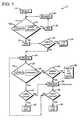
- Fig. 1 is a schematic flow chart showing some of the steps of the method of the present invention.
- the method 10 of the present invention includes a measuring step 12 that measures a lactate concentration 15a in fluids, such as vaginal fluids, in connection with pregnancy to determine whether the amniotic fluids have passed or are in the process of being passed from the amnion.
- a lactate concentration 15a in fluids such as vaginal fluids
- the uterus muscle of pregnant women produces lactate so that the lactate concentration of the vaginal fluids may be measured to provide a measurement of the amount of lactate produced by the uterus muscle.
- Non-pregnant women often have no or very little lactate in the vaginal fluids.
- lactate concentration 15a is higher than a predetermined lactate concentration 13, such as 4-5 mmol/l, more preferably higher than 4.5 mmol/l, as indicated in a comparison step 14 then it may be concluded that the membranes have ruptured and amniotic fluids likely have passed and that the childbirth labor is likely to start after a waiting period 16.
- a predetermined lactate concentration 13 such as 4-5 mmol/l, more preferably higher than 4.5 mmol/l
- the lactate concentration may again be measured in a measuring step 20 after a waiting period 18. It is again determined in the comparison step 14 whether the lactate concentration is more or less than 4.5 mmol/l. If the lactate concentration is again below 4.5 mmol/l, a second measuring may be conducted later and the measuring may be repeated at suitable time intervals until the lactate concentration exceeds 4.5 mmol/l or it is obvious that the amniotic fluids have passed.
- the next step is to wait for about two days or so to see if the woman starts the labor by herself.
- a determining step 22 it is determined whether the labor has started or not. If the labor has started and is progressing normally then the childbirth procedure 24 may proceed. If it is determined in the determining step 22 that the labor has not started or the labor is not progressing normally, a lactate concentration 15b is measured in a measuring step 26.
- a comparison step 28 it is then determined if the lactate concentration 15b as measured in the measuring step 26 is within a lactate threshold interval 29 that may be about 8-10 mmol/l. If the lactate concentration as measured in the step 26 is not within the threshold interval 29, then it is determined in a comparison step 30 whether the lactate concentration is less than the threshold interval 29 or about 8 mmol/l. If the lactate concentration as measured in step 26 is greater than the threshold interval 29 then a waiting step 32, such as a couple of hours, may start to see if the labor progress normally. If labor does not progress normally, alternative childbirth options may be considered such as caesarean, forceps or the use of suction cups that are connected to vacuum to draw out the baby.
- An important feature of the present invention is that the monitoring of the lactate concentration may be used to predict whether the woman is likely to give a natural birth or not without forcing the pregnant woman to go through long and agonizing efforts to give birth. It is therefore possible to use alternative childbirth options at a relatively early stage. It is to be understood that the 8-10 mmol/l is an illustrative example that applies to most women and that the invention is not limited to the values used in the examples.
- the woman may be stimulated with drugs or other aids to give birth in a stimulation step 34.
- a determining step 36 it may be determined if the labor is progressing normally. If the labor is progressing normally the woman may proceed to give birth 38. If the labor is not progressing normally, the lactate concentration may again be measured in the measuring step 26 and the process continues in the comparison step 28, as described above.
- the lactate concentration, as measured in step 26 is at the threshold interval 29, such as between 8-10 mmol/l, then it is determined whether the labor is progressing normally in a determining step 40. If labor is progressing normally, the woman may proceed to give birth 42. If labor is not progressing normally, the woman may be stimulated to give birth in the stimulation step 34 and the process continues to the determining step 36, as described above.
- the various processing loops may continue until the woman either gives birth by herself or is subjected to alternative childbirth options.
- an important feature of the present invention is that the woman may be prevented from agonizing and long childbirth efforts before alternative childbirth options are used.
- Alternative childbirth options may be used at an earlier stage when the lactate concentration indicates that the uterus muscle is operating above the lactate threshold without resulting in a natural childbirth.
Landscapes
- Health & Medical Sciences (AREA)
- Life Sciences & Earth Sciences (AREA)
- Medical Informatics (AREA)
- Animal Behavior & Ethology (AREA)
- Pathology (AREA)
- Engineering & Computer Science (AREA)
- Biomedical Technology (AREA)
- Heart & Thoracic Surgery (AREA)
- Veterinary Medicine (AREA)
- Molecular Biology (AREA)
- Surgery (AREA)
- Public Health (AREA)
- General Health & Medical Sciences (AREA)
- Physics & Mathematics (AREA)
- Biophysics (AREA)
- Hematology (AREA)
- Optics & Photonics (AREA)
- Measuring And Recording Apparatus For Diagnosis (AREA)
- Investigating Or Analysing Biological Materials (AREA)
Abstract
Description
- The present invention relates to a method for monitoring a childbirth process of a pregnant woman.
- One problem in today's delivery methods is that women suffer from dystocya during labor. This could result in that the delivery does not progress as desired and that the labor is drawn out without a successful natural childbirth. The pregnant woman may become frustrated and it may be necessary to use methods such as, vacuum, forceps or caesarean to deliver the baby. The dystocya of the pregnant woman may also expose the fetus to injury and fatigue.
- The lactate concentration in the blood of the fetus has been measured in the past to control that the fetus does not suffer from oxygen deficiency. However, the lactate concentration in the fetus does not indicate the condition of the pregnant woman. There is a need to more effectively determine and control the condition of woman suffering from dystocya at an early stage to avoid unnecessary labor before using surgical and alternative childbirth methods.
- The method of the present invention provides a solution to the above-outlined problems. More particularly, the method is for monitoring a childbirth process of a pregnant woman. In a first measuring step, a first lactate concentration of vaginal fluids is measured. In a comparison step, it is determined if the measured lactate concentration is greater than a predetermined lactate concentration value that indicates that amniotic fluid has passed from amnion of the pregnant woman and the membrane has ruptured. In a second measuring step, a second lactate concentration is measured.
- In a second comparison step, it is determined if the measured second lactate concentration is greater than a lactate threshold interval. When the second lactate concentration is less than the lactate threshold interval the pregnant woman is stimulated in a stimulating step to give birth. When the second lactate concentration is greater than the lactate threshold interval and labor does not progress normally, the woman may be subjected to alternative childbirth options such as a surgical childbirth, to prevent unnecessary agonizing and drawn out efforts to give birth.
-
Fig. 1 is a schematic flow chart showing some of the steps of the method of the present invention. - With reference to
Fig. 1 , themethod 10 of the present invention includes ameasuring step 12 that measures alactate concentration 15a in fluids, such as vaginal fluids, in connection with pregnancy to determine whether the amniotic fluids have passed or are in the process of being passed from the amnion. In general, the uterus muscle of pregnant women produces lactate so that the lactate concentration of the vaginal fluids may be measured to provide a measurement of the amount of lactate produced by the uterus muscle. Non-pregnant women often have no or very little lactate in the vaginal fluids. - If the
lactate concentration 15a is higher than a predeterminedlactate concentration 13, such as 4-5 mmol/l, more preferably higher than 4.5 mmol/l, as indicated in acomparison step 14 then it may be concluded that the membranes have ruptured and amniotic fluids likely have passed and that the childbirth labor is likely to start after awaiting period 16. It is to be understood that the 4-5 mmol/l is an illustrative example that applies to most women and that the invention is not limited to the values used in the examples. - If the lactate concentration is lower than 4.5 mmol/l then there is a high likelihood that the amniotic fluids are still contained within the amnion. The lactate concentration may again be measured in a measuring
step 20 after awaiting period 18. It is again determined in thecomparison step 14 whether the lactate concentration is more or less than 4.5 mmol/l. If the lactate concentration is again below 4.5 mmol/l, a second measuring may be conducted later and the measuring may be repeated at suitable time intervals until the lactate concentration exceeds 4.5 mmol/l or it is obvious that the amniotic fluids have passed. - As indicated above, if the lactate concentration measured in the
measuring step 12 is above 4.5 mmol/l, the next step is to wait for about two days or so to see if the woman starts the labor by herself. In a determiningstep 22, it is determined whether the labor has started or not. If the labor has started and is progressing normally then thechildbirth procedure 24 may proceed. If it is determined in the determiningstep 22 that the labor has not started or the labor is not progressing normally, alactate concentration 15b is measured in ameasuring step 26. - In a
comparison step 28 it is then determined if thelactate concentration 15b as measured in themeasuring step 26 is within alactate threshold interval 29 that may be about 8-10 mmol/l. If the lactate concentration as measured in thestep 26 is not within thethreshold interval 29, then it is determined in acomparison step 30 whether the lactate concentration is less than thethreshold interval 29 or about 8 mmol/l. If the lactate concentration as measured instep 26 is greater than thethreshold interval 29 then awaiting step 32, such as a couple of hours, may start to see if the labor progress normally. If labor does not progress normally, alternative childbirth options may be considered such as caesarean, forceps or the use of suction cups that are connected to vacuum to draw out the baby. An important feature of the present invention is that the monitoring of the lactate concentration may be used to predict whether the woman is likely to give a natural birth or not without forcing the pregnant woman to go through long and agonizing efforts to give birth. It is therefore possible to use alternative childbirth options at a relatively early stage. It is to be understood that the 8-10 mmol/l is an illustrative example that applies to most women and that the invention is not limited to the values used in the examples. - If the lactate concentration, as measured in
step 26, is less than thethreshold interval 29, then the woman may be stimulated with drugs or other aids to give birth in astimulation step 34. In a determiningstep 36, it may be determined if the labor is progressing normally. If the labor is progressing normally the woman may proceed to givebirth 38. If the labor is not progressing normally, the lactate concentration may again be measured in the measuringstep 26 and the process continues in thecomparison step 28, as described above. - If it is determined in the
comparison step 28 that the lactate concentration, as measured instep 26, is at thethreshold interval 29, such as between 8-10 mmol/l, then it is determined whether the labor is progressing normally in a determiningstep 40. If labor is progressing normally, the woman may proceed to givebirth 42. If labor is not progressing normally, the woman may be stimulated to give birth in thestimulation step 34 and the process continues to the determiningstep 36, as described above. - The various processing loops may continue until the woman either gives birth by herself or is subjected to alternative childbirth options. As indicated above, an important feature of the present invention is that the woman may be prevented from agonizing and long childbirth efforts before alternative childbirth options are used. Alternative childbirth options may be used at an earlier stage when the lactate concentration indicates that the uterus muscle is operating above the lactate threshold without resulting in a natural childbirth.
- While the present invention has been described in accordance with preferred compositions and embodiments, it is to be understood that certain substitutions and alterations may be made thereto without departing from the spirit and scope of the following claims.
- 1. A method of monitoring a childbirth process of a pregnant woman, comprising:
- in a measuring step (26), measuring a lactate concentration (15b);
- in a comparison step (28), determining whether the measured lactate concentration (15b) is greater than a lactate threshold interval (29); and
- subjecting the pregnant woman to alternative child birth options (32) when the lactate concentration (15b) is greater than the lactate threshold interval (29).
- 2. The method according to claim 1 wherein the method further comprises waiting a waiting period (16) when the lactate concentration (15a) is greater than the lactate concentration (13).
- 3. The method according to claim 1 wherein the method further comprises the method further comprises waiting a waiting period (18) when the lactate concentration (15a) is less than the lactate concentration (13) and again measuring the lactate concentration in a measuring step (20).
- 4. The method according to claim 2 wherein the method further comprises determining whether labor is progressing normally in a determining step (22) following the waiting period (16).
- 5. The method according to claim 4 wherein the method further comprises measuring the lactate concentration (15b) when labor, as determined in the determining step (22), has not started or is not progressing normally
- 6. The method according to claim 5 wherein the method further comprises stimulating in a stimulating step (34) the pregnant woman to give birth when the lactate concentration (15b) is less than the lactate threshold interval (29).
- 7. The method according to claim 1 wherein the method further comprises determining in a determining step (36) whether labor is progressing normally.
- 8. The method according to claim 7 wherein the method further comprises measuring the lactate concentration (15b) when the labor is not progressing normally, as determined in the determining step (36).
- 9. The method according to claim 1 wherein the method further comprises determining in a determining
step 40 whether labor is progressing normally when the lactate concentration (15b) is within the lactate threshold interval (29) and providing stimulation to the pregnant woman when it is determined in the determining step that the labor is not normal. - 10. The method according to claim 1 wherein the method further comprises in a measuring step (12), measuring a lactate concentration (15a) in vaginal fluids;
in a comparison step (14), determining whether the measured lactate concentration is greater than a predetermined lactate concentration (13) that indicates that the membrane has ruptured and amniotic fluid has passed from an amnion of the pregnant woman.
Claims (10)
- A method of monitoring a childbirth process of a pregnant woman, comprising:- measuring in a measuring step (12) a lactate concentration (15a) of vaginal fluids;- comparing in a comparison step (14) said measured lactate concentration (15a) to a predetermined lactate concentration (13);
wherein said measured lactate concentration (15a) being higher than said predetermined lactate concentration (13) indicates that the membrane has ruptured and amniotic fluid has passed from an amnion of said woman. - The method according to claim 1 wherein, if said measured lactate concentration (15a) is lower than said predetermined lactate concentration (13), the method further comprises measuring the lactate concentration (15a) in a measuring step (20) after a waiting period (18), and comparing in the comparison step (14) said measured lactate concentration (15a) to the predetermined lactate concentration (13); and optionally repeating said steps at suitable time intervals until the measured lactate concentration (15a) exceeds the predetermined lactate concentration (13).
- The method according to claim 1 wherein, if said measured lactate concentration (15a) exceeds said predetermined lactate concentration (13), the method further comprises determining, after a waiting period (16), in a determining step (22), whether labor has started and whether labor is progressing normally.
- A method of monitoring a childbirth process of a pregnant woman, comprising:- measuring in a measuring step (26) a lactate concentration (15b) of vaginal fluids;- comparing in a comparison step (28) said measured lactate concentration (15b) to a lactate concentration threshold interval (29), to determine whether said measured lactate concentration (15b) is within said lactate concentration threshold interval (29).
- The method according to claim 4 wherein, if said measured lactate concentration (15b) is within said lactate concentration threshold interval (29), the method further comprises determining in a determining step (40) whether labor is progressing normally.
- The method according to claim 5 wherein, if labor is not progressing normally, the method further comprises stimulating in a stimulation step (34) said woman to give birth, and determining in a determining step (36) whether labor is progressing normally.
- The method according to claim 4 wherein, if said measured lactate concentration (15b) is lower than said lactate concentration threshold interval (29), the method further comprises stimulating in a stimulation step (34) said woman to give birth, and optionally determining in a determining step (36) whether labor is progressing normally.
- The method according to claim 6 or 7 wherein, if labor is not progressing normally, the method further comprises repeating said steps at suitable time intervals until labor is progressing normally or the measured lactate concentration (15b) exceeds the lactate concentration threshold interval (29).
- The method according to claim 4 or 8 wherein, if said measured lactate concentration (15b) exceeds the lactate concentration threshold interval (29), the method further comprises a waiting step (32), to see if labor is progressing normally; and optionally, if labor is not progressing normally, considering alternative childbirth methods.
- The method according to claim 3 wherein, if labor has not started or is not progressing normally, the method further comprises the steps of any of claims 4-9.
Applications Claiming Priority (3)
| Application Number | Priority Date | Filing Date | Title |
|---|---|---|---|
| US48137603P | 2003-09-15 | 2003-09-15 | |
| PCT/US2004/026888 WO2005034762A1 (en) | 2003-09-15 | 2004-08-18 | Method for monitoring a childbirth process |
| EP04781548A EP1663009A4 (en) | 2003-09-15 | 2004-08-18 | METHOD FOR MONITORING A BIRTHMARK PROCESS |
Related Parent Applications (2)
| Application Number | Title | Priority Date | Filing Date |
|---|---|---|---|
| EP04781548A Division EP1663009A4 (en) | 2003-09-15 | 2004-08-18 | METHOD FOR MONITORING A BIRTHMARK PROCESS |
| EP04781548.5 Division | 2004-08-18 |
Publications (3)
| Publication Number | Publication Date |
|---|---|
| EP2486854A2 true EP2486854A2 (en) | 2012-08-15 |
| EP2486854A3 EP2486854A3 (en) | 2013-02-06 |
| EP2486854B1 EP2486854B1 (en) | 2020-05-13 |
Family
ID=34434812
Family Applications (2)
| Application Number | Title | Priority Date | Filing Date |
|---|---|---|---|
| EP04781548A Ceased EP1663009A4 (en) | 2003-09-15 | 2004-08-18 | METHOD FOR MONITORING A BIRTHMARK PROCESS |
| EP12164995.8A Expired - Lifetime EP2486854B1 (en) | 2003-09-15 | 2004-08-18 | Method for monitoring a childbirth process |
Family Applications Before (1)
| Application Number | Title | Priority Date | Filing Date |
|---|---|---|---|
| EP04781548A Ceased EP1663009A4 (en) | 2003-09-15 | 2004-08-18 | METHOD FOR MONITORING A BIRTHMARK PROCESS |
Country Status (6)
| Country | Link |
|---|---|
| US (1) | US7318809B2 (en) |
| EP (2) | EP1663009A4 (en) |
| JP (1) | JP4741496B2 (en) |
| CN (1) | CN1829477A (en) |
| ES (1) | ES2806938T3 (en) |
| WO (1) | WO2005034762A1 (en) |
Cited By (1)
| Publication number | Priority date | Publication date | Assignee | Title |
|---|---|---|---|---|
| EP1763315A4 (en) * | 2004-07-07 | 2009-03-04 | Obstecare Inc | METHOD OF MONITORING A DELIVERY PROCEDURE |
Families Citing this family (3)
| Publication number | Priority date | Publication date | Assignee | Title |
|---|---|---|---|---|
| JP2009511176A (en) * | 2005-10-12 | 2009-03-19 | オブストケア インコーポレイテッド | How to monitor the birth process |
| SE530596C2 (en) | 2006-10-13 | 2008-07-15 | Mathias Karlsson | Method of determining oxygen deficiency in blood from the scalp during labor |
| EP4283294A1 (en) | 2022-05-23 | 2023-11-29 | ObsteCare AB | Method and system for indicating the suitability of administering a labor stimulating drug |
Family Cites Families (6)
| Publication number | Priority date | Publication date | Assignee | Title |
|---|---|---|---|---|
| US5119819A (en) * | 1990-05-02 | 1992-06-09 | Miles Inc. | Method and apparatus for non-invasive monitoring of blood glucose |
| US5377673A (en) * | 1993-03-22 | 1995-01-03 | Van Dell; Peter | Intrauterine monitoring device |
| US6409680B1 (en) * | 1994-08-25 | 2002-06-25 | James C. Caillouette | pH measurement of body fluid |
| US6103764A (en) * | 1997-11-07 | 2000-08-15 | Iowa State University Research Foundation, Inc. | Method for increasing the aerobic capacity of muscle |
| US6736759B1 (en) * | 1999-11-09 | 2004-05-18 | Paragon Solutions, Llc | Exercise monitoring system and methods |
| FI114201B (en) * | 2000-02-23 | 2004-09-15 | Polar Electro Oy | Estimation of lactate in the body |
-
2004
- 2004-08-18 CN CNA2004800218966A patent/CN1829477A/en active Pending
- 2004-08-18 JP JP2006526903A patent/JP4741496B2/en not_active Expired - Fee Related
- 2004-08-18 ES ES12164995T patent/ES2806938T3/en not_active Expired - Lifetime
- 2004-08-18 EP EP04781548A patent/EP1663009A4/en not_active Ceased
- 2004-08-18 EP EP12164995.8A patent/EP2486854B1/en not_active Expired - Lifetime
- 2004-08-18 WO PCT/US2004/026888 patent/WO2005034762A1/en not_active Ceased
- 2004-08-18 US US10/564,412 patent/US7318809B2/en not_active Expired - Lifetime
Cited By (1)
| Publication number | Priority date | Publication date | Assignee | Title |
|---|---|---|---|---|
| EP1763315A4 (en) * | 2004-07-07 | 2009-03-04 | Obstecare Inc | METHOD OF MONITORING A DELIVERY PROCEDURE |
Also Published As
| Publication number | Publication date |
|---|---|
| JP4741496B2 (en) | 2011-08-03 |
| EP2486854A3 (en) | 2013-02-06 |
| CN1829477A (en) | 2006-09-06 |
| JP2007505689A (en) | 2007-03-15 |
| EP2486854B1 (en) | 2020-05-13 |
| EP1663009A4 (en) | 2009-08-05 |
| WO2005034762A1 (en) | 2005-04-21 |
| ES2806938T3 (en) | 2021-02-19 |
| US7318809B2 (en) | 2008-01-15 |
| US20060180161A1 (en) | 2006-08-17 |
| EP1663009A1 (en) | 2006-06-07 |
Similar Documents
| Publication | Publication Date | Title |
|---|---|---|
| De Biasio et al. | First‐trimester screening for Down syndrome using nuchal translucency measurement with free β‐hCG and PAPP‐A between 10 and 13 weeks of pregnancy—the combined test | |
| US8951212B2 (en) | Method for monitoring a childbirth process | |
| Modanlou et al. | Fetal and neonatal biochemistry and Apgar scores | |
| Buscaglia et al. | Percutaneous umbilical blood sampling: indication changes and procedure loss rate in a nine years’ experience | |
| US7318809B2 (en) | Method for monitoring a childbirth process | |
| Delisle et al. | First trimester prenatal diagnosis: amniocentesis | |
| Chinnaiya et al. | Intrahepatic vein fetal blood sampling: current role in prenatal diagnosis | |
| EP1933707B1 (en) | Method for monitoring a childbirth process | |
| SU827030A1 (en) | Method of diagnosis of fetus condition | |
| Bock et al. | Alpha-fetoprotein in amniotic fluid and serum from pregnant women with severe rhesus isoimmunization | |
| Cowart | First-trimester prenatal diagnostic method becoming available in US | |
| Li et al. | Assessment of the glucose tolerance test in unselected pregnancy using 75 g glucose load | |
| Brambati et al. | Chorionic villus sampling: an obstetrical overview | |
| Brumfield et al. | Invasive techniques for fetal evaluation and treatment | |
| Umstad et al. | Transabdominal chorionic villus sampling | |
| Maynard et al. | Plasma progesterone in the umbilical vessels at vaginal delivery of term infants | |
| Al‐Gailani et al. | Fibrinopeptide A increases after chorionic villus sampling | |
| Bakos et al. | Fetal cardiocentesis in care of severe Kell immunisation | |
| Meagher et al. | Invasive Prenatal Procedures: Is ‘Backup'Tissue Sampling Indicated? | |
| Lempert et al. | Surface properties of amniotic fluid and fetal lung maturity | |
| Ratha et al. | Fetal Medicine: SBA Questions | |
| Talbot et al. | In-vitro fertilization: indications, stimulation and clinical techniques | |
| Toth-Pal | Genetic amniocentesis in singleton and multiple pregnancies | |
| Cypryk et al. | Implications of American Diabetes Association and World Health Organisation Diabetes Diagnostic Criteria in women with gestational diabetes mellitus | |
| Winn | Post-term pregnancy |
Legal Events
| Date | Code | Title | Description |
|---|---|---|---|
| PUAI | Public reference made under article 153(3) epc to a published international application that has entered the european phase |
Free format text: ORIGINAL CODE: 0009012 |
|
| AC | Divisional application: reference to earlier application |
Ref document number: 1663009 Country of ref document: EP Kind code of ref document: P |
|
| AK | Designated contracting states |
Kind code of ref document: A2 Designated state(s): AT BE BG CH CY CZ DE DK EE ES FI FR GB GR HU IE IT LI LU MC NL PL PT RO SE SI SK TR |
|
| PUAL | Search report despatched |
Free format text: ORIGINAL CODE: 0009013 |
|
| AK | Designated contracting states |
Kind code of ref document: A3 Designated state(s): AT BE BG CH CY CZ DE DK EE ES FI FR GB GR HU IE IT LI LU MC NL PL PT RO SE SI SK TR |
|
| RIC1 | Information provided on ipc code assigned before grant |
Ipc: A61B 10/00 20060101AFI20130102BHEP Ipc: A61B 5/00 20060101ALI20130102BHEP Ipc: A61B 5/145 20060101ALI20130102BHEP |
|
| 17P | Request for examination filed |
Effective date: 20130806 |
|
| RBV | Designated contracting states (corrected) |
Designated state(s): AT BE BG CH CY CZ DE DK EE ES FI FR GB GR HU IE IT LI LU MC NL PL PT RO SE SI SK TR |
|
| RAP1 | Party data changed (applicant data changed or rights of an application transferred) |
Owner name: OBSTECARE AB |
|
| 17Q | First examination report despatched |
Effective date: 20141127 |
|
| GRAP | Despatch of communication of intention to grant a patent |
Free format text: ORIGINAL CODE: EPIDOSNIGR1 |
|
| STAA | Information on the status of an ep patent application or granted ep patent |
Free format text: STATUS: GRANT OF PATENT IS INTENDED |
|
| GRAS | Grant fee paid |
Free format text: ORIGINAL CODE: EPIDOSNIGR3 |
|
| GRAA | (expected) grant |
Free format text: ORIGINAL CODE: 0009210 |
|
| STAA | Information on the status of an ep patent application or granted ep patent |
Free format text: STATUS: THE PATENT HAS BEEN GRANTED |
|
| INTG | Intention to grant announced |
Effective date: 20200318 |
|
| AC | Divisional application: reference to earlier application |
Ref document number: 1663009 Country of ref document: EP Kind code of ref document: P |
|
| AK | Designated contracting states |
Kind code of ref document: B1 Designated state(s): AT BE BG CH CY CZ DE DK EE ES FI FR GB GR HU IE IT LI LU MC NL PL PT RO SE SI SK TR |
|
| REG | Reference to a national code |
Ref country code: GB Ref legal event code: FG4D |
|
| REG | Reference to a national code |
Ref country code: CH Ref legal event code: EP |
|
| REG | Reference to a national code |
Ref country code: DE Ref legal event code: R096 Ref document number: 602004054655 Country of ref document: DE |
|
| REG | Reference to a national code |
Ref country code: AT Ref legal event code: REF Ref document number: 1269172 Country of ref document: AT Kind code of ref document: T Effective date: 20200615 |
|
| REG | Reference to a national code |
Ref country code: FI Ref legal event code: FGE |
|
| REG | Reference to a national code |
Ref country code: SE Ref legal event code: TRGR |
|
| REG | Reference to a national code |
Ref country code: NL Ref legal event code: FP |
|
| REG | Reference to a national code |
Ref country code: EE Ref legal event code: FG4A Ref document number: E019404 Country of ref document: EE Effective date: 20200716 |
|
| PG25 | Lapsed in a contracting state [announced via postgrant information from national office to epo] |
Ref country code: PT Free format text: LAPSE BECAUSE OF FAILURE TO SUBMIT A TRANSLATION OF THE DESCRIPTION OR TO PAY THE FEE WITHIN THE PRESCRIBED TIME-LIMIT Effective date: 20200914 Ref country code: GR Free format text: LAPSE BECAUSE OF FAILURE TO SUBMIT A TRANSLATION OF THE DESCRIPTION OR TO PAY THE FEE WITHIN THE PRESCRIBED TIME-LIMIT Effective date: 20200814 |
|
| PG25 | Lapsed in a contracting state [announced via postgrant information from national office to epo] |
Ref country code: BG Free format text: LAPSE BECAUSE OF FAILURE TO SUBMIT A TRANSLATION OF THE DESCRIPTION OR TO PAY THE FEE WITHIN THE PRESCRIBED TIME-LIMIT Effective date: 20200813 |
|
| REG | Reference to a national code |
Ref country code: AT Ref legal event code: MK05 Ref document number: 1269172 Country of ref document: AT Kind code of ref document: T Effective date: 20200513 |
|
| PG25 | Lapsed in a contracting state [announced via postgrant information from national office to epo] |
Ref country code: AT Free format text: LAPSE BECAUSE OF FAILURE TO SUBMIT A TRANSLATION OF THE DESCRIPTION OR TO PAY THE FEE WITHIN THE PRESCRIBED TIME-LIMIT Effective date: 20200513 Ref country code: RO Free format text: LAPSE BECAUSE OF FAILURE TO SUBMIT A TRANSLATION OF THE DESCRIPTION OR TO PAY THE FEE WITHIN THE PRESCRIBED TIME-LIMIT Effective date: 20200513 Ref country code: DK Free format text: LAPSE BECAUSE OF FAILURE TO SUBMIT A TRANSLATION OF THE DESCRIPTION OR TO PAY THE FEE WITHIN THE PRESCRIBED TIME-LIMIT Effective date: 20200513 Ref country code: CZ Free format text: LAPSE BECAUSE OF FAILURE TO SUBMIT A TRANSLATION OF THE DESCRIPTION OR TO PAY THE FEE WITHIN THE PRESCRIBED TIME-LIMIT Effective date: 20200513 |
|
| REG | Reference to a national code |
Ref country code: DE Ref legal event code: R097 Ref document number: 602004054655 Country of ref document: DE |
|
| REG | Reference to a national code |
Ref country code: ES Ref legal event code: FG2A Ref document number: 2806938 Country of ref document: ES Kind code of ref document: T3 Effective date: 20210219 |
|
| PG25 | Lapsed in a contracting state [announced via postgrant information from national office to epo] |
Ref country code: SK Free format text: LAPSE BECAUSE OF FAILURE TO SUBMIT A TRANSLATION OF THE DESCRIPTION OR TO PAY THE FEE WITHIN THE PRESCRIBED TIME-LIMIT Effective date: 20200513 Ref country code: PL Free format text: LAPSE BECAUSE OF FAILURE TO SUBMIT A TRANSLATION OF THE DESCRIPTION OR TO PAY THE FEE WITHIN THE PRESCRIBED TIME-LIMIT Effective date: 20200513 |
|
| PLBE | No opposition filed within time limit |
Free format text: ORIGINAL CODE: 0009261 |
|
| STAA | Information on the status of an ep patent application or granted ep patent |
Free format text: STATUS: NO OPPOSITION FILED WITHIN TIME LIMIT |
|
| PG25 | Lapsed in a contracting state [announced via postgrant information from national office to epo] |
Ref country code: MC Free format text: LAPSE BECAUSE OF FAILURE TO SUBMIT A TRANSLATION OF THE DESCRIPTION OR TO PAY THE FEE WITHIN THE PRESCRIBED TIME-LIMIT Effective date: 20200513 |
|
| REG | Reference to a national code |
Ref country code: CH Ref legal event code: PL |
|
| 26N | No opposition filed |
Effective date: 20210216 |
|
| PG25 | Lapsed in a contracting state [announced via postgrant information from national office to epo] |
Ref country code: LU Free format text: LAPSE BECAUSE OF NON-PAYMENT OF DUE FEES Effective date: 20200818 Ref country code: CH Free format text: LAPSE BECAUSE OF NON-PAYMENT OF DUE FEES Effective date: 20200831 Ref country code: LI Free format text: LAPSE BECAUSE OF NON-PAYMENT OF DUE FEES Effective date: 20200831 |
|
| PG25 | Lapsed in a contracting state [announced via postgrant information from national office to epo] |
Ref country code: SI Free format text: LAPSE BECAUSE OF FAILURE TO SUBMIT A TRANSLATION OF THE DESCRIPTION OR TO PAY THE FEE WITHIN THE PRESCRIBED TIME-LIMIT Effective date: 20200513 |
|
| PG25 | Lapsed in a contracting state [announced via postgrant information from national office to epo] |
Ref country code: IE Free format text: LAPSE BECAUSE OF NON-PAYMENT OF DUE FEES Effective date: 20200818 |
|
| PG25 | Lapsed in a contracting state [announced via postgrant information from national office to epo] |
Ref country code: TR Free format text: LAPSE BECAUSE OF FAILURE TO SUBMIT A TRANSLATION OF THE DESCRIPTION OR TO PAY THE FEE WITHIN THE PRESCRIBED TIME-LIMIT Effective date: 20200513 Ref country code: CY Free format text: LAPSE BECAUSE OF FAILURE TO SUBMIT A TRANSLATION OF THE DESCRIPTION OR TO PAY THE FEE WITHIN THE PRESCRIBED TIME-LIMIT Effective date: 20200513 |
|
| PGFP | Annual fee paid to national office [announced via postgrant information from national office to epo] |
Ref country code: NL Payment date: 20220809 Year of fee payment: 19 |
|
| PGFP | Annual fee paid to national office [announced via postgrant information from national office to epo] |
Ref country code: SE Payment date: 20220816 Year of fee payment: 19 Ref country code: IT Payment date: 20220818 Year of fee payment: 19 Ref country code: GB Payment date: 20220822 Year of fee payment: 19 Ref country code: FI Payment date: 20220822 Year of fee payment: 19 Ref country code: ES Payment date: 20220906 Year of fee payment: 19 Ref country code: EE Payment date: 20220825 Year of fee payment: 19 Ref country code: DE Payment date: 20220823 Year of fee payment: 19 |
|
| PGFP | Annual fee paid to national office [announced via postgrant information from national office to epo] |
Ref country code: FR Payment date: 20220815 Year of fee payment: 19 Ref country code: BE Payment date: 20220809 Year of fee payment: 19 |
|
| REG | Reference to a national code |
Ref country code: DE Ref legal event code: R119 Ref document number: 602004054655 Country of ref document: DE |
|
| REG | Reference to a national code |
Ref country code: EE Ref legal event code: MM4A Ref document number: E019404 Country of ref document: EE Effective date: 20230831 |
|
| REG | Reference to a national code |
Ref country code: NL Ref legal event code: MM Effective date: 20230901 |
|
| GBPC | Gb: european patent ceased through non-payment of renewal fee |
Effective date: 20230818 |
|
| PG25 | Lapsed in a contracting state [announced via postgrant information from national office to epo] |
Ref country code: FI Free format text: LAPSE BECAUSE OF NON-PAYMENT OF DUE FEES Effective date: 20230818 Ref country code: EE Free format text: LAPSE BECAUSE OF NON-PAYMENT OF DUE FEES Effective date: 20230831 |
|
| REG | Reference to a national code |
Ref country code: BE Ref legal event code: MM Effective date: 20230831 |
|
| PG25 | Lapsed in a contracting state [announced via postgrant information from national office to epo] |
Ref country code: NL Free format text: LAPSE BECAUSE OF NON-PAYMENT OF DUE FEES Effective date: 20230901 |
|
| PG25 | Lapsed in a contracting state [announced via postgrant information from national office to epo] |
Ref country code: SE Free format text: LAPSE BECAUSE OF NON-PAYMENT OF DUE FEES Effective date: 20230819 Ref country code: NL Free format text: LAPSE BECAUSE OF NON-PAYMENT OF DUE FEES Effective date: 20230901 |
|
| PG25 | Lapsed in a contracting state [announced via postgrant information from national office to epo] |
Ref country code: GB Free format text: LAPSE BECAUSE OF NON-PAYMENT OF DUE FEES Effective date: 20230818 |
|
| PG25 | Lapsed in a contracting state [announced via postgrant information from national office to epo] |
Ref country code: IT Free format text: LAPSE BECAUSE OF NON-PAYMENT OF DUE FEES Effective date: 20230818 Ref country code: GB Free format text: LAPSE BECAUSE OF NON-PAYMENT OF DUE FEES Effective date: 20230818 Ref country code: FR Free format text: LAPSE BECAUSE OF NON-PAYMENT OF DUE FEES Effective date: 20230831 Ref country code: DE Free format text: LAPSE BECAUSE OF NON-PAYMENT OF DUE FEES Effective date: 20240301 |
|
| PG25 | Lapsed in a contracting state [announced via postgrant information from national office to epo] |
Ref country code: BE Free format text: LAPSE BECAUSE OF NON-PAYMENT OF DUE FEES Effective date: 20230831 |
|
| REG | Reference to a national code |
Ref country code: ES Ref legal event code: FD2A Effective date: 20240927 |
|
| PG25 | Lapsed in a contracting state [announced via postgrant information from national office to epo] |
Ref country code: ES Free format text: LAPSE BECAUSE OF NON-PAYMENT OF DUE FEES Effective date: 20230819 |
|
| PG25 | Lapsed in a contracting state [announced via postgrant information from national office to epo] |
Ref country code: ES Free format text: LAPSE BECAUSE OF NON-PAYMENT OF DUE FEES Effective date: 20230819 |