EP2486562B1 - Method for the detection of speech segments - Google Patents
Method for the detection of speech segments Download PDFInfo
- Publication number
- EP2486562B1 EP2486562B1 EP10768905.1A EP10768905A EP2486562B1 EP 2486562 B1 EP2486562 B1 EP 2486562B1 EP 10768905 A EP10768905 A EP 10768905A EP 2486562 B1 EP2486562 B1 EP 2486562B1
- Authority
- EP
- European Patent Office
- Prior art keywords
- frame
- threshold
- speech
- noise
- stage
- Prior art date
- Legal status (The legal status is an assumption and is not a legal conclusion. Google has not performed a legal analysis and makes no representation as to the accuracy of the status listed.)
- Not-in-force
Links
- 238000000034 method Methods 0.000 title claims description 76
- 238000001514 detection method Methods 0.000 title claims description 31
- 230000003595 spectral effect Effects 0.000 claims description 26
- 230000005534 acoustic noise Effects 0.000 claims description 6
- 238000004458 analytical method Methods 0.000 claims description 4
- 230000007704 transition Effects 0.000 claims description 4
- 238000009825 accumulation Methods 0.000 claims description 2
- 238000010835 comparative analysis Methods 0.000 claims 2
- 230000008569 process Effects 0.000 description 11
- 238000010586 diagram Methods 0.000 description 3
- 230000001755 vocal effect Effects 0.000 description 3
- 230000001419 dependent effect Effects 0.000 description 2
- 230000008030 elimination Effects 0.000 description 2
- 238000003379 elimination reaction Methods 0.000 description 2
- 230000006870 function Effects 0.000 description 2
- 238000010200 validation analysis Methods 0.000 description 2
- 238000012795 verification Methods 0.000 description 2
- 238000004364 calculation method Methods 0.000 description 1
- 230000000295 complement effect Effects 0.000 description 1
- 230000006835 compression Effects 0.000 description 1
- 238000007906 compression Methods 0.000 description 1
- 238000005336 cracking Methods 0.000 description 1
- 230000001934 delay Effects 0.000 description 1
- 230000000694 effects Effects 0.000 description 1
- 238000005516 engineering process Methods 0.000 description 1
- 238000000605 extraction Methods 0.000 description 1
- 238000001914 filtration Methods 0.000 description 1
- 230000002452 interceptive effect Effects 0.000 description 1
- 238000010606 normalization Methods 0.000 description 1
- 230000004044 response Effects 0.000 description 1
Images

Classifications
-
- G—PHYSICS
- G10—MUSICAL INSTRUMENTS; ACOUSTICS
- G10L—SPEECH ANALYSIS TECHNIQUES OR SPEECH SYNTHESIS; SPEECH RECOGNITION; SPEECH OR VOICE PROCESSING TECHNIQUES; SPEECH OR AUDIO CODING OR DECODING
- G10L25/00—Speech or voice analysis techniques not restricted to a single one of groups G10L15/00 - G10L21/00
- G10L25/78—Detection of presence or absence of voice signals
-
- G—PHYSICS
- G10—MUSICAL INSTRUMENTS; ACOUSTICS
- G10L—SPEECH ANALYSIS TECHNIQUES OR SPEECH SYNTHESIS; SPEECH RECOGNITION; SPEECH OR VOICE PROCESSING TECHNIQUES; SPEECH OR AUDIO CODING OR DECODING
- G10L15/00—Speech recognition
- G10L15/08—Speech classification or search
- G10L15/14—Speech classification or search using statistical models, e.g. Hidden Markov Models [HMMs]
- G10L15/142—Hidden Markov Models [HMMs]
- G10L15/144—Training of HMMs
Definitions
- the present invention belongs to the area of speech technology, particularly speech recognition and speaker verification, specifically to the detection of speech and noise.
- Automatic speech recognition is a particularly complicated task.
- One of the reasons is the difficulty of detecting the beginnings and ends of the speech segments pronounced by the user, suitably discriminating them from the periods of silence occurring before beginning to speak, after finishing, and those periods resulting from the pauses made by said user to breathe while speaking.
- the detection and delimitation of pronounced speech segments is fundamental for two reasons. Firstly, for computational efficiency reasons: the algorithms used in speech recognition are fairly demanding in terms of computational load, so applying them to the entire acoustic signal, without eliminating the periods in which the voice of the user is not present, would involve triggering the processing load and, accordingly, would cause considerable delays in the response of recognition systems. Secondly, and not less importantly, for efficacy reasons: the elimination of signal segments which do not contain the voice of the user considerably limits the search space of the recognition system, substantially reducing its error rate. For these reasons, the commercial automatic speech recognition systems include a module for the detection of noise and speech segments.
- Japanese patent application JP-A-9050288 discloses a method for the detection of speech segments. Specifically, the beginning and end points of the speech segment are determined by means of comparing the amplitude of the input signal with a threshold. This method has the drawback that the operation depends on the level of the noise signal, so its results are not suitable in the presence of noises with a large amplitude.
- Japanese patent application JP-A-1244497 discloses a method for the detection of speech segments based on calculating the energy of the signal. Specifically, the mean energy of the first speech frames is calculated and the value obtained is used as an estimation of the energy of the noise signal overlapping the voice. Then the voice pulses are detected by means of comparing the energy of each signal frame with a threshold dependent on the estimated energy of the noise signal. The possible variability of energy values of the noise signal is thus compensated.
- the method does not work correctly when there are noise segments with a large amplitude and short duration.
- United States patent US-6317711 also discloses a method for the detection of speech segments.
- a feature vector is obtained for each signal frame by means of LPC cepstral and MEL cepstral parameterization. Then the minimum value of said vector is sought and all the elements of said vector are normalized by dividing their value by this minimum value. Finally, the value of the normalized energy is compared with a set of predetermined thresholds to detect the speech segments.
- This method offers better results than the previous one does, although it still has difficulties to detect speech segments in unfavorable noise conditions.
- United States patent US-6615170 discloses an alternative method for the detection of speech segments which, rather than being based on the comparison of a parameter or a parameter vector with a threshold or set of thresholds, is based on training acoustic noise and speech models and on comparing the input signal with said models, determining if a determined frame is speech or noise by means of maximization of the maximum verisimilitude.
- a state machine is used in FR 2 856 506 A1 .
- ETSI ES 202 050 the recommendation of a method for the detection of speech included in the ETSI distributed speech recognition standard (ETSI ES 202 050 v1.1.3. Distributed Speech Recognition; Advanced Front-end Feature Extraction Algorithm; Compression Algorithms. Technical Report ETSI ES 202 050, ETSI) should be pointed out.
- the method recommended in the standard is based on calculating three parameters of the signal for each frame thereof and comparing them with three corresponding thresholds, using a set of several consecutive frames to make the end speech/noise decision.
- the method for the detection of speech segments proposed until now, i.e., those based on comparing parameters of the signal with thresholds and those based on statistical comparison, present significant problems of robustness in unfavorable noise environments. Their operation is particularly degraded in the presence of non-stationary noises.
- the proposed method for the detection of speech segments is performed in three stages.
- the signal frames the energy of which does not exceed a certain energy threshold, the value of which is automatically updated in real time depending on the existing noise level, are discarded.
- the speech frames that are not discarded are subjected to a decision-making method combining the three criteria set forth in order to classify said frames as speech or noise.
- the noise and speech segments obtained are validated according to a criterion of duration, the segments the duration of which does not exceed a certain threshold being eliminated.
- Combining the three criteria and performing the method in the three proposed stages allows obtaining the noise and speech segments with a greater precision that those that are obtained with other methods, especially in unfavorable noise conditions.
- This segment detection is carried out in real time and can therefore be applied in automatic interactive speech recognition systems.
- the object of the present invention is a method for the detection of noise and speech segments in a digital audio input signal, said input signal being divided into a plurality of frames comprising:
- the decision-making of the second stage is based on:
- the criteria based on energy thresholds are not capable of discriminating non-stationary noises with high energy values
- the criteria based on comparing acoustic characteristics are not capable of discriminating guttural sounds and mumbling of the user given their spectral similarity with speech segments.
- combining spectral similarity and energy allows discriminating a larger number of noises of this type from speech segments.
- the use of criteria of duration allows preventing signal segments with noises of this type from being erroneously classified as speech segments.
- the manner in which the three criteria are combined in the described stages of the method optimizes the capacity of correctly classifying noise and speech segments.
- the application of a first energy threshold prevents segments with a low energy content from being taken into account in the acoustic comparison. Unpredictable results, which are typical in methods of detection based on acoustic comparison which do not filter out segments of this type and those which compare a mixed feature vector with spectral and energy characteristics, are thus prevented.
- acoustic and energy thresholds in the second stage allows discriminating noise segments from speech segments: on one hand, the demand to exceed both thresholds prevents classifying the high energy noise segments but with spectral characteristics that are different from speech (non-stationary noises, such as blows or cracking) and the noise segments that are acoustically similar to speech but with low energy (mumbling and guttural sounds) as speech; on the other hand, the use of two independent comparisons instead of a mixed feature (acoustic and energy) vector allows adjusting the method of detection.
- the use of criteria of duration in this second stage allows detecting as noise the signal segments with non-stationary noises of a short duration, as well as classifying segments corresponding to sounds which, though they are speech, have a lower tone, as is the case of phonemes corresponding to occlusive and fricative consonants (k, t, s,...), as speech.
- the use of the third stage allows performing a final filtering, eliminating the noise segments which have been classified as speech but do not reach the minimum duration, correcting the errors of the first two stages of the method with a different procedure with respect to all those used in other methods.
- the input signal is divided into frames of a very short duration (between 5 and 50 milliseconds), which are processed one after the other.
- the energy is calculated for each frame 1 in a first stage 10.
- the frame If the mean energy value of the last frames does not exceed said first energy threshold Threshold_energ1, the frame is definitively classified as noise and the processing thereof ends, the process of the next signal frame beginning. If, on contrast, the mean value does exceed said first energy threshold, the frame continues to be processed, passing to the second stage 20 of the method.
- a feature vector is first obtained which consists of a set of spectral parameters obtained from the signal. Specifically, a subset of the parameters forming the feature vector proposed in the ETSI ES 202 050 standard is selected.
- HMM Hidden Markov Models
- the comparison is carried out using the Viterbi algorithm.
- the probability that the current frame is a speech frame and the probability that it is a noise frame is thus determined from the feature vector obtained in the frame which is being processed, from the statistical speech and noise models, and from the comparison data of the previously processed frames.
- An acoustic score parameter calculated by dividing the probability that the frame is a speech frame by the probability that the frame is a noise frame is also calculated.
- the frame classification process (block 22) is carried out by means of a decision-making process (see Figure 2 ) which takes into account the acoustic score parameter obtained in the statistical comparison process 21 and other criteria, including the decisions of classifying previous frames as speech or noise.
- This Figure 2 depicts a state diagram, in which when a transition (for example, if the acoustic score is less than "threshold_ac_1") occurs, the state passes to that indicated by the arrow, and the processes included in said state are carried out. For this reason the processes appear in the next state once the transition has been made.
- a transition for example, if the acoustic score is less than "threshold_ac_1”
- the steps of the decision-making process are the following:
Landscapes
- Engineering & Computer Science (AREA)
- Physics & Mathematics (AREA)
- Multimedia (AREA)
- Health & Medical Sciences (AREA)
- Audiology, Speech & Language Pathology (AREA)
- Human Computer Interaction (AREA)
- Computational Linguistics (AREA)
- Acoustics & Sound (AREA)
- Signal Processing (AREA)
- Telephone Function (AREA)
- Telephonic Communication Services (AREA)
- Time-Division Multiplex Systems (AREA)
- Compression, Expansion, Code Conversion, And Decoders (AREA)
- Noise Elimination (AREA)
- Circuit For Audible Band Transducer (AREA)
Description
- The present invention belongs to the area of speech technology, particularly speech recognition and speaker verification, specifically to the detection of speech and noise.
- Automatic speech recognition is a particularly complicated task. One of the reasons is the difficulty of detecting the beginnings and ends of the speech segments pronounced by the user, suitably discriminating them from the periods of silence occurring before beginning to speak, after finishing, and those periods resulting from the pauses made by said user to breathe while speaking.
- The detection and delimitation of pronounced speech segments is fundamental for two reasons. Firstly, for computational efficiency reasons: the algorithms used in speech recognition are fairly demanding in terms of computational load, so applying them to the entire acoustic signal, without eliminating the periods in which the voice of the user is not present, would involve triggering the processing load and, accordingly, would cause considerable delays in the response of recognition systems. Secondly, and not less importantly, for efficacy reasons: the elimination of signal segments which do not contain the voice of the user considerably limits the search space of the recognition system, substantially reducing its error rate. For these reasons, the commercial automatic speech recognition systems include a module for the detection of noise and speech segments.
- As a consequence of the importance of the speech segment detection, a number of efforts have been made to suitably perform this task.
- For example, Japanese patent application
JP-A-9050288 - In turn, Japanese patent application
JP-A-1244497 - United States patent
US-6317711 also discloses a method for the detection of speech segments. In this case, a feature vector is obtained for each signal frame by means of LPC cepstral and MEL cepstral parameterization. Then the minimum value of said vector is sought and all the elements of said vector are normalized by dividing their value by this minimum value. Finally, the value of the normalized energy is compared with a set of predetermined thresholds to detect the speech segments. This method offers better results than the previous one does, although it still has difficulties to detect speech segments in unfavorable noise conditions. - United States patent
US-6615170 discloses an alternative method for the detection of speech segments which, rather than being based on the comparison of a parameter or a parameter vector with a threshold or set of thresholds, is based on training acoustic noise and speech models and on comparing the input signal with said models, determining if a determined frame is speech or noise by means of maximization of the maximum verisimilitude. A state machine is used inFR 2 856 506 A1 - Besides these patents and other similar ones, the treatment of the task of the detection of noise and speech segments in the scientific literature is quite extensive, there being a number of articles and lectures presenting different methods of carrying out said detection. Thus, for example, "Voice Activity Detection Based on Conditional MAP Criterion" (Jong Won Shin, Hyuk Jin Kwon, Suk Ho Jin, Nam Soo Kim; in IEEE Signal Processing Letters, ISSN: 1070-9908, Vo. 15, Feb. 2008) describes a method for the detection of speech based on a variant of the MAP (maximum a posteriori) criterion which classifies signal frames into speech or noise based on spectral parameters and using different thresholds depending on the immediately prior classification results.
- With respect to the normalization, the recommendation of a method for the detection of speech included in the ETSI distributed speech recognition standard (ETSI ES 202 050 v1.1.3. Distributed Speech Recognition; Advanced Front-end Feature Extraction Algorithm; Compression Algorithms. Technical Report ETSI ES 202 050, ETSI) should be pointed out. The method recommended in the standard is based on calculating three parameters of the signal for each frame thereof and comparing them with three corresponding thresholds, using a set of several consecutive frames to make the end speech/noise decision.
- However, despite the large number of proposed methods, the task of speech segment detection today continues to present considerable difficulties. The methods proposed until now, i.e., those which are based on comparing parameters with thresholds and those which are based on statistical classification, are insufficiently robust in unfavorable noise conditions, especially in the presence of non-stationary noise, which causes an increase of speech segment detection errors in such conditions. For this reason, the use of these methods in particularly noisy environments, such as the interior of automobiles, presents significant problems.
- In other words, the method for the detection of speech segments proposed until now, i.e., those based on comparing parameters of the signal with thresholds and those based on statistical comparison, present significant problems of robustness in unfavorable noise environments. Their operation is particularly degraded in the presence of non-stationary noises.
- As a consequence of the lack of robustness in determined conditions, it is unfeasible or particularly difficult to use automatic speech recognition systems in determined environments (such as the interior of automobiles for example). In these cases, the use of methods for the detection of speech segments based on comparing parameters of the signal with thresholds, or based on statistical comparisons, do not provide suitable results. Accordingly, automatic speech recognizers obtain a number of erroneous results and frequent rejections of user pronunciations, which makes it extremely difficult to use systems of this type.
- The invention relates to a method for the detection of speech segments according to
claim 1. Preferred embodiments of the method are defined in dependent claims. - The present proposal attempts to solve such limitations by offering a method for the detection of speech segments that is robust in noisy environments, even in the presence of non-stationary noises. To that end, the proposed method is based on combining three criteria for making the decision of classifying the segments of the input signal as speech or as noise. Specifically, a first criterion relating to the energy of the signal based on the comparison with a threshold is used. A statistical comparison of a series of spectral parameters of the signal with speech and noise models is used as a second criterion. And a third criterion based on the duration of the different voice and noise pulses based on the comparison with a set of thresholds is used.
- The proposed method for the detection of speech segments is performed in three stages. In the first stage the signal frames the energy of which does not exceed a certain energy threshold, the value of which is automatically updated in real time depending on the existing noise level, are discarded. In the second stage, the speech frames that are not discarded are subjected to a decision-making method combining the three criteria set forth in order to classify said frames as speech or noise. Finally, in the third stage the noise and speech segments obtained are validated according to a criterion of duration, the segments the duration of which does not exceed a certain threshold being eliminated.
- Combining the three criteria and performing the method in the three proposed stages allows obtaining the noise and speech segments with a greater precision that those that are obtained with other methods, especially in unfavorable noise conditions. This segment detection is carried out in real time and can therefore be applied in automatic interactive speech recognition systems.
- The object of the present invention is a method for the detection of noise and speech segments in a digital audio input signal, said input signal being divided into a plurality of frames comprising:
- a first stage in which a first classification of a frame as noise is performed if the mean energy value for this frame and the previous N frames is not greater than a first energy threshold, N being an integer greater than 1;
- a second stage in which for each frame that has not been classified as noise in the first stage it is decided if said frame is classified as noise or as speech based on combining at least a first criterion of spectral similarity of the frame with acoustic noise and speech models, a second criterion of analysis of the energy of the frame with respect to a second energy threshold, and a third criterion of duration consisting of using a state machine for detecting the beginning of a segment as an accumulation of a determined number of consecutive frames with spectral similarity greater than a first acoustic threshold and another determined number of consecutive frames with spectral similarity less than said first acoustic threshold for detecting the end of said segment;
- a third stage in which the classification of the signal frames as speech or as noise carried out in the second stage is reviewed using criteria of duration, classifying the speech segments having a duration of less than a first minimum segment duration threshold, as well as those which do not contain a determined number of consecutive frames simultaneously exceeding said acoustic threshold and said second energy threshold as noise.
- In other words, the method of the invention is performed in three stages: a first stage based on energy threshold, a second stage of multicriterion decision-making and a third stage of duration check.
- The decision-making of the second stage is based on:
- On one hand, the simultaneous use of three criteria: spectral similarity, energy value and duration (a minimum number of consecutive frames that are spectrally similar to the noise model at the end of the segment is necessary for considering the latter to be finished).
- On the other hand, the use of different states, which introduces a certain hysteresis both for detecting the beginning of the segment (it is necessary to accumulate several frames with spectral similarity greater than the threshold) and for the end thereof (hysteresis).
- This makes the operation better by eliminating false segment beginnings and ends.
- Two duration thresholds are preferably used in the third stage:
- A first minimum segment duration threshold.
- A second duration threshold of consecutive frames which meet both the criterion of spectral similarity and that of minimum energy.
- The use of this double threshold improves in cases of impulsive noises and mumbling of the user.
- The invention can be used as part of a speech recognition system. It can also be used as part of a speaker identification or verification system, or as part of an acoustic language detection system or of a multimedia content acoustic indexing system.
- The use of the criteria of duration, both in the second and in the third stage, means that the method will correctly classify non-stationary noises and mumbling of the user, something which the methods known up until now did not do: the criteria based on energy thresholds are not capable of discriminating non-stationary noises with high energy values, whereas the criteria based on comparing acoustic characteristics (whether they are in the time domain or in the spectral domain) are not capable of discriminating guttural sounds and mumbling of the user given their spectral similarity with speech segments. However, combining spectral similarity and energy allows discriminating a larger number of noises of this type from speech segments. And the use of criteria of duration allows preventing signal segments with noises of this type from being erroneously classified as speech segments.
- On the other hand, the manner in which the three criteria are combined in the described stages of the method optimizes the capacity of correctly classifying noise and speech segments. Specifically, the application of a first energy threshold prevents segments with a low energy content from being taken into account in the acoustic comparison. Unpredictable results, which are typical in methods of detection based on acoustic comparison which do not filter out segments of this type and those which compare a mixed feature vector with spectral and energy characteristics, are thus prevented. The use of a second energy threshold prevents eliminating speech segments with low energy levels in the first stage, since it allows using a first rather unrestrictive energy threshold which eliminates only those noise segments with a very low energy level, leaving the elimination of noise segments of a higher power for the second stage, in which the more restrictive second energy threshold intervenes. The combined use of acoustic and energy thresholds in the second stage allows discriminating noise segments from speech segments: on one hand, the demand to exceed both thresholds prevents classifying the high energy noise segments but with spectral characteristics that are different from speech (non-stationary noises, such as blows or cracking) and the noise segments that are acoustically similar to speech but with low energy (mumbling and guttural sounds) as speech; on the other hand, the use of two independent comparisons instead of a mixed feature (acoustic and energy) vector allows adjusting the method of detection. The use of criteria of duration in this second stage (need to exceed an accumulated acoustic score threshold at the beginning of the speech segment and to link a minimum number of noise signal frames at the end of said segment together) allows detecting as noise the signal segments with non-stationary noises of a short duration, as well as classifying segments corresponding to sounds which, though they are speech, have a lower tone, as is the case of phonemes corresponding to occlusive and fricative consonants (k, t, s,...), as speech. Finally, the use of the third stage allows performing a final filtering, eliminating the noise segments which have been classified as speech but do not reach the minimum duration, correcting the errors of the first two stages of the method with a different procedure with respect to all those used in other methods.
- The correct classification of signal frames with high energy noises and with mumbling makes it possible to use the method in recognition systems in different environments: at the office, in the home, automobile interiors, etc., and with different use channels (microphone or telephone). It is also applicable in different types of vocal applications: vocal information services, vocal equipment control, etc.
- To complement the description that is being made and for the purpose of aiding to better understand the features of the invention, an embodiment of the invention is briefly described below as an illustrative and non-limiting example thereof.
-
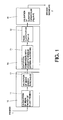
Figure 1 depicts a block diagram of the method for the detection of speech segments. -
Figure 2 shows a state diagram of the noise and speech frame classification process. -
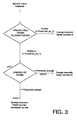
Figure 3 shows the method for checking frames which simultaneously comply with acoustic and energy thresholds. -
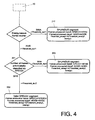
Figure 4 depicts the flowchart of the validation of duration thresholds. - According to the preferred embodiment of the invention, the method for the detection of noise and speech segments is carried out in three stages.
- As a step prior to the method, the input signal is divided into frames of a very short duration (between 5 and 50 milliseconds), which are processed one after the other.
- As is shown in
Figure 1 , the energy is calculated for eachframe 1 in afirst stage 10. The average of the energy value for this frame and the previous N frames is calculated (block 11: calculation of mean energy of N last frames), where N is an integer the values of which vary depending on the environment; typically N=10 in environments with little noise and N>10 for noisy environments. Then, this mean value is compared (block 12: validation of mean energy threshold) with a first energy threshold Threshold_energ1, the value of which is modified in the second stage depending on the noise level, and the initial value thereof being configurable; typically, for frames of 10 ms, Threshold_energ1=15, which value can be adjusted according to the application. If the mean energy value of the last frames does not exceed said first energy threshold Threshold_energ1, the frame is definitively classified as noise and the processing thereof ends, the process of the next signal frame beginning. If, on contrast, the mean value does exceed said first energy threshold, the frame continues to be processed, passing to thesecond stage 20 of the method. - Two processes are performed in the second stage 20:
- a statistical comparison of the frame which is being processed with acoustic speech and noise models (block 21: statistical comparison with acoustic models (Viterbi algorithm)), and
- a frame classification process (block 22: frame classification) for classifying it as speech or noise (see
Figure 2 ). - In order to carry out the statistical comparison, a feature vector is first obtained which consists of a set of spectral parameters obtained from the signal. Specifically, a subset of the parameters forming the feature vector proposed in the ETSI ES 202 050 standard is selected.
- How the subset of parameters is selected is described below:
- The probability density functions of the value of each of the parameters for the speech frames and noise frames are first estimated from the values of the parameter obtained with a set of acoustic speech and noise signals different from those which will be analyzed.
- The classification error probability of each parameter is calculated by using the estimated probability density functions.
- A list of the parameters is created, ordered from a lower to a higher value of this error probability.
- A subset formed by the N first parameters of the list is chosen, the value of N being comprised between 0 and 39. Typically N=5, but it can vary depending on the application.
- The statistical comparison requires the existence of acoustic speech and noise models. Specifically, Hidden Markov Models (HMM) are used to statistically model two acoustic units: one represents the speech frames and the other one represents the noise frames. These models are obtained before using the method for the detection of noise and speech segments of the present invention. To that end, these acoustic units are previously trained using for that purpose recordings containing noise and speech segments labeled as such.
- The comparison is carried out using the Viterbi algorithm. The probability that the current frame is a speech frame and the probability that it is a noise frame is thus determined from the feature vector obtained in the frame which is being processed, from the statistical speech and noise models, and from the comparison data of the previously processed frames. An acoustic score parameter calculated by dividing the probability that the frame is a speech frame by the probability that the frame is a noise frame is also calculated.
- The frame classification process (block 22) is carried out by means of a decision-making process (see
Figure 2 ) which takes into account the acoustic score parameter obtained in thestatistical comparison process 21 and other criteria, including the decisions of classifying previous frames as speech or noise. - This
Figure 2 depicts a state diagram, in which when a transition (for example, if the acoustic score is less than "threshold_ac_1") occurs, the state passes to that indicated by the arrow, and the processes included in said state are carried out. For this reason the processes appear in the next state once the transition has been made. - As is shown in
Figure 2 , the steps of the decision-making process are the following: - * Initial state 210: An acoustic score accumulator, Acoustic sc. Accumulator (2101), is set to zero. The possible previous frames which were provisionally classified as speech or as noise (2102) are classified as noise.
The acoustic score parameter obtained in the statistical comparison is then compared with a first acoustic threshold, Threshold_ac_1.- A) If it does not exceed said first acoustic threshold Threshold_ac_1 the following actions are performed:
- i) The current frame is definitively classified as noise (2102).
- ii) The first energy threshold used in the first stage, Threshold_energ1 (2103), is updated obtaining a mean (weighted by a memory factor) between its current value and the energy value of the current frame. The memory factor is a value between 0 and 1; it typically has a value of 0.9, which is adjustable depending on the application.
- iii) The next signal frame is then processed from the
first stage 10 of the method.
- B) In the event that the acoustic score parameter obtained in the statistical comparison exceeds said first acoustic threshold Threshold_ac_1, the following actions are performed:
- i) The current frame is provisionally classified as speech (2201).
- ii) The value of the acoustic score accumulator is updated with the value of the acoustic score parameter obtained in the statistical comparison (2202).
- iii) It is checked (2203) if the energy of the signal exceeds a second energy threshold, Threshold_energ2 (see
Figure 3 ), calculated from the current value of the first energy threshold Threshold_energ1 (used in thefirst stage 10 of the method), the value of which is obtained by multiplying said first energy threshold Threshold_energ1 by a factor and adding an additional offset to it. This factor has a configurable value between 0 and 1, and the offset, also with a configurable value, can acquire both positive and negative values, its absolute value ranging between 0 and 10 times the value of the first energy threshold, Threshold_energ1. If it exceeds said second energy threshold, Threshold_energ2, a first consecutive frame counter for frames exceeding both the first acoustic threshold Threshold_ac_1 (of the statistical comparison) and this second energy threshold Threshold_energ2 starts withvalue 1. - iv) It passes to the next state: speech segment beginning
check state 220. - v) The next signal frame is then processed from the
first stage 10 of the method.
- A) If it does not exceed said first acoustic threshold Threshold_ac_1 the following actions are performed:
- * Speech segment beginning check state 220: the acoustic score parameter obtained in the statistical comparison is compared with the first acoustic threshold, Threshold_ac_1.
- A) If it does not exceed said first acoustic threshold Threshold_ac_1, the following actions are performed:
- i) Both the current frame and all the previous frames provisionally classified as speech are classified as noise (2102).
- ii) The acoustic score accumulator (2101) and the first consecutive frame counter for frames exceeding both the second energy threshold Threshold-energ_2 and the first acoustic score threshold Threshold_ac_1 are set to zero.
- iii) It is returned (2204) to the
initial state 210. - iv) The next signal frame is then processed from the
first stage 10 of the method.
- B) In the event that the acoustic score parameter obtained in the statistical comparison exceeds said first acoustic threshold Threshold_ac_1, the following actions are performed:
- i) The current frame is provisionally classified as speech (2301 or 2201).
- ii) It is checked (2303 or 2203) if the energy of the signal exceeds the second energy threshold, Threshold_energ2 (see
Figure 3 ).- If it exceeds it, the first consecutive frame counter for frames exceeding both the first acoustic threshold Threshold_ac_1 of the statistical comparison and the second energy threshold Threshold_energ2 is increased (2203A in
Figure 3 ). - If it does not exceed it, said first consecutive frame counter is set to zero (2203B in
Figure 3 ).
- If it exceeds it, the first consecutive frame counter for frames exceeding both the first acoustic threshold Threshold_ac_1 of the statistical comparison and the second energy threshold Threshold_energ2 is increased (2203A in
- iii) The value of the acoustic score accumulator (2202) is increased by adding the value of the acoustic score parameter obtained in the statistical comparison to it.
- iv) It is checked if the value of the acoustic score accumulator exceeds a second accumulated acoustic score threshold, Threshold_ac_2.
- If it does not exceed said second acoustic threshold Threshold_ac_2, the next signal frame is then processed from the
first stage 10 of the method. - If it exceeds said second acoustic threshold Threshold_ac_2:
- 1) It passes to the found
speech segment state 230. - 2) The next signal frame is then processed from the
first stage 10 of the method.
- 1) It passes to the found
- If it does not exceed said second acoustic threshold Threshold_ac_2, the next signal frame is then processed from the
- A) If it does not exceed said first acoustic threshold Threshold_ac_1, the following actions are performed:
- * Found speech segment state 230: the acoustic score parameter obtained in the statistical comparison is compared with the first acoustic threshold, Threshold_ac_1.
- A) If the acoustic score parameter exceeds said first acoustic threshold Threshold_ac_1, the following actions are performed:
- i) The current frame is provisionally classified as speech (2301).
- ii) It is checked (2303) if the energy of the signal exceeds the second energy threshold Threshold_energ2 (see
Figure 3 ).- If it exceeds it, the first consecutive frame counter for frames exceeding both the first acoustic threshold Threshold_ac_1 of the statistical comparison and the second energy threshold Threshold_energ2 is increased (2203A in
Figure 3 ). - If it does not exceed it, said first consecutive frame counter is set to zero (2203B in
Figure 3 ).
- If it exceeds it, the first consecutive frame counter for frames exceeding both the first acoustic threshold Threshold_ac_1 of the statistical comparison and the second energy threshold Threshold_energ2 is increased (2203A in
- iii) The next signal frame is then processed from the
first stage 10 of the method.
- B) In the event that the acoustic score parameter obtained in the statistical comparison does not exceed the first acoustic threshold, Threshold_ac_1, the following actions are performed:
- i) The current frame is provisionally classified as noise (2401).
- ii) It passes to the speech segment
end check state 240. - iii) a second consecutive frame number counter for frames not exceeding the modified acoustic threshold (the first time it must be under threshold_ac_1 to start the counter; the counter increases are subsequently made when the modified threshold (divided by a hysteresis factor) is not exceeded) is started at 1 (2302).
- iv) The next signal frame is then processed from the
first stage 10 of the method.
- A) If the acoustic score parameter exceeds said first acoustic threshold Threshold_ac_1, the following actions are performed:
- * Speech segment end check state 240: The acoustic score parameter obtained in the statistical comparison is compared with a modified threshold resulting from dividing the first acoustic threshold Threshold_ac_1 by a hysteresis factor, Hysteresis.
- A) If the acoustic score parameter exceeds said modified threshold, Threshotd_ac_1/Hysteresis, the following actions are performed:
- i) The current frame is provisionally classified as speech. The previous frames which were provisionally classified as noise are also provisionally classified as speech (2301).
- ii) It is checked (2203 or 2303) if the energy of the signal exceeds the second energy threshold, Threshold_energ_2.
- If it exceeds it, the first consecutive frame counter for frames exceeding both the modified threshold Threshold_ac_1/Hysteresis of the statistical comparison and the second energy threshold Threshold_energ2 is increased (2203A in
Figure 3 ). - If it does not exceed it, said first consecutive frame counter is set to zero (2203B in
Figure 3 ).
- If it exceeds it, the first consecutive frame counter for frames exceeding both the modified threshold Threshold_ac_1/Hysteresis of the statistical comparison and the second energy threshold Threshold_energ2 is increased (2203A in
- iii) It passes to the found
speech segment state 230. - iv) The next signal frame is then processed from the
first stage 10 of the method.
- B) In the event that the acoustic score parameter obtained in the statistical comparison does not exceed the modified threshold Threshold_ac_1/Hysteresis, the following actions are performed:
- i) The current frame is provisionally classified as noise (2401).
- ii) The second consecutive frame number counter for frames not exceeding the modified acoustic threshold is increased (2402).
- iii) It is checked if said second consecutive frame number counter for frames not exceeding the modified acoustic threshold, Threshold_ac_1/Hysteresis is greater than an end of voice pulse search duration threshold, Threshold-dur-end. If it is greater, it passes to the
third stage 30 of the method of detection.
first stage 10 of the method.
- A) If the acoustic score parameter exceeds said modified threshold, Threshotd_ac_1/Hysteresis, the following actions are performed:
- The speech/noise classification of the signal frames carried out in the second stage is reviewed in the
third stage 30 of the method of the present invention using the criteria of duration in order to thus finally detect the speech segments 2. The following checks are made (seeFigure 4 ): - If the maximum value reached during the
second stage 20 by the first consecutive frame counter for frames exceeding both the first acoustic threshold Threshold_ac_1 and the second energy threshold Threshold_ energ_2 is less than (300A) a first duration threshold, Threshold_dur1, it is considered that the detected speech segment is spurious (310) and is discarded. Consequently, all the signal frames provisionally classified as speech and as noise which comply with this criterion are definitively classified as noise. - If the maximum value reached during the
second stage 20 of said first counter is greater than or equal to (300B) said first duration threshold, Threshold_dur_1, it is checked (301) if the total number of all the frames provisionally classified as speech exceeds a second duration threshold Threshold_dur2.- In the event that it does not exceed it (301 A), it is considered that the detected speech segment is spurious (320) and, consequently, all the signal frames provisionally classified as speech or as noise which comply with this criterion are definitively classified as noise.
- If this second duration threshold, Threshold-dur2, is exceeded (301 B), the frames provisionally classified as speech are definitively classified as speech (330), and the frames provisionally classified as noise are definitively classified as noise.
- The following actions are further carried out in the third stage:
- The first energy threshold Threshold_energ1 used in the
first stage 10 of the method is updated, obtaining a mean (weighted by a memory factor) between its current value and the energy value of the current frame. - The next signal frame is then processed from the
first stage 10 of the method. In the event that said frame passes to thesecond stage 20 of the method, the decision-making process will begin from theinitial state 210. - The invention has been described according to a preferred embodiment thereof, but for the person skilled in the art it will be evident that many variations can be introduced in said preferred embodiment without exceeding the object of the claimed invention.
Claims (8)
- Method for the detection of noise and speech segments (2) in a digital audio input signal, said input signal being divided into a plurality of frames (1) comprising:- a first stage (10) in which a first classification of a frame as noise is performed if the mean energy value for this frame and the previous N frames is not greater than a first energy threshold (threshold_energ1), N being an integer greater than 1;- a second stage (20) in which for each frame that has not been classified as noise in the first stage it is decided if said frame is classified as noise or as speech based on combining at least a first criterion of spectral similarity of the frame with acoustic noise and speech models, a second criterion of analysis of the energy of the frame with respect to a second energy threshold (threshold_energ2) and a third criterion of duration consisting of using a state machine for detecting the beginning of a segment as an accumulation of a determined number of consecutive frames with spectral similarity greater than a first acoustic threshold (threshold_ac1) and another determined number of consecutive frames with spectral similarity less than said first acoustic threshold for detecting the end of said segment
wherein in the second stage, for each frame that has not been classified as noise in the first stage:- a probability that the frame is a noise frame is calculated by comparing spectral characteristics of said frame with those same spectral characteristics of a group of frames classified as noise which do not belong to the signal that is being analyzed;- a probability that the frame is a speech frame is calculated by comparing spectral characteristics of said frame with those same spectral characteristics of a group of frames classified as speech which do not belong to the signal that is being analyzed;- the next state of the state machine is calculated depending on at least a ratio between the probability that the frame is a speech frame and the probability that the frame is a noise frame, and on a current state of said state machine; and- a third stage (30) in which the classification as speech or as noise of the signal frames carried out in the second stage is reviewed using criteria of duration, classifying the speech segments having a duration of less than a first minimum segment duration threshold, as well as those which do not contain a determined number of consecutive frames simultaneously exceeding said first acoustic threshold and said second energy threshold, as noise;wherein the state machine comprises at least an initial state (210), a state in which it is checked that a speech segment (220) has begun, a state in which it is checked that the speech segment (230) continues, and a state in which it is checked that the speech segment (240) has ended;
and wherein for a transition between the state in which it is checked that a speech segment (220) has begun and the state in which it is checked that a speech segment (230) continues to occur, at least two consecutive frames in which the ratio between the probability that the frame is a speech frame and the probability that the frame is a noise frame is greater than said first acoustic threshold are required. - Method according to claim 1, wherein two duration thresholds are used in said third stage:- a first minimum segment duration threshold (threshold_dur1), or minimum number of consecutive frames classified as speech or as noise;- a second duration threshold (threshold-dur2) of consecutive frames which comply with both the criterion of spectral similarity and the criterion of analysis of the energy of the frame in the second stage.
- Method according to any of claims 1-2, wherein said criterion of spectral similarity used in the second stage consists of a comparative analysis of spectral characteristics of said frame with spectral characteristics of said previously established acoustic noise and speech models.
- Method according to claim 3, wherein said comparative analysis of spectral characteristics is performed using the Viterbi algorithm.
- Method according to any of claims 1-4, wherein said previously established acoustic noise and speech models are obtained by statistically modeling two acoustic noise and speech units, respectively, by means of Hidden Markov Models.
- Method according to any of claims 1-5, wherein for a transition between the state checking that a speech segment (240) has ended and the initial state (210) to occur, at least two consecutive frames in which the ratio between the probability that the frame is a speech frame and the probability that the frame is a noise frame is less than a first acoustic threshold divided by a factor.
- Method according to any of claims 1-6, wherein the first energy threshold used in the first stage is dynamically updated by weighting its current value and the energy value of the frames classified as noise in the second and third stages.
- Method according to claim 1-2, wherein the criterion of analysis of the energy of the frame (2203, 2303) consists of exceeding a second energy threshold calculated by multiplying the first energy threshold by a factor and adding an offset to it.
Applications Claiming Priority (2)
| Application Number | Priority Date | Filing Date | Title |
|---|---|---|---|
| ES200930819A ES2371619B1 (en) | 2009-10-08 | 2009-10-08 | VOICE SEGMENT DETECTION PROCEDURE. |
| PCT/EP2010/065022 WO2011042502A1 (en) | 2009-10-08 | 2010-10-07 | Method for the detection of speech segments |
Publications (2)
| Publication Number | Publication Date |
|---|---|
| EP2486562A1 EP2486562A1 (en) | 2012-08-15 |
| EP2486562B1 true EP2486562B1 (en) | 2013-12-11 |
Family
ID=43597991
Family Applications (1)
| Application Number | Title | Priority Date | Filing Date |
|---|---|---|---|
| EP10768905.1A Not-in-force EP2486562B1 (en) | 2009-10-08 | 2010-10-07 | Method for the detection of speech segments |
Country Status (8)
| Country | Link |
|---|---|
| US (1) | US20130054236A1 (en) |
| EP (1) | EP2486562B1 (en) |
| CN (1) | CN102687196B (en) |
| AR (1) | AR078575A1 (en) |
| BR (1) | BR112012007910A2 (en) |
| ES (2) | ES2371619B1 (en) |
| UY (1) | UY32941A (en) |
| WO (1) | WO2011042502A1 (en) |
Cited By (1)
| Publication number | Priority date | Publication date | Assignee | Title |
|---|---|---|---|---|
| CN107393559A (en) * | 2017-07-14 | 2017-11-24 | 深圳永顺智信息科技有限公司 | The method and device of calibration voice detection results |
Families Citing this family (35)
| Publication number | Priority date | Publication date | Assignee | Title |
|---|---|---|---|---|
| US20130090926A1 (en) * | 2011-09-16 | 2013-04-11 | Qualcomm Incorporated | Mobile device context information using speech detection |
| WO2013142723A1 (en) * | 2012-03-23 | 2013-09-26 | Dolby Laboratories Licensing Corporation | Hierarchical active voice detection |
| CN112992188B (en) * | 2012-12-25 | 2024-06-18 | 中兴通讯股份有限公司 | A method and device for adjusting the signal-to-noise ratio threshold in activation tone detection (VAD) judgment |
| US9076459B2 (en) * | 2013-03-12 | 2015-07-07 | Intermec Ip, Corp. | Apparatus and method to classify sound to detect speech |
| CN104424956B9 (en) | 2013-08-30 | 2022-11-25 | 中兴通讯股份有限公司 | Activation tone detection method and device |
| US9564128B2 (en) * | 2013-12-09 | 2017-02-07 | Qualcomm Incorporated | Controlling a speech recognition process of a computing device |
| US8719032B1 (en) * | 2013-12-11 | 2014-05-06 | Jefferson Audio Video Systems, Inc. | Methods for presenting speech blocks from a plurality of audio input data streams to a user in an interface |
| JP6596924B2 (en) * | 2014-05-29 | 2019-10-30 | 日本電気株式会社 | Audio data processing apparatus, audio data processing method, and audio data processing program |
| CN105261375B (en) * | 2014-07-18 | 2018-08-31 | 中兴通讯股份有限公司 | Activate the method and device of sound detection |
| CN104464722B (en) * | 2014-11-13 | 2018-05-25 | 北京云知声信息技术有限公司 | Voice activity detection method and apparatus based on time domain and frequency domain |
| US9576589B2 (en) * | 2015-02-06 | 2017-02-21 | Knuedge, Inc. | Harmonic feature processing for reducing noise |
| US9685156B2 (en) * | 2015-03-12 | 2017-06-20 | Sony Mobile Communications Inc. | Low-power voice command detector |
| CN106328169B (en) * | 2015-06-26 | 2018-12-11 | 中兴通讯股份有限公司 | A kind of acquisition methods, activation sound detection method and the device of activation sound amendment frame number |
| EP3118851B1 (en) * | 2015-07-01 | 2021-01-06 | Oticon A/s | Enhancement of noisy speech based on statistical speech and noise models |
| CN105070287B (en) * | 2015-07-03 | 2019-03-15 | 广东小天才科技有限公司 | Method and device for voice endpoint detection in self-adaptive noisy environment |
| US9754607B2 (en) | 2015-08-26 | 2017-09-05 | Apple Inc. | Acoustic scene interpretation systems and related methods |
| US20170256270A1 (en) * | 2016-03-02 | 2017-09-07 | Motorola Mobility Llc | Voice Recognition Accuracy in High Noise Conditions |
| CN107690089A (en) * | 2016-08-05 | 2018-02-13 | 阿里巴巴集团控股有限公司 | Data processing method, live broadcast method and device |
| CN106887241A (en) | 2016-10-12 | 2017-06-23 | 阿里巴巴集团控股有限公司 | A kind of voice signal detection method and device |
| CN109147770B (en) | 2017-06-16 | 2023-07-28 | 阿里巴巴集团控股有限公司 | Optimization of voice recognition features, dynamic registration method, client and server |
| US10431242B1 (en) * | 2017-11-02 | 2019-10-01 | Gopro, Inc. | Systems and methods for identifying speech based on spectral features |
| US10424294B1 (en) * | 2018-01-03 | 2019-09-24 | Gopro, Inc. | Systems and methods for identifying voice |
| CN108881652B (en) * | 2018-07-11 | 2021-02-26 | 北京大米科技有限公司 | Echo detection method, storage medium and electronic device |
| CN109036471B (en) * | 2018-08-20 | 2020-06-30 | 百度在线网络技术(北京)有限公司 | Voice endpoint detection method and device |
| CN110580917B (en) * | 2019-09-16 | 2022-02-15 | 数据堂(北京)科技股份有限公司 | Voice data quality detection method, device, server and storage medium |
| CN111739515B (en) * | 2019-09-18 | 2023-08-04 | 北京京东尚科信息技术有限公司 | Speech recognition method, device, electronic device and server, and related systems |
| CN112201271B (en) * | 2020-11-30 | 2021-02-26 | 全时云商务服务股份有限公司 | Voice state statistical method and system based on VAD and readable storage medium |
| CN112669880B (en) * | 2020-12-16 | 2023-05-02 | 北京读我网络技术有限公司 | Method and system for adaptively detecting voice ending |
| CN116631443B (en) * | 2021-02-26 | 2024-05-07 | 武汉星巡智能科技有限公司 | Infant crying type detection method, device and equipment based on vibration spectrum comparison |
| CN113539295B (en) * | 2021-06-10 | 2024-04-23 | 联想(北京)有限公司 | Voice processing method and device |
| CN113724735A (en) * | 2021-09-01 | 2021-11-30 | 广州博冠信息科技有限公司 | Voice stream processing method and device, computer readable storage medium and electronic equipment |
| CN115376509B (en) * | 2022-07-06 | 2026-07-28 | 普强时代(珠海横琴)信息技术有限公司 | Method and device for realizing voice recognition interaction |
| US20250037733A1 (en) * | 2023-07-28 | 2025-01-30 | Cisco Technology, Inc. | Discontinuous noise removal in an audio processing pipeline |
| US20250069591A1 (en) * | 2023-08-24 | 2025-02-27 | Audio Technologies And Codecs, Inc. | Method and System for Real-Time Multiclass Hierarchical Audio Classification |
| CN119541519B (en) * | 2025-01-20 | 2025-04-29 | 浙江华消科技有限公司 | Voice recognition method and device of rescue robot and rescue robot |
Family Cites Families (32)
| Publication number | Priority date | Publication date | Assignee | Title |
|---|---|---|---|---|
| WO1989008910A1 (en) * | 1988-03-11 | 1989-09-21 | British Telecommunications Public Limited Company | Voice activity detection |
| JPH01244497A (en) | 1988-03-25 | 1989-09-28 | Toshiba Corp | Sound section detection circuit |
| US5485522A (en) * | 1993-09-29 | 1996-01-16 | Ericsson Ge Mobile Communications, Inc. | System for adaptively reducing noise in speech signals |
| US5657422A (en) * | 1994-01-28 | 1997-08-12 | Lucent Technologies Inc. | Voice activity detection driven noise remediator |
| DE19500494C2 (en) * | 1995-01-10 | 1997-01-23 | Siemens Ag | Feature extraction method for a speech signal |
| JP3523382B2 (en) | 1995-08-10 | 2004-04-26 | 株式会社リコー | Voice recognition device and voice recognition method |
| US5819217A (en) * | 1995-12-21 | 1998-10-06 | Nynex Science & Technology, Inc. | Method and system for differentiating between speech and noise |
| KR20000022285A (en) * | 1996-07-03 | 2000-04-25 | 내쉬 로저 윌리엄 | Voice activity detector |
| EP0867856B1 (en) * | 1997-03-25 | 2005-10-26 | Koninklijke Philips Electronics N.V. | Method and apparatus for vocal activity detection |
| US6032116A (en) * | 1997-06-27 | 2000-02-29 | Advanced Micro Devices, Inc. | Distance measure in a speech recognition system for speech recognition using frequency shifting factors to compensate for input signal frequency shifts |
| US6480823B1 (en) * | 1998-03-24 | 2002-11-12 | Matsushita Electric Industrial Co., Ltd. | Speech detection for noisy conditions |
| US6192395B1 (en) * | 1998-12-23 | 2001-02-20 | Multitude, Inc. | System and method for visually identifying speaking participants in a multi-participant networked event |
| US6324509B1 (en) * | 1999-02-08 | 2001-11-27 | Qualcomm Incorporated | Method and apparatus for accurate endpointing of speech in the presence of noise |
| JP3789246B2 (en) | 1999-02-25 | 2006-06-21 | 株式会社リコー | Speech segment detection device, speech segment detection method, speech recognition device, speech recognition method, and recording medium |
| DE19939102C1 (en) * | 1999-08-18 | 2000-10-26 | Siemens Ag | Method and arrangement for recognizing speech |
| US6615170B1 (en) | 2000-03-07 | 2003-09-02 | International Business Machines Corporation | Model-based voice activity detection system and method using a log-likelihood ratio and pitch |
| US6983242B1 (en) * | 2000-08-21 | 2006-01-03 | Mindspeed Technologies, Inc. | Method for robust classification in speech coding |
| US7120580B2 (en) * | 2001-08-15 | 2006-10-10 | Sri International | Method and apparatus for recognizing speech in a noisy environment |
| KR100429896B1 (en) * | 2001-11-22 | 2004-05-03 | 한국전자통신연구원 | Speech detection apparatus under noise environment and method thereof |
| WO2004111996A1 (en) * | 2003-06-11 | 2004-12-23 | Matsushita Electric Industrial Co., Ltd. | Acoustic interval detection method and device |
| FR2856506B1 (en) * | 2003-06-23 | 2005-12-02 | France Telecom | METHOD AND DEVICE FOR DETECTING SPEECH IN AN AUDIO SIGNAL |
| EP1594120B1 (en) * | 2004-05-07 | 2013-08-14 | Swisscom AG | Method for building hidden Markov speech models |
| US7533017B2 (en) * | 2004-08-31 | 2009-05-12 | Kitakyushu Foundation For The Advancement Of Industry, Science And Technology | Method for recovering target speech based on speech segment detection under a stationary noise |
| KR100677396B1 (en) * | 2004-11-20 | 2007-02-02 | 엘지전자 주식회사 | Voice section detection method of voice recognition device |
| ATE523874T1 (en) * | 2005-03-24 | 2011-09-15 | Mindspeed Tech Inc | ADAPTIVE VOICE MODE EXTENSION FOR A VOICE ACTIVITY DETECTOR |
| WO2006114101A1 (en) * | 2005-04-26 | 2006-11-02 | Aalborg Universitet | Detection of speech present in a noisy signal and speech enhancement making use thereof |
| KR100745977B1 (en) * | 2005-09-26 | 2007-08-06 | 삼성전자주식회사 | Voice section detection device and method |
| US8326620B2 (en) * | 2008-04-30 | 2012-12-04 | Qnx Software Systems Limited | Robust downlink speech and noise detector |
| CN100589183C (en) * | 2007-01-26 | 2010-02-10 | 北京中星微电子有限公司 | Digital automatic gain control method and device |
| TWI336880B (en) * | 2007-06-11 | 2011-02-01 | Univ Nat Taiwan | Voice processing methods and systems, and machine readable medium thereof |
| JP4950930B2 (en) * | 2008-04-03 | 2012-06-13 | 株式会社東芝 | Apparatus, method and program for determining voice / non-voice |
| US8131543B1 (en) * | 2008-04-14 | 2012-03-06 | Google Inc. | Speech detection |
-
2009
- 2009-10-08 ES ES200930819A patent/ES2371619B1/en not_active Expired - Fee Related
-
2010
- 2010-10-07 BR BR112012007910A patent/BR112012007910A2/en not_active IP Right Cessation
- 2010-10-07 ES ES10768905.1T patent/ES2454249T3/en active Active
- 2010-10-07 WO PCT/EP2010/065022 patent/WO2011042502A1/en not_active Ceased
- 2010-10-07 CN CN201080050560.8A patent/CN102687196B/en not_active Expired - Fee Related
- 2010-10-07 EP EP10768905.1A patent/EP2486562B1/en not_active Not-in-force
- 2010-10-07 US US13/500,196 patent/US20130054236A1/en not_active Abandoned
- 2010-10-08 UY UY0001032941A patent/UY32941A/en not_active Application Discontinuation
- 2010-10-08 AR ARP100103681A patent/AR078575A1/en unknown
Cited By (1)
| Publication number | Priority date | Publication date | Assignee | Title |
|---|---|---|---|---|
| CN107393559A (en) * | 2017-07-14 | 2017-11-24 | 深圳永顺智信息科技有限公司 | The method and device of calibration voice detection results |
Also Published As
| Publication number | Publication date |
|---|---|
| BR112012007910A2 (en) | 2016-03-22 |
| AR078575A1 (en) | 2011-11-16 |
| EP2486562A1 (en) | 2012-08-15 |
| WO2011042502A1 (en) | 2011-04-14 |
| ES2454249T3 (en) | 2014-04-10 |
| CN102687196A (en) | 2012-09-19 |
| CN102687196B (en) | 2014-05-07 |
| ES2371619A1 (en) | 2012-01-05 |
| UY32941A (en) | 2011-04-29 |
| US20130054236A1 (en) | 2013-02-28 |
| ES2371619B1 (en) | 2012-08-08 |
Similar Documents
| Publication | Publication Date | Title |
|---|---|---|
| US20130054236A1 (en) | Method for the detection of speech segments | |
| EP2048656B1 (en) | Speaker recognition | |
| US7620547B2 (en) | Spoken man-machine interface with speaker identification | |
| CN111429935B (en) | Voice caller separation method and device | |
| EP1704668B1 (en) | System and method for providing claimant authentication | |
| US7529665B2 (en) | Two stage utterance verification device and method thereof in speech recognition system | |
| US6134527A (en) | Method of testing a vocabulary word being enrolled in a speech recognition system | |
| CN113744742B (en) | Role identification method, device and system under dialogue scene | |
| CN111524527A (en) | Speaker separation method, device, electronic equipment and storage medium | |
| EP1159737B9 (en) | Speaker recognition | |
| WO2012175094A1 (en) | Identification of a local speaker | |
| CN112489692A (en) | Voice endpoint detection method and device | |
| Beritelli et al. | A pattern recognition system for environmental sound classification based on MFCCs and neural networks | |
| CN113192501B (en) | Instruction word recognition method and device | |
| JPH05119792A (en) | Voice recognizer | |
| JP4787979B2 (en) | Noise detection apparatus and noise detection method | |
| JP2996019B2 (en) | Voice recognition device | |
| CN113748461B (en) | Dialogue detector | |
| US20130297311A1 (en) | Information processing apparatus, information processing method and information processing program | |
| Wang et al. | A fusion model for robust voice activity detection | |
| EP1256934B1 (en) | Method for adapting speaker-identification data using application speech | |
| EP1189202A1 (en) | Duration models for speech recognition | |
| JP3322491B2 (en) | Voice recognition device | |
| EP1387350A1 (en) | Spoken man-machine interface with speaker identification | |
| JP3114757B2 (en) | Voice recognition device |
Legal Events
| Date | Code | Title | Description |
|---|---|---|---|
| PUAI | Public reference made under article 153(3) epc to a published international application that has entered the european phase |
Free format text: ORIGINAL CODE: 0009012 |
|
| 17P | Request for examination filed |
Effective date: 20120508 |
|
| AK | Designated contracting states |
Kind code of ref document: A1 Designated state(s): AL AT BE BG CH CY CZ DE DK EE ES FI FR GB GR HR HU IE IS IT LI LT LU LV MC MK MT NL NO PL PT RO RS SE SI SK SM TR |
|
| DAX | Request for extension of the european patent (deleted) | ||
| REG | Reference to a national code |
Ref country code: DE Ref legal event code: R079 Ref document number: 602010012412 Country of ref document: DE Free format text: PREVIOUS MAIN CLASS: G10L0011020000 Ipc: G10L0025780000 |
|
| GRAP | Despatch of communication of intention to grant a patent |
Free format text: ORIGINAL CODE: EPIDOSNIGR1 |
|
| RIC1 | Information provided on ipc code assigned before grant |
Ipc: G10L 15/14 20060101ALN20130516BHEP Ipc: G10L 25/78 20130101AFI20130516BHEP |
|
| INTG | Intention to grant announced |
Effective date: 20130606 |
|
| GRAS | Grant fee paid |
Free format text: ORIGINAL CODE: EPIDOSNIGR3 |
|
| GRAA | (expected) grant |
Free format text: ORIGINAL CODE: 0009210 |
|
| AK | Designated contracting states |
Kind code of ref document: B1 Designated state(s): AL AT BE BG CH CY CZ DE DK EE ES FI FR GB GR HR HU IE IS IT LI LT LU LV MC MK MT NL NO PL PT RO RS SE SI SK SM TR |
|
| REG | Reference to a national code |
Ref country code: GB Ref legal event code: FG4D |
|
| REG | Reference to a national code |
Ref country code: CH Ref legal event code: EP |
|
| REG | Reference to a national code |
Ref country code: AT Ref legal event code: REF Ref document number: 644938 Country of ref document: AT Kind code of ref document: T Effective date: 20140115 |
|
| REG | Reference to a national code |
Ref country code: IE Ref legal event code: FG4D |
|
| REG | Reference to a national code |
Ref country code: DE Ref legal event code: R096 Ref document number: 602010012412 Country of ref document: DE Effective date: 20140206 |
|
| REG | Reference to a national code |
Ref country code: NL Ref legal event code: VDEP Effective date: 20131211 |
|
| REG | Reference to a national code |
Ref country code: ES Ref legal event code: FG2A Ref document number: 2454249 Country of ref document: ES Kind code of ref document: T3 Effective date: 20140410 |
|
| REG | Reference to a national code |
Ref country code: AT Ref legal event code: MK05 Ref document number: 644938 Country of ref document: AT Kind code of ref document: T Effective date: 20131211 |
|
| PG25 | Lapsed in a contracting state [announced via postgrant information from national office to epo] |
Ref country code: FI Free format text: LAPSE BECAUSE OF FAILURE TO SUBMIT A TRANSLATION OF THE DESCRIPTION OR TO PAY THE FEE WITHIN THE PRESCRIBED TIME-LIMIT Effective date: 20131211 Ref country code: SE Free format text: LAPSE BECAUSE OF FAILURE TO SUBMIT A TRANSLATION OF THE DESCRIPTION OR TO PAY THE FEE WITHIN THE PRESCRIBED TIME-LIMIT Effective date: 20131211 Ref country code: HR Free format text: LAPSE BECAUSE OF FAILURE TO SUBMIT A TRANSLATION OF THE DESCRIPTION OR TO PAY THE FEE WITHIN THE PRESCRIBED TIME-LIMIT Effective date: 20131211 Ref country code: NO Free format text: LAPSE BECAUSE OF FAILURE TO SUBMIT A TRANSLATION OF THE DESCRIPTION OR TO PAY THE FEE WITHIN THE PRESCRIBED TIME-LIMIT Effective date: 20140311 Ref country code: LT Free format text: LAPSE BECAUSE OF FAILURE TO SUBMIT A TRANSLATION OF THE DESCRIPTION OR TO PAY THE FEE WITHIN THE PRESCRIBED TIME-LIMIT Effective date: 20131211 Ref country code: NL Free format text: LAPSE BECAUSE OF FAILURE TO SUBMIT A TRANSLATION OF THE DESCRIPTION OR TO PAY THE FEE WITHIN THE PRESCRIBED TIME-LIMIT Effective date: 20131211 |
|
| REG | Reference to a national code |
Ref country code: LT Ref legal event code: MG4D |
|
| PG25 | Lapsed in a contracting state [announced via postgrant information from national office to epo] |
Ref country code: CY Free format text: LAPSE BECAUSE OF FAILURE TO SUBMIT A TRANSLATION OF THE DESCRIPTION OR TO PAY THE FEE WITHIN THE PRESCRIBED TIME-LIMIT Effective date: 20131211 Ref country code: LV Free format text: LAPSE BECAUSE OF FAILURE TO SUBMIT A TRANSLATION OF THE DESCRIPTION OR TO PAY THE FEE WITHIN THE PRESCRIBED TIME-LIMIT Effective date: 20131211 Ref country code: RS Free format text: LAPSE BECAUSE OF FAILURE TO SUBMIT A TRANSLATION OF THE DESCRIPTION OR TO PAY THE FEE WITHIN THE PRESCRIBED TIME-LIMIT Effective date: 20131211 Ref country code: AT Free format text: LAPSE BECAUSE OF FAILURE TO SUBMIT A TRANSLATION OF THE DESCRIPTION OR TO PAY THE FEE WITHIN THE PRESCRIBED TIME-LIMIT Effective date: 20131211 |
|
| PG25 | Lapsed in a contracting state [announced via postgrant information from national office to epo] |
Ref country code: BE Free format text: LAPSE BECAUSE OF FAILURE TO SUBMIT A TRANSLATION OF THE DESCRIPTION OR TO PAY THE FEE WITHIN THE PRESCRIBED TIME-LIMIT Effective date: 20131211 Ref country code: EE Free format text: LAPSE BECAUSE OF FAILURE TO SUBMIT A TRANSLATION OF THE DESCRIPTION OR TO PAY THE FEE WITHIN THE PRESCRIBED TIME-LIMIT Effective date: 20131211 Ref country code: IS Free format text: LAPSE BECAUSE OF FAILURE TO SUBMIT A TRANSLATION OF THE DESCRIPTION OR TO PAY THE FEE WITHIN THE PRESCRIBED TIME-LIMIT Effective date: 20140411 |
|
| PG25 | Lapsed in a contracting state [announced via postgrant information from national office to epo] |
Ref country code: PT Free format text: LAPSE BECAUSE OF FAILURE TO SUBMIT A TRANSLATION OF THE DESCRIPTION OR TO PAY THE FEE WITHIN THE PRESCRIBED TIME-LIMIT Effective date: 20140411 Ref country code: CZ Free format text: LAPSE BECAUSE OF FAILURE TO SUBMIT A TRANSLATION OF THE DESCRIPTION OR TO PAY THE FEE WITHIN THE PRESCRIBED TIME-LIMIT Effective date: 20131211 Ref country code: PL Free format text: LAPSE BECAUSE OF FAILURE TO SUBMIT A TRANSLATION OF THE DESCRIPTION OR TO PAY THE FEE WITHIN THE PRESCRIBED TIME-LIMIT Effective date: 20131211 Ref country code: RO Free format text: LAPSE BECAUSE OF FAILURE TO SUBMIT A TRANSLATION OF THE DESCRIPTION OR TO PAY THE FEE WITHIN THE PRESCRIBED TIME-LIMIT Effective date: 20131211 Ref country code: SK Free format text: LAPSE BECAUSE OF FAILURE TO SUBMIT A TRANSLATION OF THE DESCRIPTION OR TO PAY THE FEE WITHIN THE PRESCRIBED TIME-LIMIT Effective date: 20131211 |
|
| REG | Reference to a national code |
Ref country code: DE Ref legal event code: R097 Ref document number: 602010012412 Country of ref document: DE |
|
| PLBE | No opposition filed within time limit |
Free format text: ORIGINAL CODE: 0009261 |
|
| STAA | Information on the status of an ep patent application or granted ep patent |
Free format text: STATUS: NO OPPOSITION FILED WITHIN TIME LIMIT |
|
| PG25 | Lapsed in a contracting state [announced via postgrant information from national office to epo] |
Ref country code: DK Free format text: LAPSE BECAUSE OF FAILURE TO SUBMIT A TRANSLATION OF THE DESCRIPTION OR TO PAY THE FEE WITHIN THE PRESCRIBED TIME-LIMIT Effective date: 20131211 |
|
| 26N | No opposition filed |
Effective date: 20140912 |
|
| REG | Reference to a national code |
Ref country code: DE Ref legal event code: R097 Ref document number: 602010012412 Country of ref document: DE Effective date: 20140912 |
|
| PGFP | Annual fee paid to national office [announced via postgrant information from national office to epo] |
Ref country code: ES Payment date: 20141103 Year of fee payment: 5 Ref country code: DE Payment date: 20141112 Year of fee payment: 5 Ref country code: FR Payment date: 20141030 Year of fee payment: 5 Ref country code: GB Payment date: 20141030 Year of fee payment: 5 |
|
| PG25 | Lapsed in a contracting state [announced via postgrant information from national office to epo] |
Ref country code: SI Free format text: LAPSE BECAUSE OF FAILURE TO SUBMIT A TRANSLATION OF THE DESCRIPTION OR TO PAY THE FEE WITHIN THE PRESCRIBED TIME-LIMIT Effective date: 20131211 |
|
| PG25 | Lapsed in a contracting state [announced via postgrant information from national office to epo] |
Ref country code: LU Free format text: LAPSE BECAUSE OF FAILURE TO SUBMIT A TRANSLATION OF THE DESCRIPTION OR TO PAY THE FEE WITHIN THE PRESCRIBED TIME-LIMIT Effective date: 20141007 Ref country code: MC Free format text: LAPSE BECAUSE OF FAILURE TO SUBMIT A TRANSLATION OF THE DESCRIPTION OR TO PAY THE FEE WITHIN THE PRESCRIBED TIME-LIMIT Effective date: 20131211 |
|
| REG | Reference to a national code |
Ref country code: CH Ref legal event code: PL |
|
| REG | Reference to a national code |
Ref country code: IE Ref legal event code: MM4A |
|
| PG25 | Lapsed in a contracting state [announced via postgrant information from national office to epo] |
Ref country code: CH Free format text: LAPSE BECAUSE OF NON-PAYMENT OF DUE FEES Effective date: 20141031 Ref country code: LI Free format text: LAPSE BECAUSE OF NON-PAYMENT OF DUE FEES Effective date: 20141031 |
|
| PG25 | Lapsed in a contracting state [announced via postgrant information from national office to epo] |
Ref country code: IE Free format text: LAPSE BECAUSE OF NON-PAYMENT OF DUE FEES Effective date: 20141007 |
|
| PG25 | Lapsed in a contracting state [announced via postgrant information from national office to epo] |
Ref country code: SM Free format text: LAPSE BECAUSE OF FAILURE TO SUBMIT A TRANSLATION OF THE DESCRIPTION OR TO PAY THE FEE WITHIN THE PRESCRIBED TIME-LIMIT Effective date: 20131211 |
|
| REG | Reference to a national code |
Ref country code: DE Ref legal event code: R119 Ref document number: 602010012412 Country of ref document: DE |
|
| GBPC | Gb: european patent ceased through non-payment of renewal fee |
Effective date: 20151007 |
|
| PG25 | Lapsed in a contracting state [announced via postgrant information from national office to epo] |
Ref country code: GR Free format text: LAPSE BECAUSE OF FAILURE TO SUBMIT A TRANSLATION OF THE DESCRIPTION OR TO PAY THE FEE WITHIN THE PRESCRIBED TIME-LIMIT Effective date: 20140312 Ref country code: IT Free format text: LAPSE BECAUSE OF FAILURE TO SUBMIT A TRANSLATION OF THE DESCRIPTION OR TO PAY THE FEE WITHIN THE PRESCRIBED TIME-LIMIT Effective date: 20131211 Ref country code: BG Free format text: LAPSE BECAUSE OF FAILURE TO SUBMIT A TRANSLATION OF THE DESCRIPTION OR TO PAY THE FEE WITHIN THE PRESCRIBED TIME-LIMIT Effective date: 20131211 |
|
| PG25 | Lapsed in a contracting state [announced via postgrant information from national office to epo] |
Ref country code: MT Free format text: LAPSE BECAUSE OF FAILURE TO SUBMIT A TRANSLATION OF THE DESCRIPTION OR TO PAY THE FEE WITHIN THE PRESCRIBED TIME-LIMIT Effective date: 20131211 Ref country code: TR Free format text: LAPSE BECAUSE OF FAILURE TO SUBMIT A TRANSLATION OF THE DESCRIPTION OR TO PAY THE FEE WITHIN THE PRESCRIBED TIME-LIMIT Effective date: 20131211 Ref country code: DE Free format text: LAPSE BECAUSE OF NON-PAYMENT OF DUE FEES Effective date: 20160503 Ref country code: HU Free format text: LAPSE BECAUSE OF FAILURE TO SUBMIT A TRANSLATION OF THE DESCRIPTION OR TO PAY THE FEE WITHIN THE PRESCRIBED TIME-LIMIT; INVALID AB INITIO Effective date: 20101007 Ref country code: GB Free format text: LAPSE BECAUSE OF NON-PAYMENT OF DUE FEES Effective date: 20151007 |
|
| REG | Reference to a national code |
Ref country code: FR Ref legal event code: ST Effective date: 20160630 |
|
| PG25 | Lapsed in a contracting state [announced via postgrant information from national office to epo] |
Ref country code: FR Free format text: LAPSE BECAUSE OF NON-PAYMENT OF DUE FEES Effective date: 20151102 |
|
| REG | Reference to a national code |
Ref country code: ES Ref legal event code: FD2A Effective date: 20161125 |
|
| PG25 | Lapsed in a contracting state [announced via postgrant information from national office to epo] |
Ref country code: ES Free format text: LAPSE BECAUSE OF NON-PAYMENT OF DUE FEES Effective date: 20151008 |
|
| PG25 | Lapsed in a contracting state [announced via postgrant information from national office to epo] |
Ref country code: MK Free format text: LAPSE BECAUSE OF FAILURE TO SUBMIT A TRANSLATION OF THE DESCRIPTION OR TO PAY THE FEE WITHIN THE PRESCRIBED TIME-LIMIT Effective date: 20131211 |
|
| PG25 | Lapsed in a contracting state [announced via postgrant information from national office to epo] |
Ref country code: AL Free format text: LAPSE BECAUSE OF FAILURE TO SUBMIT A TRANSLATION OF THE DESCRIPTION OR TO PAY THE FEE WITHIN THE PRESCRIBED TIME-LIMIT Effective date: 20131211 |