EP2485154A1 - SAS Controller with persistent port configuration - Google Patents
SAS Controller with persistent port configuration Download PDFInfo
- Publication number
- EP2485154A1 EP2485154A1 EP12250003A EP12250003A EP2485154A1 EP 2485154 A1 EP2485154 A1 EP 2485154A1 EP 12250003 A EP12250003 A EP 12250003A EP 12250003 A EP12250003 A EP 12250003A EP 2485154 A1 EP2485154 A1 EP 2485154A1
- Authority
- EP
- European Patent Office
- Prior art keywords
- phy
- phys
- port
- sas
- data structure
- Prior art date
- Legal status (The legal status is an assumption and is not a legal conclusion. Google has not performed a legal analysis and makes no representation as to the accuracy of the status listed.)
- Withdrawn
Links
Images


Classifications
-
- G—PHYSICS
- G06—COMPUTING OR CALCULATING; COUNTING
- G06F—ELECTRIC DIGITAL DATA PROCESSING
- G06F13/00—Interconnection of, or transfer of information or other signals between, memories, input/output devices or central processing units
- G06F13/14—Handling requests for interconnection or transfer
-
- G—PHYSICS
- G06—COMPUTING OR CALCULATING; COUNTING
- G06F—ELECTRIC DIGITAL DATA PROCESSING
- G06F13/00—Interconnection of, or transfer of information or other signals between, memories, input/output devices or central processing units
- G06F13/38—Information transfer, e.g. on bus
- G06F13/382—Information transfer, e.g. on bus using universal interface adapter
- G06F13/385—Information transfer, e.g. on bus using universal interface adapter for adaptation of a particular data processing system to different peripheral devices
-
- G—PHYSICS
- G06—COMPUTING OR CALCULATING; COUNTING
- G06F—ELECTRIC DIGITAL DATA PROCESSING
- G06F11/00—Error detection; Error correction; Monitoring
- G06F11/30—Monitoring
- G06F11/3003—Monitoring arrangements specially adapted to the computing system or computing system component being monitored
- G06F11/3041—Monitoring arrangements specially adapted to the computing system or computing system component being monitored where the computing system component is an input/output interface
-
- G—PHYSICS
- G06—COMPUTING OR CALCULATING; COUNTING
- G06F—ELECTRIC DIGITAL DATA PROCESSING
- G06F11/00—Error detection; Error correction; Monitoring
- G06F11/30—Monitoring
- G06F11/3051—Monitoring arrangements for monitoring the configuration of the computing system or of the computing system component, e.g. monitoring the presence of processing resources, peripherals, I/O links, software programs
-
- G—PHYSICS
- G06—COMPUTING OR CALCULATING; COUNTING
- G06F—ELECTRIC DIGITAL DATA PROCESSING
- G06F3/00—Input arrangements for transferring data to be processed into a form capable of being handled by the computer; Output arrangements for transferring data from processing unit to output unit, e.g. interface arrangements
- G06F3/06—Digital input from, or digital output to, record carriers, e.g. RAID, emulated record carriers or networked record carriers
- G06F3/0601—Interfaces specially adapted for storage systems
- G06F3/0602—Interfaces specially adapted for storage systems specifically adapted to achieve a particular effect
- G06F3/0604—Improving or facilitating administration, e.g. storage management
- G06F3/0605—Improving or facilitating administration, e.g. storage management by facilitating the interaction with a user or administrator
-
- G—PHYSICS
- G06—COMPUTING OR CALCULATING; COUNTING
- G06F—ELECTRIC DIGITAL DATA PROCESSING
- G06F3/00—Input arrangements for transferring data to be processed into a form capable of being handled by the computer; Output arrangements for transferring data from processing unit to output unit, e.g. interface arrangements
- G06F3/06—Digital input from, or digital output to, record carriers, e.g. RAID, emulated record carriers or networked record carriers
- G06F3/0601—Interfaces specially adapted for storage systems
- G06F3/0628—Interfaces specially adapted for storage systems making use of a particular technique
- G06F3/0629—Configuration or reconfiguration of storage systems
- G06F3/0632—Configuration or reconfiguration of storage systems by initialisation or re-initialisation of storage systems
-
- G—PHYSICS
- G06—COMPUTING OR CALCULATING; COUNTING
- G06F—ELECTRIC DIGITAL DATA PROCESSING
- G06F3/00—Input arrangements for transferring data to be processed into a form capable of being handled by the computer; Output arrangements for transferring data from processing unit to output unit, e.g. interface arrangements
- G06F3/06—Digital input from, or digital output to, record carriers, e.g. RAID, emulated record carriers or networked record carriers
- G06F3/0601—Interfaces specially adapted for storage systems
- G06F3/0628—Interfaces specially adapted for storage systems making use of a particular technique
- G06F3/0629—Configuration or reconfiguration of storage systems
- G06F3/0634—Configuration or reconfiguration of storage systems by changing the state or mode of one or more devices
-
- G—PHYSICS
- G06—COMPUTING OR CALCULATING; COUNTING
- G06F—ELECTRIC DIGITAL DATA PROCESSING
- G06F3/00—Input arrangements for transferring data to be processed into a form capable of being handled by the computer; Output arrangements for transferring data from processing unit to output unit, e.g. interface arrangements
- G06F3/06—Digital input from, or digital output to, record carriers, e.g. RAID, emulated record carriers or networked record carriers
- G06F3/0601—Interfaces specially adapted for storage systems
- G06F3/0668—Interfaces specially adapted for storage systems adopting a particular infrastructure
- G06F3/0671—In-line storage system
- G06F3/0673—Single storage device
- G06F3/0674—Disk device
- G06F3/0676—Magnetic disk device
-
- G—PHYSICS
- G06—COMPUTING OR CALCULATING; COUNTING
- G06F—ELECTRIC DIGITAL DATA PROCESSING
- G06F9/00—Arrangements for program control, e.g. control units
- G06F9/06—Arrangements for program control, e.g. control units using stored programs, i.e. using an internal store of processing equipment to receive or retain programs
- G06F9/30—Arrangements for executing machine instructions, e.g. instruction decode
-
- G—PHYSICS
- G06—COMPUTING OR CALCULATING; COUNTING
- G06F—ELECTRIC DIGITAL DATA PROCESSING
- G06F2213/00—Indexing scheme relating to interconnection of, or transfer of information or other signals between, memories, input/output devices or central processing units
- G06F2213/0028—Serial attached SCSI [SAS]
Definitions
- This disclosure relates to multi-computer data transferring in electrical computers and digital processing systems, and more particularly to SAS controllers in a network.
- SCSI Small Computer System Interface
- SAS Serial Attached SCSI
- SAS controllers are devices with multiple bi-directional SAS connection points (PHYs).
- a PHY is a transceiver that electrically interfaces with a physical link and implements portions of the protocol that encodes data and manages reset sequences.
- Each PHY in an SAS controller may be connected to an SAS device; the PHY includes hardware for implementing communication to and from the connected SAS device.
- PHYs are organized into ports to facilitate and simplify the processes of connecting to the SAS device connected to a particular PHY; for example, one SAS device may be connected to an SAS controller by several PHYs, those PHYs may be associated with a single port (wide port) such that access to the SAS device is by reference to the common port, thereby increasing the bandwidth of the port, and the SAS controller is responsible for efficiently load balancing across all PHYs.
- SAS controllers may require each PHY to be manually configured, making the initial setup a time consuming, laborious process. Furthermore, any changes to the topology of the system is equally time consuming and laborious, and prone to human error. Some SAS controllers contain functionality to automatically configure ports and PHYs, thereby eliminating the human factor, and allowing the system to easily incorporate changes in topology.
- SAS devices occasionally lose power, reboot, reset or otherwise lose connectivity to an SAS controller.
- a device attempting to sent or retrieve information from a port associated with a PHY that is no longer connected to an SAS device would encounter a significant error condition.
- SAS controllers containing functionality to automatically configure ports and PHYs recognize the failed connection as a change to the topology of the system and deactivate ports associated with PHYs that are no longer connected to an SAS device. This behavior prevents other devices from attempting to access the disconnected SAS device, but also disassociates the SAS device from a port which may be known to other devices wishing to connect to the SAS device when and if the SAS device re-connects to the SAS controller.
- the present invention provides a method and apparatus for maintaining consistent SAS. port configurations across attached SAS device reboots, power cycles, and chip resets.
- the apparatus is an SAS controller with a plurality of PHYs, a processing unit, and non-volatile memory.
- the SAS controller retains configuration information for a PHY in a PHY configuration data structure, in the non-volatile memory, even when an SAS device is disconnected from the PHY in anticipation of the SAS device potentially being re-connected to the same PHY.
- the method for maintaining consistent SAS port configurations includes clearing the SAS address of an SAS device from a PHY configuration data structure when the SAS device is disconnected from a PHY associated with the PHY configuration data structure, and setting a link alias associated with the PHY to an invalid value to prevent other devices from attempting to communicate with the SAS device through the PHY, but retaining the SAS address of the SAS device in a port configuration data structure.
- the SAS controller automatically reconfigures the PHY using information stored in the PHY configuration data structure and the port configuration data structure. The SAS controller then compares the PHY to every other automatically configured PHY to ensure that no PHYs have conflicting configuration information.
- the method may be performed by a processing unit within the SAS controller.
- the SAS controller may comprise one or more PHYs organized into one or more ports. Each port may be represented by a port configuration data structure and each PHY may be represented by a PHY configuration data structure.
- the SAS controller may first determine if ports associated with the SAS controller have already been initialized; if the ports have been initialized, executing a method to establish an initial configuration for such ports may be undesirable and the method may terminate. If the ports have not been initialized, the SAS controller may initializealt ports 102 by assigning predetermined values to elements in each port configuration data structure.
- the predetermined values may be derived from configuration data stored in memory within the SAS controller.
- the SAS controller may initializeone or more port controllers 104; a port controller represents an SAS address associated with a SAS device. Each port controller may be represented by a port controller configuration data structure. Then the SAS controller may determine if there are PHYs to configure 106. If there are no PHYs to configure, the SAS controller may set an internal flag indicating that an initial port configuration has been completed 108 and the method may terminate. If there are PHYs to configure, the SAS controller may sequentially processe each PHY to add that PHY to an appropriate port. Ports may be initially associated with PHYs based on the configuration data stored in the SAS controller.
- the SAS controller may determine if the port associated with each PHY during each sequential iteration is already associated with any existing member PHYs. If the port is not associated with any existing member PHYs, the SAS controller may allocate a port controller for the port 112. The SAS controller may then determine if the PHY is to be automatically or manually configured 114 based on configuration data stored in the SAS controller.
- the SAS controller may set a flag 116 in the PHY configuration data structure associated with that PHY indicating that the PHY is to be automatically configured; the SAS controller may then store a value 118 representing a dynamic port group in the PHY configuration data structure based on the configuration data stored in the SAS controller; the SAS controller may then set a data element in a global data structure 120 representing the dynamic port group indicating that the PHY belongs to that dynamic port group.
- the SAS controller may set a flag 122 in the PHY configuration data structure associated with that PHY indicating that the PHY is to be manually configured.
- the SAS controller may then add the PHY 124 as a member of the associated port by recording the port number in a data element in the PHY configuration data structure associated with the PHY, and recording data in the port configuration data structure indicating that the PHY is a member of that port; specifically, the SAS controller may set a bit representing the PHY in a bit mask member of the port configuration data structure.
- the SAS controller may then associate 126 the port with the port controller by storing the port number in the port controller configuration data structure associated with the port controller.
- the SAS controller may then associate 128 the PHY with the port by setting a data element in the SAS controller hardware, specifically associated with the PHY, to a value uniquely identifying the port.
- the SAS controller may store 130 PHY configuration information for the PHY such as the port and dynamic port group associated with the PHY. The same process may be performed for each PHY in the SAS controller.
- an SAS controller may be configured to an initial state based on configuration data stored in the SAS controller.
- the SAS controller may support manually configured PHYs and automatically configured PHYs; however, manually configured PHYs should not be associated with the same port as automatically configured PHYs because changes in the topography of a system may result in changes to automatically configured PHYs which are not reflected in corresponding changes to manually configured PHYs, potentially resulting in incompatible port assignments.
- a state change event is a change in the state of a PHY of the SAS controller, such as an SAS device being connected or disconnected from the PHY, an SAS device connected to the PHY rebooting, or an SAS device connected to the PHY powering down.
- the SAS controller may set an internal flag indicating that the SAS controller requires re-configuration. Rags allow for the bifurcation of the process of monitoring PHYS for state change events, and the process of re-configuring PHYs whenever state change events occur. The SAS controller may then execute the present method.
- the SAS controller may first reset 200 the internal flag indicating that the SAS controller requires re-configuration.
- the SAS controller may then iteratively process each PHY on the SAS controller by determining 202, before each iteration, if there are PHYs to process. For each PHY being processed, the SAS controller may determine 204 if the PHY link is currently active; a PHY link is active when the PHY is connected to an SAS device that is able to send and receive data. If the PHY link is active, the SAS controller may move on to the next PHY, if it is not active the SAS controller may clear 206 a data element storing an SAS address in a PHY configuration data structure associated with the PHY.
- the SAS address may be the address of the SAS device attached to the PHY.
- the SAS address stored in each PHY configuration data structure associated with each PHY may be identical.
- the SAS controller may determine 208 if the PHY is automatically configured or manually configured; if the PHY is manually configured, the SAS controller may move on to the next PHY, if the PHY is automatically configured, the SAS controller may set 210 a data element in the SAS controller hardware, specifically associated with the PHY to an invalid value, but maintain the PHY configuration data structure in its current state.
- the PHY can be re-configured at a later time to the same port and/or dynamic port group settings if the SAS device previously attached to the PHY is re-connected. The SAS controller may then move on to the next PHY until each PHY has been processed.
- the SAS controller may reset each PHY so that other SAS devices attached to the SAS controller will see changes to the PHY configuration.
- the SAS controller may iteratively process212 each PHY to be reset. For each PHY, the SAS controller may determine 214 whether the PHY is automatically or manually configured; if the PHY is manually configured, the SAS controller may move on to the next PHY, if the PHY is automatically configured, the SAS controller may determine 216 if the PHY is active.
- the SAS controller may move on to the next PHY, if the PHY is active, the SAS controller may determine 218 if there are other automatically configured PHYs, then it may iteratively compare the current PHY (first PHY) to every other automatically configured PHY, where the SAS controller may compare the first PHY to a single other automatically configured PHY (second PHY) from a list of all automatically configured PHYs until the first PHY has been compared to every other automatically configured PHY in the list.
- the SAS controller may first determine 220 if the second PHY is active and if a state change event has occurred pertaining to the second PHY. If the second PHY is not active, or a state change event has not occurred pertaining to the second PHY, the SAS controller may store 244 PHY configuration information for the first PHY and moveon to compare the first PHY the next automatically configured PHY.
- the SAS controller may determine 222 if the first PHY and the second PHY share the same SAS address by comparing a data element storing such SAS address for each PHY in respective PHY configuration data structures, or by querying such information directly from the SAS devices attached to each PHY; if the SAS address of the first PHY and the second PHY are different, the SAS controller may determine 224 if they are assigned the same port, if they are not assigned the same port, the SAS controller may store 244 PHY configuration information for the first PHY and move on to compare the first PHY the next automatically configured PHY; if the first PHY and second PHY share the same port, the SAS controller may create 226 a new port and associates the first PHY with the new port, then store 244 PHY configuration information for the first PHY and move on to compare the first PHY to the next automatically configured PHY.
- the SAS controller may determine 228 whether the first PHY and the second PHY are associated with different ports, but in the same dynamic port group.
- each PHY is associated with the same port to form a wide port.
- Dynamic port groups are an artificial construct to allow PHYs connecting the same SAS device and SAS controller to be associated with different ports. If the first PHY and the second PHY share the same SAS address, they must necessarily connect to the same SAS device; therefore, if they are in the same dynamic port group, they should also be associated with the same port.
- the SAS controller may store 244 PHY configuration information for the first PHY and move on to compare the first PHY to the next automatically configured PHY; if that is not the case, either the first PHY or the second PHY may require additional re-configuration.
- the SAS controller may determine230 if any change has occurred in the configuration of the first PHY since the last re-configuration based on a data element in the PHY configuration data structure associated with the first PHY; if no change has occurred, the SAS controller may associate 232 the second PHY with the port associated with the first PHY, then store 244 PHY configuration information for the first PHY and move on to compare the first PHY to the next automatically configured PHY.
- the SAS controller may determine 234 which PHY is associated with the lower port number; if the first PHY is associated with the lower port number, the SAS controller may assign 240 the port associated with the first PHY to the second PHYand set 242 a flag indicating that the second PHY needs to be reset; if the second PHY is associated with the lower port number, the SAS controller may assign 236 the port associated with the second PHY to the first PHY and set 238 a flag indicating that the first PHY needs to be reset again. In either case, the SAS controller may then store 244 PHY configuration information for the first PHY and move on to compare the first PHY to the next automatically configured PHY.
- the above method indicates a preference for lower port numbers; the preference for lower port numbers is an arbitrary condition to resolve conflicts between port numbers, any deterministic mechanism for resolving such conflicts is acceptable.
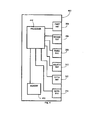
- an SAS controller 400 may have a plurality of PHYs 304, 306, 308, 310, 312, and 314, a processing unit 410, and memory 412 functionally connected to the processing unit 410.
- the memory 412 may be some type of non-volatile memory such as flash memory.
- PHYs are physical connection points in an SAS controller for connecting other SAS devices such as a first target 300 and second target 302.
- SAS devices may be connected to an SAS controller by more than one PHY; for example, the first target 300 may be connected to a first PHY 304 and a second PHY 306, while the second target may be connected to a third PHY 308, a fourth PHY 310, a fifth PHY 312 and a sixth PHY 314.
- SAS controllers typically associated PHYs with ports. Ports are artificial constructs designed to facilitate communication in an SAS controller 400 by allowing SAS devices to send and receive data packets to and from a port rather than a specific PHY. A port is a higher level communication mechanism than a PHY.
- the SAS controller 400 may assign the same port to each PHY connecting the SAS device to the SAS controller 400; for example, the first PHY 304 and the second PHY 306 may both be associated with a first port 316. It may, however, be advantageous to divide a multi-PHY connection between an SAS device and an SAS controller 400 into more than one port.
- AN SAS controller 400 may use a first dynamic port group 334 and a second dynamic port group 336 to divide multiple PHYs connecting an SAS device such as the second target 302 to an SAS controller 400.
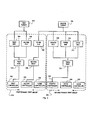
- the third PHY 308, in the first dynamic port group 334 may be associates with a second port 318, while the fourth PHY 310, fifth PHY 312 and sixth PHY 314, in the second dynamic port group 336, may be associated with a third port 320.
- Each port may be associated with a unique port controller; for example, the first port 316 may be associated with a first port controller 322, the second port 318 may be associated with a second port controller 324, and the third port 320 may be associated with a fourth port controller 328.
- the SAS controller 400 may maintain port controllers unassociated with any port; for example, a third port controller 326 within the first dynamic port group 334, and a fifth port controller 330 and sixth port controller 332 within the second dynamic port group 336 may be maintained by the SAS controller 400; unassociated ports may be used as the topology of attached SAS devices changes.
- Port controllers are data elements that contain the SAS address of the SAS device attached to the PHYs associated with the port associated with the port controller. Information contained in a port controller is used when identifying information is sent on link up.
- the SAS controller 400 may initialize all of the PHYs, and associate each PHY with a port based on some initial configuration data stored in memory 412.
- the initial configuration data may include ports associated with each manually configured PHY and dynamic port groups associated with each automatically configured PHY.
- the SAS controller 400 may initially associate every automatically configured PHY in the same dynamic port group with the same port, creating one initial wide port in that dynamic port group.
- the SAS controller may then monitor each PHY for state change events and subsequently create new ports and associate PHYs with those ports as necessary according to the methods and criteria herein described.
- the SAS controller 400 may register a state change event in the first PHY 304 and the second PHY 306.
- the SAS controller 400 may set a flag in PHY configuration data structures associated with the first PHY 304 and the second PHY 306 indicating that those PHYs require re-configuration; the SAS controller 400 may also set a global flag indicating that PHYs require re-configuration. Only PHYs designated as automatically configured in the PHY configuration data structure for that PHY are subject to full re-configuration; the ports associated with manually configured PHYs may remain statically configured even if a state change event occurs.
- the SAS controller 400 may re-configure all PHYs flagged as having undergone a state change event.
- the SAS controller 400 may first determine if the first PHY 304 is active. If the first PHY 304 is not active, the SAS controller 400 may remove the SAS address of the first target 300 stored in the PHY configuration data structure associated with the first PHY 304. Then if the first PHY 304 is automatically configured, the SAS controller 400 may set the hardware link alias associated with the first PHY 304 to an invalid value to ensure no SAS device can attempt to communicate with the first target 300 through the first PHY 304. The SAS controller 400 may then perform the same procedures on the second PHY 306.
- the SAS controller 400 may reset the first PHY 304 and the second PHY 306, and may reset an appropriate flag in the PHY configuration data structure for each PHY indicating that the PHY has been reset.
- the SAS controller 400 may determine that the first PHY 304 is automatically configured and that the first PHY 304 is inactive. If the first PHY 304 is inactive, no further configuration may be required.
- the SAS controller may perform the same procedures on the second PHY 306.
- the SAS controller may maintain all of the port and dynamic port group information pertaining to the first PHY 304 and the second PHY 306 stored in their respective PHY configuration data structures, in memory 412. By preserving port and dynamic port group information associated with PHYs after a state change event, an SAS controller may restore PHYs to their original configuration after a subsequent state change event wherein the same SAS device attached to the same PHY or PHYs is re-activated.
- the SAS controller 400 may register a state change event in the first PHY 304 and the second PHY 306 indicating that those PHYs require re-configuration; the SAS controller 400 may also set a global flag indicating that PHYs require re-configuration. If the first PHY 304 and the second PHY 306 had previously been active, port and dynamic port group information associated with those PHYs would be stored in PHY configuration data structures in memory 412. The SAS controller 400 may first determine if the first PHY 304 is active.
- the SAS controller 400 may store the SAS address of the first target 300 in the PHY configuration data structure associated with the first PHY 304 and set the hardware link alias associated with the first PHY 304 to an appropriate value indicating an association between the PHY and a port. The SAS controller 400 may then perform the same procedures on the second PHY 306. Then the SAS controller 400 may reset the first PHY 304 and the second PHY 306, and may reset an appropriate flag in the PHY configuration data structure for each PHY indicating that the PHY has been reset. In the present case, the SAS controller 400 may determine that the first PHY 304 is automatically configured and that the first PHY 304 is active.
- the SAS controller 400 may then compare the first PHY 304 to every other automatically configured PHY to identify and correct any conflicts in the configuration of any automatically configured PHYs. Comparing the first PHY 304 with the second PHY 306, the SAS controller 400 may determine that the second PHY 306 is active and has undergone a state change event. The SAS controller 400 may then determine if the first PHY 304 and the second PHY 306 are attached to the same SAS device based of the SAS address of the SAS device.
- the SAS controller 400 may determine if the first PHY 304 and the second PHY 306 are associated with different ports in the same dynamic port group based on the PHY configuration data stored in the PHY configuration data structure associated with each PHY. In the present example, the first PHY 304 and the second PHY 306 are not associated with different ports in the same dynamic port group, therefore there is no conflict between the configuration settings of the first PHY 304 and the second PHY 306, and the SAS controller 400 may proceed to compare the first PHY 304 to other automatically configured PHYs such as the third PHY 308. If the third PHY 308 has not undergone a state change event, no further configuration is necessary.
- the SAS controller has thereby automatically re-configured PHYs after multiple state change events to restore deactivated and subsequently reactivated PHYs to their original port and dynamic port group configurations.
Landscapes
- Engineering & Computer Science (AREA)
- Theoretical Computer Science (AREA)
- Physics & Mathematics (AREA)
- General Engineering & Computer Science (AREA)
- General Physics & Mathematics (AREA)
- Human Computer Interaction (AREA)
- Computing Systems (AREA)
- Quality & Reliability (AREA)
- Mathematical Physics (AREA)
- Software Systems (AREA)
- Information Transfer Systems (AREA)
- Small-Scale Networks (AREA)
- User Interface Of Digital Computer (AREA)
Abstract
An apparatus and method are disclosed for maintaining consistent port and PHY configuration information in an SAS controller when connected SAS devices are rebooted, reset or otherwise temporarily disconnected. Configuration information is stored in non-volatile memory, and restored by a methodology to prevent port conflicts.
Description
- This disclosure relates to multi-computer data transferring in electrical computers and digital processing systems, and more particularly to SAS controllers in a network.
- Small Computer System Interface (SCSI) is a set of standards and protocols for physically connecting and transferring data between computers and peripheral devices. SCSI is most commonly used to connect computers to memory devices such as hard drives or tape drives. Serial Attached SCSI (SAS) is a computer bus used to move data to and from computer memory storage devices using SCSI standards and protocols.
- SAS controllers are devices with multiple bi-directional SAS connection points (PHYs). A PHY is a transceiver that electrically interfaces with a physical link and implements portions of the protocol that encodes data and manages reset sequences. Each PHY in an SAS controller may be connected to an SAS device; the PHY includes hardware for implementing communication to and from the connected SAS device. PHYs are organized into ports to facilitate and simplify the processes of connecting to the SAS device connected to a particular PHY; for example, one SAS device may be connected to an SAS controller by several PHYs, those PHYs may be associated with a single port (wide port) such that access to the SAS device is by reference to the common port, thereby increasing the bandwidth of the port, and the SAS controller is responsible for efficiently load balancing across all PHYs.
- SAS controllers may require each PHY to be manually configured, making the initial setup a time consuming, laborious process. Furthermore, any changes to the topology of the system is equally time consuming and laborious, and prone to human error. Some SAS controllers contain functionality to automatically configure ports and PHYs, thereby eliminating the human factor, and allowing the system to easily incorporate changes in topology.
- SAS devices occasionally lose power, reboot, reset or otherwise lose connectivity to an SAS controller. A device attempting to sent or retrieve information from a port associated with a PHY that is no longer connected to an SAS device would encounter a significant error condition. SAS controllers containing functionality to automatically configure ports and PHYs recognize the failed connection as a change to the topology of the system and deactivate ports associated with PHYs that are no longer connected to an SAS device. This behavior prevents other devices from attempting to access the disconnected SAS device, but also disassociates the SAS device from a port which may be known to other devices wishing to connect to the SAS device when and if the SAS device re-connects to the SAS controller.
- The present invention provides a method and apparatus for maintaining consistent SAS. port configurations across attached SAS device reboots, power cycles, and chip resets. The apparatus is an SAS controller with a plurality of PHYs, a processing unit, and non-volatile memory. The SAS controller retains configuration information for a PHY in a PHY configuration data structure, in the non-volatile memory, even when an SAS device is disconnected from the PHY in anticipation of the SAS device potentially being re-connected to the same PHY.
- The method for maintaining consistent SAS port configurations includes clearing the SAS address of an SAS device from a PHY configuration data structure when the SAS device is disconnected from a PHY associated with the PHY configuration data structure, and setting a link alias associated with the PHY to an invalid value to prevent other devices from attempting to communicate with the SAS device through the PHY, but retaining the SAS address of the SAS device in a port configuration data structure.
- If the SAS device is re-connected to the same PHY, for example the SAS device completes a power cycle, the SAS controller automatically reconfigures the PHY using information stored in the PHY configuration data structure and the port configuration data structure. The SAS controller then compares the PHY to every other automatically configured PHY to ensure that no PHYs have conflicting configuration information.
-
- Fig. 1
- shows a flowchart depicting one embodiment of the present invention;
- Fig. 2
- shows a flowchart depicting another embodiment of the present invention;
- Fig. 3
- shows a chart depicting the organizational structure of an SAS controller configured according to the methods depicted in
Fig. 1 andFig. 2 ; - Fig. 4
- shows a block diagram of an SAS controller configured to implement the methods shown in
Fig. 1 andFig. 2 ; - Reference will now be made in detail to the subject matter disclosed, which is illustrated in the accompanying drawings. The scope of the invention is limited only by the claims; numerous alternatives, modifications and equivalents are encompassed. For the purpose of clarity, technical material that is known in the technical fields related to the embodiments has not been described in detail to avoid unnecessarily obscuring the description.
- Referring to
Fig. 1 , exemplary operations for a method for establishing an initial configuration for an SAS controller are shown. The method may be performed by a processing unit within the SAS controller. The SAS controller may comprise one or more PHYs organized into one or more ports. Each port may be represented by a port configuration data structure and each PHY may be represented by a PHY configuration data structure. Atoperation 100, the SAS controller may first determine if ports associated with the SAS controller have already been initialized; if the ports have been initialized, executing a method to establish an initial configuration for such ports may be undesirable and the method may terminate. If the ports have not been initialized, the SAS controller may initializealtports 102 by assigning predetermined values to elements in each port configuration data structure. The predetermined values may be derived from configuration data stored in memory within the SAS controller. The SAS controller may initializeone ormore port controllers 104; a port controller represents an SAS address associated with a SAS device. Each port controller may be represented by a port controller configuration data structure. Then the SAS controller may determine if there are PHYs to configure 106. If there are no PHYs to configure, the SAS controller may set an internal flag indicating that an initial port configuration has been completed 108 and the method may terminate. If there are PHYs to configure, the SAS controller may sequentially processe each PHY to add that PHY to an appropriate port. Ports may be initially associated with PHYs based on the configuration data stored in the SAS controller. Atoperation 110, the SAS controller may determine if the port associated with each PHY during each sequential iteration is already associated with any existing member PHYs. If the port is not associated with any existing member PHYs, the SAS controller may allocate a port controller for theport 112. The SAS controller may then determine if the PHY is to be automatically or manually configured 114 based on configuration data stored in the SAS controller. If the PHY is to be automatically configured, the SAS controller may set aflag 116 in the PHY configuration data structure associated with that PHY indicating that the PHY is to be automatically configured; the SAS controller may then store avalue 118 representing a dynamic port group in the PHY configuration data structure based on the configuration data stored in the SAS controller; the SAS controller may then set a data element in aglobal data structure 120 representing the dynamic port group indicating that the PHY belongs to that dynamic port group. On the other hand, if the PHY is to be manually configured, the SAS controller may set aflag 122 in the PHY configuration data structure associated with that PHY indicating that the PHY is to be manually configured. For both automatically and manually configured PHYs, the SAS controller may then add thePHY 124 as a member of the associated port by recording the port number in a data element in the PHY configuration data structure associated with the PHY, and recording data in the port configuration data structure indicating that the PHY is a member of that port; specifically, the SAS controller may set a bit representing the PHY in a bit mask member of the port configuration data structure. The SAS controller may then associate 126 the port with the port controller by storing the port number in the port controller configuration data structure associated with the port controller. The SAS controller may then associate 128 the PHY with the port by setting a data element in the SAS controller hardware, specifically associated with the PHY, to a value uniquely identifying the port. Finally, the SAS controller may store 130 PHY configuration information for the PHY such as the port and dynamic port group associated with the PHY. The same process may be performed for each PHY in the SAS controller. - By this method, an SAS controller may be configured to an initial state based on configuration data stored in the SAS controller. The SAS controller may support manually configured PHYs and automatically configured PHYs; however, manually configured PHYs should not be associated with the same port as automatically configured PHYs because changes in the topography of a system may result in changes to automatically configured PHYs which are not reflected in corresponding changes to manually configured PHYs, potentially resulting in incompatible port assignments.
- Referring to
Fig. 2 , exemplary operations for a method for automatically re-configuring an SAS controller, after the SAS controller is initially configured based on configuration data stored in memory in the SAS controller, whenever a state change event occurs are shown. A state change event is a change in the state of a PHY of the SAS controller, such as an SAS device being connected or disconnected from the PHY, an SAS device connected to the PHY rebooting, or an SAS device connected to the PHY powering down. Whenever a state change event occurs, the SAS controller may set an internal flag indicating that the SAS controller requires re-configuration. Rags allow for the bifurcation of the process of monitoring PHYS for state change events, and the process of re-configuring PHYs whenever state change events occur. The SAS controller may then execute the present method. - The SAS controller may first reset 200 the internal flag indicating that the SAS controller requires re-configuration. The SAS controller may then iteratively process each PHY on the SAS controller by determining 202, before each iteration, if there are PHYs to process. For each PHY being processed, the SAS controller may determine 204 if the PHY link is currently active; a PHY link is active when the PHY is connected to an SAS device that is able to send and receive data. If the PHY link is active, the SAS controller may move on to the next PHY, if it is not active the SAS controller may clear 206 a data element storing an SAS address in a PHY configuration data structure associated with the PHY. The SAS address may be the address of the SAS device attached to the PHY. Where a single SAS device is attached to multiple PHYs on an SAS controller, the SAS address stored in each PHY configuration data structure associated with each PHY may be identical. Once the data element storing the SAS address is cleared, the SAS controller may determine 208 if the PHY is automatically configured or manually configured; if the PHY is manually configured, the SAS controller may move on to the next PHY, if the PHY is automatically configured, the SAS controller may set 210 a data element in the SAS controller hardware, specifically associated with the PHY to an invalid value, but maintain the PHY configuration data structure in its current state. By maintaining the PHY configuration data structure, the PHY can be re-configured at a later time to the same port and/or dynamic port group settings if the SAS device previously attached to the PHY is re-connected. The SAS controller may then move on to the next PHY until each PHY has been processed.
- Once all the PHYs on the SAS controller have been processed, the SAS controller may reset each PHY so that other SAS devices attached to the SAS controller will see changes to the PHY configuration. The SAS controller may iteratively process212 each PHY to be reset. For each PHY, the SAS controller may determine 214 whether the PHY is automatically or manually configured; if the PHY is manually configured, the SAS controller may move on to the next PHY, if the PHY is automatically configured, the SAS controller may determine 216 if the PHY is active. If the PHY is inactive, the SAS controller may move on to the next PHY, if the PHY is active, the SAS controller may determine 218 if there are other automatically configured PHYs, then it may iteratively compare the current PHY (first PHY) to every other automatically configured PHY, where the SAS controller may compare the first PHY to a single other automatically configured PHY (second PHY) from a list of all automatically configured PHYs until the first PHY has been compared to every other automatically configured PHY in the list.
- The SAS controller may first determine 220 if the second PHY is active and if a state change event has occurred pertaining to the second PHY. If the second PHY is not active, or a state change event has not occurred pertaining to the second PHY, the SAS controller may store 244 PHY configuration information for the first PHY and moveon to compare the first PHY the next automatically configured PHY. Otherwise, the SAS controller may determine 222 if the first PHY and the second PHY share the same SAS address by comparing a data element storing such SAS address for each PHY in respective PHY configuration data structures, or by querying such information directly from the SAS devices attached to each PHY; if the SAS address of the first PHY and the second PHY are different, the SAS controller may determine 224 if they are assigned the same port, if they are not assigned the same port, the SAS controller may store 244 PHY configuration information for the first PHY and move on to compare the first PHY the next automatically configured PHY; if the first PHY and second PHY share the same port, the SAS controller may create 226 a new port and associates the first PHY with the new port, then store 244 PHY configuration information for the first PHY and move on to compare the first PHY to the next automatically configured PHY. If the first PHY and the second PHY share the same SAS address, the SAS controller may determine 228 whether the first PHY and the second PHY are associated with different ports, but in the same dynamic port group. Ordinarily, when an SAS device is connected to an SAS controller by multiple PHYs, each PHY is associated with the same port to form a wide port. Dynamic port groups are an artificial construct to allow PHYs connecting the same SAS device and SAS controller to be associated with different ports. If the first PHY and the second PHY share the same SAS address, they must necessarily connect to the same SAS device; therefore, if they are in the same dynamic port group, they should also be associated with the same port. If that is the case, the SAS controller may store 244 PHY configuration information for the first PHY and move on to compare the first PHY to the next automatically configured PHY; if that is not the case, either the first PHY or the second PHY may require additional re-configuration. The SAS controller may determine230 if any change has occurred in the configuration of the first PHY since the last re-configuration based on a data element in the PHY configuration data structure associated with the first PHY; if no change has occurred, the SAS controller may associate 232 the second PHY with the port associated with the first PHY, then store 244 PHY configuration information for the first PHY and move on to compare the first PHY to the next automatically configured PHY. If a change has been made to the first PHY, the SAS controller may determine 234 which PHY is associated with the lower port number; if the first PHY is associated with the lower port number, the SAS controller may assign 240 the port associated with the first PHY to the second PHYand set 242 a flag indicating that the second PHY needs to be reset; if the second PHY is associated with the lower port number, the SAS controller may assign 236 the port associated with the second PHY to the first PHY and set 238 a flag indicating that the first PHY needs to be reset again. In either case, the SAS controller may then store 244 PHY configuration information for the first PHY and move on to compare the first PHY to the next automatically configured PHY. The above method indicates a preference for lower port numbers; the preference for lower port numbers is an arbitrary condition to resolve conflicts between port numbers, any deterministic mechanism for resolving such conflicts is acceptable. Once the SAS controller has iteratively re-configured all PHYs and made appropriate port number changes, all PHY configuration data structures are stored in a persistent, non-volatile memory element. By this method, port and dynamic port group information associated with PHYs in an SAS controller is retained and restored when an SAS device is disconnected and subsequently re-connected to the same PHY. This method is also tolerant of changes to the topology of SAS devices connected to an SAS controller such that port numbers and dynamic port group settings are not retained when SAS devices are disconnected from PHYs on an SAS controller and different SAS devices are subsequently connected to those PHYs.
- Referring to
Fig. 3 andFig. 4 , anSAS controller 400 according the resent invention may have a plurality ofPHYs processing unit 410, andmemory 412 functionally connected to theprocessing unit 410. Thememory 412 may be some type of non-volatile memory such as flash memory. PHYs are physical connection points in an SAS controller for connecting other SAS devices such as afirst target 300 andsecond target 302. SAS devices may be connected to an SAS controller by more than one PHY; for example, thefirst target 300 may be connected to afirst PHY 304 and asecond PHY 306, while the second target may be connected to athird PHY 308, afourth PHY 310, afifth PHY 312 and asixth PHY 314. SAS controllers typically associated PHYs with ports. Ports are artificial constructs designed to facilitate communication in anSAS controller 400 by allowing SAS devices to send and receive data packets to and from a port rather than a specific PHY. A port is a higher level communication mechanism than a PHY. Where a single SAS device is connected to anSAS controller 400 through more than one PHY, theSAS controller 400 may assign the same port to each PHY connecting the SAS device to theSAS controller 400; for example, thefirst PHY 304 and thesecond PHY 306 may both be associated with afirst port 316. It may, however, be advantageous to divide a multi-PHY connection between an SAS device and anSAS controller 400 into more than one port. ANSAS controller 400 may use a firstdynamic port group 334 and a seconddynamic port group 336 to divide multiple PHYs connecting an SAS device such as thesecond target 302 to anSAS controller 400. Thethird PHY 308, in the firstdynamic port group 334, may be associates with asecond port 318, while thefourth PHY 310,fifth PHY 312 andsixth PHY 314, in the seconddynamic port group 336, may be associated with athird port 320. Each port may be associated with a unique port controller; for example, thefirst port 316 may be associated with afirst port controller 322, thesecond port 318 may be associated with asecond port controller 324, and thethird port 320 may be associated with afourth port controller 328. TheSAS controller 400 may maintain port controllers unassociated with any port; for example, athird port controller 326 within the firstdynamic port group 334, and afifth port controller 330 andsixth port controller 332 within the seconddynamic port group 336 may be maintained by theSAS controller 400; unassociated ports may be used as the topology of attached SAS devices changes. Port controllers are data elements that contain the SAS address of the SAS device attached to the PHYs associated with the port associated with the port controller. Information contained in a port controller is used when identifying information is sent on link up. - The
SAS controller 400 may initialize all of the PHYs, and associate each PHY with a port based on some initial configuration data stored inmemory 412. The initial configuration data may include ports associated with each manually configured PHY and dynamic port groups associated with each automatically configured PHY. TheSAS controller 400 may initially associate every automatically configured PHY in the same dynamic port group with the same port, creating one initial wide port in that dynamic port group. The SAS controller may then monitor each PHY for state change events and subsequently create new ports and associate PHYs with those ports as necessary according to the methods and criteria herein described. - In the event an attached SAS device such as the
first target 300 looses power, reboots, or is otherwise disconnected from theSAS controller 400, theSAS controller 400 may register a state change event in thefirst PHY 304 and thesecond PHY 306. TheSAS controller 400 may set a flag in PHY configuration data structures associated with thefirst PHY 304 and thesecond PHY 306 indicating that those PHYs require re-configuration; theSAS controller 400 may also set a global flag indicating that PHYs require re-configuration. Only PHYs designated as automatically configured in the PHY configuration data structure for that PHY are subject to full re-configuration; the ports associated with manually configured PHYs may remain statically configured even if a state change event occurs. - The
SAS controller 400 may re-configure all PHYs flagged as having undergone a state change event. In the present example, theSAS controller 400 may first determine if thefirst PHY 304 is active. If thefirst PHY 304 is not active, theSAS controller 400 may remove the SAS address of thefirst target 300 stored in the PHY configuration data structure associated with thefirst PHY 304. Then if thefirst PHY 304 is automatically configured, theSAS controller 400 may set the hardware link alias associated with thefirst PHY 304 to an invalid value to ensure no SAS device can attempt to communicate with thefirst target 300 through thefirst PHY 304. TheSAS controller 400 may then perform the same procedures on thesecond PHY 306. Then, if no other PHYs have undergone a state change event, theSAS controller 400 may reset thefirst PHY 304 and thesecond PHY 306, and may reset an appropriate flag in the PHY configuration data structure for each PHY indicating that the PHY has been reset. In the present case, theSAS controller 400 may determine that thefirst PHY 304 is automatically configured and that thefirst PHY 304 is inactive. If thefirst PHY 304 is inactive, no further configuration may be required. The SAS controller may perform the same procedures on thesecond PHY 306. The SAS controller may maintain all of the port and dynamic port group information pertaining to thefirst PHY 304 and thesecond PHY 306 stored in their respective PHY configuration data structures, inmemory 412. By preserving port and dynamic port group information associated with PHYs after a state change event, an SAS controller may restore PHYs to their original configuration after a subsequent state change event wherein the same SAS device attached to the same PHY or PHYs is re-activated. - When an attached SAS device such as the
first target 300 re-connects to theSAS controller 400 after loosing power, rebooting, or otherwise disconnecting from theSAS controller 400, theSAS controller 400 may register a state change event in thefirst PHY 304 and thesecond PHY 306 indicating that those PHYs require re-configuration; theSAS controller 400 may also set a global flag indicating that PHYs require re-configuration. If thefirst PHY 304 and thesecond PHY 306 had previously been active, port and dynamic port group information associated with those PHYs would be stored in PHY configuration data structures inmemory 412. TheSAS controller 400 may first determine if thefirst PHY 304 is active. If thefirst PHY 304 is active, theSAS controller 400 may store the SAS address of thefirst target 300 in the PHY configuration data structure associated with thefirst PHY 304 and set the hardware link alias associated with thefirst PHY 304 to an appropriate value indicating an association between the PHY and a port. TheSAS controller 400 may then perform the same procedures on thesecond PHY 306. Then theSAS controller 400 may reset thefirst PHY 304 and thesecond PHY 306, and may reset an appropriate flag in the PHY configuration data structure for each PHY indicating that the PHY has been reset. In the present case, theSAS controller 400 may determine that thefirst PHY 304 is automatically configured and that thefirst PHY 304 is active. TheSAS controller 400 may then compare thefirst PHY 304 to every other automatically configured PHY to identify and correct any conflicts in the configuration of any automatically configured PHYs. Comparing thefirst PHY 304 with thesecond PHY 306, theSAS controller 400 may determine that thesecond PHY 306 is active and has undergone a state change event. TheSAS controller 400 may then determine if thefirst PHY 304 and thesecond PHY 306 are attached to the same SAS device based of the SAS address of the SAS device. If thefirst PHY 304 and thesecond PHY 306 are attached to the same SAS device, theSAS controller 400 may determine if thefirst PHY 304 and thesecond PHY 306 are associated with different ports in the same dynamic port group based on the PHY configuration data stored in the PHY configuration data structure associated with each PHY. In the present example, thefirst PHY 304 and thesecond PHY 306 are not associated with different ports in the same dynamic port group, therefore there is no conflict between the configuration settings of thefirst PHY 304 and thesecond PHY 306, and theSAS controller 400 may proceed to compare thefirst PHY 304 to other automatically configured PHYs such as thethird PHY 308. If thethird PHY 308 has not undergone a state change event, no further configuration is necessary. The same is true for thefourth PHY 310, thefifth PHY 312 and thesixth PHY 314. The SAS controller has thereby automatically re-configured PHYs after multiple state change events to restore deactivated and subsequently reactivated PHYs to their original port and dynamic port group configurations. - Although the disclosure has been described in terms of specific embodiments, one skilled in the art will recognized that various modifications may be made that are within the scope of the present disclosure. Therefore, the scope of the disclosure should not be limited to the foregoing description. Rather, the scope of the disclosure should be determined based upon the claims recited herein, including the full scope of equivalents thereof.
Claims (20)
- AN SAS controller apparatus comprising:a processor;non-volatile memory configured to store port and PHY configuration information,
operably connected to the processor;a plurality of PHYs, each configured to connect to an SAS device, operably
connected to the processor; andcomputer executable program code, configured to:automatically configure at least one of the plurality of PHYs, running on the
processor;store PHY configuration information in the memory; andre-configure one or more PHYs based on such PHY configuration information
after the one or more PHYs undergoes a state change event. - The apparatus of Claim 1 wherein an SAS device connected to the one or
more PHYs looses connectivity to the one or more PHYs and subsequently regains connectivity to the one or more PHYs when no intervening SAS device was connected to the one or more PHYs. - The apparatus of Claim 1 wherein the computer executable program code is
further configured to:set a data element in a data structure associated with one of the plurality of PHYs
indicating that the one of the plurality of PHYs is automatically configured;store dynamic port group information in a data structure associated with the one
of the plurality of PHYs indicating that the one of the plurality of PHYs is a member of a dynamic port group;set a data element in a data structure associated with at least one port indicating
that the one of the plurality of PHYs is a member of the at least one port;set a data element in a data structure associated with a port controller indicating
that at least one port is associated with the port controller; andset a data element in a data structure associated with a hardware Link alias
associated with the one of the plurality of PHYs, indicating that the one of the plurality of PHYs is associated with the at least one port wherein the at least one port does have member PHYs. - The apparatus of Claim 1 wherein the computer executable program code is
further configured to:allocate a port controller for at least one port, wherein the at least one port does
not have any member PHYs;set a data element in a data structure associated with one of the plurality of PHYs
indicating that the one of the plurality of PHYs is automatically configured;store dynamic port group information in a data structure associated with the one
of the plurality of PHYs indicating that the one of the plurality of PHYs is a member of some dynamic port group;set a data element in a data structure indicating that the one of the plurality of
PHYs is a member of some dynamic port group;set a data element in a data structure associated with the at least one port
indicating that the one of the plurality of PHYs is a member of the at least one port;set a data element in a data structure associated with a port controller indicating
that at least one port is associated with the port controller; andset a data element in a data structure associated with a hardware link alias
associated with the one of the plurality of PHYs, indicating that the one of the plurality of PHYs is associated with the at least one port wherein the at least one port does have member PHYs. - The apparatus of Claim 1, wherein the computer executable program code
is further configured to:determine if one or more of the plurality of PHYs has undergone a state change
event;determine if one of the plurality of PHYs is active; anddetermine if the one of the plurality of PHYs is automatically configured. - The apparatus of Claim 5, wherein the computer executable program code
is further configured to:clear an SAS address from a data element configured to store an SAS address; andset a hardware link alias configured to refer to the one of the plurality of PHYs to
some invalid value, wherein the one of the plurality of PHYs is inactive and is automatically configured. - The apparatus of Claim 5, wherein the computer executable program code
is further configured to:compare the one of the plurality of PHYs to a second PHY in the plurality of PHYs,
wherein the second PHY in the plurality of PHYs is automatically configured, and wherein the second PHY in the plurality of PHYs has undergone a state change event; anddetermine if the one of the plurality of PHYs and the second PHY in the plurality of
PHYs are attached to a single SAS device, wherein the one of the plurality of PHYs is active and is automatically configured. - The apparatus of Claim 7, wherein the computer executable program code
is further configured to:create a new port; andassociate the one of the plurality of PHYs with the new port, wherein the one of
the plurality of PHYs and the second PHY in the plurality of PHYs are not attached to the same SAS device, and wherein the one of the plurality of PHYs and the second PHY in the plurality of PHYs are associated with the same port. - The apparatus of Claim 7, wherein the computer executable program code
is further configured to:modify configuration information for the one of the poluratity of PHYs such that
the one of the plurality of PHYs and the second PHY in the plurality of PHYs are associated with the same port, wherein the one of the plurality of PHYs and the second PHY in the plurality of PHYs are associated with different ports in the same dynamic port group, and wherein the one of the plurality of PHYs and the second PHY in the plurality of PHYs are attached to the same SAS device; andset a data element in a data structure associated with the on of the plurality of
PHYs, wherein the data element is configured to indicate that the one of the plurality of PHYs requires an additional reset operation. - The apparatus of Claim 7, wherein the computer executable program code
is further configured to:modify configuration information for the second PHY in the plurality of PHYs such
that the one of the plurality of PHYs and the second PHY in the plurality of PHYs are associated with the same port, wherein the one of the plurality of PHYs and the second PHY in the plurality of PHYs are associated with different ports in the same dynamic port group, and wherein the one of the plurality of PHYs and the second PHY in the plurality of PHYs are attached to the same SAS device; andset a data element in a data structure associated with the second PHY in the
plurality of PHYs, wherein the data element is configured to indicate that the second PHY in the plurality of PHYs requires an additional reset operation. - A method for configuring a PHY in an SAS controller, comprising:initializing at least one port in the SAS controller;initializing at least one port controller in the SAS controller;determining if the at least one port has any member PHYs;associating the at least one port with the PHY;associating the at least one port controller with the at least one port;storing configuration information associated with the PHY; andrestoring the PHY to a configuration state based on stored configuration
information associated with the PHY in response to a state change event occurring after the storing configuration information associated with the PHY. - The method of Claim 11, further comprising:setting a data element in a data structure associated with the PHY indicating that
the PHY is automatically configured;storing dynamic port group information in a data structure associated with the PHY
indicating that the PHY is a member of some dynamic port group;setting a data element in a data structure indicating that the PHY is a member of
some dynamic port group;setting a data element in a data structure associated with the at least one port
indicating that the PHY is a member of the at least one port;setting a data element in a data structure associated with a port controller
indicating that the at least one port is associated with the port controller; andsetting a data element in a data structure associated with a hardware link alias
associated with the PHY, indicating that the PHY is associated with the at least one port,wherein the at least one port does have member PHYs. - The method of Claim 11, further comprising allocating a port controller for
the at least one port, wherein the at least one port does not have any member PHYs. - The method of Claim 12, further comprising:setting a data element in a data structure associated with the PHY indicating that
the PHY is automatically configured;storing dynamic port group information in a data structure associated with the PHY
indicating that the PHY is a member of some dynamic port group;setting a data element in a data structure indicating that the PHY is a member of
some dynamic port group;setting a data element in a data structure associated with the at least one port
indicating that the PHY is a member of the at least one port;setting a data element in a data structure associated with a port controller
indicating that the at least one port is associated with the port controller; andsetting a data element in a data structure associated with a hardware link alias
associated with the PHY, indicating that the PHY is associated with the at least one port. - A method for re-configuring a PHY in an SAS controller, comprising:determining if the PHY is active;determining if the PHY is automatically configured;storing configuration information associated with the PHY; andrestoring the PHY to a configuration state based on stored configuration
information associated with the PHY,wherein the PHY has undergone a state change event after storing configuration
information associated with the PHY. - The method of Claim 15, further comprising:clearing an SAS address from a data element configured to store an SAS address;
andsetting a hardware link alias configured to refer to the PHY to some invalid value,wherein the PHY is inactive, and wherein the PHY is automatically configured. - The method of Claim 15, further comprising:comparing the PHY to a second PHY, wherein the second PHY is automatically
configured, and wherein the second PHY has undergone a state change event; anddetermining if the PHY and the second PHY are attached to a single SAS device,wherein the PHY is active, and wherein the PHY is automatically configured. - The method of Claim 17, further comprising:creating a new port; andassociating the PHY with the new port,wherein the PHY and the second PHY are not attached to the same SAS device, and
wherein the PHY and the second PHY are associated with the same port. - The method of Claim 17, further comprising:modifying configuration information for the PHY such that the PHY and the second
PHY are associated with the same port, wherein the PHY and the second PHY are associated with different ports in the same dynamic port group, and wherein the PHY and the second PHY are attached to the same SAS device; andsetting a data element in a data structure associated with the PHY, wherein the
data element is configured to indicate that the PHY requires an additional reset operation. - The method of Claim 17, further comprising:modifying configuration information for the second PHY such that the PHY and the
second PHY are associated with the same port, wherein the PHY and the second PHY are associated with different ports in the same dynamic port group, and wherein the PHY and the second PHY are attached to the same SAS device; andsetting a data element in a data structure associated with the second PHY,
wherein the data element is configured to indicate that the second PHY requires an additional reset operation.
Applications Claiming Priority (1)
| Application Number | Priority Date | Filing Date | Title |
|---|---|---|---|
| US13/021,890 US8219719B1 (en) | 2011-02-07 | 2011-02-07 | SAS controller with persistent port configuration |
Publications (1)
| Publication Number | Publication Date |
|---|---|
| EP2485154A1 true EP2485154A1 (en) | 2012-08-08 |
Family
ID=45557994
Family Applications (1)
| Application Number | Title | Priority Date | Filing Date |
|---|---|---|---|
| EP12250003A Withdrawn EP2485154A1 (en) | 2011-02-07 | 2012-01-05 | SAS Controller with persistent port configuration |
Country Status (6)
| Country | Link |
|---|---|
| US (1) | US8219719B1 (en) |
| EP (1) | EP2485154A1 (en) |
| JP (1) | JP5128708B2 (en) |
| KR (1) | KR101278787B1 (en) |
| CN (1) | CN102693201B (en) |
| TW (1) | TWI393012B (en) |
Families Citing this family (36)
| Publication number | Priority date | Publication date | Assignee | Title |
|---|---|---|---|---|
| US8959307B1 (en) | 2007-11-16 | 2015-02-17 | Bitmicro Networks, Inc. | Reduced latency memory read transactions in storage devices |
| US8665601B1 (en) | 2009-09-04 | 2014-03-04 | Bitmicro Networks, Inc. | Solid state drive with improved enclosure assembly |
| US8447908B2 (en) | 2009-09-07 | 2013-05-21 | Bitmicro Networks, Inc. | Multilevel memory bus system for solid-state mass storage |
| US8560804B2 (en) | 2009-09-14 | 2013-10-15 | Bitmicro Networks, Inc. | Reducing erase cycles in an electronic storage device that uses at least one erase-limited memory device |
| US8769070B2 (en) | 2010-03-19 | 2014-07-01 | Netapp, Inc. | SAS domain management and SSP data handling over ethernet |
| JP5736870B2 (en) * | 2011-03-16 | 2015-06-17 | 富士通株式会社 | Storage device, controller, and address management method |
| US9372755B1 (en) | 2011-10-05 | 2016-06-21 | Bitmicro Networks, Inc. | Adaptive power cycle sequences for data recovery |
| US9043669B1 (en) | 2012-05-18 | 2015-05-26 | Bitmicro Networks, Inc. | Distributed ECC engine for storage media |
| US8856392B2 (en) * | 2012-07-16 | 2014-10-07 | Hewlett-Packard Development Company, L.P. | Dividing a port into smaller ports |
| TW201416852A (en) * | 2012-10-23 | 2014-05-01 | Hon Hai Prec Ind Co Ltd | Method and system for automatically restoring RAID card |
| US9344383B2 (en) | 2012-11-07 | 2016-05-17 | Dell Products L.P. | Event driven network system |
| US9423457B2 (en) | 2013-03-14 | 2016-08-23 | Bitmicro Networks, Inc. | Self-test solution for delay locked loops |
| US9430386B2 (en) | 2013-03-15 | 2016-08-30 | Bitmicro Networks, Inc. | Multi-leveled cache management in a hybrid storage system |
| US9798688B1 (en) | 2013-03-15 | 2017-10-24 | Bitmicro Networks, Inc. | Bus arbitration with routing and failover mechanism |
| US9934045B1 (en) | 2013-03-15 | 2018-04-03 | Bitmicro Networks, Inc. | Embedded system boot from a storage device |
| US9875205B1 (en) | 2013-03-15 | 2018-01-23 | Bitmicro Networks, Inc. | Network of memory systems |
| US9971524B1 (en) | 2013-03-15 | 2018-05-15 | Bitmicro Networks, Inc. | Scatter-gather approach for parallel data transfer in a mass storage system |
| US9501436B1 (en) | 2013-03-15 | 2016-11-22 | Bitmicro Networks, Inc. | Multi-level message passing descriptor |
| US10489318B1 (en) | 2013-03-15 | 2019-11-26 | Bitmicro Networks, Inc. | Scatter-gather approach for parallel data transfer in a mass storage system |
| US9400617B2 (en) | 2013-03-15 | 2016-07-26 | Bitmicro Networks, Inc. | Hardware-assisted DMA transfer with dependency table configured to permit-in parallel-data drain from cache without processor intervention when filled or drained |
| US9672178B1 (en) | 2013-03-15 | 2017-06-06 | Bitmicro Networks, Inc. | Bit-mapped DMA transfer with dependency table configured to monitor status so that a processor is not rendered as a bottleneck in a system |
| US9842024B1 (en) | 2013-03-15 | 2017-12-12 | Bitmicro Networks, Inc. | Flash electronic disk with RAID controller |
| US10120694B2 (en) | 2013-03-15 | 2018-11-06 | Bitmicro Networks, Inc. | Embedded system boot from a storage device |
| US9734067B1 (en) | 2013-03-15 | 2017-08-15 | Bitmicro Networks, Inc. | Write buffering |
| US9425912B2 (en) * | 2013-05-15 | 2016-08-23 | Avago Technologies General Ip (Singapore) Pte. Ltd. | Lane-based multiplexing for physical links in serial attached small computer system interface architectures |
| US10055150B1 (en) | 2014-04-17 | 2018-08-21 | Bitmicro Networks, Inc. | Writing volatile scattered memory metadata to flash device |
| US9952991B1 (en) | 2014-04-17 | 2018-04-24 | Bitmicro Networks, Inc. | Systematic method on queuing of descriptors for multiple flash intelligent DMA engine operation |
| US10042792B1 (en) | 2014-04-17 | 2018-08-07 | Bitmicro Networks, Inc. | Method for transferring and receiving frames across PCI express bus for SSD device |
| US10025736B1 (en) | 2014-04-17 | 2018-07-17 | Bitmicro Networks, Inc. | Exchange message protocol message transmission between two devices |
| US10078604B1 (en) | 2014-04-17 | 2018-09-18 | Bitmicro Networks, Inc. | Interrupt coalescing |
| US10552050B1 (en) | 2017-04-07 | 2020-02-04 | Bitmicro Llc | Multi-dimensional computer storage system |
| US10565041B2 (en) * | 2017-05-19 | 2020-02-18 | Western Digital Technologies, Inc. | Managing phys of a data storage target device |
| US10359948B2 (en) | 2017-08-28 | 2019-07-23 | International Business Machines Corporation | I/O performance in heterogeneous storage environments |
| CN108900365B (en) * | 2018-09-11 | 2021-04-27 | 北京腾凌科技有限公司 | Data transmission method and device |
| CN111984568B (en) * | 2020-08-27 | 2023-01-10 | 苏州浪潮智能科技有限公司 | A method and system for polarity self-adaptation of PHY port of SAS controller |
| US12210880B2 (en) | 2022-01-28 | 2025-01-28 | Stmicroelectronics S.R.L. | Device with client configuration and related method |
Citations (4)
| Publication number | Priority date | Publication date | Assignee | Title |
|---|---|---|---|---|
| US20050080881A1 (en) * | 2003-09-26 | 2005-04-14 | William Voorhees | Systems and methods for configuring ports of an SAS domain |
| US20050228924A1 (en) * | 2004-03-31 | 2005-10-13 | Marushak Nathan E | Expander device capable of persistent reservations and persistent affiliations |
| US20060101171A1 (en) * | 2004-11-05 | 2006-05-11 | Grieff Thomas W | SAS expander |
| US20060230125A1 (en) * | 2005-03-22 | 2006-10-12 | Johnson Stephen B | System and method for SAS PHY dynamic configuration |
Family Cites Families (21)
| Publication number | Priority date | Publication date | Assignee | Title |
|---|---|---|---|---|
| US7502865B2 (en) | 2003-12-18 | 2009-03-10 | Intel Corporation | Addresses assignment for adaptor interfaces |
| US7676613B2 (en) * | 2004-08-03 | 2010-03-09 | Lsi Corporation | Methods and structure for assuring correct data order in SATA transmissions over a SAS wide port |
| US8301810B2 (en) * | 2004-12-21 | 2012-10-30 | Infortrend Technology, Inc. | SAS storage virtualization controller, subsystem and system using the same, and method therefor |
| US8332560B2 (en) * | 2005-07-11 | 2012-12-11 | Dell Products L.P. | System and method for identifying inoperable connection points in a storage enclosure |
| US7412631B2 (en) * | 2005-09-13 | 2008-08-12 | Lsi Corporation | Methods and structure for verifying domain functionality |
| US20070093124A1 (en) * | 2005-10-20 | 2007-04-26 | Lsi Logic Corporation | Methods and structure for SAS expander optimization of SAS wide ports |
| US20070094472A1 (en) * | 2005-10-20 | 2007-04-26 | Dell Products L.P. | Method for persistent mapping of disk drive identifiers to server connection slots |
| JP4775846B2 (en) * | 2006-03-20 | 2011-09-21 | 株式会社日立製作所 | Computer system and method for controlling allocation of physical links |
| US8082368B2 (en) * | 2006-04-21 | 2011-12-20 | Infortrend Technology, Inc. | Display device for indicating connection statuses of a communication channel provided between two systems and method thereof |
| US7536584B2 (en) * | 2006-06-08 | 2009-05-19 | Dot Hill Systems Corporation | Fault-isolating SAS expander |
| US7673185B2 (en) * | 2006-06-08 | 2010-03-02 | Dot Hill Systems Corporation | Adaptive SAS PHY configuration |
| US7761540B2 (en) * | 2006-10-17 | 2010-07-20 | Dell Products L.P. | System and method for automated remote booting in a serial attached SCSI environment |
| JP5175483B2 (en) * | 2007-03-30 | 2013-04-03 | 株式会社日立製作所 | Storage apparatus and control method thereof |
| US7719287B2 (en) * | 2007-04-05 | 2010-05-18 | Dell Products L.P. | Systems and method for monitoring information handling system interfaces through cables having plural links |
| US7882509B2 (en) | 2007-06-29 | 2011-02-01 | Emulex Design & Manufacturing Corporation | Expander-based solution to the dynamic STP address problem |
| JP4945363B2 (en) * | 2007-07-30 | 2012-06-06 | 株式会社日立製作所 | Storage system connected at the back end |
| US20090037565A1 (en) | 2007-08-02 | 2009-02-05 | International Business Machines Corporation | Address mapping scheme for sas zoning |
| US8417858B2 (en) * | 2008-05-07 | 2013-04-09 | Emulex Design & Manufacturing Corporation | System and method for enabling multiple processors to share multiple SAS wide ports |
| US20100049919A1 (en) * | 2008-08-21 | 2010-02-25 | Xsignnet Ltd. | Serial attached scsi (sas) grid storage system and method of operating thereof |
| US20110022736A1 (en) * | 2009-07-21 | 2011-01-27 | Lsi Corporation | Methods and apparatus dynamic management of multiplexed phys in a serial attached scsi domain |
| JP5327036B2 (en) * | 2009-12-21 | 2013-10-30 | 富士通株式会社 | Storage device connection device, storage device, information management method, and information management program |
-
2011
- 2011-02-07 US US13/021,890 patent/US8219719B1/en active Active
-
2012
- 2012-01-05 EP EP12250003A patent/EP2485154A1/en not_active Withdrawn
- 2012-01-13 JP JP2012004661A patent/JP5128708B2/en not_active Expired - Fee Related
- 2012-01-30 KR KR1020120009174A patent/KR101278787B1/en not_active Expired - Fee Related
- 2012-01-31 TW TW101103003A patent/TWI393012B/en not_active IP Right Cessation
- 2012-02-06 CN CN201210024916.1A patent/CN102693201B/en not_active Expired - Fee Related
Patent Citations (4)
| Publication number | Priority date | Publication date | Assignee | Title |
|---|---|---|---|---|
| US20050080881A1 (en) * | 2003-09-26 | 2005-04-14 | William Voorhees | Systems and methods for configuring ports of an SAS domain |
| US20050228924A1 (en) * | 2004-03-31 | 2005-10-13 | Marushak Nathan E | Expander device capable of persistent reservations and persistent affiliations |
| US20060101171A1 (en) * | 2004-11-05 | 2006-05-11 | Grieff Thomas W | SAS expander |
| US20060230125A1 (en) * | 2005-03-22 | 2006-10-12 | Johnson Stephen B | System and method for SAS PHY dynamic configuration |
Also Published As
| Publication number | Publication date |
|---|---|
| JP2012164304A (en) | 2012-08-30 |
| CN102693201B (en) | 2015-11-25 |
| TWI393012B (en) | 2013-04-11 |
| KR101278787B1 (en) | 2013-06-25 |
| KR20120090805A (en) | 2012-08-17 |
| CN102693201A (en) | 2012-09-26 |
| US8219719B1 (en) | 2012-07-10 |
| JP5128708B2 (en) | 2013-01-23 |
| TW201237634A (en) | 2012-09-16 |
Similar Documents
| Publication | Publication Date | Title |
|---|---|---|
| US8219719B1 (en) | SAS controller with persistent port configuration | |
| KR102934335B1 (en) | Self-Configuring SSD Multi-Protocol Support in Host-less Environment | |
| EP3705999B1 (en) | Firmware upgrade method in multiple node storage system | |
| US8484416B2 (en) | High availability raid using low-cost direct attached raid controllers | |
| CN112199240B (en) | Method for switching nodes during node failure and related equipment | |
| US8027263B2 (en) | Method to manage path failure threshold consensus | |
| US20130346790A1 (en) | Non-disruptive controller replacement in network storage systems | |
| CN108255410A (en) | A kind of method, apparatus and equipment for handling disk roam | |
| US20120239789A1 (en) | Storage device, controller, and address management method | |
| CN105988844A (en) | Control module of endpoint server and firmware updating method thereof | |
| CN114008545B (en) | Configurable memory device connected to a microprocessor | |
| CN112835516A (en) | A RAID card monitoring and management method, system and device | |
| US11757799B2 (en) | Line monitor device and network switch | |
| TW201629757A (en) | Control module of server node and firmware updating method for the control module | |
| US20250130899A1 (en) | Method to detect boot failure of peer compute node | |
| CN117453242B (en) | Application updating method of virtual machine, computing equipment and computing system | |
| US9256566B1 (en) | Managed reliability of data storage | |
| US20200310685A1 (en) | Secure multiple server access to a non-volatile storage device | |
| US7584271B2 (en) | Method, system, and computer readable medium for delaying the configuration of a shared resource | |
| CN110928820B (en) | System and method for automatic configuration of the interface area of a serial small computer system | |
| US20240393944A1 (en) | Sas driver-level systems and methods for upgrading firmware for disk array enclosures (daes) | |
| US20240394032A1 (en) | Framework for upgrading firmware of disk array enclosures (daes) | |
| CN101246428B (en) | The method of the re-enumeration of starter | |
| CN114090551A (en) | Method, device and system for storing data | |
| CN117714276A (en) | Redis cluster deployment method and device, storage medium and electronic equipment |
Legal Events
| Date | Code | Title | Description |
|---|---|---|---|
| PUAI | Public reference made under article 153(3) epc to a published international application that has entered the european phase |
Free format text: ORIGINAL CODE: 0009012 |
|
| AK | Designated contracting states |
Kind code of ref document: A1 Designated state(s): AL AT BE BG CH CY CZ DE DK EE ES FI FR GB GR HR HU IE IS IT LI LT LU LV MC MK MT NL NO PL PT RO RS SE SI SK SM TR |
|
| AX | Request for extension of the european patent |
Extension state: BA ME |
|
| 17P | Request for examination filed |
Effective date: 20130124 |
|
| STAA | Information on the status of an ep patent application or granted ep patent |
Free format text: STATUS: THE APPLICATION IS DEEMED TO BE WITHDRAWN |
|
| 18D | Application deemed to be withdrawn |
Effective date: 20150803 |