EP2482598A1 - Method to connect a mobile node to a network - Google Patents
Method to connect a mobile node to a network Download PDFInfo
- Publication number
- EP2482598A1 EP2482598A1 EP11290059A EP11290059A EP2482598A1 EP 2482598 A1 EP2482598 A1 EP 2482598A1 EP 11290059 A EP11290059 A EP 11290059A EP 11290059 A EP11290059 A EP 11290059A EP 2482598 A1 EP2482598 A1 EP 2482598A1
- Authority
- EP
- European Patent Office
- Prior art keywords
- mobile node
- address
- home
- list
- dns server
- Prior art date
- Legal status (The legal status is an assumption and is not a legal conclusion. Google has not performed a legal analysis and makes no representation as to the accuracy of the status listed.)
- Withdrawn
Links
- 238000000034 method Methods 0.000 title claims abstract description 35
- 101100191164 Mus musculus Ppcs gene Proteins 0.000 claims abstract description 8
- 230000003247 decreasing effect Effects 0.000 claims description 8
- 230000004044 response Effects 0.000 claims description 6
- 230000008569 process Effects 0.000 description 11
- 230000008859 change Effects 0.000 description 4
- 230000006399 behavior Effects 0.000 description 3
- 238000004891 communication Methods 0.000 description 2
- 238000013475 authorization Methods 0.000 description 1
- 230000008901 benefit Effects 0.000 description 1
- 125000004122 cyclic group Chemical group 0.000 description 1
- 230000007246 mechanism Effects 0.000 description 1
- 238000012986 modification Methods 0.000 description 1
- 230000004048 modification Effects 0.000 description 1
- 238000013519 translation Methods 0.000 description 1
Images



Classifications
-
- H—ELECTRICITY
- H04—ELECTRIC COMMUNICATION TECHNIQUE
- H04W—WIRELESS COMMUNICATION NETWORKS
- H04W48/00—Access restriction; Network selection; Access point selection
- H04W48/16—Discovering, processing access restriction or access information
-
- H—ELECTRICITY
- H04—ELECTRIC COMMUNICATION TECHNIQUE
- H04W—WIRELESS COMMUNICATION NETWORKS
- H04W92/00—Interfaces specially adapted for wireless communication networks
- H04W92/04—Interfaces between hierarchically different network devices
- H04W92/10—Interfaces between hierarchically different network devices between terminal device and access point, i.e. wireless air interface
-
- H—ELECTRICITY
- H04—ELECTRIC COMMUNICATION TECHNIQUE
- H04W—WIRELESS COMMUNICATION NETWORKS
- H04W60/00—Affiliation to network, e.g. registration; Terminating affiliation with the network, e.g. de-registration
- H04W60/005—Multiple registrations, e.g. multihoming
-
- H—ELECTRICITY
- H04—ELECTRIC COMMUNICATION TECHNIQUE
- H04L—TRANSMISSION OF DIGITAL INFORMATION, e.g. TELEGRAPHIC COMMUNICATION
- H04L61/00—Network arrangements, protocols or services for addressing or naming
- H04L61/45—Network directories; Name-to-address mapping
- H04L61/4505—Network directories; Name-to-address mapping using standardised directories; using standardised directory access protocols
- H04L61/4511—Network directories; Name-to-address mapping using standardised directories; using standardised directory access protocols using domain name system [DNS]
-
- H—ELECTRICITY
- H04—ELECTRIC COMMUNICATION TECHNIQUE
- H04L—TRANSMISSION OF DIGITAL INFORMATION, e.g. TELEGRAPHIC COMMUNICATION
- H04L61/00—Network arrangements, protocols or services for addressing or naming
- H04L61/50—Address allocation
- H04L61/5076—Update or notification mechanisms, e.g. DynDNS
-
- H—ELECTRICITY
- H04—ELECTRIC COMMUNICATION TECHNIQUE
- H04W—WIRELESS COMMUNICATION NETWORKS
- H04W60/00—Affiliation to network, e.g. registration; Terminating affiliation with the network, e.g. de-registration
-
- H—ELECTRICITY
- H04—ELECTRIC COMMUNICATION TECHNIQUE
- H04W—WIRELESS COMMUNICATION NETWORKS
- H04W76/00—Connection management
- H04W76/10—Connection setup
- H04W76/19—Connection re-establishment
-
- H—ELECTRICITY
- H04—ELECTRIC COMMUNICATION TECHNIQUE
- H04L—TRANSMISSION OF DIGITAL INFORMATION, e.g. TELEGRAPHIC COMMUNICATION
- H04L61/00—Network arrangements, protocols or services for addressing or naming
- H04L61/50—Address allocation
- H04L61/5007—Internet protocol [IP] addresses
- H04L61/5014—Internet protocol [IP] addresses using dynamic host configuration protocol [DHCP] or bootstrap protocol [BOOTP]
-
- H—ELECTRICITY
- H04—ELECTRIC COMMUNICATION TECHNIQUE
- H04W—WIRELESS COMMUNICATION NETWORKS
- H04W80/00—Wireless network protocols or protocol adaptations to wireless operation
- H04W80/04—Network layer protocols, e.g. mobile IP [Internet Protocol]
Definitions
- the present invention relates to the field of telecommunications and more specifically of a mobile device connecting simultaneously to multiple networks using mobile IP protocol (MIP) and managing accordingly its at least one DNS identity as visible to other internet nodes.
- MIP mobile IP protocol
- the Domain Name System allows nodes connected to the internet to know each other by using logical names (Fully Qualified Domain Name). This allows nodes to be independent of IP addresses they are assigned at a particular time. Logical names are permanent and represent logical identities of machines while IP addresses are volatile and represent physical addresses where machines can be reached through the internet infrastructure. Specific servers, the Domain Name Servers, maintain relationships between domain names and IP addresses and perform translation between logical names and IP addresses.
- HA home agents
- HoA globally reachable home address
- CoA care-of-address
- Said interface is connected at a point in the network corresponding to the geographic position of the mobile node.
- the care-of-address is updated with the home agent in regular binding update messages, indicating to the home agent where it has to forward the incoming data packets.
- a home agent performs updates in the DNS system on behalf of the mobile node to maintain the relationship between the mobile node logical identity (Fully Qualified Domain Name, FQDN) and its current home address.
- FQDN Mobile Qualified Domain Name
- Mobile nodes with multiple interfaces have multiple home addresses each assigned by a separate home agent. Such a mobile node is thus reachable through multiple home addresses. Accordingly, such a mobile node might also be known under either a single logical identity (single FQDN) or multiple logical identities (multiple FQDN) depending on relationships between the home agents and the DNS infrastructure. When the home agents are in the same DNS domain, the mobile node has a single FQDN. When the home agents are in different DNS domains, the mobile node has multiple FQDN.
- the mobile node attaches through each of its multiple interfaces, obtains a care-of-address, the address of a home agent and a home address. It then binds the home address and care-of-address to the home agent requesting for DNS update. Since no specific mechanism is currently defined to handle the multiple interfaces case, the DNS update process leads to the following behaviours:
- the invention has for an object a method for connecting a mobile node comprising a plurality of network connection interfaces to at least one network using the mobile internet protocol with the following steps for the respective interfaces :
- the home agent updates the DNS system for all the home addresses provided in the binding update with the same FQDN. In the case of multiple domains, the home agent updates the DNS system for all the home addresses provided in the binding update with all FQDNs also provided in the binding update.
- the method allows the bootstrapping of more than one interface with their respective home agent and DNS authorities.
- the mobile node allows the mobile node to be reachable through any of its home address under any of its logical names.
- the home address of the remaining interface is transparently available under the same logical identity. This allows generic bootstrapping and better over-all connectivity.
- the method may also comprise one or more of the following characteristics, taken in combination or separately.
- the mobile node establishes a connection to at least two home agents of one domain name server.
- the mobile node establishes a connection to at least two home agents of at least two domain name servers.
- the method further comprises the step of determining a preference order of the home agents having their address stored on the list, the mobile node establishing a connection with the home agents in decreasing order of preference.
- the addresses of home agents connected to the mobile node are used in round-robin order to answer queries.
- the binding updates comprise the steps :
- the extended mobility update option comprises for the home agents a priority field in which is stored a priority value corresponding to the preference order of the home agents.
- the fully qualified domain name comprises a concatenation of a mobile node identifier with the domain name returned by the DNS server associated with the home agent.
- the retrieving of the home address on the interface is done by using AAA protocol.
- Another object of the invention is the associated mobile node comprising a plurality of network connection interfaces to at least one network using the mobile internet protocol configured to :
- the mobile node may also have one or more of the following characteristics, taken separately or in combination
- connection interfaces configured to establish a connection with at least two home agents of one domain name server.
- connection interfaces configured to establish a connection with at least two home agents of at least two domain name servers.
- It is further configured to generate and send an extended mobility update option containing the addresses of the at least two home agents in the binding update messages.
- a further object of the invention is a DHCP unit configured to receive a DHCP query from a mobile node and to return in response a list of available DNS server addresses with determined priority values when receiving a DHCP query, the DNS servers having their address in the list comprising home agents for the mobile node to connect with in order of decreasing priority value of the associated DNS server.
- the invention relates to a method for connecting a mobile node to a wireless network.
- the network supports mobile IP (MIP), and even more specifically the MIPv6 version of mobile IP.
- MIP mobile IP
- figure 1 is depicted an embodiment of the configuration using an embodiment of the method according to the invention.
- the mobile node 1 is connected via a mobile access, possibly wireless radio access, to a network 3.
- the mobile node 1 is connected to a domain name server 5, said domain name server 5 being connected to the internet 7.
- the domain name server 5 comprises several home agents 9a, 9b used for tunnelling of the data packets from a home address of the node 1 and a care-of-address CoA of the node 1.
- the mobile node 1 uses a set of different care-of-addresses CoAa, CoAb in corresponding interfaces 11a, 11b.
- the interfaces 11a, 11b are bound with the used home agents 9a, 9b via an IP net 13a, 13b.
- the IP networks allow dynamic host configuration protocol (DHCP) using a respective DHCP unit 15a, 15b.
- DHCP dynamic host configuration protocol
- AAA Authentication, Authorization and Accounting
- FIG 2 is depicted another embodiment of a configuration using another embodiment of the method according to the invention.
- the mobile node is connected to a network 3 comprising different domain name servers 5a, 5b.
- the domain name servers 5a, 5b comprise different home agents 9a, 9b.
- the mobile node 1 uses a set of different care-of-addresses in different interfaces 11a, 11b corresponding one-to-one with the used home agents 9a, 9b via IP networks 13a, 13b allowing dynamic host configuration protocol DHCP using respective DHCP units 15a, 15b.
- the domain name servers 5a, 5b are associated to a respective AAA unit 17a, 17b.
- the realistic case implies a combination of the precedent cases of figures 1 and 2 .
- multiple domain name servers 5a, 5b are considered, which can all comprise several home agents 9a, 9b.
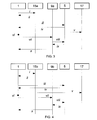
- FIG. 3 and 4 is depicted an embodiment of the method for the mobile node 1 to attach to home agents 9a, 9b associated to one DNS server 5, with an AAA unit 17. This corresponds to a split scenario in the configuration of figure 1 .
- the different elements exchanging messages in this method are represented by vertical lines, the exchanged messages are represented by horizontal arrows from the emitter to the receiver.
- the steps are depicted chronologically along the vertical direction, from top to bottom.
- FIG 3 is depicted the part of the process concerning the bootstrapping of first interface 11a. From left to right are represented: the mobile node 1, the first DHCP unit 15a, the first home agent 9a, the DNS server 5 and the AAA unit 17.
- addresses mentioned and used hereafter also serve as identifiers of the elements they correspond to.
- the mobile node 1 sends a DHCP request to the DHCP unit 15a.
- the DHCP unit 15a responds with a DHCP response containing the care-of-address CoAa attributed to interface 11a, the local domain name and the local DNS server 5 address.
- the mobile node 1 then sends in iii, a DNS query for MIP service to the DNS server 5, with local domain name as provided in ii .
- the DNS server 5 responds with a DNS reply in iv containing the address of the first home agent 9a.
- the mobile node 1 retrieves the HoAa for the interface 11 a from AAA unit 17 using Security Association (SA).
- SA Security Association
- the following steps correspond to the binding update in the multi-interface case of figure 1 , that is with one domain and DNS server 5.
- the mobile node 1 builds an extended DNS update option.
- the extended update option is built with the list of the currently bound addresses on the interface 11a.
- Said update option contains the home address HoAa of the mobile node associated to the first home agent 9a and the DNS domain name of the mobile node 1 in DNS server 5, possibly fully qualified domain name FQDN obtained by concatenation of a mobile node identifier mnid and the domain name returned by DNS server 5.
- the mobile node 1 sends in vii a MIP binding update message BU to the home agent 9a containing the extended DNS update option.
- the home agent 9a performs a DNS update with the DNS server 5, regarding domain name of the mobile node 1 and the home address HoAa within first home agent 9a.
- the DNS server 5 responds with a DNS reply in ix .
- the last step x is the sending of a binding acknowledgement message BA from the home agent 9a to the mobile node 1.
- FIG 4 is depicted the part of the process concerning the bootstrapping of second interface 11b. From left to right are represented: the mobile node 1, the second DHCP unit 15b, the second home agent 9b, the DNS server 5 and the AAA unit 17.
- the mobile node 1 sends a DHCP request to the second DHCP unit 15b.
- the second DHCP unit 15b responds with a DHCP response containing the second care-of-address CoAb attributed to interface 11b, the domain name and the local DNS server 5 address.
- the mobile node 1 then sends in iii, a DNS query for MIP service to the DNS server 5, with the local domain name as provided in ii .
- the DNS server 5 responds with a DNS reply in iv containing the address of the second home agent 9b.
- the mobile node 1 retrieves the HoAb for the interface 11b from AAA unit 17 using Security Association (SA).
- SA Security Association
- the mobile node 1 builds an extended DNS update option.
- the extended update option is built with the list of currently bound addresses on all the interfaces 11a and 11b.
- Said update option contains in particular the home addresses HoAa and HoAb of the mobile node associated to the first and second home agents 9a and 9b, along with the DNS domain name of the mobile node 1 in DNS server 5, possibly fully qualified domain name FQDN.
- the mobile node 1 sends in vii a MIP binding update message BU to the home agent 9b containing the extended DNS update option.
- the home agent 9b performs a DNS update with the DNS server 5, regarding domain name of the mobile node 1 in DNS server 5 and the home addresses HoAa and HoAb within first and second home agents 9a, 9b.
- the DNS server 5 responds with a DNS reply in ix .
- the last step x is the sending of a binding acknowledgement message BA from the home agent 9b to the mobile node 1.
- the process can also implement additional interfaces and corresponding home agents.
- the steps i to v would be repeated with the addresses corresponding to said third interface and third home agent.
- the extended DNS update option would be generated with the three home addresses on the three home agents and further steps vii to x corresponding to the binding update would be performed taking into account the three addresses.
- Figures 5, 6 and 7 depict the steps of the binding of the mobile node 1 in the case corresponding to figure 2 , where the network 3 comprises more than one DNS server 5a, 5b. Their global form is similar to that of figures 3 and 4 .
- FIG 5 is depicted the part of the process concerning the bootstrapping of first interface 11a. From left to right are represented: the mobile node 1, the first DHCP unit 15a, the first home agent 9a, the first DNS server 5a and the associated first AAA unit 17a.
- the mobile node 1 sends a DHCP request to the first DHCP unit 15a of first DNS server 5a.
- the DHCP unit 15a responds with a DHCP response containing the first care-of-address CoAa attributed to interface 11a, the domain name in first DNS server 5a and the first DNS server 5a address.
- the mobile node 1 then sends in iii, a DNS query for MIP service to the first DNS server 5a with local domain name as provided in figure ii .
- the first DNS server 5a responds with a DNS reply in iv containing the address of the first home agent 9a.
- the mobile node 1 exchanges retrieves the HoAa for the interface 11a from AAA unit 17a using Security Association (SA).
- SA Security Association
- the mobile node 1 build an extended DNS update option.
- the extended update option is built with the list of the currently bound addresses on the interface 11a.
- Said update option contains in particular the home address HoAa of the mobile node associated to the first home agent 9a on first DNS server 5a, and the DNS domain name of the mobile node 1 in first DNS server 5a, possibly fully qualified domain name FQDN.
- the mobile node 1 sends in vii a MIP binding update message BU to the home agent 9a containing the extended DNS update option.
- the home agent 9a performs a DNS update to the first DNS server 5a, indicating domain name in first DNS server 5a of the mobile node 1 related to the home agent 9a and the home address HoAa within said home agent 9a.
- the first DNS server 5a responds with a DNS reply in ix .
- the last step x is the sending of a binding acknowledgement message BA from the home agent 9a to the mobile node 1.
- FIG 6 is depicted the part of the process concerning the bootstrapping of second interface 11a. From left to right are represented : the mobile node 1, the second DHCP unit 15b, the second home agent 9b, the second DNS server 5b and the associated second AAA unit 17b.
- the mobile node 1 sends a DHCP request to the second DHCP unit 15b of second DNS server 5b.
- the DHCP unit 15b responds with a DHCP response containing the second care-of-address CoAb attributed to interface 11b, the domain name in second DNS server 5b and the second DNS server 5b address.
- the mobile node 1 then sends in iii, a DNS query for MIP service to the second DNS server 5b, with local domain name as provided in ii.
- the second DNS server 5b responds with a DNS reply in iv containing the address of the second home agent 9b.
- the mobile node 1 retrieves the HoAb for the interface 11b from AAA unit 17b using Security Association (SA).
- SA Security Association
- the mobile node 1 build an extended DNS update option.
- the extended update option is built with the list of currently bound addresses on the interfaces 11a and 11b on both DNS servers 5a, 5b.
- Said update option contains in particular the home address HoAa of the mobile node 1 associated to the first home agent 9a and the domain name of the mobile node 1 in first DNS server 5a, and the home address HoAb of the mobile node associated to the second home agent 9b and the domain name of the mobile node 1 in second DNS server 5b.
- the mobile node 1 sends in vii a MIP binding update message BU to the home agent 9a containing the extended DNS update option.
- the home agent 9a performs a DNS update with the second DNS server 5b, regarding domain name in second DNS server 5b of the mobile node 1 and the home addresses HoAa and HoAb in first and second home agents 9a, 9b.
- the second DNS server 5b responds with a DNS reply in ix.
- step x the home agent 9a performs a DNS update with the second DNS server 5b, regarding domain name in first DNS server 5a of the mobile node 1 and the home addresses HoAa and HoAb in first and second home agents 9a, 9b.
- the second DNS server 5b responds with a DNS reply in xi .
- Last step xii on figure 6 is the sending of a binding acknowledgement message BA from the home agent 9a to the mobile node 1.
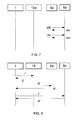
- the update process continues with the steps pictured on figure 7 , where the mobile node 1 performs a second binding update with the first home agent 9a and the first DNS server 5a, with the extended DNS update option taking into account the addresses on both interfaces 11a, 11b and associated domain names as delivered by DNS servers 5a and 5b.
- the first home agent 9a On emission of binding acknowledgement in step xii in figure 6 by the second home agent 9b, the first home agent 9a performs in step xiii a DNS update with the first DNS server 5a, regarding domain name in first DNS server 5a of the mobile node 1 and the home addresses HoAa and HoAb in first and second home agents 9a, 9b.
- the first DNS server 5a responds with a DNS reply in xiv.
- step xv the home agent 9a performs a DNS update with the first DNS server 5a, regarding domain name in second DNS server 5b of the mobile node 1 and the home addresses HoAa and HoAb in first and second home agents 9a, 9b.
- the first DNS server 5a responds with a DNS reply in xvi.
- the mobile node could comprise more than two interfaces 11a, 11b and the network 3 could comprise more than two DNS servers 5a, 5b with respectively more than one home agents 9a, 9b.
- the process to bind them can be derived from the examples developed above.
- the general case is a combination of both, in which a plurality of DNS servers 5, 5a, 5b all comprise a plurality of home agents 9a, 9b.
- the binding process to apply is the corresponding combination of the aforementioned processes.
- the mobile node 1 can specify on which address (HoAa, HoAb%) to be contacted first.
- the different home agents 9a, 9b receive a priority value.
- Said value can be added in an additional field in the extended DNS update mobility option. For example, if the priority field accounts for eight bits, there are 254 possible priority values. Said priority field is transmitted to the home agents 9a, 9b in the binding update message BU.
- a dynamic DNS update can then go as described hereafter.
- the home agent receiving the binding update message BU containing the DNS update mobility option checks if the mobile node 1 has or not already registered a specific suffix and associated address. To do so, the home agent 9a, 9b can for example perform a DNS lookup on the fully qualified domain name of the mobile node 1.
- the home agent 9a, 9b can simply register the new IP address.
- the home agent 9a, 9b can replace the address.
- the home agent registers both prefixes by adding the low priority one to the existing record.
- the home agent registers both prefixes by adding the high priority one at the beginning of the existing record.
- the priority values can be adapted by the mobile node 1 according to suffix matching, domain name matching, source and destination matching.
- the queries can be answered with a change in address order.
- congestion at home agent level can be avoided.
- the address that is first in the list is set at the end of said list.
- FIG. 8 One embodiment of the method to detect and list home agents 5a, 5b is depicted in figures 8 and 9 . Both figures are similar in form to the figures 3 to 7 .
- FIG 8 are represented from left to right: the mobile node 1, a DHCP unit 15, a first DNS server 5a, and a second DNS server 5b.
- first step i the mobile node sends to the DHCP unit 15 a DHCP query.
- the DHCP 15 unit responds with a DHCP answer containing the care-of-address, the domain and a set of available DNS server addresses, containing the addresses of servers 5a and 5b, possibly with their given priority.
- server 5a has a higher priority than 5b.
- the mobile node checks if the DNS servers 5a, 5b provide MIP mobility service.
- the mobile node sends to first DNS server 5a in the set in order of decreasing priority a DNS query.
- the DNS query contains in particular a request for a MIP mobility service and the domain name as provided in ii.
- the first server 5a answers to the mobile node with a denying in step iv because it does not provide the MIP service. Consequently, the mobile node stores DNS server 5a as "MIP unavailable" in the list.
- step v the mobile node 1 repeats step iii with DNS server 5b, next in decreasing priority order.
- step vi the second DNS server 5b, supporting MIP, replies with a DNS grant reply containing the hosted home agents addresses in DNS server 5b, possibly in order of priority.
- the mobile node stores DNS server 5b as "MIP available" in the list as well as home agent addresses and then proceeds to the home agent selection in figure 9 .
- FIG 9 are represented from left to right: the mobile node 1, a first home agent 9a, and a second home agent 9b.
- step i the mobile node sends a binding update message BU containing an extended mobility update option determined as described above to the first home agent 9a in order of decreasing priority.
- said home agent 9a does not support MIP and consequently answers in ii with a binding rejection. Consequently, the mobile node records the home agent 9a as "not available" in the list.
- step iii the mobile node repeats step i with the next home agent in order of decreasing priority 9b. Since in this example home agent 9b supports MIP, it responds in step iv with a binding acknowledgement message BA. This home agent 9b is then stored in the list, along with the associated care-of-address, home address and priority value.
- the mobile node 1 continues DNS server selection as in figure 8 and possibly home agent selection as in figure 9 until the end of the list is reached.
- the invention allows the parallel binding and updating of home agents 9a, 9b for a mobile node 1 including DNS update behavior. This should provide improved reliability of the connection as the loss of connection to one home agent can be compensated by the connection to another one. Furthermore, by setting preferences in the list of home agents 9a, 9b the overall quality can be improved. Furthermore, if the provider supports, more than one connection can be used at a time so that greater upload and download speed can be expected.
Landscapes
- Engineering & Computer Science (AREA)
- Computer Networks & Wireless Communication (AREA)
- Signal Processing (AREA)
- Computer Security & Cryptography (AREA)
- Mobile Radio Communication Systems (AREA)
Abstract
- the mobile node (1) retrieves a local IP address (CoAa, CoAb) and at least one DNS server (5, 5a, 5b) address using DHCP on the interface (11a, 11b),
- the mobile node (1) stores in a list the at least one returned DNS server (5, 5a, 5b) address,
- the mobile node (1) queries the at least one DNS server (5, 5a, 5b) which has its address stored in the list for home agent service and receives either a "service not supported" failure notification or the address of at least one home agent (9a, 9b) reachable on the interface (11a, 11b),
- the mobile node (1) stores in the list the results of the query, either "service not available" or the home agent (9a, 9b) addresses returned for the respective DNS Servers (5, 5a, 5b) inquired,
- the mobile node (1) obtains a home address (HoAa, HoAb) on the interface,
-the mobile node (1) attempts to perform a binding update for care-of-address (CoAa, CoAb) and home address (HoAa, HoAb) towards the at least one home agent (9a, 9b) address stored in the previous list and updates its stored list accordingly with respective binding success or binding failure notifications, in case of success, the mobile node (1) records on the list a fully qualified domain name associated to the interface (11a, 11b).
Description
- The present invention relates to the field of telecommunications and more specifically of a mobile device connecting simultaneously to multiple networks using mobile IP protocol (MIP) and managing accordingly its at least one DNS identity as visible to other internet nodes.
- The Domain Name System (DNS) allows nodes connected to the internet to know each other by using logical names (Fully Qualified Domain Name). This allows nodes to be independent of IP addresses they are assigned at a particular time. Logical names are permanent and represent logical identities of machines while IP addresses are volatile and represent physical addresses where machines can be reached through the internet infrastructure. Specific servers, the Domain Name Servers, maintain relationships between domain names and IP addresses and perform translation between logical names and IP addresses.
- To support mobile nodes, routers called home agents (HA) perform tunnelling of data packets from a globally reachable home address (HoA) of the node to a locally assigned IP address of an interface of the mobile node, known as care-of-address (CoA). Said interface is connected at a point in the network corresponding to the geographic position of the mobile node. The care-of-address is updated with the home agent in regular binding update messages, indicating to the home agent where it has to forward the incoming data packets. In addition, a home agent performs updates in the DNS system on behalf of the mobile node to maintain the relationship between the mobile node logical identity (Fully Qualified Domain Name, FQDN) and its current home address.
- Mobile nodes with multiple interfaces have multiple home addresses each assigned by a separate home agent. Such a mobile node is thus reachable through multiple home addresses. Accordingly, such a mobile node might also be known under either a single logical identity (single FQDN) or multiple logical identities (multiple FQDN) depending on relationships between the home agents and the DNS infrastructure. When the home agents are in the same DNS domain, the mobile node has a single FQDN. When the home agents are in different DNS domains, the mobile node has multiple FQDN.
- In the current state of the art, the mobile node attaches through each of its multiple interfaces, obtains a care-of-address, the address of a home agent and a home address. It then binds the home address and care-of-address to the home agent requesting for DNS update. Since no specific mechanism is currently defined to handle the multiple interfaces case, the DNS update process leads to the following behaviours:
- in the single FQDN case, the lastly bound home address is always mapped to the FQDN, leading to the use of only the one associated interface at mobile node level,
- in the multiple FQDN case, the mobile node is known under separate and unrelated logical identities by the outside world, leading to potential lack of connectivity when one of the mobile interfaces drops.
- Both behaviours prevent the mobile node and its correspondents to take full benefit of the multiple-interface capabilities.
- In order to overcome at least partially the aforementioned drawbacks, the invention has for an object a method for connecting a mobile node comprising a plurality of network connection interfaces to at least one network using the mobile internet protocol with the following steps for the respective interfaces :
- the mobile node retrieves a local IP address and at least one DNS server address using DHCP on the interface,
- the mobile node stores in a list the at least one returned DNS server address,
- the mobile node queries the at least one DNS server which has its address stored in the list for home agent service and receives either a "service not supported" failure notification or the address of at least one home agent reachable on the interface,
- the mobile node stores in the list the results of the query, either "service not available" or the home agent addresses returned for the respective DNS Servers inquired,
- the mobile node obtains a home address on the interface,
- the mobile node attempts to perform a binding update for care-of-address and home address towards the at least one home agent address stored in the previous list and updates its stored list accordingly with respective binding success or binding failure notifications, in case of success, the mobile node records on the list a fully qualified domain name FQDN associated to the interface.
- In the case of a single domain, the home agent updates the DNS system for all the home addresses provided in the binding update with the same FQDN. In the case of multiple domains, the home agent updates the DNS system for all the home addresses provided in the binding update with all FQDNs also provided in the binding update.
- The method allows the bootstrapping of more than one interface with their respective home agent and DNS authorities. In addition it allows the mobile node to be reachable through any of its home address under any of its logical names. In particular, should a home address become unavailable because of an interface failure at mobile node level, the home address of the remaining interface is transparently available under the same logical identity. This allows generic bootstrapping and better over-all connectivity.
- The method may also comprise one or more of the following characteristics, taken in combination or separately.
- The mobile node establishes a connection to at least two home agents of one domain name server.
- The mobile node establishes a connection to at least two home agents of at least two domain name servers.
- The method further comprises the step of determining a preference order of the home agents having their address stored on the list, the mobile node establishing a connection with the home agents in decreasing order of preference.
- The addresses of home agents connected to the mobile node are used in round-robin order to answer queries.
- The binding updates comprise the steps :
- the mobile node fills an extended mobility update option with the list of the home addresses and associated fully qualified domain names currently active at mobile node level for the interfaces,
- the extension is provided to the home agent,
- the home agent updates the DNS servers accordingly.
- The extended mobility update option comprises for the home agents a priority field in which is stored a priority value corresponding to the preference order of the home agents.
- The fully qualified domain name comprises a concatenation of a mobile node identifier with the domain name returned by the DNS server associated with the home agent.
- The retrieving of the home address on the interface is done by using AAA protocol.
- Another object of the invention is the associated mobile node comprising a plurality of network connection interfaces to at least one network using the mobile internet protocol configured to :
- retrieve a local IP address and at least one DNS server address using DHCP on the interface,
- store in a list the at least one returned DNS server address,
- query the at least one DNS server which has its address stored in the list for home agent service and to receive either a "service not supported" failure notification or the address of at least one home agent reachable on the interface,
- store in the list the results of service query, either "service not available" or home agent addresses returned per DNS Server inquired,
- obtain a home address on the interface,
- attempt to perform a binding update for care-of-address and home address towards the at least one home agent address stored in the previous list and update the list accordingly with binding success or binding failure notifications, and in case of success, to record on the list a fully qualified domain name associated to the interface.
- The mobile node may also have one or more of the following characteristics, taken separately or in combination
- It comprises at least two connection interfaces configured to establish a connection with at least two home agents of one domain name server.
- It comprises at least two connection interfaces configured to establish a connection with at least two home agents of at least two domain name servers.
- It is further configured to generate and send an extended mobility update option containing the addresses of the at least two home agents in the binding update messages.
- It is further configured to generate and send an extended mobility update option comprising a priority field containing a priority value corresponding to the preference order of the home agents.
- Finally, a further object of the invention is a DHCP unit configured to receive a DHCP query from a mobile node and to return in response a list of available DNS server addresses with determined priority values when receiving a DHCP query, the DNS servers having their address in the list comprising home agents for the mobile node to connect with in order of decreasing priority value of the associated DNS server.
- Further characteristics of the invention will appear at the reading of the following description, describing by way of example different embodiments with reference to the accompanying drawings, in which :
-
Fig. 1 represents schematically one embodiment of a mobile node connected to several home agents in the same domain, -
Fig. 2 represents schematically one embodiment of a mobile node attached to different domains using different home agents, -
Fig. 3 and Fig. 4 represent schematically one embodiment of the associated method to establish the connection in the configuration offigure 1 , -
Fig. 5, Fig. 6 andFig. 7 represent schematically one embodiment of the associated method to establish the connection in the configuration offigure 2 , -
Fig. 8 andFig. 9 represent schematically one embodiment of a method to detect and list available home agents on different DNS servers. - In all figures the same references relate to the same elements.
- The terms hereafter are used according to their definition in the Internet Engineering Task Force communications RFC 3775 and RFC 5206.
- In particular, following definitions are in use.
- Node : a device that implements IP.
- Router : a node that forwards IP packets not explicitly addressed to itself.
- Interface : a node's attachment to a link.
- Link : a communication facility or medium over which nodes can communicate at link layer. The link layer is the layer immediately below IP.
- Mobile node : a node that can change its point of attachment from one link to another, while still being reachable via its home address.
- Home Address (HoA): a unicast and globally routable address assigned to a mobile node.
- Care-of-Address (CoA): a unicast and locally routable address associated with a mobile node while visiting a foreign link, the one registered with the mobile node's home agent for a given home address is called "primary care-of-address".
- Unicast routable address : an identifier for a single interface such that a packet sent to it from another IPv6 subnet is delivered to the interface identified by that address. Accordingly, a unicast routable address must have either global or site local scope (but not link local).
- Home Agent : a router on a mobile node's link with which the mobile node has registered its current care of address. While the mobile node is away from home, the home agent intercepts packets on the home link destined to the mobile node's home address, encapsulates them and tunnels them to the mobile node's registered care-of-address.
- The invention relates to a method for connecting a mobile node to a wireless network. In particular, the network supports mobile IP (MIP), and even more specifically the MIPv6 version of mobile IP.
- In
figure 1 is depicted an embodiment of the configuration using an embodiment of the method according to the invention. - The
mobile node 1 is connected via a mobile access, possibly wireless radio access, to anetwork 3. Themobile node 1 is connected to adomain name server 5, saiddomain name server 5 being connected to theinternet 7. - The
domain name server 5 comprisesseveral home agents node 1 and a care-of-address CoA of thenode 1. To attach to thesehome agents mobile node 1 uses a set of different care-of-addresses CoAa, CoAb in correspondinginterfaces interfaces home agents IP net respective DHCP unit - In the scenario called split scenario, the mobility service and the network access are authorized by different functions. The DNS server and home agents authorize the mobility, whereas another unit is in charge of the security aspects. The Authentication, Authorization and Accounting (AAA) protocol is used for said security aspects. Therefore an
AAA unit 17 is associated to the domain name anddomain name server 5. - In
figure 2 is depicted another embodiment of a configuration using another embodiment of the method according to the invention. The mobile node is connected to anetwork 3 comprising differentdomain name servers domain name servers different home agents home agents mobile node 1 uses a set of different care-of-addresses indifferent interfaces home agents IP networks respective DHCP units domain name servers respective AAA unit - The realistic case implies a combination of the precedent cases of
figures 1 and 2 . In said realistic case, multipledomain name servers several home agents - In
figures 3 and 4 is depicted an embodiment of the method for themobile node 1 to attach tohome agents DNS server 5, with anAAA unit 17. This corresponds to a split scenario in the configuration offigure 1 . - The different elements exchanging messages in this method are represented by vertical lines, the exchanged messages are represented by horizontal arrows from the emitter to the receiver. The steps are depicted chronologically along the vertical direction, from top to bottom.
- In
figure 3 is depicted the part of the process concerning the bootstrapping offirst interface 11a. From left to right are represented: themobile node 1, thefirst DHCP unit 15a, thefirst home agent 9a, theDNS server 5 and theAAA unit 17. - The addresses mentioned and used hereafter also serve as identifiers of the elements they correspond to.
- In the first step i the
mobile node 1 sends a DHCP request to theDHCP unit 15a. In step ii theDHCP unit 15a responds with a DHCP response containing the care-of-address CoAa attributed tointerface 11a, the local domain name and thelocal DNS server 5 address. Themobile node 1 then sends in iii, a DNS query for MIP service to theDNS server 5, with local domain name as provided in ii. TheDNS server 5 responds with a DNS reply in iv containing the address of thefirst home agent 9a. In v, themobile node 1 retrieves the HoAa for theinterface 11 a fromAAA unit 17 using Security Association (SA). - The following steps correspond to the binding update in the multi-interface case of
figure 1 , that is with one domain andDNS server 5. - In vi, the
mobile node 1 builds an extended DNS update option. The extended update option is built with the list of the currently bound addresses on the interface 11a. Said update option contains the home address HoAa of the mobile node associated to thefirst home agent 9a and the DNS domain name of themobile node 1 inDNS server 5, possibly fully qualified domain name FQDN obtained by concatenation of a mobile node identifier mnid and the domain name returned byDNS server 5. Following, themobile node 1 sends in vii a MIP binding update message BU to thehome agent 9a containing the extended DNS update option. In the following step viii, thehome agent 9a performs a DNS update with theDNS server 5, regarding domain name of themobile node 1 and the home address HoAa withinfirst home agent 9a. TheDNS server 5 responds with a DNS reply in ix. The last step x is the sending of a binding acknowledgement message BA from thehome agent 9a to themobile node 1. - In
figure 4 is depicted the part of the process concerning the bootstrapping ofsecond interface 11b. From left to right are represented: themobile node 1, thesecond DHCP unit 15b, thesecond home agent 9b, theDNS server 5 and theAAA unit 17. - In the first step i of
figure 4 , themobile node 1 sends a DHCP request to thesecond DHCP unit 15b. In step ii thesecond DHCP unit 15b responds with a DHCP response containing the second care-of-address CoAb attributed tointerface 11b, the domain name and thelocal DNS server 5 address. Themobile node 1 then sends in iii, a DNS query for MIP service to theDNS server 5, with the local domain name as provided in ii. TheDNS server 5 responds with a DNS reply in iv containing the address of thesecond home agent 9b. In v, themobile node 1 retrieves the HoAb for theinterface 11b fromAAA unit 17 using Security Association (SA). - The following steps correspond to the binding update of the
second interface 11b. - In vi, the
mobile node 1 builds an extended DNS update option. The extended update option is built with the list of currently bound addresses on all theinterfaces 11a and 11b. Said update option contains in particular the home addresses HoAa and HoAb of the mobile node associated to the first andsecond home agents mobile node 1 inDNS server 5, possibly fully qualified domain name FQDN. - Following, the
mobile node 1 sends in vii a MIP binding update message BU to thehome agent 9b containing the extended DNS update option. In the following step viii, thehome agent 9b performs a DNS update with theDNS server 5, regarding domain name of themobile node 1 inDNS server 5 and the home addresses HoAa and HoAb within first andsecond home agents DNS server 5 responds with a DNS reply in ix. The last step x is the sending of a binding acknowledgement message BA from thehome agent 9b to themobile node 1. - The process can also implement additional interfaces and corresponding home agents. For a third interface, the steps i to v would be repeated with the addresses corresponding to said third interface and third home agent. The extended DNS update option would be generated with the three home addresses on the three home agents and further steps vii to x corresponding to the binding update would be performed taking into account the three addresses.
-
Figures 5, 6 and7 depict the steps of the binding of themobile node 1 in the case corresponding tofigure 2 , where thenetwork 3 comprises more than oneDNS server figures 3 and 4 . - In
figure 5 is depicted the part of the process concerning the bootstrapping offirst interface 11a. From left to right are represented: themobile node 1, thefirst DHCP unit 15a, thefirst home agent 9a, thefirst DNS server 5a and the associatedfirst AAA unit 17a. - In the first step i of
figure 5 , themobile node 1 sends a DHCP request to thefirst DHCP unit 15a offirst DNS server 5a. In step ii theDHCP unit 15a responds with a DHCP response containing the first care-of-address CoAa attributed tointerface 11a, the domain name infirst DNS server 5a and thefirst DNS server 5a address. Themobile node 1 then sends in iii, a DNS query for MIP service to thefirst DNS server 5a with local domain name as provided in figure ii. Thefirst DNS server 5a responds with a DNS reply in iv containing the address of thefirst home agent 9a. In v, themobile node 1 exchanges retrieves the HoAa for theinterface 11a fromAAA unit 17a using Security Association (SA). - The following steps correspond to the binding update in the case of
figure 2 . - In vi, the
mobile node 1 build an extended DNS update option. The extended update option is built with the list of the currently bound addresses on the interface 11a. Said update option contains in particular the home address HoAa of the mobile node associated to thefirst home agent 9a onfirst DNS server 5a, and the DNS domain name of themobile node 1 infirst DNS server 5a, possibly fully qualified domain name FQDN. - Following, the
mobile node 1 sends in vii a MIP binding update message BU to thehome agent 9a containing the extended DNS update option. In the following step viii, thehome agent 9a performs a DNS update to thefirst DNS server 5a, indicating domain name infirst DNS server 5a of themobile node 1 related to thehome agent 9a and the home address HoAa within saidhome agent 9a. Thefirst DNS server 5a responds with a DNS reply in ix. The last step x is the sending of a binding acknowledgement message BA from thehome agent 9a to themobile node 1. - In
figure 6 is depicted the part of the process concerning the bootstrapping ofsecond interface 11a. From left to right are represented : themobile node 1, thesecond DHCP unit 15b, thesecond home agent 9b, thesecond DNS server 5b and the associatedsecond AAA unit 17b. - In the second step i of
figure 5 , themobile node 1 sends a DHCP request to thesecond DHCP unit 15b ofsecond DNS server 5b. In step ii theDHCP unit 15b responds with a DHCP response containing the second care-of-address CoAb attributed tointerface 11b, the domain name insecond DNS server 5b and thesecond DNS server 5b address. Themobile node 1 then sends in iii, a DNS query for MIP service to thesecond DNS server 5b, with local domain name as provided in ii. Thesecond DNS server 5b responds with a DNS reply in iv containing the address of thesecond home agent 9b. In v, themobile node 1 retrieves the HoAb for theinterface 11b fromAAA unit 17b using Security Association (SA). - The following steps correspond to the binding update BU of
interface 11b. - In vi, the
mobile node 1 build an extended DNS update option. The extended update option is built with the list of currently bound addresses on theinterfaces DNS servers 5a, 5b. Said update option contains in particular the home address HoAa of themobile node 1 associated to thefirst home agent 9a and the domain name of themobile node 1 infirst DNS server 5a, and the home address HoAb of the mobile node associated to thesecond home agent 9b and the domain name of themobile node 1 insecond DNS server 5b. - Following, the
mobile node 1 sends in vii a MIP binding update message BU to thehome agent 9a containing the extended DNS update option. In the following step viii, thehome agent 9a performs a DNS update with thesecond DNS server 5b, regarding domain name insecond DNS server 5b of themobile node 1 and the home addresses HoAa and HoAb in first andsecond home agents second DNS server 5b responds with a DNS reply in ix. - In step x, the
home agent 9a performs a DNS update with thesecond DNS server 5b, regarding domain name infirst DNS server 5a of themobile node 1 and the home addresses HoAa and HoAb in first andsecond home agents second DNS server 5b responds with a DNS reply in xi. Last step xii onfigure 6 is the sending of a binding acknowledgement message BA from thehome agent 9a to themobile node 1. - The update process continues with the steps pictured on
figure 7 , where themobile node 1 performs a second binding update with thefirst home agent 9a and thefirst DNS server 5a, with the extended DNS update option taking into account the addresses on bothinterfaces DNS servers - From left to right are represented on
figure 7 : themobile node 1, thefirst DHCP unit 15a, thefirst home agent 9a and thefirst DNS server 5a. The steps are labelled xiii to xvi, as they take place right after the process represented onfigure 6 . - On emission of binding acknowledgement in step xii in
figure 6 by thesecond home agent 9b, thefirst home agent 9a performs in step xiii a DNS update with thefirst DNS server 5a, regarding domain name infirst DNS server 5a of themobile node 1 and the home addresses HoAa and HoAb in first andsecond home agents first DNS server 5a responds with a DNS reply in xiv. - In step xv, the
home agent 9a performs a DNS update with thefirst DNS server 5a, regarding domain name insecond DNS server 5b of themobile node 1 and the home addresses HoAa and HoAb in first andsecond home agents first DNS server 5a responds with a DNS reply in xvi. - In a similar way, the mobile node could comprise more than two
interfaces network 3 could comprise more than twoDNS servers home agents - While the cases of
figures 1 and 2 are examples, the general case is a combination of both, in which a plurality ofDNS servers home agents - When using
multiple home agents mobile node 1 can specify on which address (HoAa, HoAb...) to be contacted first. To determine said address, thedifferent home agents home agents - A dynamic DNS update can then go as described hereafter.
- At first, the home agent receiving the binding update message BU containing the DNS update mobility option checks if the
mobile node 1 has or not already registered a specific suffix and associated address. To do so, thehome agent mobile node 1. - If the
mobile node 1 has not registered any record, thehome agent - If the
mobile node 1 has already registered an address with no priority, corresponding to a "00" priority field, then thehome agent - If the
mobile node 1 has already registered an address with a low priority, corresponding for example to a "01" priority field, then the home agent registers both prefixes by adding the low priority one to the existing record. - If the
mobile node 1 has already registered an address with a high priority, corresponding for example to a "10" priority field, then the home agent registers both prefixes by adding the high priority one at the beginning of the existing record. - The priority values can be adapted by the
mobile node 1 according to suffix matching, domain name matching, source and destination matching. - When using several addresses with the same name, the queries can be answered with a change in address order. By using for example a round-robin or cyclic change in used addresses, congestion at home agent level can be avoided. To obtain said round-robin change, every time a predetermined amount of queries has been answered, the address that is first in the list is set at the end of said list.
- One embodiment of the method to detect and
list home agents figures 8 and9 . Both figures are similar in form to thefigures 3 to 7 . - On
figure 8 are represented from left to right: themobile node 1, aDHCP unit 15, afirst DNS server 5a, and asecond DNS server 5b. - In first step i the mobile node sends to the
DHCP unit 15 a DHCP query. In ii, theDHCP 15 unit responds with a DHCP answer containing the care-of-address, the domain and a set of available DNS server addresses, containing the addresses ofservers example server 5a has a higher priority than 5b. - Then the mobile node checks if the
DNS servers - In iii, the mobile node sends to
first DNS server 5a in the set in order of decreasing priority a DNS query. The DNS query contains in particular a request for a MIP mobility service and the domain name as provided in ii. In this example, thefirst server 5a answers to the mobile node with a denying in step iv because it does not provide the MIP service. Consequently, the mobile node storesDNS server 5a as "MIP unavailable" in the list. - Then in step v, the
mobile node 1 repeats step iii withDNS server 5b, next in decreasing priority order. In step vi, thesecond DNS server 5b, supporting MIP, replies with a DNS grant reply containing the hosted home agents addresses inDNS server 5b, possibly in order of priority. The mobile node storesDNS server 5b as "MIP available" in the list as well as home agent addresses and then proceeds to the home agent selection infigure 9 . - On
figure 9 are represented from left to right: themobile node 1, afirst home agent 9a, and asecond home agent 9b. - In step i the mobile node sends a binding update message BU containing an extended mobility update option determined as described above to the
first home agent 9a in order of decreasing priority. In this example, saidhome agent 9a does not support MIP and consequently answers in ii with a binding rejection. Consequently, the mobile node records thehome agent 9a as "not available" in the list. - In step iii the mobile node repeats step i with the next home agent in order of decreasing
priority 9b. Since in thisexample home agent 9b supports MIP, it responds in step iv with a binding acknowledgement message BA. Thishome agent 9b is then stored in the list, along with the associated care-of-address, home address and priority value. - If other DNS server addresses are in the set provided in step ii of
figure 8 , themobile node 1 continues DNS server selection as infigure 8 and possibly home agent selection as infigure 9 until the end of the list is reached. - The invention allows the parallel binding and updating of
home agents mobile node 1 including DNS update behavior. This should provide improved reliability of the connection as the loss of connection to one home agent can be compensated by the connection to another one. Furthermore, by setting preferences in the list ofhome agents - It should also be noted that the invention relies on small modifications of already existing standards, in MIPv6 in particular and no additional hardware is required.
Claims (15)
- Method for connecting a mobile node (1) comprising a plurality of network connection interfaces (11a, 11b) to at least one network (3) using the mobile internet protocol with the following steps for the respective interfaces (11a, 11b) :- the mobile node (1) retrieves a local IP address (CoAa, CoAb) and at least one DNS server (5, 5a, 5b) address using DHCP on the interface (11a, 11b),- the mobile node (1) stores in a list the at least one returned DNS server (5, 5a, 5b) address,- the mobile node (1) queries the at least one DNS server (5, 5a, 5b) which has its address stored in the list for home agent service and receives either a "service not supported" failure notification or the address of at least one home agent (9a, 9b) reachable on the interface (11 a, 11b),- the mobile node (1) stores in the list the results of the query, either "service not available" or the home agent (9a, 9b) addresses returned for the respective DNS Servers (5, 5a, 5b) inquired,- the mobile node (1) obtains a home address (HoAa, HoAb) on the interface,- the mobile node (1) attempts to perform a binding update for care-of-address (CoAa, CoAb) and home address (HoAa, HoAb) towards the at least one home agent (9a, 9b) address stored in the previous list and updates its stored list accordingly with respective binding success or binding failure notifications, in case of success, the mobile node (1) records on the list a fully qualified domain name associated to the interface (11a, 11b).
- The method according to claim 1, wherein the mobile node (1) establishes a connection to at least two home agents (9a, 9b) of one domain name server (5).
- The method according to claim 1, wherein the mobile node (1) establishes a connection to at least two home agents (9a, 9b) of at least two domain name servers (5a, 5b).
- The method according to claim 1, 2 or 3, further comprising the step of determining a preference order of the home agents (9a, 9b) having their address stored on the list, the mobile node establishing a connection with the home agents (9a, 9b) in decreasing order of preference.
- The method according to any of claims 1 to 4, wherein the addresses of home agents (9a, 9b) connected to the mobile node (1) are used in round-robin order to answer queries.
- The method according to any of the previous claims, wherein the binding updates comprise the steps :- the mobile node (1) fills an extended mobility update option with the list of the home addresses and associated fully qualified domain names currently active at mobile node (1) level for the interfaces (11a, 11b),- the extension is provided to the home agent (9a, 9b),- the home agent updates the DNS servers (5, 5a, 5b) accordingly.
- The method according to claim 6, wherein the extended mobility update option comprises for the home agents (9a, 9b) a priority field in which is stored a priority value corresponding to the preference order of the home agents (9a, 9b).
- Method according to any of the precedent claims wherein the fully qualified domain name comprises a concatenation of a mobile node identifier (mnid) with the domain name returned by the DNS server (5, 5a, 5b) associated with the home agent (9a, 9b).
- Method according to any of the precedent claims wherein the retrieving of the home address (HoA) on the interface is done by using AAA protocol.
- Mobile node (1) comprising a plurality of network connection interfaces (11a, 11b) to at least one network (3) using the mobile internet protocol configured to :- retrieve a local IP address and at least one DNS server address using DHCP on the interface (11a, 11b),- store in a list the at least one returned DNS server (5, 5a, 5b) address,- query the at least one DNS server (5, 5a, 5b) which has its address stored in the list for home agent service and to receive either a "service not supported" failure notification or the address of at least one home agent (9a, 9b) reachable on the interface (11a, 11b),- store in the list the results of service query, either "service not available" or home agent (9a, 9b) addresses returned per DNS Server inquired,- obtain a home address (HoAa, HoAb) on the interface (11a, 11b),- attempt to perform a binding update for care-of-address (CoAa, CoAb) and home address (HoAa, HoAb) towards the at least one home agent (9a, 9b) address stored in the previous list and update the list acordingly with binding success or binding failure notifications, and in case of success, to record on the list a fully qualified domain name associated to the interface.
- Mobile node according to claim 10, wherein it comprises at least two connection interfaces (11a, 11b) configured to establish a connection with at least two home agents (9a, 9b) of one domain name server (5).
- Mobile node according to claim 10, wherein it comprises at least two connection interfaces (11a, 11b) configured to establish a connection with at least two home agents (9a, 9b) of at least two domain name servers (5a, 5b).
- Mobile node according to claim 10 , 11 or 12, further configured to generate and send an extended mobility update option containing the addresses of the at least two home agents (9a, 9b) in the binding update messages.
- Mobile node according to claim 13, further configured to generate and send an extended mobility update option comprising a priority field containing a priority value corresponding to the preference order of the home agents (9a, 9b).
- DHCP unit (15) configured to receive a DHCP query from a mobile node (1) and to return in response a list of available DNS server (5a, 5b) addresses with determined priority values when receiving a DHCP query, the DNS servers (5a, 5b) having their address in the list comprising home agents (9a, 9b) for the mobile node to connect with in order of decreasing priority value of the associated DNS server (5a, 5b).
Priority Applications (6)
| Application Number | Priority Date | Filing Date | Title |
|---|---|---|---|
| EP11290059A EP2482598A1 (en) | 2011-01-28 | 2011-01-28 | Method to connect a mobile node to a network |
| PCT/EP2012/050087 WO2012100969A1 (en) | 2011-01-28 | 2012-01-04 | Method to connect a mobile node to a network |
| JP2013550812A JP5680221B2 (en) | 2011-01-28 | 2012-01-04 | How to connect a mobile node to a network |
| CN201280006893.XA CN103339996B (en) | 2011-01-28 | 2012-01-04 | The method that mobile node is connected to network |
| KR1020137022455A KR101520317B1 (en) | 2011-01-28 | 2012-01-04 | Method to connect a mobile node to a network |
| US13/981,686 US9485799B2 (en) | 2011-01-28 | 2012-01-04 | Method to connect a mobile node to a network |
Applications Claiming Priority (1)
| Application Number | Priority Date | Filing Date | Title |
|---|---|---|---|
| EP11290059A EP2482598A1 (en) | 2011-01-28 | 2011-01-28 | Method to connect a mobile node to a network |
Publications (1)
| Publication Number | Publication Date |
|---|---|
| EP2482598A1 true EP2482598A1 (en) | 2012-08-01 |
Family
ID=43877152
Family Applications (1)
| Application Number | Title | Priority Date | Filing Date |
|---|---|---|---|
| EP11290059A Withdrawn EP2482598A1 (en) | 2011-01-28 | 2011-01-28 | Method to connect a mobile node to a network |
Country Status (6)
| Country | Link |
|---|---|
| US (1) | US9485799B2 (en) |
| EP (1) | EP2482598A1 (en) |
| JP (1) | JP5680221B2 (en) |
| KR (1) | KR101520317B1 (en) |
| CN (1) | CN103339996B (en) |
| WO (1) | WO2012100969A1 (en) |
Cited By (1)
| Publication number | Priority date | Publication date | Assignee | Title |
|---|---|---|---|---|
| CN108307296A (en) * | 2016-10-06 | 2018-07-20 | 瑞莱恩斯吉奥信息通讯有限公司 | The system and method for providing service to the user equipment in international location |
Families Citing this family (8)
| Publication number | Priority date | Publication date | Assignee | Title |
|---|---|---|---|---|
| CN106878161B (en) * | 2013-05-23 | 2020-05-01 | 柏思科技有限公司 | Method and system for resolving domain name system requests |
| US9900282B2 (en) * | 2015-05-12 | 2018-02-20 | Qualcomm Incorporated | Dynamic evolved packet gateway selection |
| CN106487864B (en) * | 2015-09-02 | 2019-09-27 | 华为终端有限公司 | Method for establishing data connection, server and mobile terminal |
| CN105610991A (en) * | 2016-03-31 | 2016-05-25 | 北京网瑞达科技有限公司 | Load balancing method of recursion and analysis DNS (Domain Name Server) under DHCP (Dynamic Host Configuration Protocol) environment |
| CN109743197B (en) * | 2018-12-24 | 2022-07-01 | 中信百信银行股份有限公司 | Firewall deployment system and method based on priority configuration |
| CN112039710B (en) * | 2020-09-02 | 2023-08-01 | 曙光信息产业(北京)有限公司 | Service fault processing method, terminal equipment and readable storage medium |
| CN112583903B (en) * | 2020-11-26 | 2022-06-03 | 北京邮电大学 | A service adaptive access method, device, electronic device and storage medium |
| CN114844858A (en) * | 2022-04-13 | 2022-08-02 | 山东浪潮超高清视频产业有限公司 | Method for obtaining domain name address by multiple networks |
Citations (2)
| Publication number | Priority date | Publication date | Assignee | Title |
|---|---|---|---|---|
| WO2004004281A1 (en) * | 2002-06-28 | 2004-01-08 | Cisco Technology, Inc. | Methods and apparatus for anchoring of mobile nodes using dns |
| US20050226180A1 (en) * | 2004-04-07 | 2005-10-13 | Vijay Devarapalli | Maintaining reachability of a mobile node |
Family Cites Families (5)
| Publication number | Priority date | Publication date | Assignee | Title |
|---|---|---|---|---|
| JP4088540B2 (en) * | 2003-03-03 | 2008-05-21 | 株式会社日立製作所 | Packet communication system, communication network, and IP address selection method in mobile node |
| DE602007011768D1 (en) * | 2006-07-28 | 2011-02-17 | Panasonic Corp | ADDRESS UPDATE PROCESS, ACCORDING MOBILE END DEVICE AND NODE |
| US8149807B2 (en) * | 2006-11-01 | 2012-04-03 | Panasonic Corporation | Communication control method, communication system, home agent allocation server, and mobile node |
| JP4869057B2 (en) * | 2006-12-27 | 2012-02-01 | 富士通株式会社 | Network connection recovery method, AAA server, and radio access network gateway device |
| EP2015535A1 (en) * | 2007-07-10 | 2009-01-14 | Panasonic Corporation | Detection of mobility functions implemented in a mobile node |
-
2011
- 2011-01-28 EP EP11290059A patent/EP2482598A1/en not_active Withdrawn
-
2012
- 2012-01-04 JP JP2013550812A patent/JP5680221B2/en active Active
- 2012-01-04 US US13/981,686 patent/US9485799B2/en active Active
- 2012-01-04 KR KR1020137022455A patent/KR101520317B1/en active Active
- 2012-01-04 WO PCT/EP2012/050087 patent/WO2012100969A1/en not_active Ceased
- 2012-01-04 CN CN201280006893.XA patent/CN103339996B/en active Active
Patent Citations (2)
| Publication number | Priority date | Publication date | Assignee | Title |
|---|---|---|---|---|
| WO2004004281A1 (en) * | 2002-06-28 | 2004-01-08 | Cisco Technology, Inc. | Methods and apparatus for anchoring of mobile nodes using dns |
| US20050226180A1 (en) * | 2004-04-07 | 2005-10-13 | Vijay Devarapalli | Maintaining reachability of a mobile node |
Non-Patent Citations (3)
| Title |
|---|
| DROMS R ET AL: "DNS Configuration options for Dynamic Host Configuration Protocol for IPv6 (DHCPv6); rfc3646.txt", IETF STANDARD, INTERNET ENGINEERING TASK FORCE, IETF, CH, 1 December 2003 (2003-12-01), XP015009428, ISSN: 0000-0003 * |
| GIARETTA G ET AL: "Mobile IPv6 bootstrapping in split scenario; draft-ietf-mip6-bootstrapping-split-04.txt", IETF STANDARD-WORKING-DRAFT, INTERNET ENGINEERING TASK FORCE, IETF, CH, vol. mip6, no. 4, 19 December 2006 (2006-12-19), XP015047934, ISSN: 0000-0004 * |
| KENT LEUNG CISCO SYSTEMS MADHAVI SUBBARAO CISCO SYSTEMS: "Mobile IP Binding Identifier Extension; draft-subbarao-mobileip-bindi ngid-00.txt", IETF STANDARD-WORKING-DRAFT, INTERNET ENGINEERING TASK FORCE, IETF, CH, 1 November 1999 (1999-11-01), XP015035810, ISSN: 0000-0004 * |
Cited By (2)
| Publication number | Priority date | Publication date | Assignee | Title |
|---|---|---|---|---|
| CN108307296A (en) * | 2016-10-06 | 2018-07-20 | 瑞莱恩斯吉奥信息通讯有限公司 | The system and method for providing service to the user equipment in international location |
| CN108307296B (en) * | 2016-10-06 | 2020-11-03 | 瑞莱恩斯吉奥信息通讯有限公司 | System and method for providing differentiated services to user equipment in international locations |
Also Published As
| Publication number | Publication date |
|---|---|
| JP2014504123A (en) | 2014-02-13 |
| US9485799B2 (en) | 2016-11-01 |
| JP5680221B2 (en) | 2015-03-04 |
| KR101520317B1 (en) | 2015-05-14 |
| CN103339996B (en) | 2016-10-26 |
| KR20130120525A (en) | 2013-11-04 |
| CN103339996A (en) | 2013-10-02 |
| WO2012100969A1 (en) | 2012-08-02 |
| US20140078979A1 (en) | 2014-03-20 |
Similar Documents
| Publication | Publication Date | Title |
|---|---|---|
| US9485799B2 (en) | Method to connect a mobile node to a network | |
| US7328014B2 (en) | Communication system, gateway equipment, communication method and authentication method | |
| EP1563666B1 (en) | Mobile ip registration supporting port identification | |
| US8787390B2 (en) | Reachability maintenance of a moving network based on temporary name identifiers | |
| US8953609B1 (en) | Packet-data-network-specific addressing solutions for clients relying on proxy-based mobility | |
| US9307477B1 (en) | Apparatus and method for interfacing wireless client device to multiple packet data networks | |
| US8005093B2 (en) | Providing connection between networks using different protocols | |
| EP1901567B2 (en) | Method and server for address management in packet network | |
| EP2452263A1 (en) | Methods, apparatuses, related computer program product and data structure for distributed storage of service provision-related information | |
| US20110013562A1 (en) | Method and apparatus for providing mobility to a mobile node | |
| WO2013102445A1 (en) | System and method for distributed mobility management | |
| US7447162B1 (en) | Methods and apparatus for anchoring of mobile nodes using DNS | |
| US7535878B2 (en) | Method, apparatus and system for ensuring reliable access to a roaming mobile node | |
| EP2346229A1 (en) | Method and apparatus for obtaining server information in a wireless network | |
| JP2002271368A (en) | Mobile terminal management system in mobile network | |
| CN103108300B (en) | Location updating method and mobile router access service router | |
| CN101212397A (en) | A method, system and network device for determining a local mobile anchor point | |
| KR100976442B1 (en) | Mobile node and method for providing IP mobility using the same | |
| CN103385011B (en) | Method and device for mobility management in wireless communication system | |
| CN103108307A (en) | Location updating method, access service router and identity location mapping register | |
| KGSeah et al. | Integrated DNS and IPv6 mobility for next generation Internet |
Legal Events
| Date | Code | Title | Description |
|---|---|---|---|
| PUAI | Public reference made under article 153(3) epc to a published international application that has entered the european phase |
Free format text: ORIGINAL CODE: 0009012 |
|
| AK | Designated contracting states |
Kind code of ref document: A1 Designated state(s): AL AT BE BG CH CY CZ DE DK EE ES FI FR GB GR HR HU IE IS IT LI LT LU LV MC MK MT NL NO PL PT RO RS SE SI SK SM TR |
|
| AX | Request for extension of the european patent |
Extension state: BA ME |
|
| 17P | Request for examination filed |
Effective date: 20130201 |
|
| 17Q | First examination report despatched |
Effective date: 20130619 |
|
| 111Z | Information provided on other rights and legal means of execution |
Free format text: AL AT BE BG CH CY CZ DE DK EE ES FI FR GB GR HR HU IE IS IT LI LT LU LV MC MK MT NL NO PL PT RO RS SE SI SK SM TR Effective date: 20130410 |
|
| RAP1 | Party data changed (applicant data changed or rights of an application transferred) |
Owner name: ALCATEL LUCENT |
|
| D11X | Information provided on other rights and legal means of execution (deleted) | ||
| GRAP | Despatch of communication of intention to grant a patent |
Free format text: ORIGINAL CODE: EPIDOSNIGR1 |
|
| STAA | Information on the status of an ep patent application or granted ep patent |
Free format text: STATUS: GRANT OF PATENT IS INTENDED |
|
| INTG | Intention to grant announced |
Effective date: 20170510 |
|
| STAA | Information on the status of an ep patent application or granted ep patent |
Free format text: STATUS: THE APPLICATION IS DEEMED TO BE WITHDRAWN |
|
| 18D | Application deemed to be withdrawn |
Effective date: 20170921 |