EP2480666B1 - Compositions, methods, and kits for isolating and analyzing nucleic acids using an anion exchange material - Google Patents
Compositions, methods, and kits for isolating and analyzing nucleic acids using an anion exchange material Download PDFInfo
- Publication number
- EP2480666B1 EP2480666B1 EP10745497.7A EP10745497A EP2480666B1 EP 2480666 B1 EP2480666 B1 EP 2480666B1 EP 10745497 A EP10745497 A EP 10745497A EP 2480666 B1 EP2480666 B1 EP 2480666B1
- Authority
- EP
- European Patent Office
- Prior art keywords
- acid
- nucleic acid
- anion exchange
- elution
- exchange material
- Prior art date
- Legal status (The legal status is an assumption and is not a legal conclusion. Google has not performed a legal analysis and makes no representation as to the accuracy of the status listed.)
- Not-in-force
Links
- 150000007523 nucleic acids Chemical class 0.000 title claims description 288
- 102000039446 nucleic acids Human genes 0.000 title claims description 283
- 108020004707 nucleic acids Proteins 0.000 title claims description 283
- 238000005349 anion exchange Methods 0.000 title claims description 201
- 239000000463 material Substances 0.000 title claims description 178
- 238000000034 method Methods 0.000 title claims description 103
- 239000000203 mixture Substances 0.000 title description 42
- 239000011324 bead Substances 0.000 claims description 109
- 150000001449 anionic compounds Chemical class 0.000 claims description 106
- 229920002125 Sokalan® Polymers 0.000 claims description 81
- 125000000129 anionic group Chemical group 0.000 claims description 77
- MUBZPKHOEPUJKR-UHFFFAOYSA-N Oxalic acid Chemical compound OC(=O)C(O)=O MUBZPKHOEPUJKR-UHFFFAOYSA-N 0.000 claims description 54
- 150000001875 compounds Chemical class 0.000 claims description 51
- KRKNYBCHXYNGOX-UHFFFAOYSA-N citric acid Chemical compound OC(=O)CC(O)(C(O)=O)CC(O)=O KRKNYBCHXYNGOX-UHFFFAOYSA-N 0.000 claims description 48
- 230000000694 effects Effects 0.000 claims description 40
- YDSWCNNOKPMOTP-UHFFFAOYSA-N mellitic acid Chemical compound OC(=O)C1=C(C(O)=O)C(C(O)=O)=C(C(O)=O)C(C(O)=O)=C1C(O)=O YDSWCNNOKPMOTP-UHFFFAOYSA-N 0.000 claims description 36
- 150000003839 salts Chemical class 0.000 claims description 34
- 239000002253 acid Substances 0.000 claims description 28
- 230000005291 magnetic effect Effects 0.000 claims description 28
- 229920000642 polymer Polymers 0.000 claims description 28
- VYPSYNLAJGMNEJ-UHFFFAOYSA-N Silicium dioxide Chemical compound O=[Si]=O VYPSYNLAJGMNEJ-UHFFFAOYSA-N 0.000 claims description 21
- 102000004190 Enzymes Human genes 0.000 claims description 18
- 108090000790 Enzymes Proteins 0.000 claims description 18
- 229920002845 Poly(methacrylic acid) Polymers 0.000 claims description 18
- 235000006408 oxalic acid Nutrition 0.000 claims description 18
- CYIDZMCFTVVTJO-UHFFFAOYSA-N pyromellitic acid Chemical compound OC(=O)C1=CC(C(O)=O)=C(C(O)=O)C=C1C(O)=O CYIDZMCFTVVTJO-UHFFFAOYSA-N 0.000 claims description 18
- 108010020346 Polyglutamic Acid Proteins 0.000 claims description 17
- 229920002643 polyglutamic acid Polymers 0.000 claims description 17
- 229920002873 Polyethylenimine Polymers 0.000 claims description 16
- 229960000633 dextran sulfate Drugs 0.000 claims description 16
- 150000001735 carboxylic acids Chemical class 0.000 claims description 11
- 230000002378 acidificating effect Effects 0.000 claims description 10
- 125000004432 carbon atom Chemical group C* 0.000 claims description 9
- 239000000377 silicon dioxide Substances 0.000 claims description 9
- 229910019142 PO4 Inorganic materials 0.000 claims description 8
- 150000001413 amino acids Chemical class 0.000 claims description 8
- 239000000178 monomer Substances 0.000 claims description 8
- BVKZGUZCCUSVTD-UHFFFAOYSA-L Carbonate Chemical compound [O-]C([O-])=O BVKZGUZCCUSVTD-UHFFFAOYSA-L 0.000 claims description 7
- 150000001412 amines Chemical class 0.000 claims description 7
- 229920001577 copolymer Polymers 0.000 claims description 7
- ABLZXFCXXLZCGV-UHFFFAOYSA-N Phosphorous acid Chemical compound OP(O)=O ABLZXFCXXLZCGV-UHFFFAOYSA-N 0.000 claims description 6
- NBIIXXVUZAFLBC-UHFFFAOYSA-K phosphate Chemical compound [O-]P([O-])([O-])=O NBIIXXVUZAFLBC-UHFFFAOYSA-K 0.000 claims description 6
- 239000010452 phosphate Substances 0.000 claims description 6
- 239000004793 Polystyrene Substances 0.000 claims description 5
- 125000003118 aryl group Chemical group 0.000 claims description 5
- 229920002223 polystyrene Polymers 0.000 claims description 5
- LSNNMFCWUKXFEE-UHFFFAOYSA-M Bisulfite Chemical compound OS([O-])=O LSNNMFCWUKXFEE-UHFFFAOYSA-M 0.000 claims description 4
- 125000003342 alkenyl group Chemical group 0.000 claims description 4
- 125000000304 alkynyl group Chemical group 0.000 claims description 4
- CTHCTLCNUREAJV-UHFFFAOYSA-N heptane-2,4,6-trione Chemical compound CC(=O)CC(=O)CC(C)=O CTHCTLCNUREAJV-UHFFFAOYSA-N 0.000 claims description 4
- 229920001184 polypeptide Polymers 0.000 claims description 4
- 108090000765 processed proteins & peptides Proteins 0.000 claims description 4
- 102000004196 processed proteins & peptides Human genes 0.000 claims description 4
- 125000005842 heteroatom Chemical group 0.000 claims description 3
- 229910052757 nitrogen Inorganic materials 0.000 claims description 3
- 229910052760 oxygen Inorganic materials 0.000 claims description 3
- 229910052698 phosphorus Inorganic materials 0.000 claims description 3
- 229910052717 sulfur Inorganic materials 0.000 claims description 3
- 238000010828 elution Methods 0.000 description 146
- 108020004414 DNA Proteins 0.000 description 137
- 102000053602 DNA Human genes 0.000 description 135
- 239000000523 sample Substances 0.000 description 94
- FAPWRFPIFSIZLT-UHFFFAOYSA-M Sodium chloride Chemical compound [Na+].[Cl-] FAPWRFPIFSIZLT-UHFFFAOYSA-M 0.000 description 90
- 230000003321 amplification Effects 0.000 description 84
- 238000003199 nucleic acid amplification method Methods 0.000 description 84
- 239000004584 polyacrylic acid Substances 0.000 description 78
- 238000003752 polymerase chain reaction Methods 0.000 description 73
- 239000007987 MES buffer Substances 0.000 description 71
- 239000000872 buffer Substances 0.000 description 63
- 230000027455 binding Effects 0.000 description 54
- 238000009739 binding Methods 0.000 description 54
- 239000006228 supernatant Substances 0.000 description 46
- 239000011780 sodium chloride Substances 0.000 description 44
- 229920002477 rna polymer Polymers 0.000 description 42
- 239000011534 wash buffer Substances 0.000 description 42
- 239000007983 Tris buffer Substances 0.000 description 39
- 238000004458 analytical method Methods 0.000 description 39
- 239000000243 solution Substances 0.000 description 33
- 239000012149 elution buffer Substances 0.000 description 31
- 239000013612 plasmid Substances 0.000 description 31
- 238000007885 magnetic separation Methods 0.000 description 29
- PFNFFQXMRSDOHW-UHFFFAOYSA-N spermine Chemical compound NCCCNCCCCNCCCN PFNFFQXMRSDOHW-UHFFFAOYSA-N 0.000 description 28
- 238000006243 chemical reaction Methods 0.000 description 25
- 108060004795 Methyltransferase Proteins 0.000 description 21
- 239000008367 deionised water Substances 0.000 description 20
- -1 diethylaminopropyl Chemical group 0.000 description 19
- 239000012634 fragment Substances 0.000 description 19
- 238000011534 incubation Methods 0.000 description 19
- 238000003753 real-time PCR Methods 0.000 description 19
- LENZDBCJOHFCAS-UHFFFAOYSA-N tris Chemical compound OCC(N)(CO)CO LENZDBCJOHFCAS-UHFFFAOYSA-N 0.000 description 19
- QTBSBXVTEAMEQO-UHFFFAOYSA-N Acetic acid Chemical compound CC(O)=O QTBSBXVTEAMEQO-UHFFFAOYSA-N 0.000 description 18
- 239000000725 suspension Substances 0.000 description 18
- 238000005406 washing Methods 0.000 description 18
- 238000010790 dilution Methods 0.000 description 15
- 239000012895 dilution Substances 0.000 description 15
- TWRXJAOTZQYOKJ-UHFFFAOYSA-L Magnesium chloride Chemical compound [Mg+2].[Cl-].[Cl-] TWRXJAOTZQYOKJ-UHFFFAOYSA-L 0.000 description 14
- 230000002401 inhibitory effect Effects 0.000 description 14
- 229940063675 spermine Drugs 0.000 description 14
- 239000000499 gel Substances 0.000 description 13
- 239000007790 solid phase Substances 0.000 description 13
- 230000008569 process Effects 0.000 description 12
- 108091092584 GDNA Proteins 0.000 description 11
- 238000001502 gel electrophoresis Methods 0.000 description 11
- 230000005764 inhibitory process Effects 0.000 description 11
- 239000006249 magnetic particle Substances 0.000 description 11
- 239000001226 triphosphate Substances 0.000 description 11
- 235000011178 triphosphate Nutrition 0.000 description 11
- LFQSCWFLJHTTHZ-UHFFFAOYSA-N Ethanol Chemical compound CCO LFQSCWFLJHTTHZ-UHFFFAOYSA-N 0.000 description 10
- OFOBLEOULBTSOW-UHFFFAOYSA-N Propanedioic acid Natural products OC(=O)CC(O)=O OFOBLEOULBTSOW-UHFFFAOYSA-N 0.000 description 10
- 150000001732 carboxylic acid derivatives Chemical class 0.000 description 10
- 239000003795 chemical substances by application Substances 0.000 description 10
- VHJLVAABSRFDPM-QWWZWVQMSA-N dithiothreitol Chemical compound SC[C@@H](O)[C@H](O)CS VHJLVAABSRFDPM-QWWZWVQMSA-N 0.000 description 10
- 230000001965 increasing effect Effects 0.000 description 10
- UNXRWKVEANCORM-UHFFFAOYSA-N triphosphoric acid Chemical compound OP(O)(=O)OP(O)(=O)OP(O)(O)=O UNXRWKVEANCORM-UHFFFAOYSA-N 0.000 description 10
- CSCPPACGZOOCGX-UHFFFAOYSA-N Acetone Chemical compound CC(C)=O CSCPPACGZOOCGX-UHFFFAOYSA-N 0.000 description 9
- 238000002955 isolation Methods 0.000 description 9
- 238000011084 recovery Methods 0.000 description 9
- XLYOFNOQVPJJNP-UHFFFAOYSA-N water Substances O XLYOFNOQVPJJNP-UHFFFAOYSA-N 0.000 description 9
- YMWUJEATGCHHMB-UHFFFAOYSA-N Dichloromethane Chemical compound ClCCl YMWUJEATGCHHMB-UHFFFAOYSA-N 0.000 description 8
- 241000701806 Human papillomavirus Species 0.000 description 8
- 239000011543 agarose gel Substances 0.000 description 8
- 210000004027 cell Anatomy 0.000 description 8
- 239000000975 dye Substances 0.000 description 8
- 239000002773 nucleotide Substances 0.000 description 8
- 239000013615 primer Substances 0.000 description 8
- 235000018102 proteins Nutrition 0.000 description 8
- 102000004169 proteins and genes Human genes 0.000 description 8
- 108090000623 proteins and genes Proteins 0.000 description 8
- 229920002307 Dextran Polymers 0.000 description 7
- 239000003513 alkali Substances 0.000 description 7
- 238000003556 assay Methods 0.000 description 7
- 239000012472 biological sample Substances 0.000 description 7
- 230000001939 inductive effect Effects 0.000 description 7
- 239000012139 lysis buffer Substances 0.000 description 7
- 229910001629 magnesium chloride Inorganic materials 0.000 description 7
- 125000003729 nucleotide group Chemical group 0.000 description 7
- 125000001424 substituent group Chemical group 0.000 description 7
- KCXVZYZYPLLWCC-UHFFFAOYSA-N EDTA Chemical compound OC(=O)CN(CC(O)=O)CCN(CC(O)=O)CC(O)=O KCXVZYZYPLLWCC-UHFFFAOYSA-N 0.000 description 6
- 108020004459 Small interfering RNA Proteins 0.000 description 6
- HEMHJVSKTPXQMS-UHFFFAOYSA-M Sodium hydroxide Chemical compound [OH-].[Na+] HEMHJVSKTPXQMS-UHFFFAOYSA-M 0.000 description 6
- BFNBIHQBYMNNAN-UHFFFAOYSA-N ammonium sulfate Chemical compound N.N.OS(O)(=O)=O BFNBIHQBYMNNAN-UHFFFAOYSA-N 0.000 description 6
- 229910052921 ammonium sulfate Inorganic materials 0.000 description 6
- 239000007864 aqueous solution Substances 0.000 description 6
- 230000015572 biosynthetic process Effects 0.000 description 6
- 229960002086 dextran Drugs 0.000 description 6
- 238000002474 experimental method Methods 0.000 description 6
- VLKZOEOYAKHREP-UHFFFAOYSA-N n-Hexane Chemical compound CCCCCC VLKZOEOYAKHREP-UHFFFAOYSA-N 0.000 description 6
- 238000006386 neutralization reaction Methods 0.000 description 6
- 235000021317 phosphate Nutrition 0.000 description 6
- 239000011347 resin Substances 0.000 description 6
- 229920005989 resin Polymers 0.000 description 6
- 239000007787 solid Substances 0.000 description 6
- ATHGHQPFGPMSJY-UHFFFAOYSA-N spermidine Chemical compound NCCCCNCCCN ATHGHQPFGPMSJY-UHFFFAOYSA-N 0.000 description 6
- 239000000126 substance Substances 0.000 description 6
- 102000007469 Actins Human genes 0.000 description 5
- 108010085238 Actins Proteins 0.000 description 5
- 108091093088 Amplicon Proteins 0.000 description 5
- 230000004568 DNA-binding Effects 0.000 description 5
- 102100031780 Endonuclease Human genes 0.000 description 5
- 108010092799 RNA-directed DNA polymerase Proteins 0.000 description 5
- 108091028664 Ribonucleotide Proteins 0.000 description 5
- 150000001298 alcohols Chemical class 0.000 description 5
- 235000001014 amino acid Nutrition 0.000 description 5
- 239000003638 chemical reducing agent Substances 0.000 description 5
- 239000005547 deoxyribonucleotide Substances 0.000 description 5
- 125000002637 deoxyribonucleotide group Chemical group 0.000 description 5
- 238000011033 desalting Methods 0.000 description 5
- 238000006911 enzymatic reaction Methods 0.000 description 5
- 239000012535 impurity Substances 0.000 description 5
- 238000005342 ion exchange Methods 0.000 description 5
- 150000002894 organic compounds Chemical class 0.000 description 5
- 239000002245 particle Substances 0.000 description 5
- 125000002467 phosphate group Chemical group [H]OP(=O)(O[H])O[*] 0.000 description 5
- 239000000047 product Substances 0.000 description 5
- 238000003757 reverse transcription PCR Methods 0.000 description 5
- 239000002336 ribonucleotide Substances 0.000 description 5
- 125000002652 ribonucleotide group Chemical group 0.000 description 5
- VZCYOOQTPOCHFL-UHFFFAOYSA-N trans-butenedioic acid Natural products OC(=O)C=CC(O)=O VZCYOOQTPOCHFL-UHFFFAOYSA-N 0.000 description 5
- 230000003612 virological effect Effects 0.000 description 5
- 239000001124 (E)-prop-1-ene-1,2,3-tricarboxylic acid Substances 0.000 description 4
- LMDZBCPBFSXMTL-UHFFFAOYSA-N 1-ethyl-3-(3-dimethylaminopropyl)carbodiimide Chemical compound CCN=C=NCCCN(C)C LMDZBCPBFSXMTL-UHFFFAOYSA-N 0.000 description 4
- RTBFRGCFXZNCOE-UHFFFAOYSA-N 1-methylsulfonylpiperidin-4-one Chemical compound CS(=O)(=O)N1CCC(=O)CC1 RTBFRGCFXZNCOE-UHFFFAOYSA-N 0.000 description 4
- QKNYBSVHEMOAJP-UHFFFAOYSA-N 2-amino-2-(hydroxymethyl)propane-1,3-diol;hydron;chloride Chemical compound Cl.OCC(N)(CO)CO QKNYBSVHEMOAJP-UHFFFAOYSA-N 0.000 description 4
- KPGXRSRHYNQIFN-UHFFFAOYSA-N 2-oxoglutaric acid Chemical compound OC(=O)CCC(=O)C(O)=O KPGXRSRHYNQIFN-UHFFFAOYSA-N 0.000 description 4
- WEVYAHXRMPXWCK-UHFFFAOYSA-N Acetonitrile Chemical compound CC#N WEVYAHXRMPXWCK-UHFFFAOYSA-N 0.000 description 4
- 241000894006 Bacteria Species 0.000 description 4
- 241000701022 Cytomegalovirus Species 0.000 description 4
- VZCYOOQTPOCHFL-OWOJBTEDSA-N Fumaric acid Chemical compound OC(=O)\C=C\C(O)=O VZCYOOQTPOCHFL-OWOJBTEDSA-N 0.000 description 4
- 206010018612 Gonorrhoea Diseases 0.000 description 4
- KFZMGEQAYNKOFK-UHFFFAOYSA-N Isopropanol Chemical compound CC(C)O KFZMGEQAYNKOFK-UHFFFAOYSA-N 0.000 description 4
- SEQKRHFRPICQDD-UHFFFAOYSA-N N-tris(hydroxymethyl)methylglycine Chemical compound OCC(CO)(CO)[NH2+]CC([O-])=O SEQKRHFRPICQDD-UHFFFAOYSA-N 0.000 description 4
- 238000011529 RT qPCR Methods 0.000 description 4
- KKEYFWRCBNTPAC-UHFFFAOYSA-N Terephthalic acid Chemical compound OC(=O)C1=CC=C(C(O)=O)C=C1 KKEYFWRCBNTPAC-UHFFFAOYSA-N 0.000 description 4
- 229940091181 aconitic acid Drugs 0.000 description 4
- WNLRTRBMVRJNCN-UHFFFAOYSA-N adipic acid Chemical compound OC(=O)CCCCC(O)=O WNLRTRBMVRJNCN-UHFFFAOYSA-N 0.000 description 4
- JFCQEDHGNNZCLN-UHFFFAOYSA-N anhydrous glutaric acid Natural products OC(=O)CCCC(O)=O JFCQEDHGNNZCLN-UHFFFAOYSA-N 0.000 description 4
- 239000002585 base Substances 0.000 description 4
- 230000008901 benefit Effects 0.000 description 4
- UJMDYLWCYJJYMO-UHFFFAOYSA-N benzene-1,2,3-tricarboxylic acid Chemical compound OC(=O)C1=CC=CC(C(O)=O)=C1C(O)=O UJMDYLWCYJJYMO-UHFFFAOYSA-N 0.000 description 4
- QMKYBPDZANOJGF-UHFFFAOYSA-N benzene-1,3,5-tricarboxylic acid Chemical compound OC(=O)C1=CC(C(O)=O)=CC(C(O)=O)=C1 QMKYBPDZANOJGF-UHFFFAOYSA-N 0.000 description 4
- 210000004369 blood Anatomy 0.000 description 4
- 239000008280 blood Substances 0.000 description 4
- 150000001720 carbohydrates Chemical class 0.000 description 4
- 235000014633 carbohydrates Nutrition 0.000 description 4
- 150000007942 carboxylates Chemical class 0.000 description 4
- 239000003153 chemical reaction reagent Substances 0.000 description 4
- GTZCVFVGUGFEME-IWQZZHSRSA-N cis-aconitic acid Chemical compound OC(=O)C\C(C(O)=O)=C\C(O)=O GTZCVFVGUGFEME-IWQZZHSRSA-N 0.000 description 4
- 239000012530 fluid Substances 0.000 description 4
- 125000000524 functional group Chemical group 0.000 description 4
- ROBFUDYVXSDBQM-UHFFFAOYSA-N hydroxymalonic acid Chemical compound OC(=O)C(O)C(O)=O ROBFUDYVXSDBQM-UHFFFAOYSA-N 0.000 description 4
- QQVIHTHCMHWDBS-UHFFFAOYSA-N isophthalic acid Chemical compound OC(=O)C1=CC=CC(C(O)=O)=C1 QQVIHTHCMHWDBS-UHFFFAOYSA-N 0.000 description 4
- 238000002844 melting Methods 0.000 description 4
- 230000008018 melting Effects 0.000 description 4
- 238000011880 melting curve analysis Methods 0.000 description 4
- 230000004048 modification Effects 0.000 description 4
- 238000012986 modification Methods 0.000 description 4
- BDJRBEYXGGNYIS-UHFFFAOYSA-N nonanedioic acid Chemical compound OC(=O)CCCCCCCC(O)=O BDJRBEYXGGNYIS-UHFFFAOYSA-N 0.000 description 4
- XNGIFLGASWRNHJ-UHFFFAOYSA-N phthalic acid Chemical compound OC(=O)C1=CC=CC=C1C(O)=O XNGIFLGASWRNHJ-UHFFFAOYSA-N 0.000 description 4
- 230000000704 physical effect Effects 0.000 description 4
- WLJVNTCWHIRURA-UHFFFAOYSA-N pimelic acid Chemical compound OC(=O)CCCCCC(O)=O WLJVNTCWHIRURA-UHFFFAOYSA-N 0.000 description 4
- 125000002924 primary amino group Chemical group [H]N([H])* 0.000 description 4
- 238000012545 processing Methods 0.000 description 4
- 238000000746 purification Methods 0.000 description 4
- 239000011541 reaction mixture Substances 0.000 description 4
- RPACBEVZENYWOL-XFULWGLBSA-M sodium;(2r)-2-[6-(4-chlorophenoxy)hexyl]oxirane-2-carboxylate Chemical compound [Na+].C=1C=C(Cl)C=CC=1OCCCCCC[C@]1(C(=O)[O-])CO1 RPACBEVZENYWOL-XFULWGLBSA-M 0.000 description 4
- TYFQFVWCELRYAO-UHFFFAOYSA-N suberic acid Chemical compound OC(=O)CCCCCCC(O)=O TYFQFVWCELRYAO-UHFFFAOYSA-N 0.000 description 4
- 210000001519 tissue Anatomy 0.000 description 4
- GTZCVFVGUGFEME-UHFFFAOYSA-N trans-aconitic acid Natural products OC(=O)CC(C(O)=O)=CC(O)=O GTZCVFVGUGFEME-UHFFFAOYSA-N 0.000 description 4
- KQTIIICEAUMSDG-UHFFFAOYSA-N tricarballylic acid Chemical compound OC(=O)CC(C(O)=O)CC(O)=O KQTIIICEAUMSDG-UHFFFAOYSA-N 0.000 description 4
- ARCGXLSVLAOJQL-UHFFFAOYSA-N trimellitic acid Chemical compound OC(=O)C1=CC=C(C(O)=O)C(C(O)=O)=C1 ARCGXLSVLAOJQL-UHFFFAOYSA-N 0.000 description 4
- NIXOWILDQLNWCW-UHFFFAOYSA-N 2-Propenoic acid Natural products OC(=O)C=C NIXOWILDQLNWCW-UHFFFAOYSA-N 0.000 description 3
- 125000000022 2-aminoethyl group Chemical group [H]C([*])([H])C([H])([H])N([H])[H] 0.000 description 3
- 229920000936 Agarose Polymers 0.000 description 3
- 108091003079 Bovine Serum Albumin Proteins 0.000 description 3
- IAZDPXIOMUYVGZ-UHFFFAOYSA-N Dimethylsulphoxide Chemical compound CS(C)=O IAZDPXIOMUYVGZ-UHFFFAOYSA-N 0.000 description 3
- 241000588724 Escherichia coli Species 0.000 description 3
- WSFSSNUMVMOOMR-UHFFFAOYSA-N Formaldehyde Chemical compound O=C WSFSSNUMVMOOMR-UHFFFAOYSA-N 0.000 description 3
- 229910021380 Manganese Chloride Inorganic materials 0.000 description 3
- GLFNIEUTAYBVOC-UHFFFAOYSA-L Manganese chloride Chemical compound Cl[Mn]Cl GLFNIEUTAYBVOC-UHFFFAOYSA-L 0.000 description 3
- 102000006382 Ribonucleases Human genes 0.000 description 3
- 108010083644 Ribonucleases Proteins 0.000 description 3
- 239000013504 Triton X-100 Substances 0.000 description 3
- 229920004890 Triton X-100 Polymers 0.000 description 3
- 241000700605 Viruses Species 0.000 description 3
- MZVQCMJNVPIDEA-UHFFFAOYSA-N [CH2]CN(CC)CC Chemical group [CH2]CN(CC)CC MZVQCMJNVPIDEA-UHFFFAOYSA-N 0.000 description 3
- 150000007513 acids Chemical class 0.000 description 3
- 239000012670 alkaline solution Substances 0.000 description 3
- 125000004202 aminomethyl group Chemical group [H]N([H])C([H])([H])* 0.000 description 3
- 238000005571 anion exchange chromatography Methods 0.000 description 3
- 239000006177 biological buffer Substances 0.000 description 3
- KGBXLFKZBHKPEV-UHFFFAOYSA-N boric acid Chemical compound OB(O)O KGBXLFKZBHKPEV-UHFFFAOYSA-N 0.000 description 3
- 239000004327 boric acid Substances 0.000 description 3
- 229940098773 bovine serum albumin Drugs 0.000 description 3
- 230000008859 change Effects 0.000 description 3
- 239000000356 contaminant Substances 0.000 description 3
- 230000009089 cytolysis Effects 0.000 description 3
- 230000001419 dependent effect Effects 0.000 description 3
- 238000001514 detection method Methods 0.000 description 3
- 239000003599 detergent Substances 0.000 description 3
- 238000007865 diluting Methods 0.000 description 3
- 239000006185 dispersion Substances 0.000 description 3
- 230000007613 environmental effect Effects 0.000 description 3
- 230000002255 enzymatic effect Effects 0.000 description 3
- 210000002919 epithelial cell Anatomy 0.000 description 3
- 239000007850 fluorescent dye Substances 0.000 description 3
- 150000002395 hexacarboxylic acids Chemical class 0.000 description 3
- MNWFXJYAOYHMED-UHFFFAOYSA-N hexane carboxylic acid Natural products CCCCCCC(O)=O MNWFXJYAOYHMED-UHFFFAOYSA-N 0.000 description 3
- 238000011901 isothermal amplification Methods 0.000 description 3
- 239000007788 liquid Substances 0.000 description 3
- VZCYOOQTPOCHFL-UPHRSURJSA-N maleic acid Chemical compound OC(=O)\C=C/C(O)=O VZCYOOQTPOCHFL-UPHRSURJSA-N 0.000 description 3
- 239000011976 maleic acid Substances 0.000 description 3
- 239000011565 manganese chloride Substances 0.000 description 3
- 230000007935 neutral effect Effects 0.000 description 3
- 229920000962 poly(amidoamine) Polymers 0.000 description 3
- 230000002441 reversible effect Effects 0.000 description 3
- 239000012266 salt solution Substances 0.000 description 3
- 238000000926 separation method Methods 0.000 description 3
- 239000001509 sodium citrate Substances 0.000 description 3
- NLJMYIDDQXHKNR-UHFFFAOYSA-K sodium citrate Chemical compound O.O.[Na+].[Na+].[Na+].[O-]C(=O)CC(O)(CC([O-])=O)C([O-])=O NLJMYIDDQXHKNR-UHFFFAOYSA-K 0.000 description 3
- 229940063673 spermidine Drugs 0.000 description 3
- 239000004094 surface-active agent Chemical class 0.000 description 3
- 238000003786 synthesis reaction Methods 0.000 description 3
- IQVLXQGNLCPZCL-UHFFFAOYSA-N (2,5-dioxopyrrolidin-1-yl) 2,6-bis[(2-methylpropan-2-yl)oxycarbonylamino]hexanoate Chemical compound CC(C)(C)OC(=O)NCCCCC(NC(=O)OC(C)(C)C)C(=O)ON1C(=O)CCC1=O IQVLXQGNLCPZCL-UHFFFAOYSA-N 0.000 description 2
- BJEPYKJPYRNKOW-REOHCLBHSA-N (S)-malic acid Chemical compound OC(=O)[C@@H](O)CC(O)=O BJEPYKJPYRNKOW-REOHCLBHSA-N 0.000 description 2
- MYRTYDVEIRVNKP-UHFFFAOYSA-N 1,2-Divinylbenzene Chemical compound C=CC1=CC=CC=C1C=C MYRTYDVEIRVNKP-UHFFFAOYSA-N 0.000 description 2
- IHPYMWDTONKSCO-UHFFFAOYSA-N 2,2'-piperazine-1,4-diylbisethanesulfonic acid Chemical compound OS(=O)(=O)CCN1CCN(CCS(O)(=O)=O)CC1 IHPYMWDTONKSCO-UHFFFAOYSA-N 0.000 description 2
- SMZOUWXMTYCWNB-UHFFFAOYSA-N 2-(2-methoxy-5-methylphenyl)ethanamine Chemical compound COC1=CC=C(C)C=C1CCN SMZOUWXMTYCWNB-UHFFFAOYSA-N 0.000 description 2
- JAHNSTQSQJOJLO-UHFFFAOYSA-N 2-(3-fluorophenyl)-1h-imidazole Chemical compound FC1=CC=CC(C=2NC=CN=2)=C1 JAHNSTQSQJOJLO-UHFFFAOYSA-N 0.000 description 2
- JKMHFZQWWAIEOD-UHFFFAOYSA-N 2-[4-(2-hydroxyethyl)piperazin-1-yl]ethanesulfonic acid Chemical compound OCC[NH+]1CCN(CCS([O-])(=O)=O)CC1 JKMHFZQWWAIEOD-UHFFFAOYSA-N 0.000 description 2
- UMCMPZBLKLEWAF-BCTGSCMUSA-N 3-[(3-cholamidopropyl)dimethylammonio]propane-1-sulfonate Chemical compound C([C@H]1C[C@H]2O)[C@H](O)CC[C@]1(C)[C@@H]1[C@@H]2[C@@H]2CC[C@H]([C@@H](CCC(=O)NCCC[N+](C)(C)CCCS([O-])(=O)=O)C)[C@@]2(C)[C@@H](O)C1 UMCMPZBLKLEWAF-BCTGSCMUSA-N 0.000 description 2
- SWVDRRQNIHSZCG-UHFFFAOYSA-N 4-ethylhexane-2,2,3-tricarboxylic acid Chemical compound CCC(CC)(C(O)=O)C(CC)(C(O)=O)C(O)=O SWVDRRQNIHSZCG-UHFFFAOYSA-N 0.000 description 2
- ZCYVEMRRCGMTRW-UHFFFAOYSA-N 7553-56-2 Chemical compound [I] ZCYVEMRRCGMTRW-UHFFFAOYSA-N 0.000 description 2
- 241000321096 Adenoides Species 0.000 description 2
- 241000606161 Chlamydia Species 0.000 description 2
- ODBLHEXUDAPZAU-ZAFYKAAXSA-N D-threo-isocitric acid Chemical compound OC(=O)[C@H](O)[C@@H](C(O)=O)CC(O)=O ODBLHEXUDAPZAU-ZAFYKAAXSA-N 0.000 description 2
- FEWJPZIEWOKRBE-JCYAYHJZSA-N Dextrotartaric acid Chemical compound OC(=O)[C@H](O)[C@@H](O)C(O)=O FEWJPZIEWOKRBE-JCYAYHJZSA-N 0.000 description 2
- RTZKZFJDLAIYFH-UHFFFAOYSA-N Diethyl ether Chemical compound CCOCC RTZKZFJDLAIYFH-UHFFFAOYSA-N 0.000 description 2
- DBVJJBKOTRCVKF-UHFFFAOYSA-N Etidronic acid Chemical compound OP(=O)(O)C(O)(C)P(O)(O)=O DBVJJBKOTRCVKF-UHFFFAOYSA-N 0.000 description 2
- 230000005526 G1 to G0 transition Effects 0.000 description 2
- WHUUTDBJXJRKMK-UHFFFAOYSA-N Glutamic acid Natural products OC(=O)C(N)CCC(O)=O WHUUTDBJXJRKMK-UHFFFAOYSA-N 0.000 description 2
- ZRALSGWEFCBTJO-UHFFFAOYSA-N Guanidine Chemical compound NC(N)=N ZRALSGWEFCBTJO-UHFFFAOYSA-N 0.000 description 2
- 239000007995 HEPES buffer Substances 0.000 description 2
- 241000341655 Human papillomavirus type 16 Species 0.000 description 2
- XQFRJNBWHJMXHO-RRKCRQDMSA-N IDUR Chemical compound C1[C@H](O)[C@@H](CO)O[C@H]1N1C(=O)NC(=O)C(I)=C1 XQFRJNBWHJMXHO-RRKCRQDMSA-N 0.000 description 2
- ODBLHEXUDAPZAU-FONMRSAGSA-N Isocitric acid Natural products OC(=O)[C@@H](O)[C@H](C(O)=O)CC(O)=O ODBLHEXUDAPZAU-FONMRSAGSA-N 0.000 description 2
- CKLJMWTZIZZHCS-REOHCLBHSA-N L-aspartic acid Chemical compound OC(=O)[C@@H](N)CC(O)=O CKLJMWTZIZZHCS-REOHCLBHSA-N 0.000 description 2
- WHUUTDBJXJRKMK-VKHMYHEASA-N L-glutamic acid Chemical compound OC(=O)[C@@H](N)CCC(O)=O WHUUTDBJXJRKMK-VKHMYHEASA-N 0.000 description 2
- 239000007993 MOPS buffer Substances 0.000 description 2
- 241001465754 Metazoa Species 0.000 description 2
- CERQOIWHTDAKMF-UHFFFAOYSA-N Methacrylic acid Chemical compound CC(=C)C(O)=O CERQOIWHTDAKMF-UHFFFAOYSA-N 0.000 description 2
- QPCDCPDFJACHGM-UHFFFAOYSA-N N,N-bis{2-[bis(carboxymethyl)amino]ethyl}glycine Chemical compound OC(=O)CN(CC(O)=O)CCN(CC(=O)O)CCN(CC(O)=O)CC(O)=O QPCDCPDFJACHGM-UHFFFAOYSA-N 0.000 description 2
- 241000588653 Neisseria Species 0.000 description 2
- 241000588652 Neisseria gonorrhoeae Species 0.000 description 2
- 108091034117 Oligonucleotide Proteins 0.000 description 2
- 239000007990 PIPES buffer Substances 0.000 description 2
- ISWSIDIOOBJBQZ-UHFFFAOYSA-N Phenol Chemical compound OC1=CC=CC=C1 ISWSIDIOOBJBQZ-UHFFFAOYSA-N 0.000 description 2
- 108010039918 Polylysine Proteins 0.000 description 2
- 206010036790 Productive cough Diseases 0.000 description 2
- 241000315672 SARS coronavirus Species 0.000 description 2
- 241000191967 Staphylococcus aureus Species 0.000 description 2
- KDYFGRWQOYBRFD-UHFFFAOYSA-N Succinic acid Natural products OC(=O)CCC(O)=O KDYFGRWQOYBRFD-UHFFFAOYSA-N 0.000 description 2
- UZMAPBJVXOGOFT-UHFFFAOYSA-N Syringetin Natural products COC1=C(O)C(OC)=CC(C2=C(C(=O)C3=C(O)C=C(O)C=C3O2)O)=C1 UZMAPBJVXOGOFT-UHFFFAOYSA-N 0.000 description 2
- FEWJPZIEWOKRBE-UHFFFAOYSA-N Tartaric acid Natural products [H+].[H+].[O-]C(=O)C(O)C(O)C([O-])=O FEWJPZIEWOKRBE-UHFFFAOYSA-N 0.000 description 2
- 239000007997 Tricine buffer Substances 0.000 description 2
- XSQUKJJJFZCRTK-UHFFFAOYSA-N Urea Chemical compound NC(N)=O XSQUKJJJFZCRTK-UHFFFAOYSA-N 0.000 description 2
- JLCPHMBAVCMARE-UHFFFAOYSA-N [3-[[3-[[3-[[3-[[3-[[3-[[3-[[3-[[3-[[3-[[3-[[5-(2-amino-6-oxo-1H-purin-9-yl)-3-[[3-[[3-[[3-[[3-[[3-[[5-(2-amino-6-oxo-1H-purin-9-yl)-3-[[5-(2-amino-6-oxo-1H-purin-9-yl)-3-hydroxyoxolan-2-yl]methoxy-hydroxyphosphoryl]oxyoxolan-2-yl]methoxy-hydroxyphosphoryl]oxy-5-(5-methyl-2,4-dioxopyrimidin-1-yl)oxolan-2-yl]methoxy-hydroxyphosphoryl]oxy-5-(6-aminopurin-9-yl)oxolan-2-yl]methoxy-hydroxyphosphoryl]oxy-5-(6-aminopurin-9-yl)oxolan-2-yl]methoxy-hydroxyphosphoryl]oxy-5-(6-aminopurin-9-yl)oxolan-2-yl]methoxy-hydroxyphosphoryl]oxy-5-(6-aminopurin-9-yl)oxolan-2-yl]methoxy-hydroxyphosphoryl]oxyoxolan-2-yl]methoxy-hydroxyphosphoryl]oxy-5-(5-methyl-2,4-dioxopyrimidin-1-yl)oxolan-2-yl]methoxy-hydroxyphosphoryl]oxy-5-(4-amino-2-oxopyrimidin-1-yl)oxolan-2-yl]methoxy-hydroxyphosphoryl]oxy-5-(5-methyl-2,4-dioxopyrimidin-1-yl)oxolan-2-yl]methoxy-hydroxyphosphoryl]oxy-5-(5-methyl-2,4-dioxopyrimidin-1-yl)oxolan-2-yl]methoxy-hydroxyphosphoryl]oxy-5-(6-aminopurin-9-yl)oxolan-2-yl]methoxy-hydroxyphosphoryl]oxy-5-(6-aminopurin-9-yl)oxolan-2-yl]methoxy-hydroxyphosphoryl]oxy-5-(4-amino-2-oxopyrimidin-1-yl)oxolan-2-yl]methoxy-hydroxyphosphoryl]oxy-5-(4-amino-2-oxopyrimidin-1-yl)oxolan-2-yl]methoxy-hydroxyphosphoryl]oxy-5-(4-amino-2-oxopyrimidin-1-yl)oxolan-2-yl]methoxy-hydroxyphosphoryl]oxy-5-(6-aminopurin-9-yl)oxolan-2-yl]methoxy-hydroxyphosphoryl]oxy-5-(4-amino-2-oxopyrimidin-1-yl)oxolan-2-yl]methyl [5-(6-aminopurin-9-yl)-2-(hydroxymethyl)oxolan-3-yl] hydrogen phosphate Polymers Cc1cn(C2CC(OP(O)(=O)OCC3OC(CC3OP(O)(=O)OCC3OC(CC3O)n3cnc4c3nc(N)[nH]c4=O)n3cnc4c3nc(N)[nH]c4=O)C(COP(O)(=O)OC3CC(OC3COP(O)(=O)OC3CC(OC3COP(O)(=O)OC3CC(OC3COP(O)(=O)OC3CC(OC3COP(O)(=O)OC3CC(OC3COP(O)(=O)OC3CC(OC3COP(O)(=O)OC3CC(OC3COP(O)(=O)OC3CC(OC3COP(O)(=O)OC3CC(OC3COP(O)(=O)OC3CC(OC3COP(O)(=O)OC3CC(OC3COP(O)(=O)OC3CC(OC3COP(O)(=O)OC3CC(OC3COP(O)(=O)OC3CC(OC3COP(O)(=O)OC3CC(OC3COP(O)(=O)OC3CC(OC3COP(O)(=O)OC3CC(OC3CO)n3cnc4c(N)ncnc34)n3ccc(N)nc3=O)n3cnc4c(N)ncnc34)n3ccc(N)nc3=O)n3ccc(N)nc3=O)n3ccc(N)nc3=O)n3cnc4c(N)ncnc34)n3cnc4c(N)ncnc34)n3cc(C)c(=O)[nH]c3=O)n3cc(C)c(=O)[nH]c3=O)n3ccc(N)nc3=O)n3cc(C)c(=O)[nH]c3=O)n3cnc4c3nc(N)[nH]c4=O)n3cnc4c(N)ncnc34)n3cnc4c(N)ncnc34)n3cnc4c(N)ncnc34)n3cnc4c(N)ncnc34)O2)c(=O)[nH]c1=O JLCPHMBAVCMARE-UHFFFAOYSA-N 0.000 description 2
- 210000002534 adenoid Anatomy 0.000 description 2
- 239000001361 adipic acid Substances 0.000 description 2
- 235000011037 adipic acid Nutrition 0.000 description 2
- 125000001931 aliphatic group Chemical group 0.000 description 2
- HWXBTNAVRSUOJR-UHFFFAOYSA-N alpha-hydroxyglutaric acid Natural products OC(=O)C(O)CCC(O)=O HWXBTNAVRSUOJR-UHFFFAOYSA-N 0.000 description 2
- BJEPYKJPYRNKOW-UHFFFAOYSA-N alpha-hydroxysuccinic acid Natural products OC(=O)C(O)CC(O)=O BJEPYKJPYRNKOW-UHFFFAOYSA-N 0.000 description 2
- 229940009533 alpha-ketoglutaric acid Drugs 0.000 description 2
- 239000003957 anion exchange resin Substances 0.000 description 2
- 235000003704 aspartic acid Nutrition 0.000 description 2
- 229960005261 aspartic acid Drugs 0.000 description 2
- QNSOHXTZPUMONC-UHFFFAOYSA-N benzene pentacarboxylic acid Natural products OC(=O)C1=CC(C(O)=O)=C(C(O)=O)C(C(O)=O)=C1C(O)=O QNSOHXTZPUMONC-UHFFFAOYSA-N 0.000 description 2
- GCAIEATUVJFSMC-UHFFFAOYSA-N benzene-1,2,3,4-tetracarboxylic acid Chemical compound OC(=O)C1=CC=C(C(O)=O)C(C(O)=O)=C1C(O)=O GCAIEATUVJFSMC-UHFFFAOYSA-N 0.000 description 2
- NHDLVKOYPQPGNT-UHFFFAOYSA-N benzene-1,2,3,5-tetracarboxylic acid Chemical compound OC(=O)C1=CC(C(O)=O)=C(C(O)=O)C(C(O)=O)=C1 NHDLVKOYPQPGNT-UHFFFAOYSA-N 0.000 description 2
- MIAUJDCQDVWHEV-UHFFFAOYSA-N benzene-1,2-disulfonic acid Chemical compound OS(=O)(=O)C1=CC=CC=C1S(O)(=O)=O MIAUJDCQDVWHEV-UHFFFAOYSA-N 0.000 description 2
- BLFLLBZGZJTVJG-UHFFFAOYSA-N benzocaine Chemical compound CCOC(=O)C1=CC=C(N)C=C1 BLFLLBZGZJTVJG-UHFFFAOYSA-N 0.000 description 2
- OQFSQFPPLPISGP-UHFFFAOYSA-N beta-carboxyaspartic acid Natural products OC(=O)C(N)C(C(O)=O)C(O)=O OQFSQFPPLPISGP-UHFFFAOYSA-N 0.000 description 2
- 239000012148 binding buffer Substances 0.000 description 2
- 239000010836 blood and blood product Substances 0.000 description 2
- 229940125691 blood product Drugs 0.000 description 2
- PVEOYINWKBTPIZ-UHFFFAOYSA-N but-3-enoic acid Chemical compound OC(=O)CC=C PVEOYINWKBTPIZ-UHFFFAOYSA-N 0.000 description 2
- GGAUUQHSCNMCAU-UHFFFAOYSA-N butane-1,2,3,4-tetracarboxylic acid Chemical compound OC(=O)CC(C(O)=O)C(C(O)=O)CC(O)=O GGAUUQHSCNMCAU-UHFFFAOYSA-N 0.000 description 2
- KDYFGRWQOYBRFD-NUQCWPJISA-N butanedioic acid Chemical compound O[14C](=O)CC[14C](O)=O KDYFGRWQOYBRFD-NUQCWPJISA-N 0.000 description 2
- 125000005587 carbonate group Chemical group 0.000 description 2
- 150000001768 cations Chemical class 0.000 description 2
- 238000004113 cell culture Methods 0.000 description 2
- 230000001413 cellular effect Effects 0.000 description 2
- 239000001913 cellulose Substances 0.000 description 2
- 229920002678 cellulose Polymers 0.000 description 2
- 210000001175 cerebrospinal fluid Anatomy 0.000 description 2
- 230000003196 chaotropic effect Effects 0.000 description 2
- 150000001805 chlorine compounds Chemical class 0.000 description 2
- HNEGQIOMVPPMNR-IHWYPQMZSA-N citraconic acid Chemical compound OC(=O)C(/C)=C\C(O)=O HNEGQIOMVPPMNR-IHWYPQMZSA-N 0.000 description 2
- 229940018557 citraconic acid Drugs 0.000 description 2
- 239000002299 complementary DNA Substances 0.000 description 2
- 230000000536 complexating effect Effects 0.000 description 2
- 239000012141 concentrate Substances 0.000 description 2
- CMLOVBIZVAKNJA-UHFFFAOYSA-N cyclobutane-1,1,2-tricarboxylic acid Chemical compound OC(=O)C1CCC1(C(O)=O)C(O)=O CMLOVBIZVAKNJA-UHFFFAOYSA-N 0.000 description 2
- CCQPAEQGAVNNIA-UHFFFAOYSA-N cyclobutane-1,1-dicarboxylic acid Chemical compound OC(=O)C1(C(O)=O)CCC1 CCQPAEQGAVNNIA-UHFFFAOYSA-N 0.000 description 2
- WLWKIJKUDWYINL-UHFFFAOYSA-N cyclohexane-1,1,2,2,3,3-hexacarboxylic acid Chemical compound OC(=O)C1(C(O)=O)CCCC(C(O)=O)(C(O)=O)C1(C(O)=O)C(O)=O WLWKIJKUDWYINL-UHFFFAOYSA-N 0.000 description 2
- RZIPTXDCNDIINL-UHFFFAOYSA-N cyclohexane-1,1,2,2-tetracarboxylic acid Chemical compound OC(=O)C1(C(O)=O)CCCCC1(C(O)=O)C(O)=O RZIPTXDCNDIINL-UHFFFAOYSA-N 0.000 description 2
- MNUSMUGFHGAOIW-UHFFFAOYSA-N cyclohexane-1,1,2-tricarboxylic acid Chemical compound OC(=O)C1CCCCC1(C(O)=O)C(O)=O MNUSMUGFHGAOIW-UHFFFAOYSA-N 0.000 description 2
- QYQADNCHXSEGJT-UHFFFAOYSA-N cyclohexane-1,1-dicarboxylate;hydron Chemical compound OC(=O)C1(C(O)=O)CCCCC1 QYQADNCHXSEGJT-UHFFFAOYSA-N 0.000 description 2
- 239000004914 cyclooctane Substances 0.000 description 2
- WGSRJCBOFOKONB-UHFFFAOYSA-N cyclooctane Chemical compound C1CCC[CH-]CCC1 WGSRJCBOFOKONB-UHFFFAOYSA-N 0.000 description 2
- YZFOGXKZTWZVFN-UHFFFAOYSA-N cyclopentane-1,1-dicarboxylic acid Chemical compound OC(=O)C1(C(O)=O)CCCC1 YZFOGXKZTWZVFN-UHFFFAOYSA-N 0.000 description 2
- FDKLLWKMYAMLIF-UHFFFAOYSA-N cyclopropane-1,1-dicarboxylic acid Chemical compound OC(=O)C1(C(O)=O)CC1 FDKLLWKMYAMLIF-UHFFFAOYSA-N 0.000 description 2
- OPTASPLRGRRNAP-UHFFFAOYSA-N cytosine Chemical compound NC=1C=CNC(=O)N=1 OPTASPLRGRRNAP-UHFFFAOYSA-N 0.000 description 2
- 235000013365 dairy product Nutrition 0.000 description 2
- 230000007423 decrease Effects 0.000 description 2
- 229920003045 dextran sodium sulfate Polymers 0.000 description 2
- 230000029087 digestion Effects 0.000 description 2
- KCFYHBSOLOXZIF-UHFFFAOYSA-N dihydrochrysin Natural products COC1=C(O)C(OC)=CC(C2OC3=CC(O)=CC(O)=C3C(=O)C2)=C1 KCFYHBSOLOXZIF-UHFFFAOYSA-N 0.000 description 2
- 150000002009 diols Chemical class 0.000 description 2
- 238000006073 displacement reaction Methods 0.000 description 2
- 229960001484 edetic acid Drugs 0.000 description 2
- 125000001495 ethyl group Chemical group [H]C([H])([H])C([H])([H])* 0.000 description 2
- 229960004585 etidronic acid Drugs 0.000 description 2
- 238000000605 extraction Methods 0.000 description 2
- 239000001530 fumaric acid Substances 0.000 description 2
- 238000013412 genome amplification Methods 0.000 description 2
- 239000011521 glass Substances 0.000 description 2
- 239000004220 glutamic acid Substances 0.000 description 2
- 235000013922 glutamic acid Nutrition 0.000 description 2
- 229960002989 glutamic acid Drugs 0.000 description 2
- 150000004676 glycans Chemical class 0.000 description 2
- 208000001786 gonorrhea Diseases 0.000 description 2
- 125000000623 heterocyclic group Chemical group 0.000 description 2
- NBZBKCUXIYYUSX-UHFFFAOYSA-N iminodiacetic acid Chemical compound OC(=O)CNCC(O)=O NBZBKCUXIYYUSX-UHFFFAOYSA-N 0.000 description 2
- 206010022000 influenza Diseases 0.000 description 2
- 229910052740 iodine Inorganic materials 0.000 description 2
- 239000011630 iodine Substances 0.000 description 2
- 150000002500 ions Chemical class 0.000 description 2
- 239000002502 liposome Substances 0.000 description 2
- 210000002751 lymph Anatomy 0.000 description 2
- 239000001630 malic acid Substances 0.000 description 2
- 235000011090 malic acid Nutrition 0.000 description 2
- 235000013372 meat Nutrition 0.000 description 2
- HNEGQIOMVPPMNR-NSCUHMNNSA-N mesaconic acid Chemical compound OC(=O)C(/C)=C/C(O)=O HNEGQIOMVPPMNR-NSCUHMNNSA-N 0.000 description 2
- 229910044991 metal oxide Inorganic materials 0.000 description 2
- 150000004706 metal oxides Chemical class 0.000 description 2
- NKVMCSDLYHGDMD-UHFFFAOYSA-N methanetetracarboxylic acid Chemical compound OC(=O)C(C(O)=O)(C(O)=O)C(O)=O NKVMCSDLYHGDMD-UHFFFAOYSA-N 0.000 description 2
- 125000002496 methyl group Chemical group [H]C([H])([H])* 0.000 description 2
- LVHBHZANLOWSRM-UHFFFAOYSA-N methylenebutanedioic acid Natural products OC(=O)CC(=C)C(O)=O LVHBHZANLOWSRM-UHFFFAOYSA-N 0.000 description 2
- HNEGQIOMVPPMNR-UHFFFAOYSA-N methylfumaric acid Natural products OC(=O)C(C)=CC(O)=O HNEGQIOMVPPMNR-UHFFFAOYSA-N 0.000 description 2
- 230000002906 microbiologic effect Effects 0.000 description 2
- 235000013336 milk Nutrition 0.000 description 2
- 239000008267 milk Substances 0.000 description 2
- 210000004080 milk Anatomy 0.000 description 2
- 230000003278 mimic effect Effects 0.000 description 2
- OWKYZAGJTTTXOK-UHFFFAOYSA-N n'-propylpropane-1,3-diamine Chemical compound CCCNCCCN OWKYZAGJTTTXOK-UHFFFAOYSA-N 0.000 description 2
- YZMHQCWXYHARLS-UHFFFAOYSA-N naphthalene-1,2-disulfonic acid Chemical compound C1=CC=CC2=C(S(O)(=O)=O)C(S(=O)(=O)O)=CC=C21 YZMHQCWXYHARLS-UHFFFAOYSA-N 0.000 description 2
- MGFYIUFZLHCRTH-UHFFFAOYSA-N nitrilotriacetic acid Chemical compound OC(=O)CN(CC(O)=O)CC(O)=O MGFYIUFZLHCRTH-UHFFFAOYSA-N 0.000 description 2
- 238000001821 nucleic acid purification Methods 0.000 description 2
- 230000005298 paramagnetic effect Effects 0.000 description 2
- 229960003330 pentetic acid Drugs 0.000 description 2
- 239000012071 phase Substances 0.000 description 2
- 150000003013 phosphoric acid derivatives Chemical class 0.000 description 2
- BASFCYQUMIYNBI-UHFFFAOYSA-N platinum Chemical compound [Pt] BASFCYQUMIYNBI-UHFFFAOYSA-N 0.000 description 2
- 210000004910 pleural fluid Anatomy 0.000 description 2
- 229920002401 polyacrylamide Polymers 0.000 description 2
- 229920000656 polylysine Polymers 0.000 description 2
- 229920005862 polyol Polymers 0.000 description 2
- 150000003077 polyols Chemical class 0.000 description 2
- 229920001282 polysaccharide Polymers 0.000 description 2
- 239000005017 polysaccharide Substances 0.000 description 2
- 239000002244 precipitate Substances 0.000 description 2
- 210000003296 saliva Anatomy 0.000 description 2
- 229920006395 saturated elastomer Polymers 0.000 description 2
- 210000000582 semen Anatomy 0.000 description 2
- 210000002966 serum Anatomy 0.000 description 2
- 239000000741 silica gel Substances 0.000 description 2
- 229910002027 silica gel Inorganic materials 0.000 description 2
- 150000003384 small molecules Chemical class 0.000 description 2
- 210000003802 sputum Anatomy 0.000 description 2
- 208000024794 sputum Diseases 0.000 description 2
- 239000011975 tartaric acid Substances 0.000 description 2
- 235000002906 tartaric acid Nutrition 0.000 description 2
- 238000009210 therapy by ultrasound Methods 0.000 description 2
- ODBLHEXUDAPZAU-UHFFFAOYSA-N threo-D-isocitric acid Natural products OC(=O)C(O)C(C(O)=O)CC(O)=O ODBLHEXUDAPZAU-UHFFFAOYSA-N 0.000 description 2
- 238000003260 vortexing Methods 0.000 description 2
- DNIAPMSPPWPWGF-VKHMYHEASA-N (+)-propylene glycol Chemical compound C[C@H](O)CO DNIAPMSPPWPWGF-VKHMYHEASA-N 0.000 description 1
- KZLSZWJUMZTTNT-BTJKTKAUSA-N (z)-but-2-enedioic acid;4-ethenylbenzenesulfonic acid Chemical compound OC(=O)\C=C/C(O)=O.OS(=O)(=O)C1=CC=C(C=C)C=C1 KZLSZWJUMZTTNT-BTJKTKAUSA-N 0.000 description 1
- NWUYHJFMYQTDRP-UHFFFAOYSA-N 1,2-bis(ethenyl)benzene;1-ethenyl-2-ethylbenzene;styrene Chemical compound C=CC1=CC=CC=C1.CCC1=CC=CC=C1C=C.C=CC1=CC=CC=C1C=C NWUYHJFMYQTDRP-UHFFFAOYSA-N 0.000 description 1
- CHRJZRDFSQHIFI-UHFFFAOYSA-N 1,2-bis(ethenyl)benzene;styrene Chemical compound C=CC1=CC=CC=C1.C=CC1=CC=CC=C1C=C CHRJZRDFSQHIFI-UHFFFAOYSA-N 0.000 description 1
- WKKCYLSCLQVWFD-UHFFFAOYSA-N 1,2-dihydropyrimidin-4-amine Chemical compound N=C1NCNC=C1 WKKCYLSCLQVWFD-UHFFFAOYSA-N 0.000 description 1
- YPFDHNVEDLHUCE-UHFFFAOYSA-N 1,3-propanediol Substances OCCCO YPFDHNVEDLHUCE-UHFFFAOYSA-N 0.000 description 1
- XGDRLCRGKUCBQL-UHFFFAOYSA-N 1h-imidazole-4,5-dicarbonitrile Chemical compound N#CC=1N=CNC=1C#N XGDRLCRGKUCBQL-UHFFFAOYSA-N 0.000 description 1
- VILCJCGEZXAXTO-UHFFFAOYSA-N 2,2,2-tetramine Chemical compound NCCNCCNCCN VILCJCGEZXAXTO-UHFFFAOYSA-N 0.000 description 1
- JTBBWRKSUYCPFY-UHFFFAOYSA-N 2,3-dihydro-1h-pyrimidin-4-one Chemical compound O=C1NCNC=C1 JTBBWRKSUYCPFY-UHFFFAOYSA-N 0.000 description 1
- GVJXGCIPWAVXJP-UHFFFAOYSA-N 2,5-dioxo-1-oxoniopyrrolidine-3-sulfonate Chemical compound ON1C(=O)CC(S(O)(=O)=O)C1=O GVJXGCIPWAVXJP-UHFFFAOYSA-N 0.000 description 1
- QWTBDIBOOIAZEF-UHFFFAOYSA-N 3-[chloro-[di(propan-2-yl)amino]phosphanyl]oxypropanenitrile Chemical compound CC(C)N(C(C)C)P(Cl)OCCC#N QWTBDIBOOIAZEF-UHFFFAOYSA-N 0.000 description 1
- BZTDTCNHAFUJOG-UHFFFAOYSA-N 6-carboxyfluorescein Chemical compound C12=CC=C(O)C=C2OC2=CC(O)=CC=C2C11OC(=O)C2=CC=C(C(=O)O)C=C21 BZTDTCNHAFUJOG-UHFFFAOYSA-N 0.000 description 1
- HRPVXLWXLXDGHG-UHFFFAOYSA-N Acrylamide Chemical compound NC(=O)C=C HRPVXLWXLXDGHG-UHFFFAOYSA-N 0.000 description 1
- NLHHRLWOUZZQLW-UHFFFAOYSA-N Acrylonitrile Chemical compound C=CC#N NLHHRLWOUZZQLW-UHFFFAOYSA-N 0.000 description 1
- NOWKCMXCCJGMRR-UHFFFAOYSA-N Aziridine Chemical compound C1CN1 NOWKCMXCCJGMRR-UHFFFAOYSA-N 0.000 description 1
- 108020000946 Bacterial DNA Proteins 0.000 description 1
- CPELXLSAUQHCOX-UHFFFAOYSA-M Bromide Chemical compound [Br-] CPELXLSAUQHCOX-UHFFFAOYSA-M 0.000 description 1
- 241000253373 Caldanaerobacter subterraneus subsp. tengcongensis Species 0.000 description 1
- VEXZGXHMUGYJMC-UHFFFAOYSA-M Chloride anion Chemical compound [Cl-] VEXZGXHMUGYJMC-UHFFFAOYSA-M 0.000 description 1
- FBPFZTCFMRRESA-FSIIMWSLSA-N D-Glucitol Natural products OC[C@H](O)[C@H](O)[C@@H](O)[C@H](O)CO FBPFZTCFMRRESA-FSIIMWSLSA-N 0.000 description 1
- 239000003155 DNA primer Substances 0.000 description 1
- 102000007260 Deoxyribonuclease I Human genes 0.000 description 1
- 108010008532 Deoxyribonuclease I Proteins 0.000 description 1
- 102000016911 Deoxyribonucleases Human genes 0.000 description 1
- 108010053770 Deoxyribonucleases Proteins 0.000 description 1
- RPNUMPOLZDHAAY-UHFFFAOYSA-N Diethylenetriamine Chemical compound NCCNCCN RPNUMPOLZDHAAY-UHFFFAOYSA-N 0.000 description 1
- 108010006296 DnaB Helicases Proteins 0.000 description 1
- PIICEJLVQHRZGT-UHFFFAOYSA-N Ethylenediamine Chemical compound NCCN PIICEJLVQHRZGT-UHFFFAOYSA-N 0.000 description 1
- PXGOKWXKJXAPGV-UHFFFAOYSA-N Fluorine Chemical compound FF PXGOKWXKJXAPGV-UHFFFAOYSA-N 0.000 description 1
- 101710114816 Gene 41 protein Proteins 0.000 description 1
- VEXZGXHMUGYJMC-UHFFFAOYSA-N Hydrochloric acid Chemical compound Cl VEXZGXHMUGYJMC-UHFFFAOYSA-N 0.000 description 1
- DGAQECJNVWCQMB-PUAWFVPOSA-M Ilexoside XXIX Chemical compound C[C@@H]1CC[C@@]2(CC[C@@]3(C(=CC[C@H]4[C@]3(CC[C@@H]5[C@@]4(CC[C@@H](C5(C)C)OS(=O)(=O)[O-])C)C)[C@@H]2[C@]1(C)O)C)C(=O)O[C@H]6[C@@H]([C@H]([C@@H]([C@H](O6)CO)O)O)O.[Na+] DGAQECJNVWCQMB-PUAWFVPOSA-M 0.000 description 1
- 229930194542 Keto Natural products 0.000 description 1
- HNDVDQJCIGZPNO-YFKPBYRVSA-N L-histidine Chemical compound OC(=O)[C@@H](N)CC1=CN=CN1 HNDVDQJCIGZPNO-YFKPBYRVSA-N 0.000 description 1
- 101710128836 Large T antigen Proteins 0.000 description 1
- WHXSMMKQMYFTQS-UHFFFAOYSA-N Lithium Chemical compound [Li] WHXSMMKQMYFTQS-UHFFFAOYSA-N 0.000 description 1
- 108020005196 Mitochondrial DNA Proteins 0.000 description 1
- CHJJGSNFBQVOTG-UHFFFAOYSA-N N-methyl-guanidine Natural products CNC(N)=N CHJJGSNFBQVOTG-UHFFFAOYSA-N 0.000 description 1
- 101710163270 Nuclease Proteins 0.000 description 1
- 238000012408 PCR amplification Methods 0.000 description 1
- 238000010222 PCR analysis Methods 0.000 description 1
- 102000035195 Peptidases Human genes 0.000 description 1
- 108091005804 Peptidases Proteins 0.000 description 1
- 229920000805 Polyaspartic acid Polymers 0.000 description 1
- 239000004698 Polyethylene Substances 0.000 description 1
- 239000002202 Polyethylene glycol Substances 0.000 description 1
- 241000549435 Pria Species 0.000 description 1
- 239000004365 Protease Substances 0.000 description 1
- JUJWROOIHBZHMG-UHFFFAOYSA-N Pyridine Chemical compound C1=CC=NC=C1 JUJWROOIHBZHMG-UHFFFAOYSA-N 0.000 description 1
- 238000002123 RNA extraction Methods 0.000 description 1
- 230000004570 RNA-binding Effects 0.000 description 1
- 108091030071 RNAI Proteins 0.000 description 1
- 108010012737 RecQ Helicases Proteins 0.000 description 1
- 102000019196 RecQ Helicases Human genes 0.000 description 1
- 240000004808 Saccharomyces cerevisiae Species 0.000 description 1
- 229920005654 Sephadex Polymers 0.000 description 1
- 239000012507 Sephadex™ Substances 0.000 description 1
- 229920002684 Sepharose Polymers 0.000 description 1
- 229910008051 Si-OH Inorganic materials 0.000 description 1
- 108020004682 Single-Stranded DNA Proteins 0.000 description 1
- 229910002808 Si–O–Si Inorganic materials 0.000 description 1
- 229910006358 Si—OH Inorganic materials 0.000 description 1
- 108010006785 Taq Polymerase Proteins 0.000 description 1
- 241000589499 Thermus thermophilus Species 0.000 description 1
- GWEVSGVZZGPLCZ-UHFFFAOYSA-N Titan oxide Chemical compound O=[Ti]=O GWEVSGVZZGPLCZ-UHFFFAOYSA-N 0.000 description 1
- 240000001085 Trapa natans Species 0.000 description 1
- 108020005202 Viral DNA Proteins 0.000 description 1
- 108020000999 Viral RNA Proteins 0.000 description 1
- 238000002835 absorbance Methods 0.000 description 1
- 150000001242 acetic acid derivatives Chemical class 0.000 description 1
- 150000008065 acid anhydrides Chemical class 0.000 description 1
- 239000013543 active substance Substances 0.000 description 1
- UDMBCSSLTHHNCD-KQYNXXCUSA-N adenosine 5'-monophosphate Chemical compound C1=NC=2C(N)=NC=NC=2N1[C@@H]1O[C@H](COP(O)(O)=O)[C@@H](O)[C@H]1O UDMBCSSLTHHNCD-KQYNXXCUSA-N 0.000 description 1
- 150000001299 aldehydes Chemical class 0.000 description 1
- 125000003545 alkoxy group Chemical group 0.000 description 1
- 125000000278 alkyl amino alkyl group Chemical group 0.000 description 1
- 125000000217 alkyl group Chemical group 0.000 description 1
- 125000004103 aminoalkyl group Chemical group 0.000 description 1
- 229940044197 ammonium sulfate Drugs 0.000 description 1
- 235000011130 ammonium sulphate Nutrition 0.000 description 1
- 239000012491 analyte Substances 0.000 description 1
- 239000000538 analytical sample Substances 0.000 description 1
- 150000001450 anions Chemical class 0.000 description 1
- 150000001540 azides Chemical class 0.000 description 1
- 239000012620 biological material Substances 0.000 description 1
- 238000004061 bleaching Methods 0.000 description 1
- 239000006172 buffering agent Substances 0.000 description 1
- 230000003139 buffering effect Effects 0.000 description 1
- 239000006227 byproduct Substances 0.000 description 1
- 239000004202 carbamide Substances 0.000 description 1
- 125000002843 carboxylic acid group Chemical group 0.000 description 1
- 239000003054 catalyst Substances 0.000 description 1
- 238000005341 cation exchange Methods 0.000 description 1
- 238000005119 centrifugation Methods 0.000 description 1
- 239000002738 chelating agent Substances 0.000 description 1
- 238000004587 chromatography analysis Methods 0.000 description 1
- 150000001860 citric acid derivatives Chemical class 0.000 description 1
- 229910000361 cobalt sulfate Inorganic materials 0.000 description 1
- 229940044175 cobalt sulfate Drugs 0.000 description 1
- KTVIXTQDYHMGHF-UHFFFAOYSA-L cobalt(2+) sulfate Chemical compound [Co+2].[O-]S([O-])(=O)=O KTVIXTQDYHMGHF-UHFFFAOYSA-L 0.000 description 1
- 239000005515 coenzyme Substances 0.000 description 1
- 230000009918 complex formation Effects 0.000 description 1
- 238000011109 contamination Methods 0.000 description 1
- 125000004122 cyclic group Chemical group 0.000 description 1
- 230000001351 cycling effect Effects 0.000 description 1
- 125000000753 cycloalkyl group Chemical group 0.000 description 1
- 229940104302 cytosine Drugs 0.000 description 1
- 230000009615 deamination Effects 0.000 description 1
- 238000006481 deamination reaction Methods 0.000 description 1
- 239000000412 dendrimer Substances 0.000 description 1
- 229920000736 dendritic polymer Polymers 0.000 description 1
- 125000004985 dialkyl amino alkyl group Chemical group 0.000 description 1
- 150000004985 diamines Chemical class 0.000 description 1
- SWSQBOPZIKWTGO-UHFFFAOYSA-N dimethylaminoamidine Natural products CN(C)C(N)=N SWSQBOPZIKWTGO-UHFFFAOYSA-N 0.000 description 1
- 238000011143 downstream manufacturing Methods 0.000 description 1
- 210000001163 endosome Anatomy 0.000 description 1
- 239000002158 endotoxin Substances 0.000 description 1
- 239000005447 environmental material Substances 0.000 description 1
- 150000002118 epoxides Chemical class 0.000 description 1
- 239000006167 equilibration buffer Substances 0.000 description 1
- 150000002148 esters Chemical class 0.000 description 1
- 210000001808 exosome Anatomy 0.000 description 1
- 230000005293 ferrimagnetic effect Effects 0.000 description 1
- 230000005294 ferromagnetic effect Effects 0.000 description 1
- 238000001914 filtration Methods 0.000 description 1
- 229910052731 fluorine Inorganic materials 0.000 description 1
- 239000011737 fluorine Substances 0.000 description 1
- 235000013305 food Nutrition 0.000 description 1
- 125000002485 formyl group Chemical group [H]C(*)=O 0.000 description 1
- 238000004108 freeze drying Methods 0.000 description 1
- 239000007789 gas Substances 0.000 description 1
- 230000009368 gene silencing by RNA Effects 0.000 description 1
- 230000002068 genetic effect Effects 0.000 description 1
- PCHJSUWPFVWCPO-UHFFFAOYSA-N gold Chemical compound [Au] PCHJSUWPFVWCPO-UHFFFAOYSA-N 0.000 description 1
- 239000010931 gold Substances 0.000 description 1
- 229910052737 gold Inorganic materials 0.000 description 1
- 125000005843 halogen group Chemical group 0.000 description 1
- HNDVDQJCIGZPNO-UHFFFAOYSA-N histidine Natural products OC(=O)C(N)CC1=CN=CN1 HNDVDQJCIGZPNO-UHFFFAOYSA-N 0.000 description 1
- 229930195733 hydrocarbon Natural products 0.000 description 1
- 150000002430 hydrocarbons Chemical class 0.000 description 1
- 125000002887 hydroxy group Chemical group [H]O* 0.000 description 1
- 239000004615 ingredient Substances 0.000 description 1
- 239000003112 inhibitor Substances 0.000 description 1
- 229910001412 inorganic anion Inorganic materials 0.000 description 1
- 230000003993 interaction Effects 0.000 description 1
- 230000002452 interceptive effect Effects 0.000 description 1
- PNDPGZBMCMUPRI-UHFFFAOYSA-N iodine Chemical compound II PNDPGZBMCMUPRI-UHFFFAOYSA-N 0.000 description 1
- 239000003456 ion exchange resin Substances 0.000 description 1
- 229920003303 ion-exchange polymer Polymers 0.000 description 1
- 125000000468 ketone group Chemical group 0.000 description 1
- 238000007834 ligase chain reaction Methods 0.000 description 1
- 235000021056 liquid food Nutrition 0.000 description 1
- 229910052744 lithium Inorganic materials 0.000 description 1
- 239000012160 loading buffer Substances 0.000 description 1
- 238000011068 loading method Methods 0.000 description 1
- 239000006166 lysate Substances 0.000 description 1
- 230000002934 lysing effect Effects 0.000 description 1
- 229920002521 macromolecule Polymers 0.000 description 1
- 239000011777 magnesium Substances 0.000 description 1
- 239000000395 magnesium oxide Substances 0.000 description 1
- CPLXHLVBOLITMK-UHFFFAOYSA-N magnesium oxide Inorganic materials [Mg]=O CPLXHLVBOLITMK-UHFFFAOYSA-N 0.000 description 1
- ADKOXSOCTOWDOP-UHFFFAOYSA-L magnesium;aluminum;dihydroxide;trihydrate Chemical compound O.O.O.[OH-].[OH-].[Mg+2].[Al] ADKOXSOCTOWDOP-UHFFFAOYSA-L 0.000 description 1
- AXZKOIWUVFPNLO-UHFFFAOYSA-N magnesium;oxygen(2-) Chemical compound [O-2].[Mg+2] AXZKOIWUVFPNLO-UHFFFAOYSA-N 0.000 description 1
- 239000000696 magnetic material Substances 0.000 description 1
- 239000011159 matrix material Substances 0.000 description 1
- 239000012528 membrane Substances 0.000 description 1
- 108020004999 messenger RNA Proteins 0.000 description 1
- 229910052751 metal Inorganic materials 0.000 description 1
- 239000002184 metal Substances 0.000 description 1
- 229910021645 metal ion Inorganic materials 0.000 description 1
- 150000002739 metals Chemical class 0.000 description 1
- 125000005395 methacrylic acid group Chemical group 0.000 description 1
- 108091070501 miRNA Proteins 0.000 description 1
- 239000000693 micelle Substances 0.000 description 1
- 239000002679 microRNA Substances 0.000 description 1
- 210000003470 mitochondria Anatomy 0.000 description 1
- LSHROXHEILXKHM-UHFFFAOYSA-N n'-[2-[2-[2-(2-aminoethylamino)ethylamino]ethylamino]ethyl]ethane-1,2-diamine Chemical compound NCCNCCNCCNCCNCCN LSHROXHEILXKHM-UHFFFAOYSA-N 0.000 description 1
- BVBBZEKOMUDXMZ-UHFFFAOYSA-N n,n-diethyl-3-triethoxysilylpropan-1-amine Chemical compound CCO[Si](OCC)(OCC)CCCN(CC)CC BVBBZEKOMUDXMZ-UHFFFAOYSA-N 0.000 description 1
- 239000013642 negative control Substances 0.000 description 1
- 230000003472 neutralizing effect Effects 0.000 description 1
- 150000002823 nitrates Chemical class 0.000 description 1
- 238000007899 nucleic acid hybridization Methods 0.000 description 1
- 210000004940 nucleus Anatomy 0.000 description 1
- 229940046166 oligodeoxynucleotide Drugs 0.000 description 1
- 229920000620 organic polymer Polymers 0.000 description 1
- 239000007800 oxidant agent Substances 0.000 description 1
- TWNQGVIAIRXVLR-UHFFFAOYSA-N oxo(oxoalumanyloxy)alumane Chemical compound O=[Al]O[Al]=O TWNQGVIAIRXVLR-UHFFFAOYSA-N 0.000 description 1
- 125000001820 oxy group Chemical group [*:1]O[*:2] 0.000 description 1
- RVTZCBVAJQQJTK-UHFFFAOYSA-N oxygen(2-);zirconium(4+) Chemical compound [O-2].[O-2].[Zr+4] RVTZCBVAJQQJTK-UHFFFAOYSA-N 0.000 description 1
- 125000000538 pentafluorophenyl group Chemical group FC1=C(F)C(F)=C(*)C(F)=C1F 0.000 description 1
- UEZVMMHDMIWARA-UHFFFAOYSA-M phosphonate Chemical compound [O-]P(=O)=O UEZVMMHDMIWARA-UHFFFAOYSA-M 0.000 description 1
- 229910052697 platinum Inorganic materials 0.000 description 1
- 229920001983 poloxamer Polymers 0.000 description 1
- 229920000083 poly(allylamine) Polymers 0.000 description 1
- 229920001467 poly(styrenesulfonates) Polymers 0.000 description 1
- 229920000768 polyamine Polymers 0.000 description 1
- 108010064470 polyaspartate Proteins 0.000 description 1
- 229920001223 polyethylene glycol Polymers 0.000 description 1
- 229920002704 polyhistidine Polymers 0.000 description 1
- 229920000193 polymethacrylate Polymers 0.000 description 1
- 102000054765 polymorphisms of proteins Human genes 0.000 description 1
- 239000002157 polynucleotide Substances 0.000 description 1
- 102000040430 polynucleotide Human genes 0.000 description 1
- 108091033319 polynucleotide Proteins 0.000 description 1
- 229920000136 polysorbate Polymers 0.000 description 1
- 239000011970 polystyrene sulfonate Substances 0.000 description 1
- 229920000166 polytrimethylene carbonate Polymers 0.000 description 1
- 229920002635 polyurethane Polymers 0.000 description 1
- 239000004814 polyurethane Substances 0.000 description 1
- OTYBMLCTZGSZBG-UHFFFAOYSA-L potassium sulfate Chemical compound [K+].[K+].[O-]S([O-])(=O)=O OTYBMLCTZGSZBG-UHFFFAOYSA-L 0.000 description 1
- 229910052939 potassium sulfate Inorganic materials 0.000 description 1
- 229940093914 potassium sulfate Drugs 0.000 description 1
- 235000011151 potassium sulphates Nutrition 0.000 description 1
- 238000002360 preparation method Methods 0.000 description 1
- 238000002203 pretreatment Methods 0.000 description 1
- 150000003141 primary amines Chemical class 0.000 description 1
- 239000002987 primer (paints) Substances 0.000 description 1
- 238000010791 quenching Methods 0.000 description 1
- 230000009467 reduction Effects 0.000 description 1
- 238000010992 reflux Methods 0.000 description 1
- 230000000717 retained effect Effects 0.000 description 1
- 238000010839 reverse transcription Methods 0.000 description 1
- 239000003161 ribonuclease inhibitor Substances 0.000 description 1
- 210000003705 ribosome Anatomy 0.000 description 1
- 150000003335 secondary amines Chemical class 0.000 description 1
- 125000000467 secondary amino group Chemical group [H]N([*:1])[*:2] 0.000 description 1
- 230000035945 sensitivity Effects 0.000 description 1
- 238000012163 sequencing technique Methods 0.000 description 1
- 150000004760 silicates Chemical class 0.000 description 1
- 239000011734 sodium Substances 0.000 description 1
- 229910052708 sodium Inorganic materials 0.000 description 1
- AJPJDKMHJJGVTQ-UHFFFAOYSA-M sodium dihydrogen phosphate Chemical compound [Na+].OP(O)([O-])=O AJPJDKMHJJGVTQ-UHFFFAOYSA-M 0.000 description 1
- BAZAXWOYCMUHIX-UHFFFAOYSA-M sodium perchlorate Chemical compound [Na+].[O-]Cl(=O)(=O)=O BAZAXWOYCMUHIX-UHFFFAOYSA-M 0.000 description 1
- 229910001488 sodium perchlorate Inorganic materials 0.000 description 1
- 229910000162 sodium phosphate Inorganic materials 0.000 description 1
- 159000000000 sodium salts Chemical class 0.000 description 1
- 239000002689 soil Substances 0.000 description 1
- 235000021055 solid food Nutrition 0.000 description 1
- 239000002904 solvent Substances 0.000 description 1
- 239000000600 sorbitol Substances 0.000 description 1
- 125000006850 spacer group Chemical group 0.000 description 1
- 238000003756 stirring Methods 0.000 description 1
- 239000011550 stock solution Substances 0.000 description 1
- 238000003860 storage Methods 0.000 description 1
- 125000001273 sulfonato group Chemical group [O-]S(*)(=O)=O 0.000 description 1
- 125000000542 sulfonic acid group Chemical group 0.000 description 1
- 150000003467 sulfuric acid derivatives Chemical class 0.000 description 1
- 239000013077 target material Substances 0.000 description 1
- 150000003512 tertiary amines Chemical class 0.000 description 1
- 125000001302 tertiary amino group Chemical group 0.000 description 1
- 238000012360 testing method Methods 0.000 description 1
- 150000000000 tetracarboxylic acids Chemical class 0.000 description 1
- FAGUFWYHJQFNRV-UHFFFAOYSA-N tetraethylenepentamine Chemical compound NCCNCCNCCNCCN FAGUFWYHJQFNRV-UHFFFAOYSA-N 0.000 description 1
- 150000007970 thio esters Chemical class 0.000 description 1
- 150000003568 thioethers Chemical class 0.000 description 1
- 150000003573 thiols Chemical class 0.000 description 1
- DHCDFWKWKRSZHF-UHFFFAOYSA-L thiosulfate(2-) Chemical compound [O-]S([S-])(=O)=O DHCDFWKWKRSZHF-UHFFFAOYSA-L 0.000 description 1
- OGIDPMRJRNCKJF-UHFFFAOYSA-N titanium oxide Inorganic materials [Ti]=O OGIDPMRJRNCKJF-UHFFFAOYSA-N 0.000 description 1
- 231100000331 toxic Toxicity 0.000 description 1
- 230000002588 toxic effect Effects 0.000 description 1
- 238000001890 transfection Methods 0.000 description 1
- 150000003627 tricarboxylic acid derivatives Chemical class 0.000 description 1
- BPSIOYPQMFLKFR-UHFFFAOYSA-N trimethoxy-[3-(oxiran-2-ylmethoxy)propyl]silane Chemical compound CO[Si](OC)(OC)CCCOCC1CO1 BPSIOYPQMFLKFR-UHFFFAOYSA-N 0.000 description 1
- 150000004072 triols Chemical class 0.000 description 1
- GPRLSGONYQIRFK-MNYXATJNSA-N triton Chemical compound [3H+] GPRLSGONYQIRFK-MNYXATJNSA-N 0.000 description 1
- 210000002700 urine Anatomy 0.000 description 1
- 235000013311 vegetables Nutrition 0.000 description 1
- 239000002699 waste material Substances 0.000 description 1
- NWONKYPBYAMBJT-UHFFFAOYSA-L zinc sulfate Chemical compound [Zn+2].[O-]S([O-])(=O)=O NWONKYPBYAMBJT-UHFFFAOYSA-L 0.000 description 1
- 229910000368 zinc sulfate Inorganic materials 0.000 description 1
- 229960001763 zinc sulfate Drugs 0.000 description 1
- 229910001928 zirconium oxide Inorganic materials 0.000 description 1
Images













Classifications
-
- C—CHEMISTRY; METALLURGY
- C12—BIOCHEMISTRY; BEER; SPIRITS; WINE; VINEGAR; MICROBIOLOGY; ENZYMOLOGY; MUTATION OR GENETIC ENGINEERING
- C12N—MICROORGANISMS OR ENZYMES; COMPOSITIONS THEREOF; PROPAGATING, PRESERVING, OR MAINTAINING MICROORGANISMS; MUTATION OR GENETIC ENGINEERING; CULTURE MEDIA
- C12N15/00—Mutation or genetic engineering; DNA or RNA concerning genetic engineering, vectors, e.g. plasmids, or their isolation, preparation or purification; Use of hosts therefor
- C12N15/09—Recombinant DNA-technology
- C12N15/10—Processes for the isolation, preparation or purification of DNA or RNA
- C12N15/1003—Extracting or separating nucleic acids from biological samples, e.g. pure separation or isolation methods; Conditions, buffers or apparatuses therefor
- C12N15/1006—Extracting or separating nucleic acids from biological samples, e.g. pure separation or isolation methods; Conditions, buffers or apparatuses therefor by means of a solid support carrier, e.g. particles, polymers
- C12N15/101—Extracting or separating nucleic acids from biological samples, e.g. pure separation or isolation methods; Conditions, buffers or apparatuses therefor by means of a solid support carrier, e.g. particles, polymers by chromatography, e.g. electrophoresis, ion-exchange, reverse phase
-
- Y—GENERAL TAGGING OF NEW TECHNOLOGICAL DEVELOPMENTS; GENERAL TAGGING OF CROSS-SECTIONAL TECHNOLOGIES SPANNING OVER SEVERAL SECTIONS OF THE IPC; TECHNICAL SUBJECTS COVERED BY FORMER USPC CROSS-REFERENCE ART COLLECTIONS [XRACs] AND DIGESTS
- Y10—TECHNICAL SUBJECTS COVERED BY FORMER USPC
- Y10T—TECHNICAL SUBJECTS COVERED BY FORMER US CLASSIFICATION
- Y10T436/00—Chemistry: analytical and immunological testing
- Y10T436/14—Heterocyclic carbon compound [i.e., O, S, N, Se, Te, as only ring hetero atom]
- Y10T436/142222—Hetero-O [e.g., ascorbic acid, etc.]
- Y10T436/143333—Saccharide [e.g., DNA, etc.]
Definitions
- the present disclosure relates to methods, compositions, and kits for isolating, eluting,- and analyzing nucleic acids using anion exchange materials.
- Ion-exchange is a process that allows the separation of ions and polar molecules based on the charge properties of the molecules.
- ion exchange functions by retaining a target analyte molecules in a stationary phase based on reversible ionic interactions.
- the ion exchange composition comprises a stationary phase bearing a capture molecule.
- the capture molecule bears a net charge
- the target molecule bears an opposite net charge
- contaminants bear a net neutral charge or a similar net charge to the capture molecule.
- the target molecule can then be eluted by neutralizing the charge of the capture or target molecule (e.g.
- Such processes are broadly categorized as either cation exchange or anion exchange, depending upon the net charge of the molecule that is being isolated.
- Anion exchange is commonly used to purify nucleic acids from complex biological solutions.
- the nucleic acids can be selectively adsorbed because of their negative charge onto anion exchange resins and then eluted.
- elution buffers typically include salts in high concentrations.
- Simple organic and inorganic anions have lower selectivity coefficients than nucleic acid, but at high concentrations they can displace nucleic acid from the resins.
- High molecular weight nucleic acid cannot be eluted by salts because of their extremely high selectivity for the resin. In this case, elution is most often performed by raising the pH, since at high pH weak anion exchange groups of the resin lose their charge.
- elution of nucleic acids from ion exchange resin usually is based on an interrelationship of pH and salt concentration.
- these procedures present some difficulties for downstream processing and analysis of the target nucleic acid.
- Alkali buffers cannot be used for RNA isolation since RNA is degraded in alkaline solutions.
- DNA is also alkali-sensitive to some extent, most notably, to the deamination of cytosine (conversion of deoxycytosine into deoxyuracil), especially when heated.
- Storage of alkali buffers is also problematic, as such solutions are often corrosive, toxic, and have poor shelf stability due to absorbance of CO 2 from the air.
- WO 2008/000343 A1 is directed to nucleic extraction methods using an anion exchange solid support.
- the anion exchange solid support with the nucleic acid bound thereto is allowed to react with a compound which is also capable of binding to said anion exchange solid support.
- the nucleic acids are subsequently released from the solid support.
- US 5,856,192 pertains to nucleic acid isolation methods using anion exchange material. Elution is performed with compounds having only one anionic group. Chen et al. (Journal of Chromatography A 2006, 1118(1):3-11 ) deal with anion exchange chromatography of small molecules.
- the isolated nucleic acids should be directly suitable for any amplification or analysis procedures.
- the invention can be defined by the appending claims.
- the present invention provides a method of eluting a nucleic acid from an anion exchange material, said method comprising:
- the present disclosure relates to materials and methods for isolating and analyzing nucleic acids comprising the use of anion exchange chromatography in conjunction with an anionic compound.
- anionic compounds in particular anionic compounds having at least two anionic groups, nucleic acids can be eluted from the anion exchange material without the use of unfavourably high pH values and/or to use high salt concentrations.
- the presence of an anionic compound having at least two anionic groups has been found to permit amplification of nucleic acids in the presence of an anion exchange material.
- a method of isolating nucleic acids comprising providing a nucleic acid complexed with an anion exchange material and eluting the bound nucleic acid by adding a solution comprising at least one anionic compound comprising at least two anionic groups.
- the anionic compound comprising at least two anionic groups is a polyanionic compound, preferably a polyanionic organic compound.
- the compound comprising at least two anionic groups is a non-polymeric compound, preferably a non-polymeric organic compound.
- the elution step is performed without high salt conditions or severe changes in pH.
- the nucleic acid complexed with the anion exchange material is provided by a method comprising the steps of contacting an anion-exchange composition with a sample comprising the nucleic acid, wherein the anion-exchange composition is capable of reversibly binding nucleic acid; and optionally washing the anion-exchange composition to remove unbound sample components.
- the compound comprising at least two anionic groups displaces the nucleic acids from the anion-exchange material.
- Using an anionic compound comprising at least two anionic groups for elution of the bound nucleic acid provides the advantages that these compounds do not have to be removed for performing subsequent analyses steps, including amplification steps, as they do not or only slightly interfere with such steps. Furthermore, only low concentrations of the compound comprising at least two anionic groups is necessary for effectively eluting the nucleic acid.
- a method of analyzing a nucleic acid in the presence of an anion exchange material comprising providing a nucleic acid complexed with the anion exchange material to form a nucleic acid-anion exchange complex and analyzing the nucleic acid in the presence of at least one compound comprising at least two anionic groups.
- the anionic compound comprising at least two anionic groups is a polyanionic compound.
- the anionic compound comprising at least two anionic groups is a non-polymeric compound.
- the nucleic acid complexed with the anion exchange material is provided by a method comprising the steps of contacting an anion-exchange composition with a sample comprising the nucleic acid, wherein the anion-exchange composition is capable of reversibly binding nucleic acid; optionally washing the anion-exchange composition to remove unbound sample components; and optionally separating the nucleic acid-anion exchange complex from other material.
- an elution composition comprising an anionic compound comprising at least two anionic groups and further comprising at least one buffer.
- the present elution composition may comprise any buffer or composition commonly used for elution.
- the elution buffer may be formed by combining the anionic compound may be combined with water, low salt buffers, or biological buffers such as CHAPS, MES, HEPES, MOPS, TRIS, TRICINE and PIPES.
- the compound comprising at least two anionic groups is a polyanionic compound.
- the compound comprising at least two anionic groups is a non-polymeric compound.
- Yet another aspect relates to an eluate obtained by the elution methods disclosed herein.
- the amplification composition optionally comprises: an enzyme having reverse transcriptase activity; and enzyme having helicase activity; a nick-inducing agent; Mg 2+ or a source thereof, such as MgCl 2 ; a ribonucleotide triphosphate (NTP); a deoxyribonucleotide triphosphate (dNTP); K + or a source thereof, such as KCl; NH 4 + or a source thereof, such as (NH 4 ) 2 SO 4 ; a buffer, such as Tris; and/or a reducing agent, such as 2-mercapthoethanol or dithiothreitol (DTT).
- the compound comprising at least two anionic groups is a polyanionic compound.
- the compound comprising at least two anionic groups is a non-polymeric compound.
- kits for isolating nucleic acids from a sample comprising an anion exchange material and an anionic compound comprising at least two anionic groups.
- a kit for amplifying a nucleic acid comprising a polymerase, an anion exchange material, and an anionic compound comprising at least two anionic groups.
- the amplification composition optionally comprises: Mg 2+ or a source thereof, such as MgCl 2 ; a ribonucleotide triphosphate (NTP); a deoxyribonucleotide triphosphate (dNTP); K + or a source thereof, such as KCl; NH 4 + or a source thereof, such as (NH 4 ) 2 SO 4 ; a buffer, such as Tris; and/or a reducing agent, such as 2-mercapthoethanol or dithiothreitol (DTT).
- the compound comprising at least two anionic groups is a polyanionic compound.
- the compound comprising at least two anionic groups is a non-polymeric compound.
- an anionic compound comprising at least two anionic groups for displacing a nucleic acid reversibly bound to an anion-exchange material from said anion-exchange material.
- the compound comprising at least two anionic groups is a polyanionic compound.
- the compound comprising at least two anionic groups is a non-polymeric compound.
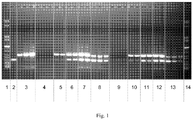
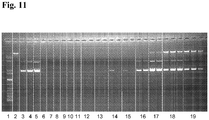
- Fig. 1 shows a gel-electrophoretic analysis of the bound and eluted nucleic acids.
- a 300 bp DNA fragment was bound onto diethylaminopropyl magnetic beads and eluted using a 500 bp DNA fragment.
- the gels are loaded as follows: Lane Sample 1 1kb+ Ladder 2 1 ⁇ g 300bp control 3 1 ⁇ g, 2 ⁇ g, 3 ⁇ g 500bp control 4 Flow-through, binding, wash 1, wash 2 5 Eluate 1, pH 7.0, 1 ⁇ g 500bp 6 Eluate 1, pH 7.0, 2 ⁇ g 500bp 7 Eluate 1, pH 7.0, 3 ⁇ g 500bp 8 Eluate 2, pH 8.5, 50mM MES, 50mM NaCl 9 Flow-through, binding, wash 1, wash 2 10 Eluate 1, pH 7.0, 1 ⁇ g 500bp 11 Eluate 1, pH 7.0, 2 ⁇ g 500bp 12 Eluate 1, pH 7.0, 3 ⁇ g 500bp 13 Eluate 2, pH 8.5, 50mM MES, 50mM NaCl 14 1kb+ Ladder Fig.
- Plasmid DNA was bound onto polyethylenimine magnetic beads and eluted using dextransulfate, polyacrylic acid, oxalic acid, mellitic acid or genomic DNA.
- the gels are loaded as follows: A Lane Sample 1 1kb+ ladder 2 2 ⁇ g pUC21 control 3 2 ⁇ g gDNA control 4 Flow-through, binding, pH 8.0 5 Wash 1, MilliQ1 6 Wash 2, MilliQ1 7 Eluate 1, 500ng dextran sulfate 8 Eluate 1, 500ng polyacrylic acid 9 Eluate 1, 500ng oxalic acid 10 Eluate 1, 500ng mellitic acid 11 Eluate 1, 2 ⁇ g gDNA 12 Eluate 2, pH 8.5, 50mM MES, 50mM NaCl, (dextran sulfate) 13 Eluate 2, pH 8.5, 50mM MES, 50mM NaCl, (polyacrylic acid) 14 Eluate 2, pH 8.5, 50mM MES, 50mM NaCl, (oxalic acid) 15 Eluate 2, pH 8.5, 50mM MES, 50mM NaCl, (mellitic acid) 16 Eluate 2, pH 8.5, 50mM MES, 50mM NaCl, (2 ⁇ g
- Plasmid DNA was bound onto spermine magnetic beads and eluted using carboxymethyl dextran, dextransulfate, polyacrylic acid, poly(4-styrenesulfonic maleic acid), acetic acid, oxalic acid, citric acid, pyromellitic acid, or mellitic acid.
- the gels are loaded as follows: CM-Dextran sodium salt Lane Sample 1 200bp ladder 2 2 ⁇ g pUC21 control 3 Flow-through binding 4 Wash 1, MilliQ 5 Wash 2, MilliQ 6 Eluate 1, 2000ng buffer 5 7 Eluate 1, 5000ng buffer 5 8 Eluate 1, 10000ng buffer 5 9 Eluate 2 (buffer 5), 50mM NaCl, 50mM Tris pH 8.5 Dextran sulfate sodium salt, Mw 6500-10000 Lane Sample 1 Eluate 1, 2000ng buffer 2 2 Eluate 1, 5000ng buffer 2 3 Eluate 1, 10000ng buffer 2 4 Eluate 2, (buffer 2) 50mM NaCl, 50mM TRIS pH 8.5 5 200bp ladder Dextran sulfate sodium salt, Mw 9000-20000 Lane Sample 1 200bp ladder 2 2 ⁇ g pUC21 control 3 Flow-through binding 4 Wash 1, MilliQ 5 Wash 2, MilliQ 6 Eluate 1, 2000ng buffer 3 7 Eluate 1, 5000ng buffer 3 8 Eluate 1, 10000ng buffer 3 9 Eluate 2,
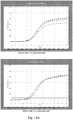
- PCR inhibition assay 5 shows a PCR inhibition assay. The influence of different carboxylic acids on the ct-value of a ⁇ -actin PCR was tested.
- Fig. 6 shows a PCR inhibition assay. The influence of different citric acid concentrations on the ct-value of a ⁇ -actin PCR was tested.
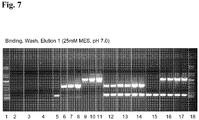
- Fig. 7 shows a Gel-electrophoretic analysis of the bound and eluted nucleic acids. A 100 bp DNA fragment was bound onto spermine magnetic beads and eluted using a 500 bp or 1000 bp DNA fragment.
- the gels are loaded as follows: Lane Sample 1 1kb+ ladder 2 Flow-through, binding, 1 ⁇ g 100bp 3 Wash 1, 100 ⁇ l MilliQ 4 Wash 2, 100 ⁇ l MilliQ 5 1 ⁇ g 100bp control 6 Control 500bp, 1 ⁇ g 7 Control 500bp, 2 ⁇ g 8 Control 500bp, 3 ⁇ g 9 Control 1000bp, 1 ⁇ g 10 Control 1000bp, 2 ⁇ g 11 Control 1000bp, 3 ⁇ g 12 500bp elution, 25mM MES, pH7.0, 1 ⁇ g 13 500bp elution, 25mM MES, pH7.0, 2 ⁇ g 14 500bp elution, 25mM MES, pH7.0, 3 ⁇ g 15 1000bp elution, 25mM MES, pH7.0, 1 ⁇ g 16 1000bp elution, 25mM MES, pH7.0, 2 ⁇ g 17 1000bp elution, 25mM MES, pH7.0, 3 ⁇ g 18 1kb+ Fig.
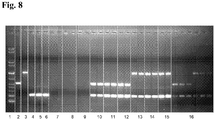
- a 500 bp or 1000 bp DNA fragment was bound onto spermine magnetic beads and eluted using a 200 bp DNA fragment.
- the gels are loaded as follows: Lane Sample 1 1kb+ ladder 2 1 ⁇ g 500bp control 3 1 ⁇ g 1000bp control 4 Control 200bp, 1 ⁇ g 5 Control 200bp, 2 ⁇ g 6 Control 200bp, 3 ⁇ g 7 Flow-through, binding, pH 7.0 8 Wash 1, MilliQ 9 Wash 2, MilliQ 10 binding 500bp, 200bp elution, 1 ⁇ g 11 binding 500bp, 200bp elution, 2 ⁇ g 12 binding 500bp, 200bp elution, 3 ⁇ g 13 binding 1000bp, 200bp elution, 1 ⁇ g 14 binding 1000bp, 200bp elution, 2 ⁇ g 15 binding 1000bp, 200bp elution, 3 ⁇ g 16 2 nd elution (50m
- RNA was bound onto spermine magnetic beads and eluted using a 500 bp DNA fragment.
- the gels are loaded as follows: Lane Sample 1 1kb+ ladder 2 2 ⁇ g RNA control 3 1 ⁇ g, 2 ⁇ g, 3 ⁇ g 500bp control 4 Flow-through binding 5 Wash 1 6 Wash 2 7 Eluate 1, 1 ⁇ g 500bp 8 Eluate 1, 2 ⁇ g 500bp 9 Eluate 1, 3 ⁇ g 500bp 10 Eluate 2, 50mM NaCl, 50mM TRIS, pH 8.5 11 1kb+ ladder Fig. 11 shows a Gel-electrophoretic analysis of the bound and eluted nucleic acids.
- Genomic DNA was bound onto spermine magnetic beads and eluted using plasmid DNA.
- the gels are loaded as follows: Lane Sample 1 1kb+ ladder 2 1 ⁇ g gDNA control 3 1 ⁇ g pUC21 control 4 2 ⁇ g pUC21 control 5 3 ⁇ g pUC21 control 6 0.25mg NK 04, binding 7 0.25mg NK 04, wash 1 8 0.25mg NK 04, wash 2 9 0.125mg NK 04, binding 10 0.125mg NK 04, wash 1 11 0.125mg NK 04, wash 2 12 Elution 1, 0.25mg NK 04, 12.5mg MES, pH 7.0, 1 ⁇ g 13 Elution 1, 0.25mg NK 04, 12.5mg MES, pH 7.0, 2 ⁇ g 14 Elution 1, 0.25mg NK 04, 12.5mg MES, pH 7.0, 3 ⁇ g 15 Elution 1, 0.125mg NK_04, 12.5mg MES, pH 7.0, 1 ⁇ g 16 Elution 1, 0.125mg
- FIG. 13 shows a Gel-electrophoretic analysis of the bound and eluted nucleic acids.
- siRNA was bound onto polyethylenimine magnetic beads and eluted using a 300 bp DNA fragment.
- the gels are loaded as follows: Lane Sample 1 1kb+ ladder 2 1,5 ⁇ g siRNA control 3 1 ⁇ g, 2 ⁇ g, 300bp control 4 Flow-through binding 5 1 6 Wash 2 7 Eluate 1, 2 ⁇ g 300bp 8 Eluate 1, 3 ⁇ g 300bp 9 Eluate 2, pH 8.5, 50mM TRIS, 100mM NaCl 10 1kb+ ladder
- Fig. 14 shows that amplification curves in PCR are normal and PAA does not promote artifact formation in PCR.
- Figures 14A-14B show the results of an experiment where threshold cycles (Ct) were detected using a TaqMan®-MGB probe.
- Fig. 14C provides the results of an experiment where melting curves were recorded to confirm product identity in PCR. See Example 15.
- Fig. 15 provides the results of real-time PCR of various concentrations of Neisseria Gonorrhoea (NG) DNA comparing the different elutions: AXpHTM beads, alkali or PAA.
- Fig. 16 demonstrates the inhibitory effect of anion exchange materials on PCR. Real time PCR amplifications were performed in triplicate in the presence of no beads ( Fig. 16A ) or 1:10 ( Fig. 16A ), 1:100 ( Fig.
- Fig. 19A dilutions of AXpHTM beads in the presence ("PAA+") or absence ("PAA-") of 25 ng/ml PAA. Fluorescent signals were generated using reporter probes labeled with either FAM (top curve) or TET (lower curve).
- Fig. 20 demonstrates that the rescue effect of PAA an effect that holds for low target concentration in the presence of high anion exchange concentrations. Real time PCR amplifications were performed in triplicate on 10, 103, and 105 copies of a target nucleic acid in the presence of a 1:25 dilution of AXpHTM beads and 0 or 25 ng/mL PAA.
- Fluorescent signals were generated using reporter probes labeled with either FAM or 5'-Tetrachloro-Fluorescein dye ("TET") as indicated.
- TET 5'-Tetrachloro-Fluorescein dye
- Fig. 20A top curves
- Fig. 20B Addition of PAA reverses this effect
- Fig. 21 demonstrates the inhibitory effects of anion exchange materials on tHDA and shows that amplification can be rescued by PAA.
- Fig. 21A demonstrates control tHDA activity (no PAA or beads)
- Fig. 21B demonstrates tHDA activity in the presence of beads
- Fig. 21C demonstrates tHDA activity in the presence of beads and PAA.
- PAA-H high molecular weight PAA
- PAA-L low molecular weight PAA
- +PMA polymethacrylic acid
- FIG. 22A 1 is a positive amplification control utilizing a target nucleic acid in wash buffer (10mM Tris, pH 8; 0.1% NP-40 alternative); 2 is a bead control utilizing a target nucleic acid in wash buffer in the presence of AXpHTM beads.
- Fig. 22B 3 is a target amplified in wash buffer plus PAA-H (0.25%) and AXpHTM beads; 4 is a target amplified in wash buffer plus PAA-L (0.25%) and AXpHTM beads.
- PGA polyglutamic acid
- a standard three step real time PCR reaction was performed on a NG DNA in triplicate for all examples using TaqMan® probes.
- B7-9 is an absolute negative control using wash buffer (10mM Tris, pH 8; 0.1% NP-40 alternative) in the absence of both target nucleic acid and AXpHTM beads.
- the curves at A are positive amplification controls using target nucleic acid dissolved in either wash buffer alone or wash buffer plus 1.25% PGA, 1.25% poly-adenylate (“poly-A”), or 1.25% carboxymethyldextran (“CMD”).
- poly-A poly-adenylate
- CMD carboxymethyldextran
- B4-6 is a bead control to demonstrate the effect of anion exchange materials on amplification of the target.
- E4-6 indicates amplification of the target in the presence of 1.25% CMD and AXpHTM beads.
- D4-6 indicates amplification of target in the presence of 1.25% PGA and AXpHTM beads.
- the left plot shows the data expressed as derivative curves.
- the right plot shows raw data.
- Fig. 24 demonstrates that PAA inhibits PCR, which can be corrected by increasing the concentration of Mg 2+ .
- Target NG DNAs were amplified in the presence of either 0.05 or 0.1 % PAA in the presence of two types of anion exchange materials (BCD and EFG, respectively) and 3, 7, or 11 mM Mg 2+ . As can be seen in the figure, increasing the concentration of Mg 2+ reversed the inhibitory effect of PAA.
- nucleic acids can be releasably adsorbed onto certain positively ionized materials, owing to the negatively ionized phosphates of the nucleic acid backbone. This property is frequently manipulated to purify nucleic acids from complex biological materials through a procedure termed anion exchange.
- anion exchange In the typical scenario, a solid phase is coated with "capture moieties" to form an anion exchange material.
- the phosphate backbone of nucleic acids will bear a net negative charge, while the capture moiety will bear a net positive charge.
- the nucleic acid will bind to the capture moiety, while neutrally or positively charged molecules, such as proteins, will not.
- the solid phase with the bound nucleic acid can then be separated from the remaining by various means, such as by centrifugation or application of a magnetic field.
- the anion exchange material can then be washed and, in the typical scheme, the nucleic acid eluted back into solution by altering the salt and/or pH conditions to form an eluate.
- the eluate can then be separated from the anion exchange material and used in subsequent analyses. Numerous such methods have been previously described. These methods are clean and easy to perform, result in relatively high nucleic acid yields, and do not require the dangerous and expensive chemicals necessary with tradition chemical extraction methods of purification. However, they do present some problems.
- nucleic acids from anion exchange materials typically requires some combination of pH and/or ionic strength manipulation to elute bound nucleic acids from the anion exchange material.
- Nucleic acids eluted in this manner generally cannot be used directly in analytical methods, such as PCR, as the resulting eluate has a non-optimal pH and/or elevated ionic strength. Therefore, it would be desirable to develop materials and methods that permit elution of nucleic acids anion exchange materials at analytically appropriate pH and ion concentrations.
- the present disclosure relates to materials, methods, and kits for isolating a nucleic acid with an anion exchange material, wherein an anionic compound comprising at least two anionic groups is added during an elution step.
- a method of eluting a nucleic acid from an anion exchange material comprising: a) providing a nucleic acid-anion exchange complex; and b) adding a composition comprising an anionic compound comprising at least two anionic groups to the nucleic acid-anion exchange complex, wherein the anionic compound displaces the nucleic acid from the anion exchange material.
- the verb "to complex” shall refer to the process of a positively ionized capture moiety on the anion exchange material associating directly with a negatively ionized moiety on either the phosphate backbone of a target nucleic acid or an anionic compound.
- the noun “complex” shall refer to the chemical structure formed by such an association.
- the term “nucleic acid-anion exchange complex” shall refer to the chemical structure formed when a nucleic acid complexes with a positively ionizable capture moiety on an anion exchange material.
- the nucleic acid-anion exchange material is provided by a method comprising: (1) contacting an anion exchange material with a sample comprising a nucleic acid under conditions in which a complex forms between the anion exchange material and the nucleic acid, and (2) isolating the complex from the sample.
- the step of forming a complex between the anion exchange material and the nucleic acid is performed under pH, ionic strength, and/or detergent conditions such that the nucleic acid of interest complexes with the anion exchange material, but contaminants such as proteins, endotoxins, and liposomes do not.
- the conditions may be further refined such that only specific nucleic acids form a complex with the anion exchange material.
- the nucleic acid-anion exchange material is provided by a method comprising: (1) contacting a sample comprising the nucleic acid with the anion exchange material, (2) forming a complex between the anion exchange material and the nucleic acid, (3) isolating the complex from the sample, and (4) washing the complex to remove impurities.
- the wash conditions may be selected such that substantially all non-nucleic acid material is removed.
- Suitable wash buffers are known in the art and include but are not limited to solutions comprising water, alcohols in particular branched or unbranched alcohols having 1 to 5 carbon atoms, such as ethanol or isopropanol, polyethylenglycols, polypropylenglycols, acetone, carbohydrates, aqueous solutions comprising salts and mixtures of the foregoing.
- the wash buffer may comprise 0.1% NP-40 in 0.1 mM Tris, pH 8.0.
- the wash conditions further may be refined such that specific nucleic acids are removed as impurities as well.
- anion exchange materials Another problem with isolating nucleic acids using anion exchange materials is that the eluate often does not completely separate from the anion exchange material, resulting in analytical samples contaminated with the anion exchange material, commonly referred to as "bead carryover". This is problematic because the presence of anion exchange materials often interferes with subsequent analysis of the nucleic acid. Moreover, molecular biological analyses are increasingly automated. Ideally, one would like to combine both the isolation and the analytical methods into a single automated process with as few steps and reagents as possible. The potential for anion exchange materials interfering with analysis of the nucleic acid makes predictable and reliable automation of such processes difficult. Therefore, it would be desirable to develop materials and methods that permit analysis of nucleic acids in the presence of anion exchange materials.
- the present disclosure relates to materials, methods, and kits for analyzing a nucleic acid in the presence of an anion exchange material and an anionic compound comprising at least two anionic groups, wherein the anionic compound reverses inhibition of the analytical process caused by the anion exchange material.
- the analysis step of the methods disclosed herein is intended to be performed in the presence of the anion exchange material.
- the presence of the anion exchange material can be either unintentional, as in the case of carry-over during nucleic acid purification, or it can be intentional, as when nucleic acids are analyzed directly from the isolated nucleic acid-anion exchange complex.
- nucleic acids are not limited and include any nucleic acid.
- the nucleic acid may be: DNA, including but not limited to genomic DNA, mitochondrial DNA, bacterial DNA, viral DNA, plasmids, cosmids, linear oligodeoxynucleotides and polydeoxynucleotides, cDNA, PCR fragments, PCR amplicons, tHDA amplicons, LCR amplicons, long-range PCR amplicons, oligonucleotides, primers, probes, artificial or synthetic DNA; RNA, including but not limited to mRNA, tRNA, rRNA, viral RNA, siRNA, miRNA, RNAi, linear oligonucleotides, linear polynucleotides, probes, artificial or synthetic RNA; artificial nucleic acids such as PNA and LNA as well as combinations thereof such as nucleic acids comprising both DNA and RNA, and hybrids thereof such as RNA:DNA hybrids
- the nucleic acid may be single-stranded or double-stranded. It may contain modifications such as natural modifications and artificial modifications, and may contain artificial nucleotides comprising, e.g., artificial bases, artificial sugar moieties and/or artificial connections between the nucleotides.
- Nucleic acids can include, without limitation, nucleic acids found in specimens or cultures (e.g. cellular, microbiological and viral cultures) including biological and environmental samples.
- the ribonucleic acids may be found in any biological samples from cell culture, bacteria, viruses, an animal, including a human, fluid, solid (e.g., stool) or tissue samples.
- Target nucleic acids may further be found in biological samples including, but not limited to cervical samples (e.g., a sample obtained from a cervical swab), adenoid cells, anal epithelial cells, blood, blood products such as serum, plasma or buffy coat, saliva, cerebral spinal fluid, pleural fluid, milk, lymph, sputum, urine and semen.
- the nucleic acids are from other viral, bacteria, mycobacteria or plasmodia, for example cytomegalovirus (CMV), herpes, HIV, Chlamydia, Gonorrhea, Staphylococcus aureus, tubercolis, Sars Coronavirus and/or influenza.
- CMV cytomegalovirus
- herpes HIV
- Chlamydia Gonorrhea
- Staphylococcus aureus Staphylococcus aureus
- tubercolis Sars Coronavirus and/or influenza.
- the nucleic acids are human papillomavirus (HPV) and include genetic variants of HPV.
- HPV human papillomavirus
- a variant includes polymorphisms, mutants, derivatives, modified, altered, or other forms of the nucleic acid.
- the nucleic acid is an HPV nucleic acid.
- the HPV nucleic acid is HPV DNA and/or RNA of a high risk HPV type.
- the nucleic acids are high risk HPV types such as, 16, 18, 31, 33, 35, 39, 45, 51, 52, 56, 58, 59, 68, 26, 66, and/or 82.
- Samples that contain nucleic acid include, but are not limited to, a specimen or culture (e.g., cellular, microbiological and viral cultures) including biological and environmental samples.
- Biological samples may be from any source such as cell culture, bacteria, viruses, an animal, including a human, fluid, solid (e.g., stool) or tissue samples, as well as liquid and solid food and feed products and ingredients such as dairy items, vegetables, meat and meat byproducts, and waste.
- Environmental samples include, for example, environmental material such as surface matter, soil, water and industrial samples, as well as samples obtained from food and dairy processing instruments, apparatus, equipment, utensils, disposable and non-disposable items.
- Exemplary biological samples including, but not limited to, cell samples, such as cervical epithelial cells (e.g., a sample obtained from a cervical swab), adenoid cells, anal epithelial cells, blood, blood products such as serum, plasma or buffy coat, saliva, cerebral spinal fluid, pleural fluid, milk, lymph, sputum and semen, and may be collected, for example, in Preservcyt, Surepath and/or Digene Collection Medium (“DCM”).
- the sample may comprise a deoxyribonucleic acid (DNA) and/or ribonucleic acid (RNA).
- the sample may be processed prior to contacting it with the anion-exchange material if desired for any reason.
- a biological sample comprising cells comprising nucleic acids may be treated to lyse the cells in order to release the nucleic acid.
- the lysate comprising the nucleic acids may then be added to the anion-exchange material.
- the cells may be lysed with a suitable lysis buffer comprising, for example, 2% Triton X-100, 0.2 M EDTA, 40 mM sodium citrate, 40 mM boric acid in 100 mM Tris HCl, pH 7.0. If an alkali lysis buffer is used to prepare the sample, the pH of the sample may need to be neutralized to a pH that allows the nucleic acids to bind to the anion-exchange material prior to contacting the sample with the anion-exchange material.
- the sample may comprise nucleic acids from other viral, bacteria, mycobacteria or plasmodia, for example cytomegalovirus (CMV), herpes, HIV, Chlamydia, Gonorrhea, Staphylococcus aureus, tubercolis, Sars Coronavirus or influenza.
- CMV cytomegalovirus
- herpes HIV
- Chlamydia Gonorrhea
- Staphylococcus aureus Staphylococcus aureus
- tubercolis Sars Coronavirus or influenza.
- the sample is treated such that the nucleic acid is "free.”
- the phrase "free nucleic acid” shall indicate that the nucleic acid is not associated with large macromolecular structures, such as vesicles, liposomes, micelles, ribosomes, nuclei, mitochondria, viral caspids and/or envelopes, endosomes, or exosomes.
- anion exchange material used synonymously herein and in particular are not restricted to materials which are resins in the chemical meaning.
- anion exchange material shall refer to any material that can be used to selectively remove nucleic acids from a solution via the formation of a complex between the phosphate backbone of the nucleic acid and a positively ionizable capture moiety of the material. Numerous anion exchange materials have previously been described and would be immediately recognized by a person having ordinary skill in the art, including for example those described in U.S. Pat. No. 6,914,137 , US Pat. No. 5,990,301 , US 20100009351A1 , and EP 0 268 946 B1 . Any anion exchange material suitable for purifying nucleic acids may be used.
- the anion exchange material material comprises a solid phase and a positively ionizable capture moiety.
- Any solid phase suitable for anion exchange chromatography may be used, including but not limited to silica, borosilicates, silicates, anorganic glasses, organic polymers such as poly(meth)acrylates, polyurethanes, polystyrene, agarose, polysaccharides such as cellulose, metal oxides such as aluminum oxide, magnesium oxide, titanium oxide and zirconium oxide, metals such as gold or platinum, agarose, sephadex, sepharose, polyacrylamide, divinylbenzene polymers, styrene divinylbenzene polymers, dextrans, and derivatives thereof, and/or silica gels, beads, membranes, and resins; glass or silica surfaces, such as beads, plates, and capillary tubes; magnetizable or magnetic (e.g.
- paramagnetic, superparamagnetic, ferromagnetic or ferrimagnetic particles including but not limited to polystyrene, agarose, polyacrylamide, dextran, and/or silica materials having a magnetic material incorporated therein or associated therewith.
- the capture moieties can be linked to the surfaces of the processing vessels such as micro-tubes, wells of micro-plates, or capillaries, and using these surfaces nucleic acids can be isolated on a micro scale.
- the solid phase will be treated, manufactured, or otherwise processed such that the nucleic acid of interest will not bind directly to the solid phase during the purification step.
- Anion exchange materials include, but are not limited to, materials modified with positively ionizable capture moieties.
- examples of such ionizable groups are monoamines, diamines, polyamines, and nitrogen-containing aromatic or aliphatic heterocyclic groups.
- the positively ionizable capture moiety comprises at least one primary, secondary or tertiary amino group.
- the positively ionizable capture moiety is selected from the group consisting of a primary amine of the formula R 3 N, a secondary amine of the formula R 2 NH, and a tertiary amine X-(CH 2 ) n -Y, wherein: X is R 2 N, RNH or NH 2 , Y is R 2 N, RNH or NH 2 ,
- Examplary capture moieties include, but are not limited to, aminomethyl (AM), aminoethyl (AE), aminoalkyl, alkylaminoalkyl, dialkylaminoalkyl such as diethylaminoethyl (DEAE), ethylendiamine, diethylentriamine, triethylentetraamine, tetraethylenpentaamine, pentaethylenhexaamine, trimethylamino (TMA), triethylaminoethyl (TEAE), linear or branched polyethylenimine (PEI), carboxylated or hydroxyalkylated polyethylenimine, jeffamine, spermine, spermidine, 3-(propylamino)propylamine, polyamidoamine (PAMAM) dendrimers, polyallylamine, polyvinylamine, N-morpholinoethyl, polylysine, and tetraazacycloalkan
- Biological buffer compounds also may be used as functional groups of the anion exchange material, such as those described in the patents or applications US 6,914,137 and EP 1 473 299 .
- Further examples of the positively ionizable groups are polyhydroxylated amines, detergents, surfactants, heterocycles, dyes, negatively charged groups in combination with metal ions or metal oxides, histidine and polyhistidine. Such groups are also described, for example, in the patent application WO 2003/101494 and paten application EP 09 007 338.8 .
- zwitterionic groups such as amino acids or betaines may be used.
- the anion exchange material comprises spermine-modified magnetic silica beads.
- the solid phase may be functionalized for attachment of the capture moieties, for example with functionalities such as Si-O-Si, Si-OH, alcohol, diol or polyol, carboxylate, amine, phosphate or phosphonate.
- the positively ionizable capture moieties may be attached to the solid phase, for example, by using epoxides, (activated) carboxylic acids, acid anhydrides, acid chlorides, formyl groups, tresyl groups or pentafluorophenyl groups.
- the functional groups may be attached directly to the solid phase or via (linear or branched) spacer groups, e.g.
- hydrocarbons such as -(CH2) n - groups, carbohydrates, polyethylenglycols and polypropylenglycols.
- a polymer composed of monomers comprising a capture moiety such as an amino functional group can be used as anion exchange material.
- ionizable groups can be linked to the surfaces of processing vessels, such as micro-tubes, micro-plates, or capillaries, and using these surfaces nucleic acids can be isolated on a micro scale.
- the solid phase is treated, manufactured, or otherwise processed such that the nucleic acid of interest will not bind directly to the solid phase during the purification step.
- a PEI-modified paramagnetic silica bead is used as the anion exchange material.
- exemplary PEI-modified magnetic silca beads include AXpHTM beads (commercially available from Qiagen GmbH, Hilden Germany). AXpHTM beads can be separated magnetically from wash buffer and eluate, which is easier than the filtration needed when working with cellulose and other non-magnetic resins.
- the ion exchange process known in the art usually involves two primary steps: (1) binding nucleic acids to the anion-exchange material at a pH that causes the material to be positively charged; and (2) elution and/or displacement of nucleic acids from said material, by either increasing salt concentration and/or increasing the pH above the pKa of the capture moieties ("pH shift method").
- a solution comprising at least one compound comprising at least two anionic groups is applied to the anion-exchange material to elute the nucleic acids.
- the positively ionizable capture moiety bears a first net positive charge at a first pH and ionic strength and either a neutral charge or a second net positive charge that is lower than the first net positive charge at a second pH and ionic strength, such that the nucleic acid of interest binds to the positively ionizable capture moiety at the first pH and ionic strength and is released at the second pH and ionic strength.
- the positively ionizable capture moiety bears a first net positive charge at a first pH and ionic strength and a second net positive charge at a second pH and ionic strength, wherein a first nucleic acid and a second nucleic acid bind to the positively ionizable capture moiety at the first pH and ionic strength and the first nucleic acid, but not the second nucleic acid, is released from the positively ionizable capture moiety at the second pH and ionic strength.
- the binding of the nucleic acid to the anion exchange material is usually done in an aqueous solution, preferably comprising buffer substances.
- Suitable biological buffers are CHAPS, MES, HEPES, MOPS, TRIS, TRICINE and PIPES.
- the solution may contain chaotropic salts such as sodium perchlorate, guanidium hydrochloride, and guanidium thiosulfate, as described, e.g., in US 5,234,809 , and/or cosmotropic salts such as ammonium sulfate, zinc sulfate, potassium sulfate and cobalt sulfate, as described, e.g., in WO 2004/055207 .
- the binding buffer may also contain further salts such as chlorides, sulfates, phosphates, acetates, formiates, citrates, azides, and nitrates, as well as further organic compounds such as alcohols, diols, triols, polyols, polyethylenglycols, polypropylenglycols, acetone, acetonitrile, urea, guanidine, carbohydrates and surface-active substances such as surfactants or detergents, for example tween, triton, brij, nonidet or pluronic.
- further salts such as chlorides, sulfates, phosphates, acetates, formiates, citrates, azides, and nitrates
- further organic compounds such as alcohols, diols, triols, polyols, polyethylenglycols, polypropylenglycols, acetone, acetonitrile, urea, guan
- Salts preferably are present in a concentration of about 1 M or less, preferably 0,5 M or less, more preferably 250 mM or less, most preferably 100 mM or less. Binding of the nucleic acids is preferably done at a pH in the range of about 3 to about 10, preferably about 5 to about 9.
- binding of the nucleic acid to the anion exchange material may be combined with a treatment of the sample such as lysis of cells or tissue in the sample or digestion of specific compounds such as proteins, DNA and/or RNA in the sample.
- the binding buffer may further comprise lysis agents such as enzymes, surfactants, chaotropic salts or chelators (e.g. EDTA or NTA), and/or digestion agents such as proteases, DNases and RNases.
- lysis agents such as enzymes, surfactants, chaotropic salts or chelators (e.g. EDTA or NTA)
- digestion agents such as proteases, DNases and RNases.
- Binding, as well as pre-treatment steps such as lysis and/or enzymatic pretreatment processes can be performed at elevated temperatures in order to speed up the respective processes.
- washing buffers which can be used to remove non-target materials are known in the prior art and include but are not limited to solutions comprising water, alcohols in particular branched or unbranched alcohols having 1 to 5 carbon atoms, such as ethanol or isopropanol, polyethylenglycols, polypropylenglycols, acetone, carbohydrates, aqueous solutions comprising salts and mixtures of the foregoing.
- An exemplary wash buffer comprises, for example, 0.1% NP-40 in 0.1 mM Tris, pH 8.0.
- the bound nucleic acid can be eluted by adding a solution comprising an anionic compound comprising at least two anionic groups or a mixture of such anionic compounds.
- the anionic compound(s) displaces the nucleic acids from the anion exchange material.
- the present method does not need to involve a change in pH in particular above the pKa of the capture moiety to cause elution, but rather relies on the anionic compound(s) to elute nucleic acid from anion-exchange material bound with nucleic acid.
- the anionic compound(s) can displace nucleic acid from anion-exchange materials at relatively low concentrations due to their own high selectivity to the material.
- the optimal concentration of anionic compounds to be used in the eluate should be determined for any particular application; this concentration should be high enough to provide high recovery of nucleic acids, but not too high to compromise any subsequent operations and processes.
- the anionic compounds may be used at varying concentrations necessary to elute the nucleic acid.
- the concentration may be 0.1 % to about 2.0 % and in certain embodiments, the concentration is from about 0.5 % to about 1.0%.
- any numerical value recited herein includes all values from the lower value to the upper value (and including the lower value and the upper value). For example, all possible combinations of numerical values between the lowest value and the highest value enumerated are to be considered expressly stated in this application.
- the eluate can be used directly without a neutralization step typically required when using pH based or a desalting step when using a salt buffer based elution.
- anionic compound shall refer to any compound having a net negative charge at the pH and salt conditions used to elute or analyze the nucleic acid.
- anionic group shall refer to any functional group, covalently bound to the anionic compound, that bears a net negative charge at the pH and salt conditions used to elute or analyze the nucleic acid. In all cases, each anionic group of each anionic compound may be the same or different.
- Suitable anionic compounds include polyanionic compounds, as well as non-polymeric anionic compounds.
- the anionic compound is organic.
- Suitable non-polymeric anionic compounds useful in the methods and compositions disclosed herein include, for example, any non-polymeric organic compounds comprising at least two anionic groups.
- the non-polymeric anionic compound may comprise at least 2, at least 3, at least 4, at least 5, or at least six anionic groups.
- the non-polymeric anionic compound comprises from 2 to 6 or 3 to 6 anionic groups.
- the non-polymeric anionic compound may comprise not more than 15 anionic groups, not more than 10 anionic groups, not more than 8 anionic groups, or not more than 6 anionic groups.
- the non-polymeric organic anionic compound preferably has 2 to 40 carbon atoms, more preferably 2 to 20 carbon atoms, even more preferably 2 to 12 carbon atoms. It may be linear, branched or cyclic and may be aliphatic (being saturated or unsaturated) or aromatic (having one or more conjugated or fused rings).
- the at least two anionic groups are selected from the group consisting of a carboxylic acid group, a sulfonic acid group, a phosphonic acid group, a phosphate group, a carbonate group, and combinations thereof.
- acid group shall encompass both the referenced acid and, alternatively, its conjugated base.
- the at least two anionic groups are selected from the group consisting of: a carboxylate group, a sulfonate group, a phosphonate group, and an ionized phosphate group.
- the anionic group is a carboxylic acid/carboxylate group.
- the non-polymeric anionic compound is selected from the group consisting of a dicarboxylic acid, tricarboxylic acid, tetracarboxylic acid, pentacarboxylic acid, hexacarboxylic acid, heptacarboxylic acid, octacarboxylic acid, nonacarboxylic acid, and a decacarboxylic acid.
- the non-polymeric compound comprising at least two anionic groups is a carboxylic acid, such as oxalic acid, fumaric acid, glutaric acid, maleic acid, malic acid, malonic acid, succinic acid, glutaric acid, adipic acid, pimelic acid, suberic acid, azelaic acid, tartronic acid, tartaric acid, citric acid, isocitric acid, citraconic acid, mesaconic acid, itaconic acid, aconitic acid, propane-1,2,3-tricarboxylic acid, aconitic acid, butane-1,2,3,4-tetracarboxylic acid, triethyl-1,1,2-ethanetricarboxylic acid, cyclopropane dicarboxylic acid, cyclobutane dicarboxylic acid, cyclobutane tricarboxylic acid, cyclopentane dicarboxylic acid, cyclohexane dicar
- the non-polymeric compound comprising at least two anionic groups is an organosulfonic acid, such as methyl disulfonic acid, ethyl disulfonic acid, benzene disulfonic acid, phenole disulfonic acid, or naphthalene disulfonic acid.
- organosulfonic acid such as methyl disulfonic acid, ethyl disulfonic acid, benzene disulfonic acid, phenole disulfonic acid, or naphthalene disulfonic acid.
- the non-polymeric compound comprising at least two anionic groups is an organophosphonic acids, such as hydroxyethane diphosphonic acid.
- the non-polymeric compound comprising at least two anionic groups is an organophosphate.
- the non-polymeric compound comprising at least two anionic groups is a carbonate.
- the non-polymeric compound comprising at least two anionic groups is a diacetylacetone.
- the non-polymeric anionic compound is selected from the group consisting of oxalic acid, mellitic acid, pyromellitic acid and citric acid.
- the non-polymeric anionic compound may optionally be substituted, as long as the substituents do not interfere with or inhibit the ability of the compound to displace the nucleic acid from the anion exchange material.
- substituents include, for example, halogen atoms such as fluorine, chloride, bromide or iodine, and hydroxyl, oxy, aldehyde, keto, alkoxy, ether, ester, amino, thiol, thioether, thioester, linear or branched alkyl, alkenyl, alkynyl, saturated or unsaturated cycloalkyl and aryl groups.
- the anionic compound comprises 1 to 6 substituents or 1 to 3 substituents. In another embodiment, these substituents comprise - if present - not more than 20, 10, 8, 6, 4 or 2 carbon atoms.
- the non-polymeric anionic compound is a low molecular weight compounds. In another embodiment, the non-polymeric anionic compound has a molecular weight of 5,000 Da or less. In another embodiment, the non-polymeric anionic compound has a molecular weight of 3,000 Da or less. In another embodiment, the non-polymeric anionic compound has a molecular weight of 2,000 Da or less.
- Non-polymeric anionic compounds having at least two anionic groups have the advantage that only relatively low concentrations of the anionic compound are necessary to effectively elute the bound nucleic acid. Furthermore, the presence of non-polymeric anionic compounds do not interfere with or inhibit subsequent amplification reactions, even at rather high concentrations.
- the anionic compound comprising at least two anionic groups is a polyanionic compounds.
- polyanionic compound shall refer to a polymeric anionic compound.
- the polyanionic compound is selected from the group consisting of: polymerized unsaturated carboxylic acids (e.g. acrylic, methacrylic, maleic, etc.) or copolymers of these acids with other monomers, such as acrylamide or acrylonitrile; acidic polypeptides such as polyglutamic or polyaspartic acid, or copolymers of acidic polypeptides with other amino acids; modified dextran and other modified or polyanionic polycarbohydrates bearing covalently attached ionized groups, such as carboxymethyl dextran, dextran sulfate and dextran phosphate or mixtures thereof; polystyrene with anionic groups, such as polystyrenesulfonates; and even other nucleic acids such as double-stranded or single-stranded DNA or RNA, or analogs thereof such as "base-free" nucleic acid (nucleic acid which only comprises the backbone structure and does not comprise any bases attached to the sugar moieties
- polyacrylic acid PAA
- polymethacrylic acid PMA
- polyglutamic acid PGA
- dextran sulfate DS
- a "low molecular weight” polyacrylic acid a weight average Fw ⁇ 5,100; approximately a 70-mer
- high molecular weight a weight average Fw>200,000; i.e. longer than a 2,800-mer
- the polyanionic compound is a second nucleic acid.
- the second nucleic acid should not interfere with the subsequent process (e.g. RNA can be used to elute DNA if the next step is PCR analysis).
- the second nucleic acid preferably comprises at least 100 base pairs (bp), more preferably at least 200 bp, at least 500 bp or at least 1000 bp.
- poly-dA polydeoxyadenosine
- poly-dT polydeoxythymidine
- poly-dA:dT a carrier nucleic acid
- the anionic compound may be added in the presently disclosed methods either as free acid or as a salt.
- Suitable cations for use in such salts are, for example, any alkaline cation, such as sodium and lithium.
- Elution of the bound nucleic acid from the anion exchange material is achieved using the anionic compound comprising at least two anionic groups as defined herein.
- elution is performed using an elution buffer containing the anionic compound.
- the elution buffer preferably is an aqueous solution which may further contain, for example, a buffering agent, e.g. as described above with respect to the binding solution, organic components and/or salts.
- the pH used for elution preferably is in the range of from about 5 to about 13, from about 5 to about 9.5, or from about 5 to about 8.5.
- the pH lies in a range from about 8.2 to about 9.0, in particular when the eluate is supposed to be used directly in a amplification reaction such as PCR, RT-PCR, or a isothermal amplification reaction.
- Elution of nucleic acids from the anion exchange material can be performed without the necessity of severe changes in the pH.
- the pH during the elution step does not render the anion exchange material neutral or negatively charged.
- the pH during elution does not significantly reduce the positive charge of the anion exchange material.
- the pH during the elution step is not above the pKa of the anion exchange material and/or the capture moieties thereof.
- the solution used for eluting the nucleic acid from the anion exchange material does not comprise a high salt concentration.
- the total salt concentration in the elution solution does not exceed 1 M, is at or below 0.5 M, 300 mM, 200 mM, 150 mM, 100 mM, 50 mM or 30 mM.
- the elution solution does not contain any salts except for the anionic compound comprising at least two anionic groups.
- Nucleic acids in biological samples are preferably first bound to anion-exchange material, for example, anion-exchange magnetic beads. The material is then washed to get rid of proteins and other undesirable impurities. Nucleic acids are then eluted by a solution comprising at least one anionic compound comprising at least two anionic groups as defined herein. This procedure requires no change or at least no severe change in pH for the elution step. In fact, the pH of the wash and elution buffer can be the same.
- the anionic compound is present in a concentration high enough to effect elution of at least a part of the bound nucleic acids. In one embodiment, the anionic compound is present in a concentration high enough to effect elution of a majority of the bound nucleic acids. In one embodiment, the anionic compound is present in a concentration high enough to effect elution of substantially all of the bound nucleic acids.
- the concentration of a non-polymeric anionic compound during elution is selected in the range of from about 1 mg/l to about 1 g/l, more preferably from about 10 mg/l to about 500 mg/l, even more preferably from about 20 mg/l to about 100 mg/l.
- the amount of the polyanionic compound is in the range of from about 0.01% to about 5%, more preferably from about 0.025% to about 2.5%, even more preferably from about 0.1% to about 2.0% or from about 0.5% to about 1.0%.
- the optimal concentration of anionic compounds to be used in the eluate should be determined for any particular application. Namely, the concentration should preferably be high enough to provide high recovery of nucleic acids, but not too high to compromise any subsequent operations and processes. On the other hand, if the anionic compounds used in nucleic acid isolation step decrease efficiency of the subsequent procedures such as amplifications, such negative effects can be overcome by specific adjustments of conditions.
- the isolated nucleic acid can be amplified in the presence of Mg 2+ at a concentration of about 10 to about 40mM.
- the polyanionic compounds may be used at varying concentrations necessary to elute the nucleic acid.
- the concentration may advantageously be 0.1 % to about 2.0 % and in certain embodiments, the concentration is from about 0.5 % to about 1.0%.
- any numerical value recited herein includes all values from the lower value to the upper value (and including the lower value and the upper value).
- all possible combinations of numerical values between the lowest value and the highest value enumerated are to be considered expressly stated in this application.
- values such as 0.05, 0.2, 0.3, 0.4, 1.8, 1.9, etc. or any ranges within this range such as 0.3 to 1.0 or 0.4 to 2.4, etc., are expressly enumerated in this specification.
- the eluate can be used directly in such downstream reactions without neutralization (which is typically required when using pH based elution) and/or without using a desalting step (when using a salt buffer based elution).
- PAA elutes DNA from anion-exchange magnetic beads at concentrations that do not significantly affect PCR or isothermal amplification such as tHDA (thermophilic Helicase Dependent Amplification).
- concentration of PAA is typically, but not limited to, from 0.025-2.5%.
- PAA is present at a concentration of from 0.1% to 2.0 %. In another embodiment, and more preferably 0.5-1.0 %), and the exact concentration depends also on the volume of the sample that is included into the PCR. For example, higher PAA concentrations provide better nucleic acid recovery from AXpH beads but tend to somewhat slow down amplification.
- PAA concentration in the elution buffer, sample volume per PCR and the volumes of individual PCR should be found experimentally as a reasonable compromise between required assay sensitivity and limitations of PCR volume.
- concentrations of polyanionic compounds that could be inhibitory to PCR or other nucleic acid amplification techniques can be tolerated if the eluates are used in applications that do not require amplification; for example, in nucleic acid hybridization techniques.
- eluates can be used directly for nucleic acid detection.
- the elution is performed at elevated temperatures such as e.g. at temperatures ⁇ 50°C, ⁇ 60°C or even ⁇ 70°C.
- the present disclosure also provides methods for nucleic acid isolation, analysis and in particular amplification that allow automation utilizing an anion exchange material that is suitable for the gentle isolation of DNA as well as RNA. Further, the eluted DNA or RNA does not generally need additional handling steps such as a neutralization step or desalting step in order to be fully compatible with downstream reactions.
- an eluate comprising the nucleic acid of interest can be generated without resorting to pH switch or high salt methods.
- the eluates generated according to the methods described herein may be used directly in various analytical methods, including, for example, amplification procedures such as PCR, RT-PCR, helicase-dependent amplification, hybrid capture assays, sequencing or transfection.
- any anionic compound comprising at least two anionic groups as defined herein can be used.
- the anionic compound is not dextran sulfate.
- an eluate obtained according to any of the above-described methods is provided.
- the eluate is directly compatible with a subsequent enzymatic reaction.
- directly compatible it is meant that the resulting eluate does not require any further processing steps (such as desalting, neutralization, et cetera ) before it may be included in an enzymatic reaction mixture.
- the eluate is obtained by a method comprising: a) providing a nucleic acid-anion exchange complex; and b) adding a composition comprising an anionic compound comprising at least two anionic groups to the nucleic acid-anion exchange complex, wherein the anionic compound displaces the nucleic acid from the anion exchange material, and further wherein the composition comprising the anionic compound further comprises amplification components.
- said amplification components may be: an enzyme having a polymerase activity; an enzyme having a reverse transcriptase activity; an enzyme having a helicase activity; nucleotides; primer nucleic acids; amplification buffers; a nick-inducing agent; a source of Mg 2+ and/or Mn 2+ , for example, MgCl 2 and/or MnCl 2 ; a ribonucleotide triphosphate (NTP); a deoxyribonucleotide triphosphate (dNTP); a source of K + , for example, KCl; a source of NH 4 + , for example, (NH 4 ) 2 SO 4 ; or a reducing agent, for example, 2-mercapthoethanol and/or dithiothreitol (DTT).
- an enzyme having a polymerase activity an enzyme having a reverse transcriptase activity
- an enzyme having a helicase activity nucleotides
- primer nucleic acids
- a method of analyzing a nucleic acid comprising, consisting essentially of, or consisting of: a) providing a nucleic acid-anion exchange complex; b) adding a composition comprising an anionic compound comprising at least two anionic groups to the nucleic acid-anion exchange complex; and c) analyzing the nucleic acid in the presence of the anionic compound.
- the analysis method comprises a nucleic acid amplification.
- Nucleic acid amplifications can be broadly separated into two categories: temperature cycled amplifications and isothermic amplifications. Either class of amplification may be used.
- the amplification in the disclosed methods can be either a temperature cycled amplification or an isothermic amplification.
- Exemplary methods of amplification include, but are not limited to, polymerase chain reaction ("PCR"), reverse transcriptase (“RT”) reaction, thermophilic helicase-dependent amplification (“tHDA”), whole genome amplification, and ligase chain reaction (“LCR”).
- Exemplary analytical methods comprising an amplification step include, but are not limited to, PCR, RT-PCR, real time PCR, real time RT-PCR, quantitative real time PCR, quantitative real time RT-PCR, multiplex analysis, melting curve analysis, high resolution melting curve analysis, tHDA, RT-tHDA, real time tHDA, quantitative real time tHDA, quantitative real time RT-tHDA, NIA, RT-NIA, real time NIA, quantitative real time NIA, and quantitative real time RT-NIA.
- the temperature typically is raised above the melting point of the target nucleic acid to "melt" any double stranded portions, and then lowered to a point at which oligonucleotide primers anneal with single stranded portion of the target nucleic acid, then raised again to a temperature at which the primers remain annealed and the polymerase is active.
- helicase or “an enzyme with, or having, helicase activity” refers to any enzyme capable of unwinding a double stranded nucleic acid.
- the helicase functions to unwind double stranded nucleic acids, thus obviating the need for repeated melting cycles.
- Exemplary helicases include E.
- Additional helicases that may be useful include RecQ helicase, thermostable UvrD helicases from T. tengcongensis and T. thermophilus, thermostable DnaB helicase from T. aquaticus, and MCM helicase from archaeal and eukaryotic organisms.
- nick-initiated amplification a nick-inducing agent is used to induce breaks in the phosphodiester bonds of the nucleic acid backbone.
- a polymerase having strand displacement activity can then initiate amplification at the site of the nick, using one strand of the nucleic acid as a primer and the other strand as a template.
- nick-inducing agent refers to any enzymatic or chemical reagent or physical treatment that introduces breaks in the phosphodiester bond between two adjacent nucleotides in one strand of a double-stranded nucleic acid. Examples of nick-inducing enzymes include Bpu10 I, BstNB I, Alw I, BbvC I, BbvC I, Bsm I, BsrD, and E. coli endonuclease I.
- Anion exchange materials are know to interfere with interfere with the analysis of nucleic acids. Separate and apart from their utility as elution agents, the anionic compounds as described throughout also have the unexpected property of permitting analysis of nucleic acids in the presence of anion exchange materials. Accordingly, the present disclosure relates to materials and methods of analyzing nucleic acids in the presence of anion exchange materials, wherein a anionic compound is added during the analysis step.
- a method of analyzing a nucleic acid of interest in the presence of an anion exchange material comprising: a) purifying the nucleic acid of interest from a sample using the anion exchange material; and b) analyzing the nucleic acid in a first solution comprising at least one anionic compound, wherein the anionic compound comprises at least two anionic groups.
- the anionic compound is non-polymeric. In another embodiment, the anionic compound is a polyanionic compound.
- the purifying step comprises the steps of: (1) contacting a sample comprising the nucleic acid with the anion exchange material, (2) forming a nucleic acid-anion exchange complex between the anion exchange material and the nucleic acid, and (3) isolating the nucleic acid-anion exchange complex from the sample.
- the purifying step comprises the steps of: (1) contacting a sample comprising the nucleic acid with the anion exchange material, (2) forming a complex between the anion exchange material and the nucleic acid, (3) isolating the complex from the sample, and (4) washing the complex to remove impurities.
- the wash conditions may be selected such that substantially all non-nucleic acid material is removed.
- the wash conditions further may be refined such that specific nucleic acids are removed as impurities as well.
- the nucleic acid is eluted from the nucleic acid-anion exchange complex before the anionic compound is added.
- the nucleic acid may be eluted using pH switch or high salt solutions. In such a case, the resulting eluant will likely need to be further processed before it can be used in an analytical process.
- the nucleic acid may be eluted using a solution comprising an anionic compound, as described above. The eluate may then be separated from a substantial portion of the anion exchange material before an analysis (as in bead carryover), or the eluate may be analyzed in the presence of the entire portion of the
- an analytical solution comprising the anionic compound is added directly to the nucleic acid-anion exchange complex.
- a nucleic acid amplification composition comprising an anionic compound comprising at least two anionic groups may be added directly to the nucleic acid-anion exchange complex.
- nucleic acid amplification composition shall refer to any composition comprising an anionic compound as described above and further having the appropriate components and physical properties such that a nucleic acid amplification may be conducted therein.
- Such components may include in the appropriate circumstance, but are not limited to: buffers; salt solutions; primers; nucleotide triphosphates; macromolecules such as RNase, RNase inhibitors, coenzymes, and/or catalysts; polyethylene glycol; sorbitol; and DMSO.
- Physical properties include, but are not limited to, pH, ionic strength, and Mg 2+ concentration.
- additional components and physical properties will depend on numerous factors, including but not limited to: the particular amplification method being used; the identity of the nucleic acid being amplified; the length and G/C content of the desired amplicon; and the particular polymerase and/or helicase being used. These additional components and physical properties will be immediately apparent to the person having skill in the art.
- said amplification components may be any combination of: an enzyme having a polymerase activity; an enzyme having a reverse transcriptase activity; an enzyme having a helicase activity; nucleotides; primer nucleic acids; amplification buffers; a nick-inducing agent; a source of Mg 2+ and/or Mn 2+ , for example, MgCl 2 and/or MnCl 2 ; a ribonucleotide triphosphate (NTP); a deoxyribonucleotide triphosphate (dNTP); a source of K + , for example, KCl; a source of NH 4 + , for example, (NH 4 ) 2 SO 4 ; or a reducing agent, for example, 2-mercapthoethanol and/or dithiothreitol (DTT).
- an enzyme having a polymerase activity an enzyme having a reverse transcriptase activity
- an enzyme having a helicase activity for example, MgCl 2 and/
- the nucleic acid amplification composition may be provided at a working (IX) concentration or in a concentrated format.
- concentrated formats may be provided as aqueous solutions at 5X, 10X, 20X, or 50X concentrations, or as lyophilized concentrates.
- the nucleic acid amplification composition comprises a) at least one target nucleic acid; b) an anion exchange material; c) at least one anionic compound comprising at least two anionic groups; and d) at least one protein having a polymerase activity.
- nucleic acid amplification composition comprising a) at least one target nucleic acid; b) an anion exchange material; c) at least one anionic compound comprising at least two anionic groups; d) at least one protein having a polymerase activity; and e) at least one protein having a helicase activity.
- Such materials and methods are particularly suitable for use in automated methods.
- the present disclosure also provides a kit for isolating nucleic acid from a sample such as a biological sample, the kit comprising an anion exchange material, preferably an anion exchange material as described above; and an elution buffer comprising at least one anionic compound comprising at least two anionic groups as described above.
- the kit may further comprise one or more components selected from the group consisting of washing buffers, loading buffers, equilibration buffers, lysis buffers (e.g. for lysing the sample such as a cell or tissue sample), nucleases such as RNases and/or DNases, RNase or DNase inhibitors, and instructions for its use.
- the kit for isolating nucleic acid may also comprise further components suitable for analyzing and/or amplifying the isolated nucleic acid.
- kits for amplifying nucleic acid comprising an enzyme having a polymerase activity and at least one anionic compound comprising at least two anionic groups, preferably a non-polymeric anionic compound as described above.
- the kit may further comprise one or more additional components such as an enzyme having a reverse transcriptase activity; an enzyme having a helicase activity; nucleotides; primer nucleic acids; amplification buffers; a nick-inducing agent; a source of Mg 2+ and/or Mn 2+ , for example, MgCl 2 and/or MnCl 2 ; a ribonucleotide triphosphate (NTP); a deoxyribonucleotide triphosphate (dNTP); a source of K + , for example, KCl; a source of NH 4 + , for example, (NH 4 ) 2 SO 4 ; a reducing agent, for example, 2-mercapthoethanol and/or dithiothreitol (DTT) and instructions for its use.
- the kit for amplifying nucleic acid may further contain any of the components of the kit for isolating nucleic acid.
- kits disclosed herein may be provided at a working (IX) concentration or in a concentrated format.
- concentrated formats may be provided as aqueous solutions at 5X, 10X, 20X, or 50X concentrations, or as lyophilized concentrates.
- the present disclosure also provides the use of an anionic compound comprising at least two anionic groups, preferably a non-polymeric compound comprising at least two anionic groups, for displacing a nucleic acid reversibly bound to an anion-exchange material from said anion-exchange material.
- the anionic compound, the non-polymeric compound, the nucleic acid and/or the anion-exchange material are preferably as described above.
- the present disclosure also provides a method of isolating a nucleic acid from a sample containing a nucleic acid.
- the method comprises the step of: a) contacting the sample comprising the nucleic acid with an anion-exchange material to allow binding of the nucleic acid.
- the anion-exchange material is capable of reversibly binding the nucleic acid.
- the method further comprises the steps of: b) optionally washing the anion-exchange material to remove unbound sample components; and c) eluting the bound nucleic acid by adding at least one compound comprising at least two anionic groups, wherein the anionic compound(s) is capable of displacing the nucleic acids from the anion-exchange material.
- the present disclosure also provides a method of analyzing, preferably amplifying a nucleic acid in the presence of an anion exchange material, said method comprising the steps of complexing the nucleic acid with the anion exchange material to form a nucleic acid-anion exchange complex; optionally separating the nucleic acid-anion exchange complex from other material; and analyzing, preferably amplifying the nucleic acid in a solution comprising at least one compound comprising at least two anionic groups.
- the anionic compound preferably does not inhibit or interfere with the amplifying reaction, respectively analysis step.
- the anionic compound preferably reduces or removes any inhibitory effect the anion exchange material has on the amplifying reaction or analysis step. That is, the anion exchange material, when present, may reduce the efficacy of the analysis, in particular the amplification step. This reduction in efficacy is at least partially neutralized by the presence of the anionic compound used according to the invention.
- a method of isolating a nucleic acid from a sample comprising a nucleic acid comprising:
- the anion-exchange material comprises a solid phase that is modified with a positively ionizable capture moiety.
- the positively ionizable capture moiety may have one or more of the following characteristics:
- anion-exchange material magnetic beads preferably magnetic silica beads or magnetic polymer beads
- a carboxylic acid selected from oxalic acid, mellitic acid, pyromellitic acid and citric acid can be used.
- a method of analyzing, preferably amplifying a nucleic acid in the presence of an anion exchange material comprising:
- the analysis step may comprise PCR, RT-PCR, quantitative real time PCR, quantitative real time RT-PCR, multiplex analysis, melting curve analysis, high resolution melting curve analysis, tHDA, RT-tHDA, quantitative real time tHDA or quantitative real time RT-tHDA, or a combination thereof.
- the nucleic acid is not eluted from the anion exchange material prior to the analysis step.
- the anion exchange material as defined above and/or a non-polymeric compound as described above is used.
- kits for isolating a nucleic acid from a sample comprising:
- the anion exchange material as defined above and/or a non-polymeric compound as described above is used.
- one-necked flask with two-necked cap are provided 23 ml deionised water, 3 ml 250 mM NaPO 4 , pH 6.0, 100 ⁇ l 3-glycidoxypropyl-trimethoxysilane and 91.7 ⁇ l diethylaminopropyl-triethoxysilane.
- the solution is adjusted to pH 5.50 with 2 M NaOH.
- 2 g MagAttract Beads "G” are put in a nalgene-flask with 15 ml deionised water, shaken for 5 minutes on a shaker at level 5, magnetically separated (3 minutes) and the supernatant water is drained.
- the suspension is refilled up to total 7 g and added into the reaction flask.
- the nalgene-flask is washed once with 1 ml deionised water.
- the flask is added to a KPG-stirrer and a reflux condenser. Stirring rate is 500/min.
- the temperature of the suspension is raised up to 90 °C using an oil bath (heater without magnet). 90 °C is hold for 4 h. Afterwards, the oil bath is removed and the suspension is stirred 1 h to cool down.
- the flask volume is converted into a 60 ml nalgene-flask and the stirrer is washed with a little deionised water.
- the suspension in the nalgene-flask is magnetically separated for 3 minutes and the flask is washed once with the liquid.
- the beads are separated with a magnet at the bottle neck and the fluid is drained.
- For washing the following amount of liquid is added to the beads; the suspension is shaken for 5 minutes at the shaker at level 5, then, the beads are separated with a magnet at the bottle neck and the fluid is drained. Washing was done with 2 x 25 ml Tris/NaCl-buffer, 1 x 25 ml deionised water and 3x 25 ethanol. Subsequently, to convert into water, washing with 3 x 25 ml deionised-water was performed.
- Example 1 Nucleic acid elution using a secondary nucleic acid and magnetic anion exchange silica particles
- Fig. 1 shows that there is no DNA in the remaining sample and that the entire DNA was bound by the magnetic particles.
- eluates with 1, 2 or 3 ⁇ g secondary DNA and pH 7 DNA fragments of 300 bp and 500 bp are visible, showing that the secondary DNA (500 bp) has displaced at least part of the bound first DNA (300 bp).
- the second eluate at pH 8.5 the remaining DNA fragments were eluted.
- Example 2 Nucleic acid elution with different anionic compounds and slightly alkaline buffers
- 2 ⁇ g plasmid DNA (pUC21) are solved in 25 mM MES, pH 8.0 or 8.5 and 0.25 mg magnetic particles coated with polyethylenimine (50 mg/ml in deionised water) are added. The dispersion is mixed for 5 min at RT and 1,000 rpm. After magnetic separation, the supernatant is removed. Then, the beads are washed twice by incubation in 100 ⁇ l deionised water at RT and 1,000 rpm on the thermal shaker for 5 min, magnetic separation and discarding of the supernatant.
- Elution is performed using 100 ⁇ l elution buffer (25 mM MES, pH 8.0 or 8.5) additionally containing 2,000 ng dextransulfate (Mw 9,000 - 25,000), polyacrylic acid, oxalic acid or mellitic acid. Then, a second elution is performed using 50 ⁇ l 50 mM MES, 50 mM NaCl, pH 8.5.
- Fig. 2 shows that using 2,000 ng dextransulfate, polyacrylic acid, oxalic acid or mellitic acid most of the pDNA is eluted from the magnetic particles. The second elution at pH 8.5 only elutes remainders of the plasmid.
- 2 ⁇ g plasmid DNA (pUC21) are solved in 25 mM MES, pH 7.0 and 0.125 mg magnetic particles coated with spermine (50 mg/ml in deionised water) are added. Then, the dispersion is incubated for 5 min at RT and 1,000 rpm. After magnetic separation the supernatant is removed. Then, the beads are washed twice by incubation in 100 ⁇ l deionised water at RT and 1,000 rpm on the thermal shaker for 5 min, magnetic separation and discarding of the supernatant.
- Elution is performed using 100 ⁇ l elution buffer (25 mM MES, pH 7.0) additionally containing 2,000, 5,000 or 10,000 ng of carboxymethyldextrane, dextransulfate (Mw 6,500 - 10,000), dextransulate (Mw 9,000 - 25,000), polyacrylic acid, poly(4-styrenesulfonate maleic acid), acetic acid, oxalic acid, citric acid, pyromellitic acid or mellitic acid. Then, a second elution is performed using 50 ⁇ l 50mM MES, 50 mM NaCL, pH 8.5.
- Fig. 3 shows that using 2,000 - 10,000 ng dextransulfate, polyacrylic acid, poly(4-styrenesulfonate maleic acid), oxalic acid, citric acid, pyromellitic acid, or mellitic acid, elution of the bound nucleic acid is achieved.
- Acetic acid eluted only low amounts of plasmid.
- the majority of the plasmid is eluted in the second elution step.
- the other compounds are capable of eluting the bound nucleic acid.
- 2 ⁇ g plasmid DNA (pUC21) are solved in 25 mM MES, pH 7.0 and 0.25 mg magnetic particles coated with spermine (pH 7.0, 7.5) or polyethylenimine (pH 8.0, 8.5), respectively, (each 50 mg/ml in deionised water) are added. Then, the dispersion is mixed for 5 min at RT and 1,000 rpm. After magnetic separation, the supernatants are removed. Then, the beads are washed twice by incubation in 100 ⁇ l deionised water at RT and 1,000 rpm on the thermal shaker for 5 min, magnetic separation and removal of the supernatant.
- Elution is performed with 100 ⁇ l elution buffer (25 mM MES, pH 7.0, 7.5, 8.0, or 8.5) additionally comprising 2,000, 5,000 or 10,000 ng "base-free" DNA. Then, a second elution is performed using 50 ⁇ l 50 mM MES, 50 mM NaCl, pH 8.5.
- Fig. 4 shows binding of the plasmid DNA to the solid phase since no DNA could be detected in the remaining sample.
- pH 7.0 and 7.5 it is not possible to remove the DNA from the spermine beads.
- pH 8.0 and 8.5 the plasmid is eluted from the polyethylenimine beads.
- the results of the inhibition tests show that PCR performs well in the presence of any of the tested carboxylic acids.
- the addition of acetic acid, oxalic acid or citric acid does not influence the PCR at all.
- Addition of polyacrylic acid and mellitic acid likewise do not inhibit PCR in these examples, although a mild increase of the ct-value is detectable.
- polyacrylic acid can under some conditions inhibit PCR.
- the inhibitory effects of e.g. polyacrylic acid can be reversed/rescued by increasing the Mg 2+ concentration as demonstrated at Fig. 24 .
- ⁇ -action PCR reaction mixture 5 or 10 ng genomic DNA and 30, 60, 120 or 240 ng citric acid are added.
- the PCR results without addition of the carboxylic acid as control and a blank value are determined.
- the ⁇ -action PCR is performed and the Ct-values are determined.
- the Ct-value represents the number of reaction cycles of the PCR until the amount of the produced nucleic acid exceeds a certain threshold level (which is used to distinguish between the signal of the nucleic acid product and background signals).
- the Ct-value even decreases with increasing amount of citric acid.
- the citric acid complexes cationic components of the PCR buffer and thereby increases specificity of the PCR reaction. No inhibitory influence of the citric acid could be detected when adding up to 360 ng to 5 ng gDNA.
- Example 7 DNA binding and release using a secondary DNA
- 1 ⁇ g DNA fragment (100 bp) is solved in 100 ⁇ l 25 mM MES buffer, pH 7.0. 15 ⁇ l of a suspension of spermine-modified magnetic particles (26.4 mg/ml) are added and the suspension is mixed for 5 min at RT and 1,000 rpm. After magnetic separation, the supernatant is removed. Then, the particles are washed twice by incubation in 100 ⁇ l deionised water at RT and 1,000 rpm for 5 min, magnetic separation and removal of the supernatant. Then, the primary DNA is eluted using 50 ⁇ l elution buffer (25 mM MES, pH 7.0) containing 1, 2 or 3 ⁇ g DNA of 500 bp or 1000 bp.
- 50 ⁇ l elution buffer 25 mM MES, pH 7.0
- Elution is performed by incubation in the elution buffer for 5 min at RT and 1,000 rpm, magnetic separation and obtaining of the supernatant. Samples of the supernatants after binding, washing and elution are then electrophoretically separated on an agarose gel.
- Fig. 7 shows that the shorter primary DNA is bound to the magnetic particles and effectively eluted by the longer secondary DNA.
- Example 8 DNA binding and release using a secondary DNA having a shorter length
- 1 ⁇ g DNA fragment of 500 bp or 1000 bp is solved in 100 ⁇ l 25 mM MES buffer, pH 7.0. 15 ⁇ l of a suspension of spermine-modified magnetic particles (17 mg/ml) are added and the suspension is mixed for 5 min at RT and 1,000 rpm bound to spermine-modified magnetic particles. After magnetic separation, the supernatant is removed. Then, the particles are washed twice by incubation in 100 ⁇ l deionised water at RT and 1,000 rpm for 5 min, magnetic separation and removal of the supernatant.
- elution is performed using 50 ⁇ l elution buffer (25 mM MES, pH 7.0) containing 1, 2 or 3 ⁇ g DNA of 200 bp. Elution is performed by incubation in the elution buffer for 5 min at RT and 1,000 rpm, magnetic separation and obtaining of the supernatant. For control, a second elution using 50 ⁇ l 50 mM Tris, 50 mM NaCl, pH 8.5 is performed. Samples of the supernatants after binding, washing, first and second elution are then electrophoretically separated on an agarose gel.
- 50 ⁇ l elution buffer 25 mM MES, pH 7.0
- Elution is performed by incubation in the elution buffer for 5 min at RT and 1,000 rpm, magnetic separation and obtaining of the supernatant.
- a second elution using 50 ⁇ l 50 mM Tris, 50 mM NaCl, pH 8.5 is performed. Samples of
- Fig. 8 shows that also a longer primary DNA can effectively be eluted using a shorter secondary DNA. The subsequent control elution only shows low amounts of residual primary DNA.
- 0.125 mg spermine-modified beads are suspended in 100 ⁇ l 25 mM MES buffer, pH 7.0 and 1 ⁇ g of a DNA fragment of 500 bp is added. The suspension is incubated for 5 min at RT and 1,000 rpm, magnetically separated and the supernatant is removed. Then, the beads are washed twice by incubation in 100 ⁇ l deionised water for 5 min, magnetic separation and removal of the supernatant. Then, elution is performed using 50 ⁇ l elution buffer (25 mM MES, pH 7.0) containing 1, 2 or 3 ⁇ g RNA. Elution is performed by incubation in the elution buffer for 5 min, magnetic separation and obtaining of the supernatant.
- 50 ⁇ l elution buffer 25 mM MES, pH 7.0
- a second elution using 50 ⁇ l 50 mM Tris, 50 mM NaCl, pH 8.5 is performed. Samples of the supernatants after binding, washing, first and second elution are then electrophoretically separated on an agarose gel.
- Fig. 9 shows that significant amounts of the bound DNA are eluted using 3 ⁇ g RNA.
- Example 10 RNA binding and release using DNA for elution
- 0.125 mg spermine-modified beads are suspended in 100 ⁇ l 25 mM MES buffer, pH 7.0 and 2 ⁇ g RNA are added. The suspension is incubated for 5 min at RT and 1,000 rpm, magnetically separated and the supernatant is removed. Then, the beads are washed twice by incubation in 100 ⁇ l deionised water for 5 min, magnetic separation and removal of the supernatant. Then, elution is performed using 50 ⁇ l elution buffer (25 mM MES, pH 7.0) containing 1, 2 or 3 ⁇ g DNA of 500 bp. Elution is performed by incubation in the elution buffer for 5 min, magnetic separation and obtaining of the supernatant.
- 50 ⁇ l elution buffer 25 mM MES, pH 7.0
- a second elution using 50 ⁇ l 50 mM Tris, 50 mM NaCl, pH 8.5 is performed. Samples of the supernatants after binding, washing, first and second elution are then electrophoretically separated on an agarose gel.
- Fig. 10 shows that the bound RNA is eluted from the beads using DNA. Using 3 ⁇ g DNA, nearly the entire bound RNA is eluted.
- Example 11 Genomic DNA binding and release using plasmid DNA for elution
- 0.125 mg or 0.25 mg spermine-modified beads are suspended in 100 ⁇ l 25 mM MES buffer, pH 7.0 and 1 ⁇ g genomic DNA is added. The suspension is incubated for 5 min at RT and 1,000 rpm, magnetically separated and the supernatant is removed. Then, the beads are washed twice by incubation in 100 ⁇ l deionised water for 5 min, magnetic separation and removal of the supernatant. Then, elution is performed using 50 ⁇ l elution buffer (12.5 mM MES, pH 7.0) containing 1, 2 or 3 ⁇ g plasmid DNA. Elution is performed by incubation in the elution buffer for 5 min, magnetic separation and obtaining of the supernatant.
- a second elution using 50 ⁇ l 50 mM Tris, 50 mM NaCl, pH 8.5 is performed. Samples of the supernatants after binding, washing, first and second elution are then electrophoretically separated on an agarose gel.
- Fig. 11 shows elution of the genomic DNA when 3 ⁇ g plasmid DNA are used.
- Example 12 Plasmid DNA binding and release using genomic DNA for elution
- 0.25 mg spermine-modified beads are suspended in 100 ⁇ l 25 mM MES buffer, pH 7.0 and 1 ⁇ g plasmid DNA (pUC21) is added. The suspension is incubated for 5 min at RT and 1,000 rpm, magnetically separated and the supernatant is removed. Then, the beads are washed twice by incubation in 100 ⁇ l deionised water for 5 min, magnetic separation and removal of the supernatant. Then, elution is performed using 50 ⁇ l elution buffer (12.5 mM MES, pH 7.0) containing 1, 2 or 3 ⁇ g genomic DNA. Elution is performed by incubation in the elution buffer for 5 min, magnetic separation and obtaining of the supernatant.
- a second elution using 50 ⁇ l 50 mM Tris, 50 mM NaCl, pH 8.5 is performed. Samples of the supernatants after binding, washing, first and second elution are then electrophoretically separated on an agarose gel.
- Fig. 12 shows that plasmid DNA can effectively be eluted using genomic DNA. The subsequent control elution only shows low amounts of residual plasmid DNA.
- Example 13 siRNA binding and release using a short DNA fragment for elution
- polyethylenimine-modified beads prepared according to example 1.4 are suspended in 100 ⁇ l 25 mM MES buffer, pH 8.0 and 1 ⁇ g siRNA (Qiagen, ordering no. SI00300650) is added. The suspension is incubated for 5 min at RT and 1,000 rpm, magnetically separated and the supernatant is removed. Then, the beads are washed twice by incubation in 100 ⁇ l deionised water for 5 min, magnetic separation and removal of the supernatant. Then, elution is performed using 50 ⁇ l elution buffer (25 mM MES, pH 8.0) containing 2 or 3 ⁇ g DNA of 300 bp.
- siRNA Qiagen, ordering no. SI00300650
- Elution is performed by incubation in the elution buffer for 5 min, magnetic separation and obtaining of the supernatant.
- a second elution using 50 ⁇ l 50 mM Tris, 50 mM NaCl, pH 8.5 is performed. Samples of the supernatants after binding, washing, first and second elution are then electrophoretically separated on an agarose gel.
- Fig. 13 shows that the bound siRNA is effectively eluted using the short DNA fragment. The subsequent control elution only shows low amounts of residual RNA.
- a serial assay of ⁇ -actin PCRs with different amounts of genomic DNA and added plasmid DNA is performed.
- an Applied Biosystems 7500 Real-Time PCR system (Applied Biosystems, Foster City, CA, USA), TaqMan ⁇ -Actin Control Reagents (PE Applied Biosystems, ordering no. 401846), a QuantiTect Probe PCRMastermix (nucleotides, polymerases and salts; Qiagen, ordering no. 127 137 815) and the fluorescence dye FAM (from the ⁇ -Actin Control Reagents) are used.
- the genomic DNA is obtained from a nucleic acid preparation from human blood using the kit QIAamp Blood (Qiagen, ordering no. 51106), and the plasmid DNA (pUC21) is prepared by plasmid isolation from E. coli using the Qiagen Plasmid Mega Kit (Qiagen, ordering no. 12183).
- the amounts of genomic DNA and plasmid DNA used as well as the recorded Ct-values are shown in Table 1.
- Example 15 Elution using polyacrylic acid (PAA)
- DNA samples containing 5x10 5 copies of Neisseria gonorrhoeae (NG) DNA were added to 1 mL PreserCyt ® media.
- 0.5 mL of Lysis buffer (2% Triton X-100, 0.2 M EDTA, 40 mM Sodium Citrate, 40 mM Boric acid in 100 mM Tris HCl, pH 7.0) was then added, bringing the pH of the sample to ⁇ 7.8.
- the sample was then mixed with 30 ⁇ L of an AXpHTM bead suspension and incubated at 60°C for 10 minutes.
- the AXpHTM beads were magnetically separated and washed once with 500 ⁇ l of wash buffer (0.1% NP-40 in 0.1 mM Tris, pH8.0). Elution was then conducted by adding either: (a) 25 ⁇ L of wash buffer or (b) solutions of PAA, Na salt (Fw>200,000; pH adjusted to 8.0 with Tris base) in wash buffer. The eluates (2.5 ⁇ L samples) were then compared in real-time PCR performed in triplicate 25 ⁇ L reactions for each eluate to an equivalent amount of control DNA in the same elution buffer that had not been processed according to the procedure described above. Thus, control dilutions of DNA would mimic a 100% recovery of DNA from the beads and also reveal if PAA has any negative effect on PCR.
- the threshold cycles (Ct) were detected using a TaqMan-MGB probe (TET channel, see Figures 14A-14C ).
- EvaGreen fluorescent dye was also added to the PCR to record post-PCR melting curves ( Fig. 14C ).
- Results are summarized in Table 2.
- the "Eluate” column shows the results of using the indicated buffer to elute the nucleic acid from AXpHTM beads.
- the “Control” column shows the results of diluting the nucleic acid directly in the indicated buffer composition.
- “ ⁇ Ct rec.” is calculated by subtracting the average of the "Control” column replicates from the average of the "Eluate” column replicates for each buffer composition.
- “ ⁇ Ct eff.” is calculated by subtracting the average of the "Control” column replicates for each buffer from the average of the "Control” column replicates for the Wash Buffer.
- ⁇ Ct rec reflects the efficiency of DNA elution from AXpHTM beads
- ⁇ Ct eff shows any potential loss in PCR efficiency caused by the presence of PAA in the amplification reaction. Ideally, both parameters should be close to zero, reflecting high efficiency recovery and no inhibition of the PCR reaction.
- each set of 3 samples contained 10 5 , 10 3 and 10 copies ofNG DNA;
- one set of samples was eluted with 25 ⁇ L of 0.5% PAA;
- one set of samples was eluted with an alkaline solution (15 ⁇ L of 0.1 M NaOH, with subsequent neutralization with 10 ⁇ L of 170 mM Tris HCl, pH 8.0);
- a control set of NG DNA was prepared to simulate 100% recovery of samples from AXpHTM beads by diluting the appropriate amount of NG DNA in wash buffer.
- results for the elution by alkali and PAA are comparable.
- Example 17 Elution with different PAA size fractions, polymethacrylic acid, and polyglutamic acid
- Lysis buffer 2% Triton X-100, 0.2 M EDTA, 40 mM Sodium Citrate, 40 mM Boric acid in 100 mM Tris HCl, pH 7.0
- the sample was mixed with 30 ⁇ L of AXpHTM bead suspension and incubated at 60°C for 10 minutes.
- the AXpHTM beads were magnetically separated and washed once with 500 ⁇ l of wash buffer (0.1% NP-40 in 0.1 mM Tris, pH8.0).
- Elution was then conducted by adding either: (a) 25 ⁇ L of wash buffer; (b) 0.25% PAAH (polyacrylic acid, Na salt, Fw>200,000) in wash buffer; (c) 0.1% PAAL (polyacrylic acid, Na salt, Fw ⁇ 5,100) in wash buffer; (d) 0.1% PMA (polymethacrylic acid, Na salt, Fw ⁇ 483,000) in wash buffer.
- the eluates (2 ⁇ L samples) were then compared in real-time PCR performed in triplicate 25 ⁇ L reactions for each eluate to an equivalent amount of control DNA that had not been processed according to the procedure described above.
- the threshold cycles (Ct) were detected using EvaGreen fluorescent dye.
- wash buffer control demonstrated good washing off of the DNA in a single step. Alkali wash buffer was ineffective. PAAH gave very good recovery. PAAL worked even better than PAAH. PMA provided recovery results as good as PAAL but efficiency was somewhat lower.
- RNA also can be eluted from AXpHTM beads by polyacrylic acid.
- the RNA used in this example was a 7,983 nt transcript of cloned HPV16 sequence.
- 25 ⁇ L of the RNA solution (7.5x10 4 copies/ ⁇ L) in 1 mL PresevCyt media were added to the suspension of 60 ⁇ L Qiagen AXpHTM beads in 1 mL Lysis Buffer (as described in Example 15), and incubated at 60 C° and washed as described in Example 15. After the wash step, the beads were re-suspended in 500 ⁇ L Wash Buffer and divided in 2x250 ⁇ L.
- RNA controls were prepared by diluting the RNA solution with the corresponding elution buffers appropriately, to mimic 100% elution of RNA from the AXpHTM beads (i.e., 10- and 50-fold dilution of the 7.5x10 4 copies/ ⁇ L RNA stock solution for the 0.5% and 2.5% PAA eluates, respectively).
- the one-step RT/PCR was performed in triplicates for each eluate/control according to the manufacturer's protocol. Results are shown in Table 4. The resulting difference in Ct's between control dilutions and eluates is within the experimental error, suggesting that RNA elution was close to 100%.
- Carrier DNA was tested to determine if it could reverse this inhibitory effect.
- Bovine serum albumin (“BSA”) was tested as a control.
- Real time PCR amplifications were performed in triplicate in the presence of 1:50 dilutions of AXpHTM beads and either 1 mg/ml BSA (at dilutions of 1:1 and 1:10 for final concentrations of 0.1 and 0.01 mg/ml BSA) or 100 ng/ml carrier DNA. Fluorescent signals were generated using reporter probes labeled with either FAM (top curve) or 5'-Tetrachloro-Fluorescein (“TET”) dye (lower curve). Results are shown at Fig. 17 and Fig. 18 .
- PCR is the most commonly used method of amplifying nucleic acids, other methods are known.
- tHDA amplification was performed in the presence of anion exchange material either with or without polacrylic acid.
- polyacrylic acid rescues amplification using tHDA at both low and high target nucleic acid concentrations.
- polyanionic compounds are effective at rescuing amplifications using either PCR or tHDA.
- Example 20 Amplification of nucleic acids in the presence of anion exchange materials
- nucleic acids commonly are eluted and separated from anion exchange materials before analysis, owing to the inhibitory effect of the anion exchange materials. It would be advantageous, however, to be able to analyze the nucleic acid without having to separate it from the beads. Therefore, anionic compounds as disclosed herein were tested to determine if they permit real time PCR amplification of nucleic acids in the presence of the anion exchange material.
- polyacrylic acid polymethacrylic acid
- polyglutamic acid polyglutamic acid
- Target NG DNA was added to AXpH beads, vortexed, and incubated for 10 minutes.
- the beads were then magnetically separated from the supernatant and washed with wash buffer (10mM Tris, pH 8; 0.1% NP-40 alternative) by vortexing.
- wash buffer 10mM Tris, pH 8; 0.1% NP-40 alternative
- PGA polyglutamic acid
- poly-A polyadenylate
- CMD carboxymethyl dextran
- PAA inhibits PCR, which can be corrected by increasing the concentration of Mg 2+ .
- Target NG DNAs were amplified in the presence of either 0.05 or 0.1% PAA in the presence of two types of anion exchange materials and 3, 7, or 11 mM Mg 2+ . As can be seen in the figure, increasing the concentration of Mg 2+ reversed the inhibitory effect of PAA. Results are shown at Fig. 24 .
Landscapes
- Chemical & Material Sciences (AREA)
- Health & Medical Sciences (AREA)
- Engineering & Computer Science (AREA)
- Life Sciences & Earth Sciences (AREA)
- Genetics & Genomics (AREA)
- Biomedical Technology (AREA)
- Organic Chemistry (AREA)
- Bioinformatics & Cheminformatics (AREA)
- Zoology (AREA)
- Biotechnology (AREA)
- General Engineering & Computer Science (AREA)
- Analytical Chemistry (AREA)
- Wood Science & Technology (AREA)
- Crystallography & Structural Chemistry (AREA)
- Plant Pathology (AREA)
- Microbiology (AREA)
- Molecular Biology (AREA)
- Biophysics (AREA)
- Biochemistry (AREA)
- General Health & Medical Sciences (AREA)
- Physics & Mathematics (AREA)
- Measuring Or Testing Involving Enzymes Or Micro-Organisms (AREA)
Description
- The present disclosure relates to methods, compositions, and kits for isolating, eluting,- and analyzing nucleic acids using anion exchange materials.
- Ion-exchange is a process that allows the separation of ions and polar molecules based on the charge properties of the molecules. In principle, ion exchange functions by retaining a target analyte molecules in a stationary phase based on reversible ionic interactions. Typically, the ion exchange composition comprises a stationary phase bearing a capture molecule. Under appropriate buffer and ionic conditions, the capture molecule bears a net charge, the target molecule bears an opposite net charge, while contaminants bear a net neutral charge or a similar net charge to the capture molecule. As a result, the target molecule is retained by the ion exchange composition, while contaminants are removed. The target molecule can then be eluted by neutralizing the charge of the capture or target molecule (e.g. by altering the pH) or treating the composition with another molecule that displaces the target molecule (e.g. by treating with a high salt solution). Such processes are broadly categorized as either cation exchange or anion exchange, depending upon the net charge of the molecule that is being isolated.
- Anion exchange is commonly used to purify nucleic acids from complex biological solutions. The nucleic acids can be selectively adsorbed because of their negative charge onto anion exchange resins and then eluted. For low molecular weight nucleic acids, elution buffers typically include salts in high concentrations. Simple organic and inorganic anions have lower selectivity coefficients than nucleic acid, but at high concentrations they can displace nucleic acid from the resins. High molecular weight nucleic acid cannot be eluted by salts because of their extremely high selectivity for the resin. In this case, elution is most often performed by raising the pH, since at high pH weak anion exchange groups of the resin lose their charge.
- Thus, elution of nucleic acids from ion exchange resin usually is based on an interrelationship of pH and salt concentration. However, these procedures present some difficulties for downstream processing and analysis of the target nucleic acid. Alkali buffers cannot be used for RNA isolation since RNA is degraded in alkaline solutions. DNA is also alkali-sensitive to some extent, most notably, to the deamination of cytosine (conversion of deoxycytosine into deoxyuracil), especially when heated. Storage of alkali buffers is also problematic, as such solutions are often corrosive, toxic, and have poor shelf stability due to absorbance of CO2 from the air. High salt concentrations that are often employed for elution often interfere with downstream enzymatic reactions such as polymerase chain reaction (PCR), ligation reactions, restriction analysis, cDNA generation or isothermal amplification. Therefore, the resulting nucleic acid eluates need to be desalted, which adds additional handling steps to the nucleic acid isolation procedure and may lead to loss of nucleic acids due to the increased number of handling steps or possible contamination. DNA cannot be directly processed enzymatically because most enzymes are completely denatured under alkaline conditions. Thus, high pH elution also requires additional handling steps because it requires neutralization of the eluate, which further dilutes the eluate, increases labor steps, and may not be appropriate for all enzymatic downstream assays.
- In addition, the presence of commonly-used anion exchange materials can inhibit downstream analysis of nucleic acids.
-
WO 2008/000343 A1 is directed to nucleic extraction methods using an anion exchange solid support. The anion exchange solid support with the nucleic acid bound thereto is allowed to react with a compound which is also capable of binding to said anion exchange solid support. The nucleic acids are subsequently released from the solid support.US 5,856,192 pertains to nucleic acid isolation methods using anion exchange material. Elution is performed with compounds having only one anionic group. Chen et al. (Journal of Chromatography A 2006, 1118(1):3-11) deal with anion exchange chromatography of small molecules. - As such, current protocols require that the nucleic acid be separated from the anion exchange material before the purified nucleic acid can be analyzed. Unfortunately, complete separation of the eluate and the anion exchange material often cannot be achieved, thus reducing both the efficiency and the accuracy of subsequent analyses and amplifications. Moreover, the additional step of eluting and separating the eluate from the anion exchange material hampers the utility of anion exchange in fully automated nucleic acid purification and analysis procedures.
- Thus, materials and methods are disclosed for isolating nucleic acids which do not require additional handling steps prior to a further use of the isolated nucleic acids. In particular, the isolated nucleic acids should be directly suitable for any amplification or analysis procedures.
- The invention can be defined by the appending claims. The present invention provides a method of eluting a nucleic acid from an anion exchange material, said method comprising:
- a) providing a nucleic acid-anion exchange complex; and
- b) adding a solution comprising an anionic compound to the nucleic acid-anion exchange complex, wherein said anionic compound comprises at least two anionic groups,
- i) a non-polymeric compound selected from the group consisting of: a carboxylic acid, an oligomer of polymerizable or condensable acidic monomers, an organosulfonic acid, an organophosphonic acid, an organophosphate, a carbonate, and a diacetylacetone; and
- ii) a polyanionic compound selected from the group consisting of: a polymerized unsaturated carboxylic acid; a copolymer of an unsaturated carboxylic acid and at least one other monomer; a polypeptide of an acidic amino acid; a copolymer of an acidic amino acid with at least one other amino acid; a polycarbohydrate bearing a covalently attached ionizable group selected from the group consisting of carboxylic acid, sulfonic acid, phosphonic acid, phosphate, and carbonate; a polystyrene bearing a covalently attached ionizable group selected from the group consisting of carboxylic acid, sulfonic acid, phosphonic acid, phosphate, and carbonate; a second nucleic acid; and a nucleic acid analog.
- The present disclosure relates to materials and methods for isolating and analyzing nucleic acids comprising the use of anion exchange chromatography in conjunction with an anionic compound. Using anionic compounds, in particular anionic compounds having at least two anionic groups, nucleic acids can be eluted from the anion exchange material without the use of unfavourably high pH values and/or to use high salt concentrations. Moreover, the presence of an anionic compound having at least two anionic groups has been found to permit amplification of nucleic acids in the presence of an anion exchange material.
- In one aspect, a method of isolating nucleic acids is disclosed, said method comprising providing a nucleic acid complexed with an anion exchange material and eluting the bound nucleic acid by adding a solution comprising at least one anionic compound comprising at least two anionic groups. In one embodiment, the anionic compound comprising at least two anionic groups is a polyanionic compound, preferably a polyanionic organic compound. In another embodiment, the compound comprising at least two anionic groups is a non-polymeric compound, preferably a non-polymeric organic compound. In yet another embodiment, the elution step is performed without high salt conditions or severe changes in pH. In another embodiment, the nucleic acid complexed with the anion exchange material is provided by a method comprising the steps of contacting an anion-exchange composition with a sample comprising the nucleic acid, wherein the anion-exchange composition is capable of reversibly binding nucleic acid; and optionally washing the anion-exchange composition to remove unbound sample components. In the present methods, the compound comprising at least two anionic groups displaces the nucleic acids from the anion-exchange material. Using an anionic compound comprising at least two anionic groups for elution of the bound nucleic acid provides the advantages that these compounds do not have to be removed for performing subsequent analyses steps, including amplification steps, as they do not or only slightly interfere with such steps. Furthermore, only low concentrations of the compound comprising at least two anionic groups is necessary for effectively eluting the nucleic acid.
- In another aspect, a method of analyzing a nucleic acid in the presence of an anion exchange material is provided, said method comprising providing a nucleic acid complexed with the anion exchange material to form a nucleic acid-anion exchange complex and analyzing the nucleic acid in the presence of at least one compound comprising at least two anionic groups. In one embodiment, the anionic compound comprising at least two anionic groups is a polyanionic compound. In another embodiment, the anionic compound comprising at least two anionic groups is a non-polymeric compound. In another embodiment, the nucleic acid complexed with the anion exchange material is provided by a method comprising the steps of contacting an anion-exchange composition with a sample comprising the nucleic acid, wherein the anion-exchange composition is capable of reversibly binding nucleic acid; optionally washing the anion-exchange composition to remove unbound sample components; and optionally separating the nucleic acid-anion exchange complex from other material.
- Yet another aspect is an elution composition comprising an anionic compound comprising at least two anionic groups and further comprising at least one buffer. One advantage of the provided methods and compositions is that they provide flexibility with respect to the used elution conditions and elution buffers and furthermore, may make the elution more effective. Therefore, the present elution composition may comprise any buffer or composition commonly used for elution. By way of example and not limitation, the elution buffer may be formed by combining the anionic compound may be combined with water, low salt buffers, or biological buffers such as CHAPS, MES, HEPES, MOPS, TRIS, TRICINE and PIPES. In one embodiment, the compound comprising at least two anionic groups is a polyanionic compound. In another embodiment, the compound comprising at least two anionic groups is a non-polymeric compound.
- Yet another aspect relates to an eluate obtained by the elution methods disclosed herein.
- Yet another aspect is an amplification composition comprising a polymerase and an anionic compound comprising at least two anionic groups. In another embodiment, the amplification composition optionally comprises: an enzyme having reverse transcriptase activity; and enzyme having helicase activity; a nick-inducing agent; Mg2+ or a source thereof, such as MgCl2; a ribonucleotide triphosphate (NTP); a deoxyribonucleotide triphosphate (dNTP); K+ or a source thereof, such as KCl; NH4 +or a source thereof, such as (NH4)2SO4; a buffer, such as Tris; and/or a reducing agent, such as 2-mercapthoethanol or dithiothreitol (DTT). In one embodiment, the compound comprising at least two anionic groups is a polyanionic compound. In another embodiment, the compound comprising at least two anionic groups is a non-polymeric compound.
- Yet another aspect is a kit for isolating nucleic acids from a sample, the kit comprising an anion exchange material and an anionic compound comprising at least two anionic groups.
- In another aspect, a kit for amplifying a nucleic acid is provided comprising a polymerase, an anion exchange material, and an anionic compound comprising at least two anionic groups. In another embodiment, the amplification composition optionally comprises: Mg2+ or a source thereof, such as MgCl2; a ribonucleotide triphosphate (NTP); a deoxyribonucleotide triphosphate (dNTP); K+ or a source thereof, such as KCl; NH4 + or a source thereof, such as (NH4)2SO4; a buffer, such as Tris; and/or a reducing agent, such as 2-mercapthoethanol or dithiothreitol (DTT). In one embodiment, the compound comprising at least two anionic groups is a polyanionic compound. In another embodiment, the compound comprising at least two anionic groups is a non-polymeric compound.
- In a further aspect, the use of an anionic compound comprising at least two anionic groups for displacing a nucleic acid reversibly bound to an anion-exchange material from said anion-exchange material is provided. In one embodiment, the compound comprising at least two anionic groups is a polyanionic compound. In another embodiment, the compound comprising at least two anionic groups is a non-polymeric compound.
-
Fig. 1 shows a gel-electrophoretic analysis of the bound and eluted nucleic acids. A 300 bp DNA fragment was bound onto diethylaminopropyl magnetic beads and eluted using a 500 bp DNA fragment. The gels are loaded as follows:Lane Sample 1 1kb+ Ladder 2 1µg 300bp control 3 1µg, 2µg, 3µg 500bp control 4 Flow-through, binding, wash 1, wash 25 Eluate 1, pH 7.0,1µg 500bp 6 Eluate 1, pH 7.0,2µg 500bp 7 Eluate 1, pH 7.0,3µg 500bp 8 Eluate 2, pH 8.5, 50mM MES,50mM NaCl 9 Flow-through, binding, wash 1, wash 210 Eluate 1, pH 7.0,1µg 500bp 11 Eluate 1, pH 7.0,2µg 500bp 12 Eluate 1, pH 7.0,3µg 500bp 13 Eluate 2, pH 8.5, 50mM MES,50mM NaCl 14 1kb+ Ladder
Fig. 2 shows a Gel-electrophoretic analysis of the bound and eluted nucleic acids. Plasmid DNA was bound onto polyethylenimine magnetic beads and eluted using dextransulfate, polyacrylic acid, oxalic acid, mellitic acid or genomic DNA. A: Binding and elution at pH 8.0. B: Binding and elution at pH 8.5. The gels are loaded as follows:A Lane Sample 1 1kb+ ladder 2 2µg pUC21 control 3 2µg gDNA control 4 Flow-through, binding, pH 8.0 5 Wash 1, MilliQ1 6 Wash 2, MilliQ1 7 Eluate 1, 500ng dextran sulfate 8 Eluate 1, 500ng polyacrylic acid 9 Eluate 1, 500ng oxalic acid 10 Eluate 1, 500ng mellitic acid 11 Eluate 1, 2µg gDNA 12 Eluate 2, pH 8.5, 50mM MES, 50mM NaCl, (dextran sulfate) 13 Eluate 2, pH 8.5, 50mM MES, 50mM NaCl, (polyacrylic acid) 14 Eluate 2, pH 8.5, 50mM MES, 50mM NaCl, (oxalic acid) 15 Eluate 2, pH 8.5, 50mM MES, 50mM NaCl, (mellitic acid) 16 Eluate 2, pH 8.5, 50mM MES, 50mM NaCl, (2µg gDNA) 17 1kb+ ladder B Lane Sample 1 1kb+ ladder 2 2µg pUC21 control 3 2µg gDNA control 4 Flow-through, binding, pH 8.5 5 Wash 1, MilliQ1 6 Wash 2, MilliQ1 7 Eluate 1, 500ng dextran sulfate 8 Eluate 1, 500ng polyacrylic acid 9 Eluate 1, 500ng oxalic acid 10 Eluate 1, 500ng mellitic acid 11 Eluate 1, 2µg gDNA 12 Eluate 2, pH 8.5, 50mM MES, 50mM NaCl, (dextran sulfate) 13 Eluate 2, pH 8.5, 50mM MES, 50mM NaCl, (polyacrylic acid) 14 Eluate 2, pH 8.5, 50mM MES, 50mM NaCl, (oxalic acid) 15 Eluate 2, pH 8.5, 50mM MES, 50mM NaCl, (mellitic acid) 16 Eluate 2, pH 8.5, 50mM MES, 50mM NaCl, (2µg gDNA) 17 1kb+ ladder
Fig. 3 shows a Gel-electrophoretic analysis of the bound and eluted nucleic acids. Plasmid DNA was bound onto spermine magnetic beads and eluted using carboxymethyl dextran, dextransulfate, polyacrylic acid, poly(4-styrenesulfonic maleic acid), acetic acid, oxalic acid, citric acid, pyromellitic acid, or mellitic acid. The gels are loaded as follows:CM-Dextran sodium salt Lane Sample 1 200bp ladder 2 2µg pUC21 control 3 Flow-through binding 4 Wash 1, MilliQ 5 Wash 2, MilliQ 6 Eluate 1, 2000ng buffer 5 7 Eluate 1, 5000ng buffer 5 8 Eluate 1, 10000ng buffer 5 9 Eluate 2 (buffer 5), 50mM NaCl, 50mM Tris pH 8.5 Dextran sulfate sodium salt, Mw 6500-10000 Lane Sample 1 Eluate 1, 2000ng buffer 2 2 Eluate 1, 5000ng buffer 2 3 Eluate 1, 10000ng buffer 2 4 Eluate 2, (buffer 2) 50mM NaCl, 50mM TRIS pH 8.5 5 200bp ladder Dextran sulfate sodium salt, Mw 9000-20000 Lane Sample 1 200bp ladder 2 2µg pUC21 control 3 Flow-through binding 4 Wash 1, MilliQ 5 Wash 2, MilliQ 6 Eluate 1, 2000ng buffer 3 7 Eluate 1, 5000ng buffer 3 8 Eluate 1, 10000ng buffer 3 9 Eluate 2, (buffer 3) 50mM NaCl, 50mM TRIS pH 8.5 Polyacrylic acid sodium salt Lane Sample 1 Eluate 1, 2000ng buffer 4 2 Eluate 1, 5000ng buffer 4 3 Eluate 1, 10000ng buffer 4 4 Eluate 2, (buffer 4) 50mM NaCl, 50mM TRIS pH 8.5 5 200bp ladder Poly (4-styrenesulfonate maleic acid) Lane Sample 1 1kb+ ladder 2 2µg pUC21 control 3 Flow-through binding 4 Wash 1, MilliQ 5 Wash 2, MilliQ 6 Eluate 1, 2000ng buffer 5 7 Eluate 1, 5000ng buffer 5 8 Eluate 1, 10000ng buffer 5 9 Eluate 2 (buffer 5) 50mM NaCl, 50mM TRIS pH 8.5 Acetic acid Lane Sample 1 Eluate 1, 2000ng buffer 6 2 Eluate 1, 5000ng buffer 6 3 Eluate 1, 10000ng buffer 6 4 Eluate 2, (buffer 6) 50mM NaCl, 50mM TRIS pH 8.5 5 1kb+ ladder Oxalic acid Lane Sample 1 1kb+ ladder 2 2µg pUC21 control 3 Flow-through binding 4 Wash 1, MilliQ 5 Wash 2, MilliQ 6 Eluate 1, 2000ng buffer 7 7 Eluate 1, 5000ng buffer 7 8 Eluate 1, 10000ng buffer 7 9 Eluate 2 (buffer 7) 50mM NaCl, 50mM TRIS pH 8.5 Citric acid Lane Sample 1 Eluate 1, 2000ng buffer 8 2 Eluate 1, 5000ng buffer 8 3 Eluate 1, 10000ng buffer 8 4 Eluate 2, (buffer 8) 50mM NaCl, 50mM TRIS pH 8.5 5 1kb+ ladder Pyromellitic acid Lane Sample 1 1kb+ ladder 2 2µg pUC21 control 3 Flow-through binding 4 Wash 1, MilliQ 5 Wash 2, MilliQ 6 Eluate 1, 2000ng buffer 9 7 Eluate 1, 5000ng buffer 9 8 Eluate 1, 10000ng buffer 9 9 Eluate 2 (buffer 9) 50mM NaCl, 50mM TRIS pH 8.5 Mellitic acid Lane Sample 1 1kb+ ladder 2 Flow-through binding 3 Wash 1, MilliQ 4 Wash 2, MilliQ 5 Eluate 1, 2000ng buffer 11 6 Eluate 1, 5000ng buffer 11 7 Eluate 1, 10000ng buffer 11 8 Eluate 2 (buffer 11) 50mM NaCl, 50mM TRIS pH 8.5 9 2µg pUC21 control 10 1kb+ ladder
Fig. 4 shows a Gel-electrophoretic analysis of the bound and eluted nucleic acids. Plasmid DNA was bound onto spermine or polyethylenimine magnetic beads and eluted using "base-free" DNA. The gels are loaded as follows:0.25mg Ethyleneimine beads Lane Sample 1 1kb+ ladder 2 5µg pUC21 control 3 Flow-through binding pH 8.0 4 Flow-through binding pH 8.5 5 Wash 1, MilliQ, pH 8.06 Wash 1, MilliQ, pH 8.57 Eluate 1, pH 8.0, 2µg 'base-free'8 Eluate 1, pH 8.0, 5µg 'base-free' 9 Eluate 1, pH 8.0, 10µg 'base- free' 10 Eluate 1, pH 8.5, 2µg 'base-free' 11 Eluate 1, pH 8.5, 5µg 'base-free' 12 Eluate 1, pH 8.5, 10µg 'base-free'13 Binding pH 8.0, Elutate 2, pH 8.5, 50mM MES/NaCl, 2/5/10µg ('base-free')14 Binding pH 8.5, Elutate 2, pH 8.5, 50mM MES/NaCl, 2/5/10µg ('base-free')15 1kb+ ladder
Fig. 5 shows a PCR inhibition assay. The influence of different carboxylic acids on the ct-value of a β-actin PCR was tested.
Fig. 6 shows a PCR inhibition assay. The influence of different citric acid concentrations on the ct-value of a β-actin PCR was tested.
Fig. 7 shows a Gel-electrophoretic analysis of the bound and eluted nucleic acids. A 100 bp DNA fragment was bound onto spermine magnetic beads and eluted using a 500 bp or 1000 bp DNA fragment. The gels are loaded as follows:Lane Sample 1 1kb+ ladder 2 Flow-through, binding, 1µg 100bp 3 Wash 1,100µl MilliQ 4 Wash 2,100µl MilliQ 5 1µg 100bp control 6 Control 500bp, 1µg 7 Control 500bp, 2µg 8 Control 500bp, 3µg 9 Control 1000bp, 1µg 10 Control 1000bp, 2µg 11 Control 1000bp, 3µg 12 500bp elution, 25mM MES, pH7.0, 1µg 13 500bp elution, 25mM MES, pH7.0, 2µg 14 500bp elution, 25mM MES, pH7.0, 3µg 15 1000bp elution, 25mM MES, pH7.0, 1µg 16 1000bp elution, 25mM MES, pH7.0, 2µg 17 1000bp elution, 25mM MES, pH7.0, 3µg 18 1kb+
Fig. 8 shows a Gel-electrophoretic analysis of the bound and eluted nucleic acids. A 500 bp or 1000 bp DNA fragment was bound onto spermine magnetic beads and eluted using a 200 bp DNA fragment. The gels are loaded as follows:Lane Sample 1 1kb+ ladder 2 1µg 500bp control 3 1µg 1000bp control 4 Control 200bp, 1µg 5 Control 200bp, 2µg 6 Control 200bp, 3µg 7 Flow-through, binding, pH 7.0 8 Wash 1,MilliQ 9 Wash 2,MilliQ 10 binding 500bp, 200bp elution, 1µg 11 binding 500bp, 200bp elution, 2µg 12 binding 500bp, 200bp elution, 3µg 13 binding 1000bp, 200bp elution, 1µg 14 binding 1000bp, 200bp elution, 2µg 15 binding 1000bp, 200bp elution, 3µg 16 2nd elution (50mM NaCl, 50mM TRIS, pH 8.5)
Fig. 9 shows a Gel-electrophoretic analysis of the bound and eluted nucleic acids. A 500 bp DNA fragment was bound onto spermine magnetic beads and eluted using RNA. The gels are loaded as follows:DNA, 1% agarose gel Lane Sample 1 1kb+ ladder 2 1µg 500bp control 3 1µg, 2µg, 3µg RNA control 4 Flow-through binding 5 Wash 16 Wash 27 Eluate 1, pH 7.0,1µg RNA 8 Eluate 1, pH 7.0,2µg RNA 9 Eluate 1, pH 7.0,3µg RNA 10 Eluate 2, pH 8.5, 50mM NaCl,50mM TRIS 11 1kb+ ladder RNA, 1% formaldehyde gel Lane Sample 1 1µg 500bp control 2 1µg, 2µg, 3µg RNA control 3 Flow-through binding 4 Wash 15 Wash 26 Eluate 1, pH 7.0,1µg RNA 7 Eluate 1, pH 7.0,2µg RNA 8 Eluate 1, pH 7.0,3µg RNA 9 Eluate 2, pH 8.5, 50mM NaCl, 50mM TRIS
Fig. 10 shows a Gel-electrophoretic analysis of the bound and eluted nucleic acids. RNA was bound onto spermine magnetic beads and eluted using a 500 bp DNA fragment. The gels are loaded as follows:Lane Sample 1 1kb+ ladder 2 2µg RNA control 3 1µg, 2µg, 3µg 500bp control 4 Flow-through binding 5 Wash 16 Wash 27 Eluate 1,1µg 500bp 8 Eluate 1,2µg 500bp 9 Eluate 10 Eluate 2, 50mM NaCl, 50mM TRIS, pH 8.511 1kb+ ladder
Fig. 11 shows a Gel-electrophoretic analysis of the bound and eluted nucleic acids. Genomic DNA was bound onto spermine magnetic beads and eluted using plasmid DNA. The gels are loaded as follows:Lane Sample 1 1kb+ ladder 2 1µg gDNA control 3 1µg pUC21 control 4 2µg pUC21 control 5 3µg pUC21 control 6 0.25 mg NK 04, binding7 0.25 mg NK 04,wash 18 0.25 mg NK 04,wash 29 0.125 mg NK 04, binding10 0.125 mg NK 04,wash 111 0.125 mg NK 04,wash 212 Elution 1, 0.25mg NK 04, 12.5mg MES, pH 7.0,1µg 13 Elution 1, 0.25mg NK 04, 12.5mg MES, pH 7.0,2µg 14 Elution 1, 0.25mg NK 04, 12.5mg MES, pH 7.0,3µg 15 Elution 1, 0.125mg NK_04, 12.5mg MES, pH 7.0,1µg 16 Elution 1, 0.125mg NK 04, 12.5mg MES, pH 7.0,2µg 17 Elution 1, 0.125mg NK 04, 12.5mg MES, pH 7.0,3µg 18 Elution 2, 0.25mg NK 04, 50mM TRIS, 50mM NaCl pH8.519 Elution 2, 0.125mg NK_04, 50mM TRIS, 50mM NaCl pH8.5
Fig. 12 shows a Gel-electrophoretic analysis of the bound and eluted nucleic acids. Plasmid DNA was bound onto spermine magnetic beads and eluted using genomic DNA. The gels are loaded as follows:Lane Sample 1 1kb+ ladder 2 1µg pUC21 control 3 1µg gDNA control 4 2µg gDNA control 5 3µg gDNA control 6 0.25 mg NK 04, binding7 0.25 mg NK 04,wash 18 0.25 mg NK 04,wash 29 0.125 mg NK 04, binding10 0.125 mg NK 04,wash 111 0.125 mg NK 04,wash 212 Elution 1, 0.25mg NK 04, 12.5mg MES, pH 7.0,1µg 13 Elution 1, 0.25mg NK 04, 12.5mg MES, pH 7.0,2µg 14 Elution 1, 0.25mg NK 04, 12.5mg MES, pH 7.0,3µg 15 Elution 1, 0.125mg NK 04, 12.5mg MES, pH 7.0,1µg 16 Elution 1, 0.125mg NK 04, 12.5mg MES, pH 7.0,2µg 17 Elution 1, 0.125mg NK 04, 12.5mg MES, pH 7.0,3µg 18 Elution 2, 0.25mg NK 04, 50mM TRIS, 50mM NaCl pH8.519 Elution 2, 0.125mg NK_04, 50mM TRIS, 50mM NaCl pH8.5
Fig. 13 shows a Gel-electrophoretic analysis of the bound and eluted nucleic acids. siRNA was bound onto polyethylenimine magnetic beads and eluted using a 300 bp DNA fragment. The gels are loaded as follows:Lane Sample 1 1kb+ ladder 2 1,5µg siRNA control 3 1µg, 2µg, 300bp control 4 Flow-through binding 5 1 6 Wash 27 Eluate 1,2µg 300bp 8 Eluate 1,3µg 300bp 9 Eluate 2, pH 8.5, 50mM TRIS,100mM NaCl 10 1kb+ ladder
Fig. 14 shows that amplification curves in PCR are normal and PAA does not promote artifact formation in PCR.Figures 14A-14B show the results of an experiment where threshold cycles (Ct) were detected using a TaqMan®-MGB probe.Fig. 14C provides the results of an experiment where melting curves were recorded to confirm product identity in PCR. See Example 15.
Fig. 15 provides the results of real-time PCR of various concentrations of Neisseria Gonorrhoea (NG) DNA comparing the different elutions: AXpH™ beads, alkali or PAA.
Fig. 16 demonstrates the inhibitory effect of anion exchange materials on PCR. Real time PCR amplifications were performed in triplicate in the presence of no beads (Fig. 16A ) or 1:10 (Fig. 16A ), 1:100 (Fig. 16B ), and 1:1000 (Fig. 16B ) dilutions of AXpH™ beads. Fluorescent signals were generated using reporter probes labeled with 6-FAM™ ("FAM") dye, which is an isomer of carboxyfluorescein as described in Brandis, Dye structure affects Taq DNA polymerase terminator selectivity, Nucl. Acids Res. 1999 27(8): 1912-1918. Inhibition is shown by a shift of the linear phase of the amplification curve to the right.
Fig. 17 demonstrates that bovine serum albumin does not rescue PCR in the presence of anion exchange materials. Real time PCR amplifications were performed in triplicate in the presence of 1:50 dilutions of AXpH™ beads and 0, 1:1, and 1:10 dilutions of 1 mg/ml stock bovine serum albumin to a final concentration of 0.1mg/ml and 0.01 mg/ml of BSA. Fluorescent signals were generated using reporter probes labeled with either FAM (top curve) or 5'-Tetrachloro-Fluorescein ("TET") dye (lower curve).
Fig. 18 demonstrates that addition of carrier DNA reverses inhibition of PCR reaction by anion exchange bead carryover. Real time PCR amplifications were performed in triplicate in the presence of 1:50 dilutions of AXpH™ beads and 0 or 100 ng/ml of carrier DNA. Fluorescent signals were generated using reporter probes labeled with either FAM (top curve) or TET (lower curve). As can be seen, carrier DNA appeared to quench any signal generated by FAM. However, use of TET dye indicated that carrier DNA reversed the inhibitory effect of the presence of the AXpH™ beads.
Fig. 19 demonstrates that polyacrylic acid ("PAA") also rescues PCR in the presence of anion exchange materials. Real time PCR amplifications were performed in triplicate in the presence of 1:200 (Fig. 19A ), 1:250 (Fig. 19A ); 1:400 (Fig. 19B ); and 1:500 (Fig. 19B ) dilutions of AXpH™ beads in the presence ("PAA+") or absence ("PAA-") of 25 ng/ml PAA. Fluorescent signals were generated using reporter probes labeled with either FAM (top curve) or TET (lower curve).
Fig. 20 demonstrates that the rescue effect of PAA an effect that holds for low target concentration in the presence of high anion exchange concentrations. Real time PCR amplifications were performed in triplicate on 10, 103, and 105 copies of a target nucleic acid in the presence of a 1:25 dilution of AXpH™ beads and 0 or 25 ng/mL PAA. Fluorescent signals were generated using reporter probes labeled with either FAM or 5'-Tetrachloro-Fluorescein dye ("TET") as indicated. As can be seen, three distinct curves are present in the control (Fig. 20A , top curves), which is extinguished by the addition of AXpH™ beads for all but the highest concentration of target nucleic acid (Fig. 20A , bottom curves). Addition of PAA reverses this effect (Fig. 20B ).
Fig. 21 demonstrates the inhibitory effects of anion exchange materials on tHDA and shows that amplification can be rescued by PAA. Real time amplifications of NG DNA were performed in triplicate on 10, 103, and 105 copies of a target nucleic acid in the presence of a 1:25 dilution of AXpH™ beads and 0 or 25 ng/mL PAA. Fluorescent signals were generated using labeled reporter probes.Fig. 21A demonstrates control tHDA activity (no PAA or beads),Fig. 21B demonstrates tHDA activity in the presence of beads, andFig. 21C demonstrates tHDA activity in the presence of beads and PAA.
Fig. 22 demonstrates that the presence of high molecular weight PAA (PAA-H), low molecular weight PAA (PAA-L), or polymethacrylic acid ("+PMA") permits amplification of a target NG DNA in the presence of AXpH™ beads. A standard three step real time PCR reaction was performed in triplicate for all examples using TaqMan® probes labeled with either TET (top curves) or FAM (bottom curves). All amplifications were performed in the presence of 2.5mM MgCl2.Fig. 22A :1 is a positive amplification control utilizing a target nucleic acid in wash buffer (10mM Tris,pH 8; 0.1% NP-40 alternative); 2 is a bead control utilizing a target nucleic acid in wash buffer in the presence of AXpH™ beads.Fig. 22B :3 is a target amplified in wash buffer plus PAA-H (0.25%) and AXpH™ beads; 4 is a target amplified in wash buffer plus PAA-L (0.25%) and AXpH™ beads.Fig. 22C :5 is a target amplified in wash buffer plus PMA (0.25%) and AXpH™ beads.
Fig. 23 demonstrates that the presence of polyglutamic acid ("PGA") permits PCR amplification in the presence of anion exchange materials. A standard three step real time PCR reaction was performed on a NG DNA in triplicate for all examples using TaqMan® probes. B7-9 is an absolute negative control using wash buffer (10mM Tris,pH 8; 0.1% NP-40 alternative) in the absence of both target nucleic acid and AXpH™ beads. The curves at A are positive amplification controls using target nucleic acid dissolved in either wash buffer alone or wash buffer plus 1.25% PGA, 1.25% poly-adenylate ("poly-A"), or 1.25% carboxymethyldextran ("CMD"). As can be seen, none of the polyanionic compounds significantly affected amplification of the target. B4-6 is a bead control to demonstrate the effect of anion exchange materials on amplification of the target. E4-6 indicates amplification of the target in the presence of 1.25% CMD and AXpH™ beads. D4-6 indicates amplification of target in the presence of 1.25% PGA and AXpH™ beads. The left plot shows the data expressed as derivative curves. The right plot shows raw data.
Fig. 24 demonstrates that PAA inhibits PCR, which can be corrected by increasing the concentration of Mg2+. Target NG DNAs were amplified in the presence of either 0.05 or 0.1 % PAA in the presence of two types of anion exchange materials (BCD and EFG, respectively) and 3, 7, or 11 mM Mg2+. As can be seen in the figure, increasing the concentration of Mg2+reversed the inhibitory effect of PAA. - It has long been known that nucleic acids can be releasably adsorbed onto certain positively ionized materials, owing to the negatively ionized phosphates of the nucleic acid backbone. This property is frequently manipulated to purify nucleic acids from complex biological materials through a procedure termed anion exchange. In the typical scenario, a solid phase is coated with "capture moieties" to form an anion exchange material. Under appropriate ionic and pH conditions, the phosphate backbone of nucleic acids will bear a net negative charge, while the capture moiety will bear a net positive charge. Thus, the nucleic acid will bind to the capture moiety, while neutrally or positively charged molecules, such as proteins, will not. The solid phase with the bound nucleic acid can then be separated from the remaining by various means, such as by centrifugation or application of a magnetic field. The anion exchange material can then be washed and, in the typical scheme, the nucleic acid eluted back into solution by altering the salt and/or pH conditions to form an eluate. The eluate can then be separated from the anion exchange material and used in subsequent analyses. Numerous such methods have been previously described. These methods are clean and easy to perform, result in relatively high nucleic acid yields, and do not require the dangerous and expensive chemicals necessary with tradition chemical extraction methods of purification. However, they do present some problems.
- For example, elution of nucleic acids from anion exchange materials typically requires some combination of pH and/or ionic strength manipulation to elute bound nucleic acids from the anion exchange material. Nucleic acids eluted in this manner generally cannot be used directly in analytical methods, such as PCR, as the resulting eluate has a non-optimal pH and/or elevated ionic strength. Therefore, it would be desirable to develop materials and methods that permit elution of nucleic acids anion exchange materials at analytically appropriate pH and ion concentrations.
- Accordingly, the present disclosure relates to materials, methods, and kits for isolating a nucleic acid with an anion exchange material, wherein an anionic compound comprising at least two anionic groups is added during an elution step.
- In one aspect, a method of eluting a nucleic acid from an anion exchange material is disclosed, said method comprising: a) providing a nucleic acid-anion exchange complex; and b) adding a composition comprising an anionic compound comprising at least two anionic groups to the nucleic acid-anion exchange complex, wherein the anionic compound displaces the nucleic acid from the anion exchange material.
- As used herein, the verb "to complex" shall refer to the process of a positively ionized capture moiety on the anion exchange material associating directly with a negatively ionized moiety on either the phosphate backbone of a target nucleic acid or an anionic compound. The noun "complex" shall refer to the chemical structure formed by such an association. The term "nucleic acid-anion exchange complex" shall refer to the chemical structure formed when a nucleic acid complexes with a positively ionizable capture moiety on an anion exchange material.
- In one embodiment, the nucleic acid-anion exchange material is provided by a method comprising: (1) contacting an anion exchange material with a sample comprising a nucleic acid under conditions in which a complex forms between the anion exchange material and the nucleic acid, and (2) isolating the complex from the sample. In a further embodiment, the step of forming a complex between the anion exchange material and the nucleic acid is performed under pH, ionic strength, and/or detergent conditions such that the nucleic acid of interest complexes with the anion exchange material, but contaminants such as proteins, endotoxins, and liposomes do not. The conditions may be further refined such that only specific nucleic acids form a complex with the anion exchange material.
- In another embodiment, the nucleic acid-anion exchange material is provided by a method comprising: (1) contacting a sample comprising the nucleic acid with the anion exchange material, (2) forming a complex between the anion exchange material and the nucleic acid, (3) isolating the complex from the sample, and (4) washing the complex to remove impurities. The wash conditions may be selected such that substantially all non-nucleic acid material is removed. Suitable wash buffers are known in the art and include but are not limited to solutions comprising water, alcohols in particular branched or unbranched alcohols having 1 to 5 carbon atoms, such as ethanol or isopropanol, polyethylenglycols, polypropylenglycols, acetone, carbohydrates, aqueous solutions comprising salts and mixtures of the foregoing. By way of example and not limitation, the wash buffer may comprise 0.1% NP-40 in 0.1 mM Tris, pH 8.0. The wash conditions further may be refined such that specific nucleic acids are removed as impurities as well.
- Another problem with isolating nucleic acids using anion exchange materials is that the eluate often does not completely separate from the anion exchange material, resulting in analytical samples contaminated with the anion exchange material, commonly referred to as "bead carryover". This is problematic because the presence of anion exchange materials often interferes with subsequent analysis of the nucleic acid. Moreover, molecular biological analyses are increasingly automated. Ideally, one would like to combine both the isolation and the analytical methods into a single automated process with as few steps and reagents as possible. The potential for anion exchange materials interfering with analysis of the nucleic acid makes predictable and reliable automation of such processes difficult. Therefore, it would be desirable to develop materials and methods that permit analysis of nucleic acids in the presence of anion exchange materials.
- Accordingly, the present disclosure relates to materials, methods, and kits for analyzing a nucleic acid in the presence of an anion exchange material and an anionic compound comprising at least two anionic groups, wherein the anionic compound reverses inhibition of the analytical process caused by the anion exchange material.
- It should be understood that the analysis step of the methods disclosed herein is intended to be performed in the presence of the anion exchange material. The presence of the anion exchange material can be either unintentional, as in the case of carry-over during nucleic acid purification, or it can be intentional, as when nucleic acids are analyzed directly from the isolated nucleic acid-anion exchange complex.
- The nucleic acids according to the present disclosure are not limited and include any nucleic acid. By way of example and not limitation, the nucleic acid may be: DNA, including but not limited to genomic DNA, mitochondrial DNA, bacterial DNA, viral DNA, plasmids, cosmids, linear oligodeoxynucleotides and polydeoxynucleotides, cDNA, PCR fragments, PCR amplicons, tHDA amplicons, LCR amplicons, long-range PCR amplicons, oligonucleotides, primers, probes, artificial or synthetic DNA; RNA, including but not limited to mRNA, tRNA, rRNA, viral RNA, siRNA, miRNA, RNAi, linear oligonucleotides, linear polynucleotides, probes, artificial or synthetic RNA; artificial nucleic acids such as PNA and LNA as well as combinations thereof such as nucleic acids comprising both DNA and RNA, and hybrids thereof such as RNA:DNA hybrids; complexes of nucleic acids with other biological components. The nucleic acid may be single-stranded or double-stranded. It may contain modifications such as natural modifications and artificial modifications, and may contain artificial nucleotides comprising, e.g., artificial bases, artificial sugar moieties and/or artificial connections between the nucleotides.
- Nucleic acids can include, without limitation, nucleic acids found in specimens or cultures (e.g. cellular, microbiological and viral cultures) including biological and environmental samples. The ribonucleic acids may be found in any biological samples from cell culture, bacteria, viruses, an animal, including a human, fluid, solid (e.g., stool) or tissue samples. Target nucleic acids may further be found in biological samples including, but not limited to cervical samples (e.g., a sample obtained from a cervical swab), adenoid cells, anal epithelial cells, blood, blood products such as serum, plasma or buffy coat, saliva, cerebral spinal fluid, pleural fluid, milk, lymph, sputum, urine and semen.
- In other embodiments, the nucleic acids are from other viral, bacteria, mycobacteria or plasmodia, for example cytomegalovirus (CMV), herpes, HIV, Chlamydia, Gonorrhea, Staphylococcus aureus, tubercolis, Sars Coronavirus and/or influenza.
- In one embodiment, the nucleic acids are human papillomavirus (HPV) and include genetic variants of HPV. A variant includes polymorphisms, mutants, derivatives, modified, altered, or other forms of the nucleic acid. In one embodiment, the nucleic acid is an HPV nucleic acid. In another embodiment, the HPV nucleic acid is HPV DNA and/or RNA of a high risk HPV type. In another embodiment, the nucleic acids are high risk HPV types such as, 16, 18, 31, 33, 35, 39, 45, 51, 52, 56, 58, 59, 68, 26, 66, and/or 82.
- Samples that contain nucleic acid include, but are not limited to, a specimen or culture (e.g., cellular, microbiological and viral cultures) including biological and environmental samples. Biological samples may be from any source such as cell culture, bacteria, viruses, an animal, including a human, fluid, solid (e.g., stool) or tissue samples, as well as liquid and solid food and feed products and ingredients such as dairy items, vegetables, meat and meat byproducts, and waste. Environmental samples include, for example, environmental material such as surface matter, soil, water and industrial samples, as well as samples obtained from food and dairy processing instruments, apparatus, equipment, utensils, disposable and non-disposable items. Exemplary biological samples including, but not limited to, cell samples, such as cervical epithelial cells (e.g., a sample obtained from a cervical swab), adenoid cells, anal epithelial cells, blood, blood products such as serum, plasma or buffy coat, saliva, cerebral spinal fluid, pleural fluid, milk, lymph, sputum and semen, and may be collected, for example, in Preservcyt, Surepath and/or Digene Collection Medium ("DCM"). The sample may comprise a deoxyribonucleic acid (DNA) and/or ribonucleic acid (RNA).
- The sample may be processed prior to contacting it with the anion-exchange material if desired for any reason. For example, a biological sample comprising cells comprising nucleic acids may be treated to lyse the cells in order to release the nucleic acid. The lysate comprising the nucleic acids may then be added to the anion-exchange material. One skilled in the art would appreciate desirable methods for treating a sample containing nucleic acids before contacting the solution with an anion-exchange material. For example, the cells may be lysed with a suitable lysis buffer comprising, for example, 2% Triton X-100, 0.2 M EDTA, 40 mM sodium citrate, 40 mM boric acid in 100 mM Tris HCl, pH 7.0. If an alkali lysis buffer is used to prepare the sample, the pH of the sample may need to be neutralized to a pH that allows the nucleic acids to bind to the anion-exchange material prior to contacting the sample with the anion-exchange material.
- In other embodiments, the sample may comprise nucleic acids from other viral, bacteria, mycobacteria or plasmodia, for example cytomegalovirus (CMV), herpes, HIV, Chlamydia, Gonorrhea, Staphylococcus aureus, tubercolis, Sars Coronavirus or influenza.
- In a further embodiment, the sample is treated such that the nucleic acid is "free." As used herein, the phrase "free nucleic acid" shall indicate that the nucleic acid is not associated with large macromolecular structures, such as vesicles, liposomes, micelles, ribosomes, nuclei, mitochondria, viral caspids and/or envelopes, endosomes, or exosomes.
- The present disclosure advantageously utilizes anion exchange material. The terms "anion exchange material", "anion exchange material", "anion exchange matrix" and "anion exchange resin" are used synonymously herein and in particular are not restricted to materials which are resins in the chemical meaning. As used herein, the term "anion exchange material" shall refer to any material that can be used to selectively remove nucleic acids from a solution via the formation of a complex between the phosphate backbone of the nucleic acid and a positively ionizable capture moiety of the material. Numerous anion exchange materials have previously been described and would be immediately recognized by a person having ordinary skill in the art, including for example those described in
U.S. Pat. No. 6,914,137 ,US Pat. No. 5,990,301 ,US 20100009351A1 , andEP 0 268 946 B1 - In one aspect, the anion exchange material material comprises a solid phase and a positively ionizable capture moiety.
- Any solid phase suitable for anion exchange chromatography may be used, including but not limited to silica, borosilicates, silicates, anorganic glasses, organic polymers such as poly(meth)acrylates, polyurethanes, polystyrene, agarose, polysaccharides such as cellulose, metal oxides such as aluminum oxide, magnesium oxide, titanium oxide and zirconium oxide, metals such as gold or platinum, agarose, sephadex, sepharose, polyacrylamide, divinylbenzene polymers, styrene divinylbenzene polymers, dextrans, and derivatives thereof, and/or silica gels, beads, membranes, and resins; glass or silica surfaces, such as beads, plates, and capillary tubes; magnetizable or magnetic (e.g. paramagnetic, superparamagnetic, ferromagnetic or ferrimagnetic) particles, including but not limited to polystyrene, agarose, polyacrylamide, dextran, and/or silica materials having a magnetic material incorporated therein or associated therewith. In some embodiments, the capture moieties can be linked to the surfaces of the processing vessels such as micro-tubes, wells of micro-plates, or capillaries, and using these surfaces nucleic acids can be isolated on a micro scale. In one embodiment, the solid phase will be treated, manufactured, or otherwise processed such that the nucleic acid of interest will not bind directly to the solid phase during the purification step.
- Anion exchange materials include, but are not limited to, materials modified with positively ionizable capture moieties. Examples of such ionizable groups are monoamines, diamines, polyamines, and nitrogen-containing aromatic or aliphatic heterocyclic groups. In one embodiment, the positively ionizable capture moiety comprises at least one primary, secondary or tertiary amino group. In another embodiment, the positively ionizable capture moiety is selected from the group consisting of a primary amine of the formula R3N, a secondary amine of the formula R2NH, and a tertiary amine X-(CH2)n-Y, wherein:
X is R2N, RNH or NH2,
Y is R2N, RNH or NH2,
- R is independently of each other a linear, branched or cyclic alkyl, alkenyl, alkynyl or aryl substituent which may comprise one or more heteroatoms, preferably selected from O, N, S and P, and
- n is an integer in the range of from 0 to 20, preferably 0 to 18.
- Examplary capture moieties include, but are not limited to, aminomethyl (AM), aminoethyl (AE), aminoalkyl, alkylaminoalkyl, dialkylaminoalkyl such as diethylaminoethyl (DEAE), ethylendiamine, diethylentriamine, triethylentetraamine, tetraethylenpentaamine, pentaethylenhexaamine, trimethylamino (TMA), triethylaminoethyl (TEAE), linear or branched polyethylenimine (PEI), carboxylated or hydroxyalkylated polyethylenimine, jeffamine, spermine, spermidine, 3-(propylamino)propylamine, polyamidoamine (PAMAM) dendrimers, polyallylamine, polyvinylamine, N-morpholinoethyl, polylysine, and tetraazacycloalkanes.
- Biological buffer compounds also may be used as functional groups of the anion exchange material, such as those described in the patents or applications
US 6,914,137 andEP 1 473 299WO 2003/101494 and paten applicationEP 09 007 338.8 - The solid phase may be functionalized for attachment of the capture moieties, for example with functionalities such as Si-O-Si, Si-OH, alcohol, diol or polyol, carboxylate, amine, phosphate or phosphonate. The positively ionizable capture moieties may be attached to the solid phase, for example, by using epoxides, (activated) carboxylic acids, acid anhydrides, acid chlorides, formyl groups, tresyl groups or pentafluorophenyl groups. The functional groups may be attached directly to the solid phase or via (linear or branched) spacer groups, e.g. hydrocarbons such as -(CH2)n- groups, carbohydrates, polyethylenglycols and polypropylenglycols. Alternatively, a polymer composed of monomers comprising a capture moiety such as an amino functional group can be used as anion exchange material.
- In some embodiments, ionizable groups can be linked to the surfaces of processing vessels, such as micro-tubes, micro-plates, or capillaries, and using these surfaces nucleic acids can be isolated on a micro scale.
- In a further embodiment, the solid phase is treated, manufactured, or otherwise processed such that the nucleic acid of interest will not bind directly to the solid phase during the purification step.
- In one embodiment, a PEI-modified paramagnetic silica bead is used as the anion exchange material. Exemplary PEI-modified magnetic silca beads include AXpH™ beads (commercially available from Qiagen GmbH, Hilden Germany). AXpH™ beads can be separated magnetically from wash buffer and eluate, which is easier than the filtration needed when working with cellulose and other non-magnetic resins.
- The ion exchange process known in the art usually involves two primary steps: (1) binding nucleic acids to the anion-exchange material at a pH that causes the material to be positively charged; and (2) elution and/or displacement of nucleic acids from said material, by either increasing salt concentration and/or increasing the pH above the pKa of the capture moieties ("pH shift method"). In the present disclosure, a solution comprising at least one compound comprising at least two anionic groups is applied to the anion-exchange material to elute the nucleic acids.
- It will be understood by the person having ordinary skill in the art that the precise ionic and pH conditions necessary to cause complex formation and elution necessarily depends on both the identity and the concentration of both the capture moiety and the nucleic acid of interest. Methods of charging the anion-exchange material to prepare it for loading the nucleic acid are known to those skilled in the art.
- In one aspect, the positively ionizable capture moiety bears a first net positive charge at a first pH and ionic strength and either a neutral charge or a second net positive charge that is lower than the first net positive charge at a second pH and ionic strength, such that the nucleic acid of interest binds to the positively ionizable capture moiety at the first pH and ionic strength and is released at the second pH and ionic strength.
- In a further aspect, the positively ionizable capture moiety bears a first net positive charge at a first pH and ionic strength and a second net positive charge at a second pH and ionic strength, wherein a first nucleic acid and a second nucleic acid bind to the positively ionizable capture moiety at the first pH and ionic strength and the first nucleic acid, but not the second nucleic acid, is released from the positively ionizable capture moiety at the second pH and ionic strength.
- The binding of the nucleic acid to the anion exchange material is usually done in an aqueous solution, preferably comprising buffer substances. Suitable biological buffers are CHAPS, MES, HEPES, MOPS, TRIS, TRICINE and PIPES. Furthermore, the solution may contain chaotropic salts such as sodium perchlorate, guanidium hydrochloride, and guanidium thiosulfate, as described, e.g., in
US 5,234,809 , and/or cosmotropic salts such as ammonium sulfate, zinc sulfate, potassium sulfate and cobalt sulfate, as described, e.g., inWO 2004/055207 . The binding buffer may also contain further salts such as chlorides, sulfates, phosphates, acetates, formiates, citrates, azides, and nitrates, as well as further organic compounds such as alcohols, diols, triols, polyols, polyethylenglycols, polypropylenglycols, acetone, acetonitrile, urea, guanidine, carbohydrates and surface-active substances such as surfactants or detergents, for example tween, triton, brij, nonidet or pluronic. Salts preferably are present in a concentration of about 1 M or less, preferably 0,5 M or less, more preferably 250 mM or less, most preferably 100 mM or less. Binding of the nucleic acids is preferably done at a pH in the range of about 3 to about 10, preferably about 5 to about 9. - Furthermore, binding of the nucleic acid to the anion exchange material may be combined with a treatment of the sample such as lysis of cells or tissue in the sample or digestion of specific compounds such as proteins, DNA and/or RNA in the sample. To this end, the binding buffer may further comprise lysis agents such as enzymes, surfactants, chaotropic salts or chelators (e.g. EDTA or NTA), and/or digestion agents such as proteases, DNases and RNases. These sample treatment, however, may also be done in a preceding step prior to the binding of the nucleic acid to the anion exchange material (see also above).
- Binding, as well as pre-treatment steps such as lysis and/or enzymatic pretreatment processes can be performed at elevated temperatures in order to speed up the respective processes.
- It may be possible to wash the anion exchange material after the sample has been added to the anion exchange material to remove unbound material in the sample, such as proteins, polysaccharides, et cetera. Suitable washing buffers which can be used to remove non-target materials are known in the prior art and include but are not limited to solutions comprising water, alcohols in particular branched or unbranched alcohols having 1 to 5 carbon atoms, such as ethanol or isopropanol, polyethylenglycols, polypropylenglycols, acetone, carbohydrates, aqueous solutions comprising salts and mixtures of the foregoing. An exemplary wash buffer comprises, for example, 0.1% NP-40 in 0.1 mM Tris, pH 8.0.
- After the nucleic acid is bound to the anion exchange material, the bound nucleic acid can be eluted by adding a solution comprising an anionic compound comprising at least two anionic groups or a mixture of such anionic compounds.
- The anionic compound(s) displaces the nucleic acids from the anion exchange material. The present method does not need to involve a change in pH in particular above the pKa of the capture moiety to cause elution, but rather relies on the anionic compound(s) to elute nucleic acid from anion-exchange material bound with nucleic acid. The anionic compound(s) can displace nucleic acid from anion-exchange materials at relatively low concentrations due to their own high selectivity to the material.
- The optimal concentration of anionic compounds to be used in the eluate should be determined for any particular application; this concentration should be high enough to provide high recovery of nucleic acids, but not too high to compromise any subsequent operations and processes. The anionic compounds may be used at varying concentrations necessary to elute the nucleic acid. For example, the concentration may be 0.1 % to about 2.0 % and in certain embodiments, the concentration is from about 0.5 % to about 1.0%. It is understood that any numerical value recited herein includes all values from the lower value to the upper value (and including the lower value and the upper value). For example, all possible combinations of numerical values between the lowest value and the highest value enumerated are to be considered expressly stated in this application. For example, for a concentration range stated as 0.025 % to about 2.5 %, it is intended that values such as 0.05, 0.2, 0.3, 0.4, 1.8, 1.9, etc. or any ranges within this range such as 0.3 to 1.0 or 0.4 to 2.4, etc., are expressly enumerated in this specification. These low concentrations have little or no effect on subsequent detection/analysis steps such as amplification or enzymatic reactions. Thus, the eluate can be used directly without a neutralization step typically required when using pH based or a desalting step when using a salt buffer based elution.
- As used herein, "anionic compound" shall refer to any compound having a net negative charge at the pH and salt conditions used to elute or analyze the nucleic acid.
- As used herein, the phrase "anionic group" shall refer to any functional group, covalently bound to the anionic compound, that bears a net negative charge at the pH and salt conditions used to elute or analyze the nucleic acid. In all cases, each anionic group of each anionic compound may be the same or different.
- Suitable anionic compounds include polyanionic compounds, as well as non-polymeric anionic compounds. Preferably, the anionic compound is organic.
- Suitable non-polymeric anionic compounds useful in the methods and compositions disclosed herein include, for example, any non-polymeric organic compounds comprising at least two anionic groups. By way of example and not limitation, the non-polymeric anionic compound may comprise at least 2, at least 3, at least 4, at least 5, or at least six anionic groups. In another embodiment, the non-polymeric anionic compound comprises from 2 to 6 or 3 to 6 anionic groups. In another embodiment, the non-polymeric anionic compound may comprise not more than 15 anionic groups, not more than 10 anionic groups, not more than 8 anionic groups, or not more than 6 anionic groups. The non-polymeric organic anionic compound preferably has 2 to 40 carbon atoms, more preferably 2 to 20 carbon atoms, even more preferably 2 to 12 carbon atoms. It may be linear, branched or cyclic and may be aliphatic (being saturated or unsaturated) or aromatic (having one or more conjugated or fused rings).
- In one embodiment, the at least two anionic groups are selected from the group consisting of a carboxylic acid group, a sulfonic acid group, a phosphonic acid group, a phosphate group, a carbonate group, and combinations thereof.
- As used herein, the term "acid group" shall encompass both the referenced acid and, alternatively, its conjugated base.
- In one embodiment, the at least two anionic groups are selected from the group consisting of: a carboxylate group, a sulfonate group, a phosphonate group, and an ionized phosphate group. In another embodiment, the anionic group is a carboxylic acid/carboxylate group. In another embodiments, the non-polymeric anionic compound is selected from the group consisting of a dicarboxylic acid, tricarboxylic acid, tetracarboxylic acid, pentacarboxylic acid, hexacarboxylic acid, heptacarboxylic acid, octacarboxylic acid, nonacarboxylic acid, and a decacarboxylic acid.
- In another embodiment, the non-polymeric compound comprising at least two anionic groups is a carboxylic acid, such as oxalic acid, fumaric acid, glutaric acid, maleic acid, malic acid, malonic acid, succinic acid, glutaric acid, adipic acid, pimelic acid, suberic acid, azelaic acid, tartronic acid, tartaric acid, citric acid, isocitric acid, citraconic acid, mesaconic acid, itaconic acid, aconitic acid, propane-1,2,3-tricarboxylic acid, aconitic acid, butane-1,2,3,4-tetracarboxylic acid, triethyl-1,1,2-ethanetricarboxylic acid, cyclopropane dicarboxylic acid, cyclobutane dicarboxylic acid, cyclobutane tricarboxylic acid, cyclopentane dicarboxylic acid, cyclohexane dicarboxylic acid, cyclohexane tricarboxylic acid, cyclohexane tetracarboxylic acid, cyclohexane hexacarboxylic acid,cyclooctane dicarboxylic acid, phthalic acid, isophthalic acid, terephthalic acid, hemimellitic acid, trimellitic acid, trimesic acid, mellophanic acid, prehnitic acid, pyromellitic acid, benzene pentacarboxylic acid, and mellitic acid, hexacarboxylic acid of dierythritol, octaacetic acid of trierythritol, iminodiacetic acid, nitrilotriacetic acid, ethylenediamine tetraacetic acid, diethylenetriamine pentaacetic acid, α-ketoglutaric acid, glutamic acid, aspartic acid, dicarboxymalonic acid, (18-crown-6)-2,3,11,12-tetracarboxylic acid, oligomers of 2 to 10, preferably 2 to 6, polymerizable or condensable acidic monomers such as acrylic acid, methacrylic acid, or vinylacetic acid.
- In another embodiment, the non-polymeric compound comprising at least two anionic groups is an organosulfonic acid, such as methyl disulfonic acid, ethyl disulfonic acid, benzene disulfonic acid, phenole disulfonic acid, or naphthalene disulfonic acid.
- In another embodiment, the non-polymeric compound comprising at least two anionic groups is an organophosphonic acids, such as hydroxyethane diphosphonic acid.
- In another embodiment, the non-polymeric compound comprising at least two anionic groups is an organophosphate.
- In another embodiment, the non-polymeric compound comprising at least two anionic groups is a carbonate.
- In another embodiment, the non-polymeric compound comprising at least two anionic groups is a diacetylacetone.
- In another embodiment, the non-polymeric anionic compound is selected from the group consisting of oxalic acid, mellitic acid, pyromellitic acid and citric acid.
- The non-polymeric anionic compound may optionally be substituted, as long as the substituents do not interfere with or inhibit the ability of the compound to displace the nucleic acid from the anion exchange material. Exemplary substituents include, for example, halogen atoms such as fluorine, chloride, bromide or iodine, and hydroxyl, oxy, aldehyde, keto, alkoxy, ether, ester, amino, thiol, thioether, thioester, linear or branched alkyl, alkenyl, alkynyl, saturated or unsaturated cycloalkyl and aryl groups. In one embodiment, the anionic compound comprises 1 to 6 substituents or 1 to 3 substituents. In another embodiment, these substituents comprise - if present - not more than 20, 10, 8, 6, 4 or 2 carbon atoms.
- In one embodiment, the non-polymeric anionic compound is a low molecular weight compounds. In another embodiment, the non-polymeric anionic compound has a molecular weight of 5,000 Da or less. In another embodiment, the non-polymeric anionic compound has a molecular weight of 3,000 Da or less. In another embodiment, the non-polymeric anionic compound has a molecular weight of 2,000 Da or less.
- Non-polymeric anionic compounds having at least two anionic groups have the advantage that only relatively low concentrations of the anionic compound are necessary to effectively elute the bound nucleic acid. Furthermore, the presence of non-polymeric anionic compounds do not interfere with or inhibit subsequent amplification reactions, even at rather high concentrations.
- In another aspect, the anionic compound comprising at least two anionic groups is a polyanionic compounds. As used herein, the phrase "polyanionic compound" shall refer to a polymeric anionic compound.
- In one embodiment, the polyanionic compound is selected from the group consisting of: polymerized unsaturated carboxylic acids (e.g. acrylic, methacrylic, maleic, etc.) or copolymers of these acids with other monomers, such as acrylamide or acrylonitrile; acidic polypeptides such as polyglutamic or polyaspartic acid, or copolymers of acidic polypeptides with other amino acids; modified dextran and other modified or polyanionic polycarbohydrates bearing covalently attached ionized groups, such as carboxymethyl dextran, dextran sulfate and dextran phosphate or mixtures thereof; polystyrene with anionic groups, such as polystyrenesulfonates; and even other nucleic acids such as double-stranded or single-stranded DNA or RNA, or analogs thereof such as "base-free" nucleic acid (nucleic acid which only comprises the backbone structure and does not comprise any bases attached to the sugar moieties). In another embodiment, polyacrylic acid (PAA), polymethacrylic acid (PMA), polyglutamic acid (PGA), and/or dextran sulfate (DS) are selected. In another embodiment, a "low molecular weight" polyacrylic acid (a weight average Fw~5,100; approximately a 70-mer) is selected. In another embodiment, "high molecular weight" polyacrylic acid (a weight average Fw>200,000; i.e. longer than a 2,800-mer), is selected.
- In one embodiment, the polyanionic compound is a second nucleic acid. When using a second nucleic acid for elution of the bound, first nucleic acid, the second nucleic acid should not interfere with the subsequent process (e.g. RNA can be used to elute DNA if the next step is PCR analysis). The second nucleic acid preferably comprises at least 100 base pairs (bp), more preferably at least 200 bp, at least 500 bp or at least 1000 bp. It may be, for example, plasmid DNA or genomic DNA or a carrier nucleic acid, such as polydeoxyadenosine ("poly-dA"), polydeoxythymidine ("poly-dT") or a co-polymer of polydeoxyadenosine and polydeoxythymidine ("poly-dA:dT")
- The anionic compound may be added in the presently disclosed methods either as free acid or as a salt. Suitable cations for use in such salts are, for example, any alkaline cation, such as sodium and lithium.
- Elution of the bound nucleic acid from the anion exchange material is achieved using the anionic compound comprising at least two anionic groups as defined herein. Preferably, elution is performed using an elution buffer containing the anionic compound. The elution buffer preferably is an aqueous solution which may further contain, for example, a buffering agent, e.g. as described above with respect to the binding solution, organic components and/or salts. In one embodiment, the pH used for elution preferably is in the range of from about 5 to about 13, from about 5 to about 9.5, or from about 5 to about 8.5. In another embodiment, the pH lies in a range from about 8.2 to about 9.0, in particular when the eluate is supposed to be used directly in a amplification reaction such as PCR, RT-PCR, or a isothermal amplification reaction.
- Elution of nucleic acids from the anion exchange material can be performed without the necessity of severe changes in the pH. In one embodiment, the pH during the elution step does not render the anion exchange material neutral or negatively charged. In another embodiment, the pH during elution does not significantly reduce the positive charge of the anion exchange material. In yet another embodiment, the pH during the elution step is not above the pKa of the anion exchange material and/or the capture moieties thereof.
- In another embodiment, the solution used for eluting the nucleic acid from the anion exchange material does not comprise a high salt concentration. In another embodiment, the total salt concentration in the elution solution does not exceed 1 M, is at or below 0.5 M, 300 mM, 200 mM, 150 mM, 100 mM, 50 mM or 30 mM. In another embodiment, the elution solution does not contain any salts except for the anionic compound comprising at least two anionic groups.
- Nucleic acids in biological samples are preferably first bound to anion-exchange material, for example, anion-exchange magnetic beads. The material is then washed to get rid of proteins and other undesirable impurities. Nucleic acids are then eluted by a solution comprising at least one anionic compound comprising at least two anionic groups as defined herein. This procedure requires no change or at least no severe change in pH for the elution step. In fact, the pH of the wash and elution buffer can be the same.
- During elution, the anionic compound is present in a concentration high enough to effect elution of at least a part of the bound nucleic acids. In one embodiment, the anionic compound is present in a concentration high enough to effect elution of a majority of the bound nucleic acids. In one embodiment, the anionic compound is present in a concentration high enough to effect elution of substantially all of the bound nucleic acids. As just one example, the concentration of a non-polymeric anionic compound during elution is selected in the range of from about 1 mg/l to about 1 g/l, more preferably from about 10 mg/l to about 500 mg/l, even more preferably from about 20 mg/l to about 100 mg/l. As another example, the amount of the polyanionic compound is in the range of from about 0.01% to about 5%, more preferably from about 0.025% to about 2.5%, even more preferably from about 0.1% to about 2.0% or from about 0.5% to about 1.0%.
- The optimal concentration of anionic compounds to be used in the eluate should be determined for any particular application. Namely, the concentration should preferably be high enough to provide high recovery of nucleic acids, but not too high to compromise any subsequent operations and processes. On the other hand, if the anionic compounds used in nucleic acid isolation step decrease efficiency of the subsequent procedures such as amplifications, such negative effects can be overcome by specific adjustments of conditions.
- For example, when DNA elution from AXpH beads, which are specific magnetic silica beads bearing polyethyleneimine groups available from QIAGEN, Germany, was performed with 1% polyacrylic acid as an example of a polyanionic compound, it completely inhibited PCR when the eluates comprised 1/10th of the PCR volume. However, PCR efficiency was completely restored when MgCl2 concentration was increased from 5 mM to 11 mM. Accordingly, in certain embodiments, after isolation, the isolated nucleic acid can be amplified in the presence of Mg2+ at a concentration of about 10 to about 40mM. The polyanionic compounds may be used at varying concentrations necessary to elute the nucleic acid. For example, the concentration may advantageously be 0.1 % to about 2.0 % and in certain embodiments, the concentration is from about 0.5 % to about 1.0%. It is understood that any numerical value recited herein includes all values from the lower value to the upper value (and including the lower value and the upper value). For example, all possible combinations of numerical values between the lowest value and the highest value enumerated are to be considered expressly stated in this application. For example, for a concentration range stated as 0.025 % to about 2.5 %, it is intended that values such as 0.05, 0.2, 0.3, 0.4, 1.8, 1.9, etc. or any ranges within this range such as 0.3 to 1.0 or 0.4 to 2.4, etc., are expressly enumerated in this specification. These low concentrations have little or no effect on subsequent detection/analysis steps such as amplification or enzymatic reactions. Thus, the eluate can be used directly in such downstream reactions without neutralization (which is typically required when using pH based elution) and/or without using a desalting step (when using a salt buffer based elution).
- By way of example, PAA elutes DNA from anion-exchange magnetic beads at concentrations that do not significantly affect PCR or isothermal amplification such as tHDA (thermophilic Helicase Dependent Amplification). The concentration of PAA is typically, but not limited to, from 0.025-2.5%. In one embodiment, PAA is present at a concentration of from 0.1% to 2.0 %. In another embodiment, and more preferably 0.5-1.0 %), and the exact concentration depends also on the volume of the sample that is included into the PCR. For example, higher PAA concentrations provide better nucleic acid recovery from AXpH beads but tend to somewhat slow down amplification. Thus, if higher PAA concentrations are used for elution, then it may be preferable to dilute the sample in downstream reactions or use the sample in a larger overall total volume in downstream reactions. As an example, if DNA was eluted by 1% PAA, this may lead to unsatisfactory results when 8 µL of such eluates are loaded per 25 µL PCR reaction. However, the same eluates will yield the expected results if either the volumes of eluates are smaller (e.g., 2 µL of such eluate per 25 µL PCR) or total PCR volumes are higher (e.g., 8 µL of the eluate is loaded into 100 µL PCR reaction). Thus, PAA concentration in the elution buffer, sample volume per PCR and the volumes of individual PCR should be found experimentally as a reasonable compromise between required assay sensitivity and limitations of PCR volume. Alternatively, concentrations of polyanionic compounds that could be inhibitory to PCR or other nucleic acid amplification techniques can be tolerated if the eluates are used in applications that do not require amplification; for example, in nucleic acid hybridization techniques. Thus, eluates can be used directly for nucleic acid detection.
- According to one embodiment, the elution is performed at elevated temperatures such as e.g. at temperatures ≥ 50°C, ≥ 60°C or even ≥ 70°C.
- The present disclosure also provides methods for nucleic acid isolation, analysis and in particular amplification that allow automation utilizing an anion exchange material that is suitable for the gentle isolation of DNA as well as RNA. Further, the eluted DNA or RNA does not generally need additional handling steps such as a neutralization step or desalting step in order to be fully compatible with downstream reactions.
- One advantage of the isolation and elution methods disclosed herein is that an eluate comprising the nucleic acid of interest can be generated without resorting to pH switch or high salt methods. As such, the eluates generated according to the methods described herein may be used directly in various analytical methods, including, for example, amplification procedures such as PCR, RT-PCR, helicase-dependent amplification, hybrid capture assays, sequencing or transfection. In case the eluted nucleic acid is used in amplification procedures, any anionic compound comprising at least two anionic groups as defined herein can be used. However, in certain embodiments including a subsequent amplification reaction, in particular a PCR, the anionic compound is not dextran sulfate.
- Thus, in one aspect, an eluate obtained according to any of the above-described methods is provided. In one embodiment, the eluate is directly compatible with a subsequent enzymatic reaction. By "directly compatible," it is meant that the resulting eluate does not require any further processing steps (such as desalting, neutralization, et cetera) before it may be included in an enzymatic reaction mixture. In another embodiment, the eluate is obtained by a method comprising: a) providing a nucleic acid-anion exchange complex; and b) adding a composition comprising an anionic compound comprising at least two anionic groups to the nucleic acid-anion exchange complex, wherein the anionic compound displaces the nucleic acid from the anion exchange material, and further wherein the composition comprising the anionic compound further comprises amplification components. By way of example and not limitation, said amplification components may be: an enzyme having a polymerase activity; an enzyme having a reverse transcriptase activity; an enzyme having a helicase activity; nucleotides; primer nucleic acids; amplification buffers; a nick-inducing agent; a source of Mg2+ and/or Mn2+, for example, MgCl2 and/or MnCl2; a ribonucleotide triphosphate (NTP); a deoxyribonucleotide triphosphate (dNTP); a source of K+, for example, KCl; a source of NH4 +, for example, (NH4)2SO4; or a reducing agent, for example, 2-mercapthoethanol and/or dithiothreitol (DTT).
- In another aspect, a method of analyzing a nucleic acid is provided, said method comprising, consisting essentially of, or consisting of: a) providing a nucleic acid-anion exchange complex; b) adding a composition comprising an anionic compound comprising at least two anionic groups to the nucleic acid-anion exchange complex; and c) analyzing the nucleic acid in the presence of the anionic compound.
- In one embodiment, the analysis method comprises a nucleic acid amplification. Nucleic acid amplifications can be broadly separated into two categories: temperature cycled amplifications and isothermic amplifications. Either class of amplification may be used. The amplification in the disclosed methods can be either a temperature cycled amplification or an isothermic amplification. Exemplary methods of amplification include, but are not limited to, polymerase chain reaction ("PCR"), reverse transcriptase ("RT") reaction, thermophilic helicase-dependent amplification ("tHDA"), whole genome amplification, and ligase chain reaction ("LCR"). Exemplary analytical methods comprising an amplification step include, but are not limited to, PCR, RT-PCR, real time PCR, real time RT-PCR, quantitative real time PCR, quantitative real time RT-PCR, multiplex analysis, melting curve analysis, high resolution melting curve analysis, tHDA, RT-tHDA, real time tHDA, quantitative real time tHDA, quantitative real time RT-tHDA, NIA, RT-NIA, real time NIA, quantitative real time NIA, and quantitative real time RT-NIA.
- In temperature cycled amplifications, such as PCR, the temperature typically is raised above the melting point of the target nucleic acid to "melt" any double stranded portions, and then lowered to a point at which oligonucleotide primers anneal with single stranded portion of the target nucleic acid, then raised again to a temperature at which the primers remain annealed and the polymerase is active.
- In isothermic amplifications, such as tHDA and whole genome amplification, an agent is added to the reaction mixture to permit amplification without temperature cycling. For example, in tHDA, an enzyme having helicase activity is added to the amplification mixture. As used herein, "helicase" or "an enzyme with, or having, helicase activity" refers to any enzyme capable of unwinding a double stranded nucleic acid. The helicase functions to unwind double stranded nucleic acids, thus obviating the need for repeated melting cycles. Exemplary helicases include E. coli helicase I, II, III, & IV, Rep, DnaB, PriA, PcrA, T4 Gp41 helicase, T4 Dda helicase, T7 Gp4 helicases, SV40 Large T antigen, yeast RAD. Additional helicases that may be useful include RecQ helicase, thermostable UvrD helicases from T. tengcongensis and T. thermophilus, thermostable DnaB helicase from T. aquaticus, and MCM helicase from archaeal and eukaryotic organisms. As another example, in nick-initiated amplification ("NIA"), a nick-inducing agent is used to induce breaks in the phosphodiester bonds of the nucleic acid backbone. A polymerase having strand displacement activity can then initiate amplification at the site of the nick, using one strand of the nucleic acid as a primer and the other strand as a template. As used herein, "nick-inducing agent" refers to any enzymatic or chemical reagent or physical treatment that introduces breaks in the phosphodiester bond between two adjacent nucleotides in one strand of a double-stranded nucleic acid. Examples of nick-inducing enzymes include Bpu10 I, BstNB I, Alw I, BbvC I, BbvC I, Bsm I, BsrD, and E. coli endonuclease I.
- Anion exchange materials are know to interfere with interfere with the analysis of nucleic acids. Separate and apart from their utility as elution agents, the anionic compounds as described throughout also have the unexpected property of permitting analysis of nucleic acids in the presence of anion exchange materials. Accordingly, the present disclosure relates to materials and methods of analyzing nucleic acids in the presence of anion exchange materials, wherein a anionic compound is added during the analysis step.
- In one embodiment, a method of analyzing a nucleic acid of interest in the presence of an anion exchange material is disclosed, said method comprising: a) purifying the nucleic acid of interest from a sample using the anion exchange material; and b) analyzing the nucleic acid in a first solution comprising at least one anionic compound, wherein the anionic compound comprises at least two anionic groups. In one embodiment, the anionic compound is non-polymeric. In another embodiment, the anionic compound is a polyanionic compound.
- In another embodiment, the purifying step comprises the steps of: (1) contacting a sample comprising the nucleic acid with the anion exchange material, (2) forming a nucleic acid-anion exchange complex between the anion exchange material and the nucleic acid, and (3) isolating the nucleic acid-anion exchange complex from the sample.
- In a further aspect, the purifying step comprises the steps of: (1) contacting a sample comprising the nucleic acid with the anion exchange material, (2) forming a complex between the anion exchange material and the nucleic acid, (3) isolating the complex from the sample, and (4) washing the complex to remove impurities. The wash conditions may be selected such that substantially all non-nucleic acid material is removed. The wash conditions further may be refined such that specific nucleic acids are removed as impurities as well.
- In another embodiment, the nucleic acid is eluted from the nucleic acid-anion exchange complex before the anionic compound is added. For example, the nucleic acid may be eluted using pH switch or high salt solutions. In such a case, the resulting eluant will likely need to be further processed before it can be used in an analytical process. As another example, the nucleic acid may be eluted using a solution comprising an anionic compound, as described above. The eluate may then be separated from a substantial portion of the anion exchange material before an analysis (as in bead carryover), or the eluate may be analyzed in the presence of the entire portion of the
- In another embodiment, an analytical solution comprising the anionic compound is added directly to the nucleic acid-anion exchange complex. By way of example and not limitation, where the analysis method is an amplification, a nucleic acid amplification composition comprising an anionic compound comprising at least two anionic groups may be added directly to the nucleic acid-anion exchange complex.
- As used herein, the term "nucleic acid amplification composition" shall refer to any composition comprising an anionic compound as described above and further having the appropriate components and physical properties such that a nucleic acid amplification may be conducted therein. Such components may include in the appropriate circumstance, but are not limited to: buffers; salt solutions; primers; nucleotide triphosphates; macromolecules such as RNase, RNase inhibitors, coenzymes, and/or catalysts; polyethylene glycol; sorbitol; and DMSO. Physical properties include, but are not limited to, pH, ionic strength, and Mg2+ concentration. The precise identity of the additional components and physical properties will depend on numerous factors, including but not limited to: the particular amplification method being used; the identity of the nucleic acid being amplified; the length and G/C content of the desired amplicon; and the particular polymerase and/or helicase being used. These additional components and physical properties will be immediately apparent to the person having skill in the art. By way of example and not limitation, said amplification components may be any combination of: an enzyme having a polymerase activity; an enzyme having a reverse transcriptase activity; an enzyme having a helicase activity; nucleotides; primer nucleic acids; amplification buffers; a nick-inducing agent; a source of Mg2+ and/or Mn2+, for example, MgCl2 and/or MnCl2; a ribonucleotide triphosphate (NTP); a deoxyribonucleotide triphosphate (dNTP); a source of K+, for example, KCl; a source of NH4 +, for example, (NH4)2SO4; or a reducing agent, for example, 2-mercapthoethanol and/or dithiothreitol (DTT).
- The nucleic acid amplification composition may be provided at a working (IX) concentration or in a concentrated format. By way of example and not limitation, concentrated formats may be provided as aqueous solutions at 5X, 10X, 20X, or 50X concentrations, or as lyophilized concentrates.
- In one embodiment, the nucleic acid amplification composition comprises a) at least one target nucleic acid; b) an anion exchange material; c) at least one anionic compound comprising at least two anionic groups; and d) at least one protein having a polymerase activity.
- Another embodiment relates to a nucleic acid amplification composition comprising a) at least one target nucleic acid; b) an anion exchange material; c) at least one anionic compound comprising at least two anionic groups; d) at least one protein having a polymerase activity; and e) at least one protein having a helicase activity.
- Such materials and methods are particularly suitable for use in automated methods.
- The present disclosure also provides a kit for isolating nucleic acid from a sample such as a biological sample, the kit comprising an anion exchange material, preferably an anion exchange material as described above; and an elution buffer comprising at least one anionic compound comprising at least two anionic groups as described above. The kit may further comprise one or more components selected from the group consisting of washing buffers, loading buffers, equilibration buffers, lysis buffers (e.g. for lysing the sample such as a cell or tissue sample), nucleases such as RNases and/or DNases, RNase or DNase inhibitors, and instructions for its use. The kit for isolating nucleic acid may also comprise further components suitable for analyzing and/or amplifying the isolated nucleic acid.
- Furthermore, the present disclosure also provides a kit for amplifying nucleic acid, the kit comprising an enzyme having a polymerase activity and at least one anionic compound comprising at least two anionic groups, preferably a non-polymeric anionic compound as described above. The kit may further comprise one or more additional components such as an enzyme having a reverse transcriptase activity; an enzyme having a helicase activity; nucleotides; primer nucleic acids; amplification buffers; a nick-inducing agent; a source of Mg2+ and/or Mn2+, for example, MgCl2 and/or MnCl2; a ribonucleotide triphosphate (NTP); a deoxyribonucleotide triphosphate (dNTP); a source of K+, for example, KCl; a source of NH4 +, for example, (NH4)2SO4; a reducing agent, for example, 2-mercapthoethanol and/or dithiothreitol (DTT) and instructions for its use. The kit for amplifying nucleic acid may further contain any of the components of the kit for isolating nucleic acid.
- The various components of the kits disclosed herein may be provided at a working (IX) concentration or in a concentrated format. By way of example and not limitation, concentrated formats may be provided as aqueous solutions at 5X, 10X, 20X, or 50X concentrations, or as lyophilized concentrates.
- The present disclosure also provides the use of an anionic compound comprising at least two anionic groups, preferably a non-polymeric compound comprising at least two anionic groups, for displacing a nucleic acid reversibly bound to an anion-exchange material from said anion-exchange material. The anionic compound, the non-polymeric compound, the nucleic acid and/or the anion-exchange material are preferably as described above.
- The present disclosure also provides a method of isolating a nucleic acid from a sample containing a nucleic acid. The method comprises the step of: a) contacting the sample comprising the nucleic acid with an anion-exchange material to allow binding of the nucleic acid. The anion-exchange material is capable of reversibly binding the nucleic acid. The method further comprises the steps of: b) optionally washing the anion-exchange material to remove unbound sample components; and c) eluting the bound nucleic acid by adding at least one compound comprising at least two anionic groups, wherein the anionic compound(s) is capable of displacing the nucleic acids from the anion-exchange material.
- Details with respect to the compound comprising at least two anionic groups and the anion exchange material and the method are discussed in detail above. It is referred to the above disclosure.
- As discussed above, the present disclosure also provides a method of analyzing, preferably amplifying a nucleic acid in the presence of an anion exchange material, said method comprising the steps of complexing the nucleic acid with the anion exchange material to form a nucleic acid-anion exchange complex; optionally separating the nucleic acid-anion exchange complex from other material; and analyzing, preferably amplifying the nucleic acid in a solution comprising at least one compound comprising at least two anionic groups. The anionic compound preferably does not inhibit or interfere with the amplifying reaction, respectively analysis step. Furthermore, the anionic compound preferably reduces or removes any inhibitory effect the anion exchange material has on the amplifying reaction or analysis step. That is, the anion exchange material, when present, may reduce the efficacy of the analysis, in particular the amplification step. This reduction in efficacy is at least partially neutralized by the presence of the anionic compound used according to the invention.
- As discussed above, also provided is a method of isolating a nucleic acid from a sample comprising a nucleic acid, said method comprising:
- a) contacting the sample with an anion-exchange material, wherein the anion-exchange material reversibly binds nucleic acid;
- b) optionally washing the anion-exchange material to remove unbound sample components; and
- c) eluting bound nucleic acid by adding at least one non-polymeric compound comprising at least two anionic groups, wherein the compound displaces the bound nucleic acid from the anion-exchange material to obtain an isolated nucleic acid.
- According to one embodiment, the anion-exchange material comprises a solid phase that is modified with a positively ionizable capture moiety. The positively ionizable capture moiety may have one or more of the following characteristics:
- a) it is selected from the group consisting of primary, secondary or tertiary amins having the formula
R3N, R2NH, RNH2 and/or X-(CH2)n-Y
wherein- X is R2N, RNH or NH2,
- Y is R2N, RNH or NH2,
- R is independently of each other a linear, branched or cyclic alkyl, alkenyl, alkynyl or aryl substituent which may comprise one or more heteroatoms, preferably selected from O, N, S and P, and
- n is an integer in the range of from 0 to 20, preferably 0 to 18, and/or
- b) it is selected from the group consisting of aminomethyl, aminoethyl, diethylaminoethyl, trimethylamino, triethylaminoethyl, spermine, spermidine, 3-(propylamino)propylamine, polyamidoamine dendrimers, polyethylenimine, N-morpholinoethyl, and polylysine, and/or
- c) it is selected from the group consisting of spermine, spermidine and polyethylenimine.
- The non-polymeric compound may have one or more of the following characteristics:
- a) it comprises at least 2 anionic groups, and preferably between 3 and 6 anionic groups;
- b) it is an organic compound, preferably having from 2 to 20 carbon atoms, more preferably having from 2 to 12 carbon atoms;
- c) it is a carboxylic acids such as oxalic acid, fumaric acid, glutaric acid, maleic acid, malic acid, malonic acid, succinic acid, glutaric acid, adipic acid, pimelic acid, suberic acid, azelaic acid, tartronic acid, tartaric acid, citric acid, isocitric acid, citraconic acid, mesaconic acid, itaconic acid, aconitic acid, propane-1,2,3-tricarboxylic acid, aconitic acid, butane-1,2,3,4-tetracarboxylic acid, triethyl-1,1,2-ethanetricarboxylic acid, cyclopropane dicarboxylic acid, cyclobutane dicarboxylic acid, cyclobutane tricarboxylic acid, cyclopentane dicarboxylic acid, cyclohexane dicarboxylic acid, cyclohexane tricarboxylic acid, cyclohexane tetracarboxylic acid, cyclohexane hexacarboxylic acid,cyclooctane dicarboxylic acid, phthalic acid, isophthalic acid, terephthalic acid, hemimellitic acid, trimellitic acid, trimesic acid, mellophanic acid, prehnitic acid, pyromellitic acid, benzene pentacarboxylic acid, and mellitic acid, hexacarboxylic acid of dierythritol, octaacetic acid of trierythritol, iminodiacetic acid, nitrilotriacetic acid, ethylenediamine tetraacetic acid, diethylenetriamine pentaacetic acid, α-ketoglutaric acid, glutamic acid, aspartic acid, dicarboxymalonic acid, (18-crown-6)-2,3,11,12-tetracarboxylic acid, oligomers of 2 to 10, preferably 2 to 6, polymerizable or condensable acidic monomers such as acrylic acid, methacrylic acid or vinylacetic acid, which are optionally substituted by one or more substituents;
- d) it is a organosulfonic acid such as methyl disulfonic acid, ethyl disulfonic acid, benzene disulfonic acid, phenole disulfonic acid, and naphthalene disulfonic acid, which are optionally substituted by one or more substituents;
- e) it is a organophosphonic acid, such as hydroxyethane diphosphonic acid;
- f) it is an organophosphate; and/or
- g) it is carbonate or diacetylacetone.
- As described above, anion-exchange material magnetic beads, preferably magnetic silica beads or magnetic polymer beads, can be used that are functionalized with positively ionizable capture moieties and wherein as said non-polymeric compound a carboxylic acid selected from oxalic acid, mellitic acid, pyromellitic acid and citric acid can be used.
- The elution step of said method may have one or more of the following characteristics:
- a) the pH during elution does not lie above the pKa of the positively ionizable groups of the capture moiety;
- b) the pH during elution is in a range from 5 to 13, preferably 5 to 8.5;
- c) the total salt concentration during solution does not exceed 1M, preferably 0,5M.
- As discussed above, also provided is a method of analyzing, preferably amplifying a nucleic acid in the presence of an anion exchange material, said method comprising:
- a) complexing the nucleic acid with the anion exchange material to form a nucleic acid-anion exchange complex;
- b) separating the nucleic acid-anion exchange complex from other material; and
- c) analyzing, preferably amplifying the nucleic acid in a solution comprising at least one non-polymeric compound comprising at least two anionic groups.
- The analysis step may comprise PCR, RT-PCR, quantitative real time PCR, quantitative real time RT-PCR, multiplex analysis, melting curve analysis, high resolution melting curve analysis, tHDA, RT-tHDA, quantitative real time tHDA or quantitative real time RT-tHDA, or a combination thereof.
- According to one embodiment of said method, the nucleic acid is not eluted from the anion exchange material prior to the analysis step.
- According to one embodiment, the anion exchange material as defined above and/or a non-polymeric compound as described above is used.
- Also provided is a kit for isolating a nucleic acid from a sample, the kit comprising:
- a) an anion exchange material; and
- b) an elution buffer comprising at least one non-polymeric compound comprising at least two anionic groups.
- According to one embodiment, the anion exchange material as defined above and/or a non-polymeric compound as described above is used.
- In a 100 ml one-necked flask with two-necked cap are provided 23 ml deionised water, 3
ml 250 mM NaPO4, pH 6.0, 100 µl 3-glycidoxypropyl-trimethoxysilane and 91.7 µl diethylaminopropyl-triethoxysilane. The solution is adjusted to pH 5.50 with 2 M NaOH. Before add-on, 2 g MagAttract Beads "G" are put in a nalgene-flask with 15 ml deionised water, shaken for 5 minutes on a shaker atlevel 5, magnetically separated (3 minutes) and the supernatant water is drained. The suspension is refilled up to total 7 g and added into the reaction flask. The nalgene-flask is washed once with 1 ml deionised water. Then, the flask is added to a KPG-stirrer and a reflux condenser. Stirring rate is 500/min. The temperature of the suspension is raised up to 90 °C using an oil bath (heater without magnet). 90 °C is hold for 4 h. Afterwards, the oil bath is removed and the suspension is stirred 1 h to cool down. The flask volume is converted into a 60 ml nalgene-flask and the stirrer is washed with a little deionised water. To convert the rest of the beads, the suspension in the nalgene-flask is magnetically separated for 3 minutes and the flask is washed once with the liquid. The beads are separated with a magnet at the bottle neck and the fluid is drained. For washing the following amount of liquid is added to the beads; the suspension is shaken for 5 minutes at the shaker atlevel 5, then, the beads are separated with a magnet at the bottle neck and the fluid is drained. Washing was done with 2 x 25 ml Tris/NaCl-buffer, 1 x 25 ml deionised water and3x 25 ethanol. Subsequently, to convert into water, washing with 3 x 25 ml deionised-water was performed. - Dissolve under cover gas 530 mg (2.2 mmol) 2-cyanoethyl-N,N-diisopropylchlorophosphoramidite in 15 ml dichloromethane and parallel in a 100 ml three-necked-flask 146 µl (154 mg, 2 mmol) 1,3-propanediol in water-free dichloromethane. Put the solutions together in the three-necked-flask and let them react for 3 hours. Then, 16 ml "activator-solution" (0.25
M 4,5-Dicyanoimidazole in CH3CN) is added, shaken for 1 h by room temperature, then, add 4 ml "Oxidizer Solution" (1 M iodine in H2O/Pyridin/THF, 2:21:77 v/v/v) und react overnight. After bleaching, add several iodine balls till the yellow stain does not disappear anymore. Afterwards, put the flask into a fridge. If no precipitate is shown, add once more 50 ml hexane and then condense because no precipitate has shown. Then, the residue is washed twice with 40 ml hexane, decant and resuspend in 50 ml RNase free water. Dialyse against 5 1 50 mM NaH2PO4, pH 7.0 and twice against 5 1 VE-water with a dialyse tube (MWCO 5,000). Afterwards the solvent is removed with freeze-drying. The yield of this experiment was 40 mg. -
Resuspend 500 mg of magnetic particles (Carboxyl-Adembeads, Ademtech, order no. 02111) in 10ml 50 mM MES buffer, pH 6.1 and add 11.5 ml of a 50 mg/ml solution of N-hydroxysulfosuccinimide. Mix with a mini shaker. Add 10 ml of a 52 µmol/l solution of 1-ethyl-3-(3-dimethylaminopropyl)carbodiimide and mix again. Afterwards, it is reacted for 30 minutes on a rotating shaker. Then, the supernatant is removed. Resuspend in 50ml 50 mM MES buffer, pH 6.1 and make 10 ml aliquots thereof. After magnetic separation the supernatants are removed. Then, resuspend in 1ml 50 mM MES buffer, pH 6.1 and add 2 ml of the amine in a concentration of 500 mg/ml in 50 mM MES and a pH of 8.5, mix well. After 10 minutes ultrasound treatment it is reacted for 1 h on a rotating shaker. Afterwards wash twice with 10ml 50 mM MES buffer, pH 6.1, separate magnetically and discard the supernatant. Resuspend the particles in 2 ml MES-buffer with a pH from 4.5 to 7.0. -
Resuspend 500 mg of magnetic particles (Estapor) in 10ml 50 mM MES buffer, pH 6.1 and add 11.5 ml of a 50 mg/ml solution of 1-ethyl-3-(3-dimethylaminopropyl)carbodiimide and mix again. Afterwards, it is reacted for 30 minutes on a rotating shaker. Then, the supernatant is removed. Resuspend in 50ml 50 mM MES buffer, pH 6.1 and make 10 ml aliquots thereof. After magnetic separation the supernatants are removed. Then, resuspend in 1ml 50 mM MES buffer, pH 6.1 add 2 ml of polyethylenimine in a concentration of 500 mg/ml in 50 mM MES and a pH of 8.5, mix well. After 10 minutes ultrasound treatment it is reacted for 1 h on the rotating shaker. Afterwards wash twice with 10ml 200 mM NaCl, 50 mM MES buffer, pH 7.0 as well as four times with 10ml 50 mM MES buffer, pH 6.1. After magnetic separation, the supernatants are removed. The particles are resuspended in 2 ml MES buffer with a pH from 4.5 to 7.0. - 1 µg of a DNA fragment of 300 bp are dissolved in 100 µl buffer (25 mM MES, pH 7.0). Then, 1 mg of a magnetic silica gel prepared according to Example 1.1 are added and incubated at RT and 1,000 rpm. After magnetic separation, the supernatant is discarded. Then the beads are washed twice by incubation in 100 µl deionised water at 1,000 rpm on the thermal shaker for 5 min, magnetic separation and discarding of the supernatant. 50 µl elution buffer containing 1-3 µg of a 500 bp DNA fragment are added to the beads, and after 5 min incubation on the thermal shaker and magnetic separation the supernatant is obtained. Then the elution is repeated using 50 µl elution buffer containing 50 mM Tris, 50 mM NaCl, pH 8.5.
-
Fig. 1 shows that there is no DNA in the remaining sample and that the entire DNA was bound by the magnetic particles. In the eluates with 1, 2 or 3 µg secondary DNA andpH 7 DNA fragments of 300 bp and 500 bp are visible, showing that the secondary DNA (500 bp) has displaced at least part of the bound first DNA (300 bp). In the second eluate at pH 8.5 the remaining DNA fragments were eluted. - 2 µg plasmid DNA (pUC21) are solved in 25 mM MES, pH 8.0 or 8.5 and 0.25 mg magnetic particles coated with polyethylenimine (50 mg/ml in deionised water) are added. The dispersion is mixed for 5 min at RT and 1,000 rpm. After magnetic separation, the supernatant is removed. Then, the beads are washed twice by incubation in 100 µl deionised water at RT and 1,000 rpm on the thermal shaker for 5 min, magnetic separation and discarding of the supernatant. Elution is performed using 100 µl elution buffer (25 mM MES, pH 8.0 or 8.5) additionally containing 2,000 ng dextransulfate (Mw 9,000 - 25,000), polyacrylic acid, oxalic acid or mellitic acid. Then, a second elution is performed using 50
µl 50 mM MES, 50 mM NaCl, pH 8.5. -
Fig. 2 shows that using 2,000 ng dextransulfate, polyacrylic acid, oxalic acid or mellitic acid most of the pDNA is eluted from the magnetic particles. The second elution at pH 8.5 only elutes remainders of the plasmid. - 2 µg plasmid DNA (pUC21) are solved in 25 mM MES, pH 7.0 and 0.125 mg magnetic particles coated with spermine (50 mg/ml in deionised water) are added. Then, the dispersion is incubated for 5 min at RT and 1,000 rpm. After magnetic separation the supernatant is removed. Then, the beads are washed twice by incubation in 100 µl deionised water at RT and 1,000 rpm on the thermal shaker for 5 min, magnetic separation and discarding of the supernatant. Elution is performed using 100 µl elution buffer (25 mM MES, pH 7.0) additionally containing 2,000, 5,000 or 10,000 ng of carboxymethyldextrane, dextransulfate (Mw 6,500 - 10,000), dextransulate (Mw 9,000 - 25,000), polyacrylic acid, poly(4-styrenesulfonate maleic acid), acetic acid, oxalic acid, citric acid, pyromellitic acid or mellitic acid. Then, a second elution is performed using 50 µl 50mM MES, 50 mM NaCL, pH 8.5.
-
Fig. 3 shows that using 2,000 - 10,000 ng dextransulfate, polyacrylic acid, poly(4-styrenesulfonate maleic acid), oxalic acid, citric acid, pyromellitic acid, or mellitic acid, elution of the bound nucleic acid is achieved. Acetic acid eluted only low amounts of plasmid. Here, the majority of the plasmid is eluted in the second elution step. The other compounds, however, are capable of eluting the bound nucleic acid. - 2 µg plasmid DNA (pUC21) are solved in 25 mM MES, pH 7.0 and 0.25 mg magnetic particles coated with spermine (pH 7.0, 7.5) or polyethylenimine (pH 8.0, 8.5), respectively, (each 50 mg/ml in deionised water) are added. Then, the dispersion is mixed for 5 min at RT and 1,000 rpm. After magnetic separation, the supernatants are removed. Then, the beads are washed twice by incubation in 100 µl deionised water at RT and 1,000 rpm on the thermal shaker for 5 min, magnetic separation and removal of the supernatant. Elution is performed with 100 µl elution buffer (25 mM MES, pH 7.0, 7.5, 8.0, or 8.5) additionally comprising 2,000, 5,000 or 10,000 ng "base-free" DNA. Then, a second elution is performed using 50
µl 50 mM MES, 50 mM NaCl, pH 8.5. -
Fig. 4 shows binding of the plasmid DNA to the solid phase since no DNA could be detected in the remaining sample. At pH 7.0 and 7.5 it is not possible to remove the DNA from the spermine beads. However, at pH 8.0 and 8.5 the plasmid is eluted from the polyethylenimine beads. - To a β-action
PCR reaction mixture - The results of the inhibition tests (
Fig. 5 ) show that PCR performs well in the presence of any of the tested carboxylic acids. In particular, the addition of acetic acid, oxalic acid or citric acid does not influence the PCR at all. Addition of polyacrylic acid and mellitic acid likewise do not inhibit PCR in these examples, although a mild increase of the ct-value is detectable. As is shown in the subsequent examples, however, polyacrylic acid can under some conditions inhibit PCR. The inhibitory effects of e.g. polyacrylic acid can be reversed/rescued by increasing the Mg2+ concentration as demonstrated atFig. 24 . - To a β-action
PCR reaction mixture - As shown in
Fig. 6 the Ct-value even decreases with increasing amount of citric acid. One possible explanation for this is that the citric acid complexes cationic components of the PCR buffer and thereby increases specificity of the PCR reaction. No inhibitory influence of the citric acid could be detected when adding up to 360 ng to 5 ng gDNA. - 1 µg DNA fragment (100 bp) is solved in 100
µl 25 mM MES buffer, pH 7.0. 15 µl of a suspension of spermine-modified magnetic particles (26.4 mg/ml) are added and the suspension is mixed for 5 min at RT and 1,000 rpm. After magnetic separation, the supernatant is removed. Then, the particles are washed twice by incubation in 100 µl deionised water at RT and 1,000 rpm for 5 min, magnetic separation and removal of the supernatant. Then, the primary DNA is eluted using 50 µl elution buffer (25 mM MES, pH 7.0) containing 1, 2 or 3 µg DNA of 500 bp or 1000 bp. Elution is performed by incubation in the elution buffer for 5 min at RT and 1,000 rpm, magnetic separation and obtaining of the supernatant. Samples of the supernatants after binding, washing and elution are then electrophoretically separated on an agarose gel. -
Fig. 7 shows that the shorter primary DNA is bound to the magnetic particles and effectively eluted by the longer secondary DNA. - 1 µg DNA fragment of 500 bp or 1000 bp is solved in 100
µl 25 mM MES buffer, pH 7.0. 15 µl of a suspension of spermine-modified magnetic particles (17 mg/ml) are added and the suspension is mixed for 5 min at RT and 1,000 rpm bound to spermine-modified magnetic particles. After magnetic separation, the supernatant is removed. Then, the particles are washed twice by incubation in 100 µl deionised water at RT and 1,000 rpm for 5 min, magnetic separation and removal of the supernatant. Then, elution is performed using 50 µl elution buffer (25 mM MES, pH 7.0) containing 1, 2 or 3 µg DNA of 200 bp. Elution is performed by incubation in the elution buffer for 5 min at RT and 1,000 rpm, magnetic separation and obtaining of the supernatant. For control, a second elution using 50µl 50 mM Tris, 50 mM NaCl, pH 8.5 is performed. Samples of the supernatants after binding, washing, first and second elution are then electrophoretically separated on an agarose gel. -
Fig. 8 shows that also a longer primary DNA can effectively be eluted using a shorter secondary DNA. The subsequent control elution only shows low amounts of residual primary DNA. - 0.125 mg spermine-modified beads are suspended in 100
µl 25 mM MES buffer, pH 7.0 and 1 µg of a DNA fragment of 500 bp is added. The suspension is incubated for 5 min at RT and 1,000 rpm, magnetically separated and the supernatant is removed. Then, the beads are washed twice by incubation in 100 µl deionised water for 5 min, magnetic separation and removal of the supernatant. Then, elution is performed using 50 µl elution buffer (25 mM MES, pH 7.0) containing 1, 2 or 3 µg RNA. Elution is performed by incubation in the elution buffer for 5 min, magnetic separation and obtaining of the supernatant. For control, a second elution using 50µl 50 mM Tris, 50 mM NaCl, pH 8.5 is performed. Samples of the supernatants after binding, washing, first and second elution are then electrophoretically separated on an agarose gel. -
Fig. 9 shows that significant amounts of the bound DNA are eluted using 3 µg RNA. - 0.125 mg spermine-modified beads are suspended in 100
µl 25 mM MES buffer, pH 7.0 and 2 µg RNA are added. The suspension is incubated for 5 min at RT and 1,000 rpm, magnetically separated and the supernatant is removed. Then, the beads are washed twice by incubation in 100 µl deionised water for 5 min, magnetic separation and removal of the supernatant. Then, elution is performed using 50 µl elution buffer (25 mM MES, pH 7.0) containing 1, 2 or 3 µg DNA of 500 bp. Elution is performed by incubation in the elution buffer for 5 min, magnetic separation and obtaining of the supernatant. For control, a second elution using 50µl 50 mM Tris, 50 mM NaCl, pH 8.5 is performed. Samples of the supernatants after binding, washing, first and second elution are then electrophoretically separated on an agarose gel. -
Fig. 10 shows that the bound RNA is eluted from the beads using DNA. Using 3 µg DNA, nearly the entire bound RNA is eluted. - 0.125 mg or 0.25 mg spermine-modified beads are suspended in 100
µl 25 mM MES buffer, pH 7.0 and 1 µg genomic DNA is added. The suspension is incubated for 5 min at RT and 1,000 rpm, magnetically separated and the supernatant is removed. Then, the beads are washed twice by incubation in 100 µl deionised water for 5 min, magnetic separation and removal of the supernatant. Then, elution is performed using 50 µl elution buffer (12.5 mM MES, pH 7.0) containing 1, 2 or 3 µg plasmid DNA. Elution is performed by incubation in the elution buffer for 5 min, magnetic separation and obtaining of the supernatant. For control, a second elution using 50µl 50 mM Tris, 50 mM NaCl, pH 8.5 is performed. Samples of the supernatants after binding, washing, first and second elution are then electrophoretically separated on an agarose gel. -
Fig. 11 shows elution of the genomic DNA when 3 µg plasmid DNA are used. - 0.25 mg spermine-modified beads are suspended in 100
µl 25 mM MES buffer, pH 7.0 and 1 µg plasmid DNA (pUC21) is added. The suspension is incubated for 5 min at RT and 1,000 rpm, magnetically separated and the supernatant is removed. Then, the beads are washed twice by incubation in 100 µl deionised water for 5 min, magnetic separation and removal of the supernatant. Then, elution is performed using 50 µl elution buffer (12.5 mM MES, pH 7.0) containing 1, 2 or 3 µg genomic DNA. Elution is performed by incubation in the elution buffer for 5 min, magnetic separation and obtaining of the supernatant. For control, a second elution using 50µl 50 mM Tris, 50 mM NaCl, pH 8.5 is performed. Samples of the supernatants after binding, washing, first and second elution are then electrophoretically separated on an agarose gel. -
Fig. 12 shows that plasmid DNA can effectively be eluted using genomic DNA. The subsequent control elution only shows low amounts of residual plasmid DNA. - 0.125 mg polyethylenimine-modified beads prepared according to example 1.4 are suspended in 100
µl 25 mM MES buffer, pH 8.0 and 1 µg siRNA (Qiagen, ordering no. SI00300650) is added. The suspension is incubated for 5 min at RT and 1,000 rpm, magnetically separated and the supernatant is removed. Then, the beads are washed twice by incubation in 100 µl deionised water for 5 min, magnetic separation and removal of the supernatant. Then, elution is performed using 50 µl elution buffer (25 mM MES, pH 8.0) containing 2 or 3 µg DNA of 300 bp. Elution is performed by incubation in the elution buffer for 5 min, magnetic separation and obtaining of the supernatant. For control, a second elution using 50µl 50 mM Tris, 50 mM NaCl, pH 8.5 is performed. Samples of the supernatants after binding, washing, first and second elution are then electrophoretically separated on an agarose gel. -
Fig. 13 shows that the bound siRNA is effectively eluted using the short DNA fragment. The subsequent control elution only shows low amounts of residual RNA. - For analyzing the influence of the plasmid DNA used for elution on a PCR using the primary DNA, a serial assay of β-actin PCRs with different amounts of genomic DNA and added plasmid DNA is performed. For the PCR, an Applied Biosystems 7500 Real-Time PCR system (Applied Biosystems, Foster City, CA, USA), TaqMan β-Actin Control Reagents (PE Applied Biosystems, ordering no. 401846), a QuantiTect Probe PCRMastermix (nucleotides, polymerases and salts; Qiagen, ordering no. 127 137 815) and the fluorescence dye FAM (from the β-Actin Control Reagents) are used. The genomic DNA is obtained from a nucleic acid preparation from human blood using the kit QIAamp Blood (Qiagen, ordering no. 51106), and the plasmid DNA (pUC21) is prepared by plasmid isolation from E. coli using the Qiagen Plasmid Mega Kit (Qiagen, ordering no. 12183). The amounts of genomic DNA and plasmid DNA used as well as the recorded Ct-values are shown in Table 1.
Table 1 genomic DNA (ng) plasmid DNA (ng) Ct value 2 0 29 2 10 30 2 25 30 2 50 30 2 100 28 2 250 30 2 500 33 2 1000 35 2 2000 40 10 0 26 10 10 27 10 25 28 10 50 27 10 100 27 10 250 29 10 500 30 10 1000 33 10 2000 37 20 0 26 20 10 25 20 25 27 20 50 26 20 100 26 20 250 27 20 500 28 20 1000 36 20 2000 38 - DNA samples containing 5x10⁵ copies of Neisseria gonorrhoeae (NG) DNA were added to 1 mL PreserCyt® media. 0.5 mL of Lysis buffer (2% Triton X-100, 0.2 M EDTA, 40 mM Sodium Citrate, 40 mM Boric acid in 100 mM Tris HCl, pH 7.0) was then added, bringing the pH of the sample to ∼7.8. The sample was then mixed with 30 µL of an AXpH™ bead suspension and incubated at 60°C for 10 minutes. The AXpH™ beads were magnetically separated and washed once with 500 µl of wash buffer (0.1% NP-40 in 0.1 mM Tris, pH8.0). Elution was then conducted by adding either: (a) 25 µL of wash buffer or (b) solutions of PAA, Na salt (Fw>200,000; pH adjusted to 8.0 with Tris base) in wash buffer. The eluates (2.5 µL samples) were then compared in real-time PCR performed in
triplicate 25 µL reactions for each eluate to an equivalent amount of control DNA in the same elution buffer that had not been processed according to the procedure described above. Thus, control dilutions of DNA would mimic a 100% recovery of DNA from the beads and also reveal if PAA has any negative effect on PCR. The threshold cycles (Ct) were detected using a TaqMan-MGB probe (TET channel, seeFigures 14A-14C ). To confirm product identity, EvaGreen fluorescent dye was also added to the PCR to record post-PCR melting curves (Fig. 14C ). - Results are summarized in Table 2. The "Eluate" column shows the results of using the indicated buffer to elute the nucleic acid from AXpH™ beads. The "Control" column shows the results of diluting the nucleic acid directly in the indicated buffer composition. "ΔCt rec." is calculated by subtracting the average of the "Control" column replicates from the average of the "Eluate" column replicates for each buffer composition. "ΔCt eff." is calculated by subtracting the average of the "Control" column replicates for each buffer from the average of the "Control" column replicates for the Wash Buffer. Thus, "ΔCt rec." reflects the efficiency of DNA elution from AXpH™ beads, and "ΔCt eff." shows any potential loss in PCR efficiency caused by the presence of PAA in the amplification reaction. Ideally, both parameters should be close to zero, reflecting high efficiency recovery and no inhibition of the PCR reaction.
- Data in Table 2 demonstrate that recovery of DNA from AXpH™ beads in PAA elution is close to 100%. The pH of both wash buffer and elution buffers with PAA was identical at pH 8.0, which rules out any pH effects in DNA elution.
Figures 14A-14C show that amplification curves in PCR are normal and PAA does not promote artifact formation in PCR.
- The experiment was performed essentially as Example 15 with the following differences: (a) each set of 3 samples contained 105, 103 and 10 copies ofNG DNA; (b) one set of samples was eluted with 25 µL of 0.5% PAA; (c) one set of samples was eluted with an alkaline solution (15 µL of 0.1 M NaOH, with subsequent neutralization with 10 µL of 170 mM Tris HCl, pH 8.0); and (d) a control set of NG DNA was prepared to simulate 100% recovery of samples from AXpH™ beads by diluting the appropriate amount of NG DNA in wash buffer. As shown in
Fig. 15 , results for the elution by alkali and PAA are comparable. - This experiment demonstrated that DNA is eluted by two different samples of polyacrylic acid (PAA - heavy "PAAH" and PAA - light "PAAL") and polymethacrylic acid (PMA) but not by the wash buffer from AXpH™ beads. Each DNA sample contained 5x10⁵ copies of Neisseria gonorrhoea (NG) DNA in 1 mL PreserCyt® media. After adding 0.5 mL of Lysis buffer (2% Triton X-100, 0.2 M EDTA, 40 mM Sodium Citrate, 40 mM Boric acid in 100 mM Tris HCl, pH 7.0); the final pH of the sample was ∼7.8), the sample was mixed with 30 µL of AXpH™ bead suspension and incubated at 60°C for 10 minutes. The AXpH™ beads were magnetically separated and washed once with 500 µl of wash buffer (0.1% NP-40 in 0.1 mM Tris, pH8.0). Elution was then conducted by adding either: (a) 25 µL of wash buffer; (b) 0.25% PAAH (polyacrylic acid, Na salt, Fw>200,000) in wash buffer; (c) 0.1% PAAL (polyacrylic acid, Na salt, Fw ∼5,100) in wash buffer; (d) 0.1% PMA (polymethacrylic acid, Na salt, Fw∼483,000) in wash buffer. The eluates (2 µL samples) were then compared in real-time PCR performed in
triplicate 25 µL reactions for each eluate to an equivalent amount of control DNA that had not been processed according to the procedure described above. The threshold cycles (Ct) were detected using EvaGreen fluorescent dye. The average Ct's were 27.2 (PAAH), 24.4 (PAAL), 26.1 (PMA) and 23.5 (control DNA), respectively. Wash buffer eluate gave no amplification products. These results show that the elution of Neisseria gonorrhoeae (NG) DNA was caused not by "pH-shift" but by the presence of PAA and PMA. - Additionally, this experiment demonstrated that PAA of lower formula weight, PMA, and polyglutamic acid ("PGA") also eluted DNA from AXpH™ beads. Each DNA sample contained 5µl of 105 copies of NG DNA in PreserCyt® media. Lysis buffer (as described in Example 15) was added, the sample vortexed and incubated at 60°C for 10 minutes. Each sample was shaken once after 5 minutes. The AXpH™ beads were magnetically separated, the supernatant aspirated and washed with 500µl of wash buffer (as described in Example 15) followed by separation of the beads and aspiration of the wash buffer. Elution was then conducted by adding either: a) wash buffer; b) alkaline solution; c) wash buffer containing PAAH; d) wash buffer containing PAAL; e) wash buffer containing PMA; or f) wash buffer containing PGA. As seen in Table 3, wash buffer control demonstrated good washing off of the DNA in a single step. Alkali wash buffer was ineffective. PAAH gave very good recovery. PAAL worked even better than PAAH. PMA provided recovery results as good as PAAL but efficiency was somewhat lower.

- This example demonstrates that RNA also can be eluted from AXpH™ beads by polyacrylic acid. The RNA used in this example was a 7,983 nt transcript of cloned HPV16 sequence. 25 µL of the RNA solution (7.5x10⁴ copies/µL) in 1 mL PresevCyt media were added to the suspension of 60 µL Qiagen AXpH™ beads in 1 mL Lysis Buffer (as described in Example 15), and incubated at 60 C° and washed as described in Example 15. After the wash step, the beads were re-suspended in 500 µL Wash Buffer and divided in 2x250 µL. After magnetic separation of the beads, one portion was eluted with 25 µL of 0.5% PAA (>200,000) containing 0.1% NP-40 for 10 min at 60 C; the other portion of beads was eluted with 2.5% PAA containing 0.1 % NP-40 under the same conditions. After separating the beads, the eluate from the 1st portion was loaded directly into reverse transcription/PCR while the eluate from the 2nd portion was diluted 5-fold with water. In both cases 2.5 µL eluate volumes were added into 25 µL one-step reverse transcription-PCR reactions using Qiagen 1-Step QuantiTech Virus Kit, containing the primers and TaqMan® probe for the HPV16 6467-6590 region. RNA controls were prepared by diluting the RNA solution with the corresponding elution buffers appropriately, to mimic 100% elution of RNA from the AXpH™ beads (i.e., 10- and 50-fold dilution of the 7.5x10⁴ copies/µL RNA stock solution for the 0.5% and 2.5% PAA eluates, respectively). The one-step RT/PCR was performed in triplicates for each eluate/control according to the manufacturer's protocol. Results are shown in Table 4. The resulting difference in Ct's between control dilutions and eluates is within the experimental error, suggesting that RNA elution was close to 100%.
Table 4 Eluate Set Ct (dR) ΔCt 1 2 3 Average Ct 0.5% PAA Control 24.66 24.45 25.04 24.7 0.0 Eluate 24.1 23.63 23.85 23.9 -0.8 2.5% PAA Control 27.44 27.4 27.67 27.5 0.0 Eluate 25.78 25.76 25.65 25.7 -1.8 - It has been anecdotally observed that anion exchange materials can interfere with effective amplification of purified nucleic acids. To demonstrate this effect, real time PCR was performed in the absence of AXpH beads or in the presence of a 1:10,000, 1:1,000, or 1:100 dilution of AXpH beads. Results are shown at
Fig. 16 . Inhibition is shown by a shift of the linear phase of the amplification curve to the right. - Carrier DNA was tested to determine if it could reverse this inhibitory effect. Bovine serum albumin ("BSA") was tested as a control. Real time PCR amplifications were performed in triplicate in the presence of 1:50 dilutions of AXpH™ beads and either 1 mg/ml BSA (at dilutions of 1:1 and 1:10 for final concentrations of 0.1 and 0.01 mg/ml BSA) or 100 ng/ml carrier DNA. Fluorescent signals were generated using reporter probes labeled with either FAM (top curve) or 5'-Tetrachloro-Fluorescein ("TET") dye (lower curve). Results are shown at
Fig. 17 andFig. 18 . - Polyacrylic acid was then tested to determine whether this effect was specific for nucleic acids or if it could be replicated with other polyanionic compounds. Real time PCR amplifications were performed in triplicate in the presence of 1:200, 1:250; 1:400; and 1:500 dilutions of AXpH beads in the presence ("PAA+") or absence ("PAA-") of 25 ng/ml PAA. Fluorescent signals were generated using reporter probes labeled with either FAM (top curve) or 5'-Tetrachloro-Fluorescein dye ("TET") (lower curve). As can be seen at
Fig. 18 , polyacrylic acid was similarly able to reverse PCR inhibition by anion exchange materials. Results are shown atFig. 19 . - In addition, PAA was tested over a range of target concentrations to determine if this effect holds for low target concentration in the presence of high anion exchange concentrations. Real time PCR amplifications were performed in triplicate on 10, 103, and 105 copies of a target nucleic acid in the presence of a 1:25 dilution of AXpH beads and 0 or 25 ng/mL PAA. Fluorescent signals were generated using reporter probes labeled with either FAM (top curve) or 5'-Tetrachloro-Fluorescein dye ("TET") (lower curve). Results are shown at
Fig. 20 . - Although PCR is the most commonly used method of amplifying nucleic acids, other methods are known. In order to determine if the effect is specific for PCR, tHDA amplification was performed in the presence of anion exchange material either with or without polacrylic acid.
- As can be seen at
Fig. 21 , the presence of polyacrylic acid rescues amplification using tHDA at both low and high target nucleic acid concentrations. Thus, polyanionic compounds are effective at rescuing amplifications using either PCR or tHDA. - Nucleic acids commonly are eluted and separated from anion exchange materials before analysis, owing to the inhibitory effect of the anion exchange materials. It would be advantageous, however, to be able to analyze the nucleic acid without having to separate it from the beads. Therefore, anionic compounds as disclosed herein were tested to determine if they permit real time PCR amplification of nucleic acids in the presence of the anion exchange material.
- In one example, three different polyanionic compounds were tested in a real time PCR: polyacrylic acid, polymethacrylic acid, and polyglutamic acid. Target NG DNA was added to AXpH beads, vortexed, and incubated for 10 minutes. The beads were then magnetically separated from the supernatant and washed with wash buffer (10mM Tris,
pH 8; 0.1% NP-40 alternative) by vortexing. The bead were magnetically separated from the wash buffer and resuspended by vortexing the beads in either wash buffer or wash buffer plus 0.25% of the respective polyanionic compound. A portion of these suspensions were then added to plate wells for analysis. Results are shown atFig. 22 . - As another example, polyglutamic acid ("PGA") was compared to polyadenylate ("poly-A") and carboxymethyl dextran ("CMD"). This analysis was performed substantially as above, except 1.25% of PGA, poly-A, or CMD was used where appropriate. Results are shown at
Fig. 23 . - PAA inhibits PCR, which can be corrected by increasing the concentration of Mg2+. Target NG DNAs were amplified in the presence of either 0.05 or 0.1% PAA in the presence of two types of anion exchange materials and 3, 7, or 11 mM Mg2+. As can be seen in the figure, increasing the concentration of Mg2+ reversed the inhibitory effect of PAA. Results are shown at
Fig. 24 .
Claims (14)
- A method of eluting a nucleic acid from an anion exchange material, said method comprising:a) providing a nucleic acid-anion exchange complex; andb) adding a solution comprising an anionic compound to the nucleic acid-anion exchange complex, wherein said anionic compound comprises at least two anionic groups,wherein said anionic compound disrupts the nucleic acid-anion exchange complex and is selected from the group consisting of:i) a non-polymeric compound selected from the group consisting of: a carboxylic acid, an oligomer of polymerizable or condensable acidic monomers, an organosulfonic acid, an organophosphonic acid, an organophosphate, a carbonate, and a diacetylacetone; andii) a polyanionic compound selected from the group consisting of: a polymerized unsaturated carboxylic acid; a copolymer of an unsaturated carboxylic acid and at least one other monomer; a polypeptide of an acidic amino acid; a copolymer of an acidic amino acid with at least one other amino acid; a polycarbohydrate bearing a covalently attached ionizable group selected from the group consisting of carboxylic acid, sulfonic acid, phosphonic acid, phosphate, and carbonate; a polystyrene bearing a covalently attached ionizable group selected from the group consisting of carboxylic acid, sulfonic acid, phosphonic acid, phosphate, and carbonate; a second nucleic acid; and a nucleic acid analog.
- The method of claim 1, wherein said nucleic acid-anion exchange complex is provided by a method comprising:a) providing a sample comprising a nucleic acid; andb) adding the sample to an anion exchange material under pH and salt conditions at which the anion exchange material reversibly complexes with the nucleic acid.
- The method of claim 1, wherein the anion exchange material comprises a positively ionizable capture moiety selected from the group consisting of:a) an amine of the formula R3N;b) an amine of the formula R2NH;c) an amine of the formula RNH2; andd) an amine of the formula X-(CH2)n-Y,wherein:X is R2N, RNH or NH2,Y is R2N, RNH or NH2,R is independently of each other a linear, branched or cyclic alkyl, alkenyl, alkynyl or aryl substituent which may comprise one or more heteroatoms, preferably selected from O, N, S and P, andn is an integer in the range of from 0 to 20.
- The method of claim 1, wherein the anion exchange material comprises a polyethylenimine (PEI)-modified magnetic silica bead.
- The method of claim 1, wherein the anionic compound comprises at least three anionic groups.
- The method of claim 1, wherein the anionic compound is a non-polymeric compound comprising from 2 to 20 carbon atoms.
- The method of claim 1, wherein the anionic compound is selected from the group consisting of: oxalic acid, mellitic acid, pyromellitic acid, citric acid, polyacrylic acid (PAA), polymethacrylic acid (PMA), polyglutamic acid (PGA), and dextran sulfate (DS).
- The method of claim 1, wherein the solution has a pH such that, in the absence of the anionic compound, the nucleic acid-anion exchange complex would not be disrupted.
- The method of claim 1, wherein the solution has a pH that does not exceed the pKa of the positively ionizable groups of the capture moiety.
- The method of claim 1, wherein the solution has a pH in a range from 5 to 13, preferably from 5 to 8.5 or from 8.2 to 9.0.
- The method of claim 1, wherein the solution has a total salt concentration of approximately 1 M or less.
- The method of claim 1, wherein the solution has a total salt concentration of approximately 0.5M or less.
- The method of claim 1, wherein the solution further comprises an enzyme having a polymerase activity and, optionally, a source of Mg2+.
- The method of claim 2, wherein the solution has a pH and salt concentration that does not exceed the pH and salt conditions at which the nucleic acid-anion exchange complex is formed.
Priority Applications (1)
| Application Number | Priority Date | Filing Date | Title |
|---|---|---|---|
| EP10745497.7A EP2480666B1 (en) | 2009-09-24 | 2010-08-05 | Compositions, methods, and kits for isolating and analyzing nucleic acids using an anion exchange material |
Applications Claiming Priority (5)
| Application Number | Priority Date | Filing Date | Title |
|---|---|---|---|
| US23137109P | 2009-09-24 | 2009-09-24 | |
| US29526910P | 2010-01-15 | 2010-01-15 | |
| EP10006062 | 2010-06-11 | ||
| PCT/US2010/044586 WO2011037692A1 (en) | 2009-09-24 | 2010-08-05 | Compositions, methods, and kits for isolating and analyzing nucleic acids using an anion exchange material |
| EP10745497.7A EP2480666B1 (en) | 2009-09-24 | 2010-08-05 | Compositions, methods, and kits for isolating and analyzing nucleic acids using an anion exchange material |
Publications (2)
| Publication Number | Publication Date |
|---|---|
| EP2480666A1 EP2480666A1 (en) | 2012-08-01 |
| EP2480666B1 true EP2480666B1 (en) | 2017-03-08 |
Family
ID=42782241
Family Applications (1)
| Application Number | Title | Priority Date | Filing Date |
|---|---|---|---|
| EP10745497.7A Not-in-force EP2480666B1 (en) | 2009-09-24 | 2010-08-05 | Compositions, methods, and kits for isolating and analyzing nucleic acids using an anion exchange material |
Country Status (5)
| Country | Link |
|---|---|
| US (1) | US9238809B2 (en) |
| EP (1) | EP2480666B1 (en) |
| AU (1) | AU2010298620B2 (en) |
| CA (1) | CA2773186A1 (en) |
| WO (1) | WO2011037692A1 (en) |
Families Citing this family (61)
| Publication number | Priority date | Publication date | Assignee | Title |
|---|---|---|---|---|
| US10083273B2 (en) | 2005-07-29 | 2018-09-25 | Natera, Inc. | System and method for cleaning noisy genetic data and determining chromosome copy number |
| US10081839B2 (en) | 2005-07-29 | 2018-09-25 | Natera, Inc | System and method for cleaning noisy genetic data and determining chromosome copy number |
| US11111544B2 (en) | 2005-07-29 | 2021-09-07 | Natera, Inc. | System and method for cleaning noisy genetic data and determining chromosome copy number |
| US9424392B2 (en) | 2005-11-26 | 2016-08-23 | Natera, Inc. | System and method for cleaning noisy genetic data from target individuals using genetic data from genetically related individuals |
| US11111543B2 (en) | 2005-07-29 | 2021-09-07 | Natera, Inc. | System and method for cleaning noisy genetic data and determining chromosome copy number |
| ES2640776T3 (en) | 2009-09-30 | 2017-11-06 | Natera, Inc. | Methods for non-invasively calling prenatal ploidy |
| US10316362B2 (en) | 2010-05-18 | 2019-06-11 | Natera, Inc. | Methods for simultaneous amplification of target loci |
| US11332785B2 (en) | 2010-05-18 | 2022-05-17 | Natera, Inc. | Methods for non-invasive prenatal ploidy calling |
| US20190010543A1 (en) | 2010-05-18 | 2019-01-10 | Natera, Inc. | Methods for simultaneous amplification of target loci |
| EP2854058A3 (en) | 2010-05-18 | 2015-10-28 | Natera, Inc. | Methods for non-invasive pre-natal ploidy calling |
| US11326208B2 (en) | 2010-05-18 | 2022-05-10 | Natera, Inc. | Methods for nested PCR amplification of cell-free DNA |
| US11322224B2 (en) | 2010-05-18 | 2022-05-03 | Natera, Inc. | Methods for non-invasive prenatal ploidy calling |
| US12655483B2 (en) | 2010-05-18 | 2026-06-16 | Natera, Inc. | Methods for simultaneous amplification of target loci |
| US12152275B2 (en) | 2010-05-18 | 2024-11-26 | Natera, Inc. | Methods for non-invasive prenatal ploidy calling |
| US11339429B2 (en) | 2010-05-18 | 2022-05-24 | Natera, Inc. | Methods for non-invasive prenatal ploidy calling |
| US12221653B2 (en) | 2010-05-18 | 2025-02-11 | Natera, Inc. | Methods for simultaneous amplification of target loci |
| US9677118B2 (en) | 2014-04-21 | 2017-06-13 | Natera, Inc. | Methods for simultaneous amplification of target loci |
| US11408031B2 (en) | 2010-05-18 | 2022-08-09 | Natera, Inc. | Methods for non-invasive prenatal paternity testing |
| US11939634B2 (en) | 2010-05-18 | 2024-03-26 | Natera, Inc. | Methods for simultaneous amplification of target loci |
| US11332793B2 (en) | 2010-05-18 | 2022-05-17 | Natera, Inc. | Methods for simultaneous amplification of target loci |
| AU2011348100B2 (en) | 2010-12-22 | 2016-08-25 | Natera, Inc. | Methods for non-invasive prenatal paternity testing |
| JP6153874B2 (en) | 2011-02-09 | 2017-06-28 | ナテラ, インコーポレイテッド | Method for non-invasive prenatal ploidy calls |
| US20140243216A1 (en) | 2011-09-26 | 2014-08-28 | Qiagen Gmbh | Methods for separating nucleic acids by size |
| CN113388605A (en) | 2011-09-26 | 2021-09-14 | 凯杰有限公司 | Rapid method for isolating extracellular nucleic acids |
| US9604213B2 (en) | 2012-02-13 | 2017-03-28 | Neumodx Molecular, Inc. | System and method for processing and detecting nucleic acids |
| US9637775B2 (en) | 2012-02-13 | 2017-05-02 | Neumodx Molecular, Inc. | System and method for processing biological samples |
| US11931740B2 (en) | 2012-02-13 | 2024-03-19 | Neumodx Molecular, Inc. | System and method for processing and detecting nucleic acids |
| US11485968B2 (en) | 2012-02-13 | 2022-11-01 | Neumodx Molecular, Inc. | Microfluidic cartridge for processing and detecting nucleic acids |
| EP2814942B1 (en) | 2012-02-13 | 2024-07-03 | Neumodx Molecular, Inc. | Microfluidic cartridge for processing and detecting nucleic acids |
| US20140100126A1 (en) | 2012-08-17 | 2014-04-10 | Natera, Inc. | Method for Non-Invasive Prenatal Testing Using Parental Mosaicism Data |
| ES2741749T3 (en) | 2012-10-25 | 2020-02-12 | Neumodx Molecular Inc | Method and materials for the isolation of nucleic acid materials |
| US10577655B2 (en) | 2013-09-27 | 2020-03-03 | Natera, Inc. | Cell free DNA diagnostic testing standards |
| US10262755B2 (en) | 2014-04-21 | 2019-04-16 | Natera, Inc. | Detecting cancer mutations and aneuploidy in chromosomal segments |
| US9719082B2 (en) | 2013-10-31 | 2017-08-01 | General Electric Company | Substrates and associated methods for elution of nucleic acids |
| RU2717641C2 (en) | 2014-04-21 | 2020-03-24 | Натера, Инк. | Detection of mutations and ploidy in chromosomal segments |
| US20180173845A1 (en) | 2014-06-05 | 2018-06-21 | Natera, Inc. | Systems and Methods for Detection of Aneuploidy |
| US11414712B2 (en) * | 2014-09-17 | 2022-08-16 | Helixbind, Inc. | Methods and devices for detecting and identifying microorganisms |
| CA2967008A1 (en) * | 2014-11-07 | 2016-05-12 | The Johns Hopkins University | Chaotrope- and volatile-free method for purifying nucleic acids from plasma |
| FR3031063B1 (en) * | 2014-12-30 | 2017-02-10 | Biomerieux Sa | MULTILAYER COMPLEX, PROCESS FOR MANUFACTURING AND USE OF THE COMPLEX |
| EP4428863A3 (en) | 2015-05-11 | 2024-12-11 | Natera, Inc. | Methods and compositions for determining ploidy |
| EP3885438A1 (en) * | 2015-06-10 | 2021-09-29 | QIAGEN GmbH | Method for isolating extracellular nucleic acids using anion exchange particles |
| JP7280044B2 (en) | 2016-04-15 | 2023-05-23 | ナテラ, インコーポレイテッド | Method for detecting lung cancer |
| WO2018067517A1 (en) | 2016-10-04 | 2018-04-12 | Natera, Inc. | Methods for characterizing copy number variation using proximity-litigation sequencing |
| GB201618485D0 (en) | 2016-11-02 | 2016-12-14 | Ucl Business Plc | Method of detecting tumour recurrence |
| US10011870B2 (en) | 2016-12-07 | 2018-07-03 | Natera, Inc. | Compositions and methods for identifying nucleic acid molecules |
| CA3049139A1 (en) | 2017-02-21 | 2018-08-30 | Natera, Inc. | Compositions, methods, and kits for isolating nucleic acids |
| WO2018215375A1 (en) * | 2017-05-22 | 2018-11-29 | General Electric Company | Improvements in the recovery of nucleic acids from solid supports |
| WO2019118926A1 (en) | 2017-12-14 | 2019-06-20 | Tai Diagnostics, Inc. | Assessing graft suitability for transplantation |
| EP3737773B1 (en) | 2018-01-12 | 2023-04-12 | Natera, Inc. | Novel primers and uses thereof |
| WO2019161244A1 (en) * | 2018-02-15 | 2019-08-22 | Natera, Inc. | Methods for isolating nucleic acids with size selection |
| DK3781714T3 (en) | 2018-04-14 | 2026-03-30 | Natera Inc | METHODS FOR CANCER DETECTION AND MONITORING BY PERSONAL DETECTION OF CIRCULATING TUMOR DNA |
| US12234509B2 (en) | 2018-07-03 | 2025-02-25 | Natera, Inc. | Methods for detection of donor-derived cell-free DNA |
| US12305235B2 (en) | 2019-06-06 | 2025-05-20 | Natera, Inc. | Methods for detecting immune cell DNA and monitoring immune system |
| WO2021061797A1 (en) * | 2019-09-24 | 2021-04-01 | Genepath Diagnostics Inc. | Composition and method for improving detection of biomolecules in biofluid samples |
| FR3102773B1 (en) * | 2019-10-31 | 2024-04-05 | Microbs Sas | Device containing functionalized glass beads, and their use to capture microorganisms |
| US20220017887A1 (en) * | 2020-07-14 | 2022-01-20 | Waters Technologies Corporation | Compositions, kits and methods useful for separating oligonucleotides from matrix components |
| EP4320267A4 (en) | 2021-04-07 | 2025-03-19 | Seek Labs, Inc. | METHODS AND SYSTEMS FOR THE EXTRACTION OF NUCLEIC ACIDS |
| CN115678840A (en) * | 2022-11-15 | 2023-02-03 | 陕西慧康生物科技有限责任公司 | A method for separating and extracting exosomes |
| CN116970600B (en) * | 2023-08-07 | 2025-04-25 | 南京诺唯赞生物科技股份有限公司 | Nucleic acid extraction method based on magnetic resin |
| CN121752737A (en) * | 2023-08-08 | 2026-03-27 | 生命技术公司 | Sample preparation for nucleic acids |
| WO2025264737A1 (en) * | 2024-06-20 | 2025-12-26 | Syngenta Crop Protection Ag | High-throughput method for mitochondria dna isolation from plant seeds |
Family Cites Families (10)
| Publication number | Priority date | Publication date | Assignee | Title |
|---|---|---|---|---|
| DE3639949A1 (en) | 1986-11-22 | 1988-06-09 | Diagen Inst Molekularbio | METHOD FOR SEPARATING LONG CHAIN NUCLEIC ACIDS |
| US5234809A (en) | 1989-03-23 | 1993-08-10 | Akzo N.V. | Process for isolating nucleic acid |
| US5866429A (en) | 1991-04-03 | 1999-02-02 | Bloch; Will | Precision and accuracy of anion-exchange separation of nucleic acids |
| US5990301A (en) | 1994-02-07 | 1999-11-23 | Qiagen Gmbh | Process for the separation and purification of nucleic acids from biological sources |
| US6914137B2 (en) | 1997-12-06 | 2005-07-05 | Dna Research Innovations Limited | Isolation of nucleic acids |
| GB0212826D0 (en) | 2002-05-31 | 2002-07-10 | Dna Res Innovations Ltd | Materials and methods relating to polyions and substance delivery |
| DE10258258A1 (en) | 2002-12-13 | 2004-06-24 | Merck Patent Gmbh | Isolating nucleic acids from liquid samples, for isolating viral nucleic acid from donated blood, by retention on an inorganic oxide carrier, comprises treatment with protease to improve sensitivity and efficiency |
| US20090275486A1 (en) * | 2006-05-16 | 2009-11-05 | Nurith Kurn | Nucleic acid separation and purification method based on reversible charge interactions |
| EP1882739A1 (en) * | 2006-06-30 | 2008-01-30 | Qiagen GmbH | Nucleic acid extraction method |
| US20100009351A1 (en) | 2008-07-11 | 2010-01-14 | Handylab, Inc. | Polynucleotide Capture Materials, and Method of Using Same |
-
2010
- 2010-08-05 AU AU2010298620A patent/AU2010298620B2/en not_active Ceased
- 2010-08-05 EP EP10745497.7A patent/EP2480666B1/en not_active Not-in-force
- 2010-08-05 CA CA2773186A patent/CA2773186A1/en not_active Abandoned
- 2010-08-05 US US12/851,311 patent/US9238809B2/en not_active Expired - Fee Related
- 2010-08-05 WO PCT/US2010/044586 patent/WO2011037692A1/en not_active Ceased
Non-Patent Citations (1)
| Title |
|---|
| None * |
Also Published As
| Publication number | Publication date |
|---|---|
| EP2480666A1 (en) | 2012-08-01 |
| AU2010298620A1 (en) | 2012-03-29 |
| AU2010298620B2 (en) | 2016-08-11 |
| US20110071031A1 (en) | 2011-03-24 |
| CA2773186A1 (en) | 2011-03-31 |
| US9238809B2 (en) | 2016-01-19 |
| WO2011037692A1 (en) | 2011-03-31 |
Similar Documents
| Publication | Publication Date | Title |
|---|---|---|
| US9238809B2 (en) | Compositions, methods, and kits for isolating and analyzing nucleic acids using an anion exchange material | |
| EP1859038B1 (en) | Method for isolating nucleic acids comprising the use of ethylene glycol multimers | |
| CA2289943C (en) | Solid-phase nucleic acid isolation | |
| EP1641944B1 (en) | Room temperature elution of nucleic acids | |
| JP6324962B2 (en) | Methods and kits for preparing target RNA depleted compositions | |
| KR20210130612A (en) | Method and apparatus for target nucleic acid detection by simply extracting and analyzing nucleic acid | |
| US20040157223A1 (en) | Chemical treatment of biological samples for nucleic acid extraction and kits therefor | |
| EP3137600B1 (en) | Method for isolating poly(a) nucleic acids | |
| JP2008142083A (en) | Nucleic acid isolation using polidocanols and derivatives | |
| JP5914338B2 (en) | Compositions, methods and kits for nucleic acid isolation and analysis using anion exchange materials | |
| CN121620591A (en) | Nucleic acid preparation | |
| WO2003046177A1 (en) | Extraction of nucleic acid | |
| RU2766005C2 (en) | System for purifying nucleic acid using one buffer solution for washing and elution | |
| EP1848824A1 (en) | Selected compaction agents and methods and compositions for biotechnical separations | |
| US7569347B2 (en) | Apparatus, methods and compositions for biotechnical separations |
Legal Events
| Date | Code | Title | Description |
|---|---|---|---|
| PUAI | Public reference made under article 153(3) epc to a published international application that has entered the european phase |
Free format text: ORIGINAL CODE: 0009012 |
|
| 17P | Request for examination filed |
Effective date: 20120320 |
|
| AK | Designated contracting states |
Kind code of ref document: A1 Designated state(s): AL AT BE BG CH CY CZ DE DK EE ES FI FR GB GR HR HU IE IS IT LI LT LU LV MC MK MT NL NO PL PT RO SE SI SK SM TR |
|
| DAX | Request for extension of the european patent (deleted) | ||
| 17Q | First examination report despatched |
Effective date: 20140422 |
|
| GRAP | Despatch of communication of intention to grant a patent |
Free format text: ORIGINAL CODE: EPIDOSNIGR1 |
|
| INTG | Intention to grant announced |
Effective date: 20160309 |
|
| GRAJ | Information related to disapproval of communication of intention to grant by the applicant or resumption of examination proceedings by the epo deleted |
Free format text: ORIGINAL CODE: EPIDOSDIGR1 |
|
| GRAJ | Information related to disapproval of communication of intention to grant by the applicant or resumption of examination proceedings by the epo deleted |
Free format text: ORIGINAL CODE: EPIDOSDIGR1 |
|
| GRAP | Despatch of communication of intention to grant a patent |
Free format text: ORIGINAL CODE: EPIDOSNIGR1 |
|
| INTC | Intention to grant announced (deleted) | ||
| GRAP | Despatch of communication of intention to grant a patent |
Free format text: ORIGINAL CODE: EPIDOSNIGR1 |
|
| INTG | Intention to grant announced |
Effective date: 20160817 |
|
| GRAS | Grant fee paid |
Free format text: ORIGINAL CODE: EPIDOSNIGR3 |
|
| GRAA | (expected) grant |
Free format text: ORIGINAL CODE: 0009210 |
|
| AK | Designated contracting states |
Kind code of ref document: B1 Designated state(s): AL AT BE BG CH CY CZ DE DK EE ES FI FR GB GR HR HU IE IS IT LI LT LU LV MC MK MT NL NO PL PT RO SE SI SK SM TR |
|
| REG | Reference to a national code |
Ref country code: GB Ref legal event code: FG4D |
|
| REG | Reference to a national code |
Ref country code: CH Ref legal event code: EP Ref country code: AT Ref legal event code: REF Ref document number: 873543 Country of ref document: AT Kind code of ref document: T Effective date: 20170315 |
|
| REG | Reference to a national code |
Ref country code: IE Ref legal event code: FG4D |
|
| REG | Reference to a national code |
Ref country code: DE Ref legal event code: R096 Ref document number: 602010040586 Country of ref document: DE |
|
| REG | Reference to a national code |
Ref country code: LT Ref legal event code: MG4D |
|
| REG | Reference to a national code |
Ref country code: NL Ref legal event code: MP Effective date: 20170308 |
|
| PG25 | Lapsed in a contracting state [announced via postgrant information from national office to epo] |
Ref country code: HR Free format text: LAPSE BECAUSE OF FAILURE TO SUBMIT A TRANSLATION OF THE DESCRIPTION OR TO PAY THE FEE WITHIN THE PRESCRIBED TIME-LIMIT Effective date: 20170308 Ref country code: FI Free format text: LAPSE BECAUSE OF FAILURE TO SUBMIT A TRANSLATION OF THE DESCRIPTION OR TO PAY THE FEE WITHIN THE PRESCRIBED TIME-LIMIT Effective date: 20170308 Ref country code: NO Free format text: LAPSE BECAUSE OF FAILURE TO SUBMIT A TRANSLATION OF THE DESCRIPTION OR TO PAY THE FEE WITHIN THE PRESCRIBED TIME-LIMIT Effective date: 20170608 Ref country code: LT Free format text: LAPSE BECAUSE OF FAILURE TO SUBMIT A TRANSLATION OF THE DESCRIPTION OR TO PAY THE FEE WITHIN THE PRESCRIBED TIME-LIMIT Effective date: 20170308 Ref country code: GR Free format text: LAPSE BECAUSE OF FAILURE TO SUBMIT A TRANSLATION OF THE DESCRIPTION OR TO PAY THE FEE WITHIN THE PRESCRIBED TIME-LIMIT Effective date: 20170609 |
|
| REG | Reference to a national code |
Ref country code: AT Ref legal event code: MK05 Ref document number: 873543 Country of ref document: AT Kind code of ref document: T Effective date: 20170308 |
|
| PG25 | Lapsed in a contracting state [announced via postgrant information from national office to epo] |
Ref country code: BG Free format text: LAPSE BECAUSE OF FAILURE TO SUBMIT A TRANSLATION OF THE DESCRIPTION OR TO PAY THE FEE WITHIN THE PRESCRIBED TIME-LIMIT Effective date: 20170608 Ref country code: ES Free format text: LAPSE BECAUSE OF FAILURE TO SUBMIT A TRANSLATION OF THE DESCRIPTION OR TO PAY THE FEE WITHIN THE PRESCRIBED TIME-LIMIT Effective date: 20170308 Ref country code: LV Free format text: LAPSE BECAUSE OF FAILURE TO SUBMIT A TRANSLATION OF THE DESCRIPTION OR TO PAY THE FEE WITHIN THE PRESCRIBED TIME-LIMIT Effective date: 20170308 Ref country code: SE Free format text: LAPSE BECAUSE OF FAILURE TO SUBMIT A TRANSLATION OF THE DESCRIPTION OR TO PAY THE FEE WITHIN THE PRESCRIBED TIME-LIMIT Effective date: 20170308 |
|
| PG25 | Lapsed in a contracting state [announced via postgrant information from national office to epo] |
Ref country code: NL Free format text: LAPSE BECAUSE OF FAILURE TO SUBMIT A TRANSLATION OF THE DESCRIPTION OR TO PAY THE FEE WITHIN THE PRESCRIBED TIME-LIMIT Effective date: 20170308 |
|
| PG25 | Lapsed in a contracting state [announced via postgrant information from national office to epo] |
Ref country code: CZ Free format text: LAPSE BECAUSE OF FAILURE TO SUBMIT A TRANSLATION OF THE DESCRIPTION OR TO PAY THE FEE WITHIN THE PRESCRIBED TIME-LIMIT Effective date: 20170308 Ref country code: RO Free format text: LAPSE BECAUSE OF FAILURE TO SUBMIT A TRANSLATION OF THE DESCRIPTION OR TO PAY THE FEE WITHIN THE PRESCRIBED TIME-LIMIT Effective date: 20170308 Ref country code: SK Free format text: LAPSE BECAUSE OF FAILURE TO SUBMIT A TRANSLATION OF THE DESCRIPTION OR TO PAY THE FEE WITHIN THE PRESCRIBED TIME-LIMIT Effective date: 20170308 Ref country code: AT Free format text: LAPSE BECAUSE OF FAILURE TO SUBMIT A TRANSLATION OF THE DESCRIPTION OR TO PAY THE FEE WITHIN THE PRESCRIBED TIME-LIMIT Effective date: 20170308 Ref country code: IT Free format text: LAPSE BECAUSE OF FAILURE TO SUBMIT A TRANSLATION OF THE DESCRIPTION OR TO PAY THE FEE WITHIN THE PRESCRIBED TIME-LIMIT Effective date: 20170308 Ref country code: EE Free format text: LAPSE BECAUSE OF FAILURE TO SUBMIT A TRANSLATION OF THE DESCRIPTION OR TO PAY THE FEE WITHIN THE PRESCRIBED TIME-LIMIT Effective date: 20170308 |
|
| PGFP | Annual fee paid to national office [announced via postgrant information from national office to epo] |
Ref country code: DE Payment date: 20170822 Year of fee payment: 8 |
|
| PG25 | Lapsed in a contracting state [announced via postgrant information from national office to epo] |
Ref country code: PL Free format text: LAPSE BECAUSE OF FAILURE TO SUBMIT A TRANSLATION OF THE DESCRIPTION OR TO PAY THE FEE WITHIN THE PRESCRIBED TIME-LIMIT Effective date: 20170308 Ref country code: SM Free format text: LAPSE BECAUSE OF FAILURE TO SUBMIT A TRANSLATION OF THE DESCRIPTION OR TO PAY THE FEE WITHIN THE PRESCRIBED TIME-LIMIT Effective date: 20170308 Ref country code: PT Free format text: LAPSE BECAUSE OF FAILURE TO SUBMIT A TRANSLATION OF THE DESCRIPTION OR TO PAY THE FEE WITHIN THE PRESCRIBED TIME-LIMIT Effective date: 20170710 Ref country code: IS Free format text: LAPSE BECAUSE OF FAILURE TO SUBMIT A TRANSLATION OF THE DESCRIPTION OR TO PAY THE FEE WITHIN THE PRESCRIBED TIME-LIMIT Effective date: 20170708 |
|
| REG | Reference to a national code |
Ref country code: DE Ref legal event code: R097 Ref document number: 602010040586 Country of ref document: DE |
|
| PLBE | No opposition filed within time limit |
Free format text: ORIGINAL CODE: 0009261 |
|
| STAA | Information on the status of an ep patent application or granted ep patent |
Free format text: STATUS: NO OPPOSITION FILED WITHIN TIME LIMIT |
|
| PG25 | Lapsed in a contracting state [announced via postgrant information from national office to epo] |
Ref country code: DK Free format text: LAPSE BECAUSE OF FAILURE TO SUBMIT A TRANSLATION OF THE DESCRIPTION OR TO PAY THE FEE WITHIN THE PRESCRIBED TIME-LIMIT Effective date: 20170308 |
|
| 26N | No opposition filed |
Effective date: 20171211 |
|
| PG25 | Lapsed in a contracting state [announced via postgrant information from national office to epo] |
Ref country code: SI Free format text: LAPSE BECAUSE OF FAILURE TO SUBMIT A TRANSLATION OF THE DESCRIPTION OR TO PAY THE FEE WITHIN THE PRESCRIBED TIME-LIMIT Effective date: 20170308 |
|
| REG | Reference to a national code |
Ref country code: CH Ref legal event code: PL |
|
| PG25 | Lapsed in a contracting state [announced via postgrant information from national office to epo] |
Ref country code: MC Free format text: LAPSE BECAUSE OF FAILURE TO SUBMIT A TRANSLATION OF THE DESCRIPTION OR TO PAY THE FEE WITHIN THE PRESCRIBED TIME-LIMIT Effective date: 20170308 |
|
| GBPC | Gb: european patent ceased through non-payment of renewal fee |
Effective date: 20170805 |
|
| PG25 | Lapsed in a contracting state [announced via postgrant information from national office to epo] |
Ref country code: CH Free format text: LAPSE BECAUSE OF NON-PAYMENT OF DUE FEES Effective date: 20170831 Ref country code: LI Free format text: LAPSE BECAUSE OF NON-PAYMENT OF DUE FEES Effective date: 20170831 |
|
| REG | Reference to a national code |
Ref country code: FR Ref legal event code: ST Effective date: 20180430 |
|
| REG | Reference to a national code |
Ref country code: IE Ref legal event code: MM4A |
|
| REG | Reference to a national code |
Ref country code: BE Ref legal event code: MM Effective date: 20170831 |
|
| PG25 | Lapsed in a contracting state [announced via postgrant information from national office to epo] |
Ref country code: LU Free format text: LAPSE BECAUSE OF NON-PAYMENT OF DUE FEES Effective date: 20170805 |
|
| PG25 | Lapsed in a contracting state [announced via postgrant information from national office to epo] |
Ref country code: GB Free format text: LAPSE BECAUSE OF NON-PAYMENT OF DUE FEES Effective date: 20170805 Ref country code: IE Free format text: LAPSE BECAUSE OF NON-PAYMENT OF DUE FEES Effective date: 20170805 |
|
| PG25 | Lapsed in a contracting state [announced via postgrant information from national office to epo] |
Ref country code: FR Free format text: LAPSE BECAUSE OF NON-PAYMENT OF DUE FEES Effective date: 20170831 Ref country code: BE Free format text: LAPSE BECAUSE OF NON-PAYMENT OF DUE FEES Effective date: 20170831 |
|
| PG25 | Lapsed in a contracting state [announced via postgrant information from national office to epo] |
Ref country code: MT Free format text: LAPSE BECAUSE OF NON-PAYMENT OF DUE FEES Effective date: 20170805 |
|
| REG | Reference to a national code |
Ref country code: DE Ref legal event code: R119 Ref document number: 602010040586 Country of ref document: DE |
|
| PG25 | Lapsed in a contracting state [announced via postgrant information from national office to epo] |
Ref country code: HU Free format text: LAPSE BECAUSE OF FAILURE TO SUBMIT A TRANSLATION OF THE DESCRIPTION OR TO PAY THE FEE WITHIN THE PRESCRIBED TIME-LIMIT; INVALID AB INITIO Effective date: 20100805 |
|
| PG25 | Lapsed in a contracting state [announced via postgrant information from national office to epo] |
Ref country code: DE Free format text: LAPSE BECAUSE OF NON-PAYMENT OF DUE FEES Effective date: 20190301 |
|
| PG25 | Lapsed in a contracting state [announced via postgrant information from national office to epo] |
Ref country code: CY Free format text: LAPSE BECAUSE OF NON-PAYMENT OF DUE FEES Effective date: 20170308 |
|
| PG25 | Lapsed in a contracting state [announced via postgrant information from national office to epo] |
Ref country code: MK Free format text: LAPSE BECAUSE OF FAILURE TO SUBMIT A TRANSLATION OF THE DESCRIPTION OR TO PAY THE FEE WITHIN THE PRESCRIBED TIME-LIMIT Effective date: 20170308 |
|
| PG25 | Lapsed in a contracting state [announced via postgrant information from national office to epo] |
Ref country code: TR Free format text: LAPSE BECAUSE OF FAILURE TO SUBMIT A TRANSLATION OF THE DESCRIPTION OR TO PAY THE FEE WITHIN THE PRESCRIBED TIME-LIMIT Effective date: 20170308 |
|
| PG25 | Lapsed in a contracting state [announced via postgrant information from national office to epo] |
Ref country code: AL Free format text: LAPSE BECAUSE OF FAILURE TO SUBMIT A TRANSLATION OF THE DESCRIPTION OR TO PAY THE FEE WITHIN THE PRESCRIBED TIME-LIMIT Effective date: 20170308 |