EP2480224B1 - Pharmaceutical composition for the treatment of mcp-1 mediated inflammatory diseases - Google Patents
Pharmaceutical composition for the treatment of mcp-1 mediated inflammatory diseases Download PDFInfo
- Publication number
- EP2480224B1 EP2480224B1 EP10747897.6A EP10747897A EP2480224B1 EP 2480224 B1 EP2480224 B1 EP 2480224B1 EP 10747897 A EP10747897 A EP 10747897A EP 2480224 B1 EP2480224 B1 EP 2480224B1
- Authority
- EP
- European Patent Office
- Prior art keywords
- group
- pharmaceutical composition
- amlodipine
- mcp
- diltiazem
- Prior art date
- Legal status (The legal status is an assumption and is not a legal conclusion. Google has not performed a legal analysis and makes no representation as to the accuracy of the status listed.)
- Active
Links
Images

Classifications
-
- A—HUMAN NECESSITIES
- A61—MEDICAL OR VETERINARY SCIENCE; HYGIENE
- A61K—PREPARATIONS FOR MEDICAL, DENTAL OR TOILETRY PURPOSES
- A61K45/00—Medicinal preparations containing active ingredients not provided for in groups A61K31/00 - A61K41/00
- A61K45/06—Mixtures of active ingredients without chemical characterisation, e.g. antiphlogistics and cardiaca
-
- A—HUMAN NECESSITIES
- A61—MEDICAL OR VETERINARY SCIENCE; HYGIENE
- A61K—PREPARATIONS FOR MEDICAL, DENTAL OR TOILETRY PURPOSES
- A61K31/00—Medicinal preparations containing organic active ingredients
- A61K31/16—Amides, e.g. hydroxamic acids
- A61K31/165—Amides, e.g. hydroxamic acids having aromatic rings, e.g. colchicine, atenolol, progabide
-
- A—HUMAN NECESSITIES
- A61—MEDICAL OR VETERINARY SCIENCE; HYGIENE
- A61K—PREPARATIONS FOR MEDICAL, DENTAL OR TOILETRY PURPOSES
- A61K31/00—Medicinal preparations containing organic active ingredients
- A61K31/16—Amides, e.g. hydroxamic acids
- A61K31/165—Amides, e.g. hydroxamic acids having aromatic rings, e.g. colchicine, atenolol, progabide
- A61K31/166—Amides, e.g. hydroxamic acids having aromatic rings, e.g. colchicine, atenolol, progabide having the carbon of a carboxamide group directly attached to the aromatic ring, e.g. procainamide, procarbazine, metoclopramide, labetalol
-
- A—HUMAN NECESSITIES
- A61—MEDICAL OR VETERINARY SCIENCE; HYGIENE
- A61K—PREPARATIONS FOR MEDICAL, DENTAL OR TOILETRY PURPOSES
- A61K31/00—Medicinal preparations containing organic active ingredients
- A61K31/33—Heterocyclic compounds
- A61K31/335—Heterocyclic compounds having oxygen as the only ring hetero atom, e.g. fungichromin
- A61K31/365—Lactones
- A61K31/366—Lactones having six-membered rings, e.g. delta-lactones
-
- A—HUMAN NECESSITIES
- A61—MEDICAL OR VETERINARY SCIENCE; HYGIENE
- A61K—PREPARATIONS FOR MEDICAL, DENTAL OR TOILETRY PURPOSES
- A61K31/00—Medicinal preparations containing organic active ingredients
- A61K31/33—Heterocyclic compounds
- A61K31/395—Heterocyclic compounds having nitrogen as a ring hetero atom, e.g. guanethidine or rifamycins
- A61K31/40—Heterocyclic compounds having nitrogen as a ring hetero atom, e.g. guanethidine or rifamycins having five-membered rings with one nitrogen as the only ring hetero atom, e.g. sulpiride, succinimide, tolmetin, buflomedil
-
- A—HUMAN NECESSITIES
- A61—MEDICAL OR VETERINARY SCIENCE; HYGIENE
- A61K—PREPARATIONS FOR MEDICAL, DENTAL OR TOILETRY PURPOSES
- A61K31/00—Medicinal preparations containing organic active ingredients
- A61K31/33—Heterocyclic compounds
- A61K31/395—Heterocyclic compounds having nitrogen as a ring hetero atom, e.g. guanethidine or rifamycins
- A61K31/40—Heterocyclic compounds having nitrogen as a ring hetero atom, e.g. guanethidine or rifamycins having five-membered rings with one nitrogen as the only ring hetero atom, e.g. sulpiride, succinimide, tolmetin, buflomedil
- A61K31/403—Heterocyclic compounds having nitrogen as a ring hetero atom, e.g. guanethidine or rifamycins having five-membered rings with one nitrogen as the only ring hetero atom, e.g. sulpiride, succinimide, tolmetin, buflomedil condensed with carbocyclic rings, e.g. carbazole
-
- A—HUMAN NECESSITIES
- A61—MEDICAL OR VETERINARY SCIENCE; HYGIENE
- A61K—PREPARATIONS FOR MEDICAL, DENTAL OR TOILETRY PURPOSES
- A61K31/00—Medicinal preparations containing organic active ingredients
- A61K31/33—Heterocyclic compounds
- A61K31/395—Heterocyclic compounds having nitrogen as a ring hetero atom, e.g. guanethidine or rifamycins
- A61K31/41—Heterocyclic compounds having nitrogen as a ring hetero atom, e.g. guanethidine or rifamycins having five-membered rings with two or more ring hetero atoms, at least one of which being nitrogen, e.g. tetrazole
- A61K31/415—1,2-Diazoles
-
- A—HUMAN NECESSITIES
- A61—MEDICAL OR VETERINARY SCIENCE; HYGIENE
- A61K—PREPARATIONS FOR MEDICAL, DENTAL OR TOILETRY PURPOSES
- A61K31/00—Medicinal preparations containing organic active ingredients
- A61K31/33—Heterocyclic compounds
- A61K31/395—Heterocyclic compounds having nitrogen as a ring hetero atom, e.g. guanethidine or rifamycins
- A61K31/41—Heterocyclic compounds having nitrogen as a ring hetero atom, e.g. guanethidine or rifamycins having five-membered rings with two or more ring hetero atoms, at least one of which being nitrogen, e.g. tetrazole
- A61K31/415—1,2-Diazoles
- A61K31/416—1,2-Diazoles condensed with carbocyclic ring systems, e.g. indazole
-
- A—HUMAN NECESSITIES
- A61—MEDICAL OR VETERINARY SCIENCE; HYGIENE
- A61K—PREPARATIONS FOR MEDICAL, DENTAL OR TOILETRY PURPOSES
- A61K31/00—Medicinal preparations containing organic active ingredients
- A61K31/33—Heterocyclic compounds
- A61K31/395—Heterocyclic compounds having nitrogen as a ring hetero atom, e.g. guanethidine or rifamycins
- A61K31/41—Heterocyclic compounds having nitrogen as a ring hetero atom, e.g. guanethidine or rifamycins having five-membered rings with two or more ring hetero atoms, at least one of which being nitrogen, e.g. tetrazole
- A61K31/4164—1,3-Diazoles
- A61K31/4178—1,3-Diazoles not condensed 1,3-diazoles and containing further heterocyclic rings, e.g. pilocarpine, nitrofurantoin
-
- A—HUMAN NECESSITIES
- A61—MEDICAL OR VETERINARY SCIENCE; HYGIENE
- A61P—SPECIFIC THERAPEUTIC ACTIVITY OF CHEMICAL COMPOUNDS OR MEDICINAL PREPARATIONS
- A61P1/00—Drugs for disorders of the alimentary tract or the digestive system
- A61P1/04—Drugs for disorders of the alimentary tract or the digestive system for ulcers, gastritis or reflux esophagitis, e.g. antacids, inhibitors of acid secretion, mucosal protectants
-
- A—HUMAN NECESSITIES
- A61—MEDICAL OR VETERINARY SCIENCE; HYGIENE
- A61P—SPECIFIC THERAPEUTIC ACTIVITY OF CHEMICAL COMPOUNDS OR MEDICINAL PREPARATIONS
- A61P13/00—Drugs for disorders of the urinary system
- A61P13/12—Drugs for disorders of the urinary system of the kidneys
-
- A—HUMAN NECESSITIES
- A61—MEDICAL OR VETERINARY SCIENCE; HYGIENE
- A61P—SPECIFIC THERAPEUTIC ACTIVITY OF CHEMICAL COMPOUNDS OR MEDICINAL PREPARATIONS
- A61P17/00—Drugs for dermatological disorders
-
- A—HUMAN NECESSITIES
- A61—MEDICAL OR VETERINARY SCIENCE; HYGIENE
- A61P—SPECIFIC THERAPEUTIC ACTIVITY OF CHEMICAL COMPOUNDS OR MEDICINAL PREPARATIONS
- A61P19/00—Drugs for skeletal disorders
- A61P19/02—Drugs for skeletal disorders for joint disorders, e.g. arthritis, arthrosis
-
- A—HUMAN NECESSITIES
- A61—MEDICAL OR VETERINARY SCIENCE; HYGIENE
- A61P—SPECIFIC THERAPEUTIC ACTIVITY OF CHEMICAL COMPOUNDS OR MEDICINAL PREPARATIONS
- A61P25/00—Drugs for disorders of the nervous system
-
- A—HUMAN NECESSITIES
- A61—MEDICAL OR VETERINARY SCIENCE; HYGIENE
- A61P—SPECIFIC THERAPEUTIC ACTIVITY OF CHEMICAL COMPOUNDS OR MEDICINAL PREPARATIONS
- A61P25/00—Drugs for disorders of the nervous system
- A61P25/28—Drugs for disorders of the nervous system for treating neurodegenerative disorders of the central nervous system, e.g. nootropic agents, cognition enhancers, drugs for treating Alzheimer's disease or other forms of dementia
-
- A—HUMAN NECESSITIES
- A61—MEDICAL OR VETERINARY SCIENCE; HYGIENE
- A61P—SPECIFIC THERAPEUTIC ACTIVITY OF CHEMICAL COMPOUNDS OR MEDICINAL PREPARATIONS
- A61P29/00—Non-central analgesic, antipyretic or antiinflammatory agents, e.g. antirheumatic agents; Non-steroidal antiinflammatory drugs [NSAID]
-
- A—HUMAN NECESSITIES
- A61—MEDICAL OR VETERINARY SCIENCE; HYGIENE
- A61P—SPECIFIC THERAPEUTIC ACTIVITY OF CHEMICAL COMPOUNDS OR MEDICINAL PREPARATIONS
- A61P3/00—Drugs for disorders of the metabolism
- A61P3/04—Anorexiants; Antiobesity agents
-
- A—HUMAN NECESSITIES
- A61—MEDICAL OR VETERINARY SCIENCE; HYGIENE
- A61P—SPECIFIC THERAPEUTIC ACTIVITY OF CHEMICAL COMPOUNDS OR MEDICINAL PREPARATIONS
- A61P3/00—Drugs for disorders of the metabolism
- A61P3/08—Drugs for disorders of the metabolism for glucose homeostasis
- A61P3/10—Drugs for disorders of the metabolism for glucose homeostasis for hyperglycaemia, e.g. antidiabetics
-
- A—HUMAN NECESSITIES
- A61—MEDICAL OR VETERINARY SCIENCE; HYGIENE
- A61P—SPECIFIC THERAPEUTIC ACTIVITY OF CHEMICAL COMPOUNDS OR MEDICINAL PREPARATIONS
- A61P35/00—Antineoplastic agents
-
- A—HUMAN NECESSITIES
- A61—MEDICAL OR VETERINARY SCIENCE; HYGIENE
- A61P—SPECIFIC THERAPEUTIC ACTIVITY OF CHEMICAL COMPOUNDS OR MEDICINAL PREPARATIONS
- A61P43/00—Drugs for specific purposes, not provided for in groups A61P1/00-A61P41/00
-
- A—HUMAN NECESSITIES
- A61—MEDICAL OR VETERINARY SCIENCE; HYGIENE
- A61P—SPECIFIC THERAPEUTIC ACTIVITY OF CHEMICAL COMPOUNDS OR MEDICINAL PREPARATIONS
- A61P9/00—Drugs for disorders of the cardiovascular system
-
- C—CHEMISTRY; METALLURGY
- C07—ORGANIC CHEMISTRY
- C07D—HETEROCYCLIC COMPOUNDS
- C07D471/00—Heterocyclic compounds containing nitrogen atoms as the only ring hetero atoms in the condensed system, at least one ring being a six-membered ring with one nitrogen atom, not provided for by groups C07D451/00 - C07D463/00
- C07D471/12—Heterocyclic compounds containing nitrogen atoms as the only ring hetero atoms in the condensed system, at least one ring being a six-membered ring with one nitrogen atom, not provided for by groups C07D451/00 - C07D463/00 in which the condensed system contains three hetero rings
- C07D471/14—Ortho-condensed systems
Definitions
- the present invention relates to a pharmaceutical composition for the treatment of MCP-1 mediated inflammatory diseases.
- the present invention relates to a pharmaceutical composition
- a pharmaceutical composition comprising a combination of 1-benzyl-3-hydroxymethyl-indazole, a pressure lowering agent selected from ACE-inhibitors , ARBs and CCBs, and/or a cholesterol lowering agent selected from statin derivatives.
- the combination showed an additive and synergistic activity in reducing MCP-1 levels, thus significantly improving inflammatory response inhibition and consequently reducing complications occurring in patients suffering from inflammatory diseases.
- MCP-1 Monocyte Chemotactic Protein-1
- MCP-1 Monocyte Chemotactic Protein-1
- MCP-1 has powerful chemotactic action on monocytes and exerts its action also on T lymphocytes, mastocytes and basophils ( Rollins B.J., Chemokines, Blood 1997; 90: 909-928 ; M. Baggiolini, Chemokines and leukocyte traffic, Nature 1998; 392: 565-568 ).
- chemokines belonging to the ⁇ subfamily are, for example, MCP-2 (Monocyte Chemotactic Protein-2), MCP-3, MCP-4, MIP-1 ⁇ and MIP-1 ⁇ , RANTES.
- the ⁇ subfamily differs from the ⁇ subfamily in that, in the structure, the first two cysteines are adjacent for the ⁇ subfamily, whereas they are separated by an intervening amino acid for the ⁇ subfamily.
- MCP-1 is produced by various types of cells (leukocytes, platelets, fibroblasts, endothelial cells and smooth muscle cells).
- MCP-1 shows the highest specificity for monocytes and macrophages, for which it constitutes not only a chemotactic factor but also an activation stimulus, consequently inducing processes for producing numerous inflammatory factors (superoxides, arachidonic acid and derivatives, cytokines/chemokines) and amplifying the phagocytic activity.
- chemokines in general, and of MCP-1 in particular, is typically induced by various pro-inflammatory factors, for instance interleukin-1 (IL-1), interleukin-2 (IL-2), TNF ⁇ (Tumour Necrosis Factor Alpha), interferon- ⁇ (interferon gamma) and bacterial lipopolysaccharide (LPS).
- IL-1 interleukin-1
- IL-2 interleukin-2
- TNF ⁇ Tuour Necrosis Factor Alpha
- interferon- ⁇ interferon gamma
- LPS bacterial lipopolysaccharide
- MCP-1 plays a key role during inflammatory processes and has been indicated as a new and validated target in various pathologies.
- MCP-1 has been indicated among the factors involved in inflammatory pathologies of the nervous system (multiple sclerosis, amyotrophic lateral sclerosis, Alzheimer's disease, HIV-associated dementia) and other pathologies and conditions, with and without an obvious inflammatory component, including atopic dermatitis, colitis, interstitial lung pathologies, restenosis, atherosclerosis, allograft rejection following a surgical intervention (for instance angioplasty, arterectomy, transplant, organ and/or tissue replacement, prosthesis implant), cancer (adenomas, carcinomas and metastases) and even metabolic diseases such as insulin resistance, diabetes and obesity.
- a surgical intervention for instance angioplasty, arterectomy, transplant, organ and/or tissue replacement, prosthesis implant
- cancer adenomas, carcinomas and metastases
- metabolic diseases such as insulin resistance, diabetes and obesity.
- MCP-1 has been indicated among the chemokines that contribute towards organ and tissue damage in pathologies mediated by alpha viruses characterized by monocyte/macrophage infiltration in the joints and muscles ( Mahalingam S. et al. Chemokines and viruses: friend or foes? Trends in Microbiology 2003; 11: 383-391 ; Rulli N. et al. Ross River Virus: molecular and cellular aspects of disease pathogenesis. 2005; 107: 329-342 ).
- European patent EP-B-0 382 276 describes a number of 1-benzyl-3-hydroxymethylindazole derivatives endowed with analgesic activity.
- European patent EP-B-0 510 748 describes, on the other hand, the use of these derivatives for preparing a pharmaceutical composition that is active in the treatment of autoimmune diseases.
- European patent EP-B-1 005 332 describes the use of these derivatives for preparing a pharmaceutical composition that is active in treating diseases derived from the production of MCP-1.
- 2-Methyl-2-[[1-(phenylmethyl)-1H-indazol-3-yl]methoxy]propanoic acid is thought to be capable of inhibiting, in a dose-dependent manner, the production of MCP-1 and TNF-a induced in vitro in monocytes from LPS and Candida albicans, whereas the same compound showed no effects in the production of cytokines IL-1 and IL-6, and of chemokines IL-8, MIP-1a, and RANTES ( Sironi M. et al., "A small synthetic molecule capable of preferentially inhibiting the production of the CC chemokine monocyte chemotactic protein-1", European Cytokine Network. Vol. 10, No. 3, 437-41, September 1999 ).
- Angiotensin II (A-II) is a potent vasoconstrictor that causes the muscles surrounding the blood vessels to contract, thereby significantly narrowing the blood vessels. This narrowing increases the pressure within arterial vessels, causing high blood pressure (hypertension).
- A-I angiotensin I
- calcium channels play an important role in pressure regulation.
- muscle cell contraction occurs when cells are depolarized from the influx of calcium through calcium channels in the cell.
- the increased cytosolic calcium binds to calmodulin, activating myosin light-chain kinase which phosphorylate myosin.
- the phosphorylated myosin can then interact with actin, resulting in muscle contraction.
- Calcium channel blockers inhibit muscle contraction and promote relaxation. In vascular smooth muscle this results in vessel dilation, reduced blood pressure (anti-hypertensive effect) and a reduction in the force required to pump blood by the heart.
- renin inhibitors which inhibit the action of renin
- ACE inhibitors which inhibit the production of A-II, A-II receptor blockers or antagonists (ARBs), which inhibit the function of A-II, and calcium channel blockers or antagonists (CCBs) are generally useful in the treatment of hypertension, but do not form part of the invention as claimed.
- ACE inhibitors results in the dilatation of the vessels and reduction of blood pressure, thereby making it easier for the heart to pump blood.
- ACE inhibitors, renin inhibitors, ARBs and CCbs can therefore also be used to improve heart failure as well as hypertension. In addition, they slow the progression of kidney disease due to high blood pressure or diabetes.
- WO2008/084504 describes several drugs in the class of ARBs, including candesartan (Atacand, Astra-Zeneca), eprosartan (Teveten, Solvay & Biovail), irbesartan (Avapro, BMS), losartan (Cozaar, Merck), olmesartan (Benicar, Medoxomil; Sankyo & Forest), telmisartan (Micardis, Boehringer Ingelheim), valsartan (Diovan, Novartis) and pratosartan (Kotobuki).
- WO02/092081 describes several drugs in the class of ARBs, including candesartan cilexetil, eprosartan, irbesartan, losartan, tasosartan, telmisartan, and valsartan.
- Renin inhibitors like aliskiren, ditekiren, enalkiren, remikiren, terlakiren, ciprokiren and zankiren are described in several patents and patent applications like US 5,559,111 , EP 173,481 , EP 311,012 , EP 416,373 , EP 266,950 , EP 456,185 , and EP 509,354 .
- US2008/0139511 describes several drugs in the class of ACE inhibitors, including benazepril, captopril, cilazapril, enalapril, enalaprilat, fosinopril, lisinopril, moexipril, perindopril, quinapril, ramipril, and trandolapril.
- US 5,977,159 describes the use of an ACE-inhibitor for treatment of dyspeptic symptoms, the ACE inhibitor being selected from alacepril, alatriopril, altiopril calcium, ancovenin, benazepril, benazepril hydrochloride, benazeprilat, benzazepril, benzoylcaptopril, captopril, captopril-cysteine, captopril-glutathione, ceranapril, ceranopril, ceronapril, cilazapril, cilazaprilat, converstatin, delapril, delapril-diacid, enalapril, enalaprilat, enalkiren, enapril, epicaptopril, foroxymithine, fosfenopril, fosenopril, fosenopril sodium, fosinopril, fosinopril sodium
- CCBs Calcium channel blockers or antagonists
- CCBs include dihydropyridine, phenylalkylamine, and benzothiazepine derivatives, and are widely described in patent and literature references, such as, for example, in U.S. Pat. Nos. 6,268,377 and 5,209,933 .
- statins are a class of drugs that lower cholesterol levels in people with or at risk of cardiovascular disease.
- Statins lower cholesterol by inhibiting the enzyme HMG-CoA reductase, which is the rate-limiting enzyme of the mevalonate pathway of cholesterol synthesis. Inhibition of this enzyme in the liver results in decreased cholesterol synthesis as well as increased synthesis of LDL receptors, resulting in an increased clearance of low-density lipoprotein (LDL) from the bloodstream.
- HMG-CoA reductase which is the rate-limiting enzyme of the mevalonate pathway of cholesterol synthesis. Inhibition of this enzyme in the liver results in decreased cholesterol synthesis as well as increased synthesis of LDL receptors, resulting in an increased clearance of low-density lipoprotein (LDL) from the bloodstream.
- LDL low-density lipoprotein
- statins are divided into two groups depending on their source. Fermentation-derived statins include lovastatin, mevastatin, pravastatin, simvastatin. Synthetic statins include atorvastatin, cerivastatin, fluvastatin, pitavastatin, and rosuvastatin.
- statins are described in a number of patent and literature publication, such as, for example, US 6911472 , US 7,459,447 , US 7,498,359 , US 7,183,285 , and Akira Endo, "The discovery and development of HMG-CoA reductase inhibitors" J. Lipid Res. Vol. 33 (1992), pp 1569-82 .
- the Applicant has surprisingly found that 2-((1-benzyl-3-indazolyl)methoxy)-2-methylpropionic acid (also known as bindarit) administered in combination with a pressure lowering agent selected from ACE-inhibitors, ARBs and CCBs and/or a cholesterol lowering agent selected from statin derivatives exerts an additive and synergistic activity in reducing MCP-1 levels, thus significantly improve inflammatory response inhibition and consequently reducing complications occurring in patients suffering from inflammatory diseases.
- a pressure lowering agent selected from ACE-inhibitors, ARBs and CCBs
- a cholesterol lowering agent selected from statin derivatives exerts an additive and synergistic activity in reducing MCP-1 levels, thus significantly improve inflammatory response inhibition and consequently reducing complications occurring in patients suffering from inflammatory diseases.
- doses of combined administration of 2-((1-benzyl-3-indazolyl)methoxy)-2-methylpropionic acid can be adjusted, for instance taking into account the type of pathology to be treated, the severity of the disease, the body weight of the patient, the dosage form, the chosen route of administration, the number of daily administrations and the efficacy of the chosen compound and agent(s), in order to improve tolerability without reducing the efficacy.
- a first aspect of the present invention relates to a pharmaceutical composition
- a pharmaceutical composition comprising bindarit , at least one of (i) a pressure lowering agent selected from ACE-inhibitors, ARBs, and CCBs and/or (ii) a cholesterol lowering agent selected from statin derivatives, or any pharmaceutically acceptable salt and ester thereof, and at least one pharmaceutically acceptable vehicle; wherein (i) and (ii) are as defined in claim 1.
- the present invention relates to the use of a composition comprising bindarit, at least one of (i) a pressure lowering agent selected from ACE-inhibitors, ARBs, and CCBs and/or (ii) a cholesterol lowering agent selected from statin derivatives, or any pharmaceutically acceptable salt and ester thereof, for preparing a pharmaceutical composition for the treatment or prevention of inflammatory diseases based on the expression of MCP-1; wherein i and ii are as defined in claim 1.
- inflammatory diseases based on the expression of MCP-1 particularly comprises articular diseases, renal diseases, cardiovascular diseases, pulmonary diseases, nervous system diseases, metabolic diseases, allograft rejection, and cancer.
- the present invention relates to the use of the above composition for the treatment or prevention of renal diseases and cardiovascular diseases.
- the present invention relates to a method for treating diseases based on the expression of MCP-1, particularly inflammatory diseases, and advantageously renal diseases and cardiovascular diseases, characterized by the administration to a person in need thereof an effective amount of a composition comprising bindarit, at least one of (i) a pressure lowering agent selected from ACE-inhibitors, ARBs and CCBs, and/or (ii) a cholesterol lowering agent selected from statin derivatives, or any pharmaceutically acceptable salt and ester thereof; wherein (i) and (ii) are as defined in claim 1.
- a composition comprising bindarit, at least one of (i) a pressure lowering agent selected from ACE-inhibitors, ARBs and CCBs, and/or (ii) a cholesterol lowering agent selected from statin derivatives, or any pharmaceutically acceptable salt and ester thereof; wherein (i) and (ii) are as defined in claim 1.
- R 1 and R 2 are a hydrogen atom or a C1-C3 alkyl group.
- R 3 , R 4 , and R 8 are a hydrogen atom, a methyl group, an ethyl group, a methoxy group, an ethoxy group, a chlorine atom, and a fluorine atom.
- R 5 is a hydrogen atom, a methyl group, an ethyl group, a methoxy group, an ethoxy group, a chlorine atom, a fluorine atom, or R 5 forms, together with one of R 6 and R 7 , a cycle having six carbon atoms,
- R 6 , and R 7 equal or different each other, are a hydrogen atom, a methyl group, an ethyl group, or one of R 6 and R 7 forms, together with R 5 , a cycle having six carbon atoms,
- R 10 and R 11 are a hydrogen atom or a C1-C3 alkyl group
- R 12 is a hydrogen atom or a C1-C3 alkyl group.
- the 1-benzyl-3-hydroxymethylindazole derivative to be used in the composition of the present invention is the 2-((1-benzyl-3-indazolyl)methoxy)-2-methylpropionic acid (or bindarit) having the following structural formula.
- the pressure lowering agent selected from ACE-inhibitors to be used in the composition of the present invention is selected from the group consisting of alacepril, altiopril calcium, benzoylcaptopril, captopril, captopril-cysteine, captopril-glutathione, ceronapril, converstatin, enalapril, enalaprilat, epicaptopril, fosinopril, fosinopril sodium, fosinoprilat, hemorphin-4, indolapril, indolaprilat, lisinopril, moveltipril, pentopril, perindopril, perindoprilat, quinapril, quinapril hydrochloride, quinaprilat, ramipril, ramiprilat, spirapril, spirapril hydrochloride, spiraprilat, trandolapri
- the pressure lowering agent selected from ACE-inhibitors to be used in the composition of the present invention is selected from the group consisting of captopril, enalapril, lisinopril, ramipril, and perindopril.
- the pressure lowering agent selected from ACE-inhibitors to be used in the composition of the present invention is represented by the following formula (II): wherein
- the pressure lowering agent selected from ACE-inhibitors to be used in the composition of the present invention is ramipril.
- the pressure lowering agent selected from ARBs to be used in the composition of the present invention is selected from the group consisting of candesartan, cilexetil, irbesartan, losartan, olmesartan, telmisartan, valsartan, and pratosartan.
- the pressure lowering agent selected from ARBs to be used in the composition of the present invention is selected from the group consisting of candesartan, irbesartan, losartan, and valsartan.
- the pressure lowering agent selected from ARBs to be used in the composition of the present invention is represented by the following formula (III): wherein R1 and R2 equal or different each other, are, independently, a C1-C5 alkyl group, optionally substituted with an oxo group or a carboxyl group; or R1 and R2 together form an aromatic or aliphatic heterocycle, comprising 1 or 2 N atoms and optionally substituted.
- said aromatic heterocycle has one of the following formulas:
- the pressure lowering agent selected from ARBs to be used in the composition of the present invention is losartan or irbesartan.
- the pressure lowering agent selected from renin inhibitors could be selected from the group consisting of aliskiren, ditekiren, enalkiren, remikiren, terlakiren, ciprokiren and zankiren.
- the pressure lowering agent selected from renin inhibitors could be selected from the group consisting of aliskiren and remikiren.
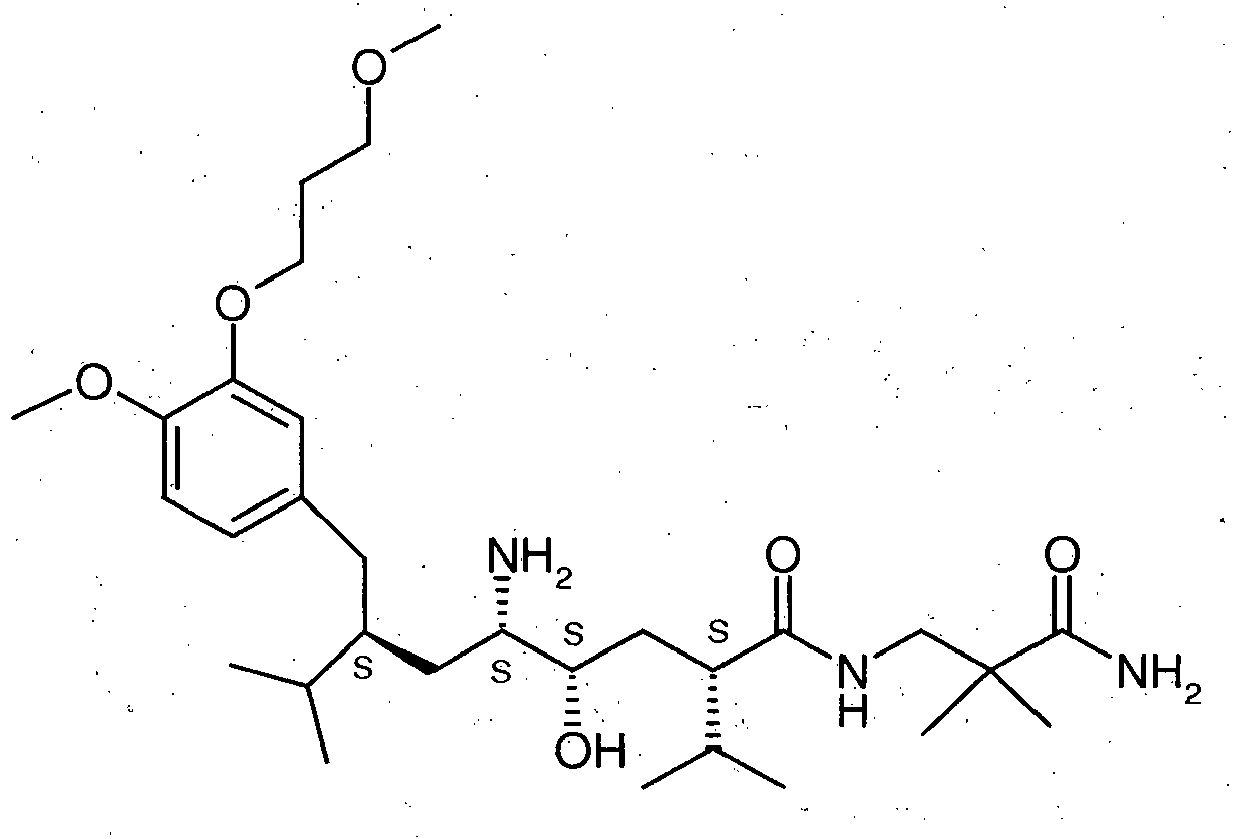
- aliskiren has the following formula: and remikiren has the following formula:
- the pressure lowering agent selected from renin inhibitors could be aliskiren.
- the pressure lowering agent selected from CCBs to be used in the composition of the present invention is selected from the group consisting of amlodipine, aranidipine, barnidipine, benidipine, cilnidipine, efonidipine, elgodipine, felodipine, isradipine, lacidipine, lercanidipine, manidipine, nicardipine, nifedipine, nilvadipine, nimodipine, nisoldipine, nitrendipine, diltiazem, clentiazem, bepridil, bencyclane, etafenone, flunarizine, lidoflazine, lomerizine, mibefradil, phendilin, prenylamine, semotiadil, terodiline, gallopamil, and verapamil.
- the CCBs to be used in the composition of the present invention is selected from the group consisting of amlodipine, barnidipine, felodipine, isradipine, lacidipine, lercanidipine, manidipine, nicardipine, nifedipine, nimodipine, nisoldipine, nitrendipine, diltiazem, galloparnil, and verapamil.
- the CCBs to be used in the composition of the present invention is selected from the group consisting of amlodipine, lacidipine, nifedipine, verapamil, and diltiazem.
- the CCBs to be used in the composition of the present invention is selected from the group consisting of amlodipine, verapamil, and diltiazem.
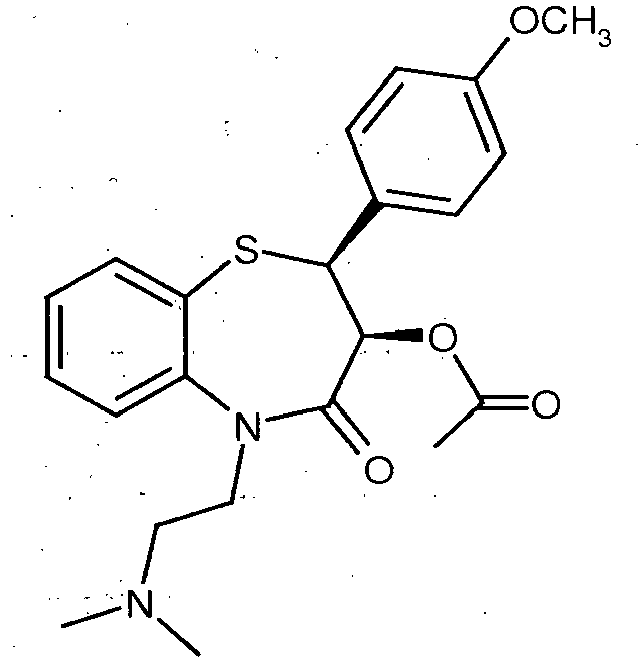
- amlodipine has the following formula: verapamil has the following formula: and diltiazem has the following formula:
- the cholesterol lowering agent selected from statin derivatives to be used in the composition of the present invention is selected from the group consisting of lovastatin, mevastatin, pravastatin, and simvastatin.
- the cholesterol lowering agent selected from statin derivatives to be used in the composition of the present invention is selected from the group consisting of lovastatin, pravastatin and simvastatin.
- the cholesterol lowering agent selected from statin derivatives to be used in the composition of the present invention is represented by the following formula (IV): wherein
- the cholesterol lowering agent selected from statin derivatives to be used in the composition of the present invention is represented by the following formula (V): wherein
- the cholesterol lowering agent selected from statin derivatives to be used in the composition of the present invention is simvastatin or atorvastatin.
- the inflammatory pathologies associated with the expression of MCP-1 are articular diseases, like rheumatoid arthritis, arthritis induced by viral infections, psoriatic arthritis, arthrosis ( Haring-man_JJ and Tak PP, Chemokine blockade: a new era in the treatment of rheumatoid arthritis?, Arthritis Res Ther 2004; 6:93-97 ; Tak PP, Chemokine inhibition in inflammatory arthritis.
- cancers like adenomas, carcinomas and metastases ( Conti C and Rollins BJ, CCL2 (monocyte chemoattractant protein-1) and cancer, Seminars in Cancer Biology 2004;14:149-154 ; Craig_MJ and Loberg RD, CCL2 (Monocyte Chemoattractant Protein-1) in cancer bone metastases, Cancer Metastasis Rev 2006; 25:611-619 ; Hu H et al., Tumor Cell-Microenvironment Interaction Models Coupled with Clinical Validation Reveal CCL2 and SNCG as Two Predictors of Colorectal Cancer Hepatic Metastasis, Clin Cancer Res 2009;15(17):5485-93 ), metabolic diseases, like insulin resistance, type If diabete and obesity ( Xia M and Sui Z, Recent development in CCR2 antagonists, Expert Opin Ther Patents 2009; 19(3):295-303 ; Kanda H et al., MCP-1 contributes to macrophage
- the pharmaceutical composition of the present invention is prepared in suitable dosage forms comprising an effective dose of:
- the compound of formula (I), the pressure lowering agent, and the cholesterol lowering agent may form addition salts with physiologically acceptable organic or mineral acids or bases.
- Suitable physiologically acceptable mineral acids are hydrochloric acid, hydrobromic acid, sulfuric acid, phosphoric acid and nitric acid.
- Suitable physiologically acceptable organic acids are acetic acid, ascorbic acid, benzoic acid, citric acid, fumaric acid, lactic acid, maleic acid, methanesulfonic acid, oxalic acid, paratoluenesulfonic acid, benzenesulfonic acid, succinic acid, tannic acid and tartaric acid.
- Suitable physiologically acceptable mineral bases are hydroxides, carbonates and hydrogen carbonates of ammonium, calcium, magnesium, sodium and potassium, for instance ammonium hydroxide, calcium hydroxide, magnesium carbonate, sodium hydrogen carbonate and potassium hydrogen carbonate.
- Suitable physiologically acceptable organic bases are: arginine, betaine, caffeine, choline, N,N-dibenzylethylenediamine, diethylamine, 2-diethylaminoethanol, 2-dimethylaminoethanol, ethanolamine, ethylenediamine, N-ethylmorpholine, N-ethylpiperidine, N-methylglucamine, glucamine, glucosamine, histidine, N-(2-hydroxyethyl)piperidine, N-(2-hydroxyethyl)pyrrolidine, isopropylamine, lysine, methylglucamine, morpholine, piperazine, piperidine, theobromine, triethylamine, trimethylamine, tripropylamine and tromethamine.
- the compound of formula (I), the pressure lowering agent, and the cholesterol lowering agent may form esters with physiologically acceptable organic acids.
- Suitable physiologically acceptable organic acids are acetic acid, ascorbic acid, benzoic acid, citric acid, fumaric acid, lactic acid, maleic acid, methanesulfonic acid, oxalic acid, paratoluenesulfonic acid, benzenesulfonic acid, succinic acid, tannic acid and tartaric acid.
- composition of the present invention also include the stereoisomers and enantiomers of the compound of formula (I), the pressure lowering agent, and the cholesterol lowering agent described above.
- pharmaceutically acceptable and “physiologically acceptable” are intended to define, without any particular limitation, any material suitable for preparing a pharmaceutical composition to be administered to a living being.
- Examples of pharmaceutically acceptable vehicles known in the prior art are, for example, glidants, binders, disintegrants, fillers, diluents, flavourings, colorants, fluidizers, lubricants, preserving agents, humectants, absorbents and sweeteners.
- compositions such as lactose, glucose or sucrose, starches, such as corn starch and potato starch, cellulose and derivatives thereof, for instance sodium carboxymethylcellulose, ethylcellulose and cellulose acetate, gum tragacanth, malt, gelatin, talc, cocoa butter, waxes, oils, such as groundnut oil, cottonseed oil, safflower oil, sesame oil, olive oil, corn oil and soybean oil, glycols such as propylene glycol, polyols such as glycerol, sorbitol, mannitol and polyethylene glycol, esters such as ethyl oleate and ethyl laurate, agar-agar, and the like.
- sugars such as lactose, glucose or sucrose
- starches such as corn starch and potato starch
- cellulose and derivatives thereof for instance sodium carboxymethylcellulose, ethylcellulose and cellulose acetate, gum tragacanth, malt
- suitable dosage forms are tablets, capsules, coated tablets, granules, solutions and syrups for oral administration; medicated plasters, solutions, pastes, creams and ointments for transdermal administration; suppositories for rectal administration and sterile solutions for injection or aerosol administration.
- compositions are sustained-release forms and liposome-based forms, for either the oral or injection route.
- the dosage forms may also contain other conventional ingredients such as: preserving agents, stabilizers, surfactants, buffers, osmotic pressure regulators, emulsifiers, sweeteners, colorants, flavourings and the like.
- the pharmaceutical composition of the present invention may contain other pharmacologically active ingredients whose simultaneous administration is useful.
- the amount of the compound of formula (I), the pressure lowering agent selected from ACE-inhibitors, ARBs, and CCBs and/or (ii) the cholesterol lowering agent selected from statins, or of pharmaceutically acceptable salt and ester thereof, in the pharmaceutical composition of the present invention may vary within a wide range as a function of known factors, for instance the type of pathology to be treated, the severity of the disease, the body weight of the patient, the dosage form, the chosen route of administration, the number of daily administrations and the efficacy of the chosen compound and agent(s).
- the optimum amount may be determined simply and routinely by a person skilled in the art.
- the amount of the compound of formula (I) or of pharmaceutically acceptable salt and ester thereof in the pharmaceutical composition of the present invention will be such that it ensures a level of administration of between 0.1 and 100 mg/kg/day.
- the level of administration is between 1 and 50 mg/kg/day and even more preferably between 2 and 35 mg/kg/day.
- the pharmaceutical composition of the present invention comprises an amount of bindarit able to ensure a level of administration of between 10 and 20 mg/kg/day.
- the amount of the pressure lowering agent selected from ACE-inhibitors, or a pharmaceutically acceptable salt and ester thereof, in the pharmaceutical composition of the present invention will be such that it ensures a level of administration of between 0.005 and 2.5 mg/kg/day, preferably between 0.01 and 1 mg/kg/day.
- the pharmaceutical composition of the present invention comprises an amount of ramipril able to ensure a level of administration of between 0.04 and 0.08 mg/kg/day.
- the amount of the pressure lowering agent selected from ARBs, or a pharmaceutically acceptable salt and ester thereof, in the pharmaceutical composition of the present invention will be such that it ensures a level of administration of between 0.05 and 15 mg/kg/day, preferably between 0.2 and 10 mg/kg/day.
- the pharmaceutical composition of the present invention comprises an amount of losartan able to ensure a level of administration of between 0.2 and 2 mg/kg/day or an amount of irbesartan able to ensure a level of administration of between 1.0 and 10 mg/kg/day.
- the amount of the pressure lowering agent selected from renin inhibitors, or a pharmaceutically acceptable salt and ester thereof, in pharmaceutical compositions will be such that it ensures a level of administration of between 1.0 and 20 mg/kg/day, preferably between 2.5 and 10 mg/kg/day.
- a pharmaceutical composition could comprise an amount of aliskiren able to ensure a level of administration of between 2.5 and 5 mg/kg/day.
- the amount of the pressure lowering agent selected from CCBs, or a pharmaceutically acceptable salt and ester thereof, in the pharmaceutical composition of the present invention will be such that it ensures a level of administration of between 0.05 and 15 mg/kg/day, preferably between 0.08 and 10 mg/kg/day.
- the pharmaceutical composition of the present invention comprises an amount of amlodipine able to ensure a level of administration of between 0.08 and 0.17 mg/kg/day or an amount of verapamil able to ensure a level of administration of between 3.00 and 6.00 mg/kg/day or an amount of diltiazem able to ensure a level of administration of between 2.00 and 8.00 mg/kg/day.
- the amount of the cholesterol lowering agent selected from statin derivatives, or of pharmaceutically acceptable salt and ester thereof in the pharmaceutical composition of the present invention will be such that it ensures a level of administration of between 0.03 and 2.0 mg/kg/day, preferably between 0.1 and 1.0 mg/kg/day.
- the pharmaceutical composition of the present invention comprises an amount of simvastatin able to ensure a level of administration of between 0.1 and 1 mg/kg/day.
- the dosage forms of the pharmaceutical composition of the present invention may be prepared according to techniques that are well known to pharmaceutical chemists, including mixing, granulation, compression, dissolution, sterilization and the like.
- the preferred dosage form is a tablet for oral administration.
- the tablet for oral administration comprises a combination of a compound of formula (I), preferably bindarit, with at least one pressure or cholesterol lowering agent selected from the group consisting of ramipril, losartan, irbesartan, aliskiren, amlodipine, verapanil, diltiazem, simvastatin, and atorvastatin.
- the pharmaceutical composition according to the present invention preferably a tablet for oral administration, comprises from 300 to 1200 mg of bindarit, and an amount of at least one pressure or cholesterol lowering agent selected from the group consisting of ramipril, losartan, irbesartan, amlodipine, verapamil, diitiazem and simvastatin showed in the following table A.
- Table A also shows the useful and preferred range of weight ratio between the amount of bindarit and the amount of the pressure or cholesterol lowering agent under consideration in the pharmaceutical composition according to the present invention.
- Range ramipril 2.5 10 30 - 480 100-150 losartan 25 100 3 - 48 10-15 irbesartan 75 300 1 - 16 2-8 amlodipine 5 10 30-240 60-120 verapamil 120 480 0.5-10 1-5 diltiazem 180 360 1.5-10 3-5 simvastatin 10 40 7.5 - 120 10-50
- MCP-1 plasma levels were measured by commercially available ELISA kit.
- a total of 80 male and female patients from 30 to 70 years old suffering from Type 2 diabetes have been treated.
- Irbesartan is a well known angiotensin receptor blockers (ARB). The treatment lasted 8 weeks.
- MCP-1 plasma levels were measured by commercially available ELISA kit.
Landscapes
- Health & Medical Sciences (AREA)
- Chemical & Material Sciences (AREA)
- Medicinal Chemistry (AREA)
- Pharmacology & Pharmacy (AREA)
- Life Sciences & Earth Sciences (AREA)
- Animal Behavior & Ethology (AREA)
- General Health & Medical Sciences (AREA)
- Public Health (AREA)
- Veterinary Medicine (AREA)
- Epidemiology (AREA)
- Organic Chemistry (AREA)
- Nuclear Medicine, Radiotherapy & Molecular Imaging (AREA)
- Chemical Kinetics & Catalysis (AREA)
- General Chemical & Material Sciences (AREA)
- Engineering & Computer Science (AREA)
- Bioinformatics & Cheminformatics (AREA)
- Diabetes (AREA)
- Biomedical Technology (AREA)
- Neurosurgery (AREA)
- Neurology (AREA)
- Obesity (AREA)
- Hematology (AREA)
- Rheumatology (AREA)
- Child & Adolescent Psychology (AREA)
- Orthopedic Medicine & Surgery (AREA)
- Heart & Thoracic Surgery (AREA)
- Emergency Medicine (AREA)
- Hospice & Palliative Care (AREA)
- Cardiology (AREA)
- Endocrinology (AREA)
- Psychiatry (AREA)
- Immunology (AREA)
- Pain & Pain Management (AREA)
- Physical Education & Sports Medicine (AREA)
- Dermatology (AREA)
- Urology & Nephrology (AREA)
- Pharmaceuticals Containing Other Organic And Inorganic Compounds (AREA)
- Acyclic And Carbocyclic Compounds In Medicinal Compositions (AREA)
- Medicines That Contain Protein Lipid Enzymes And Other Medicines (AREA)
- Medicines Containing Plant Substances (AREA)
Description
- The present invention relates to a pharmaceutical composition for the treatment of MCP-1 mediated inflammatory diseases.
- More in particular, the present invention relates to a pharmaceutical composition comprising a combination of 1-benzyl-3-hydroxymethyl-indazole, a pressure lowering agent selected from ACE-inhibitors , ARBs and CCBs, and/or a cholesterol lowering agent selected from statin derivatives. The combination showed an additive and synergistic activity in reducing MCP-1 levels, thus significantly improving inflammatory response inhibition and consequently reducing complications occurring in patients suffering from inflammatory diseases.
- As it is known, MCP-1 (Monocyte Chemotactic Protein-1) is a protein belonging to the β subfamily of chemokines. MCP-1 has powerful chemotactic action on monocytes and exerts its action also on T lymphocytes, mastocytes and basophils (Rollins B.J., Chemokines, Blood 1997; 90: 909-928; M. Baggiolini, Chemokines and leukocyte traffic, Nature 1998; 392: 565-568).
- Other chemokines belonging to the β subfamily are, for example, MCP-2 (Monocyte Chemotactic Protein-2), MCP-3, MCP-4, MIP-1α and MIP-1β, RANTES.
- The β subfamily differs from the α subfamily in that, in the structure, the first two cysteines are adjacent for the β subfamily, whereas they are separated by an intervening amino acid for the α subfamily.
- MCP-1 is produced by various types of cells (leukocytes, platelets, fibroblasts, endothelial cells and smooth muscle cells).
- Among all the known chemokines, MCP-1 shows the highest specificity for monocytes and macrophages, for which it constitutes not only a chemotactic factor but also an activation stimulus, consequently inducing processes for producing numerous inflammatory factors (superoxides, arachidonic acid and derivatives, cytokines/chemokines) and amplifying the phagocytic activity.
- The secretion of chemokines in general, and of MCP-1 in particular, is typically induced by various pro-inflammatory factors, for instance interleukin-1 (IL-1), interleukin-2 (IL-2), TNFα (Tumour Necrosis Factor Alpha), interferon-γ (interferon gamma) and bacterial lipopolysaccharide (LPS).
- Prevention of the inflammatory response by blocking the chemokine/chemokine receptor system represents one of the main targets of pharmacological intervention (Gerard C. and Rollins B.J., Chemokines and disease. Nature Immunol. 2001; 2:108-115).
- There is much evidence to suggest that MCP-1 plays a key role during inflammatory processes and has been indicated as a new and validated target in various pathologies.
- Evidence of a considerable physiopathological contribution of MCP-1 has been obtained in the case of patients with articular and renal inflammatory diseases (rheumatoid arthritis, lupus nephritis, diabetic nephropathy and rejection following transplant).
- However, more recently, MCP-1 has been indicated among the factors involved in inflammatory pathologies of the nervous system (multiple sclerosis, amyotrophic lateral sclerosis, Alzheimer's disease, HIV-associated dementia) and other pathologies and conditions, with and without an obvious inflammatory component, including atopic dermatitis, colitis, interstitial lung pathologies, restenosis, atherosclerosis, allograft rejection following a surgical intervention (for instance angioplasty, arterectomy, transplant, organ and/or tissue replacement, prosthesis implant), cancer (adenomas, carcinomas and metastases) and even metabolic diseases such as insulin resistance, diabetes and obesity.
- In addition, despite the fact that the chemokine system is involved in controlling and overcoming viral infections, recent studies have demonstrated that the response of certain chemokines, and in particular of MCP-1, may have a harmful role in the case of host-pathogen interactions. In particular, MCP-1 has been indicated among the chemokines that contribute towards organ and tissue damage in pathologies mediated by alpha viruses characterized by monocyte/macrophage infiltration in the joints and muscles (Mahalingam S. et al. Chemokines and viruses: friend or foes? Trends in Microbiology 2003; 11: 383-391; Rulli N. et al. Ross River Virus: molecular and cellular aspects of disease pathogenesis. 2005; 107: 329-342).
- European patent
EP-B-0 382 276 describes a number of 1-benzyl-3-hydroxymethylindazole derivatives endowed with analgesic activity. In turn, European patentEP-B-0 510 748 describes, on the other hand, the use of these derivatives for preparing a pharmaceutical composition that is active in the treatment of autoimmune diseases. Finally, European patentEP-B-1 005 332 describes the use of these derivatives for preparing a pharmaceutical composition that is active in treating diseases derived from the production of MCP-1. - 2-Methyl-2-[[1-(phenylmethyl)-1H-indazol-3-yl]methoxy]propanoic acid is thought to be capable of inhibiting, in a dose-dependent manner, the production of MCP-1 and TNF-a induced in vitro in monocytes from LPS and Candida albicans, whereas the same compound showed no effects in the production of cytokines IL-1 and IL-6, and of chemokines IL-8, MIP-1a, and RANTES (Sironi M. et al., "A small synthetic molecule capable of preferentially inhibiting the production of the CC chemokine monocyte chemotactic protein-1", European Cytokine Network. Vol. 10, No. 3, 437-41, September 1999).
- Angiotensin II (A-II) is a potent vasoconstrictor that causes the muscles surrounding the blood vessels to contract, thereby significantly narrowing the blood vessels. This narrowing increases the pressure within arterial vessels, causing high blood pressure (hypertension).
- Its generation in the renin-angiotensin cascade results from the action of an enzyme secreted by the kidneys, renin, on a blood plasma 2-globulin, angiotensinogen, to produce angiotensin I (A-I). A-I is then converted by angiotensin converting enzyme (ACE) to the octapeptide hormone, A-II.
- In addition to renin-angiotensin system, calcium channels play an important role in pressure regulation. In both vascular and cardiac tissue, muscle cell contraction occurs when cells are depolarized from the influx of calcium through calcium channels in the cell. The increased cytosolic calcium binds to calmodulin, activating myosin light-chain kinase which phosphorylate myosin. The phosphorylated myosin can then interact with actin, resulting in muscle contraction. Calcium channel blockers inhibit muscle contraction and promote relaxation. In vascular smooth muscle this results in vessel dilation, reduced blood pressure (anti-hypertensive effect) and a reduction in the force required to pump blood by the heart.
- Therefore, renin inhibitors, which inhibit the action of renin, ACE inhibitors, which inhibit the production of A-II, A-II receptor blockers or antagonists (ARBs), which inhibit the function of A-II, and calcium channel blockers or antagonists (CCBs) are generally useful in the treatment of hypertension, but do not form part of the invention as claimed.
- The administration of ACE inhibitors, renin inhibitors, ARBs or CCBs results in the dilatation of the vessels and reduction of blood pressure, thereby making it easier for the heart to pump blood. ACE inhibitors, renin inhibitors, ARBs and CCbs can therefore also be used to improve heart failure as well as hypertension. In addition, they slow the progression of kidney disease due to high blood pressure or diabetes.
- As a result of extensive studies, several patent and literature publications describe useful examples of ACE inhibitors, renin inhibitors, ARBs or CCBs for the treatment of heart failure and hypertension.
- For example,
WO2008/084504 describes several drugs in the class of ARBs, including candesartan (Atacand, Astra-Zeneca), eprosartan (Teveten, Solvay & Biovail), irbesartan (Avapro, BMS), losartan (Cozaar, Merck), olmesartan (Benicar, Medoxomil; Sankyo & Forest), telmisartan (Micardis, Boehringer Ingelheim), valsartan (Diovan, Novartis) and pratosartan (Kotobuki). -
WO02/092081 - Renin inhibitors like aliskiren, ditekiren, enalkiren, remikiren, terlakiren, ciprokiren and zankiren are described in several patents and patent applications like
US 5,559,111 ,EP 173,481 EP 311,012 EP 416,373 EP 266,950 EP 456,185 EP 509,354 -
US2008/0139511 describes several drugs in the class of ACE inhibitors, including benazepril, captopril, cilazapril, enalapril, enalaprilat, fosinopril, lisinopril, moexipril, perindopril, quinapril, ramipril, and trandolapril. -
US 5,977,159 describes the use of an ACE-inhibitor for treatment of dyspeptic symptoms, the ACE inhibitor being selected from alacepril, alatriopril, altiopril calcium, ancovenin, benazepril, benazepril hydrochloride, benazeprilat, benzazepril, benzoylcaptopril, captopril, captopril-cysteine, captopril-glutathione, ceranapril, ceranopril, ceronapril, cilazapril, cilazaprilat, converstatin, delapril, delapril-diacid, enalapril, enalaprilat, enalkiren, enapril, epicaptopril, foroxymithine, fosfenopril, fosenopril, fosenopril sodium, fosinopril, fosinopril sodium, fosinoprilat, fosinoprilic acid, glycopril, hemorphin-4, idapril, imidapril, indolapril, indolaprilat, libenzapril, lisinopril, lyciumin A, lyciumin B, mixanpril, moexipril; moexiprilat, moveltipril, muracein A, muracein B, muracein C, pentopril, perindopril, perindoprilat, pivalopril, pivopril, quinapril, quinapril hydrochloride, quinaprilat, ramipril, ramiprilat, spirapril, spirapril hydrochloride, spiraprilat, spiropril, spiropril hydrochloride, temocapril, temocapril hydrochloride, teprotide, trandolapril, trandolaprilat, utibapril, zabibipril, zabiciprilat, zofenopril and zofenoprilat. - Calcium channel blockers or antagonists (CCBs) are widely used alone or in combination with other antihypentensive drugs in the treatment of heart failure and hypertension. CCBs include dihydropyridine, phenylalkylamine, and benzothiazepine derivatives, and are widely described in patent and literature references, such as, for example, in
U.S. Pat. Nos. 6,268,377 and5,209,933 . - The statins (or HMG-CoA reductase inhibitors) are a class of drugs that lower cholesterol levels in people with or at risk of cardiovascular disease. Statins lower cholesterol by inhibiting the enzyme HMG-CoA reductase, which is the rate-limiting enzyme of the mevalonate pathway of cholesterol synthesis. Inhibition of this enzyme in the liver results in decreased cholesterol synthesis as well as increased synthesis of LDL receptors, resulting in an increased clearance of low-density lipoprotein (LDL) from the bloodstream.
- The statins are divided into two groups depending on their source. Fermentation-derived statins include lovastatin, mevastatin, pravastatin, simvastatin. Synthetic statins include atorvastatin, cerivastatin, fluvastatin, pitavastatin, and rosuvastatin.
- The statins are described in a number of patent and literature publication, such as, for example,
US 6911472 ,US 7,459,447 ,US 7,498,359 ,US 7,183,285 , and Akira Endo, "The discovery and development of HMG-CoA reductase inhibitors" J. Lipid Res. Vol. 33 (1992), pp 1569-82. - Despite the activity developed so far, there is still the need for novel pharmaceutical compositions that are effective in the treatment of diseases based on the overexpression of MCP-1 or that are concurrently influenced by the overexpression of MCP-1.
- The Applicant has surprisingly found that 2-((1-benzyl-3-indazolyl)methoxy)-2-methylpropionic acid (also known as bindarit) administered in combination with a pressure lowering agent selected from ACE-inhibitors, ARBs and CCBs and/or a cholesterol lowering agent selected from statin derivatives exerts an additive and synergistic activity in reducing MCP-1 levels, thus significantly improve inflammatory response inhibition and consequently reducing complications occurring in patients suffering from inflammatory diseases.
- In addition; since treatment of several inflammatory diseases is chronic in nature and possible undesirable and/or adverse effects could be experienced, doses of combined administration of 2-((1-benzyl-3-indazolyl)methoxy)-2-methylpropionic acid (also known as bindarit), with a pressure lowering agent selected from ACE-inhibitors, ARBs and CCBs, and/or a cholesterol lowering agent selected from statin derivatives can be adjusted, for instance taking into account the type of pathology to be treated, the severity of the disease, the body weight of the patient, the dosage form, the chosen route of administration, the number of daily administrations and the efficacy of the chosen compound and agent(s), in order to improve tolerability without reducing the efficacy.
- Accordingly, a first aspect of the present invention relates to a pharmaceutical composition comprising bindarit , at least one of (i) a pressure lowering agent selected from ACE-inhibitors, ARBs, and CCBs and/or (ii) a cholesterol lowering agent selected from statin derivatives, or any pharmaceutically acceptable salt and ester thereof, and at least one pharmaceutically acceptable vehicle; wherein (i) and (ii) are as defined in
claim 1. - In a second aspect, the present invention relates to the use of a composition comprising bindarit, at least one of (i) a pressure lowering agent selected from ACE-inhibitors, ARBs, and CCBs and/or (ii) a cholesterol lowering agent selected from statin derivatives, or any pharmaceutically acceptable salt and ester thereof, for preparing a pharmaceutical composition for the treatment or prevention of inflammatory diseases based on the expression of MCP-1; wherein i and ii are as defined in
claim 1. - As known in the art, inflammatory diseases based on the expression of MCP-1 particularly comprises articular diseases, renal diseases, cardiovascular diseases, pulmonary diseases, nervous system diseases, metabolic diseases, allograft rejection, and cancer. Advantageously, the present invention relates to the use of the above composition for the treatment or prevention of renal diseases and cardiovascular diseases.
- In addition, in a further aspect, the present invention relates to a method for treating diseases based on the expression of MCP-1, particularly inflammatory diseases, and advantageously renal diseases and cardiovascular diseases, characterized by the administration to a person in need thereof an effective amount of a composition comprising bindarit, at least one of (i) a pressure lowering agent selected from ACE-inhibitors, ARBs and CCBs, and/or (ii) a cholesterol lowering agent selected from statin derivatives, or any pharmaceutically acceptable salt and ester thereof; wherein (i) and (ii) are as defined in
claim 1. -
-
Fig. 1 is a Cartesian diagram illustrating the results of Example 1, described hereinbelow. -
Fig. 2 is a Cartesian diagram illustrating the results of Example 2, described hereinbelow. -
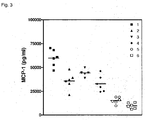
Fig. 3 is a Cartesian diagram illustrating the results of Example 3, described hereinbelow. - In general, 1-benzyl-3-hydroxymethylindazole derivatives are represented by the following formula (I):

- R1 and R2, equal or different each other, are a hydrogen atom or a C1-C6 alkyl group,
- R3, R4, and R8, equal or different each other, are a hydrogen atom or a C1-C5 alkyl group, a C1-C3 alkoxy group, or a halogen atom,
- R5 is a hydrogen atom or a C1-C5 alkyl group, a C1-C3 alkoxy group, a halogen atom, or R5 forms, together with one of R6 and R7, a cycle having five or six carbon atoms,
- R6, and R7 equal or different each other, are a hydrogen atom or a C1-C5 alkyl group, or one of R6 and R7 forms, together with R5, a cycle having five or six carbon atoms,
- R10 and R11, equal or different each other, are a hydrogen atom or a C1-C5 alkyl group, and
- R12 is a hydrogen atom or a C1-C4 alkyl group.
- Preferably, R1 and R2, equal or different each other, are a hydrogen atom or a C1-C3 alkyl group.
- Preferably, R3, R4, and R8, equal or different each other, are a hydrogen atom, a methyl group, an ethyl group, a methoxy group, an ethoxy group, a chlorine atom, and a fluorine atom.
- Advantageously, R5 is a hydrogen atom, a methyl group, an ethyl group, a methoxy group, an ethoxy group, a chlorine atom, a fluorine atom, or R5 forms, together with one of R6 and R7, a cycle having six carbon atoms,
- Preferably, R6, and R7 equal or different each other, are a hydrogen atom, a methyl group, an ethyl group, or one of R6 and R7 forms, together with R5, a cycle having six carbon atoms,
- Advantageously, R10 and R11, equal or different each other, are a hydrogen atom or a C1-C3 alkyl group, and R12 is a hydrogen atom or a C1-C3 alkyl group.
- The 1-benzyl-3-hydroxymethylindazole derivative to be used in the composition of the present invention is the 2-((1-benzyl-3-indazolyl)methoxy)-2-methylpropionic acid (or bindarit) having the following structural formula.

- The pressure lowering agent selected from ACE-inhibitors to be used in the composition of the present invention is selected from the group consisting of alacepril, altiopril calcium, benzoylcaptopril, captopril, captopril-cysteine, captopril-glutathione, ceronapril, converstatin, enalapril, enalaprilat, epicaptopril, fosinopril, fosinopril sodium, fosinoprilat, hemorphin-4, indolapril, indolaprilat, lisinopril, moveltipril, pentopril, perindopril, perindoprilat, quinapril, quinapril hydrochloride, quinaprilat, ramipril, ramiprilat, spirapril, spirapril hydrochloride, spiraprilat, trandolapril, trandolaprilat, zabicipril, zabiciprilat, zofenopril, zofenoprilat, pharmaceutically acceptable salts thereof, and mixture thereof.
- Advantageously, the pressure lowering agent selected from ACE-inhibitors to be used in the composition of the present invention is selected from the group consisting of captopril, enalapril, lisinopril, ramipril, and perindopril.
- Preferably, the pressure lowering agent selected from ACE-inhibitors to be used in the composition of the present invention is represented by the following formula (II):

- R1 is a hydrogen atom, or R1 forms a pharmaceutically acceptable basic addition salt;
- R2 and R3, equal or different each other, are, independently, a hydrogen atom; or R2 and R3 together form an aromatic or aliphatic cycle having five or six carbon atoms;
- R4 is a C1-C4 alkyl group or a C1-C4 alkylamino group;
- R5 is a methyl or phenyl group;
- R6 is a hydrogen atom, or a methyl or ethyl group.
- Particularly, the pressure lowering agent selected from ACE-inhibitors to be used in the composition of the present invention is ramipril.
- The pressure lowering agent selected from ARBs to be used in the composition of the present invention is selected from the group consisting of candesartan, cilexetil, irbesartan, losartan, olmesartan, telmisartan, valsartan, and pratosartan.
- Advantageously, the pressure lowering agent selected from ARBs to be used in the composition of the present invention is selected from the group consisting of candesartan, irbesartan, losartan, and valsartan.
- Preferably, the pressure lowering agent selected from ARBs to be used in the composition of the present invention is represented by the following formula (III):

R1 and R2 equal or different each other, are, independently, a C1-C5 alkyl group, optionally substituted with an oxo group or a carboxyl group; or R1 and R2 together form an aromatic or aliphatic heterocycle, comprising 1 or 2 N atoms and optionally substituted. - Advantageously, said aromatic heterocycle has one of the following formulas:

- Particularly, the pressure lowering agent selected from ARBs to be used in the composition of the present invention is losartan or irbesartan.
- In general, the pressure lowering agent selected from renin inhibitors could be selected from the group consisting of aliskiren, ditekiren, enalkiren, remikiren, terlakiren, ciprokiren and zankiren.
- Advantageously, the pressure lowering agent selected from renin inhibitors could be selected from the group consisting of aliskiren and remikiren.
- In particular, aliskiren has the following formula:

- Particularly, the pressure lowering agent selected from renin inhibitors could be aliskiren.
- The pressure lowering agent selected from CCBs to be used in the composition of the present invention is selected from the group consisting of amlodipine, aranidipine, barnidipine, benidipine, cilnidipine, efonidipine, elgodipine, felodipine, isradipine, lacidipine, lercanidipine, manidipine, nicardipine, nifedipine, nilvadipine, nimodipine, nisoldipine, nitrendipine, diltiazem, clentiazem, bepridil, bencyclane, etafenone, flunarizine, lidoflazine, lomerizine, mibefradil, phendilin, prenylamine, semotiadil, terodiline, gallopamil, and verapamil.
- More preferably, the CCBs to be used in the composition of the present invention is selected from the group consisting of amlodipine, barnidipine, felodipine, isradipine, lacidipine, lercanidipine, manidipine, nicardipine, nifedipine, nimodipine, nisoldipine, nitrendipine, diltiazem, galloparnil, and verapamil.
- Advantageously, the CCBs to be used in the composition of the present invention is selected from the group consisting of amlodipine, lacidipine, nifedipine, verapamil, and diltiazem.
- Particularly, the CCBs to be used in the composition of the present invention is selected from the group consisting of amlodipine, verapamil, and diltiazem.
- More in particular, amlodipine has the following formula:


- The cholesterol lowering agent selected from statin derivatives to be used in the composition of the present invention is selected from the group consisting of lovastatin, mevastatin, pravastatin, and simvastatin.
- Advantageously, the cholesterol lowering agent selected from statin derivatives to be used in the composition of the present invention is selected from the group consisting of lovastatin, pravastatin and simvastatin.
- Preferably, the cholesterol lowering agent selected from statin derivatives to be used in the composition of the present invention is represented by the following formula (IV):

- A is a -CH2CH2- group or a-CH=CH- group;
- W, X, Y, and K, equal or different each other, are independently a C or N atom;
- n is 0 or 1;
- R1 is a hydrogen atom or a N-phenyl-formamide group when Y is a C atom;
- R2 is a hydrogen atom; a phenyl group; a N-alkyl-alkylsulfonamide group, wherein the alkyl groups contain, independently, from 1 to 3 C atoms; or
- R1 and R2, when Y is a C atom, together form an aromatic or aliphatic cycle having five or six carbon atoms.
- Preferably, the cholesterol lowering agent selected from statin derivatives to be used in the composition of the present invention is represented by the following formula (V):

- R1 is a methyl group or a hydroxyl group;
- R2 is a C1-C5 linear or branched alkyl group;
- R3 is a hydroxyl group;
- R4 is a carboxyl group; or
- R3 and R4, together, form a δ-lactone group.
- Particularly, the cholesterol lowering agent selected from statin derivatives to be used in the composition of the present invention is simvastatin or atorvastatin.
- In particular, the inflammatory pathologies associated with the expression of MCP-1 are articular diseases, like rheumatoid arthritis, arthritis induced by viral infections, psoriatic arthritis, arthrosis (Haring-man_JJ and Tak PP, Chemokine blockade: a new era in the treatment of rheumatoid arthritis?, Arthritis Res Ther 2004; 6:93-97; Tak PP, Chemokine inhibition in inflammatory arthritis. Best Practice & Research Clinical Rheumatology, 2006; 20:929-939; Iwamoto T et al., Molecular aspects of rheumatoid arthritis: chemokines in the joints of patients, FEBS Journal 2008; 275:4448-4455; Mahalingam S. et al., Chemokines and viruses: friend or foes? Trends in Microbiology, 2003; 11: 383-391; Rulli N. et al., Ross River Virus: molecular and cellular aspects of disease pathogenesis, 2005; 107: 329-342), renal diseases, like lupus nephritis, diabetic nephropathy, glomerulonephritis, polycystic kidney disease (Segerer S et al., Chemokines, Chemokine Receptors, and Renal Disease: From Basic Science To Pathophysiologic and Therapeutic Studies, J Am Soc Nephrol 2000; 11:152-176; Galkina E and Ley K., Leukocyte Recruitment and Vascular Injury in Diabetic Nephropathy, J Am Soc Nephrol 2006; 17:368-377; Wada T et al., Chemokines in renal diseases. International Immunopharmacology, 2001; 1:637-645) pulmonary diseases, like interstitial lung disease, fibrosis (Baier RJ et al., CC Chemokine Concentrations Increase in Respiratory Distress Syndrome and Correlate With Development of Bronchopulmonary Dysplasia, Pediatric Pulmonology 2004; 37:137-148; Shinoda H et al., Elevated CC Chemokine Level in Bronchoalveolar Lavage Fluid Is Predictive of a Poor Outcome of Idiopathic Pulmonary Fibrosis, Respiration 2008; de Boer WI., Perspectives for cytokine antagonist therapy in COPD, Drug Discovery Today 2005; 10(2):93-106), nervous system diseases, like multiple sclerosis, Alzheimer's disease, HIV-associated dementia (Sokolova A et al., Monocyte Chemoattractant Protein-1 Plays a Dominant Role in the Chronic Inflammation Observed in Alzheimer's Disease, Brain Pathology 2009;19(3):392-8; Cinque P et al., Elevated cerebrospinal fluid levels of monocyte chemotactic protein-1 correlate with HIV-1 encephalitis and local viral replication, AIDS 1998; 12:1327-1332; Mahad DJ and Ransohoff RM, The role of MCP-1 (CCL2) and CCR2 in multiple sclerosis and experimental autoimmune encephalomyelitis (EAE), Seminars in Immunology. 2003; 15:23-32), atopic dermatitis, psoriasis (Vestergaard C et al., Expression of CCR2 on Monocytes and Macrophages in Chronically Inflamed Skin in Atopic Dermatitis and Psoriasis, Acta Derm Venereol 2004; 84:353-358; Homey B and_Meller S., Chemokines and other mediators as therapeutic targets in psoriasis vulgaris, Clinics in Dermatology 2008; 26:539-545), cardiovascular diseases, like vasculitis, restenosis, atherosclerosis, myocardial infarction, angina, acute coronary diseases (Egashira K., Molecular Mechanisms Mediating Inflammation in Vascular Disease: Special Reference to Monocyte Chemoattractant Protein-1, Hypertension. 2003; 41 [part 2]:834-841; Schmidt AM and Stern DM, Chemokines on the Rise : MCP-1 and Restenosis, Arterioscler Thromb Vasc Biol. 2001;21:297-299; Kitamoto S et al., Stress and Vascular Responses:Anti-inflammatory Therapeutic Strategy Against Atherosclerosis and Restenosis After Coronary Intervention, J Pharmacol Sci 2003; 91:192-196; de Lemos JA et al., Serial Measurement of Monocyte Chemoattractant Protein-1 After Acute Coronary Syndromes, J Am Coll Cardiol. 2007; Vol. 50, No. 22: 2117-2124), cancers, like adenomas, carcinomas and metastases (Conti C and Rollins BJ, CCL2 (monocyte chemoattractant protein-1) and cancer, Seminars in Cancer Biology 2004;14:149-154; Craig_MJ and Loberg RD, CCL2 (Monocyte Chemoattractant Protein-1) in cancer bone metastases, Cancer Metastasis Rev 2006; 25:611-619; Hu H et al., Tumor Cell-Microenvironment Interaction Models Coupled with Clinical Validation Reveal CCL2 and SNCG as Two Predictors of Colorectal Cancer Hepatic Metastasis, Clin Cancer Res 2009;15(17):5485-93), metabolic diseases, like insulin resistance, type If diabete and obesity (Xia M and Sui Z, Recent development in CCR2 antagonists, Expert Opin Ther Patents 2009; 19(3):295-303; Kanda H et al., MCP-1 contributes to macrophage infiltration into adipose tissue, insulin resistance, and hepatic steatosis in obesity, J. Clin. Invest. 116:1494-1505; Weisberg SP et al., Obesity is associated with macrophage accumulation in adipose tissue, J. Clin. Invest. 2003; 112:1796-1808; Sartipy P and Loskutoff DJ, ) and allograft rejection following surgical interventions such as, for example, angioplasty, arterectomy, circulation recovery techniques, transplants, organ replacements, tissue replacements and prosthesis implants (Stasikowska O, Chemokines and chemokine receptors in glomerulonephritis and renal allograft rejection, Med Sci Monit, 2007; 13(2): RA31-36; Sekine Y et al., Monocyte Chemoattractant Protein-1 and RANTES Are Chemotactic for Graft Infiltrating Lymphocytes during Acute Lung Allograft Rejection, Am. J. Respir. Cell Mol. Biol. 2000; Vol. 23, pp. 719-726; Piemonti L et al., Human Pancreatic Islets Produce and Secrete MCP-1/CCL2: Relevance in Human Islet Transplantation, Diabetes 2002; 51:55-65).
- Preferably, the pharmaceutical composition of the present invention is prepared in suitable dosage forms comprising an effective dose of:
- at least bindarit,
- at least one of (i) a pressure lowering agent selected from ACE-inhibitors, ARBs, and CCBs or a pharmaceutically acceptable salt and ester thereof, or (ii) a cholesterol lowering agent selected from statin derivatives or a pharmaceutically acceptable salt and ester thereof, and
- at least one pharmaceutically acceptable vehicle; wherein (i) and (ii) are as defined in
claim 1. - Depending on the nature of the substituents, the compound of formula (I), the pressure lowering agent, and the cholesterol lowering agent may form addition salts with physiologically acceptable organic or mineral acids or bases.
- Typical examples of suitable physiologically acceptable mineral acids are hydrochloric acid, hydrobromic acid, sulfuric acid, phosphoric acid and nitric acid.
- Typical examples of suitable physiologically acceptable organic acids are acetic acid, ascorbic acid, benzoic acid, citric acid, fumaric acid, lactic acid, maleic acid, methanesulfonic acid, oxalic acid, paratoluenesulfonic acid, benzenesulfonic acid, succinic acid, tannic acid and tartaric acid.
- Typical examples of suitable physiologically acceptable mineral bases are hydroxides, carbonates and hydrogen carbonates of ammonium, calcium, magnesium, sodium and potassium, for instance ammonium hydroxide, calcium hydroxide, magnesium carbonate, sodium hydrogen carbonate and potassium hydrogen carbonate.
- Typical examples of suitable physiologically acceptable organic bases are: arginine, betaine, caffeine, choline, N,N-dibenzylethylenediamine, diethylamine, 2-diethylaminoethanol, 2-dimethylaminoethanol, ethanolamine, ethylenediamine, N-ethylmorpholine, N-ethylpiperidine, N-methylglucamine, glucamine, glucosamine, histidine, N-(2-hydroxyethyl)piperidine, N-(2-hydroxyethyl)pyrrolidine, isopropylamine, lysine, methylglucamine, morpholine, piperazine, piperidine, theobromine, triethylamine, trimethylamine, tripropylamine and tromethamine.
- Depending on the nature of the substituents, the compound of formula (I), the pressure lowering agent, and the cholesterol lowering agent may form esters with physiologically acceptable organic acids.
- Typical examples of suitable physiologically acceptable organic acids are acetic acid, ascorbic acid, benzoic acid, citric acid, fumaric acid, lactic acid, maleic acid, methanesulfonic acid, oxalic acid, paratoluenesulfonic acid, benzenesulfonic acid, succinic acid, tannic acid and tartaric acid.
- The composition of the present invention also include the stereoisomers and enantiomers of the compound of formula (I), the pressure lowering agent, and the cholesterol lowering agent described above.
- The terms "pharmaceutically acceptable" and "physiologically acceptable" are intended to define, without any particular limitation, any material suitable for preparing a pharmaceutical composition to be administered to a living being.
- Examples of pharmaceutically acceptable vehicles known in the prior art are, for example, glidants, binders, disintegrants, fillers, diluents, flavourings, colorants, fluidizers, lubricants, preserving agents, humectants, absorbents and sweeteners.
- Useful examples of pharmaceutically acceptable vehicles are sugars, such as lactose, glucose or sucrose, starches, such as corn starch and potato starch, cellulose and derivatives thereof, for instance sodium carboxymethylcellulose, ethylcellulose and cellulose acetate, gum tragacanth, malt, gelatin, talc, cocoa butter, waxes, oils, such as groundnut oil, cottonseed oil, safflower oil, sesame oil, olive oil, corn oil and soybean oil, glycols such as propylene glycol, polyols such as glycerol, sorbitol, mannitol and polyethylene glycol, esters such as ethyl oleate and ethyl laurate, agar-agar, and the like.
- Examples of suitable dosage forms are tablets, capsules, coated tablets, granules, solutions and syrups for oral administration; medicated plasters, solutions, pastes, creams and ointments for transdermal administration; suppositories for rectal administration and sterile solutions for injection or aerosol administration.
- Other suitable dosage forms are sustained-release forms and liposome-based forms, for either the oral or injection route.
- The dosage forms may also contain other conventional ingredients such as: preserving agents, stabilizers, surfactants, buffers, osmotic pressure regulators, emulsifiers, sweeteners, colorants, flavourings and the like.
- When required for particular therapies, the pharmaceutical composition of the present invention may contain other pharmacologically active ingredients whose simultaneous administration is useful.
- The amount of the compound of formula (I), the pressure lowering agent selected from ACE-inhibitors, ARBs, and CCBs and/or (ii) the cholesterol lowering agent selected from statins, or of pharmaceutically acceptable salt and ester thereof, in the pharmaceutical composition of the present invention may vary within a wide range as a function of known factors, for instance the type of pathology to be treated, the severity of the disease, the body weight of the patient, the dosage form, the chosen route of administration, the number of daily administrations and the efficacy of the chosen compound and agent(s).
- However, the optimum amount may be determined simply and routinely by a person skilled in the art.
- Typically, the amount of the compound of formula (I) or of pharmaceutically acceptable salt and ester thereof in the pharmaceutical composition of the present invention will be such that it ensures a level of administration of between 0.1 and 100 mg/kg/day. Preferably, the level of administration is between 1 and 50 mg/kg/day and even more preferably between 2 and 35 mg/kg/day.
- More particularly, the pharmaceutical composition of the present invention comprises an amount of bindarit able to ensure a level of administration of between 10 and 20 mg/kg/day.
- Typically, the amount of the pressure lowering agent selected from ACE-inhibitors, or a pharmaceutically acceptable salt and ester thereof, in the pharmaceutical composition of the present invention will be such that it ensures a level of administration of between 0.005 and 2.5 mg/kg/day, preferably between 0.01 and 1 mg/kg/day.
- More particularly, the pharmaceutical composition of the present invention comprises an amount of ramipril able to ensure a level of administration of between 0.04 and 0.08 mg/kg/day.
- Typically, the amount of the pressure lowering agent selected from ARBs, or a pharmaceutically acceptable salt and ester thereof, in the pharmaceutical composition of the present invention will be such that it ensures a level of administration of between 0.05 and 15 mg/kg/day, preferably between 0.2 and 10 mg/kg/day.
- More particularly, the pharmaceutical composition of the present invention comprises an amount of losartan able to ensure a level of administration of between 0.2 and 2 mg/kg/day or an amount of irbesartan able to ensure a level of administration of between 1.0 and 10 mg/kg/day.
- Generally, in case the use of a renin inhibitor would be envisaged, the amount of the pressure lowering agent selected from renin inhibitors, or a pharmaceutically acceptable salt and ester thereof, in pharmaceutical compositions will be such that it ensures a level of administration of between 1.0 and 20 mg/kg/day, preferably between 2.5 and 10 mg/kg/day.
- More particularly, a pharmaceutical composition could comprise an amount of aliskiren able to ensure a level of administration of between 2.5 and 5 mg/kg/day.
- Typically, the amount of the pressure lowering agent selected from CCBs, or a pharmaceutically acceptable salt and ester thereof, in the pharmaceutical composition of the present invention will be such that it ensures a level of administration of between 0.05 and 15 mg/kg/day, preferably between 0.08 and 10 mg/kg/day.
- More particularly, the pharmaceutical composition of the present invention comprises an amount of amlodipine able to ensure a level of administration of between 0.08 and 0.17 mg/kg/day or an amount of verapamil able to ensure a level of administration of between 3.00 and 6.00 mg/kg/day or an amount of diltiazem able to ensure a level of administration of between 2.00 and 8.00 mg/kg/day.
- Typically, the amount of the cholesterol lowering agent selected from statin derivatives, or of pharmaceutically acceptable salt and ester thereof in the pharmaceutical composition of the present invention will be such that it ensures a level of administration of between 0.03 and 2.0 mg/kg/day, preferably between 0.1 and 1.0 mg/kg/day.
- More particularly, the pharmaceutical composition of the present invention comprises an amount of simvastatin able to ensure a level of administration of between 0.1 and 1 mg/kg/day.
- The dosage forms of the pharmaceutical composition of the present invention may be prepared according to techniques that are well known to pharmaceutical chemists, including mixing, granulation, compression, dissolution, sterilization and the like.
- In particular, the preferred dosage form is a tablet for oral administration. More particularly, the tablet for oral administration comprises a combination of a compound of formula (I), preferably bindarit, with at least one pressure or cholesterol lowering agent selected from the group consisting of ramipril, losartan, irbesartan, aliskiren, amlodipine, verapanil, diltiazem, simvastatin, and atorvastatin.
- Even more particularly, the pharmaceutical composition according to the present invention, preferably a tablet for oral administration, comprises from 300 to 1200 mg of bindarit, and an amount of at least one pressure or cholesterol lowering agent selected from the group consisting of ramipril, losartan, irbesartan, amlodipine, verapamil, diitiazem and simvastatin showed in the following table A. Table A also shows the useful and preferred range of weight ratio between the amount of bindarit and the amount of the pressure or cholesterol lowering agent under consideration in the pharmaceutical composition according to the present invention.
TABLE A Minimum amount mg Maximum amount mg Weight Ratio Useful Range Preferred Range ramipril 2.5 10 30 - 480 100-150 losartan 25 100 3 - 48 10-15 irbesartan 75 300 1 - 16 2-8 amlodipine 5 10 30-240 60-120 verapamil 120 480 0.5-10 1-5 diltiazem 180 360 1.5-10 3-5 simvastatin 10 40 7.5 - 120 10-50 - The examples that follow are intended to illustrate the present invention.
- The capacity of the compound to inhibit MCP-1 circulating levels induced by LPS (lipopolysaccharide) in mice has been tested giving bindarit alone or in combination with ramipril or losartan, as prototypes of antihypertensive drugs, or simvastatin, as prototype of cholesterol lowering drugs. Ramipril is an ACE (angiotensin converting enzyme) inhibitor and losartan is an angiotensin receptor blockers (ARBs).
- MCP-1 plasma levels were measured by commercially available ELISA kit.
- Drugs were intraperitoneally (ip) administered 30 minutes before LPS injection (50µg/mouse, ip) to groups of eight mice. At 3 hours following LPS injection, mice were anesthetized and blood was withdrawn by intracardiac puncture in order to obtain plasma (heparinized samples) to be used to measure MCP-1 levels.
- The results are summarized in the following Table 1 as average of eight measurements and in
Figure 1 . The percent reduction was calculated versus the vehicle group.TABLE 1 Drug administration group MCP-1 plasma level (µg/ml) % reduction 1 Vehicle 71.6 - 2 Bindarit 200 mg/kg 44.8* 45 3 Ramipril 5 mg/kg50.3* 30 4 Losartan 1 mg/kg62.2 13 5 Simvastatin 1 mg/kg66.4 7 6 Bindarit 200 mg + Ramipril 5 mg/kg26.8*# 63 7 Bindarit 200 mg + Losartan 1 mg/kg26.9*# 62 8 Bindarit 200 mg + Simvastatin 1 mg/kg24.2*# 66 *p<0.01 versus vehicle group,
#p<0.01 versus each drug administered alone - The data of Table 1 and
Figure 1 clearly demonstrated that the combination of bindarit with ramipril or simvastatin or losartan showed an additive and synergistic effect compared to the activity of each single drug given alone, resulting in over 60% reduction of MCP-1 plasma level. - A total of 80 male and female patients from 30 to 70 years old suffering from
Type 2 diabetes have been treated. 40 patients received bindarit (600mg) twice a day and irbesartan (300mg) once a day, 40 patients received placebo twice a day and irbesartan (300mg) once a day. Irbesartan is a well known angiotensin receptor blockers (ARB). The treatment lasted 8 weeks. - Before beginning treatment and at the end thereof UAE (Urinary Albumin Excretion) has been measured by nephelometric method.
- The results are reported in the following Table 2 and in
Figure 2 . - The activity has been reported as percentage of patients with a UAE reduction equal to or higher than 25% with respect to basal value (UAE level before beginning treatment).
TABLE 2 Drug administration group Patient percentage A Bindarit 600mg + Irbesartan 300mg 47.6 % B Placebo + Irbesartan 300mg 27.5 % - The data of Table 2 and
Figure 2 clearly demonstrated that at the end of the study the percentage of patients with a UAE reduction equal to or higher than 25% with respect to the basal value resulted significantly higher in the group receiving the combination bindarit and irbesartan compared to the group receiving the combination placebo and irbesartan. - The capacity of the compound to inhibit MCP-1 circulating levels induced by LPS (lipopolysaccharide) in mice has been tested giving bindarit alone or in combination with verapamil or nifedipine, as prototypes of Ca antagonist antihypertensive drugs.
- MCP-1 plasma levels were measured by commercially available ELISA kit.
- Drugs were intraperitoneally (ip) administered 30 minutes before LPS injection (50µg/mouse, ip) to groups of six mice. At 3 hours following LPS injection, mice were anesthetized and blood was withdrawn by intracardiac puncture in order to obtain plasma (heparinized samples) to be used to measure MCP-1 levels.
- The results are summarized in the following Table 3 as average of six measurements and in
Figure 3 . The percent reduction was calculated versus the vehicle group.TABLE 3 Drug administration group MCP-1 plasma level (µg/ml) % reduction 1 Vehicle 59.7 - 2 Bindarit 200 mg/kg 35.8** 40 3 Verapamil 10 mg/kg 44.3 26 4 Nifedipine 10 mg/kg 32.2** 45 5 Bindarit 200 mg + Verapamil 10 mg/kg 15.2** # 74 6 Bindarit 200 mg + Nifedipine 10 mg/kg 9.8** § 84 **p<0.01 vs vehicle group
#p<0.05 vs bindarit and verapamil given alone
§p<0.01 vs bindarit and nifedipine given alone - The data of Table 3 and
Figure 3 clearly demonstrated that the combination of bindarit with verapamil or nifedipine showed an additive and synergistic effect compared to the activity of each single drug given alone, resulting in over 74% and 84% reduction of MCP-1 plasma level, respectively.
Claims (8)
- A pharmaceutical composition comprising:(a) the 2-((1-benzyl-3-indazolyl)methoxy)-2-methylpropionic acid having the following structural formula:
 (b) at least one of (i) a pressure lowering agent selected from ACE-inhibitors, ARBs and CCBs, and/or (ii) a cholesterol lowering agent selected from statin derivatives, or any pharmaceutically acceptable salt and ester thereof, and(c) at least one pharmaceutically acceptable vehicle,wherein
said ACE-inhibitor is selected from the group consisting of alacepril, altiopril calcium, benzoylcaptopril, captopril, captopril-cysteine, captopril-glutathione, ceronapril, converstatin, enalapril, enalaprilat, epicaptopril, fosinopril, fosinopril sodium, fosinoprilat, hemorphin-4, indolapril, indolaprilat, lisinopril, moveltipril, pentopril, perindopril, perindoprilat, quinapril, quinapril hydrochloride, quinaprilat, ramipril, ramiprilat, spirapril, spirapril hydrochloride, spiraprilat, trandolapril, trandolaprilat, zabicipril, zabiciprilat, zofenopril, zofenoprilat,
said ARB is selected from the group consisting of candesartan, cilexetil, irbesartan, losartan, olmesartan, telmisartan, valsartan, and pratosartan,
said CCBs is selected from the group consisting of amlodipine, aranidipine, barnidipine, benidipine, cilnidipine, efonidipine, elgodipine, felodipine, isradipine, lacidipine, lercanidipine, manidipine, nicardipine, nifedipine, nilvadipine, nimodipine, nisoldipine, nitrendipine, diltiazem, clentiazem, bepridil, bencyclane, etafenone, flunarizine, lidoflazine, lomerizine, mibefradil, phendilin, prenylamine, semotiadil, terodiline, gallopamil, and verapamil,
said statin derivative is selected from the group consisting of lovastatin, mevastatin, pravastatin and simvastatin. - The pharmaceutical composition according to claim 1, wherein said ACE-inhibitor is selected from the group consisting of captopril, enalapril, lisinopril, ramipril, and perindopril.
- The pharmaceutical composition according to claim 1, wherein said ARB is selected from the group consisting of candesartan, irbesartan, losartan, and valsartan.
- The pharmaceutical composition according to claim 1, wherein said CCBs is selected from the group consisting of amlodipine, barnidipine, felodipine, isradipine, lacidipine, lercanidipine, manidipine, nicardipine, nifedipine, nimodipine, nisoldipine, nitrendipine, diltiazem, gallopamil, and verapamil.
- The pharmaceutical composition according to claim 1, wherein said CCBs is selected from the group consisting of amlodipine, verapamil and diltiazem.
- The pharmaceutical composition according to claim 1, wherein said statin derivative is selected from the group consisting of lovastatin, pravastatin and simvastatin.
- The pharmaceutical composition according to any of the preceding claims, wherein said pharmaceutical composition comprises from 300 to 1200 mg of bindarit, and an amount of at least one compound selected from the group consisting of ramipril, losartan, irbesartan, amlodipine, verapamil, diltiazem and simvastatin showed in the following table A1:
TABLE A1 Compound Minimum amount mg Maximum amount mg ramipril 2.5 10 losartan 25 100 irbesartan 75 300 amlodipine 5 10 verapanil 120 480 diltiazem 180 360 simvastatin 10 40 - The pharmaceutical composition according to claim 7, wherein said pharmaceutical composition comprises a weight ratio between the amount of bindarit and the amount of said at least one compound according to the following table A2:
TABLE A2 Compound Weight Ratio Useful Range Preferred Range ramipril 30 - 480 100-150 losartan 3 - 48 10-15 irbesartan 1 - 16 2-8 amlodipine 30-240 60-120 verapanil 0.5-10 1-5 diltiazem 1.5-10 3-5 simvastatin 7.5 - 120 10-50
Priority Applications (6)
| Application Number | Priority Date | Filing Date | Title |
|---|---|---|---|
| PL10747897T PL2480224T3 (en) | 2009-09-23 | 2010-09-03 | PHARMACEUTICAL COMPOSITION FOR THE TREATMENT OF INFLAMMATORY DISEASES IN WHICH INTERMEDIATE MCP-1 |
| HRP20171209TT HRP20171209T1 (en) | 2009-09-23 | 2010-09-03 | Pharmaceutical composition for the treatment of mcp-1 mediated inflammatory diseases |
| SM20170330T SMT201700330T1 (en) | 2009-09-23 | 2010-09-03 | Pharmaceutical composition for the treatment of mcp-1 mediated inflammatory diseases |
| EP10747897.6A EP2480224B1 (en) | 2009-09-23 | 2010-09-03 | Pharmaceutical composition for the treatment of mcp-1 mediated inflammatory diseases |
| SI201031512T SI2480224T1 (en) | 2009-09-23 | 2010-09-03 | Pharmaceutical composition for the treatment of mcp-1 mediated inflammatory diseases |
| CY20171100808T CY1119125T1 (en) | 2009-09-23 | 2017-07-28 | PHARMACEUTICAL COMPOSITION FOR THE TREATMENT OF MCP-1 INFLAMMATORY DISEASES |
Applications Claiming Priority (3)
| Application Number | Priority Date | Filing Date | Title |
|---|---|---|---|
| EP09425368 | 2009-09-23 | ||
| PCT/EP2010/062979 WO2011036047A1 (en) | 2009-09-23 | 2010-09-03 | Pharmaceutical composition for the treatment of mcp-1 mediated inflammatory diseases |
| EP10747897.6A EP2480224B1 (en) | 2009-09-23 | 2010-09-03 | Pharmaceutical composition for the treatment of mcp-1 mediated inflammatory diseases |
Publications (2)
| Publication Number | Publication Date |
|---|---|
| EP2480224A1 EP2480224A1 (en) | 2012-08-01 |
| EP2480224B1 true EP2480224B1 (en) | 2017-05-24 |
Family
ID=41722750
Family Applications (1)
| Application Number | Title | Priority Date | Filing Date |
|---|---|---|---|
| EP10747897.6A Active EP2480224B1 (en) | 2009-09-23 | 2010-09-03 | Pharmaceutical composition for the treatment of mcp-1 mediated inflammatory diseases |
Country Status (26)
| Country | Link |
|---|---|
| US (1) | US9492542B2 (en) |
| EP (1) | EP2480224B1 (en) |
| JP (2) | JP2013505278A (en) |
| KR (1) | KR101774402B1 (en) |
| CN (1) | CN102573827B (en) |
| AR (1) | AR078307A1 (en) |
| AU (1) | AU2010297405B2 (en) |
| BR (1) | BR112012006149A2 (en) |
| CA (1) | CA2760180C (en) |
| CY (1) | CY1119125T1 (en) |
| DK (1) | DK2480224T3 (en) |
| EA (1) | EA021485B1 (en) |
| ES (1) | ES2637024T3 (en) |
| GE (1) | GEP20146067B (en) |
| HR (1) | HRP20171209T1 (en) |
| HU (1) | HUE033102T2 (en) |
| IL (1) | IL218001A (en) |
| LT (1) | LT2480224T (en) |
| MX (1) | MX347957B (en) |
| PL (1) | PL2480224T3 (en) |
| PT (1) | PT2480224T (en) |
| SG (2) | SG10201405408YA (en) |
| SI (1) | SI2480224T1 (en) |
| SM (1) | SMT201700330T1 (en) |
| UA (1) | UA108742C2 (en) |
| WO (1) | WO2011036047A1 (en) |
Families Citing this family (7)
| Publication number | Priority date | Publication date | Assignee | Title |
|---|---|---|---|---|
| KR101581829B1 (en) | 2008-03-07 | 2015-12-31 | 아지엔드 키미쉐 리유나이트 안젤리니 프란체스코 에이.씨.알.에이.에프. 에스.피.에이 | 1-Benzyl-3-hydroxymethylindazole derivatives and use thereof in the treatment of diseases based on the expression of MCP-1 and CX3CR1 |
| EP2262778B8 (en) | 2008-03-07 | 2020-01-01 | Aziende Chimiche Riunite Angelini Francesco A.C.R.A.F. S.p.A. | 1-benzyl-3-hydroxymethylindazole derivatives and use thereof in the treatment of diseases based on the expression of mcp-1, cx3cr1 and p40 |
| US8999292B2 (en) | 2012-05-01 | 2015-04-07 | Translatum Medicus Inc. | Methods for treating and diagnosing blinding eye diseases |
| US11221321B2 (en) * | 2019-05-29 | 2022-01-11 | Imam Abdulrahman Bin Faisal University | Liquid chromatographic method for the simultaneous analysis of antihypertensive and antilipidemic agents and interactions thereof |
| EP3990433B1 (en) | 2019-06-25 | 2026-05-20 | Translatum Medicus Inc | METHOD FOR THE PREPARATION OF 2-((1-BENZYL-1H-INDAZOL-3-YL)METHOXY)-2-METHYLPROPANOIC ACID AND ITS DERIVATIVES |
| JP2023082437A (en) * | 2021-12-02 | 2023-06-14 | 学校法人東京薬科大学 | Compositions for suppressing inflammation involving the recruitment of immune cells by CCL8 |
| CN116688135B (en) * | 2023-07-28 | 2024-10-29 | 四川大学华西医院 | A drug composition for treating osteoarthritis and its preparation method and application |
Family Cites Families (28)
| Publication number | Priority date | Publication date | Assignee | Title |
|---|---|---|---|---|
| FI88400C (en) | 1984-08-06 | 1993-05-10 | Upjohn Co | FRAMEWORK FOR THE FRAME STATION INHIBITION OF PEPTIDER |
| MY103189A (en) | 1986-10-31 | 1993-05-29 | Pfizer | Nor-statine and nor-cyclostatine polypeptides |
| US4927807A (en) | 1987-10-06 | 1990-05-22 | Abbott Laboratories | Glaucoma treatment |
| IT1230441B (en) * | 1989-02-07 | 1991-10-23 | Acraf | ETHERS OF THE INDAZOLE SERIES |
| CA2023099A1 (en) | 1989-09-04 | 1991-03-05 | Quirico Branca | Amino acid derivatives |
| US5209933A (en) | 1990-01-10 | 1993-05-11 | Syntex (U.S.A.) Inc. | Long acting calcium channel blocker composition |
| IE68045B1 (en) | 1990-05-11 | 1996-05-15 | Abbott Lab | Renin inhibitors |
| TW198712B (en) | 1991-04-17 | 1993-01-21 | Hoffmann La Roche | |
| IT1253703B (en) | 1991-04-22 | 1995-08-23 | Angelini Francesco Ist Ricerca | USE OF ALCANOIC ACID METHODS OF INDAZOLE TO PREPARE AN ACTIVE DRUG IN THE TREATMENT OF AUTOIMMUNITARY DISEASES |
| MY119161A (en) | 1994-04-18 | 2005-04-30 | Novartis Ag | Delta-amino-gamma-hydroxy-omega-aryl-alkanoic acid amides with enzyme especially renin inhibiting activities |
| US5994348A (en) * | 1995-06-07 | 1999-11-30 | Sanofi | Pharmaceutical compositions containing irbesartan |
| IT1276031B1 (en) | 1995-10-31 | 1997-10-24 | Angelini Ricerche Spa | PHARMACEUTICAL COMPOSITION FOR THE TREATMENT OF AUTOIMMUNE DISEASES |
| SE9600120D0 (en) | 1996-01-15 | 1996-01-15 | Astra Ab | Novel medical use |
| IT1293795B1 (en) * | 1997-07-28 | 1999-03-10 | Angelini Ricerche Spa | DRUG ACTIVE IN REDUCING THE PRODUCTION OF MCP-1 PROTEIN |
| US6268377B1 (en) | 1998-09-28 | 2001-07-31 | Merck & Co., Inc. | Method for treating androgen-related conditions |
| GB0111077D0 (en) | 2001-05-04 | 2001-06-27 | Biochemie Gmbh | Organic compounds |
| JP2005501815A (en) | 2001-05-14 | 2005-01-20 | メルク エンド カムパニー インコーポレーテッド | Method of treatment |
| US20030060502A1 (en) | 2001-09-19 | 2003-03-27 | Francois Mach | Treatment of diabetes with statins (HMG-COa reductase inhibitors) |
| US7183285B2 (en) | 2004-04-29 | 2007-02-27 | Pharmix Corp. | Compositions and treatments for inhibiting kinase and/or HMG-CoA reductase |
| US20070060549A1 (en) | 2004-08-10 | 2007-03-15 | Friesen Albert D | Combination therapies employing ace inhibitors and uses thereof for the treatment of diabetic disorders |
| US20060046996A1 (en) | 2004-08-31 | 2006-03-02 | Kowa Co., Ltd. | Method for treating hyperlipidemia |
| EP1806137A4 (en) | 2004-10-29 | 2011-03-30 | Kowa Co | THERAPEUTIC AGENT AGAINST GLOMERULAR DISEASES |
| EP2526937A1 (en) | 2006-02-07 | 2012-11-28 | Mochida Pharmaceutical Co., Ltd. | Composition for prevention of recurrence of stroke |
| WO2008084504A2 (en) | 2007-01-12 | 2008-07-17 | Rubicon Research Private Limited | Pharmaceutical compositions of angiotensin ii receptor blockers |
| EP2481408A3 (en) * | 2007-03-01 | 2013-01-09 | Probiodrug AG | New use of glutaminyl cyclase inhibitors |
| EP2262778B8 (en) | 2008-03-07 | 2020-01-01 | Aziende Chimiche Riunite Angelini Francesco A.C.R.A.F. S.p.A. | 1-benzyl-3-hydroxymethylindazole derivatives and use thereof in the treatment of diseases based on the expression of mcp-1, cx3cr1 and p40 |
| KR101581829B1 (en) | 2008-03-07 | 2015-12-31 | 아지엔드 키미쉐 리유나이트 안젤리니 프란체스코 에이.씨.알.에이.에프. 에스.피.에이 | 1-Benzyl-3-hydroxymethylindazole derivatives and use thereof in the treatment of diseases based on the expression of MCP-1 and CX3CR1 |
| KR101581828B1 (en) * | 2008-03-07 | 2015-12-31 | 아지엔드 키미쉐 리유나이트 안젤리니 프란체스코 에이.씨.알.에이.에프. 에스.피.에이 | Novel 1-Benzyl-3-hydroxymethylindazole derivatives and use thereof in the treatment of diseases based on the expression of MCP-1, CX3CR1 and P40 |
-
2010
- 2010-03-09 UA UAA201203482A patent/UA108742C2/en unknown
- 2010-09-03 CN CN201080042390.9A patent/CN102573827B/en not_active Expired - Fee Related
- 2010-09-03 EP EP10747897.6A patent/EP2480224B1/en active Active
- 2010-09-03 BR BR112012006149A patent/BR112012006149A2/en not_active Application Discontinuation
- 2010-09-03 HU HUE10747897A patent/HUE033102T2/en unknown
- 2010-09-03 EA EA201270449A patent/EA021485B1/en not_active IP Right Cessation
- 2010-09-03 JP JP2012530204A patent/JP2013505278A/en active Pending
- 2010-09-03 SG SG10201405408YA patent/SG10201405408YA/en unknown
- 2010-09-03 CA CA2760180A patent/CA2760180C/en not_active Expired - Fee Related
- 2010-09-03 US US13/497,175 patent/US9492542B2/en not_active Expired - Fee Related
- 2010-09-03 SG SG2012010302A patent/SG178414A1/en unknown
- 2010-09-03 PL PL10747897T patent/PL2480224T3/en unknown
- 2010-09-03 AU AU2010297405A patent/AU2010297405B2/en not_active Ceased
- 2010-09-03 KR KR1020127007411A patent/KR101774402B1/en not_active Expired - Fee Related
- 2010-09-03 ES ES10747897.6T patent/ES2637024T3/en active Active
- 2010-09-03 SM SM20170330T patent/SMT201700330T1/en unknown
- 2010-09-03 WO PCT/EP2010/062979 patent/WO2011036047A1/en not_active Ceased
- 2010-09-03 MX MX2012003485A patent/MX347957B/en active IP Right Grant
- 2010-09-03 GE GEAP201012675A patent/GEP20146067B/en unknown
- 2010-09-03 HR HRP20171209TT patent/HRP20171209T1/en unknown
- 2010-09-03 PT PT107478976T patent/PT2480224T/en unknown
- 2010-09-03 SI SI201031512T patent/SI2480224T1/en unknown
- 2010-09-03 DK DK10747897.6T patent/DK2480224T3/en active
- 2010-09-03 LT LTEP10747897.6T patent/LT2480224T/en unknown
- 2010-09-22 AR ARP100103447A patent/AR078307A1/en unknown
-
2012
- 2012-02-09 IL IL218001A patent/IL218001A/en not_active IP Right Cessation
-
2015
- 2015-07-31 JP JP2015152596A patent/JP6122470B2/en active Active
-
2017
- 2017-07-28 CY CY20171100808T patent/CY1119125T1/en unknown
Also Published As
Similar Documents
| Publication | Publication Date | Title |
|---|---|---|
| JP6122470B2 (en) | Pharmaceutical composition for the treatment of MCP-1 mediated inflammatory diseases | |
| AU2009200551B2 (en) | Pharmaceutical formulations and use thereof in the prevention of stroke, diabetes and/or congestive heart failure | |
| CN101518650A (en) | Combination of a DPP IV inhibitor and a cardiovascular compound | |
| WO2009017453A1 (en) | New therapeutic combination of an antipsychotic and a gsk3 inhibitor 958 | |
| JP2005281283A (en) | Combined pharmaceutical comprising benzimidazole agent | |
| EP3090744B1 (en) | Pharmaceutical complex formulation comprising angiotensin ii receptor blocker and hmg-coa reductase inhibitor | |
| HK1172239B (en) | Pharmaceutical composition for the treatment of mcp-1 mediated inflammatory diseases | |
| HK1172239A (en) | Pharmaceutical composition for the treatment of mcp-1 mediated inflammatory diseases | |
| EP2568982B1 (en) | Association of xanthine oxidase inhibitors and angiotensin ii receptor antagonists and use thereof | |
| JP6934859B2 (en) | Medicines for the treatment of kidney disease | |
| CN102196809B (en) | Agent for treatment of diabetic nephropathy | |
| JP5958772B2 (en) | Treatment or prevention drug for kidney damage | |
| HK1179890A (en) | Sustained-release therapeutic agent for hypertension and renal dysfunction |
Legal Events
| Date | Code | Title | Description |
|---|---|---|---|
| PUAI | Public reference made under article 153(3) epc to a published international application that has entered the european phase |
Free format text: ORIGINAL CODE: 0009012 |
|
| 17P | Request for examination filed |
Effective date: 20120327 |
|
| AK | Designated contracting states |
Kind code of ref document: A1 Designated state(s): AL AT BE BG CH CY CZ DE DK EE ES FI FR GB GR HR HU IE IS IT LI LT LU LV MC MK MT NL NO PL PT RO SE SI SK SM TR |
|
| RIN1 | Information on inventor provided before grant (corrected) |
Inventor name: GUGLIELMOTTI, ANGELO Inventor name: BLE', ALESSANDRO Inventor name: GARRONE, BEATRICE Inventor name: BIONDI, GIUSEPPE |
|
| DAX | Request for extension of the european patent (deleted) | ||
| REG | Reference to a national code |
Ref country code: HK Ref legal event code: DE Ref document number: 1172239 Country of ref document: HK |
|
| 17Q | First examination report despatched |
Effective date: 20160303 |
|
| GRAP | Despatch of communication of intention to grant a patent |
Free format text: ORIGINAL CODE: EPIDOSNIGR1 |
|
| INTG | Intention to grant announced |
Effective date: 20161207 |
|
| GRAS | Grant fee paid |
Free format text: ORIGINAL CODE: EPIDOSNIGR3 |
|
| GRAA | (expected) grant |
Free format text: ORIGINAL CODE: 0009210 |
|
| AK | Designated contracting states |
Kind code of ref document: B1 Designated state(s): AL AT BE BG CH CY CZ DE DK EE ES FI FR GB GR HR HU IE IS IT LI LT LU LV MC MK MT NL NO PL PT RO SE SI SK SM TR |
|
| REG | Reference to a national code |
Ref country code: GB Ref legal event code: FG4D |
|
| REG | Reference to a national code |
Ref country code: CH Ref legal event code: EP |
|
| REG | Reference to a national code |
Ref country code: IE Ref legal event code: FG4D |
|
| REG | Reference to a national code |
Ref country code: AT Ref legal event code: REF Ref document number: 895663 Country of ref document: AT Kind code of ref document: T Effective date: 20170615 |
|
| REG | Reference to a national code |
Ref country code: NL Ref legal event code: FP |
|
| REG | Reference to a national code |
Ref country code: CH Ref legal event code: NV Representative=s name: E. BLUM AND CO. AG PATENT- UND MARKENANWAELTE , CH |
|
| REG | Reference to a national code |
Ref country code: DE Ref legal event code: R096 Ref document number: 602010042558 Country of ref document: DE |
|
| REG | Reference to a national code |
Ref country code: PT Ref legal event code: SC4A Ref document number: 2480224 Country of ref document: PT Date of ref document: 20170718 Kind code of ref document: T Free format text: AVAILABILITY OF NATIONAL TRANSLATION Effective date: 20170711 |
|
| REG | Reference to a national code |
Ref country code: HR Ref legal event code: TUEP Ref document number: P20171209 Country of ref document: HR Ref country code: RO Ref legal event code: EPE |
|
| REG | Reference to a national code |
Ref country code: SE Ref legal event code: TRGR |
|
| REG | Reference to a national code |
Ref country code: DK Ref legal event code: T3 Effective date: 20170828 |
|
| REG | Reference to a national code |
Ref country code: NO Ref legal event code: T2 Effective date: 20170524 |
|
| REG | Reference to a national code |
Ref country code: FR Ref legal event code: PLFP Year of fee payment: 8 |
|
| REG | Reference to a national code |
Ref country code: ES Ref legal event code: FG2A Ref document number: 2637024 Country of ref document: ES Kind code of ref document: T3 Effective date: 20171010 |
|
| REG | Reference to a national code |
Ref country code: EE Ref legal event code: FG4A Ref document number: E014102 Country of ref document: EE Effective date: 20170803 |
|
| REG | Reference to a national code |
Ref country code: HR Ref legal event code: T1PR Ref document number: P20171209 Country of ref document: HR |
|
| REG | Reference to a national code |
Ref country code: HU Ref legal event code: AG4A Ref document number: E033102 Country of ref document: HU |
|
| REG | Reference to a national code |
Ref country code: SK Ref legal event code: T3 Ref document number: E 25116 Country of ref document: SK |
|
| REG | Reference to a national code |
Ref country code: GR Ref legal event code: EP Ref document number: 20170402069 Country of ref document: GR Effective date: 20180119 |
|
| REG | Reference to a national code |
Ref country code: DE Ref legal event code: R097 Ref document number: 602010042558 Country of ref document: DE |
|
| PLBE | No opposition filed within time limit |
Free format text: ORIGINAL CODE: 0009261 |
|
| STAA | Information on the status of an ep patent application or granted ep patent |
Free format text: STATUS: NO OPPOSITION FILED WITHIN TIME LIMIT |
|
| REG | Reference to a national code |
Ref country code: HK Ref legal event code: GR Ref document number: 1172239 Country of ref document: HK |
|
| 26N | No opposition filed |
Effective date: 20180227 |
|
| REG | Reference to a national code |
Ref country code: FR Ref legal event code: PLFP Year of fee payment: 9 |
|
| REG | Reference to a national code |
Ref country code: AT Ref legal event code: UEP Ref document number: 895663 Country of ref document: AT Kind code of ref document: T Effective date: 20170524 |
|
| REG | Reference to a national code |
Ref country code: HR Ref legal event code: ODRP Ref document number: P20171209 Country of ref document: HR Payment date: 20190823 Year of fee payment: 10 |
|
| PGFP | Annual fee paid to national office [announced via postgrant information from national office to epo] |
Ref country code: AL Payment date: 20180904 Year of fee payment: 9 |
|
| REG | Reference to a national code |
Ref country code: HR Ref legal event code: ODRP Ref document number: P20171209 Country of ref document: HR Payment date: 20200821 Year of fee payment: 11 |
|
| PGFP | Annual fee paid to national office [announced via postgrant information from national office to epo] |
Ref country code: CY Payment date: 20200820 Year of fee payment: 11 Ref country code: LU Payment date: 20200923 Year of fee payment: 11 Ref country code: CZ Payment date: 20200903 Year of fee payment: 11 Ref country code: IE Payment date: 20200918 Year of fee payment: 11 Ref country code: EE Payment date: 20200921 Year of fee payment: 11 Ref country code: NO Payment date: 20200922 Year of fee payment: 11 Ref country code: LT Payment date: 20200826 Year of fee payment: 11 Ref country code: RO Payment date: 20200820 Year of fee payment: 11 Ref country code: DK Payment date: 20200922 Year of fee payment: 11 Ref country code: FR Payment date: 20200914 Year of fee payment: 11 Ref country code: GB Payment date: 20200922 Year of fee payment: 11 Ref country code: NL Payment date: 20200925 Year of fee payment: 11 Ref country code: PT Payment date: 20200903 Year of fee payment: 11 Ref country code: IS Payment date: 20200910 Year of fee payment: 11 Ref country code: GR Payment date: 20200914 Year of fee payment: 11 Ref country code: DE Payment date: 20200925 Year of fee payment: 11 Ref country code: SM Payment date: 20200923 Year of fee payment: 11 Ref country code: FI Payment date: 20200921 Year of fee payment: 11 Ref country code: SK Payment date: 20200902 Year of fee payment: 11 Ref country code: MC Payment date: 20200922 Year of fee payment: 11 Ref country code: TR Payment date: 20200827 Year of fee payment: 11 |
|
| PGFP | Annual fee paid to national office [announced via postgrant information from national office to epo] |
Ref country code: MK Payment date: 20200820 Year of fee payment: 11 Ref country code: SE Payment date: 20200925 Year of fee payment: 11 Ref country code: SI Payment date: 20200820 Year of fee payment: 11 Ref country code: PL Payment date: 20200826 Year of fee payment: 11 Ref country code: CH Payment date: 20200921 Year of fee payment: 11 Ref country code: BG Payment date: 20200925 Year of fee payment: 11 Ref country code: BE Payment date: 20200925 Year of fee payment: 11 Ref country code: AT Payment date: 20200921 Year of fee payment: 11 Ref country code: LV Payment date: 20200915 Year of fee payment: 11 |
|
| PGFP | Annual fee paid to national office [announced via postgrant information from national office to epo] |
Ref country code: HR Payment date: 20200821 Year of fee payment: 11 Ref country code: MT Payment date: 20200821 Year of fee payment: 11 |
|
| PGFP | Annual fee paid to national office [announced via postgrant information from national office to epo] |
Ref country code: IT Payment date: 20200923 Year of fee payment: 11 Ref country code: ES Payment date: 20201120 Year of fee payment: 11 Ref country code: HU Payment date: 20201021 Year of fee payment: 11 |
|
| REG | Reference to a national code |
Ref country code: HR Ref legal event code: PBON Ref document number: P20171209 Country of ref document: HR Effective date: 20210903 |
|
| REG | Reference to a national code |
Ref country code: DE Ref legal event code: R119 Ref document number: 602010042558 Country of ref document: DE |
|
| REG | Reference to a national code |
Ref country code: LT Ref legal event code: MM4D Effective date: 20210903 |
|
| REG | Reference to a national code |
Ref country code: FI Ref legal event code: MAE |
|
| REG | Reference to a national code |
Ref country code: EE Ref legal event code: MM4A Ref document number: E014102 Country of ref document: EE Effective date: 20210930 |
|
| REG | Reference to a national code |
Ref country code: NO Ref legal event code: MMEP |
|
| PG25 | Lapsed in a contracting state [announced via postgrant information from national office to epo] |
Ref country code: FI Free format text: LAPSE BECAUSE OF NON-PAYMENT OF DUE FEES Effective date: 20210903 |
|
| REG | Reference to a national code |
Ref country code: CH Ref legal event code: PL |
|
| REG | Reference to a national code |
Ref country code: DK Ref legal event code: EBP Effective date: 20210930 |
|
| REG | Reference to a national code |
Ref country code: SE Ref legal event code: EUG |
|
| REG | Reference to a national code |
Ref country code: NL Ref legal event code: MM Effective date: 20211001 |
|
| REG | Reference to a national code |
Ref country code: SK Ref legal event code: MM4A Ref document number: E 25116 Country of ref document: SK Effective date: 20210903 |
|
| REG | Reference to a national code |
Ref country code: AT Ref legal event code: MM01 Ref document number: 895663 Country of ref document: AT Kind code of ref document: T Effective date: 20210903 |
|
| REG | Reference to a national code |
Ref country code: BE Ref legal event code: MM Effective date: 20210930 |
|
| GBPC | Gb: european patent ceased through non-payment of renewal fee |
Effective date: 20210903 |
|
| PG25 | Lapsed in a contracting state [announced via postgrant information from national office to epo] |
Ref country code: RO Free format text: LAPSE BECAUSE OF NON-PAYMENT OF DUE FEES Effective date: 20210903 Ref country code: PT Free format text: LAPSE BECAUSE OF NON-PAYMENT OF DUE FEES Effective date: 20220303 Ref country code: MC Free format text: LAPSE BECAUSE OF NON-PAYMENT OF DUE FEES Effective date: 20210930 Ref country code: LV Free format text: LAPSE BECAUSE OF NON-PAYMENT OF DUE FEES Effective date: 20210903 Ref country code: CZ Free format text: LAPSE BECAUSE OF NON-PAYMENT OF DUE FEES Effective date: 20210903 Ref country code: CY Free format text: LAPSE BECAUSE OF NON-PAYMENT OF DUE FEES Effective date: 20210903 |
|
| PG25 | Lapsed in a contracting state [announced via postgrant information from national office to epo] |
Ref country code: NL Free format text: LAPSE BECAUSE OF NON-PAYMENT OF DUE FEES Effective date: 20211001 |
|
| REG | Reference to a national code |
Ref country code: SI Ref legal event code: KO00 Effective date: 20220520 |
|
| PG25 | Lapsed in a contracting state [announced via postgrant information from national office to epo] |
Ref country code: SM Free format text: LAPSE BECAUSE OF NON-PAYMENT OF DUE FEES Effective date: 20220411 Ref country code: SK Free format text: LAPSE BECAUSE OF NON-PAYMENT OF DUE FEES Effective date: 20210903 Ref country code: SE Free format text: LAPSE BECAUSE OF NON-PAYMENT OF DUE FEES Effective date: 20210904 Ref country code: NO Free format text: LAPSE BECAUSE OF NON-PAYMENT OF DUE FEES Effective date: 20210930 Ref country code: LU Free format text: LAPSE BECAUSE OF NON-PAYMENT OF DUE FEES Effective date: 20210903 Ref country code: LT Free format text: LAPSE BECAUSE OF NON-PAYMENT OF DUE FEES Effective date: 20210903 Ref country code: IE Free format text: LAPSE BECAUSE OF NON-PAYMENT OF DUE FEES Effective date: 20210903 Ref country code: HU Free format text: LAPSE BECAUSE OF NON-PAYMENT OF DUE FEES Effective date: 20210904 Ref country code: HR Free format text: LAPSE BECAUSE OF NON-PAYMENT OF DUE FEES Effective date: 20210903 Ref country code: GB Free format text: LAPSE BECAUSE OF NON-PAYMENT OF DUE FEES Effective date: 20210903 Ref country code: FR Free format text: LAPSE BECAUSE OF NON-PAYMENT OF DUE FEES Effective date: 20210930 Ref country code: EE Free format text: LAPSE BECAUSE OF NON-PAYMENT OF DUE FEES Effective date: 20210930 Ref country code: DE Free format text: LAPSE BECAUSE OF NON-PAYMENT OF DUE FEES Effective date: 20220401 Ref country code: BG Free format text: LAPSE BECAUSE OF NON-PAYMENT OF DUE FEES Effective date: 20220331 Ref country code: BE Free format text: LAPSE BECAUSE OF NON-PAYMENT OF DUE FEES Effective date: 20210930 |
|
| PG25 | Lapsed in a contracting state [announced via postgrant information from national office to epo] |
Ref country code: LI Free format text: LAPSE BECAUSE OF NON-PAYMENT OF DUE FEES Effective date: 20210930 Ref country code: GR Free format text: LAPSE BECAUSE OF NON-PAYMENT OF DUE FEES Effective date: 20220407 Ref country code: CH Free format text: LAPSE BECAUSE OF NON-PAYMENT OF DUE FEES Effective date: 20210930 Ref country code: AT Free format text: LAPSE BECAUSE OF NON-PAYMENT OF DUE FEES Effective date: 20210903 |
|
| REG | Reference to a national code |
Ref country code: ES Ref legal event code: FD2A Effective date: 20221028 |
|
| PG25 | Lapsed in a contracting state [announced via postgrant information from national office to epo] |
Ref country code: IT Free format text: LAPSE BECAUSE OF NON-PAYMENT OF DUE FEES Effective date: 20210903 Ref country code: DK Free format text: LAPSE BECAUSE OF NON-PAYMENT OF DUE FEES Effective date: 20210930 |
|
| PG25 | Lapsed in a contracting state [announced via postgrant information from national office to epo] |
Ref country code: ES Free format text: LAPSE BECAUSE OF NON-PAYMENT OF DUE FEES Effective date: 20210904 |
|
| PG25 | Lapsed in a contracting state [announced via postgrant information from national office to epo] |
Ref country code: PL Free format text: LAPSE BECAUSE OF NON-PAYMENT OF DUE FEES Effective date: 20210903 |
|
| PG25 | Lapsed in a contracting state [announced via postgrant information from national office to epo] |
Ref country code: AL Free format text: LAPSE BECAUSE OF NON-PAYMENT OF DUE FEES Effective date: 20210903 |
|
| PG25 | Lapsed in a contracting state [announced via postgrant information from national office to epo] |
Ref country code: MT Free format text: LAPSE BECAUSE OF NON-PAYMENT OF DUE FEES Effective date: 20210309 |
|
| PG25 | Lapsed in a contracting state [announced via postgrant information from national office to epo] |
Ref country code: TR Free format text: LAPSE BECAUSE OF NON-PAYMENT OF DUE FEES Effective date: 20210903 |
|
| PG25 | Lapsed in a contracting state [announced via postgrant information from national office to epo] |
Ref country code: IS Free format text: LAPSE BECAUSE OF NON-PAYMENT OF DUE FEES Effective date: 20220404 |