EP2478899A1 - Composition for alleviating ultraviolet radiation-induced damage - Google Patents
Composition for alleviating ultraviolet radiation-induced damage Download PDFInfo
- Publication number
- EP2478899A1 EP2478899A1 EP10815493A EP10815493A EP2478899A1 EP 2478899 A1 EP2478899 A1 EP 2478899A1 EP 10815493 A EP10815493 A EP 10815493A EP 10815493 A EP10815493 A EP 10815493A EP 2478899 A1 EP2478899 A1 EP 2478899A1
- Authority
- EP
- European Patent Office
- Prior art keywords
- composition
- serine
- methionine
- composition according
- cycloserine
- Prior art date
- Legal status (The legal status is an assumption and is not a legal conclusion. Google has not performed a legal analysis and makes no representation as to the accuracy of the status listed.)
- Granted
Links
Images



Classifications
-
- A—HUMAN NECESSITIES
- A61—MEDICAL OR VETERINARY SCIENCE; HYGIENE
- A61Q—SPECIFIC USE OF COSMETICS OR SIMILAR TOILETRY PREPARATIONS
- A61Q17/00—Barrier preparations; Preparations brought into direct contact with the skin for affording protection against external influences, e.g. sunlight, X-rays or other harmful rays, corrosive materials, bacteria or insect stings
- A61Q17/04—Topical preparations for affording protection against sunlight or other radiation; Topical sun tanning preparations
-
- A—HUMAN NECESSITIES
- A23—FOODS OR FOODSTUFFS; TREATMENT THEREOF, NOT COVERED BY OTHER CLASSES
- A23L—FOODS, FOODSTUFFS OR NON-ALCOHOLIC BEVERAGES, NOT OTHERWISE PROVIDED FOR; PREPARATION OR TREATMENT THEREOF
- A23L33/00—Modifying nutritive qualities of foods; Dietetic products; Preparation or treatment thereof
- A23L33/10—Modifying nutritive qualities of foods; Dietetic products; Preparation or treatment thereof using additives
- A23L33/17—Amino acids, peptides or proteins
- A23L33/175—Amino acids
-
- A—HUMAN NECESSITIES
- A61—MEDICAL OR VETERINARY SCIENCE; HYGIENE
- A61K—PREPARATIONS FOR MEDICAL, DENTAL OR TOILETRY PURPOSES
- A61K31/00—Medicinal preparations containing organic active ingredients
- A61K31/185—Acids; Anhydrides, halides or salts thereof, e.g. sulfur acids, imidic, hydrazonic or hydroximic acids
- A61K31/19—Carboxylic acids, e.g. valproic acid
- A61K31/195—Carboxylic acids, e.g. valproic acid having an amino group
- A61K31/197—Carboxylic acids, e.g. valproic acid having an amino group the amino and the carboxyl groups being attached to the same acyclic carbon chain, e.g. gamma-aminobutyric acid [GABA], beta-alanine, epsilon-aminocaproic acid or pantothenic acid
- A61K31/198—Alpha-amino acids, e.g. alanine or edetic acid [EDTA]
-
- A—HUMAN NECESSITIES
- A61—MEDICAL OR VETERINARY SCIENCE; HYGIENE
- A61K—PREPARATIONS FOR MEDICAL, DENTAL OR TOILETRY PURPOSES
- A61K8/00—Cosmetics or similar toiletry preparations
- A61K8/02—Cosmetics or similar toiletry preparations characterised by special physical form
- A61K8/0208—Tissues; Wipes; Patches
-
- A—HUMAN NECESSITIES
- A61—MEDICAL OR VETERINARY SCIENCE; HYGIENE
- A61K—PREPARATIONS FOR MEDICAL, DENTAL OR TOILETRY PURPOSES
- A61K8/00—Cosmetics or similar toiletry preparations
- A61K8/18—Cosmetics or similar toiletry preparations characterised by the composition
- A61K8/30—Cosmetics or similar toiletry preparations characterised by the composition containing organic compounds
- A61K8/40—Cosmetics or similar toiletry preparations characterised by the composition containing organic compounds containing nitrogen
- A61K8/44—Aminocarboxylic acids or derivatives thereof, e.g. aminocarboxylic acids containing sulfur; Salts; Esters or N-acylated derivatives thereof
-
- A—HUMAN NECESSITIES
- A61—MEDICAL OR VETERINARY SCIENCE; HYGIENE
- A61K—PREPARATIONS FOR MEDICAL, DENTAL OR TOILETRY PURPOSES
- A61K9/00—Medicinal preparations characterised by special physical form
- A61K9/0012—Galenical forms characterised by the site of application
- A61K9/0014—Skin, i.e. galenical aspects of topical compositions
-
- A—HUMAN NECESSITIES
- A61—MEDICAL OR VETERINARY SCIENCE; HYGIENE
- A61K—PREPARATIONS FOR MEDICAL, DENTAL OR TOILETRY PURPOSES
- A61K9/00—Medicinal preparations characterised by special physical form
- A61K9/10—Dispersions; Emulsions
- A61K9/107—Emulsions ; Emulsion preconcentrates; Micelles
-
- A—HUMAN NECESSITIES
- A61—MEDICAL OR VETERINARY SCIENCE; HYGIENE
- A61K—PREPARATIONS FOR MEDICAL, DENTAL OR TOILETRY PURPOSES
- A61K9/00—Medicinal preparations characterised by special physical form
- A61K9/10—Dispersions; Emulsions
- A61K9/12—Aerosols; Foams
-
- A—HUMAN NECESSITIES
- A61—MEDICAL OR VETERINARY SCIENCE; HYGIENE
- A61K—PREPARATIONS FOR MEDICAL, DENTAL OR TOILETRY PURPOSES
- A61K9/00—Medicinal preparations characterised by special physical form
- A61K9/20—Pills, tablets, discs, rods
- A61K9/2004—Excipients; Inactive ingredients
- A61K9/2013—Organic compounds, e.g. phospholipids, fats
- A61K9/2018—Sugars, or sugar alcohols, e.g. lactose, mannitol; Derivatives thereof, e.g. polysorbates
-
- A—HUMAN NECESSITIES
- A61—MEDICAL OR VETERINARY SCIENCE; HYGIENE
- A61K—PREPARATIONS FOR MEDICAL, DENTAL OR TOILETRY PURPOSES
- A61K9/00—Medicinal preparations characterised by special physical form
- A61K9/48—Preparations in capsules, e.g. of gelatin, of chocolate
- A61K9/4841—Filling excipients; Inactive ingredients
- A61K9/4858—Organic compounds
-
- A—HUMAN NECESSITIES
- A61—MEDICAL OR VETERINARY SCIENCE; HYGIENE
- A61K—PREPARATIONS FOR MEDICAL, DENTAL OR TOILETRY PURPOSES
- A61K9/00—Medicinal preparations characterised by special physical form
- A61K9/70—Web, sheet or filament bases ; Films; Fibres of the matrix type containing drug
- A61K9/7007—Drug-containing films, membranes or sheets
-
- A—HUMAN NECESSITIES
- A61—MEDICAL OR VETERINARY SCIENCE; HYGIENE
- A61P—SPECIFIC THERAPEUTIC ACTIVITY OF CHEMICAL COMPOUNDS OR MEDICINAL PREPARATIONS
- A61P17/00—Drugs for dermatological disorders
-
- A—HUMAN NECESSITIES
- A61—MEDICAL OR VETERINARY SCIENCE; HYGIENE
- A61P—SPECIFIC THERAPEUTIC ACTIVITY OF CHEMICAL COMPOUNDS OR MEDICINAL PREPARATIONS
- A61P17/00—Drugs for dermatological disorders
- A61P17/16—Emollients or protectives, e.g. against radiation
-
- A—HUMAN NECESSITIES
- A61—MEDICAL OR VETERINARY SCIENCE; HYGIENE
- A61P—SPECIFIC THERAPEUTIC ACTIVITY OF CHEMICAL COMPOUNDS OR MEDICINAL PREPARATIONS
- A61P27/00—Drugs for disorders of the senses
- A61P27/02—Ophthalmic agents
- A61P27/12—Ophthalmic agents for cataracts
-
- A—HUMAN NECESSITIES
- A61—MEDICAL OR VETERINARY SCIENCE; HYGIENE
- A61P—SPECIFIC THERAPEUTIC ACTIVITY OF CHEMICAL COMPOUNDS OR MEDICINAL PREPARATIONS
- A61P35/00—Antineoplastic agents
-
- A—HUMAN NECESSITIES
- A61—MEDICAL OR VETERINARY SCIENCE; HYGIENE
- A61P—SPECIFIC THERAPEUTIC ACTIVITY OF CHEMICAL COMPOUNDS OR MEDICINAL PREPARATIONS
- A61P37/00—Drugs for immunological or allergic disorders
- A61P37/02—Immunomodulators
-
- A—HUMAN NECESSITIES
- A61—MEDICAL OR VETERINARY SCIENCE; HYGIENE
- A61P—SPECIFIC THERAPEUTIC ACTIVITY OF CHEMICAL COMPOUNDS OR MEDICINAL PREPARATIONS
- A61P37/00—Drugs for immunological or allergic disorders
- A61P37/08—Antiallergic agents
-
- A—HUMAN NECESSITIES
- A61—MEDICAL OR VETERINARY SCIENCE; HYGIENE
- A61Q—SPECIFIC USE OF COSMETICS OR SIMILAR TOILETRY PREPARATIONS
- A61Q19/00—Preparations for care of the skin
- A61Q19/004—Aftersun preparations
-
- A—HUMAN NECESSITIES
- A61—MEDICAL OR VETERINARY SCIENCE; HYGIENE
- A61Q—SPECIFIC USE OF COSMETICS OR SIMILAR TOILETRY PREPARATIONS
- A61Q19/00—Preparations for care of the skin
- A61Q19/08—Anti-ageing preparations
-
- A—HUMAN NECESSITIES
- A23—FOODS OR FOODSTUFFS; TREATMENT THEREOF, NOT COVERED BY OTHER CLASSES
- A23V—INDEXING SCHEME RELATING TO FOODS, FOODSTUFFS OR NON-ALCOHOLIC BEVERAGES AND LACTIC OR PROPIONIC ACID BACTERIA USED IN FOODSTUFFS OR FOOD PREPARATION
- A23V2002/00—Food compositions, function of food ingredients or processes for food or foodstuffs
Definitions
- the present invention relates to a composition for alleviating an ultraviolet irradiation-induced damage comprising one or more compounds selected from a group consisting of methionine and D-serine and derivatives and/or salts thereof, a method for improving an ultraviolet irradiation exposure-induced skin disease and a cosmetic skin condition comprising a step of administering one or more compounds selected from a group consisting of methionine and D-serine and derivatives and/or salts thereof.
- UV-A long wavelength region ultraviolet rays of longer than about 320 nm
- UV-B medium wavelength region ultraviolet rays of about 320 to about 280 nm
- UV-C short wavelength region ultraviolet rays of shorter than about 280 nm
- UV-C is not contained in solar lights reaching the ground since it is absorbed by ozone layer.
- both of the UV-A and the UV-B are contained in the solar light reaching the ground, the UV-B is partly absorbed by the ozone layer.
- the UV-A is not absorbed by the ozone layer, it is predominant in the ultraviolet rays reaching the ground, resulting in a skin damage.
- Non-Patent Literature 1 discloses diseases in which the ultraviolet rays are implicated, including wrinkles, erythema, xeroderma pigmentosum, chronic actinic dermatitis, squamous cell carcinoma, basal cell carcinoma, malignant melanoma, Bowen disease, solar keratosis, photodermatosis, hydroa vacciniforme and photocontact dermatitis, while Non-Patent Literature 2 exemplifies solar dermatitis, chronic actinic dermatopathy, actinic keratosis, actinic cheilitis, Favre-Racouchot syndrome, photodermatosis, photocontact dermatitis, berloque dermatitis, photosensitive drug eruption, polymorphous light eruption, hydroa vacciniforme, solar urticaria, chronic photosensitive dermatitis, xeroderma pigmentosum, ephelides, porphyria, pellagra, Hartnup disease, solar keratosis
- Known conventional agents for preventing and/or treating an ultraviolet irradiation-induced skin damage include an ultraviolet scattering agent which inhibits absorption of the ultraviolet by a skin, such as titanium oxide, an ultraviolet absorber, such as ethyl hexyl p-methoxycinnamic acid, or an antioxidant which scavenge a free radical generated by the ultraviolet.
- the ultraviolet scattering agent or the ultraviolet absorber is, however, not used on a daily basis although it is effective outdoor in preventing sunburn.
- the antioxidant is problematic in terms of stability and safety.
- known agents for treating the ultraviolet irradiation-induced skin damages are limited only to symptomatic agents for treating.
- a composition for alleviating ultraviolet irradiation-induced damage an external preparation for the skin, an anti-wrinkle agent, a sunscreen agent, a pharmaceutical composition for treating and/or preventing skin diseases, a food composition, or a pharmaceutical product for cataract, which can be used on a daily basis and is stable and safe.
- the present invention provides a composition for alleviating an ultraviolet irradiation-induced damage comprising one or more compounds selected from a group consisting of methionine and derivatives and/or salts thereof.
- the methionine described above may be in the D-form.
- the present invention provides a composition for alleviating an ultraviolet irradiation-induced damage comprising one or more compounds selected from a group consisting of D-serine and derivatives and/or salts thereof.
- the D-serine derivative described above may be D-cycloserine.
- composition for alleviating an ultraviolet irradiation-induced damage according to the invention may be applied as an external preparation for the skin.
- the external preparation for the skin described above may be an anti-wrinkle agent.
- the external preparation for the skin described above may be a sunscreen agent.
- the external preparation for the skin described above may be used as a pharmaceutical product for a skin disease.
- the skin disease described above may be selected from a group consisting of erythema, solar dermatitis, chronic actinic dermatopathy, actinic keratosis, actinic cheilitis, Favre-Racouchot disease, photodermatosis, photocontact dermatitis, berloque dermatitis, photosensitive drug eruption, polymorphous light eruption, hydroa vacciniforme, solar urticaria, chronic photosensitive dermatitis, xeroderma pigmentosum, ephelides, porphyria, pellagra, Hartnup disease, solar keratosis, dermatomyositis, lichen planus, Darier disease, pityriasis rubra pilaris, rosacea, atopic dermatitis, chloasma, herpes simplex, lupus erythematosus, squamous cell carcinoma, basal cell carcinoma and Bowen disease.
- the pharmaceutical product for a skin disease described above may be an agent for treating a skin disease.
- the pharmaceutical product for a skin disease described above may be an agent for preventing a skin disease.
- composition for alleviating an ultraviolet irradiation-induced damage according to the present invention may be used as a food product.
- composition for alleviating an ultraviolet irradiation-induced damage according to the present invention may be used as a pharmaceutical product for cataract.
- the pharmaceutical product for cataract described above may be an agent for treating or preventing cataract.
- composition for alleviating an ultraviolet irradiation-induced damage according to the present invention may be applied as an ophthalmic drop.
- the cataract described above may be senile cataract.
- the present invention provides a composition except that the composition is orally used for alleviating an ultraviolet irradiation-induced damage comprising one or more compounds selected from a group consisting of methionine and derivatives and/or salts thereof.
- the methionine described above may be in the D-form.
- the present invention provides a method for treating and/or preventing an ultraviolet irradiation exposure-induced skin disease comprising a step of administering a composition for alleviating an ultraviolet irradiation-induced damage, wherein the composition is comprised of one or more compounds selected from a group consisting of methionine and D-serine and derivatives and/or salts thereof.
- the skin disease described above may be selected from a group consisting of erythema, solar dermatitis, chronic actinic dermatopathy, actinic keratosis, actinic cheilitis, Favre-Racouchot disease, photodermatosis, photocontact dermatitis, berloque dermatitis, photosensitive drug eruption, polymorphous light eruption, hydroa vacciniforme, solar urticaria, chronic photosensitive dermatitis, xeroderma pigmentosum, ephelides, porphyria, pellagra, Hartnup disease, solar keratosis, dermatomyositis, lichen planus, Darier disease, pityriasis rubra pilaris, rosacea, atopic dermatitis, chloasma, herpes simplex, lupus erythematosus, squamous cell carcinoma, basal cell carcinoma and Bowen disease.
- the present invention provides a method for treating and/or preventing an ultraviolet irradiation exposure-induced skin disease comprising a step of administering a composition for alleviating an ultraviolet irradiation-induced damage, wherein the composition is comprised of one or more compounds selected from a group consisting of methionine and derivatives and/or salts thereof except for oral compositions.
- the skin disease described above may be selected from a group consisting of erythema, solar dermatitis, chronic actinic dermatopathy, actinic keratosis, actinic cheil i tis, Favre-Racouchot disease, photodermatosis, photocontact dermatitis, berloque dermatitis, photosensitive drug eruption, polymorphous light eruption, hydroa vacciniforme, solar urticaria, chronic photosensitive dermatitis, xeroderma pigmentosum, ephelides, porphyria, pellagra, Hartnup disease, solar keratosis, dermatomyositis, lichen planus, Darier disease, pityriasis rubra pilaris, rosacea, atopic dermatitis, chloasma, herpes simplex, lupus erythematosus, squamous cell carcinoma, basal cell carcinoma and Bowen disease.
- the present invention provides a method for improving a cosmetic skin condition comprising a step of administering a composition for alleviating an ultraviolet irradiation-induced damage, wherein the composition is comprised of one or more compounds selected from a group consisting of methionine and D-serine and derivatives and/or salts thereof.
- the composition for alleviating an ultraviolet irradiation-induced damage comprising one or more compounds selected from a group consisting of methionine and D-serine and derivatives and/or salts thereof described above may be an external preparation for the skin or a food composition.
- the methionine described above may be in the D-form.
- the D-serine derivative described above may be D-cycloserine.
- the present invention provides a method for improving a cosmetic skin condition comprising a step of administering a composition except that the composition is orally used for alleviating an ultraviolet irradiation-induced damage, wherein the composition is comprised of one or more compounds selected from a group consisting of methionine and derivatives and/or salts thereof.
- the composition except that the composition is orally used for alleviating an ultraviolet irradiation-induced damage comprising one or more compounds selected from a group consisting of methionine and derivatives and/or salts thereof described above may be an external preparation for the skin.
- the methionine described above may be in the D-form.
- the improvement of a cosmetic skin condition includes, but is not limited to, an anti-wrinkle treatment and/or a sunscreen treatment.
- the present invention may provide a method for treating and/or preventing cataract comprising a step of administering a composition comprising one or more compounds selected from a group consisting of methionine and D-serine and derivatives and/or salts thereof.
- a composition comprising one or more compounds selected from a group consisting of methionine and D-serine and derivatives and/or salts thereof.
- the methionine described above may be in the D-form.
- the D-serine derivative described above may be D-cycloserine.
- the pharmaceutical product for cataract described above may be an ophthalmic drop.
- the cataract described above may be senile cataract.
- salt of methionine, D-serine or D-cycloserine refers to any salt including metal salts and amine salts, provided that the ultraviolet irradiation-induced damage alleviating effect of methionine, D-serine or D-cycloserine is not impaired.
- the metal salt described above may include an alkaline metal salt, an alkaline earth metal salt and the like.
- the amine salt described above may include triethylamine salt, benzylamine salt and the like.
- derivatives of methionine or D-serine refers to a methionine or D-serine molecule bound covalently to any substituent group at its amino group, carboxyl group or side chain, provided that the alleviating effect of methionine or D-serine on ultraviolet irradiation-induced damage is not impaired.
- the substituent group mentioned above includes, but is not limited to, a protective group, such as N-phenylacetyl group, 4,4'-dimethoxytrityl (DMT) group,etc.; a biological macromolecule , such as a protein, a peptide, a saccharide, a lipid, a nucleic acid, etc.; a synthetic polymer , such as a polystyrene, a polyethylene, a polyvinyl, a polyester, etc. ; and a functional group such as an ester group, etc.
- the ester group mentioned above may include, for example, a methyl ester, an ethyl ester, other aliphatic ester or aromatic ester.
- an amino group and/or a carboxyl group adjacent to the ⁇ (alpha)-carbon atom of the amino acid may form a heterocyclic ring, as in the case of D-cycloserine, together with any group.
- Exceptional cases where a D-amino acid is employed include, for example, a case of using as a raw material for an antibiotics produced by a microorganism and a case of a food additive employing a D-amino acid in a DL-amino acid mixture just for the purpose of reducing cost of fractionating only an L-amino acid from a mixture of the L-amino acid and the D-amino acid.
- a D-amino acid includes, for example, a case of using as a raw material for an antibiotics produced by a microorganism and a case of a food additive employing a D-amino acid in a DL-amino acid mixture just for the purpose of reducing cost of fractionating only an L-amino acid from a mixture of the L-amino acid and the D-amino acid.
- D-serine and D-aspartic acid have been studied to a comparatively advanced stage because of their higher ratios of D-forms.
- D-serine is localized in a cerebrum and a hippocampus, and is known to be involved in an NMDA receptor modulator in the brain.
- D-aspartic acid is demonstrated to be localized in a testis and a pineal body, and reported to be involved in the regulation of hormone secretion (Japanese Patent Unexamined Publication No. 2005-3558 ).
- Japanese Patent Unexamined Publication No. 2005-3558 Japanese Patent Unexamined Publication No. 2005-3558
- the physiological effects of D-serine and D-aspartic acid on the skin has not been elucidated.
- methionine, D-serine and D-cycloserine as those having L-form or D-form, or a mixture thereof, has not been known so far to have an alleviating effect on ultraviolet irradiation-induced damage. Therefore, a composition for alleviating an ultraviolet irradiation-induced damage comprising methionine, D-serine and/or D-cycloserine according to the present invention is a novel invention.
- methionine relevant to the present invention exhibits an alleviating effect on ultraviolet irradiation-induced damage at a concentration ranging from 0.001 to 100 ⁇ M (micro-molar) on a cultured human fibroblast. Accordingly, the amount of methionine contained in a pharmaceutical composition of the present invention, anti-wrinkle agent, sunscreen agent, external preparation for the skin and a pharmaceutical product for cataract may be varied in a wide range, provided that methionine is delivered to a fibroblast in an in vivo skin tissue at a concentration range specified above.
- the methionine content may be 0.0000015% by mass to 50% by mass in the entire amount of the composition of the invention or up to the maximum mass concentration capable of being formulated.
- the methionine content is desirably 0.000003% by mass to 30% by mass, most desirably 0.00003% by mass to 3% by mass.
- the lower limit of the daily dose of D-methionine, contained in the composition of the present invention may be 0.01 ng, preferably 0.1 ng, more preferably 1 ng per kg body weight.
- the lower limit of the daily dose of L-methionine, contained in the composition of the present invention is less than a dose of a clinical drug (2 mg or more per kg body weight), and may be 0.01 mg, preferably 0. 1 mg, more preferably 1 mg per kg body weight.
- D-serine of the invention exhibits an alleviating effect on ultraviolet irradiation-induced damage at a concentration ranging from 0.01 to 100 ⁇ M on a cultured human fibroblast. Accordingly, the amount of D-serine contained in a pharmaceutical composition of the present invention, anti-wrinkle agent, sunscreen agent, external preparation for the skin and pharmaceutical product for cataract may be varied in a wide range, provided that D-serine is delivered to a fibroblast in an in vivo skin tissue at a concentration range specified above.
- the composition of the present invention is an external preparation
- the D-serine content may be 0.000015% by mass to 50% by mass in the entire amount of the composition of the invention or up to the maximum mass concentration capable of being formulated.
- the D-serine content is desirably 0.00003% by mass to 30% by mass, most desirably 0.0003% by mass to 3% by mass.
- the D-serine content may be 0.00001% by mass to 100% by mass.
- the D-serine content is desirably 0.00002% by mass to 80% by mass, most desirably 0.0002% by mass to 60% by mass.
- the lower limit of the daily dose of D-serine contained in the composition of the present invention may be 0.01 ng, preferably 0.1 ng, more preferably 1 ng per kg body weight.
- D-cycloserine of the invention exhibits an alleviating effect on ultraviolet irradiation-induced damage at a concentration ranging from 1 to 100 ⁇ M (micro-molar) on a cultured human fibroblast. Accordingly, the amount of D-cycloserine contained in a pharmaceutical composition of the present invention, anti-wrinkle agent, sunscreen agent, external preparation for the skin and a pharmaceutical product for cataract may be varied in a wide range, provided that D-cycloserine is delivered to a fibroblast in an in vivo skin tissue at a concentration range specified above.
- the D-cycloserine content may be 0.0000015% by mass to 50% by mass in the entire amount of the composition of the invention or up to the maximum mass concentration capable of being formulated.
- the D-cycloserine content is desirably 0.000003% by mass to 30% by mass, most desirably 0.00003% by mass to 3% by mass.
- the lower limit of the daily dose of D-cycloserine contained in the composition of the present invention may be 0.01 ⁇ g (micro-gram), preferably 0.1 ⁇ g (micro-gram), more preferably 1 ⁇ g (micro-gram) per kg body weight.
- the pharmaceutical composition of the present invention may further comprise one or more pharmaceutically acceptable additives, in addition to methionine and D-serine, methionine and D-serine salts and/or derivatives capable of releasing methionine and D-serine by drug metabolizing enzymes and the like in vivo, provided that the alleviating effect of methionine and D-serine on ultraviolet irradiation-induced damage is not impaired.
- Such an additive includes, but is not limited to, a diluent, a swelling agent, a binder, an adhesive, a lubricant, a glidant, a plasticizer, a disintegrant, a carrier solvent, a buffering agent, a colorant, a flavoring agent, a sweetener, a preservative, a stabilizer, an adsorbent, as well as other pharmaceutical additives known to those skilled in the art.
- An anti-wrinkle agent and/or sunscreen agent of the present invention can be prepared using only methionine, D-serine and D-cycloserine, salts of methionine, D-serine and D-cycloserine, and/or derivatives capable of releasing methionine, D-serine and D-cycloserine drug metabolizing enzymes and the like in vivo.
- other components employed in external preparations for the skin such as cosmetic and pharmaceutical products including quasi drugs may appropriately be formulated as required to the extent that the effect of the invention is not impaired.
- Such other components include, for example, oils, surfactants, powders, colorants, water, alcohols, thickening agents, chelating agents, silicones, antioxidant, UV absorbers, humectants, flavoring agents, various medicinal ingredients, preservatives, pH adjusters, neutralizer like that.
- the external preparation for the skin of the present invention may be any of those employed conventionally in an external preparation for the skin and a cosmetic composition, such as an ointment, a cream, an emulsion, a lotion, a pack, a bath salt and the like, and their dosage forms are not specified particularly.
- other components employed in external preparations for the skin such as cosmetic and pharmaceutical products including quasi drugs may appropriately be formulated as required, provided that the alleviating effect of methionine, D-serine and D-cyclocerine on ultraviolet irradiation-induced damage is not impaired.
- Such other components include, for example, oils, surfactants, powders, colorants, water, alcohols, thickening agents, chelating agents, silicones, antioxidants, UV absorbers, humectants, flavoring agents, various medicinal ingredients, preservatives, pH adjusters, neutralizer.
- the food composition of the present invention may further comprises, in addition to D-serine and D-cycloserine, salts of D-serine and D-cycloserine and/or derivatives capable of releasing D-serine and D-cycloserine by drug metabolizing enzymes and the like in vivo, and additionally a food-industrially acceptable component, such as a seasoning, a colorant, a preservative, provided that the alleviating effect of D-serine and D-cycloserine on ultraviolet irradiation-induced damage is not impaired.
- a food-industrially acceptable component such as a seasoning, a colorant, a preservative
- the food composition of the present invention may be any of those employed conventionally in a food composition, such as a beverage, a gummy candy, a candy, a tablet sweet, to which it is not limited.
- the cell employed was a commercially available human neonatal dermal fibroblast (Cryo NHDF-Neo, Sanko-Junyaku Co., Ltd.). This cell was inoculated at 2 x 10 5 cells/mL to a commercially available culture dish of 35 mm in diameter (BD FALCON 353001, Becton Dickinson Japan), where it was cultured in a commercially available cell culture medium (D-MEM (1 g/L glucose, Wako Pure Chemical Industries, Ltd.) supplemented with 10% fetal bovine serum (hereinafter, referred to as "normal medium”).
- D-MEM cell culture medium
- normal medium fetal bovine serum
- the cell described above may be cultured in the normal medium described above supplemented with an antibiotic (15240-062, Gibco) at 1%. This cell was cultured for about 24 hours in a 5% CO 2 and saturated water vapor atmosphere at 37°C (degrees Celsius).
- the culture medium for culturing the cell described above was switched to 1 mL of a BSO medium supplemented with a glutathione biosynthesis inhibitor BSO (L-buthionine-(S,R) 012)-sulfoximine, Wako Pure Chemical Industries, Ltd.) at 1 x 10 -3 %, where the culture was conducted for about 24 hours in a 5% CO 2 and saturated water vapor atmosphere at 37°C (degrees Celsius).
- the BSO medium described above was prepared by a 200-fold dilution of a stock solution containing 0.2% BSO dissolved in ethyl alcohol with the normal medium described above.
- pre-irradiation addition of methionine For determining the effect of adding methionine before ultraviolet irradiation (hereinafter, referred to as "pre-irradiation addition of methionine"), the culture medium was switched to a BSO medium added with 0.0001 to 100 ⁇ M (micro-molar) L-methionine (131-01603, Wako Pure Chemical Industries Ltd.) or D-methionine (2807, Peptide Institute Inc.) 24 hours before the irradiation.
- BSO medium added with 0.0001 to 100 ⁇ M (micro-molar) L-methionine (131-01603, Wako Pure Chemical Industries Ltd.) or D-methionine (2807, Peptide Institute Inc.) 24 hours before the irradiation.
- the ultraviolet irradiation after switching into a medium added with 0.1 ⁇ M (micro-molar) D-proline (165-14671, Wako Pure Chemical Industries Ltd.) was employed as a positive control, while the ultraviolet irradiation to the medium still being free of such an added amino acid was employed as a negative control.
- Ferric chloride (II) was dissolved in a distilled water at 2 x 10 -3 %, and the resultant solution was subjected to a 200-fold dilution (final concentration: 1 x 10 -5 %) with a phosphate buffered saline PBS (+) containing calcium ion and magnesium ion to obtain a medium (hereinafter, referred to as "UV irradiation medium”), which was warmed preliminarily to 37°C before use.
- a medium hereinafter, referred to as "UV irradiation medium
- UV-A irradiation Before UV-A irradiation, the culture medium was replaced with 1 mL of the UV irradiation medium described above.
- the UV-A irradiation was conducted using a UV light uniform exposure device UVE-502S+EL-160 (SAN-EI ELECTRIC) by irradiating a UV ray of 320 nm to 400 nm at 8 J/cm 2 and 9 J/cm 2 from about 20 cm above a culture dish in a state where the lid of the respective culture dish was removed.
- the UV dose was measured using UV RADIOMETER UVR-3036/S (Topcon Corporation).
- the ultraviolet irradiation after switching into a medium added with 0.1 ⁇ M (micro-molar) D-proline was employed as a positive control, while the ultraviolet irradiation to the medium still being free of such an added amino acid was employed as a negative control.
- the culture medium was supplemented with Alamar Blue (trade mark, Biosource, Biosource International Inc. and Invitrogen) at a final concentration of 10%, and its supernatant was determined for the fluorescent intensity three hours later with an excitation wavelength of 544 nm and a fluorescent wavelength of 590 nm as described by Ahmed S.A. et al. J. Immunol. Method. 170, 211-224 (1994 )) and in accordance with the manufacture's instruction.
- the percentage of the viable cell was obtained as a percentage of a quotient calculated by dividing the fluorescent intensity of Alamar Blue under each experimental condition by the fluorescent intensity in the negative control group containing no added amino acid.
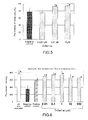
- Figure 1 shows the results of the experiment examining the effect of L- or D-methionine on the damage of the fibroblast induced by the ultraviolet irradiation with the UV-A at 9 J/cm 2 .
- the error bars for relevant experimental conditions are the standard deviations of the measured values of the results of the experiments repeated four times under the same conditions.
- the asterisk (*) indicates P ⁇ 5%
- asterisk (**) indicates P ⁇ 1%
- asterisk (***) indicates P ⁇ 0.1% by Bonferroni/Dunn test.
- the percentage of the viable cell in the absence of the added amino acid before the UV-A 9 J/cm 2 irradiation was 24%.
- the percentage of the viable cell in the presence of the added D-proline at 0.1 ⁇ M (micro-molar) before the irradiation (positive control) was 100%, showing the suppression of the cell death.
- Pre-irradiation addition of D-methionine at 0.01 ⁇ M (micro-molar), 0.1 ⁇ M (micro-molar), 1 ⁇ M (micro-molar), 10 ⁇ M (micro-molar) or 100 ⁇ M (micro-molar) resulted in the percentage of the viable cell of 102%, 81%, 97%, 114% or 76%, respectively.
- L-methionine at 0.001 ⁇ M (micro-molar), 0.01 ⁇ M (micro-molar), 0.1 ⁇ M (micro-molar), 1 ⁇ M (micro-molar), 10 ⁇ M (micro-molar) or 100 ⁇ M (micro-molar) resulted in the percentage of the viable cell of 40%, 72%, 67%, 45%, 73% or 62%. Based on these results, the addition of L- or D-methionine resulted in an increased percentage of the viable cell and a reduced cell death.
- Figure 2 shows the results of the experiment examining the effect of D-methionine on the damage in the fibroblast induced by the ultraviolet irradiation with the UV-A at 9 J/cm 2 .
- the error bars for relevant experimental conditions are the standard deviations of the measured values of the results of the experiments repeated three to four times under the same conditions.
- the asterisk (*) indicates p ⁇ 5% by Bonferroni/Dunn test.
- UV non-irradiation The percentage of the viable cell without UV irradiation and without added amino acid (hereinafter, referred to as "UV non-irradiation") was 100%.
- the percentage of the viable cell in the absence of the added amino acid before the UV-A 9 J/cm 2 irradiation (negative control) was 69%.
- the percentage of the viable cell in the presence of the added D-proline at 0.1 ⁇ M before the irradiation (positive control) was 88%, showing the reduction of the cell death.
- Pre-irradiation addition of D-methionine at 0.0001 ⁇ M (micro-molar) and 0.1 ⁇ M (micro-molar) resulted in the percentage of the viable cell of 50% and 101%.
- Figure 3 shows the results of the experiment examining the effect of D-methionine on the damage in the fibroblast induced by the ultraviolet irradiation with the UV-A at 8 J/cm 2 .
- the error bars for relevant experimental conditions are the standard deviations of the measured values of the results of the experiments repeated four times under the same conditions.
- the asterisk (***) indicates p ⁇ 0.1% by Bonferroni/Dunn test.
- the percentage of the viable cell in the absence of the added amino acid after the UV-A 8 J/cm 2 irradiation was 64%.
- the percentage of the viable cell in the presence of D-proline added at 0.1 ⁇ M (micro-molar) after the irradiation was 82%, showing the reduced cell death.
- Post-irradiation addition of D-methionine at 0.01 ⁇ M (micro-molar), 0.1 ⁇ M (micro-molar), 1 ⁇ M (micro-molar), 10 ⁇ M (micro-molar) or 100 ⁇ M (micro-molar) resulted in the percentage of the viable cell of 93%, 84%, 82%, 81% or about 87%.
- the cell culture, the addition of amino acids before the UV irradiation, the UV irradiation, the addition of amino acids after the UV irradiation and the cell damage measurement were conducted similarly to Example 1.
- the ultraviolet light (UV-A) was irradiated at 7.5 or 9 J/cm 2 .
- pre-irradiation addition of serine For determining the effect of adding serine before ultraviolet irradiation (hereinafter, referred to as “pre-irradiation addition of serine”) and the effect of adding serine after ultraviolet irradiation (hereinafter, referred to as “post-irradiation addition of serine"), L-serine (197-00403, Wako Pure Chemical Industries Ltd.) and D-serine (197-08823, Wako Pure Chemical Industries Ltd.) were employed at 0.0001 to 100 ⁇ M (micro-molar).
- Figure 4 shows the results of the experiment examining the effect of the pre-irradiation addition of L- serine and D-serine on the damage in the fibroblast induced by the ultraviolet irradiation with the UV-A at 9 J/cm 2 .
- the error bars for relevant experimental conditions are the standard deviations of the measured values of the results of the experiments repeated four to six times under the same conditions.
- the asterisk (*) indicates p ⁇ 5% by Bonferroni/Dunn test.
- the fluorescent intensity of Alamar Blue (trade mark) without ultraviolet irradiation was 794.
- the fluorescent intensity without added amino acid before the UV-A irradiation at 9 J/cm 2 (negative control) was 140.
- the fluorescent intensity with added D-proline at 0.1 ⁇ M (micro-molar) before the irradiation (positive control) was as high as 610 which indicated a reduced cell damage.
- the fluorescent intensities with added D-serine at 0.01 ⁇ M (micro-molar), 0.1 ⁇ M (micro-molar), 1 ⁇ M (micro-molar) and 10 ⁇ M (micro-molar) before the irradiation were 445, 402, 371 and 491, respectively.
- the fluorescent intensities with added L-serine at 0.1 ⁇ M (micro-molar), 1 ⁇ M (micro-molar) and 10 ⁇ M (micro-molar) before the irradiation were 265, 227 and 270, respectively. Based on these results, the pre-irradiation addition of L-serine resulted in almost no reduction in the cell damage. Meanwhile, the pre-irradiation addition of D-serine resulted in a statistically significant increase in the fluorescent intensity, showing a reduction in the cell damage.
- Figure 5 shows the results of the experiment examining the effect of the pre-irradiation addition of D-serine on the damage in the fibroblast induced by the ultraviolet irradiation with the UV-A at 8 J/cm 2 .
- the error bars for relevant experimental conditions are the standard deviations of the measured values of the results of the experiments repeated four times under the same conditions.
- the asterisk (*) indicates p ⁇ 5% by Bonferroni/Dunn test.
- the percentage of the viable cell without ultraviolet irradiation was 100%.
- the percentage of the viable cell in the absence of the added amino acid before the UV-A 8 J/cm 2 irradiation (negative control) was 77%.
- the percentages of the viable cell in the presence of the added D-serine at 0.0001 ⁇ M (micro-molar), 0.01 ⁇ M (micro-molar) and 10 ⁇ M (micro-molar) before the irradiation were 74%, 92% and 93%, respectively.
- the ultraviolet-induced cell damage was characterized by the fact that the addition of D-serine at 0.0001 ⁇ M (micro-molar) resulted in an increased percentage of the viable cell and the addition of D-serine at 0.1 ⁇ M (micro-molar) and 10 ⁇ M (micro-molar) resulted in an increased percentage of the viable cell, indicating a reduced cell death.
- Figure 6 shows the results of the experiment examining the effect of the post-irradiation addition of D-serine on the damage of the fibroblast induced by the ultraviolet irradiation with the UV-A at 7.5 J/cm 2 .
- the error bars for relevant experimental conditions are the standard deviations of the measured values of the results of the experiments repeated eight times under the same conditions.
- the asterisk (*) indicates p ⁇ 5% by Bonferroni/Dunn test.
- the fluorescent intensity of Alamar Blue (trade mark) without ultraviolet irradiation was 764.
- the fluorescent intensity without added amino acid after the UV-A irradiation at 7.5 J/cm 2 (negative control) was 348.
- the fluorescent intensity with addition of D-proline at 0.1 ⁇ M (micro-molar) after the irradiation (positive control) was as high as 579 which indicated a reduced cell damage.
- the fluorescent intensities with addition of D-serine at 0.01 ⁇ M (micro-molar), 0.1 ⁇ M (micro-molar), 1 ⁇ M (micro-molar), 10 ⁇ M (micro-molar) and 100 ⁇ M (micro-molar) after the irradiation were 697, 735, 742, 664 and 663, respectively. Based on these results, the post-irradiation addition of D-serine resulted in a statistically significant increase in the fluorescent intensity, showing a reduction of the cell damage. It was also revealed that the cell damage reducing effect was obtained regardless of the time whether before or after the UV irradiation the D-serine was added.
- the cell culture, the addition of amino acids before the UV irradiation, the UV irradiation, the addition of amino acids after the UV irradiation and the cell damage measurement were conducted similarly to Example 1.
- the ultraviolet light (UV-A) was irradiated at 9 J/cm 2 .
- D-cycloserine (C6880, Sigma) was employed at 0.0001 to 100 ⁇ M.
- Figure 7 shows the results of the experiment examining the effect of the pre-irradiation addition of D-cycloserine on the damage of the fibroblast induced by the ultraviolet irradiation with the UV-A at 9 J/cm 2 .
- the error bars for relevant experimental conditions are the standard deviations of the measured values of the results of the experiments repeated three to four times under the same conditions.
- the symbol (+) and the asterisk (***) indicate p ⁇ 10% and p ⁇ 0.1%, respectively, by Bonferroni/Dunn test.
- the percentage of the viable cell without addition of amino acid before the UV-A irradiation at 9 J/cm 2 was 53%.
- the percentage of the viable cell with added D-cycloserine at 0.1 nM, 10 nM, 100 nM, 1 ⁇ M (micro-molar), 10 ⁇ M (micro-molar) and 100 ⁇ M (micro-molar) before the irradiation were 60%, 60%, 63%, 74%, 69% and 109%. Based on these results, the addition of D-cycloserine resulted in an increased percentage of the viable cell, indicating a reduced cell death.
- the formulation examples comprising methionine, serine and/or D-cycroserine an emulsion formulation, a patch formulation, a tablet, a soft capsule, a granule, beverage, a candy, a cookie, miso paste, a French dressing, a mayonnaise, a French bread, a soy sauce, yogurt, dried seasoning powder for rice, seasoning sauce/sauce for natto (Japanese fermented soybean paste), natto, unrefined black vinegar, cream, body cream, a gel formulation, a peel-off mask, a wet pack, an emulsion, a face lotion and an aerosol formulation are shown below.
- Methionine in the following Formulation Examples was in D-form and/or L-form. These formulation examples are listed only for the purpose of exemplification and not intended to limit the scope of the invention.
- composition Content (% by mass) Methionine, D-serine and/or D-cycloserine 0.42 Behenyl alcohol 0.2 Cetanol 0.5 Glycerin mono fatty acid ester 1.8 Hardened castor oil POE (60) 1.0 White petrolatum 2.0 Liquid paraffin 10.0 Isopropyl myristate 3.0 Methyl polysiloxane (6cs) 1.5 Conc. Glycerin 13.0 Dipropylene glycol 2.0 Carboxyvinyl polymer 0.25 Sodium hyaluronate 0.005 Potassium hydroxide As appropriate Lactic acid As appropriate Sodium edetate As appropriate Ethylparaben As appropriate Purified water Remainder 100.00
- composition Content (% by mass) Methionine, D-serine and/or D-cycloserine 0.3 Polyacrylic acid 3.0 Sodium polyacrylate 2.5 Gelatin 0.5 Sodium carboxymethyl cellulose 4.0 Polyvinyl alcohol 0.3 Conc. Glycerin 14.0 1,3-Butylene glycol 12.0 Aluminum hydroxide 0.1 Sodium edetate 0.03 Methylparaben 0.1 Purified water Remainder 100.00
- composition Content
- D-serine and/or D-cycloserine 360.5 Lactose 102.4 Calcium carboxymethyl cellulose 29.9 Hydroxypropyl cellulose 6.8 Magnesium stearate 5.2 Crystalline cellulose 10.2 515.0
- composition Content (mg/tablet) Sucrose ester 70 Crystalline cellulose 74 Methyl cellulose 36 Glycerin 25 D-serine and/or D-cycloserine 475 N-Acetylglucosamine 200 Hyaluronic acid 150 Vitamin E 30 Vitamin B6 20 Vitamin B2 10 ⁇ (alpha)-Lipoic acid 20 Coenzyme Q10 40 Ceramide (Konjac extract) 50 L-proline 300 1500
- composition Content (mg/capsule) Edible soybean oil 530 Eucommia ulmoides extract 50 Ginseng extract 50 D-serine and/or D-cycloserine 100 Royal jelly 50 Maca 30 GABA 30 Beeswax 60 Gelatin 375 Glycerin 120 Glycerin fatty acid ester 105 1500
- composition Content
- Brown rice germ oil 659
- Resveratrol 1 Lotus germ extract 100
- Elastin 180 DNA 30 Folic acid 30 1500
- composition Content
- D-serine and/or D-cycloserine 400 Vitamin C 100 Soybean isoflavon 250 Reduced lactose 300 Soybean oligosaccharide 36 Erythritol 36 Dextrin 30 Flavoring agent 24 Citric acid 24 1200
- composition Content (g/60 mL) Eucommia ulmoides extract 1.6 Ginseng extract 1.6 D-serine and/or D-cycloserine 1.6 Reduced maltose syrup 28 Erythritol 8 Citric acid 2 Flavoring agent 1.3 N-Acetylglucosamine 1 Sodium hyaluronate 0.5 Vitamin E 0.3 Vitamin B6 0.2 Vitamin B2 0.1 ⁇ (alpha)-Lipoic acid 0.2 Coenzyme Q10 1.2 Ceramide (Konjac extract) 0.4 L-Proline 2 Purified water Remainder 60
- composition Content (% by mass) Sugar 50 Syrup 48 D-serine and/or D-cycloserine 1 Flavoring agent 1 100
- composition Content (% by mass) Weak flour 45.0 Butter 17.5 Granulated sugar 20.0 D-serine and/or D-cycloserine 4.0 Egg 12.5 Flavoring agent 1.0 100.0
- Granular sugar was added in portions to butter while stirring, to which an egg, D-serine and/or D-cycloserine together with a flavoring agent were added and stirred. After mixing thoroughly, uniformly sieved weak flour was added and then stirred slowly, and allowed to stand as a bulk in a refrigerator. Thereafter, it was molded and baked for 15 minutes at 170°C (degrees Celsius) to obtain a cookie.
- composition Content
- Soybean 1000 Malted rice 1000 Salt 420 D-serine and/or D-cycloserine 158 Water Remainder 4000
- Malted rice is mixed thoroughly with a salt. Washed soybeans are soaked in three times its volume of water, which are then drained off, and new water is added while boiling, and poured into a colander to collect the broth (tanemizu fluid), to which D-serine and/or D-cycloserine is dissolved at 10% w/v. The boiled beans are minced immediately, combined with malted rice mixed with salt, to which the tanemizu fluid described above containing D-serine and/or D-cycloserine dissolved therein is added and kneaded evenly to obtain a clay-like hardness.
- Dumplings are made and stuffed in a container compactly without forming any void, and the surface of the content is smoothened and sealed by wrapping with a plastic film. After three months, the content is transferred to a new container and the surface is smoothened and sealed by wrapping with a plastic film.
- a malted rice producing a large amount of D-serine and/or D-cycloserine may be employed. Such malted rice can be selected by quantifying D-serine and/or D-cycloserine by the method described in Japanese Patent Unexamined Publication No. 2008-185558 .
- a commercially available miso paste can be supplemented with D-serine and/or D-cycloserine or a salt thereof.
- composition Content
- Salad oil 27.0 Vinegar 30.0
- Sodium chloride 0.9
- D-serine and/or D-cycloserine 1.1
- Pepper 1.0 60.0
- Vinegar is combined with sodium chloride as well as D-serine and/or D-cycloserine, stirred thoroughly and then a pepper is added.
- composition Content
- Salad oil 134.0
- Vinegar 5 Sodium chloride 0.9
- Egg yolk 18 Sugar 0.2
- Pepper 0.9 160.0
- An egg yolk (room temperature) is combined with vinegar, sodium chloride and pepper as well as D-serine and/or D-cycloserine, and stirred thoroughly using a whipping apparatus. Stirring is continued while adding salad oil in portions to form an emulsion. Finally, a sugar is added and the mixture is stirred.
- composition Content
- Hard flour 140 Weak flour 60 Sodium chloride 3 Sugar 6 D-serine and/or D-cycloserine 2 Dry yeast 4 Lukewarm water 128 343
- Lukewarm water is combined with 1 g of sugar and dry yeast, which is then allowed to undergo a pre-fermentation.
- Hard flour, weak flour, sodium chloride and 5 g of sugar are placed in a bowl together with D-serine and/or D-cycloserine, into which the pre-fermented yeast is placed.
- a primary fermentation is conducted at 30°C.
- the dough is kneaded again and allowed to stand, and then shaped into suitable forms, which are subjected to a final fermentation using an electronic fermentation machine.
- composition Content
- soy sauce Commercially available soy sauce 900 D-serine and/or D-cycloserine 100 1000
- soy sauce is supplemented with D-serine and/or D-cycloserine, and stirred thoroughly.
- malted rice producing a large amount of D-serine and/or D-cycloserine may be employed for fermenting soy sauce.
- Such malted rice can be selected by quantifying D-serine and/or D-cycloserine by the method described in Japanese Patent Unexamined Publication No. 2008-185558 .
- composition Content
- g Milk 880 L. bulgaricus 50 S. thermophilus 50 D-serine and/or D-cycloserine 20 1000
- Fermentation is conducted at 40°C (degrees Celsius) to 45°C (degrees Celsius).
- Other commercially available fermentation seed organisms may be employed and commercially available yogurt may be supplemented with D-serine and/or D-cycloserine.
- an organism producing a large amount of D-serine and/or D-cycloserine may be employed for fermentation.
- Such an organism can be selected by quantifying D-serine and/or D-cycloserine by the method described in Japanese Patent Unexamined Publication No. 2008-185558 .
- composition Content
- D-serine and/or D-cycloserine 50 Laver 15 Sodium L-glutamate 10 Sodium chloride 2 Roasted sesame 10 Dried mackerel flakes 10 Sugar 1 Soy sauce 2 100
- composition Content
- composition Content
- g Commercially available natto 19.9 D-serine and/or D-cycloserine 0.1 20
- an organism producing a large amount of D-serine and/or D-cycloserine may be employed for producing natto.
- Such an organism can be selected by quantifying D-serine and/or D-cycloserine by the method described in Japanese Patent Unexamined Publication No. 2008-185558 .
- composition Content
- an organism producing a large amount of D-serine and/or D-cycloserine may be employed for producing vinegar, black vinegar or unrefined vinegar.
- Such an organism can be selected by quantifying D-serine and/or D-cycloserine by the method described in Japanese Patent Unexamined Publication No. 2008-185558 .
- composition Content (% by mass) Dimethyl polysiloxane 3 Decamethyl cyclopentasiloxane 13 Dodecamethyl cyclohexasiloxane 12 Polyoxyethylene - methyl polysiloxane copolymer 1 Ethanol 2 Isopropanol 1 Glycerin 3 Dipropylene glycol 5 Polyethylene glycol 6000 5 Sodium hexametaphosphate 0.05 Tocopherol acetate 0.1 D-serine and/or D-cycloserine 5 Fennel extract 0.1 Witch hazel extract 0.1 Ginseng extract 0.1 L-Menthol As appropriate p-oxybenzoate As appropriate Trisodium edetate 0.05 Dimorpholinopyridazinone 0.01 Methylbis(trimethylsiolxy) s ilylisopentyl 0.1 trimethoxycinnamate Iron oxide yellow As appropriate Cobalt titanate As appropriate Dimethyl distearyl ammonium hectolite 1.5 Poly
- composition Content (% by mass) Dimethyl polysiloxane 3 Decamethyl cyclopentasiloxane 13 Dodecamethyl cyclohexasiloxane 12 Polyoxyethylene - methyl polysiloxane copolymer 1 Ethanol 2 Isopropanol 1 Glycerin 3 Dipropylene glycol 5 Polyethylene glycol 6000 5 Sodium hexametaphosphate 0.05 Tocopherol acetate 0.1 Methionine 3 Fennel extract 0.1 Witch hazel extract 0.1 Ginseng extract 0.1 L-Menthol As appropriate p-oxybenzoate As appropriate Trisodium edetate 0.05 Dimorpholinopyridazinone 0.01 Isopentyl trimethoxycinnamate 0.1 trisiloxane Iron oxide yellow As appropriate Cobalt titanate As appropriate Dimethyl distearyl ammonium hectolite 1.5 Polyvinyl alcohol 0.1 Hydroxyethyl cellulose 0.1 Trimethylsiloxysilicate
- composition Content (% by mass) Dimethyl polysiloxane 5 Glycerin 2 1,3-Butylene glycol 5 Polyethylene glycol 1500 3 Polyethylene glycol 20000 3 Cetyl octanoate 3 Citric acid 0.01 Sodium citrate 0.1 Sodium hexametaphosphate 0.1 Dipotassium glycyrrhizinate 0.1 Methionine, D-serine and/or D-cycloserine 2 Tocopherol acetate 0.1 Scutellaria root extract 0.1 Saxifrage extract 0.1 Trisodium edetate 0.1 Xanthane gum 0.3 Acrylates/C10-30 alkyl 0.05 acrylate crosspolymer (Pemulen TR-2) Agar powder 1.5 Phenoxyethanol As appropriate Dibutylhydroxytoluene As appropriate Purified water Remainder 100.00
- composition Content (% by mass) Ethanol 10 1,3-Butylene glycol 6 Polyethylene glycol 4000 2 Olive oil 1 Macadamia nut oil 1 Phytosteryl hydroxystearic acid 0.05 Lactic acid 0.05 Sodium lactate 0.1 Disodium L-ascorbate sulfate L-ascorbic acid do-alpha 0.1 -tocopherol phosphoric acid diester potassium salt 0.1 D-serine and/or D-cycloserine 10 Fish collagen 0.1 Sodium chondroitin sulfate 0.1 Sodium carboxymethyl cellulose 0.2 Polyvinyl alcohol 12 p-oxybenzoate As appropriate Fragrance As appropriate Purified water Remainder 100.00
- composition Content (% by mass) Ethanol 10 1,3-Butylene glycol 6 Polyethylene glycol 4000 2 Olive oil 1 Macadamia nut oil 1 Phytosteryl hydroxystearic acid 0.05 Lactic acid 0.05 Sodium lactate 0.1 Disodium L-ascorbate sulfate L-ascorbic acid dl-alpha 0.1 -tocopherol phosphoric acid 0.1 diester potassium salt Methionine 4 Fish collagen 0.1 Sodium chondroitin sulfate 0.1 Sodium carboxymethyl cellulose 0.2 Polyvinyl alcohol 12 p-oxybenzoate As appropriate Fragrance As appropriate Purified water Remainder 100.00
- composition Content (% by mass) Glycerin 1 1,3-Butylene glycol 8 Xylit 2 Polyethylene glycol 1500 2 Rosemary oil 0.01 Sage oil 0.1 Citric acid 0.02 Sodium citrate 0.08 Sodium hexametaphosphate 0.01 Hydroxypropyl- ⁇ (beta)-cyclodextrin 0.1 Methionine,D-serine and/or D-cycloserine 0.5 Birch extract 0.1 Lavender extract 0.01 Xanthane gum 0.05 Carboxyvinyl polymer 0.15 p-oxybenzoate As appropriate Purified water Remainder 100.00
- composition Content (% by mass) Liquid paraffin 7 Petrolatum 3 Decamethyl cyclopentasiloxane 2 Behenyl alcohol 1.5 Glycerin 5 Dipropylene glycol 7 Polyethylene glycol 1500 2 Jojoba oil 1 Isostearic acid 0.5 Stearic acid 0.5 Behenic acid 0.5 Pentaerythritol tetra (2-ethylhexanoate) 3 Cetyl 2-ethylhexanoate 3 Glycerin monostearate 1 Polyoxyethylene-glycerin monostearate 1 Potassium hydroxide 0.1 Sodium hexametaphosphate 0.05 Stearyl glycyrrhizinate 0.05 Methionine, D-serine and/or D-cycloserine 1 Royal jelly extract 0.1 Yeast extract 0.1 Tocopherol acetate 0.1 Acetylated sodium hyaluronate 0.1 Trisodium edetate 0.05 4-t-Butyl
- composition Content (% by mass) Dimethylpolysiloxane 2 Behenyl alcohol 1 Batyl alcohol 0.5 Glycerin 5 1,3-Butylene glycol 7 Erythritol 2 Hardened oil 3 Squalane 6 Pentaerythritol tetra (2-ethylhexanoate) 2 Polyoxyethylene glyceryl isostearate 1 Polyoxyethylene glyceryl monostearate 1 Methionine, D-serine and/or D-cycloserine 0.3 Potassium hydroxide As appropriate Sodium hexametaphosphate 0.05 Phenoxyethanol As appropriate Carboxyvinyl polymer 0.1 Purified water Remainder 100.00
- composition Content (% by mass) Ethyl alcohol 5 Glycerin 1 1,3-Butylene glycol 5 Polyoxyethylene-polyoxypropylene decyltetradecyl ether 0.2 Sodium hexametaphosphate 0.03 Trimethyl glycine 1 Sodium polyaspartic acid 0.1 L-ascorbic acid dl-alpha -tocopherol phosphoric acid diester potassium salt 0.1 Thiotaurine 0.1 D-serine and/or D-cycloserine 8 Trisodium EDTA 0.1 Carboxyvinyl polymer 0.05 Potassium hydroxide 0.02 Phenoxyethanol As appropriate Fragrance As appropriate Purified water Remainder 100.00
- composition Content (% by mass) Ethyl alcohol 5 Glycerin 1 1,3-Butylene glycol 5 Polyoxyethylene-polyoxypropylene decyltetradecyl ether 0.2 Sodium hexametaphosphate 0.03 Trimethyl glycin 1 Sodium polyaspartic acid 0.1 L-ascorbic acid dl-alpha -tocopherol phosphoric acid diester potassium salt 0.1 Thiotaurine 0.1 Methionine, D-serine and/or D-cycloserine 4 Trisodium EDTA 0.1 Carboxyvinyl polymer 0.05 Potassium hydroxide 0.02 Phenoxyethanol As appropriate Fragrance As appropriate Purified water Remainder 100.00
- composition Content (% by mass) Ethanol 15.0 Polyoxyethylene hardened castor oil 50 1.5 Diphenhydramine 1.0 Dibucaine 2.0 Tocopherol acetate 0.5 Methionine, D-serine and/or D-cycloserine 0.1 Isostearic acid 0.1 1,3-Butylene glycol 3.0 Polyethylene glycol 400 3.0 Camphor 0.05 Urea 20.0 Purified water Remainder 100.00
- composition Content (% by mass) (Stock solution for external preparation of aerosol urea) 65.0 Dimethyl ether 35.0 100.00
Landscapes
- Health & Medical Sciences (AREA)
- Life Sciences & Earth Sciences (AREA)
- Veterinary Medicine (AREA)
- Public Health (AREA)
- General Health & Medical Sciences (AREA)
- Animal Behavior & Ethology (AREA)
- Chemical & Material Sciences (AREA)
- Medicinal Chemistry (AREA)
- Pharmacology & Pharmacy (AREA)
- Epidemiology (AREA)
- Engineering & Computer Science (AREA)
- Dermatology (AREA)
- Bioinformatics & Cheminformatics (AREA)
- General Chemical & Material Sciences (AREA)
- Nuclear Medicine, Radiotherapy & Molecular Imaging (AREA)
- Organic Chemistry (AREA)
- Chemical Kinetics & Catalysis (AREA)
- Dispersion Chemistry (AREA)
- Birds (AREA)
- Immunology (AREA)
- Biomedical Technology (AREA)
- Polymers & Plastics (AREA)
- Ophthalmology & Optometry (AREA)
- Proteomics, Peptides & Aminoacids (AREA)
- Mycology (AREA)
- Nutrition Science (AREA)
- Food Science & Technology (AREA)
- Molecular Biology (AREA)
- Gerontology & Geriatric Medicine (AREA)
- Biophysics (AREA)
- Toxicology (AREA)
- Pulmonology (AREA)
- Cosmetics (AREA)
- Acyclic And Carbocyclic Compounds In Medicinal Compositions (AREA)
Abstract
Description
- The present invention relates to a composition for alleviating an ultraviolet irradiation-induced damage comprising one or more compounds selected from a group consisting of methionine and D-serine and derivatives and/or salts thereof, a method for improving an ultraviolet irradiation exposure-induced skin disease and a cosmetic skin condition comprising a step of administering one or more compounds selected from a group consisting of methionine and D-serine and derivatives and/or salts thereof.
- Ultraviolet rays are classified into long wavelength region ultraviolet rays of longer than about 320 nm (UV-A), medium wavelength region ultraviolet rays of about 320 to about 280 nm (UV-B) and short wavelength region ultraviolet rays of shorter than about 280 nm (UV-C). Among these, the UV-C is not contained in solar lights reaching the ground since it is absorbed by ozone layer. While both of the UV-A and the UV-B are contained in the solar light reaching the ground, the UV-B is partly absorbed by the ozone layer. However, since the UV-A is not absorbed by the ozone layer, it is predominant in the ultraviolet rays reaching the ground, resulting in a skin damage.
Non-PatentLiterature 1 discloses diseases in which the ultraviolet rays are implicated, including wrinkles, erythema, xeroderma pigmentosum, chronic actinic dermatitis, squamous cell carcinoma, basal cell carcinoma, malignant melanoma, Bowen disease, solar keratosis, photodermatosis, hydroa vacciniforme and photocontact dermatitis, while Non-Patent Literature 2 exemplifies solar dermatitis, chronic actinic dermatopathy, actinic keratosis, actinic cheilitis, Favre-Racouchot syndrome, photodermatosis, photocontact dermatitis, berloque dermatitis, photosensitive drug eruption, polymorphous light eruption, hydroa vacciniforme, solar urticaria, chronic photosensitive dermatitis, xeroderma pigmentosum, ephelides, porphyria, pellagra, Hartnup disease, solar keratosis, dermatomyositis, lichen planus, Darier disease, pityriasis rubra pilaris, rosacea, atopic dermatitis, chloasma, herpes simplex and lupus erythematosus. -
- Non-Patent document 1: "HIFUSHIKKAN SAISHIN NO CHIRYO (Latest methods for treating dermal diseases)", 2005-2006 (Nankodo Co., Ltd.)
- Non-Patent document 2: "HYOJUN HIFUKAGAKU (Standard dermatology)", 7th edition (Igaku-Shoin Ltd.)
- Known conventional agents for preventing and/or treating an ultraviolet irradiation-induced skin damage include an ultraviolet scattering agent which inhibits absorption of the ultraviolet by a skin, such as titanium oxide, an ultraviolet absorber, such as ethyl hexyl p-methoxycinnamic acid, or an antioxidant which scavenge a free radical generated by the ultraviolet. The ultraviolet scattering agent or the ultraviolet absorber is, however, not used on a daily basis although it is effective outdoor in preventing sunburn. The antioxidant is problematic in terms of stability and safety. In addition, known agents for treating the ultraviolet irradiation-induced skin damages are limited only to symptomatic agents for treating. Accordingly, it is required to develop a composition for alleviating ultraviolet irradiation-induced damage, an external preparation for the skin, an anti-wrinkle agent, a sunscreen agent, a pharmaceutical composition for treating and/or preventing skin diseases, a food composition, or a pharmaceutical product for cataract, which can be used on a daily basis and is stable and safe.
- The present invention provides a composition for alleviating an ultraviolet irradiation-induced damage comprising one or more compounds selected from a group consisting of methionine and derivatives and/or salts thereof.
- In the composition for alleviating ultraviolet irradiation-induced damage according to the invention, the methionine described above may be in the D-form.
- The present invention provides a composition for alleviating an ultraviolet irradiation-induced damage comprising one or more compounds selected from a group consisting of D-serine and derivatives and/or salts thereof.
- In the composition for alleviating ultraviolet irradiation-induced damage according to the invention, the D-serine derivative described above may be D-cycloserine.
- The composition for alleviating an ultraviolet irradiation-induced damage according to the invention may be applied as an external preparation for the skin.
- In the composition for alleviating an ultraviolet irradiation-induced damage according to the invention, the external preparation for the skin described above may be an anti-wrinkle agent.
- In the composition for alleviating an ultraviolet irradiation-induced damage according to the invention, the external preparation for the skin described above may be a sunscreen agent.
- In the composition for alleviating an ultraviolet irradiation-induced damage according to the invention, the external preparation for the skin described above may be used as a pharmaceutical product for a skin disease.
- The skin disease described above may be selected from a group consisting of erythema, solar dermatitis, chronic actinic dermatopathy, actinic keratosis, actinic cheilitis, Favre-Racouchot disease, photodermatosis, photocontact dermatitis, berloque dermatitis, photosensitive drug eruption, polymorphous light eruption, hydroa vacciniforme, solar urticaria, chronic photosensitive dermatitis, xeroderma pigmentosum, ephelides, porphyria, pellagra, Hartnup disease, solar keratosis, dermatomyositis, lichen planus, Darier disease, pityriasis rubra pilaris, rosacea, atopic dermatitis, chloasma, herpes simplex, lupus erythematosus, squamous cell carcinoma, basal cell carcinoma and Bowen disease.
- In the composition for alleviating an ultraviolet irradiation-induced damage according to the invention, the pharmaceutical product for a skin disease described above may be an agent for treating a skin disease.
- In the composition for alleviating an ultraviolet irradiation-induced damage according to the present invention, the pharmaceutical product for a skin disease described above may be an agent for preventing a skin disease.
- The composition for alleviating an ultraviolet irradiation-induced damage according to the present invention may be used as a food product.
- The composition for alleviating an ultraviolet irradiation-induced damage according to the present invention may be used as a pharmaceutical product for cataract.
- In the composition for alleviating an ultraviolet irradiation-induced damage according to the present invention, the pharmaceutical product for cataract described above may be an agent for treating or preventing cataract.
- The composition for alleviating an ultraviolet irradiation-induced damage according to the present invention may be applied as an ophthalmic drop.
- The cataract described above may be senile cataract.
- The present invention provides a composition except that the composition is orally used for alleviating an ultraviolet irradiation-induced damage comprising one or more compounds selected from a group consisting of methionine and derivatives and/or salts thereof. The methionine described above may be in the D-form.
- The present invention provides a method for treating and/or preventing an ultraviolet irradiation exposure-induced skin disease comprising a step of administering a composition for alleviating an ultraviolet irradiation-induced damage, wherein the composition is comprised of one or more compounds selected from a group consisting of methionine and D-serine and derivatives and/or salts thereof. The skin disease described above may be selected from a group consisting of erythema, solar dermatitis, chronic actinic dermatopathy, actinic keratosis, actinic cheilitis, Favre-Racouchot disease, photodermatosis, photocontact dermatitis, berloque dermatitis, photosensitive drug eruption, polymorphous light eruption, hydroa vacciniforme, solar urticaria, chronic photosensitive dermatitis, xeroderma pigmentosum, ephelides, porphyria, pellagra, Hartnup disease, solar keratosis, dermatomyositis, lichen planus, Darier disease, pityriasis rubra pilaris, rosacea, atopic dermatitis, chloasma, herpes simplex, lupus erythematosus, squamous cell carcinoma, basal cell carcinoma and Bowen disease. The methionine described above may be in the D-form. The D-serine derivative described above may be D-cycloserine.
- The present invention provides a method for treating and/or preventing an ultraviolet irradiation exposure-induced skin disease comprising a step of administering a composition for alleviating an ultraviolet irradiation-induced damage, wherein the composition is comprised of one or more compounds selected from a group consisting of methionine and derivatives and/or salts thereof except for oral compositions. The skin disease described above may be selected from a group consisting of erythema, solar dermatitis, chronic actinic dermatopathy, actinic keratosis, actinic cheil i tis, Favre-Racouchot disease, photodermatosis, photocontact dermatitis, berloque dermatitis, photosensitive drug eruption, polymorphous light eruption, hydroa vacciniforme, solar urticaria, chronic photosensitive dermatitis, xeroderma pigmentosum, ephelides, porphyria, pellagra, Hartnup disease, solar keratosis, dermatomyositis, lichen planus, Darier disease, pityriasis rubra pilaris, rosacea, atopic dermatitis, chloasma, herpes simplex, lupus erythematosus, squamous cell carcinoma, basal cell carcinoma and Bowen disease. The methionine described above may be in the D-form.
- The present invention provides a method for improving a cosmetic skin condition comprising a step of administering a composition for alleviating an ultraviolet irradiation-induced damage, wherein the composition is comprised of one or more compounds selected from a group consisting of methionine and D-serine and derivatives and/or salts thereof. In the method for improving a cosmetic skin condition described above, the composition for alleviating an ultraviolet irradiation-induced damage comprising one or more compounds selected from a group consisting of methionine and D-serine and derivatives and/or salts thereof described above may be an external preparation for the skin or a food composition. The methionine described above may be in the D-form. The D-serine derivative described above may be D-cycloserine.
- The present invention provides a method for improving a cosmetic skin condition comprising a step of administering a composition except that the composition is orally used for alleviating an ultraviolet irradiation-induced damage, wherein the composition is comprised of one or more compounds selected from a group consisting of methionine and derivatives and/or salts thereof. In the method for improving a cosmetic skin condition described above, the composition except that the composition is orally used for alleviating an ultraviolet irradiation-induced damage comprising one or more compounds selected from a group consisting of methionine and derivatives and/or salts thereof described above may be an external preparation for the skin. The methionine described above may be in the D-form.
- In the method for improving a cosmetic skin condition according to the invention, the improvement of a cosmetic skin condition includes, but is not limited to, an anti-wrinkle treatment and/or a sunscreen treatment.
- The present invention may provide a method for treating and/or preventing cataract comprising a step of administering a composition comprising one or more compounds selected from a group consisting of methionine and D-serine and derivatives and/or salts thereof. The methionine described above may be in the D-form. The D-serine derivative described above may be D-cycloserine.
- In the method for treating and/or preventing cataract according to the invention, the pharmaceutical product for cataract described above may be an ophthalmic drop.
- In the method for treating and/or preventing cataract according to the invention, the cataract described above may be senile cataract.
- As used herein, "salt" of methionine, D-serine or D-cycloserine refers to any salt including metal salts and amine salts, provided that the ultraviolet irradiation-induced damage alleviating effect of methionine, D-serine or D-cycloserine is not impaired. The metal salt described above may include an alkaline metal salt, an alkaline earth metal salt and the like. The amine salt described above may include triethylamine salt, benzylamine salt and the like.
- As used herein, "derivative" of methionine or D-serine refers to a methionine or D-serine molecule bound covalently to any substituent group at its amino group, carboxyl group or side chain, provided that the alleviating effect of methionine or D-serine on ultraviolet irradiation-induced damage is not impaired. The substituent group mentioned above includes, but is not limited to, a protective group, such as N-phenylacetyl group, 4,4'-dimethoxytrityl (DMT) group,etc.; a biological macromolecule , such as a protein, a peptide, a saccharide, a lipid, a nucleic acid, etc.; a synthetic polymer , such as a polystyrene, a polyethylene, a polyvinyl, a polyester, etc. ; and a functional group such as an ester group, etc. The ester group mentioned above may include, for example, a methyl ester, an ethyl ester, other aliphatic ester or aromatic ester. In the D-serine derivative described above, an amino group and/or a carboxyl group adjacent to the α (alpha)-carbon atom of the amino acid may form a heterocyclic ring, as in the case of D-cycloserine, together with any group.
- Since an amino acid exists as an optical isomer which is in either of an L-form or a D-form but a natural protein is made of L-amino acids bound via peptide bonds and only L-amino acids are employed excluding some exceptions such as a bacterial cell wall, it has been considered that in a mammal including a human only L-amino acids are present and utilized (Kinouchi, T. et al., TANPAKUSHITSU KAKUSAN KOSO (PROTEINS, NUCLEIC ACIDS AND ENZYMES), 50:453-460(2005), Lehninger Principles of Biochemistry [Vol.1] 2nd ed., pp132-147(1993), Japanese-language translation, Hirokawa Publishing Co., Harper's Biochemistry, Original version, 22nd ed., pp21-30(1991), Japanese-language translation, Maruzen Co., Ltd.). Accordingly, only L-amino acids have mostly been employed as amino acids academically and industrially for a long time.
- Exceptional cases where a D-amino acid is employed include, for example, a case of using as a raw material for an antibiotics produced by a microorganism and a case of a food additive employing a D-amino acid in a DL-amino acid mixture just for the purpose of reducing cost of fractionating only an L-amino acid from a mixture of the L-amino acid and the D-amino acid. However, there has been no case of utilizing only an L-amino acid-free D-amino acid industrially as a bioactive substance.
- D-serine and D-aspartic acid have been studied to a comparatively advanced stage because of their higher ratios of D-forms. D-serine is localized in a cerebrum and a hippocampus, and is known to be involved in an NMDA receptor modulator in the brain. D-aspartic acid is demonstrated to be localized in a testis and a pineal body, and reported to be involved in the regulation of hormone secretion (Japanese Patent Unexamined Publication No.
2005-3558 - As indicated in Examples described below, methionine, D-serine and D-cycloserine as those having L-form or D-form, or a mixture thereof, has not been known so far to have an alleviating effect on ultraviolet irradiation-induced damage. Therefore, a composition for alleviating an ultraviolet irradiation-induced damage comprising methionine, D-serine and/or D-cycloserine according to the present invention is a novel invention.
- Recently, it was reported that ddY mice had been allowed to access a 10 mM aqueous solution of a D-amino acid for 2 weeks and then determined for the D-amino acid concentration in each organ, which was 3 to 1000 pmol per gland in a pineal body and 2 to 500 nmol per wet gram in a brain tissue (Morikawa, A. et al., Amino Acids, 32:13-20 (2007)). Based on this report, the lower limit of daily dose of methionine, D-serine and D-cycloserine contained in a composition of the present invention was calculated.
- As indicated in Examples described below, methionine relevant to the present invention exhibits an alleviating effect on ultraviolet irradiation-induced damage at a concentration ranging from 0.001 to 100 µM (micro-molar) on a cultured human fibroblast. Accordingly, the amount of methionine contained in a pharmaceutical composition of the present invention, anti-wrinkle agent, sunscreen agent, external preparation for the skin and a pharmaceutical product for cataract may be varied in a wide range, provided that methionine is delivered to a fibroblast in an in vivo skin tissue at a concentration range specified above. When the composition of the present invention is an external preparation, the methionine content may be 0.0000015% by mass to 50% by mass in the entire amount of the composition of the invention or up to the maximum mass concentration capable of being formulated. Thus, when the composition described above is an external preparation, the methionine content is desirably 0.000003% by mass to 30% by mass, most desirably 0.00003% by mass to 3% by mass. The lower limit of the daily dose of D-methionine, contained in the composition of the present invention may be 0.01 ng, preferably 0.1 ng, more preferably 1 ng per kg body weight. The lower limit of the daily dose of L-methionine, contained in the composition of the present invention is less than a dose of a clinical drug (2 mg or more per kg body weight), and may be 0.01 mg, preferably 0. 1 mg, more preferably 1 mg per kg body weight.
- As indicated in Examples described below, D-serine of the invention exhibits an alleviating effect on ultraviolet irradiation-induced damage at a concentration ranging from 0.01 to 100 µM on a cultured human fibroblast. Accordingly, the amount of D-serine contained in a pharmaceutical composition of the present invention, anti-wrinkle agent, sunscreen agent, external preparation for the skin and pharmaceutical product for cataract may be varied in a wide range, provided that D-serine is delivered to a fibroblast in an in vivo skin tissue at a concentration range specified above. When the composition of the present invention is an external preparation, the D-serine content may be 0.000015% by mass to 50% by mass in the entire amount of the composition of the invention or up to the maximum mass concentration capable of being formulated. Thus, when the composition described above is an external preparation, the D-serine content is desirably 0.00003% by mass to 30% by mass, most desirably 0.0003% by mass to 3% by mass. When the composition of the present invention is an internal preparation, the D-serine content may be 0.00001% by mass to 100% by mass. When the composition of the invention is an internal preparation, the D-serine content is desirably 0.00002% by mass to 80% by mass, most desirably 0.0002% by mass to 60% by mass. The lower limit of the daily dose of D-serine contained in the composition of the present invention may be 0.01 ng, preferably 0.1 ng, more preferably 1 ng per kg body weight.
- As indicated in Examples described below, D-cycloserine of the invention exhibits an alleviating effect on ultraviolet irradiation-induced damage at a concentration ranging from 1 to 100 µM (micro-molar) on a cultured human fibroblast. Accordingly, the amount of D-cycloserine contained in a pharmaceutical composition of the present invention, anti-wrinkle agent, sunscreen agent, external preparation for the skin and a pharmaceutical product for cataract may be varied in a wide range, provided that D-cycloserine is delivered to a fibroblast in an in vivo skin tissue at a concentration range specified above. When the composition of the present invention is an external preparation, the D-cycloserine content may be 0.0000015% by mass to 50% by mass in the entire amount of the composition of the invention or up to the maximum mass concentration capable of being formulated. Thus, when the composition described above is an external preparation, the D-cycloserine content is desirably 0.000003% by mass to 30% by mass, most desirably 0.00003% by mass to 3% by mass. The lower limit of the daily dose of D-cycloserine contained in the composition of the present invention may be 0.01 µg (micro-gram), preferably 0.1 µg (micro-gram), more preferably 1 µg (micro-gram) per kg body weight.
- The pharmaceutical composition of the present invention may further comprise one or more pharmaceutically acceptable additives, in addition to methionine and D-serine, methionine and D-serine salts and/or derivatives capable of releasing methionine and D-serine by drug metabolizing enzymes and the like in vivo, provided that the alleviating effect of methionine and D-serine on ultraviolet irradiation-induced damage is not impaired. Such an additive includes, but is not limited to, a diluent, a swelling agent, a binder, an adhesive, a lubricant, a glidant, a plasticizer, a disintegrant, a carrier solvent, a buffering agent, a colorant, a flavoring agent, a sweetener, a preservative, a stabilizer, an adsorbent, as well as other pharmaceutical additives known to those skilled in the art.
- An anti-wrinkle agent and/or sunscreen agent of the present invention can be prepared using only methionine, D-serine and D-cycloserine, salts of methionine, D-serine and D-cycloserine, and/or derivatives capable of releasing methionine, D-serine and D-cycloserine drug metabolizing enzymes and the like in vivo. However, other components employed in external preparations for the skin such as cosmetic and pharmaceutical products including quasi drugs may appropriately be formulated as required to the extent that the effect of the invention is not impaired. Such other components (optionally formulated components) include, for example, oils, surfactants, powders, colorants, water, alcohols, thickening agents, chelating agents, silicones, antioxidant, UV absorbers, humectants, flavoring agents, various medicinal ingredients, preservatives, pH adjusters, neutralizer like that.
- The external preparation for the skin of the present invention may be any of those employed conventionally in an external preparation for the skin and a cosmetic composition, such as an ointment, a cream, an emulsion, a lotion, a pack, a bath salt and the like, and their dosage forms are not specified particularly.
- To the external preparation for the skin of the invention, other components employed in external preparations for the skin such as cosmetic and pharmaceutical products including quasi drugs may appropriately be formulated as required, provided that the alleviating effect of methionine, D-serine and D-cyclocerine on ultraviolet irradiation-induced damage is not impaired. Such other components (optionally formulated components) include, for example, oils, surfactants, powders, colorants, water, alcohols, thickening agents, chelating agents, silicones, antioxidants, UV absorbers, humectants, flavoring agents, various medicinal ingredients, preservatives, pH adjusters, neutralizer.
- The food composition of the present invention may further comprises, in addition to D-serine and D-cycloserine, salts of D-serine and D-cycloserine and/or derivatives capable of releasing D-serine and D-cycloserine by drug metabolizing enzymes and the like in vivo, and additionally a food-industrially acceptable component, such as a seasoning, a colorant, a preservative, provided that the alleviating effect of D-serine and D-cycloserine on ultraviolet irradiation-induced damage is not impaired.
- The food composition of the present invention may be any of those employed conventionally in a food composition, such as a beverage, a gummy candy, a candy, a tablet sweet, to which it is not limited.
-
-
Figure 1 is a graph showing the effect of L- or D-methionine addition before an ultraviolet irradiation in normal human dermal fibroblasts. -
Figure 2 is a graph showing the effect of D-methionine addition before an ultraviolet irradiation in normal human dermal fibroblasts. -
Figure 3 is a graph showing the effect of D-methionine addition after an ultraviolet irradiation in normal human dermal fibroblasts. -
Figure 4 is a graph showing the effect of L- or D-serine addition before an ultraviolet irradiation in normal human dermal fibroblasts. -
Figure 5 is a graph showing the effect of D-serine addition before an ultraviolet irradiation in normal human dermal fibroblasts. -
Figure 6 is a graph showing the effect of D-serine addition after an ultraviolet irradiation in normal human dermal fibroblasts. -
Figure 7 is a graph showing the effect of D-cycloserine addition after an ultraviolet irradiation in normal human dermal fibroblasts. - Examples of the present invention described below are intended only to exemplify the invention rather than to limit the scope thereof. The scope of the invention is limited only by the description in claims.
- All documents cited herein are incorporated by reference in its entirety.
- The cell employed was a commercially available human neonatal dermal fibroblast (Cryo NHDF-Neo, Sanko-Junyaku Co., Ltd.). This cell was inoculated at 2 x 10⁵ cells/mL to a commercially available culture dish of 35 mm in diameter (BD FALCON 353001, Becton Dickinson Japan), where it was cultured in a commercially available cell culture medium (D-MEM (1 g/L glucose, Wako Pure Chemical Industries, Ltd.) supplemented with 10% fetal bovine serum (hereinafter, referred to as "normal medium"). The cell described above may be cultured in the normal medium described above supplemented with an antibiotic (15240-062, Gibco) at 1%. This cell was cultured for about 24 hours in a 5% CO2 and saturated water vapor atmosphere at 37°C (degrees Celsius).
- Thereafter, the culture medium for culturing the cell described above was switched to 1 mL of a BSO medium supplemented with a glutathione biosynthesis inhibitor BSO (L-buthionine-(S,R) 012)-sulfoximine, Wako Pure Chemical Industries, Ltd.) at 1 x 10⁻³%, where the culture was conducted for about 24 hours in a 5% CO2 and saturated water vapor atmosphere at 37°C (degrees Celsius). The BSO medium described above was prepared by a 200-fold dilution of a stock solution containing 0.2% BSO dissolved in ethyl alcohol with the normal medium described above.
- For determining the effect of adding methionine before ultraviolet irradiation (hereinafter, referred to as "pre-irradiation addition of methionine"), the culture medium was switched to a BSO medium added with 0.0001 to 100 µM (micro-molar) L-methionine (131-01603, Wako Pure Chemical Industries Ltd.) or D-methionine (2807, Peptide Institute Inc.) 24 hours before the irradiation. The ultraviolet irradiation after switching into a medium added with 0.1 µM (micro-molar) D-proline (165-14671, Wako Pure Chemical Industries Ltd.) was employed as a positive control, while the ultraviolet irradiation to the medium still being free of such an added amino acid was employed as a negative control.
- Ferric chloride (II) was dissolved in a distilled water at 2 x 10⁻³%, and the resultant solution was subjected to a 200-fold dilution (final concentration: 1 x 10⁻⁵%) with a phosphate buffered saline PBS (+) containing calcium ion and magnesium ion to obtain a medium (hereinafter, referred to as "UV irradiation medium"), which was warmed preliminarily to 37°C before use.
- Before UV-A irradiation, the culture medium was replaced with 1 mL of the UV irradiation medium described above. The UV-A irradiation was conducted using a UV light uniform exposure device UVE-502S+EL-160 (SAN-EI ELECTRIC) by irradiating a UV ray of 320 nm to 400 nm at 8 J/cm2 and 9 J/cm2 from about 20 cm above a culture dish in a state where the lid of the respective culture dish was removed. The UV dose was measured using UV RADIOMETER UVR-3036/S (Topcon Corporation).
- After UV-A irradiation at 8 J/cm2, the medium was returned to the normal medium described above, and the culture was conducted in a 5% CO2 and saturated water vapor atmosphere at 37°C (degrees Celsius) for 40 hours. For determining the effect of adding methionine after UV irradiation (hereinafter, referred to as "post-irradiation addition of methionine"), this 40-hour cultured medium was added with 0.001 to 100 µM (micro-mol ar) L- or D-methionine. The ultraviolet irradiation after switching into a medium added with 0.1 µM (micro-molar) D-proline was employed as a positive control, while the ultraviolet irradiation to the medium still being free of such an added amino acid was employed as a negative control.
- Thereafter, the culture medium was supplemented with Alamar Blue (trade mark, Biosource, Biosource International Inc. and Invitrogen) at a final concentration of 10%, and its supernatant was determined for the fluorescent intensity three hours later with an excitation wavelength of 544 nm and a fluorescent wavelength of 590 nm as described by Ahmed S.A. et al. J. Immunol. Method. 170, 211-224 (1994)) and in accordance with the manufacture's instruction. The percentage of the viable cell was obtained as a percentage of a quotient calculated by dividing the fluorescent intensity of Alamar Blue under each experimental condition by the fluorescent intensity in the negative control group containing no added amino acid.
-
Figure 1 shows the results of the experiment examining the effect of L- or D-methionine on the damage of the fibroblast induced by the ultraviolet irradiation with the UV-A at 9 J/cm2. The error bars for relevant experimental conditions are the standard deviations of the measured values of the results of the experiments repeated four times under the same conditions. The asterisk (*) indicates P<5%, asterisk (**) indicates P<1% and asterisk (***) indicates P<0.1% by Bonferroni/Dunn test. - The percentage of the viable cell in the absence of the added amino acid before the UV-A 9 J/cm2 irradiation (negative control) was 24%. The percentage of the viable cell in the presence of the added D-proline at 0.1µM (micro-molar) before the irradiation (positive control) was 100%, showing the suppression of the cell death. Pre-irradiation addition of D-methionine at 0.01 µM (micro-molar), 0.1 µM (micro-molar), 1 µM (micro-molar), 10 µM (micro-molar) or 100 µM (micro-molar) resulted in the percentage of the viable cell of 102%, 81%, 97%, 114% or 76%, respectively. Pre-irradiation addition of L-methionine at 0.001 µM (micro-molar), 0.01 µM (micro-molar), 0.1 µM (micro-molar), 1 µM (micro-molar), 10 µM (micro-molar) or 100 µM (micro-molar) resulted in the percentage of the viable cell of 40%, 72%, 67%, 45%, 73% or 62%. Based on these results, the addition of L- or D-methionine resulted in an increased percentage of the viable cell and a reduced cell death.
-
Figure 2 shows the results of the experiment examining the effect of D-methionine on the damage in the fibroblast induced by the ultraviolet irradiation with the UV-A at 9 J/cm2. The error bars for relevant experimental conditions are the standard deviations of the measured values of the results of the experiments repeated three to four times under the same conditions. The asterisk (*) indicates p<5% by Bonferroni/Dunn test. - The percentage of the viable cell without UV irradiation and without added amino acid (hereinafter, referred to as "UV non-irradiation") was 100%. The percentage of the viable cell in the absence of the added amino acid before the UV-A 9 J/cm2 irradiation (negative control) was 69%. The percentage of the viable cell in the presence of the added D-proline at 0.1µM before the irradiation (positive control) was 88%, showing the reduction of the cell death. Pre-irradiation addition of D-methionine at 0.0001 µM (micro-molar) and 0.1 µM (micro-molar) resulted in the percentage of the viable cell of 50% and 101%. Based on these results, the addition of D-methionine at 0.0001 µM (micro-molar) resulted in no increase in percentage of the viable cells, but addition of D-methionine at 0.1 µM (micro-molar) resulted in an increased percentage of the viable cell and a reduced cell death.
-
Figure 3 shows the results of the experiment examining the effect of D-methionine on the damage in the fibroblast induced by the ultraviolet irradiation with the UV-A at 8 J/cm2. The error bars for relevant experimental conditions are the standard deviations of the measured values of the results of the experiments repeated four times under the same conditions. The asterisk (***) indicates p<0.1% by Bonferroni/Dunn test. - The percentage of the viable cell in the absence of the added amino acid after the UV-A 8 J/cm2 irradiation (negative control) was 64%. The percentage of the viable cell in the presence of D-proline added at 0.1 µM (micro-molar) after the irradiation was 82%, showing the reduced cell death. Post-irradiation addition of D-methionine at 0.01 µM (micro-molar), 0.1 µM (micro-molar), 1 µM (micro-molar), 10 µM (micro-molar) or 100 µM (micro-molar) resulted in the percentage of the viable cell of 93%, 84%, 82%, 81% or about 87%. Based on these results, the addition of D-methionine resulted in an increased percentage of the viable cell and a reduced cell death. It was also revealed that the cell death reducing effect was observed regardless of the time whether before or after the UV irradiation D-methionine was added. In addition, L-methionine also reduced the cell death induced by the UV irradiation. Accordingly, it was suggested that there is no relevancy to the time whether before or after the UV irradiation the L-methionine was added.
- The cell culture, the addition of amino acids before the UV irradiation, the UV irradiation, the addition of amino acids after the UV irradiation and the cell damage measurement were conducted similarly to Example 1. The ultraviolet light (UV-A) was irradiated at 7.5 or 9 J/cm2. For determining the effect of adding serine before ultraviolet irradiation (hereinafter, referred to as "pre-irradiation addition of serine") and the effect of adding serine after ultraviolet irradiation (hereinafter, referred to as "post-irradiation addition of serine"), L-serine (197-00403, Wako Pure Chemical Industries Ltd.) and D-serine (197-08823, Wako Pure Chemical Industries Ltd.) were employed at 0.0001 to 100 µM (micro-molar). The effect of the post-irradiation addition of serine was evaluated by irradiating the cell with 7.5 J/cm2 of UV-A followed by switching back to the normal medium in which the culture was conducted for 21 hours and adding D-serine to this 21-hour cultured medium.
-
Figure 4 shows the results of the experiment examining the effect of the pre-irradiation addition of L- serine and D-serine on the damage in the fibroblast induced by the ultraviolet irradiation with the UV-A at 9 J/cm2. The error bars for relevant experimental conditions are the standard deviations of the measured values of the results of the experiments repeated four to six times under the same conditions. The asterisk (*) indicates p<5% by Bonferroni/Dunn test. - The fluorescent intensity of Alamar Blue (trade mark) without ultraviolet irradiation was 794. The fluorescent intensity without added amino acid before the UV-A irradiation at 9 J/cm2 (negative control) was 140. The fluorescent intensity with added D-proline at 0.1 µM (micro-molar) before the irradiation (positive control) was as high as 610 which indicated a reduced cell damage. The fluorescent intensities with added D-serine at 0.01 µM (micro-molar), 0.1 µM (micro-molar), 1 µM (micro-molar) and 10 µM (micro-molar) before the irradiation were 445, 402, 371 and 491, respectively. The fluorescent intensities with added L-serine at 0.1 µM (micro-molar), 1 µM (micro-molar) and 10 µM (micro-molar) before the irradiation were 265, 227 and 270, respectively. Based on these results, the pre-irradiation addition of L-serine resulted in almost no reduction in the cell damage. Meanwhile, the pre-irradiation addition of D-serine resulted in a statistically significant increase in the fluorescent intensity, showing a reduction in the cell damage.
-
Figure 5 shows the results of the experiment examining the effect of the pre-irradiation addition of D-serine on the damage in the fibroblast induced by the ultraviolet irradiation with the UV-A at 8 J/cm2. The error bars for relevant experimental conditions are the standard deviations of the measured values of the results of the experiments repeated four times under the same conditions. The asterisk (*) indicates p<5% by Bonferroni/Dunn test. - The percentage of the viable cell without ultraviolet irradiation was 100%. The percentage of the viable cell in the absence of the added amino acid before the UV-A 8 J/cm2 irradiation (negative control) was 77%. The percentages of the viable cell in the presence of the added D-serine at 0.0001 µM (micro-molar), 0.01 µM (micro-molar) and 10 µM (micro-molar) before the irradiation were 74%, 92% and 93%, respectively. Based on these results, the ultraviolet-induced cell damage was characterized by the fact that the addition of D-serine at 0.0001 µM (micro-molar) resulted in an increased percentage of the viable cell and the addition of D-serine at 0.1 µM (micro-molar) and 10 µM (micro-molar) resulted in an increased percentage of the viable cell, indicating a reduced cell death.
-
Figure 6 shows the results of the experiment examining the effect of the post-irradiation addition of D-serine on the damage of the fibroblast induced by the ultraviolet irradiation with the UV-A at 7.5 J/cm2. The error bars for relevant experimental conditions are the standard deviations of the measured values of the results of the experiments repeated eight times under the same conditions. The asterisk (*) indicates p<5% by Bonferroni/Dunn test. - The fluorescent intensity of Alamar Blue (trade mark) without ultraviolet irradiation was 764. The fluorescent intensity without added amino acid after the UV-A irradiation at 7.5 J/cm2 (negative control) was 348. The fluorescent intensity with addition of D-proline at 0.1 µM (micro-molar) after the irradiation (positive control) was as high as 579 which indicated a reduced cell damage. The fluorescent intensities with addition of D-serine at 0.01 µM (micro-molar), 0.1 µM (micro-molar), 1 µM (micro-molar), 10 µM (micro-molar) and 100 µM (micro-molar) after the irradiation were 697, 735, 742, 664 and 663, respectively. Based on these results, the post-irradiation addition of D-serine resulted in a statistically significant increase in the fluorescent intensity, showing a reduction of the cell damage. It was also revealed that the cell damage reducing effect was obtained regardless of the time whether before or after the UV irradiation the D-serine was added.
- The cell culture, the addition of amino acids before the UV irradiation, the UV irradiation, the addition of amino acids after the UV irradiation and the cell damage measurement were conducted similarly to Example 1. The ultraviolet light (UV-A) was irradiated at 9 J/cm2. For determining the effect of adding D-cycloserine before ultraviolet irradiation (hereinafter, referred to as "pre-irradiation addition of cycloserine"), D-cycloserine (C6880, Sigma) was employed at 0.0001 to 100 µM.
-
Figure 7 shows the results of the experiment examining the effect of the pre-irradiation addition of D-cycloserine on the damage of the fibroblast induced by the ultraviolet irradiation with the UV-A at 9 J/cm2. The error bars for relevant experimental conditions are the standard deviations of the measured values of the results of the experiments repeated three to four times under the same conditions. The symbol (+) and the asterisk (***) indicate p<10% and p<0.1%, respectively, by Bonferroni/Dunn test. - The percentage of the viable cell without addition of amino acid before the UV-A irradiation at 9 J/cm2 (negative control) was 53%. The percentage of the viable cell with added D-cycloserine at 0.1 nM, 10 nM, 100 nM, 1 µM (micro-molar), 10 µM (micro-molar) and 100 µM (micro-molar) before the irradiation were 60%, 60%, 63%, 74%, 69% and 109%. Based on these results, the addition of D-cycloserine resulted in an increased percentage of the viable cell, indicating a reduced cell death.
- Based on the present invention, the formulation examples comprising methionine, serine and/or D-cycroserine an emulsion formulation, a patch formulation, a tablet, a soft capsule, a granule, beverage, a candy, a cookie, miso paste, a French dressing, a mayonnaise, a French bread, a soy sauce, yogurt, dried seasoning powder for rice, seasoning sauce/sauce for natto (Japanese fermented soybean paste), natto, unrefined black vinegar, cream, body cream, a gel formulation, a peel-off mask, a wet pack, an emulsion, a face lotion and an aerosol formulation are shown below. Methionine in the following Formulation Examples was in D-form and/or L-form. These formulation examples are listed only for the purpose of exemplification and not intended to limit the scope of the invention.
-
(Composition) Content (% by mass) Methionine, D-serine and/or D-cycloserine 0.42 Behenyl alcohol 0.2 Cetanol 0.5 Glycerin mono fatty acid ester 1.8 Hardened castor oil POE (60) 1.0 White petrolatum 2.0 Liquid paraffin 10.0 Isopropyl myristate 3.0 Methyl polysiloxane (6cs) 1.5 Conc. Glycerin 13.0 Dipropylene glycol 2.0 Carboxyvinyl polymer 0.25 Sodium hyaluronate 0.005 Potassium hydroxide As appropriate Lactic acid As appropriate Sodium edetate As appropriate Ethylparaben As appropriate Purified water Remainder 100.00 -
(Composition) Content (% by mass) Methionine, D-serine and/or D-cycloserine 0.3 Polyacrylic acid 3.0 Sodium polyacrylate 2.5 Gelatin 0.5 Sodium carboxymethyl cellulose 4.0 Polyvinyl alcohol 0.3 Conc. Glycerin 14.0 1,3-Butylene glycol 12.0 Aluminum hydroxide 0.1 Sodium edetate 0.03 Methylparaben 0.1 Purified water Remainder 100.00 -
(Composition) Content (mg/tablet) D-serine and/or D-cycloserine 360.5 Lactose 102.4 Calcium carboxymethyl cellulose 29.9 Hydroxypropyl cellulose 6.8 Magnesium stearate 5.2 Crystalline cellulose 10.2 515.0 -
(Composition) Content (mg/tablet) Sucrose ester 70 Crystalline cellulose 74 Methyl cellulose 36 Glycerin 25 D-serine and/or D-cycloserine 475 N- Acetylglucosamine 200 Hyaluronic acid 150 Vitamin E 30 Vitamin B6 20 Vitamin B2 10 α(alpha)- Lipoic acid 20 Coenzyme Q10 40 Ceramide (Konjac extract) 50 L-proline 300 1500 -
(Composition) Content (mg/capsule) Edible soybean oil 530 Eucommia ulmoides extract 50 Ginseng extract 50 D-serine and/or D- cycloserine 100 Royal jelly 50 Maca 30 GABA 30 Beeswax 60 Gelatin 375 Glycerin 120 Glycerin fatty acid ester 105 1500 -
(Composition) Content (mg/capsule) Brown rice germ oil 659 D-serine and/or D-cycloserine 500 Resveratrol 1 Lotus germ extract 100 Elastin 180 DNA 30 Folic acid 30 1500 -
(Composition) Content (mg/pack) D-serine and/or D- cycloserine 400 Vitamin C 100 Soybean isoflavon 250 Reduced lactose 300 Soybean oligosaccharide 36 Erythritol 36 Dextrin 30 Flavoring agent 24 Citric acid 24 1200 -
(Composition) Content (g/60 mL) Eucommia ulmoides extract 1.6 Ginseng extract 1.6 D-serine and/or D-cycloserine 1.6 Reduced maltose syrup 28 Erythritol 8 Citric acid 2 Flavoring agent 1.3 N- Acetylglucosamine 1 Sodium hyaluronate 0.5 Vitamin E 0.3 Vitamin B6 0.2 Vitamin B2 0.1 α(alpha)-Lipoic acid 0.2 Coenzyme Q10 1.2 Ceramide (Konjac extract) 0.4 L-Proline 2 Purified water Remainder 60 -
(Composition) Content (% by mass) Sugar 50 Syrup 48 D-serine and/or D- cycloserine 1 Flavoring agent 1 100 -
(Composition) Content (% by mass) Weak flour 45.0 Butter 17.5 Granulated sugar 20.0 D-serine and/or D-cycloserine 4.0 Egg 12.5 Flavoring agent 1.0 100.0 - Granular sugar was added in portions to butter while stirring, to which an egg, D-serine and/or D-cycloserine together with a flavoring agent were added and stirred. After mixing thoroughly, uniformly sieved weak flour was added and then stirred slowly, and allowed to stand as a bulk in a refrigerator. Thereafter, it was molded and baked for 15 minutes at 170°C (degrees Celsius) to obtain a cookie.
-
(Composition) Content (g) Soybean 1000 Malted rice 1000 Salt 420 D-serine and/or D-cycloserine 158 Water Remainder 4000 - Malted rice is mixed thoroughly with a salt. Washed soybeans are soaked in three times its volume of water, which are then drained off, and new water is added while boiling, and poured into a colander to collect the broth (tanemizu fluid), to which D-serine and/or D-cycloserine is dissolved at 10% w/v. The boiled beans are minced immediately, combined with malted rice mixed with salt, to which the tanemizu fluid described above containing D-serine and/or D-cycloserine dissolved therein is added and kneaded evenly to obtain a clay-like hardness. Dumplings are made and stuffed in a container compactly without forming any void, and the surface of the content is smoothened and sealed by wrapping with a plastic film. After three months, the content is transferred to a new container and the surface is smoothened and sealed by wrapping with a plastic film. Instead of adding D-serine and/or D-cycloserine to the tanemizu fluid, a malted rice producing a large amount of D-serine and/or D-cycloserine may be employed. Such malted rice can be selected by quantifying D-serine and/or D-cycloserine by the method described in Japanese Patent Unexamined Publication No.
2008-185558 -
(Composition) Content (g) Salad oil 27.0 Vinegar 30.0 Sodium chloride 0.9 D-serine and/or D-cycloserine 1.1 Pepper 1.0 60.0 - Vinegar is combined with sodium chloride as well as D-serine and/or D-cycloserine, stirred thoroughly and then a pepper is added.
-
(Composition) Content (g) Salad oil 134.0 Vinegar 5 Sodium chloride 0.9 D-serine and/or D- cycloserine 1 Egg yolk 18 Sugar 0.2 Pepper 0.9 160.0 - An egg yolk (room temperature) is combined with vinegar, sodium chloride and pepper as well as D-serine and/or D-cycloserine, and stirred thoroughly using a whipping apparatus. Stirring is continued while adding salad oil in portions to form an emulsion. Finally, a sugar is added and the mixture is stirred.
-
(Composition) Content (g) Hard flour 140 Weak flour 60 Sodium chloride 3 Sugar 6 D-serine and/or D-cycloserine 2 Dry yeast 4 Lukewarm water 128 343 - Lukewarm water is combined with 1 g of sugar and dry yeast, which is then allowed to undergo a pre-fermentation. Hard flour, weak flour, sodium chloride and 5 g of sugar are placed in a bowl together with D-serine and/or D-cycloserine, into which the pre-fermented yeast is placed. After kneading thoroughly into a ball-like dough, a primary fermentation is conducted at 30°C. The dough is kneaded again and allowed to stand, and then shaped into suitable forms, which are subjected to a final fermentation using an electronic fermentation machine. After forming coupes, baking is conducted for 30 minutes in an oven at 220°C (degrees Celsius).
-
(Composition) Content (g) Commercially available soy sauce 900 D-serine and/or D- cycloserine 100 1000 - Commercially available soy sauce is supplemented with D-serine and/or D-cycloserine, and stirred thoroughly. Instead of adding D-serine and/or D-cycloserine or a salt thereof, malted rice producing a large amount of D-serine and/or D-cycloserine may be employed for fermenting soy sauce. Such malted rice can be selected by quantifying D-serine and/or D-cycloserine by the method described in Japanese Patent Unexamined Publication No.
2008-185558 -
(Composition) Content (g) Milk 880 L. bulgaricus 50 S. thermophilus 50 D-serine and/or D- cycloserine 20 1000 - Fermentation is conducted at 40°C (degrees Celsius) to 45°C (degrees Celsius). Other commercially available fermentation seed organisms may be employed and commercially available yogurt may be supplemented with D-serine and/or D-cycloserine. Instead of adding D-serine and/or D-cycloserine or a salt thereof, an organism producing a large amount of D-serine and/or D-cycloserine may be employed for fermentation. Such an organism can be selected by quantifying D-serine and/or D-cycloserine by the method described in Japanese Patent Unexamined Publication No.
2008-185558 -
(Composition) Content (g) D-serine and/or D-cycloserine 50 Laver 15 Sodium L- glutamate 10 Sodium chloride 2 Roasted sesame 10 Dried mackerel flakes 10 Sugar 1 Soy sauce 2 100 -
(Composition) Content (g) Commercially available sauce for natto 9 D-serine and/or D- cycloserine 1 10 -
(Composition) Content (g) Commercially available natto 19.9 D-serine and/or D-cycloserine 0.1 20 - Instead of adding D-serine and/or D-cycloserine or a salt thereof, an organism producing a large amount of D-serine and/or D-cycloserine may be employed for producing natto. Such an organism can be selected by quantifying D-serine and/or D-cycloserine by the method described in Japanese Patent Unexamined Publication No.
2008-185558 -
(Composition) Content (g) Commercially available unrefined black vinegar 900 D-serine and/or D- cycloserine 100 1000 - Instead of adding D-serine and/or D-cycloserine or a salt thereof, an organism producing a large amount of D-serine and/or D-cycloserine may be employed for producing vinegar, black vinegar or unrefined vinegar. Such an organism can be selected by quantifying D-serine and/or D-cycloserine by the method described in Japanese Patent Unexamined Publication No.
2008-185558 -
(Composition) Content (%) Liquid paraffin 3 Petrolatum 1 Dimethyl polysiloxane 1 Stearyl alcohol 1.8 Behenyl alcohol 1.6 Glycerin 8 Dipropylene glycol 5 Macadamia nut oil 2 Hardened oil 3 Squalane 6 Stearic acid 2 Cholesteryl hydroxystearate 0.5 Cetyl 2-ethylhexanoate 4 Polyoxyethylene hardened castor oil 0.5 Self-emulsified glycerin monostearate 3 Potassium hydroxide 0.15 Sodium hexametaphosphate 0.05 Trimethyl glycine 2 L-ascorbic acid dl-alpha -tocopherol phosphoric acid 1 diester potassium salt Tocopherol acetate 0.1 Methionine, D-serine and/or D-cycloserine 4 Paraben As appropriate Trisodium edetate 0.05 4-t-Butyl-4'-methoxybenzoyl methane 0.05 Glyceryl diparamethoxycinnamate 0.05 mono-2-ethylhexanoate Colorant As appropriate Carboxyvinyl polymer 0.05 Purified water Remainder 100.00 -
(Composition) Content (% by mass) Dimethyl polysiloxane 3 Decamethyl cyclopentasiloxane 13 Dodecamethyl cyclohexasiloxane 12 Polyoxyethylene - methyl polysiloxane copolymer 1 Ethanol 2 Isopropanol 1 Glycerin 3 Dipropylene glycol 5 Polyethylene glycol 6000 5 Sodium hexametaphosphate 0.05 Tocopherol acetate 0.1 D-serine and/or D-cycloserine 5 Fennel extract 0.1 Witch hazel extract 0.1 Ginseng extract 0.1 L-Menthol As appropriate p-oxybenzoate As appropriate Trisodium edetate 0.05 Dimorpholinopyridazinone 0.01 Methylbis(trimethylsiolxy) s ilylisopentyl 0.1 trimethoxycinnamate Iron oxide yellow As appropriate Cobalt titanate As appropriate Dimethyl distearyl ammonium hectolite 1.5 Polyvinyl alcohol 0.1 Hydroxyethyl cellulose 0.1 Trimethylsiloxy silicic acid 2 Fragrance As appropriate Purified water Remainder 100.00 -
(Composition) Content (% by mass) Dimethyl polysiloxane 3 Decamethyl cyclopentasiloxane 13 Dodecamethyl cyclohexasiloxane 12 Polyoxyethylene - methyl polysiloxane copolymer 1 Ethanol 2 Isopropanol 1 Glycerin 3 Dipropylene glycol 5 Polyethylene glycol 6000 5 Sodium hexametaphosphate 0.05 Tocopherol acetate 0.1 Methionine 3 Fennel extract 0.1 Witch hazel extract 0.1 Ginseng extract 0.1 L-Menthol As appropriate p-oxybenzoate As appropriate Trisodium edetate 0.05 Dimorpholinopyridazinone 0.01 Isopentyl trimethoxycinnamate 0.1 trisiloxane Iron oxide yellow As appropriate Cobalt titanate As appropriate Dimethyl distearyl ammonium hectolite 1.5 Polyvinyl alcohol 0.1 Hydroxyethyl cellulose 0.1 Trimethylsiloxysilicate 2 Fragrance As appropriate Purified water Remainder 100.00 -
(Composition) Content (% by mass) Dimethyl polysiloxane 5 Glycerin 2 1,3-Butylene glycol 5 Polyethylene glycol 1500 3 Polyethylene glycol 20000 3 Cetyl octanoate 3 Citric acid 0.01 Sodium citrate 0.1 Sodium hexametaphosphate 0.1 Dipotassium glycyrrhizinate 0.1 Methionine, D-serine and/or D-cycloserine 2 Tocopherol acetate 0.1 Scutellaria root extract 0.1 Saxifrage extract 0.1 Trisodium edetate 0.1 Xanthane gum 0.3 Acrylates/C10-30 alkyl 0.05 acrylate crosspolymer (Pemulen TR-2) Agar powder 1.5 Phenoxyethanol As appropriate Dibutylhydroxytoluene As appropriate Purified water Remainder 100.00 -
(Composition) Content (% by mass) Ethanol 10 1,3-Butylene glycol 6 Polyethylene glycol 4000 2 Olive oil 1 Macadamia nut oil 1 Phytosteryl hydroxystearic acid 0.05 Lactic acid 0.05 Sodium lactate 0.1 Disodium L-ascorbate sulfate L-ascorbic acid do-alpha 0.1 -tocopherol phosphoric acid diester potassium salt 0.1 D-serine and/or D- cycloserine 10 Fish collagen 0.1 Sodium chondroitin sulfate 0.1 Sodium carboxymethyl cellulose 0.2 Polyvinyl alcohol 12 p-oxybenzoate As appropriate Fragrance As appropriate Purified water Remainder 100.00 -
(Composition) Content (% by mass) Ethanol 10 1,3-Butylene glycol 6 Polyethylene glycol 4000 2 Olive oil 1 Macadamia nut oil 1 Phytosteryl hydroxystearic acid 0.05 Lactic acid 0.05 Sodium lactate 0.1 Disodium L-ascorbate sulfate L-ascorbic acid dl-alpha 0.1 -tocopherol phosphoric acid 0.1 diester potassium salt Methionine 4 Fish collagen 0.1 Sodium chondroitin sulfate 0.1 Sodium carboxymethyl cellulose 0.2 Polyvinyl alcohol 12 p-oxybenzoate As appropriate Fragrance As appropriate Purified water Remainder 100.00 -
(Composition) Content (% by mass) Glycerin 1 1,3-Butylene glycol 8 Xylit 2 Polyethylene glycol 1500 2 Rosemary oil 0.01 Sage oil 0.1 Citric acid 0.02 Sodium citrate 0.08 Sodium hexametaphosphate 0.01 Hydroxypropyl-β (beta)-cyclodextrin 0.1 Methionine,D-serine and/or D-cycloserine 0.5 Birch extract 0.1 Lavender extract 0.01 Xanthane gum 0.05 Carboxyvinyl polymer 0.15 p-oxybenzoate As appropriate Purified water Remainder 100.00 -
(Composition) Content (% by mass) Liquid paraffin 7 Petrolatum 3 Decamethyl cyclopentasiloxane 2 Behenyl alcohol 1.5 Glycerin 5 Dipropylene glycol 7 Polyethylene glycol 1500 2 Jojoba oil 1 Isostearic acid 0.5 Stearic acid 0.5 Behenic acid 0.5 Pentaerythritol tetra (2-ethylhexanoate) 3 Cetyl 2-ethylhexanoate 3 Glycerin monostearate 1 Polyoxyethylene- glycerin monostearate 1 Potassium hydroxide 0.1 Sodium hexametaphosphate 0.05 Stearyl glycyrrhizinate 0.05 Methionine, D-serine and/or D- cycloserine 1 Royal jelly extract 0.1 Yeast extract 0.1 Tocopherol acetate 0.1 Acetylated sodium hyaluronate 0.1 Trisodium edetate 0.05 4-t-Butyl-4'-methoxydibenzoy lmethane 0.1 2-Ethylhexyl 0.1 paramethoxycinnamate Carboxyvinyl polymer 0.15 Paraben As appropriate Fragrance As appropriate Purified water Remainder 100.00 -
(Composition) Content (% by mass) Dimethylpolysiloxane 2 Behenyl alcohol 1 Batyl alcohol 0.5 Glycerin 5 1,3-Butylene glycol 7 Erythritol 2 Hardened oil 3 Squalane 6 Pentaerythritol tetra (2-ethylhexanoate) 2 Polyoxyethylene glyceryl isostearate 1 Polyoxyethylene glyceryl monostearate 1 Methionine, D-serine and/or D-cycloserine 0.3 Potassium hydroxide As appropriate Sodium hexametaphosphate 0.05 Phenoxyethanol As appropriate Carboxyvinyl polymer 0.1 Purified water Remainder 100.00 -
(Composition) Content (% by mass) Ethyl alcohol 5 Glycerin 1 1,3-Butylene glycol 5 Polyoxyethylene-polyoxypropylene decyltetradecyl ether 0.2 Sodium hexametaphosphate 0.03 Trimethyl glycine 1 Sodium polyaspartic acid 0.1 L-ascorbic acid dl-alpha -tocopherol phosphoric acid diester potassium salt 0.1 Thiotaurine 0.1 D-serine and/or D-cycloserine 8 Trisodium EDTA 0.1 Carboxyvinyl polymer 0.05 Potassium hydroxide 0.02 Phenoxyethanol As appropriate Fragrance As appropriate Purified water Remainder 100.00 -
(Composition) Content (% by mass) Ethyl alcohol 5 Glycerin 1 1,3-Butylene glycol 5 Polyoxyethylene-polyoxypropylene decyltetradecyl ether 0.2 Sodium hexametaphosphate 0.03 Trimethyl glycin 1 Sodium polyaspartic acid 0.1 L-ascorbic acid dl-alpha -tocopherol phosphoric acid diester potassium salt 0.1 Thiotaurine 0.1 Methionine, D-serine and/or D-cycloserine 4 Trisodium EDTA 0.1 Carboxyvinyl polymer 0.05 Potassium hydroxide 0.02 Phenoxyethanol As appropriate Fragrance As appropriate Purified water Remainder 100.00 -
(Composition) Content (% by mass) Ethanol 10 Dipropylene glycol 1 Polyethylene glycol 1000 1 Polyoxyethylene methyl glucoside 1 Jojoba oil 0.01 Glyceryl tri(2-ethylhexanoate) 0.1 Polyoxyethylene hardened castor oil 0.2 Polyglyceryl diisostearate 0.15 Sodium N-stearoyl L-glutamate 0.1 Citric acid 0.05 Sodium citrate 0.2 Potassium hydroxide 0.4 Dipotassium glycyrrhizinate 0.1 Arginine hydrochloride 0.1 L-Ascorbic acid 2-glucoside 2 Methionine, D-serine and/or D-cycloserine 0.5 Trisodium edetate 0.05 2-Ethylhexyl paramethoxycinnamate 0.01 Dibutylhydroxytoluene As appropriate Paraben As appropriate Deep seawater 3 Fragrance As appropriate Purified water Remainder 100.00 -
(Composition) Content (% by mass) Ethanol 15.0 Polyoxyethylene hardened castor oil 50 1.5 Diphenhydramine 1.0 Dibucaine 2.0 Tocopherol acetate 0.5 Methionine, D-serine and/or D-cycloserine 0.1 Isostearic acid 0.1 1,3-Butylene glycol 3.0 Polyethylene glycol 4003.0 Camphor 0.05 Urea 20.0 Purified water Remainder 100.00 -
(Composition) Content (% by mass) (Stock solution for external preparation of aerosol urea) 65.0 Dimethyl ether 35.0 100.00 - Stock solution for external preparation of aerosol urea and dimethyl ether are charged in a pressure-resistant aluminum aerosol container whose inner surface is coated with Teflon (trade mark) to yield an aerosol preparation.
Claims (15)
- A composition for alleviating an ultraviolet irradiation-induced damage comprising one or more compounds selected from a group consisting of methionine and derivatives and/or salts thereof.
- The composition according to claim 1, wherein the methionine is in the D-form.
- A composition for alleviating an ultraviolet irradiation-induced damage comprising one or more compounds selected from a group consisting of D-serine and derivatives and/or salts thereof.
- The composition according to claim 3, wherein the derivative of D-serine is D-cycloserine.
- The composition according to any one of claims 1 to 4, wherein the composition is applied as an external preparation for the skin.
- The composition according to any one of claims 1 to 5, wherein the composition is an anti-wrinkle agent.
- The composition according to any one of claims 1 to 5, wherein the composition is a sunscreen agent.
- The composition according to any one of claims 1 to 7, wherein the composition is used as a pharmaceutical product for a skin disease.
- The composition according to claim 8, wherein the skin disease is selected from a group consisting of erythema, solar dermatitis, chronic actinic dermatopathy, actinic keratosis, actinic cheilitis, Favre-Racouchot disease, photodermatosis, photocontact dermatitis, berloque dermatitis, photosensitive drug eruption, polymorphous light eruption, hydroa vacciniforme, solar urticaria, chronic photosensitive dermatitis, xeroderma pigmentosum, ephelides, porphyria, pellagra, Hartnup disease, solar keratosis, dermatomyositis, lichen planus, Darier disease, pityriasis rubra pilaris, rosacea, atopic dermatitis, chloasma, herpes simplex, lupus erythematosus, squamous cell carcinoma, basal cell carcinoma and Bowen disease.
- The composition according to claim 8 or 9, wherein the pharmaceutical product for skin disease is an agent for treating skin disease.
- The composition according to claim 8 or 9, wherein the pharmaceutical product for skin disease is an agent for preventing skin disease.
- The composition according to claim 3 or 4, wherein the composition is used as a food product.
- The composition according to any one of claims 1 to 4, wherein the composition is used as a pharmaceutical product for cataract.
- The composition according to claim 13, wherein the pharmaceutical product for cataract is an agent for treating cataract or an agent for preventing cataract.
- The composition according to claim 13 or 14, wherein the composition is applied as an ophthalmic drop.
Applications Claiming Priority (3)
| Application Number | Priority Date | Filing Date | Title |
|---|---|---|---|
| JP2009211255 | 2009-09-14 | ||
| JP2009223327 | 2009-09-28 | ||
| PCT/JP2010/065789 WO2011030903A1 (en) | 2009-09-14 | 2010-09-14 | Composition for alleviating ultraviolet radiation-induced damage |
Publications (3)
| Publication Number | Publication Date |
|---|---|
| EP2478899A1 true EP2478899A1 (en) | 2012-07-25 |
| EP2478899A4 EP2478899A4 (en) | 2014-06-18 |
| EP2478899B1 EP2478899B1 (en) | 2018-05-09 |
Family
ID=43732565
Family Applications (1)
| Application Number | Title | Priority Date | Filing Date |
|---|---|---|---|
| EP10815493.1A Not-in-force EP2478899B1 (en) | 2009-09-14 | 2010-09-14 | Composition for alleviating ultraviolet irradiation-induced damage |
Country Status (11)
| Country | Link |
|---|---|
| US (1) | US20120148509A1 (en) |
| EP (1) | EP2478899B1 (en) |
| JP (1) | JP5795960B2 (en) |
| KR (1) | KR20120041740A (en) |
| CN (1) | CN102481278B (en) |
| AU (1) | AU2010293364A1 (en) |
| BR (1) | BR112012008146A2 (en) |
| ES (1) | ES2677618T3 (en) |
| RU (1) | RU2537187C2 (en) |
| TW (1) | TWI473624B (en) |
| WO (1) | WO2011030903A1 (en) |
Families Citing this family (9)
| Publication number | Priority date | Publication date | Assignee | Title |
|---|---|---|---|---|
| JP5703228B2 (en) * | 2009-09-30 | 2015-04-15 | 株式会社 資生堂 | UV damage reducing oral composition |
| JP2013177356A (en) * | 2012-02-29 | 2013-09-09 | Shiseido Co Ltd | Composition for suppressing neovascularization accelerated by ultraviolet exposure |
| JP6108170B2 (en) * | 2013-07-30 | 2017-04-05 | 株式会社大阪ソーダ | Cell culture media |
| WO2015132917A1 (en) * | 2014-03-05 | 2015-09-11 | 株式会社資生堂 | Method for screening skin barrier function-enhancing drug and method for evaluating skin barrier function having epidermal serine racemase and/or d-serine quantity as indicator |
| US20160069867A1 (en) | 2014-09-04 | 2016-03-10 | Shiseido Company, Ltd. | Method for screening skin barrier function enhancing agent based on epidermal serine racemase and/or d-serine level, and skin barrier function evaluation method |
| KR20160127751A (en) | 2014-03-05 | 2016-11-04 | 가부시키가이샤 시세이도 | Method for screening agents promoting skin barrier function and method for evaluating skin barrier function taking epidermal serine racemase and/or d-serine level as indicator |
| JP6854073B2 (en) * | 2014-03-05 | 2021-04-07 | 株式会社 資生堂 | Screening method for skin barrier function enhancing drug and skin barrier function evaluation method using the amount of epidermal serine racemase and / or D-serine as an index |
| KR20160028736A (en) | 2014-09-04 | 2016-03-14 | 가부시키가이샤 시세이도 | Method for screening skin barrier function-enhancing medicament and method for evaluating skin barrier function, utilizing epidermal serine racemase and/or amount of d-serine as indication |
| US11291654B2 (en) * | 2018-09-13 | 2022-04-05 | Syneurx International (Taiwan) Corp. | Formulations of cycloserine compounds and applications thereof |
Family Cites Families (19)
| Publication number | Priority date | Publication date | Assignee | Title |
|---|---|---|---|---|
| US2711976A (en) * | 1953-03-27 | 1955-06-28 | American Baking Inst | Method of preserving cream-custard type food products and the resulting composition |
| JPS57158724A (en) * | 1981-03-26 | 1982-09-30 | Shiseido Co Ltd | Antimicrobial composition |
| US5378461A (en) * | 1991-07-12 | 1995-01-03 | Neigut; Stanley J. | Composition for the topical treatment of skin damage |
| JPH07233046A (en) * | 1993-12-28 | 1995-09-05 | Kose Corp | External preparation |
| EP0876159A1 (en) * | 1996-01-23 | 1998-11-11 | Chemisch Adviesbureau Drs. J.C.P. Schreuder B.V. | Composition for treating skin affections and process for its preparation |
| US5804594A (en) * | 1997-01-22 | 1998-09-08 | Murad; Howard | Pharmaceutical compositions and methods for improving wrinkles and other skin conditions |
| JPH1149630A (en) * | 1997-07-31 | 1999-02-23 | Shiseido Co Ltd | Bleaching preparation |
| JPH1160435A (en) * | 1997-08-20 | 1999-03-02 | Shiseido Co Ltd | Cosmetic for improving chapped skin |
| AU765603C (en) * | 1998-04-14 | 2004-08-05 | General Hospital Corporation, The | Methods for treating neuropsychiatric disorders |
| EP1084704B1 (en) * | 1998-06-10 | 2006-03-29 | Meiji Seika Kaisha Ltd. | Remedies for spinocerebellar ataxia and compositions for treating spinocerebellar ataxia |
| FR2786690A1 (en) * | 1998-12-08 | 2000-06-09 | Oreal | COSMETIC DEODORANT COMPOSITION |
| JP4291628B2 (en) | 2003-06-12 | 2009-07-08 | 株式会社資生堂 | Liquid chromatograph apparatus and method for analyzing optical isomers contained in sample |
| US20050090551A1 (en) * | 2003-10-27 | 2005-04-28 | Board Of Trustees Of Southern Illinois University | Therapeutic use of methionine for the treatment or prevention of mucositis |
| US20060058390A1 (en) * | 2004-09-14 | 2006-03-16 | Molecular Therapeutics, Inc. | D-methionine formulation with improved biopharmaceutical properties |
| JP4934812B2 (en) * | 2004-12-21 | 2012-05-23 | 国立大学法人 奈良先端科学技術大学院大学 | NFAT2 expression suppression method |
| JP3999249B2 (en) * | 2005-08-08 | 2007-10-31 | 株式会社ファンケル | Sleep inducer, stress insomnia improving agent |
| JP4980740B2 (en) | 2007-01-31 | 2012-07-18 | 株式会社 資生堂 | Two-dimensional liquid chromatography analysis method and sorting flow path switching unit |
| EP2033689A1 (en) * | 2007-08-22 | 2009-03-11 | Italfarmacia S.r.l. | Injectable dermatological composition for treatment of the wrinkles |
| JP5703228B2 (en) * | 2009-09-30 | 2015-04-15 | 株式会社 資生堂 | UV damage reducing oral composition |
-
2010
- 2010-09-14 US US13/261,182 patent/US20120148509A1/en not_active Abandoned
- 2010-09-14 RU RU2012108105/15A patent/RU2537187C2/en not_active IP Right Cessation
- 2010-09-14 BR BR112012008146-2A patent/BR112012008146A2/en not_active IP Right Cessation
- 2010-09-14 ES ES10815493.1T patent/ES2677618T3/en active Active
- 2010-09-14 TW TW099131118A patent/TWI473624B/en not_active IP Right Cessation
- 2010-09-14 WO PCT/JP2010/065789 patent/WO2011030903A1/en not_active Ceased
- 2010-09-14 CN CN201080036677.0A patent/CN102481278B/en not_active Expired - Fee Related
- 2010-09-14 EP EP10815493.1A patent/EP2478899B1/en not_active Not-in-force
- 2010-09-14 JP JP2011530910A patent/JP5795960B2/en active Active
- 2010-09-14 KR KR1020127002389A patent/KR20120041740A/en not_active Ceased
- 2010-09-14 AU AU2010293364A patent/AU2010293364A1/en not_active Abandoned
Also Published As
| Publication number | Publication date |
|---|---|
| RU2537187C2 (en) | 2014-12-27 |
| HK1166708A1 (en) | 2012-11-09 |
| CN102481278B (en) | 2014-04-16 |
| CN102481278A (en) | 2012-05-30 |
| ES2677618T3 (en) | 2018-08-03 |
| TW201116303A (en) | 2011-05-16 |
| JPWO2011030903A1 (en) | 2013-02-07 |
| EP2478899B1 (en) | 2018-05-09 |
| US20120148509A1 (en) | 2012-06-14 |
| RU2012108105A (en) | 2013-10-27 |
| BR112012008146A2 (en) | 2019-09-24 |
| AU2010293364A1 (en) | 2012-03-08 |
| EP2478899A4 (en) | 2014-06-18 |
| WO2011030903A1 (en) | 2011-03-17 |
| KR20120041740A (en) | 2012-05-02 |
| JP5795960B2 (en) | 2015-10-14 |
| TWI473624B (en) | 2015-02-21 |
Similar Documents
| Publication | Publication Date | Title |
|---|---|---|
| EP2415468B1 (en) | D-glutamic acid for alleviating ultraviolet radiation-induced damage | |
| EP2478899B1 (en) | Composition for alleviating ultraviolet irradiation-induced damage | |
| EP2484340B1 (en) | Collagen production accelerating composition | |
| US8962684B2 (en) | Antioxidant composition | |
| EP2484353A1 (en) | Oral composition for alleviation of ultraviolet radiation-induced damage | |
| KR20110136868A (en) | Whitening agent and beauty method to make skin whitening | |
| WO2012043185A1 (en) | Composition for inhibiting il-8 expression | |
| HK1166708B (en) | Composition for alleviating ultraviolet radiation-induced damage | |
| HK1168035A (en) | Oral composition for alleviation of ultraviolet radiation-induced damage | |
| HK1164160A (en) | Composition for alleviating ultraviolet radiation-induced damage |
Legal Events
| Date | Code | Title | Description |
|---|---|---|---|
| PUAI | Public reference made under article 153(3) epc to a published international application that has entered the european phase |
Free format text: ORIGINAL CODE: 0009012 |
|
| 17P | Request for examination filed |
Effective date: 20120216 |
|
| AK | Designated contracting states |
Kind code of ref document: A1 Designated state(s): AL AT BE BG CH CY CZ DE DK EE ES FI FR GB GR HR HU IE IS IT LI LT LU LV MC MK MT NL NO PL PT RO SE SI SK SM TR |
|
| DAX | Request for extension of the european patent (deleted) | ||
| A4 | Supplementary search report drawn up and despatched |
Effective date: 20140515 |
|
| RIC1 | Information provided on ipc code assigned before grant |
Ipc: A61K 31/198 20060101AFI20140509BHEP Ipc: A23L 1/305 20060101ALI20140509BHEP Ipc: A61P 37/08 20060101ALI20140509BHEP Ipc: A61P 35/00 20060101ALI20140509BHEP Ipc: A61Q 17/04 20060101ALI20140509BHEP Ipc: A61P 17/00 20060101ALI20140509BHEP Ipc: A61P 17/16 20060101ALI20140509BHEP Ipc: A61K 8/44 20060101ALI20140509BHEP Ipc: A61P 37/02 20060101ALI20140509BHEP |
|
| 17Q | First examination report despatched |
Effective date: 20151130 |
|
| REG | Reference to a national code |
Ref country code: DE Ref legal event code: R079 Ref document number: 602010050538 Country of ref document: DE Free format text: PREVIOUS MAIN CLASS: A61K0031198000 Ipc: A23L0033175000 |
|
| RIC1 | Information provided on ipc code assigned before grant |
Ipc: A61P 37/08 20060101ALI20170908BHEP Ipc: A61K 31/198 20060101ALI20170908BHEP Ipc: A61P 37/02 20060101ALI20170908BHEP Ipc: A61K 8/44 20060101ALI20170908BHEP Ipc: A23L 33/175 20160101AFI20170908BHEP Ipc: A61Q 17/04 20060101ALI20170908BHEP Ipc: A61P 35/00 20060101ALI20170908BHEP Ipc: A61P 17/16 20060101ALI20170908BHEP Ipc: A61P 17/00 20060101ALI20170908BHEP |
|
| GRAP | Despatch of communication of intention to grant a patent |
Free format text: ORIGINAL CODE: EPIDOSNIGR1 |
|
| RAP1 | Party data changed (applicant data changed or rights of an application transferred) |
Owner name: SHISEIDO COMPANY, LTD. |
|
| INTG | Intention to grant announced |
Effective date: 20171120 |
|
| GRAS | Grant fee paid |
Free format text: ORIGINAL CODE: EPIDOSNIGR3 |
|
| GRAA | (expected) grant |
Free format text: ORIGINAL CODE: 0009210 |
|
| AK | Designated contracting states |
Kind code of ref document: B1 Designated state(s): AL AT BE BG CH CY CZ DE DK EE ES FI FR GB GR HR HU IE IS IT LI LT LU LV MC MK MT NL NO PL PT RO SE SI SK SM TR |
|
| REG | Reference to a national code |
Ref country code: GB Ref legal event code: FG4D |
|
| REG | Reference to a national code |
Ref country code: CH Ref legal event code: EP Ref country code: AT Ref legal event code: REF Ref document number: 996682 Country of ref document: AT Kind code of ref document: T Effective date: 20180515 |
|
| REG | Reference to a national code |
Ref country code: IE Ref legal event code: FG4D |
|
| REG | Reference to a national code |
Ref country code: DE Ref legal event code: R096 Ref document number: 602010050538 Country of ref document: DE |
|
| REG | Reference to a national code |
Ref country code: ES Ref legal event code: FG2A Ref document number: 2677618 Country of ref document: ES Kind code of ref document: T3 Effective date: 20180803 |
|
| REG | Reference to a national code |
Ref country code: FR Ref legal event code: PLFP Year of fee payment: 9 |
|
| REG | Reference to a national code |
Ref country code: NL Ref legal event code: MP Effective date: 20180509 |
|
| REG | Reference to a national code |
Ref country code: LT Ref legal event code: MG4D |
|
| PG25 | Lapsed in a contracting state [announced via postgrant information from national office to epo] |
Ref country code: SE Free format text: LAPSE BECAUSE OF FAILURE TO SUBMIT A TRANSLATION OF THE DESCRIPTION OR TO PAY THE FEE WITHIN THE PRESCRIBED TIME-LIMIT Effective date: 20180509 Ref country code: FI Free format text: LAPSE BECAUSE OF FAILURE TO SUBMIT A TRANSLATION OF THE DESCRIPTION OR TO PAY THE FEE WITHIN THE PRESCRIBED TIME-LIMIT Effective date: 20180509 Ref country code: NO Free format text: LAPSE BECAUSE OF FAILURE TO SUBMIT A TRANSLATION OF THE DESCRIPTION OR TO PAY THE FEE WITHIN THE PRESCRIBED TIME-LIMIT Effective date: 20180809 Ref country code: BG Free format text: LAPSE BECAUSE OF FAILURE TO SUBMIT A TRANSLATION OF THE DESCRIPTION OR TO PAY THE FEE WITHIN THE PRESCRIBED TIME-LIMIT Effective date: 20180809 Ref country code: LT Free format text: LAPSE BECAUSE OF FAILURE TO SUBMIT A TRANSLATION OF THE DESCRIPTION OR TO PAY THE FEE WITHIN THE PRESCRIBED TIME-LIMIT Effective date: 20180509 |
|
| PG25 | Lapsed in a contracting state [announced via postgrant information from national office to epo] |
Ref country code: HR Free format text: LAPSE BECAUSE OF FAILURE TO SUBMIT A TRANSLATION OF THE DESCRIPTION OR TO PAY THE FEE WITHIN THE PRESCRIBED TIME-LIMIT Effective date: 20180509 Ref country code: NL Free format text: LAPSE BECAUSE OF FAILURE TO SUBMIT A TRANSLATION OF THE DESCRIPTION OR TO PAY THE FEE WITHIN THE PRESCRIBED TIME-LIMIT Effective date: 20180509 Ref country code: GR Free format text: LAPSE BECAUSE OF FAILURE TO SUBMIT A TRANSLATION OF THE DESCRIPTION OR TO PAY THE FEE WITHIN THE PRESCRIBED TIME-LIMIT Effective date: 20180810 Ref country code: LV Free format text: LAPSE BECAUSE OF FAILURE TO SUBMIT A TRANSLATION OF THE DESCRIPTION OR TO PAY THE FEE WITHIN THE PRESCRIBED TIME-LIMIT Effective date: 20180509 |
|
| REG | Reference to a national code |
Ref country code: AT Ref legal event code: MK05 Ref document number: 996682 Country of ref document: AT Kind code of ref document: T Effective date: 20180509 |
|
| PG25 | Lapsed in a contracting state [announced via postgrant information from national office to epo] |
Ref country code: CZ Free format text: LAPSE BECAUSE OF FAILURE TO SUBMIT A TRANSLATION OF THE DESCRIPTION OR TO PAY THE FEE WITHIN THE PRESCRIBED TIME-LIMIT Effective date: 20180509 Ref country code: RO Free format text: LAPSE BECAUSE OF FAILURE TO SUBMIT A TRANSLATION OF THE DESCRIPTION OR TO PAY THE FEE WITHIN THE PRESCRIBED TIME-LIMIT Effective date: 20180509 Ref country code: PL Free format text: LAPSE BECAUSE OF FAILURE TO SUBMIT A TRANSLATION OF THE DESCRIPTION OR TO PAY THE FEE WITHIN THE PRESCRIBED TIME-LIMIT Effective date: 20180509 Ref country code: AT Free format text: LAPSE BECAUSE OF FAILURE TO SUBMIT A TRANSLATION OF THE DESCRIPTION OR TO PAY THE FEE WITHIN THE PRESCRIBED TIME-LIMIT Effective date: 20180509 Ref country code: EE Free format text: LAPSE BECAUSE OF FAILURE TO SUBMIT A TRANSLATION OF THE DESCRIPTION OR TO PAY THE FEE WITHIN THE PRESCRIBED TIME-LIMIT Effective date: 20180509 Ref country code: DK Free format text: LAPSE BECAUSE OF FAILURE TO SUBMIT A TRANSLATION OF THE DESCRIPTION OR TO PAY THE FEE WITHIN THE PRESCRIBED TIME-LIMIT Effective date: 20180509 Ref country code: SK Free format text: LAPSE BECAUSE OF FAILURE TO SUBMIT A TRANSLATION OF THE DESCRIPTION OR TO PAY THE FEE WITHIN THE PRESCRIBED TIME-LIMIT Effective date: 20180509 |
|
| REG | Reference to a national code |
Ref country code: DE Ref legal event code: R097 Ref document number: 602010050538 Country of ref document: DE |
|
| PG25 | Lapsed in a contracting state [announced via postgrant information from national office to epo] |
Ref country code: SM Free format text: LAPSE BECAUSE OF FAILURE TO SUBMIT A TRANSLATION OF THE DESCRIPTION OR TO PAY THE FEE WITHIN THE PRESCRIBED TIME-LIMIT Effective date: 20180509 |
|
| PLBE | No opposition filed within time limit |
Free format text: ORIGINAL CODE: 0009261 |
|
| STAA | Information on the status of an ep patent application or granted ep patent |
Free format text: STATUS: NO OPPOSITION FILED WITHIN TIME LIMIT |
|
| 26N | No opposition filed |
Effective date: 20190212 |
|
| PG25 | Lapsed in a contracting state [announced via postgrant information from national office to epo] |
Ref country code: MC Free format text: LAPSE BECAUSE OF FAILURE TO SUBMIT A TRANSLATION OF THE DESCRIPTION OR TO PAY THE FEE WITHIN THE PRESCRIBED TIME-LIMIT Effective date: 20180509 |
|
| REG | Reference to a national code |
Ref country code: CH Ref legal event code: PL |
|
| GBPC | Gb: european patent ceased through non-payment of renewal fee |
Effective date: 20180914 |
|
| PG25 | Lapsed in a contracting state [announced via postgrant information from national office to epo] |
Ref country code: SI Free format text: LAPSE BECAUSE OF FAILURE TO SUBMIT A TRANSLATION OF THE DESCRIPTION OR TO PAY THE FEE WITHIN THE PRESCRIBED TIME-LIMIT Effective date: 20180509 |
|
| REG | Reference to a national code |
Ref country code: BE Ref legal event code: MM Effective date: 20180930 |
|
| REG | Reference to a national code |
Ref country code: IE Ref legal event code: MM4A |
|
| PG25 | Lapsed in a contracting state [announced via postgrant information from national office to epo] |
Ref country code: LU Free format text: LAPSE BECAUSE OF NON-PAYMENT OF DUE FEES Effective date: 20180914 |
|
| PG25 | Lapsed in a contracting state [announced via postgrant information from national office to epo] |
Ref country code: IE Free format text: LAPSE BECAUSE OF NON-PAYMENT OF DUE FEES Effective date: 20180914 |
|
| PG25 | Lapsed in a contracting state [announced via postgrant information from national office to epo] |
Ref country code: BE Free format text: LAPSE BECAUSE OF NON-PAYMENT OF DUE FEES Effective date: 20180930 Ref country code: CH Free format text: LAPSE BECAUSE OF NON-PAYMENT OF DUE FEES Effective date: 20180930 Ref country code: LI Free format text: LAPSE BECAUSE OF NON-PAYMENT OF DUE FEES Effective date: 20180930 |
|
| PG25 | Lapsed in a contracting state [announced via postgrant information from national office to epo] |
Ref country code: GB Free format text: LAPSE BECAUSE OF NON-PAYMENT OF DUE FEES Effective date: 20180914 |
|
| PGFP | Annual fee paid to national office [announced via postgrant information from national office to epo] |
Ref country code: FR Payment date: 20190823 Year of fee payment: 10 Ref country code: DE Payment date: 20190912 Year of fee payment: 10 Ref country code: IT Payment date: 20190923 Year of fee payment: 10 |
|
| PG25 | Lapsed in a contracting state [announced via postgrant information from national office to epo] |
Ref country code: AL Free format text: LAPSE BECAUSE OF FAILURE TO SUBMIT A TRANSLATION OF THE DESCRIPTION OR TO PAY THE FEE WITHIN THE PRESCRIBED TIME-LIMIT Effective date: 20180509 |
|
| PG25 | Lapsed in a contracting state [announced via postgrant information from national office to epo] |
Ref country code: MT Free format text: LAPSE BECAUSE OF NON-PAYMENT OF DUE FEES Effective date: 20180914 |
|
| PGFP | Annual fee paid to national office [announced via postgrant information from national office to epo] |
Ref country code: ES Payment date: 20191004 Year of fee payment: 10 |
|
| PG25 | Lapsed in a contracting state [announced via postgrant information from national office to epo] |
Ref country code: TR Free format text: LAPSE BECAUSE OF FAILURE TO SUBMIT A TRANSLATION OF THE DESCRIPTION OR TO PAY THE FEE WITHIN THE PRESCRIBED TIME-LIMIT Effective date: 20180509 |
|
| PG25 | Lapsed in a contracting state [announced via postgrant information from national office to epo] |
Ref country code: HU Free format text: LAPSE BECAUSE OF FAILURE TO SUBMIT A TRANSLATION OF THE DESCRIPTION OR TO PAY THE FEE WITHIN THE PRESCRIBED TIME-LIMIT; INVALID AB INITIO Effective date: 20100914 Ref country code: PT Free format text: LAPSE BECAUSE OF FAILURE TO SUBMIT A TRANSLATION OF THE DESCRIPTION OR TO PAY THE FEE WITHIN THE PRESCRIBED TIME-LIMIT Effective date: 20180509 |
|
| PG25 | Lapsed in a contracting state [announced via postgrant information from national office to epo] |
Ref country code: MK Free format text: LAPSE BECAUSE OF NON-PAYMENT OF DUE FEES Effective date: 20180509 Ref country code: CY Free format text: LAPSE BECAUSE OF FAILURE TO SUBMIT A TRANSLATION OF THE DESCRIPTION OR TO PAY THE FEE WITHIN THE PRESCRIBED TIME-LIMIT Effective date: 20180509 |
|
| PG25 | Lapsed in a contracting state [announced via postgrant information from national office to epo] |
Ref country code: IS Free format text: LAPSE BECAUSE OF FAILURE TO SUBMIT A TRANSLATION OF THE DESCRIPTION OR TO PAY THE FEE WITHIN THE PRESCRIBED TIME-LIMIT Effective date: 20180909 |
|
| REG | Reference to a national code |
Ref country code: DE Ref legal event code: R119 Ref document number: 602010050538 Country of ref document: DE |
|
| PG25 | Lapsed in a contracting state [announced via postgrant information from national office to epo] |
Ref country code: DE Free format text: LAPSE BECAUSE OF NON-PAYMENT OF DUE FEES Effective date: 20210401 Ref country code: FR Free format text: LAPSE BECAUSE OF NON-PAYMENT OF DUE FEES Effective date: 20200930 |
|
| PG25 | Lapsed in a contracting state [announced via postgrant information from national office to epo] |
Ref country code: IT Free format text: LAPSE BECAUSE OF NON-PAYMENT OF DUE FEES Effective date: 20200914 |
|
| REG | Reference to a national code |
Ref country code: ES Ref legal event code: FD2A Effective date: 20220118 |
|
| PG25 | Lapsed in a contracting state [announced via postgrant information from national office to epo] |
Ref country code: ES Free format text: LAPSE BECAUSE OF NON-PAYMENT OF DUE FEES Effective date: 20200915 |