EP2477646B1 - Fusion proteins for use in the prevention or treatment of liver failure - Google Patents
Fusion proteins for use in the prevention or treatment of liver failure Download PDFInfo
- Publication number
- EP2477646B1 EP2477646B1 EP10754326.6A EP10754326A EP2477646B1 EP 2477646 B1 EP2477646 B1 EP 2477646B1 EP 10754326 A EP10754326 A EP 10754326A EP 2477646 B1 EP2477646 B1 EP 2477646B1
- Authority
- EP
- European Patent Office
- Prior art keywords
- arc
- seq
- liver
- functional fragment
- tat
- Prior art date
- Legal status (The legal status is an assumption and is not a legal conclusion. Google has not performed a legal analysis and makes no representation as to the accuracy of the status listed.)
- Not-in-force
Links
Images
Classifications
-
- A—HUMAN NECESSITIES
- A61—MEDICAL OR VETERINARY SCIENCE; HYGIENE
- A61K—PREPARATIONS FOR MEDICAL, DENTAL OR TOILETRY PURPOSES
- A61K38/00—Medicinal preparations containing peptides
- A61K38/16—Peptides having more than 20 amino acids; Gastrins; Somatostatins; Melanotropins; Derivatives thereof
- A61K38/17—Peptides having more than 20 amino acids; Gastrins; Somatostatins; Melanotropins; Derivatives thereof from animals; from humans
- A61K38/1703—Peptides having more than 20 amino acids; Gastrins; Somatostatins; Melanotropins; Derivatives thereof from animals; from humans from vertebrates
- A61K38/1709—Peptides having more than 20 amino acids; Gastrins; Somatostatins; Melanotropins; Derivatives thereof from animals; from humans from vertebrates from mammals
-
- A—HUMAN NECESSITIES
- A61—MEDICAL OR VETERINARY SCIENCE; HYGIENE
- A61K—PREPARATIONS FOR MEDICAL, DENTAL OR TOILETRY PURPOSES
- A61K48/00—Medicinal preparations containing genetic material which is inserted into cells of the living body to treat genetic diseases; Gene therapy
- A61K48/005—Medicinal preparations containing genetic material which is inserted into cells of the living body to treat genetic diseases; Gene therapy characterised by an aspect of the 'active' part of the composition delivered, i.e. the nucleic acid delivered
-
- A—HUMAN NECESSITIES
- A61—MEDICAL OR VETERINARY SCIENCE; HYGIENE
- A61P—SPECIFIC THERAPEUTIC ACTIVITY OF CHEMICAL COMPOUNDS OR MEDICINAL PREPARATIONS
- A61P1/00—Drugs for disorders of the alimentary tract or the digestive system
- A61P1/16—Drugs for disorders of the alimentary tract or the digestive system for liver or gallbladder disorders, e.g. hepatoprotective agents, cholagogues, litholytics
Definitions
- the invention relates to a polynucleotide according to claims 1 to 3 for use in treating or preventing liver failure or acute liver failure (ALF), to a polypeptide according to claims 4 to 6 for use in treating or preventing liver failure or acute liver failure (ALF), to the use of such a polynucleotide according to claim 7 and to the in vitro use of such a polypeptide for inhibiting cell death of a liver cell, to a medicament for use according to claim 9, as well as to a n in vitro method for preventing death of a liver cell according to claims 10 and 11.
- Liver failure in particular acute liver failure (ALF) is associated with massive hepatocyte cell death and high mortality rates (1, 2).
- ALF acute liver failure
- Therapeutic approaches targeting hepatocyte cell death in acute liver failure are hampered by the activation of diverse stimulus-dependent signalling pathways and modes of cell death.
- Liver failure in particular acute liver failure (ALF) is a syndrome of diverse etiology, in which patients without previously recognized liver disease sustain a liver injury that results in rapid loss of hepatic function. Depending on the etiology and severity of the insult, some patients undergo rapid hepatic regeneration and spontaneously recover. However, nearly 60 % of patients with ALF in the US require and undergo orthotopic liver transplantation or die (2).
- ALF acute liver failure
- Reye syndrome is acute liver failure in a child with a viral infection.
- Wilson's disease (hereditary copper accumulation) may infrequently present with acute liver failure.
- the apoptosis repressor with caspase recruitment domain (ARC) is a recently discovered death repressor that interferes with death receptor and mitochondrial apoptotic signalling by multiple protein-protein interactions.
- TAT-ARC a fusion protein consisting of the HIV TAT protein and the above-mentioned ARC protein was shown to be cardioproctective in a rat model, which was a model of ischemia-reperfusion injury, simulating a myocardial infarction (3).
- ARC was also able to rescue liver cells from cell death in a partial hepatic ischemia-reperfusion injury animal model ( FIG. 1 ). In contrast to the results published for the heart, no reduction of transaminases was found, which would have been indicative for a decrease of cell death in the liver.
- ARC is capable of inhibiting cell death during acute liver failure.
- WO 99/55134 describes compositions and methods for identifying apoptosis signalling pathways inhibitors and activators.
- Koseki at al. (PNAS, 95: 5156-5160, 1998 ) describes ARC as an inhibitor of apoptosis expressed in skeletal muscle and heart that interacts with caspases.
- the invention pertains to a polvnucleotide encoding "apoptosis repressor with caspase recruitment domain” (ARC) or a functional fragment thereof and a protein transduction domain (PTD) for transducing ARC into a liver cell, as well as a polypeptide comprising "apoptosis repressor with caspase recruitment domain” (ARC) or a functional fragment thereof, and a protein transduction domain (PTD) for transducing ARC into a liver cell for use in treating or preventing liver failure or acute liver failure (all
- Acute liver failure is the appearance of severe complications rapidly after the first signs of liver disease (such as jaundice), and indicates that the liver has sustained severe damage.
- the complications are hepatic encephalopathy and impaired protein synthesis.
- the 1993 classification defines hyperacute as within 1 week, acute as 8-28 days and subacute as 4 to 12 weeks (4). It reflects the fact that the pace of disease evolution strongly influences prognosis.
- the term "acute liver failure" as used herein refers to hyperacute, acute, and subacute stages as defined above. Accordingly, the invention refers to treating or preventing liver failure or acute liver failure within 1 to 12 weeks after the first signs of liver disease. In a preferred embodiment, the invention refers to treating or preventing liver failure or acute liver failure from 1 to 12, most preferably from 1 to 4 weeks after the first signs of liver disease.
- a polynucleotide (DNA) encoding the ARC protein (SEQ ID NO. 2) is shown as SEQ ID NO. 1.
- the RNA sequence corresponding to the DNA sequence denoted SEQ ID NO. 1 can be deduced from the DNA sequence by a person of skill in the art, such as from all other DNA sequences disclosed herein.
- the term polynucleotide can refer to both DNA and RNA.
- a functional ARC fragment is a fragment of the complete ARC protein according to SEQ ID NO. 1 that shows a statistically significant and reproducible decrease of the death of the liver cell during liver failure, in particular during acute liver failure.
- a fragment of the ARC protein (or of a TAT-ARC protein) is a functional fragment.
- immunoprecipitation of the ARC fragment with proteins interacting with ARC in vitro or in vivo such as Fas, FADD, procaspase-8, BAX, or BAD can be used.
- the caspase-8 activity or cell death using TUNEL assay can be measured as an indicator whether an ARC fragment is a functional fragment.
- PTDs protein transduction domains
- ARC is being delivered into a liver cell, both in vitro and in vivo, as a fusion protein comprising a protein transduction domain (PTD), such as, e.g., the PTD of the human immunodeficiency virus (HIV) TAT protein, comprising the sequence YGRKKRRQRRR (shown as SEQ ID NO. 15, encoded e.g. by SEQ ID NO 16) (5-9).
- PTD protein transduction domain
- HAV human immunodeficiency virus
- SEQ ID NO. 15 encoded e.g. by SEQ ID NO 16
- Mutations of this sequence are known in the state of the art. Therefore, it is possible to use mutations of the sequence according to SEQ ID NO. 15 as long as the function of the PTD is not lost.
- Preferred are sequences in which one to three amino acids of the sequence according to SEQ ID NO. 14 have been mutated. Accordingly, mutations of the polynucleotide encoding such a PTD can also be used.
- PTDs (10-12) that can be used with the invention is the Drosophila Antennapedia PTD with the sequence SGRQIKIWFQNRRMKWKKC (SEQ ID NO. 17), or RRQRRTSKLMKR (SEQ ID NO. 18), RRRRRRRRR (SEQ ID NO. 19), YARAAARQARA (SEQ ID NO. 20), RRRRRRRR (SEQ ID NO. 21), KKKKKKKK (SEQ ID NO. 22), or KKKKKKKKK (SEQ ID NO. 23) or any of these PTDs with a similarity of at least 80 %, at least 85 %, at least 90 %, at least 95 %, at least 98 %, or at least 99 %.
- Other PTDs are described in (13), which is, as all documents cited herein, hereby incorporatedby reference.
- sequence according to SEQ ID NO. 15 is the PTD of TAT.
- a sequence comprising this TAT PTD is e.g. shown as SEQ ID NO. 12 that represents the whole TAT protein (encoded by the polynucleotide of SEQ ID NO. 11).
- a polynucleotide encoding TAT protein is shown as SEQ ID NO 11.
- a TAT-ARC polynucleotide sequence is shown as SEQ ID NO. 9, encoding for the TAT-ARC fusion protein with the KR3 ARC (SEQ ID NO. 6).
- the TAT-ARC polynucleotide sequence shown as SEQ ID NO. 9 encodes for a polypeptide of SEQ ID NO. 10.
- a functional TAT-ARC fragment is a fragment of a protein comprising both TAT and ARC that shows a statistically significant and reproducible decrease of the liver cell death during liver failure, in particular during acute liver failure and is able to enter a human liver cell.
- PTD is preferably located N-terminal with respect to the ARC protein. However, it is also possible to locate the PTD C-terminally with respect to the ARC protein. Both possible forms are denoted herein as PTD-ARC.
- a polynucleotide sequence of the invention is preferably expressed in a suitable cell system such as bacteria or mammalian cells and the expressed protein is isolated and purified for delivery into the liver cell.
- the polynucleotide sequence may also be synthesized in a laboratory, i.e. outside a cellular system, e.g. using wet chemistry.
- a tag as known in the art for isolating the protein such as the His-tag, HA-tag, etc. can be used.
- a polynucleotide comprising the PTD-ARC protein (such as the TAT-ARC protein) or a functional fragment thereof as well as the use of a PTD-ARC (such as the TAT-ARC) polypeptide or a functional fragment thereof for inhibiting the cell death of the liver cell may comprise the provision of a liver cell, or liver tissue (in particular if performed in vitro) or of a liver and the introduction of polynucleotide including the ARC (or the PTD-ARC) protein or a functional fragment thereof for expressing ARC (or PTD-ARC) protein in the liver cell and/or the introduction of an ARC (or a PTD-ARC) polypeptide or a functional fragment thereof for inhibiting or preventing cell death of the liver cell.
- ARC or a PTD-ARC polypeptide or a functional fragment thereof
- a promoter and/or transcription enhancing elements may be additionally provided.
- SEQ ID NO 9 shows a polynucleotide sequence of such a construct with a bacterial promoter, a His-tag, TAT, a HA-tag, ARC and a stop codon.
- the polynucleotide encoding PTD-ARC or a functional fragment thereof and/or the PTD-ARC polypeptide or a functional fragment thereof can be used for the manufacture of a medicament for use in inhibiting cell death of a liver cell, in particular during liver failure or acute liver failure.
- a medicament may comprise other substances known in the art, such as additives and/or pharmacological excipients.
- the invention pertains to a polynucleotide encoding PTD-ARC or a functional fragment thereof and/or PTD-ARC polypeptide or a functional fragment thereof for use in inhibiting the cell death of a liver cell, in particular during liver failure or acute liver failure.
- PTD-ARC polypeptide or a functional fragment thereof can be used for inhibiting cell death of a liver cell, in particular during liver failure or acute liver failure.
- a polynucleotide or a construct such as a vector or virus known in the art, containing such a polynucleotide encoding ARC or a functional fragment thereof can be used for inhibiting cell death of a liver cell, in particular during liver failure or acute liver failure.
- a PTD-ARC polypeptide or a functional fragment thereof can be used for inhibiting cell death of a liver cell, in particular during liver failure or acute liver failure.
- the invention refers to a medicament for use in preventing the death of a liver cell, in particular as it occurs during liver failure or acute liver failure.
- a medicament comprises a polynucleotide encoding PTD-ARC or a functional fragment thereof and/or a PTD-ARC polypeptide or a functional fragment thereof (preferably a PTD-ARC polypeptide or a functional fragment thereof) for inhibiting cell death of a liver cell.
- a polynucleotide encoding PTD-ARC or a functional fragment thereof, and/or PTD-ARC polypeptide or a functional fragment thereof can each be used for inhibiting death of a liver cell, in particular during liver failure or acute liver failure.
- the medicament may contain other substances known in the art, such as additives and/or pharmacological excipients.
- the invention refers to an in vitro method for preventing the death of the liver cell, in particular as it occurs during liver failure or acute liver failure.
- This method comprises expressing ARC in a liver cell or introducing ARC protein into the liver cell.
- the protein introduction of ARC is done using a PTD-ARC fusion protein, such as TAT-ARC, as described herein.
- the introduction of a polynucleotide encoding ARC may be achieved through sonoporation, liposomes, viruses, viral proteins such as VP22 or Antennapedia or other protein transduction domains as known in the art.
- a catheter When applying the ARC protein or the polynucleotide encoding ARC to a subject, such as a patient, who is preferably a human, a catheter may be used that is introduced into the body of the subject.
- the catheter can be introduced into a blood vessel, such as the Vena portae.
- a protein When a protein is administered, such as the TAT-ARC fusion protein, the protein can be applied intraperitoneally or intravenously.
- modified PTD-ARC or a modified functional fragment thereof can also be used according to the invention. Possible modifications are pegylation, glycosylation, the addition of a tag etc. as known in the art, as long as the qualitative and/or quantitative function of ARC is not annihilated by the modification.
- the wild type polynucleotide encoding ARC or a functional fragment thereof can also be modified.
- the polynucleotide may be a DNA, RNA, locked nucleic acid (LNA), morpholino, or peptide nucleic acid (PNA), etc. Combinations of the before mentioned polynucleotide are also possible.
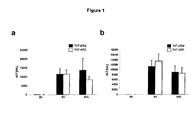
- TAT-ARC as a PTD-ARC compared to TAT- ⁇ gal protein transduction was evaluated in an in vivo model of partial hepatic ischemia reperfusion injury. At 6 and 24 hours of reperfusion, transaminases were measured in the blood as a marker of liver injury. However, no significant effect was seen between the TAT- ⁇ gal and TAT-ARC treated group ( Fig. 1a & b ).
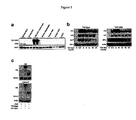
- Fig. 2a In contrast to murine heart muscle, immunoblot analysis of ARC protein expression in hepatocytes and whole liver tissue lysates of human and murine origin showed no ARC expression ( Fig. 2a ). Because of the short therapeutic time window in otherwise lethal liver failure the inventors decided to utilize a protein therapy approach based on the protein transduction domain of HIV-1 TAT. TAT-ARC and TAT- ⁇ gal fusion proteins were generated. Relevant transduction of the fusion proteins was documented in several western blots showing strong ARC and ⁇ gal expression in liver tissue lysates following intraperitoneal injection ( Fig. 2a - c ).
- Acute liver failure is characterized by a stimulus-dependent activation of Fas or TNF-receptor and mitochondrial death signaling pathways that lead to massive apoptotic and/or necrotic cell death.
- mice were injected intravenously with Fas-agonistic antibody, 2 hours following pre-treatment with intraperitoneal TAT-ARC, TAT- ⁇ gal, or PBS injection.
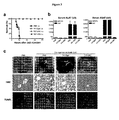
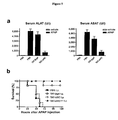
- TAT- ⁇ gal or PBS pre-treated mice died within 12 hours of acute liver failure associated with massive hepatic cellular damage as indicated by extensive increases in serum transaminase levels ( Fig. 3a & b ).
- all mice pre-treated with TAT-ARC fusion protein survived anti-Fas antibody injection with no apparent liver injury by determination of serum transaminase levels ( Fig. 3a & b ).
- all mice survived intravenous anti-Fas antibody application even when TAT-ARC fusion protein was given 1 hour after Fas-agonistic stimulation ( Fig. 3b ).
- TNF-alpha-induced hepatocyte death is implicated in a wide range of liver diseases including viral hepatitis, alcoholic hepatitis, ischemia/reperfusion liver injury, and fulminant hepatic failure.
- TNF-alpha-induced liver injury is mediated by multiple signaling events, which are yet to be fully revealed.
- the molecular basis of hepatocyte destruction in TNF-alpha-mediated hepatitis can be studied with mouse models.
- ConA-induced hepatitis is a TNF-alpha-dependent, T-cell mediated model for fulminant liver failure in humans. ConA exerts cytotoxic effects through secreted and cell-bound TNF-alpha, which activates type 1 and 2 TNF receptors. Secreted TNF-alpha also appears to be critical in the model of GaIN/LPS-induced fatal hepatitis.
- TAT-ARC protein transduction protects mice from fulminant hepatitis induced by ConA or GalN/LPS.
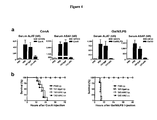
- Mice treated with TAT-ARC, TAT- ⁇ gal, or PBS were challenged 2 hours later by an intravenous injection of ConA or intraperitoneal administration of GalN/LPS. Similar to Fas-agonistic antibody treated mice TAT- ⁇ gal and PBS-treated mice showed significantly elevated serum transaminases following ConA or GalN/LPS stimulation ( Fig. 4a ).
- TAT-ARC also conferred resistance to ConA- and GalN/LPS-induced fulminant hepatitis ( Fig. 4a ). While ConA and GalN/LPS induced lethal fulminant hepatitis pretreatment and delayed administration of TAT-ARC rescued all treated animals ( Fig. 4b ).
- a mouse model of acetaminophen (APAP)-induced liver failure was used to test the effect of TAT-ARC protein transduction on liver injury and survival. 20 hours following APAP treatment TAT-ARC pretreated mice showed significantly less necrotic liver cell damage as determined by blood transaminase levels ( Fig. 5a ). As shown in Fig. 5b compared with control mice, survival of TAT-ARC treated mice was significantly enhanced in response to APAP intoxication.
- ARC protein transduction in particular of PDT-ARC, such as TAT-ARC protein transduction in multiple models of acute liver failure (Fas, ConA, GalN/LPS, APAP) shows its therapeutic efficacy for reversing human liver failure.
Landscapes
- Health & Medical Sciences (AREA)
- Life Sciences & Earth Sciences (AREA)
- Public Health (AREA)
- Chemical & Material Sciences (AREA)
- Engineering & Computer Science (AREA)
- Medicinal Chemistry (AREA)
- Veterinary Medicine (AREA)
- General Health & Medical Sciences (AREA)
- Pharmacology & Pharmacy (AREA)
- Animal Behavior & Ethology (AREA)
- Epidemiology (AREA)
- Bioinformatics & Cheminformatics (AREA)
- Gastroenterology & Hepatology (AREA)
- Immunology (AREA)
- Molecular Biology (AREA)
- Genetics & Genomics (AREA)
- Marine Sciences & Fisheries (AREA)
- Zoology (AREA)
- Biotechnology (AREA)
- Proteomics, Peptides & Aminoacids (AREA)
- Chemical Kinetics & Catalysis (AREA)
- General Chemical & Material Sciences (AREA)
- Nuclear Medicine, Radiotherapy & Molecular Imaging (AREA)
- Organic Chemistry (AREA)
- Medicines That Contain Protein Lipid Enzymes And Other Medicines (AREA)
- Peptides Or Proteins (AREA)
- Pharmaceuticals Containing Other Organic And Inorganic Compounds (AREA)
Description
- The invention relates to a polynucleotide according to
claims 1 to 3 for use in treating or preventing liver failure or acute liver failure (ALF), to a polypeptide according to claims 4 to 6 for use in treating or preventing liver failure or acute liver failure (ALF), to the use of such a polynucleotide according to claim 7 and to the in vitro use of such a polypeptide for inhibiting cell death of a liver cell, to a medicament for use according to claim 9, as well as to an in vitro method for preventing death of a liver cell according to claims 10 and 11. - Liver failure, in particular acute liver failure (ALF) is associated with massive hepatocyte cell death and high mortality rates (1, 2). Therapeutic approaches targeting hepatocyte cell death in acute liver failure are hampered by the activation of diverse stimulus-dependent signalling pathways and modes of cell death.
- Liver failure, in particular acute liver failure (ALF) is a syndrome of diverse etiology, in which patients without previously recognized liver disease sustain a liver injury that results in rapid loss of hepatic function. Depending on the etiology and severity of the insult, some patients undergo rapid hepatic regeneration and spontaneously recover. However, nearly 60 % of patients with ALF in the US require and undergo orthotopic liver transplantation or die (2).
- Common causes for acute liver failure are paracetamol (acetaminophen) overdose, α-amanitin intoxication, idiosyncratic reaction to medication (e.g. tetracycline, troglitazone), viral hepatitis, excessive alcohol intake, acute fatty liver of pregnancy, and idiopathic. Reye syndrome is acute liver failure in a child with a viral infection. Furthermore, Wilson's disease (hereditary copper accumulation) may infrequently present with acute liver failure. The apoptosis repressor with caspase recruitment domain (ARC) is a recently discovered death repressor that interferes with death receptor and mitochondrial apoptotic signalling by multiple protein-protein interactions.
- TAT-ARC, a fusion protein consisting of the HIV TAT protein and the above-mentioned ARC protein was shown to be cardioproctective in a rat model, which was a model of ischemia-reperfusion injury, simulating a myocardial infarction (3).
- The inventors initially investigated whether ARC was also able to rescue liver cells from cell death in a partial hepatic ischemia-reperfusion injury animal model (
Fig. 1 ). In contrast to the results published for the heart, no reduction of transaminases was found, which would have been indicative for a decrease of cell death in the liver. - The reasons for the different response of the heart and the liver to a decreased blood perfusion are not yet understood and might be manifold. For one, different signal transduction mechanisms might be involved in the demise of the respective cells in the heart and the liver. Also, endogenous ARC protein was shown to be expressed in the heart, whereas no ARC expression was found in liver cells (
Fig. 5 ). Furthermore, knockdown of ARC in heart muscle cells leads to spontaneous cardiomyocyte death. Therefore it seems that ARC expression levels are essential for cardiac tissue homeostasis under physiological conditions whereas they are of no relevance in liver cells. - Based on this, it comes as a surprise that the inventors have found that ARC is capable of inhibiting cell death during acute liver failure.
- In addition to the prior art documents mentioned above, the following documents are of relevance:
WO 99/55134 - In one aspect, the invention pertains to a polvnucleotide encoding "apoptosis repressor with caspase recruitment domain" (ARC) or a functional fragment thereof and a protein transduction domain (PTD) for transducing ARC into a liver cell, as well as a polypeptide comprising "apoptosis repressor with caspase recruitment domain" (ARC) or a functional fragment thereof, and a protein transduction domain (PTD) for transducing ARC into a liver cell for use in treating or preventing liver failure or acute liver failure (all
- Acute liver failure is the appearance of severe complications rapidly after the first signs of liver disease (such as jaundice), and indicates that the liver has sustained severe damage. The complications are hepatic encephalopathy and impaired protein synthesis. The 1993 classification defines hyperacute as within 1 week, acute as 8-28 days and subacute as 4 to 12 weeks (4). It reflects the fact that the pace of disease evolution strongly influences prognosis. The term "acute liver failure" as used herein refers to hyperacute, acute, and subacute stages as defined above. Accordingly, the invention refers to treating or preventing liver failure or acute liver failure within 1 to 12 weeks after the first signs of liver disease. In a preferred embodiment, the invention refers to treating or preventing liver failure or acute liver failure from 1 to 12, most preferably from 1 to 4 weeks after the first signs of liver disease.
- A polynucleotide (DNA) encoding the ARC protein (SEQ ID NO. 2) is shown as SEQ ID NO. 1. The RNA sequence corresponding to the DNA sequence denoted SEQ ID NO. 1 can be deduced from the DNA sequence by a person of skill in the art, such as from all other DNA sequences disclosed herein. Thus, the term polynucleotide can refer to both DNA and RNA. A functional ARC fragment is a fragment of the complete ARC protein according to SEQ ID NO. 1 that shows a statistically significant and reproducible decrease of the death of the liver cell during liver failure, in particular during acute liver failure.
- Several assays can be used to determine whether a fragment of the ARC protein (or of a TAT-ARC protein) is a functional fragment. For example, immunoprecipitation of the ARC fragment with proteins interacting with ARC in vitro or in vivo, such as Fas, FADD, procaspase-8, BAX, or BAD can be used. Further, following ARC expression in or transduction into a liver cell and stimulation of the Fas- (Jo2) or TNF-alpha receptors, the caspase-8 activity or cell death using TUNEL assay can be measured as an indicator whether an ARC fragment is a functional fragment. Also, it is possible to measure the inhibition of cell death in H9c2 cells using a TUNEL assay following H2O2 stimulation and expression or transduction of an ARC fragment.
- Cell Penetrating Peptides, also known as protein transduction domains (PTDs), are carriers with small peptide domains that can freely cross cell membranes. Several PTDs have been identified that allow a fused protein to efficiently cross cell membranes in a process known as protein transduction.
- Preferably, in order to ensure the entrance of the ARC protein into the liver cell, ARC is being delivered into a liver cell, both in vitro and in vivo, as a fusion protein comprising a protein transduction domain (PTD), such as, e.g., the PTD of the human immunodeficiency virus (HIV) TAT protein, comprising the sequence YGRKKRRQRRR (shown as SEQ ID NO. 15, encoded e.g. by SEQ ID NO 16) (5-9). Mutations of this sequence are known in the state of the art. Therefore, it is possible to use mutations of the sequence according to SEQ ID NO. 15 as long as the function of the PTD is not lost. Preferred are sequences in which one to three amino acids of the sequence according to SEQ ID NO. 14 have been mutated. Accordingly, mutations of the polynucleotide encoding such a PTD can also be used.
- Other possible PTDs (10-12) that can be used with the invention is the Drosophila Antennapedia PTD with the sequence SGRQIKIWFQNRRMKWKKC (SEQ ID NO. 17), or RRQRRTSKLMKR (SEQ ID NO. 18), RRRRRRRRR (SEQ ID NO. 19), YARAAARQARA (SEQ ID NO. 20), RRRRRRRR (SEQ ID NO. 21), KKKKKKKK (SEQ ID NO. 22), or KKKKKKKKK (SEQ ID NO. 23) or any of these PTDs with a similarity of at least 80 %, at least 85 %, at least 90 %, at least 95 %, at least 98 %, or at least 99 %. Other PTDs are described in (13), which is, as all documents cited herein, hereby incorporatedby reference.
- The sequence according to SEQ ID NO. 15 is the PTD of TAT. A sequence comprising this TAT PTD is e.g. shown as SEQ ID NO. 12 that represents the whole TAT protein (encoded by the polynucleotide of SEQ ID NO. 11).
- The TAT-ARC polynucleotide sequence shown as SEQ ID NO. 9, encodes for the TAT-ARC fusion protein with the KR3 ARC (SEQ ID NO. 6) of SEQ ID NO. 10.
- A polynucleotide encoding TAT protein is shown as SEQ ID NO 11. A TAT-ARC polynucleotide sequence is shown as SEQ ID NO. 9, encoding for the TAT-ARC fusion protein with the KR3 ARC (SEQ ID NO. 6). The TAT-ARC polynucleotide sequence shown as SEQ ID NO. 9 encodes for a polypeptide of SEQ ID NO. 10.
- A functional TAT-ARC fragment is a fragment of a protein comprising both TAT and ARC that shows a statistically significant and reproducible decrease of the liver cell death during liver failure, in particular during acute liver failure and is able to enter a human liver cell.
- PTD is preferably located N-terminal with respect to the ARC protein. However, it is also possible to locate the PTD C-terminally with respect to the ARC protein. Both possible forms are denoted herein as PTD-ARC.
- A person of skill in the art will appreciate that a polynucleotide sequence of the invention is preferably expressed in a suitable cell system such as bacteria or mammalian cells and the expressed protein is isolated and purified for delivery into the liver cell. The polynucleotide sequence may also be synthesized in a laboratory, i.e. outside a cellular system, e.g. using wet chemistry.
- In order to simplify the isolation of the PTD-ARC fusion protein, a tag as known in the art for isolating the protein, such as the His-tag, HA-tag, etc. can be used.
- The use of a polynucleotide comprising the PTD-ARC protein (such as the TAT-ARC protein) or a functional fragment thereof as well as the use of a PTD-ARC (such as the TAT-ARC) polypeptide or a functional fragment thereof for inhibiting the cell death of the liver cell, such as described above and herein, may comprise the provision of a liver cell, or liver tissue (in particular if performed in vitro) or of a liver and the introduction of polynucleotide including the ARC (or the PTD-ARC) protein or a functional fragment thereof for expressing ARC (or PTD-ARC) protein in the liver cell and/or the introduction of an ARC (or a PTD-ARC) polypeptide or a functional fragment thereof for inhibiting or preventing cell death of the liver cell. In case an ARC (or a PTD-ARC) polypeptide or a functional fragment thereof is introduced, it needs to be configured such that the expression of as ARC (or PTD-ARC) polypeptide or a functional fragment thereof is possible in the cell. For this reason, a promoter and/or transcription enhancing elements may be additionally provided. SEQ ID NO 9 shows a polynucleotide sequence of such a construct with a bacterial promoter, a His-tag, TAT, a HA-tag, ARC and a stop codon.
- In another aspect of the invention, the polynucleotide encoding PTD-ARC or a functional fragment thereof and/or the PTD-ARC polypeptide or a functional fragment thereof can be used for the manufacture of a medicament for use in inhibiting cell death of a liver cell, in particular during liver failure or acute liver failure. Such a medicament may comprise other substances known in the art, such as additives and/or pharmacological excipients.
- In another aspect, the invention pertains to a polynucleotide encoding PTD-ARC or a functional fragment thereof and/or PTD-ARC polypeptide or a functional fragment thereof for use in inhibiting the cell death of a liver cell, in particular during liver failure or acute liver failure.
- In a further aspect, PTD-ARC polypeptide or a functional fragment thereof can be used for inhibiting cell death of a liver cell, in particular during liver failure or acute liver failure.
- Further, a polynucleotide or a construct, such as a vector or virus known in the art, containing such a polynucleotide encoding ARC or a functional fragment thereof can be used for inhibiting cell death of a liver cell, in particular during liver failure or acute liver failure.
- Also, a PTD-ARC polypeptide or a functional fragment thereof can be used for inhibiting cell death of a liver cell, in particular during liver failure or acute liver failure.
- In another aspect, the invention refers to a medicament for use in preventing the death of a liver cell, in particular as it occurs during liver failure or acute liver failure. Such a medicament comprises a polynucleotide encoding PTD-ARC or a functional fragment thereof and/or a PTD-ARC polypeptide or a functional fragment thereof (preferably a PTD-ARC polypeptide or a functional fragment thereof) for inhibiting cell death of a liver cell. Accordingly, a polynucleotide encoding PTD-ARC or a functional fragment thereof, and/or PTD-ARC polypeptide or a functional fragment thereof can each be used for inhibiting death of a liver cell, in particular during liver failure or acute liver failure.
- The medicament may contain other substances known in the art, such as additives and/or pharmacological excipients.
- Further, the invention refers to an in vitro method for preventing the death of the liver cell, in particular as it occurs during liver failure or acute liver failure. This method comprises expressing ARC in a liver cell or introducing ARC protein into the liver cell. The protein introduction of ARC is done using a PTD-ARC fusion protein, such as TAT-ARC, as described herein. The introduction of a polynucleotide encoding ARC may be achieved through sonoporation, liposomes, viruses, viral proteins such as VP22 or Antennapedia or other protein transduction domains as known in the art.
- When applying the ARC protein or the polynucleotide encoding ARC to a subject, such as a patient, who is preferably a human, a catheter may be used that is introduced into the body of the subject. In particular, the catheter can be introduced into a blood vessel, such as the Vena portae. When a protein is administered, such as the TAT-ARC fusion protein, the protein can be applied intraperitoneally or intravenously.
- Instead of a wild type PTD-ARC polypeptide or a functional fragment thereof, modified PTD-ARC or a modified functional fragment thereof can also be used according to the invention. Possible modifications are pegylation, glycosylation, the addition of a tag etc. as known in the art, as long as the qualitative and/or quantitative function of ARC is not annihilated by the modification. The wild type polynucleotide encoding ARC or a functional fragment thereof can also be modified. The polynucleotide may be a DNA, RNA, locked nucleic acid (LNA), morpholino, or peptide nucleic acid (PNA), etc. Combinations of the before mentioned polynucleotide are also possible.
- The effect of TAT-ARC as a PTD-ARC compared to TAT-βgal protein transduction was evaluated in an in vivo model of partial hepatic ischemia reperfusion injury. At 6 and 24 hours of reperfusion, transaminases were measured in the blood as a marker of liver injury. However, no significant effect was seen between the TAT-βgal and TAT-ARC treated group (
Fig. 1a & b ). - In contrast to murine heart muscle, immunoblot analysis of ARC protein expression in hepatocytes and whole liver tissue lysates of human and murine origin showed no ARC expression (
Fig. 2a ). Because of the short therapeutic time window in otherwise lethal liver failure the inventors decided to utilize a protein therapy approach based on the protein transduction domain of HIV-1 TAT. TAT-ARC and TAT-βgal fusion proteins were generated. Relevant transduction of the fusion proteins was documented in several western blots showing strong ARC and βgal expression in liver tissue lysates following intraperitoneal injection (Fig. 2a - c ). - Acute liver failure is characterized by a stimulus-dependent activation of Fas or TNF-receptor and mitochondrial death signaling pathways that lead to massive apoptotic and/or necrotic cell death.
- To determine whether ARC protects from Fas-induced liver failure in vivo, Balb/c mice were injected intravenously with Fas-agonistic antibody, 2 hours following pre-treatment with intraperitoneal TAT-ARC, TAT-βgal, or PBS injection. In response to Fas stimulation TAT-βgal or PBS pre-treated mice died within 12 hours of acute liver failure associated with massive hepatic cellular damage as indicated by extensive increases in serum transaminase levels (
Fig. 3a & b ). In contrast, all mice pre-treated with TAT-ARC fusion protein survived anti-Fas antibody injection with no apparent liver injury by determination of serum transaminase levels (Fig. 3a & b ). Remarkably, all mice survived intravenous anti-Fas antibody application even when TAT-ARC fusion protein was given 1 hour after Fas-agonistic stimulation (Fig. 3b ). - TNF-alpha-induced hepatocyte death is implicated in a wide range of liver diseases including viral hepatitis, alcoholic hepatitis, ischemia/reperfusion liver injury, and fulminant hepatic failure. TNF-alpha-induced liver injury is mediated by multiple signaling events, which are yet to be fully revealed. The molecular basis of hepatocyte destruction in TNF-alpha-mediated hepatitis can be studied with mouse models. ConA-induced hepatitis is a TNF-alpha-dependent, T-cell mediated model for fulminant liver failure in humans. ConA exerts cytotoxic effects through secreted and cell-bound TNF-alpha, which activates
type - The inventors next examined whether TAT-ARC protein transduction protects mice from fulminant hepatitis induced by ConA or GalN/LPS. Mice treated with TAT-ARC, TAT-βgal, or PBS were challenged 2 hours later by an intravenous injection of ConA or intraperitoneal administration of GalN/LPS. Similar to Fas-agonistic antibody treated mice TAT-βgal and PBS-treated mice showed significantly elevated serum transaminases following ConA or GalN/LPS stimulation (
Fig. 4a ). In contrast, TAT-ARC also conferred resistance to ConA- and GalN/LPS-induced fulminant hepatitis (Fig. 4a ). While ConA and GalN/LPS induced lethal fulminant hepatitis pretreatment and delayed administration of TAT-ARC rescued all treated animals (Fig. 4b ). - Acetaminophen poisoning has become the most common cause of acute liver failure in the United States. Therefore, a mouse model of acetaminophen (APAP)-induced liver failure was used to test the effect of TAT-ARC protein transduction on liver injury and survival. 20 hours following APAP treatment TAT-ARC pretreated mice showed significantly less necrotic liver cell damage as determined by blood transaminase levels (
Fig. 5a ). As shown inFig. 5b compared with control mice, survival of TAT-ARC treated mice was significantly enhanced in response to APAP intoxication. - Thus, the efficacy of ARC protein transduction, in particular of PDT-ARC, such as TAT-ARC protein transduction in multiple models of acute liver failure (Fas, ConA, GalN/LPS, APAP) shows its therapeutic efficacy for reversing human liver failure.
-
- 1. Malhi H, Gores GJ, Lemasters JJ. Apoptosis and necrosis in the liver: a tale of two deaths? Hepatology 2006; 43: 31-44.
- 2. Stravitz RT, Kramer DJ; Medscape. Management of acute liver failure. Nat Rev Gastroenterol Hepatol. 2009; 6(9): 542-553.
- 3. Gustafsson AB, Sayen MR, Williams SD, Crow MT, Gottlieb RA. TAT protein transduction into isolated perfused hearts: TAT-apoptosis repressor with caspase recruitment domain is cardioprotective. Circulation. 2002, 6; 106(6): 735-739.
- 4. O'Grady JG, Schalm SW, Williams R (1993). "Acute liver failure: redefining the syndromes". Lancet 342 (8866): 273-275.
- 5. Nagahara H, et al.Transduction of full-length TAT fusion proteins into mammalian cells: TAT-p27Kip1 induces cell migration. Nat Med. 1998;4(12):1449-52.
- 6. Becker-Hapak M & Dowdy SF. Protein transduction: generation of full-length transducible proteins using the TAT system. Curr Protoc Cell Biol. 2003 May;Chapter 20:Unit 20.2.
- 7. Ho A, et al. Synthetic protein transduction domains: enhanced transduction potential in vitro and in vivo. Cancer Res. 2001 ;61 (2):474-7.
- 8. Schwarze SR, et al. In vivo protein transduction: delivery of a biologically active protein into the mouse. Science. 1999;285(5433):1569-72.
- 9. Rapoport M, et al. TAT-based drug delivery system--new directions in protein delivery for new h opes? Expert Opin Drug Deliv. 2009;6(5):453-63.
- 10. Sandra Console, et al Antennapedia and HIV Transactivator of Transcription (TAT) "Protein Transduction Domains" Promote Endocytosis of High Molecular Weight Cargo upon Binding to Cell Surface Glycosaminoglycans. THE JOURNAL OF BIOLOGICAL CHEMISTRY, 2003; 278:35109-35114.
- 11. Hirofumi Noguchi, et al. PDX-1 Protein Containing Its Own Antennapedia-Like Protein Transduction Domain Can Transduce Pancreatic Duct and Islet Cells. DIABETES. 2003;52:1732-1737.
- 12. M.Cristina Cardoso & Heinrich Leonhardt. Protein transduction: A novel tool for tissue regeneration. Biol Chem. 2002;383:1593-1599.
- 13. Said Hassane et al. Cell penetrating peptides:overview and applications to the delivery of oligonucleotides, Cell Mol Life Sci. 2010; 67(5): 715-26. Review.
-
-
Figure 1 :
TAT-ARC and TAT-βgal treated mice underwent a procedure of partial hepatic ischemia lasting for 60 minutes, which was followed by reperfusion. Serum AST (a) and ALT (b) levels were measured at the indicated time points before the procedure and after reperfusion as markers for liver injury. Values are mean ± SD for independent animals (n = 7-8). -
Figure 2 :
Endogenous and ectopic ARC expression following PTD-ARC protein transduction with TAT-ARC. (a) Western analysis of endogenous ARC protein expression in various hepatic cells and tissues. Protein lysates from selected cells/tissues were processed for Western blot analysis and probed with a polyclonal antibody to ARC. Lysate from heart muscle and TAT-ARC protein transduced to murine liver was used as positive control. (b) Time course of TAT-βgal and TAT-ARC protein expression detected by immunoblot following intraperitoneal protein transduction. Membranes were probed with antibodies as indicated. (c) Western blot of subcellular fractions showing TAT-ARC protein transduction to mitochondria (HM) and cytosol. -
Figure 3 :
TAT-ARC prevents liver failure induced by Fas-agonistic antibody. (a) Serum levels of ALAT and ASAT 6 hours after Fas agonist treatment (n=5-7 per group, data are mean ± SEM). (b) TAT-ARC prevents Fas-agonistic antibody (Jo2, 0.5 mg/kg i.v.) induced liver failure (n=6-8 per group). TAT-ARC i.v. (20 mg/kg) was given 1 hour after Jo2 injection. (c) Liver appearance, H&E staining, and TUNEL assay 6 hours following Jo2 treatment. TAT-ARC mediated inhibition and prevention of liver cell death in otherwise necrotic livers is visualized in photographs, hematoxylin eosin stains, and TUNEL-stained immunofluorescent liver sections following Fas (Jo2) stimulation. -
Figure 4 :
TAT-ARC protein transduction protects from TNF-alpha-mediated liver failure induced by ConA and GalN/LPS. (a) Serum levels of ALAT andASAT 12 hours after ConA and 6 hours after GalN/LPS treatment (n=5-7 per group, data are mean ± SEM). (b) TAT-ARC prevents ConA (30 mg/kg i.v.) induced liver failure (n=6-8 per group). TAT-ARC i.v. (20 mg/kg) was given 2 hours after ConA injection. TAT-ARC prevents GalN/LPS (700 mg/kg / 35 µg/kg i.p.) induced liver failure (n=5 per group). TAT-ARC i.v. (20 mg/kg) was given 15 minutes after GalN/LPS injection. -
Figure 5 :
TAT-ARC prevents APAP-induced liver failure. (a) Serum levels of ALAT and ASAT 20 hours after APAP (300 mg/kg i.p.) treatment (n=5-6 per group, data are mean ± SEM). (b) TAT-proteins and vehicle were given 1 hour before APAP (500 mg/kg i.p.) and then every 12 hours for 3 days. TAT-ARC +1 i.p. was given 1 hour after APAP injection (n=2) and then every 12 hours for 3 days. -
- SEQ ID NO. 1: ARC polynucleotide (DNA) sequence (CDS, coding)
- SEQ ID NO. 2: ARC polypeptide (protein) sequence (1-208)
- SEQ ID NO. 3: ARC 149D polynucleotide (DNA) sequence (pseudophsophorylated ARC; Zhang & Herman, Journal of Cellular Biochemistry 2006) polynucleotide (DNA) sequence (CDS, coding)
- SEQ ID NO. 4: ARC 149D polypeptide (protein) sequence (1-208)
- SEQ ID NO. 5: KR3 ARC polynucleotide (DNA) sequence (proteasomal degradation resistant ARC; Nam et al., JBC 2007)
polynucleotide (DNA) sequence (CDS, coding) - SEQ ID NO. 6: KR3 ARC polypeptide (protein) sequence (1-208)
- SEQ ID NO. 7: KR3 ARC 149D polynucleotide (DNA) sequence (pseudophosphorylated, non degradable ARC), polynucleotide (DNA) sequence (CDS, coding)
- SEQ ID NO. 8: KR3 ARC 149D polypeptide (protein) sequence (1-208)
- SEQ ID NO. 9: TAT-ARC polynucleotide (DNA) sequence: comprises a bacterial promoter, a His-tag, TAT, HA-tag, ARC, and stop codon
- SEQ ID NO. 10: TAT-ARC polypeptide (protein) sequence: SEQ ID NO. 11: HIV TAT polynucleotide sequence:
- SEQ ID NO. 12: HIV TAT polypeptide (protein) sequence
- SEQ ID NO. 13: TAT-ARC polynucleotide sequence
- SEQ ID NO. 14: TAT-ARC polypeptide (protein) sequence
- SEQ ID NO. 15: TAT protein transduction domain amino acid sequence (11 aa)
- SEQ ID NO. 16: TAT protein transduction domain nucleotide sequence (as we used it, 33 nucleotides)
- SEQ ID NO. 17: Antennapedia PTD
- SEQ ID NO. 18 - 23: PTD
-
- <110> Max-Delbr\237ck-Centrum (MDC) f\237r molekulare Medizin Berlin-Buch
- <120> Use of ARC for Inhibiting Cell Death During Liver Failure
- <130> MDC003WO
- <150>
EP09011758
<151> 2009-09-15 - <160> 22
- <170> PatentIn version 3.5
- <210> 1
<211> 627
<212> DNA
<213> Homo sapiens - <400> 1

- <210> 2
<211> 208
<212> PRT
<213> Homo sapiens - <400> 2


- <210> 3
<211> 627
<212> DNA
<213> Homo sapiens - <400> 3


- <210> 4
<211> 627
<212> DNA
<213> artificial - <220>
<223> mutated ARC - <400> 4

- <210> 5
<211> 208
<212> PRT
<213> artificial - <220>
<223> mutated ARC - <400> 5


- <210> 6
<211> 627
<212> DNA
<213> artificial - <220>
<223> mutated ARC - <400> 6

- <210> 7
<211> 208
<212> PRT
<213> artificial - <220>
<223> mutated ARC - <400> 7

- <210> 8
<211> 984
<212> DNA
<213> artificial - <220>
<223> expression construct for ARC - <400> 8

- <210> 9
<211> 282
<212> PRT
<213> Homo sapiens - <400> 9


- <210> 10
<211> 177
<212> DNA
<213> human immunodificiency virus - <400> 10

- <210> 11
<211> 59
<212> PRT
<213> human immunodeficiency virus - <400> 11

- <210> 12
<211> 804
<212> DNA
<213> artificial - <220>
<223> fusion construct - <400> 12

- <210> 13
<211> 267
<212> PRT
<213> artificial - <220>
<223> fusion protein - <400> 13


- <210> 14
<211> 11
<212> PRT
<213> Homo sapiens - <400> 14

- <210> 15
<211> 33
<212> DNA
<213> Homo sapiens - <400> 15
tacggccgca agaaacgccg ccagcgccgc cgc 33 - <210> 16
<211> 19
<212> PRT
<213> Drosophila - <400> 16

- <210> 17
<211> 12
<212> PRT
<213> unknown - <220>
<223> PTD - <400> 17

- <210> 18
<211> 9
<212> PRT
<213> unknown - <220>
<223> PTD - <400> 18

- <210> 19
<211> 11
<212> PRT
<213> unknown - <220>
<223> PTD - <400> 19

- <210> 20
<211> 8
<212> PRT
<213> unknown - <220>
<223> PTD - <400> 20

- <210> 21
<211> 8
<212> PRT
<213> unknown - <220>
<223> PTD - <400> 21

- <210> 22
<211> 9
<212> PRT
<213> unknown - <220>
<223> PTD - <400> 22

Claims (11)
- A polynucleotide encoding
"apoptosis repressor with caspase recruitment domain" (ARC) or a functional fragment thereof and a protein transduction domain (PTD) for transducing ARC into a liver cell
for use in treating or preventing liver failure or acute liver failure (ALF). - The polynucleotide for use according to claim 1, wherein the protein transduction domain is chosen from the group consisting of polynucleotides encoding for peptides comprising a peptide sequence according to SEQ ID NO. 15 to 23 and peptides comprising a peptide sequence that is at least 80 % similar to a sequence according to SEQ ID NO. 15 to 23, in particular encoding for- the human immunodeficiency virus (HIV) TAT protein transduction domain or a functional fragment thereof, and- the Antennapedia protein transduction domain or a functional fragment thereof.
- The polynucleotide for use according to claims 1 to 2, wherein
ARC consists of or comprises a sequence according to- SEQ ID NO. 1,- ARC 149D (pseudo-phosphorylated ARC, SEQ ID NO. 3),- KR3 ARC (SEQ ID NO. 5), or- KR3 ARC 149D (SEQ ID NO. 7),or a sequence with a similarity of at least 70 % thereto. - A polypeptide comprising
"apoptosis repressor with caspase recruitment domain" (ARC) or a functional fragment thereof, and a protein transduction domain (PTD) for transducing ARC into a liver cell
for use in treating or preventing liver failure or acute liver failure (ALF). - The polypeptide for use according to claim 4, wherein the protein transduction domain is chosen from the group consisting of peptides comprising a peptide sequence according to SEQ ID NO. 15 to 23 and peptides comprising a peptide sequence that is at least 80 % similar to a sequence according to SEQ ID NO. 15 to 23.
- The polypeptide for use according to claims 4 or 5, wherein
ARC consists of or comprises a sequence according to- SEQ ID NO. 2,- ARC 149D (pseudo-phosphorylated ARC, SEQ ID NO. 4),- KR3 ARC (SEQ ID NO. 6), or- KR3 ARC 149D (SEQ ID NO. 8)or a sequence with a similarity of least 70 % thereto. - In vitro use of a polynucleotide or a functional fragment thereof according to claims 1 to 3 for inhibiting cell death of a liver cell.
- In vitro use of a polypeptide or a functional fragment thereof according to claims 4 to 6 for inhibiting cell death of a liver cell.
- A medicament for use in treating or preventing liver failure or acute liver failure (ALF), comprising- a polynucleotide or a functional fragment thereof according to claims 1 to 3, and/or- a polypeptide or a functional fragment thereof according to claims 4 to 6.
- An in vitro method for preventing death of a liver cell, comprising the step of introducing a polynucleotide according to claims 1 to 3 or a polypeptide according to claims 4 to 6 into a liver cell.
- The method of claim 10, wherein the introduction comprises- introducing a polynucleotide encoding ARC or a functional fragment thereof into a cell for expressing an ARC polypeptide or a functional fragment thereof in the cell, and/or- introducing an ARC polypeptide or a functional fragment thereof into the cell.
Priority Applications (1)
| Application Number | Priority Date | Filing Date | Title |
|---|---|---|---|
| EP10754326.6A EP2477646B1 (en) | 2009-09-15 | 2010-09-15 | Fusion proteins for use in the prevention or treatment of liver failure |
Applications Claiming Priority (3)
| Application Number | Priority Date | Filing Date | Title |
|---|---|---|---|
| EP09011758A EP2295072A1 (en) | 2009-09-15 | 2009-09-15 | Use of ARC for inhibiting cell death during liver failure |
| EP10754326.6A EP2477646B1 (en) | 2009-09-15 | 2010-09-15 | Fusion proteins for use in the prevention or treatment of liver failure |
| PCT/EP2010/063540 WO2011032981A1 (en) | 2009-09-15 | 2010-09-15 | Use of arc for inhibiting cell death during liver failure |
Publications (2)
| Publication Number | Publication Date |
|---|---|
| EP2477646A1 EP2477646A1 (en) | 2012-07-25 |
| EP2477646B1 true EP2477646B1 (en) | 2014-04-16 |
Family
ID=42174150
Family Applications (2)
| Application Number | Title | Priority Date | Filing Date |
|---|---|---|---|
| EP09011758A Withdrawn EP2295072A1 (en) | 2009-09-15 | 2009-09-15 | Use of ARC for inhibiting cell death during liver failure |
| EP10754326.6A Not-in-force EP2477646B1 (en) | 2009-09-15 | 2010-09-15 | Fusion proteins for use in the prevention or treatment of liver failure |
Family Applications Before (1)
| Application Number | Title | Priority Date | Filing Date |
|---|---|---|---|
| EP09011758A Withdrawn EP2295072A1 (en) | 2009-09-15 | 2009-09-15 | Use of ARC for inhibiting cell death during liver failure |
Country Status (3)
| Country | Link |
|---|---|
| US (1) | US9474781B2 (en) |
| EP (2) | EP2295072A1 (en) |
| WO (1) | WO2011032981A1 (en) |
Families Citing this family (7)
| Publication number | Priority date | Publication date | Assignee | Title |
|---|---|---|---|---|
| EP2508607A1 (en) * | 2011-04-07 | 2012-10-10 | Helmholtz-Zentrum für Infektionsforschung GmbH | Medicament for liver regeneration and for treatment of liver failure |
| US10981961B2 (en) | 2013-03-11 | 2021-04-20 | University Of Florida Research Foundation, Incorporated | Delivery of card protein as therapy for occular inflammation |
| US11053291B2 (en) | 2014-02-19 | 2021-07-06 | University Of Florida Research Foundation, Incorporated | Delivery of Nrf2 as therapy for protection against reactive oxygen species |
| EP4050020A1 (en) | 2014-03-11 | 2022-08-31 | University of Florida Research Foundation, Inc. | Aav-expressed m013 protein as an anti-inflammatroy therapeutic for use in a method of treating inflammatory ocular disease |
| BR112022000898A2 (en) * | 2019-07-19 | 2022-06-07 | Univ Florida | Cardiac aav gene therapy for cardiomyopathy in humans |
| CN116867512A (en) | 2020-12-23 | 2023-10-10 | 佛罗里达州大学研究基金会 | Vectors for cardiac gene therapy with improved packaging efficiency |
| WO2024095178A1 (en) | 2022-11-01 | 2024-05-10 | Janssen Pharmaceutica Nv | Thrombopoietin mimetic for use in the treatment of acute liver failure |
Family Cites Families (1)
| Publication number | Priority date | Publication date | Assignee | Title |
|---|---|---|---|---|
| US6348573B1 (en) | 1998-04-27 | 2002-02-19 | The Regents Of The University Of Michigan | Compositions and methods for identifying apoptosis signaling pathway inhibitors and activators |
-
2009
- 2009-09-15 EP EP09011758A patent/EP2295072A1/en not_active Withdrawn
-
2010
- 2010-09-15 US US13/496,200 patent/US9474781B2/en not_active Expired - Fee Related
- 2010-09-15 WO PCT/EP2010/063540 patent/WO2011032981A1/en not_active Ceased
- 2010-09-15 EP EP10754326.6A patent/EP2477646B1/en not_active Not-in-force
Also Published As
| Publication number | Publication date |
|---|---|
| US9474781B2 (en) | 2016-10-25 |
| WO2011032981A1 (en) | 2011-03-24 |
| US20130012455A1 (en) | 2013-01-10 |
| EP2295072A1 (en) | 2011-03-16 |
| EP2477646A1 (en) | 2012-07-25 |
Similar Documents
| Publication | Publication Date | Title |
|---|---|---|
| US9474781B2 (en) | Method for inhibiting cell death during liver failure by administering a caspase recruitment domain | |
| Lu et al. | Targeting WWP1 ameliorates cardiac ischemic injury by suppressing KLF15-ubiquitination mediated myocardial inflammation | |
| EP2985031B1 (en) | Use of cell-permeable peptide inhibitors of the jnk signal transduction pathway for the treatment of various diseases | |
| ES2847293T3 (en) | Treatment regimens for the treatment of neurological diseases | |
| JP6204828B2 (en) | Apoptosis inhibitor and use thereof | |
| US20170119853A1 (en) | Cardio-Metabolic and Vascular Effects of GLP-1 Metabolites | |
| PT2060265E (en) | Cell-permeable peptide inhibitors of the jnk signal transduction pathway | |
| JP2020518261A (en) | C-terminal CDNF fragment and C-terminal MANF fragment, pharmaceutical compositions containing them, and uses thereof | |
| US20090149412A1 (en) | Method for Inhibition of Phospholamban Activity for the Treatment of Cardiac Disease and Heart Failure | |
| US11052136B2 (en) | Prevention and/or treatment of ischemia or ischemia/reperfusion injury | |
| CN111542334B (en) | Pharmaceutical compositions for preventing or treating cardiac arrhythmias | |
| CN102395377B (en) | Peptides that Enhance Muscle Function | |
| AU2005294453A1 (en) | Methods of inhibiting cell death or inflammation in a mammal | |
| US7094756B2 (en) | Abin-mediated hepatitis protection | |
| RU2778806C2 (en) | Pharmaceutical composition for prevention or treatment of cardiac arrhythmia | |
| JP2006524712A (en) | Methods and compositions for inhibition of cathepsins | |
| CN119654336A (en) | Compositions and methods for treating heart disease | |
| Pedriali | The role of c subunit of F1FO-ATP synthase in mitochondrial permeability transition pore activity for the treatment of reperfusion injury after myocardial infarction | |
| WO2006075172A2 (en) | Methods for identifying compounds capable of modulating cftr/ck2 interaction and/or cftr phosphorylation by ck2 | |
| Zahid | Targeting the heart using in vivo phage display | |
| JP2007314465A (en) | Diabetic medicine | |
| HK1191025A (en) | Inhibitors of apoptosis and uses thereof | |
| HK1174839B (en) | Use of cell-permeable peptide inhibitors of the jnk signal transduction pathway for the treatment of various diseases |
Legal Events
| Date | Code | Title | Description |
|---|---|---|---|
| PUAI | Public reference made under article 153(3) epc to a published international application that has entered the european phase |
Free format text: ORIGINAL CODE: 0009012 |
|
| 17P | Request for examination filed |
Effective date: 20120403 |
|
| AK | Designated contracting states |
Kind code of ref document: A1 Designated state(s): AL AT BE BG CH CY CZ DE DK EE ES FI FR GB GR HR HU IE IS IT LI LT LU LV MC MK MT NL NO PL PT RO SE SI SK SM TR |
|
| DAX | Request for extension of the european patent (deleted) | ||
| 17Q | First examination report despatched |
Effective date: 20130228 |
|
| GRAP | Despatch of communication of intention to grant a patent |
Free format text: ORIGINAL CODE: EPIDOSNIGR1 |
|
| INTG | Intention to grant announced |
Effective date: 20131108 |
|
| GRAS | Grant fee paid |
Free format text: ORIGINAL CODE: EPIDOSNIGR3 |
|
| GRAA | (expected) grant |
Free format text: ORIGINAL CODE: 0009210 |
|
| AK | Designated contracting states |
Kind code of ref document: B1 Designated state(s): AL AT BE BG CH CY CZ DE DK EE ES FI FR GB GR HR HU IE IS IT LI LT LU LV MC MK MT NL NO PL PT RO SE SI SK SM TR |
|
| REG | Reference to a national code |
Ref country code: GB Ref legal event code: FG4D |
|
| REG | Reference to a national code |
Ref country code: CH Ref legal event code: EP |
|
| REG | Reference to a national code |
Ref country code: AT Ref legal event code: REF Ref document number: 662101 Country of ref document: AT Kind code of ref document: T Effective date: 20140515 |
|
| REG | Reference to a national code |
Ref country code: IE Ref legal event code: FG4D |
|
| REG | Reference to a national code |
Ref country code: DE Ref legal event code: R096 Ref document number: 602010015208 Country of ref document: DE Effective date: 20140528 |
|
| REG | Reference to a national code |
Ref country code: CH Ref legal event code: NV Representative=s name: BRAUNPAT BRAUN EDER AG, CH |
|
| REG | Reference to a national code |
Ref country code: AT Ref legal event code: MK05 Ref document number: 662101 Country of ref document: AT Kind code of ref document: T Effective date: 20140416 |
|
| REG | Reference to a national code |
Ref country code: NL Ref legal event code: VDEP Effective date: 20140416 |
|
| REG | Reference to a national code |
Ref country code: LT Ref legal event code: MG4D |
|
| PG25 | Lapsed in a contracting state [announced via postgrant information from national office to epo] |
Ref country code: LT Free format text: LAPSE BECAUSE OF FAILURE TO SUBMIT A TRANSLATION OF THE DESCRIPTION OR TO PAY THE FEE WITHIN THE PRESCRIBED TIME-LIMIT Effective date: 20140416 Ref country code: FI Free format text: LAPSE BECAUSE OF FAILURE TO SUBMIT A TRANSLATION OF THE DESCRIPTION OR TO PAY THE FEE WITHIN THE PRESCRIBED TIME-LIMIT Effective date: 20140416 Ref country code: NO Free format text: LAPSE BECAUSE OF FAILURE TO SUBMIT A TRANSLATION OF THE DESCRIPTION OR TO PAY THE FEE WITHIN THE PRESCRIBED TIME-LIMIT Effective date: 20140716 Ref country code: BG Free format text: LAPSE BECAUSE OF FAILURE TO SUBMIT A TRANSLATION OF THE DESCRIPTION OR TO PAY THE FEE WITHIN THE PRESCRIBED TIME-LIMIT Effective date: 20140716 Ref country code: GR Free format text: LAPSE BECAUSE OF FAILURE TO SUBMIT A TRANSLATION OF THE DESCRIPTION OR TO PAY THE FEE WITHIN THE PRESCRIBED TIME-LIMIT Effective date: 20140717 Ref country code: NL Free format text: LAPSE BECAUSE OF FAILURE TO SUBMIT A TRANSLATION OF THE DESCRIPTION OR TO PAY THE FEE WITHIN THE PRESCRIBED TIME-LIMIT Effective date: 20140416 Ref country code: CY Free format text: LAPSE BECAUSE OF FAILURE TO SUBMIT A TRANSLATION OF THE DESCRIPTION OR TO PAY THE FEE WITHIN THE PRESCRIBED TIME-LIMIT Effective date: 20140416 Ref country code: IS Free format text: LAPSE BECAUSE OF FAILURE TO SUBMIT A TRANSLATION OF THE DESCRIPTION OR TO PAY THE FEE WITHIN THE PRESCRIBED TIME-LIMIT Effective date: 20140816 |
|
| PG25 | Lapsed in a contracting state [announced via postgrant information from national office to epo] |
Ref country code: ES Free format text: LAPSE BECAUSE OF FAILURE TO SUBMIT A TRANSLATION OF THE DESCRIPTION OR TO PAY THE FEE WITHIN THE PRESCRIBED TIME-LIMIT Effective date: 20140416 Ref country code: AT Free format text: LAPSE BECAUSE OF FAILURE TO SUBMIT A TRANSLATION OF THE DESCRIPTION OR TO PAY THE FEE WITHIN THE PRESCRIBED TIME-LIMIT Effective date: 20140416 Ref country code: SE Free format text: LAPSE BECAUSE OF FAILURE TO SUBMIT A TRANSLATION OF THE DESCRIPTION OR TO PAY THE FEE WITHIN THE PRESCRIBED TIME-LIMIT Effective date: 20140416 Ref country code: PL Free format text: LAPSE BECAUSE OF FAILURE TO SUBMIT A TRANSLATION OF THE DESCRIPTION OR TO PAY THE FEE WITHIN THE PRESCRIBED TIME-LIMIT Effective date: 20140416 Ref country code: LV Free format text: LAPSE BECAUSE OF FAILURE TO SUBMIT A TRANSLATION OF THE DESCRIPTION OR TO PAY THE FEE WITHIN THE PRESCRIBED TIME-LIMIT Effective date: 20140416 Ref country code: HR Free format text: LAPSE BECAUSE OF FAILURE TO SUBMIT A TRANSLATION OF THE DESCRIPTION OR TO PAY THE FEE WITHIN THE PRESCRIBED TIME-LIMIT Effective date: 20140416 |
|
| PG25 | Lapsed in a contracting state [announced via postgrant information from national office to epo] |
Ref country code: PT Free format text: LAPSE BECAUSE OF FAILURE TO SUBMIT A TRANSLATION OF THE DESCRIPTION OR TO PAY THE FEE WITHIN THE PRESCRIBED TIME-LIMIT Effective date: 20140818 |
|
| REG | Reference to a national code |
Ref country code: DE Ref legal event code: R097 Ref document number: 602010015208 Country of ref document: DE |
|
| PG25 | Lapsed in a contracting state [announced via postgrant information from national office to epo] |
Ref country code: SK Free format text: LAPSE BECAUSE OF FAILURE TO SUBMIT A TRANSLATION OF THE DESCRIPTION OR TO PAY THE FEE WITHIN THE PRESCRIBED TIME-LIMIT Effective date: 20140416 Ref country code: DK Free format text: LAPSE BECAUSE OF FAILURE TO SUBMIT A TRANSLATION OF THE DESCRIPTION OR TO PAY THE FEE WITHIN THE PRESCRIBED TIME-LIMIT Effective date: 20140416 Ref country code: RO Free format text: LAPSE BECAUSE OF FAILURE TO SUBMIT A TRANSLATION OF THE DESCRIPTION OR TO PAY THE FEE WITHIN THE PRESCRIBED TIME-LIMIT Effective date: 20140416 Ref country code: EE Free format text: LAPSE BECAUSE OF FAILURE TO SUBMIT A TRANSLATION OF THE DESCRIPTION OR TO PAY THE FEE WITHIN THE PRESCRIBED TIME-LIMIT Effective date: 20140416 Ref country code: BE Free format text: LAPSE BECAUSE OF FAILURE TO SUBMIT A TRANSLATION OF THE DESCRIPTION OR TO PAY THE FEE WITHIN THE PRESCRIBED TIME-LIMIT Effective date: 20140416 Ref country code: CZ Free format text: LAPSE BECAUSE OF FAILURE TO SUBMIT A TRANSLATION OF THE DESCRIPTION OR TO PAY THE FEE WITHIN THE PRESCRIBED TIME-LIMIT Effective date: 20140416 |
|
| PLBE | No opposition filed within time limit |
Free format text: ORIGINAL CODE: 0009261 |
|
| STAA | Information on the status of an ep patent application or granted ep patent |
Free format text: STATUS: NO OPPOSITION FILED WITHIN TIME LIMIT |
|
| 26N | No opposition filed |
Effective date: 20150119 |
|
| PG25 | Lapsed in a contracting state [announced via postgrant information from national office to epo] |
Ref country code: IT Free format text: LAPSE BECAUSE OF FAILURE TO SUBMIT A TRANSLATION OF THE DESCRIPTION OR TO PAY THE FEE WITHIN THE PRESCRIBED TIME-LIMIT Effective date: 20140416 |
|
| PG25 | Lapsed in a contracting state [announced via postgrant information from national office to epo] |
Ref country code: MC Free format text: LAPSE BECAUSE OF FAILURE TO SUBMIT A TRANSLATION OF THE DESCRIPTION OR TO PAY THE FEE WITHIN THE PRESCRIBED TIME-LIMIT Effective date: 20140416 Ref country code: LU Free format text: LAPSE BECAUSE OF FAILURE TO SUBMIT A TRANSLATION OF THE DESCRIPTION OR TO PAY THE FEE WITHIN THE PRESCRIBED TIME-LIMIT Effective date: 20140915 |
|
| REG | Reference to a national code |
Ref country code: DE Ref legal event code: R097 Ref document number: 602010015208 Country of ref document: DE Effective date: 20150119 |
|
| REG | Reference to a national code |
Ref country code: IE Ref legal event code: MM4A |
|
| PG25 | Lapsed in a contracting state [announced via postgrant information from national office to epo] |
Ref country code: SI Free format text: LAPSE BECAUSE OF FAILURE TO SUBMIT A TRANSLATION OF THE DESCRIPTION OR TO PAY THE FEE WITHIN THE PRESCRIBED TIME-LIMIT Effective date: 20140416 |
|
| PG25 | Lapsed in a contracting state [announced via postgrant information from national office to epo] |
Ref country code: IE Free format text: LAPSE BECAUSE OF NON-PAYMENT OF DUE FEES Effective date: 20140915 |
|
| REG | Reference to a national code |
Ref country code: FR Ref legal event code: PLFP Year of fee payment: 6 |
|
| PG25 | Lapsed in a contracting state [announced via postgrant information from national office to epo] |
Ref country code: SM Free format text: LAPSE BECAUSE OF FAILURE TO SUBMIT A TRANSLATION OF THE DESCRIPTION OR TO PAY THE FEE WITHIN THE PRESCRIBED TIME-LIMIT Effective date: 20140416 |
|
| PG25 | Lapsed in a contracting state [announced via postgrant information from national office to epo] |
Ref country code: MT Free format text: LAPSE BECAUSE OF FAILURE TO SUBMIT A TRANSLATION OF THE DESCRIPTION OR TO PAY THE FEE WITHIN THE PRESCRIBED TIME-LIMIT Effective date: 20140416 |
|
| PG25 | Lapsed in a contracting state [announced via postgrant information from national office to epo] |
Ref country code: TR Free format text: LAPSE BECAUSE OF FAILURE TO SUBMIT A TRANSLATION OF THE DESCRIPTION OR TO PAY THE FEE WITHIN THE PRESCRIBED TIME-LIMIT Effective date: 20140416 Ref country code: HU Free format text: LAPSE BECAUSE OF FAILURE TO SUBMIT A TRANSLATION OF THE DESCRIPTION OR TO PAY THE FEE WITHIN THE PRESCRIBED TIME-LIMIT; INVALID AB INITIO Effective date: 20100915 |
|
| REG | Reference to a national code |
Ref country code: FR Ref legal event code: PLFP Year of fee payment: 7 |
|
| REG | Reference to a national code |
Ref country code: FR Ref legal event code: PLFP Year of fee payment: 8 |
|
| PGFP | Annual fee paid to national office [announced via postgrant information from national office to epo] |
Ref country code: FR Payment date: 20170925 Year of fee payment: 8 Ref country code: GB Payment date: 20170925 Year of fee payment: 8 Ref country code: DE Payment date: 20170927 Year of fee payment: 8 Ref country code: CH Payment date: 20170925 Year of fee payment: 8 |
|
| REG | Reference to a national code |
Ref country code: CH Ref legal event code: PCAR Free format text: NEW ADDRESS: HOLEESTRASSE 87, 4054 BASEL (CH) |
|
| PG25 | Lapsed in a contracting state [announced via postgrant information from national office to epo] |
Ref country code: MK Free format text: LAPSE BECAUSE OF FAILURE TO SUBMIT A TRANSLATION OF THE DESCRIPTION OR TO PAY THE FEE WITHIN THE PRESCRIBED TIME-LIMIT Effective date: 20140416 |
|
| PG25 | Lapsed in a contracting state [announced via postgrant information from national office to epo] |
Ref country code: AL Free format text: LAPSE BECAUSE OF FAILURE TO SUBMIT A TRANSLATION OF THE DESCRIPTION OR TO PAY THE FEE WITHIN THE PRESCRIBED TIME-LIMIT Effective date: 20140416 |
|
| REG | Reference to a national code |
Ref country code: DE Ref legal event code: R119 Ref document number: 602010015208 Country of ref document: DE |
|
| REG | Reference to a national code |
Ref country code: CH Ref legal event code: PL |
|
| GBPC | Gb: european patent ceased through non-payment of renewal fee |
Effective date: 20180915 |
|
| PG25 | Lapsed in a contracting state [announced via postgrant information from national office to epo] |
Ref country code: DE Free format text: LAPSE BECAUSE OF NON-PAYMENT OF DUE FEES Effective date: 20190402 |
|
| PG25 | Lapsed in a contracting state [announced via postgrant information from national office to epo] |
Ref country code: CH Free format text: LAPSE BECAUSE OF NON-PAYMENT OF DUE FEES Effective date: 20180930 Ref country code: LI Free format text: LAPSE BECAUSE OF NON-PAYMENT OF DUE FEES Effective date: 20180930 Ref country code: FR Free format text: LAPSE BECAUSE OF NON-PAYMENT OF DUE FEES Effective date: 20180930 |
|
| PG25 | Lapsed in a contracting state [announced via postgrant information from national office to epo] |
Ref country code: GB Free format text: LAPSE BECAUSE OF NON-PAYMENT OF DUE FEES Effective date: 20180915 |