EP2477372A1 - Method, device and terminal for obtaining terminal identifier - Google Patents
Method, device and terminal for obtaining terminal identifier Download PDFInfo
- Publication number
- EP2477372A1 EP2477372A1 EP10816682A EP10816682A EP2477372A1 EP 2477372 A1 EP2477372 A1 EP 2477372A1 EP 10816682 A EP10816682 A EP 10816682A EP 10816682 A EP10816682 A EP 10816682A EP 2477372 A1 EP2477372 A1 EP 2477372A1
- Authority
- EP
- European Patent Office
- Prior art keywords
- terminal
- aid
- communication system
- user identity
- identity identifier
- Prior art date
- Legal status (The legal status is an assumption and is not a legal conclusion. Google has not performed a legal analysis and makes no representation as to the accuracy of the status listed.)
- Granted
Links
Images




Classifications
-
- H—ELECTRICITY
- H04—ELECTRIC COMMUNICATION TECHNIQUE
- H04L—TRANSMISSION OF DIGITAL INFORMATION, e.g. TELEGRAPHIC COMMUNICATION
- H04L61/00—Network arrangements, protocols or services for addressing or naming
- H04L61/09—Mapping addresses
- H04L61/10—Mapping addresses of different types
- H04L61/103—Mapping addresses of different types across network layers, e.g. resolution of network layer into physical layer addresses or address resolution protocol [ARP]
-
- H—ELECTRICITY
- H04—ELECTRIC COMMUNICATION TECHNIQUE
- H04L—TRANSMISSION OF DIGITAL INFORMATION, e.g. TELEGRAPHIC COMMUNICATION
- H04L61/00—Network arrangements, protocols or services for addressing or naming
- H04L61/50—Address allocation
- H04L61/5084—Providing for device mobility
-
- H—ELECTRICITY
- H04—ELECTRIC COMMUNICATION TECHNIQUE
- H04W—WIRELESS COMMUNICATION NETWORKS
- H04W12/00—Security arrangements; Authentication; Protecting privacy or anonymity
- H04W12/06—Authentication
-
- H—ELECTRICITY
- H04—ELECTRIC COMMUNICATION TECHNIQUE
- H04L—TRANSMISSION OF DIGITAL INFORMATION, e.g. TELEGRAPHIC COMMUNICATION
- H04L2101/00—Indexing scheme associated with group H04L61/00
- H04L2101/60—Types of network addresses
- H04L2101/618—Details of network addresses
- H04L2101/654—International mobile subscriber identity [IMSI] numbers
Definitions
- the present invention relates to the communication field, and especially, to a method and apparatus for acquiring the identity identifier of a terminal, and a terminal.
- the IP address becomes the location identifier, i.e. identity identifier, of the terminal on the routing level.
- identity identifier i.e. identity identifier
- the sending or receiving of the data packet is achieved through the IP address allocated by the network side. If the terminal moves (movement of a network element across the allocated addresses), the problem of IP address changing will occur, then a mobile IP solution is introduced into the LTE (Long Term Evolution) or eHRPD (evolved High Rate Packet Data) network; however, the mobile IP solution fails to completely solve the problem of IP address changing due to the movement of the terminal.
- LTE Long Term Evolution
- eHRPD evolved High Rate Packet Data
- the user identifies his unique identity via an IMSI (International Mobile Subscriber Identity) identifier, in the eHRPD network of 3GPP2, the unique identity of the user is identified via an NAI (network access identifier), and in other packet domain networks, there are also other unique identifiers for identitying the identity of the user.
- IMSI International Mobile Subscriber Identity
- NAI network access identifier
- IMSI or NAI, etc. conventional user identity identifiers in the existing networks are directly used to achieve the separation of identity from location, it will make considerable change to the terminal, affect the protocol stack structure of the terminal, and cannot be compatible with the conventional terminal.
- the technical problem to be solved by the present invention is to propose a method and apparatus for acquiring the identity identifier of a terminal and a terminal, so as to achieve the separation of location from identity in the packet domain network under the premise of making the least change to the terminal or not affecting the conventional terminal.
- the present invention proposes a method for acquiring a user identity identifier of a terminal, which is applied in a communication system having a network architecture with separated identity identifier and location and comprises:
- the above method can further have the following features:
- the above method can further have the following features:
- the above method can further have the following features:
- the above method can further have the following features:
- the above method can further have the following features:
- the present invention further proposes a method for acquiring a user identity identifier of a terminal, which is applied in a communication system having a network architecture with separated identity identifier and location and comprises:
- the present invention further proposes an apparatus for acquiring an identity identifier of a terminal applied in a communication system having a network architecture with separated identity identifier and location, comprising a configuring module and a processing module, wherein the configuring module is configured to configure corresponding relationship information about a conventional user identity identifier and an access identifier (AID) of the terminal in the communication system, with the AID being a unique identifier allocated to an terminal user by the communication system; and the processing module is configured to: when the terminal accesses the communication system, acquire the conventional user identity identifier of the terminal from a signaling sent by the terminal to the communication system, then find the AID corresponding to the conventional user identity identifier from the corresponding relationship information in the configuring module, and return the AID to the terminal.
- the configuring module is configured to configure corresponding relationship information about a conventional user identity identifier and an access identifier (AID) of the terminal in the communication system, with the AID being a unique identifier allocated to an terminal user by the communication system
- the above apparatus can further have the following features:
- the above apparatus can further have the following features:
- the above apparatus can further have the following features:
- the above apparatus can further have the following features:
- the above apparatus can further have the following features:
- the present invention further proposes an apparatus for acquiring an identity identifier of a terminal applied in a communication system having a network architecture with separated identity identifier and location, comprising a configuring module, wherein:
- the present invention also proposes a terminal applied in a communication system having a network architecture with separated identity identifier and location, wherein:
- the present invention also proposes a terminal applied in a communication system having a network architecture with separated identity identifier and location, wherein:
- the present invention also proposes a system applied in a communication system having a network architecture with separated identity identifier and location, comprising an apparatus for acquiring an identity identifier of a terminal and the terminal, with the apparatus for acquiring the identity identifier of the terminal comprising a configuring module and a processing module, wherein:
- the above system can further have the following features:
- the above system can further have the following features:
- the above system can further have the following features:
- the above system can further have the following features:
- the above system can further have the following features:
- a system applied in a communication system having a network architecture with separated identity identifier and location comprising an apparatus for acquiring an identity identifier of a terminal and the terminal, with the apparatus for acquiring the identity identifier of the terminal comprising a configuring module, wherein:
- the separation of terminal location from identity in a packet domain network can be achieved under the premise of making the least change to the terminal or not affecting the conventional terminal.
- identifiers there are two types of identifiers in a communication system having a network architecture with separated identity identifier and location: access identifier (AID) and routing identifier (RID).
- AID access identifier
- RID routing identifier
- an AID is a user identity identifier of the terminal, and the network allocates a unique AID to each terminal user which keeps unchanged during the movement of the terminal
- an RID is a location identifier allocated by the network to the terminal and used in the backbone network.
- Identity identifier and location identifier can have different names in different network architectures.
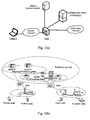
- Fig. 1(a) shows a part of the topology of a network architecture with separated location and identity, including an access network, an access node (in the figure, the access node is an ASN (access service node)), a packet data network, a authentication center and an identity location register.
- an access network an access node (in the figure, the access node is an ASN (access service node)), a packet data network, a authentication center and an identity location register.
- ASN access service node
- the network is divided into an access network and a backbone network, with the access network being located at the edge of the backbone network and responsible for the access of the terminal in its own network.
- the backbone network is responsible for the routing and forwarding of the data messages of the terminal which accesses via the access network.
- ASN is located at the demarcation point between the backbone network and access network and interfaced with the access network and backbone network.
- the access network and backbone network have no overlap regarding topology relationship.
- a unique AID is allocated to each user terminal and used in the access network and keeps unchanged during the movement of the terminal; and an RID is a location identifier allocated to the terminal and used in the backbone network.
- the backbone network is divided into a mapping forwarding plane and a broad forwarding plane, wherein the broad forwarding plane is mainly used for routing and forwarding a data message whose destination address is the RID according to the RIDs therein, and the data routing and forwarding in the broad forwarding plane are consistent with those of the conventional IP network (Legacy IP network).
- the main network elements of the broad forwarding plane include a CR (Common Router) and an ISN (Interconnect Service Node).
- the mapping forwarding plane is mainly used for storing the mapping information about the identity and location of the terminal (i.e. AID-RID mapping information), processing the registration and query of the location of the terminal, and routing and forwarding a data message whose destination address is the AID.
- the main network elements of the mapping forwarding plane include an ILR/PTF (Identity Location Register/Packet Transfer Function).
- FIG. 1(b) ASN is independent from the backbone network in the division of architecture.
- Fig. 1(c) the backbone network includes an ASN.
- the mere difference between Figs. 1(b) and 1(c) is architecture division, and the function actually completed by ASN is the same.
- the accessing user terminal in a network-based architecture with separated identity identifier and location, can be one or more of a mobile node, a fixed node, a nomadic node.
- Access node it is a boundary node connecting a wireless access network to a packet data network, and responsible for the access of the terminal to the packet data network, and in order to achieve the separation of identity identifier from location of the terminal, the access node also allocates an RID to the terminal, maintains the AID-RID mapping information about the terminal, registers and queries the RID of the terminal in an ILR (Identity Location Register), achieves the routing and forwarding of data messages between the wireless access network and the packet data network and between access nodes, and achieves the handover of the terminal by coordinating with other access nodes and so on.
- ILR Identity Location Register
- the access node is also responsible for, on behalf of an IPV4/IPV6 terminal, achieving the compatibility processing of the AID data messages and IPV4/IPV6 data messages in a network-based architecture with separated location and identity.
- the access node is an ASN.
- CR Common Router: it routes and forwards a data message with the source address/destination address thereof being in the format of RID.
- the function of such a common router is the same as that of the router in the related art.
- Authentication center it is responsible for recording the user attributes in the architecture network with separated identity identifier and location, including information such as user type, authentication information, user service level, etc., generating user security information for authentication, integrity protection and encryption, and carrying out legality certification and authorization to the user when the user accesses.
- the authentication center supports bidirectional authentication between the architecture network with separated identity identifier and location and the user.
- ILR and PTF can be two function modules of the same entity and located in the mapping forwarding plane of the backbone network.
- An ILR maintains/stores the AID-RID mapping relationship of the user in the network-based architecture with separated identity identifier and location, achieves the registration function, and processes the location query procedure of the communicating opposite end; after receiving the data message sent by the ASN, the PTF routes and forwards the data message according to the destination AID. After searching out the destination AID-RID mapping relationship, the PTF node in the mapping forwarding plane encapsulates the RID information in the header of the data message and forwards the same to the broad forwarding plane and routes the same to the communicating opposite end.
- ISN Interconnect Service Node: it is used for inquiring about and maintaining the AID-RID mapping information about the network terminal in the present architecture, encapsulating, routing and forwarding the data message between the present architecture network and the conventional IP (Legacy IP) network, and achieving the interaction and intercommunication function between the present architecture network and the Legacy IP network.
- the ISN is used as a proxy anchor point between the present architecture network and the Legacy IP.
- the above node may have different names, for example, the access node can also be referred to as an access router or an access server, and it is equivalent to an integrity of a tunnel ingress router and a tunnel egress router in the LISP (Locator/ID Separation Protocol) architecture.
- the identity location register can also be referred to as a mapping server, etc.
- the present invention proposes a method for a terminal to acquire an AID, which is applied a communication system having a network architecture with separated identity identifier and location. Referring to Fig. 2 , the method includes the following steps.
- corresponding relationship information about a conventional user identity identifier and an access identifier (AID) of the terminal is configured in the communication system, with the AID being a unique identifier allocated to an terminal user by the communication system and also being referred to as an identity identifier; in the existing communication network, the terminal user uses a conventional identity identifier to identify the unique identity of the terminal user, and the conventional identity identifiers of the terminal in different packet domain networks are different, for example, in the existing LTE network, the conventional identity identifier of the terminal is an IMSI (international mobile subscriber identity), the conventional identity identifier of the terminal in an eHRPD network is a NAI (Network Access Identifier), and the conventional identity identifiers of the terminal in other packet domain networks are other identifiers for uniquely identifying the identity of the terminal user.
- IMSI international mobile subscriber identity
- NAI Network Access Identifier
- the conventional identity identifiers of the terminal in other packet domain networks are other identifiers for uniquely identifying the identity of the
- step 202 when accessing the communication system, the terminal carries the conventional user identity identifier of the terminal in a signaling sent to the communication system.
- step 203 the communication system acquires the conventional user identity identifier of the terminal from the signaling, finds the corresponding AID of the conventional user identity identifier from the corresponding relationship information, and returns this AID to the terminal.
- the terminal When the terminal accesses a communication system, it will initiate an authentication request to the communication system, with the authentication request carrying the conventional user identity identifier of the terminal, therefore, when particularly performing the above step 202, the communication system can acquire the conventional user identity identifier of the terminal from the authentication request.
- the present invention proposes a method procedure for acquiring the conventional user identity identifier of a terminal from an authentication request and on this basis allocating an AID to the terminal. Referring to Fig. 3 , the method procedure includes the following steps.
- the corresponding relationship information about the conventional user identity identifier of the terminal and the access identifier is configured in the authentication center of the communication system (HSS/AAA, Home Subscriber Server/Authentication Authorization Accounting), with the AID being the unique identifier allocated by the communication system to the terminal user;
- HSS/AAA Home Subscriber Server/Authentication Authorization Accounting
- the authentication center finds the corresponding AID of the conventional user identity identifier of the terminal according to the configured corresponding relationship information;
- the authentication center sends the AID of this terminal to the ASN via an authentication signaling;
- step 305 the ASN sends this AID to this terminal via an access operation signaling or an address allocation procedure signaling; and in step 306, after receiving this AID, this terminal uses this AID as its user identity identifier used in the network with separated identity identifier and location.
- This terminal using this AID as its user identity identifier used in the network with separated identity identifier and location includes this terminal using this AID as the source address to send a data message.
- the above technical solution is described in detail by taking the particular application in the communication system implemented on the basis of a long term evolution (LTE) network and the particular application of the communication system implemented on the basis of a high rate packet data (eHRPD) network as example respectively, and detailed reference can be made to the first application example to the fourth application example, wherein in the LTE network, the terminal is referred to as a UE (user equipment), the ASN may include an MME (Mobile Management Entity) and a S-GW (Serving Gateway), and the authentication center is an HSS or an AAA; and in the eHRPD network, the terminal is referred to as a UE, the ASN can include an HSGW (High Rate Packet Data Serving Gateway), and the authentication center is an HSS or an AAA.
- LTE long term evolution
- eHRPD high rate packet data
- step 401 the UE initiates an attachment and sends a signaling relevant to the authentication operation toward the MME; in step 402, the MME sends an authentication signaling to the HSS/AAA, wherein the authentication signaling carries the conventional user identity identifier IMSI of the UE; in step 403, after receiving the authentication signaling, the HSS/AAA parses the conventional user identity identifier IMSI of the UE from this authentication signaling and finds the corresponding AID of the conventional user identity identifier IMSI of the UE according to the configured corresponding relationship information about the conventional user identity identifier IMSI and the AID; in step 404, the HSS/AAA carries the searched AID of the UE in the authentication signaling to send the AID to the MME; in step 405, after receiving the authentication signaling carrying the AID of the UE, the MME parse the AID of the UE and stores the AID; in step 406, the UE, MME and HSS/AAA complete the remaining steps of the authentication operation
- step 408 various network elements interact to achieve other operations of user access, including default bearer creation, etc.; in step 409: the MME carries the AID of the UE in an "attachment accept” signaling to send the AID to the UE and notifies the UE that the attachment is completed; in Step 410, after receiving this "attachment accept” signaling, the UE parses the AID of the UE therefrom and sends a data message taking this AID as the source address.
- a communication system having a network architecture with separated identity identifier and location is implemented on the basis of a long term evolution (LTE) network.
- the communication system configures the corresponding relationship information about the conventional user identity identifier of the terminal and the access identifier (AID) in the authentication center (HSS/AAA), with the AID being the unique identifier allocated to the terminal user by the communication system, and the conventional user identity identifier of the terminal referring to the international mobile subscriber identity (IMSI) of the terminal.
- the method for acquiring the user identity identifier of the terminal includes the following steps.
- Steps 501-508 are the same with steps 401-408;
- the MME sends an "attachment accept" signaling to the UE and notifies the UE that the attachment is completed;
- the MME, S-GW or other network element carries the AID to the UE via an address allocation operation signaling (such as DHCP (Dynamic Host Configuration Protocol)) or other signaling; and in step 511: after receiving the signaling carrying the AID sent from the MME, S-GW or other network element, the UE parses the AID thereform and sends data messages by taking this AID as the source address.
- DHCP Dynamic Host Configuration Protocol
- a communication system having a network architecture with separated identity identifier and location is implemented on the basis of an evolved high rate packet data network (eHRPD) network.
- the communication system configures the corresponding relationship information about the conventional user identity identifier of the terminal and the access identifier (AID) in the authentication center (HSS/AAA), with the AID being the unique identifier allocated to the terminal user by the communication system, and the conventional user identity identifier of the terminal referring to the network access identifier (NAI) of the terminal.
- the method for acquiring the user identity identifier of the terminal includes the following steps.
- the UE initiates attachment and performs relevant operations (such operations as two-layer channel establishment, PPP (Point To Point Protocol) session LCP (Link Control Protocol) negotiation, etc.);
- the UE sends a signaling relevant to the authentication operation toward the HSGW;
- the HSGW sends an authentication signaling to the HSS/AAA, wherein the authentication signaling carries the conventional user identity identifier NAI of the UE;
- the HSS/AAA parses the conventional user identity identifier (NAI) of the UE from this authentication signaling and finds the corresponding AID of the conventional user identity identifier NAI of the UE according to the configured corresponding relationship information about the conventional user identity identifier NAI and the AID;
- the HSS/AAA carries the searched AID of the UE in the authentication signaling to send the AID to the HSGW; in step 606, after receiving the authentication signaling carrying the AID of the UE, the HS
- a communication system having a network architecture with separated identity identifier and location is implemented on the basis of an evolved high rate packet data network (eHRPD) network.
- the communication system configures the corresponding relationship information about the conventional user identity identifier of the terminal and the access identifier (AID) in the authentication center (HSS/AAA), with the AID being the unique identifier allocated to the terminal user by the communication system, and the conventional user identity identifier of the terminal referring to the network access identifier (NAI) of the terminal.
- the method for acquiring the user identity identifier of the terminal includes the following steps.
- Steps 701-707 are the same with steps 601-607;
- step 708 the UE and HSGW intercommunicate with a VSNCP signaling to complete the NCP stage negotiation of a PPP session; in step 709, the HSGW or other network element carries the AID to the UE via an address allocation operation signaling (such as DHCP signaling) or other signaling; and in step 710, after receiving the signaling carrying the AID, the UE parses the AID therefrom and sends a data message taking this AID as the source address.
- an address allocation operation signaling such as DHCP signaling
- the above solutions of the present invention all employ the manner of configuring the corresponding relationship information about the conventional user identity identifier and AID of the terminal at the network side.
- the present invention also proposes an apparatus for acquiring the identity identifier of a terminal applied in a communication system having a network architecture with separated identity identifier and location, comprising a configuring module and a processing module, wherein:
- the configuring module configures the corresponding relationship information about the conventional user identity identifier and the access identifier (AID) of the terminal in a authentication center of the communication system.
- the processing module comprises a authentication center and an access service node (ASN), wherein the authentication center is configured to: when authenticating the terminal, after finding the corresponding AID of the conventional user identity identifier of the terminal according to the corresponding relationship information, carry the AID in an authentication signaling to send the AID to the ASN; and the ASN is configured to send the AID to the terminal.
- the communication system is implemented on the basis of a long term evolution (LTE) network
- the ASN comprises a mobile management entity (MME) and a serving gateway (S-GW)
- the conventional user identity identifier of the terminal refers to the international mobile subscriber identity (IMSI) of the terminal, wherein:
- the MME carries the AID in an attachment accept signaling to send the AID to the terminal; or the S-GW carries the AID in an address allocation signaling to send the AID to the terminal.
- the communication system is implemented on the basis of an evolved high rate packet data (eHRPD) network
- the ASN comprises a high speed packet data serving gateway (HSGW)
- the conventional user identity identifier of the terminal refers to the network access identifier (NAI) of the terminal, wherein:
- the HSGW carries the AID in a vendor-specific network control protocol (VSNCP) signaling or an address allocation signaling to send the AID to the terminal.
- VSNCP vendor-specific network control protocol
- the present invention also proposes a terminal applied in a communication system having a network architecture with separated identifier and location and used with the above apparatus in a coordinating way, wherein: after receiving an access identifier (AID) sent by a processing module, the terminal takes the AID as the user identity identifier used in the communication system.
- AID access identifier
- the present invention also proposes a system composed of the apparatus and terminal in the above network side implementation solution, and the apparatus and terminal in the system are as described above, which need not be described here.
- Also proposed in the present invention are 2 additional methods, which can achieve configuring the AID of the terminal at the local side, and reference can be made to the following fifth application example and sixth application example.
- the access identifier (AID) of the terminal is configured in a user identity identification module of the terminal such as an SIM (Subscriber Identity Module) card.
- SIM Subscriber Identity Module
- the AID can be directly acquired from its user identity identification module to be used as the user identity identifier used in the communication system, and particular implementation procedure can be made reference to Fig. 8 , including the following steps.
- step 801 the terminal initiates an operation to access the network in a specific manner and completes steps such as authentication, etc.; in step 802, the terminal configures and stores the AID of the terminal in a smart storage module such as an SIM card, and when sending uplink data, encapsulate the data using the AID stored in the smart storage module such as the SIM card of the terminal; and in step 803, the terminal intercommunicates data with the external network, and the data packet uses the encapsulation format of AID.
- a smart storage module such as an SIM card
- the AID of the terminal is configured in the protocol stack of the terminal in the manner of static address input.
- the AID can be directly acquired from its user identity identification module to be used as the user identity identifier used in the communication system, and particular implementation procedure can be made reference to Fig. 9 , including the following steps.
- step 901 the terminal initiates an operation to access the network in a specific manner and completes steps such as authentication, etc.; in step 902, the terminal configures the AID in the manner of static address input and stores the AID in the protocol stack of the terminal, and when sending uplink data, the terminal encapsulates the data with this AID; and in step 903, the terminal intercommunicates data with the external network, and the data packet uses the encapsulation format of AID.
- an apparatus for acquiring the identity identifier of a terminal applied in a communication system having a network architecture with separated identity identifier and location comprising a configuring module, wherein:
- a terminal applied in a communication system having a network architecture with separated identifier and location and used with the above apparatus in a coordinating way wherein:
- the present invention provides a method and apparatus for acquiring terminal identifier and a terminal, so as to achieve the separation of location from identity of the terminal in the packet domain network under the premise of making the least change to the terminal or not affecting the conventional terminal.
Landscapes
- Engineering & Computer Science (AREA)
- Computer Networks & Wireless Communication (AREA)
- Signal Processing (AREA)
- Computer Security & Cryptography (AREA)
- Mobile Radio Communication Systems (AREA)
Abstract
Description
- The present invention relates to the communication field, and especially, to a method and apparatus for acquiring the identity identifier of a terminal, and a terminal.
- In the existing communication network, when the terminal acquires an IP (Internet Protocol) address, the IP address becomes the location identifier, i.e. identity identifier, of the terminal on the routing level. When the user sends or receives a data packet, the sending or receiving of the data packet is achieved through the IP address allocated by the network side. If the terminal moves (movement of a network element across the allocated addresses), the problem of IP address changing will occur, then a mobile IP solution is introduced into the LTE (Long Term Evolution) or eHRPD (evolved High Rate Packet Data) network; however, the mobile IP solution fails to completely solve the problem of IP address changing due to the movement of the terminal.
- As to the above problem, applying the idea of separating the location from identity to the LTE network or eHRPD network or other packet domain networks would be an effective solution.
- In the existing LTE network, the user identifies his unique identity via an IMSI (International Mobile Subscriber Identity) identifier, in the eHRPD network of 3GPP2, the unique identity of the user is identified via an NAI (network access identifier), and in other packet domain networks, there are also other unique identifiers for identitying the identity of the user. If these conventional user identity identifiers (IMSI or NAI, etc.) in the existing networks are directly used to achieve the separation of identity from location, it will make considerable change to the terminal, affect the protocol stack structure of the terminal, and cannot be compatible with the conventional terminal.
- How to apply the idea of separating location from identity into the packet domain network under the premise of making the least change to the terminal is a problem urgent to be solved.
- The technical problem to be solved by the present invention is to propose a method and apparatus for acquiring the identity identifier of a terminal and a terminal, so as to achieve the separation of location from identity in the packet domain network under the premise of making the least change to the terminal or not affecting the conventional terminal.
- In order to solve the above technical problem, the present invention proposes a method for acquiring a user identity identifier of a terminal, which is applied in a communication system having a network architecture with separated identity identifier and location and comprises:
- configuring corresponding relationship information about a conventional user identity identifier and an access identifier (AID) of the terminal in the communication system, with the AID being a unique identifier allocated to an terminal user by the communication system;
- when accessing the communication system, the terminal carrying the conventional user identity identifier of the terminal in a signaling sent to the communication system; and
- the communication system acquiring the conventional user identity identifier of the terminal from the signaling, finding the AID corresponding to the conventional user identity identifier from the corresponding relationship information, and returning the AID to the terminal.
- Preferably, the above method can further have the following features:
- the corresponding relationship information is configured in a authentication center of the communication system;
- when authenticating the terminal, after finding the AID corresponding to the conventional user identity identifier of the terminal according to the corresponding relationship information, the authentication center carries the AID in an authentication signaling to send the AID to an access service node (ASN); and
- the ASN sends the AID to the terminal.
- Preferably, the above method can further have the following features:
- the communication system is implemented based on a long term evolution (LTE) network, the ASN comprises a mobile management entity (MME) and a serving gateway (S-GW), and the conventional user identity identifier of the terminal refers to an international mobile subscriber identity (IMSI) of the terminal, wherein:
- after finding the AID corresponding to the conventional user identity identifier of the terminal, the authentication center carries the AID in the authentication signaling to send the AID to the MME;
- after receiving the authentication signaling carrying the AID, the MME parses the AID of the terminal and carries the AID in a session creation request signaling to send the AID to the S-GW, and
- the MME or S-GW sends the AID to the terminal.
- Preferably, the above method can further have the following features:
- when the MME sends the AID to the terminal, the MME carries the AID in an attachment accept signaling to send the AID to the terminal; and
- when the S-GW sends the AID to the terminal, the S-GW carries the AID in an address allocation signaling to send the AID to the terminal.
- Preferably, the above method can further have the following features:
- the communication system is implemented based on an evolved high rate packet data (eHRPD) network, the ASN comprises a high speed packet data serving gateway (HSGW), and the conventional user identity identifier of the terminal refers to a network access identifier (NAI) of the terminal, wherein:
- after finding the AID corresponding to the conventional user identity identifier of the terminal, the authentication center carries the AID in the authentication signaling to send the AID to the HSGW;
- after receiving the authentication signaling carrying the AID, the HSGW parses the AID of the terminal and sends the AID to the terminal.
- Preferably, the above method can further have the following features:
- the HSGW carries the AID in a vendor-specific network control protocol (VSNCP) signaling or an address allocation signaling to send the AID to the terminal.
- In order to solve the above technical problem, the present invention further proposes a method for acquiring a user identity identifier of a terminal, which is applied in a communication system having a network architecture with separated identity identifier and location and comprises:
- configuring an access identifier (AID) of the terminal in a user identity identification module of the terminal, or configuring the AID of the terminal in a protocol stack of the terminal in a manner of static address input, with the AID being a unique identifier allocated to an terminal user for use in the communication system; and
- when accessing the communication system, the terminal using the AID configured in the user identity identification module of the terminal or the AID configured in the protocol stack of the terminal as the user identity identifier used in the communication system.
- In order to solve the above technical problem, the present invention further proposes an apparatus for acquiring an identity identifier of a terminal applied in a communication system having a network architecture with separated identity identifier and location, comprising a configuring module and a processing module, wherein
the configuring module is configured to configure corresponding relationship information about a conventional user identity identifier and an access identifier (AID) of the terminal in the communication system, with the AID being a unique identifier allocated to an terminal user by the communication system; and
the processing module is configured to: when the terminal accesses the communication system, acquire the conventional user identity identifier of the terminal from a signaling sent by the terminal to the communication system, then find the AID corresponding to the conventional user identity identifier from the corresponding relationship information in the configuring module, and return the AID to the terminal. - Preferably, the above apparatus can further have the following features:
- the configuring module is configured to configure the corresponding relationship information about the conventional user identity identifier and the AID of the terminal in a authentication center of the communication system; and
- the processing module comprises the authentication center and an access service node (ASN), wherein the authentication center is configured to: when authenticating the terminal, after finding the AID corresponding to the conventional user identity identifier of the terminal according to the corresponding relationship information, carry the AID in an authentication signaling to send the AID to the ASN; and the ASN is configured to send the AID to the terminal.
- Preferably, the above apparatus can further have the following features:
- the communication system is implemented based on a long term evolution (LTE) network, the ASN comprises a mobile management entity (MME) and a serving gateway (S-GW), and the conventional user identity identifier of the terminal refers to an international mobile subscriber identity (IMSI) of the terminal, wherein:
- the authentication center is configured to: after finding the AID corresponding to the conventional user identity identifier of the terminal, carry the AID in the authentication signaling to send the AID to the MME;
- the MME is configured to: after receiving the authentication signaling carrying the AID, parse the AID of the terminal and carry the AID in a session creation request signaling to send the AID to the S-GW; and
- the MME or S-GW sends the AID to the terminal.
- Preferably, the above apparatus can further have the following features:
- the MME is configured to: when sending the AID to the terminal, carry the AID in an attachment accept signaling to send the AID to the terminal; and
- the S-GW is configured to: when sending the AID to the terminal, carry the AID in an address allocation signaling to send the AID to the terminal.
- Preferably, the above apparatus can further have the following features:
- the communication system is implemented based on an evolved high rate packet data (eHRPD) network, the ASN comprises a high speed packet data serving gateway (HSGW), and the conventional user identity identifier of the terminal refers to a network access identifier (NAI) of the terminal, wherein:
- the authentication center is configured to: after finding the AID corresponding to the conventional user identity identifier of the terminal, carry the AID in the authentication signaling to send the AID to the HSGW; and
- the HSGW is configured to: after receiving the authentication signaling carrying the AID, parse the AID of the terminal and send the AID to the terminal.
- Preferably, the above apparatus can further have the following features:
- the HSGW is configured to: carry the AID in a vendor-specific network control protocol (VSNCP) signaling or an address allocation signaling to send the AID to the terminal.
- In order to solve the above technical problem, the present invention further proposes an apparatus for acquiring an identity identifier of a terminal applied in a communication system having a network architecture with separated identity identifier and location, comprising a configuring module, wherein:
- the configuring module is configured to: configure an access identifier (AID) of the terminal in a user identity identification module of the terminal, or configure the AID of the terminal in a protocol stack of the terminal in a manner of static address input, with the AID being a unique identifier allocated to the terminal user for use in the communication system.
- In order to solve the above technical problem, the present invention also proposes a terminal applied in a communication system having a network architecture with separated identity identifier and location, wherein:
- after receiving an access identifier (AID) sent by a processing module, the terminal uses the AID as a user identity identifier for use in the communication system.
- In order to solve the above technical problem, the present invention also proposes a terminal applied in a communication system having a network architecture with separated identity identifier and location, wherein:
- when accessing the communication system, the terminal uses an AID configured in a user identity identification module of the terminal or an AID configured in a protocol stack of the terminal as a user identity identifier for use in the communication system.
- In order to solve the above technical problem, the present invention also proposes a system applied in a communication system having a network architecture with separated identity identifier and location, comprising an apparatus for acquiring an identity identifier of a terminal and the terminal, with the apparatus for acquiring the identity identifier of the terminal comprising a configuring module and a processing module, wherein:
- the configuring module is configured to configure corresponding relationship information about a conventional user identity identifier and an access identifier (AID) of the terminal in the communication system, with the AID being a unique identifier allocated to an terminal user by the communication system;
- the processing module is configured to: when the terminal accesses the communication system, acquire the conventional user identity identifier of the terminal from a signaling sent by the terminal to the communication system, then find the AID corresponding to the conventional user identity identifier from the corresponding relationship information in the configuring module, and return the AID to the terminal; and
- the terminal is configured to: after receiving the AID sent by the processing module, use the AID as a user identity identifier for use in the communication system.
- Preferably, the above system can further have the following features:
- the configuring module is configured to configure the corresponding relationship information about the conventional user identity identifier and the AID of the terminal in a authentication center of the communication system; and
- the processing module comprises the authentication center and an access service node (ASN), wherein the authentication center is configured to: when authenticating the terminal, after finding the AID corresponding to the conventional user identity identifier of the terminal according to the corresponding relationship information, carry the AID in an authentication signaling to send the AID to the ASN; and the ASN is configured to send the AID to the terminal.
- Preferably, the above system can further have the following features:
- the communication system is implemented based on a long term evolution (LTE) network, the ASN comprises a mobile management entity (MME) and a serving gateway (S-GW), and the conventional user identity identifier of the terminal refers to an international mobile subscriber identity (IMSI) of the terminal, wherein:
- the authentication center is configured to: after finding the AID corresponding to the conventional user identity identifier of the terminal, carry the AID in the authentication signaling to send the AID to the MME;
- the MME is configured to: after receiving the authentication signaling carrying the AID, parse the AID of the terminal and carry the AID in a session creation request signaling to send the AID to the S-GW; and
- the MME or S-GW sends the AID to the terminal.
- Preferably, the above system can further have the following features:
- the MME is configured to: when sending the AID to the terminal, carry the AID in an attachment accept signaling to send the AID to the terminal; and
- the S-GW is configured to: when sending the AID to the terminal, carry the AID in an address allocation signaling to send the AID to the terminal.
- Preferably, the above system can further have the following features:
- the communication system is implemented based on an evolved high rate packet data (eHRPD) network, the ASN comprises a high speed packet data serving gateway (HSGW), and the conventional user identity identifier of the terminal refers to a network access identifier (NAI) of the terminal, wherein:
- the authentication center is configured to: after finding the AID corresponding to the conventional user identity identifier of the terminal, carry the AID in the authentication signaling to send the AID to the HSGW; and
- the HSGW is configured to: after receiving the authentication signaling carrying the AID, parse the AID of the terminal and send the AID to the terminal.
- Preferably, the above system can further have the following features:
- the HSGW is configured to: carry the AID in a vendor-specific network control protocol (VSNCP) signaling or an address allocation signaling to send the AID to the terminal.
- In order to solve the above technical problem, also proposed in the present invention is a system applied in a communication system having a network architecture with separated identity identifier and location, comprising an apparatus for acquiring an identity identifier of a terminal and the terminal, with the apparatus for acquiring the identity identifier of the terminal comprising a configuring module, wherein:
- the configuring module is configured to: configure an access identifier (AID) of the terminal in a user identity identification module of the terminal, or configure the AID of the terminal in a protocol stack of the terminal in a manner of static address input, with the AID being a unique identifier allocated to the terminal user for use in the communication system; and
- the terminal is configured to: when accessing the communication system, use the AID configured in the user identity identification module of the terminal or the AID configured in the protocol stack of the terminal as a user identity identifier for use in the communication system.
- By way of the present invention, the separation of terminal location from identity in a packet domain network can be achieved under the premise of making the least change to the terminal or not affecting the conventional terminal.
-
-
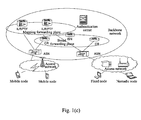
Figs. 1(a) to 1(c) are schematic diagrams of a network topology based on separated location and identity according to the present invention; -
Fig. 2 is a schematic flowchart of a method for a terminal to acquire an AID according to an example of the present invention; -
Fig. 3 is a flowchart of a method for acquiring the conventional user identity identifier of a terminal from an authentication request and allocating an AID to the terminal according thereto according to an example of the present invention; -
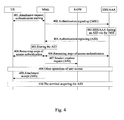
Fig. 4 is a flowchart of the method in the first application example according to the present invention; -
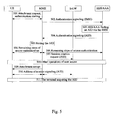
Fig. 5 is a flowchart of the method of the second application example according to the present invention; -
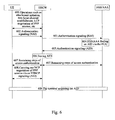
Fig. 6 is a flowchart of the method of the third application example according to the present invention; -
Fig. 7 is a flowchart of the method of the fourth application example according to the present invention; -
Fig. 8 is a flowchart of the method of the fifth application example according to the present invention; and -
Fig. 9 is a flowchart of the method of the sixth application example according to the present invention. - Hereinafter, the technical solution of the present invention will be described in detail in conjunction with the accompanying drawings and embodiments.
- There are two types of identifiers in a communication system having a network architecture with separated identity identifier and location: access identifier (AID) and routing identifier (RID). Among them, an AID is a user identity identifier of the terminal, and the network allocates a unique AID to each terminal user which keeps unchanged during the movement of the terminal; and an RID is a location identifier allocated by the network to the terminal and used in the backbone network. Identity identifier and location identifier can have different names in different network architectures.
-
Fig. 1(a) shows a part of the topology of a network architecture with separated location and identity, including an access network, an access node (in the figure, the access node is an ASN (access service node)), a packet data network, a authentication center and an identity location register. - As shown in
Figs. 1(b) and1(c) , under the network architecture with separated location and identity, the network is divided into an access network and a backbone network, with the access network being located at the edge of the backbone network and responsible for the access of the terminal in its own network. The backbone network is responsible for the routing and forwarding of the data messages of the terminal which accesses via the access network. ASN is located at the demarcation point between the backbone network and access network and interfaced with the access network and backbone network. The access network and backbone network have no overlap regarding topology relationship. - In this case, in a network architecture based on separated identity identifier and location, a unique AID is allocated to each user terminal and used in the access network and keeps unchanged during the movement of the terminal; and an RID is a location identifier allocated to the terminal and used in the backbone network.
- The backbone network is divided into a mapping forwarding plane and a broad forwarding plane, wherein the broad forwarding plane is mainly used for routing and forwarding a data message whose destination address is the RID according to the RIDs therein, and the data routing and forwarding in the broad forwarding plane are consistent with those of the conventional IP network (Legacy IP network). The main network elements of the broad forwarding plane include a CR (Common Router) and an ISN (Interconnect Service Node). The mapping forwarding plane is mainly used for storing the mapping information about the identity and location of the terminal (i.e. AID-RID mapping information), processing the registration and query of the location of the terminal, and routing and forwarding a data message whose destination address is the AID. The main network elements of the mapping forwarding plane include an ILR/PTF (Identity Location Register/Packet Transfer Function).
- In
Fig. 1(b) , ASN is independent from the backbone network in the division of architecture. InFig. 1(c) , the backbone network includes an ASN. The mere difference betweenFigs. 1(b) and1(c) is architecture division, and the function actually completed by ASN is the same. - Referring to
Figs. 1(a) to 1(c) , wherein: - the access network provides a two-layer (physical layer and link layer) access service for the user terminal, which can be cellular mobile network, DSL (Digital Subscriber Line), wideband optical fiber access network or WiFi (Wireless Fidelity) access network, etc. The packet data network can be an IP network.
- Terminal: in a network-based architecture with separated identity identifier and location, the accessing user terminal can be one or more of a mobile node, a fixed node, a nomadic node.
- Access node: it is a boundary node connecting a wireless access network to a packet data network, and responsible for the access of the terminal to the packet data network, and in order to achieve the separation of identity identifier from location of the terminal, the access node also allocates an RID to the terminal, maintains the AID-RID mapping information about the terminal, registers and queries the RID of the terminal in an ILR (Identity Location Register), achieves the routing and forwarding of data messages between the wireless access network and the packet data network and between access nodes, and achieves the handover of the terminal by coordinating with other access nodes and so on. The access node is also responsible for, on behalf of an IPV4/IPV6 terminal, achieving the compatibility processing of the AID data messages and IPV4/IPV6 data messages in a network-based architecture with separated location and identity. In the embodiments of the present invention, the access node is an ASN.
- CR (Common Router): it routes and forwards a data message with the source address/destination address thereof being in the format of RID. The function of such a common router is the same as that of the router in the related art.
- Authentication center: it is responsible for recording the user attributes in the architecture network with separated identity identifier and location, including information such as user type, authentication information, user service level, etc., generating user security information for authentication, integrity protection and encryption, and carrying out legality certification and authorization to the user when the user accesses. The authentication center supports bidirectional authentication between the architecture network with separated identity identifier and location and the user.
- ILR/PTF (Identity Location Register/Packet Transfer Function): ILR and PTF can be two function modules of the same entity and located in the mapping forwarding plane of the backbone network. An ILR maintains/stores the AID-RID mapping relationship of the user in the network-based architecture with separated identity identifier and location, achieves the registration function, and processes the location query procedure of the communicating opposite end; after receiving the data message sent by the ASN, the PTF routes and forwards the data message according to the destination AID. After searching out the destination AID-RID mapping relationship, the PTF node in the mapping forwarding plane encapsulates the RID information in the header of the data message and forwards the same to the broad forwarding plane and routes the same to the communicating opposite end.
- ISN (Interconnect Service Node): it is used for inquiring about and maintaining the AID-RID mapping information about the network terminal in the present architecture, encapsulating, routing and forwarding the data message between the present architecture network and the conventional IP (Legacy IP) network, and achieving the interaction and intercommunication function between the present architecture network and the Legacy IP network. When a handover occurs in the mobile terminal under the present architecture, the ISN is used as a proxy anchor point between the present architecture network and the Legacy IP.
- In different network architectures with separated location and identity, the above node may have different names, for example, the access node can also be referred to as an access router or an access server, and it is equivalent to an integrity of a tunnel ingress router and a tunnel egress router in the LISP (Locator/ID Separation Protocol) architecture. The identity location register can also be referred to as a mapping server, etc.
- In order to achieve the separation of location from identity identifier of the terminal in the packet domain network under the premise of making the least change to the terminal or not affecting the terminal, the present invention proposes a method for a terminal to acquire an AID, which is applied a communication system having a network architecture with separated identity identifier and location. Referring to
Fig. 2 , the method includes the following steps. - In
step 201, corresponding relationship information about a conventional user identity identifier and an access identifier (AID) of the terminal is configured in the communication system, with the AID being a unique identifier allocated to an terminal user by the communication system and also being referred to as an identity identifier;
in the existing communication network, the terminal user uses a conventional identity identifier to identify the unique identity of the terminal user, and the conventional identity identifiers of the terminal in different packet domain networks are different, for example, in the existing LTE network, the conventional identity identifier of the terminal is an IMSI (international mobile subscriber identity), the conventional identity identifier of the terminal in an eHRPD network is a NAI (Network Access Identifier), and the conventional identity identifiers of the terminal in other packet domain networks are other identifiers for uniquely identifying the identity of the terminal user. - In
step 202, when accessing the communication system, the terminal carries the conventional user identity identifier of the terminal in a signaling sent to the communication system. - In
step 203, the communication system acquires the conventional user identity identifier of the terminal from the signaling, finds the corresponding AID of the conventional user identity identifier from the corresponding relationship information, and returns this AID to the terminal. - When the terminal accesses a communication system, it will initiate an authentication request to the communication system, with the authentication request carrying the conventional user identity identifier of the terminal, therefore, when particularly performing the
above step 202, the communication system can acquire the conventional user identity identifier of the terminal from the authentication request. Based on this, the present invention proposes a method procedure for acquiring the conventional user identity identifier of a terminal from an authentication request and on this basis allocating an AID to the terminal. Referring toFig. 3 , the method procedure includes the following steps. - In
step 301, the corresponding relationship information about the conventional user identity identifier of the terminal and the access identifier (AID) is configured in the authentication center of the communication system (HSS/AAA, Home Subscriber Server/Authentication Authorization Accounting), with the AID being the unique identifier allocated by the communication system to the terminal user;
instep 302, a terminal starts to access the network and initiates an authentication request toward the authentication center;
instep 303, when authenticating the terminal, the authentication center finds the corresponding AID of the conventional user identity identifier of the terminal according to the configured corresponding relationship information;
instep 304, the authentication center sends the AID of this terminal to the ASN via an authentication signaling;
instep 305, the ASN sends this AID to this terminal via an access operation signaling or an address allocation procedure signaling; and
instep 306, after receiving this AID, this terminal uses this AID as its user identity identifier used in the network with separated identity identifier and location. - This terminal using this AID as its user identity identifier used in the network with separated identity identifier and location includes this terminal using this AID as the source address to send a data message.
- In the present invention, the above technical solution is described in detail by taking the particular application in the communication system implemented on the basis of a long term evolution (LTE) network and the particular application of the communication system implemented on the basis of a high rate packet data (eHRPD) network as example respectively, and detailed reference can be made to the first application example to the fourth application example, wherein in the LTE network, the terminal is referred to as a UE (user equipment), the ASN may include an MME (Mobile Management Entity) and a S-GW (Serving Gateway), and the authentication center is an HSS or an AAA; and in the eHRPD network, the terminal is referred to as a UE, the ASN can include an HSGW (High Rate Packet Data Serving Gateway), and the authentication center is an HSS or an AAA.
- The first application example:
- in this application example, a communication system having a network architecture with separated identity identifier and location is implemented on the basis of a long term evolution (LTE) network. The communication system configures the corresponding relationship information about the conventional user identity identifier of the terminal and the access identifier (AID) in the authentication center (HSS/AAA), with the AID being the unique identifier allocated to the terminal user by the communication system, and the conventional user identity identifier of the terminal referring to the international mobile subscriber identity (IMSI) of the terminal. In this application example, the method for acquiring the user identity identifier of the terminal, referring to
Fig. 4 , includes the following steps. - In step 401, the UE initiates an attachment and sends a signaling relevant to the authentication operation toward the MME;
in step 402, the MME sends an authentication signaling to the HSS/AAA, wherein the authentication signaling carries the conventional user identity identifier IMSI of the UE;
in step 403, after receiving the authentication signaling, the HSS/AAA parses the conventional user identity identifier IMSI of the UE from this authentication signaling and finds the corresponding AID of the conventional user identity identifier IMSI of the UE according to the configured corresponding relationship information about the conventional user identity identifier IMSI and the AID;
in step 404, the HSS/AAA carries the searched AID of the UE in the authentication signaling to send the AID to the MME;
in step 405, after receiving the authentication signaling carrying the AID of the UE, the MME parse the AID of the UE and stores the AID;
in step 406, the UE, MME and HSS/AAA complete the remaining steps of the authentication operation;
in step 407, the MME carries the AID of the UE in a "session creation request" to send the AID to the S-GW;
after receiving the AID of the UE, the S-GW carries out data packet processing according to this AID.
In step 408, various network elements interact to achieve other operations of user access, including default bearer creation, etc.;
in step 409: the MME carries the AID of the UE in an "attachment accept" signaling to send the AID to the UE and notifies the UE that the attachment is completed;
in Step 410, after receiving this "attachment accept" signaling, the UE parses the AID of the UE therefrom and sends a data message taking this AID as the source address. - in this application example, a communication system having a network architecture with separated identity identifier and location is implemented on the basis of a long term evolution (LTE) network. The communication system configures the corresponding relationship information about the conventional user identity identifier of the terminal and the access identifier (AID) in the authentication center (HSS/AAA), with the AID being the unique identifier allocated to the terminal user by the communication system, and the conventional user identity identifier of the terminal referring to the international mobile subscriber identity (IMSI) of the terminal. In this application example, the method for acquiring the user identity identifier of the terminal, referring to
Fig. 5 , includes the following steps. - Steps 501-508 are the same with steps 401-408;
In step 509, the MME sends an "attachment accept" signaling to the UE and notifies the UE that the attachment is completed;
In step 510, the MME, S-GW or other network element carries the AID to the UE via an address allocation operation signaling (such as DHCP (Dynamic Host Configuration Protocol)) or other signaling; and
in step 511: after receiving the signaling carrying the AID sent from the MME, S-GW or other network element, the UE parses the AID thereform and sends data messages by taking this AID as the source address. - in this application example, a communication system having a network architecture with separated identity identifier and location is implemented on the basis of an evolved high rate packet data network (eHRPD) network. The communication system configures the corresponding relationship information about the conventional user identity identifier of the terminal and the access identifier (AID) in the authentication center (HSS/AAA), with the AID being the unique identifier allocated to the terminal user by the communication system, and the conventional user identity identifier of the terminal referring to the network access identifier (NAI) of the terminal. In this application example, the method for acquiring the user identity identifier of the terminal, referring to
Fig. 6 , includes the following steps. - In step 601, the UE initiates attachment and performs relevant operations (such operations as two-layer channel establishment, PPP (Point To Point Protocol) session LCP (Link Control Protocol) negotiation, etc.);
In step 602, the UE sends a signaling relevant to the authentication operation toward the HSGW;
in step 603, the HSGW sends an authentication signaling to the HSS/AAA, wherein the authentication signaling carries the conventional user identity identifier NAI of the UE;
in step 604, after receiving the authentication signaling, the HSS/AAA parses the conventional user identity identifier (NAI) of the UE from this authentication signaling and finds the corresponding AID of the conventional user identity identifier NAI of the UE according to the configured corresponding relationship information about the conventional user identity identifier NAI and the AID;
in step 605, the HSS/AAA carries the searched AID of the UE in the authentication signaling to send the AID to the HSGW;
in step 606, after receiving the authentication signaling carrying the AID of the UE, the HSGW parse the AID of the UE and stores the AID;
in step 607, the UE, HSGW and HSS/AAA complete the remaining steps of the authentication operation;
in step 608, the UE and HSGW intercommunicate with an VSNCP (Vendor-Specific Network Control Protocol) signaling, and complete the NCP (Network Control Protocol) stage negotiation of the PPP (Point To Point Protocol) session, and in this operation the HSGW carries this AID in the VSNCP signaling to send the AID to the UE; and
instep 609, after receiving the VSNCP signaling carrying the AID, the UE parses the AID therefrom and sends a data message taking this AID as the source address. - in this application example, a communication system having a network architecture with separated identity identifier and location is implemented on the basis of an evolved high rate packet data network (eHRPD) network. The communication system configures the corresponding relationship information about the conventional user identity identifier of the terminal and the access identifier (AID) in the authentication center (HSS/AAA), with the AID being the unique identifier allocated to the terminal user by the communication system, and the conventional user identity identifier of the terminal referring to the network access identifier (NAI) of the terminal. In this application example, the method for acquiring the user identity identifier of the terminal, referring to
Fig. 7 , includes the following steps. - Steps 701-707 are the same with steps 601-607;
- In step 708, the UE and HSGW intercommunicate with a VSNCP signaling to complete the NCP stage negotiation of a PPP session;
in step 709, the HSGW or other network element carries the AID to the UE via an address allocation operation signaling (such as DHCP signaling) or other signaling; and
in step 710, after receiving the signaling carrying the AID, the UE parses the AID therefrom and sends a data message taking this AID as the source address. - The above solutions of the present invention all employ the manner of configuring the corresponding relationship information about the conventional user identity identifier and AID of the terminal at the network side.
- In order to implement the above network side implementation solution, the present invention also proposes an apparatus for acquiring the identity identifier of a terminal applied in a communication system having a network architecture with separated identity identifier and location, comprising a configuring module and a processing module, wherein:
- the configuring module is configured to configure the corresponding relationship information about a conventional user identity identifier and an access identifier (AID) of the terminal in the communication system, with the AID being a unique identifier allocated to a terminal user by the communication system;
- the processing module is configured to: when the terminal accesses the communication system, acquire the conventional user identity identifier of the terminal from a signaling sent by the terminal to the communication system, then finding the corresponding AID of the conventional user identity identifier from the corresponding relationship information in the configuring module, and return the AID to the terminal.
- Preferably, the configuring module configures the corresponding relationship information about the conventional user identity identifier and the access identifier (AID) of the terminal in a authentication center of the communication system. The processing module comprises a authentication center and an access service node (ASN), wherein the authentication center is configured to: when authenticating the terminal, after finding the corresponding AID of the conventional user identity identifier of the terminal according to the corresponding relationship information, carry the AID in an authentication signaling to send the AID to the ASN; and the ASN is configured to send the AID to the terminal.
- Preferably, the communication system is implemented on the basis of a long term evolution (LTE) network, the ASN comprises a mobile management entity (MME) and a serving gateway (S-GW), and the conventional user identity identifier of the terminal refers to the international mobile subscriber identity (IMSI) of the terminal, wherein:
- after finding the corresponding AID of the conventional user identity identifier of the terminal, the authentication center carries the AID in the authentication signaling to send the AID to the MME;
- after receiving the authentication signaling carrying the AID, the MME parses the AID of the terminal and carries the AID in a session creation request signaling to send the AID to the S-GW, and
- the MME or S-GW sends the AID to the terminal.
- Preferably, the MME carries the AID in an attachment accept signaling to send the AID to the terminal; or the S-GW carries the AID in an address allocation signaling to send the AID to the terminal.
- Preferably, the communication system is implemented on the basis of an evolved high rate packet data (eHRPD) network, the ASN comprises a high speed packet data serving gateway (HSGW), and the conventional user identity identifier of the terminal refers to the network access identifier (NAI) of the terminal, wherein:
- the authentication center is configured to: after finding the corresponding AID of the conventional user identity identifier of the terminal, carry the AID in the authentication signaling to send the AID to the HSGW; and
- the HSGW is configured to: after receiving the authentication signaling carrying the AID, parse the AID of the terminal and send the AID to the terminal.
- Preferably, the HSGW carries the AID in a vendor-specific network control protocol (VSNCP) signaling or an address allocation signaling to send the AID to the terminal.
- In order to implement the above solution, the present invention also proposes a terminal applied in a communication system having a network architecture with separated identifier and location and used with the above apparatus in a coordinating way, wherein: after receiving an access identifier (AID) sent by a processing module, the terminal takes the AID as the user identity identifier used in the communication system.
- In order to implement the above solution, the present invention also proposes a system composed of the apparatus and terminal in the above network side implementation solution, and the apparatus and terminal in the system are as described above, which need not be described here.
- Also proposed in the present invention are 2 additional methods, which can achieve configuring the AID of the terminal at the local side, and reference can be made to the following fifth application example and sixth application example.
- in this application example, the access identifier (AID) of the terminal is configured in a user identity identification module of the terminal such as an SIM (Subscriber Identity Module) card. When the terminal accesses a communication system having a network architecture with separated identity identifier and location, the AID can be directly acquired from its user identity identification module to be used as the user identity identifier used in the communication system, and particular implementation procedure can be made reference to
Fig. 8 , including the following steps. - In step 801, the terminal initiates an operation to access the network in a specific manner and completes steps such as authentication, etc.;
in step 802, the terminal configures and stores the AID of the terminal in a smart storage module such as an SIM card, and when sending uplink data, encapsulate the data using the AID stored in the smart storage module such as the SIM card of the terminal; and
in step 803, the terminal intercommunicates data with the external network, and the data packet uses the encapsulation format of AID. - in this application example, the AID of the terminal is configured in the protocol stack of the terminal in the manner of static address input. When the terminal accesses a communication system having a network architecture with separated identity identifier and location, the AID can be directly acquired from its user identity identification module to be used as the user identity identifier used in the communication system, and particular implementation procedure can be made reference to
Fig. 9 , including the following steps. - In
step 901, the terminal initiates an operation to access the network in a specific manner and completes steps such as authentication, etc.;
in step 902, the terminal configures the AID in the manner of static address input and stores the AID in the protocol stack of the terminal, and when sending uplink data, the terminal encapsulates the data with this AID; and
in step 903, the terminal intercommunicates data with the external network, and the data packet uses the encapsulation format of AID. - In order to implement the above local side implementation solution, also proposed in the present invention is an apparatus for acquiring the identity identifier of a terminal applied in a communication system having a network architecture with separated identity identifier and location, comprising a configuring module, wherein:
- the configuring module is configured to: configure an access identifier (AID) of the terminal in a user identity identification module of the terminal, or configure the AID of the terminal in a protocol stack of the terminal in the manner of static address input, with the AID being a unique identifier allocated to the terminal user for use in the communication system.
- In order to implement the above local side implementation solution, also proposed in the present invention is a terminal applied in a communication system having a network architecture with separated identifier and location and used with the above apparatus in a coordinating way, wherein:
- when accessing the communication system, the terminal takes the AID configured in a user identity identification module of the terminal or the AID configured in a protocol stack of the terminal as the user identity identifier used in the communication system.
- In order to implement the above local side implementation solution, also proposed in the present invention is a system composed of the apparatus and terminal in the above local side implementation solution, and the apparatus and terminal in the system are as described above, which need not be described here.
- Those skilled in the art shall understand that all of or part of the steps in the above methods can be completed by instructing relevant hardware by programs, and the programs can be stored in a computer readable storage medium, such as a read only memory, a magnetic disk, or an optical disk, etc. Optionally, all of or part of the steps of the above embodiments can also be implemented using one or more integrated circuits. Accordingly, the modules/units in the above embodiments can be implemented in the form of hardware and can also be implemented in the form of software function modules. The present invention is not limited to any particular form of combination of hardware and software.
- Although the present invention is described in conjunction with specific embodiments, those skilled in the art can make modifications and changes without departing from the spirit or scope of the present invention. Such modification and change are regarded as within the scope of the present invention and the scope of the appended claims.
- The present invention provides a method and apparatus for acquiring terminal identifier and a terminal, so as to achieve the separation of location from identity of the terminal in the packet domain network under the premise of making the least change to the terminal or not affecting the conventional terminal.
Claims (15)
- A method for acquiring a user identity identifier of a terminal, the method being applied in a communication system having a network architecture with separated identity identifier and location, the method employing mode I or mode II,
wherein the mode I comprises:configuring corresponding relationship information about a conventional user identity identifier and an access identifier (AID) of the terminal in the communication system, with the AID being a unique identifier allocated to an terminal user by the communication system;when accessing the communication system, the terminal carrying the conventional user identity identifier of the terminal in a signaling sent to the communication system; andthe communication system acquiring the conventional user identity identifier of the terminal from the signaling, finding the AID corresponding to the conventional user identity identifier from the corresponding relationship information, and returning the AID to the terminal;the mode II comprises:configuring an access identifier (AID) of the terminal in a user identity identification module of the terminal, or configuring the AID of the terminal in a protocol stack of the terminal in a manner of static address input, with the AID being a unique identifier allocated to the terminal user for use in the communication system; andwhen the terminal accesses the communication system, using the AID of the terminal as the user identity identifier used in the communication system. - The method as claimed in claim 1, wherein, in the mode I,
the corresponding relationship information is configured in a authentication center of the communication system;
the step of the communication system finding the AID corresponding to the conventional user identity identifier from the corresponding relationship information and returning the AID to the terminal comprises:when authenticating the terminal, after finding the AID corresponding to the conventional user identity identifier of the terminal according to the corresponding relationship information, the authentication center carrying the AID in an authentication signaling to send the AID to an access service node (ASN); andthe ASN sending the AID to the terminal. - The method as claimed in claim 2, wherein,
the communication system is implemented based on a long term evolution (LTE) network, the ASN comprises a mobile management entity (MME) and a serving gateway (S-GW), and the conventional user identity identifier of the terminal is an international mobile subscriber identity (IMSI) of the terminal;
the step of the communication system finding the AID corresponding to the conventional user identity identifier from the corresponding relationship information and returning the AID to the terminal comprises:after finding the AID corresponding to the conventional user identity identifier of the terminal, the authentication center carrying the AID in the authentication signaling to send the AID to the MME;after receiving the authentication signaling carrying the AID, the MME parsing the AID of the terminal and carrying the AID in a session creation request signaling to send the AID to the S-GW, andthe MME or S-GW sending the AID to the terminal. - The method as claimed in claim 3, wherein,
when the MME sends the AID to the terminal, the MME carries the AID in an attachment accept signaling to send the AID to the terminal;
when the S-GW sends the AID to the terminal, the S-GW carries the AID in an address allocation signaling to send the AID to the terminal. - The method as claimed in claim 2, wherein
the communication system is implemented based on an evolved high rate packet data (eHRPD) network, the ASN comprises a high speed packet data serving gateway (HSGW), and the conventional user identity identifier of the terminal refers to a network access identifier (NAI) of the terminal;
the step of the communication system finding the AID corresponding to the conventional user identity identifier from the corresponding relationship information and returning the AID to the terminal comprises:after finding the AID corresponding to the conventional user identity identifier of the terminal, the authentication center carrying the AID in the authentication signaling to send to the HSGW; andafter receiving the authentication signaling carrying the AID, the HSGW parsing the AID of the terminal and sending the AID to the terminal. - The method as claimed in claim 5, wherein,
in the step of the HSGW sending the AID to the terminal, the HSGW carries the AID in a vendor-specific network control protocol (VSNCP) signaling or an address allocation signaling to send to the terminal. - An apparatus for acquiring an identity identifier of a terminal, the apparatus being applied in a communication system having a network architecture with separated identity identifier and location, comprising a configuring module and a processing module, wherein,
the configuring module is configured to configure corresponding relationship information about a conventional user identity identifier and an access identifier (AID) of the terminal in the communication system, with the AID being an user identity identifier allocated to an terminal user in the communication system;
the processing module is configured to: when the terminal accesses the communication system, acquire the conventional user identity identifier of the terminal from a signaling sent by the terminal to the communication system, then find the AID corresponding to the conventional user identity identifier from the corresponding relationship information in the configuring module, and return the AID to the terminal. - The apparatus as claimed in claim 7, wherein,
the configuring module is configured to configure the corresponding relationship information about the conventional user identity identifier and the AID of the terminal in a authentication center of the communication system;
the processing module comprises the authentication center and an access service node (ASN), wherein,
the authentication center is configured to: when authenticating the terminal, after finding the AID corresponding to the conventional user identity identifier of the terminal according to the corresponding relationship information, carry the AID in an authentication signaling to send the AID to the ASN;
the ASN is configured to send the AID to the terminal. - The apparatus as claimed in claim 8, wherein, the communication system is implemented based on a long term evolution (LTE) network, the ASN comprises a mobile management entity (MME) and a serving gateway (S-GW), and the conventional user identity identifier of the terminal is an international mobile subscriber identity (IMSI) of the terminal, wherein,
the authentication center is configured to: after finding the AID corresponding to the conventional user identity identifier of the terminal, carry the AID in the authentication signaling to send to the MME;
the MME is configured to: after receiving the authentication signaling carrying the AID, parse the AID of the terminal and carry the AID in a session creation request signaling to send the AID to the S-GW;
the MME or S-GW sends the AID to the terminal. - The apparatus as claimed in claim 9, wherein,
the MME is configured to: when sending the AID to the terminal, carry the AID in an attachment accept signaling to send the AID to the terminal;
the S-GW is configured to: when sending the AID to the terminal, carry the AID in an address allocation signaling to send the AID to the terminal. - The apparatus as claimed in claim 8, wherein the communication system is implemented based on an evolved high rate packet data (eHRPD) network, the ASN comprises a high speed packet data serving gateway (HSGW), and the conventional user identity identifier of the terminal refers to a network access identifier (NAI) of the terminal, wherein,
the authentication center is configured to: after finding the AID corresponding to the conventional user identity identifier of the terminal, carry the AID in the authentication signaling to send the AID to the HSGW;
the HSGW is configured to: after receiving the authentication signaling carrying the AID, parse the AID of the terminal and send the AID to the terminal. - The apparatus as claimed in claim 11, wherein,
the HSGW is configured to: carry the AID in a vendor-specific network control protocol (VSNCP) signaling or an address allocation signaling to send the AID to the terminal. - An apparatus for acquiring an identity identifier of a terminal, which is applied in a communication system having a network architecture with separated identity identifier and location and comprises a configuring module, wherein,
the configuring module is configured to: configure an access identifier (AID) of the terminal in a user identity identification module of the terminal, or configure the AID of the terminal in a protocol stack of the terminal in a manner of static address input, with the AID being a unique identifier allocated to an terminal user for use in the communication system. - A terminal, applied in a communication system having a network architecture with separated identity identifier and location and used with the apparatus as claimed in any one of claims 8-13 in a coordinating way, wherein,
the terminal is configured to: after receiving an access identifier (AID) sent by the processing module, use the AID as a user identity identifier used in the communication system. - A terminal, applied in a communication system having a network architecture with separated identity identifier and location and used with the apparatus as claimed in claim 14 in a coordinating way, wherein,
the terminal is configured to: when accessing the communication system, use an AID configured in a user identity identification module of the terminal or an AID configured in a protocol stack of the terminal as a user identity identifier used in the communication system.
Applications Claiming Priority (3)
| Application Number | Priority Date | Filing Date | Title |
|---|---|---|---|
| CN200910171975 | 2009-09-17 | ||
| CN2009101748288A CN102026164A (en) | 2009-09-17 | 2009-10-17 | Method and system for acquiring ID (Identity) of terminal user |
| PCT/CN2010/076846 WO2011032478A1 (en) | 2009-09-17 | 2010-09-13 | Method, device and terminal for obtaining terminal identifier |
Publications (3)
| Publication Number | Publication Date |
|---|---|
| EP2477372A1 true EP2477372A1 (en) | 2012-07-18 |
| EP2477372A4 EP2477372A4 (en) | 2014-07-23 |
| EP2477372B1 EP2477372B1 (en) | 2018-04-25 |
Family
ID=43758100
Family Applications (1)
| Application Number | Title | Priority Date | Filing Date |
|---|---|---|---|
| EP10816682.8A Active EP2477372B1 (en) | 2009-09-17 | 2010-09-13 | Method and system for obtaining terminal identifier |
Country Status (3)
| Country | Link |
|---|---|
| EP (1) | EP2477372B1 (en) |
| CN (1) | CN102026164A (en) |
| WO (1) | WO2011032478A1 (en) |
Cited By (1)
| Publication number | Priority date | Publication date | Assignee | Title |
|---|---|---|---|---|
| EP2782372A4 (en) * | 2011-11-15 | 2015-07-01 | Zte Corp | Method, network element and ue achieving identifier and location separation and interface identifier allocation |
Families Citing this family (4)
| Publication number | Priority date | Publication date | Assignee | Title |
|---|---|---|---|---|
| CN103001935B (en) * | 2011-09-16 | 2017-06-30 | 南京中兴新软件有限责任公司 | The UE of ILS networks authentication methods and system in the ims network |
| CN103095657A (en) * | 2011-11-03 | 2013-05-08 | 中兴通讯股份有限公司 | User access method and access serving router and user access system |
| CN103634776B (en) * | 2012-08-24 | 2019-01-04 | 中兴通讯股份有限公司 | A kind of method and identity information server of the access mark obtaining terminal |
| CN105262848B (en) * | 2015-06-30 | 2018-08-28 | 清华大学 | The identity of user internet and generation method and system |
Family Cites Families (3)
| Publication number | Priority date | Publication date | Assignee | Title |
|---|---|---|---|---|
| AU2003237454A1 (en) * | 2002-06-06 | 2003-12-22 | Motorola, Inc., A Corporation Of The State Of Delaware | Protocol and structure for mobile nodes in a self-organizing communication network |
| KR100643762B1 (en) * | 2005-02-01 | 2006-11-10 | 삼성전자주식회사 | Address Assignment Method for Mobile Node in Wireless Network |
| CN101141783B (en) * | 2006-09-06 | 2012-07-04 | 华为技术有限公司 | Method of negotiating mobile IP characteristics |
-
2009
- 2009-10-17 CN CN2009101748288A patent/CN102026164A/en active Pending
-
2010
- 2010-09-13 WO PCT/CN2010/076846 patent/WO2011032478A1/en not_active Ceased
- 2010-09-13 EP EP10816682.8A patent/EP2477372B1/en active Active
Non-Patent Citations (7)
| Title |
|---|
| "General requirements for ID/locator separation in NGN; Y.2015 (01/09)", ITU-T STANDARD, INTERNATIONAL TELECOMMUNICATION UNION, GENEVA ; CH, no. Y.2015 (01/09), 23 January 2009 (2009-01-23), pages 1-24, XP017466982, [retrieved on 2009-09-18] * |
| BARISCH M ET AL: "Integrating user Identity Management systems with the Host Identity Protocol", COMPUTERS AND COMMUNICATIONS, 2009. ISCC 2009. IEEE SYMPOSIUM ON, IEEE, PISCATAWAY, NJ, USA, 5 July 2009 (2009-07-05), pages 830-836, XP031510496, ISBN: 978-1-4244-4672-8 * |
| KORHONEN EXTENSIONS (DIME) TELIASONERA H TSCHOFENIG NOKIA SIEMENS NETWORKS J BOURNELLE ORANGE LABS G GIARETTA QUALCOMM M NAKHJIRI: "Diameter Mobile IPv6: Support for Home Agent to Diameter Server Interaction; draft-ietf-dime-mip6-split-12.txt", DIAMETER MOBILE IPV6: SUPPORT FOR HOME AGENT TO DIAMETER SERVER INTERACTION; DRAFT-IETF-DIME-MIP6-SPLIT-12.TXT, INTERNET ENGINEERING TASK FORCE, IETF; STANDARDWORKINGDRAFT, INTERNET SOCIETY (ISOC) 4, RUE DES FALAISES CH- 1205 GENEVA, SWITZERLAND, vol. dime, no. 12, 23 September 2008 (2008-09-23), XP015058089, * |
| MIN-KYO IN ET AL: "Splitting mechanism for IP into Identifier and Locator in NGN", TOWARD NETWORK INNOVATION BEYOND EVOLUTION : THE 9TH INTERNATIONAL CONFERENCE ON ADVANCED COMMUNICATION TECHNOLOGY ; ICACT 2007 ; PHOENIX PARK, KOREA, FEB. 12 - 14, 2007 ; PROCEEDINGS, IEEE TECHNICAL ACTIVITIES, PISCATAWAY, NJ, USA, 1 February 2007 (2007-02-01), pages 1974-1977, XP031085134, ISBN: 978-89-5519-131-8 * |
| PATEL K LEUNG CISCO SYSTEMS M KHALIL H AKHTAR NORTEL NETWORKS K CHOWDHURY STARENT NETWORKS A: "Mobile Node Identifier Option for Mobile IPv6 (MIPv6); rfc4283.txt", 20051101, 1 November 2005 (2005-11-01), XP015043212, ISSN: 0000-0003 * |
| See also references of WO2011032478A1 * |
| XU HUAWEI X: "Routing Architecture for the Next Generation Internet (RANGI); draft-xu-rangi-01.txt", ROUTING ARCHITECTURE FOR THE NEXT GENERATION INTERNET (RANGI); DRAFT-XU-RANGI-01.TXT, INTERNET ENGINEERING TASK FORCE, IETF; STANDARDWORKINGDRAFT, INTERNET SOCIETY (ISOC) 4, RUE DES FALAISES CH- 1205 GENEVA, SWITZERLAND, no. 1, 13 July 2009 (2009-07-13), XP015063554, [retrieved on 2009-07-13] * |
Cited By (1)
| Publication number | Priority date | Publication date | Assignee | Title |
|---|---|---|---|---|
| EP2782372A4 (en) * | 2011-11-15 | 2015-07-01 | Zte Corp | Method, network element and ue achieving identifier and location separation and interface identifier allocation |
Also Published As
| Publication number | Publication date |
|---|---|
| CN102026164A (en) | 2011-04-20 |
| EP2477372A4 (en) | 2014-07-23 |
| EP2477372B1 (en) | 2018-04-25 |
| WO2011032478A1 (en) | 2011-03-24 |
Similar Documents
| Publication | Publication Date | Title |
|---|---|---|
| US9622072B2 (en) | Communication method, method for forwarding data message during the communication process and communication node thereof | |
| US9143483B2 (en) | Method for anonymous communication, method for registration, method and system for transmitting and receiving information | |
| US9480091B2 (en) | Method, network element and UE achieving identifier and location separation and interface identifier allocation | |
| US8665849B2 (en) | Methods and systems for implementing inter-network roam, querying and attaching network | |
| US9872321B2 (en) | Method and apparatus for establishing and using PDN connections | |
| US20150074761A1 (en) | Method, device and communications system for network convergence | |
| KR20230009480A (en) | Reuse of IP addresses | |
| US20140071907A1 (en) | Method and Apparatus for Handling PDN Connections | |
| EP2477372B1 (en) | Method and system for obtaining terminal identifier | |
| CN102025600A (en) | Method, system and router for transmitting and receiving data | |
| WO2011057556A1 (en) | Method and mobile network system for reducing internet protocol address demand | |
| CN114385314A (en) | Internet of things equipment data migration system, method and device and storage medium | |
| JP2023549629A (en) | Restoring PDN connectivity on PGW failure | |
| US12603799B2 (en) | System and method for URSP-based tunneling through fixed wireless access | |
| US20260006432A1 (en) | Cross-Domain Communication Method and Communication Device | |
| EP4358476B1 (en) | Message processing method, apparatus and system, and computer-readable storage medium | |
| EP3982598B1 (en) | Method and apparatus for sending and receiving message, and communication system | |
| CN102056236B (en) | Communication network implemented based on Wimax network structure and terminal access method | |
| CN102056287B (en) | Method and system for realizing identity and location separation based on network | |
| CN105656861A (en) | Data transmission method and device | |
| KR20080031884A (en) | Method and device for setting internet protocol address | |
| CN103905570A (en) | Multi stack-bearing IP (Internet Protocol) address deletion processing and deletion method, and device | |
| CN103095657A (en) | User access method and access serving router and user access system | |
| KR20080033197A (en) | Method and device for setting internet protocol address | |
| KR20080031880A (en) | Method and device for setting internet protocol address |
Legal Events
| Date | Code | Title | Description |
|---|---|---|---|
| PUAI | Public reference made under article 153(3) epc to a published international application that has entered the european phase |
Free format text: ORIGINAL CODE: 0009012 |
|
| 17P | Request for examination filed |
Effective date: 20120329 |
|
| AK | Designated contracting states |
Kind code of ref document: A1 Designated state(s): AL AT BE BG CH CY CZ DE DK EE ES FI FR GB GR HR HU IE IS IT LI LT LU LV MC MK MT NL NO PL PT RO SE SI SK SM TR |
|
| DAX | Request for extension of the european patent (deleted) | ||
| A4 | Supplementary search report drawn up and despatched |
Effective date: 20140623 |
|
| RIC1 | Information provided on ipc code assigned before grant |
Ipc: H04L 29/12 20060101ALI20140616BHEP Ipc: H04L 29/06 20060101AFI20140616BHEP |
|
| 17Q | First examination report despatched |
Effective date: 20150604 |
|
| STAA | Information on the status of an ep patent application or granted ep patent |
Free format text: STATUS: EXAMINATION IS IN PROGRESS |
|
| GRAP | Despatch of communication of intention to grant a patent |
Free format text: ORIGINAL CODE: EPIDOSNIGR1 |
|
| STAA | Information on the status of an ep patent application or granted ep patent |
Free format text: STATUS: GRANT OF PATENT IS INTENDED |
|
| INTG | Intention to grant announced |
Effective date: 20171109 |
|
| GRAS | Grant fee paid |
Free format text: ORIGINAL CODE: EPIDOSNIGR3 |
|
| GRAA | (expected) grant |
Free format text: ORIGINAL CODE: 0009210 |
|
| STAA | Information on the status of an ep patent application or granted ep patent |
Free format text: STATUS: THE PATENT HAS BEEN GRANTED |
|
| AK | Designated contracting states |
Kind code of ref document: B1 Designated state(s): AL AT BE BG CH CY CZ DE DK EE ES FI FR GB GR HR HU IE IS IT LI LT LU LV MC MK MT NL NO PL PT RO SE SI SK SM TR |
|
| REG | Reference to a national code |
Ref country code: GB Ref legal event code: FG4D |
|
| REG | Reference to a national code |
Ref country code: CH Ref legal event code: EP |
|
| REG | Reference to a national code |
Ref country code: AT Ref legal event code: REF Ref document number: 994037 Country of ref document: AT Kind code of ref document: T Effective date: 20180515 |
|
| REG | Reference to a national code |
Ref country code: IE Ref legal event code: FG4D |
|
| REG | Reference to a national code |
Ref country code: DE Ref legal event code: R096 Ref document number: 602010050255 Country of ref document: DE |
|
| REG | Reference to a national code |
Ref country code: NL Ref legal event code: MP Effective date: 20180425 |
|
| REG | Reference to a national code |
Ref country code: LT Ref legal event code: MG4D |
|
| PG25 | Lapsed in a contracting state [announced via postgrant information from national office to epo] |
Ref country code: NL Free format text: LAPSE BECAUSE OF FAILURE TO SUBMIT A TRANSLATION OF THE DESCRIPTION OR TO PAY THE FEE WITHIN THE PRESCRIBED TIME-LIMIT Effective date: 20180425 |
|
| PG25 | Lapsed in a contracting state [announced via postgrant information from national office to epo] |
Ref country code: ES Free format text: LAPSE BECAUSE OF FAILURE TO SUBMIT A TRANSLATION OF THE DESCRIPTION OR TO PAY THE FEE WITHIN THE PRESCRIBED TIME-LIMIT Effective date: 20180425 Ref country code: SE Free format text: LAPSE BECAUSE OF FAILURE TO SUBMIT A TRANSLATION OF THE DESCRIPTION OR TO PAY THE FEE WITHIN THE PRESCRIBED TIME-LIMIT Effective date: 20180425 Ref country code: FI Free format text: LAPSE BECAUSE OF FAILURE TO SUBMIT A TRANSLATION OF THE DESCRIPTION OR TO PAY THE FEE WITHIN THE PRESCRIBED TIME-LIMIT Effective date: 20180425 Ref country code: BG Free format text: LAPSE BECAUSE OF FAILURE TO SUBMIT A TRANSLATION OF THE DESCRIPTION OR TO PAY THE FEE WITHIN THE PRESCRIBED TIME-LIMIT Effective date: 20180725 Ref country code: NO Free format text: LAPSE BECAUSE OF FAILURE TO SUBMIT A TRANSLATION OF THE DESCRIPTION OR TO PAY THE FEE WITHIN THE PRESCRIBED TIME-LIMIT Effective date: 20180725 Ref country code: LT Free format text: LAPSE BECAUSE OF FAILURE TO SUBMIT A TRANSLATION OF THE DESCRIPTION OR TO PAY THE FEE WITHIN THE PRESCRIBED TIME-LIMIT Effective date: 20180425 Ref country code: PL Free format text: LAPSE BECAUSE OF FAILURE TO SUBMIT A TRANSLATION OF THE DESCRIPTION OR TO PAY THE FEE WITHIN THE PRESCRIBED TIME-LIMIT Effective date: 20180425 |
|
| PG25 | Lapsed in a contracting state [announced via postgrant information from national office to epo] |
Ref country code: HR Free format text: LAPSE BECAUSE OF FAILURE TO SUBMIT A TRANSLATION OF THE DESCRIPTION OR TO PAY THE FEE WITHIN THE PRESCRIBED TIME-LIMIT Effective date: 20180425 Ref country code: GR Free format text: LAPSE BECAUSE OF FAILURE TO SUBMIT A TRANSLATION OF THE DESCRIPTION OR TO PAY THE FEE WITHIN THE PRESCRIBED TIME-LIMIT Effective date: 20180726 Ref country code: LV Free format text: LAPSE BECAUSE OF FAILURE TO SUBMIT A TRANSLATION OF THE DESCRIPTION OR TO PAY THE FEE WITHIN THE PRESCRIBED TIME-LIMIT Effective date: 20180425 |
|
| REG | Reference to a national code |
Ref country code: AT Ref legal event code: MK05 Ref document number: 994037 Country of ref document: AT Kind code of ref document: T Effective date: 20180425 |
|
| PG25 | Lapsed in a contracting state [announced via postgrant information from national office to epo] |
Ref country code: PT Free format text: LAPSE BECAUSE OF FAILURE TO SUBMIT A TRANSLATION OF THE DESCRIPTION OR TO PAY THE FEE WITHIN THE PRESCRIBED TIME-LIMIT Effective date: 20180827 |
|
| REG | Reference to a national code |
Ref country code: DE Ref legal event code: R097 Ref document number: 602010050255 Country of ref document: DE |
|
| PG25 | Lapsed in a contracting state [announced via postgrant information from national office to epo] |
Ref country code: CZ Free format text: LAPSE BECAUSE OF FAILURE TO SUBMIT A TRANSLATION OF THE DESCRIPTION OR TO PAY THE FEE WITHIN THE PRESCRIBED TIME-LIMIT Effective date: 20180425 Ref country code: RO Free format text: LAPSE BECAUSE OF FAILURE TO SUBMIT A TRANSLATION OF THE DESCRIPTION OR TO PAY THE FEE WITHIN THE PRESCRIBED TIME-LIMIT Effective date: 20180425 Ref country code: EE Free format text: LAPSE BECAUSE OF FAILURE TO SUBMIT A TRANSLATION OF THE DESCRIPTION OR TO PAY THE FEE WITHIN THE PRESCRIBED TIME-LIMIT Effective date: 20180425 Ref country code: AT Free format text: LAPSE BECAUSE OF FAILURE TO SUBMIT A TRANSLATION OF THE DESCRIPTION OR TO PAY THE FEE WITHIN THE PRESCRIBED TIME-LIMIT Effective date: 20180425 Ref country code: SK Free format text: LAPSE BECAUSE OF FAILURE TO SUBMIT A TRANSLATION OF THE DESCRIPTION OR TO PAY THE FEE WITHIN THE PRESCRIBED TIME-LIMIT Effective date: 20180425 Ref country code: DK Free format text: LAPSE BECAUSE OF FAILURE TO SUBMIT A TRANSLATION OF THE DESCRIPTION OR TO PAY THE FEE WITHIN THE PRESCRIBED TIME-LIMIT Effective date: 20180425 |
|
| PG25 | Lapsed in a contracting state [announced via postgrant information from national office to epo] |
Ref country code: IT Free format text: LAPSE BECAUSE OF FAILURE TO SUBMIT A TRANSLATION OF THE DESCRIPTION OR TO PAY THE FEE WITHIN THE PRESCRIBED TIME-LIMIT Effective date: 20180425 Ref country code: SM Free format text: LAPSE BECAUSE OF FAILURE TO SUBMIT A TRANSLATION OF THE DESCRIPTION OR TO PAY THE FEE WITHIN THE PRESCRIBED TIME-LIMIT Effective date: 20180425 |
|
| PLBE | No opposition filed within time limit |
Free format text: ORIGINAL CODE: 0009261 |
|
| STAA | Information on the status of an ep patent application or granted ep patent |
Free format text: STATUS: NO OPPOSITION FILED WITHIN TIME LIMIT |
|
| 26N | No opposition filed |
Effective date: 20190128 |
|
| PG25 | Lapsed in a contracting state [announced via postgrant information from national office to epo] |
Ref country code: MC Free format text: LAPSE BECAUSE OF FAILURE TO SUBMIT A TRANSLATION OF THE DESCRIPTION OR TO PAY THE FEE WITHIN THE PRESCRIBED TIME-LIMIT Effective date: 20180425 |
|
| REG | Reference to a national code |
Ref country code: CH Ref legal event code: PL |
|
| GBPC | Gb: european patent ceased through non-payment of renewal fee |
Effective date: 20180913 |
|
| PG25 | Lapsed in a contracting state [announced via postgrant information from national office to epo] |
Ref country code: SI Free format text: LAPSE BECAUSE OF FAILURE TO SUBMIT A TRANSLATION OF THE DESCRIPTION OR TO PAY THE FEE WITHIN THE PRESCRIBED TIME-LIMIT Effective date: 20180425 |
|
| REG | Reference to a national code |
Ref country code: BE Ref legal event code: MM Effective date: 20180930 |
|
| REG | Reference to a national code |
Ref country code: IE Ref legal event code: MM4A |
|
| PG25 | Lapsed in a contracting state [announced via postgrant information from national office to epo] |
Ref country code: LU Free format text: LAPSE BECAUSE OF NON-PAYMENT OF DUE FEES Effective date: 20180913 |
|
| PG25 | Lapsed in a contracting state [announced via postgrant information from national office to epo] |
Ref country code: IE Free format text: LAPSE BECAUSE OF NON-PAYMENT OF DUE FEES Effective date: 20180913 |
|
| PG25 | Lapsed in a contracting state [announced via postgrant information from national office to epo] |
Ref country code: LI Free format text: LAPSE BECAUSE OF NON-PAYMENT OF DUE FEES Effective date: 20180930 Ref country code: BE Free format text: LAPSE BECAUSE OF NON-PAYMENT OF DUE FEES Effective date: 20180930 Ref country code: FR Free format text: LAPSE BECAUSE OF NON-PAYMENT OF DUE FEES Effective date: 20180930 Ref country code: CH Free format text: LAPSE BECAUSE OF NON-PAYMENT OF DUE FEES Effective date: 20180930 |
|
| PG25 | Lapsed in a contracting state [announced via postgrant information from national office to epo] |
Ref country code: GB Free format text: LAPSE BECAUSE OF NON-PAYMENT OF DUE FEES Effective date: 20180913 |
|
| PG25 | Lapsed in a contracting state [announced via postgrant information from national office to epo] |
Ref country code: AL Free format text: LAPSE BECAUSE OF FAILURE TO SUBMIT A TRANSLATION OF THE DESCRIPTION OR TO PAY THE FEE WITHIN THE PRESCRIBED TIME-LIMIT Effective date: 20180425 |
|
| PG25 | Lapsed in a contracting state [announced via postgrant information from national office to epo] |
Ref country code: MT Free format text: LAPSE BECAUSE OF NON-PAYMENT OF DUE FEES Effective date: 20180913 |
|
| PG25 | Lapsed in a contracting state [announced via postgrant information from national office to epo] |
Ref country code: TR Free format text: LAPSE BECAUSE OF FAILURE TO SUBMIT A TRANSLATION OF THE DESCRIPTION OR TO PAY THE FEE WITHIN THE PRESCRIBED TIME-LIMIT Effective date: 20180425 |
|
| PG25 | Lapsed in a contracting state [announced via postgrant information from national office to epo] |
Ref country code: HU Free format text: LAPSE BECAUSE OF FAILURE TO SUBMIT A TRANSLATION OF THE DESCRIPTION OR TO PAY THE FEE WITHIN THE PRESCRIBED TIME-LIMIT; INVALID AB INITIO Effective date: 20100913 |
|
| PG25 | Lapsed in a contracting state [announced via postgrant information from national office to epo] |
Ref country code: MK Free format text: LAPSE BECAUSE OF NON-PAYMENT OF DUE FEES Effective date: 20180425 Ref country code: CY Free format text: LAPSE BECAUSE OF FAILURE TO SUBMIT A TRANSLATION OF THE DESCRIPTION OR TO PAY THE FEE WITHIN THE PRESCRIBED TIME-LIMIT Effective date: 20180425 |
|
| PG25 | Lapsed in a contracting state [announced via postgrant information from national office to epo] |
Ref country code: IS Free format text: LAPSE BECAUSE OF FAILURE TO SUBMIT A TRANSLATION OF THE DESCRIPTION OR TO PAY THE FEE WITHIN THE PRESCRIBED TIME-LIMIT Effective date: 20180825 |
|
| REG | Reference to a national code |
Ref country code: DE Ref legal event code: R079 Ref document number: 602010050255 Country of ref document: DE Free format text: PREVIOUS MAIN CLASS: H04L0029060000 Ipc: H04L0065000000 |
|
| PGFP | Annual fee paid to national office [announced via postgrant information from national office to epo] |
Ref country code: DE Payment date: 20240702 Year of fee payment: 15 |