EP2477142A1 - Method of managing resources - Google Patents
Method of managing resources Download PDFInfo
- Publication number
- EP2477142A1 EP2477142A1 EP11290023A EP11290023A EP2477142A1 EP 2477142 A1 EP2477142 A1 EP 2477142A1 EP 11290023 A EP11290023 A EP 11290023A EP 11290023 A EP11290023 A EP 11290023A EP 2477142 A1 EP2477142 A1 EP 2477142A1
- Authority
- EP
- European Patent Office
- Prior art keywords
- resources
- cluster
- additional step
- resource
- management
- Prior art date
- Legal status (The legal status is an assumption and is not a legal conclusion. Google has not performed a legal analysis and makes no representation as to the accuracy of the status listed.)
- Withdrawn
Links
Images
Classifications
-
- G—PHYSICS
- G06—COMPUTING OR CALCULATING; COUNTING
- G06Q—INFORMATION AND COMMUNICATION TECHNOLOGY [ICT] SPECIALLY ADAPTED FOR ADMINISTRATIVE, COMMERCIAL, FINANCIAL, MANAGERIAL OR SUPERVISORY PURPOSES; SYSTEMS OR METHODS SPECIALLY ADAPTED FOR ADMINISTRATIVE, COMMERCIAL, FINANCIAL, MANAGERIAL OR SUPERVISORY PURPOSES, NOT OTHERWISE PROVIDED FOR
- G06Q10/00—Administration; Management
- G06Q10/06—Resources, workflows, human or project management; Enterprise or organisation planning; Enterprise or organisation modelling
Definitions
- the invention relates to a method of managing resources.
- IT information technology
- IT service management also known as IT services
- IT services is an IT management discipline that is philosophically centered on a customer's perspective of how IT may contribute to his or her business.
- the present invention was made in view of the prior art described above, and the object of some embodiments is to provide a practical method based on an integrated approach to network management and ITSM.
- a method of managing a plurality of resources comprising forming a cluster by aggregating the resources, provisioning the cluster, monitoring the cluster, gathering information on the cluster, and releasing the resources by disaggregating the cluster.
- the method is performed by a resource management system (RMS) solution that sees a completely integrated workflow, starting from network design and planning and covering network exercise.
- RMS resource management system
- the basic components of the system are modeled and export a standard interface which also allows the virtualization of the physical resources.
- the output drives the physical deployment of the resources.
- the RMS comprises a ubiquitous resource manager that act as glue technologies between the networks design/planning and the physical resource provisioning (see red boxes in Figure 1 ).
- Main functionalities of the resource manager are:
- the RMS uses the Ubiquitous Resource Manager to manage the resources in the optimal way.
- the Ubiquitous Resource Manager represents the glue technology between the cloud RMS and the physical resource (Optical + IT). It implements a collaborative architecture in which the Resource Management Interface receive service requests from cloud RMS and ask U-RMs located in the management plane to mange resources that satisfy the RMS's requests. U-RMs manages resources using information stored in their Resource Database (RD), whereas Optical + IT resources are managed by interacting with U-RM of other domains.
- RD Resource Database
- the U-RM sends a resource management request to the U-RM along a pre-selected chain of domains to the destination, asking them for information about resource available in their domains satisfying a set of constraints.
- the resource management request will includes the following set of messages:
- the U-RM of the destination domain issues resource management response that arrives to the source U-RM following the path of the relative request and each domain inserts information about new resource management inside their resource database in order to satisfy the request of the cloud Resource Management System.
- each intermediate domain intercepts the resource management response, reads the list of resources described in this response and manages local resources that extend the RMS issued by the downstream domain till the border nodes connected to the upstream domain.
- the U-RM is a cloud-oriented resource management stack that will be integrated in a TMN-based environment on a dedicated workstation, or embedded in the Optical + IT equipment (e.g. Network Element). In the latter case, the U-RM will be embedded in a network management unit (NMU), an hardware component based on Von Neumann model. Basic components of the NMU are:
- program storage devices e.g., digital data storage media, which are machine or computer readable and encode machine-executable or computer-executable programs of instructions, wherein said instructions perform some or all of the steps of said above-described methods.
- the program storage devices may be, e.g., digital memories, magnetic storage media such as a magnetic disks and magnetic tapes, hard drives, or optically readable digital data storage media.
- the embodiments are also intended to cover computers programmed to perform said steps of the above-described methods.
Landscapes
- Engineering & Computer Science (AREA)
- Business, Economics & Management (AREA)
- Human Resources & Organizations (AREA)
- Strategic Management (AREA)
- Economics (AREA)
- Entrepreneurship & Innovation (AREA)
- Educational Administration (AREA)
- Game Theory and Decision Science (AREA)
- Development Economics (AREA)
- Marketing (AREA)
- Operations Research (AREA)
- Quality & Reliability (AREA)
- Tourism & Hospitality (AREA)
- Physics & Mathematics (AREA)
- General Business, Economics & Management (AREA)
- General Physics & Mathematics (AREA)
- Theoretical Computer Science (AREA)
- Data Exchanges In Wide-Area Networks (AREA)
Abstract
Method of managing a plurality of resources, the method comprising forming a cluster by aggregating the resources, provisioning the cluster, monitoring the cluster, gathering information on the cluster, and releasing the resources by disaggregating the cluster
Description
- The invention relates to a method of managing resources.
- This section introduces aspects that may be helpful in facilitating a better understanding of the invention. Accordingly, the statements of this section are to be read in this light and are not to be understood as admissions about what is in the prior art or what is not in the prior art.
- In the context of computer networking, network management refers to the activities, methods, procedures, and tools that pertain to the operation, administration, maintenance, and provisioning of networked systems. On the other hand, information technology management is concerned with exploring and understanding information technology (IT) as a corporate resource that determines both the strategic and operational capabilities of an enterprise in designing and developing products and services for maximum customer satisfaction, corporate productivity, profitability, and competitiveness. More specifically, IT service management (ITSM), also known as IT services, is an IT management discipline that is philosophically centered on a customer's perspective of how IT may contribute to his or her business.
- A major downside of conventional network management lies in its lack of support for ITSM.
- The present invention was made in view of the prior art described above, and the object of some embodiments is to provide a practical method based on an integrated approach to network management and ITSM.
- According to an embodiment there is provided a method of managing a plurality of resources, the method comprising forming a cluster by aggregating the resources, provisioning the cluster, monitoring the cluster, gathering information on the cluster, and releasing the resources by disaggregating the cluster.
- Some embodiments of apparatus and/or methods in accordance with embodiments of the present invention are now described, by way of example only, and with reference to the accompanying drawing, in which:
-
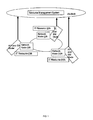
Figure 1 schematically illustrates a cloud resource management system architecture. - Hereinafter, the best mode for carrying out a method according to an embodiment is described in detail.
- According to this embodiment, the method is performed by a resource management system (RMS) solution that sees a completely integrated workflow, starting from network design and planning and covering network exercise. The basic components of the system are modeled and export a standard interface which also allows the virtualization of the physical resources.
- Starting from a network design (RMS uses only resource model to derive a solution for given requirements), the output drives the physical deployment of the resources.
- To orchestrate the resources of the cloud, the RMS comprises a ubiquitous resource manager that act as glue technologies between the networks design/planning and the physical resource provisioning (see red boxes in
Figure 1 ). Main functionalities of the resource manager are: - Physical infrastructure construction, in the sense that it operates the aggregation of heterogeneous resources (Optical + IT) in order to identify the physical infrastructure suitable for the requested service development and deployment
- Update Resource database, that permits to track used/available resources of the cloud (IT, Telco, Topology) in any phase of the resource management lifecycle
- Operating Management, that provides the full set of facilities act to monitors the cloud resources and modify the functional destination (e.g. de-aggregation, residue, etc.)
- In this way, the Network and IT resources operation and management activity starts and evolves in a transparent way respect to the physical infrastructure. The network evolution process is straightforward.
- The RMS uses the Ubiquitous Resource Manager to manage the resources in the optimal way.
- The Ubiquitous Resource Manager (U-RM), represents the glue technology between the cloud RMS and the physical resource (Optical + IT). It implements a collaborative architecture in which the Resource Management Interface receive service requests from cloud RMS and ask U-RMs located in the management plane to mange resources that satisfy the RMS's requests. U-RMs manages resources using information stored in their Resource Database (RD), whereas Optical + IT resources are managed by interacting with U-RM of other domains.
- To manage a multi-domain resource, the U-RM sends a resource management request to the U-RM along a pre-selected chain of domains to the destination, asking them for information about resource available in their domains satisfying a set of constraints.
- The resource management request will includes the following set of messages:
- Aggregation, that permits to aggregate different resources building a new resource cluster (RC)
- Provisioning, that permits to configure and activate the RC
- Releasing, that permits to destroy the cluster acting a garbage collection of the residue resources
- Monitoring, that permits to monitors all information related to the resource cluster (free/used resource percentage, power consumption, and so on) acting two different modality of data collection: push and pull
- Prediction, that permits to retrieve statistical information about the lifecycle of the resource cluster.
- The U-RM of the destination domain issues resource management response that arrives to the source U-RM following the path of the relative request and each domain inserts information about new resource management inside their resource database in order to satisfy the request of the cloud Resource Management System. To do so, each intermediate domain intercepts the resource management response, reads the list of resources described in this response and manages local resources that extend the RMS issued by the downstream domain till the border nodes connected to the upstream domain.
- The U-RM is a cloud-oriented resource management stack that will be integrated in a TMN-based environment on a dedicated workstation, or embedded in the Optical + IT equipment (e.g. Network Element). In the latter case, the U-RM will be embedded in a network management unit (NMU), an hardware component based on Von Neumann model. Basic components of the NMU are:
- Multi-core processor
- Disk storage unit
- Volatile memory unit
- Cloud based operative system
- A person of skill in the art would readily recognize that steps of various above-described methods can be performed by programmed computers. Herein, some embodiments are also intended to cover program storage devices, e.g., digital data storage media, which are machine or computer readable and encode machine-executable or computer-executable programs of instructions, wherein said instructions perform some or all of the steps of said above-described methods. The program storage devices may be, e.g., digital memories, magnetic storage media such as a magnetic disks and magnetic tapes, hard drives, or optically readable digital data storage media. The embodiments are also intended to cover computers programmed to perform said steps of the above-described methods.
- The description merely illustrates the principles of the invention. It will thus be appreciated that those skilled in the art will be able to devise various arrangements that, although not explicitly described or shown herein, embody the principles of the invention and are included within its spirit and scope. Furthermore, all examples recited herein are principally intended expressly to be only for pedagogical purposes to aid the reader in understanding the principles of the invention and the concepts contributed by the inventor(s) to furthering the art, and are to be construed as being without limitation to such specifically recited examples and conditions. Moreover, all statements herein reciting principles, aspects, and embodiments of the invention, as well as specific examples thereof, are intended to encompass equivalents thereof.
Claims (11)
- Method of managing a plurality of resources, the method comprising forming a cluster by aggregating the resources, provisioning the cluster, monitoring the cluster, gathering information on the cluster, and releasing the resources by disaggregating the cluster.
- Method as in claim 1 comprising the additional step of sharing at least one of the resources by means of a telecommunications network.
- Method as in claim 2 comprising the additional step of planning and designing the telecommunications network.
- Method as in any of the preceding claims comprising the additional step of requesting at least one of the resources by means of the Internet.
- Method as in any of the preceding claims comprising the additional step of allowing access to at least one of the resources through a software interface.
- Method as in any of the preceding claims wherein at least one of the resources is physical and the method comprises the additional step of virtualizing the physical resource.
- Method as in any of the preceding claims comprising the additional step of providing a service based on at least one of the resources.
- Method as in claim 7 comprising the additional step of deploying the service.
- Method as in claim 7 or 8 comprising the additional step of orchestrating the service.
- Method as in any of the preceding claims comprising the additional step of maintaining a database of resources.
- Method as in claim 10 wherein the database is configured to store usage information on at least one of the resources.Abstract
Priority Applications (1)
| Application Number | Priority Date | Filing Date | Title |
|---|---|---|---|
| EP11290023A EP2477142A1 (en) | 2011-01-17 | 2011-01-17 | Method of managing resources |
Applications Claiming Priority (1)
| Application Number | Priority Date | Filing Date | Title |
|---|---|---|---|
| EP11290023A EP2477142A1 (en) | 2011-01-17 | 2011-01-17 | Method of managing resources |
Publications (1)
| Publication Number | Publication Date |
|---|---|
| EP2477142A1 true EP2477142A1 (en) | 2012-07-18 |
Family
ID=44009880
Family Applications (1)
| Application Number | Title | Priority Date | Filing Date |
|---|---|---|---|
| EP11290023A Withdrawn EP2477142A1 (en) | 2011-01-17 | 2011-01-17 | Method of managing resources |
Country Status (1)
| Country | Link |
|---|---|
| EP (1) | EP2477142A1 (en) |
-
2011
- 2011-01-17 EP EP11290023A patent/EP2477142A1/en not_active Withdrawn
Non-Patent Citations (1)
| Title |
|---|
| "STATEMENT IN ACCORDANCE WITH THE NOTICE FROM THE EUROPEAN PATENT OFFICE DATED 1 OCTOBER 2007 CONCERNING BUSINESS METHODS - EPC / ERKLAERUNG GEMAESS DER MITTEILUNG DES EUROPAEISCHEN PATENTAMTS VOM 1.OKTOBER 2007 UEBER GESCHAEFTSMETHODEN - EPU / DECLARATION CONFORMEMENT AU COMMUNIQUE DE L'OFFICE EUROP", 20071101, 1 November 2007 (2007-11-01), XP002456252 * |
Similar Documents
| Publication | Publication Date | Title |
|---|---|---|
| US10999406B2 (en) | Attaching service level agreements to application containers and enabling service assurance | |
| CN112866333B (en) | Cloud-native-based micro-service scene optimization method, system, device and medium | |
| CN113923785B (en) | Network management system and method based on cloud network cooperation | |
| CN105989523B (en) | Policy-based data collection processing and negotiation method and system for analytics | |
| US9177271B2 (en) | Heterogeneous information technology (IT) infrastructure management orchestration | |
| US8407284B2 (en) | Systems and methods for cloud data deployment based on preferential and/or existing subscription relationships | |
| US20070006278A1 (en) | Automated dissemination of enterprise policy for runtime customization of resource arbitration | |
| US9893959B1 (en) | Resource modeling language to specify and control the placement of resources in a cloud environment | |
| JP2014532247A (en) | Discoverable identification and migration of easily cloudable applications | |
| US12468981B2 (en) | Database resource management using predictive models | |
| Rosendo et al. | A methodology to assess the availability of next-generation data centers: D. Rosendo et al. | |
| CN103077070A (en) | Cloud computing management system and management method for cloud computing systems | |
| Rajeshwari et al. | Workload balancing in a multi-cloud environment: challenges and research directions | |
| US12407744B2 (en) | Cellular system observability with centralized configuration management | |
| US12414012B2 (en) | Cellular system observability data bus layer extending over domain analytic collections layer | |
| Zahra et al. | Analyzing the limitations and efficiency of configuration strategies in hybrid cloud environments | |
| US20230337060A1 (en) | Cellular system observability architecture including short term and long term storage configuration | |
| US20230336433A1 (en) | Data collection for cellular system | |
| CN119415106A (en) | Cloud native software delivery method, system and electronic device | |
| EP2477142A1 (en) | Method of managing resources | |
| Sauret et al. | A Survey on Dynamic SLAs for Fog Computing | |
| US11537978B1 (en) | System, method, and computer program for inventory management utilizing an inventory and topology module including a plurality of layers | |
| Redeker et al. | Towards a Stateless Cloud Native and Cloud Agnostic Digital Twin Platform for the Digital Product Passport: Out-of-the-box, Reliable, and Scaling | |
| US20210342837A1 (en) | Template based multi-party process management | |
| Horn et al. | An Implemented Architecture for a Meta Operating System Managing Distributed Applications Across Heterogeneous Resources |
Legal Events
| Date | Code | Title | Description |
|---|---|---|---|
| PUAI | Public reference made under article 153(3) epc to a published international application that has entered the european phase |
Free format text: ORIGINAL CODE: 0009012 |
|
| AK | Designated contracting states |
Kind code of ref document: A1 Designated state(s): AL AT BE BG CH CY CZ DE DK EE ES FI FR GB GR HR HU IE IS IT LI LT LU LV MC MK MT NL NO PL PT RO RS SE SI SK SM TR |
|
| AX | Request for extension of the european patent |
Extension state: BA ME |
|
| STAA | Information on the status of an ep patent application or granted ep patent |
Free format text: STATUS: THE APPLICATION IS DEEMED TO BE WITHDRAWN |
|
| 18D | Application deemed to be withdrawn |
Effective date: 20130119 |