EP2476231B1 - Method of protecting access to data on a network - Google Patents
Method of protecting access to data on a network Download PDFInfo
- Publication number
- EP2476231B1 EP2476231B1 EP10751856.5A EP10751856A EP2476231B1 EP 2476231 B1 EP2476231 B1 EP 2476231B1 EP 10751856 A EP10751856 A EP 10751856A EP 2476231 B1 EP2476231 B1 EP 2476231B1
- Authority
- EP
- European Patent Office
- Prior art keywords
- request
- data
- server
- entity
- control message
- Prior art date
- Legal status (The legal status is an assumption and is not a legal conclusion. Google has not performed a legal analysis and makes no representation as to the accuracy of the status listed.)
- Active
Links
Images

Classifications
-
- H—ELECTRICITY
- H04—ELECTRIC COMMUNICATION TECHNIQUE
- H04L—TRANSMISSION OF DIGITAL INFORMATION, e.g. TELEGRAPHIC COMMUNICATION
- H04L63/00—Network architectures or network communication protocols for network security
- H04L63/16—Implementing security features at a particular protocol layer
- H04L63/168—Implementing security features at a particular protocol layer above the transport layer
-
- G—PHYSICS
- G06—COMPUTING OR CALCULATING; COUNTING
- G06F—ELECTRIC DIGITAL DATA PROCESSING
- G06F21/00—Security arrangements for protecting computers, components thereof, programs or data against unauthorised activity
- G06F21/10—Protecting distributed programs or content, e.g. vending or licensing of copyrighted material ; Digital rights management [DRM]
-
- H—ELECTRICITY
- H04—ELECTRIC COMMUNICATION TECHNIQUE
- H04N—PICTORIAL COMMUNICATION, e.g. TELEVISION
- H04N21/00—Selective content distribution, e.g. interactive television or video on demand [VOD]
- H04N21/40—Client devices specifically adapted for the reception of or interaction with content, e.g. set-top-box [STB]; Operations thereof
- H04N21/41—Structure of client; Structure of client peripherals
- H04N21/418—External card to be used in combination with the client device, e.g. for conditional access
- H04N21/4181—External card to be used in combination with the client device, e.g. for conditional access for conditional access
-
- H—ELECTRICITY
- H04—ELECTRIC COMMUNICATION TECHNIQUE
- H04N—PICTORIAL COMMUNICATION, e.g. TELEVISION
- H04N21/00—Selective content distribution, e.g. interactive television or video on demand [VOD]
- H04N21/60—Network structure or processes for video distribution between server and client or between remote clients; Control signalling between clients, server and network components; Transmission of management data between server and client, e.g. sending from server to client commands for recording incoming content stream; Communication details between server and client
- H04N21/63—Control signaling related to video distribution between client, server and network components; Network processes for video distribution between server and clients or between remote clients, e.g. transmitting basic layer and enhancement layers over different transmission paths, setting up a peer-to-peer communication via Internet between remote STB's; Communication protocols; Addressing
- H04N21/633—Control signals issued by server directed to the network components or client
- H04N21/6332—Control signals issued by server directed to the network components or client directed to client
- H04N21/6334—Control signals issued by server directed to the network components or client directed to client for authorisation, e.g. by transmitting a key
- H04N21/63345—Control signals issued by server directed to the network components or client directed to client for authorisation, e.g. by transmitting a key by transmitting keys
-
- G—PHYSICS
- G06—COMPUTING OR CALCULATING; COUNTING
- G06F—ELECTRIC DIGITAL DATA PROCESSING
- G06F2221/00—Indexing scheme relating to security arrangements for protecting computers, components thereof, programs or data against unauthorised activity
- G06F2221/21—Indexing scheme relating to G06F21/00 and subgroups addressing additional information or applications relating to security arrangements for protecting computers, components thereof, programs or data against unauthorised activity
- G06F2221/2107—File encryption
-
- H—ELECTRICITY
- H04—ELECTRIC COMMUNICATION TECHNIQUE
- H04L—TRANSMISSION OF DIGITAL INFORMATION, e.g. TELEGRAPHIC COMMUNICATION
- H04L65/00—Network arrangements, protocols or services for supporting real-time applications in data packet communication
- H04L65/60—Network streaming of media packets
- H04L65/61—Network streaming of media packets for supporting one-way streaming services, e.g. Internet radio
- H04L65/612—Network streaming of media packets for supporting one-way streaming services, e.g. Internet radio for unicast
Definitions
- the present invention relates to methods of protecting access to data on a network. It relates particularly to methods of protecting access to data sent between two entities through the Internet network.
- a server On a network, data is generally provided by a server through a dedicated Uniform Resource Identifier, also named URI.
- Uniform Resource Locator URL
- URL Uniform Resource Locator
- the exchanges of data between a client and a server over a network may require the protection of the data conveyed through the network.
- the security of the exchanged data may rely on the public key scheme.
- the data protection may also be carried out with a session key which is known by both sides. In such a case the session key is called symmetric key. For high secure sessions, several session keys may be successively used during a unique session.
- Streaming refers to the technology allowing delivery of real-time or "Video On Demand" services - such as video or audio - from a server to a client over a network.
- QoS Quality of Service
- HTTP streaming is a particular case of Internet streaming where the media (video, audio) traffic is carried over the HTTP protocol. This allows going naturally through firewalls and Network Address Translation (NAT) gateways.
- NAT Network Address Translation
- CDN Content delivery networks
- the role of these servers is to cache frequently accessed and/or big content in places closer to the clients accessing it in order to improve QoS.
- the CDN framework allows a short lead-time for requests.
- the initial server redirects requests to the optimal cache servers.
- the consecutive files are cached possibly over several edge servers.
- CDN are more and more used.
- the main solution for service protection is encryption between the server and the client. This can be done using classical Internet solutions such as Internet Protocol Security (IPSEC), Transport Layer Security (TLS), or any relevant known security mechanism.
- IPSEC Internet Protocol Security
- TLS Transport Layer Security
- the natural solution for encryption is to deliver the content over a TLS session. But this solution does not scale if the server has to manage 10s of thousands to million of concurrent secure one-to-one connections.
- WO 2006/101988 discloses a method wherein playlist-related control attributes are provided to a client which are then forwarded in a Real-Time Streaming Protocol (RTSP) message to a server in a URL query string.
- RTSP Real-Time Streaming Protocol
- WO 2007/109162 discloses a method for displaying videos with overlays and tags. After a request from a client for a media file, a URL to the server where the content is stored as well as a URL with overlay/tag(s) associated with the desired content are sent to the client.
- An object of the invention is to solve the above mentioned technical problem.
- the object of the present invention is a method of managing access to a plurality of data from a first entity by a second entity through a point-to-point link. Each of said data is reachable through a set of URIs that belongs to an index list.
- the method comprises the step of inserting a request to a control message in the index list. Said control message applies to a data which is reachable through one URI that belongs to the index list.
- control message may apply to a set of data which are reachable through a set of URIs belonging to the index list.
- the request to control message may be an URI targeting a remote server.
- the second entity may comprise a personal token.
- the remote server may send both a control message and a re-direct request to an URI targeting a local server embedded in the personal token.
- Said personal token may be a smart card.
- the second entity may comprise a personal token and the request to a control message may be an URI targeting a local server which is embedded in the personal token.
- said data intended to be distributed may be web streaming content.
- the control message may be coupled with a descrambling key.
- Another object of the invention is a method of managing access to a plurality of data from a first entity by a second entity through a point-to-point link.
- Each of said data is reachable through a set of URIs belonging to an index list.
- Said second entity comprises a personal token which embeds a local server.
- the method comprises the step of inserting a request to a descrambling key in the index list.
- Said request to a descrambling key is an URI targeting the local server.
- Another object of the invention is a streaming Web server intended to distribute a plurality of data to a distant entity through a point-to-point link.
- the streaming web server comprises an index list. Each of said data is reachable through a set of URIs belonging to the index list.
- the index list comprises a request to a control message. Said control message applies to a data reachable through one of the URIs belonging to the index list.
- the invention may apply to any types of server entity and to any types of client entity which are able to manage URI.
- the client entity may be a unique device that embeds software application able to generate the required secret data.
- the client entity may also be a couple made of a host machine and a hardware secure token.
- the invention may apply to any types of data exchanged between two entities through a network like Internet.
- the exchanged data may be files, HTML pages, scripts, applications or audio/video content.
- the invention is well-suited for protecting TV streaming over the Internet network.
- the invention relies on the association of control messages to elementary data intended to be transported over a network.
- a unique video file may be split in a plurality of ordered segments. These segments may be made available at a corresponding series of URI.
- the control messages associated to the segments have two functions. Each control message carries a key which is required for deciphering a segment. Each control message may carry a description of at least one access condition that the client entity should fulfill to be allowed to access the associated segment.
- An advantage of the invention is to allow a flexible and dynamic definition of access conditions which is compatible with massive scale.
- Another advantage of the invention is to allow the real-time definition of access conditions. This is useful for live events for example.
- the invention is consistent with the current web streaming standards.
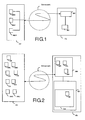
- Figure 1 shows an example of system comprising a server entity SV that provides a client entity CL with access to a data through the Internet network according to the invention.
- the server entity SV is made of three machines MA1, MA2 and MA3.
- the machine MA1 is a streaming Web server able to provide video content intended to be distributed.
- the machine MA2 is a control center able to provide a service key SK.
- the machine MA3 is a cache server of CDN type. MA3 is able to provide a copy of the video content initially stored in MA1.
- the client entity CL comprises a host machine HM and a personal token ET connected to the host machine HM.
- the personal token ET may be a hardware secure token or a software secure token.
- the hardware secure token may be a smart card.
- the hardware OTP token ET may contain a microprocessor, a communication interface, a non volatile memory, and a working memory.
- the working memory may be a RAM memory.
- the communication interface may be intended to be connected to a host machine for exchanging data.
- the communication interface may be a contactless or a contact interface.
- the non volatile memory may be an EEPROM or a Flash memory.
- the non volatile memory may contain an operating system, a token identifier.
- the operating system OS may comprise a virtual machine, in particular a Java ® virtual machine or a .Net ® virtual machine.
- the microprocessor cooperates with the working memory and is intended to run the operating system.
- Figure 2 shows another example of system comprising a server entity SV that provides a client entity CL with access to data D1, D2 and D3 through the Internet network.
- the server entity SV is made of a unique machine which acts as both a streaming Web server and a control center.
- the server entity SV comprises three data D1, D2 and D3 intended to be distributed to the client entity CL.
- the entity SV comprises two control messages CM1 and CM2, an index list IL, a service key SK and two scrambling keys DK1 and DK2.
- the scrambling key may be compliant with the Advanced Encryption Standard also named AES.
- the client entity CL comprises a host machine HM and an hardware secure token ET connected to the host machine HM.
- the host machine HM comprises web browser BR, a media player PL and an agent AG.
- the agent AG is able to manage control messages and to communicate with the token ET.
- the token ET comprises a local server LS.
- the local server LS comprises the service key SK.
- the service key SK is a secret value shared between the server entity SV and the client entity CL.
- the key SK is assumed to have been deployed in a secure way from the server entity SV or securely generated into the client entity CL.
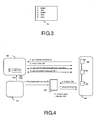
- Figure 3 shows an example of Index list generated according to the invention.
- the index list IL comprises five elements.
- the first element RCM1 is a request to the control message CM1.
- the second element UD1 is an URL where the data D1 is made reachable.
- the third element RCM2 is a request to the control message CM2.
- the fourth element UD2 is an URL where the data D2 is made reachable.
- the fifth element UD3 is an URL where the data D3 is made reachable.
- each request to control message is placed before its set of associated URLs.
- the control message CM1 applies to D1 and the control message CM2 applies to D2 and D3.
- Figure 4 shows an example of messages sequence exchanged between a server entity and a client entity according to the invention.
- the server entity is made of two machines RS and CC.
- the machine RS is a streaming web server able to provide video content intended to be distributed to client entities through streaming mechanism.
- the machine CC is a control center able to provide a service key SK.
- the client entity CL is made of two parts HM and ET.
- the host machine HM is a personal computer and ET is a smart card connected to the computer HM.
- the service key SK is assumed to be securely sent to the token ET in order to be shared by both server and client side.
- the personal computer HM comprises a web browser BR, a media player PL and an agent AG.
- the agent AG is able to communicate with the token ET.
- the media player PL may be Quicktime ®, SilverLight ® client of Microsoft ® or any HTTP streaming media player.
- a first get content request is sent by the browser BR to the server RS.
- the server RS sends the index list, also named a play list.
- the index list may be seen as a recipe that explains how to get the video data.
- the computer HM sends a HTTP request to get the first control message which applies to the URL that follows in the index list.
- the agent AG sends the received control message to the token ET.
- the token ET uses the service key SK for retrieving the descrambling key from the control message and for controlling the rights contain in the control message.
- the access to the video data may be controlled according to various and dynamic criteria. In particular, the following criteria may be checked: subscription rights, pay per view rights, payper time rights, Impulse pay per view, free sliding pre-view, multichannel package content and parental control.
- the control message allows the token of the client entity to increase the security.
- the token may check usage conditions, may verify a secret code or a signature.
- control message may comply with STKM as defined by the OMA BCast standard.
- the token ET sends the descrambling key to the computer HM.
- the computer sends a HTTP request to the URL that follows in the index list.
- the server RS sends a first encrypted video data through a message M1.
- the agent AG deciphers the received encrypted video data thanks to the descrambling key.
- the player P1 is able to play the first video data.
- the above-described steps are repeated for getting the further video data.
- the computer HM receives the successive segments of the video streaming. Usually, a video content, like a movie, is split in segments of ten seconds.
- the play list file can be updated during the segment consumption.
- the index list comprises two requests to control message which are inserted before the set of URLs addressing the data related to the respective control message.
- the first request RCM1 allows the computer HM to get the first control message CM1 which applies to video data D1.
- the URL UD1 allows the computer HM to get the scrambled video data D1.
- the second request RCM2 allows the computer HM to get the second control message CM2 which applies to the URL set made of UD2 and UD3.
- the second control message CM2 applies to both video data D2 and D3.
- the URLs UD2 and UD3 allow the computer HM to get the two scrambled video data D2 and D3.
- the computer HM is able to descramble the received data D2 and D3.
- Figure 5 shows an example of responses to the requests contained in an Index list generated according to a specific embodiment.
- the response REP corresponds to the Index list of Figure 3 .
- the response REP comprises five elements.
- the first element is a couple (RR1, CM1).
- RR1 is an HTTP re-direct request to an URL targeting the local server LS.
- CM1 is a control message applying to the data D1.
- the second element D1 is the scrambled data reachable at the URL UD1.
- the third element is a couple (RR2, CM2).
- RR2 is an HTTP re-direct request to an URL targeting the local server LS.
- CM2 is a control message applying to the data D2 and D3.
- the fourth element D2 is the scrambled data that can be retrieved at the URL UD2.
- the fifth element D3 is the scrambled data that can be retrieved at the URL UD3.
- the HTTP re-direct request RR1 allows to get a descrambling key that applies to D1 and the re-direct request RR2 allows to get a descrambling key that applies to D2.
- the local server LS is a smart card web server as defined by the OMA Smartcard Web Server V1.0 standard.
- the local server LS comprises a means able to decipher or generate the descrambling keys by using the service key SK.
- D1 is scrambled with DK1 in server side.
- D2 and D3 are scrambled with DK2.
- D1 is descrambled with DK1 in client side.
- D2 and D3 are descrambled with DK2 in client side
- Figure 6 shows another example of system comprising a server entity SV that provides a client entity CL with access to data D1, D2 and D3 through the Internet network.
- the server entity SV is made of a unique machine which acts as a streaming Web server.
- the server entity SV comprises three data D1, D2 and D3 intended to be distributed to the client entity CL.
- the entity SV comprises two control messages CM1 and CM2, an index list IL and three scrambling keys DK1, DK2 and DK3.
- the client entity CL comprises a host machine HM and an hardware secure token ET connected to the host machine HM.
- the host machine HM comprises web browser BR, a media player PL and an agent AG.
- the agent AG is able to manage control messages and to communicate with the token ET.
- the token ET comprises a local server LS.
- the local server LS comprises three descrambling keys DKL1, DKL2 and DKL3.
- the keys DKL1, DKL2 and DKL3 may be equal to the scrambling keys DK1, DK2 and DK3.
- the keys DKL1, DKL2 and DKL3 are assumed to have been deployed in a secure way during a previous phase.
- the setting of the descrambling keys in the client entity may be carried out through high secure session.
- the token is a smart card comprising a smart card web server
- the descrambling key set may be administrate in a secure way through Internet or even through OTA if the smart card has SIM features.
- the descrambling keys may be stored in a hardware token before token issuance.
- the descrambling keys may be dynamically generated in the hardware token from a master key or from a secret seed.
- the descrambling keys may be generated by dedicated servlets. The generation of descrambling keys may be manages with counters that are incremented in similar way at both server and client sides.
- Figure 7 shows an example of Index list which may be used by the system of figure 6 .
- the index list IL comprises six elements.
- the first element RKL1 is a request to a descrambling key DKL1.
- the request RKL1 targets the local server LS.
- the second element UD1 is an URL where the scrambled data D1 is made reachable.
- the third element RKL2 is a request to a descrambling key DKL2.
- the request RKL2 targets the local server LS.
- the fourth element UD2 is an URL where the scrambled data D2 is made reachable.
- the fifth element RKL3 is a request to a descrambling key DKL3.
- the request RKL3 targets the local server LS.
- the sixth element UD3 is an URL where the scrambled data D3 is made reachable.
- each request to descrambling key is placed before its set of associated URLs.
- the key DKL1 applies to D1
- the key DKL2 applies to D2
- the key DKL3 applies to D3.
- the descrambling keys are not transmitted on the network with the video streaming.
- the Index list may be regularly refreshed by the server entity with new URLs.
- the server entity and the client entity may be out of sync.
- the invention is compliant with the web cache of CDN framework over Internet.
- the invention allows protecting access to data sent over a public network with a high granularity of rights.
- a video segment is ciphered with a scrambling key and all client entities may get the descrambling key associated to the video segment.
- the invention allows protecting access to data sent over a public network with millions of concurrent clients.
- the host machine HM may be a TV, a set-top box, a mobile phone or any device intended to receive a data distributed by the server entity SV through a public network like Internet.
- the use of the token ET may be controlled through a value specific to the user of the token.
- the access to the token ET may be controlled by a PIN code or a biometric value.
Landscapes
- Engineering & Computer Science (AREA)
- Computer Security & Cryptography (AREA)
- Multimedia (AREA)
- Signal Processing (AREA)
- Theoretical Computer Science (AREA)
- Computer Networks & Wireless Communication (AREA)
- Computer Hardware Design (AREA)
- General Engineering & Computer Science (AREA)
- Software Systems (AREA)
- Computing Systems (AREA)
- Physics & Mathematics (AREA)
- General Physics & Mathematics (AREA)
- Technology Law (AREA)
- Information Transfer Between Computers (AREA)
- Two-Way Televisions, Distribution Of Moving Picture Or The Like (AREA)
Description
- The present invention relates to methods of protecting access to data on a network. It relates particularly to methods of protecting access to data sent between two entities through the Internet network.
- On a network, data is generally provided by a server through a dedicated Uniform Resource Identifier, also named URI. In particular Uniform Resource Locator (URL) is a kind of URI. The exchanges of data between a client and a server over a network may require the protection of the data conveyed through the network. The security of the exchanged data may rely on the public key scheme. The data protection may also be carried out with a session key which is known by both sides. In such a case the session key is called symmetric key. For high secure sessions, several session keys may be successively used during a unique session.
- In the domain of TV over IP, a large amount of data must be transported over Internet network. Streaming refers to the technology allowing delivery of real-time or "Video On Demand" services - such as video or audio - from a server to a client over a network. There are several protocol standards available to do streaming over an IP network. The streaming over Internet requires specific means which allows guaranteeing the Quality of Service (QoS). HTTP streaming is a particular case of Internet streaming where the media (video, audio) traffic is carried over the HTTP protocol. This allows going naturally through firewalls and Network Address Translation (NAT) gateways. In HTTP Streaming, a media file, like movie, is split into a number of smaller media files on the server. The HTTP client recovers the initial file by consecutive HTTP requests to the web streaming server. Web streaming is becoming a leading streaming technology fostered by the mains actors in this domain. Content delivery networks (CDN) consist in a network of cache servers spread over the edge of Internet. The role of these servers is to cache frequently accessed and/or big content in places closer to the clients accessing it in order to improve QoS. The CDN framework allows a short lead-time for requests. The initial server redirects requests to the optimal cache servers. In the case of web streaming over a CDN, the consecutive files are cached possibly over several edge servers. With the growth of video services over the Internet, CDN are more and more used.
- The main solution for service protection is encryption between the server and the client. This can be done using classical Internet solutions such as Internet Protocol Security (IPSEC), Transport Layer Security (TLS), or any relevant known security mechanism. In case of web streaming, the natural solution for encryption is to deliver the content over a TLS session. But this solution does not scale if the server has to manage 10s of thousands to million of concurrent secure one-to-one connections. Moreover there is a need for providing a secure streaming mechanism over Internet compatible with CDNs.
-
WO 2006/101988 discloses a method wherein playlist-related control attributes are provided to a client which are then forwarded in a Real-Time Streaming Protocol (RTSP) message to a server in a URL query string. -
WO 2007/109162 discloses a method for displaying videos with overlays and tags. After a request from a client for a media file, a URL to the server where the content is stored as well as a URL with overlay/tag(s) associated with the desired content are sent to the client. - An object of the invention is to solve the above mentioned technical problem.
- The object of the present invention is a method of managing access to a plurality of data from a first entity by a second entity through a point-to-point link. Each of said data is reachable through a set of URIs that belongs to an index list. The method comprises the step of inserting a request to a control message in the index list. Said control message applies to a data which is reachable through one URI that belongs to the index list.
- Advantageously, the control message may apply to a set of data which are reachable through a set of URIs belonging to the index list.
- The request to control message may be an URI targeting a remote server.
- Advantageously, the second entity may comprise a personal token. In response to said request the remote server may send both a control message and a re-direct request to an URI targeting a local server embedded in the personal token.
- Said personal token may be a smart card.
- Alternately, the second entity may comprise a personal token and the request to a control message may be an URI targeting a local server which is embedded in the personal token.
- Advantageously, said data intended to be distributed may be web streaming content. The control message may be coupled with a descrambling key.
- Another object of the invention is a method of managing access to a plurality of data from a first entity by a second entity through a point-to-point link. Each of said data is reachable through a set of URIs belonging to an index list. Said second entity comprises a personal token which embeds a local server. The method comprises the step of inserting a request to a descrambling key in the index list. Said request to a descrambling key is an URI targeting the local server.
- Another object of the invention is a streaming Web server intended to distribute a plurality of data to a distant entity through a point-to-point link. The streaming web server comprises an index list. Each of said data is reachable through a set of URIs belonging to the index list. The index list comprises a request to a control message. Said control message applies to a data reachable through one of the URIs belonging to the index list.
- Other characteristics and advantages of the present invention will emerge more clearly from a reading of the following description of a number of preferred embodiments of the invention with reference to the corresponding accompanying drawings in which:
-
Figure 1 is a first example of system comprising a server entity and a client entity according to the invention; -
Figure 2 is a second example of a system comprising a server entity and a client entity according to the invention; -
Figure 3 depicts a first example of Index list generated according to the invention; -
Figure 4 shows an example of messages sequence exchanged between a server entity and a client entity according to the invention; -
Figure 5 depicts an example of response to the requests contained in an Index list generated according to the invention; -
Figure 6 is a third example of a system comprising a server entity and a client entity; and -
Figure 7 depicts a second example of Index list. - The invention may apply to any types of server entity and to any types of client entity which are able to manage URI. The client entity may be a unique device that embeds software application able to generate the required secret data. The client entity may also be a couple made of a host machine and a hardware secure token.
- The invention may apply to any types of data exchanged between two entities through a network like Internet. For example, the exchanged data may be files, HTML pages, scripts, applications or audio/video content. In particular, the invention is well-suited for protecting TV streaming over the Internet network.
- The invention relies on the association of control messages to elementary data intended to be transported over a network. According to an embodiment of the invention, a unique video file may be split in a plurality of ordered segments. These segments may be made available at a corresponding series of URI. The control messages associated to the segments have two functions. Each control message carries a key which is required for deciphering a segment. Each control message may carry a description of at least one access condition that the client entity should fulfill to be allowed to access the associated segment.
- An advantage of the invention is to allow a flexible and dynamic definition of access conditions which is compatible with massive scale.
- Another advantage of the invention is to allow the real-time definition of access conditions. This is useful for live events for example.
- The invention is consistent with the current web streaming standards.
-
Figure 1 shows an example of system comprising a server entity SV that provides a client entity CL with access to a data through the Internet network according to the invention. - In this example, the server entity SV is made of three machines MA1, MA2 and MA3. The machine MA1 is a streaming Web server able to provide video content intended to be distributed. The machine MA2 is a control center able to provide a service key SK. The machine MA3 is a cache server of CDN type. MA3 is able to provide a copy of the video content initially stored in MA1.
- In this example, the client entity CL comprises a host machine HM and a personal token ET connected to the host machine HM. The personal token ET may be a hardware secure token or a software secure token. The hardware secure token may be a smart card.
- In particular, the hardware OTP token ET may contain a microprocessor, a communication interface, a non volatile memory, and a working memory. The working memory may be a RAM memory. The communication interface may be intended to be connected to a host machine for exchanging data. The communication interface may be a contactless or a contact interface. The non volatile memory may be an EEPROM or a Flash memory. The non volatile memory may contain an operating system, a token identifier. The operating system OS may comprise a virtual machine, in particular a Java ® virtual machine or a .Net ® virtual machine. The microprocessor cooperates with the working memory and is intended to run the operating system.
-
Figure 2 shows another example of system comprising a server entity SV that provides a client entity CL with access to data D1, D2 and D3 through the Internet network. - In this example, the server entity SV is made of a unique machine which acts as both a streaming Web server and a control center.
- The server entity SV comprises three data D1, D2 and D3 intended to be distributed to the client entity CL. The entity SV comprises two control messages CM1 and CM2, an index list IL, a service key SK and two scrambling keys DK1 and DK2. For example the scrambling key may be compliant with the Advanced Encryption Standard also named AES.
- In this example, the client entity CL comprises a host machine HM and an hardware secure token ET connected to the host machine HM.
- The host machine HM comprises web browser BR, a media player PL and an agent AG. The agent AG is able to manage control messages and to communicate with the token ET.
- The token ET comprises a local server LS. The local server LS comprises the service key SK.
- The service key SK is a secret value shared between the server entity SV and the client entity CL. The key SK is assumed to have been deployed in a secure way from the server entity SV or securely generated into the client entity CL.
-
Figure 3 shows an example of Index list generated according to the invention. - The index list IL comprises five elements. The first element RCM1 is a request to the control message CM1. The second element UD1 is an URL where the data D1 is made reachable. The third element RCM2 is a request to the control message CM2. The fourth element UD2 is an URL where the data D2 is made reachable. The fifth element UD3 is an URL where the data D3 is made reachable. According to a preferred mode of use, each request to control message is placed before its set of associated URLs. In the example of
figure 3 , the control message CM1 applies to D1 and the control message CM2 applies to D2 and D3. -
Figure 4 shows an example of messages sequence exchanged between a server entity and a client entity according to the invention. - In this example, the server entity is made of two machines RS and CC. The machine RS is a streaming web server able to provide video content intended to be distributed to client entities through streaming mechanism. The machine CC is a control center able to provide a service key SK. In this example, the client entity CL is made of two parts HM and ET. The host machine HM is a personal computer and ET is a smart card connected to the computer HM. The service key SK is assumed to be securely sent to the token ET in order to be shared by both server and client side. The personal computer HM comprises a web browser BR, a media player PL and an agent AG. The agent AG is able to communicate with the token ET. For example, the media player PL may be Quicktime ®, SilverLight ® client of Microsoft ® or any HTTP streaming media player.
- When the client entity wants to get the video streaming, a first get content request is sent by the browser BR to the server RS. In response, the server RS sends the index list, also named a play list. The index list may be seen as a recipe that explains how to get the video data. Then the computer HM sends a HTTP request to get the first control message which applies to the URL that follows in the index list.
- Then the agent AG sends the received control message to the token ET. The token ET uses the service key SK for retrieving the descrambling key from the control message and for controlling the rights contain in the control message. Thus the access to the video data may be controlled according to various and dynamic criteria. In particular, the following criteria may be checked: subscription rights, pay per view rights, payper time rights, Impulse pay per view, free sliding pre-view, multichannel package content and parental control. The control message allows the token of the client entity to increase the security. Thus the token may check usage conditions, may verify a secret code or a signature.
- For example the control message may comply with STKM as defined by the OMA BCast standard.
- Then the token ET sends the descrambling key to the computer HM. At a further step, the computer sends a HTTP request to the URL that follows in the index list. In response, the server RS sends a first encrypted video data through a message M1. Then the agent AG deciphers the received encrypted video data thanks to the descrambling key. Then the player P1 is able to play the first video data. The above-described steps are repeated for getting the further video data. Thus the computer HM receives the successive segments of the video streaming. Usually, a video content, like a movie, is split in segments of ten seconds. The play list file can be updated during the segment consumption.
- The above-described method may be executed with the index list IL which is shown at
Figure 3 . In this embodiment, the index list comprises two requests to control message which are inserted before the set of URLs addressing the data related to the respective control message. Thus the first request RCM1 allows the computer HM to get the first control message CM1 which applies to video data D1. The URL UD1 allows the computer HM to get the scrambled video data D1. Thank to the method, the computer HM is able to descramble the received data D1. The second request RCM2 allows the computer HM to get the second control message CM2 which applies to the URL set made of UD2 and UD3. In other words, the second control message CM2 applies to both video data D2 and D3. The URLs UD2 and UD3 allow the computer HM to get the two scrambled video data D2 and D3. Thus the computer HM is able to descramble the received data D2 and D3. -
Figure 5 shows an example of responses to the requests contained in an Index list generated according to a specific embodiment. - In one embodiment, the response REP corresponds to the Index list of
Figure 3 . - The response REP comprises five elements. The first element is a couple (RR1, CM1). RR1 is an HTTP re-direct request to an URL targeting the local server LS. CM1 is a control message applying to the data D1. The second element D1 is the scrambled data reachable at the URL UD1. The third element is a couple (RR2, CM2). RR2 is an HTTP re-direct request to an URL targeting the local server LS. CM2 is a control message applying to the data D2 and D3. The fourth element D2 is the scrambled data that can be retrieved at the URL UD2. The fifth element D3 is the scrambled data that can be retrieved at the URL UD3. In the example of
figure 5 , the HTTP re-direct request RR1 allows to get a descrambling key that applies to D1 and the re-direct request RR2 allows to get a descrambling key that applies to D2. In a preferred embodiment, the local server LS is a smart card web server as defined by the OMA Smartcard Web Server V1.0 standard. The local server LS comprises a means able to decipher or generate the descrambling keys by using the service key SK. In the example offigure 3 , D1 is scrambled with DK1 in server side. D2 and D3 are scrambled with DK2. D1 is descrambled with DK1 in client side. D2 and D3 are descrambled with DK2 in client side -
Figure 6 shows another example of system comprising a server entity SV that provides a client entity CL with access to data D1, D2 and D3 through the Internet network. - In this example, the server entity SV is made of a unique machine which acts as a streaming Web server.
- The server entity SV comprises three data D1, D2 and D3 intended to be distributed to the client entity CL. The entity SV comprises two control messages CM1 and CM2, an index list IL and three scrambling keys DK1, DK2 and DK3.
- In this example, the client entity CL comprises a host machine HM and an hardware secure token ET connected to the host machine HM.
- The host machine HM comprises web browser BR, a media player PL and an agent AG. The agent AG is able to manage control messages and to communicate with the token ET.
- The token ET comprises a local server LS. The local server LS comprises three descrambling keys DKL1, DKL2 and DKL3. Advantageously, the keys DKL1, DKL2 and DKL3 may be equal to the scrambling keys DK1, DK2 and DK3.
- The keys DKL1, DKL2 and DKL3 are assumed to have been deployed in a secure way during a previous phase. The setting of the descrambling keys in the client entity may be carried out through high secure session. In particular, if the token is a smart card comprising a smart card web server, the descrambling key set may be administrate in a secure way through Internet or even through OTA if the smart card has SIM features. Alternately, the descrambling keys may be stored in a hardware token before token issuance. Alternately, the descrambling keys may be dynamically generated in the hardware token from a master key or from a secret seed. In a smart card token, the descrambling keys may be generated by dedicated servlets. The generation of descrambling keys may be manages with counters that are incremented in similar way at both server and client sides.
-
Figure 7 shows an example of Index list which may be used by the system offigure 6 . - The index list IL comprises six elements. The first element RKL1 is a request to a descrambling key DKL1. The request RKL1 targets the local server LS. The second element UD1 is an URL where the scrambled data D1 is made reachable. The third element RKL2 is a request to a descrambling key DKL2. The request RKL2 targets the local server LS. The fourth element UD2 is an URL where the scrambled data D2 is made reachable. The fifth element RKL3 is a request to a descrambling key DKL3. The request RKL3 targets the local server LS. The sixth element UD3 is an URL where the scrambled data D3 is made reachable. According to a preferred embodiment, each request to descrambling key is placed before its set of associated URLs. In the example of
figure 7 , the key DKL1 applies to D1, the key DKL2 applies to D2 and the key DKL3 applies to D3. - Thanks to this embodiment, the descrambling keys are not transmitted on the network with the video streaming.
- Advantageously, the Index list may be regularly refreshed by the server entity with new URLs.
- Thanks to the invention, the server entity and the client entity may be out of sync. Thus the invention is compliant with the web cache of CDN framework over Internet.
- The invention allows protecting access to data sent over a public network with a high granularity of rights.
- Thanks to the invention, a video segment is ciphered with a scrambling key and all client entities may get the descrambling key associated to the video segment. The invention allows protecting access to data sent over a public network with millions of concurrent clients.
- Alternately, the host machine HM may be a TV, a set-top box, a mobile phone or any device intended to receive a data distributed by the server entity SV through a public network like Internet.
- Advantageously, the use of the token ET may be controlled through a value specific to the user of the token. For example, the access to the token ET may be controlled by a PIN code or a biometric value.
Claims (8)
- A method of managing access to a plurality of data (D1, D2) from a first entity (SV) by a second entity (CL) through a point-to-point link, each of said data (D1, D2) being reachable through a set of URI (UD1, UD2) belonging to an index list (IL), said second entity (CL) comprising a personal token (ET), said personal token (ET) comprising a local server ,(LS),
characterized in that said method comprises the step of inserting a request in the index list (IL), said request being adapted to provide an URI targeting the local server (LS). - A method according to claim 1, wherein said request is a request (RCM1) to a control message (CM1), said control message (CM1) applying to a data (D1) reachable through one URI (UD1) belonging to the index list (IL), wherein said request (RCM1) is an URI targeting a remote server (RS) and wherein in response to said request (RCM1) the remote server (RS) sends both a control message (CM1) and a re-direct request (RR1) to said URI targeting the local server (LS).
- A method according to claim 1, wherein said request is a request (RCM1) to a control message (CM1) and wherein said request (RCM1) is the URI targeting the local server (LS).
- A method according to one of claims 2 to 3, wherein said control message (CM1) applies to a set of data (D1, D2) reachable through a set of URIs (UD1, UD2) belonging to the index list (IL).
- A method according to one of claims 1 to 4, wherein said personal token (ET) is a smart card.
- A method according to one of claims 2 to 5, wherein said data (D1, D2) are web streaming content and wherein said control message (CM1) is coupled with a descrambling key (DK1).
- A method according to claim 1, wherein said request is a request (RKL1) to a descrambling key (DK1), and wherein said request (RKL1) is an URI targeting the local server (LS).
- A streaming Web server (SV) intended to distribute a plurality of data (D1, D2) to a distant entity (CL) through a point-to-point link, said distant entity (CL) comprising a personal token (ET) which comprises a local server (LS), said web server (SV) comprising an index list (IL), each of said data (D1, D2) being reachable through a set of URI (UD1, UD2) belonging to the index list (IL),
characterized in that said index list (IL) comprises a request adapted to provide an URI targeting the local server (LS).
Priority Applications (1)
| Application Number | Priority Date | Filing Date | Title |
|---|---|---|---|
| EP10751856.5A EP2476231B1 (en) | 2009-09-11 | 2010-08-18 | Method of protecting access to data on a network |
Applications Claiming Priority (3)
| Application Number | Priority Date | Filing Date | Title |
|---|---|---|---|
| EP09290694A EP2296338A1 (en) | 2009-09-11 | 2009-09-11 | Method of protecting access to data on a network |
| EP10751856.5A EP2476231B1 (en) | 2009-09-11 | 2010-08-18 | Method of protecting access to data on a network |
| PCT/EP2010/062022 WO2011029703A1 (en) | 2009-09-11 | 2010-08-18 | Method of protecting access to data on a network |
Publications (2)
| Publication Number | Publication Date |
|---|---|
| EP2476231A1 EP2476231A1 (en) | 2012-07-18 |
| EP2476231B1 true EP2476231B1 (en) | 2015-02-25 |
Family
ID=41795374
Family Applications (2)
| Application Number | Title | Priority Date | Filing Date |
|---|---|---|---|
| EP09290694A Withdrawn EP2296338A1 (en) | 2009-09-11 | 2009-09-11 | Method of protecting access to data on a network |
| EP10751856.5A Active EP2476231B1 (en) | 2009-09-11 | 2010-08-18 | Method of protecting access to data on a network |
Family Applications Before (1)
| Application Number | Title | Priority Date | Filing Date |
|---|---|---|---|
| EP09290694A Withdrawn EP2296338A1 (en) | 2009-09-11 | 2009-09-11 | Method of protecting access to data on a network |
Country Status (3)
| Country | Link |
|---|---|
| US (1) | US8584223B2 (en) |
| EP (2) | EP2296338A1 (en) |
| WO (1) | WO2011029703A1 (en) |
Families Citing this family (1)
| Publication number | Priority date | Publication date | Assignee | Title |
|---|---|---|---|---|
| US11271927B2 (en) * | 2018-04-26 | 2022-03-08 | Seclous Gmbh | Methods for multi-factor access control in anonymous systems |
Family Cites Families (13)
| Publication number | Priority date | Publication date | Assignee | Title |
|---|---|---|---|---|
| EP0815526B1 (en) * | 1996-01-16 | 2003-05-28 | Hughes Electronics Corporation | Deferred billing, broadcast, electronic document distribution system and method |
| JP4617533B2 (en) * | 2000-03-14 | 2011-01-26 | ソニー株式会社 | Information providing apparatus and method, information processing apparatus and method, and program storage medium |
| JP2002373129A (en) * | 2001-06-14 | 2002-12-26 | Fujitsu Ltd | Equipment control system |
| US7076478B2 (en) * | 2001-06-26 | 2006-07-11 | Microsoft Corporation | Wrapper playlists on streaming media services |
| US7243369B2 (en) * | 2001-08-06 | 2007-07-10 | Sun Microsystems, Inc. | Uniform resource locator access management and control system and method |
| EP1454493B1 (en) * | 2001-12-11 | 2009-09-23 | Telefonaktiebolaget LM Ericsson (publ) | Method of rights management for streaming media |
| US20030126611A1 (en) * | 2001-12-28 | 2003-07-03 | International Business Machines Corporation | Methods and apparatus for controlling interactive television information and commerce services |
| US20030140257A1 (en) * | 2002-01-22 | 2003-07-24 | Petr Peterka | Encryption, authentication, and key management for multimedia content pre-encryption |
| JP2005198043A (en) * | 2004-01-07 | 2005-07-21 | Nec Corp | Content distribution system, its method, server, user terminal, encryption apparatus, managing apparatus, and streaming apparatus |
| US8069219B2 (en) * | 2005-03-03 | 2011-11-29 | Nokia Corporation | Method and apparatus for implementing a mobile web server based system |
| EP1869568A4 (en) * | 2005-03-23 | 2009-04-29 | Alcatel Lucent | SYSTEM AND METHOD FOR OBTAINING A PLAYLIST SEARCH FOR DIGITAL MULTIMEDIA CONTENTS FROM A NETWORK NODE |
| WO2007109162A2 (en) * | 2006-03-17 | 2007-09-27 | Viddler, Inc. | Methods and systems for displaying videos with overlays and tags |
| WO2008068963A1 (en) * | 2006-12-08 | 2008-06-12 | Telefonaktiebolaget Lm Ericsson (Publ) | User device, control method thereof, and ims user equipment |
-
2009
- 2009-09-11 EP EP09290694A patent/EP2296338A1/en not_active Withdrawn
-
2010
- 2010-08-18 EP EP10751856.5A patent/EP2476231B1/en active Active
- 2010-08-18 WO PCT/EP2010/062022 patent/WO2011029703A1/en not_active Ceased
- 2010-08-18 US US13/389,528 patent/US8584223B2/en not_active Expired - Fee Related
Also Published As
| Publication number | Publication date |
|---|---|
| US20120144474A1 (en) | 2012-06-07 |
| US8584223B2 (en) | 2013-11-12 |
| WO2011029703A1 (en) | 2011-03-17 |
| EP2296338A1 (en) | 2011-03-16 |
| EP2476231A1 (en) | 2012-07-18 |
Similar Documents
| Publication | Publication Date | Title |
|---|---|---|
| JP4705958B2 (en) | Digital Rights Management Method for Broadcast / Multicast Service | |
| EP3055805B1 (en) | System and method for signaling and verifying url signatures for both url authentication and url-based content access authorization in adaptive streaming | |
| US10146918B2 (en) | Digital rights management for HTTP-based media streaming | |
| US20080216177A1 (en) | Contents Distribution System | |
| CN100450176C (en) | Digital rights management method and client device for streaming media | |
| US20090003600A1 (en) | Progressive download or streaming of digital media securely through a localized container and communication protocol proxy | |
| US20030140257A1 (en) | Encryption, authentication, and key management for multimedia content pre-encryption | |
| CN102143129B (en) | Method and system for realizing service protection in hyper text transmission protocol (HTTP) streaming transmission | |
| CN103493497A (en) | Ethernet decoder device and method to access protected content | |
| CA2861811A1 (en) | Dynamically-executed syndication services | |
| US20160182466A1 (en) | TransDRM for Streaming Media | |
| US20030217163A1 (en) | Method and system for assessing a right of access to content for a user device | |
| CN104009838A (en) | Multimedia content piecewise encryption method | |
| US20090129587A1 (en) | Method, system and apparatus for sharing media content in a private network | |
| CN103152321A (en) | Digital rights management of streaming contents and services | |
| US20200364317A1 (en) | Method and system for identifying a user terminal in order to receive streaming protected multimedia content | |
| US20060047601A1 (en) | Method and apparatus for providing channel key data | |
| US20060047976A1 (en) | Method and apparatus for generating a decrpytion content key | |
| CN101742249A (en) | A Realization Method of Trusted Two-way Network Digital TV System | |
| US8584223B2 (en) | Method of protecting access to data on a network | |
| US8516253B1 (en) | Self-keyed protection of anticipatory content | |
| JP2011508544A (en) | Data transmission system and method | |
| EP2296311A1 (en) | Method for ciphering messages exchanged between two entities | |
| KR101662489B1 (en) | Cloud based protection proxy server supporting common encryption and its operation method | |
| EP2296337A1 (en) | Method of protecting access to data on a network |
Legal Events
| Date | Code | Title | Description |
|---|---|---|---|
| PUAI | Public reference made under article 153(3) epc to a published international application that has entered the european phase |
Free format text: ORIGINAL CODE: 0009012 |
|
| 17P | Request for examination filed |
Effective date: 20120411 |
|
| AK | Designated contracting states |
Kind code of ref document: A1 Designated state(s): AL AT BE BG CH CY CZ DE DK EE ES FI FR GB GR HR HU IE IS IT LI LT LU LV MC MK MT NL NO PL PT RO SE SI SK SM TR |
|
| DAX | Request for extension of the european patent (deleted) | ||
| GRAP | Despatch of communication of intention to grant a patent |
Free format text: ORIGINAL CODE: EPIDOSNIGR1 |
|
| INTG | Intention to grant announced |
Effective date: 20140930 |
|
| GRAS | Grant fee paid |
Free format text: ORIGINAL CODE: EPIDOSNIGR3 |
|
| GRAA | (expected) grant |
Free format text: ORIGINAL CODE: 0009210 |
|
| AK | Designated contracting states |
Kind code of ref document: B1 Designated state(s): AL AT BE BG CH CY CZ DE DK EE ES FI FR GB GR HR HU IE IS IT LI LT LU LV MC MK MT NL NO PL PT RO SE SI SK SM TR |
|
| REG | Reference to a national code |
Ref country code: GB Ref legal event code: FG4D |
|
| REG | Reference to a national code |
Ref country code: CH Ref legal event code: EP |
|
| REG | Reference to a national code |
Ref country code: IE Ref legal event code: FG4D |
|
| REG | Reference to a national code |
Ref country code: DE Ref legal event code: R096 Ref document number: 602010022573 Country of ref document: DE Effective date: 20150409 |
|
| REG | Reference to a national code |
Ref country code: AT Ref legal event code: REF Ref document number: 712827 Country of ref document: AT Kind code of ref document: T Effective date: 20150415 |
|
| REG | Reference to a national code |
Ref country code: NL Ref legal event code: VDEP Effective date: 20150225 |
|
| REG | Reference to a national code |
Ref country code: AT Ref legal event code: MK05 Ref document number: 712827 Country of ref document: AT Kind code of ref document: T Effective date: 20150225 |
|
| REG | Reference to a national code |
Ref country code: LT Ref legal event code: MG4D |
|
| PG25 | Lapsed in a contracting state [announced via postgrant information from national office to epo] |
Ref country code: SE Free format text: LAPSE BECAUSE OF FAILURE TO SUBMIT A TRANSLATION OF THE DESCRIPTION OR TO PAY THE FEE WITHIN THE PRESCRIBED TIME-LIMIT Effective date: 20150225 Ref country code: NO Free format text: LAPSE BECAUSE OF FAILURE TO SUBMIT A TRANSLATION OF THE DESCRIPTION OR TO PAY THE FEE WITHIN THE PRESCRIBED TIME-LIMIT Effective date: 20150525 Ref country code: ES Free format text: LAPSE BECAUSE OF FAILURE TO SUBMIT A TRANSLATION OF THE DESCRIPTION OR TO PAY THE FEE WITHIN THE PRESCRIBED TIME-LIMIT Effective date: 20150225 Ref country code: HR Free format text: LAPSE BECAUSE OF FAILURE TO SUBMIT A TRANSLATION OF THE DESCRIPTION OR TO PAY THE FEE WITHIN THE PRESCRIBED TIME-LIMIT Effective date: 20150225 Ref country code: LT Free format text: LAPSE BECAUSE OF FAILURE TO SUBMIT A TRANSLATION OF THE DESCRIPTION OR TO PAY THE FEE WITHIN THE PRESCRIBED TIME-LIMIT Effective date: 20150225 Ref country code: FI Free format text: LAPSE BECAUSE OF FAILURE TO SUBMIT A TRANSLATION OF THE DESCRIPTION OR TO PAY THE FEE WITHIN THE PRESCRIBED TIME-LIMIT Effective date: 20150225 |
|
| PG25 | Lapsed in a contracting state [announced via postgrant information from national office to epo] |
Ref country code: AT Free format text: LAPSE BECAUSE OF FAILURE TO SUBMIT A TRANSLATION OF THE DESCRIPTION OR TO PAY THE FEE WITHIN THE PRESCRIBED TIME-LIMIT Effective date: 20150225 Ref country code: IS Free format text: LAPSE BECAUSE OF FAILURE TO SUBMIT A TRANSLATION OF THE DESCRIPTION OR TO PAY THE FEE WITHIN THE PRESCRIBED TIME-LIMIT Effective date: 20150625 Ref country code: GR Free format text: LAPSE BECAUSE OF FAILURE TO SUBMIT A TRANSLATION OF THE DESCRIPTION OR TO PAY THE FEE WITHIN THE PRESCRIBED TIME-LIMIT Effective date: 20150526 Ref country code: LV Free format text: LAPSE BECAUSE OF FAILURE TO SUBMIT A TRANSLATION OF THE DESCRIPTION OR TO PAY THE FEE WITHIN THE PRESCRIBED TIME-LIMIT Effective date: 20150225 |
|
| PG25 | Lapsed in a contracting state [announced via postgrant information from national office to epo] |
Ref country code: NL Free format text: LAPSE BECAUSE OF FAILURE TO SUBMIT A TRANSLATION OF THE DESCRIPTION OR TO PAY THE FEE WITHIN THE PRESCRIBED TIME-LIMIT Effective date: 20150225 |
|
| PG25 | Lapsed in a contracting state [announced via postgrant information from national office to epo] |
Ref country code: EE Free format text: LAPSE BECAUSE OF FAILURE TO SUBMIT A TRANSLATION OF THE DESCRIPTION OR TO PAY THE FEE WITHIN THE PRESCRIBED TIME-LIMIT Effective date: 20150225 Ref country code: RO Free format text: LAPSE BECAUSE OF FAILURE TO SUBMIT A TRANSLATION OF THE DESCRIPTION OR TO PAY THE FEE WITHIN THE PRESCRIBED TIME-LIMIT Effective date: 20150225 Ref country code: DK Free format text: LAPSE BECAUSE OF FAILURE TO SUBMIT A TRANSLATION OF THE DESCRIPTION OR TO PAY THE FEE WITHIN THE PRESCRIBED TIME-LIMIT Effective date: 20150225 Ref country code: SK Free format text: LAPSE BECAUSE OF FAILURE TO SUBMIT A TRANSLATION OF THE DESCRIPTION OR TO PAY THE FEE WITHIN THE PRESCRIBED TIME-LIMIT Effective date: 20150225 Ref country code: CZ Free format text: LAPSE BECAUSE OF FAILURE TO SUBMIT A TRANSLATION OF THE DESCRIPTION OR TO PAY THE FEE WITHIN THE PRESCRIBED TIME-LIMIT Effective date: 20150225 |
|
| REG | Reference to a national code |
Ref country code: DE Ref legal event code: R097 Ref document number: 602010022573 Country of ref document: DE |
|
| PG25 | Lapsed in a contracting state [announced via postgrant information from national office to epo] |
Ref country code: PL Free format text: LAPSE BECAUSE OF FAILURE TO SUBMIT A TRANSLATION OF THE DESCRIPTION OR TO PAY THE FEE WITHIN THE PRESCRIBED TIME-LIMIT Effective date: 20150225 |
|
| PG25 | Lapsed in a contracting state [announced via postgrant information from national office to epo] |
Ref country code: IT Free format text: LAPSE BECAUSE OF FAILURE TO SUBMIT A TRANSLATION OF THE DESCRIPTION OR TO PAY THE FEE WITHIN THE PRESCRIBED TIME-LIMIT Effective date: 20150225 |
|
| PLBE | No opposition filed within time limit |
Free format text: ORIGINAL CODE: 0009261 |
|
| STAA | Information on the status of an ep patent application or granted ep patent |
Free format text: STATUS: NO OPPOSITION FILED WITHIN TIME LIMIT |
|
| 26N | No opposition filed |
Effective date: 20151126 |
|
| PG25 | Lapsed in a contracting state [announced via postgrant information from national office to epo] |
Ref country code: SI Free format text: LAPSE BECAUSE OF FAILURE TO SUBMIT A TRANSLATION OF THE DESCRIPTION OR TO PAY THE FEE WITHIN THE PRESCRIBED TIME-LIMIT Effective date: 20150225 |
|
| PG25 | Lapsed in a contracting state [announced via postgrant information from national office to epo] |
Ref country code: MC Free format text: LAPSE BECAUSE OF FAILURE TO SUBMIT A TRANSLATION OF THE DESCRIPTION OR TO PAY THE FEE WITHIN THE PRESCRIBED TIME-LIMIT Effective date: 20150225 Ref country code: LU Free format text: LAPSE BECAUSE OF FAILURE TO SUBMIT A TRANSLATION OF THE DESCRIPTION OR TO PAY THE FEE WITHIN THE PRESCRIBED TIME-LIMIT Effective date: 20150818 |
|
| REG | Reference to a national code |
Ref country code: CH Ref legal event code: PL |
|
| PG25 | Lapsed in a contracting state [announced via postgrant information from national office to epo] |
Ref country code: CH Free format text: LAPSE BECAUSE OF NON-PAYMENT OF DUE FEES Effective date: 20150831 Ref country code: LI Free format text: LAPSE BECAUSE OF NON-PAYMENT OF DUE FEES Effective date: 20150831 |
|
| PG25 | Lapsed in a contracting state [announced via postgrant information from national office to epo] |
Ref country code: BE Free format text: LAPSE BECAUSE OF FAILURE TO SUBMIT A TRANSLATION OF THE DESCRIPTION OR TO PAY THE FEE WITHIN THE PRESCRIBED TIME-LIMIT Effective date: 20150225 |
|
| REG | Reference to a national code |
Ref country code: IE Ref legal event code: MM4A |
|
| REG | Reference to a national code |
Ref country code: FR Ref legal event code: PLFP Year of fee payment: 7 |
|
| PG25 | Lapsed in a contracting state [announced via postgrant information from national office to epo] |
Ref country code: IE Free format text: LAPSE BECAUSE OF NON-PAYMENT OF DUE FEES Effective date: 20150818 |
|
| PG25 | Lapsed in a contracting state [announced via postgrant information from national office to epo] |
Ref country code: MT Free format text: LAPSE BECAUSE OF FAILURE TO SUBMIT A TRANSLATION OF THE DESCRIPTION OR TO PAY THE FEE WITHIN THE PRESCRIBED TIME-LIMIT Effective date: 20150225 |
|
| PG25 | Lapsed in a contracting state [announced via postgrant information from national office to epo] |
Ref country code: SM Free format text: LAPSE BECAUSE OF FAILURE TO SUBMIT A TRANSLATION OF THE DESCRIPTION OR TO PAY THE FEE WITHIN THE PRESCRIBED TIME-LIMIT Effective date: 20150225 Ref country code: HU Free format text: LAPSE BECAUSE OF FAILURE TO SUBMIT A TRANSLATION OF THE DESCRIPTION OR TO PAY THE FEE WITHIN THE PRESCRIBED TIME-LIMIT; INVALID AB INITIO Effective date: 20100818 Ref country code: BG Free format text: LAPSE BECAUSE OF FAILURE TO SUBMIT A TRANSLATION OF THE DESCRIPTION OR TO PAY THE FEE WITHIN THE PRESCRIBED TIME-LIMIT Effective date: 20150225 |
|
| PG25 | Lapsed in a contracting state [announced via postgrant information from national office to epo] |
Ref country code: CY Free format text: LAPSE BECAUSE OF FAILURE TO SUBMIT A TRANSLATION OF THE DESCRIPTION OR TO PAY THE FEE WITHIN THE PRESCRIBED TIME-LIMIT Effective date: 20150225 |
|
| REG | Reference to a national code |
Ref country code: FR Ref legal event code: PLFP Year of fee payment: 8 |
|
| PG25 | Lapsed in a contracting state [announced via postgrant information from national office to epo] |
Ref country code: TR Free format text: LAPSE BECAUSE OF FAILURE TO SUBMIT A TRANSLATION OF THE DESCRIPTION OR TO PAY THE FEE WITHIN THE PRESCRIBED TIME-LIMIT Effective date: 20150225 |
|
| PG25 | Lapsed in a contracting state [announced via postgrant information from national office to epo] |
Ref country code: MK Free format text: LAPSE BECAUSE OF FAILURE TO SUBMIT A TRANSLATION OF THE DESCRIPTION OR TO PAY THE FEE WITHIN THE PRESCRIBED TIME-LIMIT Effective date: 20150225 Ref country code: PT Free format text: LAPSE BECAUSE OF FAILURE TO SUBMIT A TRANSLATION OF THE DESCRIPTION OR TO PAY THE FEE WITHIN THE PRESCRIBED TIME-LIMIT Effective date: 20150225 |
|
| REG | Reference to a national code |
Ref country code: FR Ref legal event code: PLFP Year of fee payment: 9 |
|
| PG25 | Lapsed in a contracting state [announced via postgrant information from national office to epo] |
Ref country code: AL Free format text: LAPSE BECAUSE OF FAILURE TO SUBMIT A TRANSLATION OF THE DESCRIPTION OR TO PAY THE FEE WITHIN THE PRESCRIBED TIME-LIMIT Effective date: 20150225 |
|
| REG | Reference to a national code |
Ref country code: DE Ref legal event code: R079 Ref document number: 602010022573 Country of ref document: DE Free format text: PREVIOUS MAIN CLASS: H04L0029060000 Ipc: H04L0065000000 |
|
| P01 | Opt-out of the competence of the unified patent court (upc) registered |
Effective date: 20230517 |
|
| REG | Reference to a national code |
Ref country code: DE Ref legal event code: R082 Ref document number: 602010022573 Country of ref document: DE |
|
| PGFP | Annual fee paid to national office [announced via postgrant information from national office to epo] |
Ref country code: DE Payment date: 20240723 Year of fee payment: 15 |
|
| PGFP | Annual fee paid to national office [announced via postgrant information from national office to epo] |
Ref country code: GB Payment date: 20240723 Year of fee payment: 15 |
|
| PGFP | Annual fee paid to national office [announced via postgrant information from national office to epo] |
Ref country code: FR Payment date: 20240723 Year of fee payment: 15 |
|
| REG | Reference to a national code |
Ref country code: DE Ref legal event code: R119 Ref document number: 602010022573 Country of ref document: DE |
|
| GBPC | Gb: european patent ceased through non-payment of renewal fee |
Effective date: 20250818 |