EP2474239A1 - Kit of nutritional compositions for infants with fat and carbohydrate content adapted to the particular stage of development - Google Patents
Kit of nutritional compositions for infants with fat and carbohydrate content adapted to the particular stage of development Download PDFInfo
- Publication number
- EP2474239A1 EP2474239A1 EP12002482A EP12002482A EP2474239A1 EP 2474239 A1 EP2474239 A1 EP 2474239A1 EP 12002482 A EP12002482 A EP 12002482A EP 12002482 A EP12002482 A EP 12002482A EP 2474239 A1 EP2474239 A1 EP 2474239A1
- Authority
- EP
- European Patent Office
- Prior art keywords
- energy
- age
- stage
- months
- composition
- Prior art date
- Legal status (The legal status is an assumption and is not a legal conclusion. Google has not performed a legal analysis and makes no representation as to the accuracy of the status listed.)
- Ceased
Links
- 239000000203 mixture Substances 0.000 title claims abstract description 129
- 150000001720 carbohydrates Chemical class 0.000 title claims abstract description 59
- 235000016709 nutrition Nutrition 0.000 title claims abstract description 31
- 238000011161 development Methods 0.000 title description 10
- 235000005911 diet Nutrition 0.000 claims abstract description 102
- 230000037213 diet Effects 0.000 claims abstract description 102
- 235000014633 carbohydrates Nutrition 0.000 claims abstract description 58
- 235000008452 baby food Nutrition 0.000 claims abstract description 46
- 230000008131 children development Effects 0.000 claims abstract description 33
- 235000006180 nutrition needs Nutrition 0.000 claims abstract description 16
- 208000008589 Obesity Diseases 0.000 claims abstract description 14
- 235000020824 obesity Nutrition 0.000 claims abstract description 14
- 235000021073 macronutrients Nutrition 0.000 claims abstract description 11
- 230000003050 macronutrient Effects 0.000 claims abstract description 9
- 235000012054 meals Nutrition 0.000 claims description 71
- 235000019577 caloric intake Nutrition 0.000 claims description 40
- 235000013305 food Nutrition 0.000 claims description 34
- 235000013336 milk Nutrition 0.000 claims description 21
- 239000008267 milk Substances 0.000 claims description 21
- 210000004080 milk Anatomy 0.000 claims description 21
- 238000000034 method Methods 0.000 claims description 14
- 235000018102 proteins Nutrition 0.000 claims description 12
- 108090000623 proteins and genes Proteins 0.000 claims description 12
- 102000004169 proteins and genes Human genes 0.000 claims description 12
- 208000037265 diseases, disorders, signs and symptoms Diseases 0.000 claims description 7
- 230000002265 prevention Effects 0.000 claims description 5
- 206010012601 diabetes mellitus Diseases 0.000 claims description 4
- 201000010099 disease Diseases 0.000 claims description 3
- 208000002720 Malnutrition Diseases 0.000 claims description 2
- 239000003814 drug Substances 0.000 claims description 2
- 208000019622 heart disease Diseases 0.000 claims description 2
- 230000001071 malnutrition Effects 0.000 claims description 2
- 235000000824 malnutrition Nutrition 0.000 claims description 2
- 238000004519 manufacturing process Methods 0.000 claims description 2
- 208000015380 nutritional deficiency disease Diseases 0.000 claims description 2
- 230000003442 weekly effect Effects 0.000 claims description 2
- 230000035764 nutrition Effects 0.000 abstract description 8
- 235000021125 infant nutrition Nutrition 0.000 abstract description 4
- 239000003925 fat Substances 0.000 description 61
- 235000019197 fats Nutrition 0.000 description 58
- 239000000047 product Substances 0.000 description 50
- 230000000295 complement effect Effects 0.000 description 32
- 235000013311 vegetables Nutrition 0.000 description 31
- 235000013399 edible fruits Nutrition 0.000 description 27
- 239000004615 ingredient Substances 0.000 description 22
- 235000021186 dishes Nutrition 0.000 description 12
- XLYOFNOQVPJJNP-UHFFFAOYSA-N water Substances O XLYOFNOQVPJJNP-UHFFFAOYSA-N 0.000 description 12
- 230000018109 developmental process Effects 0.000 description 10
- 235000013339 cereals Nutrition 0.000 description 9
- CIWBSHSKHKDKBQ-JLAZNSOCSA-N Ascorbic acid Chemical compound OC[C@H](O)[C@H]1OC(=O)C(O)=C1O CIWBSHSKHKDKBQ-JLAZNSOCSA-N 0.000 description 8
- 230000037396 body weight Effects 0.000 description 8
- 235000014698 Brassica juncea var multisecta Nutrition 0.000 description 7
- 235000006008 Brassica napus var napus Nutrition 0.000 description 7
- 235000006618 Brassica rapa subsp oleifera Nutrition 0.000 description 7
- 235000004977 Brassica sinapistrum Nutrition 0.000 description 7
- 244000188595 Brassica sinapistrum Species 0.000 description 7
- 244000000626 Daucus carota Species 0.000 description 7
- 235000002767 Daucus carota Nutrition 0.000 description 7
- 235000019484 Rapeseed oil Nutrition 0.000 description 7
- 235000019486 Sunflower oil Nutrition 0.000 description 7
- 239000002600 sunflower oil Substances 0.000 description 7
- 241001465754 Metazoa Species 0.000 description 6
- 241000700159 Rattus Species 0.000 description 6
- 244000061456 Solanum tuberosum Species 0.000 description 6
- 235000002595 Solanum tuberosum Nutrition 0.000 description 6
- 235000002017 Zea mays subsp mays Nutrition 0.000 description 6
- 230000008901 benefit Effects 0.000 description 6
- 235000021158 dinner Nutrition 0.000 description 6
- 235000021316 daily nutritional intake Nutrition 0.000 description 5
- 238000002474 experimental method Methods 0.000 description 5
- ZZZCUOFIHGPKAK-UHFFFAOYSA-N D-erythro-ascorbic acid Natural products OCC1OC(=O)C(O)=C1O ZZZCUOFIHGPKAK-UHFFFAOYSA-N 0.000 description 4
- 241000282414 Homo sapiens Species 0.000 description 4
- 240000007594 Oryza sativa Species 0.000 description 4
- 235000007164 Oryza sativa Nutrition 0.000 description 4
- 240000004370 Pastinaca sativa Species 0.000 description 4
- 235000017769 Pastinaca sativa subsp sativa Nutrition 0.000 description 4
- 229930003268 Vitamin C Natural products 0.000 description 4
- DTOSIQBPPRVQHS-PDBXOOCHSA-N alpha-linolenic acid Chemical compound CC\C=C/C\C=C/C\C=C/CCCCCCCC(O)=O DTOSIQBPPRVQHS-PDBXOOCHSA-N 0.000 description 4
- 235000015278 beef Nutrition 0.000 description 4
- 235000004626 essential fatty acids Nutrition 0.000 description 4
- 235000020256 human milk Nutrition 0.000 description 4
- 210000004251 human milk Anatomy 0.000 description 4
- 235000004213 low-fat Nutrition 0.000 description 4
- 230000002503 metabolic effect Effects 0.000 description 4
- 235000015927 pasta Nutrition 0.000 description 4
- 235000009566 rice Nutrition 0.000 description 4
- 239000011734 sodium Substances 0.000 description 4
- 229910052708 sodium Inorganic materials 0.000 description 4
- 235000019154 vitamin C Nutrition 0.000 description 4
- 239000011718 vitamin C Substances 0.000 description 4
- 244000291564 Allium cepa Species 0.000 description 3
- 235000002732 Allium cepa var. cepa Nutrition 0.000 description 3
- 240000006927 Foeniculum vulgare Species 0.000 description 3
- 235000004204 Foeniculum vulgare Nutrition 0.000 description 3
- OYHQOLUKZRVURQ-HZJYTTRNSA-N Linoleic acid Chemical compound CCCCC\C=C/C\C=C/CCCCCCCC(O)=O OYHQOLUKZRVURQ-HZJYTTRNSA-N 0.000 description 3
- 240000008042 Zea mays Species 0.000 description 3
- 235000005824 Zea mays ssp. parviglumis Nutrition 0.000 description 3
- 241000482268 Zea mays subsp. mays Species 0.000 description 3
- 230000008859 change Effects 0.000 description 3
- 235000005822 corn Nutrition 0.000 description 3
- 235000014113 dietary fatty acids Nutrition 0.000 description 3
- 229930195729 fatty acid Natural products 0.000 description 3
- 239000000194 fatty acid Substances 0.000 description 3
- 150000004665 fatty acids Chemical class 0.000 description 3
- 230000036541 health Effects 0.000 description 3
- 235000020778 linoleic acid Nutrition 0.000 description 3
- OYHQOLUKZRVURQ-IXWMQOLASA-N linoleic acid Natural products CCCCC\C=C/C\C=C\CCCCCCCC(O)=O OYHQOLUKZRVURQ-IXWMQOLASA-N 0.000 description 3
- 229960004488 linolenic acid Drugs 0.000 description 3
- 239000007788 liquid Substances 0.000 description 3
- 238000012986 modification Methods 0.000 description 3
- 230000004048 modification Effects 0.000 description 3
- 150000002772 monosaccharides Chemical class 0.000 description 3
- 235000020660 omega-3 fatty acid Nutrition 0.000 description 3
- 235000011888 snacks Nutrition 0.000 description 3
- 238000012360 testing method Methods 0.000 description 3
- 230000007704 transition Effects 0.000 description 3
- 235000000832 Ayote Nutrition 0.000 description 2
- 240000004160 Capsicum annuum Species 0.000 description 2
- 235000008534 Capsicum annuum var annuum Nutrition 0.000 description 2
- 235000009854 Cucurbita moschata Nutrition 0.000 description 2
- 235000009804 Cucurbita pepo subsp pepo Nutrition 0.000 description 2
- 241000282412 Homo Species 0.000 description 2
- 235000019687 Lamb Nutrition 0.000 description 2
- 235000007688 Lycopersicon esculentum Nutrition 0.000 description 2
- 240000005561 Musa balbisiana Species 0.000 description 2
- 235000018290 Musa x paradisiaca Nutrition 0.000 description 2
- 235000009827 Prunus armeniaca Nutrition 0.000 description 2
- 244000018633 Prunus armeniaca Species 0.000 description 2
- 240000005809 Prunus persica Species 0.000 description 2
- 235000006040 Prunus persica var persica Nutrition 0.000 description 2
- 235000011034 Rubus glaucus Nutrition 0.000 description 2
- 235000009122 Rubus idaeus Nutrition 0.000 description 2
- 240000003768 Solanum lycopersicum Species 0.000 description 2
- 240000002657 Thymus vulgaris Species 0.000 description 2
- 235000007303 Thymus vulgaris Nutrition 0.000 description 2
- 210000000577 adipose tissue Anatomy 0.000 description 2
- 235000020661 alpha-linolenic acid Nutrition 0.000 description 2
- 210000000481 breast Anatomy 0.000 description 2
- 125000004432 carbon atom Chemical group C* 0.000 description 2
- 230000007423 decrease Effects 0.000 description 2
- 230000000694 effects Effects 0.000 description 2
- 235000013350 formula milk Nutrition 0.000 description 2
- 235000012027 fruit salads Nutrition 0.000 description 2
- 230000003862 health status Effects 0.000 description 2
- 235000009200 high fat diet Nutrition 0.000 description 2
- 235000021129 infant diet Nutrition 0.000 description 2
- 235000015263 low fat diet Nutrition 0.000 description 2
- 239000000463 material Substances 0.000 description 2
- 235000013372 meat Nutrition 0.000 description 2
- 230000004060 metabolic process Effects 0.000 description 2
- 235000015097 nutrients Nutrition 0.000 description 2
- 239000000843 powder Substances 0.000 description 2
- 238000002360 preparation method Methods 0.000 description 2
- 235000015136 pumpkin Nutrition 0.000 description 2
- 239000001585 thymus vulgaris Substances 0.000 description 2
- 235000015113 tomato pastes and purées Nutrition 0.000 description 2
- 230000004584 weight gain Effects 0.000 description 2
- 235000019786 weight gain Nutrition 0.000 description 2
- MJYQFWSXKFLTAY-OVEQLNGDSA-N (2r,3r)-2,3-bis[(4-hydroxy-3-methoxyphenyl)methyl]butane-1,4-diol;(2r,3r,4s,5s,6r)-6-(hydroxymethyl)oxane-2,3,4,5-tetrol Chemical compound OC[C@H]1O[C@@H](O)[C@H](O)[C@@H](O)[C@@H]1O.C1=C(O)C(OC)=CC(C[C@@H](CO)[C@H](CO)CC=2C=C(OC)C(O)=CC=2)=C1 MJYQFWSXKFLTAY-OVEQLNGDSA-N 0.000 description 1
- 241000024188 Andala Species 0.000 description 1
- 241001513358 Billardiera scandens Species 0.000 description 1
- 240000004244 Cucurbita moschata Species 0.000 description 1
- 240000001980 Cucurbita pepo Species 0.000 description 1
- 206010060378 Hyperinsulinaemia Diseases 0.000 description 1
- 241000124008 Mammalia Species 0.000 description 1
- 206010033307 Overweight Diseases 0.000 description 1
- 240000007651 Rubus glaucus Species 0.000 description 1
- 244000235659 Rubus idaeus Species 0.000 description 1
- 239000000654 additive Substances 0.000 description 1
- 230000009286 beneficial effect Effects 0.000 description 1
- 235000021152 breakfast Nutrition 0.000 description 1
- 239000003153 chemical reaction reagent Substances 0.000 description 1
- 150000001875 compounds Chemical class 0.000 description 1
- 230000006735 deficit Effects 0.000 description 1
- 235000013367 dietary fats Nutrition 0.000 description 1
- 235000020979 dietary recommendations Nutrition 0.000 description 1
- 235000015872 dietary supplement Nutrition 0.000 description 1
- 210000002249 digestive system Anatomy 0.000 description 1
- 230000003467 diminishing effect Effects 0.000 description 1
- 230000006806 disease prevention Effects 0.000 description 1
- 238000009826 distribution Methods 0.000 description 1
- 235000013861 fat-free Nutrition 0.000 description 1
- 235000020988 fatty fish Nutrition 0.000 description 1
- 235000004426 flaxseed Nutrition 0.000 description 1
- 235000012041 food component Nutrition 0.000 description 1
- 235000012631 food intake Nutrition 0.000 description 1
- 230000037406 food intake Effects 0.000 description 1
- 235000015203 fruit juice Nutrition 0.000 description 1
- 230000002496 gastric effect Effects 0.000 description 1
- 238000010438 heat treatment Methods 0.000 description 1
- 230000003451 hyperinsulinaemic effect Effects 0.000 description 1
- 201000008980 hyperinsulinism Diseases 0.000 description 1
- 238000003384 imaging method Methods 0.000 description 1
- 229910052500 inorganic mineral Inorganic materials 0.000 description 1
- 230000007774 longterm Effects 0.000 description 1
- 235000021156 lunch Nutrition 0.000 description 1
- 239000011785 micronutrient Substances 0.000 description 1
- 235000013369 micronutrients Nutrition 0.000 description 1
- 235000013384 milk substitute Nutrition 0.000 description 1
- 239000011707 mineral Substances 0.000 description 1
- 229940012843 omega-3 fatty acid Drugs 0.000 description 1
- 239000006014 omega-3 oil Substances 0.000 description 1
- 235000020665 omega-6 fatty acid Nutrition 0.000 description 1
- 229940033080 omega-6 fatty acid Drugs 0.000 description 1
- 235000021395 porridge Nutrition 0.000 description 1
- 235000021067 refined food Nutrition 0.000 description 1
- 230000001105 regulatory effect Effects 0.000 description 1
- 235000021055 solid food Nutrition 0.000 description 1
- 238000013222 sprague-dawley male rat Methods 0.000 description 1
- 210000002784 stomach Anatomy 0.000 description 1
- 238000003860 storage Methods 0.000 description 1
- 235000000346 sugar Nutrition 0.000 description 1
- 235000015112 vegetable and seed oil Nutrition 0.000 description 1
- 239000008158 vegetable oil Substances 0.000 description 1
Images


Classifications
-
- A—HUMAN NECESSITIES
- A23—FOODS OR FOODSTUFFS; TREATMENT THEREOF, NOT COVERED BY OTHER CLASSES
- A23L—FOODS, FOODSTUFFS OR NON-ALCOHOLIC BEVERAGES, NOT OTHERWISE PROVIDED FOR; PREPARATION OR TREATMENT THEREOF
- A23L33/00—Modifying nutritive qualities of foods; Dietetic products; Preparation or treatment thereof
- A23L33/40—Complete food formulations for specific consumer groups or specific purposes, e.g. infant formula
-
- A—HUMAN NECESSITIES
- A23—FOODS OR FOODSTUFFS; TREATMENT THEREOF, NOT COVERED BY OTHER CLASSES
- A23L—FOODS, FOODSTUFFS OR NON-ALCOHOLIC BEVERAGES, NOT OTHERWISE PROVIDED FOR; PREPARATION OR TREATMENT THEREOF
- A23L33/00—Modifying nutritive qualities of foods; Dietetic products; Preparation or treatment thereof
- A23L33/30—Dietetic or nutritional methods, e.g. for losing weight
-
- A—HUMAN NECESSITIES
- A61—MEDICAL OR VETERINARY SCIENCE; HYGIENE
- A61P—SPECIFIC THERAPEUTIC ACTIVITY OF CHEMICAL COMPOUNDS OR MEDICINAL PREPARATIONS
- A61P3/00—Drugs for disorders of the metabolism
-
- A—HUMAN NECESSITIES
- A61—MEDICAL OR VETERINARY SCIENCE; HYGIENE
- A61P—SPECIFIC THERAPEUTIC ACTIVITY OF CHEMICAL COMPOUNDS OR MEDICINAL PREPARATIONS
- A61P3/00—Drugs for disorders of the metabolism
- A61P3/02—Nutrients, e.g. vitamins, minerals
-
- A—HUMAN NECESSITIES
- A61—MEDICAL OR VETERINARY SCIENCE; HYGIENE
- A61P—SPECIFIC THERAPEUTIC ACTIVITY OF CHEMICAL COMPOUNDS OR MEDICINAL PREPARATIONS
- A61P3/00—Drugs for disorders of the metabolism
- A61P3/04—Anorexiants; Antiobesity agents
-
- A—HUMAN NECESSITIES
- A61—MEDICAL OR VETERINARY SCIENCE; HYGIENE
- A61P—SPECIFIC THERAPEUTIC ACTIVITY OF CHEMICAL COMPOUNDS OR MEDICINAL PREPARATIONS
- A61P3/00—Drugs for disorders of the metabolism
- A61P3/08—Drugs for disorders of the metabolism for glucose homeostasis
- A61P3/10—Drugs for disorders of the metabolism for glucose homeostasis for hyperglycaemia, e.g. antidiabetics
-
- A—HUMAN NECESSITIES
- A61—MEDICAL OR VETERINARY SCIENCE; HYGIENE
- A61P—SPECIFIC THERAPEUTIC ACTIVITY OF CHEMICAL COMPOUNDS OR MEDICINAL PREPARATIONS
- A61P9/00—Drugs for disorders of the cardiovascular system
Definitions
- the present invention generally relates to the field of nutrition.
- the present invention relates to infant nutrition in the post natal period and in early life, more particular during the age period of 6-36 months or during a part thereof.
- the present invention also relates to shelf stable baby foods and particularly to shelf stable baby foods which have an optimum energy profile for meeting the nutritional needs of an infant.
- milk as the first diet of infants and other mammals is very rich in fat (50% of energy from fat)
- the dietary fat intake is reduced considerably during the complementary feeding period as an infant is gradually weaned off milk onto semi solid foods.
- the present invention provides kits, methods of reducing the risk of obesity and mealplans.
- the present invention relates to a kit of parts comprising diet compositions for children during the age period of 6-36 months or during a part thereof.
- the macronutrient content of the compositions is gradually changing in the form of a straight line from a composition that comprises about 40-50% energy from fat and about 40-49% energy from carbohydrates for children at the age of 6 months to a composition that comprises about 30-35% energy from fat and about 50-55% energy from carbohydrates for children at the age of 36 months.
- kits and methods of using the kit are possible and envisioned by the present invention.
- the stages of infant development are selected from (i) from about 4 to about 6 months of age (Stage 1); (ii) from about 6 to about 8 months of age (Stage 2); (iii) from about 8 to about 12 months of age (Stage 3); and (iv) from about 12 to about 36 months of age (Stage 4 or Stage Junior).
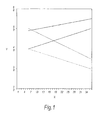
- Figure t shows the % energy content of fat (grey lines) and carbohydrates (black lines) of the total energy content of the diet composition depending on the age of the child in month.
- the x-axis shows the age of the child in month and the y-axis shows the %-energy content of the diet composition.
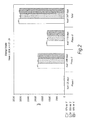
- Figure 2 shows the energy intake during all study phases, phase I, phase II, phase III and the overall energy intake of Experiment I.
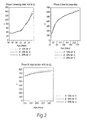
- Figure 3 shows the development of the body weights of thc test animals during each study phase, phase I, phase II and phase III during Experiment I.
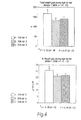
- Figure 4 shows the weight gain of the different groups of test animals during high fat period (Phase III) in Experiment I.
- Figure 5 shows the fat gain of the different groups of test animals during high fat period (Phase III) in Experiment I.
- Figure 6 illustrates an example of a feeding plan which provides a suggested daily feeding schedule for each stage of infant development.
- % energy refers for the purpose of the present invention always to the total amount of energy that is present in a diet composition.
- a diet composition that has 33% energy from fat will therefore have 67% energy from carbohydrates and/or proteins.
- a diet composition means at least one meal or a part thereof.
- a diet composition can be a complete meal such as breakfast, lunch or dinner. It can also be one or more, e.g. five, individual meals that are consumed during the day. It can also be more than one individual meal. It can also represent only a part of an individual meal or a part of more individual meals.
- the diet compositions of the present invention represent individual meals: Oftentimes dinner represents a substantial part of the diet on a caloric basis. In infants, the caloric intake during dinner can range from .15 to 35% of the daily caloric intake. Hence, in a preferred embodiment the meals are dinners. Dinners are the main meat of the day and can be served in the evening or at midday. Nutritionally well-balanced dinners can, hence, significantly contribute to the health of infants.
- Micronutrients arc those nutrients that together provide most metabolic energy to an organism.
- the three macronutrients are carbohydrates, proteins, and fats.
- Gradually changing in the form of a straight line from a composition that comprises about 40-50% energy from fat and about 40-49% energy from carbohydrates for children at the age of 6 months to a composition that comprises about 30-35% energy from fat and about 50-55% energy from carbohydrates for children at the age of 36 months means any straight line or group of straight lines that is located on and/or between the two black lines in Figure 1 for carbohydrates and any straight line that is located on and/or between the two grey lines in Figure 1 for fats.
- the present invention comprises all possible kits of diet compositions that are represented by Figure 1 and all such kits of diet compositions are disclosed by Figure 1 .
- the present invention discloses and comprises every kit of diet compositions for children during the age period of 6-36 months or during a part thereof, wherein the fat content of the diet composition is adjusted to any straight line, which is located on or between the straight lines
- carbohydrate content of the diet composition is adjusted to any straight line, which is located on or between the straight lines
- a kit of parts in accordance with the present invention provides a tool for the to improve infant nutrition in an optimal way without having to keep detailed records of the nutritional components that the infant has already ingested.
- the present method and kit thus increase convenience and reduce the occurrence of consequences of non-optimal nutrition.
- infants as used in the present invention are in particular human children aged from 4 months to 3 years.
- the present method is particularly directed at infants aged from 6 to 36 months.
- the term "about” means plus or minus 20%, more preferably plus or minus 10%, even more preferably plus or minus 5%, most preferably plus or minus 2%.
- food product means any food, feed, snack, food supplement, treat, meal substitute, or meal replacement, whether intended for a human or an animal.
- %E means the percentage of total daily energy intake.
- complete meal means a meal that is designed to provide one nutritionally balanced serving, i.e. it is not necessary to combine the complete meal with another food product to provide a meal.
- Complementary foods are used for weaning and they can be defined as "any food, whether manufactured or locally prepared, suitable as a complement to breast milk or to infant formula, when either becomes insufficient to satisfy the nutritional requirements of the infant.” They include, for example, milk products, home made foods and processed foods (cereal-based or other baby foods, including ready-to-eat preparations).
- Complementary foods should be introduced into an infant's diet when breast-milk or a breast-milk substitute no longer satisfies the infant's nutritional requirements.
- the infant's diet can gradually evolve from an exclusive milk diet to a fully diversified diet similar to that of adults.
- CHO means carbohydrate
- LA means linoleic acid
- ALA means alpha linolenic acid.
- shelf stable baby food product means a baby food product that can be safely stored and sold in a sealed container at room temperature while still having a useful shelf life, for example at least about 2 months, preferably longer.
- the diet compositions are daily diet compositions.
- Daily diet compositions have the advantage that they can be used very effectively to tightly regulate the gradual change of the fat and carbohydrate content of the food of a child when it is gaining age. It is important to note that if the diet compositions are daily diet compositions the individual meals may well deviate somewhat from a macronutrient content that is gradually changing in the form of a straight line from a composition that comprises about 40-50% energy from fat and about 40-49% energy from carbohydrates for children at the age of 6 months to a composition that comprises about 30-35% energy from fat and about 50-55% energy from carbohydrates for children at the age of 36 months, as long as the individual meals to be consumed during a day together - that together are considered a daily diet composition - fulfil this requirement.
- the total energy content of the composition is gradually changing in the form of a straight line from a composition that comprises about 670-715 kcal/day for children at the age of 6 months to a composition that comprises about 1000-1200 kcal/day for children at the age of 36 months.
- the fat and carbohydrate content of the diet composition is adjusted daily, based on the age of the child and the corresponding optimal fat content and carbohydrate content of the composition.
- the total energy content is also adjusted daily along with the fat and carbohydrate content.
- changing gradually means that the content of the diet composition is adjusted weekly, based on the age of the child and the corresponding optimal fat content and carbohydrate content of the composition, Also in this case the changes that are made to the diet composition are so marginal that the metabolism of the infant will not he faced with any abrupt changes.
- changing gradually means that the content of the diet composition is adjusted monthly, based on the age of the child and the corresponding optimal fat content and carbohydrate content of the composition. Even if the adjustment of the diet composition is made on a monthly level the resulting mealplan of a child will exhibit a smooth transition from a high fat-low carbohydrate composition at the age of 6 months to a low fat - high carbohydrate composition at the age of 36 months without any abrupt changes.
- the present inventors have found that the object of the present invention can still well be achieved by adjusting the macronutrient content of the diet composition stepwise, based on the age of the child and the corresponding optimal fat content and carbohydrate content of the composition as detailed above, preferably in 3-10 steps, most preferred in 3-4 steps during the age of 6-36 months.
- This stepwise adjustment is preferable made at a child age of 6, 8, 12, 18, 24 and/or 36 months.
- changing gradually includes that the content of the diet composition is adjusted also with respect to the total calorie content based on the age of the child and the corresponding optimal calorie content of the composition.
- a kit according to the present invention can comprise at least one diet composition that comprises about 44-46% energy from fat and about 47-49% energy from carbohydrates during the age of 6-8 months, at least one diet composition that comprises about 39-41% energy from fat and about 49-52% energy from carbohydrate during the age of 8-12 months, and/or at least one diet composition that comprises about 34-35% energy from fat and about 51-53% energy from carbohydrate during the age of 12-36 months.
- the at least one diet composition for consumption during the age of 6-8 months comprises about 670-715 kcal/day
- the at least one diet composition for consumption during the age of 8-12 months comprises about 715-850 kcal/day
- the at least one diet composition for consumption during the age of 12-36 months comprises about 750-1200 kcal/day.
- the diet compositions of the present invention further comprise a protein source.
- the amount of protein source present is preferably adjusted to the need of the child of the particular age in question and can generally be calculated as follows:
- % energy from protein 100 - (% energy from fat + % energy from carbohydrates)
- the content of carbohydrates in the compositions is gradually changing from a composition that comprises about 48% energy from carbohydrates for children at the age of 6 months to a composition that comprises about 53% energy from carbohydrates for children at the age of 36 months.
- kit of the present invention comprises at least one, preferably at least two diet compositions.
- a diet composition preferably constitutes one or more complete meals, one or more parts of a complete meal or one or more snacks or a part thereof.
- the number of diet compositions the kit of the present invention can contain is not particularly limited and is only regulated by the storage stability of the food product. Hence, a kit intended for use in a nursery or in a hospital can be significantly larger than a kit for private households.
- the kit of the present invention comprises diet compositions for at least one day.
- the kit might comprise 2 or more, preferably 3 - 10, even more preferred 5 individual meals.
- the daily food intake can, e.g., be divided into three meals and 2 up to 3 snacks. More meals with corresponding smaller portions have the advantage that the child's metabolism will not be faced with too large amount of food and at the same time periods with an "empty stomach" are avoided.
- the kit comprises diet compositions for three days, for a week or for a month. It is preferred that the diet compositions represent one or more individual meals. In this case the kit can for example comprise at least 3, preferably 3-21, most preferred 9 individual meals.
- the diet compositions represent a total diet, which is to be understood as sum of food to be consumed by a person over a given period of time.
- the diet composition of the present invention also comprises micronutrients and/or minerals to arrive at an ideally balanced food product for the child at the particular age. Also these components can preferably be varied based on the specific needs of the child at a particular age.
- the fat component comprises essential fatty acids.
- Essential fatty acids are fatty acids that cannot be produced by the body. They are capable of fulfilling important functions in the human body. Two families of essential fatty acids are in particular important, the omega-3 and the omega-6 family.
- Alpha-linolenic acid (ALA, a fatty acid with a chain length of 18 carbon atoms and containing three double bonds) is an example of a member of the omega-3 family.
- ALA is, e.g., found in flaxseed and various vegetable oils and nuts.
- An example of a member of the omega-6 family of essential fatty acids is linoleic acid (LA, a fatty acid with a chain length of 18 carbon atoms and containing two double bonds).
- the weight ratio of omega-6/omega-3 fatty acids in the diet compositions of the present invention is preferably between 5 and 15.
- the diet compositions of the present invention are of a liquid nature.
- Preferred embodiments have a consistency of a liquid or of a mash. This can be achieved by the presence of water in the diet compositions of the present invention.
- they contain between 75 and 90 wt-% water based on the total weight of the diet composition, more preferably between 78 and 85 wt-% water.
- the diet compositions to be administered to the infants each have a volume between 90 and 500 ml, more preferably between 125 and 300 ml.
- the diet compositions of the present invention may all have about the same volume (i.e. difference between greatest and smallest volume is less than 50 ml) or they may have increasing volumes with the increasing age of the child to reflect an increased caloric content.
- the diet compositions of the present invention are to be consumed at a temperature of between 15 and 55°C, more preferred between 30 and 50°C, and even more preferably between 35 and 45°C.
- the diet compositions according to the present invention are preferably individually packaged and provided as a kit of parts.
- the kit of parts contains in one embodiment several different meals.
- the diet compositions in the kit arc preferably in ready-to-eat and/or dried form. From the dried form, a ready-to-eat form can be easily produced by reconstitution in a suitable liquid, e.g. water.
- the ready-to-eat form can normally be administered directly to the infant, optionally after heating and/or mixing.
- the present invention relates also to the use of a series of diet compositions, wherein the macronutrient content of the compositions is gradually changing from a composition that comprises about 40-50% energy from fat and about 40-49% energy from carbohydrates for children at the age of 6 months to a composition that comprises about 30-35% energy from fat and about 50-55% energy from carbohydrates for children at the age of 36 months for the preparation of a kit to prevent the development of obesity.
- kit that is to be prepared by the use of the present invention can be any kit of the present invention and can have any feature or any combination of features as described herein.
- the series of diet compositions comprises 2 or more individual diet compositions, preferably 3-35 diet compositions.
- the present invention also relates to a mealplan for children that comprises a kit of the present invention.
- the mealplan is intended for the prevention of obesity later in life.
- the invention provides a range of shelf stable baby food products having an optimal energy profile for meeting the nutritional needs of an infant at a specific stage of infant development, wherein two or more baby food products from the range may be combined to provide an optimal energy profile for meeting the daily nutritional needs of an infant at a particular stage of infant development.
- the stages of infant development are selected from: (i) from about 4 to about 6 months of age (Stage 1); (ii) from about 6 to about 8 months of age (Stage 2); (iii) from about 8 to about 12 months of age (Stage 3); and (iv) from about 12 to about 36 months of age (Stage 4 or Stage Junior).
- the range of products comprises at least one food product suitable for that stage of infant development.
- the range of products comprises two or more food products suitable for each stage of infant development. More preferably, the range of products comprises at least a vegetable based product and a fruit based product for each stage of infant development. More preferably, the range of products comprises a plurality of vegetable based products and fruit based products for each stage of infant development.
- the range of products comprises art least a vegetable based product and a fruit based product for stage 1 of infant development.
- the range of products comprises at least a vegetable based product, a complete meal and a fruit based product for stage 2 of infant development.
- the range of products comprises at least a vegetable based product, a complete meal and a fruit based product for stage 3 of infant development.
- the range of products comprises at least a vegetable based product, a complete meal and a fruit based product for stage 4 of infant development.
- the total optimum daily energy intake for stage 1 is between about 530 and about 700 kcal/day, preferably about 625 kcal/day, for stage 2 is between about 620 and about 720 kcal/day, preferably about 670 kcal/day, for stage 3 is between about 680 and about 930 kcal/day, preferably about 770 kcal/day, and for stage junior is between about 810 and about 1180 kcal/day, preferably about 1040 kcal/day.
- two or more baby food products from the range may be combined with the daily milk intake of an infant to provide an optimal daily energy intake of an infant at a particular stage of infant development.
- two or more baby food products from the range provide a daily energy intake for stage I of between about 68 and about 238 kcal/day, preferably about 167 kcal/day, for stage 2 of between about 158 and about 258 kcal/day, preferably about 243 kcal/day, for stage 3 of between about 345 and about 595 kcal/day, preferably about 448 kcal/day, and for stage junior of between about 475 and about 845 kcal/day, preferably about 693 kcal/day.
- the difference between the daily energy intake provided by the two or more baby food products and the optimum daily energy intake for each stage of infant development is provided by the daily milk intake of an infant.
- the range of shelf stable baby food products has an optimal nutrient profile for meeting the nutritional needs of an infant through a number of stages of infant development.
- Energy density is defined as the amount of calories in a quantity of food or meal and is a good index of the true energy value of the different foods or meals.
- An optimal energy density is desired, since low levels may result in an energy deficit and poor growth and higher levels may be responsible for excessive energy intakes and subsequent weight gain, potentially leading to overweight later in life.
- Energy intake in infants may be influenced by several factors.
- Foods with a high energy density include meat and fatty fish, while viscous and bulky carbohydrate-based staples or porridges have a low energy-density.
- energy density increases with the addition of fat and sugar and decreases with excessive water content.
- total energy intake may he influenced by the functional gastric capacity closely associated to the volume of food an infant can ingest during one meal, estimated at about 30 g/kg body weight. For infants and young children at 6 to 8, 9 to 11 and 12 to 23 months of age, this value corresponds to 243, 276 and 369 g/meal, respectively.
- a daily intake of baby food products from the range has an average energy density of at least about 0.6 kcal/g, preferably at least about 0.67 kcal/g, most preferably about kcal/g.
- the main advantage of providing fewer meals with a higher energy density lies in the fact that the complementary foods will be less likely to interfere with the milk intake.
- one or more daily feeding schedules are provided which comprise suggested combinations of baby food products from the range of baby food products, said combinations providing an optimal energy profile for meeting the nutritional needs of an infant at a particular stage of infant development.
- one or more daily feeding schedules are provided for each stage of infant development.
- the total optimum daily fat intake for stage 1 is about 45%E
- for stage 2 is between about 43%E and about 45%E
- for stage 3 is between about 40%E and about 43%E
- for stage junior is between about 30%E and about 40%E.
- two or more baby food products from the range provide a daily fat intake for stage 1 of between about 18%E and about 27%E, for stage 2 of between about 22%E and about 29%E, for stage 3 of between about 21%E and about 36%E, and for stage junior of between about 22%E and about 40%E.
- the difference between the daily fat intake provided by the two or more baby food products and the optimum daily fat intake for each stage of infant development is provided by the daily milk intake of an infant.
- the baby food products have a protein density of between about 1.5g/100kcal and about 3.2g/100kcal, preferably about 1.5g/100kcal.
- the baby food products comprise complete meals or incomplete meals.
- a complete meal comprises two or more incomplete meals.
- each baby food product comprises a serving size of between about 65g and about 350g.
- each baby food product comprises a serving size of between about 65g and about 100g for stage 1, of between about 65g and about 100g for stage 2, of between about 130g and about 200g for stage 3, and between about 130g and about 350g for stage junior.
- the invention provides a feeding regime for meeting the nutritional needs of an infant during different stages of infant development, the regime comprising administering to an infant a range of baby food products as hereinbefore described.
- the invention provides use of a range of baby food products as hereinbefore described in the manufacture of a medicament for the prevention or treatment of a nutritionally related disorder in an infant.
- the invention provides a method of preventing or treating a nutritionally related disorder in an infant, comprising administering to an infant a range of baby food products as hereinbefore described.
- the nutritionally related disease is selected from obesity, malnutrition, diabetes and heart disease.
- Food intake was measured daily during the weaning period (period 1) and twice per week during the post-weaning periods (period II &III). Body weight was measured 2-3 times per week throughout the study.
- the body composition which is body fat and fat free mass, was measured during post weaning phases II and III using NMR imaging (EchoMRITM 2004), at 27, 35, 47 and 52 weeks of age.
- Figures 2-3 demonstrate that the energy intakes and body weights of all groups fed the weaning diets with different Fat/CHO ratios were similar at the end of the weaning period (phase 1), during 9 months of low-fat diet (phase II) as well as during the 4 months of the obesigenic, high-fat challenge (45% fat E) feeding period, (Phase III).
- the rats fed with a low-fat (10% E), high-carbohydrate (70% E), diet only during 19 days weaning period gained significantly more body weight ( Figure 4 ) and body fat ( Figure 5 ) during the high-fat challenge diet at adult age (age of 3.5 to 53 weeks), relative to the other 2 groups fed with higher fat (30% & 60% E) and lower CHO (50% or 20% E) diets only during weaning period (p ⁇ 0.05).
- a daily complementary diet for stage 1 comprised:
- a number of vegetable and fruit dishes were provided in a range of baby food products and were labeled according to their suitability for a stage 1 diet.
- the feeding plan shown in figure 6 was used to determine which meals could make up the daily food intake for stage 1.
- the vegetable dish was a pumpkin based dish and the fruit dish was an apple based dish.
- Table 1 List of ingredients for vegetable dish Ingredient Amount per 100g (g) POTATO FLAKES 4.000 Pumpkin frozen 40.000 Potato 6x6 mm frozen 10.000 CARROT 15.000 RAPESEED OIL LOW ERUCIC (CANOLA) 0.400 SUNFLOWER OIL 0.400 WATER 30.200
- Table 2 List of ingredients for fruit dish Ingredient Amount per 100g (g) Apple fresh 99.95 Vitamin C 0.05
- Each dish provided the following nutritional values: Table 3: Nutritional values provided by each Stage 1 dish Kcal/100g kcal/serving % daily energy intake Cereal Dish 106.0 for RTE pap 106.00 17.0 424 for dry powder Vegetable Dish 40.7 26.46 4.2 Fruit Dish 53.2 34.58 5.5
- the total daily nutritional values provided by the complementary dishes were as follows: Table 4: Daily nutritional values provided by the Stage 1 complementary dishes per day per 100g E% (daily energy intake) Total Protein (g) 4.3 2.8 10.4 Total Fat (g) 3.3 2.2 18.1 Total CHO (g) 29.8 19.2 71.5 Fibres (g) 3.1 2.0 - Sodium (mg) 38.1 24.6 - LA (g) 0.8 0.5 4.3 ALA (g) 0.1 0.1 0.6 LA/ALA ratio 7.1 - - Energy (kcal) 166.5 107.4 - (Wherein CHO represents carbohydrate, LA represents linoleic acid and ALA represents alplta-linolenic acid).
- the sum of the daily energy intake provided by the complementary foods was 26.6% (166.5 kcal). The remaining 73.4% (458 kcal) of daily energy intake was provided by milk. This provided a total daily energy intake of 625.04 kcal.
- a daily complementary diet for stage 2 comprised:
- a number of complete meals, vegetable and fruit dishes were provided in the range of baby food products and were labeled according to their suitability for a stage 2 diet.
- the feeding plan shown in figure 6 was used to determine which meals could make up the daily food intake for stage 2.
- the vegetable dish was garden vegetables and corn based
- the complete meal was garden vegetables and lamb based
- the fruit dish was apple and raspberry based.
- Table 5 List of ingredients for vegetable dish Ingredient Amount per 100g (g) CARROT 30.000 POTATO FLAKES 3.000 Sweetcom frozen 10.000 Parsnip frozen 10.000 RICE SEMOLINA 1.000 RAPESEED OIL LOW ERUCIC (CANOLA) 0.400 Fennel frozen 5.000 SUNFLOWER OIL 0.200 WATER 40.400
- Table 6 List of ingredients for complete meal Ingredient Amount per 100g (g) POTATO FLAKES 4.000 CARROT 30.000 Lamb frozen 8.500 RICE SEMOLINA 2.000 Parsnip frozen 5.000 Sweetcorn frozen 3.000 RAPESEED OIL LOW ERUCIC (CANOLA) 0.600 SUNFLOWER OIL 0.400 Onion 10 mm frozen 4.000 WATER 42.500
- Table 7 List of ingredients for fruit dish Ingredient Amount per 100g (g) Apple fresh 79.96 Raspberry puree 19.99 Vitamin C 0.05
- Each dish provided the following nutritional values: Table 8 : Nutritional values provided by each Stage 2 dish kcal/100g kcal/serving % daily energy intake Cereal Dish 106.0 for RTE pap 424 for dry powder 106.00 15.8 Vegetable Dish 42.6 42.6 6.4 Complete Meal 62.6 62.6 9.3 Fruit Dish 50.2 32.63 4.9
- the total daily nutritional values provided by the complementary dishes were as follows: Table 9: Daily nutritional values provided by the Stage 2 complementary dishes per day per 100g E% (daily energy intake) Total Protein (g) 7.8 2.7 12.9 Total Fat (g) 6.2 2.1 23.1 Total CHO (g) 38.5 13.3 63.9 Fibres (g) 5.2 1.8 - Sodium (mg) 75.7 26.1 - LA (g) 1.2 0.4 4.6 ALA (g) 0.2 0.1 0.6 LA/ALA ratio 7.3 - - Energy (kcal) 241.1 83.1 -
- the sum of the daily energy intake provided by the complementary foods was 35.9% (241.1 kcal).
- the remaining 64.1% (428.93 kcal) of daily energy intake was provided by milk. This provided a total daily energy intake of 670.03 kcal.
- a daily complementary diet for stage 3 comprised:
- a number of complete meal, vegetable and fruit dishes were provided in the range of baby food products and were labeled according to their suitability for a stage 3 diet.
- the feeding plan shown in figure 6 was used to determine which meals could make up the daily food intake for stage 3.
- vegetable dish was garden vegetables and corn based
- the complete meal was a pasta
- tomato and beef based was fruit salad based.
- Table 10 List of ingredients for vegetable dish Ingredient Amount per 100g(g) CARROT 30.000 POTATO FLAKES 3.000 Sweetcorn frozen 10.000 Parsnip frozen 10.000 RICE SEMOLINA 1.000 RAPESEED OIL LOW ERUCIC (CANOLA) 0.400 Fennel frozen 5.000 SUNFLOWER OIL 0.200 WATER 40.400 Table 11: List of ingredients for complete meal Ingredient Amount per 100g (g) Pasta spaghetti short 8.000 Beef frozen 14% fat 8.000 CARROT 20.000 Tomato puree 5.000 RAPESEED OIL LOW ERUCIC (CANOLA) 0.800 SUNFLOWER OIL 0.400 Bell pepper red 10mm frozen 4.000 Onion 10 mm frozen 3.000 Thyme frozen 0.100 WATER 50.700 able 12: List of ingredients for fruit dish Ingredient Amount per 100g (g) Apple fresh 39.98 Pear William fresh 14.9925 Peach puree 14.9925 Banana puree without seeds 19.990 Apricot puree 9.995 Vitamin C 0.05
- Each dish provided the following nutritional values: Table 13: Nutritional values provided by each Stage 3 dish Kcal/100 g kcal/serving % daily energy intake Cereal Dish 106.0 159.00 20.6 Vegetable Dish 42.6 95.2 11.1 Complete Meal 65.9 131.8 17.1 Fruit Dish 56.0 12.8 9.5
- the total daily nutritional values provided by the complementary dishes were as follows: Table 14: Daily nutritional values provided by the Stage 3 complementary dishes Per day per 100g E% Total Protein (g) 14.8 2.6 13.2 Total Fat (g) 10.9 1.9 22 Total CHO (g) 72.4 12.3 64.8 Fibres (g) 8.4 1.5 - Sodium (mg) 142.3 25.1 - LA (g) 2.3 0.4 4.6 ALA (g) 0.4 0.1 0.7 LA/ALA ratio 6.5 - - Encrgy (kcal) 447.0 78.8 -
- the sum of the daily energy intake provided by the complementary foods was 58.0% (447.0 kcal).
- the remaining 42.0% (323.0 kcal) of daily energy intake was provided by milk. This provided a total daily energy intake of 770 kcal.
- a daily complementary diet for stage 4 comprised:
- a number or complete meals, vegetable and fruit dishes were provided in the range of baby food products and were labeled according to their suitability for a stage 4 diet.
- the feeding plan shown in figure 6 was used to determine which meals could make up the daily food intake for stage 4.
- the vegetable dish was a garden vegetables and corn dish
- the complete meal was a pasta
- tomato and beef dish was a fruit salad dish.
- Table 15 List of ingredients for vegetable dish Ingredient Amount per 100g (g) CARROT 30.000 POTATO FLAKES 3.000 Sweetcorn frozen 10.000 Parsnip frozen 10.000 RICE SEMOLINA 1.000 RAPESEED OIL LOW ERUCIC (CANOLA) 0.400 Fennel frozen 5.000 SUNFLOWER OIL 0.200 WATER 40.400 Table 16: List of ingredients for complete meal Ingredient Amount per 100g (g) Pasta spaghetti short 8.000 Beef frozen 14% fat 8.000 CARROT 20.000 Tomato puree 5.000 RAPESEED OIL LOW ERUCIC (CANOLA) 0.800 SUNFLOWER OIL 0.400 Bell pepper red 10mm frozen 4.000 Onion 10 mm frozen 3.000 Thyme frozen 0.100 WATER 50.700 Table 17: List of ingredients for fruit dish Ingredient Amount per 100g (g) Apple fresh 39.98 Pear William fresh 14.9925 Peach purce 14.9925 Banana puree without seeds 19.990 Apricot purce 9.995 Vitamin C 0.05
- Each dish provided the following nutritional values: Table 18: Nutritional values provided by each Stage 4 dish kcal/100g kcal/serving % daily energy intake Cereal Dish 106.0 371 35.7 Vegetable Dish 42.6 85.2 8.2 Complete Meal 65.9 164.75 15.8 Fruit Dish 56.0 72.8 7.0
- the daily nutritional values provided by the complementary dishes were as follows: Table 19: Daily nutritional values provided by the Stage 4 complementary dishes per day per 100g E% Total Protein (g) 23.6 3.5 13.6 Total Fat (g) 17.2 2.6 22.4 Total CHO (g) 110.6 16.6 64.0 Fibres (g) 9.8 1.5 - Sodium (mg) 215.0 32.2 - LA (g) 3.4 0.5 4.5 ALA (g) 0.5 0.1 0.7 LA/ALA ratio 6.8 - - Energy (kcal) 691.7 103.6 -
- the sum of the daily energy intake provided by the complementary foods was 66.5% (691.7 kcal).
- the remaining 33.5% (348.3 kcal) of daily energy intake was provided by milk. This provided a total daily energy intake of 1040 kcal.
- Barker DJ Outcome of low birthweight. Horm Res 1994;42:223-230 .
- Tycko B Ashkenas J. Epigenetics and its role in disease. J. Clin Invest, 2000; 105:245,246 .
Landscapes
- Health & Medical Sciences (AREA)
- Life Sciences & Earth Sciences (AREA)
- Chemical & Material Sciences (AREA)
- Engineering & Computer Science (AREA)
- Diabetes (AREA)
- General Health & Medical Sciences (AREA)
- Organic Chemistry (AREA)
- Veterinary Medicine (AREA)
- Chemical Kinetics & Catalysis (AREA)
- General Chemical & Material Sciences (AREA)
- Medicinal Chemistry (AREA)
- Nuclear Medicine, Radiotherapy & Molecular Imaging (AREA)
- Public Health (AREA)
- Pharmacology & Pharmacy (AREA)
- Bioinformatics & Cheminformatics (AREA)
- Animal Behavior & Ethology (AREA)
- Obesity (AREA)
- Hematology (AREA)
- Nutrition Science (AREA)
- Polymers & Plastics (AREA)
- Mycology (AREA)
- Food Science & Technology (AREA)
- Endocrinology (AREA)
- Heart & Thoracic Surgery (AREA)
- Pediatric Medicine (AREA)
- Emergency Medicine (AREA)
- Cardiology (AREA)
- Child & Adolescent Psychology (AREA)
- Coloring Foods And Improving Nutritive Qualities (AREA)
- Medicines Containing Plant Substances (AREA)
- Medicines That Contain Protein Lipid Enzymes And Other Medicines (AREA)
- Pharmaceuticals Containing Other Organic And Inorganic Compounds (AREA)
- Medical Treatment And Welfare Office Work (AREA)
- Dairy Products (AREA)
Abstract
Description
- The present invention generally relates to the field of nutrition. In particular the present invention relates to infant nutrition in the post natal period and in early life, more particular during the age period of 6-36 months or during a part thereof. The present invention also relates to shelf stable baby foods and particularly to shelf stable baby foods which have an optimum energy profile for meeting the nutritional needs of an infant.
- Evidence is accumulating that nutrition during early life can program the development of diseases later in life1, a discovery that was named metabolic programming or imprinting". This evidence, mainly driven from foetal development in-utero2-7, reveals the importance of optimal nutrition during early life for the health of the individual later in the life. Considering that many developmental processes still continue during early post natal life, it is evident that postnatal nutrition - especially during suckling and during the complementary feeding period - plays an important role for the health status and for the prevention of diseases later in life.
- Prior evidence in rats demonstrates that a change in the fat and carbohydrate (CHO) content of milk during the suckling period may have an impact on the development of obesity and diabetes later in life. In these studies8-9 that relate to breast feeding without additives rats were artificially reared by using either a milk substitute formula low in fat content (LF) and rich in CHO (20% total energy from fat (fat E) and 56% total energy from carbohydrates (CHO E), respectively) or by using a milk composition similar to rat milk, namely high in fat (HF) and low in CHO (8% CHO E and 68% fat E) or were mother-fed from the age of 4 to 24 days postnatal. All groups were weaned onto a low fat laboratory standard chow diet. The LF feeding during the suckling period resulted in hyperinsulinemia which persisted into adulthood and lead to an increase in body weight and onset of adult obesity, an effect termed "metabolic programming"10-11Beyond total milk feeding (suckling period) this effect was previously not investigated to the inventor's best knowledge.
- Although during the suckling period "milk" as the first diet of infants and other mammals is very rich in fat (50% of energy from fat), the dietary fat intake is reduced considerably during the complementary feeding period as an infant is gradually weaned off milk onto semi solid foods.
- This is due to the replacement of high-fat milk with weaning foods low in fat content, such as fruits, vegetables, weaning cereals, fruit juices etc.
- It has been reported that the fat intake of infants, even in developed countries, is low (30% of energy from fat) during the complementary feeding period (6-12 months)12-13. Indeed the complementary feeding period has been referred to as "the period of life with the lowest fat intake during the life cycle of man".
- Data concerning nutritional recommendations for humans during the weaning period are scarce and recommendations are mainly based on estimates of the nutritional requirements of those of suckling infants adjusted for weight and energy intake. Infant nutrition during this period of rapid growth is surrounded by uncertainties and there is little agreement about what should constitute an optimal composition of the complementary diet and in particular an optimal fat and carbohydrate content of complementary diets.
- Selecting appropriate daily requirements for infants and young children can be very challenging, because different information, based on different methodologies and age groups exists worldwide. There is, therefore, a need for novel products and methods for addressing the daily nutritional needs of developing infants.
- The present uncertainty about the long-term consequences of the fat and CHO content of the weaning diet on health in general and - in particular - on development of obesity later in life led the present inventors to investigate these consequences in rats as model system for humans.
- It is an advantage of the present invention to provide a nutritional concept for the transition period from nutrition with breast milk or breast milk-like products in terms of fat and CHO content during the sucking period to the subsequent nutrition with baby food that allows it to reduce the risk that the child develops a bad health status, in particular obesity and diabetes later in life.
- The present invention provides kits, methods of reducing the risk of obesity and mealplans.
- In one embodiment the present invention relates to a kit of parts comprising diet compositions for children during the age period of 6-36 months or during a part thereof. In an embodiment, the macronutrient content of the compositions is gradually changing in the form of a straight line from a composition that comprises about 40-50% energy from fat and about 40-49% energy from carbohydrates for children at the age of 6 months to a composition that comprises about 30-35% energy from fat and about 50-55% energy from carbohydrates for children at the age of 36 months.
- A wide variety of kits and methods of using the kit are possible and envisioned by the present invention.
- It is also an object of the invention to provide a range of shelf stable baby food products which meet the nutritional needs of developing infants.
- It is another object of the present invention to provide a feeding regime for meeting the daily nutritional needs of developing infants.
- It is a further object of the invention to provide methods and uses for the prevention or treatment of nutritionally related disorders in infants and toddlers.
- These and other objects are achieved by providing a range of shelf stable baby load products having an optimal energy profile for meeting the nutritional needs of an infant through a number of stages of infant development, wherein two or more baby food products from the range may be combined to provide an optimal energy profile for meeting the nutritional needs of an infant at a particular stage of infant development. In one embodiment, the stages of infant development are selected from (i) from about 4 to about 6 months of age (Stage 1); (ii) from about 6 to about 8 months of age (Stage 2); (iii) from about 8 to about 12 months of age (Stage 3); and (iv) from about 12 to about 36 months of age (
Stage 4 or Stage Junior). - Additional features and advantages are described herein, and will be apparent from, the following Detailed Description and the figures.
- Figure t shows the % energy content of fat (grey lines) and carbohydrates (black lines) of the total energy content of the diet composition depending on the age of the child in month. The x-axis shows the age of the child in month and the y-axis shows the %-energy content of the diet composition.
-
Figure 2 shows the energy intake during all study phases, phase I, phase II, phase III and the overall energy intake of Experiment I. -
Figure 3 shows the development of the body weights of thc test animals during each study phase, phase I, phase II and phase III during Experiment I. -
Figure 4 shows the weight gain of the different groups of test animals during high fat period (Phase III) in Experiment I. -
Figure 5 shows the fat gain of the different groups of test animals during high fat period (Phase III) in Experiment I. -
Figure 6 illustrates an example of a feeding plan which provides a suggested daily feeding schedule for each stage of infant development. - % energy refers for the purpose of the present invention always to the total amount of energy that is present in a diet composition. A diet composition that has 33% energy from fat will therefore have 67% energy from carbohydrates and/or proteins.
- A diet composition means at least one meal or a part thereof. For example, a diet composition can be a complete meal such as breakfast, lunch or dinner. It can also be one or more, e.g. five, individual meals that are consumed during the day. It can also be more than one individual meal. It can also represent only a part of an individual meal or a part of more individual meals. It is preferred that the diet compositions of the present invention represent individual meals: Oftentimes dinner represents a substantial part of the diet on a caloric basis. In infants, the caloric intake during dinner can range from .15 to 35% of the daily caloric intake. Hence, in a preferred embodiment the meals are dinners. Dinners are the main meat of the day and can be served in the evening or at midday. Nutritionally well-balanced dinners can, hence, significantly contribute to the health of infants.
- Macronutrients arc those nutrients that together provide most metabolic energy to an organism. For the purpose of the present invention the three macronutrients are carbohydrates, proteins, and fats.
- Gradually changing in the form of a straight line from a composition that comprises about 40-50% energy from fat and about 40-49% energy from carbohydrates for children at the age of 6 months to a composition that comprises about 30-35% energy from fat and about 50-55% energy from carbohydrates for children at the age of 36 months means any straight line or group of straight lines that is located on and/or between the two black lines in
Figure 1 for carbohydrates and any straight line that is located on and/or between the two grey lines inFigure 1 for fats. The present invention comprises all possible kits of diet compositions that are represented byFigure 1 and all such kits of diet compositions are disclosed byFigure 1 . - Expressed in mathematical terms this means that the present invention discloses and comprises every kit of diet compositions for children during the age period of 6-36 months or during a part thereof, wherein the fat content of the diet composition is adjusted to any straight line, which is located on or between the straight lines
- y= -1/2 x + 53 and y=-1/3x + 42 (y is % energy from fat), and
- wherein the carbohydrate content of the diet composition is adjusted to any straight line, which is located on or between the straight lines
- y= 1/5 x + 47.8 and y=1/3x + 38 (y is % energy from carbohydrates)
- between x=6 and x=36, if x is the age of the child in months.
- A kit of parts in accordance with the present invention provides a tool for the to improve infant nutrition in an optimal way without having to keep detailed records of the nutritional components that the infant has already ingested.
- The present method and kit thus increase convenience and reduce the occurrence of consequences of non-optimal nutrition.
- "Infants" as used in the present invention are in particular human children aged from 4 months to 3 years. The present method is particularly directed at infants aged from 6 to 36 months.
- The term "about" means plus or minus 20%, more preferably plus or minus 10%, even more preferably plus or minus 5%, most preferably plus or minus 2%.
- The term "food product" means any food, feed, snack, food supplement, treat, meal substitute, or meal replacement, whether intended for a human or an animal.
- The term "%E" means the percentage of total daily energy intake.
- The term "complete meal" means a meal that is designed to provide one nutritionally balanced serving, i.e. it is not necessary to combine the complete meal with another food product to provide a meal.
- Complementary foods are used for weaning and they can be defined as "any food, whether manufactured or locally prepared, suitable as a complement to breast milk or to infant formula, when either becomes insufficient to satisfy the nutritional requirements of the infant." They include, for example, milk products, home made foods and processed foods (cereal-based or other baby foods, including ready-to-eat preparations).
- Complementary foods should be introduced into an infant's diet when breast-milk or a breast-milk substitute no longer satisfies the infant's nutritional requirements. During this transition period, as the infant's digestive system develops, the infant's diet can gradually evolve from an exclusive milk diet to a fully diversified diet similar to that of adults.
- The term "CHO" means carbohydrate.
- The term "LA" means linoleic acid.
- The term "ALA" means alpha linolenic acid.
- The term "shelf stable baby food product" means a baby food product that can be safely stored and sold in a sealed container at room temperature while still having a useful shelf life, for example at least about 2 months, preferably longer.
- In one embodiment of the present invention the diet compositions are daily diet compositions. Daily diet compositions have the advantage that they can be used very effectively to tightly regulate the gradual change of the fat and carbohydrate content of the food of a child when it is gaining age. It is important to note that if the diet compositions are daily diet compositions the individual meals may well deviate somewhat from a macronutrient content that is gradually changing in the form of a straight line from a composition that comprises about 40-50% energy from fat and about 40-49% energy from carbohydrates for children at the age of 6 months to a composition that comprises about 30-35% energy from fat and about 50-55% energy from carbohydrates for children at the age of 36 months, as long as the individual meals to be consumed during a day together - that together are considered a daily diet composition - fulfil this requirement.
- This way it is possible to adapt a mealplan of a child, e.g., in a way that it can consume food that is easy to digest in the evening to allow an easy sleep, while it consumes food compositions that are more difficult to digest during the day.
- In one embodiment of the present invention the total energy content of the composition is gradually changing in the form of a straight line from a composition that comprises about 670-715 kcal/day for children at the age of 6 months to a composition that comprises about 1000-1200 kcal/day for children at the age of 36 months. This allows adapting the energy content of the diet compositions to the particular age of the child, so that it can be assured that a sufficient amount of energy is always present during this decisive period of development of the child, while an overfeeding is avoided.
- Changing gradually means in one embodiment of the present invention that the fat and carbohydrate content of the diet composition is adjusted daily, based on the age of the child and the corresponding optimal fat content and carbohydrate content of the composition. Optionally, the total energy content is also adjusted daily along with the fat and carbohydrate content. This results in a very gradual change without any noticeable "steps" in diet composition. Consequently, the infant's organism will not have to adapt to any abrupt changes in food content.
- In another embodiment of the present invention changing gradually means that the content of the diet composition is adjusted weekly, based on the age of the child and the corresponding optimal fat content and carbohydrate content of the composition, Also in this case the changes that are made to the diet composition are so marginal that the metabolism of the infant will not he faced with any abrupt changes.
- In another embodiment of the present invention changing gradually means that the content of the diet composition is adjusted monthly, based on the age of the child and the corresponding optimal fat content and carbohydrate content of the composition. Even if the adjustment of the diet composition is made on a monthly level the resulting mealplan of a child will exhibit a smooth transition from a high fat-low carbohydrate composition at the age of 6 months to a low fat - high carbohydrate composition at the age of 36 months without any abrupt changes.
- The present inventors have found that the object of the present invention can still well be achieved by adjusting the macronutrient content of the diet composition stepwise, based on the age of the child and the corresponding optimal fat content and carbohydrate content of the composition as detailed above, preferably in 3-10 steps, most preferred in 3-4 steps during the age of 6-36 months.
- This stepwise adjustment is preferable made at a child age of 6, 8, 12, 18, 24 and/or 36 months.
- In one preferred embodiment of the present invention changing gradually includes that the content of the diet composition is adjusted also with respect to the total calorie content based on the age of the child and the corresponding optimal calorie content of the composition.
- For example, a kit according to the present invention can comprise at least one diet composition that comprises about 44-46% energy from fat and about 47-49% energy from carbohydrates during the age of 6-8 months, at least one diet composition that comprises about 39-41% energy from fat and about 49-52% energy from carbohydrate during the age of 8-12 months, and/or at least one diet composition that comprises about 34-35% energy from fat and about 51-53% energy from carbohydrate during the age of 12-36 months. Preferably, the at least one diet composition for consumption during the age of 6-8 months comprises about 670-715 kcal/day, the at least one diet composition for consumption during the age of 8-12 months comprises about 715-850 kcal/day, and/or the at least one diet composition for consumption during the age of 12-36 months comprises about 750-1200 kcal/day.
- The diet compositions of the present invention further comprise a protein source. The amount of protein source present is preferably adjusted to the need of the child of the particular age in question and can generally be calculated as follows:
- % energy from protein = 100 - (% energy from fat + % energy from carbohydrates)
- In a particular prefered embodiment of the present invention the content of carbohydrates in the compositions is gradually changing from a composition that comprises about 48% energy from carbohydrates for children at the age of 6 months to a composition that comprises about 53% energy from carbohydrates for children at the age of 36 months.
- Generally the kit of the present invention comprises at least one, preferably at least two diet compositions. A diet composition preferably constitutes one or more complete meals, one or more parts of a complete meal or one or more snacks or a part thereof.
- The number of diet compositions the kit of the present invention can contain is not particularly limited and is only regulated by the storage stability of the food product. Hence, a kit intended for use in a nursery or in a hospital can be significantly larger than a kit for private households.
- In a preferred embodiment the kit of the present invention comprises diet compositions for at least one day. In this respect the kit might comprise 2 or more, preferably 3 - 10, even more preferred 5 individual meals. The daily food intake can, e.g., be divided into three meals and 2 up to 3 snacks. More meals with corresponding smaller portions have the advantage that the child's metabolism will not be faced with too large amount of food and at the same time periods with an "empty stomach" are avoided.
- In further embodiments of the present invention the kit comprises diet compositions for three days, for a week or for a month. It is preferred that the diet compositions represent one or more individual meals. In this case the kit can for example comprise at least 3, preferably 3-21, most preferred 9 individual meals.
- It is further preferred that the diet compositions represent a total diet, which is to be understood as sum of food to be consumed by a person over a given period of time.
- Preferably, the diet composition of the present invention also comprises micronutrients and/or minerals to arrive at an ideally balanced food product for the child at the particular age. Also these components can preferably be varied based on the specific needs of the child at a particular age.
- In a preferred embodiment of the present invention the fat component comprises essential fatty acids. Essential fatty acids are fatty acids that cannot be produced by the body. They are capable of fulfilling important functions in the human body. Two families of essential fatty acids are in particular important, the omega-3 and the omega-6 family. Alpha-linolenic acid (ALA, a fatty acid with a chain length of 18 carbon atoms and containing three double bonds) is an example of a member of the omega-3 family. ALA is, e.g., found in flaxseed and various vegetable oils and nuts. An example of a member of the omega-6 family of essential fatty acids is linoleic acid (LA, a fatty acid with a chain length of 18 carbon atoms and containing two double bonds). The weight ratio of omega-6/omega-3 fatty acids in the diet compositions of the present invention is preferably between 5 and 15.
- Preferably, the diet compositions of the present invention are of a liquid nature. Preferred embodiments have a consistency of a liquid or of a mash. This can be achieved by the presence of water in the diet compositions of the present invention. Preferably, they contain between 75 and 90 wt-% water based on the total weight of the diet composition, more preferably between 78 and 85 wt-% water.
- In a preferred embodiment, the diet compositions to be administered to the infants each have a volume between 90 and 500 ml, more preferably between 125 and 300 ml. The diet compositions of the present invention may all have about the same volume (i.e. difference between greatest and smallest volume is less than 50 ml) or they may have increasing volumes with the increasing age of the child to reflect an increased caloric content.
- Preferably, the diet compositions of the present invention are to be consumed at a temperature of between 15 and 55°C, more preferred between 30 and 50°C, and even more preferably between 35 and 45°C.
- The diet compositions according to the present invention are preferably individually packaged and provided as a kit of parts. The kit of parts contains in one embodiment several different meals. The diet compositions in the kit arc preferably in ready-to-eat and/or dried form. From the dried form, a ready-to-eat form can be easily produced by reconstitution in a suitable liquid, e.g. water. The ready-to-eat form can normally be administered directly to the infant, optionally after heating and/or mixing.
- The present invention relates also to the use of a series of diet compositions, wherein the macronutrient content of the compositions is gradually changing from a composition that comprises about 40-50% energy from fat and about 40-49% energy from carbohydrates for children at the age of 6 months to a composition that comprises about 30-35% energy from fat and about 50-55% energy from carbohydrates for children at the age of 36 months for the preparation of a kit to prevent the development of obesity.
- The kit that is to be prepared by the use of the present invention can be any kit of the present invention and can have any feature or any combination of features as described herein.
- The series of diet compositions comprises 2 or more individual diet compositions, preferably 3-35 diet compositions.
- The present invention also relates to a mealplan for children that comprises a kit of the present invention. The mealplan is intended for the prevention of obesity later in life.
- In another aspect, the invention provides a range of shelf stable baby food products having an optimal energy profile for meeting the nutritional needs of an infant at a specific stage of infant development, wherein two or more baby food products from the range may be combined to provide an optimal energy profile for meeting the daily nutritional needs of an infant at a particular stage of infant development.
- In one embodiment, the stages of infant development are selected from: (i) from about 4 to about 6 months of age (Stage 1); (ii) from about 6 to about 8 months of age (Stage 2); (iii) from about 8 to about 12 months of age (Stage 3); and (iv) from about 12 to about 36 months of age (
Stage 4 or Stage Junior). - Preferably, the range of products comprises at least one food product suitable for that stage of infant development.
- Preferably, the range of products comprises two or more food products suitable for each stage of infant development. More preferably, the range of products comprises at least a vegetable based product and a fruit based product for each stage of infant development. More preferably, the range of products comprises a plurality of vegetable based products and fruit based products for each stage of infant development.
- Preferably, the range of products comprises art least a vegetable based product and a fruit based product for
stage 1 of infant development. - Preferably, the range of products comprises at least a vegetable based product, a complete meal and a fruit based product for
stage 2 of infant development. - Preferably, the range of products comprises at least a vegetable based product, a complete meal and a fruit based product for
stage 3 of infant development. - Preferably, the range of products comprises at least a vegetable based product, a complete meal and a fruit based product for
stage 4 of infant development. - In one embodiment, the total optimum daily energy intake for
stage 1 is between about 530 and about 700 kcal/day, preferably about 625 kcal/day, forstage 2 is between about 620 and about 720 kcal/day, preferably about 670 kcal/day, forstage 3 is between about 680 and about 930 kcal/day, preferably about 770 kcal/day, and for stage junior is between about 810 and about 1180 kcal/day, preferably about 1040 kcal/day. - Conveniently, two or more baby food products from the range may be combined with the daily milk intake of an infant to provide an optimal daily energy intake of an infant at a particular stage of infant development.
- In preferred embodiments, two or more baby food products from the range provide a daily energy intake for stage I of between about 68 and about 238 kcal/day, preferably about 167 kcal/day, for
stage 2 of between about 158 and about 258 kcal/day, preferably about 243 kcal/day, forstage 3 of between about 345 and about 595 kcal/day, preferably about 448 kcal/day, and for stage junior of between about 475 and about 845 kcal/day, preferably about 693 kcal/day. - Advantageously, the difference between the daily energy intake provided by the two or more baby food products and the optimum daily energy intake for each stage of infant development is provided by the daily milk intake of an infant.
- In another example, the range of shelf stable baby food products has an optimal nutrient profile for meeting the nutritional needs of an infant through a number of stages of infant development.
- Infants and young children's energy requirements per kg of body weight are 2 to 3 times that of adults. Since the food volume that an infant is able to ingest is limited in a context of large energy needs, an appropriate energy density of complementary foods plays an important role in determining the total energy intake. Energy density is defined as the amount of calories in a quantity of food or meal and is a good index of the true energy value of the different foods or meals. An optimal energy density is desired, since low levels may result in an energy deficit and poor growth and higher levels may be responsible for excessive energy intakes and subsequent weight gain, potentially leading to overweight later in life.
- Energy intake in infants may be influenced by several factors. First, energy intake can increase through consumption of high energy density complementary foods, high milk intake and frequent meals and conversely, may decrease if viscous/bulky foods are consumed. Foods with a high energy density include meat and fatty fish, while viscous and bulky carbohydrate-based staples or porridges have a low energy-density. More specifically, energy density increases with the addition of fat and sugar and decreases with excessive water content. Finally, total energy intake may he influenced by the functional gastric capacity closely associated to the volume of food an infant can ingest during one meal, estimated at about 30 g/kg body weight. For infants and young children at 6 to 8, 9 to 11 and 12 to 23 months of age, this value corresponds to 243, 276 and 369 g/meal, respectively.
- If meals are provided many times during the day, energy requirements can be satisfied with diets having lower energy density. Inversely, if the energy density of the complementary diet is high, daily energy needs can be covered by fewer meals.
- In one embodiment, a daily intake of baby food products from the range has an average energy density of at least about 0.6 kcal/g, preferably at least about 0.67 kcal/g, most preferably about kcal/g.
- The main advantage of providing fewer meals with a higher energy density lies in the fact that the complementary foods will be less likely to interfere with the milk intake.
- With an average energy density of 1 kcal/g, infants and young children in all age groups should be able to cover their daily energy needs if they consume at least three meals per day. Taken separately, infants in
stages stages Stage Stage Stage 4. With lower energy densities, such as 0.5 kcal/g, a more frequent and difficult to achieve feeding frequency is necessary to attain the daily energy requirements from complementary foods. Forexample Stage 1 would require 2 to 3 meals per day,Stage 2 would require: 3 to 5 meals per day,Stage 3 would require 4 to 5 meals per day, andStage 4 would require 5-6 meals per day. - In a preferred embodiment, one or more daily feeding schedules are provided which comprise suggested combinations of baby food products from the range of baby food products, said combinations providing an optimal energy profile for meeting the nutritional needs of an infant at a particular stage of infant development. Preferably, one or more daily feeding schedules are provided for each stage of infant development.
- In one embodiment, the total optimum daily fat intake for
stage 1 is about 45%E, forstage 2 is between about 43%E and about 45%E, forstage 3 is between about 40%E and about 43%E, and for stage junior is between about 30%E and about 40%E. - In one embodiment, two or more baby food products from the range provide a daily fat intake for
stage 1 of between about 18%E and about 27%E, forstage 2 of between about 22%E and about 29%E, forstage 3 of between about 21%E and about 36%E, and for stage junior of between about 22%E and about 40%E. - In another embodiment, the difference between the daily fat intake provided by the two or more baby food products and the optimum daily fat intake for each stage of infant development is provided by the daily milk intake of an infant.
- In preferred embodiments, the baby food products have a protein density of between about 1.5g/100kcal and about 3.2g/100kcal, preferably about 1.5g/100kcal.
- In another embodiment, the baby food products comprise complete meals or incomplete meals. Preferably, a complete meal comprises two or more incomplete meals.
- In one embodiment, each baby food product comprises a serving size of between about 65g and about 350g. Preferably, each baby food product comprises a serving size of between about 65g and about 100g for
stage 1, of between about 65g and about 100g forstage 2, of between about 130g and about 200g forstage 3, and between about 130g and about 350g for stage junior. - In another aspect, the invention provides a feeding regime for meeting the nutritional needs of an infant during different stages of infant development, the regime comprising administering to an infant a range of baby food products as hereinbefore described.
- In a further aspect, the invention provides use of a range of baby food products as hereinbefore described in the manufacture of a medicament for the prevention or treatment of a nutritionally related disorder in an infant.
- In another aspect, the invention provides a method of preventing or treating a nutritionally related disorder in an infant, comprising administering to an infant a range of baby food products as hereinbefore described.
- Preferably, the nutritionally related disease is selected from obesity, malnutrition, diabetes and heart disease.
- The invention is not limited to the particular methodology, protocols, and reagents described herein because they may vary. Further, the terminology used herein is for the purpose of describing particular embodiments only and is not intended to limit the scope of the present invention. As used herein and in the appended claims, the singular forms "a," "an," and "the" include plural reference unless the context clearly dictates otherwise.
- Unless defined otherwise, all technical and scientific terms and any acronyms used herein have the same meanings as commonly understood by one of ordinary skill in the art in the field of the invention. Although any methods and materials similar or equivalent to those described herein can be used in the practice of the present invention, the preferred methods, devices, and materials are described herein.
- All patents, patent applications, and publications mentioned herein are incorporated herein by reference to the extent allowed by law for the purpose of describing and disclosing the compounds and methodologies reported therein that might be used with the present invention. However, nothing herein is to be construed as an admission that the invention is not entitled to antedate such disclosure by virtue of prior invention.
- All percentages for weights expressed herein are by weight of the total food product unless specifically stated otherwise.
- Those skilled in the art will understand that it is possible to freely combine features and embodiments of the present invention as described herein without departing from the scope of the present invention as disclosed.
- By way of example and not limitation, examples of the present invention will now be given.
- Example 1:
-
Experiment 1 - The consequence of fat and CHO content of weaning diet on the later development of obesity was investigated using rats.
- Seventy two male Sprague-Dawley rats were separated from their dam at the age of 16 days. The animals were divided into three study groups (24 animals/group) and were pair-fed, on an iso-energetic and iso-protein basis, with one of the following weaning diets (Table 1) differing only in energy distribution from Fat and CHO as: (% energy) 10/70 (group A); 30/50 (group B) and 60/20 (group C). for 20 days (Phase 1:
age 16 to 36 days). All groups were then fed ad libitum with a standard low-fat commercial chow diet (Kliba 3434, 13% fat E:) for 20 weeks (phase II:age 5 to 25 weeks), after which all groups were challenged with a high-fat diet (45% fat E: Kliba 2126) that was fed ad-libitum for a period of 18 weeks (phase III: age 35 to 53 weeks). -


- Food intake was measured daily during the weaning period (period 1) and twice per week during the post-weaning periods (period II &III). Body weight was measured 2-3 times per week throughout the study.
- The body composition, which is body fat and fat free mass, was measured during post weaning phases II and III using NMR imaging (EchoMRI™ 2004), at 27, 35, 47 and 52 weeks of age.
-
Figures 2-3 demonstrate that the energy intakes and body weights of all groups fed the weaning diets with different Fat/CHO ratios were similar at the end of the weaning period (phase 1), during 9 months of low-fat diet (phase II) as well as during the 4 months of the obesigenic, high-fat challenge (45% fat E) feeding period, (Phase III). - However, the rats fed with a low-fat (10% E), high-carbohydrate (70% E), diet only during 19 days weaning period gained significantly more body weight (
Figure 4 ) and body fat (Figure 5 ) during the high-fat challenge diet at adult age (age of 3.5 to 53 weeks), relative to the other 2 groups fed with higher fat (30% & 60% E) and lower CHO (50% or 20% E) diets only during weaning period (p<0.05). - These results show that a weaning diet with a macronutrient composition (fat and CHO) close to that consumed during the suckling period (high fat diet) has a beneficial effect toward reducing the risk of development of obesity later in life, while a high-CHO, low-fat diet during the weaning period increases the susceptibility to excess body weight and fat mass gain later in life.
- The inventors believe that this is the first report on "metabolic programming" during the complementary feeding period and reveals the importance of the Fat/CHO content of complementary diet for obesity prevention later in life.
- In the following sample diet compositions are provided for the age period of 6-8 months (* = carbohydrates as monosaccharides):
- Menu 1:

- Menu 2:

- Menu 3:

- In the following sample diet compositions are provided for the age period of 8-12 months (* = carbohydrates as monosaccharides):
- Menu 1:

- Menu 2:

- Menu 3:

- In the following simple diet compositions are provided for the age period of 12-36 months (* = carbohydrates as monosaccharides):
- Menu 1:

- Menu 2:
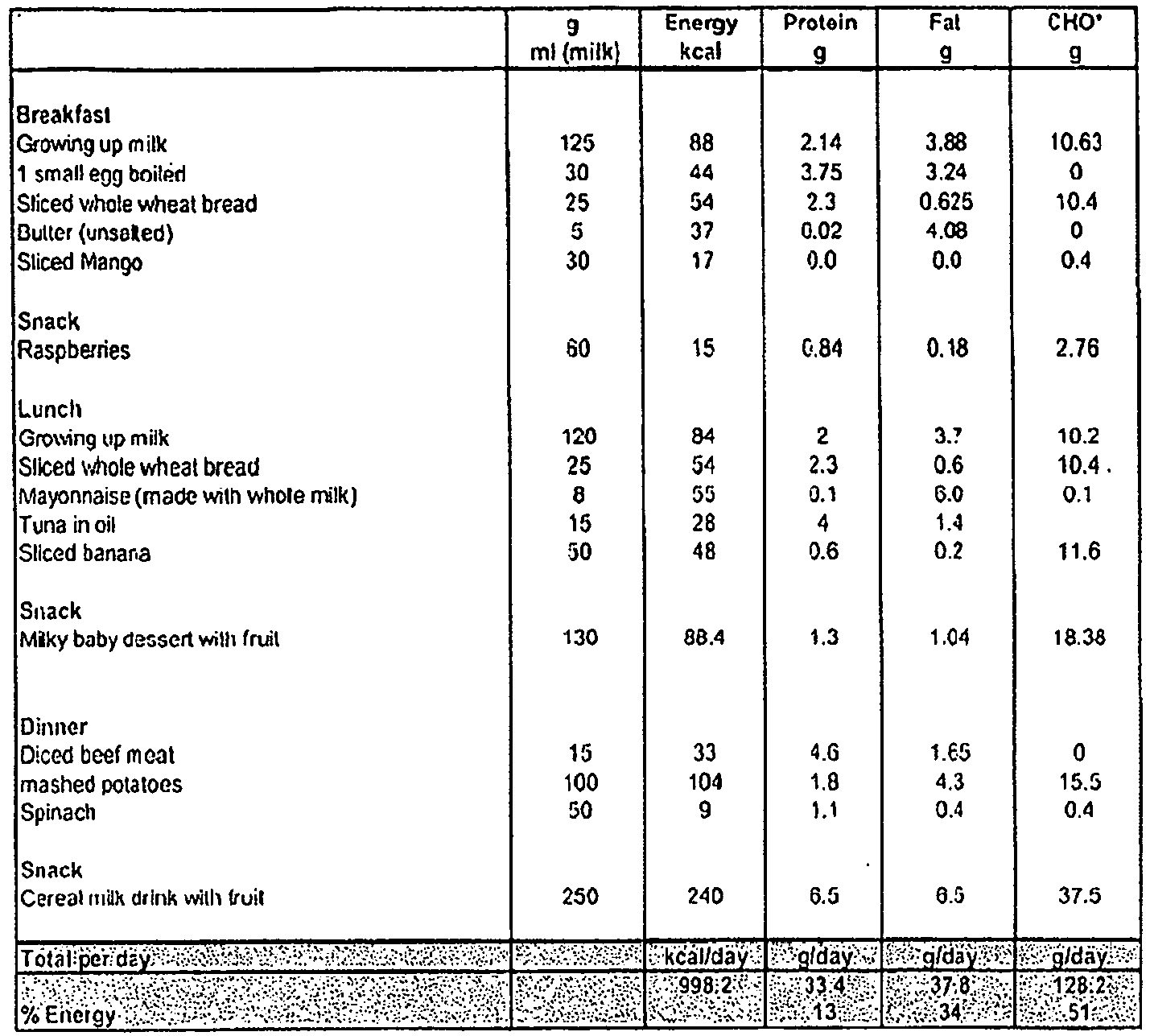
- Menu 3:

- Example 2:
- A daily complementary diet for
stage 1 comprised: - (i) 100g portion of infant cereal;
- (ii) 65g portion of vegetable dish in accordance with the invention; and
- (iii) 65g portion of fruit dish in accordance with the invention.
- A number of vegetable and fruit dishes were provided in a range of baby food products and were labeled according to their suitability for a
stage 1 diet. The feeding plan shown infigure 6 was used to determine which meals could make up the daily food intake forstage 1. In this example, the vegetable dish was a pumpkin based dish and the fruit dish was an apple based dish.Table 1: List of ingredients for vegetable dish Ingredient Amount per 100g (g) POTATO FLAKES 4.000 Pumpkin frozen 40.000 Potato 6x6 mm frozen 10.000 CARROT 15.000 RAPESEED OIL LOW ERUCIC (CANOLA) 0.400 SUNFLOWER OIL 0.400 WATER 30.200 Table 2: List of ingredients for fruit dish Ingredient Amount per 100g (g) Apple fresh 99.95 Vitamin C 0.05 - Each dish provided the following nutritional values:
Table 3: Nutritional values provided by each Stage 1 dishKcal/100g kcal/serving % daily energy intake Cereal Dish 106.0 for RTE pap 106.00 17.0 424 for dry powder Vegetable Dish 40.7 26.46 4.2 Fruit Dish 53.2 34.58 5.5 - The total daily nutritional values provided by the complementary dishes were as follows:
Table 4: Daily nutritional values provided by the Stage 1 complementary dishesper day per 100g E% (daily energy intake) Total Protein (g) 4.3 2.8 10.4 Total Fat (g) 3.3 2.2 18.1 Total CHO (g) 29.8 19.2 71.5 Fibres (g) 3.1 2.0 - Sodium (mg) 38.1 24.6 - LA (g) 0.8 0.5 4.3 ALA (g) 0.1 0.1 0.6 LA/ALA ratio 7.1 - - Energy (kcal) 166.5 107.4 - - The sum of the daily energy intake provided by the complementary foods was 26.6% (166.5 kcal). The remaining 73.4% (458 kcal) of daily energy intake was provided by milk. This provided a total daily energy intake of 625.04 kcal.
- Example 3:
- A daily complementary diet for
stage 2 comprised: - (i) 100g portion of infant cercal;
- (ii) 100g portion of vegetable dish in accordance with the invention;
- (iii) 100g portion of a complete meal in accordance with the invention; and
- (iv) 65g portion of fruit dish in accordance with the invention.
- A number of complete meals, vegetable and fruit dishes were provided in the range of baby food products and were labeled according to their suitability for a
stage 2 diet. The feeding plan shown infigure 6 was used to determine which meals could make up the daily food intake forstage 2. In this example, the vegetable dish was garden vegetables and corn based, the complete meal was garden vegetables and lamb based and the fruit dish was apple and raspberry based.Table 5: List of ingredients for vegetable dish Ingredient Amount per 100g (g) CARROT 30.000 POTATO FLAKES 3.000 Sweetcom frozen 10.000 Parsnip frozen 10.000 RICE SEMOLINA 1.000 RAPESEED OIL LOW ERUCIC (CANOLA) 0.400 Fennel frozen 5.000 SUNFLOWER OIL 0.200 WATER 40.400 Table 6: List of ingredients for complete meal Ingredient Amount per 100g (g) POTATO FLAKES 4.000 CARROT 30.000 Lamb frozen 8.500 RICE SEMOLINA 2.000 Parsnip frozen 5.000 Sweetcorn frozen 3.000 RAPESEED OIL LOW ERUCIC (CANOLA) 0.600 SUNFLOWER OIL 0.400 Onion 10 mm frozen4.000 WATER 42.500 Table 7: List of ingredients for fruit dish Ingredient Amount per 100g (g) Apple fresh 79.96 Raspberry puree 19.99 Vitamin C 0.05 - Each dish provided the following nutritional values:
Table 8 : Nutritional values provided by each Stage 2 dishkcal/100g kcal/serving % daily energy intake Cereal Dish 106.0 for RTE pap 424 for dry powder 106.00 15.8 Vegetable Dish 42.6 42.6 6.4 Complete Meal 62.6 62.6 9.3 Fruit Dish 50.2 32.63 4.9 - The total daily nutritional values provided by the complementary dishes were as follows:
Table 9: Daily nutritional values provided by the Stage 2 complementary dishesper day per 100g E% (daily energy intake) Total Protein (g) 7.8 2.7 12.9 Total Fat (g) 6.2 2.1 23.1 Total CHO (g) 38.5 13.3 63.9 Fibres (g) 5.2 1.8 - Sodium (mg) 75.7 26.1 - LA (g) 1.2 0.4 4.6 ALA (g) 0.2 0.1 0.6 LA/ALA ratio 7.3 - - Energy (kcal) 241.1 83.1 - - The sum of the daily energy intake provided by the complementary foods was 35.9% (241.1 kcal). The remaining 64.1% (428.93 kcal) of daily energy intake was provided by milk. This provided a total daily energy intake of 670.03 kcal.
- Example 4:
- A daily complementary diet for
stage 3 comprised: - (i) 150g portion of infant cereal;
- (ii) 200g portion of vegetable dish in accordance with the invention;
- (iii) 200g portion of a complete meal in accordance with the invention; and
- (iv) 130g portion of fruit dish in accordance with the invention.
- A number of complete meal, vegetable and fruit dishes were provided in the range of baby food products and were labeled according to their suitability for a
stage 3 diet. The feeding plan shown infigure 6 was used to determine which meals could make up the daily food intake forstage 3. In this example, vegetable dish was garden vegetables and corn based, the complete meal was a pasta, tomato and beef based and the fruit dish was fruit salad based.Table 10: List of ingredients for vegetable dish Ingredient Amount per 100g(g) CARROT 30.000 POTATO FLAKES 3.000 Sweetcorn frozen 10.000 Parsnip frozen 10.000 RICE SEMOLINA 1.000 RAPESEED OIL LOW ERUCIC (CANOLA) 0.400 Fennel frozen 5.000 SUNFLOWER OIL 0.200 WATER 40.400 Table 11: List of ingredients for complete meal Ingredient Amount per 100g (g) Pasta spaghetti short 8.000 Beef frozen 14% fat 8.000 CARROT 20.000 Tomato puree 5.000 RAPESEED OIL LOW ERUCIC (CANOLA) 0.800 SUNFLOWER OIL 0.400 Bell pepper red 10mm frozen 4.000 Onion 10 mm frozen3.000 Thyme frozen 0.100 WATER 50.700 able 12: List of ingredients for fruit dish Ingredient Amount per 100g (g) Apple fresh 39.98 Pear William fresh 14.9925 Peach puree 14.9925 Banana puree without seeds 19.990 Apricot puree 9.995 Vitamin C 0.05 - Each dish provided the following nutritional values:
Table 13: Nutritional values provided by each Stage 3 dishKcal/100 g kcal/serving % daily energy intake Cereal Dish 106.0 159.00 20.6 Vegetable Dish 42.6 95.2 11.1 Complete Meal 65.9 131.8 17.1 Fruit Dish 56.0 12.8 9.5 - The total daily nutritional values provided by the complementary dishes were as follows:
Table 14: Daily nutritional values provided by the Stage 3 complementary dishesPer day per 100g E% Total Protein (g) 14.8 2.6 13.2 Total Fat (g) 10.9 1.9 22 Total CHO (g) 72.4 12.3 64.8 Fibres (g) 8.4 1.5 - Sodium (mg) 142.3 25.1 - LA (g) 2.3 0.4 4.6 ALA (g) 0.4 0.1 0.7 LA/ALA ratio 6.5 - - Encrgy (kcal) 447.0 78.8 - - The sum of the daily energy intake provided by the complementary foods was 58.0% (447.0 kcal). The remaining 42.0% (323.0 kcal) of daily energy intake was provided by milk. This provided a total daily energy intake of 770 kcal.
- Example 5:
- A daily complementary diet for
stage 4 comprised: - (i) 350g portion of infant cereal;
- (ii) 200g portion of vegetable dish in accordance with the invention;
- (iii) 250g portion of a complete meal in accordance with the invention; and
- (iv) 130g portion of fruit dish in accordance with the invention,
- A number or complete meals, vegetable and fruit dishes were provided in the range of baby food products and were labeled according to their suitability for a
stage 4 diet. The feeding plan shown infigure 6 was used to determine which meals could make up the daily food intake forstage 4. In this example, the vegetable dish was a garden vegetables and corn dish, the complete meal was a pasta, tomato and beef dish and the fruit dish was a fruit salad dish.Table 15: List of ingredients for vegetable dish Ingredient Amount per 100g (g) CARROT 30.000 POTATO FLAKES 3.000 Sweetcorn frozen 10.000 Parsnip frozen 10.000 RICE SEMOLINA 1.000 RAPESEED OIL LOW ERUCIC (CANOLA) 0.400 Fennel frozen 5.000 SUNFLOWER OIL 0.200 WATER 40.400 Table 16: List of ingredients for complete meal Ingredient Amount per 100g (g) Pasta spaghetti short 8.000 Beef frozen 14% fat 8.000 CARROT 20.000 Tomato puree 5.000 RAPESEED OIL LOW ERUCIC (CANOLA) 0.800 SUNFLOWER OIL 0.400 Bell pepper red 10mm frozen 4.000 Onion 10 mm frozen3.000 Thyme frozen 0.100 WATER 50.700 Table 17: List of ingredients for fruit dish Ingredient Amount per 100g (g) Apple fresh 39.98 Pear William fresh 14.9925 Peach purce 14.9925 Banana puree without seeds 19.990 Apricot purce 9.995 Vitamin C 0.05 - Each dish provided the following nutritional values:
Table 18: Nutritional values provided by each Stage 4 dishkcal/100g kcal/serving % daily energy intake Cereal Dish 106.0 371 35.7 Vegetable Dish 42.6 85.2 8.2 Complete Meal 65.9 164.75 15.8 Fruit Dish 56.0 72.8 7.0 - The daily nutritional values provided by the complementary dishes were as follows:
Table 19: Daily nutritional values provided by the Stage 4 complementary dishesper day per 100g E% Total Protein (g) 23.6 3.5 13.6 Total Fat (g) 17.2 2.6 22.4 Total CHO (g) 110.6 16.6 64.0 Fibres (g) 9.8 1.5 - Sodium (mg) 215.0 32.2 - LA (g) 3.4 0.5 4.5 ALA (g) 0.5 0.1 0.7 LA/ALA ratio 6.8 - - Energy (kcal) 691.7 103.6 - - The sum of the daily energy intake provided by the complementary foods was 66.5% (691.7 kcal). The remaining 33.5% (348.3 kcal) of daily energy intake was provided by milk. This provided a total daily energy intake of 1040 kcal.
- References
- Barker DJ, Clark PM. Fetal undernutrition and disease in later life. Rev Reprod 1997;2:105-112.
- Law CM, Barker DJ, Osmond C, Fall CH, Simmonds SJ. Early growth and abdominal fatness in adult life. J Epidemiol Community Health, 1992;46 184-18.
- Barker DJ. Outcome of low birthweight. Horm Res 1994;42:223-230.
- Hoet JJ, Hanson MA. Intrauterine nutrition: its importance during critical periods for cardiovascular and endocrine development. J Physiol (Lond) 1999;514:617-627.
- Ozanne SE, Hales CN. The long-term consequences of intra-uterine protein malnutrition for glucose metabolism. Proc Nutr Soc 1999;58:615-619.
- Langley-Evans SC, Sherman RC, Welham SJ, Nwawu MO, Gardner DS, Jackson AA. Intrauterine programming of hypertension: the role of the renin-angiotensin system. Biochem Soc Trans 1999;27:88-93.
- Tycko B, Ashkenas J. Epigenetics and its role in disease. J. Clin Invest, 2000; 105:245,246.
- Patel M.S, Vadlamudi S.P and Johanning G.L, Overview of pup in a cup model: hepatic lipogenesis in rats artificially reared on a high-carbohydrate formula J.Nutr, 1993,123:373-377.
- Hiremagalur B.K, Vadlamudi S, Johanning G.L and Patel, M.S, Long-term effects of feeding high carbohydrate diet in pre-weaning period by gastrostomy: a new rat model for obesity. Inter J Obesity, 1993,17:495-502.
- Song F, Srinivasan M, Aalinkeel R, Patel MS. Use of cDNA Array for identification of genes induced in islets of suckling b rats by a high-carbohydrate nutritional intervention. Diabetes 2001;50:2053-2060.
- Aalinkeel R, Srinivasan M. Song F and Patel MS. Programming into adulthood of islet adaptations induced by early nutrition in the rat. Am J Physiol Endocrinol Metab, 2001, 281:E640-648.
- Michaelsen FK and Jorgensen M. Dietary fat content and energy density during infancy and childhood, Eur J Clin Nutr, 1995, 49: 467-483.
- Lapinleimu.H, Viikari J, Jokinen E, Salo P, Routi T, Leino A, Ronnemaa T, Seppanen R, Valimaki I, Simell O, Prospective randomised trial in 1062 infants of diet low in saturated fat and cholesterol. Lancet. 1995;345:471-476
- It should be understood that various changes and modifications to the presently preferred embodiments described herein will be apparent to those skilled in the art. Such changes and modifications can be made without departing from the spirit and scope of the present subject matter and without diminishing its intended advantages. It is therefore intended that such changes and modifications be covered by the appended claims.
Claims (15)
- A range of shelf-stable baby food products comprising two or more food products suitable for each stage of infant development, the products having an optimal energy profile for meeting the nutritional needs of an infant at a specific stage of infant development, wherein two or more baby food products from the range may be combined to provide an optimal energy profile for meeting the nutritional needs of an infant at a particular stage of infant development.
- The range of claim 1, wherein (a) the stages of infant development are selected from:(i) from about 4 to about 6 months of age (Stage 1);(ii) from about 6 to about 8 months of age (Stage 2);(iii) from about 8 to about 12 months of age (Stage 3); and(iv) from about 12 to about 36 months of age (Stage Junior); optionally
wherein the total optimum daily energy intake for stage 1 is between about 530 and about 700 kcal/day, preferably about 625 kcal/day, for stage 2 is between about 620. and about 720 kcal/day, preferably about 670 kcal/day, for stage 3 is between about 680 and about 930 kcal/day, preferably about 770 kcal/day, and for stage junior is between about 810 and about 1180 kcal/day, preferably about 1040 kcal/day; or (b) two or more baby food products from the range may be combined with the daily milk intake of an infant to provide an optimal daily energy intake of an infant at a particular stage of infant development; or (c) two or more baby food products from the range provide a daily energy intake for stage 1 of between about 68 and about 238 kcal/day, preferably about 167 kcal/day, for stage 2 of between about 158 and about 258 kcal/day, preferably about 243 kcal/day, for stage 3 of between about 345 and about 595 kcal/day, preferably about 448 kcal/day, and for stage junior of between about 475 and about 845 kcal/day, preferably about 693 kcal/day; optionally wherein the difference between the daily energy intake provided by the two or more baby food products and the optimum daily energy intake for each stage of infant development is provided by the daily milk intake of an infant; or (d) a daily intake of baby food products from the range has an average energy density of at least about 0.6 kcal/g, preferably at least about 0.67 kcal/g, most preferably about 1 kcal/g; or (e) one or more daily feeding schedules are provided which comprise suggested combinations of baby food products from the range of baby food products, said combinations providing an optimal energy profile for meeting the nutritional needs of an infant at a particular stage of infant development; optionally one or more daily feeding schedules are provided for each stage of infant development; or (f) the total optimum daily fat intake for stage 1 is about 45%E, for stage 2 is between about 43%E and about 45%E, for stage 3 is between about 40%E and about 43%E, and for stage junior is between about 30%E and about 40%E; or (g) two or more baby food products from the range provide a daily fat intake for stage 1 of between about 18%E and about 27%E, for stage 2 of between about 22%E and about 29%E, for stage 3 of between about 21%E and about 36%E, and for stage junior of between about 22%E and about 40%E; optionally wherein the difference between the daily fat intake provided by the two or more baby food products and the optimum daily fat intake for each stage of infant development is provided by the daily milk intake of an infant. - The range of claim 1 or 12, wherein the baby food products have a protein density of between about 1.5g/100kcal and about 3.2g/100kcal.
- The range of any of claims 1 to 3, wherein (a) the baby food products comprise complete meals or incomplete meals; optionally wherein a complete meal comprises two or more incomplete meals; or (b) each baby food product comprises a serving size of between about 65g and about 350g; or (c) each baby food product comprises a serving size of between about 65g and about 100g for stage 1, of between about 65g and about 100g for stage 2, of between about 130g and about 200g for stage 3, and between about 130g and about 350g for stage junior.
- A feeding regime for meeting the nutritional needs of an infant during different stages of infant development, the regime comprising administering to an infant a range of baby food products of any of claims 1 to 4.
- The use of a range of any of claims 1 to 4, in the manufacture of a medicament for the prevention or treatment of a nutritionally related disorder in an infant; optionally wherein the nutritionally related disease is selected from obesity, malnutrition, diabetes and heart disease.
- A kit of at least 3 individual nutritional compositions wherein each nutritional composition represents an individual meal for children age 6-36 month, comprising a macronutrient content that gradually changes in a substantially straight line from a composition that comprises about 40-50% energy from fat and about 40-49% energy from carbohydrates for children at the age of 6 months to a composition that comprises about 30-35% energy from fat and about 50-55% energy from carbohydrates for children at the age of 36 months.
- The kit in accordance with claim 7 wherein (i) the diet compositions are daily compositions; or (ii) the total energy content of the composition is gradually changing in the form of a substantially straight line from a composition that comprises about 670-715 kcal/day for children at the age of 6 months to a composition that comprises about 1000-1200 kcal/day for children at the age of 36 months; or (iii) the content of the diet composition is adjusted (a) daily, based on the age of the child and the corresponding optimal fat content and carbohydrate content of the composition, (b) weekly, based on the age of the child and the corresponding optimal fat content and carbohydrate content of the composition, or (c) monthly, based on the age of the child and the corresponding optimal fat content and carbohydrate content of the composition; or (iv) the content of the diet composition is adjusted stepwise, based on the age of the child and the corresponding optimal fat content and carbohydrate content of the composition; optionally wherein (a) the composition is adjusted in 3-10 steps during the age of 6-36 months; or (b) the composition is adjusted in 3-4 steps during the age of 6-36 months; or (v) the content of the diet composition is adjusted stepwise, based on the age of the child and the corresponding optimal fat content and carbohydrate content of the composition, at the age of the child of 6, 8, 12, 18, 24 and 36 months; or (vi) the content of the diet composition is adjusted also with respect to the total calorie content based on the age of the child and the corresponding optimal calorie content of the composition.
- The kit in accordance with claim 7, comprising
at least one diet composition that comprises about 44-46% energy from fat and about 47-49% energy from carbohydrates for children age 6-8 months;
at least one diet composition that comprises about 39-41% energy from fat and about 49-52% energy from carbohydrate for children age 8-12 months; and
at least one diet composition that comprises about 34-35% energy from fat and about 51-53% energy from carbohydrate for children age 12-36 months; optionally wherein the at least one diet composition comprises about 670-715 kcal/day during the age of 6-8 months, about 715-850 kcal/day for children age 8-12 months, and about 750-1200 kcal/day for children age 12-36 months. - The kit in accordance with claim 7, wherein the diet compositions further comprise a protein source.
- The kit in accordance with claim 7, wherein the content of carbohydrates in the compositions is gradually changing from a composition that comprises about 48% energy from carbohydrates for children at the age of 6 months to a composition that comprises about 53% energy from carbohydrates for children at the age of 36 months.
- The kit in accordance with claim 7, comprising diet compositions for at least (a) one day, (b) three days, (c) a week, or (d) a month.
- The kit in accordance with claim 7, wherein the diet compositions represent a total diet.
- A method for reducing the risk of obesity in children 6-36 months old comprising the steps of administering a series of diet compositions, wherein the macronutrient content of the compositions is gradually changing from a composition that comprises about 40-50% energy from fat and about 40-49% energy from carbohydrates for children at the age of 6 months to a composition that comprises about 30-35% energy from fat and about 50-55% energy from carbohydrates for children at the age of 36 months.
- A method for developing a mealplan for children age 6-36 months comprising a macronutrient content that gradually changes in a substantially straight line from a composition that comprises about 40-50% energy from fat and about 40-49% energy from carbohydrates for children at the age of 6 months to a composition that comprises about 30-35% energy from fat and about 50-55% energy from carbohydrates for children at the age of 36 months.
Priority Applications (1)
| Application Number | Priority Date | Filing Date | Title |
|---|---|---|---|
| EP12002482A EP2474239A1 (en) | 2007-05-30 | 2008-05-30 | Kit of nutritional compositions for infants with fat and carbohydrate content adapted to the particular stage of development |
Applications Claiming Priority (4)
| Application Number | Priority Date | Filing Date | Title |
|---|---|---|---|
| US11/755,589 US9402412B2 (en) | 2007-05-30 | 2007-05-30 | Metabolic imprinting |
| EP07017568 | 2007-09-07 | ||
| EP12002482A EP2474239A1 (en) | 2007-05-30 | 2008-05-30 | Kit of nutritional compositions for infants with fat and carbohydrate content adapted to the particular stage of development |
| EP08758882A EP2154998A2 (en) | 2007-05-30 | 2008-05-30 | Kit of nutritional compositions for infants with fat and carbohydrate content adapted to the particular stage of development |
Related Parent Applications (1)
| Application Number | Title | Priority Date | Filing Date |
|---|---|---|---|
| EP08758882.8 Division | 2008-05-30 |
Publications (1)
| Publication Number | Publication Date |
|---|---|
| EP2474239A1 true EP2474239A1 (en) | 2012-07-11 |
Family
ID=39745173
Family Applications (2)
| Application Number | Title | Priority Date | Filing Date |
|---|---|---|---|
| EP12002482A Ceased EP2474239A1 (en) | 2007-05-30 | 2008-05-30 | Kit of nutritional compositions for infants with fat and carbohydrate content adapted to the particular stage of development |
| EP08758882A Ceased EP2154998A2 (en) | 2007-05-30 | 2008-05-30 | Kit of nutritional compositions for infants with fat and carbohydrate content adapted to the particular stage of development |
Family Applications After (1)
| Application Number | Title | Priority Date | Filing Date |
|---|---|---|---|
| EP08758882A Ceased EP2154998A2 (en) | 2007-05-30 | 2008-05-30 | Kit of nutritional compositions for infants with fat and carbohydrate content adapted to the particular stage of development |
Country Status (13)
| Country | Link |
|---|---|
| EP (2) | EP2474239A1 (en) |
| JP (2) | JP5851095B2 (en) |
| CN (1) | CN101686724B (en) |
| AR (1) | AR066801A1 (en) |
| AU (1) | AU2008256435B2 (en) |
| BR (1) | BRPI0812296A2 (en) |
| CA (1) | CA2689957A1 (en) |
| CL (1) | CL2008001595A1 (en) |
| MX (1) | MX341683B (en) |
| RU (1) | RU2461230C2 (en) |
| TW (2) | TWI576052B (en) |
| WO (1) | WO2008145375A2 (en) |
| ZA (1) | ZA200909125B (en) |
Cited By (1)
| Publication number | Priority date | Publication date | Assignee | Title |
|---|---|---|---|---|
| WO2017178395A1 (en) * | 2016-04-11 | 2017-10-19 | Nestec S.A. | Infant nutrition delivering metabolic benefits |
Families Citing this family (12)
| Publication number | Priority date | Publication date | Assignee | Title |
|---|---|---|---|---|
| US20100310725A1 (en) * | 2007-12-31 | 2010-12-09 | Kathleen Reidy | Nutritionally appropriate menu of food products for children |
| EP2452574A1 (en) * | 2010-11-15 | 2012-05-16 | Nestec S.A. | Age-tailored nutritional formula with particularly adapted caloric density for young infants |
| EP2404507A1 (en) * | 2010-07-08 | 2012-01-11 | Nestec S.A. | Array of age-tailored nutritional formula with optimum fat content |
| EP2452573A1 (en) * | 2010-11-15 | 2012-05-16 | Nestec S.A. | Age-tailored nutritional composition with animal fats and vegetable fats |
| EP2452575A1 (en) * | 2010-11-15 | 2012-05-16 | Nestec S.A. | Array of age-tailored nutritional formula with probiotics |
| EP2452572A1 (en) * | 2010-11-15 | 2012-05-16 | Nestec S.A. | Age-tailored nutritional formula with particularly adapted caloric density for infants and children |
| EP2452571A1 (en) * | 2010-11-15 | 2012-05-16 | Nestec S.A. | Array of complementary infant/young child nutritional compositions |
| BR112013013908A2 (en) | 2010-12-08 | 2016-08-16 | Nestec Sa | children's food products comprising hydrolysed whole grains |
| WO2014148885A1 (en) * | 2013-03-21 | 2014-09-25 | N.V. Nutricia | Stage 1 and stage 2 food products for infants |
| PL3071052T3 (en) * | 2013-10-18 | 2020-07-27 | Innovachildfood Ab | A nutritionally balanced composite meal for infants and small children and a method of producing said meal |
| AU2015411009A1 (en) * | 2015-09-28 | 2018-01-18 | Société des Produits Nestlé S.A. | Gender specific synthetic nutritional compositions and nutritional systems comprising them |
| CN112890182A (en) * | 2021-03-09 | 2021-06-04 | 杭州贝聪美健康科技有限公司 | Nutrition bag suitable for infants |
-
2008
- 2008-05-30 CN CN200880023952.8A patent/CN101686724B/en active Active
- 2008-05-30 CL CL2008001595A patent/CL2008001595A1/en unknown
- 2008-05-30 AU AU2008256435A patent/AU2008256435B2/en not_active Ceased
- 2008-05-30 TW TW101114782A patent/TWI576052B/en not_active IP Right Cessation
- 2008-05-30 JP JP2010509736A patent/JP5851095B2/en not_active Expired - Fee Related
- 2008-05-30 CA CA2689957A patent/CA2689957A1/en not_active Abandoned
- 2008-05-30 BR BRPI0812296A patent/BRPI0812296A2/en not_active IP Right Cessation
- 2008-05-30 EP EP12002482A patent/EP2474239A1/en not_active Ceased
- 2008-05-30 RU RU2009149193/13A patent/RU2461230C2/en active
- 2008-05-30 MX MX2009012995A patent/MX341683B/en active IP Right Grant
- 2008-05-30 TW TW097120397A patent/TWI572294B/en not_active IP Right Cessation
- 2008-05-30 WO PCT/EP2008/004308 patent/WO2008145375A2/en not_active Ceased
- 2008-05-30 AR ARP080102304A patent/AR066801A1/en unknown
- 2008-05-30 EP EP08758882A patent/EP2154998A2/en not_active Ceased
-
2009
- 2009-12-21 ZA ZA2009/09125A patent/ZA200909125B/en unknown
-
2013
- 2013-10-10 JP JP2013213062A patent/JP2014050392A/en active Pending
Non-Patent Citations (20)
| Title |
|---|
| AALINKEEL R; SRINIVASAN M; SONG F; PATEL MS: "Programming into adulthood of islet adaptations induced by early nutrition in the rat", AM J PHYSIOL ENDOCRINOL MCTAB, vol. 281, 2001, pages E640 - 648 |
| AGGETT, P. ET AL.: "Comment on the composition of cow's milk based follow-up formulas", ACTA PAEDIATRICA SCAND, vol. 79, 1990, pages 250 - 254, XP002471987 * |
| BARKCR DJ: "Outcome of low birthweight", HONN RES, vol. 42, 1994, pages 223 - 230 |
| BARKER DJ; CLARK PM: "Fetal undemutrition and disease in later life", REV REPROD, vol. 2, 1997, pages 105 - 112 |
| BRONNER, Y. ET AL.: "Current concepts in infant nutrition", JOURNAL OF NURSE MIDWIFERY, vol. 37, no. 2, 1992, pages 43S - 57S, XP002471983 * |
| BUTTE, N. ET AL.: "The start healthy feeding guidelines for infants and toddlers", JOURNAL OF THE AMERICAN DIETETIC ASSOCIATION, vol. 104, no. 3, 2004, pages 442 - 454, XP002471985 * |
| DI TORO, R.: "Follow-on formulae", ACTA PAEDIATRICA SUPPL, vol. 402, 1994, pages 46 - 49, XP002471988 * |
| HIREMAGALUR B.K; VADLAMUDI S; JOHANNING G.L; PATEL, M.S: "Long-term effects of feeding high carbohydrate diet in pre-weaning period by gastrostomy: a new rat model for obesity", INTER J OBESITY, vol. 17, 1993, pages 495 - 502 |
| HOET JJ; HANSON MA: "Intrauterine nutrition: its importance during critical periods for cardiovascular and endocrine development", J PHYSIOL (LOND, vol. 514, 1999, pages 617 - 627 |
| LANGLEY-EVANS SC; SHERMAN RC; WELHAM SJ; NWAWU MO; GARDNER DS; JACKSON AA: "Intrauterine programming of hypertension: the role of the renin- angiotensin system", BIOCHEM SOC TRANS, vol. 27, 1999, pages 88 - 93 |
| LAPINLEIMU.H; VIIKARI J; JOKINEN E; SALO P; ROUTI T; LEINO A; RONNEMAA T; SEPPANEN R; VALIMAKI I; SIMELL O: "Prospective randomised trial in 1062 infants of diet low in saturated fat and cholesterol", LANCET, vol. 345, 1995, pages 471 - 476 |
| LAW CM; BARKER DJ; OSMOND C; FALL CH; SIMMONDS SJ: "Early growth and abdominal fatness in adult life", J EPIDEMIOL COMMUNITY HEALTH, vol. 46, 1992, pages 184 - 18 |
| MACE K, SHAHKHALILI Y, APRIKIAN O, STAN S: "Dietary fat and fat types as early determinants of childhood obesity: a reappraisal", NATURE, vol. 30, 2006, pages S50 - S57, XP002496959 * |
| MICHAELSEN FK; JORGENSEN M: "Dietary fat content and energy density during infancy and childhood", EUR J CLIN NUTR, vol. 49, 1995, pages 467 - 483 |
| MILNER, J. ET AL.: "The role of dietary fat in child nutrition and development.", JOURNAL OF NUTRITION, vol. 129, 1999, pages 2094 - 2105, XP002471986 * |
| OZANNE SE; HALES CN: "The long-term consequences of intra-uterine protein malnutrition for glucose metabolism", PROC NUTR SOC, vol. 58, 1999, pages 615 - 619 |
| PATEL M.S; VADLAMUDI S.P; JOHANNING G.L: "Overview of pup in a cup model: hepatic lipogenesis in rats artificially reared on a high-carbohydrate formula", J.NUTR, vol. 123, 1993, pages 373 - 377 |
| SONG F; SRINIVASAN M; AALINKEEL R; PATEL MS: "Use of cDNA Array for identification of genes induced in islets of suckling rats by a high-carbohydrate nutritional intervention", DIABETES, vol. 50, 2001, pages 2053 - 2060 |
| TYCKO B; ASHKENAS J: "Epigenetics and its role in disease", J. CLIN INVEST, vol. 105, 2000, pages 245 - 246 |
| UAUY, R. ET AL.: "Lipid requirements of infants: implications for nutrient composition of fortified complementary foods", JOURNAL OF NUTRITION, vol. 133, 2003, pages 2962S - 2972S, XP002471984 * |
Cited By (7)
| Publication number | Priority date | Publication date | Assignee | Title |
|---|---|---|---|---|
| WO2017178395A1 (en) * | 2016-04-11 | 2017-10-19 | Nestec S.A. | Infant nutrition delivering metabolic benefits |
| CN108777996A (en) * | 2016-04-11 | 2018-11-09 | 雀巢产品技术援助有限公司 | Infant nutrition that provides metabolic benefits |
| EP3442358B1 (en) | 2016-04-11 | 2021-02-17 | Société des Produits Nestlé S.A. | Infant nutrition delivering metabolic benefits |
| AU2017251143B2 (en) * | 2016-04-11 | 2021-05-20 | Société des Produits Nestlé S.A. | Infant nutrition delivering metabolic benefits |
| EP3854227A1 (en) * | 2016-04-11 | 2021-07-28 | Société des Produits Nestlé S.A. | Infant nutrition delivering metabolic benefits |
| US11388922B2 (en) | 2016-04-11 | 2022-07-19 | Societe Des Produits Nestle S.A. | Infant nutrition delivering metabolic benefits |
| US12004545B2 (en) | 2016-04-11 | 2024-06-11 | Societe Des Produits Nestle S.A. | Infant nutrition delivering metabolic benefits |
Also Published As
| Publication number | Publication date |
|---|---|
| ZA200909125B (en) | 2011-02-23 |
| TW200932126A (en) | 2009-08-01 |
| WO2008145375A3 (en) | 2009-05-22 |
| TWI576052B (en) | 2017-04-01 |
| JP2010527623A (en) | 2010-08-19 |
| BRPI0812296A2 (en) | 2019-09-24 |
| WO2008145375A2 (en) | 2008-12-04 |
| CN101686724B (en) | 2016-04-13 |
| TW201234982A (en) | 2012-09-01 |
| AU2008256435B2 (en) | 2014-03-27 |
| EP2154998A2 (en) | 2010-02-24 |
| RU2461230C2 (en) | 2012-09-20 |
| JP5851095B2 (en) | 2016-02-03 |
| AR066801A1 (en) | 2009-09-16 |
| CN101686724A (en) | 2010-03-31 |
| JP2014050392A (en) | 2014-03-20 |
| MX341683B (en) | 2016-08-30 |
| RU2009149193A (en) | 2011-07-10 |
| TWI572294B (en) | 2017-03-01 |
| CL2008001595A1 (en) | 2009-09-25 |
| CA2689957A1 (en) | 2008-12-04 |
| AU2008256435A1 (en) | 2008-12-04 |
| MX2009012995A (en) | 2010-02-12 |
Similar Documents
| Publication | Publication Date | Title |
|---|---|---|
| EP2474239A1 (en) | Kit of nutritional compositions for infants with fat and carbohydrate content adapted to the particular stage of development | |
| US10076131B2 (en) | Metabolic imprinting | |
| Faber | Complementary foods consumed by 6–12-month-old rural infants in South Africa are inadequate in micronutrients | |
| US20090297636A1 (en) | Sensoric imprinting | |
| Merritt | Plant based drinks in the diets of infants and young children | |
| Jardine | Nutrition considerations for microbiota health in diabetes | |
| US20150189901A1 (en) | Resistant Starch Food Bar System | |
| Araya et al. | Effect of the energy density and volume of high carbohydrate meals on short term satiety in preschool children | |
| Bartolo | Nutrition in childhood | |
| Inge Permadhi et al. | Dietary optimisation with omega-3 and omega-6 fatty acids for 12-23-month-old overweight and obese children in urban Jakarta | |
| Sharma et al. | Formulation of standard (nutriagent std) and high protein (nutriagent protein plus) ready to reconstitute enteral formula feeds | |
| Weker et al. | Analysis of nutrition of children in Warsaw day nurseries in view of current recommendations | |
| Igah | Target food sources for formulating complementary/supplementary foods for weaning purposes | |
| Yamashiro | Nutritional support for patients with Biliary Atresia | |
| Pam | Nutrition During Infancy (0-12months) and of the Toddlers (1-2 Years) | |
| Rose et al. | Medical Nutritional Therapy | |
| Deakin | Dietary Impact on the Prevention and Management of Obesity | |
| Hodgkin | Vegetarian diets across the lifespan | |
| Halima et al. | Review of the practices of feeding and food of complement to the young child | |
| Dellsperger | Nutrition for the older adult | |
| Ibrahim Umate | Production and Fortificatio Foods | |
| ROBB et al. | VITAMIN B1 INTAKE OF NURSERY SCHOOL CHILDREN | |
| KALYANASUNDARAM et al. | Approach to weaning (complementary feeding) in infants | |
| Mills | Dietary survey of infants aged 6 to 12 months | |
| Labuschagne et al. | Feeding babies: 6-12 months (part 1): infant nutrition |
Legal Events
| Date | Code | Title | Description |
|---|---|---|---|
| PUAI | Public reference made under article 153(3) epc to a published international application that has entered the european phase |
Free format text: ORIGINAL CODE: 0009012 |
|
| AC | Divisional application: reference to earlier application |
Ref document number: 2154998 Country of ref document: EP Kind code of ref document: P |
|
| AK | Designated contracting states |
Kind code of ref document: A1 Designated state(s): AT BE BG CH CY CZ DE DK EE ES FI FR GB GR HR HU IE IS IT LI LT LU LV MC MT NL NO PL PT RO SE SI SK TR |
|
| AX | Request for extension of the european patent |
Extension state: AL BA MK RS |
|
| RIN1 | Information on inventor provided before grant (corrected) |
Inventor name: MACE, KATHERINE Inventor name: ACHESON, KEVIN Inventor name: VOSS, THERESA Inventor name: APRIKIAN, OLIVIER Inventor name: ZBINDEN, IRENE Inventor name: URSEL, SILJA Inventor name: KUSLYS, MARTINAS Inventor name: SHAHKHALILI, YASAMAN Inventor name: MOULIN, JULIE |
|
| RIN1 | Information on inventor provided before grant (corrected) |
Inventor name: ACHESON, KEVIN Inventor name: APRIKIAN, OLIVIER Inventor name: KUSLYS, MARTINAS Inventor name: ZBINDEN, IRENE Inventor name: MOULIN, JULIE Inventor name: MACE, KATHERINE Inventor name: SHAHKHALILI, YASAMAN Inventor name: URSEL, SILJA Inventor name: VOSS, THERESA |
|
| 17P | Request for examination filed |
Effective date: 20130107 |
|
| 17Q | First examination report despatched |
Effective date: 20140701 |
|
| STAA | Information on the status of an ep patent application or granted ep patent |
Free format text: STATUS: THE APPLICATION HAS BEEN REFUSED |
|
| 18R | Application refused |
Effective date: 20161014 |