EP2472899A2 - Method and system for displaying multimedia services from a server to multiple clients - Google Patents
Method and system for displaying multimedia services from a server to multiple clients Download PDFInfo
- Publication number
- EP2472899A2 EP2472899A2 EP11188913A EP11188913A EP2472899A2 EP 2472899 A2 EP2472899 A2 EP 2472899A2 EP 11188913 A EP11188913 A EP 11188913A EP 11188913 A EP11188913 A EP 11188913A EP 2472899 A2 EP2472899 A2 EP 2472899A2
- Authority
- EP
- European Patent Office
- Prior art keywords
- clients
- channel
- server
- information
- display
- Prior art date
- Legal status (The legal status is an assumption and is not a legal conclusion. Google has not performed a legal analysis and makes no representation as to the accuracy of the status listed.)
- Withdrawn
Links
Images

Classifications
-
- H—ELECTRICITY
- H04—ELECTRIC COMMUNICATION TECHNIQUE
- H04N—PICTORIAL COMMUNICATION, e.g. TELEVISION
- H04N21/00—Selective content distribution, e.g. interactive television or video on demand [VOD]
- H04N21/20—Servers specifically adapted for the distribution of content, e.g. VOD servers; Operations thereof
- H04N21/25—Management operations performed by the server for facilitating the content distribution or administrating data related to end-users or client devices, e.g. end-user or client device authentication, learning user preferences for recommending movies
- H04N21/266—Channel or content management, e.g. generation and management of keys and entitlement messages in a conditional access system, merging a VOD unicast channel into a multicast channel
- H04N21/2668—Creating a channel for a dedicated end-user group, e.g. insertion of targeted commercials based on end-user profiles
-
- G—PHYSICS
- G06—COMPUTING OR CALCULATING; COUNTING
- G06F—ELECTRIC DIGITAL DATA PROCESSING
- G06F15/00—Digital computers in general; Data processing equipment in general
- G06F15/16—Combinations of two or more digital computers each having at least an arithmetic unit, a program unit and a register, e.g. for a simultaneous processing of several programs
-
- H—ELECTRICITY
- H04—ELECTRIC COMMUNICATION TECHNIQUE
- H04L—TRANSMISSION OF DIGITAL INFORMATION, e.g. TELEGRAPHIC COMMUNICATION
- H04L65/00—Network arrangements, protocols or services for supporting real-time applications in data packet communication
- H04L65/60—Network streaming of media packets
- H04L65/61—Network streaming of media packets for supporting one-way streaming services, e.g. Internet radio
- H04L65/611—Network streaming of media packets for supporting one-way streaming services, e.g. Internet radio for multicast or broadcast
-
- H—ELECTRICITY
- H04—ELECTRIC COMMUNICATION TECHNIQUE
- H04L—TRANSMISSION OF DIGITAL INFORMATION, e.g. TELEGRAPHIC COMMUNICATION
- H04L65/00—Network arrangements, protocols or services for supporting real-time applications in data packet communication
- H04L65/60—Network streaming of media packets
- H04L65/61—Network streaming of media packets for supporting one-way streaming services, e.g. Internet radio
- H04L65/613—Network streaming of media packets for supporting one-way streaming services, e.g. Internet radio for the control of the source by the destination
-
- H—ELECTRICITY
- H04—ELECTRIC COMMUNICATION TECHNIQUE
- H04L—TRANSMISSION OF DIGITAL INFORMATION, e.g. TELEGRAPHIC COMMUNICATION
- H04L69/00—Network arrangements, protocols or services independent of the application payload and not provided for in the other groups of this subclass
-
- H—ELECTRICITY
- H04—ELECTRIC COMMUNICATION TECHNIQUE
- H04N—PICTORIAL COMMUNICATION, e.g. TELEVISION
- H04N21/00—Selective content distribution, e.g. interactive television or video on demand [VOD]
- H04N21/20—Servers specifically adapted for the distribution of content, e.g. VOD servers; Operations thereof
- H04N21/25—Management operations performed by the server for facilitating the content distribution or administrating data related to end-users or client devices, e.g. end-user or client device authentication, learning user preferences for recommending movies
- H04N21/258—Client or end-user data management, e.g. managing client capabilities, user preferences or demographics, processing of multiple end-users preferences to derive collaborative data
- H04N21/25808—Management of client data
- H04N21/25833—Management of client data involving client hardware characteristics, e.g. manufacturer, processing or storage capabilities
-
- H—ELECTRICITY
- H04—ELECTRIC COMMUNICATION TECHNIQUE
- H04N—PICTORIAL COMMUNICATION, e.g. TELEVISION
- H04N21/00—Selective content distribution, e.g. interactive television or video on demand [VOD]
- H04N21/20—Servers specifically adapted for the distribution of content, e.g. VOD servers; Operations thereof
- H04N21/25—Management operations performed by the server for facilitating the content distribution or administrating data related to end-users or client devices, e.g. end-user or client device authentication, learning user preferences for recommending movies
- H04N21/258—Client or end-user data management, e.g. managing client capabilities, user preferences or demographics, processing of multiple end-users preferences to derive collaborative data
- H04N21/25866—Management of end-user data
- H04N21/25891—Management of end-user data being end-user preferences
-
- H—ELECTRICITY
- H04—ELECTRIC COMMUNICATION TECHNIQUE
- H04N—PICTORIAL COMMUNICATION, e.g. TELEVISION
- H04N21/00—Selective content distribution, e.g. interactive television or video on demand [VOD]
- H04N21/20—Servers specifically adapted for the distribution of content, e.g. VOD servers; Operations thereof
- H04N21/25—Management operations performed by the server for facilitating the content distribution or administrating data related to end-users or client devices, e.g. end-user or client device authentication, learning user preferences for recommending movies
- H04N21/262—Content or additional data distribution scheduling, e.g. sending additional data at off-peak times, updating software modules, calculating the carousel transmission frequency, delaying a video stream transmission, generating play-lists
- H04N21/26291—Content or additional data distribution scheduling, e.g. sending additional data at off-peak times, updating software modules, calculating the carousel transmission frequency, delaying a video stream transmission, generating play-lists for providing content or additional data updates, e.g. updating software modules, stored at the client
-
- H—ELECTRICITY
- H04—ELECTRIC COMMUNICATION TECHNIQUE
- H04N—PICTORIAL COMMUNICATION, e.g. TELEVISION
- H04N21/00—Selective content distribution, e.g. interactive television or video on demand [VOD]
- H04N21/40—Client devices specifically adapted for the reception of or interaction with content, e.g. set-top-box [STB]; Operations thereof
- H04N21/41—Structure of client; Structure of client peripherals
- H04N21/422—Input-only peripherals, i.e. input devices connected to specially adapted client devices, e.g. global positioning system [GPS]
-
- H—ELECTRICITY
- H04—ELECTRIC COMMUNICATION TECHNIQUE
- H04N—PICTORIAL COMMUNICATION, e.g. TELEVISION
- H04N21/00—Selective content distribution, e.g. interactive television or video on demand [VOD]
- H04N21/40—Client devices specifically adapted for the reception of or interaction with content, e.g. set-top-box [STB]; Operations thereof
- H04N21/43—Processing of content or additional data, e.g. demultiplexing additional data from a digital video stream; Elementary client operations, e.g. monitoring of home network or synchronising decoder's clock; Client middleware
- H04N21/438—Interfacing the downstream path of the transmission network originating from a server, e.g. retrieving encoded video stream packets from an IP network
- H04N21/4383—Accessing a communication channel
-
- H—ELECTRICITY
- H04—ELECTRIC COMMUNICATION TECHNIQUE
- H04N—PICTORIAL COMMUNICATION, e.g. TELEVISION
- H04N21/00—Selective content distribution, e.g. interactive television or video on demand [VOD]
- H04N21/60—Network structure or processes for video distribution between server and client or between remote clients; Control signalling between clients, server and network components; Transmission of management data between server and client, e.g. sending from server to client commands for recording incoming content stream; Communication details between server and client
- H04N21/61—Network physical structure; Signal processing
- H04N21/6106—Network physical structure; Signal processing specially adapted to the downstream path of the transmission network
- H04N21/6125—Network physical structure; Signal processing specially adapted to the downstream path of the transmission network involving transmission via Internet
-
- H—ELECTRICITY
- H04—ELECTRIC COMMUNICATION TECHNIQUE
- H04N—PICTORIAL COMMUNICATION, e.g. TELEVISION
- H04N21/00—Selective content distribution, e.g. interactive television or video on demand [VOD]
- H04N21/60—Network structure or processes for video distribution between server and client or between remote clients; Control signalling between clients, server and network components; Transmission of management data between server and client, e.g. sending from server to client commands for recording incoming content stream; Communication details between server and client
- H04N21/63—Control signaling related to video distribution between client, server and network components; Network processes for video distribution between server and clients or between remote clients, e.g. transmitting basic layer and enhancement layers over different transmission paths, setting up a peer-to-peer communication via Internet between remote STB's; Communication protocols; Addressing
- H04N21/633—Control signals issued by server directed to the network components or client
- H04N21/6332—Control signals issued by server directed to the network components or client directed to client
-
- H—ELECTRICITY
- H04—ELECTRIC COMMUNICATION TECHNIQUE
- H04N—PICTORIAL COMMUNICATION, e.g. TELEVISION
- H04N21/00—Selective content distribution, e.g. interactive television or video on demand [VOD]
- H04N21/60—Network structure or processes for video distribution between server and client or between remote clients; Control signalling between clients, server and network components; Transmission of management data between server and client, e.g. sending from server to client commands for recording incoming content stream; Communication details between server and client
- H04N21/63—Control signaling related to video distribution between client, server and network components; Network processes for video distribution between server and clients or between remote clients, e.g. transmitting basic layer and enhancement layers over different transmission paths, setting up a peer-to-peer communication via Internet between remote STB's; Communication protocols; Addressing
- H04N21/637—Control signals issued by the client directed to the server or network components
- H04N21/6377—Control signals issued by the client directed to the server or network components directed to server
-
- H—ELECTRICITY
- H04—ELECTRIC COMMUNICATION TECHNIQUE
- H04N—PICTORIAL COMMUNICATION, e.g. TELEVISION
- H04N21/00—Selective content distribution, e.g. interactive television or video on demand [VOD]
- H04N21/60—Network structure or processes for video distribution between server and client or between remote clients; Control signalling between clients, server and network components; Transmission of management data between server and client, e.g. sending from server to client commands for recording incoming content stream; Communication details between server and client
- H04N21/65—Transmission of management data between client and server
- H04N21/654—Transmission by server directed to the client
- H04N21/6543—Transmission by server directed to the client for forcing some client operations, e.g. recording
Definitions
- This invention relates to the field of wireless communication, more particularly, to a method and system for displaying multimedia services from a server to multiple clients.
- an internet protocol television is a system used for delivering multimedia services, for example audio and video information, across an internet protocol (IP) based network.
- multimedia services include, but are not limited to, live television (TV), video on demand and time shifted programming.
- the multimedia services are delivered to a subscriber using the IP based network.
- the multimedia services provided to the subscriber ensures providing an entertainment experience to the subscriber, and a business environment for advertisers and customers. Increase in subscribers has led to low broadband penetration and reliable transmission of the audio and video information is also affected due to increased cost for cables.
- Embodiments of the present disclosure described herein provide a method and system for displaying multimedia services from a server to multiple clients. According to the present invention there is provided an apparatus and method as set forth in the appended claims. Other features of the invention will be apparent from the dependent claims, and the description which follows.
- An example of a method of displaying multimedia services from a server to multiple clients includes transmitting control information by the server to one or more clients.
- the control information is encoded.
- the method also includes assigning a channel to the one or more clients.
- the method further includes transmitting display information to the one or more clients using the channel.
- the method includes receiving update information from the one or more clients using a back channel.
- the method also includes modifying the update information by the server.
- the method includes transmitting the update information to the one or more clients using a forward channel.
- An example of a system for displaying multimedia services from a server to multiple clients includes the server and one or more clients.
- the server is configured to transmit control information by the server to one or more clients, to assign a channel to the one or more clients, to transmit display information to the one or more clients using the channel, to receive update information from the one or more clients using a back channel, to modify the update information by the server, and to transmit the update information to the one or more clients using a forward channel.
- the one or more clients are configured to display the display information transmitted by the server through a network.
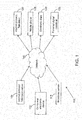
- FIG. 1 illustrates a block diagram of a system for displaying multimedia services from a server to multiple clients, in accordance with one embodiment
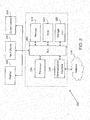
- FIG. 2 is a block diagram of a server, in accordance with one embodiment.
- FIG. 3 is a flowchart illustrating a method of displaying multimedia services from a server to multiple clients, in accordance with one embodiment.
- Embodiments of the present disclosure described herein provide a method and system for displaying multimedia services from a server to multiple clients.
- FIG. 1 illustrates a block diagram of a system 100 for displaying multimedia services from a server to multiple clients, in accordance with one embodiment.
- the system 100 includes a server, for example an internet protocol television (IPTV) server 105, a consumer electronic (CE) device 110 and a broadcast server 115 at a transmitter end.
- Examples of the CE device 110 include, but are not limited to, a mobile phone.
- the system 100 further includes one or more clients, for example an IPTV 120, a mobile phone 125, an electronic diary 130, and a personal digital assistant (PDA) 135 at a receiver end.
- the system 100 also includes a network 140 that connects the server and the clients.
- the clients are embedded display devices that are connected across the network 140. Examples of the network 140 include, but are not limited to, a wireless network and ethernet.
- the server controls audio and video information that is transmitted across the network 140 using control information.
- the server transmits the control information across the network 140 to the clients.
- the control information indicates contents of the audio and video information that is transmitted across the network 140.
- the clients are grouped depending on various parameters. Examples of the various parameters can include, but are not limited to, an interest group, a display location and content distribution.
- the clients can also be grouped based on an ordered position, orientation, shape and geometry.
- the control information includes information pertaining to the interest group, the display location, the content distribution, the ordered position, the orientation, the shape and the geometry of the clients.
- the control information is transmitted by the server to the clients through an electronic program guide (EPG), a data packet, a reserve bit in the data packet, or a null packet.
- EPG electronic program guide
- FIG. 2 is a block diagram of a server 200, in accordance with one embodiment.
- the server 200 includes a bus 205 for communicating information, and a processor 210 coupled with the bus 205 for processing the information.
- the server 200 also includes a memory 215, for example a random access memory (RAM) coupled to the bus 205 for storing information required by the processor 210.
- the memory 215 can be used for storing temporary information required by the processor 210.
- the server 200 further includes a read only memory (ROM) 220 coupled to the bus 205 for storing static information required by the processor 210.
- a storage unit 225 for example a magnetic disk, hard disk or optical disk, can be provided and coupled to the bus 205 for storing the information.
- the server 200 can be coupled via the bus 205 to a display 230, for example a cathode ray tube (CRT) or liquid crystal display (LCD), for displaying the information.
- a display 230 for example a cathode ray tube (CRT) or liquid crystal display (LCD), for displaying the information.
- An input device 235 is coupled to the bus 205 for communicating information to the processor 210.
- a cursor control 240 for example a mouse, a trackball, a joystick, or cursor direction keys for communicating information to the processor 210 and for controlling cursor movement on the display 230 can also be present.
- the steps of the present disclosure are performed by the server 200 using the processor 210 in conjunction with one or more clients.
- the information can be read into the memory 215 from a machine-readable medium, for example the storage unit 225.
- hard-wired circuitry can be used in place of or in combination with software instructions to implement various embodiments.
- machine-readable medium can be defined as a medium providing data to a machine to enable the machine to perform a specific function.
- the machinereadable medium can be a storage media.
- Storage media can include non-volatile media and volatile media.
- the storage unit 225 can be a non-volatile media.
- the memory 215 can be a volatile media. All such media must be tangible to enable the instructions carried by the media to be detected by a physical mechanism that reads the instructions into the machine.
- Examples of the machine readable medium includes, but are not limited to, a floppy disk, a flexible disk, hard disk, magnetic tape, a CD-ROM, optical disk, punchcards, papertape, a RAM, a PROM, EPROM, and a FLASH-EPROM.
- the server 200 also includes a communication interface 245 coupled to the bus 205 for enabling data communication with the clients via a network, for example the network 140.
- Examples of the communication interface 245 include, but are not limited to, an integrated services digital network (ISDN) card, a modem, a local area network (LAN) card, an infrared port, a Bluetooth port, a zigbee port, and a wireless port.
- ISDN integrated services digital network
- LAN local area network
- infrared port a Bluetooth port
- zigbee port a wireless port
- the server 200 transmits control information that is encoded to the clients.
- the server 200 then assigns a channel to the clients and transmits display information to the clients using the channel.
- the server 200 on receiving update information from the clients using a back channel then modifies the update information.
- the server 200 further transmits the update information to the clients using a forward channel.
- the processor 210 including one or more processing units can perform one or more functions of the server 200.
- the processing units are hardware circuitry performing specified functions.
- FIG. 3 is a flowchart illustrating a method of displaying multimedia services from a server to multiple clients, in accordance with one embodiment.
- the server transmits control information to one or more clients.
- the clients include a plurality of network connected embedded display devices.
- the control information transmitted by the server across a network to the clients includes information pertaining to interest group, display location, content distribution, ordered position, orientation, shape and geometry of the clients.
- the control information is transmitted through one of an electronic program guide (EPG), a data packet, a reserve bit in the data packet and a null packet.
- EPG electronic program guide
- the control information also includes information about a channel available for the clients connected across the network.
- the control information is further encoded by the clients.
- the control information indicates audio and video information to be displayed by the client.
- the server assigns a channel to the clients.
- the audio and video information is transmitted to the clients connected across the network through the channel.
- Examples of the channel include a broadcast channel and an on demand channel.
- the clients connected across the network in a group listens to the on demand channel simultaneously when the server and the clients display the audio and video information present in the on demand channel.
- the server transmits the audio and video information present in the broadcast channel to the clients based on a unicast method or a broadcast method.
- the channel provided can be common to the clients connected across the network or only to a group of clients.
- the information present in the channel displayed by the clients can be a video, part of the video, or parts of different videos.
- the information associated with the video can also be cropped by the clients.
- the server transmits the display information, including the audio and video information, to the clients using the channel.
- the clients receive the display information which is further displayed.
- the display information can be further decoded, scaled, cropped and rotated by either the server or the clients.
- the server receives update information from the clients.
- the update information is transmitted to the server using a back channel.
- the back channel can be a wireless network or ethernet.
- Examples of the update information include, but are not limited to, orientation information, resolution information, preference information, dimension information, display resolution, audio mute, position of the display information in the group and audio play parameters.
- the server receives the update information to identify the geometry of the clients connected across the network.
- the update information can also include the orientation information of an individual client.
- the update information can be acquired by taking inputs from sensors or by manual methods.
- the server on receiving the update information from the clients modifies the update information.
- the geometry of the clients is hence updated dynamically.
- the update information regarding the geometry of the individual client or group of the clients can be encoded as a null packet along with the audio and video information to be displayed by the individual client or the group of clients.
- the update information can also be in the data packet or a group of pictures (GOP).
- the update information is transmitted to the clients using a forward channel.
- a sensor can be used to supply data to the server using the back channel, for automatic orientation change in the clients connected across the network.
- Sensors and radio frequency identification (RFID) can be used to sense a nearby client and the information thus sensed is transmitted to the server using the back channel.
- RFID radio frequency identification
- the geometry of the clients connected across the network can be changed dynamically. The dynamic change in the geometry of the embedded display devices connected across the network is possible through an initiation either by the server or the clients. The initiation can be a timed event or a user event.
Landscapes
- Engineering & Computer Science (AREA)
- Multimedia (AREA)
- Signal Processing (AREA)
- Databases & Information Systems (AREA)
- Computer Networks & Wireless Communication (AREA)
- Computer Graphics (AREA)
- Theoretical Computer Science (AREA)
- Computer Hardware Design (AREA)
- Software Systems (AREA)
- General Physics & Mathematics (AREA)
- General Engineering & Computer Science (AREA)
- Physics & Mathematics (AREA)
- Computer Security & Cryptography (AREA)
- Two-Way Televisions, Distribution Of Moving Picture Or The Like (AREA)
- Telephonic Communication Services (AREA)
Abstract
Description
- This invention relates to the field of wireless communication, more particularly, to a method and system for displaying multimedia services from a server to multiple clients.
- Typically, an internet protocol television (IPTV) is a system used for delivering multimedia services, for example audio and video information, across an internet protocol (IP) based network. Examples of the multimedia services include, but are not limited to, live television (TV), video on demand and time shifted programming. The multimedia services are delivered to a subscriber using the IP based network. The multimedia services provided to the subscriber ensures providing an entertainment experience to the subscriber, and a business environment for advertisers and customers. Increase in subscribers has led to low broadband penetration and reliable transmission of the audio and video information is also affected due to increased cost for cables.
- In light of the foregoing discussion there is a need for an efficient technique for displaying the multimedia services from a server to multiple clients or subscribers.
- Embodiments of the present disclosure described herein provide a method and system for displaying multimedia services from a server to multiple clients.
According to the present invention there is provided an apparatus and method as set forth in the appended claims. Other features of the invention will be apparent from the dependent claims, and the description which follows. - An example of a method of displaying multimedia services from a server to multiple clients includes transmitting control information by the server to one or more clients. The control information is encoded. The method also includes assigning a channel to the one or more clients. The method further includes transmitting display information to the one or more clients using the channel. Further, the method includes receiving update information from the one or more clients using a back channel. The method also includes modifying the update information by the server. Moreover, the method includes transmitting the update information to the one or more clients using a forward channel.
- An example of a system for displaying multimedia services from a server to multiple clients includes the server and one or more clients. The server is configured to transmit control information by the server to one or more clients, to assign a channel to the one or more clients, to transmit display information to the one or more clients using the channel, to receive update information from the one or more clients using a back channel, to modify the update information by the server, and to transmit the update information to the one or more clients using a forward channel. The one or more clients are configured to display the display information transmitted by the server through a network.
- The accompanying figure, similar reference numerals may refer to identical or functionally similar elements. These reference numerals are used in the detailed description to illustrate various embodiments and to explain various aspects and advantages of the present disclosure.
-
FIG. 1 illustrates a block diagram of a system for displaying multimedia services from a server to multiple clients, in accordance with one embodiment; -
FIG. 2 is a block diagram of a server, in accordance with one embodiment; and -
FIG. 3 is a flowchart illustrating a method of displaying multimedia services from a server to multiple clients, in accordance with one embodiment. - Persons skilled in the art will appreciate that elements in the figures are illustrated for simplicity and clarity and may have not been drawn to scale. For example,
the dimensions of some of the elements in the figure may be exaggerated relative to other elements to help to improve understanding of various embodiments of the present disclosure. - It should be observed the method steps and system components have been represented by conventional symbols in the figure, showing only specific details which are relevant for an understanding of the present disclosure. Further, details may be readily apparent to person ordinarily skilled in the art may not have been disclosed. In the present disclosure, relational terms such as first and second, and the like, may be used to distinguish one entity from another entity, without necessarily implying any actual relationship or order between such entities.
- Embodiments of the present disclosure described herein provide a method and system for displaying multimedia services from a server to multiple clients.
-
FIG. 1 illustrates a block diagram of asystem 100 for displaying multimedia services from a server to multiple clients, in accordance with one embodiment. Thesystem 100 includes a server, for example an internet protocol television (IPTV)server 105, a consumer electronic (CE)device 110 and abroadcast server 115 at a transmitter end. Examples of theCE device 110 include, but are not limited to, a mobile phone. Thesystem 100 further includes one or more clients, for example anIPTV 120, amobile phone 125, anelectronic diary 130, and a personal digital assistant (PDA) 135 at a receiver end. Thesystem 100 also includes anetwork 140 that connects the server and the clients. The clients are embedded display devices that are connected across thenetwork 140. Examples of thenetwork 140 include, but are not limited to, a wireless network and ethernet. - The server controls audio and video information that is transmitted across the
network 140 using control information. The server transmits the control information across thenetwork 140 to the clients. The control information indicates contents of the audio and video information that is transmitted across thenetwork 140. The clients are grouped depending on various parameters. Examples of the various parameters can include, but are not limited to, an interest group, a display location and content distribution. The clients can also be grouped based on an ordered position, orientation, shape and geometry. The control information includes information pertaining to the interest group, the display location, the content distribution, the ordered position, the orientation, the shape and the geometry of the clients. The control information is transmitted by the server to the clients through an electronic program guide (EPG), a data packet, a reserve bit in the data packet, or a null packet. -
FIG. 2 is a block diagram of aserver 200, in accordance with one embodiment. Theserver 200 includes abus 205 for communicating information, and aprocessor 210 coupled with thebus 205 for processing the information. Theserver 200 also includes amemory 215, for example a random access memory (RAM) coupled to thebus 205 for storing information required by theprocessor 210. Thememory 215 can be used for storing temporary information required by theprocessor 210. Theserver 200 further includes a read only memory (ROM) 220 coupled to thebus 205 for storing static information required by theprocessor 210. Astorage unit 225, for example a magnetic disk, hard disk or optical disk, can be provided and coupled to thebus 205 for storing the information. - The
server 200 can be coupled via thebus 205 to adisplay 230, for example a cathode ray tube (CRT) or liquid crystal display (LCD), for displaying the information.
Aninput device 235, including various keys, is coupled to thebus 205 for communicating information to theprocessor 210. In some embodiments, acursor control 240, for example a mouse, a trackball, a joystick, or cursor direction keys for communicating information to theprocessor 210 and for controlling cursor movement on thedisplay 230 can also be present. - In some embodiments, the steps of the present disclosure are performed by the
server 200 using theprocessor 210 in conjunction with one or more clients. The information can be read into thememory 215 from a machine-readable medium, for example thestorage unit 225. In alternative embodiments, hard-wired circuitry can be used in place of or in combination with software instructions to implement various embodiments. - The term machine-readable medium can be defined as a medium providing data to a machine to enable the machine to perform a specific function. The machinereadable medium can be a storage media. Storage media can include non-volatile media and volatile media. The
storage unit 225 can be a non-volatile media. Thememory 215 can be a volatile media. All such media must be tangible to enable the instructions carried by the media to be detected by a physical mechanism that reads the instructions into the machine. - Examples of the machine readable medium includes, but are not limited to, a floppy disk, a flexible disk, hard disk, magnetic tape, a CD-ROM, optical disk, punchcards, papertape, a RAM, a PROM, EPROM, and a FLASH-EPROM.
- The
server 200 also includes acommunication interface 245 coupled to thebus 205 for enabling data communication with the clients via a network, for example thenetwork 140. Examples of thecommunication interface 245 include, but are not limited to, an integrated services digital network (ISDN) card, a modem, a local area network (LAN) card, an infrared port, a Bluetooth port, a zigbee port, and a wireless port. - In some embodiments, the
server 200 transmits control information that is encoded to the clients. Theserver 200 then assigns a channel to the clients and transmits display information to the clients using the channel. Theserver 200 on receiving update information from the clients using a back channel then modifies the update information. Theserver 200 further transmits the update information to the clients using a forward channel. - In some embodiments, the
processor 210 including one or more processing units can perform one or more functions of theserver 200. The processing units are hardware circuitry performing specified functions. -
FIG. 3 is a flowchart illustrating a method of displaying multimedia services from a server to multiple clients, in accordance with one embodiment. - At
step 305, the server transmits control information to one or more clients. The clients include a plurality of network connected embedded display devices. The control information transmitted by the server across a network to the clients includes information pertaining to interest group, display location, content distribution, ordered position, orientation, shape and geometry of the clients. The control information is transmitted through one of an electronic program guide (EPG), a data packet, a reserve bit in the data packet and a null packet. - The control information also includes information about a channel available for the clients connected across the network. The control information is further encoded by the clients. The control information indicates audio and video information to be displayed by the client.
- At
step 310, the server assigns a channel to the clients. The audio and video information is transmitted to the clients connected across the network through the channel. Examples of the channel include a broadcast channel and an on demand channel. In case of the on demand channel, the clients connected across the network in a group listens to the on demand channel simultaneously when the server and the clients display the audio and video information present in the on demand channel. In case of the broadcast channel, the server transmits the audio and video information present in the broadcast channel to the clients based on a unicast method or a broadcast method. The channel provided can be common to the clients connected across the network or only to a group of clients. The information present in the channel displayed by the clients can be a video, part of the video, or parts of different videos. The information associated with the video can also be cropped by the clients. - At
step 315, the server transmits the display information, including the audio and video information, to the clients using the channel. - The clients receive the display information which is further displayed. The display information can be further decoded, scaled, cropped and rotated by either the server or the clients.
- At
step 320, the server receives update information from the clients. The update information is transmitted to the server using a back channel. The back channel can be a wireless network or ethernet. Examples of the update information include, but are not limited to, orientation information, resolution information, preference information, dimension information, display resolution, audio mute, position of the display information in the group and audio play parameters. The server receives the update information to identify the geometry of the clients connected across the network. The update information can also include the orientation information of an individual client. The update information can be acquired by taking inputs from sensors or by manual methods. - At
step 325, the server on receiving the update information from the clients, modifies the update information. The geometry of the clients is hence updated dynamically. The update information regarding the geometry of the individual client or group of the clients can be encoded as a null packet along with the audio and video information to be displayed by the individual client or the group of clients. The update information can also be in the data packet or a group of pictures (GOP). - At
step 330, the update information is transmitted to the clients using a forward channel. A sensor can be used to supply data to the server using the back channel, for automatic orientation change in the clients connected across the network. Sensors and radio frequency identification (RFID) can be used to sense a nearby client and the information thus sensed is transmitted to the server using the back channel. The geometry of the clients connected across the network can be changed dynamically. The dynamic change in the geometry of the embedded display devices connected across the network is possible through an initiation either by the server or the clients. The initiation can be a timed event or a user event. - In the preceding specification, the present disclosure and its advantages have been described with reference to specific embodiments. However, it will be apparent to a person of ordinary skill in the art that various modifications and changes can be made, without departing from the scope of the present disclosure, as set forth in the claims below. Accordingly, the specification and figures are to be regarded as illustrative examples of the present disclosure, rather than in restrictive sense. All such possible modifications are intended to be included within the scope of the present disclosure.
Although a few preferred embodiments have been shown and described, it will be appreciated by those skilled in the art that various changes and modifications might be made without departing from the scope of the invention, as defined in the appended claims.
Claims (15)
- A method of displaying multimedia services from a server to multiple clients, the method comprising:transmitting control information by the server to one or more clients, wherein the control information is encoded;assigning a channel to the one or more clients;transmitting display information to the one or more clients using the channel;receiving update information from the one or more clients using a back channel;modifying the update information by the server; andtransmitting the update information to the one or more clients using a forward channel.
- The method as claimed in claim 1, wherein the server comprises one of a consumer electronic (CE) device and an internet protocol television (IPTV).
- The method as claimed in claim 1 or 2, wherein the one or more clients comprises a plurality of embedded display devices interconnected through a network using one or more network interfaces.
- The method as claimed in any of the preceding claims, wherein the one or more clients are grouped on a plurality of parameters comprising an interest group, a display location and content distribution.
- The method as claimed in any of the preceding claims, wherein the control information comprises channel selection information, geometry for display information, and display parameters.
- The method as claimed in any of the preceding claims, wherein the control information is transmitted by one of electronic program guides (EPGs), data packets, reserve bits in the data packets, encoded null packets and specified streams.
- The method as claimed in any of the preceding claims, wherein assigning the channel comprises selecting the display information from a set of streams depending on the interest group, the display location and the content distribution.
- The method as claimed in any of the preceding claims, wherein the display information comprises video, broadcast stream, live video and an audio stream.
- The method as claimed in any of the preceding claims, wherein the display information is selected from the set of streams by one of scanning through the EPG and using a manual selection list.
- The method as claimed in claim 1, wherein transmitting the display information to the one or more clients comprises receiving the display information by the one or more clients by tuning to a channel frequency of the channel.
- The method as claimed in claim 10, wherein the channel is one of a common channel for the one or more clients, a common channel for a group of the one or more clients, and an individual channel for each of the one or more clients.
- The method as claimed in claim 10 or 11, wherein tuning to the channel frequency is performed for one of an on-demand channel request and a slewed time based channel request.
- A system for displaying multimedia services from a server to multiple clients, the system comprising:the server configured totransmit control information by the server to one or more clients, wherein the control information is encoded;assign a channel to the one or more clients;transmit display information to the one or more clients using the channel;dynamically receive update information from the one or more clients using a back channel;modify the update information by the server; andtransmit the update information to the one or more clients using a forward channel; andthe one or more clients configured to display the display information transmitted by the server through a network.
- The system as claimed in claim 13, wherein the server comprises one of a consumer electronic (CE) device and an internet protocol television (IPTV).
- The system as claimed in claim 13 or 14, wherein the one or more clients comprises a plurality of embedded display devices interconnected through a network using one or more network interfaces.
Applications Claiming Priority (1)
| Application Number | Priority Date | Filing Date | Title |
|---|---|---|---|
| IN4031CH2010 | 2010-12-30 |
Publications (2)
| Publication Number | Publication Date |
|---|---|
| EP2472899A2 true EP2472899A2 (en) | 2012-07-04 |
| EP2472899A3 EP2472899A3 (en) | 2013-02-27 |
Family
ID=45092217
Family Applications (1)
| Application Number | Title | Priority Date | Filing Date |
|---|---|---|---|
| EP11188913A Withdrawn EP2472899A3 (en) | 2010-12-30 | 2011-11-11 | Method and system for displaying multimedia services from a server to multiple clients |
Country Status (3)
| Country | Link |
|---|---|
| US (1) | US20120173675A1 (en) |
| EP (1) | EP2472899A3 (en) |
| KR (1) | KR101773083B1 (en) |
Cited By (1)
| Publication number | Priority date | Publication date | Assignee | Title |
|---|---|---|---|---|
| CN105245959A (en) * | 2014-05-27 | 2016-01-13 | 中国科学院声学研究所 | System and method for maintaining connection channel in multi-device linkage services |
Family Cites Families (5)
| Publication number | Priority date | Publication date | Assignee | Title |
|---|---|---|---|---|
| US5446490A (en) * | 1992-10-23 | 1995-08-29 | At&T Corp. | Interactive television with tailored programming |
| US20040114036A1 (en) * | 2002-12-11 | 2004-06-17 | Jeyhan Karaoguz | Personal streaming and broadcast channels in a media exchange network |
| EP1443766A3 (en) | 2003-01-30 | 2007-10-03 | Broadcom Corporation | Personal access to and control of media peripherals on a media exchange network |
| EP1443736A3 (en) * | 2003-01-30 | 2006-01-04 | Broadcom Corporation | Server architecture supporting a personal media exchange network |
| US8170065B2 (en) * | 2006-02-27 | 2012-05-01 | Time Warner Cable Inc. | Methods and apparatus for selecting digital access technology for programming and data delivery |
-
2011
- 2011-07-01 KR KR1020110065228A patent/KR101773083B1/en not_active Expired - Fee Related
- 2011-10-12 US US13/271,741 patent/US20120173675A1/en not_active Abandoned
- 2011-11-11 EP EP11188913A patent/EP2472899A3/en not_active Withdrawn
Non-Patent Citations (1)
| Title |
|---|
| None |
Cited By (3)
| Publication number | Priority date | Publication date | Assignee | Title |
|---|---|---|---|---|
| CN105245959A (en) * | 2014-05-27 | 2016-01-13 | 中国科学院声学研究所 | System and method for maintaining connection channel in multi-device linkage services |
| EP3151574A4 (en) * | 2014-05-27 | 2017-05-17 | Institute of Acoustics, Chinese Academy of Sciences | System and method for maintaining connection channel in multi-device interworking service |
| CN105245959B (en) * | 2014-05-27 | 2019-01-25 | 中国科学院声学研究所 | A connection channel maintenance system and method in a multi-device linkage service |
Also Published As
| Publication number | Publication date |
|---|---|
| KR101773083B1 (en) | 2017-09-12 |
| US20120173675A1 (en) | 2012-07-05 |
| KR20120078562A (en) | 2012-07-10 |
| EP2472899A3 (en) | 2013-02-27 |
Similar Documents
| Publication | Publication Date | Title |
|---|---|---|
| US8583555B1 (en) | Synchronizing multiple playback device timing utilizing DRM encoding | |
| US20130169864A1 (en) | Picture-in-picture video content distribution | |
| US8473999B2 (en) | Method and apparatus for providing a picture in picture service | |
| US8903916B2 (en) | Method, system, and computer-readable medium to render repeatable data objects streamed over a network | |
| US10820045B2 (en) | Method and system for video stream personalization | |
| EP2306717A1 (en) | Communication terminal, search server, and communication system | |
| US20060282785A1 (en) | System and method of displaying content in display windows | |
| US9038102B1 (en) | Cable television system with integrated social streaming | |
| US20080148322A1 (en) | System and method of providing video-on-demand content | |
| US8584177B2 (en) | Controlling delivery of video programs using user defined identifiers for video receiver devices | |
| US9805207B1 (en) | Sharing TV content with friends | |
| US20250126318A1 (en) | Methods and systems for providing primary content and secondary content | |
| CN104618739A (en) | Video program information presentation playing method and system | |
| US20100011399A1 (en) | Video processing apparatus, video processing system including the same, and information providing method in video processing apparatus | |
| US10237195B1 (en) | IP video playback | |
| US9794603B1 (en) | System and method for inserting and assigning a channel or program link per device or user | |
| US9924209B2 (en) | System and method for controlling reproduction using terminal | |
| US20130132543A1 (en) | Differentiating Bookmarks in Content Access Lists Shared Among Multiple Content Player Devices | |
| US20090049399A1 (en) | System for presenting graphical user interface windows | |
| US20120173675A1 (en) | Method and system for displaying multimedia services from a server to multiple clients | |
| CN102907112A (en) | User interface provision method and system using method | |
| US20140007173A1 (en) | Audience selection type augmented broadcasting service providing apparatus and method | |
| US9674306B2 (en) | Method and system for communicating from a client device to a server device in a centralized content distribution system | |
| CN102547465A (en) | Rendering method, input-output device, and servicing device | |
| CN101124823A (en) | Collaborative Sampling for Implicit Promoters |
Legal Events
| Date | Code | Title | Description |
|---|---|---|---|
| AK | Designated contracting states |
Kind code of ref document: A2 Designated state(s): AL AT BE BG CH CY CZ DE DK EE ES FI FR GB GR HR HU IE IS IT LI LT LU LV MC MK MT NL NO PL PT RO RS SE SI SK SM TR |
|
| AX | Request for extension of the european patent |
Extension state: BA ME |
|
| PUAI | Public reference made under article 153(3) epc to a published international application that has entered the european phase |
Free format text: ORIGINAL CODE: 0009012 |
|
| RAP1 | Party data changed (applicant data changed or rights of an application transferred) |
Owner name: SAMSUNG ELECTRONICS CO., LTD. |
|
| PUAL | Search report despatched |
Free format text: ORIGINAL CODE: 0009013 |
|
| AK | Designated contracting states |
Kind code of ref document: A3 Designated state(s): AL AT BE BG CH CY CZ DE DK EE ES FI FR GB GR HR HU IE IS IT LI LT LU LV MC MK MT NL NO PL PT RO RS SE SI SK SM TR |
|
| AX | Request for extension of the european patent |
Extension state: BA ME |
|
| RIC1 | Information provided on ipc code assigned before grant |
Ipc: H04N 21/6583 20110101ALI20130123BHEP Ipc: H04N 21/658 20110101ALI20130123BHEP Ipc: H04N 21/422 20110101ALI20130123BHEP Ipc: H04N 21/2668 20110101ALI20130123BHEP Ipc: H04N 21/63 20110101AFI20130123BHEP Ipc: H04N 21/6543 20110101ALI20130123BHEP |
|
| 17P | Request for examination filed |
Effective date: 20130827 |
|
| RBV | Designated contracting states (corrected) |
Designated state(s): AL AT BE BG CH CY CZ DE DK EE ES FI FR GB GR HR HU IE IS IT LI LT LU LV MC MK MT NL NO PL PT RO RS SE SI SK SM TR |
|
| STAA | Information on the status of an ep patent application or granted ep patent |
Free format text: STATUS: THE APPLICATION HAS BEEN WITHDRAWN |
|
| 18W | Application withdrawn |
Effective date: 20141203 |