EP2471494A1 - Knee prosthesis - Google Patents
Knee prosthesis Download PDFInfo
- Publication number
- EP2471494A1 EP2471494A1 EP11194972A EP11194972A EP2471494A1 EP 2471494 A1 EP2471494 A1 EP 2471494A1 EP 11194972 A EP11194972 A EP 11194972A EP 11194972 A EP11194972 A EP 11194972A EP 2471494 A1 EP2471494 A1 EP 2471494A1
- Authority
- EP
- European Patent Office
- Prior art keywords
- dome patella
- component
- dome
- posterior
- patella component
- Prior art date
- Legal status (The legal status is an assumption and is not a legal conclusion. Google has not performed a legal analysis and makes no representation as to the accuracy of the status listed.)
- Granted
Links
Images



Classifications
-
- A—HUMAN NECESSITIES
- A61—MEDICAL OR VETERINARY SCIENCE; HYGIENE
- A61F—FILTERS IMPLANTABLE INTO BLOOD VESSELS; PROSTHESES; DEVICES PROVIDING PATENCY TO, OR PREVENTING COLLAPSING OF, TUBULAR STRUCTURES OF THE BODY, e.g. STENTS; ORTHOPAEDIC, NURSING OR CONTRACEPTIVE DEVICES; FOMENTATION; TREATMENT OR PROTECTION OF EYES OR EARS; BANDAGES, DRESSINGS OR ABSORBENT PADS; FIRST-AID KITS
- A61F2/00—Filters implantable into blood vessels; Prostheses, i.e. artificial substitutes or replacements for parts of the body; Appliances for connecting them with the body; Devices providing patency to, or preventing collapsing of, tubular structures of the body, e.g. stents
- A61F2/02—Prostheses implantable into the body
- A61F2/30—Joints
- A61F2/38—Joints for elbows or knees
- A61F2/3877—Patellae or trochleae
-
- A—HUMAN NECESSITIES
- A61—MEDICAL OR VETERINARY SCIENCE; HYGIENE
- A61F—FILTERS IMPLANTABLE INTO BLOOD VESSELS; PROSTHESES; DEVICES PROVIDING PATENCY TO, OR PREVENTING COLLAPSING OF, TUBULAR STRUCTURES OF THE BODY, e.g. STENTS; ORTHOPAEDIC, NURSING OR CONTRACEPTIVE DEVICES; FOMENTATION; TREATMENT OR PROTECTION OF EYES OR EARS; BANDAGES, DRESSINGS OR ABSORBENT PADS; FIRST-AID KITS
- A61F2/00—Filters implantable into blood vessels; Prostheses, i.e. artificial substitutes or replacements for parts of the body; Appliances for connecting them with the body; Devices providing patency to, or preventing collapsing of, tubular structures of the body, e.g. stents
- A61F2/02—Prostheses implantable into the body
- A61F2/30—Joints
- A61F2002/30001—Additional features of subject-matter classified in A61F2/28, A61F2/30 and subgroups thereof
- A61F2002/30316—The prosthesis having different structural features at different locations within the same prosthesis; Connections between prosthetic parts; Special structural features of bone or joint prostheses not otherwise provided for
- A61F2002/30535—Special structural features of bone or joint prostheses not otherwise provided for
- A61F2002/30604—Special structural features of bone or joint prostheses not otherwise provided for modular
- A61F2002/30616—Sets comprising a plurality of prosthetic parts of different sizes or orientations
Definitions
- the present invention relates generally to an implantable orthopaedic prosthesis, and more particularly to an implantable orthopaedic prosthesis having commonly-sized dome patella components with varying thicknesses and peak surface diameters.
- the joint replacement procedure may involve the use of a prosthesis which is implanted into one or more of the patient's bones.
- a prosthesis which is implanted into one or more of the patient's bones.
- a patella replacement procedure a orthopaedic prosthesis is implanted into the patient's patella.
- a prosthetic patella component is secured to the patient's natural patella such that its posterior surface articulates with a femoral component during extension and flexion of the knee.
- a conventional dome patella component is embodied as a dome-shaped polymer bearing having a spherical dome profile.
- changing the thickness of the component requires a change in the size of the component (i.e., the component's outer diameter).
- the thickness and size of the component are geometrically dependent on one another.
- the minimum thickness of certain prior art 41 mm dome patella components is about 11.4 mm. This may be too thick for a given surgical application.
- a reduction in thickness would also require a reduction in component size (i.e., the component's outer diameter).
- Such dimensional dependency can create challenges in regard to the surgical correction of patellafemoral gap imbalances.
- an implantable orthopaedic knee prosthesis assembly includes a first dome patella component that has a posterior bearing surface configured to articulate with the femoral condyles of an implantable femoral component, and an anterior surface having a number of pegs extending outwardly therefrom.
- the posterior bearing surface of the first dome patella component has a curved peak surface that includes a posterior-most point of the first dome patella component.
- a first imaginary line segment extends orthogonally from the anterior surface of the first dome patella component to the posterior-most point of the first dome patella component.
- the implantable orthopaedic knee prosthesis assembly also includes a second dome patella component that has a posterior bearing surface configured to articulate with the femoral condyles of an implantable femoral component and an anterior surface having a number of pegs extending outwardly therefrom.
- the medial/lateral width of the second dome patella component is the same as the medial/lateral width of the first dome patella component.
- the posterior bearing surface of the second dome patella component has a curved peak surface that includes a posterior-most point of the second dome patella component.
- a second imaginary line segment extends orthogonally from the anterior surface of the second dome patella component to the posterior-most point of the second dome patella component. The second imaginary line segment being longer than the first imaginary line segment.
- the implantable orthopaedic knee prosthesis assembly also includes a third dome patella component that has a posterior bearing surface configured to articulate with the femoral condyles of an implantable femoral component and an anterior surface having a number of pegs extending outwardly therefrom.
- the medial/lateral width of the third dome patella component is the same as the medial/lateral width of both the first dome patella component and the second dome patella component.
- the posterior bearing surface of the third dome patella component has a curved peak surface that includes a posterior-most point of the third dome patella component.
- a third imaginary line segment extends orthogonally from the anterior surface of the third dome patella component to the posterior-most point of the third dome patella component. The third imaginary line segment being longer than both the first imaginary line segment and the second imaginary line segment.
- the curved peak surface of both the first and second dome patella components may include a hemispherically-shaped surface.
- the posterior bearing surface of both the first and second dome patella components may further include a conically-shaped surface that extends anteriorly away from the hemispherically-shaped surface and transitions into a rounded edge surface that extends anteriorly away from the conically-shaped surface in the direction toward the anterior surface.
- Each of the first and second dome patella components may include a monolithic polyethylene body.
- the first and second dome patella components include a first number of pegs extending anteriorly away from the anterior surface of the first dome patella component.
- the first number of pegs have the same diameter as the second number of pegs.
- the first number of pegs are arranged in the same pattern on the anterior surface of the first dome patella component as the second number of pegs are arranged on the anterior surface of the second dome patella component.
- an implantable orthopaedic knee prosthesis assembly includes a femoral component having a medial condyle surface and a lateral condyle surface and a plurality of dome patella components configured to be separately positioned in contact with the condyle surfaces of the femoral component.
- Each of the plurality of dome patella components has a medial/lateral width that is the same as each of the other of the plurality of dome patella components.
- Each of the plurality of dome patella components also includes a posterior bearing surface having a medial articular surface configured to articulate with the medial condyle surface of the femoral component and a lateral articular surface configured to articulate with the lateral condyle surface of the femoral component.
- Each of the plurality of dome patella components has an anterior/posterior thickness that is different from at least some of the other of the plurality of dome patella components.
- Each of the plurality of dome patella components includes an anterior surface having a number of pegs extending outwardly therefrom.
- the posterior bearing surface of each of the plurality of dome patella components has a curved peak surface that includes a posterior-most point of the dome patella component.
- the anterior/posterior thickness of each of the plurality of dome patella components may be defined by an imaginary line segment that extends orthogonally from the anterior surface to the posterior-most point.
- each of the plurality of dome patella components may include a hemispherically-shaped peak surface and a conically-shaped surface that extends anteriorly away from the hemispherically-shaped peak surface.
- the conically-shaped surface transitions into a rounded edge surface that extends anteriorly away from the conically-shaped surface.
- Each of the plurality of dome patella components may be embodied as a monolithic polyethylene body.
- Each of the plurality of dome patella components includes an anterior surface having a number of pegs extending outwardly therefrom.
- the corresponding pegs of each of the plurality of dome patella components have the same diameter as one another.
- the pegs of each of the plurality of dome patella components may be arranged in the same pattern as one another.
- an implantable orthopaedic knee prosthesis assembly includes a first dome patella component that has a posterior bearing surface configured to articulate with the femoral condyles of an implantable femoral component, and an anterior surface having a number of pegs extending outwardly therefrom.
- the posterior bearing surface of the first dome patella component has a hemispherically-shaped peak surface that includes a posterior-most point of the first dome patella component and a conically-shaped surface that extends anteriorly away from the hemispherically-shaped surface.
- the implantable orthopaedic knee prosthesis assembly also includes a second dome patella component that has a posterior bearing surface configured to articulate with the femoral condyles of an implantable femoral component and an anterior surface having a number of pegs extending outwardly therefrom.
- the medial/lateral width if the second dome patella component is the same as the medial/lateral width of the first dome patella component.
- the posterior bearing surface of the second dome patella component has a hemispherically-shaped peak surface that includes a posterior-most point of the second dome patella component and a conically-shaped surface that extends anteriorly away from the hemispherically-shaped peak surface.
- the diameter of the hemispherically-shaped peak surface of the second dome patella component is greater than the diameter of the hemispherically-shaped peak surface of the first dome patella component.
- the implantable orthopaedic knee prosthesis assembly may further include a third dome patella component that has a posterior bearing surface configured to articulate with the femoral condyles of an implantable femoral component and an anterior surface having a number of pegs extending outwardly therefrom.
- the medial/lateral width of the third dome patella component is the same as the medial/lateral width of both the first dome patella component and the second dome patella component.
- the posterior bearing surface of the third dome patella component has a hemispherically-shaped peak surface that includes a posterior-most point of the third dome patella component and a conically-shaped surface that extends anteriorly away from the hemispherically-shaped peak surface.
- the diameter of the hemispherically-shaped peak surface of the third dome patella component is greater than the diameters of the hemispherically-shaped peak surfaces of both the first and second dome patella components.
- the conically-shaped surface of both the first and second dome patella components transitions into a rounded edge surface that extends anteriorly away from the conically-shaped surface in the direction toward the anterior surface.
- Each of the first and second dome patella components may be embodied as a monolithic polyethylene body.
- the first dome patella component may include a first number of pegs extending anteriorly away from the anterior surface of the first dome patella component, with the second dome patella component including a second number of pegs extending anteriorly away from the anterior surface of the second dome patella component.
- the first number of pegs have the same diameter as the second number of pegs.
- the first number of pegs are arranged in the same pattern on the anterior surface of the first dome patella component as the second number of pegs are arranged on the anterior surface of the second dome patella component.
- an implantable orthopaedic knee prosthesis assembly includes a femoral component having a medial condyle surface and a lateral condyle surface and a plurality of dome patella components configured to be separately positioned in contact with the condyle surfaces of the femoral component.
- Each of the plurality of dome patella components has a medial/lateral width that is the same as each of the other of the plurality of dome patella components.
- Each of the plurality of dome patella components has a conically-shaped surface configured to articulate with the lateral condyle surface of the femoral component, and a hemispherically-shaped peak surface having a diameter that is different from the diameter of the hemispherically-shaped peak surfaces of at least some of the other of the plurality of dome patella components.
- the hemispherically-shaped peak surface of each of the plurality of dome patella components includes a posterior-most point of the dome patella component, and extends anteriorly and transitions to the conically-shaped surface of the dome patella component.
- Each of the plurality of dome patella components includes an anterior surface having a number of pegs extending outwardly therefrom.
- Each of the patella components may be embodied as a monolithic polyethylene body.
- Each of the plurality of dome patella components includes an anterior surface having a number of pegs extending outwardly therefrom.
- the corresponding pegs of each of the plurality of dome patella components have the same diameter as one another.
- the pegs of each of the plurality of dome patella components are arranged in the same pattern as one another.
- Terms representing anatomical references such as anterior, posterior, medial, lateral, superior, and inferior, may be used throughout this document to refer to both the orthopaedic implants described herein and a patient's natural anatomy. Such terms have well-understood meanings in both the study of anatomy and the field of orthopaedics. Use of such anatomical reference terms in the document is intended to be consistent with their well-understood meanings unless noted otherwise.
- FIGS. 1 to 4 show a dome patella component 10 of an implantable knee prosthesis.
- a number of commonly-sized dome patella components 10 may be provided in different thicknesses.
- the knee prosthesis also includes a femoral component 30 that is configured to be secured to a surgically-prepared end of a patient's distal femur (not shown).
- the dome patella component 10 includes a posterior bearing surface 20 configured to articulate with the condylar surfaces of the femoral component 30.
- the posterior bearing surface 20 of the dome patella component 10 includes a lateral articular surface 22 and a medial articular surface 24.
- the articular surfaces 22, 24 are configured to articulate with a lateral condyle surface 32 and a medial condyle surface 34, respectively, of the femoral component 30.
- the femoral component 30 is configured to emulate the configuration of the patient's natural femoral condyles, and, as such, the lateral condyle surface 32 and the medial condyle surface 34 are configured (e.g., curved) in a manner which mimics the condyles of the natural femur.
- the lateral condyle surface 32 and the medial condyle surface 34 are spaced apart from one another thereby defining an intercondylar notch therebetween.
- the dome patella component 10 also includes a flat anterior surface 40 having a number of fixation members, such as pegs 42, extending away therefrom.
- the pegs 42 are configured to be implanted into a surgically prepared posterior surface of the patient's natural patella (not shown).
- the posterior bearing surface 20 of the dome patella component 10 faces toward the femoral component 30 thereby allowing the posterior bearing surface 20 to articulate with the femoral condyle surfaces 32, 34 during flexion and extension of the patient's knee.
- the dome patella component 10 is embodied as a monolithic polymer body constructed with a material that allows for smooth articulation between the dome patella component 10 and the femoral component 30.
- a material that allows for smooth articulation between the dome patella component 10 and the femoral component 30 is polymeric material such as ultrahigh molecular weight polyethylene (UHMWPE).
- UHMWPE ultrahigh molecular weight polyethylene
- the femoral component 30 may be constructed with a biocompatible metal, such as a cobalt chrome alloy, although other materials, such as ceramics, may also be used.
- the geometric design of the dome patella component 10 removes the dependency between component size (i.e., component outer diameter) and component thickness.
- component size i.e., component outer diameter
- component thickness i.e., component thickness of the dome patella component 10
- a number of commonly-sized dome patella components 10 i.e., components having the same diameter
- Having various component thicknesses available at each component size facilitates the surgeon's efforts in patellofemoral balancing.
- the surgeon can select a thicker patella of the same size to ensure proper bone coverage; similarly, a thinner patella of the same size can be selected if the patient's patella is tight in the extension and flexion gaps.
- component size i.e., component outer diameter
- the posterior bearing surface 20 of the dome patella component 10 has a curved peak surface 44.
- the curved peak surface 44 defines the posterior-most surface of the dome patella component 10. Specifically, a point on the curved peak surface 44 defines the posterior-most point 38 of the dome patella component 10.
- the curved peak surface 44 is embodied as a hemispherically-shaped surface. The hemispherically-shaped peak surface 44 is geometrically decoupled from the remainder of the posterior bearing surface 20.
- the hemispherically-shaped peak surface 44 does not extend across the entire posterior bearing surface, but rather it extends anteriorly away from the posterior-most point 38 in the general direction toward the anterior surface 40 and transitions to a substantially conically-shaped surface 46.
- the conically-shaped surface 46 in turn transitions to a rounded edge surface 48 that extends anteriorly away from the conically-shaped surface 46 in the direction toward the anterior surface 40 of the dome patella component 10.
- the rounded edge surface 48 includes a curved corner surface 52 that transitions from the to the conically-shaped surface 46 and a flat surface 54 that transitions the curved corner surface 52 to the anterior surface 40 of the dome patella component 10.
- the geometric design of the posterior bearing surface 20 in which the hemispherically-shaped peak surface 44 transitions to the conically-shaped surface 46 removes the dependency between component size (i.e., component outer diameter) and component thickness.
- the dome patella components 10 may be provided in a range of component sizes.
- the dome patella components 10 may be provided in 41 mm, 38 mm, 35 mm, 32 mm, and 29 mm sizes. In a conventional nomenclature, such sizes represent the diameter of the component (e.g., a size 41 mm patella component has a 41 mm outer diameter).
- the patella components 10 of each of the various sizes may be provided in a number of various thicknesses.
- the 41 mm patella component 10 may be provided in three thicknesses such as 10.5 mm, 11.0 mm, and 11.5 mm. It should be appreciated that such thicknesses are illustrative in nature. The example noted above is in contrast to prior art designs in which, for example, the thinnest 41 mm component has a thickness of approximately 11.4mm due to the dimensional dependency of the design. It should be appreciated that although each size of dome patella component 10 is shown in the chart of FIG. 3 as having three different thickness options, the number of options and the thickness of the components can be varied.
- each size of component may have fewer or more different thickness options available.
- the thickness of the components 10 within a common size are varied in 0.5 mm increments in the example noted above, the magnitude of such increments may be varied to fit the needs of a given design.
- W medial/lateral width
- each of the dome patella components 10a, 10b, 10c has an imaginary line segment extending through it in the anterior/posterior direction. The length of the respective imaginary line segments defines the thickness of the respective patella components 10a, 10b, 10c.
- an imaginary line segment 62 extends orthogonally from the anterior surface 40 of the patella component 10a through the posterior-most point 38 of the patella component 10a
- an imaginary line segment 64 extends orthogonally from the anterior surface 40 of the patella component 10b through the posterior-most point 38 of the patella component 10b
- an imaginary line segment 66 extends orthogonally from the anterior surface 40 of the patella component 10c through the posterior-most point 38 of the patella component 10c.
- the various dome patella components 10 of a given component size have the same fixation features.
- the pegs 42 of the components 10 have the same diameter and are arranged in the same pattern (i.e., arranged at the same location) as one another.
- a 41 mm dome patella component 10 is shown in FIGS. 5 to 7 in three different thicknesses (e.g., 11.5 mm in FIG. 5 , 11.0 mm in FIG. 6 , and 10.5mm in FIG. 7 ).
- the pegs 42 of the components 10 have the same diameter and are arranged in the same pattern (i.e., arranged at the same location) as one another.
- a common set of instruments and a common surgical technique may be used for bone preparation and device implantation.
- the geometric design of the posterior bearing surface 20 allows for the dome patella component 10 to be provided in various peak diameter options.
- the diameter of the hemispherically-shaped peak surface 44 may be varied within dome patella components 10 of the same size (i.e., components having the same outer diameter).
- the patella components 10 of each of the various sizes may be provided in a number of various peak diameters. For example, as shown in the chart of FIG.
- each of the commonly-sized patella components 10 may be provided in three different peak surface diameters.
- the 41 mm patella component 10 may be embodied in three different peak surface diameters 70, 72, 74.
- the 35 mm patella component 10 (or any of the other component sizes) may be provided in a number of different peak surface diameters.
- each size of dome patella component 10 is shown in the chart of FIG. 8 as having three different peak surface diameter options, such options are illustrative in nature.
- each size of component may have fewer or more different peak diameter options available.
- altering the diameter of the hemispherically-shaped peak surface 44 changes the morphology of the dome patella component 10.
- the component 10 becomes flatter.
- the diameter of the hemispherically-shaped peak surface 44 the component 10 becomes more pointed. This is useful during patello-femoral balancing in cases where the extension gap does not equal the flexion gap.
- the extension gap can be tightened or loosened while the flexion gap remains unchanged. By doing so, the surgeon may choose a patella option that creates the desired tension in the flexion and extension gaps.
- FIG. 9 The use of such a modified patella component 10 is shown in the diagrammatic sagittal cross sectional view of FIG. 9 .
- FIG. 9 in extension, it is the hemispherically-shaped peak surface 44 of the component's posterior bearing surface 20 that articulates with the femoral condyle surfaces 32, 34 of the femoral component 30.
- a dome patella component 10a having a hemispherically-shaped peak surface 44 with a smaller diameter (i.e., a more pointed component) creates a tighter extension gap than use of a dome patella component 10b having a hemispherically-shaped peak surface 44a with a larger diameter (i.e., a flatter component).
- the anterior surface 40 of the more pointed dome patella component 10a is spaced apart anteriorly from the anterior surface 40 of the flatter dome patella component 10b by a distance D1.
- the offset distance (D1) is 0.90 mm.
- the offset lessens to the point where the anterior surface 40 of the more pointed dome patella component 10a is congruent with the anterior surface 40 of the flatter dome patella component 10b.
- it is the conically-shaped surface 46 of the component's posterior bearing surface 20 that articulates with the femoral condyle surfaces 32, 34 of the femoral component 30. Because the conically-shaped surfaces 46 of each of the commonly-sized components 10 are identical with one another, use of the more pointed dome patella component 10a creates the same flexion gap as use of the flatter dome patella component 10b. This is shown geometrically in FIG.
- the anterior offset of the anterior surface 40 of the more pointed dome patella component 10a from the anterior surface 40 of the flatter dome patella component 10b lessens (e.g., the distance D2 between the two surfaces is 0.30 mm at a point in transition between extension and flexion).
- the conically-shaped surface 46 of the component's posterior bearing surface 20 articulates with the femoral condyle surfaces 32, 34 of the femoral component 30 (i.e., the hemispherically-shaped peak surface 44 is no longer articulating with the femoral condyle surfaces 32, 34).
- the anterior offset of the anterior surface 40 of the more pointed dome patella component 10a from the anterior surface 40 of the flatter dome patella component 10b no longer exists and the two surfaces are congruent with one another (e.g., the distance D3 between the two surfaces is 0.00 mm).
- the extension gap may be altered independently of the flexion gap.
- the surgeon may select between a number of commonly-sized dome patella components (e.g., a number of 41 mm components) to tighten or loosen the extension gap without altering the flexion gap.
Landscapes
- Health & Medical Sciences (AREA)
- Orthopedic Medicine & Surgery (AREA)
- Physical Education & Sports Medicine (AREA)
- Cardiology (AREA)
- Oral & Maxillofacial Surgery (AREA)
- Transplantation (AREA)
- Engineering & Computer Science (AREA)
- Biomedical Technology (AREA)
- Heart & Thoracic Surgery (AREA)
- Vascular Medicine (AREA)
- Life Sciences & Earth Sciences (AREA)
- Animal Behavior & Ethology (AREA)
- General Health & Medical Sciences (AREA)
- Public Health (AREA)
- Veterinary Medicine (AREA)
- Prostheses (AREA)
Abstract
Description
- The present invention relates generally to an implantable orthopaedic prosthesis, and more particularly to an implantable orthopaedic prosthesis having commonly-sized dome patella components with varying thicknesses and peak surface diameters.
- During the lifetime of a patient, it may be necessary to perform a joint replacement procedure on the patient as a result of, for example, disease or trauma. The joint replacement procedure may involve the use of a prosthesis which is implanted into one or more of the patient's bones. In the case of a patella replacement procedure, a orthopaedic prosthesis is implanted into the patient's patella. Specifically, a prosthetic patella component is secured to the patient's natural patella such that its posterior surface articulates with a femoral component during extension and flexion of the knee.
- A conventional dome patella component is embodied as a dome-shaped polymer bearing having a spherical dome profile. As such, changing the thickness of the component requires a change in the size of the component (i.e., the component's outer diameter). In other words, the thickness and size of the component are geometrically dependent on one another. For example, the minimum thickness of certain
prior art 41 mm dome patella components is about 11.4 mm. This may be too thick for a given surgical application. However, a reduction in thickness would also require a reduction in component size (i.e., the component's outer diameter). Such dimensional dependency can create challenges in regard to the surgical correction of patellafemoral gap imbalances. - According to one aspect, an implantable orthopaedic knee prosthesis assembly includes a first dome patella component that has a posterior bearing surface configured to articulate with the femoral condyles of an implantable femoral component, and an anterior surface having a number of pegs extending outwardly therefrom. When viewed in a coronal cross sectional view, the posterior bearing surface of the first dome patella component has a curved peak surface that includes a posterior-most point of the first dome patella component. A first imaginary line segment extends orthogonally from the anterior surface of the first dome patella component to the posterior-most point of the first dome patella component. The implantable orthopaedic knee prosthesis assembly also includes a second dome patella component that has a posterior bearing surface configured to articulate with the femoral condyles of an implantable femoral component and an anterior surface having a number of pegs extending outwardly therefrom. The medial/lateral width of the second dome patella component is the same as the medial/lateral width of the first dome patella component. When viewed in a coronal cross sectional view, the posterior bearing surface of the second dome patella component has a curved peak surface that includes a posterior-most point of the second dome patella component. A second imaginary line segment extends orthogonally from the anterior surface of the second dome patella component to the posterior-most point of the second dome patella component. The second imaginary line segment being longer than the first imaginary line segment.
- The implantable orthopaedic knee prosthesis assembly also includes a third dome patella component that has a posterior bearing surface configured to articulate with the femoral condyles of an implantable femoral component and an anterior surface having a number of pegs extending outwardly therefrom. The medial/lateral width of the third dome patella component is the same as the medial/lateral width of both the first dome patella component and the second dome patella component. When viewed in a coronal cross sectional view, the posterior bearing surface of the third dome patella component has a curved peak surface that includes a posterior-most point of the third dome patella component. A third imaginary line segment extends orthogonally from the anterior surface of the third dome patella component to the posterior-most point of the third dome patella component. The third imaginary line segment being longer than both the first imaginary line segment and the second imaginary line segment.
- The curved peak surface of both the first and second dome patella components may include a hemispherically-shaped surface. The posterior bearing surface of both the first and second dome patella components may further include a conically-shaped surface that extends anteriorly away from the hemispherically-shaped surface and transitions into a rounded edge surface that extends anteriorly away from the conically-shaped surface in the direction toward the anterior surface.
- Each of the first and second dome patella components may include a monolithic polyethylene body.
- The first and second dome patella components include a first number of pegs extending anteriorly away from the anterior surface of the first dome patella component. The first number of pegs have the same diameter as the second number of pegs. The first number of pegs are arranged in the same pattern on the anterior surface of the first dome patella component as the second number of pegs are arranged on the anterior surface of the second dome patella component.
- According to another aspect, an implantable orthopaedic knee prosthesis assembly includes a femoral component having a medial condyle surface and a lateral condyle surface and a plurality of dome patella components configured to be separately positioned in contact with the condyle surfaces of the femoral component. Each of the plurality of dome patella components has a medial/lateral width that is the same as each of the other of the plurality of dome patella components. Each of the plurality of dome patella components also includes a posterior bearing surface having a medial articular surface configured to articulate with the medial condyle surface of the femoral component and a lateral articular surface configured to articulate with the lateral condyle surface of the femoral component. Each of the plurality of dome patella components has an anterior/posterior thickness that is different from at least some of the other of the plurality of dome patella components.
- Each of the plurality of dome patella components includes an anterior surface having a number of pegs extending outwardly therefrom. The posterior bearing surface of each of the plurality of dome patella components has a curved peak surface that includes a posterior-most point of the dome patella component. The anterior/posterior thickness of each of the plurality of dome patella components may be defined by an imaginary line segment that extends orthogonally from the anterior surface to the posterior-most point.
- The posterior bearing surface of each of the plurality of dome patella components may include a hemispherically-shaped peak surface and a conically-shaped surface that extends anteriorly away from the hemispherically-shaped peak surface. The conically-shaped surface transitions into a rounded edge surface that extends anteriorly away from the conically-shaped surface.
- Each of the plurality of dome patella components may be embodied as a monolithic polyethylene body.
- Each of the plurality of dome patella components includes an anterior surface having a number of pegs extending outwardly therefrom. The corresponding pegs of each of the plurality of dome patella components have the same diameter as one another. The pegs of each of the plurality of dome patella components may be arranged in the same pattern as one another.
- According to another aspect, an implantable orthopaedic knee prosthesis assembly includes a first dome patella component that has a posterior bearing surface configured to articulate with the femoral condyles of an implantable femoral component, and an anterior surface having a number of pegs extending outwardly therefrom. The posterior bearing surface of the first dome patella component has a hemispherically-shaped peak surface that includes a posterior-most point of the first dome patella component and a conically-shaped surface that extends anteriorly away from the hemispherically-shaped surface.
- The implantable orthopaedic knee prosthesis assembly also includes a second dome patella component that has a posterior bearing surface configured to articulate with the femoral condyles of an implantable femoral component and an anterior surface having a number of pegs extending outwardly therefrom. The medial/lateral width if the second dome patella component is the same as the medial/lateral width of the first dome patella component. The posterior bearing surface of the second dome patella component has a hemispherically-shaped peak surface that includes a posterior-most point of the second dome patella component and a conically-shaped surface that extends anteriorly away from the hemispherically-shaped peak surface. The diameter of the hemispherically-shaped peak surface of the second dome patella component is greater than the diameter of the hemispherically-shaped peak surface of the first dome patella component.
- The implantable orthopaedic knee prosthesis assembly may further include a third dome patella component that has a posterior bearing surface configured to articulate with the femoral condyles of an implantable femoral component and an anterior surface having a number of pegs extending outwardly therefrom. The medial/lateral width of the third dome patella component is the same as the medial/lateral width of both the first dome patella component and the second dome patella component. The posterior bearing surface of the third dome patella component has a hemispherically-shaped peak surface that includes a posterior-most point of the third dome patella component and a conically-shaped surface that extends anteriorly away from the hemispherically-shaped peak surface. The diameter of the hemispherically-shaped peak surface of the third dome patella component is greater than the diameters of the hemispherically-shaped peak surfaces of both the first and second dome patella components.
- The conically-shaped surface of both the first and second dome patella components transitions into a rounded edge surface that extends anteriorly away from the conically-shaped surface in the direction toward the anterior surface.
- Each of the first and second dome patella components may be embodied as a monolithic polyethylene body.
- The first dome patella component may include a first number of pegs extending anteriorly away from the anterior surface of the first dome patella component, with the second dome patella component including a second number of pegs extending anteriorly away from the anterior surface of the second dome patella component. The first number of pegs have the same diameter as the second number of pegs. The first number of pegs are arranged in the same pattern on the anterior surface of the first dome patella component as the second number of pegs are arranged on the anterior surface of the second dome patella component.
- According to another aspect, an implantable orthopaedic knee prosthesis assembly includes a femoral component having a medial condyle surface and a lateral condyle surface and a plurality of dome patella components configured to be separately positioned in contact with the condyle surfaces of the femoral component. Each of the plurality of dome patella components has a medial/lateral width that is the same as each of the other of the plurality of dome patella components. Each of the plurality of dome patella components has a conically-shaped surface configured to articulate with the lateral condyle surface of the femoral component, and a hemispherically-shaped peak surface having a diameter that is different from the diameter of the hemispherically-shaped peak surfaces of at least some of the other of the plurality of dome patella components.
- The hemispherically-shaped peak surface of each of the plurality of dome patella components includes a posterior-most point of the dome patella component, and extends anteriorly and transitions to the conically-shaped surface of the dome patella component.
- Each of the plurality of dome patella components includes an anterior surface having a number of pegs extending outwardly therefrom.
- Each of the patella components may be embodied as a monolithic polyethylene body.
- Each of the plurality of dome patella components includes an anterior surface having a number of pegs extending outwardly therefrom. The corresponding pegs of each of the plurality of dome patella components have the same diameter as one another. The pegs of each of the plurality of dome patella components are arranged in the same pattern as one another.
- Embodiments of the invention are described below by way of example with reference to the accompanying drawings, in which:
-
FIG. 1 is an elevation view of a dome patella component of a knee prosthesis; -
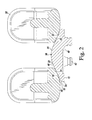
FIG. 2 is a coronal cross sectional view showing the dome patella component ofFIG. 1 positioned in articular contact with a femoral component of the knee prosthesis; -
FIG. 3 is a chart showing the dome patella component ofFIG. 1 provided in a number of different component width and thickness options; -
FIG. 4 is a coronal cross sectional view showing a number of commonly-sized dome patella components with differing thicknesses superimposed upon one another; -
FIGS. 5 to 7 are bottom perspective views of the dome patella components ofFIG. 4 ; -
FIG. 8 is a chart similar toFIG. 3 , but showing the dome patella component ofFIG. 1 provided in a number of different component width and peak diameter options; and -
FIG. 9 is a diagrammatic sagittal cross sectional view showing two dome patella components from the chart ofFIG. 8 that have common widths and different peak diameters superimposed upon one another and positioned in contact with the femoral component of the knee prosthesis. - Terms representing anatomical references, such as anterior, posterior, medial, lateral, superior, and inferior, may be used throughout this document to refer to both the orthopaedic implants described herein and a patient's natural anatomy. Such terms have well-understood meanings in both the study of anatomy and the field of orthopaedics. Use of such anatomical reference terms in the document is intended to be consistent with their well-understood meanings unless noted otherwise.
- Referring to the drawings,
FIGS. 1 to 4 show adome patella component 10 of an implantable knee prosthesis. As will be described below in greater detail, a number of commonly-sized dome patella components 10 (i.e., each of them having the same diameter) may be provided in different thicknesses. As shown inFIG. 2 , the knee prosthesis also includes afemoral component 30 that is configured to be secured to a surgically-prepared end of a patient's distal femur (not shown). Thedome patella component 10 includes aposterior bearing surface 20 configured to articulate with the condylar surfaces of thefemoral component 30. In particular, theposterior bearing surface 20 of thedome patella component 10 includes a lateralarticular surface 22 and a medialarticular surface 24. The articular surfaces 22, 24 are configured to articulate with alateral condyle surface 32 and amedial condyle surface 34, respectively, of thefemoral component 30. Specifically, thefemoral component 30 is configured to emulate the configuration of the patient's natural femoral condyles, and, as such, thelateral condyle surface 32 and themedial condyle surface 34 are configured (e.g., curved) in a manner which mimics the condyles of the natural femur. Thelateral condyle surface 32 and themedial condyle surface 34 are spaced apart from one another thereby defining an intercondylar notch therebetween. - As can be seen in
FIG. 1 , thedome patella component 10 also includes a flatanterior surface 40 having a number of fixation members, such aspegs 42, extending away therefrom. Thepegs 42 are configured to be implanted into a surgically prepared posterior surface of the patient's natural patella (not shown). In such a way, theposterior bearing surface 20 of thedome patella component 10 faces toward thefemoral component 30 thereby allowing theposterior bearing surface 20 to articulate with the femoral condyle surfaces 32, 34 during flexion and extension of the patient's knee. - The
dome patella component 10 is embodied as a monolithic polymer body constructed with a material that allows for smooth articulation between thedome patella component 10 and thefemoral component 30. One such polymeric material is polyethylene such as ultrahigh molecular weight polyethylene (UHMWPE). Thefemoral component 30 may be constructed with a biocompatible metal, such as a cobalt chrome alloy, although other materials, such as ceramics, may also be used. - As will be discussed in greater detail, the geometric design of the
dome patella component 10 removes the dependency between component size (i.e., component outer diameter) and component thickness. In particular, as shown in the chart ofFIG. 3 , a number of commonly-sized dome patella components 10 (i.e., components having the same diameter) can be fabricated across a range of thicknesses. Having various component thicknesses available at each component size facilitates the surgeon's efforts in patellofemoral balancing. For example, if the patient's patella is loose in both the extension and flexion gaps, the surgeon can select a thicker patella of the same size to ensure proper bone coverage; similarly, a thinner patella of the same size can be selected if the patient's patella is tight in the extension and flexion gaps. This is in contrast with prior art designs in which the dimensional dependency would require a change in component size (i.e., component outer diameter) to increase or decrease the thickness of the component. - Referring now to
FIGS. 1 and4 , the geometry of theposterior bearing surface 20 of thedome patella component 10 is shown in greater detail. Theposterior bearing surface 20 of thedome patella component 10 has acurved peak surface 44. Thecurved peak surface 44 defines the posterior-most surface of thedome patella component 10. Specifically, a point on thecurved peak surface 44 defines theposterior-most point 38 of thedome patella component 10. Thecurved peak surface 44 is embodied as a hemispherically-shaped surface. The hemispherically-shapedpeak surface 44 is geometrically decoupled from the remainder of theposterior bearing surface 20. In particular, the hemispherically-shapedpeak surface 44 does not extend across the entire posterior bearing surface, but rather it extends anteriorly away from theposterior-most point 38 in the general direction toward theanterior surface 40 and transitions to a substantially conically-shapedsurface 46. The conically-shapedsurface 46 in turn transitions to arounded edge surface 48 that extends anteriorly away from the conically-shapedsurface 46 in the direction toward theanterior surface 40 of thedome patella component 10. In the illustrative embodiment of thedome patella component 10 described herein, therounded edge surface 48 includes acurved corner surface 52 that transitions from the to the conically-shapedsurface 46 and aflat surface 54 that transitions thecurved corner surface 52 to theanterior surface 40 of thedome patella component 10. - In the embodiment shown in the drawings, the geometric design of the
posterior bearing surface 20 in which the hemispherically-shapedpeak surface 44 transitions to the conically-shapedsurface 46 removes the dependency between component size (i.e., component outer diameter) and component thickness. As such, thedome patella components 10 may be provided in a range of component sizes. For example, as shown in the chart ofFIG. 3 , thedome patella components 10 may be provided in 41 mm, 38 mm, 35 mm, 32 mm, and 29 mm sizes. In a conventional nomenclature, such sizes represent the diameter of the component (e.g., asize 41 mm patella component has a 41 mm outer diameter). By eliminating the dimensional dependency of prior art designs, thepatella components 10 of each of the various sizes may be provided in a number of various thicknesses. For example, the 41mm patella component 10 may be provided in three thicknesses such as 10.5 mm, 11.0 mm, and 11.5 mm. It should be appreciated that such thicknesses are illustrative in nature. The example noted above is in contrast to prior art designs in which, for example, the thinnest 41 mm component has a thickness of approximately 11.4mm due to the dimensional dependency of the design. It should be appreciated that although each size ofdome patella component 10 is shown in the chart ofFIG. 3 as having three different thickness options, the number of options and the thickness of the components can be varied. For example, each size of component may have fewer or more different thickness options available. Moreover, although the thickness of thecomponents 10 within a common size are varied in 0.5 mm increments in the example noted above, the magnitude of such increments may be varied to fit the needs of a given design. - The different component thickness options is demonstrated geometrically in the coronal cross sectional view of
FIG. 4 where three commonly-sizeddome patella components FIG. 4 , a 41 mm dome patella component 10 (i.e., W=41 mm) is shown in three different thicknesses such as 10.5 mm (i.e., Tri=10.5 mm), 11.0mm (i.e., T2=11.0 mm), and 11.5 mm (i.e., T3=11.5 mm). As can be seen inFIG. 4 , each of thedome patella components FIG. 4 , each of thedome patella components respective patella components imaginary line segment 62 extends orthogonally from theanterior surface 40 of thepatella component 10a through theposterior-most point 38 of thepatella component 10a, animaginary line segment 64 extends orthogonally from theanterior surface 40 of thepatella component 10b through theposterior-most point 38 of thepatella component 10b, and an imaginary line segment 66 extends orthogonally from theanterior surface 40 of thepatella component 10c through theposterior-most point 38 of thepatella component 10c. The line segment 66 (i.e., in the case of the illustrative example, T3=11.5 mm) is longer than the line segment 64 (i.e., in the case of the illustrative example, T2=11.0 mm), which is in turn longer than the line segment 62 (i.e., in the case of the illustrative example, T1=10.5mm). - As shown in
FIGS. 5 to 7 , the variousdome patella components 10 of a given component size have the same fixation features. In particular, even though the dome patella components of a given component size have various thicknesses, thepegs 42 of thecomponents 10 have the same diameter and are arranged in the same pattern (i.e., arranged at the same location) as one another. For example, a 41 mmdome patella component 10 is shown inFIGS. 5 to 7 in three different thicknesses (e.g., 11.5 mm inFIG. 5 , 11.0 mm inFIG. 6 , and 10.5mm inFIG. 7 ). As can be seen in such an example, even though the 41mm dome patella components have different thicknesses, thepegs 42 of thecomponents 10 have the same diameter and are arranged in the same pattern (i.e., arranged at the same location) as one another. As such, a common set of instruments and a common surgical technique may be used for bone preparation and device implantation. - In lieu of, or in addition to, providing the
dome patella component 10 in various thicknesses, the geometric design of theposterior bearing surface 20 allows for thedome patella component 10 to be provided in various peak diameter options. In particular, since the hemispherically-shapedpeak surface 44 is geometrically decoupled from the remainder of theposterior bearing surface 20, the diameter of the hemispherically-shapedpeak surface 44 may be varied withindome patella components 10 of the same size (i.e., components having the same outer diameter). In particular, by eliminating the dimensional dependency of prior art designs, thepatella components 10 of each of the various sizes may be provided in a number of various peak diameters. For example, as shown in the chart ofFIG. 8 , each of the commonly-sized patella components 10 may be provided in three different peak surface diameters. For example, the 41mm patella component 10 may be embodied in three differentpeak surface diameters dome patella component 10 is shown in the chart ofFIG. 8 as having three different peak surface diameter options, such options are illustrative in nature. For example, each size of component may have fewer or more different peak diameter options available. - It should be appreciated that altering the diameter of the hemispherically-shaped
peak surface 44 changes the morphology of thedome patella component 10. In particular, by increasing the diameter of the hemispherically-shapedpeak surface 44, thecomponent 10 becomes flatter. By decreasing the diameter of the hemispherically-shapedpeak surface 44, thecomponent 10 becomes more pointed. This is useful during patello-femoral balancing in cases where the extension gap does not equal the flexion gap. By modifying the diameter of the hemispherically-shapedpeak surface 44, the extension gap can be tightened or loosened while the flexion gap remains unchanged. By doing so, the surgeon may choose a patella option that creates the desired tension in the flexion and extension gaps. - The use of such a modified
patella component 10 is shown in the diagrammatic sagittal cross sectional view ofFIG. 9 . As can be seen inFIG. 9 , in extension, it is the hemispherically-shapedpeak surface 44 of the component'sposterior bearing surface 20 that articulates with the femoral condyle surfaces 32, 34 of thefemoral component 30. As such, use of adome patella component 10a having a hemispherically-shapedpeak surface 44 with a smaller diameter (i.e., a more pointed component) creates a tighter extension gap than use of adome patella component 10b having a hemispherically-shaped peak surface 44a with a larger diameter (i.e., a flatter component). This is shown geometrically inFIG. 9 where it is shown that during extension theanterior surface 40 of the more pointeddome patella component 10a is spaced apart anteriorly from theanterior surface 40 of the flatterdome patella component 10b by a distance D1. In the particular embodiment shown in the drawings, the offset distance (D1) is 0.90 mm. - As the knee moves from extension to flexion, the offset lessens to the point where the
anterior surface 40 of the more pointeddome patella component 10a is congruent with theanterior surface 40 of the flatterdome patella component 10b. In particular, in flexion, it is the conically-shapedsurface 46 of the component'sposterior bearing surface 20 that articulates with the femoral condyle surfaces 32, 34 of thefemoral component 30. Because the conically-shapedsurfaces 46 of each of the commonly-sized components 10 are identical with one another, use of the more pointeddome patella component 10a creates the same flexion gap as use of the flatterdome patella component 10b. This is shown geometrically inFIG. 9 where it is shown that as the knee transitions from extension to flexion, the anterior offset of theanterior surface 40 of the more pointeddome patella component 10a from theanterior surface 40 of the flatterdome patella component 10b lessens (e.g., the distance D2 between the two surfaces is 0.30 mm at a point in transition between extension and flexion). - Once the knee is in flexion, only the conically-shaped
surface 46 of the component'sposterior bearing surface 20 articulates with the femoral condyle surfaces 32, 34 of the femoral component 30 (i.e., the hemispherically-shapedpeak surface 44 is no longer articulating with the femoral condyle surfaces 32, 34). As such, in flexion, the anterior offset of theanterior surface 40 of the more pointeddome patella component 10a from theanterior surface 40 of the flatterdome patella component 10b no longer exists and the two surfaces are congruent with one another (e.g., the distance D3 between the two surfaces is 0.00 mm). - As can be seen from
FIG. 9 , by varying the diameter of the hemispherically-shapedpeak surface 44, the extension gap may be altered independently of the flexion gap. As such, the surgeon may select between a number of commonly-sized dome patella components (e.g., a number of 41 mm components) to tighten or loosen the extension gap without altering the flexion gap.
Claims (15)
- An implantable orthopaedic knee prosthesis assembly, comprising:a first dome patella component having (i) a posterior bearing surface configured to articulate with the femoral condyles of an implantable femoral component, and (ii) an anterior surface having a number of pegs extending outwardly therefrom, in which, when viewed in a coronal cross sectional view, (a) the posterior bearing surface of the first dome patella component has a curved peak surface that includes a posterior-most point of the first dome patella component, and (b) a first imaginary line segment extends orthogonally from the anterior surface of the first dome patella component to the posterior-most point of the first dome patella component, anda second dome patella component having (i) a posterior bearing surface configured to articulate with the femoral condyles of an implantable femoral component, (ii) an anterior surface having a number of pegs extending outwardly therefrom, and (iii) a medial/lateral width that is the same as the medial/lateral width of the first dome patella component, in which, when viewed in a coronal cross sectional view, (a) the posterior bearing surface of the second dome patella component has a curved peak surface that includes a posterior-most point of the second dome patella component, and (b) a second imaginary line segment extends orthogonally from the anterior surface of the second dome patella component to the posterior-most point of the second dome patella component, the second imaginary line segment being longer than the first imaginary line segment.
- The implantable orthopaedic knee prosthesis assembly of claim 1, which includes a third dome patella component having (i) a posterior bearing surface configured to articulate with the femoral condyles of an implantable femoral component, (ii) an anterior surface having a number of pegs extending outwardly therefrom, and (iii) a medial/lateral width that is the same as the medial/lateral width of both the first dome patella component and the second dome patella component, in which, when viewed in a coronal cross sectional view, (a) the posterior bearing surface of the third dome patella component has a curved peak surface that includes a posterior-most point of the third dome patella component, and (b) a third imaginary line segment extends orthogonally from the anterior surface of the third dome patella component to the posterior-most point of the third dome patella component, the third imaginary line segment being longer than both the first imaginary line segment and the second imaginary line segment.
- The implantable orthopaedic knee prosthesis assembly of claim 1, in which the curved peak surface of both the first and second dome patella components comprises a hemispherically-shaped surface, and the posterior bearing surface of both the first and second dome patella components further has a conically-shaped surface that extends anteriorly away from the hemispherically-shaped surface and transitions into a rounded edge surface that extends anteriorly away from the conically-shaped surface in the direction toward the anterior surface.
- The implantable orthopaedic knee prosthesis assembly of claim 1, in which each of the first and second dome patella components comprises a monolithic polyethylene body.
- The implantable orthopaedic knee prosthesis assembly of claim 1, in which:the first dome patella component comprises a first number of pegs extending anteriorly away from the anterior surface of the first dome patella component,the second dome patella component comprises a second number of pegs extending anteriorly away from the anterior surface of the second dome patella component,the first number of pegs have the same diameter as the second number of pegs, andthe first number of pegs are arranged in the same pattern on the anterior surface of the first dome patella component as the second number of pegs are arranged on the anterior surface of the second dome patella component.
- An implantable orthopaedic knee prosthesis assembly, comprising:a femoral component having a medial condyle surface and a lateral condyle surface, anda plurality of dome patella components configured to be separately positioned in contact with the condyle surfaces of the femoral component, in which each of the plurality of dome patella components has (i) a medial/lateral width that is the same as each of the other of the plurality of dome patella components, (ii) a posterior bearing surface having a medial articular surface configured to articulate with the medial condyle surface of the femoral component and a lateral articular surface configured to articulate with the lateral condyle surface of the femoral component, and (iii) an anterior/posterior thickness that is different from at least some of the other of the plurality of dome patella components.
- The implantable orthopaedic knee prosthesis assembly of claim 6, in which:each of the plurality of dome patella components comprises an anterior surface having a number of pegs extending outwardly therefrom,the posterior bearing surface of each of the plurality of dome patella components has a curved peak surface that includes a posterior-most point of the dome patella component, andthe anterior/posterior thickness of each of the plurality of dome patella components is defined by an imaginary line segment that extends orthogonally from the anterior surface to the posterior-most point.
- The implantable orthopaedic knee prosthesis assembly of claim 6, in which the posterior bearing surface of each of the plurality of dome patella components comprises:a hemispherically-shaped peak surface, anda conically-shaped surface that extends anteriorly away from the hemispherically-shaped peak surface and transitions into a rounded edge surface that extends anteriorly away from the conically-shaped surface.
- The implantable orthopaedic knee prosthesis assembly of claim 6, in which each of the plurality of dome patella components comprises a monolithic polyethylene body.
- The implantable orthopaedic knee prosthesis assembly of claim 6, in which:each of the plurality of dome patella components comprises an anterior surface having a number of pegs extending outwardly therefrom,the corresponding pegs of each of the plurality of dome patella components have the same diameter as one another, andthe pegs of each of the plurality of dome patella components are arranged in the same pattern as one another.
- An implantable orthopaedic knee prosthesis assembly, comprising:a first dome patella component having (i) a posterior bearing surface configured to articulate with the femoral condyles of an implantable femoral component, and (ii) an anterior surface having a number of pegs extending outwardly therefrom, in which the posterior bearing surface of the first dome patella component has (a) a hemispherically-shaped peak surface that includes a posterior-most point of the first dome patella component, and (b) a conically-shaped surface that extends anteriorly away from the hemispherically-shaped surface, anda second dome patella component having (i) a posterior bearing surface configured to articulate with the femoral condyles of an implantable femoral component, (ii) an anterior surface having a number of pegs extending outwardly therefrom, and (iii) a medial/lateral width that is the same as the medial/lateral width of the first dome patella component, in which the posterior bearing surface of the second dome patella component has (a) a hemispherically-shaped peak surface that includes a posterior-most point of the second dome patella component, and (b) a conically-shaped surface that extends anteriorly away from the hemispherically-shaped peak surface, the diameter of the hemispherically-shaped peak surface of the second dome patella component being greater than the diameter of the hemispherically-shaped peak surface of the first dome patella component.
- The implantable orthopaedic knee prosthesis assembly of claim 11, further comprising:a third dome patella component having (i) a posterior bearing surface configured to articulate with the femoral condyles of an implantable femoral component, (ii) an anterior surface having a number of pegs extending outwardly therefrom, and (iii) a medial/lateral width that is the same as the medial/lateral width of both the first dome patella component and the second dome patella component, in which the posterior bearing surface of the third dome patella component has (a) a hemispherically-shaped peak surface that includes a posterior-most point of the third dome patella component, and (b) a conically-shaped surface that extends anteriorly away from the hemispherically-shaped peak surface, the diameter of the hemispherically-shaped peak surface of the third dome patella component being greater than the diameters of the hemispherically-shaped peak surfaces of both the first and second dome patella components.
- The implantable orthopaedic knee prosthesis assembly of claim 11, in which:the conically-shaped surface of both the first and second dome patella components transitions into a rounded edge surface that extends anteriorly away from the conically-shaped surface in the direction toward the anterior surface.
- The implantable orthopaedic knee prosthesis assembly of claim 11, in which each of the first and second dome patella components comprises a monolithic polyethylene body.
- The implantable orthopaedic knee prosthesis assembly of claim 11, in which:the first dome patella component comprises a first number of pegs extending anteriorly away from the anterior surface of the first dome patella component,the second dome patella component comprises a second number of pegs extending anteriorly away from the anterior surface of the second dome patella component,the first number of pegs have the same diameter as the second number of pegs, andthe first number of pegs are arranged in the same pattern on the anterior surface of the first dome patella component as the second number of pegs are arranged on the anterior surface of the second dome patella component.
Applications Claiming Priority (1)
| Application Number | Priority Date | Filing Date | Title |
|---|---|---|---|
| US12/981,953 US9498342B2 (en) | 2010-12-30 | 2010-12-30 | Knee prosthesis having commonly-sized patella components with varying thicknesses and peak surface diameters |
Publications (2)
| Publication Number | Publication Date |
|---|---|
| EP2471494A1 true EP2471494A1 (en) | 2012-07-04 |
| EP2471494B1 EP2471494B1 (en) | 2014-04-23 |
Family
ID=45418468
Family Applications (1)
| Application Number | Title | Priority Date | Filing Date |
|---|---|---|---|
| EP11194972.3A Active EP2471494B1 (en) | 2010-12-30 | 2011-12-21 | Knee prosthesis |
Country Status (7)
| Country | Link |
|---|---|
| US (1) | US9498342B2 (en) |
| EP (1) | EP2471494B1 (en) |
| JP (1) | JP5844148B2 (en) |
| CN (1) | CN102599993B (en) |
| AU (1) | AU2011265535B2 (en) |
| DK (1) | DK2471494T3 (en) |
| ES (1) | ES2466000T3 (en) |
Cited By (3)
| Publication number | Priority date | Publication date | Assignee | Title |
|---|---|---|---|---|
| US10893948B2 (en) | 2017-11-02 | 2021-01-19 | Howmedica Osteonics Corp. | Rotary arc patella articulating geometry |
| US12471935B2 (en) | 2022-07-27 | 2025-11-18 | Howmedica Osteonics Corp. | Self leveling patellar drill guide |
| US12533239B2 (en) | 2017-11-03 | 2026-01-27 | Howmedica Osteonics Corp. | Conical patella resurfacing |
Families Citing this family (5)
| Publication number | Priority date | Publication date | Assignee | Title |
|---|---|---|---|---|
| CN103598935A (en) * | 2013-11-08 | 2014-02-26 | 深圳先进技术研究院 | Patella prosthesis structure |
| AU2018203343B2 (en) * | 2017-05-15 | 2023-04-27 | Howmedica Osteonics Corp. | Patellofemoral implant |
| US10940666B2 (en) | 2017-05-26 | 2021-03-09 | Howmedica Osteonics Corp. | Packaging structures and additive manufacturing thereof |
| CN107280822B (en) * | 2017-08-02 | 2023-09-12 | 北京安颂科技有限公司 | Patella prosthesis and artificial knee joint |
| US11357635B2 (en) * | 2019-12-17 | 2022-06-14 | Depuy Ireland Unlimited Company | Metal-backed patella component of an orthopaedic knee prosthesis and associated method of making the same |
Citations (3)
| Publication number | Priority date | Publication date | Assignee | Title |
|---|---|---|---|---|
| US20040143336A1 (en) * | 2003-01-22 | 2004-07-22 | Brian Burkinshaw | Two-piece modular patellar prosthetic system |
| US20070265708A1 (en) * | 2006-05-15 | 2007-11-15 | Biomet Manufacturing Corp. | Porous titanium modular revision patella system |
| EP2140836A1 (en) * | 2008-06-30 | 2010-01-06 | DePuy Products, Inc. | Patella Component |
Family Cites Families (12)
| Publication number | Priority date | Publication date | Assignee | Title |
|---|---|---|---|---|
| US4151615A (en) | 1977-06-29 | 1979-05-01 | Hall Thomas D | Prosthetic patello-femoral joint |
| IL109344A (en) * | 1994-04-19 | 1998-02-22 | Mendes David | Prosthetic patella implant of the knee joint |
| GB2301032B (en) | 1995-04-07 | 1999-10-06 | David Giorgio Mendes | Prosthetic patella implant of the knee joint and reamer |
| US20030088315A1 (en) * | 2001-11-08 | 2003-05-08 | Supinski Robert S | Patella replacement apparatus |
| US20040143338A1 (en) | 2003-01-21 | 2004-07-22 | Brian Burkinshaw | Multi-piece modular patellar prosthetic system |
| US8002840B2 (en) | 2004-01-12 | 2011-08-23 | Depuy Products, Inc. | Systems and methods for compartmental replacement in a knee |
| CN2681706Y (en) | 2004-03-09 | 2005-03-02 | 张翀 | Artificial joint prosthesis of patella-femur joint |
| JP2006015005A (en) * | 2004-07-02 | 2006-01-19 | Zimmer Technology Inc | Multi-piece modular patellar prosthetic system |
| US20060190086A1 (en) | 2005-02-22 | 2006-08-24 | Mako Surgical Corporation | Knee implant |
| CN101330883B (en) | 2005-12-15 | 2013-03-13 | 齐默尔公司 | Distal femoral knee prostheses |
| US7582118B2 (en) | 2007-02-06 | 2009-09-01 | Zimmer Technology, Inc. | Femoral trochlea prostheses |
| US8915965B2 (en) | 2009-05-07 | 2014-12-23 | Depuy (Ireland) | Anterior stabilized knee implant |
-
2010
- 2010-12-30 US US12/981,953 patent/US9498342B2/en active Active
-
2011
- 2011-12-21 ES ES11194972.3T patent/ES2466000T3/en active Active
- 2011-12-21 EP EP11194972.3A patent/EP2471494B1/en active Active
- 2011-12-21 DK DK11194972.3T patent/DK2471494T3/en active
- 2011-12-23 AU AU2011265535A patent/AU2011265535B2/en active Active
- 2011-12-28 JP JP2011288688A patent/JP5844148B2/en active Active
- 2011-12-30 CN CN201110462726.3A patent/CN102599993B/en active Active
Patent Citations (3)
| Publication number | Priority date | Publication date | Assignee | Title |
|---|---|---|---|---|
| US20040143336A1 (en) * | 2003-01-22 | 2004-07-22 | Brian Burkinshaw | Two-piece modular patellar prosthetic system |
| US20070265708A1 (en) * | 2006-05-15 | 2007-11-15 | Biomet Manufacturing Corp. | Porous titanium modular revision patella system |
| EP2140836A1 (en) * | 2008-06-30 | 2010-01-06 | DePuy Products, Inc. | Patella Component |
Cited By (4)
| Publication number | Priority date | Publication date | Assignee | Title |
|---|---|---|---|---|
| US10893948B2 (en) | 2017-11-02 | 2021-01-19 | Howmedica Osteonics Corp. | Rotary arc patella articulating geometry |
| US12594168B2 (en) | 2017-11-02 | 2026-04-07 | Howmedica Osteonics Corp. | Rotary arc patella articulating geometry |
| US12533239B2 (en) | 2017-11-03 | 2026-01-27 | Howmedica Osteonics Corp. | Conical patella resurfacing |
| US12471935B2 (en) | 2022-07-27 | 2025-11-18 | Howmedica Osteonics Corp. | Self leveling patellar drill guide |
Also Published As
| Publication number | Publication date |
|---|---|
| EP2471494B1 (en) | 2014-04-23 |
| US9498342B2 (en) | 2016-11-22 |
| US20120172993A1 (en) | 2012-07-05 |
| AU2011265535B2 (en) | 2016-02-25 |
| JP2012139505A (en) | 2012-07-26 |
| JP5844148B2 (en) | 2016-01-13 |
| DK2471494T3 (en) | 2014-06-30 |
| ES2466000T3 (en) | 2014-06-09 |
| CN102599993A (en) | 2012-07-25 |
| AU2011265535A1 (en) | 2012-07-19 |
| CN102599993B (en) | 2016-08-24 |
Similar Documents
| Publication | Publication Date | Title |
|---|---|---|
| US8128703B2 (en) | Fixed-bearing knee prosthesis having interchangeable components | |
| US9398956B2 (en) | Fixed-bearing knee prosthesis having interchangeable components | |
| AU2022211895B2 (en) | Tibial tray with fixation features | |
| US7628818B2 (en) | Fixed-bearing knee prosthesis having interchangeable components | |
| EP2471494B1 (en) | Knee prosthesis | |
| US9204967B2 (en) | Fixed-bearing knee prosthesis having interchangeable components | |
| US9138322B2 (en) | Knee prosthesis having cross-compatible dome and anatomic patella components | |
| CA2601484C (en) | Femoral trochlea prostheses | |
| EP2774582B1 (en) | Fixed-bearing knee prosthesis | |
| AU2015230782A1 (en) | Fixed-bearing knee prosthesis having interchangeable components | |
| AU2014246677A1 (en) | Fixed-bearing knee prosthesis having interchangeable components |
Legal Events
| Date | Code | Title | Description |
|---|---|---|---|
| AK | Designated contracting states |
Kind code of ref document: A1 Designated state(s): AL AT BE BG CH CY CZ DE DK EE ES FI FR GB GR HR HU IE IS IT LI LT LU LV MC MK MT NL NO PL PT RO RS SE SI SK SM TR |
|
| AX | Request for extension of the european patent |
Extension state: BA ME |
|
| PUAI | Public reference made under article 153(3) epc to a published international application that has entered the european phase |
Free format text: ORIGINAL CODE: 0009012 |
|
| 17P | Request for examination filed |
Effective date: 20121220 |
|
| RAP1 | Party data changed (applicant data changed or rights of an application transferred) |
Owner name: DEPUY (IRELAND) |
|
| GRAP | Despatch of communication of intention to grant a patent |
Free format text: ORIGINAL CODE: EPIDOSNIGR1 |
|
| INTG | Intention to grant announced |
Effective date: 20131219 |
|
| GRAS | Grant fee paid |
Free format text: ORIGINAL CODE: EPIDOSNIGR3 |
|
| GRAA | (expected) grant |
Free format text: ORIGINAL CODE: 0009210 |
|
| AK | Designated contracting states |
Kind code of ref document: B1 Designated state(s): AL AT BE BG CH CY CZ DE DK EE ES FI FR GB GR HR HU IE IS IT LI LT LU LV MC MK MT NL NO PL PT RO RS SE SI SK SM TR |
|
| REG | Reference to a national code |
Ref country code: GB Ref legal event code: FG4D |
|
| REG | Reference to a national code |
Ref country code: CH Ref legal event code: EP |
|
| REG | Reference to a national code |
Ref country code: CH Ref legal event code: NV Representative=s name: E. BLUM AND CO. AG PATENT- UND MARKENANWAELTE , CH Ref country code: AT Ref legal event code: REF Ref document number: 663310 Country of ref document: AT Kind code of ref document: T Effective date: 20140515 |
|
| REG | Reference to a national code |
Ref country code: IE Ref legal event code: FG4D |
|
| REG | Reference to a national code |
Ref country code: DE Ref legal event code: R096 Ref document number: 602011006353 Country of ref document: DE Effective date: 20140605 |
|
| REG | Reference to a national code |
Ref country code: ES Ref legal event code: FG2A Ref document number: 2466000 Country of ref document: ES Kind code of ref document: T3 Effective date: 20140609 |
|
| REG | Reference to a national code |
Ref country code: DK Ref legal event code: T3 Effective date: 20140626 |
|
| REG | Reference to a national code |
Ref country code: NL Ref legal event code: T3 |
|
| REG | Reference to a national code |
Ref country code: SE Ref legal event code: TRGR |
|
| REG | Reference to a national code |
Ref country code: LT Ref legal event code: MG4D |
|
| PG25 | Lapsed in a contracting state [announced via postgrant information from national office to epo] |
Ref country code: BG Free format text: LAPSE BECAUSE OF FAILURE TO SUBMIT A TRANSLATION OF THE DESCRIPTION OR TO PAY THE FEE WITHIN THE PRESCRIBED TIME-LIMIT Effective date: 20140723 Ref country code: LT Free format text: LAPSE BECAUSE OF FAILURE TO SUBMIT A TRANSLATION OF THE DESCRIPTION OR TO PAY THE FEE WITHIN THE PRESCRIBED TIME-LIMIT Effective date: 20140423 Ref country code: IS Free format text: LAPSE BECAUSE OF FAILURE TO SUBMIT A TRANSLATION OF THE DESCRIPTION OR TO PAY THE FEE WITHIN THE PRESCRIBED TIME-LIMIT Effective date: 20140823 Ref country code: CY Free format text: LAPSE BECAUSE OF FAILURE TO SUBMIT A TRANSLATION OF THE DESCRIPTION OR TO PAY THE FEE WITHIN THE PRESCRIBED TIME-LIMIT Effective date: 20140423 Ref country code: GR Free format text: LAPSE BECAUSE OF FAILURE TO SUBMIT A TRANSLATION OF THE DESCRIPTION OR TO PAY THE FEE WITHIN THE PRESCRIBED TIME-LIMIT Effective date: 20140724 Ref country code: NO Free format text: LAPSE BECAUSE OF FAILURE TO SUBMIT A TRANSLATION OF THE DESCRIPTION OR TO PAY THE FEE WITHIN THE PRESCRIBED TIME-LIMIT Effective date: 20140723 |
|
| PG25 | Lapsed in a contracting state [announced via postgrant information from national office to epo] |
Ref country code: RS Free format text: LAPSE BECAUSE OF FAILURE TO SUBMIT A TRANSLATION OF THE DESCRIPTION OR TO PAY THE FEE WITHIN THE PRESCRIBED TIME-LIMIT Effective date: 20140423 Ref country code: LV Free format text: LAPSE BECAUSE OF FAILURE TO SUBMIT A TRANSLATION OF THE DESCRIPTION OR TO PAY THE FEE WITHIN THE PRESCRIBED TIME-LIMIT Effective date: 20140423 Ref country code: HR Free format text: LAPSE BECAUSE OF FAILURE TO SUBMIT A TRANSLATION OF THE DESCRIPTION OR TO PAY THE FEE WITHIN THE PRESCRIBED TIME-LIMIT Effective date: 20140423 Ref country code: PL Free format text: LAPSE BECAUSE OF FAILURE TO SUBMIT A TRANSLATION OF THE DESCRIPTION OR TO PAY THE FEE WITHIN THE PRESCRIBED TIME-LIMIT Effective date: 20140423 |
|
| PG25 | Lapsed in a contracting state [announced via postgrant information from national office to epo] |
Ref country code: PT Free format text: LAPSE BECAUSE OF FAILURE TO SUBMIT A TRANSLATION OF THE DESCRIPTION OR TO PAY THE FEE WITHIN THE PRESCRIBED TIME-LIMIT Effective date: 20140825 |
|
| REG | Reference to a national code |
Ref country code: DE Ref legal event code: R097 Ref document number: 602011006353 Country of ref document: DE |
|
| PG25 | Lapsed in a contracting state [announced via postgrant information from national office to epo] |
Ref country code: CZ Free format text: LAPSE BECAUSE OF FAILURE TO SUBMIT A TRANSLATION OF THE DESCRIPTION OR TO PAY THE FEE WITHIN THE PRESCRIBED TIME-LIMIT Effective date: 20140423 Ref country code: EE Free format text: LAPSE BECAUSE OF FAILURE TO SUBMIT A TRANSLATION OF THE DESCRIPTION OR TO PAY THE FEE WITHIN THE PRESCRIBED TIME-LIMIT Effective date: 20140423 Ref country code: SK Free format text: LAPSE BECAUSE OF FAILURE TO SUBMIT A TRANSLATION OF THE DESCRIPTION OR TO PAY THE FEE WITHIN THE PRESCRIBED TIME-LIMIT Effective date: 20140423 Ref country code: RO Free format text: LAPSE BECAUSE OF FAILURE TO SUBMIT A TRANSLATION OF THE DESCRIPTION OR TO PAY THE FEE WITHIN THE PRESCRIBED TIME-LIMIT Effective date: 20140423 |
|
| PLBE | No opposition filed within time limit |
Free format text: ORIGINAL CODE: 0009261 |
|
| STAA | Information on the status of an ep patent application or granted ep patent |
Free format text: STATUS: NO OPPOSITION FILED WITHIN TIME LIMIT |
|
| 26N | No opposition filed |
Effective date: 20150126 |
|
| REG | Reference to a national code |
Ref country code: DE Ref legal event code: R097 Ref document number: 602011006353 Country of ref document: DE Effective date: 20150126 |
|
| PG25 | Lapsed in a contracting state [announced via postgrant information from national office to epo] |
Ref country code: SI Free format text: LAPSE BECAUSE OF FAILURE TO SUBMIT A TRANSLATION OF THE DESCRIPTION OR TO PAY THE FEE WITHIN THE PRESCRIBED TIME-LIMIT Effective date: 20140423 Ref country code: LU Free format text: LAPSE BECAUSE OF FAILURE TO SUBMIT A TRANSLATION OF THE DESCRIPTION OR TO PAY THE FEE WITHIN THE PRESCRIBED TIME-LIMIT Effective date: 20141221 |
|
| PGFP | Annual fee paid to national office [announced via postgrant information from national office to epo] |
Ref country code: DK Payment date: 20151210 Year of fee payment: 5 Ref country code: FI Payment date: 20151209 Year of fee payment: 5 |
|
| PGFP | Annual fee paid to national office [announced via postgrant information from national office to epo] |
Ref country code: SE Payment date: 20151211 Year of fee payment: 5 Ref country code: ES Payment date: 20151112 Year of fee payment: 5 Ref country code: NL Payment date: 20151210 Year of fee payment: 5 Ref country code: BE Payment date: 20151207 Year of fee payment: 5 |
|
| PG25 | Lapsed in a contracting state [announced via postgrant information from national office to epo] |
Ref country code: SM Free format text: LAPSE BECAUSE OF FAILURE TO SUBMIT A TRANSLATION OF THE DESCRIPTION OR TO PAY THE FEE WITHIN THE PRESCRIBED TIME-LIMIT Effective date: 20140423 |
|
| PG25 | Lapsed in a contracting state [announced via postgrant information from national office to epo] |
Ref country code: MC Free format text: LAPSE BECAUSE OF FAILURE TO SUBMIT A TRANSLATION OF THE DESCRIPTION OR TO PAY THE FEE WITHIN THE PRESCRIBED TIME-LIMIT Effective date: 20140423 |
|
| PG25 | Lapsed in a contracting state [announced via postgrant information from national office to epo] |
Ref country code: HU Free format text: LAPSE BECAUSE OF FAILURE TO SUBMIT A TRANSLATION OF THE DESCRIPTION OR TO PAY THE FEE WITHIN THE PRESCRIBED TIME-LIMIT; INVALID AB INITIO Effective date: 20111221 Ref country code: TR Free format text: LAPSE BECAUSE OF FAILURE TO SUBMIT A TRANSLATION OF THE DESCRIPTION OR TO PAY THE FEE WITHIN THE PRESCRIBED TIME-LIMIT Effective date: 20140423 Ref country code: MT Free format text: LAPSE BECAUSE OF FAILURE TO SUBMIT A TRANSLATION OF THE DESCRIPTION OR TO PAY THE FEE WITHIN THE PRESCRIBED TIME-LIMIT Effective date: 20140423 |
|
| REG | Reference to a national code |
Ref country code: FR Ref legal event code: PLFP Year of fee payment: 6 |
|
| PG25 | Lapsed in a contracting state [announced via postgrant information from national office to epo] |
Ref country code: BE Free format text: LAPSE BECAUSE OF NON-PAYMENT OF DUE FEES Effective date: 20161231 |
|
| PG25 | Lapsed in a contracting state [announced via postgrant information from national office to epo] |
Ref country code: FI Free format text: LAPSE BECAUSE OF NON-PAYMENT OF DUE FEES Effective date: 20161221 |
|
| REG | Reference to a national code |
Ref country code: DK Ref legal event code: EBP Effective date: 20161231 |
|
| REG | Reference to a national code |
Ref country code: SE Ref legal event code: EUG |
|
| REG | Reference to a national code |
Ref country code: NL Ref legal event code: MM Effective date: 20170101 |
|
| PG25 | Lapsed in a contracting state [announced via postgrant information from national office to epo] |
Ref country code: SE Free format text: LAPSE BECAUSE OF NON-PAYMENT OF DUE FEES Effective date: 20161222 |
|
| PG25 | Lapsed in a contracting state [announced via postgrant information from national office to epo] |
Ref country code: NL Free format text: LAPSE BECAUSE OF NON-PAYMENT OF DUE FEES Effective date: 20170101 |
|
| REG | Reference to a national code |
Ref country code: FR Ref legal event code: PLFP Year of fee payment: 7 |
|
| PG25 | Lapsed in a contracting state [announced via postgrant information from national office to epo] |
Ref country code: DK Free format text: LAPSE BECAUSE OF NON-PAYMENT OF DUE FEES Effective date: 20161231 |
|
| REG | Reference to a national code |
Ref country code: BE Ref legal event code: MM Effective date: 20161231 |
|
| REG | Reference to a national code |
Ref country code: AT Ref legal event code: MM01 Ref document number: 663310 Country of ref document: AT Kind code of ref document: T Effective date: 20161221 |
|
| PG25 | Lapsed in a contracting state [announced via postgrant information from national office to epo] |
Ref country code: AT Free format text: LAPSE BECAUSE OF NON-PAYMENT OF DUE FEES Effective date: 20161221 Ref country code: ES Free format text: LAPSE BECAUSE OF NON-PAYMENT OF DUE FEES Effective date: 20161222 |
|
| REG | Reference to a national code |
Ref country code: ES Ref legal event code: FD2A Effective date: 20180626 |
|
| PG25 | Lapsed in a contracting state [announced via postgrant information from national office to epo] |
Ref country code: MK Free format text: LAPSE BECAUSE OF FAILURE TO SUBMIT A TRANSLATION OF THE DESCRIPTION OR TO PAY THE FEE WITHIN THE PRESCRIBED TIME-LIMIT Effective date: 20140423 |
|
| PG25 | Lapsed in a contracting state [announced via postgrant information from national office to epo] |
Ref country code: AL Free format text: LAPSE BECAUSE OF FAILURE TO SUBMIT A TRANSLATION OF THE DESCRIPTION OR TO PAY THE FEE WITHIN THE PRESCRIBED TIME-LIMIT Effective date: 20140423 |
|
| PGFP | Annual fee paid to national office [announced via postgrant information from national office to epo] |
Ref country code: FR Payment date: 20221110 Year of fee payment: 12 |
|
| PGFP | Annual fee paid to national office [announced via postgrant information from national office to epo] |
Ref country code: CH Payment date: 20230101 Year of fee payment: 12 |
|
| REG | Reference to a national code |
Ref country code: CH Ref legal event code: PL |
|
| PG25 | Lapsed in a contracting state [announced via postgrant information from national office to epo] |
Ref country code: FR Free format text: LAPSE BECAUSE OF NON-PAYMENT OF DUE FEES Effective date: 20231231 |
|
| PG25 | Lapsed in a contracting state [announced via postgrant information from national office to epo] |
Ref country code: CH Free format text: LAPSE BECAUSE OF NON-PAYMENT OF DUE FEES Effective date: 20231231 |
|
| PG25 | Lapsed in a contracting state [announced via postgrant information from national office to epo] |
Ref country code: FR Free format text: LAPSE BECAUSE OF NON-PAYMENT OF DUE FEES Effective date: 20231231 Ref country code: CH Free format text: LAPSE BECAUSE OF NON-PAYMENT OF DUE FEES Effective date: 20231231 |
|
| PGFP | Annual fee paid to national office [announced via postgrant information from national office to epo] |
Ref country code: DE Payment date: 20251028 Year of fee payment: 15 |
|
| PGFP | Annual fee paid to national office [announced via postgrant information from national office to epo] |
Ref country code: GB Payment date: 20251030 Year of fee payment: 15 |
|
| PGFP | Annual fee paid to national office [announced via postgrant information from national office to epo] |
Ref country code: IT Payment date: 20251121 Year of fee payment: 15 |
|
| PGFP | Annual fee paid to national office [announced via postgrant information from national office to epo] |
Ref country code: IE Payment date: 20251111 Year of fee payment: 15 |