EP2470648B1 - New endolysin obpgplys - Google Patents
New endolysin obpgplys Download PDFInfo
- Publication number
- EP2470648B1 EP2470648B1 EP10745248.4A EP10745248A EP2470648B1 EP 2470648 B1 EP2470648 B1 EP 2470648B1 EP 10745248 A EP10745248 A EP 10745248A EP 2470648 B1 EP2470648 B1 EP 2470648B1
- Authority
- EP
- European Patent Office
- Prior art keywords
- seq
- amino acid
- peptide
- polypeptide
- obpgplys
- Prior art date
- Legal status (The legal status is an assumption and is not a legal conclusion. Google has not performed a legal analysis and makes no representation as to the accuracy of the status listed.)
- Active
Links
Images


Classifications
-
- C—CHEMISTRY; METALLURGY
- C12—BIOCHEMISTRY; BEER; SPIRITS; WINE; VINEGAR; MICROBIOLOGY; ENZYMOLOGY; MUTATION OR GENETIC ENGINEERING
- C12N—MICROORGANISMS OR ENZYMES; COMPOSITIONS THEREOF; PROPAGATING, PRESERVING, OR MAINTAINING MICROORGANISMS; MUTATION OR GENETIC ENGINEERING; CULTURE MEDIA
- C12N9/00—Enzymes; Proenzymes; Compositions thereof; Processes for preparing, activating, inhibiting, separating or purifying enzymes
- C12N9/14—Hydrolases (3)
- C12N9/24—Hydrolases (3) acting on glycosyl compounds (3.2)
- C12N9/2402—Hydrolases (3) acting on glycosyl compounds (3.2) hydrolysing O- and S- glycosyl compounds (3.2.1)
- C12N9/2462—Lysozyme (3.2.1.17)
-
- A—HUMAN NECESSITIES
- A01—AGRICULTURE; FORESTRY; ANIMAL HUSBANDRY; HUNTING; TRAPPING; FISHING
- A01N—PRESERVATION OF BODIES OF HUMANS OR ANIMALS OR PLANTS OR PARTS THEREOF; BIOCIDES, e.g. AS DISINFECTANTS, AS PESTICIDES OR AS HERBICIDES; PEST REPELLANTS OR ATTRACTANTS; PLANT GROWTH REGULATORS
- A01N43/00—Biocides, pest repellants or attractants, or plant growth regulators containing heterocyclic compounds
- A01N43/48—Biocides, pest repellants or attractants, or plant growth regulators containing heterocyclic compounds having rings with two nitrogen atoms as the only ring hetero atoms
- A01N43/50—1,3-Diazoles; Hydrogenated 1,3-diazoles
-
- A—HUMAN NECESSITIES
- A23—FOODS OR FOODSTUFFS; TREATMENT THEREOF, NOT COVERED BY OTHER CLASSES
- A23B—PRESERVATION OF FOODS, FOODSTUFFS OR NON-ALCOHOLIC BEVERAGES; CHEMICAL RIPENING OF FRUIT OR VEGETABLES
- A23B2/00—Preservation of foods or foodstuffs, in general
- A23B2/70—Preservation of foods or foodstuffs, in general by treatment with chemicals
- A23B2/725—Preservation of foods or foodstuffs, in general by treatment with chemicals in the form of liquids or solids
- A23B2/729—Organic compounds; Microorganisms; Enzymes
- A23B2/783—Microorganisms; Enzymes
-
- A—HUMAN NECESSITIES
- A61—MEDICAL OR VETERINARY SCIENCE; HYGIENE
- A61K—PREPARATIONS FOR MEDICAL, DENTAL OR TOILETRY PURPOSES
- A61K38/00—Medicinal preparations containing peptides
- A61K38/16—Peptides having more than 20 amino acids; Gastrins; Somatostatins; Melanotropins; Derivatives thereof
- A61K38/43—Enzymes; Proenzymes; Derivatives thereof
- A61K38/46—Hydrolases (3)
- A61K38/47—Hydrolases (3) acting on glycosyl compounds (3.2), e.g. cellulases, lactases
-
- A—HUMAN NECESSITIES
- A61—MEDICAL OR VETERINARY SCIENCE; HYGIENE
- A61P—SPECIFIC THERAPEUTIC ACTIVITY OF CHEMICAL COMPOUNDS OR MEDICINAL PREPARATIONS
- A61P31/00—Antiinfectives, i.e. antibiotics, antiseptics, chemotherapeutics
- A61P31/04—Antibacterial agents
-
- C—CHEMISTRY; METALLURGY
- C07—ORGANIC CHEMISTRY
- C07K—PEPTIDES
- C07K14/00—Peptides having more than 20 amino acids; Gastrins; Somatostatins; Melanotropins; Derivatives thereof
- C07K14/195—Peptides having more than 20 amino acids; Gastrins; Somatostatins; Melanotropins; Derivatives thereof from bacteria
-
- C—CHEMISTRY; METALLURGY
- C07—ORGANIC CHEMISTRY
- C07K—PEPTIDES
- C07K14/00—Peptides having more than 20 amino acids; Gastrins; Somatostatins; Melanotropins; Derivatives thereof
- C07K14/195—Peptides having more than 20 amino acids; Gastrins; Somatostatins; Melanotropins; Derivatives thereof from bacteria
- C07K14/21—Peptides having more than 20 amino acids; Gastrins; Somatostatins; Melanotropins; Derivatives thereof from bacteria from Pseudomonadaceae (F)
-
- C—CHEMISTRY; METALLURGY
- C07—ORGANIC CHEMISTRY
- C07K—PEPTIDES
- C07K14/00—Peptides having more than 20 amino acids; Gastrins; Somatostatins; Melanotropins; Derivatives thereof
- C07K14/435—Peptides having more than 20 amino acids; Gastrins; Somatostatins; Melanotropins; Derivatives thereof from animals; from humans
- C07K14/43504—Peptides having more than 20 amino acids; Gastrins; Somatostatins; Melanotropins; Derivatives thereof from animals; from humans from invertebrates
- C07K14/43513—Peptides having more than 20 amino acids; Gastrins; Somatostatins; Melanotropins; Derivatives thereof from animals; from humans from invertebrates from arachnidae
- C07K14/43518—Peptides having more than 20 amino acids; Gastrins; Somatostatins; Melanotropins; Derivatives thereof from animals; from humans from invertebrates from arachnidae from spiders
-
- C—CHEMISTRY; METALLURGY
- C07—ORGANIC CHEMISTRY
- C07K—PEPTIDES
- C07K7/00—Peptides having 5 to 20 amino acids in a fully defined sequence; Derivatives thereof
- C07K7/04—Linear peptides containing only normal peptide links
- C07K7/08—Linear peptides containing only normal peptide links having 12 to 20 amino acids
-
- C—CHEMISTRY; METALLURGY
- C12—BIOCHEMISTRY; BEER; SPIRITS; WINE; VINEGAR; MICROBIOLOGY; ENZYMOLOGY; MUTATION OR GENETIC ENGINEERING
- C12Q—MEASURING OR TESTING PROCESSES INVOLVING ENZYMES, NUCLEIC ACIDS OR MICROORGANISMS; COMPOSITIONS OR TEST PAPERS THEREFOR; PROCESSES OF PREPARING SUCH COMPOSITIONS; CONDITION-RESPONSIVE CONTROL IN MICROBIOLOGICAL OR ENZYMOLOGICAL PROCESSES
- C12Q1/00—Measuring or testing processes involving enzymes, nucleic acids or microorganisms; Compositions therefor; Processes of preparing such compositions
- C12Q1/02—Measuring or testing processes involving enzymes, nucleic acids or microorganisms; Compositions therefor; Processes of preparing such compositions involving viable microorganisms
- C12Q1/04—Determining presence or kind of microorganism; Use of selective media for testing antibiotics or bacteriocides; Compositions containing a chemical indicator therefor
-
- C—CHEMISTRY; METALLURGY
- C12—BIOCHEMISTRY; BEER; SPIRITS; WINE; VINEGAR; MICROBIOLOGY; ENZYMOLOGY; MUTATION OR GENETIC ENGINEERING
- C12Q—MEASURING OR TESTING PROCESSES INVOLVING ENZYMES, NUCLEIC ACIDS OR MICROORGANISMS; COMPOSITIONS OR TEST PAPERS THEREFOR; PROCESSES OF PREPARING SUCH COMPOSITIONS; CONDITION-RESPONSIVE CONTROL IN MICROBIOLOGICAL OR ENZYMOLOGICAL PROCESSES
- C12Q1/00—Measuring or testing processes involving enzymes, nucleic acids or microorganisms; Compositions therefor; Processes of preparing such compositions
- C12Q1/34—Measuring or testing processes involving enzymes, nucleic acids or microorganisms; Compositions therefor; Processes of preparing such compositions involving hydrolase
-
- C—CHEMISTRY; METALLURGY
- C12—BIOCHEMISTRY; BEER; SPIRITS; WINE; VINEGAR; MICROBIOLOGY; ENZYMOLOGY; MUTATION OR GENETIC ENGINEERING
- C12Y—ENZYMES
- C12Y302/00—Hydrolases acting on glycosyl compounds, i.e. glycosylases (3.2)
- C12Y302/01—Glycosidases, i.e. enzymes hydrolysing O- and S-glycosyl compounds (3.2.1)
- C12Y302/01017—Lysozyme (3.2.1.17)
-
- A—HUMAN NECESSITIES
- A61—MEDICAL OR VETERINARY SCIENCE; HYGIENE
- A61K—PREPARATIONS FOR MEDICAL, DENTAL OR TOILETRY PURPOSES
- A61K38/00—Medicinal preparations containing peptides
-
- C—CHEMISTRY; METALLURGY
- C07—ORGANIC CHEMISTRY
- C07K—PEPTIDES
- C07K2319/00—Fusion polypeptide
- C07K2319/20—Fusion polypeptide containing a tag with affinity for a non-protein ligand
- C07K2319/21—Fusion polypeptide containing a tag with affinity for a non-protein ligand containing a His-tag
-
- C—CHEMISTRY; METALLURGY
- C07—ORGANIC CHEMISTRY
- C07K—PEPTIDES
- C07K2319/00—Fusion polypeptide
- C07K2319/55—Fusion polypeptide containing a fusion with a toxin, e.g. diphteria toxin
-
- G—PHYSICS
- G01—MEASURING; TESTING
- G01N—INVESTIGATING OR ANALYSING MATERIALS BY DETERMINING THEIR CHEMICAL OR PHYSICAL PROPERTIES
- G01N2333/00—Assays involving biological materials from specific organisms or of a specific nature
- G01N2333/90—Enzymes; Proenzymes
- G01N2333/914—Hydrolases (3)
- G01N2333/924—Hydrolases (3) acting on glycosyl compounds (3.2)
- G01N2333/926—Hydrolases (3) acting on glycosyl compounds (3.2) acting on alpha -1, 4-glucosidic bonds, e.g. hyaluronidase, invertase, amylase
- G01N2333/928—Hydrolases (3) acting on glycosyl compounds (3.2) acting on alpha -1, 4-glucosidic bonds, e.g. hyaluronidase, invertase, amylase acting on alpha -1, 4-glucosidic bonds, e.g. hyaluronidase, invertase, amylase
Definitions
- the present invention relates to a polypeptide with an amino acid sequence according to SEQ ID NO: 1, a fragment thereof, or a derivativeof SEQ ID NO: 1 or said fragment, wherein the fragment comprises an amino acid sequence according to SEQ ID NO: 4, 5, 69 or 4 and 5, and wherein the derivative has one deletion, addition, insertion and/or substitution in the amino acid sequence according to SEQ ID NO: 1, 4, 5 and/or 69, wherein said deletion is a deletion of 1, 2, 3, 4, or 5 amino acid residues and wherein said substitution is an exchange of an amino acid residue located at a certain position for a different one, and wherein said derivative exhibits the lytic activity of OBPgpLYS (SEQ ID NO: 1) and/or the activity of said fragment.
- the present invention further relates to fusion proteins comprising said polypeptide and an additional peptide stretch fused to said polypeptide at the N- or C-terminus.
- the present invention relates to nucleic acid molecules encoding said polypeptide or fusion protein, vectors comprising said nucleic acid molecules and host cells comprising either said nucleic acid molecules or said vectors.
- the present invention relates to said polypeptide or fusion protein for use as a medicament, in particular for the treatment or prevention of Gram-negative bacterial infections, or as a diagnostic susbtance.
- the present invention also relates to the use of the inventive polypeptide as cosmetic substance or as sanitizing agent.
- the present invention also relates to the use of said polypeptide or fusion protein for the treatment or prevention of Gram-negative bacterial contamination of foodstuff, of food processing equipment, of food processing plants, of surfaces coming into contact with foodstuff, of medical devices, of surfaces in hospitals and surgeries. Furthermore, the present invention relates to a pharmaceutical composition comprising said polypeptide or fusion protein.
- Gram-negative bacteria possess an outer membrane, with its characteristic asymmetric bilayer as a hallmark.
- the outer membrane bilayer consists of an inner monolayer containing phospholipids (primarily phosphatidyl ethanolamine) and an outer monolayer that is mainly composed of a single glycolipid, lipopolysaccharide (LPS).
- LPS lipopolysaccharide
- antibiotics e.g. antibiotics, endolysins, antimicrobial peptides and defensins.
- endolysins e.g. antibiotics, endolysins, antimicrobial peptides and defensins.
- Increasingly microbial resistance to antibiotics is creating difficulties in treating more and more infections caused by bacteria.
- Particular difficulties arise with infections caused by Gram-negative bacteria like Pseudomonas aeruginosa and Enterobacteriaceae.
- Endolysins are peptidoglycan hydrolases encoded by bacteriophages (or bacterial viruses). They are synthesized during late gene expression in the lytic cycle of phage multiplication and mediate the release of progeny virions from infected cells through degradation of the bacterial peptidoglycan. They are either ⁇ (1,4)-glycosylases (lysozymes), transglycosylases, amidases or endopeptidases.
- Antimicrobial application of endolysins was already suggested in 1991 by Gasson ( GB2243611 ). Although the killing capacity of endolysins has been known for a long time, the use of these enzymes as antibacterials was ignored due to the success and dominance of antibiotics.
- Antimicrobial peptides represent a wide range of short, cationic or amphipatic, gene encoded peptide antibiotics that can be found in virtually every organism. Different AMPs display different properties, and many peptides in this class are being intensively researched not only as antibiotics, but also as templates for cell penetrating peptides. Despite sharing a few common features (e.g., cationicity, amphipathicity and short size), AMP sequences vary greatly, and at least four structural groups (a-helical, ⁇ -sheet, extended and looped) have been proposed to accommodate the diversity of the observed AMP conformations. Likewise, several modes of action as antibiotics have been proposed, and it was shown e.g.
- the primary target of many of these peptides is the cell membrane whereas for other peptides the primary target is cytoplasmic invasion and disruption of core metabolic functions.
- AMPs may become concentrated enough to exhibit cooperative activity despite the absence of specific target binding; for example, by forming a pore in the membrane, as is the case for most AMPs.
- this phenomenon has only been observed in model phospholipid bilayers, and in some cases, AMP concentrations in the membrane that were as high as one peptide molecule per six phospholipid molecules were required for these events to occur. These concentrations are close to, if not at, full membrane saturation.
- MIC minimum inhibitory concentration
- Defensins are a large family of small, cationic, cysteine- and arginine-rich antimicrobial peptides, found in both vertebrates and invertebrates. Defensins are divided into five groups according to the spacing pattern of cysteines: plant, invertebrate, ⁇ -, ⁇ -, and ⁇ -defensins. The latter three are mostly found in mammals. ⁇ -defensins are proteins found in neutrophils and intestinal epithelia. ⁇ -defensins are the most widely distributed and are secreted by leukocytes and epithelial cells of many kinds. ⁇ -defensins have been rarely found so far e.g.
- Defensins are active against bacteria, fungi and many enveloped and nonenveloped viruses. However, the concentrations needed for efficient killing of bacteria are mostly high, i.e. in the micromolar range. Activity of many peptides may be limited in presence of physiological salt conditions, divalent cations and serum. Depending on the content of hydrophobic amino acid residues defensins also show haemolytic activity.
- protein refers synonymously to the term "polypeptide”.
- protein refers to a linear polymer of amino acid residues linked by peptide bonds in a specific sequence.
- the amino-acid residues of a protein may be modified by e.g. covalent attachments of various groups such as carbohydrates and phosphate. Other substances may be more loosely associated with the polypeptide chains, such as heme or lipid, giving rise to the conjugated proteins which are also comprised by the term “protein” as used herein.
- the various ways in which the polypeptide chains fold have been elucidated, in particular with regard to the presence of alpha helices and beta-pleated sheets.
- protein refers to all four classes of proteins being all-alpha, all-beta, alpha/beta and alpha plus beta.
- fusion protein refers to an expression product resulting from the fusion of two nucleic acid sequences. Such a protein may be produced, e.g., in recombinant DNA expression systems.
- fusion protein refers to a fusion of a first amino acid sequence as e.g. an endolysin, with a second or further amino acid sequence.
- the second or further amino acid sequence is preferably a peptide stretch, in particular a cationic peptide, a polycationic peptide, an amphipatic peptide, a sushi peptide, a defensin, a hydrophobic peptide or an antimicrobial peptide.
- said second and/or further amino acid sequence is foreign to and not substantially homologous with any domain of the first amino acid sequence.
- peptide stretch refers to any kind of peptide linked to a protein such as an endolysin.
- peptide stretch refers to a cationic peptide, a polycationic peptide, an amphipatic peptide, a sushi peptide, a defensin, a hydrophobic peptide and/or an antimicrobial peptide.
- a peptide stretch in the meaning of the present invention does not refer to His 6 -tags, Strep-tags, Avi-tags, Myc-tags, Gst-tags, JS-tags, cystein-tags, FLAG-tags or other tags known in the art, thioredoxin or maltose binding proteins (MBP).
- the term "tag” in contrast to the term "peptide stretch” as used herein refers to a peptide which can be useful to facilitate expression and/or affinity purification of a polypeptide, to immobilize a polypeptide to a surface or to serve as a marker or a label moiety for detection of a polypeptide e.g.
- the His 6 -tag may, depending on the respective pH, also be positively charged, but is used as affinity purification tool as it binds to immobilized divalent cations and is not used as a peptide stretch according to the present invention.
- peptide refers to short polypeptides consisting of from about 2 to about 100 amino acid residues, more preferably from about 4 to about 50 amino acid residues, more preferably from about 5 to about 30 amino acid residues, wherein the amino group of one amino acid residue is linked to the carboxyl group of another amino acid residue by a peptide bond.
- a peptide may have a specific function.
- a peptide can be a naturally occurring peptide or a synthetically designed and produced peptide.
- the peptide can be, for example, derived or removed from a native protein by enzymatic or chemical cleavage, or can be prepared using conventional peptide synthesis techniques (e.g., solid phase synthesis) or molecular biology techniques (see Sambrook, J. et al., Molecular Cloning: A Laboratory Manual, Cold Spring Harbor Press, Cold Spring Harbor, N.Y. (1989 )).
- Preferred naturally occurring peptides are e.g. antimicrobial peptides, defensins, and sushi peptides.
- Preferred synthetically produced peptides are e.g. polycationic, amphiphatic or hydrophobic peptides.
- a peptide in the meaning of the present invention does not refer to His-tags, Strep-tags, thioredoxin or maltose binding proteins (MBP) or the like, which are used to purify or locate proteins.
- MBP maltose binding proteins
- Endolysin refers to an enzyme which is suitable to hydrolyse bacterial cell walls.
- Endolysins comprise at least one "enzymatically active domain” (EAD) having at least one of the following activities: endopeptidase, N-acetyl-muramoyl-L-alanine-amidase (amidase), N-acetyl-muramidase, N-acetyl-glucosaminidase (lysozyme) or transglycosylases.
- the endolysins may contain also regions which are enzymatically inactive, and bind to the cell wall of the host bacteria, the so-called CBDs (cell wall binding domains).
- the endolysin may contain two or more CBDs.
- the term "endolysin” as used herein refers also to enzymes having at least one EAD but no CBDs.
- the cell wall binding domain is able to bind different components on the surface of bacteria.
- the cell wall binding domain is a peptidoglycan binding domain and binds to the bacteria's peptidoglycan structure.
- the different domains of an endolysin can be connected by a domain linker.
- domain linker refers to an amino acid sequence functioning to connect single protein domains with one another.
- domain linkers form no or only few regular secondary structure like ⁇ -helices or ⁇ -sheets and can occupy different conformations with the respective structural context.
- Methods to detect domain linker and properties of linker sequences are well known in the art as e.g. described in Bae et al., 2005, Bioinformatics, 21, 2264-2270 or George & Heringa, 2003, Protein Engineering, 15, 871-879 .
- wild type or “wt” as used herein refers to the amino acid sequence of the endolysin OBPgpLYS as depicted in SEQ ID NO: 86.
- the nucleic acid sequence encoding the wild type endolysin OBPgpLYS is depicted in SEQ ID NO: 101.
- deletion refers to the removal of 1, 2, 3, 4, 5 or more amino acid residues from the respective starting sequence.
- insertion or “addition” as used herein refers to the insertion or addition of 1, 2, 3, 4, 5 or more amino acid residues to the respective starting sequence.
- substitution refers to the exchange of an amino acid residue located at a certain position for a different one.
- cell wall refers to all components that form the outer cell enclosure of the Gram-negative bacteria and thus guarantee their integrity.
- cell wall refers to peptidoglycan, the outer membrane of the Gram-negative bacteria with the lipopolysaccharide, the bacterial cell membrane, but also to additional layers deposited on the peptidoglycan as e.g. capsules, outer protein layers or slimes.
- EAD refers to the enzymatically active domain of an endolysin.
- the EAD is responsible for hydrolysing bacterial peptidoglycans. It exhibits at least one enzymatic activity of an endolysin.
- the EAD can also be composed of more than one enzymatically active module.
- EAD is used herein synonymously with the term “catalytic domain”.
- cationic peptide refers to a peptide having positively charged amino acid residues.
- a cationic peptide has a pKa-value of 9.0 or greater.
- at least four of the amino acid residues of the cationic peptide can be positively charged, for example, lysine or arginine.
- “Positively charged” refers to the side chains of the amino acid residues which have a net positive charge at about physiological conditions.
- cationic peptide refers also to polycationic peptides.
- polycationic peptide refers to a synthetically produced peptide composed of mostly positively charged amino acid residues, in particular lysine and/or arginine residues.
- a peptide is composed of mostly positively charged amino acid residues if at least about 20, 30, 40, 50, 60, 70, 75, 80, 85, 90, 95 or about 100 % of the amino acid residues are positively charged amino acid residues, in particular lysine and/or arginine residues.
- the amino acid residues being not positively charged amino acid residues can be neutrally charged amino acid residues and/or negatively charged amino acid residues and/or hydrophobic amino acid residues.
- the amino acid residues being not positively charged amino acid residues are neutrally charged amino acid residues, in particular serine and/or glycine.
- anti-bacterial peptide refers to any peptide that has microbicidal and/or microbistatic activity.
- antiimicrobial peptide refers in particular to any peptide having anti-bacterial, anti-fungal, anti-mycotic, antiparasitic, anti-protozoal, anti-viral, anti-infectious, anti-infective and/or germicidal, algicidal, amoebicidal, microbicidal, bactericidal, fungicidal, parasiticidal, protozoacidal, protozoicidal properties.
- defensin refers to a peptide present within animals, preferably mammals, more preferably humans, wherein the defensin plays a role in the innate host defense system as the destruction of foreign substances such as infectious bacteria and/or infectious viruses and/or fungi.
- a defensin is a non-antibody microbicidal and/or tumoricidal protein, peptide or polypeptide. Examples for “defensins” are "mammalian defensins,” alpha-defensins, beta-defensins, indolicidin and magainins.
- defensins refers both to an isolated form from animal cells or to a synthetically produced form, and refers also to variants which substantially retain the cytotoxic activities of their parent proteins, but whose sequences have been altered by insertion or deletion of one or more amino acid residues.
- sushi peptide refers to complement control proteins (CCP) having short consensus repeats.
- CCP complement control proteins
- the sushi module of sushi peptides functions as a protein-protein interaction domain in many different proteins. Peptides containing a Sushi domain have been shown to have antimicrobial activities.
- amphipathic peptide refers to peptides having both hydrophilic and hydrophobic functional groups.
- amphipathic peptide refers to a peptide having a defined arrangement of hydrophilic and hydrophobic groups e.g. amphipatic peptides may be e.g. alpha helical, having predominantly non polar side chains along one side of the helix and polar residues along the remainder of its surface.
- hydrophobic group refers to chemical groups such as amino acid side chains which are substantially water insoluble, but soluble in an oil phase, with the solubility in the oil phase being higher than that in water or in an aqueous phase.
- amino acid residues having a hydrophobic side chain interact with one another to generate a nonaqueous environment.
- Examples of amino acid residues with hydrophobic side chains are valine, isoleucine, leucine, methionine, phenylalanine, tryptophan, cysteine, alanine, tyrosine, histidine, threonin, serine, proline and glycine residues.
- the present invention relates to new antibacterial agents against Gram-negative bacteria.
- the present invention relates to a polypeptide comprising an amino acid sequence according to SEQ ID NO: 1 or fragments or derivatives thereof.
- the polypeptide comprising an amino acid sequence according to SEQ ID NO: 1 is preferably encoded by a nucleotide sequence according to SEQ ID NO: 3.
- the endolysin OBPgpLYS having an amino acid sequence according to SEQ ID NO: 1 has a length of 328 amino acids. It comprises a N-terminal cell wall binding domain (CBD) and a C-terminal enzymatic active domain (EAD).
- the N-terminal CBD is a peptidoglycan binding domain (PGB, aa 7-96) having an amino acid sequence according to SEQ ID NO: 4.
- the C-terminal EAD is a catalytic domain (aa 126-292) complying with the catalytic domain of the lysozyme-like superfamiliy and having an amino acid sequence according to SEQ ID NO: 5.
- the PGB and the catalytic domain of the endolysin OBPgpLYS are connected by a domain linker.
- preferred fragments of the polypeptide according to the present invention are polypeptides comprising an amino acid sequence according to SEQ ID NO: 4 and/or according to SEQ ID NO: 5.
- Another preferred fragment of the polypeptide according to the present invention comprises an amino acid sequence according to SEQ ID NO: 69.
- the fragment having an amino acid sequence according to SEQ ID NO: 69 differs from the polypeptide having an amino acid sequence according to SEQ ID NO: 1 in that the starting methionine residue has been deleted.
- the derivatives according to the present invention are polypeptides comprising an amino acid sequence according to SEQ ID NO: 1, 4, 5 and/or 69 but having additional modification and/or alterations.
- Said modifications and/or alterations can be one deletion, insertion, addition, substitution or any combinations thereof and/or chemical changes of the amino acid residues, e.g. biotinylation, acetylation, pegylation, chemical changes of the amino-, SH- or carboxyl- groups.
- Said derivatives according to the present invention exhibit the lytic activity of the OBPgpLYS (SEQ ID NO: 1) and/or the activity of the fragments according to the present invention.
- Said activity can be about 10, 20, 30, 40, 50, 60, 70, 80, 90, 100, 110, 120, 130, 140, 150, 160, 170, 180, 190 or about 200 % of the activity of the OBPgpLYS and/or the activity of the fragments according to the present invention.
- the activity can be measured by assays well known in the art by a person skilled in the art as e.g. the plate lysis assay or the liquid lysis assay which are e.g. described in ( Briers et al., J. Biochem. Biophys Methods 70: 531-533, (2007 )).
- Preferred derivatives according to the present invention are polypeptides comprising an amino acid sequence according to SEQ ID NO: 86 and 87. Said derivatives differ from the polypeptides having an amino acid sequence according to SEQ ID NO: 1 and SEQ ID NO: 69, respectively, in that the leucine residue has been substituted by a histidine residue at positions 325 and 324, respectively.
- the polypeptide comprising an amino acid sequence according to SEQ ID NO: 86 is preferably encoded by a nucleotide sequence according to SEQ ID NO: 101.
- the polypeptide, fragment and/or derivative according to the present invention comprises additionally a tag such as a His 6 -tag, Strep-tag, Avi-tag, Myc-tag, Gst-tag, JS-tag, cystein-tag, FLAG-tag or other tags known in the art at the N-terminus or at the C-terminus.
- said tag is linked to the polypeptide, fragment and/or derivative according to the present invention at the C-terminus.
- Said tag may be linked to said polypeptide, fragment and/or derivative over additional amino acid residues.
- Said additional amino acid residues may be consist of at least 1, 2, 3, 4, 5, 6, 7, 8, 9 or 10 additional amino acid residues.
- the tag is linked to the polypeptide, fragment and/or derivative according to the present invention by the additional amino acid residues Leu-Glu or Lys-Gly.
- the present invention relates to polypeptides comprising an amino acid sequence according to SEQ ID NO: 47 or SEQ ID NO: 88.
- the polypeptide having an amino acid sequence according to SEQ ID NO: 47 and SEQ ID NO: 88, respectively, comprises in comparison to the polypeptide having an amino acid sequence according to SEQ ID NO: 1 and SEQ ID NO: 86, respectively, an additional C-terminal His 6 -tag linked to the C-terminus of the polypeptide having an amino acid sequence according to SEQ ID NO: 1 and SEQ ID NO: 86, respectively, by the additional amino acid residues lysine and glycine (Lys-Gly).
- polypeptide comprising an amino acid sequence according to SEQ ID NO: 47 is preferably encoded by a nucleotide sequence according to SEQ ID NO: 48.
- polypeptide comprising an amino acid sequence according to SEQ ID NO: 88 is preferably encoded by a nucleotide sequence according to SEQ ID NO: 89.
- a further aspect of the present invention are fusion proteins composed of an polypeptide, fragment and/or derivative according to the present invention and a peptide stretch fused to the polypeptide, fragment and/or derivative according to the present invention at the N- or C-terminus.
- the peptide stretch of the fusion protein according to the present invention is preferably covalently bound to the polypeptide, fragment and/or derivative according to the present invention.
- said peptide stretch consists of at least 5, more preferably at least of 6, 7, 8, 9, 10, 11, 12, 13, 14, 15, 16, 17, 18, 19, 20, 21, 22, 23, 24, 25, 26, 27, 28, 29, 30, 31, 32, 33, 34, 35, 36, 37, 38, 39, 40, 41, 42, 43, 44, 45, 46, 47, 48, 49, 50, 51, 52, 53, 54, 55, 56, 57, 58, 59, 60, 61, 62, 63, 64, 65, 66, 67, 68, 69, 70, 71, 72, 73, 74, 75, 76, 77, 78, 79, 80, 81, 82, 83, 84, 85, 86, 87, 88, 89, 90, 91, 92, 93, 94, 95, 96, 97, 98, 99 or at
- a peptide stretch comprising about 5 to about 100 amino acid residues, about 5 to about 50 or about 5 to about 30 amino acid residues. More preferred is a peptide stretch comprising about 6 to about 42 amino acid residues, about 6 to about 39 amino acid residues, about 6 to about 38 amino acid residues, about 6 to about 31 amino acid residues, about 6 to about 25 amino acid residues, about 6 to about 24 amino acid residues, about 6 to about 22 amino acid residues, about 6 to about 21 amino acid residues, about 6 to about 20 amino acid residues, about 6 to about 19 amino acid residues, about 6 to about 16 amino acid residues, about 6 to about 14 amino acid residues, about 6 to about 12 amino acid residues, about 6 to about 10 amino acid residues or about 6 to about 9 amino acid residues.
- the peptide stretch is no tag such as a His 6 -tag, Strep-tag, Avi-tag, Myc-tag, Gst-tag, JS-tag, cystein-tag, FLAG-tag or other tags known in the art and no thioredoxin or maltose binding proteins (MBP).
- the peptide stretch may comprise in addition such tag or tags or the like, which are used to purify or locate proteins.
- the peptide stretch has the function to lead the fusion protein according to the present invention through the outer membrane of Gram-negative bacteria but has no or only low activity when administered without being fused to the polypeptide, fragment and/or derivative according to the present invention.
- the function to lead the fusion protein through the outer membrane of Gram-negative bacteria is caused by the potential of the membrane or LPS disrupting activity of said peptide stretch.
- a peptide stretch has membrane or LPS disrupting activity said peptide stretch can be fused to a polypeptide according to the present invention as e.g. described in the Examples of the present invention.
- the antibacterial activity of the fusion protein consisting of the polypeptide according to the present invention and the peptide stretch to be tested can be compared to the polypeptide according the present invention having no peptide stretch as also described in the Examples of the present invention and e.g. shown in Figures 5 A to F and 6 .
- said tests may be carried out on Escherichia coli WK6 and/or Pseudomonas aeruginosa PAOlp cells as used in the Examples of the present invention.
- the fusion protein has an increased antibacterial activity in comparison to the polypeptide according to the present invention without said peptide stretch for at least one of the tested gram-negative bacteria species then said peptide stretch has a membrane or LPS disrupting activity.
- the fused peptide stretch is an amphipathic peptide, which comprises one or more of the positively charged amino acid residues of lysine, arginine and/or histidine, combined to one or more of the hydrophobic amino acid residues of valine, isoleucine, leucine, methionine, phenylalanine, tryptophan, cysteine, alanine, tyrosine, histidine, threonin, serine, proline and/or glycine.
- Side chains of the amino acid residues are preferably oriented in order that cationic and hydrophobic surfaces are clustered at opposite sides of the peptide.
- amphipathic peptide is fused at the N-terminal and/or the C-terminal end of the polypeptide, fragment and/or derivative according to the present invention having cell wall degrading activity, thus enhancing the amphipathicity of the latter proteins.
- At least about 30, 40, 50, 60 or 70% of the said amino acid residues of the amphipathic peptide are either arginine or lysine residues and/or at least about 30, 40, 50, 60 or 70% of the said amino acid residues of the amphipathic peptide are of the hydrophobic amino acid residues valine, isoleucine, leucine, methionine, phenylalanine, tryptophan, cysteine, alanine, tyrosine, histidine, threonin, serine, proline and/or glycine.
- Preferred amphipatic peptides are Pleurocidin according to SEQ ID NO: 6, Cecropin P1 according to SEQ ID NO: 7, Buforin II according to SEQ ID NO: 8, Buforin I according to SEQ ID NO: 9 and Magainin according to SEQ ID NO: 10.
- Further preferred amphipatic peptides are Cathelidicine e.g. LL-37 according to SEQ ID NO: 11.
- the fused peptide stretch is an antimicrobial peptide, which comprises a positive net charge and around 50% hydrophobic amino acid residues.
- the antimicrobial peptides are amphipathic, with a length of about 12 to about 50 amino acid residues.
- Preferred antimicrobial peptides are listed in the following table.
- Peptid Sequenz LL-37 LLGDFFRKSKEKIGKEFKRIVQRIKDFLRNLVPRTES SEQ ID NO: 11 SMAP-29 RGLRRLGRKIAHGVKKYGPTVLRIIRIAG SEQ ID NO: 12 Indolicidin ILPWKWPWWPWRR SEQ ID NO: 13 Protegrin RGGRLCYCRRRFCVCVGR SEQ ID NO: 14 Cecropin P1 SWLSKTAKKLENSAKKRISEGIAIAIQGGPR SEQ ID NO: 7 Magainin GIGKFLHSAKKFGKAFVGEIMNS SEQ ID NO: 10 Pleurocidin GWGSFFKKAAHVGKHVGKAALTHYL SEQ ID NO: 6 Cecropin A (A.aegypti) GGLKKLGKKLEGAGKRVFNAAEKALPVVAGAKALRK SEQ ID NO: 15 Cecropin A (D.
- GWLKKIGKKERVGQHTRLATIQGLGIPQQAANVAATARG SEQ ID NO: 16 Buforin II TRSSRAGLQFPVGRVHRLLRK SEQ ID NO: 8 Sarcotoxin IA GWLKKIGKKIERVGQHTRDATIQGLGIAQQAANVAATAR SEQ ID NO: 17 Ascaphine GIKDWIKGAAKKLIKTVASHIANQ SEQ ID NO: 50 Apidaecine ANRPVYIPPPRPPHPRL SEQ ID NO: 51 Nigrocine GLLSKVLGVGKKVLCGVSGLVC SEQ ID NO: 52 Pseudin 1 GLNTLKKVFQGLHEAIKLINNHVQ SEQ ID NO: 53 Parasin 1 KGRGKQGGKVRAKAKTRSS SEQ ID NO: 72 Lycotoxin IWLTALKFLGKHAAKKLAKQQLSKL SEQ ID NO: 73 Ranalexin FLGGLIVPAMICAVTKKC SEQ ID NO: 117 Melitt
- the fused peptide stretch is a sushi peptide which is described by Ding JL, Li P, Ho B Cell Mol Life Sci. 2008 Apr;65(7-8):1202-19 .
- the Sushi peptides structural characterization and mode of action against Gram-negative bacteria.
- Preferred sushi peptides are sushi peptides S1 and S3 and multiples thereof; FASEB J. 2000 Sep;14(12):1801-13 .
- the fused peptide stretch is a defensin, preferably Cathelicidine, Cecropin PI, Cecropin A or Magainin II.
- the fused peptide stretch is a hydrophobic peptide, preferably having the amino acid sequence Phe-Phe-Val-Ala-Pro (SEQ ID NO:18).
- the fused peptide stretch is an cationic and/or polycationic peptide, which comprises one or more of the positively charged amino acid residues of lysine, arginine and/or histidine, in particular of lysine and/or arginine.
- the amino acid residues in said peptide stretch are positively charged amino acid residues, in particular lysine and/or arginine residues.
- peptide stretches consisting of about 100 % positively charged amino acid residues, in particular arginine and/or lysine residues, wherein preferably about 60 % to about 70 % of said positively charged amino acid residues are lysine residues and about 30 % to about 40 % of said positively charged amino acid residues are arginine residues. More preferred is a peptide stretch consisting of about 100 % positively charged amino acid residues, in particular arginine and/or lysine residues, wherein preferably about 64 % to about 68 % of said positively charged amino acid residues are lysine and about 32 % to about 36 % of said positively charged amino acid residues are arginine. Peptide stretches consisting of either only arginine or only lysine are also preferred.
- cationic and/or polycationic peptide stretches comprising at least one motive according to SEQ ID NO: 19 (KRKKRK).
- cationic peptide stretches comprising at least 2, 3, 4, 5, 6, 7, 8, 9, 10, 11, 12, 13, 14, 15, 16 or 17 motives according to SEQ ID NO: 19 (KRKKRK) are preferred.
- More preferred are cationic peptide stretches comprising at least one KRK motive (lys-arg-lys), preferable at least 2, 3, 4, 5, 6, 7, 8, 9, 10, 11, 12, 13, 14, 15, 16, 17, 18, 19, 20, 21, 22, 23, 24, 25, 26, 27, 28, 29, 30, 31, 32 or 33 KRK motives.
- the cationic peptide stretch comprises beside the positively charged amino acid residues, in particular lysine and/or arginine residues, neutrally charged amino acid residues, in particular glycine and/or serine residues.
- polypeptide stretches consisting of about 4 % to about 8 % serine residues, of about 33 % to about 36 % arginine residues and of about 56 % to about 63 % lysine residues.
- polypeptide stretches comprising at least one motive according to SEQ ID NO: 40 (KRXKR), wherein X is any other amino acid residue than lysine, arginine and histidine.
- polypeptide stretches comprising at least one motive according to SEQ ID NO: 41 KRSKR).
- cationic stretches comprising at least about 2, 3, 4, 5, 6, 7, 8, 9, 10, 11, 12, 13, 14, 15, 16, 17, 18, 19 or about 20 motives according to SEQ ID NO: 40 (KRXKR) or SEQ ID NO: 41 (KRSKR).
- polypeptide stretches consisting of about 9 to about 16 % glycine residues, of about 4 to about 11 % serine residues, of about 26 to about 32 % arginine residues and of about 47 to about 55 % lysine residues.
- polypeptide stretches comprising at least one motive according to SEQ ID NO: 42 (KRGSG).
- cationic stretches comprising at least about 2, 3, 4, 5, 6, 7, 8, 9, 10, 11, 12, 13, 14, 15, 16, 17, 18, 19 or about 20 motives according to SEQ ID NO: 42 (KRGSG).
- the cationic peptide stretch comprises beside the positively charged amino acid residues, in particular lysine and/or arginine residues, hydrophobic amino acid residues, in particular valine, isoleucine, leucine, methionine, phenylalanine, tryptophan, cysteine, alanine, tyrosine, histidine, threonin, serine, proline and/or glycine residues.
- peptide stretches selected from the group consisting of the following sequences: Peptide stretch length SEQ ID NO: KRKKRK 6 SEQ ID NO: 19 KRKKRKKRK 9 SEQ ID NO: 20 RRRRRRR 9 SEQ ID NO: 21 KKKKKKKK 8 SEQ ID NO: 22 KRKKRKKRKK 10 SEQ ID NO: 23 KRKKRKKRKKRK 12 SEQ ID NO: 24 KRKKRKKRKKRKKR 14 SEQ ID NO: 25 KKKKKKKKKKKKKKKK 16 SEQ ID NO: 26 KRKKRKKRKKRKKRKKRKKRKK 19 SEQ ID NO: 27 RRRRRRRRRRRRRRR 19 SEQ ID NO: 28 KKKKKKKKKKKKKKKKK 19 SEQ ID NO: 29 KRKKRKKRKRSKRKKRKKRK 20 SEQ ID NO: 30 KRKKRKKRKRSKRKKRKKRKK 21 SEQ ID NO: 31 KRKKRKKRKKRKKRKKRKKRKK 21 SEQ
- fusion protein comprising a polypeptide, fragment and/or derivative according to the present invention and a peptide stretch having an amino acid sequence according to SEQ ID NO: 20. More preferred are fusion proteins having an amino acid sequence according to SEQ ID NO: 43 and SEQ ID NO: 115. Also preferred are fusion proteins an amino acid sequence according to SEQ ID NO: 49 and SEQ ID NO: 116.
- the fusion proteins having an amino acid sequence according to SEQ ID NO: 49 and SEQ ID NO: 116, respectively, comprises in comparison to the fusion proteins having an amino acid sequence according to SEQ ID NO: 43 and SEQ ID NO: 115, respectively, an additional C-terminal His 6 -tag linked to the C-terminus of the fusion protein having an amino acid sequence according to SEQ ID NO: 43 and SEQ ID NO: 115, respectively, by the additional amino acid residues lysine and glycine (Lys-Gly).
- the peptide stretches of the fusion protein according to the present invention comprise modifications and/or alterations of the amino acid sequences.
- Such alterations and/or modifications may comprise mutations such as deletions, insertions and additions, substitutions or combinations thereof and/or chemical changes of the amino acid residues, e.g. biotinylation, acetylation, peglyation, chemical changes of the amino-, SH- or carboxyl-groups.
- a fusion protein according to the present invention as already outlined above is composed of
- the fusion protein comprises the additional tag preferably at the N-terminus.
- the peptide stretch is fused to the polypeptide, fragment and/or derivative according to the present invention at the N-Terminus.
- said fusion protein comprises an additional tag said tag is preferably at the C-terminus.
- the two and three components of the fusion protein, respectively, as outlined above may be linked to each other over additional amino acid residues e.g. due to cloning reasons.
- the peptide stretch may be linked to the starting methionine residue of the fusion protein by additional amino acid residues.
- Said additional amino acid residues may be consist of at least 1, 2, 3, 4, 5, 6, 7, 8, 9 or 10 additional amino acid residues.
- the peptide stretch is linked to the polypeptide, fragment and/or derivative according to the present invention by the additional amino acid residues Gly-Ser or Gly-Gly-Ser.
- the additional amino acid residues linking the starting methionine residue and the peptide stretch are preferably Gly-Ser.
- the fusion protein additionally comprises a tag
- the polypeptide, fragment and/or derivative according to the present invention is preferably linked to said tag by the additional amino acid residues Leu-Glu or Lys-Gly.
- Fusion protein according to the present invention (SEQ ID NO:) First amino acid residue (N-term) additional amino acid residues peptide stretch (SEQ ID NO:) additional amino acid residues polypeptide, fragment, derivative according to the present invention (SEQ ID NO:) additional amino acid residues tag (C- term) SEQ: 43 Met - SEQ: 20 Gly-Ser SEQ: 69 - - SEQ: 49 Met - SEQ: 20 Gly-Ser SEQ: 69 Lys-Gly HIS 6 -tag SEQ: 54 Met - SEQ: 50 Gly-Ser SEQ: 87 - - SEQ: 55 Met - SEQ: 50 Gly-Ser SEQ: 87 Leu-Glu HIS 6 -tag SEQ:
- the present invention further relates to an isolated nucleic acid molecule encoding the polypeptide, fragment, derivative and/or fusion protein according to the present invention.
- isolated nucleic acid molecules according to the present invention comprise a nucleic acid sequence according to SEQ ID NO: 2, 3, 48, 89 or 101.
- the present invention further relates to a vector comprising the nucleic acid molecule according to the present invention. Said vector may provide for the constitutive or inducible expression of said polypeptide, fragment, derivative and/or fusion protein according to the present invention.
- the invention also relates to a method for obtaining said polypeptide, fragment, derivative and/or fusion proteins from a micro-organism, such as a genetically modified suitable host cell which expresses said polypeptide, fragment, derivative and/or fusion proteins.
- Said host cell may be a micro-organism such as bacteria or yeast or an animal cell as e.g. a mammalian cell, in particular a human cell.
- the host cell is an Escherichia coli cell.
- the host may be selected due to mere biotechnological reasons, e.g. yield, solubility, costs, etc. but may be also selected from a medical point of view, e.g. a non-pathological bacteria or yeast or human cells.
- Another aspect of the present invention is related to a method for genetically transforming a suitable host cell in order to obtain the expression of the polypeptide, fragment, derivative and/or fusion proteins according to the present invention, wherein the host cell is genetically modified by the introduction of a genetic material encoding said polypeptide, fragment, derivative and/or fusion proteins into the host cell and obtain their translation and expression by genetic engineering methods well known by the man skilled in the art.
- the present invention relates to a composition, preferably a pharmaceutical composition, comprising a polypeptide, fragment, derivative and/or fusion protein according to the present invention and/or a host transformed with a nucleic acid molecule or a vector comprising a nucleotide sequence encoding a polypeptide, fragment, derivative and/or fusion protein according to the present invention.
- the composition comprises additionally agents permeabilizing the outer membrane of Gram-negative bacteria such metal chelators as e.g. EDTA, TRIS, lactic acid, lactoferrin, polymyxin, citric acid and/or other substances as described e.g. by Vaara (Agents that increase the permeability of the outer membrane. Vaara M. Microbiol Rev. 1992 Sep;56(3):395-441 ). Also preferred are compositions comprising combinations of the above mentioned permeabilizing agents.
- metal chelators as e.g. EDTA, TRIS, lactic acid, lactoferrin, polymyxin, citric acid and/or other substances as described e.g. by Vaara (Agents that increase the permeability of the outer membrane. Vaara M. Microbiol Rev. 1992 Sep;56(3):395-441 ).
- Vaara Agents that increase the permeability of the outer membrane. Vaara M. Microbiol Rev. 1992 Sep;56(3):395-441 .
- compositions comprising combinations
- composition comprising about 10 ⁇ M to about 100 mM EDTA, more preferably about 50 ⁇ M to about 10 mM EDTA, more preferably about 0.5 mM to about 10 mM EDTA, more preferably about 0.5 mM to about 2 mM EDTA, more preferably about 0.5 mM to about 1 mM EDTA. Also preferred is a composition comprising about 0.5 mM to about 2 mM EDTA, more preferably about 1 mM EDTA and additionally about 10 to about 100 mM TRIS.
- the present invention also relates to a polypeptide, fragment, derivative and/or fusion protein according to the present invention and/or a host transformed with a nucleic acid comprising a nucleotide sequence encoding a polypeptide, fragment, derivative and/or fusion protein according to the present invention for use as a medicament.
- the present invention relates to the use of a polypeptide, fragment, derivative and/or fusion protein according to the present invention and/or a host transformed with a vector comprising a nucleic acid molecule comprising a nucleotide sequence encoding a polypeptide, fragment, derivative and/or fusion protein according to the present invention in the manufacture of a medicament for the treatment and/or prevention of a disorder, disease or condition associated with Gram-negative bacteria.
- the treatment and/or prevention of the disorder, disease or condition may be caused by Gram-negative bacteria of bacterial groups, families, genera or species comprising strains pathogenic for humans or animals like Enterobacteriaceae ( Escherichia, especially E.
- aeruginosa Burkholderia, Stenotrophomonas, Shewanella, Sphingomonas, Comamonas ), Neisseria, Moraxella, Vibrio, Aeromonas, Brucella, Francisella, Bordetella, Legionella, Bartonella, Coxiella, Haemophilus, Pasteurella, Mannheimia, Actinobacillus, Gardnerella, Spirochaetaceae (Treponema and Borrelia), Leptospiraceae, Campylobacter, Helicobacter, Spirillum, Streptobacillus, Bacteroidaceae ( Bacteroides, Fusobacterium, Prevotella, Porphyromonas), Acinetobacter, especially A.
- the treatment and/or prevention of the disorder, disease or condition may be caused by Pseudomonas aeruginosa, Pseudomonas putida, Burkholderia pseudomallei, E. coli and/or Salmonella typhimurium.
- the present invention further relates to a medicament comprising a polypeptide, fragment, derivative and/or fusion protein according to the present invention and/or a host transformed with a nucleic acid comprising a nucleotide sequence encoding a polypeptide, fragment, derivative and/or fusion protein according to the present invention.
- the present invention relates to a polypeptide, fragment, derivative and/or fusion protein according to the present invention and/or an effective amount of a host transformed with a nucleic acid comprising a nucleotide sequence encoding a polypeptide, fragment, derivative and/or fusion protein according to the present invention or a composition according to the present invention for use in a method of treating a disorder, disease or condition in a subject in need of treatment and/or prevention, which method comprises administering to said subject an effective amount of a polypeptide, fragment, derivative and/or fusion protein according to the present invention and/or an effective amount of a host transformed with a nucleic acid comprising a nucleotide sequence encoding a polypeptide, fragment, derivative and/or fusion protein according to the present invention or a composition according to the present invention.
- the subject may be a human or an animal.
- said method of treatment may be for the treatment and/or prevention of infections of the skin, of soft tissues, the respiratory system, the lung, the digestive tract, the eye, the ear, the teeth, the nasopharynx, the mouth, the bones, the vagina, of wounds of bacteraemia and/or endocarditis caused by Gram-negative bacteria, in particular by the Gram-negative bacteria as listed above.
- the dosage and route of administration used in a method of treatment depends on the specific disease/site of infection to be treated.
- the route of administration may be for example oral, topical, nasopharyngeal, parenteral, intravenous, rectal or any other route of administration.
- a formulation may be used that protects the active compounds from environmental influences such as proteases, oxidation, immune response etc., until it reaches the site of infection. Therefore, the formulation may be capsule, dragee, pill, suppository, injectable solution or any other medical reasonable galenic formulation.
- the galenic formulation may comprise suitable carriers, stabilizers, flavourings, buffers or other suitable reagents.
- suitable carriers for topical application the formulation may be a lotion or plaster, for nasopharyngeal application the formulation may be saline solution to be applied via a spray to the nose.
- a polypeptide, fragment, derivative and/or fusion protein according to the present invention is used for medical treatment, if the infection to be treated (or prevented) is caused by multiresistant bacterial strains, in particular by strains resistant against one or more of the following antibiotics: streptomycin, tetracycline, cephalothin, gentamicin, cefotaxime, cephalosporin, ceftazidime or imipenem.
- a polypeptide, fragment, derivative and/or fusion protein according to the present invention can be used in methods of treatment by administering it in combination with conventional antibacterial agents, such as antibiotics, lantibiotics, bacteriocins or endolysins, etc.
- the present invention also relates to a pharmaceutical pack comprising one or more compartments, wherein at least one compartment comprises one or more polypeptide, fragment, derivative and/or fusion protein according to the present invention and/or one or more hosts transformed with a nucleic acid comprising a nucleotide sequence encoding a polypeptide, fragment, derivative and/or fusion protein according to the present invention or a composition according to the present invention.
- the present invention relates to a process of preparation of a pharmaceutical composition, said process comprising admixing one or more polypeptide, fragment, derivative and/or fusion protein according to the present invention and/or one or more hosts transformed with a nucleic acid comprising a nucleotide sequence encoding a polypeptide, fragment, derivative and/or fusion protein according to the present invention with a pharmaceutically acceptable diluent, excipient or carrier.
- composition according to the present invention is a cosmetic composition.
- Several bacterial species can cause irritations on environmentally exposed surfaces of the patient's body such as the skin.
- special cosmetic preparations may be employed, which comprise sufficient amounts of the polypeptide, fragment, derivative and/or fusion protein according to the present invention in order to degrade already existing or freshly settling pathogenic Gram-negative bacteria.
- the present invention relates to the polypeptide, fragment, derivative and/or fusion protein according to the present invention for use as diagnostic means in medicinal, food or feed or environmental diagnostics, in particular as a diagnostic means for the diagnostic of bacteria infection caused in particular by Gram-negative bacteria.
- the polypeptide, fragment, derivative and/or fusion protein according to the present invention may be used as a tool to specifically degrade pathogenic bacteria, in particular Gram-negative pathogenic bacteria.
- the degradation of the bacterial cells by the polypeptide, fragment, derivative and/or fusion protein according to the present invention can be supported by the addition of detergents like Triton X-100 or other additives which weaken the bacterial cell envelope like polymyxin B.
- nucleic acid based methods like PCR, nucleic acid hybridization or NASBA (Nucleic Acid Sequence Based Amplification), immunological methods like IMS, immunofluorescence or ELISA techniques, or other methods relying on the cellular content of the bacterial cells like enzymatic assays using proteins specific for distinct bacterial groups or species (e.g. ⁇ -galactosidase for enterobacteria, coagulase for coagulase positive strains).
- nucleic acid based methods like PCR, nucleic acid hybridization or NASBA (Nucleic Acid Sequence Based Amplification)
- immunological methods like IMS, immunofluorescence or ELISA techniques, or other methods relying on the cellular content of the bacterial cells like enzymatic assays using proteins specific for distinct bacterial groups or species (e.g. ⁇ -galactosidase for enterobacteria, coagulase for coagulase positive strains).
- the present invention relates to the use of the polypeptide, fragment, derivative and/or fusion protein according to the present invention for the treatment or prevention of Gram-negative bacterial contamination of foodstuff, of food processing equipment, of food processing plants, of surfaces coming into contact with foodstuff such as shelves and food deposit areas and in all other situations, where pathogenic, facultative pathogenic or other undesirable bacteria can potentially infest food material, of medical devices and of all kind of surfaces in hospitals and surgeries.
- a polypeptide, fragment, derivative and/or fusion protein of the present invention may be used prophylactically as sanitizing agent.
- Said sanitizing agent may be used before or after surgery, or for example during hemodialysis.
- premature infants and immunocompromised persons, or those subjects with need for prosthetic devices may be treated with a fusion protein according to the present invention. Said treatment may be either prophylactically or during acute infection.
- nosocomial infections especially by antibiotic resistant strains like Pseudomonas aeruginosa (FQRP), Acinetobacter species and Enterobacteriaceae such as E.coli, Salmonella, Shigella, Citrobacter, Edwardsiella, Enterobacter, Hafnia, Klebsiella, Morganella, Proteus, Providencia, Serratia and Yersinia species may be treated prophylactically or during acute phase with a polypeptide, fragment, derivative and/or fusion protein of the present invention.
- FQRP antibiotic resistant strains like Pseudomonas aeruginosa
- Acinetobacter species and Enterobacteriaceae such as E.coli, Salmonella, Shigella, Citrobacter, Edwardsiella, Enterobacter, Hafnia, Klebsiella, Morganella, Proteus, Providencia, Serratia and Yersinia species may be treated prophylactically or during acute phase with a
- a polypeptide, fragment, derivative and/or fusion protein according to the present invention may be used as a disinfectant also in combination with other ingredients useful in a disinfecting solution like detergents, tensids, solvents, antibiotics, lantibiotics, or bacteriocins.
- EXAMPLE 1 Modified endolysin variants of Pseudomonas putida phase OBP
- OBPgpLYS having an amino acid sequence according to SEQ ID NO: 1 is a modular endolysin of 332 amino acid residues originating from Pseudomonas putida phage OBP with a putative N-terminal peptidoglycan binding domain and a C-terminal catalytic chitinase domain.
- OPBgpLYS having an amino acid sequence according to SEQ ID NO: 47 comprises in comparison to OBPgpLYS having an amino acid sequence according to SEQ ID NO: 1 an additional C-terminal His 6 -tag linked to the C-terminus by the additional amino acid residues lysin and glycin (Lys-Gly)
- Both the original unmodified OBPgpLYS PCR fragment and the extended fragment were ligated in the pEXP5CT/TOPO® expression vector (Invitrogen, Carlsbad, CA, USA) by following the TA-cloning protocol of the manufacturer.
- Recombinant expression of OBPgpLYS having an amino acid sequence according to SEQ ID NO: 47 and PKOBPgpLYS having an amino acid sequence according to SEQ ID NO: 49 is performed in exponentially growing E. coli BL21 ( ⁇ DE3) pLysS cells (Invitrogen) after induction with 1 mM IPTG (isopropylthiogalactoside) at 37°C for a period of 4 hours.
- Both proteins were purified by Ni 2+ affinity chromatography (Akta FPLC, GE Healthcare) using the C-terminal 6xHis-tag, encoded by the pEXP5CT/TOPO® expression vector.
- the Ni 2+ affinity chromatography is performed in 4 subsequent steps, all on room temperature:
- Exponential growing bacterial cells (OD 600nm of 0.6) were 100-fold diluted to a final density of about 10 6 cells/ml of each strain was incubated for 30 minutes at room temperature without shaking with unmodified endolysin OBPgpLYS (SEQ ID NO: 47) and modified endolysin PKOBPgpLYS (SEQ ID NO: 49) each in combination without and with 0,5 mM EDTA.
- the endolysins were used each in buffer (20 mM NaH 2 P0 4 -NaOH pH7.4; 0.5 M NaCl; 0.5 M imidazole) and the incubation took place at a final concentration of endolysin of 1,313 ⁇ M.
- cell suspensions were diluted three times (respectively 10 5 -10 4 -10 3 cells/ml) and 100 ⁇ l of each dilution was plated out on LB-medium. The residual colonies were counted after an overnight incubation at 37°C.
- Exponential growing bacterial cells (OD 600nm of 0.6) were 100-fold diluted to a final density of about 10 6 cells/ml and incubated for 30 minutes at room temperature without shaking with unmodified endolysin OBPgpLYS (SEQ ID NO: 47) and modified endolysin PKOBPgpLYS (SEQ ID NO: 49).
- the endolysins were used each in buffer (20 mM NaH 2 P0 4 -NaOH pH7.4; 0.5 M NaCl; 0.5 M imidazole) at final concentrations of endolysin of 0.013 ⁇ M, 0.131 ⁇ M and 1.315 ⁇ M.
- EDTA concentrations 0 mM, 0.05 mM, 0.5 mM and 10 mM.
- unmodified endolysin OBPgpLYS reduces cell numbers significantly with more than 2.5 log units for 1.315 ⁇ M and with +/- 1 log unit for 0.013 ⁇ M, compared to the negative control.
- Modified endolysin PKOBPgpLYS results in an added 0.5 log units reduction for exponentially growing PAOlp cells.
- the observed antibacterial effect can be increased to more as 5.69 log units reduction (beneath the detection level) by combining PKOBPgpLYS with the outer membrane permeabilizer EDTA-Na 2 at a concentration of 0.5 and 10 mM EDTA.
- the difference in activity between the unmodified OBPgpLYS and the PK-modified OBPgpLYS increases by raising the amount of added endolysin (from 0.013 - 1.315 ⁇ M endolysin).
- EXAMPLE 3 Cloning, expression and purification of an OBPgpLYS derivative modified with various peptide stretches on the N-terminus of the endolysin.
- the OBPgpLYS derivative according to SEQ ID NO:86 is a modular endolysin originating from Pseudomonas putida phage OBP with an N-terminal peptidoglycan binding and C-terminal catalytic domain.
- the OBPgpLYS derivative is encoded by the nucleic acid molecule according to SEQ ID NO: 101.
- Plasmid DNA (see Example 1) was used to produce a nucleic acid molecule according to SEQ ID NO: 101 with a BamH I (5'-GGA TCC-3') restriction site at the 5'-end of the nucleic acid molecule and an Xho I (5'-CTC GAG-3') restriction site at the 3'-end of the nucleic acid molecule.
- nucleic acid molecules encoding the respective peptide stretches were synthetically produced with a Nde I (5'-CAT ATG-3') restriction site at the 5'-end of the nucleic acid molecule and a BamH I (5'-GGA TCC-3') restriction site at the 3'-end of the nucleic acid molecule.
- Fusion proteins are constructed by linking at least two nucleic acid sequences using standard cloning techniques as described e.g. by Sambrook et al. 2001, Molecular Cloning: A Laboratory Manual . Therefore the nucleic acid molecules encoding the peptide stretches were cleaved in a digest with the respective restriction enzymes Nde I and BamH I. Subsequently the cleaved nucleic acids encoding the peptide stretches were ligated into the pET21 b expression vector (Novagen, Darmstadt, Germany), which was also cleaved in a digest with the respective restriction enzymes Nde I and BamH I before.
- the nucleic acid molecule encoding the endolysin OBPgpLYS derivative was cleaved in a digest with the restriction enzyme BamH I and Xho I, so that the endolysin could be ligated into the pET21b expression vector (Novagen, Darmstadt, Germany).
- nucleic acid molecule encoding the peptide stretch is ligated into the respective vector at the 5'-end of the nucleic acid molecule encoding the endolysin OBPgpLYS derivative.
- nucleic acid molecule encoding the endolysin OBPgpLYS derivative is ligated into the respective plasmid, so that a nucleic acid molecule encoding a His 6 -tag consisting of six histidine residues is associated at the 3'-end of the nucleic acid molecule encoding the endolysin.
- the sequence of the endolysin-peptide-fusions was controlled via DNA-sequencing and correct clones were transformed into E. coli T7 Express lysY/Iq (New England Biolabs, Frankfurt, Germany) for protein expression.
- Recombinant expression of the fusion proteins according to SEQ ID NO: 55, 57, 63, 65, 67 is performed in E. coli T7 Express lysY/Iq (New England Biolabs, Frankfurt, Germany). The cells were growing until an optical density of OD600nm of 0.5-0.8 was reached. Then the expression of the fusion protein was induced with 0.5 mM IPTG (isopropylthiogalactoside) and the expression was performed at 37°C for a period of 4 hours.
- Ni 2+ affinity chromatography is performed in 4 subsequent steps, all at room temperature:
- EXAMPLE 4 Antimicrobial activity of the endolysin OBPgpLYS derivative modified with various peptide stretches on the N-terminus.
- the culture was spun down and diluted 10-fold in dilution buffer (10 mM HEPES, 0.5 mM EDTA; pH 7.4). Bacteria were incubated at room temperature with each 10 ⁇ g undialyzed fusion protein at a final concentration of 100 ⁇ g/ml in buffer (20 mM NaH 2 P0 4 -NaOH pH 7.4; 0.5 M NaCl; 0.5 M imidazole). After 1 hour cell dilution series were made in PBS and plated on LB. Additionally, a negative control was plated using buffer (20 mM NaH 2 P0 4 -NaOH pH 7.4; 0.5 M NaCl; 0.5 M imidazole).
- Example 5 N-terminal antibacterial peptide fusion to endolysin of Pseudomonas putida phage OBP
- OBPgpLys derivative the modular endolysin of P. putida phage OBP, was N-terminally fused to a set of natural antibacterial peptide tags (Table 7) in order to investigate its anti Gram-negative activity.
- Table 7 List of antibacterial peptide tags which were fused to the OBPgpLYS derivative Tag Description + size Amino acid sequence Nucleic acid sequence Reference ⁇ 4-helix of T4-lysozyme Amphipathic helix (13 aa) PNRAKRVITTFRT (SEQ ID NO: 68) SEQ ID NO: 95 Matthews et al .,1974* Pentapeptide (designed) Hydrophobic (5 aa) FFVAP (SEQ ID NO: 18) SEQ ID NO:96 Briers Y (not published Artilysin1 (designed) Hydrophobic (18 aa) GFFIPAVILPSIAFLIVP (SEQ ID NO: 70) SEQ ID NO: 97 Walmagh, M.
- a tail PCR with an extended 5' primer which encodes for this pentapeptide (5'-ATGGGATCCTTCTTCGTAGCA CCGGGCTCCTCCAAAAATAGCGAGAAG-3'; SEQ ID NO:104) and the standard OBPgpLys derivative reverse primer (5'-AACTATTCCGTGTGCTTTCTTTGT-3'; SEQ ID NO:103) was applied on phage OBP genomic DNA. Correct insertion of the fragments in the expression vector was verified by sequencing analysis before introducing the construct into a suitable Escherichia coli BL21(DE3)pLysS expression strain.
- Table 8 Used primer pairs for hybridization of antibacterial peptide tags to ORF encoding the OBPgpLys derivative Tag forward primer reverse primer ⁇ 4-helix of T4-lysozyme Artilysin1 (designed) Artilysin 2 (designed) Parasin 1 Lycotoxin 1
- cells from an expression culture 500-600 ml are harvested (4500 rpm, 30 min, 4°C) and resuspended in 1/25 volumes of lysis buffer (10 mM imidazole, 20 mM NaH2PO4, 0.5 M NaCl, pH 7.4). This suspension is frozen/thawed three times prior to sonication (8 x 30 s, amplitude 40% on a Vibra CellTM, Sonics, Dandurry, CT, USA) and filtered through 0.45 and 0.22 ⁇ m Durapore membrane filters (Millipore, Billerica, MA, USA).
- the wash buffer included a low imidazole concentration which varied on protein specific base to ensure higher purity of the protein (see Table 9).
- the total yields of recombinant proteins per liter E. coli expression culture is also shown in Table 3. The values were determined by spectrophotometric measurement of the protein concentration and the total volume of the purified stock solution at a wavelength of 280 nm. Purified stock solutions were at least 60 % pure as determined visually on SDS-PAGE gels.
- Table 9 Expression parameters and obtained protein yields per liter expression culture of N-terminal modified endolysins.
- RP E. coli BL21(DE3)pLysS Codon min RP strain
- RIL E.
Landscapes
- Chemical & Material Sciences (AREA)
- Life Sciences & Earth Sciences (AREA)
- Health & Medical Sciences (AREA)
- Organic Chemistry (AREA)
- Engineering & Computer Science (AREA)
- Zoology (AREA)
- General Health & Medical Sciences (AREA)
- Wood Science & Technology (AREA)
- Genetics & Genomics (AREA)
- Biochemistry (AREA)
- Bioinformatics & Cheminformatics (AREA)
- Proteomics, Peptides & Aminoacids (AREA)
- Molecular Biology (AREA)
- Medicinal Chemistry (AREA)
- General Engineering & Computer Science (AREA)
- Biophysics (AREA)
- Microbiology (AREA)
- Biotechnology (AREA)
- Gastroenterology & Hepatology (AREA)
- Immunology (AREA)
- Biomedical Technology (AREA)
- Physics & Mathematics (AREA)
- Analytical Chemistry (AREA)
- Animal Behavior & Ethology (AREA)
- Public Health (AREA)
- Veterinary Medicine (AREA)
- Pharmacology & Pharmacy (AREA)
- Toxicology (AREA)
- Insects & Arthropods (AREA)
- Agronomy & Crop Science (AREA)
- Epidemiology (AREA)
- Environmental Sciences (AREA)
- Dentistry (AREA)
- Plant Pathology (AREA)
- Pest Control & Pesticides (AREA)
- Polymers & Plastics (AREA)
- Food Science & Technology (AREA)
- Tropical Medicine & Parasitology (AREA)
- Oncology (AREA)
- Nuclear Medicine, Radiotherapy & Molecular Imaging (AREA)
Description
- The present invention relates to a polypeptide with an amino acid sequence according to SEQ ID NO: 1, a fragment thereof, or a derivativeof SEQ ID NO: 1 or said fragment, wherein the fragment comprises an amino acid sequence according to SEQ ID NO: 4, 5, 69 or 4 and 5, and wherein the derivative has one deletion, addition, insertion and/or substitution in the amino acid sequence according to SEQ ID NO: 1, 4, 5 and/or 69, wherein said deletion is a deletion of 1, 2, 3, 4, or 5 amino acid residues and wherein said substitution is an exchange of an amino acid residue located at a certain position for a different one, and wherein said derivative exhibits the lytic activity of OBPgpLYS (SEQ ID NO: 1) and/or the activity of said fragment. The present invention further relates to fusion proteins comprising said polypeptide and an additional peptide stretch fused to said polypeptide at the N- or C-terminus. Moreover, the present invention relates to nucleic acid molecules encoding said polypeptide or fusion protein, vectors comprising said nucleic acid molecules and host cells comprising either said nucleic acid molecules or said vectors. In addition, the present invention relates to said polypeptide or fusion protein for use as a medicament, in particular for the treatment or prevention of Gram-negative bacterial infections, or as a diagnostic susbtance. The present invention also relates to the use of the inventive polypeptide as cosmetic substance or as sanitizing agent. The present invention also relates to the use of said polypeptide or fusion protein for the treatment or prevention of Gram-negative bacterial contamination of foodstuff, of food processing equipment, of food processing plants, of surfaces coming into contact with foodstuff, of medical devices, of surfaces in hospitals and surgeries. Furthermore, the present invention relates to a pharmaceutical composition comprising said polypeptide or fusion protein.
- Gram-negative bacteria possess an outer membrane, with its characteristic asymmetric bilayer as a hallmark. The outer membrane bilayer consists of an inner monolayer containing phospholipids (primarily phosphatidyl ethanolamine) and an outer monolayer that is mainly composed of a single glycolipid, lipopolysaccharide (LPS). There is an immense diversity of LPS structures in the bacterial kingdom and the LPS structure may be modified in response to prevailing environmental conditions. The stability of the LPS layer and interaction between different LPS molecules is mainly achieved by the electrostatic interaction of divalent ions (Mg2+, Ca2+) with the anionic components of the LPS molecule (phosphate groups in the lipid A and the inner core and carboxyl groups of KDO). Furthermore, the dense and ordered packing of the hydrophobic moiety of lipid A, favored by the absence of unsaturated fatty acids, forms a rigid structure with high viscosity. This makes it less permeable for lipophilic molecules and confers additional stability to the outer membrane (OM).
- Various types of agents having bactericidal or bacteriostatic activity are known, e.g. antibiotics, endolysins, antimicrobial peptides and defensins. Increasingly microbial resistance to antibiotics, however, is creating difficulties in treating more and more infections caused by bacteria. Particular difficulties arise with infections caused by Gram-negative bacteria like Pseudomonas aeruginosa and Enterobacteriaceae.
- Endolysins are peptidoglycan hydrolases encoded by bacteriophages (or bacterial viruses). They are synthesized during late gene expression in the lytic cycle of phage multiplication and mediate the release of progeny virions from infected cells through degradation of the bacterial peptidoglycan. They are either β(1,4)-glycosylases (lysozymes), transglycosylases, amidases or endopeptidases. Antimicrobial application of endolysins was already suggested in 1991 by Gasson (
GB2243611 - Antimicrobial peptides (AMPs) represent a wide range of short, cationic or amphipatic, gene encoded peptide antibiotics that can be found in virtually every organism. Different AMPs display different properties, and many peptides in this class are being intensively researched not only as antibiotics, but also as templates for cell penetrating peptides. Despite sharing a few common features (e.g., cationicity, amphipathicity and short size), AMP sequences vary greatly, and at least four structural groups (a-helical, β-sheet, extended and looped) have been proposed to accommodate the diversity of the observed AMP conformations. Likewise, several modes of action as antibiotics have been proposed, and it was shown e.g. that the primary target of many of these peptides is the cell membrane whereas for other peptides the primary target is cytoplasmic invasion and disruption of core metabolic functions. AMPs may become concentrated enough to exhibit cooperative activity despite the absence of specific target binding; for example, by forming a pore in the membrane, as is the case for most AMPs. However, this phenomenon has only been observed in model phospholipid bilayers, and in some cases, AMP concentrations in the membrane that were as high as one peptide molecule per six phospholipid molecules were required for these events to occur. These concentrations are close to, if not at, full membrane saturation. As the minimum inhibitory concentration (MIC) for AMPs are typically in the low micromolar range, scepticism has understandably arisen regarding the relevance of these thresholds and their importance in vivo (Melo et al., Nature reviews, Microbiology, 2009, 245).
- Defensins are a large family of small, cationic, cysteine- and arginine-rich antimicrobial peptides, found in both vertebrates and invertebrates. Defensins are divided into five groups according to the spacing pattern of cysteines: plant, invertebrate, α-, β-, and θ-defensins. The latter three are mostly found in mammals. α-defensins are proteins found in neutrophils and intestinal epithelia. β-defensins are the most widely distributed and are secreted by leukocytes and epithelial cells of many kinds. θ-defensins have been rarely found so far e.g. in leukocytes of rhesus macaques. Defensins are active against bacteria, fungi and many enveloped and nonenveloped viruses. However, the concentrations needed for efficient killing of bacteria are mostly high, i.e. in the micromolar range. Activity of many peptides may be limited in presence of physiological salt conditions, divalent cations and serum. Depending on the content of hydrophobic amino acid residues defensins also show haemolytic activity.
- Thus, there is a need for new antimicrobial agents against Gram-negative bacteria.
- This object is solved by the subject matter defined in the claims.
- The following figures serve to illustrate the invention.
-
Figure 1 shows the endolysin OBPgpLYS according to the present invention. In (A) the amino acid sequence of the endolysin OBPgpLYS (SEQ ID NO: 1) according to the present invention is depicted. In (B) the primary structure of the OBPgpLYS comprising an additional His6-tag is given showing the results of a functional analysis using BLASTp and Pfam analysis. The predicted N-terminal peptidoglycan binding domain (PBD, amino acid residues 7-96) is underlined and the C-terminal catalytic domain (amino acid residues 126 - 292) of the lysozyme-like superfamily is written in italics. The complete amino acid sequence of the OBPgpLYS comprising an additional His6-tag at the C-terminus shown in (B) is depicted in SEQ ID NO: 47. -
Figure 2 shows the nucleotide sequence (SEQ ID NO: 101) of the endolysin of phage OBP. -
Figure 3 shows the nucleotide sequence (SEQ ID NO: 3) of the endolysin OBPgpLYS (SEQ ID NO: 1) according to the present invention. -
Figure 4 shows a picture of a Coomassie-stained SDS-PAGE showing the results of the expression and purification of the unmodified endolysin OBPgpLYS (SEQ ID NO: 47) and its modified endolysin variant PKOBPgpLYS (SEQ ID NO: 49). The lane LMW pertains to a size marker (LMW ladder). The following three lanes pertain to protein fractions of the purified protein in Elution Buffer (20 mM NaH2P04-NaOH pH7.4; 0.5 M NaCl; 500 mM imidazole) after Ni2+ affinity chromatography. The lane FT pertains to the flow through and the lane W to waste fractions. Only minor secondary bands are visible in the purified protein fractions, indicating the high purity of the recombinant protein (>90%). -
Figures 5 A to F show in a graphic representation the antibacterial activities of different compositions of unmodified OBPgpLYS (SEQ ID NO: 47) and the modified PKOBPgpLYS (SEQ ID NO: 49) on several exponential growing Gram-negative bacteria after an incubation at room temperature and without shaking. Each species of Gram-negative bacteria was incubated for 30 minutes with a composition comprising 0.5 mM EDTA but no endolysin, with a composition comprising 1.315 µM unmodified OBPgpLYS but no EDTA, with a composition comprising 1.315 µM modified PKOBPgpLYS but no EDTA, with a composition comprising 1.315 µM unmodified OBPgpLYS and 0.5 mM EDTA and with a composition comprising 1.315 µM modified PKOBPgpLYS and 0.5 mM EDTA. InFigure 5 A the antibacterial activity on Escherichia coli WK 6 cells is represented, inFigure 5 B the antibacterial activity on Salmonella typhimurium LT2 (SGSC N° 2317) cells, inFigure 5 C the antibacterial activity on Pseudomonas aeruginosa PAOlp cells, inFigure 5 D the antibacterial activity on Pseudomonas aeruginosa Br667 cells, inFigure 5 E the antibacterial activity on Pseudomonas putida G1 cells and inFigure 5 F the antibacterial activity on Burkholderia pseudomallei cells. "Δ" gives the difference of antibacterial activity between the respective OBPgpLYS and PKOBPgpLYS samples. The error bars render the standard deviations of the mean. -
Figure 6 shows in a graphic representation the host specificity of the unmodified OBPgpLYS (SEQ ID NO: 47) and the modified PKOBPgpLYS (SEQ ID NO: 49). Each species of Gram-negative bacteria was incubated for 30 minutes with a composition comprising each 1.315 µM unmodified OBPgpLYS or modified PKOBPgpLYS. The bar chart gives the antibacterial activities of the unmodified OBPgpLYS and modified OBPgpLYS on Pseudomonas aeruginosa PAOlp cells (PAO1), Escherichia coli WK6 cells (wk6), Burkholderia pseudomallei cells (Burk pseudo), Pseudomonas aeruginosa Br667 cells (Br667), Salmonella typhimurium LT2 cells (LT2) and Pseudomonas putida G1 cells (Ppu G1). The error bars indicate the standard deviations of the mean. - The term "protein" as used herein refers synonymously to the term "polypeptide". The term "protein" as used herein refers to a linear polymer of amino acid residues linked by peptide bonds in a specific sequence. The amino-acid residues of a protein may be modified by e.g. covalent attachments of various groups such as carbohydrates and phosphate. Other substances may be more loosely associated with the polypeptide chains, such as heme or lipid, giving rise to the conjugated proteins which are also comprised by the term "protein" as used herein. The various ways in which the polypeptide chains fold have been elucidated, in particular with regard to the presence of alpha helices and beta-pleated sheets. The term "protein" as used herein refers to all four classes of proteins being all-alpha, all-beta, alpha/beta and alpha plus beta.
- The term "fusion protein" as used herein refers to an expression product resulting from the fusion of two nucleic acid sequences. Such a protein may be produced, e.g., in recombinant DNA expression systems. Moreover, the term "fusion protein" as used herein refers to a fusion of a first amino acid sequence as e.g. an endolysin, with a second or further amino acid sequence. The second or further amino acid sequence is preferably a peptide stretch, in particular a cationic peptide, a polycationic peptide, an amphipatic peptide, a sushi peptide, a defensin, a hydrophobic peptide or an antimicrobial peptide. Preferably, said second and/or further amino acid sequence is foreign to and not substantially homologous with any domain of the first amino acid sequence.
- The term "peptide stretch" as used herein refers to any kind of peptide linked to a protein such as an endolysin. In particular the term "peptide stretch" as used herein refers to a cationic peptide, a polycationic peptide, an amphipatic peptide, a sushi peptide, a defensin, a hydrophobic peptide and/or an antimicrobial peptide. However, a peptide stretch in the meaning of the present invention does not refer to His6-tags, Strep-tags, Avi-tags, Myc-tags, Gst-tags, JS-tags, cystein-tags, FLAG-tags or other tags known in the art, thioredoxin or maltose binding proteins (MBP). The term "tag" in contrast to the term "peptide stretch" as used herein refers to a peptide which can be useful to facilitate expression and/or affinity purification of a polypeptide, to immobilize a polypeptide to a surface or to serve as a marker or a label moiety for detection of a polypeptide e.g. by antibody binding in different ELISA assay formats as long as the function making the tag useful for one of the above listed facilitation is not caused by the positively charge of said peptide. However, the His6-tag may, depending on the respective pH, also be positively charged, but is used as affinity purification tool as it binds to immobilized divalent cations and is not used as a peptide stretch according to the present invention.
- The term "peptide" as used herein refers to short polypeptides consisting of from about 2 to about 100 amino acid residues, more preferably from about 4 to about 50 amino acid residues, more preferably from about 5 to about 30 amino acid residues, wherein the amino group of one amino acid residue is linked to the carboxyl group of another amino acid residue by a peptide bond. A peptide may have a specific function. A peptide can be a naturally occurring peptide or a synthetically designed and produced peptide. The peptide can be, for example, derived or removed from a native protein by enzymatic or chemical cleavage, or can be prepared using conventional peptide synthesis techniques (e.g., solid phase synthesis) or molecular biology techniques (see Sambrook, J. et al., Molecular Cloning: A Laboratory Manual, Cold Spring Harbor Press, Cold Spring Harbor, N.Y. (1989)). Preferred naturally occurring peptides are e.g. antimicrobial peptides, defensins, and sushi peptides. Preferred synthetically produced peptides are e.g. polycationic, amphiphatic or hydrophobic peptides. A peptide in the meaning of the present invention does not refer to His-tags, Strep-tags, thioredoxin or maltose binding proteins (MBP) or the like, which are used to purify or locate proteins.
- The term "endolysin" as used herein refers to an enzyme which is suitable to hydrolyse bacterial cell walls. "Endolysins" comprise at least one "enzymatically active domain" (EAD) having at least one of the following activities: endopeptidase, N-acetyl-muramoyl-L-alanine-amidase (amidase), N-acetyl-muramidase, N-acetyl-glucosaminidase (lysozyme) or transglycosylases. In addition, the endolysins may contain also regions which are enzymatically inactive, and bind to the cell wall of the host bacteria, the so-called CBDs (cell wall binding domains). The endolysin may contain two or more CBDs. However, the term "endolysin" as used herein refers also to enzymes having at least one EAD but no CBDs. Generally, the cell wall binding domain is able to bind different components on the surface of bacteria. Preferably, the cell wall binding domain is a peptidoglycan binding domain and binds to the bacteria's peptidoglycan structure. The different domains of an endolysin can be connected by a domain linker.
- The term "domain linker" as used herein refers to an amino acid sequence functioning to connect single protein domains with one another. As a rule domain linkers form no or only few regular secondary structure like α-helices or β-sheets and can occupy different conformations with the respective structural context. Methods to detect domain linker and properties of linker sequences are well known in the art as e.g. described in Bae et al., 2005, Bioinformatics, 21, 2264-2270 or George & Heringa, 2003, Protein Engineering, 15, 871-879.
- The term "wild type" or "wt" as used herein refers to the amino acid sequence of the endolysin OBPgpLYS as depicted in SEQ ID NO: 86. The nucleic acid sequence encoding the wild type endolysin OBPgpLYS is depicted in SEQ ID NO: 101.
- The term "deletion" as used herein refers to the removal of 1, 2, 3, 4, 5 or more amino acid residues from the respective starting sequence.
- The term "insertion" or "addition" as used herein refers to the insertion or addition of 1, 2, 3, 4, 5 or more amino acid residues to the respective starting sequence.
- The term "substitution" as used herein refers to the exchange of an amino acid residue located at a certain position for a different one.
- The term "cell wall" as used herein refers to all components that form the outer cell enclosure of the Gram-negative bacteria and thus guarantee their integrity. In particular, the term "cell wall" as used herein refers to peptidoglycan, the outer membrane of the Gram-negative bacteria with the lipopolysaccharide, the bacterial cell membrane, but also to additional layers deposited on the peptidoglycan as e.g. capsules, outer protein layers or slimes.
- The term "EAD" as used herein refers to the enzymatically active domain of an endolysin. The EAD is responsible for hydrolysing bacterial peptidoglycans. It exhibits at least one enzymatic activity of an endolysin. The EAD can also be composed of more than one enzymatically active module. The term "EAD" is used herein synonymously with the term "catalytic domain".
- As used herein, the term "cationic peptide" refers to a peptide having positively charged amino acid residues. Preferably a cationic peptide has a pKa-value of 9.0 or greater. Typically, at least four of the amino acid residues of the cationic peptide can be positively charged, for example, lysine or arginine. "Positively charged" refers to the side chains of the amino acid residues which have a net positive charge at about physiological conditions. The term "cationic peptide" as used herein refers also to polycationic peptides.
- The term "polycationic peptide" as used herein refers to a synthetically produced peptide composed of mostly positively charged amino acid residues, in particular lysine and/or arginine residues. A peptide is composed of mostly positively charged amino acid residues if at least about 20, 30, 40, 50, 60, 70, 75, 80, 85, 90, 95 or about 100 % of the amino acid residues are positively charged amino acid residues, in particular lysine and/or arginine residues. The amino acid residues being not positively charged amino acid residues can be neutrally charged amino acid residues and/or negatively charged amino acid residues and/or hydrophobic amino acid residues. Preferably the amino acid residues being not positively charged amino acid residues are neutrally charged amino acid residues, in particular serine and/or glycine.
- The term, "antimicrobial peptide" (AMP) as used herein refers to any peptide that has microbicidal and/or microbistatic activity. Thus, the term "antimicrobial peptide" as used herein refers in particular to any peptide having anti-bacterial, anti-fungal, anti-mycotic, antiparasitic, anti-protozoal, anti-viral, anti-infectious, anti-infective and/or germicidal, algicidal, amoebicidal, microbicidal, bactericidal, fungicidal, parasiticidal, protozoacidal, protozoicidal properties.
- The term "defensin" as used herein refers to a peptide present within animals, preferably mammals, more preferably humans, wherein the defensin plays a role in the innate host defense system as the destruction of foreign substances such as infectious bacteria and/or infectious viruses and/or fungi. A defensin is a non-antibody microbicidal and/or tumoricidal protein, peptide or polypeptide. Examples for "defensins" are "mammalian defensins," alpha-defensins, beta-defensins, indolicidin and magainins. The term "defensins" as used herein refers both to an isolated form from animal cells or to a synthetically produced form, and refers also to variants which substantially retain the cytotoxic activities of their parent proteins, but whose sequences have been altered by insertion or deletion of one or more amino acid residues.
- The term "sushi peptide" as used herein refers to complement control proteins (CCP) having short consensus repeats. The sushi module of sushi peptides functions as a protein-protein interaction domain in many different proteins. Peptides containing a Sushi domain have been shown to have antimicrobial activities.
- The term "amphipathic peptide" as used herein refers to peptides having both hydrophilic and hydrophobic functional groups. Preferably, the term "amphipathic peptide" as used herein refers to a peptide having a defined arrangement of hydrophilic and hydrophobic groups e.g. amphipatic peptides may be e.g. alpha helical, having predominantly non polar side chains along one side of the helix and polar residues along the remainder of its surface.
- The term "hydrophobic group" as used herein refers to chemical groups such as amino acid side chains which are substantially water insoluble, but soluble in an oil phase, with the solubility in the oil phase being higher than that in water or in an aqueous phase. In water, amino acid residues having a hydrophobic side chain interact with one another to generate a nonaqueous environment. Examples of amino acid residues with hydrophobic side chains are valine, isoleucine, leucine, methionine, phenylalanine, tryptophan, cysteine, alanine, tyrosine, histidine, threonin, serine, proline and glycine residues.
- The present invention relates to new antibacterial agents against Gram-negative bacteria. In particular the present invention relates to a polypeptide comprising an amino acid sequence according to SEQ ID NO: 1 or fragments or derivatives thereof. The polypeptide comprising an amino acid sequence according to SEQ ID NO: 1 is preferably encoded by a nucleotide sequence according to SEQ ID NO: 3.
- The endolysin OBPgpLYS having an amino acid sequence according to SEQ ID NO: 1 has a length of 328 amino acids. It comprises a N-terminal cell wall binding domain (CBD) and a C-terminal enzymatic active domain (EAD). The N-terminal CBD is a peptidoglycan binding domain (PGB, aa 7-96) having an amino acid sequence according to SEQ ID NO: 4. The C-terminal EAD is a catalytic domain (aa 126-292) complying with the catalytic domain of the lysozyme-like superfamiliy and having an amino acid sequence according to SEQ ID NO: 5. The PGB and the catalytic domain of the endolysin OBPgpLYS are connected by a domain linker.
- Thus, preferred fragments of the polypeptide according to the present invention are polypeptides comprising an amino acid sequence according to SEQ ID NO: 4 and/or according to SEQ ID NO: 5. Another preferred fragment of the polypeptide according to the present invention comprises an amino acid sequence according to SEQ ID NO: 69. The fragment having an amino acid sequence according to SEQ ID NO: 69 differs from the polypeptide having an amino acid sequence according to SEQ ID NO: 1 in that the starting methionine residue has been deleted.
- The derivatives according to the present invention are polypeptides comprising an amino acid sequence according to SEQ ID NO: 1, 4, 5 and/or 69 but having additional modification and/or alterations. Said modifications and/or alterations can be one deletion, insertion, addition, substitution or any combinations thereof and/or chemical changes of the amino acid residues, e.g. biotinylation, acetylation, pegylation, chemical changes of the amino-, SH- or carboxyl- groups. Said derivatives according to the present invention exhibit the lytic activity of the OBPgpLYS (SEQ ID NO: 1) and/or the activity of the fragments according to the present invention. Said activity can be about 10, 20, 30, 40, 50, 60, 70, 80, 90, 100, 110, 120, 130, 140, 150, 160, 170, 180, 190 or about 200 % of the activity of the OBPgpLYS and/or the activity of the fragments according to the present invention. The activity can be measured by assays well known in the art by a person skilled in the art as e.g.
the plate lysis assay or the liquid lysis assay which are e.g. described in ( Briers et al., J. Biochem. Biophys Methods 70: 531-533, (2007 )). - Preferred derivatives according to the present invention are polypeptides comprising an amino acid sequence according to SEQ ID NO: 86 and 87. Said derivatives differ from the polypeptides having an amino acid sequence according to SEQ ID NO: 1 and SEQ ID NO: 69, respectively, in that the leucine residue has been substituted by a histidine residue at positions 325 and 324, respectively. The polypeptide comprising an amino acid sequence according to SEQ ID NO: 86 is preferably encoded by a nucleotide sequence according to SEQ ID NO: 101.
- In a preferred embodiment of the present invention the polypeptide, fragment and/or derivative according to the present invention comprises additionally a tag such as a His6-tag, Strep-tag, Avi-tag, Myc-tag, Gst-tag, JS-tag, cystein-tag, FLAG-tag or other tags known in the art at the N-terminus or at the C-terminus. In a preferred embodiment of the present invention said tag is linked to the polypeptide, fragment and/or derivative according to the present invention at the C-terminus. Said tag may be linked to said polypeptide, fragment and/or derivative over additional amino acid residues. Said additional amino acid residues may be consist of at least 1, 2, 3, 4, 5, 6, 7, 8, 9 or 10 additional amino acid residues. In a preferred embodiment of the present invention the tag is linked to the polypeptide, fragment and/or derivative according to the present invention by the additional amino acid residues Leu-Glu or Lys-Gly.
- In a preferred embodiment the present invention relates to polypeptides comprising an amino acid sequence according to SEQ ID NO: 47 or SEQ ID NO: 88. The polypeptide having an amino acid sequence according to SEQ ID NO: 47 and SEQ ID NO: 88, respectively, comprises in comparison to the polypeptide having an amino acid sequence according to SEQ ID NO: 1 and SEQ ID NO: 86, respectively, an additional C-terminal His6-tag linked to the C-terminus of the polypeptide having an amino acid sequence according to SEQ ID NO: 1 and SEQ ID NO: 86, respectively, by the additional amino acid residues lysine and glycine (Lys-Gly). The polypeptide comprising an amino acid sequence according to SEQ ID NO: 47 is preferably encoded by a nucleotide sequence according to SEQ ID NO: 48. The polypeptide comprising an amino acid sequence according to SEQ ID NO: 88 is preferably encoded by a nucleotide sequence according to SEQ ID NO: 89.
- A further aspect of the present invention are fusion proteins composed of an polypeptide, fragment and/or derivative according to the present invention and a peptide stretch fused to the polypeptide, fragment and/or derivative according to the present invention at the N- or C-terminus.
- The peptide stretch of the fusion protein according to the present invention is preferably covalently bound to the polypeptide, fragment and/or derivative according to the present invention. Preferably, said peptide stretch consists of at least 5, more preferably at least of 6, 7, 8, 9, 10, 11, 12, 13, 14, 15, 16, 17, 18, 19, 20, 21, 22, 23, 24, 25, 26, 27, 28, 29, 30, 31, 32, 33, 34, 35, 36, 37, 38, 39, 40, 41, 42, 43, 44, 45, 46, 47, 48, 49, 50, 51, 52, 53, 54, 55, 56, 57, 58, 59, 60, 61, 62, 63, 64, 65, 66, 67, 68, 69, 70, 71, 72, 73, 74, 75, 76, 77, 78, 79, 80, 81, 82, 83, 84, 85, 86, 87, 88, 89, 90, 91, 92, 93, 94, 95, 96, 97, 98, 99 or at least 100 amino acid residues. Especially preferred is a peptide stretch comprising about 5 to about 100 amino acid residues, about 5 to about 50 or about 5 to about 30 amino acid residues. More preferred is a peptide stretch comprising about 6 to about 42 amino acid residues, about 6 to about 39 amino acid residues, about 6 to about 38 amino acid residues, about 6 to about 31 amino acid residues, about 6 to about 25 amino acid residues, about 6 to about 24 amino acid residues, about 6 to about 22 amino acid residues, about 6 to about 21 amino acid residues, about 6 to about 20 amino acid residues, about 6 to about 19 amino acid residues, about 6 to about 16 amino acid residues, about 6 to about 14 amino acid residues, about 6 to about 12 amino acid residues, about 6 to about 10 amino acid residues or about 6 to about 9 amino acid residues. Preferably, the peptide stretch is no tag such as a His6-tag, Strep-tag, Avi-tag, Myc-tag, Gst-tag, JS-tag, cystein-tag, FLAG-tag or other tags known in the art and no thioredoxin or maltose binding proteins (MBP). However, the peptide stretch may comprise in addition such tag or tags or the like, which are used to purify or locate proteins.
- Preferably, the peptide stretch has the function to lead the fusion protein according to the present invention through the outer membrane of Gram-negative bacteria but has no or only low activity when administered without being fused to the polypeptide, fragment and/or derivative according to the present invention. The function to lead the fusion protein through the outer membrane of Gram-negative bacteria is caused by the potential of the membrane or LPS disrupting activity of said peptide stretch. To determine whether a peptide stretch has membrane or LPS disrupting activity said peptide stretch can be fused to a polypeptide according to the present invention as e.g. described in the Examples of the present invention. Subsequently, the antibacterial activity of the fusion protein consisting of the polypeptide according to the present invention and the peptide stretch to be tested can be compared to the polypeptide according the present invention having no peptide stretch as also described in the Examples of the present invention and e.g. shown in
Figures 5 A to F and6 . Preferably, said tests may be carried out on Escherichia coli WK6 and/or Pseudomonas aeruginosa PAOlp cells as used in the Examples of the present invention. In case the fusion protein has an increased antibacterial activity in comparison to the polypeptide according to the present invention without said peptide stretch for at least one of the tested gram-negative bacteria species then said peptide stretch has a membrane or LPS disrupting activity. Preferably, the antibacterial activity (in logarithmic units (=log10N0/Ni)) of the polypeptide according to the present invention is increased by at least about 5 %, more preferably by at least about 10%, by a peptide stretch having membrane or LPS disrupting activity. - In one aspect of the present invention the fused peptide stretch is an amphipathic peptide, which comprises one or more of the positively charged amino acid residues of lysine, arginine and/or histidine, combined to one or more of the hydrophobic amino acid residues of valine, isoleucine, leucine, methionine, phenylalanine, tryptophan, cysteine, alanine, tyrosine, histidine, threonin, serine, proline and/or glycine. Side chains of the amino acid residues are preferably oriented in order that cationic and hydrophobic surfaces are clustered at opposite sides of the peptide. Preferably, more than about 30, 40, 50, 60 or 70% of the amino acids in said peptide are positively charged amino acids. Preferably, more than about 30, 40, 50, 60 or 70% of the amino acid residues in said peptide are hydrophobic amino acid residues. Advantageously, the amphipathic peptide is fused at the N-terminal and/or the C-terminal end of the polypeptide, fragment and/or derivative according to the present invention having cell wall degrading activity, thus enhancing the amphipathicity of the latter proteins.
- In a preferred embodiment at least about 30, 40, 50, 60 or 70% of the said amino acid residues of the amphipathic peptide are either arginine or lysine residues and/or at least about 30, 40, 50, 60 or 70% of the said amino acid residues of the amphipathic peptide are of the hydrophobic amino acid residues valine, isoleucine, leucine, methionine, phenylalanine, tryptophan, cysteine, alanine, tyrosine, histidine, threonin, serine, proline and/or glycine.
- Preferred amphipatic peptides are Pleurocidin according to SEQ ID NO: 6, Cecropin P1 according to SEQ ID NO: 7, Buforin II according to SEQ ID NO: 8, Buforin I according to SEQ ID NO: 9 and Magainin according to SEQ ID NO: 10. Further preferred amphipatic peptides are Cathelidicine e.g. LL-37 according to SEQ ID NO: 11.
- In a further aspect of the present invention the fused peptide stretch is an antimicrobial peptide, which comprises a positive net charge and around 50% hydrophobic amino acid residues. The antimicrobial peptides are amphipathic, with a length of about 12 to about 50 amino acid residues.
- Preferred antimicrobial peptides are listed in the following table.
Peptid Sequenz LL-37 LLGDFFRKSKEKIGKEFKRIVQRIKDFLRNLVPRTES SEQ ID NO: 11 SMAP-29 RGLRRLGRKIAHGVKKYGPTVLRIIRIAG SEQ ID NO: 12 Indolicidin ILPWKWPWWPWRR SEQ ID NO: 13 Protegrin RGGRLCYCRRRFCVCVGR SEQ ID NO: 14 Cecropin P1 SWLSKTAKKLENSAKKRISEGIAIAIQGGPR SEQ ID NO: 7 Magainin GIGKFLHSAKKFGKAFVGEIMNS SEQ ID NO: 10 Pleurocidin GWGSFFKKAAHVGKHVGKAALTHYL SEQ ID NO: 6 Cecropin A (A.aegypti) GGLKKLGKKLEGAGKRVFNAAEKALPVVAGAKALRK SEQ ID NO: 15 Cecropin A (D. melanogaster) GWLKKIGKKERVGQHTRLATIQGLGIPQQAANVAATARG SEQ ID NO: 16 Buforin II TRSSRAGLQFPVGRVHRLLRK SEQ ID NO: 8 Sarcotoxin IA GWLKKIGKKIERVGQHTRDATIQGLGIAQQAANVAATAR SEQ ID NO: 17 Ascaphine GIKDWIKGAAKKLIKTVASHIANQ SEQ ID NO: 50 Apidaecine ANRPVYIPPPRPPHPRL SEQ ID NO: 51 Nigrocine GLLSKVLGVGKKVLCGVSGLVC SEQ ID NO: 52 Pseudin 1GLNTLKKVFQGLHEAIKLINNHVQ SEQ ID NO: 53 Parasin 1KGRGKQGGKVRAKAKTRSS SEQ ID NO: 72 Lycotoxin IWLTALKFLGKHAAKKLAKQQLSKL SEQ ID NO: 73 Ranalexin FLGGLIVPAMICAVTKKC SEQ ID NO: 117 Melittin GIGAVLKVLT TGLPALISWI KRKRQQ SEQ ID NO: 119 - In a further aspect of the present invention the fused peptide stretch is a sushi peptide which is described by Ding JL, Li P, Ho B Cell Mol Life Sci. 2008 Apr;65(7-8):1202-19. The Sushi peptides: structural characterization and mode of action against Gram-negative bacteria.
- Preferred sushi peptides are sushi peptides S1 and S3 and multiples thereof; FASEB J. 2000 Sep;14(12):1801-13.
- In a further aspect of the present invention the fused peptide stretch is a defensin, preferably Cathelicidine, Cecropin PI, Cecropin A or Magainin II.
- In a further aspect of the present invention the fused peptide stretch is a hydrophobic peptide, preferably having the amino acid sequence Phe-Phe-Val-Ala-Pro (SEQ ID NO:18).
- Further preferred peptide stretches are listed in the following table:
Alpha 4 PNRAKRVITTFRT SEQ ID NO: 68 Artilysin1 GFFIPAVILPSIAFLIVP SEQ ID NO: 70 Artilysin2 GKPGWLIKKALVFKKLIRRPLKRLA SEQ ID NO: 71 WLBU2 variant KRWVKRVKRVKRWVKRVVRVVKRWVKR SEQ ID NO: 118 - In one aspect of the present invention the fused peptide stretch is an cationic and/or polycationic peptide, which comprises one or more of the positively charged amino acid residues of lysine, arginine and/or histidine, in particular of lysine and/or arginine. Preferably, more than about 20, 30, 40, 50, 60, 70, 75, 80, 85, 90, 95 or 99 % of the amino acid residues in said peptide stretch are positively charged amino acid residues, in particular lysine and/or arginine residues. Especially preferred are peptide stretches consisting of about 100 % positively charged amino acid residues, in particular arginine and/or lysine residues, wherein preferably about 60 % to about 70 % of said positively charged amino acid residues are lysine residues and about 30 % to about 40 % of said positively charged amino acid residues are arginine residues. More preferred is a peptide stretch consisting of about 100 % positively charged amino acid residues, in particular arginine and/or lysine residues, wherein preferably about 64 % to about 68 % of said positively charged amino acid residues are lysine and about 32 % to about 36 % of said positively charged amino acid residues are arginine. Peptide stretches consisting of either only arginine or only lysine are also preferred.
- Especially preferred are cationic and/or polycationic peptide stretches comprising at least one motive according to SEQ ID NO: 19 (KRKKRK). In particular cationic peptide stretches comprising at least 2, 3, 4, 5, 6, 7, 8, 9, 10, 11, 12, 13, 14, 15, 16 or 17 motives according to SEQ ID NO: 19 (KRKKRK) are preferred. More preferred are cationic peptide stretches comprising at least one KRK motive (lys-arg-lys), preferable at least 2, 3, 4, 5, 6, 7, 8, 9, 10, 11, 12, 13, 14, 15, 16, 17, 18, 19, 20, 21, 22, 23, 24, 25, 26, 27, 28, 29, 30, 31, 32 or 33 KRK motives.
- In another preferred embodiment of the present invention the cationic peptide stretch comprises beside the positively charged amino acid residues, in particular lysine and/or arginine residues, neutrally charged amino acid residues, in particular glycine and/or serine residues. Preferred are cationic peptide stretches consisting of about 70 % to about 100 %, or about 80 % to about 95 %, or about 85 % to about 90 % positively charged amino acid residues, in particular lysine and/or arginine residues and of about 0 % to about 30 %, or about 5 % to about 20 %, or about 10 % to about 20 % neutrally charged amino acid residues, in particular glycine and/or serine residues. Preferred are polypeptide stretches consisting of about 4 % to about 8 % serine residues, of about 33 % to about 36 % arginine residues and of about 56 % to about 63 % lysine residues. Especially preferred are polypeptide stretches comprising at least one motive according to SEQ ID NO: 40 (KRXKR), wherein X is any other amino acid residue than lysine, arginine and histidine. Especially preferred are polypeptide stretches comprising at least one motive according to SEQ ID NO: 41 (KRSKR). More preferred are cationic stretches comprising at least about 2, 3, 4, 5, 6, 7, 8, 9, 10, 11, 12, 13, 14, 15, 16, 17, 18, 19 or about 20 motives according to SEQ ID NO: 40 (KRXKR) or SEQ ID NO: 41 (KRSKR).
- Also preferred are polypeptide stretches consisting of about 9 to about 16 % glycine residues, of about 4 to about 11 % serine residues, of about 26 to about 32 % arginine residues and of about 47 to about 55 % lysine residues. Especially preferred are polypeptide stretches comprising at least one motive according to SEQ ID NO: 42 (KRGSG). More preferred are cationic stretches comprising at least about 2, 3, 4, 5, 6, 7, 8, 9, 10, 11, 12, 13, 14, 15, 16, 17, 18, 19 or about 20 motives according to SEQ ID NO: 42 (KRGSG).
- In another preferred embodiment of the present invention the cationic peptide stretch comprises beside the positively charged amino acid residues, in particular lysine and/or arginine residues, hydrophobic amino acid residues, in particular valine, isoleucine, leucine, methionine, phenylalanine, tryptophan, cysteine, alanine, tyrosine, histidine, threonin, serine, proline and/or glycine residues. Preferred are cationic peptide stretches consisting of about 70 % to about 100 %, or about 80 % to about 95 %, or about 85 % to about 90 % positively charged amino acid residues, in particular lysine and/or arginine residues and of about 0 % to about 30 %, or about 5 % to about 20 %, or about 10 % to about 20 % hydrophobic amino acid residues in particular valine, isoleucine, leucine, methionine, phenylalanine, tryptophan, cysteine, alanine, tyrosine, histidine, threonin, serine, proline and/or glycine residues.
- Especially preferred are peptide stretches selected from the group consisting of the following sequences:
Peptide stretch length SEQ ID NO: KRKKRK 6 SEQ ID NO: 19 KRKKRKKRK 9 SEQ ID NO: 20 RRRRRRRRR 9 SEQ ID NO: 21 KKKKKKKK 8 SEQ ID NO: 22 KRKKRKKRKK 10 SEQ ID NO: 23 KRKKRKKRKKRK 12 SEQ ID NO: 24 KRKKRKKRKKRKKR 14 SEQ ID NO: 25 KKKKKKKKKKKKKKKK 16 SEQ ID NO: 26 KRKKRKKRKKRKKRKKRKK 19 SEQ ID NO: 27 RRRRRRRRRRRRRRRRRRR 19 SEQ ID NO: 28 KKKKKKKKKKKKKKKKKKK 19 SEQ ID NO: 29 KRKKRKKRKRSKRKKRKKRK 20 SEQ ID NO: 30 KRKKRKKRKRSKRKKRKKRKK 21 SEQ ID NO: 31 KRKKRKKRKKRKKRKKRKKRK 21 SEQ ID NO: 32 KRKKRKKRKRGSGKRKKRKKRK 22 SEQ ID NO: 33 KRKKRKKRKRGSGSGKRKKRKKRK 24 SEQ ID NO: 34 KRKKRKKRKKRKKRKKRKKRKKRKK 25 SEQ ID NO: 35 KRKKRKKRKRSKRKKRKKRKRSKRKKRKKRK 31 SEQ ID NO: 36 KRKKRKKRKRGSGSGKRKKRKKRKGSGSGKRKKRKKRK 38 SEQ ID NO: 37 KRKKRKKRKKRKKRKKRKKRKKRKKRKKRKKRKKRKKRK 39 SEQ ID NO: 38 KRKKRKKRKRSKRKKRKKRKRSKRKKRKKRKRSKRKKRKKRK 42 SEQ ID NO: 39 - Especially preferred is a fusion protein comprising a polypeptide, fragment and/or derivative according to the present invention and a peptide stretch having an amino acid sequence according to SEQ ID NO: 20. More preferred are fusion proteins having an amino acid sequence according to SEQ ID NO: 43 and SEQ ID NO: 115. Also preferred are fusion proteins an amino acid sequence according to SEQ ID NO: 49 and SEQ ID NO: 116. The fusion proteins having an amino acid sequence according to SEQ ID NO: 49 and SEQ ID NO: 116, respectively, comprises in comparison to the fusion proteins having an amino acid sequence according to SEQ ID NO: 43 and SEQ ID NO: 115, respectively, an additional C-terminal His6-tag linked to the C-terminus of the fusion protein having an amino acid sequence according to SEQ ID NO: 43 and SEQ ID NO: 115, respectively, by the additional amino acid residues lysine and glycine (Lys-Gly). The fusion proteins having an amino acid sequence according to SEQ ID NO: 43 and SEQ ID NO: 115 and SEQ ID NO: 49 and SEQ ID NO: 116, respectively, differ in that the fusion proteins having an amino acid sequence according to SEQ ID NO: 115 and SEQ ID NO: 116 has each a substitution of the leucine residue to a histidine residue at position 336.
- In another preferred embodiment of the present invention the peptide stretches of the fusion protein according to the present invention comprise modifications and/or alterations of the amino acid sequences. Such alterations and/or modifications may comprise mutations such as deletions, insertions and additions, substitutions or combinations thereof and/or chemical changes of the amino acid residues, e.g. biotinylation, acetylation, peglyation, chemical changes of the amino-, SH- or carboxyl-groups.
- A fusion protein according to the present invention as already outlined above is composed of
- (a) an polypeptide, fragment and/or derivative according to the present invention, and
- (b) a peptide stretch fused to said polypeptide, fragment and/or derivative at the Nor C-Terminus, and optionally
- (c) a tag, such as a His6-tags, Strep-tags, Avi-tags, Myc-tags, Gst-tags, JS-tags, cystein-tags, FLAG-tags or other tags known in the art at the N- or C-Terminus.
- In case the peptide stretch is fused to the polypeptide, fragment and/or derivative according to the present invention at the C-Terminus, the fusion protein comprises the additional tag preferably at the N-terminus. In an especially preferred embodiment of the present invention the peptide stretch is fused to the polypeptide, fragment and/or derivative according to the present invention at the N-Terminus. In case said fusion protein comprises an additional tag said tag is preferably at the C-terminus.
- The two and three components of the fusion protein, respectively, as outlined above may be linked to each other over additional amino acid residues e.g. due to cloning reasons. Moreover, the peptide stretch may be linked to the starting methionine residue of the fusion protein by additional amino acid residues. Said additional amino acid residues may be consist of at least 1, 2, 3, 4, 5, 6, 7, 8, 9 or 10 additional amino acid residues. In a preferred embodiment of the present invention the peptide stretch is linked to the polypeptide, fragment and/or derivative according to the present invention by the additional amino acid residues Gly-Ser or Gly-Gly-Ser. The additional amino acid residues linking the starting methionine residue and the peptide stretch are preferably Gly-Ser. In case the fusion protein additionally comprises a tag, the polypeptide, fragment and/or derivative according to the present invention is preferably linked to said tag by the additional amino acid residues Leu-Glu or Lys-Gly.
- The following table exemplifies the above outlined assembly of specifically preferred fusion proteins according to the present invention listed in the first column starting with the starting methionine residue at the N-terminus in the second column and ending with the optional tag at the C-terminus in the last column:
Fusion protein according to the present invention (SEQ ID NO:) First amino acid residue (N-term) additional amino acid residues peptide stretch (SEQ ID NO:) additional amino acid residues polypeptide, fragment, derivative according to the present invention (SEQ ID NO:) additional amino acid residues tag (C- term) SEQ: 43 Met - SEQ: 20 Gly-Ser SEQ: 69 - - SEQ: 49 Met - SEQ: 20 Gly-Ser SEQ: 69 Lys-Gly HIS6-tag SEQ: 54 Met - SEQ: 50 Gly-Ser SEQ: 87 - - SEQ: 55 Met - SEQ: 50 Gly-Ser SEQ: 87 Leu-Glu HIS6-tag SEQ: 56 Met - SEQ: 51 Gly-Ser SEQ: 87 - - SEQ: 57 Met - SEQ: 51 Gly-Ser SEQ: 87 Leu-Glu HIS6-tag SEQ: 58 Met - SEQ: 52 Gly-Ser SEQ: 87 - - SEQ: 59 Met - SEQ: 52 Gly-Ser SEQ: 87 Leu-Glu HIS6-tag SEQ: 60 Met - SEQ: 53 Gly-Ser SEQ: 87 - - SEQ: 61 Met - SEQ: 53 Gly-Ser SEQ: 87 Leu-Glu HIS6-tag SEQ: 62 Met - SEQ: 17 Gly-Ser SEQ: 87 - - SEQ: 63 Met - SEQ: 17 Gly-Ser SEQ: 87 Leu-Glu HIS6-tag SEQ: 64 Met - SEQ: 12 Gly-Ser SEQ: 87 - - SEQ: 65 Met - SEQ: 12 Gly-Ser SEQ: 87 Leu-Glu HIS6-tag SEQ: 66 Met - SEQ: 15 Gly-Ser SEQ: 87 - - SEQ: 67 Met - SEQ: 15 Gly-Ser SEQ: 87 Leu-Glu HIS6-tag SEQ: 74 Met Gly-Ser SEQ: 68 Gly-Ser-Ser SEQ: 87 - - SEQ: 75 Met Gly-Ser SEQ: 68 Gly-Ser-Ser SEQ: 87 Lys-Gly HIS6-tag SEQ: 76 Met Gly-Ser SEQ: 69 Gly-Ser-Ser SEQ: 87 - - SEQ: 77 Met Gly-Ser SEQ: 69 Gly-Ser-Ser SEQ: 87 Lys-Gly HIS6-tag SEQ: 78 Met Gly-Ser SEQ: 70 Gly-Ser-Ser SEQ: 87 - - SEQ: 79 Met Gly-Ser SEQ: 70 Gly-Ser-Ser SEQ: 87 Lys-Gly HIS6-tag SEQ: 80 Met Gly-Ser SEQ: 71 Gly-Ser-Ser SEQ: 87 - - SEQ: 81 Met Gly-Ser SEQ: 71 Gly-Ser-Ser SEQ: 87 Lys-Gly HIS6-tag SEQ: 82 Met Gly-Ser SEQ: 72 Gly-Ser-Ser SEQ: 87 - - SEQ: 83 Met Gly-Ser SEQ: 72 Gly-Ser-Ser SEQ: 87 Lys-Gly HIS6-tag SEQ: 84 Met Gly-Ser SEQ: 73 Gly-Ser-Ser SEQ: 87 - - SEQ: 85 Met Gly-Ser SEQ: 73 Gly-Ser-Ser SEQ: 87 Lys-Gly HIS6-tag SEQ: 115 Met - SEQ: 20 Gly-Ser SEQ: 87 - - SEQ: 116 Met - SEQ: 20 Gly-Ser SEQ: 87 Lys-Gly HIS6-tag - The present invention further relates to an isolated nucleic acid molecule encoding the polypeptide, fragment, derivative and/or fusion protein according to the present invention. Especially preferred isolated nucleic acid molecules according to the present invention comprise a nucleic acid sequence according to SEQ ID NO: 2, 3, 48, 89 or 101. The present invention further relates to a vector comprising the nucleic acid molecule according to the present invention. Said vector may provide for the constitutive or inducible expression of said polypeptide, fragment, derivative and/or fusion protein according to the present invention.
- The invention also relates to a method for obtaining said polypeptide, fragment, derivative and/or fusion proteins from a micro-organism, such as a genetically modified suitable host cell which expresses said polypeptide, fragment, derivative and/or fusion proteins. Said host cell may be a micro-organism such as bacteria or yeast or an animal cell as e.g. a mammalian cell, in particular a human cell. In one embodiment of the present invention the host cell is an Escherichia coli cell. The host may be selected due to mere biotechnological reasons, e.g. yield, solubility, costs, etc. but may be also selected from a medical point of view, e.g. a non-pathological bacteria or yeast or human cells. Another aspect of the present invention is related to a method for genetically transforming a suitable host cell in order to obtain the expression of the polypeptide, fragment, derivative and/or fusion proteins according to the present invention, wherein the host cell is genetically modified by the introduction of a genetic material encoding said polypeptide, fragment, derivative and/or fusion proteins into the host cell and obtain their translation and expression by genetic engineering methods well known by the man skilled in the art.
- In a further aspect the present invention relates to a composition, preferably a pharmaceutical composition, comprising a polypeptide, fragment, derivative and/or fusion protein according to the present invention and/or a host transformed with a nucleic acid molecule or a vector comprising a nucleotide sequence encoding a polypeptide, fragment, derivative and/or fusion protein according to the present invention.
- In a preferred embodiment of the present invention the composition comprises additionally agents permeabilizing the outer membrane of Gram-negative bacteria such metal chelators as e.g. EDTA, TRIS, lactic acid, lactoferrin, polymyxin, citric acid and/or other substances as described e.g. by Vaara (Agents that increase the permeability of the outer membrane. Vaara M. Microbiol Rev. 1992 Sep;56(3):395-441). Also preferred are compositions comprising combinations of the above mentioned permeabilizing agents. Especially preferred is a composition comprising about 10 µM to about 100 mM EDTA, more preferably about 50 µM to about 10 mM EDTA, more preferably about 0.5 mM to about 10 mM EDTA, more preferably about 0.5 mM to about 2 mM EDTA, more preferably about 0.5 mM to about 1 mM EDTA. Also preferred is a composition comprising about 0.5 mM to about 2 mM EDTA, more preferably about 1 mM EDTA and additionally about 10 to about 100 mM TRIS.
- The present invention also relates to a polypeptide, fragment, derivative and/or fusion protein according to the present invention and/or a host transformed with a nucleic acid comprising a nucleotide sequence encoding a polypeptide, fragment, derivative and/or fusion protein according to the present invention for use as a medicament. In a further aspect the present invention relates to the use of a polypeptide, fragment, derivative and/or fusion protein according to the present invention and/or a host transformed with a vector comprising a nucleic acid molecule comprising a nucleotide sequence encoding a polypeptide, fragment, derivative and/or fusion protein according to the present invention in the manufacture of a medicament for the treatment and/or prevention of a disorder, disease or condition associated with Gram-negative bacteria. In particular the treatment and/or prevention of the disorder, disease or condition may be caused by Gram-negative bacteria of bacterial groups, families, genera or species comprising strains pathogenic for humans or animals like Enterobacteriaceae (Escherichia, especially E. coli, Salmonella, Shigella, Citrobacter, Edwardsiella, Enterobacter, Hafnia, Klebsiella, especially K. pneumoniae, Morganella, Proteus, Providencia, Serratia, Yersinia), Pseudomonadaceae (Pseudomonas, especially P. aeruginosa, Burkholderia, Stenotrophomonas, Shewanella, Sphingomonas, Comamonas), Neisseria, Moraxella, Vibrio, Aeromonas, Brucella, Francisella, Bordetella, Legionella, Bartonella, Coxiella, Haemophilus, Pasteurella, Mannheimia, Actinobacillus, Gardnerella, Spirochaetaceae (Treponema and Borrelia), Leptospiraceae, Campylobacter, Helicobacter, Spirillum, Streptobacillus, Bacteroidaceae (Bacteroides, Fusobacterium, Prevotella, Porphyromonas), Acinetobacter, especially A. baumanii. In particular, the treatment and/or prevention of the disorder, disease or condition may be caused by Pseudomonas aeruginosa, Pseudomonas putida, Burkholderia pseudomallei, E. coli and/or Salmonella typhimurium.
- The present invention further relates to a medicament comprising a polypeptide, fragment, derivative and/or fusion protein according to the present invention and/or a host transformed with a nucleic acid comprising a nucleotide sequence encoding a polypeptide, fragment, derivative and/or fusion protein according to the present invention.
- In a further aspect the present invention relates to a polypeptide, fragment, derivative and/or fusion protein according to the present invention and/or an effective amount of a host transformed with a nucleic acid comprising a nucleotide sequence encoding a polypeptide, fragment, derivative and/or fusion protein according to the present invention or a composition according to the present invention for use in a method of treating a disorder, disease or condition in a subject in need of treatment and/or prevention, which method comprises administering to said subject an effective amount of a polypeptide, fragment, derivative and/or fusion protein according to the present invention and/or an effective amount of a host transformed with a nucleic acid comprising a nucleotide sequence encoding a polypeptide, fragment, derivative and/or fusion protein according to the present invention or a composition according to the present invention. The subject may be a human or an animal.
- In particular said method of treatment may be for the treatment and/or prevention of infections of the skin, of soft tissues, the respiratory system, the lung, the digestive tract, the eye, the ear, the teeth, the nasopharynx, the mouth, the bones, the vagina, of wounds of bacteraemia and/or endocarditis caused by Gram-negative bacteria, in particular by the Gram-negative bacteria as listed above.
- The dosage and route of administration used in a method of treatment (or prophylaxis) depends on the specific disease/site of infection to be treated. The route of administration may be for example oral, topical, nasopharyngeal, parenteral, intravenous, rectal or any other route of administration.
- For application of a polypeptide, fragment, derivative and/or fusion protein according to the present invention and/or an effective amount of a host transformed with a nucleic acid comprising a nucleotide sequence encoding a polypeptide, fragment, derivative and/or fusion protein according to the present invention or a composition according to the present invention to a site of infection (or site endangered to be infected) a formulation may be used that protects the active compounds from environmental influences such as proteases, oxidation, immune response etc., until it reaches the site of infection. Therefore, the formulation may be capsule, dragee, pill, suppository, injectable solution or any other medical reasonable galenic formulation. Preferably, the galenic formulation may comprise suitable carriers, stabilizers, flavourings, buffers or other suitable reagents. For example, for topical application the formulation may be a lotion or plaster, for nasopharyngeal application the formulation may be saline solution to be applied via a spray to the nose.
- Preferably, a polypeptide, fragment, derivative and/or fusion protein according to the present invention is used for medical treatment, if the infection to be treated (or prevented) is caused by multiresistant bacterial strains, in particular by strains resistant against one or more of the following antibiotics: streptomycin, tetracycline, cephalothin, gentamicin, cefotaxime, cephalosporin, ceftazidime or imipenem. Furthermore, a polypeptide, fragment, derivative and/or fusion protein according to the present invention can be used in methods of treatment by administering it in combination with conventional antibacterial agents, such as antibiotics, lantibiotics, bacteriocins or endolysins, etc.
- The present invention also relates to a pharmaceutical pack comprising one or more compartments, wherein at least one compartment comprises one or more polypeptide, fragment, derivative and/or fusion protein according to the present invention and/or one or more hosts transformed with a nucleic acid comprising a nucleotide sequence encoding a polypeptide, fragment, derivative and/or fusion protein according to the present invention or a composition according to the present invention.
- In another aspect the present invention relates to a process of preparation of a pharmaceutical composition, said process comprising admixing one or more polypeptide, fragment, derivative and/or fusion protein according to the present invention and/or one or more hosts transformed with a nucleic acid comprising a nucleotide sequence encoding a polypeptide, fragment, derivative and/or fusion protein according to the present invention with a pharmaceutically acceptable diluent, excipient or carrier.
- In an even further aspect the composition according to the present invention is a cosmetic composition. Several bacterial species can cause irritations on environmentally exposed surfaces of the patient's body such as the skin. In order to prevent such irritations or in order to eliminate minor manifestations of said bacterial pathogens, special cosmetic preparations may be employed, which comprise sufficient amounts of the polypeptide, fragment, derivative and/or fusion protein according to the present invention in order to degrade already existing or freshly settling pathogenic Gram-negative bacteria.
- In a further aspect the present invention relates to the polypeptide, fragment, derivative and/or fusion protein according to the present invention for use as diagnostic means in medicinal, food or feed or environmental diagnostics, in particular as a diagnostic means for the diagnostic of bacteria infection caused in particular by Gram-negative bacteria. In this respect the polypeptide, fragment, derivative and/or fusion protein according to the present invention may be used as a tool to specifically degrade pathogenic bacteria, in particular Gram-negative pathogenic bacteria. The degradation of the bacterial cells by the polypeptide, fragment, derivative and/or fusion protein according to the present invention can be supported by the addition of detergents like Triton X-100 or other additives which weaken the bacterial cell envelope like polymyxin B. Specific cell degradation is needed as an initial step for subsequent specific detection of bacteria using nucleic acid based methods like PCR, nucleic acid hybridization or NASBA (Nucleic Acid Sequence Based Amplification), immunological methods like IMS, immunofluorescence or ELISA techniques, or other methods relying on the cellular content of the bacterial cells like enzymatic assays using proteins specific for distinct bacterial groups or species (e.g. β-galactosidase for enterobacteria, coagulase for coagulase positive strains).
- In a further aspect the present invention relates to the use of the polypeptide, fragment, derivative and/or fusion protein according to the present invention for the treatment or prevention of Gram-negative bacterial contamination of foodstuff, of food processing equipment, of food processing plants, of surfaces coming into contact with foodstuff such as shelves and food deposit areas and in all other situations, where pathogenic, facultative pathogenic or other undesirable bacteria can potentially infest food material, of medical devices and of all kind of surfaces in hospitals and surgeries.
- In particular, a polypeptide, fragment, derivative and/or fusion protein of the present invention may be used prophylactically as sanitizing agent. Said sanitizing agent may be used before or after surgery, or for example during hemodialysis. Moreover, premature infants and immunocompromised persons, or those subjects with need for prosthetic devices may be treated with a fusion protein according to the present invention. Said treatment may be either prophylactically or during acute infection. In the same context, nosocomial infections, especially by antibiotic resistant strains like Pseudomonas aeruginosa (FQRP), Acinetobacter species and Enterobacteriaceae such as E.coli, Salmonella, Shigella, Citrobacter, Edwardsiella, Enterobacter, Hafnia, Klebsiella, Morganella, Proteus, Providencia, Serratia and Yersinia species may be treated prophylactically or during acute phase with a polypeptide, fragment, derivative and/or fusion protein of the present invention. Therefore, a polypeptide, fragment, derivative and/or fusion protein according to the present invention may be used as a disinfectant also in combination with other ingredients useful in a disinfecting solution like detergents, tensids, solvents, antibiotics, lantibiotics, or bacteriocins.
- The following examples explain the present invention but are not considered to be limiting. Unless indicated differently, molecular biological standard methods were used, as e.g., described by Sambrock et al., 1989, Molecular Cloning: A Laboratory Manual, 2nd edition, Cold Spring Harbor Laboratory Press, Cold Spring Harbor, New York.
- OBPgpLYS having an amino acid sequence according to SEQ ID NO: 1 is a modular endolysin of 332 amino acid residues originating from Pseudomonas putida phage OBP with a putative N-terminal peptidoglycan binding domain and a C-terminal catalytic chitinase domain. OPBgpLYS having an amino acid sequence according to SEQ ID NO: 47 comprises in comparison to OBPgpLYS having an amino acid sequence according to SEQ ID NO: 1 an additional C-terminal His6-tag linked to the C-terminus by the additional amino acid residues lysin and glycin (Lys-Gly)
- Purified genomic DNA of phage OBP was used as a template for the amplification of the open reading frame (ORF) of OBPgpLYS in standard PCR reaction with Pfu polymerase (Fermentas, Ontario, Canada) using the following PCR parameters:

- Therefore a standard 5' primer (5' ATGAAAAATAGCGAGAAGAAT 3' (SEQ ID NO: 44)) and a standard 3' primer (5' AACTATTCCGAGTGCTTTCTTTGT 3' (SEQ ID NO: 45)) was used. To extend the 5' end of the ORF which encodes OBPgpLYS with a gene fragment encoding the polycationic 9-mer peptide Lys-Arg-Lys-Lys-Arg-Lys-Lys-Arg-Lys- (SEQ ID NO: 20) a tail PCR (with same parameters as standard PCR above) with an extended 5' primer (5' ATGGGATCCAAACGCAAGAAACGTAAGAAACGCAAAAAAAATAGCGAG AAGAAT 3' (SEQ ID NO: 46)) and the standard 3' primer according to SEQ ID NO: 45 was applied. Both the original unmodified OBPgpLYS PCR fragment and the extended fragment were ligated in the pEXP5CT/TOPO® expression vector (Invitrogen, Carlsbad, CA, USA) by following the TA-cloning protocol of the manufacturer.
- Recombinant expression of OBPgpLYS having an amino acid sequence according to SEQ ID NO: 47 and PKOBPgpLYS having an amino acid sequence according to SEQ ID NO: 49 is performed in exponentially growing E. coli BL21 (λDE3) pLysS cells (Invitrogen) after induction with 1 mM IPTG (isopropylthiogalactoside) at 37°C for a period of 4 hours. Both proteins were purified by Ni2+ affinity chromatography (Akta FPLC, GE Healthcare) using the C-terminal 6xHis-tag, encoded by the pEXP5CT/TOPO® expression vector. The Ni2+ affinity chromatography is performed in 4 subsequent steps, all on room temperature:
- 1. Equilibration of the
Histrap HP 1 ml column (GE Healthcare) with 10 column volumes of Washing Buffer (60 mM imidazole, 0.5 mM NaCl and 20 mM NaH2P04-NaOH on pH 7.4) at a flow rate of 0.5 ml/min. - 2. Loading of the total lysate (with wanted endolysin) on the
Histrap HP 1 ml column at a flow rate of 0.5 ml/min. - 3. Washing of the column with 15 column volumes of Washing Buffer at a flow rate of 1 ml/min.
- 4. Elution of bounded endolysin from the column with 10 column volumes of Elution Buffer (500 mM imidazole, 0.5 M NaCl and 20 mM NaH2P04-NaOH on pH 7.4) at a flow rate of 0.5 ml/min
- The total yields of both purified recombinant proteins per liter E.coli expression culture is shown in Table 1. The values were determined by spectrophotometric measurement of the protein concentration and the total volume of the purified stock solution at a wavelength of 280 nm. Purified stock solutions consisting of OBPgpLYS and PKOBPgpLYS, respectively, in Elution Buffer (20 mM NaH2P04-NaOH pH7.4; 0.5 M NaCl; 500 mM imidazole) were at least 90% pure as determined visually on SDS-PAGE gels.
Table 1 - Yields of purified recombinant OBPgpLYS endolysin and its PK-modified PKOBPgpLYS per liter E. coli expression culture. Endolysins Expression yield OBPgpLYS (SEQ ID NO: 47) 3.3 mg PKOBPgpLYS (SEQ ID NO: 49) 4.7 mg - To determine the anti-Gram-negative spectrum of the endolysins OBPgpLYS according to SEQ ID NO: 47 and PKOBPgpLYS according to SEQ ID NO: 49, a combination of 1.313 µM of each endolysin and 0.5 mM EDTA was tested on the clinical multiresistant P. aeruginosa strain Br667, Pseudomonas putida G1 (host of phage OBP) and a range of other Gram-negative pathogens (P. aeruginosa PAO1p, P. aeruginosa Br667, P. putida G1, Burkholderia pseudomallei, Escherichia coli WK6 and Salmonella typhimurium) (see Table 3). Exponential growing bacterial cells (OD600nm of 0.6) were 100-fold diluted to a final density of about 106 cells/ml of each strain was incubated for 30 minutes at room temperature without shaking with unmodified endolysin OBPgpLYS (SEQ ID NO: 47) and modified endolysin PKOBPgpLYS (SEQ ID NO: 49) each in combination without and with 0,5 mM EDTA. For incubation, the endolysins were used each in buffer (20 mM NaH2P04-NaOH pH7.4; 0.5 M NaCl; 0.5 M imidazole) and the incubation took place at a final concentration of endolysin of 1,313 µM. As a control each strain was also incubated for 30 minutes with 0.5 mM EDTA (in same buffer as outlined above) but no endolysin. After incubation cell suspensions were diluted three times (respectively 105-104-103 cells/ml) and 100 µl of each dilution was plated out on LB-medium. The residual colonies were counted after an overnight incubation at 37°C. Based on the counted cell numbers the antibacterial activity as the relative inactivation in logarithmic units (=log10N0/Ni with N0 = number of untreated cells and Ni = number of treated cells, both counted after incubation) was calculated (Table 2). All samples were replicated in threefold. Averages +/- standard deviations are represented. The maximal reduction observed is dependent on the detection level of 10 cells/ml and the initial cell density.
Table 2 - Antibacterial activity of unmodified endolysin (OBPgpLYS) and its modified endolysin variant (PKOBPgpLYS) with and without EDTA-Na 2 on different exponential growing Gram-negative species in logarithmic units. 0.5 mM EDTA 1.313 µM OBPgpLYS 1.313 µM PKOBPgpLYS 1.313 µM OBPgpLYS + 0.5 mM EDTA 1.313 µM PKOBPgpLYS+ 0. 5 mM EDTAP. aeruginosa PAO1p 0.130 +/- 0.023 2.531 +/- 0.173 3.079 +/- 0.015 4.357 +/- 1.857 > 5.687 P. aeruginosa Br667 0.031 +/- 0.023 1.082 +/- 0.083 1.163 +/- 0.063 3.144 +/- 0.223 5.272 +/- 0.573 P. putida G1 0.412 +/- 0.055 0.141 +/- 0.027 0.904 +/- 0.079 4.891 +/- 0.000 > 4.891 Burkholderia pseudomallei 0.220 +/- 0.081 0.997 +/- 0.131 1.806 +/- 0.287 4.08 +/- 0.301 >4.861 Escherichia coli WK6 0.592 +/- 0.113 0.681 +/- 0.032 1.434 +/-0.018 1.179 +/-0.200 1.695 +/- 0.147 Salmonella typhimurium 0.054 +/- 0.048 0.076 +/-0.011 0.127 +/- 0.013 0.774 +/- 0.052 0.908 +/-0.037 - While the global efficacy of the OBPgpLYS treatment is species dependent, the results in Table 2 show an added effect of the PKOBPgpLYS compared to unmodified OBPgpLYS for all bacterial species tested, both in the absence as the presence of 0.5 mM EDTA. For Pseudomonas and Burkholderia species, a clear synergistic effect with EDTA is observed for the PKOBPgpLYS activity.
Table 3 - List of used Gram-negative strains Gram-negative strain Source Reference Pseudomonas aeruginosa PAO1p Burn wound isolate, Queen Astrid Hospital, Brussels Pirnay et al., 2003* Pseudomonas aeruginosa Br667 Burn wound isolate, Queen Astrid Hospital, Brussels Pirnay et al., 2003* Pseudomonas putida G1 Soil isolate, Moskow Prof V.Krylov** Burkholderia pseudomallei Clinical isolate, UZ Gasthuisberg, Leuven Prof J. Verhaegen*** Escherichia coli WK6 Standard laboratory expression strain Stratagene**** Salmonella typhimurium LT2 SGSC N° 2317 Prof C. Michiels***** - *Pirnay JP, De Vos D, Cochez C, Bilocq F, Pirson J, Struelens M, Duinslaeger L, Cornelis P, Zizi M, Vanderkelen A. (2003). Molecular epidemiology of Pseudomonas aeruginosa colonization in a burn unit: persistence of a multidrug-resistant clone and a silver sulfadiazine-resistant clone. J Clin Microbiol., 41(3):1192-1202.
- **State Research Institute for Genetics and Selection of Industrial Microorganisms, Moscow 113545, 1st Dorozhnii projezd,1,Russia
- ***Afd. Experiment. Laboratoriumgeneesk., UZ Herestraat 49 - bus 7003, 3000 Leuven, Belgium
- ****STANSSENS, P., OPSOMER, C. , MCKEOWNY, M. , KRAMER, W., ZABEAU, M. and FRITZ, H.-J. (1989). Efficient oligonucleotide-directed construction of mutations in expression vectors by the gapped duplex D N A method using alternating selectable markers. NucleiC Acids Research 17, 4441-4454 .
- *****Centr. Levensmidd.- & Microb. Technol., Kasteelpark Arenberg 23 - bus 2457, 3001 Heverlee, Belgium
- To determine the influence of EDTA on the antibacterial activity of unmodified and modified endolysins the antibacterial activity of the unmodified OBPgpLYS endolysin (SEQ ID NO: 47) and the PKOBPgpLYS endolysin (SEQ ID NO: 49) was tested on Pseudomonas aeruginosa PAOlp cells (Pirnay JP et al. J Clin Microbiol., 41(3):1192-1202 (2003)) using different concentrations of EDTA and endolysins. Exponential growing bacterial cells (OD600nm of 0.6) were 100-fold diluted to a final density of about 106 cells/ml and incubated for 30 minutes at room temperature without shaking with unmodified endolysin OBPgpLYS (SEQ ID NO: 47) and modified endolysin PKOBPgpLYS (SEQ ID NO: 49). For incubation, the endolysins were used each in buffer (20 mM NaH2P04-NaOH pH7.4; 0.5 M NaCl; 0.5 M imidazole) at final concentrations of endolysin of 0.013 µM, 0.131 µM and 1.315 µM. Thereby, the following different EDTA concentrations were used: 0 mM, 0.05 mM, 0.5 mM and 10 mM. As a control one sample was also incubated for 30 minutes with no endolysin, instead of there was buffer (20 mM NaH2P04-NaOH pH7.4; 0.5 M NaCl; 0.5 M imidazole) added. After incubation cell suspensions were diluted three times (respectively 105-104-103 cells/ml) and 100 µl of each dilution was plated out on LB-medium. The residual colonies were counted after an overnight incubation at 37°C. Based on the counted cell numbers the antibacterial activity as the relative inactivation in logarithmic units (=log10N0/Ni with N0 = number of untreated cells and Ni = number of treated cells, both counted after incubation) was calculated (Table 4). All samples were replicated in threefold. Averages +/- standard deviations are represented. The maximal reduction observed (5.69 log units) is dependent on the detection level of 10 cells/ml and the initial cell density. "Δ" gives the difference of activity between the respective OBPgpLYS and PKOBPgpLYS samples.
Table 4 - Antibacterial activity of unmodified endolysin (OBPgpLYS) and its modified endolysin variant (PKOBPgpLYS) in combination with different EDTA-Na2 concentrations on exponential growing Pseudomonas aeruginosa PAO1p cells in logarithmic units Concentration of EDTA-Na2 (in mM) 0 0.05 0.5 10 No endolysin / 0.028 +/- 0.008 0.130 +/- 0.023 1.827 +/- 0.052 0,013 µM OBPgpLYS 0.956 +/- 0.110 / 4.626 +/- 0.287 / 0,013 µM PKOBPgpLYS 0.992 +/- 0.181 / 5.204 +/- 0.000 / Δ 0.036 0.578 0,131 µM OBPgpLYS 2.158 +/- 0.027 / 4.599 +/- 0.275 / 0,131 µM PKOBPgpLYS 2.529 +/- 0.184 / 5.671 +/- 0.000 / Δ 0.371 1.072 1,315 µM OBPgpLYS 2.531 +/- 0.173 2.762 +/- 0.091 4.357 +/- 1.857 4.888 +/- 0.275 1,315 µM PKOBPgpLYS 3.079 +/- 0.015 4.145 +/- 0.015 > 5.687 >5.687 Δ 0.548 1.383 > 1.330 > 0.799 - As shown in Table 4 unmodified endolysin OBPgpLYS reduces cell numbers significantly with more than 2.5 log units for 1.315 µM and with +/- 1 log unit for 0.013 µM, compared to the negative control. Modified endolysin PKOBPgpLYS results in an added 0.5 log units reduction for exponentially growing PAOlp cells. The observed antibacterial effect can be increased to more as 5.69 log units reduction (beneath the detection level) by combining PKOBPgpLYS with the outer membrane permeabilizer EDTA-Na2 at a concentration of 0.5 and 10 mM EDTA. The difference in activity between the unmodified OBPgpLYS and the PK-modified OBPgpLYS increases by raising the amount of added endolysin (from 0.013 - 1.315 µM endolysin).
- The OBPgpLYS derivative according to SEQ ID NO:86 is a modular endolysin originating from Pseudomonas putida phage OBP with an N-terminal peptidoglycan binding and C-terminal catalytic domain. The OBPgpLYS derivative is encoded by the nucleic acid molecule according to SEQ ID NO: 101. Purified Plasmid DNA (see Example 1) was used to produce a nucleic acid molecule according to SEQ ID NO: 101 with a BamH I (5'-GGA TCC-3') restriction site at the 5'-end of the nucleic acid molecule and an Xho I (5'-CTC GAG-3') restriction site at the 3'-end of the nucleic acid molecule.
- The following peptide stretches in table 5 were used for production of fusion proteins with the endolysin OBPgpLYS derivative. The resulting fusion proteins are also listed in table 5.
Table 5: Peptide stretches and their respective nucleic acid sequence for production of specific fusion proteins Peptide stretch Nucleic acid molecule encoding the peptide stretch Amino acid sequence of resulting fusion protein Ascaphine (SEQ ID NO: 50) SEQ ID NO: 90 SEQ ID NO: 55 Apidaecine (SEQ ID NO: 51) SEQ ID NO: 91 SEQ ID NO: 57 Sarcotoxin IA (SEQ ID NO:17) SEQ ID NO: 92 SEQ ID NO: 63 SMAP-29 (SEQ ID NO:12) SEQ ID NO:93 SEQ ID NO:65 Cecropin A (A. aegypti) (SEQ ID NO:15) SEQ ID NO:94 SEQ ID NO:67 - The nucleic acid molecules encoding the respective peptide stretches were synthetically produced with a Nde I (5'-CAT ATG-3') restriction site at the 5'-end of the nucleic acid molecule and a BamH I (5'-GGA TCC-3') restriction site at the 3'-end of the nucleic acid molecule.
- Fusion proteins are constructed by linking at least two nucleic acid sequences using standard cloning techniques as described e.g. by Sambrook et al. 2001, Molecular Cloning: A Laboratory Manual. Therefore the nucleic acid molecules encoding the peptide stretches were cleaved in a digest with the respective restriction enzymes Nde I and BamH I. Subsequently the cleaved nucleic acids encoding the peptide stretches were ligated into the pET21 b expression vector (Novagen, Darmstadt, Germany), which was also cleaved in a digest with the respective restriction enzymes Nde I and BamH I before.
- Afterwards, the nucleic acid molecule encoding the endolysin OBPgpLYS derivative was cleaved in a digest with the restriction enzyme BamH I and Xho I, so that the endolysin could be ligated into the pET21b expression vector (Novagen, Darmstadt, Germany).
- Thus, the nucleic acid molecule encoding the peptide stretch is ligated into the respective vector at the 5'-end of the nucleic acid molecule encoding the endolysin OBPgpLYS derivative. Moreover, the nucleic acid molecule encoding the endolysin OBPgpLYS derivative is ligated into the respective plasmid, so that a nucleic acid molecule encoding a His6-tag consisting of six histidine residues is associated at the 3'-end of the nucleic acid molecule encoding the endolysin.
- The sequence of the endolysin-peptide-fusions was controlled via DNA-sequencing and correct clones were transformed into E. coli T7 Express lysY/Iq (New England Biolabs, Frankfurt, Germany) for protein expression.
- Recombinant expression of the fusion proteins according to SEQ ID NO: 55, 57, 63, 65, 67 is performed in E. coli T7 Express lysY/Iq (New England Biolabs, Frankfurt, Germany). The cells were growing until an optical density of OD600nm of 0.5-0.8 was reached. Then the expression of the fusion protein was induced with 0.5 mM IPTG (isopropylthiogalactoside) and the expression was performed at 37°C for a period of 4 hours.
- Cells were harvested by centrifugation for 15 min at 4000g and disrupted via sonication on ice. Soluble and insoluble fraction of the E.coli crude extract were separated by centrifugation (Sorvall, SS34, 30 min, 15000 rpm). All proteins were purified by Ni2+ affinity chromatography (Äkta FPLC, GE Healthcare) using the C-terminal 6xHis-tag, encoded by the pET21b vector.
- The Ni2+ affinity chromatography is performed in 4 subsequent steps, all at room temperature:
- 1. Equilibration of the Histrap FF 5 ml column (GE Healthcare) with up to 10 column volumes of Washing Buffer (20 mM imidazole, 1 M NaCl and 20 mM Hepes on pH 7.4) at a flow rate of 3-5 ml/min.
- 2. Loading of the total lysate (with wanted fusion protein) on the Histrap FF 5 ml column at a flow rate of 3-5 ml/min.
- 3. Washing of the column with up to 10 column volumes of Washing Buffer to remove unbound sample followed by a second washing step with 10% Elution buffer (500 mM imidazole, 0.5 M NaCl and 20 mM Hepes on pH 7.4) at a flow rate of 3-5 ml/min.
- 4. Elution of bounded fusion proteins from the column with a linear gradient of 4 column volumes of Elution Buffer (500 mM imidazole, 0.5 M NaCl and 20 mM Hepes on pH 7.4) to 100% at a flow rate of 3-5 ml/min.
- Purified stock solutions of fusion proteins in Elution Buffer (20 mM Hepes pH 7.4; 0.5 M NaCl; 500 mM imidazole) were at least 60% pure as determined visually on SDS-PAGE gels (data not shown).
- Acinetobacter baumannii DSMZ 30007 and Pseudomonas aeruginosa PAOlp cells (Burn wound isolate, Queen Astrid Hospital, Brussels; Pirnay JP et al. (2003), http://www.ncbi.nlm.nih.gov/pubmed/12624051?ordinalpos=3&itool=EntrezSystem2.PEntrez .Pubmed.Pubmed_ResultsPanel.Pubmed_DefaultReportPanel.Pubmed_RVDocSumJ Clin Microbiol., 41(3):1192-1202) were used as test strains. Overnight cultures were diluted 10-fold in fresh LB medium and grown to OD600=0.6. The culture was spun down and diluted 10-fold in dilution buffer (10 mM HEPES, 0.5 mM EDTA; pH 7.4). Bacteria were incubated at room temperature with each 10 µg undialyzed fusion protein at a final concentration of 100 µg/ml in buffer (20 mM NaH2P04-NaOH pH 7.4; 0.5 M NaCl; 0.5 M imidazole). After 1 hour cell dilution series were made in PBS and plated on LB. Additionally, a negative control was plated using buffer (20 mM NaH2P04-NaOH pH 7.4; 0.5 M NaCl; 0.5 M imidazole). The residual colonies were counted after an overnight incubation at 37°C. Based on the counted cell numbers the antibacterial activity as logarithmic units (=log10N0/Ni with N0 = number of untreated cells and Ni = number of treated cells) was calculated (Table 5). All samples were replicated at least in four fold.
Table 6: Antimicrobial activity of the OBPgpLYS derivative modified with various peptide stretches against gram-negative bacteria Fusion protein Enzyme part Peptide stretch (N-terminal unless otherwise indicated) Activity against Acinetobacter baumannii DSMZ 30007 Activity against Pseudomonas aeruginosa PAO1p cells SEQ ID NO: 88 SEQ ID NO:87 - ++ + SEQ ID NO: 55 SEQ ID NO:87 Ascaphine (SEQ ID NO: 50) +++ Not determined SEQ ID NO: 57 SEQ ID NO:87 Apidaecine (SEQ ID NO: 51) +++ Not determined SEQ ID NO: 63 SEQ ID NO:87) Sarcotoxin IA (SEQ ID NO: 17) +++ ++ SEQ ID NO: 65 SEQ ID NO:87 SMAP-29 (SEQ ID NO: 12) +++ ++ SEQ ID NO: 67 SEQ ID NO:87 Cecropin A (SEQ ID NO:15) +++ +++ Abreviations: +: 1 log; ++: 2-3 log; +++: 4 or more logs; not determined means that this strain was not tested with the respective fusion protein. - The fusion proteins in Table 6 without any tag and linker were also tested with the activity assays described above. They all showed antimicrobial activity against the used bacterial strains in Table 6.
- OBPgpLys derivative, the modular endolysin of P. putida phage OBP, was N-terminally fused to a set of natural antibacterial peptide tags (Table 7) in order to investigate its anti Gram-negative activity.
Table 7: List of antibacterial peptide tags which were fused to the OBPgpLYS derivative Tag Description + size Amino acid sequence Nucleic acid sequence Reference α4-helix of T4-lysozyme Amphipathic helix (13 aa) PNRAKRVITTFRT (SEQ ID NO: 68) SEQ ID NO: 95 Matthews et al.,1974* Pentapeptide (designed) Hydrophobic (5 aa) FFVAP (SEQ ID NO: 18) SEQ ID NO:96 Briers Y (not published Artilysin1 (designed) Hydrophobic (18 aa) GFFIPAVILPSIAFLIVP (SEQ ID NO: 70) SEQ ID NO: 97 Walmagh, M. (Not published) Artilysin 2 (designed) Amphipathic helix (25 aa) GKPGWLIKKALVFKKLIRRPLKRLA (SEQ ID NO: 71) SEQ ID NO: 98 Walmagh, M (Not published) Parasin 1Alpha-helical peptide (19 aa) KGRGKQGGKVRAKAKTRSS (SEQ ID NO: 72) SEQ ID NO:99 Park, Y et al., 1998** Lycotoxin 1Amphiphatic helix (25 aa) IWLTALKFLGKHAAKKLAKQQLSKL (SEQ ID NO: 73) SEQ ID NO: 100 Yan & Adams, 1988*** * Matthews, B.W. and Remington, S.J. (1974). The three dimensional structure of the lysozyme from bacteriophage T4. Proc. Natl. Acad. Sci. USA, 71: 4178-4182
**In Yup Park, Chan Bae Park, Mi Sun Kim, Sun Chang Kim (1998) . Parasin I, an antimicrobial peptide derived from histone H2A in the cat¢sh, Parasilurus asotus. FEBS Letters 437 258-262
*** Yan, L and Adams, M.A. (1998). Lycotoxins, Antimicrobial Peptides from Venom of the Wolf Spider, Lycosa carolinensis J. Biol. Chem,273:2059-2066 . - Except for the pentapeptide tag, all antibacterial peptide tags were fused to the ORF which encodes for the OBPgpLYS derivative using an adapted version of the Ligation Independent Cloning (LIC) as e.g. described in Berrow et al. 2007. Here fore, an unique Ecl136II restriction site was inserted in front of the WT endolysin gene by a tail PCR with a specific designed 5' primer (5'-GGAATGGGGAGCTCCTCCAAAAATAGCGAGAAG-3'; SEQ ID NO:102) and the standard OBPgpLys derivative reverse primer (5'-AACTATTCCGTGTGCTTTCTTTGT -3'; SEQ ID NO:103) on pure genomic DNA of phage OBP. This extended fragment was then ligated in the pEXP5CT/TOPO® expression vector (Invitrogen, Carlsbad, CA, USA) by following the TA cloning protocol of the manufacturer. Pure plasmid was cutted once in an Ecl136II restriction digest and hybridized peptide cassettes (created by hybridization of primer pairs, see Table 8) were inserted into the cutted plasmid without a necessary ligation step (LIC). For the N-terminal pentapeptide tag fusion a tail PCR with an extended 5' primer which encodes for this pentapeptide (5'-ATGGGATCCTTCTTCGTAGCA CCGGGCTCCTCCAAAAATAGCGAGAAG-3'; SEQ ID NO:104) and the standard OBPgpLys derivative reverse primer (5'-AACTATTCCGTGTGCTTTCTTTGT-3'; SEQ ID NO:103) was applied on phage OBP genomic DNA. Correct insertion of the fragments in the expression vector was verified by sequencing analysis before introducing the construct into a suitable Escherichia coli BL21(DE3)pLysS expression strain.
Table 8: Used primer pairs for hybridization of antibacterial peptide tags to ORF encoding the OBPgpLys derivative Tag forward primer reverse primer α4-helix of T4-lysozyme 

Artilysin1 (designed) 

Artilysin 2 (designed) 

Parasin 1

Lycotoxin 1

- Standard expression is performed in Lysogeny Broth (LB) in exponentially growing cells (OD600nm = 0.6) induced with 1 mM isopropyl-beta-D-thiogalactopyranoside. Expression parameters like temperature, time and expression strain varied on a protein specific basis in order to optimize the soluble expression levels of the modified endolysins (see Table 9).
- For purification, cells from an expression culture (500-600 ml) are harvested (4500 rpm, 30 min, 4°C) and resuspended in 1/25 volumes of lysis buffer (10 mM imidazole, 20 mM NaH2PO4, 0.5 M NaCl, pH 7.4). This suspension is frozen/thawed three times prior to sonication (8 x 30 s, amplitude 40% on a Vibra CellTM, Sonics, Dandurry, CT, USA) and filtered through 0.45 and 0.22 µm Durapore membrane filters (Millipore, Billerica, MA, USA). Purification of the His-tagged fusion protein was performed by a one-step protocol employing Ni2+ - affinity chromatography (
HisTrap HP 1 ml column, GE Healthcare, Buckinghamshire, UK) according to the manufacturer's instructions. The Ni2+ affinity chromatography is performed in 4 subsequent steps, all on room temperature: - 1. Equilibration of the
Histrap HP 1 ml column (GE Healthcare) with 10 column volumes of Washing Buffer (60 mM imidazole, 0.5 mM NaCl and 20 mM NaH2P04-NaOH on pH 7.4) at a flow rate of 0.5 ml/min. - 2. Loading of the total lysate (with wanted endolysin) on the
Histrap HP 1 ml column at a flow rate of 0.5 ml/min. - 3. Washing of the column with 15 column volumes of Washing Buffer at a flow rate of 1 ml/min.
- 4. Elution of bounded endolysin from the column with 10 column volumes of Elution Buffer (500 mM imidazole, 0.5 M NaCl and 20 mM NaH2P04-NaOH on pH 7.4) at a flow rate of 0.5 ml/min
- The wash buffer included a low imidazole concentration which varied on protein specific base to ensure higher purity of the protein (see Table 9). The total yields of recombinant proteins per liter E. coli expression culture is also shown in Table 3. The values were determined by spectrophotometric measurement of the protein concentration and the total volume of the purified stock solution at a wavelength of 280 nm. Purified stock solutions were at least 60 % pure as determined visually on SDS-PAGE gels.
Table 9: Expression parameters and obtained protein yields per liter expression culture of N-terminal modified endolysins. RP = E. coli BL21(DE3)pLysS Codon min RP strain, RIL = E. coli BL21(DE3)pLysS Codon Plus RIL strain Modified endolysin Temperature/ time Protein Yield (in mg/l) [imidazole] (in mM) α4-OBPgpLys (SEQ ID NO: 75) 16/overnight 1.28 60 Pentapeptide-OBPgpLys (SEQ ID NO: 77) 16/overnight 1.10 65 Artilysin1-OBPgpLys (SEQ ID NO: 79) 16/overnight < 0.1 50 Artilysin2-OBPgpLys (SEQ ID NO: 81) 16/overnight 1.32 50 Parasin1-OBPgpLys (SEQ ID NO: 83) 16/overnight 0.38 50 Lycotoxin1-OBPgpLys (SEQ ID NO: 85) 16/overnight 1.71 50 - Exponential growing Gram-negative bacterial cells (OD600nm = 0.6) were 100-fold diluted to a final density of about 106 cells/ml and incubated for 30 minutes at room temperature without shaking with the different modified OBPgpLYS derivative variants. After incubation cell suspensions were diluted three times (respectively 105-104-103 cells/ml) and 100 µl of each dilution was plated out on LB-medium. The residual colonies were counted after an overnight incubation on 37°C. Based on the counted cell numbers the antibacterial activity as the relative inactivation in logarithmic units (= log10N0/Ni with N0 = number of untreated cells and Ni = number of treated cells, both counted after incubation) is calculated (Table 10). All samples were replicated in threefold. Averages +/- standard deviations are represented.
Table 10: In vitro antibacterial activity of different modified OBPgpLYS derivative variants on a range of exponential growing Gram-negative species with 0.5 mM EDTA. Initial density is 106 cells/ml and incubation proceeds for 30 minutes without shaking at RT. Protein concentration is 1500 nM, except for Artilys1-OBPgplys (800 nM). P. aeruginosa PAO1p P. putida G1 E. coli Xl-1 Salmonella typhimurium LT2 1500 nM α4-OBPgpLys (SEQ ID NO: 75) ++ ++ ++ + 1500 nM Pentapeptide-OBPgpLys (SEQ ID NO: 77) ++ +++ ++ + 800 nM Artilysin1-OBPgpLys (SEQ ID NO: 79) Not determined ++ + + 1500 nM Artilysin2-OBPgpLys (SEQ ID NO: 81) ++ ++ ++ + 1500 nM Parasin1-OBPgpLys (SEQ ID NO: 83) +++ +++ +++ ++ 1500 nM Lycotoxin1-OBPgpLys (SEQ ID NO: 85) ++ +++ ++ + 1500 nM OBPgpLYS (SEQ ID NO: 88) + + + + Abreviations: +: about 0.5 log; ++: 1-2 log; +++:3-4 or more logs; not determined means that this strain was not tested with the respective fusion protein. -
- <110> Katholieke Universiteit Leuven, K.U. Leuven R&D
LYSANDO Holding Establishment - <120> New endolysin OBPgpLYS
- <130> LYS-004 PCT
- <140> not yet known
<141> 2010-08-24 - <150>
EP09168527.1
<151> 2009-08-24 - <160> 119
- <170> PatentIn version 3.3
- <210> 1
<211> 328
<212> PRT
<213> unknown - <220>
<223> OBPgpLYS - <400> 1


- <210> 2
<211> 987
<212> DNA
<213> Bacteriophage OBP - <400> 2


- <210> 3
<211> 984
<212> DNA
<213> unknown - <220>
<223> OBPgpLYS - <400> 3


- <210> 4
<211> 90
<212> PRT
<213> unknown - <220>
<223> PGB of OBPgpLYS - <400> 4

- <210> 5
<211> 167
<212> PRT
<213> unknown - <220>
<223> EAD of OBPgpLYS - <400> 5


- <210> 6
<211> 25
<212> PRT
<213> unknown - <220>
<223> amphiphatic peptide Pleurocidin - <400> 6

- <210> 7
<211> 31
<212> PRT
<213> unknown - <220>
<223> amphiphatic peptide Cecropin P1 - <400> 7

- <210> 8
<211> 21
<212> PRT
<213> unknown - <220>
<223> amphiphatic peptide Buforin II - <400> 8

- <210> 9
<211> 39
<212> PRT
<213> unknown - <220>
<223> amphiphatic peptide Buforin I - <400> 9

- <210> 10
<211> 23
<212> PRT
<213> unknown - <220>
<223> amphiphatic peptide Magainin - <400> 10

- <210> 11
<211> 37
<212> PRT
<213> unknown - <220>
<223> amphiphatic peptide LL-37 - <400> 11

- <210> 12
<211> 29
<212> PRT
<213> unknown - <220>
<223> antimicrobial peptide SMAP-29 - <400> 12

- <210> 13
<211> 13
<212> PRT
<213> unknown - <220>
<223> antimicrobial peptide Indolicidin - <400> 13

- <210> 14
<211> 18
<212> PRT
<213> unknown - <220>
<223> antimicrobial peptide Protegrin - <400> 14

- <210> 15
<211> 36
<212> PRT
<213> unknown - <220>
<223> antimicrobial peptide Cecropin A (A.aegypti) - <400> 15

- <210> 16
<211> 40
<212> PRT
<213> unknown - <220>
<223> antimicrobial peptide Cecropin A (D. melanogaster) - <400> 16

- <210> 17
<211> 39
<212> PRT
<213> unknown - <220>
<223> antimicrobial peptide Sarcotoxin IA - <400> 17

- <210> 18
<211> 5
<212> PRT
<213> unknown - <220>
<223> synthetic peptide - <400> 18

- <210> 19
<211> 6
<212> PRT
<213> unknown - <220>
<223> synthetic peptide - <400> 19

- <210> 20
<211> 9
<212> PRT
<213> unknown - <220>
<223> synthetic peptide - <400> 20

- <210> 21
<211> 9
<212> PRT
<213> unknown - <220>
<223> synthetic peptide - <400> 21

- <210> 22
<211> 8
<212> PRT
<213> unknown - <220>
<223> synthetic peptide - <400> 22


- <210> 23
<211> 10
<212> PRT
<213> unknown - <220>
<223> synthetic peptide - <400> 23

- <210> 24
<211> 12
<212> PRT
<213> unknown - <220>
<223> synthetic peptide - <400> 24

- <210> 25
<211> 14
<212> PRT
<213> unknown - <220>
<223> synthetic peptide - <400> 25

- <210> 26
<211> 16
<212> PRT
<213> unknown - <220>
<223> synthetic peptide - <400> 26

- <210> 27
<211> 19
<212> PRT
<213> unknown - <220>
<223> synthetic peptide - <400> 27
Arg Lys Lys

- <210> 28
<211> 19
<212> PRT
<213> unknown - <220>
<223> synthetic peptide - <400> 28
Arg Arg Arg

- <210> 29
<211> 19
<212> PRT
<213> unknown - <220>
<223> synthetic peptide - <400> 29

- <210> 30
<211> 20
<212> PRT
<213> unknown - <220>
<223> synthetic peptide - <400> 30

- <210> 31
<211> 21
<212> PRT
<213> unknown - <220>
<223> synthetic peptide - <400> 31

- <210> 32
<211> 21
<212> PRT
<213> unknown - <220>
<223> synthetic peptide - <400> 32

- <210> 33
<211> 22
<212> PRT
<213> unknown - <220>
<223> synthetic peptide - <400> 33

- <210> 34
<211> 24
<212> PRT
<213> unknown - <220>
<223> synthetic peptide - <400> 34

- <210> 35
<211> 25
<212> PRT
<213> unknown - <220>
<223> synthetic peptide - <400> 35

- <210> 36
<211> 31
<212> PRT
<213> unknown - <220>
<223> synthetic peptide - <400> 36

- <210> 37
<211> 38
<212> PRT
<213> unknown - <220>
<223> synthetic peptide - <400> 37

- <210> 38
<211> 39
<212> PRT
<213> unknown - <220>
<223> synthetic peptide - <400> 38

- <210> 39
<211> 42
<212> PRT
<213> unknown - <220>
<223> synthetic peptide - <400> 39

- <210> 40
<211> 5
<212> PRT
<213> unknown - <220>
<223> synthetic peptide - <220>
<221> misc_feature
<222> (3)..(3)
<223> wherein Xaa is any other amino acid residue than lysine, arginine and histidine - <400> 40

- <210> 41
<211> 5
<212> PRT
<213> unknown - <220>
<223> synthetic peptide - <400> 41

- <210> 42
<211> 5
<212> PRT
<213> unknown - <220>
<223> synthetic peptide - <400> 42

- <210> 43
<211> 339
<212> PRT
<213> unknown - <220>
<223> PKOBPgpLYS - <400> 43


- <210> 44
<211> 21
<212> DNA
<213> Artificial Sequence - <220>
<223> OBPgpLYS forward primer - <400> 44
atgaaaaata gcgagaagaa t 21 - <210> 45
<211> 24
<212> DNA
<213> Artificial Sequence - <220>
<223> OBPgpLYS reverse primer - <400> 45
aactattccg agtgctttct ttgt 24 - <210> 46
<211> 54
<212> DNA
<213> Artificial Sequence - <220>
<223> PKOBPgpLYS forward primer - <400> 46
atgggatcca aacgcaagaa acgtaagaaa cgcaaaaaaa atagcgagaa gaat 54 - <210> 47
<211> 336
<212> PRT
<213> unknown - <220>
<223> OBPgpLYS with His-tag - <400> 47


- <210> 48
<211> 1011
<212> DNA
<213> unknown - <220>
<223> OBPgpLYS with additional His-tag - <400> 48

- <210> 49
<211> 347
<212> PRT
<213> unknown - <220>
<223> PKOBPgpLYS with additional His-tag - <400> 49


- <210> 50
<211> 24
<212> PRT
<213> unknown - <220>
<223> antimicrobial peptide ascaphine - <400> 50

- <210> 51
<211> 17
<212> PRT
<213> unknown - <220>
<223> antimicrobial peptide apidaecine - <400> 51

- <210> 52
<211> 22
<212> PRT
<213> unknown - <220>
<223> antimicrobial peptide Nigrocine - <400> 52

- <210> 53
<211> 24
<212> PRT
<213> unknown - <220>
<223> antimicrobial peptide Pseudin - <400> 53

- <210> 54
<211> 354
<212> PRT
<213> unknown - <220>
<223> Ascaphine5-OBPgpLYS - <400> 54
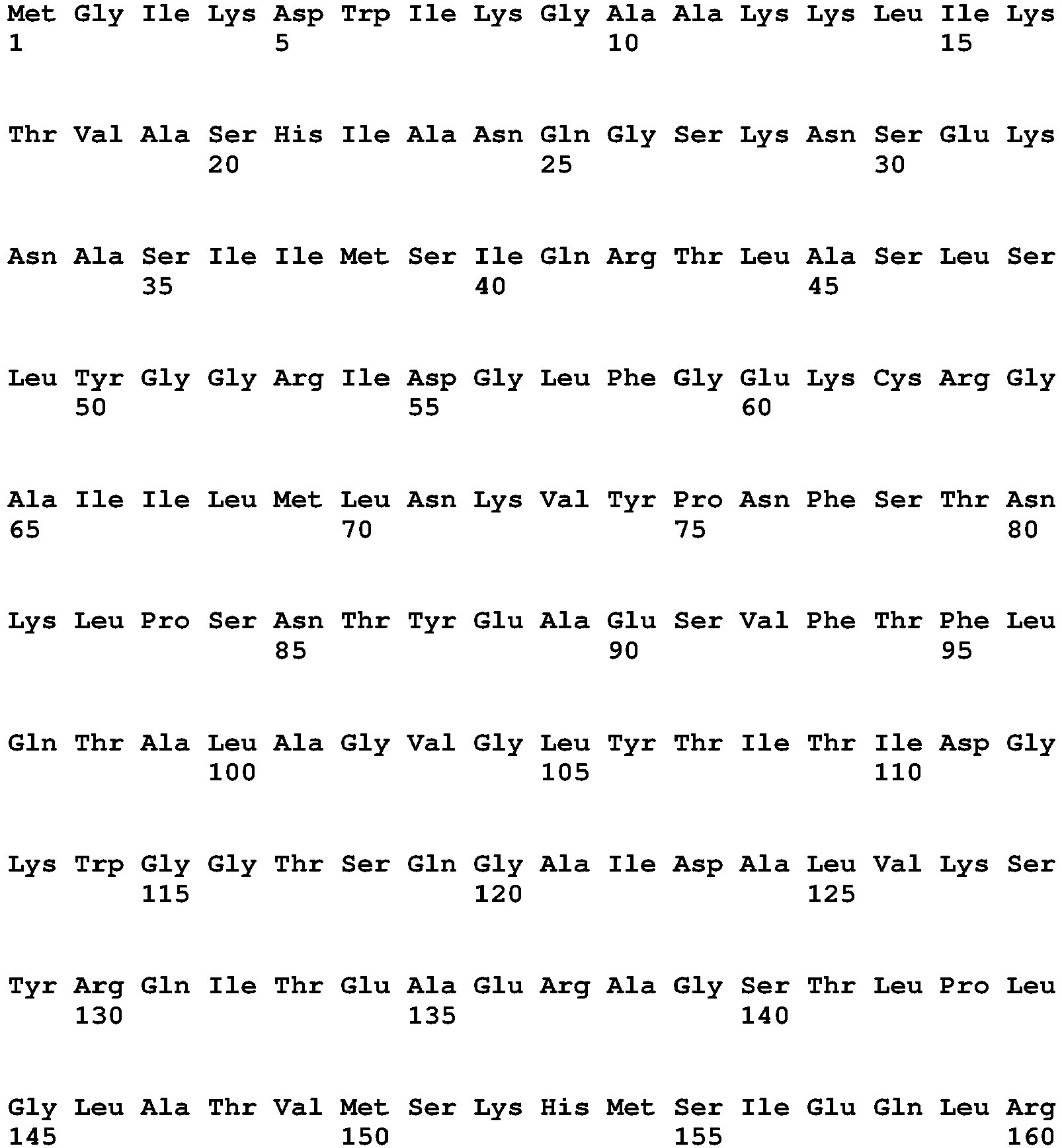

- <210> 55
<211> 362
<212> PRT
<213> unknown - <220>
<223> Ascaphine5-OBPgpLYS with additional His-tag - <400> 55


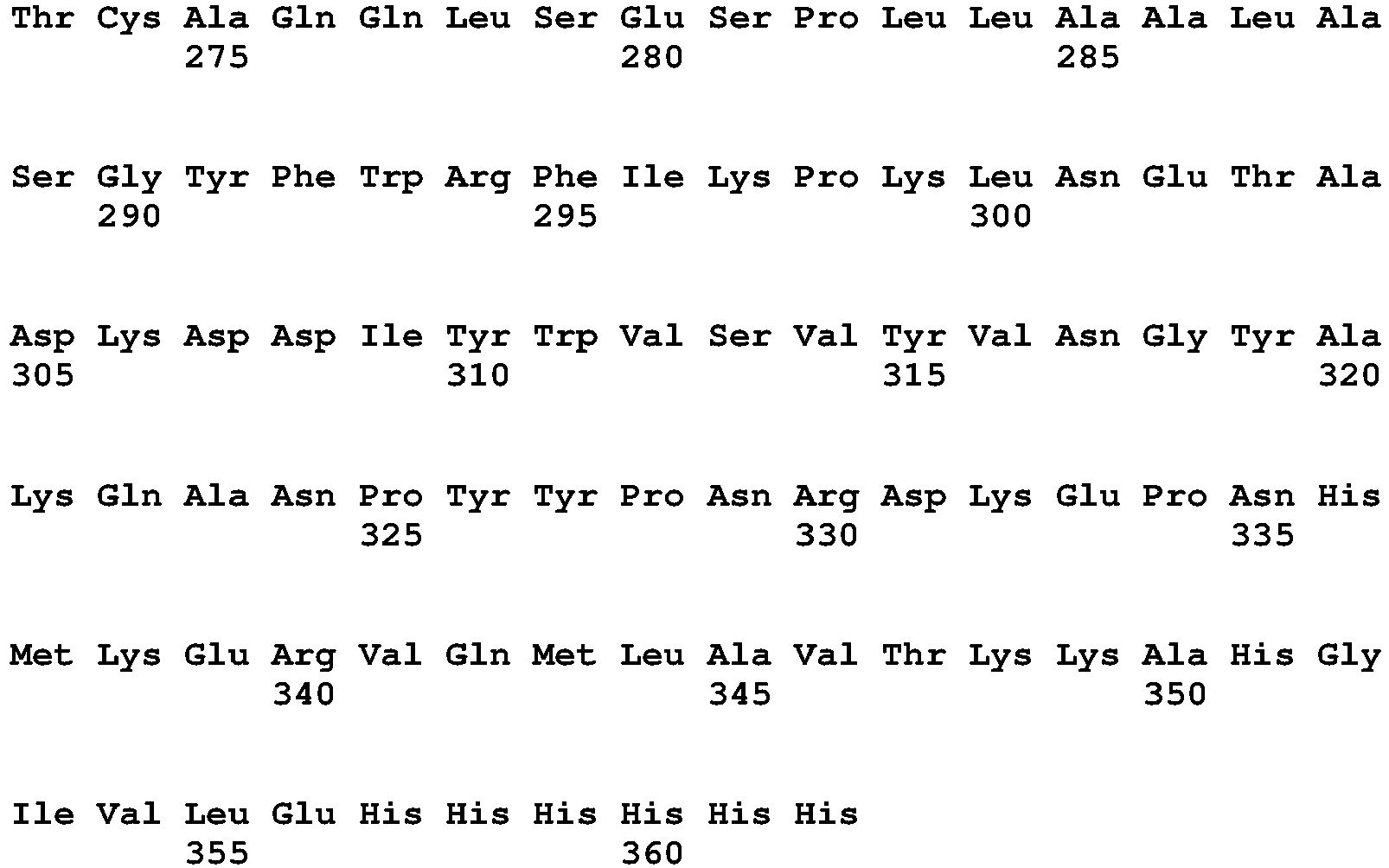
- <210> 56
<211> 347
<212> PRT
<213> unknown - <220>
<223> Apidaecine-OBPgpLYS - <400> 56


- <210> 57
<211> 355
<212> PRT
<213> unknown - <220>
<223> Apidaecine-OBPgpLYS with additional His-tag - <400> 57


- <210> 58
<211> 352
<212> PRT
<213> unknown - <220>
<223> Nigrocine 2-OBPgpLYS - <400> 58


- <210> 59
<211> 360
<212> PRT
<213> unknown - <220>
<223> Nigrocine 2-OBPgpLYS with additional His-tag - <400> 59


- <210> 60
<211> 354
<212> PRT
<213> unknown - <220>
<223> Pseudin 1-OBPgpLYS - <400> 60


- <210> 61
<211> 362
<212> PRT
<213> unknown - <220>
<223> Pseudin 1-OBPgpLYS with additional His-tag - <400> 61


- <210> 62
<211> 369
<212> PRT
<213> unknown - <220>
<223> Sarcotoxin IA-OBPgpLYS - <400> 62


- <210> 63
<211> 377
<212> PRT
<213> unknown - <220>
<223> Sarcotoxin IA-OBPgpLYS with additional His-tag - <400> 63


- <210> 64
<211> 359
<212> PRT
<213> unknown - <220>
<223> Sarcotoxin IA-OBPgpLYS - <400> 64


- <210> 65
<211> 367
<212> PRT
<213> unknown - <220>
<223> Sarcotoxin IA-OBPgpLYS with additional His-tag - <400> 65


- <210> 66
<211> 366
<212> PRT
<213> unknown - <220>
<223> Cecropin A (A.aegypti)-OBPgpLYS - <400> 66


- <210> 67
<211> 374
<212> PRT
<213> unknown - <220>
<223> Cecropin A (A.aegypti)-OBPgpLYS with additional His-tag - <400> 67


- <210> 68
<211> 13
<212> PRT
<213> unknown - <220>
<223> antimicrobial peptide Alpha 4 - <400> 68

- <210> 69
<211> 327
<212> PRT
<213> unknown - <220>
<223> OBPgpLYS fragment - <400> 69


- <210> 70
<211> 18
<212> PRT
<213> unknown - <220>
<223> antimicropial peptide Artilysin1 - <400> 70

- <210> 71
<211> 25
<212> PRT
<213> unknown - <220>
<223> antimicrobial peptide Artilysin2 - <400> 71

- <210> 72
<211> 19
<212> PRT
<213> unknown - <220>
<223>antimicrobial peptide Parasin 1 - <400> 72

- <210> 73
<211> 25
<212> PRT
<213> unknown - <220>
<223> antimicrobial peptide Lycotoxin - <400> 73


- <210> 74
<211> 346
<212> PRT
<213> unknown - <220>
<223> Alpha4-OBPgpLYS - <400> 74


- <210> 75
<211> 354
<212> PRT
<213> unknown - <220>
<223> Alpha4-OBPgpLYS with additional His-tag - <400> 75


- <210> 76
<211> 338
<212> PRT
<213> unknown - <220>
<223> Pentapeptide-OBPgpLys - <400> 76


- <210> 77
<211> 346
<212> PRT
<213> unknown - <220>
<223> Pentapeptide-OBPgpLys with additional His-tag - <400> 77

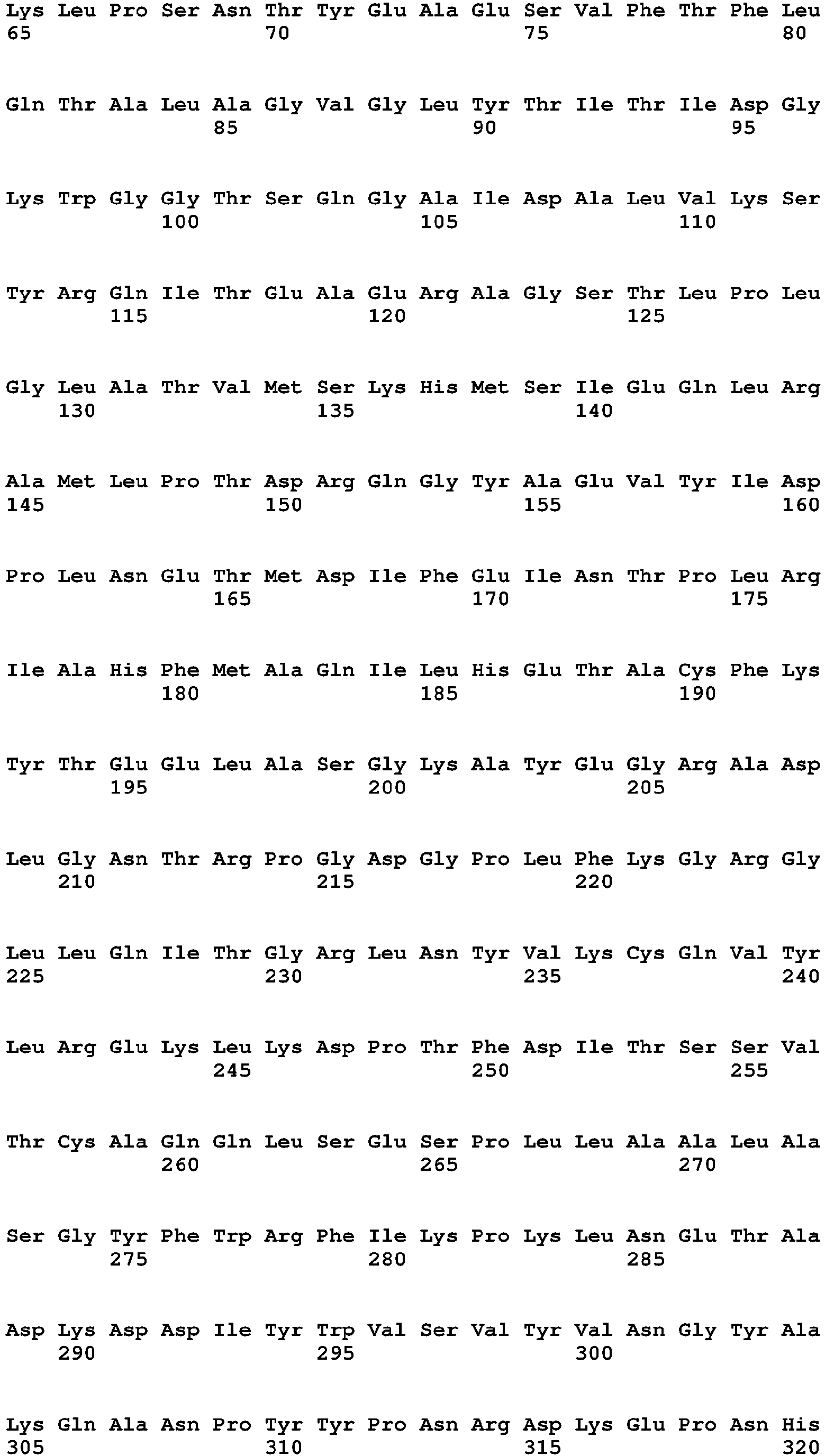

- <210> 78
<211> 351
<212> PRT
<213> unknown - <220>
<223> Artilys1-OBPgpLys - <400> 78


- <210> 79
<211> 359
<212> PRT
<213> unknown - <220>
<223> Artilys1-OBPgpLys with additional His-tag - <400> 79


- <210> 80
<211> 358
<212> PRT
<213> unknown - <220>
<223> Artilys2-OBPgpLYS - <400> 80


- <210> 81
<211> 366
<212> PRT
<213> unknown - <220>
<223> Artilys2-OBPgpLYS with additional His-tag - <400> 81


- <210> 82
<211> 352
<212> PRT
<213> unknown - <220>
<223> Parasin1-OBPgpLys - <400> 82


- <210> 83
<211> 360
<212> PRT
<213> unknown - <220>
<223> Parasin1-OBPgpLys with additional His-tag - <400> 83


- <210> 84
<211> 358
<212> PRT
<213> unknown - <220>
<223> Lycotoxin-OBPgLys - <400> 84


- <210> 85
<211> 366
<212> PRT
<213> unknown - <220>
<223> Lycotoxin-OBPgLys with additional His-tag - <400> 85


- <210> 86
<211> 328
<212> PRT
<213> unknown - <220>
<223> OBPgpLYS - <400> 86


- <210> 87
<211> 327
<212> PRT
<213> unknown - <220>
<223> OBPgpLYS - <400> 87


- <210> 88
<211> 336
<212> PRT
<213> unknown - <220>
<223> OBPgpLYS derivative with His-tag - <400> 88


- <210> 89
<211> 1011
<212> DNA
<213> unknown - <220>
<223> OBPgpLYS derivative with additional His-tag - <400> 89

- <210> 90
<211> 72
<212> DNA
<213> unknown - <220>
<223> antimicrobial peptide ascaphine - <400> 90

- <210> 91
<211> 51
<212> DNA
<213> unknown - <220>
<223> antimicrobial peptide apidaecine - <400> 91
gcgaaccgtc cggtctacat cccaccgcca cgtccaccgc acccacgtct g 51 - <210> 92
<211> 117
<212> DNA
<213> unknown - <220>
<223> antimicrobial peptide Sarcotoxin IA - <400> 92

- <210> 93
<211> 87
<212> DNA
<213> unknown - <220>
<223> antimicrobial peptide SMAP-29 - <400> 93

- <210> 94
<211> 120
<212> DNA
<213> unknown - <220>
<223> antimicrobial peptide Cecropin A (A.aegypti) - <400> 94

- <210> 95
<211> 39
<212> DNA
<213> unknown - <220>
<223> antimicrobial peptide Alpha 4 - <400> 95
ccgaaccgtg caaaacgtgt aatcaccacc ttccgtacc 39 - <210> 96
<211> 15
<212> DNA
<213> unknown - <220>
<223> synthetic peptide - <400> 96
ttcttcgtag caccg 15 - <210> 97
<211> 54
<212> DNA
<213> unknown - <220>
<223> antimicropial peptide Artilysin1 - <400> 97
ggcttcttca tcccggcagt aatcctgccc tccatcgcat tcctgatcgt accg 54 - <210> 98
<211> 75
<212> DNA
<213> unknown - <220>
<223> antimicropial peptide Artilysin2 - <400> 98

- <210> 99
<211> 57
<212> DNA
<213> unknown - <220>
<223>antimicrobial peptide Parasin 1 - <400> 99
aaaggccgtg gcaagcaggg aggcaaagta cgtgcaaaag caaagacccg ttcctca 57 - <210> 100
<211> 75
<212> DNA
<213> unknown - <220>
<223> antimicrobial peptide Lycotoxin - <400> 100

- <210> 101
<211> 984
<212> DNA
<213> unknown - <220>
<223> OBPgpLYS - <400> 101


- <210> 102
<211> 33
<212> DNA
<213> Artificial Sequence - <220>
<223> forward primer - <400> 102
ggaatgggga gctcctccaa aaatagcgag aag 33 - <210> 103
<211> 24
<212> DNA
<213> Artificial Sequence - <220>
<223> reverse primer - <400> 103
aactattccg tgtgctttct ttgt 24 - <210> 104
<211> 48
<212> DNA
<213> Artificial Sequence - <220>
<223> extended forward primer - <400> 104
atgggatcct tcttcgtagc accgggctcc tccaaaaata gcgagaag 48 - <210> 105
<211> 39
<212> DNA
<213> Artificial sequence - <220>
<223> forward primer alpha4 - <400> 105
ttggaatggg gagcccgaac cgtgcaaaac gtgtaatca 39 - <210> 106
<211> 42
<212> DNA
<213> Artificial Sequence - <220>
<223> reverse primer alpha4 - <400> 106
tatttttgga ggagccggta cggaaggtgg tgattacacg tt 42 - <210> 107
<211> 39
<212> DNA
<213> Artificial Sequence - <220>
<223> forward primer artilys1 - <400> 107
ttatgggctt cttcatcccg gcagtaatcc tgccctcca 39 - <210> 108
<211> 53
<212> DNA
<213> Artificial Sequence - <220>
<223> reverse primer artilys1 - <400> 108
tatttttgga tctgccgccc ggtacgatca ggaatgcgat ggagggcagg att 53 - <210> 109
<211> 47
<212> DNA
<213> Artificial Sequence - <220>
<223> forward primer artilys2 - <400> 109
ttatgggcaa accgggctgg ctgatcaaaa ggcactggta ttcaaga 47 - <210> 110
<211> 64
<212> DNA
<213> Artificial Sequence - <220>
<223> revers primer artilys2 - <400> 110

- <210> 111
<211> 48
<212> DNA
<213> Artificial Sequence - <220>
<223> forward primer Parasin1 - <400> 111
ttggaatggg gagcaaaggc cgtggcaagc agggaggcaa agtacgtg 48 - <210> 112
<211> 51
<212> DNA
<213> Artificial Sequence - <220>
<223> reverse primer Parasin1 - <400> 112
tatttttgga ggagcctgag gaacgggtct ttgcttttgc acgtactttg c 51 - <210> 113
<211> 55
<212> DNA
<213> Artificial Sequence - <220>
<223> forward primer Lycotoxin - <400> 113
ggaatgggga gcatctggct gaccgcactg aaattcctcg gcaaacacgc cgcaa 55 - <210> 114
<211> 60
<212> DNA
<213> Artificial Sequence - <220>
<223> reverse primer Lycotoxin - <400> 114
tatttttgga ggagcccagt ttggataatt gctgttttgc cagtttcttt gcggcgtgtt 60 - <210> 115
<211> 339
<212> PRT
<213> unknown - <220>
<223> PKOBPgpLYS derivative - <400> 115


- <210> 116
<211> 347
<212> PRT
<213> unknown - <220>
<223> PKOBPgpLYS derivative with additional His-tag - <400> 116


- <210> 117
<211> 18
<212> PRT
<213> unknown - <220>
<223> antimicrobial peptide Ranalexin - <400> 117

- <210> 118
<211> 27
<212> PRT
<213> unknown - <220>
<223> peptide stretch WLBU2 variant - <400> 118

- <210> 119
<211> 26
<212> PRT
<213> unknown - <220>
<223> antimicrobial peptide Melittin - <400> 119

Claims (15)
- A polypeptide comprising an amino acid sequence according to SEQ ID NO: 1, a fragment thereof, or a derivative of SEQ ID NO: 1 or said fragment, wherein the fragment comprises an amino acid sequence according to SEQ ID NO: 4, 5, 69 or 4 and 5, and wherein the derivative has one deletion, addition, insertion and/or substitution in the amino acid sequence according to SEQ ID NO: 1, 4, 5 and/or 69, wherein said deletion is a deletion of 1, 2, 3, 4, or 5 amino acid residues and wherein said substitution is an exchange of an amino acid residue located at a certain position for a different one, and wherein said derivative exhibits the lytic activity of OBPgpLYS (SEQ ID NO: 1) and/or the activity of said fragment.
- The polypeptide according to claim 1, wherein the derivative comprises an amino acid sequence according to SEQ ID NO: 86 or 87.
- The polypeptide according to any one of the preceding claims comprising additionally a tag, preferably a His6-tag.
- The polypeptide according to claim 3, wherein said polypeptide comprises an amino acid sequence according to SEQ ID NO: 47 or 88.
- A fusion protein comprising a polypeptide according to any one of the preceding claims and a peptide stretch fused to said polypeptide at the N- or C-terminus, wherein said peptide stretch is a cationic peptide, polycationic peptide, amphipatic peptide, sushi peptide, defensin, hydrophobic peptide and/or an antimicrobial peptide.
- The fusion protein according to claim 5, wherein said peptide stretch comprises 5 to 100 amino acid residues.
- The fusion protein according to claim 5, wherein the peptide stretch comprises an amino acid sequence according to SEQ ID NO: 6-39, 50-53, 68, 70-73 or 117-119 or wherein said fusion protein comprises an amino acid sequence according to SEQ ID NO: 43, 49, 54-67, 74-85 or 115-116.
- An isolated nucleic acid molecule encoding a polypeptide according to any one of claims 1 to 6 or a fusion protein according to any one of claims 5 to 7.
- A vector comprising the nucleic acid molecule according to claim 8.
- A host cell comprising the nucleic acid molecule according to claim 8 or the vector according to claim 9.
- The polypeptide according to any one of claims 1 to 4 or the fusion protein according to any one of claims 5 to 7 for use as human medical, veterinary medical or diagnostic substance.
- Use of the polypeptide according to any one of claims 1 to 4 or the fusion protein according to any one of claims 5 to 7 as an antimicrobial in food or in cosmetics, as disinfecting agent or in the environmental field.
- The polypeptide according to any one of claims 1 to 4 or the fusion protein according to any one of claims 5 to 7 for use as a medicament for treatment or prevention of Gram-negative bacterial infections.
- Use of the polypeptide according to any one of claims 1 to 4 or the fusion protein according to any one of claims 5 to 7 for the treatment or prevention of Gram-negative bacterial contamination of foodstuff, of food processing equipment, of food processing plants, of surfaces coming into contact with foodstuff, of medical devices, of surfaces in hospitals and surgeries.
- Pharmaceutical composition comprising the polypeptide according to any one of claims 1 to 4 or the fusion protein according to any one of claims 5 to 7.
Priority Applications (1)
| Application Number | Priority Date | Filing Date | Title |
|---|---|---|---|
| EP10745248.4A EP2470648B1 (en) | 2009-08-24 | 2010-08-24 | New endolysin obpgplys |
Applications Claiming Priority (3)
| Application Number | Priority Date | Filing Date | Title |
|---|---|---|---|
| EP09168527 | 2009-08-24 | ||
| PCT/EP2010/062351 WO2011023702A1 (en) | 2009-08-24 | 2010-08-24 | New endolysin obpgplys |
| EP10745248.4A EP2470648B1 (en) | 2009-08-24 | 2010-08-24 | New endolysin obpgplys |
Publications (2)
| Publication Number | Publication Date |
|---|---|
| EP2470648A1 EP2470648A1 (en) | 2012-07-04 |
| EP2470648B1 true EP2470648B1 (en) | 2019-04-10 |
Family
ID=42988347
Family Applications (1)
| Application Number | Title | Priority Date | Filing Date |
|---|---|---|---|
| EP10745248.4A Active EP2470648B1 (en) | 2009-08-24 | 2010-08-24 | New endolysin obpgplys |
Country Status (12)
| Country | Link |
|---|---|
| US (3) | US8846865B2 (en) |
| EP (1) | EP2470648B1 (en) |
| JP (1) | JP5847081B2 (en) |
| KR (1) | KR20120059576A (en) |
| CN (1) | CN102575240B (en) |
| AU (1) | AU2010288559B8 (en) |
| CA (1) | CA2772001A1 (en) |
| EA (1) | EA024253B1 (en) |
| IL (1) | IL218296A0 (en) |
| MX (1) | MX2012002216A (en) |
| SG (1) | SG178440A1 (en) |
| WO (1) | WO2011023702A1 (en) |
Families Citing this family (51)
| Publication number | Priority date | Publication date | Assignee | Title |
|---|---|---|---|---|
| GB0815484D0 (en) | 2008-08-26 | 2008-10-01 | Univ Leuven Kath | Antibacterial agents |
| KR101701890B1 (en) | 2009-06-26 | 2017-02-02 | 뤼산도 아게 | Antimicrobial agents |
| DK2445515T3 (en) | 2009-06-26 | 2016-07-04 | Univ Leuven Kath | antimicrobial agents |
| EP2638058B1 (en) * | 2010-11-12 | 2017-01-11 | Merck Sharp & Dohme Corp. | Enolase peptide conjugate vaccines against staphylococcus aureus |
| EP2468856A1 (en) * | 2010-12-23 | 2012-06-27 | Lysando Aktiengesellschaft | Antimicrobial Agents |
| EP2702070B1 (en) * | 2011-04-27 | 2015-09-30 | Lysando AG | New antimicrobial agents |
| WO2015070911A1 (en) * | 2013-11-14 | 2015-05-21 | Lysando Ag | Modified kz144 endolysin sequence |
| WO2015121443A1 (en) | 2014-02-14 | 2015-08-20 | Lysando Ag | Antimicrobial agents |
| WO2015155244A1 (en) * | 2014-04-08 | 2015-10-15 | Lysando Ag | Pharmaceutical composition against chronic bacterial infections |
| US10590403B2 (en) | 2014-06-26 | 2020-03-17 | The Rockefeller University | Acinetobacter lysins |
| EP3268023B1 (en) | 2015-03-12 | 2021-08-18 | Micreos Human Health B.V. | Combination of bactericidal agent with a lysosomotropic alkalinising agent for the treatment of a bacterial infection |
| CN105062992B (en) * | 2015-07-20 | 2018-05-11 | 昆明理工大学 | A kind of endolysin and the polynucleotides for encoding this endolysin |
| NO3144387T3 (en) * | 2015-09-15 | 2018-08-11 | ||
| EP3349780B1 (en) | 2015-09-17 | 2022-11-09 | Contrafect Corporation | Lysin polypeptides active against gram-negative bacteria |
| WO2017127567A1 (en) * | 2016-01-19 | 2017-07-27 | Genebiologics, Llc | Production of arginine-rich proteins and use as a fertilizer and germination enhancer |
| WO2018100408A1 (en) | 2016-11-30 | 2018-06-07 | Sasinapas Co.,Ltd. | Modified peptides |
| JP7033596B2 (en) * | 2016-12-16 | 2022-03-10 | ウニベルシダージ ド ミーニョ | New end ricin |
| CN107828769B (en) * | 2017-09-28 | 2021-03-02 | 昆明理工大学 | A thermostable lyase MMPpgh and a polynucleotide encoding the enzyme |
| BR112020019484A2 (en) | 2018-03-29 | 2021-01-12 | Contrafect Corporation | POLYPEPTIDE LYSINE-ANTIMICROBIAL PEPTIDE (AMP) CONSTRUCTS, LYSINS, ISOLATED POLYNUCLEOTIDES CODING THE SAME AND THEIR USES |
| US10988520B2 (en) | 2018-03-29 | 2021-04-27 | Contrafect Corporation | Lysin-antimicrobial peptide (AMP) polypeptide constructs, lysins, isolated polynucleotides encoding same and uses thereof |
| WO2019222502A1 (en) * | 2018-05-17 | 2019-11-21 | University Of Maryland, College Park | Endolysins active against bacellus bacteria, pharmaceutical, and methods relating thereto |
| WO2019226949A1 (en) * | 2018-05-23 | 2019-11-28 | The Rockefeller University | Recombinant lysins |
| WO2019229184A1 (en) * | 2018-05-30 | 2019-12-05 | Lysando Ag | Novel antimicrobial fusion proteins |
| EP3802814A1 (en) | 2018-05-30 | 2021-04-14 | Lysando AG | Novel antimicrobial proteins |
| CN111378638B (en) * | 2018-12-29 | 2023-05-05 | 江苏万邦医药科技有限公司 | Helicobacter pylori phage lyase and preparation method thereof |
| RU2730615C1 (en) * | 2019-05-08 | 2020-08-24 | федеральное государственное бюджетное учреждение «Национальный исследовательский центр эпидемиологии и микробиологии имени почетного академика Н.Ф. Гамалеи» Министерства здравоохранения Российской Федерации | Antibacterial composition (embodiments) and use of protein as antimicrobial agent directed against gram-negative bacteria: pseudomonas aeruginosa, acinetobacter baumannii, klebsiella pneumoniae and salmonella typhi (embodiments) |
| AU2020268752B2 (en) * | 2019-05-08 | 2025-12-18 | BioNTech SE | Novel gardnerella endolysins and uses thereof |
| RU2730616C1 (en) * | 2019-05-08 | 2020-08-24 | федеральное государственное бюджетное учреждение "Национальный исследовательский центр эпидемиологии и микробиологии имени почетного академика Н.Ф. Гамалеи" Министерства здравоохранения Российской Федерации | Antibacterial composition (embodiments) and use of protein as an antimicrobial agent directed against acinetobacter baumannii bacteria, (embodiments) |
| RU2730614C1 (en) * | 2019-05-08 | 2020-08-24 | федеральное государственное бюджетное учреждение «Национальный исследовательский центр эпидемиологии и микробиологии имени почетного академика Н.Ф. Гамалеи» Министерства здравоохранения Российской Федерации | Antibacterial composition (embodiments) and use of protein as antimicrobial agent directed against bacteria pseudomonas aeruginosa, klebsiella pneumoniae, escherichia coli, salmonella typhi and staphylococcus haemolyticus (embodiments) |
| RU2730613C1 (en) * | 2019-05-08 | 2020-08-24 | федеральное государственное бюджетное учреждение «Национальный исследовательский центр эпидемиологии и микробиологии имени почетного академика Н.Ф. Гамалеи» Министерства здравоохранения Российской Федерации | Antibacterial composition (embodiments) and use of protein as antimicrobial agent directed against bacteria pseudomonas aeruginosa, klebsiella pneumoniae, escherichia coli, salmonella typhi and staphylococcus haemolyticus (embodiments) |
| US11667895B2 (en) | 2019-05-10 | 2023-06-06 | The Board Of Trustees Of The University Of Alabama | Methods and devices related to controlled delivery of phages as a theranostic tool |
| CN115605587B (en) | 2020-03-11 | 2026-02-13 | 特卢姆治疗有限公司 | Novel recombinant lysin and its use in the treatment of Gram-negative bacterial infections |
| JP2023518377A (en) | 2020-03-19 | 2023-05-01 | マイクレオス ヒューマン ヘルス ビー.ブイ. | Stabilized protein of interest |
| WO2024241070A1 (en) | 2023-05-22 | 2024-11-28 | L'oreal | Cosmetic composition comprising an endolysin and a polyvinyl alcohol |
| FR3149203B1 (en) | 2023-06-02 | 2026-03-13 | Oreal | Anhydrous composition comprising an endolysine and hydroxypropylmethylcellulose and/or pullulan |
| FR3149202B1 (en) | 2023-06-02 | 2026-04-10 | Oreal | Cosmetic composition comprising an endolysin derived from Staphylococcus aureus phage and an oil. |
| EP4719330A1 (en) | 2023-06-02 | 2026-04-08 | L'oreal | Cosmetic composition comprising an endolysin derived from a staphylococcus aureus phage and an aromatic alcohol |
| FR3152395A1 (en) | 2023-08-28 | 2025-03-07 | L'oreal | Cosmetic composition comprising an endolysin derived from Staphylococcus aureus phage and 4-hydroxyacetophenone |
| FR3149205B1 (en) | 2023-06-02 | 2026-04-24 | Oreal | Cosmetic composition comprising an endolysine and an organic bulking agent |
| FR3149208B1 (en) | 2023-06-02 | 2026-03-20 | Oreal | Cosmetic composition, particularly aqueous, comprising an endolysin and a pullulan |
| FR3149204B1 (en) | 2023-06-02 | 2026-02-13 | Oreal | Cosmetic composition comprising an endolysin and a non-ionic surfactant comprising a carbohydrate residue |
| FR3149209B1 (en) | 2023-06-02 | 2026-04-03 | Oreal | Cosmetic composition comprising an endolysin derived from Staphylococcus aureus phage and an aromatic alcohol |
| FR3149206B1 (en) | 2023-06-02 | 2026-03-13 | Oreal | Aqueous cosmetic composition comprising endolysine and trehalose |
| FR3149207B1 (en) | 2023-06-02 | 2026-03-13 | Oreal | Cosmetic composition comprising an endolysine and a compound of formula (I) |
| FR3152393B1 (en) | 2023-08-28 | 2026-04-24 | Oreal | Cosmetic composition comprising an endolysin derived from a Staphylococcus aureus phage and a mineral filler |
| FR3152394B1 (en) | 2023-08-28 | 2026-04-24 | Oreal | Cosmetic composition comprising an endolysin and hydrophobic silica aerogel particles |
| FR3152396A1 (en) | 2023-08-28 | 2025-03-07 | L'oreal | Cosmetic composition comprising an endolysin derived from Staphylococcus aureus phage and a polyhydroxyalkane |
| WO2025093666A1 (en) | 2023-11-01 | 2025-05-08 | University Of Copenhagen | Treatment of lymphoma |
| CN117534733B (en) * | 2024-01-10 | 2024-03-29 | 黑龙江八一农垦大学 | Antimicrobial peptide CM24, recombinant genes, lactic acid engineering bacteria and their applications |
| CN118240803B (en) * | 2024-05-23 | 2024-08-13 | 中国农业科学院生物技术研究所 | Lysozyme from bovine rumen and application thereof |
| WO2026052743A1 (en) | 2024-09-04 | 2026-03-12 | Micreos Human Health B.V. | Reduction of trans-epidermal water loss by a polypeptide with antibacterial properties |
Family Cites Families (8)
| Publication number | Priority date | Publication date | Assignee | Title |
|---|---|---|---|---|
| GB8816693D0 (en) | 1988-07-13 | 1988-08-17 | Agricultural & Food Res | Viral enzyme & gene |
| GB2255561B (en) * | 1991-04-20 | 1995-06-21 | Agricultural & Food Res | Lysins from bacteriophages |
| US7572602B1 (en) * | 2004-12-03 | 2009-08-11 | The United States Of America As Represented By The Secretary Of Agriculture | Nucleic acid encoding endolysin fusion protein |
| GB0815484D0 (en) * | 2008-08-26 | 2008-10-01 | Univ Leuven Kath | Antibacterial agents |
| US8383102B2 (en) * | 2009-05-21 | 2013-02-26 | The United States Of America As Represented By The Secretary Of Agriculture | Fusion of peptidoglycan hydrolase enzymes to a protein transduction domain allows eradication of both extracellular and intracellular gram positive pathogens |
| DK2445515T3 (en) | 2009-06-26 | 2016-07-04 | Univ Leuven Kath | antimicrobial agents |
| KR101701890B1 (en) | 2009-06-26 | 2017-02-02 | 뤼산도 아게 | Antimicrobial agents |
| US9534223B2 (en) * | 2010-04-27 | 2017-01-03 | Lysando Ag | Method of reducing biofilms |
-
2010
- 2010-08-24 MX MX2012002216A patent/MX2012002216A/en active IP Right Grant
- 2010-08-24 AU AU2010288559A patent/AU2010288559B8/en not_active Ceased
- 2010-08-24 EA EA201270322A patent/EA024253B1/en not_active IP Right Cessation
- 2010-08-24 SG SG2012010666A patent/SG178440A1/en unknown
- 2010-08-24 KR KR1020127007434A patent/KR20120059576A/en not_active Ceased
- 2010-08-24 JP JP2012526040A patent/JP5847081B2/en not_active Expired - Fee Related
- 2010-08-24 EP EP10745248.4A patent/EP2470648B1/en active Active
- 2010-08-24 CN CN201080048012.1A patent/CN102575240B/en active Active
- 2010-08-24 US US13/390,033 patent/US8846865B2/en active Active
- 2010-08-24 CA CA2772001A patent/CA2772001A1/en not_active Abandoned
- 2010-08-24 WO PCT/EP2010/062351 patent/WO2011023702A1/en not_active Ceased
-
2012
- 2012-02-23 IL IL218296A patent/IL218296A0/en unknown
-
2014
- 2014-09-03 US US14/475,900 patent/US9169472B2/en active Active
-
2015
- 2015-10-01 US US14/872,760 patent/US20160010071A1/en not_active Abandoned
Non-Patent Citations (1)
| Title |
|---|
| None * |
Also Published As
| Publication number | Publication date |
|---|---|
| EA024253B1 (en) | 2016-08-31 |
| IL218296A0 (en) | 2012-04-30 |
| CA2772001A1 (en) | 2011-03-03 |
| AU2010288559B2 (en) | 2015-08-06 |
| CN102575240B (en) | 2016-01-13 |
| JP5847081B2 (en) | 2016-01-20 |
| MX2012002216A (en) | 2012-04-10 |
| US20150024469A1 (en) | 2015-01-22 |
| AU2010288559A1 (en) | 2012-02-16 |
| CN102575240A (en) | 2012-07-11 |
| EA201270322A1 (en) | 2012-08-30 |
| US9169472B2 (en) | 2015-10-27 |
| JP2013502231A (en) | 2013-01-24 |
| KR20120059576A (en) | 2012-06-08 |
| US20120189608A1 (en) | 2012-07-26 |
| WO2011023702A1 (en) | 2011-03-03 |
| AU2010288559A8 (en) | 2015-08-13 |
| AU2010288559B8 (en) | 2015-08-13 |
| US20160010071A1 (en) | 2016-01-14 |
| EP2470648A1 (en) | 2012-07-04 |
| SG178440A1 (en) | 2012-04-27 |
| US8846865B2 (en) | 2014-09-30 |
Similar Documents
| Publication | Publication Date | Title |
|---|---|---|
| AU2010288559B8 (en) | New endolysin OBPgpLYS | |
| AU2018201931B2 (en) | Antimicrobial Agents | |
| EP2655610B1 (en) | Antimicrobial agents | |
| EP2702070B1 (en) | New antimicrobial agents | |
| EP2635676B1 (en) | Novel endolysin | |
| HK1172056A (en) | New endolysin obpgplys | |
| HK1172056B (en) | New endolysin obpgplys | |
| HK1169311B (en) | Antimicrobial agents | |
| HK1224571A1 (en) | Antimicrobial agents | |
| HK1224571A (en) | Antimicrobial agents | |
| HK1190430A (en) | Antimicrobial agents | |
| HK1190430B (en) | Antimicrobial agents | |
| HK1224571B (en) | Antimicrobial agents |
Legal Events
| Date | Code | Title | Description |
|---|---|---|---|
| PUAI | Public reference made under article 153(3) epc to a published international application that has entered the european phase |
Free format text: ORIGINAL CODE: 0009012 |
|
| 17P | Request for examination filed |
Effective date: 20120319 |
|
| AK | Designated contracting states |
Kind code of ref document: A1 Designated state(s): AL AT BE BG CH CY CZ DE DK EE ES FI FR GB GR HR HU IE IS IT LI LT LU LV MC MK MT NL NO PL PT RO SE SI SK SM TR |
|
| DAX | Request for extension of the european patent (deleted) | ||
| REG | Reference to a national code |
Ref country code: HK Ref legal event code: DE Ref document number: 1172056 Country of ref document: HK |
|
| RAP1 | Party data changed (applicant data changed or rights of an application transferred) |
Owner name: LYSANDO AKTIENGESELLSCHAFT Owner name: KATHOLIEKE UNIVERSITEIT LEUVEN, K.U. LEUVEN R&D |
|
| 17Q | First examination report despatched |
Effective date: 20160629 |
|
| STAA | Information on the status of an ep patent application or granted ep patent |
Free format text: STATUS: EXAMINATION IS IN PROGRESS |
|
| GRAP | Despatch of communication of intention to grant a patent |
Free format text: ORIGINAL CODE: EPIDOSNIGR1 |
|
| STAA | Information on the status of an ep patent application or granted ep patent |
Free format text: STATUS: GRANT OF PATENT IS INTENDED |
|
| INTG | Intention to grant announced |
Effective date: 20181102 |
|
| GRAS | Grant fee paid |
Free format text: ORIGINAL CODE: EPIDOSNIGR3 |
|
| GRAA | (expected) grant |
Free format text: ORIGINAL CODE: 0009210 |
|
| STAA | Information on the status of an ep patent application or granted ep patent |
Free format text: STATUS: THE PATENT HAS BEEN GRANTED |
|
| AK | Designated contracting states |
Kind code of ref document: B1 Designated state(s): AL AT BE BG CH CY CZ DE DK EE ES FI FR GB GR HR HU IE IS IT LI LT LU LV MC MK MT NL NO PL PT RO SE SI SK SM TR |
|
| REG | Reference to a national code |
Ref country code: GB Ref legal event code: FG4D |
|
| REG | Reference to a national code |
Ref country code: AT Ref legal event code: REF Ref document number: 1118664 Country of ref document: AT Kind code of ref document: T Effective date: 20190415 Ref country code: CH Ref legal event code: EP |
|
| REG | Reference to a national code |
Ref country code: DE Ref legal event code: R096 Ref document number: 602010058157 Country of ref document: DE |
|
| REG | Reference to a national code |
Ref country code: IE Ref legal event code: FG4D |
|
| REG | Reference to a national code |
Ref country code: CH Ref legal event code: NV Representative=s name: VALIPAT S.A. C/O BOVARD SA NEUCHATEL, CH |
|
| REG | Reference to a national code |
Ref country code: NL Ref legal event code: FP |
|
| REG | Reference to a national code |
Ref country code: LT Ref legal event code: MG4D |
|
| REG | Reference to a national code |
Ref country code: AT Ref legal event code: MK05 Ref document number: 1118664 Country of ref document: AT Kind code of ref document: T Effective date: 20190410 |
|
| PG25 | Lapsed in a contracting state [announced via postgrant information from national office to epo] |
Ref country code: SE Free format text: LAPSE BECAUSE OF FAILURE TO SUBMIT A TRANSLATION OF THE DESCRIPTION OR TO PAY THE FEE WITHIN THE PRESCRIBED TIME-LIMIT Effective date: 20190410 Ref country code: AL Free format text: LAPSE BECAUSE OF FAILURE TO SUBMIT A TRANSLATION OF THE DESCRIPTION OR TO PAY THE FEE WITHIN THE PRESCRIBED TIME-LIMIT Effective date: 20190410 Ref country code: NO Free format text: LAPSE BECAUSE OF FAILURE TO SUBMIT A TRANSLATION OF THE DESCRIPTION OR TO PAY THE FEE WITHIN THE PRESCRIBED TIME-LIMIT Effective date: 20190710 Ref country code: PT Free format text: LAPSE BECAUSE OF FAILURE TO SUBMIT A TRANSLATION OF THE DESCRIPTION OR TO PAY THE FEE WITHIN THE PRESCRIBED TIME-LIMIT Effective date: 20190910 Ref country code: FI Free format text: LAPSE BECAUSE OF FAILURE TO SUBMIT A TRANSLATION OF THE DESCRIPTION OR TO PAY THE FEE WITHIN THE PRESCRIBED TIME-LIMIT Effective date: 20190410 Ref country code: LT Free format text: LAPSE BECAUSE OF FAILURE TO SUBMIT A TRANSLATION OF THE DESCRIPTION OR TO PAY THE FEE WITHIN THE PRESCRIBED TIME-LIMIT Effective date: 20190410 Ref country code: HR Free format text: LAPSE BECAUSE OF FAILURE TO SUBMIT A TRANSLATION OF THE DESCRIPTION OR TO PAY THE FEE WITHIN THE PRESCRIBED TIME-LIMIT Effective date: 20190410 Ref country code: ES Free format text: LAPSE BECAUSE OF FAILURE TO SUBMIT A TRANSLATION OF THE DESCRIPTION OR TO PAY THE FEE WITHIN THE PRESCRIBED TIME-LIMIT Effective date: 20190410 |
|
| PG25 | Lapsed in a contracting state [announced via postgrant information from national office to epo] |
Ref country code: BG Free format text: LAPSE BECAUSE OF FAILURE TO SUBMIT A TRANSLATION OF THE DESCRIPTION OR TO PAY THE FEE WITHIN THE PRESCRIBED TIME-LIMIT Effective date: 20190710 Ref country code: PL Free format text: LAPSE BECAUSE OF FAILURE TO SUBMIT A TRANSLATION OF THE DESCRIPTION OR TO PAY THE FEE WITHIN THE PRESCRIBED TIME-LIMIT Effective date: 20190410 Ref country code: LV Free format text: LAPSE BECAUSE OF FAILURE TO SUBMIT A TRANSLATION OF THE DESCRIPTION OR TO PAY THE FEE WITHIN THE PRESCRIBED TIME-LIMIT Effective date: 20190410 Ref country code: GR Free format text: LAPSE BECAUSE OF FAILURE TO SUBMIT A TRANSLATION OF THE DESCRIPTION OR TO PAY THE FEE WITHIN THE PRESCRIBED TIME-LIMIT Effective date: 20190711 |
|
| PG25 | Lapsed in a contracting state [announced via postgrant information from national office to epo] |
Ref country code: IS Free format text: LAPSE BECAUSE OF FAILURE TO SUBMIT A TRANSLATION OF THE DESCRIPTION OR TO PAY THE FEE WITHIN THE PRESCRIBED TIME-LIMIT Effective date: 20190810 Ref country code: AT Free format text: LAPSE BECAUSE OF FAILURE TO SUBMIT A TRANSLATION OF THE DESCRIPTION OR TO PAY THE FEE WITHIN THE PRESCRIBED TIME-LIMIT Effective date: 20190410 |
|
| REG | Reference to a national code |
Ref country code: DE Ref legal event code: R097 Ref document number: 602010058157 Country of ref document: DE |
|
| PG25 | Lapsed in a contracting state [announced via postgrant information from national office to epo] |
Ref country code: SK Free format text: LAPSE BECAUSE OF FAILURE TO SUBMIT A TRANSLATION OF THE DESCRIPTION OR TO PAY THE FEE WITHIN THE PRESCRIBED TIME-LIMIT Effective date: 20190410 Ref country code: RO Free format text: LAPSE BECAUSE OF FAILURE TO SUBMIT A TRANSLATION OF THE DESCRIPTION OR TO PAY THE FEE WITHIN THE PRESCRIBED TIME-LIMIT Effective date: 20190410 Ref country code: CZ Free format text: LAPSE BECAUSE OF FAILURE TO SUBMIT A TRANSLATION OF THE DESCRIPTION OR TO PAY THE FEE WITHIN THE PRESCRIBED TIME-LIMIT Effective date: 20190410 Ref country code: EE Free format text: LAPSE BECAUSE OF FAILURE TO SUBMIT A TRANSLATION OF THE DESCRIPTION OR TO PAY THE FEE WITHIN THE PRESCRIBED TIME-LIMIT Effective date: 20190410 Ref country code: DK Free format text: LAPSE BECAUSE OF FAILURE TO SUBMIT A TRANSLATION OF THE DESCRIPTION OR TO PAY THE FEE WITHIN THE PRESCRIBED TIME-LIMIT Effective date: 20190410 |
|
| PLBE | No opposition filed within time limit |
Free format text: ORIGINAL CODE: 0009261 |
|
| STAA | Information on the status of an ep patent application or granted ep patent |
Free format text: STATUS: NO OPPOSITION FILED WITHIN TIME LIMIT |
|
| PG25 | Lapsed in a contracting state [announced via postgrant information from national office to epo] |
Ref country code: IT Free format text: LAPSE BECAUSE OF FAILURE TO SUBMIT A TRANSLATION OF THE DESCRIPTION OR TO PAY THE FEE WITHIN THE PRESCRIBED TIME-LIMIT Effective date: 20190410 Ref country code: SM Free format text: LAPSE BECAUSE OF FAILURE TO SUBMIT A TRANSLATION OF THE DESCRIPTION OR TO PAY THE FEE WITHIN THE PRESCRIBED TIME-LIMIT Effective date: 20190410 |
|
| 26N | No opposition filed |
Effective date: 20200113 |
|
| PG25 | Lapsed in a contracting state [announced via postgrant information from national office to epo] |
Ref country code: TR Free format text: LAPSE BECAUSE OF FAILURE TO SUBMIT A TRANSLATION OF THE DESCRIPTION OR TO PAY THE FEE WITHIN THE PRESCRIBED TIME-LIMIT Effective date: 20190410 |
|
| PG25 | Lapsed in a contracting state [announced via postgrant information from national office to epo] |
Ref country code: SI Free format text: LAPSE BECAUSE OF FAILURE TO SUBMIT A TRANSLATION OF THE DESCRIPTION OR TO PAY THE FEE WITHIN THE PRESCRIBED TIME-LIMIT Effective date: 20190410 Ref country code: MC Free format text: LAPSE BECAUSE OF FAILURE TO SUBMIT A TRANSLATION OF THE DESCRIPTION OR TO PAY THE FEE WITHIN THE PRESCRIBED TIME-LIMIT Effective date: 20190410 Ref country code: LU Free format text: LAPSE BECAUSE OF NON-PAYMENT OF DUE FEES Effective date: 20190824 |
|
| PG25 | Lapsed in a contracting state [announced via postgrant information from national office to epo] |
Ref country code: IE Free format text: LAPSE BECAUSE OF NON-PAYMENT OF DUE FEES Effective date: 20190824 |
|
| PG25 | Lapsed in a contracting state [announced via postgrant information from national office to epo] |
Ref country code: CY Free format text: LAPSE BECAUSE OF FAILURE TO SUBMIT A TRANSLATION OF THE DESCRIPTION OR TO PAY THE FEE WITHIN THE PRESCRIBED TIME-LIMIT Effective date: 20190410 |
|
| PG25 | Lapsed in a contracting state [announced via postgrant information from national office to epo] |
Ref country code: MT Free format text: LAPSE BECAUSE OF FAILURE TO SUBMIT A TRANSLATION OF THE DESCRIPTION OR TO PAY THE FEE WITHIN THE PRESCRIBED TIME-LIMIT Effective date: 20190410 Ref country code: HU Free format text: LAPSE BECAUSE OF FAILURE TO SUBMIT A TRANSLATION OF THE DESCRIPTION OR TO PAY THE FEE WITHIN THE PRESCRIBED TIME-LIMIT; INVALID AB INITIO Effective date: 20100824 |
|
| PG25 | Lapsed in a contracting state [announced via postgrant information from national office to epo] |
Ref country code: MK Free format text: LAPSE BECAUSE OF FAILURE TO SUBMIT A TRANSLATION OF THE DESCRIPTION OR TO PAY THE FEE WITHIN THE PRESCRIBED TIME-LIMIT Effective date: 20190410 |
|
| P01 | Opt-out of the competence of the unified patent court (upc) registered |
Effective date: 20230526 |
|
| PGFP | Annual fee paid to national office [announced via postgrant information from national office to epo] |
Ref country code: NL Payment date: 20240821 Year of fee payment: 15 |
|
| PGFP | Annual fee paid to national office [announced via postgrant information from national office to epo] |
Ref country code: DE Payment date: 20240819 Year of fee payment: 15 |
|
| PGFP | Annual fee paid to national office [announced via postgrant information from national office to epo] |
Ref country code: GB Payment date: 20240822 Year of fee payment: 15 |
|
| PGFP | Annual fee paid to national office [announced via postgrant information from national office to epo] |
Ref country code: BE Payment date: 20240826 Year of fee payment: 15 |
|
| PGFP | Annual fee paid to national office [announced via postgrant information from national office to epo] |
Ref country code: FR Payment date: 20240814 Year of fee payment: 15 |
|
| PGFP | Annual fee paid to national office [announced via postgrant information from national office to epo] |
Ref country code: CH Payment date: 20240901 Year of fee payment: 15 |
|
| REG | Reference to a national code |
Ref country code: DE Ref legal event code: R119 Ref document number: 602010058157 Country of ref document: DE |
|
| REG | Reference to a national code |
Ref country code: CH Ref legal event code: H13 Free format text: ST27 STATUS EVENT CODE: U-0-0-H10-H13 (AS PROVIDED BY THE NATIONAL OFFICE) Effective date: 20260324 |
|
| REG | Reference to a national code |
Ref country code: NL Ref legal event code: MM Effective date: 20250901 |
|
| PG25 | Lapsed in a contracting state [announced via postgrant information from national office to epo] |
Ref country code: CH Free format text: LAPSE BECAUSE OF NON-PAYMENT OF DUE FEES Effective date: 20250831 |
|
| GBPC | Gb: european patent ceased through non-payment of renewal fee |
Effective date: 20250824 |