EP2470556B1 - Il-17 binding compounds and medical uses thereof - Google Patents
Il-17 binding compounds and medical uses thereof Download PDFInfo
- Publication number
- EP2470556B1 EP2470556B1 EP10744706.2A EP10744706A EP2470556B1 EP 2470556 B1 EP2470556 B1 EP 2470556B1 EP 10744706 A EP10744706 A EP 10744706A EP 2470556 B1 EP2470556 B1 EP 2470556B1
- Authority
- EP
- European Patent Office
- Prior art keywords
- seq
- polypeptide
- artificial sequence
- prt
- binder
- Prior art date
- Legal status (The legal status is an assumption and is not a legal conclusion. Google has not performed a legal analysis and makes no representation as to the accuracy of the status listed.)
- Active
Links
Images





Classifications
-
- C—CHEMISTRY; METALLURGY
- C07—ORGANIC CHEMISTRY
- C07K—PEPTIDES
- C07K14/00—Peptides having more than 20 amino acids; Gastrins; Somatostatins; Melanotropins; Derivatives thereof
- C07K14/435—Peptides having more than 20 amino acids; Gastrins; Somatostatins; Melanotropins; Derivatives thereof from animals; from humans
- C07K14/46—Peptides having more than 20 amino acids; Gastrins; Somatostatins; Melanotropins; Derivatives thereof from animals; from humans from vertebrates
- C07K14/47—Peptides having more than 20 amino acids; Gastrins; Somatostatins; Melanotropins; Derivatives thereof from animals; from humans from vertebrates from mammals
- C07K14/4701—Peptides having more than 20 amino acids; Gastrins; Somatostatins; Melanotropins; Derivatives thereof from animals; from humans from vertebrates from mammals not used
- C07K14/4702—Regulators; Modulating activity
- C07K14/4703—Inhibitors; Suppressors
-
- A—HUMAN NECESSITIES
- A61—MEDICAL OR VETERINARY SCIENCE; HYGIENE
- A61P—SPECIFIC THERAPEUTIC ACTIVITY OF CHEMICAL COMPOUNDS OR MEDICINAL PREPARATIONS
- A61P1/00—Drugs for disorders of the alimentary tract or the digestive system
-
- A—HUMAN NECESSITIES
- A61—MEDICAL OR VETERINARY SCIENCE; HYGIENE
- A61P—SPECIFIC THERAPEUTIC ACTIVITY OF CHEMICAL COMPOUNDS OR MEDICINAL PREPARATIONS
- A61P1/00—Drugs for disorders of the alimentary tract or the digestive system
- A61P1/02—Stomatological preparations, e.g. drugs for caries, aphtae, periodontitis
-
- A—HUMAN NECESSITIES
- A61—MEDICAL OR VETERINARY SCIENCE; HYGIENE
- A61P—SPECIFIC THERAPEUTIC ACTIVITY OF CHEMICAL COMPOUNDS OR MEDICINAL PREPARATIONS
- A61P1/00—Drugs for disorders of the alimentary tract or the digestive system
- A61P1/04—Drugs for disorders of the alimentary tract or the digestive system for ulcers, gastritis or reflux esophagitis, e.g. antacids, inhibitors of acid secretion, mucosal protectants
-
- A—HUMAN NECESSITIES
- A61—MEDICAL OR VETERINARY SCIENCE; HYGIENE
- A61P—SPECIFIC THERAPEUTIC ACTIVITY OF CHEMICAL COMPOUNDS OR MEDICINAL PREPARATIONS
- A61P1/00—Drugs for disorders of the alimentary tract or the digestive system
- A61P1/16—Drugs for disorders of the alimentary tract or the digestive system for liver or gallbladder disorders, e.g. hepatoprotective agents, cholagogues, litholytics
-
- A—HUMAN NECESSITIES
- A61—MEDICAL OR VETERINARY SCIENCE; HYGIENE
- A61P—SPECIFIC THERAPEUTIC ACTIVITY OF CHEMICAL COMPOUNDS OR MEDICINAL PREPARATIONS
- A61P11/00—Drugs for disorders of the respiratory system
-
- A—HUMAN NECESSITIES
- A61—MEDICAL OR VETERINARY SCIENCE; HYGIENE
- A61P—SPECIFIC THERAPEUTIC ACTIVITY OF CHEMICAL COMPOUNDS OR MEDICINAL PREPARATIONS
- A61P11/00—Drugs for disorders of the respiratory system
- A61P11/06—Antiasthmatics
-
- A—HUMAN NECESSITIES
- A61—MEDICAL OR VETERINARY SCIENCE; HYGIENE
- A61P—SPECIFIC THERAPEUTIC ACTIVITY OF CHEMICAL COMPOUNDS OR MEDICINAL PREPARATIONS
- A61P13/00—Drugs for disorders of the urinary system
- A61P13/12—Drugs for disorders of the urinary system of the kidneys
-
- A—HUMAN NECESSITIES
- A61—MEDICAL OR VETERINARY SCIENCE; HYGIENE
- A61P—SPECIFIC THERAPEUTIC ACTIVITY OF CHEMICAL COMPOUNDS OR MEDICINAL PREPARATIONS
- A61P17/00—Drugs for dermatological disorders
-
- A—HUMAN NECESSITIES
- A61—MEDICAL OR VETERINARY SCIENCE; HYGIENE
- A61P—SPECIFIC THERAPEUTIC ACTIVITY OF CHEMICAL COMPOUNDS OR MEDICINAL PREPARATIONS
- A61P17/00—Drugs for dermatological disorders
- A61P17/02—Drugs for dermatological disorders for treating wounds, ulcers, burns, scars, keloids, or the like
-
- A—HUMAN NECESSITIES
- A61—MEDICAL OR VETERINARY SCIENCE; HYGIENE
- A61P—SPECIFIC THERAPEUTIC ACTIVITY OF CHEMICAL COMPOUNDS OR MEDICINAL PREPARATIONS
- A61P17/00—Drugs for dermatological disorders
- A61P17/06—Antipsoriatics
-
- A—HUMAN NECESSITIES
- A61—MEDICAL OR VETERINARY SCIENCE; HYGIENE
- A61P—SPECIFIC THERAPEUTIC ACTIVITY OF CHEMICAL COMPOUNDS OR MEDICINAL PREPARATIONS
- A61P19/00—Drugs for skeletal disorders
-
- A—HUMAN NECESSITIES
- A61—MEDICAL OR VETERINARY SCIENCE; HYGIENE
- A61P—SPECIFIC THERAPEUTIC ACTIVITY OF CHEMICAL COMPOUNDS OR MEDICINAL PREPARATIONS
- A61P19/00—Drugs for skeletal disorders
- A61P19/02—Drugs for skeletal disorders for joint disorders, e.g. arthritis, arthrosis
-
- A—HUMAN NECESSITIES
- A61—MEDICAL OR VETERINARY SCIENCE; HYGIENE
- A61P—SPECIFIC THERAPEUTIC ACTIVITY OF CHEMICAL COMPOUNDS OR MEDICINAL PREPARATIONS
- A61P19/00—Drugs for skeletal disorders
- A61P19/08—Drugs for skeletal disorders for bone diseases, e.g. rachitism, Paget's disease
-
- A—HUMAN NECESSITIES
- A61—MEDICAL OR VETERINARY SCIENCE; HYGIENE
- A61P—SPECIFIC THERAPEUTIC ACTIVITY OF CHEMICAL COMPOUNDS OR MEDICINAL PREPARATIONS
- A61P19/00—Drugs for skeletal disorders
- A61P19/08—Drugs for skeletal disorders for bone diseases, e.g. rachitism, Paget's disease
- A61P19/10—Drugs for skeletal disorders for bone diseases, e.g. rachitism, Paget's disease for osteoporosis
-
- A—HUMAN NECESSITIES
- A61—MEDICAL OR VETERINARY SCIENCE; HYGIENE
- A61P—SPECIFIC THERAPEUTIC ACTIVITY OF CHEMICAL COMPOUNDS OR MEDICINAL PREPARATIONS
- A61P21/00—Drugs for disorders of the muscular or neuromuscular system
-
- A—HUMAN NECESSITIES
- A61—MEDICAL OR VETERINARY SCIENCE; HYGIENE
- A61P—SPECIFIC THERAPEUTIC ACTIVITY OF CHEMICAL COMPOUNDS OR MEDICINAL PREPARATIONS
- A61P21/00—Drugs for disorders of the muscular or neuromuscular system
- A61P21/04—Drugs for disorders of the muscular or neuromuscular system for myasthenia gravis
-
- A—HUMAN NECESSITIES
- A61—MEDICAL OR VETERINARY SCIENCE; HYGIENE
- A61P—SPECIFIC THERAPEUTIC ACTIVITY OF CHEMICAL COMPOUNDS OR MEDICINAL PREPARATIONS
- A61P25/00—Drugs for disorders of the nervous system
-
- A—HUMAN NECESSITIES
- A61—MEDICAL OR VETERINARY SCIENCE; HYGIENE
- A61P—SPECIFIC THERAPEUTIC ACTIVITY OF CHEMICAL COMPOUNDS OR MEDICINAL PREPARATIONS
- A61P27/00—Drugs for disorders of the senses
- A61P27/02—Ophthalmic agents
-
- A—HUMAN NECESSITIES
- A61—MEDICAL OR VETERINARY SCIENCE; HYGIENE
- A61P—SPECIFIC THERAPEUTIC ACTIVITY OF CHEMICAL COMPOUNDS OR MEDICINAL PREPARATIONS
- A61P29/00—Non-central analgesic, antipyretic or antiinflammatory agents, e.g. antirheumatic agents; Non-steroidal antiinflammatory drugs [NSAID]
-
- A—HUMAN NECESSITIES
- A61—MEDICAL OR VETERINARY SCIENCE; HYGIENE
- A61P—SPECIFIC THERAPEUTIC ACTIVITY OF CHEMICAL COMPOUNDS OR MEDICINAL PREPARATIONS
- A61P3/00—Drugs for disorders of the metabolism
-
- A—HUMAN NECESSITIES
- A61—MEDICAL OR VETERINARY SCIENCE; HYGIENE
- A61P—SPECIFIC THERAPEUTIC ACTIVITY OF CHEMICAL COMPOUNDS OR MEDICINAL PREPARATIONS
- A61P3/00—Drugs for disorders of the metabolism
- A61P3/06—Antihyperlipidemics
-
- A—HUMAN NECESSITIES
- A61—MEDICAL OR VETERINARY SCIENCE; HYGIENE
- A61P—SPECIFIC THERAPEUTIC ACTIVITY OF CHEMICAL COMPOUNDS OR MEDICINAL PREPARATIONS
- A61P3/00—Drugs for disorders of the metabolism
- A61P3/08—Drugs for disorders of the metabolism for glucose homeostasis
- A61P3/10—Drugs for disorders of the metabolism for glucose homeostasis for hyperglycaemia, e.g. antidiabetics
-
- A—HUMAN NECESSITIES
- A61—MEDICAL OR VETERINARY SCIENCE; HYGIENE
- A61P—SPECIFIC THERAPEUTIC ACTIVITY OF CHEMICAL COMPOUNDS OR MEDICINAL PREPARATIONS
- A61P31/00—Antiinfectives, i.e. antibiotics, antiseptics, chemotherapeutics
-
- A—HUMAN NECESSITIES
- A61—MEDICAL OR VETERINARY SCIENCE; HYGIENE
- A61P—SPECIFIC THERAPEUTIC ACTIVITY OF CHEMICAL COMPOUNDS OR MEDICINAL PREPARATIONS
- A61P31/00—Antiinfectives, i.e. antibiotics, antiseptics, chemotherapeutics
- A61P31/04—Antibacterial agents
-
- A—HUMAN NECESSITIES
- A61—MEDICAL OR VETERINARY SCIENCE; HYGIENE
- A61P—SPECIFIC THERAPEUTIC ACTIVITY OF CHEMICAL COMPOUNDS OR MEDICINAL PREPARATIONS
- A61P31/00—Antiinfectives, i.e. antibiotics, antiseptics, chemotherapeutics
- A61P31/12—Antivirals
- A61P31/20—Antivirals for DNA viruses
- A61P31/22—Antivirals for DNA viruses for herpes viruses
-
- A—HUMAN NECESSITIES
- A61—MEDICAL OR VETERINARY SCIENCE; HYGIENE
- A61P—SPECIFIC THERAPEUTIC ACTIVITY OF CHEMICAL COMPOUNDS OR MEDICINAL PREPARATIONS
- A61P35/00—Antineoplastic agents
-
- A—HUMAN NECESSITIES
- A61—MEDICAL OR VETERINARY SCIENCE; HYGIENE
- A61P—SPECIFIC THERAPEUTIC ACTIVITY OF CHEMICAL COMPOUNDS OR MEDICINAL PREPARATIONS
- A61P37/00—Drugs for immunological or allergic disorders
-
- A—HUMAN NECESSITIES
- A61—MEDICAL OR VETERINARY SCIENCE; HYGIENE
- A61P—SPECIFIC THERAPEUTIC ACTIVITY OF CHEMICAL COMPOUNDS OR MEDICINAL PREPARATIONS
- A61P37/00—Drugs for immunological or allergic disorders
- A61P37/02—Immunomodulators
-
- A—HUMAN NECESSITIES
- A61—MEDICAL OR VETERINARY SCIENCE; HYGIENE
- A61P—SPECIFIC THERAPEUTIC ACTIVITY OF CHEMICAL COMPOUNDS OR MEDICINAL PREPARATIONS
- A61P37/00—Drugs for immunological or allergic disorders
- A61P37/02—Immunomodulators
- A61P37/06—Immunosuppressants, e.g. drugs for graft rejection
-
- A—HUMAN NECESSITIES
- A61—MEDICAL OR VETERINARY SCIENCE; HYGIENE
- A61P—SPECIFIC THERAPEUTIC ACTIVITY OF CHEMICAL COMPOUNDS OR MEDICINAL PREPARATIONS
- A61P37/00—Drugs for immunological or allergic disorders
- A61P37/08—Antiallergic agents
-
- A—HUMAN NECESSITIES
- A61—MEDICAL OR VETERINARY SCIENCE; HYGIENE
- A61P—SPECIFIC THERAPEUTIC ACTIVITY OF CHEMICAL COMPOUNDS OR MEDICINAL PREPARATIONS
- A61P5/00—Drugs for disorders of the endocrine system
- A61P5/14—Drugs for disorders of the endocrine system of the thyroid hormones, e.g. T3, T4
-
- A—HUMAN NECESSITIES
- A61—MEDICAL OR VETERINARY SCIENCE; HYGIENE
- A61P—SPECIFIC THERAPEUTIC ACTIVITY OF CHEMICAL COMPOUNDS OR MEDICINAL PREPARATIONS
- A61P7/00—Drugs for disorders of the blood or the extracellular fluid
-
- A—HUMAN NECESSITIES
- A61—MEDICAL OR VETERINARY SCIENCE; HYGIENE
- A61P—SPECIFIC THERAPEUTIC ACTIVITY OF CHEMICAL COMPOUNDS OR MEDICINAL PREPARATIONS
- A61P7/00—Drugs for disorders of the blood or the extracellular fluid
- A61P7/04—Antihaemorrhagics; Procoagulants; Haemostatic agents; Antifibrinolytic agents
-
- A—HUMAN NECESSITIES
- A61—MEDICAL OR VETERINARY SCIENCE; HYGIENE
- A61P—SPECIFIC THERAPEUTIC ACTIVITY OF CHEMICAL COMPOUNDS OR MEDICINAL PREPARATIONS
- A61P7/00—Drugs for disorders of the blood or the extracellular fluid
- A61P7/06—Antianaemics
-
- A—HUMAN NECESSITIES
- A61—MEDICAL OR VETERINARY SCIENCE; HYGIENE
- A61P—SPECIFIC THERAPEUTIC ACTIVITY OF CHEMICAL COMPOUNDS OR MEDICINAL PREPARATIONS
- A61P7/00—Drugs for disorders of the blood or the extracellular fluid
- A61P7/10—Antioedematous agents; Diuretics
-
- A—HUMAN NECESSITIES
- A61—MEDICAL OR VETERINARY SCIENCE; HYGIENE
- A61P—SPECIFIC THERAPEUTIC ACTIVITY OF CHEMICAL COMPOUNDS OR MEDICINAL PREPARATIONS
- A61P9/00—Drugs for disorders of the cardiovascular system
-
- A—HUMAN NECESSITIES
- A61—MEDICAL OR VETERINARY SCIENCE; HYGIENE
- A61P—SPECIFIC THERAPEUTIC ACTIVITY OF CHEMICAL COMPOUNDS OR MEDICINAL PREPARATIONS
- A61P9/00—Drugs for disorders of the cardiovascular system
- A61P9/10—Drugs for disorders of the cardiovascular system for treating ischaemic or atherosclerotic diseases, e.g. antianginal drugs, coronary vasodilators, drugs for myocardial infarction, retinopathy, cerebrovascula insufficiency, renal arteriosclerosis
-
- C—CHEMISTRY; METALLURGY
- C07—ORGANIC CHEMISTRY
- C07K—PEPTIDES
- C07K16/00—Immunoglobulins [IG], e.g. monoclonal or polyclonal antibodies
-
- A—HUMAN NECESSITIES
- A61—MEDICAL OR VETERINARY SCIENCE; HYGIENE
- A61K—PREPARATIONS FOR MEDICAL, DENTAL OR TOILETRY PURPOSES
- A61K38/00—Medicinal preparations containing peptides
-
- C—CHEMISTRY; METALLURGY
- C07—ORGANIC CHEMISTRY
- C07K—PEPTIDES
- C07K2319/00—Fusion polypeptide
-
- C—CHEMISTRY; METALLURGY
- C07—ORGANIC CHEMISTRY
- C07K—PEPTIDES
- C07K2319/00—Fusion polypeptide
- C07K2319/30—Non-immunoglobulin-derived peptide or protein having an immunoglobulin constant or Fc region, or a fragment thereof, attached thereto
-
- C—CHEMISTRY; METALLURGY
- C07—ORGANIC CHEMISTRY
- C07K—PEPTIDES
- C07K2319/00—Fusion polypeptide
- C07K2319/31—Fusion polypeptide fusions, other than Fc, for prolonged plasma life, e.g. albumin
-
- C—CHEMISTRY; METALLURGY
- C07—ORGANIC CHEMISTRY
- C07K—PEPTIDES
- C07K2319/00—Fusion polypeptide
- C07K2319/55—Fusion polypeptide containing a fusion with a toxin, e.g. diphteria toxin
-
- C—CHEMISTRY; METALLURGY
- C07—ORGANIC CHEMISTRY
- C07K—PEPTIDES
- C07K2319/00—Fusion polypeptide
- C07K2319/70—Fusion polypeptide containing domain for protein-protein interaction
Definitions
- the present invention relates to new IL-17 inhibiting polypeptides, corresponding fusion proteins, compositions and medical uses thereof as defined by the claims.
- CD4+ T cells play a central role in orchestrating immune responses by assisting other cells of the adaptive or innate immune system.
- two classes of CD4+ T cells Th1 and Th2 were identified. More recently, a new subset of CD4+ T cells, the Th17 lineage was identified. Th17 cells appear to have evolved as a branch of the adaptive immune system specialized in enhanced host protection against extracellular bacteria as well as some fungi and microbes not well covered by Th1 or Th2 immunity.
- Th17 cells were identified in the context of the discovery of a new cytokine family, the IL-17 family, which is presently known to comprise six members (IL-17A-F).
- IL-17 (previously named CTLA-8) is mainly expressed by Th17 cells and was designated IL-17A to indicate that it is the founding member of this cytokine family.
- IL-17 members share no sequence homology with other presently known mammalian proteins and therefore constitute a distinct cytokine family. Structural features of IL-17 family members deduced from the crystal structure of IL-17F suggest that, similar to many cytokines, each of the family members is probably produced as a homodimer, although structural similarities imply that heterodimers may exist.
- Th17 cells are central mediators in chronic inflammatory process-ses and as principal pathogenic effectors in several types of autoimmunity conditions previously thought to be Th1-mediated promises new therapeutic approaches ( Weaver T. et al. (2008) Annu. Rev. Immunol., 25, p. 821-852 ).
- the pro-inflammatory cytokine IL-17 is mainly expressed by Th17 cells and is present at elevated levels in synovial fluid of patients with rheumatoid arthritis (RA) and has been shown to be involved in early RA development.
- RA rheumatoid arthritis
- IL-17 is a potent inducer of TNF-alpha and IL-1, the latter being mainly responsible for bone erosion and the very painful consequences for affected patients ( Lubberts E.
- anti-IL-17 compounds have potential as anti-inflammatory agents, a therapeutic approach in line with a number of in vivo studies demonstrating that IL-17 neutralization reduces inflammatory processes such as arthritis.
- IL-17 neutralization reduces inflammatory processes such as arthritis.
- the early neutralization of endogenous IL-17 by an IL-17 receptor-lgG1-Fc fusion protein starting after the immunization protocol during the initial phase of arthritis suppresses the onset of experimental arthritis ( Lubberts et al. (2001) J. Immunol., 167, p. 1004-1013 ).
- treatment with a neutralizing anti-IL-17 antibody in an animal model after the onset of collagen-induced arthritis reduced joint inflammation, cartilage destruction and bone erosion ( Lubberts et al.
- extracellular loops of a protein framework with suitable biophysical properties are combinatorially mutated for producing a protein library to be screened for the target binding specificities of interest ( Binz, H. K., and Pluckthun, A. (2005) Curr. Opin. Biotechnol.16, 459-469 ).
- affibodies based on the Z-domain of staphylococcal protein A), Kunitz type domains, adnectins (based on the 10th domain of human fibronectin), anticalins (derived from lipocalins), DARPins (derived from ankyrin repeat proteins), avimers (based on multimerized LDLR-A), affitins (based on Sac7d from the hyperthermophilic archaeon), and Fynomers, which are derived from the human Fyn SH3 domain.
- SH3 domains are present in a large variety of proteins participating in cellular signal transduction ( Musacchio et al. (1994) Prog. Biophys. Mol. Biol. 61; 283-297 ). These domains do not occupy a fixed position within proteins and can be expressed and purified independently. More than 1000 occurrences of the domain are presently known with about 300 human SH3 domains ( Musacchio A. (2003) Advances in Protein Chemistry. 61; 211-268 ). Although there is great sequence diversity among SH3 domains, they all share a conserved fold: a compact beta barrel formed by two anti-parallel beta-sheets ( Musacchio A. (2003) Advances in Protein Chemistry. 61; 211-268 ).
- SH3 domains bind to proline-rich peptides containing a PXXP core-binding motif ( Ren et al. (1993) Science 259; 1157-1161 ), but examples of unconventional SH3 binding sites have also been described ( Kark-kainen et al. (2006) EMBO Rep. 7; 186-191 ). Most of the SH3 domains sequenced so far have an overall length of approximately 60 to 65 amino acids, but some of them may feature as many as 85 amino acids due to inserts into the loops connecting the main conservative elements of the secondary structure ( Koyama et al. (1993) Cell 72(6); 945-952 ). An alignment of different SH3 domains revealed conserved amino acid residues responsible for the proper structure formation as well as for the canonical proline-rich motif recognition ( Larson et al. (2000) Protein Science 9; 2170-2180 ).
- the Fyn SH3 domain is a particularly attractive scaffold ("Fynomer”) for the generation of binding proteins because it (i) can be expressed in bacteria in soluble form in high amounts, (ii) is monomeric and does not aggregate when stored in solution, (iii) is very stable (T m 70.5 °C), (iii) lacks cysteine residues, and (iv) is of human origin featuring an amino acid sequence completely conserved from mouse to man and, hence, non-immunogenic ( Grabulovski et al. (2007) JBC, 282, p. 3196-3204 and WO 2008/022759 ).
- the objective underlying the present invention is to provide new IL-17A binding molecules, in particular ones with high specificity and high affinity for IL-17A. It is a further objective to provide IL-17A-binding molecules, preferably IL-17 inhibitors, suitable for research, diagnostic and medical treatment, preferably for use in medicaments for treating and/or preventing IL-17A-mediated diseases and medical conditions.
- polypeptides comprising an amino acid sequence selected from the group consisting of:
- polypeptides comprising an amino acid sequence selected from the group consisting of:
- the positions designated X can be varied widely for the type of amino acid(s) and also the number of amino acids. Preferably, none of X are cysteine.
- the preferred number of amino acids for X is indicated by subscripts a to h, all of which are preferably 0 to 20, more preferably 0 or 1 to 10.
- (X) a and (X) d would correlate with the RT- and the Src loop, respectively. It is preferred but not necessary that (X) a and (X) d provide a loop structure. Typical loop structures are known to encompass 2 to more than 20 amino acids ( Larson et al. (2000) Protein Science 9; 2170-2180 ). Hence, it is preferred that (X) a and/or (X) d have 2 to 20 amino acids.
- a is 1 to 10, more preferably 2 to 8, most preferably 6.
- d is 1 to 10, more preferably 3 to 9, most preferably 5 or 7.
- (X) a is TAFWPG, more preferably VAFWPG, most preferably KAFWPG.
- (X) d is LNSSE, more preferably TRTSD or LHTSD, most preferably LRTSD.
- (X) b , (X) d , (X) e , (X) f and (X) g are independently of one another preferably 0 to 5, more preferably 1 to 3, most preferably 1.
- (X) h is preferably 0 to 6, more preferably 1 to 3, most preferably 1.
- formula (I) may be: (G/E)VTLFVALYDY-(X) 6 -D-(X) 1 -SFHKGEKF-(X) 1 -I-(X) 5-7 -G-(X) 1 -WW-(X) 1 -A(X) 1 -SLTTG-(X) 1-2 GYIPSNYVAPVDSIQ (Ia)
- polypeptides comprising an amino acid sequence having at least 50, 60 or 70 %, preferably at least 80 %, more preferred at least 90 %, most preferred at least 95 % amino acid sequence identity to (i).
- amino acid sequence identity between amino acid sequences is meant to relate to the common and widely used alignment and comparison techniques of the person skilled in biochemistry.
- the amino acid sequence identity of two amino acid sequences can be determined by common alignment methods and tools. For example, for determining the extent of an amino acid sequence identity of an arbitrary polypeptide relative to the amino acid sequence of formula (I), the SIM Local similarity program can be employed ( Xiaoquin Huang and Webb Miller, "A Time-Efficient, Linear-Space Local Similarity Algorithm.” Advances in Applied Mathematics, vol.
- the extent of the amino acid sequence identity of a polypeptide, a fragment or functional derivative described herein to the amino acid sequence of formula (I) is determined relative to the complete sequence of formula (I).
- polypeptides comprising an amino acid sequence encoded by a nucleic acid that hybridizes to the complementary strand of a nucleic acid coding for (i), preferably under stringent conditions.
- the amino acid sequence encompassed by polypeptides described herein is preferably defined indirectly by its coding nucleic acid that must still be capable of hybridizing to the complementary strand of a nucleic acid encoding the amino acid sequence of formula (I). Whether nucleic acids hybridize to one another is regularly determined in the art by specific alignment and comparison tools as well as experimentally.
- nucleic acid coding for a polypeptide of interest suspected of being a polypeptide described herein to hybridize to the complementary strand of a nucleic acid coding for the amino acid sequence of formula (I) is confirmed in a Southern blot assay under the following conditions: 6x sodium chloride/sodium citrate (SSC) at 45°C followed by a wash in 0.2x SSC, 0.1% SDS at 65°C.
- SSC sodium chloride/sodium citrate
- polypeptides comprising a fragment, preferably a functional fragment, or functional derivative of any of the above-mentioned amino acid sequences.
- polypeptide or amino acid sequence also encompasses functional fragments and derivatives of the polypeptide or amino acid sequence being described herein having the property identified above, i.e. binding to IL-17A.
- a functional derivative of the polypeptide or amino acid sequence described herein is meant to encompass any amino acid sequence and/or chemical derivative (non-natural amino acid equivalents, glycosylation, chemical derivation) thereof, that has substantially sufficient accessible amino acid residues or non-natural equivalents to demonstrate binding to IL-17A.
- one or more amino acids may be deleted, modified, inserted and/or substituted.
- an insertion refers to the insertion of one or more amino acids into the above-described non-derivatized binding proteins. It is preferred with increasing preference that a functional derivative does not comprise more than 5, 4, 3, 2, or nor more than 1 amino acid change(s) (i.e. deleted, modified, inserted and/or substituted amino acids). It may also be preferred with increasing preference that not more than 10%, 9%, 8%, 7%, 6%, 5%, 4%, 3%, 2%, or not more than 1% of all amino acids of the polypeptide or amino acid sequence are changed (i.e. are deleted, modified, inserted and/or substituted amino acids).
- a substitution in a derivative may be a conservative or a non-conservative substitution, but preferably is a conservative substitution.
- a substitution may also include the exchange of a naturally occurring amino acid with a non-naturally occurring amino acid.
- a conservative substitution comprises the substitution of an amino acid with another amino acid having a chemical property similar to the amino acid that is substituted.
- the conservative substitution is a substitution selected from the group consisting of: (i) a substitution of a basic amino acid with a different basic amino acid; (ii) a substitution of an acidic amino acid with a different acidic amino acid; (iii) a substitution of an aromatic amino acid with a different aromatic amino acid; (iv) a substitution of a non-polar, aliphatic amino acid with a different non-polar, aliphatic amino acid; and (v) a substitution of a polar, uncharged amino acid with a different polar, uncharged amino acid.
- a basic amino acid is selected from the group consisting of arginine, histidine, and lysine.
- An acidic amino acid is selected from aspartate or glutamate.
- An aromatic amino acid is selected from the group consisting of phenylalanine, tyrosine and tryptophane.
- a non- polar, aliphatic amino acid is selected from the group consisting of glycine, alanine, valine, leucine, methionine and isoleucine.
- a polar, uncharged amino acid is selected from the group consisting of serine, threonine, cysteine, proline, asparagine and glutamine.
- a non-conservative amino acid substitution is the exchange of one amino acid with any amino acid that does not fall under the above-outlined conservative substitutions (i) through (v).
- a functional derivative comprises a deletion
- the derivative comprises less than 3, preferably less than 4, more preferably less than 5 and most preferably less than 6 amino acids in total.
- amino acids of the polypeptide or amino acid sequence of the invention may also be modified, e.g. chemically modified.
- the side chain or a free amino or carboxy-terminus of an amino acid of the polypeptide may be modified by e.g. glycosylation, amidation, phosphorylation, ubiquitination, e.t.c.
- the chemical modification can also take place in vivo, e.g.
- a suitable chemical modification motif e.g. glycosylation sequence motif present in the amino acid sequence of the polypeptide will cause the polypeptide to be glycosylated.
- the amino acid sequence having formula (I) as defined herein above is the starting molecule into which the functional derivative is introduced.
- a insertion and in two starting molecules having identical sequences with the exception to that in the first molecule X a equals 4 and in the second molecule X a equals 5
- molecules of identical length and possibly identical amino acid sequence will result, if the insertion into e.g. the C-terminal end of X a is two amino acids in the first molecule and is one amino acid in the second molecule.
- the polypeptides of the present invention bind IL-17A, preferably human IL-17A. Preferably, they bind specifically to IL-17A, i.e. they do not bind to other cytokines or bind these to a much lesser extent, preferably by a factor of at least 2, 5, 10, 50, 100, 500 or 1000 times lower.
- An exemplary and preferred ELISA assay for determining the binding specificities of polypeptides of the present invention is provided in Examples 6 and 7.
- polypeptides of the present invention may bind human and cynomolgus IL-17A specifically and with high binding affinity.
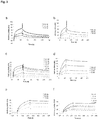
- polypeptides of the invention may have a specific ( in vivo and/or in vitro ) binding affinity to human IL-17A, preferably with a K D of 10 -7 to 10 -12 M, more preferably 10 -8 to 10 -12 M, most preferably lower than 10 -12 M.
- the binding affinity of polypeptides of the present invention can be determined according to Example 2 below.
- polypeptides of the present invention are selected from the group consisting of SEQ ID NOs: 37 to 119.
- polypeptides of the present invention do not only bind but actually inhibit IL-17A (function). This capacity is demonstrated in Examples 3 and 10, where the polypeptides' ability to inhibit the induction of IL-6 in human dermal fibroblasts in response to the addition of IL-17A was demonstrated.
- polypeptides of the present invention have high stability in solution, e.g. they are stable at 4°C for at least 6 months in simple phosphate-buffered saline (see Example 4).
- stability is not limited to in vitro compositions but has already been proven in mice injected intravenously with a polypeptide of the present invention (see Examples 5 and 12).
- polypeptides of the present invention are well suited for research, diagnostic and medical applications.
- the invention relates to a fusion protein comprising a polypeptide of the invention fused to a pharmaceutically and/or diagnostically active component.
- a fusion protein of the invention may comprise non-polypeptide components, e.g. non-peptidic linkers, non-peptidic ligands, e.g. for therapeutically or diagnostically relevant radionuclides.
- non-polypeptide components e.g. non-peptidic linkers, non-peptidic ligands, e.g. for therapeutically or diagnostically relevant radionuclides.
- said active component is a cytokine selected from the group consisting of IL-2, IL-12, TNF-alpha, IFN alpha, IFN beta, IFN gamma, IL-10, IL-15, IL-24, GM-CSF, IL-3, IL-4, IL-5, IL-6, IL-7, IL-9, IL-11, IL-13, LIF, CD80, B70, TNF beta, LT-beta, CD-40 ligand, Fas-ligand, TGF-beta, IL-1alpha and IL-1beta.
- said active component is a toxic compound, preferably a small organic compound or a polypeptide, more preferably a toxic compound selected from the group consisting of calicheamicin, maytansinoid, neocarzinostatin, esperamicin, dynemicin, kedarcidin, maduropeptin, doxorubicin, daunorubicin, auristatin, Ricin-A chain, modeccin, truncated Pseudomonas exotoxin A, diphtheria toxin and recombinant gelonin.
- a toxic compound preferably a small organic compound or a polypeptide, more preferably a toxic compound selected from the group consisting of calicheamicin, maytansinoid, neocarzinostatin, esperamicin, dynemicin, kedarcidin, maduropeptin, doxorubicin, daunorubicin, auri
- the fusion protein according to invention is one, wherein said active component is a chemokine, preferably selected from the group consisting of IL-8, GRO alpha, GRO beta, GRO gamma, ENA-78, LDGF-PBP, GCP-2, PF4, Mig, IP-10, SDF-1alpha/beta, BUNZO/STRC33, I-TAC, BLC/BCA-1, MIP-1alpha, MIP-1 beta, MDC, TECK, TARC, RANTES, HCC-1, HCC-4, DC-CK1, MIP-3 alpha, MIP-3 beta, MCP-1-5, Eotaxin, Eotaxin-2, I-309, MPIF-1, 6Ckine, CTACK, MEC, Lymphotactin and Fractalkine.
- chemokine preferably selected from the group consisting of IL-8, GRO alpha, GRO beta, GRO gamma, ENA-78, LDGF-PBP, GCP-2,
- polypeptide or fusion protein according to the invention may contain artificial amino acids.
- said active component is a fluorescent dye, preferably a component selected from the groups of Alexa Fluor or Cy dyes ( Berlier et al., "Quantitative Comparison of Long-wavelength Alexa Fluor Dyes to Cy Dyes: Fluorescence of the Dyes and Their Bio-conjugates", J. Histochem. Cytochem. 51 (12): 1699-1712, 2003 .); a photosensitizer, preferably phototoxic red fluorescent protein KillerRed ( Bulina et al.
- a pro-coagulant factor preferably tissue factor
- an enzyme for pro-drug activation preferably an enzyme selected from the group consisting of carboxy-peptidases, glucuronidases and glucosidases
- a radionuclide either from the group of gamma-emitting isotopes, preferably 99m Tc, 123 I, 111 In, or from the group of positron emitters, preferably 18 F, 64 Cu, 68 Ga, 86 Y, 124 I, or from the group of beta-emitter, preferably 131 I, 90 Y, 177 Lu, 67 Cu, or from the group of alpha-emitter, preferably 213 Bi, 211 At.
- polypeptide of the present invention may be directly or via a chemical linker attached to one or more non-polypeptide components as defined herein above.
- said active component is one or more functional Fc domains, preferably one or more human functional Fc domains (see for example SEQ ID NO: 117-119 and SEQ ID NO: 130), which allow(s) for extending the in vivo half-life of the IL-17A binding polypeptides of the invention and some of which direct a mammal's immune response to a site of specific target binding of the inventive polypeptide component of the fusion protein, e.g. in therapeutic, prophylactic and/or diagnostic applications.
- functional Fc domains preferably one or more human functional Fc domains (see for example SEQ ID NO: 117-119 and SEQ ID NO: 130), which allow(s) for extending the in vivo half-life of the IL-17A binding polypeptides of the invention and some of which direct a mammal's immune response to a site of specific target binding of the inventive polypeptide component of the fusion protein, e.g. in therapeutic, prophylactic and/or diagnostic applications.
- polypeptides of the invention can be fused either to the N- or C-terminus of one or more functional Fc domains or to both the N- and the C-terminus of one or more Fc domains. It is preferred that the fusion proteins of the invention comprise multimers, preferably tetramers, trimers or most preferably dimers of the polypeptides of the invention fused to at least one side, preferably to the N-terminus of one or more, preferably one Fc domain.
- the Fynomer-Fynomer-Fc fusion protein designated (2C1) 2 -Fc demonstrates the advantage of multimeric polypeptide-Fc fusions, which have a higher affinity to IL-17A than the corresponding monomeric 2C1-Fc fusion protein, as demonstrated in Figs. 3e and 3f and Table II of Example 2 below.
- a multimeric polypeptide-Fc fusion proteins also described herein is a multimeric polypeptide-Fc fusion proteins.
- a "functional Fc domain" of an antibody is a term well known to the skilled artisan and defined on the basis of papain cleavage of antibodies.
- immunoglobulins are divided in the classes: IgA, IgD, IgE, IgG and IgM, and several of these may be further divided into subclasses (isotypes), e.g. IgG1, IgG2, IgG3, and IgG4, IgA1, and IgA2.
- the different classes of immunoglobulins are called [alpha], [delta], [epsilon], [gamma], and [mu], respectively.
- the functional Fc domain of an antibody is directly involved in ADCC (antibody-dependent cell-mediated cytotoxicity) and CDC (complement-dependent cytotoxicity) based on complement activation, C1q binding and Fc receptor binding.
- the four human IgG isotypes bind different receptors, such as the neonatal Fc receptor, the activating Fc gamma receptors, Fc ⁇ RI, Fc ⁇ RIIa, and Fc ⁇ RIIIa, the inhibitory receptor Fc ⁇ RIIb, and C1q with different affinities, yielding very different activities. It is known that the affinities to activating and inhibiting receptors of an Fc domain of a human antibody can be engineered and modified (see Strohl W.
- the invention therefore comprises Fc fusion(s) which allow(s) for extending the in vivo half-life of the IL-17A binding polypeptides of the invention, and which contains a functional Fc domain from human origin, preferably a human functional Fc domain of an IgG1 antibody (see for example SEQ ID NOs: 117-119 and SEQ ID NO: 130).
- the active component may be one or more engineered human functional Fc domains of an IgG1 with activating or silenced effector functions, preferably one or more engineered human functional Fc domains of an IgG1 with silenced effector functions, and most preferably one or more engineered human functional Fc domains of an IgG1 with silenced effector functions with a mutation in L234 and L235 (see for example SEQ ID NOs: 131-135), numbering according to EU index of Kabat (see Johnson G. and Wu T.T. (2000) Nucleic Acids Res. 28, p. 214-218 ).
- a further preferred embodiment relates to polypeptides or fusion proteins according to the invention as mentioned above, further comprising a component modulating serum half-life, preferably a component selected from the group consisting of polyethylene glycol (PEG), immunoglobulin and albumin-binding peptides.
- a component modulating serum half-life preferably a component selected from the group consisting of polyethylene glycol (PEG), immunoglobulin and albumin-binding peptides.
- the fusion protein of the invention comprises any of the above inventive IL-17A binding polypeptides, preferably those selected from the group consisting of SEQ ID NOs: 117 to 119 and SEQ ID NOs: 130-135.
- polypeptide or fusion protein of the invention is preferably monomeric but also encompasses multimers, preferably tertramers, more preferably trimers, or most preferably dimers of the inventive polypeptides.
- Polypeptides and fusion proteins of the invention may be prepared by any of the many conventional and well known techniques such as plain organic synthetic strategies, solid phase-assisted synthesis techniques or by commercially available automated synthesizers. On the other hand, they may also be prepared by conventional recombinant techniques alone or in combination with conventional synthetic techniques.
- nucleic acid coding for a polypeptide of the invention (i) an isolated and ourified nucleic acid coding for a polypeptide of the invention, (ii) a recombinant vector comprising said nucleic acid, and (iii) a host cell comprising said polynucleotide and/or said vector.
- nucleic acid comprising
- the nucleic acid described herein may comprise a nucleic acid coding for a polypeptide or fusion protein as described above.
- any of the nucleic acids (i) to (v), above preferably encodes a polypeptide that binds IL-17A and more preferably inhibits IL-17A function.
- Nucleic acids of the invention can be DNA, RNA, PNA and any other analogues thereof.
- the vectors and host cells may be any conventional type that suits the purpose, e.g. production of polypeptides and/or fusion proteins of the invention, therapeutically useful vectors and host cells, e.g. for gene therapy.
- the skilled person will be able to select those nucleic acids, vectors and host cells from an abundant prior art and confirm their particular suitability for the desired purpose by routine methods and without undue burden.
- the nucleic acid is operably linked to a promoter, preferably linked to a promoter selected from the group of prokaryotic promoters consisting of T5 promoter/lac operator element, T7 promoter/lac operator element, or from the group of eukaryotic promoters consisting of hEF1-HTLV, CMV enh/hFerL promoter.
- a promoter selected from the group of prokaryotic promoters consisting of T5 promoter/lac operator element, T7 promoter/lac operator element, or from the group of eukaryotic promoters consisting of hEF1-HTLV, CMV enh/hFerL promoter.
- a recombinant vector of the invention is one comprising a nucleic acid of the invention and preferably being capable of producing a polypeptide or fusion protein of the invention.
- a vector is selected from the group consisting of pQE vectors, pET vectors , pFUSE vectors, pUC vectors, YAC vectors, phagemid vectors, phage vectors, vectors used for gene therapy such as retroviruses, adenoviruses, adeno-associated viruses.
- the present invention relates to host cells comprising a nucleic acid and/or a vector of the invention.
- the present invention encompasses an antibody that specifically binds a polypeptide or any one of SEQ ID NOs 37 to 116. Also described herein is an antibody that specifically binds to a fusion protein of the invention. If the antibody binds to the fusion protein, it specifically binds to the portion thereof consisting of the polypeptide described herein or an fusion epitope, i.e. the binding site of an antibody partially consisting of the polypeptide described herein and partially consisting of a pharmaceutically and/or diagnostically active component, which is preferably a polypeptide or peptide.
- the antibodies may be polyclonal or monoclonal antibodies.
- antibody refers not only to whole antibody molecules, but also to antigen-binding fragments, e.g., Fab, F(ab') 2 , Fv, and single chain Fv fragments. Also included are chimeric antibodies, preferably humanized antibodies. Such antibodies are useful as research tools for distinguishing between arbitrary proteins and polypeptides of the invention.
- a further aspect relates to a hybridoma cell line, expressing a monoclonal antibody according to the invention.
- a further aspect of the present invention relates to a pharmaceutical composition
- a pharmaceutical composition comprising a polypeptide or fusion protein, a nucleic acid and/or a recombinant vector of the invention and optionally a pharmaceutically acceptable carrier.
- the term pharmaceutical composition is meant to also encompass diagnostic compositions for in vivo use.
- compositions of the invention may be manufactured in any conventional manner.
- at least one compound of the present invention can be administered in any form or mode which makes the therapeutic polypeptide or therapeutic fragment thereof bioavailable in an effective amount, including oral or parenteral routes.
- compositions of the present invention can be administered subcutaneously, intramuscularly, intravenously, by inhalation and the like.
- One skilled in the art in the field of preparing formulations can readily select the proper form and mode of administration depending upon the particular characteristics of the product selected, the disease or condition to be treated, the stage of the disease or condition and other relevant circumstances (see. e.g. Remington's Pharmaceutical Sciences, Mack Publishing Co. (1990 )).
- a suitable carrier or excipient may be a liquid material which can serve as a vehicle or medium for the active ingredient.
- Suitable carriers or excipients are well known in the art and include, for example, stabilizers, antioxidants, pH-regulating substances, controlled-release excipients, etc.
- a composition according to the invention is preferably provided in lyophilized form. For immediate administration it is dissolved in a suitable aqueous carrier, for example sterile water for injection or sterile buffered physiological saline. If it is desirable to produce larger volumes for administration by infusion rather than as a bolus injection, it is advantageous to incorporate human serum albumin or the patient's own heparinised blood into the solvent at the time of final formulation. Alternatively, the formulation can be administered subcutaneously.
- a physiologically inert protein such as human serum albumin prevents loss of the pharmaceutically effective polypeptide by adsorption onto the walls of the container and tubing used for the infusion solution.
- a suitable concentration is from 0.5 to 4.5% by weight of the saline solution.
- the IL-17A-binding and inhibiting polypeptides of the invention are particularly useful for the treatment and/or prevention of IL-17A- and/or Th17-related diseases or medical conditions.
- a polypeptide or fusion protein, a nucleic acid and/or a recombinant vector of the invention for medical use, i.e. for the preparation of a medicament, preferably for treating and/or preventing a disease or medical condition, preferably selected from the group consisting of IL-17A and/or Th17-related diseases or medical conditions.
- the medical use of the invention relates to treating and/or preventing of diseases or medical conditions selected from inflammatory, autoimmune and/or bone loss-related diseases and conditions, wherein the polypeptide or the polypeptide encoded by the nucleic acid or recombinant vector inhibits the function of IL-17 A.
- Said inflammatory, autoimmune and/or bone loss-related diseases and conditions may be selected from arthritis, preferably rheumatoid arthritis, arthritis chronica progrediente, reactive arthritis, psoriatic arthritis, enterophathic arthritis and arthritis deformans, rheumatic diseases, spondyloarthropathies, ankylosing spondylitis, Reiter syndrome, hypersensitivity (including both airways hypersensitivity and dermal hypersensitivity), allergies, systemic lupus erythematosus, inflammatory muscle disorders, polychondritis, sclerodoma, Wegener granulomatosis, dermatomyositis, Steven- Johnson syndrome, chronic active hepatitis, myasthenia gravis, psoriasis, idiopathic sprue, autoimmune inflammatory bowel disease, ulcerative colitis, Crohn's disease, Irritable Bowel Syndrome, endocrine ophthalmopathy, Graves disease, sarcoidos
- the amount and mode of administration of the inventive compounds, i.e. polypeptides, fusion proteins, nucleic acids, vectors, and host cells for treating and/or preventing a disease or medical condition preferably selected from the group consisting of IL-17A- and/or Th17-related diseases or medical conditions, more preferably those specifically listed above, will, of course, vary depending upon the particular polypeptide or fusion protein inhibitor of the invention, the individual patient group or patient, the presence of further medically active compounds and the nature and severity of the condition being treated. However, it is presently preferred that for prophylactic and/or therapeutic use dosages of about 0.01 mg to about 20 mg per kilogram body weight, preferably about 0.1 mg to about 5 mg per kilogram body weight should be administered.
- the frequency of administration for prophylactic and/or therapeutic uses lies in the range of about twice per week up to about once every 3 months, preferably about once every 2 weeks up to about once every 10 weeks, more preferably once every 4 to 8 weeks.
- IL-17A-binding polypeptides and fusion proteins of the invention are conveniently and preferably administered parenterally, intravenously, preferably into the antecubital or other peripheral vein, intramuscularly or subcutaneously.
- IL-17A-binding polypeptides can also be delivered topically as eye drops.
- a preferred prophylactic and/or therapeutic treatment of a patient involves the administration of polypeptides of the invention once per month to once every 2 to 3 months or less frequently.
- treatment relates to the prophylactic and/or therapeutic treatment of a disease or medical condition.
- the IL-17A-binding polypeptides and fusion proteins of the invention may be administered as the sole active ingredient or in conjunction with, e.g. as an adjuvant to or in combination with, other drugs, e.g. immunosuppressive or immune modulating agents or other anti-inflammatory agents, e.g. for the treatment or prevention of diseases mentioned above.
- other drugs e.g. immunosuppressive or immune modulating agents or other anti-inflammatory agents, e.g. for the treatment or prevention of diseases mentioned above.
- the IL-17A-binding polypeptides and fusion proteins of the invention may be used in combination with immunosuppressive monoclonal antibodies, e.g. monoclonal antibodies with affinity to leukocyte receptors, e.g.
- immunomodulatory compounds e.g. a recombinant binding molecule having at least a portion of the extracellular domain of CTLA4 or a mutant thereof, e.g. an at least extracellular portion of CTLA4 or a mutant thereof joined to a non-CTLA4 protein sequence, e.g. CTLA4Ig (e.g. designated ATCC 68629) or a mutant thereof, e.g. LEA29Y; adhesion molecule inhibitors, e.g.
- polypeptides and fusion proteins of the invention may be used in combination with DMARD, e.g. gold salts, sulphasalazine, anti-malarias, methotrexate, D-penicillamine, azathioprine, mycophenolic acid, cyclo-sporine A, tacrolimus, sirolimus, minocycline, leflunomide, glucocorticoids; a calci-neurin inhibitor, e.g. cyclosporin A or FK 506; a modulator of lymphocyte recirculation, e.g.
- DMARD e.g. gold salts, sulphasalazine, anti-malarias, methotrexate, D-penicillamine, azathioprine, mycophenolic acid, cyclo-sporine A, tacrolimus, sirolimus, minocycline, leflunomide, glucocorticoids
- a calci-neurin inhibitor
- FTY720 and FTY720 analogs e.g. rapamycin, 40-O-(2-hydroxyethyl)-rapamycin, CCI779, ABT578, AP23573 or TAFA-93; an ascomycin having immuno-suppressive properties, e.g. ABT-281, ASM981, etc.; corticosteroids; cyclophosphamide; azathioprene; methotrexate; leflunomide; mizoribine; mycophenolic acid; mycophenolate mofetil; 15-deoxyspergualine or an immunosuppressive homologue, analogue or derivative thereof; or a chemotherapeutic agent, e.g.
- a mTOR inhibitor e.g. rapamycin, 40-O-(2-hydroxyethyl)-rapamycin, CCI779, ABT578, AP23573 or TAFA-93
- an ascomycin having immuno-suppressive properties e.g. ABT-281,
- anti-TNF agents e.g. monoclonal antibodies to TNF, e.g. infliximab, adalimumab, CDP870, or receptor constructs to TNF-RI or TNF-RII, e.g. Etanercept, PEG-TNF-RI
- inhibitors or activators of proteases e.g.
- anti-IL-15 antibodies anti-IL-6 antibodies, anti-IL-23 antibodies, anti-IL-22 antibodies, anti-IL-21 antibodies, anti-IL-12 antibodies, anti-IFN-gamma antibodies, anti-IFN-alpha antibodies, anti-CD20 antibodies, NSAIDs, such as aspirin or an anti-infectious agent.
- agents for co-administration is neither limiting nor complete.
- Example 1 Fyn SH3-derived polypeptides of the invention bind to IL-17A as determined by monoclonal phage ELISA.
- DNA encoding the amino acid sequences shown in SEQ ID NOs: 1 to 116 were cloned into the phagemid vector pHEN1 as described for the FYN SH3 library in Grabulovski et al. ( Grabulovski et al. (2007) JBC, 282, p. 3196-3204 ). Phage production was performed according to standard protocols ( Viti, F. et al. (2000) Methods Enzymol. 326, 480-505 ).
- Biotinylated IL-17A purchased from R&D Systems, biotinylation was performed with NHS-PEO4-biotin (Pierce) according to the manufacturer's instruct-tions
- was immobilized on streptavidin-coated wells StreptaWells, High Bind, Roche
- PBS 2% milk
- 2% milk Rapilait, Migros, Switzerland
- 20 ⁇ l of PBS 10% milk
- 80 ⁇ l of phage supernatants were applied.
- bound phages were detected with anti-M13-HRP antibody conjugate (GE Healthcare).
- the detection of peroxidase activity was done by adding BM blue POD substrate (Roche) and the reaction was stopped by adding 1 M H 2 SO 4 .
- the DNA sequence of the binders was verified by DNA sequencing (BigDye Terminator v3.1 cycle sequencing kit, ABI PRISM 3130 Genetic Analyzer, Applied Biosystems).
- amino acid sequences of Fyn SH3-derived IL-17A binders is presented in SEQ ID NOs: 1 to 116 as appended in the sequence listing.
- Example 2 Fyn SH3-derived polypeptides of the invention bind to recombinant human IL-17 A with high affinities.
- This example shows the cloning and expression of different formats of Fyn SH3-derived IL-17A-binding polypeptides, as well as the characterization of these polypeptides by size exclusion chromatography and surface plasmon resonance experiments.
- Selected Fyn SH3-derived IL-17A -binding polypeptides (clone B1_2: SEQ ID NO: 39, clone E4: SEQ ID NO: 57 and clone 2C1: SEQ ID NO:107) were cloned into the cytosolic expression vector pQE-12 and expressed as well as purified as described in Grabulovski et al. ( Grabulovski et al. (2007) JBC, 282, p. 3196-3204 ).
- Clones E4 and 2C1 (SEQ ID NO: 57 and SEQ ID NO:107) were cloned and expressed as fusion proteins with the Fc part of a human IgG1 antibody (see below for procedure; SEQ ID NO: 117 and 118). Furthermore, a 2C1 dimer with a 10 amino acid linker [(2C1) 2 -Fc] was cloned and expressed as Fc fusion protein (SEQ ID NO: 119).
- the Fc part of human lgG1 was PCR-amplified using the primers fm5 (5' ATCGGGA-TCCGACAAAACTCACACATGCC 3', SEQ ID NO: 121) and fm6 (5' TACGAAGCT-TTCATTTACCCGGAGACAGGG 3', SEQ ID NO: 122) and using the commercial pFUSE-hlgG1-Fc2 (Invivogen) eukaryotic vector as template.
- the resulting PCR product was digested with BamHI/HindIII and ligated with the pASK-IBA2 vector (IBA-Biotagnology) previously digested with the same enzymes, yielding the new vector pAF.
- the genetic information of clones E4 and 2C1 was PCR amplified with fm7 (5' ATATCACCATGGGGCCGGAGTGACACTCTTT-GTGGCCCTTTATG 3', SEQ ID NO: 123) and fm8 (5' CGTAGGA-TCCCTGGATAG-AGTCAACTGGAGC 3', SEQ ID NO: 124).
- fm7 5' ATATCACCATGGGGCCGGAGTGACACTCTTT-GTGGCCCTTTATG 3', SEQ ID NO: 123
- fm8 5' CGTAGGA-TCCCTGGATAG-AGTCAACTGGAGC 3', SEQ ID NO: 124.
- the 2C1 DNA template was used for two independent PCRs.
- the primers 47b.fo (5' AGA GCC ACC TCC GCC TGA ACC GCC TCC ACC CTG GAT AGA GTC AAC TGG AGC CAC 3', SEQ ID NO: 125) and 52.
- ba (5' GAC TAA CGA GAT CGC GGA TCC GGA GTG ACA CTC TTT GTG GCC CTT TAT 3', SEQ ID NO: 126) were used and in the second PCR primers 48b.ba (5' GGT GGA GGC GGT TCA GGC GGA GGT GGC TCT GGA GTG ACA CTC TTT GTG GCC CTT TAT 3', SEQ ID NO: 127) and 51.
- the two DNA fragments were assembled by PCR, yielding a 2C1 homodimer with a 10 amino acid linker (GGGGSGGGGS, SEQ ID NO: 120) between the two domains.
- the resulting DNA fragment was further amplified as described for the 2C1 monomer using the primers fm7 and fm8. Obtained PCR products were then digested with Ncol / BamHI and cloned into the double-digested periplasmic expression vector pAF. Plasmids were electroporated into E. coli TG1 and protein expression was induced with 0.2 ⁇ g/ml anhydrotetracyclin.
- SEC Size Exclusion Chromatography
- Affinity measurements were performed using a BIAcore 3000 instrument (Biacore).
- Biacore BIAcore 3000 instrument
- a streptavidin SA chip (Biacore) was used with 1300 and 510 RU biotinylated IL-17A immobilized, respectively.
- the running buffer was PBS, 0.1% NaN 3 and surfactant P20 (Biacore). The interactions were measured at a flow of 20 ⁇ l/min and injecttion of different concentrations of Fyn SH3-derived IL-17A-binding polypeptides.
- CM5 chip (Biacore) was coated with 2900 RU goat anti-human IgG Fc-specific antibody (Jackson Immunoresearch).
- the running buffer was HBS-EP (Biacore).
- the interactions were measured by injecting about 250 to 275 RU Fc fusion protein at a flow rate of 10 ⁇ l/min, followed by injection of different concentrations of IL-17A (R&D Systems) at a flow rate of 30 ⁇ l/min. All kinetic data of the interaction (separate kon/koff) were evaluated using BIA evaluation 3.2RC1 software.
- the expression yields for monomeric Fyn SH3-derived IL-17A-binding polypeptides of the invention ranged from 60 to 85 mg/liter of bacterial culture under non-optimized conditions in shake flasks.
- the Fc-fusion proteins were expressed with a yield of 0.2 to 0.4 mg/liter (Table I).
- the Fc-fusion proteins have the sequences listed in SEQ ID NOs: 117 to 119 as appended) Table I. Expression yields after purification of bacterial culture under non-optimized conditions in shake flasks in E. coli.
- Fig. 1 shows the SDS PAGE analysis of the indicated purified proteins.
- Size exclusion chromatography (SEC) profiles demonstrated that all constructs eluted mainly as single, monomeric peaks (see Fig. 2 ).
- the main peak elutes later than expected for a protein of about 8 kDa.
- a second purification step by size exclusion chromatography was performed after the single-step protein A-sepharose purification yielding monomeric proteins as shown for the fusion protein E4-Fc (SEQ ID NO: 117) in Fig. 2e .
- E4-Fc (SEQ ID NO: 117) was stable for at least 40 days when stored at 4°C in PBS.
- IL-17A induces the production of IL-6 in fibroblasts in a dose-dependent manner ( Yao et al. (1995) Immunity, 3, p. 811-821 ).
- the inhibitory activities of the indicated Fyn SH3-derived IL-17A-binding polypeptides and fusion proteins were tested by stimulating human dermal fibroblasts with recombinant IL-17A in the absence or presence of various concentrations of Fyn SH3 mutants or human IL-17A receptor-Fc chimera.
- Cell culture supernatants were taken after 24 h of stimulation and assayed for IL-6 with ELISA.
- a colorimetric test was performed using the reagent XTT in order to demonstrate that the cells were viable after 24 h of incubation with IL-17A alone, or IL-17A and Fyn SH3-derived inhibitory IL-17A-binding polypeptides of the invention, or IL-17A and IL-17R-Fc chimera. Only viable and metabolic active cells are capable of reducing the tetrazolium salt XTT to orange-colored compounds of formazan ( Scudiero, et al.(1988), Cancer Res. 48, p. 4827-4833 ).
- the indicated protein solutions were filtered three times with the Acrodisc Mustang E membrane (VWR). After filtration the endotoxin levels of the protein solutions containing inhibitory Fyn SH3-derived IL-17A-binding polypeptides of the invention were less than 0.1 EU/ml, as determined by the Limulus amebocyte lysate (LAL) test (PYROGENT Single test Gel Clot LAL Assay (Lonza)).
- LAL Limulus amebocyte lysate
- the supernatant was aspirated and after mixing different concentrations of Fyn SH3 derived IL-17A-binding polypeptides of the invention or IL-17A receptor Fc chimera (RnD Systems) with IL-17A (RnD Systems) containing medium (50 ng/ml final concentration), 350 ⁇ l of the corresponding solution was added per well (mixing ratio between inhibitor solution and IL-17A-containing medium was 1:3).
- a positive control PBS was mixed with the IL-17A containing medium ("no inhibitor") in a ratio of 1:3 and as a negative control PBS was mixed with medium only ("no IL-17A”) in a ratio of 1:3.
- IL-17A containing medium was used (final concentrations of IL-17A: 10, 25 and 50 ng/ml) and mixed with PBS in a ratio of 3:1. After 24 hours incubation at 37°C the supernatant was aspirated and the IL-6 concentration was determined by ELISA according to the manufacturer's instructions (IL-6 ELISA kit, R&D Systems). Immediately after the aspiration of the supernatant the XTT-containing medium was added (Cell Proliferation Kit II, Roche) and cell viability was determined according to the manufacturer's instructions.
- Inhibition % 100 ⁇ A 450 ⁇ 650 nm sample ⁇ A 450 ⁇ 650 nm neg .
- control 100 A 450 ⁇ 650 nm pos .
- control ⁇ A 450 ⁇ 650 nm neg .
- NHDF Normal Human Dermal Fibroblasts
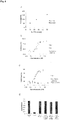
- Figure 4 (a) shows the IL-17A dose-dependent induction of IL-6.
- NHDF cells were incubated with IL-17A (50 ng/ml) and different concentrations of indicated Fyn SH3-derived IL-17A-binding polypeptides of the invention or IL-17A receptor-Fc chimera ( Figure 4(b) ). It was observed that both clones 2C1 (SEQ ID NOD: 107) and E4 (SEQ ID NO: 57) inhibited the IL-17A induced IL-6 production with IC 50 values of about 1 nM and 6 nM, respectively.
- the IL-17A receptor-Fc chimera has a reported IC 50 value of 500 pM (R&D Systems). In this experiment, a value of about 1 nM was obtained.
- the assay depicts a representative result of three independent experiments.
- the cells were incubated with the Fyn SH3 wt domain ( Grabulovski et al. (2007) JBC, 282, p. 3196-3204 ) as a protein of irrelevant binding specificity in presence of IL-17A ( Figure 4 (c) ).
- Fyn SH3-derived IL-17A-binding polypeptides of the invention are particularly useful drug and diagnostic candidates because they have proven stable when stored at 4°C or at - 20°C for at least 6 months in simple phosphate-buffered saline.
- Protein solutions of the IL-17A-binding polypeptides of the invention were stored for 6 months at 4 °C and at -20°C after purification.
- the protein solutions were filtered (Millex GP, 0,22 ⁇ m, Millipore) and size exclusion chromatography (SEC) was performed on an ⁇ KTA FPLC system using a Superdex 75 Short Column (5/150) (GE Healthcare)
- Fyn SH3-derived IL-17A-binding polypeptide G3 (SEQ ID NO: 34) was produced with an expression yield of 123 mg/L and eluted mainly as single peak from the size exclusion chromatography column (see Figure 5 ).
- G3 The stability and aggregation resistance of G3 (SEQ ID NO: 34) was assessed by storing the protein at 4°C and -20°C in PBS. After 6 months the status of the protein was examined by size exclusion chromatography. The measurements did not reveal any sign of aggregation or degradation. The elution profiles after 6 months of storage are shown in Figure 6 .
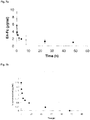
- E4-Fc The in vivo half-life of the fusion protein of the invention E4-Fc (SEQ ID NO: 117) was determined by measuring E4-Fc (SEQ ID NO: 117) concentrations in mouse serum at different time points after a single i.v. injection by ELISA.
- E4-Fc (SEQ ID NO: 117) is described in Example 2.
- 200 ⁇ l of a 3.3 ⁇ M (0.22 mg/ml) solution of E4-Fc (SEQ ID NO: 117) was injected i.v. into 5 mice (C57BL/6, Charles River).
- 20 minutes, 1, 2, 4, 8, 24 and 48 h about 20 ⁇ l of blood were taken from the vena saphena with the capillary Microvette CB 300 (Sarstedt).
- the blood samples were centrifuged for 10 min at 9500 x g and the serum was stored at -20° until ELISA analysis was performed.
- E4-Fc E4-Fc (SEQ ID NO: 117) dilution series with known concentrations
- E4-Fc (SEQ ID NO: 117) concentration in serum was determined by ELISA: 50 ⁇ l of biotinylated IL-17A (30 nM) (R&D Systems, biotinylated using NHS-PEO4-biotin (Pierce) according to the manufacturer's instructions) were added to streptavidin-coated wells (Reactibind, Pierce) and after blocking with PBS, 4% milk (Rapilait, Migros, Switzerland), 45 ⁇ l of PBS, 4% milk and 5 ⁇ l of serum sample were added.
- Fc fusion proteins were detected with protein A-HRP conjugate (Sigma). Peroxidase activity was detected by addition of QuantaRed enhanced chemifluorescent HRP substrate (Pierce). Fluorescence intensity was measured after 5 to 10 min at 544 nm (excitation) and 590 nm (emission).
- the half-life of fusion protein of the invention E4-Fc (SEQ ID NO:117) as calculated from the elimination phase (beta phase, 4 last time points) was 50.6 hours (see Figure 7 ).
- Example 6 ELISA for determining the binding specificity of IL-17A-binding polypeptides and fusion proteins
- Target proteins human IL-17F (R&D systems), murine IL-17A (R&D Systems), human TNF-alpha (Thermo Scientific), human IL-6 (R&D Systems), bovine serum albumin (Sigma) and ovalbumin (Sigma) were coated on a MaxiSorp plate (Nunc) overnight (100 ⁇ l of each target at a concentration of 5 ⁇ g/ml).
- the 96-well plate was incubated for 1 h at RT and then washed three times with PBS, 0.1% Tween followed by three washes with PBS only. Colorimetric detection was done by addition of 100 ⁇ l of BM blue POD substrate (Roche) and the reaction was stopped with 60 ⁇ l 1 M H 2 SO 4 .
- Clone 2C1 (SEQ ID No: 107) bound human IL-17A in a highly specific manner and did not cross-react with any of the other tested proteins as shown by ELISA ( Figure 8 ). A small signal above background was observed for IL-17F, but when 2C1 was probed to a IL-17F coated BIAcore chip, no detectable binding was determined (data not shown).
- Example 7 Fyn SH3-derived polypeptide of the invention binds specifically and with high affinity to human and cynomolgus IL-17A
- IL-17A-binding polypeptides of the invention For the determination of the binding specificity of IL-17A-binding polypeptides of the invention, the following target proteins were used (more target proteins compared to Example 6):
- the target proteins were coated on a MaxiSorp plate (Nunc) overnight (100 ⁇ l of each target at a concentration of 10 ⁇ g/ml).
- Affinity measurements were performed using a BIAcore 3000 instrument (Biacore).
- Biacore a CM5 chip (Biacore) was coated with 6900 RU cynomolgus IL-17A.
- the running buffer was HBS-EP (Biacore).
- the interactions were measured at a flow of 20 ⁇ l/min and injection of different concentrations of Fyn SH3-derived IL-17A-binding polypeptide of the invention 2C1 (SEQ ID NO: 107). All kinetic data of the interaction (separate kon/koff) were evaluated using BIA evaluation 3.2RC1 software.
- Fyn SH3-derived polypeptide of the invention 2C1 (SEQ ID No: 107) bound human and cynomolgus IL-17A in a highly specific manner and did not cross-react with any of the other tested proteins as shown by ELISA ( Figure 9 ).
- Example 8 Expression of Fyn SH3-derived polypeptides of the invention fused to an Fc part and to a modified Fc part of a human IgG1 antibody in mammalian cells
- the Fyn SH3-derived polypeptide of the invention 2C1 was genetically fused to the Fc part of IgG1 (2C1-Fc, SEQ ID NO: 130) and expressed in HEK EBNA cells.
- the Fyn SH3-derived polypeptide of the invention 2C1 was also cloned as genetic fusion to the modified Fc part of human IgG1, comprising mutations L234A (alanine instead of leucine at amino acid position 234) and L235A and expressed in HEK EBNA cells (2C1-Fc(LALA), SEQ ID NO: 131).
- the following four variants of 2C1-Fc(LALA) fusion protein with different linker length between the Fyn SH3-derived polypeptide of the invention and the Fc part were produced:
- Fyn SH3-derived polypeptide of the invention 2C1 (SEQ ID NO:107) fused to an Fc part of a human lgG1 antibody (SEQ ID NO: 130):
- the gene encoding clone 2C1 (SEQ ID NO: 107) was used as a template and amplified using the primers SB3 (5' CGA ATT CGG GAG TGA CAC TCT TTG TGG CCC 3', SEQ ID NO: 136) and SB4 (5' GAA GAT CTC TGG ATA GAG TCA ACT GGA GCC 3', SEQ ID NO: 137) introducing the restriction sites EcoRI and Bglll.
- Obtained PCR product was digested with EcoRI and BgIII and cloned into the previously double-digested pFUSE-hlgG1-Fc2 vector (Invivogen).
- the resulting pFUSE vector containing the gene encoding the 2C1-Fc fusion was used as template and amplified with the primers SB5 (5' CCC AAG CTT GGG ATG GGC TAC AGG ATG CAA CTC CTG TC 3', SEQ ID NO: 138) and SB6 (5' CGG GAT CCT CAT TTA CCC GGA GAC AGG GAG 3', SEQ ID NO: 139), introducing HindIII and BamHI restriction sites. After digestion with HindIII/BamHI, the insert was ligated with previously double-digested pCEP4 vector, yielding the plasmid containing the genetic information of SEQ ID NO: 130.
- the above mentioned plasmid containing the genetic information of 2C1-Fc was used as a template for two PCR reactions.
- the primers SB5 and SB7 (5' ACT GAC GGT CCC CCC GCG GCT TCA GGT GCT GGG CAC 3', SEQ ID NO: 140) were used.
- the primers SB8 (5' GCC GCG GGG GGA CCG TCA GTC TTC CTC TTC CC 3', SEQ ID NO: 141) and SB6 were used.
- a PCR assembly with both fragments as templates was performed, the resulting PCR product was digested with BamHI and Hindlll and ligated with the digested pCEP4 vector as described above.
- the above mentioned plasmid containing the genetic information of 2C1-Fc(LALA) (SEQ ID NO: 131) was used as a template for two PCRs.
- the primers SB5 and "Ba_2C1_R_EPKSS” (5' GCT GCT TTT CGG TTC CTG GAT AGA GTC AAC TGG AGC CAC 3', SEQ ID NO: 142) were used.
- the primers SB6 and "Ba_Hinge_F_EPKSS” (5' GAA CCG AAA AGC AGC GAC AAA ACT CAC ACA TGC CCA CCG 3', SEQ ID NO: 143) were used.
- a PCR assembly with both fragments as templates was performed, the resulting PCR product was digested with BamHI and Hindlll and ligated with the digested pCEP4 vector as described above.
- the above mentioned plasmid containing the genetic information of 2C1-Fc(LALA) (SEQ ID NO: 131) was used as a template for two PCRs.
- the primers SB5 and 47c.fo (5' TGA ACC GCC TCC ACC CTG GAT AGA GTC AAC TGG AGC CAC 3', SEQ ID NO: 144) were used.
- the primers SB6 and "Ba_Hinge_F_5aaGS-linker" (5' GGT GGA GGC GGT TCA GAC AAA ACT CAC ACA TGC CCA CCG 3', SEQ ID NO: 145) were used.
- a PCR assembly with both fragments as templates was performed, the resulting PCR product was digested with BamHI and Hindlll and ligated with the digested pCEP4 vector as described above.
- the above mentioned plasmid containing the genetic information of 2C1-Fc(LALA) (SEQ ID NO: 131) was used as a template for two PCRs.
- the primers SB5 and 47b.fo (5' AGA GCC ACC TCC GCC TGA ACC GCC TCC ACC CTG GAT AGA GTC AAC TGG AGC CAC 3', SEQ ID NO: 146) were used.
- the primers SB6 and "Ba_Hinge_F_10aaGS-linker" (5' GGT GGA GGC GGT TCA GGC GGA GGT GGC TCT GAC AAA ACT CAC ACA TGC CCA CCG 3', SEQ ID NO: 147) were used.
- a PCR assembly with both fragments as templates was performed, the resulting PCR product was digested with BamHI and Hindlll and ligated with the digested pCEP4 vector as described above.
- the above mentioned plasmid containing the genetic information of 2C1-Fc(LALA) (SEQ ID NO: 131) was used as a template for two PCRs.
- the primers SB5 and 47.fo.corr (5' TGA TCC GCC ACC GCC AGA GCC ACC TCC GCC TGA ACC GCC TCC ACC CTG GAT AGA GTC AAC TGG AGC CAC 3', SEQ ID NO: 148) were used.
- primers SB6 and "Ba_Hinge_F_15aaGS-linker” (5' GGT GGA GGC GGT TCA GGC GGA GGT GGC TCT GGC GGT GGC GGA TCA GAC AAA ACT CAC ACA TGC CCA CCG 3', SEQ ID NO: 149) were used.
- a PCR assembly with both fragments as templates was performed, the resulting PCR product was digested with BamHI and Hindlll and ligated with the digested pCEP4 vector as described above.
- the corresponding plasmids were purified using an endotoxin free Megaprep kit (Qiagen) and used for transient transfection of HEK EBNA cells (ATCC No CRL-10852).
- HEK EBNA cells were seeded at 30% confluence 24 hours prior to transfection.
- the medium was replaced with DMEM/5% FCS/penstrep (Invitrogen) immediately prior to transfection.
- 60 ⁇ g of DNA was used to transfect 150 cm 2 of adherent cells.
- DNA and PEI 25 kDa from Polysciences were mixed in a 1:3 ratio and vortexed for 10 sec.
- the DNA/PEI mixture was incubated at RT for 10 minutes and subsequently added to the HEK EBNA cells. After 24 hours the medium was replaced with CD-CHO/HT/L-glutamine/Penstrep (Invitrogen) and incubated at 37°C with 5% CO 2 . The cell culture supernatant was harvested after 96 hours.
- the cell culture supernatant was applied to a protein A-sepharose affinity column. Subsequently, the column was washed with PBS followed by protein elution using 0.1 M glycine pH 2.7. Eluted protein was then dialysed into PBS. If needed, a second purification step for removal of endotoxins with Triton-X114 was performed ( Magalh ⁇ es et al. (2007) J Pharm Pharmaceut Sci, 10(3), p. 388-404 ).
- FIG. 11 shows the SDS PAGE analysis of the Fc fusion proteins.
- Protein drugs should be stable in serum for a certain period of time, in order to be able to elicit pharmacodynamic effects in patients.
- serum stability of 2C1-Fc (SEQ ID NO: 130) was tested.
- a solution of 3 ml of human serum (Sigma) containing 10 ⁇ g/m) 2C1-Fc (SEQ ID NO: 130) was prepared and placed in an incubator at 37 °C. 200 ⁇ l samples were removed at indicated time points and frozen at -20 °C until the end of the experiment. After 5 days, an ELISA was performed with the collected samples, using a 2C1-Fc sample (SEQ ID NO: 130) which has been stored at 4 °C in PBS as a control standard.
- IL-17A (R&D Systems) was coated on a MaxiSorp plate (Nunc) overnight (100 ⁇ l of 5 ⁇ g/ml). Wells were washed three times with PBS and after blocking with 200 ⁇ l of PBS, 4% Milk (Rapilait, Migros) and a washing step with PBS (as above), 100 ⁇ l of the test samples comprising 2C1-Fc (SEQ ID NO: 130) (at the indicated concentrations) diluted in PBS, 2% Milk were added. After incubation, the wells were washed three times with PBS, followed by addition of 100 ⁇ l Protein A-HRP (Sigma) diluted 1:1000 in PBS, 2% milk.
- the 96-well plate was incubated for 1 h at RT and then washed three times with PBS, 0.1% Tween followed by three washes with PBS only. Colorimetric detection was done by addition of 100 ⁇ l of BM blue POD substrate (Roche) and the reaction was stopped with 60 ⁇ l 1 M H 2 SO 4 .
- Example 10 Fyn SH3-derived polypeptides of the invention inhibit IL-17A in vitro
- the indicated Fyn SH3-derived polypeptides of the invention were tested for their ability to inhibit IL-17A in vitro.
- the cell assay is similar to the cell assay described in Example 3 of this invention, with the main exception that IL-17A is used at a low concentration of 1 ng/ml (compared to 50 ng/ml in Example 3) together with TNF alpha (50 pg/ml).
- Endotoxin levels of tested Fyn SH3-derived IL-17A-binding polypeptides of the invention were less than 0.1 EU/ml, as determined by the Limulus amebocyte lysate (LAL) test (PYROGENT Single test Gel Clot LAL Assay (Lonza)).
- LAL Limulus amebocyte lysate
- NHDF Human dermal fibroblasts
- NHDF-c Normal human dermal fibroblasts
- TNF-a human tumor necrosis factor-a
- IL-6 released into the cell culture medium is quantified in cell culture supernatant by ELISA using a commercially available ELISA kit (R&D Systems, DuoSet ELISA System kit (DY206)).
- the supernatant was aspirated and after mixing different concentrations of Fyn SH3 derived IL-17A-binding polypeptides of the invention or IL-17A receptor Fc chimera (RnD Systems) with IL-17A (RnD Systems) and TNF alpha (Thermo Scientific) containing medium (1 ng/ml final IL-17A concentration and 50 pg/ml TNF alpha), 350 ⁇ l of the corresponding solution was added per well, in triplicate (mixing ratio between inhibitor solution and cytokine-containing medium was 1:23). Control wells included incubation without Fyn SH3-derived polypeptides (PBS only), IL-17A alone, TNF- ⁇ alone and medium only. After 24 hours incubation at 37 °C the supernatant was aspirated and the ELISA absorbance (correlating to the IL-6 concentration) was determined by ELISA according to the manufacturer's instructions (IL-6 ELISA kit, R&D Systems).
- NHDF cells were incubated with a constant concentration of IL-17A (1 ng/ml) and TNF alpha (50 pg/ml) and with different concentrations of the commercially available IL-17A receptor-Fc chimera or with different concentrations of the following Fyn SH3-derived polypeptides of the invention:
- Table III shows the average of the IC 50 values obtained from several cell assays performed with the indicated Fyn SH3-derived polypeptides of the invention. The best IC 50 value (0.11 nM) was obtained with 2C1-m15-Fc(LALA) (SEQ ID NO: 135). Table III. Average IC 50 values of Fyn SH3-derived polypeptides of the invention obtained from several cell assays.
- IC 50 value (nM) Standard Deviation Number of cell assays 2C1 (SEQ ID NO: 107) 2.31 0.08 3 2C1-Fc (SEQ ID NO: 130) 1.13 0.30 4 2C1-Fc(LALA) (SEQ ID NO: 131) 1.09 0.53 4 2C1-m5E-Fc(LALA) (SEQ ID NO: 132) 0.72 0.30 4 2C1-m5-Fc(LALA) (SEQ ID NO: 133) 1.45 n.d.
- Example 11 In vivo half-life of 2C1-Fc(LALA) (SEQ ID NO: 131)
- the in vivo half-life of the fusion protein of the invention 2C1-Fc(LALA) was determined by measuring 2C1-Fc(LALA) (SEQ ID NO: 131) concentrations in mouse serum at different time points after a single i.v. injection.
- 2C1-Fc(LALA) (SEQ ID NO: 131) solution (0.2 mg/ml) was injected i.v. into 5 mice (C57BL/6, Charles River), 200 ⁇ l per mouse. After indicated time-points about 20 ⁇ l of blood were taken from the vena saphena with the capillary Microvette CB 300 (Sarstedt). The blood samples were centrifuged for 10 min at 9500 x g and the serum was stored at -20° until ELISA analysis was performed.
- the 2C1-Fc(LALA) (SEQ ID NO: 131) concentration in serum was determined by ELISA: 50 ⁇ l of biotinylated IL-17A (30 nM) (R&D Systems, biotinylated using NHS-PEO4-biotin (Pierce) according to the manufacturer's instructions) were added to streptavidin-coated wells (Reactibind, Pierce) and after blocking with PBS, 4% milk (Rapilait, Migros, Switzerland), 45 ⁇ l of PBS, 4% milk and 5 ⁇ l of serum sample were added.
- Fc fusion proteins were detected with protein A-HRP conjugate (Sigma). Peroxidase activity was detected by addition of QuantaRed enhanced chemifluorescent HRP substrate (Pierce). Fluorescence intensity was measured after 5 to 10 min at 544 nm (excitation) and 590 nm (emission).
- Example 12 Fyn SH3-derived polypeptides of the invention neutralize human IL-17A in vivo
- Human IL-17A is able to bind and stimulate the mouse IL-17 receptor, leading to an elevation and subsequent secretion of mouse KC (CXCL1) chemokine ( Allan B. et al. (2007) WO2007/070750 of Eli Lilly, US ).
- CXCL1 mouse KC
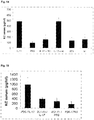
- the observed KC levels 2 hours after s.c. IL-17A injection (3 ⁇ g) were between 500 and 1000 pg/ml in the serum, compared to around 100 pg/ml KC basal levels.
- Fyn SH3-derived polypeptide of the invention 2C1 (SEQ ID NO: 107) (17 ⁇ g) was co-injected (s.c.) with 3 ⁇ g of human IL-17A (R&D Systems) into C57BL/6 mice, and 2 hours after injection, blood samples were taken from the vena saphena with the capillary Microvette CB 300 (Sarstedt). The blood samples were centrifuged for 10 min at 9500 x g and the serum was stored at -20° until ELISA analysis was performed. KC levels in serum were determined using the commercially available Quantikine mouse CLCL1/KC kit (R&D Systems).
- Control groups included mice injected with IL-17A and the Fyn SH3 wt domain (see Grabulovski et al. (2007) JBC, 282, p. 3196-3204 ) as a protein of irrelevant binding specificity, PBS only, IL-17A only, only Fyn SH3-derived polypeptide of the invention 2C1 (SEQ ID NO: 107) or mice given Fyn SH3 wt protein only.
- Fyn SH3-derived polypeptide of the invention 2C1-Fc (SEQ ID NO: 130) (44 ⁇ g/mouse) was injected i.v. into C57BL/6 mice. After 20-60 minutes, 3 ⁇ g/mouse of human IL-17A (R&D Systems) was injected s.c. and 2 hours after IL-17A injection, blood samples were taken from the vena saphena with the capillary Microvette CB 300 (Sarstedt). The blood samples were centrifuged for 10 min at 9500 x g and the serum was stored at -20° until ELISA analysis was performed. KC levels in serum were determined using the commercially available Quantikine mouse CLCL1/KC kit (R&D Systems).
- Control groups included mice injected with PBS (i.v.) and IL-17A (s.c.), PBS only (i.v. and s.c.), and Fyn SH3-derived polypeptide of the invention 2C1-Fc (SEQ ID NO: 130) i.v. followed by PBS (s.c.).
- KC chemokine
- IL-17A and monomeric Fyn SH3-derived polypeptide 2C1 (SEQ ID NO: 107) of the invention were co-injected s.c. into mice (C57BL/6). Because of the inhibitory properties of the Fyn SH3-derived polypeptide of the invention 2C1 (SEQ ID NO: 107), KC levels were not elevated in this group, they remained low, almost comparable to basal levels. In order to demonstrate that inhibition of KC production was due to specific IL-17A neutralization, mice were co-injected with IL-17A and the wild-type Fyn SH3 domain (which has no binding affinity to IL-17A); in these mice, KC levels were as high as in the group receiving IL-17A only. Figure 14 shows the results obtained from this experiment.
- the Fyn SH3-derived polypeptide of the invention 2C1-Fc (SEQ ID NO: 130) was injected i.v., followed by s.c. injection of IL-17A.
- the Fyn SH3-derived polypeptide of the invention prevented the up-regulation of KC levels in the serum.
- Figure 15 shows the inhibition of IL-17A by 2C1-Fc (SEQ ID NO: 130) in vivo.
Landscapes
- Health & Medical Sciences (AREA)
- Chemical & Material Sciences (AREA)
- Life Sciences & Earth Sciences (AREA)
- Organic Chemistry (AREA)
- Medicinal Chemistry (AREA)
- General Health & Medical Sciences (AREA)
- Pharmacology & Pharmacy (AREA)
- Chemical Kinetics & Catalysis (AREA)
- General Chemical & Material Sciences (AREA)
- Nuclear Medicine, Radiotherapy & Molecular Imaging (AREA)
- Animal Behavior & Ethology (AREA)
- Public Health (AREA)
- Veterinary Medicine (AREA)
- Engineering & Computer Science (AREA)
- Bioinformatics & Cheminformatics (AREA)
- Diabetes (AREA)
- Immunology (AREA)
- Physical Education & Sports Medicine (AREA)
- Hematology (AREA)
- Orthopedic Medicine & Surgery (AREA)
- Rheumatology (AREA)
- Molecular Biology (AREA)
- Pulmonology (AREA)
- Proteomics, Peptides & Aminoacids (AREA)
- Genetics & Genomics (AREA)
- Biophysics (AREA)
- Biochemistry (AREA)
- Gastroenterology & Hepatology (AREA)
- Dermatology (AREA)
- Communicable Diseases (AREA)
- Virology (AREA)
- Neurology (AREA)
- Oncology (AREA)
- Obesity (AREA)
- Zoology (AREA)
- Toxicology (AREA)
- Heart & Thoracic Surgery (AREA)
- Urology & Nephrology (AREA)
- Cardiology (AREA)
- Endocrinology (AREA)
Description
- The present invention relates to new IL-17 inhibiting polypeptides, corresponding fusion proteins, compositions and medical uses thereof as defined by the claims.
- CD4+ T cells play a central role in orchestrating immune responses by assisting other cells of the adaptive or innate immune system. In early studies two classes of CD4+ T cells (Th1 and Th2) were identified. More recently, a new subset of CD4+ T cells, the Th17 lineage was identified. Th17 cells appear to have evolved as a branch of the adaptive immune system specialized in enhanced host protection against extracellular bacteria as well as some fungi and microbes not well covered by Th1 or Th2 immunity.
- Th17 cells were identified in the context of the discovery of a new cytokine family, the IL-17 family, which is presently known to comprise six members (IL-17A-F). IL-17 (previously named CTLA-8) is mainly expressed by Th17 cells and was designated IL-17A to indicate that it is the founding member of this cytokine family. IL-17 members share no sequence homology with other presently known mammalian proteins and therefore constitute a distinct cytokine family. Structural features of IL-17 family members deduced from the crystal structure of IL-17F suggest that, similar to many cytokines, each of the family members is probably produced as a homodimer, although structural similarities imply that heterodimers may exist. Very recently, a heterodimer of IL-17A and IL-17F expressed by activated human CD4+ T cells was identified that signals through the IL-17RA/IL-17RC complex (Wright J.F. et al. (2008) J. of Immunol., 181, p. 2799-2805).
- The identification of Th17 cells as central mediators in chronic inflammatory process-ses and as principal pathogenic effectors in several types of autoimmunity conditions previously thought to be Th1-mediated promises new therapeutic approaches (Weaver T. et al. (2008) Annu. Rev. Immunol., 25, p. 821-852). Indeed, the pro-inflammatory cytokine IL-17 is mainly expressed by Th17 cells and is present at elevated levels in synovial fluid of patients with rheumatoid arthritis (RA) and has been shown to be involved in early RA development. In addition, IL-17 is a potent inducer of TNF-alpha and IL-1, the latter being mainly responsible for bone erosion and the very painful consequences for affected patients (Lubberts E. (2008) Cytokine, 41, p. 84-91). Furthermore, inappropriate or excessive production of IL-17 is associated with the pathology of various other diseases and disorders, such as osteoarthritis, loosening of bone implants, acute transplant rejection (Antonysamy et al., (1999) J. Immunol, 162, p. 577-584; van Kooten et al. (1998) J. Am. Soc. Nephrol., 9, p.1526-1534), septicemia, septic or endotoxic shock, allergies, asthma (Molet et al. (2001) J. Allergy Clin. Immunol., 108, p. 430-438), bone loss, psoriasis (Teunissen et al. (1998) J. Invest. Dermatol, 111, p. 645-649), ischemia, systemic sclerosis (Kurasawa et al. (2000) Arthritis Rheum., 43, p. 2455-2463), stroke, and other inflammatory disorders.
- Consequently, anti-IL-17 compounds have potential as anti-inflammatory agents, a therapeutic approach in line with a number of in vivo studies demonstrating that IL-17 neutralization reduces inflammatory processes such as arthritis. For example, the early neutralization of endogenous IL-17 by an IL-17 receptor-lgG1-Fc fusion protein starting after the immunization protocol during the initial phase of arthritis suppresses the onset of experimental arthritis (Lubberts et al. (2001) J. Immunol., 167, p. 1004-1013). Moreover, treatment with a neutralizing anti-IL-17 antibody in an animal model after the onset of collagen-induced arthritis reduced joint inflammation, cartilage destruction and bone erosion (Lubberts et al. (2004) Arthritis and Rheumatism, 50; 650-659). Histological analysis confirmed the suppression of joint inflammation, and systemic IL-6 levels were significantly decreased after treatment with an anti-IL-17 antibody. In contrast, systemic as well as local IL-17 overexpression using an adeno-viral vector expressing murine IL-17 accelerated the onset of collagen-induced arthritis (CIA) and aggravated synovial inflammation at the site (Lubberts et al. (2001) J. Immunol.,167, p. 1004-1013 and Lubberts et al. (2002), Inflamm. Res. 51, p102-104). A review on IL-17 as a drug target in human disease is available in Ivanov and Linden (2009), Trends in Pharmacological Sciences, 30(2), p. 95-103.
- Even though antibodies are routinely employed for analytical, purification, diagnostic and therapeutic purposes due to their ease of production, high affinity and specificity to virtually any desired target antigen, these still have a number of serious drawbacks such as the necessity of complex mammalian cell production systems, a dependency on disulfide bond stability, the tendency of some antibody fragments to aggregate, limited solubility and last but not least, they may elicit undesired immune responses even when humanized. As a consequence, a recent focus for developing small globular proteins as scaffolds for the generation of novel classes of versatile binding proteins has emerged. For generating diversity and target specificity, typically surface components (e.g. extracellular loops) of a protein framework with suitable biophysical properties are combinatorially mutated for producing a protein library to be screened for the target binding specificities of interest (Binz, H. K., and Pluckthun, A. (2005) Curr. Opin. Biotechnol.16, 459-469).
- These non-immunoglobulin-derived binding reagents are collectively designated "scaffolds" (Skerra A. (2000) J. Mol. Recognit. 13, 167-187). More than 50 different protein scaffolds have been proposed over the past 10 to 15 years, the most advanced approaches in this field being (as summarized in Gebauer M and Skerra A. (2009) Curr Opinion in Chemical Biology 13:245-255): affibodies (based on the Z-domain of staphylococcal protein A), Kunitz type domains, adnectins (based on the 10th domain of human fibronectin), anticalins (derived from lipocalins), DARPins (derived from ankyrin repeat proteins), avimers (based on multimerized LDLR-A), affitins (based on Sac7d from the hyperthermophilic archaeon), and Fynomers, which are derived from the human Fyn SH3 domain.
- In general, SH3 domains are present in a large variety of proteins participating in cellular signal transduction (Musacchio et al. (1994) Prog. Biophys. Mol. Biol. 61; 283-297). These domains do not occupy a fixed position within proteins and can be expressed and purified independently. More than 1000 occurrences of the domain are presently known with about 300 human SH3 domains (Musacchio A. (2003) Advances in Protein Chemistry. 61; 211-268). Although there is great sequence diversity among SH3 domains, they all share a conserved fold: a compact beta barrel formed by two anti-parallel beta-sheets (Musacchio A. (2003) Advances in Protein Chemistry. 61; 211-268). Typically, SH3 domains bind to proline-rich peptides containing a PXXP core-binding motif (Ren et al. (1993) Science 259; 1157-1161), but examples of unconventional SH3 binding sites have also been described (Kark-kainen et al. (2006) EMBO Rep. 7; 186-191). Most of the SH3 domains sequenced so far have an overall length of approximately 60 to 65 amino acids, but some of them may feature as many as 85 amino acids due to inserts into the loops connecting the main conservative elements of the secondary structure (Koyama et al. (1993) Cell 72(6); 945-952). An alignment of different SH3 domains revealed conserved amino acid residues responsible for the proper structure formation as well as for the canonical proline-rich motif recognition (Larson et al. (2000) Protein Science 9; 2170-2180).
- Recently the inventors demonstrated that the Fyn SH3 domain is a particularly attractive scaffold ("Fynomer") for the generation of binding proteins because it (i) can be expressed in bacteria in soluble form in high amounts, (ii) is monomeric and does not aggregate when stored in solution, (iii) is very stable (Tm 70.5 °C), (iii) lacks cysteine residues, and (iv) is of human origin featuring an amino acid sequence completely conserved from mouse to man and, hence, non-immunogenic (Grabulovski et al. (2007) JBC, 282, p. 3196-3204 and
WO 2008/022759 ). - The objective underlying the present invention is to provide new IL-17A binding molecules, in particular ones with high specificity and high affinity for IL-17A. It is a further objective to provide IL-17A-binding molecules, preferably IL-17 inhibitors, suitable for research, diagnostic and medical treatment, preferably for use in medicaments for treating and/or preventing IL-17A-mediated diseases and medical conditions.
- Surprisingly, the above objectives were solved in accordance with the present invention by polypeptides comprising an amino acid sequence selected from the group consisting of:
- (i) (G/E)VTLFVALYDYKAFWPGD-(X)b-SFHKGEKF-(X)c-ILRTSDG-(X)e-WW-(X)f-A-(X)g-SLTTG-(X)hGYIPSNYVAPVDSIQ
wherein- b is 1;
- c is 1;
- e is 1;
- f is 1;
- g is 1;
- h is 1 or 2;
- (ii) a functional derivative which binds to IL-17 A of (i) derived by substitution, addition and/or deletion of no more than 5 amino acids,
- Also described herein are polypeptides comprising an amino acid sequence selected from the group consisting of:
- (i)
(G/E)VTLFVALYDY-(X)a-D-(X)b-SFHKGEKF-(X)c-I-(X)d-G-(X)e-WW-(X)f-A(X)g-SLTTG-(X)hGYIPSNYVAPVDSIQ (I)
- wherein a to h are 0 to 20,
- preferably a is 1 to 10, more preferably 2 to 8, most preferably 6;
- preferably b is 0 to 5, more preferably 1 to 3, most preferably 1;
- preferably c is 0 to 5, more preferably 1 to 3, most preferably 1;
- preferably d is 1 to 10, more preferably 3 to 9, most preferably 5 or 7;
- preferably e is 0 to 5, more preferably 1 to 3, most preferably 1;
- preferably f is 0 to 5, more preferably 1 to 3, most preferably 1;
- preferably g is 0 to 5, more preferably 1 to 3, most preferably 1;
- preferably h is 0 to 6, more preferably 1 to 3, most preferably 1 or 2;
- (ii) an amino acid sequence having at least at least 70 %, preferably at least 80 %, more preferred at least 90 %, most preferred at least 95 % amino acid sequence identity to (i);
- (iii) an amino acid sequence encoded by a nucleic acid that hybridizes to the complementary strand of a nucleic acid coding for (i), preferably under stringent conditions;
- (iv) a fragment or functional derivative of (i) to (iii) derivable by substitution, addition and/or deletion of at least one amino acid,
- The above generic formula (I) is the result of the repetitive and extensive mutational analysis of the human Fyn SH3 scaffold and selection based on IL-17A binding.
- The positions designated X can be varied widely for the type of amino acid(s) and also the number of amino acids. Preferably, none of X are cysteine. The preferred number of amino acids for X is indicated by subscripts a to h, all of which are preferably 0 to 20, more preferably 0 or 1 to 10.
- In native human Fyn SH3 (X)a and (X)d would correlate with the RT- and the Src loop, respectively. It is preferred but not necessary that (X)a and (X)d provide a loop structure. Typical loop structures are known to encompass 2 to more than 20 amino acids (Larson et al. (2000) ). Hence, it is preferred that (X)a and/or (X)d have 2 to 20 amino acids. Preferably, a is 1 to 10, more preferably 2 to 8, most preferably 6. Preferably d is 1 to 10, more preferably 3 to 9, most preferably 5 or 7. Preferably (X)a is TAFWPG, more preferably VAFWPG, most preferably KAFWPG. Preferably (X)d is LNSSE, more preferably TRTSD or LHTSD, most preferably LRTSD.
- (X)b, (X)d, (X)e, (X)f and (X)g are independently of one another preferably 0 to 5, more preferably 1 to 3, most preferably 1. (X)h is preferably 0 to 6, more preferably 1 to 3, most preferably 1.
- For instance, formula (I) may be:
(G/E)VTLFVALYDY-(X)6-D-(X)1-SFHKGEKF-(X)1-I-(X)5-7-G-(X)1-WW-(X)1-A(X)1-SLTTG-(X)1-2GYIPSNYVAPVDSIQ (Ia)
- Of course, there are numerous variations in the amino acid sequence of formula (I) which will still allow for IL-17A binding of the polypeptides described herein. Hence, also described herein are polypeptides comprising an amino acid sequence having at least 50, 60 or 70 %, preferably at least 80 %, more preferred at least 90 %, most preferred at least 95 % amino acid sequence identity to (i).
- As used herein, the term "amino acid sequence identity" between amino acid sequences is meant to relate to the common and widely used alignment and comparison techniques of the person skilled in biochemistry. The amino acid sequence identity of two amino acid sequences can be determined by common alignment methods and tools. For example, for determining the extent of an amino acid sequence identity of an arbitrary polypeptide relative to the amino acid sequence of formula (I), the SIM Local similarity program can be employed (Xiaoquin Huang and Webb Miller, "A Time-Efficient, Linear-Space Local Similarity Algorithm." Advances in Applied Mathematics, vol. 12: 337-357, 1991.), that is freely available from the authors and their institute (see also the world wide web: http://www.expasy.org/- tools/sim-prot.html); for multiple alignment analysis ClustalW can be used (Thomp-son et al., "CLUSTAL W: improving the sensitivity of progressive multiple sequence alignment through sequence weighting, position-specific gap penalties and weight matrix choice.", Nucleic Acids Res., 22(22): 4673-4680, 1994.). Preferably, the extent of the amino acid sequence identity of a polypeptide, a fragment or functional derivative described herein to the amino acid sequence of formula (I) is determined relative to the complete sequence of formula (I).
- Moreover, also described herein are polypeptides comprising an amino acid sequence encoded by a nucleic acid that hybridizes to the complementary strand of a nucleic acid coding for (i), preferably under stringent conditions. In other words, the amino acid sequence encompassed by polypeptides described herein is preferably defined indirectly by its coding nucleic acid that must still be capable of hybridizing to the complementary strand of a nucleic acid encoding the amino acid sequence of formula (I). Whether nucleic acids hybridize to one another is regularly determined in the art by specific alignment and comparison tools as well as experimentally. Next to common and/or standard protocols in the prior art for determining the ability of one nucleic acid to hybridize to a specifically referenced nucleic acid sequence under stringent conditions (e.g. Sambrook and Russell, Molecular cloning: A laboratory manual (3 volumes), 2001), it is preferred to analyze and determine the ability of an arbitrary nucleic acid encoding a polypeptide of interest to hybridize to the complementary strand of a nucleic acid sequence encoding the amino acid sequence of formula (I) under stringent conditions by comparing these two nucleotide sequences with alignment tools, such as e.g. the BLASTN (Altschul et al., J. Mol. Biol., 215, 403-410,1990) and LALIGN alignment tools. Most preferably, the ability of a nucleic acid coding for a polypeptide of interest suspected of being a polypeptide described herein to hybridize to the complementary strand of a nucleic acid coding for the amino acid sequence of formula (I) is confirmed in a Southern blot assay under the following conditions: 6x sodium chloride/sodium citrate (SSC) at 45°C followed by a wash in 0.2x SSC, 0.1% SDS at 65°C.
- Furthermore, also described herein are polypeptides comprising a fragment, preferably a functional fragment, or functional derivative of any of the above-mentioned amino acid sequences.
- Hence, the term "polypeptide or amino acid sequence" as used herein also encompasses functional fragments and derivatives of the polypeptide or amino acid sequence being described herein having the property identified above, i.e. binding to IL-17A. A functional derivative of the polypeptide or amino acid sequence described herein is meant to encompass any amino acid sequence and/or chemical derivative (non-natural amino acid equivalents, glycosylation, chemical derivation) thereof, that has substantially sufficient accessible amino acid residues or non-natural equivalents to demonstrate binding to IL-17A. In the functional derivative of the polypeptide or amino acid sequence described herein one or more amino acids may be deleted, modified, inserted and/or substituted. Furthermore, in the context of a "functional derivative", an insertion refers to the insertion of one or more amino acids into the above-described non-derivatized binding proteins. It is preferred with increasing preference that a functional derivative does not comprise more than 5, 4, 3, 2, or nor more than 1 amino acid change(s) (i.e. deleted, modified, inserted and/or substituted amino acids). It may also be preferred with increasing preference that not more than 10%, 9%, 8%, 7%, 6%, 5%, 4%, 3%, 2%, or not more than 1% of all amino acids of the polypeptide or amino acid sequence are changed (i.e. are deleted, modified, inserted and/or substituted amino acids). A substitution in a derivative may be a conservative or a non-conservative substitution, but preferably is a conservative substitution. A substitution may also include the exchange of a naturally occurring amino acid with a non-naturally occurring amino acid. A conservative substitution comprises the substitution of an amino acid with another amino acid having a chemical property similar to the amino acid that is substituted. Preferably, the conservative substitution is a substitution selected from the group consisting of: (i) a substitution of a basic amino acid with a different basic amino acid; (ii) a substitution of an acidic amino acid with a different acidic amino acid; (iii) a substitution of an aromatic amino acid with a different aromatic amino acid; (iv) a substitution of a non-polar, aliphatic amino acid with a different non-polar, aliphatic amino acid; and (v) a substitution of a polar, uncharged amino acid with a different polar, uncharged amino acid. A basic amino acid is selected from the group consisting of arginine, histidine, and lysine. An acidic amino acid is selected from aspartate or glutamate. An aromatic amino acid is selected from the group consisting of phenylalanine, tyrosine and tryptophane. A non- polar, aliphatic amino acid is selected from the group consisting of glycine, alanine, valine, leucine, methionine and isoleucine. A polar, uncharged amino acid is selected from the group consisting of serine, threonine, cysteine, proline, asparagine and glutamine. In contrast to a conservative amino acid substitution, a non-conservative amino acid substitution is the exchange of one amino acid with any amino acid that does not fall under the above-outlined conservative substitutions (i) through (v). If a functional derivative comprises a deletion, then in the derivative one or several amino acids that are present in the reference polypeptide have been removed. The deletion should, however, not be so extensive that the derivative comprises less than 3, preferably less than 4, more preferably less than 5 and most preferably less than 6 amino acids in total. As mentioned above, amino acids of the polypeptide or amino acid sequence of the invention may also be modified, e.g. chemically modified. For example, the side chain or a free amino or carboxy-terminus of an amino acid of the polypeptide may be modified by e.g. glycosylation, amidation, phosphorylation, ubiquitination, e.t.c. The chemical modification can also take place in vivo, e.g. in a host-cell, as is well known in the art. For examples, a suitable chemical modification motif, e.g. glycosylation sequence motif present in the amino acid sequence of the polypeptide will cause the polypeptide to be glycosylated. In all instances referring to a functional derivative described herein, it has to be understood that the amino acid sequence having formula (I) as defined herein above is the starting molecule into which the functional derivative is introduced. In the case of a insertion and in two starting molecules having identical sequences with the exception to that in the first molecule Xa equals 4 and in the second molecule Xa equals 5, molecules of identical length and possibly identical amino acid sequence will result, if the insertion into e.g. the C-terminal end of Xa is two amino acids in the first molecule and is one amino acid in the second molecule.
- The polypeptides of the present invention bind IL-17A, preferably human IL-17A. Preferably, they bind specifically to IL-17A, i.e. they do not bind to other cytokines or bind these to a much lesser extent, preferably by a factor of at least 2, 5, 10, 50, 100, 500 or 1000 times lower. An exemplary and preferred ELISA assay for determining the binding specificities of polypeptides of the present invention is provided in Examples 6 and 7.
- The polypeptides of the present invention may bind human and cynomolgus IL-17A specifically and with high binding affinity.
- The polypeptides of the invention may have a specific (in vivo and/or in vitro) binding affinity to human IL-17A, preferably with a KD of 10-7 to 10-12 M, more preferably 10-8 to 10-12 M, most preferably lower than 10-12 M. For example and also preferred, the binding affinity of polypeptides of the present invention can be determined according to Example 2 below.
- In a most preferred embodiment, the polypeptides of the present invention are selected from the group consisting of SEQ ID NOs: 37 to 119.
- In accordance with the invention the polypeptides of the present invention do not only bind but actually inhibit IL-17A (function). This capacity is demonstrated in Examples 3 and 10, where the polypeptides' ability to inhibit the induction of IL-6 in human dermal fibroblasts in response to the addition of IL-17A was demonstrated.
- Moreover, the polypeptides of the present invention have high stability in solution, e.g. they are stable at 4°C for at least 6 months in simple phosphate-buffered saline (see Example 4).
- However, stability is not limited to in vitro compositions but has already been proven in mice injected intravenously with a polypeptide of the present invention (see Examples 5 and 12).
- In conclusion, the polypeptides of the present invention are well suited for research, diagnostic and medical applications.
- Next to substituting IL-17A antibodies they also allow for designing new and less immunogenic fusion proteins for in vivo and in vitro pharmaceutical and diagnostic applications. Hence, in a second aspect, the invention relates to a fusion protein comprising a polypeptide of the invention fused to a pharmaceutically and/or diagnostically active component.
- As mentioned, a fusion protein of the invention may comprise non-polypeptide components, e.g. non-peptidic linkers, non-peptidic ligands, e.g. for therapeutically or diagnostically relevant radionuclides.
- Preferably, said active component is a cytokine selected from the group consisting of IL-2, IL-12, TNF-alpha, IFN alpha, IFN beta, IFN gamma, IL-10, IL-15, IL-24, GM-CSF, IL-3, IL-4, IL-5, IL-6, IL-7, IL-9, IL-11, IL-13, LIF, CD80, B70, TNF beta, LT-beta, CD-40 ligand, Fas-ligand, TGF-beta, IL-1alpha and IL-1beta.
- In preferred embodiment, said active component is a toxic compound, preferably a small organic compound or a polypeptide, more preferably a toxic compound selected from the group consisting of calicheamicin, maytansinoid, neocarzinostatin, esperamicin, dynemicin, kedarcidin, maduropeptin, doxorubicin, daunorubicin, auristatin, Ricin-A chain, modeccin, truncated Pseudomonas exotoxin A, diphtheria toxin and recombinant gelonin.
- In another preferred embodiment, the fusion protein according to invention is one, wherein said active component is a chemokine, preferably selected from the group consisting of IL-8, GRO alpha, GRO beta, GRO gamma, ENA-78, LDGF-PBP, GCP-2, PF4, Mig, IP-10, SDF-1alpha/beta, BUNZO/STRC33, I-TAC, BLC/BCA-1, MIP-1alpha, MIP-1 beta, MDC, TECK, TARC, RANTES, HCC-1, HCC-4, DC-CK1, MIP-3 alpha, MIP-3 beta, MCP-1-5, Eotaxin, Eotaxin-2, I-309, MPIF-1, 6Ckine, CTACK, MEC, Lymphotactin and Fractalkine.
- The polypeptide or fusion protein according to the invention may contain artificial amino acids.
- In further preferred embodiments of the fusion protein of the present invention said active component is a fluorescent dye, preferably a component selected from the groups of Alexa Fluor or Cy dyes (Berlier et al., "Quantitative Comparison of Long-wavelength Alexa Fluor Dyes to Cy Dyes: Fluorescence of the Dyes and Their Bio-conjugates", J. Histochem. Cytochem. 51 (12): 1699-1712, 2003.); a photosensitizer, preferably phototoxic red fluorescent protein KillerRed (Bulina et al. (2006) Nat Biotechnol., 24, 95-99) or haematoporphyrin; a pro-coagulant factor, preferably tissue factor; an enzyme for pro-drug activation, preferably an enzyme selected from the group consisting of carboxy-peptidases, glucuronidases and glucosidases; a radionuclide either from the group of gamma-emitting isotopes, preferably 99mTc, 123I, 111In, or from the group of positron emitters, preferably 18F, 64Cu, 68Ga, 86Y, 124I, or from the group of beta-emitter, preferably 131I, 90Y, 177Lu, 67Cu, or from the group of alpha-emitter, preferably 213Bi, 211At.
- The polypeptide of the present invention may be directly or via a chemical linker attached to one or more non-polypeptide components as defined herein above.
- In a preferred embodiment of the fusion protein of the present invention said active component is one or more functional Fc domains, preferably one or more human functional Fc domains (see for example SEQ ID NO: 117-119 and SEQ ID NO: 130), which allow(s) for extending the in vivo half-life of the IL-17A binding polypeptides of the invention and some of which direct a mammal's immune response to a site of specific target binding of the inventive polypeptide component of the fusion protein, e.g. in therapeutic, prophylactic and/or diagnostic applications. The polypeptides of the invention can be fused either to the N- or C-terminus of one or more functional Fc domains or to both the N- and the C-terminus of one or more Fc domains. It is preferred that the fusion proteins of the invention comprise multimers, preferably tetramers, trimers or most preferably dimers of the polypeptides of the invention fused to at least one side, preferably to the N-terminus of one or more, preferably one Fc domain. In this respect, it is noted that the Fynomer-Fynomer-Fc fusion protein designated (2C1)2-Fc demonstrates the advantage of multimeric polypeptide-Fc fusions, which have a higher affinity to IL-17A than the corresponding monomeric 2C1-Fc fusion protein, as demonstrated in
Figs. 3e and 3f and Table II of Example 2 below. Hence, also described herein is a multimeric polypeptide-Fc fusion proteins. - A "functional Fc domain" of an antibody is a term well known to the skilled artisan and defined on the basis of papain cleavage of antibodies. Depending on the amino acid sequence of the constant region of their heavy chains, immunoglobulins are divided in the classes: IgA, IgD, IgE, IgG and IgM, and several of these may be further divided into subclasses (isotypes), e.g. IgG1, IgG2, IgG3, and IgG4, IgA1, and IgA2. According to the heavy chain constant regions the different classes of immunoglobulins are called [alpha], [delta], [epsilon], [gamma], and [mu], respectively. The functional Fc domain of an antibody is directly involved in ADCC (antibody-dependent cell-mediated cytotoxicity) and CDC (complement-dependent cytotoxicity) based on complement activation, C1q binding and Fc receptor binding. The four human IgG isotypes bind different receptors, such as the neonatal Fc receptor, the activating Fc gamma receptors, FcγRI, FcγRIIa, and FcγRIIIa, the inhibitory receptor FcγRIIb, and C1q with different affinities, yielding very different activities. It is known that the affinities to activating and inhibiting receptors of an Fc domain of a human antibody can be engineered and modified (see Strohl W. (2009) Curr Opin Biotechnol, 20, p. 685-691). As mentioned above, the invention therefore comprises Fc fusion(s) which allow(s) for extending the in vivo half-life of the IL-17A binding polypeptides of the invention, and which contains a functional Fc domain from human origin, preferably a human functional Fc domain of an IgG1 antibody (see for example SEQ ID NOs: 117-119 and SEQ ID NO: 130).
- In the fusion protein of the present invention the active component may be one or more engineered human functional Fc domains of an IgG1 with activating or silenced effector functions, preferably one or more engineered human functional Fc domains of an IgG1 with silenced effector functions, and most preferably one or more engineered human functional Fc domains of an IgG1 with silenced effector functions with a mutation in L234 and L235 (see for example SEQ ID NOs: 131-135), numbering according to EU index of Kabat (see Johnson G. and Wu T.T. (2000) Nucleic Acids Res. 28, p. 214-218).
- A further preferred embodiment relates to polypeptides or fusion proteins according to the invention as mentioned above, further comprising a component modulating serum half-life, preferably a component selected from the group consisting of polyethylene glycol (PEG), immunoglobulin and albumin-binding peptides.
- Moreover, it is preferred that the fusion protein of the invention comprises any of the above inventive IL-17A binding polypeptides, preferably those selected from the group consisting of SEQ ID NOs: 117 to 119 and SEQ ID NOs: 130-135.
- It is noted that the polypeptide or fusion protein of the invention is preferably monomeric but also encompasses multimers, preferably tertramers, more preferably trimers, or most preferably dimers of the inventive polypeptides.
- Polypeptides and fusion proteins of the invention may be prepared by any of the many conventional and well known techniques such as plain organic synthetic strategies, solid phase-assisted synthesis techniques or by commercially available automated synthesizers. On the other hand, they may also be prepared by conventional recombinant techniques alone or in combination with conventional synthetic techniques.
- In this respect, further aspects of the present invention are directed to (i) an isolated and ourified nucleic acid coding for a polypeptide of the invention, (ii) a recombinant vector comprising said nucleic acid, and (iii) a host cell comprising said polynucleotide and/or said vector.
- Also described herein is an isolated and purified nucleic acid, comprising
- (i) a nucleic acid encoding for a polypeptide described herein, preferably encoding the amino acid sequence of formula (I), more preferably
(G/E)VTLFVALYDY-(X)6-D-(X)-SFHKGEKF-(X)1-I-(X)5-7-G-(X)1WW-(X)-A-(X)-SLTTG-(X)1-2-GYIPSNYVAPVDSIQ; - (ii) a nucleic acid having a sequence with at least 60 or 70 %, preferably at least 80 %, more preferred at least 90 %, most preferred at least 95 % sequence identity to the nucleic acid sequence of (i);
- (iii) a nucleic acid that hybridizes to the complementary strand of a nucleic acid of (i) or (ii);
- (iv) a nucleic acid, wherein said nucleic acid is derivable by substitution, addition and/or deletion of one of the nucleic acids of (i), (ii) or (iii);
- (v) a fragment of any one of the nucleic acids of (i) to (iv), that hybridizes to the complementary strand of a nucleic acid of (i) coding for a polypeptide described herein.
- The nucleic acid described herein may comprise a nucleic acid coding for a polypeptide or fusion protein as described above. In this regard, it is understood that any of the nucleic acids (i) to (v), above, preferably encodes a polypeptide that binds IL-17A and more preferably inhibits IL-17A function.
- Nucleic acids of the invention can be DNA, RNA, PNA and any other analogues thereof. The vectors and host cells may be any conventional type that suits the purpose, e.g. production of polypeptides and/or fusion proteins of the invention, therapeutically useful vectors and host cells, e.g. for gene therapy. The skilled person will be able to select those nucleic acids, vectors and host cells from an abundant prior art and confirm their particular suitability for the desired purpose by routine methods and without undue burden.
- Preferably the nucleic acid is operably linked to a promoter, preferably linked to a promoter selected from the group of prokaryotic promoters consisting of T5 promoter/lac operator element, T7 promoter/lac operator element, or from the group of eukaryotic promoters consisting of hEF1-HTLV, CMV enh/hFerL promoter.
- It is also preferred that a recombinant vector of the invention is one comprising a nucleic acid of the invention and preferably being capable of producing a polypeptide or fusion protein of the invention. Preferably such a vector is selected from the group consisting of pQE vectors, pET vectors , pFUSE vectors, pUC vectors, YAC vectors, phagemid vectors, phage vectors, vectors used for gene therapy such as retroviruses, adenoviruses, adeno-associated viruses.
- In addition, the present invention relates to host cells comprising a nucleic acid and/or a vector of the invention.
- Furthermore, the present invention encompasses an antibody that specifically binds a polypeptide or any one of
SEQ ID NOs 37 to 116. Also described herein is an antibody that specifically binds to a fusion protein of the invention. If the antibody binds to the fusion protein, it specifically binds to the portion thereof consisting of the polypeptide described herein or an fusion epitope, i.e. the binding site of an antibody partially consisting of the polypeptide described herein and partially consisting of a pharmaceutically and/or diagnostically active component, which is preferably a polypeptide or peptide. The antibodies may be polyclonal or monoclonal antibodies. As used herein, the term "antibody" refers not only to whole antibody molecules, but also to antigen-binding fragments, e.g., Fab, F(ab')2, Fv, and single chain Fv fragments. Also included are chimeric antibodies, preferably humanized antibodies. Such antibodies are useful as research tools for distinguishing between arbitrary proteins and polypeptides of the invention. A further aspect relates to a hybridoma cell line, expressing a monoclonal antibody according to the invention. - Because the polypeptides and fusion proteins of the present invention demonstrate IL-17A-binding and inhibitory properties as well as storage and in vivo stability, a further aspect of the present invention relates to a pharmaceutical composition comprising a polypeptide or fusion protein, a nucleic acid and/or a recombinant vector of the invention and optionally a pharmaceutically acceptable carrier. The term pharmaceutical composition is meant to also encompass diagnostic compositions for in vivo use.
- Pharmaceutical compositions of the invention may be manufactured in any conventional manner. In effecting treatment of a subject suffering from the diseases indicated below, at least one compound of the present invention can be administered in any form or mode which makes the therapeutic polypeptide or therapeutic fragment thereof bioavailable in an effective amount, including oral or parenteral routes. For example, compositions of the present invention can be administered subcutaneously, intramuscularly, intravenously, by inhalation and the like. One skilled in the art in the field of preparing formulations can readily select the proper form and mode of administration depending upon the particular characteristics of the product selected, the disease or condition to be treated, the stage of the disease or condition and other relevant circumstances (see. e.g. Remington's Pharmaceutical Sciences, Mack Publishing Co. (1990)). A suitable carrier or excipient may be a liquid material which can serve as a vehicle or medium for the active ingredient. Suitable carriers or excipients are well known in the art and include, for example, stabilizers, antioxidants, pH-regulating substances, controlled-release excipients, etc. A composition according to the invention is preferably provided in lyophilized form. For immediate administration it is dissolved in a suitable aqueous carrier, for example sterile water for injection or sterile buffered physiological saline. If it is desirable to produce larger volumes for administration by infusion rather than as a bolus injection, it is advantageous to incorporate human serum albumin or the patient's own heparinised blood into the solvent at the time of final formulation. Alternatively, the formulation can be administered subcutaneously. The presence of an excess of a physiologically inert protein such as human serum albumin prevents loss of the pharmaceutically effective polypeptide by adsorption onto the walls of the container and tubing used for the infusion solution. If albumin is used, a suitable concentration is from 0.5 to 4.5% by weight of the saline solution.
- The IL-17A-binding and inhibiting polypeptides of the invention are particularly useful for the treatment and/or prevention of IL-17A- and/or Th17-related diseases or medical conditions. Hence, also described herein is the use of a polypeptide or fusion protein, a nucleic acid and/or a recombinant vector of the invention for medical use, i.e. for the preparation of a medicament, preferably for treating and/or preventing a disease or medical condition, preferably selected from the group consisting of IL-17A and/or Th17-related diseases or medical conditions.
- In a preferred embodiment, the medical use of the invention relates to treating and/or preventing of diseases or medical conditions selected from inflammatory, autoimmune and/or bone loss-related diseases and conditions, wherein the polypeptide or the polypeptide encoded by the nucleic acid or recombinant vector inhibits the function of IL-17 A.
- Said inflammatory, autoimmune and/or bone loss-related diseases and conditions may be selected from arthritis, preferably rheumatoid arthritis, arthritis chronica progrediente, reactive arthritis, psoriatic arthritis, enterophathic arthritis and arthritis deformans, rheumatic diseases, spondyloarthropathies, ankylosing spondylitis, Reiter syndrome, hypersensitivity (including both airways hypersensitivity and dermal hypersensitivity), allergies, systemic lupus erythematosus, inflammatory muscle disorders, polychondritis, sclerodoma, Wegener granulomatosis, dermatomyositis, Steven- Johnson syndrome, chronic active hepatitis, myasthenia gravis, psoriasis, idiopathic sprue, autoimmune inflammatory bowel disease, ulcerative colitis, Crohn's disease, Irritable Bowel Syndrome, endocrine ophthalmopathy, Graves disease, sarcoidosis, ischemia, systemic sclerosis, multiple sclerosis, primary biliary cirrhosis, juvenile diabetes (diabetes mellitus type I), autoimmune haematological disorders, hemolytic anaemia, aplastic anaemia, pure red cell anaemia, idiopathic thrombocytopenia, uveitis (anterior and posterior), keratoconjunctivitis sicca, vernal keratoconjunctivitis, interstitial lung fibrosis, glomerulonephritis (with and without nephrotic syndrome), idiopathic nephrotic syndrome or minimal change nephropathy, tumors, inflammatory disease of skin inflammation, cornea inflammation, myositis, loosening of bone implants, acute transplant rejection, metabolic disorders, atherosclerosis, diabetes, and dislipidemia, bone loss, osteoarthritis, osteoporosis, periodontal disease of obstructive or inflammatory airways diseases, asthma, bronchitis, pneumoconiosis, pulmonary emphysema, acute and hyperacute inflammatory reactions, diseases involving IL-17A-mediated TNF-alpha, acute infections, septicemia, septic shock, endotoxic shock, adult respiratory distress syndrome, meningitis, pneumonia, severe burns, cachexia, wasting syndrome, stroke, herpetic stromal keratitis and dry eye disease. All of the above specified diseases and medical conditions have in common that their origin and/or symptom(s) are IL-17A- and/or Th-17-related.
- The amount and mode of administration of the inventive compounds, i.e. polypeptides, fusion proteins, nucleic acids, vectors, and host cells for treating and/or preventing a disease or medical condition, preferably selected from the group consisting of IL-17A- and/or Th17-related diseases or medical conditions, more preferably those specifically listed above, will, of course, vary depending upon the particular polypeptide or fusion protein inhibitor of the invention, the individual patient group or patient, the presence of further medically active compounds and the nature and severity of the condition being treated. However, it is presently preferred that for prophylactic and/or therapeutic use dosages of about 0.01 mg to about 20 mg per kilogram body weight, preferably about 0.1 mg to about 5 mg per kilogram body weight should be administered. Preferably, the frequency of administration for prophylactic and/or therapeutic uses lies in the range of about twice per week up to about once every 3 months, preferably about once every 2 weeks up to about once every 10 weeks, more preferably once every 4 to 8 weeks. IL-17A-binding polypeptides and fusion proteins of the invention are conveniently and preferably administered parenterally, intravenously, preferably into the antecubital or other peripheral vein, intramuscularly or subcutaneously. IL-17A-binding polypeptides can also be delivered topically as eye drops. A preferred prophylactic and/or therapeutic treatment of a patient involves the administration of polypeptides of the invention once per month to once every 2 to 3 months or less frequently.
- In consequence, also described herein is a method of treatment, wherein a pharmacologically effective amount of the above pharmaceutical composition is administered to a patient in need thereof, preferably a patient suffering from IL-17A- and/or Th17-related diseases or medical conditions, more preferably one of the above specified diseases or medical conditions. The term "treatment" as used herein relates to the prophylactic and/or therapeutic treatment of a disease or medical condition.
- The IL-17A-binding polypeptides and fusion proteins of the invention may be administered as the sole active ingredient or in conjunction with, e.g. as an adjuvant to or in combination with, other drugs, e.g. immunosuppressive or immune modulating agents or other anti-inflammatory agents, e.g. for the treatment or prevention of diseases mentioned above. For example, the IL-17A-binding polypeptides and fusion proteins of the invention may be used in combination with immunosuppressive monoclonal antibodies, e.g. monoclonal antibodies with affinity to leukocyte receptors, e.g. MHC, CD2, CD3, CD4, CD7, CD8, CD25, CD28, CD40, CD45, CD58, CD80, CD86 or their ligands; other immunomodulatory compounds, e.g. a recombinant binding molecule having at least a portion of the extracellular domain of CTLA4 or a mutant thereof, e.g. an at least extracellular portion of CTLA4 or a mutant thereof joined to a non-CTLA4 protein sequence, e.g. CTLA4Ig (e.g. designated ATCC 68629) or a mutant thereof, e.g. LEA29Y; adhesion molecule inhibitors, e.g. LFA-I antagonists, ICAM-I or -3 antagonists, VCAM-4 antagonists or VLA-4 antagonists. In addition, the polypeptides and fusion proteins of the invention may be used in combination with DMARD, e.g. gold salts, sulphasalazine, anti-malarias, methotrexate, D-penicillamine, azathioprine, mycophenolic acid, cyclo-sporine A, tacrolimus, sirolimus, minocycline, leflunomide, glucocorticoids; a calci-neurin inhibitor, e.g. cyclosporin A or FK 506; a modulator of lymphocyte recirculation, e.g. FTY720 and FTY720 analogs; a mTOR inhibitor, e.g. rapamycin, 40-O-(2-hydroxyethyl)-rapamycin, CCI779, ABT578, AP23573 or TAFA-93; an ascomycin having immuno-suppressive properties, e.g. ABT-281, ASM981, etc.; corticosteroids; cyclophosphamide; azathioprene; methotrexate; leflunomide; mizoribine; mycophenolic acid; mycophenolate mofetil; 15-deoxyspergualine or an immunosuppressive homologue, analogue or derivative thereof; or a chemotherapeutic agent, e.g. pacli-taxel, gemcitabine, cisplatinum, doxorubicin or 5-fluorouracil; anti-TNF agents, e.g. monoclonal antibodies to TNF, e.g. infliximab, adalimumab, CDP870, or receptor constructs to TNF-RI or TNF-RII, e.g. Etanercept, PEG-TNF-RI; blockers of proin-flammatory cytokines, IL-1 blockers, e.g. Anakinra or IL-1 trap, AAL160, ACZ 885, IL-6 blockers; inhibitors or activators of proteases, e.g. metalloproteases, anti-IL-15 antibodies, anti-IL-6 antibodies, anti-IL-23 antibodies, anti-IL-22 antibodies, anti-IL-21 antibodies, anti-IL-12 antibodies, anti-IFN-gamma antibodies, anti-IFN-alpha antibodies, anti-CD20 antibodies, NSAIDs, such as aspirin or an anti-infectious agent. Naturally, this list of agents for co-administration is neither limiting nor complete.
- The invention is further described by way of illustration in the following examples, none of which are to be interpreted as limiting the scope of the invention as outlined in the appended claims.
-
- Fig 1.
- shows the SDS PAGE analysis of embodiments of IL-17-binding polypeptides of the invention: (a) SDS PAGE of B1_2 (SEQ ID No: 39) (lane 1), E4 (SEQ ID NO: 57) (lane 2), 2C1 (SEQ ID NO: 107) (lane 3), E4-Fc (SEQ ID NO: 117) (lane 4: non-reducing conditions, lane 5: reducing conditions), 2C1-Fc (SEQ ID NO: 118) (lane 6: non-reducing conditions, lane 7: reducing conditions); (b) SDS PAGE of [(2C1)2-Fc] (SEQ ID NO: 119) (lane 1: non-reducing conditions, lane 2: reducing conditions). The molecular weight of (2C1)2-Fc is estimated from the reference molecular weight full range marker (not shown).
- Fig. 2
- shows size exclusion chromatograms (SEC) of IL-17A-binding polypeptides of the invention: (a) Clone B1_2 (SEQ ID NO: 39), (b) E4 (SEQ ID NO: 57), (c) 2C1 (SEQ ID NO: 107), (d) E4-Fc (SEQ ID NO: 117), (e) SEC-peak purified E4-Fc, analyzed after 40 days after purification and storage in PBS at 4 °C, (f) 2C1-Fc (SEQ ID NO: 118), (g) (2C1)2-Fc (SEQ ID NO: 119).
- Fig. 3
- depicts BIAcore sensograms of IL-17A-binding polypeptides of the invention: (a) Clone B1_2 (SEQ ID NO: 39), (b) E4 (SEQ ID NO: 57), (c) 2C1 (SEQ ID NO: 107), (d) E4-Fc (SEQ ID NO: 117), (e) 2C1-Fc (SEQ ID NO: 118), f) (2C1)2-Fc (SEQ ID NO: 119).
- Fig. 4
- depicts the results of an IL-17A inhibition cell assay: (a) Dose-dependent induction of IL-6 after incubation of NHDF cells with IL-17A. (b) Dose-dependent inhibition of IL-17A-induced IL-6 production in NHDF cells by Fyn SH3 derived IL-17 binders and IL-17A receptor-Fc chimera. (c) same as b), Fyn SH3 wt protein was used as a control protein with no IL-17A binding affinity. (d) XTT-assay: viable cells are able to metabolize the tetrazolium salt XTT to a coloured product. In our experiment, all cells were viable after 24 hours incubation with IL-17A, IL-17A and Fyn SH3 binders, or IL-17A and IL-17R-Fc chimera.
- Fig. 5
- depicts a size exclusion chromatography with an IL-17A-binding polypeptide of the invention designated G3 (SEQ ID NO: 34) one day after purification (stored in PBS at 4°C). The chromatography was performed using a Superdex 75 (GE Healthcare) column.
- Fig. 6
- depicts a size exclusion chromatography with an IL-17A-binding polypeptide of the invention designated G3 (SEQ ID NO: 34) stored for more than six months at 4°C (a) and -20°C (b).
- Fig. 7
- shows the pharmacokinetic data of an IL-17A-binding polypeptide of the invention designated E4-Fc (SEQ ID NO: 117) in mice: (a) E4-Fc concentration in serum is plotted versus time after intravenous injection, (b) same as (a), but with a semi-logarithmic display. The last four time points were used to calculate the terminal half-life of 50.6 hours.
- Fig. 8
- shows a table of the binding specificity of a polypeptide of the invention designnated 2C1 (SEQ ID NO: 107). The absorbance results relate to an ELISA performed using different target proteins: human IL-17A, human IL-17F, mIL-17A (murine IL-17 A), TNF-alpha (human tumor necrosis factor alpha), BSA (bovine serum albumin), Ovalbumin (hen egg white), IL-6 (human interleukin 6).
- Fig 9
- shows the specificity of the Fyn SH3-derived polypeptide of the invention 2C1 (SEQ ID NO: 107). Different IL-17 family members, IL-17A of different species and other unrelated antigens were used in ELISA with the Fyn SH3-derived polypeptide of the invention 2C1 (SEQ ID NO: 107) as binding agent. Fyn SH3-derived polypeptide of the invention 2C1 (SEQ ID NO: 107) only binds to human and cynomolgus IL-17A. No binding to any of the other antigens could be detected. On the right side of the Figure (right side of the dashed line) the ELISA signal to human IL-17C is shown, which was determined on another day with the human IL-17A control. Legend : hIL-17A:
human Interleukin 17A, hIL-17B: human Interleukin 17B, hIL-17D:human Interleukin 17D, hIL-17E:human Interleukin 17E, hIL-17F:human Interleukin 17F, mouse IL-17A:mouse Interleukin 17A, rat IL-17A:rat Interleukin 17A, canine IL-17A:canine Interleukin 17A, cyno II-17A: cynomolgusInterleukin 17A, EDB: extra domain B of fibronectin, hIL-6:human Interleukin 6, hTNF alpha: human Tumor Necrosis Factor alpha, Ovalbumin: Albumin from chicken egg white, BSA: Bovine Serum Albumin neg ctrl: no antigen was used for coating, hIL-17C: human Interleukin 17C. - Fig. 10
- depicts the Biacore sensogram of the Fyn SH3-derived polypeptide of the invention 2C1 (SEQ ID NO: 107) on a chip coated with cynomolgus IL-17A refolded from inclusion bodies.
- Figure 11
- shows SDS PAGE analysis of Fc fusion proteins. Lane 1: full range rainbow marker (GE Healthcare), lane 2: 2C1-Fc (SEQ ID NO: 130), lane 3: full range rainbow marker (GE Healthcare), lane 4: 2C1-m5-Fc(LALA) (SEQ ID NO: 133), lane 5: 2C1-m10-Fc(LALA) (SEQ ID NO: 134), lane 6: 2C1-m15-Fc(LALA) (SEQ ID NO: 135), lane 7: 2C1-m5E-Fc(LALA) (SEQ ID NO: 132), lane 8: 2C1-Fc(LALA) (SEQ ID NO: 131).
- Figure 12
- shows the ELISA of 2C1-Fc (SEQ ID NO: 130) binding to IL-17A after storage for 5 days at 37 °C in human serum (■) compared to the standard control 2C1-Fc (SEQ ID NO: 130) stored at 4 °C in PBS (x).
- Figure
- 13 shows the serum concentration at different time-points of 2C1-Fc(LALA) (SEQ ID NO: 131) after a single i.v. injection into mice. 2C1-Fc(LALA) fusion protein (SEQ ID NO: 131) produced in mammalian cells was injected (40 µg per animal) intravenously (iv) (n = 5) in mice. The last four time points of the PK profile were used to calculate a terminal half-life of 2C1-Fc fusion protein of 53 hours.
- Figure 14
- shows the inhibition of human IL-17A induced KC production by the anti-IL-17 Fyn SH3-derived polypeptide 2C1 (SEQ ID NO: 107) of the invention in an acute inflammation model. Two hours after s.c. injection of either 3 µg human IL-17A (IL-17), PBS (PBS), 3 µg human IL-17A with 17 µg monomeric Fyn SH3-derived polypeptide 2C1 (SEQ ID NO: 107) of the invention (IL-17+2C1), 3 µg human IL-17A with 16 µg wild-type Fyn SH3 monomer (IL-17+wt), 17 µg monomeric Fyn SH3-derived polypeptide 2C1 (SEQ ID NO: 107) of the invention alone (2C1), or 16 µg wild-type Fyn SH3 monomer alone (wt), blood samples were taken and KC levels in mouse-serum were quantified. Mean KC levels of 4 mice per group are shown (± SD), with the exception of the wild-type control groups (Fyn SH3 without and with IL-17A), where mean levels of 3 mice are shown (± SD).
- Figure 15
- depicts the inhibition of human IL-17A induced KC production by 2C1-Fc fusion protein (SEQ ID NO: 130) in an acute inflammation model. 2C1-Fc/IL-17: 44 µg of 2C1-Fc (SEQ ID NO: 130) was injected i.v. followed by s.c. injection of 3 µg human IL-17A. Two hours after administration of IL-17A, blood samples were taken from the mice and KC serum levels were measured by ELISA. Control experiments were performed as follows: PBS/IL-17: i.v. injection of PBS followed by s.c. injection of IL-17; 2C1-Fc/PBS: i.v. injection of 2C1-Fc (SEQ ID NO: 130) followed by s.c. injection of PBS; PBS/PBS: i.v. injection of PBS followed by s.c. injection of PBS;. Mean KC levels of 3-5 mice per group are shown (± SD).
- DNA encoding the amino acid sequences shown in SEQ ID NOs: 1 to 116 were cloned into the phagemid vector pHEN1 as described for the FYN SH3 library in Grabulovski et al. (Grabulovski et al. (2007) JBC, 282, p. 3196-3204). Phage production was performed according to standard protocols (Viti, F. et al. (2000) Methods Enzymol. 326, 480-505). Monoclonal bacterial supernatants containing phages were used for ELISA: biotinylated IL-17A (purchased from R&D Systems, biotinylation was performed with NHS-PEO4-biotin (Pierce) according to the manufacturer's instruct-tions) was immobilized on streptavidin-coated wells (StreptaWells, High Bind, Roche), and after blocking with PBS, 2% milk (Rapilait, Migros, Switzerland), 20 µl of PBS, 10% milk and 80 µl of phage supernatants were applied. After incubating for 1 h and washing, bound phages were detected with anti-M13-HRP antibody conjugate (GE Healthcare). The detection of peroxidase activity was done by adding BM blue POD substrate (Roche) and the reaction was stopped by adding 1 M H2SO4. The DNA sequence of the binders was verified by DNA sequencing (BigDye Terminator v3.1 cycle sequencing kit, ABI PRISM 3130 Genetic Analyzer, Applied Biosystems).
- The amino acid sequences of Fyn SH3-derived IL-17A binders is presented in SEQ ID NOs: 1 to 116 as appended in the sequence listing.
- This example shows the cloning and expression of different formats of Fyn SH3-derived IL-17A-binding polypeptides, as well as the characterization of these polypeptides by size exclusion chromatography and surface plasmon resonance experiments.
- Selected Fyn SH3-derived IL-17A -binding polypeptides (clone B1_2: SEQ ID NO: 39, clone E4: SEQ ID NO: 57 and clone 2C1: SEQ ID NO:107) were cloned into the cytosolic expression vector pQE-12 and expressed as well as purified as described in Grabulovski et al. (Grabulovski et al. (2007) JBC, 282, p. 3196-3204).
- Clones E4 and 2C1 (SEQ ID NO: 57 and SEQ ID NO:107) were cloned and expressed as fusion proteins with the Fc part of a human IgG1 antibody (see below for procedure; SEQ ID NO: 117 and 118). Furthermore, a 2C1 dimer with a 10 amino acid linker [(2C1)2-Fc] was cloned and expressed as Fc fusion protein (SEQ ID NO: 119).
- The Fc part of human lgG1 was PCR-amplified using the primers fm5 (5' ATCGGGA-TCCGACAAAACTCACACATGCC 3', SEQ ID NO: 121) and fm6 (5' TACGAAGCT-TTCATTTACCCGGAGACAGGG 3', SEQ ID NO: 122) and using the commercial pFUSE-hlgG1-Fc2 (Invivogen) eukaryotic vector as template. The resulting PCR product was digested with BamHI/HindIII and ligated with the pASK-IBA2 vector (IBA-Biotagnology) previously digested with the same enzymes, yielding the new vector pAF.
- The genetic information of clones E4 and 2C1 (SEQ ID NO: 57 and SEQ ID NO:107) was PCR amplified with fm7 (5' ATATCACCATGGGGCCGGAGTGACACTCTTT-GTGGCCCTTTATG 3', SEQ ID NO: 123) and fm8 (5' CGTAGGA-TCCCTGGATAG-AGTCAACTGGAGC 3', SEQ ID NO: 124). For the preparation of the 2C1 dimer fused to Fc, the 2C1 DNA template was used for two independent PCRs. In the first reaction the primers 47b.fo (5' AGA GCC ACC TCC GCC TGA ACC GCC TCC ACC CTG GAT AGA GTC AAC TGG AGC CAC 3', SEQ ID NO: 125) and 52. ba (5' GAC TAA CGA GAT CGC GGA TCC GGA GTG ACA CTC TTT GTG GCC CTT TAT 3', SEQ ID NO: 126) were used and in the second PCR primers 48b.ba (5' GGT GGA GGC GGT TCA GGC GGA GGT GGC TCT GGA GTG ACA CTC TTT GTG GCC CTT TAT 3', SEQ ID NO: 127) and 51. fo (5' ATC CCA AGC TTA GTG ATG GTG ATG GTG ATG CAG ATC CTC TTC TGA GAT GAG TTT TTG TTC ACC CTG GAT AGA GTC AAC TGG AGC CAC 3', SEQ ID NO: 128) were used.
- The two DNA fragments were assembled by PCR, yielding a 2C1 homodimer with a 10 amino acid linker (GGGGSGGGGS, SEQ ID NO: 120) between the two domains. The resulting DNA fragment was further amplified as described for the 2C1 monomer using the primers fm7 and fm8. Obtained PCR products were then digested with Ncol / BamHI and cloned into the double-digested periplasmic expression vector pAF. Plasmids were electroporated into E. coli TG1 and protein expression was induced with 0.2 µg/ml anhydrotetracyclin. Bacterial cultures were grown overnight at 25°C in a rotary shaker and Fynomer-Fc fusion proteins were purified from the periplasmic fraction in a single protein A-affinity chromatography step. SDS PAGE (Invitrogen) analysis was performed with 20µl of protein solution.
- Size Exclusion Chromatography (SEC) was performed on an AKTA FPLC system using a
Superdex 75 column (10/300) orSuperdex 75 Short Column (5/150) (GE Healthcare). - Affinity measurements were performed using a BIAcore 3000 instrument (Biacore). For the interaction analysis between biotinylated IL-17A and monomeric Fyn SH3-derived IL-17A-binding polypeptides, and between biotinylated IL-17A and E4-Fc (SEQ ID NO: 117), a streptavidin SA chip (Biacore) was used with 1300 and 510 RU biotinylated IL-17A immobilized, respectively. The running buffer was PBS, 0.1% NaN3 and surfactant P20 (Biacore). The interactions were measured at a flow of 20 µl/min and injecttion of different concentrations of Fyn SH3-derived IL-17A-binding polypeptides. For the interaction analysis between IL-17A and the 2C1-Fc fusions as well as the (2C1)2-Fc fusion, a CM5 chip (Biacore) was coated with 2900 RU goat anti-human IgG Fc-specific antibody (Jackson Immunoresearch). The running buffer was HBS-EP (Biacore). The interactions were measured by injecting about 250 to 275 RU Fc fusion protein at a flow rate of 10 µl/min, followed by injection of different concentrations of IL-17A (R&D Systems) at a flow rate of 30 µl/min. All kinetic data of the interaction (separate kon/koff) were evaluated using BIA evaluation 3.2RC1 software.
- The expression yields for monomeric Fyn SH3-derived IL-17A-binding polypeptides of the invention ranged from 60 to 85 mg/liter of bacterial culture under non-optimized conditions in shake flasks. The Fc-fusion proteins were expressed with a yield of 0.2 to 0.4 mg/liter (Table I). The Fc-fusion proteins have the sequences listed in SEQ ID NOs: 117 to 119 as appended)
Table I. Expression yields after purification of bacterial culture under non-optimized conditions in shake flasks in E. coli. Clone SEQ ID NO: Expression yield (mg/L) B1_2 39 65 E4 57 85 2C1 107 60 E4-Fc 117 0.4 2C1-Fc 118 0.3 [(2C1)2-Fc] 119 0.2 -
Fig. 1 shows the SDS PAGE analysis of the indicated purified proteins. - Size exclusion chromatography (SEC) profiles demonstrated that all constructs eluted mainly as single, monomeric peaks (see
Fig. 2 ). As already observed in earlier studies for Fyn SH3-derived binding proteins (Grabulovski et al. (2007) JBC, 282, p. 3196-3204), the main peak elutes later than expected for a protein of about 8 kDa. For the Fc-fusion proteins of the invention a second purification step by size exclusion chromatography was performed after the single-step protein A-sepharose purification yielding monomeric proteins as shown for the fusion protein E4-Fc (SEQ ID NO: 117) inFig. 2e . E4-Fc (SEQ ID NO: 117) was stable for at least 40 days when stored at 4°C in PBS. - The binding properties were analyzed by real-time interaction analysis on a BIAcore chip (
Figure 3 ) revealing the following dissociation constants (KD) for selected IL-17A-binding polypeptides and fusion proteins:Table II Clone SEQ ID NO: KD B1_2 39 117 nM E4 57 31 nM 2C1 107 5 nM E4-Fc 117 5 nM 2C1-Fc 118 305 pM [(2C1)2-Fc] 119 180 pM - IL-17A induces the production of IL-6 in fibroblasts in a dose-dependent manner (Yao et al. (1995) Immunity, 3, p. 811-821). The inhibitory activities of the indicated Fyn SH3-derived IL-17A-binding polypeptides and fusion proteins were tested by stimulating human dermal fibroblasts with recombinant IL-17A in the absence or presence of various concentrations of Fyn SH3 mutants or human IL-17A receptor-Fc chimera. Cell culture supernatants were taken after 24 h of stimulation and assayed for IL-6 with ELISA. In addition, a colorimetric test was performed using the reagent XTT in order to demonstrate that the cells were viable after 24 h of incubation with IL-17A alone, or IL-17A and Fyn SH3-derived inhibitory IL-17A-binding polypeptides of the invention, or IL-17A and IL-17R-Fc chimera. Only viable and metabolic active cells are capable of reducing the tetrazolium salt XTT to orange-colored compounds of formazan (Scudiero, et al.(1988), Cancer Res. 48, p. 4827-4833).
- For endotoxin removal the indicated protein solutions were filtered three times with the Acrodisc Mustang E membrane (VWR). After filtration the endotoxin levels of the protein solutions containing inhibitory Fyn SH3-derived IL-17A-binding polypeptides of the invention were less than 0.1 EU/ml, as determined by the Limulus amebocyte lysate (LAL) test (PYROGENT Single test Gel Clot LAL Assay (Lonza)).
- 400 µl of a cell suspension containing about 1x10⁴ Normal Human Dermal Fibroblasts (PromoCell, NHDF-c, C12300) were distributed per well (24 well plate, Nunc or TPP) and cultured for 24 hours at 37°C (medium: Fibroblast Growth Medium C-23010, PromoCell). The supernatant was aspirated and after mixing different concentrations of Fyn SH3 derived IL-17A-binding polypeptides of the invention or IL-17A receptor Fc chimera (RnD Systems) with IL-17A (RnD Systems) containing medium (50 ng/ml final concentration), 350 µl of the corresponding solution was added per well (mixing ratio between inhibitor solution and IL-17A-containing medium was 1:3). As a positive control PBS was mixed with the IL-17A containing medium ("no inhibitor") in a ratio of 1:3 and as a negative control PBS was mixed with medium only ("no IL-17A") in a ratio of 1:3. For the determination of the IL-17A-dependent IL-6 production, IL-17A containing medium was used (final concentrations of IL-17A: 10, 25 and 50 ng/ml) and mixed with PBS in a ratio of 3:1. After 24 hours incubation at 37°C the supernatant was aspirated and the IL-6 concentration was determined by ELISA according to the manufacturer's instructions (IL-6 ELISA kit, R&D Systems). Immediately after the aspiration of the supernatant the XTT-containing medium was added (Cell Proliferation Kit II, Roche) and cell viability was determined according to the manufacturer's instructions.
- The percentage of IL-17A inhibition was determined with the following formula:

- Normal Human Dermal Fibroblasts (NHDF) were incubated with IL-17A at different concentrations.
Figure 4 (a) shows the IL-17A dose-dependent induction of IL-6. In a next step NHDF cells were incubated with IL-17A (50 ng/ml) and different concentrations of indicated Fyn SH3-derived IL-17A-binding polypeptides of the invention or IL-17A receptor-Fc chimera (Figure 4(b) ). It was observed that both clones 2C1 (SEQ ID NOD: 107) and E4 (SEQ ID NO: 57) inhibited the IL-17A induced IL-6 production with IC50 values of about 1 nM and 6 nM, respectively. The IL-17A receptor-Fc chimera has a reported IC50 value of 500 pM (R&D Systems). In this experiment, a value of about 1 nM was obtained. The assay depicts a representative result of three independent experiments. In order to further demonstrate that the inhibition of IL-6 production was a consequence of a specific IL-17A neutralization, the cells were incubated with the Fyn SH3 wt domain (Grabulovski et al. (2007) JBC, 282, p. 3196-3204) as a protein of irrelevant binding specificity in presence of IL-17A (Figure 4 (c) ). As expected, no inhibition of IL-6 production was observed, whereas clone 2C1 (SEQ ID NOD: 107) was capable of inhibiting IL-17A-induced II-6 production. InFigure 4(d) the XTT assay is shown, confirming that all cells were viable after incubation with Fyn SH3-derived IL-17A-binding polypeptides of the invention (at a concentration of 750 nM) and IL-17 receptor (10 nM) for 24 hours. - A crucial aspect of any biological compound intended for therapeutic applications is its stability and resistance to aggregation when stored in solution. Fyn SH3-derived IL-17A-binding polypeptides of the invention are particularly useful drug and diagnostic candidates because they have proven stable when stored at 4°C or at - 20°C for at least 6 months in simple phosphate-buffered saline.
- Protein solutions of the IL-17A-binding polypeptides of the invention were stored for 6 months at 4 °C and at -20°C after purification. In order to analyze protein stability and aggregation state, the protein solutions were filtered (Millex GP, 0,22µm, Millipore) and size exclusion chromatography (SEC) was performed on an ÄKTA FPLC system using a
Superdex 75 Short Column (5/150) (GE Healthcare) - Fyn SH3-derived IL-17A-binding polypeptide G3 (SEQ ID NO: 34) was produced with an expression yield of 123 mg/L and eluted mainly as single peak from the size exclusion chromatography column (see
Figure 5 ). - The stability and aggregation resistance of G3 (SEQ ID NO: 34) was assessed by storing the protein at 4°C and -20°C in PBS. After 6 months the status of the protein was examined by size exclusion chromatography. The measurements did not reveal any sign of aggregation or degradation. The elution profiles after 6 months of storage are shown in
Figure 6 . - The in vivo half-life of the fusion protein of the invention E4-Fc (SEQ ID NO: 117) was determined by measuring E4-Fc (SEQ ID NO: 117) concentrations in mouse serum at different time points after a single i.v. injection by ELISA.
- Cloning and expression of E4-Fc (SEQ ID NO: 117) is described in Example 2. 200 µl of a 3.3 µM (0.22 mg/ml) solution of E4-Fc (SEQ ID NO: 117) was injected i.v. into 5 mice (C57BL/6, Charles River). After 7 minutes, 20 minutes, 1, 2, 4, 8, 24 and 48 h about 20 µl of blood were taken from the vena saphena with the capillary Microvette CB 300 (Sarstedt). The blood samples were centrifuged for 10 min at 9500 x g and the serum was stored at -20° until ELISA analysis was performed. Using an E4-Fc (SEQ ID NO: 117) dilution series with known concentrations, the E4-Fc (SEQ ID NO: 117) concentration in serum was determined by ELISA: 50 µl of biotinylated IL-17A (30 nM) (R&D Systems, biotinylated using NHS-PEO4-biotin (Pierce) according to the manufacturer's instructions) were added to streptavidin-coated wells (Reactibind, Pierce) and after blocking with PBS, 4% milk (Rapilait, Migros, Switzerland), 45 µl of PBS, 4% milk and 5 µl of serum sample were added. After incubation for 1 h and washing, bound Fc fusion proteins were detected with protein A-HRP conjugate (Sigma). Peroxidase activity was detected by addition of QuantaRed enhanced chemifluorescent HRP substrate (Pierce). Fluorescence intensity was measured after 5 to 10 min at 544 nm (excitation) and 590 nm (emission). From the concentrations of E4-Fc (SEQ ID NO: 117) determined in serum (n ≥ 3 per time point, except last time point: n= 1) at different time points and the resulting slope k of the elimination phase (plotted in a semi-logarithmic scale) the half-life of E4-Fc (SEQ ID NO: 117) was calculated using to the formula t1/2 = ln2/-k.
- The half-life of fusion protein of the invention E4-Fc (SEQ ID NO:117) as calculated from the elimination phase (beta phase, 4 last time points) was 50.6 hours (see
Figure 7 ). - Target proteins human IL-17F (R&D systems), murine IL-17A (R&D Systems), human TNF-alpha (Thermo Scientific), human IL-6 (R&D Systems), bovine serum albumin (Sigma) and ovalbumin (Sigma) were coated on a MaxiSorp plate (Nunc) overnight (100 µl of each target at a concentration of 5 µg/ml). Wells were washed three times with PBS and after blocking with 200 µl of PBS, 4% Milk (Rapilait, Migros) and a washing step with PBS (as above), 50 µl of 2C1 (SEQ ID No: 107) at a final concentration of 50 nM were added to the wells together with 50 µl of an anti-myc antibody (9E10, produced in-house, a stock solution of OD=2 and diluted 1:250 in PBS, 2% milk). After incubation the wells were washed three times with PBS and 100 µl of anti-mouse-HRP immunoconjugate (Sigma) diluted 1:1000 in PBS, 2% milk were added to the wells. The 96-well plate was incubated for 1 h at RT and then washed three times with PBS, 0.1% Tween followed by three washes with PBS only. Colorimetric detection was done by addition of 100 µl of BM blue POD substrate (Roche) and the reaction was stopped with 60
µl 1 M H2SO4. - Clone 2C1 (SEQ ID No: 107) bound human IL-17A in a highly specific manner and did not cross-react with any of the other tested proteins as shown by ELISA (
Figure 8 ). A small signal above background was observed for IL-17F, but when 2C1 was probed to a IL-17F coated BIAcore chip, no detectable binding was determined (data not shown). - For the determination of the binding specificity of IL-17A-binding polypeptides of the invention, the following target proteins were used (more target proteins compared to Example 6):
- human IL-17A (R & D Systems)
- human IL-17B (Peprotech)
- human IL-17C (R & D Systems)
- human IL-17D (Peprotech)
- human IL-17E (Peprotech)
- human IL-17F (Abd Serotec)
- mouse IL-17A (R & D Systems)
- rat IL-17A (Akron Biotech)
- canine IL-17A (R & D Systems)
- cynomolgus (macaca fascicularis) IL-17A (produced in-house in E.coli, without signal peptide, with a C-terminal glycine residue followed by a hexa-his tag, refolded from inclusion bodies, SEQ ID NO: 129)
- extra domain B of fibronectin (produced in-house, E.coli; see Carnemolla et al. (1996) Int J Cancer, 68(3), p. 397-405)
- Human IL-6 (R & D Systems)
- Human TNF alpha (Thermo Scientific)
- Ovalbumin (Sigma)
- BSA (Sigma)
- The target proteins were coated on a MaxiSorp plate (Nunc) overnight (100 µl of each target at a concentration of 10 µg/ml). Wells were washed three times with PBS and after blocking with 200 µl of PBS, 4% Milk (Rapilait, Migros) for 1 hour at room temperature and a subsequent washing step with PBS (as above), 50 µl of the Fyn SH3-derived polypeptide of the invention 2C1 (SEQ ID No: 107) at a final concentration of 80 nM were added to the wells together with 50 µl of anti-myc antibody 9E10 (produced in-house, a stock solution of OD=2 and diluted 1:250 in PBS, 2% milk). After incubation the wells were washed three times with PBS and 100 µl of anti-mouse-HRP immunoconjugate (Sigma) diluted 1:1000 in PBS, 2% milk were added to the wells. The 96-well plate was incubated for 1 h at RT and then washed three times with PBS, 0.1% Tween followed by three washes with PBS only. Colorimetric detection was done by addition of 100 µl of BM blue POD substrate (Roche) and the reaction was stopped with 60
µl 1 M H2SO4. - Affinity measurements were performed using a BIAcore 3000 instrument (Biacore). For the interaction analysis between cynomolgus IL-17A and the Fyn SH3-derived polypeptide of the invention 2C1 (SEQ ID NO: 107) a CM5 chip (Biacore) was coated with 6900 RU cynomolgus IL-17A. The running buffer was HBS-EP (Biacore). The interactions were measured at a flow of 20 µl/min and injection of different concentrations of Fyn SH3-derived IL-17A-binding polypeptide of the invention 2C1 (SEQ ID NO: 107). All kinetic data of the interaction (separate kon/koff) were evaluated using BIA evaluation 3.2RC1 software.
- Fyn SH3-derived polypeptide of the invention 2C1 (SEQ ID No: 107) bound human and cynomolgus IL-17A in a highly specific manner and did not cross-react with any of the other tested proteins as shown by ELISA (
Figure 9 ). - The affinity of monomeric Fyn SH3-derived polypeptide of the invention 2C1 (SEQ ID NO:107) for cynomolgus IL-17A was measured with Biacore using cynomolgus IL-17A produced in E.coli (refolded from inclusion bodies). 2C1 was found to bind cynomolgus IL-17A with a KD of 11 nM (
Figure 10 ). - The Fyn SH3-derived polypeptide of the invention 2C1 (SEQ ID NO: 107) was genetically fused to the Fc part of IgG1 (2C1-Fc, SEQ ID NO: 130) and expressed in HEK EBNA cells. The Fyn SH3-derived polypeptide of the invention 2C1 (SEQ ID NO: 107) was also cloned as genetic fusion to the modified Fc part of human IgG1, comprising mutations L234A (alanine instead of leucine at amino acid position 234) and L235A and expressed in HEK EBNA cells (2C1-Fc(LALA), SEQ ID NO: 131). Furthermore, the following four variants of 2C1-Fc(LALA) fusion protein with different linker length between the Fyn SH3-derived polypeptide of the invention and the Fc part were produced:
- (SEQ ID NO: 132) "2C1-m5E-Fc(LALA)"; extension of hinge region by 5 amino acids: EPKSS linker
- (SEQ ID NO: 133) "2C1-m5-Fc(LALA)"; 5 amino acids extension, GGGGS linker
- (SEQ ID NO: 134) "2C1-m10-Fc(LALA)"; 10 amino acids extension, GGGGS)2 linker
- (SEQ ID NO: 135) "2C1-m15-Fc(LALA)"; 15 amino acids extension, (GGGGS)3 linker
- Cloning of "2C1-Fc": Fyn SH3-derived polypeptide of the invention 2C1 (SEQ ID NO:107) fused to an Fc part of a human lgG1 antibody (SEQ ID NO: 130): The gene encoding clone 2C1 (SEQ ID NO: 107) was used as a template and amplified using the primers SB3 (5' CGA ATT CGG GAG TGA CAC TCT TTG TGG CCC 3', SEQ ID NO: 136) and SB4 (5' GAA GAT CTC TGG ATA GAG TCA ACT GGA GCC 3', SEQ ID NO: 137) introducing the restriction sites EcoRI and Bglll. Obtained PCR product was digested with EcoRI and BgIII and cloned into the previously double-digested pFUSE-hlgG1-Fc2 vector (Invivogen). For cloning this Fc fusion into the pCEP4 vector (Invitrogen), the resulting pFUSE vector containing the gene encoding the 2C1-Fc fusion was used as template and amplified with the primers SB5 (5' CCC AAG CTT GGG ATG GGC TAC AGG ATG CAA CTC CTG TC 3', SEQ ID NO: 138) and SB6 (5' CGG GAT CCT CAT TTA CCC GGA GAC AGG GAG 3', SEQ ID NO: 139), introducing HindIII and BamHI restriction sites. After digestion with HindIII/BamHI, the insert was ligated with previously double-digested pCEP4 vector, yielding the plasmid containing the genetic information of SEQ ID NO: 130.
- The above mentioned plasmid containing the genetic information of 2C1-Fc (SEQ ID NO: 130) was used as a template for two PCR reactions. In the first reaction, the primers SB5 and SB7 (5' ACT GAC GGT CCC CCC GCG GCT TCA GGT GCT GGG CAC 3', SEQ ID NO: 140) were used. In the second PCR the primers SB8 (5' GCC GCG GGG GGA CCG TCA GTC TTC CTC TTC CC 3', SEQ ID NO: 141) and SB6 were used. A PCR assembly with both fragments as templates was performed, the resulting PCR product was digested with BamHI and Hindlll and ligated with the digested pCEP4 vector as described above.
- The above mentioned plasmid containing the genetic information of 2C1-Fc(LALA) (SEQ ID NO: 131) was used as a template for two PCRs. In the first reaction the primers SB5 and "Ba_2C1_R_EPKSS" (5' GCT GCT TTT CGG TTC CTG GAT AGA GTC AAC TGG AGC CAC 3', SEQ ID NO: 142) were used. In the second reaction the primers SB6 and "Ba_Hinge_F_EPKSS" (5' GAA CCG AAA AGC AGC GAC AAA ACT CAC ACA TGC CCA CCG 3', SEQ ID NO: 143) were used. A PCR assembly with both fragments as templates was performed, the resulting PCR product was digested with BamHI and Hindlll and ligated with the digested pCEP4 vector as described above.
- Cloning of "2C1-m5-Fc(LALA)" (SEQ ID NO: 133): Fyn SH3-derived polypeptide of the invention 2C1 (SEQ ID NO: 107) fused with a 5 amino acid linker GGGGS to a modified Fc part of a human lgG1 antibody (L234A, L235A)
- The above mentioned plasmid containing the genetic information of 2C1-Fc(LALA) (SEQ ID NO: 131) was used as a template for two PCRs. In the first reaction the primers SB5 and 47c.fo (5' TGA ACC GCC TCC ACC CTG GAT AGA GTC AAC TGG AGC CAC 3', SEQ ID NO: 144) were used. In the second reaction the primers SB6 and "Ba_Hinge_F_5aaGS-linker" (5' GGT GGA GGC GGT TCA GAC AAA ACT CAC ACA TGC CCA CCG 3', SEQ ID NO: 145) were used. A PCR assembly with both fragments as templates was performed, the resulting PCR product was digested with BamHI and Hindlll and ligated with the digested pCEP4 vector as described above.
- The above mentioned plasmid containing the genetic information of 2C1-Fc(LALA) (SEQ ID NO: 131) was used as a template for two PCRs. In the first reaction the primers SB5 and 47b.fo (5' AGA GCC ACC TCC GCC TGA ACC GCC TCC ACC CTG GAT AGA GTC AAC TGG AGC CAC 3', SEQ ID NO: 146) were used. In the second reaction the primers SB6 and "Ba_Hinge_F_10aaGS-linker" (5' GGT GGA GGC GGT TCA GGC GGA GGT GGC TCT GAC AAA ACT CAC ACA TGC CCA CCG 3', SEQ ID NO: 147) were used. A PCR assembly with both fragments as templates was performed, the resulting PCR product was digested with BamHI and Hindlll and ligated with the digested pCEP4 vector as described above.
- Cloning of "2C1-m15-Fc(LALA)" (SEQ ID NO: 135): Fyn SH3-derived polypeptide of the invention 2C1 (SEQ ID NO:107) fused with a 15 amino acid linker (GGGGS)3 to a modified Fc part of a human lgG1 antibody (L234A, L235A)
- The above mentioned plasmid containing the genetic information of 2C1-Fc(LALA) (SEQ ID NO: 131) was used as a template for two PCRs. In the first reaction the primers SB5 and 47.fo.corr (5' TGA TCC GCC ACC GCC AGA GCC ACC TCC GCC TGA ACC GCC TCC ACC CTG GAT AGA GTC AAC TGG AGC CAC 3', SEQ ID NO: 148) were used. In the second reaction the primers SB6 and "Ba_Hinge_F_15aaGS-linker" (5' GGT GGA GGC GGT TCA GGC GGA GGT GGC TCT GGC GGT GGC GGA TCA GAC AAA ACT CAC ACA TGC CCA CCG 3', SEQ ID NO: 149) were used. A PCR assembly with both fragments as templates was performed, the resulting PCR product was digested with BamHI and Hindlll and ligated with the digested pCEP4 vector as described above.
- For expression of the fusion proteins, the corresponding plasmids were purified using an endotoxin free Megaprep kit (Qiagen) and used for transient transfection of HEK EBNA cells (ATCC No CRL-10852). HEK EBNA cells were seeded at 30
% confluence 24 hours prior to transfection. The medium was replaced with DMEM/5% FCS/penstrep (Invitrogen) immediately prior to transfection. 60 µg of DNA was used to transfect 150 cm2 of adherent cells. DNA and PEI (25 kDa from Polysciences) were mixed in a 1:3 ratio and vortexed for 10 sec. Then, the DNA/PEI mixture was incubated at RT for 10 minutes and subsequently added to the HEK EBNA cells. After 24 hours the medium was replaced with CD-CHO/HT/L-glutamine/Penstrep (Invitrogen) and incubated at 37°C with 5% CO2. The cell culture supernatant was harvested after 96 hours. - For protein purification, the cell culture supernatant was applied to a protein A-sepharose affinity column. Subsequently, the column was washed with PBS followed by protein elution using 0.1 M glycine pH 2.7. Eluted protein was then dialysed into PBS. If needed, a second purification step for removal of endotoxins with Triton-X114 was performed (Magalhães et al. (2007) J Pharm Pharmaceut Sci, 10(3), p. 388-404).
- The Fyn SH3-derived Fc fusions of the invention could be expressed and purified.
Figure 11 shows the SDS PAGE analysis of the Fc fusion proteins. - Protein drugs should be stable in serum for a certain period of time, in order to be able to elicit pharmacodynamic effects in patients. In this example, the serum stability of 2C1-Fc (SEQ ID NO: 130) was tested.
- A solution of 3 ml of human serum (Sigma) containing 10 µg/m) 2C1-Fc (SEQ ID NO: 130) was prepared and placed in an incubator at 37 °C. 200 µl samples were removed at indicated time points and frozen at -20 °C until the end of the experiment. After 5 days, an ELISA was performed with the collected samples, using a 2C1-Fc sample (SEQ ID NO: 130) which has been stored at 4 °C in PBS as a control standard.
- To perform the ELISA, IL-17A (R&D Systems) was coated on a MaxiSorp plate (Nunc) overnight (100 µl of 5 µg/ml). Wells were washed three times with PBS and after blocking with 200 µl of PBS, 4% Milk (Rapilait, Migros) and a washing step with PBS (as above), 100µl of the test samples comprising 2C1-Fc (SEQ ID NO: 130) (at the indicated concentrations) diluted in PBS, 2% Milk were added. After incubation, the wells were washed three times with PBS, followed by addition of 100 µl Protein A-HRP (Sigma) diluted 1:1000 in PBS, 2% milk. The 96-well plate was incubated for 1 h at RT and then washed three times with PBS, 0.1% Tween followed by three washes with PBS only. Colorimetric detection was done by addition of 100 µl of BM blue POD substrate (Roche) and the reaction was stopped with 60
µl 1 M H2SO4. - After a 5-day storage period in human serum at 37 °C 2C1-Fc (SEQ ID NO: 130) was able to bind its target IL-17A essentially as well as 2C1-Fc (SEQ ID NO: 130) which was stored in PBS at 4 °C, indicating that 2C1-Fc (SEQ ID NO: 130) is stable in human serum at 37 °C (
Figure 12 ). - In this assay the indicated Fyn SH3-derived polypeptides of the invention were tested for their ability to inhibit IL-17A in vitro. The cell assay is similar to the cell assay described in Example 3 of this invention, with the main exception that IL-17A is used at a low concentration of 1 ng/ml (compared to 50 ng/ml in Example 3) together with TNF alpha (50 pg/ml).
- Endotoxin levels of tested Fyn SH3-derived IL-17A-binding polypeptides of the invention were less than 0.1 EU/ml, as determined by the Limulus amebocyte lysate (LAL) test (PYROGENT Single test Gel Clot LAL Assay (Lonza)).
- Normal human dermal fibroblasts (NHDF, PromoCell Inc., NHDF-c, C12300) are used for the IL-17A inhibition cell assay. Addition of human IL-17A (R&D Systems) in combination with human tumor necrosis factor-a (TNF-a, Thermo Fisher Scientific) to the cell culture medium induces IL-6 production by NHDF cells in a dose-dependent manner. IL-6 released into the cell culture medium (PromoCell, C-23010) is quantified in cell culture supernatant by ELISA using a commercially available ELISA kit (R&D Systems, DuoSet ELISA System kit (DY206)).
- 104 Normal Human Dermal Fibroblasts (PromoCell, NHDF-c, C12300) were distributed per well (24 well plate, Nunc or TPP) and cultured for 24 hours at 37°C (medium: Fibroblast Growth Medium C-23010, PromoCell). The supernatant was aspirated and after mixing different concentrations of Fyn SH3 derived IL-17A-binding polypeptides of the invention or IL-17A receptor Fc chimera (RnD Systems) with IL-17A (RnD Systems) and TNF alpha (Thermo Scientific) containing medium (1 ng/ml final IL-17A concentration and 50 pg/ml TNF alpha), 350 µl of the corresponding solution was added per well, in triplicate (mixing ratio between inhibitor solution and cytokine-containing medium was 1:23). Control wells included incubation without Fyn SH3-derived polypeptides (PBS only), IL-17A alone, TNF-α alone and medium only. After 24 hours incubation at 37 °C the supernatant was aspirated and the ELISA absorbance (correlating to the IL-6 concentration) was determined by ELISA according to the manufacturer's instructions (IL-6 ELISA kit, R&D Systems).
- NHDF cells were incubated with a constant concentration of IL-17A (1 ng/ml) and TNF alpha (50 pg/ml) and with different concentrations of the commercially available IL-17A receptor-Fc chimera or with different concentrations of the following Fyn SH3-derived polypeptides of the invention:
- 2C1 (SEQ ID NO: 107)
- 2C1-Fc (SEQ ID NO:130)
- 2C1-Fc(LALA) (SEQ ID NO: 131)
- 2C1-m5E-Fc(LALA) (SEQ ID NO: 132)
- 2C1-m5-Fc(LALA) (SEQ ID NO: 133)
- 2C1-m10-Fc(LALA) (SEQ ID NO: 134)
- 2C1-m15-Fc(LALA) (SEQ ID NO: 135)
- Table III shows the average of the IC50 values obtained from several cell assays performed with the indicated Fyn SH3-derived polypeptides of the invention. The best IC50 value (0.11 nM) was obtained with 2C1-m15-Fc(LALA) (SEQ ID NO: 135).
Table III. Average IC50 values of Fyn SH3-derived polypeptides of the invention obtained from several cell assays. IC50 value (nM) Standard Deviation Number of cell assays 2C1 (SEQ ID NO: 107) 2.31 0.08 3 2C1-Fc (SEQ ID NO: 130) 1.13 0.30 4 2C1-Fc(LALA) (SEQ ID NO: 131) 1.09 0.53 4 2C1-m5E-Fc(LALA) (SEQ ID NO: 132) 0.72 0.30 4 2C1-m5-Fc(LALA) (SEQ ID NO: 133) 1.45 n.d. 2 2C1-m10-Fc(LALA) (SEQ ID NO: 134) 0.27 0.13 6 2C1-m15-Fc(LALA) (SEQ ID NO: 135) 0.11 0.02 3 IL-17A-Receptor Fc chimera (R&D Systems) 0.61 0.38 6 - The in vivo half-life of the fusion protein of the invention 2C1-Fc(LALA) (SEQ ID NO: 131) was determined by measuring 2C1-Fc(LALA) (SEQ ID NO: 131) concentrations in mouse serum at different time points after a single i.v. injection.
- 2C1-Fc(LALA) (SEQ ID NO: 131) solution (0.2 mg/ml) was injected i.v. into 5 mice (C57BL/6, Charles River), 200µl per mouse. After indicated time-points about 20 µl of blood were taken from the vena saphena with the capillary Microvette CB 300 (Sarstedt). The blood samples were centrifuged for 10 min at 9500 x g and the serum was stored at -20° until ELISA analysis was performed. Using a 2C1-Fc(LALA) (SEQ ID NO: 131) dilution series with known concentrations, the 2C1-Fc(LALA) (SEQ ID NO: 131) concentration in serum was determined by ELISA: 50 µl of biotinylated IL-17A (30 nM) (R&D Systems, biotinylated using NHS-PEO4-biotin (Pierce) according to the manufacturer's instructions) were added to streptavidin-coated wells (Reactibind, Pierce) and after blocking with PBS, 4% milk (Rapilait, Migros, Switzerland), 45 µl of PBS, 4% milk and 5 µl of serum sample were added. After incubation for 1 h and washing, bound Fc fusion proteins were detected with protein A-HRP conjugate (Sigma). Peroxidase activity was detected by addition of QuantaRed enhanced chemifluorescent HRP substrate (Pierce). Fluorescence intensity was measured after 5 to 10 min at 544 nm (excitation) and 590 nm (emission). From the concentrations of 2C1-Fc(LALA) (SEQ ID NO: 131) determined in serum (mouse number n = 5 per time point) at different time points and the resulting slope k of the elimination phase (plotted in a semi-logarithmic scale) the half-life of 2C1-Fc(LALA) (SEQ ID NO: 131) was calculated using to the formula t1/2 = ln2/-k.
- The half-life of fusion protein of the invention 2C1-Fc(LALA) (SEQ ID NO: 131) as calculated from the elimination phase (beta phase, 4 last time points) was 53 hours (see
Figure 13 ). - Human IL-17A is able to bind and stimulate the mouse IL-17 receptor, leading to an elevation and subsequent secretion of mouse KC (CXCL1) chemokine (
Allan B. et al. (2007) WO2007/070750 of Eli Lilly, US). The observedKC levels 2 hours after s.c. IL-17A injection (3 µg) were between 500 and 1000 pg/ml in the serum, compared to around 100 pg/ml KC basal levels. - Fyn SH3-derived polypeptide of the invention 2C1 (SEQ ID NO: 107) (17µg) was co-injected (s.c.) with 3 µg of human IL-17A (R&D Systems) into C57BL/6 mice, and 2 hours after injection, blood samples were taken from the vena saphena with the capillary Microvette CB 300 (Sarstedt). The blood samples were centrifuged for 10 min at 9500 x g and the serum was stored at -20° until ELISA analysis was performed. KC levels in serum were determined using the commercially available Quantikine mouse CLCL1/KC kit (R&D Systems). Control groups included mice injected with IL-17A and the Fyn SH3 wt domain (see Grabulovski et al. (2007) JBC, 282, p. 3196-3204) as a protein of irrelevant binding specificity, PBS only, IL-17A only, only Fyn SH3-derived polypeptide of the invention 2C1 (SEQ ID NO: 107) or mice given Fyn SH3 wt protein only.
- Fyn SH3-derived polypeptide of the invention 2C1-Fc (SEQ ID NO: 130) (44µg/mouse) was injected i.v. into C57BL/6 mice. After 20-60 minutes, 3 µg/mouse of human IL-17A (R&D Systems) was injected s.c. and 2 hours after IL-17A injection, blood samples were taken from the vena saphena with the capillary Microvette CB 300 (Sarstedt). The blood samples were centrifuged for 10 min at 9500 x g and the serum was stored at -20° until ELISA analysis was performed. KC levels in serum were determined using the commercially available Quantikine mouse CLCL1/KC kit (R&D Systems). Control groups included mice injected with PBS (i.v.) and IL-17A (s.c.), PBS only (i.v. and s.c.), and Fyn SH3-derived polypeptide of the invention 2C1-Fc (SEQ ID NO: 130) i.v. followed by PBS (s.c.).
- After s.c. injection of human IL-17A into mice the animals overexpress a chemokine called KC. Elevated KC levels in the sera of mice can be measured by ELISA. Injection of a Fyn SH3-derived polypeptide of the invention prevented the up-regulation of KC.
- IL-17A and monomeric Fyn SH3-derived polypeptide 2C1 (SEQ ID NO: 107) of the invention were co-injected s.c. into mice (C57BL/6). Because of the inhibitory properties of the Fyn SH3-derived polypeptide of the invention 2C1 (SEQ ID NO: 107), KC levels were not elevated in this group, they remained low, almost comparable to basal levels. In order to demonstrate that inhibition of KC production was due to specific IL-17A neutralization, mice were co-injected with IL-17A and the wild-type Fyn SH3 domain (which has no binding affinity to IL-17A); in these mice, KC levels were as high as in the group receiving IL-17A only.
Figure 14 shows the results obtained from this experiment. - In this second acute inflammation experiment, the Fyn SH3-derived polypeptide of the invention 2C1-Fc (SEQ ID NO: 130) was injected i.v., followed by s.c. injection of IL-17A. As above in a), the Fyn SH3-derived polypeptide of the invention prevented the up-regulation of KC levels in the serum.
Figure 15 shows the inhibition of IL-17A by 2C1-Fc (SEQ ID NO: 130) in vivo. -
- <110> Covagen AG
- <120> NEW IL-17 BINDING COMPOUNDS AND MEDICAL USES THEROF
- <130> S1229 PCT
- <150>
EP 09 01 0950.5
<151> 2009-08-27 - <160> 149
- <170> PatentIn version 3.5
- <210> 1
<211> 65
<212> PRT
<213> Artificial Sequence - <220>
<223> IL-17A binder F2 - <400> 1

- <210> 2
<211> 65
<212> PRT
<213> Artificial Sequence - <220>
<223> IL-17A binder B3_1 - <400> 2


- <210> 3
<211> 65
<212> PRT
<213> Artificial Sequence - <220>
<223> IL-17A binder C2_1 - <400> 3

- <210> 4
<211> 65
<212> PRT
<213> Artificial Sequence - <220>
<223> IL-17A binder A2 - <400> 4


- <210> 5
<211> 65
<212> PRT
<213> Artificial Sequence - <220>
<223> IL-17A binder A5_1 - <400> 5

- <210> 6
<211> 65
<212> PRT
<213> Artificial Sequence - <220>
<223> IL-17A binder D2_1 - <400> 6

- <210> 7
<211> 65
<212> PRT
<213> Artificial Sequence - <220>
<223> IL-17A binder E1_1 - <400> 7
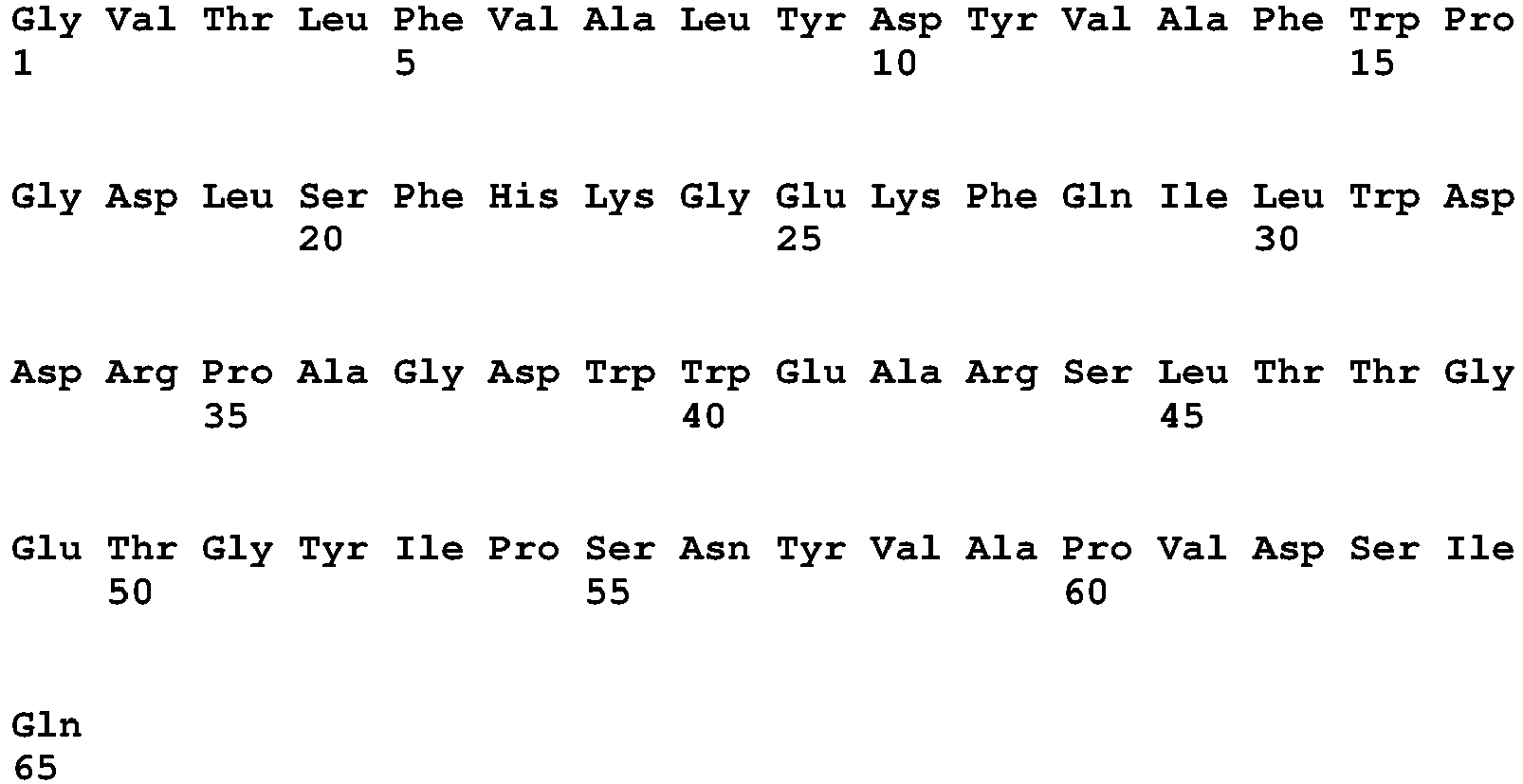
- <210> 8
<211> 65
<212> PRT
<213> Artificial Sequence - <220>
<223> IL-17A binder G2_1 - <400> 8

- <210> 9
<211> 65
<212> PRT
<213> Artificial Sequence - <220>
<223> IL-17A binder G4_1 - <400> 9

- <210> 10
<211> 65
<212> PRT
<213> Artificial Sequence - <220>
<223> IL-17A binder H5 - <400> 10

- <210> 11
<211> 65
<212> PRT
<213> Artificial Sequence - <220>
<223> IL-17A binder B1_1 - <400> 11

- <210> 12
<211> 65
<212> PRT
<213> Artificial Sequence - <220>
<223> IL-17A binder B6 - <400> 12

- <210> 13
<211> 65
<212> PRT
<213> Artificial Sequence - <220>
<223> IL-17A binder E6_1 - <400> 13


- <210> 14
<211> 65
<212> PRT
<213> Artificial Sequence - <220>
<223> IL-17A binder A7_1 - <400> 14

- <210> 15
<211> 65
<212> PRT
<213> Artificial Sequence - <220>
<223> IL-17A binder C1_1 - <400> 15


- <210> 16
<211> 65
<212> PRT
<213> Artificial Sequence - <220>
<223> IL-17A binder C4_1 - <400> 16

- <210> 17
<211> 65
<212> PRT
<213> Artificial Sequence - <220>
<223> IL-17A binder E2_1 - <400> 17


- <210> 18
<211> 65
<212> PRT
<213> Artificial Sequence - <220>
<223> IL-17A binder E5 - <400> 18

- <210> 19
<211> 65
<212> PRT
<213> Artificial Sequence - <220>
<223> IL-17A binder E7 - <400> 19

- <210> 20
<211> 65
<212> PRT
<213> Artificial Sequence - <220>
<223> IL-17A binder H4 - <400> 20

- <210> 21
<211> 65
<212> PRT
<213> Artificial Sequence - <220>
<223> IL-17A binder F1_1 - <400> 21

- <210> 22
<211> 65
<212> PRT
<213> Artificial Sequence - <220>
<223> IL-17A binder B3_2 - <400> 22

- <210> 23
<211> 65
<212> PRT
<213> Artificial Sequence - <220>
<223> IL-17A binder B4_1 - <400> 23

- <210> 24
<211> 65
<212> PRT
<213> Artificial Sequence - <220>
<223> IL-17A binder C2_2 - <400> 24

- <210> 25
<211> 65
<212> PRT
<213> Artificial Sequence - <220>
<223> IL-17A binder D2_2 - <400> 25

- <210> 26
<211> 65
<212> PRT
<213> Artificial Sequence - <220>
<223> IL-17A binder D3_1 - <400> 26


- <210> 27
<211> 65
<212> PRT
<213> Artificial Sequence - <220>
<223> IL-17A binder G4_2 - <400> 27

- <210> 28
<211> 65
<212> PRT
<213> Artificial Sequence - <220>
<223> IL-17A binder B2_1 - <400> 28


- <210> 29
<211> 65
<212> PRT
<213> Artificial Sequence - <220>
<223> IL-17A binder A1_1 - <400> 29

- <210> 30
<211> 65
<212> PRT
<213> Artificial Sequence - <220>
<223> IL-17A binder B5_1 - <400> 30


- <210> 31
<211> 65
<212> PRT
<213> Artificial Sequence - <220>
<223> IL-17A binder B8 - <400> 31

- <210> 32
<211> 65
<212> PRT
<213> Artificial Sequence - <220>
<223> IL-17A binder C4_2 - <400> 32

- <210> 33
<211> 65
<212> PRT
<213> Artificial Sequence - <220>
<223> IL-17A binder F3_1 - <400> 33

- <210> 34
<211> 65
<212> PRT
<213> Artificial Sequence - <220>
<223> IL-17A binder G3 - <400> 34

- <210> 35
<211> 63
<212> PRT
<213> Artificial Sequence - <220>
<223> IL-17A binder D3_2 - <400> 35

- <210> 36
<211> 63
<212> PRT
<213> Artificial Sequence - <220>
<223> IL-17A binder D5 - <400> 36

- <210> 37
<211> 63
<212> PRT
<213> Artificial Sequence - <220>
<223> IL-17A binder D2_3 - <400> 37


- <210> 38
<211> 63
<212> PRT
<213> Artificial Sequence - <220>
<223> IL-17A binder A3_1 - <400> 38

- <210> 39
<211> 63
<212> PRT
<213> Artificial Sequence - <220>
<223> IL-17A binder B1_2 - <400> 39

- <210> 40
<211> 63
<212> PRT
<213> Artificial Sequence - <220>
<223> IL-17A binder D3_3 - <400> 40

- <210> 41
<211> 63
<212> PRT
<213> Artificial Sequence - <220>
<223> IL-17A binder E2_2 - <400> 41

- <210> 42
<211> 63
<212> PRT
<213> Artificial Sequence - <220>
<223> IL-17A binder F4 - <400> 42


- <210> 43
<211> 63
<212> PRT
<213> Artificial Sequence - <220>
<223> IL-17A binder A6_1 - <400> 43

- <210> 44
<211> 63
<212> PRT
<213> Artificial Sequence - <220>
<223> IL-17A binder B10 - <400> 44

- <210> 45
<211> 63
<212> PRT
<213> Artificial Sequence - <220>
<223> IL-17A binder B12 - <400> 45

- <210> 46
<211> 63
<212> PRT
<213> Artificial Sequence - <220>
<223> IL-17A binder C5_1 - <400> 46

- <210> 47
<211> 63
<212> PRT
<213> Artificial Sequence - <220>
<223> IL-17A binder D12 - <400> 47


- <210> 48
<211> 63
<212> PRT
<213> Artificial Sequence - <220>
<223> IL-17A binder D2_4 - <400> 48

- <210> 49
<211> 63
<212> PRT
<213> Artificial Sequence - <220>
<223> IL-17A binder B2_2 - <400> 49

- <210> 50
<211> 63
<212> PRT
<213> Artificial Sequence - <220>
<223> IL-17A binder D2_5 - <400> 50

- <210> 51
<211> 63
<212> PRT
<213> Artificial Sequence - <220>
<223> IL-17A binder D7_1 - <400> 51

- <210> 52
<211> 63
<212> PRT
<213> Artificial Sequence - <220>
<223> IL-17A binder C11 - <400> 52


- <210> 53
<211> 63
<212> PRT
<213> Artificial Sequence - <220>
<223> IL-17A binder A1_2 - <400> 53

- <210> 54
<211> 63
<212> PRT
<213> Artificial Sequence - <220>
<223> IL-17A binder B7_1 - <400> 54

- <210> 55
<211> 63
<212> PRT
<213> Artificial Sequence - <220>
<223> IL-17A binder B5_2 - <400> 55

- <210> 56
<211> 63
<212> PRT
<213> Artificial Sequence - <220>
<223> IL-17A binder H11_1 - <400> 56

- <210> 57
<211> 63
<212> PRT
<213> Artificial Sequence - <220>
<223> IL-17A binder E4 - <400> 57


- <210> 58
<211> 63
<212> PRT
<213> Artificial Sequence - <220>
<223> IL-17A binder F3_2 - <400> 58

- <210> 59
<211> 63
<212> PRT
<213> Artificial Sequence - <220>
<223> IL-17A binder A3_2 - <400> 59

- <210> 60
<211> 63
<212> PRT
<213> Artificial Sequence - <220>
<223> IL-17A binder A5_2 - <400> 60

- <210> 61
<211> 63
<212> PRT
<213> Artificial Sequence - <220>
<223> IL-17A binder A8 - <400> 61
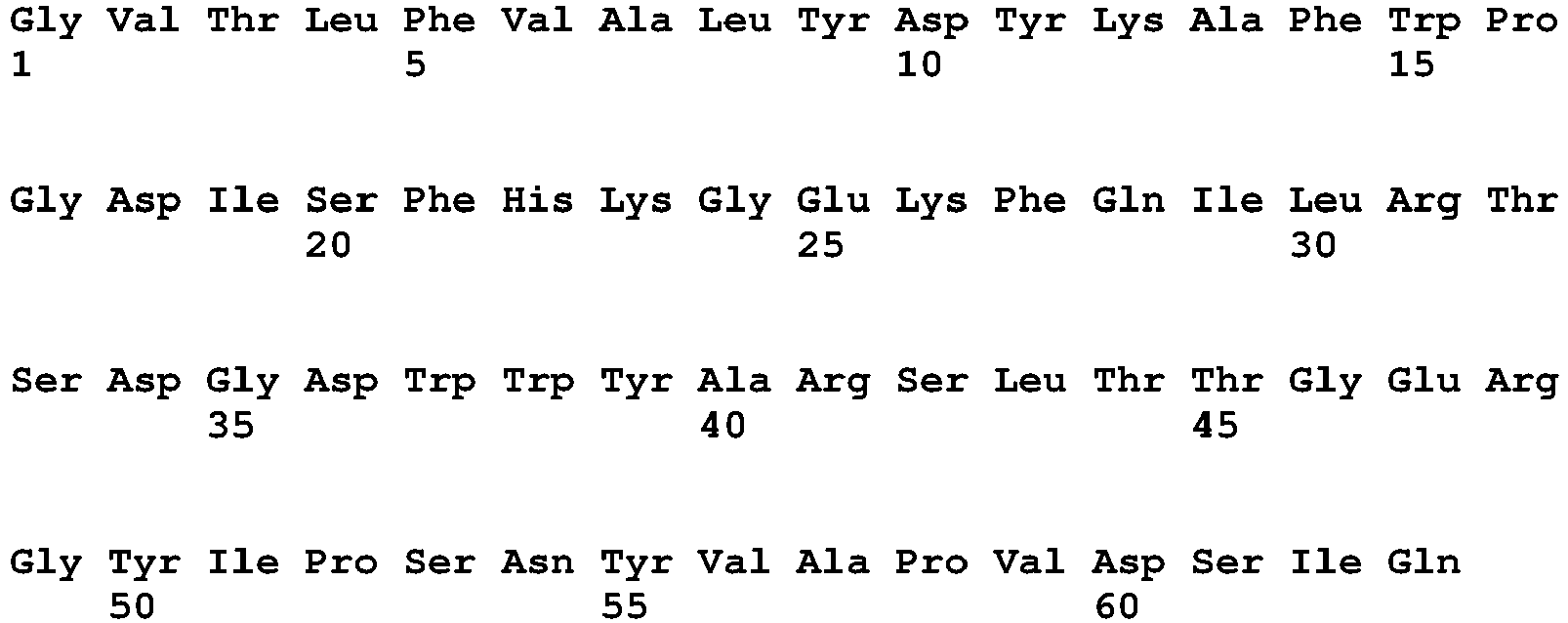
- <210> 62
<211> 63
<212> PRT
<213> Artificial Sequence - <220>
<223> IL-17A binder H10 - <400> 62


- <210> 63
<211> 63
<212> PRT
<213> Artificial Sequence - <220>
<223> IL-17A binder A9 - <400> 63

- <210> 64
<211> 63
<212> PRT
<213> Artificial Sequence - <220>
<223> IL-17A binder B2_3 - <400> 64

- <210> 65
<211> 63
<212> PRT
<213> Artificial Sequence - <220>
<223> IL-17A binder A7_2 - <400> 65
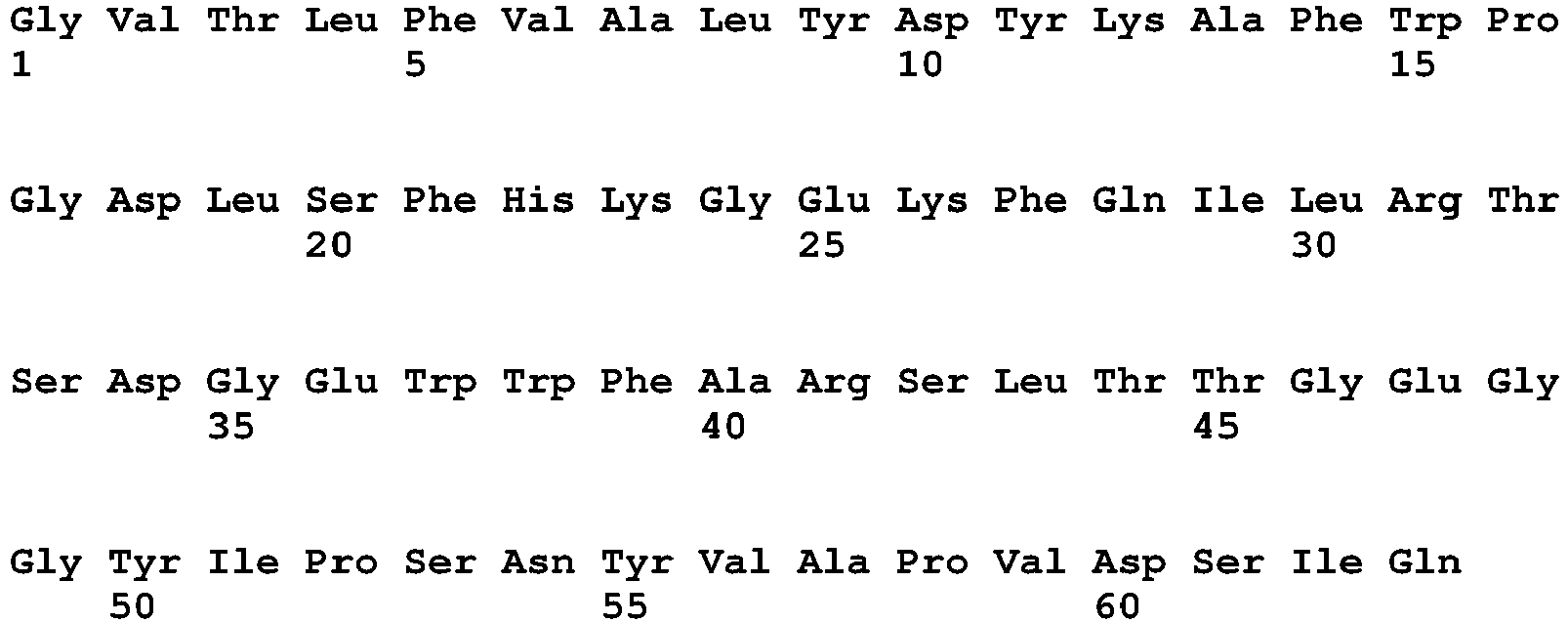
- <210> 66
<211> 63
<212> PRT
<213> Artificial Sequence - <220>
<223> IL-17A binder C2_3 - <400> 66

- <210> 67
<211> 63
<212> PRT
<213> Artificial Sequence - <220>
<223> IL-17A binder A3_3 - <400> 67


- <210> 68
<211> 63
<212> PRT
<213> Artificial Sequence - <220>
<223> IL-17A binder C1_2 - <400> 68
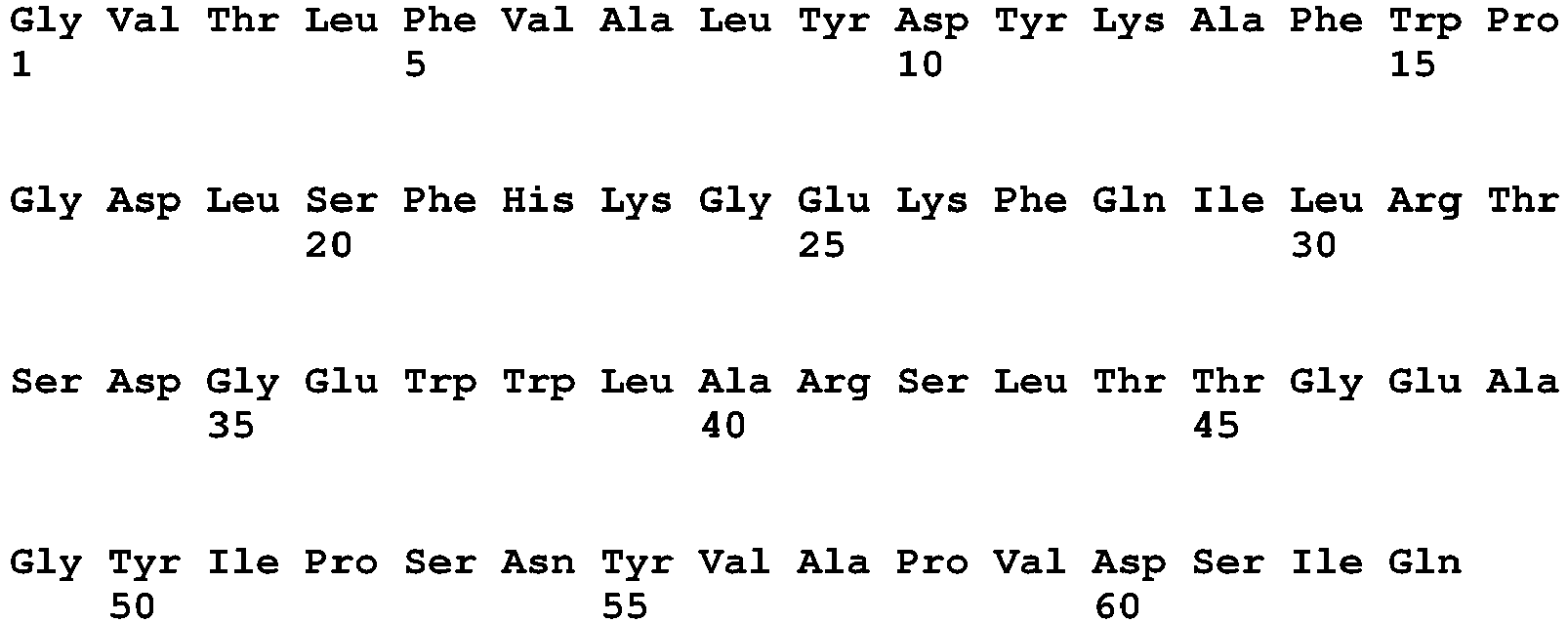
- <210> 69
<211> 63
<212> PRT
<213> Artificial Sequence - <220>
<223> IL-17A binder E9 - <400> 69

- <210> 70
<211> 63
<212> PRT
<213> Artificial Sequence - <220>
<223> IL-17A binder D1 - <400> 70

- <210> 71
<211> 63
<212> PRT
<213> Artificial Sequence - <220>
<223> IL-17A binder B3_3 - <400> 71

- <210> 72
<211> 63
<212> PRT
<213> Artificial Sequence - <220>
<223> IL-17A binder A12 - <400> 72


- <210> 73
<211> 63
<212> PRT
<213> Artificial Sequence - <220>
<223> IL-17A binder H3 - <400> 73

- <210> 74
<211> 63
<212> PRT
<213> Artificial Sequence - <220>
<223> IL-17A binder H9 - <400> 74

- <210> 75
<211> 63
<212> PRT
<213> Artificial Sequence - <220>
<223> IL-17A binder F1_2 - <400> 75

- <210> 76
<211> 63
<212> PRT
<213> Artificial Sequence - <220>
<223> IL-17A binder F10 - <400> 76

- <210> 77
<211> 63
<212> PRT
<213> Artificial Sequence - <220>
<223> IL-17A binder C5_2 - <400> 77


- <210> 78
<211> 63
<212> PRT
<213> Artificial Sequence - <220>
<223> IL-17A binder D7_2 - <400> 78

- <210> 79
<211> 63
<212> PRT
<213> Artificial Sequence - <220>
<223> IL-17A binder C2_4 - <400> 79

- <210> 80
<211> 63
<212> PRT
<213> Artificial Sequence - <220>
<223> IL-17A binder E3_1 - <400> 80

- <210> 81
<211> 63
<212> PRT
<213> Artificial Sequence - <220>
<223> IL-17A binder All - <400> 81

- <210> 82
<211> 63
<212> PRT
<213> Artificial Sequence - <220>
<223> IL-17A binder B4_2 - <400> 82


- <210> 83
<211> 63
<212> PRT
<213> Artificial Sequence - <220>
<223> IL-17A binder D10 - <400> 83

- <210> 84
<211> 63
<212> PRT
<213> Artificial Sequence - <220>
<223> IL-17A binder E6_2 - <400> 84

- <210> 85
<211> 63
<212> PRT
<213> Artificial Sequence - <220>
<223> IL-17A binder H11_2 - <400> 85

- <210> 86
<211> 63
<212> PRT
<213> Artificial Sequence - <220>
<223> IL-17A binder A5_3 - <400> 86

- <210> 87
<211> 63
<212> PRT
<213> Artificial Sequence - <220>
<223> IL-17A binder F12 - <400> 87


- <210> 88
<211> 63
<212> PRT
<213> Artificial Sequence - <220>
<223> IL-17A binder B7_2 - <400> 88

- <210> 89
<211> 63
<212> PRT
<213> Artificial Sequence - <220>
<223> IL-17A binder G2_2 - <400> 89

- <210> 90
<211> 63
<212> PRT
<213> Artificial Sequence - <220>
<223> IL-17A binder C5_3 - <400> 90

- <210> 91
<211> 63
<212> PRT
<213> Artificial Sequence - <220>
<223> IL-17A binder G11 - <400> 91

- <210> 92
<211> 63
<212> PRT
<213> Artificial Sequence - <220>
<223> IL-17A binder F5 - <400> 92


- <210> 93
<211> 63
<212> PRT
<213> Artificial Sequence - <220>
<223> IL-17A binder D3_4 - <400> 93

- <210> 94
<211> 63
<212> PRT
<213> Artificial Sequence - <220>
<223> IL-17A binder F9 - <400> 94

- <210> 95
<211> 63
<212> PRT
<213> Artificial Sequence - <220>
<223> IL-17A binder F1_3 - <400> 95

- <210> 96
<211> 63
<212> PRT
<213> Artificial Sequence - <220>
<223> IL-17A binder A4 - <400> 96

- <210> 97
<211> 63
<212> PRT
<213> Artificial Sequence - <220>
<223> IL-17A binder G5 - <400> 97


- <210> 98
<211> 63
<212> PRT
<213> Artificial Sequence - <220>
<223> IL-17A binder A6_2 - <400> 98

- <210> 99
<211> 63
<212> PRT
<213> Artificial Sequence - <220>
<223> IL-17A binder D2_6 - <400> 99

- <210> 100
<211> 63
<212> PRT
<213> Artificial Sequence - <220>
<223> IL-17A binder G4_3 - <400> 100

- <210> 101
<211> 63
<212> PRT
<213> Artificial Sequence - <220>
<223> IL-17A binder E3_2 - <400> 101

- <210> 102
<211> 63
<212> PRT
<213> Artificial Sequence - <220>
<223> IL-17A binder B4_3 - <400> 102


- <210> 103
<211> 63
<212> PRT
<213> Artificial Sequence - <220>
<223> IL-17A binder C4_3 - <400> 103

- <210> 104
<211> 63
<212> PRT
<213> Artificial Sequence - <220>
<223> IL-17A binder C9 - <400> 104

- <210> 105
<211> 63
<212> PRT
<213> Artificial Sequence - <220>
<223> IL-17A binder E1_2 - <400> 105

- <210> 106
<211> 63
<212> PRT
<213> Artificial Sequence - <220>
<223> IL-17A binder H2 - <400> 106

- <210> 107
<211> 63
<212> PRT
<213> Artificial Sequence - <220>
<223> IL-17A binder 2C1 - <400> 107


- <210> 108
<211> 63
<212> PRT
<213> Artificial Sequence - <220>
<223> IL-17A binder 1E2 - <400> 108

- <210> 109
<211> 63
<212> PRT
<213> Artificial Sequence - <220>
<223> IL-17A binder 1E9 - <400> 109
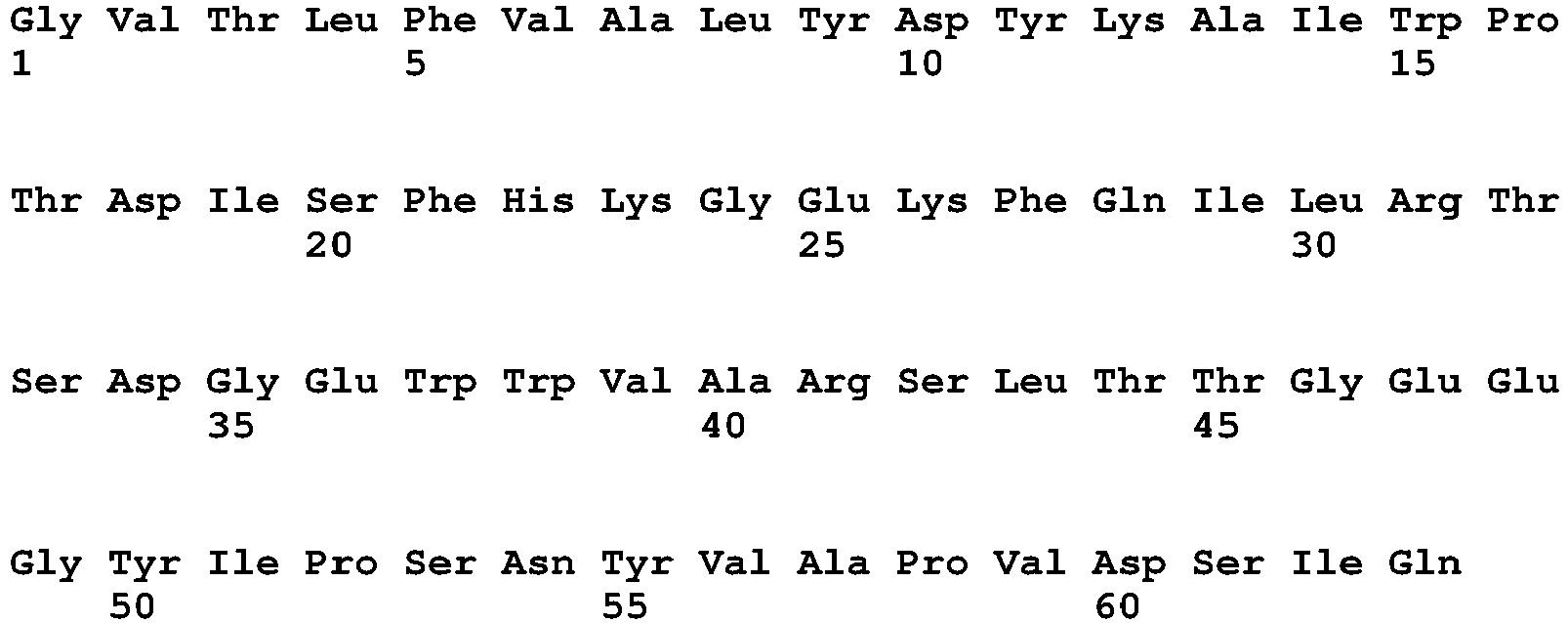
- <210> 110
<211> 63
<212> PRT
<213> Artificial Sequence - <220>
<223> IL-17A binder 1F3 - <400> 110

- <210> 111
<211> 63
<212> PRT
<213> Artificial Sequence - <220>
<223> IL-17A binder 2A6 - <400> 111

- <210> 112
<211> 63
<212> PRT
<213> Artificial Sequence - <220>
<223> IL-17A binder 34D3 - <400> 112


- <210> 113
<211> 63
<212> PRT
<213> Artificial Sequence - <220>
<223> IL-17A binder COMB3 - <400> 113

- <210> 114
<211> 63
<212> PRT
<213> Artificial Sequence - <220>
<223> IL-17A binder COMB4 - <400> 114

- <210> 115
<211> 63
<212> PRT
<213> Artificial Sequence - <220>
<223> IL-17A binder COMB5 - <400> 115

- <210> 116
<211> 63
<212> PRT
<213> Artificial Sequence - <220>
<223> IL-17A binder COMB6 - <400> 116

- <210> 117
<211> 292
<212> PRT
<213> Artificial Sequence - <220>
<223> Fusion protein E4-Fc - <400> 117


- <210> 118
<211> 292
<212> PRT
<213> Artificial Sequence - <220>
<223> Fusion protein 2C1-Fc - <400> 118


- <210> 119
<211> 365
<212> PRT
<213> Artificial Sequence - <220>
<223> Fusion protein (2C1)_2-Fc - <400> 119


- <210> 120
<211> 10
<212> PRT
<213> Artificial Sequence - <220>
<223> Amino acid linker - <400> 120

- <210> 121
<211> 29
<212> DNA
<213> Artificial Sequence - <220>
<223> PCR primer fm5 - <400> 121
atcgggatcc gacaaaactc acacatgcc 29 - <210> 122
<211> 30
<212> DNA
<213> Artificial Sequence - <220>
<223> PCR primer fm6 - <400> 122
tacgaagctt tcatttaccc ggagacaggg 30 - <210> 123
<211> 44
<212> DNA
<213> Artificial Sequence - <220>
<223> PCR primer fm7 - <400> 123
atatcaccat ggggccggag tgacactctt tgtggccctt tatg 44 - <210> 124
<211> 31
<212> DNA
<213> Artificial Sequence - <220>
<223> PCR primer fm8 - <400> 124
cgtaggatcc ctggatagag tcaactggagc 31 - <210> 125
<211> 54
<212> DNA
<213> Artificial Sequence - <220>
<223> PCR primer 47b.fo - <400> 125
agagccacct ccgcctgaac cgcctccacc ctggatagag tcaactggag ccac 54 - <210> 126
<211> 48
<212> DNA
<213> Artificial Sequence - <220>
<223>PCR primer 52. ba - <400> 126
gactaacgag atcgcggatc cggagtgaca ctctttgtgg ccctttat 48 - <210> 127
<211> 57
<212> DNA
<213> Artificial Sequence - <220>
<223> PCR primer 48b.ba - <400> 127
ggtggaggcg gttcaggcgg aggtggctct ggagtgacac tctttgtggc cctttat 57 - <210> 128
<211> 87
<212> DNA
<213> Artificial Sequence - <220>
<223> PCR primer 51. fo - <400> 128

- <210> 129
<211> 145
<212> PRT
<213> Macaca fascicularis - <400> 129


- <210> 130
<211> 292
<212> PRT
<213> Homo sapiens - <400> 130


- <210> 131
<211> 292
<212> PRT
<213> Artificial sequence - <220>
<223> 2C1-Fc(LALA) - <400> 131


- <210> 132
<211> 295
<212> PRT
<213> Artificial sequence - <220>
<223> 2C1-m5E-Fc(LALA) - <400> 132


- <210> 133
<211> 295
<212> PRT
<213> Artificial sequence - <220>
<223> 2C1-m5-Fc(LALA) - <400> 133
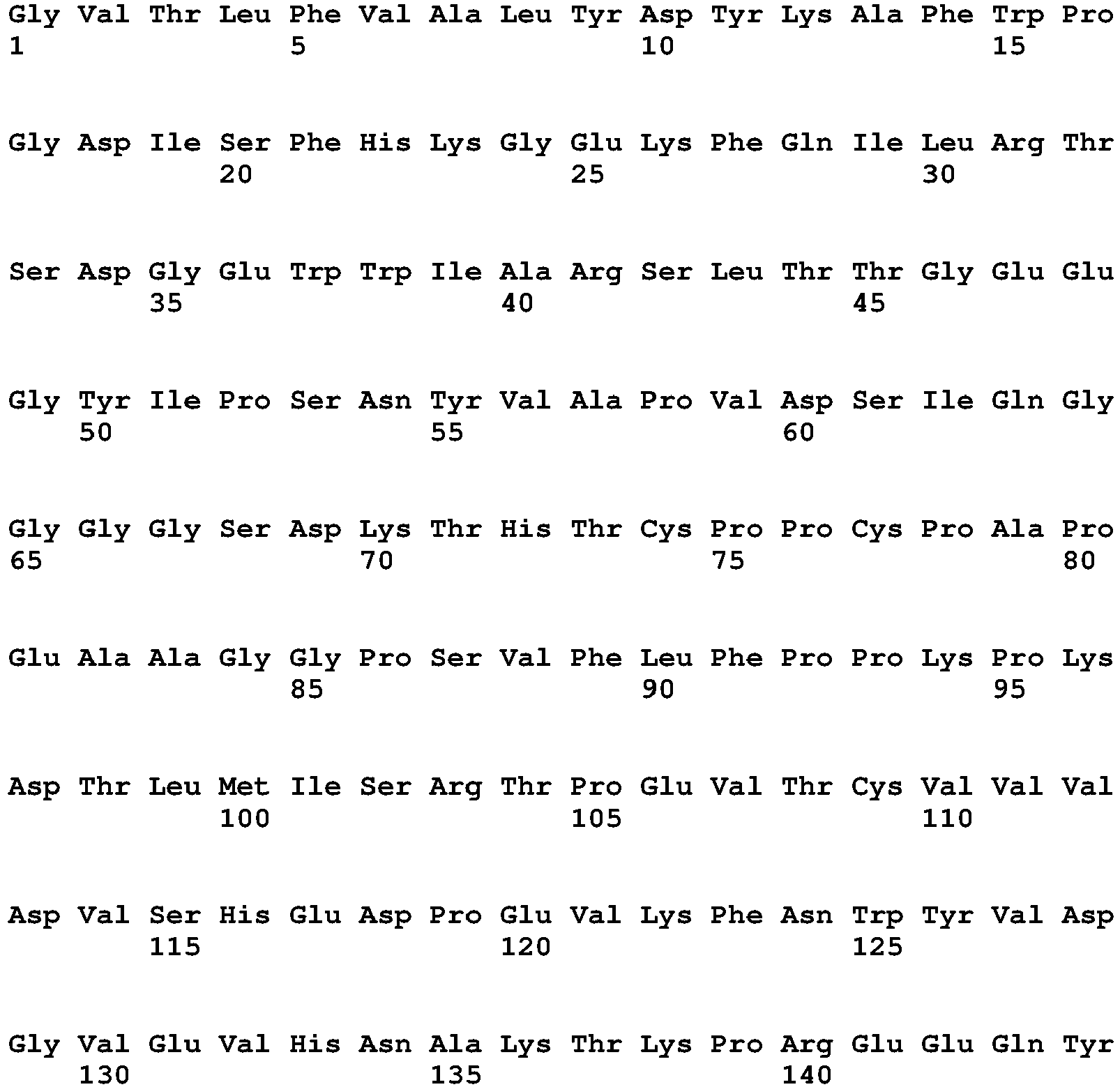

- <210> 134
<211> 300
<212> PRT
<213> Artificial sequence - <220>
<223> 2C1-m10-Fc(LALA) - <400> 134


- <210> 135
<211> 305
<212> PRT
<213> Artificial sequence - <220>
<223> 2C1-m15-Fc(LALA) - <400> 135


- <210> 136
<211> 30
<212> DNA
<213> Artificial sequence - <220>
<223> Primer SB3 - <400> 136
cgaattcggg agtgacactc tttgtggccc 30 - <210> 137
<211> 30
<212> DNA
<213> Artificial sequence - <220>
<223> Primer SB4 - <400> 137
gaagatctct ggatagagtc aactggagcc 30 - <210> 138
<211> 38
<212> DNA
<213> Artificial sequence - <220>
<223> Primer SB5 - <400> 138
cccaagcttg ggatgggcta caggatgcaa ctcctgtc 38 - <210> 139
<211> 30
<212> DNA
<213> Artificial sequence - <220>
<223> Primer SB6 - <400> 139
cgggatcctc atttacccgg agacagggag 30 - <210> 140
<211> 36
<212> DNA
<213> Artificial sequence - <220>
<223> Primer SB7 - <400> 140
actgacggtc cccccgcggc ttcaggtgct gggcac 36 - <210> 141
<211> 32
<212> DNA
<213> Artificial sequence - <220>
<223> Primer SB8 - <400> 141
gccgcggggg gaccgtcagt cttcctcttc cc 32 - <210> 142
<211> 39
<212> DNA
<213> Artificial sequence - <220>
<223> Primer Ba_2C1_R_EPKSS - <400> 142
gctgcttttc ggttcctgga tagagtcaac tggagccac 39 - <210> 143
<211> 39
<212> DNA
<213> Artificial sequence - <220>
<223> Primer Ba_Hinge_F_EPKSS - <400> 143
gaaccgaaaa gcagcgacaa aactcacaca tgcccaccg 39 - <210> 144
<211> 39
<212> DNA
<213> Artificial sequence - <220>
<223> Primer 47c.fo - <400> 144
tgaaccgcct ccaccctgga tagagtcaac tggagccac 39 - <210> 145
<211> 39
<212> DNA
<213> Artificial sequence - <220>
<223> Primer Ba_Hinge_F_5aaGS-linker - <400> 145
ggtggaggcg gttcagacaa aactcacaca tgcccaccg 39 - <210> 146
<211> 54
<212> DNA
<213> Artificial sequence - <220>
<223> Primer 47b.fo - <400> 146
agagccacct ccgcctgaac cgcctccacc ctggatagag tcaactggag ccac 54 - <210> 147
<211> 54
<212> DNA
<213> Artificial sequence - <220>
<223> Primer Ba_Hinge_F_10aaGS-linker - <400> 147
ggtggaggcg gttcaggcgg aggtggctct gacaaaactc acacatgccc accg 54 - <210> 148
<211> 69
<212> DNA
<213> Artificial sequence - <220>
<223> Primer 47.fo.corr - <400> 148

- <210> 149
<211> 69
<212> DNA
<213> Artificial sequence - <220>
<223> Primer Ba_Hinge_F_15aaGS-linker - <400> 149

Claims (15)
- A polypeptide comprising an amino acid sequence selected from the group consisting of:(i)
(G/E)VTLFVALYDYKAFWPGD-(X)b-SFHKGEKF-(X)c-ILRTSDG-(X)eWW-(X)rA-(X)g-SL TTG-(X)hGYIPSNYVAPVDSIQ (I)
whereinb is 1;c is 1;e is 1;f is 1;g is 1;h is 1 or 2;(ii) a functional derivative which binds to IL-17 A of (i) derived by substitution, addition and/or deletion of no more than 5 amino acids,wherein said polypeptide binds to and inhibits IL-17A. - The polypeptide of claim 1 selected from the group consisting of SEQ ID NOs: 37 to 116.
- A fusion protein comprising a polypeptide according to claim 1 or 2 fused to a pharmaceutically and/or diagnostically active component.
- The fusion protein according to claim 3, wherein said component is(a) a cytokine,(b) a toxic compound,(c) a chemokine,(d) a fluorescent dye,(e) a photosensitizer,(f) a pro-coagulant factor,(g) an enzyme for prodrug activation,(h) a radionuclide, or(i) a functional Fc domain
- The polypeptide or fusion protein according to any of the previous claims, further comprising a component modulating serum half-life, preferably a component selected from the group consisting of polyethylene glycol (PEG), immunoglobulin and albumin-binding peptides.
- The fusion protein of claim 3, 4 or 5 comprising multimers of the polypeptide of claim 1 or 2.
- A multimer of the polypeptide of claim 1, 2 or 5.
- An isolated and purified nucleic acid, comprising a nucleic acid encoding a polypeptide according to claim 1 or 2.
- A nucleic acid comprising the nucleic acid of claim 8 operably linked to a promoter.
- A recombinant vector, comprising a nucleic acid of claim 8 or 9.
- A host cell comprising a nucleic acid and/or a vector according to any one of claims 8 to 10.
- An antibody that specifically binds a polypeptide according to claim 2.
- A hybridoma cell line, expressing a monoclonal antibody according to claim 12.
- A pharmaceutical composition comprising a polypeptide or fusion protein, a nucleic acid and/or a recombinant vector according to any of the previous claims.
- The polypeptide or fusion protein, the nucleic acid and/or the recombinant vector according to any of the previous claims for use in treating and/or preventing a disease selected from inflammatory, autoimmune and/or bone loss-related diseases and medical conditions, wherein the polypeptide or the polypeptide encoded by the nucleic acid or recombinant vector inhibits the function of IL-17 A.
Priority Applications (1)
| Application Number | Priority Date | Filing Date | Title |
|---|---|---|---|
| EP10744706.2A EP2470556B1 (en) | 2009-08-27 | 2010-08-24 | Il-17 binding compounds and medical uses thereof |
Applications Claiming Priority (3)
| Application Number | Priority Date | Filing Date | Title |
|---|---|---|---|
| EP09010950 | 2009-08-27 | ||
| PCT/EP2010/062314 WO2011023685A1 (en) | 2009-08-27 | 2010-08-24 | Il-17 binding compounds and medical uses thereof |
| EP10744706.2A EP2470556B1 (en) | 2009-08-27 | 2010-08-24 | Il-17 binding compounds and medical uses thereof |
Publications (2)
| Publication Number | Publication Date |
|---|---|
| EP2470556A1 EP2470556A1 (en) | 2012-07-04 |
| EP2470556B1 true EP2470556B1 (en) | 2018-05-30 |
Family
ID=42732273
Family Applications (1)
| Application Number | Title | Priority Date | Filing Date |
|---|---|---|---|
| EP10744706.2A Active EP2470556B1 (en) | 2009-08-27 | 2010-08-24 | Il-17 binding compounds and medical uses thereof |
Country Status (12)
| Country | Link |
|---|---|
| US (2) | US9376477B2 (en) |
| EP (1) | EP2470556B1 (en) |
| JP (2) | JP5868318B2 (en) |
| CN (1) | CN102869678A (en) |
| AU (1) | AU2010288542B2 (en) |
| BR (1) | BR112012004314A2 (en) |
| CA (1) | CA2772162C (en) |
| IL (1) | IL218354A0 (en) |
| MX (1) | MX2012002428A (en) |
| NZ (1) | NZ598351A (en) |
| RU (1) | RU2550272C2 (en) |
| WO (1) | WO2011023685A1 (en) |
Families Citing this family (74)
| Publication number | Priority date | Publication date | Assignee | Title |
|---|---|---|---|---|
| JP4976412B2 (en) | 2005-12-01 | 2012-07-18 | ベー・エル・アー・ハー・エム・エス・ゲーエムベーハー | Methods for diagnosis and treatment of critically ill patients with endothelin, endothelin agonists and adrenomedullin antagonists |
| EP2524927A1 (en) * | 2011-05-20 | 2012-11-21 | Covagen AG | New chymase binding compounds and medical uses thereof |
| US9701749B2 (en) | 2011-08-11 | 2017-07-11 | Ono Pharmaceutical Co., Ltd. | Therapeutic agent for autoimmune diseases comprising PD-1 agonist |
| SG11201402354YA (en) | 2011-11-16 | 2014-06-27 | Adrenomed Ag | Anti-adrenomedullin (adm) antibody or anti-adm antibody fragment or anti-adm non-ig scaffold for regulating the fluid balance in a patient having a chronic or acute disease |
| EP2780717B1 (en) | 2011-11-16 | 2016-12-21 | sphingotec GmbH | Adrenomedullin assays and methods for determining mature adrenomedullin |
| IL283215B2 (en) | 2011-11-16 | 2024-05-01 | Adrenomed Ag | Anti-adrenomedullin (ADM) antibody or anti-ADM antibody fragment and pharmaceutical preparations containing them |
| SG11201402358RA (en) | 2011-11-16 | 2014-06-27 | Adrenomed Ag | Anti-adrenomedullin (adm) antibody or anti-adm antibody fragment or anti-adm non-ig scaffold for use in therapy of an acute disease or acute condition of a patient for stabilizing the circulation |
| PT3553084T (en) | 2011-11-16 | 2023-02-17 | Adrenomed Ag | Anti-adrenomedullin (adm) antibody or anti-adm antibody fragment or anti-adm non-ig scaffold for prevention or reduction of organ dysfunction or organ failure in a patient having a chronic or acute disease or acute condition |
| ES2494190T3 (en) | 2011-11-16 | 2014-09-15 | Adrenomed Ag | Anti-adrenomedulin antibody (ADM) or anti-ADM antibody fragment or protein scaffold without anti-ADM Ig to reduce the risk of mortality in a patient suffering from a chronic or acute disease or an acute condition |
| EP2597102A1 (en) | 2011-11-25 | 2013-05-29 | Covagen AG | A novel fusion protein comprising an antibody light chain and a polypeptide binding to IL-17 |
| CN103308689B (en) | 2012-03-08 | 2017-04-12 | 思芬构技术有限公司 | A method for predicting the risk of getting cancer or diagnosing cancer in a female subject |
| CN103308673B (en) | 2012-03-08 | 2017-05-31 | 思芬构技术有限公司 | For predicting in female subject the method for the risk of cardiovascular event |
| CN103308670B (en) | 2012-03-08 | 2017-06-09 | 思芬构技术有限公司 | For predicting the method that object suffers from the risk of diabetes and/or metabolic syndrome |
| KR20140135251A (en) * | 2012-03-16 | 2014-11-25 | 코바겐 아게 | Novel binding molecules with antitumoral activity |
| EP2638916A1 (en) * | 2012-03-16 | 2013-09-18 | Covagen AG | Novel binding molecules with antitumoral activity |
| EP2711016A1 (en) | 2012-09-21 | 2014-03-26 | Covagen AG | Novel IL-17A binding molecules and medical uses thereof |
| DK3361260T3 (en) | 2012-10-02 | 2020-08-03 | Sphingotec Gmbh | A PROCEDURE FOR DIAGNOSTIC OR MONITORING KIDNEY FUNCTION |
| WO2014107737A2 (en) | 2013-01-07 | 2014-07-10 | Eleven Biotherapeutics, Inc. | Local delivery of il-17 inhibitors for treating ocular disease |
| CN104937421B (en) | 2013-01-08 | 2018-01-19 | 斯弗因高泰克有限公司 | Fasting levels of growth hormone as a predictive marker of cardiovascular risk |
| CN108362885B (en) | 2013-03-20 | 2021-05-14 | 斯弗因高泰克有限公司 | Adrenomedullin to guide blood pressure lowering therapy |
| CN105189544A (en) * | 2013-04-19 | 2015-12-23 | 科瓦根股份公司 | Novel bispecific binding molecules with antitumoral activity |
| UA117608C2 (en) | 2014-02-21 | 2018-08-27 | Дженентек, Інк. | Anti-il-13/il-17 bispecific antibodies and uses thereof |
| US10323095B2 (en) * | 2014-03-17 | 2019-06-18 | Mitsubishi Tanabe Pharma Corporation | Antibody-fynomer conjugates |
| US20160097781A1 (en) | 2014-10-01 | 2016-04-07 | Sphingotec Gmbh | Method for stratifying a female subject for hormone replacement therapy |
| AR103173A1 (en) | 2014-12-22 | 2017-04-19 | Novarits Ag | PHARMACEUTICAL PRODUCTS AND STABLE LIQUID COMPOSITIONS OF ANTIBODIES IL-17 |
| PT3245224T (en) * | 2015-01-12 | 2020-10-08 | Affibody Ab | Il-17a-binding polypeptides |
| JP6841765B2 (en) | 2015-04-24 | 2021-03-10 | シュピーンゴテック ゲゼルシャフト ミット ベシュレンクテル ハフツング | Methods for Predicting the Risk of Developing Chronic Kidney Disease |
| JP6491071B2 (en) * | 2015-10-07 | 2019-03-27 | トヨタ自動車株式会社 | In-vehicle solar cell module |
| MY200300A (en) | 2016-04-21 | 2023-12-19 | 4TEEN4 Pharmaceuticals GmbH | Methods for determining dpp3 and therapeutic methods |
| MA45493A (en) | 2016-06-27 | 2019-05-01 | Aicuris Anti Infective Cures Gmbh | HCMC ENTRY INHIBITORS. |
| CN109716136B (en) | 2016-07-08 | 2023-09-22 | 斯弗因高泰克有限公司 | Adrenomedullin to assess congestion in patients with acute heart failure |
| EP3309550A1 (en) | 2016-10-12 | 2018-04-18 | sphingotec GmbH | Method for the detection of apolipoprotein e4 |
| EP3339324A1 (en) | 2016-12-22 | 2018-06-27 | sphingotec GmbH | Anti-adrenomedullin (adm) antibody or anti-adm antibody fragment or anti-adm non-ig scaffold for use in intervention and therapy of congestion in a patient in need thereof |
| JP7727371B2 (en) | 2016-12-16 | 2025-08-21 | アドレノメト アクチェンゲゼルシャフト | Anti-adrenomedullin (ADM) antibodies, or anti-ADM antibody fragments, or anti-ADM non-Ig scaffolds for use in the treatment and therapy of hemostasis in patients in need thereof |
| US10722589B2 (en) | 2017-04-03 | 2020-07-28 | Covagen Ag | FGFR3 binding molecules |
| US20200182885A1 (en) | 2017-05-30 | 2020-06-11 | Sphingotec Gmbh | A method for diagnosing or monitoring kidney function or diagnosing kidney dysfuntion |
| CA3076691A1 (en) | 2017-09-25 | 2019-03-28 | Adrenomed Ag | Anti-adrenomedullin (adm) binder for use in therapy or prevention of symptoms of illness |
| MX2020004072A (en) | 2017-10-18 | 2020-07-28 | Adrenomed Ag | Therapy monitoring under treatment with an anti-adrenomedullin (adm) binder. |
| AU2018356370A1 (en) | 2017-10-24 | 2020-04-09 | Sphingotec Gmbh | Selenoprotein P for prediction of a first cardiovascular event |
| EP3700937A2 (en) | 2017-10-25 | 2020-09-02 | 4TEEN4 Pharmaceuticals GmbH | Dpp3 binder directed to and binding to specific dpp3-epitopes and its use in the prevention or treatment of diseases / acute conditions that are associated with oxidative stress |
| JP2021513077A (en) | 2018-02-08 | 2021-05-20 | シュピーンゴテック ゲゼルシャフト ミット ベシュレンクテル ハフツング | Adrenomedullin (ADM) for the diagnosis and / or prediction of dementia, and an anti-adrenomedullin binder for use in the treatment or prevention of dementia |
| EP3569614A1 (en) | 2018-05-18 | 2019-11-20 | Julius-Maximilians-Universität Würzburg | Compounds and methods for the immobilization of myostatin-inhibitors on the extracellular matrix by transglutaminase |
| RU2677264C1 (en) * | 2018-05-24 | 2019-01-16 | Общество с ограниченной ответственностью научно-технический центр "БиоКлиникум" (ООО НТЦ "БиоКлиникум") | Immunotoxin for multiple sclerosis therapy, method for preparation and application thereof |
| EP3586865A1 (en) | 2018-06-21 | 2020-01-01 | Charité - Universitätsmedizin Berlin | Complement anaphylatoxin binders and their use in treatment of a subject having an ocular wound and/or fibrosis |
| JP2022514896A (en) | 2018-12-20 | 2022-02-16 | シュピーンゴテック ゲゼルシャフト ミット ベシュレンクテル ハフツング | Selenoprotein P in heart failure |
| US20220211798A1 (en) | 2018-12-21 | 2022-07-07 | 4TEEN4 Pharmaceuticals GmbH | Therapy guidance and/or therapy monitoring for a treatment with angiotensin-receptor-agonist and/or a precursor thereof |
| KR20220030956A (en) | 2019-07-05 | 2022-03-11 | 오노 야꾸힝 고교 가부시키가이샤 | Hematological cancer treatment by PD-1/CD3 bispecific protein |
| TW202120550A (en) | 2019-08-08 | 2021-06-01 | 日商小野藥品工業股份有限公司 | Bispecific protein |
| JP7612666B2 (en) | 2019-08-15 | 2025-01-14 | シュピーンゴテック ゲゼルシャフト ミット ベシュレンクテル ハフツング | Methods for diagnosing or monitoring renal function or diagnosing renal dysfunction in a pediatric patient - Patents.com |
| JP2022546061A (en) | 2019-08-30 | 2022-11-02 | 4ティーン4 ファーマシューティカルズ ゲゼルシャフト ミット ベシュレンクテル ハフツング | Therapy induction and/or therapy monitoring for treatment of shock |
| AU2020401755A1 (en) | 2019-12-11 | 2022-08-04 | Cilag Gmbh International | Multispecific binding molecules comprising LTBR and EDB binding domains and uses thereof |
| EP3871689A1 (en) | 2020-02-26 | 2021-09-01 | sphingotec GmbH | Anti-adm-antibodies binding to the free n-terminus for accelerated transition of adm-gly to bio-adm in patients with adm-gly/ bio-adm ratio above a threshold and combination with vitamin c |
| US20230250166A1 (en) | 2020-02-27 | 2023-08-10 | Adrenomed Ag | Anti-adrenomedullin (adm) binder for use in therapy of patients in shock |
| BR112022015215A2 (en) | 2020-02-27 | 2022-10-11 | 4TEEN4 Pharmaceuticals GmbH | DPP3 FOR GUIDANCE, MONITORING AND STRATIFICATION OF NT-ADM ANTIBODY THERAPY IN PATIENTS WITH SHOCK |
| US20230104578A1 (en) | 2020-02-27 | 2023-04-06 | Adrenomed Ag | Anti-adrenomedullin (adm) antibody or anti-adm antibody fragment or anti-adm non-ig scaffold for use in therapy or prevention of shock |
| EP3922993A1 (en) | 2020-06-12 | 2021-12-15 | 4TEEN4 Pharmaceuticals GmbH | Dpp3 in patients infected with coronavirus |
| JP2023518380A (en) | 2020-03-16 | 2023-05-01 | アドレノメト アクチェンゲゼルシャフト | Treatment with proadrenomedullin or fragments thereof and binding agents to adrenomedullin in patients infected with coronavirus |
| CN115769076A (en) | 2020-03-16 | 2023-03-07 | 4Teen4制药有限公司 | DPP3 in patients infected with coronavirus |
| EP4023218A1 (en) | 2020-12-02 | 2022-07-06 | S-Form Pharma | Combination therapy for patients having acute and/or persistent dyspnea |
| US20240272178A1 (en) | 2021-06-18 | 2024-08-15 | Sphingotec Gmbh | A method for predicting sepsis and septic shock |
| WO2023275099A1 (en) | 2021-06-29 | 2023-01-05 | Berysol Gmbh | Composite biomarker for the identification of selenium deficiency in a bodily fluid |
| CA3254142A1 (en) | 2022-03-15 | 2023-09-21 | Adrenomed Ag | Stable aqueous formulation of an anti-adrenomedullin (adm) antibody or anti-adm antibody fragment |
| IL318667A (en) | 2022-07-29 | 2025-03-01 | Adrenomed Ag | An anti-adrenomediolin (ADM) antibody or fragment of an anti-adrenomediolin antibody or non-IG anti-ADM scaffold for use in the treatment or prevention of shock. |
| AU2023315168A1 (en) | 2022-07-29 | 2025-02-13 | 4TEEN4 Pharmaceuticals GmbH | Prediction of an increase of dpp3 in a patient with septic shock |
| EP4633659A1 (en) | 2022-12-15 | 2025-10-22 | 4TEEN4 Pharmaceuticals GmbH | Dpp3 inhibitor for improvement of pulmonary function in critically ill patients |
| CN120731367A (en) | 2023-03-17 | 2025-09-30 | Pam治疗诊断有限公司 | Determination of peptidylglycine α-amidating monooxygenase (PAM) and its diagnostic application |
| JP2026513177A (en) | 2023-03-29 | 2026-04-23 | 4ティーン4 ファーマシューティカルズ ゲゼルシャフト ミット ベシュレンクテル ハフツング | DPP3 inhibitors for myocardial protection and prevention of myocardial injury in critically ill patients with hypotension |
| WO2025068313A1 (en) | 2023-09-25 | 2025-04-03 | Sphingotec Gmbh | A method for early diagnosis, early prediction, monitoring or prediction of severity of reduced graft function in a kidney transplantation patient |
| WO2025221736A2 (en) | 2024-04-15 | 2025-10-23 | Janssen Biotech, Inc. | Ltbr binding molecules and uses thereof |
| WO2025229075A1 (en) | 2024-05-03 | 2025-11-06 | Sphingotec Gmbh | A method for the specific determination of proenkephalin fragment 119-159 |
| WO2025248139A1 (en) | 2024-05-31 | 2025-12-04 | 4TEEN4 Pharmaceuticals GmbH | Use of adrenomedullin or fragments thereof in the treatment of a patient in need thereof |
| EP4675277A1 (en) | 2024-07-05 | 2026-01-07 | Predemtec AG | A method for diagnosing alzheimer´s disease or determining the risk of suffering from alzheimer´s disease |
| WO2026046968A1 (en) | 2024-08-26 | 2026-03-05 | 4TEEN4 Pharmaceuticals GmbH | Dpp3 binders for the treatment of endothelial dysfunction |
| WO2026046978A1 (en) | 2024-08-26 | 2026-03-05 | Pam Theragnostics Gmbh | Anti-adm antibodies, anti-adm antibody fragment or anti-adm non-ig scaffold for therapy or prevention of immune effector cell therapy side effects |
Family Cites Families (9)
| Publication number | Priority date | Publication date | Assignee | Title |
|---|---|---|---|---|
| US7029912B1 (en) * | 1999-04-09 | 2006-04-18 | Sugen, Inc. | Tyrosine kinase substrate(Tks) proteins |
| US7072771B2 (en) * | 2001-06-07 | 2006-07-04 | University Of Kentucky Research Foundation | Selective PARP-1 targeting for designing chemo/radio sensitizing agents |
| SI1983000T1 (en) * | 2003-11-21 | 2015-12-31 | Ucb Biopharma Sprl | Method for the treatment of multiple sclerosis by inhibiting IL-17 activity |
| EP1541694A1 (en) * | 2003-12-12 | 2005-06-15 | Sirenade Pharmaceuticals AG | Methods of identifying, selecting and/or characterizing compounds which modulate the activity of a Src family kinase |
| GB0425569D0 (en) | 2004-11-19 | 2004-12-22 | Celltech R&D Ltd | Biological products |
| EP1931697B1 (en) * | 2005-09-28 | 2010-09-15 | ZymoGenetics, Inc. | Il-17a and il-17f antagonists and methods of using the same |
| WO2007106769A2 (en) * | 2006-03-10 | 2007-09-20 | Zymogenetics, Inc. | Antibodies that bind both il-17a and il-17f and methods of using the same |
| US7790163B2 (en) * | 2006-03-10 | 2010-09-07 | Zymogenetics, Inc. | Antibodies that bind both IL-17A and IL-17F and methods of using the same |
| EP1892248A1 (en) | 2006-08-21 | 2008-02-27 | Eidgenössische Technische Hochschule Zürich | Specific and high affinity binding proteins comprising modified SH3 domains of FYN kinase |
-
2010
- 2010-08-24 BR BR112012004314A patent/BR112012004314A2/en not_active IP Right Cessation
- 2010-08-24 EP EP10744706.2A patent/EP2470556B1/en active Active
- 2010-08-24 JP JP2012526035A patent/JP5868318B2/en not_active Expired - Fee Related
- 2010-08-24 AU AU2010288542A patent/AU2010288542B2/en not_active Ceased
- 2010-08-24 CN CN2010800494355A patent/CN102869678A/en active Pending
- 2010-08-24 RU RU2012111597/10A patent/RU2550272C2/en active
- 2010-08-24 CA CA2772162A patent/CA2772162C/en not_active Expired - Fee Related
- 2010-08-24 WO PCT/EP2010/062314 patent/WO2011023685A1/en not_active Ceased
- 2010-08-24 US US13/392,783 patent/US9376477B2/en not_active Expired - Fee Related
- 2010-08-24 NZ NZ598351A patent/NZ598351A/en not_active IP Right Cessation
- 2010-08-24 MX MX2012002428A patent/MX2012002428A/en active IP Right Grant
-
2012
- 2012-02-27 IL IL218354A patent/IL218354A0/en unknown
-
2015
- 2015-06-09 JP JP2015116489A patent/JP2015187146A/en active Pending
-
2016
- 2016-05-17 US US15/156,983 patent/US20160368957A1/en not_active Abandoned
Non-Patent Citations (1)
| Title |
|---|
| None * |
Also Published As
| Publication number | Publication date |
|---|---|
| US20160368957A1 (en) | 2016-12-22 |
| AU2010288542A1 (en) | 2012-03-15 |
| AU2010288542B2 (en) | 2014-05-22 |
| US20130005659A1 (en) | 2013-01-03 |
| BR112012004314A2 (en) | 2016-11-29 |
| MX2012002428A (en) | 2012-09-12 |
| JP2013502910A (en) | 2013-01-31 |
| WO2011023685A1 (en) | 2011-03-03 |
| RU2550272C2 (en) | 2015-05-10 |
| CA2772162A1 (en) | 2011-03-03 |
| CN102869678A (en) | 2013-01-09 |
| JP2015187146A (en) | 2015-10-29 |
| EP2470556A1 (en) | 2012-07-04 |
| IL218354A0 (en) | 2012-04-30 |
| US9376477B2 (en) | 2016-06-28 |
| CA2772162C (en) | 2018-05-22 |
| RU2012111597A (en) | 2013-10-10 |
| NZ598351A (en) | 2014-08-29 |
| JP5868318B2 (en) | 2016-02-24 |
Similar Documents
| Publication | Publication Date | Title |
|---|---|---|
| US9376477B2 (en) | IL-17 binding compounds and medical uses thereof | |
| EP2872163B1 (en) | Novel il-17a binding molecules and medical uses thereof | |
| EP2902039B1 (en) | IL-17 antagonistic antibodies | |
| EP2597102A1 (en) | A novel fusion protein comprising an antibody light chain and a polypeptide binding to IL-17 | |
| JP2009526535A (en) | New CC chemokine antagonist | |
| EP2524927A1 (en) | New chymase binding compounds and medical uses thereof | |
| HK1191875A (en) | Novel il-17a binding molecules and medical uses thereof | |
| HK1207559B (en) | Il-17 antagonistic antibodies | |
| HK1101277B (en) | Il-17 antagonistic antibodies |
Legal Events
| Date | Code | Title | Description |
|---|---|---|---|
| PUAI | Public reference made under article 153(3) epc to a published international application that has entered the european phase |
Free format text: ORIGINAL CODE: 0009012 |
|
| 17P | Request for examination filed |
Effective date: 20120327 |
|
| AK | Designated contracting states |
Kind code of ref document: A1 Designated state(s): AL AT BE BG CH CY CZ DE DK EE ES FI FR GB GR HR HU IE IS IT LI LT LU LV MC MK MT NL NO PL PT RO SE SI SK SM TR |
|
| AX | Request for extension of the european patent |
Extension state: RS |
|
| RAX | Requested extension states of the european patent have changed |
Extension state: RS Payment date: 20120327 |
|
| REG | Reference to a national code |
Ref country code: HK Ref legal event code: DE Ref document number: 1171028 Country of ref document: HK |
|
| 17Q | First examination report despatched |
Effective date: 20140612 |
|
| RAP1 | Party data changed (applicant data changed or rights of an application transferred) |
Owner name: COVAGEN AG |
|
| GRAP | Despatch of communication of intention to grant a patent |
Free format text: ORIGINAL CODE: EPIDOSNIGR1 |
|
| INTG | Intention to grant announced |
Effective date: 20171205 |
|
| GRAJ | Information related to disapproval of communication of intention to grant by the applicant or resumption of examination proceedings by the epo deleted |
Free format text: ORIGINAL CODE: EPIDOSDIGR1 |
|
| GRAR | Information related to intention to grant a patent recorded |
Free format text: ORIGINAL CODE: EPIDOSNIGR71 |
|
| GRAS | Grant fee paid |
Free format text: ORIGINAL CODE: EPIDOSNIGR3 |
|
| GRAA | (expected) grant |
Free format text: ORIGINAL CODE: 0009210 |
|
| INTC | Intention to grant announced (deleted) | ||
| RIN1 | Information on inventor provided before grant (corrected) |
Inventor name: BRACK, SIMON SEBASTIAN Inventor name: BERTSCHINGER, JULIAN Inventor name: BATEY, SARAH Inventor name: SILACCI MELKKO, MICHELA Inventor name: GRABULOVSKI, DRAGAN Inventor name: MOURLANE, FREDERIC Inventor name: BAENZIGER, NADJA |
|
| AK | Designated contracting states |
Kind code of ref document: B1 Designated state(s): AL AT BE BG CH CY CZ DE DK EE ES FI FR GB GR HR HU IE IS IT LI LT LU LV MC MK MT NL NO PL PT RO SE SI SK SM TR |
|
| AX | Request for extension of the european patent |
Extension state: RS |
|
| INTG | Intention to grant announced |
Effective date: 20180420 |
|
| REG | Reference to a national code |
Ref country code: GB Ref legal event code: FG4D |
|
| REG | Reference to a national code |
Ref country code: CH Ref legal event code: EP |
|
| REG | Reference to a national code |
Ref country code: AT Ref legal event code: REF Ref document number: 1003497 Country of ref document: AT Kind code of ref document: T Effective date: 20180615 |
|
| REG | Reference to a national code |
Ref country code: IE Ref legal event code: FG4D |
|
| REG | Reference to a national code |
Ref country code: DE Ref legal event code: R096 Ref document number: 602010050943 Country of ref document: DE |
|
| REG | Reference to a national code |
Ref country code: FR Ref legal event code: PLFP Year of fee payment: 9 |
|
| REG | Reference to a national code |
Ref country code: NL Ref legal event code: MP Effective date: 20180530 |
|
| REG | Reference to a national code |
Ref country code: LT Ref legal event code: MG4D |
|
| PG25 | Lapsed in a contracting state [announced via postgrant information from national office to epo] |
Ref country code: ES Free format text: LAPSE BECAUSE OF FAILURE TO SUBMIT A TRANSLATION OF THE DESCRIPTION OR TO PAY THE FEE WITHIN THE PRESCRIBED TIME-LIMIT Effective date: 20180530 Ref country code: LT Free format text: LAPSE BECAUSE OF FAILURE TO SUBMIT A TRANSLATION OF THE DESCRIPTION OR TO PAY THE FEE WITHIN THE PRESCRIBED TIME-LIMIT Effective date: 20180530 Ref country code: CY Free format text: LAPSE BECAUSE OF FAILURE TO SUBMIT A TRANSLATION OF THE DESCRIPTION OR TO PAY THE FEE WITHIN THE PRESCRIBED TIME-LIMIT Effective date: 20180530 Ref country code: NO Free format text: LAPSE BECAUSE OF FAILURE TO SUBMIT A TRANSLATION OF THE DESCRIPTION OR TO PAY THE FEE WITHIN THE PRESCRIBED TIME-LIMIT Effective date: 20180830 Ref country code: FI Free format text: LAPSE BECAUSE OF FAILURE TO SUBMIT A TRANSLATION OF THE DESCRIPTION OR TO PAY THE FEE WITHIN THE PRESCRIBED TIME-LIMIT Effective date: 20180530 Ref country code: BG Free format text: LAPSE BECAUSE OF FAILURE TO SUBMIT A TRANSLATION OF THE DESCRIPTION OR TO PAY THE FEE WITHIN THE PRESCRIBED TIME-LIMIT Effective date: 20180830 Ref country code: SE Free format text: LAPSE BECAUSE OF FAILURE TO SUBMIT A TRANSLATION OF THE DESCRIPTION OR TO PAY THE FEE WITHIN THE PRESCRIBED TIME-LIMIT Effective date: 20180530 |
|
| PG25 | Lapsed in a contracting state [announced via postgrant information from national office to epo] |
Ref country code: GR Free format text: LAPSE BECAUSE OF FAILURE TO SUBMIT A TRANSLATION OF THE DESCRIPTION OR TO PAY THE FEE WITHIN THE PRESCRIBED TIME-LIMIT Effective date: 20180831 Ref country code: HR Free format text: LAPSE BECAUSE OF FAILURE TO SUBMIT A TRANSLATION OF THE DESCRIPTION OR TO PAY THE FEE WITHIN THE PRESCRIBED TIME-LIMIT Effective date: 20180530 Ref country code: LV Free format text: LAPSE BECAUSE OF FAILURE TO SUBMIT A TRANSLATION OF THE DESCRIPTION OR TO PAY THE FEE WITHIN THE PRESCRIBED TIME-LIMIT Effective date: 20180530 |
|
| REG | Reference to a national code |
Ref country code: AT Ref legal event code: MK05 Ref document number: 1003497 Country of ref document: AT Kind code of ref document: T Effective date: 20180530 |
|
| PG25 | Lapsed in a contracting state [announced via postgrant information from national office to epo] |
Ref country code: NL Free format text: LAPSE BECAUSE OF FAILURE TO SUBMIT A TRANSLATION OF THE DESCRIPTION OR TO PAY THE FEE WITHIN THE PRESCRIBED TIME-LIMIT Effective date: 20180530 |
|
| PG25 | Lapsed in a contracting state [announced via postgrant information from national office to epo] |
Ref country code: SK Free format text: LAPSE BECAUSE OF FAILURE TO SUBMIT A TRANSLATION OF THE DESCRIPTION OR TO PAY THE FEE WITHIN THE PRESCRIBED TIME-LIMIT Effective date: 20180530 Ref country code: RO Free format text: LAPSE BECAUSE OF FAILURE TO SUBMIT A TRANSLATION OF THE DESCRIPTION OR TO PAY THE FEE WITHIN THE PRESCRIBED TIME-LIMIT Effective date: 20180530 Ref country code: PL Free format text: LAPSE BECAUSE OF FAILURE TO SUBMIT A TRANSLATION OF THE DESCRIPTION OR TO PAY THE FEE WITHIN THE PRESCRIBED TIME-LIMIT Effective date: 20180530 Ref country code: CZ Free format text: LAPSE BECAUSE OF FAILURE TO SUBMIT A TRANSLATION OF THE DESCRIPTION OR TO PAY THE FEE WITHIN THE PRESCRIBED TIME-LIMIT Effective date: 20180530 Ref country code: DK Free format text: LAPSE BECAUSE OF FAILURE TO SUBMIT A TRANSLATION OF THE DESCRIPTION OR TO PAY THE FEE WITHIN THE PRESCRIBED TIME-LIMIT Effective date: 20180530 Ref country code: AT Free format text: LAPSE BECAUSE OF FAILURE TO SUBMIT A TRANSLATION OF THE DESCRIPTION OR TO PAY THE FEE WITHIN THE PRESCRIBED TIME-LIMIT Effective date: 20180530 Ref country code: EE Free format text: LAPSE BECAUSE OF FAILURE TO SUBMIT A TRANSLATION OF THE DESCRIPTION OR TO PAY THE FEE WITHIN THE PRESCRIBED TIME-LIMIT Effective date: 20180530 |
|
| PG25 | Lapsed in a contracting state [announced via postgrant information from national office to epo] |
Ref country code: SM Free format text: LAPSE BECAUSE OF FAILURE TO SUBMIT A TRANSLATION OF THE DESCRIPTION OR TO PAY THE FEE WITHIN THE PRESCRIBED TIME-LIMIT Effective date: 20180530 Ref country code: IT Free format text: LAPSE BECAUSE OF FAILURE TO SUBMIT A TRANSLATION OF THE DESCRIPTION OR TO PAY THE FEE WITHIN THE PRESCRIBED TIME-LIMIT Effective date: 20180530 |
|
| REG | Reference to a national code |
Ref country code: DE Ref legal event code: R097 Ref document number: 602010050943 Country of ref document: DE |
|
| PG25 | Lapsed in a contracting state [announced via postgrant information from national office to epo] |
Ref country code: MC Free format text: LAPSE BECAUSE OF FAILURE TO SUBMIT A TRANSLATION OF THE DESCRIPTION OR TO PAY THE FEE WITHIN THE PRESCRIBED TIME-LIMIT Effective date: 20180530 |
|
| PLBE | No opposition filed within time limit |
Free format text: ORIGINAL CODE: 0009261 |
|
| STAA | Information on the status of an ep patent application or granted ep patent |
Free format text: STATUS: NO OPPOSITION FILED WITHIN TIME LIMIT |
|
| PG25 | Lapsed in a contracting state [announced via postgrant information from national office to epo] |
Ref country code: LU Free format text: LAPSE BECAUSE OF NON-PAYMENT OF DUE FEES Effective date: 20180824 |
|
| 26N | No opposition filed |
Effective date: 20190301 |
|
| REG | Reference to a national code |
Ref country code: BE Ref legal event code: MM Effective date: 20180831 |
|
| PG25 | Lapsed in a contracting state [announced via postgrant information from national office to epo] |
Ref country code: SI Free format text: LAPSE BECAUSE OF FAILURE TO SUBMIT A TRANSLATION OF THE DESCRIPTION OR TO PAY THE FEE WITHIN THE PRESCRIBED TIME-LIMIT Effective date: 20180530 |
|
| PG25 | Lapsed in a contracting state [announced via postgrant information from national office to epo] |
Ref country code: BE Free format text: LAPSE BECAUSE OF NON-PAYMENT OF DUE FEES Effective date: 20180831 |
|
| PG25 | Lapsed in a contracting state [announced via postgrant information from national office to epo] |
Ref country code: AL Free format text: LAPSE BECAUSE OF FAILURE TO SUBMIT A TRANSLATION OF THE DESCRIPTION OR TO PAY THE FEE WITHIN THE PRESCRIBED TIME-LIMIT Effective date: 20180530 |
|
| PG25 | Lapsed in a contracting state [announced via postgrant information from national office to epo] |
Ref country code: MT Free format text: LAPSE BECAUSE OF NON-PAYMENT OF DUE FEES Effective date: 20180824 |
|
| PG25 | Lapsed in a contracting state [announced via postgrant information from national office to epo] |
Ref country code: TR Free format text: LAPSE BECAUSE OF FAILURE TO SUBMIT A TRANSLATION OF THE DESCRIPTION OR TO PAY THE FEE WITHIN THE PRESCRIBED TIME-LIMIT Effective date: 20180530 |
|
| REG | Reference to a national code |
Ref country code: HK Ref legal event code: WD Ref document number: 1171028 Country of ref document: HK |
|
| PG25 | Lapsed in a contracting state [announced via postgrant information from national office to epo] |
Ref country code: HU Free format text: LAPSE BECAUSE OF FAILURE TO SUBMIT A TRANSLATION OF THE DESCRIPTION OR TO PAY THE FEE WITHIN THE PRESCRIBED TIME-LIMIT; INVALID AB INITIO Effective date: 20100824 Ref country code: PT Free format text: LAPSE BECAUSE OF FAILURE TO SUBMIT A TRANSLATION OF THE DESCRIPTION OR TO PAY THE FEE WITHIN THE PRESCRIBED TIME-LIMIT Effective date: 20180530 |
|
| PG25 | Lapsed in a contracting state [announced via postgrant information from national office to epo] |
Ref country code: IE Free format text: LAPSE BECAUSE OF NON-PAYMENT OF DUE FEES Effective date: 20180824 Ref country code: MK Free format text: LAPSE BECAUSE OF NON-PAYMENT OF DUE FEES Effective date: 20180530 |
|
| PG25 | Lapsed in a contracting state [announced via postgrant information from national office to epo] |
Ref country code: IS Free format text: LAPSE BECAUSE OF FAILURE TO SUBMIT A TRANSLATION OF THE DESCRIPTION OR TO PAY THE FEE WITHIN THE PRESCRIBED TIME-LIMIT Effective date: 20180930 |
|
| REG | Reference to a national code |
Ref country code: CH Ref legal event code: PFUS Owner name: CILAG GMBH INTERNATIONAL, CH Free format text: FORMER OWNER: COVAGEN AG, CH |
|
| REG | Reference to a national code |
Ref country code: GB Ref legal event code: 732E Free format text: REGISTERED BETWEEN 20201001 AND 20201007 |
|
| REG | Reference to a national code |
Ref country code: DE Ref legal event code: R081 Ref document number: 602010050943 Country of ref document: DE Owner name: CILAG GMBH INTERNATIONAL, CH Free format text: FORMER OWNER: COVAGEN AG, ZUG, CH |
|
| PGFP | Annual fee paid to national office [announced via postgrant information from national office to epo] |
Ref country code: GB Payment date: 20220630 Year of fee payment: 13 |
|
| PGFP | Annual fee paid to national office [announced via postgrant information from national office to epo] |
Ref country code: DE Payment date: 20220608 Year of fee payment: 13 |
|
| PGFP | Annual fee paid to national office [announced via postgrant information from national office to epo] |
Ref country code: FR Payment date: 20220709 Year of fee payment: 13 |
|
| PGFP | Annual fee paid to national office [announced via postgrant information from national office to epo] |
Ref country code: CH Payment date: 20220802 Year of fee payment: 13 |
|
| REG | Reference to a national code |
Ref country code: DE Ref legal event code: R119 Ref document number: 602010050943 Country of ref document: DE |
|
| REG | Reference to a national code |
Ref country code: CH Ref legal event code: PL |
|
| GBPC | Gb: european patent ceased through non-payment of renewal fee |
Effective date: 20230824 |
|
| PG25 | Lapsed in a contracting state [announced via postgrant information from national office to epo] |
Ref country code: CH Free format text: LAPSE BECAUSE OF NON-PAYMENT OF DUE FEES Effective date: 20230831 |
|
| PG25 | Lapsed in a contracting state [announced via postgrant information from national office to epo] |
Ref country code: GB Free format text: LAPSE BECAUSE OF NON-PAYMENT OF DUE FEES Effective date: 20230824 |
|
| PG25 | Lapsed in a contracting state [announced via postgrant information from national office to epo] |
Ref country code: GB Free format text: LAPSE BECAUSE OF NON-PAYMENT OF DUE FEES Effective date: 20230824 Ref country code: FR Free format text: LAPSE BECAUSE OF NON-PAYMENT OF DUE FEES Effective date: 20230831 Ref country code: DE Free format text: LAPSE BECAUSE OF NON-PAYMENT OF DUE FEES Effective date: 20240301 |