EP2468764A1 - TNF family ligand variants - Google Patents
TNF family ligand variants Download PDFInfo
- Publication number
- EP2468764A1 EP2468764A1 EP10252230A EP10252230A EP2468764A1 EP 2468764 A1 EP2468764 A1 EP 2468764A1 EP 10252230 A EP10252230 A EP 10252230A EP 10252230 A EP10252230 A EP 10252230A EP 2468764 A1 EP2468764 A1 EP 2468764A1
- Authority
- EP
- European Patent Office
- Prior art keywords
- variant
- ligand
- dimer
- tnf family
- rankl
- Prior art date
- Legal status (The legal status is an assumption and is not a legal conclusion. Google has not performed a legal analysis and makes no representation as to the accuracy of the status listed.)
- Withdrawn
Links
- 239000003446 ligand Substances 0.000 title claims abstract description 233
- 239000000539 dimer Substances 0.000 claims abstract description 164
- 102100040247 Tumor necrosis factor Human genes 0.000 claims abstract description 161
- 239000013638 trimer Substances 0.000 claims abstract description 30
- 239000013598 vector Substances 0.000 claims abstract description 24
- 102000005962 receptors Human genes 0.000 claims description 117
- 230000035772 mutation Effects 0.000 claims description 58
- 150000001413 amino acids Chemical class 0.000 claims description 21
- 239000002773 nucleotide Substances 0.000 claims description 20
- 125000003729 nucleotide group Chemical group 0.000 claims description 20
- 239000008194 pharmaceutical composition Substances 0.000 claims description 20
- 241001529936 Murinae Species 0.000 claims description 19
- 238000006467 substitution reaction Methods 0.000 claims description 16
- 206010028980 Neoplasm Diseases 0.000 claims description 12
- 206010039073 rheumatoid arthritis Diseases 0.000 claims description 12
- 201000011510 cancer Diseases 0.000 claims description 11
- 102100036922 Tumor necrosis factor ligand superfamily member 13B Human genes 0.000 claims description 10
- 208000020084 Bone disease Diseases 0.000 claims description 9
- 208000010191 Osteitis Deformans Diseases 0.000 claims description 9
- 208000001132 Osteoporosis Diseases 0.000 claims description 9
- 208000027868 Paget disease Diseases 0.000 claims description 9
- 101710181056 Tumor necrosis factor ligand superfamily member 13B Proteins 0.000 claims description 9
- 239000000833 heterodimer Substances 0.000 claims description 9
- 230000036210 malignancy Effects 0.000 claims description 9
- 208000027202 mammary Paget disease Diseases 0.000 claims description 9
- 108060008682 Tumor Necrosis Factor Proteins 0.000 claims description 8
- 102000000852 Tumor Necrosis Factor-alpha Human genes 0.000 claims description 8
- 230000000694 effects Effects 0.000 claims description 8
- 238000004519 manufacturing process Methods 0.000 claims description 8
- 206010005949 Bone cancer Diseases 0.000 claims description 7
- 208000018084 Bone neoplasm Diseases 0.000 claims description 7
- 108010039471 Fas Ligand Protein Proteins 0.000 claims description 7
- 102100031988 Tumor necrosis factor ligand superfamily member 6 Human genes 0.000 claims description 7
- 101000830603 Homo sapiens Tumor necrosis factor ligand superfamily member 11 Proteins 0.000 claims description 6
- 102000053529 human TNFSF11 Human genes 0.000 claims description 6
- 108010029697 CD40 Ligand Proteins 0.000 claims description 5
- 102100032937 CD40 ligand Human genes 0.000 claims description 5
- 101100207070 Homo sapiens TNFSF8 gene Proteins 0.000 claims description 5
- 101100207071 Mus musculus Tnfsf8 gene Proteins 0.000 claims description 5
- 102100032100 Tumor necrosis factor ligand superfamily member 8 Human genes 0.000 claims description 5
- 230000007935 neutral effect Effects 0.000 claims description 4
- 230000008092 positive effect Effects 0.000 claims description 4
- -1 APRIL Proteins 0.000 claims description 2
- 102000014128 RANK Ligand Human genes 0.000 claims 3
- 108010025832 RANK Ligand Proteins 0.000 claims 3
- 125000003275 alpha amino acid group Chemical group 0.000 claims 1
- 239000000178 monomer Substances 0.000 abstract description 39
- 230000011664 signaling Effects 0.000 abstract description 22
- 238000000034 method Methods 0.000 abstract description 15
- 108020004707 nucleic acids Proteins 0.000 abstract description 12
- 102000039446 nucleic acids Human genes 0.000 abstract description 12
- 150000007523 nucleic acids Chemical class 0.000 abstract description 12
- 108060008683 Tumor Necrosis Factor Receptor Proteins 0.000 abstract description 9
- 208000037265 diseases, disorders, signs and symptoms Diseases 0.000 abstract description 9
- 102000003298 tumor necrosis factor receptor Human genes 0.000 abstract description 9
- 230000002860 competitive effect Effects 0.000 abstract description 7
- 201000010099 disease Diseases 0.000 abstract description 7
- 239000003112 inhibitor Substances 0.000 abstract description 5
- 230000001594 aberrant effect Effects 0.000 abstract description 3
- 108020003175 receptors Proteins 0.000 description 113
- 210000004027 cell Anatomy 0.000 description 45
- 241000282414 Homo sapiens Species 0.000 description 24
- 230000001965 increasing effect Effects 0.000 description 16
- 108700015048 receptor decoy activity proteins Proteins 0.000 description 15
- 102000004169 proteins and genes Human genes 0.000 description 14
- 108090000623 proteins and genes Proteins 0.000 description 14
- 210000002997 osteoclast Anatomy 0.000 description 13
- 108010027767 Rank-Fc Proteins 0.000 description 12
- 108010035042 Osteoprotegerin Proteins 0.000 description 11
- 102000008108 Osteoprotegerin Human genes 0.000 description 11
- 125000000539 amino acid group Chemical group 0.000 description 11
- XXUPLYBCNPLTIW-UHFFFAOYSA-N octadec-7-ynoic acid Chemical compound CCCCCCCCCCC#CCCCCCC(O)=O XXUPLYBCNPLTIW-UHFFFAOYSA-N 0.000 description 11
- PEDCQBHIVMGVHV-UHFFFAOYSA-N Glycerine Chemical compound OCC(O)CO PEDCQBHIVMGVHV-UHFFFAOYSA-N 0.000 description 9
- 108010065323 Tumor Necrosis Factor Ligand Superfamily Member 13 Proteins 0.000 description 9
- 238000002474 experimental method Methods 0.000 description 9
- 108090000765 processed proteins & peptides Proteins 0.000 description 9
- 241001465754 Metazoa Species 0.000 description 8
- 238000003556 assay Methods 0.000 description 8
- 239000000872 buffer Substances 0.000 description 8
- 102000046283 TNF-Related Apoptosis-Inducing Ligand Human genes 0.000 description 7
- 101710097160 Tumor necrosis factor ligand superfamily member 10 Proteins 0.000 description 7
- 238000013459 approach Methods 0.000 description 7
- 230000015572 biosynthetic process Effects 0.000 description 7
- 239000012634 fragment Substances 0.000 description 7
- 230000001225 therapeutic effect Effects 0.000 description 7
- 238000002965 ELISA Methods 0.000 description 6
- 238000002296 dynamic light scattering Methods 0.000 description 6
- 238000005259 measurement Methods 0.000 description 6
- 230000001404 mediated effect Effects 0.000 description 6
- 230000004048 modification Effects 0.000 description 6
- 238000012986 modification Methods 0.000 description 6
- 239000002904 solvent Substances 0.000 description 6
- 206010006187 Breast cancer Diseases 0.000 description 5
- 208000026310 Breast neoplasm Diseases 0.000 description 5
- 241001494479 Pecora Species 0.000 description 5
- FAPWRFPIFSIZLT-UHFFFAOYSA-M Sodium chloride Chemical compound [Na+].[Cl-] FAPWRFPIFSIZLT-UHFFFAOYSA-M 0.000 description 5
- 230000004913 activation Effects 0.000 description 5
- 230000000903 blocking effect Effects 0.000 description 5
- 239000000499 gel Substances 0.000 description 5
- 239000002609 medium Substances 0.000 description 5
- 210000005088 multinucleated cell Anatomy 0.000 description 5
- 230000004044 response Effects 0.000 description 5
- 241000588724 Escherichia coli Species 0.000 description 4
- DHMQDGOQFOQNFH-UHFFFAOYSA-N Glycine Chemical compound NCC(O)=O DHMQDGOQFOQNFH-UHFFFAOYSA-N 0.000 description 4
- 241000282898 Sus scrofa Species 0.000 description 4
- 101710187830 Tumor necrosis factor receptor superfamily member 1B Proteins 0.000 description 4
- 102100033733 Tumor necrosis factor receptor superfamily member 1B Human genes 0.000 description 4
- 230000003213 activating effect Effects 0.000 description 4
- 230000037396 body weight Effects 0.000 description 4
- 238000002983 circular dichroism Methods 0.000 description 4
- 230000003247 decreasing effect Effects 0.000 description 4
- 238000012217 deletion Methods 0.000 description 4
- 230000037430 deletion Effects 0.000 description 4
- 229960001251 denosumab Drugs 0.000 description 4
- 230000001419 dependent effect Effects 0.000 description 4
- 238000013461 design Methods 0.000 description 4
- 238000010494 dissociation reaction Methods 0.000 description 4
- 230000005593 dissociations Effects 0.000 description 4
- 239000003814 drug Substances 0.000 description 4
- 230000002401 inhibitory effect Effects 0.000 description 4
- 230000005764 inhibitory process Effects 0.000 description 4
- 108020001756 ligand binding domains Proteins 0.000 description 4
- 230000014759 maintenance of location Effects 0.000 description 4
- 238000000746 purification Methods 0.000 description 4
- 241000283690 Bos taurus Species 0.000 description 3
- 241000282472 Canis lupus familiaris Species 0.000 description 3
- 241000700199 Cavia porcellus Species 0.000 description 3
- 241000699800 Cricetinae Species 0.000 description 3
- 102100037354 Ectodysplasin-A Human genes 0.000 description 3
- 108010008165 Etanercept Proteins 0.000 description 3
- 241000282326 Felis catus Species 0.000 description 3
- 101000880080 Homo sapiens Ectodysplasin-A Proteins 0.000 description 3
- 101000830600 Homo sapiens Tumor necrosis factor ligand superfamily member 13 Proteins 0.000 description 3
- 241000124008 Mammalia Species 0.000 description 3
- 241000699666 Mus <mouse, genus> Species 0.000 description 3
- 108091028043 Nucleic acid sequence Proteins 0.000 description 3
- 241000283973 Oryctolagus cuniculus Species 0.000 description 3
- 241000700159 Rattus Species 0.000 description 3
- 239000012505 Superdex™ Substances 0.000 description 3
- 230000021736 acetylation Effects 0.000 description 3
- 238000006640 acetylation reaction Methods 0.000 description 3
- 230000029936 alkylation Effects 0.000 description 3
- 238000005804 alkylation reaction Methods 0.000 description 3
- 230000006907 apoptotic process Effects 0.000 description 3
- 239000003937 drug carrier Substances 0.000 description 3
- 239000012149 elution buffer Substances 0.000 description 3
- 230000022244 formylation Effects 0.000 description 3
- 238000006170 formylation reaction Methods 0.000 description 3
- 238000001641 gel filtration chromatography Methods 0.000 description 3
- 238000002523 gelfiltration Methods 0.000 description 3
- 230000013595 glycosylation Effects 0.000 description 3
- 238000006206 glycosylation reaction Methods 0.000 description 3
- 230000005847 immunogenicity Effects 0.000 description 3
- 238000000126 in silico method Methods 0.000 description 3
- 238000002347 injection Methods 0.000 description 3
- 239000007924 injection Substances 0.000 description 3
- 230000003993 interaction Effects 0.000 description 3
- 239000007788 liquid Substances 0.000 description 3
- 230000011987 methylation Effects 0.000 description 3
- 238000007069 methylation reaction Methods 0.000 description 3
- 238000006384 oligomerization reaction Methods 0.000 description 3
- 230000006320 pegylation Effects 0.000 description 3
- 239000000546 pharmaceutical excipient Substances 0.000 description 3
- 102000004196 processed proteins & peptides Human genes 0.000 description 3
- 239000000523 sample Substances 0.000 description 3
- 239000000333 selective estrogen receptor modulator Substances 0.000 description 3
- 239000011780 sodium chloride Substances 0.000 description 3
- 238000002198 surface plasmon resonance spectroscopy Methods 0.000 description 3
- 238000002560 therapeutic procedure Methods 0.000 description 3
- 230000009261 transgenic effect Effects 0.000 description 3
- IJGRMHOSHXDMSA-UHFFFAOYSA-N Atomic nitrogen Chemical compound N#N IJGRMHOSHXDMSA-UHFFFAOYSA-N 0.000 description 2
- 208000000659 Autoimmune lymphoproliferative syndrome Diseases 0.000 description 2
- 241000282836 Camelus dromedarius Species 0.000 description 2
- FEWJPZIEWOKRBE-JCYAYHJZSA-N Dextrotartaric acid Chemical compound OC(=O)[C@H](O)[C@@H](O)C(O)=O FEWJPZIEWOKRBE-JCYAYHJZSA-N 0.000 description 2
- 241000283073 Equus caballus Species 0.000 description 2
- LFQSCWFLJHTTHZ-UHFFFAOYSA-N Ethanol Chemical compound CCO LFQSCWFLJHTTHZ-UHFFFAOYSA-N 0.000 description 2
- 239000004471 Glycine Substances 0.000 description 2
- 101000830565 Homo sapiens Tumor necrosis factor ligand superfamily member 10 Proteins 0.000 description 2
- 208000022559 Inflammatory bowel disease Diseases 0.000 description 2
- 101000597780 Mus musculus Tumor necrosis factor ligand superfamily member 18 Proteins 0.000 description 2
- 102000004473 OX40 Ligand Human genes 0.000 description 2
- 108010042215 OX40 Ligand Proteins 0.000 description 2
- 240000004808 Saccharomyces cerevisiae Species 0.000 description 2
- 102100035283 Tumor necrosis factor ligand superfamily member 18 Human genes 0.000 description 2
- 101710187743 Tumor necrosis factor receptor superfamily member 1A Proteins 0.000 description 2
- 102100033732 Tumor necrosis factor receptor superfamily member 1A Human genes 0.000 description 2
- 241000700605 Viruses Species 0.000 description 2
- 230000002776 aggregation Effects 0.000 description 2
- 238000004220 aggregation Methods 0.000 description 2
- 150000001412 amines Chemical class 0.000 description 2
- 230000003042 antagnostic effect Effects 0.000 description 2
- 239000005557 antagonist Substances 0.000 description 2
- 230000009286 beneficial effect Effects 0.000 description 2
- 230000008901 benefit Effects 0.000 description 2
- 239000008280 blood Substances 0.000 description 2
- 210000004369 blood Anatomy 0.000 description 2
- 238000000055 blue native polyacrylamide gel electrophoresis Methods 0.000 description 2
- 230000037182 bone density Effects 0.000 description 2
- 238000004364 calculation method Methods 0.000 description 2
- 238000005251 capillar electrophoresis Methods 0.000 description 2
- 238000005119 centrifugation Methods 0.000 description 2
- 239000002299 complementary DNA Substances 0.000 description 2
- 230000008878 coupling Effects 0.000 description 2
- 238000010168 coupling process Methods 0.000 description 2
- 238000005859 coupling reaction Methods 0.000 description 2
- 239000003085 diluting agent Substances 0.000 description 2
- 208000035475 disorder Diseases 0.000 description 2
- 230000007783 downstream signaling Effects 0.000 description 2
- 238000010828 elution Methods 0.000 description 2
- 239000006274 endogenous ligand Substances 0.000 description 2
- 229960000403 etanercept Drugs 0.000 description 2
- 239000013604 expression vector Substances 0.000 description 2
- 230000002349 favourable effect Effects 0.000 description 2
- 230000006870 function Effects 0.000 description 2
- 230000014509 gene expression Effects 0.000 description 2
- 230000036541 health Effects 0.000 description 2
- 102000044949 human TNFSF10 Human genes 0.000 description 2
- 238000003780 insertion Methods 0.000 description 2
- 230000037431 insertion Effects 0.000 description 2
- 108020004999 messenger RNA Proteins 0.000 description 2
- 238000002703 mutagenesis Methods 0.000 description 2
- 231100000350 mutagenesis Toxicity 0.000 description 2
- 210000000963 osteoblast Anatomy 0.000 description 2
- 230000008506 pathogenesis Effects 0.000 description 2
- 239000008188 pellet Substances 0.000 description 2
- 230000003389 potentiating effect Effects 0.000 description 2
- 239000012521 purified sample Substances 0.000 description 2
- 108091006084 receptor activators Proteins 0.000 description 2
- 230000002829 reductive effect Effects 0.000 description 2
- 230000001105 regulatory effect Effects 0.000 description 2
- 210000003705 ribosome Anatomy 0.000 description 2
- 238000009738 saturating Methods 0.000 description 2
- 229940095743 selective estrogen receptor modulator Drugs 0.000 description 2
- 238000013207 serial dilution Methods 0.000 description 2
- 230000019491 signal transduction Effects 0.000 description 2
- 238000002741 site-directed mutagenesis Methods 0.000 description 2
- 210000000130 stem cell Anatomy 0.000 description 2
- UCSJYZPVAKXKNQ-HZYVHMACSA-N streptomycin Chemical compound CN[C@H]1[C@H](O)[C@@H](O)[C@H](CO)O[C@H]1O[C@@H]1[C@](C=O)(O)[C@H](C)O[C@H]1O[C@@H]1[C@@H](NC(N)=N)[C@H](O)[C@@H](NC(N)=N)[C@H](O)[C@H]1O UCSJYZPVAKXKNQ-HZYVHMACSA-N 0.000 description 2
- 201000000596 systemic lupus erythematosus Diseases 0.000 description 2
- 229940095064 tartrate Drugs 0.000 description 2
- 210000001519 tissue Anatomy 0.000 description 2
- XLYOFNOQVPJJNP-UHFFFAOYSA-N water Substances O XLYOFNOQVPJJNP-UHFFFAOYSA-N 0.000 description 2
- 108091032973 (ribonucleotides)n+m Proteins 0.000 description 1
- GZCWLCBFPRFLKL-UHFFFAOYSA-N 1-prop-2-ynoxypropan-2-ol Chemical compound CC(O)COCC#C GZCWLCBFPRFLKL-UHFFFAOYSA-N 0.000 description 1
- RAXXELZNTBOGNW-UHFFFAOYSA-N 1H-imidazole Chemical compound C1=CNC=N1 RAXXELZNTBOGNW-UHFFFAOYSA-N 0.000 description 1
- 102000013563 Acid Phosphatase Human genes 0.000 description 1
- 108010051457 Acid Phosphatase Proteins 0.000 description 1
- 102100022089 Acyl-[acyl-carrier-protein] hydrolase Human genes 0.000 description 1
- 208000032116 Autoimmune Experimental Encephalomyelitis Diseases 0.000 description 1
- 108010028006 B-Cell Activating Factor Proteins 0.000 description 1
- 235000014469 Bacillus subtilis Nutrition 0.000 description 1
- 229940122361 Bisphosphonate Drugs 0.000 description 1
- 108010017384 Blood Proteins Proteins 0.000 description 1
- 102000004506 Blood Proteins Human genes 0.000 description 1
- 206010061728 Bone lesion Diseases 0.000 description 1
- 101000964894 Bos taurus 14-3-3 protein zeta/delta Proteins 0.000 description 1
- 102100027207 CD27 antigen Human genes 0.000 description 1
- 101150013553 CD40 gene Proteins 0.000 description 1
- 102000055006 Calcitonin Human genes 0.000 description 1
- 108060001064 Calcitonin Proteins 0.000 description 1
- OYPRJOBELJOOCE-UHFFFAOYSA-N Calcium Chemical compound [Ca] OYPRJOBELJOOCE-UHFFFAOYSA-N 0.000 description 1
- 241000282832 Camelidae Species 0.000 description 1
- 241000283707 Capra Species 0.000 description 1
- 208000005623 Carcinogenesis Diseases 0.000 description 1
- 241000282693 Cercopithecidae Species 0.000 description 1
- 108020004638 Circular DNA Proteins 0.000 description 1
- 102000004127 Cytokines Human genes 0.000 description 1
- 108090000695 Cytokines Proteins 0.000 description 1
- 108020004414 DNA Proteins 0.000 description 1
- 241000283086 Equidae Species 0.000 description 1
- 241000283074 Equus asinus Species 0.000 description 1
- 206010071602 Genetic polymorphism Diseases 0.000 description 1
- 241000238631 Hexapoda Species 0.000 description 1
- 108010093488 His-His-His-His-His-His Proteins 0.000 description 1
- 101000824278 Homo sapiens Acyl-[acyl-carrier-protein] hydrolase Proteins 0.000 description 1
- 101000914511 Homo sapiens CD27 antigen Proteins 0.000 description 1
- 101100059511 Homo sapiens CD40LG gene Proteins 0.000 description 1
- 101000851434 Homo sapiens Tumor necrosis factor ligand superfamily member 13B Proteins 0.000 description 1
- 101000597779 Homo sapiens Tumor necrosis factor ligand superfamily member 18 Proteins 0.000 description 1
- 101000764263 Homo sapiens Tumor necrosis factor ligand superfamily member 4 Proteins 0.000 description 1
- 101000610605 Homo sapiens Tumor necrosis factor receptor superfamily member 10A Proteins 0.000 description 1
- 101000610604 Homo sapiens Tumor necrosis factor receptor superfamily member 10B Proteins 0.000 description 1
- 101000610602 Homo sapiens Tumor necrosis factor receptor superfamily member 10C Proteins 0.000 description 1
- 101000610609 Homo sapiens Tumor necrosis factor receptor superfamily member 10D Proteins 0.000 description 1
- 101000611023 Homo sapiens Tumor necrosis factor receptor superfamily member 6 Proteins 0.000 description 1
- 101000597785 Homo sapiens Tumor necrosis factor receptor superfamily member 6B Proteins 0.000 description 1
- 101000851376 Homo sapiens Tumor necrosis factor receptor superfamily member 8 Proteins 0.000 description 1
- 206010061218 Inflammation Diseases 0.000 description 1
- 108091092195 Intron Proteins 0.000 description 1
- 101000830602 Mus musculus Tumor necrosis factor ligand superfamily member 11 Proteins 0.000 description 1
- 241000699670 Mus sp. Species 0.000 description 1
- 102000016979 Other receptors Human genes 0.000 description 1
- 229920002684 Sepharose Polymers 0.000 description 1
- 102000007562 Serum Albumin Human genes 0.000 description 1
- 108010071390 Serum Albumin Proteins 0.000 description 1
- 241000282887 Suidae Species 0.000 description 1
- 108010049264 Teriparatide Proteins 0.000 description 1
- 102100040113 Tumor necrosis factor receptor superfamily member 10A Human genes 0.000 description 1
- 102100040112 Tumor necrosis factor receptor superfamily member 10B Human genes 0.000 description 1
- 102100040115 Tumor necrosis factor receptor superfamily member 10C Human genes 0.000 description 1
- 102100040110 Tumor necrosis factor receptor superfamily member 10D Human genes 0.000 description 1
- 102100040245 Tumor necrosis factor receptor superfamily member 5 Human genes 0.000 description 1
- 102100035284 Tumor necrosis factor receptor superfamily member 6B Human genes 0.000 description 1
- 102100036857 Tumor necrosis factor receptor superfamily member 8 Human genes 0.000 description 1
- 206010054094 Tumour necrosis Diseases 0.000 description 1
- 206010067584 Type 1 diabetes mellitus Diseases 0.000 description 1
- 206010046865 Vaccinia virus infection Diseases 0.000 description 1
- 229930003316 Vitamin D Natural products 0.000 description 1
- QYSXJUFSXHHAJI-XFEUOLMDSA-N Vitamin D3 Natural products C1(/[C@@H]2CC[C@@H]([C@]2(CCC1)C)[C@H](C)CCCC(C)C)=C/C=C1\C[C@@H](O)CCC1=C QYSXJUFSXHHAJI-XFEUOLMDSA-N 0.000 description 1
- 239000002253 acid Substances 0.000 description 1
- 238000007792 addition Methods 0.000 description 1
- 230000001270 agonistic effect Effects 0.000 description 1
- 239000012491 analyte Substances 0.000 description 1
- 238000004458 analytical method Methods 0.000 description 1
- 238000012436 analytical size exclusion chromatography Methods 0.000 description 1
- 239000002260 anti-inflammatory agent Substances 0.000 description 1
- 229940121363 anti-inflammatory agent Drugs 0.000 description 1
- 206010003246 arthritis Diseases 0.000 description 1
- 230000001580 bacterial effect Effects 0.000 description 1
- 239000011324 bead Substances 0.000 description 1
- 230000002902 bimodal effect Effects 0.000 description 1
- 230000004071 biological effect Effects 0.000 description 1
- 238000013378 biophysical characterization Methods 0.000 description 1
- OWMVSZAMULFTJU-UHFFFAOYSA-N bis-tris Chemical compound OCCN(CCO)C(CO)(CO)CO OWMVSZAMULFTJU-UHFFFAOYSA-N 0.000 description 1
- 150000004663 bisphosphonates Chemical class 0.000 description 1
- 210000000988 bone and bone Anatomy 0.000 description 1
- 210000002449 bone cell Anatomy 0.000 description 1
- 239000002617 bone density conservation agent Substances 0.000 description 1
- BBBFJLBPOGFECG-VJVYQDLKSA-N calcitonin Chemical compound N([C@H](C(=O)N[C@@H](CC(C)C)C(=O)NCC(=O)N[C@@H](CCCCN)C(=O)N[C@@H](CC(C)C)C(=O)N[C@@H](CO)C(=O)N[C@@H](CCC(N)=O)C(=O)N[C@@H](CCC(O)=O)C(=O)N[C@@H](CC(C)C)C(=O)N[C@@H](CC=1NC=NC=1)C(=O)N[C@@H](CCCCN)C(=O)N[C@@H](CC(C)C)C(=O)N[C@@H](CCC(N)=O)C(=O)N[C@@H]([C@@H](C)O)C(=O)N[C@@H](CC=1C=CC(O)=CC=1)C(=O)N1[C@@H](CCC1)C(=O)N[C@@H](CCCNC(N)=N)C(=O)N[C@@H]([C@@H](C)O)C(=O)N[C@@H](CC(N)=O)C(=O)N[C@@H]([C@@H](C)O)C(=O)NCC(=O)N[C@@H](CO)C(=O)NCC(=O)N[C@@H]([C@@H](C)O)C(=O)N1[C@@H](CCC1)C(N)=O)C(C)C)C(=O)[C@@H]1CSSC[C@H](N)C(=O)N[C@@H](CO)C(=O)N[C@@H](CC(N)=O)C(=O)N[C@@H](CC(C)C)C(=O)N[C@@H](CO)C(=O)N[C@@H]([C@@H](C)O)C(=O)N1 BBBFJLBPOGFECG-VJVYQDLKSA-N 0.000 description 1
- 229960004015 calcitonin Drugs 0.000 description 1
- 229960005069 calcium Drugs 0.000 description 1
- 239000011575 calcium Substances 0.000 description 1
- 229910052791 calcium Inorganic materials 0.000 description 1
- 238000004422 calculation algorithm Methods 0.000 description 1
- 230000036952 cancer formation Effects 0.000 description 1
- 239000002775 capsule Substances 0.000 description 1
- 231100000504 carcinogenesis Toxicity 0.000 description 1
- 239000000969 carrier Substances 0.000 description 1
- 230000015556 catabolic process Effects 0.000 description 1
- 230000004663 cell proliferation Effects 0.000 description 1
- 230000036755 cellular response Effects 0.000 description 1
- 230000005754 cellular signaling Effects 0.000 description 1
- 230000008859 change Effects 0.000 description 1
- 238000012512 characterization method Methods 0.000 description 1
- 238000006243 chemical reaction Methods 0.000 description 1
- 239000003795 chemical substances by application Substances 0.000 description 1
- 239000013611 chromosomal DNA Substances 0.000 description 1
- 238000010367 cloning Methods 0.000 description 1
- 230000004186 co-expression Effects 0.000 description 1
- 230000006957 competitive inhibition Effects 0.000 description 1
- 239000012468 concentrated sample Substances 0.000 description 1
- 238000010276 construction Methods 0.000 description 1
- NKLPQNGYXWVELD-UHFFFAOYSA-M coomassie brilliant blue Chemical compound [Na+].C1=CC(OCC)=CC=C1NC1=CC=C(C(=C2C=CC(C=C2)=[N+](CC)CC=2C=C(C=CC=2)S([O-])(=O)=O)C=2C=CC(=CC=2)N(CC)CC=2C=C(C=CC=2)S([O-])(=O)=O)C=C1 NKLPQNGYXWVELD-UHFFFAOYSA-M 0.000 description 1
- 239000013078 crystal Substances 0.000 description 1
- 238000007405 data analysis Methods 0.000 description 1
- 238000006731 degradation reaction Methods 0.000 description 1
- 230000003831 deregulation Effects 0.000 description 1
- 230000001687 destabilization Effects 0.000 description 1
- 230000004069 differentiation Effects 0.000 description 1
- 238000010790 dilution Methods 0.000 description 1
- 239000012895 dilution Substances 0.000 description 1
- 231100000673 dose–response relationship Toxicity 0.000 description 1
- 239000003995 emulsifying agent Substances 0.000 description 1
- 229940073621 enbrel Drugs 0.000 description 1
- 201000002491 encephalomyelitis Diseases 0.000 description 1
- 238000005516 engineering process Methods 0.000 description 1
- 239000003623 enhancer Substances 0.000 description 1
- 210000000981 epithelium Anatomy 0.000 description 1
- 238000001704 evaporation Methods 0.000 description 1
- 230000008020 evaporation Effects 0.000 description 1
- 208000012997 experimental autoimmune encephalomyelitis Diseases 0.000 description 1
- 238000012057 exposure response modelling Methods 0.000 description 1
- 239000012737 fresh medium Substances 0.000 description 1
- 108020001507 fusion proteins Proteins 0.000 description 1
- 102000037865 fusion proteins Human genes 0.000 description 1
- 238000001502 gel electrophoresis Methods 0.000 description 1
- 239000003102 growth factor Substances 0.000 description 1
- 229940022353 herceptin Drugs 0.000 description 1
- 125000005842 heteroatom Chemical group 0.000 description 1
- 230000003284 homeostatic effect Effects 0.000 description 1
- 230000013632 homeostatic process Effects 0.000 description 1
- 239000000710 homodimer Substances 0.000 description 1
- 238000002744 homologous recombination Methods 0.000 description 1
- 230000006801 homologous recombination Effects 0.000 description 1
- 102000050326 human TNFSF13B Human genes 0.000 description 1
- 102000053830 human TNFSF18 Human genes 0.000 description 1
- 102000051450 human TNFSF4 Human genes 0.000 description 1
- 230000002209 hydrophobic effect Effects 0.000 description 1
- 230000028993 immune response Effects 0.000 description 1
- 208000026278 immune system disease Diseases 0.000 description 1
- 230000006058 immune tolerance Effects 0.000 description 1
- 230000004957 immunoregulator effect Effects 0.000 description 1
- 230000003308 immunostimulating effect Effects 0.000 description 1
- 230000006872 improvement Effects 0.000 description 1
- 239000000411 inducer Substances 0.000 description 1
- 230000004054 inflammatory process Effects 0.000 description 1
- 229960000598 infliximab Drugs 0.000 description 1
- 238000007913 intrathecal administration Methods 0.000 description 1
- BPHPUYQFMNQIOC-NXRLNHOXSA-N isopropyl beta-D-thiogalactopyranoside Chemical compound CC(C)S[C@@H]1O[C@H](CO)[C@H](O)[C@H](O)[C@H]1O BPHPUYQFMNQIOC-NXRLNHOXSA-N 0.000 description 1
- 238000002372 labelling Methods 0.000 description 1
- 238000004949 mass spectrometry Methods 0.000 description 1
- 238000000816 matrix-assisted laser desorption--ionisation Methods 0.000 description 1
- 230000007246 mechanism Effects 0.000 description 1
- 239000012528 membrane Substances 0.000 description 1
- 201000006417 multiple sclerosis Diseases 0.000 description 1
- 229910052757 nitrogen Inorganic materials 0.000 description 1
- 239000000041 non-steroidal anti-inflammatory agent Substances 0.000 description 1
- 229940021182 non-steroidal anti-inflammatory drug Drugs 0.000 description 1
- 239000006179 pH buffering agent Substances 0.000 description 1
- 230000001717 pathogenic effect Effects 0.000 description 1
- 231100000255 pathogenic effect Toxicity 0.000 description 1
- 230000037361 pathway Effects 0.000 description 1
- 239000006187 pill Substances 0.000 description 1
- 239000013612 plasmid Substances 0.000 description 1
- 230000004481 post-translational protein modification Effects 0.000 description 1
- 239000002243 precursor Substances 0.000 description 1
- 238000002360 preparation method Methods 0.000 description 1
- 239000000047 product Substances 0.000 description 1
- 229940092597 prolia Drugs 0.000 description 1
- 230000002062 proliferating effect Effects 0.000 description 1
- 230000000069 prophylactic effect Effects 0.000 description 1
- 230000001681 protective effect Effects 0.000 description 1
- 239000012460 protein solution Substances 0.000 description 1
- 230000017854 proteolysis Effects 0.000 description 1
- 230000002685 pulmonary effect Effects 0.000 description 1
- 229960004622 raloxifene Drugs 0.000 description 1
- GZUITABIAKMVPG-UHFFFAOYSA-N raloxifene Chemical compound C1=CC(O)=CC=C1C1=C(C(=O)C=2C=CC(OCCN3CCCCC3)=CC=2)C2=CC=C(O)C=C2S1 GZUITABIAKMVPG-UHFFFAOYSA-N 0.000 description 1
- 238000001525 receptor binding assay Methods 0.000 description 1
- 230000009467 reduction Effects 0.000 description 1
- 230000000717 retained effect Effects 0.000 description 1
- 238000012552 review Methods 0.000 description 1
- 238000012163 sequencing technique Methods 0.000 description 1
- 230000009919 sequestration Effects 0.000 description 1
- 238000001542 size-exclusion chromatography Methods 0.000 description 1
- 238000002415 sodium dodecyl sulfate polyacrylamide gel electrophoresis Methods 0.000 description 1
- 239000001488 sodium phosphate Substances 0.000 description 1
- 229910000162 sodium phosphate Inorganic materials 0.000 description 1
- 239000012064 sodium phosphate buffer Substances 0.000 description 1
- 239000000243 solution Substances 0.000 description 1
- 238000010186 staining Methods 0.000 description 1
- 229960005322 streptomycin Drugs 0.000 description 1
- 239000000126 substance Substances 0.000 description 1
- 239000006228 supernatant Substances 0.000 description 1
- 208000011580 syndromic disease Diseases 0.000 description 1
- 239000006188 syrup Substances 0.000 description 1
- 235000020357 syrup Nutrition 0.000 description 1
- 239000003826 tablet Substances 0.000 description 1
- 238000004885 tandem mass spectrometry Methods 0.000 description 1
- 238000002626 targeted therapy Methods 0.000 description 1
- OGBMKVWORPGQRR-UMXFMPSGSA-N teriparatide Chemical compound C([C@H](NC(=O)[C@H](CCSC)NC(=O)[C@H](CC(C)C)NC(=O)[C@H](CCC(N)=O)NC(=O)[C@@H](NC(=O)[C@H](CCC(O)=O)NC(=O)[C@H](CO)NC(=O)[C@@H](NC(=O)[C@@H](N)CO)C(C)C)[C@@H](C)CC)C(=O)N[C@@H](CC(N)=O)C(=O)N[C@@H](CC(C)C)C(=O)NCC(=O)N[C@@H](CCCCN)C(=O)N[C@@H](CC=1N=CNC=1)C(=O)N[C@@H](CC(C)C)C(=O)N[C@@H](CC(N)=O)C(=O)N[C@@H](CO)C(=O)N[C@@H](CCSC)C(=O)N[C@@H](CCC(O)=O)C(=O)N[C@@H](CCCNC(N)=N)C(=O)N[C@@H](C(C)C)C(=O)N[C@@H](CCC(O)=O)C(=O)N[C@@H](CC=1C2=CC=CC=C2NC=1)C(=O)N[C@@H](CC(C)C)C(=O)N[C@@H](CCCNC(N)=N)C(=O)N[C@@H](CCCCN)C(=O)N[C@@H](CCCCN)C(=O)N[C@@H](CC(C)C)C(=O)N[C@@H](CCC(N)=O)C(=O)N[C@@H](CC(O)=O)C(=O)N[C@@H](C(C)C)C(=O)N[C@@H](CC=1N=CNC=1)C(=O)N[C@@H](CC(N)=O)C(=O)N[C@@H](CC=1C=CC=CC=1)C(O)=O)C1=CNC=N1 OGBMKVWORPGQRR-UMXFMPSGSA-N 0.000 description 1
- 229960005460 teriparatide Drugs 0.000 description 1
- 238000012360 testing method Methods 0.000 description 1
- 230000000699 topical effect Effects 0.000 description 1
- 238000005829 trimerization reaction Methods 0.000 description 1
- RYFMWSXOAZQYPI-UHFFFAOYSA-K trisodium phosphate Chemical compound [Na+].[Na+].[Na+].[O-]P([O-])([O-])=O RYFMWSXOAZQYPI-UHFFFAOYSA-K 0.000 description 1
- 125000001493 tyrosinyl group Chemical group [H]OC1=C([H])C([H])=C(C([H])=C1[H])C([H])([H])C([H])(N([H])[H])C(*)=O 0.000 description 1
- 241001515965 unidentified phage Species 0.000 description 1
- 208000007089 vaccinia Diseases 0.000 description 1
- 239000013603 viral vector Substances 0.000 description 1
- 235000019166 vitamin D Nutrition 0.000 description 1
- 239000011710 vitamin D Substances 0.000 description 1
- 150000003710 vitamin D derivatives Chemical class 0.000 description 1
- 229940046008 vitamin d Drugs 0.000 description 1
- 238000005406 washing Methods 0.000 description 1
- 238000009736 wetting Methods 0.000 description 1
- 239000000080 wetting agent Substances 0.000 description 1
- DGVVWUTYPXICAM-UHFFFAOYSA-N β‐Mercaptoethanol Chemical compound OCCS DGVVWUTYPXICAM-UHFFFAOYSA-N 0.000 description 1
Images

















Classifications
-
- C—CHEMISTRY; METALLURGY
- C07—ORGANIC CHEMISTRY
- C07K—PEPTIDES
- C07K14/00—Peptides having more than 20 amino acids; Gastrins; Somatostatins; Melanotropins; Derivatives thereof
- C07K14/435—Peptides having more than 20 amino acids; Gastrins; Somatostatins; Melanotropins; Derivatives thereof from animals; from humans
- C07K14/52—Cytokines; Lymphokines; Interferons
- C07K14/525—Tumour necrosis factor [TNF]
Definitions
- the Tumor Necrosis Factor ligand (TNF) family is a family of ligands which are involved in a wide range of biological activities, including cell proliferation and apoptosis. There is a complex balance between immunostimulatory and immunoregulatory functions within this family that ensures that an individual is capable of appropriate immune responses. Genetic polymorphisms or other mutations in the TNF ligand receptor family can result in deregulation of immune homeostasis, which is implicated in pathogenesis. For this reason, the TNF family represents a prime target for therapeutic intervention.
- TNF family of ligands interacts with its cognate receptor(s) to trigger a number of signalling pathways that are important for immune tolerance, in addition to providing both protective and pathogenic effects on tissues (35,36,37).
- ligands such as Receptor Activator of NF-Kappa Beta-Ligand (RANKL), TNF-related apoptosis-inducing ligand (TRAIL), B-Cell Activating Factor (BAFF), A Proliferation-inducing Ligand (APRIL), TNFalpha, CD30L, CD40L, FasL, Light, and Tumor necrosis factor-like Weak inducer of apoptosis (Tweak), which are implicated in disease conditions such as rheumatoid arthritis, autoimmune diabetes, systemic lupus erythematosus (SLE), Sjörgen's syndrome, experimental autoimmune encephalomyelitis (EAE), inflammatory bowel disease (IBD),
- RANKL is particularly implicated in disorders associated with reduced bone density, such as osteoporosis, bone lesions due to rheumatoid arthritis (RA), Paget's disease and malignancy induced bone disease because signalling through RANKL results in increased production of bone-resorbing osteoclast cells.
- Binding of RANKL to its cognate receptor Receptor Activator of NF-Kappa Beta (RANK) expressed on osteoclast progenitor cells is crucial for the differentiation of these progenitor cells into mature osteoclasts, while binding of RANKL to RANK expressed on mature osteoclasts prevents these cells undergoing apoptosis and stimulates their adherence to bone cells.
- Increased signalling through RANKL and the production of an increased number of bone-resorbing osteoclasts disrupts the delicate homeostatic balance between osteoclasts and bone tissue producing osteoblasts, leading to disorders associated with reduced bone density, such as those mentioned above.
- RANKL has been implicated in breast cancer. Here it is responsible for proliferative changes to the mammary epithelium which can lead to tumorigenesis (45,46). The inventors therefore hypothesise that inhibiting the interaction of RANKL with its cognate receptor RANK could be used for the treatment of cancer.
- TNF ligand family members consist of anti-parallel ⁇ -sheets, which self-trimerise into the active form of the ligand. Sequence homology is highest between the residues found at the trimer interface. Once formed, a ligand trimer binds three cognate receptors, with each receptor either binding in the groove between two adjacent ligands or binding directly to one of the ligands. (33,34).
- TNF family ligands As well as binding to their cognate receptors in order to promote signalling, TNF family ligands also bind to naturally occurring decoy receptors. These decoy receptors are either membrane bound or soluble pseudo-receptors, to which the TNF ligand can bind, without activating cell signalling. Whilst bound to the decoy receptor, the TNF ligand is sequestered away from the active receptor, and receptor-mediated signalling is inhibited.
- Osteoprotegerin is a soluble decoy receptor for RANKL. It is produced by osteoblasts and binds RANKL, thus preventing RANKL binding to and activating RANK, and resulting in a reduction of osteoclast activity.
- DcR1 and DcR2 are decoy receptors for TRAIL
- DcR3 is a decoy receptor for FasL. These receptors sequester TRAIL or FasL, respectively, away from the active signalling receptors, effectively acting as endogenous competitive inhibitors.
- One approach is to use the extracellular ligand binding domain of the ligand's endogenous receptor and fuse it with the Fc domain of IgG. These chimeric soluble receptors function as artificial decoy receptors and prevent the endogenous ligand binding to the endogenous receptor by sequestering it.
- Etanercept Enbrel®
- a similar approach has also been used with the RANKL decoy receptor OPG (44).
- An alternative approach requires the administration of a trimeric TNF ligand mutant incapable of receptor binding but capable of subunit exchange with the wild-type TNF ligand. This may result in the formation of mixed mutant/endogenous ligand trimers which are either incapable of receptor binding; as are the trimeric mutant forms, or, if bound, incapable of activating the receptor once bound(47).
- the trimeric wild-type ligand is essentially "poisoned" by the mutant variant and as a result, inactivated.
- a drawback of this approach is the heterogeneity of the preparation containing different ratios of wild-type to mutant monomers in the trimer, which makes the effects unpredictable.
- Another strategy which has been successfully applied is the administration of anti-ligand antibodies (e.g Denosumab, also known as AMG 162 and Prolia®) (42,43). These antibodies bind to RANKL and prevent it from binding to its cognate receptor, therefore blocking receptor signaling.
- anti-ligand antibodies e.g Denosumab, also known as AMG 162 and Prolia®
- blocking peptides have also been used to block signaling through the RANK/RANKL pathway by binding directly to RANK and blocking the ligand binding site (31,32).
- the present invention relates to variants of TNF family ligands which have been mutated at the ligand trimerisation interface so that they are not capable of assembling into trimers, and either assemble into dimers or remain as monomers.
- Such ligands bind to the TNF receptor but are unable to activate it, effectively functioning as competitive inhibitors.
- the invention also relates to nucleic acids encoding the variants of TNF family ligands, vectors and host cells comprising the nucleic acid and methods for the treatment of diseases associated with aberrant signalling through a TNF receptor.
- TNF ligand variants which are not capable of trimerisation have the advantage that they are structurally similar to wild-type ligands, and are therefore less prone to proteolytic degradation than blocking peptides.
- the TNF ligand variants of the present invention therefore have potentially greater stability than blocking peptides due to a decreased rate of degradation and clearance from the body. Further, such a system exploits the TNF ligand signaling pathway in a manner distinct from pre-existing therapies as this approach targets the receptor and not the ligand and it can therefore be used in combination with pre-existing therapies.
- the present invention includes a variant of a TNF family ligand which is mutated such that it is not capable of assembling into a trimer, wherein the variant retains the ability to bind to one or more of its cognate receptor(s), but wherein binding to the receptor does not activate the receptor.
- mutated encompasses substitution to any natural or non-natural amino acid residue, deletion, insertion and addition of amino acid residues.
- the TNF ligand variant may include one or more post-translational modifications. Suitable modifications include pegylation, acetylation, formylation, alkylation such as methylation, and glycosylation, as well as labeling with flurophores, radioisotopes, PET, etc. Such modifications may decrease immunogenicity, improve pharmacokinetics, and allow for certain specific applications of the variants (e.g. diagnostics).
- TNF ligand trimerisation is required to effect receptor trimerisation, which is in turn required for signalling. Therefore, a variant of a TNF family ligand which is incapable of trimerisation, but able to assemble into a dimer or remain monomeric, and still able to bind its TNF receptor, will effectively block its receptor and therefore inhibit downstream signalling. The variant is therefore functioning as a competitive inhibitor.
- the variant of a TNF family ligand may be capable of assembling into a dimer with another variant of the same TNF family ligand.
- TNF ligand dimer (homodimer or heterodimer), which is capable of binding to its cognate receptor, but will not be capable of activating the receptor because receptor trimerisation cannot occur when there is only a ligand dimer present.
- the ligand variant has at least 10 fold, at least 100 fold, at least 1000 fold or more higher affinity for assembling into a dimer than assembling into a trimer.
- the ligand variant may have an affinity of at least 10 8 M, at least 10 9 M, at least 10 10 M or greater for its cognate receptor(s).
- [C] is the concentration of the complex
- [R] is the concentration of unbound receptor
- [L] is the concentration of unbound ligand
- [C] is the concentration of the complex
- [R] is the concentration of unbound receptor
- [L] is the concentration of unbound ligand
- the present invention potentially ensures a faster response with a lesser dose, as it allows improvement of the Kd to provide stronger antagonists.
- TNF family receptors bind to their cognate ligands in the groove formed between two ligands of the trimer (e.g. RANK, TNFR1, TNFR2, FAS, CD40, CD27, CD30, DR4 and DR5).
- trimer e.g. RANK, TNFR1, TNFR2, FAS, CD40, CD27, CD30, DR4 and DR5
- a dimer will be required in order to stably bind, and therefore block, a single TNF receptor. Only one receptor will be bound by such a dimer due to the presence of only one cleft in which a receptor can be bound. The receptors will therefore be blocked, and no signalling will occur.
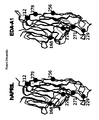
- TNF family receptors bind their cognate ligands within the structure of the TNF-ligand monomer, generally the solvent exposed surface of the TNF ligand monomer (e.g. APRIL and BAFF).
- the dimer is formed of two variant TNF ligands that bind to two TNF receptors.
- receptor activation will not occur due to the absence of the third ligand, which is required for receptor trimerisation.
- the TNF family ligand from which the variant is derived may selected from the group consisting of RANKL (human accession no. AAB86811, mouse accession no. 035235), TRAIL (accession no. P50591), APRIL (accession no. BAE16556), BAFF (accession no: Q9Y275), TNFalpha (accession no. NP_000585), TNFbeta (accession no. P01374.2), CD30L (NM_001244), CD40L (NP_000065), FasL (NP_000630), Light (accession no. 043557), Tweak (BAE16557), GITRL (accession no.
- the TNF family ligand may be of mammalian origin. More specifically, the TNF family ligand may be human, camel, dog, cat, horse, cow, pig, sheep, camelid, mouse, rat, rabbit, hamster, guinea pig, pig, sheep, and so on.
- the variant of a TNF family ligand may be mutated at one or more positions.
- the variant may be mutated at 1, 2, 3, 4, 5, 6, 7, 8, 9, 10, 11, 12, 13, 14, 15, 16, 17, 18, 19, 20 or more positions.
- the inventors have illustrated the principle of preparing TNF ligand variants which are incapable of forming trimers using RANKL.
- the TNF family ligand is RANKL.
- TNF family ligands including TRAIL, APRIL, BAFF, TNFalpha, TNFbeta, CD30L, CD40L, FasL, Light, and Tweak, GITRL, EDA-A1, EDA-A2 and OX40L.
- the RANKL variant may comprise or consist of a mutation at one or more of positions 168, 194, 212, 220, 229, 256, 271, and 279 in the mouse RANKL sequence, or positions equivalent thereto in orthologous proteins. In the human sequence, these positions are 169, 195, 213, 221, 230, 257, 272 and 280. Mutations at such positions may be to any natural or non-natural amino acid, although mutations to more hydrophilic amino acids are preferred because residues positioned at the trimer interface will not be surface exposed following formation of a trimer, but at least some will be surface exposed for a TNF ligand variant incapable of forming a trimer.
- a murine RANKL variant may comprise or consists of one or more of the mutations T168V, K194D, F212Y, C220S, C220A, D229K, S229K, K256D, F271Y and F279Y.
- these mutations are T169V, K195D, F213Y, C221S, S230K, K257D, F272Y and F280Y. Therefore, the variant may comprise or consist of 1, 2, 3, 4, 5, 6, 7 or 8 of these mutations.
- the RANKL variant may comprises or consist of mutations at positions K194, C220 and F271, or equivalent positions (in the human these are K195, C221 and F272).
- the RANKL variant may comprises or consist of the mutations K194D, C220S and F271Y, or equivalent mutations at equivalent positions (in the human these are K195D, C221 S and F272Y).
- the RANKL variant may comprise or consist of mutations at positions F212, K256 and F279, or equivalent positions (in the human these are F213, K257 and F280).
- the RANKL variant may comprise or consist of the mutations F212Y, K256D and F279Y, or equivalent mutations at equivalent positions (in the human these are F213Y, K257D and F280Y).
- the RANKL variant may comprise or consist of mutations at positions T168, S229 and F271, or equivalent positions (in the human these are T169, S230 and F272).
- the RANKL variant may comprise or consist of the mutations T168V, S229K and F271Y, or equivalent mutations at equivalent positions (in the human these are T169V, S230K and F272Y).
- the RANKL variant may comprise or consist of mutations at positions T168, F212, C220, S229, K256 and F279 or equivalent positions (in the human these are T169, F213, C221, S230, K257 and F280).
- the RANKL variant may comprise or consist of the mutations T168V, F212Y, C220A, S229K, K256D and F279Y or equivalent mutations at equivalent positions (in the human these are T169V, F213Y, C221A, S230K, K257D and F280Y).
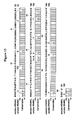
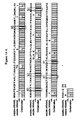
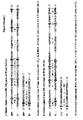
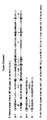
- the present invention includes a variant of a TNF ligand variant having mutations at positions equivalent to those discussed above in relation to RANKL. Such equivalent positions are detailed in Table 1, below. These positions are derived from figures 23 and 24 .
- the invention includes the TNF ligand variants of SEQ ID NOs: 33-76.
- the invention includes a dimer comprising or consisting of two of the variants of TNF family ligands of the invention.
- a dimer may include any two TNF ligand variants of the same ligand described above.
- the dimer comprises or consists of two of the RANKL variants discussed above.
- the dimer of two variants of TNF family ligands may be a heterodimer.
- the two variants included in the dimer may therefore contain different mutations to each other, relative to the wild-type sequence.
- the two ligand variants may be present as a single peptide chain.
- sequences of the two ligand variants may be directly linked, or they may be linked through a linker sequence comprising or consisting of, for example, 1, 2, 3, 4, 5, 6, 7, 8, 9, 10, 15, 20, 30, 40, 50 or more amino acids.
- the dimer may comprise or consist of a variant comprising or consisting of mutations at positions C220 and F271 or equivalent positions (human is C221 and F272), and a variant comprising or consisting of mutations at positions F212, K256 and F279 or equivalent positions (human is F213, K257 and F280).
- the dimer may comprise or consist of a variant comprising or consisting of the mutations C220S and F271Y or equivalent mutations at equivalent positions (human is C221S and F272Y), and a variant comprising or consisting of the mutations F212Y, K256D and F279T or equivalent mutations at equivalent positions (human is F213Y, K257D and F280T).
- the dimer may comprise or consist of a variant comprising or consisting of mutations at positions T168, S229 and F271 or equivalent positions (human is T169, S230 and F272) and a variant comprising or consisting of mutations at positions T168, F212, C220, S229, K256 and F279 or equivalent positions (human is T169, F213, C221, S230, K257 and F280).
- the dimer may comprise or consist of a variant comprising or consisting of the mutations T168V, S229K and F271Y or equivalent mutations (human is T169V, S230K and F272Y) at equivalent positions and a variant comprising or consisting of the mutations T168V, F212Y, C220A, S229K, K256D and F279Y or equivalent mutations at equivalent positions (T169V, F213Y, C221A, S230K, K257D and F280Y).
- the TNF ligand variant dimer may comprise or consist of two of the variants of SEQ ID NOs: 35-77, with the proviso that the two variant monomers forming the dimer are variants of the same TNF ligand.
- the two ligand variants are SEQ ID NOs: 35 and 36, SEQ ID NOs: 37 and 38. SEQ ID NOs: 39 and 40 or SEQ ID NOs: 41 and 42.
- the variant of a TNF family ligand may not capable of assembling into a dimer with other variants of the same TNF ligand.
- the variant will not be able to bind a receptor which binds within the cleft formed between two ligands because a ligand dimer will not form and there will therefore be no cleft into which a receptor can bind.
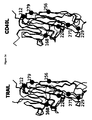
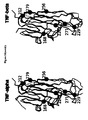
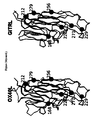
- the ligand variant binds its cognate receptor on the solvent exposed surface rather than in the cleft between two adjacent ligand monomers, as shown in figure 22 .
- This will enable the ligand variant to bind to its cognate receptor without any requirement for the ligand variant to dimerise.
- TNF family ligands which bind in such a mode to their cognate receptor, and are therefore useful within this embodiment of the invention are APRIL, BAFF and most likely Tweak.
- TNF ligand variants of the invention bind to the TNF receptor but are unable to activate it.
- the TNF ligand variants of the invention are considered to "bind to the TNF receptor" if they demonstrate more than 50% of the receptor binding observed with the wild-type ligand at saturating concentration.
- the ligand variants may demonstrate more than 60%, more than 70%, more than 80%, more than 90%, more than 91%, more than 92%, more than 93%, more than 94%, more than 95%, more than 96%, more than 97%, more than 98%, more than 99%, more than 99.5%, more than 99.6%, more than 99.7%, more than 99.8%, more than 99.9%, more than 99.95%, or more than 99.99% of the receptor binding observed with the wild-type ligand.
- the TNF ligand variants of the invention are considered "unable to activate the receptor" if they demonstrate less than 50% of the receptor activation observed with the wild-type ligand at saturating concentration.
- the ligand variants may demonstrate less than 40%, less than 30%, less than 20%, less than 10%, less than 9%, less than 8%, less than 7%, less than 6%, less than 5%, less than 4%, less than 3%, less than 2%, less than 1%, less than 0.5%, less than 0.4%, less than 0.3%, less than 0.2%, less than 0.1%, less than 0.05%, or less than 0.01% of the receptor activation observed with the wild-type ligand.
- receptor activation may be assessed by measuring the levels of signalling through the receptor.
- the variant of a TNF family ligand according to the invention may have an increased binding affinity for one or more of its cognate receptor(s), compared to the wild-type TNF family ligand.
- the ligand variant may have increased binding affinity for 1, 2, 3, 4, 5 or more of its cognate receptors.
- the binding affinity for one or more of the cognate receptors may be increased by substituting one or more amino acids residues of the TNF family ligand to any other natural or non-natural amino acid, deleting one or more amino acid residues from the TNF family ligand or inserting one or more amino acid residues into the TNF family ligand.
- binding affinity may be increased by substituting one or more of the amino acid residues present at the receptor binding interface of the ligand to any other natural or non-natural amino acid, or deleting any of the residues present at the receptor binding interface or inserting one or more additional residues at the receptor binding interface.
- the ligand variant may have an increased binding affinity for one or more of its cognate target receptors, compared to the wild-type TNF family ligand.
- a "target" receptor refers to a receptor through which signalling can take place, i.e. not a decoy receptor, and which should be inhibited in order to produce a cellular response.
- Non-target receptors refer to active receptors which are not the main target of inhibition and/or decoy receptors.
- affinity for the cognate target receptor may be increased by any of the methods discussed above.
- the ligand variant may include one or more amino acid residue substitutions or deletions which decrease the affinity of the ligand variant for one or more if its cognate decoy receptors.
- the ligand variant may include one or more amino acid residue substitutions, insertions or deletions which decrease the affinity of the ligand variant for one or more of its non-target cognate receptors.
- Such a receptor selective effect may be useful in cases where it is beneficial to inhibit the signalling mediated by one cognate receptor but not the signalling mediated by the other receptor(s) of the ligand.
- it may be beneficial to block TNFalpha mediated signalling via TNFR1 but leave TNFalpha mediated TNFR2 signalling unperturbed.
- Such receptor selectivity is not possible, or at least not as readily possible, with the approaches used in the prior art.
- the TNF ligand variants of the invention may have at least 50% sequence identity to any one of the TNF ligands variants described herein and to SEQ ID NOs: 35-78.
- the variant may have at least 60%, at least 70%, at least 80%, at least 85%, at least 90%, at least 95%, at least 96%, at least 97%, at least 98%, at least 99%, at least 99.5%, at least 99.9% or more sequence identity to SEQ ID NOs: 35-78.
- the variant may retain the ability to bind its cognate receptor(s).
- the invention also encompasses fragments of the TNF ligand variants described herein and of SEQ ID NOs: 35-78.
- a fragment may be 7, 8, 9, 10, 20, 30, 40, 50, 60, 70, 80, 90, 100, 150, 200, 250, 300 or more amino acids in length.
- the variant fragment may retain the ability to bind its cognate receptor(s).
- the invention also encompasses TNF ligand variants as described herein which have a truncation at the N-terminus and/or the C-terminus.
- the truncation may be 1, 2, 3, 4, 5, 6, 7, 8, 9, 10, 11, 12, 13, 14, 15, 16, 17, 18, 19, 20, 30, 40, 50, 60, 70, 80, 90, 100, 150, 200 or more amino acids in length.
- the truncation may be an internal deletion with the same characteristics.
- the variant truncate may retain the ability to bind its cognate receptor(s).
- the ligand variant may be a soluble ligand variant. Therefore, the ligand may have been mutated to delete the transmembrane domain.
- the ligand variant may therefore comprise or consist of amino acid residues 158 - 316 or 160-316 of murine RANKL, and variants around this sequence, such as those described above.
- the ligand variant may comprise or consist of amino acid residues 159 - 317 or 161-317 of human RANKL, and variants around this sequence, such as those described above.
- the ligand variant may therefore comprise or consist of amino acid residues 114-281 of human TRAIL, and variants around this sequence, such as those described above.
- the ligand variants of the invention may be fused to a heterologous peptide. This may allow purification of the ligand variant during production, or may confer an additional therapeutic property to the variant for therapeutic or diagnostic use such as increasing retention time in the circulatory system by allow weak binding to abundant blood proteins such as serumalbumin.
- a particularly suitable heterologous peptide for purification is a hexahistidine tag or a Flag tag.
- heterologous peptide For heterodimers comprising two differing ligand variants, the heterologous peptide maybe be fused to one of the monomers constituting the heterodimer or to both, alternatively two different heterologous peptide sequences may be fused to the two monomers constituting the heterodimer.
- the invention includes a nucleotide sequence encoding a variant of a TNF family ligand according to the invention.
- the nucleic acid may encode any of the variants, truncates or fragments described above.
- the nucleic acid may be DNA including chromosomal DNA and cDNA or RNA, including mRNA.
- the mRNA or DNA sequences may or may not include one or more introns.
- the nucleic acid may include one or more regulatory sequences such as a promoter, an enhancer, an internal ribosomal entry site (IRES), a Kozak sequence or a ribosomal binding site (RBS) sequence.
- regulatory sequences such as a promoter, an enhancer, an internal ribosomal entry site (IRES), a Kozak sequence or a ribosomal binding site (RBS) sequence.
- the monomers comprising the heterodimeric variants might be encoded in two separate nucleic acid molecules.
- One or more ligand variants of the same TNF ligand may be encoded by a single nucleic acid molecule.
- the nucleic acid molecule may encode two ligand variants of the same ligand.
- expression of the two ligand variants may be under the control of the same or different promoters, IRES sites or other regulatory sequences.
- the invention includes a vector comprising a nucleotide sequence encoding any of the variants, fragments or truncates of the invention.
- Vectors suitable for use in the method of the invention include plasmids and viruses (including both bacteriophage and eukaryotic viruses), as well as other linear or circular DNA carriers, such as those employing transposable elements or homologous recombination technology.
- Particularly suitable viral vectors include baculovirus-, lentivirus-, adenovirus- and vaccinia virus- based vectors.
- the invention includes a host cell comprising a nucleic acid or a vector encoding one or more of the ligand variants of the invention.
- host cells include prokaryotic host cells such as bacterial cells, yeast host cells and mammalian host cells. Particularly preferred host cells include E . coli, CHO, HEK293 PerC7 cells, B. subtilis, insect cells, and yeast such as S . cerevisiae, or.
- the invention encompasses complexes which comprise or consist of one or more TNF ligand variants and one or more cognate TNF family receptors.
- the complex may comprise or consist of a dimer formed of two TNF ligand variants which are incapable of assembing into a trimer and one or two cognate TNF family receptors.
- the complex may comprise or consist of one or two TNF ligand variants which are incapable of assembling into dimers or trimers and one or two cognate TNF family receptors.
- the invention includes a transgenic animal which has been engineered to express one or more of the TNF family variants or dimers disclosed herein.
- the animal may be any animal which can be engineered to express one or more TNF ligand variants, for example a mammal.
- suitable animals include monkeys, mice, cows, sheep, rabbit, rat, hamster, guinea pig, goat, horses, donkey, pigs, cats, dogs and camels.
- the invention includes a pharmaceutical composition comprising one or more of the variants of a TNF family ligand, the dimers, the nucleotide sequences, the vectors or the host cells of the invention.
- the pharmaceutical composition may additionally comprise a pharmaceutically-acceptable carrier, excipient, diluent or buffer.
- Suitable pharmaceutically acceptable carriers, excipients, diluents or buffers may include liquids such as water, saline, glycerol, ethanol or auxiliary substances such as wetting or emulsifying agents, pH buffering substances and the like. Excipients may enable the pharmaceutical compositions to be formulated into tablets, pills, capsules, liquids, gels, or syrups to aid intake by the subject. A thorough discussion of pharmaceutically acceptable carriers is available in Remington's Pharmaceutical Sciences (38).
- the pharmaceutical composition may include a therapeutically effective amount of one or more of the variants of a TNF family ligand, the dimers, the nucleotide sequences, the vectors or the host cells of the invention.
- a pharmaceutically effective amount is an amount able to treat the disease. The actual amount will depend on a number of factors including the size, weight, age, gender, and health of an individual, and the rate of blood clearance, and will be decided by a clinical practitioner. Generally a pharmaceutically effective amount will be between 1g/kg body weight and 1mg/kg body weight or less.
- the pharmaceutical composition may include an additional therapeutic component, in particular, a component useful for the treatment of osteoporosis, rheumatoid arthritis, Paget's disease or malignancy induced bone disease.
- a component may include Denosumab, antiresorptive agents, including bisphosphonates, the selective estrogen-receptor modulator (SERM), raloxifene, calcitonin, denosumab, teriparatide, calcium or vitamin D.
- the additional therapeutic component may be useful for the treatment of cancer, and may include chemotherapeutics, ERMs, SERMs, or specific biological targeted therapies e.g. Herceptin.
- the additional therapeutic component may be useful for the reducing inflammation any may include infliximab, etanercept, immunosupresives such as metroxate, and other anti-inflammatory agents such as NSAIDs.
- the invention also includes any medical device which may have the pharmaceutical composition of the invention inserted into it or coated onto it.
- Such devices include, stents, pins, rods, meshes, beads, syringes, plasters, microchips, micro fluidic devices, and stitches.
- the invention provides a variant of a TNF family ligand, a dimer, a nucleotide sequence, a vector of, a host cell or the pharmaceutical composition of the invention for use in medicine.
- the invention includes a variant of a TNF family ligand, a dimer, a nucleotide sequence, a vector, a host cell or a pharmaceutical composition according to the invention for use in the treatment of osteoporosis, rheumantoid arthritis, Paget's disease, malignancy induced bone disease or cancer, such as breast cancer.
- the invention includes a method of treating osteoporosis, rheumatoid arthritis, Paget's disease, malignancy induced bone disease or cancer such as breast cancer comprising administering a pharmaceutically effective amount of a variant of a TNF family ligand, a dimer, a nucleotide sequence, a vector of, a host cell or the pharmaceutical composition of the invention to a patient in need of treatment.
- treatment encompasses therapy, and can be prophylactic or therapeutic.
- a pharmaceutically effective amount is an amount able to treat the disease.
- the actual amount will depend on a number of factors including the size, weight, age, gender, health of an individual, and the rate of blood clearance, and will be decided by a clinical practitioner.
- a pharmaceutically effective amount will be between 1 g/kg body weight and 1 mg/kg body weight or less.
- the invention includes the use of a variant of a TNF family ligand, a dimer, a nucleotide sequence, a vector, a host cell or a pharmaceutical composition according to the invention in the manufacture of a medicament for the treatment of osteoporosis, rheumatoid arthritis, Paget's disease, malignancy induced bone disease or cancer such as breast cancer.
- the variant of a TNF family ligand, dimer, nucleotide sequence, vector, host cell or pharmaceutical composition according to the invention may be used for the treatment of disease in any animal.
- the animal may be a mammal such as a camel, dog, cat, horse, cow, pig, sheep, camelid, mouse, rat, rabbit, hamster, guinea pig, pig, sheep.
- the mammal may be a human.
- the variant of a TNF family ligand, dimer, nucleotide sequence, vector, host cell or pharmaceutical composition according to the invention may be administered to a patient using any one or more of a number of modes of administration which will be known to a person skilled in the art.
- modes of administration may include parenteral injection (e.g. intravenously, subcutaneously, intraperitoneally, intramuscularly, or to the interstitial space of a tissue), or by rectal, oral, vaginal, topical, transdermal, intradermal, intrathecal, intranasal, ocular, aural, pulmonary or other mucosal administration.
- parenteral injection e.g. intravenously, subcutaneously, intraperitoneally, intramuscularly, or to the interstitial space of a tissue
- rectal oral, vaginal, topical, transdermal, intradermal, intrathecal, intranasal, ocular, aural, pulmonary or other mucosal administration.
- the invention includes a method for producing a variant of a TNF family ligand comprising the steps of:
- the most hydrophilic amino acid substitution at newly solvent exposed positions may be favoured.
- the method may be a method of producing an inhibitory variant of a TNF family ligand.
- RANKL like most other TNF ligand family members, binds the RANK receptor in the cleft between two adjacent monomers and RANKL induced trimerization of the RANK receptor results in activation of downstream signalling.
- a competitive antagonist could be created that binds RANK receptor but is unable to trimerize and activate it.
- D1 (Dimer 1) and D2 (Dimer 2), each comprising of a monomer A and B, were proposed for experimental characterization.
- the mutations made in these two dimers are shown in Table 2, below.
- Table 2A Mutations introduced into RANKL dimer 1 Position Monomer A Monomer B K194 D F212 Y C220 S K256 D F271 Y F279 Y
- Table 2B Mutations introduced into RANKL dimer 2 Position Monomer A Monomer B T168 V V F212 Y C220 A S229 K K K256 D F271 Y F279 Y
- Dimer 1 was predicted to destabilize trimer formation by ⁇ 9 kcal/mol, while trimer destabilization by dimer 2 was predicted to be ⁇ 7 kcal/mol. FoldX calculation also showed that dimer 2 was 1.5 kcal/mol more stable than dimer 1.
- E.coli BL21 BLR A recombinant negative E.coli BL21 derivate, E.coli BL21 BLR, was transformed with the expression vector encoding Dimer 1 and Dimer 2.
- the E.coli BL21 BLR cells were grown in 2xLB medium at 37°C and 250 rpm until OD 0.5 was reached. Streptomycin (100 ug/mL) (Duchefa) or spectomycin (100 ug/mL) (Duchefa) was used as selective agent. After reaching OD 0.5 the cultures were induced with 1 mM IPTG (Duchefa) and the temperature was lowered to 20°C. The cells were incubated overnight and subsequentlyharvested by centrifugation at 10,000g for 15 minutes.
- the pellet was washed with PBS and resuspended in 20 mM sodium phosphate (Merck) buffer, containing 10% glycerol (Duchefa), 150 mM NaCl (Merck), and 7 mM ⁇ -mercaptoethanol (Sigma) , pH 7.5 (buffer A).
- 20 mM sodium phosphate (Merck) buffer containing 10% glycerol (Duchefa), 150 mM NaCl (Merck), and 7 mM ⁇ -mercaptoethanol (Sigma) , pH 7.5 (buffer A).
- the supernatant was loaded on a Ni Sepharose HP Column (HisTRAP HP GE Healthcare). The column was washed with buffer A and the his-tag containing dimer was eluted with a gradient 0-100% of elution buffer (buffer A containing 1 M imidazol (Sigma) pH 7.5). Fractions containing his-tag protein were combined, concentrated and loaded on a gelfiltration column (Superdex 75 16/60 GE Healthcare). Buffer A was used as elution buffer. Purified proteins were >90% pure as determined using a collodial Coomassie Brilliant Blue-stained SDS-PAGE gel. Purified protein solutions were flash frozen in liquid nitrogen and stored at -80°C.
- Circular Dichroism and thermal decay experiments were performed as described before (26). Samples were dialyzed against 20 mM Sodium phosphate buffer containing 250 mM NaCl and 10% glycerol pH 7.3 and were measured at 0.2 mg/mL.
- Analytical gelfiltration was performed with 100 ⁇ L sample with a concentration of 0.6 mg/mL. Samples were run either on a Superdex 16/60 200 (GE Healthcare) or on a Superdex 16/60 75 (GE Healthcare). Both columns were calibrated with protein standards of known size. Buffer A was used as elution buffer with a flow rate of 0.5 or 1 mL/min. The retention time was related to the retention times of the calibration standards, as shown in Table 3, below.
- Samples were also analyzed by Dynamic Light Scattering (DLS). Purified samples (0.5-2 mg/mL) were before measurements filtered over a 0.2 ⁇ m filter. 20 measurements per sample were recorded. Data analysis was performed using Dynapro software, the data was analyzed as being bimodal. Blue native gel electrophoresis (NativePage 12% Invitrogen) was performed according to manufacturers instructions.
- DLS Dynamic Light Scattering
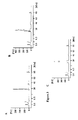
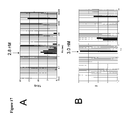
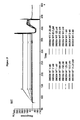
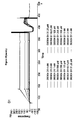
- the calculated values from the DLS experiment are 38 kDa and 46 kDa for dimer 1 and dimer 2, respectively ( Figure 17 ). While RANKL dimer 2 shows a minimal polydispersity ( ⁇ 0.1%), the polydispersity of dimer 1 was considerably larger at 35%. This is in line with the possible aggregation as observed in the BN-PAGE experiment described above. As for size exclusion chromatography, the mass calculated in the DLS experiments depends on the shape of the protein and this might explain why the values are slightly higher than would be expected (29).
- a Surface Plasmon Resonance receptor binding assay was used as a shape independent method to determine the molecular weight of the RANKL dimers.
- this assay In contrast to GFC and DLS which measure the oligomerization state of relatively concentrated samples (> 100 ug/ml), this assay has the added benefit that it measures the MW; and hence the oligomerization state, at physiologically relevant concentrations ( ⁇ 1 ug/ml).
- the maximum response as recorded in a SPR assay depends on the MW and the amount (in response units [RU]) of the receptor coupled to the sensor chip and the MW of the analyte when observing a 1:1 binding (Equation 1).
- R ⁇ U Ligand Maximum M ⁇ W Ligand M ⁇ W Re ceptor ⁇ xR ⁇ U Re ceptorCaptured .
- the calculated R max for dimeric RANKL variant D1 at a receptor capture level of 57 RU is 34 RU and for dimeric variant D2 at a capture level of 25 RI is 15 RU.
- the measured levels are 30 RU and 14 RU, respectively.
- the measured R max for RANKL wild-type is ( 65 RU) at a capture level of 37 RU.
- the measured values of the dimmers and wt closely agree with the calculated theoretical values.
- the oligomerization state of the RANKL variants is dimeric ( Figure 2b ).
- R max for RANKL wild-type is dimeric ( Figure 2b ).
- RANK-FC (Sigma) was captured in flow cell 2 at a level of 40 RU by a 60 s injection pulse of a 0.7 ug/ml RANK-FC solution at a flow rate of 50 uL/min.
- Flow cell 1 served as reference cell.
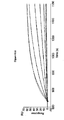
- serial dilutions ranging from 562 nM to 100 pM of RANKL wt (R&D systems), or the purified RANKL dimers were injected over both flow cells at 50 uL/min and 37°C. Binding was measured in real time. After each cycle the protein A surface was regenerated with a 30 s pulse of 10 mM Glycine pH 1.5. KD values were calculated by fitting the data to a langmuir 1:1 binding model using the BIAevaluation software as described before (30).
- OPG-Fc (R&D systems) was immobilized directly on the surface of a CM5 chip (GE Healthcare) using a standard amine coupling procedure according to manufacturer's instructions.
- RANKL dimers or RANKL wt were injected at 4 nM at a flow of 70 uL/min and binding was measured in real time. The temperature was set at 25°C during the measurements. Between cycles the surface was regenerated with a 30s injection of 10 mM Glycine, pH 1.5. Association and dissociation was visualized with BIAevaluation software from Biacore.
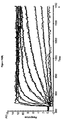
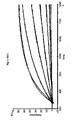
- the binding off-rate constant (k off ) of wild-type RANKL was ⁇ 2 to 6 fold slower than for dimer 1 and dimer 2. SPR binding measurements to OPG at 25°C showed similar results as RANK binding ( Figure 20B ).
- dimer 1 and dimer 2 were investigated using a competitive ELISA.
- Serial dilutions of wild-type RANKL containing an N-terminal flagtag (flagRANKL) (0-53 nM) and a fixed concentration of dimer 1 or dimer 2 (0, 2.7, 5.4, 10.8, 21.7 or 43.4 nM) were added to RANK-Fc coated wells. After washing off unbound RANKL, RANK bound flagRANKL was detected by an anti-flag antibody.
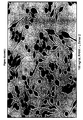
- Murine RAW 264.7 cells were cultured as described (19). The cells were sub-cultured every third or fourth day by a 1:10 dilution in fresh medium. Cells were seeded at a density of 1,000 cells/well in 100 ⁇ L in a 96 well plate. The wells bordering the edge of the plate were filled with 100 ⁇ L water to prevent evaporation of medium of wells containing cells. At day three the medium was changed for Alpha-Mem medium (Invitrogen) and RANKL dimers or wtRANKL trimer (Antigenix America) were added at 50, 100 and 150 ng/mL.
- Alpha-Mem medium Invitrogen
- RANKL dimers or wtRANKL trimer Antigenix America
- Inhibition of wtRANKL by dimer 1 or dimer 2 was measured by adding 100 ng/mL wtRANKL and 100 ng/mL of the dimeric variant. At day 5 the medium was replaced and wild-type or variant RANKL was added at the same concentrations.
- osteoclastogenesis was determined using the tartrate resistance acid phosphatase (TRAP) assay (Sigma) according to manufacturer's instructions. The number of osteoclasts in each well was counted. The number of osteoclasts in the reference wells was set to one and the number of osteoclasts in the treated wells was calculated relative to the reference well. This allowed comparison between independent assays having different amount of cells at the start of the assay.
- TREP tartrate resistance acid phosphatase
- Figure 6 shows the cells after staining with the multinucleated cells being marked. As can be seen, most multinucleated cells are present in the wild-type RANKL treated sample. In contrast, the dimer treated samples show considerably less multinucleated cells and they are also less clustered than wild-type RANKL treated cells.
- RANKL dimer 1 ( Figure 21 ) appears to be less potent blocker of osteoclastogenesis than dimer 2, the dimer 1 treated cells contain more nuclei and the osteoclasts are bigger than the ones observed in cells treated with RANKL dimer 2.
- the RANKL dimers are potent inhibitors of wtRANKL induced osteoclastogenesis.
Landscapes
- Chemical & Material Sciences (AREA)
- Health & Medical Sciences (AREA)
- Life Sciences & Earth Sciences (AREA)
- Organic Chemistry (AREA)
- General Health & Medical Sciences (AREA)
- Molecular Biology (AREA)
- Biochemistry (AREA)
- Biophysics (AREA)
- Zoology (AREA)
- Genetics & Genomics (AREA)
- Medicinal Chemistry (AREA)
- Gastroenterology & Hepatology (AREA)
- Proteomics, Peptides & Aminoacids (AREA)
- Toxicology (AREA)
- Peptides Or Proteins (AREA)
- Micro-Organisms Or Cultivation Processes Thereof (AREA)
- Medicines That Contain Protein Lipid Enzymes And Other Medicines (AREA)
- Preparation Of Compounds By Using Micro-Organisms (AREA)
Abstract
The present invention relates to variants of TNF family ligands which have been mutated at the ligand trimerisation interface so that they are not capable of assembling into trimers, and either assemble into dimers or remain as monomers. Such ligands bind to the TNF receptor but are unable to activate it, effectively functioning as competitive inhibitors. The invention also relates to nucleic acids encoding the variants of TNF family ligands, vectors and host cells comprising the nucleic acid and methods for the treatment of diseases associated with aberrant signalling through a TNF receptor.
Description
- The Tumor Necrosis Factor ligand (TNF) family is a family of ligands which are involved in a wide range of biological activities, including cell proliferation and apoptosis. There is a complex balance between immunostimulatory and immunoregulatory functions within this family that ensures that an individual is capable of appropriate immune responses. Genetic polymorphisms or other mutations in the TNF ligand receptor family can result in deregulation of immune homeostasis, which is implicated in pathogenesis. For this reason, the TNF family represents a prime target for therapeutic intervention.
- Each of the TNF family of ligands interacts with its cognate receptor(s) to trigger a number of signalling pathways that are important for immune tolerance, in addition to providing both protective and pathogenic effects on tissues (35,36,37). Examples of such proteins include ligands such as Receptor Activator of NF-Kappa Beta-Ligand (RANKL), TNF-related apoptosis-inducing ligand (TRAIL), B-Cell Activating Factor (BAFF), A Proliferation-inducing Ligand (APRIL), TNFalpha, CD30L, CD40L, FasL, Light, and Tumor necrosis factor-like Weak inducer of apoptosis (Tweak), which are implicated in disease conditions such as rheumatoid arthritis, autoimmune diabetes, systemic lupus erythematosus (SLE), Sjörgen's syndrome, experimental autoimmune encephalomyelitis (EAE), inflammatory bowel disease (IBD), autoimmune lymphoproliferative syndrome (ALPS), multiple sclerosis, and cancers such as breast cancer.
- RANKL is particularly implicated in disorders associated with reduced bone density, such as osteoporosis, bone lesions due to rheumatoid arthritis (RA), Paget's disease and malignancy induced bone disease because signalling through RANKL results in increased production of bone-resorbing osteoclast cells. Binding of RANKL to its cognate receptor Receptor Activator of NF-Kappa Beta (RANK) expressed on osteoclast progenitor cells is crucial for the differentiation of these progenitor cells into mature osteoclasts, while binding of RANKL to RANK expressed on mature osteoclasts prevents these cells undergoing apoptosis and stimulates their adherence to bone cells. Increased signalling through RANKL and the production of an increased number of bone-resorbing osteoclasts disrupts the delicate homeostatic balance between osteoclasts and bone tissue producing osteoblasts, leading to disorders associated with reduced bone density, such as those mentioned above.
- More recently, RANKL has been implicated in breast cancer. Here it is responsible for proliferative changes to the mammary epithelium which can lead to tumorigenesis (45,46). The inventors therefore hypothesise that inhibiting the interaction of RANKL with its cognate receptor RANK could be used for the treatment of cancer.
- All TNF ligand family members consist of anti-parallel β-sheets, which self-trimerise into the active form of the ligand. Sequence homology is highest between the residues found at the trimer interface. Once formed, a ligand trimer binds three cognate receptors, with each receptor either binding in the groove between two adjacent ligands or binding directly to one of the ligands. (33,34).
- As well as binding to their cognate receptors in order to promote signalling, TNF family ligands also bind to naturally occurring decoy receptors. These decoy receptors are either membrane bound or soluble pseudo-receptors, to which the TNF ligand can bind, without activating cell signalling. Whilst bound to the decoy receptor, the TNF ligand is sequestered away from the active receptor, and receptor-mediated signalling is inhibited.
- Osteoprotegerin (OPG) is a soluble decoy receptor for RANKL. It is produced by osteoblasts and binds RANKL, thus preventing RANKL binding to and activating RANK, and resulting in a reduction of osteoclast activity. Likewise, DcR1 and DcR2 are decoy receptors for TRAIL, and DcR3 is a decoy receptor for FasL. These receptors sequester TRAIL or FasL, respectively, away from the active signalling receptors, effectively acting as endogenous competitive inhibitors.
- Recently, a number of groups have begun studying the TNF ligand family in an attempt to manipulate aberrant signaling which is often associated with pathogenesis. With regard to inhibition of receptor signaling, much of this work has been modeled on the role of the decoy receptors, and has focused on increasing the sequestration of TNF ligands in order reduce receptor-mediated signaling.
- One approach is to use the extracellular ligand binding domain of the ligand's endogenous receptor and fuse it with the Fc domain of IgG. These chimeric soluble receptors function as artificial decoy receptors and prevent the endogenous ligand binding to the endogenous receptor by sequestering it. One well known example is Etanercept (Enbrel®), a chimera between the extracellular ligand binding domain of TNFR2 (p75) and the Fc domain of IgG1 and which is clinically used in the treatment of RA and other immune diseases (39,40). A similar approach has also been used with the RANKL decoy receptor OPG (44).
- An alternative approach requires the administration of a trimeric TNF ligand mutant incapable of receptor binding but capable of subunit exchange with the wild-type TNF ligand. This may result in the formation of mixed mutant/endogenous ligand trimers which are either incapable of receptor binding; as are the trimeric mutant forms, or, if bound, incapable of activating the receptor once bound(47). The trimeric wild-type ligand is essentially "poisoned" by the mutant variant and as a result, inactivated. A drawback of this approach is the heterogeneity of the preparation containing different ratios of wild-type to mutant monomers in the trimer, which makes the effects unpredictable.
- Another strategy which has been successfully applied is the administration of anti-ligand antibodies (e.g Denosumab, also known as AMG 162 and Prolia®) (42,43). These antibodies bind to RANKL and prevent it from binding to its cognate receptor, therefore blocking receptor signaling.
- Recently, blocking peptides have also been used to block signaling through the RANK/RANKL pathway by binding directly to RANK and blocking the ligand binding site (31,32).
- The present invention relates to variants of TNF family ligands which have been mutated at the ligand trimerisation interface so that they are not capable of assembling into trimers, and either assemble into dimers or remain as monomers. Such ligands bind to the TNF receptor but are unable to activate it, effectively functioning as competitive inhibitors.
- The invention also relates to nucleic acids encoding the variants of TNF family ligands, vectors and host cells comprising the nucleic acid and methods for the treatment of diseases associated with aberrant signalling through a TNF receptor.
- Here, the inventors show that disrupting the trimerisation of TNF ligands prevents the formation of an active signaling complex. Furthermore, maintaining the ability of the ligand to bind to its cognate receptor, either in the form of a monomer or a dimer, blocks the receptor, competitively inhibiting signaling. TNF ligand variants which are not capable of trimerisation have the advantage that they are structurally similar to wild-type ligands, and are therefore less prone to proteolytic degradation than blocking peptides. The TNF ligand variants of the present invention therefore have potentially greater stability than blocking peptides due to a decreased rate of degradation and clearance from the body. Further, such a system exploits the TNF ligand signaling pathway in a manner distinct from pre-existing therapies as this approach targets the receptor and not the ligand and it can therefore be used in combination with pre-existing therapies.
- In one aspect the present invention includes a variant of a TNF family ligand which is mutated such that it is not capable of assembling into a trimer, wherein the variant retains the ability to bind to one or more of its cognate receptor(s), but wherein binding to the receptor does not activate the receptor.
- Within the context of the present invention, the term "mutated" encompasses substitution to any natural or non-natural amino acid residue, deletion, insertion and addition of amino acid residues.
- In another embodiment the TNF ligand variant may include one or more post-translational modifications. Suitable modifications include pegylation, acetylation, formylation, alkylation such as methylation, and glycosylation, as well as labeling with flurophores, radioisotopes, PET, etc. Such modifications may decrease immunogenicity, improve pharmacokinetics, and allow for certain specific applications of the variants (e.g. diagnostics).
- As discussed above, TNF ligand trimerisation is required to effect receptor trimerisation, which is in turn required for signalling. Therefore, a variant of a TNF family ligand which is incapable of trimerisation, but able to assemble into a dimer or remain monomeric, and still able to bind its TNF receptor, will effectively block its receptor and therefore inhibit downstream signalling. The variant is therefore functioning as a competitive inhibitor.
- In one embodiment, the variant of a TNF family ligand may be capable of assembling into a dimer with another variant of the same TNF family ligand.
- This will lead to formation of a TNF ligand dimer (homodimer or heterodimer), which is capable of binding to its cognate receptor, but will not be capable of activating the receptor because receptor trimerisation cannot occur when there is only a ligand dimer present.
- In one embodiment the ligand variant has at least 10 fold, at least 100 fold, at least 1000 fold or more higher affinity for assembling into a dimer than assembling into a trimer.
- In another embodiment, the ligand variant may have an affinity of at least 108M, at least 109M, at least 1010M or greater for its cognate receptor(s). Affinity may be defined using the association constant (Ka), which is determined using the following formulae:

- Wherein [C] is the concentration of the complex, [R] is the concentration of unbound receptor and [L] is the concentration of unbound ligand.
- In another embodiment, the ligand variant dissociation constant (Kd) of at least 10-8M, at least 10-9M, at least 10-10M or less. Kd is determined using the following formula:

- Wherein [C] is the concentration of the complex, [R] is the concentration of unbound receptor and [L] is the concentration of unbound ligand.
- In comparison to previous approaches, in particular the trimeric TNF ligand mutants discussed above, the present invention potentially ensures a faster response with a lesser dose, as it allows improvement of the Kd to provide stronger antagonists.
- As discussed above, many TNF family receptors bind to their cognate ligands in the groove formed between two ligands of the trimer (e.g. RANK, TNFR1, TNFR2, FAS, CD40, CD27, CD30, DR4 and DR5). In this case a dimer will be required in order to stably bind, and therefore block, a single TNF receptor. Only one receptor will be bound by such a dimer due to the presence of only one cleft in which a receptor can be bound. The receptors will therefore be blocked, and no signalling will occur.
- As also discussed above, some TNF family receptors bind their cognate ligands within the structure of the TNF-ligand monomer, generally the solvent exposed surface of the TNF ligand monomer (e.g. APRIL and BAFF). In this embodiment, the dimer is formed of two variant TNF ligands that bind to two TNF receptors. However, receptor activation will not occur due to the absence of the third ligand, which is required for receptor trimerisation.
- In one embodiment, the TNF family ligand from which the variant is derived may selected from the group consisting of RANKL (human accession no. AAB86811, mouse accession no. 035235), TRAIL (accession no. P50591), APRIL (accession no. BAE16556), BAFF (accession no: Q9Y275), TNFalpha (accession no. NP_000585), TNFbeta (accession no. P01374.2), CD30L (NM_001244), CD40L (NP_000065), FasL (NP_000630), Light (accession no. 043557), Tweak (BAE16557), GITRL (accession no. AAQ89227), EDA-A1 (accession no. NP_034229.1), and OX40L (accession no. P23510.1). Within this embodiment, the TNF family ligand may be of mammalian origin. More specifically, the TNF family ligand may be human, camel, dog, cat, horse, cow, pig, sheep, camelid, mouse, rat, rabbit, hamster, guinea pig, pig, sheep, and so on.
- The variant of a TNF family ligand may be mutated at one or more positions. In certain embodiments, the variant may be mutated at 1, 2, 3, 4, 5, 6, 7, 8, 9, 10, 11, 12, 13, 14, 15, 16, 17, 18, 19, 20 or more positions.
- The inventors have illustrated the principle of preparing TNF ligand variants which are incapable of forming trimers using RANKL. In a preferred embodiment the TNF family ligand is RANKL.
- The results described herein using RANKL can be equally applied to other TNF family ligands including TRAIL, APRIL, BAFF, TNFalpha, TNFbeta, CD30L, CD40L, FasL, Light, and Tweak, GITRL, EDA-A1, EDA-A2 and OX40L.
- In one embodiment the RANKL variant may comprise or consist of a mutation at one or more of
positions - In one embodiment a murine RANKL variant may comprise or consists of one or more of the mutations T168V, K194D, F212Y, C220S, C220A, D229K, S229K, K256D, F271Y and F279Y. In the human RANKL variant, these mutations are T169V, K195D, F213Y, C221S, S230K, K257D, F272Y and F280Y. Therefore, the variant may comprise or consist of 1, 2, 3, 4, 5, 6, 7 or 8 of these mutations.
- In one embodiment the RANKL variant may comprises or consist of mutations at positions K194, C220 and F271, or equivalent positions (in the human these are K195, C221 and F272).
- In one embodiment the RANKL variant may comprises or consist of the mutations K194D, C220S and F271Y, or equivalent mutations at equivalent positions (in the human these are K195D, C221 S and F272Y).
- In another embodiment the RANKL variant may comprise or consist of mutations at positions F212, K256 and F279, or equivalent positions (in the human these are F213, K257 and F280).
- In another embodiment the RANKL variant may comprise or consist of the mutations F212Y, K256D and F279Y, or equivalent mutations at equivalent positions (in the human these are F213Y, K257D and F280Y).
- In another embodiment the RANKL variant may comprise or consist of mutations at positions T168, S229 and F271, or equivalent positions (in the human these are T169, S230 and F272).
- In another embodiment the RANKL variant may comprise or consist of the mutations T168V, S229K and F271Y, or equivalent mutations at equivalent positions (in the human these are T169V, S230K and F272Y).
- In another embodiment the RANKL variant may comprise or consist of mutations at positions T168, F212, C220, S229, K256 and F279 or equivalent positions (in the human these are T169, F213, C221, S230, K257 and F280).
- In another embodiment the RANKL variant may comprise or consist of the mutations T168V, F212Y, C220A, S229K, K256D and F279Y or equivalent mutations at equivalent positions (in the human these are T169V, F213Y, C221A, S230K, K257D and F280Y).
- As described above, the present is not limited to RANKL, but can be extended to all members of the TNF family ligand. Therefore, the present invention includes a variant of a TNF ligand variant having mutations at positions equivalent to those discussed above in relation to RANKL. Such equivalent positions are detailed in Table 1, below. These positions are derived from
figures 23 and24 .Table 1 - Structurally equivalent mutations positions in other TNF family ligands Mutations position in murine RANKL Equivalent mutations positions in other TNF family ligands Human RANKL Human TRAIL Human BAFF Murine APRIL TNFα TNFβ Human CD40L Human APRIL Human OX40L Human GITRL T168 T169 T127 I150 V112 V93 I68 I127 V121 Q65 G63 K194 K195 F163 F172 L132 L112 F87 T147 L142 F100 L94 F212 F213 F181 Y192 I152 L131 I106 L168 V162 Y108 A102 C220 C221 Y189 L200 L160 L139 V114 T176 L170 Q128 T126 D229 S230 - - - - - - - - - K256 K257 K224 R231 R185 S157 S150 R207 F194 V140 T139 F271 F272 L239 N242 Y198 Y191 L164 Q220 Y208 - - F279 F280 1247 1250 V206 V199 A172 V228 V216 - - - In one embodiment the invention includes the TNF ligand variants of SEQ ID NOs: 33-76.
- In one aspect the invention includes a dimer comprising or consisting of two of the variants of TNF family ligands of the invention. Such a dimer may include any two TNF ligand variants of the same ligand described above. In a preferred embodiment the dimer comprises or consists of two of the RANKL variants discussed above.
- In one embodiment, the dimer of two variants of TNF family ligands may be a heterodimer. The two variants included in the dimer may therefore contain different mutations to each other, relative to the wild-type sequence.
- In one embodiment the two ligand variants may be present as a single peptide chain. Within this embodiment the sequences of the two ligand variants may be directly linked, or they may be linked through a linker sequence comprising or consisting of, for example, 1, 2, 3, 4, 5, 6, 7, 8, 9, 10, 15, 20, 30, 40, 50 or more amino acids.
- In one embodiment the dimer may comprise or consist of a variant comprising or consisting of mutations at positions C220 and F271 or equivalent positions (human is C221 and F272), and a variant comprising or consisting of mutations at positions F212, K256 and F279 or equivalent positions (human is F213, K257 and F280).
- In another embodiment the dimer may comprise or consist of a variant comprising or consisting of the mutations C220S and F271Y or equivalent mutations at equivalent positions (human is C221S and F272Y), and a variant comprising or consisting of the mutations F212Y, K256D and F279T or equivalent mutations at equivalent positions (human is F213Y, K257D and F280T).
- In another embodiment the dimer may comprise or consist of a variant comprising or consisting of mutations at positions T168, S229 and F271 or equivalent positions (human is T169, S230 and F272) and a variant comprising or consisting of mutations at positions T168, F212, C220, S229, K256 and F279 or equivalent positions (human is T169, F213, C221, S230, K257 and F280).
- In another embodiment the dimer may comprise or consist of a variant comprising or consisting of the mutations T168V, S229K and F271Y or equivalent mutations (human is T169V, S230K and F272Y) at equivalent positions and a variant comprising or consisting of the mutations T168V, F212Y, C220A, S229K, K256D and F279Y or equivalent mutations at equivalent positions (T169V, F213Y, C221A, S230K, K257D and F280Y).
- In one embodiment the TNF ligand variant dimer may comprise or consist of two of the variants of SEQ ID NOs: 35-77, with the proviso that the two variant monomers forming the dimer are variants of the same TNF ligand.
- In a preferred embodiment, the two ligand variants are SEQ ID NOs: 35 and 36, SEQ ID NOs: 37 and 38. SEQ ID NOs: 39 and 40 or SEQ ID NOs: 41 and 42.
- In one embodiment, the variant of a TNF family ligand may not capable of assembling into a dimer with other variants of the same TNF ligand. In this embodiment, the variant will not be able to bind a receptor which binds within the cleft formed between two ligands because a ligand dimer will not form and there will therefore be no cleft into which a receptor can bind.
- In one embodiment, the ligand variant binds its cognate receptor on the solvent exposed surface rather than in the cleft between two adjacent ligand monomers, as shown in
figure 22 . This will enable the ligand variant to bind to its cognate receptor without any requirement for the ligand variant to dimerise. Examples of TNF family ligands which bind in such a mode to their cognate receptor, and are therefore useful within this embodiment of the invention are APRIL, BAFF and most likely Tweak. - As discussed above, TNF ligand variants of the invention bind to the TNF receptor but are unable to activate it.
- The TNF ligand variants of the invention are considered to "bind to the TNF receptor" if they demonstrate more than 50% of the receptor binding observed with the wild-type ligand at saturating concentration. In other embodiments the ligand variants may demonstrate more than 60%, more than 70%, more than 80%, more than 90%, more than 91%, more than 92%, more than 93%, more than 94%, more than 95%, more than 96%, more than 97%, more than 98%, more than 99%, more than 99.5%, more than 99.6%, more than 99.7%, more than 99.8%, more than 99.9%, more than 99.95%, or more than 99.99% of the receptor binding observed with the wild-type ligand.
- The TNF ligand variants of the invention are considered "unable to activate the receptor" if they demonstrate less than 50% of the receptor activation observed with the wild-type ligand at saturating concentration. In other embodiments the ligand variants may demonstrate less than 40%, less than 30%, less than 20%, less than 10%, less than 9%, less than 8%, less than 7%, less than 6%, less than 5%, less than 4%, less than 3%, less than 2%, less than 1%, less than 0.5%, less than 0.4%, less than 0.3%, less than 0.2%, less than 0.1%, less than 0.05%, or less than 0.01% of the receptor activation observed with the wild-type ligand.
- In one embodiment, receptor activation may be assessed by measuring the levels of signalling through the receptor.
- In one embodiment, the variant of a TNF family ligand according to the invention may have an increased binding affinity for one or more of its cognate receptor(s), compared to the wild-type TNF family ligand. The ligand variant may have increased binding affinity for 1, 2, 3, 4, 5 or more of its cognate receptors.
- In one embodiment, the binding affinity for one or more of the cognate receptors may be increased by substituting one or more amino acids residues of the TNF family ligand to any other natural or non-natural amino acid, deleting one or more amino acid residues from the TNF family ligand or inserting one or more amino acid residues into the TNF family ligand.
- Within this embodiment, binding affinity may be increased by substituting one or more of the amino acid residues present at the receptor binding interface of the ligand to any other natural or non-natural amino acid, or deleting any of the residues present at the receptor binding interface or inserting one or more additional residues at the receptor binding interface.
- In another embodiment, the ligand variant may have an increased binding affinity for one or more of its cognate target receptors, compared to the wild-type TNF family ligand. In this context a "target" receptor refers to a receptor through which signalling can take place, i.e. not a decoy receptor, and which should be inhibited in order to produce a cellular response. Non-target receptors refer to active receptors which are not the main target of inhibition and/or decoy receptors.
- Within this embodiment, affinity for the cognate target receptor may be increased by any of the methods discussed above.
- In order to increase the binding affinity of a ligand variant for one or more of its cognate target receptors above its affinity for one or more of its decoy receptors, the ligand variant may include one or more amino acid residue substitutions or deletions which decrease the affinity of the ligand variant for one or more if its cognate decoy receptors. In order to increase the binding affinity of a ligand variant for one or more of its cognate target receptors above its affinity for one or more of its non-target receptors, the ligand variant may include one or more amino acid residue substitutions, insertions or deletions which decrease the affinity of the ligand variant for one or more of its non-target cognate receptors. Such a receptor selective effect may be useful in cases where it is beneficial to inhibit the signalling mediated by one cognate receptor but not the signalling mediated by the other receptor(s) of the ligand. For example, in the treatment of Rheumatoid arthritis, it may be beneficial to block TNFalpha mediated signalling via TNFR1 but leave TNFalpha mediated TNFR2 signalling unperturbed. Such receptor selectivity is not possible, or at least not as readily possible, with the approaches used in the prior art.
- The TNF ligand variants of the invention may have at least 50% sequence identity to any one of the TNF ligands variants described herein and to SEQ ID NOs: 35-78. In one embodiment the variant may have at least 60%, at least 70%, at least 80%, at least 85%, at least 90%, at least 95%, at least 96%, at least 97%, at least 98%, at least 99%, at least 99.5%, at least 99.9% or more sequence identity to SEQ ID NOs: 35-78. The variant may retain the ability to bind its cognate receptor(s).
- In one embodiment, the invention also encompasses fragments of the TNF ligand variants described herein and of SEQ ID NOs: 35-78. Such a fragment may be 7, 8, 9, 10, 20, 30, 40, 50, 60, 70, 80, 90, 100, 150, 200, 250, 300 or more amino acids in length. The variant fragment may retain the ability to bind its cognate receptor(s).
- In another embodiment, the invention also encompasses TNF ligand variants as described herein which have a truncation at the N-terminus and/or the C-terminus. The truncation may be 1, 2, 3, 4, 5, 6, 7, 8, 9, 10, 11, 12, 13, 14, 15, 16, 17, 18, 19, 20, 30, 40, 50, 60, 70, 80, 90, 100, 150, 200 or more amino acids in length. The truncation may be an internal deletion with the same characteristics. The variant truncate may retain the ability to bind its cognate receptor(s).
- In one preferred embodiment, the ligand variant may be a soluble ligand variant. Therefore, the ligand may have been mutated to delete the transmembrane domain. The ligand variant may therefore comprise or consist of amino acid residues 158 - 316 or 160-316 of murine RANKL, and variants around this sequence, such as those described above. The ligand variant may comprise or consist of amino acid residues 159 - 317 or 161-317 of human RANKL, and variants around this sequence, such as those described above. The ligand variant may therefore comprise or consist of amino acid residues 114-281 of human TRAIL, and variants around this sequence, such as those described above.
- In one embodiment the ligand variants of the invention may be fused to a heterologous peptide. This may allow purification of the ligand variant during production, or may confer an additional therapeutic property to the variant for therapeutic or diagnostic use such as increasing retention time in the circulatory system by allow weak binding to abundant blood proteins such as serumalbumin. A particularly suitable heterologous peptide for purification is a hexahistidine tag or a Flag tag.
- For heterodimers comprising two differing ligand variants, the heterologous peptide maybe be fused to one of the monomers constituting the heterodimer or to both, alternatively two different heterologous peptide sequences may be fused to the two monomers constituting the heterodimer.
- In one aspect, the invention includes a nucleotide sequence encoding a variant of a TNF family ligand according to the invention. The nucleic acid may encode any of the variants, truncates or fragments described above. The nucleic acid may be DNA including chromosomal DNA and cDNA or RNA, including mRNA. The mRNA or DNA sequences may or may not include one or more introns.
- The nucleic acid may include one or more regulatory sequences such as a promoter, an enhancer, an internal ribosomal entry site (IRES), a Kozak sequence or a ribosomal binding site (RBS) sequence.
- The monomers comprising the heterodimeric variants might be encoded in two separate nucleic acid molecules.
- One or more ligand variants of the same TNF ligand may be encoded by a single nucleic acid molecule. In one embodiment the nucleic acid molecule may encode two ligand variants of the same ligand. In this embodiment expression of the two ligand variants may be under the control of the same or different promoters, IRES sites or other regulatory sequences.
- In another aspect, the invention includes a vector comprising a nucleotide sequence encoding any of the variants, fragments or truncates of the invention. Vectors suitable for use in the method of the invention include plasmids and viruses (including both bacteriophage and eukaryotic viruses), as well as other linear or circular DNA carriers, such as those employing transposable elements or homologous recombination technology. Particularly suitable viral vectors include baculovirus-, lentivirus-, adenovirus- and vaccinia virus- based vectors.
- In yet another aspect, the invention includes a host cell comprising a nucleic acid or a vector encoding one or more of the ligand variants of the invention. Suitable examples of host cells include prokaryotic host cells such as bacterial cells, yeast host cells and mammalian host cells. Particularly preferred host cells include E. coli, CHO, HEK293 PerC7 cells, B. subtilis, insect cells, and yeast such as S. cerevisiae, or.
- The invention encompasses complexes which comprise or consist of one or more TNF ligand variants and one or more cognate TNF family receptors.
- In one embodiment the complex may comprise or consist of a dimer formed of two TNF ligand variants which are incapable of assembing into a trimer and one or two cognate TNF family receptors.
- In another embodiment the complex may comprise or consist of one or two TNF ligand variants which are incapable of assembling into dimers or trimers and one or two cognate TNF family receptors.
- In another aspect, the invention includes a transgenic animal which has been engineered to express one or more of the TNF family variants or dimers disclosed herein.
- The animal may be any animal which can be engineered to express one or more TNF ligand variants, for example a mammal. Examples of suitable animals include monkeys, mice, cows, sheep, rabbit, rat, hamster, guinea pig, goat, horses, donkey, pigs, cats, dogs and camels.
- In one aspect the invention includes a pharmaceutical composition comprising one or more of the variants of a TNF family ligand, the dimers, the nucleotide sequences, the vectors or the host cells of the invention.
- In one embodiment the pharmaceutical composition may additionally comprise a pharmaceutically-acceptable carrier, excipient, diluent or buffer. Suitable pharmaceutically acceptable carriers, excipients, diluents or buffers may include liquids such as water, saline, glycerol, ethanol or auxiliary substances such as wetting or emulsifying agents, pH buffering substances and the like. Excipients may enable the pharmaceutical compositions to be formulated into tablets, pills, capsules, liquids, gels, or syrups to aid intake by the subject. A thorough discussion of pharmaceutically acceptable carriers is available in Remington's Pharmaceutical Sciences (38).
- The pharmaceutical composition may include a therapeutically effective amount of one or more of the variants of a TNF family ligand, the dimers, the nucleotide sequences, the vectors or the host cells of the invention. A pharmaceutically effective amount is an amount able to treat the disease. The actual amount will depend on a number of factors including the size, weight, age, gender, and health of an individual, and the rate of blood clearance, and will be decided by a clinical practitioner. Generally a pharmaceutically effective amount will be between 1g/kg body weight and 1mg/kg body weight or less.
- In one embodiment the pharmaceutical composition may include an additional therapeutic component, in particular, a component useful for the treatment of osteoporosis, rheumatoid arthritis, Paget's disease or malignancy induced bone disease. Such a component may include Denosumab, antiresorptive agents, including bisphosphonates, the selective estrogen-receptor modulator (SERM), raloxifene, calcitonin, denosumab, teriparatide, calcium or vitamin D. In another embodiment the additional therapeutic component may be useful for the treatment of cancer, and may include chemotherapeutics, ERMs, SERMs, or specific biological targeted therapies e.g. Herceptin. In another embodiment the additional therapeutic component may be useful for the reducing inflammation any may include infliximab, etanercept, immunosupresives such as metroxate, and other anti-inflammatory agents such as NSAIDs.
- The invention also includes any medical device which may have the pharmaceutical composition of the invention inserted into it or coated onto it. Such devices include, stents, pins, rods, meshes, beads, syringes, plasters, microchips, micro fluidic devices, and stitches.
- In another aspect, the invention provides a variant of a TNF family ligand, a dimer, a nucleotide sequence, a vector of, a host cell or the pharmaceutical composition of the invention for use in medicine.
- In one embodiment the invention includes a variant of a TNF family ligand, a dimer, a nucleotide sequence, a vector, a host cell or a pharmaceutical composition according to the invention for use in the treatment of osteoporosis, rheumantoid arthritis, Paget's disease, malignancy induced bone disease or cancer, such as breast cancer.
- In another embodiment the invention includes a method of treating osteoporosis, rheumatoid arthritis, Paget's disease, malignancy induced bone disease or cancer such as breast cancer comprising administering a pharmaceutically effective amount of a variant of a TNF family ligand, a dimer, a nucleotide sequence, a vector of, a host cell or the pharmaceutical composition of the invention to a patient in need of treatment.
- As used herein, the term "treatment" encompasses therapy, and can be prophylactic or therapeutic.
- A pharmaceutically effective amount is an amount able to treat the disease. The actual amount will depend on a number of factors including the size, weight, age, gender, health of an individual, and the rate of blood clearance, and will be decided by a clinical practitioner. Generally a pharmaceutically effective amount will be between 1 g/kg body weight and 1 mg/kg body weight or less.
- In another embodiment the invention includes the use of a variant of a TNF family ligand, a dimer, a nucleotide sequence, a vector, a host cell or a pharmaceutical composition according to the invention in the manufacture of a medicament for the treatment of osteoporosis, rheumatoid arthritis, Paget's disease, malignancy induced bone disease or cancer such as breast cancer.
- The variant of a TNF family ligand, dimer, nucleotide sequence, vector, host cell or pharmaceutical composition according to the invention may be used for the treatment of disease in any animal. The animal may be a mammal such as a camel, dog, cat, horse, cow, pig, sheep, camelid, mouse, rat, rabbit, hamster, guinea pig, pig, sheep. In one embodiment, the mammal may be a human.
- The variant of a TNF family ligand, dimer, nucleotide sequence, vector, host cell or pharmaceutical composition according to the invention may be administered to a patient using any one or more of a number of modes of administration which will be known to a person skilled in the art. Such modes of administration may include parenteral injection (e.g. intravenously, subcutaneously, intraperitoneally, intramuscularly, or to the interstitial space of a tissue), or by rectal, oral, vaginal, topical, transdermal, intradermal, intrathecal, intranasal, ocular, aural, pulmonary or other mucosal administration. The precise mode of administration will depend on the disease or condition to be treated.
- The invention includes a method for producing a variant of a TNF family ligand comprising the steps of:
- a) identifying amino acids in the TNF family ligand that are located in the trimerisation interface as candidates for mutation;
- b) substituting each of one or more residues in the trimerisation interface; and
- c) selecting amino acid substitutions which have a neutral or positive effect on the stability of the dimer but a negative effect on the stability of the trimer.
- In one embodiment, the most hydrophilic amino acid substitution at newly solvent exposed positions may be favoured.
- In another embodiment the method may further comprise one or more of the following steps:
- d) selecting amino acid substitutions to increase the affinity for one or more of the target receptor(s);
- e) selecting amino acid substitutions to increase selectivity for one or more of the target receptors, either by increasing affinity for one or more of the target receptor(s) or decreasing affinity for one or more of the non-target receptors, including decoy receptors.
- f) producing a variant of a TNF family ligand; and
- g) Modifying the variant to improve its properties such as to decrease its immunogenicity or improve its pharmacokinetics. Such modifications may include one or more of pegylation, acetylation, formylation, alkylation such as methylation, and glycosylation and other possible modifications.
- In one embodiment, the method may be a method of producing an inhibitory variant of a TNF family ligand.
-
-
Figure 1A shows a model of the conversion of a RANKL agonistic trimer into a RANKL antagonistic dimer. -
Figure 1B shows the location of the mutated residues inRANKL dimer 1. -
Figure 1C shows the location of the mutated residues inRANKL dimer 2. -
Figure 2 is a schematic which shows the binding of a TNF family ligand trimer to 3 receptors, and the binding of a TNF family ligand dimer to a single receptor at the only cleft formed between two monomers. -
Figure 3 shows capillary electrophoresis of A) wild-type RANKL,B) dimer 1, and C)dimer 2. -
Figure 4 shows a surface Plasmon resonance binding curve of A) WT RANKL and B) RANKL D1 and C) RANKL D2 binding to immobilized RANK-FC receptorFigure 5 shows the results of a competitive ELISA usingRANKL dimer 2. -
Figure 6 shows osteoclastogenesis determination by TRAP (tartrate resistant acid posphatase) assay using A) 100ng/ml wild-type RANKL, B) 100ng/ml RANKL dimer 2, C) 100ng/ml wild-type RANKL and 100ng/ml RANKL dimer 2, and D) untreated. -
Figure 7 is a graphical representation of the results ofFigure 6, A) and B) are duplicates of the same experiment. -
Figure 8 shows a circular dichroism wavelength scan of A)dimer 1, and B)dimer 2. -
Figure 9 shows a circular dichroism temperature scan of A)dimer 1, and B)dimer 2. -
Figure 10 shows analytical gel filtration chromatography for A) flag wild-type RANKL,B) RANKL dimer 2, and C) flag RANKL dimer. -
Figure 11 shows analytical gel filtration chromatography, where F is flag wild-type RANKL, E and C areRANKL dimer 1 and D isflag RANKL dimer 1. -
Figure 12 shows ELISA of WT, D1 and D2 binding to immobilized RANK-Fc receptor. A and B are duplicates. -
Figure 13 shows the conservation between human and murine RANKL. 143 of the 149 residues (89%) are identical. -
Figure 14A shows the sequence conservation between the human and murine RANKL sequences ofdimer 1. Mutations in dimer A are shown in dark blue, mutations in dimer B are shown in light cyan, and mutations shared between dimers A and B are shown in dark green. -
Figure 14B shows the sequence conservation between the human and murine RANKL sequences ofdimer 2. Mutations in dimer A are shown in dark blue, mutations in dimer B are shown in light cyan, and mutations shared between dimers A and B are shown in dark green. -
Figure 15A shows the non-conserved residue positions (red) between the human and murine RANKL sequences mapped on dimer. -
Figure 15B shows the conserved trimer interface between the human and murine RANKL sequences. -
Figure 16 shows conformation of stoichiometry by Native Gel forDimer -
Figure 17 shows conformation of stoichiometry by DLS forDimer 1 & 2. A) % Intensity plotted versus the radius measured fordimer 1. The first peak has a polydispersity of 35% for a measured radius of 2.8 nm corresponding to a 38 kDa protein, the second and third peak correspond to a radius which is to big to be a protein. B) % Intensity plotted versus the radius measured fordimer 2. The first peak has a polydispersity of <0.1% for a measured radius of 3.0 nm corresponding to a 46 kDa protein, the second and third peak correspond to a radius which is to big to be a protein. -
Figure 18 shows representative curves of receptor binding of wtRANK-L trimer and RANK-L Dimer 1 andDimer 2 as determined with SPR. Concentration dependent association was reached for both dimers and for wildtype. The maximum response units are as expected for the interaction between dimeric RANK-L and one monomeric unit of RANK-FC, as can be calculated with the formula {[MWbound/MWcaptured] x RU RANK-FCcaptured} which gives the expected maximum RU value. In the experiment with RANK-L Dimer 1 57 RU of RANK-FC was captured, the expected maximum RU value would be 34. For the experiment with RANK-L Dimer 2 25 RU RANK-FC was captured, the expected RU value would be 15. It is visible that both values are almost reached. For the trimeric RANK-L 37RU FC was captured, the maximum RU value expected here would be (105/60*37=) 65 RU. This value is the calculated maximum reached in the experiment shown. -
Figure 19 shows binding of D1 and D2 to OPG as shown by SPR. Directly immobilized OPG on a CM5 chip, concentration range RANKL (4 nM - 31.25 pM). Concentration dependent binding, almost no dissociation. -
Figure 20 shows the results of an ELISA to measure the binding of WT/D1/D2 to A) RANK and B) OPG. -
Figure 21 showsdimer 1 treated cells (concentration 100 ng/mL), showing the formation of bigger osteoclasts. -
Figure 22 shows the association of wild-type TNF ligands with their congnate receptor, when ligands bind either A) in the cleft formed between two receptors, or B) to the surface exposed surface of the receptor, wherein the large blue ovals represent receptor monomers and the small red ovals represent ligand monomers. -
Figure 23 shows an alignment of the extracellular ligand binding domain of various TNF ligands against murine RANKL. Structurally equivalent positions of mRANKL mutations are shown in bold and underlined. All sequences shown are based on the X-ray structures, except human APRIL which is based on a homology model with murine April as template. -
Figure 24 shows a structural alignment of the extracellular ligand binding domain of various TNF ligands against murine RANKL. All sequences shown are based on the X-ray structures, except human APRIL which is based on a homology model with murine April as template. - Various aspects and embodiments of the present invention will now be described in more detail by way of example. It will be appreciated that modification of detail may be made without departing from the scope of the invention.
- RANKL, like most other TNF ligand family members, binds the RANK receptor in the cleft between two adjacent monomers and RANKL induced trimerization of the RANK receptor results in activation of downstream signalling. We reasoned that by engineering a dimeric RANKL variant having only one intact receptor binding interface a competitive antagonist could be created that binds RANK receptor but is unable to trimerize and activate it.
- Several crystal structures are available of the extracellular domain of murine RANKL are available (20) but none of human RANKL. The two highest resolution structures of murine RANKL (PDB codes: 1IQA and 1555; 2.20 and 1.90 Å respectively) were used for the design (20). Both structures contain the biological active RANKL homotrimer in the asymmetric unit comprising of three RANKL monomer chains (A, B and C). A dimeric structure was constructed by deleting monomer C.
- Next, an in silico amino acid mutagenesis scan using the FoldX protein design algorithm was performed on amino acid residues comprising the newly created solvent exposed interface of the dimer (
Figure 1 ) (25). FoldX in silico mutagenesis and energy calculation were performed as described before. (25, 24, 15) Amino acids substitutions that had a neutral or positive effect on the stability of the dimer but a negative effect on the stability of the trimeric structure were retained. Favourable substitutions were combined and when possible the most hydrophilic amino acid substitution at newly solvent exposed positions was favoured. Remaining hydrophobic patches were modified by introducing energetically favourable hydrophilic substitutions. - Two different designs: D1 (Dimer 1) and D2 (Dimer 2), each comprising of a monomer A and B, were proposed for experimental characterization. The mutations made in these two dimers are shown in Table 2, below.
Table 2A - Mutations introduced into RANKL dimer 1Position Monomer A Monomer B K194 D F212 Y C220 S K256 D F271 Y F279 Y Table 2B - Mutations introduced into RANKL dimer 2Position Monomer A Monomer B T168 V V F212 Y C220 A S229 K K K256 D F271 Y F279 Y - Due to the three fold symmetry axis of the RANKL trimer, construction of a heterodimer consisting of a monomer A and B, was required. For example,
residue 271 in monomer A is in the interface that previously interacted with the third monomer and substituting wild-type Phe271 for a tyrosine residue reduces the affinity for the third monomer. On the other hand, in monomer B this residue is part of the interface that interacts with monomer A and here the F271 Y substitution would severely affect the stability of the dimer. By designing a hetero dimer it was possible to change positions in the interface with the third monomer to disfavor binding while the equivalent position in the other monomer that is part of the dimer interface could remain unchanged. -
Dimer 1 was predicted to destabilize trimer formation by ~9 kcal/mol, while trimer destabilization bydimer 2 was predicted to be ~7 kcal/mol. FoldX calculation also showed thatdimer 2 was 1.5 kcal/mol more stable thandimer 1. - Mutations were introduced using several round of site directed mutagenesis in a cDNA encoding soluble murine RANKL (aa 160-316). (18) The mutated PCR product corresponding to monomer A was cloned into the first multiple cloning site (MCS) of a pCDF-Duet-1 bicistronic co-expression vector (Merck) using BamHI and HindIII. Monomer B was cloned into the second MCS using NdeI and XhoI. Monomer A is fused to a hexahistidine-tag to aid purification.
- A recombinant negative E.coli BL21 derivate, E.coli BL21 BLR, was transformed with the expression
vector encoding Dimer 1 andDimer 2. The E.coli BL21 BLR cells were grown in 2xLB medium at 37°C and 250 rpm until OD 0.5 was reached. Streptomycin (100 ug/mL) (Duchefa) or spectomycin (100 ug/mL) (Duchefa) was used as selective agent. After reaching OD 0.5 the cultures were induced with 1 mM IPTG (Duchefa) and the temperature was lowered to 20°C. The cells were incubated overnight and subsequentlyharvested by centrifugation at 10,000g for 15 minutes. The pellet was washed with PBS and resuspended in 20 mM sodium phosphate (Merck) buffer, containing 10% glycerol (Duchefa), 150 mM NaCl (Merck), and 7 mM β-mercaptoethanol (Sigma) , pH 7.5 (buffer A). - Cells were disrupted by sonicating the resuspended pellet for three minutes. The extract was clarified by centrifugation at 42,000g for one hour.
- The supernatant was loaded on a Ni Sepharose HP Column (HisTRAP HP GE Healthcare). The column was washed with buffer A and the his-tag containing dimer was eluted with a gradient 0-100% of elution buffer (buffer A containing 1 M imidazol (Sigma) pH 7.5). Fractions containing his-tag protein were combined, concentrated and loaded on a gelfiltration column (
Superdex 75 16/60 GE Healthcare). Buffer A was used as elution buffer. Purified proteins were >90% pure as determined using a collodial Coomassie Brilliant Blue-stained SDS-PAGE gel. Purified protein solutions were flash frozen in liquid nitrogen and stored at -80°C. - Mass spectroscopy (MALDI and MS-MS peptide sequencing) confirmed that both monomers of the heterodimer were present in the purified samples. Analysis by capillary electrophoresis also showed (
Figure 3 ) that monomer A and monomer B were present in the same quantities. - Circular Dichroism and thermal decay experiments were performed as described before (26). Samples were dialyzed against 20 mM Sodium phosphate buffer containing 250 mM NaCl and 10% glycerol pH 7.3 and were measured at 0.2 mg/mL.
- Circular dichroism measurements indicated that both dimers are properly folded and have secondary structures consistent with an all β-sheet protein (
Figure 8 ). Heat induced unfolding showed that both variants were structurally stable up to 60 °C. No significant difference in stability between the variants could be determined (Figure 9 ). - Analytical gelfiltration was performed with 100 µL sample with a concentration of 0.6 mg/mL. Samples were run either on a
Superdex 16/60 200 (GE Healthcare) or on aSuperdex 16/60 75 (GE Healthcare). Both columns were calibrated with protein standards of known size. Buffer A was used as elution buffer with a flow rate of 0.5 or 1 mL/min. The retention time was related to the retention times of the calibration standards, as shown in Table 3, below.Table 3 - Elution volumes from gel filtration assay Ve(ml) Kav In(x) MW(calc) dimers dRANKL D2+flag 10.91 0.19 10.64 41821.92 dRANKLD2 10.98 0.19 10.61 40596.64 dRANKLD2 10.96 0.19 10.62 40943.01 Trimers flagRANKL wt 10.5 0.16 10.82 49778.63 flagRANKL wt 10.5 0.16 10.82 49778.63 flagRANKL wt 10.49 0.16 10.82 49990.53 - Analytical size exclusion chromatography showed that the
dimer 1 anddimer 2 are not in the trimeric form as the elution volume is increased relative to RANKL wt (Figures 10 and11 ). To confirm this a blue native PAGE was performed, the native gel showed a band at 35-40 kDa; the calculated size for the dimeric variants, but also two bands above 66 kDa suggesting some aggregation. No bands observed where wild-type RANKL (54 kDa) would be expected or where monomers should run (18 kDa) (Figure 16 ). - Samples were also analyzed by Dynamic Light Scattering (DLS). Purified samples (0.5-2 mg/mL) were before measurements filtered over a 0.2 µm filter. 20 measurements per sample were recorded. Data analysis was performed using Dynapro software, the data was analyzed as being bimodal. Blue native gel electrophoresis (
NativePage 12% Invitrogen) was performed according to manufacturers instructions. - The calculated values from the DLS experiment are 38 kDa and 46 kDa for
dimer 1 anddimer 2, respectively (Figure 17 ). WhileRANKL dimer 2 shows a minimal polydispersity (<0.1%), the polydispersity ofdimer 1 was considerably larger at 35%. This is in line with the possible aggregation as observed in the BN-PAGE experiment described above. As for size exclusion chromatography, the mass calculated in the DLS experiments depends on the shape of the protein and this might explain why the values are slightly higher than would be expected (29). - A Surface Plasmon Resonance receptor binding assay was used as a shape independent method to determine the molecular weight of the RANKL dimers. In contrast to GFC and DLS which measure the oligomerization state of relatively concentrated samples (> 100 ug/ml), this assay has the added benefit that it measures the MW; and hence the oligomerization state, at physiologically relevant concentrations (< 1 ug/ml). The maximum response as recorded in a SPR assay depends on the MW and the amount (in response units [RU]) of the receptor coupled to the sensor chip and the MW of the analyte when observing a 1:1 binding (Equation 1).

- Kinetic parameters were determined using a Surface Plasmon Resonance based assay on a Biacore200 system (GE Healthcare). A Cl chip (GE Healthcare) was coated with 1000 response units of protein A (Sigma) using standard amine coupling chemistry as described before (15,27,28).
- The calculated Rmax for dimeric RANKL variant D1 at a receptor capture level of 57 RU is 34 RU and for dimeric variant D2 at a capture level of 25 RI is 15 RU. The measured levels are 30 RU and 14 RU, respectively. The measured Rmax for RANKL wild-type is (65 RU) at a capture level of 37 RU. Thus the measured values of the dimmers and wt closely agree with the calculated theoretical values. Hence, the oligomerization state of the RANKL variants is dimeric (
Figure 2b ). Rmax for RANKL wild-type. - To demonstrate that RANKL dimers were still able to bind RANK or OPG with high affinity an ELISA experiment was performed.
- Wells were coated with RANK-FC or OPG-FC fragments and a concentration range (100 pM to 562 nM) of the RANKL dimers was added. Both
dimer 1 anddimer 2 still bound to RANK-FC with similar high affinity, as shown in Table 4, below.Table 4 - Binding kinetics of D1, D2 and trimeric wtRANKL to RANK-Fc as shown by SPR ka (1/Ms) kd (1/s) KA(1/M) KD(pM) D1 4.52 (+/- 1) E6 1.97 (+/-0.5) E-4 2.33 (+/- 0.7) E10 44.6 (+/- 7) D2 8.55 (+/- 1.5) E6 5.54 (+/- 2.5) E-4 1.80 (+/- 0.8) E10 61.9 (+/- 25) WT 8.27 (+/-1.8) E5 8.97 (+/-1.74) E-5 9,23 (+/- 0,2) E9 110 (+/- 4) - Binding was show to be concentration concentration dependent, using biacore and ELISA studies (
Figures 19 and20A ). Similar results were observed for OPG binding; bothdimer 1 anddimer 2 bind in a concentration dependent fashion with similar affinities to OPG (Figure 20B ). - RANK-FC (Sigma) was captured in
flow cell 2 at a level of 40 RU by a 60 s injection pulse of a 0.7 ug/ml RANK-FC solution at a flow rate of 50 uL/min. Flowcell 1 served as reference cell. Subsequently, serial dilutions ranging from 562 nM to 100 pM of RANKL wt (R&D systems), or the purified RANKL dimers were injected over both flow cells at 50 uL/min and 37°C. Binding was measured in real time. After each cycle the protein A surface was regenerated with a 30 s pulse of 10 mM Glycine pH 1.5. KD values were calculated by fitting the data to a langmuir 1:1 binding model using the BIAevaluation software as described before (30). - OPG-Fc (R&D systems) was immobilized directly on the surface of a CM5 chip (GE Healthcare) using a standard amine coupling procedure according to manufacturer's instructions. RANKL dimers or RANKL wt were injected at 4 nM at a flow of 70 uL/min and binding was measured in real time. The temperature was set at 25°C during the measurements. Between cycles the surface was regenerated with a 30s injection of 10 mM Glycine, pH 1.5. Association and dissociation was visualized with BIAevaluation software from Biacore.
- Kinetic binding parameters were measured in real time using SPR. RANKL dimer binding curves were recorded using concentrations ranging from 100 pM to 562
nM dimer 1 ordimer 2, trimeric wild-type RANKL was used as a control. Measurements were performed at 37°C. The dissociation constants (KD) were determined by fitting the data to a Langmuir 1:1 interaction model. The KD values for wild-type,dimer 1 anddimer 2 were 110 (+/-40) pM, 45 (+/- 7) pM and 62 (+/-25) pM, respectively. The association rate constants (kon) were ~5 fold (dimer 1) and ~10 fold (dimer 2) faster than the association rate constant of wild-type RANKL, as shown in Table 4, above. - The binding off-rate constant (koff) of wild-type RANKL was ~2 to 6 fold slower than for
dimer 1 anddimer 2. SPR binding measurements to OPG at 25°C showed similar results as RANK binding (Figure 20B ). - The ability of
dimer 1 anddimer 2 to compete with wild-type RANKL for binding to RANK was investigated using a competitive ELISA. Serial dilutions of wild-type RANKL containing an N-terminal flagtag (flagRANKL) (0-53 nM) and a fixed concentration ofdimer 1 or dimer 2 (0, 2.7, 5.4, 10.8, 21.7 or 43.4 nM) were added to RANK-Fc coated wells. After washing off unbound RANKL, RANK bound flagRANKL was detected by an anti-flag antibody. A RANKL dimer concentration dependant decrease in RANK binding and right shift in the EC50 of flagRANKL was observed (Figures 4 and5 ), indicating a competitive inhibition based mechanism. IC50 values fordimer 1 anddimer 2 were calculated to be 4 nM by a global fit of the individual dose response curves using a four parameter logistic model. No significant differences were revealed betweendimer 1 anddimer 2. - To test the antagonistic properties of the RANKL dimers, the ability of RANKL dimers to block wild-type RANKL induced multinucleation of osteoclast precursor RAW 264.7 cells was determined.
- Murine RAW 264.7 cells were cultured as described (19). The cells were sub-cultured every third or fourth day by a 1:10 dilution in fresh medium. Cells were seeded at a density of 1,000 cells/well in 100 µL in a 96 well plate. The wells bordering the edge of the plate were filled with 100 µL water to prevent evaporation of medium of wells containing cells. At day three the medium was changed for Alpha-Mem medium (Invitrogen) and RANKL dimers or wtRANKL trimer (Antigenix America) were added at 50, 100 and 150 ng/mL. Inhibition of wtRANKL by
dimer 1 ordimer 2 was measured by adding 100 ng/mL wtRANKL and 100 ng/mL of the dimeric variant. Atday 5 the medium was replaced and wild-type or variant RANKL was added at the same concentrations. - At
day 7 osteoclastogenesis was determined using the tartrate resistance acid phosphatase (TRAP) assay (Sigma) according to manufacturer's instructions. The number of osteoclasts in each well was counted. The number of osteoclasts in the reference wells was set to one and the number of osteoclasts in the treated wells was calculated relative to the reference well. This allowed comparison between independent assays having different amount of cells at the start of the assay. -
Figure 6 shows the cells after staining with the multinucleated cells being marked. As can be seen, most multinucleated cells are present in the wild-type RANKL treated sample. In contrast, the dimer treated samples show considerably less multinucleated cells and they are also less clustered than wild-type RANKL treated cells. RANKL dimer 1 (Figure 21 ) appears to be less potent blocker of osteoclastogenesis thandimer 2, thedimer 1 treated cells contain more nuclei and the osteoclasts are bigger than the ones observed in cells treated withRANKL dimer 2. - Upon treatment with
RANKL dimer 1 and dimer 2 (100 ng/mL) the number of multinucleated cells remains similar to the untreated control samples. Importantly, treatment with RANKL dimers at a concentration of 100 ng/mL does not lead to an increase in the formation of multinucleated cells (Figure 6B ). - In conclusion, the RANKL dimers are potent inhibitors of wtRANKL induced osteoclastogenesis.
-
- 1. A variant of a TNF family ligand which is mutated such that it is not capable of assembling into a trimer,
wherein the variant ligand retains the ability to bind one or more of its cognate receptor(s), but wherein binding to the receptor does not activate the receptor. - 2. The variant of a TNF family ligand of
embodiment 1, wherein the variant does not homotrimerise with itself. - 3. The variant of a TNF family ligand of
embodiment 1 orembodiment 2, wherein the variant is capable of assembling into a dimer with another variant of the same ligand. - 4. The variant of a TNF family ligand of
embodiment 3, wherein the variant binds one or more of its cognate receptors within the cleft formed between two assembled ligand monomers. - 5. The variant of a TNF family ligand of
embodiment 4, wherein the TNF family ligand is selected from the group consisting of RANKL, TRAIL, APRIL, BAFF, TNFalpha, CD30L, CD40L, FasL, Light, and Tweak. - 6. The variant of a TNF family ligand of any one of the preceding embodiments, wherein the variant comprises a mutation at one or more of
positions - 7. The variant of a TNF family ligand of
embodiment 6, wherein the TNF variant comprises one or more of the mutations T168V, K194D, F212Y, C220S, C220A, D229K, S229K, K256D, F271Y and F279Y. - 8. The variant of a TNF family ligand of
embodiment 7, wherein the variant comprises the mutations K194D and C220S and F271Y. - 9. The variant of a TNF family ligand of
embodiment 7, wherein the variant comprises the mutations F212Y, K256D and F279Y. - 10. The variant of a TNF family ligand of
embodiment 7, wherein the variant comprises the mutations T168V, S229K and F271Y. - 11. The variant of a TNF family ligand of
embodiment 7, wherein the variant comprises the mutations T168V, F212Y, C220A, S229K, K256D and F279Y. - 12. The variant of a TNF family ligand of
embodiment - 13. The variant of a TNF family ligand of
embodiment 12, wherein the variant binds its cognate receptor on the solvent exposed surface of the TNF ligand variant. - 14. The variant of a TNF family ligand of embodiment 13, wherein the variant is selected from the group consisting of APRIL and BAFF.
- 15. The variant of a TNF family ligand of any one of the preceding embodiments, wherein the variant has an increased binding affinity for one or more of its cognate receptor(s), compared to the wild-type TNF family ligand.
- 16. The variant of a TNF family ligand of any one of the preceding embodiments, wherein the variant of a TNF family ligand has an increased binding affinity for one or more of its cognate target receptor(s), compared to the wild-type TNF family ligand.
- 17. The variant of a TNF family ligand of any one of the preceding embodiments, wherein the variant of a TNF family ligand has a decreased binding affinity for one or more of its cognate non-target receptor(s), compared to the wild-type TNF family ligand.
- 18. The variant of a TNF family ligand according to any one of the preceding embodiments, wherein the variant is soluble.
- 19. A dimer comprising two variants of a TNF family ligand of any one of embodiments 1-11.
- 20. The dimer of
embodiment 19, wherein the dimer is a heterodimer. - 21. A dimer comprising the variant of a TNF family ligand of
embodiment 8 and the variant of a TNF family ligand ofembodiment 9. - 22. A dimer comprising the variant of a TNF family ligand of
embodiment 10 and the variant of a TNF family ligand ofembodiment 11. - 23. A complex comprising one or more of the variant of a TNF family ligand of embodiments 1-18 and one or more cognate receptors for the TNF family ligand.
- 24. The complex of
embodiment 23, wherein the complex comprises two variants of a TNF family ligand of embodiments 1-18. - 25. A complex comprising a dimer of any one of embodiments 19-22 and one or more cognate receptors for the TNF family ligand.
- 26. The complex of any one of embodiments 23-25, wherein the complex comprises two cognate receptors for the TNF family ligand.
- 27. A nucleotide sequence encoding the variant of a TNF family ligand of any one of embodiments 1-18 or the dimer of any one of embodiments 19-22.
- 28. A vector comprising the nucleotide sequence of embodiment 27.
- 29. A host cell comprising the nucleotide sequence of embodiment 27 or the vector of
embodiment 28. - 30. A pharmaceutical composition comprising the variant of a TNF family ligand of any one of embodiments 1-18, the dimer of any one of embodiments 19-22, the complex of any one of embodiments 23-26, the nucleotide sequence of embodiment 27, the vector of
embodiment 28 or the host cell of embodiment 29. - 31. The variant of a TNF family ligand of any one of embodiments 1-18, the dimer of any one of embodiments 19-22, the nucleotide sequence of embodiment 27, the vector of
embodiment 28, the host cell of embodiment 29 or the pharmaceutical composition ofembodiment 30 for use in medicine. - 32. The variant of a TNF family ligand of any one of embodiments 1-18, the dimer of any one of embodiments 19-22, the nucleotide sequence of embodiment 27, the vector of
embodiment 28, the host cell of embodiment 29 or the pharmaceutical composition ofembodiment 30 for use in the treatment of osteoporosis, rheumatoid arthritis, Paget's disease, malignancy induced bone disease or cancer. - 33. Use of the variant of a TNF family ligand of any one of embodiments 1-18, the dimer of any one of embodiments 19-22, the nucleotide sequence of embodiment 27, the vector of
embodiment 28, the host cell of embodiment 29 or the pharmaceutical composition ofembodiment 30 in the manufacture of a medicament for the treatment of osteoporosis, rheumatoid arthritis, Paget's disease, malignancy induced bone disease or cancer. - 34. A method of treating osteoporosis, rheumatoid arthritis, Paget's disease, malignancy induced bone disease or cancer comprising administering a pharmaceutically effective amount of the variant of a TNF family ligand of any one of embodiments 1-18, the dimer of any one of embodiments 19-22, the nucleotide sequence of embodiment 27, the vector of
embodiment 28, the host cell of embodiment 29 or the pharmaceutical composition ofembodiment 30 to a patient in need of treatment. - 35. A transgenic animal which expresses the variant of a TNF family ligand of any one of embodiments 1-18, or the dimer of any one of embodiments 19-22.
- 36. A method for producing a variant of a TNF family ligand comprising the steps of:
- a) identifying amino acids in the TNF family ligand that are located in the trimerisation interface as candidates for mutation;
- b) substituting each of one or more residues in the trimerisation interface; and
- c) selecting amino acid substitutions which have a neutral or positive effect on the stability of the dimer but a negative effect on the stability of the trimer.
- 37. The method of embodiment 36, further comprising one or more of the steps of:
- d) selecting amino acid substitutions to increase the affinity for one or more of the target receptor(s);
- e) selecting amino acid substitutions to increase selectivity for one or more of the target receptors, either by increasing affinity for one or more of the target receptor(s) or decreasing affinity for one or more of the decoy receptors.
- f) producing a variant of a TNF family ligand; and
- g) Modifying the variant to improve its properties such as to decrease its immunogenicity or improve its pharmacokinetics. Such modifications may include one or more of pegylation, acetylation, formylation, alkylation such as methylation, and glycosylation.
- 38. The method of embodiment 36 or 37, wherein the variant of a TNF family ligand is an inhibitory variant of a TNF family ligand.
-
- 1. Kanazawa, K., and Kudo, A. (2005) J Bon. Min. Res., 20, 2053-2060
- 2. Parfitt, A.M. (2002) Bone, 30, 5-7
- 3. Teitelbaum, S.L. (2002) Science, 289, 1504-1508
- 4. Joseph Melton III, L. (2003) J. Bon. Min. Res., 18, 1139-1141
- 5. Boyce, B.F., and Xing, L. (2008) Arch. Biochem. Biophys., 474, 139-146
- 6. Anderson, D.M., Maraskovsky, E., Billingsley, W.L., Dougall, W.C., Tometsko, M.E., Roux, E.R., Teepe, M.C., DuBose, R.F., Cosman, D., Galibert, L. (1997) Nature, 390, 175-179
- 7. Wong, B.R., Rho, J., Arron, J., Robinson, E., Orlinick, J., Chao, M., Kalachikov, S., Cayani, E., Bartlett III, F.S., Frankel, W.N., Lee, S.Y., Choi, Y., J.B.C. (1997), 272, 25190-25194
- 8. Lacey, D.L., Timms, E., Tan, H.L., Kelley, M.J., Dunstan, C.R., Burgess, T., Elliott, R., Colombero, A., Elliott, G., Scully, S., Hsu, H., Sullivan, J., Hawkins, N., Davy, E., Capparelli, C., Eli, A., Qian, Y.X., Kaufman, S., Sarosi, I., Shalhoub, V., Senaldi, G., Guo, J., Delaney. J., Boyle, W.J. (1998) Cell, 93, 165-167
- 9. Wrigth, H.L., McCarhy, H.S., Middleton, J., Marshall, M.J. (2009) Curr Rev Musculoskelet Med, 2, 54-64
- 10. Ji, J.-D., Park-Min, K.-H., Shen, Z., Fajardo, R.J., Goldring, S.R., McHugh, K.P., Ivashkiv, L.B. (2009) J. Imm., 183, 7223-7233
- 11. Roato, I., Dámelio, P., Gorassini, E., Grimaldi, A., Bonello, L., Fiori, C., Delsedime, L., Tizzani, A., De Libero, A., Isaia, G., Ferracini, R., (2008) Plos One, 3, e3627
- 12. Mikami, S., Katsube, K., Oya, M., Ishida, M., Kosaka, T., Mizuno, R., Mochizuki, S., Ikeda, T., Mukai, M., Okada, Y. (2009) J. Pathol., 218, 530-539
- 13. Coleman, R.E. (2006) Clin. Canc. Res., 20s, 6243s-6249s
- 14. Kostenuit, P.J., Nguyen, H.Q., McCabe, J., Warmington K.S., Kurahara, C., Sun, N., Chen, C., Li, L., Cattley, R.C., Van, G., Scully, S., Elliott, R., Grisanti, M., Morony, S., Tan, H.L, Asuncion, F., Li, X., Ominsky, M.S., Stolina, M., Dwyer, D., Dougall, W.C., Hawkins, N., Boyle, W.J., Simonet, W.S., Sullivan J.K. (2009) J. Bon. Min. Res., 24, 182-195
- 15. Sloot, A.M. van der, Tur, V., Szegezdi, E., Mullaly, M.M., Cool, R.H., Samali, A., Serrano, L., Quax, W.J. (2006) PNAS, 103, 8634-8639
- 16. Ito, S., Hata, T., (2004) Vitam. Horm., 67, 19-33
- 17. Bossen, C., Ingold, K., Tardivel, A., Bodmer, J.-L., Gaide, O., Hertig, S., Ambrose, C., Tschopp, J., Schneider, P. (2006) J.B.C., 281, 13964-13971
- 18. Sambrook, J., Fritsch, E.F., Maniatis T. (1989) Molecular Cloning: A Laboratory Manual, 2nd Ed., Cold Spring Harbor Laboratory, Cold Spring Harbor, NY
- 19. Duan, L., Vos, P. de, Fan, M., Ren, Y. (2008) Front. Biosci., 13, 7064-7071
- 20. Walter, T.S., Liu, C., Huang P., Zhang, S., Wedderbum, L.R., Gao B., Owens, R.J., Stuart, D.I., Tang, P., Ren, J., (2009) Acta Cryst., F65, 597-600
- 21.Lewit-Bentley, A., Fourme, R., Kahn, R., Prangé, T., Vachette, P., Tavernier, J., Hauquier, G., Niers, W., (1988) J. Mol Biol, 199, 389-392
- 22. Lam, J., Nelson, C.A., Ross, F.P., Teitelbaum, S.L., Fremont, D.H., (2001) JCI, 108, 971-979
- 24. Guerois, R., Nielsen, J.E., Serrano, L., (2002) J Mol Biol, 320, 369-387
- 25. Schymkowitz, J., Borg, J., Stricher, F., Nys, R., Rousseau, F., Serrano, L., (2005) Nucleic Acid Res., 33, W382-W388
- 26.Sloot, A.M. van der, Mullally, M.M., Fernandez-Ballester, G., Serrano, L., Quax, W.J., (2004) Prot.Eng.Des.Sel., 9, 673-680
- 27. Reis, C.R., Sloot A.M. van der, Szegezdi, E., Natoni, A., Tur, V., Cool, R.H., Samali, A., Serrano, L., Quax, W.J., (2009) Biochemistry, 10, 2180-2191
- 28. Tur, V., Sloot, A.M. van der, Reis, C.R., Szegzdi, E., Cool, R.H., Samali, A., Serrano, L., Quax, W.J., (2008) JBC, 29, 20560-20568
- 29. Nobbmann, U., Connah, M., Fish, B., Varley, P., Gee, C., Mulot, S., Chen, J., Zhou, L., Lu, Y., Sheng, F., Yi, J., Harding, S.E., (2007) Biotech.Gen.Eng.Rev., 24, 117-128
- 30. Reis, C.R., Assen, A.H.G. van, Quax, W.J., Cool, R.H., (2010) Mol Cell Prot, Sep 17 (epub ahead of print)
- 31. Ta et al. (2010) PNAS, 47, 20281-20286
- 32. Sato et al. (2010) Current Opinions in Biotechnology, 17, 638-642
- 33. Locksley et al. (2001) Cell, 104, 487-501
- 34. Bodmer et al. (2002) Trends Biochem. Sci., 27, 19-26
- 35.Rieux-Laucat et al. (2003) Current Opinion in Immunology, 15, 325
- 36. Mackay and Ambrose (2003) Cytokine and growth factor reviews, 14, 311
- 37. Mackay and Kalled (2002) Current opinion in Immunology, 14, 783-790
- 38. Remington's Pharmaceutical Sciences
- 39. Peppel K et al. (1991) J Exp Med, 174(6), 1483-9
- 40.
US 5,447,851 - 41. Steed PM et al. (2003) Science, 301(5641), 1895-8
- 42. Bekker PJ et al. (2004) J Bone Miner Res, 19(7), 1059-66
- 43. McClung MR et al. (2006) N Engl J Med, 354(8), 821-31
- 44. Clinical development of anti-RANKL therapy. Arthritis Research & Therapy 2007, 9(Suppl 1):S7.
- 45. Schramek et al. (2010) Nature, 0(0), 1-7
- 46. Gonzalez-Suarez et al. (2010) Nature, 0(0), 1-7
- 47.
US7,381,792


Claims (15)
- A variant of a TNF family ligand which is mutated such that it is not capable of assembling into a trimer,
wherein the variant ligand retains the ability to bind one or more of its cognate receptor(s), but wherein binding to the receptor does not activate the receptor. - The variant of a TNF family ligand of claim 1, wherein the variant is capable of assembling into a dimer with another variant of the same ligand.
- The variant of a TNF family ligand of claim 2, wherein the TNF family ligand is selected from the group consisting of RANKL, TRAIL, APRIL, BAFF, TNFalpha, CD30L, CD40L, FasL, Light, and Tweak.
- The variant of a TNF family ligand of any one of the preceding claims, wherein the variant comprises a mutation at one or more of positions 168, 194, 212, 220, 229, 256, 271, and 279 in the murine RANKL sequence (169, 195, 213, 221, 230, 257, 272 and 280 in the human RANKL sequence), or an equivalent position as set out in Table 1 herein.
- The variant of a TNF family ligand of claim 4, wherein the murine RANKL variant comprises one or more of the mutations T168V, K194D, F212Y, C220S, C220A, D229K, S229K, K256D, F271Y and F279Y (T169V, K195D, F213Y, C221S, S230K, K257D, F272Y and F280Y in human RANKL).
- The variant of a TNF family ligand of claim 1, wherein the variant is not capable of assembling into a dimer with the same or other TNF family ligands.
- The variant of a TNF family ligand of claim 6, wherein the variant is selected from the group consisting of APRIL and BAFF.
- A dimer comprising two variants of a TNF family ligand of any one of claims 1-5.
- The dimer of claim 8, wherein the dimer is a heterodimer.
- A complex comprising one or more of the variant of a TNF family ligand of claims 1-5 and one or more cognate receptors for the TNF family ligand.
- A nucleotide sequence encoding the variant of a TNF family ligand of any one of claims 1-7 or the dimer of claims 8 or 9.
- A vector comprising the nucleotide sequence of claim 10.
- A pharmaceutical composition comprising the variant of a TNF family ligand of any one of claims 1-7, the dimer of claim 8 or claim 9, the complex of claim 10, the nucleotide sequence of claim 11, or the vector of claim 12.
- The variant of a TNF family ligand of any one of claims 1-7, the dimer of claim 8 or claim 9, the complex of claim 10, the nucleotide sequence of claim 11, the vector of claim 12 or the pharmaceutical composition of claim 13 for use in the treatment of osteoporosis, rheumatoid arthritis, Paget's disease, malignancy induced bone disease or cancer.
- A method for producing a variant of a TNF family ligand comprising the steps of:a) identifying amino acids in the TNF family ligand that are located in the trimerisation interface as candidates for mutation;b) substituting each of one or more residues in the trimerisation interface; andc) selecting amino acid substitutions which have a neutral or positive effect on the stability of the dimer but a negative effect on the stability of the trimer.
Priority Applications (4)
| Application Number | Priority Date | Filing Date | Title |
|---|---|---|---|
| EP10252230A EP2468764A1 (en) | 2010-12-24 | 2010-12-24 | TNF family ligand variants |
| PCT/IB2011/055937 WO2012085891A2 (en) | 2010-12-24 | 2011-12-23 | Tnf family ligand variants |
| EP11813430.3A EP2655407A2 (en) | 2010-12-24 | 2011-12-23 | Tnf family ligand variants |
| US13/997,311 US20140096274A1 (en) | 2010-12-24 | 2011-12-23 | TNF Family Ligand Variants |
Applications Claiming Priority (1)
| Application Number | Priority Date | Filing Date | Title |
|---|---|---|---|
| EP10252230A EP2468764A1 (en) | 2010-12-24 | 2010-12-24 | TNF family ligand variants |
Publications (1)
| Publication Number | Publication Date |
|---|---|
| EP2468764A1 true EP2468764A1 (en) | 2012-06-27 |
Family
ID=44202115
Family Applications (2)
| Application Number | Title | Priority Date | Filing Date |
|---|---|---|---|
| EP10252230A Withdrawn EP2468764A1 (en) | 2010-12-24 | 2010-12-24 | TNF family ligand variants |
| EP11813430.3A Withdrawn EP2655407A2 (en) | 2010-12-24 | 2011-12-23 | Tnf family ligand variants |
Family Applications After (1)
| Application Number | Title | Priority Date | Filing Date |
|---|---|---|---|
| EP11813430.3A Withdrawn EP2655407A2 (en) | 2010-12-24 | 2011-12-23 | Tnf family ligand variants |
Country Status (3)
| Country | Link |
|---|---|
| US (1) | US20140096274A1 (en) |
| EP (2) | EP2468764A1 (en) |
| WO (1) | WO2012085891A2 (en) |
Families Citing this family (15)
| Publication number | Priority date | Publication date | Assignee | Title |
|---|---|---|---|---|
| WO2014124134A1 (en) | 2013-02-07 | 2014-08-14 | The General Hospital Corporation | Methods for expansion or depletion of t-regulatory cells |
| US11299528B2 (en) | 2014-03-11 | 2022-04-12 | D&D Pharmatech Inc. | Long acting TRAIL receptor agonists for treatment of autoimmune diseases |
| CN104059141B (en) * | 2014-04-14 | 2017-09-12 | 江苏省原子医学研究所 | A kind of structure of mouse RANKL mutant and its expression vector, expression and application |
| US11111284B2 (en) | 2014-08-21 | 2021-09-07 | The General Hospital Corporation | Tumor necrosis factor superfamily and TNF-like ligand muteins and methods of preparing |
| BR112017006552A2 (en) | 2014-10-03 | 2017-12-19 | Ntercept Llc | compositions and methods for inhibiting the biological activity of soluble biomolecules |
| CA2985816A1 (en) | 2015-05-15 | 2016-11-24 | The General Hospital Corporation | Antagonistic anti-tumor necrosis factor receptor superfamily antibodies |
| EP3340999A4 (en) | 2015-08-28 | 2019-06-12 | The General Hospital Corporation | TYPE II ANTI-RECEPTOR AGONISTIC ANTIBODIES OF TUMOR NECROSIS FACTOR |
| US11007251B2 (en) | 2015-12-17 | 2021-05-18 | The Johns Hopkins University | Ameliorating systemic sclerosis with death receptor agonists |
| CN108884142A (en) * | 2016-03-16 | 2018-11-23 | 梅里麦克制药股份有限公司 | Engineered TRAIL for cancer therapy |
| WO2017176762A1 (en) | 2016-04-06 | 2017-10-12 | Nanotics, Llc | Particles comprising subparticles or nucleic acid scaffolds |
| AU2017248264B2 (en) | 2016-04-07 | 2020-01-30 | The Johns Hopkins University | Compositions and methods for treating pancreatitis and pain with death receptor agonists |
| CA3253342A1 (en) | 2016-05-13 | 2026-03-02 | The General Hospital Corporation | Antagonistic anti-tumor necrosis factor receptor superfamily antibodies |
| CA3109954A1 (en) | 2018-08-20 | 2020-02-27 | The General Hospital Corporation | Antagonistic anti-tumor necrosis factor receptor superfamily polypeptides |
| JP7652690B2 (en) | 2018-11-15 | 2025-03-27 | ザ ジェネラル ホスピタル コーポレイション | Agonistic tumor necrosis factor receptor superfamily polypeptides |
| US11767353B2 (en) | 2020-06-05 | 2023-09-26 | Theraly Fibrosis, Inc. | Trail compositions with reduced immunogenicity |
Citations (4)
| Publication number | Priority date | Publication date | Assignee | Title |
|---|---|---|---|---|
| US5447851A (en) | 1992-04-02 | 1995-09-05 | Board Of Regents, The University Of Texas System | DNA encoding a chimeric polypeptide comprising the extracellular domain of TNF receptor fused to IgG, vectors, and host cells |
| US20030219864A1 (en) * | 2002-01-04 | 2003-11-27 | Desjarlais John R. | Novel variants of RANKL protein |
| US20060014248A1 (en) * | 2003-01-06 | 2006-01-19 | Xencor, Inc. | TNF super family members with altered immunogenicity |
| US7381792B2 (en) | 2002-01-04 | 2008-06-03 | Xencor, Inc. | Variants of RANKL protein |
-
2010
- 2010-12-24 EP EP10252230A patent/EP2468764A1/en not_active Withdrawn
-
2011
- 2011-12-23 US US13/997,311 patent/US20140096274A1/en not_active Abandoned
- 2011-12-23 EP EP11813430.3A patent/EP2655407A2/en not_active Withdrawn
- 2011-12-23 WO PCT/IB2011/055937 patent/WO2012085891A2/en not_active Ceased
Patent Citations (5)
| Publication number | Priority date | Publication date | Assignee | Title |
|---|---|---|---|---|
| US5447851A (en) | 1992-04-02 | 1995-09-05 | Board Of Regents, The University Of Texas System | DNA encoding a chimeric polypeptide comprising the extracellular domain of TNF receptor fused to IgG, vectors, and host cells |
| US5447851B1 (en) | 1992-04-02 | 1999-07-06 | Univ Texas System Board Of | Dna encoding a chimeric polypeptide comprising the extracellular domain of tnf receptor fused to igg vectors and host cells |
| US20030219864A1 (en) * | 2002-01-04 | 2003-11-27 | Desjarlais John R. | Novel variants of RANKL protein |
| US7381792B2 (en) | 2002-01-04 | 2008-06-03 | Xencor, Inc. | Variants of RANKL protein |
| US20060014248A1 (en) * | 2003-01-06 | 2006-01-19 | Xencor, Inc. | TNF super family members with altered immunogenicity |
Non-Patent Citations (46)
| Title |
|---|
| "Clinical development of anti-RANKL therapy", ARTHRITIS RESEARCH & THERAPY, vol. 9, no. 1, 2007, pages S7 |
| ANDERSON, D.M.; MARASKOVSKY, E.; BILLINGSLEY, W.L.; DOUGALL, W.C.; TOMETSKO, M.E.; ROUX, E.R.; TEEPE, M.C.; DUBOSE, R.F.; COSMAN,, NATURE, vol. 390, 1997, pages 175 - 179 |
| BEKKER PJ ET AL., J BONE MINER RES, vol. 19, no. 7, 2004, pages 1059 - 66 |
| BODMER ET AL., TRENDS BIOCHEM. SCI., vol. 27, 2002, pages 19 - 26 |
| BODMER J-L ET AL: "The molecular architecture of the TNF superfamily", TRENDS IN BIOCHEMICAL SCIENCES, ELSEVIER, HAYWARDS, GB, vol. 27, no. 1, 1 January 2002 (2002-01-01), pages 19 - 26, XP004332356, ISSN: 0968-0004, DOI: 10.1016/S0968-0004(01)01995-8 * |
| BOSSEN, C.; INGOLD, K.; TARDIVEL, A.; BODMER, J.-L.; GAIDE, O.; HERTIG, S.; AMBROSE, C.; TSCHOPP, J.; SCHNEIDER, P., J.B.C., vol. 281, 2006, pages 13964 - 13971 |
| BOYCE B F ET AL: "Functions of RANKL/RANK/OPG in bone modeling and remodeling", ARCHIVES OF BIOCHEMISTRY AND BIOPHYSICS, ACADEMIC PRESS, US, vol. 473, no. 2, 15 May 2008 (2008-05-15), pages 139 - 146, XP022668167, ISSN: 0003-9861, [retrieved on 20080325], DOI: 10.1016/J.ABB.2008.03.018 * |
| BOYCE, B.F.; XING, L., ARCH. BIOCHEM. BIOPHYS., vol. 474, 2008, pages 139 - 146 |
| COLEMAN, R.E., CLIN. CANC. RES., vol. 20S, 2006, pages 6243S - 6249S |
| DUAN, L.; VOS, P. DE; FAN, M.; REN, Y., FRONT. BIOSCI., vol. 13, 2008, pages 7064 - 7071 |
| GONZALEZ-SUAREZ ET AL., NATURE, vol. 0, no. 0, 2010, pages 1 - 7 |
| GUEROIS, R.; NIELSEN, J.E.; SERRANO, L., JMOL BIOL, vol. 320, 2002, pages 369 - 387 |
| ITO, S.; HATA, T., VITAM. HORM., vol. 67, 2004, pages 19 - 33 |
| JI, J.-D.; PARK-MIN, K.-H.; SHEN, Z.; FAJARDO, R.J.; GOLDRING, S.R.; MCHUGH, K.P.; IVASHKIV, L.B., J IMM., vol. 183, 2009, pages 7223 - 7233 |
| JOSEPH MELTON III, L., J BON. MIN. RES., vol. 18, 2003, pages 1139 - 1141 |
| KANAZAWA, K.; KUDO, A., J BON. MIN. RES., vol. 20, 2005, pages 2053 - 2060 |
| KOSTENUIT, P.J.; NGUYEN, H.Q.; MCCABE, J.; WARMINGTON K.S.; KURAHARA, C.; SUN, N.; CHEN, C.; LI, L.; CATTLEY, R.C.; VAN, G., J BON. MIN. RES., vol. 24, 2009, pages 182 - 195 |
| LACEY, D.L.; TIMMS, E.; TAN, H.L.; KELLEY, M.J.; DUNSTAN, C.R.; BURGESS, T.; ELLIOTT, R.; COLOMBERO, A.; ELLIOTT, G.; SCULLY, S., CELL, vol. 93, 1998, pages 165 - 167 |
| LAM, J.; NELSON, C.A.; ROSS, F.P.; TEITELBAUM, S.L.; FREMONT, D.H., JCI, vol. 108, 2001, pages 971 - 979 |
| LEWIT-BENTLEY, A.; FOURME, R.; KAHN, R.; PRANGÉ, T.; VACHETTE, P.; TAVERNIER, J.; HAUQUIER, G.; NIERS, W., J MOL BIOL, vol. 199, 1988, pages 389 - 392 |
| LOCKSLEY ET AL., CELL, vol. 104, 2001, pages 487 - 501 |
| MACKAY; AMBROSE, CYTOKINE AND GROWTH FACTOR REVIEWS, vol. 14, 2003, pages 311 |
| MACKAY; KALLED, CURRENT OPINION IN IMMUNOLOGY, vol. 14, 2002, pages 783 - 790 |
| MCCLUNG MR ET AL., N ENGL J MED, vol. 354, no. 8, 2006, pages 821 - 31 |
| MELLIS D J ET AL: "A mutation that prevents rank trimer formation does not prevent signalling downstream of rank", BONE, PERGAMON PRESS., OXFORD, GB, vol. 47, 1 June 2010 (2010-06-01), pages S137 - S138, XP027170511, ISSN: 8756-3282, [retrieved on 20100601] * |
| MIKAMI, S.; KATSUBE, K.; OYA, M.; ISHIDA, M.; KOSAKA, T.; MIZUNO, R.; MOCHIZUKI, S.; IKEDA, T.; MUKAI, M.; OKADA, Y., J PATHOL., vol. 218, 2009, pages 530 - 539 |
| NOBBMANN, U.; CONNAH, M.; FISH, B.; VARLEY, P.; GEE, C.; MULOT, S.; CHEN, J.; ZHOU, L.; LU, Y.; SHENG, F., BIOTECH.GEN.ENG.REV., vol. 24, 2007, pages 117 - 128 |
| PARFITT, A.M., BONE, vol. 30, 2002, pages 5 - 7 |
| PEPPEL K ET AL., J EXP MED, vol. 174, no. 6, 1991, pages 1483 - 9 |
| REIS, C.R.; ASSEN, A.H.G. VAN; QUAX, W.J.; COOL, R.H., MOL CELL PROT, 17 September 2010 (2010-09-17) |
| REIS, C.R.; SLOOT A.M. VAN DER; SZEGEZDI, E.; NATONI, A.; TUR, V.; COOL, R.H.; SAMALI, A.; SERRANO, L.; QUAX, W.J., BIOCHEMISTRY, vol. 10, 2009, pages 2180 - 2191 |
| RIEUX-LAUCAT ET AL., CURRENT OPINION IN IMMUNOLOGY, vol. 15, 2003, pages 325 |
| ROATO, I.; DÁMELIO, P.; GORASSINI, E.; GRIMALDI, A.; BONELLO, L.; FIORI, C.; DELSEDIME, L.; TIZZANI, A.; DE LIBERO, A.; ISAIA, G., PLOS ONE, vol. 3, 2008, pages E3627 |
| SAMBROOK, J.; FRITSCH, E.F.; MANIATIS T.: "Molecular Cloning: A Laboratory Manual", 1989, COLD SPRING HARBOR LABORATORY |
| SATO ET AL., CURRENT OPINIONS IN BIOTECHNOLOGY, vol. 17, 2010, pages 638 - 642 |
| SCHRAMEK ET AL., NATURE, vol. 0, no. 0, 2010, pages 1 - 7 |
| SCHYMKOWITZ, J.; BORG, J.; STRICHER, F.; NYS, R.; ROUSSEAU, F.; SERRANO, L., NUCLEIC ACID RES., vol. 33, 2005, pages W382 - W388 |
| SLOOT, A.M. VAN DER; MULLALLY, M.M.; FERNANDEZ-BALLESTER, G.; SERRANO, L.; QUAX, W.J., PROT.ENG.DES.SEL., vol. 9, 2004, pages 673 - 680 |
| SLOOT, A.M. VAN DER; TUR, V.; SZEGEZDI, E.; MULLALY, M.M.; COOL, R.H.; SAMALI, A.; SERRANO, L.; QUAX, W.J., PNAS, vol. 103, 2006, pages 8634 - 8639 |
| STEED PM ET AL., SCIENCE, vol. 301, no. 5641, 2003, pages 1895 - 8 |
| TA ET AL., PNAS, vol. 47, 2010, pages 20281 - 20286 |
| TEITELBAUM, S.L., SCIENCE, vol. 289, 2002, pages 1504 - 1508 |
| TUR, V.; SLOOT, A.M. VAN DER; REIS, C.R.; SZEGZDI, E.; COOL, R.H.; SAMALI, A.; SERRANO, L.; QUAX, W.J., JBC, vol. 29, 2008, pages 20560 - 20568 |
| WALTER, T.S.; LIU, C.; HUANG P.; ZHANG, S.; WEDDERBUM, L.R.; GAO B.; OWENS, R.J.; STUART, D.I.; TANG, P.; REN, J., ACTA CRYST., vol. F65, 2009, pages 597 - 600 |
| WONG, B.R.; RHO, J.; ARRON, J.; ROBINSON, E.; ORLINICK, J.; CHAO, M.; KALACHIKOV, S.; CAYANI, E.; BARTLETT III, F.S.; FRANKEL, W.N, J B.C, vol. 272, 1997, pages 25190 - 25194 |
| WRIGTH, H.L.; MCCARHY, H.S.; MIDDLETON, J.; MARSHALL, M.J., CURR REV MUSCULOSKELET MED, vol. 2, 2009, pages 54 - 64 |
Also Published As
| Publication number | Publication date |
|---|---|
| WO2012085891A3 (en) | 2012-11-29 |
| WO2012085891A2 (en) | 2012-06-28 |
| US20140096274A1 (en) | 2014-04-03 |
| EP2655407A2 (en) | 2013-10-30 |
Similar Documents
| Publication | Publication Date | Title |
|---|---|---|
| US20140096274A1 (en) | TNF Family Ligand Variants | |
| US20200347115A1 (en) | Novel tnf family ligand trimer-containing antigen binding molecules | |
| Tanaka et al. | Expression of the functional soluble form of human fas ligand in activated lymphocytes. | |
| AU2004262014B2 (en) | Crystalline tumor necrosis factor receptor 2 polypeptides | |
| JP7675083B2 (en) | Novel 4-1BBL trimer-containing antigen-binding molecule | |
| EP3144320B1 (en) | Fc fusion proteins comprising novel linkers or arrangements | |
| EP2694550B1 (en) | Recombinant tnf ligand family member polypeptides with antibody binding domain and uses thereof | |
| MX2011000041A (en) | Tnf-î± antagonist multi-target binding proteins. | |
| Zhou et al. | Immunobiology of tumor necrosis factor receptor superfamily | |
| AU2013223801B2 (en) | Tumour necrosis factor receptor fusion proteins and methods of using the same | |
| AU2005318086B2 (en) | BCMA polypeptides and uses thereof | |
| CN104684571A (en) | Novel IL-17A binding molecules and medical uses thereof | |
| CA2583937A1 (en) | Chimeric protein | |
| JP6320973B2 (en) | B cell activator antagonist, preparation method and use thereof | |
| CA3243043A1 (en) | Agonistic ltbr antibodies and bispecific antibodies comprising them | |
| CA2585927A1 (en) | Polypeptides that bind baff and/or april | |
| AU2011346554A1 (en) | TNF family ligand variants | |
| WO1996040774A1 (en) | Complexes of modified lymphotoxins as pharmaceutical preparations | |
| WO2025209465A1 (en) | Fusion protein of taci/bcma chimera and use thereof | |
| Zhan | Decoy strategies: The structural and biochemical characterization of TL1A, DcR3 and their interactions | |
| HK40031257A (en) | Recombinant tnf ligand family member polypeptides with antibody binding domain and uses thereof | |
| HK1140780A (en) | Methods for making apo-2 ligand using divalent metal ions |
Legal Events
| Date | Code | Title | Description |
|---|---|---|---|
| AK | Designated contracting states |
Kind code of ref document: A1 Designated state(s): AL AT BE BG CH CY CZ DE DK EE ES FI FR GB GR HR HU IE IS IT LI LT LU LV MC MK MT NL NO PL PT RO RS SE SI SK SM TR |
|
| AX | Request for extension of the european patent |
Extension state: BA ME |
|
| PUAI | Public reference made under article 153(3) epc to a published international application that has entered the european phase |
Free format text: ORIGINAL CODE: 0009012 |
|
| STAA | Information on the status of an ep patent application or granted ep patent |
Free format text: STATUS: THE APPLICATION IS DEEMED TO BE WITHDRAWN |
|
| 18D | Application deemed to be withdrawn |
Effective date: 20130103 |