EP2468402A1 - Carbon nanomaterial-supported catalyst and application thereof in cyclic carbonate synthesis - Google Patents
Carbon nanomaterial-supported catalyst and application thereof in cyclic carbonate synthesis Download PDFInfo
- Publication number
- EP2468402A1 EP2468402A1 EP11180717A EP11180717A EP2468402A1 EP 2468402 A1 EP2468402 A1 EP 2468402A1 EP 11180717 A EP11180717 A EP 11180717A EP 11180717 A EP11180717 A EP 11180717A EP 2468402 A1 EP2468402 A1 EP 2468402A1
- Authority
- EP
- European Patent Office
- Prior art keywords
- carbon
- carbon nanomaterial
- supported catalyst
- polymer
- nanomaterial
- Prior art date
- Legal status (The legal status is an assumption and is not a legal conclusion. Google has not performed a legal analysis and makes no representation as to the accuracy of the status listed.)
- Granted
Links
Classifications
-
- B—PERFORMING OPERATIONS; TRANSPORTING
- B01—PHYSICAL OR CHEMICAL PROCESSES OR APPARATUS IN GENERAL
- B01J—CHEMICAL OR PHYSICAL PROCESSES, e.g. CATALYSIS OR COLLOID CHEMISTRY; THEIR RELEVANT APPARATUS
- B01J21/00—Catalysts comprising the elements, oxides, or hydroxides of magnesium, boron, aluminium, carbon, silicon, titanium, zirconium, or hafnium
- B01J21/18—Carbon
- B01J21/185—Carbon nanotubes
-
- B—PERFORMING OPERATIONS; TRANSPORTING
- B01—PHYSICAL OR CHEMICAL PROCESSES OR APPARATUS IN GENERAL
- B01J—CHEMICAL OR PHYSICAL PROCESSES, e.g. CATALYSIS OR COLLOID CHEMISTRY; THEIR RELEVANT APPARATUS
- B01J31/00—Catalysts comprising hydrides, coordination complexes or organic compounds
- B01J31/02—Catalysts comprising hydrides, coordination complexes or organic compounds containing organic compounds or metal hydrides
- B01J31/06—Catalysts comprising hydrides, coordination complexes or organic compounds containing organic compounds or metal hydrides containing polymers
-
- B—PERFORMING OPERATIONS; TRANSPORTING
- B01—PHYSICAL OR CHEMICAL PROCESSES OR APPARATUS IN GENERAL
- B01J—CHEMICAL OR PHYSICAL PROCESSES, e.g. CATALYSIS OR COLLOID CHEMISTRY; THEIR RELEVANT APPARATUS
- B01J35/00—Catalysts, in general, characterised by their form or physical properties
- B01J35/50—Catalysts, in general, characterised by their form or physical properties characterised by their shape or configuration
- B01J35/58—Fabrics or filaments
-
- B—PERFORMING OPERATIONS; TRANSPORTING
- B82—NANOTECHNOLOGY
- B82Y—SPECIFIC USES OR APPLICATIONS OF NANOSTRUCTURES; MEASUREMENT OR ANALYSIS OF NANOSTRUCTURES; MANUFACTURE OR TREATMENT OF NANOSTRUCTURES
- B82Y30/00—Nanotechnology for materials or surface science, e.g. nanocomposites
-
- C—CHEMISTRY; METALLURGY
- C07—ORGANIC CHEMISTRY
- C07D—HETEROCYCLIC COMPOUNDS
- C07D317/00—Heterocyclic compounds containing five-membered rings having two oxygen atoms as the only ring hetero atoms
- C07D317/08—Heterocyclic compounds containing five-membered rings having two oxygen atoms as the only ring hetero atoms having the hetero atoms in positions 1 and 3
- C07D317/10—Heterocyclic compounds containing five-membered rings having two oxygen atoms as the only ring hetero atoms having the hetero atoms in positions 1 and 3 not condensed with other rings
- C07D317/12—Heterocyclic compounds containing five-membered rings having two oxygen atoms as the only ring hetero atoms having the hetero atoms in positions 1 and 3 not condensed with other rings with only hydrogen atoms or radicals containing only hydrogen and carbon atoms, directly attached to ring carbon atoms
-
- B—PERFORMING OPERATIONS; TRANSPORTING
- B01—PHYSICAL OR CHEMICAL PROCESSES OR APPARATUS IN GENERAL
- B01J—CHEMICAL OR PHYSICAL PROCESSES, e.g. CATALYSIS OR COLLOID CHEMISTRY; THEIR RELEVANT APPARATUS
- B01J2231/00—Catalytic reactions performed with catalysts classified in B01J31/00
- B01J2231/30—Addition reactions at carbon centres, i.e. to either C-C or C-X multiple bonds
- B01J2231/32—Addition reactions to C=C or C-C triple bonds
- B01J2231/324—Cyclisations via conversion of C-C multiple to single or less multiple bonds, e.g. cycloadditions
-
- Y—GENERAL TAGGING OF NEW TECHNOLOGICAL DEVELOPMENTS; GENERAL TAGGING OF CROSS-SECTIONAL TECHNOLOGIES SPANNING OVER SEVERAL SECTIONS OF THE IPC; TECHNICAL SUBJECTS COVERED BY FORMER USPC CROSS-REFERENCE ART COLLECTIONS [XRACs] AND DIGESTS
- Y02—TECHNOLOGIES OR APPLICATIONS FOR MITIGATION OR ADAPTATION AGAINST CLIMATE CHANGE
- Y02P—CLIMATE CHANGE MITIGATION TECHNOLOGIES IN THE PRODUCTION OR PROCESSING OF GOODS
- Y02P20/00—Technologies relating to chemical industry
- Y02P20/141—Feedstock
Definitions
- the present disclosure relates to a catalyst for preparing carbonate, and more particularly to a carbon nanomaterial-supported catalyst including phosphonium salt polymers.
- Catalysts play an important role in the chemical synthesis industry. Catalysts may improve reaction activity and shorten the reaction time, thereby reducing production costs. Catalysts can be generally divided into two major categories, homogeneous and heterogeneous catalysts. Although homogeneous catalysts have advantages of high activity and good selectivity, recovery is not easy, thereby increasing production costs. On the other hand, although heterogeneous catalysts are easily separated and recover easily, activity and selectivity thereof are not satisfactory.
- cyclic carbonate ester is an important class of compounds in the field of an electrolyte for lithium batteries.
- the green process of cyclic carbonate ester involves using an appropriate catalyst for the cycloaddition reaction of carbon dioxide and epoxide.
- a propylene carbonate an important ingredient of an electrolyte in a lithium battery, can be obtained from the reaction of propylene oxide and carbon dioxide in the presence of catalysts.
- a non-isocyanate resin can be derived from a monomer with a cyclic carbonate functional group. Because the synthesis method avoids using highly toxic isocyanate esters, such as NIPU resin can be regarded as a "green" material. In addition, the low toxic nature allows the non-isocyanate polyurethane to be applied in biomedical materials.
- the green process of cyclic carbonate ester compounds uses carbon dioxides and epoxy compounds as raw materials.
- the cyclic carbonate ester compounds are obtained from the cycloaddition reaction of carbon dioxide with the epoxy group by using catalyst systems including a Lewis base, an ionic liquid, a metal complex, a heterogeneous metal salt, a silica-supported catalyst, a porous metal oxide salt, or an ion exchange resin.
- catalyst systems including a Lewis base, an ionic liquid, a metal complex, a heterogeneous metal salt, a silica-supported catalyst, a porous metal oxide salt, or an ion exchange resin.
- salt or ionic liquid catalyst is most common.
- the existing homogeneous and heterogeneous catalyst systems have some shortcomings.
- the catalysts and the products are homogeneous, and hence they are not easily separated and more purification procedure.
- heterogeneous catalysts for reactions the conversion rate of reactions is not satisfactory, and more harsh reaction conditions, such as higher gas pressure, are usually required for the catalytic reactions.
- US Patent Publication No. 2005/070724A1 provides a zeolite-based catalyst for preparing cyclic carbonate.
- the heterogeneous catalyst serves as a Lewis base, and converts an epoxide into a cyclic carbonate in the presence of carbon dioxide.
- the reaction needs to be maintained under a high carbon dioxide gas pressure and more harsh reaction conditions (> 6 atm, 120°C).
- U. S. Patent No. 7,728,164 provides a phosphonium bromide salt (tetraalkylphosphonium bromide) as a homogeneous catalyst, which catalyzes the synthesis reaction of a propylene carbonate in the presence of carbon dioxide.
- the phosphonium bromide salt catalyst also requires more harsh reaction conditions. (> 19 atm, 180°C)
- U.S. Patent No. 6,933,394 provides a method of using phosphonium iodine salt compounds for catalyzing the reaction of epoxides with carbon dioxide to produce cyclic carbonate.
- the reaction with the homogeneous catalyst requires higher gas pressure (> 100 atm), and has a higher demand for production equipment, thus increasing production costs.
- the present disclosure provides a carbon nanomaterial-supported catalyst, comprising: (a) a carbon nanomaterial; and (b) a polymer grafted onto the carbon nanomaterial, wherein the polymer has a repeat unit containing a phosphonium salt and the polymer has a number average molecular weight of 1,000-200,000.
- the present disclosure also provides a method of preparing cyclic carbonate, comprising: performing a cycloaddition reaction between a carbon dioxide and an epoxy compound in the presence of the above carbon nanomaterial-supported catalyst, to form a cyclic carbonate.
- the present disclosure relates to a carbon nanomaterial-supported catalyst, including a carrier and an active center.
- the carrier is a carbon nanomaterial including single-wall carbon nanotubes, multi-wall nanotubes, carbon nanofibers, carbon nanocapsules, active carbons, carbon blacks, or combinations thereof.
- the carbon nanomaterial is characterized by high surface area, and high mechanical strength, which provides the carbon nanomaterial-supported catalyst with an easy separation property as heterogeneous catalysts.
- the active center is a polymer containing phosphonium salts, wherein the cations of the phosphate salts are phosphonium cations, and the anions of the phosphate salts are halide ions.
- the phosphonium-containing polymer is grafted onto the surface of the carbon nanomaterial, such that, the polymer with phosphonium ligands is distributed over the surface of the carbon nanomaterial.
- the polymer has a repeat unit containing phosphonium salts, and has a number average molecular weight of 1,000-200,000, preferably 2,000 to 100,000.
- the ratio of the phosphonium groups grafted to the carbon nanomaterial is 0.001 -150 mmol per gram of the carbon nanomaterial.
- the polymer has good solubility properties in common organic solvents. Since phosphonium groups are grafted onto the surface of the carbon nanomaterial, the carbon nanomaterial of the invention can be easily dispersed in an organic solvent.
- the catalyst of the invention is able to maintain high selectivity and activity of a homogeneous catalyst, while being easy to separate and recover from the reaction system.
- the catalysts of the invention can be applied to the cycloaddition reaction of carbon dioxide and the epoxide to form a cyclic carbonate ester.
- the polymer includes a repeat unit containing a phosphonium salt, and has preferably a general structure of formula I: wherein R 1 represents C 1 -C 10 alkylene, C 3 -C 8 cycloolefin, C 6 -C 12 arylene, an ester group, C 3 -C 8 cycloalkene or C 6 -C 12 arylene, wherein the carbon atom connected to phosphorus is replaced by a heteroatom, halogen substituted C 6 -C 12 arylene, fused C 6 -C 12 arylene, fused C 6 -C 12 arylene, wherein the hydrogen atom connected to carbon is replaced by C 6 -C 12 aryl, or a metal complex with a cycloalkylene as a ligand, wherein the cycloalkylene of the metal complex is bonded to a main chain of the polymer and phosphorus; R 2 , R 3 and R 4 are, independently, C 1 -C 10 alkyl, C 3
- the polymer may optionally further include an inert repeat unit consisting vinyl monomers of formula II: wherein R 5 , and R 6 are independently hydrogen, an ester group, C 1 -C 10 alkyl, C 2 -C 8 alkenyl, C 3 -C 8 cycloalkyl, 4 to 8 membered heterocyclic alkyl or C 6 -C 10 aryl; R 7 is a hydrogen or C 1 -C 10 alkyl; and m is an integer greater than 0 but less than 1500, more preferably 10-600.
- R 5 , and R 6 are independently hydrogen, an ester group, C 1 -C 10 alkyl, C 2 -C 8 alkenyl, C 3 -C 8 cycloalkyl, 4 to 8 membered heterocyclic alkyl or C 6 -C 10 aryl
- R 7 is a hydrogen or C 1 -C 10 alkyl
- m is an integer greater than 0 but less than 1500, more preferably 10-600.
- the polymer is grafted onto the carbon nanomaterial by free radical polymerization, atom transfer radical polymerization (ATRP), reversible addition-fragmentation chain transfer polymerization (RAFT), ring-opening polyaddition (ROP), anion/cation polymerization or condensation, or combinations thereof.
- ATRP atom transfer radical polymerization
- RAFT reversible addition-fragmentation chain transfer polymerization
- ROP ring-opening polyaddition
- anion/cation polymerization or condensation or combinations thereof.
- a polymer chain with a terminal free radical may be formed under appropriate conditions, which allows easy control of the structure and composition of the polymer coordinated catalyst as well as the polarity of the polymer chain when grafting the polymer to the heterogeneous carrier.
- the free radical polymerization may be used to synthesize a random copolymer as well as a block copolymer.
- the polymer has a repeat unit containing a phosphonium salt and the polymer has a number average molecular weight of 1,000-200,000, more preferably 5,000-80,000.
- the number of coordinated-catalyst can be regulated by the choice of the type and number of a functional monomer having a coordination function.
- the solubility of the coordinated-polymer in the reaction solution can be regulated through the adjustment of the proportion of the polar monomer (formula I) and the non-polar monomer (formula II).
- the present disclosure may solve the problems of poor dispersibility of heterogeneous catalysts in organic solvents, and provides advantages of high catalytic reactivity as homogeneous catalysts and easy separation and recovery as heterogeneous catalysts, to improve the efficiency of catalyzation.
- a random copolymer of general formula (III) can be obtained by a copolymerization of a biphenyl (4 -vinyl benzene) phosphine (DPVP) monomer, styrene monomer, benzoyl peroxide (BPO) and tetramethyl piperidinyl oxy (TEMPO).
- DPVP biphenyl (4 -vinyl benzene) phosphine
- BPO benzoyl peroxide
- TEMPO tetramethyl piperidinyl oxy
- the polymer obtained is grafted onto the surface of the carbon nanomaterial, followed by a reaction with alkyl halide compound, thus providing a carbon nanomaterial-supported catalyst having phosphonium salt polymers (formula I and formula II).
- a random copolymer as shown in formula (IV) can be obtained by atom transfer radical polymerization (ATRP), MMA monomer and a phosphine monomer (i.e. DPVP) in the presence of copper catalyst.
- ATRP atom transfer radical polymerization
- MMA monomer MMA monomer
- DPVP phosphine monomer
- the polymer obtained may be grafted onto the surface of the carbon nanomaterial by atom transfer radical polymerization (ATRP), followed by a reaction with alkyl halide compound, thus providing a carbon nanomaterial-supported catalyst having phosphonium salt polymers.
- ATRP atom transfer radical polymerization
- the carbon nanomaterial-supported catalyst of the present disclosure is particularly suitable for the cycloaddition reaction of carbon dioxide and an epoxy compound to form a carbonate.
- the reaction may be performed as follows.
- the catalyst and the epoxy compound are placed in a high-pressure reactor, and then the reactor is purged and then filled with carbon dioxide.
- the reactants are introduced into the reactor under CO 2 atmosphere.
- the pressure of the reactor is controlled to be below 10 kg/cm 2 and the reactants in the reactor are heated and stirred.
- the reactor is cooled and pressure is released from the reactor.
- the reaction product is extracted by tetrahydrofuran (THF) and then filtrated. The filtrate is concentrated under a vacuum to obtain the products.
- THF tetrahydrofuran
- the carbon nanomaterial-supported catalyst is added in an amount of more than 1%, more preferably from 3% to 40%, based on the total amount of the epoxy compound.
- the cycloaddition reaction is performed under a pressure below 150 atm, preferably 2-10 atm.
- the cycloaddition reaction is performed at a temperature below 200 °C, preferably 50-120 °C.
- the reaction yield can reach to at least 80% or more.
- the mixture from the cycloaddition reaction is filtered. The filtrate was concentrated as product and the solid was recovered as the carbon nanomaterial-supported catalyst.
- the following working examples confirm that the catalysts of the invention have properties of high catalytic reactivity and easy recovery in the cycloaddition reaction of carbon dioxide.
- the reaction has lower demand for production equipment, and may reduce the emissions of the unreacted carbon dioxide, and therefore is environmentally and economically advantageous.
- Embodiments according to the present disclosure provide a synthesis method of carbonates, which may be used in a mixed solvent of an electrolyte in a lithium ion battery.
- Organic carbonate compounds used in these solvents like propylene carbonate (PC).
- PC propylene carbonate
- the present method may also be applied in the chemical synthesis industry, to produce carbonate ester resins for applications in engineering plastics, such as automotive, electrical and electronic components.
- the preparation method of the carbonate resin may avoid using highly toxic isocyanate esters, it can become a green material for non-isocyanate polyurethane resin, and can be used in biomedical materials.
- 2,2,6,6-Tetramethylpiperidine-1-oxyl (TEMPO, 0.56 g, 3.6 mmol), benzoyl peroxide (BPO, 0.73 g, 3 mmol) and diphenyl (4-vinylphenyl) phosphine (DPVP, 22 g, 76.3 mmol) were placed into a 500 mL round-bottom reaction flask, and styrene (8.76 mL, 7.96 g, 76.4 mmol) and xylene (50 mL, pre-deoxygenated) were added together under a nitrogen atmosphere, resulting in an orange red solution. The solution obtained was stirred vigorously at a temperature of 95 °C for 3 hours.
- the solid was filtrated and vacuum-dried at a temperature of 45 °C for 16 hours, and then 16.3 g of a maize-yellow powder, PDPVP 50 was obtained (wherein the subscript "50" indicates that the molar ratio of DPVP and styrene was about 1:1, and the ICP-MS analysis of PDPVP 50 for the phosphorus content showed that the phosphorus monomer constituted 46% the structure of the polymer) (yield 54%).
- the random copolymer had a number average molecular weight of 12800, and a polydispersity index (PDI) of 1.69.
- Multiwall carbon nanotubes (MWNT, 1. 5 g, C Tube -100, C Tube -200, C Tube -300, manufactured by CNT Co., Ltd. KOREA) and PDPVP 50 (15.2 g) were placed into a reaction flask.
- Xylenes 500 ml was added into the reaction flask by a syringe, followed by stirring of the solution continuously under a nitrogen atmosphere and at a high temperature of 130 °C for 48 hours. After the mixture was cooled to room temperature, tetrahydrofuran (THF; 100 mL) was added to dilute the solution.
- THF tetrahydrofuran
- the solution was filtrated, and then the solid residue from the filtration was washed three times with THF (50 mL), and vacuum-dried to provide a black powder (MWNT-PDPVP 50 ; 1.4 g).
- the result of the XPS spectra shows a P 3p (133 eV) signal, indicating that the surface of a carbon nanotube was grafted with the phosphorus-containing polymers.
- the result of the thermal gravimetric analysis (TGA) of the product (MWNT-PDPVP 50 ) showed that the polymer grafting amount of the carbon nanotube was 31.7%.
- MWNT-PDPVP 50 (0.262 g) was placed into a 50 mL reaction flask equipped with a condenser, and the reaction flask was purged with nitrogen (5 times). N-propyl bromide (270 mg, 200 ⁇ L, 2.20 mmol) and acetonitrile (10 mL, pre-deoxygenated) were injected via a syringe under a nitrogen atmosphere. The mixture was heated to reflux by an oil-bath. After 18 hours, the reaction mixture was cooled to room temperature and then filtrated. Hereafter, the solid residue on the filter was washed three times with THF (15 mL), and a black powder (MWNT-PDPVP 50 -n-PrBr; 0.225 g; yield 86%) was obtained after vacuum drying.
- MWNT-PDPVP 50 (0.251 g) was placed into a 50 mL reaction flask equipped with a condenser, and the reaction flask was purged with nitrogen (5 times).
- Benzyl bromide (248 mg, 172 ⁇ L, 1.45 mmol) and acetonitrile (10 mL, pre-deoxygenated) were injected via a syringe under a nitrogen atmosphere.
- the mixture was heated to reflux by an oil-bath. After 18 hours, the reaction mixture was cooled to room temperature and then filtrated.
- MWNT-PDPVP 50 (0.205 g) was placed into a 50 mL reaction flask equipped with a condenser, and the reaction flask was purged with nitrogen (5 times).
- MWNT-PDPVP 50 (0.210 g) was placed into a 50 mL reaction flask equipped with a condenser, and the reaction flask was purged with nitrogen (5 times). N-butyl iodine (n-Bul, 404 mg, 250 ⁇ L, 2.20 mmol) and acetonitrile (10 mL, pre-deoxygenated) were injected via a syringe under a nitrogen atmosphere. The mixture was heated to reflux by an oil-bath. After 26 hours, the reaction mixture was cooled to room temperature and then filtrated. Hereafter, the solid residue on the filter from the filtration was washed three times with THF (15 mL), and a black powder (MWNT-PDPVP 50 -BuI; 0.193 g; yield 92%) was obtained after vacuum drying.
Landscapes
- Chemical & Material Sciences (AREA)
- Organic Chemistry (AREA)
- Engineering & Computer Science (AREA)
- Materials Engineering (AREA)
- Chemical Kinetics & Catalysis (AREA)
- Nanotechnology (AREA)
- Physics & Mathematics (AREA)
- Composite Materials (AREA)
- Condensed Matter Physics & Semiconductors (AREA)
- General Physics & Mathematics (AREA)
- Crystallography & Structural Chemistry (AREA)
- Catalysts (AREA)
- Polyesters Or Polycarbonates (AREA)
- Low-Molecular Organic Synthesis Reactions Using Catalysts (AREA)
- Carbon And Carbon Compounds (AREA)
Abstract
Description
- This application claims priority of Taiwan Patent Application No.
099145161, filed on December 22, 2010 - The present disclosure relates to a catalyst for preparing carbonate, and more particularly to a carbon nanomaterial-supported catalyst including phosphonium salt polymers.
- Catalysts play an important role in the chemical synthesis industry. Catalysts may improve reaction activity and shorten the reaction time, thereby reducing production costs. Catalysts can be generally divided into two major categories, homogeneous and heterogeneous catalysts. Although homogeneous catalysts have advantages of high activity and good selectivity, recovery is not easy, thereby increasing production costs.
On the other hand, although heterogeneous catalysts are easily separated and recover easily, activity and selectivity thereof are not satisfactory. - In the chemical synthesis industry, cyclic carbonate ester is an important class of compounds in the field of an electrolyte for lithium batteries. The green process of cyclic carbonate ester involves using an appropriate catalyst for the cycloaddition reaction of carbon dioxide and epoxide. For example, a propylene carbonate, an important ingredient of an electrolyte in a lithium battery, can be obtained from the reaction of propylene oxide and carbon dioxide in the presence of catalysts.
- In the resin industry, a non-isocyanate resin (NIPU) can be derived from a monomer with a cyclic carbonate functional group. Because the synthesis method avoids using highly toxic isocyanate esters, such as NIPU resin can be regarded as a "green" material. In addition, the low toxic nature allows the non-isocyanate polyurethane to be applied in biomedical materials. The green process of cyclic carbonate ester compounds uses carbon dioxides and epoxy compounds as raw materials. The cyclic carbonate ester compounds are obtained from the cycloaddition reaction of carbon dioxide with the epoxy group by using catalyst systems including a Lewis base, an ionic liquid, a metal complex, a heterogeneous metal salt, a silica-supported catalyst, a porous metal oxide salt, or an ion exchange resin. Among the catalysts mentioned above, salt or ionic liquid catalyst is most common. However, the existing homogeneous and heterogeneous catalyst systems have some shortcomings. For homogeneous catalysts, the catalysts and the products are homogeneous, and hence they are not easily separated and more purification procedure. For heterogeneous catalysts for reactions, the conversion rate of reactions is not satisfactory, and more harsh reaction conditions, such as higher gas pressure, are usually required for the catalytic reactions.
-
US Patent Publication No. 2005/070724A1 provides a zeolite-based catalyst for preparing cyclic carbonate. The heterogeneous catalyst serves as a Lewis base, and converts an epoxide into a cyclic carbonate in the presence of carbon dioxide. However, the reaction needs to be maintained under a high carbon dioxide gas pressure and more harsh reaction conditions (> 6 atm, 120°C). -
U. S. Patent No. 7,728,164 provides a phosphonium bromide salt (tetraalkylphosphonium bromide) as a homogeneous catalyst, which catalyzes the synthesis reaction of a propylene carbonate in the presence of carbon dioxide. The phosphonium bromide salt catalyst also requires more harsh reaction conditions. (> 19 atm, 180°C) -
U.S. Patent No. 6,933,394 provides a method of using phosphonium iodine salt compounds for catalyzing the reaction of epoxides with carbon dioxide to produce cyclic carbonate. The reaction with the homogeneous catalyst requires higher gas pressure (> 100 atm), and has a higher demand for production equipment, thus increasing production costs. - Accordingly, what is needed in the art is a catalysis system having advantages of high catalytic reactivity as homogeneous catalysts and easy separation and recovery as heterogeneous catalysts.
- The present disclosure provides a carbon nanomaterial-supported catalyst, comprising: (a) a carbon nanomaterial; and (b) a polymer grafted onto the carbon nanomaterial, wherein the polymer has a repeat unit containing a phosphonium salt and the polymer has a number average molecular weight of 1,000-200,000.
- The present disclosure also provides a method of preparing cyclic carbonate, comprising: performing a cycloaddition reaction between a carbon dioxide and an epoxy compound in the presence of the above carbon nanomaterial-supported catalyst, to form a cyclic carbonate.
- A detailed description is given in the following embodiments.
- The present disclosure relates to a carbon nanomaterial-supported catalyst, including a carrier and an active center. The carrier is a carbon nanomaterial including single-wall carbon nanotubes, multi-wall nanotubes, carbon nanofibers, carbon nanocapsules, active carbons, carbon blacks, or combinations thereof. The carbon nanomaterial is characterized by high surface area, and high mechanical strength, which provides the carbon nanomaterial-supported catalyst with an easy separation property as heterogeneous catalysts. The active center is a polymer containing phosphonium salts, wherein the cations of the phosphate salts are phosphonium cations, and the anions of the phosphate salts are halide ions. The phosphonium-containing polymer is grafted onto the surface of the carbon nanomaterial, such that, the polymer with phosphonium ligands is distributed over the surface of the carbon nanomaterial. The polymer has a repeat unit containing phosphonium salts, and has a number average molecular weight of 1,000-200,000, preferably 2,000 to 100,000. The ratio of the phosphonium groups grafted to the carbon nanomaterial is 0.001 -150 mmol per gram of the carbon nanomaterial. The polymer has good solubility properties in common organic solvents. Since phosphonium groups are grafted onto the surface of the carbon nanomaterial, the carbon nanomaterial of the invention can be easily dispersed in an organic solvent. Therefore, the catalyst of the invention is able to maintain high selectivity and activity of a homogeneous catalyst, while being easy to separate and recover from the reaction system. The catalysts of the invention can be applied to the cycloaddition reaction of carbon dioxide and the epoxide to form a cyclic carbonate ester.
- The polymer includes a repeat unit containing a phosphonium salt, and has preferably a general structure of formula I:

- The polymer may optionally further include an inert repeat unit consisting vinyl monomers of formula II:

- The polymer is grafted onto the carbon nanomaterial by free radical polymerization, atom transfer radical polymerization (ATRP), reversible addition-fragmentation chain transfer polymerization (RAFT), ring-opening polyaddition (ROP), anion/cation polymerization or condensation, or combinations thereof. For the phosponium-containing polymer synthesized by free radical polymerization, a polymer chain with a terminal free radical may be formed under appropriate conditions, which allows easy control of the structure and composition of the polymer coordinated catalyst as well as the polarity of the polymer chain when grafting the polymer to the heterogeneous carrier. The free radical polymerization may be used to synthesize a random copolymer as well as a block copolymer. In one embodiment of the present disclosure, the polymer has a repeat unit containing a phosphonium salt and the polymer has a number average molecular weight of 1,000-200,000, more preferably 5,000-80,000. The number of coordinated-catalyst can be regulated by the choice of the type and number of a functional monomer having a coordination function. In addition, the solubility of the coordinated-polymer in the reaction solution can be regulated through the adjustment of the proportion of the polar monomer (formula I) and the non-polar monomer (formula II). As such, the present disclosure may solve the problems of poor dispersibility of heterogeneous catalysts in organic solvents, and provides advantages of high catalytic reactivity as homogeneous catalysts and easy separation and recovery as heterogeneous catalysts, to improve the efficiency of catalyzation.
- As an example, a random copolymer of general formula (III) can be obtained by a copolymerization of a biphenyl (4 -vinyl benzene) phosphine (DPVP) monomer, styrene monomer, benzoyl peroxide (BPO) and tetramethyl piperidinyl oxy (TEMPO).

- Then the polymer obtained is grafted onto the surface of the carbon nanomaterial, followed by a reaction with alkyl halide compound, thus providing a carbon nanomaterial-supported catalyst having phosphonium salt polymers (formula I and formula II).
- Also as an example, a random copolymer as shown in formula (IV) can be obtained by atom transfer radical polymerization (ATRP), MMA monomer and a phosphine monomer (i.e. DPVP) in the presence of copper catalyst.

- Then the polymer obtained may be grafted onto the surface of the carbon nanomaterial by atom transfer radical polymerization (ATRP), followed by a reaction with alkyl halide compound, thus providing a carbon nanomaterial-supported catalyst having phosphonium salt polymers.
- The carbon nanomaterial-supported catalyst of the present disclosure is particularly suitable for the cycloaddition reaction of carbon dioxide and an epoxy compound to form a carbonate. In one embodiment, the reaction may be performed as follows. The catalyst and the epoxy compound are placed in a high-pressure reactor, and then the reactor is purged and then filled with carbon dioxide. Then the reactants are introduced into the reactor under CO2 atmosphere. The pressure of the reactor is controlled to be below 10 kg/cm2 and the reactants in the reactor are heated and stirred. Then the reactor is cooled and pressure is released from the reactor. The reaction product is extracted by tetrahydrofuran (THF) and then filtrated. The filtrate is concentrated under a vacuum to obtain the products. In the preferred embodiment, the carbon nanomaterial-supported catalyst is added in an amount of more than 1%, more preferably from 3% to 40%, based on the total amount of the epoxy compound. The cycloaddition reaction is performed under a pressure below 150 atm, preferably 2-10 atm. In addition, the cycloaddition reaction is performed at a temperature below 200 °C, preferably 50-120 °C. In the preferred embodiment, the reaction yield can reach to at least 80% or more. Finally, after the reaction is completed, the mixture from the cycloaddition reaction is filtered. The filtrate was concentrated as product and the solid was recovered as the carbon nanomaterial-supported catalyst.
- The following working examples confirm that the catalysts of the invention have properties of high catalytic reactivity and easy recovery in the cycloaddition reaction of carbon dioxide. The reaction has lower demand for production equipment, and may reduce the emissions of the unreacted carbon dioxide, and therefore is environmentally and economically advantageous.
- Embodiments according to the present disclosure provide a synthesis method of carbonates, which may be used in a mixed solvent of an electrolyte in a lithium ion battery. Organic carbonate compounds used in these solvents like propylene carbonate (PC). In addition, the present method may also be applied in the chemical synthesis industry, to produce carbonate ester resins for applications in engineering plastics, such as automotive, electrical and electronic components. In addition, because the preparation method of the carbonate resin may avoid using highly toxic isocyanate esters, it can become a green material for non-isocyanate polyurethane resin, and can be used in biomedical materials.
- Hereinafter, examples will be illustrated to explain the carbon nanomaterial-supported catalyst of the present disclosure in detail. Unless otherwise specified, all expressions of percentages are by weight.
- 2,2,6,6-Tetramethylpiperidine-1-oxyl (TEMPO, 0.56 g, 3.6 mmol), benzoyl peroxide (BPO, 0.73 g, 3 mmol) and diphenyl (4-vinylphenyl) phosphine (DPVP, 22 g, 76.3 mmol) were placed into a 500 mL round-bottom reaction flask, and styrene (8.76 mL, 7.96 g, 76.4 mmol) and xylene (50 mL, pre-deoxygenated) were added together under a nitrogen atmosphere, resulting in an orange red solution. The solution obtained was stirred vigorously at a temperature of 95 °C for 3 hours. Hereafter, the solution was heated to a temperature of 130 °C with continuous stirring, and then the color of the solution gradually became dark brown. After 16 hours, the reaction was cooled down, and methyl alcohol (MeOH, 1000 mL, deoxygenated) was added to precipitate out the polymer. The solid was filtrated and vacuum-dried at a temperature of 45 °C for 16 hours, and then 16.3 g of a maize-yellow powder, PDPVP50 was obtained (wherein the subscript "50" indicates that the molar ratio of DPVP and styrene was about 1:1, and the ICP-MS analysis of PDPVP50 for the phosphorus content showed that the phosphorus monomer constituted 46% the structure of the polymer) (yield 54%). The random copolymer had a number average molecular weight of 12800, and a polydispersity index (PDI) of 1.69.
- Multiwall carbon nanotubes (MWNT, 1. 5 g, CTube-100, CTube-200, CTube-300, manufactured by CNT Co., Ltd. KOREA) and PDPVP50 (15.2 g) were placed into a reaction flask. Xylenes (500 ml) was added into the reaction flask by a syringe, followed by stirring of the solution continuously under a nitrogen atmosphere and at a high temperature of 130 °C for 48 hours. After the mixture was cooled to room temperature, tetrahydrofuran (THF; 100 mL) was added to dilute the solution. Hereafter, the solution was filtrated, and then the solid residue from the filtration was washed three times with THF (50 mL), and vacuum-dried to provide a black powder (MWNT-PDPVP50; 1.4 g). The result of the XPS spectra shows a P3p (133 eV) signal, indicating that the surface of a carbon nanotube was grafted with the phosphorus-containing polymers. The result of the thermal gravimetric analysis (TGA) of the product (MWNT-PDPVP50) showed that the polymer grafting amount of the carbon nanotube was 31.7%.
- MWNT-PDPVP50 (0.262 g) was placed into a 50 mL reaction flask equipped with a condenser, and the reaction flask was purged with nitrogen (5 times). N-propyl bromide (270 mg, 200 µL, 2.20 mmol) and acetonitrile (10 mL, pre-deoxygenated) were injected via a syringe under a nitrogen atmosphere. The mixture was heated to reflux by an oil-bath. After 18 hours, the reaction mixture was cooled to room temperature and then filtrated. Hereafter, the solid residue on the filter was washed three times with THF (15 mL), and a black powder (MWNT-PDPVP50-n-PrBr; 0.225 g; yield 86%) was obtained after vacuum drying.
- MWNT-PDPVP50 (0.251 g) was placed into a 50 mL reaction flask equipped with a condenser, and the reaction flask was purged with nitrogen (5 times). Benzyl bromide (248 mg, 172 µL, 1.45 mmol) and acetonitrile (10 mL, pre-deoxygenated) were injected via a syringe under a nitrogen atmosphere. The mixture was heated to reflux by an oil-bath. After 18 hours, the reaction mixture was cooled to room temperature and then filtrated. Hereafter, the solid residue on the filter from the filtration was washed three times with THF (15 mL), and a black powder (MWNT-PDPVP50-BzBr; 0.235 g; yield 94%) was obtained after vacuum drying. The result of the XPS spectra shows a P3p (133 eV) signal, indicating that the surface of a carbon nanotube was grafted with the phosphorus-containing polymers.
- MWNT-PDPVP50 (0.205 g) was placed into a 50 mL reaction flask equipped with a condenser, and the reaction flask was purged with nitrogen (5 times). N-butyl chloride (n-BuCl, 177 mg, 200 µL, 1.86 mmol) and acetonitrile (10 mL, pre-deoxygenated) were injected via a syringe under a nitrogen atmosphere. The mixture was heated to relfux by an oil-bath. After 26 hours, the reaction mixture was cooled to room temperature and then filtrated. Hereafter, the solid residue on the filter from the filtration was washed three times with THF (15 mL), and a black powder (MWNT-PDPVP50-BuCl; 0.195 g; yield 95%) was obtained after vacuum drying.
- MWNT-PDPVP50 (0.210 g) was placed into a 50 mL reaction flask equipped with a condenser, and the reaction flask was purged with nitrogen (5 times). N-butyl iodine (n-Bul, 404 mg, 250 µL, 2.20 mmol) and acetonitrile (10 mL, pre-deoxygenated) were injected via a syringe under a nitrogen atmosphere. The mixture was heated to reflux by an oil-bath. After 26 hours, the reaction mixture was cooled to room temperature and then filtrated. Hereafter, the solid residue on the filter from the filtration was washed three times with THF (15 mL), and a black powder (MWNT-PDPVP50-BuI; 0.193 g; yield 92%) was obtained after vacuum drying.
- (Typical procedure A) The reactor was purged with carbon dioxide five times. The reactor pressure was controlled at 3 kg/cm2 at the fifth purging of carbon dioxide, and the pressure of the reactor was released while the reactor was maintained under atmosphere of carbon dioxide. The synthesized catalyst (200 mg; Examples 3-6) and the epoxy compound (10 mmol) were introduced into the reactor under CO2 atmosphere. The mixture was stirred and heated at a temperature of 90 °C for a predetermined reaction time, and then the reactor was cooled immediately in ice water. The pressure of the cooled reactor was released, and then the product was extracted with tetrahydrofuran (THF) and then filtrated. The filtrate was concentrated under vacuum to obtain a yellow liquid (Examples 7, 9-15). The results of the GC-MS or NMR analysis of the product are listed in Table 1.
- (Typical procedure B) The synthesized catalyst (200 mg; embodiments 3-6) and the epoxy compound (10 mmol) were placed into a high-pressure reactor. Hereafter, The reactor was purged with carbon dioxide five times. Then the reactor was controlled at a pressure of 3 kg/cm2. The mixture was stirred and heated at a temperature of 90°C for a predetermined time (see Table 1), and then the reactor was cooled immediately in ice water. The pressure of the cooled reactor was released and the product was extracted with tetrahydrofuran (THF) and then filtrated. The filtrate was concentrated under vacuum to obtain the grey-white solid (Example 8). The results of the GC-MS or NMR analysis of the product are listed in Table 1.
Table 1 Example catalyst procedure Reaction time(hr) yield (%) Structure of product 7 MWNT-PDPVP50-BzBr A 17 99 
8 MWNT-PDPVP50-BzBr B 20 90 
9 MWNT-PDPVP50-BzBr A 7 91 
10 MWNT-PDPVP50-BzBr A 7 97 
11 MWNT-PDPVP50-BzBr (recovered from Example 8) A 7 92 
12 MWNT-PDPVP50-BzBr (recovered from Example 9) A 7 90 
13 MWNT-PDPVP50-n-PrBr A 7 90 
14 MWNT-PDPVP50-n-BuCl A 7 89 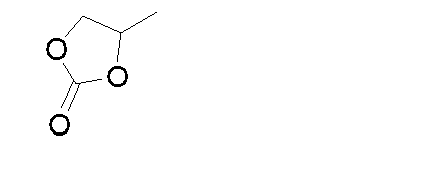
15 MWNT-PDPVP50-n-BuI A 7 83 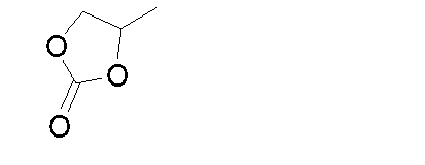
The conversion rate of epoxide was determined by 1H NMR - While the disclosure has been described by way of example and in terms of the above embodiments, it is to be understood that the invention is not limited to the disclosed embodiments. To the contrary, it is intended to cover various modifications and similar methods (as would be apparent to those skilled in the art). Therefore, the scope of the appended claims should be accorded the broadest interpretation so as to encompass all such modifications and similar methods.
Claims (12)
- A carbon nanomaterial-supported catalyst, comprising:(a) a carbon nanomaterial;(b) a polymer grafted onto the carbon nanomaterial, wherein the polymer has a repeat unit containing a phosphonium salt and the polymer has a number average molecular weight of 1,000-200,000.
- The carbon nanomaterial-supported catalyst of claim 1, wherein the carbon nanomaterial comprises: single-wall carbon nanotubes, multi-wall nanotubes, carbon nanofibers, carbon nanocapsules, active carbons, carbon blacks, or combinations thereof.
- The carbon nanomaterial-supported catalyst of claim 1, wherein the polymer is grafted onto the carbon nanomaterial by free radical polymerization, atom transfer radical polymerization (ATRP), reversible addition-fragmentation chain transfer polymerization (RAFT), ring-opening polyaddition (ROP), anion/cation polymerization or condensation, or combinations thereof.
- The carbon nanomaterial-supported catalyst of claim 1, wherein the repeat unit containing a phosphonium salt has a structure of formula I:

R2, R3 and R4 are, independently, C1-C10 alkyl, C3-C8 cycloalkyl or C6-C10 aryl;
P represents phosphorus;
X represents halogen; and
n is an integer greater than 1 but less than 1500. - The carbon nanomaterial-supported catalyst of claim 1, wherein the polymer further comprises an inert repeat unit.
- The carbon nanomaterial-supported catalyst of claim 5, wherein the inert repeat unit consists of polymerizable vinyl monomer.
- The carbon nanomaterial-supported catalyst of claim 5, wherein the inert repeat unit has a structure of formula II:

R7 is a hydrogen or C1-C10 alkyl; and
m is an integer greater than 0 but less than 1500. - A method of preparing carbonate, comprising:performing a cycloaddition reaction between a carbon dioxide and an epoxy compound in the presence of the carbon nanomaterial-supported catalyst of claim 1, to form a cyclic carbonate.
- The method of claim 8, wherein the cycloaddition reaction is performed under a pressure below 150 atm.
- The method of claim 8, wherein the cycloaddition reaction is performed at a temperature below 200°C.
- The method of claim 8, wherein the carbon nanomaterial-supported catalyst is added in an amount of more than 1% of the total amount of the epoxy compound.
- The method of claim 8, further comprising filtering a product obtained from the cycloaddition reaction to recover and reuse the carbon nanomaterial-supported catalyst.
Applications Claiming Priority (1)
| Application Number | Priority Date | Filing Date | Title |
|---|---|---|---|
| TW099145161A TWI422429B (en) | 2010-12-22 | 2010-12-22 | Carbon nanomaterial-supported catalyst and its application in carbonate synthesis |
Publications (2)
| Publication Number | Publication Date |
|---|---|
| EP2468402A1 true EP2468402A1 (en) | 2012-06-27 |
| EP2468402B1 EP2468402B1 (en) | 2014-05-28 |
Family
ID=44741229
Family Applications (1)
| Application Number | Title | Priority Date | Filing Date |
|---|---|---|---|
| EP11180717.8A Active EP2468402B1 (en) | 2010-12-22 | 2011-09-09 | Carbon nanomaterial-supported catalyst and application thereof in cyclic carbonate synthesis |
Country Status (5)
| Country | Link |
|---|---|
| US (1) | US8691908B2 (en) |
| EP (1) | EP2468402B1 (en) |
| JP (1) | JP5840460B2 (en) |
| CN (1) | CN102527433B (en) |
| TW (1) | TWI422429B (en) |
Cited By (1)
| Publication number | Priority date | Publication date | Assignee | Title |
|---|---|---|---|---|
| CN113289683A (en) * | 2021-06-29 | 2021-08-24 | 福州大学 | Method for synthesizing cyclic carbonate by catalyzing carbon dioxide with polymer as hydrogen bond donor |
Families Citing this family (11)
| Publication number | Priority date | Publication date | Assignee | Title |
|---|---|---|---|---|
| TWI623525B (en) * | 2013-07-19 | 2018-05-11 | Maruzen Petrochemical Co Ltd | Continuous manufacturing method of cyclic carbonate |
| CN104056661A (en) * | 2014-06-23 | 2014-09-24 | 内蒙古鄂尔多斯电力冶金股份有限公司氯碱化工分公司 | Mesoporous carbon cmk-3 supported ionic liquid catalysis method for preparation of cyclic carbonate |
| CN105524426B (en) * | 2016-01-15 | 2018-03-30 | 上海雄润树脂有限公司 | A kind of non-isocyanate polyurethane carbon nano-tube modification epoxy resin composite material and preparation method thereof |
| ES2899212T3 (en) * | 2016-02-04 | 2022-03-10 | Propel Air Biopharma Llc | Medication delivery device |
| US11472936B2 (en) | 2018-02-21 | 2022-10-18 | Cryovac, Llc | Method and formulation for an isocyanate-free foam using isocyanate-free polyurethane chemistry |
| US11603444B2 (en) | 2019-12-31 | 2023-03-14 | Industrial Technology Research Institute | Foaming composition and method of forming foam material |
| CN111889141A (en) * | 2020-07-09 | 2020-11-06 | 中山大学 | Ionic liquid functionalized bipyridine porous polymer catalyst for catalyzing cycloaddition reaction of carbon dioxide and epoxide |
| CN112295599A (en) * | 2020-10-29 | 2021-02-02 | 中国科学院过程工程研究所 | Application of restricted-domain multi-site ionic liquid catalyst in synthesis of cyclic carbonate |
| CN113509922B (en) * | 2021-07-13 | 2022-09-16 | 中国科学院山西煤炭化学研究所 | Catalyst for synthesizing aliphatic carbonate and preparation method and application thereof |
| CN114515599A (en) * | 2022-02-23 | 2022-05-20 | 江南大学 | Preparation method and application of carbon dioxide conversion material |
| CN121405834B (en) * | 2025-12-26 | 2026-04-21 | 潍坊鑫洋化工有限公司 | Preparation method of polystyrene with controllable molecular weight |
Citations (4)
| Publication number | Priority date | Publication date | Assignee | Title |
|---|---|---|---|---|
| EP1359169A2 (en) * | 2002-05-02 | 2003-11-05 | Zyvex Corporation | Polymer and method for using the polymer for noncovalently functionalizing nanotubes |
| US20050070724A1 (en) | 2003-09-29 | 2005-03-31 | Council Of Scientific And Industrial Research | Process for the preparation of cyclic carbonates |
| US6933394B2 (en) | 2002-03-06 | 2005-08-23 | National Institute Of Advanced Industrial Science And Technology | Catalyst for synthesizing alkylene carbonate |
| US7728164B2 (en) | 2003-06-30 | 2010-06-01 | Shell Oil Company | Process for the preparation of propylene carbonate |
Family Cites Families (18)
| Publication number | Priority date | Publication date | Assignee | Title |
|---|---|---|---|---|
| JPH0386704A (en) * | 1989-08-30 | 1991-04-11 | Ihara Chem Ind Co Ltd | Polymer-immobilized tetrakisarylphosphonium salt derivative and production of aromatic fluorine compound by using same as catalyst |
| JPH09235252A (en) * | 1996-03-01 | 1997-09-09 | Mitsubishi Chem Corp | Method for producing alkylene carbonate |
| MY120595A (en) | 1998-12-14 | 2005-11-30 | Shell Int Research | Quaternary phosphonium salt catalysts in catalytic hydrolysis of alkylene oxides |
| CN1182916C (en) | 2002-12-06 | 2005-01-05 | 大连理工大学 | Highly active catalysts for the synthesis of cyclic carbonates under mild conditions |
| US7723406B2 (en) * | 2002-12-26 | 2010-05-25 | Industrial Technology Research Institute | Polymer-chain-grafted carbon nanocapsule |
| JP4403576B2 (en) * | 2004-09-24 | 2010-01-27 | 独立行政法人産業技術総合研究所 | Catalyst for producing polycarbonate and method for producing polycarbonate |
| US7816459B2 (en) * | 2005-12-30 | 2010-10-19 | Chevron Oronite Company Llc | Method for preparing polyolefins containing vinylidine end groups using polymeric nitrogen compounds |
| US20070207182A1 (en) * | 2006-03-06 | 2007-09-06 | Jan Weber | Medical devices having electrically aligned elongated particles |
| US7357909B2 (en) | 2006-06-28 | 2008-04-15 | Lyondell Chemical Technology, L.P. | Process for producing hydrogen peroxide |
| WO2008015231A1 (en) | 2006-08-03 | 2008-02-07 | Shell Internationale Research Maatschappij B.V. | Process for the preparation of alkylene carbonate |
| CN100427667C (en) * | 2006-11-02 | 2008-10-22 | 上海交通大学 | A kind of polymer-grafted carbon nanofiber and preparation method thereof |
| CN101058418A (en) * | 2007-04-12 | 2007-10-24 | 上海交通大学 | Poly(glycidyl methacrylate), carbon nano-tube modified by derivative of the same and preparation method thereof |
| CN101293885B (en) | 2007-04-27 | 2012-04-18 | 中国科学院化学研究所 | New uses of acid-doped conductive polyaniline |
| JP2009057374A (en) | 2007-08-07 | 2009-03-19 | Sumitomo Chemical Co Ltd | Complex, polymer complex, polymer complex, and redox catalyst |
| WO2009033082A2 (en) * | 2007-09-06 | 2009-03-12 | Boston Scientific Limited | Medical devices containing silicate and carbon particles |
| CN101181988A (en) * | 2007-11-08 | 2008-05-21 | 浙江大学 | Preparation method of carbon nanotube-phosphorylcholine-based polymer composite material for blood environment |
| JP5358770B2 (en) * | 2008-07-09 | 2013-12-04 | 国立大学法人 新潟大学 | Method for producing antibacterial agent |
| JP2010168304A (en) * | 2009-01-22 | 2010-08-05 | Niigata Univ | Method for producing antibacterial agent |
-
2010
- 2010-12-22 TW TW099145161A patent/TWI422429B/en active
-
2011
- 2011-05-25 CN CN201110148205.0A patent/CN102527433B/en active Active
- 2011-09-01 US US13/224,095 patent/US8691908B2/en active Active
- 2011-09-09 EP EP11180717.8A patent/EP2468402B1/en active Active
- 2011-11-04 JP JP2011242432A patent/JP5840460B2/en active Active
Patent Citations (4)
| Publication number | Priority date | Publication date | Assignee | Title |
|---|---|---|---|---|
| US6933394B2 (en) | 2002-03-06 | 2005-08-23 | National Institute Of Advanced Industrial Science And Technology | Catalyst for synthesizing alkylene carbonate |
| EP1359169A2 (en) * | 2002-05-02 | 2003-11-05 | Zyvex Corporation | Polymer and method for using the polymer for noncovalently functionalizing nanotubes |
| US7728164B2 (en) | 2003-06-30 | 2010-06-01 | Shell Oil Company | Process for the preparation of propylene carbonate |
| US20050070724A1 (en) | 2003-09-29 | 2005-03-31 | Council Of Scientific And Industrial Research | Process for the preparation of cyclic carbonates |
Non-Patent Citations (1)
| Title |
|---|
| EMILY BAIRD ANDERSON: "Synthesis and Non-Covalent Interactions of Novel Phosphonium-Containing Polymers", 18 August 2010, pages: 125 - 150, XP002661634 * |
Cited By (1)
| Publication number | Priority date | Publication date | Assignee | Title |
|---|---|---|---|---|
| CN113289683A (en) * | 2021-06-29 | 2021-08-24 | 福州大学 | Method for synthesizing cyclic carbonate by catalyzing carbon dioxide with polymer as hydrogen bond donor |
Also Published As
| Publication number | Publication date |
|---|---|
| CN102527433A (en) | 2012-07-04 |
| CN102527433B (en) | 2014-09-17 |
| EP2468402B1 (en) | 2014-05-28 |
| US20120165482A1 (en) | 2012-06-28 |
| TW201226053A (en) | 2012-07-01 |
| JP2012130904A (en) | 2012-07-12 |
| US8691908B2 (en) | 2014-04-08 |
| JP5840460B2 (en) | 2016-01-06 |
| TWI422429B (en) | 2014-01-11 |
Similar Documents
| Publication | Publication Date | Title |
|---|---|---|
| EP2468402B1 (en) | Carbon nanomaterial-supported catalyst and application thereof in cyclic carbonate synthesis | |
| US9469722B2 (en) | Metal cyanide complex catalyst and its preparation and application | |
| JP2013503935A5 (en) | ||
| EP2617752B1 (en) | Composition usable as thermal-latent polymerization initiator | |
| CN118878805B (en) | Composite dicarboxylic acid zinc catalysts and their application in the catalytic synthesis of carbon dioxide-based polycarbonates | |
| US7101823B2 (en) | Method for preparing metal cyanide catalyst complexes using partially miscible complexing agents | |
| JPH069776A (en) | New homogeneous catalyst composition and method for copolymerizing carbon monoxide with olefin | |
| EP3431177B1 (en) | Vinylpyridine resin for catalyst carriers, production method therefor, and catalyst for methanol carbonylation reaction | |
| KR101871539B1 (en) | Polyalkylene oxide particles and production method for same | |
| CN1054255A (en) | Process for preparing polymers of carbon monoxide and one or more olefinically unsaturated compounds | |
| EP2269995B1 (en) | Process for production of polymers with iron complex catalyst | |
| CN108097311B (en) | Heterogeneous polyoxometallate catalyst and preparation method and application thereof | |
| US6900156B2 (en) | Method for preparing metal cyanide catalysts using zero valent metals | |
| CN1051556C (en) | Process for the preparation of heterosubstituted acetals | |
| US8415504B2 (en) | Catalyst carrier, catalyst thereon and C-C coupling method use the same | |
| EP2750798B1 (en) | Catalysts for producing carbonates from epoxides and co2 | |
| KR20020066819A (en) | Production method of alkylene carbonates | |
| EP1483309A1 (en) | Method for the production of poly(3-hydroxyalkanoates) in the presence of a nucleophile | |
| US20250230120A1 (en) | Method for preparing 3-hydroxypropionate esters | |
| CN110092725A (en) | A kind of method of synthesis of chiral amine compounds | |
| KR102044369B1 (en) | Catalyst Composition for Oxidation of 2-Halo Pyridine and Method for Preparation of 2-Halo Pyridine N-Oxide Using the Same | |
| DE102012209516A1 (en) | Preparing terpolymers useful for preparing food packaging, comprises reacting carbon dioxide, propylene oxide and at least one further epoxide, in the presence of a porphyrin catalyst and a co-catalyst | |
| Wu | Novel α-Diimine Ni Complexes to Synthesize Polyethylene with Controlled Microstructures and Morphology | |
| CN1034732A (en) | polyketide derivatives | |
| KR20130051093A (en) | Method for catalysts seperation/reactivation from a copolymerization process of epoxide/carbon dioxide |
Legal Events
| Date | Code | Title | Description |
|---|---|---|---|
| AK | Designated contracting states |
Kind code of ref document: A1 Designated state(s): AL AT BE BG CH CY CZ DE DK EE ES FI FR GB GR HR HU IE IS IT LI LT LU LV MC MK MT NL NO PL PT RO RS SE SI SK SM TR |
|
| AX | Request for extension of the european patent |
Extension state: BA ME |
|
| PUAI | Public reference made under article 153(3) epc to a published international application that has entered the european phase |
Free format text: ORIGINAL CODE: 0009012 |
|
| 17P | Request for examination filed |
Effective date: 20120706 |
|
| GRAP | Despatch of communication of intention to grant a patent |
Free format text: ORIGINAL CODE: EPIDOSNIGR1 |
|
| INTG | Intention to grant announced |
Effective date: 20131129 |
|
| GRAS | Grant fee paid |
Free format text: ORIGINAL CODE: EPIDOSNIGR3 |
|
| GRAA | (expected) grant |
Free format text: ORIGINAL CODE: 0009210 |
|
| AK | Designated contracting states |
Kind code of ref document: B1 Designated state(s): AL AT BE BG CH CY CZ DE DK EE ES FI FR GB GR HR HU IE IS IT LI LT LU LV MC MK MT NL NO PL PT RO RS SE SI SK SM TR |
|
| REG | Reference to a national code |
Ref country code: GB Ref legal event code: FG4D |
|
| REG | Reference to a national code |
Ref country code: CH Ref legal event code: EP |
|
| REG | Reference to a national code |
Ref country code: AT Ref legal event code: REF Ref document number: 670213 Country of ref document: AT Kind code of ref document: T Effective date: 20140615 |
|
| REG | Reference to a national code |
Ref country code: IE Ref legal event code: FG4D |
|
| REG | Reference to a national code |
Ref country code: DE Ref legal event code: R096 Ref document number: 602011007289 Country of ref document: DE Effective date: 20140710 |
|
| REG | Reference to a national code |
Ref country code: AT Ref legal event code: MK05 Ref document number: 670213 Country of ref document: AT Kind code of ref document: T Effective date: 20140528 |
|
| REG | Reference to a national code |
Ref country code: NL Ref legal event code: VDEP Effective date: 20140528 |
|
| REG | Reference to a national code |
Ref country code: LT Ref legal event code: MG4D |
|
| PG25 | Lapsed in a contracting state [announced via postgrant information from national office to epo] |
Ref country code: LT Free format text: LAPSE BECAUSE OF FAILURE TO SUBMIT A TRANSLATION OF THE DESCRIPTION OR TO PAY THE FEE WITHIN THE PRESCRIBED TIME-LIMIT Effective date: 20140528 Ref country code: CY Free format text: LAPSE BECAUSE OF FAILURE TO SUBMIT A TRANSLATION OF THE DESCRIPTION OR TO PAY THE FEE WITHIN THE PRESCRIBED TIME-LIMIT Effective date: 20140528 Ref country code: GR Free format text: LAPSE BECAUSE OF FAILURE TO SUBMIT A TRANSLATION OF THE DESCRIPTION OR TO PAY THE FEE WITHIN THE PRESCRIBED TIME-LIMIT Effective date: 20140829 Ref country code: NO Free format text: LAPSE BECAUSE OF FAILURE TO SUBMIT A TRANSLATION OF THE DESCRIPTION OR TO PAY THE FEE WITHIN THE PRESCRIBED TIME-LIMIT Effective date: 20140828 Ref country code: FI Free format text: LAPSE BECAUSE OF FAILURE TO SUBMIT A TRANSLATION OF THE DESCRIPTION OR TO PAY THE FEE WITHIN THE PRESCRIBED TIME-LIMIT Effective date: 20140528 |
|
| PG25 | Lapsed in a contracting state [announced via postgrant information from national office to epo] |
Ref country code: LV Free format text: LAPSE BECAUSE OF FAILURE TO SUBMIT A TRANSLATION OF THE DESCRIPTION OR TO PAY THE FEE WITHIN THE PRESCRIBED TIME-LIMIT Effective date: 20140528 Ref country code: HR Free format text: LAPSE BECAUSE OF FAILURE TO SUBMIT A TRANSLATION OF THE DESCRIPTION OR TO PAY THE FEE WITHIN THE PRESCRIBED TIME-LIMIT Effective date: 20140528 Ref country code: SE Free format text: LAPSE BECAUSE OF FAILURE TO SUBMIT A TRANSLATION OF THE DESCRIPTION OR TO PAY THE FEE WITHIN THE PRESCRIBED TIME-LIMIT Effective date: 20140528 Ref country code: RS Free format text: LAPSE BECAUSE OF FAILURE TO SUBMIT A TRANSLATION OF THE DESCRIPTION OR TO PAY THE FEE WITHIN THE PRESCRIBED TIME-LIMIT Effective date: 20140528 Ref country code: AT Free format text: LAPSE BECAUSE OF FAILURE TO SUBMIT A TRANSLATION OF THE DESCRIPTION OR TO PAY THE FEE WITHIN THE PRESCRIBED TIME-LIMIT Effective date: 20140528 |
|
| PG25 | Lapsed in a contracting state [announced via postgrant information from national office to epo] |
Ref country code: PT Free format text: LAPSE BECAUSE OF FAILURE TO SUBMIT A TRANSLATION OF THE DESCRIPTION OR TO PAY THE FEE WITHIN THE PRESCRIBED TIME-LIMIT Effective date: 20140929 |
|
| PG25 | Lapsed in a contracting state [announced via postgrant information from national office to epo] |
Ref country code: SK Free format text: LAPSE BECAUSE OF FAILURE TO SUBMIT A TRANSLATION OF THE DESCRIPTION OR TO PAY THE FEE WITHIN THE PRESCRIBED TIME-LIMIT Effective date: 20140528 Ref country code: RO Free format text: LAPSE BECAUSE OF FAILURE TO SUBMIT A TRANSLATION OF THE DESCRIPTION OR TO PAY THE FEE WITHIN THE PRESCRIBED TIME-LIMIT Effective date: 20140528 Ref country code: ES Free format text: LAPSE BECAUSE OF FAILURE TO SUBMIT A TRANSLATION OF THE DESCRIPTION OR TO PAY THE FEE WITHIN THE PRESCRIBED TIME-LIMIT Effective date: 20140528 Ref country code: BE Free format text: LAPSE BECAUSE OF FAILURE TO SUBMIT A TRANSLATION OF THE DESCRIPTION OR TO PAY THE FEE WITHIN THE PRESCRIBED TIME-LIMIT Effective date: 20140528 Ref country code: DK Free format text: LAPSE BECAUSE OF FAILURE TO SUBMIT A TRANSLATION OF THE DESCRIPTION OR TO PAY THE FEE WITHIN THE PRESCRIBED TIME-LIMIT Effective date: 20140528 Ref country code: EE Free format text: LAPSE BECAUSE OF FAILURE TO SUBMIT A TRANSLATION OF THE DESCRIPTION OR TO PAY THE FEE WITHIN THE PRESCRIBED TIME-LIMIT Effective date: 20140528 |
|
| PG25 | Lapsed in a contracting state [announced via postgrant information from national office to epo] |
Ref country code: NL Free format text: LAPSE BECAUSE OF FAILURE TO SUBMIT A TRANSLATION OF THE DESCRIPTION OR TO PAY THE FEE WITHIN THE PRESCRIBED TIME-LIMIT Effective date: 20140528 Ref country code: PL Free format text: LAPSE BECAUSE OF FAILURE TO SUBMIT A TRANSLATION OF THE DESCRIPTION OR TO PAY THE FEE WITHIN THE PRESCRIBED TIME-LIMIT Effective date: 20140528 |
|
| REG | Reference to a national code |
Ref country code: DE Ref legal event code: R097 Ref document number: 602011007289 Country of ref document: DE |
|
| PLBE | No opposition filed within time limit |
Free format text: ORIGINAL CODE: 0009261 |
|
| STAA | Information on the status of an ep patent application or granted ep patent |
Free format text: STATUS: NO OPPOSITION FILED WITHIN TIME LIMIT |
|
| PG25 | Lapsed in a contracting state [announced via postgrant information from national office to epo] |
Ref country code: MC Free format text: LAPSE BECAUSE OF FAILURE TO SUBMIT A TRANSLATION OF THE DESCRIPTION OR TO PAY THE FEE WITHIN THE PRESCRIBED TIME-LIMIT Effective date: 20140528 Ref country code: LU Free format text: LAPSE BECAUSE OF FAILURE TO SUBMIT A TRANSLATION OF THE DESCRIPTION OR TO PAY THE FEE WITHIN THE PRESCRIBED TIME-LIMIT Effective date: 20140909 Ref country code: IT Free format text: LAPSE BECAUSE OF FAILURE TO SUBMIT A TRANSLATION OF THE DESCRIPTION OR TO PAY THE FEE WITHIN THE PRESCRIBED TIME-LIMIT Effective date: 20140528 |
|
| REG | Reference to a national code |
Ref country code: CH Ref legal event code: PL |
|
| 26N | No opposition filed |
Effective date: 20150303 |
|
| REG | Reference to a national code |
Ref country code: DE Ref legal event code: R097 Ref document number: 602011007289 Country of ref document: DE Effective date: 20150303 |
|
| REG | Reference to a national code |
Ref country code: IE Ref legal event code: MM4A |
|
| PG25 | Lapsed in a contracting state [announced via postgrant information from national office to epo] |
Ref country code: CH Free format text: LAPSE BECAUSE OF NON-PAYMENT OF DUE FEES Effective date: 20140930 Ref country code: SI Free format text: LAPSE BECAUSE OF FAILURE TO SUBMIT A TRANSLATION OF THE DESCRIPTION OR TO PAY THE FEE WITHIN THE PRESCRIBED TIME-LIMIT Effective date: 20140528 Ref country code: LI Free format text: LAPSE BECAUSE OF NON-PAYMENT OF DUE FEES Effective date: 20140930 |
|
| PG25 | Lapsed in a contracting state [announced via postgrant information from national office to epo] |
Ref country code: IE Free format text: LAPSE BECAUSE OF NON-PAYMENT OF DUE FEES Effective date: 20140909 |
|
| PG25 | Lapsed in a contracting state [announced via postgrant information from national office to epo] |
Ref country code: SM Free format text: LAPSE BECAUSE OF FAILURE TO SUBMIT A TRANSLATION OF THE DESCRIPTION OR TO PAY THE FEE WITHIN THE PRESCRIBED TIME-LIMIT Effective date: 20140528 |
|
| PG25 | Lapsed in a contracting state [announced via postgrant information from national office to epo] |
Ref country code: BG Free format text: LAPSE BECAUSE OF FAILURE TO SUBMIT A TRANSLATION OF THE DESCRIPTION OR TO PAY THE FEE WITHIN THE PRESCRIBED TIME-LIMIT Effective date: 20140528 Ref country code: MT Free format text: LAPSE BECAUSE OF FAILURE TO SUBMIT A TRANSLATION OF THE DESCRIPTION OR TO PAY THE FEE WITHIN THE PRESCRIBED TIME-LIMIT Effective date: 20140528 Ref country code: IS Free format text: LAPSE BECAUSE OF FAILURE TO SUBMIT A TRANSLATION OF THE DESCRIPTION OR TO PAY THE FEE WITHIN THE PRESCRIBED TIME-LIMIT Effective date: 20140528 |
|
| PG25 | Lapsed in a contracting state [announced via postgrant information from national office to epo] |
Ref country code: TR Free format text: LAPSE BECAUSE OF FAILURE TO SUBMIT A TRANSLATION OF THE DESCRIPTION OR TO PAY THE FEE WITHIN THE PRESCRIBED TIME-LIMIT Effective date: 20140528 Ref country code: HU Free format text: LAPSE BECAUSE OF FAILURE TO SUBMIT A TRANSLATION OF THE DESCRIPTION OR TO PAY THE FEE WITHIN THE PRESCRIBED TIME-LIMIT; INVALID AB INITIO Effective date: 20110909 |
|
| REG | Reference to a national code |
Ref country code: FR Ref legal event code: PLFP Year of fee payment: 6 |
|
| REG | Reference to a national code |
Ref country code: FR Ref legal event code: PLFP Year of fee payment: 7 |
|
| PG25 | Lapsed in a contracting state [announced via postgrant information from national office to epo] |
Ref country code: MK Free format text: LAPSE BECAUSE OF FAILURE TO SUBMIT A TRANSLATION OF THE DESCRIPTION OR TO PAY THE FEE WITHIN THE PRESCRIBED TIME-LIMIT Effective date: 20140528 |
|
| REG | Reference to a national code |
Ref country code: FR Ref legal event code: PLFP Year of fee payment: 8 |
|
| PG25 | Lapsed in a contracting state [announced via postgrant information from national office to epo] |
Ref country code: AL Free format text: LAPSE BECAUSE OF FAILURE TO SUBMIT A TRANSLATION OF THE DESCRIPTION OR TO PAY THE FEE WITHIN THE PRESCRIBED TIME-LIMIT Effective date: 20140528 |
|
| REG | Reference to a national code |
Ref country code: DE Ref legal event code: R079 Ref document number: 602011007289 Country of ref document: DE Free format text: PREVIOUS MAIN CLASS: B01J0035060000 Ipc: B01J0035580000 |
|
| PGFP | Annual fee paid to national office [announced via postgrant information from national office to epo] |
Ref country code: DE Payment date: 20250929 Year of fee payment: 15 |
|
| PGFP | Annual fee paid to national office [announced via postgrant information from national office to epo] |
Ref country code: GB Payment date: 20250929 Year of fee payment: 15 |
|
| PGFP | Annual fee paid to national office [announced via postgrant information from national office to epo] |
Ref country code: FR Payment date: 20250925 Year of fee payment: 15 |
|
| PGFP | Annual fee paid to national office [announced via postgrant information from national office to epo] |
Ref country code: CZ Payment date: 20250825 Year of fee payment: 15 |